Posts Tagged ‘AFFORDABLE CARE ACT’
ABC NEWS, AFFORDABLE CARE ACT, AIR TRAFFIC CONTROLLERS STRIKE, ALTERNET, BARCK OBAMA, BUZZFEED, CBS NEWS, CNN, COLUMBIA UNIVERSITY, DAILY KOS, EXTORTION, FACEBOOK, GEORGE W. BUSH, HARVARD LAW SCHOOL, HILLARY CLINTON, JOHN SCHNATTER, JON STEWART, JONATHAN ALTER, JUSTICE DEPARTMENT, MEDICAL CARE, MOTHER JONES, MOVEON, NBC NESS, NBC NEWS, NEWSWEEK, NICCOLO MACHIAVELLI, NPR, OBAMACARE, PAPA JOHN'S PIZZA, PATRIOT ACT, POLITICO, RACKETEER INFLUENCED CORRUPT ORGANIZATIONS ACT, RAW STORY, REFORM, REPUBLICAN PARTY, RICHARD WOLFFE, SALON, SLATE, TERRORISM, THE CHICAGO SUN-TIMES, THE CHICAGO TRIBUNE, THE DAILY BEAST, THE DAILY SHOW, THE HUFFINGTON POST, THE LOS ANGELES TIMES, THE NEW YORK TIMES, THE PRINCE, THE WALL STREET JOURNAL, THE WASHINGTON POST, TIME, TWITTER, U.S. NEWS & WORLD REPORT, USA TODAY
In Bureaucracy, History, Law, Medical, Politics, Social commentary on March 2, 2017 at 12:11 am
President Barack Obama was often accused of playing ruthless “Chicago politics” by his Republican enemies. But Obama’s biggest mistake lay not in cynicism but misplaced idealism.
Obama Mistake No. 5: Believing that public and private employers would voluntarily comply with the law.
The Affordable Care Act (ACA) requires employers to provide insurance for part-time employees who work more than 30 hours per week. Yet many employers claimed–without having to offer proof–that they couldn’t afford it.
So they limited part-time workers’ hours to 29 per week instead.
Obama was clearly surprised at this. But he shouldn’t have been.
Greed-fueled businessmen always try to avoid complying with the law–or achieve minimum compliance with it.
The Act doesn’t penalize companies for not providing health insurance coverage for part-time employees who work fewer than 30 hours.
Predictably, employers:
- Moved fulltime workers into part-time positions;
- Refused to provide their employees with medical insurance; and
- Avoided fines for non-compliance with the law.
Some employers openly showed their contempt for President Obama–and the idea that employers have any obligation to those who make their profits a reality.
One was John Schnatter, CEO of Papa John’s Pizza, who said:
- The prices of his pizzas would go up–by 11 to 14 cents per pizza, or 15 to 20 cents per order; and
- He would pass along these costs to his customers.
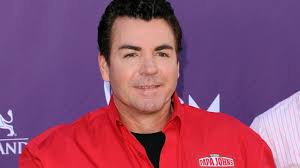
John Schnatter
“If Obamacare is in fact not repealed,” he told Politico, “we will find tactics to shallow out any Obamacare costs and core strategies to pass that cost onto consumers in order to protect our shareholders’ best interests.”
Thus, President Obama should have required all employers to provide insurance coverage for all of their employees, regardless of their fulltime or part-time status.
This would have produced two substantial benefits:
- All employees would have been able to obtain medical coverage; and
- Employers would have been encouraged to provide fulltime positions rather than part-time ones.
Employers would thus feel: “I’m paying for fulltime insurance coverage, so I should be getting fulltime work in return.”
If Obama considered this option, he decided against pressing for it.
Obama Mistake No. 6: Failing to closely study his proposed legislation.
Throughout his campaign to win support for the ACA, Obama had repeatedly promised: “If you like your health insurance plan, you can keep your plan. If you like your doctor, you can keep your doctor. Period.”
But the 906 pages of the law held a fatal catch for the President’s own credibility.
The law stated that those who already had medical insurance could keep their plans–so long as those plans met the requirements of the new healthcare law.
If their plans didn’t meet those requirements, they would have to obtain coverage that did.
But many Americans wanted to keep their current plan–even if it did not provide the fullest possible coverage.
Suddenly, the President found himself facing a PR nightmare–charged and ridiculed as a liar.
Even Jon Stewart, who on “The Daily Show,” had supported the implementation of “Obamacare,” ran footage of Obama’s “you can keep your doctor” promise.
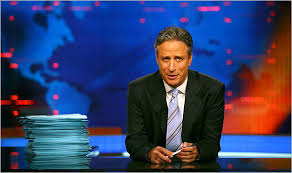
Jon Stewart
The implication: You said we could keep our plan/doctor. Since we can’t, you must be a liar.
All of which points to a final warning offered by Niccolo Machiavelli: Whence it may be seen that hatred is gained as much by good works as by evil….
Former Democratic Presidential nominee Hillary Clinton said that, if she were elected, she would seek incremental changes in the ACA. That possibility became moot when she lost the 2016 election to Donald Trump.
Vermont U.S. Senator Bernie Sanders, on the other hand, wants a single-payer plan.
A single-payer plan would prove simpler and more comprehensive than the ACA. But the chances of its passing a Republican-dominated Congress are absolutely zero.
The election of Donald Trump seems to have finally doomed the ACA–except for one thing: Since it became law, in 2010, 22 million Americans who had never before obtained healthcare insurance now have it.
This includes even Republicans who voted for Trump–without realizing they would be losing their only tie to medical care. And now many of them are finally realizing this truth.
Thus, Republicans in the House and Senate now find themselves besieged by angry constituents at town hall meetings.
These Republicans care nothing for Americans who would be left without medical care. But they do care about their own futures–as members of Congress.
This has led to three schisms among Republicans:
- Those who still demand the complete repeal of “Obamacare.”
- Those who want the Act repealed and then replaced with an entirely different healthcare plan–which Republicans have yet to agree on. Developing this could literally take years–during which time former ACA members would have no insurance.
- Those who want Republicans to first create an alternative healthcare plan, win its Congressional approval, and then repeal the Act.
Republicans expect Democrats to sign on with their “Obamacare replacement plan.” But Democrats have made it clear: “You repeal it, you’re on your own in replacing it.”
Republicans spent eight years demanding the repeal of “Obamacare.” But now they fear that its repeal will lead to the repeal of their own political ambitions.
ABC NEWS, AFFORDABLE CARE ACT, AIR TRAFFIC CONTROLLERS STRIKE, ALTERNET, BARCK OBAMA, BUZZFEED, CBS NEWS, CNN, COLUMBIA UNIVERSITY, DAILY KOS, EXTORTION, FACEBOOK, GEORGE W. BUSH, HARVARD LAW SCHOOL, HILLARY CLINTON, JOHN SCHNATTER, JON STEWART, JONATHAN ALTER, JUSTICE DEPARTMENT, MEDICAL CARE, MOTHER JONES, MOVEON, NBC NESS, NBC NEWS, NEWSWEEK, NICCOLO MACHIAVELLI, NPR, OBAMACARE, PAPA JOHN'S PIZZA, PATRIOT ACT, POLITICO, RACKETEER INFLUENCED CORRUPT ORGANIZATIONS ACT, RAW STORY, REFORM, REPUBLICAN PARTY, RICHARD WOLFFE, SALON, SLATE, TERRORISM, THE CHICAGO SUN-TIMES, THE CHICAGO TRIBUNE, THE DAILY BEAST, THE DAILY SHOW, THE HUFFINGTON POST, THE LOS ANGELES TIMES, THE NEW YORK TIMES, THE PRINCE, THE WALL STREET JOURNAL, THE WASHINGTON POST, TIME, TWITTER, U.S. NEWS & WORLD REPORT, USA TODAY
In Bureaucracy, History, Law, Medical, Politics, Social commentary on March 1, 2017 at 12:26 am
President Barack Obama came into office determined to find common ground with Republicans.
But they quickly made it clear to him that they only wanted his political destruction. At that point, he should have put aside his hopes for a “Kumbaya moment” and re-read what Niccolo Machiavelli said in The Prince on the matter of love versus fear:
From this arises the question whether it is better to be loved or feared, or feared more than love. The reply is, that one ought to be both feared and loved, but as it is difficult for the two to go together, it is much safer to be feared than loved….
And men have less scruple in offending one who makes himself loved than one who makes himself feared; for love is held by a chain of obligations which, men being selfish, is broken whenever it serves their purpose; but fear is maintained by a dread of punishment which never fails.

Finally, warns Machiavelli, a leader should not allow a threat to go unchecked. The motive for this is usually the hope of avoiding conflict And the result is usually catastrophe.
A man who wishes to make a profession of goodness in everything must inevitably come to grief among so many who are not good. And therefore it is necessary, for a prince who wishes to maintain himself, to learn how not to be good, and to use this knowledge and not use it, according to the necessity of the case.
For Obama, such a moment came in 2011, when House Republicans threatened to to destroy the credit rating of the United States unless the President agreed to scrap Obamacare.
Obama, a former attorney, heatedly denounced House Republicans for “extortion” and “blackmail.”
Unless he was exaggerating, both of these are felony offenses that are punishable under the 2001 USA Patriot Act and the Racketeer Influenced Corrupt Organizations (RICO) Act of 1970.
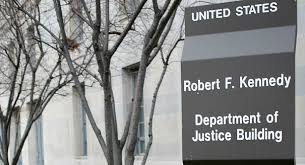
Among the crimes that can be prosecuted by Justice Department attorneys under RICO: Extortion.
Extortion is defined as “a criminal offense which occurs when a person unlawfully obtains either money, property or services from a person(s), entity, or institution, through coercion.”
And if President Obama didn’t believe that RICO was sufficient to deal with extortionate behavior, he could have ordered the Justice Department to cite the USA Patriot Act, passed in the wake of 9/11.
In Section 802, among the behaviors that are defined as domestic terrorism: “Activities that…appear to be intended…to influence the policy of a government by intimidation or coercion [and]…occur primarily within the territorial jurisdiction of the United States.”
Activities such as threatening to destroy the financial stability of the United States.
The remedies for punishing such criminal behavior were legally in place. President Obama could have directed the Justice Department to apply them.
If violations had been discovered, indictments could have quickly followed–and then prosecutions. The results of such action could be easily predicted:
- Facing lengthy prison terms, those indicted Republicans would have first had to lawyer-up.
- This would have imposed huge monetary costs on them, since good criminal attorneys don’t come cheap.
- Obsessed with their personal survival, they would have had little time to engage in more of the same thuggish behavior that got them indicted. In fact, doing so would have only made their convictions more likely.
- Those Republicans who hadn’t (yet) been indicted would have feared; “I could be next.” This would have produced a chilling effect on their willingness to engage in further acts of subversion and extortion.
- The effect on Right-wing Republicans would have been the same as that of President Ronald Reagan’s firing of striking air traffic controllers: “You cross me and threaten the security of this nation at your own peril.”
It would no doubt have been a long time before Republicans dared to engage in such behavior–at least, while Obama held office.
So: Why didn’t President Obama act to punish such criminal conduct?
Obama Mistake No. 4: He allowed himself to be cowed by his enemies.
In The Prince, Machiavelli laid out the qualities that a successful ruler should avoid–
He is rendered despicable by being thought changeable, frivolous, effeminate, timid and irresolute–which a prince must guard against as a rock of danger….
–and possess:
As to the government of his subjects, let his sentence be irrevocable, and let him adhere to his decisions so that no one may think of deceiving or cozening him.
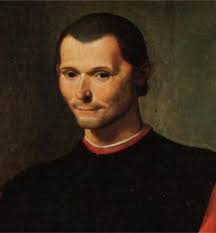
Niccolo Machiavelli
On July 2, 2013, the Treasury Department announced a major change in the application of the Affordable Care Act:
“We have heard concerns about the complexity of the requirements and the need for more time to implement them effectively…We have listened to your feedback. And we are taking action.
“The Administration is announcing that it will provide an additional year before the ACA mandatory employer and insurer reporting requirements begin.”
And the Republican response?
On July 30, 2013, House Republicans voted to sue the President for failing to enforce the Affordable Care Act–which they had voted 54 times to repeal, delay or change.
As Machiavelli warned: Timidity invites contempt–and aggression.
ABC NEWS, AFFORDABLE CARE ACT, AIR TRAFFIC CONTROLLERS STRIKE, ALTERNET, BARCK OBAMA, BUZZFEED, CBS NEWS, CNN, COLUMBIA UNIVERSITY, DAILY KOS, EXTORTION, FACEBOOK, GEORGE W. BUSH, HARVARD LAW SCHOOL, HILLARY CLINTON, JOHN SCHNATTER, JON STEWART, JONATHAN ALTER, JUSTICE DEPARTMENT, MEDICAL CARE, MOTHER JONES, MOVEON, NBC NESS, NBC NEWS, NEWSWEEK, NICCOLO MACHIAVELLI, NPR, OBAMACARE, PAPA JOHN'S PIZZA, PATRIOT ACT, POLITICO, RACKETEER INFLUENCED CORRUPT ORGANIZATIONS ACT, RAW STORY, REFORM, REPUBLICAN PARTY, RICHARD WOLFFE, SALON, SLATE, TERRORISM, THE CHICAGO SUN-TIMES, THE CHICAGO TRIBUNE, THE DAILY BEAST, THE DAILY SHOW, THE HUFFINGTON POST, THE LOS ANGELES TIMES, THE NEW YORK TIMES, THE PRINCE, THE WALL STREET JOURNAL, THE WASHINGTON POST, TIME, TWITTER, U.S. NEWS & WORLD REPORT, USA TODAY
In Bureaucracy, History, Law, Medical, Politics, Social commentary on February 28, 2017 at 12:13 am
Barack Obama was easily one of the most highly educated Presidents in United States history. He is a graduate of Columbia University (B.A. in political science in 1983).
In 1988, he entered Harvard Law School, graduating magna cum laude–“with great honor”–in 1991.
He was selected as an editor of the Harvard Law Review at the end of his first year, and president of the journal in his second year.
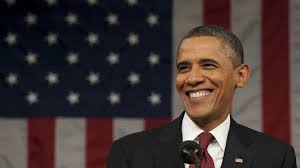
President Barack Obama
He then taught Constitutional law at the University of Chicago Law School for 12 years–as a Lecturer from 1992 to 1996, and as a Senior Lecturer from 1996 to 2004.
Yet, his signature plan to give every American access to healthcare, the Affordable Care Act–universally known as “Obamacare”–remains stricken with dangerous flaws.
So where did he go wrong?
Several ways–in all, at least six.
Obama Mistake No. 1: Putting off what people wanted while concentrating on what they didn’t.
Obama started off well when he took office. Americans had high expectations of him. This was partly due to his being the first black to be elected President.
And it was partly due to the disastrous legacies of needless war and financial catastrophe left by his predecessor, George W. Bush.
Obama entered office intending to reform the American healthcare system, to make medical care available to all citizens, and not just the richest. But that was not what the vast majority of Americans wanted him to concentrate his energies on.
With the lost of 2.6 million jobs in 2008, Americans wanted Obama to find new ways to create jobs. This was especially true for the 11.1 million unemployed, or those employed only part-time.
Jonathan Alter, who writes sympathetically about the President in The Center Holds: Obama and His Enemies, candidly states this.
But Obama chose to spend most of his first year as President pushing the Affordable Care Act (ACA)–which would soon become known as Obamacare–through Congress.
The results were:
- Those desperately seeking employment felt the President didn’t care about them.
- The reform effort became a lightning rod for Right-wing groups like the Koch-brothers-financed Tea Party.
- In 2010, a massive Rightist turnout cost the Democrats the House of Representatives, and threatened Democratic control of the Senate.
Obama Mistake No. 2: He underestimated the amount of opposition he would face to the ACA.
For all of Obama’s academic brilliance and supposed ruthlessness as a “Chicago politician,” he displayed an incredible naivety in dealing with his political opposition.
Niccolo Machiavelli (1469-1527), the Florentine statesman and father of modern politics, could have warned him of the consequences of this–through the pages of The Prince, his infamous treatise on the realities of politics.

Niccolo Machiavelli
And either Obama skipped those chapters or ignored their timeless advice for political leaders.
He should have started with Chapter Six: “Of New Dominions Which Have Been Acquired By One’s Own Arms and Ability”:
…There is nothing more difficult to carry out, nor more doubtful of success, nor more dangerous to handle than to initiate a new order of things.
For the reformer has enemies in all those who profit by the old order, and only lukewarm defenders in all those who would profit by the new order, this lukewarmness arising partly from fear of their adversaries, who have the laws in their favor, and partly from the incredulity of mankind, who do not truly believe in anything new until they have had actual experience of it.
This proved exactly the case with the proposed Affordable Care Act.
Its supporters–even when they comprised a majority of the Congress–have always shown far less fervor than its opponents.
This was true before the Act became effective on March 23, 2010. And it has remained true since, with House Republicans voting more than 60 times to repeal, delay or revise the law.
So before President Obama launched his signature effort to reform the American medical system, he should have taken this truism into account.
Obama Mistake No. 3: Failing to consider–and punish–the venom of his political enemies.
The ancient Greeks used to say: “A man’s character is his fate.” It was Obama’s character–and America’s fate–that he was by nature a man of conciliation, not conflict.
Richard Wolffe chronicled Obama’s winning of the White House in his 2009 book, Renegade: The Making of a President. He noted that Obama was always more comfortable when responding to Republican attacks on his character than he was in making attacks on his enemies.
President Obama came into office determined to find common ground with Republicans.
But they quickly made it clear to him that they only wanted his political destruction. At that point, he should have put aside his hopes for a “Kumbaya moment” and re-read what Niccolo Machiavelli said in The Prince on the matter of love versus fear:
From this arises the question whether it is better to be loved or feared, or feared more than love. The reply is, that one ought to be both feared and loved, but as it is difficult for the two to go together, it is much safer to be feared than loved.
2003 IRAQ WAR, 2016 PRESIDENTIAL CAMPAIGN, ABC NEWS, ADOLF HITLER, AFFORDABLE CARE ACT, AL QAEDA, ALTERNET, ASIANS, BLACKS, BREITBART NEWS, BUZZFEED, CBS NEWS, CHILE, CIA, CLAUS VON STAFFENBERG, CNN, CUBAN MISSILE CRISIS, DAILY KOS, DAVID DUKE, DONALD TRUMP, EMPEROR TIBERIUS, FACEBOOK, FBI, GUATEMALA, HISPANICS, HOMOSEXUALS, INTELLIGENCE COMMUNITY, IRAN, JACABO ARBENZ, JAMES W. DOUGLAS, JFK AND THE UNSPEAKABLE, JOHN F. KENNEDY, JOHN KASICH, JOINT CHIEFS OF STAFF, KU KLUX KLAN, LATINOS, LESBIANS, MARTIN NIEMOELLER, MEDICARE, Military, MOHAMMED MOSADDEGH, MOTHER JONES, MOVEON, MUSLIMS, NATIONAL SECURITY AGENCY, NAVY SEALS, NAZI GERMANY, NBC NEWS, NEWSWEEK, NICCOLO MACHIAVELLI, NPR, POLITICO, PRISONERS OF WAR, RAW STORY, SALON, SALVADORE ALLENDE, SLATE, SS, STEVE BANNON, THE CHICAGO SUN-TIMES, THE CHICAGO TRIBUNE, THE DAILY BEAST, THE DISABLED, THE HUFFINGTON POST, THE LOS ANGELES TIMES, THE NEW YORK TIMES, THE WALL STREET JOURNAL, THE WASHINGTON POST, TIME, TWITTER, U.S. NEWS & WORLD REPORT, WEHRMACHT, WOMEN, WORLD WAR 11
In History, Military, Politics, Social commentary on February 6, 2017 at 12:01 am
On July 20, 1944, members of the Wehrmacht high command failed to assassinate Adolf Hitler with a bomb hidden in a briefcase.
But two setbacks prevented the conspirators from succeeding.
First, Hitler survived the bomb blast.
Second, the plotters failed to seize the key broadcast facilities of the Reich.
This allowed Hitler to make a late-night speech to the nation, revealing the failed plot and assuring Germans that he was alive. And he swore to flush out the “traitorous swine” who had tried to kill him.
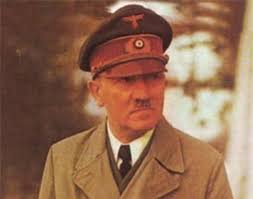
Adolf Hitler
Mass arrests quickly followed.
Among the first victims discovered and executed was the conspiracy’s leader, Colonel Claus von Stauffenberg. Standing before a makeshift firing squad at midnight, he cried: “Long live our sacred Germany!”
At least 7,000 persons were arrested by the Gestapo. According to records of the Fuehrer Conferences on Naval Affairs, 4,980 were executed.
Had the conspiracy succeeded, history would have turned out differently:
Thus, history can be altered by the appearance or disappearance of a single individual.
Which brings us back to Donald Trump.
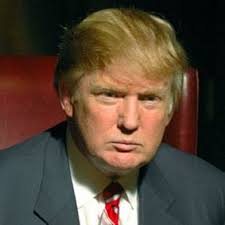
Donald Trump
Since becoming President on January 20, Trump has:
- Infuriated “Obamacare” patients: Trump authorized the directors of Federal agencies to waive requirements of the Affordable Care Act–which provides medical insurance to 22 million Americans–to the “maximum extent permitted by law.”
- Infuriated the CIA: Appearing at CIA headquarters on his first full day in office, Trump addressed about 400 case officers. Standing before the star-studded memorial wall honoring 117 CIA officers who had fallen in the line of duty. Trump ignored their sacrifice. Instead, he boasted of the size of his Inaugural crowd and how many times he had appeared on the cover of Time.
- Infuriated Muslims: Commenting on the 2003 Iraq war during his remarks at the CIA, Trump said: “So we should have kept the oil. But okay. Maybe you’ll have another chance….”
- Infuriated American Intelligence and military agencies: A Trump executive order allows the Director of National Intelligence and chairman of the Joint Chiefs of Staff to attend the Principals’ Committee only when it pertains to their “responsibilities and expertise.”
- Infuriated Jews and civil rights advocates: Senior Adviser and Chief Strategist Steve Bannon–an anti-Semitic white supremacist–will now wield influence over the National Security Council, Homeland Security Council and Principal’s Committee. When Bannon–previously executive chair of Breitbart News, a Right-wing website–was appointed senior adviser to Trump, former Ku Klux Klan leader David Duke called the selection “excellent.”
- Infuriated Medicare patients: During the 2016 campaign, Trump said he would allow Medicare to negotiate down the price of prescription drugs. At his January 10 press conference he charged that pharmaceutical companies were “getting away with murder.” But after meeting with pharmaceutical lobbyists on January 31, Trump said: “I’ll oppose anything that makes it harder for smaller, younger companies to take the risk of bringing their product to a vibrantly competitive market. That includes price-fixing by the biggest dog in the market, Medicare.”
During the 2016 Presidential campaign, Trump infuriated one group of voters after another, including: Hispanics, homosexuals, blacks, lesbians, Muslims, women, Asians, the disabled, prisoners-of-war.
As President, he has continued to anger highly influential groups. Some of these–such as “Obamacare” and Medicare patients–can retaliate only with their votes. And that won’t affect Trump until the 2020 Presidential election.
But other groups he has antagonized–such as the military and Intelligence communities–can do far more than vote against him.
Both have access to vast amounts of secret–and highly embarrassing–information. And both are expert in leaking choice bits of this to favored members of the media.
The Trump administration is only two weeks old and already this truth is on full display.
Anonymous military officials are blaming Trump for the death of a Navy SEAL during a January 29 raid on Al Qaeda in Yemen. According to Reuters, Trump approved the raid without sufficient intelligence, ground support or adequate backup preparations.
As for the CIA: This agency has been overthrowing heads of state for decades.
In 1953, its coup removed Mohammad Mosaddegh, the prime minister of Iran. In 1954, another coup did the same for Guatemalan president Jacobo Árbenz. In 1970, Chile’s president, Salvadore Allende, fell victim to a CIA-instigated plot.
Millions of Americans believe the CIA engineered the 1963 assassination of President John F. Kennedy. James W. Douglass’ 2008 book, JFK and the Unspeakable, charges that the CIA murdered Kennedy because he wanted to end the Cold War after the Cuban Missile Crisis.
Like the despised Roman emperor Tiberius, Donald Trump lives by the motto: “Let them hate me, so long as they fear me.”
Niccolo Machiavelli counseled better: “A prince should make himself feared in such a way that if he does not gain love, he at any rate avoids hatred: for fear and the absence of hatred may well go together.”
2003 IRAQ WAR, 2016 PRESIDENTIAL CAMPAIGN, ABC NEWS, ADOLF HITLER, AFFORDABLE CARE ACT, AL QAEDA, ALTERNET, ASIANS, BREITBART NEWS, BUZZFEED, CBS NEWS, CHILE, CIA, CLAUS VON STAFFENBERG, CNN, CUBAN MISSILE CRISIS, DAILY KOS, DAVID DUKE, DONALD TRUMP, EMPEROR TIBERIUS, FACEBOOK, FBI, GUATEMALA, HISPANICS, HOMOSEXUALS, INTELLIGENCE COMMUNITY, IRAN, JACABO ARBENZ, JAMES W. DOUGLAS, JFK AND THE UNSPEAKABLE, JOHN F. KENNEDY, JOHN KASICH, JOINT CHIEFS OF STAFF, KU KLUX KLAN, LESBIANS, MARTIN NIEMOELLER, MEDICARE, Military, MOHAMMED MOSADDEGH, MOTHER JONES, MOVEON, MUSLIMS, NATIONAL SECURITY AGENCY, NAVY SEALS, NAZI GERMANY, NBC NEWS, NEWSWEEK, NICCOLO MACHIAVELLI, NPR, POLITICO, PRISONERS OF WAR, RAW STORY, SALON, SALVADORE ALLENDE, SLATE, SS, STEVE BANNON, TERRORISTS, THE CHICAGO SUN-TIMES, THE CHICAGO TRIBUNE, THE DAILY BEAST, THE DISABLED, THE HOLOCAUST, THE HUFFINGTON POST, THE LOS ANGELES TIMES, THE NEW YORK TIMES, THE WALL STREET JOURNAL, THE WASHINGTON POST, TIME, TWITTER, U.S. NEWS & WORLD REPORT, WEHRMACHT, WOMEN, WORLD WAR 11
In History, Military, Politics, Social commentary on February 3, 2017 at 12:49 am
On July 20, 1944, a one-eyed, one-armed man tried to assassinate Adolf Hitler
Colonel Claus Schenk von Stuaffenberg had served with the Wehrmacht in Poland (1939), France (1940) and the Soviet Union (1941). And he had been seriously wounded in its service.
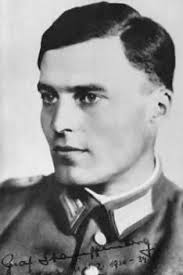
Colonel Claus Schenk von Stuaffenberg
Nevertheless, he now acted as the prime mover for the conspiracy among a growing number of German high command officers to arrest or assassinate Germany’s Fuehrer.
Most of the conspirators wanted to arrest Hitler and surrender to British and American forces–well before the much-feared Russians gained a foothold in Germany.
But Stauffenberg wanted him dead: A live Hitler might eventually be rescued by his Nazi colleagues.
But–how to do it?
Hitler was a closely-guarded target. He was surrounded by fanatical bodyguards who were expert marksmen. He often wore a bulletproof vest and a cap lined with three pounds of laminated steel.
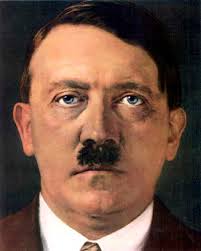
Adolf Hitler
But his single greatest protection–he claimed–was an instinct for danger. He would often suddenly change his schedule–to drop in where he was least expected. Or to suddenly depart an event where he was scheduled to stay a long time.
On November 9, 1939, this instinct saved his life. He had been set to give a long speech at a Munich beer hall before the “Old Fighters” of his storm troopers.
Sixteen years earlier on that day, in 1923, Hitler had led them in a disastrous attempt to overthrow the Bavarian government. Police had put down the effort, killing and wounding about a score of storm troopers in the process.
Hitler himself had later been arrested, tried and convicted for treason–and sentenced to a year’s imprisonment.
But instead of proving to be the end of Nazism, the “Beer Hall Putsch” turned Hitler into a national celebrity. And it launched his career as a legitimate, ultimately successful politician.
So Hitler was expected to speak to his longtime supporters for a long time that evening. Instead, he suddenly cut short his speech and left the beer hall.
Forty-five minutes later, a bomb exploded inside a pillar–before which Hitler had been speaking.
Since then, a series of other assassination attempts had been made against Hitler. All of them involved time-bombs. And all of the would-be assassins were members of the German General Staff.
In one case, a bomb secretly stashed aboard Hitler’s plane failed to explode. In another, an officer who had a bomb strapped to himself unexpectedly found his scheduled meeting with Hitler called off. He had to rush into a bathroom to defuse the bomb before it went off.
So now it was the turn of von Stauffenberg. He would carry his bomb–hidden in a briefcase–into a “Hitler conference” packed with military officers.
But Stauffenberg didn’t intend to be a suicide bomber. He meant to direct the government that would replace that of the Nazis.
His bomb–also rigged with a time-fuse–would be left in the conference room while he found an excuse to leave. After the explosion, he would phone one of his fellow conspirators with the news.
Then, the coup–“Operation Valkyrie”–would be on.
Anti-Nazi conspirators would seize control of key posts of the government. The British and Americans would then be informed of Germany’s willingness to surrender. Provided, of course, that the Russians did not have a say in its postwar future.
The Wehrmacht and Schutzstaffel (SS) had killed millions of Russians. Many had died in combat. Others had been murdered as captives. Still more had been allowed to die by starvation and exposure to the notorious Russian winter.
So the Germans–both Nazi and anti-Nazi–knew what they could expect if soldiers of the Soviet Union reached German soil.
On July 20, 1944, Stauffenberg appeared at Hitler’s well-guarded military headquarters in East Prussia. Like all his other outposts, Hitler had named it–appropriately enough–“Wolf’s Lair.”

“Wolf’s Lair”
Stauffenberg entered the large, concrete building while the conference was in session. He placed his yellow briefcase next to Hitler–who was standing with his generals at a heavy oaken table.
Then Stauffenberg excused himself to take an “urgent” phone call.
At 12:42 p.m. on July 20, 1944, Stauffenberg’s briefcase bomb erupted.
But the Third Reich didn’t come to an end–because, as if miraculously, Hitler had survived.

Hitler shows off the site of the explosion
What had happened?
First, the conference location had been changed–from a wooden building to a concrete one. The concrete absorbed much of the blast.
Second, owing to the summer’s heat, Hitler had ordered all the windows–about ten–opened to let in a breeze. This allowed much of the force of the blast to be dispersed.
Third, and perhaps most important: Stauffenberg had carefully placed his briefcase near Hitler, who was standing next to a heavy oaken support of the conference table.
But after Stauffenberg left the room, Colonel Heinz Brandt, who stood next to Hitler, found the briefcase blocking his legs. So he moved it–to the other side of the heavy oaken support.
When the bomb exploded, Hitler was partially shielded from its full blast. Brandt died, as did two other officers and a stenographer.
2003 IRAQ WAR, 2016 PRESIDENTIAL CAMPAIGN, ABC NEWS, ADOLF HITLER, AFFORDABLE CARE ACT, AL QAEDA, ALTERNET, ASIANS, BREITBART NEWS, BUZZFEED, CBS NEWS, CHILE, CIA, CLAUS VON STAFFENBERG, CNN, CUBAN MISSILE CRISIS, DAILY KOS, DAVID DUKE, DONALD TRUMP, EMPEROR TIBERIUS, FACEBOOK, FBI, GUATEMALA, HISPANICS, HOMOSEXUALS, INTELLIGENCE COMMUNITY, IRAN, JACABO ARBENZ, JAMES W. DOUGLAS, JFK AND THE UNSPEAKABLE, JOHN F. KENNEDY, JOHN KASICH, JOINT CHIEFS OF STAFF, KU KLUX KLAN, LESBIANS, MARTIN NIEMOELLER, MEDICARE, Military, MOHAMMED MOSADDEGH, MOTHER JONES, MOVEON, MUSLIMS, NATIONAL SECURITY AGENCY, NAVY SEALS, NAZI GERMANY, NBC NEWS, NEWSWEEK, NICCOLO MACHIAVELLI, NPR, POLITICO, PRISONERS OF WAR, RAW STORY, SALON, SALVADORE ALLENDE, SLATE, SS, STEVE BANNON, TERRORISTS, THE CHICAGO SUN-TIMES, THE CHICAGO TRIBUNE, THE DAILY BEAST, THE DISABLED, THE HUFFINGTON POST, THE LOS ANGELES TIMES, THE NEW YORK TIMES, THE WALL STREET JOURNAL, THE WASHINGTON POST, TIME, TWITTER, U.S. NEWS & WORLD REPORT, WEHRMACHT, WOMEN, WORLD WAR 11
In History, Military, Politics, Social commentary on February 2, 2017 at 12:12 am
The voice belonged to Tom Moe, a retired colonel in the U.S. Air Force–and a former Vietnam prisoner-of-war.
It was a video produced by the 2016 Presidential campaign for John Kasich. Kasich, the governor of Ohio, had been peddling a message of creating jobs, balancing the Federal budget and disdain for Washington, D.C.
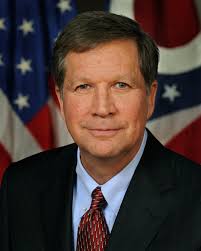
John Kasich
But he remained far behind in the polls, dropping 50% in support in just one month–from September to October. Meanwhile, Trump, the New York billionaire developer, was backed by 25% of Republican primary voters.
So, with nothing to lose, Kasich decided to take off the gloves. He invoked the “N” word for Republicans: Nazi. “You might not care if Donald Trump says Muslims must register with the government, because you’re not one,” continues Moe.
“And you might not care if Donald Trump says he’s going to round up all the Hispanic immigrants, because you’re not one.
Donald Trump
“And you might not care if Donald Trump says it’s OK to rough up black protesters, because you’re not one.
“And you might not care of Donald Trump wants to suppress journalists, because you’re not one.
“But think about this:
“If he keeps going, and he actually becomes President, he might just get around to you. And you’d better hope that there’s someone left to help you.”
Click here: Trump’s Dangerous Rhetoric – YouTube
The above is indeed a paraphrase of a famous quote by Martin Niemoeller (1892–1984), a prominent Protestant pastor. Although he had been a U-boat commander during World War 1, he became a bitter public foe of Adolf Hitler.
A staunch anti-Communist, he had initially supported the Nazis as Germany’s only hope of salvation against the Soviet Union. But when the Nazis made the church subordinate to State authority, Niemoeller created the Pastors’ Emergency League to defend religious freedom.
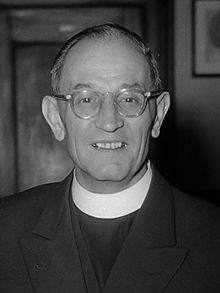
Martin Niemoeller
For his opposition to the Third Reich, Niemoeller spent seven years in concentration camps. With the collapse of the Reich in 1945, he was freed–and elected President of the Protestant church in Hesse and Nassau in 1947.
During the 1960s, he was a president of the World Council of Churches.
He is best remembered for his powerful condemnation of the failure of Germans to protest the increasing oppression of the Nazis:
First they came for the Communists, but I was not a Communist, so I did not speak out.
Then they came for the Socialists, but I was not a Socialist, so I did not speak out.
Then they came for the trade unionists, but I was not a trade unionist, so I did not speak out.
Then they came for the Jews, but I was not a Jew, so I did not speak out.
And when they came for me, there was no one left to speak out for me.
Neither “Adolf Hitler” nor “Nazi Party” was mentioned during the one-minute Kassich video. But Trump was furious.
“I will sue him [Kasich] just for fun,” said Trump, if he could find anything “not truthful” within the ad.
So said the man who called Mexican immigrants “rapists” and accused President Barack Obama of being a Muslim and born outside the United States.
The Kasich ad was by far the darkest attack made against Trump by any candidate–Republican or Democrat. And it raises a disturbing question:
If Donald Trump is America’s Adolf Hitler, who will be its Claus von Stauffenberg?
Colonel Claus Schenk von Stuaffenberg was the German army officer who, on July 20, 1944, tried to assassinate Adolf Hitler.
He had served with the Wehrmacht in Poland (1939), France (1940) and the Soviet Union (1941).
While serving in Tunisa, he was seriously wounded on April 7, 1943 when Allied fighters strafed his vehicle. He lost his left eye, right hand and two fingers of his left hand after surgery.
Colonel Claus Schenk von Stuaffenberg
Nevertheless, he now acted as the prime mover for the conspiracy among a growing number of German high command officers to arrest or assassinate Germany’s Fuehrer.
For most of these officers, the motive was craven: Germany was losing the war it had launched on the world–and they feared the worst. This was especially true now that the numerically superior forces of the Soviet Union had gone onto the offensive.
For Stauffenberg, there was another reason: His disgust at the horrors he had seen committed by his fellow Wehrmacht soldiers upon defenseless POW’s and civilians in Russia.
Thus, Stauffenberg–more than many German––knew firsthand the vengeance his country could expect if the “1,000 year Reich” fell.
Something must be done, he believed, to prove to the world that not all Germans–even members of the Wehrmacht–were criminals.
Most of the conspirators wanted to arrest Hitler and surrender to British and American forces–well before the much-feared Russians gained a toehold in Germany.
For Stauffenberg, arresting Hitler wasn’t enough.
Stauffenberg wanted him dead. A live Hitler might eventually be rescued by his Nazi colleagues.
But–how to do it?
2008 PRESIDENTIAL ELECTION, 2016 PRESIDENTIAL ELECTION, ABC NEWS, ADOLF HITLER, AFFORDABLE CARE ACT, ALTERNET, BARACK OBAMA, BILL O'REILLY, CBS NEWS, CNN, DONALD TRUMP, FACEBOOK, FOX NEWS CHANNEL, HILLARY CLINTON, JOSEPH R. MCCARTHY, MEGYN KELLY, MEIN KAMPF, MITCH MCCONNELL, MITT ROMNEY, NBC NEWS, NEWSWEEK, NEWT GINGRICH, NPR, POLITICO, REPUBLICAN PARTY, RICHARD M. NIXON, RUSH LIMBAUGH, Sarah Palin, SEAN HANNITY, SPIRO AGNEW, THE BACKLASH, THE CHICAGO SUN-TIMES, THE CHICAGO TRIBUNE, THE HUFFINGTON POST, THE LOS ANGELES TIMES, THE NEW YORK TIMES, THE WASHINGTON POST, TIME, TWITTER, U.S. NEWS & WORLD REPORT, WILL BUNCH
In Bureaucracy, History, Politics, Social commentary on December 5, 2016 at 1:10 am
On November 8, real estate mogul and reality TV showman Donald Trump was elected as the 45th President of the United States.
But millions of Americans are sickened that a self-confessed “pussy-grabber” will soon inherit the Oval Office.
One day after Trump’s election, thousands blocked traffic and flooded thoroughfares across the nation to protest his victory. Demonstrators clashed with police in Seattle, Berkeley, Portland, Los Angeles, Chicago, Boston and Manhattan.
Thousands more declared on social media that Trump is “never my President” or “not my President.”
Since then, Republicans and their Right-wing allies have thundered: “He’s our President now, and we must all get behind him.”
Another often-heard Republican demand: “We need to give President Trump a chance!”
Of course, Republicans took exactly the opposite position after Illinois’ U.S. Senator Barack Obama won the Presidency in 2008.
Even before Obama was inaugurated, on January 20, 2009, Republican Senators agreed that they would block every legislative proposal the new President offered.
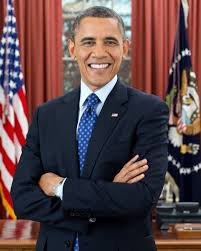
President Barack Obama
It didn’t matter whether the proposals offered concrete solutions for America’s ills. All that mattered was that they came from a Democratic President–and, worse, a black one.
Kentucky U.S. Senator Mitch McConnell summed it up: “The single most important thing we want to achieve is for President Obama to be a one-term president.”
Since 1945, Republicans have charged “Traitor!” against anyone who dared to run against them for office or think other than Republican-sponsored thoughts. Among the foremost members of this decades-long treason chorus:
- Senator Joseph R. McCarthy;
- Senator/President Richard M. Nixon;
- Vice President Spiro Agnes;
- Speaker of the House Newt Gingrich;
- Broadcaster Rush Limbaugh;
And since the 2008 election of Barack Obama, Republicans have increasingly wooed voters with subtle and outright appeals to racism.
Most Republicans refuse to acknowledge this, but author Will Bunch has not been so reticent. In his 2010 book, The Backlash, he writes:
“…The year that had [conservatives] so terrified was 2050. In that year, according to the U.S. Census Bureau, the U.S. population would grow to some 399 million people–but only 49.8% would be white….”

This was given added weight by the 2008 election of Barack Obama:
“The Democratic upstart–and his legion of supporters among the nonwhite as well as the young–was a 9/11-sized jolt to the white masses already so worried about the cultural implications of immigration.
“The year 2050 suddenly wasn’t two generations away but right here knocking on the front door, with a dark face and that scary name: Barack Hussein Obama.
“Like a fire spreading across dry sagebrush, it took no effort for fear of The Other to leap from the Mexicans in front of the Wal-Mart to the man now inside the Oval Office.”
For Republicans, the Presidency of Barack Obama excited contempt and hatred:
- In September, 2009, Joe Wilson (R-SC) yelled “You lie!” during Obama’s health care speech to Congress.
- In January, 2010, an effigy of President Barack Obama was found hanging from a building in Plains, Georgia.
- In December, 2011, Brent Bozell, who runs the right-wing Media Research Center, called Obama to “a skinny, ghetto crackhead.”
- In December, 2011, Rep. Jim Sensenbrenner (R-Wisc.), said of Michelle Obama: “She lectures us on eating right while she has a large posterior herself.”
- In January, 2012, Mitt Romney’s son, Matt, said his father might release his tax returns “as soon as President Obama releases his grades and birth certificate and sort of a long list of things.”
- In February, 2012, right-wing columnist Ann Coulter offered: “Voters with forty years of politically correct education are ecstatic to have the first Black president. They just love the idea even if we did get Flavor Flav instead of Thomas Sowell.”
- In May, 2012, a flatbed truck drove through new York holding a trailer with eight mannequin-like bodies hanging on nooses. One of the figures resembled President Obama, with a sign on the truck reading: “Obama Is Onboard, Find Out Why. Visit YouTube.com And Search Keyword PatriotPhipps.”

- In May, 2012, Patrick Lanzo, a bar owner in Paulding County, Georgia, posted a sign reading: “I do not support the nigger in the White House.” In 2009 he posted a sign that read, “Obama’s plan for health-care: nigger rig it.” Lanzo advertises his establishment as a “Klan bar.”
- Throughout the 2012 Presidential campaign, Newt Gingrich repeatedly called Obama “the greatest food stamp President in American history.”
- Obama has been portrayed as a shoeshine man, an Islamic terrorist and a chimp. The image of his altered face has been shown on a product called Obama Waffles in the manner of Aunt Jemima and Uncle Ben. He has been repeatedly depicted with a Hitler forelock and mustache.
- Among the protest signs they have brandished by Tea Party members: “Obama’s Plan: White Slavery,” “The American Taxpayers are the Jews for Obama’s Ovens,” and “Obama was Not Bowing [to the Saudi King] He was Sucking Saudi Jewels.”
- Other Tea Party posters: “Imam Obama Wants to Ban Pork” and “The Zoo Has An African Lion, and the White House Has a Lyin’ African.”
- Tea Partiers have chanted at Obama: “Bye, bye, Blackbird” and “Kenyan go home!”
- During the Republican-imposed government shutdown–October 1-17, 2013–Rep. Pete Sessions (R-Texas) told Obama: “I cannot even stand to look at you,” The incident occurred when Obama met with lawmakers to try to find a resolution to the shutdown.
2012 PRESIDENTIAL RACE, ABC NEWS, AFFORDABLE CARE ACT, BARACK OBAMA, CBS NEWS, CNN, EMPLOYERS RESPONSIBILITY ACT, FACEBOOK, FUNDRAISING, GODFATHER'S PIZZA, HERMAN CAIN, LABOR DAY, MITT ROMNEY, NBC NEWS, OBAMACARE, PAPA JOHN'S PIZZA, THE CHICAGO SUN-TIMES, THE CHICAGO TRIBUNE, THE LOS ANGELES TIMES, THE NEW YORK TIMES, THE WASHINGTON POST, TWITTER, USA TODAY
In Bureaucracy, Business, History, Law, Law Enforcement, Politics, Social commentary on September 5, 2016 at 12:00 am
John Schnatter, the CEO of Papa John’s Pizza, doesn’t like the Affordable Care Act (ACA), better known as Obamacare.
And Schnatter bluntly warned his employees: When the Act took effect, Papa John’s Pizza would change in two ways.
First, it would be forced to do something it hadn’t done since its founding in 1984: Offer healthcare coverage to its 16,5000 employees or pay a penalty to the government.
Second, it would raise the prices of its pizzas.
John Schnatter
How high would they go up?
By as much as eleven to fourteen cents price increase per pizza, or fifteen to twenty cents per order!
And Schnatter made it clear: He wasn’t going to take this lying down. He was determined to pass along those costs to his customers.
“If Obamacare is in fact not repealed,” Schnatter told Politico, “we will find tactics to shallow out any Obamacare costs and core strategies to pass that cost onto consumers in order to protect our shareholders’ best interests.”
After all, why should a multi-million-dollar company show any concern for those who make its profits a reality?
Consider:
- Papa John’s is the third-largest pizza takeout and delivery chain in the United States.
- Its full year 2014 revenues were $1.60 billion, an increase of 11.1% from 2013 revenues of $1.44 billion.
- Its full year 2014 net income was $73.3 million, compared to 2013 net income of $69.5 million.
Click here: Papa John’s Announces Fourth Quarter and Full Year 2014 Results (NASDAQ:PZZA)
Nor should anyone expect Schnatter to take a pay cut, just so his employees can obtain medical care when they need it.
Schnatter’s total calculated compensation for 2014 came to $3,456,146.
Click here: John H. Schnatter: Executive Profile & Biography – Businessweek
“We’re not supportive of Obamacare, like most businesses in our industry,” Schnatter–a supporter of Republican Presidential candidate Mitt Romney–admitted in a 2012 interview with Politico.
To demonstrate his opposition to providing medical insurance for all Americans, Schnatter hosted a fundraising event for Mitt Romney at his own Louisville, Kentucky mansion in May, 2012.
The luxurious setting for the fundraiser gave Romney a rush of pure, plutocratic ecstasy.
“What a home this is,” gushed Romney. “What grounds these are, the pool, the golf course.
“You know, if a Democrat were here he’d look around and say no one should live like this. Republicans come here and say everyone should live like this.”

John Schnatter’s estate
Of course, Romney conveniently ignored a brutally ugly fact:
For the vast majority of Papa John’s minimum-wage-earning employees–many of them working only part-time–the odds of their owning a comparable estate are non-existant.
In a typical demonstration of corporate thinking, Judy Nichols, a Papa John’s franchise owner in Beaumont, Texas, said:
“I have two options, I can stop offering coverage and pay the $2,000 fine, or I could keep my number of staff under 50 so the mandate doesn’t apply,” she told Legal Newsline.
In short: Defy the law, and employee healthcare needs be damned.
In fact, that’s exactly what Schnatter announced he would do: Reduce his workers’ hours–since Obamacare mandates that only employees working more than 30 hours per week are covered under their employers’ health insurance plan.
Nichols claimed that the the law might cost her $20,000 to $30,000 in taxes: “Obamacare is making me think about cutting jobs instead,” she said.
Translation: If you force me to behave responsibly, I’ll just have to take it it out on thousands of willing-to-work Americans.
So how can America cope with behavior that destroys not only lives but the economy as well?
By passing–and vigorously enforcing–a nationwide Employers Responsibility Act.
Among its provisions:
Employers would be required to provide full medical and pension benefits for all employees, regardless of their full-time or part-time status.
Increasingly, employers are replacing full-time workers with part-time ones–solely to avoid paying medical and pension benefits.
Requiring employers to act humanely and responsibly toward all their employees would encourage them to provide full-time positions–and hasten the death of this greed-based practice.
The seeking of “economic incentives” by companies in return for moving to or remaining in cities/states would be strictly forbidden.
Such “economic incentives” usually:
- allow employers to ignore existing laws protecting employees from unsafe working conditions;
- allow employers to ignore existing laws protecting the environment;
- allow employers to pay their employees the lowest acceptable wages, in return for the “privilege” of working at these companies; and/or
- allow employers to pay little or no business taxes, at the expense of communities who are required to make up for lost tax revenues.
Employers who continue to make such overtures would be prosecuted for attempted bribery or extortion:
- Bribery, if they offered to move to a city/state in return for “economic incentives,” or
- Extortion, if they threatened to move their companies from a city/state if they did not receive such “economic incentives.”
This would
- protect employees against artificially-depressed wages and unsafe working conditions;
- protect the environment in which these employees live; and
- protect cities/states from being pitted against one another at the expense of their economic prosperity.
It’s past time for America to protect employees who work for a living from CEOs who simply take credit for the work those employees do.
ABC NEWS, AFFORDABLE CARE ACT, BARACK OBAMA, CBS NEWS, CNN, CUBAN MISSILE CRISIS, ERIC HOLDER, EXTORTION, FACEBOOK, GOVERNMENT SHUTDOWN, HILLARY CLINTON, HOUSE OF REPRESENTATIVES, JOHN BOEHNER, JON STEWART, JUSTICE DEPARTMENT, NICCOLO MACHIAVELLI, OBAMACARE, RACKETEER INFLUENCED CORRUPT ORGANIZATIONS ACT, REPUBLICANS, RICHARD WOLFFE, TED CRUZ, THE CHICAGO SUN-TIMES, THE CHICAGO TRIBUNE, THE DAILY SHOW, THE NEW YORK TIMES, THE PRINCE, THE WASHINGTON POST, TWITTER, USA PATRIOT ACT
In Bureaucracy, History, Law, Law Enforcement, Politics, Social commentary on July 22, 2016 at 12:05 am
The ancient Greeks believed: “A man’s character is his fate.” It is Barack Obama’s character–and America’s fate–that he is more inclined to conciliation than confrontation.
Richard Wolffe chronicled Obama’s winning of the White House in his book Renegade: The Making of a President. He noted that Obama was always more comfortable when responding to Republican attacks on his character than he was in making attacks of his own.
Rule #4: Be Open to Compromise–Not Capitulation
Obama came into office determined to find common ground with Republicans. But they quickly made it clear to him that they only wanted his political destruction.
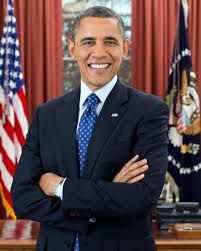
President Barack Obama
At that point, he should have put aside his hopes for a “Kumbaya moment” and applied what Niccolo Machiavelli famously said in The Prince on the matter of love versus fear:
From this arises the question whether it is better to be loved than feared, or feared more than loved. The reply is, that one ought to be both feared and loved, but as it is difficult for the two to go together, it is much safer to be feared than loved.
For it may be said of men in general that they are ungrateful, voluble, dissemblers, anxious to avoid danger and covetous of gain.
As long as you benefit them, they are entirely yours: they offer you their blood, their goods, their life and their children, when the necessity is remote. But when it approaches, they revolt….
And men have less scruple in offending one who makes himself loved than one who makes himself feared; for love is held by a chain of obligations which, men being selfish, is broken whenever it serves their purpose; but fear is maintained by a dread of punishment which never fails.
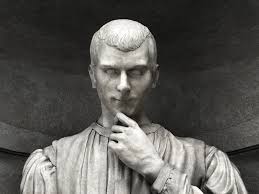
Niccolo Machiavelli
By refusing to vigorously prosecute acts of Republican extortion, President Obama has encouraged Republicans to intensify their aggression against him.
Their most recent act: Refusing to meet with federal appeals court judge Merrick Garland. Obama’s designated nominee to the Supreme Court after the February 13 death of Justice Antonin Scalia.
Kentucky United States Senator Mitch McConnell has flatly stated: There will be no Supreme Court hearing–not during regular business or a post-election lame-duck session.
Had Obama proceeded with indictments against Republican extortion in 2011 or 2013, McConnell–who supported the extortion attempts of those years–would now be desperately meeting with his lawyers.
Rule #5: First Satisfy Your Citizens, Then Help Them
Obama started off well. Americans had high expectations of him.
This was partly due to his being the first black elected President. And it was partly due to the legacies of needless war and financial catastrophe left by his predecessor, George W. Bush.
Obama entered office intending to reform the American healthcare system, to make medical care available to all citizens, and not just the richest.
But that was not what the vast majority of Americans wanted him to concentrate his energies on. With the loss of 2.6 million jobs in 2008, Americans wanted Obama to find new ways to create jobs.
This was especially true for the 11.1 million unemployed, or those employed only part-time.
Jonathan Alter, who writes sympathetically about the President in The Center Holds: Obama and His Enemies, candidly states this.
But Obama chose to spend most of his first two years as President pushing the Affordable Care Act (ACA)–which soon became known as Obamacare–through Congress.
The results were threefold:
First, those desperately seeking employment felt the President didn’t care about them.
Second, the reform effort became a lightning rod for conservative groups like the Tea Party.
And, third, in 2010, a massive Right-wing turnout cost Democrats the House of Representatives and threatened Democratic control of the Senate.
Rule #6: Be Careful What You Promise
Throughout his campaign to win support for the ACA, Obama had repeatedly promised that, under it: “If you like your health insurance plan, you can keep your plan. Period. If you like your doctor, you can keep your doctor. Period.”
But, hidden in the 906 pages of the law, was a fatal catch for the President’s own credibility.
The law stated that those who already had medical insurance could keep their plans--so long as those plans met the requirements of the new healthcare law.
If their plans didn’t meet those requirements, they would have to obtain new coverage that did.
It soon turned out that a great many Americans wanted to keep their current plan–even if it did not provide the fullest possible coverage.
Suddenly, the President found himself facing a PR nightmare: Charged and ridiculed as a liar.
Even Jon Stewart, who on “The Daily Show” had supported the implementation of “Obamacare,” sarcastically ran footage of Obama’s “you can keep your doctor” promise.
Jon Stewart
The implication: You said we could keep our plan/doctor; since we can’t, you must be a liar.
As a result, the President found his reputation for integrity–long his greatest asset–tarnished.
All of which takes us to yet another warning offered by Machiavelli: Whence it may be seen that hatred is gained as much by good works as by evil….
ABC NEWS, AFFORDABLE CARE ACT, BARACK OBAMA, CBS NEWS, CNN, CUBAN MISSILE CRISIS, ERIC HOLDER, EXTORTION, FACEBOOK, GOVERNMENT SHUTDOWN, HILLARY CLINTON, HOUSE OF REPRESENTATIVES, JOHN BOEHNER, JON STEWART, JUSTICE DEPARTMENT, NICCOLO MACHIAVELLI, OBAMACARE, RACKETEER INFLUENCED CORRUPT ORGANIZATIONS ACT, REPUBLICANS, RICHARD WOLFFE, TED CRUZ, THE CHICAGO SUN-TIMES, THE CHICAGO TRIBUNE, THE DAILY SHOW, THE NEW YORK TIMES, THE PRINCE, THE WASHINGTON POST, TWITTER, USA PATRIOT ACT
In Bureaucracy, History, Law, Law Enforcement, Politics, Social commentary on July 21, 2016 at 12:07 am
If Hillary Clinton succeeds Barack Obama as President, can gain much by learning from his mistakes.
In 2011, Obama could have ended Republican extortion by invoking the law–that of the Racketeer Influenced Corrupt Organizations (RICO) Act and/or the USA Patriot Act.
Or he could have faced down Republican extortionists by urging his fellow Americans to rally to him in a moment of supreme national danger.
Rule #2: Rally Your Citizens Against a Dangerous Enemy
President John F. Kennedy did just that–successfully–during the most dangerous crisis of his administration.
Addressing the Nation on October 22, 1962, Kennedy shocked his fellow citizens by revealing that the Soviet Union had installed offensive nuclear missiles in Cuba.

John F. Kennedy
After outlining a series of steps he had taken to end the crisis, Kennedy sought to reassure and inspire his audience. His words are worth remembering today:
“The path we have chosen for the present is full of hazards, as all paths are, but it is the one most consistent with our character and courage as a nation and our commitments around the world.
“The cost of freedom is always high, but Americans have always paid it. And one path we shall never choose, and that is the path of surrender or submission.”
President Obama could have sent that same message to the extortionists of the Republican Party.
Yet this was another option he failed to exploit. And he and the Nation have continued to pay the price for it.
Rule #3: Timidity Toward Aggressors Only Leads to More Aggression
In September, 2013, Republicans once again threatened to shut down the Federal Government unless the President agreed to defund the Affordable Care Act (ACA), better known as “Obamacare.
They were enraged that millions of uninsured Americans might receive medical care on a par with that given members of the House and Senate.
So on September 20, the House voted on a short-term government funding bill that included a provision to defund Obamacare.
Obama and Senate Democrats rejected that provision. If the House and Senate couldn’t reach a compromise, many functions of the federal government would be shut down indefinitely on October 1.
According to Republicans: They wanted to save the country from bankruptcy–although the Congressional Budget Office stated that the ACA would lower future deficits and Medicare spending.
After passing the House and Senate, the ACA had been signed into law by President Obama on March 23, 2010.
On June 28, 2012, the United States Supreme Court–whose Chief Justice, John Roberts, is a Republican–had upheld the constitutionality of the ACA.
Yet House Republicans still sought a way to stop the law from taking effect. By September, 2013, they had voted 42 times to repeal “Obamacare.”
But their efforts had failed; the Democratic-led Senate made it clear it would never go along with such legislation.
Finally, unable to legally overturn the Act or to legislatively repeal it, House Republicans fell back on something much simpler: Threats and fear.
Threats–of voting to shut down salaries paid to most Federal employees. Most, because they themselves would continue to draw hefty salaries while denying them to FBI agents, air traffic controllers and members of the military, among others.
And fear–that would be generated throughout the Federal government, the United States and America’s international allies.
Republicans claimed it was Obama and Senate Democrats who refused to see reason and negotiate.
But then a Republican accidentally gave away the real reason for the shutdown.
“We’re not going to be disrespected,” Rep. Marlin Stutzman (R-Ind.) told the Washington Examiner. “We have to get something out of this. And I don’t know what that even is.”

Martin Stutzman
In short, Republicans–as admitted by Martlin Stutzman–were out to get “respect.” A member of the Crips or Bloods couldn’t have said it better.
The shutdown began on October 1, 2013–and ended 16 days later with even Republicans admitting it had been a failure.
President Obama, a former attorney, denounced House Republicans as guilty of “extortion” and “blackmail.” If he truly believed them to be so guilty, he could have once again invoked RICO and/or the USA Patriot Act.
Yet he did neither.
Had the President dared to prosecute such criminal conduct, the results would have been:
- Facing lengthy prison terms, those indicted Republicans would have been forced to lawyer-up. That in itself would have been no small thing, since good criminal attorneys cost big bucks.
- Obsessed with their own personal survival, they would have found little time for engaging in the same thuggish behavior that got them indicted. In fact, doing so would have only made their conviction more likely.
- The effect on Right-wing Republicans would have been the same as that of President Ronald Reagan’s firing of striking air traffic controllers: “You cross me and threaten the security of this Nation at your own peril.”

True, some prosecuted Republicans might have beaten the rap. But first they would have been forced to spend huge amounts of time and money on their defense.
And with 75% of Americans voicing disgust with Congress, most of those prosecuted might well have been convicted.
It would have been a long time before Republicans again dared to engage in such behavior.


.jpg)


ABC NEWS, AFFORDABLE CARE ACT, AIR TRAFFIC CONTROLLERS STRIKE, ALTERNET, BARCK OBAMA, BUZZFEED, CBS NEWS, CNN, COLUMBIA UNIVERSITY, DAILY KOS, EXTORTION, FACEBOOK, GEORGE W. BUSH, HARVARD LAW SCHOOL, HILLARY CLINTON, JOHN SCHNATTER, JON STEWART, JONATHAN ALTER, JUSTICE DEPARTMENT, MEDICAL CARE, MOTHER JONES, MOVEON, NBC NESS, NBC NEWS, NEWSWEEK, NICCOLO MACHIAVELLI, NPR, OBAMACARE, PAPA JOHN'S PIZZA, PATRIOT ACT, POLITICO, RACKETEER INFLUENCED CORRUPT ORGANIZATIONS ACT, RAW STORY, REFORM, REPUBLICAN PARTY, RICHARD WOLFFE, SALON, SLATE, TERRORISM, THE CHICAGO SUN-TIMES, THE CHICAGO TRIBUNE, THE DAILY BEAST, THE DAILY SHOW, THE HUFFINGTON POST, THE LOS ANGELES TIMES, THE NEW YORK TIMES, THE PRINCE, THE WALL STREET JOURNAL, THE WASHINGTON POST, TIME, TWITTER, U.S. NEWS & WORLD REPORT, USA TODAY
THE SIX DEADLY FLAWS IN “OBAMACARE”: PART THREE (END)
In Bureaucracy, History, Law, Medical, Politics, Social commentary on March 2, 2017 at 12:11 amPresident Barack Obama was often accused of playing ruthless “Chicago politics” by his Republican enemies. But Obama’s biggest mistake lay not in cynicism but misplaced idealism.
Obama Mistake No. 5: Believing that public and private employers would voluntarily comply with the law.
The Affordable Care Act (ACA) requires employers to provide insurance for part-time employees who work more than 30 hours per week. Yet many employers claimed–without having to offer proof–that they couldn’t afford it.
So they limited part-time workers’ hours to 29 per week instead.
Obama was clearly surprised at this. But he shouldn’t have been.
Greed-fueled businessmen always try to avoid complying with the law–or achieve minimum compliance with it.
The Act doesn’t penalize companies for not providing health insurance coverage for part-time employees who work fewer than 30 hours.
Predictably, employers:
Some employers openly showed their contempt for President Obama–and the idea that employers have any obligation to those who make their profits a reality.
One was John Schnatter, CEO of Papa John’s Pizza, who said:
John Schnatter
“If Obamacare is in fact not repealed,” he told Politico, “we will find tactics to shallow out any Obamacare costs and core strategies to pass that cost onto consumers in order to protect our shareholders’ best interests.”
Thus, President Obama should have required all employers to provide insurance coverage for all of their employees, regardless of their fulltime or part-time status.
This would have produced two substantial benefits:
Employers would thus feel: “I’m paying for fulltime insurance coverage, so I should be getting fulltime work in return.”
If Obama considered this option, he decided against pressing for it.
Obama Mistake No. 6: Failing to closely study his proposed legislation.
Throughout his campaign to win support for the ACA, Obama had repeatedly promised: “If you like your health insurance plan, you can keep your plan. If you like your doctor, you can keep your doctor. Period.”
But the 906 pages of the law held a fatal catch for the President’s own credibility.
The law stated that those who already had medical insurance could keep their plans–so long as those plans met the requirements of the new healthcare law.
If their plans didn’t meet those requirements, they would have to obtain coverage that did.
But many Americans wanted to keep their current plan–even if it did not provide the fullest possible coverage.
Suddenly, the President found himself facing a PR nightmare–charged and ridiculed as a liar.
Even Jon Stewart, who on “The Daily Show,” had supported the implementation of “Obamacare,” ran footage of Obama’s “you can keep your doctor” promise.
Jon Stewart
The implication: You said we could keep our plan/doctor. Since we can’t, you must be a liar.
All of which points to a final warning offered by Niccolo Machiavelli: Whence it may be seen that hatred is gained as much by good works as by evil….
Former Democratic Presidential nominee Hillary Clinton said that, if she were elected, she would seek incremental changes in the ACA. That possibility became moot when she lost the 2016 election to Donald Trump.
Vermont U.S. Senator Bernie Sanders, on the other hand, wants a single-payer plan.
A single-payer plan would prove simpler and more comprehensive than the ACA. But the chances of its passing a Republican-dominated Congress are absolutely zero.
The election of Donald Trump seems to have finally doomed the ACA–except for one thing: Since it became law, in 2010, 22 million Americans who had never before obtained healthcare insurance now have it.
This includes even Republicans who voted for Trump–without realizing they would be losing their only tie to medical care. And now many of them are finally realizing this truth.
Thus, Republicans in the House and Senate now find themselves besieged by angry constituents at town hall meetings.
These Republicans care nothing for Americans who would be left without medical care. But they do care about their own futures–as members of Congress.
This has led to three schisms among Republicans:
Republicans expect Democrats to sign on with their “Obamacare replacement plan.” But Democrats have made it clear: “You repeal it, you’re on your own in replacing it.”
Republicans spent eight years demanding the repeal of “Obamacare.” But now they fear that its repeal will lead to the repeal of their own political ambitions.
Share this: