On November 9, 1923, Nazi Party Fuhrer Adolf Hitler tried to overthrow the government in Munich, Bavaria.
About 2,000 Nazis marched to the center of Munich, where they confronted heavily-armed police. A shootout erupted, killing 16 Nazis and four policemen.
Hitler was injured during the clash, but managed to escape. Two days later, he was arrested and charged with treason.
Put on trial, he found himself treated as a celebrity by a judge sympathetic to Right-wing groups. He was allowed to brutally cross-examine witnesses and even make inflammatory speeches.
At the end of the trial, he was convicted of treason and sentenced to five years’ imprisonment. Of this he served only nine months before being pardoned.
Hitler used his time in Landsberg Prison, in Bavaria, to write his infamous book, Mein Kampf-–“My Struggle.” Part autobiography, part political treatise, it laid out his future plans—for a revitalized Germany and the conquest of other nations.
Adolf Hitler leaving Landsberg Prison, December, 20, 1924
Published in 1925, it was long ignored by all but the most fanatical Nazis. But as Hitler gained increasing numbers of votes in a series of elections, many people—inside and outside Germany—began paying attention to its contents.
By 1939 it had sold 5,200,000 copies and had been translated into 11 languages.
Most of those who bought the book never read it. Its style was bombastic, repetitious and illogical. The first edition contained grammatical errors, reflecting a self-educated man.
Few who read it took Hitler’s intentions seriously. Comedians portrayed him as a wildly gesturing crank who screamed constantly.
Hitler made no effort to hide his program for Germany under his rule. His candor led many people to believe he was a lunatic who could be safely ignored.
He was especially insistent on the need for eliminating world Jewry and conquering the Soviet Union.
On the former topic he wrote: “The nationalization of our masses will succeed only when, aside from all the positive struggle for the soul of our people, their international poisoners are exterminated.
“If at the beginning of the war and during the war twelve or fifteen thousand of these Hebrew corrupters of the nation had been subjected to poison gas, such as had to be endured in the field by hundreds of thousands of our very best German workers of all classes and professions, then the sacrifice of millions at the front would not have been in vain.”
A mere 17 years later, Hitler’s “Thousand-Year Reich” would translate those words into horrific action in a series of extermination camps equipped with gas chambers.
Hitler was equally insistent that Germany needed to find Lebensraum—“Living space”—in the east. And by “east” he meant “Russia.”
Specifically: “And so we National Socialists consciously draw a line beneath the foreign policy tendency of our pre-War period. We take up where we broke off six hundred years ago.
“We stop the endless German movement to the south and west, and turn our gaze toward the land in the east. At long last we break off the colonial and commercial policy of the pre-War period and shift to the soil policy of the future.
“If we speak of soil in Europe today, we can primarily have in mind only Russia and her vassal border states.”
Hitler finally attained power on January 30, 1933. He realized that Germany was not yet strong enough to impose its will on other nations. So he set out on a secret crash program to make Germany the strongest military power in Europe.
In 1936, he set out on his “mission of Providence”:
March, 1936: Ordering German troops to reoccupy the demilitarised zone between France and Germany (the Rhineland), in violation of the Versailles Treaty, which ended World War 1.
July, 1936: Sending troops to Spain to support the Fascist army of General Francisco Franco.
March 12, 1938: Occupying Austria and “unifying” it with Germany (the “Anschluss“).
September 29, 1938: Bullying British Prime Minister Neville Chamberlain into surrendering Czechoslovakia’s Sudetenland districts to Germany.
September 1, 1939: Ordering the invasion of Poland, which unintentionally launched World War II.
June 22, 1941: Ordering the invasion of the Soviet Union.
1941: Secretly ordering “the Final Solution of the Jewish Question,” resulting in the extermination of at least six million Jews.
Only after Hitler set out to conquer, first Europe, then the Soviet Union, did his victims and intended victims realize that Mein Kampf had given them a deadly warning. A warning too many of them had refused to heed.
By the time World War II ended:
Fifty million men, women and children were died—most of them dying in agony.
The Soviet Union, having crushed Nazi Germany, become a world power.
Poland and eastern Europe—once captives of Nazi Germany—now found themselves captives of the Soviet Union.
The United States, untouched by the war, emerged as the world’s superpower—and the only country strong enough to contain the Soviet Union.
But Adolf Hitler isn’t the only would-be dictator to give ample warning of his murderous intentions.
And, like most Germans in the Weimar Republic, which preceded Nazi Germany, most Americans refuse to take that warning seriously.
From October 10 to 12, attendees of the American Priority Conference at the Trump National Doral Miami resort got a treat that was supposed to be kept secret.
They got to watch a series of Right-wing videos featuring graphic acts of violence against those President Donald Trump hates. One of these, “The Trumpsman,” featured a digitized Trump shooting, stabbing and setting fire to such liberals as:
Former President Bill Clinton
Former Vice President Joe Biden
Former Democratic Presidential candidate Hillary Clinton
Democratic Speaker of the House Nancy Pelosi
Former President Barack Obama
Vermont United States Senator Bernie Sanders
Even Republicans who have dared to disagree with Trump—such as Utah Senator Mitt Romney and the late Arizona Senator John McCain—met a brutal end.
Legitimate news media—such as CBS, BBC, ABC, CNN, The New York Times and The Washington Post—were also depicted as among Trump’s victims.
The New York Times broke the news of the video’s showing. Since then, the American Priority Conference has rushed to disavow it—and the firestorm of outrage it set off.
So has the Trump White House.
And America’s major news media have demanded that Trump strongly condemn the video.
If Donald Trump had a history of truthfulness and humanity, his denouncing the video would prove highly believable. But he has neither.
He is a serial liar—TheWashington Post noted on August 12 that, since taking office on January 20, 2017, Trump has made more than 12,000 false or misleading claims.
As for his reputation as a humanitarian:
As a Presidential candidate, Trump repeatedly used Twitter to attack hundreds of real and imagined enemies in politics, journalism, TV and films.
From June 15, 2015, when he launched his Presidential campaign, until October 24, 2016, Trump fired almost 4,000 angry, insulting tweets at 281 people and institutions that had somehow offended him.
And he has continued to do so since taking office on January 20, 2017. The New York Times calculates that, as of January 2019, Trump had insulted 551 people (including private citizens), places, and institutions on Twitter, ranging from politicians to journalists and news outlets to entire countries.
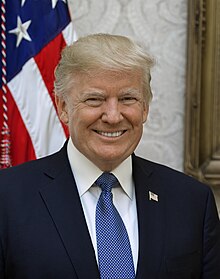
Donald Trump
Summing up Trump’s legacy of hatred, longtime Republican Presidential adviser David Gergen said:
“Trump unleashed the dogs of hatred in this country from the day he declared he was running for president, and they’ve been snarling and barking at each other ever since. It’s just inevitable there are going to be acts of violence that grow out of that.”
So any Trump statement claiming that he strongly condemns the video should rightly be discounted as mere propaganda.
The video was first uploaded on YouTube in 2018 by a account named TheGeekzTeam. The GeekzTeam is a frequent contributor to MemeWorld, a pro-Trump website. Its creator was prominent Twitter user Carpe Donktum.
MemeWorld, embarrassed that its Right-wing porn has become a national scandal, now claims:
“The Kingsman video is CLEARLY satirical and the violence depicted is metaphoric. No reasonable person would believe that this video was a call to action or an endorsement of violence towards the media. The only person that could potentially be ‘incited’ by this video is Donald Trump himself, as the main character of the video is him. THERE IS NO CALL TO ACTION.”
Of course, that was not how the Right reacted in 2017 when comedian Kathy Griffin posed for a photograph holding up what was meant to look like Trump’s bloody, severed head.
A furious Right-wing backlash cost her gigs as a comedian and made her the target of a Secret Service investigation into whether she was a credible threat. She even had to buy metal detectors to post at her appearances at comedy clubs: “There were all kinds of incidents. A guy came at me with a knife in Houston.”
Cindy McCain, widow of Senator John McCain, wasn’t buying the Right’s disavowals, tweeting: “Reports describing a violent video played at a Trump Campaign event in which images of reporters & @John McCain are being slain by Pres Trump violate every norm our society expects from its leaders & the institutions that bare their names. I stand w/ @whca in registering my outrage”.
Nor was Democratic Presidential candidate Beto O’Rourke: “This video isn’t funny. It will get people killed.”
* * * * *
The video was produced by Rightists who believed it reflected what Donald Trump would do to his enemies if only he could get away with it. And given his near-constant calls for violence against his critics, they were absolutely correct.
But the video’s critics are wrong to call for its suppression.
On the contrary—it should be seen for what it is: The Mein Kampf of Donald Trump and his fanatical followers, in and outside the Republican party.
Like Adolf Hitler’s autobiography, it depicts the future America can expect if the Right gains the power to live out its murderous fantasies.
And the fantasy Right-wingers prize most: The brutal extermination of everyone who refuses to submit to their Fascistic tyranny.
The hour is late and the clock is ticking as the Right conspires to give Trump this power as “President-for-Life.”
It now remains to be seen if enough Americans are willing to stand fast against the brutal intentions of these specialists in evil.
And the most glorious episodes do not always furnish us with the clearest discoveries of virtue or vice in men.Sometimes a matter of less moment, an expression or a jest, informs us better of their characters and inclinations than the most famous sieges, the greatest armaments, or the bloodiest battles.”
—Plutarch, Alexander the Great
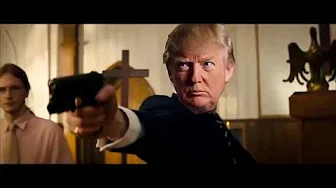
It’s in “The Church of Fake News” that President Donald Trump finally revenges himself upon his many enemies.
He walks down an aisle, reaches into his suit jacket pocket, pulls out a .45 automatic—which seems to have an endless magazine—and opens fire on:
Democratic Representative Adam Schiff, chairman of the House Intelligence Committee
Former President Bill Clinton
Democratic Representative Maxine Waters
Utah United States Senator Mitt Romney
Black Lives Matter
Former Vice President Joe Biden
Liberal activist George Soros
Former Democratic Presidential Nominee Hillary Clinton
Democratic Speaker of the House Nancy Pelosi and
Former President Barack Obama.
Nor does he spare his longtime “enemies” in the legitimate news media, such as:
CNN
The Washington Post
BBC
ABC
MSNBC Anchor Rachel Maddow
The New York Times
PBS
NBC
and Politico
Trump has, after all, slandered journalists as “the enemy of the American people.” And he has called news stories documenting his crimes and follies “fake news.”
Nor in the video is he limited to using a firearm.
He lights the head of Vermont United States Senator Bernie Sanders on fire.
He stabs to death the late Arizona Senator John McCain.
He stabs TV personality Rosie O’Connell in the face.
The clip ends with Trump driving a stake into the head of someone whose face bears the CNN logo. Then he stands and smiles as he looks around.
This video carnage was made possible by TheGeekzTeam, which digitally placed Trump’s head over the main character (played by Colin Firth) in the 2015 spy thriller The Kingsman: The Secret Service as he shoots his way through a crowd of possessed churchgoers.
“The Trumpsman” was shown along with other videos at the Trump National Doral Miami resort as part of the American Priority Conference, held from October 10-12.
It’s part of a growing genre of pro-Trump memes that routinely earn thousands of views on sites like YouTube and Twitter. Many superimpose the faces of Trump and his chief supporters slaughtering Democrats, liberal celebrities and/or members of the media.
Once The New York Times broke the story, the event’s organizer, Alex Phillips, sought to avoid responsibility for the showing. He hurriedly claimed that the “unauthorized video” was shown “in a side room.”
“Content was submitted by third parties and was not associated with or endorsed by the conference in any official capacity,” Phillips told the Times.
“American Priority rejects all political violence and aims to promote a healthy dialogue about the preservation of free speech. This matter is under review.”
The organization issued a statement calling it “shocking” that the Times didn’t cover any of the sanctioned events at the conference.
In other words, public relations events that were meant to be seen by the press, as opposed to events that were not meant to be seen.
Yet this was only one of several Right-wing videos screened at the event. C.J. Ciaramella, a journalist for Reason magazine, filmed a room where these were being screened.
Among the speakers at the conference:
Republican Representative Matt Gaetz
Donald Trump, Jr.
Former Trump campaign manager Corey Lewandowski
Professional Right-wing dirty-trickster Roger Stone
Former White House Press Secretary Sarah Huckabee Sanders
NRA spokeswoman Dana Loesch
Reaction from the legitimate news media was immediate.
CNN: “The president and his family, the White House, and the Trump campaign need to denounce it immediately in the strongest possible terms. Anything less equates to a tacit endorsement of violence and should not be tolerated by anyone.”
White House Correspondents Association:“All Americans should condemn this depiction of violence directed toward journalists and the President’s political opponents. We have previously told the President his rhetoric could incite violence. Now we call on him and everybody associated with this conference to denounce this video and affirm that violence has no place in our society.””
CBS News: “This video, and the rhetoric increasingly used against the media, puts journalists in danger, prevents open and honest debate about the issues, and undermines democracy.”
If Donald Trump had a history of truthfulness and humanity, his denouncing the video would prove highly believable.
But Trump has neither.
An August 12 Washington Post story noted that, since taking office on January 20, 2017, Trump has made more than 12,000 false or misleading claims.
Among his lies: Accusing former President Barack Obama of illegally wiretapping him—without offering a shred of evidence to back up that accusation.
Even worse: On July 25, 2019, Trump tried to coerce the president of Ukraine to manufacture “evidence” to discredit former Vice President Joe Biden, his Democratic rival for the Presidency in 2020. And shortly after that revelation became public, he publicly invited China to “investigate the Bidens”—Biden and his son, Hunter, for the same reason.
So much for his trustworthiness.
We’ll examine his reputation as a humanitarian in Part Two.
In his poem, “Conversation With an American Writer,” the Russian poet, Yevgeney Yevtushenko spoke for those Russians who managed to maintain their integrity in the face of Stalinist terror:
“You have courage,” they tell me.
It’s not true. I was never courageous.
I simply felt it unbecoming
to stoop to the cowardice of my colleagues.
Unfortunately, the same cannot be said for the vast majority of Republicans in the United States Senate and House of Representatives.
Yevgeney Yevtushenko
In late September, news broke that, on July 25, President Donald Trump had tried to extort a “favor” from the president of Ukraine: Find embarrassing “dirt” on former Vice President Joseph Biden and his son, Hunter.
Hunter had had business dealings in Ukraine. And Joe Biden might be Trump’s Democratic opponent for the White House in 2020.
To underline the seriousness of his “request,” Trump had withheld $400 million in promised military aid to Ukraine, which is facing an increasingly aggressive Russia.
Since late September, reporters have repeatedly asked Congressional Republicans: “Is it appropriate for President Donald Trump to ask a foreign government to investigate his political opponent?”
And the overwhelming majority of Republicans have refused to answer—even though, on October 3, Trump said publicly on the south lawn of the White House: “China should start an investigation into the Bidens.”
Donald Trump
Among those refusing to answer:
Colorado Republican Senator Cory Gardner: “Well look, that’s what we’re going to get into. The Senate Intelligence Committee is having an investigation, a bipartisan investigation.”
Iowa Senator Joni Ernst: “We don’t have all the facts, we don’t know what is accurate. We have a picture painted by the media and we don’t know if that picture is accurate.”
Arizona Senator Martha McSally: “I think what we’ve seen out of [Speaker of the House Nancy] Pelosi and [House Intelligence Committee Chairman Adam] Schiff and others in the House is quite partisan and I think people want us to take a serious look at this and not have it be just partisan bickering going on.”
North Carolina Senator Thom Tillis: “I’m going to leave it to the President to make that decision” on whether his actions were appropriate.
The reason for Republicans’ deafening silence: They don’t want to anger Trump or his fanatical supporters. Many of them face tough reelection campaigns. And they fear losing their Congressional seats and the perks that go with them.
So they’re willing to support a President who calls on hostile foreign nations to subvert an American Presidential election.
Enter Marie Yovanovitch, the former United States ambassador to Ukraine (2016 – 2019). She had joined the Foreign Service in 1986, and served as ambassador to Kyrgyzstan (2005 – 2008) and Armenia (2008 – 2011).
Marie Yovanovitch
In May 2019, on Trump’s orders, the State Department recalled Yovanovitch as ambassador to Ukraine.She had earned respect from the national security community for her efforts to encourage Ukraine to tackle corruption.
But she had been criticized by Right-wing media outlets—notably Fox News Network—and by Trump’s personal attorney, Rudy Giuliani.
CNN reported that Yovanovitch stopped Giuliani from interviewing witnesses in his search for politically damaging information against former Vice President Joe Biden.
On August 12, a whistleblower filed a complaint with the Intelligence community’s Inspector General, Michael Atkinson.
In it, he warned that Yovanovitch’s ousting raised red flags that Trump was abusing his office by soliciting foreign interference in the 2020 election.
From that complaint ultimately resulted the impeachment inquiry by the House of Representatives.
With so many Republicans cowering before Trump, Yovanovitch emerged as the first real hero of the Trump era.
On October 11, she appeared before the House Intelligence Committee, chaired by Representative Adam Schiff (D-CA). She did so in defiance of orders by the White House and State Department to not attend.
In response, the Committee issued a subpoena to compel her testimony—and provide her with a measure of protection against wrongful termination.
“She was a hero even before she hit the hearing room,” wrote Charles Pierce for Esquire magazine.
“She told them to stuff their directives, she would answer a congressional subpoena like a citizen is supposed to do. And she didn’t sneak in through the basement. She walked into the Capitol through the front doors, and she didn’t do so to fck around.”
Testifying for nearly 10 hours, Yovanovitch said that Trump had removed her from her post owing to “unfounded and false claims” and “a concerted campaign against me.”
She believed that associates of Trump’s personal lawyer, Rudy Giuliani, might have believed “that their personal financial ambitions were stymied by our anti-corruption policy in Ukraine.”
And she warned that the State Department was being “attacked and hollowed out from within. State Department leadership, with Congress, needs to take action now to defend this great institution, and its thousands of loyal and effective employees.
“We need to rebuild diplomacy as the first resort to advance America’s interests and the front line of America’s defense. I fear that not doing so will harm our nation’s interest, perhaps irreparably.”
Frontier general Andrew Jackson once said: “One man with courage makes a majority.”
By courageously defying Trump, Marie Yovanovitch may lead other conscientious men and women to do the same.
Nikolai Sergeyvich Zhilayev (pronounced Zill-lay-ev) was a Russian musicologist and the teacher of several 20th-century Russian composers.
Among these: Dimitri Shostakovich.
Among his friends—to his ultimate misfortune—was Mikhail Nikolayevich Tukhachevsky, the former military hero now falsely condemned and executed as a traitor by Soviet dictator Joseph Stalin.
In 1938, Zhilayev (November 18, 1881 – January 20, 1938) also became a casualty of what has become known as The Great Terror.
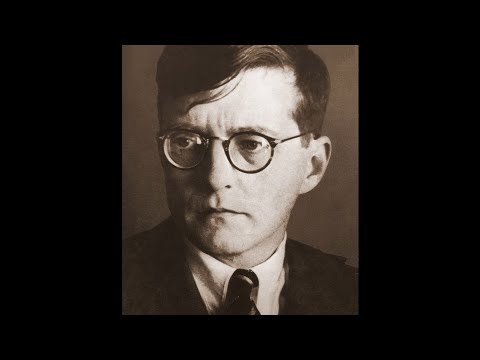
In his posthumously-published memoirs, Testimony, Shostakovich, his pupil and friend, described how Zhilayev faced his end with a calmness that awed even the NKVD (the predecessor to the KGB) secret police sent to arrest him.
Dimitri Shostakovich
“He had a large picture of Tukhachevsky in his room, and after the announcement that Tukhachevsky had been shot as a traitor to the homeland, Zhilayev did not take the picture down.
“I don’t know if I can explain how heroic a deed that was….As soon as the next poor soul was declared an enemy of the people, everyone destroyed in a panic everything connected with that person….
“And naturally, photographs flew into the fire first, because if someone informed on you, reported that you had a picture of an enemy of the people, it meant certain death.
“Zhilayev wasn’t afraid. When they came for him, Tukhachevsky’s prominently hung portrait amazed even the executioners.”
“What, it’s still up?” one of the secret police asked.
“The time will come,” Zhilayev replied, “when they’ll erect a monument to him.”
As, in fact, has happened.
Meanwhile, Stalin has been universally condemned as one of history’s greatest tyrants.
Mikhail Tukhachevsky appears on a 1963 Soviet Union postage stamp
Third hero—James Brien Comey (December 14, 1960)
Comey served as United States Attorney (federal prosecutor) for the Southern District of New York (2002-2003).
As United States Deputy Attorney General (2003-2005), he opposed the warrantless wiretapping program of the George W. Bush administration. He also argued against the use of water boarding as an interrogation method.
In 2005, he entered the private sector as General Counsel and Senior Vice President for Lockheed Martin, the biggest contractor for the Department of Defense.
On July 29, 2013, the United States Senate voted 93 -1 to confirm Comey as director of the FBI, the seventh in its history.
James B. Comey
He directed the FBI from his appointment in 2013 by President Barack Obama until his firing on May 9, 2017, by President Donald Trump.
In a move that Joseph Stalin would have admired, Trump gave no warning of his intentions. Instead, he sent Keith Schiller, his longtime bodyguard, to the FBI with a letter announcing Comey’s dismissal.
Trump had three reasons for firing Comey:
Comey had refused to pledge his personal loyalty to Trump. Trump had made this “request” during a private dinner at the White House in January. After refusing to make that pledge, Comey told Trump that he would always be honest with him. But that didn’t satisfy Trump’s demand that the head of the FBI act as his personal secret police chief.
Trump had tried to coerce him into dropping the FBI’s investigation into former National Security Adviser Mike Flynn, for his secret ties to Russia and Turkey. Comey had similarly resisted that demand.
Comey had recently asked the Justice Department to fund an expanded FBI investigation into contacts between Trump’s 2016 Presidential campaign and Russian Intelligence agents.
As a Presidential candidate and President, Trump:
Steadfastly denied those revelations;
Repeatedly attacked the “fake news” media reporting these revelations. Chief among his targets: CNN, The New York Times and TheWashington Post; and
Attacked the Intelligence agencies responsible for America’s security.
On May 10—the day after firing Comey—Trump met in the Oval Office with Russian Foreign Minister Sergey Lavov and Russian Ambassador Sergey Kislyak.
Kislyak was reportedly a top recruiter for Russia’s SVR foreign Intelligence agency. He has been closely linked with Jeff Sessions and Mike Flynn—respectively,, Trump’s fired Attorney General and fired National Security Adviser.
“I just fired the head of the FBI,” Trump told the two dignitaries. “He was crazy, a real nut job. I faced great pressure because of Russia. That’s taken off.”
During that meeting he gave the Russians sensitive Intelligence on ISIS that had been supplied by Israel.
Two days later, on May 12, Trump tweeted a threat to the fired FBI director: “James Comey better hope that there are no ‘tapes’ of our conversations before he starts leaking to the press.”
But shortly afterward, it appeared Trump was the one who should worry: Reports surfaced that Comey had written memos to himself immediately after his private meetings with Trump.
He had also told close aides that Trump was trying to pressure him into dropping the investigation into close ties between Russian Intelligence agents and Trump campaign staffers.
As for Trump’s threat of having tapes of his and Comey’s conversations: Like Trump’s claim that he could prove that Barack Obama wasn’t an American citizen, this, too, proved to be a lie.
And Comey’s firing led directly to a result Trump did not anticipate: Acting Attorney General Rod Rosenstein yielded to demands from Democrats and appointed former FBI Director Robert Mueller III as a special prosecutor to investigate those ties.
…A truly great man is ever the same under all circumstances. And if his fortune varies, exalting him at one moment and oppressing him at another, he himself never varies, but always preserves a firm courage, which is so closely interwoven with his character that everyone can readily see that the fickleness of fortune has no power over him.
The conduct of weak men is very different. Made vain and intoxicated by good fortune, they attribute their success to merits which they do not possess. And this makes them odious and insupportable to all around them. And when they have afterwards to meet a reverse of fortune, they quickly fall into the other extreme, and become abject and vile.
—Niccolo Machiavelli, The Discourses
Four heroes, two villains.
Two of the heroes are Russians; two are Americans.
The villains: One Russian (actually, Georgian); one American.
First up—in order of disappearance: Mikhail Nikolayevich Tukhachevsky (pronounced too-ka-chev-sky)
Tukhachevsky (February 4, 1893 – June 12, 1937) was a leading Soviet military leader and theoretician from 1918 to 1937.
He commanded the Soviet Western Front during the Russian-Polish War (1920-21) and served as Chief of Staff of the Red Army (1925-1928).
He fought to modernize Soviet armament, as well as develop airborne, aviation and mechanized forces. Almost singlehandedly, he created the theory of deep operations for Soviet forces.
Mikhail Tukhachevsky
All of these innovations would reap huge dividends when the Soviet Union faced the lethal fury of Adolf Hitler’s Wehrmacht.
In 1936, Tukhachevsky warned Soviet dictator Joseph Stalin that Nazi Germany might attack without warning—and ignite a long and murderous war.
Stalin—the son of a Georgian cobbler—resented Tukhachevsky’s coming from a noble family. A monumental egomaniac, he also hated that Tukhachevesky’s fame rivaled his own.
Warned of the approaching German danger, Stalin shouted: “What are you trying to do—frighten Soviet authority?”
Joseph Stalin
The attack that Tukhachevsky warned against came five years later—on June 22, 1941, leaving at least 20 million Russians dead.
But Tukhachevsky wasn’t alive to command a defense.
The 1930s were a frightening and dangerous time to be alive in the Soviet Union. In 1934, Stalin, seeing imaginary enemies everywhere, ordered a series of purges that lasted right up to the German invasion.
An example of Stalin’s paranoia occurred one day while the dictator walked through the Kremlin corridors with Admiral Ivan Isakov. Officers of the NKVD (the predecessor to the KGB) stood guard at every corner.
“Every time I walk down the corridors,” said Stalin, “I think: Which one of them is it? If it’s this one, he will shoot me in the back. But if I turn the corner, the next one can shoot me in the face.”
In 1937-38, the Red Army fell prey to Stalin’s paranoia.
Its victims included:
Three of five marshals (five-star generals);
Thirteen of 15 army commanders (three- and four-star generals);
Fifty of 57 army corps commanders; and
One hundred fifty-four out of 186 division commanders.
And heading the list of those marked for death was Marshal Mikhail Tukhachevsky.
Arrested on May 22, 1937, he was interrogated and tortured. As a result, he “confessed” to being a German agent plotting to overthrow Stalin and seize power.
On his confession, which survives in the archives, his bloodstains can clearly be seen.
On June 11, the Soviet Supreme Court convened a special military tribunal to try Tukhachevsky and eight generals for treason.
It was a sham: The accused were denied defense attorneys, and could not appeal the verdict—-which was foregone: Death.
In a Russian version of poetic justice, five of the eight generals who served as Tukhachevsky’s judges were themselves later condemned and executed as traitors.
Within hours of the verdict, Tukhachevsky was summoned from his cell and shot once in the back of the head.
From 1937 until 1956, Tukhachevsky was officially declared a traitor and fifth-columnist.
Then, on February 25, 1956, Soviet Premier Nikita Khrushchev delivered his bombshell “Secret Speech” to the 20th Congress of the Communist Party of the Soviet Union.
In this, he denounced Stalin (who had died in 1953) as a ruthless tyrant responsible for the slaughter of millions of innocent men, women and children. He condemned Stalin for creating a “personality cult” around himself, and for so weakening the Red Army that Nazi Germany was able to easily overrun half of the Soviet Union from 1941 to 1943.
On January 31, 1957, Tukhachevsky and his co-defendants were declared innocent of all charges and were “rehabilitated.”
Today, he is once again—rightly—considered a Russian hero and military genius. And Stalin is universally—and rightly—seen as a blood-stained tyrant.
Next hero: Nikolai Sergeyvich Zhilayev (pronounced Zill-lay-ev)
Zhilayev (November 18, 1881 – January 20, 1938) was a Russian musicologist and the teacher of several 20th-century Russian composers. Among these: Dimitri Shostakovich.
Zhilayev, a member of the Russian Academy of Art-Sciences, taught at the Moscow Conservatory. Among his friends—to his ultimate misfortune—was Mikhail Tukhachevsky.
In 1938, he, too, became a casualty of what has become known as The Great Terror.
In his posthumously-published memoirs, Testimony, Shostakovich, his pupil and friend, described how Zhilayev faced his end with a calmness that awed even the NKVD (the predecessor to the KGB) secret police sent to arrest him.
During the 2016 Presidential campaign, he infamously mocked New York Times reporter Serge Kovaleski, who has arthrogryposis, a congenital condition affecting the joints.
In 2018, Trump viciously attacked Christine Blasey Ford, the woman who had come forward to allege that Trump’s Supreme Court nominee, Brett Kavanaugh, had sexually assaulted her when she was 15.
But he holds himself immune from ridicule.
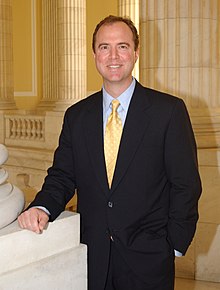
On September 26, Adam Schiff (D-CA), chairman of the House Intelligence Committee, rose to the occasion.
Adam Schiff
During a hearing of his committee, he gave a dramatic reading—part news summary, part parody. It centered on an extortion call Trump had made on July 25 to Ukrainian President Volodymyr Zelensky.
Trump had wanted a “favor”: Investigate 2020 Democratic Presidential Candidate Joe Biden and his son, Hunter, who has had business dealings in Ukraine.
Unspoken was the threat of cancelling $400 million in promised American military aid to Ukraine.
So Schiff—whose committee is investigating that incident—gave a summary of that call during a hearing.
It wasn’t the news summary part that infuriated Trump, but the mockery included within it.
As Schiff explained to CNN: “The fact that that’s not clear is a separate problem in and of itself. Of course, the President never said, ‘If you don’t understand me I’m going to say it seven more times.’ My point is, that’s the message that the Ukraine president was receiving in not so many words.”
Trump had aimed his own brand of juvenile humor at Schiff in the past, referring to him as “little Adam Schit.”
Donald Trump
But for Schiff to dare to make fun of him was—for Trump—entirely too much.
“Rep. Adam Schiff illegally made up a FAKE & terrible statement, pretended it to be mine as the most important part of my call to the Ukrainian President, and read it aloud to Congress and the American people,” Trump tweeted. “It bore NO relationship to what I said on the call. Arrest for Treason?”
Trump is the first President to openly equate criticism—especially mockery—of himself with treason. Like the French King, Louis X1V, he believes: L’État, c’est moi—“I am the State.”
And treason is a crime that has traditionally been punished with death.
So Trump more than gave the game away when he tweeted, on October 7: “Nancy Pelosi knew of all of the many Shifty Adam Schiff lies and massive frauds perpetrated upon Congress and the American people.
“This makes Nervous Nancy every bit as guilty as Liddle’ Adam Schiff for High Crimes and Misdemeanors, and even Treason. I guess that means that they, along with all of those that evilly ‘Colluded’ with them, must all be immediately Impeached!”
Nancy Pelosi, as speaker of the House of Representatives, has done nothing that meets the Constitutional definition of treason: “Treason against the United States, shall consist only in levying War against them, or in adhering to their Enemies, giving them Aid and Comfort.”
Moreover, members of Congress cannot be impeached. Impeachment is a Congressional tool for investigating judges or executive branch officials they believe may have committed crimes.
No doubt many people believe that Trump wouldn’t dare ask his hand-picked Attorney General, William Barr, to indict Adam Schiff or Nancy Pelosi for treason.
Of course, there were many people who believed that Trump wouldn’t dare fire FBI Director James Comey for pursuing an investigation into Russia’s subversion of the 2016 Presidential election.
Or that he would openly call on a hostile foreign power—China—to intervene in the 2020 Presidential election.
A President who can invite a hostile foreign power to slander his political opponent can just as easily call on a hostile foreign power to assassinate that opponent.
Trump has claimed: “Let me tell you, I’m only interested in corruption. I don’t care about politics. I don’t care about Biden’s politics….”
But if Trump were concerned about fighting corruption, he wouldn’t have:
Focused his anti-corruption campaign entirely on Biden;
Defended his former 2016 campaign chairman, Paul Manafort, who made millions working for former Ukrainian President Viktor Yanukovych;
Praised others mired in corruption scandals—such as Russian President Vladimir Putin and Israeli Prime Minister Benjamin Netanyahu.
Trump is counting on Americans’ awe of the Presidency to convince them of his integrity.
But according to Robert A. Prentice, Professor of Government and Society at the McCombs School of Business at The University of Texas at Austin:
“President Donald Trump’s lying is off the charts. No prominent politician in memory bests Trump for spouting spectacular, egregious, easily disproved lies. The birther claim. The vote fraud claim. The attendance at the inauguration claim. And on and on and on.
“Every fact checker—Kessler, Factcheck.org, Snopes.com, PolitiFact—finds a level of mendacity unequaled by any politician ever scrutinized. For instance, 70 percent of his campaign statements checked by PolitiFact were mostly false, totally false, or “pants on fire” false.”
Donald Trump prides himself on setting Presidential precedents. He may turn out to be the first President who invoked “treason” against his political opponents—and was himself found to be a menace to the nation he claimed to love.
In 2016, Donald Trump asked Russia to intervene in the upcoming Presidential election.
At a July 22, 2016 press conference in Doral, Florida, Trump said: “Russia, if you are listening, I hope you are able to find the 33,000 emails that are missing [from Democratic Presidential candidate Hillary Clinton’s computer]. I think you will probably be rewarded mightily by our press.”
Hours later, the Main Intelligence Directorate in Moscow targeted Clinton’s personal office and hit more than 70 other Clinton campaign accounts.
And on October 3, 2019, Trump called on another foreign—and enemy—nation to churn out “dirt” on another Democratic Presidential candidate: Former Vice President Joe Biden: “China should start an investigation into the Bidens.”
Donald Trump
Asked if he had requested China’s “President-for-Life” Xi Jinping to do so, Trump replied: “I haven’t. But it’s certainly something we should start thinking about.”
Trump’s comments came just one week before a Chinese delegation was to arrive in Washington to resume protracted trade negotiations.
And to make certain the Chinese got the message, Trump warned: “I have a lot of options on China, but if they don’t do what we want, we have tremendous power.”
Despite Trump’s accusations, there has been no evidence of corruption by Biden or his son, Hunter.
Having twice called on foreign—and enemy—nations to subvert American Presidential elections, Trump feels himself qualified to define who is guilty of treasonous behavior.
Enter Adam Schiff (D-CA), chairman of the House Intelligence Committee.
Adam Schiff
In July, 2019, Trump told his acting chief of staff, Mick Mulvaney, to withhold almost $400 million in promised military aid for Ukraine, which faces increasing aggression from Russia.
On July 25, Trump telephoned Ukrainian President Volodymyr Zelensky to “request” a “favor”: Investigate 2020 Democratic Presidential Candidate Joe Biden and his son, Hunter, who has had business dealings in Ukraine.
The reason for such an investigation: To find embarrassing “dirt” on Biden.
But then a CIA whistleblower filed a complaint about the extortion attempt—and the media and Congress soon learned of it.
Schiff tweeted: “The transcript of the call reads like a classic mob shakedown: — We do a lot for Ukraine — There’s not much reciprocity — I have a favor to ask — Investigate my opponent — My people will be in touch — Nice country you got there. It would be a shame if something happened to her.”
Then, even worse for Trump’s ego, Schiff went further. He dared to parody Trump’s extortion attempt.
Joe Biden
On September 26, during a session of the Intelligence Committee, Schiff gave a dramatic reading—part news summary, part parody—of the call with Zelensky.
He prefaced the reading by saying, “In not so many words, this is the essence of what the President communicates.
“President Zelensky, eager to establish himself at home as the friend of the President of the most powerful nation on earth, had at least two objectives: Get a meeting with the President and get more military help. And so what happened on that call?
“Zelensky begins by ingratiating himself, and he tries to enlist the support of the President. He expresses his interest in meeting with the President, and says his country wants to acquire more weapons from us to defend itself.
“And what is the President’s response? Well, it reads like a classic organized crime shakedown.
“Shorn of its rambling character and in not so many words, this is the essence of what the President communicates. ‘We’ve been very good to your country. Very good. No other country has done as much as we have. But you know what? I don’t see much reciprocity here.
“‘I hear what you want. I have a favor I want from you, though. And I’m going to say this only seven times, so you better listen good. I want you to make up dirt on my political opponent. Understand? Lots of it, on this and on that.
“‘I’m going to put you in touch with people, and not just any people. I’m going to put you in touch with the attorney general of the United States, my attorney general, Bill Barr. He’s got the whole weight of the American law enforcement behind him. And I’m going to put you in touch with Rudy [Trump’s personal attorney and fixer].
“‘You’re going to love him [Giuliani]. Trust me. You know what I’m asking? And so I’m only going to say this a few more times in a few more ways. And by the way, don’t call me again. I’ll call you when you’ve done what I asked.'”
Schiff later told CNN that he was trying to mock the President’s conduct.
The next day, September 27, Trump demanded in a tweet that Schiff “immediately resign.”
Trump, of course, has no power to force a member of Congress to resign.
And on September 29, Trump tweeted: “….Schiff made up what I actually said by lying to Congress……
“His lies were made in perhaps the most blatant and sinister manner ever seen in the great Chamber. He wrote down and read terrible things, then said it was from the mouth of the President of the United States. I want Schiff questioned at the highest level for Fraud & Treason…..”
The American colonists had learned firsthand how capricious and deadly a monarch’s rage could be. Under English law, “treason” could be liberally applied to anyone who offended the Royal Personage.
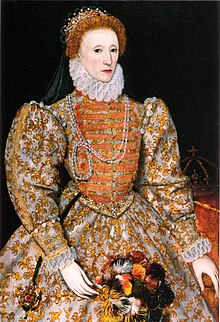
For example: During the reign of Queen Elizabeth 1, John Stubbs, an English pamphleteer and political commentator, opposed her proposed marriage to Francis, Duke of Anjou, a Roman Catholic—and the brother of the King of France.
Stubbs, a Puritan who hated Catholicism, damned in in a scathing pamphlet—which infuriated Elizabeth’s court. At first, the Queen favored the death penalty. But then she was persuaded to choose a lesser sentence: Amputation of his right hand by driving a cleaver driven through the wrist with a mallet.
After the sentence was carried out, Stubbs cried, “God save the Queen!” before fainting. He was then imprisoned for eighteen months.
Queen Elizabeth 1
So when the Founding Fathers drafted the Constitution of the United States, they specifically restricted the definition of treason.
In Article III, section 3, the framers wrote:
Treason against the United States, shall consist only in levying War against them, or in adhering to their Enemies, giving them Aid and Comfort. No Person shall be convicted of Treason unless on the Testimony of two Witnesses to the same overt Act, or on Confession in open Court.
The Congress shall have Power to declare the Punishment of Treason, but no Attainder of Treason shall work Corruption of Blood, or Forfeiture except during the Life of the Person attainted.
The Constitution permits the United States Congress to create the offense, and restricts any punishment for treason to only the convicted (the second paragraph). The crime is prohibited by legislation passed by Congress.
The United States Code, in 18 U.S.C. 2381, states:
Whoever, owing allegiance to the United States, levies war against them or adheres to their enemies, giving them aid and comfort within the United States or elsewhere, is guilty of treason and shall suffer death, or shall be imprisoned not less than five years and fined under this title but not less than $10,000; and shall be incapable of holding any office under the United States.
For President Donald Trump, treason means any opposition to or criticism of himself.
Donald Trump
A tyrant by nature, he envies foreign tyrants who have powers to slaughter anyone they dislike. Among the proofs of this:
During a February, 2017 interview with Fox News host Bill O’Reilly, Trump defended Russian President Vladimir Putin’s killing of political opponents. When O’Reilly noted, “But he’s a killer,” Trump replied: “There are a lot of killers. You think our country’s so innocent?”
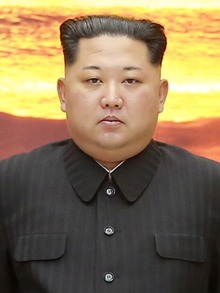
Asked by a Fox News reporter why he praised murderous North Korean dictator Kim Jong-Un, he replied: “He’s a tough guy. Hey, when you take over a country, tough country, tough people, and you take it over from your father.…If you could do that at 27 years old, I mean, that’s one in 10,000 that could do that.”
Of Philippines dictator Rodrigo Duterte, whose death squads have slaughtered more than 6,000 citizens, Trump said: “I just wanted to congratulate you because I am hearing of the unbelievable job on the drug problem.”
After Turkish dictator Recep Tayyip Erdogan cracked down on Turkish civil society, the media, and his opponents, Trump congratulated him: “Frankly, he’s getting very high marks. He’s also been working with the United States. We have a great friendship and the countries—I think we’re right now as close as we’ve ever been….a lot of that has to do with a personal relationship.”
And at a party fundraiser at his Mar-a-Lago resort in March, 2018, Trump praised China’s dictator Xi Jinping: “He’s now president for life. President for life. No, he’s great. And look, he was able to do that. I think it’s great. Maybe we’ll have to give that a shot some day.”
Nor has Trump blanched at calling on foreign dictators to destroy his political opponents.
On July 9, 2016, high-ranking members of his Presidential campaign met at Trump Tower with at least two lobbyists with ties to Russian dictator Vladimir Putin. The participants included:
Trump’s son, Donald Trump Jr.;
His son-in-law, Jared Kushner;
His then-campaign manager Paul Manafort;
Natalia Veselnitskaya, a Russian lawyer with ties to Putin; and
Rinat Akhmetshin, a former Soviet counterintelligence officer suspected of “having ongoing ties to Russian Intelligence.”
The purpose of that meeting: To gain access to any “dirt” Russian Intelligence could supply on Democratic Presidential Nominee Hillary Clinton.
And at a July 22, 2016 press conference in Doral, Florida, Trump said: “Russia, if you are listening, I hope you are able to find the 33,000 emails that are missing [from Democratic Presidential candidate Hillary Clinton’s computer]. I think you will probably be rewarded mightily by our press.”
This was nothing less than treason—calling upon a foreign power, hostile to the United States, to interfere in its Presidential election.
Hours later, the Main Intelligence Directorate in Moscow targeted Clinton’s personal office and hit more than 70 other Clinton campaign accounts.
And on October 3, 2019, Trump called on another dictator—China’s “President-for-Life”” Xi Jinping—to churn out “dirt” on Democratic Presidential candidate Joe Biden.
As both a Presidential candidate and President, Donald Trump has repeatedly used Twitter to attack hundreds of real and imagined enemies in politics, journalism, TV and films.
From June 15, 2015, when he launched his Presidential campaign, until October 24, 2016, Trump fired almost 4,000 angry, insulting tweets at 281 people and institutions that had somehow offended him.
Donald Trump
The New York Times needed two full pages of its print edition to showcase them.
During the 2016 Presidential campaign, Trump aimed insults at both Democratic and Republican rivals. Among these:
“Little Marco” – Florida U.S. Senator Marco Rubio
“Goofy” – Massachusetts U.S. Senator Elizabeth Warren
“Lyin’ Ted” – Texas U.S. Senator Rafael Eduardo “Ted” Cruz
“Crooked Hillary” – Hillary Clinton, former First Lady and Secretary of State
“Low Energy Jeb” – Former Florida Governor Jeb Bush
“Crazy Bernie” – Vermont U.S. Senator Bernie Sanders
Adam Schiff, Chairman of the House Intelligence Committee
But now someone—no less than Adam Schiff (D-CA), chairman of the House Intelligence Committee—has dared give Trump a taste of his own ridicule medicine.
In July, 2019, Trump told his acting chief of staff, Mick Mulvaney, to withhold almost $400 million in promised military aid for Ukraine, which faces increasing aggression from Russia.
On July 25, Trump telephoned Ukrainian President Volodymyr Zelensky to “request” a “favor”: Investigate 2020 Democratic Presidential Candidate Joe Biden and his son, Hunter, who has had business dealings in Ukraine.
The reason for such an investigation: To find embarrassing “dirt” on Biden.
But then a CIA whistleblower filed a complaint about the extortion attempt—and the media and Congress soon learned of it.
Schiff tweeted: “The transcript of the call reads like a classic mob shakedown: — We do a lot for Ukraine — There’s not much reciprocity — I have a favor to ask — Investigate my opponent — My people will be in touch — Nice country you got there. It would be a shame if something happened to her.”
Then, even worse for Trump’s ego, Schiff went further.
On September 26, during a session of the Intelligence Committee, Schiff gave a dramatic reading—part news summary, part parody—of the call with Zelensky.
He prefaced the reading by saying, “In not so many words, this is the essence of what the President communicates.
“President Zelensky, eager to establish himself at home as the friend of the President of the most powerful nation on earth, had at least two objectives: Get a meeting with the President and get more military help. And so what happened on that call?
“Zelensky begins by ingratiating himself, and he tries to enlist the support of the President. He expresses his interest in meeting with the President, and says his country wants to acquire more weapons from us to defend itself.
“And what is the President’s response? Well, it reads like a classic organized crime shakedown.
“Shorn of its rambling character and in not so many words, this is the essence of what the President communicates. ‘We’ve been very good to your country. Very good. No other country has done as much as we have. But you know what? I don’t see much reciprocity here.
“‘I hear what you want. I have a favor I want from you, though. And I’m going to say this only seven times, so you better listen good. I want you to make up dirt on my political opponent. Understand? Lots of it, on this and on that.
“‘I’m going to put you in touch with people, and not just any people. I’m going to put you in touch with the attorney general of the United States, my attorney general, Bill Barr. He’s got the whole weight of the American law enforcement behind him. And I’m going to put you in touch with Rudy [Trump’s personal attorney and fixer].
“‘You’re going to love him [Giuliani]. Trust me. You know what I’m asking? And so I’m only going to say this a few more times in a few more ways. And by the way, don’t call me again. I’ll call you when you’ve done what I asked.'”
Trump and his shills—in and out of Congress—were outraged.
On September 29, Trump tweeted: “….Schiff made up what I actually said by lying to Congress……
“His lies were made in perhaps the most blatant and sinister manner ever seen in the great Chamber. He wrote down and read terrible things, then said it was from the mouth of the President of the United States. I want Schiff questioned at the highest level for Fraud & Treason…..”
Treason?
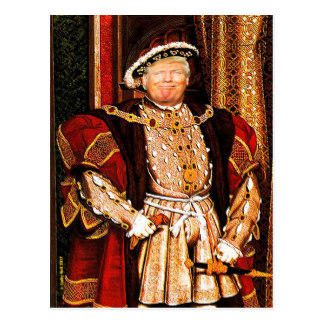
Trump has clearly assumed for himself the mantle and power of a king—when criticizing a monarch was seen as attacking the country itself.
Donald Trump as Henry VIII
And Schiff’s response?
Asked about his comments by CNN’s Wolf Blitzer, Schiff said, “I think everyone understood—and my GOP colleagues may feign otherwise. But when I said, suggested, that it was as if the President said, ‘Listen carefully, because I’m only gonna tell you seven more times’—that I was mocking the President’s conduct.”
Adam Schiff may not be Basil Rathbone, the British actor whose silky, flowing voice produced phonographic retellings of classics like The Jungle Books and The Adventures of Sherlock Holmes.
But he certainly knows how to give a reading that gets under the skin of the Insulter-in-Chief.
Steffen White’s Email: Sparta480@aol.com Former reporter, legal investigator and troubleshooter. Columnist at Bureaucracybuster.com. Fighting political and bureaucratic arrogance, incompetence and/or indifference.
When making complaints in writing, carefully review your email or letter before sending it. Remove any words that are vulgar or profane. Don't make sweeping accusations: "Your agency is a waste."
Don't attribute motives to people you've had problems with, such as: "The postal clerk refused to help me because he's a drunk." If the person actually appeared to be drunk, then be precise in your description: "As he leaned over the counter I could smell beer on his breath. Behind him, in a waste basket, I saw an empty bottle of Coors beer."
Show how the failure of the official to address your problem reflects badly on the company or agency: "This is not the level of service your ads would lead potential customers to expect."
If necessary, note any regulatory agencies that can make life rough for the company or agency if your complaint isn't resolved. For the phone company, for example, cite the FCC or the PUC. But do this only after you have stated you hope your complaint can be settled amicably and privately within the company.







 Bureaucracybuster's Blog
ABC NEWS, ADAM SCHIFF, ADOLF HITLER, ALEX PHILLIPS, ALTERNET, AMERICA’S VOICE, AMERICABLOG, AMERICAN PRIORITY CONFERENCE, AP, AUSTRIA, BABY BOOMER RESISTANCE, BARACK OBAMA, BBC, BERNIE SANDERS, BILL CLINTON, BLACK LIVES MATTER, BUZZFEED, CBS NEWS, CHINA, CINDY MCCAIN, CIVIL WAR, CNN, COLIN FIRTH, COREY LEWANDOWSKI, CROOKS AND LIARS, CZECHOSLOVAKIA, DAILY KOZ, DANA LOESCH, DEMOCRATS, DONALD TRUMP, DONALD TRUMP JUNIOR, EUGENE SCOTT, FACEBOOK, FBI, FINAL SOLUTION, FIVETHIRTYEIGHT, FRANCISCO FRANCO, GEORGE SOROS, HILLARY CLINTON, HUNTER BIDEN, JOE BIDEN, JOHN MCCAIN, MATT GAETZ, MEIN KAMPF, MITT ROMNEY, MOTHER JONES, MOVEON, MSNBC, NANCY PELOSI, NATIONAL RIFLE ASSOCIATION, NAZI GERMANY, NBC NEWS, NEVILLE CHAMBERLAIN, NEWSWEEK, NINA BURLEIGH, NPR, PBS, PBS NEWSHOUR, PLUTARCH, POLAND, POLITICO, POLITICUSUSA, RACHEL MADDOW, RAW STORY, REPUBLICANS, REUTERS, ROGER STONE, ROSIE O’DONNELL, SALON, SARAH HUCKABEE SANDERS, SEATTLE TIMES, SLATE, SOVIET UNION, SPAIN, TALKING POINTS MEMO, THE ATLANTIC, THE CHICAGO SUN-TIMES, THE CHICAGO TRIBUNE, THE DAILY BEAST, THE DAILY BLOG, THE GEEKZTEAM, THE GUARDIAN, THE HILL, THE HUFFINGTON POST, THE KINGSMAN (MOVIE), THE LOS ANGELES TIMES, THE NATION, THE NEW YORK TIMES, THE TRUMPSMAN (VIDEO), THE WASHINGTON POST, THINKPROGRESS, TIME, TREASON, TRUTHDIG, TWITTER, U.S. NEWS & WORLD REPORT, UKRAINE, UNITED STATES, UPI, USA TODAY, VERSALLIES TREATY, VOLODYMR ZELENSKI, WEIMAR REPUBLIC, WHITE HOUSE CORRESPONDENTS ASSOCIATION, WORLD WAR 11
DONALD TRUMP’S “MEIN KAMPF” COMES TO VIDEO: PART ONE (OF TWO)
In Bureaucracy, History, Military, Politics, Social commentary on October 21, 2019 at 12:14 amOn November 9, 1923, Nazi Party Fuhrer Adolf Hitler tried to overthrow the government in Munich, Bavaria.
About 2,000 Nazis marched to the center of Munich, where they confronted heavily-armed police. A shootout erupted, killing 16 Nazis and four policemen.
Hitler was injured during the clash, but managed to escape. Two days later, he was arrested and charged with treason.
Put on trial, he found himself treated as a celebrity by a judge sympathetic to Right-wing groups. He was allowed to brutally cross-examine witnesses and even make inflammatory speeches.
At the end of the trial, he was convicted of treason and sentenced to five years’ imprisonment. Of this he served only nine months before being pardoned.
Hitler used his time in Landsberg Prison, in Bavaria, to write his infamous book, Mein Kampf-–“My Struggle.” Part autobiography, part political treatise, it laid out his future plans—for a revitalized Germany and the conquest of other nations.
Adolf Hitler leaving Landsberg Prison, December, 20, 1924
Published in 1925, it was long ignored by all but the most fanatical Nazis. But as Hitler gained increasing numbers of votes in a series of elections, many people—inside and outside Germany—began paying attention to its contents.
By 1939 it had sold 5,200,000 copies and had been translated into 11 languages.
Most of those who bought the book never read it. Its style was bombastic, repetitious and illogical. The first edition contained grammatical errors, reflecting a self-educated man.
Few who read it took Hitler’s intentions seriously. Comedians portrayed him as a wildly gesturing crank who screamed constantly.
Hitler made no effort to hide his program for Germany under his rule. His candor led many people to believe he was a lunatic who could be safely ignored.
He was especially insistent on the need for eliminating world Jewry and conquering the Soviet Union.
On the former topic he wrote: “The nationalization of our masses will succeed only when, aside from all the positive struggle for the soul of our people, their international poisoners are exterminated.
“If at the beginning of the war and during the war twelve or fifteen thousand of these Hebrew corrupters of the nation had been subjected to poison gas, such as had to be endured in the field by hundreds of thousands of our very best German workers of all classes and professions, then the sacrifice of millions at the front would not have been in vain.”
A mere 17 years later, Hitler’s “Thousand-Year Reich” would translate those words into horrific action in a series of extermination camps equipped with gas chambers.
Hitler was equally insistent that Germany needed to find Lebensraum—“Living space”—in the east. And by “east” he meant “Russia.”
Specifically: “And so we National Socialists consciously draw a line beneath the foreign policy tendency of our pre-War period. We take up where we broke off six hundred years ago.
“We stop the endless German movement to the south and west, and turn our gaze toward the land in the east. At long last we break off the colonial and commercial policy of the pre-War period and shift to the soil policy of the future.
“If we speak of soil in Europe today, we can primarily have in mind only Russia and her vassal border states.”
Hitler finally attained power on January 30, 1933. He realized that Germany was not yet strong enough to impose its will on other nations. So he set out on a secret crash program to make Germany the strongest military power in Europe.
In 1936, he set out on his “mission of Providence”:
Only after Hitler set out to conquer, first Europe, then the Soviet Union, did his victims and intended victims realize that Mein Kampf had given them a deadly warning. A warning too many of them had refused to heed.
By the time World War II ended:
But Adolf Hitler isn’t the only would-be dictator to give ample warning of his murderous intentions.
And, like most Germans in the Weimar Republic, which preceded Nazi Germany, most Americans refuse to take that warning seriously.
Share this: