Posts Tagged ‘ABC NEWS’
60 MINUTES, 9/11 ATTACKS, ABC NEWS, ADOLF HITLER, AFGHANISTAN, AL QAEDA, AYATOLLAH RUHOLLAH KHOMEINI, BARACK OBAMA, BASHAR AL-ASSAD, CARL VON CLAUSEWITZ, CARLOS THE JACKAL, CBS NEWS, CHEMICAL WEAPONS, CHINA, CIA, CNN, FACEBOOK, HARRY TRUMAN, IMPERIAL HUBRIS, IRAN, ISLAM, ISLAMIC STATE OF IRAQ AND THE LEVANT, ISRAEL, MARCHING TOWARD HELL, MICHAEL SCHEUER, MUSLIMS, NAZI GERMANY, NBC NEWS, OSAMA BIN LADEN, RUSSIA, SHAH OF IRAN, SOVIET UNION, SYRIA, TERRORISM, THE CHICAGO TIMES, THE CHICAGO TRIBUNE, THE LOS ANGELES TIMES, THE NEW YORK TIMES, THE WASHINGTON POST, TWITTER, USA TODAY, VIETNAM WAR, VLADIMIR PUTIN, WORLD WAR 1
In Bureaucracy, History, Military, Politics, Social commentary on November 18, 2015 at 12:16 am
For America to avoid permanent military entanglements in the Middle East, it must learn to mind its own business.
So says Michael Scheuer, a 20-year CIA veteran who, from 1996 to 1999, headed Alec Station, the CIA’s unit assigned to track Osama bin Laden at the agency’s Counterterrorism Center.
He’s also the author of two seminal works on America’s fight against terrorism:Imperial Hubris: Why the West is Losing the War on Terror (2003) and Marching Toward Hell: America and Islam after Iraq (2008).
Scheuer has repeatedly warned: The United States must not deploy troops in Syria.
More than 310,000 people have been killed in Syria’s uprising-turned-civil war. The conflict began on March 15, 2011, triggered by protests demanding political reforms and the ouster of dictator Bashar al-Assad.
And many members of Congress are demanding that “we must do something” to stop all that killing.
Three reasons have already been given for why America should steer clear of the Syrian tar-baby. Among the others:
Fourth, the Assad regime is backed by–-among others–the Iranian-supported terrorist group, Hezbollah (Party of God). Its enemies include another terrorist group–Al Qaeda.
Hezbollah is comprised of Shiite Muslims. A sworn enemy of Israel, it has kidnapped scores of Americans suicidal enough to visit Lebanon and truck-bombed the Marine Barracks in Beirut in 1983, killing 299 Americans.
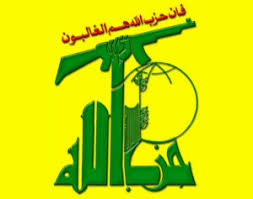
Flag of Hezbollah
Al-Qaeda, on the other hand, is made up of Sunni Muslims. Besides plotting 9/11, It has attacked the mosques and gatherings of liberal Muslims, Shias, Sufis and other non-Sunnis.
Examples of these sectarian attacks include the Sadr City bombings, the 2004 Ashoura massacre and the April, 2007 Baghdad bombings.
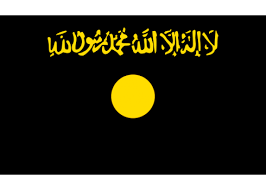
Flag of Al Qaeda
When your enemies are intent on killing each other, it’s best to stand aside and let them do it.
Fifth, intervening in Syria could produce unintended consequences for American forces–and make the United States a target for more Islamic terrorism.
President Obama has repeatedly said American warplanes are targeting the Islamic State of Iraq and the Levant (ISIL). But bombing is never as accurate as its proponents insist.
An accidental American strike on Syrian government forces could lead the country’s dictator, Bashar al-Assad, to attack Israel–perhaps even with chemical weapons.
Assad could do this simply because he hates Jews–or to lure Israel into attacking Syria.
If that happened, the Islamic world–which lusts to destroy Israelis even more than “apostate” Muslims–would rally to Syria against the United States, Israel’s chief ally.
Sixth, the United States cannot defeat ISIL through air power alone.
President Barack Obama authorized airstrikes against ISIL in September, 2014. Since then, the United States Air Force has dropped thousands of bombs on ISIL convoys.
This has not, however, destroyed ISIL. And its failure to do so has only led to demands by hawkish Republicans and Democrats for “boots on the ground.”
This was in fact predictable. Air power alone failed to secure victory over Nazi Germany during World War II and Vietnam during the Vietnam war. Nor did it “shock and awe” the Iraqis into surrendering during the 2003 Iraq war.
Seventh, while Islamic nations like Syria and Iraq wage war within their own borders, they will lack the resources to launch attacks against the United States.
When Adolf Hitler invaded the Soviet Union in 1941, then-Senator Harry Truman said: “I hope the Russians kill lots of Nazis and vice versa.”
That should be America’s view whenever its sworn enemies start killing themselves off. Americans should welcome such self-slaughters, not become entrapped in them.
Eighth, China and Russia are fully supporting the Assad dictatorship–-and the brutalities it commits against its own citizens.
Any move by the United States to directly attack the Assad regime could ignite an all-out war with Russia and/or China.
What happens if American and Russian forces start trading salvos? Or if Russian President Vladimir Putin orders an attack on Israel, in return for America’s attack on Russia’s ally, Syria?
It was exactly that scenario–Great Powers going to war over conflicts between their small-state allies–-that triggered World War l.
Ninth, America’s past efforts in the Middle East have usually gone horribly awry.
Two examples should suffice:
Iran: Mohammad Mosaddegh was the democratically elected prime minister of Iran from 1951 until 1953. His decision to nationalize the Iranian oil industry led to his overthrow in a CIA coup.
He was replaced by Shah Mohammad Reza Pahlavi, who ruled until 1979 when a national upheaval forced him to flee. Iranians have never forgiven the United States for subjecting them to the 25-year reign of a brutal despot.
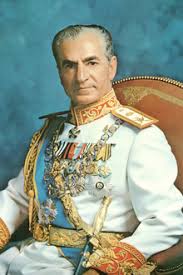
Shah of Iran
Afghanistan: In 1979, the Soviet Union invaded Afghanistan. America began supplying shoulder-fired Stinger anti-aircraft missiles to the Afghan Mujahideen fighters. These shifted the balance of the war to the Afghans, who brought down countless Soviet airplanes and helicopters.
Deprived of air supremacy, the Soviet army lost 14,453 killed and 53,753 wounded, and withdrew by 1989.
Americans congratulated themselves on their Realpolitic. But many of the Stingers remained in the hands of jihadists–who decided that America was now “The Great Satan.” One of those jihadists: Osama bin Laden.
60 MINUTES, 9/11 ATTACKS, ABC NEWS, ADOLF HITLER, AFGHANISTAN, AL QAEDA, BARACK OBAMA, BASHAR AL-ASSAD, CARL VON CLAUSEWITZ, CARLOS THE JACKAL, CBS NEWS, CHEMICAL WEAPONS, CHINA, CIA, CNN, FACEBOOK, HARRY TRUMAN, IMPERIAL HUBRIS, IRAN, ISLAM, ISLAMIC STATE OF IRAQ AND THE LEVANT, ISRAEL, MARCHING TOWARD HELL, MICHAEL SCHEUER, MUSLIMS, NAZI GERMANY, NBC NEWS, OSAMA BIN LADEN, RUSSIA, SOVIET UNION, SYRIA, TERRORISM, THE CHICAGO TIMES, THE CHICAGO TRIBUNE, THE LOS ANGELES TIMES, THE NEW YORK TIMES, THE WASHINGTON POST, TWITTER, USA TODAY, VIETNAM WAR, VLADIMIR PUTIN, WORLD WAR 1
In Bureaucracy, History, Military, Politics, Social commentary, Uncategorized on November 17, 2015 at 12:30 am
According to Micheal Scheuer, for all their ideological differences, Republicans and Democrats share one belief in common:
“An unquenchable ardor to have the United States intervene abroad in all places, situations and times.”
Scheuer is a 20-year CIA veteran–as well as an author, historian, foreign policy critic and political analyst.
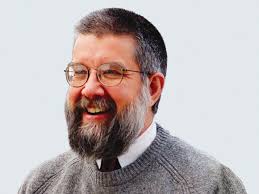
Michael Scheuer
From 1996 to 1999 he headed Alec Station, the CIA’s unit assigned to track Osama bin Laden at the agency’s Counterterrorism Center.
He is currently an adjunct professor at Georgetown University’s Center for Peace and Security Studies.
And he’s convinced that if America wants peace, it must learn to mind its own business.
He’s also the author of two seminal works on America’s fight against terrorism: Imperial Hubris: Why the West is Losing the War on Terror (2003) and Marching Toward Hell: America and Islam after Iraq (2008).
Scheuer says that Islamics don’t hate Americans because of “our way of life”–with its freedoms of speech and worship and its highly secular, commercialized culture.
Instead, Islamic hatred toward the United States stems from America’s six longstanding policies in the Middle East:
- U.S. support for apostate, corrupt, and tyrannical Muslim governments;
- U.S. and other Western troops on the Arabian Peninsula;
- U.S. support for Israel that keeps Palestinians in the Israelis’ thrall;
- U.S. pressure on Arab energy producers to keep oil prices low;
- U.S. occupation of Iraq and Afghanistan; and
- U.S. support for Russia, India, and China against their Muslim militants.
Scheuer contends that no amount of American propaganda will win “the hearts and minds” of Islamics who can “see, hear, experience, and hate” these policies firsthand.
But there is another danger facing America, says Scheuer, one that threatens “the core of our social and civil institutions.”
And in Marching Toward Hell he bluntly indicts that threat: The “profound and willful ignorance” of America’s “bipartisan governing elite.”

Scheuer defines this elite as “the inbred set of individuals who have influenced…drafted and conducted U.S. foreign policy” since 1973.
Within that group are:
- politicians
- journalists
- academics
- preachers
- civil servants
- military officers
- philanthropists.
“Some are Republicans, others Democrats; some are evangelicals, others atheists; some are militarists, others pacifists; some are purveyors of Western civilization, others are multiculturalists,” writes Scheuer.
But for all their political and/or philosophical differences, the members of this governing elite share one belief in common: “An unquenchable ardor to have the United States intervene abroad in all places, situations and times.”
And he warns that this “bipartisan governing elite” must radically change its policies–such as unconditional support for Israel and corrupt, tyrannical Muslim governments.
Otherwise, Americans will be locked in an endless “hot war” with the Islamic world.
On September 28, 2014, President Barack Obama provided an example of this “unquenchable ardor to have the United States intervene abroad in all places, situations and times.”
In an appearance on 60 Minutes, Obama spoke about his recent decision to commit American troops to fighting the Islamic State of Iraq and the Levant (ISIL).
Steve Kroft: I think everybody applauds the efforts that you’ve made and the size of the coalition that has been assembled.
But most of them are contributing money or training or policing the borders, not getting particularly close to the contact. It looks like once again we are leading the operation. We are carrying…
President Obama: Steve, that’s always the case. That’s always the case. America leads. We are the indispensable nation. We have capacity no one else has. Our military is the best in the history of the world.
And when trouble comes up anywhere in the world, they don’t call Beijing. They don’t call Moscow. They call us. That’s the deal.

President Barack Obama
Steve Kroft: I mean, it looks like we are doing 90%.
President Obama: Steve…when there’s an earthquake in Haiti, take a look at who’s leading the charge making sure Haiti can rebuild. That’s how we roll. And that’s what makes this America.
Scheuer believes that this mindset shouldn’t be what “makes this America.” And that the place to start is by not deploying troops to Syria.
More than 310,000 people have been killed in Syria’s uprising-turned-civil war. The conflict began on March 15, 2011, triggered by protests demanding political reforms and the ouster of dictator Bashar al-Assad.
Among the reasons why America should steer clear of the Syrian bloodbath:
First, since 1979, Syria has been listed by the U.S. State Department as a sponsor of terrorism.
Among the terrorist groups it supports are Hizbollah and Hamas. For years, Syria provided a safehouse in Damascus to Ilich Ramírez Sánchez–-the notorious terrorist better known as Carlos the Jackal.
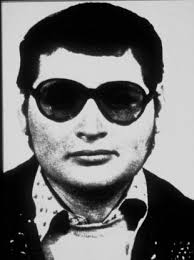
Ilich Ramírez Sánchez–“Carlos the Jackal”
Second, there are no “good Syrians” for the United States to support–-only murderers who have long served a tyrant and other murderers who now wish to become the next tyrant.
Third, the United States doesn’t know what it wants to do in Syria, other than “send a message.”
Carl von Clausewitz, the Prussian military theorist, wrote: “War is the continuation of state policy by other means.” But President Barack Obama hasn’t stated what his “state policy” is toward Syria–or what he intends to gain by attacking it.
Obama has said he’s “not after regime-change.” If true, that would leave Assad in power–-and free to go on killing those who resist his rule.
ABC NEWS, AYATOLLAH RUHOLLAH KHOMEINI, CBS NEWS, CHRISTIAN RIGHT, CNN, COLD WAR, CZECHOSLOVAKIA, EGYPT, FACEBOOK, GLOBAL WARMING, HUNGARIAN UPRISING, HUNGARY, IRAN, IRAQ, ISLAM, ISRAEL, JESUS CHRIST, MIDDLE EAST, NBC NEWS, Oil, REUTERS, SAND CURTAIN, SECOND COMING, SHAH OF IRAN, SHIITE MUSLIMS, SOVIET UNION, SUNNI MUSLIMS, TERRORISM, THE CHICAGO SUN-TIMES, THE CHICAGO TRIBUNE, THE LOS ANGELES TIMES, THE NEW YORK TIMES, THE WALL STREET JOURNAL, THE WASHINGTON POST, TWITTER, UNITED STATES
In Bureaucracy, History, Military, Politics, Uncategorized on November 16, 2015 at 12:01 am
There can be peace–for the United States--in the Middle East.
But to achieve this, Western Europe and the United States will have to make radical changes in their approach to that part of the world.
First, the United States must embark on a crash program to develop alternatives to oil.
The Islamic world offers only one reason for American concern: oil.
Yet its consumption threatens the future of the world through global warming. And it keeps America tethered to regimes that are fundamentally unstable and hostile to the West.
Second, once the United States weans itself from its dependency on fossil fuels, it can safely end its relationship with such regimes.
That means putting an end to spending billions of dollars every year to prop up regimes like those in Iraq and Egypt. And it also means stopping the supply of big-ticket military hardware (like fighter planes and missiles) to Islamic regimes.
When the Shah of Iran was overthrown in 1979, he was probably the best-armed Islamic leader in the Middle East. His army and air force bristled with sophisticated American weaponry he had bought with billions of dollars in oil revenues.
Shah of Iran
But he had thoroughly alienated his people. Liberals thought him a tyrant, and conservatives thought him a traitor to Islam. So when Ayatollah Ruhollah Khomeini flew to Iran from his self-exile in Paris, no one in the Shah’s army and air force raised a hand in his defense.
Third, the United States should end its “Permanent Bodyguard” relationship with Israel.
Every nation--including Israel–has the absolute right to defend itself from aggression. But no nation–including Israel–should have the right to expect another nation to act as its permanent bodyguard.
Millions of Americans believe they are morally obligated to defend Israel owing to the barbarism of the Holocaust. But America was never a party to this, and has nothing to atone for.
But there is another reason many Americans feel committed to Israel. And it has nothing to do with concern for the fates of Israelis.
It lies in the mythology of the Christian Right: Many fundamentalist Christians believe that, for Jesus Christ to awaken from his 2,000-year slumber, Israel must first re-conquer every inch of territory it supposedly held during the reign of Kings David and Solomon.

Right-wing Christian fantasy: Dead man hovering
After Christ returns, they believe, the Jews will face a choice: Become Christians or go to hell. For evangelical Christians, Jews remain the eternal “Christ killers.”
And if Jews must assume temporary control of the Middle East to bring about the return of a man who died 2,000 years ago, so be it.
This is the view of many Right-wing members of the House of Representatives and Senate. Obviously, people who hold such totally irrational views shouldn’t be allowed to hold public office.
Unfortunately, such unbalanced views are shared by millions of equally irrational evangelical Christians.
Fourth, the United States and its European allies should erect a “Sand Curtain” around the Middle East.
For 44 years–1947 to 1991–the United States and the Soviet Union were locked in a Cold War. Essentially, the United States drew a ring around the Soviet Union–including those nations its armies had seized following the defeat of Nazi Germany in 1945.
The United States said, in effect: “We can’t liberate the countries you’re now occupying”–because trying to do so would have triggered a nuclear World War III. “But we won’t allow you to occupy and enslave any other countries. And if you try to do so, it will mean total war.”
That’s why the United States did nothing to aid Hungarians when they rose up against their Soviet occupiers in 1956. That rebellion was quickly and brutally crushed.
And that’s why America stood by when Soviet tanks rolled into Prague in 1968 when Czechoslovakia dared to relax controls over its citizens.
Fifth, a “Sand Curtain” around the Middle East would work as follows:
America would withdraw all of its forces from the Middle East–but keep a good portion stationed in Europe.

It would then publicly announce: “From now on, you are the masters of your own destinies–so long as what you do affects only those of you living in the Middle East.
“We recognize that barbarism and violence have always been a part of life in the Middle East. And we don’t expect this to change.
“So go ahead and destroy as many of your own citizens as you wish–either because they’re Jewish or Christians, or because Sunni Muslims hate Shiite Muslims and Shiite Muslims hate Sunni Muslims.
“Just don’t do anything that poses a threat to those living outside your barbaric lands. In short: Europe and the United States are strictly off-limits to you.
“And if you aim your aggression at either, we will consider this an act of war and use all the weapons at our disposal–including nuclear ones–to wipe you from the face of the Earth.“
The United States cannot enforce peace between Islamics and Israelis. Nor between Christians and Islamics. Nor between Islamics and Islamics.
But it can impose an embargo to confine such barbarism to only the Middle East.
9/11, ABC NEWS, CBS NEWS, CNN, DEPARTMENT OF HOMELAND SECURITY, FACEBOOK, FBI, FIRST RESPONDERS, IRAQ WAR (2003), JAMES ZADROGA 9/11 HEALTH AND COMPENSATION ACT, JON STEWART, MARCI SIMMS, MEDICAL CARE, NBC NEWS, PRESIDENT BARACK OBAMA, PRESIDENT GEORGE W. BUSH, REPUBLICAN PARTY, REPUBLICANS, TERRORISM, THE CHICAGO SUN-TIMES, THE CHICAGO TRIBUNE, THE DAILY SHOW, THE LOS ANGELES TIMES, THE NEW YORK TIMES, THE WALL STREET JOURNAL, THE WASHINGTON POST, TWITTER, USA TODAY, WORLD TRADE CENTER
In Bureaucracy, History, Law Enforcement, Politics, Social commentary on November 12, 2015 at 11:20 am
On November 5, 2015, Marci Simms became a casualty of 9/11.
Early in her life, Simms decided she wanted to be a policewoman. And after graduating from John Jay College of Criminal Justice, she joined the New York Police Department in 1998. She worked in Manhattan and Brooklyn before joining the 107th Precinct in Queens in 2013.
Eventually she reached the rank of lieutenant–a major achievement in a department that’s still largely a macho man’s club.
Simms was still a rookie when Al Qaeda terrorists slammed two jetliners into the World Trade Center on September 11, 2001.
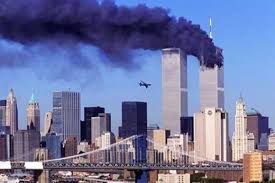
The World Trade Center on September 11, 2001
For the next four months, she joined thousands of other responders at Ground Zero, searching for survivors and human remains and removing tons of hazardous waste produced when the Twin Towers burned and crashed.
Most of those responders didn’t wear respirators or even face masks as protection against the toxic dust they breathed every day. Meanwhile, the Federal Government assured them that the air was safe.
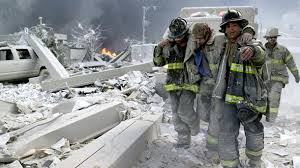
Firefighters rescuing victims at the World Trade Center
During a 2014 interview, she spoke of the conditions she had faced: “It was smoky. You felt like it was just burning your throat.
“I had a back ache. I thought I did something wrong working around the house. But I noticed a lump on my stomach. Even my doctor thought it was nothing but a cyst.”
That cyst turned out to be stage four lung cancer. Just 16 months later, on November 5, 2015, Marci Simms died. She was only 51.

The only positive aspect of her illness: Her medical costs were covered by the Federal Government.
In 2010–nine years after the worst terrorist attack in American history–Congress passed the Democratically-sponsored James Zadroga 9/11 Health And Compensation Act.
The law was named for a New York City detective who died of a respiratory disease in 2006 after his contact with toxic chemicals at Ground Zero.
Previously, the responders had been forced to bear the massive costs of healthcare for diseases like cancer and pulmonary fibrosis.
The law authorized $1.8 billion to be spent over five years to treat injuries of police, firefighters, emergency workers, construction and cleanup crews caused by exposure to toxic dust and debris at the site.
Republicans bitterly opposed the legislation. They argued that providing healthcare for ailing September 11 heroes would bankrupt the nation.
Of course, they hadn’t voiced such concerns when President George W. Bush lied the nation into a $1 trillion war against Iraq in 2003.
For Republicans, the heroes of 9/11 had become “welfare-seeking bums.”
Slandering the Act as an “entitlement program” like Medicare, they demanded that the responders return to Congress every year to make their case–allegedly to prevent fraud and waste.
Republicans forced Democrats to accept an amendment that deliberately cast a slur on the men and women who answered their country’s call in its supreme moment of agony. Only then was the legislation passed.
The amendment read: “No individual who is on the terrorist watch list maintained by the Department of Homeland Security shall qualify as a screening-eligible WTC survivor or a certified-eligible WTC survivor.
“Before determining any individual to be a screening-eligible WTC survivor…or certifying any individual as a certified eligible survivor….the Administrator, in consultation with the Secretary of Homeland Security, shall determine whether the individual is on such list.”
The amendment provoked outrage among non-politicians, Democrats and even some Republicans. Among these:
- Rep. Jerrold Nadler (D-NY) whose district encompassed Ground Zero, said it was “absurd” to consider that any of the 9/11 heroes would be terrorists. He added that the screenings were a “waste of money.”
- Rep. Peter King (R-NY) called the exercise “shameful” and “a waste of time,” adding: “It put a cloud over extraordinarily good people for no reason.”
- “The Daily Show” host Jon Stewart noted that the federal government didn’t run background checks on any other group of people receiving financial benefits. These included Social Security recipients, Medicare patients and even Wall Street bankers bailed out during the recession.
Specifically, responders seeking help were told that the following would be reported to the FBI to prove they were not terrorists:
- Name
- Birthplace
- Address
- Government ID number
- and other personal data.
By August, 2011, the FBI had screened some 60,000 emergency responders to the attacks on the World Trade Center and had not uncovered any suspected terrorists.
To date, no known terrorist has been found seeking treatment.
Glen Kline, a former NYPD emergency services officer, best summed up the disgrace of these background checks: “This is absurd. It’s silly. It’s stupid. It’s asinine. I mean, who are we even talking about–the undocumented workers who cleaned the office buildings?
“We know who all the cops, firefighters and construction workers were. They’re all documented. Is the idea that a terrorist stayed to help clean up? And then stayed all these years to try and get benefits?”
Unable to prevent the heroes of 9/11 from receiving medical care for their ailments, Congressional Republicans waited for their chance to strike.
In October, they refused to renew the Act, which is set to expire in October, 2015.
Meanwhile, 2,500 Ground Zero workers–so far–have been stricken with cancer.
Thus, self-righteous Right-wing legislators–who never lifted a beam from a trapped 9/11 survivor or inhaled toxic fumes that spewed from the crater that was once the World Trade Center–continue to stand in judgment over those who did.
1984 NOVEL, ABC NEWS, CBS NEWS, CHRISTMAS, CNN, COMMERCIALISM, DONALD TRUMP, FACEBOOK, FOX NEWS, GEORGE ORWELL, JESUS, MEGYN KELLY, NBC NEWS, ROMAN EMPIRE, RUPERT MURDOCH, SANTA CLAUS, SATURNALIA, STARBUCK'S, THE CHICAGO SUN-TIMES, THE CHICAGO TRIBUNE, THE LOS ANGELES TIMES, THE NEW YORK TIMES, THE WASHINGTON POST, TWITTER, WAR ON CHRISTMAS
In Business, History, Politics, Social commentary on November 10, 2015 at 10:49 pm
It’s that time of year again–a time of
- Christmas trees;
- Nativity scenes;
- singing carols; and
- exchanging gifts with family and friends.
Christmas is special, so, each year, the executives at Fox News find a new way to stir up emotions by resurrecting the “war on Christmas” slander.
Stirring up false controversies is a daily assignment for the alleged reporters of this company owned by Right-wing patriarch Rupert Murdoch.
In 2013, it fell to Fox hostess Megyn Kelly to carry the ball. And she did so on December 11 on “The Kelly File,” her popular Fox News program.
Referring to an article by Slate writer Aisha Harris on “Santa Claus Should Not Be a White Man Anymore,” she said:
“When I saw this headline, I kinda laughed and I said, ‘Oh, this is ridiculous. Yet another person claiming it’s racist to have a white Santa.’
“And by the way, for all you kids watching at home, Santa just is white. But this person is maybe just arguing that we should also have a black Santa. But, you know, Santa is what he is, and just so you know, we’re just debating this because someone wrote about it, kids.”
Of course, Santa Claus is a completely fictional character. Arguing about his skin color is as pointless as arguing about his weight.
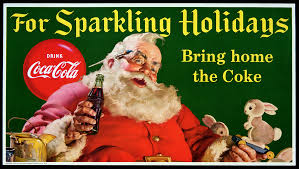
But Kelly wasn’t content to talk only about Santa. So she turned next to Jesus, a historical figure about whom we have not a single reference to his appearance, let alone a picture.
“Just because it makes you feel uncomfortable doesn’t mean it has to change. You know, I mean, Jesus was a white man, too,” Kelly said.
“He was a historical figure; that’s a verifiable fact–as is Santa, I want you kids watching to know that–but my point is: How do you revise it, in the middle of the legacy of the story, and change Santa from white to black?”
Santa Claus a verifiable historical figure? Not even Charlie Brown, in the annually telecast “Peanuts” special, would make that claim.
Two years later, it’s Donald Trump who has claimed center-stage in “defending” Christmas. And the target of his ire? Starbucks.
In years past, its disposable coffee cups have featured snowflakes, winter scenes, reindeer and Christmas ornaments.
But this year, Starbucks decided to go with a minimalist, all-red design, its only feature being the company’s green and white logo.

This has angered some religious conservatives, who generally care more about symbols than substance.
It’s the old “war on Christmas” mantra all over again. And Trump–who hopes to win evangelical votes in Iowa and South Carolina–is happy to become its biggest cheerleader.
“I guarantee if I become president, we’re going to be saying ‘Merry Christmas’ at every store,” he promised during a campaign rally in October.
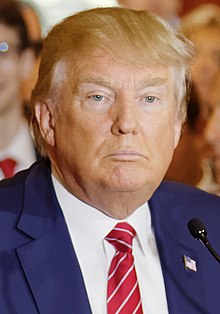
Donald Trump
Fast forward to November 9, and the Starbucks “controversy.” Addressing a crowd of several thousands in Springfield, Illinois, Trump said:
“Did you read about Starbucks? No more Merry Christmas on Starbucks.
“I have one of the most successful Starbucks, in Trump Tower. Maybe we should boycott Starbucks? I don’t know. Seriously, I don’t care. That’s the end of that lease, but who cares?
“If I become president, we’re all going to be saying Merry Christmas again, that I can tell you.”
Trump did not explain how he would coerce non-Christian Americans–such as atheists, Jews and Muslims–to observe a Christian holiday.
Those who insist (whether they believe it or not) that Christmas is an endangered species should consider the following:
- In 2013, the American retail industry generated over three trillion dollars during the Christmas holidays.
- These holiday sales reflected about 19.2% of the retail industry’s total sales that year.
- More than 768,000 temporary employees were hired throughout the United States to help stores cope with the holiday rush.
- American consumers expected to spend about $704 on average on Christmas gifts.
- There is no reference anywhere in the Bible to the month–let alone the day–of Jesus’ birth.
- Jesus never commanded his followers to celebrate his birth–but he did call on them to remember his death.
- Many of the “religious” traditions associated with Christmas stem from the pagan Roman festival, Saturnalia, which celebrated the “birthday” of the sun.
- This was celebrated from December 17-25.
- Saturnalia traditions included feasting, gift-giving, lighting candles (to ward off evil spirits) and displaying wreaths (as a sign of coming spring).
- Early Christians tried mightily to convince their members to stop celebrating the Saturnalia.
- When these efforts failed, the Roman Catholic Church, in the fourth century, “Christianised” the festival by naming Saturnalia’s concluding day, December 25, as Jesus’ birthday.
In George Orwell’s classic novel, 1984, Oceania is always at war with Eurasia or Eastasia. Its citizens are kept in a constant state of frenzy as they’re directed to search for endless “enemies of the state.”
This, in turn, allows the unseen rulers of Oceania to run their dictatorship without interference.
It’s a lesson well-known to hucksters like Donald Trump and the men who run Fox News.
9/11, ABC NEWS, ANONYMOUS, ASSOCIATED PRESS, CBS NEWS, CIA, CNN, COINTELPRO, FACEBOOK, FBI, J. EDGAR HOOVER, KU KLUX KLAN, MISSISSIPPI BURNING CASE, NBC NEWS, NYPD, PRESIDENT LYNDON B. JOHNSON, TERRORISM, THE CHICAGO SUN-TIMES, THE CHICAGO TRIBUNE, THE LOS ANGELES TIMES, THE NEW YORK TIMES, THE WALL STREET JOURNAL, THE WASHINGTON POST, TWITTER, WILLIAM C. SULLIVAN
In Bureaucracy, History, Law Enforcement, Politics, Social commentary on November 9, 2015 at 1:32 pm
On October 30, the hacker group Anonymous released the names of at least a dozen alleged Ku Klux Klan (KKK) members and their families online.
“Ku Klux Klan, We never stopped watching you,” the group said in a prepared statement. “We know who you are. We know the dangerous extent to which you will go to cover your asses.
“Originally, we did not attack you for your beliefs as we fight for freedom of speech. We attacked you due to your threats to use lethal force in the Ferguson [Missouri] protests [in November, 2015].
“We took this grudge between us rather seriously. You continue to threaten anons and others. We never said we would only strike once….
“We will release, to the global public, the identities of up to 1000 klan members, Ghoul Squad affiliates and other close associates of various factions of the Ku Klux Klan.”
The information released included ages, phone numbers, addresses and even credit card numbers.

By November 5, Anonymous had released the names of about 1,000 alleged KKK members or sympathizers via a Twitter data dump.
Among those names released by Anonymous:
- U.S. Senator Thom Tillis (R-N.C.);
- U.S. Senator John Cornyn (R-Tx.),
- U.S. Senator Dan Coats (R-In.);
- U.S. Senator Johnny Isakson (R-Ga.);
- Mayor Madeline Rogero of Knoxville, Tennessee;
- Mayor Jim Gray of Lexington, Kentucky;
- Mayor Paul D. Fraim of Norfolk, Virginia;
- Mayor Kent Guinn of Ocala, Florida; and
- Mayor Tom Henry of Fort Wayne, Indiana.
All of these officials have denied any affiliation with the Klan.
“I worked for nine days to gather and verify all the information that was gathered before its release,” Amped Attacks, the releaser of the information, stated online.
“I got the information from several KKK websites when I [hacked] them and was able to dump their database.
“I went through many emails that was signed up with these sites and a few of the emails that sparked my interest was the ones of the politicians in question there would be no reason for them to be signed up on any KKK website unless they supported it or was involved in it.”
Click here: UPDATE: Here’s the Latest On the Leak of Alleged KKK Members
This mass leak is easily the worst assault on the KKK since the FBI declared war on it more than 50 years ago.
More importantly, it is an assault made by a private group that has no affiliation with the U.S. Department of Justice.
The last time the Justice Department waged an all-out attack on the Klan was during the Presidency of Lyndon B. Johnson.
The reason: The murders of three civil rights workers in Philadelphia, Mississippi–Michael “Mickey” Schwerner, Andrew Goodman and James Chaney–on June 21, 1964.
Johnson ordered the FBI to find the missing activists. After their bodies were found buried near a dam, Johnson gave FBI Director J. Edgar Hoover a direct order: “I want you to have the same kind of intelligence [on the KKK] that you have on the communists.”
So the FBI launched a counterintelligence program–in Bureau-speak, a COINTELPRO–against the Ku Klux Klan.
Up to that point, Klansmen had shot, lynched and bombed their way across the Deep South, especially in Alabama and Mississippi. Many Southern sheriffs and police chiefs were Klan sympathizers, if not outright members and accomplices.

Ku Klux Klansmen in a meeting
The FBI’s covert action program aimed to “expose, disrupt and otherwise neutralize” KKK groups through a wide range of legal and extra-legal methods.
“My father fought the Klan in Massachusetts,” recalled William C. Sullivan, who headed the FBI’s Domestic Intelligence Division in the 1960s. “I always used to be frightened when I was a kid and I saw the fiery crosses burning in the hillside near our farm.

William C. Sullivan
“When the Klan reached 14,000 in the mid-sixties, I asked to take over the investigation of the Klan. When I left the Bureau in 1971, the Klan was down to a completely disorganized 4,300. It was broken.
“They were dirty, rough fellows. And we went after them with rough, tough methods.”
Click here: The Bureau My Thirty Years in Hoover’s FBI: William C Sullivan, Sam Sloan, Bill Brown: 9784871873383: Amazon.com:
Among those methods:
- Planting electronic surveillance devices in Klan meeting places;
- Carrying out “black bag jobs”–burglaries–to steal Klan membership lists;
- Contacting the news media to publicize arrests and identify Klan leaders;
- Informing the employers of known Klansmen of their employees’ criminal activity, resulting in the firing of untold numbers of them;
- Developing informants within Klans and sewing a climate of distrust and fear among Klansmen;
- Breaking up the marriages of Klansmen by circulating rumors of their infidelity among their wives; and
- Beating and harassing Klansmen who threatened and harassed FBI agents.
The FBI’s counterintelligence war against the Klan ended in 1971.
Today, there are active Klan chapters in 41 states, with between 5,000 and 8,000 active members.
Of course, it’s possible that some of the information posted by Anonymous is wrong.
But if it isn’t, then Anonymous has done the nation a public service.
And, by doing so, it has raised a disturbing question: Why has the Justice Department left a private organization to do battle with a terroristic one like the Ku Klux Klan?
ABC NEWS, ADOLF HITLER, AL QAEDA, ARTHUR M. CUMMINGS, BARACK OBAMA, BOKO HARAM, BOSTON MARATHON BOMBING, CANADA, CBS NEWS, CNN, DAVID CAMERON, DENMARK, FACEBOOK, FBI, HATE CRIMES, INVESTIGATIVE PROJECT ON TERRORISM, ISLAM, ISLAMIC STATE OF IRAQ AND SYRIA, MOHAMMED, NAZI GERMANY, NBC NEWS, NIGER, PAKISTAN, RELIGION, SAMUEL HUNTINGTON, STEVEN EMERSON, TALIBAN, TERRORISM, THE CHICAGO SUN-TIMES, THE CHICAGO TRIBUNE, THE CLASH OF CIVILIZATIONS, THE INVESTIGATIVE PROUECT ON TERRORISM, THE LOS ANGELES TIMES, THE NEW YORK TIMES, THE WALL STREET JOURNAL, THE WASHINGTON POST, THE WHITE CLIFFS OF DOVER, TWITTER, USA TODAY, VERA LYNN, WORLD TRADE CENTER, WORLD WAR ii
In Bureaucracy, History, Military, Politics on November 6, 2015 at 12:10 am
During World War II, British singer Vera Lynn comforted her war-weary fellow citizens with a poignant rendition of “The White Cliffs of Dover.”
The appeal of the song lay in its promise that, once Nazi Germany was defeated, peace and normality would return.
Click here: Vera Lynn: The White Cliffs of Dover – YouTube
And despite being threatened with invasion in 1940 and devastated by massive bombing raids in 1940-41, citizens of Great Britain could take heart in the following:
- Nazi Germany had a capitol–Berlin–and a single, all-powerful leader–Adolf Hitler. Once Berlin was occupied and Hitler dead or captured, the war would be over.
- And, for all their ferocity, German soldiers were easy to recognize: They wore gray uniforms, spoke German and waved flags emblazoned with swastikas or imperial eagles.
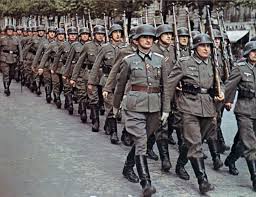
Wehrmacht soldiers marching through conquered France
Today, Western nations under attack by Islamic “holy warriors” face none of those advantages. Islam has no single capitol city–or leader.
The American occupation of Baghdad in 2003 triggered a nationwide insurgency. And deposing Saddam Hussein unleashed a religious war between Shia and Sunnis throughout Iraq.
Nor do Islam’s jihadist legions wear uniforms. Many of them don’t speak Arabic or wear clothing associated with Arabs, such as flowing robes and headdresses.
More ominously, millions of Islam’s potential “warriors” live within the very Western nations they despise. They can get all the instruction and inspiration they need to wreck havoc simply by going to the Internet.
Or, if they have the money, by traveling overseas to such terrorist-recruiting centers as in Syria or Afghanistan.
And yet, faced with an unprecedented threat to their security, many Western leaders refuse to publicly acknowledge this fundamental truth:
Even if the West isn’t at war with Islam, Islam is at war with the West.
Leaders like President Barack Obama, who insisted, at a White House Summit on Countering Violent Extremism in February, 2015: “We are not at war with Islam. We are at war with people who have perverted Islam.”

David Cameron
And leaders like British Prime Minister David Cameron, who said on August 29, 2014: “Islam is a religion observed peacefully by over a billion people. Islamist extremism is a poisonous ideology observed by a minority.”
It was at this same press conference that Cameron announced that United Kingdom authorities would soon begin revoking the passports of British citizens traveling to Syria.
Arthur M. Cummings, the FBI’s executive assistant director for national security, has no use for such Politically Correct terms as “man-caused disasters” to refer to terrorism. Nor does he shy away from terms such as “jihadists” or “Islamists.”
“Of course Islamists dominate the terrorism of today,” he says bluntly.
In May, 2014, Steven Emerson, a nationally recognized expert on terrorism, posted an ad in The New York Times, warning about the dangers of PC-imposed censorship:
“Our nation’s security and its cherished value of free speech has been endangered by the bullying campaigns of radical Islamic groups, masquerading as ‘civil rights’ organizations, to remove any reference to the Islamist motivation behind Islamic terrorist attacks.
“These groups have pressured or otherwise colluded with Hollywood, the news media, museums, book publishers, law enforcement and the Obama Administration in censoring the words ‘Islamist’, ‘Islamic terrorism’, ‘radical Islam’ and ‘jihad’ in discussing or referencing the threat and danger of Islamic terrorism.
“This is the new form of the jihadist threat we face. It’s an attack on one of our most sacred freedoms—free speech—and it endangers our very national security. How can we win the war against radical Islam if we can’t even name the enemy?”
He has a point–and a highly legitimate one.
Imagine the United States fighting World War II–and President Franklin Roosevelt banning the use of “fascist” in referring to Nazi Germany or “imperialist” in describing Imperial Japan.
Imagine CNN-like coverage of the Nazi extermination camps, with their piles of rotting corpses and smoking gas ovens, while a commentator reminds us that “Nazism is an ideology of peace.”
Then consider these Islamic terrorist outrages of our own time:
- The 9/11 attacks on the World Trade Center in New York City and the Pentagon in Washington, D.C., which snuffed out the lives of 3,000 Americans.
- The 2004 bombing of Madrid’s commuter train system.
- The attack on the London subway in 2005.
- The killing of 13 U.S. Army personnel at Fort Hood, Texas, by a Muslim army major in 2009.
- The bombing of the Boston Marathon in 2013.
- The kidnapping of 300 Nigerian schoolgirls by Boko Haram in 2014.
- The slaughter of 12 people at a Paris satirical magazine that had published cartoons about the Prophet Mohammed in 2015.
In every one of these attacks, the perpetrators openly announced that their actions had been motivated by their Islamic beliefs.
In his groundbreaking book, The Clash of Civilizations (1996) Samuel Huntington, the late political scientist at Harvard University, noted:
“The fundamental problem for the West is not Islamic fundamentalism. It is Islam, a different civilisation whose people are convinced of the superiority of their culture and are obsessed with the inferiority of their power.”
All-in-all, the future looks better for would-be Islamic conquerors than for those in the West awaiting the next Islamic atrocity.
ABC NEWS, ADOLF HITLER, AL QAEDA, ARTHUR M. CUMMINGS, BARACK OBAMA, BOKO HARAM, BOSTON MARATHON BOMBING, CANADA, CBS NEWS, CNN, DAVID CAMERON, DENMARK, FACEBOOK, FBI, HATE CRIMES, INVESTIGATIVE PROJECT ON TERRORISM, ISLAM, ISLAMIC STATE OF IRAQ AND SYRIA, MOHAMMED, NAZI GERMANY, NBC NEWS, NIGER, PAKISTAN, RELIGION, SAMUEL HUNTINGTON, STEVEN EMERSON, TALIBAN, TERRORISM, THE CHICAGO SUN-TIMES, THE CHICAGO TRIBUNE, THE CLASH OF CIVILIZATIONS, THE INVESTIGATIVE PROUECT ON TERRORISM, THE LOS ANGELES TIMES, THE NEW YORK TIMES, THE WALL STREET JOURNAL, THE WASHINGTON POST, THE WHITE CLIFFS OF DOVER, TWITTER, USA TODAY, VERA LYNN, WORLD TRADE CENTER, WORLD WAR ii
In Bureaucracy, History, Law Enforcement, Military, Politics, Social commentary on November 5, 2015 at 12:34 am
The headline on the CNN website said it all–or seemed to: “Religion’s Week From Hell.”
Then came the first paragraph: “Whether you believe that religious violence is fueled by faith or is a symptom of larger factors–political instability, poverty, cultural chaos–one thing seems clear: Last week was hellish for religion.”
The story–published on the CNN website on February 18, 2015–then outlined a series of atrocities committed in the name of religion:
“Across several continents, including North America, Europe, Central Asia and Africa, scores of religious believers suffered and died in brutal attacks over the past seven days.”
Click here: Religion’s week from hell – CNN.com
And here was the day-by-day chronicle of slaughter:
Monday:
- Boko Haram, the Islamic group based in Nigeria, attacked several towns in Cameroon, kidnapping 20 people. They also exploded a car bomb in Niger. At the time, the death toll was unclear.
Tuesday:
- Craig Hicks, an athiest who ranted against religion on the Internet, was charged with killing three young Muslim students in Chapel Hill, North Carolina.
Wednesday:
- The Islamic State of Iraq and Syria (ISIS) attacked Kurdish forces in northern Iraq and Iraqi civilians in Baghdad. At least 31 people were killed in Baghdad by ISIS bombs.
Thursday:
- Al Qaeda seized a key military base in Baihan, Yemen, killing four Yemeni soldiers. They then took control of the town’s weaponry.
- With the United States’ having already closed its embassy in Yemen, Italy, Germany and Saudi Arabia did the same.
Friday:
- Boko Haram killed 21 people in attacks on Mbuta and Akida villages in Nigeria.
- The Islamic terror group also killed four civilians and a soldier in neighboring Chad.
- In Peshawar, Pakistan, the Taliban attacked a Shia mosque, killing 19 and wounding dozens.
Saturday:
- In Copenhagen, Denmark, an Islamic gunman fired at attendees of a free-speech forum, where a Swedish cartoonist was scheduled to speak. His alleged crime: Depicting the Prophet Mohammed. Casualties: Three officers wounded and one 55-year-old man killed.
- Hours later, the same terrorist visited a Copenhagen synagogue. Opening fire, he wounded two officers and killed a private security guard.
Sunday:
- ISIS released a video showing its members beheading more than a dozen members of Egypt’s Coptic Christian minority on a Libyan beach.
So much for “religion’s week from hell.”
Except that the title of this story was completely misleading. It would have been more accurately entitled: “Islam’s Week of Hell.”

ISIS member beheading a helpless captive
Of the 13 atrocities detailed above, all but one showcased Islamics as the murderers.
The single exception was that of Craig Hicks, an athiest who was charged with shooting three Muslim college students in Chapel Hill, North Carolina.
It was this case–and not any of the others–that brought Muslims to demand “justice.” Muslims immediately urged the Obama administration to investigate the murders as a hate crime.
Suzanne Barakat, the sister of one of the victims, said the students had been murdered because they were Muslims. She said that the killings should be considered an act of terrorism: “It’s time people call it what it is.”
But getting Islamics to label other Islamics as terrorists is an entirely different matter.
According to author Ronald Kessler, this has caused serious problems for the FBI. In his 2011 book, The Secrets of the FBI, Kessler notes the refusal of the Islamic community to identify known or potential terrorists within its ranks.
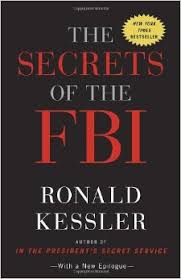
Says Arthur M. Cummings, the Bureau’s executive assistant director for national security: “I had this discussion with the director of a very prominent Muslim organization here in [Washington] D.C. And he said, ‘Why are you guys always looking at the Muslim community?’”
“I can name the homegrown cells, all of whom are Muslim, all of whom were seeking to kill Americans,” replied Cummings. “It’s not the Irish, it’s not the French, it’s not the Catholics, it’s not the Protestants. It’s the Muslims.”
Occasionally, Muslims will condemn Al Qaeda. But “rarely do we have them coming to us and saying, ‘There are three guys in the community that we’re very concerned about.’” said Cummings.
“They don’t want anyone to know they have extremists in their community. Well, beautiful. Except do you read the newspapers? Everybody already knows it. The horse has left the barn.
“So there’s a lot of talk about engagement. But, realistically, we’ve got a long, long way to go.”
At one community meeting, an Islamic leader suggested to Cummings that then-FBI director Robert Meuller III should pose for a picture with his group’s members. The reason: To show that Islamics are partners in the “war on terror.”
“When you bring to my attention real extremists who are here to plan and do something, who are here supporting terrorism,” said Cummings, “then I promise you, I will have the director stand up on the stage with you.”
“That could never happen,” replied the Islamic leader. “We would lose our constituency. We could never admit to bringing someone to the FBI.”
ABC NEWS, AFGHANISTAN, CBS NEWS, CIA, CNN, COMPUTER SECURITY, DAVID PETRAEUS, EXTRAMARITAL AFFAIRS, FACEBOOK, FBI, GENERAL JOHN ALLEN, IAN FLEMING, IRAQ, JAMES BOND, JILL KELLEY, NBC NEWS, NICCOLO MACHIAVELLI, PAULA BROADWELL, SECRECY, THE CHICAGO SUN-TIMES, THE CHICAGO TRIBUNE, THE DISCOURSES, THE LOS ANGELES TIMES, THE NEW YORK TIMES, THE WALL STREET JOURNAL, THE WASHINGTON POST, TWITTER, USA TODAY, WEST POINT
In Bureaucracy, History, Military, Politics, Social commentary on November 4, 2015 at 12:00 pm
James Bond, the legendary creation of novelist Ian Fleming, routinely bedded femme fatales–and sometimes killed them. But he never faced indictment for romancing them.
That’s the difference between Bond and real-world spying.
And David Petraeus, former director of the Central Intelligence Agency, should have known this better than anyone.
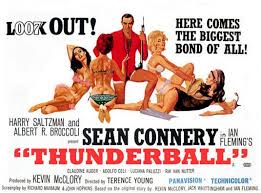
Movie poster for Thunderball (1965)
In January 2015, the FBI and Justice Department decided to bring criminal charges against Petraeus for sharing–as CIA director–classified information with his then-mistress and biographer, Paula Broadwell.
FBI agents found classified information on a personal computer Broadwell used–and determined that Petraeus had supplied it.
As an Army General, Petraeus had successfully led U.S. troops in Afghanistan and Iraq and was thought to be a potential candidate for president.
In 2011, he won appointment to CIA director–which ended abruptly in 2012 with the revelation of his extramarital affair with Broadwell.
Petraeus is one of the most highly educated men in the United States:
- Alumnus of the United States Military Academy at West Point–graduating among the top 5% of his 1974 class.
- Earned an M.P.A. in 1985 and a Ph.D. in International Relations in 1987 from the Woodrow Wilson School of Public and International Affairs at Princeton University.
- Served as Assistant Professor of International Relations at the United States Military Academy
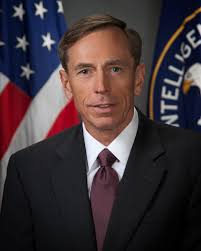
David Petraeus
And Paula Broadwell is one of the most highly educated women in the United States:
- Graduate of the United States Military Academy at West Point in 1995, majoring in political geography.
- Earned a master’s degree in international security from the University of Denver’s Joseph Korbel School of International Studies in 2006.
- Earned a Master of Public Administration from the John F. Kennedy School of Government at Harvard University in 2008.
In addition, Petraeus, as director of the CIA, knew the importance of secrecy in keeping clandestine affairs (military and personal) out of sight.
So did Broadwell, having earned a reputation as an expert on counter-terrorism.

Paula Broadwell
Yet they both violated the most basic rules of security.
They exchanged emails using a cyber trick known to both terrorists and teenagers: Sharing a private email account, or “dropbox.”
In this they composed drafts to each other in order not to directly transmit messages to one another. Each could log onto the same account and read the draft emails there.
By doing so, they flagrantly left a cyber-trail of their infidelities. (Broadwell was also married.)
It was Niccolo Machiavelli, the father of political science, who warned: If you don’t want it known, don’t write it down.
More than 500 years ago, in his masterwork, The Discourses, he warned:

Niccolo Machiavelli
…You may talk freely with any one man about everything, for unless you have committed yourself in writing, the “Yes” of one man is worth as much as the “No” of another.
And therefore one should guard most carefully against writing, as against a dangerous rock, for nothing will convict you quicker than your own handwriting….
Nor were Petraeus and Broadwell the only ones guilty of thumbing their noses at this most basic of precautions.
General John Allen, the top American commander in Afghanistan, exchanged thousands of emails with Jill Kelley, a Florida socialite.
Although charged with directing American military efforts against the Taliban, Allen found time to exchange 20,000 to 30,000 pages’ worth of emails with Kelley between 2010 and 2012.
The scandal began when Kelley began receiving harassing emails from an unidentified woman. So she complained to the FBI.
The emails allegedly came from Broadwell, who thought that Kelley was trying to move in on “her man”–Petraeus. Apparently, Broadwell didn’t feel similarly threatened by Holly, Petraeus’ wife.)
The FBI investigation ultimately led to the discovery of the Petraeus/Broadwell affair.
There are several lessons to be learned from this behavior by Petraeus, Broadwell, Allen and Kelley:
- They believed they were so privileged–by education, status and/or wealth–that conventional rules of morality didn’t apply to them.
- They believed they were so clever they could violate the most basic rule of security and common sense–and get away with it.
- They were so caught up in their illicit passions that they threw caution to the winds.
- David Petraeus, a highly disciplined man, clearly expected Paula Broadwell to behave in a similarly disciplined manner–and do nothing to compromise their lives.
- Petraeus felt so confident about the secrecy of his affair he had his wife and mistress present when he appeared before the Senate Intelligence Committee in 2011 to become CIA director.

General David Petraeus’ CIA confirmation hearings. His wife, Holly (in white) and mistress, Paula Broadwell (in black).
- Petraeus didn’t imagine that Broadwell suspected another of his admirers–Jill Kelley–of having romantic designs on him.
- And he was utterly surprised when her harassing emails to Kelley led the FBI to uncover his illicit relationship.
In March, 2015, Petraeus agreed to plead guilty in federal court to a charge of unauthorized removal and retention of classified information. On April 23, 2015, a federal judge sentenced Petraeus to two years’ probation plus a fine of $100,000
Thus does hubris meet its punishment in Nemesis.
ABC NEWS, BENJAMIN NETANYAHU, CBS NEWS, CIA, CNN, DELTA FORCE, FACEBOOK, FBI, GREEN BERETS, HIZBOLLAH, HOSTAGE NEGOTIATION, ISLAMIC TERRORISM, KGB, KIDNAPPING, NBC NEWS, SOVIET UNION, SPECIAL WEAPONS AND TACTICS TEAMS (SWAT), THE CHICAGO SUN-TIMES, THE CHICAGO TRIBUNE, THE LOS ANGELES TIMES, THE NEW YORK TIMES, THE WALL STREET JOURNAL, THE WASHINGTON POST, TWITTER, U.S. NAVY SEALS, WILLIAM CASEY
In Bureaucracy, History, Military, Politics, Social commentary on November 3, 2015 at 1:47 am
Retrieving hostages is always a difficult task.
The first concern is always: Saving the lives of the hostages taken.
The secondary concern–for American police agencies–is: Preserving the lives of the hostage-takers.
While some people question the point of taking pains for the lives of captors, there are several reasons for doing so.
The first is that if others are behind the hostage-taking, their identities will never be revealed without testimony from their confederates.
The second is that people who feel they have been marked for death are likely to go out in a blaze of glory–taking their hostages with them.
During the late 1960s and early 1970s, American law enforcement agencies began creating Special Weapons and Tactics (SWAT) teams. These units were armed with automatic weapons and trained to enter barricaded buildings. They were also given special training in hostage negotiation.
Their men came from the most physically and mentally fit officers of those departments. And the police departments whose SWAT teams were universally recognized as the best were the LAPD and NYPD.

At the Federal level, the FBI’s Hostage Rescue Team (HRT) stands as the go-to unit for other Federal law enforcement agencies. Created in 1982, its duties include:
- Apprehending barricaded subjects;
- Executing helicopter operations and rescue missions;
- Executing mobile assaults;
- Performing high-risk raids, searches, arrests, and warrants;
- Coordinating manhunt and rural operations; and
- Providing force protection for FBI personnel overseas.
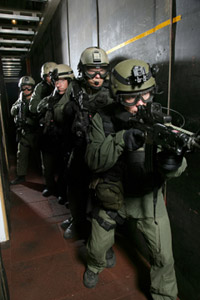
Hostage Rescue Team
The first commandment for American SWAT teams–local, state and Federal–is: Don’t try to enter a barricaded area unless (1) hostages’ lives are directly at risk; and (2) there is no other way to effect their rescue.
Even if hostages are murdered before a SWAT team arrives on the scene, officers will usually try to enter into negotiations with their captors. They will send in food and other comfort items in hopes of persuading the criminals to surrender peacefully.
These negotiations can last for hours or days–so long as police feel they have a chance of success.
But there is another way agencies can try to rescue hostages. It might be called, “The KGB Method.”
The KGB served as a combination secret police/paramilitary force throughout the 74-year life of the Soviet Union. Its name (“Commitee for State Security”) has changed several times since its birth in 1917: Cheka, NKVD, MGB and KGB.
After the collapse of the Soviet Union in 1991 and the formation of the Russian Federation, its name was officially changed to the FSB (Federal Security Service).
By any name, this is an agency known for its brutality and ruthlessness. The numbers of its victims literally run into the millions.
On September 30 1985, four attaches from the Soviet Embassy in Beirut, Lebanon, were kidnapped by men linked to Hizbollah (“Party of God”), the Iranian-supported terrorist group.
The kidnappers sent photos of the four men to Western news agencies. Each captive was shown with an automatic pistol pressed to his head.
The militants demanded that Moscow pressure pro-Syrian militiamen to stop shelling the pro-Iranian militia in Lebanon’s northern port city of Tripoli.
And they threatened to execute the four Soviet captives, one by one, unless this demand was met.
The Soviet Union began negotiations with the kidnappers, but could not secure a halt to the shelling of Tripoli.
Only two days after the kidnappings, the body of Arkady Katov, a 30-year-old consular secretary, was found in a Beirut trash dump. He had been shot through the head.
That was when the KGB took over negotiations.
Insignia of the KGB
They kidnapped a man known to be a close relative of a prominent Hizbollah leader. Then they castrated him, stuffed his testicles in his mouth, shot him in the head, and sent the body back to Hizbollah.
The KGB then informed the Hizbollah leader: We know the names of other close relatives of yours, and the same will happen to them if our diplomats are not released immediately.
Soon afterward, the remaining three Soviet attaches were released only 150 yards from the Soviet Embassy.
Hizbollah telephoned a statement to news agencies claiming that the release was a gesture of “goodwill.”
In Washington, D.C., then-CIA Director William Casey decided that the Soviets knew the language of Hizbollah.
Click here: Hostages? No Problem Soviets Offer ‘How-to’ Lesson In Kidnapping – Philly.com
Both the United States and Israel–the two nations most commonly targeted for terrorist kidnappings–have elite Special Forces units.
Military hostage-rescue units operate differently from civilian ones. They don’t care about taking alive hostage-takers for later trials. The result is usually a pile of dead hostage-takers.
These Special Forces could be ordered to similarly kidnap the relatives of whichever Islamic terrorist leaders are responsible for the latest outrages.
Ordering such action would instantly send an unmistakable message to Islamic terrorist groups: Screw with us at your own immediate peril.
In the United States, such elite units as the U.S. Navy SEALS, Green Berets and Delta Force stand ready. They require only the orders.


&docid=9ui1_6eEdC2RvM&tbnid=7tZltVZLvyljAM%3A&w=535&h=395&ei=3YOzVMOUCdjUoASWqIDQBA&ved=0CAIQxiAwAA&iact=c)


60 MINUTES, 9/11 ATTACKS, ABC NEWS, ADOLF HITLER, AFGHANISTAN, AL QAEDA, AYATOLLAH RUHOLLAH KHOMEINI, BARACK OBAMA, BASHAR AL-ASSAD, CARL VON CLAUSEWITZ, CARLOS THE JACKAL, CBS NEWS, CHEMICAL WEAPONS, CHINA, CIA, CNN, FACEBOOK, HARRY TRUMAN, IMPERIAL HUBRIS, IRAN, ISLAM, ISLAMIC STATE OF IRAQ AND THE LEVANT, ISRAEL, MARCHING TOWARD HELL, MICHAEL SCHEUER, MUSLIMS, NAZI GERMANY, NBC NEWS, OSAMA BIN LADEN, RUSSIA, SHAH OF IRAN, SOVIET UNION, SYRIA, TERRORISM, THE CHICAGO TIMES, THE CHICAGO TRIBUNE, THE LOS ANGELES TIMES, THE NEW YORK TIMES, THE WASHINGTON POST, TWITTER, USA TODAY, VIETNAM WAR, VLADIMIR PUTIN, WORLD WAR 1
GOODBYE TO ALL THAT: PART TWO (OF THREE)
In Bureaucracy, History, Military, Politics, Social commentary on November 18, 2015 at 12:16 amFor America to avoid permanent military entanglements in the Middle East, it must learn to mind its own business.
So says Michael Scheuer, a 20-year CIA veteran who, from 1996 to 1999, headed Alec Station, the CIA’s unit assigned to track Osama bin Laden at the agency’s Counterterrorism Center.
He’s also the author of two seminal works on America’s fight against terrorism:Imperial Hubris: Why the West is Losing the War on Terror (2003) and Marching Toward Hell: America and Islam after Iraq (2008).
Scheuer has repeatedly warned: The United States must not deploy troops in Syria.
More than 310,000 people have been killed in Syria’s uprising-turned-civil war. The conflict began on March 15, 2011, triggered by protests demanding political reforms and the ouster of dictator Bashar al-Assad.
And many members of Congress are demanding that “we must do something” to stop all that killing.
Three reasons have already been given for why America should steer clear of the Syrian tar-baby. Among the others:
Fourth, the Assad regime is backed by–-among others–the Iranian-supported terrorist group, Hezbollah (Party of God). Its enemies include another terrorist group–Al Qaeda.
Hezbollah is comprised of Shiite Muslims. A sworn enemy of Israel, it has kidnapped scores of Americans suicidal enough to visit Lebanon and truck-bombed the Marine Barracks in Beirut in 1983, killing 299 Americans.
Flag of Hezbollah
Al-Qaeda, on the other hand, is made up of Sunni Muslims. Besides plotting 9/11, It has attacked the mosques and gatherings of liberal Muslims, Shias, Sufis and other non-Sunnis.
Examples of these sectarian attacks include the Sadr City bombings, the 2004 Ashoura massacre and the April, 2007 Baghdad bombings.
Flag of Al Qaeda
When your enemies are intent on killing each other, it’s best to stand aside and let them do it.
Fifth, intervening in Syria could produce unintended consequences for American forces–and make the United States a target for more Islamic terrorism.
President Obama has repeatedly said American warplanes are targeting the Islamic State of Iraq and the Levant (ISIL). But bombing is never as accurate as its proponents insist.
An accidental American strike on Syrian government forces could lead the country’s dictator, Bashar al-Assad, to attack Israel–perhaps even with chemical weapons.
Assad could do this simply because he hates Jews–or to lure Israel into attacking Syria.
If that happened, the Islamic world–which lusts to destroy Israelis even more than “apostate” Muslims–would rally to Syria against the United States, Israel’s chief ally.
Sixth, the United States cannot defeat ISIL through air power alone.
President Barack Obama authorized airstrikes against ISIL in September, 2014. Since then, the United States Air Force has dropped thousands of bombs on ISIL convoys.
This has not, however, destroyed ISIL. And its failure to do so has only led to demands by hawkish Republicans and Democrats for “boots on the ground.”
This was in fact predictable. Air power alone failed to secure victory over Nazi Germany during World War II and Vietnam during the Vietnam war. Nor did it “shock and awe” the Iraqis into surrendering during the 2003 Iraq war.
Seventh, while Islamic nations like Syria and Iraq wage war within their own borders, they will lack the resources to launch attacks against the United States.
When Adolf Hitler invaded the Soviet Union in 1941, then-Senator Harry Truman said: “I hope the Russians kill lots of Nazis and vice versa.”
That should be America’s view whenever its sworn enemies start killing themselves off. Americans should welcome such self-slaughters, not become entrapped in them.
Eighth, China and Russia are fully supporting the Assad dictatorship–-and the brutalities it commits against its own citizens.
Any move by the United States to directly attack the Assad regime could ignite an all-out war with Russia and/or China.
What happens if American and Russian forces start trading salvos? Or if Russian President Vladimir Putin orders an attack on Israel, in return for America’s attack on Russia’s ally, Syria?
It was exactly that scenario–Great Powers going to war over conflicts between their small-state allies–-that triggered World War l.
Ninth, America’s past efforts in the Middle East have usually gone horribly awry.
Two examples should suffice:
Iran: Mohammad Mosaddegh was the democratically elected prime minister of Iran from 1951 until 1953. His decision to nationalize the Iranian oil industry led to his overthrow in a CIA coup.
He was replaced by Shah Mohammad Reza Pahlavi, who ruled until 1979 when a national upheaval forced him to flee. Iranians have never forgiven the United States for subjecting them to the 25-year reign of a brutal despot.
Shah of Iran
Afghanistan: In 1979, the Soviet Union invaded Afghanistan. America began supplying shoulder-fired Stinger anti-aircraft missiles to the Afghan Mujahideen fighters. These shifted the balance of the war to the Afghans, who brought down countless Soviet airplanes and helicopters.
Deprived of air supremacy, the Soviet army lost 14,453 killed and 53,753 wounded, and withdrew by 1989.
Americans congratulated themselves on their Realpolitic. But many of the Stingers remained in the hands of jihadists–who decided that America was now “The Great Satan.” One of those jihadists: Osama bin Laden.
Share this: