Posts Tagged ‘2016 PRESIDENTIAL ELECTION’
"MISSION: IMPOSSIBLE", 2016 PRESIDENTIAL ELECTION, 9/11, ABC NEWS, ALTERNET, AMERICABLOG, AP, AUGUSTO PINOCHET, AUGUSTO SANDINO, AYATOLLAH RUHOLLAH KHOMEINI, BABY BOOMER RESISTANCE, BAY OF PIGS, BUZZFEED, CBS NEWS, CHIANG KAI-SHEK, CHILE, CIA, CNN, CROOKS AND LIARS, CUBA, DAILY KOZ, DONALD TRUMP, DWIGHT D. EISENHOWER, FACEBOOK, FBI, FIDEL CASTRO, FIVETHIRTYEIGHT, FULGENCIO BATISTA, GEORGE W. BUSH, GUATEMALA, HAITI, HONODURAS, IRAQ, JACOBO ARBENZ, JOHN F. KENNEDY, MAFIA, MAO TSE-TUNG, MOHAMMAD MOSADDEGH, MOHAMMAD-REZA SHAH PHLAVI, MOTHER JONES, MOVEON, MSNBC, NATIONAL SECURITY AGENCY, NBC NEWS, NEWSWEEK, NICARAGUA, NPR, OSAMA BIN LADEN, PBS NEWSHOUR, POLITICO, POLITICUSUSA, RAW STORY, REUTERS, RICHARD M. NIXON, RUSSIA, SADDAM HUSSEIN, SALON, SALVADOR ALLENDE, SEATTLE TIMES, SLATE, SOVIET UNION, TALKING POINTS MEMO, THE ATLANTIC, THE CHICAGO SUN-TIMES, THE CHICAGO TRIBUNE, THE DAILY BEAST, THE DAILY BLOG, THE GUARDIAN, THE HILL, THE HUFFINGTON POST, THE LOS ANGELES TIMES, THE NATION, THE NEW YORK TIMES, THE WASHINGTON POST, THINKPROGRESS, TIME, TRUTHDIG, TWITTER, U.S. NEWS & WORLD REPORT, UKRAINE, UNITED FRUIT COMPANY, UPI, USA TODAY
In Bureaucracy, History, Law, Law Enforcement, Military, Politics, Social commentary on October 2, 2019 at 12:28 am
On June 12, 2019, during an interview with ABC News correspondent George Stephanopoulos, President Donald Trump said he would accept derogatory information on his 2020 opponents from hostile nations like Russia and China:
“It’s not an interference, they have information. I think I’d take it. If I thought there was something wrong, I’d go maybe to the FBI. If I thought there was something wrong. But when somebody comes up with oppo research, right, they come up with oppo research.
“The FBI doesn’t have enough agents to take care of it, but you go and talk honestly to congressmen, they all do it, they always have. And that’s the way it is. It’s called oppo research.”
But Trump didn’t say he planned to extort derogatory information about his opponents from Ukraine.
In July, 2019, he told his acting chief of staff, Mick Mulvaney, to withhold almost $400 million in promised military aid for Ukraine, which faces increasing aggression from Russia.
On July 25, Trump telephoned Ukrainian President Volodymyr Zelensky to “request” a “favor”: Investigate Democratic Presidential Candidate Joe Biden and his son, Hunter, who had had business dealings in Ukraine.
The reason for such an investigation: To find embarrassing “dirt” on Biden.
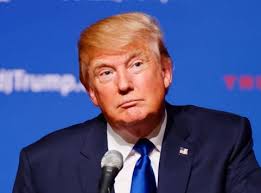
Donald Trump
But then a CIA whistleblower filed a complaint about the extortion attempt—and the media and Congress soon learned of it.
Rep. Adam Schiff, D-Calif., tweeted: “The transcript of the call reads like a classic mob shakedown: — We do a lot for Ukraine — There’s not much reciprocity — I have a favor to ask — Investigate my opponent — My people will be in touch — Nice country you got there. It would be a shame if something happened to her.”
On September 24, 2019, Nancy Pelosi, speaker to the House of Representatives, announced a formal impeachment inquiry into Trump.
In truth, however, subverting the governments of other countries is a right that Americans have long reserved for themselves. For example:
- Between 1898 and 1934, the United States repeatedly intervened with military force in Central America and the Caribbean.
- Americans staged invasions of Honduras in 1903, 1907, 1911, 1912, 1919, 1924 and 1925 to defend U.S. interests. These were defined as Standard Oil and the United Fruit Company.
- The United States occupied Nicaragua almost continuously from 1912 to 1933. Its legacy was the imposition of the tyrannical Somoza family, which ruled from 1936 to 1979.
- The United States occupied Haiti from 1915 to 1934. American banks had lent money to Haiti and requested American government intervention.
- In 1918, 13,000 American soldiers joined armies from Europe and Japan to overthrow the new Soviet government and restore the previous Tsarist regime. By 1920, the invading forces proved unsuccessful and withdrew.
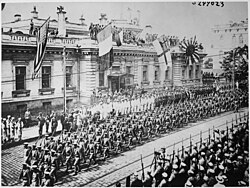
Allied troops parading in Vladivostok, 1918
- In 1953, the Eisenhower administration ordered the CIA to overthrew the democratically-elected government of of Iranian Prime Minister Mohammad Mosaddegh. His crime: Nationalizing the Iranian oil industry, which had been under British control since 1913.
- He was succeeded by Mohammad-Reza Shah Phlavi. Whereas Mossadeddgh had ruled as a constitutional monarch, Phlavi was a dictator who depended on United States government support to retain power until he was overthrown in 1979 by the Ayatollah Ruhollah Khomeini.
- In 1954, the CIA overthrew the democratically-elected government of Guatemalan President Jacobo Arbenz. His crime: Installing a series of reforms that expanded the right to vote, allowed workers to organize, legitimized political parties and allowed public debate. Most infuriating to American Right-wingers: His agrarian reform law, which expropriated parts of large land-holdings and redistributed them to agricultural laborers.
- From 1959 until 1963, the United States government was obsessed with overthrowing the revolutionary Cuban government of Fidel Castro. Although not democratically elected, Castro was wildly popular in Cuba for overthrowing the dictatorial Fulgencio Batista.
- On April 17, 1961, over 1,400 CIA-trained Cuban exiles invaded Cuba at the Bay of Pigs. Cuban military forces crushed the invasion in three days.
- Infuriated with the failure of the Bay of Pigs invasion, President John F. Kennedy authorized “Operation Mongoose” to remove Castro through sabotage and assassination. The CIA, wanting to please Kennedy, teamed up with the Mafia, which wanted to resurrect its casinos on the island.
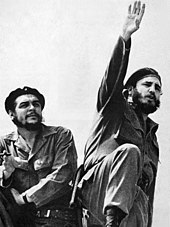
Ernesto “Che” Guevera and Fidel Castro
- In 1970, President Richard M. Nixon ordered the CIA to prevent Marxist Salvador Allende from being democratically elected as president of Chile. When that failed, he ordered the CIA to overthrow Allende.
- Allende’s crime: A series of liberal reforms, including nationalizing large-scale industries (notably copper mining and banking). In 1973, he was overthrown by Chilean army units and national police. He was followed by Right-wing dictator Augusto Pinochet, who slaughtered 3,200 political dissidents, imprisoned 30,000 and forced another 200,000 Chileans into exile.
Americans reacted to all these attempts—successful and unsuccessful—with indifference or outright support.
The popular 1960s TV series, “Mission: Impossible,” regularly depicted a CIA-type agency supporting regimes “we” liked or toppling those “we” didn’t.
Americans generally assume their Presidents and Congress know best who is a “friend” and who is an “enemy.” America’s friends often turn out, for the most part, to be Right-wing dictators like Fulgencio Batista, Augusto Pinochet and Mohammad-Reza Shah Phlavi.
And its enemies often turn out to be liberal reformers like Augusto Sandino, Jacobo Arbenz, Mohammad Mosaddegh and Salvador Allende.
2016 PRESIDENTIAL ELECTION, 2020 PRESIDENTIAL ELECTION, ABC NEWS, AFGHANISTAN, ALTERNET, AMERICABLOG, AP, BABY BOOMER RESISTANCE, BEATRICE STRAIGHT, BORDER WALL, BUZZFEED, CBS NEWS, CIA, CNN, CONSUMER PROTECTION, CORRUPTION, CROOKS AND LIARS, DAILY KOZ, DEMOCRATS, DONALD TRUMP, ENVIRONMENTAL PROTECTION, FACEBOOK, FAYE DUNAWAY, FBI, FEDERAL GOVERNMENT SHUTDOWN, FIVETHIRTYEIGHT, FOREIGN POLICY, FOX NEWS NETWORK, FREEDOM OF THE PRESS, GUNS, HEALTH CARE, HUNTER BIDEN, immigration, INTERNATIONAL TRADE, JOSEPH BIDEN, JUSTICE DEPARTMENT, MOTHER JONES, MOVEON, MSNBC, NATIONAL SECURITY, NATIONAL SECURITY AGENCY, NBC NEWS, NETWORK (MOVIE), NEWSWEEK, NPR, PADDY CHAYEFSKY, PBS NEWSHOUR, PETER FINCH, POLITICO, POLITICUSUSA, RAW STORY, REPUBLICANS, REUTERS, ROBERT DUVALL, RUSSIA, SALON, SEATTLE TIMES, SIDNEY LUMET, SLATE, TALKING POINTS MEMO, THE ATLANTIC, THE CHICAGO SUN-TIMES, THE CHICAGO TRIBUNE, THE DAILY BEAST, THE DAILY BLOG, THE GUARDIAN, THE HILL, THE HUFFINGTON POST, THE LOS ANGELES TIMES, THE NATION, THE NEW YORK TIMES, THE WASHINGTON POST, THINKPROGRESS, TIME, TRUTHDIG, TWITTER, U.S. NEWS & WORLD REPORT, UKRAINE, UNITED STATES HOUSE OF REPRESENTATIVES, UNITED STATES SENATE, UPI, USA TODAY, WILLIAM HOLDEN
In Bureaucracy, Entertainment, History, Politics, Social commentary on September 23, 2019 at 12:04 am
Donald Trump has been compared to Adolf Hitler, Joseph Stalin and Gaius Caligula. But perhaps his counterpart lies not in history but in fiction.
Specifically, the fictional news anchor Howard Beale in Network, the 1976 satire written by Paddy Chayefsky and directed by Sidney Lumet. It starred Faye Dunaway, William Holden, Robert Duvall Peter Finch and Beatrice Straight.

Howard Beale (Finch) the longtime anchor of the UBS Evening News, is about to be fired because of declining ratings.
So he announces on live television that he will commit suicide on next Tuesday’s broadcast.
UBS fires him, but then agrees to let Beale appear one more time to leave with dignity.
But once Beale is back on the air, he launches into a rant that contains the most famous—and most often-quoted—line in the film:
“I don’t have to tell you things are bad. Everybody knows things are bad. It’s a depression. Everybody’s out of work or scared of losing their job. The dollar buys a nickel’s worth, banks are going bust, shopkeepers keep a gun under the counter….
“We know the air is unfit to breathe and our food is unfit to eat….
“So I want you to get up now. I want all of you to get up out of your chairs. I want you to get up right now and go to the window. Open it, and stick your head out, and yell, ‘I’M AS MAD AS HELL, AND I’M NOT GOING TO TAKE THIS ANYMORE!'”

Peter Finch as Howard Beale in Network
Beale is clearly losing it. But his outburst causes the newscast’s ratings to spike. Instead of pulling him off the air, the top brass of UBS decide to exploit Beale’s antics.
Soon he’s hosting a new program called The Howard Beale Show, where he’s billed as “the mad prophet of the airwaves.” Ultimately, the show becomes the most highly rated program on television.
But then Beale’s ratings slide as audiences find his sermons on the dehumanization of society depressing.
To rid themselves of Beale and boost their season-opener ratings, the network’s top executives hire a band of terrorists called the Ecumenical Liberation Army to assassinate Beale—on the air!
Forty years after Network, Right-wing voters sent “reality show” host and real estate mogul Donald Trump to the White House.
Donald Trump
Republicans have reveled in his antics and enthusiastically supported his most heinous acts, which have included:
- Repeatedly and viciously attacking the nation’s free press for daring to report his growing list of crimes and disasters, calling it “the enemy of the American people.”
- Repeatedly “hinting” that he wants to be “President-for-Life.”
- Allowing predatory corporations to subvert Federal regulatory protections for consumers and the environment.
- Repeatedly and viciously attacking American Intelligence agencies—such as the FBI, CIA and National Security Agency—for unanimously agreeing that Russia interfered with the 2016 Presidential election.
- Shutting down the Federal Government for more than a month on December 22, 2018, because Democrats refused to fund his “border wall” between the United States and Mexico.
- Pressuring Ukrainian President Volodymyr Zelensky to provide “dirt” on Hunter Biden, the son of Democratic Presidential candidate Joseph Biden—and threatening to withhold military aid if Zelensky refused.
The greed-obsessed honchos of the fictional UBS Network believed they could parley Howard Beale’s madness into greater profits.
Similarly, power-obsessed Republicans in the House and Senate believe they can parley Donald Trump’s tyrannical and unstable nature into lifetime tenure for themselves.
They have silently watched—or given their enthusiastic support—as he has attacked one cherished American institution after another:
- A free press
- An incorruptible Justice Department
- An independent judiciary.
Yet, like the executives at UBS, Congressional Republicans may soon be forced to turn on their most poisonous creation.
Right-wing Fox News Network gave its enthusiastic support to Trump during the 2016 Presidential race. And it has continued to do so throughout his almost three-year Presidency.
But on September 21, its website reported the following:
“Fifty-nine percent of voters are extremely interested in the 2020 presidential election. That’s a number typically only seen right before an election.
“In addition, more Democrats (65 percent) than Republicans (60 percent) are extremely interested in the election and more Democrats (69 percent) than Republicans (63 percent) are extremely motivated about voting in 2020. That helps Democratic candidates top President Donald Trump in potential head-to-head matchups.”
And in a September 22 story, Fox News declared: “Many voters are frustrated with how the federal government is working and a growing number are nervous about the economy….
“Fifty-one percent say the economy is in only fair or poor shape.
“His job ratings on every other issue tested are underwater: national security (45 approve-48 disapprove), immigration (42-54), international trade (38-53), foreign policy (36-54), guns (35-56), health care (34-56), and Afghanistan (31-49).
“Currently, 45 percent approve of the overall job the president’s doing, while 54 percent disapprove.
“About two-thirds (64 percent) think many people — if not nearly all people — in government are corrupt, and almost half (46 percent) say the Trump administration is more corrupt than previous ones.”
Republicans may soon be forced to face the following dilemma:
- Can I hold onto my power—and privileges—by supporting Trump? Or:
- Can I hold onto my power—and privileges—by deserting him?
This is how Republicans define morality today.
2016 PRESIDENTIAL ELECTION, A BRONX TALE, ABC NEWS, ADOLF HITLER, ALTERNET, AMERICABLOG, AP, BABY BOOMER RESISTANCE, BILL CLINTON, BUZZFEED, CBS NEWS, CHAZZ PALMINTERI, CNN, CROOKS AND LIARS, DAILY KOZ, DONALD TRUMP, FACEBOOK, FBI, FIVETHIRTYEIGHT, H.R. MCMASTER, HILLARY CLINTON, IRS, J. EDGAR HOOVER, JEFF SESSIONS, JOHN F. KENNEDY, JOHN KELLY, LYNDON B. JOHNSON, MOTHER JONES, MOVEON, MSNBC, NBC NEWS, NEWSWEEK, NICCOLO MACHIAVELLI, NPR, PBS NEWSHOUR, POLITICO, POLITICUSUSA, RAW STORY, REINCE PREBIUS, REPUBLICAN PARTY, REUTERS, RICHARD M. NIXON, ROBERT DE NIRO, ROBERT F. KENNEDY, Ronald Reagan, SALON, SEATTLE TIMES, SERGEI KISLYAK, SLATE, TALKING POINTS MEMO, THE ATLANTIC, THE CHICAGO SUN-TIMES, THE CHICAGO TRIBUNE, THE DAILY BEAST, THE DAILY BLOG, THE GUARDIAN, THE HILL, THE HUFFINGTON POST, THE LOS ANGELES TIMES, THE NATION, THE NEW YORK TIMES, THE PRINCE, THE WASHINGTON POST, THINKPROGRESS, TIME, TRUTHDIG, TWITTER, U.S. NEWS & WORLD REPORT, UP, UPI, USA TODAY, WILLIAM RALPH INGE
In Bureaucracy, History, Law Enforcement, Politics, Social commentary on September 6, 2019 at 12:04 am
American Presidents—like politicians everywhere—strive to be loved. There are two reasons for this.
First, even the vilest dictators want to believe they are good people—and thus rewarded by the love of their subjects.
Second, a beloved leader has greater clout than one who isn’t. A Presidential candidate who wins by a landslide has a mandate to pursue his agenda—at least, for the first two years of his administration.
But Presidents—like Barack Obama—who strive to avoid conflict often get treated with contempt and hostility by their adversaries.

Barack Obama
In Renegade: The Making of a President, Richard Wolffe chronicled Obama’s successful 2008 bid for the White House. Among his revelations:
Obama, believing in rationality and decency, preferred to responding to attacks on his character rather than attacking the character of his enemies.
A graduate of Columbia University and Harvard Law School, Obama was one of the most academically gifted Presidents in United States history.
Yet he failed to apply this fundamental lesson taught by Niccolo Machiavelli, the father of modern political science:
A man who wishes to make a profession of goodness in everything must inevitably come to grief among so many who are not good. And therefore it is necessary for a prince, who wishes to maintain himself, to learn how not to be good, and to use this knowledge and not use it, according to the necessity of the case.
Thus, Obama found most of his legislative agenda stymied by Republicans.
For example: In 2014, Senator Rand Paul (R-Ky.) sought to block David Barron, Obama’s nominee to the First Circuit Court of Appeals.
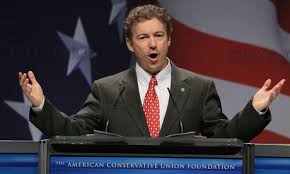
Rand Paul
Paul objected to Barron’s authoring memos that justified the killing of an American citizen by a drone in Yemen on September 30, 2011.
Anwar al-Awlaki had been a radical Muslim cleric notorious on the Internet for encouraging Muslims to attack the United States.
Paul demanded that the Justice Department release the memos Barron crafted justifying the drone policy.
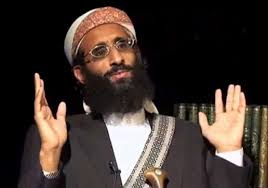
Anwar al-Awlaki
Imagine how Republicans would depict Paul—or any Democratic Senator—who did the same with a Republican President: “Rand Paul: A traitor who supports terrorists. He sides with America’s sworn enemies against its own lawfully elected President.”
But Obama did nothing of the kind.
(On May 22, 2014, the Senate voted 53–45 to confirm Barron to the First Circuit Court of Appeals.)
But Presidents who seek to rule primarily by fear can encounter their own limitations. Which immediately brings to mind Donald Trump.
As both a Presidential candidate and President, Trump has repeatedly used Twitter to attack hundreds of real and imagined enemies in politics, journalism, TV and films.
From June 15, 2015, when he launched his Presidential campaign, until October 24, 2016, Trump fired almost 4,000 angry, insulting tweets at 281 people and institutions that had somehow offended him.
The New York Times needed two full pages of its print edition to showcase them.
Donald Trump
As a Presidential candidate and President, Trump has shown outright hatred for President Obama. For five years, he slandered Obama as a Kenyan-born alien who had no right to hold the Presidency.
Then, on March 4, 2017, in a series of unhinged tweets, Trump falsely accused Obama of committing an impeachable offense: Tapping his Trump Tower phones prior to the election.
As President, Trump has refused to reach beyond the narrow base of white, racist, ignorant, hate-filled, largely rural voters who elected him.
And he has bullied and insulted even White House officials and his own handpicked Cabinet officers:
- Trump waged a Twitter-laced feud against Jeff Sessions, his Attorney General. Sessions’ “crime”? Recusing himself from investigations into well-established ties between Russian Intelligence agents and members of Trump’s Presidential campaign. Trump fired him on November 7, 2018, the day after Democrats retook the House of Representatives in the mid-term elections.
- Trump repeatedly humiliated Chief of Staff, Reince Priebus—at one point ordering him to kill a fly that was buzzing about. On July 28, 2017, six months after taking the job, Priebus resigned.
- Trump similarly tongue-lashed Priebus’ replacement, former Marine Corps General John Kelly. Trump was angered by Kelly’s efforts to limit the number of advisers who had unrestricted access to him. Kelly told colleagues he had never been spoken to like that during 35 years of military service—and wouldn’t tolerate it again.
- After Trump gave sensitive Israeli intelligence to Russian ambassador Sergey Kislyak, his national security advisor, H.R. McMaster, denied this had happened. Trump then contradicted McMaster in a tweet: “As president, I wanted to share with Russia (at an openly scheduled WH meeting) which I have the absolute right to do, facts pertaining to terrorism and airline flight safety.”
If Trump ever read Niccolo Machiavelli’s The Prince, he’s clearly forgotten this passage:
Cruelties ill committed are those which, although at first few, increase rather than diminish with time….Whoever acts otherwise….is always obliged to stand with knife in hand, and can never depend on his subjects, because they, owing to continually fresh injuries, are unable to depend upon him….
Or, as Cambridge Professor of Divinity William Ralph Inge put it: “A man may build himself a throne of bayonets, but he can’t sit on it.”
2016 PRESIDENTIAL ELECTION, A BRONX TALE, ABC NEWS, ADOLF HITLER, ALTERNET, AMERICABLOG, AP, BABY BOOMER RESISTANCE, BILL CLINTON, BUZZFEED, CBS NEWS, CHAZZ PALMINTERI, CNN, CROOKS AND LIARS, DAILY KOZ, DONALD TRUMP, FACEBOOK, FBI, FIVETHIRTYEIGHT, H.R. MCMASTER, HILLARY CLINTON, IRS, J. EDGAR HOOVER, JEFF SESSIONS, JOHN F. KENNEDY, JOHN KELLY, LYNDON B. JOHNSON, MOTHER JONES, MOVEON, MSNBC, NBC NEWS, NEWSWEEK, NICCOLO MACHIAVELLI, NPR, PBS NEWSHOUR, POLITICO, POLITICUSUSA, RAW STORY, REINCE PREBIUS, REPUBLICAN PARTY, REUTERS, RICHARD M. NIXON, ROBERT DE NIRO, ROBERT F. KENNEDY, Ronald Reagan, SALON, SEATTLE TIMES, SERGEI KISLYAK, SLATE, TALKING POINTS MEMO, THE ATLANTIC, THE CHICAGO SUN-TIMES, THE CHICAGO TRIBUNE, THE DAILY BEAST, THE DAILY BLOG, THE GUARDIAN, THE HILL, THE HUFFINGTON POST, THE LOS ANGELES TIMES, THE NATION, THE NEW YORK TIMES, THE PRINCE, THE WASHINGTON POST, THINKPROGRESS, TIME, TRUTHDIG, TWITTER, U.S. NEWS & WORLD REPORT, UP, UPI, USA TODAY, WILLIAM RALPH INGE
In Bureaucracy, History, Law Enforcement, Politics, Social commentary on September 5, 2019 at 12:14 am
Is it better to be loved or feared?
That was the question Florentine statesman Niccolo Machiavelli raised more than 500 years ago.
Presidents have struggled to answer this question—and have come to different conclusions.
LOVE ME, FEAR MY BROTHER
Most people felt irresistibly drawn to John F. Kennedy—even his political foes. Henry Luce, the conservative publisher of Time, once said, “He makes me feel like a whore.”
But JFK could afford to bask in the love of others—because his younger brother, Robert, was the one who inspired fear.
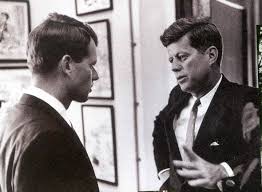
Robert F. Kennedy and John F. Kennedy
He had done so as Chief Counsel for the Senate Rackets Committee (1957-59), grilling Mafia bosses and corrupt union officials—notably Teamsters President James Hoffa.
Appointed Attorney General by JFK, he unleashed the FBI on the Mafia. When the steel companies colluded in an inflationary rise in the price of steel in 1962, Bobby sicced the FBI on them.
In 1963, JFK’s cavorting with Ellen Rometsh threatened to destroy his Presidency. Rometsch, a Washington, D.C. call girl, was suspected by the FBI of being an East German spy.
With Republican Senators preparing to investigate the rumors, Bobby ordered Rometsch deported immediately (to which, as a German citizen, she was subject).
He also ordered FBI Director J. Edgar Hoover to deliver a warning to the Majority and Minority leaders of the Senate: The Bureau was fully aware of the extramarital trysts of most of their own members. And an investigation into the President’s sex life could easily lead into revelations of Senatorial sleaze.
Plans for a Senatorial investigation were shelved.
BEING LOVED AND FEARED
In the 1993 movie, A Bronx Tale, 17-year-old Calogero (Lillo Brancato) asks his idol, the local Mafia capo, Sonny (Chazz Palminteri): “Is it better to be loved or feared?”
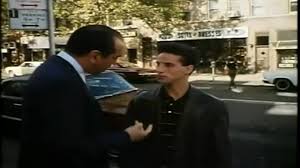
Sonny gives advice to his adopted son, Calogero
Sonny says if he had to choose, he would rather be feared. But he adds a warning straight out of Machiavelli: “The trick is not being hated. That’s why I treat my men good, but not too good.
“I give too much, then they don’t need me. I give them just enough where they need me, but they don’t hate me.”
Machiavelli, writing in The Prince, went further:
“Still a Prince should make himself feared in such a way that if he does not gain love, he at any rate avoids hatred, for fear and the absence of hatred may well go together….”
Many who quote Machiavelli in defense of being feared overlook this vital point: It’s essential to avoid becoming hated.
To establish a fearful reputation, a leader must act decisively and ruthlessly when the interests of the organization are threatened. Punitive action must be taken promptly and confidently.
One or two harsh actions of this kind can make a leader more feared than a reign of terror.
In fact, it’s actually dangerous to constantly employ cruelties or punishments. Whoever does so, warns Machiavelli, “is always obliged to stand with knife in hand, and can never depend on his subjects, because they, owing to continually fresh injuries, are unable to depend upon him.”
The 20th century President who came closest to realizing Machiavelli’s “loved and feared” prince in himself was Ronald Reagan.
Always smiling, quick with a one-liner (especially at press conferences), seemingly unflappable, he projected a constantly optimistic view of his country and its citizens.
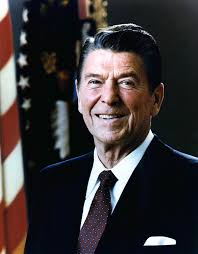
Ronald Reagan
In his acceptance speech at the 1980 Republican National Convention he declared: “[The Democrats] say that the United States has had its days in the sun, that our nation has passed its zenith.… My fellow citizens, I utterly reject that view.”
And Americans enthusiastically responded to that view, twice electing him President (1980 and 1984).
But there was a steely, ruthless side to Reagan that appeared when he felt crossed.
On August 3, 1981, nearly 13,000 air traffic controllers walked out after contract talks with the Federal Aviation Administration collapsed. As a result, some 7,000 flights across the country were canceled on that day at the peak of the summer travel season.
Reagan branded the strike illegal. He threatened to fire any controller who failed to return to work within 48 hours.
On August 5, Reagan fired more than 11,000 air traffic controllers who hadn’t returned to work. The mass firing slowed commercial air travel, but it did not cripple the system as the strikers had forecast.
Reagan’s action stunned the American labor movement. Reagan was the only American President to have belonged to a union, the Screen Actors Guild. He had even been president of this—from 1947 to 1954.
There were no more strikes by Federal workers during Reagan’s tenure in office.
Similarly, Libya’s dictator, Moammar Kadaffi, learned that Reagan was not a man to cross.
On April 5, 1986, Libyan agents bombed a nightclub in West Berlin, killing three people, one a U.S. serviceman. The United States quickly learned that Libyan agents in East Germany were behind the attack.
On April 15, acting on Reagan’s orders, U.S. Air Force, Navy and Marine Corps bombers struck at several sites in Tripoli and Benghazi. Reportedly, Kaddafi himself narrowly missed becoming a casualty.
There were no more acts of Libyan terrorism against Americans for the rest of Reagan’s term.
2016 PRESIDENTIAL ELECTION, A BRONX TALE, ABC NEWS, ADOLF HITLER, ALTERNET, AMERICABLOG, AP, BABY BOOMER RESISTANCE, BILL CLINTON, BUZZFEED, CBS NEWS, CHAZZ PALMINTERI, CNN, CROOKS AND LIARS, DAILY KOZ, DONALD TRUMP, FACEBOOK, FBI, FIVETHIRTYEIGHT, H.R. MCMASTER, HILLARY CLINTON, IRS, J. EDGAR HOOVER, JEFF SESSIONS, JOHN F. KENNEDY, JOHN KELLY, LYNDON B. JOHNSON, MOTHER JONES, MOVEON, MSNBC, NBC NEWS, NEWSWEEK, NICCOLO MACHIAVELLI, NPR, PBS NEWSHOUR, POLITICO, POLITICUSUSA, RAW STORY, REINCE PREBIUS, REPUBLICAN PARTY, REUTERS, RICHARD M. NIXON, ROBERT DE NIRO, ROBERT F. KENNEDY, Ronald Reagan, SALON, SEATTLE TIMES, SERGEI KISLYAK, SLATE, TALKING POINTS MEMO, THE ATLANTIC, THE CHICAGO SUN-TIMES, THE CHICAGO TRIBUNE, THE DAILY BEAST, THE DAILY BLOG, THE GUARDIAN, THE HILL, THE HUFFINGTON POST, THE LOS ANGELES TIMES, THE NATION, THE NEW YORK TIMES, THE PRINCE, THE WASHINGTON POST, THINKPROGRESS, TIME, TRUTHDIG, TWITTER, U.S. NEWS & WORLD REPORT, UP, UPI, USA TODAY, WILLIAM RALPH INGE
In Bureaucracy, History, Law Enforcement, Politics, Social commentary on September 4, 2019 at 12:14 am
It’s probably the most-quoted passage of Niccolo Machiavelli’s infamous book, The Prince:
“From this arises the question whether it is better to be loved than feared, or feared more than loved. The reply is, that one ought to be both feared and loved, but as it is difficult for the two to go together, it is much safer to be feared than loved.
“For it may be said of men in general that they are ungrateful, voluble, dissemblers, anxious to avoid danger and covetous of gain. As long as you benefit them, they are entirely yours: they offer you their blood, their goods, their life and their children, when the necessity is remote, but when it approaches, they revolt.
“And the prince who has relied solely on their words, without making other preparations, is ruined. For the friendship which is gained by purchase and not through grandeur and nobility of spirit is bought but not secured, and at a pinch is not to be expended in your service.
“And men have less scruple in offending one who makes himself loved than one who makes himself feared. For love is held by a chain of obligations which, men being selfish, is broken whenever it serves their purpose. But fear is maintained by a dread of punishment which never fails.”
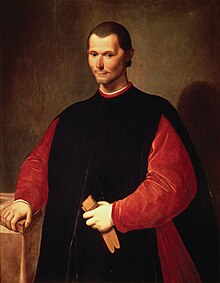
Niccolo Machiavelli
So—which is better: To be feared or loved?
In the 1993 film, A Bronx Tale, 17-year-old Calogero (Lillo Brancato) poses that question to his idol, the local Mafia capo, Sonny (Chazz Palminteri).
“That’s a good question,” Sonny replies. “It’s nice to be both, but it’s very difficult. But if I had my choice, I would rather be feared.
“Fear lasts longer than love. Friendships that are bought with money mean nothing. You see how it is around here. I make a joke, everybody laughs. I know I’m funny, but I’m not that funny. It’s fear that keeps them loyal to me.”
Presidents face the same dilemma as Mafia capos—and resolve it in their own ways.
LOVE ME BECAUSE I NEED TO BE LOVED
Bill Clinton believed that he could win over his self-appointed Republican enemies through his sheer charm.
Part of this lay in self-confidence: He had won the 1992 and 1996 elections by convincing voters that “I feel your pain.”
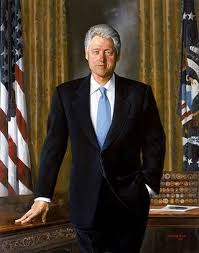
Bill Clinton
And part of it lay in his need to be loved. He once said that if he were in a room with 100 people and 99 of them liked him but one didn’t, he would spend all his time with that one person, trying to win him over.
But while he could charm voters, he could not bring himself to retaliate against his sworn Republican enemies.
On April 19, 1995, Right-wing terrorist Timothy McVeigh drove a truck–packed with 5,000 pounds of ammonium nitrate and nitromethane–to the front of the Alfred P. Murrah Federal Building in Oklahoma City.
The explosion killed 168 people, including 19 children in the day care center on the second floor, and injured 684 others.
Suddenly, Republicans were frightened. Since the end of World War II, they had vilified the very Federal Government they belonged to. They had deliberately courted the Right-wing militia groups responsible for the bombing.
So Republicans feared Clinton would now turn their decades of hate against them.
They need not have worried. On April 23, Clinton presided over a memorial service for the victims of the bombing. He gave a moving eulogy—without condemning the hate-filled Republican rhetoric that had at least indirectly led to the slaughter.
Clinton further sought to endear himself to Republicans by:
- Adopting NAFTA—the Republican-sponsored North American Free Trade Act, which later proved so devastating to American workers;
- Siding with Republicans against poor Americans on welfare; and
- Championing the gutting of the Depression-era Glass-Steagall law, which barred investment banks from commercial banking activities.
The result: Republicans believed Clinton was weak–and could be rolled.
In 1998, House Republicans moved to impeach him over a sex scandal with White House intern Monica Lewinsky. But his Presidency survived when the Senate refused to convict.
LOVE ME BECAUSE I’LL HURT YOU IF YOU DON’T
Lyndon Johnson wanted desperately to be loved.
Once, he complained to Dean Acheson, the former Secretary of State under Harry S. Truman, about the ingratitude of American voters. He had passed far more legislation than his predecessor, John F. Kennedy, and yet Kennedy remained beloved, while he, Johnson, was not.
Why was that? Johnson demanded.
“You are not a very likable man,” said Acheson truthfully.
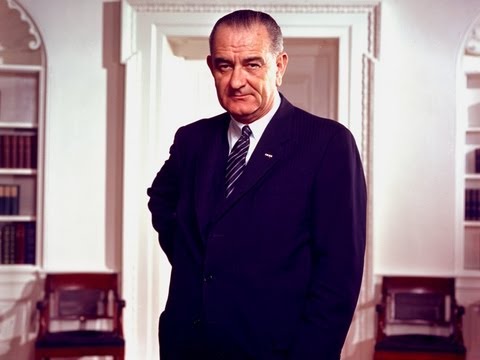
Lyndon B. Johnson
Johnson tried to make his subordinates love him. He would humiliate a man, then give him an expensive gift—such a Cadillac. It was his way of binding the man to him.
He was on a first-name basis with J. Edgar Hoover, the longtime director of the FBI. He didn’t hesitate to request—and get—raw FBI files on his political opponents.
On at least one occasion, he told members of his Cabinet: No one would dare walk out on his administration—because if they did, two men would follow their ass to the end of the earth: Mr. J. Edgar Hoover and the head of the Internal Revenue Service.
2016 PRESIDENTIAL ELECTION, 2020 PRESIDENTIAL ELECTION, 9/11 ATTACKS, AARON COPELAND, ABC NEWS, AFGHANISTAN, ALEXANDER SHUSTOROVICH, ALTERNET, ANDREW INTRATER, ANTI-COMMUNISM, ANTIWAR DEMONSTRATIONS, AP, ARMY-MCCARTHY HEARINGS, ARTHUR MILLER, ATOMIC BOMB, BILL CLINTON, BUZZFEED, CBS NEWS, CENTRAL AMERICA, CHAING KAI-SHEK, CHARLIE CHAPLIN, CIA, CINDY HYDE-SMITH, CNN, CROOKS AND LIARS, CUBAN MISSILE CRISIS, DAILY KOZ, DASHIELL HAMMETT, DELORES DEL RIO, DEPARTMENT OF HOMELAND SECURITY, DONALD TRUMP, DONALD TRUMP’S INAUGURAL COMMITTEE, DWIGHT D. EISENHOWER, EDWARD G. ROBINSON, EDWARD R. MURROW, ELMER BERNSTEIN, FACEBOOK, FBI, FEDERAL ELECTION COMMISSION, GEORGE C. MARSHALL, GEORGE H.W. BUSH, H.L. HUNT, HARRY S. TRUMAN, HILLARY CLINTON, HOUSE JUDICIARY COMMITTEE, HOWARD DA SILVA, HOWARD FAST, HOWARD HUGHES, INTERNET RESEARCH AGENCY, IRWIN SHAW, J. ROBERT OPPENHEIMER, JAMES COMEY, JIMMY CARTER, JOHN BIRCH SOCIETY, JOHN F. KENNEDY, JOHN GARFIELD, JOHN KASICH, JOHN MCCAIN, JOHN STEINBECK, JOSEPH R. MCCARTHY, JOSEPH STALIN, LEE GRANT, LEN BLAVATNIK, LILLIAN HELLMAN, LINDSEY GRAHAM, LLOYD BRIDGES, LUCILLE BALL, LYNDON B. JOHNSON, MAIN INTELLIGENCE DIRECTORATE, MAO TSE-TUNG, MARCO RUBIO, MITCH MCCONNELL, MITCH MCCONNELL’S SENATE LEADERSHIP FUN, MOTHER JONES, MOVEON, MSNBC, MUSLIMS, NATIONAL SECURITY AGENCY, NAZI GERMANY, NBC NEWS, NEWSWEEK, NORTH ATLANTIC TREATY ORGANIZATION (NATO), NPR, OFFICE OF THE DIRECTOR OF NATIONAL INTELLIGENCE, PBS NEWSHOUR, PETE SEEGER, POLITICO, RAW STORY, REPUBLICAN PARTY, REUTERS, RICHARD M. NIXON, ROBERT MUELLER, Ronald Reagan, RUTH GORDON, SALON, SCOTT WALKER, SEATTLE TIMES, SIMON KUKES, SLATE, SOVIET UNION, THE ATLANTIC, THE CHICAGO SUN-TIMES, THE CHICAGO TRIBUNE, THE DAILY BEAST, THE GUARDIAN, THE HILL, THE HUFFINGTON POST, THE LOS ANGELES TIMES, THE NATION, THE NEW YORK TIMES, THE WASHINGTON POST, TIME, TWITTER, U.S. NEWS & WORLD REPORT, UNITED STATES HOUSE OF REPRESNTATIVES, UNITED STATES SENATE, UPI, USA TODAY, VIETNAM WAR, VLADIMIR PUTIN, WIKILEAKS, WILLIAM L. SHIRER, WORLD WAR ii, ZERO MOSTEL
In Bureaucracy, Entertainment, History, Military, Politics, Social commentary on July 31, 2019 at 12:25 am
Upon taking office as President in 1981, Ronald Reagan decided to end the “stalemate” of “containing” Communism. He intended to “roll it back.”
American proxies fought Soviet proxies in Afghanistan and Central America, but the world escaped nuclear holocaust.
During the 1980s and 1990s, Republicans continued to accuse Democrats of being devious agents—or at least unwitting pawns—of “the Communist conspiracy.”
In 1992, President George H.W. Bush and the Republican establishment charged that Arkansas Governor Bill Clinton might be a KGB plant.
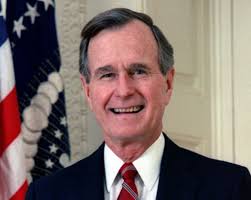
George H.W. Bush
Their “evidence”: During his tenure at Oxford University in 1969-70, Clinton had briefly visited Moscow.
After the Soviet Union’s collapse in 1991, Republicans found that accusing Democrats of being “Commies” didn’t carry the same weight.
So they turned to “domestic enemies” to rail—and run—against: Liberals, blacks, Hispanics, “uppity” women, war protesters, lesbians, gays, and—after 9/11—Muslims.
From 1945 to 2015, it was unthinkable for a Republican Presidential candidate to pay tribute to a Soviet dictator.
But that utterly changed when Donald J. Trump, a “reality TV” host with longstanding financial ties to Russian oligarchs, ran for President of the United States.
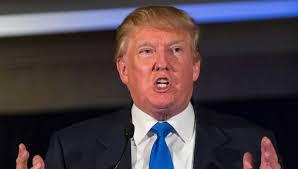
Donald Trump
Trump lavishly praised Russian President Vladimir Putin—and even invited him to directly interfere in the 2016 Presidential race.
The reason for the Trump-Putin bromance: Each had something to offer the other.
Putin wanted the United States to ditch the North Atlantic Treaty Organization (NATO) alliance, which had preserved Western Europe from Russian aggression since World War II. And Trump had often attacked America’s funding of NATO as a drain on the American economy.
And Trump wanted to be President. For this, Putin could supply Internet trolls to confuse voters with falsified news—and even the hacking of key voting centers.
And monies. These Russian monies were officially classified as “campaign contributions,” not bribes.
On July 22, 2016, Wikileaks released 19,252 emails and 8,034 attachments hacked from computers of the highest-ranking officials of the Democratic National Committee (DNC). Early reports traced the leak to Russian hackers.
On July 27, Trump said at a press conference in Doral, Florida: “Russia, if you are listening, I hope you are able to find the 33,000 emails that are missing [from Democratic Presidential candidate Hillary Clinton’s computer]. I think you will probably be rewarded mightily by our press.”
Hours later, the Main Intelligence Directorate in Moscow targeted Clinton’s personal office and hit more than 70 other Clinton campaign accounts.
This is treason—calling upon a foreign power, hostile to the United States, to interfere in its Presidential election.
Nor is Trump the only Republican receiving “help” from Putin. A network of Russian oligarchs—all of them answerable to Putin—has been increasingly contributing to top Republicans.
According to the Federal Election Commission:
One such major contributor is Len Blavatnik, who holds citizenship in both the United States and the United Kingdom. During the 2015-16 election cycle, he proved one of the largest donors to GOP Political Action Committees (PACs).
Blavatnik’s net worth is estimated at $20 billion. Before 2016, he donated to both Democrats and Republicans in meager amounts. But in 2016, he gave $6.35 million to GOP PACs.
Millions of dollars went to top Republican leaders—such as Senators Mitch McConnell (Kentucky), Marco Rubio (Florida) and Lindsey Graham (South Carolina).
Specifically, he contributed:
- A total of $1.5 million to PACs associated with Rubio.
- $1 million to Trump’s Inaugural Committee.
- $41,000 to both Republicans and Democrats in 2017.
- $1 million to McConnell’s Senate Leadership Fund.
- $3.5 million to a PAC associated with McConnell.
- $1.1 million to Unintimidated PAC, associated with Wisconsin Governor Scott Walker.
- $200,000 to the Arizona Grassroots Action PAC, associated with the late Arizona Senator John McCain.
- $250,000 to New Day for America PAC, associated with Ohio Governor John Kasich.
- $800,000 to the Security is Strength PAC, associated with Senator Lindsey Graham.
![]()
![]() Another Russian oligarch, Alexander Shustorovich, contributed $1 million to Trump’s Inaugural Committee.
Another Russian oligarch, Alexander Shustorovich, contributed $1 million to Trump’s Inaugural Committee.
Altogether, four Russian oligarchs—Blavatnik, Shustorovich, Andrew Intrater and Simon Kukes—contributed $10.4 million from the start of the 2015-16 election cycle through September 2017. Of this, 99% went to Republicans.
As Senate Majority Leader, Mitch McConnell participated in high-level intelligence briefings in 2016. From agencies such as the FBI, CIA and the code-cracking National Security Agency, he learned that the Russians were trying to subvert the electoral process.

In October, 2016, the Department of Homeland Security (DHS) and the Office of the Director of National Intelligence (DNI) issued a joint statement: The Russian government had directed the effort to subvert the 2016 Presidential election.
Two weeks later, McConnell’s PAC accepted a $1 million donation from Blavatnik.
On March 30, 2017, McConnell’s PAC accepted another $1 million from Blavatnik.
This is just 10 days after former FBI Director James Comey testified before the House Intelligence Committee about Russia’s efforts to subvert the 2016 election.
So, what has changed in the Republican Party? Essentially nothing.
Its enemies changed—from Russian Communists to American liberals—but its goal remains the same: The quest for absolute power.
When Americans feared Communism, Republicans depicted themselves as the only ones who could be trusted to protect the United States. Big contributions poured in from Right-wing billionaires like H.L. Hunt and Howard Hughes.
But when Republicans found they could enrich themselves and stay in power via Russian “campaign contributions,” they decided: Better Red than un-elected.
2016 PRESIDENTIAL ELECTION, 2020 PRESIDENTIAL ELECTION, 9/11 ATTACKS, AARON COPELAND, ABC NEWS, AFGHANISTAN, ALEXANDER SHUSTOROVICH, ALTERNET, ANDREW INTRATER, ANTI-COMMUNISM, ANTIWAR DEMONSTRATIONS, AP, ARMY-MCCARTHY HEARINGS, ARTHUR MILLER, ATOMIC BOMB, BILL CLINTON, BUZZFEED, CBS NEWS, CENTRAL AMERICA, CHAING KAI-SHEK, CHARLIE CHAPLIN, CIA, CINDY HYDE-SMITH, CNN, CROOKS AND LIARS, CUBAN MISSILE CRISIS, DAILY KOZ, DASHIELL HAMMETT, DELORES DEL RIO, DEPARTMENT OF HOMELAND SECURITY, DONALD TRUMP, DONALD TRUMP’S INAUGURAL COMMITTEE, DWIGHT D. EISENHOWER, EDWARD G. ROBINSON, EDWARD R. MURROW, ELMER BERNSTEIN, FACEBOOK, FBI, FEDERAL ELECTION COMMISSION, GEORGE C. MARSHALL, GEORGE H.W. BUSH, H.L. HUNT, HARRY S. TRUMAN, HILLARY CLINTON, HOUSE JUDICIARY COMMITTEE, HOWARD DA SILVA, HOWARD FAST, HOWARD HUGHES, INTERNET RESEARCH AGENCY, IRWIN SHAW, J. ROBERT OPPENHEIMER, JAMES COMEY, JIMMY CARTER, JOHN BIRCH SOCIETY, JOHN F. KENNEDY, JOHN GARFIELD, JOHN KASICH, JOHN MCCAIN, JOHN STEINBECK, JOSEPH R. MCCARTHY, JOSEPH STALIN, LEE GRANT, LEN BLAVATNIK, LILLIAN HELLMAN, LINDSEY GRAHAM, LLOYD BRIDGES, LUCILLE BALL, LYNDON B. JOHNSON, MAIN INTELLIGENCE DIRECTORATE, MAO TSE-TUNG, MARCO RUBIO, MITCH MCCONNELL, MITCH MCCONNELL’S SENATE LEADERSHIP FUN, MOTHER JONES, MOVEON, MSNBC, MUSLIMS, NATIONAL SECURITY AGENCY, NAZI GERMANY, NBC NEWS, NEWSWEEK, NORTH ATLANTIC TREATY ORGANIZATION (NATO), NPR, OFFICE OF THE DIRECTOR OF NATIONAL INTELLIGENCE, PBS NEWSHOUR, PETE SEEGER, POLITICO, RAW STORY, REPUBLICAN PARTY, REUTERS, RICHARD M. NIXON, ROBERT MUELLER, Ronald Reagan, RUTH GORDON, SALON, SCOTT WALKER, SEATTLE TIMES, SIMON KUKES, SLATE, SOVIET UNION, THE ATLANTIC, THE CHICAGO SUN-TIMES, THE CHICAGO TRIBUNE, THE DAILY BEAST, THE GUARDIAN, THE HILL, THE HUFFINGTON POST, THE LOS ANGELES TIMES, THE NATION, THE NEW YORK TIMES, THE WASHINGTON POST, TIME, TWITTER, U.S. NEWS & WORLD REPORT, UNITED STATES HOUSE OF REPRESNTATIVES, UNITED STATES SENATE, UPI, USA TODAY, VIETNAM WAR, VLADIMIR PUTIN, WIKILEAKS, WILLIAM L. SHIRER, WORLD WAR ii, ZERO MOSTEL
In Bureaucracy, Entertainment, History, Military, Politics, Social commentary on July 30, 2019 at 12:17 am
On July 24, former Special Counsel Robert S. Mueller III finally addressed Congress on Russia’s subversion of the 2016 Presidential election.
Mueller had spent almost two years uncovering links between Russian Intelligence agents and members of Donald Trump’s Presidential campaign.
“Over the course of my career, I’ve seen a number of challenges to our democracy,” Mueller declared to members of the House Judiciary Committee. “The Russian government’s effort to interfere in our election is among the most serious. As I said on May 29, this deserves the attention of every American.
“Many more countries are developing the capability to replicate what the Russians have done.
“It wasn’t a single attempt. They’re doing it as we sit here. And they expect to do it during the next campaign.”
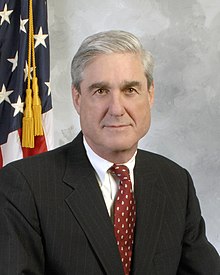
Robert Mueller
In his report, Mueller documented years of meddling in American politics by the Internet Research Agency, which runs the Kremlin’s online disinformation efforts from its headquarters in St. Petersburg.
The Agency reached 126 million Americans through fake accounts on Facebook. Its messages communicated with unaware members of the Trump campaign, and even prompted real-life rallies that mobilized crowds of unwitting voters.
Hours later that same day, Senator Cindy Hyde-Smith (R-Mississippi) blocked the passage of three bills designed to tighten election security at the federal level. She claimed that Congress had already responded to election security needs for the 2020 Presidential election.
Senate Majority Leader Mitch McConnell (R-Kentucky) came to the Senate floor the next day to personally object to House-passed legislation backed by Democrats.
There was a time when Republicans saw—and portrayed—themselves as America’s foremost defenders against Communism.
This was particularly true during the early 1950s. Case in point: Wisconsin United States Senator Joseph R. McCarthy.
Elected to the Senate in 1946, he rose to national prominence on February 9, 1950, after giving a fiery speech in Wheeling, West Virginia:
“The State Department is infested with communists. I have here in my hand a list of 205—a list of names that were made known to the Secretary of State as being members of the Communist Party and who nevertheless are still working and shaping policy in the State Department.”
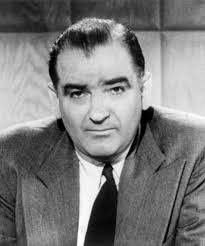
Joseph McCarthy
Americans were already growing increasingly fearful of Communism:
- Soviet dictator Joseph Stalin had not withdrawn the Red Army from the countries it had occupied in Eastern Europe during World War II.
- In 1948, the Soviet Union developed—and demonstrated—its own atomic bomb, an achievement U.S. scientists had claimed would not happen for at least a decade.
- In 1949, China fell to the triumphant armies of Mao Tse Tung. Generalissimo Chaing Kai Shek was driven from mainland China to the tiny island of Taiwan.
Anti-communism as a lever to political advancement sharply accelerated following McCarthy’s speech.
No American—no matter how prominent—was safe from the accusation of being a Communist or a Communist sympathizer—”a Comsymp” or “fellow traveler” in the language of the era.
Among those accused:
- Secretary of State George C. Marshall, who had overseen America’s strategy for defeating Nazi Germany and Imperial Japan.
- President Harry S. Truman.
- Playwrights Lillian Hellman and Arthur Miller.
- Actors Charlie Chaplin, Zero Mostel, Lloyd Bridges, Howard Da Silva, Edward G. Robinson and John Garfield.
- Composers Arron Copland and Elmer Bernstein.
- Physicist J. Robert Oppenheimer, who presided over the creation of America’s atomic bomb.
- Actresses Lee Grant, Delores del Rio, Ruth Gordon and Lucille Ball.
- Journalists Edward R. Murrow and William L. Shirer, who had chronicled the rise of Nazi Germany.
- Folksinger Pete Seeger.
- Writers Irwin Shaw, Howard Fast, John Steinbeck and Dashiell Hammett
Even “untouchable” Republicans became targets for such slander.
The most prominent of these: President Dwight D. Eisenhower—labeled ”a conscious, dedicated agent of the Communist Conspiracy” by Robert Welch, founder of the John Birch Society in 1958.
In 1953, McCarthy attacked the leadership of the United States Army as “a hotbed of traitors” and convened an inquiry through the Senate Permanent Subcommittee on Investigations.
But the hearings backfired, exposing McCarthy as a bullying demagogue. A Senate committee condemned his behavior as acting “contrary to senatorial ethics and tended to bring the Senate into dishonor and disrepute.”
Yet even without McCarthy, Republicans rode the issue of anti-Communism to victory from 1948 to 1992. “Respectable” anti-Communists—like Richard M. Nixon—depicted themselves as the only ones who could be trusted to safeguard America.
Republicans held the White House for eight years under Dwight D. Eisenhower, then lost it in 1960 to John F. Kennedy and again in 1964 to Lyndon B. Johnson.
By 1968, with the nation mired in Vietnam and convulsed by antiwar demonstrations and race riots, Americans turned once more to those who preyed upon their fears and hates.
They elected Richard Nixon, who promised to end the Vietnam war and attack “uppity” blacks and antiwar demonstrators—and, above all, “the Communist menace.”
The same strategy re-elected him in 1972.
Jimmy Carter won the Presidency in 1976 and lost it in 1980 to Ronald Reagan. And Republicans held the White House until 1992.
2016 PRESIDENTIAL ELECTION, 2017 ALABAMA UNITED STATES SENATE ELECTION, ABC NEWS, ACCESS HOLLYWOOD, ALABAMA, ALABAMA SUPREME COURT, ALTERNET, AP, BRETT KAVANAUGH, BUZZFEED, CBS NEWS, CHRIS CILLILZZA, CHRISTINE BLASEY FORD, CNN, COLBIE HOLDERNESS, CROOKS AND LIARS, DAILY KOZ, DAVID SORENSEN, DONALD TRUMP, DOUG JONES, FACEBOOK, FREEDOM CAUCUS, IVANA TRUMP, IVANKA TRUMP, JENNIFER WILLOUGBY, JESSICA LEEEDS, JIM JORDAN, JULIE SWETNICK, MARK COLEMAN, MIKE DISABATO, MINDY MCGILLIVRAY, MOTHER JONES, MOVEON, MSNBC, NATASHA STOYNOFF, NBC NEWS, NEWSWEEK, NPR, OHIO STATE UNIVERSITY, PBS NEWSHOUR, POLITICO, RAW STORY, REPUBLICANS, REUTERS, RICHARD STRAUSS, ROB PORTER, ROY MOORE, SALON, SEATTLE TIMES, SEXUAL ABUSE, SLATE, THE ATLANTIC, THE CHICAGO SUN-TIMES, THE CHICAGO TRIBUNE, THE DAILY BEAST, THE GUARDIAN, THE HILL, THE HUFFINGTON POST, THE LOS ANGELES TIMES, THE NATION, THE NEW YORK TIMES, THE VIEW, THE WASHINGTON POST, TIME, TWITTER, U.S. NEWS & WORLD REPORT, UNDERAGE GIRLS, UPI, USA TODAY
In Bureaucracy, History, Law, Law Enforcement, Politics, Social commentary on July 26, 2019 at 1:04 pm
For President Donald Trump, “fighting for” his 2018 Supreme Court nominee, Brett Kavanaugh, meant defaming the woman who was accusing him of sexual assault.
Palo Alto University Professor of Psychology Christine Blasey Ford testified before the United States Senate that when she was 15, Kavanaugh, then 17, pinned her to a bed, groped her, tried to pull off her clothes, and covered her mouth with his hand when she tried to scream.
She said she believed he intended to rape her. She escaped with Kavanaugh’s friend, Mark Judge, jumped onto the bed, knocking them all to the floor.
Ford also took and passed a polygraph test administered by a former FBI agent.

Christine Blasey Ford
On October 2, 2018, at a campaign rally in Southaven, Mississippi, Trump mocked Ford’s testimony before the Senate confirmation commiteeee: “How did you get home? I don’t remember. How’d you get there? I don’t remember. Where is the place? I don’t remember. How many years ago was it? I don’t know. I don’t know. I don’t know. I don’t know.
“What neighborhood was it in? I don’t know. Where’s the house? I don’t know. Upstairs, downstairs, where was it? I don’t know. But I had one beer. That’s the only thing I remember.”
“A man’s life is shattered,” said Trump, sympathizing with the man accused of attempted rape, instead of his near-victim. “His wife is shattered.”
The people championing Ford, he declared, were “really evil people.”
Long before he became President, Donald Trump repeatedly showed his contempt for women through predatory language and behavior:
- During a 1990 Vanity Fair interview, he said of his then-wife, Ivana: “I would never buy Ivana any decent jewels or pictures. Why give her negotiable assets?”
- In 1992, while watching a group of young girls going up the escalator in Trump Tower, Trump said: “I am going to be dating her in 10 years. Can you believe it?”
- During a 1991 Esquire interview: “You know, it doesn’t really matter what [they] write as long as you’ve got a young and beautiful piece of ass.”
- In 2006, during an appearance on The View: “If Ivanka weren’t my daughter, perhaps I’d be dating her.”
- Easily the most infamous example of Trump’s predatory attitude toward women came during his 2005 Access Hollywood interview: “You know I’m automatically attracted to beautiful–I just start kissing them. It’s like a magnet. Just kiss. I don’t even wait. And when you’re a star they let you do it. You can do anything. Grab them by the pussy. You can do anything.”
- During that same conversation, Trump admitted that he had made an aggressive move on a married woman-friend: “You know and I moved on her actually. You know she was down on Palm Beach. I moved on her and I failed. I’ll admit it. I did try and fuck her. She was married.
- “No this was—and I moved on her very heavily. In fact, I took her out furniture shopping. She wanted to get some furniture. I said I’ll show you where they have some nice furniture.
- “I moved on her like a bitch, but I couldn’t get there, and she was married. Then all of a sudden I see her, she’s now got the big phony tits and everything. She’s totally changed her look….”
- Mindy McGillivray told the Washington Post that Trump groped her buttocks when she, then 34, visited Mar-a-Lago in Palm Beach, Florida, in 2013.
- Trump forcibly assaulted Natasha Stoynoff, a People magazine writer, in December, 2005, she went to Mar-a-Lago to interview Donald and Melania Trump for a first-wedding-anniversary feature story.
- During a break in the interview, Trump said he wanted to show Stoynoff “a tremendous room” in the mansion: “We walked into that room alone, and Trump shut the door behind us. I turned around, and within seconds he was pushing me against the wall and forcing his tongue down my throat.”
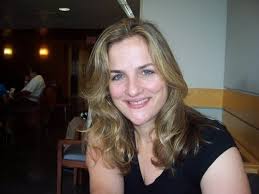
Natasha Stoynoff
- Fortunately, Trump’s butler soon entered the room, and Trump acted as though nothing had happened. But as soon as he and Stoynoff were alone again, Trump said: “You know we’re going to have an affair, don’t you?”
- Stoynoff asked her editors—and received permission—to be removed from writing any further Trump features.
On October 12, 2016, The Palm Beach Post, The New York Times and People all published stories of women claiming they had been sexually assaulted by Donald Trump.
Trump’s reaction: “Every woman lied when they came forward to hurt my campaign. Total fabrication. The events never happened. Never.”
For “proof,” he attacked their physical appearance.
Of one accuser, Natasha Stoynoff, he said: “Take a look. You take a look. Look at her. Look at her words. You tell me what you think. I don’t think so. I don’t think so.”
Of another accuser, Jessica Leeds, Trump said: “Believe me, she would not be my first choice, that I can tell you. Whoever she is, wherever she comes from, the stories are total fiction. They’re 100% made up. They never happened.”
In short: They were too ugly for Trump to consider them worth sexually harassing.
2016 PRESIDENTIAL ELECTION, 2017 ALABAMA UNITED STATES SENATE ELECTION, ABC NEWS, ACCESS HOLLYWOOD, ALABAMA, ALABAMA SUPREME COURT, ALTERNET, AP, BRETT KAVANAUGH, BUZZFEED, CBS NEWS, CHRIS CILLILZZA, CHRISTINE BLASEY FORD, CNN, COLBIE HOLDERNESS, CROOKS AND LIARS, DAILY KOZ, DAVID SORENSEN, DONALD TRUMP, DOUG JONES, FACEBOOK, FREEDOM CAUCUS, IVANA TRUMP, IVANKA TRUMP, JENNIFER WILLOUGBY, JESSICA LEEEDS, JIM JORDAN, JULIE SWETNICK, MARK COLEMAN, MIKE DISABATO, MINDY MCGILLIVRAY, MOTHER JONES, MOVEON, MSNBC, NATASHA STOYNOFF, NBC NEWS, NEWSWEEK, NPR, OHIO STATE UNIVERSITY, PBS NEWSHOUR, POLITICO, RAW STORY, REPUBLICANS, REUTERS, RICHARD STRAUSS, ROB PORTER, ROY MOORE, SALON, SEATTLE TIMES, SEXUAL ABUSE, SLATE, THE ATLANTIC, THE CHICAGO SUN-TIMES, THE CHICAGO TRIBUNE, THE DAILY BEAST, THE GUARDIAN, THE HILL, THE HUFFINGTON POST, THE LOS ANGELES TIMES, THE NATION, THE NEW YORK TIMES, THE VIEW, THE WASHINGTON POST, TIME, TWITTER, U.S. NEWS & WORLD REPORT, UNDERAGE GIRLS, UPI, USA TODAY
In Bureaucracy, History, Law, Law Enforcement, Politics, Social commentary on July 25, 2019 at 12:03 am
As a businessman, Presidential candidate and now President, Donald Trump has felt comfortable with men who have physically abused and/or made improper sexual advances toward women.
ROGER AILES: In July, 2016, Ailes resigned as chairman of Fox News Network, owing to multiple sexual harassment accusations leveled against him.
Trump’s reaction: “It’s very sad. Because he’s a very good person. I’ve always found him to be just a very, very good person. And by the way, a very, very talented person. Look what he’s done. So I feel very badly.”
ROY MOORE, 2017 REPUBLICAN CANDIDATE FOR UNITED STATES SENATOR FROM ALABAMA: Unfortunately for Moore—and Trump—he was haunted by allegations that, as a prosecutor during his 30s, he had made sexual advances toward at least eight teenage girls.
Many Republicans openly urged Moore to withdraw. They saw him as a nightmarish embarrassment to their party should he win the election.
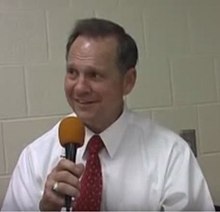
Roy Moore
Even the President’s favorite daughter, Ivanka Trump, said: “There is a special place in hell for people who prey on children.”
But that didn’t stop Trump supporting Moore full-tilt against his Democratic opponent, former United States Attorney Doug Jones. Jones had convicted Ku Klux Klan members for bombing a black church in 1963.
On December 4, Trump tweeted:
“Democrats refusal to give even one vote for massive Tax Cuts is why we need Republican Roy Moore to win in Alabama. We need his vote on stopping crime, illegal immigration, Border Wall, Military, Pro Life, V.A., Judges 2nd Amendment and more. No to Jones, a Pelosi/Schumer Puppet!”
During a December 8 campaign rally in Pensacola, Florida, near the state line with Alabama, Trump said:
“Get out and vote for Roy Moore. Do it. Do it. We cannot afford, the future of this country cannot afford to lose the seat.”
On December 8, Trump tweeted:
“LAST thing the Make America Great Again Agenda needs is a Liberal Democrat in Senate where we have so little margin for victory already. The Pelosi/Schumer Puppet Jones would vote against us 100% of the time. He’s bad on Crime, Life, Border, Vets, Guns & Military. VOTE ROY MOORE!”
As the December 12 election drew close, Trump made a robocall on Moore’s behalf:
“Hi, this is President Donald Trump and I need Alabama to go vote for Roy Moore. It is so important. We’re already making America great again. I’m going to make America safer, and stronger, and better than ever before, but we need that seat and we need Roy voting for us.”
Then—for Trump—the unthinkable happened: Moore lost. Jones received 49.9% of the vote; Moore got 48.4%.
Trump immediately dumped Moore.
REP. JIM JORDAN (R-OHIO): Jordan, a member of the House’s Right-wing Freedom Caucus, fanatically supports Trump, whose campaign received documented support from Russian Intelligence agents.
Meanwhile, Jordan is being haunted by a scandal of his own.

Rep. Jim Jordan
Jordan served as an assistant coach at Ohio State University (OSU) from 1987 to 1995. Several former OSU wrestlers claim Jordan ignored sexual abuse of students by the team’s doctor.
In April, 2018, OSU announced it was investigating charges that Richard Strauss had abused team wrestlers while he served as the team doctor from the mid-1970s to the late 1990s. Strauss died in 2005.
Jordan claims he didn’t know about the abuse.
Yet several former wrestlers assert that they told Jordan about the abuse or remember Jordan being a part of conversations about the abuse.
“I considered Jim Jordan a friend,” Mike DiSabato, a former wrestler, told NBC. It was DiSabato’s allegations against Strauss that led OSU to open the investigation. “But at the end of the day, he is absolutely lying if he says he doesn’t know what was going on.”
In an email to Ohio State’s legal counsel, DiSabato wrote: “Strauss sexually assaulted male athletes in at least fifteen varsity sports during his employment at OSU from 1978 through 1998.”
“There’s no way unless he’s got dementia or something that he’s got no recollection of what was going on at Ohio State,” former Ultimate Fighting Championship world champion Mark Coleman told the Wall Street Journal.
Speaking with reporters in Ohio, Jordan offered a Sergeant Schultz “I know nothing” defense:
“We knew of no abuse, never heard of abuse. If we had, we would have reported it. If, in fact, there’s problems, we want justice for the people who were victims, obviously, and as I said, we are happy to talk with the folks who are doing the investigation. But the things they said about me just were flat-out not true.”
Meanwhile, Trump says he believes his ally Jordan “100 percent”: “I don’t believe them at all,” Trump told reporters, referring to the wrestlers who have come forward.
BRETT KAVANAUGH: Trump’s 2018 nominee for the United States Supreme Court found himself accused of sexually aggressive behavior—including rape—towards a highly-respected woman.
Palo Alto University Professor of Psychology Christine Blasey Ford asserted that Kavanaugh had sexually assaulted her in the early 1980s while the two were in high school.
2016 PRESIDENTIAL ELECTION, 2017 ALABAMA UNITED STATES SENATE ELECTION, ABC NEWS, ACCESS HOLLYWOOD, ALABAMA, ALABAMA SUPREME COURT, ALTERNET, AP, BRETT KAVANAUGH, BUZZFEED, CBS NEWS, CHRIS CILLILZZA, CHRISTINE BLASEY FORD, CNN, COLBIE HOLDERNESS, CROOKS AND LIARS, DAILY KOZ, DAVID SORENSEN, DONALD TRUMP, DOUG JONES, FACEBOOK, FREEDOM CAUCUS, IVANA TRUMP, IVANKA TRUMP, JENNIFER WILLOUGBY, JESSICA LEEEDS, JIM JORDAN, JULIE SWETNICK, MARK COLEMAN, MIKE DISABATO, MINDY MCGILLIVRAY, MOTHER JONES, MOVEON, MSNBC, NATASHA STOYNOFF, NBC NEWS, NEWSWEEK, NPR, OHIO STATE UNIVERSITY, PBS NEWSHOUR, POLITICO, RAW STORY, REPUBLICANS, REUTERS, RICHARD STRAUSS, ROB PORTER, ROY MOORE, SALON, SEATTLE TIMES, SEXUAL ABUSE, SLATE, THE ATLANTIC, THE CHICAGO SUN-TIMES, THE CHICAGO TRIBUNE, THE DAILY BEAST, THE GUARDIAN, THE HILL, THE HUFFINGTON POST, THE LOS ANGELES TIMES, THE NATION, THE NEW YORK TIMES, THE VIEW, THE WASHINGTON POST, TIME, TWITTER, U.S. NEWS & WORLD REPORT, UNDERAGE GIRLS, UPI, USA TODAY
In Bureaucracy, History, Law, Law Enforcement, Politics, Social commentary on July 24, 2019 at 12:09 am
Donald Trump clearly has a soft spot for men who abuse women and children.
Consider his wholehearted and unapologetic support for the following:
WHITE HOUSE STAFF SECRETARY ROB PORTER had the task of vetting all the information that reached Trump’s desk. He resigned February 7, 2018, after two of his ex-wives accused him of years of physical and emotional abuse.

Rob Porter
Colbie Holderness, Porter’s first wife, told CNN that the physical abuse began almost immediately after their 2003 wedding. During their honeymoon trip to the Canary Islands, Porter kicked her thigh during a fight.
“The thing he would do most frequently is he would throw me down on a bed and he would just put his body weight on me and he’d be yelling at me but as he was yelling he’d me grinding an elbow or knee into my body to emphasize his anger,” she said. He also repeatedly choked her.
While the couple visited Florence, Italy, in the summer of 2005, Porter punched Holderness in the face.
Jennifer Willoughby, Porter’s second wife, married him in 2009. During their honeymoon in Myrtle Beach, he began calling her “a fucking bitch” because he felt she was not having enough sex with him.
In the spring of 2010, Porter came to the home they had previously shared and punched a glass pane in the front door, cutting his hand.
Willoughby called police, who suggested that she take out a temporary restraining order. She did so in June, 2010.
In December, 2010, according to Willoughby, “we were in a fight and I disengaged from the fight after screaming at each other. I took a shower and Rob followed me fairly shortly after and grabbed me from the shower by my shoulders up close to my neck and pulled me out to continue to yell at me.
“He immediately saw the look of shock and terror on my face and released me and apologized and attempted to make things right.”
They divorced in 2013.
According to CNN, which broke the story, then-White House Chief of Staff John Kelley knew for months that Porter faced claims of physically and emotionally abusing these women. But he never conducted an inquiry to find out if the claims were true or false.
It’s safe to assume that Porter would still be on the White House payroll if CNN hadn’t reported the abuses.
WHITE HOUSE SPEECHWRITER DAVID SORENSEN resigned on February 9. His ex-wife, Jessica Corbett, told the Washington Post that he put out a cigarette on her hand, drove a car over her foot, threw her into a wall and grabbed her by the hair when they were alone on a boat off the Maine coast.
Sorensen denied the allegation in a statement he released to CNN and other news media: “I have never committed violence of any kind against any woman in my entire life. In fact, I was the victim of repeated physical violence during our marriage, not her.”
He claimed he had spoken with an attorney about suing his ex-wife for defamation.
And how did Trump respond to these revelations?
On February 9, he told reporters that Porter’s departure was “very sad” and that “he did a very good job while he was in the White House.”
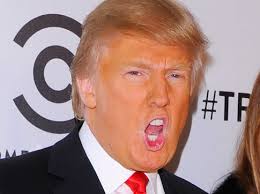
Donald Trump
Trump did not express any sympathy for the women Porter allegedly abused.
Instead, he focused on Porter’s claim of innocence: “He says he’s innocent and I think you have to remember that. He said very strongly yesterday that he’s innocent but you’ll have to talk to him about that.”
On February 10—the day after Sorensen resigned—Trump took to Twitter to post:
“Peoples lives are being shattered and destroyed by a mere allegation. Some are true and some are false. Some are old and some are new. There is no recovery for someone falsely accused – life and career are gone. Is there no such thing any longer as Due Process?”
As Chris Cillizza, CNN’s editor-at-large wrote in a February 9 opinion column:
“This is a familiar pattern for Trump. When a series of women came out during the 2016 campaign alleging that he has sexually abused them, he flatly denied it — insisting that all of the women were conspiring to hurt him for political reasons.
“When a series of women came forward and said that Alabama Senate nominee Roy Moore had pursued physical relationships with them when they were teenagers and he was in his mid 30s, Trump defended his endorsement of Moore, saying: ‘He totally denies it. He says it didn’t happen.'”
COREY LEWANDOSKI: In March, 2016, Trump’s Presidential campaign manager Corey Lewandowski was charged with misdemeanor battery by Breitbart News reporter Michelle Fields. “How do you know those bruises weren’t there before?” asked Trump.
BILL O’REILLY: In October, 2017, the news broke that the political pundit and Fox News Network had paid almost $13 million to settle multiple sexual harassment allegations. Trump’s reaction: “I don’t believe Bill did anything wrong. I think he’s a person I know well. He is a good person.”
O’Reilly was forced to resign from Fox.


 Bureaucracybuster's Blog
"MISSION: IMPOSSIBLE", 2016 PRESIDENTIAL ELECTION, 9/11, ABC NEWS, ALTERNET, AMERICABLOG, AP, AUGUSTO PINOCHET, AUGUSTO SANDINO, AYATOLLAH RUHOLLAH KHOMEINI, BABY BOOMER RESISTANCE, BAY OF PIGS, BUZZFEED, CBS NEWS, CHIANG KAI-SHEK, CHILE, CIA, CNN, CROOKS AND LIARS, CUBA, DAILY KOZ, DONALD TRUMP, DWIGHT D. EISENHOWER, FACEBOOK, FBI, FIDEL CASTRO, FIVETHIRTYEIGHT, FULGENCIO BATISTA, GEORGE W. BUSH, GUATEMALA, HAITI, HONODURAS, IRAQ, JACOBO ARBENZ, JOHN F. KENNEDY, MAFIA, MAO TSE-TUNG, MOHAMMAD MOSADDEGH, MOHAMMAD-REZA SHAH PHLAVI, MOTHER JONES, MOVEON, MSNBC, NATIONAL SECURITY AGENCY, NBC NEWS, NEWSWEEK, NICARAGUA, NPR, OSAMA BIN LADEN, PBS NEWSHOUR, POLITICO, POLITICUSUSA, RAW STORY, REUTERS, RICHARD M. NIXON, RUSSIA, SADDAM HUSSEIN, SALON, SALVADOR ALLENDE, SEATTLE TIMES, SLATE, SOVIET UNION, TALKING POINTS MEMO, THE ATLANTIC, THE CHICAGO SUN-TIMES, THE CHICAGO TRIBUNE, THE DAILY BEAST, THE DAILY BLOG, THE GUARDIAN, THE HILL, THE HUFFINGTON POST, THE LOS ANGELES TIMES, THE NATION, THE NEW YORK TIMES, THE WASHINGTON POST, THINKPROGRESS, TIME, TRUTHDIG, TWITTER, U.S. NEWS & WORLD REPORT, UKRAINE, UNITED FRUIT COMPANY, UPI, USA TODAY
REGIME EXTORTION—IT’S THE AMERICAN WAY!
In Bureaucracy, History, Law, Law Enforcement, Military, Politics, Social commentary on October 2, 2019 at 12:28 amOn June 12, 2019, during an interview with ABC News correspondent George Stephanopoulos, President Donald Trump said he would accept derogatory information on his 2020 opponents from hostile nations like Russia and China:
“It’s not an interference, they have information. I think I’d take it. If I thought there was something wrong, I’d go maybe to the FBI. If I thought there was something wrong. But when somebody comes up with oppo research, right, they come up with oppo research.
“The FBI doesn’t have enough agents to take care of it, but you go and talk honestly to congressmen, they all do it, they always have. And that’s the way it is. It’s called oppo research.”
But Trump didn’t say he planned to extort derogatory information about his opponents from Ukraine.
In July, 2019, he told his acting chief of staff, Mick Mulvaney, to withhold almost $400 million in promised military aid for Ukraine, which faces increasing aggression from Russia.
On July 25, Trump telephoned Ukrainian President Volodymyr Zelensky to “request” a “favor”: Investigate Democratic Presidential Candidate Joe Biden and his son, Hunter, who had had business dealings in Ukraine.
The reason for such an investigation: To find embarrassing “dirt” on Biden.
Donald Trump
But then a CIA whistleblower filed a complaint about the extortion attempt—and the media and Congress soon learned of it.
Rep. Adam Schiff, D-Calif., tweeted: “The transcript of the call reads like a classic mob shakedown: — We do a lot for Ukraine — There’s not much reciprocity — I have a favor to ask — Investigate my opponent — My people will be in touch — Nice country you got there. It would be a shame if something happened to her.”
On September 24, 2019, Nancy Pelosi, speaker to the House of Representatives, announced a formal impeachment inquiry into Trump.
In truth, however, subverting the governments of other countries is a right that Americans have long reserved for themselves. For example:
Allied troops parading in Vladivostok, 1918
Ernesto “Che” Guevera and Fidel Castro
Americans reacted to all these attempts—successful and unsuccessful—with indifference or outright support.
The popular 1960s TV series, “Mission: Impossible,” regularly depicted a CIA-type agency supporting regimes “we” liked or toppling those “we” didn’t.
Americans generally assume their Presidents and Congress know best who is a “friend” and who is an “enemy.” America’s friends often turn out, for the most part, to be Right-wing dictators like Fulgencio Batista, Augusto Pinochet and Mohammad-Reza Shah Phlavi.
And its enemies often turn out to be liberal reformers like Augusto Sandino, Jacobo Arbenz, Mohammad Mosaddegh and Salvador Allende.
Share this: