bureaucracybusters

Archive for the ‘Social commentary’ Category

TRUMP: THE LORD OR THE DEVIL?

In Bureaucracy, History, Politics, Social commentary on February 22, 2016 at 9:48 am

Ironically, Right-wingers, who support many of the same policies of Adolf Hitler, often attack liberals as Nazis–especially President Barack Obama.  

But now a genuine authority on Fascism has come forward to assess the front-runner for the Republican Presidential nomination.

“If Donald Trump become[s] the next president of the US it would be a complete disaster. I think he is acting like another Hitler by inciting racism.”  

So says Eva Schloss, the stepsister of Holocaust victim Anne Frank. As a survivor of Auschwitz, Schloss should know something about Nazis.

Related image

Eva Schloss

Now 86, Schloss met Anne in Amsterdam as a fellow refugee.  Both their families had taken refuge there after fleeing Nazi Germany.

Anne Frank spent four years hiding in an attic and keeping a diary. But in 1944 she was discovered by the Nazis and sent to the Bergen-Belsen concentration camp.  

She was 15 when she died there of typhus in March 1945. After the war, Eva Schloss’ mother, Fritzi, married Otto Frank, Anne’s father.

Image result for Images of Anne Frank

Anne Frank

Eva was detained at the same time as Anne and sent to Auschwitz. She survived when the camp was liberated on January 27,1945.

In a January 27th essay for Newsweek, Schloss warned of dire consequences if Donald Trump became President.

“During his U.S. presidential campaign he has suggested the ‘total and complete shutdown of Muslims entering the United States,’ as well as pledging to build a wall between the U.S. and Mexico to keep illegal immigrants out.”  

She was 11 when her family immigrated to Belgium after Hitler forcibly Annexed Austria in 1938.  

“We were treated as if we had come from the moon. I felt as if I wasn’t wanted and that I was different to everybody. It is even harder for today’s Syrian refugees who have a very different culture….

“I am very upset that today again so many countries are closing their borders,” said Schloss, who lives in London. “Fewer people would have died in the Holocaust if the world had accepted more Jewish refugees.”  

And on February 18, Pope Francis also waded into the 2016 Presidential race with his own assessment of Trump.  

The comment came in answer to a question by one of several reporters who were accompanying the Pope to Rome from a six-day trip to Mexico.  

What, a reporter asked the Pontiff, did he think of Trump’s campaign pledge to build a wall along the entire length of the U.S.-Mexican border and expel millions of illegal aliens now living in the United States?

“A person who only thinks about building walls, wherever they are, and not in building bridges, is not Christian,” replied the Pope. “This is not the gospel.” 

Related image

Pope Francis

Francis said he would “give the benefit of the doubt” to Trump because he had not heard Trump’s border plans independently.

But he added: “I say only that this man is not a Christian if he has said things like that.”

Trump, a Presbyterian, responded minutes later: “For a religious leader to question a person’s faith is disgraceful.”

Trump has repeatedly accused President Barack Obama–a self-described Christian–as a secret Muslim.

Donald Trump

On February 21, for example, he tweeted: “I wonder if President Obama would have attended the funeral of [Supreme Court] Justice [Antonin] Scalia if it were held in a mosque.”  

Obama had paid tribute to Scalia at the Supreme Court on the day prior to the funeral. He declined to attend the service because his heavy security detail might disrupt the ceremony.

“I am proud to be a Christian,” added Trump, “and as president I will not allow Christianity to be consistently attacked and weakened.”  

Nor did he stop there: “If and when the Vatican is attacked by the ISIS, which as everyone knows is ISIS’s ultimate trophy, I can promise you that the pope would have only wished and prayed that Donald Trump would have been president.  

“ISIS would have been eradicated unlike what is happening now with our all talk, no action politicians.”

Trump thus implied that the Pope’s future security depended on the United States generally–and on Donald Trump in particular.  

And he clearly ignored the fact that, since September, 2014, the United States Air Force has been bombing ISIS convoys in Iraq and Syria.

Trump has long been critical of the Pope’s stand on immigration.

As the Pope undertook his trip to Mexico, Trump told Fox Business Network that he didn’t think Francis understood “the danger of the open border we have with Mexico.

“I think Mexico got him to do it because they want to keep the border just the way it is,” he said. “They’re making a fortune, and we’re losing.” 

A Vatican spokesman replied: “The pope always talks about migration problems all around the world, of the duties we have to solve these problems in a humane manner, of hosting those who come from other countries in search of a life of dignity and peace.”  

For millions of Jews and Catholics, the election of 2016 may turn on how they answer the question: Am I serving the Lord–or the devil?

HOW AMERICA BECAME “DEATH, THE SHATTERER OF WORLDS”

In Bureaucracy, History, Military, Politics, Social commentary on February 19, 2016 at 12:01 am

The 1989 movie, Fat Man and Little Boy, provides useful insights into the real-life workings of bureaucracies. 

In it, the brilliant and ambitious physicist, J. Robert Oppenheimer (played by Dwight Schultz) comes–too late–to realize he’s made a deal with the devil. 

The same proved true for the J. Robert Oppenhemer of history. 

Paul Newman as General Leslie Groves and Dwight Schultz as J. Robert Oppenheimer 

Hired by Army General Leslie Groves (played by Paul Newman) to ramrod construction of an atomic bomb, Oppenheimer has no qualms about using it against Nazi Germany. 

It’s believed, after all, that German scientists are furiously pursuing work on such a weapon. The full horror of the extermination camps has not yet been revealed. 

But “Oppie” and many other Jewish scientists working on the Manhattan Project can easily imagine the fate of Jews trapped within the borders of the Third Reich. 

Then something unforeseen happens.

On May 8, 1945, the Third Reich collapses and signs unconditional surrender terms. Almost at the same time, the U.S. military learns that although German physicists had tried to make an atomic bomb, they never even got close to producing one. 

So Oppenheimer finds himself still working to build the most devastating weapon in history–but now lacking the enemy he had originally signed on to destroy. 

Meanwhile, the U.S. Government has invested nearly $2 billion in the Manhattan Project–at a time when $2 billion truly meant the equivalent of $1 trillion today. Is all that money to go for nothing?  

What to do?

Oppenheimer doesn’t have to make that decision. It’s made for him—by Groves, by Groves’ superiors in the Army, and ultimately by the new President, Harry S. Truman. The bomb will be used, after all.

It will just be turned against the Japanese, who are even more hated by most Americans than the Germans. It doesn’t matter that: 

  • The Japanese lack the technological skill of the Germans to produce an atomic bomb. 
  • They are rapidly being pushed across the Pacific to their home islands. 
  • American bombers are incinerating Japanese cities at will. 
  • The Japanese are desperately trying to find a way to surrender without losing face. 

What matters is that Pearl Harbor is still fresh in the minds of Americans generally and of the American military in particular. And that now that the Japanese are being pushed back into their home islands, they are fighting ever more fanatically to hold off certain defeat. 

General Douglas MacArthur, who is scheduled to command the invasion of Japan, has estimated a million American casualties if this goes forward. 

Oppenheimer, who has taught physics at the University of California at Berkeley, now finds himself being taught a lesson: That, once set in motion, bureaucracies–like objects–continue to move forward unless something intervenes to stop them. 

And, in this case, there is no one willing to say: Stop. 

So, on July 16, 1945, the first atomic bomb in history is detonated at Los Alamos, New Mexico. 

Atomic bomb test at Los Alamos: July 16, 1945

Then, on August 6, 1945, an American B-29 bomber drops “Little Boy” on Hiroshima. An estimated 80,000 people die instantly. 

By the end of the year, injury and radiation bring total casualties to 90,000-140,000. 

On August 9, it’s the turn of Nagasaki. Casualty estimates for the dropping of “Fat Man” range from 40,000 to 73,884, with another 74,909 injured, and another several hundred thousand diseased and dying due to fallout and other illness caused by radiation. 

For Oppenheimer, the three years he has devoted to creating an atomic bomb will prove the pivotal event of his life.

He will be praised and damned as an “American Prometheus,” who brought atomic fire to man. Countless Americans–especially those who would have been ordered to invade Japan–will revere him as the man who brought the war to a quick end.  

And countless Americans–and non-Americans–will condemn him as a man whose arrogance and ambition led him to arm mankind with the means of its own destruction. 

Witnessing the first successful atomic explosion, Oppenheimer had been stunned by the sheer magnitude of destructiveness he had helped unleash. Quoting the Hindu holy book, the Bhagavad Gita, he murmured: “Now I am become Death, the shatterer of worlds.” 

Faced with the massive toll of lives taken by the device he had created, Oppenheimer became convinced that the only hope for humanity lay in abolishing nuclear weapons. 

He vigorously opposed the creation of a “super” hydrogen bomb. His advice was overruled, however, and construction of this went forward at the same pace that Oppenheimer had once driven others to create the atomic bomb. 

The first test of this even more terrifying weapon occurred on November 1, 1952. By 1953, just as Oppenheimer had predicted, the Soviet Union had launched its own H-bomb test. 

In a famous meeting with President Truman, Oppenheimer reportedly said, “Mr. President, I have blood on my hands.” Truman later claimed that he had offered Oppenheimer a handkerchief, saying, “Here, this will wash it off.” 

It didn’t. 

During the hysteria of the Joseph McCarthy witch-hunts, Oppenheimer found himself accused of being a Communist traitor. In 1954, he was stripped of his government security clearance. 

Unable to prevent the military bureaucracy from moving relentlessly to use the atomic bomb, he could not halt the political bureaucracy from its own rush into cowardice and the wrecking of others’ lives. 

TREATING ADULTS LIKE CHILDREN

In Bureaucracy, History, Politics, Social commentary on February 18, 2016 at 12:15 am

In the 1992 courtroom drama, “A Few God Men,” Jack Nicholson, as Marine Colonel Nathan Jessup, utters a line that has since become famous. 

When his prosecutor, Lieutenant Daniel Kaffee (Tom Cruise) demands the truth about the murder of a fellow Marine, Jessup shouts: “You can’t handle the truth!”

Related image

Jack Nicholson in “A Few Good Men”

Apparently, many of those who work in the television news business feel the same way about their audience.

[WARNING: This column contains some words that some readers may find offensive.  Read on at your own risk.]  

On February 9, businessman Donald Trump scored a new blow at his Rafael “Ted” Cruz, his closest rival for the Republican Presidential nomination.  

Speaking at a rally in Manchester, New Hampshire, Trump attacked Cruz, the United States Senator from Texas, for being unwilling to support the widespread use of torture against America’s Islamic enemies.  

“He’s a pussy!” yelled a woman in the crowd.

Apparently a certain portion of the attendees didn’t hear–or misheard–the insult. So Trump–pretending to be shocked–repeated it for them: 

“She said–I never expect to hear that from you again!  She said: ‘He’s a pussy.’ That’s terrible.”  

“What kind of people do I have here?” joked Trump, clearly playing to the boisterous crowd.

Donald Trump

The incident went viral on social media. But all the major TV news outlets–for ABC, CBS, CNN and NBC–bleeped the word and/or coyly referred to it as “the P-word.”

It was as if they assumed their viewers would of course know what had been said despite the networks’ censorship of it. And if viewers didn’t already know what the woman–and Trump–had said, the networks weren’t going to enlighten them.

Of course, “the P-word” could just as easily have been “prick” or “pervert.” So it’s understandable that many viewers might have thought a very different word had been used.  

No doubt the networks hoped to avoid offending large numbers of viewers.  

But when the use of certain words becomes central to a news story, editors and reporters should have the courage to reveal just what was said. It should then be up to the audience to decide if the language was offensive–and, if so, if its user deserves condemnation.  

The evening news is–supposedly–aimed at voting-age adults. And adults need–and deserve–the hard truth about the world they live in. Only then do they have a chance to reform it–if, in fact, they decide it needs reforming.

Those who wanted to learn–rather than guess–what Trump had repeated had to turn to the Internet or to a handful of news source such as Vox: Policy and Politics.

In their defense, the networks could argue that the Federal Communications Commission, which regulates radio and television, does not usually permit the word “pussy” to be aired between 6 am and 10 pm.  

On the other hand, immediately after the 9/11 terror attacks, all the major TV networks endlessly replayed the destruction of the World Trade Center, with the resulting deaths of hundreds of men and women.

Censorship, then, tends to center on two types of subject material:

  1. Sex, or “obscenity,” which is sex-related; and
  2. Race, meaning racial slurs that would offend some minority group. 

An example of race-related censorship occurred during the short-lived administration of President Gerald R. Ford.  

During a lull in the 1976 Republican convention, entertainer Pat Boone asked Earl Butz, then Secretary of Agriculture: Why was the party of Lincoln having so much trouble winning black votes for its candidates? 

“I’ll tell you what the coloreds want,” said Butz. “It’s three things: first, a tight pussy; second, loose shoes; and third, a warm place to shit.” 

Image result for Images of Earl Butz

Earl Butz

Unknown to Butz, a Rolling Stone reporter was standing nearby. When his comments became public, Butz was quickly forced to resign. 

Meanwhile, most TV and print media struggled to protect their audiences from the truth of Butz’ racism. Many newspapers simply reported that Butz had said something too obscene to print. Some invited their readers to contact the editors if they wanted more information. 

TV newsmen generally described Butz’ firing as stemming from “a racially-offensive remark,” which they refused to explain. 

In short: A high-ranking government official had been fired, but audiences were not allowed to judge whether his language justified that termination. 

Forty years later, TV news viewers were again prevented from reaching their own conclusions about Trump’s repetition of the slur aimed at his rival.  

Nor is there any guarantee that such censorship will not occur again. 

Censoring the truth has always been a hallmark of dictatorships. It has no place in a democracy–despite the motives of those doing the censoring. 

The ancient historian, Plutarch, sounded a warning that remains timely: 

“And the most glorious exploits do not always furnish us with the clearest discoveries of virtue or vice in men; sometimes a matter of less moment, an expression or a jest, informs us better of their characters and inclinations, than the most famous sieges, the greatest armaments, or the bloodiest battles whatsoever.”

In a democracy, citizens must be alert for those tell-tale expressions or jests. And this demands that the media, in turn, have the courage to bring those truths to their attention.

A TALE OF TWO KILLINGS: PART ONE (OF THREE)

In Bureaucracy, History, Military, Politics, Social commentary on February 12, 2016 at 12:12 am

They both had beards. They both saw military action. They both passionately hated the United States.

And they both died in a hail of bullets.

And immediately after their deaths, both seemed to disappear from the face of the earth.

Ernesto “Che” Guevara and Osama bin Laden.

Two men who inspired widespread admiration among their supporters–and fear among their enemies.

Guevara, an Argentinian doctor-turned-Cuban revolutionary, sought to destroy the United States’ power to fight Communism. Bin Laden sought to destroy its power to intervene in the Middle East.

Related image

Ernesto “Che” Guevara

Guevara’s most optimistic hope was that Americans would eventually see the error of their capitalistic ways and convert to Communism.  His last words were: “Tell Fidel [Castro] that he will soon see a triumphant revolution in America.”

But he was prepared to fight to the death–as indeed he did–to force revolutionary change upon the United States.

For Bin Laden, the cause was Islam, not Communism. His most optimistic hope was that Christian and Jewish Americans would eventually convert to Islam.

But if that didn’t happen, he, too, was prepared to attack Americans anywhere and in any way he could–as his private diary and documents have revealed.  

Guevara died on October 9, 1967, at the hands of a CIA-directed operation run by the Bolivian army.  

Bin Laden, creator of the Al-Qaeda (“The Base” terrorist network, met his end on May 1, 2011, during a raid by U.S. Navy SEALS on his compound in Pakistan.

Related image

Osama bin Laden

One man–Guevara–has since attained secular sainthood in the eyes of millions of Communists and their sympathizers.

The other–bin Laden–has attained instant “martyr” status in the eyes of untold numbers of Islamic terrorists and their sympathizers.

Both men plotted constantly against the United States and eagerly sought its destruction.

In November, 1962, during an interview with the Communist newspaper, the London Daily Worker, Guevara raged against the Soviet Union’s recent withdrawal of nuclear missiles from Cuba.

Those “thirteen days” of the Cuban Missile Crisis that October had brought the world to the brink of nuclear destruction.

“If the missiles had remained, we would have used them against the very heart of the United States, including New York,” said Guevara.

“We must never establish peaceful coexistence.  We must walk the path of victory even if it costs millions of atomic victims.”

Similarly, until the end of his life, bin Laden demanded more attacks like the one on September 11, 2001, that snuffed out the lives of 3,000 Americans.  

This brought him into conflict with other Al-Qaeda members who wanted to launch assaults on more vulnerable targets outside the United States.

Guevara died as he had lived–violently.  

In late October, 1966, he slipped out of Cuba. On November 3, he secretly arrived in La Paz, Bolivia, intent on re-staging the Cuban revolution among the Bolivian peasantry.  

But the peasants showed no interest in his aims and in fact reported his movements to the Bolivian army.

The army, in turn, was being advised by United States Green Berets under the direction of the CIA.  

On October 7, 1967, an informant tipped off the Bolivian Special Forces to the location of Guevara’s guerrilla camp in the Yuro ravine.

On October 8, they encircled the area with 1,800 soldiers. In the shootout that followed, Guevara was wounded and taken prisoner while leading a detachment.

His rifle broken by a lucky shot, a twice-wounded Guevara shouted: “Do not shoot!  I am Che Guevara and worth more to you alive than dead.”

Quickly informed of Guevara’s capture, the Bolivian government debated his fate: Should he be immediately executed or placed on trial?

On the morning of October 9, Bolivian President Rene Barrientos ordered that Guevara be executed. Barrientos feared that placing him on trial would create an international media circus and/or render Bolivia vulnerable to efforts to free him.

The Bolivian government planned to declare that Guevara had been killed in action during a clash with the nation’s armed forces. Special instructions were thus issued.

These came from Felix Rodrieguez, a CIA agent acting as advisor to the Bolivians.  

The executioner would be Mario Teran, a Bolivian army sergeant who had lost three of his friends in an earlier firefight with Guevara’s band of guerrillas.

Rodriguez ordered Teran to aim carefully to make it appear that Guevara had been killed in action.

To his surprise, Rodriguez found himself highly impressed with Guevara’s courage. When informed of his imminent execution, Guevara blanched, then quickly got control of himself.

Felix Rodriguez, left, Che, center

“It is better like this,” he said. “I should never have been captured alive.”

Rodriguez asked if he had any messages for his family. Guevara replied: “Tell Fidel [Castro, the president/dictator of Cuba] that he will soon see a triumphant revolution in America.

“And tell my wife to remarry and try to be happy.”

When Sergeant Teran entered the hut, Guevara told his executioner: “I know you’ve come to kill me.  Shoot, coward!  You are only going to kill a man!”

Teran hesitated, then opened fire with his semiautomatic rifle, hitting Guevara in his arms and legs.

Guevara writhed on the ground, apparently biting one of his wrists to avoid crying out. Teran then fired several more times, finally killing him with a shot in the chest.

SCRAPPING–OR REVISING–OBAMACARE: PART FOUR (END)

In Bureaucracy, Business, History, Law, Medical, Politics, Social commentary on February 9, 2016 at 12:04 am

Barack Obama is one of one of the most highly educated Presidents to occupy the White House.

When he took office, he intended to make healthcare available to all Americans–and not just the wealthiest 1%.

President Barack Obama

But he made a series of deadly mistakes:

  • In crafting the Affordable Care Act (better known as Obamacare);
  • In building public support for it; In underestimating the venom and opposition of his Right-wing enemies;
  • In underestimating the opposition of the business community in complying with the law; and
  • In allowing himself to be cowed by his political enemies.

Obama is by nature a supreme rationalist and conciliator–not a rough-and-tumble street fighter.  

And his career before becoming President in 2008–or even the United States Senator from Illinois in 2004–greatly strengthened this predisposition.  

From 1985 to 1988, Obama worked as a community organizer, setting up a job-training program, a college preparatory tutoring program and a tenants’ rights organization.  

Such activities demand skills in building consensus, not confrontation.

He then taught at the University of Chicago Law School for 12 years–as a Lecturer from 1992 to 1996, and as a Senior Lecturer from 1996 to 2004, teaching Constitutional law.  

File:Medium chicagoreflection.jpg

University of Chicago Law School

Law professors spend their time in clean, civil classrooms–far removed from the rough-and tumble of criminal defense/prosecution.

If Obama had accused President George W. Bush of conspiring with Al Qaeda–as Republicans have repeatedly accused Obama–retribution would have been swift and brutal.  

(On March 10, 2003, nine days before Bush ordered the unprovoked invasion of Iraq, Natalie Maines, the lead singer of the country music band, the Dixie Chicks, told a London concert audience: “We don’t want this war, this violence, and we’re ashamed that the President of the United States is from Texas.”  

(A Republican-approved boycott of Dixie Chicks music followed, as well as death threats  DJs refused to play their music, and President Bush refused to criticize the KGB-like tactics of his Right-wing supporters.) 

 Natalie Maines, left, of the Dixie Chicks 

But Obama could not–or would not–bring himself to attack his sworn enemies by attacking their own patriotism or invoking Federal criminal statutes against their extortionate and terrorist threats.  

In short: Obama–who believes in reason and conciliation–paid the price for allowing his sworn enemies to insult and obstruct him.

Obama Mistake No. 6: Failing to closely study his proposed legislation.

Throughout his campaign to win support for the Affordable Care Act (ACA) Obama had repeatedly promised: “If you like your health insurance plan, you can keep your plan. If you like your doctor, you can keep your doctor.  Period.”  

But, hidden in the 906 pages of the law, was a fatal catch for the President’s own credibility.

The law stated that those who already had medical insurance could keep their plans–so long as those plans met the requirements of the new healthcare law.

If their plans didn’t meet those requirements, they would have to obtain coverage that did.

It soon soon turned out that many Americans wanted to keep their current plan–even if it did not provide the fullest possible coverage.

Suddenly, the President found himself facing a PR nightmare–charged and ridiculed as a liar. Even Jon Stewart, who on “The Daily Show,” had supported the implementation of “Obamacare,” ran footage of Obama’s “you can keep your doctor” promise. 

Jon Stewart

The implication: You said we could keep our plan/doctor; since we can’t, you must be a liar.  

As a result, the President found his reputation for integrity–long his greatest asset–shattered.  

All of which points to a final warning offered by Niccolo Machiavelli:

Whence it may be seen that hatred is gained as much by good works as by evil….  

Former Secretary of State Hillary Clinton says that, if she’s elected President, she will push for incremental changes in the ACA.  

Vermont United States Senator Bernie Sanders, on the other hand, has called for the implementation of a single-payer plan. This, in effect, would accomplish what Republicans have spent the last seven years trying to do: Repeal “Obamacare.”  

A single-payer plan would prove simpler and more comprehensive than the ACA. But the chances of its passing a Republican-dominated Congress are absolutely zero.  

The passage of the ACA was–as the Duke of Wellington said of Waterloo–“a damned, close-run thing.”

Right-wingers like former Alaska Governor Sarah Palin flat-out lied that the ACA would create “death panels.” And millions of reactionaries, furious that a black man now occupied the Oval Office, eagerly believed it.

When Democratic politicians organized town meetings for public discussion of the Act, Rightist hooligans often used violence to break them up.

Republicans remained silent while President George W. Bush lied the nation into a bloody, budget-busting war in Iraq. But they have repeatedly damned the ACA as a lethal drain on the American taxpayer.  

Thus, any changes to come in the ACA will have to come as Hillary Clinton proposes, on an incremental basis.

The only thing that can be said with certainty about the ACA is this:

If any Republican wins the Presidency in 2016, the Republican-dominated House and Senate will send him legislation decreeing the death of affordable healthcare for all Americans.  And he will of course sign it.

REVISING–OR SCRAPPING–OBAMACARE: PART TWO (OF FOUR)

In Bureaucracy, Business, History, Law, Medical, Politics, Social commentary on February 5, 2016 at 12:08 am

President Barack Obama came into office determined to find common ground with Republicans.  

But they quickly made it clear to him that they only wanted his political destruction. At that point, he should have put aside his hopes for a “Kumbaya moment” and re-read what Niccolo Machiavelli said in The Prince on the matter of love versus fear:

From this arises the question whether it is better to be loved or feared, or feared more than love. The reply is, that one ought to be both feared and loved, but as it is difficult for the two to go together, it is much safer to be feared than loved.

For it may be said of men in general that they are ungrateful, voluble, dissemblers, anxious to avoid danger and covetous of gain.  

As long as you benefit them, they are entirely yours: they offer you their blood, their goods, their life and their children, when the necessity is remote.  But when it approaches, they revolt….

And men have less scruple in offending one who makes himself loved than one who makes himself feared; for love is held by a chain of obligations which, men being selfish, is broken whenever it serves their purpose; but fear is maintained by a dread of punishment which never fails.  

Moreover, Machiavelli warns that even a well-intentioned leader can unintentionally bring on catastrophe.

This usually happens when, hoping to avoid conflict, he allows a threat to go unchecked.  Thus:

A man who wishes to make a profession of goodness in everything must inevitably come to grief among so many who are not good.  And therefore it is necessary, for a prince who wishes to maintain himself, to learn how not to be good, and to use this knowledge and not use it, according to the necessity of the case.

For Obama, such a moment came in 2011, when House Republicans threatened to to destroy the credit rating of the United States unless the President agreed to scrap Obamacare.  

Obama, a former attorney, heatedly denounced House Republicans for “extortion” and “blackmail.”  

Unless he was exaggerating, both of these are felony offenses that are punishable under the 2001 USA Patriot Act and the Racketeer Influenced Corrupt Organizations (RICO) Act of 1970.

RICO opens with a series of definitions of “racketeering activity” which can be prosecuted by Justice Department attorneys. Among those crimes: Extortion. 

Extortion is defined as “a criminal offense which occurs when a person unlawfully obtains either money, property or services from a person(s), entity, or institution, through coercion.” 

The RICO Act defines “a pattern of racketeering activity” as “at least two acts of racketeering activity, one of which occurred after the effective date of this chapter and the last of which occurred within ten years…after the commission of a prior act of racketeering activity.” 

And if President Obama believed that RICO was not sufficient to deal with extortionate behavior, he could have relied on the USA Patriot Act, passed in the wake of 9/11. 

In Section 802, the Act defines domestic terrorism. Among the behavior that is defined as criminal: 

“Activities that…appear to be intended…to influence the policy of a government by intimidation or coercion [and]…occur primarily within the territorial jurisdiction of the United States.” 

The remedies for punishing such criminal behavior were legally in place.  President Obama could have directed the Justice Department to apply them.

If violations had been discovered, indictments could have quickly followed–and then prosecutions. The results of such action could be easily predicted:

  • Facing lengthy prison terms, those indicted Republicans would have first had to lawyer-up.
  • This would have imposed huge monetary costs on them, since good criminal attorneys don’t come cheap.  
  • Obsessed with their personal survival, they would have had little time to engage in more of the same thuggish behavior that got them indicted. In fact, doing so would have only made their convictions more likely.
  • Those Republicans who hadn’t (yet) been indicted would have feared; “I could be next.” This would have produced a chilling effect on their willingness to engage in further acts of subversion and extortion.  
  • The effect on Right-wing Republicans would have been the same as that of President Ronald Reagan’s firing of striking air traffic controllers: “You cross me and threaten the security of this nation at your own peril.”

It would no doubt have been a long time before Republicans dared to engage in such behavior–at least, while Obama held office.  

So: Why didn’t President Obama act to punish such criminal conduct?

Obama Mistake No. 4: He allowed himself to be cowed by his enemies.

In The Prince, Machiavelli laid out the qualities that a successful ruler must possess. There were some to be cultivated, and others to be avoided at all costs. For example:

Niccolo Machiavelli

He is rendered despicable by being thought changeable, frivolous, effeminate, timid and irresolute–which a prince must guard against as a rock of danger….  

[He] must contrive that his actions show grandeur, spirit, gravity and fortitude. As to the government of his subjects, let his sentence be irrevocable, and let him adhere to his decisions so that no one may think of deceiving or cozening him.  

So how has Obama fared by this standard?

REVISING–OR SCRAPPING–OBAMACARE: PART ONE (OF FOUR)

In Bureaucracy, Business, History, Law, Law Enforcement, Medical, Politics, Social commentary on February 4, 2016 at 12:10 am

One of the major differences between Bernie Sanders and Hillary Clinton lies in their views about what should be the future of “Obamacare.”  

Sanders, the longtime independent Senator from Vermont, wants to scrap The Affordable Care Act (ACA) and replace it with a single-payer plan.  

Clinton, the former Secretary of State, wants to make “incremental” changes in the Act.  

The Sanders plan promises greater simplicity and comprehensiveness in providing benefits to those millions of Americans who previously could not obtain medical insurance.  

The Clinton approach promises to keep the best features of “Obamacare” and improve those that need changing.  

But neither Sanders nor Clinton has directly addressed certain unpalatable truths about the ACA.  

These stem not from any intended evil on the part of its chief sponsor, President Barack Obama. Instead, they spring from his idealistic belief that reasonable men could always reach a compromise.  

As a result, much of the Act remains seriously flawed. Here are the six reasons why.  

Barack Obama is easily one of the most highly educated Presidents in United States history. He is a graduate of Columbia University (B.A. in political science in 1983).  

In 1988, he entered Harvard Law School, graduating magna cum laude–“with great honor”–in 1991.  

He was selected as an editor of the Harvard Law Review at the end of his first year, and president of the journal in his second year.

President Barack Obama

He then taught Constitutional law at the University of Chicago Law School for 12 years–as a Lecturer from 1992 to 1996, and as a Senior Lecturer from 1996 to 2004.  

So where did he go wrong? Several ways:

Obama Mistake No. 1: Putting off what people wanted while concentrating on what they didn’t.

Obama started off well when he took office. Americans had high expectations of him. This was partly due to his being the first black to be elected President.

And it was partly due to the disastrous legacies of needless war and financial catastrophe left by his predecessor, George W. Bush.

Obama entered office intending to reform the American healthcare system, to make medical care available to all citizens, and not just the richest.  But that was not what the vast majority of Americans wanted him to concentrate his energies on.  

With the lost of 2.6 million jobs in 2008, Americans wanted Obama to find new ways to create jobs. This was especially true for the 11.1 million unemployed, or those employed only part-time.  

Jonathan Alter, who writes sympathetically about the President in The Center Holds: Obama and His Enemies, candidly states this.  

But Obama chose to spend most of his first year as President pushing the Affordable Care Act (ACA)–which would soon become known as Obamacare–through Congress.  

The results were:

  • Those desperately seeking employment felt the President didn’t care about them.  
  • The reform effort became a lightning rod for Right-wing groups like the Koch-brothers-financed Tea Party.  
  • In 2010, a massive Rightist turnout cost the Democrats the House of Representatives, and threatened Democratic control of the Senate.  

Obama Mistake No. 2: He underestimated the amount of opposition he would face to the ACA.

For all of Obama’s academic brilliance and supposed ruthlessness as a “Chicago politician,” he displayed an incredible naivety in dealing with his political opposition.

Niccolo Machiavelli (1469-1527), the Florentine statesman and father of modern politics, could have warned him of the consequences of this–through the pages of The Prince, his infamous treatise on the realities of politics.

Niccolo Machiavelli

And either Obama skipped those chapters or ignored their timeless advice for political leaders.

He should have started with Chapter Six: “Of New Dominions Which Have Been Acquired By One’s Own Arms and Ability”:

…There is nothing more difficult to carry out, nor more doubtful of success, nor more dangerous to handle than to initiate a new order of things.  

For the reformer has enemies in all those who profit by the old order, and only lukewarm defenders in all those who would profit by the new order, this lukewarmness arising partly from fear of their adversaries, who have the laws in their favor, and partly from the incredulity of mankind, who do not truly believe in anything new until they have had actual experience of it.  

This proved exactly the case with the proposed Affordable Care Act.

Its supporters–even when they comprised a majority of the Congress–have always shown far less fervor than its opponents.  

This was true before the Act became effective on March 23, 2010. And it has remained true since, with House Republicans voting more than 60 times to repeal, delay or revise the law.  

So before President Obama launched his signature effort to reform the American medical system, he should have taken this truism into account.  

Obama Mistake No. 3: Failing to consider–and punish–the venom of his political enemies.  

The ancient Greeks used to say: “A man’s character is his fate.”  It is Obama’s character–and America’s fate–that he is by nature a man of conciliation, not conflict.  

Richard Wolffe chronicled Obama’s winning of the White House in his 2009 book, Renegade: The Making of a President. He noted that Obama was always more comfortable when responding to Republican attacks on his character than he was in making attacks on his enemies.

A WARNING FOR TRUMP–AND AMERICA

In Bureaucracy, Business, History, Military, Politics, Social commentary on February 3, 2016 at 12:01 am

“We will have so much winning if I get elected [President] that you may get bored with winning.”

It was vintage Donald Trump, speaking at a September, 2015 Capitol Hill rally to protest President Barack Obama’s nuclear deal with Iran.

(That was before February 1, 2016, when Trump learned he had been beaten by Texas U.S. Senator Eduardo Cruz in the Iowa caucuses for the Republican Presidential nomination.   

(The man who had boasted, “No one remembers who came in second” found himself in exactly that place. And tens of thousands of Twitter users gleefully retweeted the quote to celebrate a defeat that Trump had said was impossible.)

“Believe me, I agree, you’ll never get bored with winning. We never get bored. We are going to turn this country around. We are going to start winning big on trade.

“Militarily, we’re going to build up our military. We’re going to have such a strong military that nobody, nobody is going to mess with us. We’re not going to have to use it.”

Related image

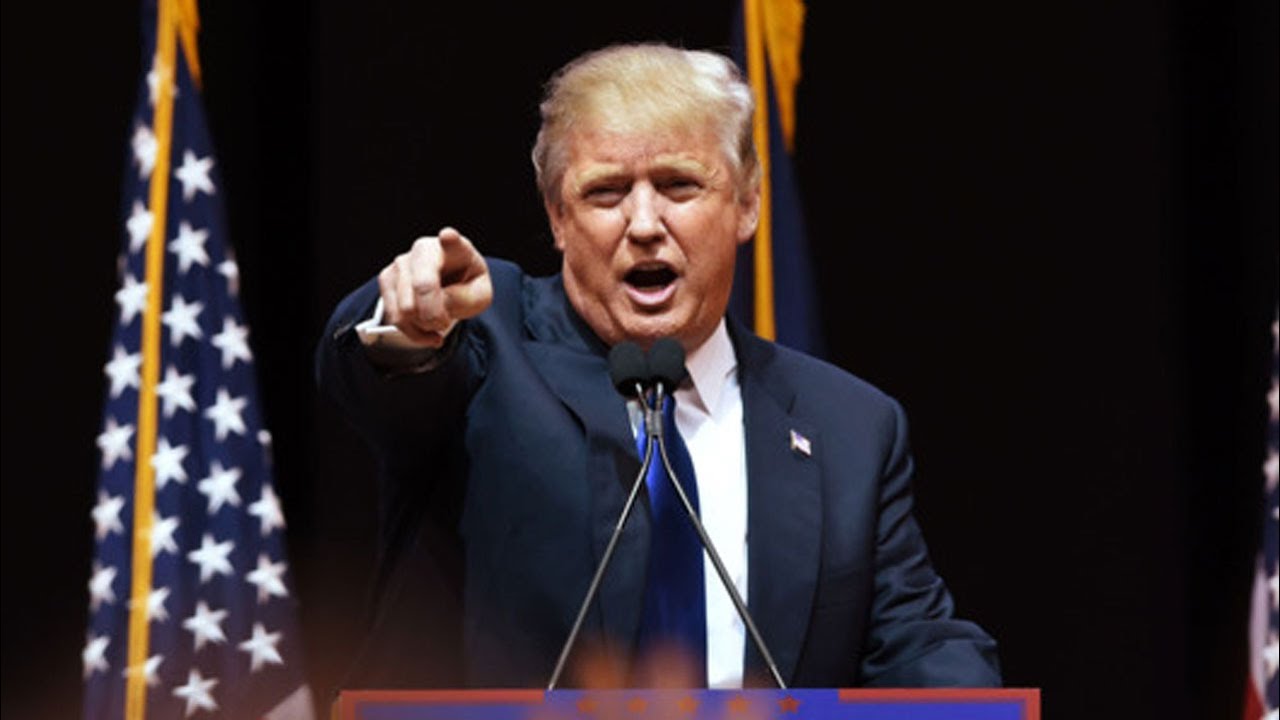
Donald Trump

Trump’s boast reflected he mindset–if not the words–of an earlier CEO whose ego carried him–and his country–to ruin.  

Ever since Adolf Hitler shot himself in his underground Berlin Bunker on April 30, 1945, historians have fiercely debated: Was der Fuehrer a military genius or a disastrous imbecile?  

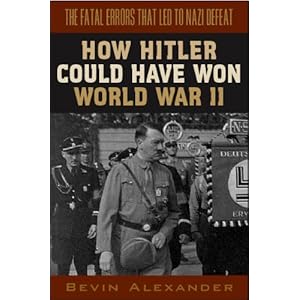
Literally thousands of books have been written on Hitler’s six-year stint as a field commander. But for an overall view of Hitler’s generalship, an excellent choice is How Hitler Could have Won World War II by Bevin Alexander.

How Hitler Could Have Won World War II

Among the fatal errors that led to the defeat of the defeat of the Third Reich:

  • Wasting hundreds of  Luftwaffe [air force] pilots, fighters and bombers in a halfhearted attempt to conquer England.
  • Ignoring the pleas of generals like Erwin Rommel to conquer Syria, Iraq and Saudi Arabia, thus giving Germany control of most of the world’s oil.
  • Attacking his ally, the Soviet Union, while still at war with Great Britain.
  • Turning millions of Russians into enemies rather than allies by his brutal and murderous policies
  • Needlessly declaring war on the United States after the Japanese attacked Pearl harbor. (Had he not done so, Americans would have focused all their attention on defeating Japan.)
  • Refusing to negotiate a separate peace with Soviet dictator Joseph Stalin–thus granting Germany a large portion of captured Russian territory in exchange for letting Stalin remain in power.
  • Insisting on a “not-one-step-back” military “strategy” that led to the needless surrounding, capture and/or deaths of hundreds of thousands of German servicemen.

As the war turned increasingly against him, Hitler became ever more rigid in his thinking. He demanded absolute control over the smallest details of his forces.  

This, in turn, led to astonishing and unnecessary losses among their ranks.  

One such incident was immortalized in the 1962 movie, The Longest Day, about the Allied invasion of France known as D-Day.  

On June 6, 1944, General Erwin Rommel ordered the panzer tanks to drive the Allies from the Normandy beaches. But these could not be released except on direct orders of the Fuehrer.

As Hitler’s chief of staff, General Alfred Jodl, informed Rommel: The Fuehrer was asleep–and was not to be awakened. By the time Hitler awoke and issued the order, it was too late.  

Nor could Hitler accept responsibility for the policies that were leading Germany to certain defeat.  

He blamed his generals, accused them of cowardice, and relieved many of the best ones from command.  

Among those sacked was Heinz Guderian, creator of the German panzer corps–and responsible for the blitzkreig victory against France in 1940.

Another was Erich von Manstein, designer of the strategy that defeated France in six weeks–which Germany had failed to do during four years of World War 1.

Finally, on April 29, 1945–with the Russians only blocks from his underground Berlin bunker–Hitler dictated his “Last Political Testament.”  

Once again, he refused to accept responsibility for unleashing a war that would ultimately consume 50 million lives: 

“It is untrue that I or anyone else in Germany wanted war in 1939.  It was desired and instigated exclusively by those international statesmen who either were of Jewish origin or worked for Jewish interests.” 

Hitler had launched the invasion of Poland–and World War II–with a lie: That Poland had attacked Germany. Fittingly, he closed the war–and his life–with a final lie.   

Joachim C. Fest, author of Hitler (1973), writes of the surprise that awaited Allied soldiers occupying Nazi Germany in 1945:  

“Almost without exception, virtually from one moment to the next, Nazism vanished after the death of Hitler and the surrender.  

“It was as if National Socialism had been nothing but the motion, the state of intoxication and the catastrophe it had caused….

“Once again it became plain that National Socialism, like Fascism in general, was dependent to the core on superior force, arrogance, triumph, and by its nature had no resources in the moment of defeat.”

The ancient Greeks believed “A man’s character is his destiny.”  For Adolf Hitler–and the nations he ravaged–that proved fatally true.  

It’s to be seen whether the same will prove true for Donald Trump–and the United States.

A FADING GLORY

In Bureaucracy, History, MSNBC, Politics, Social commentary, Uncategorized on February 2, 2016 at 12:01 am

Donald Trump has repeatedly boasted that, if elected President, he will “make America great again.”  

He would do well to re-watch Saving Private Ryan, Steven Spielberg’s 1998 World War II epic.

This opens with a scene of an American flag snapping in the wind. Except that the brilliant colors of Old Glory have been washed out, leaving only black-and-white stripes and black stars.

And then the movie opens–not during World war II but the present day.  

Did Spielberg know something that his audience could only sense? Such as that the united States, for all its military power, has become a pale shadow of its former glory?

May 30, 1945, marked the first Memorial Day after World War II ended in Europe. On that day, the Sicily-Rome American Cemetery, near the town of Nettuno, held about 20,000 graves.  

Most were soldiers who died in Sicily, at Salerno, or at Anzio. One of the speakers at the ceremony was Lieutenant General Lucian K. Truscott, Jr., the U.S. Fifth Army Commander. 

Lieutenant General Lucian K. Truscott, Jr.

Unlike many other generals, Truscott had shared in the dangers of combat, pouring over maps on the hood of his jeep with company commanders as bullets or shells whizzed about him.  

When it came his turn to speak, Truscott moved to the podium.  Then he turned his back on the assembled visitors–which included several Congressmen.

The audience he now faced were the graves of his fellow soldiers.

Among those who heard Truscott’s speech was Bill Mauldin, the famous cartoonist for the Army newspaper, Stars and Stripes. Mauldin had created Willie and Joe, the unshaved, slovenly-looking “dogfaces” who came to symbolize the GI.

Bill Mauldin and “Willie and Joe,” the characters he made famous

It’s from Mauldin that we have the fullest account of Truscott’s speech that day.  

“He apologized to the dead men for their presence there. He said that everybody tells leaders that it is not their fault that men get killed in war, but that every leader knows in his heart that this is not altogether true.

“He said he hoped anybody here through any mistake of his would forgive  him, but he realized that he was asking a hell of a lot under the circumstances….  

“Truscott said he would not speak of the ‘glorious’ dead because he didn’t see much glory in getting killed in your teens or early twenties.

“He promised that if in the future he ran into anybody, especially old men, who thought death in battle was glorious, he would straighten them out.  He said he thought it was the least he could do.

“It was the most moving gesture I ever saw,” wrote Mauldin.  

Then Truscott walked away, without acknowledging his audience of celebrities.  

Fast forward 61 years later–to March 24, 2004. 

At a White House Correspondents dinner in Washington, D.C., President George W. Bush joked publicly about the absence of Weapons of Mass Destruction (WMDs) in Iraq.  

One year earlier, he had ordered the invasion of Iraq on the premise that its dictator, Saddam Hussein, possessed WMDs he intended to use against the United States.  

To Bush, the non-existent WMDs were nothing more than the butt of a joke that night.  While an overhead projector displayed photos of a puzzled-looking Bush searching around the Oval Office, Bush recited a comedy routine.  

“Those Weapons of Mass Destruction have gotta be here somewhere,” Bush laughed, while a photo showed him poking around the corners of the Oval Office.  

“Nope–no weapons over there! Maybe there’s under here,” he said, as a photo showed him looking under a desk.  

In a scene that could have occurred under the Roman emperor Nero, an assembly of wealthy, pampered men and women–the elite of America’s media and political classes–laughed heartily during Bush’s performance.  

Only later did the criticism come, from Democrats and Iraqi war veterans–especially those veterans who had lost comrades or suffered horrific wounds to protect America from a threat that had never existed.  

Then fast forward another 11 years–to February 27, 2015.  

The Republican party’s leading Presidential contenders for 2016 gathered at the Conservative Political Action Conference (CPAC) in National Harbor, Maryland.  

Although each candidate tried to stake his own claim to the Oval Office, all of them agreed on two points:

First, President Barack Obama had been dangerously timid in his conduct of foreign policy; and

Second, they would pursue aggressive military action in the Middle East.

“Our position needs to be to re-engage with a strong military and a strong presence,” said Jeb Bush, the former governor of Florida.  And Bush added that he would consider sending ground forces to fight ISIS.

Scott Walker, the current governor of Florida, equated opposing labor unions to fighting terrorists: “If I could take on 100,000 protesters (in Wisconsin) I can do the same across the world.”  

Neither Bush nor Walker had seen fit to enter the ranks of the military he wished to plunge into further combat.  And Bush and Walker are typical of those who make up the United States Congress:

Of those members elected or re-elected to the House and Senate in November, 2014, only 97–less than 18%–have served in the U.S. military.

Small wonder then, that, for many people, Old Glory has taken on a darker, washed-out appearance, in real-life as in film.


THE EVIL THAT POLITICIANS DO

In Bureaucracy, History, Law, Politics, Social commentary on February 1, 2016 at 12:01 am

Yes, like a toxic waste plant that spews out poison every four years, it’s Presidential primary time for the Republican party.

And its two most radical and ruthless candidates for President are flinging slime with gusto.  

Rafael “Ted” Cruz, the United States Senator from Texas, has accused his rival, billionaire businessman Donald Trump, of having “New York values.”

And during the January 14th Republican Presidential debate in South Carolina, he defined these as:

“Everyone understands that the values in New York City are socially liberal, pro-abortion, pro-gay marriage and focus on money and the media.”  

Among Right-wingers, “liberal,” “pro-abortion” and “pro-gay” are the ultimate in insults.

But Donald Trump was quick to respond with an explosive charge of his own: Rafael Cruz is not an American citizen–and therefore not eligible to be President.  

What made this accusation so effective was Cruz’ having been born outside the United States–in Calgary, Alberta, Canada, to an American mother and a Cuban father.

Ted Cruz, official portrait, 113th Congress.jpg

Rafael “Ted” Cruz

The U.S. Constitution specifically states that “No person except a natural born citizen…shall be eligible to the office of President.”  

Cruz has argued that because his mother was an American, he became an American citizen at birth. But courts have never ruled on the issue of what constitutes a “natural-born” citizen.  

And, at a campaign event in Nashua, New Hampshire, Trump smacked Cruz with an even more incendiary attack:  

“Ted Cruz may not be a US citizen, right? But he’s an anchor baby. No, Ted Cruz is an anchor baby in Canada. But Canada doesn’t accept anchor babies.”  

“Anchor baby” is a Politically Incorrect term for usually poor, non-white aliens entering the United States to have a child born on American soil, which grants automatic citizenship.  

And if the child is a citizen, its parents stand an excellent chance of being allowed to stay.  

Trump asserts that children born in the United States to illegal aliens are not American citizens, as they are today considered under the law.

Related image

Donald Trump

At first, the issue of Cruz’ eligibility seemed confined to Republican politicians and those likely to vote for them. But then others outside the Right began weighing in.  

Mary McManamon, a Constitutional law professor at Widener University’s Delaware Law School, concluded in an Op-Ed for The Washington Post:

“Sen. Ted Cruz (R-Tex.) is not a natural-born citizen and therefore is not eligible to be president or vice president of the United States.”

How did this all start? With the ultimate target of Republican hatred–Barack Obama.

Ever since Obama became a Presidential candidate in 2008, Republicans have accused him of being ineligible to hold office.

Without a political scandal (such as Bill Clinton’s affair with Monica Lewinsky) to fasten on, the Republican party opted for slander: Obama was born in Kenya–not Honolulu–and thus was not an American citizen.  

From this there could be only one conclusion: He would be an illegitimate President, and should be removed from office if elected.  

And this smear campaign continued after he won the 2008 election. Right-wingers like Trump insisted that Obama “prove” his citizenship fitness to hold office.  

During his first two years in office, Obama tried to ignore the charge.

But polls repeatedly showed that large segments of the country believed it. Finally, even Obama’s closest advisers warned him: You must address this and put it to rest.  

So, on April 27, 2011, the President released the long-form version of his Hawaii birth certificate.

The long-form version of President Obama’s birth certificate

For the vast majority of Americans, this settled the issue. In 2012, to the fury of Republicans, Obama won a second, four-year term.

Fast forward to the 2016 Presidential race.  

Donald Trump, seeking to destroy his foremost rival, lobs the “anchor baby” charge against Rafael Cruz. 

To most Americans, this conjures up the image of poor Mexicans flooding across the United States border to apply for welfare.

It’s a highly effective way to inflame the elderly, white voters who make up the base of the Republican party.

But it’s also guaranteed to inflame millions of Hispanic Americans–those who are here legally as well as those who are here illegally.  

The Republican party has long earned the hatred and distrust of most Hispanic Americans through its calls to “seal off the border” and deport Hispanic illegal aliens.

And, in 2012, millions of Hispanics gave President Obama a second term.  

So long as Cruz stays in the race, Trump will continue to use the “birther” issue against him. And it will continue to dog him, as it did Obama.  

But it will continue to anger most of the 55 millions Hispanics living within the United States.  

The votes of elderly whites command the attention of Republican primary candidates. But Hispanic voters will play a decisive role in the general election.

Thus, Republicans may come to regret their use of the “birther” issue as they learn the truth of Shakespeare’s line: “The evil that men do lives after them.”