Archive for the ‘Self-Help’ Category
ABC NEWS, ACCOUNTING, AUDITS, CBS NEWS, CNN, DAVE BARRY, FACEBOOK, INTERNAL REVENUE SERVICE, MAFIA, NBC NEWS, PAYROLL TAXES, PENALTIES, SELF-HELP, TAX LAW, TAXES, THE CHICAGO SUN-TIMES, THE CHICAGO TRIBUNE, THE HUFFINGTON POST, THE LOS ANGELES TIMES, THE NEW YORK TIMES, THE WALL STREET JOURNAL, THE WASHINGTON POST, TWITTER, USA TODAY
In Bureaucracy, Business, Law, Law Enforcement, Self-Help on November 4, 2016 at 12:23 am
“We’ll try to cooperate fully with the IRS, because, as citizens, we feel a strong patriotic duty not to go to jail.”
–Dave Barry
Several years ago, a private investigations agency found itself in serious trouble with the Internal Revenue Service (IRS).
One of its employees had suddenly quit the company–leaving behind a major financial disaster.
That employee–whom I’ll call Pete–had been tasked with sending payroll tax records to the IRS. The company’s owner, Bill, assumed he had carried out his assignment.
Until he learned from the IRS that they had never received the records.
Consider the potential consequences:
- Failing to timely and properly pay federal payroll taxes results in an automatic penalty of 2% to 10%.
- Similar state and local penalties apply.
- Failing to properly file monthly or quarterly returns may result in additional penalties.
- Failing to file W-2 Forms results in an automatic penalty of up to $50 per form not timely filed.
- A particularly severe penalty applies where federal income tax withholding and Social Security taxes are not paid to the IRS.
- The penalty of up to 100% of the amount not paid can be assessed against the employer entity as well as any person (such as a corporate officer) having control or custody of the funds from which payment should have been made.
About 70% of the annual revenue collected by the IRS comes from payroll taxes. Under-reported and unpaid employment taxes account for about $72 billion of the United States tax gap. So the IRS makes the collection of payroll taxes a high priority.
No doubt about it–Bill was facing serious trouble.

What to do?
Fortunately, Steve, one of Bill’s employees, had a B.A. in Communications and had worked as a newspaper reporter.
When Bill told him of the calamity he was facing, Steve offered his best advice: Immediately contest the charge that he had been delinquent in providing the records. And explain to the IRS–in writing–what had happened.
Bill agreed.
First, Steve interviewed him at length to make certain he fully understood the circumstances leading up to his present crisis.
Then Steve sat down and typed up a letter–on office letterhead stationery–to the IRS. Letterhead would give it an official appearance–and Steve wanted every advantage he could get.
Steve offered a straightforward presentation of what had happened: Pete, the number-two man in the company, had been entrusted with submitting payroll tax records to the IRS.
Apparently nursing a grudge against the company, he had, in fact, done nothing of the sort.
Instead, he had dumped the records in a box and stashed this in a locked filing cabinet.
Then he had given notice and left the company. Later, an investigation of his office computer revealed that it had often been used to access pornography.
Steve emphasized that Bill’s company had previously had an unblemished record for meeting its payroll tax obligations on time. And he stated that the newly-found records had been sent to the IRS by registered mail.
Finally, Steve wrote that Bill was prepared to fully meet his financial obligations to the IRS. But he asked that Bill not be penalized for the irresponsible actions of a single, malcontented employee.
The result?
Bill ended up paying only those monies that he legally owed. He was not forced to pay a penalty.
So what are the lessons to be learned from this episode?
- In dealing with an agency as powerful as the IRS, don’t ignore its letters and/or phone calls.
- You have nothing to gain by pretending it will go away. It won’t.
- If you owe money, don’t deny it.
- Remain calm, even if you feel angry or afraid.
- Don’t use profanity or insults.
- Don’t try to play tough-guy with the IRS. Even the Mafia fears this agency.

- If you have a legitimate reason for having missed a payment, say so.
- Remember that everything you say to the IRS–verbally or in writing–is considered evidence given under oath.
- If you lie and get caught, you can face perjury charges as well as those for failing to comply with tax laws.
- Offer to fully pay any monies that you legally owe.
- If these amount to more than you can meet in a single payment, say so. Ask the agency to set up a plan by which you can pay it off in installments.
- If the agency balks at cooperating with you, contact a veteran tax accountant or attorney.
- The best accountants or attorneys for dealing with the IRS are former agents now working in private practice. They not only know the tax laws; they know the best ways to short-circuit an IRS audit and/or penalties.
ABC NEWS, ALTERNET, AP, BUZZFEED, CBS NEWS, CNN, COMPUTER FRAUD, CROOKS AND LIARS, CYBERCRIME, DAILY KOZ, EMAIL, EMAILS, FACEBOOK, FBI, INTERNET, MOTHER JONES, MOVEON, NBC NEWS, NEWSWEEK, NIGERIA, NIGERIAN SCAMS, NPR, PASSWORDS, POLITICO, RAW STORY, REUTERS, SALON, SCAMS, SEATTLE TIMES, SLATE, THE ATLANTIC, THE CHICAGO SUN-TIMES, THE CHICAGO TRIBUNE, THE DAILY BEAST, THE GUARDIAN, THE HILL, THE HUFFINGTON POST, THE LOS ANGELES TIMES, THE NATION, THE NEW YORK TIMES, THE WALL STREET JOURNAL, THE WASHINGTON POST, THE WASHINGTONPOST, TIME, TWITTER, U.S. NEWS & WORLD REPORT, UPI, USA TODAY, VIRUSES
In Business, Law Enforcement, Self-Help, Social commentary on August 26, 2016 at 12:01 am
Receiving unsolicited, get-rich-quick emails has become a regular headache for millions of Internet users.
All too often, the result is fraud for their recipients. In 2013, losses from Nigerian scams alone totaled $12.7 billion.
Here’s how to spot the warning signs of fraud:
- Addressed Generally: “Attention!” “Dear Friend,” “Attention the owner of this email,” “Hello, Dear.” Your name is not mentioned, because this email has been mass-mailed to thousands of intended victims.
- Unsolicited: You’re told that you’ve won a lottery you never entered, or have inherited a fortune from someone you never knew existed.
- Appeals to religion: Appeals to Religion: “Hello Beloved in the Lord” or “Yours in Christ” seeks to create a bond with those who deeply believe in God.
- Misuse of English: Misuse of English: Mis-spellings and faulty grammar usually denote someone–probably a foreigner–using English as a second language. Examples: Run-on sentences; “you’re” for “your”; “except” instead of “accept”; “Dear Beneficial” instead of “Dear Beneficiary.”
- Appeals to Sympathy: Appeals to Sympathy: “My husband just died” or “I am dying of cancer.” This is to make you feel sorry for the sender and lower your guard as an intended victim.
- Use of Important Titles/Organizations: “Director,” ‘Barrister,” “Secretary General of the United Nations,” “Police Inspector.” This is to impress recipients and convince them that the email comes from a trusted and legitimate organization.
- Request for Personal Information: This includes some combination of: Name / Address / Telephone Number / Bank Name / Bank Account Number / Fax Number / Driver’s License Number / Occupation / Sex / Beneficiary / Passport Number
- Claims of Deposit: “We have deposited the check of your fund to your account” is a typical line to instantly grab your attention. Someone you’ve never heard of claims he has just put a huge amount of money into an account you know nothing about. Nor can you access it unless you first pay a “contact fee.”
- The “Bank” is in Africa: Unless you know you have relatives there, this should be a dead giveaway to a scam. Africa is a continent kept alive by the charity of other nations. It’s not in the business of doling out large sums of money to Westerners.

- Overseas Phone Numbers: If you call these, you’ll have a huge bill. So many people skip calling and just send the money “required” to receive their “cash prize.”
- Highly Personal Requests: Asking you–someone they’ve never met–to assume the burden of acting as the executor of their “Last Will and Testament.”
- Love Scams: The scammer poses as a man or woman–usually outside the United States–seeking love. A series of emails flows back and forth for days/weeks, until the scammer says s/he will be glad to fly to the United States to be yours. All you have to do is put up the money for the flight cost.
- “Make Money From Home”: With most employers refusing to hire, “work from home” scams promise a way to support yourself and your family. You’re required to provide bank information or pay an up-front “registration fee.” Then you wait for job orders–that never come.
- Debt Relief: Scammers promise to relieve most or all of your debt–for a large up-front fee. You pay the fee–and are not only out of that money but still in debt.
- Home Repair Schemes: Huge down payments are required for home repairs that never happen.
- “Free” Trial Offers: The service or product is free for awhile, but you must opt out later to avoid monthly billings.
- The Email Claims to Be From the FBI: Often the “address” includes “Anti-Terrorist and Monetary Crime Division.” One such email was addressed: “Dear Beneficiary” and offered help in obtaining a “fund.” The FBI is an investigative agency responsible to the U.S. Department of Justice. It does not resolve financial disputes or secure monies for “deserving” recipients. If the FBI wants to contact you, it will do so by letter or by sending agents to your address. The FBI’s own website states: “At this time we do not have a national e-mail address for sending or forwarding investigative information.”
- “I Need Help”: You get an email claiming to be from someone you know–who’s “in jail here in Mexico” or some other foreign country. S/he begs you to send money for bail or bribes to win his/her freedom. If you get such an email, call the person to make certain. Don’t rush to send money–chances are it will go directly to a scammer.
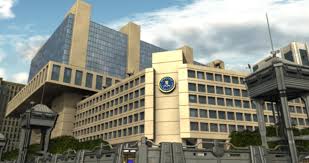
FBI Headquarters: Where stopping cybercrime is now a top priority.
There are several commonsense rules to follow in protecting yourself from online scammers:
- Don’t trust people you’ve never met to want to give you money.
- Shop online only with well-known merchants who have a good reputation.
- Don’t click on unknown links–especially those in emails from unknown senders.
- If you’re required to pay an advance fee–“on faith”–to receive a big amount of money, the odds are it’s a scam.
- If you can’t find any solid information on a company, chances are it doesn’t exist.
- For additional information on how to protect yourself from cybercrime, check out the FBI’s page at http://www.fbi.gov/about-us/investigate/cyber.
- If it sounds too good to be true, the odds are: It is untrue.
2001 TERROR ATTACKS, 9/11 ATTACKS, ABC NEWS, AIRPORT SECURITY, CBS NEWS, CNN, DEPARTMENT OF HOMELAND SECURITY, DRIVER'S LICENSES, FACEBOOK, FBI, IDENTIFICATION, JOHN DILLINGER, NATIONAL GUARD, NBC NEWS, OSAMA BIN LADEN, PASSPORTS, REAL ID ACT, SAN FRANCISCO FEDERAL BUILDING, SECURITY THEATER, TERRORISM, THE CHICAGO SUN-TIMES, THE CHICAGO TRIBUNE, THE LOS ANGELES TIMES, THE NEW YORK TIMES, THE WASHINGTON POST, TRANSPORTATION SECURITY ADMINISTRATION, TWITTER, UPI, USA TODAY
In Bureaucracy, History, Law, Law Enforcement, Self-Help, Social commentary on August 19, 2016 at 12:08 am
Starting in 2016, traveling by air in the United States got more complicated. But not necessarily safer.
In 2005, Congress passed the Real ID Act as a counter-terrorism measure. Its goal was to set security standards for government-issued IDs.
The Act started to be introduced in late 2013. Now in the last phase of its implementation, its enforcers have decided that some states haven’t complied with its requirements.
As a result, driver’s licenses from those states will no longer suffice to pass through airport security. And that includes domestic flights as well as international ones.
Those states: New York, New Hampshire, Minnesota, Louisiana and American Samoa.
The reason: Licenses issued by those states don’t contain enough identifying information to pass muster with the Transportation Security Administration (TSA).

So how are residents of these states supposed to cope? The Federal Government is advising them to get a passport.
Your old New York driver’s license may make it harder for you to fly in 2016 | syracuse.com
And this, in turn, carries an illogic all its own. As one soon-to-be affected New York traveler outlined:
“To get a passport I’ll first need to get a certified copy of my birth certificate.
“And to get a copy of my birth certificate I need only to submit a copy of my driver’s license. A copy, no face-to-face, is-that-really you?
“So a New York driver’s license isn’t good enough for flying but it is good enough to get a birth certificate, which gets me a passport, which allows me to fly.”
Got all that?
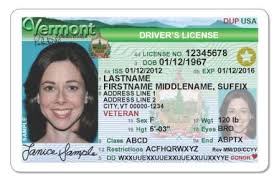
Sample state ID card that’s acceptable under the Real ID Act
So much of what passes for security is actually security theater. It doesn’t actually make us safer, but it makes us feel safer.
And it makes us feel the government is keeping us safe, even when it isn’t.
For example: In the months after 9/11, National Guard troops were stationed in American airports. They certainly looked impressive.
But passengers would have felt far less reassured had they known the assault rifles they carried had no bullets.
Or take the checking of photo IDs that has become routine to enter State and Federal office buildings.
What exactly does this tell the security guard?
If you’re John Dillinger or Osama bin Laden, it tells him: “This is a very wanted man.”
But if you’re John Q. Public, who’s not notorious as a bank robber or terrorist, showing him your ID tells him nothing.
But people watching the guard performing this ritual assume: “The security guard must know what he’s looking for. So we have to be safer for his checking those IDs.”
In fact, most security guards have little training and even less experience. Many of them don’t carry firearms and lack self-defense skills.
According to Salary.com: The median annual Security Guard salary is $29,204, as of July 29, 2016, with a range usually between $25,857 and $33,522.
Repeated showings of security theater can be seen every weekday at the San Francisco Federal Building, at 450 Golden Gate Avenue.
To enter, you must show a driver’s license or State ID card.
Then you must remove
- Your belt;
- Your shoes;
- Your watch;
- Your wallet;
- All other objects from your pants pockets;
- Any jacket you’re wearing;
- Any cell phone you’re carrying.
All of these must be placed in one or more large plastic containers, which are run through an x-ray scanner.
Finally, assuming you avoid setting off any alarm system, you’re allowed to enter.
Now, suppose you want to report a crime to the San Francisco field office of the Federal Bureau of Investigation (FBI).
You take an elevator to the 13th floor and walk into a large room filled with several comfortable chairs that sit close to the floor. You approach a window such as you find in a bank–made of thick, presumably bulletproof glass.
A secretary on the opposite side greets you, and asks why you’ve come.
You offer your reason for wanting to speak with an agent. Assuming the secretary thinks you have a legitimate reason, she says you must first show her your driver’s license or State ID card.
You slide these through the bottom part of the glass window. Then she makes a xerox of this and hands the card back.
Then, as if that isn’t enough, you have to fill out a single-page form, which requires you to provide your:
- Name;
- Address;
- Phone number;
- Social Security Number;
- The reason you want to speak to an agent.
Of course, you can refuse to fill out the form. But then the secretary will refuse to let you meet with an FBI agent.
The FBI has always encouraged Americans to report anything they consider a threat to national security or a violation of Federal law.
But this demand for so much private information is almost certain to sharply decrease the number of people willing to report knowledge of a crime.
At a time when Federal law enforcement agencies need all the cooperation they can get, this is not a matter to be taken lightly.
ABC NEWS, ALTERNET, AMERICABLOG, AP, BABY BOOMER RESISTANCE, BBC, BC NEWS, BLOOMBERG, BLUESKY, BRIAN L. ROBERTS, BUSINESS MANAGEMENT, BUZZFEED, CABLE TV COMPANIES, CBS NEWS, CEOS, CNN, COMCAST, COMMUNICATIONS, CONSUMER COMPLAINT WEBSITES, CONSUMER PROTECTION, CROOKS AND LIARS, CUSTOMER SERVICE, DAILY KOS, FACEBOOK, FEDERAL COMMUNICATIONS COMMISSION, FIVETHIRTYEIGHT, HARPER’S MAGAZINE, HUFFINGTON POST, LOS ANGELES TIMES, MANAGEMENT, MEDIA MATTERS, MOTHER JONES, MOVEON, MSNBC, NBC NEWS, NEWSDAY, NEWSWEEK, NPR, PBS NEWSHOUR, POLITICO, POLITICUSUSA, PUBLIC UTILITIES COMMISSION, RAW STORY, REUTERS, ROBERT TOWNSEND, SALON, SEATTLE TIMES, SELF-HELP, SLATE, TALKING POINTS MEMO, THE ATLANTIC, THE CHICAGO SUN-TIMES, THE CHICAGO TRIBUNE, THE DAILY BEAST, THE DAILY BLOG, THE GUARDIAN, THE HILL, THE HUFFINGTON POST, THE INTERCEPT, THE LOS ANGELES TIMES, THE NATION, THE NEW REPUBLIC, THE NEW YORK TIMES, THE NEW YORKER, THE VILLAGE VOICE, THE WALL STREET JOURNAL, THE WASHINGTON POST, THINKPROGRESS, TIME, TRUTHDIG, TRUTHOUT, TWITTER, TWO POLITICAL JUNKIES, U.S. NEWS & WORLD REPORT, UP THE ORGANIZATION, UPI, USA TODAY, X, YELP!
In Bureaucracy, Business, History, Politics, Self-Help, Social commentary on July 29, 2016 at 12:17 am
In 1970, Robert Townsend, the CEO who had turned around a failing rent-a-car company called Avis, published what is arguably the best book written on business management.
It’s Up the Organization: How to Stop the Corporation From Stiffling People and Strangling Profits.
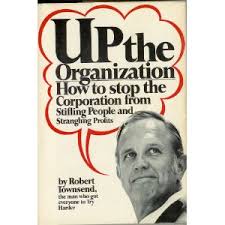
Though published 46 years ago, it should be required reading–for CEOs and consumers.
Don’t fear getting bogged down in a sea of boring, theory-ridden material. As Townsend writes:
“This book is in alphabetical order. Using the table of contents, which doubles as the Index, you can locate any subject on the list in 13 seconds. And you can read all I have to say about it in five minutes or less.
“This is not a book about how organizations work. What should happen in organizations and what does happen are two different things and about as far apart as they can get. THIS BOOK IS ABOUT HOW TO GET THEM TO RUN THREE TIMES AS WELL AS THEY DO.”
Comcast is the majority owner of NBC and the largest cable operator in the United States. It provides cable TV, Internet and phone service to more than 50 million customers.
So you would think that, with so many customers to serve, Comcast would create an efficient way for them to attain help when they face a problem with billing or service.
Think again.
Consider the merits of Townsend’s short chapter on “Call Yourself Up.”
Townsend advises CEOs:“Pretend you’re a customer. Telephone some part of your organization and ask for help. You’ll run into some real horror shows.”
Now, imagine what would happen if Brian L. Roberts, the CEO of Comcast, did just that.


Brian L. Roberts
First, he would find that, at Comcast, nobody actually answers the phone when a customer calls. After all, it’s so much easier to fob off customers with pre-recorded messages than to have operators directly serve their needs.
And customers simply aren’t that important–except when they’re paying their ever-inflated bills for phone, cable TV and/or Internet service.
Comcast’s revenues stood at $19.25 billion for the fourth quarter of 2015.
In 2015, Roberts earned $36.2 million in salary, options and other compensation, a 10% increase from 2014.
So it isn’t as though the company can’t afford hiring a few operators and instructing them to answer phones directly when people phone in.
But instead of being directly connected to someone able to answer his question or resolve his problem, Roberts would hear:
“Welcome to Comcast–home of Xfinity.”

Then he would hear an annoying clucking sound–followed by the same message in Spanish.
“Your call may be recorded for quality assurance.
“To make a payment now, Press 1. To continue this call, Press 2.”
Then he would hear: “For technical help, press 1, for billing, press 2. For more options, press 3.”
Assuming he pressed 2 for “billing,” he would hear:
“For payment, press 1 For balance information, press 2. For payment locations, press 3. For all other billing questions, press 4.”
Then he would be told: “Please enter the last four digits of the primary account holder’s Social Security Number.”
Then, as if he hadn’t waited long enough to talk to someone, he would get this message: “Press 1 if you would like to take a short survey after your call.”
By the time he heard that, he would almost certainly not be in a mood to take a survey. He would simply want someone to come onto the phone and answer his question or resolve his problem.
Then he would hear: “At the present time, all agents are busy”–and be electronically given an estimate by when someone might deign to answer the phone.
“Please hold for the next customer account executive.”
If he wanted to immediately reach a Comcast rep, Roberts would press the number for “sales.” A sales rep would gladly sign him up for more costly products–even if he couldn’t solve whatever problem Roberts needed addressed.
Assuming that someone actually came on, Roberts couldn’t fail to notice the unmistakable Indian accent of the rep he was now speaking with.
Not Indian as in American Indian-because that would mean his company had actually hired Americans who must be paid at least a minimum American wage for their services.
No, Comcast, like many other supposedly patriotic corporations, “outsources” its “customer service support team” to the nation, India.
After all, if the “outsourced” employees are getting paid a pittance, the CEO and his top associates can rake in all the more.
Of course, the above scenario is totally outlandish–and is meant to be.
Who would expect the wealthy CEO of a major American corporation to actually wait in a telephone queue like an ordinary American Joe or Jane?
That would be like expecting the chief of any major police department to put up with hookers or panhandlers on his own doorstep.
For the wealthy and the powerful, there are always underlings ready and willing to ensure that their masters do not suffer the same indignities as ordinary mortals.
Such as the ones who sign up for Comcast TV, cable or Internet services.
"LOUIS", "PETER PAN", "THE PRINCESS AND THE FROG", "TICK TOCK", ABC NEWS, ALLIGATORS, ALTERNET, AMERICABLOG, AP, BABY BOOMER RESISTANCE, BBC, BLOOMBERG NEWS, BUZZFEED, CBS NEWS, CNN, CROOKS AND LIARS, DAILY KOZ, DISNEY JUNGLE CRUISE, FACEBOOK, FIVETHIRTYEIGHT, FLORIDA, FLORIDA FISH AND WILDLIFE CONSERVATION COMMISSION, GRAND FLORIDIAN HOTEL AT WALT DISNEY WORLD, HARPER’S MAGAZINE, HUFFINGTON POST, KILIMANJARO SAFARI RIDE, LANE GRAVES, MEDIA MATTERS, MOTHER JONES, MOVEON, MSNBC, NBC NEWS, NEW REPUBLIC, NEWSDAY, NEWSWEEK, NPR, ORANGE COUNTY SHERIFF'S OFFICE, ORLANDO SENTINEL, PBS NEWSHOUR, POLITICO, POLITICUSUSA, POLYNESIAN RESORT VILLAGE, RAW STORY, REUTERS, SALON, SEATTLE TIMES, SLATE, TALKING POINTS MEMO, THE ATLANTIC, THE CHICAGO SUN-TIMES, THE CHICAGO TRIBUNE, THE DAILY BEAST, THE DAILY BLOG, THE GUARDIAN, THE HILL, THE HUFFINGTON POST, THE HYATT REGENCY GRAND CYPRESS HOTEL, THE LOS ANGELES TIMES, THE NATION, THE NEW REPUBLIC, THE NEW YORK TIMES, THE NEW YORKER, THE VILLAGE VOICE, THE WASHINGTON POST, THINKPROGRESS, TIME, TRUTHDIG, TRUTHOUT, TWITTER, TWO POLITICAL JUNKIES, U.S. NEWS & WORLD REPORT, UPI, USA TODAY, WRONGFUL-DEATH LAWSUITS
In Bureaucracy, Business, Self-Help, Social commentary on July 6, 2016 at 12:17 am
NO SWIMMING
BEWARE
PLEASE BE AWARE OF ALLIGATORS IN THE LAKE.
So warns a sign at the Hyatt Regency Grand Cypress Hotel, in Bay Lake, Fla. To drive home the message, it features an eye-catching symbol: A green alligator, its jaws open wide.
Just minutes away lies the Grand Floridian Hotel at Walt Disney World Resort, where, on June 14, a sign read:
STEEP DROP-OFF
DEEP WATER
NO SWIMMING
It’s likely that the parents of two-year-old Lane Graves wish they had chosen the Hyatt Regency Grand Cypress Hotel for their vacation spot.
Had they done so, their son might well be alive today.
On June 14, an alligator, estimated at seven feet, snatched Lane as he waded in less than six inches of water at nightfall.

Lane Graves
His father, Matt, rushed into the water to save Lane. But he was attacked by a second alligator as he fought for his son. He suffered several bites before the two alligators disappeared into the lagoon.
The next day, an Orange County Sheriff’s dive team found Lane’s intact body.
The Graves family, natives of landlocked Omaha, Nebraska, were overwhelmed with grief.
“We are devastated and ask for privacy during this extremely difficult time,” said a statement released by a family friend on June 16.
The Graves family were not the only ones shocked by the lack of an alligator warning at Disney.
Several tourists interviewed at the nearby Hyatt shared similar outrage.
“We didn’t know there weren’t any signs like they have here, ‘Beware of Alligators,'” Hyatt guest Chloe Giles, 21, told PEOPLE. “We thought they had a big sign like they have here: ‘Beware of Alligators.’ “
Three weeks before the fatal snatching of Lane Graves, Dani Saunders, Christopher Spackman and their two young daughters, Charlie and Laila, visited Disney in Orlando, Fla. They stayed at the Caribbean Beach Resort, but one night they went to a beach on Bay Lake to watch fireworks.

Grand Floridian Hotel at Walt Disney World Resort
“It’s the same area that the lagoon goes into,” Saunders said. “And we went at the same time– at 9:30 as the other people were there.”
In a state where the alligator population numbers at more than one million, Florida residents know the dangers and keep small children away from ponds and lakes. But many out-of-state visitors aren’t aware of threat posed by the reptiles.
An official at the Florida Fish and Wildlife Conservation Commission stated that May and June are typically mating season for alligators.
The Commission’s executive director, Nick Wiley, announced that his agency had taken and killed five alligators who were suspected of the attack.
Even more damning for Disney, the Orlando Sentinel reported that Disney staff at a nearby resort knew about guests feeding alligators, and had ignored requests to put up a protective fence around the lagoon.
Mike Hamilton, a custodian at the Polynesian Resort Village–a short distance from the Grand Floridian resort–warned his employer that gators were swimming too close to guests and that a protective fence should be erected to keep them at bay.
“The entire property is interconnected via canals so it is difficult to keep [alligators} out of the lakes. Gators are on all of the golf courses. The team attempts to relocate the gators to the uninhabited natural areas as best they can, but the gators don’t understand the boundaries,” former Disney executive Duncan Dickson told the Sentinel.
According to The Wrap, guests at the Polynesian Resort Village–which charges $2,000 and $3,000 per night for a room–commonly feed the alligators.
“Disney has known about the problem of guests feeding the alligators well prior to the opening of the bungalows,” a source told The Wrap.
The day after divers found the body of Lane, Disney announced that it was reviewing its policies about warning signs.
“We are conducting a swift and thorough review of all our processes and protocols,” Walt Disney World Vice President Jacquee Wahler said in a statement on June 16. “This includes the number, placement and working of our signage and warnings.”
Among the changes:
- “Tick Tock,” the Croc from “Peter Pan,” has been removed from the park’s Festival of Fantasy parade.
- So has “Louis,” the trumpet-playing alligator from “The Princess and the Frog,” who was supposed to be part of the Friendship Faire castle show.
- The Jungle Cruise tour guides will no longer joke about crocodiles eating children as they narrate a boat tour through the world’s rivers.
- The Kilimanjaro Safari ride has dropped references to a crocodile pit.
This is typically how an incompetent bureaucracy operates:
- Ignore repeated warnings about a problem that poses a threat to its customers. The reason: To avoid spending money–most of which will otherwise go to the top officials of the company.
- When the predicted disaster occurs, the company issues a public apology–and makes “security theater” gestures to reassure the public.
There is no word as yet whether the Graves family intends to file a wrongful death lawsuit against Walt Disney World. But only such a lawsuit–and a huge financial loss–will convince this corporation to make a genuine effort to protect its guests.
ABC NEWS, AIRLINE PASSENGER RIGHTS, AIRLINES, AIRTRAN, AMERICAN AIRLINES, AMERICAN CUSTOMER SATISFACTION INDEX, BUSINESS INSIDER, CBS NEWS, CNN, COMPLAINT LETTERS, CONSUMER RIGHTS, DAVE CARROLL, DELTA AIRLINES, FACEBOOK, ITUNES, JETBLUE AIRWAYS, KGB, LEISHA HAILEY, NBC NEWS, NICCOLO MACHIAVELLI, SOUTHWEST AIRLINES, THE CHICAGO SUN-TIMES, THE CHICAGO TRIBUNE, THE LOS ANGELES TIMES, THE NEW YORK TIMES, THE PRINCE, THE WASHINGTON POST, TWITTER, U.S. AIRWAYS, UNITED BREAKS GUITARS, US AIRWAYS, YOUTUBE
In Bureaucracy, Business, History, Law, Self-Help, Social commentary on June 10, 2016 at 12:21 am
The concept of “consumer rights” has not yet reached the airline industry.
Under Federal law, as enforced by the Federal Aviation Administration, airline passengers have only the following guaranteed rights:
If your flight is delayed (such as by bad weather) and you’re stuck on the tarnac:
- Tarnac delays cannot exceed three hours. You can leave the plane if you choose after that.
- Food and water must be available after the plane has been stuck on the tarnac for two hours.
- The airline must service toilets, keep air conditioning on, and keep trash cans clean.
In addition, the U.S. government mandates these “rights” for air travelers:
- Compensation when you’re bumped due to overbooking –and for no other reason.
- An airline must accept lost/damaged baggage liability up to $3,000 in depreciated value per passenger for a domestic flight (limits on international flights are either about $1,700 or $635, depending on which rule applies).
Beyond those, all you can claim is what’s in each airline’s “contract of carriage.” Those contracts are–naturally–heavily biased toward airlines, not customers.
Unfortunately, the law–and the Congressmen who create it–is still largely owned by the airlines. Thus you, as a customer, are forced to make do with the weapons at hand.
These essentially boil down to two:
- Threatening the airlines with bad publicity; and
- Threatening the airlines with a private or class-action lawsuit.
In both cases, it’s best to first contact the highest-ranking officials in the airline company.
There are two reasons for this:
- They have the most to lose, and
- They have the power to redress your complaint.
You can try to reach the CEO or one of his assistants during the time of the incident. But, most likely, this will happen afterwards.
If a mini-Hitler of an airline steward decides to eject you because s/he doesn’t like your clothes or request for help, there’s nothing you can do about it.
If you physically resist, you will almost certainly be arrested and charged with some version of domestic terrorism. You’ll be shipped off to jail and forced to defend yourself against the bogus charge.

Even if the authorities decide to not prosecute, you’ll have to spend at least several hundred dollars on legal representation.
And, of course, the airlines won’t care. They won’t be spending a dime on your prosecution–that will be paid for by the local U.S. Attorney’s (federal prosecutor’s) office.
Niccolo Machiavelli, the father of political science, wisely advised in The Prince:
“A prince…must imitate the fox and the lion, for the lion cannot protect himself from traps, and the fox cannot defend himself from wolves. One must therefore be a fox to avoid traps, and a lion to frighten wolves.”
This is definitely the time to take on the trappings of a fox. However painful it is to swallow the insult at the time it’s given, don’t give the airlines an excuse to have you arrested.
Take your revenge afterward. That’s what musician Dave Carroll did.
Carroll alleged that, in 2008, he and fellow passengers saw United Airlines’ baggage-handling crew throwing guitars on the tarmac in Chicago O’Hare. He arrived at Omaha, Nebraska, his destination to discover that the neck of his $3,500 Taylor guitar had been broken.
Carroll complained to three United employees, but they proved indifferent. He filed a claim with the airline–but was told he was ineligible for compensation.

The reason? He had not filed the claim within the company’s stipulated “standard 24-hour timeframe.”
Carroll turned to his musical roots for a remedy. He wrote a song, “United Breaks Guitars,” and turned it into a music video which he posted on YouTube and iTunes in July, 2009.
Click here: United Breaks Guitars – YouTube
The song went viral, and became a public relations nightmare for the airline.
The Sunday Times reported that, four days after the video’s posting, United Airlines’ stock price fell 10% costing stockholders about $180 million in value.
Most customers, admittedly, aren’t musicians. For them–short of suing–the weapons of choice will be:
- The phone
- Letters
- The Internet
- Consumer protection organizations that can be enlisted
Let’s start with the first: The phone.
Most customers assume the place to take their anger is the airline Customer Service desk. And the airlines encourage people to do just that.
Don’t do it.
Customer Service is staffed by people who may ooze compassion but who aren’t authorized to do anything on your behalf. And of course they’ll be well-versed in the standard airline excuses for why your request is denied.
(Think of Dave Carroll and the excuse United’s reps offered him: You didn’t file your claim within 24 hours.)
Even if they truly want to help you, they’ll find themselves outranked at every level.
So take your complaint to someone who has the authority to resolve it. This means, preferably, the CEO of the airline, or at least one of his executive colleagues.
The other above-mentioned remedies will be discussed in my coming series, “KGB Airways: Fighting Airline Arrogance.”
ABC NEWS, AIRLINE PASSENGER RIGHTS, AIRLINES, AIRTRAN, AMERICAN AIRLINES, AMERICAN CUSTOMER SATISFACTION INDEX, BUSINESS INSIDER, CBS NEWS, CNN, COMPLAINT LETTERS, CONSUMER RIGHTS, DAVE CARROLL, DELTA AIRLINES, FACEBOOK, ITUNES, JETBLUE AIRWAYS, KGB, LEISHA HAILEY, NBC NEWS, NICCOLO MACHIAVELLI, SOUTHWEST AIRLINES, THE CHICAGO SUN-TIMES, THE CHICAGO TRIBUNE, THE LOS ANGELES TIMES, THE NEW YORK TIMES, THE PRINCE, THE WASHINGTON POST, TWITTER, U.S. AIRWAYS, UNITED BREAKS GUITARS, US AIRWAYS, YOUTUBE
In Bureaucracy, Business, Law, Self-Help, Social commentary on June 9, 2016 at 12:07 am
When Leisha Hailey and her girlfriend kissed aboard a Southwest Airlines flight to Los Angeles, they quickly found themselves in trouble.

Leisha Hailey
A flight attendant told them that Southwest was “a family airline.” When they argued they were targets of homophobia, the attendant ejected them from the plane.
Hailey–the star of Showtime’s The L-Word (and a lesbian)–posted her experience on Twitter. Calling for a boycott of Southwest, she tweeted:
“I want to know what Southwest Airlines considers as ‘family.’ I know plenty of wonderful same-sex families I would like to introduce them to. Boycott @SouthwestAir if you are gay. They don’t like us.”
Naturally, Southwest had its own explanation for what had happened:
“…We received several passenger complaints characterizing the behavior as excessive. Our crew, responsible for the comfort of all Customers on board, approached the passengers based solely on behavior and not gender. The conversation escalated to a level that was better resolved on the ground, as opposed to in flight.”
In short, the situation was “better resolved on the ground” by forcing two unarmed, non-threatening women to leave the plane rather than having the airline honor their high-priced tickets.
Now, a quick question: When does a camera become a dangerous weapon?
When you snap a picture of an especially rude airline employee.
- A Miami photographer was escorted off a US Airways plane and deemed a “security risk” after she did this at Philadelphia International Airport in July, 2011.
Sandy DeWitt believed the employee, Tonialla G., was being rude to several passengers in the boarding area of the flight to Miami.
So DeWitt, a professional photographer, used her iPhone to snap a picture of G.’s nametag. She intended to file a complaint with US Airways and wanted the picture as evidence.
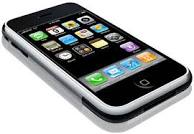
As DeWitt settled into her seat, preparing for take-off, G. entered the plane and confronted her.
She ordered DeWitt to delete the photo.
DeWitt had already turned off her iPhone, as required before take-off. She turned the phone back on to prove that the photo hadn’t come out. Even so, she deleted the too-dark picture.
G. then walked into the cockpit to inform the pilot that DeWitt was a “security risk.”
Suddenly, DeWitt found herself being escorted off the plane by two flight attendants. Her husband followed.
Speaking with Michael Lofton, a US Airways manager at Philadelphia International Airport, she learned that she would not be allowed back on the plane.
The reason: She was a “security risk.”
But that didn’t keep Lofton from directing her to American Airlines for a flight back to Miami.
But that flight had already departed and it was already after 7 p.m. And there were no other flights back to Miami until the following morning.
“We were expecting to spend the night at the airport,” she said.
They eventually boarded a Southwest Airlines flight to Fort Lauderdale at 11 p.m.
Apparently, Southwest didn’t consider her to be a “security risk.”
Naturally, US Airways had a cover-story to explain what had happened.
Todd Lehmacher, a spokesman for US Airways, told msnbc.com that DeWitt was removed for being “disruptive.”
“Once onboard, she was using foul and explicit language,” Lehmacher said. “She was removed at the request of the captain.”
Apparently, “disruptive” means whatever an airline official claims it to mean.
Business Insider ranked US Airways sixth in a list of the 19 Most Hated Companies in America.
The American Customer Satisfaction Index (ACSI) is an economic indicator that measures the satisfaction of consumers across the United States. It is produced by the American Customer Satisfaction Index, a private company based in Ann Arbor, Michigan.
The ACSI interviews about 80,000 Americans annually and asks about their satisfaction with the goods and services they have consumed. And Americans’ most-hated companies include large banks, airlines, power and telecom companies.
David VanAmburg, managing director at ACSI, offered a critical insight into why these companies are so detested.
“These are not terribly competitive industries, as the switching barriers for most of them are quite high,” he told Business Insider in June, 2011.
“In other industries, like the food or clothing sector, the competition is huge. They bend over backwards to make customers happy, because they have to.”
That certainly does not apply to applies to airlines–whose numbers are limited and continue to shrink due to mergers and the occasionally rising cost of fuel.
For the airline industry generally, the former slogan of United Airlines–”Fly the Friendly Skies–has unofficially been replaced with: “We don’t care. We don’t have to.”
So–when you’re facing a would-be KGB agent masquerading as an airline employee–what do you do?
First, you recognize that the concept of “consumer rights” has not yet reached the airline industry.
Then you do what you can to see that it does.
ABC NEWS, AIRLINE PASSENGER RIGHTS, AIRLINES, AIRTRAN, AMERICAN AIRLINES, AMERICAN CUSTOMER SATISFACTION INDEX, BUSINESS INSIDER, CBS NEWS, CNN, COMPLAINT LETTERS, CONSUMER RIGHTS, DAVE CARROLL, DELTA AIRLINES, FACEBOOK, ITUNES, JETBLUE AIRWAYS, KGB, LEISHA HAILEY, NBC NEWS, NICCOLO MACHIAVELLI, SOUTHWEST AIRLINES, THE CHICAGO SUN-TIMES, THE CHICAGO TRIBUNE, THE LOS ANGELES TIMES, THE NEW YORK TIMES, THE PRINCE, THE WASHINGTON POST, TWITTER, U.S. AIRWAYS, UNITED BREAKS GUITARS, US AIRWAYS, YOUTUBE
In Bureaucracy, Business, History, Law, Self-Help, Social commentary on June 8, 2016 at 12:14 am
The First Amendment of the American Constitution guarantees freedom of speech.
But some airline employees haven’t gotten the word.
Click here: 3 Easy Ways to Tell If a Business Puts Its Customers First – DailyFinance
Yes, what you say can get you thrown off an airplane–or worse. And it doesn’t have to be anything even remotely like a threat.
- In May, 2011, a US Airways flight was due to depart San Francisco International Airport for Charlotte, North Carolina at 1:20 p.m. But due to bad weather, passengers boarded the plane after 2 p.m.

Once on the plane, a flight attendant told customers over the intercom to hurry up and put their carry-ons in bins so they could take off and make their connecting flight in Charlotte.
One of the passengers, Luke Hazlewood, turned to the person next to him and said it was the airline’s fault they were late, “so don’t get mad at us.”
The flight attendant rushed out of the galley demanding to know who had said that. Once she determined it was Hazlewood, she told him he would have to leave for being disruptive and a threat to the plane.
Sandra Kraus, a former flight attendant, came to Hazlewood’s defense–and the flight attendant told her to get off the plane as well.
Both passengers asked to speak with the captain but he refused to speak with them.
Kraus was put on another flight. Hazlewood and his accompanying girlfriend (who had left the plane with him) found that US Airways wouldn’t compensate them for a hotel room.
The airline refused to answer questions about the matter. Its written statement said “The passengers interfered with the flight crew and in the interest of safety they had to be removed.”
It’s a truism in both journalism and police work: When people refuse to answer questions, it’s nearly always because they know they have something to hide.
And the airline’s response came in the classic voice of the all-powerful dictator: “They refused to treat me like God and so they had to be eliminated.”
Business Insider ranked US Airways #6 on a list of Click here: The 19 Most Hated Companies In America – Business Insider
- In December, 2011, three middle-aged women were thrown off an AirTran flight at Palm Beach International Airport after a steward began roughly handling the luggage of one of them.
Marilyn Miller, a lawyer, was buckled in for takeoff when the attendant mishandled her overhead luggage. “I have breakables in that,” she said.
The attendant ignored her and kept shoving other bags into hers.

Another passenger, Carol Gray, a retired travel agent, asked the same attendant for help, saying that her seat was broken.
“I’m not talking to you,” said the attendant, and poked her in the arm. He then threatened to throw Miller and Gray off the plane.
“You’ve got to be kidding me,” said Miller.
“Well, you’re getting off,” said the attendant.
Two sheriff’s deputies and airline staff arrived to remove them.
A third passenger, a therapist named Karyn Schoor, spoke up in their defense: “This is crazy, they didn’t do anything. Why are you doing this to them?”
“Throw her off too,”’ ordered the attendant.
All three women were marched off the plane and back into the terminal.
The women were offered flights on other airlines paid for by AirTran.
And the official explanation given by AirTran?
“Our employees are responsible for the safety and comfort of everyone onboard a flight. Our goal is always to mitigate any uncomfortable situation prior to departure.”
Uncomfortable for whom–the passenger who doesn’t want her luggage roughly treated? Or the attendant whose ego gets bent out of shape at the slightest objection?
- In July, 2010, Southwest Airlines removed a slender, five-foot-four woman from a plane to accomodate an obese passenger.
The woman was flying standby from Las Vegas to Sacramento. She had paid full fare for the last available seat, boarded and stowed her bags–and was told she must deplane immediately.
The reason: A late-arriving, 14-year-old passenger required two seats because of her girth.
When the woman asked Southwest personnel why she was being removed her from the flight, they berated her for daring to question their decision.
The temporarily stranded passenger managed to catch the next flight out to Sacramento.
- You don’t have to assault someone to be thrown off an airplane. Even kissing your partner will do.
Southwest Airlines kicked Leisha Hailey–who not only played a lesbian in Showtime’s The L-Word series but is one–and her girlfriend off a flight to Los Angeles.
Their crime? Kissing.
A flight attendant told them that Southwest was “a family airline.” When they argued they were targets of homophobia, the attendant ejected them from the plane.
ABC NEWS, AIRLINE PASSENGER RIGHTS, AIRLINES, AIRTRAN, AMERICAN AIRLINES, AMERICAN CUSTOMER SATISFACTION INDEX, BUSINESS INSIDER, CBS NEWS, CNN, COMPLAINT LETTERS, CONSUMER RIGHTS, DAVE CARROLL, DELTA AIRLINES, FACEBOOK, ITUNES, JETBLUE AIRWAYS, KGB, LEISHA HAILEY, NBC NEWS, NICCOLO MACHIAVELLI, SOUTHWEST AIRLINES, THE CHICAGO SUN-TIMES, THE CHICAGO TRIBUNE, THE LOS ANGELES TIMES, THE NEW YORK TIMES, THE PRINCE, THE WASHINGTON POST, TWITTER, U.S. AIRWAYS, UNITED BREAKS GUITARS, US AIRWAYS, YOUTUBE
In Bureaucracy, Business, Law, Self-Help, Social commentary on June 7, 2016 at 12:02 am
With the summer tourism season now on, tens of thousands of Americans will be flying across the country to visit with loved ones.
And many of them will become the victims of KGB Airways.
In truth, many airline personnel treat passengers the way KGB agents once treated Soviet citizens–with the arrogance that comes from holding near-absolute power over the lives of others.

Consider the following:
- From the website of American Airlines:
ESSENTIAL NEEDS DURING EXTRAORDINARY DELAYS
In the case of extraordinary events that result in very lengthy onboard delays, American will make every reasonable effort to ensure that essential needs of food (snack bar such as Nutri-Grain®), water, restroom facilities, and basic medical assistance are met.
We are not responsible for any special, incidental or consequential damages if we do not meet this commitment.
Translation: On one hand, American promises that it will try to ensure that “essential needs of food, water, restroom facilities and basic medical assistance are met” during “very lengthy onboard delays.” On the other hand, if they “do not meet this commitment,” that’s just the passengers’ tough luck.

ACCEPTANCE OF PASSENGERS
American may refuse to transport you, or may remove you from your flight at any point, for one or several reasons, including but not limited to:
- Compliance with government requisition of space.
- Action necessary or advisable due to weather, or other conditions beyond American’s control.
- Refusal to permit a search of person or property for explosives or for deadly, controlled, or dangerous weapons, articles or substances.
- Refusal to produce positive identification upon request.
- Your physical or mental condition is such that in American’s sole opinion, you are rendered or likely to be rendered incapable of comprehending or complying with safety instructions without the assistance of an attendant.
- Your conduct is disorderly, abusive or violent.
- Appear to be intoxicated or under the influence of drugs.
- Attempt to interfere with any member of the flight crew.
- Have a communicable disease that has been determined by a federal public health authority to be transmissible to other persons in the normal course of flight.
- Refuse to obey instructions from any flight crew member.
- Have an offensive odor not caused by a disability or illness.
- Are clothed in a manner that would cause discomfort or offense to other passengers or are barefoot.
- Engage in any action, voluntary or involuntary, that might jeopardize the safety of the aircraft or any of its occupants.
Translation: “American may refuse to transport you, or may remove you from your flight at any point” for just about any reason it wants to give.
Click here: Conditions of carriage – Contract of transportation – American Airlines
DELAYS, CANCELLATIONS AND DIVERSIONS
American Airlines will provide customers at the airport and onboard an affected aircraft with timely and frequent updates regarding known delays, cancellations and diversions and will strive to provide the best available information concerning the duration of delays and to the extent available, the flight’s anticipated departure time.
We are not responsible for any special, incidental or consequential damages if we do not meet this commitment.
Translation: On one hand, American promises to give customers “timely and frequent updates regarding known delays, cancellations and diversions.” On the other hand, American absolves itself from any damages “if we do not meet this commitment.”
And how does all this translate into action?
- In late March, 2012, a woman was barred from boarding an American Airlines flight because its staff disliked her choice of clothing. She was wearing a T-shirt bearing the words: “IF I WANTED THE GOVERNMENT IN MY WOMB, I’D F— A SENATOR.”
After taking a seat she was told by a flight attendant that she needed to speak with the captain, who found the T-shirt “offensive.” He said she would have to change before she could re-board the plane.
The passenger claims this interaction caused her to miss her connection: Her luggage was checked and “changing shirts without spending money wasn’t an option.”
Business Insider ranked American Airlines 8th on a list of The 19 Most Hated Companies In America.
- In July, 2011, Malinda Knowles, a 27-year-old financial consultant, was kicked off a JetBlue flight at JFK Airport in New York because of her attire–a baggy blue T-shirt and denim shorts.

A male JetBlue employee walking down the aisle noticed Knowles. He told her he didn’t think she was wearing enough clothing. An argument erupted when the employee put his walkie-talkie between her legs to see if she was wearing shorts underneath. When Knowles objected, the JetBlue worker brought her off the plane and to a hangar.
There she modeled for the employees, showing that she was wearing shorts. She returned to the plane, but the same employee once again approached her and said: “The captain is refusing to fly you today. We need to remove you from the flight.”
After waiting four hours for another flight, she arrived in Florida. Apparently the crew of that plane didn’t have any problem with her attire.
Knowles has since filed a lawsuit against JetBlue.
2012 PRESIDENTIAL RACE, ABC NEWS, BARACK OBAMA, BIBLE, CBS NEWS, CIVIL WAR, CNN, FACEBOOK, FEMA, HURRICANE SANDY, JESUS CHRIST, JULIUS CAESDAR, MATTHEW 7:7-8, MITT ROMNEY, NBC NEWS, PRIVATE SECTOR, SOVIET UNION, THE CHICAGO SUN-TIMES, THE CHICAGO TRIBUNE, THE LOS ANGELES TIMES, THE NEW YORK TIMES, THE WASHINGTON POST, TWITTER, USA TODAY, WILLIAM SHAKESPEARE
In Bureaucracy, History, Politics, Self-Help, Social commentary on September 25, 2015 at 12:01 am
During a GOP primary debate on June 13, 2011, CNN moderator John King noted that FEMA–the Federal Emergency Management Agency–was about to run out of money.
And so he asked Republican Presidential candidate Mitt Romney:
“There are some people who say do it on a case-by-case basis and some people who say, you know, maybe we’re learning a lesson here that the states should take on more of this role.
“How do you deal with something like that?”
“Absolutely,” Romney replied. “Every time you have an occasion to take something from the federal government and send it back to the states, that’s the right direction.
“And if you can go even further, and send it back to the private sector, that’s even better.
“Instead of thinking in the federal budget, what we should cut–we should ask ourselves the opposite question: What should we keep?
“We should take all of what we’re doing at the federal level and say, what are the things we’re doing that we don’t have to do?
“And those things we’ve got to stop doing, because we’re borrowing $1.6 trillion more this year than we’re taking in.”
FLIP!

Mitt Romney vs. FEMA
On October 30, 2012, one day after Hurricane Sandy lashed the densely-populated East Coast of the United States, reporters wanted to know if Romney still wanted to eliminate FEMA.
And, as he had on so many other issues, Mitt Romney once again refused to answer questions.
“Governor, are you going to eliminate FEMA?” a pool eporter shouted to Romney.
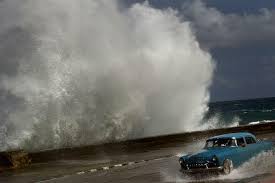
Hurricane Sandy
Romney refused to answer.
The reporter asked Romney at least five times: “If you’re elected President, would you eliminate FEMA?” and “What would you do with FEMA?”
No reply.
Another reporter asked: “Governor, are you going to see some storm damage?”
Again, no answer.
“Governor,. has Chris Christie invited you to come survey storm damage?”
No answer.
“Governor, you’ve been asked 14 times, why are you refusing to answer the question?”
Again, Romney refused to reply.
Finally, under mounting public pressure, he gave this reply:
FLOP!

Mitt Romney pro-FEMA
“I believe that FEMA plays a key role in working with states and localities to prepare for and respond to natural disasters.
“As president, I will ensure FEMA has the funding it needs to fulfill its mission, while directing maximum resources to the first responders who work tirelessly to help those in need.”
In a court of law, a defendant has the right to refuse to take the witness stand and answer questions. And jurors are told by the judge they should not assume the defendant is guilty for doing so.
Courtrooms are often places for a game of let’s-pretend:
- Let’s pretend that a man who’s accused of rape or murder is innocent–even if he refuses to answer legitimate questions; and
- Let’s pretend that a truly innocent man wouldn’t want to clear himself from a totally false charge
But this is the real world.
And, in it, unlike a courtroom, experience teaches that:
- People who are honest want to testify to that truth; and
- People who refuse to answer legitimate questions usually do have something to hide.
Think of Richard Nixon refusing to answer questions about Watergate.
Think of Ronald Reagan refusing to take questions about Iran-Contra.
Think of George W. Bush refusing to take questions about why he ignored months of terrorism warnings before 9/11.
And think of Mitt Romney refusing to answer questions on any number of subjects.
So it’s natural to distrust those who refuse to give specific answers to specific questions–especially when those questions apply to matters that direclty affect people’s lives.
For millions of Americans who profess to be deeply religious, Jesus’ words in Matthew 7:7-8 should have been instructive:
Ask, and it shall be given you. Seek, and ye shall find. Knock, and it shall be opened unto you.
For every one that asketh receiveth. And he that seeketh findeth. And to him that knocketh it shall be opened.
In a democracy, those words are a call to citizen action:
Ask.
Seek.
Knock.
In the Soviet Union, the truth about the workings of government and the realities of everyday life was carefully guarded.
Only those who gained special access to the Kremlin’s hidden archives could learn at least some of that truth.
Everyone else had to settle for the official, self-serving, lie-filled pronouncements of the Soviet leadership.
But Americans have no such excuse.
They do have access to a wide range of news from differing sources–ranging from the far left to the far right. At least 1,382 daily newspapers–both domestic and foreign– provide information on a wide range of national and international issues.
More than 20 nationwide broadcasting networks exist. Among these: ABC, CBS, CNN, Fox, NBC, PBS, Telemundo, The CW.
Nevertheless, millions of Americans remain ignorant of the well-revealed truth about the issues that most affect their lives.
As a result, Cassius’ words to Brutus in William Shakespeare’s Julius Caesar apply to them:
“The fault, dear Brutus, is not in our stars but in ourselves that we are underlings.”


 Bureaucracybuster's Blog
ABC NEWS, ALTERNET, AP, BUZZFEED, CBS NEWS, CNN, COMPUTER FRAUD, CROOKS AND LIARS, CYBERCRIME, DAILY KOZ, EMAIL, EMAILS, FACEBOOK, FBI, INTERNET, MOTHER JONES, MOVEON, NBC NEWS, NEWSWEEK, NIGERIA, NIGERIAN SCAMS, NPR, PASSWORDS, POLITICO, RAW STORY, REUTERS, SALON, SCAMS, SEATTLE TIMES, SLATE, THE ATLANTIC, THE CHICAGO SUN-TIMES, THE CHICAGO TRIBUNE, THE DAILY BEAST, THE GUARDIAN, THE HILL, THE HUFFINGTON POST, THE LOS ANGELES TIMES, THE NATION, THE NEW YORK TIMES, THE WALL STREET JOURNAL, THE WASHINGTON POST, THE WASHINGTONPOST, TIME, TWITTER, U.S. NEWS & WORLD REPORT, UPI, USA TODAY, VIRUSES
PROTECT YOURSELF AGAINST EMAIL SCAMMERS
In Business, Law Enforcement, Self-Help, Social commentary on August 26, 2016 at 12:01 amReceiving unsolicited, get-rich-quick emails has become a regular headache for millions of Internet users.
All too often, the result is fraud for their recipients. In 2013, losses from Nigerian scams alone totaled $12.7 billion.
Here’s how to spot the warning signs of fraud:
FBI Headquarters: Where stopping cybercrime is now a top priority.
There are several commonsense rules to follow in protecting yourself from online scammers:
Share this: