Archive for the ‘Military’ Category
ABC NEWS, ALTERNET, AP, BUZZFEED, CALIGUA, CBS NEWS, CNN, CROOKS AND LIARS, DAILY KOZ, DONALD TRUMP, FACEBOOK, GAIUS SUETONIUS TRANQUILLUS, KIM JON UN, KOREAN WAR, MOTHER JONES, MOVEON, NBC NEWS, NEWSWEEK, NORTH KOREA, NPR, PENTAGON, POLITICO, RAW STORY, REUTERS, SALON, SEATTLE TIMES, SLATE, THE ATLANTIC, THE CHICAGO SUN-TIMES, THE CHICAGO TRIBUNE, THE DAILY BEAST, THE GUARDIAN, THE HILL, THE HUFFINGTON POST, THE LOS ANGELES TIMES, THE NATION, THE NEW YORK TIMES, THE TWELVE CAESARS, THE WASHINGTON POST, TIME, TWITTER, U.S. DEPARTMENT OF STATE, U.S. NEWS & WORLD REPORT, UPI, USA TODAY
In Bureaucracy, History, Military, Politics, Social commentary on December 13, 2017 at 1:14 am
Kim Jong-Un: Secretive, ruthless, egomaniacal, erratic at best, certifiably insane at worst. Commanding the world’s fourth-largest army—and a growing arsenal of nuclear weapons.
Given a lack of CIA “assets” within North Korea, the United States government has been forced to accept any scraps of reliable information it can get on Kim’s regime.
As a result, the White House, Pentagon and State Department may be forced to turn to another source in predicting Kim Jong-Un’s coming moves—and fate.
His name: Gaius Suetonius Tranquillus—better known as Suetonius.
Suetonius, a historian and citizen of ancient Rome, chronicled the lives of the first twelve Caesars of imperial Rome: Julius Caesar, Augustus, Tiberius, Caligula, Claudius, Nero, Galba, Otho, Vitellius, Vespasian, Titus and Domitian.
His compilation of these biographies, The Twelve Caesars, is still available today.
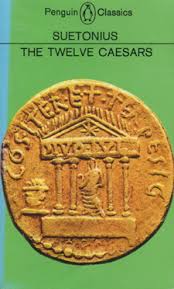
Gaius Caligula was the fourth Roman to assume the title of Emperor and Caesar. His reign began in 37 A.D. and ended—violently—four years later.

Gaius Caligula
His full name was Gaius Julius Caesar Augustus Germanicus. “Caligula”—“Little Boots”—was a nickname bestowed on him as a child by his father’s soldiers.
Accompanying his father, Germanicus, on military campaigns, Gaius often dressed up as a soldier to “drill” the troops, who loved his enthusiasm for military life.
Tiberius, the third Roman emperor, adopted Germanicus as his heir, and many Romans considered him as Rome’s Alexander the Great because of his virtuous character and military prowess. Many wanted him to succeed Tiberius when the emperor died.
But Germanicus died first, under mysterious circumstances. Some blamed illness, others believed he had been poisoned. Tiberius was widely suspected of having murdered a potential rival. And few mourned when Tiberius himself died in 19 A.D.
Upon Tiberius’ death, Caligula became emperor. The Romans welcomed his ascension due to their memory of his father, Germanicus.
His reign began well. He recalled those who had been banished from Rome by Tiberius, and publicly announced that “he had no ears for informers,” according to Suetonius.
He allowed judges unrestricted jurisdiction, without appeal to himself. To lighten the duties of jurors, he added a fifth division to the previous four. He also tried to restore the suffrage to the people by reviving the custom of elections.
He completed the public works which had been half-finished under Tiberius: the temple of Augustus and the theatre of Pompey.
But then Caligula underwent a change in character. Suetonius claimed that he suffered from an affliction that made him suddenly fall unconscious. The historian believed that Caligula knew that something was wrong with him.
He became increasingly egomaniacal. Among the titles he gave himself: “Child of the Camp,” “Father of the Armies,” and “Greatest and Best of Caesars.”
Eventually, he came to believe himself divine.
Without warning, he ordered one of his soldiers to execute his brother Tiberius. He drove his father-in‑law, Silanus, to commit suicide by cutting his throat with a razor.
Tiberius’ “crime” had been Caligula’s suspicion that he had taken an antidote against poison. “There is no antidote against Caesar!” Caligula is said to have raged.
In fact, Tiberius had taken medicine for a chronic cough.
Silanus died because he had not followed Caligula when he put to sea in stormy weather. Caligula believed he had remained behind hoping to take possession of Rome if he perished in the storm.
Actually, Silanus suffered from sea-sickness and wanted to avoid the discomforts of the voyage.
Caligula committed incest with all his sisters, and “at a large banquet he placed each of them in turn below him, while his wife reclined above.”
When his favorite sister, Drusilla, died, he announced a season of public mourning, making it a capital crime to laugh, bathe, or dine with one’s parents, wife, or children.
Having violated his sisters, he eagerly violated the wives of others.
At one wedding, he ordered that the bride be taken to his own house, and within a few days divorced her. Two years later he banished her, suspecting that she had returned to her former husband.
At gladiatorial games, he sometimes matched decrepit gladiators against wild beasts, and had sham fights between men who were “conspicuous for some bodily infirmity.”
Objecting to the expense of cattle to feed wild beasts for a gladiatorial show, he selected criminals to be devoured.
On other occasions, he shut up the storehouses for threshed grain and condemned the people to hunger.
“Let them hate me, so long as they fear me,” he often said. But hatred can override fear.
Just this happened among several members of his own security force, the Praetorian Guard. Caligula had repeatedly mocked Cassius Chaerea, one of its officers, for his weak voice, and assailed his masculinity.
On January 22, 41 A.D., Chaerea and other guardsmen attacked Caligula in an underground corridor of a gladiatorial arena and repeatedly stabbed him to death.
Upon hearing reports that Caligula was dead, Romans feared to rejoice: Had he started the rumor to discover who wanted him dead? Only when they were certain did they give themselves over to unbridled joy.
If history truly repeats itself, Kim Jong-Un has good reason to be afraid.
ABC NEWS, ALTERNET, AP, BUZZFEED, CALIGUA, CBS NEWS, CNN, CROOKS AND LIARS, DAILY KOZ, DONALD TRUMP, FACEBOOK, GAIUS SUETONIUS TRANQUILLUS, KIM JON UN, KOREAN WAR, MOTHER JONES, MOVEON, NBC NEWS, NEWSWEEK, NORTH KOREA, NPR, PENTAGON, POLITICO, RAW STORY, REUTERS, SALON, SEATTLE TIMES, SLATE, THE ATLANTIC, THE CHICAGO SUN-TIMES, THE CHICAGO TRIBUNE, THE DAILY BEAST, THE GUARDIAN, THE HILL, THE HUFFINGTON POST, THE LOS ANGELES TIMES, THE NATION, THE NEW YORK TIMES, THE TWELVE CAESARS, THE WASHINGTON POST, TIME, TWITTER, U.S. DEPARTMENT OF STATE, U.S. NEWS & WORLD REPORT, UPI, USA TODAY
In Bureaucracy, History, Military, Politics, Social commentary on December 12, 2017 at 1:30 am
Officials at the Pentagon and State Department constantly scramble for information that will enable them to penetrate the designs of North Korean dictator Kim Jong-Un.
And with good reason: His country possesses nuclear weapons, and is headed by a leader who’s erratic at best and certifiably insane at worst.
According to the Pentagon, North Korea had enough plutonium stored up to create a minimum of six nuclear weapons. Other estimates were as high as 10 to 16 nuclear weapons.
And since Donald Trump entered the White House, he has been engaged in an increasingly tense exchange of insults with the North Korean dictator.

Kim Jong-Un
Kim Jong-Un is the third Kim to rule North Korea since 1948. The first was his grandfather, Kim II-sung, who seized power and ruled absolutely until his death in 1994.
By ordering the invasion of South Korea in 1950, he provoked American intervention and ignited the Korean War (1950-1953), which ended in stalemate.
He was succeeded by his son, Kim Jong-il, who ruled from 1994 to 2011. That regime was marked by widespread famine, partially due to economic mismanagement, suppression of human rights and the export of state terrorism.
As was the case with his father, Kim Jong-il’s reign ended only with his death in 2011. He was immediately succeeded by his son, Kim Jong-Un.
At Kim Jong-il’s memorial service, the eulogy seemed as much for his son as for the departed “Dear Leader”:
“Respected Comrade Kim Jong-un is our party, military and country’s supreme leader who inherits great comrade Kim Jong-il’s ideology, leadership, character, virtues, grit and courage.”
Born on January 8, 1983, Kim Jong-Un owes everything to an act of genetics—his being the son of an absolute dictator.
This alone has enabled him to hold a series of exalted titles:
- First Secretary of the Workers’ party of Korea; the Chairman of the Central Military Commission;
- Chairman of the National Defense Commission;
- The Supreme Commander of the Korean People’s Army; and
- Presidium member of the Politburo of the Workers’ Party of Korea.
On December 30, 2011—only 13 days after his father died—Kim Jong-Un was formally appointed as the Supreme Commander of the Korean People’s Army.

North Korean military rally
In April, 2012, the Fourth Party Conference named him to the newly-created post of First Secretary of the Workers’ Party of Korea. He was promoted to the rank of Marshal in the army in July, 2012.
Given a lack of CIA “assets” within North Korea, the United States government has been forced to accept any scraps of reliable information it can get on Kim’s regime.
It’s known, for example, that he is a man of immense egomania. Following his father’s death, the cult of personality around Kim Jong-Un’s went into high gear.
He was hailed as the “great successor to the revolutionary cause of self-reliance,” “outstanding leader of the party, army and people” and “respected comrade who is identical to Supreme Commander Kim Jong-il.”
He was “a great person born of heaven,” declared the Korean Central News Agency. And, not to be outdone, the ruling Workers’ Party announced: “We vow with bleeding tears to call Kim Jong-Un our supreme commander, our leader.”
In November 2012, satellite photos revealed a half-mile-long propaganda message carved into a hillside in Ryanggang Province, reading, “Long Live General Kim Jong-Un, the Shining Sun!”
In 2013, Kim was named the world’s 46th most powerful person by the Forbes list of The World’s Most Powerful People. This derives from his commanding the fourth-largest standing army in the world–and an arsenal of nuclear weapons.
On March 7, 2013, North Korea threatened to launch a “pre-emptive nuclear attack” upon the United States. North Korea has outlined its plans for target American cities for nuclear strikes, including Washington, D.C., and Los Angeles.
Then there are the purges—the motive for which may be Kim’s desire to erase all traces of his father’s rule.
By the end of 2013, three defense ministers and four chiefs of the army’s general staff had been replaced. Among those purged was his uncle, Jang Sung-taek—who is thought to have been executed by machine gun.
Other victims of Kim’s regime reportedly include members of Jang’s family:
- His sister Jang Kye-sun;
- Her husband and ambassador to Cuba, Jon Yong-jin;
- Jang’s nephew and ambassador to Malaysia, Jang Yong-chol; and
- The nephew’s two sons, who were also reportedly murdered.
On May 13, 2015, South Korea’s National Intelligence Service reported that Kim had ordered the execution of North Korea’s Minister of Defense, Hyon Yong Chol.
The charge: Treason. And for “showing disrespect” to Kim by talking back to him and falling asleep at a military event.
Chol was killed by anti-aircraft gunfire with hundreds watching at a shooting range at Pyongyang’s Kang Kon Military Academy in late April.
Nor has this been the only major execution for 2015. Reports claim that earlier this year, Kim had ordered the execution of 15 senior officials for challenging his authority.
Penetrating the secrets of a ruthless dictatorship is extremely difficult. And any information obtained can often be considered no better than gossip.
Given these limitations, the White House, Pentagon and State Department may be forced to turn to another source in predicting Kim Jong-Un’s coming moves—and fate.
His name: Gaius Suetonius Tranquillus–better known as Suetonius.
ABC NEWS, ALAMO, ALTERNET, ANDREW JACKSON, AP, BUZZFEED, CAMERON JUDD, CBS NEWS, CNN, CROCKETT OF TENNESSEE, CROOKS AND LIARS, DAILY KOZ, DAVID CROCKETT, DAVY CROCKETT: KING OF THE WILD FRONTIER, DONALD TRUMP, FACEBOOK, INDIAN WARS, JAMES BOWIE, MITT ROMNEY, MOTHER JONES, MOVEON, NBC NEWS, NBCNEWS, NEWSWEEK, NPR, POLITICO, RAW STORY, REUTERS, SALON, SEATTLE TIMES, SLATE, TEXAS REVOLUTION, THE ATLANTIC, THE CHICAGO SUN-TIMES, THE CHICAGO TRIBUNE, THE DAILY BEAST, THE GUARDIAN, THE HILL, THE HUFFINGTON POST, THE LOS ANGELES TIMES, THE NATION, THE NEW YORK TIMES, THE WASHINGTON POST, TIME, TWITTER, U.S. NEWS & WORLD REPORT, UPI, USA TODAY, WALT DISNEY, WILLIAM BARRET
In Bureaucracy, History, Military, Politics, Social commentary on December 8, 2017 at 12:14 am
March 6, 2016, marked the 180th anniversary of the fall of the Alamo, a crumbling former Spanish mission in the heart of San Antonio, Texas.
It’s one of those battles like Thermopylae that have passed from history into legend.
It’s been the subject of novels, movies, biographies, histories and TV dramas (most notably Walt Disney’s 1955 “Davy Crockett: King of the Wild Frontier”).
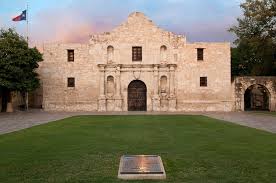
The Alamo
Perhaps the most extraordinary scene in any Alamo movie or book occurs in the 1993 novel, Crockett of Tennessee, by Cameron Judd.
And it is no less affecting for its being—so far as we know—entirely fictional.
It’s March 5, 1836—the last night of life for the Alamo garrison. The night before the 2,000 men of the Mexican Army hurl themselves at the former mission and slaughter its 200 “Texian” defenders.
The fort’s commander, William Barret Travis, has drawn his “line in the sand” and invited the garrison to choose: To surrender, to try to escape, or to stay and fight to the death.
And the garrison—except for one man—chooses to stay and fight.
For the garrison, immortality lies only hours away. Or does it?
An hour after deciding to stand and die in the Alamo, wrapped in the gloom of night, Crockett is seized with paralyzing fear.
“We’re going to die here,” he chokes out to his longtime friend, Persius Tarr. “You understand that, Persius? We’re going to die!” 
“I know, Davy. But there ain’t no news in that,” says Tarr. “We’re born to die. Every one of us. Only difference between us and most everybody else is we know when and where it’s going to be.”
“But I can’t be afraid—not me. I’m Crockett. I’m Canebrake Davy. I’m half-horse, half-alligator.”
“I know you are, Davy,” says Tarr. “So do all these men here. That’s why you’re going to get past this.
“You’re going to put that fear behind you and walk back out there and fight like the man you are. The fear’s come and now it’s gone. This is our time, Davy.”
“The glory-time,” says Crockett.
“That’s right, David. The glory-time.”
And then Tarr delivers a sentiment wholly alien to money-obsessed men like Mitt Romney and Donald Trump—who comprise the richest and most privileged 1% of today’s Americans.
“There’s men out there with their eyes on you. You’re the only thing keeping the fear away from them. You’re joking and grinning and fiddling—it gives them courage they wouldn’t have had without you.
“Maybe that’s why you’re here, Davy—to make the little men and the scared men into big and brave men. You’ve always cared about the little men, Davy. Remember who you are.
“You’re Crockett of Tennessee, and your glory-time has come. Don’t you miss a bit of it.”
The next morning, the Mexicans assault the Alamo. Crockett embraces his glory-time—and becomes a legend for all-time.
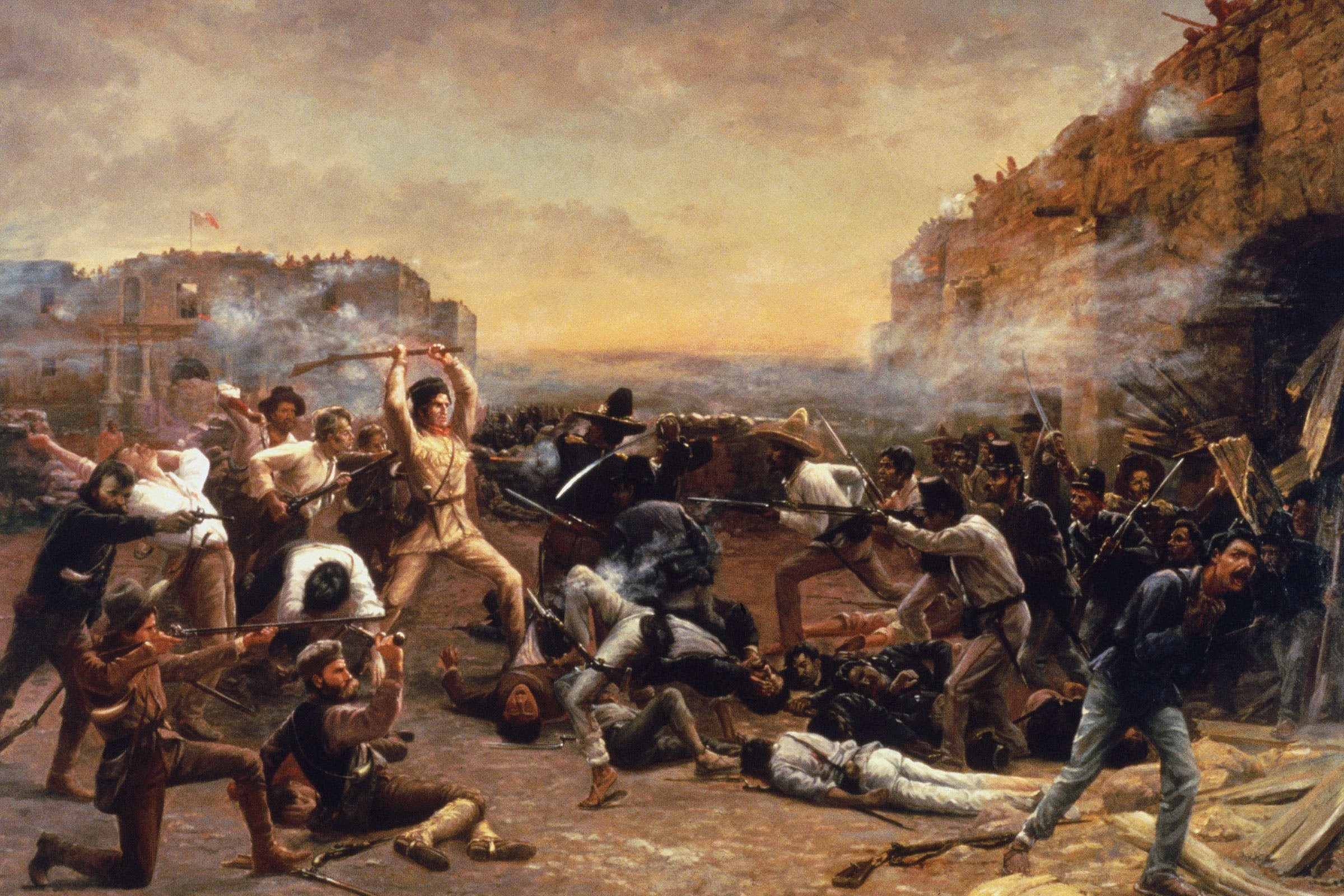
David Crockett (center) at the fall of the Alamo
David Crockett (1786-1836) lived—and died—a poor man. But this did not prevent him from trying to better the lives of his family and fellow citizens—and even his former enemies.

David Crockett
During the war of 1812, he served as a scout under Andrew Jackson. His foes were the Creek Indians, who had massacred 500 settlers at Fort Mims, Alabama—and threatened to do the same to Crockett’s family and neighbors in Tennessee.
As a Congressman from Tennessee, he championed the rights of poor whites. And he opposed then-President Jackson’s efforts to force the same defeated Indians to depart the lands guaranteed them by treaty.
To Crockett, a promise was sacred—whether given by a single man or the United States Government.
And his presence during the 13-day siege of the Alamo did cheer the spirits of the vastly outnumbered defenders. It’s a matter of historical record that he and a Scotsman named MacGregor often staged musical “duels” to see who could make the most noise.
It was MacGregor with his bagpipes against Crockett and his fiddle.
Contrast this devotion of Crockett to the rights of “the little men,” as Persius Tarr called them, with the attitude of Donald Trump, the 2016 Republican Presidential nominee.

Donald Trump
On June 16, 2015, while announcing his candidacy, Trump said:
- “…I don’t need anybody’s money. It’s nice. I don’t need anybody’s money. I’m using my own money. I’m not using lobbyists, I’m not using donors. I don’t care. I’m really rich.”
- “I did a lot of great deals and I did them early and young, and now I’m building all over the world….”
- “So I have a total net worth, and now with the increase, it’ll be well over $10 billion.”
- “But here, a total net worth of—net worth, not assets, not—a net worth, after all debt, after all expenses, the greatest assets—Trump Tower, 1290 Avenue of the Americas, Bank of America building in San Francisco, 40 Wall Street, sometimes referred to as the Trump building right opposite the New York—many other places all over the world. So the total is $8,737,540,000.”
Those who give their lives for others are rightly loved and remembered as heroes. Those who dedicate their lives solely to their wallets and egos are rightly soon forgotten.
ABC NEWS, ALTERNET, AP, AYATOLLAH RUHOLLAH KHOMEINI, BBC, BUZZFEED, CBS NEWS, CHRISTIAN RIGHT, CNN, COLD WAR, CZECHOSLOVAKIA, DAILY KOS, EGYPT, FACEBOOK, GLOBAL WARMING, HUNGARIAN UPRISING, HUNGARY, IRAN, IRAQ, ISLAM, ISRAEL, JESUS CHRIST, MIDDLE EAST, MOTHER JONES, MOVEON, NBC NEWS, NEWSWEEK, NPR, Oil, POLITICO, RAW STORY, REUTERS, SALON, SAND CURTAIN, SEATTLE TIMES, SECOND COMING, SHAH OF IRAN, SHIITE MUSLIMS, SLATE, SOVIET UNION, SUNNI MUSLIMS, TERRORISM, THE ATLANTIC, THE CHICAGO SUN-TIMES, THE CHICAGO TRIBUNE, THE DAILY BEAST, THE GUARDIAN, THE HILL, THE HUFFINGTON POST, THE LOS ANGELES TIMES, THE NEW YORK TIMES, THE WALL STREET JOURNAL, THE WASHINGTON POST, TIME, TWITTER, U.S. NEWS & WORLD REPORT, UNITED STATES, UPI, USA TODAY
In Bureaucracy, History, Military, Politics, Social commentary on December 6, 2017 at 1:01 am
The United States can attain peace in the Middle East—for itself.
But to do that, Americans must radically change their approach to that part of the world.
(1) The United States must embark on a crash program to develop alternatives to oil.
Oil consumption threatens the future of the world through global warming. And it keeps America tethered to dictatorial Islamic regimes that are fundamentally unstable and hostile to the West.
(2) Once freed from its dependency on oil, the United States can safely end its relationship with such regimes.
America will no longer have to spend billions of dollars every year propping up regimes like those in Iraq, Egypt and Saudi Arabia. Nor will it have to supply big-ticket military hardware (like fighter planes and missiles) to Islamic regimes.
When the Shah of Iran was overthrown in 1979, he was probably the best-armed Islamic leader in the Middle East. His army and air force bristled with sophisticated American weaponry he had bought with billions of dollars in oil revenues.
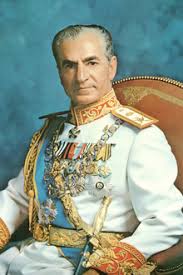
Shah of Iran
But he had thoroughly alienated his people. Liberals thought him a tyrant, and conservatives thought him a traitor to Islam. So when Ayatollah Ruhollah Khomeini flew to Iran from his self-exile in Paris, no one in the Shah’s army and air force raised a hand in his defense. The Shah fled the country in disgrace.
(3) The United States should end its “Permanent Bodyguard” relationship with Israel.
Every nation—including Israel—has the right to defend itself from aggression. But no nation—including Israel—should have the right to expect another nation to act as its permanent bodyguard.
Millions of Americans feel morally obligated to defend Israel owing to Nazi Germany’s slaughter of six million Jews during the Holocaust. But America was never a party to this, and has nothing to atone for.
A second reason why millions of Americans feel committed to Israel lies in the mythology of the Christian Right.
Many fundamentalist Christians believe that, for Jesus Christ to awaken from his 2,000-year slumber, Israel must first re-conquer every inch of territory it supposedly held during the reign of Kings David and Solomon.
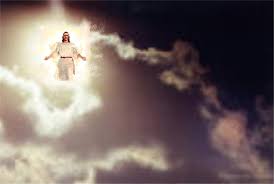
Right-wing Christian fantasy: Dead man hovering
After Christ returns, they believe, the Jews will face a choice: Become Christians or go to hell. For evangelical Christians, Jews remain the eternal “Christ killers.”
And if Jews must assume temporary control of the Middle East to bring about the return of a man who died 2,000 years ago, so be it.
Many Right-wing members of the House of Representatives and Senate share this belief. That it is totally irrational and unsupported by any evidence means nothing to them. But this does not prevent these hundreds of men and women from holding high office.
That’s because such unbalanced views are shared by millions of equally irrational evangelical Christians.
(4) The United States and its European allies should erect a “Sand Curtain” around the Middle East.
For 44 years—1947 to 1991—the United States and the Soviet Union were locked in a Cold War. Essentially, the United States drew a ring around the Soviet Union—including those nations its armies had seized following the defeat of Nazi Germany in 1945.
The United States said, in effect: “We can’t liberate the Eastern European countries you’re now occupying”—because trying to do so would have triggered a nuclear World War III. “But we won’t allow you to occupy and enslave any other countries. And if you try to do so, it will mean total war.”
That’s why the United States did nothing to aid Hungarians when they rose up against their Soviet occupiers in 1956. That rebellion was quickly and brutally crushed.
And that’s why America stood by when Soviet tanks rolled into Prague in 1968 when Czechoslovakia dared to relax controls over its citizens.
On the other hand, the Soviet Union never seized any new countries.
(5) A “Sand Curtain” around the Middle East would work as follows:
America would withdraw all of its forces from the Middle East—but keep a good portion stationed in Europe.

It would then publicly announce: “From now on, you are the masters of your own destinies—so long as what you do affects only those of you living in the Middle East.
“We recognize that barbarism and violence have always been a part of life in the Middle East. And we don’t expect this to change.
“So go ahead and destroy as many of your own citizens as you wish—either because they’re Jewish or Christians, or because Sunni Muslims hate Shiite Muslims and Shiite Muslims hate Sunni Muslims.
“But Europe and the United States are strictly off-limits to you.
“And if you aim your aggression at either, we will consider this an act of war and use all the weapons at our disposal—including nuclear ones—to wipe you from the face of the Earth.“
The United States cannot enforce peace between Islamics and Israelis. Nor between Christians and Islamics. Nor between Islamics and Islamics.
But it can impose an embargo to confine such barbarism to only the Middle East.
2016 PRESIDENTIAL CAMPAIGN, ABC NEWS, ALTERNET, AP, BARACK OBAMA, BBC, BUZZFEED, CBS NEWS, CIA, CLINTON WATTS, CNN, CROOKS AND LIARS, CYBERWARFARE, DAILY KOS, DAILY KOZ, DEMOCRATIC NATIONAL COMMITTEE, DIRECTOR OF NATIONAL INTELLIGENCE, DONALD TRUMP, ESPIONAGE, EUROPEAN UNION (EU), FACEBOOK, FBI, FOX NEWS SUNDAY, HILLARY CLINTON, JAMES COMEY, JARED KUSHNER, MICHAEL FLYNN, MICHAEL T. FLYNN, MIKE PENCE, MOTHER JONES, MOVEON, NBC NEWS, NEWSWEEK, NORTH ATLANTIC TREATY ORGANIZATION (NATO), NPR, POLITICO, RAW STORY, REPUBLICAN NATIONAL CONVENTION, REUTERS, ROBERT MUELLER, RUSSIA, SALLY YATES, SALON, SEATTLE TIMES, SERGEY KISLYAK, SLATE, THE ATLANTIC, THE CHICAGO SUN-TIMES, THE CHICAGO TRIBUNE, THE DAILY BEAST, THE GUARDIAN, THE HILL, THE HUFFINGTON POST, THE LOS ANGELES TIMES, THE NATION, THE NEW YORK TIMES, THE WALL STREET JOURNAL, THE WASHINGTON POST, TIME, TWITTER, U.S. NEWS & WORLD REPORT, U.S. SENATE SELECT COMMITTEE ON INTELLIGENCE, UPI, USA TODAY, VLADIMIR PUTIN, WIKILEAKS
In Bureaucracy, History, Law, Law Enforcement, Military, Politics, Social commentary on December 4, 2017 at 12:02 am
Donald Trump was the star of the 2016 Republican National Convention. But not even he could fire up the delegates like Hillary Clinton, the former First Lady turned Democratic presidential nominee.
As chants of “Lock her up!” spread across the convention floor, Michael T. Flynn voiced his agreement. “Lock her up—that’s right.”
Movie-star handsome, the former United States Army lieutenant general and director of the Defense Intelligence Agency was clearly enjoying his moment as a keynote speaker.
Clapping his hands, he continued: “I’m gonna tell you what. It’s unbelievable—unbelievable.
“I have called on Hillary Clinton to drop out of the race, because she—she—put our nation’s security at extremely high risk for their careless use of a private email server.

Michael Flynn at the Republican convention
“Lock her up—lock her up. You guys [the audience] are good. Damn right—-that’s exactly right. There’s nothing wrong with that.
“You know why we’re saying that? We’re saying that because if I—a guy who knows this business—if I did a tenth of what she did, I would be in jail today.”
That was July 18, 2016.
Six months and two days later, he was riding even higher: On January 20—the day Donald J. Trump became President—Flynn took office as the nation’s 25th National Security Adviser.
Two days later, The Wall Street Journal reported that Flynn was under investigation by U.S. counterintelligence agents for his communications with Russian officials.
On February 8, Flynn flatly denied having spoken to Russian ambassador Sergey Kislyak in December, 2016, about removing the sanctions placed on Russia by the outgoing Obama administration.
The sanctions had been placed in retaliation for Russia’s efforts to manipulate the 2016 Presidential election.
On February 13, The Washington Post reported that Acting Attorney General Sally Yates had warned Trump in late January that Flynn had lied about his contacts with Kislyak—and that he could be blackmailed by Russian Intelligence.
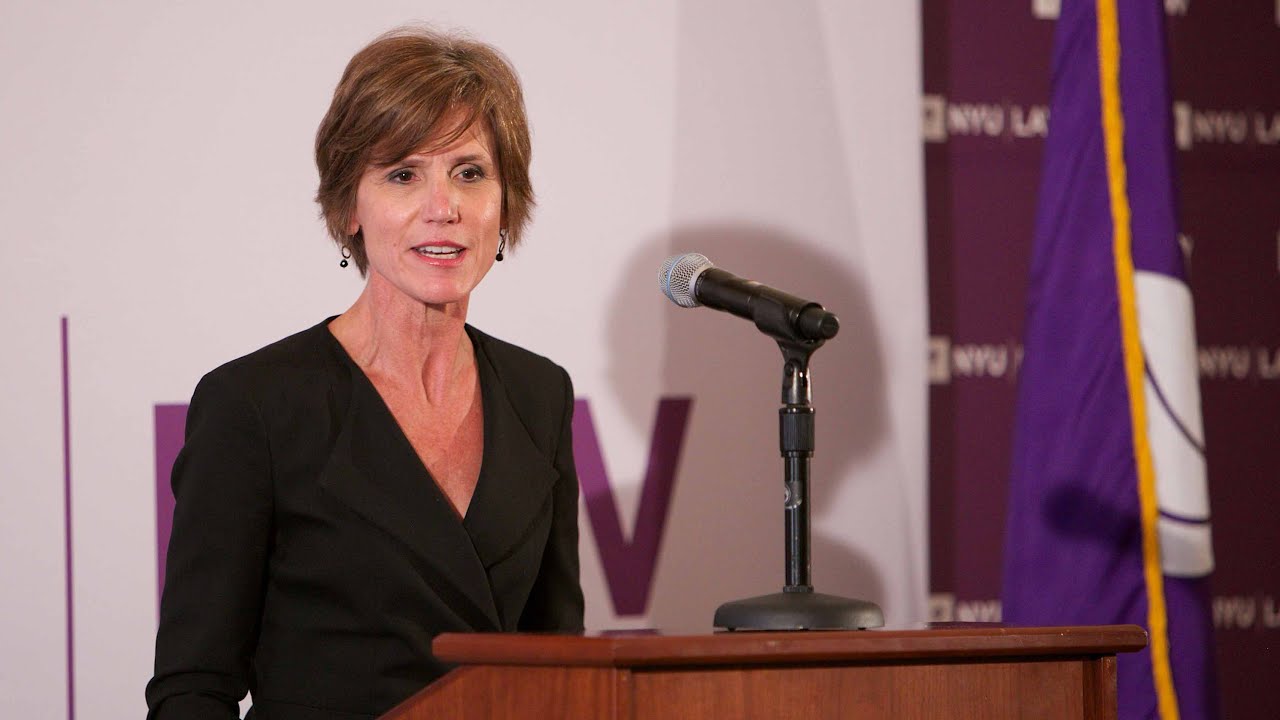
Sally Yates
Flynn was forced to resign that same day—after only 24 days as National Security Adviser.
Officially, the reason given was that he had misled Vice President Mike Pence. But Flynn’s deception had already been known—via the warning to Trump by Yates.
Only after Yates’ warning became known to the media was Flynn forced to resign.
Even worse for Flynn: The same Washington Post story reported that, in December, 2015, he had appeared on Russia Today, the news network that American Intelligence agencies consider “the Kremlin’s principal international propaganda outlet.”
He had also received more than $45,000 as a “speaking fee” from the network for a talk on world affairs. At the gala where Flynn received the fee, he sat next to Vladimir Putin for dinner.
Flynn had not filed the required paperwork for the trip. Nor had he reported the “fee” to the Pentagon.
Meanwhile, as a Presidential candidate and President, Donald Trump has steadfastly denied the revelations about collaboration between members of his 2016 Presidential campaign and Russian Intelligence agents.
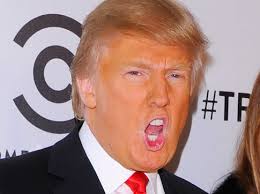
Donald Trump
He has repeatedly attacked the “fake news” media reporting these revelations. Chief among his targets: CNN, The New York Times and The Washington Post.
He has also derided the Intelligence agencies responsible for America’s security.
On December 16, 2016, then-FBI Director James B. Comey and Director of National Intelligence James R. Clapper Jr. agreed with a CIA assessment that Russia intervened in the 2016 election in part to help Donald Trump win the White House.

Trump, however, has steadfastly denied any such role by Russia: “I think it’s ridiculous,” he told “Fox News Sunday.” “I think it’s just another excuse. I don’t believe it….No, I don’t believe it at all.”
On December 1, 2017, Flynn went from “Lock her up!” to “Don’t lock me up.”
He pleaded guilty to lying to the FBI about conversations with then-Russian Ambassador Kislyak. And he revealed that he was cooperating with the office of Special Prosecutor Robert Mueller.
One of Flynn’s bosses was Jared Kushner, Trump’s son-in-law and senior adviser. It’s certain that Flynn is in a position to “roll over” on Kushner—who, if threatened with prison, might be induced to “roll over” on Trump.
For Donald Trump, the holiday season promises to be a very Mueller Christmas.
HAVE YOURSELF A ROBERT MUELLER CHRISTMAS
(To be sung to the tune, “Have Yourself a Merry Little Christmas”)
Have yourself a Robert Mueller Christmas
Let your hearts be light.
From now on the Fascists will be filled with fright.
Have yourself a Robert Mueller Christmas
Let your hearts be gay.
I can’t wait till all the traitors go away.
Here we are as in Watergate
Traitors filled with hate feel fear.
Faithless friends now are selling out
Let us give a shout—and cheer.
Soon we hope their Fuhrer will be history
Crying Fascist tears.
When the Traitor’s gone we’ll put away our fears.
And celebrate in Robert Mueller’s name for years.
Here we are as in Watergate
Traitors filled with hate feel fear.
Faithless friends now are selling out
Let us give a shout—and cheer.
Soon we hope their Fuhrer will be history
Crying Fascist tears.
When the Traitor’s gone we’ll put away our fears.
And celebrate in Robert Mueller’s name for years.
ABC NEWS, ADOLF HITLER, AFGHANISTAN, ALTERNET, AP, BARACK OBAMA, BUZZFEED, CBS NEWS, CNN, CROOKS AND LIARS, DAILY KOZ, DONALD TRUMP, EL ELAMEIN, ERWIN ROMMEL, FACEBOOK, FRIEDRICH VON PAULUS, GEORGE W. BUSH, GREAT BRITAIN, IRAQ, JAPAN, JOSEPH GOEBBELS, MOSCOW, MOTHER JONES, MOVEON, NAZI GERMANY, NBC NEWS, NEWSWEEK, NPR, PEARL HARBOR, POLITICO, RAW STORY, REUTERS, SALON, SEATTLE TIMES, SLATE, SOVIET UNION, STALINGRAD, THANKSGIVING MESSAGE TO U.S. TROOPS, THE ATLANTIC, THE CHICAGO SUN-TIMES, THE CHICAGO TRIBUNE, THE DAILY BEAST, THE GUARDIAN, THE HILL, THE HUFFINGTON POST, THE LOS ANGELES TIMES, THE NATION, THE NEW YORK TIMES, THE WASHINGTON POST, TIME, TOTAL WAR SPEECH, TWITTER, U.S. NEWS & WORLD REPORT, UNITED STATES, UPI, USA TODAY, WEHRMACHT, WINSTON CHURCHILL, WORLD WAR ii
In Bureaucracy, History, Military, Politics, Social commentary on November 27, 2017 at 1:50 am
By February, 1943, the tide of war had turned irrevocably for Nazi Germany.
The string of quick and easy victories that had started on September 1, 1939 was over:
- Poland
- Norway
- Denmark
- Holland
- Belgium
- Luxembourg
- Greece
- France.
All had fallen under the heel of the Nazi jackboot. The swastika flag still flew triumphantly over the capitols of these once-free nations.
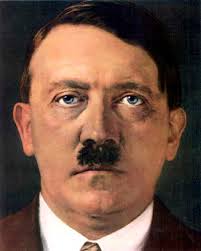
Adolf Hitler
And the word—and whim—of Germany’s Fuhrer, Adolf Hitler remained law for their populations.
But by March, 1943, all except the most fanatical Nazis could see that Germany was on a collision course with disaster.
- Under the unshakable leadership of Prime Minister Winston Churchill, Great Britain still remained a sworn enemy of the Third Reich.
- After six months of spectacular victories against the Soviet Union, the Wehrmacht had become hopelessly bogged down in the snow before Moscow.
- On December 11, 1941, following the attack on Pearl Harbor by his ally, Japan, Hitler declared war on the United States—thus pitting the Reich against the world’s two most powerful nations: America and Russia.
- In November, 1942, at El Alamein, the British Army halted the advance of General Erwin Rommel and his famed Afrika Korps across North Africa.
- On February 2, 1943, General Friedrich von Paulus surrendered the remains of the once-powerful Sixth Army at Stalingrad. The Reich suffered 730,000 total casualties, including nearly 91,000 German prisoners taken prisoner.
- On June 6, 1944, American, British and Canadian armies overwhelmed German’s “impregnable wall of death” on the Normandy beaches.
- In February, 1945, following the Vistula-Oder Offensive, the Red Army temporarily halted 37 miles east of Berlin.
So, by March, 1943, Germany desperately needed to hear some good news. And Propaganda Minister Joseph Goebbels was eager to supply it.
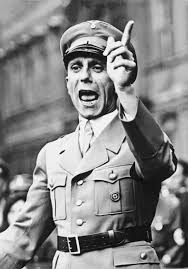
Joseph Goebbels
He did so in one of his last public addresses, delivered to a large but carefully selected audience in Gorlitz.
For Goebbels, the greatest challenge to the Reich lay in “the Bolshevist danger in the East.” And, for him, the solution was clear: “Total war is the demand of the hour.”
“Our soldiers, as soon as the great push on the Eastern Front gets under way, will ask no mercy and give no mercy.
“Already, our forces have begun softening up operations, and in the next weeks and months the big offensive will begin. They will go into battle with devotion like congregations going to a religious service.
“And when our men shoulder their weapons and climb into their tanks, there will be before their eyes the sight of their violated women and murdered children. A cry of vengeance will rise from their throats that will make the enemy tremble with fear!
“So, as the Fuhrer has overcome crises in the past, so will he triumph now.
“The other day he told me ‘I firmly believe that we shall overcome this crisis. I firmly believe that our army of millions will beat back our enemy and annihilate him. And some day our banners will be victorious. This is my life’s unshakable belief.'”
Thunderous applause repeatedly interrupted Goebbels’ address. Yet this could not replace the enormous losses Germany had suffered since 1939. Nor could it reverse the march of the Allied armies as they closed in on the Reich from East and West.
Now, fast-forward 74 years to November 23, 2017—Thanksgiving Day.
Donald Trump, President of the United States, speaks by video teleconference to American forces stationed in Iraq and Afghanistan.
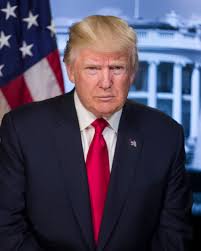
Donald Trump
President George W. Bush had flown into Baghdad in 2003 to spend Thanksgiving with American forces. He flew into Iraq once again to visit troops in June, 2006.
And President Barack Obama visited American soldiers in Iraq in 2009, in Afghanistan in 2010, 2012 and 2014.
Trump’s “visit” was unique—in that he addressed American troops from his Mar-a-Lago Club and Resort in Palm Beach, Florida.
The address started off predictably enough: “It’s an honor to speak with you all and to give God thanks for the blessings of freedom and for the heroes who really have this tremendous courage that you do to defend us and to defend freedom.”
But, being Trump, he could not resist paying homage to himself: “We’re being talked about again as an armed forces. We’re really winning. We know how to win, but we have to let you win. They weren’t letting you win before; they we’re letting you play even. We’re letting you win….
“They say we’ve made more progress against ISIS than they did in years of the previous administration, and that’s because I’m letting you do your job….”
In short: All those sacrifices you made under Presidents Bush and Obama went for nothing.
“A lot of things have happened with our country over the last very short period of time, and they’re really good — they’re really good. I especially like saying that companies are starting to come back.
“Now we’re working on tax cuts—big, fat, beautiful tax cuts. And hopefully we’ll get that and then you’re going to really see things happen.”
Or, put another way: Be grateful they elected me—because you’re about to see the 1% richest get even richer. Too bad you won’t be so lucky.
2016 PRESIDENTIAL CAMPAIGN, ABC NEWS, ALTERNET, AMERICAN UNIVERSITY, AP, APOLLO MOON LANDING, BARACK OBAMA, BARBARA TUCHMAN, BUZZFEED, CBS NEWS, CNN, COLD WAR, CROOKS AND LIARS, CUBAN MISSILE CRISIS, DAILY KOZ, DONALD TRUMP, DREAMS FROM MY FATHER, FACEBOOK, HERMAN CAIN, JOHN F. KENNEDY, KELLEYANNE CONWAY, LIBYA, LILTERACY, LYNDON B. JOHNSON, MOTHER JONES, MOVEON, NBC NEWS, NEWSWEEK, NPR, NUCLEAR TEST BAN TREATY, POLITICO, RATIONALITY, RAW STORY, REUTERS, RICHARD M. NIXON, RICK PERRY, SALON, SEAN SPICER, SEATTLE TIMES, SLATE, SUPER COMMITTEE OF CONGRESS, SUPREME COURT, THE ATLANTIC, THE AUDACITY OF HOPE, THE CHICAGO SUN-TIMES, THE CHICAGO TRIBUNE, THE DAILY BEAST, THE GUARDIAN, THE GUNS OF AUGUST, THE HILL, THE HUFFINGTON POST, THE LOS ANGELES TIMES, THE NATION, THE NEW YORK TIMES, THE WASHINGTON POST, TIME, TWITTER, U.S. NEWS & WORLD REPORT, UPI, USA TODAY, VIETNAM WAR, WORLD WAR 1
In Bureaucracy, History, Military, Politics, Social commentary on November 22, 2017 at 12:03 am
Fifty-four years ago, on November 22, 1963, two bullets slammed into the neck and head of President John Fitzgerald Kennedy.
It has been said that JFK left his country with three great legacies:
- The Nuclear Test Ban Treaty;
- The Apollo moon landing; and
- The Vietnam war.
Of these, the following can be said with certainty:
- The Test Ban Treaty has prevented atmosphereic testing—and poisoning—by almost all the world’s nuclear powers.
- After reaching the moon—in 1969—Americans quickly lost interest in space and have today largely abandoned plans for manned exploration. For America, as for JFK, beating the Russians to the moon was the end-goal.
- Under Presidents Lyndon Johnson and Richard Nixon, 58,000 Americans died in Vietnam; 153,303 were wounded; and billions of dollars were squandered in a hopeless effort to intervene in what was essentially a Vietnamese civil war. From 1965 to 1972, the war angrily divided Americas as had no event since the Civil War.
But there was a fourth legacy—and perhaps the most important of all: The belief that mankind could overcome its greatest challenges through rationality and perseverance.
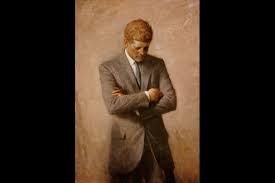
White House painting of JFK
At American University on June 10, 1963, Kennedy called upon his fellow Americans to re-examine the events and attitudes that had led to the Cold War. And he declared that the search for peace was by no means absurd:
“Our problems are man-made; therefore, they can be solved by man. And man can be as big as he wants. No problem of human destiny is beyond human beings.
“Man’s reason and spirit have often solved the seemingly unsolvable, and we believe they can do it again.”
Today, politicians from both parties cannot agree on solutions to even the most vital national problems.
On November 21, 2011, the 12 members of the “Super-Committee” of Congress, tasked with finding $1.2 trillion in cuts in government spending, threw up their hands in defeat.
President Kennedy insisted on being well-informed. He speed-read several newspapers every morning and nourished personal relationships with the press-–and not for altruistic reasons. These journalistic contacts gave Kennedy additional sources of information and perspectives on national and international issues.
During the 2012 Presidential campaign, Republican Presidential candidates celebrated their ignorance of both.
Former Godfather’s Pizza CEO Herman Cain famously said, “We need a leader, not a reader.” Thus he excused his ignorance for why President Barack Obama had intervened in Libya.
Texas Governor Rick Perry (and now Secretary of Energy) showed similar pride in not knowing there are nine judges on the United States Supreme Court:
“Well, obviously, I know there are nine Supreme Court judges. I don’t know how eight came out my mouth. But the, uh, the fact is, I can tell you—I don’t have memorized all of those Supreme Court judges. And, uh, ah—
“Here’s what I do know. That when I put an individual on the Supreme Court, just like I done in Texas, ah, we got nine Supreme Court justices in Texas, ah, they will be strict constructionists….”
In short, it’s the media’s fault if they ask you a question and your answer reveals your own ignorance, stupidity or criminality.
And President Donald Trump has gone even further—attacking the free press as “the enemy of America” for exposing his lies and criminality.
His senior adviser, Kelleyanne Conway, set the tone of his administration’s approach to the truth right at the outset. Asked why then-White House press secretary Sean Spicer had lied about the size of the crowd at Trump’s inauguration, Conway replied:
“You’re saying it’s a falsehood. And they’re giving—Sean Spicer, our press secretary—gave alternative facts.”
“Alternative facts aren’t facts, they are falsehoods,” Chuck Todd, the moderator on NBC’s “Meet the Press,” properly responded.
During the height of the Cuban Missile Crisis, Kennedy spoke with aides about a book he had just finished: Barbara Tuchman’s The Guns of August, about the events leading to World War 1.
He said that the book’s most important revelation was how European leaders had blindly rushed into war, without thought to the possible consequences. Kennedy told his aides he did not intend to make the same mistake–that, having read his history, he was determined to learn from it.
Republicans attacked President Obama for his Harvard education and articulate use of language. Among their taunts: “Hitler also gave good speeches.”
And they resented his having earned most of his income as a writer of two books: Dreams From My Father and The Audacity of Hope. As if being a writer is somehow subversive.
When knowledge and literacy are attacked as “highfalutin’” arrogance, and ignorance and incoherence are embraced as sincerity, national decline lies just around the corner.
During the 2016 Presidential campaign, Donald Trump infamously chortled after winning the Nevada Republican primary: “We won with poorly educated. I love the poorly educated.”
And, that November, “the poorly educated” elected him President.
In retrospect, the funeral for President Kennedy marked the death of more than a rational and optimistic human being.
It marked the death of Americans’ pride in choosing reasoning and educated citizens for their leaders.
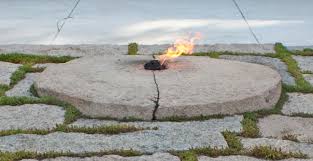
The Eternal Flame at the grave of President John F. Kennedy
2016 PRESIDENTIAL CAMPAIGN, ABC NEWS, ADOLF HITLER, ALTERNET, ANCIENT ROME, ANTONIN SCALIA, AP, BUZZFEED, CAMPAIGN CONTRIBUTIONS, CBS NEWS, CITIZENS UNITED, CLEOPATRA, CNN, CROOKS AND LIARS, DAILY KOZ, DONALD TRUMP, FACEBOOK, FORECLOSURES, GLADIATORS, JULIUS CAESAR, KIRK DOUGLAS, LAURENCE OLIVER, MARCUS CRASSUS, MEIN KAMPF, MITT ROMNEY, MOTHER JONES, MOVEON, NBC NEWS, NEWSWEEK, NEWT GINGRICH, NPR, POLITICO, RAW STORY, REUTERS, SALON, SEATTLE TIMES, SHELDON ADELSON, SLATE, SPARTACUS, SUPREME COURT, THE ATLANTIC, THE CHICAGO SUN-TIMES, THE CHICAGO TRIBUNE, THE DAILY BEAST, THE GUARDIAN, THE HILL, THE HUFFINGTON POST, THE LOS ANGELES TIMES, THE NATION, THE NEW YORK TIMES, THE WASHINGTON POST, TIME, TWITTER, U.S. NEWS & WORLD REPORT, UPI, USA TODAY
In Bureaucracy, History, Law, Military, Politics, Social commentary on November 17, 2017 at 12:07 am
The 1960 Kirk Douglas epic, Spartacus, may soon prove to be more than great entertainment. It may also turn out to be a prophecy of the end of the American Republic.
In the movie, Spartacus (Douglas), a Roman slave, entertains Marcus Crassus (Laurence Oliver) the richest man in Rome. He does so by fighting to the death as a gladiator.

Poster for Spartacus
While Spartacus and his fellow gladiator/friend, Draba, slash and stab at each other in the arena, Crassus idly chats with his crony, Marcus Glabrus.
Crassus has just secured Glabrus’ appointment as commander of the garrison of Rome. Glabrus is grateful, but curious as to how he did it.
After all, Gaius Gracchus, the leader of the Roman Senate, hates Crassus, and stands ever ready to oppose his every move.
“I fought fire with oil,” says Crassus. “I purchased the Senate behind his back.”
Draba defeats Spartacus in their gladiatorial bout, but refuses to kill him. Instead, he throws his spear at Crassus—and is immediately slaughtered by Roman guards.
Soon afterward, Spartacus leads 70 other gladiators against their Roman masters, forms an army of freed slaves, and marches against Rome.
Just as Crassus bought the Roman Senate in Spartacus, billionaires similarly bought the 2016 Presidential election.
In 2016, Newt Gingrich, former Speaker of the House of Representatives, ran as the pet candidate of casino billionaire Sheldon G. Adelson. Since 2007, Adelson had spent millions in support of Gingrich and his causes.
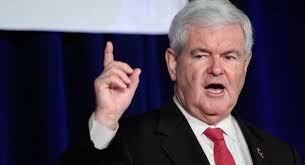
Newt Gingrich
Adelson put up seed money and, ultimately, $7.7 million between 2006 and 2010 for a nonprofit group that served as a precursor to Gingrich’s presidential campaign.
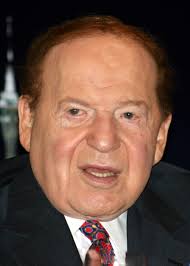
Sheldon Adelson
Such a contribution is no small amount to the average American. But Adelson is listed by Forbes as the eighth-wealthiest American, with a net worth of $21.5 billion.
Naturally, Adelson denied he had any selfish motives for shelling out so much money to a candidate for the most powerful office in the world:
“My motivation for helping Newt is simple and should not be mistaken for anything other than the fact that my wife Miriam and I hold our friendship with him very dear and are doing what we can as private citizens to support his candidacy.”
Unfortunately, Gingrich was not the only candidate of the rich, by the rich and for the rich seeking the Presidency.
Former Massachusetts Governor Mitt Romney relied heavily on a small group of millionaires and billionaires for support.
By February, 2012, a quarter of the money amassed by Romney’s campaign came from just 41 people. Each contributor gave more than $100,000, according to a Washington Post analysis of disclosure data. Nearly a dozen of the donors had contributed $1 million or more.
Some of Romney’s biggest supporters included executives at Bain Capital, his former firm; bankers at Goldman Sachs; and a hedge fund mogul who made billions betting on the housing crash.
Like Adelson, Bain has directly profited from the losses of others.
Fast forward to 2016:
In early May, Adelson met privately with Republican Presidential nominee-in-waiting Donald Trump. Nevertheless, at least this much has leaked:
Adelson promised to contribute more to secure Trump’s election than he had contributed to any previous campaign—up to and exceeding $100 million.
Meanwhile, Trump bragged that he was “not beholden” to any “special interests” because “I’m really rich.” This myth proved a main reason for his popularity as a candidate.
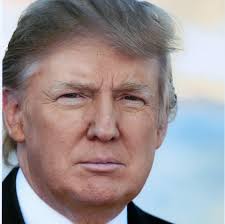
Donald Trump
All of this can be directly traced to the 2010 “Citizens United” decision by the U.S. Supreme Court that ended limits in corporate contributions to political campaigns. The decision is so named for the group that successfully sued over federal campaign finance laws.
The 5-4 decision led to the rise of Super PACs—outside groups affiliated with candidates that can take in unlimited contributions as long as they don’t directly coordinate with the candidate. The overwhelming majority of this money goes for negative ads—that slander opponents without saying anything about what a candidate proposes to do.
Former U.S. Supreme Court Justice Antonin Scalia brushed aside criticism of the corrupting role money played in politics: Change the channel or turn off the TV.
“I don’t care who is doing the speech—the more the merrier,” Scalia said. “People are not stupid. If they don’t like it, they’ll shut it off.”
On the contrary: A fundamental principle of propaganda holds that most people are stupid—or can be made to behave stupidly. If they are ceaselessly bombarded with mind-numbing lies, they will eventually substitute these for reality.
In Mein Kampf, Adolf Hitler laid out his formula for successful propaganda: “All effective propaganda must be confined to a few bare essentials.
“These must be expressed as far as possible in stereotypical formulas. These slogans should be persistently repeated until the very last individual has come to grasp the idea that has been put forward.”
During the early 1960s a series of movies about the Roman Empire—like Spartacus and Cleopatra—hit the big screen. In these, rich criminals like Marcus Crassus openly bought the favors of ambitious politicians like Julius Caesar.
No doubt millions of moviegoers thought, “Boy, I’m glad that couldn’t happen here.”
But it has happened here—and it’s happening right now.
ABC NEWS, ALTERNET, AP, BARACK OBAMA, BOB CORKER, BUZZFEED, CBS NEWS, CNN, CROOKS AND LIARS, DAILY KOZ, DONALD TRUMP, FACEBOOK, ISIS, MALI, MERCENARIES, MOTHER JONES, MOVEON, NATIONAL FOOTBALL LEAGUE, NBC NEWS, NEWSWEEK, NICCOLO MACHIAVELLI, NIGER, NORTH KOREA, NPR, POLITICO, PUERTO RICO, RAW STORY, REUTERS, SALON, SEATTLE TIMES, SLATE, STALINGRAD, THE ATLANTIC, THE CHICAGO SUN-TIMES, THE CHICAGO TRIBUNE, THE DAILY BEAST, THE GUARDIAN, THE HILL, THE HUFFINGTON POST, THE LOS ANGELES TIMES, THE NATION, THE NEW YORK TIMES, THE WASHINGTON POST, TIME, TWITTER, U.S. NEWS & WORLD REPORT, UP, UPI, USA TODAY
In Bureaucracy, History, Military, Politics, Social commentary on November 7, 2017 at 12:03 am
On October 4, four American Special Forces soldiers were ambushed and gunned down at the border of Niger and Mali.
For 12 days after the tragedy, President Donald Trump said nothing.
Then, during an October 16 press conference in the White House Rose Garden, a reporter asked him about his silence.

Donald Trump
So Trump claimed—falsely—that earlier Presidents—including Barack Obama—had never or rarely called or written family members of soldiers who died on duty.
But it was his call to Myeshia Johnson, the widow of Sergeant La David Johnson, that ignited a firestorm.
According to Florida Democratic Representative Frederica Wilson, Trump’s condolence call was brutally insensitive. Wilson was riding in a limousine with Johnson and heard the conversation on speakerphone.
“He knew what was signing up for, but I guess it hurts anyway,” Wilson quoted Trump as telling the grieving widow.
But maybe Sergeant Johnson didn’t know what he was signing up for.
On October 19, Pentagon officials said that a private contractor airlifted some of the troops from the scene.
Trump had sent a private aviation contractor—instead of the U.S. military—to retrieve the bodies of the four soldiers killed in Niger.
Robyn Mack, an official for U.S. Africa Command, said Texas-based Berry Aviation was “on alert during the incident and conducted casualty evacuation and transport for US and partner forces.”
Sergeant Johnson’s body was left behind when the bodies of his three fellow soldiers were evacuated. His remains were recovered two days after the extraction by Nigerien troops.
Even worse, his corpse had been so corrupted by heat that the Pentagon demanded a closed coffin for his burial service.
Contractor aircraft are typically not armed, though their crews may carry side-arms for personal protection.
It’s possible that lightly-armed private contractors were so eager to leave the danger area they did a slapdash search for bodies—and accidentally left Johnson’s behind.
Berry Aviation has also done Defense Department work in Afghanistan, Central African Republic and Burkina Faso.
Since the end of the Cold War, the American military and Intelligence communities have grown increasingly dependent on private contractors. In the past, such groups were called mercenaries.
In his 2007 bestseller, Legacy of Ashes: The History of the CIA, Tim Weiner writes:
“Patriotism for profit became a $50-billion-a-year business….The [CIA] began contracting out thousands of jobs to fill the perceived void by the budget cuts that began in 1992.
“A CIA officer could file his retirement papers, turn in his blue identification badge, go to work for a much better salary at a military contractor such as Lockheed Martin or Booz Allen Hamilton, then return to the CIA the next day, wearing a green badge….”
Much of the CIA became totally dependent on mercenaries. They appeared to work for the agency, but their loyalty was actually to their private companies. The CIA thus had two workforces-–but the private one was paid far better.
Wrote Weiner: “Legions of CIA veterans quit their posts to sell their services to the agency by writing analyses, creating cover for overseas officers, setting up communications networks, and running clandestine operations.”
One such company was Total Intelligence Solutions, founded in 2007 by Cofer Black, who had been the chief of the CIA’s counter-terrorism center on 9/11.
His partners were Robert Richer, formerly the associate deputy director of operations at the CIA, and Enrique Prado, who had been Black’s chief of counter-terror operations at the agency.
Future CIA hires followed suit: Sign up for five years, win that prized CIA “credential” and sign up for far more money with a private security company.
This situation met with full support from Right-wing “pro-business” members of Congress and Presidents like George W. Bush.
They had long championed the private sector as inherently superior to the public one. And they saw no danger that a man dedicated to enriching himself might put greed ahead of safeguarding his country.
One of Trump’s key military advisers is Erik Prince, the former head of Blackwater. Under President George W. Bush, the now-infamous mercenary company got $1 billion to provide security for American officials and soldiers in Iraq and Afghanistan.
Blackwater was also accused of abusing Iraqis and engaging in torture.
There were, however, others who could have offered a timely warning against this use of mercenaries-–had there been leaders willing to heed it.
One of these, reaching back more than 500 years ago, was the Florentine statesman, Niccolo Machiavelli, who famously warned of the dangers of relying on mercenaries.
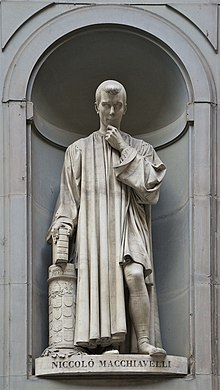
Niccolo Machiavelli
In The Prince, Machiavelli writes:
“Mercenaries…are useless and dangerous. And if a prince holds on to his state by means of mercenary armies, he will never be stable or secure. For they are disunited, ambitious, without discipline, disloyal. They are brave among friends; among enemies they are cowards.
“They have neither the fear of God nor fidelity to man, and destruction is deferred only as the attack is. For in peace one is robbed by them, and in war by the enemy.”
Centuries after Machiavelli’s warning, Americans are realizing the bitter truth of it firsthand.
9/11 ATTACKS, ABC NEWS, ALTERNET, AP, ARTHUR M. CUMMINGS, BOSTON GLOBE, BOSTON MARATHON, BOSTON MARATHON BOMBING, BOSTON PATCH, BRUSSELS BOMBINGS, BUZZFEED, CBS NEWS, CNN, CROOKS AND LIARS, DAILY KOZ, DONALD TRUMP, FACEBOOK, FBI, FIRST AMENDMENT, FRANKLIN D. ROOSEVELT, ISIS, ISLAM, ISLAMIC TERRORISM, JIHADIST, MOTHER JONES, MOVEON, NAZI GERMANY, NBC NEWS, NEWSWEEK, NPR, PARIS TERRORIST ATTACKS, POLITICAL CORRECTNESS, POLITICO, RADICAL ISLAM, RAW STORY, REUTERS, SALON, SAMUEL P. HUNTINGTON, SAN BERNARDINO MASSACRE, SEATTLE TIMES, SECURITY, SLATE, STEVEN EMERSON, THE ATLANTIC, THE CHICAGO SUN-TIMES, THE CHICAGO TRIBUNE, THE CLASH OF CIVILIZATIONS AND THE REMAKING OF WORLD ORDER, THE DAILY BEAST, THE GUARDIAN, THE HILL, THE HUFFINGTON POST, THE LOS ANGELES TIMES, THE NATION, THE NEW YORK TIMES, THE WASHINGTON POST, TIME, TWITTER, U.S. NEWS & WORLD REPORT, UP, UPI, US NEWS, USA TODAY, WORLD WAR 11
In Bureaucracy, Entertainment, History, Law, Law Enforcement, Military, Politics, Social commentary on November 3, 2017 at 12:13 am
Islamics are quick to assert that they, too, are Americans. But getting Islamics to point out the terrorists within their ranks is an entirely different matter.
According to author Ronald Kessler, this has caused serious problems for the FBI. In his 2011 book, The Secrets of the FBI, Kessler notes the refusal of the Islamic community to identify known or potential terrorists within its ranks.
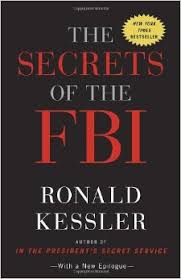
Says Arthur M. Cummings, the Bureau’s executive assistant director for national security: “I had this discussion with the director of a very prominent Muslim organization here in [Washington] D.C. And he said, ‘Why are you guys always looking at the Muslim community?’”
“I can name the homegrown cells, all of whom are Muslim, all of whom were seeking to kill Americans,” replied Cummings. “It’s not the Irish, it’s not the French, it’s not the Catholics, it’s not the Protestants. It’s the Muslims.”
Occasionally, Muslims will condemn Al Qaeda. But “rarely do we have them coming to us and saying, ‘There are three guys in the community that we’re very concerned about.’” said Cummings.
“They don’t want anyone to know they have extremists in their community. Well, beautiful. Except do you read the newspapers? Everybody already knows it. The horse has left the barn.
“So there’s a lot of talk about engagement. But, realistically, we’ve got a long, long way to go.”
At one community meeting, an Islamic leader suggested to Cummings that then-FBI director Robert Meuller III should pose for a picture with his group’s members. The reason: To show that Islamics are partners in the “war on terror.”
“When you bring to my attention real extremists who are here to plan and do something, who are here supporting terrorism,” said Cummings, “then I promise you, I will have the director stand up on the stage with you.”
“That could never happen,” replied the Islamic leader. “We would lose our constituency. We could never admit to bringing someone to the FBI.”
Cummings has no use for such Politically Correct terms as “man-caused disasters” to refer to terrorism. Nor does he shy away from terms such as “jihadists” or “Islamists.”
“Of course Islamists dominate the terrorism of today,” he says bluntly.
In May, 2014, Steven Emerson, a nationally recognized expert on terrorism, posted an ad in The New York Times, warning about the dangers of PC-imposed censorship:
“Our nation’s security and its cherished value of free speech has been endangered by the bullying campaigns of radical Islamic groups, masquerading as ‘civil rights’ organizations, to remove any reference to the Islamist motivation behind Islamic terrorist attacks.
“These groups have pressured or otherwise colluded with Hollywood, the news media, museums, book publishers, law enforcement and the Obama Administration in censoring the words ‘Islamist’, ‘Islamic terrorism’, ‘radical Islam’ and ‘jihad’ in discussing or referencing the threat and danger of Islamic terrorism.
“This is the new form of the jihadist threat we face. It’s an attack on one of our most sacred freedoms—free speech—and it endangers our very national security. How can we win the war against radical Islam if we can’t even name the enemy?”
He has a point—and a highly legitimate one.
Imagine the United States fighting World War II—and President Franklin Roosevelt banning the use of “fascist” in referring to Nazi Germany or “imperialist” in describing Imperial Japan.
Imagine CNN-like coverage of the Nazi extermination camps, with their piles of rotting corpses and smoking gas ovens, while a commentator reminds us that “Nazism is an ideology of peace.”
Then try to imagine how the United States could have won that life-and-death struggle under such unrealistic and self-defeating restrictions.
It couldn’t have done so then. And it can’t do so now.
Then consider these Islamic terrorist outrages of our own time:
- The 9/11 attacks on the World Trade Center in New York City and the Pentagon in Washington, D.C., which snuffed out the lives of 3,000 Americans.
- The 2004 bombing of Madrid’s commuter train system.
- The attack on the London subway in 2005. The killing of 13 U.S. Army personnel at Fort Hood, Texas, by a Muslim army major in 2009.
- The bombing of the Boston Marathon in 2013.
- The kidnapping of 300 Nigerian school girls by Boko Haram in 2014.
- The slaughter of 12 people at a Paris satirical magazine that had published cartoons about the Prophet Mohammed in 2015.
- The slaughter of more than 100 people in ISIS attacks across Paris in 2015.
- A series of deadly terrorist attacks in Brussels, killing 31 and injuring 270 in 2016.
- The mashing of eight bicyclists and pedestrians by a truck-driving ISIS supporter in 2017.
In every one of these attacks, the perpetrators openly announced that their actions had been motivated by their Islamic beliefs.
In his groundbreaking book, The Clash of Civilizations (1996) Samuel Huntington, the late political scientist at Harvard University, noted:
“The fundamental problem for the West is not Islamic fundamentalism. It is Islam, a different civilisation whose people are convinced of the superiority of their culture and are obsessed with the inferiority of their power.”
The West may not be at war with Islam—as countless Western politicians repeatedly assert. But Islamics have no qualms about declaring that they are at war with the West.


 Bureaucracybuster's Blog
ABC NEWS, ALTERNET, AP, BUZZFEED, CALIGUA, CBS NEWS, CNN, CROOKS AND LIARS, DAILY KOZ, DONALD TRUMP, FACEBOOK, GAIUS SUETONIUS TRANQUILLUS, KIM JON UN, KOREAN WAR, MOTHER JONES, MOVEON, NBC NEWS, NEWSWEEK, NORTH KOREA, NPR, PENTAGON, POLITICO, RAW STORY, REUTERS, SALON, SEATTLE TIMES, SLATE, THE ATLANTIC, THE CHICAGO SUN-TIMES, THE CHICAGO TRIBUNE, THE DAILY BEAST, THE GUARDIAN, THE HILL, THE HUFFINGTON POST, THE LOS ANGELES TIMES, THE NATION, THE NEW YORK TIMES, THE TWELVE CAESARS, THE WASHINGTON POST, TIME, TWITTER, U.S. DEPARTMENT OF STATE, U.S. NEWS & WORLD REPORT, UPI, USA TODAY
HISTORY AS A GUIDE TO MADNESS: PART TWO (END)
In Bureaucracy, History, Military, Politics, Social commentary on December 13, 2017 at 1:14 amKim Jong-Un: Secretive, ruthless, egomaniacal, erratic at best, certifiably insane at worst. Commanding the world’s fourth-largest army—and a growing arsenal of nuclear weapons.
Given a lack of CIA “assets” within North Korea, the United States government has been forced to accept any scraps of reliable information it can get on Kim’s regime.
As a result, the White House, Pentagon and State Department may be forced to turn to another source in predicting Kim Jong-Un’s coming moves—and fate.
His name: Gaius Suetonius Tranquillus—better known as Suetonius.
Suetonius, a historian and citizen of ancient Rome, chronicled the lives of the first twelve Caesars of imperial Rome: Julius Caesar, Augustus, Tiberius, Caligula, Claudius, Nero, Galba, Otho, Vitellius, Vespasian, Titus and Domitian.
His compilation of these biographies, The Twelve Caesars, is still available today.
Gaius Caligula was the fourth Roman to assume the title of Emperor and Caesar. His reign began in 37 A.D. and ended—violently—four years later.
Gaius Caligula
His full name was Gaius Julius Caesar Augustus Germanicus. “Caligula”—“Little Boots”—was a nickname bestowed on him as a child by his father’s soldiers.
Accompanying his father, Germanicus, on military campaigns, Gaius often dressed up as a soldier to “drill” the troops, who loved his enthusiasm for military life.
Tiberius, the third Roman emperor, adopted Germanicus as his heir, and many Romans considered him as Rome’s Alexander the Great because of his virtuous character and military prowess. Many wanted him to succeed Tiberius when the emperor died.
But Germanicus died first, under mysterious circumstances. Some blamed illness, others believed he had been poisoned. Tiberius was widely suspected of having murdered a potential rival. And few mourned when Tiberius himself died in 19 A.D.
Upon Tiberius’ death, Caligula became emperor. The Romans welcomed his ascension due to their memory of his father, Germanicus.
His reign began well. He recalled those who had been banished from Rome by Tiberius, and publicly announced that “he had no ears for informers,” according to Suetonius.
He allowed judges unrestricted jurisdiction, without appeal to himself. To lighten the duties of jurors, he added a fifth division to the previous four. He also tried to restore the suffrage to the people by reviving the custom of elections.
He completed the public works which had been half-finished under Tiberius: the temple of Augustus and the theatre of Pompey.
But then Caligula underwent a change in character. Suetonius claimed that he suffered from an affliction that made him suddenly fall unconscious. The historian believed that Caligula knew that something was wrong with him.
He became increasingly egomaniacal. Among the titles he gave himself: “Child of the Camp,” “Father of the Armies,” and “Greatest and Best of Caesars.”
Eventually, he came to believe himself divine.
Without warning, he ordered one of his soldiers to execute his brother Tiberius. He drove his father-in‑law, Silanus, to commit suicide by cutting his throat with a razor.
Tiberius’ “crime” had been Caligula’s suspicion that he had taken an antidote against poison. “There is no antidote against Caesar!” Caligula is said to have raged.
In fact, Tiberius had taken medicine for a chronic cough.
Silanus died because he had not followed Caligula when he put to sea in stormy weather. Caligula believed he had remained behind hoping to take possession of Rome if he perished in the storm.
Actually, Silanus suffered from sea-sickness and wanted to avoid the discomforts of the voyage.
Caligula committed incest with all his sisters, and “at a large banquet he placed each of them in turn below him, while his wife reclined above.”
When his favorite sister, Drusilla, died, he announced a season of public mourning, making it a capital crime to laugh, bathe, or dine with one’s parents, wife, or children.
Having violated his sisters, he eagerly violated the wives of others.
At one wedding, he ordered that the bride be taken to his own house, and within a few days divorced her. Two years later he banished her, suspecting that she had returned to her former husband.
At gladiatorial games, he sometimes matched decrepit gladiators against wild beasts, and had sham fights between men who were “conspicuous for some bodily infirmity.”
Objecting to the expense of cattle to feed wild beasts for a gladiatorial show, he selected criminals to be devoured.
On other occasions, he shut up the storehouses for threshed grain and condemned the people to hunger.
“Let them hate me, so long as they fear me,” he often said. But hatred can override fear.
Just this happened among several members of his own security force, the Praetorian Guard. Caligula had repeatedly mocked Cassius Chaerea, one of its officers, for his weak voice, and assailed his masculinity.
On January 22, 41 A.D., Chaerea and other guardsmen attacked Caligula in an underground corridor of a gladiatorial arena and repeatedly stabbed him to death.
Upon hearing reports that Caligula was dead, Romans feared to rejoice: Had he started the rumor to discover who wanted him dead? Only when they were certain did they give themselves over to unbridled joy.
If history truly repeats itself, Kim Jong-Un has good reason to be afraid.
Share this: