Archive for the ‘Law’ Category
9/11 TERRORIST ATTACKS, ABC NEWS, AFGHANISTAN, AIRPORT SECURITY, ALTERNET, AMERICABLOG, AP, BABY BOOMER RESISTANCE, BBC, BIRTH CERTIFICATES, BLOOMBERG, BLUESKY, BUZZFEED, CBS NEWS, CNN, CROOKS AND LIARS, DAILY KOS, DEPARTMENT OF HOMELAND SECURITY, DEPARTMENT OF MOTOR VEHICLES, DRIVER'S LICENSES, FACEBOOK, FBI, FIVETHIRTYEIGHT, HARPER’S MAGAZINE, HUFFINGTON POST, IDENTIFICATION, JOE BIDEN, MEDIA MATTERS, MOHAMMED ATTA, MOTHER JONES, MOVEON, MSNBC, NATIONAL CRIME INFORMATION CENTER (NCIC), NATIONAL GUARD, NBC NEWS, NEW REPUBLIC, NEWSDAY, NEWSWEEK, NPR, PASSPORTS, PBS NEWSHOUR, POLITICO, POLITICUSUSA, RAW STORY, REAL ID ACT, REUTERS, SALON, SAN FRANCISCO FEDERAL BUILDING, SEATTLE TIMES, SECURITY THEATER, SLATE, SOCIAL SECURITY CARD, TALIBAN, TALKING POINTS MEMO, TERRORISM, THE ATLANTIC, THE CHICAGO SUN-TIMES, THE CHICAGO TRIBUNE, THE DAILY BEAST, THE DAILY BLOG, THE GUARDIAN, THE HILL, THE HUFFINGTON POST, THE INTERCEPT, THE LOS ANGELES TIMES, THE NATION, THE NEW REPUBLIC, THE NEW YORK TIMES, THE NEW YORKER, THE VILLAGE VOICE, THE WASHINGTON POST, THEODORE BUNDY, THINKPROGRESS, TIME, TRANSPORTATION SECURITY ADMINISTRATION, TRUTHDIG, TRUTHOUT, TWO POLITICAL JUNKIES, U.S. NEWS & WORLD REPORT, UPI, USA TODAY, WORLD TRADE CENTER, X
In Bureaucracy, Business, History, Law, Law Enforcement, Military, Politics, Social commentary on July 24, 2026 at 12:10 am
In 2005—four years after 9/11—Congress passed the Real ID Act as a counter-terrorism measure. Its goal was to set security standards for government-issued IDs.
The Act was introduced in late 2013. But it wasn’t until September 10, 2020, that the Department of Homeland Security announced that all 50 states were in compliance in issuing identification complying with the standards of the Act.
Only those holding such ID may pass through airport security—for domestic flights as well as international ones—and enter certain federal facilities.
So what is the easiest way to get a REAL ID?
According to the Transportation Safety Administration (TSA):
“Visit your state’s driver’s licensing agency website to find out exactly what documentation is required to obtain a REAL ID. At a minimum, you must provide documentation showing:
- 1) Full Legal Name
- 2) Date of Birth
- 3) Social Security Number
- 4) Two Proofs of Address of Principal Residence, and
- 5) Lawful Status (if you’re an immigrant)”

So much of what passes for security is actually security theater. It doesn’t actually make us safer, but it makes us feel safer.
And it makes us feel the government is keeping us safe, even when it isn’t.
Consider:
After 9/11, thousands of National Guard troops were deployed to airports nationwide as a highly visible show of force to deter further attacks and reassure a panicked public. The public would not have felt so reassured had it known the Guards were carrying unloaded M-16 rifles.
In addition, these “weekend warriors” were not trained detectives. So they didn’t know how to spot a potential terrorist—although they were a likely deterrent against purse-snatchers.
Other examples of security theater include:
- Mandatory shoe removals and random bag searches at TSA checkpoints: Have repeatedly failed to detect test weapons and contraband in internal red-team audits.
- Installing highly visible, non-functional security cameras to deter shoplifters or vandals: If the feed isn’t monitored or recording, it offers zero protective value.
- Stationing uniformed—but untrained—“security guards” in such places as stores and banks: Usually they lack even rudimentary training in firearms, unarmed combat and/or first aid.
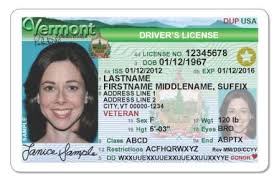
Sample state ID card that’s acceptable under the Real ID Act
Consider this: A friend of mine—whom I’ll call Jack—recently applied for a Real ID card as issued by the California Department of Motor Vehicles. He brought a certified copy of his birth certificate, bills from AT&T and Pacific Gas and Electric.
The birth certificate easily passed muster. But for a moment there was a problem with the bills from the utility companies: Jack had been getting his mail through a P.O. box, rather than at the apartment building where he lived.
And the “examiner” wanted to see a document with his home address on it.
Fortunately, Jack was able to fish out another bill with that on it. The “examiner” was satisfied, and Jack left the DMV assured that he would soon receive his TSA-approved Real ID card.
So: How does showing a utility bill document prove your integrity?
No doubt Mohammed Atta—the ringleader of the September 11, 2001 attacks—faithfully paid his utility bills—right up to the day when he highjacked American Airlines Flight 11 and crashed the plane into the North Tower of the World Trade Center.
And, yes, a birth certificate proves you were born in the United States—but so was Timothy McVeigh, who, in 1995, blew up the Oklahoma City Federal Building, killing 168 people.
Nor does a “school document”—which can get you a Real ID card—reveal anything about the character of the person.
Theodore Bundy attended the University of Puget Sound and the University of Washington—before embarking on his career as a burglar, kidnapper, rapist and serial killer.
Another form of security theater includes checking photo IDs to enter State and Federal office buildings.
Knowing a person’s identity is useful—if you have a reliable database system to match it against, such as the FBI’s National Crime Information Center (NCIC).

But if you lack this, forcing people to “show me your ID” is pointless. And that’s assuming the ID isn’t fraudulent.
But people watching the guard performing this security theater ritual assume: “The guard must know what he’s looking for. So we have to be safer for his checking those IDs.”
In fact, most security guards have little training and even less experience. Many of them don’t carry firearms and lack self-defense skills.
According to Salary.com: The median annual salary for an unarmed security guard is $38,697.
Not exactly a salary geared to attract “the best and the brightest,” is it?
Making all of this even more infuriating: In August, 2021, at least 76,000 unvetted Afghans were admitted into the United States.
The reason: They were too cowardly to fight the Taliban.
Americans had spent 20 years training them to do just that. And as soon as the Taliban launched a major offensive, they fled to Kabul Airport—leaving their wives, girlfriends, mothers and sisters behind to face slavery and brutality.
So while cowardly Afghans—many of whom no doubt had terrorist backgrounds—didn’t have to prove themselves trustworthy, lifelong and law-abiding Americans must.
" WIKIPEDIA, 2016 PRESIDENTIAL CAMPAIGN, 2020 PRESIDENTIL CAMPAIGN, ABC NEWS, ALTERNET, AMERICABLOG, AP, ATTORNEY GENERAL, BABY BOOMER RESISTANCE, BALLOTS, BBC, BLOOMBERG, BLUESKY, BUZZFEED, CBS NEWS, CENSORSHIP, CHRISTOPHER KREBS, CIVIL RIGHTS, CNN, COVID-19, CROOKS AND LIARS, CYBERSECURITY AND INFRASTRUCTURE SECURITY AGENCY (CISA), DAILY KOS, DEFENSE CYBER COMMAND, DEPARTMENT OF HOMELAND SECURITY (DHS), DEPARTMENT OF JUSTICE, DIRECTOR OF NATIONAL INTELLIGENCE, DOMINION VOTING SYSTEMS, DONALD TRUMP, ELECTION ASSISTANCE COMMISSION, ELON MUSK, FACEBOOK, FBI, FEMINISM, FIVETHIRTYEIGHT, FOX NEWS NETWORK, FREEDOM OF THE PRESS, HACKERS, HARPER’S MAGAZINE, HERITAGE FOUNDATION, HILLARY CLINTON, HOLOCAUST, HUFFINGTON POST, I KNOW WHY THE CAGED BIRD SINGS (BOOK), JANET JACOB, JANUARY 6 COUP ATTEMPT, JOSEPH R. BIDEN, JOSEPH STALIN, MARK ZUCKERBERG, MAYA ANGELOU, MEDIA MATTERS, MEIN KAMPF (BOOK), MOTHER JONES, MOVEON, MSNBC, NATIONAL SECURITY AGENCY, NBC NEWS, NEW REPUBLIC, NEWSDAY, NEWSWEEK, NORTH ATLANTIC TREATY ORGANIZATION (NATO), NPR, PBS NEWSHOUR, PETE HEGSETH, POLITICO, POLITICUSUSA, PROJECT 2025, RACISM, RAW STORY, REPUBLICANS, REUTERS, SALON, SEATTLE TIMES, Secret Service, SENTINELONE, SLATE, SOVIET UNION, TALKING POINTS MEMO, THE ATLANTIC, THE CAMP OF THE SAINTS (BOOK), THE CHICAGO SUN-TIMES, THE CHICAGO TRIBUNE, THE DAILY BEAST, THE DAILY BLOG, THE GUARDIAN, THE HILL, THE HUFFINGTON POST, THE INTERCEPT, THE LOS ANGELES TIMES, THE NATION, THE NEW REPUBLIC, THE NEW YORK TIMES, THE NEW YORKER, THE VILLAGE VOICE, THE WASHINGTON POST, THINKPROGRESS, TIME, TROLLS, TRUTHDIG, TRUTHOUT, TWITTER, TWO POLITICAL JUNKIES, U.S. NEWS & WORLD REPORT, UNITED STATES NAVAL ACADEMY LIBRARY, UPI, USA TODAY, VLADIMIR PUTIN, WHITE SUPREMACY, X
In Bureaucracy, History, Law, Law Enforcement, Politics, Social commentary on July 23, 2026 at 3:13 am
Soviet dictator Joseph Stalin, in a moment of rare candor, once revealed his satanic ruthlessness to a group of fellow Bolsheviks: “To choose one’s victims, to prepare one’s plans minutely, to slake an implacable vengeance, and then to go to bed—there is nothing sweeter in the world.”
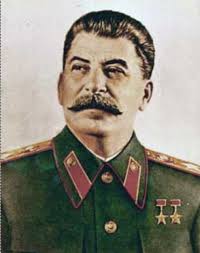
Joseph Stalin
On April 9, 2025, President Donald Trump revealed his intention to live by that belief. He issued a MEMORANDUM FOR THE HEADS OF EXECUTIVE DEPARTMENTS AND AGENCIES.
Its purpose: To target Christopher Krebs, the former director of the Cybersecurity and Infrastructure Security Agency (CISA) run by the Department of Homeland Security (DHS) for potential arrest and prosecution.
Krebs’ “crime”: Ensuring that the 2020 Presidential election was free of lies spread by Russians—and Americans—on social media platforms.
Deprived of his expected support from Russian trolls and hackers, Trump lost.
Among the “charges” outlined in Trump’s memorandum:
“Krebs skewed the bona fide debate about COVID-19 by attempting to discredit widely shared views that ran contrary to CISA’s favored perspective.”
During 2020—Trump’s last year in office as President—COVID-19 ravaged the United States. At least 400,000 Americans died—many of them because they believed Trump’s claims that:
- His administration had it under control; and
- At a time when there was no vaccine against the virus, people didn’t need to protect themselves from it—such as by social distancing and wearing masks in public.
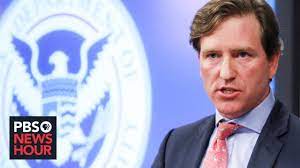
Chris Krebs
The memorandum continued:
“I hereby direct the heads of executive department and agencies to immediately take steps consistent with existing law to revoke any active security clearance held by Christopher Krebs.
“I further direct the Attorney General, the Director of National Intelligence, and all other relevant agencies to immediately take all action as necessary and consistent with existing law to suspend any active security clearances held by individuals at entities associated with Krebs, including SentinelOne, pending a review of whether such clearances are consistent with the national interest.”
SentinelOne is an American cybersecurity company in Mountain View, California, where Krebs serves as Chief Intelligence and Public Policy Officer.
“I further direct the Attorney General and the Secretary of Homeland Security, in consultation with any other agency head, to take all appropriate action to review Krebs’ activities as a Government employee, including his leadership of CISA [Cybersecurity and Infrastructure Security Agency].“
“This review should identify any instances where Krebs’ conduct appears to have been contrary to suitability standards for Federal employees, involved the unauthorized dissemination of classified information, or contrary to the purposes and policies identified in Executive Order 14149 of January 20, 2025 (Restoring Freedom of Speech and Ending Federal Censorship).”
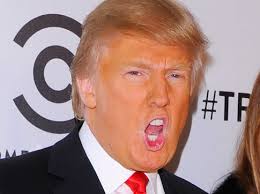
Donald Trump
Trump is speaking about the censorship of Right-wing speech, which is virtually non-existent. But he has no qualms about suppressing freedom of speech for his critics.
He blocked access by the Associated Press to White House events because it refused to bow to his demand that it refer to the Gulf of Mexico as the “Gulf of America.”
On April 9, District Judge Trevor McFadden ruled the administration’s restriction on AP journalists was “contrary to the First Amendment,” which guarantees freedom of speech.
The administration has appealed the verdict to the United States Court of Appeals for the District of Columbia Circuit.
According to Trump’s memorandum:
“As part of that review, I direct a comprehensive evaluation of all of CISA’s activities over the last 6 years, focusing specifically on any instances where CISA’s conduct appears to have been contrary to the purposes and policies identified in Executive Order 14149.
“Upon completing these reviews, the Attorney General and the Secretary of Homeland Security shall prepare a joint report to be submitted to the President, through the Counsel to the President, with recommendations for appropriate remedial or preventative actions to be taken to fulfill the purposes and policies of Executive Order 14149.”
Clearly, Trump seeks to find any plausibly legal excuse to destroy the man who dared come between him and his Russian backers in 2020—and who contradicted his lies about COVID and the election.
Donald Trump’s ambition to become absolute dictator fits brilliantly into the goals of Project 2025, also known as the Presidential Transition Project.
This is a collection of policy proposals to fundamentally reshape the U.S. federal government in the event of a Republican victory in the 2024 Presidential election.
During the 2024 Presidential campaign, Trump repeatedly denied knowing anything about it. Anyone aware of his reputation as a notorious liar knew this wasn’t true.
Established in 2022 by the Right-wing Heritage Foundation, the project aims to recruit tens of thousands of radical Right-wingers to the District of Columbia to replace existing federal civil servants.
Among Project 2025’s priorities:
- Replace tenured civil servants with thousands of political hacks to establish an absolute dictatorship under a Republican President.
- “Reform” the Department of Justice by making it the President’s personal law firm.
- Make the director of the FBI personally accountable to the President—as the head of the KGB is personally accountable to Vladimir Putin.
History-ignorant Americans are now discovering what it means to have lived in the Soviet Union of Joseph Stalin—where truth and integrity were punished and lies and treachery were rewarded.
2016 PRESIDENTIAL CAMPAIGN, 2020 PRESIDENTIL CAMPAIGN, ABC NEWS, ALTERNET, AMERICABLOG, AP, BABY BOOMER RESISTANCE, BALLOTS, BBC, BIRTH CERTIFICATES, BLOOMBERG, BLUESKY, BUZZFEED, CBS NEWS, CENSORSHIP, CHINA, CHRISTOPHER KREBS, CIVIL RIGHTS, CNN, COVID-19, CROOKS AND LIARS, CYBERSECURITY AND INFRASTRUCTURE SECURITY AGENCY (CISA), DAILY KOS, DEFENSE CYBER COMMAND, DEPARTMENT OF HOMELAND SECURITY (DHS), DEPARTMENT OF JUSTICE, DIRECTOR OF NATIONAL INTELLIGENCE, DOMINION VOTING SYSTEMS, DONALD TRUMP, DRIVER'S LICENSES, ELECTION ASSISTANCE COMMISSION, FBI, FIVETHIRTYEIGHT, FOX NEWS NETWORK, FREEDOM OF THE PRESS, HACKERS, HARPER’S MAGAZINE, HERITAGE FOUNDATION, HILLARY CLINTON, HUFFINGTON POST, JONATHAN CAPEHART, JOSEPH R. BIDEN, JOSEPH STALIN, MAIL-IN BALLOTS, MARRIAGE CERTIFICATES, MEDIA MATTERS, MOTHER JONES, MOVEON, MSNBC, NATIONAL SECURITY AGENCY, NBC NEWS, NEW REPUBLIC, NEWSDAY, NEWSWEEK, NORTH ATLANTIC TREATY ORGANIZATION (NATO), NPR, PASSPORTS, PBS NEWSHOUR, POLITICO, POLITICUSUSA, RAW STORY, REAL IDS, REPUBLICANS, REUTERS, SALON, SAVE ACT (SAFEGUARD AMERICAN VOTER ELIGILITY ACT), SEATTLE TIMES, SLATE, SOVIET UNION, TALKING POINTS MEMO, THE ATLANTIC, THE CAMP OF THE SAINTS (BOOK), THE CHICAGO SUN-TIMES, THE CHICAGO TRIBUNE, THE DAILY BEAST, THE DAILY BLOG, THE GUARDIAN, THE HILL, THE HUFFINGTON POST, THE INTERCEPT, THE LOS ANGELES TIMES, THE NATION, THE NEW REPUBLIC, THE NEW YORK TIMES, THE NEW YORKER, THE VILLAGE VOICE, THE WASHINGTON POST, THINKPROGRESS, TIME, TRUTHDIG, TRUTHOUT, TWO POLITICAL JUNKIES, U.S. NEWS & WORLD REPORT, UPI, USA TODAY, VLADIMIR PUTIN, X
In Bureaucracy, History, Law, Law Enforcement, Politics, Social commentary on July 22, 2026 at 1:12 am
In the United States of Donald Trump, protecting the right to legitimate elections can get you investigated—if not indicted.
Case in point: Christopher Krebs, who prevented Russian trolls and hackers from sabotaging the 2020 Presidential election.
During the 2016 Presidential race, Russian propaganda played a major role in convincing millions of Americans to vote for Donald Trump. Social media platforms—especially Facebook and Twitter—were flooded with genuinely fake news to sow discord among Americans and create a pathway for Trump’s election.
And where Internet trolls left off, Russian computer hackers took over.
Hillary Clinton won the popular vote—65,853,514 to 62,984,828 for Trump. But in the United States, what counts in Presidential elections is the Electoral College vote.
And there Trump won: 304 to 227.
What put him over the top in the Electoral College was the help he got from Russian dictator Vladimir Putin.

Vladimir Putin
Пресс-служба Президента РФ, CC BY 4.0 <https://creativecommons.org/licenses/by/4.0>, via Wikimedia Commons
Putin had good reason to assist Trump: Putin wanted the United States to ditch the North Atlantic Treaty Organization (NATO) alliance, which has preserved Western Europe from Russian aggression since World War II. And Trump had often attacked America’s funding of NATO as a drain on the American economy.
As for Trump, he wanted something from Putin: He wanted to be President. For this, Putin could supply monies, Internet trolls to confuse voters with falsified news, and even the hacking of key voting centers.
So notorious was the role played by Russian trolls and hackers in winning Trump the 2016 election that the Department of Homeland Security (DHS) was determined to prevent a repetition in 2020.
And the point man for this was Chris Krebs, the director of the Cybersecurity and Infrastructure Security Agency (CISA) run by DHS.
Born in Atlanta, Georgia, in 1977, Krebs had received a B.A. in environmental sciences from the University of Virginia in 1999, and a J.D. from the George Mason University School of Law in 2007.

Chris Krebs
Krebs had served as Senior Advisor to the Assistant Secretary of Homeland Security for Infrastructure Protection, and later worked in the private sector as Director for Cybersecurity Policy for Microsoft.
In preparation for the 2020 Presidential election, Krebs launched a massive effort to counter lies spread by Russians—and Americans—on social media platforms. As he explained to Scott Pelley during a “60 Minutes” interview aired on November 29, 2020:
“So we spent something on the order of three and a half years of gaming out every possible scenario for how a foreign actor could interfere with an election. Countless, countless scenarios.”
At his command lay the resources of a series of powerful Federal investigative agencies:
“We had the Department of Defense Cyber Command. We had the National Security Agency. We had the FBI. We had the Secret Service. We also had representatives from the Election Assistance Commission, which is the federal independent agency that supports the actual administration of elections.”

As a result, Krebs was widely praised for revamping the department’s cybersecurity efforts and increasing coordination with state and local governments.
The November 3, 2020 election went very smoothly. Deprived of his expected support from Russian trolls and hackers, Trump lost.
On November 12, to counter the growing chorus of lies from Trump and his Right-wing allies that the election had been stolen, Krebs put out the following statement:
“The November 3rd election was the most secure in American history. There is no evidence that any voting system deleted or lost votes, changed votes, or was in any way compromised.”
On November 17, Trump fired Chris Krebs.
Too cowardly to confront Krebs, Trump fired him by tweet—and accompanied the outrage with yet more lies:
“The recent statement by Chris Krebs on the security of the 2020 election was highly inaccurate, in that there were massive improprieties and fraud, including dead people voting, poll watchers not allowed into polling locations, glitches in the voting machines which changed votes from Trump to Biden, late voting, and many more.”
Five years later, on April 9, 2025, a re-elected Trump issued a MEMORANDUM FOR THE HEADS OF EXECUTIVE DEPARTMENTS AND AGENCIES.
Its target: Chris Krebs.
Among other charges, Trump accused Krebs of suppressing “conservative or dissenting voices and distort[ing] public opinion.”
The two biggest and most influential social media platforms—Twitter (now X) and Facebook—are owned by avowedly Right-wing billionaires: Elon Musk and Mark Zuckerberg. And they massively supported Trump in the 2016 and 2020 elections.
After he incited a treasonous riot against Congress on January 6, 2021, both platforms briefly banned him from posting. But then both—fearing “retribution” if he became President again—once again gave him access to their audiences.
Immediately after losing the 2020 Presidential election, Trump began spreading “The Big Lie”: That he had been defeated by massive voter fraud made possible through Dominion Voting Systems.
In this he was backed by a major Right-wing propagandist: The Fox News Network.
On April 18, 2023, Fox News agreed to pay Dominion Voting Systems $797 million to avert a wrongful defamation trial. Dominion’s lawsuit would have exposed how the network promoted lies about the 2020 presidential election—all the while knowing they were lies.
So much for Trump’s claims of “widespread election malfeasance and serious vulnerabilities with voting machines.”
2016 PRESIDENTIAL CAMPAIGN, 2020 PRESIDENTIL CAMPAIGN, ABC NEWS, ALTERNET, AMERICABLOG, AP, BABY BOOMER RESISTANCE, BALLOTS, BBC, BIRTH CERTIFICATES, BLOOMBERG, BLUESKY, BUZZFEED, CBS NEWS, CENSORSHIP, CHINA, CHRISTOPHER KREBS, CIVIL RIGHTS, CNN, COVID-19, CROOKS AND LIARS, CYBERSECURITY AND INFRASTRUCTURE SECURITY AGENCY (CISA), DAILY KOS, DEFENSE CYBER COMMAND, DEPARTMENT OF HOMELAND SECURITY (DHS), DEPARTMENT OF JUSTICE, DIRECTOR OF NATIONAL INTELLIGENCE, DOMINION VOTING SYSTEMS, DONALD TRUMP, DRIVER'S LICENSES, ELECTION ASSISTANCE COMMISSION, FBI, FIVETHIRTYEIGHT, FOX NEWS NETWORK, FREEDOM OF THE PRESS, HACKERS, HARPER’S MAGAZINE, HERITAGE FOUNDATION, HILLARY CLINTON, HUFFINGTON POST, JONATHAN CAPEHART, JOSEPH R. BIDEN, JOSEPH STALIN, MAIL-IN BALLOTS, MARRIAGE CERTIFICATES, MEDIA MATTERS, MOTHER JONES, MOVEON, MSNBC, NATIONAL SECURITY AGENCY, NBC NEWS, NEW REPUBLIC, NEWSDAY, NEWSWEEK, NORTH ATLANTIC TREATY ORGANIZATION (NATO), NPR, PASSPORTS, PBS NEWSHOUR, POLITICO, POLITICUSUSA, RAW STORY, REAL IDS, REPUBLICANS, REUTERS, SALON, SAVE ACT (SAFEGUARD AMERICAN VOTER ELIGILITY ACT), SEATTLE TIMES, SLATE, SOVIET UNION, TALKING POINTS MEMO, THE ATLANTIC, THE CAMP OF THE SAINTS (BOOK), THE CHICAGO SUN-TIMES, THE CHICAGO TRIBUNE, THE DAILY BEAST, THE DAILY BLOG, THE GUARDIAN, THE HILL, THE HUFFINGTON POST, THE INTERCEPT, THE LOS ANGELES TIMES, THE NATION, THE NEW REPUBLIC, THE NEW YORK TIMES, THE NEW YORKER, THE VILLAGE VOICE, THE WASHINGTON POST, THINKPROGRESS, TIME, TRUTHDIG, TRUTHOUT, TWO POLITICAL JUNKIES, U.S. NEWS & WORLD REPORT, UPI, USA TODAY, VLADIMIR PUTIN, X
In Bureaucracy, History, Law, Law Enforcement, Politics, Social commentary on July 21, 2026 at 12:10 am
On the evening of July 16, President Donald Trump delivered a primetime television speech on election security—and the dangers of foreign interference. Specifically, he claimed that the country’s voting systems were vulnerable to being “rigged and stolen.”
But he provided no new evidence of a single fraudulent vote cast in any election:
“For many years I’ve called for bold, swift and decisive action to protect the integrity of America’s elections. Every American deserves to know that, when they cast their vote, that vote will be counted accurately in a system, and that is to make that system secure.
“Unfortunately, the system we have today falls catastrophically short of that standard. Tonight, I’m announcing the immediate declassification and release of critical intelligence, revealing shocking vulnerabilities in our election infrastructure.”
Trump claimed he was declassifying Intelligence documents that included allegations of Chinese efforts to influence American elections, concerns over voting machine security, and that noncitizens are found on certain states’ voter rolls.
“Allegations”—accusations—are not evidence. And the United States has never accused China of tainting or deleting voter records.
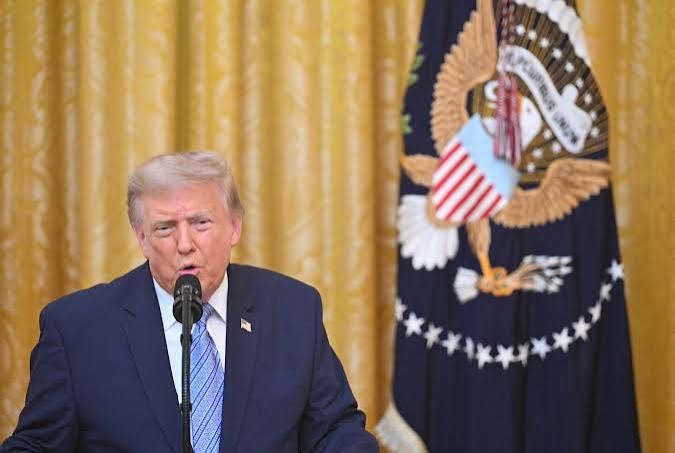
Donald Trump
“This evidence shows that the election system we have dangerously exposes and really exposes, like levels never thought possible, to hacking, exploitation, and foreign interference.
“Just as disturbingly, this vital information has for many years been covered up and hidden from you, the American people — our beautiful, our great American people.”
Yet “vulnerabilities” are different than actual evidence of election interference. And Trump provided none.
As usual, no Trump speech is complete without a boast of his own greatness:
“in mid-2018, China was working to influence the results of the US midterm elections and later the results of the 2020 presidential election itself. Separately, in mid-2019, the Chinese government’s strategy against the United States was focused on undermining domestic confidence in the US president.
“They wanted to just make you sound like your president wasn’t so hot, when actually your president has done a great job.”
Toward the end of his speech, Trump gave his reason for giving it:
“But most importantly, addressing this crisis of election security demands that Congress must pass the SAVE America Act. How easy is that to do, unless you want to cheat.
“And hopefully there will be no corrupt mail-in ballots, which, if you watched California and so many other places, mail-in ballots are inherently corrupt. So, you would have no mail-in ballots except for illness, disability, military deployment, or travel if you’re going away on business or vacation.”
All 50 states allow mail-in voting (often referred to as absentee voting). However, the rules and requirements for who can access a mail-in ballot vary significantly by state. There’s no evidence of widespread fraud in mail balloting.
It’s important to remember that, for all Trump’s stated concerns about preserving election integrity, on July 9, he fired the three remaining members of the Election Assistance Commission, which was created by Congress to help states administer secure elections.

The House passed the Save Act (Safeguard American Voter Eligibility Act) but it does not have the support of all Republicans in the Senate. Thus, it has no chance of becoming law this year.
So why is Trump so fired up about the SAVE Act? As Jonathan Capehart of MS NOW stated on the July 17 edition of The PBS Newshour:
“He’s very scared about what could happen if Democrats retake the House and retake the Senate. He has said as much on the record. If they take over, I will be investigated. And, quite frankly, there are reasons to investigate him and members of his administration.”
According to the Center for American Progress, a public policy research and advocacy organization, the SAVE Act would:
- Disenfranchise millions of now-eligible—and mostly Democratic—voters.
- Require all Americans to prove their citizenship status by presenting documentation—in person—when registering to vote or updating their voter registration information.
- Require the vast majority of Americans to rely on a passport or birth certificate to prove their citizenship.
- Force more than 140 million American citizens to pay for a passport.
- Force up to 69 million women who have taken their spouse’s name to obtain a birth certificate matching their legal name.
- Prevent Americans from registering to vote by mail by requiring documentation to be presented in person would prevent Americans from registering to vote by mail.
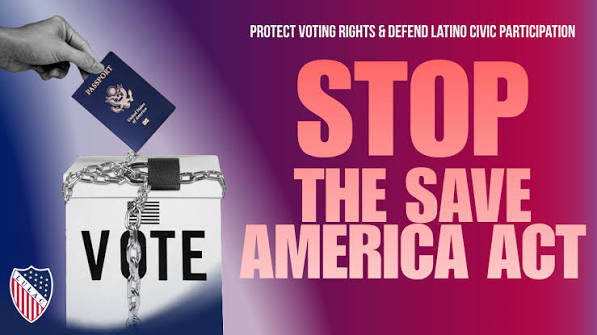
- Requite voters to appear in person, with original documentation, to even simply update their voter registration information for a change of address or change in party affiliation.
- These restrictions would be especially hard for more than 60 million Americans living in rural areas. (Ironically, millions of Right-wing Trump supporters living in rural areas would also be affected.)
- Drivers licenses—including REAL IDs—and military or tribal IDs would not be sufficient forms of documentation to prove citizenship.
Despite the disastrous changes this legislation would inflict on American elections, leadership in the U.S. House of Representatives—specifically, Speaker Mike Johnson—has declared that passing the SAVE Act is one of their top priorities this year.
So how did Donald Trump reward Chris Krebs, the man who prevented Russian interference in the 2020 Presidential election?
Trump fired him.
2016 PRESIDENTIAL ELECTION, 2020 PRESIDENTIAL ELECTION, ABC NEWS, ACCESS HOLLYWOOD, ALTERNET, ALVIN BRAGG, AMERICABLOG, ANNE BOLEYN, ANNE OF CLEVES, ANNE OF THE THOUSAND DAYS (MOVIE), AP, BABY BOOMER RESISTANCE, BBC, BILLY BUSH, BLOOMBERG NEWS, BUZZFEED, CATHERINE OF ARAGON, CATHERINE PARR, CBS NEWS, CNN, CROOKS AND LIARS, DAILY KOS, DONALD TRUMP, ELIZABETH 1, FIVETHIRTYEIGHT, GENEVIEVE BUJOLD, GRETCHEN WHITMER, HARPER’S MAGAZINE, HENRY VIII, HUFFINGTON POST, HUSH MONEY, IVANA TRUMP, JANE SEYMOUR, JANUARY 6 COUP ATTEMPT, JOSEPH BIDEN, KATHERINE HOWARD, MARLA MAPLES, MEDIA MATTERS, MELANIA TRUMP, MICHAEL COHEN, MOTHER JONES, MOVEON, MSNBC, NBC NEWS, NEW REPUBLIC, NEW YORK TIMES V. SULLIVAN, NEWSDAY, NEWSWEEK, NPR, PBS NEWSHOUR, POLITICO, POLITICUSUSA, PROUD BOYS, RAW STORY, REUTERS, RICHARD BURTON, SALON, SEATTLE TIMES, SIDNEY POWELL, SLATE, STORMY DANIELS, SUPREME COURT, TALKING POINTS MEMO, THE ATLANTIC, THE CHICAGO SUN-TIMES, THE CHICAGO TRIBUNE, THE DAILY BEAST, THE DAILY BLOG, THE GUARDIAN, THE HILL, THE HUFFINGTON POST, THE INTERCEPT, THE LOS ANGELES TIMES, THE NATION, THE NEW REPUBLIC, THE NEW YORK TIMES, THE NEW YORKER, THE VILLAGE VOICE, THE WASHINGTON POST, THINKPROGRESS, THOMAS CROMWELL, THOMAS MORE, TIME, TRUTHDIG, TRUTHOUT, U.S. NEWS & WORLD REPORT, UPI, USA TODAY, WHARTON SCHOOL OF THE UNIVERSITY OF PENNSYLVANIA, X
In Bureaucracy, History, Law, Law Enforcement, Politics, Social commentary on July 17, 2026 at 12:10 am
Donald Trump has never shown any interest in—let alone knowledge of—history. Yet he might well feel warmly towards an English king who took power 508 years before he did.
Henry VIII came to the throne in 1509 and ruled as a tyrant until his death in 1547.
Trump came to the Presidency in 2017 and ruled as a tyrant until his electoral ouster in 2021. Then he was re-elected in 2024.
In his youth Henry was athletic, highly intelligent, and spoke French, Latin and Spanish. Highly religious, he immensely enjoyed hunting and tennis. His scholarly interests included writing books and music, and he was a lavish patron of the arts.
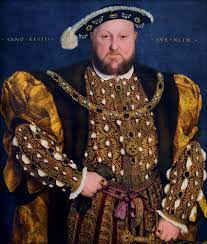
Henry VIII
Trump graduated from the Wharton School of the University of Pennsylvania in 1968 with a B.S. in Economics. In 2015, his lawyer, Michael Cohen, threatened to sue Trump’s high school, colleges, and the College Board if they released Trump’s academic records.
At six-feet-two with a slim athletic build, fair complexion and prowess on the jousting and tennis courts, Henry was considered extremely handsome, and even referred to as an “Adonis.” But as he aged, he became obese and his health suffered.
As a young man, standing six-feet-three and with an athletic build, Trump was considered handsome and a ladies’ man. But he thought exercise a waste of energy, saying it depletes the body’s energy. By the time he ran for President. By 2015-16, he was grotesquely overweight, with orange skin and stood with a pronounced forward tilt.
Henry married six times—resulting in two divorces (Catherine of Aragon and Anne of Cleves), two beheadings (Anne Boleyn and Katherine Howard) and one death after childbirth (Jane Seymour). His last wife, Catherine Parr, outlived him.
Trump has been married three times—to Ivana Trump, Marla Maples and Melania Trump.
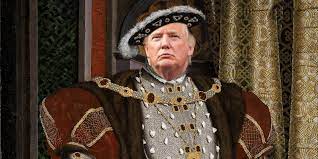
Parody of Donald Trump as Henry VIII
Both during and in-between marriages he bedded many other women—and boasted about it. His most infamous boast almost cost him the White House.
During a 2005 exchange with Billy Bush, then the host of Access Hollywood, Trump said: “You know I’m automatically attracted to beautiful—I just start kissing them. It’s like a magnet. Just kiss. I don’t even wait. And when you’re a star they let you do it. You can do anything. Grab them by the pussy. You can do anything.”
Henry VIII ruled England for 36 years, made radical changes to the English Constitution, and ushered in the theory of the divine right of kings in opposition to papal supremacy.
Donald Trump has ruled the United States for five and a half years, put radical Right-wing Justices on the Supreme Court, and boasted that it would be great if the country had—like China—a “President-for-Life.”
To make that a reality, he refused to accept electoral defeat in 2020 and incited a violent attack on Congress to stop the count of Electoral College votes proving that former Vice President Joseph Biden had won.
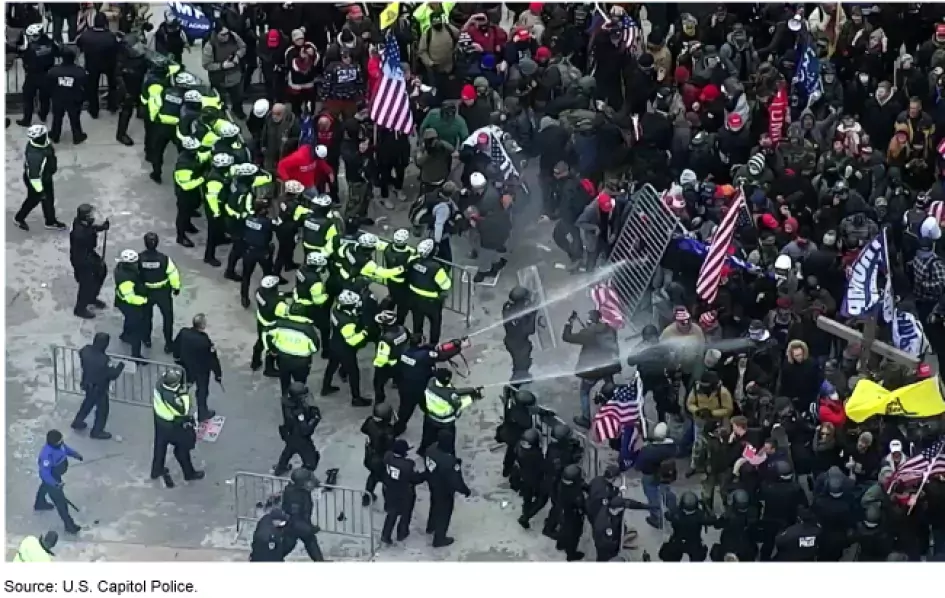
Stormtrumpers attacking Capitol police
Henry was an intellectual, the first English king with a modern humanist education. He owned a large library, annotated many books and published one of his own.
Trump published 20 books under his name, but all were written by ghostwriters. This is confirmed by an analysis of his speech patterns—which puts him at a fourth-grade level, the lowest of the previous 15 Presidents.
Henry was ridiculed for his obesity and was subject to raging mood swings and paranoia.
Trump was ridiculed for his obesity, his slow reading of speeches and his obscene egotism: How smart he is, his wealth, his brilliance.
He spouted conspiracy theories:
- The “Deep State” was out to destroy him.
- News media was “the enemy of the people.”
- He lost the 2020 Presidential election because of a conspiracy involving Democrats and rigged voting machines.
It is estimated that Henry executed up to 57,000 people—members of the clergy, ordinary citizens and nobles who had taken part in uprisings and protests.
His victims fell into three categories: Heresy; Treason; and Denial of his Royal Supremacy as Head of the English Church.
Among the most prominent: Sir Thomas More, his former chancellor, and Thomas Cromwell, his chief minister.
Trump has not executed anyone so far, but he encouraged his legions of Right-wing supporters to attack those he considered enemies: The media, liberals, Hispanics, blacks, “uppity” women, Asians.
After he publicly invited the Proud Boys paramilitary group to “stand back and stand by,” its members conspired to kidnap and execute Michigan Governor Gretchen Whitmer, who had resisted Trump’s demand to “open” the state during the Coronavirus pandemic.
Henry VIII is largely remembered today for his six wives, massive appetite for food, his bloated appearance and his murderous tyranny.
Donald Trump will be remembered as the first President who tried to violently remain in office despite losing a Presidential election, his two impeachments, and, to date, his being the only former President to be convicted for 34 felonies.
Englishmen believed the country would collapse without a male heir to the throne.
Americans believe the country will collapse if a President stands trial for his crimes.
England survived.
So will the United States.
AL GREEN, ALEX PRETTI, ALEXI NAVALNY, ALTERNET, AMERICABLOG, AP, BABY BOOMER RESISTANCE, BBC, BIRTHRIGHT CITIZENSHIP, BLOOMBERG, BLUESKY, BUZZFEED, CBS NEWS, CNN, CONVERSATION WITH AN AMERICAN WRITER (POEM), CROOKS AND LIARS, DAILY KOS, DEPARTMENT OF HOMELAND SECURITY, DEPARTMENT OF JUSTICE, DEPARTMENT OF VETERANS AFFAIRS, DONALD TRUMP, EIGHTH AMENDMENT, FIFTH AMENDMENT, FIVETHIRTYEIGHT, HARPER’S MAGAZINE, HISTORY, HOUSE OF REPRESENTATIVES, HUFFINGTON POST, IMMIGRATION AND CUSTOMS ENFORCEMENT (ICE), IMPEACHMENT, JASON WATSON, MEDIA MATTERS, MOTHER JONES, MOVEON, MSNBC, NAZI GERMANY, NBC NEWS, news, NEWSDAY, NEWSWEEK, NPR, OLGA MISIK, PBS NEWSHOUR, POLITICO, POLITICS, POLITICUSUSA, RAW STORY, RENEE GOOD, REUTERS, RUSSIA, SALON, SEATTLE TIMES, SLATE, SOPHIE SCHOLL, TALKING POINTS MEMO, TARIFFS, THE ATLANTIC, THE CHICAGO SUN-TIMES, THE CHICAGO TRIBUNE, THE DAILY BEAST, THE DAILY BLOG, THE GUARDIAN, THE HILL, THE HUFFINGTON POST, THE INTERCEPT, THE LOS ANGELES TIMES, THE NATION, THE NEW REPUBLIC, THE NEW YORK TIMES, THE NEW YORKER, THE VILLAGE VOICE, THE WASHINGTON POST, THINKPROGRESS, TIME, TRUTHDIG, TRUTHOUT, TWO POLITICAL JUNKIES, U.S. NEWS & WORLD REPORT, UNITED STATES AIR FORCE, UNITED STATES CAPITOL, UNITED STATES CONSTITUTION, UPI, USA TODAY, VLADIMIR PUTIN, X, YEVGENY YEVTUSHENKO
In Bureaucracy, History, Law, Law Enforcement, Military, Politics, Social commentary on July 16, 2026 at 12:10 am
On July 27, 2019, Olga Misik—a 17-year-old activist in the Russia of Vladimir Putin—joined thousands of people attending an unauthorized protest in Moscow against the bar on opposition activists competing for seats in the Duma (parliament) election against Putin’s lackeys.
Olga was sentenced on May 11, 2021, for vandalism. She received two years and two months of “restricted liberty.”
Prior to her sentencing, Misik read a prepared statement to the court. Among its passages:
“Someone said, “It’s impossible to be afraid if you know you’re right.” But Russia teaches us to always be afraid. A country that attempts to kill us every day, and if you’re not part of the system, you might as well be dead already.
“Of course I was at that protest. I don’t regret it and more so am proud of my actions. In reality, I had no choice. I had to do everything in my power, thus I have no right to regret it. And if I had the option to go back in time, I would do it again….
“I guess hope is insanity. But not doing something you believe in, just because everyone around you thinks it’s pointless, that is learned hopelessness. And better to be insane in your eyes than hopeless in my own….”
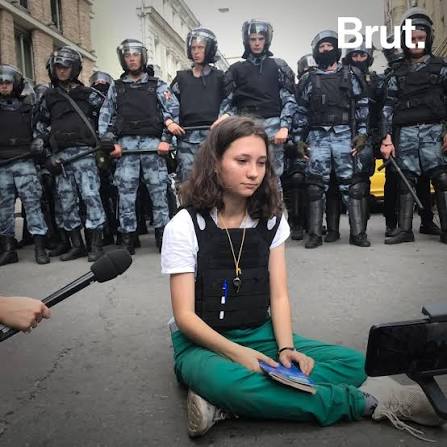
Olga Misik
On July 1, 2026, Air Force Major Jason Watson, dressed in full military uniform and holding a sign reading
stood on the steps of the United States Capitol Building. Speaking in a moderate, controlled voice, Watson laid out a damning indictment of the Trump administration:
“There are innumerable more impeachable offenses that I could cover:
—Denying congressional oversight of immigrant detention centers that look increasingly like CECOT.
—Suing media organizations, colleges, and law firms for billions of dollars while abusing executive branch agencies to extort settlements.
—Allowing a mega-donor to advertise products on the White House lawn.
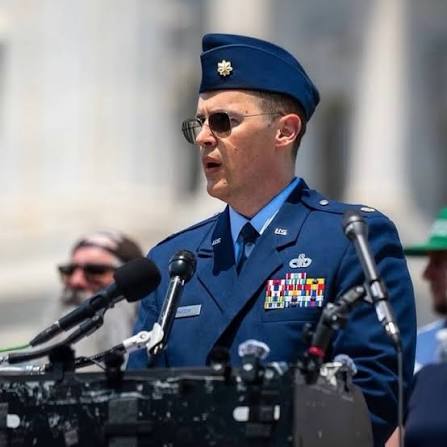
Jason Watson
—Trading pardons for donations.
—Levying illegal tariffs.
—Weaponizing the Department of Justice against political adversaries while ignoring crimes committed by supporters and enablers.
—Attempting to reverse birthright citizenship through executive order.
“For all of these high crimes and misdemeanors, the President and Vice President must be impeached, convicted, and removed.”
Olga Misik compared her trial to that of Sophie Scholl, an anti-Nazi political activist executed by Nazi Germany.
“A fascist government never seems fascist from the inside. It seems like just some minuscule, inconsequential censorship and some targeted repression that will never reach you. I’m not the one on trial today. Today, you are deciding not my fate but yours, and you still have a chance to do the right thing….
“I am not promising victory tomorrow, the day after, in a year, or 10. But someday we will win, because love and youth always win. I can’t promise to make it there alive, but I really hope you live to see it.
“You know what I’m actually being tried for. For reading the constitution. For my political positions. For being named person of the year. For my principles. For my actions.
“The Nazi regime eventually crumbled, as will the fascist regime in Russia. I don’t know when it will happen, be it a week, a year, or decade, but I know that someday we will be victorious, because love and youth always prevail….
“Sophie Scholl’s last words before her execution were, ‘The sun still shines.’ Indeed, the sun still shines. I couldn’t see it out the window of the detention center, but I always knew it was there. And if now, in such dark times, we can turn to the light, then maybe victory isn’t so far after all.”
Continuing his speech on the Congressional steps, Jason Watson said:
“The constitutional impeachment process is our best pathway to restore fidelity to our Constitution….
“But Congress remains unconvinced of the urgency and necessity of honoring its oath. So we must persuade them with our unrelenting, uncompromising civil resistance. I am calling on average Americans everywhere to peacefully exercise your First Amendment rights every day until this administration is removed and our democratic republic is restored.
I believe in America. I believe in us.
Initially, Watson had been accompanied by the Texas Democratic Congressman Al Green, but when he left the area, police said he needed to stop his protest or be arrested. Protests are prohibited at the U.S. Capitol unless participants are accompanied by a member of Congress.
Watson refused, so Capitol Police arrested him for “Crowding, Obstructing and Incommoding.”
According to an Air Force spokesperson, Watson has received at least 19 awards and seven decorations during his 17-year career.
He could be court-martialed or face disciplinary measures under the Uniform Code of Military Justice.
In his 1960 poem, “Conversation With an American Writer,” the Russian poet, Yevgeney Yevtushenko spoke for those Russians who had maintained their integrity in the face of Stalinist terror:
“You have courage,” they tell me.
It’s not true. I was never courageous.
I simply felt it unbecoming
to stoop to the cowardice of my colleagues.
In Russia—under Vladimir Putin—acting on moral courage is no small thing.
In the United States—under Donald Trump—acting on moral courage no small thing either.
AL GREEN, ALEX PRETTI, ALEXI NAVALNY, ALTERNET, AMERICABLOG, AP, BABY BOOMER RESISTANCE, BBC, BIRTHRIGHT CITIZENSHIP, BLOOMBERG, BLUESKY, BUZZFEED, CBS NEWS, CNN, CONVERSATION WITH AN AMERICAN WRITER (POEM), CROOKS AND LIARS, DAILY KOS, DEPARTMENT OF HOMELAND SECURITY, DEPARTMENT OF JUSTICE, DEPARTMENT OF VETERANS AFFAIRS, DONALD TRUMP, EIGHTH AMENDMENT, FIFTH AMENDMENT, FIVETHIRTYEIGHT, HARPER’S MAGAZINE, HOUSE OF REPRESENTATIVES, HUFFINGTON POST, IMMIGRATION AND CUSTOMS ENFORCEMENT (ICE), IMPEACHMENT, JASON WATSON, MEDIA MATTERS, MOTHER JONES, MOVEON, MSNBC, NAZI GERMANY, NBC NEWS, NEWSDAY, NEWSWEEK, NPR, OLGA MISIK, PBS NEWSHOUR, POLITICO, POLITICUSUSA, RAW STORY, RENEE GOOD, REUTERS, RUSSIA, SALON, SEATTLE TIMES, SLATE, SOPHIE SCHOLL, TALKING POINTS MEMO, TARIFFS, THE ATLANTIC, THE CHICAGO SUN-TIMES, THE CHICAGO TRIBUNE, THE DAILY BEAST, THE DAILY BLOG, THE GUARDIAN, THE HILL, THE HUFFINGTON POST, THE INTERCEPT, THE LOS ANGELES TIMES, THE NATION, THE NEW REPUBLIC, THE NEW YORK TIMES, THE NEW YORKER, THE VILLAGE VOICE, THE WASHINGTON POST, THINKPROGRESS, TIME, TRUTHDIG, TRUTHOUT, TWO POLITICAL JUNKIES, U.S. NEWS & WORLD REPORT, UNITED STATES AIR FORCE, UNITED STATES CAPITOL, UNITED STATES CONSTITUTION, UPI, USA TODAY, VLADIMIR PUTIN, X, YEVGENY YEVTUSHENKO
In Bureaucracy, History, Law, Law Enforcement, Military, Politics, Social commentary on July 15, 2026 at 12:40 am
On July 27, 2019, Olga Misik—a 17-year-old activist in the Russia of Vladimir Putin—joined thousands of people attending an unauthorized protest in Moscow against the bar on opposition activists competing for seats in the Duma (parliament) election against Putin’s lackeys.
Misik was released after the protest in 2019, but she later found herself facing charges related to a protest in 2020.
Olga was sentenced on May 11, 2021, for vandalism. She received two years and two months of “restricted liberty,” which amounted to home confinement, including a curfew that required her to be inside her house from 10 p.m. and 6 a.m.
Prior to her sentencing, Misik read a prepared statement to the court. Among its passages:
“Every night I wake from the smallest of sounds. I keep imagining footsteps in the hallway. Panic washes over me from the sound of the gravel crunching under the wheels of cars outside my window.
“I feel like all of the fear accumulated over the past nine months is most concentrated in this exact moment, in my final statement, because public speaking scares me more than the sentencing. My heart is racing at 151 beats per minute, and it feels as though it could explode any second now….”
On July 1, 2026, Air Force Major Jason Watson, dressed in full military uniform and holding a sign reading IMPEACH CONVICT REMOVE stood on the steps of the United States Capitol.
Speaking in a moderate, controlled voice, Watson laid out a damning indictment of the crimes thus far committed by the Trump administration:
“For the past 18 months, we the people have allowed the highest levels of the executive branch of the federal government to violate our Constitution and their oaths to it with impunity.
“When the president of the United States orders military action against foreign countries absent an emergency scenario, where American interests are under imminent dire threat as was done with Venezuela, Cuba and Iran, that’s an unconstitutional usurpation of Congress’s authority and a violation of the War Powers Clause.

Donald Trump
“These violations resulted in the deaths of 13 service members and injuries of hundreds more. For this, the president and vice president must be impeached, convicted and removed.
“When the President of the United States grants an unelected mega-donor sweeping authority to shut down large swaths of our federal government, along with unrestricted access to our government databases, that is an unconstitutional circumvention of Congress’s advice-and-consent authority under the Appointments Clause and Congress’s power of the purse under the Appropriations Clause.
“These violations exposed every American’s sensitive personal data to leaks and exploitation, illegally terminated tens of thousands of federal civil servants, crippled support for Americans needing medical care and disaster preparedness, and—most tragically—resulted in the deaths of hundreds of thousands of the world’s most impoverished people through the inhumane, abrupt cessation of U.S. aid.
“For this, the President and Vice President must be impeached, convicted, and removed.
Continuing her courtroom statement, Olga Misik said:
“I wasn’t scared when they put me in the detention center….My own fate was the last thing on my mind. It is very strange, maybe some sort of coping mechanism, but in those days I wasn’t afraid once….
“I was worried and stressed about how things would play out, but unafraid. The night was beautiful. I was aware that it could be my last one in freedom, and yet that did not scare me.
“However, after the search, for the past nine months, I have been scared constantly. Ever since the night in the detention center, I haven’t been able to get a good night’s sleep once.”
Continuing his speech on the Congressional steps, Jason Watson said:
“When the President of the United States directs the Department of Homeland Security to deny hundreds of people due process before illegally detaining them and sending them to a foreign prison notorious for human rights abuses, that is a violation of our Fifth and Eighth Amendment rights….
“For this, the President and Vice President must be impeached, convicted, and removed.
“When the President of the United States sponsors violence against the American people engaged in their constitutional right to peacefully assemble and protest, that is a violation of our First Amendment rights.

ICE victim Renee Good

CBP victim Alex Pretti
“Pastors praying for DHS agents were violently attacked without provocation. A legal observer lost an eye after being struck by a so-called non-lethal round fired by an ICE agent.
“A woman [Renee Good, a 37-year-old mother and poet] attempting to follow chaotic and contradictory DHS instructions was fatally shot.
“A subdued man [Alex Pretti, an intensive care nurse for the U.S. Department of Veterans Affairs] who posed no threat was fatally shot after having his firearm removed.
“There are innumerable more impeachable offenses that I could cover: denying congressional oversight of immigrant detention centers that look increasingly like CECOT; suing media organizations, colleges, and law firms for billions of dollars while abusing executive branch agencies to extort settlements; allowing a mega-donor to advertise products on the White House lawn; trading pardons for donations; levying illegal tariffs; weaponizing the Department of Justice against political adversaries while ignoring crimes committed by supporters and enablers; and attempting to reverse birthright citizenship through executive order.”
AL GREEN, ALEX PRETTI, ALEXI NAVALNY, ALTERNET, AMERICABLOG, AP, BABY BOOMER RESISTANCE, BBC, BIRTHRIGHT CITIZENSHIP, BLOOMBERG, BLUESKY, BUZZFEED, CBS NEWS, CNN, CONVERSATION WITH AN AMERICAN WRITER (POEM), CROOKS AND LIARS, DAILY KOS, DEPARTMENT OF HOMELAND SECURITY, DEPARTMENT OF JUSTICE, DEPARTMENT OF VETERANS AFFAIRS, DONALD TRUMP, EIGHTH AMENDMENT, FIFTH AMENDMENT, FIVETHIRTYEIGHT, HARPER’S MAGAZINE, HOUSE OF REPRESENTATIVES, HUFFINGTON POST, IMMIGRATION AND CUSTOMS ENFORCEMENT (ICE), IMPEACHMENT, JASON WATSON, MEDIA MATTERS, MOTHER JONES, MOVEON, MSNBC, NAZI GERMANY, NBC NEWS, NEWSDAY, NEWSWEEK, NPR, OLGA MISIK, PBS NEWSHOUR, POLITICO, POLITICUSUSA, RAW STORY, RENEE GOOD, REUTERS, RUSSIA, SALON, SEATTLE TIMES, SLATE, SOPHIE SCHOLL, TALKING POINTS MEMO, TARIFFS, THE ATLANTIC, THE CHICAGO SUN-TIMES, THE CHICAGO TRIBUNE, THE DAILY BEAST, THE DAILY BLOG, THE GUARDIAN, THE HILL, THE HUFFINGTON POST, THE INTERCEPT, THE LOS ANGELES TIMES, THE NATION, THE NEW REPUBLIC, THE NEW YORK TIMES, THE NEW YORKER, THE VILLAGE VOICE, THE WASHINGTON POST, THINKPROGRESS, TIME, TRUTHDIG, TRUTHOUT, TWO POLITICAL JUNKIES, U.S. NEWS & WORLD REPORT, UNITED STATES AIR FORCE, UNITED STATES CAPITOL, UNITED STATES CONSTITUTION, UPI, USA TODAY, VLADIMIR PUTIN, X, YEVGENY YEVTUSHENKO
In Bureaucracy, History, Law, Law Enforcement, Military, Politics, Social commentary on July 14, 2026 at 12:10 am
“I just read her final speech. And you know what? I felt ashamed,” Andrei Chvanov, from Tatarstan, wrote on Facebook.
He was referring to Olga MisIk, a 17-year-old activist in the Russia of President Vladimir Putin.
“Because my threshold of fear is much lower….She holds strong, jokes, writes, and is 100 percent sure that she is right. And she is right. She sees the truth. And she is not afraid. Not many people in our country have such a gift.”
On July 27, 2019, Misik was among thousands of people attending an unauthorized protest in Moscow against the bar on opposition activists competing for seats in the Duma (parliament) election against Putin’s lackeys.
Heavily-armed riot police—wielding shields, batons and helmets—stood behind her. As if oblivious to their presence, Olga sat cross-legged in the middle of the street.
She pulled out her copy of Russia’s 1993 constitution and began reading from it.
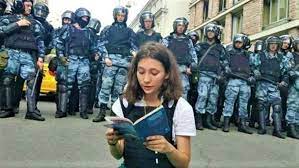
Olga Misik
“I read four sections,” she said in a later interview with the BBC. “An article talking about the right to peacefully protest, an article saying that everyone can take part in elections, has the right to freedom of speech and that the people’s will and power are the most important thing for the country.
“The situation in Russia is currently extremely unstable. The authorities are clearly getting very scared if they are consolidating armed forces from different parts of the country to chase peaceful protesters. And people’s mentality has changed, as I can see.”
Olga left the scene after the reading, but was later arrested on her way to a metro station. She was among more than 1,000 protesters arrested as a result of the rally. She had been detained four times in the past three months. She said she was peacefully protesting each time.
Misik was released after the protest in 2019, but she later faced charges related to a protest in 2020.
Although she is in no way biologically related to United States Air Force Major Jason Watson, in spirit they could easily be sister and brother.
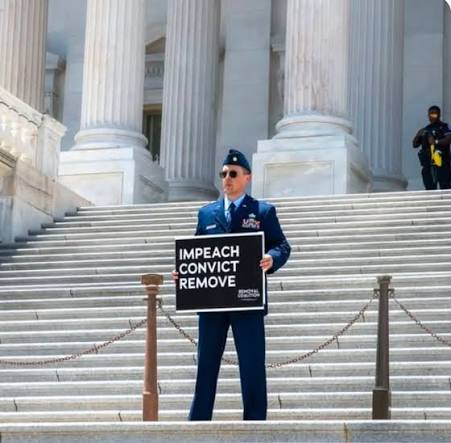
Jason Watson
On July 1, 2026, Watson, dressed in full military uniform and holding a sign reading
IMPEACH
CONVICT
REMOVE
stood on the steps of the United States Capitol, where protests are prohibited unless participants are accompanied by a member of Congress. Speaking in a moderate, controlled voice, Watson laid out a damning indictment of the crimes thus far committed by the Trump administration:
“My name is Jason Watson. I’m an active-duty major in the United States Air Force. However, who I am is immaterial. In the grand scheme of things, I’m just a nobody. What matters far more than who I am is what I have to say and the price I’m willing to pay to say it.
“I, Jason Paul Watson, do solemnly swear that I will support and defend the Constitution of the United States against all enemies, foreign and domestic. That I will bear true faith and allegiance to the same.
“That I take this obligation freely without any mental reservation or purpose of evasion, and that I will well and faithfully discharge the duties of the office upon which I’m about to enter. So help me God.
“I first swore this oath over 20 years ago upon entering basic cadet training at the United States Air Force Academy in late June of 2005. I’ve repeated it many times over since then. The oath of office means everything to me. It is foundational to our system of governance in the United States.
“The oath ensures that officials of our government owe allegiance not to any individual or political party, but to our Constitution and the democratic republic it represents.”
According to the Moscow Times, Olga and two friends were accused of vandalism after police said they hung a banner supporting Putin arch-foe Alexi Navalny and other political prisoners on a government building.
In addition, said the indictment, they “splashed red paint on a security booth outside the Prosecutor General’s Office building in August 2020.”
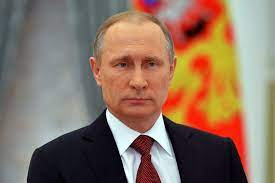
Vladimir Putin
Misik wrote on social media that she was dragged out of her home by police after the 2020 protest.
Olga was sentenced on May 11, 2021, for vandalism. She received two years and two months of “restricted liberty,” which amounted to home confinement, including a curfew that required her to be inside her house from 10 p.m. and 6 a.m. Her two friends received similar sentences.
Prior to her sentencing, Misik read a prepared statement to the court. Among its most moving passages:
“People often asked, ‘Aren’t I scared?’ More commonly outside the country than in Russia, because they don’t get the reality of life in Russia. They don’t understand the knock on the door in the middle of the night, the arrests and imprisonment without reason or cause.
“They don’t realize that the feeling of despair is passed on to us through our mothers’ milk. And that that feeling of despair causes any semblance of fear to atrophy, infecting us with learned hopelessness. What use is fear if you have no say in your future?
“However, after the search, for the past nine months, I have been scared constantly. Ever since the night in the detention center, I haven’t been able to get a good night’s sleep once.”
2016 PRESIDENTIAL ELECTION, ABC NEWS, ALTERNET, AMERICABLOG, AP, “MR. PRESIDENT” TITLE, BABY BOOMER RESISTANCE, BBC, BLOOMBERG, BUZZFEED, CBS NEWS, CNN, CROOKS AND LIARS, DAILY KOS, DAVID PECKER, DONALD TRUMP, FBI, FIVETHIRTYEIGHT, HARPER’S MAGAZINE, HUFFINGTON POST, JIMMY CARTER, JOHN F. KENNEDY, JOSEPH BIDEN, KAREN MCDOUGAL, KONSTANTIN CHERNENKO, LEONID BREZHNEV, MEDIA MATTERS, MIKHAIL GORBACHEV, MOTHER JONES, MOVEON, MSNBC, NATIONAL ENQUIRER, NBC NEWS, NEW REPUBLIC, NEWSDAY, NEWSWEEK, NPR, PBS NEWSHOUR, POLITICO, POLITICUSUSA, RAW STORY, REUTERS, Ronald Reagan, SALON, SEATTLE TIMES, Secret Service, SLATE, SOVIET UNION, STOLEN VALOR ACT, STORMY DANIELS, TALKING POINTS MEMO, THE ATLANTIC, THE CHICAGO SUN-TIMES, THE CHICAGO TRIBUNE, THE DAILY BEAST, THE DAILY BLOG, THE GUARDIAN, THE HILL, THE HUFFINGTON POST, THE INTERCEPT, THE LOS ANGELES TIMES, THE NATION, THE NEW REPUBLIC, THE NEW YORK TIMES, THE NEW YORKER, THE VILLAGE VOICE, THE WASHINGTON POST, THINKPROGRESS, TIME, TRUTHDIG, TRUTHOUT, TWO POLITICAL JUNKIES, U.S. NEWS & WORLD REPORT, UNITED STATES SECRET SERVICE, UPI, USA TODAY, X, YURI ANDROPOV
In Bureaucracy, History, Law, Law Enforcement, Medical, Politics, Social commentary on July 10, 2026 at 12:22 am
The 2024 Presidential election has raised serious issues about the office which demand addressing.
And there’s still time for such remedies to be in place by the time the 2028 election occurs.
Reform #1: Institute mandatory FBI background investigations on all declared Presidential candidates.
Donald Trump’s trial for hush money payments to porn “star” Stormy Daniels has highlighted an issue that should have been addressed long ago: Americans don’t know as much about their candidates for President as they think they do.
- As the trial testimony of former National Enquirer publisher David Pecker revealed: In August, 2015, he met with Trump at Trump Tower and offered to use the Enquirer to catch and kill any allegations of extramarital affairs against Trump.
- Later he personally facilitated a $150,000 payment to former Playboy Playmate Karen McDougal to keep her affair with Trump hushed up.
- This came in addition to Trump’s paying $130,000 in hush money to Daniels to ensure his 2006 tryst with her didn’t emerge during the campaign.
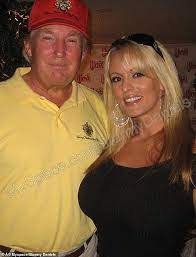
Donald Trump and Stormy Daniels
- Similarly, in 1960, Senator John F. Kennedy successfully ran for President while concealing his affliction with Addison’s Disease—an insufficiency of the Adrenal glands that can prove fatal.
Thus, all future candidates for President should be required to submit to full FBI background investigations at least one year before election time—with the results released before the election. Any candidate refusing to participate should be barred from competing.
You’re not allowed to become an FBI agent or Cabinet Secretary without passing a background investigation. You shouldn’t be allowed to become President without one, either.
Reform #2: No Presidential candidate can be over 70 at the time s/he leaves office.
The Federal Aviation Administration mandates that commercial airlines cannot employ pilots after they reach the age of 65.
FBI agents have a mandatory retirement age of 57.
Commissioned officers of the Army, Navy, Air Force and Marine Corps must retire by 64.
Yet Donald Trump was 78 when he was elected to his second term in 2024. Six months after he was inaugurated on January 20, 2025, he was 79.
Trump will be 82 in 2028, his last year in office (assuming he doesn’t stage another—and successful—coup attempt).
The Presidency is notorious for prematurely ageing its occupants: “The typical president ages two years for every year they are in office,” said Dr. Michael Roizen. He used presidential medical records from the 1920s through today to reach this conclusion.
The United States Presidency is becoming a mirror-image of the geriatric former Soviet Union:
- In 1982, General Secretary Leonid Brezhnev died at age 75.
- He was succeeded by Yuri Andropov—who died, in 1984, at age 69.
- He, in turn, was followed by Konstantin Chernenko—who died in 1985 at age 73.
Finally, the Politburo—tired of replacing the General Secretary every two years—elected 54-year-old Mikhail Gorbachev, who lived to leave office six years later at age 60.
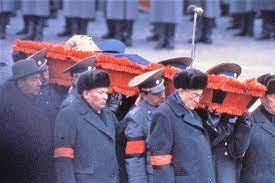
Funeral for Soviet dictator Leonid Brezhnev – 1982
In 2024, having two geriatric candidates for President—Trump and Joseph Biden—become comic fodder for late-night TV hosts. Yet voters feared that neither candidate could handle the strains of another four years as President—or even survive a full term.
Reform #3: Abolish the honorific title of “Mr. President” for ex-Presidents.
This used to be offered as a tribute to a former President for having won the support of the majority of Americans.
But Donald Trump corrupted this phrase, as he has so much else in American life. After losing the 2020 Presidential election, he continued to insist that he was the legitimate President of the United States, and Biden was a usurper.
When his fanatical followers referred to him as “President Trump,” that was what they meant—thus trying to de-legitimize Biden’s Presidency and elevate Trump as the rightful victor.
The 2005 Stolen Valor Act makes it a federal misdemeanor for anyone to falsely claim to have received any U.S. military decoration or medal—such as the Medal of Honor or Purple Heart. Violating the law can lead to fines, up to a year in prison, or both.
Thus, Congress should mandate that only the current holder of the Presidency has the legal right to call himself “Mr. President”—and that right ends when he no longer occupies the White House.
Reform #4: Require millionaire ex-Presidents to pay for their Secret Service protection.
Every ex-President since Dwight D. Eisenhower—even Jimmy Carter—has been a multi-millionaire.
Assigning a platoon of elite Secret Service agents to watch over every ex-President 24/7 is a huge expense.
The case of Ronald Reagan is instructive: At a cost to the government of $10 million annually, Reagan—while living in a 7,200 square-foot mansion overlooking Beverly Hills—received lifetime Secret Service protection from 40 fulltime agents.
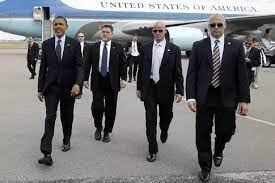

United States Secret Service
It’s also an unnecessary expense. There has never been an attack on an ex-President in all of American history.
Still, if the powers-that-be consider this essential, then millionaire ex-Presidents should be required to pay for their protection—just as moguls and Hollywood celebrities do.
As the situation now exists, the government is simply providing welfare for the rich. Whereas the poor face strict limits on how high their income can be and still receive welfare.
ABC NEWS, ALAMO, ALIEN-SMUGGLING RINGS, ALTERNET, ALVARO OBREGON, AMERICABLOG, AMNEXTY INTERNATIONAL, ANCHOR BABIES, ANTONIO LOPEZ DE SANTA ANNA, AP, ARIZONA, BABY BOOMER RESISTANCE, BARACK OBAMA, BARBARA LEE, BBC, BLOOMBERG, BLOOMBERG NEWS, BREXIT, BUREAU OF CUSTOMS AND BORDER PROTECTION, BUZZFEED, CALIFORNIA, CBS NEWS, CHICAGO, CNN, COLORADO, CORRUPTION, CROOKS AND LIARS, CUBA, DAILY KOS, DAVID CROCKETT, DEMOCRATIC PARTY, DEMOCRATS, DONALD TRUMP, DREAM ACT, DRUDGE REPORT, EMILIANO ZAPATA, ENGLISH LANGUAGE, ERIC ADAMS, EUROPEAN UNION (EU), FEDERATION FOR AMERICAN IMMIGRATION REFORM (FAIR), FELIPE CALDERON, FIVETHIRTYEIGHT, FLORIDA, FRANCISCO "PANCHO" VILLA, FRANCISCO MADERO, GOLIAD MASSACRE, GREG ABBOTT, HARPER’S MAGAZINE, HILLARY CLINTON, HISPANICS, HUFFINGTON POST, ILLEGAL ALIENS, illegal immigration, IMMIGRATIONS AND CUSTOMS ENFORCEMENT (ICE), JAMES BOWIE, JEFF SESSIONS, MEDI-CAL INSURANCE PROGRAM, MEDIA MATTERS, MEXICAN REVOLUTION, MEXICAN WAR, MEXICO, MEXICO CITY, MIGRANT CARRAVAN, MOSES AUSTIN, MOTHER JONES, MOVEON, MSNBC, NBC NEWS, NEVADA, NEW MEXICO, NEW REPUBLIC, NEW YORK CITY, NEWSDAY, NEWSWEEK, NEWT GINGRICH, NICARAGUA, NICCOLO MACHIAVELLI, NPR, PANCHO VILLA, PAUL RYAN, PBS NEWSHOUR, POLITICAL CORRECTNESS, POLITICO, POLITICUSUSA, RACIAL PROFILING, RAW STORY, REPUBLICAN PARTY, REPUBLICANS, REUTERS, ROBERT FROST, SALON, SAM HOUSTON, SAN JACINTO, SCHOOLS, SEATTLE TIMES, SLATE, SLAVERY, STEPHEN AUSTIN, TALKING POINTS MEMO, TEXAS, THE ATLANTIC, THE CHICAGO SUN-TIMES, THE CHICAGO TRIBUNE, THE DAILY BEAST, THE DAILY BLOG, THE DAILY MAIL, THE DISCOURSES, THE GUARDIAN, THE HILL, THE HUFFINGTON POST, THE INTERCEPT, THE LOS ANGELES TIMES, THE NATION, THE NEW REPUBLIC, THE NEW YORK TIMES, THE NEW YORKER, THE VILLAGE VOICE, THE WALL STREET JOURNAL, THE WASHINGTON POST, THINKPROGRESS, THOMAS HOMAN, TIJUANA, TIME, TRUTHDIG, TRUTHOUT, TWO POLITICAL JUNKIES, U.S. NEWS & WORLD REPORT, U.S. SUPREME COURT, UNITED KINGDOM (UK), UNITED STATES DEPARTMENT OF JUSTICE, UNITED STATES HEALTH AND HUMAN SERVICES DEPARTMENT, UPI, USA TODAY, UTAH, VENEZUELA, VENUSTIANO CARRANZA, WAL-MART, WASHINGTON D.C., WONKETTE
In Bureaucracy, Business, History, Law, Law Enforcement, Medical, Military, Politics, Social commentary on July 9, 2026 at 12:19 am
If Americans decide they truly want to control access to their own borders, there is a realistic way to accomplish this.
And it doesn’t involve building a wall along the Mexican border—which would prove ridiculously expensive and easily circumvented.

(1) The Justice Department should vigorously attack the “sanctuary movement” that officially thwarts the immigration laws of the United States.
Among the 31 “sanctuary cities” of this country: Washington, D.C.; New York City; Los Angeles; Chicago; San Francisco; Santa Ana; San Diego; Salt Lake City; Phoenix; Dallas; Houston; Austin; Detroit; Jersey City; Minneapolis; Miami; Denver; Baltimore; Seattle; Portland, Oregon; New Haven, Connecticut; and Portland, Maine.
These cities have adopted “sanctuary” ordinances that do not allow municipal funds or resources to be used to enforce federal immigration laws, usually by not allowing police or municipal employees to inquire about one’s immigration status.
(2) The most effective way to combat this movement: Indict the highest-ranking officials of those cities which have actively violated Federal immigration laws.
In San Francisco, for example, former District Attorney Kamala Harris—who was once Vice President of the United States—created a secret program called Back on Track, which provided training for jobs that illegal aliens could not legally hold.
She also prevented Immigration and Customs Enforcement (ICE) from deporting even those illegal aliens convicted of a felony.
(3) Indicting such officials would be comparable to the way that President Andres Jackson dealt with the threat South Carolinians once made to “nullify”—or ignore—any Federal laws they didn’t like.
Jackson quashed that threat by making one of his own: To lead an army into that State and purge all who dared defy the laws of the Federal Government.

(4) Even if some indicted officials escaped conviction, the results would prove worthwhile.
City officials would be forced to spend huge sums of their own money for attorneys and face months or even years of prosecution.
And this, in turn, would send a devastating warning to officials in other “sanctuary cities” that the same fate lies in store for them.
(5) CEOs whose companies—like Wal-Mart—systematically employ illegal aliens should be held directly accountable for the actions of their subordinates.
They should be indicted by the Justice Department under the Racketeer Influenced Corrupt Organizations (RICO) Act, the way Mafia bosses are prosecuted for ordering their own subordinates to commit crimes.
Upon conviction, the CEO should be sentenced to a mandatory prison term of at least twenty years.
This would prove a more effective remedy for combating illegal immigration than stationing tens of thousands of soldiers on the U.S./Mexican border. CEOs forced to account for their subordinates’ actions would take drastic steps to ensure that their companies strictly complied with Federal immigration laws.
Without employers luring illegal aliens at a fraction of the money paid to American workers, the flood of such illegal job-seekers would quickly dry up.
(6) The Government should stop granting automatic citizenship to “anchor babies” born to illegal aliens in the United States.
A comparable practice would be allowing bank robbers who had eluded the FBI to keep their illegally-obtained loot.
A person who violates the bank robbery laws of the United States is legally prosecutable for bank robbery, whether he’s immediately arrested or remains uncaught for years. The same should be true for those born illegally within this country.
If they’re not here legally at the time of birth, they should not be considered citizens and should—like their parents—be subject to deportation.
(7) The United States Government—from the President on down—should stop apologizing for the right to control the country’s national borders.
The Mexican Government doesn’t hesitate to apply strict laws to those immigrating to Mexico. And it feels no need to apologize for this.
Neither should we.
(8) Voting materials and ballots should be published in one language—English.
In Mexico, voting materials are published in one language—Spanish.
Throughout the United States, millions of Mexican illegals refuse to learn English and yet demand that voting materials and ballots be made available to them in Spanish.

(9) Those who are not legal citizens of the United States should not be allowed to vote in its elections.
In Mexico, those who are not Mexican citizens are not allowed to participate in the country’s elections.
The Mexican Government doesn’t consider itself racist for strictly enforcing its immigration laws.
The United States Government should not consider itself racist for insisting on the right to do the same.
(10) The United States should impose economic and even military sanctions against countries—such as China and Mexico—whose citizens make up the bulk of illegal aliens.
The Mexican government well remembers the 10-year Mexican Revolution (1910 – 1920) starring Francisco “Pancho” Villa, Emiliano Zapata and a host of other equally ruthless killers—and the one million dead men, women and children it produced.
So Mexico uses its American border to rid itself of those who might demand major reforms in the country’s political and economic institutions.
Such nations must learn that dumping their unwanteds on the United States now comes at an unaffordably high price. Otherwise those dumpings will continue.


9/11 TERRORIST ATTACKS, ABC NEWS, AFGHANISTAN, AIRPORT SECURITY, ALTERNET, AMERICABLOG, AP, BABY BOOMER RESISTANCE, BBC, BIRTH CERTIFICATES, BLOOMBERG, BLUESKY, BUZZFEED, CBS NEWS, CNN, CROOKS AND LIARS, DAILY KOS, DEPARTMENT OF HOMELAND SECURITY, DEPARTMENT OF MOTOR VEHICLES, DRIVER'S LICENSES, FACEBOOK, FBI, FIVETHIRTYEIGHT, HARPER’S MAGAZINE, HUFFINGTON POST, IDENTIFICATION, JOE BIDEN, MEDIA MATTERS, MOHAMMED ATTA, MOTHER JONES, MOVEON, MSNBC, NATIONAL CRIME INFORMATION CENTER (NCIC), NATIONAL GUARD, NBC NEWS, NEW REPUBLIC, NEWSDAY, NEWSWEEK, NPR, PASSPORTS, PBS NEWSHOUR, POLITICO, POLITICUSUSA, RAW STORY, REAL ID ACT, REUTERS, SALON, SAN FRANCISCO FEDERAL BUILDING, SEATTLE TIMES, SECURITY THEATER, SLATE, SOCIAL SECURITY CARD, TALIBAN, TALKING POINTS MEMO, TERRORISM, THE ATLANTIC, THE CHICAGO SUN-TIMES, THE CHICAGO TRIBUNE, THE DAILY BEAST, THE DAILY BLOG, THE GUARDIAN, THE HILL, THE HUFFINGTON POST, THE INTERCEPT, THE LOS ANGELES TIMES, THE NATION, THE NEW REPUBLIC, THE NEW YORK TIMES, THE NEW YORKER, THE VILLAGE VOICE, THE WASHINGTON POST, THEODORE BUNDY, THINKPROGRESS, TIME, TRANSPORTATION SECURITY ADMINISTRATION, TRUTHDIG, TRUTHOUT, TWO POLITICAL JUNKIES, U.S. NEWS & WORLD REPORT, UPI, USA TODAY, WORLD TRADE CENTER, X
SECURITY THEATER IS ONLY THEATER–NOT SECURITY
In Bureaucracy, Business, History, Law, Law Enforcement, Military, Politics, Social commentary on July 24, 2026 at 12:10 amIn 2005—four years after 9/11—Congress passed the Real ID Act as a counter-terrorism measure. Its goal was to set security standards for government-issued IDs.
The Act was introduced in late 2013. But it wasn’t until September 10, 2020, that the Department of Homeland Security announced that all 50 states were in compliance in issuing identification complying with the standards of the Act.
Only those holding such ID may pass through airport security—for domestic flights as well as international ones—and enter certain federal facilities.
So what is the easiest way to get a REAL ID?
According to the Transportation Safety Administration (TSA):
“Visit your state’s driver’s licensing agency website to find out exactly what documentation is required to obtain a REAL ID. At a minimum, you must provide documentation showing:
So much of what passes for security is actually security theater. It doesn’t actually make us safer, but it makes us feel safer.
And it makes us feel the government is keeping us safe, even when it isn’t.
Consider:
After 9/11, thousands of National Guard troops were deployed to airports nationwide as a highly visible show of force to deter further attacks and reassure a panicked public. The public would not have felt so reassured had it known the Guards were carrying unloaded M-16 rifles.
In addition, these “weekend warriors” were not trained detectives. So they didn’t know how to spot a potential terrorist—although they were a likely deterrent against purse-snatchers.
Other examples of security theater include:
Sample state ID card that’s acceptable under the Real ID Act
Consider this: A friend of mine—whom I’ll call Jack—recently applied for a Real ID card as issued by the California Department of Motor Vehicles. He brought a certified copy of his birth certificate, bills from AT&T and Pacific Gas and Electric.
The birth certificate easily passed muster. But for a moment there was a problem with the bills from the utility companies: Jack had been getting his mail through a P.O. box, rather than at the apartment building where he lived.
And the “examiner” wanted to see a document with his home address on it.
Fortunately, Jack was able to fish out another bill with that on it. The “examiner” was satisfied, and Jack left the DMV assured that he would soon receive his TSA-approved Real ID card.
So: How does showing a utility bill document prove your integrity?
No doubt Mohammed Atta—the ringleader of the September 11, 2001 attacks—faithfully paid his utility bills—right up to the day when he highjacked American Airlines Flight 11 and crashed the plane into the North Tower of the World Trade Center.
And, yes, a birth certificate proves you were born in the United States—but so was Timothy McVeigh, who, in 1995, blew up the Oklahoma City Federal Building, killing 168 people.
Nor does a “school document”—which can get you a Real ID card—reveal anything about the character of the person.
Theodore Bundy attended the University of Puget Sound and the University of Washington—before embarking on his career as a burglar, kidnapper, rapist and serial killer.
Another form of security theater includes checking photo IDs to enter State and Federal office buildings.
Knowing a person’s identity is useful—if you have a reliable database system to match it against, such as the FBI’s National Crime Information Center (NCIC).
But if you lack this, forcing people to “show me your ID” is pointless. And that’s assuming the ID isn’t fraudulent.
But people watching the guard performing this security theater ritual assume: “The guard must know what he’s looking for. So we have to be safer for his checking those IDs.”
In fact, most security guards have little training and even less experience. Many of them don’t carry firearms and lack self-defense skills.
According to Salary.com: The median annual salary for an unarmed security guard is $38,697.
Not exactly a salary geared to attract “the best and the brightest,” is it?
Making all of this even more infuriating: In August, 2021, at least 76,000 unvetted Afghans were admitted into the United States.
The reason: They were too cowardly to fight the Taliban.
Americans had spent 20 years training them to do just that. And as soon as the Taliban launched a major offensive, they fled to Kabul Airport—leaving their wives, girlfriends, mothers and sisters behind to face slavery and brutality.
So while cowardly Afghans—many of whom no doubt had terrorist backgrounds—didn’t have to prove themselves trustworthy, lifelong and law-abiding Americans must.
Share this: