Archive for the ‘Law’ Category
ABC NEWS, ALTERNET, AP, BUZZFEED, CALIFORNIA ATTORNEY GENERAL, CBS NEWS, CNN, CROOKS AND LIARS, DAILY KOZ, DISTRICT ATTORNEY OF SAN FRANCISCO, DONALD TRUMP, FACEBOOK, GEORGETOWN UNIVERSITY’S INSTITUTE OF POLITICS AND PUBLIC SERVICE, ILLEGAL ALIENS, IMMIGRATION LAWS, JOE BIDEN, Kamala Harris, LAW ENFORCEMENT, MO ELLEITHEE, MOTHER JONES, MOVEON, MSNBC, NBC NEWS, NEWSWEEK, NPR, PBS NEWSHOUR, POLITICO, RAW STORY, REUTERS, SALON, SAN FRANCISCO, SEATTLE TIMES, SENATE JUDICIARY COMMITTEE, SLATE, THE ATLANTIC, THE CHICAGO SUN-TIMES, THE CHICAGO TRIBUNE, THE DAILY BEAST, THE GUARDIAN, THE HILL, THE HUFFINGTON POST, THE LOS ANGELES TIMES, THE NATION, THE NEW YORK TIMES, THE TRUTHS WE HOLD (BOOK), THE WASHINGTON POST, TIME, TWITTER, U.S. NEWS & WORLD REPORT, UNITED STATES SENATE, UPI, USA TODAY, VIOLENT CRIME CONTROL AND LAW ENFORCEMENT ACT OF 1994
In Bureaucracy, History, Law, Law Enforcement, Politics, Social commentary on July 4, 2019 at 12:08 am
Kamala Harris spent seven years (2004 – 2011) as District Attorney of San Francisco and another six years (2011 – 2017) as California Attorney General. Then, in 2016, she won election to the United States Senate.
Now she wants to be the first black woman President of the United States. And to tout her candidacy, she’s published her memoirs: The Truths We Hold. In these, she describes herself as a “progressive prosecutor.”
Harris knows that law enforcement issues are a lightning rod for both liberal and conservative voters. So she’s trying to portray herself as appealing to both.
“It’s a presidential campaign, and every aspect of a candidate’s record is going to be scrutinized and they’re going to have to answer for it,” said Mo Elleithee, a longtime Democratic operative who leads Georgetown University’s Institute of Politics and Public Service.
Former Vice President Joe Biden chaired the Senate’s Judiciary Committee when he backed the 1994 Violent Crime Control and Law Enforcement Act. This created stricter penalties for drug offenders and funneled billions of dollars toward more police and new prisons. Now he’s being accused of helping create an era of mass incarceration among blacks.
Today, with millions of illegal aliens from Central and Latin America flooding into the United States, the spotlight has shifted from the incarceration of blacks to that of Hispanics.
Illegal immigration—and what to do about it—is now the hottest political issue in the country. And it may well undo Harris’ chances to become President.
For liberals of the Democratic party, “open borders” appears to be the solution to illegal immigration. Yet the vast majority of Americans reject this. They support legal immigration—but oppose illegal immigration.
Moreover, Donald Trump has ignited a white-hot fury against illegal aliens from Central and Latin America.
And Kamala Harris’ record as San Francisco District Attorney is hardly reassuring on this issue.
Among the truths she holds secret: When she served as District Attorney for San Francisco, she set up a secret unit to keep even convicted illegal alien felons out of prison—and in the United States.
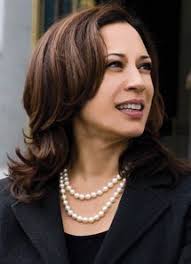
U.S. Senator Kamala Harris
Her program, called Back on Track, trained them for jobs they could not legally hold. This was a flagrant violation of Federal immigration law. Completion led to the expunging of a felony conviction, making it highly popular among convicted criminals.
One such alumnus was Alexander Izaguirre, an illegal alien who had been arrested twice within eight months—for purse-snatching and selling cocaine.
In July, 2008, four months after pleading guilty to selling cocaine, Izaguirre assaulted Amanda Kiefer, a legal San Francisco resident.
Snatching her purse, he jumped into an SUV, then tried to run Kiefer down. Terrified, she leaped onto the hood and saw Izaguirre and a driver laughing.
The driver slammed on the brakes, sending Kiefer flying onto the pavement and fracturing her skull.
The program, Back on Track, became a centerpiece of Harris’ campaign for state Attorney General.
Until she was questioned by the Los Angeles Times about the Izaguirre case, Harris had never publicly admitted that the program included illegal aliens.
Harris claimed she first learned that illegal aliens were training for jobs only after Izaguirre was arrested for the Kiefer assault. Apparently not one of her fellow prosecutors ever mentioned this to her.
Harris said it was a “flaw in the design” of the program to let illegal aliens into the program. “I believe we fixed it,” she told the Times.
Harris never released statistics on how many illegal aliens were included since the program started in 2005.
She said that after Izaguirre’s arrest she never asked—or learned—how many illegal aliens were in Back on Track. A strange lapse in curiosity for a prosecutor charged with enforcing the law.
When Harris learned that illegal aliens were enrolled, she allowed those who were following the rules to finish the program and have their criminal records expunged.
It is not the duty of local law enforcement, she said, to enforce Federal immigration laws.
So much for her oath to faithfully defend the Constitution of the United States and that of the state of California “against all enemies, foreign and domestic.”
From 2005 to 2009, 113 admitted drug dealers graduated from Back on Track. Another 99 were kicked off the program for failing to meet the requirements. They were sentenced under their guilty plea, the D.A.’s office claimed.
Harris told the Times that graduates of Back on Track were less likely than other offenders to commit crimes again. But her spokeswoman refused to offer detailed statistics to back this up.
When Harris became San Francisco District Attorney, she vowed she would “never charge the death penalty.”
Her opposition to capital punishment would be better-suited to a public defender.
Meanwhile, Amanda Kiefer left California. Interviewed by the Times, she said she could not understand why San Francisco police and prosecutors would allow convicted illegal aliens back onto the streets.
“If they’re committing crimes,” she said, “I think there’s something wrong that they’re not being deported.”
It’s a sentiment that law-abiding Americans agree with. And it should go double for those who are charged with enforcing the law.
2016 PRESIDENTIAL CAMPAIGN, ABC NEWS, ALTERNET, AP, ARCHIBALD COX, BARACK OBAMA, BUZZFEED, CBS NEWS, CIA, CNN, CRAIG UNGER, CROOKS AND LIARS, DAILY KOZ, DEPARTMENT OF HOMELAND SECURITY, DEVIN NUNES, DIANNE FEINSTEIN, DONALD TRUMP, DONALD TRUMP JR., DOUG COLLINS, FACEBOOK, FBI, FOX NEWS, GREG MILLER, HILLARY CLINTON, HOUSE INTELLIGENCE COMMITTEE, HOUSE OF TRUMP HOUSE OF PUTIN (BOOK), ISLAMIC STATE OF IRAQ AND SYRIA (ISIS), ISRAELI INTELLIGENCE, JAMES COMEY, JARED KUSHNER, JEFF SESSIONS, JERROLD NADLER, JOE SCARBOROUGH, LESTER HOLT, LINDSEY GRAHAM, MALCOM NANCE, MALCOM W. NANCE, MICHAEL FLYNN, MICHAEL ISIKOFF, MIKE PENCE, MOTHER JONES, MOVEON, MSNBC, NATALIA VESELNITSKAYA, NATIONAL SECURITY AGENCY, NBC NEWS, NEWSWEEK, NPR, OFFICE OF THE DIRECTOR OF NATIONAL INTELLIGENCE, PAUL MANAFORT, POLITICO, PRINCETON UNIVERSITY, RAW STORY, REPUBLICAN PARTY, REPUBLICANS, REUTERS, REX TILLERSON, RICHARD M. NIXON, ROBERT S. MUELLER 111, ROD ROSENSTEIN, RUSSIA, RUSSIAN ROULETTE (BOOK), SALON, SEATTLE TIMES, SENATE INTELLIGENCE COMMITTEE, SERGEY KISLYAK, SERGEY LAVROV, SLATE, SUPREME COURT, THE APPRENTICE (BOOK), THE ATLANTIC, THE CHICAGO SUN-TIMES, THE CHICAGO TRIBUNE, THE DAILY BEAST, THE GUARDIAN, THE HILL, THE HUFFINGTON POST, THE LOS ANGELES TIMES, THE NATION, THE NEW YORK TIMES, THE PLOT TO DESTROY DEMOCRACY (BOOK), THE WASHINGTON POST, TIME, TREASON, TRUMP TOWER MEETING, TWITTER, U.S. NEWS & WORLD REPORT, UNITED STATES DEPARTMENT OF JUSTICE, UNITED STATES DEPARTMENT OF STATE, UPI, USA TODAY, VLADIMIR PUTIN, WILLIAM BARR
In Bureaucracy, History, Law, Law Enforcement, Military, Politics, Social commentary on July 3, 2019 at 1:06 am
The appointment of Robert S. Mueller as Special Counsel aroused unprecedented hopes and fears.
Foes of President Donald Trump hoped that Mueller would unearth evidence of criminality—if not treason—blatant enough to guarantee his impeachment.
Supporters of Trump—starting with the President—feared that this would be the case. When Attorney General Jeff Sessions told Trump that a Special Counsel had been appointed, the President exclaimed, “Oh my God. This is terrible. This is the end of my Presidency. I’m fucked.”
Yet even before the release of the long-awaited Mueller report, several deeply-researched and well-written books outlined Russia’s efforts to subvert the 2016 Presidential race. And they cast devastating light on Trump’s loyalty to the United States.
Among these:
- The Apprentice: Trump, Russia and the Subversion of Democracy, by Greg Miller
- House of Trump, House of Putin: The Untold Story of Donald Trump and the Russian Mafia, by Craig Unger
- Russian Roulette: The Inside Story of Putin’s War on America and the Election of Donald Trump, by Michael Isikoff
- The Plot to Destroy Democracy: How Putin and His Spies Are Undermining America and Dismantling the West, by Malcom W. Nance
According to its blurb on Amazon.com, The Apprentice is “based on interviews with hundreds of people in Trump’s inner circle, current and former government officials, individuals with close ties to the White House, members of the law enforcement and intelligence communities, foreign officials, and confidential documents.”
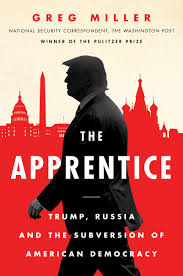
Among the subjects it covers:
- The Trump Tower meeting, where the Trump campaign sought “dirt” on Hillary Clinton from Russian Intelligence agents.
- The penetration by Russian Intelligence of computer systems used by Democrats.
- How Jared Kushner, Trump’s son-in-law, tried to set up a secret back channel to Moscow via Russian diplomatic facilities.
- Trump’s giving Russian officials highly classified secrets supplied by Israeli Intelligence;
- Trump’s clashes with the FBI and CIA.
Miller is a veteran investigative journalist and twice winner of the Pulitzer Prize. Among his stories: National security adviser Michael Flynn’s discussing U.S. sanctions with Russian officials prior to Trump’s inauguration. The story contributed to Flynn’s ouster.
Then there’s House of Trump, House of Putin, whose jacket blurb describes Trump’s inauguration as “the culmination of Vladimir Putin’s long mission to undermine Western democracy, a mission that he and his hand-selected group of oligarchs and Mafia kingpins had ensnared Trump in, starting more than twenty years ago with the massive bailout of a string of sensational Trump hotel and casino failures in Atlantic City.

“…Craig Unger methodically traces the deep-rooted alliance between the highest echelons of American political operatives and the biggest players in the frightening underworld of the Russian Mafia. He traces Donald Trump’s sordid ascent from foundering real estate tycoon to leader of the free world….
“Without Trump, Russia would have lacked a key component in its attempts to return to imperial greatness. Without Russia, Trump would not be president.”
As an appendix to the book, Unger writes: “Donald Trump has repeatedly said he has nothing to do with Russia. Below are fifty-nine Trump connections to Russia.”
Russian Roulette, according to its dust jacket, “is a story of political skullduggery unprecedented in American history. It weaves together tales of international intrigue, cyber espionage, and superpower rivalry.
“After U.S.-Russia relations soured, as Vladimir Putin moved to reassert Russian strength on the global stage, Moscow trained its best hackers and trolls on U.S. political targets and exploited WikiLeaks to disseminate information that could affect the 2016 election.
“The Russians were wildly successful and the great break-in of 2016 was no ‘third-rate burglary.’ It was far more sophisticated and sinister—a brazen act of political espionage designed to interfere with American democracy. At the end of the day, Trump, the candidate who pursued business deals in Russia, won….
“This story of high-tech spying and multiple political feuds is told against the backdrop of Trump’s strange relationship with Putin and the curious ties between members of his inner circle—including Paul Manafort and Michael Flynn—and Russia.”
Malcom Nance, the author of The Plot to Destroy Democracy, is an Intelligence and foreign policy analyst and media commentator on terrorism, intelligence, insurgency and torture.
In his book, he outlines how “Donald Trump was made President of the United States with the assistance of a foreign power.
“[It is] the dramatic story of how blackmail, espionage, assassination, and psychological warfare were used by Vladimir Putin and his spy agencies to steal the 2016 U.S. election—and attempted to bring about the fall of NATO, the European Union, and western democracy….
“Nance has utilized top secret Russian-sourced political and hybrid warfare strategy documents to demonstrate the master plan to undermine American institutions that has been in effect from the Cold War to the present day.
“Based on original research and countless interviews with espionage experts, Nance examines how Putin’s recent hacking accomplished a crucial first step for destabilizing the West for Russia, and why Putin is just the man to do it.”
These books—combined with the recently released Mueller report—clearly establish the damning conclusion: The man now sitting in the Oval Office is an illegitimate usurper, installed by an unholy alliance of American Fascists and Russian Communists.
2016 PRESIDENTIAL CAMPAIGN, ABC NEWS, ALTERNET, AP, ARCHIBALD COX, BARACK OBAMA, BUZZFEED, CBS NEWS, CIA, CNN, CRAIG UNGER, CROOKS AND LIARS, DAILY KOZ, DEPARTMENT OF HOMELAND SECURITY, DEVIN NUNES, DIANNE FEINSTEIN, DONALD TRUMP, DONALD TRUMP JR., DOUG COLLINS, FACEBOOK, FBI, FOX NEWS, GREG MILLER, HILLARY CLINTON, HOUSE INTELLIGENCE COMMITTEE, HOUSE OF TRUMP HOUSE OF PUTIN (BOOK), ISLAMIC STATE OF IRAQ AND SYRIA (ISIS), ISRAELI INTELLIGENCE, JAMES COMEY, JARED KUSHNER, JEFF SESSIONS, JERROLD NADLER, JOE SCARBOROUGH, LESTER HOLT, LINDSEY GRAHAM, MALCOM NANCE, MALCOM W. NANCE, MICHAEL FLYNN, MICHAEL ISIKOFF, MIKE PENCE, MOTHER JONES, MOVEON, MSNBC, NATALIA VESELNITSKAYA, NATIONAL SECURITY AGENCY, NBC NEWS, NEWSWEEK, NPR, OFFICE OF THE DIRECTOR OF NATIONAL INTELLIGENCE, PAUL MANAFORT, POLITICO, PRINCETON UNIVERSITY, RAW STORY, REPUBLICAN PARTY, REPUBLICANS, REUTERS, REX TILLERSON, RICHARD M. NIXON, ROBERT S. MUELLER 111, ROD ROSENSTEIN, RUSSIA, RUSSIAN ROULETTE (BOOK), SALON, SEATTLE TIMES, SENATE INTELLIGENCE COMMITTEE, SERGEY KISLYAK, SERGEY LAVROV, SLATE, SUPREME COURT, THE APPRENTICE (BOOK), THE ATLANTIC, THE CHICAGO SUN-TIMES, THE CHICAGO TRIBUNE, THE DAILY BEAST, THE GUARDIAN, THE HILL, THE HUFFINGTON POST, THE LOS ANGELES TIMES, THE NATION, THE NEW YORK TIMES, THE PLOT TO DESTROY DEMOCRACY (BOOK), THE WASHINGTON POST, TIME, TREASON, TRUMP TOWER MEETING, TWITTER, U.S. NEWS & WORLD REPORT, UNITED STATES DEPARTMENT OF JUSTICE, UNITED STATES DEPARTMENT OF STATE, UPI, USA TODAY, VLADIMIR PUTIN, WILLIAM BARR
In Bureaucracy, History, Law, Law Enforcement, Military, Politics, Social commentary on July 2, 2019 at 12:09 am
In the first installment of this series, four examples were listed of Donald Trump’s treason against the United States. Here are four more:
EXAMPLE #5: On January 20, 2017—the day Donald J. Trump became the 45th President of the United States—Michael Flynn took office as the nation’s 25th National Security Adviser.
Flynn, a former United States Army lieutenant general and director of the Defense Intelligence Agency, seemed the perfect choice for safeguarding the country’s security.
Two days later, The Wall Street Journal reported that Flynn was under investigation by U.S. counterintelligence agents for his secret communications with Russian officials.
On February 8, Flynn denied having spoken to Russian ambassador Sergey Kislyak in December, 2016, about removing the sanctions placed on Russia by the outgoing Obama administration.
The sanctions had been placed in retaliation for Russia’s efforts to manipulate the 2016 Presidential election.
On February 13, The Washington Post reported that Acting Attorney General Sally Yates had warned Trump in late January that Flynn had lied about his contacts with Kislyak—and that he could be blackmailed by Russian Intelligence.
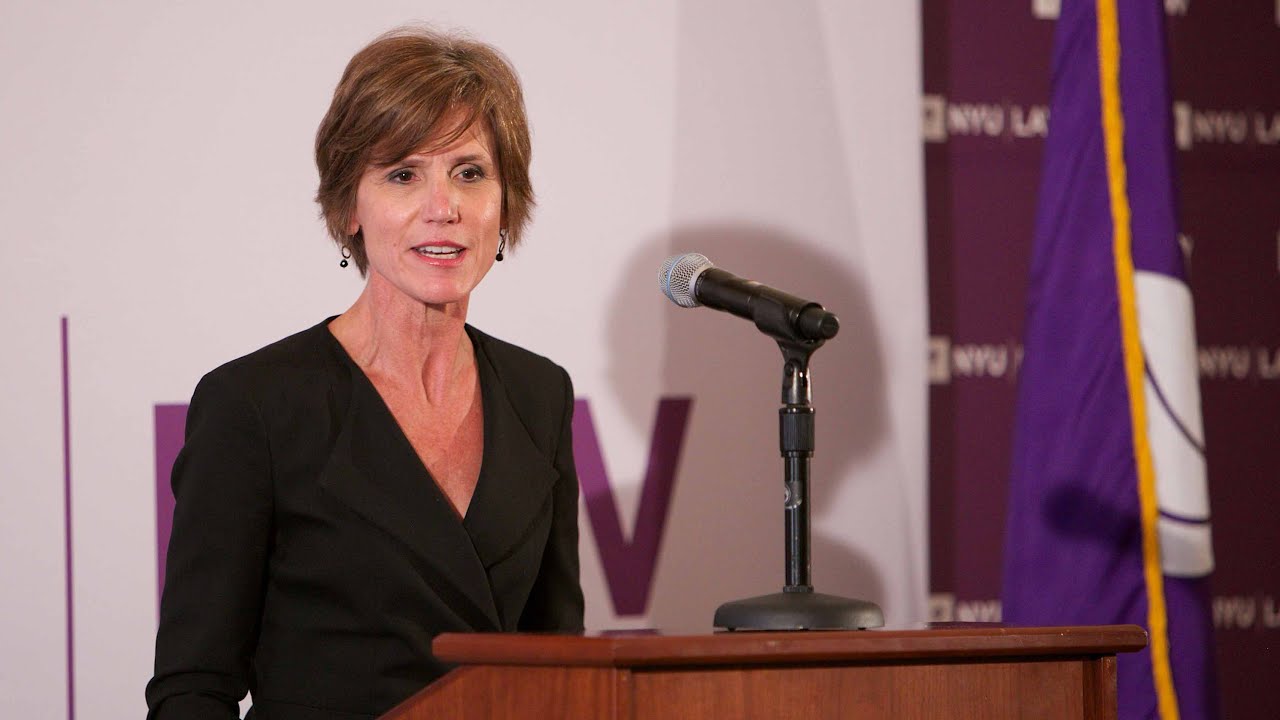
Sally Yates
Flynn was forced to resign that same day—after only 24 days as National Security Adviser.
Officially, the reason given was that he had misled Vice President Mike Pence. But Flynn’s deception had already been known—via the warning to Trump by Yates.
Only after Yates’ warning became known to the media was Flynn forced to resign.
The same Washington Post story reported that, in December, 2015, he had appeared on Russia Today, the news network that American Intelligence agencies consider “the Kremlin’s principal international propaganda outlet.”
He had also received more than $45,000 as a “speaking fee” from the network for a talk on world affairs. At the gala where Flynn received the fee, he sat next to Russian President Vladimir Putin for dinner.
Flynn did not file the required paperwork for the trip. Nor did he report the “fee” to the Pentagon.
On December 1, 2017, Flynn appeared in federal court to formalize a deal with Special Counsel Robert S. Mueller III. He plead guilty to a felony count of “willfully and knowingly” making “false, fictitious and fraudulent statements” to the FBI
EXAMPLE #6: On May 9, 2017, President Trump fired FBI Director James Comey for investigating Russia’s subversion of the 2016 Presidential race.
There were four reasons for this:
- Comey had refused to pledge his personal loyalty to Trump. Trump had made the “request” during a private dinner at the White House in January.
- Comey told Trump that he would always be honest with him. But that didn’t satisfy Trump’s demand that the head of the FBI act as his personal secret police chief—as was the case in the former Soviet Union.
- Trump had tried to coerce Comey into dropping the FBI’s investigation into former National Security Adviser Michael Flynn, for his secret ties to Russia and Turkey. Comey had similarly resisted that demand.
- Comey had recently asked the Justice Department to fund an expanded FBI investigation into well-documented contacts between Trump’s 2016 Presidential campaign and Russian Intelligence agents.The goal of that collaboration: To elect Trump over Hillary Clinton, a longtime foe of Russian President Putin.

James Comey
EXAMPLE #7: On May 10, Trump met with Russian Foreign Minister Sergey Lavrov and Russian Ambassador Sergey Kislyak in the Oval Office—and gave them highly classified Israeli Intelligence about an Islamic State plot to turn laptops into concealable bombs.
Kislyak is reportedly a top recruiter for Russia’s SVR foreign intelligence agency. He has been closely linked with Jeff Sessions, then Attorney General, and fired National Security Adviser Mike Flynn.
“I just fired the head of the FBI,” Trump told the two dignitaries. “He was crazy, a real nut job. I faced great pressure because of Russia. That’s taken off.”
On May 11, Trump, interviewed on NBC News by reporter Lester Holt, said: “And in fact when I decided to just do it, I said to myself, I said ‘you know, this Russia thing with Trump and Russia is a made-up story, it’s an excuse by the Democrats for having lost an election that they should have won.'”
A national firestorm erupted—unprecedented since President Richard M. Nixon had fired Watergate Special Prosecutor Archibald Cox on October 20, 1973.
To squelch it, Deputy Attorney General Rod Rosenstein moved quickly.
On May 17, 2017, he appointed former FBI Director Robert S. Mueller III to serve as Special Counsel for the United States Department of Justice.
Rosenstein charged Mueller to investigate “any links and/or coordination between the Russian government and individuals associated with the campaign of President Donald Trump, and any matters that arose or may arise directly from the investigation.”
EXAMPLE #8: On July 16, 2018, Trump attended a press conference in Helsinki, Finland, with Russian President Vladimir Putin.
There he blamed American Intelligence agencies—such as the FBI, CIA and National Security Agency—instead of Putin for Russia’s subversion of the 2016 Presidential election: “I have President Putin. He just said it’s not Russia. I will say this: I don’t see any reason why it would be.”
But instead of attacking Trump for his treasonous behavior, Republicans in Congress and Right-wing Fox News relentlessly attacked Robert Mueller’s integrity and investigative methods.

2016 PRESIDENTIAL CAMPAIGN, ABC NEWS, ALTERNET, AP, ARCHIBALD COX, BARACK OBAMA, BUZZFEED, CBS NEWS, CIA, CNN, CRAIG UNGER, CROOKS AND LIARS, DAILY KOZ, DEPARTMENT OF HOMELAND SECURITY, DEVIN NUNES, DIANNE FEINSTEIN, DONALD TRUMP, DONALD TRUMP JR., DOUG COLLINS, FACEBOOK, FBI, FOX NEWS, GREG MILLER, HILLARY CLINTON, HOUSE INTELLIGENCE COMMITTEE, HOUSE OF TRUMP HOUSE OF PUTIN (BOOK), ISLAMIC STATE OF IRAQ AND SYRIA (ISIS), ISRAELI INTELLIGENCE, JAMES COMEY, JARED KUSHNER, JEFF SESSIONS, JERROLD NADLER, JOE SCARBOROUGH, LESTER HOLT, LINDSEY GRAHAM, MALCOM NANCE, MALCOM W. NANCE, MICHAEL FLYNN, MICHAEL ISIKOFF, MIKE PENCE, MOTHER JONES, MOVEON, MSNBC, NATALIA VESELNITSKAYA, NATIONAL SECURITY AGENCY, NBC NEWS, NEWSWEEK, NPR, OFFICE OF THE DIRECTOR OF NATIONAL INTELLIGENCE, PAUL MANAFORT, POLITICO, PRINCETON UNIVERSITY, RAW STORY, REPUBLICAN PARTY, REPUBLICANS, REUTERS, REX TILLERSON, RICHARD M. NIXON, ROBERT S. MUELLER 111, ROD ROSENSTEIN, RUSSIA, RUSSIAN ROULETTE (BOOK), SALON, SEATTLE TIMES, SENATE INTELLIGENCE COMMITTEE, SERGEY KISLYAK, SERGEY LAVROV, SLATE, SUPREME COURT, THE APPRENTICE (BOOK), THE ATLANTIC, THE CHICAGO SUN-TIMES, THE CHICAGO TRIBUNE, THE DAILY BEAST, THE GUARDIAN, THE HILL, THE HUFFINGTON POST, THE LOS ANGELES TIMES, THE NATION, THE NEW YORK TIMES, THE PLOT TO DESTROY DEMOCRACY (BOOK), THE WASHINGTON POST, TIME, TREASON, TRUMP TOWER MEETING, TWITTER, U.S. NEWS & WORLD REPORT, UNITED STATES DEPARTMENT OF JUSTICE, UNITED STATES DEPARTMENT OF STATE, UPI, USA TODAY, VLADIMIR PUTIN, WILLIAM BARR
In Bureaucracy, History, Law, Law Enforcement, Military, Politics, Social commentary on July 1, 2019 at 12:07 am
During a photo-op with Russian President Vladimir Putin in Osaka, Japan, President Donald Trump demonstrated how seriously he took American election security.
An NBC News reporter asked: Would you tell Putin not to meddle in the 2020 Presidential election?
“Yes, of course I will,” replied Trump, grinning. “Don’t meddle in the election, please.” And he jokingly wagged his finger at Putin: “Don’t meddle in the election.”
Putin grinned back.
Complaining about “fake news” journalists, Trump advised Putin: “Get rid of them. Fake news is a great term, isn’t it? You don’t have this problem in Russia, but we do.”
“We also have,” Putin assured Trump. “It’s the same.”
It was June 28, 2019. And it was the first meeting between Trump and Putin since the March 22 release of the Mueller Report—which documented Russia’s subversion of the 2016 Presidential election.
Trump has repeatedly claimed that there was “no collusion” between him and members of Russia’s Intelligence community. But Special Counsel Robert Mueller found that the President and his associates embraced the Kremlin’s assistance in the 2016 election and thwarted the inquiries that followed.
From the outset, Trump has acted like a guilty man desperate to stop an investigation before it uncovers the full extent of his criminality.
EXAMPLE #1 On July 9, 2016, high-ranking members of his Presidential campaign met at Trump Tower with at least two lobbyists with ties to Russian dictator Vladimir Putin. The participants included:
- Trump’s son, Donald Trump Jr.;
- His son-in-law, Jared Kushner;
- His then-campaign manager Paul Manafort;
- Natalia Veselnitskaya, a Russian lawyer with ties to Putin; and
- Rinat Akhmetshin, a former Soviet counterintelligence officer suspected of “having ongoing ties to Russian Intelligence.”
The purpose of that meeting: To gain access to any “dirt” Russian Intelligence could supply on Democratic Presidential Nominee Hillary Clinton.
Trump originally claimed that the meeting was “about the adoption of Russian children.” Eventually he admitted that it had been “a meeting to get information on an opponent.”
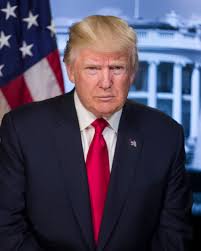
Donald Trump
EXAMPLE #2: On July 22, 2016, during his campaign for President, Trump said at a press conference in Doral, Florida: “Russia, if you are listening, I hope you are able to find the 33,000 emails that are missing [from Democratic Presidential candidate Hillary Clinton’s computer]. I think you will probably be rewarded mightily by our press.”
This was nothing less than treason—calling upon a foreign power, hostile to the United States, to interfere in its Presidential election.
Hours later, the Main Intelligence Directorate in Moscow targeted Clinton’s personal office and hit more than 70 other Clinton campaign accounts.
EXAMPLE #3: Throughout 2016, the CIA, FBI and National Security Agency (NSA) found numerous ties between officials of the Trump Presidential campaign and Russian Intelligence agents.
And many of those he appointed to office had strong ties to the government of Russian President Vladimir Putin.
One of these was Secretary of State Rex Tillerson. In 2013, as the chief executive of ExxonMobil, he was presented with Russia’s Order of Friendship award. He had just signed deals with the state-owned Russian oil company Rosneft. Its chief, Igor Sechin, is a loyal Putin lieutenant.

Rex Tillerson
Another such official was Attorney General Jeff Sessions. During the 2016 campaign, Sessions—then serving as a surrogate for Donald Trump’s campaign—twice spoke with Russian Ambassador Sergey Kislyak.
But during his Senate confirmation hearings, Sessions denied that he had had “communications with the Russians” during the campaign.
The discovery of numerous contacts between Trump campaign officials and Russian Intelligence agents led the FBI to launch an investigation into Russia’s efforts to influence the outcome of the 2016 Presidential election.
EXAMPLE #4: Trump has repeatedly praised Russian President Vladimir Putin.
On December 18, 2015, Trump appeared on MSNBC’s “Morning Joe.” Its host, Joe Scarborough, was upset by Trump’s praise for Putin:
SCARBOROUGH: Well, I mean, [he’s] also a person who kills journalists, political opponents, and invades countries. Obviously that would be a concern, would it not?
TRUMP: He’s running his country, and at least he’s a leader. Unlike what we have in this country.
SCARBOROUGH: But again: He kills journalists that don’t agree with him.
TRUMP: I think our country does plenty of killing, also, Joe, so, you know. There’s a lot of stupidity going on in the world right now, Joe. A lot of killing going on. A lot of stupidity. And that’s the way it is.
On October 7, 2016, the Department of Homeland Security and the Office of the Director of National Intelligence issued a joint statement blaming the Russian government for the hacking of Democratic National Committee emails. Its motive: “To interfere with the US election process.”
Two days later, Trump publicly stated: “But I notice, anytime anything wrong happens, they like to say the Russians are—Maybe there is no hacking. But they always blame Russia.”
On December 16, 2016, FBI Director James B. Comey and Director of National Intelligence James R. Clapper Jr. agreed with a CIA assessment that Russia intervened in the 2016 election in part to help Donald Trump win the White House.

Trump, however, steadfastly denied any such role by Russia: “I think it’s ridiculous,” he told “Fox News Sunday.” “I think it’s just another excuse. I don’t believe it….No, I don’t believe it at all.”
2016 PRESIDENTIAL CAMPAIGN, ABC NEWS, ACCESS HOLLYWOOD, ALTERNET, ANDERSON COOPER, AP, BILL CLILNTON, BILLY BUSH, BRETT KAVANAUGH, BUZZFEED, CBS NEWS, CHICAGO TRIBUNE, CNN, COREY LEWANDOWSKI, CROOKS AND LIARS, DAILY KOZ, DAYS OF OUR LIVES, DONALD TRUMP, E. JEAN CARROLL, FACEBOOK, FOX NEWS, HOUSE OF REPRESENTATIVES, INFIDELITY, IVANA TRUMP, JESSICA LEEDS, KEVIN MCCARTHY, LEIGH CORFMAN, MARCO RUBIO, MARLA MAPLES TRUMP, MELANIA TRUMP, MICHAEL GERSON, MINDY MCGILLIVRAY, MINDY MCGILLLIVRAY, MOTHER JONES, MOVEON, NATASHA STOYNOFF, NBC NEWS, NEWSWEEK, NPR, PALM BEACH POST, PEOPLE, PEOPLE MAGAZINE, POLITICO, RAPE, RAW STORY, REPUBLICAN PARTY, REPUBLICANS, REUTERS, SALON, SEAN HANNITY, SEATTLE TIMES, SEXUAL HARASSMENT, SEXUALLY TRANSMITTED DISEASES, SLATE, STORMY DANIELS, THE ATLANTIC, THE CHICAGO SUN-TIMES, THE CHICAGO TRIBUNE, THE DAILY BEAST, THE GUARDIAN, THE HILL, THE HUFFINGTON POST, THE LOS ANGELES TIMES, THE NATION, THE NEW YORK TIMES, THE PALM BEACH POST, THE WASHINGTON POST, THOM TILLIS, TIME, TWITTER, U.S. NEWS & WORLD REPORT, UPI, USA TODAY, WOMEN
In Bureaucracy, History, Law, Politics, Social commentary on June 27, 2019 at 12:05 am
Donald Trump has a woman problem. Or, to be more accurate, a series of women problems.
First, he’s been married three times—and divorced twice:
- In 1977, Trump married Czech model Ivana Winklmayr. The couple divorced in 1992, following Trump’s notorious affair with actress Marla Maples.
- Maples and Trump were married in December 1993—and divorced in 1999.
- In 1998, Trump met Slovenian model Melania Knauss. They married in 2005.
Ivana Trump and Marla Maples Trump
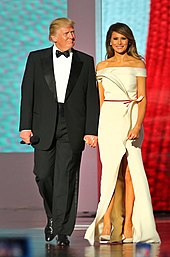
Donald and Melania Trump
And Trump has never been known for marital fidelity:
- He was still married to Ivana when he carried on a highly publicized extramarital affair with Marla Maples.
- Trump was still married to Maples when he entered into an affair with Melania Knauss.
- And only four months after Melania gave birth to their son, Barron, Trump had his now-infamous tryst with porn “actress” Stormy Daniels.
He has often boasted about his sexual prowess:
- When his 2016 Republican rival, Marco Rubio, joked that Trump’s hands were small, Trump said: “Look at those hands, are they small hands? And, [Rubio] referred to my hands—‘if they’re small, something else must be small.’ I guarantee you there’s no problem. I guarantee.”
- Trump equated avoiding STDs during the late 1990s with serving in Vietnam: “I’ve been so lucky in terms of that whole world, it is a dangerous world out there. It’s like Vietnam, sort of. It is my personal Vietnam. I feel like a great and very brave solider,”
Trump’s most infamous “take” on women appeared during the 2016 Presidential race. The remarks happened during a 2005 exchange with Billy Bush, then the host of Access Hollywood.
The two were traveling in an Access Hollywood bus to the set of the soap opera Days of Our Lives, where Trump was to make a cameo appearance. A “hot” microphone caught Trump’s boast of trying to pick up a married woman:
You know and I moved on her actually. You know she was down on Palm Beach. I moved on her and I failed. I’ll admit it. I did try and fuck her. She was married.
No, no, Nancy. No this was—and I moved on her very heavily. In fact, I took her out furniture shopping. She wanted to get some furniture. I said I’ll show you where they have some nice furniture.
I took her out furniture [shopping]. I moved on her like a bitch, but I couldn’t get there, and she was married. Then all of a sudden I see her, she’s now got the big phony tits and everything. She’s totally changed her look….
You know I’m automatically attracted to beautiful—I just start kissing them. It’s like a magnet. Just kiss. I don’t even wait. And when you’re a star they let you do it. You can do anything. Grab them by the pussy. You can do anything.
When the Washington Post broke the story on October 7, 2016, the reaction was immediate—and explosive.
Trump quickly released a statement: “This was locker room banter, a private conversation that took place many years ago. Bill Clinton has said far worse to me on the golf course—not even close. I apologize if anyone was offended.”
During the second Presidential debate on October 9, moderator Anderson Cooper asked Trump: “Have you ever done those things?”
Trump: “And I will tell you—no I have not.”
On October 12, 2016, The Palm Beach Post, The New York Times and People all published stories of women claiming to have been sexually assaulted by Trump.
Among his victims:
- MINDY MCGILLLIVRAY: Told the Post that Trump groped her buttocks when she, then 34, visited Mar-a-Lago in Palm Beach, Florida, in 2013.
Within a week of accusing Trump, she told the Palm Beach Post that she and her family were leaving the United States. The reason: She feared for her family’s safety.
“We feel the backlash of the Trump supporters. It scares us. It intimidates us. We are in fear of our lives.’’
- NATASHA STOYNOFF: A People magazine writer, in December, 2005, she went to Mar-a-Lago to interview Donald and Melania Trump for a first-wedding-anniversary feature story.
During a break in the interview, Trump said he wanted to show Stoynoff a “tremendous” room in the mansion.
Recalled Stoynoff: “We walked into that room alone, and Trump shut the door behind us. I turned around, and within seconds he was pushing me against the wall and forcing his tongue down my throat.”
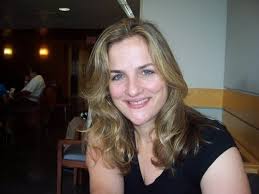
Natasha Stoynoff
Fortunately, Trump’s butler soon entered the room, and Trump acted as though nothing had happened. But as soon as he and Stoynoff were alone again, Trump said: “You know we’re going to have an affair, don’t you?”
Stoynoff asked her editors—and received permission—to be removed from writing any further Trump features.
- JESSICA LEEDS: More than 30 years earlier, Trump had made equally unwelcome advances toward businesswoman Leeds, then 38.
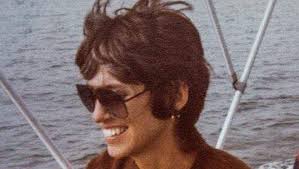
Jessica Leeds
She said she was sitting next to Trump in the first-class cabin of a New York-bound flight when Trump lifted the armrest, grabbed her breasts and tried to put his hand up her skirt. She fled to the back of the plane.
2016 PRESIDENTIAL CAMPAIGN, 2020 PRESIDENTIAL CAMPAIGN, ABC NEWS, ADOLF HITLER, ALTERNET, ANCIENT GREECE, ANCIENT ROME, AP, BERNIE SANDERS, BUZZFEED, CATASTROPHE, CBS NEWS, CHINA, CNN, CONSUMER PROTECTION, CORPORATE TAXES, CORRUPTION, CROOKS AND LIARS, DAILY KOZ, DEMOCRATIC PARTY, DONALD TRUMP, EXECUTIVE PAYWATCH, FACEBOOK, FORBES, FUNDRAISING, HILLARY CLINTON, INCOME INEQUALITY, IVAN THE TERRIBLE, JOE BIDEN, JOSEPH STALIN, LEON TROTSKY, MOTHER JONES, MOVEON, MSNBC, NAZI GERMANY, NBC NEWS, NEWSWEEK, NICCOLO MACHIAVELLI, NPR, PBS NEWSHOUR, POLITICO, RAW STORY, REUTERS, ROBERT PAYNE, SALON, SEATTLE TIMES, SLATE, SPARTACUS, THE ATLANTIC, THE CHICAGO SUN-TIMES, THE CHICAGO TRIBUNE, THE CORRUPT SOCIETY (BOOK), THE DAILY BEAST, THE DISCOURSES, THE FRENCH REVOLUTION, THE GREAT LEVELER (BOOK), THE GUARDIAN, THE HILL, THE HUFFINGTON POST, THE LOS ANGELES TIMES, THE NATION, THE NEW YORK TIMES, THE RUSSIAN REVOLUTION, THE WASHINGTON POST, TIME, TWITTER, U.S. NEWS & WORLD REPORT, UPI, USA TODAY, VIOLENCE, Vladimir Lenin, WALL STREET, WALTER SCHEIDEL, WATERGATE, WEALTH GAP, WILLIAM SHAKESPEARE, WINSTON CHURCHILL
In Bureaucracy, Business, History, Law, Politics, Social commentary on June 25, 2019 at 12:15 am
The gap between rich and poor in the United States has never been greater.
A May 1, 2018 article in Forbes—which bills itself as “The Capitalist Tool”—vividly documents this truth.
“In the 1950s, a typical CEO made 20 times the salary of his or her average worker. Last year, [2017] CEO pay at an S&P 500 Index firm soared to an average of 361 times more than the average rank-and-file worker, or pay of $13,940,000 a year, according to an AFL-CIO’s Executive Paywatch news release today.”
The average CEO pay climbed six percent in 2017—while the average production worker earned just $38,613, according to Executive Paywatch.
The average wage—adjusted for inflation—has stagnated for more than 50 years. Meanwhile, CEOs’ average pay since the 1950s has risen by 1000%.
This would not have been news to Niccolo Machiavelli, the father of modern political science. In his masterwork, The Discourses, he observed the human condition as that of constant struggle:
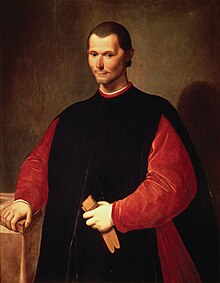
Niccolo Machiavelli
It was a saying of ancient writers, that men afflict themselves in evil, and become weary of the good, and that both these dispositions produce the same effects.
For when men are no longer obliged to fight from necessity, they fight from ambition, which passion is so powerful in the hearts of men that it never leaves them, no matter to what height they may rise.
The reason for this is that nature has created men so that they desire everything, but are unable to attain it. Desire being thus always greater than the faculty of acquiring, discontent with what they have and dissatisfaction with themselves result from it.
This causes the changes in their fortunes—for as some men desire to have more, while others fear to lose what they have, enmities and war are the consequences. And this brings about the ruin of one province and the elevation of another.
Author Walter Scheidel, Dickason Professor in the Humanities, Professor of Classics and History at Stanford University, has also given this subject a great deal of thought. And, like Machiavelli, he has reached some highly disturbing conclusions.

Walter Scheidel
World Economic Forum [CC BY-SA 2.0 (https://creativecommons.org/licenses/by-sa/2.0)%5D
He gave voice to these in his 2017 book, The Great Leveler: Violence and the History of Inequality from the Stone Age to the Twenty-First Century. His thesis: Only violence and catastrophes have consistently reduced inequality throughout history.
According to the book’s jacket blurb: “Are mass violence and catastrophes the only forces that can seriously decrease economic inequality? To judge by thousands of years of history, the answer is yes.
“Tracing the global history of inequality from the Stone Age to today, Walter Scheidel shows that inequality never dies peacefully. Inequality declines when carnage and disaster strike and increases when peace and stability return.
“The Great Leveler is the first book to chart the crucial role of violent shocks in reducing inequality over the full sweep of human history around the world.
“Ever since humans began to farm, herd livestock, and pass on their assets to future generations, economic inequality has been a defining feature of civilization. Over thousands of years, only violent events have significantly lessened inequality.
“The ‘Four Horsemen’ of leveling–mass-mobilization warfare, transformative revolutions, state collapse, and catastrophic plagues—have repeatedly destroyed the fortunes of the rich.
“Scheidel identifies and examines these processes, from the crises of the earliest civilizations to the cataclysmic world wars and communist revolutions of the twentieth century.
“Today, the violence that reduced inequality in the past seems to have diminished, and that is a good thing. But it casts serious doubt on the prospects for a more equal future.”
Revolutionaries have known the truth of Scheidel’s findings from the gladiators’ revolt of Spartacus (73-71 B.C.) to the French Revolution (1789 – 1799) to the overthrow of the Czarist Romanov dynasty (1917).
But American politicians serenely ignore that truth. They depend on the mega-rich for millions of dollars in “campaign contributions”—which pay for self-glorifying ads on TV.
Thus, in 2016, American voters had a “choice” between two “love-the-rich” Presidential candidates: Donald Trump and Hillary Clinton. The result was that millions stayed home or voted in protest for third-party candidates who had no chance of winning.
In his 1975 book, The Corrupt Society: From Ancient Greece to Modern-day America, British historian Robert Payne warned that the predatory rich would not change their behavior: “Nor is there any likelihood that the rich will plow back their money into services to ensure the general good.
“They have rarely demonstrated social responsibility, and they are much more likely to hold on to their wealth at all costs than to renounce any part of it.
“Like the tyrant who lives in a world wholly remote from the world of the people, shielded and protected from all possible influences, the rich are usually the last to observe the social pressures rising from below, and when these social pressures reach flashpoint, it is too late to call in the police or the army.
“The tyrant dies; the police and the army go over to the revolutionaries; and the new government dispossesses the rich by decree. A single authoritative sentence suffices to expunge all private wealth and restore it to the service of the nation.”
2020 PRESIDENTIAL CAMPAIGN, ABC NEWS, ADOLF HITLER, ALTERNET, ANCIENT GREECE, ANCIENT ROME, AP, BERNIE SANDERS, BUZZFEED, CBS NEWS, CHINA, CNN, CONSUMER PROTECTION, CORPORATE TAXES, CORRUPTION, CROOKS AND LIARS, DAILY KOZ, DEMOCRATIC PARTY, FACEBOOK, FUNDRAISING, INCOME INEQUALITY, IVAN THE TERRIBLE, JOE BIDEN, JOSEPH STALIN, LEON TROTSKY, MOTHER JONES, MOVEON, MSNBC, NAZI GERMANY, NBC NEWS, NEWSWEEK, NICCOLO MACHIAVELLI, NPR, PBS NEWSHOUR, POLITICO, RAW STORY, REUTERS, ROBERT PAYNE, SALON, SEATTLE TIMES, SLATE, THE ATLANTIC, THE CHICAGO SUN-TIMES, THE CHICAGO TRIBUNE, THE DAILY BEAST, THE DISCOURSES, THE GREAT LEVELER, THE GUARDIAN, THE HILL, THE HUFFINGTON POST, THE LOS ANGELES TIMES, THE NATION, THE NEW YORK TIMES, THE WASHINGTON POST, TIME, TWITTER, U.S. NEWS & WORLD REPORT, UPI, USA TODAY, Vladimir Lenin, WALL STREET, WALTER SCHEIDEL, WATERGATE, WEALTH GAP, WILLIAM SHAKESPEARE, WINSTON CHURCHILL
In Bureaucracy, Business, History, Law, Politics, Social commentary on June 24, 2019 at 1:21 am
Americans are used to Presidential candidates telling lies (euphemistically known as “campaign promises”) to get elected.
But when a candidate actually (and usually accidentally) tells the truth, the results can be electrifying. A pointed example:
On June 18, Democratic Presidential candidate (and momentary front-runner) Joe Biden addressed a roomful of donors in New York. Money is, after all, the lifeblood of all political campaigns, and Biden wanted to guarantee he got more of it than any of his 23 Democratic rivals.
So the former vice president had a message he felt sure would appeal to his well-heeled audience of billionaires: Don’t worry, if I’m elected, your standard of living won’t change.
Addressing the 100 or so guests at a fundraiser at the Carlyle Hotel in New York City, Biden said that he had taken heat from “some of the people on my team, on the Democratic side” because he had said that rich people were “just as patriotic as poor people.

Joe Biden
“The truth of the matter is, you all, you all know, you all know in your gut what has to be done. We can disagree in the margins but the truth of the matter is it’s all within our wheelhouse and nobody has to be punished. No one’s standard of living will change, nothing would fundamentally change,” he said.
And he added: “I mean, we may not want to demonize anybody who has made money.
“When we have income inequality as large as we have in the United States today, it brews and ferments political discord and basic revolution. Not a joke. Not a joke … It allows demagogues to step in and say the reason where we are is because of the ‘other’….
“You’re not the other. I need you very badly. I hope if I win this nomination, I won’t let you down. I promise you. I have a bad reputation, I always say what I mean. The problem is I sometimes say all that I mean.”
Biden has talked about decreasing income inequality and promoting workers’ rights. But he’s taken a moderate stance when it comes to taxation.
Vermont United States Senator Bernie Sanders, on the other hand, has attacked the ultra-rich as responsible for the ever-widening gap between themselves and the poor.
“I love Bernie, but I’m not Bernie Sanders. I don’t think 500 billionaires are the reason why we’re in trouble,” Biden said in March.
Instead, he proposes expanding tax credits for the poor and middle class, and making the tax code less friendly to rich investors.
Robert Payne, the distinguished British historian, had a different—and darker—view of the rich.
Payne authored more than 110 books. Among his subjects were Adolf Hitler, Ivan the Terrible, Winston Churchill, Joseph Stalin, Vladimir Lenin, William Shakespeare and Leon Trotsky.
In 1975, he published The Corrupt Society: From Ancient Greece to Present-Day America. It proved a summary of many of his previous works.
Among the epochs it covered were the civilizations of ancient Greece, Rome and China; Nazi Germany; the Soviet Union; and Watergate-era America. And the massive corruption each of those epochs had spawned.
In his chapter, “A View of the Uncorrupted Society,” Payne warned: Power and wealth are the main sources of corruption.
“The rich, simply by being rich, are infected with corruption. Their overwhelming desire is to grow richer, but they can do this only at the expense of those who are poorer than themselves.
”Their interests conflict with those of the overall society. They live sheltered from the constant anxieties of the poor, and thus cannot understand them. Nor do they try to.
They see the poor as alien from themselves, and thus come to fear and despise them. And their wealth and influence enables them to buy politicians—who, in turn, write legislation that protects the rich from the poor.
But Payne foresaw an even greater danger from the rich and powerful than their mere isolation from the rest of society: “The mere presence of the rich is corrupting. Their habits, their moral codes, their delight in conspicuous consumption are permanent affronts to the rest of humanity. Vast inequalities of wealth are intolerable in any decent society.”
Writing in 1975, Payne noted that a third of the private wealth was possessed by less than five percent of the population—while about a fifth of the populace lived at the poverty level. By 2000, he predicted, about five percent of the population would possess two-thirds of America’s wealth. And more than half the population would be near or below the starvation level.
The result could only be catastrophe. The only way to halt this this increasing concentration of wealth by fewer people would be through law or violent revolution.
Payne has proven to be an uncanny prophet.
On December 8, 2017, the Seattle Times noted that the wealthiest one percent of Americans owned 40% of the country’s wealth. They owned more wealth than the bottom 90% combined.
From 2013, the share of wealth owned by the one percent increased by nearly three percentage points. Wealth owned by the bottom 90%, meanwhile, fell over the same period.
But this situation need not remain permanent.
"MISSION: IMPOSSIBLE", 2016 PRESIDENTIAL ELECTION, 9/11, ABC NEWS, ALTERNET, AP, AUGUSTO PINOCHET, AUGUSTO SANDINO, AYATOLLAH RUHOLLAH KHOMEINI, BAY OF PIGS, BUZZFEED, CBS NEWS, CHIANG KAI-SHEK, CHILE, CIA, CNN, CROOKS AND LIARS, CUBA, DAILY KOZ, DONALD TRUMP, DWIGHT D. EISENHOWER, FACEBOOK, FBI, FIDEL CASTRO, FULGENCIO BATISTA, GEORGE W. BUSH, GUATEMALA, HAITI, HONODURAS, IRAQ, JACOBO ARBENZ, JOHN F. KENNEDY, MAFIA, MAO TSE-TUNG, MOHAMMAD MOSADDEGH, MOHAMMAD-REZA SHAH PHLAVI, MOTHER JONES, MOVEON, NATIONAL SECURITY AGENCY, NBC NEWS, NEWSWEEK, NICARAGUA, NPR, OSAMA BIN LADEN, POLITICO, RAW STORY, REUTERS, RICHARD M. NIXON, RUSSIA, SADDAM HUSSEIN, SALON, SALVADOR ALLENDE, SEATTLE TIMES, SLATE, SOVIET UNION, THE ATLANTIC, THE CHICAGO SUN-TIMES, THE CHICAGO TRIBUNE, THE DAILY BEAST, THE GUARDIAN, THE HILL, THE HUFFINGTON POST, THE LOS ANGELES TIMES, THE NATION, THE NEW YORK TIMES, THE WASHINGTON POST, TIME, TWITTER, U.S. NEWS & WORLD REPORT, UNITED FRUIT COMPANY, UPI, USA TODAY
In Bureaucracy, History, Law, Law Enforcement, Military, Politics, Social commentary on June 14, 2019 at 12:09 am
On June 12, during an interview with ABC News correspondent George Stephanopoulos, President Donald Trump said he would accept information on his 2020 opponents from hostile nations like Russia and China:
“It’s not an interference, they have information. I think I’d take it. If I thought there was something wrong, I’d go maybe to the FBI. If I thought there was something wrong. But when somebody comes up with oppo research, right, they come up with oppo research.
“The FBI doesn’t have enough agents to take care of it, but you go and talk honestly to congressmen, they all do it, they always have. And that’s the way it is. It’s called oppo research.”
The reaction was nationwide outrage.
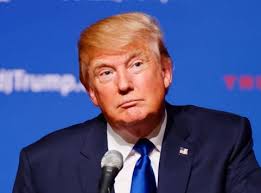
Donald Trump
Apparently, most Americans don’t like having their elections subverted by enemy nations.
Subverting the governments of other countries is a right that Americans have long reserved for themselves. For example:
- Between 1898 and 1934, the United States repeatedly intervened with military force in Central America and the Caribbean.
- Americans staged invasions of Honduras in 1903, 1907, 1911, 1912, 1919, 1924 and 1925 to defend U.S. interests. These were defined as Standard Oil and the United Fruit Company.
- The United States occupied Nicaragua almost continuously from 1912 to 1933. Its legacy was the imposition of the tyrannical Somoza family, which ruled from 1936 to 1979.
- The United States occupied Haiti from 1915 to 1934. American banks had lent money to Haiti and requested American government intervention.
- In 1918, 13,000 American soldiers joined armies from Europe and Japan to overthrow the new Soviet government and restore the previous Tsarist regime. By 1920, the invading forces proved unsuccessful and withdrew.
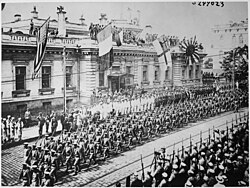
Allied troops parading in Vladivostok, 1918
- From 1946 to 1949, the United States provided military, logistical and other aid to the Right-wing Chinese Nationalist Party of Chiang Kai-shek. Its opponent were Communist forces led by Mao Tse-Tung, who ultimately proved victorious.
- In 1953, the Eisenhower administration ordered the CIA to overthrew the democratically-elected government of of Iranian Prime Minister Mohammad Mosaddegh. His crime: Nationalizing the Iranian oil industry, which had been under British control since 1913.
- He was succeeded by Mohammad-Reza Shah Phlavi. Whereas Mossadeddgh had ruled as a constitutional monarch, Phlavi was a dictator who depended on United States government support to retain power until he was overthrown in 1979 by the Ayatollah Ruhollah Khomeini.
- In 1954, the CIA overthrew the democratically-elected government of Guatemalan President Jacobo Arbenz. His crime: Installing a series of reforms that expanded the right to vote, allowed workers to organize, legitimized political parties and allowed public debate. Most infuriating to American Right-wingers: His agrarian reform law, which expropriated parts of large land-holdings and redistributed them to agricultural laborers.
- The United Fruit Company lobbied the United States government to overthrow him—and the CIA went into action. Arbenz was replaced by the first of a series of brutal Right-wing dictators.
- From 1959 until 1963, the United States government was obsessed with overthrowing the revolutionary Cuban government of Fidel Castro. Although not democratically elected, Castro was wildly popular in Cuba for overthrowing the dictatorial Fulgencio Batista.
- On April 17, 1961, over 1,400 CIA-trained Cuban exiles invaded Cuba at the Bay of Pigs. Cuban military forces crushed the invasion in three days.
- Infuriated with the failure of the Bay of Pigs invasion, President John F. Kennedy authorized “Operation Mongoose” to remove Castro through sabotage and assassination. The CIA, wanting to please Kennedy, teamed up with the Mafia, which wanted to resurrect its casinos on the island.
- Among the tactics used: Hiring Cuban gangsters to murder police officials and Soviet technicians; sabotaging mines; using biological and chemical warfare against the Cuban sugar industry. None of these proved successful in assassinating Castro nor overturning his regime.
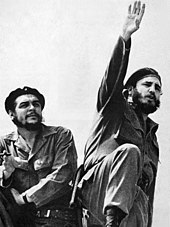
Ernesto “Che” Guevera and Fidel Castro
- In 1970, President Richard M. Nixon ordered the CIA to prevent Marxist Salvador Allende from being democratically elected as president of Chile. When that failed, he ordered the CIA to overthrow Allende.
- Allende’s crime: A series of liberal reforms, including nationalizing large-scale industries (notably copper mining and banking. In 1973, he was overthrown by Chilean army units and national police. He was followed by Right-wing dictator Augusto Pinochet, who slaughtered 3,200 political dissidents, imprisoned 30,000 and forced another 200,000 Chileans into exile.
Americans reacted to all these attempts—successful and unsuccessful—with indifference or outright support.
The popular 1960s TV series, “Mission: Impossible,” regularly depicted a CIA-type agency supporting regimes “we” liked or toppling those “we” didn’t.
Americans generally assume their Presidents and Congress know best who is a “friend” and who is an “enemy.” America’s friends often turn out, for the most part, to be Right-wing dictators like Chiang Kai-Shek, Fulgencio Batista, Augusto Pinochet and Mohammad-Reza Shah Phlavi.
And its enemies often turn out to be liberal reformers like Augusto Sandino, Mohammad Mosaddegh and Salvador Allende.
Americans favor intervention for the flimsiest of reasons. In 2003, President George W. Bush claimed Iraq’s dictator, Saddam Hussein, had plotted 9/11 with Osama bin Laden. There was absolutely no proof to substantiate this, yet Americans overwhelmingly supported Bush’s unprovoked invasion of Iraq.
But now the shoe is on the other foot.
Americans are now tasting the medicine they have dished out to so many other countries. And they find it as repugnant as those countries have found the American brand.
A.G. SULZBERGER, ABC NEWS, ALTERNET, ANDREW MCCABE, AP, BUZZFEED, CBS NEWS, CIA, CNN, CROOKS AND LIARS, DAILY KOZ, DEMOCRATIC PARTY, DONALD TRUMP, FACEBOOK, FBI, GEORGE ORWELL, JAMES COMEY, JOHN KELLY, JUSTICE DEPARTMENT, LISA PAGE, MEDIA, MOTHER JONES, MOVEON, MSNBC, NANCY PELOSI, NBC NEWS, NEWSWEEK, NONDISCLOSURE AGREEMENTS, NPR, PBS NEWSHOUR, PEGGY NOONAN, PETER STRZOK, POLITICO, RAW STORY, REPUBLICAN PARTY, REUTERS, ROBERT S. MUELLER, Ronald Reagan, RUDOLPH GIULIANI, SALON, SEATTLE TIMES, SLATE, THE ATLANTIC, THE CHICAGO SUN-TIMES, THE CHICAGO TRIBUNE, THE DAILY BEAST, THE GUARDIAN, THE HILL, THE HUFFINGTON POST, THE LOS ANGELES TIMES, THE NATION, THE NEW YORK TIMES, THE WASHINGTON POST, TIME, TREASON, TWITTER, U.S. NEWS & WORLD REPORT, UNITED STATES CONSTITUTION, UPI, USA TODAY, USA TODAY DONALD TRUMP, WHITE HOUSE
In Bureaucracy, History, Law, Politics, Social commentary, Uncategorized on May 28, 2019 at 12:18 am
On May 24, NBC News published a story under the headline: ‘TRUMP DOESN’T SEEM TO UNDERSTAND WHAT ‘TREASON’ MEANS.”
The article noted: “Once again on Thursday, President Donald Trump used the T-word, this time saying that former FBI officials who were involved in investigating his campaign committed treason.
“Asked at a White House event which of his adversaries he had in mind when he accused them of treason, he said, ‘A number of people. They have unsuccessfully tried to take down the wrong person.’ He then specified former FBI director James Comey, former acting FBI director Andrew McCabe, former FBI lawyer Lisa Page, and former FBI agent Peter Strzok.
“‘That’s treason. They couldn’t win the election, and that’s what happened.'”
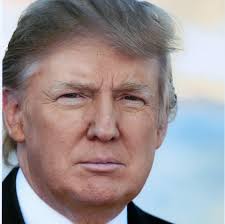
Donald Trump
The story goes on to point out that the Constitution does not define treason as being disloyal to the President—or a private citizen, which is what Trump was when he ran for President in 2016.
In Article III, Section 3, the United States Constitution states: “Treason against the United States, shall consist only in levying War against them, or in adhering to their Enemies, giving them Aid and Comfort.”
“Enemy” means a country or an entity that has declared war or is in a state of open war against the United States.
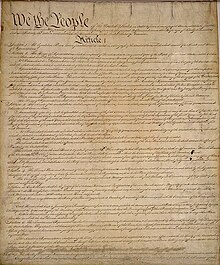
United States Constitution
Although the story got its facts right, the headline gives a thoroughly misleading impression. By saying, “Trump doesn’t seem to understand….” it implies that he’s simply ignorant, and once someone explains the true meaning of treason to him, all will be well.
This is not only patently absurd, it is absolutely dangerous.
First of all, Trump considers himself “a very stable genius”—which in itself proves he’s the opposite of both. This is the sort of megalomania for which brutal dictators like Gaius Caligula were infamous.
Second, he hates being corrected, and those who have tried have been fired or quit after repeated frustration and harassment. John Kelly, his former chief of staff, said of Trump: “He’s an idiot. It’s pointless to try to convince him of anything. He’s gone off the rails. We’re in crazytown.”
Third, he has no respect for anyone but himself, and none for the traditions that go with America’s highest office. He has called the White House “a real dump.”
In addition, Trump has replaced Presidential dignity with infantile tantrums and personal attacks on virtually everyone on Twitter and in press conferences.
Fourth, Trump has always sought absolute control over everyone. As a private businessman, he forced his employees to sign NDAs—Non-Disclosure Agreements—to keep secret his acts of criminality and incompetence. As President, he has tried to continue that practice—even though it’s forbidden by law for Federal employees.
Fifth, he has always been a vindictive man. He and his companies have been involved in more than 3,500 lawsuits. He has openly bragged about how enjoyable it is to “get even” with those who “screw you.” He has “joked” that it would be nice if the United States had a “president-for-life”—like China. And he accused Democrats of “treason” for not applauding his 2018 State of the Union message.
Or take the headline in a May 24 article in Politico: “GIULIANI APPEARS TO DEFEND SHARING A DOCTORED PELOSI VIDEO.”
The story outlines how Rudolph Giuliani, a former United States Attorney and now Trump’s chief legal protector, defended sharing a video of House Speaker Nancy Pelosi—one that had been doctored to make her appear drunk and slurring her words.
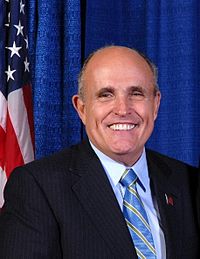
Rudloph Giuliani
“Nancy Pelosi wants an apology for a caricature exaggerating her already halting speech pattern,” Giuliani wrote on Twitter. “First she should withdraw her charge which hurts our entire nation when she says the President needs an ‘intervention’. ‘People who live in a glass house shouldn’t throw stones.’”
Giuliani was referring to a remark Pelosi made on May 23. The day before, Trump had stalked out of infrastructure talks with top congressional Democrats and railed against their investigations.
“I wish that his family or his administration or his staff would have an intervention for the good of the country,” said Pelosi in a press conference.
Pelosi’s words could be interpreted as a slap at Trump’s lack of maturity—or as an invitation for members of his Cabinet to invoke the 25th Amendment. Under this, a President can be removed from office if he is mentally or physically unable to carry out his assigned duties.
Giuliani’s tweet, on the other hand, was pure slander. Including the doctored clip with his tweet, he taunted: “What is wrong with Nancy Pelosi? Her speech pattern is bizarre.”
He later deleted the message.
To assert—as the Politico headline does—that Giuliani “appears” to be defending a lying video is to refuse to tell the full truth. He was defending—and re-posting—it.
His attitude was: “If you’re going to criticize the President, I have the right to slander you.”
But you wouldn’t have gotten that from the headline.
Donald Trump has relentlessly accused the mainstream media of attacking him with “fake news.”
The only “fake news” has been those stories that sugarcoat the despicable behavior of the President and his closest associates.
ABC NEWS, ABORTION, AFFORDABLE CARE ACT, ALABAMA, ALTERNET, AP, ASSASSINATION, BRIAN KEMP, BUZZFEED, CARL AUSTIN WEISS, CBS NEWS, CNN, CROOKS AND LIARS, DAILY KOZ, DONALD TRUMP, FACEBOOK, GEORGE C. WALLACE, GEORGIA, HUEY LONG, INCEST, KAY IVEY, MARK JOSEPH STERN, MOTHER JONES, MOVEON, MSNBC, NBC NEWS, NEWSWEEK, NICCOLO MACHIAVELLI, NPR, PBS NEWSHOUR, POLITICO, RACHELLE GRIMMER, RAPE, RAW STORY, REINHARD HEYDRICH, REPUBLICANS, REUTERS, ROE V. WADE, Ronald Reagan, SALON, SEATTLE TIMES, Secret Service, SLATE, THE ATLANTIC, THE CHICAGO SUN-TIMES, THE CHICAGO TRIBUNE, THE DAILY BEAST, THE GUARDIAN, THE HILL, THE HUFFINGTON POST, THE LOS ANGELES TIMES, THE NATION, THE NEW YORK TIMES, THE PRINCE, THE WASHINGTON POST, TIME, TWITTER, U.S. NEWS & WORLD REPORT, UNITED STATES SUPREME COURT, UPI, USA TODAY, WELFARE
In Bureaucracy, History, Law, Law Enforcement, Politics, Social commentary on May 21, 2019 at 10:36 am
In The Prince, Niccolo Machiavelli, the father of modern political science, raised the question of “whether it is better to be loved than feared, or feared more than loved.”
And he answered it: “The reply is, that one ought to be both feared and loved, but as it is difficult for the two to go together, it is much safer to be feared than loved.”
But Machiavelli warned against relying primarily on fear: “Still, a prince should make himself feared in such a way that if he does not gain love, he at any rate avoids hatred, for fear and the absence of hatred may well go together, and will always be attained by one who abstains from interfering with the property of his citizens….or with their women.”
If the Republicans governing Georgia and Alabama ever read this warning, they have ignored it with a vengeance.
Niccolo Machiavelli
On May 7, Georgia Governor Brian Kemp signed an anti-abortion law that—in defiance of the 1973 Supreme Court decision in Roe v. Wade—re-criminalizes abortion.
The law bans abortions as soon as a fetal heartbeat is detectable. This usually occurs about six weeks into a pregnancy—even before many women know they’re pregnant.
The law permits abortions
- Only if the mother’s life is at risk; or
- If the fetus cannot survive.
No exceptions are made for cases of rape or incest.
“HB 481 would also have consequences for women who get abortions from doctors or miscarry,” writes Mark Joseph Stern for Slate.
“A woman who seeks out an illegal abortion from a health care provider would be a party to murder, subject to life in prison. And a woman who miscarries because of her own conduct—say, using drugs while pregnant—would be liable for second-degree murder, punishable by 10 to 30 years’ imprisonment.
“Prosecutors may interrogate women who miscarry to determine whether they can be held responsible; if they find evidence of culpability, they may charge, detain, and try these women for the death of their fetuses.” [Emphasis added.]
In addition, a woman could be sentenced to 10 years’ imprisonment if she leaves Georgia to obtain an abortion in another state.

And on May 14, Alabama Governor Kay Ivey signed into law the “Alabama Human Life Protection Act.” The law only allows exceptions “to avoid a serious health risk to the unborn child’s mother,” for ectopic pregnancy and if the “unborn child has a lethal anomaly.”
As in the case of Georgia, no exceptions are made for rape or incest.
Ivey admitted that the new law may be unenforceable owing to Roe v. Wade, which legalized abortion in all 50 states. But the whole point of the law is to challenge that decision, Ivey said.
Republicans constantly claim to be “the party of small government.” But there can be no more intrusive act than dictating to a woman that she must give birth—even if she’s the victim of rape or incest.
At the same time:
- Republicans have proven uniformly hostile to providing poor mothers with access to food, clothing and medical care.
- Donald Trump has made repealing the Affordable Care Act—which provides medical insurance to more than 20 million Americans—the hallmark of his Presidency.
It’s easy to imagine many of these women fatally cracking under the strain.
On December 6, 2011, Rachelle Grimmer, a 38-year-old resident of San Antonio, pulled a gun in a state welfare office and held off police for seven hours. Then she shot and wounded her two children—ages 10 and 12—before fatally shooting herself.
For months, she had been unable to qualify for food stamps.
Thus, women living in abortion-banning states face Right-wing hypocrisy on one hand and draconian laws punishing the most intimate acts—of sexuality and reproductive freedom—on the other.
It’s easy to imagine some pregnant women—especially the victims of incest and/or rape—desperately seeking redress through violence. And the targets of their wrath could easily be the Republican legislators of their states who have made their lives a living hell.
The President is constantly guarded by the Secret Service. And governors are protected by state police. But state assemblymen and senators aren’t assigned such details—unless there’s a specific threat made against them.
In fact, Right-wing figures have often been the targets of successful—and unsuccessful—assassination attempts.
- On September 8, 1935, Louisiana U.S. Senator Huey Long was shot and fatally wounded by Carl Austin Weiss, an idealistic young doctor. Long had intended to run for President in 1936 and unseat Franklin D. Roosevelt.
- On May 27, 1942, SS Obergruppenführer (General) Reinhard Heydrich—“The Butcher of Prague”—was killed with a hand grenade by two Czech patriots.
- On May 15, 1972, Presidential candidate George C. Wallace was shot and paralyzed by a crazed gunman while mingling with supporters in a Maryland shopping center.
- On March 30, 1981, President Ronald Reagan was shot and almost killed by a psychotic gunman while walking to his bulletproof limousine in Washington, D.C.
All of these men, it should be noted, had bodyguards assigned to them at the time they were attacked.
Given the ferocity of laws aimed specifically at them, some women may decide to abort more than fetuses.


ABC NEWS, ALTERNET, AP, BUZZFEED, CALIFORNIA ATTORNEY GENERAL, CBS NEWS, CNN, CROOKS AND LIARS, DAILY KOZ, DISTRICT ATTORNEY OF SAN FRANCISCO, DONALD TRUMP, FACEBOOK, GEORGETOWN UNIVERSITY’S INSTITUTE OF POLITICS AND PUBLIC SERVICE, ILLEGAL ALIENS, IMMIGRATION LAWS, JOE BIDEN, Kamala Harris, LAW ENFORCEMENT, MO ELLEITHEE, MOTHER JONES, MOVEON, MSNBC, NBC NEWS, NEWSWEEK, NPR, PBS NEWSHOUR, POLITICO, RAW STORY, REUTERS, SALON, SAN FRANCISCO, SEATTLE TIMES, SENATE JUDICIARY COMMITTEE, SLATE, THE ATLANTIC, THE CHICAGO SUN-TIMES, THE CHICAGO TRIBUNE, THE DAILY BEAST, THE GUARDIAN, THE HILL, THE HUFFINGTON POST, THE LOS ANGELES TIMES, THE NATION, THE NEW YORK TIMES, THE TRUTHS WE HOLD (BOOK), THE WASHINGTON POST, TIME, TWITTER, U.S. NEWS & WORLD REPORT, UNITED STATES SENATE, UPI, USA TODAY, VIOLENT CRIME CONTROL AND LAW ENFORCEMENT ACT OF 1994
THE “PROGRESSIVE PROSECUTOR” WHO IGNORED THE LAW
In Bureaucracy, History, Law, Law Enforcement, Politics, Social commentary on July 4, 2019 at 12:08 amKamala Harris spent seven years (2004 – 2011) as District Attorney of San Francisco and another six years (2011 – 2017) as California Attorney General. Then, in 2016, she won election to the United States Senate.
Now she wants to be the first black woman President of the United States. And to tout her candidacy, she’s published her memoirs: The Truths We Hold. In these, she describes herself as a “progressive prosecutor.”
Harris knows that law enforcement issues are a lightning rod for both liberal and conservative voters. So she’s trying to portray herself as appealing to both.
“It’s a presidential campaign, and every aspect of a candidate’s record is going to be scrutinized and they’re going to have to answer for it,” said Mo Elleithee, a longtime Democratic operative who leads Georgetown University’s Institute of Politics and Public Service.
Former Vice President Joe Biden chaired the Senate’s Judiciary Committee when he backed the 1994 Violent Crime Control and Law Enforcement Act. This created stricter penalties for drug offenders and funneled billions of dollars toward more police and new prisons. Now he’s being accused of helping create an era of mass incarceration among blacks.
Today, with millions of illegal aliens from Central and Latin America flooding into the United States, the spotlight has shifted from the incarceration of blacks to that of Hispanics.
Illegal immigration—and what to do about it—is now the hottest political issue in the country. And it may well undo Harris’ chances to become President.
For liberals of the Democratic party, “open borders” appears to be the solution to illegal immigration. Yet the vast majority of Americans reject this. They support legal immigration—but oppose illegal immigration.
Moreover, Donald Trump has ignited a white-hot fury against illegal aliens from Central and Latin America.
And Kamala Harris’ record as San Francisco District Attorney is hardly reassuring on this issue.
Among the truths she holds secret: When she served as District Attorney for San Francisco, she set up a secret unit to keep even convicted illegal alien felons out of prison—and in the United States.
U.S. Senator Kamala Harris
Her program, called Back on Track, trained them for jobs they could not legally hold. This was a flagrant violation of Federal immigration law. Completion led to the expunging of a felony conviction, making it highly popular among convicted criminals.
One such alumnus was Alexander Izaguirre, an illegal alien who had been arrested twice within eight months—for purse-snatching and selling cocaine.
In July, 2008, four months after pleading guilty to selling cocaine, Izaguirre assaulted Amanda Kiefer, a legal San Francisco resident.
Snatching her purse, he jumped into an SUV, then tried to run Kiefer down. Terrified, she leaped onto the hood and saw Izaguirre and a driver laughing.
The driver slammed on the brakes, sending Kiefer flying onto the pavement and fracturing her skull.
The program, Back on Track, became a centerpiece of Harris’ campaign for state Attorney General.
Until she was questioned by the Los Angeles Times about the Izaguirre case, Harris had never publicly admitted that the program included illegal aliens.
Harris claimed she first learned that illegal aliens were training for jobs only after Izaguirre was arrested for the Kiefer assault. Apparently not one of her fellow prosecutors ever mentioned this to her.
Harris said it was a “flaw in the design” of the program to let illegal aliens into the program. “I believe we fixed it,” she told the Times.
Harris never released statistics on how many illegal aliens were included since the program started in 2005.
She said that after Izaguirre’s arrest she never asked—or learned—how many illegal aliens were in Back on Track. A strange lapse in curiosity for a prosecutor charged with enforcing the law.
When Harris learned that illegal aliens were enrolled, she allowed those who were following the rules to finish the program and have their criminal records expunged.
It is not the duty of local law enforcement, she said, to enforce Federal immigration laws.
So much for her oath to faithfully defend the Constitution of the United States and that of the state of California “against all enemies, foreign and domestic.”
From 2005 to 2009, 113 admitted drug dealers graduated from Back on Track. Another 99 were kicked off the program for failing to meet the requirements. They were sentenced under their guilty plea, the D.A.’s office claimed.
Harris told the Times that graduates of Back on Track were less likely than other offenders to commit crimes again. But her spokeswoman refused to offer detailed statistics to back this up.
When Harris became San Francisco District Attorney, she vowed she would “never charge the death penalty.”
Her opposition to capital punishment would be better-suited to a public defender.
Meanwhile, Amanda Kiefer left California. Interviewed by the Times, she said she could not understand why San Francisco police and prosecutors would allow convicted illegal aliens back onto the streets.
“If they’re committing crimes,” she said, “I think there’s something wrong that they’re not being deported.”
It’s a sentiment that law-abiding Americans agree with. And it should go double for those who are charged with enforcing the law.
Share this: