Archive for the ‘Law Enforcement’ Category
ABC NEWS, ABORTION, ADOLF HITLER, ALTERNET, AMERICABLOG, AMY CONEY BARRETT, ANTHONY FAUCI, ANTI-SCIENCE, AP, BABY BOOMER RESISTANCE, BILL STEPIEN, BLOOMBERG, BRIGHAM AND WOMEN’S HOUSPITAL, BUZZFEED, CBS NEWS, CENTERS FOR DISEASE CONTROL AND PREVENTION, CHRIS CHRISTIE, CNN, COLUMBIA UNIVERSITY MEDICAL CENTER, CORONAVIRUS, COSTCO, COVID-19, CRAIG SPENCER, CROOKS AND LIARS, DAILY KOZ, DAVID ABRAMS, DEMOCRATS, DONALD TRUMP, DRUDGE RETORT, EDUCATION, FACEBOOK, FASCISM, FIVETHIRTYEIGHT, FLORIDA ATLANTIC UNIVERSITY, HARPER’S MAGAZINE, HYPOCRISY, JENNY FAUST, JOE BIDEN, KAYLEIGH MCENARY, KRISTI NOEM, MASKS, MEDIA MATTERS, MELANIA TRUMP, MIKE PENCE, MOTHER JONES, MOUNT RUSHMORE, MOVEON, MSNBC, N95 MASKS, NANCY PELOSI, NAZI GERMANY, NAZI PARTY, NAZI PARTY WEIMAR REPUBLIC, NBC NEWS, NEWSWEEK, NICCOLO MACHIAVELLI, NPR, NYU SCHOOL OF GLOBAL PUBLIC HEALTH, PBS NEWSHOUR, PETER GLICK, POLITICO, POLITICUSUSA, RAW STORY, RELIGIOUS FANATICISM, REPUBLICANS, REUTERS, SALON, SCIENCE, SCIENTIFIC AMERICAN, SEATTLE TIMES, SLATE, SOCIAL DISTANCING, STEPHEN MILLER, STUDENTS FOR TRUMP RALLY, SUPREME COURT, TALKING POINTS MEMO, TARGET, THE ATLANTIC, THE CHICAGO SUN-TIMES, THE CHICAGO TRIBUNE, THE DAILY BEAST, THE DAILY BLOG, THE DISCOURSES, THE GUARDIAN, THE HILL, THE HUFFINGTON POST, THE LOS ANGELES TIMES, THE NATION, THE NEW REPUBLIC, THE NEW YORK TIMES, THE VILLAGE VOICE, THE WASHINGTON POST, THINKPROGRESS, TIME, TRUTHDIG, TRUTHOUT, TULSA RALLY, TWITTER, TWO POLITICAL JUNKIES, U.S. NEWS & WORLD REPORT, UPI, USA TODAY, WONKETTE
In Bureaucracy, History, Law, Law Enforcement, Medical, Politics, Social commentary on October 16, 2020 at 12:18 am
There are at least seven reasons why so many Americans refuse to wear a mask.
First: A feeling of solidarity. According to David Abrams, a professor of social and behavioral sciences at NYU School of Global Public Health: People who don’t wear masks may see it as a sign of solidarity, as if they are taking a stand against authority.
Second: If liberals do it, it’s fascistic. Many mask protesters accuse those who wear masks of being fascists. This is a hallmark of Right-wing politics—accusing their opponents of being what they are themselves.
Third: They have utterly rejected the rising death-toll caused by the virus. They claim stories of such deaths are mere “fake news”—the term Donald Trump uses to dismiss any news stories that highlight his mistakes and criminality.
Fourth: Republicans disdain education in general—and science in particular. In March, an NBC News poll found that only 30% of Republicans said that they would actually listen to the advice of doctors to stay away from large, crowded areas to avoid Coronavirus.
Fifth: Religious Fanaticism: Many fundamentalist Christians believe that their faith in Jesus will protect them against COVID-19. They continue to attend services indoors in defiance of warnings by the Centers for Disease Control and Prevention that such meetings are dangerous.
A female member of the Solid Red Rock Church in Monroe, Ohio, told CNN: “I wouldn’t be anywhere else. I’m covered in Jesus’ blood. I’m covered in Jesus’ blood.”
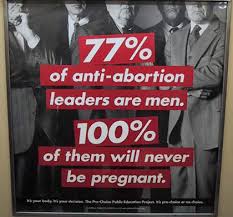
Sixth: Hypocrisy. Since the Supreme Court legalized abortion in 1973, the Right has demanded that even women who are pregnant due to rape or incest carry the fetus to term.
Yet now that Right-wingers are being asked to wear masks in public—to protect themselves and others from a deadly plague—they’ve suddenly discovered the mantra: “It’s my body!”
Seventh: Identifying with Donald Trump. The President has made it clear that his followers don’t wear masks. And they have fallen into line, refusing to mask up even in crowded, indoor arenas where infection is most likely.
Yet even in states where wearing a mask is mandatory when venturing out in public, many people refuse to do so. Fights have erupted before mask-less and mask-wearing customers—and sometimes store employees—who asked them to put on a mask before entering.
- Two men were arrested for felony battery after starting a fight with employees at a Los Angeles Target store over wearing masks inside the store.
- A woman entered Curbside Eatery in La Mesa, California, without a mask, pulling her T-shirt over her face. When the owner told her to mask up or leave, the woman yelled: “This is ridiculous! You’re discriminating against me!’ and threatened a lawsuit.
- In a Costco in Fort Myers, Florida, a masked man asked an unmasked customer to wear a mask. The unmasked man screamed that he was being harassed: “I feel threatened!”
So: How should those who refuse to wear a mask—and thus threaten the lives of others—be dealt with?
Ideally, President Trump should issue a mandatory emergency order requiring everyone to wear a mask when out in public. But Trump cannot admit to error—let alone one that could cost him votes among his most fanatical followers. So that’s not going to happen.
Governors, mayors and business owners need to fill the leadership void. They should issue emergency orders mandating the wearing of masks in public. And these orders should be forcibly backed up by the following:
- Stop stressing that wearing a mask will protect others from “you.” Most people don’t care about strangers. Emphasize that wearing a mask will protect “you and your family” from others.
- Don’t hand out tickets to mask-evaders. They will simply ignore them—or write them off as a cheap price for going without a mask.
- Major retailers should hire professional guards to handle mask-evaders—who should be turned over to police.
- Police should arrest everyone not wearing a mask in public and jail them—without bond—until the plague is over or a vaccine is found.
- These inmates should be lodged together—and away from those who are not infected with COVID-19.
- Police should create tip hotlines for reporting mask-evaders—and offer rewards for tips that lead to arrests.
- The media should publicize these arrests and jailings—to warn other potential mask-evaders.
- Right-wingers who openly carry firearms and threaten violence should be arrested and imprisoned under State and Federal anti-terrorism laws.
It was the failure of German police and courts to abort Right-wing violence during the Weimar Republic that led to even greater violence through the rise of Adolf Hitler and his Nazi party.
Laws are useless if citizens believe they are unfairly or unpredictably enforced. As Niccolo Machiavelli warns in his classic work, The Discourses:
…Whoever desires to found a state and give it laws, must start with assuming that all men are bad and ever ready to display their vicious nature, whenever they may find occasion for it. If their evil disposition remains concealed for a time, it must be attributed to some unknown reason; and we must assume that it lacked occasion to show itself.
ABC NEWS, ABORTION, ADOLF HITLER, ALTERNET, AMERICABLOG, AMY CONEY BARRETT, ANTHONY FAUCI, ANTI-SCIENCE, AP, BABY BOOMER RESISTANCE, BILL STEPIEN, BLOOMBERG, BRIGHAM AND WOMEN’S HOUSPITAL, BUZZFEED, CBS NEWS, CENTERS FOR DISEASE CONTROL AND PREVENTION, CHRIS CHRISTIE, CNN, COLUMBIA UNIVERSITY MEDICAL CENTER, CORONAVIRUS, COSTCO, COVID-19, CRAIG SPENCER, CROOKS AND LIARS, DAILY KOZ, DAVID ABRAMS, DEMOCRATS, DONALD TRUMP, DRUDGE RETORT, EDUCATION, FACEBOOK, FASCISM, FIVETHIRTYEIGHT, FLORIDA ATLANTIC UNIVERSITY, HARPER’S MAGAZINE, HYPOCRISY, JENNY FAUST, JOE BIDEN, KAYLEIGH MCENARY, KRISTI NOEM, MASKS, MEDIA MATTERS, MELANIA TRUMP, MIKE PENCE, MOTHER JONES, MOUNT RUSHMORE, MOVEON, MSNBC, N95 MASKS, NANCY PELOSI, NAZI GERMANY, NAZI PARTY WEIMAR REPUBLIC, NBC NEWS, NEWSWEEK, NICCOLO MACHIAVELLI, NPR, NYU SCHOOL OF GLOBAL PUBLIC HEALTH, PBS NEWSHOUR, PETER GLICK, POLITICO, POLITICUSUSA, RAW STORY, RELIGIOUS FANATICISM, REPUBLICANS, REUTERS, SALON, SCIENCE, SCIENTIFIC AMERICAN, SEATTLE TIMES, SLATE, SOCIAL DISTANCING, STEPHEN MILLER, STUDENTS FOR TRUMP RALLY, SUPREME COURT, TALKING POINTS MEMO, TARGET, THE ATLANTIC, THE CHICAGO SUN-TIMES, THE CHICAGO TRIBUNE, THE DAILY BEAST, THE DAILY BLOG, THE DISCOURSES, THE GUARDIAN, THE HILL, THE HUFFINGTON POST, THE LOS ANGELES TIMES, THE NATION, THE NEW REPUBLIC, THE NEW YORK TIMES, THE VILLAGE VOICE, THE WASHINGTON POST, THINKPROGRESS, TIME, TRUTHDIG, TRUTHOUT, TWITTER, TWO POLITICAL JUNKIES, U.S. NEWS & WORLD REPORT, UPI, USA TODAY, WONKETTE
In History, Law, Law Enforcement, Medical, Politics, Social commentary on October 15, 2020 at 12:05 am
Here’s a new game you can play the next time you take a walk: Count the Stupids!
These are the people who, during a deadly pandemic:
- Don’t wear a mask.
- Don’t wear a mask—and suck on a cigarette.
- Wear a mask—just under their nose.
- Wear a mask—around their neck like a bandanna.
The number of people who fall into these categories will vary each day.
But they all constitute a clear and present danger to those who want to stay clear of COVID-19. Here’s why:
- NOT WEARING A MASK exposes the non-wearer and anyone else not wearing one to the possibility of COVID-19. You can sneeze or cough into someone’s face—or someone can sneeze or cough into yours.
- NOT WEARING A MASK WHILE SMOKING exposes the smoker to both the possibility of getting COVID-19 and the almost certainty of getting lung cancer, heart disease and/or emphysema.
- WEARING A MASK JUST UNDER THE NOSE means you can sneeze COVID-19 into someone’s face—or someone with COVID-19 can sneeze into your nose.
- WEARING A MASK AROUND THE NECK may make you feel like a range-roving cowboy, but it offers the same degree of protection as NOT WEARING A MASK: Zero.

N95 mask
President Donald Trump has made the wearing of masks a divisive political issue. Wearing a mask, according to him, makes you a wimp and a liberal Never-Trumper. NOT wearing a mask shows you’re a macho man or woman—and in solidarity with him.
The Coronavirus, also known as COVID-19, emerged in China in December, 2019, and has since spread throughout the world. By October 12, 2020, it had infected 38.1 million people worldwide. Of these, 1.09 million have died.
In the United States, case totals reached 7.9 million. Of these, 216,000 have died.
But in his public appearances Trump has repeatedly downplayed the lethality of the virus—even though, in February, he admitted to Washington Post investigative reporter Bob Woodward that it was “deadly.”
“It goes through air, Bob,” said Trump. “That’s always tougher than the touch. The touch, you don’t have to touch things, right? But the air, you just breathe the air and that’s how it’s passed. And so that’s a very tricky one. That’s a very delicate one. It’s also more deadly than even your strenuous flues.”
Coronavirus
Trump has:
- Disregarded the warnings of his own health experts.
- Said he knew better.
- Held indoor campaign mega-rallies where his followers don’t wear masks and sit or stand literally shoulder-to-shoulder.
- Touted an anti-malarial drug (hydroxychloroquine) as a Coronavirus cure, even though its effectiveness against COVID-19 remains unproven.
- Even suggested injecting bleach as a treatment.
Above all, he has repeatedly mocked the wearing of masks.
On April 3, the Centers for Disease Control and Prevention first recommended Americans wear face coverings in public. Trump announced at a task force briefing that the practice was “voluntary” and that “you do not have to do it.”
Four months later, in August, Trump said of masks: “Maybe they’re great, and maybe they’re just good. Maybe they’re not so good.”
On September 26, Trump hosted festivities in the Rose Garden to celebrate his third Supreme Court nominee, Amy Coney Barrett. All the major domos of the Right showed up—without masks, and crammed together in folding chairs. And soon many of them tested positive for COVID-19.
Donald Trump
Among the most important casualties:
- Trump
- First Lady Melania Trump
- White House Press Secretary Kayleigh McEnany
- Three Republican United States Senators
- White House Senior Adviser for Policy Stephen Miller
- Former New Jersey Governor Chris Christie
- Trump Presidential Campaign Manager Bill Stepien
For the first three months of the plague, masks were hard to come by. Top-of-the-line masks such as the N95 were quickly snapped up by hospitals filling with COVID cases. This forced many families to sew their own masks. Many of these were made of porous material, allowing the wearer to become easily infected.
But today masks are advertised—and sold—everywhere.
Wearing a mask and “social distancing”—keeping at least six feet between yourself and others while in public—have been the Golden Rules urged by public health officials for months.
Scientists have learned, for example, that COVID-19 can be spread by those who show no symptom of the disease. And mounting evidence has proven that masks are essential for protecting people from the virus.
Coronavirus is spread by respiratory droplets when an infected person coughs, sneezes or talks—especially if large numbers of people are packed indoors. The danger goes up if the talker is shouting or singing loudly.
If not blocked by a face covering, the droplets can travel six to 13 feet.
Researchers at Florida Atlantic University found that some masks were more effective than others. One study showed that well-fitted homemade masks with multiple layers of fabric, as well as off-the-shelf cone style masks, were the most effective in reducing droplet dispersal.
Bandannas turned out to be the least effective in reducing transmission.
There are at least seven reasons why so many Americans refuse to wear a mask—even in the midst of a deadly pandemic. And these will be explored in the second part of this series.
ABC NEWS, ALTERNET, AMERICABLOG, AP, BABY BOOMER RESISTANCE, BARACK OBAMA, BLOOMBERG, BREITBART NEWS, BUZZFEED, CBS NEWS, CHRISTOPHER S. MURPHY, CIA, CNN, CROOKS AND LIARS, DAILY KOZ, DEMOCRATIC NATIONAL COMMITTEE, DEMOCRATIC PARTY, DONALD TRUMP, DRUDGE REPORT, ERIC SCHNEIDERMAN, EXTORTION, FACE THE NATION, FACEBOOK, FERGUS CULLEN, FIVETHIRTYEIGHT, FOX NEWS SUNDAY, GREG ABBOTT, HACKING, HARPER’S MAGAZINE, HILLARY CLINTON, HUFFINGTON POST, IRS, JAMES B. COMEY, JAMES R. CLAPPER, JARED KUSHNER, JEFF SESSIONS, JOHN KASICH, JR., JUSTICE DEPARTMENT, KEN PAXTON, LEON PANETTA, MARK LEVIN, MEDIA MATTERS, MICHAEL FLYNN, MICHAEL ROGERS, MIKE PENCE, MOTHER JONES, MOVEON, MSNBC, NATIONAL SECURITY AGENCY, NBC NEWS, NEW HAMPSHIRE REPUBLICAN PARTY, NEWSWEEK, NPR, PAM BONDI, PAUL MANAFORT, PAUL RYAN, PBS NEWSHOUR, PHILIP KLEIN, POLITICO, POLITICUSUSA, Racketeer Influenced Corrupt Organizations (RICO) Act, RAW STORY, REPUBLICAN NATIONAL COMMITTEE, REPUBLICAN NATIONAL CONVENTION, REPUBLICAN PARTY, REUTERS, REX TILLERSON, ROGER STONE, SALON, SEATTLE TIMES, SLATE, SOVIET UNION, TALKING POINTS MEMO, THE ATLANTIC, THE CHICAGO SUN-TIMES, THE CHICAGO TRIBUNE, THE DAILY BEAST, THE DAILY BLOG, THE GUARDIAN, THE HILL, THE HUFFINGTON POST, THE LOS ANGELES TIMES, THE NATION, THE NEW REPUBLIC, THE NEW YORK TIMES, THE VILLAGE VOICE, THE WASHINGTON EXAMINER, THE WASHINGTON POST, THINKPROGRESS, THREATS, TIME, TREASON, TRUMP TOWER MEETING, TRUMP UNIVERSITY, TRUMP-RUSSIA TIES, TRUTHDIG, TRUTHOUT, TWITTER, TWO POLITICAL JUNKIES, U.S. NEWS & WORLD REPORT, U.S. SECRET SERVICE, UPI, USA PATRIOT ACT, USA TODAY, VLADIMIR PUTIN, WIRETAPPING, WONKETTE
In Bureaucracy, History, Law, Law Enforcement, Politics, Social commentary on October 14, 2020 at 12:11 am
There were solid grounds for the Obama Justice Department to indict Donald Trump or invalidate the results of the 2016 election. Yet no action was taken.
Case #4: The Justice Department did not invalidate the results of the 2016 election, despite overwhelming evidence that Russia intervened to elect Trump as Vladimir Putin’s chosen candidate.
In July, 2016, the Russians hacked the Democratic committee’s servers—but not those of the Republican National Committee.
Admiral Michael Rogers, director of the National Security Agency (NSA) and US Cyber Command, said in mid-November, 2016, that Russia made “a conscious effort” to sway the results of the Presidential election by the hacking of 20,000 emails from the Democratic National Committee.
“There shouldn’t be any doubt in anybody’s mind,” said Rogers. “This was not something that was done casually. This was not something that was done by chance. This was not a target that was selected purely arbitrarily. This was a conscious effort by a nation-state to attempt to achieve a specific effect.”
On December 16, 2016, FBI Director James B. Comey and Director of National Intelligence James R. Clapper Jr. agreed with a CIA assessment that Russia intervened in the 2016 election in part to help Donald Trump win the White House.

Case #5: The Justice Department did not prosecute Trump for treason, even though he solicited aid from Russia, a nation hostile to the United States. And no major official of the government—including President Obama—publicly condemned him as a traitor.
On July 9, 2016, high-ranking members of his Presidential campaign met at Trump Tower with at least two lobbyists with ties to Russian dictator Vladimir Putin. The participants included:
- Trump’s son, Donald Trump Jr.;
- His son-in-law, Jared Kushner;
- His then-campaign manager, Paul Manafort;
- Natalia Veselnitskaya, a Russian lawyer with ties to Putin; and
- Rinat Akhmetshin, a former Soviet counterintelligence officer suspected of “having ongoing ties to Russian Intelligence.”
The purpose of that meeting: To gain access to any “dirt” Russian Intelligence could supply on Democratic Presidential Nominee Hillary Clinton.
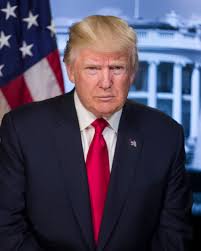
Donald Trump
On July 22, 2016, Wikileaks released 19,252 emails and 8,034 attachments hacked from computers of the highest-ranking officials of the Democratic National Committee (DNC). Early reports traced the leak to Russian hackers.
At a news conference in Doral, Florida on July 27, 2016, Trump publicly invited “Russia”—i.e., Vladimir Putin—to hack Hillary Clinton’s emails: “I will tell you this, Russia: If you’re listening, I hope you’re able to find the 30,000 emails that are missing. I think you will probably be rewarded mightily by our press.”
Hours later, the Main Intelligence Directorate in Moscow targeted Clinton’s personal office and hit more than 70 other Clinton campaign accounts.
This was essentially treason—calling on a hostile foreign power to interfere directly in an American Presidential election. And it was seen as such by both Democrats and even Republicans:
- “This has to be the first time that a major presidential candidate has actively encouraged a foreign power to conduct espionage against his political opponent,” Hillary for America policy adviser Jake Sullivan said in a statement. “That’s not hyperbole, those are just the facts. This has gone from being a matter of curiosity, and a matter of politics, to being a national security issue.”
- “I find those kinds of statements to be totally outrageous because you’ve got now a presidential candidate who is, in fact, asking the Russians to engage in American politics,” said former CIA Director Leon Panetta, a Clinton surrogate. “I just think that’s beyond the pale.”
- Brendon Buck, a spokesman for House Speaker Paul Ryan, said: “Russia is a global menace led by a devious thug. Putin should stay out of this election.”
Throughout 2016, the CIA, FBI and National Security Agency (NSA) found numerous ties between officials of the Trump Presidential campaign and Russian Intelligence agents. Among these were future Secretary of State Rex Tillerson, future National Security Adviser Michael Flynn and future Attorney General Jeff Sessions.
The discovery of such contacts between Trump campaign officials and Russian Intelligence agents led the FBI to launch an investigation into Russia’s efforts to influence the outcome of the 2016 Presidential election.
On October 7, 2016, The Washington Post leaked a video of Donald Trump making sexually predatory comments about women. Among his admissions: That he had aggressively tried to bed a married woman, and “when you’re a star….you can do anything. Grab them by the pussy.”
The story rocked the Trump campaign—and threatened to upend it. Then it was eclipsed by an even bigger story.
Eleven days before the November 8 election, FBI Director James Comey announced that he was re-opening an investigation he had closed on Hillary Clinton’s emails on a private server while she was Secretary of State.
That announcement erased widespread outrage over Trump’s unintended admissions of predatory behavior toward women and reversed Clinton’s growing lead in the polls.
Yet the Bureau has never issued similar statements about the continuing reports of close ties between Donald Trump and Vladimir Putin, and Trump’s history of investments in Russia.
To their shame, no one from the Obama administration—including the President himself—has apologized for failing to take action against these abuses.
And, to their shame, the news media has failed to indict them for their criminal negligence.
ABC NEWS, ALTERNET, AMERICABLOG, AP, BABY BOOMER RESISTANCE, BARACK OBAMA, BLOOMBERG, BREITBART NEWS, BUZZFEED, CBS NEWS, CHRISTOPHER S. MURPHY, CIA, CNN, CROOKS AND LIARS, DAILY KOZ, DEMOCRATIC NATIONAL COMMITTEE, DEMOCRATIC PARTY, DONALD TRUMP, DRUDGE REPORT, ERIC SCHNEIDERMAN, EXTORTION, FACE THE NATION, FACEBOOK, FERGUS CULLEN, FIVETHIRTYEIGHT, FOX NEWS SUNDAY, GREG ABBOTT, HACKING, HARPER’S MAGAZINE, HILLARY CLINTON, HUFFINGTON POST, IRS, JAMES B. COMEY, JAMES R. CLAPPER, JARED KUSHNER, JEFF SESSIONS, JOHN KASICH, JR., JUSTICE DEPARTMENT, KEN PAXTON, LEON PANETTA, MARK LEVIN, MEDIA MATTERS, MICHAEL FLYNN, MICHAEL ROGERS, MIKE PENCE, MOTHER JONES, MOVEON, MSNBC, NATIONAL SECURITY AGENCY, NBC NEWS, NEW HAMPSHIRE REPUBLICAN PARTY, NEWSWEEK, NPR, PAM BONDI, PAUL MANAFORT, PAUL RYAN, PBS NEWSHOUR, PHILIP KLEIN, POLITICO, POLITICUSUSA, Racketeer Influenced Corrupt Organizations (RICO) Act, RAW STORY, REPUBLICAN NATIONAL COMMITTEE, REPUBLICAN NATIONAL CONVENTION, REPUBLICAN PARTY, REUTERS, REX TILLERSON, ROGER STONE, SALON, SEATTLE TIMES, SLATE, SOVIET UNION, TALKING POINTS MEMO, THE ATLANTIC, THE CHICAGO SUN-TIMES, THE CHICAGO TRIBUNE, THE DAILY BEAST, THE DAILY BLOG, THE GUARDIAN, THE HILL, THE HUFFINGTON POST, THE LOS ANGELES TIMES, THE NATION, THE NEW REPUBLIC, THE NEW YORK TIMES, THE VILLAGE VOICE, THE WASHINGTON EXAMINER, THE WASHINGTON POST, THINKPROGRESS, THREATS, TIME, TREASON, TRUMP TOWER MEETING, TRUMP UNIVERSITY, TRUMP-RUSSIA TIES, TRUTHDIG, TRUTHOUT, TWITTER, TWO POLITICAL JUNKIES, U.S. NEWS & WORLD REPORT, U.S. SECRET SERVICE, UPI, USA PATRIOT ACT, USA TODAY, VLADIMIR PUTIN, WIRETAPPING, WONKETTE
In Bureaucracy, History, Law, Law Enforcement, Politics, Social commentary on October 13, 2020 at 1:03 am
There were at least five instances when the Obama administration could have disqualified Donald Trump as a Presidential candidate—or secured his indictment. Yet it did neither.
Case #2: The Justice Department did not indict Trump for threats that he made—or inspired—against Republicans and Democrats throughout the 2016 campaign.
- On July 29, 2016, Roger Stone, a notorious Right-wing political consultant acting as a Trump strategist, told Breitbart News: “The first thing Trump needs to do is begin talking about [voter fraud] constantly. If there’s voter fraud, this election will be illegitimate, the election of the winner will be illegitimate, we will have a constitutional crisis, widespread civil disobedience, and the government will no longer be the government.”
- At a town hall meeting where Trump’s Vice Presidential nominee Mike Pence appeared, a woman named Rhonda said: “For me personally, if Hillary Clinton gets in, I myself am ready for a revolution.”
- In Cincinnati, a Trump supporter threatened to forcibly remove Hillary Clinton, the Democratic nominee, from the White House if she won the race: “If she’s in office, I hope we can start a coup. She should be in prison or shot. That’s how I feel about it,” said Dan Bowman, a 50-year-old contractor. “We’re going to have a revolution and take them out of office if that’s what it takes. There’s going to be a lot of bloodshed. But that’s what it’s going to take….”
Even Fergus Cullen, former chairman of the New Hampshire GOP, expressed fear of what might happen if Trump lost the election:

Fergus Cullen
“That’s really scary,” Cullen said, recounting the violence at Trump rallies around the country leading up to the Republican National Convention. “In this country, we’ve always had recriminations after one side loses. But we haven’t had riots. We haven’t had mobs that act out with violence against supporters of the other side.
“There’s no telling what his supporters would be willing to do at the slightest encouragement from their candidate,” he said.
Trump even began encouraging his mostly white supporters to sign up online to be “election observers” to stop “Crooked Hillary from rigging this election.” He urged them to act as poll watchers in “other” [non-white] communities to ensure that things are “on the up and up.”
Many of his supporters promised to do so.
“Trump said to watch your precincts. I’m going to go, for sure,” said Steve Webb, a 61-year-old carpenter from Fairfield, Ohio.
“I’ll look for…well, it’s called racial profiling. Mexicans. Syrians. People who can’t speak American,” he said. “I’m going to go right up behind them. I’ll do everything legally. I want to see if they are accountable. I’m not going to do anything illegal. I’m going to make them a little bit nervous.”
Knowing that large numbers of angry—and possibly armed—Right-wingers planned to descend on polling places could only have had a chilling effect on untold numbers of Democratic voters. And this would have been especially true in heavily conservative states.
Both the USA Patriot Act and the Racketeer Influenced Corrupt Organizations (RICO) Act have statutes dealing with making terrorist threats against government institutions to influence their members.
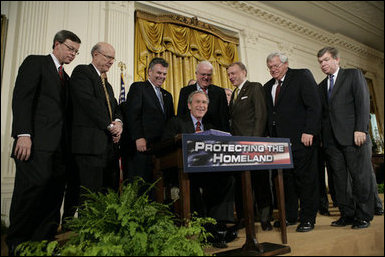
President George W. Bush signing the USA Patriot Reauthorization Act of 2005
If Trump’s remarks did not violate one or both of those laws, certainly remarks made by his surrogates did.
Thus, the Justice Department could have cited the Patriot Act in indicting Trump and/or any number of his followers for “activities that…appear to be intended…to influence the policy of a government by intimidation or coercion [and]…occur primarily within the territorial jurisdiction of the United States.”
The Justice Department could have also demanded that the results of the election be invalidated on the basis that widespread voter and candidate intimidation played a massive role in it.
But of course this did not happen.
Case #3 Making threats against anyone under protection by the U.S. Secret Service is a felony. Yet Donald Trump was never held legally accountable by the Justice Department.
- On August 9, 2016, Trump told a rally in Wilmington, North Carolina: “Hillary [Clinton] wants to abolish, essentially abolish, the Second Amendment. If she gets to pick her [Supreme Court] judges, nothing you can do folks. Although the Second Amendment people, maybe there is, I don’t know.”
- Reacting to Trump’s “dog-whistle” threat against Clinton, Michael Hayden, former head of the CIA and National Security Agency (NSA) said: “Well, let me say if someone else said that outside of the hall, he’d be in the back of a police wagon now, with the Secret Service questioning him.”
Case #4: The Justice Department did not invalidate the results of the 2016 election, despite overwhelming evidence that Russia intervened to elect Trump as Vladimir Putin’s chosen candidate.
In October, 2016, the Department of Homeland Security (DHS) and the Office of the Director of National Intelligence (DNI) issued a joint statement: The Russian government had directed the effort to subvert the 2016 Presidential election.
On December 16, 2016, FBI Director James B. Comey and Director of National Intelligence James R. Clapper Jr. agreed with a CIA assessment that Russia intervened in the 2016 election in part to help Donald Trump win the White House.
ABC NEWS, ALTERNET, AMERICABLOG, AP, BABY BOOMER RESISTANCE, BARACK OBAMA, BLOOMBERG, BREITBART NEWS, BUZZFEED, CBS NEWS, CHRISTOPHER S. MURPHY, CIA, CNN, CROOKS AND LIARS, DAILY KOZ, DEMOCRATIC NATIONAL COMMITTEE, DEMOCRATIC PARTY, DONALD TRUMP, DRUDGE REPORT, ERIC SCHNEIDERMAN, EXTORTION, FACE THE NATION, FACEBOOK, FERGUS CULLEN, FIVETHIRTYEIGHT, FOX NEWS SUNDAY, GREG ABBOTT, HACKING, HARPER’S MAGAZINE, HILLARY CLINTON, HUFFINGTON POST, IRS, JAMES B. COMEY, JAMES R. CLAPPER, JARED KUSHNER, JEFF SESSIONS, JOHN KASICH, JR., JUSTICE DEPARTMENT, KEN PAXTON, LEON PANETTA, MARK LEVIN, MEDIA MATTERS, MICHAEL FLYNN, MICHAEL ROGERS, MIKE PENCE, MOTHER JONES, MOVEON, MSNBC, NATIONAL SECURITY AGENCY, NBC NEWS, NEW HAMPSHIRE REPUBLICAN PARTY, NEWSWEEK, NPR, PAM BONDI, PAUL MANAFORT, PAUL RYAN, PBS NEWSHOUR, PHILIP KLEIN, POLITICO, POLITICUSUSA, Racketeer Influenced Corrupt Organizations (RICO) Act, RAW STORY, REPUBLICAN NATIONAL COMMITTEE, REPUBLICAN NATIONAL CONVENTION, REPUBLICAN PARTY, REUTERS, REX TILLERSON, ROGER STONE, SALON, SEATTLE TIMES, SLATE, SOVIET UNION, TALKING POINTS MEMO, THE ATLANTIC, THE CHICAGO SUN-TIMES, THE CHICAGO TRIBUNE, THE DAILY BEAST, THE DAILY BLOG, THE GUARDIAN, THE HILL, THE HUFFINGTON POST, THE LOS ANGELES TIMES, THE NATION, THE NEW REPUBLIC, THE NEW YORK TIMES, THE VILLAGE VOICE, THE WASHINGTON EXAMINER, THE WASHINGTON POST, THINKPROGRESS, THREATS, TIME, TREASON, TRUMP TOWER MEETING, TRUMP UNIVERSITY, TRUMP-RUSSIA TIES, TRUTHDIG, TRUTHOUT, TWITTER, TWO POLITICAL JUNKIES, U.S. NEWS & WORLD REPORT, U.S. SECRET SERVICE, UPI, USA PATRIOT ACT, USA TODAY, VLADIMIR PUTIN, WIRETAPPING, WONKETTE
In Bureaucracy, History, Law, Law Enforcement, Politics, Social commentary on October 12, 2020 at 12:05 am
“The only thing necessary for the triumph of evil is for good men to do nothing.”
So wrote Edmund Burke (1729-1797) the Irish statesman, author, orator, political theorist and philosopher. And history has repeatedly proved him right.
One such example was the rise of Adolf Hitler as Germany’s Fuhrer.
Writes historian Volker Ullrich, in his monumental new biography, Hitler: Ascent 1889–1939: “Historians have perennially tried to answer the question of whether Hitler’s rise to power could have been halted….
“There were repeated opportunities to end Hitler’s run of triumphs. The most obvious one was after the failed Putsch of November, 1923. Had the Munich rabble-rouser been forced to serve his full five-year term of imprisonment in Landsberg, it is extremely unlikely that he would have been able to restart his political career.”
But that didn’t happen.

Tried for and convicted of treason, he was sentenced to five years’ imprisonment.
At Landsberg Prison, in Bavaria. he was given a huge cell, allowed to receive unlimited visitors and gifts, and treated with deference by guards and inmates.
Nine months later, he was released on parole—by authorities loyal to the authoritarian Right instead of the newly-created Weimar Republic.
Hitler immediately began rebuilding the shattered Nazi party—and deciding on a new strategy to gain power. Disdaining armed force, he would win office by election—or intrigue.
On January 30, 1933, those intrigues bore fruit: Adolf Hitler was appointed Chancellor of Germany.
Future historians may one day write that what didn’t happen played at least as great a role in electing Donald Trump President as what actually did.
There were at least five instances where the Justice Department of President Barack Obama could have utterly changed the outcome of the 2016 election. Yet, for reasons still unknown, it chose to do nothing.
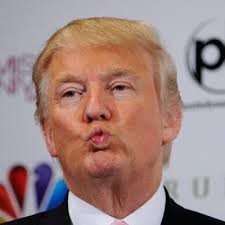
Donald Trump
Case #1: The Obama Justice Department did not indict Trump and/or the Attorney Generals of Texas and/or Florida for their roles in the Trump University scandal.
- Florida Attorney General Pam Bondi personally solicited a political contribution from Donald Trump around the same time her office deliberated joining an investigation of alleged fraud at Trump University and its affiliates.
- After Bondi dropped the Trump University case against Trump, he wrote her a $25,000 check for her re-election campaign. The money came from the Donald J. Trump Foundation.
- Republican Texas Attorney General Ken Paxton moved to muzzle a former state regulator who says he was ordered in 2010 to drop a fraud investigation into Trump University for political reasons.
- Paxton’s office issued a cease and desist letter to former Deputy Chief of Consumer Protection John Owens after he made public copies of a 14-page internal summary of the state’s case against Donald Trump for scamming millions from students of his now-defunct real estate seminar.
- After the Texas case was dropped, Trump cut a $35,000 check to the gubernatorial campaign of then-attorney general and now Texas Governor Greg Abbott.
But New York’s Attorney General, Eric Schneiderman, pressed fraud claims against Trump—and forced the real estate mogul to settle the case out of court for $25 million on November 18, 2016.
There have been no press reports that the Justice Department investigated these cases to determine if Trump violated the Racketeer Influenced Corrupt Organizations (RICO) Act statutes.
If the Justice Department did not investigate these cases, it should have. And if he did violate the RICO statutes, he should have been indicted, even as a Presidential candidate or President-elect.
Even if an indictment had not produced a conviction, the mere bringing of one would have cast an unprecedented cloud over his candidacy—let alone his being sworn in as President.
Case #2: The Justice Department did not indict Trump for the series of threats that he made—directly and indirectly—against Republicans and Democrats throughout the 2016 campaign.
Threatening political opponents with violence is a crime under Federal law. Yet making threats against his Republican and Democratic opponents played a major role in Trump’s Presidential campaign.
- On March 16, he warned Republicans that if he didn’t win the GOP nomination in July, his supporters would literally riot: “I think you’d have riots. I think you would see problems like you’ve never seen before. I think bad things would happen. I really do. I wouldn’t lead it, but I think bad things would happen.”
- An NBC reporter summed it up as: “The message to Republicans was clear on [March 16]: ‘Nice convention you got there, shame if something happened to it.’”
- That Republicans clearly saw this as a threat is undeniable. Paul Ryan, their Speaker of the House, said on March 17: “Nobody should say such things in my opinion because to even address or hint to violence is unacceptable.”
- Philip Klein, the managing editor of the Washington Examiner, wrote on the eve of the Republican National Convention in July: “Political commentators now routinely talk about the riots that would break out in Cleveland if Trump were denied the nomination, about how his supporters have guns and all hell could break loose, that they would burn everything to the ground. It works to Trump’s advantage to not try too hard to dispel these notions.”
2020 PRESIDENTIAL DEBATE, ABC NEWS, ALTERNET, AMERICABLOG, AMERICAN NAZI PARTY, AP, ASSOCIATED PRESS, BABY BOOMER RESISTANCE, BLOOMBERG, BUZZFEED, CBS NEWS, CHARLOTTESVILLE, CHRIS WALLACE, CNN, COINTELPRO, CROOKS AND LIARS, DAILY KOZ, DAVID DUKE, DONALD TRUMP, DRUDGE REPORT, FACEBOOK, FBI, FIVETHIRTYEIGHT, HARPER’S MAGAZINE, HUFFINGTON POST, J. EDGAR HOOVER, JOE BIDEN, KU KLUX KLAN, MEDIA MATTERS, MISSISSIPPI BURNING CASE, MOTHER JONES, MOVEON, MSNBC, NBC NEWS, NEWSWEEK, NPR, PBS NEWSHOUR, POLITICO, POLITICUSUSA, PRESIDENT LYNDON B. JOHNSON, RAW STORY, REUTERS, SALON, SEATTLE TIMES, SLATE, TALKING POINTS MEMO, TERRORISM, THE ATLANTIC, THE CHICAGO SUN-TIMES, THE CHICAGO TRIBUNE, THE DAILY BEAST, THE DAILY BLOG, THE GUARDIAN, THE HILL, THE HUFFINGTON POST, THE LOS ANGELES TIMES, THE NATION, THE NEW REPUBLIC, THE NEW YORK TIMES, THE VILLAGE VOICE, THE WALL STREET JOURNAL, THE WASHINGTON POST, THINKPROGRESS, TIME, TRUTHDIG, TRUTHOUT, TWITTER, TWO POLITICAL JUNKIES, U.S. NEWS & WORLD REPORT, UPI, USA TODAY, WILLIAM C. SULLIVAN, WONKETTE
In Bureaucracy, History, Law, Law Enforcement, Politics, Social commentary on October 2, 2020 at 12:12 am
On September 28, the first of three scheduled Presidential debates occurred between former Vice President Joe Biden and President Donald Trump.
Trump hurled insults and constantly interrupted Biden, causing many political commentators to label it the single worst Presidential debate in modern history.
For many, the lowest point came when moderator Chris Wallace asked Trump if he would condemn white supremacy: “You have repeatedly criticized the vice president for not specifically calling out Antifa and other left-wing extremist groups.
“But are you willing, tonight, to condemn white supremacists and militia groups and to say that they need to stand down and not add to the violence in a number of these cities as we saw in Kenosha and as we’ve seen in Portland? Are you prepared to specifically do that?”
“Who would you like me to condemn?” Trump asked Wallace.
Biden twice said, “Proud Boys,” a violent Right-wing hate group.
“Proud Boys—stand back and stand by,” said Trump. “But I’ll tell you what. I’ll tell you what. Somebody’s got to do something about Antifa and the left because this is not a right wing problem.”
This was not the first time Trump had refused to condemn white supremacists.
On August 11-12, 2017, white supremacists from across the country gathered in Charlottesville, Virginia, for a “Unite the Right” rally. Among the organizations represented:
- The Ku Klux Klan (KKK);
- The Alt-Knights;
- The “Militia Movement”;
- The American Nazi Party;
- The Confederate League of the South;
Like Nazis in 1930s Germany, they marched through the streets carrying flaming torches, screaming racial epithets and frightening the local citizenry.
On August 13, a Nazi sympathizer rammed his car into a group of counter-protesters, killing a woman and injuring 19 other demonstrators.
President Donald Trump stated: “We condemn in the strongest possible terms this egregious display of hatred, bigotry and violence on many sides, on many sides.”
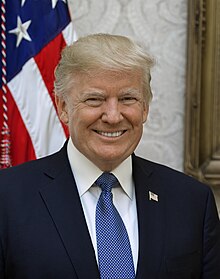
Donald Trump
But he refused to specifically denounce the Fascistic demonstrators.
White supremacists were elated.
“He didn’t attack us. He just said the nation should come together. Nothing specific against us,” wrote Andrew Anglin, founder of the neo-Nazi website, The Daily Stormer.
“No condemnation at all. When asked to condemn, he just walked out of the room. Really, really good. God bless him.”
Another Trump admirer: Former Ku Klux Klan Imperial Wizard David Duke.
“Thank you President Trump for your honesty & courage to tell the truth about #Charlottesville & condemn the leftist terrorists in BLM/Antifa,” Duke tweeted after the news conference.
Fascistic groups make up a pivotal constituency for Trump. Without their support, he might not have become President. He can’t afford to alienate them.
But there was a time when a President and his Justice Department waged an all-out attack on the Klan during the Presidency of Lyndon B. Johnson.
The reason: The murders of three civil rights workers in Philadelphia, Mississippi—Michael “Mickey” Schwerner, Andrew Goodman and James Chaney—-on June 21, 1964.
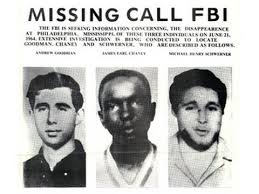
Poster for missing civil rights workers
Johnson ordered the FBI to find the missing activists. After their bodies were found buried near a dam, Johnson gave FBI Director J. Edgar Hoover a direct order: “I want you to have the same kind of intelligence [on the KKK] that you have on the communists.”
So the FBI launched a counterintelligence program—in Bureau-speak, a COINTELPRO—against the Ku Klux Klan.
Klansmen had shot, lynched and bombed their way across the Deep South, especially in Alabama and Mississippi. Many Southern sheriffs and police chiefs were Klan sympathizers, if not outright members and accomplices.

Ku Klux Klansmen in a meeting
The FBI’s covert action program aimed to “expose, disrupt and otherwise neutralize” KKK groups through a wide range of legal and extra-legal methods.
“My father fought the Klan in Massachusetts,” recalled William C. Sullivan, who headed the FBI’s Domestic Intelligence Division in the 1960s. “I always used to be frightened when I was a kid and I saw the fiery crosses burning in the hillside near our farm.

William C. Sullivan
“When the Klan reached 14,000 in the mid-sixties, I asked to take over the investigation of the Klan. When I left the Bureau in 1971, the Klan was down to a completely disorganized 4,300. It was broken.
“They were dirty, rough fellows. And we went after them with rough, tough methods.”
Among those methods:
- Planting electronic surveillance devices in Klan meeting places;
- Carrying out “black bag jobs”—burglaries—to steal Klan membership lists;
- Contacting the news media to publicize arrests and identify Klan leaders;
- Informing the employers of known Klansmen of their employees’ criminal activity, resulting in the firing of untold numbers of them;
- Developing informants within Klans and sewing a climate of distrust and fear among Klansmen;
- Breaking up the marriages of Klansmen by circulating rumors of their infidelity among their wives; and
- Beating and harassing Klansmen who threatened and harassed FBI agents.
The FBI’s counterintelligence war against the Klan ended in 1971.
Today, there are active Klan chapters in 41 states, with between 5,000 and 8,000 active members.
Only when America has a President who’s not beholden to the Fascistic Right can there be another COINTELPRO aimed at white hate groups.
ABC NEWS, ALCOHOLISM, ALTERNET, AMERICABLOG, AP, BABY BOOMER RESISTANCE, BUMS, BUZZFEED, CBS NEWS, CNN, CORONAVIRUS, COVID-19, COVID-19 ALTERNATIVE HOUSING PROGRAM, CROOKS AND LIARS, DAILY KOZ, DRUDGE RETORT, DRUG ADDICTION, FACEBOOK, FIVETHIRTYEIGHT, HARPER’S MAGAZINE, HEAPTITUS C, HEPATITIS B, HIV, HOMELESSNESS, HUMAN FECES, INFECTIOUS DISEASES, LEE RILEY, LONDON BREED, MEDIA MATTERS, MENTAL ILLNESS, MOHAMMED NURU, MOTHER JONES, MOVEON, MSNBC, NAVIGATION CENTERS, NBC NEWS, NEWSWEEK, NPR, PBS NEWSHOUR, POLITICO, POLITICUSUSA, PUBLIC HEALTH, RAW STORY, REUTERS, SALON, SAN FRANCISCO, SAN FRANCISCO BOARD OF SUPERVISORS, SAN FRANCISCO DEPARTMENT OF PUBLIC HEALTH, SAN FRANCISCO MAYOR'S OFFICE, SAN FRANCISCO PUBLIC WORKS DEPARTMENT, SEATTLE TIMES, SLATE, TALKING POINTS MEMO, THE ATLANTIC, THE CHICAGO SUN-TIMES, THE CHICAGO TRIBUNE, THE DAILY BEAST, THE DAILY BLOG, THE GUARDIAN, THE HILL, THE HUFFINGTON POST, THE LOS ANGELES TIMES, THE NATION, THE NEW REPUBLIC, THE NEW YORK TIMES, THE VILLAGE VOICE, THE WASHINGTON POST, THINKPROGRESS, TIME, TRUTHDIG, TRUTHOUT, TWITTER, TWO POLITICAL JUNKIES, U.S. NEWS & WORLD REPORT, UPI, USA TODAY, WONKETTE
In Bureaucracy, Business, History, Law, Law Enforcement, Politics, Social commentary on October 1, 2020 at 12:06 am
In San Francisco, successive mayors and members of the Board of Supervisors virtually roll out the welcome mat for succeeding waves of
- Drug addicts
- Drunks
- Mentally ill and
- Bums.
Who can otherwise be classified as DDMBs.
Huge areas of the city are covered in feces, urine, trash and used hypodermic needles. Hospitals overflow with patients that have fallen ill due to the contamination.
Early each day to the City Hall steps
The bum-loving ‘Frisco Mayor comes
In her own special way to the people she calls,
“Come, hand out booze to my bums.”

Typical “homeless” campsite
In February, 2018, NBC News surveyed 153 blocks of the city—an area more than 20 miles. That area includes popular tourist spots like Union Square and the cable car turnaround. It’s bordered by Van Ness Avenue, Market Street, Post Street and Grant Avenue. And it’s also home to City Hall, schools, playgrounds and a police station.
Reporters found trash littered across every block. Forty-one blocks were covered with needles and 96 blocks were contaminated with piles of human feces.
Most of the trash found consisted of heaps of garbage, food, and discarded junk—including 100 drug needles and more than 300 piles of feces throughout downtown. If you step on one of these needles, you can get HIV, Hepatitis C, Hepatitis B or a variety of other viral diseases.
Feed the bums, six-packs a bag
Six-packs, six-packs, six-packs a bag
“Feed the bums,” she cries from the stoop
While on the streets, her bums take a poop.
But you don’t have to actually get stuck by a needle to become a victim. Once fecal matter dries, it can become airborne and release deadly viruses, such as the rotavirus.
“If you happen to inhale that, it can also go into your intestine,” says Dr. Lee Riley, an infectious disease specialist at the University of California, Berkeley. The results can prove fatal, especially in children.
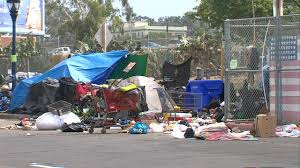
And cleaning up the messes of DDMBs is no easy task. In a 2018 news story on NBC’s San Francisco affiliate, KNTV, Mohammed Nuru, the Director of the Public Works Department, said: “Yes, we can clean, and then go back a few hours later, and it looks as if it was never cleaned. So is that how you want to spend your money?”
A single pile of human waste takes at least 30 minutes for one of his staffers to clean up. “The steamer has to come. He has to park the steamer. He’s got to come out with his steamer, disinfect, steam clean, roll up and go.”
All around you see needles that are left by the addicts
And poop that slops on your shoes.
You know bums are smiling
Each time someone shows up with booze.
Another danger posed by DDMBs: Hundreds—if not thousands—of them are heroin addicts. Such people will commit virtually any crime to support their habit. And their crimes of choice are burglary and robbery.
Thus, pouring large numbers of them into San Francisco neighborhoods via “Navigation Centers”—essentially holding pens for DDMBs—guarantees that countless decent citizens will become targets for desperate criminals.
Navigation Centers boast that they ban drug-abuse or drug-dealing on their own premises. But they allow DDMBs to come and go at will. Which means they are free to engage in drug-abuse and/or drug-dealing in the neighborhoods where these centers exist.
In 2016, San Francisco spent $275 million on homelessness—up from $241 million in 2015. Four years later, City Hall prepared to spend $300 million to find housing for DDMBs.
Though her words are simple and few
Listen, listen, she’s calling to you
“Feed the bums, six-packs a bag
Six-packs, six-packs, six-packs a bag.”
San Francisco’s political elite see this blight as well as everyone else. They can’t avoid seeing it, since the city covers 47 square miles.
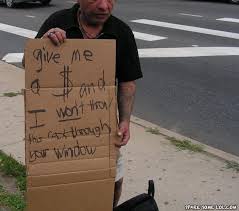
The latest fad remedy: “Navigation Centers.” These will supposedly warehouse DDMBs temporarily until they can be “navigated” to permanent housing.
But housing is in short supply in San Francisco, and there is no telling how long how many of these drug addicts, alcoholics, mentally disabled and bums will stay in them. Or what harm they will wreak on the neighborhoods warehousing them.
San Francisco should stop catering to its population of DDMBs who prey on the guilt or fear of law-abiding, tax-paying citizens.
The same laws that protect citizens against patients with highly communicable diseases like typhoid and cholera should be vigorously applied to those whose filthy habits threaten similar public contagion.
Among such reforms:
- Launch a “Please Do Not Feed the Bums” publicity campaign—as San Francisco has against feeding pigeons. And those caught doing so should be heavily fined.
- Trash cans should be equipped with locked doors, to prevent DDMBs from using them as food dispensers.
- Those living on the street should be given a choice: Go to a local shelter or face arrest and the immediate confiscation of their possessions.
- San Francisco’s rent control laws should be strengthened, to prevent future evictions owing to the unchecked greed of landlords. Tenants on fixed incomes should be given special protections against extortionate rent increases.
- Bus drivers should have the right to refuse passengers who stink of urine/feces, as they present a potential health-hazard to others.
- Owners of restaurants, theaters and grocery stores should likewise be allowed to refuse service on the same basis.
- Require proof of residency for those applying for welfare benefits. Too many people come to San Francisco because, upon arrival, they can immediately apply for such benefits.
- The city should set up a special unit to remove “street people” and their possessions from city sidewalks. This could be a division of the Sanitation Department, since its personnel are used to removing filth and debris of all types.
Only then will San Francisco rightly reclaim its former glory as “the city by the Bay.”
ABC NEWS, ALCOHOLISM, ALTERNET, AMERICABLOG, AP, BABY BOOMER RESISTANCE, BUMS, BUZZFEED, CBS NEWS, CNN, CROOKS AND LIARS, DAILY KOZ, DRUDGE RETORT, DRUG ADDICTION, FACEBOOK, FIVETHIRTYEIGHT, HARPER’S MAGAZINE, HEAPTITUS C, HEPATITIS B, HILLARY RONEN, HIV, HOMELESSNESS, HUMAN FECES, INFECTIOUS DISEASES, LEE RILEY, LONDON BREED, MEDIA MATTERS, MENTAL ILLNESS, MOHAMMED NURU, MOTHER JONES, MOVEON, MSNBC, NAVIGATION CENTERS, NBC NEWS, NEWSWEEK, NPR, PBS NEWSHOUR, POLITICO, POLITICUSUSA, PUBLIC HEALTH, RAW STORY, REUTERS, SALON, SAN FRANCISCO, SAN FRANCISCO BOARD OF SUPERVISORS, SAN FRANCISCO MAYOR'S OFFICE, SAN FRANCISCO PUBLIC WORKS DEPARTMENT, SEATTLE TIMES, SLATE, TALKING POINTS MEMO, THE ATLANTIC, THE CHICAGO SUN-TIMES, THE CHICAGO TRIBUNE, THE DAILY BEAST, THE DAILY BLOG, THE GUARDIAN, THE HILL, THE HUFFINGTON POST, THE LOS ANGELES TIMES, THE NATION, THE NEW REPUBLIC, THE NEW YORK TIMES, THE VILLAGE VOICE, THE WASHINGTON POST, THINKPROGRESS, TIME, TRUTHDIG, TRUTHOUT, TWITTER, TWO POLITICAL JUNKIES, U.S. NEWS & WORLD REPORT, UPI, USA TODAY, WONKETTE
In Bureaucracy, Business, History, Law, Law Enforcement, Politics, Social commentary on September 30, 2020 at 12:17 am
Early each day to the City Hall steps
The bum-loving ‘Frisco Mayor comes
In her own special way to the people she calls,
“Come, hand out booze to my bums.”
Are you a firefighter, police officer, paramedic or schoolteacher?
Do you want to live in San Francisco?
Well, forget it.
According to Rent Cafe, which provides apartment listings directly from top property managers: “The average rent for an apartment in San Francisco is $3,629.” And “the average size for a San Francisco apartment is 747 square feet.”
So unless you’re a hugely successful IT professional—or narcotics dealer—your chances of being able to afford a San Francisco apartment are lower than Donald Trump’s of winning a “Mr. Congeniality” contest.
But there’s hope for you yet—if you fall into one of the following categories:
- Druggies
- Drunks
- Mental cases
- Bums
Why?
Because the Mayor of San Francisco—currently London Breed—and Board of Supervisors have deliberately created an Untermenschen-friendly program that actually encourages such people to move to the city.
Run by the city’s Department of Public health (DPH) it’s called the COVID-19 Alternative Housing Program. And it works in two stages:
Stage 1: Move the “homeless” into the city’s hotels—at city expense.
Stage 2: Provide them with not only free food and shelter but free alcohol, cannabis, and cigarettes.
According to a May 11, 2020 story in City Journal.org:
“The program’s primary purpose is to keep homeless people, the majority of whom are addicts, out of harm’s way during the pandemic. By getting their substance of choice delivered, the thinking goes, the guests may be more apt to remain in their government-funded rooms.
“Another purpose of the program is to protect the public against the spread of coronavirus. The city doesn’t want homeless people who should be staying in their rooms roaming the neighborhood in search of the substances, potentially infecting others.”
After news about these deliveries leaked on social media, DPH claimed that “rumors that guests of San Francisco’s alternative housing program are receiving taxpayer-funded deliveries of alcohol, cannabis and tobacco are false.”
Except that the reports weren’t false.
The program is funded by private philanthropists Nevertheless:
- DPH administers and oversees the program.
- It’s staffed by city workers, including doctors, nurse practitioners, nurses, social workers, and security personnel.
- The department manages, stores, and distributes the substances.
- Employee time is involved.
Thus, the program isfinanced by taxpayers, even if an outside group provides some of the funding.
“Managed alcohol and tobacco use makes it possible to increase the number of guests who stay in isolation and quarantine and, notably, protects the health of people who might otherwise need hospital care for life-threatening alcohol withdrawal,” says DPH spokeswoman Jenna Lane.
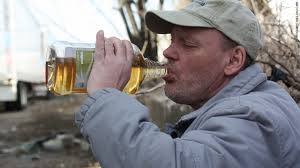
“Many isolation and quarantine guests tell us they use these substances daily,” says Lane, “and this period in our care has allowed some people to connect for the first time with addiction treatment and harm reduction therapy.”
Come feed the drunken bums,
And you’ll be glad if you do.
Their throats are so thirsty
All it takes is six-packs from you.
Notice the word “guests.” As if San Francisco—or any city—should welcome hordes of drug addicts, alcoholics, mentally ill and outright bums as assets to its community.
“Harm reduction” therapy, according to the Harm Reduction Coalition, is “a set of practical strategies and ideas aimed at reducing negative consequences associated with drug use.”
DPH said in a statement that these “guests” are screened for substance addictions and asked if they’d like to stop or have support to reduce their use.
If they say they want to remain alcoholics and/or drug addicts, they’re provided with their substance of choice.
Feed the bums, six-packs a bag
Six-packs, six-packs, six-packs a bag
“Feed the bums,” she cries from the stoop
While on the streets, her bums take a poop.
The department also provides methadone for “guests” who are addicted to opioids.
DPH staffers have helped people buy “medical marijuana,” the agency told local affiliate ABC7.
But the agency doesn’t “facilitate purchases of recreational cannabis,” according to the San Francisco Chronicle’s website, SFGate.
Nor does the agency require that its addict “guests” remain quarantined. It merely asks that they do so.
Yes, welcome to San Francisco—home of cable cars, Ghirardelli Square and the Golden Gate Bridge.
And, oh, yes—and thousands of stinking, disease-ridden, lice/bedbug-infested, drug-addicted, alcohol-soaked, often psychotic men and women whom city officials politely refer to as “the homeless.”
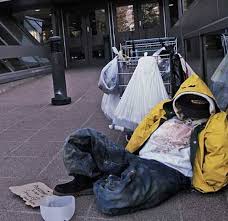
Thanks to its mild climate and social programs that dole out cash payments to virtually anyone with no residency requirement, San Francisco is often considered the homeless capital of the United States.
Current estimates peg the homeless population of San Francisco at about 7,500. And it hasn’t changed much during the last 10 years.
In 2019, a survey found that an estimated 2,831 members of this population were sheltered. Another 5,180 were unsheltered. This made for a total of 8,011.
The vast majority of them fall into four groups:
- Drug-abusers
- Drunks
- Mentally ill
- Bums.
Or, to put it more discretely: DDMBs.
Many DDMBs refuse to enter the city’s available shelters. Some claim these places are dangerous—understandably so, since they’re peopled with drug addicts, alcoholics, mentally ill and outright bums.
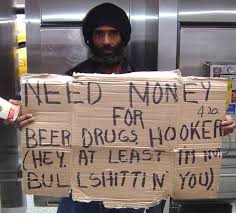
But another reason why many of these shelters go unused is: They don’t allow their guests to drink up or drug up.
The city spends about $300 million each year on DDMBs. Dividing that amount by 8,011 provides the figure of $37,448 per DDMB.
San Francisco residents can be fined $25 to $1,000 for feeding pigeons—but not for giving money to street bums.
2016 PRESIDENTIAL ELECTION, ABC NEWS, ADOLF HITLER, ALTERNET, AMERICABLOG, AP, BABY BOOMER RESISTANCE, BLOOMBERG, BOB WOODWARD, BORDER WALL, BUZZFEED, CBS NEWS, CNN, CORONAVIRUS, COVID-19, CROOKS AND LIARS, DAILY KOZ, DONALD TRUMP, DRUDGE REPORT, ENGLAND, FACEBOOK, FBI, FIVETHIRTYEIGHT, HARPER’S MAGAZINE, HILLARY CLINTON, HUBRIS, HUFFINGTON POST, INSPECTORS GENERAL, JAMES COMEY, LINDSEY GRAHAM, MEDIA MATTERS, MOTHER JONES, MOVEON, MSNBC, NBC NEWS, NEWSWEEK, NPR, PBS NEWSHOUR, POLITICO, POLITICUSUSA, RAGE (BOOK), RAW STORY, REUTERS, REVENGE, RICHARD M. NIXON, SALON, SEATTLE TIMES, SLATE, TALKING POINTS MEMO, THE ATLANTIC, THE CHICAGO SUN-TIMES, THE CHICAGO TRIBUNE, THE DAILY BEAST, THE DAILY BLOG, THE GUARDIAN, THE HILL, THE HUFFINGTON POST, THE LOS ANGELES TIMES, THE NATION, THE NEW REPUBLIC, THE NEW YORK TIMES, THE PENTAGON, THE VILLAGE VOICE, THE WASHINGTON POST, THINKPROGRESS, TIME, TRUTHDIG, TRUTHOUT, TUCKER CARLSON, TWITTER, TWO POLITICAL JUNKIES, U.S. NEWS & WORLD REPORT, UPI, USA TODAY, VLADIMIR PUTIN, WATERGATE, WONKETTE
In Bureaucracy, History, Law, Law Enforcement, Military, Politics, Social commentary on September 28, 2020 at 8:39 am
From December, 2019, to July, 2020, President Donald Trump granted unprecedented access to legendary Washington Post investigative reporter Bob Woodward.
That access has since spawned a bestselling book—Rage—and proven that Trump privately knew how deadly the Coronavirus was. Yet, in public, he played down the lethality of the virus and attacked those who sought to take it seriously.
On February 7, the following telephone interview occurred between Trump and Woodward:
Bob Woodward: And so, what was [Chinese] President Xi [Jinping] saying yesterday?
Donald Trump: Oh, we were talking mostly about the virus, and I think he’s going to have it in good shape. But it’s a very tricky situation.
Woodward: Indeed, it is.
Trump: It goes through air, Bob. That’s always tougher than the touch. The touch, you don’t have to touch things, right? But the air, you just breathe the air and that’s how it’s passed. And so that’s a very tricky one. That’s a very delicate one. It’s also more deadly than even your strenuous flues. People don’t realize, we lose 25,000, 30,000 people a year here. Who would ever think that, right?
Coronavirus
That damning confession has since appeared not only in Woodward’s book but on millions of TV and computer screens. Not only did Woodward tape record their conversations, but Trump knew he was taping them.
And those revelations have proven explosive for Trump—possibly enough to deny him a second term as President of the United States.
Yet a central question remains so far unanswered: Why did Trump give such access to a reporter—especially the reporter whose Watergate-related journalism proved instrumental in taking down President Richard M. Nixon?
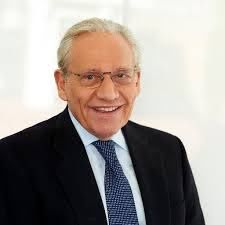
Bob Woodward
There are at least three possible reasons why Trump dared to reveal to Woodward that he had blatantly lied to the American public.
Reason #1: Sheer hubris
The ancient Greeks defined “hubris” as excessive pride that led mere mortals “to think more than mortal thoughts.”
As President, Trump has:
- Fired FBI director James Comey for investigating Russia’s subversion of the 2016 Presidential election.
- Threatened to cut off federal funding to cities that displeased him.
- Shut down the Federal Government to (unsuccessfully) get full funding for his “border wall” with Mexico.
- Attacked “the top people in the Pentagon” for not defending him against charges that he referred to soldiers killed in combat as “losers” and “suckers.”
- Openly embraced Russian dictator Vladimir Putin.
- Attacked members of the Federal judiciary.
- Fired Inspectors General investigating corruption within his administration.
And earlier this year he was acquitted of impeachable offenses by a majority-Republican Senate.
So if Trump believed himself invulnerable when he confessed his lying to Woodward, he had good reason to do so.
Donald Trump
Reason #2: Trump thought he could recruit Woodward as his cheerleader
Just as Germany’s Fuhrer, Adolf Hitler, had a love/hate relationship with England, so, too, has Donald Trump had one with the American press—especially such major organs as The New York Times and The Washington Post.
Trump has shamelessly used the media to promote his businesses, his TV show (“The Apprentice”) and, most of all, his Presidency. But he has bristled when the press reports scandals that have often been linked with his name.
So Trump may have thought he could win over Woodward—through the flattery of Presidential access. And with Woodward singing his praises, he would win a newfound respectability among the mainstream press which has so often savaged him.
In fact, he might have been encouraged to win over Woodward by no less than South Carolina Senator Lindsey Graham.
Making that accusation is Fox News commentator Tucker Carlson.
“It was Lindsey Graham who helped convince Donald Trump to talk to Bob Woodward,” Carlson said during his show, Tucker Carlson Tonight. “Lindsey Graham brokered that meeting. Lindsey Graham even sat in on the first interview between Bob Woodward and the President. How did that turn out?
“Bob Woodward dislikes Donald Trump, he’s been very clear about that. Woodward works for Jeff Bezos’ personal newspaper The Washington Post, which has made defeating Donald Trump its all-consuming mission.”
Reason #3: Trump wanted to take down Woodward
Donald Trump has long seen himself as a tough guy.
In 2011, at the National Achievers Congress in Sydney, Australia, he offered his audience this advice: “Get even with people. If they screw you, screw them back 10 times as hard. I really believe it.”
During the second debate of the 2016 Presidential campaign, Trump vowed that, if elected, he would prosecute and imprison his opponent, Democratic nominee Hillary Clinton. Days later, he threatened to imprison Clinton’s lawyers.
So it’s entirely possible that he saw his interviews with Woodward as the verbal equivalent of a prizefight, with himself—of course—emerging as the heavyweight champ.
Whatever his reason for agreeing to those interviews, he undoubtedly regrets it now: “It’s another political hit job,” he said of the bestselling book in a September 9 press conference.
Then he turned to his “handling” of the Coronavirus pandemic: He did the best he could, he did better than anyone else would have, and his actions saved millions of lives compared to doing nothing at all.
On September 22, Coronavirus deaths in the United States topped 200,000.
9/11 ATTACKS, ABC NEWS, ABORTION, ADOLF HITLER, AL-QAEDA, ALTERNET, AMERICABLOG, ANDREW CUOMO, ANTHONY FAUCI, AP, BABY BOOMER RESISTANCE, BLOOMBERG, BOB WOODWARD, BUZZFEED, CARL BERNSTEIN, CBS NEWS, CENTERS FOR DISEASE CONTROL AND PREVENTION (CDC), CHICAGO, CHINA, CIA, CLOROX BLEACH, CNN, CORONAVIRUS, COVID-19, COVID-19 TEST KITS, CROOKS AND LIARS, DAILY KOZ, DAVID BROOKS, DEBORAH BIRX, DEMOCRATIC NATIONAL CONVENTION, DEPARTMENT OF HOMELAND SECURITY, DONALD RUMSFELD, DONALD TRUMP, DRUDGE REPORT, FACEBOOK, FBI, FEDERAL EMERGENCY MANAGEMENT AGENCY (FEMA), FIVETHIRTYEIGHT, FLORIDA, FORBES, FOX NEWS, FRANKLIN D. ROOSEVELT, GRETCHEN WHITMER, HARPER’S MAGAZINE, HUFFINGTON POST, JARED KUSHNER, JAY INSLEE, KOREAN WAR, KRISTI NOEM, KRISTIN URQUIZA, LARRY HOGAN, LOS ANGELES, MARK ANTHONY URQUIZA, MARK SHIELDS, MARYLAND, MASSACHUSSETS, MEDIA MATTERS, MICHIGAN, MICK MULVANEY, MIKE PENCE, MOLOCH, MOTHER JONES, MOVEON, MSNBC, N95 MASKS, NAVY SEALS, NBC NEWS, NEW YORK, NEW YORK CITY, NEWSWEEK, NPR, OSAMA BIN LADEN, PAULA REID, PBS NEWSHOUR, PERSONAL PROTECTIVE EQUIPMENT (PPE), PHOENIX RALLY, POLITICO, POLITICUSUSA, RAW STORY, REPUBLICANS, REUTERS, RICHARD NIXON, ROBERT MUELLER, RUDOLPH GIULIANI, SALON, SCHOOLS, SEAN HANNITY, SEAN HANNITY SHOW, SEATTLE TIMES, SLATE, SOUTH DAKOTA, STEVEN PRESSFIELD, TALKING POINTS MEMO, THE ATLANTIC, THE CHICAGO SUN-TIMES, THE CHICAGO TRIBUNE, THE DAILY BEAST, THE DAILY BLOG, THE GUARDIAN, THE HILL, THE HUFFINGTON POST, THE LOS ANGELES TIMES, THE NATION, THE NEW REPUBLIC, THE NEW YORK TIMES, THE PENTAGON, THE VILLAGE VOICE, THE WASHINGTON POST, THINKPROGRESS, TIME, TRUTHDIG, TRUTHOUT, TULSA OAKAHOMA RALLY, TWITTER, TWO POLITICAL JUNKIES, U.S. NEWS & WORLD REPORT, UPI, USA TODAY, UV LIGHT, VEIL: THE SECRET WARS OF THE CIA (BOOK), VIETNAM WAR, WALTER SHAUB, WASHINGTON, WASHINGTON D.C., WASHINGTON MONTHLY, WASHINGTON WEEK IN REVIEW, WATERGATE, WILLIAM J. CASEY, WONKETTE, WORLD TRADE CENTER
In Bureaucracy, History, Law, Law Enforcement, Medical, Military, Politics, Social commentary on September 23, 2020 at 12:07 am
Why is President Donald Trump demanding that children return to school in the midst of a deadly plague?
On July 10, Paula Reid, White House correspondent for CBS News, provided the answer on the PBS program, Washington Week.
According to Reid:
“Well, up until now the administration has really deferred to local leaders to determine when they want to reopen their communities based on the situation on the ground. But then you saw this week, when it comes to schools, the president issuing this broad mandate that all schools must open in the fall or else potentially he will cut funding, when in fact we know most schools are locally funded, and he’s also made other threats.
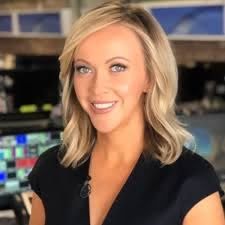
Paula Reid
“He’s made it clear that he is putting pressure on governors, and the question is, why is he taking this approach to schools specifically when he’s deferred to states on so many other aspects of this pandemic?
“And just speaking with White House advisers, I’m told the president knows that in order to get parents back to work you need to get kids back to class, and for the president a lot of this is about hoping that that would give an economic boost to the U.S. ahead of his reelection in November.“
For which he could then claim credit.
And Reid warned: “But one of the most significant things out of the administration this week is the fact that Dr.[Deborah] Birx [Coronavirus Response Coordinator for the White House Coronavirus Task Force] said that we really don’t have that much data on COVID in children because the under-10 set is really the least tested.”
On April 17, Trump, via Twitter, ordered his supporters to violate stay-at-home orders of Minnesota, Michigan and Virginia.
Masses of protesters—most of them unmasked, many carrying guns, wearing Trump MAGA caps and brandishing Confederate flags—descended on the capitols of those states. They claimed to be defending constitutional freedoms to refuse to wear masks or maintain “social distance” from others.
Thus, Trump risked the lives of thousands of his followers to “reopen the country” and save his endangered Presidency.
Just as the ancient Canaanites sacrificed their children to the god Moloch, so does Trump expect his followers—and opponents—to risk their children’s lives for him.
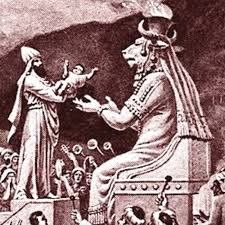
A child sacrifice to Moloch
And the sacrifices are already coming.
On August 10, CBS News reported:
“Nearly 100,000 children tested positive for the Coronavirus in the last two weeks of July, a new report from the American Academy of Pediatrics finds. Just over 97,000 children tested positive for the Coronavirus from July 16 to July 30, according to the association.”
And on September 10, Forbes magazine reported: “At least six educators in five states have died after contracting the coronavirus since schools began reopening in early August.”
One of the harshest—and most poignant—attacks on Donald Trump came on August 17. It was delivered at the Democratic National Convention by Kristin Urquiza—the daughter of one of Trump’s 2016 supporters.
That supporter, Mark Anthony Urquiza, had died—from COVID-19.

Kristin Urquiza
In early June, he contracted the disease, shortly after Arizona lifted its stay-at-home order. He visited a karaoke bar with friends—and died after five days on a ventilator, alone.
“My dad, Mark Anthony Urquiza, should be here today, but he isn’t,” Kristin said during a televised segment. “He had faith in Donald Trump.
“He voted for him, listened to him, believed him and his mouthpieces when they said that Coronavirus was under control and going to disappear; that it was OK to end social distancing rules before it was safe; and that if you had no underlying health conditions, you’d probably be fine.
“My dad was a healthy 65-year-old. His only preexisting condition was trusting Donald Trump, and for that he paid with his life.”
* * * * * * * * * *
Donald Trump is not the only one responsible for the deaths of 200,000 American men, women and children. His lies could not have wiped out their lives without the active collaboration of his 63 million Fascistic supporters and thousands of government officials at local, state and federal levels.
Syndicated political columnist Mark Shields predicts that, despite Trump’s admissions that he lied about the dangers of COVID-19, “in the next poll next week, he will still have the solid support of 41, 42, 43% of the people.”
After World War II, millions of Germans who had enthusiastically carried out the orders of their Fuhrer, Adolf Hitler, blamed him for every atrocity inflicted by Nazi Germany. According to them:
- He—alone—had invaded Poland, Norway, Denmark, France, Greece, Russia and Italy.
- He—alone—had terrorized England with the Blitz.
- He—alone—had tortured and murdered six million Jews.
Their plaintive refrain went:
- “We only followed orders.”
- “We didn’t do it—others did.”
- “We didn’t even know it was being done.”
Hitler cheated the victors by shooting himself. But that didn’t prevent the Allies from serving as much justice as possible on his surviving henchmen.
Americans must demand not simply a new President but a series of Nuremberg-like trials for those responsible for this wholesale COVID-19 slaughter.
The survivors of those victims, like Kristin Urquiza, deserve—and demand—no less.


ABC NEWS, ABORTION, ADOLF HITLER, ALTERNET, AMERICABLOG, AMY CONEY BARRETT, ANTHONY FAUCI, ANTI-SCIENCE, AP, BABY BOOMER RESISTANCE, BILL STEPIEN, BLOOMBERG, BRIGHAM AND WOMEN’S HOUSPITAL, BUZZFEED, CBS NEWS, CENTERS FOR DISEASE CONTROL AND PREVENTION, CHRIS CHRISTIE, CNN, COLUMBIA UNIVERSITY MEDICAL CENTER, CORONAVIRUS, COSTCO, COVID-19, CRAIG SPENCER, CROOKS AND LIARS, DAILY KOZ, DAVID ABRAMS, DEMOCRATS, DONALD TRUMP, DRUDGE RETORT, EDUCATION, FACEBOOK, FASCISM, FIVETHIRTYEIGHT, FLORIDA ATLANTIC UNIVERSITY, HARPER’S MAGAZINE, HYPOCRISY, JENNY FAUST, JOE BIDEN, KAYLEIGH MCENARY, KRISTI NOEM, MASKS, MEDIA MATTERS, MELANIA TRUMP, MIKE PENCE, MOTHER JONES, MOUNT RUSHMORE, MOVEON, MSNBC, N95 MASKS, NANCY PELOSI, NAZI GERMANY, NAZI PARTY, NAZI PARTY WEIMAR REPUBLIC, NBC NEWS, NEWSWEEK, NICCOLO MACHIAVELLI, NPR, NYU SCHOOL OF GLOBAL PUBLIC HEALTH, PBS NEWSHOUR, PETER GLICK, POLITICO, POLITICUSUSA, RAW STORY, RELIGIOUS FANATICISM, REPUBLICANS, REUTERS, SALON, SCIENCE, SCIENTIFIC AMERICAN, SEATTLE TIMES, SLATE, SOCIAL DISTANCING, STEPHEN MILLER, STUDENTS FOR TRUMP RALLY, SUPREME COURT, TALKING POINTS MEMO, TARGET, THE ATLANTIC, THE CHICAGO SUN-TIMES, THE CHICAGO TRIBUNE, THE DAILY BEAST, THE DAILY BLOG, THE DISCOURSES, THE GUARDIAN, THE HILL, THE HUFFINGTON POST, THE LOS ANGELES TIMES, THE NATION, THE NEW REPUBLIC, THE NEW YORK TIMES, THE VILLAGE VOICE, THE WASHINGTON POST, THINKPROGRESS, TIME, TRUTHDIG, TRUTHOUT, TULSA RALLY, TWITTER, TWO POLITICAL JUNKIES, U.S. NEWS & WORLD REPORT, UPI, USA TODAY, WONKETTE
COUNT THE STUPIDS: PART TWO (END)
In Bureaucracy, History, Law, Law Enforcement, Medical, Politics, Social commentary on October 16, 2020 at 12:18 amThere are at least seven reasons why so many Americans refuse to wear a mask.
First: A feeling of solidarity. According to David Abrams, a professor of social and behavioral sciences at NYU School of Global Public Health: People who don’t wear masks may see it as a sign of solidarity, as if they are taking a stand against authority.
Second: If liberals do it, it’s fascistic. Many mask protesters accuse those who wear masks of being fascists. This is a hallmark of Right-wing politics—accusing their opponents of being what they are themselves.
Third: They have utterly rejected the rising death-toll caused by the virus. They claim stories of such deaths are mere “fake news”—the term Donald Trump uses to dismiss any news stories that highlight his mistakes and criminality.
Fourth: Republicans disdain education in general—and science in particular. In March, an NBC News poll found that only 30% of Republicans said that they would actually listen to the advice of doctors to stay away from large, crowded areas to avoid Coronavirus.
Fifth: Religious Fanaticism: Many fundamentalist Christians believe that their faith in Jesus will protect them against COVID-19. They continue to attend services indoors in defiance of warnings by the Centers for Disease Control and Prevention that such meetings are dangerous.
A female member of the Solid Red Rock Church in Monroe, Ohio, told CNN: “I wouldn’t be anywhere else. I’m covered in Jesus’ blood. I’m covered in Jesus’ blood.”
Sixth: Hypocrisy. Since the Supreme Court legalized abortion in 1973, the Right has demanded that even women who are pregnant due to rape or incest carry the fetus to term.
Yet now that Right-wingers are being asked to wear masks in public—to protect themselves and others from a deadly plague—they’ve suddenly discovered the mantra: “It’s my body!”
Seventh: Identifying with Donald Trump. The President has made it clear that his followers don’t wear masks. And they have fallen into line, refusing to mask up even in crowded, indoor arenas where infection is most likely.
Yet even in states where wearing a mask is mandatory when venturing out in public, many people refuse to do so. Fights have erupted before mask-less and mask-wearing customers—and sometimes store employees—who asked them to put on a mask before entering.
So: How should those who refuse to wear a mask—and thus threaten the lives of others—be dealt with?
Ideally, President Trump should issue a mandatory emergency order requiring everyone to wear a mask when out in public. But Trump cannot admit to error—let alone one that could cost him votes among his most fanatical followers. So that’s not going to happen.
Governors, mayors and business owners need to fill the leadership void. They should issue emergency orders mandating the wearing of masks in public. And these orders should be forcibly backed up by the following:
It was the failure of German police and courts to abort Right-wing violence during the Weimar Republic that led to even greater violence through the rise of Adolf Hitler and his Nazi party.
Laws are useless if citizens believe they are unfairly or unpredictably enforced. As Niccolo Machiavelli warns in his classic work, The Discourses:
…Whoever desires to found a state and give it laws, must start with assuming that all men are bad and ever ready to display their vicious nature, whenever they may find occasion for it. If their evil disposition remains concealed for a time, it must be attributed to some unknown reason; and we must assume that it lacked occasion to show itself.
Share this: