Archive for the ‘Law Enforcement’ Category
ABC NEWS, ALTERNET, AMERICAN TABLOID, AP, ASSASSINATION, BUZZFEED, CBS NEWS, CIA, CNN, COMMUNISM, CROOKS AND LIARS, CUBA, CUBAN MISSILE CRISIS, DAILY KOZ, DONALD TRUMP, DWIGHT D. EISENHOWER, FACEBOOK, FBI, FIDEL CASTRO, FLORIDA, FULGENCIO BATISTA, GUAM, GUS RUSSO, JAMES ELLROY, JOE BIDEN, JOHN F. KENNEDY, JOHNNY ROSELLI, LEE HARVEY OSWALD, LIVE BY THE SWORD, LYNDON B. JOHNSON, MAFIA, MOTHER JONES, MOVEON, NBC NEWS, NEWSWEEK, NIKITA KHRUSHCHEV, NORTH KOREA, NPR, NUCLEAR WAR, POLITICO, RAW STORY, REUTERS, ROBERT F. KENNEDY, SALON, SAM GIANCANA, SEATTLE TIMES, SLATE, THE ATLANTIC, THE CHICAGO SUN-TIMES, THE CHICAGO TRIBUNE, THE DAILY BEAST, THE GUARDIAN, THE HILL, THE HUFFINGTON POST, THE LOS ANGELES TIMES, THE NATION, THE NEW YORK TIMES, THE WASHINGTON POST, TIME, TWITTER, U.S. NEWS & WORLD REPORT, UKRAINE, UP, UPI, USA TODAY, VLADIMIR PUTIN, WARREN COMMISSION
In Bureaucracy, History, Law, Law Enforcement, Military, Politics, Social commentary on October 19, 2022 at 12:10 am
In April, 1961, the CIA tried to overthrow the Communist regime of Cuba’s “Maximum Leader,” Fidel Castro, at the Bay of Pigs.
When that failed, President John F. Kennedy ordered Castro’s removal through a campaign of sabotage and assassination.
These covert operatives became known within the CIA as the Special Group, and were ultimately supervised by Robert F. Kennedy, the President’s brother and Attorney General.
The war against Castro became known within the CIA as Operation Mongoose.
But not everyone in the CIA was enthusiastic about the “get Castro” effort.
“Everyone at CIA was surprised at Kennedy’s obsession with Fidel,” recalled Sam Halpern, who was assigned to the Cuba Project. “They thought it was a waste of time. We all knew [Fidel] couldn’t hurt us. Most of us at CIA initially liked Kennedy, but why go after this little guy?

“One thing is for sure: Kennedy wasn’t doing it out of national security concerns. It was a personal thing. The Kennedy family felt personally burnt by the Bay of Pigs and sought revenge.”
It was all-out war. Among the tactics used:
- Hiring Cuban gangsters to murder Cuban police officials and Soviet technicians.
- Sabotaging mines.
- Paying up to $100,000 per “hit” for the murder or kidnapping of Cuban officials.
- Using biological and chemical warfare against the Cuban sugar industry.
“Bobby (Kennedy) wanted boom and bang all over the island,” recalled Halpern. “It was stupid. The pressure from the White House was very great.”
Among that “boom and bang” were a series of assassination plots against Castro, in which the Mafia was to be a key player.
Chicago Mobster Johnny Rosselli proposed a simple plan: Through its underworld connections in Cuba, the Mafia would recruit a Cuban in Castro’s entourage, such as a waiter or bodyguard, who would poison him.
The CIA’s Technical Services division produced a botulinus toxin which was then injected into Castro’s favorite brand of cigars. The CIA also produced simpler botulinus toxin pills that could be dissolved in his food or drink.
But the deputized Mafia contacts failed to deliver any of the poisons to Castro.
Rosselli told the CIA that the first poisoner had been discharged from Castro’s employ before he could kill him, and the back-up agent got “cold feet.”
Other proposals or attempts included:
- Planting colorful seashells rigged to explode at a site where Castro liked to go skindiving.
- Trying to arrange for his being presented with a wetsuit impregnated with noxious bacteria and mold spores, or with lethal chemical agents.
- Attempting to infect Castro’s scuba regulator with tuberculous bacilli.
- Trying to douse his handkerchiefs, tea and coffee with other lethal bacteria.
Americans would rightly label such methods as ”terrorist” if another power used them against the United States today. And that was how the Cuban government saw the situation.
So Castro appealed to Nikita Khrushchev, leader of the Soviet Union, for assistance.

Fidel Castro

Nikita Khrushchev
Khrushchev was quick to comply: “We must not allow the communist infant to be strangled in its crib,” he told members of his inner circle.
By October, 1962, the Soviet Union had sent more than
- 40,000 soldiers,
- 1,300 field pieces,
- 700 anti-aircraft guns,
- 350 tanks and
- 150 jets
to Cuba to deter another invasion.
Most importantly, Khrushchev began supplying Castro with nuclear-tipped ballistic missiles.
Their discovery, on October 15, 1962, ignited the single most dangerous confrontation of the 50-year Cold War.
Suddenly, the United States and the Soviet Union—bristling with nuclear weapons—found themselves on the brink of nuclear war.
At the time, Kennedy officials claimed they couldn’t understand why Khrushchev had placed nuclear missiles in Cuba. “Maybe Khrushchev’s gone mad” was a typical public musing.
None of these officials admitted that JFK had been waging a no-holds-barred campaign to overthrow the Cuban government and assassinate its leader.
On October 16, the next day, President Kennedy was informed of the missile installations. He immediately convened a group of his 12 most important advisors, which became known as Ex-Comm, for Executive Committee.
Then followed seven days of guarded and intense debate by Kennedy and his advisors. Some of the participants—such as Air Force General Curtis LeMay—urged an all-out air strike against the missile sites.
Others—such as Adlai Stevenson, the United States delegate to the United Nations—urged a reliance on quiet diplomacy.
It was Secretary of Defense Robert S. McNamara who suggested a middle course: A naval blockade—a “quarantine” in Kennedy’s softened term—around Cuba. This would hopefully prevent the arrival of more Soviet offensive weapons on the island.
Finally, the President decided to to impose a naval blockade.
On October 22, Kennedy went on nationwide TV to announce the discovery of the missiles and his blockade of Cuba.
He warned that any nuclear missile launched from Cuba against any nation would be regarded as an attack on the United States by the Soviet Union—and would trigger “a full retaliatory response” upon the U.S.S.R.
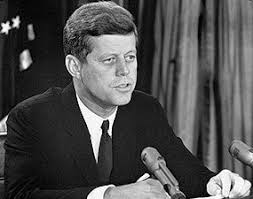
John F. Kennedy address the nation
And he demanded that the Soviets remove all of their offensive weapons from Cuba:
“The path we have chosen for the present is full of hazards, as all paths are, but it is the one most consistent with our character and courage as a nation and our commitments around the world.”
ABC NEWS, ALTERNET, AMERICAN TABLOID, AP, ASSASSINATION, BUZZFEED, CBS NEWS, CIA, CNN, COMMUNISM, CROOKS AND LIARS, CUBA, CUBAN MISSILE CRISIS, DAILY KOZ, DONALD TRUMP, DWIGHT D. EISENHOWER, FACEBOOK, FBI, FIDEL CASTRO, FLORIDA, FULGENCIO BATISTA, GUAM, GUS RUSSO, JAMES ELLROY, JOE BIDEN, JOHN F. KENNEDY, JOHNNY ROSELLI, LEE HARVEY OSWALD, LIVE BY THE SWORD, LYNDON B. JOHNSON, MAFIA, MOTHER JONES, MOVEON, NBC NEWS, NEWSWEEK, NIKITA KHRUSHCHEV, NORTH KOREA, NPR, NUCLEAR WAR, POLITICO, RAW STORY, REUTERS, ROBERT F. KENNEDY, SALON, SAM GIANCANA, SEATTLE TIMES, SLATE, THE ATLANTIC, THE CHICAGO SUN-TIMES, THE CHICAGO TRIBUNE, THE DAILY BEAST, THE GUARDIAN, THE HILL, THE HUFFINGTON POST, THE LOS ANGELES TIMES, THE NATION, THE NEW YORK TIMES, THE WASHINGTON POST, TIME, TWITTER, U.S. NEWS & WORLD REPORT, UKRAINE, UP, UPI, USA TODAY, VLADIMIR PUTIN, WARREN COMMISSION
In Bureaucracy, History, Law, Law Enforcement, Military, Politics, Social commentary on October 18, 2022 at 12:10 am
On September 21, his troops facing disaster on Ukrainian battlefields, Russian President Vladimir Putin threatened to use nuclear weapons to resolve the conflict.
Whether he would use them strictly against Ukraine—or NATO countries, including the United States—he didn’t say.
Privately, President Joe Biden responded: “We have not faced the prospect of Armageddon since Kennedy and the Cuban missile crisis.”
Interviewed by CNN, Biden said: “I think he is a rational actor who has miscalculated significantly.”
The Cuban Missile Crisis occurred 60 years ago, during the Presidency of John F. Kennedy.
On January 1, 1959, Fidel Castro swept triumphantly into Havana after a two-year guerrilla campaign against Cuban dictator Fulgencio Batista.
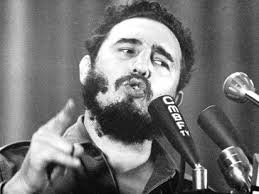
Fidel Castro
Almost immediately, hundreds of thousands of Cubans began fleeing to America. The first émigrés were more than 215,000 Batista followers. The exodus escalated, peaking at approximately 78,000 in 1962.
Between 1962 and 1979, hundreds of thousands of Cubans entered the United States under the Attorney General’s parole authority.
By 2008, more than 1.24 million Cubans were living in the United States, mostly in South Florida, where the population of Miami was about one-third Cuban. Their sheer numbers transformed the state’s political, economic and cultural life. And not entirely for the better.
Many of these Cubans viewed themselves as political exiles, rather than immigrants, hoping to eventually return to Cuba after its Communist regime fell from power.
The large number of Cubans in South Florida, particularly in Miami’s “Little Havana,” allowed them to preserve their culture and customs to a degree rare for immigrant groups.
With so many discontented immigrants concentrated in Florida, they became a potential force for politicians to court.
And the issue guaranteed to sway their votes was unrelenting hostility to Castro. Unsurprisingly, most of their votes went to right-wing Republicans.
John F. Kennedy was the first President to face this dilemma.
During the closing months of the administration of President Dwight D. Eisenhower, the CIA had begun training Cuban exiles for an invasion of their former homeland.
The exiles’ goal: To do what Castro had done—seek refuge in the mountains and launch a successful anti-Castro revolution.
But word of the coming invasion quickly leaked: The exiles were terrible secret-keepers. (A joke at the CIA went: “A Cuban thinks a secret is something you tell to only 300 people.”)
Kennedy insisted the invasion must appear to be an entirely Cuban enterprise. He refused to commit U.S. Marines and Air Force bombers.
The invaders landed on April 17, 1961 at the Bay of Pigs—and were quickly overwhelmed, with hundreds of the men taken prisoner.
Kennedy publicly took the blame for its failure: “Victory has a hundred fathers but defeat is an orphan.” But privately he seethed, and ordered the CIA to redouble its efforts to remove Castro at all costs.
To make certain his order was carried out, he appointed his brother, Robert—then Attorney General—to oversee the CIA’s “Castro removal” program.
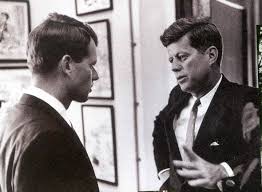
Robert F. Kennedy and John F. Kennedy
It’s here that America’s obsession with Cuba entered its darkest and most disgraceful period.
The CIA and the Mafia entered into an unholy alliance to assassinate Castro—each for its own benefit:
The CIA wanted to please Kennedy.
The mobsters wanted to regain its casino and brothel holdings that had made Cuba their private playground in pre-Castro times. They also hoped to use their pose as patriots to win immunity from future prosecution.
The CIA supplied poisons and explosives to various members of the Mafia. It was then up to the mobsters to assassinate Castro.
The CIA asked Johnny Roselli, a mobster linked to the Chicago syndicate, to go to Florida in 1961 and 1962 to organize assassination teams of Cuban exiles. They were to infiltrate their homeland and assassinate Castro.
Johnny Roselli
Rosselli called upon two other crime figures: Chicago Mafia boss Sam Giancana and Santos Trafficante, the Costra Nostra chieftain for Tampa, for assistance.

Sam Giancana
Giancana, using the name “Sam Gold” in his dealings with the CIA, was meanwhile being hounded by the FBI on direct orders of Attorney General Robert Kennedy.
The mobsters were authorized to offer $150,000 to anyone who would kill Castro and were promised any support the Agency could yield.
Giancana was to locate someone who was close enough to Castro to be able to drop pills into his food. Trafficante would serve as courier to Cuba, helping to make arrangements for the murder on the island.
Rosselli was to be the main link between all of the participants in the plot.
The available sources disagree on what actually happened. Some believe that the Mob made a genuine effort to “whack” Fidel.
Others are convinced the mobsters simply ran a scam on the government. They would pretend to carry out their “patriotic duty” while in fact making no effort at all to penetrate Castro’s security.
The CIA’s war against Castro was known as Operation Mongoose–the mongoose being a traditional enemy of the cobra. And those entrusted with this assignment were known as the Special Group.
“We were hysterical about Castro at about the time of the Bay of Pigs and thereafter,” Secretary of Defense Robert S. McNamara later testified before Congress about these efforts. “And there was pressure from JFK and RFK to do something about Castro.”
ABC NEWS, ALTERNET, AMERICABLOG, AP, BABY BOOMER RESISTANCE, BBC, BLOOMBERG NEWS, BUREAU OF CUSTOMS AND BORDER PROTECTION, BUZZFEED, CALIFORNIA, CBS NEWS, CHICAGO, CNN, CROOKS AND LIARS, CUBA, DAILY KOS, DEMOCRATS, ENGLISH LANGUAGE, ERIC ADAMS, FEDERATION FOR AMERICAN IMMIGRATION REFORM (FAIR), FIVETHIRTYEIGHT, FLORIDA, GREG ABBOTT, HARPER’S MAGAZINE, HUFFINGTON POST, illegal immigration, MEDIA MATTERS, MOTHER JONES, MOVEON, MSNBC, NBC NEWS, NEW REPUBLIC, NEW YORK CITY, NEWSDAY, NEWSWEEK, NICARAGUA, NPR, PBS NEWSHOUR, POLITICO, POLITICUSUSA, RAW STORY, REPUBLICANS, REUTERS, SALON, SCHOOLS, SEATTLE TIMES, SLATE, TALKING POINTS MEMO, TEXAS, THE ATLANTIC, THE CHICAGO SUN-TIMES, THE CHICAGO TRIBUNE, THE DAILY BEAST, THE DAILY BLOG, THE DAILY MAIL, THE GUARDIAN, THE HILL, THE HUFFINGTON POST, THE INTERCEPT, THE LOS ANGELES TIMES, THE NATION, THE NEW REPUBLIC, THE NEW YORK TIMES, THE NEW YORKER, THE VILLAGE VOICE, THE WASHINGTON POST, THINKPROGRESS, TIME, TRUTHDIG, TRUTHOUT, TWITTER, U.S. NEWS & WORLD REPORT, UPI, USA TODAY, VENEZUELA, WASHINGTON D.C.
In Bureaucracy, Business, History, Law, Law Enforcement, Politics, Social commentary on October 11, 2022 at 12:10 am
Defenders of illegal aliens entering the United States often point to their paying taxes and performing jobs that native-born Americans don’t want to do.
What they fail to mention are the costs of maintaining millions of unskilled and semi-literate (at best) men, women and children for decades on end.
Fortunately, James Reinl, social affairs correspondent at the British newspaper, The Daily Mail, has taken the time to bring these truths to light.
This occurred in a September 16 article headlined:
“America’s $78B Bill for Teaching Schoolkids With Poor English is Rising by BILLIONS in Biden-era Immigration Surge, Study Says, and 76,000 New Language Instructors Are a Tall Order in a Teacher Shortage.”
Among its findings:
- One million public school students—ranging from kindergarten to high school—need special training in speaking and writing English.
- It costs $78 billion each year to educate them.
- Texas, California, Florida and New York are among the states most burdened with such students.
- Only three percent of these students are proficient in English when they graduate from high school.
- These costs are raised by billions owing to an unceasing tide of illegal alien children at the southern border.
These alarming statistics were produced by a study from the Federation for American Immigration Reform (FAIR).
The 5.1 million students lacking English language skills need help in all their classes. As a result, it costs 15 to 20 percent more to educate them than American-born students who grow up learning English.

Illegal alien climbing over the border fence in Brownsville, Texas
A well-known joke illustrates the frustrations English-as-a-second-language teachers face:
A teacher asks her class: “All right, who can tell me the difference between ‘select’ and ‘choose’?” A Hispanic student raises his hand and, being called on, replies, ‘Uh, ‘select,’ like that means when you pick something, man. And ‘choose’ is what Puerto Ricans wear on their feet.”
With the United States facing a severe teacher shortage, some states have lowered their hiring rules to recruit teachers with only a high school diploma.
In 2020, the 5.1 million illegal alien students in public schools cost American taxpayers $78 billion—an $18.8 billion jump from the cost in 2016.
Of those students, 1.15 million were in California, costing the state $19.5 billion. One million more lived in Texas, costing that state $11.4 billion. And 278,000 lived in Florida, at a cost of $3.1 billion.
Only 370,000 teachers nationwide are trained to teach them, and 76,000 more will be needed during the next five years.
According to Immigration and Customs Enforcement, almost 200,000 immigrants were intercepted crossing the southern border in July. Many of them are entitled to claim asylum, and all children in the United States have a right to an education—even if they arrived here illegally.
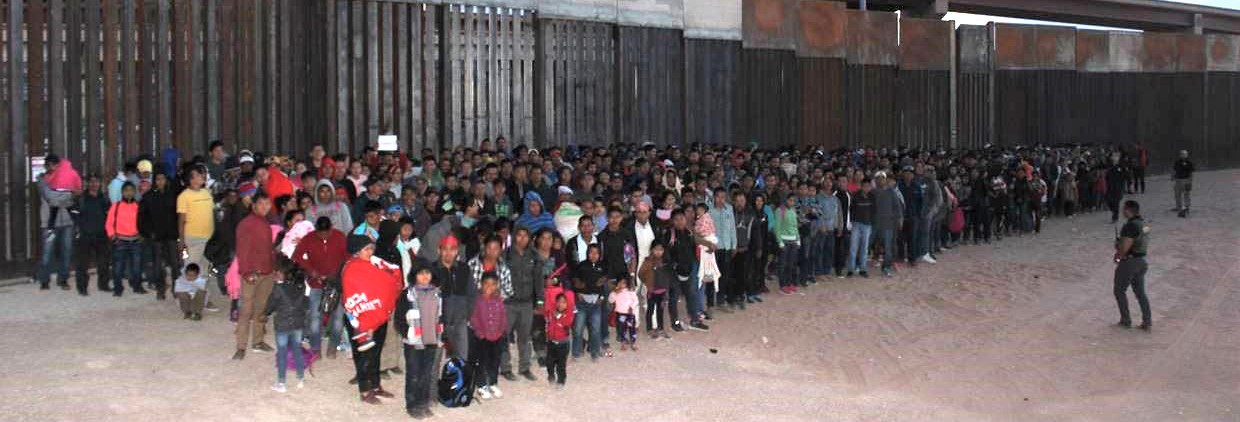
Illegal aliens rounded up by ICE
Immigration remains a highly divisive issue among Americans. “Red” Republican states want to close borders. “Blue” Democratic states are more open to newcomers.
Yet even famously liberal enclaves of support for illegal aliens like New York are beginning to have second thoughts about taking in unlimited numbers of uninvited foreigners.
On October 7, New York City Mayor Eric Adams declared a state of emergency in response to the city’s migrant crisis, which he says will cost the city $1 billion this fiscal year.

Eric Adams
“We now have a situation where more people are arriving in New York City than we can immediately accommodate, including families with babies and young children,” Adams said.
“Once the asylum seekers from today’s buses are provided shelter, we would surpass the highest number of people in recorded history in our city’s shelter system.”
Behind this unwanted influx lies Texas Governor Greg Abbott.
By the first week of October, Texas had spent more than $18 million busing illegal aliens found in Texas to famously liberal supporters of illegal immigration: Washington D.C., New York City, and Chicago.
Abbott announced the program in April as his response to the Biden administration’s immigration policies.

Greg Abbott
New York City now has more than 61,000 people in its shelter system. Thousands of these are American citizens who are homeless. They are competing for assistance with illegal aliens who were bused to New York City from the southern border since April of this year.
Behind this huge surge in illegal aliens and their continuing drain on America’s schools, housing and hospitals (among other facilities) lie three Communist-ruled countries: Venezuela, Nicaragua and Cuba.
Rising levels of repression, food shortages and economic stability are motivating Cubans, Venezuelans and Nicaraguans to enter the United States. And assisting them in this effort is the longtime policy of the United States government to automatically accept those leaving Communist countries as refugees.
At some point, the United States must face the economic and social absurdity of allowing some cities and states to provide sanctuary to every illegal alien who appears.
Even Eric Adams, while emphasizing that while New York City remains a sanctuary city, it cannot cope with such an overwhelming influx of migrants:
“We are not telling anyone that New York can accommodate every migrant in the city. We’re not encouraging people to send eight, nine buses a day….We’re saying that as a sanctuary city with right to shelter, we’re going to fulfill that obligation. That’s what we’re doing.”
At some point, America must stop allowing itself to be a dumping-ground for other countries’ unwanteds.
ABC NEWS, ALTERNET, AMERICABLOG, AP, BABY BOOMER RESISTANCE, BBC, BLOOMBERG NEWS, BUZZFEED, CBS NEWS, CIA, CLIFF ROBERTSON, CNN, CROOKS AND LIARS, DAILY KOS, DAILY KOZ, DONALD TRUMP, FACEBOOK, FIVETHIRTYEIGHT, GLOBAL WARMING, HARPER’S MAGAZINE, HUFFINGTON POST, ILLEGAL ALIENS, illegal immigration, IMMIGRATION AND CUSTOMS ENFORCEMENT (ICE), MASS MIGRATIONS, MEDIA MATTERS, MEXICAN REVOLUTION, MEXICO, MIGRANT CARRAVAN, MOTHER JONES, MOVEON, MSNBC, NBC NEWS, NEW REPUBLIC, NEWSDAY, NEWSWEEK, NICCOLO MACHIAVELLI, NPR, PBS NEWSHOUR, POLITICO, POLITICUSUSA, RAW STORY, REUTERS, ROBERT REDFORD, SALON, SEATTLE TIMES, SLATE, TALKING POINTS MEMO, THE ATLANTIC, THE CHICAGO SUN-TIMES, THE CHICAGO TRIBUNE, THE DAILY BEAST, THE DAILY BLOG, THE DISCOURSES, THE GUARDIAN, THE HILL, THE HUFFINGTON POST, THE LOS ANGELES TIMES, THE NATION, THE NEW REPUBLIC, THE NEW YORK TIMES, THE NEW YORKER, THE VILLAGE VOICE, THE WALL STREET JOURNAL, THE WASHINGTON POST, THINKPROGRESS, THREE DAYS OF THE CONDOR, TIJUANA, TIME, TRUTHDIG, TRUTHOUT, TWITTER, TWO POLITICAL JUNKIES, U.S. NEWS & WORLD REPORT, UPI, USA TODAY, WONKETTE
In Bureaucracy, History, Law, Law Enforcement, Military, Politics, Social commentary on October 7, 2022 at 12:20 am
As climate change heats up the world, more mass migrations will occur. Millions of people will retreat from undeveloped countries and try to enter—legally and illegally—the United States and Europe.
This is entirely predictable.
What is also entirely predictable is this: Those who have a decent life will want to hold onto it—and not be overwhelmed by millions who don’t share their same race, values, education and religion.
In the 1975 classic, Three Days of the Condor, Higgins, the deputy director of the CIA’s New York Division, confronts Joe Turner, an idealistic CIA employee on the realities of espionage.
Higgins (played by Cliff Robertson): “It’s simple economics. Today it’s oil, right? In 10 or 15 years, food. Plutonium. Maybe even sooner. Now, what do you think the people are gonna want us to do then?”
Joe Turner (played by Robert Redford): “Ask them.”
Higgins: “Not now—then! Ask ’em when they’re running out. Ask ’em when there’s no heat in their homes and they’re cold. Ask ’em when their engines stop. Ask ’em when people who have never known hunger start going hungry. You wanna know something? They won’t want us to ask ’em. They’ll just want us to get it for ’em!”
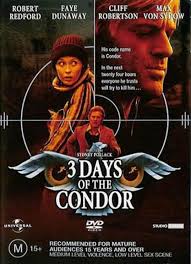
That day has come for millions of desperate people in Central and Latin America. And it is coming for all of us in the foreseeable future.
On October 13, 2018, a caravan of at least 5,000 men, women and children from El Salvador, Guatemala and Honduras set out for the United States. Many of them claimed they had been threatened by street gangs such as MS-13 or by government officials.
On October 18, President Donald Trump threatened to deploy the United States military and close the U.S.-Mexico border to keep the caravan from entering the country.
And then Trump did just that.
By November 19, migrants had begun piling up in Tijuana, which borders San Diego.
In August, 2021, the Supreme Court upheld the “Remain in Mexico” policy, which had been challenged by the Biden administration. Asylum seekers must wait in Mexico while they await hearings on their requests for entry to the United States.
And that’s when Tijuana residents began carrying signs reading “No illegals,” “No to the invasion” and “Mexico First.” And marching in the streets wearing Mexico’s red, white and green national soccer jersey and vigorously waving Mexican flags.
“We want the caravan to go; they are invading us,” said Patricia Reyes, a 62-year-old protester. “They should have come into Mexico correctly, legally, but they came in like animals.”
And the situation will only worsen in the months ahead.
Trump had ordered Immigration and Customs Enforcement (ICE) to draft new rules to limit the number of asylum-seekers.
As increasing numbers of migrants pour into Tijuana, access to housing, schools, hospitals and other social services will become increasingly strained. Violent clashes between Tijuana’s 1.6 million residents and its thousands of uninvited arrivals have been the result.
Tijuana’s mayor, Juan Manuel Gastélum, said the city couldn’t afford to continue supporting the migrants. He requested support from Mexico’s federal authorities.
For decades, the Mexican Government didn’t try to stop millions of its own citizens from routinely violating America’s immigration laws.
The reason: Mexicans still remember the bloody upheaval known as the Mexican Revolution (1910-1920) which slaughtered one to two million men, women and children. Massacres were common on all sides, with men shot by the hundreds in bullrings or hung by the dozen on trees.
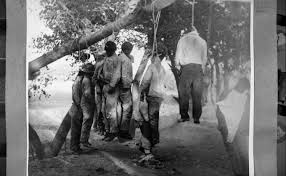
A Mexican “fruit tree”
As a result, every successive Mexican government has lived in the shadow of another such wholesale bloodletting. These officials have thus quietly turned the United States border into a safety valve.
If potential revolutionaries leave Mexico to find a better life in the United States, the Government doesn’t have to fear the rise of another Francisco “Pancho” Villa.
Suddenly, with the escape route to “El Norte” shut off, Mexicans have discovered that “illegal alien” is no longer a dirty phrase.
More than 500 years ago, Niccolo Machiavelli outlined the reason for such conflicts. In The Discourses, his masterwork on preserving liberty within a republic, he writes:
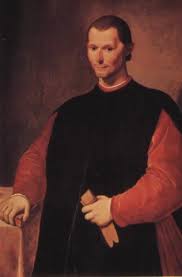
Niccolo Machiavelli
It was a saying of ancient writers, that men afflict themselves in evil, and become weary of the good, and that both these dispositions produce the same effects.
For when men are no longer obliged to fight from necessity, they fight from ambition, which passion is so powerful in the hearts of men that it never leaves them, no matter to what height they may rise.
The reason for this is that nature has created men so that they desire everything, but are unable to attain it. Desire being thus always greater than the faculty of acquiring, discontent with what they have and dissatisfaction with themselves result from it.
This causes the changes in their fortunes—for as some men desire to have more, while others fear to lose what they have, enmities and war are the consequences. And this brings about the ruin of one province and the elevation of another.
Those who want the United States to allow unchecked immigration are ignorant of such truths—or deliberately ignore them.
ABC NEWS, ALTERNET, ALVARO OBREGON, AMERICABLOG, ANCHOR BABIES, AP, BABY BOOMER RESISTANCE, BBC, BLOOMBERG NEWS, BUZZFEED, CBS NEWS, CNN, CORRUPTION, CROOKS AND LIARS, DAILY KOS, DAILY KOZ, DONALD TRUMP, DRUDGE REPORT, EMILIANO ZAPATA, FELIPE CALDERON, FIVETHIRTYEIGHT, HARPER’S MAGAZINE, HUFFINGTON POST, ILLEGAL ALIENS, illegal immigration, MEDIA MATTERS, MEXICAN REVOLUTION, MEXICO, MIGRANT CARRAVAN, MOTHER JONES, MOVEON, MSNBC, NBC NEWS, NEW REPUBLIC, NEWSDAY, NEWSWEEK, NPR, PANCHO VILLA, PBS NEWSHOUR, POLITICO, POLITICUSUSA, RACIAL PROFILING, RAW STORY, REUTERS, SALON, SEATTLE TIMES, SLATE, TALKING POINTS MEMO, THE ATLANTIC, THE CHICAGO SUN-TIMES, THE CHICAGO TRIBUNE, THE DAILY BEAST, THE DAILY BLOG, THE GUARDIAN, THE HILL, THE HUFFINGTON POST, THE LOS ANGELES TIMES, THE NATION, THE NEW REPUBLIC, THE NEW YORK TIMES, THE NEW YORKER, THE VILLAGE VOICE, THE WALL STREET JOURNAL, THE WASHINGTON POST, THINKPROGRESS, TIJUANA, TIME, TRUTHDIG, TRUTHOUT, TWITTER, U.S. NEWS & WORLD REPORT, UPI, USA TODAY, VENUSTIANO CARRANZA
In Bureaucracy, History, Law, Law Enforcement, Politics, Social commentary on October 3, 2022 at 12:14 am
On May 20, 2010, Mexico’s then-President Felipe Calderon addressed a joint session of the United States Congress—and attacked a recently-enacted Arizona law that allowed law enforcement officials to detain anyone suspected of being in the country illegally.
According to Calderon, the law “introduces a terrible idea: using racial profiling as a basis for law enforcement.
“I have said that Mexico does not stop at its border, that wherever there is a Mexican, there is Mexico.”
The hypocrisy of Calderon’s words was staggering. He was condemning the United States for doing what Mexico itself has long done: Strictly enforcing control of its own borders.

Felipe Calderon
World Economic ForumCopyright by World Economic Forum / Photo by Remy Steinegger
Mexico has a single, streamlined law that ensures that foreign visitors and immigrants are:
- In the country legally;
- Have the means to sustain themselves economically;
- Not destined to be burdens on society;
- Of economic and social benefit to society;
- Of good character and have no criminal records; and
- Contribute to the general well-being of the nation.
The law also ensures that:
- Immigration authorities have a record of each foreign visitor;
- Foreign visitors do not violate their visa status;
- Foreign visitors are banned from interfering in the country’s internal politics;
- Foreign visitors who enter under false pretenses are imprisoned or deported;
- Foreign visitors violating the terms of their entry are imprisoned or deported;
- Those who aid in illegal immigration are sent to prison.
Only eight years after Calderon demanded that Americans repeal their immigration laws, Mexicans suddenly discovered that “illegal alien” was no longer a dirty phrase.
On October 13, 2018, a caravan of at least 5,000 men, women and children from El Salvador, Guatemala and Honduras set out for the United States.
On October 18, President Donald Trump closed the U.S.-Mexico border to keep the caravan from entering the country.
By November 19, migrants had begun piling up in Tijuana, which borders San Diego.
And that’s when Tijuana residents began carrying signs reading “No illegals,” “No to the invasion” and “Mexico First.” And marching in the streets wearing Mexico’s red, white and green national soccer jersey and vigorously waving Mexican flags.
“We want the caravan to go; they are invading us,” said Patricia Reyes, a 62-year-old protester. “They should have come into Mexico correctly, legally, but they came in like animals.”
The El Paso Times noted the resentment of many Mexicans toward the increasing numbers of Cuban illegal aliens in Juarez, which lies across from El Paso.
“They don’t get along with Mexican people,” said a burrito seller. “They get in a little group by themselves. A lot of people don’t like them here.”
And a business consultant complained, “There are people who are coming looking for a handout, who want us to help them, when they could also look for work.”
Over the weekend of October 12-13, 2019, a National Guard commander addressed his platoon before confronting the latest caravan: “No one will come to trample our country, our land!”
In the past, Mexicans comprised the largest group of illegal aliens entering the United States. But the Mexican economy has grown and developed to the point where fewer people see the need to emigrate.
So most illegals are mostly from Guatemala, Honduras, and El Salvador. And there are growing numbers from Haiti, Cuba, various African countries, and even the Middle East.
During the first eight months of 2019, the number of asylum applications submitted to Mexico’s refugee agency (COMAR) more than tripled, compared to the same period in 2018. As a result, the refugee agency has removed the how-to-apply video it once hosted on its website.
In the past, the Mexican Government refused to halt illegal immigration to the United States.
It remembered the bloody upheaval known as the Mexican Revolution. This lasted 10 years (1910-1920) and wiped out an estimated one to two million men, women and children.
Massacres were common on all sides, with men shot by the hundreds in bullrings or hung by the dozen on trees.
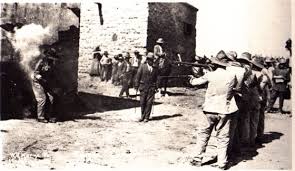
A Mexican Revolution firing squad
All of the major leaders of the Revolution—Francisco Madero, Emiliano Zapata, Venustiano Carranza, Francisco “Pancho” Villa, Alvaro Obregon—died in a hail of bullets.
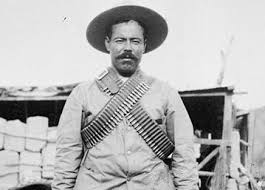
Francisco “Pancho” Villa
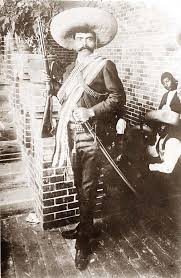
Emiliano Zapata
As a result, every successive Mexican Government lived in the shadow of another such wholesale bloodletting. These officials quietly decided to turn the United States border into a safety valve.
* * * * *
Who says that everyone who wants to live in the United States has the right to do so?
No other nation has ever allowed itself to become a dumping ground for the world’s unwanteds. And no law—religious or secular—obligates the United States to do so.
An “open door” policy proved essential 200 years ago, when most of America was unsettled and largely unpopulated.
But the United States is no longer a largely unpopulated, agricultural country. Most of its population lives in coastal cities—which is where most illegal aliens tend to settle as well.
Space is limited in schools, hospitals and housing, and the more people who cram into limited spaces, the more frictions they inevitably create.
As native-born Mexicans are angrily finding out.
2020 PRESIDENTIAL ELECTION, ABC NEWS, ABRAHAM LINCOLN, ADAM SCHIFF, ALEXANDER VINDMAN, ALTERNET, AMERICABLOG, AP, BABY BOOMER RESISTANCE, BLOOMBERG, BUZZFEED, CBS NEWS, CNN, CROOKS AND LIARS, DAILY KOZ, DAVID BROOKS, DEMOCRATS, DONALD TRUMP, DRUDGE RETORT, FACEBOOK, FIVETHIRTYEIGHT, FOX NEWS NETWORK, GERRYMANDERING, HARPER’S MAGAZINE, HOUSE INTELLIGENCE COMMITTEE, HOWARD BAKER, HUNTER BIDEN, IMPEACHMENT, JOE BIDEN, JOEL MATHIS, LYNDON JOHNSON, MARIA YOVANOVICH, MARK SHIELDS, MEDIA MATTERS, MEDICAID, MICK MULVANEY, MOTHER JONES, MOVEON, MSNBC, NATIONAL SECURITY COUNCIL, NBC NEWS, NEWSWEEK, NPR, PBS NEWSHOUR, POLITICO, POLITICUSUSA, RAW STORY, REPUBLICANS, REUTERS, RICHARD NIXON, RUDI GIULIANI, RUSSIA, SALON, SEATTLE TIMES, SLATE, TALKING POINTS MEMO, THE ATLANTIC, THE CHICAGO SUN-TIMES, THE CHICAGO TRIBUNE, THE DAILY BEAST, THE DAILY BLOG, THE GUARDIAN, THE HILL, THE HUFFINGTON POST, THE LOS ANGELES TIMES, THE NATION, THE NEW REPUBLIC, THE NEW YORK TIMES, THE VILLAGE VOICE, THE WASHINGTON POST, THINKPROGRESS, TIME, TRUTHDIG, TRUTHOUT, TWITTER, TWO POLITICAL JUNKIES, U.S. NEWS & WORLD REPORT, UKRAINE, UPI, USA TODAY, VOLODYMYR ZELENSKY, VOTER ID LAWS, WATERGATE, WONKETTE
In Bureaucracy, History, Law, Law Enforcement, Military, Politics, Social commentary on September 29, 2022 at 12:15 am
On November 22, 2019, Mark Shields—a liberal syndicated columnist—and David Brooks—a conservative one for The New York Times—reached disturbingly similar conclusions about President Donald Trump’s efforts to extort a “favor” from Ukrainian President Volodymyr Zelensky.
DAVID BROOKS: “What strikes me [is] that everyone was in the loop, that this was not something they tried to hide.
“This was just something they thought was the way politics gets done or foreign policy gets done, that there’s no division between personal gain and public service.”
MARK SHIELDS: “What I have underestimated….is the fear that Donald Trump exercises over Republicans. I mean, people talked about Lyndon Johnson being a fearsome political leader. They don’t even approach. I mean, he strikes fear into the hearts of Republicans up and down the line. And I think that….has been eye-opening in its dimensions.”
Nor did the GOP try to reign Trump in.
In a November 14, 2019 column, “Republicans Can’t Abandon Trump Now Because They’re All Guilty,” freelance journalist Joel Mathis warned: “Trump’s abuses of power mirror those of the GOP as a whole. Republicans can’t turn on him, because doing so would be to indict their party’s entire approach to politics.”
For example:
- At the state level, GOP legislatures have passed numerous voter ID laws over the last decade. Officially, the reason has been to prevent non-citizens from voting. In reality, the motive is to depress turnout among Democratic constituencies.
- When Democrats have won elections, Republicans have tried to block them from carrying out their policies. In Utah, voters approved Medicaid expansion at the ballot box—but Republicans nullified this.
- In North Carolina, Republican legislators prevented voters from choosing their representatives. Instead, Republican representatives chose voters through partisan sorting. In September, the state’s Supreme Court ruled the legislative gerrymandered district map unconstitutional.
The upshot of all this: “The president and his party are united in the belief that their entitlement to power allows them to manipulate and undermine the country’s democratic processes….”


On November 21, 2019, Representative Adam Schiff (D-CA), chairman of the House Intelligence Committee, attacked Republicans’ total rejection of the overwhelming evidence linking Trump with extortion:

Adam Schiff
“But apparently, it’s all hearsay. Even when you actually hear the President….that’s hearsay. We can’t rely on people saying what the President said. Apparently, we can only rely on what the President says, and there, we shouldn’t even rely on that either….
“We should imagine he said something about actually fighting corruption, instead of what he actually said, which was, ‘I want you to do us a favor, though. I want you to look into this 2016 CrowdStrike conspiracy theory, and I want you to look into the Bidens.’
“I guess we’re not even supposed to rely on that because that’s hearsay….That would be like saying you can’t rely on the testimony of the burglars during Watergate because it’s only hearsay, or you can’t consider the fact that they tried to break in because they got caught. They actually didn’t get what they came for, so, you know, kind of no harm, no foul. That’s absurd.
“The difference between [Watergate and Trump’s attempted extortion of Ukraine] is not the difference between [Richard] Nixon and [Donald] Trump. It’s the difference between that Congress and this one. And so, we are asking, where is Howard Baker? Where are the people who are willing to go beyond their party to look to their duty?
“But the other defense besides ‘It failed, the scheme failed, they got caught,’ the other defense is ‘The President denies it.’ Well, I guess that’s case closed, right?
“….This President believes he is above the law, beyond accountability. And in my view, there is nothing more dangerous than an unethical President who believes they are above the law.”
* * * * *
The United States has indeed become a polarized country. But it’s not the polarization between Republicans and Democrats, or between conservatives and liberals.
It’s the polarization between
- Those intent on enslaving everyone who doesn’t subscribe to their Fascistic beliefs and agenda—and those who resist being enslaved.
- Those who believe in reason and science—and those who believe in an infallible “strong man” who rejects both.
- Those who cherish education—and those who celebrate ignorance.
- Those who believe in the rule of law—and those who believe in their right to act as a law unto themselves.
- Those who believe in treating others (especially the less fortunate) with decency—and those who believe in the triumph of intimidation and force.
Those who hoped that Republicans would choose patriotism over partisanship got their answer on February 5, 2020. That was when the Republican-dominated Senate—ignoring the overwhelming evidence against him—acquitted Donald Trump on both impeachment articles: Obstruction of Congress and Abuse of Power.
It’s natural to regret that the United States has become a sharply divided nation. But those who lament this should realize there is only one choice:
Either non-Fascist Americans will destroy the Republican party and its voters that threaten to enslave them—or they will be enslaved by Republicans and their voters who believe they are entitled to manipulate and undermine the country’s democratic processes.
There is no middle ground.
2020 PRESIDENTIAL ELECTION, ABC NEWS, ABRAHAM LINCOLN, ADAM SCHIFF, ALEXANDER VINDMAN, ALTERNET, AMERICABLOG, AP, BABY BOOMER RESISTANCE, BLOOMBERG, BUZZFEED, CBS NEWS, CNN, CROOKS AND LIARS, DAILY KOZ, DAVID BROOKS, DEMOCRATS, DONALD TRUMP, DRUDGE RETORT, FACEBOOK, FIVETHIRTYEIGHT, FOX NEWS NETWORK, GERRYMANDERING, HARPER’S MAGAZINE, HOUSE INTELLIGENCE COMMITTEE, HOWARD BAKER, HUNTER BIDEN, JOE BIDEN, JOEL MATHIS, LYNDON JOHNSON, MARIA YOVANOVICH, MARK SHIELDS, MEDIA MATTERS, MEDICAID, MICK MULVANEY, MOTHER JONES, MOVEON, MSNBC, NATIONAL SECURITY COUNCIL, NBC NEWS, NEWSWEEK, NPR, PBS NEWSHOUR, POLITICO, POLITICUSUSA, RAW STORY, REPUBLICANS, REUTERS, RICHARD NIXON, RUDI GIULIANI, RUSSIA, SALON, SEATTLE TIMES, SLATE, TALKING POINTS MEMO, THE ATLANTIC, THE CHICAGO SUN-TIMES, THE CHICAGO TRIBUNE, THE DAILY BEAST, THE DAILY BLOG, THE GUARDIAN, THE HILL, THE HUFFINGTON POST, THE LOS ANGELES TIMES, THE NATION, THE NEW REPUBLIC, THE NEW YORK TIMES, THE VILLAGE VOICE, THE WASHINGTON POST, THINKPROGRESS, TIME, TRUTHDIG, TRUTHOUT, TWITTER, TWO POLITICAL JUNKIES, U.S. NEWS & WORLD REPORT, UKRAINE, UPI, USA TODAY, VOLODYMYR ZELENSKY, VOTER ID LAWS, WATERGATE, WONKETTE
In Bureaucracy, History, Law, Law Enforcement, Military, Politics, Social commentary on September 28, 2022 at 12:07 am
On November 14, 2019, the CNN website showcased an opinion piece by Jane Carr and Laura Juncadella entitled: “Fractured States of America.”
And it opened:
“Some worry that it’s already too late, that we’ve crossed a threshold of polarization from which there is no return. Others look toward a future where more moderate voices are heeded and heard, and Americans can find better ways to relate to each other. Still others look back to history for a guide—perhaps for what not to do, or at the very least for proof that while it’s been bad before, progress is still possible.”
A series of sub-headlines summed up many of the comments reported.
- “I was starting to hate people that I have loved for years.”
- “Voting for Trump cost me my friends.”
- “I feel like I’m living in hostile territory.”
- “Our children are watching this bloodsport.”
- “A student’s Nazi-style salute reflects the mate.”
- “Our leaders reflect the worst of us.”
- “I truly believe I will be assaulted over a bumper sticker.”
- “It already feels like a cold war.”
It’s natural to regret that the United States has become so self-destructively polarized. And to wish that its citizens could somehow reach across the chasm that divides them and find common cause with one another.
But that is to ignore the brutal truth that America now faces a choice:
- To submit to the tyrannical aggression of a ruthless political party convinced that they are entitled to power to manipulate and undermine the country’s democratic processes; or
- To fiercely resist that aggression and the destruction of those democratic processes.
Consider the face-off between President Donald J. Trump and Army Lt. Colonel Alexander Vindman.
Vindman is a retired United States Army officer who served as the Director for European Affairs for the United States National Security Council. He was also a witness to Trump’s efforts to extort “a favor” from the president of Ukraine.
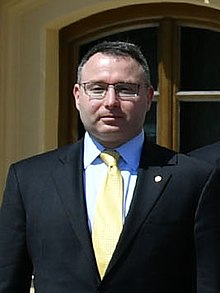
Lt. Colonel Alexander Vindman
Адміністрація Президента України [CC BY 4.0 (https://creativecommons.org/licenses/by/4.0)%5D
In July, 2019, Trump told his acting chief of staff, Mick Mulvaney, to withhold almost $400 million in promised military aid for Ukraine, which faced increasing aggression from Russia.
On July 25, Trump telephoned Ukrainian President Volodymyr Zelensky to “request” a “favor”: Investigate 2020 Democratic Presidential Candidate Joe Biden and his son, Hunter, who had had business dealings in Ukraine.
The reason for such an investigation: To find embarrassing “dirt” on Biden.
It was clear that unless Zelensky found “dirt” on Biden, the promised aid would not be forthcoming.
“I was concerned by the call,” Vindman, who had heard Trump’s phone call, testified before the House Intelligence Committee. “I did not think it was proper to demand that a foreign government investigate a U.S. citizen, and I was worried about the implications for the U.S. Government’s support of Ukraine.
“I realized that if Ukraine pursued an investigation into the Bidens and Burisma, it would likely be interpreted as a partisan play which would undoubtedly result in Ukraine losing the bipartisan support it has thus far maintained. This would all undermine U.S. national security.”
Trump denounced Vindman as a “Never Trumper”—as if opposing his extortion attempt constituted a blasphemy. Republicans and their shills on the Fox News Network attacked him as well. As a result, he sought physical protection by the Army for himself and his family.
(On February 7, 2020, he was reassigned from the National Security Council at Trump’s order.)
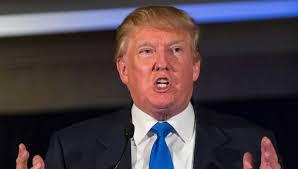
Donald Trump
On November 15, 2019, conservative New York Times columnist David Brooks and liberal syndicated columnist Mark Shields appeared on The PBS Newshour to offer their reactions by Republicans and Democrats to Trump’s extortion attempt.
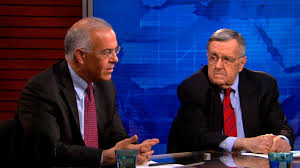
David Brooks and Mark Shields on “The PBS Newshour”
DAVID BROOKS: “The case is very solid and airtight that there was the quid pro quo. All the testimony points to that. And, mostly, you see a contrast. The first two gentlemen that testified on the first day, they were just upstanding, solid public servants.
“I felt like I was looking back in time, because I was looking at two people who are not self-centered. They cared about the country. They were serving. They had no partisan ax to grind. They were just honest men of integrity.
“And I thought we saw that again today with [former Ambassador to Ukraine] Marie Yovanovitch. And in her case, the day was more emotional, because you got to see a case of bullying against a strong, upstanding woman.
“And so I thought she expressed—like, the heavy moments of today where when she expressed her reaction to how badly she was treated. And so that introduces an element of emotion and pathos into what shouldn’t be just a legal proceeding. It should be something where people see the contrast between good people and bad people.”
MARK SHIELDS: “This is a story of corruption—corruption not in Ukraine, corruption in the United States.
“I mean, why? Why did they go to such lengths to denigrate, to attack, to try and destroy and sabotage the career of a dedicated public servant [United States Ambassador to Ukraine Marie Yovanovich], a person who had put her life on the line? Why did they do it? What was it, money? Was it power?”
ABC NEWS, ADOLF HITLER, ALTERNET, AMERICABLOG, AP, ASSASSINATION, BABY BOOMER RESISTANCE, BBC, BLOOMBERG NEWS, BUZZFEED, CBS NEWS, CNN, CONSPIRACIES, CROOKS AND LIARS, DAILY KOS, DAY OF THE JACKAL, DONALD TRUMP, FIVETHIRTYEIGHT, FREDERICK FORSYTHE, GAIUS CASSIUS, HARPER’S MAGAZINE, HUFFINGTON POST, JULIUS CAESAR, MAR-A-LAGO, MARCUS BRUTUS, MARK ANTHONY, MEDIA MATTERS, MOTHER JONES, MOVEON, MSNBC, NBC NEWS, NEW REPUBLIC, NEWSDAY, NEWSWEEK, NICCOLO MACHIAVELLI, NPR, PBS NEWSHOUR, PLOTS, POLITICO, POLITICUSUSA, RAW STORY, REUTERS, SALON, SEATTLE TIMES, Secret Service, SLATE, TALKING POINTS MEMO, THE ATLANTIC, THE CHICAGO SUN-TIMES, THE CHICAGO TRIBUNE, THE DAILY BEAST, THE DAILY BLOG, THE DISCOURSES, THE GUARDIAN, THE HILL, THE HUFFINGTON POST, THE INTERCEPT, THE LOS ANGELES TIMES, THE NATION, THE NEW REPUBLIC, THE NEW YORK TIMES, THE NEW YORKER, THE VILLAGE VOICE, THE WALL STREET JOURNAL, THE WASHINGTON POST, THINKPROGRESS, TIME, TRUTHDIG, TRUTHOUT, TWITTER, U.S. NEWS & WORLD REPORT, UPI, USA TODAY, WHITE HOUSE STAFFER
In Bureaucracy, History, Law, Law Enforcement, Military, Politics, Social commentary on September 23, 2022 at 12:22 am
Niccolo Machiavelli, the father of modern political science, wrote that there are three periods of danger in a conspiracy:
- Dangers in organizing the plot
- Dangers in executing the conspiracy
- Dangers following the execution of the plot.
The first two were covered in Part Two of this series. Now, as to the third:
Dangers following the Execution of the Conspiracy: There is really but one—someone is left who will avenge the murdered prince. These can be brothers, sons or other relatives, who have been spared by negligence or for other reasons.
But of all the perils that follow the execution of a conspiracy, the most certain and fearful is the attachment of the people to the murdered prince. There is no remedy against this, for the conspirators can never secure themselves against a whole people.
An example of this occurred in the case of Julius Caesar, who, being beloved by the people, was avenged by them.
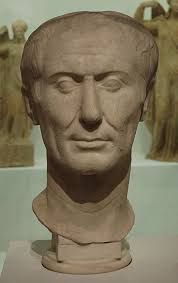
Julius Caesar
Machiavelli closes his chapter “Of Conspiracies” with advice to rulers on how they should act when they find a conspiracy has been formed against them.
If they discover that a conspiracy exists against them, they must, before punishing its authors, strive to learn its nature and extent. And they must measure the danger posed by the conspirators against their own strength.
And if they find it powerful and alarming, they must not expose it until they have amassed sufficient force to crush it. Otherwise, they will only speed their own destruction.
The foregoing was taken from Machiavelli’s masterwork, The Discourses on Livy, which was published posthumously in 1531. But elsewhere in this volume, he notes how important it is for rulers to make themselves loved–or at least respected—by their fellow citizens:


Niccolo Machiavelli
Note how much more praise those Emperors merited who, after Rome became an empire, conformed to her laws like good princes, than those who took the opposite course.
Titus, Nerva, Trajan, Hadrian, Antoninus and Marcus Auelius did not require the Praetorians nor the multitudinous legions to defend them, because they were protected by their own good conduct, the good will of the people, and by the love of the Senate.
On the other hand, neither the Eastern nor the Western armies saved Caligula, Nero, Vitellius and so many other wicked Emperors from the enemies which their bad conduct and evil lives had raised up against them.
In his better-known work, The Prince, he warns rulers who—like Donald Trump—are inclined to rule by fear:
A prince should make himself feared in such a way that if he does not gain love, he at any rate avoids hatred: for fear and the absence of hatred may well go together.
Donald Trump
Most Presidents try to seem friendly and caring toward their fellow Americans.
This held true even for Richard M. Nixon, when, on May 9, 1970, he made an impromptu visit to the Lincoln Memorial and engaged in a rambling dialogue with Vietnam war protesters.
As both a Presidential candidate and President, Trump repeatedly used Twitter to attack hundreds of real and imagined enemies in politics, journalism, TV and films.
Among his infuriating acts as President, he
- Allowed a deadly virus to ravage the country, killing 400,000 Americans by the end of his term.
- Attacked medical experts and governors who urged Americans to wear masks and socially distance to protect themselves from COVID-19.
- Attacked the integrity of the FBI and CIA for determining that Russia interfered in the 2016 Presidential election on his behalf.
- Attacked and alienated America’s oldest allies, such as Canada and Great Britain.
- Shut down the United States Government, imperiling the lives of 800,000 Federal employees, to extort money from Congress for a worthless wall on the U.S.-Mexico border.
- Attacked the free press as “the enemy of the people.”
Even as an ex-President, he poses a mortal threat to American democracy. On September 1, President Joe Biden outlined those dangers:
“The Republican Party today is dominated, driven, and intimidated by Donald Trump and the MAGA Republicans, and that is a threat to this country.
“MAGA Republicans do not respect the Constitution. They do not believe in the rule of law. They do not recognize the will of the people.
“They refuse to accept the results of a free election. And they’re working right now, as I speak, in state after state to give power to decide elections in America to partisans and cronies, empowering election deniers to undermine democracy itself.
“MAGA forces are determined to take this country backwards—backwards to an America where there is no right to choose, no right to privacy, no right to contraception, no right to marry who you love.
“They promote authoritarian leaders, and they fan the flames of political violence that are a threat to our personal rights, to the pursuit of justice, to the rule of law, to the very soul of this country.”
By Machiavelli’s standards, Trump has made himself the perfect target for a conspiracy: “When a prince becomes universally hated, it is likely that he’s harmed some individuals—who thus seek revenge. This desire is increased by seeing that the prince is widely loathed.”
ABC NEWS, ADOLF HITLER, ALTERNET, AMERICABLOG, AP, ASSASSINATION, BABY BOOMER RESISTANCE, BBC, BLOOMBERG NEWS, BUZZFEED, CBS NEWS, CNN, CONSPIRACIES, CROOKS AND LIARS, DAILY KOS, DAY OF THE JACKAL, DONALD TRUMP, FIVETHIRTYEIGHT, FREDERICK FORSYTHE, GAIUS CASSIUS, HARPER’S MAGAZINE, HUFFINGTON POST, JULIUS CAESAR, MAR-A-LAGO, MARCUS BRUTUS, MARK ANTHONY, MEDIA MATTERS, MOTHER JONES, MOVEON, MSNBC, NBC NEWS, NEW REPUBLIC, NEWSDAY, NEWSWEEK, NICCOLO MACHIAVELLI, NPR, PBS NEWSHOUR, PLOTS, POLITICO, POLITICUSUSA, RAW STORY, REUTERS, SALON, SEATTLE TIMES, Secret Service, SLATE, TALKING POINTS MEMO, THE ATLANTIC, THE CHICAGO SUN-TIMES, THE CHICAGO TRIBUNE, THE DAILY BEAST, THE DAILY BLOG, THE DISCOURSES, THE GUARDIAN, THE HILL, THE HUFFINGTON POST, THE INTERCEPT, THE LOS ANGELES TIMES, THE NATION, THE NEW REPUBLIC, THE NEW YORK TIMES, THE NEW YORKER, THE VILLAGE VOICE, THE WALL STREET JOURNAL, THE WASHINGTON POST, THINKPROGRESS, TIME, TRUTHDIG, TRUTHOUT, TWITTER, U.S. NEWS & WORLD REPORT, UPI, USA TODAY, WHITE HOUSE STAFFER
In Bureaucracy, History, Law, Law Enforcement, Military, Politics, Social commentary on September 22, 2022 at 12:10 am
More than 500 years ago, Niccolo Machiavelli, the Florentine statesman, authored The Discourses on Livy, a work of political history and philosophy. In it, he outlined how citizens of a republic can maintain their freedoms.
One of the longest chapters—Book Three, Chapter Six—covers “Of Conspiracies.” In it, those who wish to conspire against a ruler will find highly useful advice.
And so will those who wish to foil such a conspiracy.
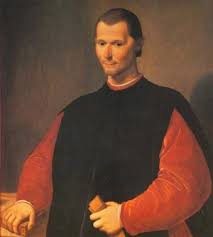

Niccolo Machiavelli
Writes Machiavelli:
For conspirators, there are three ways their efforts can be foiled:
- Discovery through denunciation;
- Discovery through incautiousness;
- Discovery through writings.
Discovery through Denunciation: This occurs through treachery or lack of prudence among one or more conspirators.
Treachery is so common that you can safely tell your plans to only your most trusted friends who are willing to risk their lives for your sake. You may find that you have only one or two of these.
But as you are bring more people into the conspiracy, the chances of discovery greatly increase. It’s impossible to find many who can be completely trusted: For their devotion to you must be greater than their sense of danger and fear of punishment.
Discovery through Carelessness: This happens when one of the conspirators speaks incautiously, so that a third person overhears it Or it may occur from thoughtlessness, when a conspirator tells the secret to his wife or child, or to some other indiscreet person.
When a conspiracy has more than three or four members, its discovery is almost certain, either through treason, imprudence or carelessness.
If more than one conspirator is arrested, the whole plot is discovered, for it will be impossible for any two to agree perfectly as to all their statements.
If only one is arrested, he may—through courage and stubbornness—be able to conceal the names of his accomplices. But then the others, to remain safe, must not panic and flee, since this is certain to be discovered.
If one of them becomes fearful—whether it’s the one who was arrested or is still at liberty—discovery of the conspiracy is certain.
The best way to avoid such detection is to confide your project to your intended fellow conspirators at the moment of execution–and not sooner.
A classic example of this occurred in ancient Persia: A group of nobles assembled to discuss overthrowing a usurper to the throne. The last one to arrive was Darius.
When one of the conspirators asked, “When should we strike?” Darius replied: “We must either go now at this very moment and carry it into execution, or I shall go and denounce you all. For I will not give any of you time to denounce me.”
At that, they went directly to the palace, assassinated the usurper and proclaimed Darius their new king.

Discovery through Writings: You may talk freely with anyone man about everything, for unless you have committed yourself in writing, the “Yes” of one man is worth as much as the “No” of another.
Thus, you should guard most carefully against writing, as against a dangerous rock, for nothing will convict you quicker than your own handwriting.
You may escape, then, from the accusation of a single individual, unless you are convicted by some writing or other pledge, which you should be careful never to give.
If you are denounced, there are means of escaping punishment:
- By denying the accusation and claiming that the person making it hates you; or
- Claiming that your accuser was tortured or coerced into giving false testimony against you.
But the most prudent course is to not tell your intentions to anyone, and to carry out the attempt yourself.
Even if you’re not discovered before you carry out your attack, there are still two dangers facing a conspirator:
Dangers in Execution: These result from:
- An unexpected change in the routine of the intended target;
- The lack of courage among the conspirators; or
- An error on their part, such as leaving some of those alive whom the conspirators intended to kill.
Adolf Hitler, who claimed to have a sixth-sense for danger, was famous for changing his routine at the last minute.

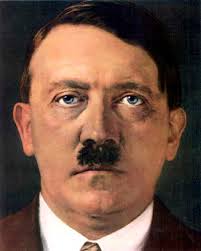
Adolf Hitler
On November 9, 1939, this instinct saved his life. He had been scheduled to give a long speech at a Munich beer hall before the “Old Fighters” of his storm troopers.
But that evening he cut short his speech and left the beer hall. Forty-five minutes later, a bomb exploded inside a pillar—before which Hitler had been speaking.
Conspirators can also be doomed by their good intentions.
In 44 B.C., Gaius Cassius, Marcus Brutus and other Roman senators decided to assassinate Julius Caesar, whose dictatorial ambitions they feared.
Cassius also intended to murder Mark Anthony, Caesar’s strongest ally. But Brutus objected, fearing the plotters would look like butchers, not saviors. Even worse, he allowed Anthony to deliver a eulogy at Caesar’s funeral.
This proved so inflammatory that the mourners rioted, driving the conspirators out of Rome. Soon afterward, they were defeated in a battle with the legions of Anthony and Octavian Caesar–and forced to commit suicide to avoid capture and execution.
ABC NEWS, ADOLF HITLER, ALTERNET, AMERICABLOG, AP, ASSASSINATION, BABY BOOMER RESISTANCE, BBC, BLOOMBERG NEWS, BUZZFEED, CBS NEWS, CNN, CONSPIRACIES, CROOKS AND LIARS, DAILY KOS, DAY OF THE JACKAL, DONALD TRUMP, FIVETHIRTYEIGHT, FREDERICK FORSYTHE, GAIUS CASSIUS, HARPER’S MAGAZINE, HUFFINGTON POST, JULIUS CAESAR, MAR-A-LAGO, MARCUS BRUTUS, MARK ANTHONY, MEDIA MATTERS, MOTHER JONES, MOVEON, MSNBC, NBC NEWS, NEW REPUBLIC, NEWSDAY, NEWSWEEK, NICCOLO MACHIAVELLI, NPR, PBS NEWSHOUR, PLOTS, POLITICO, POLITICUSUSA, RAW STORY, REUTERS, SALON, SEATTLE TIMES, Secret Service, SLATE, TALKING POINTS MEMO, THE ATLANTIC, THE CHICAGO SUN-TIMES, THE CHICAGO TRIBUNE, THE DAILY BEAST, THE DAILY BLOG, THE DISCOURSES, THE GUARDIAN, THE HILL, THE HUFFINGTON POST, THE INTERCEPT, THE LOS ANGELES TIMES, THE NATION, THE NEW REPUBLIC, THE NEW YORK TIMES, THE NEW YORKER, THE VILLAGE VOICE, THE WALL STREET JOURNAL, THE WASHINGTON POST, THINKPROGRESS, TIME, TRUTHDIG, TRUTHOUT, TWITTER, U.S. NEWS & WORLD REPORT, UPI, USA TODAY, WHITE HOUSE STAFFER
In Bureaucracy, History, Law, Law Enforcement, Military, Politics, Social commentary on September 21, 2022 at 12:13 am
In the 1973 movie, “The Day of the Jackal,” a methodical assassin devises an ingenious plan to kill French President Charles de Gaulle.
Despite the best efforts of French security forces to entrap him, he eludes them time and again—and comes within an ace of assassinating de Gaulle.

“The Day of the Jackal” is fiction, based on a 1971 novel by Frederick Forsythe. In real life, most would-be political assassins lack the skills and sophistication of Forsythe’s anti-hero.
Take the case of the man who, on March 18, 2017, jumped over a bicycle rack outside the security perimeter of the White House. Within two minutes, agents of the U.S. Secret Service had tackled and arrested him.
Then, hours later, a motorist drove up to a White House checkpoint and claimed to have a bomb. Secret Service agents immediately arrested him and seized the stolen 2017 Chevrolet Impala. After a careful search, no explosives were found.
Even if they had been armed, President Donald J. Trump would not have faced any danger.
For the fifth time since taking office on January 20, 2017, he was in Florida, vacationing at his Mar-a-Lago resort.
That does not mean, of course, that future assassins will prove so inept.
More than 500 years ago, Niccolo Machiavelli, the father of modern political science, offered sound advice for would-be conspirators—and for rulers seeking to thwart conspiracies.
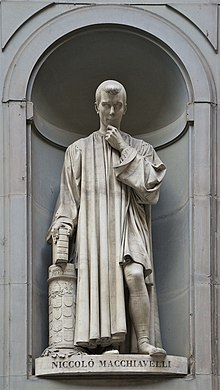
Niccolo Machiavellil
Lorenzo Bartolini, CC0, via Wikimedia Commons
Niccolo Machiavelli: When a prince becomes universally hated, it is likely that he’s harmed some individuals—who thus seek revenge. This desire is increased by seeing the prince is widely loathed.
A prince, then, should avoid incurring such universal hatred….
By doing this, he protects himself from such vengeance-seekers. There are two reasons for this:
(1) Men rarely risk danger to avenge a wrong; and
(2) Even if they want to avenge a wrong, they know they will face almost universal condemnation because the prince is held in such high esteem.
So much for Machiavelli.
Now consider some of the tweets of “White House Staffer,” a self-proclaimed member of the Trump administration who claims 133,000 Twitter followers.
Beginning January 27, he blasted a series of short, information-crammed tweets about daily life in the Executive Mansion.
[NOTE: Although I can’t confirm the legitimacy of his status or his tweets, I believe they are real. They contain too many small, intimate secrets of life in a paranoia-laced White House to not be genuine.]
White House Staffer: March 16: Sean Hannity was asked to be Press Secretary last week. He turned it down because he didn’t want to take the pay cut. [Sean] Spicer survives.
March 13: POTUS [President of the United States] is thinking about suspending daily press briefings until the media “learn to be nice.” [Steve] Bannon [a top Trump adviser] is pushing for it.
March 1: Well the good times didn’t last long here. POTUS is back to flipping out on us.

Donald Trump
Niccolo Machiavelli: He who is threatened, and decides to avenge himself on the prince, becomes a truly dangerous man.
Anger is most likely aroused by injury to a a man’s property or honor. A prince should carefully avoid injuring either, for such a victim will always desire vengeance.
White House Staffer: February 27: [Steve] Bannon is the scariest person here. He’s broken so much White House stuff by throwing it in anger. Plates, phones, chairs, etc.
February 27: It’s one thing to swear but [Steve] Bannon does it in front of the women here. C**t this, c**t that. He can’t finish a sentence without it.
February 25: The President keeps saying we’re a finely tuned machine. If that’s true why has he been fricking screaming at us all week? He’s losing it.
Machiavelli draws a distinction between plots and conspiracies. A plot may be formed by a single individual or by many. The first isn’t a conspiracy, since that would involve at least two participants.
A single plotter avoids the danger faced by two or more conspirators: Since no one knows his intention, he can’t be betrayed by an accomplice.
Anyone may form a plot, whether he is prominent or insignificant, because everyone is at some time allowed to speak to the prince. And he can use this opportunity to satisfy his desire for revenge.
On the other hand, says Machiavelli, the dangers of assassination by a trusted intimate are slight: Few people dare to assault a prince. Of those who do, few or none escapes being killed in the attempt, or immediately afterward. As a result, only a small number of people are willing to incur such certain death.
Those who take part in a conspiracy against a ruler are “the great men of the state, or those on terms of familiar intercourse with the prince.”
These are men who have access to him. Julius Caesar, for example, was stabbed to death by members of the Roman Senate, who feared his assuming dictatorial powers.
And Adolf Hitler was conspired against by colonels and generals of the German Army. He was in fact holding a war conference when a briefcase bomb exploded, killing three officers and a stenographer, but leaving Hitler only slightly injured.

.jpg&imgrefurl=https%3A%2F%2Fen.wikipedia.org%2Fwiki%2FJulius_Caesar&docid=i5zp8D4W-fCkiM&tbnid=pa1aoGEpET-OGM%3A&vet=1&w=1117&h=1769&bih=414&biw=745&ved=0ahUKEwjsvNnh8-rSAhULe7wKHWZBDxoQMwhQKBUwFQ&iact=c&ictx=1)


 Bureaucracybuster's Blog
ABC NEWS, ALTERNET, AMERICAN TABLOID, AP, ASSASSINATION, BUZZFEED, CBS NEWS, CIA, CNN, COMMUNISM, CROOKS AND LIARS, CUBA, CUBAN MISSILE CRISIS, DAILY KOZ, DONALD TRUMP, DWIGHT D. EISENHOWER, FACEBOOK, FBI, FIDEL CASTRO, FLORIDA, FULGENCIO BATISTA, GUAM, GUS RUSSO, JAMES ELLROY, JOE BIDEN, JOHN F. KENNEDY, JOHNNY ROSELLI, LEE HARVEY OSWALD, LIVE BY THE SWORD, LYNDON B. JOHNSON, MAFIA, MOTHER JONES, MOVEON, NBC NEWS, NEWSWEEK, NIKITA KHRUSHCHEV, NORTH KOREA, NPR, NUCLEAR WAR, POLITICO, RAW STORY, REUTERS, ROBERT F. KENNEDY, SALON, SAM GIANCANA, SEATTLE TIMES, SLATE, THE ATLANTIC, THE CHICAGO SUN-TIMES, THE CHICAGO TRIBUNE, THE DAILY BEAST, THE GUARDIAN, THE HILL, THE HUFFINGTON POST, THE LOS ANGELES TIMES, THE NATION, THE NEW YORK TIMES, THE WASHINGTON POST, TIME, TWITTER, U.S. NEWS & WORLD REPORT, UKRAINE, UP, UPI, USA TODAY, VLADIMIR PUTIN, WARREN COMMISSION
AMERICA’S BRUSH WITH ARMAGEDDON: PART TWO (OF FOUR)
In Bureaucracy, History, Law, Law Enforcement, Military, Politics, Social commentary on October 19, 2022 at 12:10 amIn April, 1961, the CIA tried to overthrow the Communist regime of Cuba’s “Maximum Leader,” Fidel Castro, at the Bay of Pigs.
When that failed, President John F. Kennedy ordered Castro’s removal through a campaign of sabotage and assassination.
These covert operatives became known within the CIA as the Special Group, and were ultimately supervised by Robert F. Kennedy, the President’s brother and Attorney General.
The war against Castro became known within the CIA as Operation Mongoose.
But not everyone in the CIA was enthusiastic about the “get Castro” effort.
“Everyone at CIA was surprised at Kennedy’s obsession with Fidel,” recalled Sam Halpern, who was assigned to the Cuba Project. “They thought it was a waste of time. We all knew [Fidel] couldn’t hurt us. Most of us at CIA initially liked Kennedy, but why go after this little guy?
“One thing is for sure: Kennedy wasn’t doing it out of national security concerns. It was a personal thing. The Kennedy family felt personally burnt by the Bay of Pigs and sought revenge.”
It was all-out war. Among the tactics used:
“Bobby (Kennedy) wanted boom and bang all over the island,” recalled Halpern. “It was stupid. The pressure from the White House was very great.”
Among that “boom and bang” were a series of assassination plots against Castro, in which the Mafia was to be a key player.
Chicago Mobster Johnny Rosselli proposed a simple plan: Through its underworld connections in Cuba, the Mafia would recruit a Cuban in Castro’s entourage, such as a waiter or bodyguard, who would poison him.
The CIA’s Technical Services division produced a botulinus toxin which was then injected into Castro’s favorite brand of cigars. The CIA also produced simpler botulinus toxin pills that could be dissolved in his food or drink.
But the deputized Mafia contacts failed to deliver any of the poisons to Castro.
Rosselli told the CIA that the first poisoner had been discharged from Castro’s employ before he could kill him, and the back-up agent got “cold feet.”
Other proposals or attempts included:
Americans would rightly label such methods as ”terrorist” if another power used them against the United States today. And that was how the Cuban government saw the situation.
So Castro appealed to Nikita Khrushchev, leader of the Soviet Union, for assistance.
Fidel Castro
Nikita Khrushchev
Khrushchev was quick to comply: “We must not allow the communist infant to be strangled in its crib,” he told members of his inner circle.
By October, 1962, the Soviet Union had sent more than
to Cuba to deter another invasion.
Most importantly, Khrushchev began supplying Castro with nuclear-tipped ballistic missiles.
Their discovery, on October 15, 1962, ignited the single most dangerous confrontation of the 50-year Cold War.
Suddenly, the United States and the Soviet Union—bristling with nuclear weapons—found themselves on the brink of nuclear war.
At the time, Kennedy officials claimed they couldn’t understand why Khrushchev had placed nuclear missiles in Cuba. “Maybe Khrushchev’s gone mad” was a typical public musing.
None of these officials admitted that JFK had been waging a no-holds-barred campaign to overthrow the Cuban government and assassinate its leader.
On October 16, the next day, President Kennedy was informed of the missile installations. He immediately convened a group of his 12 most important advisors, which became known as Ex-Comm, for Executive Committee.
Then followed seven days of guarded and intense debate by Kennedy and his advisors. Some of the participants—such as Air Force General Curtis LeMay—urged an all-out air strike against the missile sites.
Others—such as Adlai Stevenson, the United States delegate to the United Nations—urged a reliance on quiet diplomacy.
It was Secretary of Defense Robert S. McNamara who suggested a middle course: A naval blockade—a “quarantine” in Kennedy’s softened term—around Cuba. This would hopefully prevent the arrival of more Soviet offensive weapons on the island.
Finally, the President decided to to impose a naval blockade.
On October 22, Kennedy went on nationwide TV to announce the discovery of the missiles and his blockade of Cuba.
He warned that any nuclear missile launched from Cuba against any nation would be regarded as an attack on the United States by the Soviet Union—and would trigger “a full retaliatory response” upon the U.S.S.R.
John F. Kennedy address the nation
And he demanded that the Soviets remove all of their offensive weapons from Cuba:
“The path we have chosen for the present is full of hazards, as all paths are, but it is the one most consistent with our character and courage as a nation and our commitments around the world.”
Share this: