Archive for the ‘Business’ Category
9/11, ABC NEWS, ABORTION, BECKET, CBS NEWS, CHURCH VS. STATE, CNN, DISCRIMINATION, ENGLAND, FACEBOOK, FIRST CHURCH OF CANNABIS, GAYS, HENRY II, HOMOSEXUALITY, INDIANA, ISLAM, ISLAMICS, LESBIANS, MARIJUANA, MIKE PENCE, MOVIES, NBC NEWS, PETER O'TOOLE, PREJUDICE, RELIGION VS. SCIENCE, RELIGIOUS FREEDOM RESTORATION ACT, REPUBLICAN PARTY, REPUBLICANS, RICHARD BURTON, SHARIA LAW, THE CHICAGO SUN-TIMES, THE CHICAGO TRIBUNE, THE LOS ANGELES TIMES, THE NEW YORK TIMES, THE WASHINGTON POST, THOMAS BECKET, TWITTER, WOMEN'S RIGHTS
In Bureaucracy, Business, Entertainment, History, Law, Law Enforcement, Politics, Social commentary on March 15, 2016 at 12:55 am
In 1964, Thomas Becket, archbishop of Canterbury, once again struggled against King Henry II for power over English citizens.
This time, the conflict was fought across thousands of movie screens, with Richard Burton as Becket and Peter O’Toole as Henry, as portrayed in Jean Anouilh’s 1959 play.

A quick summary:
Becket, a brilliant Saxon noble, is the favorite friend of Henry. They hunt, fight and bed women together. Henry even appoints him as Chancellor, the highest law enforcement officer in the country.
But there is a storm on the horizon: The power of the Catholic Church is steadily rising, and Henry needs a highly-placed ally against its power. When the Archbishop of Canterbury dies, Henry appoints Becket in his place.
But suddenly the entirely secular Becket undergoes a religious conversion–and an unexpected change in allegiance. He insists that priests accused of criminal offenses be tried only in the church’s own courts–thus making them immune from Henry’s secular ones.
As a moviegoer, it’s easy to root for conscience-stricken Becket, as played by the charming Burton. Henry, as played by O’Toole, is a brutish adolescent, alternately fearful and enraged at his own incompetence.
But in rooting for Becket/Burton, the audience can overlook the significance of allowing religious doctrine to trump secular law.
The consequences of this are now becoming clear in Indiana.
On March 26, 2015, its governor, Mike Pence, signed into law the Religious Freedom Restoration Act. This will allow any individual or corporation to cite its religious beliefs as a defense when sued by a private party.
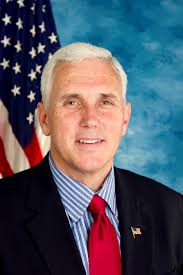
Mike Pence
Officially, its intent is to prevent the government from forcing business owners to act in ways contrary to strongly held religious beliefs. Unofficially, its intent is to appease the hatred of gays and lesbians by the religious Right, a key constituency of the Republican party.
In short, a bakery that doesn’t want to make a cake to be used at a gay wedding or a restaurant that doesn’t want to serve lesbian patrons will have the legal right to refuse to do so.
The same applies for a hospital that doesn’t want to provide care to a gay or lesbian patient.
The bill was passed overwhelmingly by both chambers of the Republican-controlled state legislature. And signed into law by a Republican governor.
“Today I signed the Religious Freedom Restoration Act, because I support the freedom of religion for every Hoosier of every faith,” Mike Pence said in a statement on the day he signed the bill.
“The Constitution of the United States and the Indiana Constitution both provide strong recognition of the freedom of religion but today, many people of faith feel their religious liberty is under attack by government action.”
Bill-signing ceremonies are usually highly public events. Governors–and presidents–normally want their constituents to see them creating new legislation.
Yet for all his praise for the bill, Pence signed it in a ceremony closed to the public and the press. The media were asked to leave even the waiting area of the governor’s office.
It’s almost as if Pence sensed that he was about to push open a door into a danger-filled room. And this may well be the case.
Through that door may soon march the First Church of Cannabis. The day after Pence signed the Act, church founder Bill Levin announced on his Facebook page that he had filed paperwork with the office of the Indiana Secretary of State.
Its registration had been approved–and Levin was ecstatic: “Now we begin to accomplish our goals of Love, Understanding, and Good Health.
“Donate $100 or more and become a GREEN ANGEL. Donate $500 or more and become a GOLD ANGEL. Donate $1000 or more and become a CHURCH POOHBA.”
And Levin had a personal comment for the governor who had made it all possible:
“Dear Mikey Pence…
“DUDE!.. keep crapping all over the state.. and I will plant a seed of LOVE, UNDERSTANDING and COMPASSION in each pile you leave.. and it will grow into a big skunky cannabis tree. Crap away Mikey.. Crap Away…”
No doubt many Indiana legislators are furious that their effort to attack gays may have brought legal marijuana to their highly conservative state. But worse may be to come.
Since 9/11, Right-wingers such as Rush Limbaugh and Sean Hannity have warned that Muslims are trying to impose Sharia (Islamic law) on America. And now Indiana’s legislators, in elevating religion above the law, may have laid the legal foundations for making that possible.
Ironically, this may not be so far removed from the goals of the Republican party as many think. Both the party and adherents of Sharia agree:
- Women should have fewer rights than men.
- Abortion should be illegal.
- There should be no separation between church and state.
- Religion should be taught in school.
- Religious doctrine trumps science.
- Government should be based on religious doctrine.
- Homosexuality should be outlawed.
What will happen when some Muslims in Indiana claim their right–guaranteed in Islamic religious law–to have as many as four wives?
And when they claim that the Religious Freedom Restoration Act protects that right?
Fasten your seatbelts, it’s going to be a bumpy nightmare.
2000 PRESIDENTIAL RACE, 2012 PRESIDENTIAL RACE, 2016 PRESIDENTIAL RACE, ABC NEWS, AL GORE, BARACK OBAMA, CBS NEWS, CNN, DONALD TRUMP, ELECTORAL COLLEGE, FACEBOOK, GEORGE ORWELL, GEORGE W. BUSH, MARCO RUBIO, MEXICANS, MITT ROMNEY, MUSLIMS, NBC NEWS, NINETEEN-EIGHT-FOUR, POW'S, RAFAEL CRUZ, REPUBLICAN PARTY, THE CHICAGO SUN-TIMES, THE CHICAGO TRIBUNE, THE LOS ANGELES TIMES, THE WASHINGTON POST, TWITTER
In Bureaucracy, Business, History, Politics, Social commentary on March 9, 2016 at 2:14 pm
The Donald Trump-Mitt Romney bromance began with an insult, courtesy of Trump:
“He’d buy companies, he’d close companies. He’d get rid of jobs. I’ve built a great company. I’m a much bigger businessman and have a much, much bigger net worth. I mean, my net worth is many, many, many times Mitt Romney.”
Then Trump had a change of heart: “Mitt is tough. He’s smart. He’s sharp. He’s not going to allow bad things to continue to happen to this country that we all love. So, Governor Romney, go out and get ’em. You can do it.”
And Romney swooned with delight: “I’m so honored to have his endorsement. There are some things that you just can’t imagine in your life. This is one of them.”
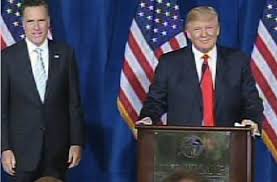
Mitt Romney and Donald Trump
But now the bromance is over, courtesy of a rousing, anti-Trump speech given by Romney at the University of Utah:
“Mr. Trump is directing our anger for less than noble purposes. He creates scapegoats of Muslims and Mexican immigrants, he calls for the use of torture and for killing the innocent children and family members of terrorists. He cheers assaults on protesters.
“He applauds the prospect of twisting the Constitution to limit First Amendment freedom of the press. This is the very brand of anger that has led other nations into the abyss.”
So how is Trump taking all this? “I don’t know what happened to him. You can see how loyal he is.
“He was begging for my endorsement. I could have said ‘Mitt, drop to your knees.’ He would have dropped to his knees.”
Fortunately for Trump, as his bromance with Romney has ended, another has emerged–with New Jersey Governor Chris Christie.
On February 26, Christie through his (political) weight behind Trump at a hastily-announced press conference in Fort Worth, Texas.
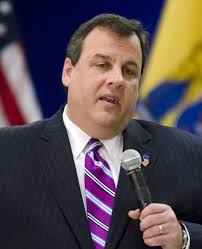
Chris Christie
Christie had not always been on such wonderful terms with the egocentric businessman. In fact, for months, the two had been rivals for the Presidency.
In a January speech before the New Hampshire primary, Christie said:
“Showtime is over. We are not electing an entertainer-in-chief. Showmanship is fun, but it is not the kind of leadership that will truly change America….
“If we are going to turn our frustration and anger with the D.C. insiders, the politicians of yesterday and the carnival barkers of today into something that will actually change American lives for the better, we must elect someone who has been tested.”
Then, without warning, Christie announced a sudden change of mind at a press conference in Fort Worth, Texas.
The previous night, Trump had been mauled by a surprisingly aggressive Marco Rubio during a CNN-hosted debate among the Presidential candidates. As a result, reporters gasped when Christie endorsed Trump and attacked Rubio:
“Part of his talking points now is to be entertaining and smile a lot now. Listen, it’s one act after another.”
Christie obviously felt it necessary to explain why he had gone from attacking Trump to promoting him:
“As a Republican I feel strongly about making sure that [Democratic front-runner] Hillary Clinton does not become president of the United states, and I believe Donald Trump is the best person–of those remaining–to do that.”
As for the attack made on Trump by former Massachusetts Governor Mitt Romney:
“I understand the things that Gov. Romney is saying, and he’s objected to. That’s his opinion, and I respect him as I always have, and he’s welcome to his view. I just happen to disagree with the conclusion that he comes to.”
By endorsing Trump, Christie became the first major establishment figure to validate the fitness of the former “reality TV star” to serve as President.
Considering Trump’s remaining opponents, it was not hard for Christie to reach that conclusion.
Texas United States Senator Rafael Cruz is an ideologue–and totally opposed to the pragmatic approach Christie brings to politics. And Christie genuinely dislikes Rubio.
In addition, Christie believed that Ohio Governor John Kasich–a moderate by Republican standards–could never secure his party’s Presidential nomination.
Ditto for neurosurgeon Ben Carson, who apparently believed his Right-wing party would elect another black man to succeed President Obama.
As for Trump: “This was an endorsement that really meant a lot. Chris is an outstanding man with an outstanding family, and this is the one endorsement that I’m really happy to get.”
While Christie and Trump share an innate aggressiveness and willingness to bully, that is not all they share.
In Never Enough, auhor Michael D’Antonio portrays Trump as a man with an insatiable appetite for wealth, attention, power, and conquest. The same can be said of Christie.
By taking on the role of Trump’s attack dog, Christie positions himself for the same role as vice presidential nominee. Or for a position such as Attorney General or Secretary of Homeland Security.
For those wishing to understand the realities of American political leaders, the best insight comes in a song popularized in George Orwell’s novel, 1984:
Under the spreading chestnut tree
I sold you and you sold me:
There lie they, and here lie we
Under the spreading chestnut tree.
2000 PRESIDENTIAL RACE, 2012 PRESIDENTIAL RACE, 2016 PRESIDENTIAL RACE, ABC NEWS, AL GORE, BARACK OBAMA, BLACKS, CBS NEWS, CHRIS CHRISTIE, CNN, DONALD TRUMP, ELECTORAL COLLEGE, FACEBOOK, GEORGE ORWELL, GEORGE W. BUSH, MARCO RUBIO, MEXICANS, MITT ROMNEY, MUSLIMS, NBC NEWS, NINETEEN-EIGHTY-0FOUR, POW'S, RAFAEL CRUZ, REPUBLICAN PARTY, THE CHICAGO SUN-TIMES, THE CHICAGO TRIBUNE, THE LOS ANGELES TIMES, THE NEW YORK TIMES, THE WASHINGTON POST, TWITTER
In Bureaucracy, Business, History, Politics, Social commentary on March 8, 2016 at 12:17 am
During the 2012 Presidential campaign, Donald Trump endorsed Mitt Romney as the Republican nominee to defeat President Barack Obama.
But that was before Trump decided to run for President in 2016. And the relationship between Trump and Romney has taken a considerably different turn.
On June 16, 2015, Trump declared his candidacy for the 2016 Republican Presidential nomination. Since then, he has been the first choice among the Republican base.
At first, he was dismissed as a bad joke–by Republican Presidential candidates as well as Democrats. Surely voters would reject a bombastic, thrice-married “reality show” host who had filed for corporate bankruptcy four times.
Yet from the outset Trump dominated the field–and a series of Republican debates. The other Republican candidates watched him with envy–and desperately tried to steal some of his limelight.
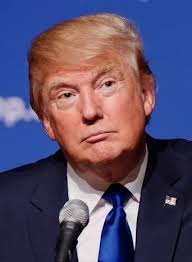
Donald Trump
Making one inflammatory statement after another, he offended one group of potential voters after another. These insults delighted his white, under-educated followers. But they alienated millions of other Americans who might have voted for him.
Among these:
- Mexicans: “They’re bringing drugs. They’re bringing crime. They’re rapists.” He’s also promised to “build a great, great wall on our southern border and I will have Mexico pay for that wall.”
- Blacks: Trump retweeted an image of a masked, dark-skinned man with a handgun and a series of alleged crime statistics, including: “Blacks killed by whites – 2%”; “Whites killed by blacks – 81%.” The image cites the “Crime Statistics Bureau – San Francisco”–an agency that doesn’t exist.
- Illegal Aliens: Trump has threatened to forcibly deport millions of mostly Mexican and Central American residents.
- Muslims: Trump has boasted he would ban them from entering the United States–and revive waterboarding of terrorist suspects. He would require Muslims to register with the Federal Government. And he would close “some mosques” if he felt they were being used by Islamic terrorists.
- POWs: Speaking of Arizona U.S. Senator John McCain: “He’s a war hero because he was captured. I like people who weren’t captured.” [Trump avoided military service–and Vietnam]
Many Republican members of Congress share–privately–Trump’s views on Hispanics, blacks and Muslims. But they realize that giving voice to such opinions can be politically suicidal.
Increasingly, the Republican party has become the bastion of aging white males. Even former President George W. Bush worked to win over Hispanics as Republican voters.
But the party’s increasingly strident anti-immigration rhetoric has alienated millions of Hispanics. And its open contempt for the nation’s first black President drove millions of blacks to the polls, where they handed Obama the White House–first in 2008, and again in 2012.
As a result, many Republicans now fear that Trump will gain their party’s Presidential nomination–and then lose in November, most likely to Hillary Clinton.
Even worse from their perspective: He might cost Republicans–who now dominate the House of Representatives and the Senate–one or both legislative bodies.
So many Republicans are now desperately trying to deny Trump the nomination. And one of these is Mitt Romney–the man Trump endorsed in 2012 as the best candidate to remove Obama from the White House.
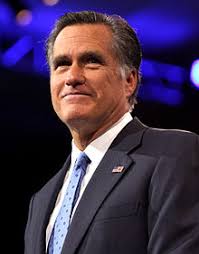
Mitt Romney
On March 3, in a speech at the University of Utah, Romney outlined why a Trump Presidency would be a disaster for the nation (not to mention the Republicans).
Among his comments:
“If we Republicans choose Donald Trump as our nominee, the prospects for a safe and prosperous future are greatly diminished….
“If Donald Trump’s plans were ever implemented, the country would sink into prolonged recession….
“Donald Trump is a phony, a fraud. His promises are as worthless as a degree from Trump University….
“But you say, wait, wait, wait, isn’t he a huge business success? Doesn’t he know what he’s talking about? No, he isn’t and no he doesn’t.
“Look, his bankruptcies have crushed small businesses and the men and women who work for them. He inherited his business, he didn’t create it.
“And whatever happened to Trump Airlines? How about Trump University? And then there’s Trump Magazine and Trump Vodka and Trump Steaks and Trump Mortgage. A business genius he is not….
“Now let me turn to national security and the safety of our homes and loved ones. Mr. Trump’s bombast is already alarming the allies and fueling the enmity of our enemies.
“Insulting all Muslims will keep many of them from fully engaging with us in the urgent fight against ISIS, and for what purpose? Muslim terrorists would only have to lie about their religion to enter the country….
“Now, I’m far from the first to conclude that Donald Trump lacks the temperament to be president.
“After all, this is an individual who mocked a disabled reporter, who attributed a reporter’s questions to her menstrual cycle, who mocked a brilliant rival who happened to be a woman due to her appearance, who bragged about his marital affairs, and who laces his public speeches with vulgarity.
“Donald Trump says he admires Vladimir Putin, at the same time he has called George W. Bush a liar. That is a twisted example of evil trumping good.”
Thus Mitt Romney on the man who once endorsed him for President. In the next column, we’ll see what Trump thinks of the man he once endorsed for President.
2000 PRESIDENTIAL RACE, 2012 PRESIDENTIAL ELECTION, 2016 PRESIDENTIAL RACE, ABC NEWS, AL GORE, BARACK OBAMA, BLACKS, CBS NEWS, CHRIS CHRISTIE, CNN, DONALD TRUMP, ELECTORAL COLLEGE, FACEBOOK, GEORGE ORWELL, GEORGE W. BUSH, MARCO RUBIO, MEXICANS, MITT ROMNEY, MUSLIMS, NBC NEWS, NINETEEN-EIGHTY-FOUR, POW'S, RAFAEL CRUZ, REPUBLICAN PARTY, THE CHICAGO SUN-TIMES, THE CHICAGO TRIBUNE, THE LOS ANGELES TIMES, THE NEW YORK TIMES, THE WASHINGTON POST, TWITTER
In Bureaucracy, Business, History, Politics, Social commentary on March 7, 2016 at 12:23 am
In 2011, Donald Trump, the egocentric businessman and “reality star” of NBC’s “The Apprentice,” was toying with the idea of running for President in 2012.
On April 17, 2011, Trump said this about Mitt Romney, a possible rival and the former Massachusetts governor and front-runner GOP candidate:
“He’d buy companies, he’d close companies. He’d get rid of jobs. I’ve built a great company. I’m a much bigger businessman and have a much, much bigger net worth. I mean, my net worth is many, many, many times Mitt Romney.
“Mitt Romney is a basically small-business guy, if you really think about it. He was a hedge fund. He was a funds guy. He walked away with some money from a very good company that he didn’t create. He worked there. He didn’t create it.”
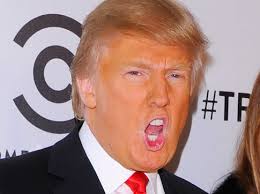
Donald Trump
Trump added that Bain Capital, the hedge fund where Romney made millions of dollars before running for governor, didn’t create any jobs. Whereas Trump claimed that he–Trump–had created “hundreds of thousands of jobs.”
So at least some observers must have been puzzled when Trump announced, on February 2, 2012: “It’s my honor, real honor and privilege, to endorse Mitt Romney” for President.
“Mitt is tough. He’s smart. He’s sharp. He’s not going to allow bad things to continue to happen to this country that we all love. So, Governor Romney, go out and get ’em. You can do it,” said Trump.
And Romney, in turn, had his own swooning-girl moment:
“I’m so honored to have his endorsement. There are some things that you just can’t imagine in your life. This is one of them.”
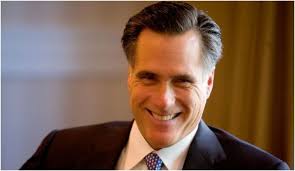
Mitt Romney
Throughout the 2012 Presidential race, Trump continued to “help” Romney–by repeatedly accusing President Barack Obama of not being an American citizen.
Had that been true, Obama would not have had the right to be President–since the Constitution says that only an American citizen can hold this position.
Of course, that was entirely what Trump wanted people to believe– that Obama was an illegitimate President, and deserved to be thrown out.
Come election night–and disaster for Romney–and Trump.
When it became clear that Romney was not going to be America’s 45th President, Trump went ballistic on Twitter.
Among his tweets:
- More votes equals a loss…revolution!
- Lets fight like hell and stop this great and disgusting injustice! The world is laughing at us.
- We can’t let this happen. We should march on Washington and stop this travesty. Our nation is totally divided!
- The phoney electoral college made a laughing stock out of our nation. The loser one!
- He lost the popular vote by a lot and won the election. We should have a revolution in this country!
To put Trump’s rants into real-world perspective:
According to Trump, the electoral process works when a Republican wins the Presidency. It only doesn’t work when a Democrat wins.
“We should march on Washington” conjures up images of another Fascist–Benito Mussolini–marching on Rome at the head of his Blackshirts to seize power.
“The phoney electoral college made a laughing stock out of our nation. The loser one!”
This is startling, on three counts:
First, the 2012 Republican Platform spoke lovingly about the need for preserving the Electoral College: “We oppose the National Popular Vote Interstate Compact or any other scheme to abolish or distort the procedures of the Electoral College.
“We recognize that an unconstitutional effort to impose ‘national popular vote’ would be a mortal threat to our federal system and a guarantee of corruption as every ballot box in every state would become a chance to steal the presidency.”
Second, the loser didn’t win: He lost. With votes still being counted (as of November 8) Obama got 60,652,238. Romney got 57,810,407.
Third, in 2000, Al Gore won the popular vote (50,999,897) to George W. Bush’s 50,456,002. But Bush trounced Gore in the Electoral College (271 to 266).
Still, that meant Bush–not Gore–would head the country for the next eight years. And that was perfectly OK with Right-wingers like Trump.
It was only when Obama won the Electoral College count by 332 to 206 that this was–according to Trump–a “travesty.”
And Trump’s solution if voters dare to elect someone other than Trump’s pet choice: “Revolution!”
This comes perilously close to advocating violent overthrow of the government. Otherwise known as treason–a crime traditionally punished by execution, or at least lengthy imprisonment.

Fast forward, to 2016–and the relationship between Trump and Romney looks considerably different.
On June 16, 2015, Trump declared his candidacy for the 2016 Republican Presidential nomination. Since then, he has been the first choice among the Republican base.
At first, he was dismissed as a bad joke–by Republican Presidential candidates as well as Democrats. Surely voters would reject a bombastic, thrice-married “reality show” host who had filed for corporate bankruptcy four times.
Yet from the outset Trump dominated the field–and a series of Republican debates. The other Republican candidates watched him with envy–and desperately tried to steal some of his limelight.
Making made one inflammatory statement after another, he offended one group of potential voters after another.
These insults delighted his white, under-educated followers. But they alienated millions of other Americans who might have voted for him.
ABC NEWS, ALAMO, ALTERNET, AMERICABLOG, ANDREW JACKSON, AP, BABY BOOMER RESISTANCE, BUZZFEED, CAMERON JUDD, CBS NEWS, CNN, CROCKETT OF TENNESSEE, CROOKS AND LIARS, DAILY KOZ, DAVID CROCKETT, DAVY CROCKETT: KING OF THE WILD FRONTIER, DONALD TRUMP, DRUDGE RETORT, FACEBOOK, FIVETHIRTYEIGHT, HARPER’S MAGAZINE, INDIAN WARS, JAMES BOWIE, MEDIA MATTERS, MITT ROMNEY, MOTHER JONES, MOVEON, MSNBC, NBC NEWS, NBCNEWS, NEWSWEEK, NPR, PBS NEWSHOUR, POLITICO, POLITICUSUSA, RAW STORY, REUTERS, SALON, SEATTLE TIMES, SLATE, TALKING POINTS MEMO, TEXAS REVOLUTION, THE ATLANTIC, THE CHICAGO SUN-TIMES, THE CHICAGO TRIBUNE, THE DAILY BEAST, THE DAILY BLOG, THE GUARDIAN, THE HILL, THE HUFFINGTON POST, THE LOS ANGELES TIMES, THE NATION, THE NEW REPUBLIC, THE NEW YORK TIMES, THE VILLAGE VOICE, THE WASHINGTON POST, THINKPROGRESS, TIME, TRUTHDIG, TRUTHOUT, TWITTER, TWO POLITICAL JUNKIES, U.S. NEWS & WORLD REPORT, UPI, USA TODAY, WALT DISNEY, WILLIAM BARRET, WONKETTE
In Business, History, Military, Politics, Social commentary on February 23, 2016 at 10:58 am
March 6, 2016, will mark the 180th anniversary of the fall of the Alamo, a crumbling former Spanish mission in the heart of San Antonio, Texas.
It’s one of those battles like Thermopylae that have passed from history into legend.
It’s been the subject of novels, movies, biographies, histories and TV dramas (most notably Walt Disney’s 1955 “Davy Crockett: King of the Wild Frontier”).

The Alamo
By Mattstone911 – Own work, CC BY-SA 3.0,
Perhaps the most extraordinary scene in any Alamo movie or book occurs in the 1993 novel, Crockett of Tennessee, by Cameron Judd.
And it is no less affecting for its being–-so far as we know–-entirely fictional.
It’s March 5, 1836–the last night of life for the Alamo garrison. The night before the 2,000 men of the Mexican Army hurl themselves at the former mission and slaughter its 200 “Texian” defenders.  The fort’s commander, William Barret Travis, has drawn his “line in the sand” and invited the garrison to choose: To surrender, to try to escape, or to stay and fight to the death.
And the garrison–except for one man–chooses to stay and fight.
For the garrison, immortality lies only hours away. Or does it?
An hour after deciding to stand and die in the Alamo, wrapped in the gloom of night, Crockett is seized with paralyzing fear.
“We’re going to die here,” he chokes out to his longtime friend, Persius Tarr. “You understand that, Persius? We’re going to die!” 
“I know, Davy. But there ain’t no news in that,” says Tarr. “We’re born to die. Every one of us. Only difference between us and most everybody else is we know when and where it’s going to be.”
“But I can’t be afraid–not me. I’m Crockett. I’m Canebrake Davy. I’m half-horse, half-alligator.”
“I know you are, Davy,” says Tarr. “So do all these men here. That’s why you’re going to get past this.
“You’re going to put that fear behind you and walk back out there and fight like the man you are. The fear’s come and now it’s gone. This is our time, Davy.”
“The glory-time,” says Crockett.
“That’s right, David. The glory-time.”
And then Tarr delivers a sentiment wholly alien to money-obsessed men like Mitt Romney and Donald Trump–who comprise the richest and most privileged 1% of today’s Americans.
“There’s men out there with their eyes on you. You’re the only thing keeping the fear away from them. You’re joking and grinning and fiddling-–it gives them courage they wouldn’t have had without you.
“Maybe that’s why you’re here, Davy–to make the little men and the scared men into big and brave men. You’ve always cared about the little men, Davy. Remember who you are.
“You’re Crockett of Tennessee, and your glory-time has come. Don’t you miss a bit of it.”
The next morning, the Mexicans assault the Alamo. Crockett embraces his glory-time-–and becomes a legend for all-time.

David Crockett (center) at the fall of the Alamo
David Crockett (1786-1836) lived–and died–a poor man. But this did not prevent him from trying to better the lives of his family and fellow citizens–and even his former enemies.

David Crockett
During the war of 1812, he served as a scout under Andrew Jackson. His foes were the Creek Indians, who had massacred 500 settlers at Fort Mims, Alabama–and threatened to do the same to Crockett’s family and neighbors in Tennessee.
As a Congressman from Tennessee, he championed the rights of poor whites. And he opposed then-President Jackson’s efforts to force the same defeated Indians to depart the lands guaranteed them by treaty.
To Crockett, a promise was sacred–whether given by a single man or the United States Government.
And his presence during the 13-day siege of the Alamo did cheer the spirits of the vastly outnumbered defenders. It’s a matter of historical record that he and a Scotsman named MacGregor often staged musical “duels” to see who could make the most noise.
It was MacGregor with his bagpipes against Crockett and his fiddle.
Contrast this devotion of Crockett to the rights of “the little men,” as Persius Tarr called them, with the attitude of Donald Trump, the front runner for the 2016 Republican Presidential nomination.

Donald Trump
On June 16, while announcing his candidacy, Trump said:
- “…I don’t need anybody’s money. It’s nice. I don’t need anybody’s money. I’m using my own money. I’m not using lobbyists, I’m not using donors. I don’t care. I’m really rich.”
- “I did a lot of great deals and I did them early and young, and now I’m building all over the world….”
- “So I have a total net worth, and now with the increase, it’ll be well-over $10 billion.”
- “But here, a total net worth of–net worth, not assets, not–a net worth, after all debt, after all expenses, the greatest assets–Trump Tower, 1290 Avenue of the Americas, Bank of America building in San Francisco, 40 Wall Street, sometimes referred to as the Trump building right opposite the New York–many other places all over the world. So the total is $8,737,540,000.”
Those who give their lives for others are rightly loved and remembered as heroes. Those who dedicate their lives solely to their wallets and egos are rightly soon forgotten.
ABC NEWS, AFFORDABLE CARE ACT, AIR TRAFFIC CONTROLLERS STRIKE, BARACK OBAMA, BERNIE SANDERS, CBS NEWS, CNN, COLUMBIA UNIVERSITY, DIXIE CHICKS, EXTORTION, FACEBOOK, FBI, GEORGE W. BUSH, HARVARD LAW SCHOOL, HENRY J. KAISER FOUNDATION, HILLARY CLINTON, IRAQ WAR, JOHN BOEHNER, JOHN SCHNATTER, JON STEWART, JONATHAN ALTER, JUSTICE DEPARTMENT, KOCH BROTHERS, Medical, MEDICAL CARE, NBC NEWS, NICCOLO MACHIAVELLI, OBAMACARE, PAPA JOHN'S PIZZA, PATRIOT ACT, public relations, RACKETEER INFLUENCED CORRUPT ORGANIZATIONS ACT, REFORM, REPUBLICAN PARTY, RICHARD WOLFFE, Ronald Reagan, TEA PARTY, TERRORISM, THE CHICAGO SUN-TIMES, THE CHICAGO TRIBUNE, THE DAILY SHOW, THE LOS ANGELES TIMES, THE NEW YORK TIMES, THE PRINCE, THE WASHINGTON POST, TWITTER, UNEMPLOYMENT
In Bureaucracy, Business, History, Law, Medical, Politics, Social commentary on February 9, 2016 at 12:04 am
Barack Obama is one of one of the most highly educated Presidents to occupy the White House.
When he took office, he intended to make healthcare available to all Americans–and not just the wealthiest 1%.
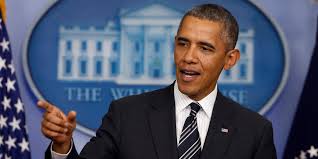
President Barack Obama
But he made a series of deadly mistakes:
- In crafting the Affordable Care Act (better known as Obamacare);
- In building public support for it; In underestimating the venom and opposition of his Right-wing enemies;
- In underestimating the opposition of the business community in complying with the law; and
- In allowing himself to be cowed by his political enemies.
Obama is by nature a supreme rationalist and conciliator–not a rough-and-tumble street fighter.
And his career before becoming President in 2008–or even the United States Senator from Illinois in 2004–greatly strengthened this predisposition.
From 1985 to 1988, Obama worked as a community organizer, setting up a job-training program, a college preparatory tutoring program and a tenants’ rights organization.
Such activities demand skills in building consensus, not confrontation.
He then taught at the University of Chicago Law School for 12 years–as a Lecturer from 1992 to 1996, and as a Senior Lecturer from 1996 to 2004, teaching Constitutional law.

University of Chicago Law School
Law professors spend their time in clean, civil classrooms–far removed from the rough-and tumble of criminal defense/prosecution.
If Obama had accused President George W. Bush of conspiring with Al Qaeda–as Republicans have repeatedly accused Obama–retribution would have been swift and brutal.
(On March 10, 2003, nine days before Bush ordered the unprovoked invasion of Iraq, Natalie Maines, the lead singer of the country music band, the Dixie Chicks, told a London concert audience: “We don’t want this war, this violence, and we’re ashamed that the President of the United States is from Texas.”
(A Republican-approved boycott of Dixie Chicks music followed, as well as death threats DJs refused to play their music, and President Bush refused to criticize the KGB-like tactics of his Right-wing supporters.)

Natalie Maines, left, of the Dixie Chicks
But Obama could not–or would not–bring himself to attack his sworn enemies by attacking their own patriotism or invoking Federal criminal statutes against their extortionate and terrorist threats.
In short: Obama–who believes in reason and conciliation–paid the price for allowing his sworn enemies to insult and obstruct him.
Obama Mistake No. 6: Failing to closely study his proposed legislation.
Throughout his campaign to win support for the Affordable Care Act (ACA) Obama had repeatedly promised: “If you like your health insurance plan, you can keep your plan. If you like your doctor, you can keep your doctor. Period.”
But, hidden in the 906 pages of the law, was a fatal catch for the President’s own credibility.
The law stated that those who already had medical insurance could keep their plans–so long as those plans met the requirements of the new healthcare law.
If their plans didn’t meet those requirements, they would have to obtain coverage that did.
It soon soon turned out that many Americans wanted to keep their current plan–even if it did not provide the fullest possible coverage.
Suddenly, the President found himself facing a PR nightmare–charged and ridiculed as a liar. Even Jon Stewart, who on “The Daily Show,” had supported the implementation of “Obamacare,” ran footage of Obama’s “you can keep your doctor” promise.
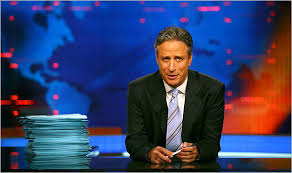
Jon Stewart
The implication: You said we could keep our plan/doctor; since we can’t, you must be a liar.
As a result, the President found his reputation for integrity–long his greatest asset–shattered.
All of which points to a final warning offered by Niccolo Machiavelli:
Whence it may be seen that hatred is gained as much by good works as by evil….
Former Secretary of State Hillary Clinton says that, if she’s elected President, she will push for incremental changes in the ACA.
Vermont United States Senator Bernie Sanders, on the other hand, has called for the implementation of a single-payer plan. This, in effect, would accomplish what Republicans have spent the last seven years trying to do: Repeal “Obamacare.”
A single-payer plan would prove simpler and more comprehensive than the ACA. But the chances of its passing a Republican-dominated Congress are absolutely zero.
The passage of the ACA was–as the Duke of Wellington said of Waterloo–“a damned, close-run thing.”
Right-wingers like former Alaska Governor Sarah Palin flat-out lied that the ACA would create “death panels.” And millions of reactionaries, furious that a black man now occupied the Oval Office, eagerly believed it.
When Democratic politicians organized town meetings for public discussion of the Act, Rightist hooligans often used violence to break them up.
Republicans remained silent while President George W. Bush lied the nation into a bloody, budget-busting war in Iraq. But they have repeatedly damned the ACA as a lethal drain on the American taxpayer.
Thus, any changes to come in the ACA will have to come as Hillary Clinton proposes, on an incremental basis.
The only thing that can be said with certainty about the ACA is this:
If any Republican wins the Presidency in 2016, the Republican-dominated House and Senate will send him legislation decreeing the death of affordable healthcare for all Americans. And he will of course sign it.
ABC NEWS, AFFORDABLE CARE ACT, AIR TRAFFIC CONTROLLERS STRIKE, BARACK OBAMA, BERNIE SANDERS, CBS NEWS, CNN, COLUMBIA UNIVERSITY, DIXIE CHICKS, EXTORTION, FACEBOOK, FBI, GEORGE W. BUSH, HARVARD LAW SCHOOL, HENRY J. KAISER FOUNDATION, HILLARY CLINTON, IRAQ WAR, JOHN BOEHNER, JOHN SCHNATTER, JOHN STEWART, JONATHAN ALTER, JUSTICE DEPARTMENT, KOCH BROTHERS, MEDICAL CARE, NBC NEWS, NICCOLO MACHIAVELLI, OBAMACARE, PAPA JOHN'S PIZZA, PATRIOT ACT, public relations, RACKETEER INFLUENCED CORRUPT ORGANIZATIONS ACT, REFORM, REPUBLICAN PARTY, RICHARD WOLLFE, Ronald Reagan, TEA PARTY, TERRORISM, THE CHICAGO SUN-TIMES, THE CHICAGO TRIBUNE, THE DAILY SHOW, THE LOS ANGELES TIMES, THE NEW YORK TIMES, THE PRINCE, THE WASHINGTON POST, TWITTER, UNEMPLOYMENT
In Bureaucracy, Business, History, Law, Law Enforcement, Medical, Politics on February 8, 2016 at 12:15 am
On July 2, 2013, the Treasury Department announced a major change in the application of the Affordable Care Act (ACA), more popularly known as “Obamacare”:
“We have heard concerns about the complexity of the requirements and the need for more time to implement them effectively…We have listened to your feedback. And we are taking action.
“The Administration is announcing that it will provide an additional year before the ACA mandatory employer and insurer reporting requirements begin.”
[Boldface in the original document.]
In short: The administration allowed employers an additional year to refuse providing healthcare to their employees–or to face fines for not doing so.
And how did Obama’s self-declared enemies react to this effort at compromise?
On July 30, 2013, House Republicans voted to proceed with a lawsuit against the President–for failing to enforce the Affordable Care Act.
“In 2013, the president changed the health care law without a vote of Congress, effectively creating his own law by literally waiving the employer mandate and the penalties for failing to comply with it,” House Speaker John A. Boehner said in a statement.
“That’s not the way our system of government was designed to work. No president should have the power to make laws on his or her own.”
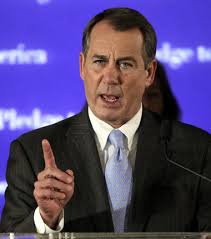
John Boehner
Thus, Boehner intended to sue the President to enforce the law that the House had voted 54 times to repeal, delay or change.
Obama Mistake No. 5: Believing that public and private employers would voluntarily comply with the law.
The ACA requires employers to provide insurance for part-time employees who work more than 30 hours per week. Yet many government employers claim they can’t afford it–and have thus limited part-time workers’ hours to 29 per week instead.
Among those states affected:
- “Our choice was to cut the hours or give [employees] health care, and we could not afford the latter,” Dennis Hanwell, the Republican mayor of Medina, Ohio, said in an interview with The New York Times.
- Lawrence County, in western Pennsylvania, reduced the limit for part-time employees to 28 hours a week, from 32.
- In Virginia, part-time state employees are generally not allowed to work more than 29 hours a week on average over a 12-month period.
President Obama and those who crafted the Act may have been surprised at what happened. But they shouldn’t have been.
Greed-addicted officials will always seek ways to avoid complying with the law–or achieve minimum compliance with it. And what goes for public employers goes for private ones, too.
The Act doesn’t penalize a company for failing to provide health insurance coverage for part-time employees who work fewer than 30 hours.
The result was predictable. And its consequences are daily becoming more clear:
- Increasing numbers of employers are moving fulltime workers into part-time positions;
- Refusing to provide their employees with medical insurance; and
- Avoiding fines for non-compliance with the law.
Some employers have openly shown their contempt for President Obama–and the idea that employers have an obligation to those who make their profits a reality.
One of these is John Schnatter, CEO of Papa John’s Pizza, who has been quoted as saying:
- The prices of his pizzas will go up–by 11 to 14 cents per pizza, or 15 to 20 cents per order; and
- He will pass along these costs to his customers.
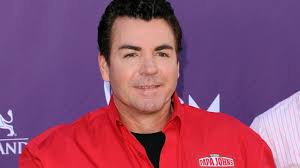
John Schnatter
“If Obamacare is in fact not repealed,” he told Politico, “we will find tactics to shallow out any Obamacare costs and core strategies to pass that cost onto consumers in order to protect our shareholders’ best interests.”
If President Obama were truly a student of Realpolitick, he would have predicted that most businesses would try to avoid compliance with the ACA.
And the remedy would have been simple: Require all employers to provide insurance coverage for all of their employees, regardless of their fulltime or part-time status.
This, in turn, would have produced two substantial benefits:
- All employees would have been able to obtain medical coverage; and
- Employers would have been encouraged to provide fulltime positions rather than part-time ones.
The reason: Employers would feel: “Since I’m paying for fulltime insurance coverage, I should be getting fulltime work in return.”
If the President ever considered the merits of this, he decided against pressing for such a requirement.
Obama is one of the most rational and educated men to occupy the White House. So why did he fail to expect the worst in people–especially his self-declared enemies–and arrange to counter it?
Niccolo Machiavelli provides a shrewd insight into the repeated failures of the Obama Presidency.
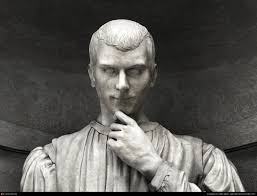
Niccolo Machiavelli
Writing in The Prince, his classic work on the realities of politics, Machiavelli states:
…He is happy whose mode of procedure accords with the needs of the times, and similarly, he is unfortunate whose mode of procedure is opposed to the times….
If it happens that time and circumstances are favorable to one who acts with caution and prudence he will be successful But if time and circumstances change he will be ruined, because he does not change the mode of this procedure.
Put another way: A conciliator will prosper so long as he works with others willing to compromise. But facing uncompromising fanatics, he will be defeated–unless he can exchange conciliation for confrontation.
ABC NEWS, AFFORDABLE CARE ACT, AIR TRAFFIC CONTROLLERS STRIKE, BARCK OBAMA, CBS NEWS, CNN, COLUMBIA UNIVERSITY, DIXIE CHICKS, EXTORTION, FACEBOOK, FBI, GEORGE W. BUSH, HARVARD LAW SCHOOL, HENRY J. KAISER FAMILY FOUNDATION, HILLARY CLINTON, IRAQ WAR, JOHN BOEHNER, JOHN SCHNATTER, JON STEWART, JONATHAN ALTER, JUSTICE DEPARTMENT, KOCH BROTHERS, MEDICAL CARE, NBC NESS, NICCOLO MACHIAVELLI, OBAMACARE, PAPA JOHN'S PIZZA, PATRIOT ACT, public relations, RACKETEER INFLUENCED CORRUPT ORGANIZATIONS ACT, REFORM, REPUBLICAN PARTY, RICHARD WOLFFE, Ronald Reagan, TEA PARTY, TERRORISM, THE DAILY SHOW, THE LOS ANGELES TIMES, THE NEW YORK TIMES, THE PRINCE, THE WALL STREET JOURNAL, THE WASHINGTON POST, TWITTER, UNEMPLOYMENT
In Bureaucracy, Business, History, Law, Medical, Politics, Social commentary on February 5, 2016 at 12:08 am
President Barack Obama came into office determined to find common ground with Republicans.
But they quickly made it clear to him that they only wanted his political destruction. At that point, he should have put aside his hopes for a “Kumbaya moment” and re-read what Niccolo Machiavelli said in The Prince on the matter of love versus fear:
From this arises the question whether it is better to be loved or feared, or feared more than love. The reply is, that one ought to be both feared and loved, but as it is difficult for the two to go together, it is much safer to be feared than loved.
For it may be said of men in general that they are ungrateful, voluble, dissemblers, anxious to avoid danger and covetous of gain.
As long as you benefit them, they are entirely yours: they offer you their blood, their goods, their life and their children, when the necessity is remote. But when it approaches, they revolt….
And men have less scruple in offending one who makes himself loved than one who makes himself feared; for love is held by a chain of obligations which, men being selfish, is broken whenever it serves their purpose; but fear is maintained by a dread of punishment which never fails.
Moreover, Machiavelli warns that even a well-intentioned leader can unintentionally bring on catastrophe.
This usually happens when, hoping to avoid conflict, he allows a threat to go unchecked. Thus:
A man who wishes to make a profession of goodness in everything must inevitably come to grief among so many who are not good. And therefore it is necessary, for a prince who wishes to maintain himself, to learn how not to be good, and to use this knowledge and not use it, according to the necessity of the case.
For Obama, such a moment came in 2011, when House Republicans threatened to to destroy the credit rating of the United States unless the President agreed to scrap Obamacare.
Obama, a former attorney, heatedly denounced House Republicans for “extortion” and “blackmail.”
Unless he was exaggerating, both of these are felony offenses that are punishable under the 2001 USA Patriot Act and the Racketeer Influenced Corrupt Organizations (RICO) Act of 1970.
RICO opens with a series of definitions of “racketeering activity” which can be prosecuted by Justice Department attorneys. Among those crimes: Extortion.
Extortion is defined as “a criminal offense which occurs when a person unlawfully obtains either money, property or services from a person(s), entity, or institution, through coercion.”
The RICO Act defines “a pattern of racketeering activity” as “at least two acts of racketeering activity, one of which occurred after the effective date of this chapter and the last of which occurred within ten years…after the commission of a prior act of racketeering activity.”
And if President Obama believed that RICO was not sufficient to deal with extortionate behavior, he could have relied on the USA Patriot Act, passed in the wake of 9/11.
In Section 802, the Act defines domestic terrorism. Among the behavior that is defined as criminal:
“Activities that…appear to be intended…to influence the policy of a government by intimidation or coercion [and]…occur primarily within the territorial jurisdiction of the United States.”
The remedies for punishing such criminal behavior were legally in place. President Obama could have directed the Justice Department to apply them.
If violations had been discovered, indictments could have quickly followed–and then prosecutions. The results of such action could be easily predicted:
- Facing lengthy prison terms, those indicted Republicans would have first had to lawyer-up.
- This would have imposed huge monetary costs on them, since good criminal attorneys don’t come cheap.
- Obsessed with their personal survival, they would have had little time to engage in more of the same thuggish behavior that got them indicted. In fact, doing so would have only made their convictions more likely.
- Those Republicans who hadn’t (yet) been indicted would have feared; “I could be next.” This would have produced a chilling effect on their willingness to engage in further acts of subversion and extortion.
- The effect on Right-wing Republicans would have been the same as that of President Ronald Reagan’s firing of striking air traffic controllers: “You cross me and threaten the security of this nation at your own peril.”
It would no doubt have been a long time before Republicans dared to engage in such behavior–at least, while Obama held office.
So: Why didn’t President Obama act to punish such criminal conduct?
Obama Mistake No. 4: He allowed himself to be cowed by his enemies.
In The Prince, Machiavelli laid out the qualities that a successful ruler must possess. There were some to be cultivated, and others to be avoided at all costs. For example:
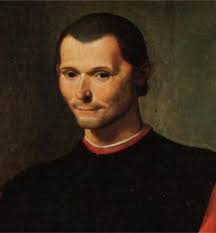
Niccolo Machiavelli
He is rendered despicable by being thought changeable, frivolous, effeminate, timid and irresolute–which a prince must guard against as a rock of danger….
[He] must contrive that his actions show grandeur, spirit, gravity and fortitude. As to the government of his subjects, let his sentence be irrevocable, and let him adhere to his decisions so that no one may think of deceiving or cozening him.
So how has Obama fared by this standard?
ABC NEWS, AFFORDABLE CARE ACT, AIR TRAFFIC CONTROLLERS STRIKE, BARACK OBAMA, BERNIE SANDERS, CBS NEWS, CNN, COLUMBIA UNIVERSITY, DIXIE CHICKS, EXTORTION, FACEBOOK, FBI, GEORGE W. BUSH, HARVARD LAW SCHOOL, HENRY J. KAISER FOUNDATION, HILLARY CLINTON, IRAQ WAR, JOHN BOEHNER, JOHN SCHNATTER, JON STEWART, JONATHAN ALTER, JUSTICE DEPARTMENT, KOCH BROTHERS, MEDICAL CARE, NBC NEWS, NICCOLO MACHIAVELLI, OBAMACARE, PAPA JOHN'S PIZZA, PATRIOT ACT, public relations, RACKETEER INFLUENCED CORRUPT ORGANIZATIONS ACT, REFORM, REPUBLICAN PARTY, RICHARD WOLFFE, Ronald Reagan, TEA PARTY, TERRORISM, THE DAILY SHOW, THE LOS ANGELES TIMES, THE NEW YORK TIMES, THE PRINCE, THE WASHINGTON POST, TWITTER, UNEMPLOYMENT
In Bureaucracy, Business, History, Law, Law Enforcement, Medical, Politics, Social commentary on February 4, 2016 at 12:10 am
One of the major differences between Bernie Sanders and Hillary Clinton lies in their views about what should be the future of “Obamacare.”
Sanders, the longtime independent Senator from Vermont, wants to scrap The Affordable Care Act (ACA) and replace it with a single-payer plan.
Clinton, the former Secretary of State, wants to make “incremental” changes in the Act.
The Sanders plan promises greater simplicity and comprehensiveness in providing benefits to those millions of Americans who previously could not obtain medical insurance.
The Clinton approach promises to keep the best features of “Obamacare” and improve those that need changing.
But neither Sanders nor Clinton has directly addressed certain unpalatable truths about the ACA.
These stem not from any intended evil on the part of its chief sponsor, President Barack Obama. Instead, they spring from his idealistic belief that reasonable men could always reach a compromise.
As a result, much of the Act remains seriously flawed. Here are the six reasons why.
Barack Obama is easily one of the most highly educated Presidents in United States history. He is a graduate of Columbia University (B.A. in political science in 1983).
In 1988, he entered Harvard Law School, graduating magna cum laude–“with great honor”–in 1991.
He was selected as an editor of the Harvard Law Review at the end of his first year, and president of the journal in his second year.
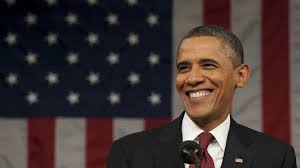
President Barack Obama
He then taught Constitutional law at the University of Chicago Law School for 12 years–as a Lecturer from 1992 to 1996, and as a Senior Lecturer from 1996 to 2004.
So where did he go wrong? Several ways:
Obama Mistake No. 1: Putting off what people wanted while concentrating on what they didn’t.
Obama started off well when he took office. Americans had high expectations of him. This was partly due to his being the first black to be elected President.
And it was partly due to the disastrous legacies of needless war and financial catastrophe left by his predecessor, George W. Bush.
Obama entered office intending to reform the American healthcare system, to make medical care available to all citizens, and not just the richest. But that was not what the vast majority of Americans wanted him to concentrate his energies on.
With the lost of 2.6 million jobs in 2008, Americans wanted Obama to find new ways to create jobs. This was especially true for the 11.1 million unemployed, or those employed only part-time.
Jonathan Alter, who writes sympathetically about the President in The Center Holds: Obama and His Enemies, candidly states this.
But Obama chose to spend most of his first year as President pushing the Affordable Care Act (ACA)–which would soon become known as Obamacare–through Congress.
The results were:
- Those desperately seeking employment felt the President didn’t care about them.
- The reform effort became a lightning rod for Right-wing groups like the Koch-brothers-financed Tea Party.
- In 2010, a massive Rightist turnout cost the Democrats the House of Representatives, and threatened Democratic control of the Senate.
Obama Mistake No. 2: He underestimated the amount of opposition he would face to the ACA.
For all of Obama’s academic brilliance and supposed ruthlessness as a “Chicago politician,” he displayed an incredible naivety in dealing with his political opposition.
Niccolo Machiavelli (1469-1527), the Florentine statesman and father of modern politics, could have warned him of the consequences of this–through the pages of The Prince, his infamous treatise on the realities of politics.

Niccolo Machiavelli
And either Obama skipped those chapters or ignored their timeless advice for political leaders.
He should have started with Chapter Six: “Of New Dominions Which Have Been Acquired By One’s Own Arms and Ability”:
…There is nothing more difficult to carry out, nor more doubtful of success, nor more dangerous to handle than to initiate a new order of things.
For the reformer has enemies in all those who profit by the old order, and only lukewarm defenders in all those who would profit by the new order, this lukewarmness arising partly from fear of their adversaries, who have the laws in their favor, and partly from the incredulity of mankind, who do not truly believe in anything new until they have had actual experience of it.
This proved exactly the case with the proposed Affordable Care Act.
Its supporters–even when they comprised a majority of the Congress–have always shown far less fervor than its opponents.
This was true before the Act became effective on March 23, 2010. And it has remained true since, with House Republicans voting more than 60 times to repeal, delay or revise the law.
So before President Obama launched his signature effort to reform the American medical system, he should have taken this truism into account.
Obama Mistake No. 3: Failing to consider–and punish–the venom of his political enemies.
The ancient Greeks used to say: “A man’s character is his fate.” It is Obama’s character–and America’s fate–that he is by nature a man of conciliation, not conflict.
Richard Wolffe chronicled Obama’s winning of the White House in his 2009 book, Renegade: The Making of a President. He noted that Obama was always more comfortable when responding to Republican attacks on his character than he was in making attacks on his enemies.
ABC NEWS, ADOLF HITLER, BUSINESS LEADERSHIP, CBS NEWS, CNN, DONALD TRUMP, ENGLAND, ERICH VON MANSTEIN, ERWIN ROMMEL, FACEBOOK, HEINZ GUDERIAN, HOW HITLER COULD HAVE WON WORLD WAR II, IOWA CAUCUSES, JOSEPH STALIN, MSNBC, NAZI GERMANY, NBC NEWS, SOVIET UNION, THE CHICAGO SUN-TIMES, THE CHICAGO TRIBUNE, THE LOS ANGELES TIMES, THE NEW YORK TIMES, THE WASHINGTON POST, TWITTER, WORLD WAR ii
In Bureaucracy, Business, History, Military, Politics, Social commentary on February 3, 2016 at 12:01 am
“We will have so much winning if I get elected [President] that you may get bored with winning.”
It was vintage Donald Trump, speaking at a September, 2015 Capitol Hill rally to protest President Barack Obama’s nuclear deal with Iran.
(That was before February 1, 2016, when Trump learned he had been beaten by Texas U.S. Senator Eduardo Cruz in the Iowa caucuses for the Republican Presidential nomination.
(The man who had boasted, “No one remembers who came in second” found himself in exactly that place. And tens of thousands of Twitter users gleefully retweeted the quote to celebrate a defeat that Trump had said was impossible.)
“Believe me, I agree, you’ll never get bored with winning. We never get bored. We are going to turn this country around. We are going to start winning big on trade.
“Militarily, we’re going to build up our military. We’re going to have such a strong military that nobody, nobody is going to mess with us. We’re not going to have to use it.”
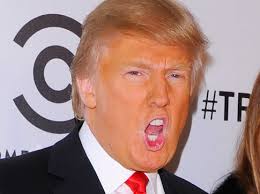
Donald Trump
Trump’s boast reflected he mindset–if not the words–of an earlier CEO whose ego carried him–and his country–to ruin.
Ever since Adolf Hitler shot himself in his underground Berlin Bunker on April 30, 1945, historians have fiercely debated: Was der Fuehrer a military genius or a disastrous imbecile?
Literally thousands of books have been written on Hitler’s six-year stint as a field commander. But for an overall view of Hitler’s generalship, an excellent choice is How Hitler Could have Won World War II by Bevin Alexander.
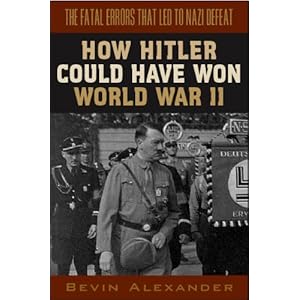
Among the fatal errors that led to the defeat of the defeat of the Third Reich:
- Wasting hundreds of Luftwaffe [air force] pilots, fighters and bombers in a halfhearted attempt to conquer England.
- Ignoring the pleas of generals like Erwin Rommel to conquer Syria, Iraq and Saudi Arabia, thus giving Germany control of most of the world’s oil.
- Attacking his ally, the Soviet Union, while still at war with Great Britain.
- Turning millions of Russians into enemies rather than allies by his brutal and murderous policies
- Needlessly declaring war on the United States after the Japanese attacked Pearl harbor. (Had he not done so, Americans would have focused all their attention on defeating Japan.)
- Refusing to negotiate a separate peace with Soviet dictator Joseph Stalin–thus granting Germany a large portion of captured Russian territory in exchange for letting Stalin remain in power.
- Insisting on a “not-one-step-back” military “strategy” that led to the needless surrounding, capture and/or deaths of hundreds of thousands of German servicemen.
As the war turned increasingly against him, Hitler became ever more rigid in his thinking. He demanded absolute control over the smallest details of his forces.
This, in turn, led to astonishing and unnecessary losses among their ranks.
One such incident was immortalized in the 1962 movie, The Longest Day, about the Allied invasion of France known as D-Day.
On June 6, 1944, General Erwin Rommel ordered the panzer tanks to drive the Allies from the Normandy beaches. But these could not be released except on direct orders of the Fuehrer.

As Hitler’s chief of staff, General Alfred Jodl, informed Rommel: The Fuehrer was asleep–and was not to be awakened. By the time Hitler awoke and issued the order, it was too late.
Nor could Hitler accept responsibility for the policies that were leading Germany to certain defeat.
He blamed his generals, accused them of cowardice, and relieved many of the best ones from command.
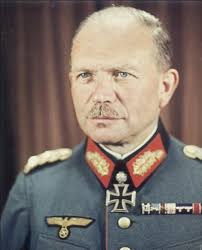
Among those sacked was Heinz Guderian, creator of the German panzer corps–and responsible for the blitzkreig victory against France in 1940.
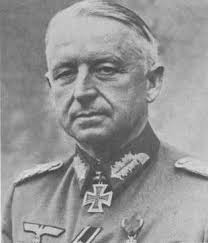
Another was Erich von Manstein, designer of the strategy that defeated France in six weeks–which Germany had failed to do during four years of World War 1.
Finally, on April 29, 1945–with the Russians only blocks from his underground Berlin bunker–Hitler dictated his “Last Political Testament.”
Once again, he refused to accept responsibility for unleashing a war that would ultimately consume 50 million lives:
“It is untrue that I or anyone else in Germany wanted war in 1939. It was desired and instigated exclusively by those international statesmen who either were of Jewish origin or worked for Jewish interests.”
Hitler had launched the invasion of Poland–and World War II–with a lie: That Poland had attacked Germany. Fittingly, he closed the war–and his life–with a final lie.
Joachim C. Fest, author of Hitler (1973), writes of the surprise that awaited Allied soldiers occupying Nazi Germany in 1945:
“Almost without exception, virtually from one moment to the next, Nazism vanished after the death of Hitler and the surrender.
“It was as if National Socialism had been nothing but the motion, the state of intoxication and the catastrophe it had caused….
“Once again it became plain that National Socialism, like Fascism in general, was dependent to the core on superior force, arrogance, triumph, and by its nature had no resources in the moment of defeat.”
The ancient Greeks believed “A man’s character is his destiny.” For Adolf Hitler–and the nations he ravaged–that proved fatally true.
It’s to be seen whether the same will prove true for Donald Trump–and the United States.


.jpg&imgrefurl=https%3A%2F%2Fen.wikipedia.org%2Fwiki%2FDonald_Trump&docid=oUQ97aEz8anNMM&tbnid=QsnpHu5vtl_y5M%3A&w=342&h=465&ved=0ahUKEwiz15vwz7DLAhVBWWMKHYU2CXkQxiAIAg&iact=c&ictx=1)


 Bureaucracybuster's Blog
9/11, ABC NEWS, ABORTION, BECKET, CBS NEWS, CHURCH VS. STATE, CNN, DISCRIMINATION, ENGLAND, FACEBOOK, FIRST CHURCH OF CANNABIS, GAYS, HENRY II, HOMOSEXUALITY, INDIANA, ISLAM, ISLAMICS, LESBIANS, MARIJUANA, MIKE PENCE, MOVIES, NBC NEWS, PETER O'TOOLE, PREJUDICE, RELIGION VS. SCIENCE, RELIGIOUS FREEDOM RESTORATION ACT, REPUBLICAN PARTY, REPUBLICANS, RICHARD BURTON, SHARIA LAW, THE CHICAGO SUN-TIMES, THE CHICAGO TRIBUNE, THE LOS ANGELES TIMES, THE NEW YORK TIMES, THE WASHINGTON POST, THOMAS BECKET, TWITTER, WOMEN'S RIGHTS
RELIGION VS. SECULAR
In Bureaucracy, Business, Entertainment, History, Law, Law Enforcement, Politics, Social commentary on March 15, 2016 at 12:55 amIn 1964, Thomas Becket, archbishop of Canterbury, once again struggled against King Henry II for power over English citizens.
This time, the conflict was fought across thousands of movie screens, with Richard Burton as Becket and Peter O’Toole as Henry, as portrayed in Jean Anouilh’s 1959 play.
A quick summary:
Becket, a brilliant Saxon noble, is the favorite friend of Henry. They hunt, fight and bed women together. Henry even appoints him as Chancellor, the highest law enforcement officer in the country.
But there is a storm on the horizon: The power of the Catholic Church is steadily rising, and Henry needs a highly-placed ally against its power. When the Archbishop of Canterbury dies, Henry appoints Becket in his place.
But suddenly the entirely secular Becket undergoes a religious conversion–and an unexpected change in allegiance. He insists that priests accused of criminal offenses be tried only in the church’s own courts–thus making them immune from Henry’s secular ones.
As a moviegoer, it’s easy to root for conscience-stricken Becket, as played by the charming Burton. Henry, as played by O’Toole, is a brutish adolescent, alternately fearful and enraged at his own incompetence.
But in rooting for Becket/Burton, the audience can overlook the significance of allowing religious doctrine to trump secular law.
The consequences of this are now becoming clear in Indiana.
On March 26, 2015, its governor, Mike Pence, signed into law the Religious Freedom Restoration Act. This will allow any individual or corporation to cite its religious beliefs as a defense when sued by a private party.
Mike Pence
Officially, its intent is to prevent the government from forcing business owners to act in ways contrary to strongly held religious beliefs. Unofficially, its intent is to appease the hatred of gays and lesbians by the religious Right, a key constituency of the Republican party.
In short, a bakery that doesn’t want to make a cake to be used at a gay wedding or a restaurant that doesn’t want to serve lesbian patrons will have the legal right to refuse to do so.
The same applies for a hospital that doesn’t want to provide care to a gay or lesbian patient.
The bill was passed overwhelmingly by both chambers of the Republican-controlled state legislature. And signed into law by a Republican governor.
“Today I signed the Religious Freedom Restoration Act, because I support the freedom of religion for every Hoosier of every faith,” Mike Pence said in a statement on the day he signed the bill.
“The Constitution of the United States and the Indiana Constitution both provide strong recognition of the freedom of religion but today, many people of faith feel their religious liberty is under attack by government action.”
Bill-signing ceremonies are usually highly public events. Governors–and presidents–normally want their constituents to see them creating new legislation.
Yet for all his praise for the bill, Pence signed it in a ceremony closed to the public and the press. The media were asked to leave even the waiting area of the governor’s office.
It’s almost as if Pence sensed that he was about to push open a door into a danger-filled room. And this may well be the case.
Through that door may soon march the First Church of Cannabis. The day after Pence signed the Act, church founder Bill Levin announced on his Facebook page that he had filed paperwork with the office of the Indiana Secretary of State.
Its registration had been approved–and Levin was ecstatic: “Now we begin to accomplish our goals of Love, Understanding, and Good Health.
“Donate $100 or more and become a GREEN ANGEL. Donate $500 or more and become a GOLD ANGEL. Donate $1000 or more and become a CHURCH POOHBA.”
And Levin had a personal comment for the governor who had made it all possible:
“Dear Mikey Pence…
“DUDE!.. keep crapping all over the state.. and I will plant a seed of LOVE, UNDERSTANDING and COMPASSION in each pile you leave.. and it will grow into a big skunky cannabis tree. Crap away Mikey.. Crap Away…”
No doubt many Indiana legislators are furious that their effort to attack gays may have brought legal marijuana to their highly conservative state. But worse may be to come.
Since 9/11, Right-wingers such as Rush Limbaugh and Sean Hannity have warned that Muslims are trying to impose Sharia (Islamic law) on America. And now Indiana’s legislators, in elevating religion above the law, may have laid the legal foundations for making that possible.
Ironically, this may not be so far removed from the goals of the Republican party as many think. Both the party and adherents of Sharia agree:
What will happen when some Muslims in Indiana claim their right–guaranteed in Islamic religious law–to have as many as four wives?
And when they claim that the Religious Freedom Restoration Act protects that right?
Fasten your seatbelts, it’s going to be a bumpy nightmare.
Share this: