Posts Tagged ‘WITNESS SECURITY PROGRAM’
ABC NEWS, ABE RELES, ADAM SCHIFF, ALBERT “THE EXECUTIONER” ANASTASIA, ALEXANDER VINDMAN, ALTERNET, AMERICABLOG, AP, BABY BOOMER RESISTANCE, BERNIE SANDERS, BUZZFEED, CBS NEWS, CIA, CNN, CROOKS AND LIARS, DAILY KOZ, DON MCGAHN, DONALD TRUMP, DONALD TRUMP JUNIOR, ERIC SWALWELL, FACEBOOK, FIVETHIRTYEIGHT, FOX AND FRIENDS, FOX NEWS NETWORK, HILLARY CLINTON, HUNTER BIDEN, INFORMANTS, JOHN DEAN, JOHN F. KENNEDY, JOHN PARTINGTON, JOSEPH “THE ANIMAL” BARBOZA, JOSEPH BIDEN, KOHN KOHN & COLAPINTO, LOUIS “LEPKE” BUCHALTER, MAFIA, MICHAEL COHEN, MICK MULVANEY, MOTHER JONES, MOVEON, MSNBC, NANCY PELOSI, NATIONAL SECURITY COUNCIL, NBC NEWS, NEWSWEEK, NPR, OCCUPATIONAL SAFETY AND HEALTH ADMINISTRATION (OSHA), ORGANIZED CRIME, ORGANIZED CRIME CONTROL ACT OF 1970, PBS NEWSHOUR, POLITICO, POLITICUSUSA, RAW STORY, RAYMOND PATRIARCA, REPUBLICANS, REUTERS, RICHARD NIXON, RUSSIA, SALON, SEATTLE TIMES, SLATE, STORMY DANIELS, TALKING POINTS MEMO, THE ATLANTIC, THE CHICAGO SUN-TIMES, THE CHICAGO TRIBUNE, THE DAILY BEAST, THE DAILY BLOG, THE GUARDIAN, THE HILL, THE HUFFINGTON POST, THE LOS ANGELES TIMES, THE NATION, THE NEW YORK TIMES, THE WASHINGTON POST, THINKPROGRESS, TIME, TRUMP ORGANIZATION, TRUTHDIG, TWITTER, U.S. NEWS & WORLD REPORT, UKRAINE, UNITED STATES JUSTICE DEPARTMENT, UPI, USA TODAY, VOLODMYR ZELENSKY, WHISTLEBLOWERS, WIKILEAKS, WILLIAM BAR, WITNESS SECURITY PROGRAM, WITNESSES
In Bureaucracy, History, Law, Law Enforcement, Politics, Social commentary on November 12, 2019 at 12:07 am
Donald Trump has a longstanding hatred of whistleblowers when they betray his crimes and follies. But he feels completely different about “flippers” when their revelations serve his interests.
On July 22, 2016, Wikileaks released 19,252 emails and 8,034 attachments hacked from computers of the highest-ranking officials of the Democratic National Committee (DNC).
The leak revealed a DNC bias for Hillary Clinton and against her lone challenger, Vermont United States Senator Bernie Sanders. Clinton, who was about to receive the Democratic nomination for President, was thoroughly embarrassed. Sanders’ supporters were enraged.
Presidential candidate Trump’s reaction:
- “WikiLeaks, I love WikiLeaks.”
- “This WikiLeaks stuff is unbelievable. It tells you the inner heart, you gotta read it.”
- This WikiLeaks is like a treasure trove.”
- “WikiLeaks just came out with a new one just a little while ago it’s just been shown that a rigged system with more collusion, probably illegal, between the Department of Justice the Clinton campaign and the State Department, you saw that.”
But now Trump has reverted to his longtime hatred of “leakers.”
In July, 2019, he told his acting chief of staff, Mick Mulvaney, to withhold almost $400 million in promised military aid for Ukraine, which faces increasing aggression from Russia.
On July 25, Trump telephoned Ukrainian President Volodymyr Zelensky to “request” a “favor”: Investigate Democratic Presidential Candidate Joe Biden and his son, Hunter, who has had business dealings in Ukraine.
The reason for such an investigation: To find embarrassing “dirt” on Biden.

Joe Biden
But then a CIA whistleblower filed a complaint about the extortion attempt—and the media and Congress soon learned of it.
Rep. Adam Schiff (D-Calif.) tweeted: “The transcript of the call reads like a classic mob shakedown: — We do a lot for Ukraine — There’s not much reciprocity — I have a favor to ask — Investigate my opponent — My people will be in touch — Nice country you got there. It would be a shame if something happened to her.”
On September 24, 2019, Nancy Pelosi, speaker to the House of Representatives, announced a formal impeachment inquiry into Trump.
On September 26, Trump told a private group at a midtown hotel: “I want to know who’s the person, who’s the person who gave the whistleblower the information? Because that’s close to a spy.
“You know what we used to do in the old days when we were smart? Right? The spies and treason, we used to handle it a little differently than we do now.”
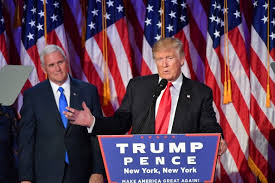
Trump can’t refute the sheer number of witnesses who have testified to his extortion attempt on Ukraine. So he now seeks to shift blame to the person who originally testified to his extortion.
On November 6, his son, Donald, Jr., tweeted out an article which might—or might not—have contained the name of the Intelligence community whistleblower.
A Trump shill later claimed that Trump hadn’t known about his son’s efforts to attack that official.
The law firm, Kohn, Kohn & Colapinto, LLP, called on Attorney General William Barr to open a criminal investigation into any leaks of the whistleblower’s identity.
“As attorneys representing whistleblowers for over 35-years we are extremely concerned about the nation-wide ‘chilling effect’ the disclosure of the identity of any intelligence community whistleblower will necessary cause. Whistleblowers need to reassurance that the laws protecting them will be strictly enforced.
“If the [whistleblower’s] name is revealed by any person, including Donald Trump, Jr., we hereby request that the persons engaging in this obstruction of justice be immediately arrested.”
Yet Barr, as Trump’s handpicked Attorney General, has so far refused to take any action against those in violation of whistleblower statutes.
The Occupational Safety and Health Administration (OSHA) enforces the provisions of more than 20 whistleblower statutes protecting employees from retaliation for reporting violations of various workplace-related laws.

According to a 2002 amendment to the federal retaliation statute:
“Whoever knowingly, with intent to retaliate, takes any action harmful to any person, including interference with the lawful employment or livelihood of any person, for providing to a law enforcement officer any truthful information relating to the commission or possible commission of any Federal offense, shall be fined under this title or imprisoned not more than 10 years, or both.”
These forbid an employer to fire, lay off, threaten, reduce pay or hours, blacklist, demote, deny overtime, benefits or promotion to anyone protected by such laws.
One such witness is Lt. Col. Alexander Vindman, an expert on Ukraine. A member of the National Security Council, he felt it improper for a President to ask a foreign leader to investigate an American citizen.
Trump called Vindman, a Purple Heart winner who was wounded in Iraq, “Yesterday’s Never Trumper witness.”
Ultimately, the identity of the whistleblower doesn’t matter.
As Representative Eric Swalwell (D-CA) tweeted on November 8: “One more time for the people in the back: The whistleblower pulled the fire alarm. The 1st responders showed up and saw smoke, flames, and @realDonaldTrump holding matches. Does it matter who pulled the fire alarm?”
The truth of the original complaint about Trump’s extortion attempt has been repeatedly validated by multiple witnesses.
It now remains to be seen whether Republicans care more about the truth of that complaint—or bowing in subservience to a thoroughly corrupt President.
ABC NEWS, ABE RELES, ADAM SCHIFF, ALBERT “THE EXECUTIONER” ANASTASIA, ALEXANDER VINDMAN, ALTERNET, AMERICABLOG, AP, BABY BOOMER RESISTANCE, BERNIE SANDERS, BUZZFEED, CBS NEWS, CIA, CNN, CROOKS AND LIARS, DAILY KOZ, DON MCGAHN, DONALD TRUMP, DONALD TRUMP JUNIOR, ERIC SWALWELL, FACEBOOK, FIVETHIRTYEIGHT, FOX AND FRIENDS, FOX NEWS NETWORK, HILLARY CLINTON, HUNTER BIDEN, INFORMANTS, JOHN DEAN, JOHN F. KENNEDY, JOHN PARTINGTON, JOSEPH “THE ANIMAL” BARBOZA, JOSEPH BIDEN, KOHN KOHN & COLAPINTO, LOUIS “LEPKE” BUCHALTER, MAFIA, MICHAEL COHEN, MICK MULVANEY, MOTHER JONES, MOVEON, MSNBC, NANCY PELOSI, NATIONAL SECURITY COUNCIL, NBC NEWS, NEWSWEEK, NPR, OCCUPATIONAL SAFETY AND HEALTH ADMINISTRATION (OSHA), ORGANIZED CRIME, ORGANIZED CRIME CONTROL ACT OF 1970, PBS NEWSHOUR, POLITICO, POLITICUSUSA, RAW STORY, RAYMOND PATRIARCA, REPUBLICANS, REUTERS, RICHARD NIXON, RUSSIA, SALON, SEATTLE TIMES, SLATE, STORMY DANIELS, TALKING POINTS MEMO, THE ATLANTIC, THE CHICAGO SUN-TIMES, THE CHICAGO TRIBUNE, THE DAILY BEAST, THE DAILY BLOG, THE GUARDIAN, THE HILL, THE HUFFINGTON POST, THE LOS ANGELES TIMES, THE NATION, THE NEW YORK TIMES, THE WASHINGTON POST, THINKPROGRESS, TIME, TRUMP ORGANIZATION, TRUTHDIG, TWITTER, U.S. NEWS & WORLD REPORT, UKRAINE, UNITED STATES JUSTICE DEPARTMENT, UPI, USA TODAY, VOLODMYR ZELENSKY, WHISTLEBLOWERS, WIKILEAKS, WILLIAM BAR, WITNESS SECURITY PROGRAM, WITNESSES
In Bureaucracy, History, Law, Law Enforcement, Politics, Social commentary on November 11, 2019 at 12:07 am
Before 1966, witnesses who dared expose the deadly secrets of the Mafia came to a brutal end once trials ended. And sometimes before trials even began.
For example: In 1940, Abe “Kid Twist” Reles, a notorious hitman for Murder, Inc., the execution squad of the New York Mafia, turned State’s evidence against his cronies. His testimony sent his former boss, Louis “Lepke” Buchalter, to the electric chair for murder.
He was set to testify against Albert “The Executioner” Anastasia, the chief of Murder, Inc., in November, 1941. Then fate—or bribed police—intervened.
Reles was being guarded round-the-clock by a lieutenant and six detectives at the Half Moon Hotel in Coney Island. Nevertheless, he “fell” 42 feet to his death from his sixth-floor room. No one was prosecuted for his murder.
As Joseph Valachi, a future Mafia witness, later testified: “I never met anybody yet who thought Reles went out that window on purpose.”

Abe “Kid Twist” Reles
In 1966, the United States Justice Department indicted Rhode Island Mafia Boss Raymond Patriarca. Thus, protection of its star witness, hitman Joseph “The Animal” Barboza, became a top priority.
Assigned to guard him was a small, handpicked detail of deputy U.S. marshals under the command of John Partington. For 18 months, the marshals foiled every effort by the Mafia to “clip” Barboza.
His testimony convicted a half-dozen top Mafiosi—including Patriarca. Then the marshals packed Barboza off to California under a new identity—and a new life.
Other Mafiosi—having run afoul of the Mafia and impressed by the success of the marshals in keeping Barboza alive—signed on as witnesses.
This, in turn, led the Justice Department to create an official Witness Security Program. By 2019, the Program had protected, relocated and given new identities to more than 8,600 witnesses and 9,900 of their family members.

Deputy U.S. marshals guarding a witness
Every President since John F. Kennedy has championed the vigorous prosecution of organized crime. And fueling this drive is the testimony of endangered witnesses requiring air-tight security.
Donald Trump is the first President to blatantly attack those who dare to “rat out” their former criminal associates.
On August 21, 2018, attorney Michael Cohen pleaded guilty in federal court in Manhattan to eight counts of campaign finance violations, tax fraud and bank fraud. He also said he had made illegal campaign contributions “in coordination and at the direction of a candidate for federal office”—Donald Trump.
Among his revelations:
- Trump has repeatedly asserted that Russia didn’t interfere with the 2016 Presidential election. But Cohen said he believed it did.
- Trump has repeatedly claimed he had “no business” in Russia. But Cohen testified that the Trump Organization had sought to “pursue a branded property in Moscow.”
- Trump denied having had sex with and paid off porn “actress” Stormy Daniels. But Cohen confirmed that Trump had instructed him to pay her $130,000 to buy her silence during the 2016 Presidential campaign.
On August 23, on the Fox News program, “Fox and Friends,” Trump attacked Cohen for “flipping” on him: “For 30, 40 years I’ve been watching flippers. Everything’s wonderful and then they get 10 years in jail and they—they flip on whoever the next highest one is, or as high as you can go. It—it almost ought to be outlawed. It’s not fair.
“You know, campaign violations are considered not a big deal, frankly. But if somebody defrauded a bank and he’s going to get 10 years in jail or 20 years in jail but if you can say something bad about Donald Trump and you’ll go down to two years or three years, which is the deal he made.”
Making “flipping” illegal would undo decades of organized crime prosecutions—and make future ones almost impossible.
U.S. Department of Justice
To penetrate the secrets of criminal organizations, investigators and prosecutors need the testimony of those who are parties to those secrets.
The Organized Crime Control Act of 1970 gave Justice Department prosecutors unprecedented weapons for attacking crime syndicates across the country. One of these was the authority to give witnesses immunity from prosecution on the basis of their own testimony.
Thus, a witness to a criminal conspiracy could be forced to tell all he knew—and thus implicate his accomplices—and bosses. In turn, he wouldn’t be prosecuted on the basis of his testimony.
Organized crime members aggressively damn such “rats.” There is no more obscene word in a mobster’s vocabulary.
But no President—until Trump—has ever attacked those who make possible a war on organized crime.
On August 19, he tweeted: “The failing @nytimes wrote a Fake piece today implying that because White House Councel [sic] Don McGahn was giving hours of testimony to the Special Councel [sic] he must be a John Dean type ‘RAT.’
“But I allowed him and all others to testify – I didn’t have to. I have nothing to hide……”
In 1973, former White House Counsel John Dean testified before the United States Senate on a litany of crimes committed by President Richard M. Nixon. Dean didn’t lie about Nixon—who ultimately resigned in disgrace.
For Trump, Dean’s sin is that he “flipped” on his former boss, violating the Mafia’s code of omerta, or silence.
But Trump feels completely different abut “flippers” when their revelations serve his interests.
ABC NEWS, ALTON STERLING, ANTHONY CORNELIUS HARRIS, BLACK LIVES MATTER, BLACK MUSLIMS, CBS NEWS, CNN, CRIME, FACEBOOK, ISLAM, J.C. SIMON, JESSIE LEE COOKS, JOSEPH ALIOTO, LARRY CRAIG GREEN, MALCOM X, MANUEL mOORE, MICHAH XAVIER JOHNSON, NAACP, NATION OF ISLAM, NBC NEWS, PHILANDO CASTILE, POLICE BRUTALITY, SAN FRANCISCO, SAN FRANCISCO POLICE DEPARTMENT, THE CHICAGO SUN-TIMES, THE CHICAGO TRIBUNE, THE LOS ANGELES TIMES, THE NEW YORK TIMES, THE WASHINGTON POST, TWITTER, U.S. MARSHALS SERVICE, WITNESS SECURITY PROGRAM, ZEBRA KILLERS
In Bureaucracy, History, Law Enforcement, Politics, Social commentary on July 18, 2016 at 12:05 am
On April 22, 1974, a break finally came in the “Zebra killers” case.
Anthony Cornelius Harris, a member of the Nation of Islam–otherwise known as the Black Muslims–came forward as a police witness.
Before doing so, he visited the parents of his close friend, Larry Craig Green–who was one of the “Zebra” killers. He hoped that, through Green’s mother, he could persuade his comrade to go with him to the police as a witness against the other three Death Angels.
While at the home of Green’s parents, he called Green.
“I knew right there it was impossible to get him to admit to doing anything,” Harris later testified. “He told me to get the hell out of his house and never to come back.”
Later, Harris phoned the Black Self-Help moving and storage company where he had been working for the last six months.
One of the Muslims he spoke with was Green, who warned him: “Man, they’ve got a contract out to kill you, your wife and the baby.”
It was then that Harris realized that he, his wife, Debra, and their newborn son had been marked for death by his former friends. There was nowhere else to go but the police if he wanted to stay alive.
So, on April 22, 1974, he came forward as a police witness.
Many police believed Harris had been one of the killers himself. He bore a strong resemblance to the suspect in a police artist’s sketch: A young black man with a short Afro and pointed chin.
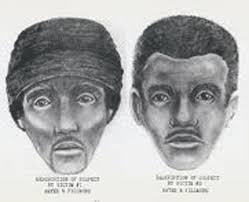
Police composite sketch of “the Zebra killer”
But Harris insisted that he hadn’t murdered anyone, and that he had resisted efforts by his friends to enlist him in their murder spree. He claimed to fear for his life at the hands of his fellow Muslims.
The police immediately placed Harris and his family under round-the-clock guard.
At 5 a.m. on the morning of May 1, 1974, more than 100 police officers assembled at the San Francisco Hall of Justice. They were heavily armed–with shotguns, submachineguns and automatic rifles.
Their assignment: Arrest seven men believed responsible for the brutal series of murders known as the “Zebra” case.
At a given signal, police charged into the various homes and apartments where the suspects lay sleeping. None of the wanted men offered any resistance.
Three of the seven were soon release for lack of evidence. The remaining three–Larry Craig Green, Manuel Moore and J.C. Simon–were held at high bond.
A fourth suspect, Jessie Lee Cooks, was already serving a life sentence in prison for his admitted murder of Frances Rose, a physical therapist, on October 30, 1973.
Cooks would be charged with other “Zebra” murders by a San Francisco grand jury on May 16, 1974.
Chief Assistant District Attorney W.H. Guibbini asked for high bail for three of the suspects after their indictment. Presiding Superior Court Judge Clayton V. Horn raised it to $300,000 each.
The accused killers remained in jail before and during their trial.
The trial began on March 3, 1975, and lasted longer than any previous one in the history of California–376 days. Testimony from 181 witnesses–115 for the prosecution–filled 13,331 pages of trial transcript.

San Francisco Superior Court
The Nation of Islam paid for the legal representation of every one of the defendants except Cooks, who had admitted to murdering Frances Rose.
During his testimony as a prosecution witness, Harris was guarded constantly by San Francisco police.
When the SFPD’s resources began to be strained, Harris was placed on the Witness Security Program, operated by the U.S. Marshals Service for the Justice Department. Originally created to safeguard Mafia witnesses, it offers protection, relocation and new identities to those who testify against organized crime groups.
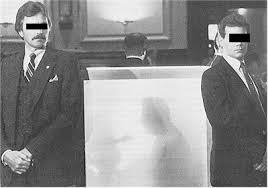
Deputy U.S. marshals guarding a witness while testifying before Congress
Harris was flown to Houston, Texas, and kept under the watchful eye of the local police. From there he moved to El Paso, and then on to Las Vegas.
He proved a difficult witness to protect. Refusing to take a job suitable for his menial work skills, he demanded ever-increasing amounts of subsistence money from, first, the SFPD, and, later, the U.S. Marshals Service. At times he threatened to recant his testimony unless he got more subsistence payments.
After the trial, Harris received a portion of the $30,000 reward. Eventually he turned up in Oakland, and then ultimately disappeared.
On March 13, 1976, Larry Craig Green, Manuel Moore, Jessie Lee Cooks and J.C. Simon were convicted of multiple murders. All were sentenced to life in state prison, where they remain today.
The toll of victims taken by the “Zebra” killers had been staggering:
- Sixteen murdered
- Five wounded
- One raped
- The attempted kidnapping of three children
At the time of sentencing, San Francisco Superior Court Judge Joseph Karesh turned to a wall map showing where each of the murders had taken place.
“As I look at this map and see all these dots,” said Karesh, “I hope we do not forget all these people who have been reduced to dots.”
ABC NEWS, ALTON STERLING, ANTHONY CORNELIUS HARRIS, BLACK LIVES MATTER, BLACK MUSLIMS, CBS NEWS, CNN, CRIME, FACEBOOK, ISLAM, J.C. SIMON, JESSIE LEE COOKS, JOSEPH ALIOTO, LARRY CRAIG GREEN, MALCOM X, MANUEL mOORE, MICHAH XAVIER JOHNSON, NAACP, NATION OF ISLAM, NBC NEWS, PHILANDO CASTILE, POLICE BRUTALITY, SAN FRANCISCO, SAN FRANCISCO POLICE DEPARTMENT, THE CHICAGO SUN-TIMES, THE CHICAGO TRIBUNE, THE LOS ANGELES TIMES, THE NEW YORK TIMES, THE WASHINGTON POST, TWITTER, U.S. MARSHALS SERVICE, WITNESS SECURITY PROGRAM, ZEBRA KILLERS
In Bureaucracy, History, Law Enforcement, Politics, Social commentary on July 15, 2016 at 12:05 am
The slayings of the “Zebra killers” were always proceeded by elaborate safety precautions. These included disguises, escape routes and the use of safehouses.
“In case you kill someone in that area,” Harris later testified that his Muslim friends were told, “you can automatically go to that house. There won’t be any questions asked about it at all.
“They made that clear all the time, every Saturday, at the Fruit of Islam (FOI) meetings. The FOI was the enforcement and disciplinary arm of the Nation of Islam.
“They said that if you’re going to kill someone, come right out and say it. Let us know ahead of time so we can set up a good alibi.”
Recruiting poster for the Fruit of Islam, the elite guard of the Nation of Islam
Non-Muslims were not to be trusted or used in any way.
“Our own attorneys,” the listeners were told at these weekend meetings, “will lie for you,” Harris quoted one of the Muslim speakers as saying.
On the night of January 28, 1974, J.C. Simon, Larry Green and Manuel Moore launched their most spectacular assault on San Francisco whites.
Shots and screams echoed throughout the city as the killers, cruising in a fast-moving black Cadillac, literally turned the streets into a shooting gallery:
- Tana Smith, a secretary, was slain while waiting at a bus stop.
- A derelict, John Bambic, was murdered as he rummaged in a garbage can.
- Vincent Wollin, a pensioner, was walking down the street when one of the gunmen fatally overtook him.
- A housewife named Jane Holly was killed in a Laundromat while she removed clothes from a dryer.
- And Roxanne McMillan, another housewife, was critically wounded and left paralyzed from the waist down as she walked down a flight of stairs to her apartment.
Each of these victims had been shot twice in the back by a black gunman using a .32 automatic pistol.
Just hours before the murder spree, Anthony Harris had asked his friend, Larry Green, why their comrade, J.C. Simon, was so depressed and irritable.
“He’s pretty pissed off because he didn’t make lieutenant,” Green had replied. “He didn’t have enough kills on his record.”
The killings continued up to mid-April, 1974.
On April 20, 1974, San Francisco’s liberal mayor, Joseph L. Alioto, authorized a city-wide police dragnet to flush out the still-supposed lone gunman.
Throughout the city, roving squads of specially-assigned officers stopped and questioned over 600 young black men. Those stopped were thought by police to resemble a vague description of the “killer,” as given by witnesses and surviving victims.
Some blacks were stopped so many times they were issued special identification cards to prevent future police interrogations.
The dragnet failed to flush out the Zebra Killers, but it touched off an uproar within the black community. Mayor Alioto was heatedly denounced by civil rights and religious activists.
The National Association for the Advancement of Colored People filed a suit in federal court for the Northern District of California to halt the stops.
On April 26–six days after the dragnet began–San Francisco’s U.S. District Judge Alfonzo J. Zirpoli acted on the NAACP’s suit. He declared the stops an unconstitutional violation of blacks’ civil rights.
In the future, ordered Zirpoli, police would need specific information leading them to believe that whoever they stopped had committed a crime or was in the process of doing so.
In San Francisco, the sudden collapse of the citywide police dragnet brought new shivers of panic to an already frightened citizenry.
Many whites stopped going outdoors after dark. Even police officers frequently looked over their shoulders as evening approached.
Some whites–especially in the heavily Italian North Beach area–began talking about spreading vigilante terror among blacks.
And the murder-spree affected the city financially: The tourist trade–on which San Francisco depended for so much of its revenue–sharply declined.
The reaction of blacks was entirely different.
During the manhunt for the notorious “Zodiac” serial killer in the late 1960s, San Francisco police had relied heavily on dragnets and interrogations of young white men resembling a composite sketch.
But blacks charged racism when the same tactic was used to hunt for the supposed lone “Zebra” gunman.
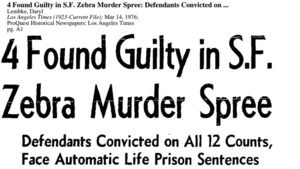
Many blacks blamed “unemployment” and “oppression” for the attacks. When interviewed by the San Francisco Examiner, none condemned the murders or expressed sympathy for their victims.
Then, on April 22, 1974, a break finally came in the case.
Anthony Cornelius Harris decided to tell the police what he knew about the men responsible for the murders.
The killings, said Harris, weren’t the work of a crazed loner. They were being carried out by a group of militant Black Muslims who made use of elaborate security precautions.
Harris’ intimate knowledge of the killers stemmed from their having been among his closest friends for over six months.
Harris claimed that the killers had repeatedly tried to enlist him as an accomplice. He insisted that he could not bring himself to commit cold-blooded murder. This led his friends to suspect that Harris might be a police informer or agent.
Harris began fearing for his life. He also wanted the $30,000 reward being offered for the capture of the still-supposed lone gunman.
On May 1, 1974, police–acting on Harris’ information–arrested seven suspects.
ABC NEWS, ALTON STERLING, ANTHONY CORNELIUS HARRIS, BLACK LIVES MATTER, BLACK MUSLIMS, CBS NEWS, CNN, CRIME, FACEBOOK, ISLAM, J.C. SIMON, JESSIE LEE COOKS, JOSEPH ALIOTO, LARRY CRAIG GREEN, MALCOM X, MANUEL mOORE, MICHAH XAVIER JOHNSON, NAACP, NATION OF ISLAM, NBC NEWS, PHILANDO CASTILE, POLICE BRUTALITY, SAN FRANCISCO, SAN FRANCISCO POLICE DEPARTMENT, THE CHICAGO SUN-TIMES, THE CHICAGO TRIBUNE, THE LOS ANGELES TIMES, THE NEW YORK TIMES, THE WASHINGTON POST, TWITTER, U.S. MARSHALS SERVICE, WITNESS SECURITY PROGRAM, ZEBRA KILLERS
In Bureaucracy, History, Law Enforcement, Politics, Social commentary on July 14, 2016 at 12:00 am
The “Zebra killers” were on a rampage–one that showed no signs of ending.
On November 25, 1973, Salem Erakat, a grocer, was found shot in the back of the head in his mom-and-pop market, which lay across the street from the San Francisco Federal Building.
On December 11, a San Francisco resident named Paul Dancik was fatally shot three times as he used a public telephone.

On December 13, Arthur Agnos, a former administrative aide to San Francisco Assemblyman Leo T. McCarthy, was shot and wounded while standing on a street corner, talking to two friends.
He would survive and later serve as Mayor of San Francisco from 1988 to 1992.
On Christmas Eve, Larry Craig Green and J.C. Simon asked Anthony Harris to help them take some packages to a nearby beach.
“When I unloaded the truck, I recall getting a lot of blood on my hands,” Harris later testified as a witness for the prosecution. He asked Simon and Green what was in the packages.
“They said, it was probably a dog or a cat,” said Harris. Later, he learned that the package had held a human body. But he never learned whose.
Harris helped to dispose of similar packages “about 40-some times.”
Harris was taken along by the “Zebra” killers on several shootings. Later, Harris reasoned: “I guess they thought that, sooner or later, I would join their little clique.”
One night, Harris, J.C. Simon and Manuel Moore parked their black Cadillac near an apartment complex. Simon and Moore got out, leaving Harris in the vehicle.
“The next thing I knew,” said Harris, “I heard a gunshot. Manuel started running from the same area that the gunshot came from.”
Moore and Simon jumped into the car. As the vehicle sped off, Harris saw “what appeared to be a body” lying on the sidewalk.
On another occasion, Harris asked his comrades what had happened after he heard shots ring out.
“Just watch television or listen to the radio, and you’ll see what happened,” one of them said.
Harris learned from the news later on that “somebody had been shot and killed.”
Between killings, Harris and his friends attended regular meetings at the Black Self-Help, the Muslim-owned furniture-moving company in San Francisco.
At some of these meetings, as many as 40 to 50 or more Muslims were present.
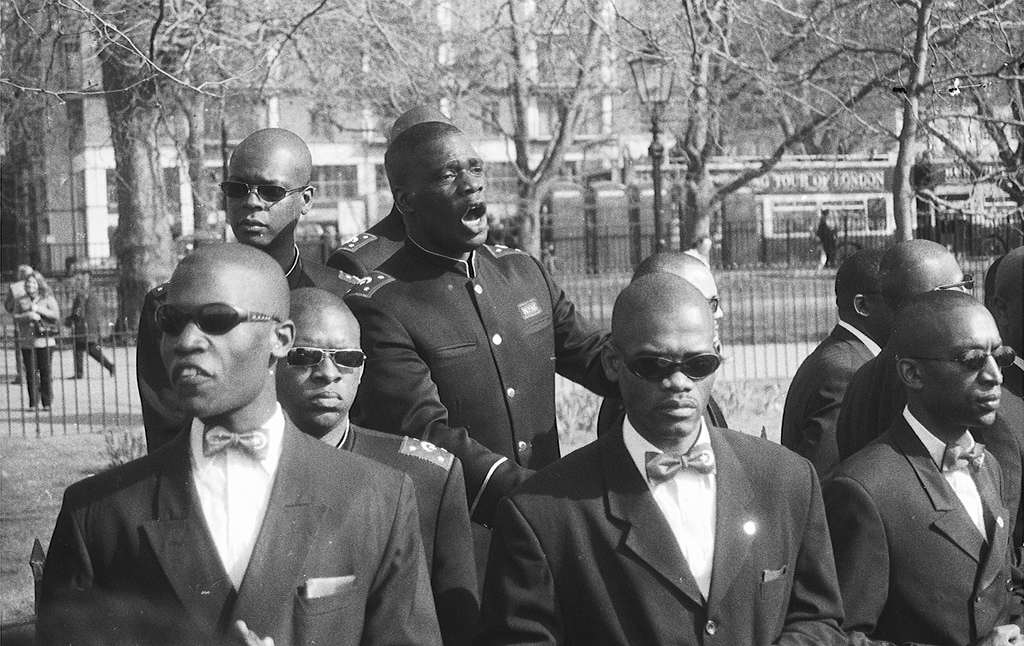
Members of the Nation of Islam
“They were talking about killing people,” Harris later testified. Films were shown “of the Watts riots [in 1965] and different riots taking place throughout the past, black people being beaten down by the police and shot.”
The meetings’ participants were asked, “Could we allow this to continue? They said the only way to stop it was to act and be vicious…like the police department.
“That you had to…be able to go out and just deliberately take a baby and smash his head against the wall and kill him and, if you have to, even drink the blood to show how vicious you are.
“And they showed us a large number of pictures” on a bulletin board “of a lot of bald-headed men with little white wings on their necks, and identified each guy as being members of the Death Angels.”
Harris was told that “if I wanted to be a member of the Death Angels, that I’d have to go out and kill people to get some wings.”
Not only was the wearing of a pair of white wings a symbol of belonging to the Death Angels, so was a shaved head.
Only certified members of the Death Angels could enter Muslim temples with shaved heads. Anyone else who entered such a temple with a shaved head “can be killed or put out of the temple for coming in like that.”
“[The Death Angels] is supposed to be a pretty high branch of the Nation of Islam, supposed to be 2,000 people inside it,” Harris later testified.
“And every time you kill a person, you’re supposed to have somebody witness your killing the person for verification when you go back to Chicago,” the national headquarters for the Nation of Islam.

Chicago Headquarters of the Nation of Islam
It was there, said Harris, that the photographs or eyewitnesses had to appear before the prospective Death Angel could receive his winged badge of membership.
“And after you get to killing people,” the Death Angels “give you a pair of wings to put on your neck, and they take a picture,” testified Harris.
“They say you kill four children, you automatically become a captain, or a lieutenant. If you kill five or six women, you become a lieutenant. Or kill nine men, the number of completion, and they give you a rank.”
Extra status was attached to Death Angels who mutilated the bodies of their victims.
“If you cut their heads off, and cut the legs and arms off and cut them open wide with a lot of blood, it’s supposed to symbolize you’re very vicious and that you could be well trusted.
“The killing was so, if they see you do it, they know for a fact you’re not a police officer and you’re not involved” as an informer,” testified Harris.
ABC NEWS, ALTON STERLING, ANTHONY CORNELIUS HARRIS, BLACK LIVES MATTER, BLACK MUSLIMS, CBS NEWS, CNN, CRIME, FACEBOOK, ISLAM, J.C. SIMON, JESSIE LEE COOKS, JOSEPH ALIOTO, LARRY CRAIG GREEN, MALCOM X, MANUEL mOORE, MICHAH XAVIER JOHNSON, NAACP, NATION OF ISLAM, NBC NEWS, PHILANDO CASTILE, POLICE BRUTALITY, SAN FRANCISCO, SAN FRANCISCO POLICE DEPARTMENT, THE CHICAGO SUN-TIMES, THE CHICAGO TRIBUNE, THE LOS ANGELES TIMES, THE NEW YORK TIMES, THE WASHINGTON POST, TWITTER, U.S. MARSHALS SERVICE, WITNESS SECURITY PROGRAM, ZEBRA KILLERS
In Bureaucracy, History, Law Enforcement, Politics, Social commentary on July 13, 2016 at 12:05 am
In 1971, Anthony C. Harris was arrested for second-degree burglary in Los Angeles. For this, he drew a sentence at San Quentin prison.
That was where he met two of the future “Zebra” killers: Manuel Moore and Jessie Lee Cooks.
After Harris was paroled on October 15, 1973, he drifted into San Francisco. There he made a new friend–Larry Craig Green, who helped him into a job at the Black Self-Help, a Muslim-owned, furniture-moving company in the city.
Yet another new friend he made there was J.C. Simon.

Jessie Cooks, Manuel Moore, J.C. Simon and Larry Craig Green
Soon he was reunited with Jessie Cooks, who had been paroled in July. The release of Manuel Moore followed in November–as did his own arrival in San Francisco.
In September or October, 1973, Harris and 12 to 13 other Muslims–including Simon, Cooks and Green–met at J.C. Simon’s San Francisco apartment.
“They asked me,” Harris later testified, “was I able to kill anyone? Did I have my mind together? They wanted me to work in the [Muslim] temple” as a kung-fu instructor.
At a second meeting at Simon’s apartment, a large, velvet-lined case was prominently displayed. In it were two machetes, three pistols–a snubnose .38 revolver, a .357 Magnum and an automatic–and a shotgun.
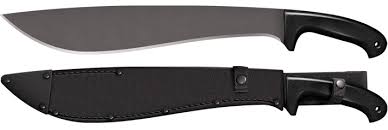
“They asked me, how did I feel about white people? Did I feel they were my enemy? Was my mind together enough to destroy my enemy?
“And I just told them, ‘I don’t know what you mean by destroying my enemy.’” Harris told the other Muslims that he had no enemies.
“They wanted me to go out and kill some people, to show them I could be trusted among them. They told me I would have to make some kind of move sooner or later.”
Once again, Harris found himself under cross-examination: Was he ready to take his first step towards joining the elite of Allah, the Death Angels? Was he willing to assist his brethren in destroying the blue-eyed white devils?
To drive the point home, the Muslims showed Harris photographs of his brother, stepbrother, mother, sister and fiancee.
“They told me I knew too much about the organization, and something could happen” to Harris himself and his family unless he joined the group of future killers.
Still, Harris refused to commit himself to the coming plot to slaughter whites.
So his companions decided to enlist him in their cause in one dramatic–and lethal–move.
On the night of October 20, 1973, Americans were glued to their TV sets. President Richard Nixon had just fired Special Watergate Prosecutor Archibald Cox and disbanded the Watergate Special Prosecutor’s office.
On that same evening, Harris stood at a bus stop, waiting to be taken home from his job at the Black Self-Help, when a panel truck driven by Larry Green pulled up in the bus zone.
Next to Green, in the passenger’s seat, sat Jessie Lee Cooks. Both men offered Harris a ride home, and he accepted.
The truck drove around for awhile, then parked in the shadows near Powell and Chestnut Streets, in a residential neighborhood.
A few minutes later, the three Muslims spotted a young–and white–married couple, Richard and Quite Hague, strolling nearby.
Hague, 30, worked as a mining engineer for the San Francisco office of Utah International. Quita, 28, was a reporter for the Industrial City Press in South San Francisco. The previous month they had celebrated their seventh wedding anniversary.
Cooks stopped the Hagues, asking for directions. Then he shoved a pistol into the back of Richard Hague and forced the couple into the rear of the panel truck.
The Hagues were bound, beaten and driven to a remote spot in the San Francisco industrial district. There they were yanked from the van. Larry Green seized a machete and, with one stroke, nearly decapitated Quita Hague.
“He got blood all over him,” Harris would later testify.
“Larry came over with the knife and said something about, ‘You ought to have seen all the blood gush out of her neck.’”
Green handed the machete to Cooks, who slashed Richard Hague about the face and back of the head. Left for dead, Hague would eventually recover–and testify against his wife’s killers.
Almost immediately after the two Black Muslims finished hacking their victims, flashbulbs began popping. Two other cars, driven by members of the Nation of Islam, had pulled up
Several camera-toting Muslims started taking pictures of the blood-soaked murder scene–as evidence of Larry Green’s and Jessie Lee Cooks’ worthiness as Death Angels.
A series of murders followed.
On October 30–ten days after the abduction of Richard and Quita Hague–Jessie Lee Cooks struck again.
He shot Frances Rose, a physical therapist, four times in the head and neck as she sat in her car at the entrance of the parking lot to the University of California Extension.
Cooks was arrested within a few minutes and only a short distance from the scene, still in possession of the murder weapon, a revolver. He pleaded guilty and was sentenced to life imprisonment on December 14, 1974.
He would be tried again and convicted of other murders, along with the other “Zebra” defendants on March 13, 1976.
ABC NEWS, ALTON STERLING, ANTHONY CORNELIUS HARRIS, BLACK LIVES MATTER, BLACK MUSLIMS, CBS NEWS, CNN, CRIME, FACEBOOK, ISLAM, J.C. SIMON, JESSIE LEE COOKS, JOSEPH ALIOTO, LARRY CRAIG GREEN, MALCOM X, MANUEL mOORE, MICHAH XAVIER JOHNSON, NAACP, NATION OF ISLAM, NBC NEWS, PHILANDO CASTILE, POLICE BRUTALITY, SAN FRANCISCO, SAN FRANCISCO POLICE DEPARTMENT, THE CHICAGO SUN-TIMES, THE CHICAGO TRIBUNE, THE LOS ANGELES TIMES, THE NEW YORK TIMES, THE WASHINGTON POST, TWITTER, U.S. MARSHALS SERVICE, WITNESS SECURITY PROGRAM, ZEBRA KILLERS
In Bureaucracy, History, Law Enforcement, Politics, Social commentary on July 12, 2016 at 12:10 am
For many Americans, their country seems on the verge of an all-out racial war.
Blacks, charging police with brutality and racism, are increasingly strident in demanding an end to both. The events of July 5-7 encapsulate this growing divide between blacks and police.
On July 5, Alton Sterling, a 37-year-old black man, was fatally shot several times after being tackled to the ground by two white Baton Rouge Police Department officers in Baton Rouge, Louisiana. The shooting was captured on video and widely distributed over the Internet.
On July 6, 2016, Philando Castile, also black, was fatally shot by a St. Anthony, Minnesota police officer after being pulled over, allegedly for a broken tail light. Castile told the officer he was licensed to carry a concealed weapon and had one in the car.
According to his girlfriend, Diamond Reynolds, a passenger in the car: “The officer said don’t move. As he was putting his hands back up, the officer shot him in the arm four or five times.” This shooting was likewise captured on video and widely seen on the Internet.
On July 7, Michah Xavier Johnson, a black, ex-Army Reserve Afghan War veteran, snot and killed five Dallas, Texas, police officers. Another seven officers and two civilians were wounded before Johnson was killed by police.
The shootings erupted during a Black Lives Matter march in downtown Dallas to protest the killings of Sterling and Castile.
The attack on the Dallas officers has led to even greater polarization between blacks and whites–especially white law enforcement officers.
But this is not the first time that the United States has been threatened with the prospect of an all-out black-verses-white conflict.
Forty years ago, whites–not blacks–were the targets of blacks intent on waging a race war.
From October 20, 1973 to April 20, 1974, San Francisco was rocked by a series of random, brutal attacks against whites. The assailant was at first thought to be a lone black gunman.
The toll finally reached 16 murders, five woundings, one rape, and the attempted kidnapping of three children.
The rampage, however, was not limited to San Francisco. Throughout California–from Bakersfield to San Diego–at least 93 other whites were murdered, according to later police investigations.
What follows is an inside account of the “Zebra” death cult, as depicted through the grand jury testimony of the star witness against the killers: Anthony C. Harris.
At 28, Harris was a fifth-dan kung-fu expert who always dressed well and spoke softly. He also had firsthand knowledge of the “Zebra murders.”

Anthony Harris
Born in Long Beach, California, in 1946, Anthony Cornelius Harris got as far as the sixth grade. He clashed often with police and, on January 3, 1969, he was convicted for assaulting a policeman.
He was released from prison in May, 1970, when he won a reversal of his sentence at the California Supreme Court.
But he was once again arrested and convicted, in 1971, of second-degree burglary in Los Angeles. For this, he drew a sentence at San Quentin prison.
And he also met two of the future “Zebra” killers: Manuel Moore and Jessie Lee Cooks.
Cooks had been convicted of robbery; Moore had been sent to prison for burglary. Both wanted Harris, a fifth-dan kung-fu expert, to teach them the martial arts.
Cooks wanted to learn kung-fu so he could kill whites “because they had castrated and killed our ancestors and stomped our babies’ heads in.”
While an inmate at San Quentin prison, Harris became a devout member of the Nation of Islam.
At that time, the spiritual leader of the Nation was Elijah Muhammad, who preached a gospel of black separatism and superiority. Muhammad taught that whites were literally the incarnation of evil, a race of “blue-eyed devils.”

Elijah Muhammed
To test the worthiness of His Chosen Black People, proclaimed Muhammad, Allah had allowed their 400-year persecution by these “bleached-out, grafted snakes.”
But that great testing period would soon come to its end. Then would follow the literal, heaven-sent destruction of all whites. At the conclusion of this divine slaughter, Allah would create a paradise earth for His Chosen Black People.
Harris, Moore and Cooks had a conversation in the temporary Muslim temple in the prison–about “killing people and cutting their heads off–just white people,” Harris later testified in court.
After Harris was paroled on October 15, 1973, he drifted into San Francisco. There he made a new friend–Larry Craig Green, who helped him into a job at the Black Self-Help, a Muslim-owned, furniture-moving company in the city.
Yet another new friend he made there was J.C. Simon.
Soon he was reunited with Jessie Cooks, who had been paroled in July. The release of Manuel Moore followed in November–as did his own arrival in San Francisco.
In September or October, 1973, Harris and 12 to 13 other Muslims–including Simon, Cooks and Green–met at J.C. Simon’s San Francisco apartment.
“They asked me,” Harris later testified, “was I able to kill anyone? Did I have my mind together? They wanted me to work in the [Muslim] temple” as a kung-fu instructor.
ABC NEWS, CBS NEWS, CNN, DEAN MARTIN, DRUG WAR, FACEBOOK, FBI, JOAQUIN "EL CHAPO" GUZMAN, JOHN F. KENNEDY, JOHN GOTTI, JOSEPH P. KENNEDY, MAFIA, MICKEY COHEN, MSNBC, NBC NEWS, ROBERT F. KENNEDY, ROLLING STONE, SAM GIANCANA, SAMMY "THE BULL" GRAVANO, SEAN PENN, THE CHICAGO SUN-TIMES, THE CHICAGO TRIBUNE, THE NEW YORK TIMES, THE WASHINGTON POST, TWITTER, WITNESS SECURITY PROGRAM
In Bureaucracy, Entertainment, History, Law Enforcement, Social commentary, Uncategorized on January 21, 2016 at 12:01 am
Sean Penn is not the first celebrity to “get close to” a gangster.
Singer Frank Sinatra set the standard as far back as the 1940s when he was often seen in the company of notorious Mafiosi such as Charles “Lucky” Luciano and Willie Moretti.
(It was Moretti who is rumored to have freed Sinatra from his financially-limiting contract with bandleader Tommy Dorsey in the early 1940s.
His alleged method of persuasion: Jamming a pistol down Dorsey’s throat and threatening to kill him. Dorsey eventually sold the contract to Sinatra for one dollar.
But the mobster whom Sinatra was most-often linked with–by gossip and FBI reports–was Sam “Mooney” Giancana.
Giancana started out as a “wheelman” and enforcer for the teenage “42 Gang,” then joined the Chicago mob in the late 1930s. By 1957 he had been appointed its boss.
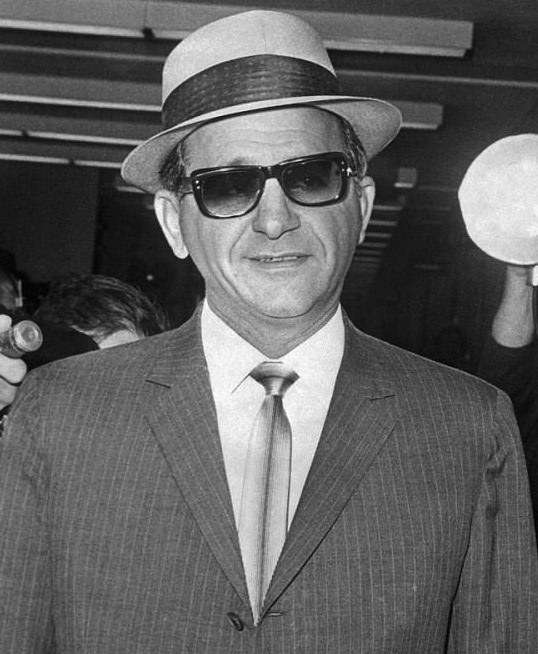
Sam Giancana
Sinatra often partied with Giancana, both in nightclubs and at his own residence in Palm Springs, California.
In December, 1959, financier Joseph P. Kennedy summoned Sinatra to the family compound in Hyannis Port, Massachusetts. His son, Senator John F. Kennedy, was planning to run for President in 1960. And the elder Kennedy wanted Sinatra’s help.
Sinatra and the Senator were by now well-acquainted. They shared a taste for gossip, nightclubs and beautiful women.
According to Sinatra’s daughter, Tina, the Kennedy patriarch said: “I think that you can help [the campaign] in [the] West Virginia [primary] and Illinois [in the general election] with our friends.
“You understand, Frank, I can’t go. They’re my friends, too, but I can’t approach them. But you can.”

Frank Sinatra
By “our friends,” Kennedy meant the Mafia. Joseph P. Kennedy had done business with the mob as a bootlegger during Prohibition.
Now he wanted the Mafia to pressure local union members into voting for JFK–and making contributions to the Kennedy Presidential campaign.
Sinatra went to his friend, Sam Giancana, and asked for the mob’s support. And Giancana promised to deliver it.
In return, Giancana–and other mobsters–expected to win an ally in the White House. He was later overheard on an FBI wiretap saying he had been promised by Sinatra that “if I even got a traffic ticket, none of those fuckers [the FBI] would know me.”
Since 1959, Giancana and other “Top Hoodlum” mobsters had been under increasingly heavy FBI surveillance. Giancana wanted it stopped.
And Sinatra had assured him that, under a Kennedy Presidency, it would stop.
On Election Night, 1960, John F. Kennedy carried Illinois–and won the White House by a mere 120,000 votes nationwide.
Then, to the horror of the Mafia, JFK installed his brother, Robert Francis Kennedy, as Attorney General. From 1957 to 1959, RFK had pursued gangsters as chief counsel for the Senate Rackets Committee.
Now he declared all-out war on organized crime. Convictions against organized crime figures rose 800% during his four years in office.
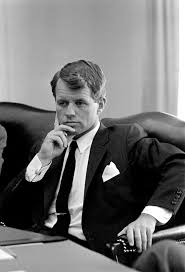
Robert F. Kennedy
Sinatra tried to deliver for Giancana. He sent Peter Lawford–his Rat Pack pal and brother-in-law to the President–to talk with Robert Kennedy about laying off on the Mafia don.
Kennedy told Lawford to mind his own business.
Giancana came under even greater pressure. FBI agents put a 24-hour “lockstep” surveillance on him, following him even into church and restrooms.
“I was on the road with this broad,” Giancana raged to his murderous associate, Johnny Formosa. “There must have been 20 guys [FBI agents]. They were next door, upstairs, downstairs, surrounded all the way around!
“Get in a car, somebody picks you up I lose that tail–boom!–I get picked up someplace else! Four or five cars, back and forth, back and forth.”
In another exchange with Formosa, Giancana’s anger at Sinatra boiled over:
“The last time I talked to [Sinatra] was at the hotel in Florida. And he said, ‘Don’t worry about it. If I can’t talk to the old man [Joseph P. Kennedy] I’m going to talk to the man [President Kennedy].’
“One minute he says he’s talked to Robert, and the next minute he says he hasn’t talked to him. So he never did talk to him.”
Formosa suggested a remedy: “Let’s show ’em. Let’s show those fuckin’ Hollywood fruitcakes that they can’t get away with it as if nothin’s happened.
“Let’s hit Sinatra. Or I could whack out a couple of those other guys, Lawford and that [Dean] Martin. And I could take the nigger [Sammy Davis, Jr.] and put his other eye out.”
Giancana refused to issue the contract. But he seriously considered doing so, as he confessed to a Chicago associate named Tommy DiBella:
“One night I’m fucking Phyllis [McGuire, a member of the famous McGuire sisters trio], playing Sinatra songs in the background, and the whole time I’m thinking to myself, ‘Christ, how can I silence that voice?’
“It’s the most beautiful voice in the world. Frank’s lucky he’s got it. It saved his life.”
Sinatra’s Rat Pack “pally,” Dean Martin, summed it up: “Only Frank could get away with the shit he’s got away with. Only Frank. Anybody else would’ve been dead.”
Sinatra survived the murderous anger of a mob boss. It remains to be seen if Sean Penn can do the same.
ABC NEWS, ALTERNET, AMERICABLOG, AP, BABY BOOMER RESISTANCE, BBC, BLOOMBERG NEWS, BUZZFEED, CBS NEWS, CNN, CROOKS AND LIARS, DAILY KOZ, DRUDGE REPORT, DRUG WAR, FACEBOOK, FBI, FIVETHIRTYEIGHT, FRANK SINATRA, HARPER’S MAGAZINE, HUFFINGTON POST, JOAQUIN "EL CHAPO" GUZMAN, JOHN F. KENNEDY, JOHN GOTTI, JOSEPH P. KENNEDY, MAFIA, MEDIA MATTERS, MICKEY COHEN, MOTHER JONES, MOVEON, MSNBC, NBC NEWS, NEW REPUBLIC, NEWSDAY, NEWSWEEK, NPR, PBS NEWSHOUR, POLITICO, POLITICUSUSA, RAW STORY, REUTERS, ROBERT F. KENNEDY, ROLLING STONE, SALON, SAM GIANCANA, SAMMY "THE BULL" GRAVANO, SEAN PENN, SEATTLE TIMES, SLATE, TALKING POINTS MEMO, THE ATLANTIC, THE CHICAGO SUN-TIMES, THE CHICAGO TRIBUNE, THE DAILY BEAST, THE DAILY BLOG, THE GUARDIAN, THE HILL, THE HUFFINGTON POST, THE LOS ANGELES TIMES, THE NATION, THE NEW REPUBLIC, THE NEW YORK TIMES, THE NEW YORKER, THE VILLAGE VOICE, THE WASHINGTON POST, THINKPROGRESS, TIME, TRUTHDIG, TRUTHOUT, TWITTER, TWO POLITICAL JUNKIES, U.S. NEWS & WORLD REPORT, UPI, USA TODAY, WITNESS SECURITY PROGRAM, WONKETTE
In Bureaucracy, Entertainment, History, Law Enforcement on January 20, 2016 at 12:02 am
Actor Sean Penn believes the Mexican Government wants to put him at risk by convincing Joaquin “El Chapo” (“Shorty”) Guzman that Penn played a role—deliberately or negligently—in his capture.
“We know the Mexican government, they clearly were humiliated by the notion that someone found him before they did,” Penn told interviewer Charlie Rose.
“Nobody found him before they did. We are not smarter than the DEA, or Mexican Intelligence. We had a contact upon which we were able to facilitate an invitation.”
By “we” Penn meant himself and Mexican actress Kate del Castillo, who had actually arranged the meeting.

Actress Kate del Castillo
“They wanted to encourage the cartel to put you in their crosshairs?” Rose asked.
“Yes,” Penn answered.
This is entirely possible. Guzman’s escape from a “maximum security” prison in July, 2015, had proved internationally embarrassing for the Mexican Government
Even more embarrassing: He escaped through a mile-long tunnel that literally led to his cell. Almost certainly this happened with the collusion of some prison guards.
Penn–and del Castillo–could face dangers from at least three groups.
Danger #1: El Chapo
Already there is evidence that “El Chapo” regrets having given an interview to Penn and del Castillo in the Mexican jungle on October 2, 2015.
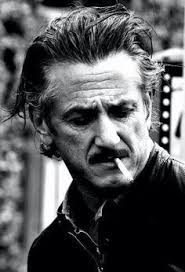
Sean Penn
Published in Rolling Stone on January 9, the article contained such Guzman boasts as:
“I supply more heroin, methamphetamine, cocaine and marijuana than anyone else in the world. I have a fleet of submarines, airplanes, trucks and boats.”
Juan Pablo Badillo, one of Guzman’s attorneys, has since claimed that the article contains falsehoods:
“It’s a lie, absurd speculation from Mr. Penn. Mr. Penn should be called to testify to respond about the stupidities he has said.
“He [Guzman] could not have made these claims. Mr. Guzman is a very serious man, very intelligent.”
This could spell danger for Penn and del Castillo. Guzman is responsible for the deaths of thousands of rivals, journalists and police.

Among the witnesses to the drug cartels’ savagery is Michael Levine, a 25-year veteran of the Drug Enforcement Administration and the author of Deep Cover: Mexican Government Drug Corruption From the Inside.
“Depending on what the cartels and/or the many corrupt Mexican cops and Mexican government officials believe El Chapo divulged during the interview, Penn, and whomever else was present, may be in more physical danger than he could ever imagine,” said Levine.
An anonymous law enforcement official said that not only could Penn be in danger, but so could his entire family.
“It won’t happen now. They [the cartels] wait. Him or people close to him are in danger. They don’t single out the one person. They go for the person’s family.
“He poked his head into a nest of vipers with an amazing global reach. He was a fool. As public as Penn is, he will be a sitting duck.”
Danger #2: Guzman’s Competitors in the Drug Trade
“The problem with dealing with someone like Guzman on this personal basis, where one is perceived as a ‘friend’ or an aide or a business partner of sorts to Chapo, is that you have to be prepared to inherit all his enemies, and there are many,” warned Michael Levine.
“These are some very kill-crazy people. The notoriety gained by killing someone like Penn or even del Castillo will actually turn these bastards on.
“It’s a step into the dark world of the kill crazies. Believe me it is there, and unwittingly these two may have stepped into a world where there is an actual competition to kill them,” said Levine, who has dealt face-to-face with Latin American drug lords.
Danger #3: Wannabe Cartel Members
Countless men–in Mexico and the United States–would love to “do El Chapo a favor” by gunning down Penn and/or del Castillo.
This could happen even if Guzman harbors no ill will toward either. It would be enough for someone to simply believe that he did.
An additional motive: The fame–or infamy–that the assassin of a “big celebrity” like Penn would receive. John Lennon died at the hands of such a fame-obsessed, psychotic gunman.
This means that literally anyone could be a potential assassin–making it that much harder to defend against.
When clients enter the Justice Department’s Witness Security Program, they are quickly asked: “Who do you think poses the biggest threat to you?”
Deputy U.S. marshals, who operate the program, assume that a witness is the best judge of who poses the greatest danger to him.

Witness Security Program protection detail
This works well when a witness is unknown and testifying against someone who is equally unknown to the public.
But when a witness is notorious–such as Sammy “The Bull” Gravano–and the defendant is equally infamous–such as John Gotti–all bets are off.
Of course, Federally-protected witnesses have two advantages going for them that Penn and del Castillo do not:
First, they are protected by the U.S. Marshals Service, which has an excellent track record in protecting its charges; and
Second, they are expected to assume a low profile, which serves as their best protection.
Sean Penn and Kate del Castillo aren’t Federally-protected witnesses. And they’re unlikely to assume a low profile by going into hiding.
ABC NEWS, ALTERNET, AMERICABLOG, AP, BABY BOOMER RESISTANCE, BBC, BLOOMBERG NEWS, BUZZFEED, CBS NEWS, CNN, CROOKS AND LIARS, DAILY KOZ, DRUDGE REPORT, DRUG WAR, FACEBOOK, FBI, FIVETHIRTYEIGHT, FRANK SINATRA, HARPER’S MAGAZINE, HUFFINGTON POST, JOAQUIN "EL CHAPO" GUZMAN, JOHN F. KENNEDY, JOHN GOTTI, JOSEPH P. KENNEDY, MAFIA, MEDIA MATTERS, MICKEY COHEN, MOTHER JONES, MOVEON, MSNBC, NBC NEWS, NEW REPUBLIC, NEWSDAY, NEWSWEEK, NPR, PBS NEWSHOUR, POLITICO, POLITICUSUSA, RAW STORY, REUTERS, ROBERT F. KENNEDY, ROLLING STONE, SALON, SAM GIANCANA, SAMMY "THE BULL" GRAVANO, SEAN PENN, SEATTLE TIMES, SLATE, TALKING POINTS MEMO, THE ATLANTIC, THE CHICAGO SUN-TIMES, THE CHICAGO TRIBUNE, THE DAILY BEAST, THE DAILY BLOG, THE GUARDIAN, THE HILL, THE HUFFINGTON POST, THE LOS ANGELES TIMES, THE NATION, THE NEW REPUBLIC, THE NEW YORK TIMES, THE NEW YORKER, THE VILLAGE VOICE, THE WASHINGTON POST, THINKPROGRESS, TIME, TRUTHDIG, TRUTHOUT, TWITTER, TWO POLITICAL JUNKIES, U.S. NEWS & WORLD REPORT, UPI, USA TODAY, WITNESS SECURITY PROGRAM, WONKETTE
In Bureaucracy, Entertainment, History, Law Enforcement on January 19, 2016 at 1:25 am
Actor Sean Penn is used to being a tough guy–onscreen.
In 2006, he played real-life mobster Mickey Cohen (1913 – 1976) in Gangster Squad. And in 2013, he played Willie Stark, a corrupt, Huey Long-type Southern governor in a remake of All the King’s Men.
As Cohen, Penn put out contracts on his enemies and even went mano-o-mano in a long-running (and fictional) fistfight with an LAPD detective.
And as Stark, he clawed his way to power and bullied both his enemies and his supporters.
Perhaps Penn should have paid more attention to the way those movies ended.

Sean Penn
Mickey Cohen goes to prison, where he is brutally waylaid by other inmates.
And Willie Stark, at the height of his power, is shot by a longtime enemy.
Had he thought about it, he might have decided it could be a mistake to meet with Joaquin “El Chapo” (“Shorty”) Guzman, the notorious Mexican drug lord.
On October 2, 2015, Penn met with Guzman in an undisclosed location in the Mexican jungle. He was there to interview him on behalf of Rolling Stone magazine.
Guzman wanted a movie made about him. So he had reached out to Mexican actress Kate del Castillo, asking her to meet with him to discuss such a project. She, in turn, referred him to Penn, whom Guzman said could come along for the meeting.
Penn had his own agenda: To write an article for Rolling Stone whose “purpose [would] contribute to this conversation on the war on drugs.”
Three months later, on January 8, 2016, Mexican Marines and Federal Police launched an early-morning raid on a house in Los Mochis, in northern Sinaloa, where Guzman’s drug cartel operated.
The Marines expected to find Guzman there, and they did–ending his almost six-month flight after escaping from prison in July.
One day after Guzman’s capture, Rolling Stone published Penn’s 10,000-word article.
Penn had not been allowed to bring a tape recorder or even take notes with pen and paper. So he had been forced to memorize as much of Guzman’s tale as he could.
Penn seemed to be enraptured by Guzman:
“There is no doubt this is the real deal. He’s wearing a casual patterned silk shirt, pressed black pants, and he appears remarkably well-groomed and healthy for a man on the run.
“He opens [actress Kate del Castillo’s] [car} doorand greets her like a daughter returning from college.
“It seems important to him to express the warm affection in person that, until now, he’d only had occasion to communicate from afar.”
Even so, Penn quoted Guzman as bragging: “I supply more heroin, methamphetamine, cocaine and marijuana than anybody else in the world. I have a fleet of submarines, airplanes, trucks and boats.”
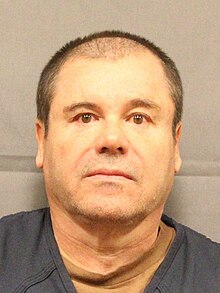
Joaquin “El Chapo” Guzman
After the interview’s publication, Penn came under fire for having allowed Guzman to approve the article. He claimed that, despite this, Guzman had not asked for any changes.
He also drew sharp criticism for having used his status as a movie star to play the part of a reporter.
But worse was to come.
Shortly after the capture of “El Chapo,” Mexico’s Attorney General Arely Gomez “credited” Penn with having played a vital role in the capture of the drug kingpin.
The meeting between Penn, Castillo and Guzman “was an essential element, because we were following [Guzman’s] lawyer, and the lawyer took us to these people and to this meeting.”
Suddenly, American experts on Mexican organized crime cartels began seeing Sean Penn in a new light–that of a movie star with a big target on his chest and back.
Suppose Guzman began suspecting that Penn had deliberately led Mexican authorities to him? Or that he had done so even accidentally, through negligence in how he had traveled?
“These cartels are very violent, they do not forgive any transgression and they will respond in a most violent manner,” said Mike Vigil, a former chief of international operations with the U.S. Drug Enforcement Administration.
“These are people who have been dismembered, who have decapitated individuals. So killing Sean Penn and del Castillo means absolutely nothing to them.”
Vigil believed it was careless for the Mexican Government to publicize any ties between the Penn meeting and Guzman’s arrest:
“If Chapo Guzman perceives that they cooperated with authorities in his capture, [the cartel] will go after them.”
He argued that the risk is likely likely for del Castillo because she was the one in contact with Guzman.
She was the one whom Guzman’s associates supplied with a Blackberry–the phone they believed most secure. And it was her and Guzman’s flirtatious exchanges that led to the meeting in the jungle with Sean Pean.
“Apart from that, [del Castillo] is originally from Mexico, she has all of her family in Mexico. One of the traditional violent methods [the cartels] use is if they can’t get to the target, they’ll go after their family members.
“If I were Kate del Castillo, I would run like the wind.”


.jpg)
 Bureaucracybuster's Blog
ABC NEWS, ABE RELES, ADAM SCHIFF, ALBERT “THE EXECUTIONER” ANASTASIA, ALEXANDER VINDMAN, ALTERNET, AMERICABLOG, AP, BABY BOOMER RESISTANCE, BERNIE SANDERS, BUZZFEED, CBS NEWS, CIA, CNN, CROOKS AND LIARS, DAILY KOZ, DON MCGAHN, DONALD TRUMP, DONALD TRUMP JUNIOR, ERIC SWALWELL, FACEBOOK, FIVETHIRTYEIGHT, FOX AND FRIENDS, FOX NEWS NETWORK, HILLARY CLINTON, HUNTER BIDEN, INFORMANTS, JOHN DEAN, JOHN F. KENNEDY, JOHN PARTINGTON, JOSEPH “THE ANIMAL” BARBOZA, JOSEPH BIDEN, KOHN KOHN & COLAPINTO, LOUIS “LEPKE” BUCHALTER, MAFIA, MICHAEL COHEN, MICK MULVANEY, MOTHER JONES, MOVEON, MSNBC, NANCY PELOSI, NATIONAL SECURITY COUNCIL, NBC NEWS, NEWSWEEK, NPR, OCCUPATIONAL SAFETY AND HEALTH ADMINISTRATION (OSHA), ORGANIZED CRIME, ORGANIZED CRIME CONTROL ACT OF 1970, PBS NEWSHOUR, POLITICO, POLITICUSUSA, RAW STORY, RAYMOND PATRIARCA, REPUBLICANS, REUTERS, RICHARD NIXON, RUSSIA, SALON, SEATTLE TIMES, SLATE, STORMY DANIELS, TALKING POINTS MEMO, THE ATLANTIC, THE CHICAGO SUN-TIMES, THE CHICAGO TRIBUNE, THE DAILY BEAST, THE DAILY BLOG, THE GUARDIAN, THE HILL, THE HUFFINGTON POST, THE LOS ANGELES TIMES, THE NATION, THE NEW YORK TIMES, THE WASHINGTON POST, THINKPROGRESS, TIME, TRUMP ORGANIZATION, TRUTHDIG, TWITTER, U.S. NEWS & WORLD REPORT, UKRAINE, UNITED STATES JUSTICE DEPARTMENT, UPI, USA TODAY, VOLODMYR ZELENSKY, WHISTLEBLOWERS, WIKILEAKS, WILLIAM BAR, WITNESS SECURITY PROGRAM, WITNESSES
THE WITNESS IS THE ENEMY: PART TWO (END)
In Bureaucracy, History, Law, Law Enforcement, Politics, Social commentary on November 12, 2019 at 12:07 amDonald Trump has a longstanding hatred of whistleblowers when they betray his crimes and follies. But he feels completely different about “flippers” when their revelations serve his interests.
On July 22, 2016, Wikileaks released 19,252 emails and 8,034 attachments hacked from computers of the highest-ranking officials of the Democratic National Committee (DNC).
The leak revealed a DNC bias for Hillary Clinton and against her lone challenger, Vermont United States Senator Bernie Sanders. Clinton, who was about to receive the Democratic nomination for President, was thoroughly embarrassed. Sanders’ supporters were enraged.
Presidential candidate Trump’s reaction:
But now Trump has reverted to his longtime hatred of “leakers.”
In July, 2019, he told his acting chief of staff, Mick Mulvaney, to withhold almost $400 million in promised military aid for Ukraine, which faces increasing aggression from Russia.
On July 25, Trump telephoned Ukrainian President Volodymyr Zelensky to “request” a “favor”: Investigate Democratic Presidential Candidate Joe Biden and his son, Hunter, who has had business dealings in Ukraine.
The reason for such an investigation: To find embarrassing “dirt” on Biden.
Joe Biden
But then a CIA whistleblower filed a complaint about the extortion attempt—and the media and Congress soon learned of it.
Rep. Adam Schiff (D-Calif.) tweeted: “The transcript of the call reads like a classic mob shakedown: — We do a lot for Ukraine — There’s not much reciprocity — I have a favor to ask — Investigate my opponent — My people will be in touch — Nice country you got there. It would be a shame if something happened to her.”
On September 24, 2019, Nancy Pelosi, speaker to the House of Representatives, announced a formal impeachment inquiry into Trump.
On September 26, Trump told a private group at a midtown hotel: “I want to know who’s the person, who’s the person who gave the whistleblower the information? Because that’s close to a spy.
“You know what we used to do in the old days when we were smart? Right? The spies and treason, we used to handle it a little differently than we do now.”
Trump can’t refute the sheer number of witnesses who have testified to his extortion attempt on Ukraine. So he now seeks to shift blame to the person who originally testified to his extortion.
On November 6, his son, Donald, Jr., tweeted out an article which might—or might not—have contained the name of the Intelligence community whistleblower.
A Trump shill later claimed that Trump hadn’t known about his son’s efforts to attack that official.
The law firm, Kohn, Kohn & Colapinto, LLP, called on Attorney General William Barr to open a criminal investigation into any leaks of the whistleblower’s identity.
“As attorneys representing whistleblowers for over 35-years we are extremely concerned about the nation-wide ‘chilling effect’ the disclosure of the identity of any intelligence community whistleblower will necessary cause. Whistleblowers need to reassurance that the laws protecting them will be strictly enforced.
“If the [whistleblower’s] name is revealed by any person, including Donald Trump, Jr., we hereby request that the persons engaging in this obstruction of justice be immediately arrested.”
Yet Barr, as Trump’s handpicked Attorney General, has so far refused to take any action against those in violation of whistleblower statutes.
The Occupational Safety and Health Administration (OSHA) enforces the provisions of more than 20 whistleblower statutes protecting employees from retaliation for reporting violations of various workplace-related laws.
According to a 2002 amendment to the federal retaliation statute:
“Whoever knowingly, with intent to retaliate, takes any action harmful to any person, including interference with the lawful employment or livelihood of any person, for providing to a law enforcement officer any truthful information relating to the commission or possible commission of any Federal offense, shall be fined under this title or imprisoned not more than 10 years, or both.”
These forbid an employer to fire, lay off, threaten, reduce pay or hours, blacklist, demote, deny overtime, benefits or promotion to anyone protected by such laws.
One such witness is Lt. Col. Alexander Vindman, an expert on Ukraine. A member of the National Security Council, he felt it improper for a President to ask a foreign leader to investigate an American citizen.
Trump called Vindman, a Purple Heart winner who was wounded in Iraq, “Yesterday’s Never Trumper witness.”
Ultimately, the identity of the whistleblower doesn’t matter.
As Representative Eric Swalwell (D-CA) tweeted on November 8: “One more time for the people in the back: The whistleblower pulled the fire alarm. The 1st responders showed up and saw smoke, flames, and @realDonaldTrump holding matches. Does it matter who pulled the fire alarm?”
The truth of the original complaint about Trump’s extortion attempt has been repeatedly validated by multiple witnesses.
It now remains to be seen whether Republicans care more about the truth of that complaint—or bowing in subservience to a thoroughly corrupt President.
Share this: