bureaucracybusters

Posts Tagged ‘THE WALL STREET JOURNAL’

PAY MORE TAXES, GET LESS FOR THEM

In Bureaucracy, Business, History, Law, Law Enforcement, Politics, Social commentary on November 1, 2016 at 6:20 am

The budget for the City and County of San Francisco for 2016-17 is $9.6 billion. Its proposed budget for 2017-18 is $9.7 billion.

San Francisco occupies 46.87 miles and has a population of 837,442.

Roughly half of the budget goes toward city-related business operations–such as the Port, the bus line, the Airport and the Public Utilities Commission.

The other half of the budget goes toward such public services as Public Health, Police and Fire Services, Recreation and Parks.

As the November 8 election quickly approaches, the most controversial issue on the city ballot is Proposition V.

Specifically, this calls for a tax of one cent per ounce from the distributors of sugar-sweetened beverages.

Related image

Currently, San Francisco does not impose a tax on the distribution of sugar-sweetened beverage.

The initiative defines “a sugar-sweetened beverage” as “a beverage that contains added sugar and 25 or more calories per 12 ounces.

“These include some soft drinks, sports drinks, iced tea, juice drinks and energy drinks. The tax would also apply to syrups and powders that can be made into sugar-sweetened beverages, for example, fountain drinks from beverage-dispensing machines.”

Supporters of the initiative are trying to sell it via the “save our kids” argument. The Vote Yes on V campaign states:

“On November 8th, the health of children in San Francisco relies on us.

“Proposition V will tax distributors of soda and other sugary drinks that have direct links to obesity and chronic diseases such as diabetes, heart and liver disease.”

Left unsaid is how putting more money into city coffers would lead children to show more restraint in buying “sugar-sweetened beverages.”

Perhaps the real reason why many city officials enthusiastically back this measure can be found in a statement by the San Francisco Controller:

“Should this ordinance be approved, in my opinion, it would result in an annual tax revenue increase to the City of approximately $7.5 million in fiscal year (FY) 2017–2018 and $15 million in FY 2018–19The tax is a general tax and proceeds would be deposited into the General Fund.”

Related image

San Francisco Controller’s Office

San Francisco takes in more than $9 billion in taxes every year. But for many San Francisco officials this just isn’t enough.

Yet for many San Francisco residents, it is. In 2014, they defeated a similar soda tax.

Opponents of the tax have attacked it as a “grocery tax.” They argue that grocers–especially those running the mom-and-pop stores popular in San Francisco–will pass on the costs to their customers by raising prices on groceries altogether.

Proposition V supporters claim this is a lie. Rebecca Kaplan, a member of the Oakland Council, told the Huffington Post: “People worry about having to pay for their groceries. To threaten that their groceries are going to be taxed when it’s not true is a totally despicable tactic from the soda industry.”

Actually, there is nothing in the measure to prevent grocers from passing the tax on to consumers.

Meanwhile, what are San Franciscans getting for the $9 billion in taxes City Hall collects?

  • Call the general number of the police or fire department–and chances are you’ll get a recorded message telling you to wait your turn in line.

Call even 9-1-1 and the odds are great that you’ll get the same message. And if you complain to a city official about it, you’ll likely be told: “Well, we have only so many operators.”

The last thing someone calling police or the fire department in a crisis wants to hear is: “We’ll get back to you when we feel like it.”

  • Or wander into downtown Market Street, a major thoroughfare into the heart of San Francisco.

You’ll find its red-brick blocks filled with stinking, disease-ridden, drug- or alcohol-addicted, often psychotic men and women whom city officials politely call “the homeless.”

In 2016, the city spent $241 million on “homeless” services. But the population surges between 7,000 and 10,000. Of these, 3,000 to 5,000 refuse shelter.

City officials admit that San Francisco ranks second to New York in homelessness. What they won’t admit is that they are largely responsible for it.

The city’s mild climate and social programs that dole out cash payments to virtually anyone with no residency requirement draw rootless, unstable persons like a magnet.

  • The problems affecting the San Francisco Police Department (SFPD) aren’t as obvious as the homeless infesting the city’s streets. But they are nevertheless real.

Related image

In 2002, the San Francisco Chronicle found that the city’s violent criminals had a better chance of escaping punishment than predators in any other large American city.

The SFPD had the lowest violent crime “clearance rate” among the nation’s 20 largest cities. Among Federal law enforcement agencies like the FBI and the U.S. Marshals Service, the SFPD is considered a joke.

  • At the San District Attorney’s Office, prosecutors often can’t decide if they want to lock up criminals–or defend them.

From 2004 to 2011, Kamala Harris served as the city’s District Attorney. In total defiance of the law, she set up a secret unit to keep even convicted illegal aliens out of prison.

Kamala Harris

Her program, called Back on Track, trained them for jobs they could not legally hold. This was a flagrant violation of Federal immigration law. It is not the duty of local law enforcement, she said, to enforce Federal immigration laws.

In San Francisco, you don’t necessarily get what you pay for.

SOMETHING PRECIOUS LOST IN PUBLIC LIFE

In Bureaucracy, History, Politics, Social commentary on October 31, 2016 at 9:15 am

Today, America has two major candidates running for President: Donald Trump and Hillary Clinton.

Trump is a billionaire businessman and television personality. Clinton is a former First Lady (1993-2001), U.S. Senator from New York (2001-2009) and Secretary of State (2009-2013). 

Despite the great differences in their backgrounds, they both share one thing in common: They are fiercely hated by millions of their fellow Americans.  

Trump’s character has been poignantly summed up by David Brooks, a conservative political columnist for The New York Times

“The odd thing about [Trump’s] whole career and his whole language, his whole world view is there is no room for love in it. You get a sense of a man who received no love, can give no love, so his relationship with women, it has no love in it. It’s trophy.

And so you really are seeing someone who just has an odd psychology unleavened by kindness and charity, but where it’s all winners and losers, beating and being beat. And that’s part of the authoritarian personality, but it comes out in his attitude towards women.”   

For Republicans, Hillary Clinton arouses hatred that is often as much directed at her sex as her political views: She’s a bitch, a lesbian, physically unattractive. She’s not feminine enough. She “shrieks” and “shouts” when making speeches. She hates men–and, worse, castrates them.

She will abolish religion and force everyone to become atheists. She will authorize U.N. soldiers to confiscate the more than 300 million guns Americans privately hold. She will throw open American borders to millions of illegal aliens from Central and South America. She will sell out America to whoever pays the highest bribe to the Clinton Foundation.

But 48 years ago, Senator Robert Francis Kennedy aroused passions of an altogether different sort.  

Kennedy had been a United States Attorney General (1961-1964) and Senator from New York (1964-1968). But it was his connection to his beloved and assassinated brother, President John F. Kennedy, for which he was best known.  

In October, 1962, during the Cuban Missile Crisis, his wise counsel helped steer America from the brink of nuclear war with the Soviet Union. As a U.S Senator he championed civil rights and greater Federal efforts to fight poverty.

Robert F. Kennedy campaigning for President

Millions saw RFK as the only candidate who could make life better for America’s impoverished–while standing firmly against those who threatened the Nation’s safety.  

As television correspondent Charles Quinn observed: “I talked to a girl in Hawaii who was for [George] Wallace [the segregationist governor of Alabama]. And I said ‘Really?’ [She said] ‘Yeah, but my real candidate is dead.’  

“You know what I think it was?  All these whites, all these blue collar people who supported Kennedy…all of these people felt that Kennedy would really do what he thought best for the black people, but, at the same time, would not tolerate lawlessness and violence.  

“They were willing to gamble…because they knew in their hearts that the country was not right. They were willing to gamble on this man who would try to keep things within reasonable order; and at the same time do some of the things they knew really should be done.”

Campaigning for the Presidency in 1968, RFK had just won the crucial California primary on June 4–when he was shot in the back of the head.

His killer: Sirhan Sirhan, a young Palestinian furious at Kennedy’s support for Israel.

Kennedy died at 1:44 a.m. on June 6.    

On June 8, 1,200 men and women boarded a specially-reserved passenger train at New York’s Pennsylvania Station. They were accompanying Kennedy’s body to its final resting place at Arlington National Cemetery.  

As the train slowly moved along 225 miles of track, throngs of men, women and children lined the rails to pay their final respects to a man they considered a genuine hero.

Little Leaguers clutched baseball caps across their chests. Uniformed firemen and policemen saluted. Burly men in shirtsleeves held hardhats over their hearts. Black men in overalls waved small American flags. Women from all levels of society stood and cried.

A nation says goodbye to Robert Kennedy

Commenting on RFK’s legacy, historian William L. O’Neil wrote in Coming Apart: An Informal History of America in the 1960′s:  

“…He aimed so high that he must be judged for what he meant to do, and, through error and tragic accident, failed at….He will also be remembered as an extraordinary human being who, though hated by some, was perhaps more deeply loved by his countrymen than any man of his time. 

“That too must be entered into the final account, and it is no small thing. With his death something precious disappeared from public life.”    

America has never again seen a Presidential candidate who combined toughness on crime and compassion for the poor.  

Republican candidates have waged war on crime–and the poor. And Democratic candidates have moved to the Right in eliminating anti-poverty programs.  

RFK had the courage to fight the Mafia–and the compassion to fight poverty. At a time when Americans long for candidates to give them positive reasons for voting, his kind of politics are sorely missed.

MARCHING THROUGH TREASON–AGAIN: PART TWO: PART TWO (END)

In Bureaucracy, History, Law, Law Enforcement, Military, Politics, Social commentary on October 27, 2016 at 12:09 am

When Andrew Jackson, seventh President of the United States from 1829 to 1837, was close to death, he asked his doctor: “What act of my administration will be most severely condemned by future Americans?”

“Perhaps the removal of the bank deposits,” said the doctor–referring to Jackson’s withdrawal of U.S. Government monies from the first Bank of the United States.

That act had destroyed the bank, which Jackson had believed was a source of political corruption.

“Oh, no!” said Jackson.

“Then maybe the specie circular,” said the doctor. He was referring to an 1836 executive order Jackson had issued, requiring payment for government land to be in gold and silver.

“Not at all!” said Jackson.

Then, his eyes blazing, Jackson raged: “I can tell you. Posterity will condemn me more because I was persuaded not to hang John C. Calhoun as a traitor than for any other act in my life!”

John C. Calhoun had once been Vice President under Jackson and later a United States Senator from South Carolina. His fiery rhetoric and radical theories of “nullification” played a major part in bringing on the Civil War (1861-1865).

John C. Calhoun

Calhoun was an outspoken proponent of slavery, which he declared to be a “positive good” rather than a “necessary evil.” He supported states’ rights and nullification–by which states could declare null and void federal laws they deemed unconstitutional.

Historians have not condemned Jackson for failing to hang the senator. But perhaps he was right–and perhaps he should have hanged Calhoun.

It might have prevented the Civil War–or at least delayed its coming.

Over time, Southern states’ threats of “nullification” turned to threats of “secession” from the Union.

Jackson died in 1845–16 years before the Civil War erupted.

The resulting carnage slaughtered as many as 620,000 lives. More Americans died in that war than have been killed in all the major wars fought by the United States since.

When it ended, America was reinvented as a new, unified nation–and one where slavery was now banned by the 13th Amendment to the United States Constitution.

Equally important, the Federal Government had now set a precedent for using overwhelming military power to force states to remain in the Union.

But in 2012, within days of Barack Obama’s decisive winning of another four years as President, residents across the country raised the call of treason.

They did done so by filing secession petitions to the Obama administration’s “We the People” program, which is featured on the White House website.

States whose residents filed secession petitions included:

Alabama, Alaska, Arizona, Arkansas, California, Colorado, Connecticut, Delaware, Florida, Georgia, Hawaii, Idaho, Illinois, Indiana, Iowa, Kansas, Kentucky, Louisiana, Maine, Maryland, Massachusetts, Michigan, Minnesota, Mississippi, Missouri, Montana, Nebraska, New Hampshire, New Jersey, New Mexico, New York, Nevada, North Carolina, North Dakota, Ohio, Oklahoma, Oregon, Pennsylvania, Rhode Island, South Carolina, South Dakota, Tennessee, Texas, Utah, Virginia, Washington (state), West Virginia, Wisconsin and Wyoming.

The reason: Thousands–if not millions–of Americans couldn’t abide a moderately-liberal black man winning a second term as President.

Abraham Lincoln dedicated his Presidency–and sacrificed his life–to ensure the preservation of a truly United States.

And Robert E. Lee–the defeated South’s greatest general–spent the last five years of his life trying to put the Civil War behind him and persuade his fellow Southerners to accept their place in the Union.

But today avowed racists, Fascists and other champions of treason are working hard to destroy that union–and unleash a second Civil War.  

Yet no official in Washington, D.C.–from President Obama on down–has so far dared to openly confront this menace. This failure to do so has only emboldened Trump’s Fascistic supporters and dismayed those who would oppose them.

President Obama should follow Andrew Jackson’s example–before treasonous talk becomes treasonous action.  

He should make clear that if treasonous violence erupts during his last two months in office, he will act decisively to crush it, using whatever level of force is necessary.

President Obama should warn these 21st-century would-be traitors that the FBI and U.S. Marshals Service are prepared to combat any threats to national security.

And if these agencies aren’t sufficient, the United States Army, Navy, Air Force and Marines stand ready to send modern-day counterparts of Union General William Tecumseh Sherman to wherever they are needed.  

In 1864, Sherman’s 62,000 soldiers marched more than 650 miles in less than 100 days, ravaged Georgia, burned Atlanta to the ground–and ended the Civil War.

President Obama’s attitude should be: “Let them hate me, so long as they fear me.”

Sherman’s March through Georgia

Similarly, Hillary Clinton–if she is elected–should issue a similar statement: That her coming administration will not tolerate the outbreak of widespread violence from any section of the population, whatever the excuse.

And she should bluntly warn that “Marching Through Georgia” is a song that can be played wherever treason dares to show its face:

So we made a thoroughfare for freedom and her train
Sixty miles of latitude, three hundred to the main.
Treason fled before us, for resistance was in vain
While we were marching through Georgia.

MARCHING THROUGH TREASON–AGAIN: PART ONE (OF TWO)

In Bureaucracy, History, Law, Law Enforcement, Military, Politics, Social commentary on October 26, 2016 at 12:19 am

They cannot be made to love us, but they may be made to fear us.
–William Tecumseh Sherman speaking of the Southern Confederacy

If Hillary Clinton is elected President, she may soon face the same crisis that confronted Abraham Lincoln more than a century ago: Mass treason.

Americans haven’t even voted yet. But, already, hard-core supporters of Republican Presidential nominee Donald Trump believe a sinister international cabal has “rigged” the 2016 election for Clinton.  

There is absolutely no evidence for this–other than what Trump himself has loudly and repeatedly told them: That there is a massive conspiracy to take him down.  

At one town hall meeting where his Vice Presidential running mate, Mike Pence, appeared, a woman named Rhonda stood up and announced: “One of the things that I can tell you that a lot of us are scared of is this voter fraud.

“There’s a lot of out here saying that when we vote, we’re going to wear red. Our lives depend on this election. Our kids’ futures depend on this election.

“For me personally, if Hillary Clinton gets in, I myself am ready for a revolution.”  

In Cincinnati, a Trump supporter threatened to forcibly remove Clinton from the White House if she won the Presidential race: “I feel like Hillary needs to be taken out if she gets in the government. I’ll do everything in my power to take her out of power–which, if I have to be a patriot, I will.”

When asked if he was physically threatening Clinton, Dan Bowman, 50, told CNN: “I don’t know, is it?”

Officially, the Trump campaign claimed: “We reject violence in any form and will not allow it to be a part of our campaign.”

But on August 9, Trump told a rally in Wilmington, North Carolina that Clinton intended to abolish the Second Amendment: “If she gets to pick her judges, there’s nothing you can do, folks. Although the Second Amendment people–maybe there is, I don’t know.”   

The Clinton camp instantly saw it as a “dog-whistle” solicitation for political assassination. The Trump campaign issued a statement denying that he had meant any such thing.  

On July 19, Trump clinched the Republican Presidential nomination. By early August, Roger Stone, a longtime Right-wing political consultant and now Trump strategist, was already predicting “widespread voter fraud” in the coming election.  

This despite the fact that a 2014 Washington Post analysis of 14 years of voter fraud found 31 possible incidents of in-person voter fraud, comprised of approximately 241 fraudulent ballots.  

In an interview with the Right-wing Breitbart News website, Stone said:

“The first thing that Trump needs to do is begin talking about [voter fraud] constantly. If there’s voter fraud, this election will be illegitimate, the election of the winner will be illegitimate, we will have a constitutional crisis, widespread civil disobedience, and the government will no longer be the government.” 

Image result for Images of Roger Stone

Roger Stone

Stone added that Trump should keep drumming up his supporters against the “rigged” system, and promise that the government would be shut down if Clinton was pronounced the victor in November.  

“I think he’s gotta put them on notice that their inauguration will be a rhetorical, and when I mean civil disobedience, not violence, but it will be a bloodbath… We will not stand for it.” 

Yet no official in Washington, D.C.–from President Barack Obama on down–has so far dared to openly acknowledge–let alone confront–this menace.

If Hillary Clinton is elected President, she would do well to review how Andrew Jackson, America’s seventh President from 1829 to 1837, reacted to threats of secession.

Andrew Jackson

In 1830, South Carolina was threatening to secede from the Union. A South Carolina Congressman who was returning home visited Jackson and asked: “Do you have a message you want me to give to your friends in the state?”

Jackson questioned him about the recent mass meetings in Charleston.

The friend warned him that South Carolina’s fire-eaters believed “the Army and Navy aren’t big enough to collect a penny” of Federal taxes.

“Do they realize what their words mean?” asked Jackson.

“I’m afraid they do, General.”

“Then tell them from me that they can talk and write resolutions and print threats to their hearts’ content.

“But if one drop of blood is shed there in opposition to the laws of the United States, I will hang the first man I can lay my hands on engaged in such treasonable conduct, from the first tree I can reach.”

News of Jackson’s threat quickly spread throughout Washington, D.C.

Senator Robert Hayne of South Carolina told his fellow Senator, Thomas Hart Benton, of Missouri, that he couldn’t believe that Jackson would send an army to invade a sovereign state.

Benton replied: “I tell you, Hayne, when Jackson starts talking about hanging, they can begin to look for the ropes.”

Jackson later issued a proclamation to the people of South Carolina and threatened to hang Hayne’s successor, Senator John C. Calhoun. He also warned that he would himself lead an army into the state to enforce Federal law.

The treasonous rumblings stopped–for the moment.

DENYING THE PAST: DAVID IRVING AND DONALD TRUMP: PART TWO (END)

In History, Law, Military, Politics, Social commentary on October 25, 2016 at 12:10 am

On October 7, The Washington Post leaked a video of Donald Trump making sexually predatory comments about women. The remarks came during a 2005 exchange with Billy Bush, then the host of Access Hollywood

The two were traveling in an Access Hollywood bus to the set of the soap opera Days of Our Lives, where Trump was to make a cameo appearance. A “hot” microphone picked up their conversation–which has proved damning for Trump: 

Donald Trump: You know and I moved on her actually. You know she was down on Palm Beach. I moved on her and I failed. I’ll admit it. I did try and fuck her.

She was married. No this was–and I moved on her very heavily, in fact, I took her out furniture shopping. She wanted to get some furniture. I said I’ll show you where they have some nice furniture. I moved on her like a bitch, but I couldn’t get there, and she was married.

Then all of a sudden I see her, she’s now got the big phony tits and everything. She’s totally changed her look.

[At that point, they spot Adrianne Zucker, the starring actress in Days in Our Lives.]

Trump: Yeah, that’s her. With the gold. I better use some Tic Tacs just in case I start kissing her. You know I’m automatically attracted to beautiful–I just start kissing them. It’s like a magnet. Just kiss. I don’t even wait.

And when you’re a star they let you do it. You can do anything. Grab them by the pussy. You can do anything.

Related image

Donald Trump

When the Washington Post broke the story on October 7, the reaction was immediate–and explosive.

The Trump campaign quickly released a statement: “This was locker room banter, a private conversation that took place many years ago. Bill Clinton has said far worse to me on the golf course–not even close. I apologize if anyone was offended.”  

During the second Presidential debate on October 9, moderator Anderson Cooper asked Trump: “Have you ever done those things?”  

Trump: “And I will tell you–no I have not.”  

On October 12, The Palm Beach Post, The New York Times and People all published stories of women claiming to have been sexually assaulted by Trump.

Mindy McGillivray told the Post that Trump groped her buttocks when she visited Mar-a-Lago in Palm Beach, Florida, in 2013.  

In December, 2005, People magazine writer Natasha Stoynoff went to Mar-a-Lago to interview Donald and Melania Trump for a first-wedding-anniversary feature story.  

During a break in the interview, Trump said he wanted to show Stoynoff around his mansion. There was one “tremendous” room he especially wanted to show her.

According to her account: “We walked into that room alone, and Trump shut the door behind us. I turned around, and within seconds he was pushing me against the wall and forcing his tongue down my throat.”

Related image

Natasha Stoynoff

Fortunately, Trump’s butler soon entered the room, and Trump acted as though nothing had happened. But as soon as he and Stoynoff were alone again, Trump said: “You know we’re going to have an affair, don’t you?”  

Stoynoff asked her editors–and received permission–to be removed from writing any further Trump features.

The Times reported that, more than 30 years ago, Trump had made equally unwelcome advances toward businesswoman Jessica Leeds, then 38.  

Related image

Jessica Leeds

She said she was sitting next to Trump in the first-class cabin of a New York-bound flight when Trump lifted the armrest, grabbed her breasts and tried to put his hand up her skirt.  

She fled to the back of the plane.

Another woman who spoke to the Times was Rachel Crooks. She was a 22-year-old receptionist at Bayrock Group, a real estate investment and development company in Trump Tower in Manhattan in 2005.

One morning she came face-to-face with Trump outside an elevator in the building. Knowing that her company did business with him, she introduced herself. They shook hands. But instead of letting go, Trump kissed her cheeks, and then “kissed me directly on the mouth.”

On October 11, questioned by a Times reporter about the women’s claims, Trump shouted: “None of this ever took place.”

He accused the newspaper of inventing accusations to hurt his Presidential candidacy.  And he threatened to sue for libel if the Times reported the women’s stories. 

On October 13, Trump used Twitter to deny the allegations in the Times and People.

On October 14, at a rally in North Carolina, Trump attacked the character of the women accusing him.  

Of Stoynoff, he said: “Take a look. You take a look. Look at her. Look at her words. You tell me what you think. I don’t think so. I don’t think so.”

Calling Jessica Leeds “that horrible woman,” he said: “Believe me, she would not be my first choice, that I can tell you. Whoever she is, wherever she comes from, the stories are total fiction. They’re 100% made up. They never happened.”  

At one point during his lengthy outburst, Trump–who’s been married three times and often boasted of his sexual prowess–asked why President Barack Obama hasn’t had similar claims leveled against him.  

By October 14, at least 12 women had publicly accused Trump of sexually inappropriate behavior.

DENYING THE PAST: DAVID IRVING AND DONALD TRUMP: PART ONE (OF TWO)

In History, Law, Military, Politics, Social commentary on October 24, 2016 at 12:22 am

“Certain things are true,” says the American historian Deborah Lipstadt in the newly-released movie, Denial. “Elvis is dead. The ice caps are melting. And the Holocaust did happen.

“Millions of Jews went to their deaths in camps and open pits in a brutal genocide which was sanctioned and operated by the leaders of the Third Reich. There are some subjects about which two points of view are not equally valid.”

On September 5, 1996, the British author and Holocaust denier David Irving  (Timothy Spall  in the movie) filed a libel suit against Lipstadt (Rachel Weisz) and her British publisher Penguin Books.

Related image

In 1993, in her book, Denying the Holocaust, Lipstadt had called Irving a Holocaust denier and accused him of distorting evidence and manipulating historical documents.

Irving had authored a series of books about the Third Reich and World War II. Among these: The War Path; Hitler’s War; The Trail of the Fox (a biography of Erwin Rommel); and The War Between the Generals (on the infighting among the Allied high command).

Of these, Hitler’s War (1977) was–and remains–the most controversial. Although Irving admitted that the Holocaust had occurred, he claimed that Hitler hadn’t ordered it–or even known about it. He blamed Reichsfuhrer-SS Henirich Himmler and his number-two deputy, Reinhard Heydrich, as its architects.

Related image

David Irving

For decades, Irving boasted that no one had ever found a written order from Hitler ordering the Holocaust–and offered to pay £1000 to anyone who could find such an order.

In later years, Irving completely denied that the Holocaust had occurred. He claimed that gas chambers had never been used to exterminate Jews and there was no officially-sanctioned Third Reich plan to slaughter European Jewry. 

But Irving claimed that Lipstadt’s labeling him a Holocaust denier had tarred him as a disreputable historian–and had thus damaged his professional reputation.

Irving sued in a British court because the burden would be on the defendant to prove that s/he had not committed libel. (In American courts, the plaintiff must not only prove s/he has been libeled, but with actual malice.)

Lipstadt faced a second hurdle: Her lawyers ordered her to not take the witness stand. They wanted to put and keep the focus entirely on Irving–and to make his virulent anti-Semitism the issue in the case.

In her 2005 autobiography, Denial, Lipstadt described the agonies she endured in preparing for–and sitting through–this trial:

“For four years I immersed myself in the works of a man who exuded contempt for me and much of what I believed. I lost many nights of sleep, worried that because of some legal fluke Irving might prevail.”

Deborah Lipstadt

For Lipstadt, more was at stake than the possibility of losing a big chunk of money.

Above all, she feared that an Irving victory would give anti-Semites a legal precedent for “proving” that the extermination of six million Jewish men, women and children hadn’t occurred.

The case was tried in a London court from January to March, 2000.

Entering court on the first morning of trial, Irving assured the assembled reporters that he would be victorious.

Asked where his legal team was, he said he had chosen to represent himself: They might know the law, but he knew the topic–Hitler and the Third Reich.

The outcome was a disaster–for Irving.

Among the expert witnesses testifying on behalf of Lipstadt was Richard J. Evans, professor of modern history at Cambridge University and author of a three-volume history on the Third Reich. In his examination of Irving’s work, Evans found:

“Not one of [Irving’s] books, speeches or articles, not one paragraph, not one sentence in any of them, can be taken on trust as an accurate representation of its historical subject.

“All of them are completely worthless as history, because Irving cannot be trusted anywhere, in any of them, to give a reliable account of what he is talking or writing about. … if we mean by historian someone who is concerned to discover the truth about the past, and to give as accurate a representation of it as possible, then Irving is not a historian.”

Judge Charles Gray found that:

“Irving had for his own ideological reasons persistently and deliberately misrepresented and manipulated historical evidence” and that “for the same reasons, he had portrayed Hitler in an unwarrantedly favorable light, principally in relation to his attitude towards and responsibility for the treatment of the Jews.”

The judge also found that Irving was “an active Holocaust denier; that he was anti-Semitic and racist and that he associated with right-wing extremists who promoted neo-Nazism.”

Irving was discredited as a historian and ordered to pay all of Penguin’s costs of the trial, estimated to be as much as £2 million ($3.2 million in American currency). When Irving didn’t pay, he was forced into bankruptcy and lost his home.

Asked by a reporter, “Will you stop denying the Holocaust on the basis of this judgment?” Irving replied, “Good Lord, no.”

Denying the truth about the past didn’t work for David Irving. Soon America will discover if it works for Donald Trump.

ANONYMOUS–NOT THE FBI–VS. THE KLAN

In History, Law Enforcement, Politics, Social commentary on October 21, 2016 at 12:17 am

On October 30, 2015, the hacker group Anonymous released the names of at least a dozen alleged Ku Klux Klan (KKK) members and their families online.

“Ku Klux Klan, We never stopped watching you,” the group said in a prepared statement.  “We know who you are. We know the dangerous extent to which you will go to cover your asses.

“Originally, we did not attack you for your beliefs as we fight for freedom of speech. We attacked you due to your threats to use lethal force in the Ferguson [Missouri] protests [in November, 2015].

“We took this grudge between us rather seriously. You continue to threaten anons and others. We never said we would only strike once….

“We will release, to the global public, the identities of up to 1000 klan members, Ghoul Squad affiliates and other close associates of various factions of the Ku Klux Klan.”

The information released included ages, phone numbers, addresses and even credit card numbers.

Anonymous Mask

By November 5, Anonymous had released the names of about 1,000 alleged KKK members or sympathizers via a Twitter data dump.

Among those names released by Anonymous:

  • U.S. Senator Thom Tillis (R-N.C.);
  • U.S. Senator John Cornyn (R-TX.);
  • U.S. Senator Dan Coats (R-IN.)
  • U.S. Senator Johnny Isakson (R-GA.);
  • Mayor Madeline Rogero, Knoxville, TN.; 
  • Mayor Jim Gray, Lexington, KY.;
  • Mayor Paul D. Fraim, Norfolk, VA.;
  • Mayor Kent Guinn, Ocala, FL.; and
  • Mayor Tom Henry, Fort Wayne, IN.  

All of these officials denied any affiliation with the Klan.  

“I worked for nine days to gather and verify all the information that was gathered before its release,” Amped Attacks, who released the information, stated online.  

“I got the information from several KKK websites when I [hacked] them and was able to dump their database. 

“I went through many emails that was signed up with these sites and a few of the emails that sparked my interest was the ones of the politicians in question there would be no reason for them to be signed up on any KKK website unless they supported it or was involved in it.”

This mass leak is easily the worst assault on the KKK since the FBI declared war on it more than 50 years ago.

More importantly, it is an assault made by a private group that has no affiliation with the U.S. Department of Justice.

The last time the Justice Department waged an all-out attack on the Klan was during the Presidency of Lyndon B. Johnson.

The reason: The murders of three civil rights workers in Philadelphia, Mississippi–Michael “Mickey” Schwerner, Andrew Goodman and James Chaney–on June 21, 1964.

Related image

Poster for missing civil rights workers

Johnson ordered the FBI to find the missing activists. After their bodies were found buried near a dam, Johnson gave FBI Director J. Edgar Hoover a direct order: “I want you to have the same kind of intelligence [on the KKK] that you have on the communists.”

So the FBI launched a counterintelligence program–in Bureau-speak, a COINTELPRO–against the Ku Klux Klan.

Up to that point, Klansmen had shot, lynched and bombed their way across the Deep South, especially in Alabama and Mississippi. Many Southern sheriffs and police chiefs were Klan sympathizers, if not outright members and accomplices.

Ku Klux Klansmen in a meeting

The FBI’s covert action program aimed to “expose, disrupt and otherwise neutralize” KKK groups through a wide range of legal and extra-legal methods.

“My father fought the Klan in Massachusetts,” recalled William C. Sullivan, who headed the FBI’s Domestic Intelligence Division in the 1960s. “I always used to be frightened when I was a kid and I saw the fiery crosses burning in the hillside near our farm.

William C. Sullivan

“When the Klan reached 14,000 in the mid-sixties, I asked to take over the investigation of the Klan.  When I left the Bureau in 1971, the Klan was down to a completely disorganized 4,300.  It was broken.

“They were dirty, rough fellows.   And we went after them with rough, tough methods.”

Click here: The Bureau My Thirty Years in Hoover’s FBI: William C Sullivan, Sam Sloan, Bill Brown: 9784871873383: Amazon.com: 

Among those methods: 

  • Planting electronic surveillance devices in Klan meeting places; 
  • Carrying out “black bag jobs”–burglaries–to steal Klan membership lists; 
  • Contacting the news media to publicize arrests and identify Klan leaders; 
  • Informing the employers of known Klansmen of their employees’ criminal activity, resulting in the firing of untold numbers of them; 
  • Developing informants within Klans and sewing a climate of distrust and fear among Klansmen; 
  • Breaking up the marriages of Klansmen by circulating rumors of their infidelity among their wives; and 
  • Beating and harassing Klansmen who threatened and harassed FBI agents. 

The FBI’s counterintelligence war against the Klan ended in 1971. 

Today, there are active Klan chapters in 41 states, with between 5,000 and 8,000 active members. 

Of course, it’s possible that some of the information posted by Anonymous is wrong. But if it isn’t, then Anonymous has done the nation a public service.

And, by doing so, it has raised a disturbing question:

Why has the Justice Department left a private organization to do battle with a terrorist one like the Ku Klux Klan?

POLYGRAPH BY COPIER

In Bureaucracy, History, Law, Law Enforcement, Politics, Social commentary on October 20, 2016 at 12:30 am

Ever heard of “polygraph by copier”? If you haven’t, here’s how it works:

A detective loads three sheets of paper into a Xerox machine.

“Truth” has been typed onto the first sheet.

“Truth” has been typed onto the seond sheet.

“Lie” has been typed onto the third sheet. Then a criminal suspect is led into the room and told to put his hand against the side of the machine.“What is your name?” asks the detective.

The suspect gives it.

The detective hits the copy button, and a page comes out: “Truth.”

“Where do you live?” asks the detective.

The suspect gives an address, the detective again hits the copy button, and a second page appears: “Truth.”

Then comes the bonus question: “Did you or did you not kill Big Jim Tate on the evening of….?”

The suspect answers.

The detective presses the copy button one last time, and the sheet appears: “Lie.”

“Well, well, well, you lying little bastard,” says the detective.

Convinced that the police have found some mysterious way to peer into the darkest recesses of his criminality, the suspect “gives it up” and makes a full confession.

Yes, contrary to what many believe, police can legally use deceit to obtain a confession.

In 1973, the Supreme Court ruled, in United States v. Russell “Nor will the mere fact of deceit defeat a prosecution, for there are circumstances when the use of deceit is the only practicable law enforcement technique available.”

In that case, the Court narrowly upheld a conviction for methamphetamine production even though the defendant had argued entrapment.

So what types of interrogative deceit might a police officer use to develop admissible evidence of a suspect’s guilt?

The general rule is that deception can be used so long as it’s not likely to cause an innocent person to commit a crime or confess to a crime that s/he didn’t commit. 

Click here: The Lawful Use of Deception – Article – POLICE Magazine

Image result for Images of police interrogation

Consider the following examples:

  • A detective is interviewing a suspect in a rape case. “Oh, that girl,” he says, thus implying that the victim was a slut and had it coming. The suspect, thinking he’s dealing with a sympathetic listener, starts bragging about his latest conquest–only to learn, too late, that his listener isn’t so simpatico after all.
  • “We found your prints on the gun”–or on any number of other surfaces. Actually, there are few good places on a pistol to leave prints. And those that are left can be smeared. The same goes for other surfaces. But if a suspect can be led to believe the cops have his prints, a confession is often forthcoming.
  • A police officer is interrogating a suspect in a murder case. “He came at you, didn’t he?” asks the cop. The suspect, who murdered the victim in cold blood, thinks he has an escape route. “Yeah, he came at me”–this confirming that, yes, he did kill the deceased.
  • “Your partner just gave you up” is a favorite police tactic when there is more than one suspect involved. If one suspect can be made to “flip–turn–against the other, the case is essentially wrapped up.

 Image result for Images of police interrogation

  • Interrogating a bank robbery suspect, a cop might say: “We know you didn’t do the shooting, that you were only the wheelman.” This implies that the penalty for driving the getaway car is far less than that for killing someone during a robbery. In fact, criminal law allows every member of the conspiracy to be charged as a principal.
  • “I don’t give a damn what you did,” says the detective. “Just tell me why you did it.” For some suspects, this offers a cathartic release, a chance to justify their guilt.
  • The “good cop/bad cop” routine is known to everyone who has ever seen a police drama. Yet it continues to yield results so often it continues to be routinely used. “Look, I believe you,” says the “good” cop, “but my partner’s a real asshole. Just tell me what happened so we can clear this up and you can go.”
  • “So,” says the detective, “why do you think the police believe you did it?” “I have no idea,” says the suspect, confident that he isn’t giving up anything that might come back to haunt him. “Well,” says the cop, “I guess you’ll just have to make something up.” Make something up  sounds easy, but is actually a trap. The suspect may end up giving away details that could incriminate him–or lying so brazenly that his lies can be used against him.

So: Is there a best way to deal with police who suspect you of a crime?

Yes, there is: Refuse to say anything and ask for permission to call a lawyer.  

That’s what the Supreme Court laid out in Miranda vs. Arizona (1966): “You have the right to remain silent….” 

That’s the preferred method for Mafia hitmen–and accused police officers. Any cop who finds himself under investigation by his department’s Internal Affairs unit automatically shuts up–and calls his lawyer, supplied by the police union.

Any other response–even if you’re innocent–may well result in a lengthy prison sentence.

CALIGULA’S APPRENTICE: PART TWO (END)

In Business, History, Military, Politics, Social commentary on October 11, 2016 at 12:21 am

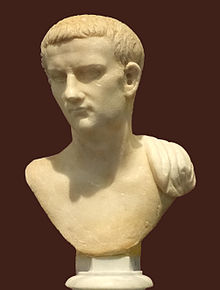
Gaius Caligula lived twenty-nine years and ruled Rome three years, ten months and eight days. When he died, his reign of depravity and terror died with him.  

Today, millions of Americans fear a similar fate will sweep their country if Donald Trump becomes President.  

Caligula’s life spanned August 31, 12 A.D. to January 24, 41 A.D.

Gaius Caligula

Trump was born on June 14, 1946.  

Caligula became Emperor in 37 A.D. after succeeding the Emperor Tiberius, his uncle who had adopted him as a son after his father died. 

Trump began his real estate career at his father’s real estate and construction company. His rose to wealth and fame after his father, Fred, gave him control of the business in 1971.  

Caligula’s reign began well–and popularly. He gave Tiberius a magnificent funeral–then recalled to Rome all those whom Tiberius had banished.

He gave bonuses to the military and destroyed lists of those Tiberius had declared traitors. He allowed the magistrates unrestricted jurisdiction, without appeal to himself.

Similarly, soon after acquiring the family business, Trump set out to build his own empire–hotels, golf courses, casinos, skyscrapers across North and South America, Europe and Asia. He named many of them after himself.

Donald Trump

He appeared at the Miss USA pageants, which he owned from 1996 to 2015. He hosted and co-produced The Apprentice, an NBC reality television series from 2004 to 2015.

The ancient historians describe Caligula as a noble and enlightened ruler during the first six months of his reign. But in October 37 A.D. he fell seriously ill or perhaps was poisoned.

Caligula soon recovered but emerged a changed man. He began killing or exiling those who were close to him and anyone he saw as a threat.

Trump has never been charged with murder. But during his second Presidential debate with Democratic nominee Hillary Clinton, he previewed the dangers of a Trump Justice Department: “If I win I am going to instruct my attorney general to get a special prosecutor to look into your situation.”  

Caligula’s egomania soon reached psychotic heights.

  • He  gave himself several surnames: “Pious,” “Child of the Camp,” “Father of the Armies,” and “Greatest and Best of Caesars.”
  • Flattered that he had risen higher than princes and kings, he began to believe himself a god.
  • He appeared at the temple of Castor and Pollux to be worshiped as Jupiter Latiaris. 
  • He also set up a special temple to his own godhead.

Trump’s egomania is literally stamped on his properties. Of the 515 entities he owns, 268 of them–52%–bear his last name. He often refers to his properties as “the swankiest,” “the most beautiful.”  

Among the references he’s made to himself: 

  • “My fingers are long and beautiful, as, it has been well documented, are various other parts of my body.” 
  • “I think the only difference between me and the other candidates is that I’m more honest and my women are more beautiful.”
  • “My Twitter has become so powerful that I can actually make my enemies tell the truth.”
  • “My IQ is one of the highest–and you all know it.”

When Caligula wasn’t ordering wholesale Stalin-like purges–ranging from Roman aristocrats to slaves–he was setting new records for debauchery.

According to the Roman historian Gaius Suetonius Tranquillus: “He lived in habitual incest with all his [three] sisters, and at a large banquet he placed each of them in turn below him, while his wife reclined above. Of these he is believed to have violated Drusilla when he was still a minor.” 

Trump has never been charged with incest, but he’s repeatedly made sexually inappropriate comments about his daughter, Ivanka:  

  • “Yeah, she’s really something, and what a beauty, that one. If I weren’t happily married and, ya know, her father …”
  • When Trump appeared on the Dr. Oz Show, he was joined on stage by Ivanka. After they kissed, Dr. Oz said: “It’s nice to see a dad kiss his daughter.” Trump: “I kiss her every chance I get.”  The remark was edited before the show aired.
  • When asked how he would react if Ivanka, a former teen model, posed for Playboy, Trump replied: “I don’t think Ivanka would do that, although she does have a very nice figure. I’ve said if Ivanka weren’t my daughter, perhaps I’d be dating her.”  
  • “You know who’s one of the great beauties of the world, according to everybody? And I helped create her. Ivanka. My daughter, Ivanka. She’s 6 feet tall, she’s got the best body.” 

Ivanka Trump

One final trait that Caligula shared with Trump: Both relished humiliating others.  

Caligula’s fatal mistake was to taunt Cassius Chaerea, a member of his own bodyguard. Caligula considered Chaerea effeminate because of a weak voice and mocked him with names like “Priapus” and “Venus.”  

On January 22 41 A.D. Chaerea and several other bodyguards hacked Caligula to death before other guards could save him.  

The number of people, places and things Trump has insulted is so extensive The New York Times compiled a list of all 273 of them.

On October 7, Trump’s speaking insultingly about women (“I just start kissing them. I don’t even wait. You can do anything. Grab them by the pussy”) threatened to derail his Presidential candidacy.  

It remains to be seen if Trump suffers the final fate of Caligula.

CALIGULA’S APPRENTICE: PART ONE (OF TWO)

In History, Politics, Social commentary on October 10, 2016 at 12:26 am

Donald Trump is the official Republican nominee for President of the United States.

But even many Republicans have come to believe he’s better-suited for the role of apprentice to Gaius Caligula. It was Caligula who, as the mad emperor of Rome, once said: “Bear in mind that I can treat anyone exactly as I please.”

Gaius Caligula

On October 7, The Washington Post leaked a video of Donald Trump making sexually predatory comments about women.

The remarks came during a 2005 exchange with Billy Bush, then the host of Access Hollywood (and now host of Today).    

The two were traveling in an Access Hollywood bus to the set of the soap opera Days of Our Lives, where Trump was to make a cameo appearance.

Neither Trump nor Bush could be seen during the exchange–the video focuses entirely on the bus. But the audio came in clearly–and, for Trump, damningly:

Donald Trump: You know and I moved on her actually. You know she was down on Palm Beach.

Unknown: She used to be great. She’s still very beautiful.

Trump: I moved on her and I failed. I’ll admit it. 

Trump: I did try and fuck her. She was married.

Unknown: That’s huge news.

Trump: No, no, Nancy. No this was–and I moved on her very heavily, in fact, I took her out furniture shopping. She wanted to get some furniture. I said I’ll show you where they have some nice furniture.

I took her out furniture. I moved on her like a bitch, but I couldn’t get there, and she was married. Then all of a sudden I see her, she’s now got the big phony tits and everything. She’s totally changed her look.

[At that point, they spot Adrianne Zucker, the starring actress in Days in Our Lives.]

Trump, Zucker and Bush

Bush: Sheesh, your girl’s hot as shit. In the purple.

Various: Whoa! Yes! Whoa!

Bush: Yes! The Donald has scored. Whoa, my man!

Trump: Look at you. You are a pussy.

Trump: Maybe it’s a different one.

Bush: It better not be the publicist. No, it’s her. It’s–

Trump: Yeah, that’s her. With the gold. I better use some Tic Tacs just in case I start kissing her. You know I’m automatically attracted to beautiful–I just start kissing them. It’s like a magnet. Just kiss. I don’t even wait. And when you’re a star they let you do it. You can do anything.

Bush: Whatever you want.

Trump: Grab them by the pussy. You can do anything.

When the Washington Post broke the story on October 7, the reaction was immediate–and explosive.

From across the nation, prominent Republicans erupted in shock and anger–whether feigned or genuine: 

Gov. Mike Pence, Republican Vice Presidential nominee: “As a husband and father, I was offended by the words and actions described by Donald Trump the eleven-year-old video released yesterday. I do not condone his remarks and cannot defend them.”

House Speaker Paul Ryan:  “I am sickened by what I heard today. Women are to be championed and revered, not objectified.” 

Senate Majority Leader Mitch McConnell: “These comments are repugnant, and unacceptable in any circumstance.”

Republican National Committee Chairman Reince Priebus: “No woman should ever be described in these terms or talked about in this manner. Ever.”  

Trump tried to stop the uproar by issuing a non-apology that attacked his Democratic opponent, Hillary Clinton: “I’ve never said I’m a perfect person, nor pretended to be someone that I’m not. I’ve said and done things I regret, and the words released today on this more than a decade-old video are one of them.

“Anyone who knows me knows these words don’t reflect who I am.  I said it, I was wrong and I apologize…Bill Clinton has actually abused women and Hillary has bullied, attacked, shamed and intimidated his victims.”

Some Republicans excused Trump’s misogynist comments as mere “frat boy” talk. Among these:

Corey Lewandowski, former Trump campaign manager and now CNN commentator: “We are electing a leader to the free world. We’re not electing a Sunday school teacher.”  

Michele Bachmann, former Minnesota Congresswoman: Trump was guilty of “bad boy talk.”  

And Carl Paladino, the co-chairman of Trump’s campaign in New York: Trump’s comments were something “all men do, at least all normal men.”

But Washington Post Columnist Micheal Gerson has taken a darker–and more accurate–view of Trump’s comments.  

Appearing on the PBS Newshour on October 7, Gerson said: “Well, I think the problem here is not just bad language, but predatory language, abusive language…demeaning language. 

“That indicates something about someone’s character that is disturbing, frankly, disturbing in a case like this.”  

* * * * *

This was not a testosterone-fueled teenager fantasizing about making love with a girl he adored.

This was a 59-year-old man bragging about having used deceit to try to lure a married woman into bed. 

And about having used his celebrity status to force himself on women: I moved on her very heavily. Just kiss. I don’t even wait. Grab them by the pussy. You can do anything.  

Gaius Caligula himself couldn’t have said it better.