Posts Tagged ‘THE VIRTUES OF WAR’
ABC NEWS, AFGHANISTAN, ALCIBIADES, ALEXANDER THE GREAT, ALTERNET, AMERICABLOG, AP, BABY BOOMER RESISTANCE, BBC, BILL O'REILLY, BLOOMBERG, BUZZFEED, CBS NEWS, CNN, CROOKS AND LIARS, DAILY KOS, FIVETHIRTYEIGHT, FOX NEWS CHANNEL, GATES OF FIRE (BOOK), HARPER’S MAGAZINE, HUFFINGTON POST, MEDIA MATTERS, MERCENARIES, MOTHER JONES, MOVEON, MSNBC, NBC NEWS, NEW REPUBLIC, NEWSDAY, NEWSWEEK, NICCOLO MACHIAVELLI, NPR, PBS NEWSHOUR, POLITICO, POLITICUSUSA, RAW STORY, REUTERS, SALON, SEATTLE TIMES, SLATE, SPARTA, STEVEN PRESSFIELD, TALKING POINTS MEMO, THE AFGHAN CAMPAIGN (BOOK), THE ATLANTIC, THE CHICAGO SUN-TIMES, THE CHICAGO TRIBUNE, THE DAILY BEAST, THE DAILY BLOG, THE GUARDIAN, THE HILL, THE HUFFINGTON POST, THE INTERCEPT, THE LOS ANGELES TIMES, THE NATION, THE NEW REPUBLIC, THE NEW YORK TIMES, THE NEW YORKER, THE O'REILLY FACTOR, THE PROFESSION (BOOK), THE VILLAGE VOICE, THE VIRTUES OF WAR, THE VIRTUES OF WAR (BOOK), THE WASHINGTON POST, THERMOPYLAE, THINKPROGRESS, TIDES OF WAR (BOOK), TIME, TRUTHDIG, TRUTHOUT, TWO POLITICAL JUNKIES, U.S. NEWS & WORLD REPORT, UPI, USA TODAY, X
In Business, History, Military, Politics, Social commentary on May 6, 2024 at 12:12 am
Bill O’Reilly, the former host of the Fox News Channel program The O’Reilly Factor, has offered his own solution to fighting terrorism: A multinational mercenary army, based on a NATO coalition and trained by the United States.
“We would select them, special forces would train them—a 25,000-man force to be deployed to fight on the ground against worldwide terrorism. Not just ISIS,” O’Reilly said on “CBS This Morning” on September 24, 2014.

Bill O’Reilly
Actually, O’Reilly’s idea is the subject of The Profession, a 2011 novel by bestselling author Steven Pressfield.
Pressfield made his literary reputation with four classic novels about classical Greece.
In Gates of Fire (1998) he explored the rigors and heroism of Spartan society—and the famous last stand of its 300 picked warriors at Thermopylae.
In Tides of War (2000) Pressfield depicted the rise and fall of Alcibiades, Athens’ greatest general, as he shifted his loyalties from that city to its arch-enemy, Sparta, and then to Persia, the enemy of both.
In The Virtues of War (2004) he took on the identity of Alexander the Great, explaining to his readers what it was like to command armies that swept across the known world, destroying all who dared oppose them.
Finally, in The Afghan Campaign (2006) Pressfield—this time from the viewpoint of a lowly Greek soldier—refought Alexander’s brutal, three-year anti-guerrilla campaign in Afghanistan.
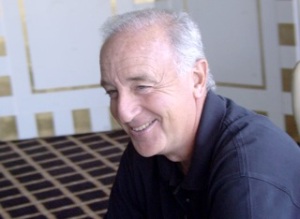
Steven Pressfield
But in The Profession, Pressfield created a seemingly plausible world set into the future of 2032. The book’s own dust jacket offers the best summary of its plot-line:
“The year is 2032. The third Iran-Iraq war is over. The 11/11 dirty bomb attack on the port of Long Beach, California is receding into memory. Saudi Arabia has recently quelled a coup. Russians and Turks are clashing in the Caspian Basin.
“Iranian armored units, supported by the satellite and drone power of their Chinese allies, have emerged from their enclaves in Tehran and are sweeping south attempting to recapture the resource rich territory that had been stolen from them, in their view, by Lukoil, BP, and ExxonMobil and their privately-funded armies.
“Everywhere military force is for hire. Oil companies, multi-national corporations and banks employ powerful, cutting-edge mercenary armies to control global chaos and protect their riches.
“Even nation states enlist mercenary forces to suppress internal insurrections, hunt terrorists, and do the black bag jobs necessary to maintain the new New World Order.
“Force Insertion is the world’s merc monopoly. Its leader is the disgraced former United States Marine General James Salter, stripped of his command by the president for nuclear saber-rattling with the Chinese and banished to the Far East.”
Salter appears as a hybrid of World War II General Douglas MacArthur and Iraqi War General Stanley McCrystal. Like MacArthur, Salter has butted heads with his President—and paid dearly for it. Now his ambition is no less than to become President himself—by popular acclaim.
And like McCrystal, he is a pure warrior who leads from the front and is revered by his men. Salter seizes Saudi oil fields, then offers them as a gift to America. By doing so, he makes himself the most popular man in the country—and a guaranteed occupant of the White House.
And in 2032 the United States is a far different nation from the one its Founding Fathers created in 1776.
“Any time that you have the rise of mercenaries…society has entered a twilight era, a time past the zenith of its arc,” says Salter.”The United States is an empire…but the American people lack the imperial temperament. We’re not legionaries, we’re mechanics. In the end the American Dream boils down to what? ‘I’m getting mine and the hell with you.'”
Americans, asserts Salter, have come to like mercenaries: “They’ve had enough of sacrificing their sons and daughters in the name of some illusory world order. They want someone else’s sons and daughters to bear the burden….
“They want their problems to go away. They want me to to make them go away.”
And so Salter will “accept whatever crown, of paper or gold, that my country wants to press upon me.”
More than 500 years ago, Niccolo Machiavelli warned of the dangers of relying on mercenaries:
“Mercenaries…are useless and dangerous. And if a prince holds on to his state by means of mercenary armies, he will never be stable or secure; for they are disunited, ambitious, without discipline, disloyal; they are brave among friends; among enemies they are cowards.
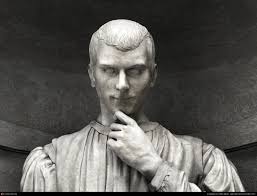
Niccolo Machiavelli
“They have neither the fear of God nor fidelity to men, and destruction is deferred only so long as the attack is. For in peace one is robbed by them, and in war by the enemy.”
Centuries ago, Niccolo Machiavelli issued a warning against relying on men whose first love is their own enrichment.
Steven Pressfield, in a work of fiction, has given us a nightmarish vision of a not-so-distant America where “Name your price” has become the byword for an age.
Both warnings are well worth heeding.
2016 PRESIDENTIAL CAMPAIGN, ABC NEWS, ALEXANDER THE GREAT, ALTERNET, AMERICABLOG, AP, BABY BOOMER RESISTANCE, BBC, BLOOMBERG NEWS, BUZZFEED, CBS NEWS, CNN, CROOKS AND LIARS, DAILY KOS, DONALD TRUMP, FEDERAL SECURITY SERVICE, FIVETHIRTYEIGHT, GATES OF FIRE, HARPER’S MAGAZINE, HUFFINGTON POST, KGB, MEDIA MATTERS, MERCENARIES, MOTHER JONES, MOVEON, MSNBC, NBC NEWS, NEW REPUBLIC, NEWSDAY, NEWSWEEK, NICCOLO MACHIAVELLI, NPR, PBS NEWSHOUR, POLITICO, POLITICUSUSA, RAW STORY, REUTERS, SALON, SEATTLE TIMES, SLATE, SPARTA, STEVEN PRESSFIELD, TALKING POINTS MEMO, THE ATLANTIC, THE CHICAGO SUN-TIMES, THE CHICAGO TRIBUNE, THE DAILY BEAST, THE DAILY BLOG, THE GUARDIAN, THE HILL, THE HUFFINGTON POST, THE INTERCEPT, THE LOS ANGELES TIMES, THE NATION, THE NEW REPUBLIC, THE NEW YORK TIMES, THE NEW YORKER, THE PROFESSION, THE VILLAGE VOICE, THE VIRTUES OF WAR, THE WASHINGTON POST, THERMOPYLAE, THINKPROGRESS, TIME, TRUTHDIG, TRUTHOUT, TWITTER, U.S. NEWS & WORLD REPORT, UKRAINE, UPI, USA TODAY, VLADIMIR PUTIN, WAGNER GROUP, YEGENEY PRIGOZHIN
In Bureaucracy, Business, History, Military, Politics, Social commentary on June 27, 2023 at 12:36 am
In May, 2014, Yevgeny Prigozhin founded the Kremlin-affiliated mercenary army Wagner Group.
Since Russian President Vladimir Putin ordered a “special military operation” against Ukraine on February 24, 2022, Wagner has played a major role in the fighting.
Prigozhin has repeatedly clashed with Russian Defense Minister Sergei Shoigu, blaming him for a lack of ammunition to his embattled fighters—resulting in thousands of casualties.

Yevgeney Prigozhin
Government of the Russian Federation, CC BY 3.0 <https://creativecommons.org/licenses/by/3.0>, via Wikimedia Commons
On June 23, 2023, Prigozhin claimed that regular Russian armed forces had launched missile strikes against Wagner forces, killing a “huge” number.
He announced: “The council of commanders of PMC Wagner has made a decision—the evil that the military leadership of the country brings must be stopped.”
In response, criminal charges were filed against Prigozhin by the Russian Federal Security Service —the renamed KGB—for inciting an armed rebellion.
Wagner withdrew from Ukraine, occupied the Russian city of Rostov-on-Don and headed for Moscow. While doing so, Wagner shot down a Russian fighter plane and several military helicopters.
Putin decried the action as treason, and vowed to quash the uprising.
Talks between Prigozhin and Belarussian president Alexander Lukashenko resulted in charges being dropped. Wagner ceased its march on Moscow. Prigozhin will move to Belarus but remain under investigation for treason. Wagner troops will return to Ukraine.
The danger of relying on mercenaries forms the plot of The Profession, a 2011 novel by bestselling author Steven Pressfield.

Pressfield made his literary reputation with a series of classic novels about ancient Greece.
In Gates of Fire (1998) he explored the rigors and heroism of Spartan society—and the famous last stand of its 300 picked warriors at Thermopylae.
In The Virtues of War (2004) he entered the mind of Alexander the Great, whose armies swept across the known world, destroying all who dared oppose them.
But in The Profession, Pressfield created a plausible world set into the future of 2032. The book’s own dust jacket offers the best summary of its plot-line:
“Everywhere military force is for hire. Oil companies, multi-national corporations and banks employ powerful, cutting-edge mercenary armies to control global chaos and protect their riches.
“Force Insertion is the world’s merc monopoly. Its leader is the disgraced former United States Marine General James Salter, stripped of his command by the president for nuclear saber-rattling with the Chinese and banished to the Far East.’
Steven Pressfield
Salter appears as a hybrid of World War II General Douglas MacArthur and Iraqi War General Stanley McCrystal.
Like MacArthur, Salter has butted heads with his President—and paid dearly for it. Now his ambition is no less than to become President himself—by popular acclaim. And like McCrystal, he is a pure warrior who leads from the front and is revered by his men.
Salter seizes Saudi Arabian oil fields, then offers them as a gift to America. By doing so, he makes himself the most popular man in the country—and a guaranteed occupant of the White House.
And in 2032 the United States is a far different nation from the one its Founding Fathers created in 1776.
Douglas MacArthur (left), Stanley McCrystal (right)
“The United States is an empire…but the American people lack the imperial temperament,” asserts Salter. “We’re not legionaries, we’re mechanics. In the end the American Dream boils down to what? ‘I’m getting mine and the hell with you.’”
Americans, says Salter, have come to like mercenaries: “They’ve had enough of sacrificing their sons and daughters in the name of some illusory world order. They want someone else’s sons and daughters to bear the burden….
“They want their problems to go away. They want me to to make them go away.”
And so Salter will “accept whatever crown, of paper or gold, that my country wants to press upon me.”
Returning to the United States, he is acclaimed as a hero—and the next President.
He is under no delusion that his country is on a downward spiral toward oblivion: “Any time that you have the rise of mercenaries…society has entered a twilight era, a time past the zenith of its arc.”
Nor does he believe that his Presidency will arrest that decline: “But maybe in the short run, it’s better that my hand be on the wheel…rather than some other self-aggrandizing sonofabitch whose motives might not be as well intentioned….”
More than 500 years ago, Niccolo Machiavelli warned of the dangers of relying on mercenaries:
“Mercenaries…are useless and dangerous. And if a prince holds on to his state by means of mercenary armies, he will never be stable or secure; for they are disunited, ambitious, without discipline, disloyal; they are brave among friends; among enemies they are cowards.
Niccolo Machiavelli
“They have neither the fear of God nor fidelity to men, and destruction is deferred only so long as the attack is. For in peace one is robbed by them, and in war by the enemy.”
Centuries ago, Niccolo Machiavelli issued a warning against relying on men whose first love is their own enrichment.
Steven Pressfield, in a work of fiction, has given us a nightmarish vision of a not-so-distant America where “Name your price” has become the byward for an age.
Both warnings are well worth heeding.
"EXCALIBUR", ABC NEWS, AFGHANISTAN, ALEXANDER THE GREAT, ALTERNET, AMERICABLOG, AP, BABY BOOMER RESISTANCE, BBC, BLOOMBERG NEWS, BUZZFEED, CBS NEWS, CNN, CROOKS AND LIARS, DAILY KOS, FIVETHIRTYEIGHT, GEORGE W. BUSH, HARPER’S MAGAZINE, HUFFINGTON POST, IRAQ, JOHN BOORMAN, KING ARTHUR, MEDIA MATTERS, MOTHER JONES, MOVEON, MSNBC, NBC NEWS, NEW REPUBLIC, NEWSDAY, NEWSWEEK, NPR, PBS NEWSHOUR, POLITICO, POLITICUSUSA, RAW STORY, REUTERS, SALON, SEATTLE TIMES, SLATE, STEVEN PRESSFIELD, TALKING POINTS MEMO, THE AFGHAN CAMPAIGN (BOOK), THE ATLANTIC, THE CHICAGO SUN-TIMES, THE CHICAGO TRIBUNE, THE DAILY BEAST, THE DAILY BLOG, THE GUARDIAN, THE HILL, THE HUFFINGTON POST, THE INTERCEPT, THE LOS ANGELES TIMES, THE NATION, THE NEW REPUBLIC, THE NEW YORK TIMES, THE NEW YORKER, THE VILLAGE VOICE, THE VIRTUES OF WAR, THE WASHINGTON POST, THINKPROGRESS, TIME, TRUTHDIG, TRUTHOUT, TWITTER, U.S. MARINE CORPS, U.S. NEWS & WORLD REPORT, UPI, USA TODAY
In History, Military, Politics, Social commentary on April 21, 2023 at 12:10 am
In “Excalibur,” director John Boorman’s brilliant 1981 telling of the King Arthur legends, Merlin warns Arthur’s knights–and us: “For it is the doom of men that they forget.”
Not so Steven Pressfield, who repeatedly holds up the past as a mirror to our present. Case in point: His 2006 novel, The Afghan Campaign.

By 2006, Americans had been fighting in Afghanistan for five years. And after 20 years into the same war, Americans reached the same conclusion: The best outcome was to get out.
Pressfield’s novel, although set 2,000 years into the past, has much to teach us about what our soldiers faced in that same alien, unforgiving land.
Matthias, a young Greek seeking glory and opportunity, joins the army of Alexander the Great. But the Persian Empire has fallen, and the days of conventional, set-piece battles—where you can easily tell friend from foe—are over.
Alexander next plans to conquer India, but to get there he must first enter Afghanistan. It’s here that the Macedonians meet a new—and deadly—kind of enemy.
“Here the foe does not meet us in pitched battle,” warns Alexander. “Even when we defeat him, he will no accept our dominion. He comes back again and again. He hates us with a passion whose depth is exceeded only by his patience and his capacity for suffering.”
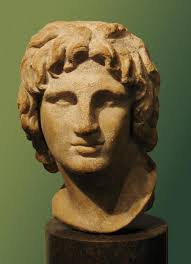
Alexander the Great
Matthias learns this early. In his first raid on an Afghan village, he’s ordered to execute a helpless prisoner. When he hesitates, he’s brutalized by his superior until he strikes out with his sword—and botches the job.
But, soon, exposed to an unending series of atrocities—committed by himself and his comrades on Afghans, and by Afghans on his own fellow soldiers—he finds himself transformed.
And he hates it. He agonizes over the gap between the ideals he embraced when he became a soldier—and the brutalities that have drained him of everything but a grim determination to survive at any cost:
“When we were boys, we rode from dark to dark, training for the charge and the chase. We dreamed of standing before our king as knights and heroes. I still do. There must be some way to be a good soldier in a rotten war.”
It’s a sentiment no doubt expressed by countless Americans in Afghanistan—and Vietnam.
Pressfield, a former Marine himself, repeatedly contrasts how civilians see war as a kind of “glorious” child’s-play with how soldiers actually experience it.

He creates an extraordinary exchange between Costas, an ancient-world version of a CNN war correspondent, and Lucas, a soldier whose morality is outraged at how Costas and his ilk routinely prettify the indescribable.
Costas wants to give his audience a beautifully antiseptic view of the conflict. Lucas will have none of it.
And we know the truth of this exchange immediately. For we know there are doubtless brutalities inflicted by our troops on the enemy—and atrocities inflicted by the enemy upon them—that never make the headlines, let alone the TV cameras.
We also know that, decades from now, thousands of our former soldiers will carry horrific memories to their graves. These memories will remain sealed from public view, allowing their fellow but un-blooded Americans to sleep peacefully, unaware of and unaffected by the terrible price that others have paid on their behalf.
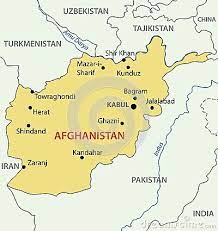
Afghanistan
Like the Macedonians (who call themselves “Macks”), our own soldiers found themselves serving in an all-but-forgotten land among a populace whose values could not be more alien from our own if they came from Mars.
Instinctively, they turned to one another—not only for physical security but to preserve their last vestiges of humanity. As the war-weary veteran, Lucas, advises:
“Never tell anyone except your mates. Only you don’t need to tell them. They know. They know you. Better than a man knows his wife, better than he knows himself. They’re bound to you and you to them, like wolves in a pack. It’s not you and them. You are them. The unit is indivisible. One dies, we all die.”
Put conversely: One lives, we all live.
Pressfield has reached into the past to reveal fundamental truths about the present that most of us could probably not accept if contained in a modern-day memoir.
These truths take on an immediate poignancy owing to our 20-year war in Afghanistan. But they will remain just as relevant decades from now, when our now-young soldiers are old and retired.
This book has been described as a sequel to Pressfield’s The Virtues of War: A Novel of Alexander the Great, which appeared in 2004. But it isn’t.
Virtues showcased the brilliant and luminous (if increasingly dark and explosive) personality of Alexander the Great, whose good-vs.-evil rhetoric—like that of President George W. Bush—inspired men to hurl themselves into countless battles on his behalf.
But Afghan thrusts us directly into the flesh-and-blood realities created by that rhetoric: The horrors of men traumatized by an often unseen but always menacing enemy, and the horrors they must inflict in return if they are to survive in a hostile and alien world.
ABC NEWS, AFGHANISTAN WAR, ALEXANDER THE GREAT, ALTERNET, AP, ATHENS, BARACK OBAMA, BBC, BUZZFEED, CBS NEWS, CENTRAL INTELLIGENCE AGENCY, CNN, DAILY KOS, DAVID PETRAEUS, DONALD TRUMP, DWIGHT D. EISENHOWER, ESPIONAGE, FACEBOOK, GATES OF FIRE, IRAQ WAR, JAMES BOND, JOSEPH MCCARTHY, MOTHER JONES, MOVEON, NBC NEWS, NEWSWEEK, NPR, PAULA BROADWELL, POLITICO, RAW STORY, REUTERS, SALON, SEATTLE TIMES, SKYFALL, SLATE, SPARTA, SPYING, STEVEN PRESSFIELD, THE AFGHAN CAMPAIGN, THE ATLANTIC, THE CHICAGO SUN-TIMES, THE CHICAGO TRIBUNE, THE DAILY BEAST, THE GUARDIAN, THE HILL, THE HUFFINGTON POST, THE LOS ANGELES TIMES, THE NEW YORK TIMES, THE VIRTUES OF WAR, THE WALL STREET JOURNAL, THE WASHINGTON POST, TIDES OF WAR, TIME, TWITTER, U.S. MARINE CORPS, U.S. NEWS & WORLD REPORT, UPI, USA TODAY
In Bureaucracy, History, Military, Politics, Social commentary on April 21, 2017 at 12:20 am
Steven Pressfield is the bestselling author of several novels on ancient Greece.
Steven Pressfield
In Gates of Fire (1998) he celebrated the immortal battle of Thermopylae, where 300 Spartans held at bay a vastly superior Persian army for three days.
In Tides of War (2000) he re-fought the ancient world’s 25-year version of the Cold War between the Greek city-states of Athens and Sparta.
n The Virtues of War (2004) he chronicled the military career of Alexander the Great–through the eyes of the conqueror himself.

And in The Afghan Campaign (2006) he accompanied Alexander’s army as it waged a vicious, three-year counterinsurgency war against native Afghans.
Besides being an amateur historian of armed conflict, Pressfield is a former Marine. His novel, Gates of Fire, has been adopted by the Marine Corps as required reading.
So Pressfield knows something about the art–and horrors–of war. And about the decline of heroism in the modern age.
Consider the events of November 9, 2012.
On that date, General David Petraeus suddenly resigned his position as director of the Central Intelligence Agency. He had held this just slightly more than a year.
The reason: The revelation of–and his admission to–an extramarital affair with Paula Broadwell, the woman who had written an admiring biography of him called All In.
Ironically, this happened to be the same day that “Skyfall”–the latest James Bond film–opened nationwide.
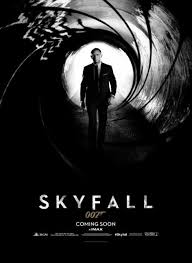
Since Bond made his first onscreen appearance in 1962’s “Dr. No,” England’s most famous spy has bedded countless women. And has become internationally famous as the ultimate ladykiller.
But real-life doesn’t quite work the same way.
What is permitted–and even celebrated–in a fictional spy is not treated the same way in the real world of espionage.
Prior to this, Petraeus had been the golden boy of the American Army–the best-known and most revered general since Dwight D. Eisenhower.
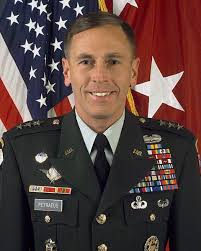
David Petraeus
The man who
- had given 37 years of his life to protecting the nation;
- had rewritten the book on how to fight counterinsurgency wars;
- had turned around the stagnated war in Iraq;
- had presided over the winding down of the war in Afghanistan.
As President Barack Obama put it:
“General Petraeus had an extraordinary career. He served this country with great distinction in Iraq, in Afghanistan and as head of the CIA.
“I want to emphasize that from my perspective, at least, he has provided this country an extraordinary service. We are safer because of the work that Dave Petraeus has done.
“And my main hope right now is that he and his family are able to move on and that this ends up being a single side note on what has otherwise been an extraordinary career.”
It’s why Pressfield candidly admits he prefers the ancient world to the present:
“If I’m pressed to really think about the question, I would answer that what appeals to me about the ancient world as opposed to the modern is that the ancient world was pre-Christian, pre-Freudian, pre-Marxist, pre-consumerist, pre-reductivist.
“It was grander, it was nobler, it was simpler. You didn’t have the notion of turn-the-other-cheek. You had Oedipus but you didn’t have the Oedipus complex. It was political but it was not politically correct.”
To illustrate what he meant, Pressfield cited this passage from Thucydides’ The Peloponnesian War, on how ancient-world politics took on its own tone of McCarthyism:
To fit in with the change of events, words, too, had to change their usual meanings. What used to be described as a thoughtless act of aggression was now regarded as the courage one would expect to find in a party member.
To think of the future and wait was merely another way of saying one was a coward. Any idea of moderation was just an attempt to disguise one’s unmanly character. Ability to understand a question from all sides meant that one was totally unfitted for action.
As if speaking on the scandal involving David Petraeus, Pressfield states:
“Our age has been denatured. The heroic has been bled out of it.
“The callings of the past––he profession of arms, the priesthood, the medical and legal professions, politics, the arts, journalism, education, even motherhood and fatherhood–every one has been sullied and degraded by scandal after scandal.
“We’re hard up for heroes these days, and even harder up for conceiving ourselves in that light. That’s why I’m drawn to the ancient world. It’s truer, in my view, to how we really are.
“The ancient world has not been reductified and deconstructed as ours has; it has not been robbed of all dignity. They had heroes then. There was such a thing, truly, as the Heroic Age. Men like Achilles and Leonidas really did exist.
“There was such a thing, truly, as heroic leadership. Alexander the Great did not command via satellite or remote control. He rode into battle at the head of his Companion cavalry; he was the first to strike the foe.”
Today, generals command armies while stationed thousands of miles from the front. And they face more danger from heart attacks than enemy bullets.
And commanding American generals is Donald Trump, a five-times draft-dodger who equates avoiding sexually-transmitted diseases with surviving the Vietnam war: “It is my personal Vietnam. I feel like a great and very brave soldier.”
2016 PRESIDENTIAL CAMPAIGN, ABC NEWS, ALEXANDER THE GREAT, CBS NEWS, CNN, DONALD TRUMP, FACEBOOK, GATES OF FIRE, MERCENARIES, NBC NEWS, NEWSWEEK, NICCOLO MACHIAVELLI, NPR, SPARTA, STEVEN PRESSFIELD, THE CHICAGO SUN-TIMES, THE CHICAGO TRIBUNE, THE HUFFINGTON POST, THE LOS ANGELES TIMES, THE NEW YORK TIMES, THE PROFESSION, THE VIRTUES OF WAR, THE WASHINGTON POST, THERMOPYLAE, TIME, TWITTER, U.S. NEWS & WORLD REPORT, USA TODAY
In Bureaucracy, Business, History, Military, Politics, Social commentary on December 19, 2016 at 12:05 am
On August 17, 2015, Republican Presidential candidate Donald Trump outlined his strategy for defeating the Islamic State of Iraq and Syria (ISIS).
He would order American forces to take over the oil fields that ISIS has seized in Iraq.
Trump outlined his plans for future military operations against ISIS on NBC’s “Meet the Press” with Chuck Todd.
“Now we’re there, and you have ISIS….And ISIS is taking over a lot of the oil in certain areas of Iraq.
“And I said, you take away their wealth. You go and knock the hell out of the oil. Take back the oil. We take over the oil, which we should have done in the first place” during the 2003 invasion of Iraq.
After taking over the Iraqi oil fields, said Trump, “we’re going to have so much money.
“And what I would do with the money that we make, which would be tremendous, I would take care of the soldiers that were killed, the families of the soldiers that were killed, the soldiers, the wounded warriors that are–see, I love them.”
Actually, Trump’s idea forms the plot of The Profession, a 2011 novel by bestselling author Steven Pressfield.
Pressfield made his literary reputation with a series of classic novels about ancient Greece.
In Gates of Fire (1998) he explored the rigors and heroism of Spartan society–and the famous last stand of its 300 picked warriors at Thermopylae.
In The Virtues of War (2004) he entered the mind of Alexander the Great, whose armies swept across the known world, destroying all who dared oppose them.
Steven Pressfield
But in The Profession, Pressfield created a plausible world set into the future of 2032. The book’s own dust jacket offers the best summary of its plot-line:
“The third Iran-Iraq war is over. The 11/11 dirty bomb attack on the port of Long Beach, California is receding into memory. Saudi Arabia has recently quelled a coup. Russians and Turks are clashing in the Caspian Basin….
“Everywhere military force is for hire. Oil companies, multi-national corporations and banks employ powerful, cutting-edge mercenary armies to control global chaos and protect their riches.
“Even nation states enlist mercenary forces to suppress internal insurrections, hunt terrorists, and do the black bag jobs necessary to maintain the new New World Order.
“Force Insertion is the world’s merc monopoly. Its leader is the disgraced former United States Marine General James Salter, stripped of his command by the president for nuclear saber-rattling with the Chinese and banished to the Far East.’
Salter appears as a hybrid of World War II General Douglas MacArthur and Iraqi War General Stanley McCrystal.
Douglas MacArthur (left), Stanley McCrystal (right)
Like MacArthur, Salter has butted heads with his President–and paid dearly for it. Now his ambition is no less than to become President himself–by popular acclaim. And like McCrystal, he is a pure warrior who leads from the front and is revered by his men.
Salter seizes Saudi Arabian oil fields, then offers them as a gift to America. By doing so, he makes himself the most popular man in the country–and a guaranteed occupant of the White House.
And in 2032 the United States is a far different nation from the one its Founding Fathers created in 1776.
“The United States is an empire…but the American people lack the imperial temperament. We’re not legionaries, we’re mechanics. In the end the American Dream boils down to what? ‘I’m getting mine and the hell with you.’”
Americans, asserts Salter, have come to like mercenaries: “They’ve had enough of sacrificing their sons and daughters in the name of some illusory world order. They want someone else’s sons and daughters to bear the burden….
“They want their problems to go away. They want me to to make them go away.”
And so Salter will “accept whatever crown, of paper or gold, that my country wants to press upon me.”
Returning to the United States, he is acclaimed as a hero–and the next President.
He is under no delusion that his country is on a downward spiral toward oblivion: “Any time that you have the rise of mercenaries…society has entered a twilight era, a time past the zenith of its arc.”
Nor does he believe that his Presidency will arrest that decline: “But maybe in the short run, it’s better that my hand be on the wheel…rather than some other self-aggrandizing sonofabitch whose motives might not be as well intentioned….”
More than 500 years ago, Niccolo Machiavelli warned of the dangers of relying on mercenaries:
“Mercenaries…are useless and dangerous. And if a prince holds on to his state by means of mercenary armies, he will never be stable or secure; for they are disunited, ambitious, without discipline, disloyal; they are brave among friends; among enemies they are cowards.
Niccolo Machiavelli
“They have neither the fear of God nor fidelity to men, and destruction is deferred only so long as the attack is. For in peace one is robbed by them, and in war by the enemy.”
Centuries ago, Niccolo Machiavelli issued a warning against relying on men whose first love is their own enrichment.
Steven Pressfield, in a work of fiction, has given us a nightmarish vision of a not-so-distant America where “Name your price” has become the byward for an age.
Both warnings are well worth heeding.
"EXCALIBUR", ABC NEWS, AFGHANISTAN, ALEXANDER THE GREAT, CBS NEWS, CNN, GEORGE W. BUSH, IRAQ, JOHN BOORMAN, KING ARTHUR, MSNBC, NBC NEWS, STEVEN PRESSFIELD, THE AFGHAN CAMPAIGN, THE CHICAGO SUN-TIMES, THE CHICAGO TRIBUNE, THE HUFFINGTON POST, THE LOS ANGELES TIMES, THE NEW YORK TIMES, THE VIRTUES OF WAR, THE WASHINGTON POST, U.S. MARINE CORPS
In History, Military, Politics, Social commentary on December 25, 2015 at 3:26 pm
In “Excalibur,” director John Boorman’s brilliant 1981 telling of the King Arthur legends, Merlin warns Arthur’s knights–and us: “For it is the doom of men that they forget.”
Not so Steven Pressfield, who repeatedly holds up the past as a mirror to our present. Case in point: His 2006 novel, The Afghan Campaign.
By 2006, Americans had been fighting in Afghanistan for five years. And today, almost ten years into the same war, there remains no clear end in sight–to our victory or withdrawal.
Pressfield’s novel, although set 2,000 years into the past, has much to teach us about what are soldiers are facing today in that same alien, unforgiving land.
Matthias, a young Greek seeking glory and opportunity, joins the army of Alexander the Great. But the Persian Empire has fallen, and the days of conventional, set-piece battles–where you can easily tell friend from foe–are over.
Alexander next plans to conquer India, but first he must pacify its gateway–Afghanistan. Here that the Macedonians meet a new–and deadly–kind of enemy.
“Here the foe does not meet us in pitched battle,” warns Alexander. “Even when we defeat him, he will no accept our dominion. He comes back again and again. He hates us with a passion whose depth is exceeded only by his patience and his capacity for suffering.”
Alexander the Great
Matthias learns this early. In his first raid on an Afghan village, he’s ordered to execute a helpless prisoner. When he hesitates, he’s brutalized until he strikes out with his sword–and botches the job.
But, soon, exposed to an unending series of atrocities–committed by himself and his comrades, as well as the enemy–he finds himself transformed.
And he hates it. He agonizes over the gap between the ideals he embraced when he became a soldier–and the brutalities that have drained him of everything but a grim determination to survive at any cost.
Pressfield, a former Marine himself, repeatedly contrasts how civilians see war as a kind of “glorious” child’s-play with how soldiers actually experience it.
He creates an extraordinary exchange between Costas, an ancient-world version of a CNN war correspondent, and Lucas, a soldier whose morality is outraged at how Costas and his ilk routinely prettify the indescribable.
And we know the truth of this exchange immediately. For we know there are doubtless brutalities inflicted by our troops on the enemy–and atrocities inflicted by the enemy upon them–that never make the headlines, let alone the TV cameras.
We also know that, decades from now, thousands of our former soldiers will carry horrific memories to their graves. These memories will remain sealed from public view, allowing their fellow but unblooded Americans to sleep peacefully, unaware of the terrible price that others have paid on their behalf.
Like the Macedonians (who call themselves “Macks”), our own soldiers find themselves serving in an all-but-forgotten land among a populace whose values could not be more alien from our own if they came from Mars.
Instincitvely, they turn to one another–not only for physical security but to preserve their last vestiges of humanity. As the war-weary veteran, Lucas, advises:
“Never tell anyone except your mates. Only you don’t need to tell them. They know. They know you. Better than a man knows his wife, better than he knows himself. They’re bound to you and you to them, like wolves in a pack. It’s not you and them. You are them. The unit is indivisible. One dies, we all die.”
Put conversely: One lives, we all live.
Pressfield has reached into the past to reveal fundamental truths about the present that most of us could probably not accept if contained in a modern-day memoir.
These truths take on an immediate poignancy owing to our own current war in Afghanistan. But they will remain just as relevant decades from now, when our now-young soldiers are old and retired.
This book has been described as a sequel to Pressfield’s The Virtues of War: A Novel of Alexander the Great, which appeared in 2004. But it isn’t.
Virtues showcased the brilliant and luminous (if increasingly dark and explosive) personality of Alexander the Great, whose Bush-like, good-vs.-evil rhetoric inspired men to hurl themselves into countless battles on his behalf.
But Afghan thrusts us directly into the flesh-and-blood realities created by that rhetoric: The horrors of men traumatized by an often unseen but always menacing enemy, and the horrors they must inflict in return if they are to survive in a hostile and alien world.
2016 PRESIDENTIAL CAMPAIGN, ABC NEWS, AFGHANISTAN, ALEXANDER THE GREAT, CBS NEWS, CNN, DONALD TRUMP, FACEBOOK, GATES OF FIRE, MERCENARIES, NBC NEWS, NICCOLO MACHIAVELLI, SPARTA, STEVEN PRESSFIELD, THE AFGHAN CAMPAIGN, THE CHICAGO SUN-TIMES, THE CHICAGO TRIBUNE, THE LOS ANGELES TIMES, THE NEW YORK TIMES, THE PROFESSION, THE VIRTUES OF WAR, THE WASHINGTON POST, THERMOPYLAE, TWITTER, USA TODAY
In Bureaucracy, History, Military, Politics, Social commentary on September 8, 2015 at 12:15 am
On August 17, Republican Presidential candidate Donald Trump outlined his strategy for defeating the Islamic State of Iraq and Syria (ISIS).
He would order American forces to take over the oil fields that ISIS has seized in Iraq.
Trump outlined his plans for future military operations against ISIS on NBC’s “Meet the Press” with Chuck Todd.
Trump said he never advocated a U.S. war with Iraq, but it happened, and “it was a big mistake” because it “destabilized” the Middle East.
“Now we’re there, and you have ISIS….And ISIS is taking over a lot of the oil in certain areas of Iraq.
“And I said, you take away their wealth. You go and knock the hell out of the oil. Take back the oil. We take over the oil, which we should have done in the first place.”
After taking over the Iraqi oil fields, said Trump, “we’re going to have so much money.
“And what I would do with the money that we make, which would be tremendous, I would take care of the soldiers that were killed, the families of the soldiers that were killed, the soldiers, the wounded warriors that are–see, I love them.”
Actually, Trump’s idea forms the plot of The Profession, a 2011 novel by bestselling author Steven Pressfield.
Pressfield made his literary reputation with a series of classic novels about ancient Greece.
In Gates of Fire (1998) he explored the rigors and heroism of Spartan society–and the famous last stand of its 300 picked warriors at Thermopylae.
In The Virtues of War (2004) he entered the mind of Alexander the Great, whose armies swept across the known world, destroying all who dared oppose them.
Finally, in The Afghan Campaign (2006) Pressfield–this time from the viewpoint of a lowly Greek soldier–refought Alexander’s brutal, three-year anti-guerrilla campaign in Afghanistan.
Steven Pressfield
But in The Profession, Pressfield created a plausible world set into the future of 2032. The book’s own dust jacket offers the best summary of its plot-line:
“The third Iran-Iraq war is over. The 11/11 dirty bomb attack on the port of Long Beach, California is receding into memory. Saudi Arabia has recently quelled a coup. Russians and Turks are clashing in the Caspian Basin….
“Everywhere military force is for hire. Oil companies, multi-national corporations and banks employ powerful, cutting-edge mercenary armies to control global chaos and protect their riches.
“Even nation states enlist mercenary forces to suppress internal insurrections, hunt terrorists, and do the black bag jobs necessary to maintain the new New World Order.
“Force Insertion is the world’s merc monopoly. Its leader is the disgraced former United States Marine General James Salter, stripped of his command by the president for nuclear saber-rattling with the Chinese and banished to the Far East.’
Salter appears as a hybrid of World War II General Douglas MacArthur and Iraqi War General Stanley McCrystal.
Like MacArthur, Salter has butted heads with his President–and paid dearly for it. Now his ambition is no less than to become President himself–by popular acclaim. And like McCrystal, he is a pure warrior who leads from the front and is revered by his men.
Salter seizes Saudi oil fields, then offers them as a gift to America. By doing so, he makes himself the most popular man in the country–and a guaranteed occupant of the White House.
And in 2032 the United States is a far different nation from the one its Founding Fathers created in 1776.
“Any time that you have the rise of mercenaries…society has entered a twilight era, a time past the zenith of its arc,” says Salter.
“The United States is an empire…but the American people lack the imperial temperament. We’re not legionaries, we’re mechanics. In the end the American Dream boils down to what? ‘I’m getting mine and the hell with you.’”
Americans, asserts Salter, have come to like mercenaries: “They’ve had enough of sacrificing their sons and daughters in the name of some illusory world order. They want someone else’s sons and daughters to bear the burden….
“They want their problems to go away. They want me to to make them go away.”
And so Salter will “accept whatever crown, of paper or gold, that my country wants to press upon me.”
More than 500 years ago, Niccolo Machiavelli warned of the dangers of relying on mercenaries:
“Mercenaries…are useless and dangerous. And if a prince holds on to his state by means of mercenary armies, he will never be stable or secure; for they are disunited, ambitious, without discipline, disloyal; they are brave among friends; among enemies they are cowards.
Niccolo Machiavelli
“They have neither the fear of God nor fidelity to men, and destruction is deferred only so long as the attack is. For in peace one is robbed by them, and in war by the enemy.”
Centuries ago, Niccolo Machiavelli issued a warning against relying on men whose first love is their own enrichment.
Steven Pressfield, in a work of fiction, has given us a nightmarish vision of a not-so-distant America where “Name your price” has become the byward for an age.
Both warnings are well worth heeding.
ABC NEWS, AFGHANISTAN, ALCIBIADES, ALEXANDER THE GREAT, BILL O'REILLY, CBS NEWS, CNN, FACEBOOK, FOX NEWS CHANNEL, GATES OF FIRE, MERCENARIES, NBC NEWS, NICCOLO MACHIAVELLI, SPARTA, STEVEN PRESSFIELD, THE AFGHAN CAMPAIGN, THE LOS ANGELES TIMES, THE NEW YORK TIMES, THE O'REILLY FACTOR, THE PROFESSION, THE VIRTUES OF WAR, THE WASHINGTON POST, THERMOPYLAE, TIDES OF WAR, TWITTER
In Bureaucracy, History, Military, Politics, Social commentary on October 21, 2014 at 12:03 am
Bill O’Reilly, host of the Fox News Channel program The O’Reilly Factor, has offered his own solution to fighting terrorism: A multinational mercenary army, based on a NATO coalition and trained by the United States.
Bill O’Reilly
“We would select them, special forces would train them–25,000-man force to be deployed to fight on the ground against worldwide terrorism. Not just ISIS,” O’Reilly said on “CBS This Morning” on September 24.
Actually, O’Reilly’s idea is the subject of The Profession, a 2011 novel by bestselling author Steven Pressfield.
Pressfield made his literary reputation with four classic novels about classical Greece.
In Gates of Fire (1998) he explored the rigors and heroism of Spartan society–and the famous last stand of its 300 picked warriors at Thermopylae.
In Tides of War (2000) Pressfield depicted the rise and fall of Alcibiades, Athens’ greatest general, as he shifted his loyalties from that city to its arch-enemy, Sparta, and then to Persia, the enemy of both.
In The Virtues of War (2004) he took on the identity of Alexander the Great, explaining to his readers what it was like to command armies that swept across the known world, destroying all who dared oppose them.
Finally, in The Afghan Campaign (2006) Pressfield–this time from the viewpoint of a lowly Greek soldier–refought Alexander’s brutal, three-year anti-guerrilla campaign in Afghanistan.
Steven Pressfield
But in The Profession, Pressfield created a seemingly plausible world set into the future of 2032. The book’s own dust jacket offers the best summary of its plot-line:
“The year is 2032. The third Iran-Iraq war is over. The 11/11 dirty bomb attack on the port of Long Beach, California is receding into memory. Saudi Arabia has recently quelled a coup. Russians and Turks are clashing in the Caspian Basin.
“Iranian armored units, supported by the satellite and drone power of their Chinese allies, have emerged from their enclaves in Tehran and are sweeping south attempting to recapture the resource rich territory that had been stolen from them, in their view, by Lukoil, BP, and ExxonMobil and their privately-funded armies.
“Everywhere military force is for hire. Oil companies, multi-national corporations and banks employ powerful, cutting-edge mercenary armies to control global chaos and protect their riches.
“Even nation states enlist mercenary forces to suppress internal insurrections, hunt terrorists, and do the black bag jobs necessary to maintain the new New World Order.
“Force Insertion is the world’s merc monopoly. Its leader is the disgraced former United States Marine General James Salter, stripped of his command by the president for nuclear saber-rattling with the Chinese and banished to the Far East.’
Salter appears as a hybrid of World War II General Douglas MacArthur and Iraqi War General Stanley McCrystal.
Like MacArthur, Salter has butted heads with his President–and paid dearly for it. Now his ambition is no less than to become President himself–by popular acclaim. And like McCrystal, he is a pure warrior who leads from the front and is revered by his men.
Salter seizes Saudi oil fields, then offers them as a gift to America. By doing so, he makes himself the most popular man in the country–and a guaranteed occupant of the White House.
And in 2032 the United States is a far different nation from the one its Founding Fathers created in 1776.
“Any time that you have the rise of mercenaries…society has entered a twilight era, a time past the zenith of its arc,” says Salter.
“The United States is an empire…but the American people lack the imperial temperament. We’re not legionaries, we’re mechanics. In the end the American Dream boils down to what? ‘I’m getting mine and the hell with you.'”
Americans, asserts Salter, have come to like mercenaries: “They’ve had enough of sacrificing their sons and daughters in the name of some illusory world order. They want someone else’s sons and daughters to bear the burden….
“They want their problems to go away. They want me to to make them go away.”
And so Salter will “accept whatever crown, of paper or gold, that my country wants to press upon me.”
More than 500 years ago, Niccolo Machiavelli warned of the dangers of relying on mercenaries:
“Mercenaries…are useless and dangerous. And if a prince holds on to his state by means of mercenary armies, he will never be stable or secure; for they are disunited, ambitious, without discipline, disloyal; they are brave among friends; among enemies they are cowards.
Niccolo Machiavelli
“They have neither the fear of God nor fidelity to men, and destruction is deferred only so long as the attack is. For in peace one is robbed by them, and in war by the enemy.”
Centuries ago, Niccolo Machiavelli issued a warning against relying on men whose first love is their own enrichment. Steven Pressfield, in a work of fiction, has given us a nightmarish vision of a not-so-distant America where “Name your price” has become the byward for an age.
Both warnings are well worth heeding.
ABC NEWS, AFGHANISTAN WAR, ALEXANDER THE GREAT, ATHENS, BARACK OBAMA, CBS NEWS, CENTRAL INTELLIGENCE AGENCY, CNN, DAVID PETRAEUS, DWIGHT D. EISENHOWER, ESPIONAGE, FACEBOOK, GATES OF FIRE, IRAQ WAR, JAMES BOND, JOSEPH MCCARTHY, NBC NEWS, PAULA BROADWELL, SKYFALL, SPARTA, SPYING, STEVEN PRESSFIELD, THE AFGHAN CAMPAIGN, THE LOS ANGELES TIMES, THE NEW YORK TIMES, THE VIRTUES OF WAR, THE WASHINGTON POST, TIDES OF WAR, TWITTER, U.S. MARINE CORPS
In History, Military, Politics, Social commentary on August 22, 2014 at 8:01 pm
Steven Pressfield is the bestselling author of several novels on ancient Greece.
Steven Pressfield
In Gates of Fire (1998) he celebrated the immortal battle of Thermopylae, where 300 Spartans held at bay a vastly superior Persian army for three days.
In Tides of War (2000) he re-fought the ancient world’s 25-year version of the Cold War between the Greek city-states of Athens and Sparta.
In The Virtues of War (2004) he chronicled the military career of Alexander the Great–through the eyes of the conqueror himself.
And in The Afghan Campaign (2006) he accompanied Alexander’s army as it waged a vicious, three-year counterinsurgency war against native Afghans.
Besides being an amateur historian of armed conflict, Pressfield is a former Marine. His novel, Gates of Fire, has been adopted by the Marine Corps as required reading.
So Pressfield knows something about the art–and horrors–of war. And about the decline of heroism in the modern age.
Consider the events of November 9, 2012.
On that date, General David Petraeus suddenly resigned his position as director of the Central Intelligence Agency. He had held this just slightly more than a year.
The reason: The revelation of–and his admission to–an extramarital affair with Paula Broadwell, the woman who had written an admiring biography of him called All In.
Ironically, this happened to be the same day that “Skyfall”–the latest James Bond film–opened nationwide.
Since Bond made his first onscreen appearance in 1962’s “Dr. No,” England’s most famous spy has bedded countless women. And has become internationally famous as the ultimate ladykiller.
It seems that real-life doesn’t quite work the same way.
What is permitted–and even celebrated–in a fictional spy is not treated the same way in the real world of espionage.
Prior to this, Petraeus had been the golde n boy of the American Army–the best-known and most revered general since Dwight D. Eisenhower.
David Petraeus
The man who
- had given 37 years of his life to protecting the nation;
- had rewritten the book on how to fight counterinsurgency wars;
- had turned around the stagnated war in Iraq;
- had presided over the winding down of the war in Afghanistan.
As President Barack Obama put it:
“General Petraeus had an extraordinary career. He served this country with great distinction in Iraq, in Afghanistan and as head of the CIA.
“I want to emphasize that from my perspective, at least, he has provided this country an extraordinary service. We are safer because of the work that Dave Petraeus has done.
“And my main hope right now is that he and his family are able to move on and that this ends up being a single side note on what has otherwise been an extraordinary career.”
It’s why Pressfield candidly admits he prefers the ancient world to the present:
“If I’m pressed to really think about the question, I would answer that what appeals to me about the ancient world as opposed to the modern is that the ancient world was pre-Christian, pre-Freudian, pre-Marxist, pre-consumerist, pre-reductivist.
“It was grander, it was nobler, it was simpler. You didn’t have the notion of turn-the-other-cheek. You had Oedipus but you didn’t have the Oedipus complex. It was political but it was not politically correct.”
To illustrate what he meant, Pressfield cited this passage from Thucydides’ The Peloponnesian War, on how ancient-world politics took on its own tone of McCarthyism:
To fit in with the change of events, words, too, had to change their usual meanings. What used to be described as a thoughtless act of aggression was now regarded as the courage one would expect to find in a party member.
To think of the future and wait was merely another way of saying one was a coward. Any idea of moderation was just an attempt to disguise one’s unmanly character.
Ability to understand a question from all sides meant that one was totally unfitted for action.
As if speaking on the ongoing scandal involving David Petraeus, Pressfield states:
“Our age has been denatured. The heroic has been bled out of it.
“The callings of the past–the profession of arms, the priesthood, the medical and legal professions, politics, the arts, journalism, education, even motherhood and fatherhood–every one has been sullied and degraded by scandal after scandal.
“We’re hard up for heroes these days, and even harder up for conceiving ourselves in that light. That’s why I’m drawn to the ancient world. It’s truer, in my view, to how we really are.
“The ancient world has not been reductified and deconstructed as ours has; it has not been robbed of all dignity. They had heroes then. There was such a thing, truly, as the Heroic Age. Men like Achilles and Leonidas really did exist.
“There was such a thing, truly, as heroic leadership. Alexander the Great did not command via satellite or remote control; he rode into battle at the head of his Companion cavalry; he was the first to strike the foe.”
Today, generals stationed thousands of miles from the front command armies. Andthey face more danger from heart attacks than from dying in the heat of battle.
ABC NEWS, AFGHANISTAN, ALEXANDER THE GREAT, CBS NEWS, CHRIS MATHEWS, CNN, IRAQ, MSNBC, NBC NEWS, STEVEN PRESSFIELD, THE AFGHAN CAMPAIGN, THE HUFFINGTON POST, THE LOS ANGELES TIMES, THE NEW YORK TIMES, THE VIRTUES OF WAR, THE WASHINGTON POST, U.S. MARINE CORPS
In Bureaucracy, History, Military, Politics, Social commentary on March 21, 2014 at 12:35 am
In ”Excalibur,” director John Boorman’s brilliant 1981 telling of the King Arthur legends, Merlin warns Arthur’s knights–and us: “For it is the doom of men that they forget.”
Not so Steven Pressfield, who repeatedly holds up the past as a mirror to our present. Case in point: His 2006 novel, The Afghan Campaign.
By 2006, Americans had been fighting in Afghanistan for five years. And today, almost ten years into the same war, there remains no clear end in sight–to our victory or withdrawal.
Pressfield’s novel, although set 2,000 years into the past, has much to teach us about what are soldiers are facing today in that same alien, unforgiving land.
Matthias, a young Greek seeking glory and opportunity, joins the army of Alexander the Great. But the Persian Empire has fallen, and the days of conventional, set-piece battles–where you can easily tell friend from foe–are over.
Alexander next plans to conquer India, but first he must pacify its gateway–Afghanistan. Here that the Macedonians meet a new–and deadly–kind of enemy.
“Here the foe does not meet us in pitched battle,” warns Alexander. “Even when we defeat him, he will no accept our dominion.
“He comes back again and again. He hates us with a passion whose depth is exceeded only by his patience and his capacity for suffering.”
Matthias learns this early. In his first raid on an Afghan village, he’s ordered to execute a helpless prisoner. When he hesitates, he’s brutalized until he strikes out with his sword–and botches the job.
But, soon, exposed to an unending series of atrocities–committed by himself and his comrades, as well as the enemy–he finds himself transformed.
And he hates it. He agonizes over the gap between the ideals he embraced when he became a soldier–and the brutalities that have drained him of everything but a grim determination to survive at any cost.
Pressfield, a former Marine himself, repeatedly contrasts how civilians see war as a kind of “glorious” child’s-play with how soldiers actually experience it.
He creates an extraordinary exchange between Costas, an ancient-world version of a CNN war correspondent, and Lucas, a soldier whose morality is outraged at how Costas and his ilk routinely prettify the indescribable.
And we know the truth of this exchange immediately. For we know there are doubtless brutalities inflicted by our troops on the enemy–and atrocities inflicted by the enemy upon them–that never make the headlines, let alone the TV cameras.
We also know that, decades from now, thousands of our former soldiers will carry horrific memories to their graves.
These memories will remain sealed from public view, allowing their fellow but unblooded Americans to sleep peacefully, unaware of the terrible price that others have paid on their behalf.
Like the Macedonians (who call themselves ”Macks”), our own soldiers find themselves serving in an all-but-forgotten land among a populace whose values could not be more alien from our own if they came from Mars.
Instincitvely, they turn to one another–not only for physical security but to preserve their last vestiges of humanity. As the war-weary veteran, Lucas, advises:
“Never tell anyone except your mates. Only you don’t need to tell them. They know. They know you. Better than a man knows his wife, better than he knows himself.
“They’re bound to you and you to them, like wolves in a pack. It’s not you and them. You are them. The unit is indivisible. One dies, we all die.”
Put conversely: One lives, we all live.
Pressfield has reached into the past to reveal fundamental truths about the present that most of us could probably not accept if contained in a modern-day memoir.
These truths take on an immediate poignancy owing to our own current war in Afghanistan. But they will remain just as relevant decades from now, when our now-young soldiers are old and retired.
This book has been described as a sequel to Pressfield’s The Virtues of War: A Novel of Alexander the Great, which appeared in 2004. But it isn’t.
Virtues showcased the brilliant and luminous (if increasingly dark and explosive) personality of Alexander the Great, whose Bush-like, good-vs.-evil rhetoric inspired men to hurl themselves into countless battles on his behalf.
But Afghan thrusts us directly into the flesh-and-blood realities created by that rhetoric: The horrors of men traumatized by an often unseen but always menacing enemy, and the horrors they must inflict in return if they are to survive in a hostile and alien world.


 Bureaucracybuster's Blog
ABC NEWS, AFGHANISTAN, ALCIBIADES, ALEXANDER THE GREAT, ALTERNET, AMERICABLOG, AP, BABY BOOMER RESISTANCE, BBC, BILL O'REILLY, BLOOMBERG, BUZZFEED, CBS NEWS, CNN, CROOKS AND LIARS, DAILY KOS, FIVETHIRTYEIGHT, FOX NEWS CHANNEL, GATES OF FIRE (BOOK), HARPER’S MAGAZINE, HUFFINGTON POST, MEDIA MATTERS, MERCENARIES, MOTHER JONES, MOVEON, MSNBC, NBC NEWS, NEW REPUBLIC, NEWSDAY, NEWSWEEK, NICCOLO MACHIAVELLI, NPR, PBS NEWSHOUR, POLITICO, POLITICUSUSA, RAW STORY, REUTERS, SALON, SEATTLE TIMES, SLATE, SPARTA, STEVEN PRESSFIELD, TALKING POINTS MEMO, THE AFGHAN CAMPAIGN (BOOK), THE ATLANTIC, THE CHICAGO SUN-TIMES, THE CHICAGO TRIBUNE, THE DAILY BEAST, THE DAILY BLOG, THE GUARDIAN, THE HILL, THE HUFFINGTON POST, THE INTERCEPT, THE LOS ANGELES TIMES, THE NATION, THE NEW REPUBLIC, THE NEW YORK TIMES, THE NEW YORKER, THE O'REILLY FACTOR, THE PROFESSION (BOOK), THE VILLAGE VOICE, THE VIRTUES OF WAR, THE VIRTUES OF WAR (BOOK), THE WASHINGTON POST, THERMOPYLAE, THINKPROGRESS, TIDES OF WAR (BOOK), TIME, TRUTHDIG, TRUTHOUT, TWO POLITICAL JUNKIES, U.S. NEWS & WORLD REPORT, UPI, USA TODAY, X
WHEN PATRIOTS BECOME PREDATORS
In Business, History, Military, Politics, Social commentary on May 6, 2024 at 12:12 amBill O’Reilly, the former host of the Fox News Channel program The O’Reilly Factor, has offered his own solution to fighting terrorism: A multinational mercenary army, based on a NATO coalition and trained by the United States.
“We would select them, special forces would train them—a 25,000-man force to be deployed to fight on the ground against worldwide terrorism. Not just ISIS,” O’Reilly said on “CBS This Morning” on September 24, 2014.
Bill O’Reilly
Actually, O’Reilly’s idea is the subject of The Profession, a 2011 novel by bestselling author Steven Pressfield.
Pressfield made his literary reputation with four classic novels about classical Greece.
In Gates of Fire (1998) he explored the rigors and heroism of Spartan society—and the famous last stand of its 300 picked warriors at Thermopylae.
In Tides of War (2000) Pressfield depicted the rise and fall of Alcibiades, Athens’ greatest general, as he shifted his loyalties from that city to its arch-enemy, Sparta, and then to Persia, the enemy of both.
In The Virtues of War (2004) he took on the identity of Alexander the Great, explaining to his readers what it was like to command armies that swept across the known world, destroying all who dared oppose them.
Finally, in The Afghan Campaign (2006) Pressfield—this time from the viewpoint of a lowly Greek soldier—refought Alexander’s brutal, three-year anti-guerrilla campaign in Afghanistan.
Steven Pressfield
But in The Profession, Pressfield created a seemingly plausible world set into the future of 2032. The book’s own dust jacket offers the best summary of its plot-line:
“The year is 2032. The third Iran-Iraq war is over. The 11/11 dirty bomb attack on the port of Long Beach, California is receding into memory. Saudi Arabia has recently quelled a coup. Russians and Turks are clashing in the Caspian Basin.
“Iranian armored units, supported by the satellite and drone power of their Chinese allies, have emerged from their enclaves in Tehran and are sweeping south attempting to recapture the resource rich territory that had been stolen from them, in their view, by Lukoil, BP, and ExxonMobil and their privately-funded armies.
“Everywhere military force is for hire. Oil companies, multi-national corporations and banks employ powerful, cutting-edge mercenary armies to control global chaos and protect their riches.
“Even nation states enlist mercenary forces to suppress internal insurrections, hunt terrorists, and do the black bag jobs necessary to maintain the new New World Order.
“Force Insertion is the world’s merc monopoly. Its leader is the disgraced former United States Marine General James Salter, stripped of his command by the president for nuclear saber-rattling with the Chinese and banished to the Far East.”
Salter appears as a hybrid of World War II General Douglas MacArthur and Iraqi War General Stanley McCrystal. Like MacArthur, Salter has butted heads with his President—and paid dearly for it. Now his ambition is no less than to become President himself—by popular acclaim.
And like McCrystal, he is a pure warrior who leads from the front and is revered by his men. Salter seizes Saudi oil fields, then offers them as a gift to America. By doing so, he makes himself the most popular man in the country—and a guaranteed occupant of the White House.
And in 2032 the United States is a far different nation from the one its Founding Fathers created in 1776.
“Any time that you have the rise of mercenaries…society has entered a twilight era, a time past the zenith of its arc,” says Salter.”The United States is an empire…but the American people lack the imperial temperament. We’re not legionaries, we’re mechanics. In the end the American Dream boils down to what? ‘I’m getting mine and the hell with you.'”
Americans, asserts Salter, have come to like mercenaries: “They’ve had enough of sacrificing their sons and daughters in the name of some illusory world order. They want someone else’s sons and daughters to bear the burden….
“They want their problems to go away. They want me to to make them go away.”
And so Salter will “accept whatever crown, of paper or gold, that my country wants to press upon me.”
More than 500 years ago, Niccolo Machiavelli warned of the dangers of relying on mercenaries:
“Mercenaries…are useless and dangerous. And if a prince holds on to his state by means of mercenary armies, he will never be stable or secure; for they are disunited, ambitious, without discipline, disloyal; they are brave among friends; among enemies they are cowards.
Niccolo Machiavelli
“They have neither the fear of God nor fidelity to men, and destruction is deferred only so long as the attack is. For in peace one is robbed by them, and in war by the enemy.”
Centuries ago, Niccolo Machiavelli issued a warning against relying on men whose first love is their own enrichment.
Steven Pressfield, in a work of fiction, has given us a nightmarish vision of a not-so-distant America where “Name your price” has become the byword for an age.
Both warnings are well worth heeding.
Share this: