Posts Tagged ‘THE PRINCE’
ABC NEWS, ADMIRAL IVAN ISAKOV, ADOLF HITLER, ALBERT SPEER, ALTERNET, ANDREW MCCABE, ANTHONY SCARAMUCCI, AP, BETTE DAVIS, BOB WOODWARD, BUZZFEED, CBS NEWS, CHEKA, CIA, CNN, COUNTER-SURVEILLANCE, CROOKS AND LIARS, DAILY KOZ, DAVID SHULKIN, DEMOCRATIC PARTY, DON MCGAHN, DONALD TRUMP, DR. BRENDA FITZGERALD, FACEBOOK, FBI, FSB, GARY COHN, GENRIKH YAGODA, GINA HASPEL, H.R. MCMASTER, HEINRICH HIMMLER, HERMANN GOERING, HOPE HICKS, HOUSE OF REPRESENTATIVES, JAMES COMEY, JEFF SESSIONS, JOE BIDEN, JOHN BOLTON, JOHN KELLY, JOHN MCCAIN, JOSEPH STALIN, KATIE WALSH, KELLY SADLER, KGB, LAVRENTY BERIA, LINDSEY GRAHAM, MICHAEL DUBKE, MICHAEL FLYNN, MIKE PENCE, MIKHAIL TUKHACHEVSKY, MOTHER JONES, MOVEON, MSNBC, NBC NEWS, NEWSWEEK, NICCOLO MACHIAVELLI, NICK AYERS, NIKKI HALEY, NIKOLAI YEZHOV, NKVD, NPR, OMAROSA MANIGAULT-NEWMAN, PAUL MANAFORT, PBS NEWSHOUR, POLITICO, PREET BHARARA, RAW STORY, REINCE PRIBUS, REPUBLICAN PARTY, REUTERS, REX TILLERSON, ROB PORTER, ROBERT S. MUELLER, SALLY YATES, SALON, SARAH SANDERS, SCOTT PRUITT, SEAN SPICER, SEATTLE TIMES, SEBASTIAN GORKA, SERGEY KISLYAK, SERGEY LAVROV, SLATE, SOVIET UNION, SS, STEVE BANNON, STORMY DANIELS, SURVEILLANCE, THE APPRENTICE, THE ATLANTIC, THE CHICAGO SUN-TIMES, THE CHICAGO TRIBUNE, THE DAILY BEAST, THE GUARDIAN, THE HILL, THE HUFFINGTON POST, THE LOS ANGELES TIMES, THE NATION, THE NEW YORK TIMES, THE PRINCE, THE WASHINGTON POST, TIME, TOM BOSSERT, TOM PRICE, TWITTER, U.S. NEWS & WORLD REPORT, UPI, USA TODAY, WALTER SHAUB, WILBUR ROSS
In Bureaucracy, History, Law, Law Enforcement, Military, Politics, Social commentary on December 12, 2018 at 12:06 am
Donald Trump has often been compared to Adolf Hitler. But his reign bears far more resemblance to that of Joseph Stalin.
Germany’s Fuhrer, for all his brutality, maintained a relatively stable government by keeping the same men in office—from the day he took power on January 30, 1933, to the day he blew out his brains on April 30, 1945.
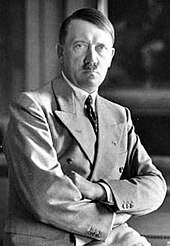
Adolf Hitler
Bundesarchiv, Bild 146-1990-048-29A / CC-BY-SA 3.0 [CC BY-SA 3.0 de (https://creativecommons.org/licenses/by-sa/3.0/de/deed.en)%5D
Heinrich Himmler, a former chicken farmer, remained head of the dreaded, black-uniformed Schutzstaffel, or Protection Squads, known as the SS, from 1929 until his suicide in 1945.
In April, 1934, Himmler was appointed assistant chief of the Gestapo (Secret State Police) in Prussia, and from that position he extended his control over the police forces of the whole Reich.
Hermann Goering, an ace fighter pilot in World War 1, served as Reich commissioner for aviation and head of the newly developed Luftwaffe, the German air force, from 1935 to 1945.
And Albert Speer, Hitler’s favorite architect, held that position from 1933 until 1942, when Hitler appointed him Reich Minister of Armaments and War Production. He held that position until the Third Reich collapsed in April, 1945.
Soviet Premier Joseph Stalin, by contrast, purged his ministers constantly. For example: From 1934 to 1953, Stalin had no fewer than three chiefs of his secret police, then named the NKVD:
- Genrikh Yagoda – (July 10, 1934 – September 26, 1936)
- Nikolai Yezhov (September 26, 1936 – November 25, 1938) and
- Lavrenty Beria (November, 1938 – March, 1953).
Stalin purged Yagoda and Yezhov, with both men executed after being arrested.
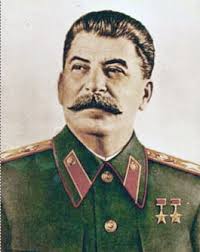
Joseph Stalin
He reportedly wanted to purge Beria, too, but the latter may have acted first. There has been speculation that Beria slipped warfarin, a blood-thinner often used to kill rats, into Stalin’s drink, causing him to die of a cerebral hemorrhage.
Nor were these the only casualties of Stalin’s reign.
For almost 30 years, through purges and starvation caused by enforced collections of farmers’ crops, Stalin slaughtered 20 to 60 million people.
The 1930s were a frightening and dangerous time to be alive in the Soviet Union. In 1934, Stalin, seeing imaginary enemies everywhere, ordered a series of purges that lasted right up to the German invasion.
An example of Stalin’s paranoia occurred one day while the dictator walked through the Kremlin corridors with Admiral Ivan Isakov. Officers of the NKVD (the predecessor to the KGB) stood guard at every corner.
“Every time I walk down the corridors,” said Stalin, “I think: Which one of them is it? If it’s this one, he will shoot me in the back. But if I turn the corner, the next one can shoot me in the face.”
In 1937-38, the Red Army fell prey to Stalin’s paranoia.
Its victims included:
- Three of five marshals (five-star generals);
- Thirteen of 15 army commanders (three- and four-star generals);
- Fifty of 57 army corps commanders; and
- One hundred fifty-four out of 186 division commanders.
And heading the list of those marked for death was Marshal Mikhail Tukhachevsky.
Arrested on May 22, 1937, he was interrogated and tortured. As a result, he “confessed” to being a German agent plotting to overthrow Stalin and seize power.
On his confession, which survives in the archives, his bloodstains can clearly be seen.
On June 11, the Soviet Supreme Court convened a special military tribunal to try Tukhachevsky and eight generals for treason.
It was a sham: The accused were denied defense attorneys, and could not appeal the verdict—-which was foregone: Death.
In a Russian version of poetic justice, five of the eight generals who served as Tukhachevsky’s judges were themselves later condemned and executed as traitors.
Since taking office as the nation’s 45th President, Donald Trump has sought to rule by fear.
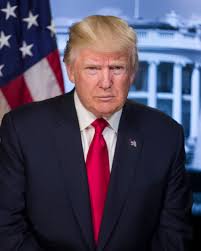
Donald Trump
In fact, he candidly shared his belief in this as a motivator to journalist Bob Woodward during the 2016 Presidential race: “Real power is—I don’t even want to use the word—fear.”
It is unknown if Trump ever read The Prince, Niccolo Machiavelli’s infamous treatise on attaining political power. If so, he doubtless is familiar with its most famous passage:
“From this arises the question whether it is better to be loved than feared, or feared more than loved. The reply is, that one ought to be both feared and loved, but as it is difficult for the two to go together, it is much safer to be feared than loved….
“For it may be said of men in general that they are ungrateful, voluble, dissemblers, anxious to avoid danger and covetous of gain; as long as you benefit them, they are entirely yours: they offer you their blood, their goods, their life and their children, when the necessity is remote, but when it approaches, they revolt.
“And the prince who has relied solely on their words, without making other preparations, is ruined; for the friendship which is gained by purchase and not through grandeur and nobility of spirit is bought but not secured, and at a pinch is not to be expended in your service.
“And men have less scruple in offending one who makes himself loved than one who makes himself feared; for love is held by a chain of obligations which, men being selfish, is broken whenever it serves their purpose; but fear is maintained by a dread of punishment which never fails.”
2016 PRESIDENTIAL ELECTION, A BRONX TALE, ABC NEWS, ALTERNET, AP, BILL CLINTON, BUZZFEED, CBS NEWS, CHAZZ PALMINTERI, CNN, CROOKS AND LIARS, DAILY KOZ, DONALD TRUMP, FACEBOOK, H.R. MCMASTER, JEFF SESSIONS, JOHN KELLY, MOTHER JONES, MOVEON, NBC NEWS, NEWSWEEK, NICCOLO MACHIAVELLI, NPR, POLITICO, RAW STORY, REINCE PREBIUS, REPUBLICAN PARTY, REUTERS, ROBERT DE NIRO, Ronald Reagan, SALON, SEATTLE TIMES, SERGEI KISLYAK, SLATE, THE ATLANTIC, THE CHICAGO SUN-TIMES, THE CHICAGO TRIBUNE, THE DAILY BEAST, THE GUARDIAN, THE HILL, THE HUFFINGTON POST, THE LOS ANGELES TIMES, THE NATION, THE NEW YORK TIMES, THE PRINCE, THE WASHINGTON POST, TIME, TWITTER, U.S. NEWS & WORLD REPORT, UP, UPI, USA TODAY
In Bureaucracy, History, Law, Law Enforcement, Politics, Social commentary on December 11, 2018 at 12:27 am
A reputation for being feared can be useful.
But it’s dangerous to constantly employ cruelties or punishments.
Whoever does so, warns Niccolo Machiavelli, “is always obliged to stand with knife in hand, and can never depend on his subjects, because they, owing to continually fresh injuries, are unable to depend upon him.”
Such a President is Donald Trump, who, as a Presidential candidate in 2016, told journalist Bob Woodward: “Real power is—I don’t even want to use the word—fear.”
As a Presidential candidate and President, Trump has repeatedly used Twitter to attack hundreds of real and imagined enemies in politics, journalism, TV and films.
From June 15, 2015, when he launched his Presidential campaign, until October 24, 2016, Trump fired almost 4,000 angry, insulting tweets at 281 people and institutions that had somehow offended him.
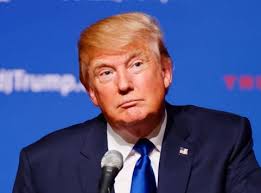
Donald Trump
The New York Times needed two full pages of its print edition to showcase them. Making one inflammatory statement after another, he offended one group of potential voters after another. Among those groups:
- Latinos
- Asians
- Blacks
- The disabled
- Women
- Prisoners-of-war
Since becoming President on January 20, 2017, Trump has attacked and/or infuriated a wide array of influential agencies or groups. Among these:
- “Obamacare” patients: Trump authorized the directors of Federal agencies to waive requirements of the Affordable Care Act—which provides medical insurance to 22 million otherwise uninsured Americans—to the “maximum extent permitted by law.”
- The CIA: Appearing at CIA headquarters on his first full day in office, Trump addressed about 400 case officers. Standing before the star-studded memorial wall honoring 117 CIA officers who had fallen in the line of duty. Trump ignored their sacrifice. Instead, he boasted of the size of his Inaugural crowd and how many times he had appeared on the cover of Time.
- Civil rights advocates: Trump signed an executive order banning Muslims from entering the United States.
- He also ordered the Department of Homeland Security to massively expand the number of people subject to detention and deportation.
- Women: Trump has publicly insulted numerous women—such as Carly Fiorina, Megyn Kelly and Rosie O’Donnell—on their looks.
- He’s been accused by 22 women of making improper sexual advances.
- And he successfully backed Supreme Court nominee Brett Kavanaugh, whom Dr. Christine Blasey Ford accused of sexually assaulting her when they were teenagers.
- Medicare patients: During the 2016 campaign, Trump said he would allow Medicare to negotiate down the price of prescription drugs. But after meeting with pharmaceutical lobbyists on January 31, 2017, Trump said: “I’ll oppose anything that makes it harder for smaller, younger companies to take the risk of bringing their product to a vibrantly competitive market. That includes price-fixing by the biggest dog in the market, Medicare.”
And he has bullied and insulted even White House officials and his own handpicked Cabinet officers:
- Jeff Sessions: Trump waged a Twitter-laced feud against his Attorney General. Sessions’ “crime”? Recusing himself from investigations into well-established ties between Russian Intelligence agents and members of Trump’s Presidential campaign.
- On the day after the November, 2018 mid-term elections, Trump fired him.
- Commerce Secretary Wilbur Ross: Trump told him: “I don’t trust you. I don’t want you doing any more negotiations….You’re past your prime.”
- Chief of Staff Reince Priebus: Suffered repeated humiliations by Trump—such a being ordered to kill a fly that was buzzing about.
- On another occasion, Trump told an associate that Priebus was “like a little rat. He just scurries around.”
- On July 28, 2017, Priebus resigned.
- Chief of Staff John Kelly: Trump similarly ridiculed Priebus’ replacement, a former Marine Corps general. Kelly tried to limit the number of advisers who had unrestricted access to Trump—and bring discipline to his schedule.
- Instead of being grateful, Trump became furious. Kelly told colleagues: “He’s an idiot. It’s pointless to try to convince him of anything. He’s gone off the rails. We’re in Crazytown. I don’t even know why any of us are here. This is the worst job I’ve ever had.”
- The United States Secret Service: Before taking office as President, Trump infuriated this agency by keeping his longtime private security force—and adding its members to the elite federal agency. Thus, he clearly sent the insulting message: “You’re not good enough, and I don’t trust you.”
Trump’s repeated humiliations—and firings—of high-ranking administration officials have led to a near-paralysis of his government. Many agencies remain plagued by staff shortages. And many of the replacements are not of “top drawer” quality.
If Trump ever read Niccolo Machiavelli’s The Prince, he’s clearly forgotten the Florentine’s warning on the need to avoid hatred at all costs.
The new musical version of the play/movie A Bronx Tale allows Mafia capo Sonny to sing his lesson on fear versus love to Calogero, the teenager who idolizes him:
Listen now what I tell ya
This advice is you know whose
Love or fear—
It’s up to you kid
But you live with what you choose.
And it’s true: You live with what you choose.
Make being loved your top priority, and you risk being labeled a weakling who can be rolled—as Bill Clinton did.
But make being feared your goal, and you risk creating an atmosphere of hatred and paranoia—as Donald Trump has.
2016 PRESIDENTIAL ELECTION, A BRONX TALE, ABC NEWS, ALTERNET, AP, BILL CLINTON, BUZZFEED, CBS NEWS, CHAZZ PALMINTERI, CNN, CROOKS AND LIARS, DAILY KOZ, DONALD TRUMP, FACEBOOK, H.R. MCMASTER, JEFF SESSIONS, JOHN KELLY, MOTHER JONES, MOVEON, NBC NEWS, NEWSWEEK, NICCOLO MACHIAVELLI, NPR, POLITICO, RAW STORY, REINCE PREBIUS, REPUBLICAN PARTY, REUTERS, ROBERT DE NIRO, Ronald Reagan, SALON, SEATTLE TIMES, SERGEI KISLYAK, SLATE, THE ATLANTIC, THE CHICAGO SUN-TIMES, THE CHICAGO TRIBUNE, THE DAILY BEAST, THE GUARDIAN, THE HILL, THE HUFFINGTON POST, THE LOS ANGELES TIMES, THE NATION, THE NEW YORK TIMES, THE PRINCE, THE WASHINGTON POST, TIME, TWITTER, U.S. NEWS & WORLD REPORT, UP, UPI, USA TODAY
In Bureaucracy, History, Politics, Social commentary on December 10, 2018 at 12:27 am
It’s probably the most-quoted passage of Niccolo Machiavelli’s infamous book, The Prince:
“From this arises the question whether it is better to be loved than feared, or feared more than loved. The reply is, that one ought to be both feared and loved, but as it is difficult for the two to go together, it is much safer to be feared than loved.
“For it may be said of men in general that they are ungrateful, voluble, dissemblers, anxious to avoid danger and covetous of gain. As long as you benefit them, they are entirely yours: they offer you their blood, their goods, their life and their children, when the necessity is remote, but when it approaches, they revolt.
“And the prince who has relied solely on their words, without making other preparations, is ruined. For the friendship which is gained by purchase and not through grandeur and nobility of spirit is bought but not secured, and at a pinch is not to be expended in your service.
“And men have less scruple in offending one who makes himself loved than one who makes himself feared. For love is held by a chain of obligations which, men being selfish, is broken whenever it serves their purpose. But fear is maintained by a dread of punishment which never fails.”
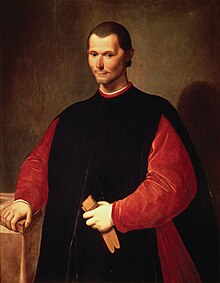

Niccolo Machiavelli
So—which is better: To be feared or loved?
In the 1993 film, A Bronx Tale, 17-year-old Calogero (Lillo Brancato) poses that question to his idol, the local Mafia capo, Sonny (Chazz Palminteri).
“That’s a good question,” Sonny replies. “It’s nice to be both, but it’s very difficult. But if I had my choice, I would rather be feared.”
Sonny has “done 10 years in the joint.” There he got an education in power—from the works of Machiavelli. Now he wants to pass on those hard-learned lessons to Calogero.
“Fear lasts longer than love. Friendships that are bought with money mean nothing. You see how it is around here. I make a joke, everybody laughs. I know I’m funny, but I’m not that funny. It’s fear that keeps them loyal to me.”

Sonny gives advice to his adopted son, Calogero
But Sonny warns there is a trick to being feared: “The trick is not being hated. That’s why I treat my men good, but not too good.
“I give too much, then they don’t need me. I give them just enough where they need me, but they don’t hate me.”
Many who quote Machiavelli in defense of being feared overlook this vital point: “Still a Prince should make himself feared in such a way that if he does not gain love, he at any rate avoids hatred, for fear and the absence of hatred may well go together.”
Presidents who desire above all to be loved risk inviting their enemies to see them as weaklings.
Case in point: Bill Clinton.
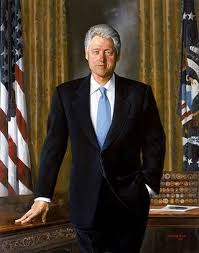
Bill Clinton
Clinton needed to be loved. He once said that if he were in a room with 100 people and 99 of them liked him but one didn’t, he would spend all his time with that one person, trying to win him over.
But while he could charm voters, he could not bring himself to retaliate against his sworn Republican enemies.
Clinton sought to endear himself to Republicans by:
- Adopting NAFTA–the Republican-sponsored North American Free Trade Act, which later proved so devastating to American workers;
- Siding with Republicans against poor Americans on welfare; and
- Championing the gutting of the Depression-era Glass-Steagall law, which barred investment banks from commercial banking activities.
In 1998, emboldened by Clinton’s refusal to stand up to them, House Republicans moved to impeach him over a sex scandal with White House intern Monica Lewinsky. But his Presidency survived when the Senate refused to convict.
To establish a fearful reputation, a leader must act decisively and ruthlessly when the interests of the organization are threatened. Punitive action must be taken promptly and confidently.
One or two harsh actions of this kind can make a leader more feared than a reign of terror.
Case in point: Ronald Reagan.
Always smiling, quick with a one-liner (especially at press conferences), seemingly unflappable, he projected a constantly optimistic view of his country and its citizens.
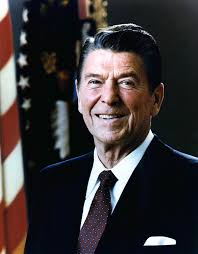
Ronald Reagan
But there was a steely, ruthless side to Reagan that appeared when he felt crossed.
On August 3, 1981, nearly 13,000 air traffic controllers walked out after contract talks with the Federal Aviation Administration collapsed. As a result, some 7,000 flights across the country were canceled on that day at the peak of the summer travel season.
Reagan branded the strike illegal. He threatened to fire any controller who failed to return to work within 48 hours.
On August 5, Reagan fired more than 11,000 air traffic controllers who hadn’t returned to work. The mass firing slowed commercial air travel, but it did not cripple the system as the strikers had forecast.
Reagan’s action stunned the American labor movement. Reagan was the only American President to have belonged to a union—the Screen Actors Guild. He had even been president of this, from 1947 to 1954.
There were no more strikes by Federal workers during Reagan’s tenure in office.
2003 IRAQ WAR, ABC NEWS, ALTERNET, ASIANS, BARACK OBAMA, BIRTH CONTROL, BLACKS, BUZZFEED, CBS NEWS, CNN, DAILY KOS, DISABLED, DONALD TRUMP, ED MARTIN, FACEBOOK, HILLARY CLINTON, HUMAYUN KHAN, KATRINA PIERSON, LATINOS, MARCO GUTIERREZ, MEDICAID, MEDICARE, MOTHER JONES, MOVEON, MSNBC, MUSLIMS, NBC NEWS, NEWSWEEK, NICCOLO MACHIAVELLI, NPR, OBAMACARE, POLITICO, PRISONERS OF WAR, RAW STORY, SALON, SLATE, SOCIAL SECURITY, TEA PARTY, THE CHICAGO SUN-TIMES, THE CHICAGO TRIBUNE, THE DAILY BEAST, THE DISCOURSES, THE HUFFINGTON POST, THE LOS ANGELES TIMES, THE NEW YORK TIMES, THE PRINCE, THE WALL STREET JOURNAL, THE WASHINGTON POST, TIME, TWITTER, U.S. NEWS & WORLD REPORT, USA TODAY, WAYNE ROOT, WOMEN
In Bureaucracy, History, Military, Politics, Social commentary on November 22, 2018 at 12:06 am
No shortage of pundits have sized up Donald Trump—first as a Presidential candidate, and now as the nation’s 45th President.
But how does Trump measure up in the estimate of Niccolo Machiavelli, the 16th-century Florentine statesman?
It is Machiavelli whose two great works on politics—The Prince and The Discourses—remain textbooks for successful politicians more than 500 years later.
Niccolo Machiavelli
Let’s start with Trump’s notoriety for hurling insults at virtually everyone, including:
- Latinos
- Asians
- Muslims
- Blacks
- The Disabled
- Women
- Prisoners-of-War
These insults delight his white, under-educated followers. But they have alienated millions of other Americans who might have voted for him.
Now consider Machiavelli’s advice on gratuitously handing out insults and threats:
-
“I hold it to be a proof of great prudence for men to abstain from threats and insulting words towards any one.
-
“For neither the one nor the other in any way diminishes the strength of the enemy—but the one makes him more cautious, and the other increases his hatred of you, and makes him more persevering in his efforts to injure you.”
For those who expected Trump to shed his propensity for constantly picking fights, Machiavelli had a stern warning:
-
“…If it happens that time and circumstances are favorable to one who acts with caution and prudence he will be successful. But if time and circumstances change he will be ruined, because he does not change the mode of his procedure.
-
“No man can be found so prudent as to be able to adopt himself to this, either because he cannot deviate from that to which his nature disposes him, or else because, having always prospered by walking in one path, he cannot persuade himself that it is well to leave it…
-
“For if one could change one’s nature with time and circumstances, fortune would never change.”
Then there is Trump’s approach to consulting advisers:
Asked on MSNBC’s “Morning Joe” who he consults about foreign policy, Trump replied; “I’m speaking with myself, number one, because I have a very good brain and I’ve said a lot of things.”
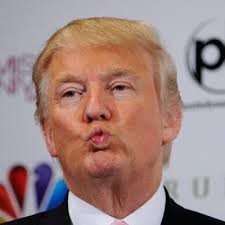
Donald Trump
This totally contrasts with the advice given by Machiavelli:
-
“A prudent prince must [choose] for his counsel wise men, and [give] them alone full liberty to speak the truth to him, but only of those things that he asks and of nothing else.
-
“But he must be a great asker about everything and hear their opinions, and afterwards deliberate by himself in his own way, and in these counsels…comport himself so that every one may see that the more freely he speaks, the more he will be acceptable.”
And Machiavelli has potent advice on the selection of advisers:
- “The first impression that one gets of a ruler and his brains is from seeing the men that he has about him.
- “When they are competent and loyal one can always consider him wise, as he has been able to recognize their ability and keep them faithful.
- “But when they are the reverse, one can always form an unfavorable opinion of him, because the first mistake that he makes is in making this choice.”
Consider some of the advisers Trump relied on in his campaign for President:
- Founder of Latinos for Trump Marco Gutierrez told MSNBC’s Joy Reid: “My culture is a very dominant culture. And it’s imposing, and it’s causing problems. If you don’t do something about it, you’re gonna have taco trucks every corner.”
- At a Tea Party for Trump rally at a Harley-Davidson dealership in Festus, Missouri, former Missouri Republican Party director Ed Martin reassured the crowd that they weren’t racist for hating Mexicans.
From the outset of his Presidential campaign, Trump polled extremely poorly among Hispanic voters. Comments like these didn’t increase his popularity.
- Wayne Root, opening speaker and master of ceremonies at many Trump campaign events, told Virginia radio host Rob Schilling: People on public assistance and women getting birth control through Obamacare should not be allowed to vote.
Comments like this are a big turn-off among the 70% of women who have an unfavorable opinion of him—and anyone who receives Medicaid, Medicare or Social Security.
- Trump’s spokeswoman, Katrina Pierson, claimed that Barack Obama and Hillary Clinton were responsible for the death of Captain Humayun Khan—who was killed by a truck-bomb in Iraq in 2004.
Obama became President in 2009—-almost five years after Khan’s death. And Clinton became Secretary of State the same year.
When your spokeswoman becomes a nationwide laughingstock, your own credibility goes down the toilet as well.
Finally, Machiavelli offers a related warning that especially applies to Trump: Unwise princes cannot be wisely advised.
-
“It is an infallible rule that a prince who is not wise himself cannot be well advised, unless by chance he leaves himself entirely in the hands of one man who rules him in everything, and happens to be a very prudent man. In this case, he may doubtless be well governed, but it would not last long, for the governor would in a short time deprive him of the state.”
All of which would lead Niccolo Machiavelli to warn, if he could witness American politics today: “This bodes ill for your Republic.”
ABC NEWS, ALTERNET, AP, BUZZFEED, CBS NEWS, CNN, COLIN KAEPERNICK, CROOKS AND LIARS, DAILY KOZ, DONALD TRUMP, FACEBOOK, FOOTBALL, MARSHAWN LYNCH, MICHAEL BENNETT, MOTHER JONES, MOVEON, MSNBC, NATIONAL FOOTBALL LEAGUE, NBC NEWS, NEWSWEEK, NPR, OAKLAND RAIDERS, POLICE BRUTALITY, POLITICO, RACISM, RAW STORY, REUTERS, SALON, SAN FRANCISCO FORTY-NINERS, SEATTLE SEAHAWKS, SEATTLE TIMES, SLATE, SYMBOLISM, TAKING A KNEE, THE ATLANTIC, THE CHICAGO SUN-TIMES, THE CHICAGO TRIBUNE, THE DAILY BEAST, THE GUARDIAN, THE HILL, THE HUFFINGTON POST, THE LOS ANGELES TIMES, THE NATION, THE NEW YORK TIMES, THE PRINCE, THE STAR SPANGLED BANNER, THE WASHINGTON POST, TIME, TWITTER, U.S. NEWS & WORLD REPORT, UPI, USA TODAY
In Bureaucracy, Entertainment, History, Military, Politics, Social commentary on October 1, 2018 at 12:35 am
A war is flaring in football stadiums across the country.
It’s a symbolic war—with football players literally “taking a knee” on one side and with President Donald Trump and his Right-wing minions symbolically waving the Stars and Stripes on the other.
And it’s fueled, on both sides, by a stadium-sized dose of hypocrisy.
For players, “taking a knee” during the playing of the National Anthem before the start of a football game means protesting against racial injustice and police brutality aimed at blacks.
For the Right, refusing to stand for “The Star Spangled Banner” is unpatriotic, perhaps treasonous. They claim it’s insulting to the military—and especially those soldiers who have died in America’s wars.
San Francisco 49ers quarterback Colin Kaepernick first took a knee on August 14, 2016.
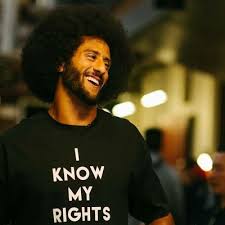
Colin Kaepernick
During the 49ers’ first game of the pre-season, Kaepernick sat on the bench during the National Anthem both then and in their next game.
On August 26, he did so again. The next day, he explained his reason for ,it: “I am not going to stand up to show pride in a flag for a country that oppresses black people and people of color. To me, this is bigger than football and it would be selfish on my part to look the other way. There are bodies in the street and people getting paid leave and getting away with murder.”
On August 29, Trump—still a Presidential candidate—thrust himself into the budding controversy: “I think it’s personally not a good thing. I think it’s a terrible thing. And, you know, maybe he should find a country that works better for him. Let him try. It won’t happen.”
Donald Trump
One year later, on August 12, 2017, Oakland Raiders running back Marshawn Lynch sat for the anthem during preseason, on his first game back post-retirement.
The next day, Seattle Seahawks defensive lineman Michael Bennett sat for the anthem. He gave as his reason the “Unite the Right” rally of white racists in Charlottesville, Virginia.
On September 17, Trump—now President—told a rally in Alabama that refusing to sing the National Anthem showed “disrespect of our heritage. Wouldn’t you love to see one of these NFL owners, when somebody disrespects our flag, to say, ‘Get that son of a bitch off the field right now, out, he’s fired.'”
On September 23, Trump, on Twitter, called for NFL players who “disrespect our great American flag” to be fired. Later on in the day, he called for a boycott of the NFL.
On September 24, infuriated by Trump’s insults, NFL players across the country linked arms, took a knee, or stayed in the changing room during the National Anthem. Every game featured some form of demonstration.
Since then, the confrontation between players “taking a knee” and Trump and his Right-wing shills has mushroomed.
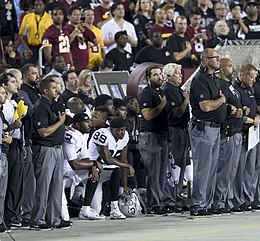
Oakland Raiders Kneeling
By Keith Allison from Hanover, MD, USA [CC BY-SA 2.0 (https://creativecommons.org/licenses/by-sa/2.0)%5D, via Wikimedia Commons
During 2017, there were 987 fatal police shootings; 223 blacks were shot and killed by police (23% of all fatal shootings), and 68 of the victims were unarmed.
Yet these protests have not led one police department to change its “use-of-deadly-force” policies. No State legislature has offered reform legislation. Nor has Congress.
Blacks are still getting shot by trigger-happy police—often while they’re unarmed and unresisting
So where does the hypocrisy come in?
On the part of the players:
- These protests have caused police shootings to be largely forgotten—while the kneeling players are claiming the media’s attention.
- The kneeling players consider themselves heroes—and are considered heroes by many within the black and white communities.
- Yet there is nothing remotely heroic about kneeling for about a minute before you’re about to earn tens of thousands of dollars just for knocking a ball around a stadium. It’s a cheap and easy way to win applause while risking nothing.
- These players’ celebrity could be put to far better use by appearing before legislative committees urging reforms in police “use-of-deadly-force” policies.
On the part of the Right:
- Donald Trump, for all his boasts of patriotism, was a five-deferment draft dodger during the Vietnam war. Four deferments cited academic reasons and the fifth cited bone spurs—which usually result in small pointed outgrowths of bone—in his heels.
- Many of those attacking the patriotism of the kneeling players have similarly refused to enter military service.
- Standing for the National Anthem is likewise a cheap and easy way to declare yourself a patriot.
- It’s akin to taking forced loyalty oaths: You take the oath, “prove” your integrity—and can then betray national security secrets almost with impunity.
Finally, there is one truth takes precedence over all others: There is no reason to play “The Star Spangled Banner” at football games—or any other sports event.
The reasons:
- There is nothing inherently patriotic about attending any sports game:
- The country isn’t being threatened.
- No one is risking anything in its defense.
- There are no casualties (save those suffered by athletes earning kingly salaries).
- No one’s life is made any better by watching the game—or the protests.
Police brutality remains a serious matter. But “taking a knee” and its opponents most definitely isn’t.
2016 PRESIDENTIAL ELECTION, 2020 TRUMP PRESIDENTIAL CAMPAIGN, ABC NEWS, ALTERNET, AP, BREITBART NEWS, BUZZFEED, CBS NEWS, CELEBRITY APPRENTICE, CIA, CNN, CROOKS AND LIARS, DAILY KOZ, DAVID BROOKS, DEMOCRATIC NATIONAL COMMITTEE, DEPARTMENT OF JUSTICE, DIRECTOR OF NATIONAL INTELLIGENCE, DONALD TRUMP, DONALD TRUMP JUNIOR, FACEBOOK, FBI, FERGUS CULLEN, GOOD MORNING AMERICA, HILLARY CLINTON, JAMES B. COMEY, JAMES R. CLAPPER, JARED KUSHNER, JEFF FLAKE, JOHN ALLEN NEWMAN, JOHN KELLY, LARA TRUMP, MAGNITSKY ACT, MARK SHIELDS, MEET THE PRESS, MICHAEL HAYDEN, MICHELLE OBAMA, MIKE PENCE, MOTHER JONES, MOVEON, MSNBC, NATALIA VESELITSKAYA, NATIONAL SECURITY AGENCY, NBC NEWS, NEWSWEEK, NICCOLO MACHIAVELLI, NPR, OMAROSDA MANIGAULT-NEWMAN, PAUL MANAFORT, PBS NEWSHOUR, PHILIP KLEIN, POLITICO, RAW STORY, REPUBLICAN NATIONAL CONVENTION, REPUBLICAN PARTY, REUTERS, RINAT AKHMETSHIN, ROBERT MUELLER, ROGER STONE, RUSSIA, RUSSIAN INTELLIGENCE, SALON, SARAH HUCKABEE SANDERS, SEATTLE TIMES, SECOND AMENDMENT, Secret Service, SLATE, THE APPRENTICE, THE ATLANTIC, THE CHICAGO SUN-TIMES, THE CHICAGO TRIBUNE, THE DAILY BEAST, THE GUARDIAN, THE HILL, THE HUFFINGTON POST, THE LOS ANGELES TIMES, THE NATION, THE NEW YORK TIMES, THE PRINCE, THE WASHINGTON EXAMINER, THE WASHINGTON POST, THREATS, TIME, TRUMP TOWER, TWITTER, U.S. NEWS & WORLD REPORT, UPI, USA TODAY, VIOLENCE, VLADIMIR PUTIN, WHITE HOUSE SITUATION ROOM, WIKILEAKS
In Bureaucracy, History, Law, Law Enforcement, Politics, Social commentary on August 24, 2018 at 12:48 am
Omarosa Manigault-Newman has struck a chord of fear in President Donald Trump that rivals the fear he has struck in others.
She has done so by using many of his own tactics against him: Deceit, intimidation, media manipulation.
Syndicated Columnist Mark Shields noted on the August 17 edition of The PBS Newshour: “In a White House where most of the people are recent acquaintances of the president, she goes back longer than anybody, except the president’s daughter. She goes back 15 years. She is a Donald Trump protege and product….
“But what she does, obviously, like Elizabeth Warren, she gets under Donald Trump’s skin. And she has said things that, you know, may be subject to fact-check, but the reality is, she has tape.
“She has tape of Donald Trump groveling before her, pretending that he didn’t know that John Kelly had the day before brought her to the Situation Room…which therefore confirms the suspicion widely held that Donald Trump doesn’t have the stomach for confronting people who work for him, that he lies.
“And you can see that he obviously is absolutely upset by her, and she’s got everybody in the White House, every male, quaking in his Guccis about those tapes. I can tell you that.”
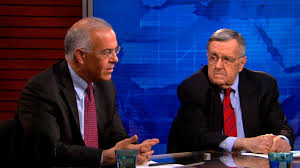
David Brooks and Mark Shields
New York Times Columnist David Brooks, speaking on the same episode of The Newshour, outlined why her attacks on Trump have been so effective.
“Well, what’s interesting about her is, she plays by reality show rules. She plays by Trump rules. And most people who go against Trump don’t quite play by his rules. And she plays by his rules, which is no rules, that do whatever you can, it doesn’t matter what the norms and standards are.
“And taping somebody in the Situation Room is a rather serious offense and, to me, a pretty great betrayal of any—how any White House should work. I mean, if we’re walking around each other in the hallway taping each other, just think about doing that.
“That’s just a betrayal of how normal life should happen….And so she said, they’re going to lie about me, they’re going to screw me, so I’m ready.”
In perhaps the most-quoted passage of The Prince, Niccolo Machiavelli wrote:
“From this arises the question whether it is better to be loved than feared, or feared more than loved. The reply is, that one ought to be both feared and loved, but as it is difficult for the two to go together, it is much safer to be feared than loved.
“For it may be said of men in general that they are ungrateful, voluble, dissemblers, anxious to avoid danger and covetous of gain. As long as you benefit them, they are entirely yours: they offer you their blood, their goods, their life and their children, when the necessity is remote, but when it approaches, they revolt.
“And the prince who has relied solely on their words, without making other preparations, is ruined. For the friendship which is gained by purchase and not through grandeur and nobility of spirit is bought but not secured, and at a pinch is not to be expended in your service.”
Niccolo Machiavelli
Donald Trump has always used fear to instill and maintain loyalty among his closest associates—and to intimidate his many enemies.
But Machiavelli offers a warning on the uses of fear:
“Still, a prince should make himself feared in such a way that if he does not gain love, he at any rate avoids hatred, for fear and the absence of hatred may well go together.
“Cruelties ill committed are those which, although at first few, increase rather than diminish with time….In taking a state, the conqueror must arrange to commit all his cruelties at once, so as not to have to recur to them very day, and so as to be able, by not making fresh changes, to reassure people and win them over by benefiting them.
“Whoever acts otherwise, either through timidity or bad counsels,” warns Machiavelli, “is always obliged to stand with knife in hand, and can never depend on his subjects, because they, owing to continually fresh injuries, are unable to depend upon him.”
From the onset of his Presidency, Trump has violated this warning with a vengeance. And now he is “obliged to stand with knife in hand.”
Omarosa is the first former Trump loyalist to emerge as a fervent Trump critic. And she may have even worse in store for him.
Warns David Brooks:
“All sorts of signs are pointing in this direction, that we’re going to wind up with an election where….people are basically going to be voting, when race is a hot button issue, with a man who has a history of bigoted comments, and then voting along those lines.”
With Democratic voters—many of them blacks and Hispanics—energized, Trump’s obvious racism could sweep Republicans from the House of Representatives.
Omarosa seems determined to make that happen.
2016 PRESIDENTIAL ELECTION, 2020 TRUMP PRESIDENTIAL CAMPAIGN, ABC NEWS, ALTERNET, AP, BREITBART NEWS, BUZZFEED, CBS NEWS, CELEBRITY APPRENTICE, CIA, CNN, CROOKS AND LIARS, DAILY KOZ, DAVID BROOKS, DEMOCRATIC NATIONAL COMMITTEE, DEPARTMENT OF JUSTICE, DIRECTOR OF NATIONAL INTELLIGENCE, DONALD TRUMP, DONALD TRUMP JUNIOR, FACEBOOK, FBI, FERGUS CULLEN, GOOD MORNING AMERICA, HILLARY CLINTON, JAMES B. COMEY, JAMES R. CLAPPER, JARED KUSHNER, JEFF FLAKE, JOHN ALLEN NEWMAN, JOHN KELLY, LARA TRUMP, MAGNITSKY ACT, MARK SHIELDS, MEET THE PRESS, MICHAEL HAYDEN, MICHELLE OBAMA, MIKE PENCE, MOTHER JONES, MOVEON, MSNBC, NATALIA VESELITSKAYA, NATIONAL SECURITY AGENCY, NBC NEWS, NEWSWEEK, NICCOLO MACHIAVELLI, NPR, OMAROSDA MANIGAULT-NEWMAN, PAUL MANAFORT, PBS NEWSHOUR, PHILIP KLEIN, POLITICO, RAW STORY, REPUBLICAN NATIONAL CONVENTION, REPUBLICAN PARTY, REUTERS, RINAT AKHMETSHIN, ROBERT MUELLER, ROGER STONE, RUSSIA, RUSSIAN INTELLIGENCE, SALON, SARAH HUCKABEE SANDERS, SEATTLE TIMES, SECOND AMENDMENT, Secret Service, SLATE, THE APPRENTICE, THE ATLANTIC, THE CHICAGO SUN-TIMES, THE CHICAGO TRIBUNE, THE DAILY BEAST, THE GUARDIAN, THE HILL, THE HUFFINGTON POST, THE LOS ANGELES TIMES, THE NATION, THE NEW YORK TIMES, THE PRINCE, THE WASHINGTON EXAMINER, THE WASHINGTON POST, THREATS, TIME, TRUMP TOWER, TWITTER, U.S. NEWS & WORLD REPORT, UPI, USA TODAY, VIOLENCE, VLADIMIR PUTIN, WHITE HOUSE SITUATION ROOM, WIKILEAKS
In Bureaucracy, History, Law, Law Enforcement, Politics, Social commentary on August 23, 2018 at 12:06 am
On the August 12, 2018 edition of NBC’s “Meet the Press,” Omarosa Manigault-Newman revealed that she had recorded a conversation with White House Chief of Staff John Kelly.
This had occurred on December 13, 2017, in the White House Situation Room. This is the part of the White House where the most sensitive conversations occur.
She justified her unprecedented violation of the Situation Room thus: “They take me into the Situation Room, the doors are locked, they tell me I can’t leave and they start to threaten me, put fear in me, to put me under duress.
“I protected myself because this is a White House where everybody lies; the President lies to the American people, [press secretary] Sarah Huckabee [Sanders] stands in front of the country and lies every single day.
“You have to have your own back or else you’ll look back and you’ll have 17 knives in your back. I protected myself because this is a White House where everybody lies.”
The next day, August 13, 2018, Omarosa threw an even more embarrassing bombshell at the man who had once been her mentor and promoter.
She revealed the conversation—also taped—she had had with President Donald Trump on the day of her firing.
Donald Trump
TRUMP: “Omarosa? Omarosa what’s going on? I just saw on the news that you’re thinking about leaving? What happened?”
OMAROSA: “General Kelly came to me and said that you guys wanted me to leave.”
TRUMP: “Nobody even told me about it,”
OMAROSA: “Wow.”
TRUMP: “You know they run a big operation, but I didn’t know it, I didn’t know that. Goddamn it. I don’t love you leaving at all.”
The tape reveals a duel between practiced deceivers: Trump is trying to convince Omarosa that he knew nothing about her firing—and that he can do nothing to prevent it.
She, on the other hand, never tips her hand that she doesn’t believe him—and that she’s recording their conversation.
At least for the moment, Trump was the more deceived, tweeting that same day: “Thank you Omarosa for your service! I wish you continued success.”
Apparently he didn’t expect her to attain that success at his expense.
And on August 16, 2018, Omarosa embarrassed another member of the Trump family—Lara Trump, the wife of Donald Trump’s son, Eric.

Lara Trump
She did so by revealing yet another tape—of a conversation between the two—during her appearance on MSNBC.
This had occurred on December 16—three days after Omarosa’s firing by White House Chief of Staff John Kelly.
Lara Trump referred to a December 15 New York Times article where Omarosa had said: “I have seen things that made me uncomfortable, that have upset me, that have affected me deeply and emotionally, that has affected my community and my people. And when I can tell my story, it is a profound story that I know the world will want to hear.”
LARA TRUMP: “It sounds a little like, obviously, that there are some things you’ve got in the back pocket to pull out. Clearly, if you come on board, like, we can’t have . . .”
OMAROSA: “Oh God, no.”
LAURA TRUMP: “Everything, everybody positive, right?”
Lara Trump then offered Omarosa a speaker’s position with the 2020 Trump re-election campaign. It would pay her about $15,000 a month.
LARA TRUMP: “All the money that we raise and that pays salaries is directly from donors, small-dollar donors for the most part. So I know you, you were making 179 [$179,000 a year] at the White House, and I think we can work something out where we keep you right along those lines.”
After Omarosa played her tape of the conversation, Lara Trump released a statement. She and her “entire family was concerned” about Omarosa after her firing.
“We still wanted her on our team because we cared so much about her personally. That’s why I reached out to offer her a position with the 2020 Trump Campaign before we knew anything about the gross violations of ethics and integrity during her White House tenure.”
Omarosa viewed the offer differently: “I saw this as an attempt to buy my silence,” she said on MSNBC.
And she issued her own statement: “I am not going anywhere. I’m not going to be bullied. I’m not intimidated. And I’m going to go toe-to-toe with him [President Trump]. Everything he throws at me—believe me, my tapes are much better than theirs.”
She threatened to release more tapes “if I need to. I’ll do what I have to do to protect myself.”
Meanwhile, President Trump has not remained silent—although he has reportedly been urged to do so by his closest aides and attorneys.
On August 13, he attacked Omarosa on Twitter: “When you give a crazed, crying lowlife a break, and give her a job at the White House, I guess it just didn’t work out. Good work by General Kelly for quickly firing that dog!”
Arizona United States Senator Jeff Flake objected to this use of language: “This kind of language is unbecoming of a President of the United States. There is no excuse for it, and Republicans should not be okay with it.”
2016 PRESIDENTIAL ELECTION, 2020 TRUMP PRESIDENTIAL CAMPAIGN, ABC NEWS, ALTERNET, AP, BREITBART NEWS, BUZZFEED, CBS NEWS, CELEBRITY APPRENTICE, CIA, CNN, CROOKS AND LIARS, DAILY KOZ, DAVID BROOKS, DEMOCRATIC NATIONAL COMMITTEE, DEPARTMENT OF JUSTICE, DIRECTOR OF NATIONAL INTELLIGENCE, DONALD TRUMP, DONALD TRUMP JUNIOR, FACEBOOK, FBI, FERGUS CULLEN, GOOD MORNING AMERICA, HILLARY CLINTON, JAMES B. COMEY, JAMES R. CLAPPER, JARED KUSHNER, JEFF FLAKE, JOHN ALLEN NEWMAN, JOHN KELLY, LARA TRUMP, MAGNITSKY ACT, MARK SHIELDS, MEET THE PRESS, MICHAEL HAYDEN, MICHELLE OBAMA, MIKE PENCE, MOTHER JONES, MOVEON, MSNBC, NATALIA VESELITSKAYA, NATIONAL SECURITY AGENCY, NBC NEWS, NEWSWEEK, NICCOLO MACHIAVELLI, NPR, OMAROSDA MANIGAULT-NEWMAN, PAUL MANAFORT, PBS NEWSHOUR, PHILIP KLEIN, POLITICO, RAW STORY, REPUBLICAN NATIONAL CONVENTION, REPUBLICAN PARTY, REUTERS, RINAT AKHMETSHIN, ROBERT MUELLER, ROGER STONE, RUSSIA, RUSSIAN INTELLIGENCE, SALON, SARAH HUCKABEE SANDERS, SEATTLE TIMES, SECOND AMENDMENT, Secret Service, SLATE, THE APPRENTICE, THE ATLANTIC, THE CHICAGO SUN-TIMES, THE CHICAGO TRIBUNE, THE DAILY BEAST, THE GUARDIAN, THE HILL, THE HUFFINGTON POST, THE LOS ANGELES TIMES, THE NATION, THE NEW YORK TIMES, THE PRINCE, THE WASHINGTON EXAMINER, THE WASHINGTON POST, THREATS, TIME, TRUMP TOWER, TWITTER, U.S. NEWS & WORLD REPORT, UPI, USA TODAY, VIOLENCE, VLADIMIR PUTIN, WHITE HOUSE SITUATION ROOM, WIKILEAKS
In Bureaucracy, History, Law, Law Enforcement, Politics, Social commentary, Uncategorized on August 22, 2018 at 12:37 am
On December 13, 2017, Omarosa Manigault-Newman was told that she would be leaving the White House on January 20, 2018—one year from the day she had arrived there.
But Omarosa didn’t want to part with her $180,000 position as director of Communications for the Office of Public Liaison.
She reportedly asked Ivanka Trump to intervene on her behalf, but the request was denied.
Deciding to go right to the top, she headed for the Trump’s private quarters. There she tripped an alarm—which brought guards and White House Chief of Staff John Kelly to the scene.
An enraged Kelly ordered her ejected from the White House. Multiple sources report that she was physically restrained and escorted—cursing and screaming—from the Executive Mansion.
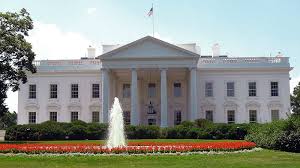
The White House
Next day—December 14—Manigault-Newman appeared on “Good Morning America.”
The woman who had been Donald Trump’s ambassador to blacks now sang a different tune: “I have seen things that made me uncomfortable, that have upset me, that have affected me deeply and emotionally, that has affected my community and my people. And when I can tell my story, it is a profound story that I know the world will want to hear.”
On August 8, 2018, news broke that Omarosa Manigault-Newman had secretly taped Trump during several phone conversations in the White House. And that she planned to use these to promote an upcoming—and highly critical—book on the President.
The book—Unhinged-–was released on August 14. Omarosa has since launched her book tour blasting Trump as a racist, a misogynist and in mental decline.
- On Trump as a racist: Interviewed on The PBS Newshour, she said: “One of the most dramatic scenes in Unhinged where I talk about taking him to task for the birther movement.”
- On Trump as a misogynist: In an Associated Press interview, she claims she saw Trump behaving “like a dog off the leash” at numerous events he attended without his wife, Melania Trump.
- On Trump’s mental decline: On the PBS Newshour: “We’re in the White House and Donald Trump couldn’t remember basic words or phrases. He couldn’t read the legislation that was put in front of him.”
On August 12, Manigault-Newman appeared on NBC’s “Meet the Press”—with an audio of the exchange that had occurred between her and White House Chief of Staff John Kelly on the day of her firing.
Kelly had directed her to meet with him in the Situation Room.
In the Executive Mansion, this is the “holy of holies”—the inner sanctum where the most secret exchanges of information occur.
It was from this room that President Barack Obama and his topmost officials tensely listened as U.S. Navy SEALS assaulted Osama bin Laden’s fortified compound in Pakistan—and killed him.
It is, in short, the room where recording devices of any type are strictly forbidden.
So Kelly naturally assumed that the exchange he was about to have with Omarosa—the director of communications for the Office of Public Liaison—would be totally private.
He didn’t know that Omarosa had smuggled in a recording device—which picked up the following:
JOHN KELLY: “It’s come to my attention, over the last few months, that there’s been some pretty, in my opinion, significant integrity issues related to you and use of government vehicles and some other issues.”
OMAROSA: “That I—that I did?”
KELLY: “Just stay with me, just stay with me. Yep. That it would be a a pretty serious offense. So with that I’m just going to ask you—these gentlemen will explain it. We’ll bring a personnel person in after after they talk to you. But just to understand that I’d like to see this be a a friendly departure.
“There are pretty significant legal issues that we hope don’t develop into something that, that’ll make it ugly for you. But I think it’s important to understand that if we make this a friendly departure we can all be, you know, you can look at, look at your time here in, in the White House as a year of service to the nation.
“And then you can go on without any type of difficulty in the future relative to your reputation. But it’s very, very important I think that you understand that there are some serious legal issues that have been violated. And you’re, you’re open to some legal action that we hope, I think, we can control, right?
“So with that, if you would stay here with these gentlemen they’ll lay this thing out—“
OMAROSA: “Can I ask you a couple questions? Does the President—is the President aware of what’s going on?”
KELLY: “Don’t do—let’s not go down the road. This is a non-negotiable discussion.”
OMAROSA: “I don’t want to negotiate. I just, I’ve never talked—had a chance to talk to you General Kelly so if this is my departure I’d like to have at least an opportunity—”
KELLY: “No.”
OMAROSA: “––to understand.”
Omarosa revealed this tape to the public on the August 12, 2018 edition of NBC’s “Meet the Press.”
2016 PRESIDENTIAL ELECTION, 2020 TRUMP PRESIDENTIAL CAMPAIGN, ABC NEWS, ALTERNET, AP, BREITBART NEWS, BUZZFEED, CBS NEWS, CELEBRITY APPRENTICE, CIA, CNN, CROOKS AND LIARS, DAILY KOZ, DAVID BROOKS, DEMOCRATIC NATIONAL COMMITTEE, DEPARTMENT OF JUSTICE, DIRECTOR OF NATIONAL INTELLIGENCE, DONALD TRUMP, DONALD TRUMP JUNIOR, FACEBOOK, FBI, FERGUS CULLEN, GOOD MORNING AMERICA, HILLARY CLINTON, JAMES B. COMEY, JAMES R. CLAPPER, JARED KUSHNER, JEFF FLAKE, JOHN ALLEN NEWMAN, JOHN KELLY, LARA TRUMP, MAGNITSKY ACT, MARK SHIELDS, MEET THE PRESS, MICHAEL HAYDEN, MICHELLE OBAMA, MIKE PENCE, MOTHER JONES, MOVEON, MSNBC, NATALIA VESELITSKAYA, NATIONAL SECURITY AGENCY, NBC NEWS, NEWSWEEK, NICCOLO MACHIAVELLI, NPR, OMAROSDA MANIGAULT-NEWMAN, PAUL MANAFORT, PBS NEWSHOUR, PHILIP KLEIN, POLITICO, RAW STORY, REPUBLICAN NATIONAL CONVENTION, REPUBLICAN PARTY, REUTERS, RINAT AKHMETSHIN, ROBERT MUELLER, ROGER STONE, RUSSIA, RUSSIAN INTELLIGENCE, SALON, SARAH HUCKABEE SANDERS, SEATTLE TIMES, SECOND AMENDMENT, Secret Service, SLATE, THE APPRENTICE, THE ATLANTIC, THE CHICAGO SUN-TIMES, THE CHICAGO TRIBUNE, THE DAILY BEAST, THE GUARDIAN, THE HILL, THE HUFFINGTON POST, THE LOS ANGELES TIMES, THE NATION, THE NEW YORK TIMES, THE PRINCE, THE WASHINGTON EXAMINER, THE WASHINGTON POST, THREATS, TIME, TRUMP TOWER, TWITTER, U.S. NEWS & WORLD REPORT, UPI, USA TODAY, VIOLENCE, VLADIMIR PUTIN, WHITE HOUSE SITUATION ROOM, WIKILEAKS
In Bureaucracy, History, Law, Law Enforcement, Politics, Social commentary on August 21, 2018 at 12:04 am
“When they go low, we go high!” was an inspiring line from then-First Lady Michelle Obama during the 2016 Presidential election.
Unfortunately, it proved only that good guys finish last.
During the campaign, supporters of Republican candidate Donald J. Trump repeatedly threatened violence against his opponent, Hillary Clinton.
Among those threats:
- In Cincinnati, a Trump supporter threatened to forcibly remove Clinton from the White House if she won the race: “If she’s in office, I hope we can start a coup. She should be in prison or shot. That’s how I feel about it,”
- Dan Bowman, a 50-year-old contractor, said of Clinton: “We’re going to have a revolution and take them out of office if that’s what it takes. There’s going to be a lot of bloodshed. But that’s what it’s going to take….I would do whatever I can for my country.”
Even Fergus Cullen, former chairman of the New Hampshire GOP, expressed fear of what might happen if Trump lost the election.

Fergus Cullen
“That’s really scary,” Cullen said, recounting the violence at Trump rallies around the country leading up to the Republican National Convention. “In this country, we’ve always had recriminations after one side loses. But we haven’t had riots. We haven’t had mobs that act out with violence against supporters of the other side.
“There’s no telling what his supporters would be willing to do at the slightest encouragement from their candidate,” he said.
Trump even began encouraging his mostly white supporters to sign up online to be “election observers” to stop “Crooked Hillary from rigging this election.” He urged them to act as poll watchers in “other” [non-white] communities to ensure that things are “on the up and up.”
And many of his supporters promised to do so.
“Trump said to watch your precincts. I’m going to go, for sure,” said Steve Webb, a 61-year-old carpenter from Fairfield, Ohio.
“I’ll look for…well, it’s called racial profiling. Mexicans. Syrians. People who can’t speak American,” he said. “I’m going to go right up behind them. I’ll do everything legally. I want to see if they are accountable. I’m not going to do anything illegal. I’m going to make them a little bit nervous.”
Knowing that large numbers of angry—and possibly armed—Right-wingers planned to descend on polling places could only have had a chilling effect on untold numbers of Democratic voters. And this would have been especially true in heavily conservative states.
Both the USA Patriot Act and the Racketeer Influenced Corrupt Organizations (RICO) Act have statutes dealing with making terrorist threats against government institutions to influence their members.
If Trump’s remarks did not violate one or both of those laws, certainly remarks made by his surrogates did.
Thus, the Justice Department could have cited the Patriot Act in indicting Trump and/or any number of his followers for “activities that…appear to be intended…to influence the policy of a government by intimidation or coercion [and]…occur primarily within the territorial jurisdiction of the United States.”
The Justice Department could have also demanded that the results of the election be invalidated on the basis that widespread voter and candidate intimidation played a massive role in it.
But that, of course, did not happen.
So far, only one person has proven Trump’s equal—if not superior—in fighting fire with fire: Omarosa Manigauot-Newman, his onetime “Apprentice” protégé.
The relationship between Donald Trump and Omarosa dates to 2004, when she became a participant in the first season of “The Apprentice,” NBC’s “reality” TV series.
Her rudeness and ruthlessness toward other contestants quickly made her “the woman America loved to hate,” according to Jet magazine.
TV Guide included her in its 2013 list of “The 60 Nastiest TV Villains of All Time.”
In 2008, she appeared on “Celebrity Apprentice”—where she was again fired after failing to sell more artwork than a rival team.
During the 2016 Presidential race, she served as Trump’s Director of African-American Outreach, although she had absolutely no credible ties to the black community.
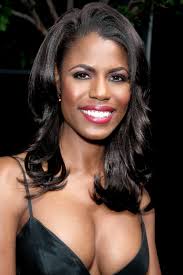
Omarosa Manigault-Newman
(By Photography by Glenn Francis of PacificProDigital.com)
And, in September, 2016, she famously predicted: “Every critic, every detractor will have to bow down to President Trump. It’s everyone who’s ever doubted Donald, who ever disagreed, who ever challenged him. It is the ultimate revenge to become the most powerful man in the universe.”
When Trump moved into the White House on January 20, 2017, Manigault moved in with him as his director of communications for the Office of Public Liaison.
Her arrogance and rudeness quickly won her as many enemies among White House staffers as among her former “Apprentice” rivals.
A typical example: On April 8, 2017, she married John Allen Newman, the senior pastor at The Sanctuary at Mt. Calvary, a church in Jacksonville, Florida. Afterwards, in full bridal attire, Omarosa took her 39-member bridal party to the White House for an extended photo shoot.
According to Politico, White House senior aides and security officials were caught by surprise. Omarosa hadn’t alerted them in advance. Her visitors—lacking security clearances—“loudly wandered around” the Rose Garden and West Wing.
2016 PRESIDENTIAL ELECTION, 2020 TRUMP PRESIDENTIAL CAMPAIGN, ABC NEWS, ALTERNET, AP, BREITBART NEWS, BUZZFEED, CBS NEWS, CELEBRITY APPRENTICE, CIA, CNN, CROOKS AND LIARS, DAILY KOZ, DAVID BROOKS, DEMOCRATIC NATIONAL COMMITTEE, DEPARTMENT OF JUSTICE, DIRECTOR OF NATIONAL INTELLIGENCE, DONALD TRUMP, DONALD TRUMP JUNIOR, FACEBOOK, FBI, FERGUS CULLEN, GOOD MORNING AMERICA, HILLARY CLINTON, JAMES B. COMEY, JAMES R. CLAPPER, JARED KUSHNER, JEFF FLAKE, JOHN ALLEN NEWMAN, JOHN KELLY, LARA TRUMP, MAGNITSKY ACT, MARK SHIELDS, MEET THE PRESS, MICHAEL HAYDEN, MICHELLE OBAMA, MIKE PENCE, MOTHER JONES, MOVEON, MSNBC, NATALIA VESELITSKAYA, NATIONAL SECURITY AGENCY, NBC NEWS, NEWSWEEK, NICCOLO MACHIAVELLI, NPR, OMAROSDA MANIGAULT-NEWMAN, PAUL MANAFORT, PBS NEWSHOUR, PHILIP KLEIN, POLITICO, RAW STORY, REPUBLICAN NATIONAL CONVENTION, REPUBLICAN PARTY, REUTERS, RINAT AKHMETSHIN, ROBERT MUELLER, ROGER STONE, RUSSIA, RUSSIAN INTELLIGENCE, SALON, SARAH HUCKABEE SANDERS, SEATTLE TIMES, SECOND AMENDMENT, Secret Service, SLATE, THE APPRENTICE, THE ATLANTIC, THE CHICAGO SUN-TIMES, THE CHICAGO TRIBUNE, THE DAILY BEAST, THE GUARDIAN, THE HILL, THE HUFFINGTON POST, THE LOS ANGELES TIMES, THE NATION, THE NEW YORK TIMES, THE PRINCE, THE WASHINGTON EXAMINER, THE WASHINGTON POST, THREATS, TIME, TRUMP TOWER, TWITTER, U.S. NEWS & WORLD REPORT, UPI, USA TODAY, VIOLENCE, VLADIMIR PUTIN, WHITE HOUSE SITUATION ROOM, WIKILEAKS
In Bureaucracy, History, Law, Law Enforcement, Politics, Social commentary on August 20, 2018 at 12:42 am
Throughout the 2016 Presidential election, then-First Lady Michelle Obama famously exhorted: “When they go low, we go high!”
Inspiring, yes. But it didn’t prevent Republican Presidential nominee Donald Trump from employing Russian Intelligence officers and computer-hackers to win the election.
On June 9, 2016, high-ranking members of his campaign met with Russian Intelligence agents at Trump Tower.
The purpose: To obtain derogatory information about Democratic Presidential nominee Hillary Clinton.
Among those attending:
- Trump’s son, Donald Trump, Jr.;
- His son-in-law, Jared Kushner;
- His then-campaign manager, Paul Manafort;
- At least two lobbyists with ties to Russian dictator Vladimir Putin, including Russian lawyer Natalia Veselnitskaya; and
- Rinat Akhmetshin, a former Soviet counterintelligence officer suspected of “having ongoing ties to Russian Intelligence.”

Trump Tower
(By Jorge Láscar from Australia)
This was nothing less than treason—meeting with officials of a hostile foreign power to manipulate an American Presidential election.
After The New York Times broke the story, Trump “helped” his son draft a false statement to explain the purpose of the meeting.
On July 8, 2017, Donald Trump, Jr., issued the following statement: “It was a short introductory meeting. I asked Jared and Paul to stop by. We primarily discussed a program about the adoption of Russian children that was active and popular with American families years ago and was since ended by the Russian government.”
Confronted with overwhelming evidence, President Trump tweeted on August 5, 2018:
“Fake News reporting, a complete fabrication, that I am concerned about the meeting my wonderful son, Donald, had in Trump Tower. This was a meeting to get information on an opponent, totally legal and done all the time in politics – and it went nowhere. I did not know about it!”
On July 22, 2016, Trump said at a press conference in Doral, Florida: “Russia, if you are listening, I hope you are able to find the 33,000 emails that are missing [from Hillary Clinton’s personal email server]. I think you will probably be rewarded mightily by our press.”
Thus, Trump called upon a foreign power, hostile to the United States, to interfere in its Presidential election.
Hours later, the Main Intelligence Directorate in Moscow targeted Clinton’s personal office and hit more than 70 other Clinton campaign accounts.
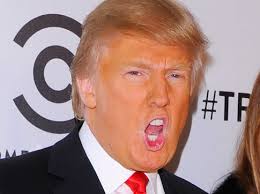
Donald Trump
On December 16, 2016, then-FBI Director James B. Comey and Director of National Intelligence James R. Clapper Jr. agreed with a CIA assessment that Russia intervened in the 2016 election in part to help Donald Trump win the White House.
“When they go low, we go high” did not deter Trump from threatening his Republican and Democratic opponents with violence.
No other candidate—Republican or Democrat—had ever made such repeated and brutal use of threats of physical assault in pursuing the Presidency.
- On March 16, 2016, he warned Republicans that if he didn’t win the GOP nomination in July, his supporters would literally riot: “I think you’d have riots. I think you would see problems like you’ve never seen before. I think bad things would happen. I really do. I wouldn’t lead it, but I think bad things would happen.”
- An ABC reporter summed this up as: “The message to Republicans was clear on [March 16[: ‘Nice convention you got there, shame if something happened to it.'”
- Republicans clearly saw this as a threat: Paul Ryan, their Speaker of the House, said on March 17: “Nobody should say such things in my opinion because to even address or hint to violence is unacceptable.”
- Philip Klein, the managing editor of the Washington Examiner, wrote on the eve of the Republican National Convention in July: “Political commentators now routinely talk about the riots that would break out in Cleveland if Trump were denied the nomination, about how his supporters have guns and all hell could break loose, that they would burn everything to the ground. It works to Trump’s advantage to not try too hard to dispel these notions.”
- On August 9, Trump told a rally in Wilmington, North Carolina: “Hillary [Clinton] wants to abolish, essentially abolish, the Second Amendment. If she gets to pick her [Supreme Court] judges, nothing you can do folks. Although the Second Amendment people, maybe there is, I don’t know.”
- “Well, let me say if someone else said that outside of the hall, he’d be in the back of a police wagon now, with the Secret Service questioning him,” said Michael Hayden, former head of the CIA and National Security Agency (NSA).
Making threats against anyone under protection by the U.S. Secret Service is a felony. Yet Donald Trump was never held legally accountable by the Justice Department.
Threats of this type continued to be made by Trump supporters right up to the day of the election.
- On July 29, Roger Stone, a notorious Right-wing political consultant acting as a Trump strategist, told Breitbart News: “The first thing Trump needs to do is begin talking about [voter fraud] constantly. If there’s voter fraud, this election will be illegitimate, the election of the winner will be illegitimate, we will have a constitutional crisis, widespread civil disobedience, and the government will no longer be the government.”
- At a town hall meeting where Trump’s Vice Presidential nominee Mike Pence appeared, a woman named Rhonda said: “For me personally, if Hillary Clinton gets in, I myself am ready for a revolution.”


 Bureaucracybuster's Blog
ABC NEWS, ADMIRAL IVAN ISAKOV, ADOLF HITLER, ALBERT SPEER, ALTERNET, ANDREW MCCABE, ANTHONY SCARAMUCCI, AP, BETTE DAVIS, BOB WOODWARD, BUZZFEED, CBS NEWS, CHEKA, CIA, CNN, COUNTER-SURVEILLANCE, CROOKS AND LIARS, DAILY KOZ, DAVID SHULKIN, DEMOCRATIC PARTY, DON MCGAHN, DONALD TRUMP, DR. BRENDA FITZGERALD, FACEBOOK, FBI, FSB, GARY COHN, GENRIKH YAGODA, GINA HASPEL, H.R. MCMASTER, HEINRICH HIMMLER, HERMANN GOERING, HOPE HICKS, HOUSE OF REPRESENTATIVES, JAMES COMEY, JEFF SESSIONS, JOE BIDEN, JOHN BOLTON, JOHN KELLY, JOHN MCCAIN, JOSEPH STALIN, KATIE WALSH, KELLY SADLER, KGB, LAVRENTY BERIA, LINDSEY GRAHAM, MICHAEL DUBKE, MICHAEL FLYNN, MIKE PENCE, MIKHAIL TUKHACHEVSKY, MOTHER JONES, MOVEON, MSNBC, NBC NEWS, NEWSWEEK, NICCOLO MACHIAVELLI, NICK AYERS, NIKKI HALEY, NIKOLAI YEZHOV, NKVD, NPR, OMAROSA MANIGAULT-NEWMAN, PAUL MANAFORT, PBS NEWSHOUR, POLITICO, PREET BHARARA, RAW STORY, REINCE PRIBUS, REPUBLICAN PARTY, REUTERS, REX TILLERSON, ROB PORTER, ROBERT S. MUELLER, SALLY YATES, SALON, SARAH SANDERS, SCOTT PRUITT, SEAN SPICER, SEATTLE TIMES, SEBASTIAN GORKA, SERGEY KISLYAK, SERGEY LAVROV, SLATE, SOVIET UNION, SS, STEVE BANNON, STORMY DANIELS, SURVEILLANCE, THE APPRENTICE, THE ATLANTIC, THE CHICAGO SUN-TIMES, THE CHICAGO TRIBUNE, THE DAILY BEAST, THE GUARDIAN, THE HILL, THE HUFFINGTON POST, THE LOS ANGELES TIMES, THE NATION, THE NEW YORK TIMES, THE PRINCE, THE WASHINGTON POST, TIME, TOM BOSSERT, TOM PRICE, TWITTER, U.S. NEWS & WORLD REPORT, UPI, USA TODAY, WALTER SHAUB, WILBUR ROSS
OUT OF EVIL, CHAOS: PART ONE (OF FIVE)
In Bureaucracy, History, Law, Law Enforcement, Military, Politics, Social commentary on December 12, 2018 at 12:06 amDonald Trump has often been compared to Adolf Hitler. But his reign bears far more resemblance to that of Joseph Stalin.
Germany’s Fuhrer, for all his brutality, maintained a relatively stable government by keeping the same men in office—from the day he took power on January 30, 1933, to the day he blew out his brains on April 30, 1945.
Adolf Hitler
Bundesarchiv, Bild 146-1990-048-29A / CC-BY-SA 3.0 [CC BY-SA 3.0 de (https://creativecommons.org/licenses/by-sa/3.0/de/deed.en)%5D
Heinrich Himmler, a former chicken farmer, remained head of the dreaded, black-uniformed Schutzstaffel, or Protection Squads, known as the SS, from 1929 until his suicide in 1945.
In April, 1934, Himmler was appointed assistant chief of the Gestapo (Secret State Police) in Prussia, and from that position he extended his control over the police forces of the whole Reich.
Hermann Goering, an ace fighter pilot in World War 1, served as Reich commissioner for aviation and head of the newly developed Luftwaffe, the German air force, from 1935 to 1945.
And Albert Speer, Hitler’s favorite architect, held that position from 1933 until 1942, when Hitler appointed him Reich Minister of Armaments and War Production. He held that position until the Third Reich collapsed in April, 1945.
Soviet Premier Joseph Stalin, by contrast, purged his ministers constantly. For example: From 1934 to 1953, Stalin had no fewer than three chiefs of his secret police, then named the NKVD:
Stalin purged Yagoda and Yezhov, with both men executed after being arrested.
Joseph Stalin
He reportedly wanted to purge Beria, too, but the latter may have acted first. There has been speculation that Beria slipped warfarin, a blood-thinner often used to kill rats, into Stalin’s drink, causing him to die of a cerebral hemorrhage.
Nor were these the only casualties of Stalin’s reign.
For almost 30 years, through purges and starvation caused by enforced collections of farmers’ crops, Stalin slaughtered 20 to 60 million people.
The 1930s were a frightening and dangerous time to be alive in the Soviet Union. In 1934, Stalin, seeing imaginary enemies everywhere, ordered a series of purges that lasted right up to the German invasion.
An example of Stalin’s paranoia occurred one day while the dictator walked through the Kremlin corridors with Admiral Ivan Isakov. Officers of the NKVD (the predecessor to the KGB) stood guard at every corner.
“Every time I walk down the corridors,” said Stalin, “I think: Which one of them is it? If it’s this one, he will shoot me in the back. But if I turn the corner, the next one can shoot me in the face.”
In 1937-38, the Red Army fell prey to Stalin’s paranoia.
Its victims included:
And heading the list of those marked for death was Marshal Mikhail Tukhachevsky.
Arrested on May 22, 1937, he was interrogated and tortured. As a result, he “confessed” to being a German agent plotting to overthrow Stalin and seize power.
On his confession, which survives in the archives, his bloodstains can clearly be seen.
On June 11, the Soviet Supreme Court convened a special military tribunal to try Tukhachevsky and eight generals for treason.
It was a sham: The accused were denied defense attorneys, and could not appeal the verdict—-which was foregone: Death.
In a Russian version of poetic justice, five of the eight generals who served as Tukhachevsky’s judges were themselves later condemned and executed as traitors.
Since taking office as the nation’s 45th President, Donald Trump has sought to rule by fear.
Donald Trump
In fact, he candidly shared his belief in this as a motivator to journalist Bob Woodward during the 2016 Presidential race: “Real power is—I don’t even want to use the word—fear.”
It is unknown if Trump ever read The Prince, Niccolo Machiavelli’s infamous treatise on attaining political power. If so, he doubtless is familiar with its most famous passage:
“From this arises the question whether it is better to be loved than feared, or feared more than loved. The reply is, that one ought to be both feared and loved, but as it is difficult for the two to go together, it is much safer to be feared than loved….
“For it may be said of men in general that they are ungrateful, voluble, dissemblers, anxious to avoid danger and covetous of gain; as long as you benefit them, they are entirely yours: they offer you their blood, their goods, their life and their children, when the necessity is remote, but when it approaches, they revolt.
“And the prince who has relied solely on their words, without making other preparations, is ruined; for the friendship which is gained by purchase and not through grandeur and nobility of spirit is bought but not secured, and at a pinch is not to be expended in your service.
“And men have less scruple in offending one who makes himself loved than one who makes himself feared; for love is held by a chain of obligations which, men being selfish, is broken whenever it serves their purpose; but fear is maintained by a dread of punishment which never fails.”
Share this: