Posts Tagged ‘SOVIET UNION’
ABC NEWS, ALTERNET, AP, BUZZFEED, CBS NEWS, CIA, CNN, CROOKS AND LIARS, DAILY KOZ, DONALD TRUMP, FACEBOOK, FOX & FRIENDS, FOX NEWS, GREEN BERETS, HIZBOLLAH, HOSTAGE NEGOTIATION, ISLAMIC TERRORISM, KGB, KIDNAPPING, LOS ANGELES POLICE DEPARTMENT, MOTHER JONES, MOVEON, NBC NEWS, NEW YORK POLICE DEPARTMENT, NEWSWEEK, NPR, POLITICO, RAW STORY, REUTERS, SALON, SEATTLE TIMES, SLATE, SOVIET UNION, SPECIAL WEAPONS AND TACTICS TEAMS (SWAT), THE ATLANTIC, THE CHICAGO SUN-TIMES, THE CHICAGO TRIBUNE, THE DAILY BEAST, THE GUARDIAN, THE HILL, THE HUFFINGTON POST, THE LOS ANGELES TIMES, THE NATION, THE NEW YORK TIMES, THE WALL STREET JOURNAL, THE WASHINGTON POST, TIME, TWITTER, U.S. NAVY SEALS, U.S. NEWS & WORLD REPORT, UPI, USA TODAY, WILLIAM CASEY
In Bureaucracy, History, Law Enforcement, Military, Politics, Social commentary on March 2, 2018 at 12:14 am
On December 1, 2015, Donald Trump laid out his approach to “hostage negotiation.”
He did so during an appearance on “Fox & Friends.”
One of the hosts of the Fox News program asked him about minimizing civilian casualties. And Trump replied:
“I would do my best—absolute best. I mean, one of the problems that we have and one of the reasons we’re so ineffective is they’re using [civilians] as shields—it’s a horrible thing. They’re using them as shields. But we’re fighting a very politically correct war.
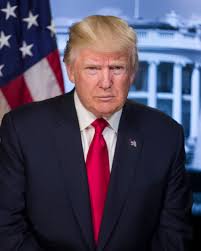
Donald Trump
“And the other thing is with the terrorists, you have to take out their families. When you get these terrorists, you have to take out their families. They care about their lives, don’t kid yourself. But they say they don’t care about their lives. You have to take out their families.”
That was precisely the approach the KGB took in 1981 when “negotiating” with Islamic hostage-takers.
It’s in direct contrast to the methods used by American hostage-negotiators.
During the late 1960s and early 1970s, American law enforcement agencies began creating Special Weapons and Tactics (SWAT) teams. These units were armed with automatic weapons and trained to enter barricaded buildings. They were also given special training in hostage negotiation.
Their men came from the most physically and mentally fit officers of those departments. And the police departments whose SWAT teams were universally recognized as the best were the LAPD and NYPD.
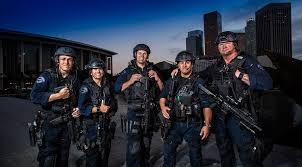
A SWAT team
The first commandment for American SWAT teams—local, state and Federal—is: Don’t try to enter a barricaded area unless (1) hostages’ lives are directly at risk; and (2) there is no other way to effect their rescue.
Even if hostages are murdered before a SWAT team arrives on the scene, officers will usually try to enter into negotiations with their captors. They will send in food and other comfort items in hopes of persuading the criminals to surrender peacefully.
These negotiations can last for hours or days—so long as police feel there’s a chance of success. If, however, police feel that hostages are about to be killed, they will storm the enclosure.
But there is another way agencies can try to rescue hostages. It might be called, “The KGB Method.”
The KGB served as a combination secret police/paramilitary force throughout the 74-year life of the Soviet Union. Its name (“Committee for State Security”) has changed several times since its birth in 1917: Cheka, NKVD, MGB, KGB.
After the collapse of the Soviet Union in 1991 and the establishment of the Russian Federation, its name was officially changed to the FSB (Federal Security Service).
By any name, this is an agency known for its brutality and ruthlessness. The numbers of its victims literally run into the millions.
On September 30 1985, four attaches from the Soviet Embassy in Beirut, Lebanon, were kidnapped by men linked to Hizbollah (“Party of God”), the Iranian-supported terrorist group.
The kidnappers sent photos of the four men to Western news agencies. Each captive was shown with an automatic pistol pressed to his head.
The militants demanded that Moscow pressure pro-Syrian militiamen to stop shelling the pro-Iranian militia in Lebanon’s northern port city of Tripoli.
And they threatened to execute the four Soviet captives, one by one, unless this demand was met.
The Soviet Union began negotiations with the kidnappers, but could not secure a halt to the shelling of Tripoli.
Only two days after the kidnappings, the body of Arkady Katov, a 30-year-old consular secretary, was found in a Beirut trash dump. He had been shot through the head.
That was when the KGB took over negotiations.
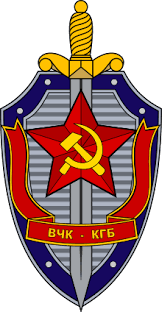
Insignia of the KGB
They kidnapped a man known to be a close relative of a prominent Hizbollah leader. Then they castrated him, stuffed his testicles in his mouth, shot him in the head, and sent the body back to Hizbollah.
With the body was a note: We know the names of other close relatives of yours, and the same will happen to them if our diplomats are not released immediately.
Soon afterward, the remaining three Soviet attaches were released only 150 yards from the Soviet Embassy.
Hizbollah telephoned a statement to news agencies claiming that the release was a gesture of “goodwill.”
In Washington, D.C., then-CIA Director William Casey decided that the Soviets knew the language of Hizbollah.
Both the United States and Israel—the two nations most commonly targeted for terrorist kidnappings—have elite Special Forces units.
Military hostage-rescue units operate differently from civilian ones. They don’t care about taking alive hostage-takers for later trials. The result is usually a pile of dead hostage-takers.
These Special Forces could be ordered to similarly kidnap the relatives of whichever Islamic terrorist leaders are responsible for the latest outrages.
Ordering such action would instantly send an unmistakable message to Islamic terrorist groups: Screw with us at your own immediate peril. And at the peril of those you most hold dear.
In the United States, such elite units as the U.S. Navy SEALS, Green Berets and Delta Force stand ready. They require only the orders.
2016 PRESIDENTIAL ELECTION, ABC NEWS, ADOLF HITLER, ALTERNET, ANTI-COMMUNISM, AP, BILL MITCHELL, BUZZFEED, CBS NEWS, CNN, COMMUNISM, CROOKS AND LIARS, DAILY KOZ, DEMOCRATIC NATIONAL COMMITTEE, DIRECTOR OF NATIONAL INTELLIGENCE, DONALD TRUMP, FACEBOOK, FBI, HOUSE INTELLIGENCE COMMITTEE, JAMES COMEY, JAMES R. CLAPPER, JOSEPH R. MCCARTHY, JOSEPH STALIN, MOTHER JONES, MOVEON, NAZI GERMANY, NBC NEWS, NEWSWEEK, NORTH ATLANTIC TREATY ORGANIZATION, NPR, POLAND, POLITICO, RAW STORY, REPUBLICANS, REUTERS, RICHARD M. NIXON, ROBERT MUELLER, RUSSIAN BOTS, SALON, SEATTLE TIMES, SENATE INTELLIGENCE COMMITTEE, SLATE, SOVIET UNION, THE ATLANTIC, THE CHICAGO SUN-TIMES, THE CHICAGO TRIBUNE, THE DAILY BEAST, THE GUARDIAN, THE HILL, THE HUFFINGTON POST, THE LOS ANGELES TIMES, THE NATION, THE NEW YORK TIMES, THE WASHINGTON POST, TIME, TREASON, TWITTER, U.S. NEWS & WORLD REPORT, UPI, USA TODAY, USA TODAY VLADIMIR PUTIN, WIKILEAKS, WORLD WAR 11
In Bureaucracy, History, Military, Politics, Social commentary on March 1, 2018 at 12:08 am
There was a time when Republicans saw—and portrayed themselves—as America’s foremost defenders against Communism.
This was particularly true during the early 1950s. Case in point: Wisconsin United States Senator Joseph R. McCarthy.
Elected to the Senate in 1946, he rose to national prominence on February 9, 1950, after giving a fiery speech in Wheeling, West Virginia:
“The State Department is infested with communists. I have here in my hand a list of 205—a list of names that were made known to the Secretary of State as being members of the Communist Party and who nevertheless are still working and shaping policy in the State Department.”
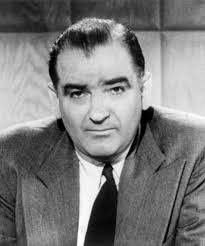
Joseph McCarthy
No American—no matter how prominent—was safe from the accusation of being a Communist or a Communist sympathizer—”a Comsymp” or “fellow traveler” in the style of the era.
So Red-baiting Republicans like McCarthy and then-Vice President Richard M. Nixon would feel dumbfounded at the following news:
On February 20, a purge of Russian “bots” by Twitter sparked outrage by—yes!—Right-wingers.
Bots are fake accounts used to spread propaganda or advertising campaigns. Investigations by the House and Senate Intelligence Committees have uncovered massive efforts by Russia to throw the 2016 Presidential election to Donald Trump.
Their weapon of choice: Swamping “social media” sites like Facebook, Google and Twitter with genuinely fake news.
The Twitter purge came a week after Special Counsel Robert Mueller indicted 13 Russians and three Russian companies for interfering in that election. The indictments detailed an elaborate plot to wage “information warfare” against the United States.
Right-wingers suddenly found thousands of their Russian bot followers had disappeared—and accused Twitter of secretly deleting like-minded accounts.
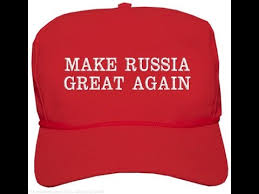
“Twitter is currently purging the followers on conservative accounts only. I just lost 3000 followers in one minute,” tweeted Candace Owens, director of urban engagement for Turning Point USA. This is a student organization promoting limited government and free markets.
Bill Mitchell, a Right-winger known for his controversial tweets defending President Donald Trump, claimed that he lost roughly 4,000 followers overnight.
“This is a damn joke,” tweeted Mike Zollo. “Twitter is absolutely censoring conservative and right wing speech for no damn reason other than their disagreement with it. But, liberals can write vile comments and threaten us with no punishment.”
From the end of World War II to the collapse of the Soviet Union in 1991, it would have been unthinkable for a Republican Presidential candidate to find common cause with a Soviet dictator.
But that utterly changed when Donald Trump won, first, the Republican Presidential nomination and, then, the White House. Trump lavishly praised Russian President Vladimir Putin—and even called on him to directly interfere in the 2016 Presidential race.
On July 22, 2016, Wikileaks released 19,252 emails and 8,034 attachments hacked from computers of the highest-ranking officials of the Democratic National Committee (DNC). Early reports traced the leak to Russian hackers.
“Russia, if you are listening,” Trump said at a press conference in Doral, Florida, “I hope you are able to find the 33,000 emails that are missing—I think you will probably be rewarded mightily by our press.”
This was nothing less than treason—calling upon a foreign power, hostile to the United States, to interfere in its Presidential election.
On December 16, 2016, then-FBI Director James B. Comey and Director of National Intelligence James R. Clapper Jr. agreed with a CIA assessment that Russia intervened in the 2016 election in part to help Donald Trump win the White House.

Trump, however, has steadfastly denied any such role by Russia: “I think it’s ridiculous,” he told “Fox News Sunday.” “I think it’s just another excuse. I don’t believe it….No, I don’t believe it at all.”
The last time dictator-worshiping Fascists found common cause with dictator-worshiping Communists was in August, 1939.
Germany’s Fuhrer Adolf Hitler and the Soviet Union’s Joseph Stalin agreed to end—at least temporarily—their years of violent rivalry and personal slander.
The reason: Hitler planned to invade Poland, and feared he would have to fight its allies, France and England, if he did. He didn’t want to have to fight the Soviet Union, too.
And Stalin saw Hitler’s warlike ambitions as useful to his own dreams of conquest: He wanted—and got—the eastern half of Poland, while Hitler’s legions occupied the western half.
So why would Donald Trump—the arch capitalist—find common cause with Vladimir Putin, the arch Communist?
Simple: Each had something the other wanted.
First, Putin: He wanted a President who would withdraw the United States from the North Atlantic Treaty Organization (NATO)—which would instantly render that alliance kaput. And give Russia a free hand to attack Europe.
And Trump had repeatedly said the United States was paying an unfairly large portion of the monies needed to maintain that alliance.
Then, Trump: He wanted to be President—to enrich himself and his family, to become the center of the world’s attention, and to destroy anyone who dared confront or contradict him.
And in supporting his dictatorial agenda, his millions of Right-wing followers have found common cause with the followers of a Communist dictator’s agenda.
ABC NEWS, ALTERNET, AP, BBC, BREITBART, BUZZFEED, CBS NEWS, CNN, CROOKS AND LIARS, DAILY KOS, DAILY KOZ, DEPARTMENT OF AGRICULTURE, DEPARTMENT OF HEALTH AND HUMAN SERVICES, DEPARTMENT OF JUSTICE, DEPARTMENT OF TRANSPORTATION, DONALD TRUMP, ELAINE CHAO, FACEBOOK, GEORGI MALENKOV, JEFF FLAKE, JEFF SESSIONS, JOSEPH STALIN, KIM JONG ON, KLIMENT VOROSHILOV, LAVRENTI P. BERIA, MEDIA, MIKE PENCE, MOTHER JONES, MOVEON, NBC NEWS, NEWSWEEK, NIKITA KHRUSHCHEV, NPR, POLITICO, RAW STORY, REUTERS, ROBERT PAYNE, SALON, SEATTLE TIMES, SLATE, SONNY PERDUE, SOVIET UNION, THE ATLANTIC, THE CHICAGO SUN-TIMES, THE CHICAGO TRIBUNE, THE DAILY BEAST, THE GUARDIAN, THE HILL, THE HUFFINGTON POST, THE LOS ANGELES TIMES, THE NATION, THE NEW YORK TIMES, THE RISE AND FALL OF STALIN, THE WALL STREET JOURNAL, THE WASHINGTON POST, TIME, TOM PRICE, TWITTER, U.S. NEWS & WORLD REPORT, UNITED STATES ATTORNEY GENERAL, UPI, USA TODAY, VLADIMIR PUTIN, VYACHESLAV MOLOTOV
In Bureaucracy, History, Politics, Social commentary on January 16, 2018 at 12:10 am
According to CNN, Arizona United States Senator Jeff Flake will deliver a speech on the floor of the Senate comparing President Donald Trump to former Soviet dictator Joseph Stalin.
The subject of that speech—to be delivered on January 17—will be Trump’s attacks on the news media.
Among those attacks:
- On February 17, 2017, Trump called the press “the enemy of the American people.”“The FAKE NEWS media,” he tweeted, “(failing @nytimes, @NBCNews, @ABC, @CBS, @CNN) is not my enemy, it is the enemy of the American People!”
- On July 2, Trump tweeted a video showing him punching a man with the CNN logo superimposed on his head during a WWE wrestling match.
- And on August 15, the President retweeted a cartoon photo of a “Trump Train” running over a CNN reporter.
“Mr. President,” says an excerpt of Flake’s upcoming speech made available to CNN, “it is a testament to the condition of our democracy that our own President uses words infamously spoken by Joseph Stalin to describe his enemies.
“It bears noting that so fraught with malice was the phrase ‘enemy of the people,’ that even Nikita Khrushchev forbade its use, telling the Soviet Communist Party that the phrase had been introduced by Stalin for the purpose of ‘annihilating such individuals’ who disagreed with the supreme leader.”
Joseph Stalin ordered his critics executed in prison or exiled to Siberia. It’s clear that Donald Trump would like to have that same power.
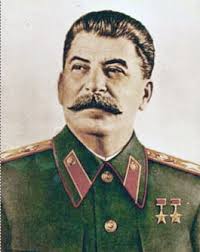
Joseph Stalin
But that’s not the only similarity that unites the current President and the late Soviet premier.
A second one: Raging egomania.
On December 21, 1949, Stalin turned 70. And millions of Russians feverishly competed to out-do one another in singing his praises.
These celebrations weren’t prompted by love—but fear.
He had lived up to his pseudonym: “Man of Steel.” For almost 30 years, through purges and starvation caused by enforced collections of farmers’ crops, he had slaughtered 20 to 60 million of his fellow citizens.
The British historian, Robert Payne, described these rapturous events in his classic 1965 biography, The Rise and Fall of Stalin:
“From all over the country came gifts of embroidered cloth, tapestries and carpets bearing his name or his features….Poets extolled him in verses, He was the sun, the splendor, the lord of creation.
“The novelist Leonid Lenov…foretold the day when all the peoples of the earth would celebrate his birthday; the new calendar would begin with the birth of Stalin rather than with the birth of Christ.”
Lavrenti P. Beria, Stalin’s sinister and feared secret police chief: “Millions of fighters for peace and democracy in all countries of the world are closing their ranks still firmer around Comrade Stalin.”
Foreign Minister Vyacheslav Molotov: “The gigantic Soviet army created during [World War II] was under the direct leadership of Comrade Stalin and built on the basis of the principles of Stalinist military science.”
Defense Commissar Kliment Voroshilov: “The mighty voice of the Great Stalin, defending the peace of the world, has penetrated into all corners of the globe.”
Central Committee Secretary Georgi Malenkov: “With a feeling of great gratitude, turning their eyes to Stalin, the peoples of the Soviet Union, and hundreds of millions of peoples in all countries of the world, and all progressive mankind, see in Comrade Stalin their beloved leader and teacher….”
Now, fast forward to June 12, 2017.
That was when President Donald J. Trump—also 70—convened his first full Cabinet meeting since taking office on January 20.
Donald Trump
On June 12, polls showed that only 36% of Americans approved of his conduct. But from his Cabinet members, Trump got praise traditionally lavished on dictators like Stalin and North Korea’s Kim Jong On.
While the Cabinet members sat around a mahogany table in the West Wing of the White House, Trump instructed each one to say a few words about the good work his administration was doing.
Vice President Mike Pence: “It is the greatest privilege of my life to serve as the vice president to a president who is keeping his word to the American people.”
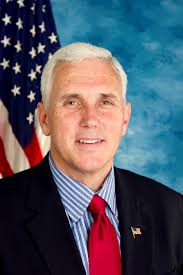
Mike Pence
Attorney General Jeff Sessions: “It’s an honor to be able to serve you.”
Secretary of Agriculture Sonny Perdue: “I just got back from Mississippi. They love you there.”
Secretary of Health and Human Services Tom Price: “What an incredible honor it is to lead the Department of Health and Human Services at this pivotal time under your leadership. I can’t thank you enough for the privilege that you’ve given me, and the leadership you’ve shown.”
Secretary of Transportation Elaine Chao: “Thank you for coming over to the Department of Transportation. I want to thank you for getting this country moving again, and also working again.”
Politicians—both domestic and foreign—have quickly learned that the quickest way to get on Trump’s “good side” is to shamelessly and constantly praise him.
As Trump infamously said during a 2016 interview: “If [Vladimir] Putin says nice things about me, I’ll say nice things about him.”
Some historians believe that Stalin was poisoned by one of his fawning yes-men—most likely Lavrenti Beria.
The time may come when Trump learns that outrageous flattery can hide murderous hatred.
2016 PRESIDENTIAL RACE, ABC NEWS, ANN COULTER, BARACK OBAMA, BIRTH CERTIFICATE, BIRTHERISM, CBS NEWS, CHUCK TODD, CNN, DONALD TRUMP, FACEBOOK, HILLARY CLINTON, JOHN LEWIS, JOHN MCCAIN, MEET THE PRESS, MUSLIMS, NBC NEWS, NEWSWEEK, NPR, POLITICO, REINCE PREIBUS, REPUBLICAN PARTY, SALON, Sarah Palin, SLATE, SOVIET UNION, STEVEN BANNON, TAX RETURNS, TEA PARTY, THE APPRENTICE, THE CHICAGO SUN-TIMES, THE CHICAGO TRIBUNE, THE HUFFINGTON POST, THE LOS ANGELES TIMES, THE NEW YORK TIMES, THE WASHINGTON POST, THIS WEEK, TIME, TWITTER, U.S. NEWS & WORLD REPORT, USA TODAY, VLADIMIR PUTIN
In Bureaucracy, History, Politics, Social commentary, Uncategorized on January 10, 2018 at 12:02 am
For five years, Donald Trump, more than anyone else, popularized the slander that President Barack Obama was born in Kenya—and was therefore not an American citizen.
For more than a year during his 2016 Presidential campaign, Trump continued doing so.
Meanwhile, Trump’s popularity steadily fell among blacks—to 1%, compared to the 91% of black voters who backed Hillary Clinton.
Even the managers of Trump’s campaign urged him to put the “birther” issue behind him.
And so, on September 16, 2016—10 days before his scheduled first debate with Democratic Presidential nominee Hillary Clinton—Trump made his version of a reversal.
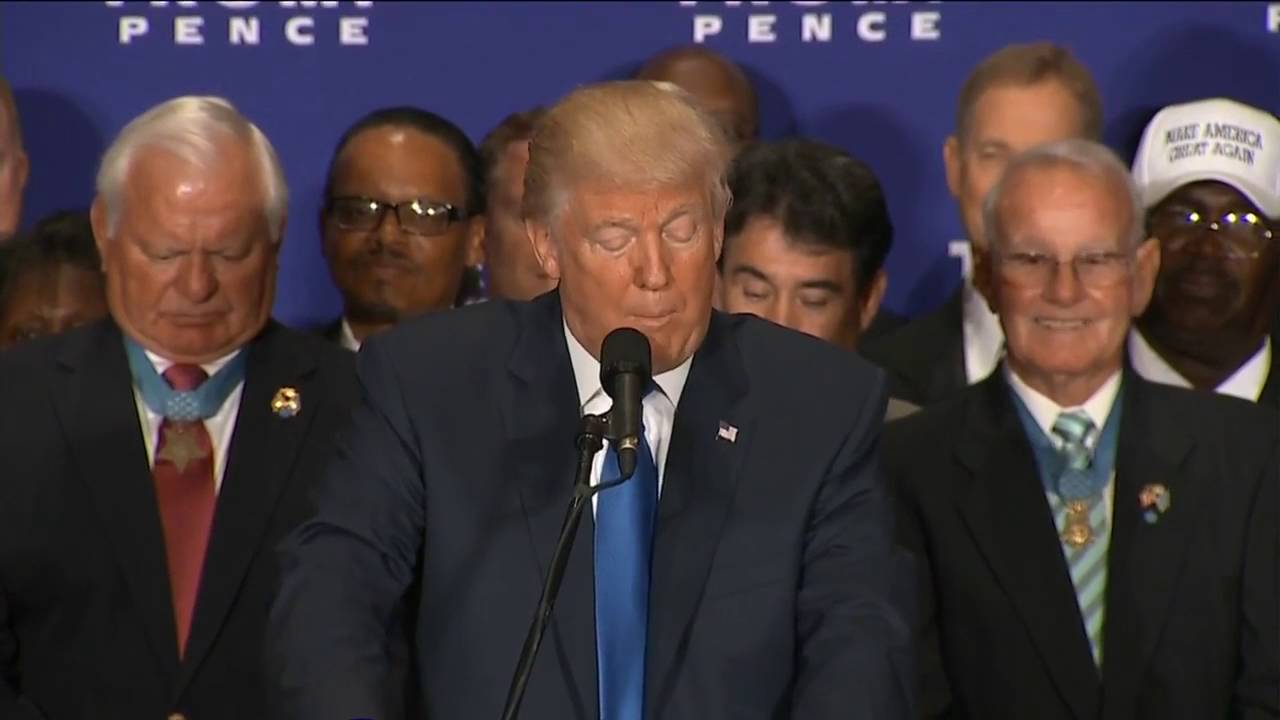
Donald Trump: “President Barack Obama was born in the United States.”
He did so in about seven seconds and 40 words—after spending a half hour paying tribute to the military and promoting his new upscale hotel in Washington, D.C.:
“Now, not to mention her in the same breath, but Hillary Clinton and her campaign of 2008 started the birther controversy.
“I finished it. I finished it. You know what I mean.
“President Barack Obama was born in the United States, period. Now we all want to get back to making America strong and great again.”
His tone made it clear that he felt uneasy making that statement—and wanted to get it over with as fast as possible.
He refused to take questions from reporters covering the event. Nor did he apologize for his five-year campaign of slander.
Nor did any Republican apologize for the eight-year campaign of slander and obstruction their party had waged against the Nation’s first black President.
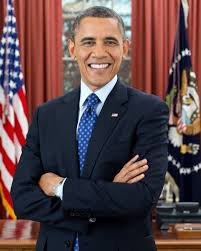
President Barack Obama
Among its highlights:
- In September, 2009, Joe Wilson (R-SC) yelled “You lie!” during Obama’s health care speech to Congress.
- In January, 2010, an effigy of President Barack Obama was found hanging from a building in Plains, Georgia.
- In December, 2011, Brent Bozell, who runs the right-wing Media Research Center, called Obama to “a skinny, ghetto crackhead.”
- In December, 2011, Rep. Jim Sensenbrenner (R-Wisc.), said of Michelle Obama: “She lectures us on eating right while she has a large posterior herself.”
- In January, 2012, Mitt Romney’s son, Matt, said his father might release his tax returns “as soon as President Obama releases his grades and birth certificate and sort of a long list of things.”
- In February, 2012, right-wing columnist Ann Coulter offered: “Voters with forty years of politically correct education are ecstatic to have the first Black president. They just love the idea even if we did get Flavor Flav instead of Thomas Sowell.”
- In May, 2012, a flatbed truck drove through new York holding a trailer with eight mannequin-like bodies hanging on nooses. One of the figures resembled President Obama, with a sign on the truck reading: “Obama Is Onboard, Find Out Why. Visit YouTube.com And Search Keyword PatriotPhipps.”

- Throughout the 2012 Presidential campaign, Newt Gingrich repeatedly called Obama “the greatest food stamp President in American history.”
- Obama has been portrayed as a shoeshine man, an Islamic terrorist and a chimp. The image of his altered face has been shown on a product called Obama Waffles in the manner of Aunt Jemima and Uncle Ben. He has been repeatedly depicted with a Hitler forelock and mustache.
- Among the protest signs they have brandished by Tea Party members: “Obama’s Plan: White Slavery,” “The American Taxpayers are the Jews for Obama’s Ovens,” and “Obama was Not Bowing [to the Saudi King] He was Sucking Saudi Jewels.”
- Other Tea Party posters: “Imam Obama Wants to Ban Pork” and “The Zoo Has An African Lion, and the White House Has a Lyin’ African.”
- Tea Partiers have chanted at Obama: “Bye, bye, Blackbird” and “Kenyan go home!”
- During the Republican-imposed government shutdown—October 1-17, 2013—Rep. Pete Sessions (R-Texas) told Obama: “I cannot even stand to look at you,” The incident occurred when Obama met with lawmakers to try to find a resolution to the shutdown.
- On October 1, 2013, Congressional Republicans shut down the government in an attempt to force President Barack Obama to de-fund his signature achievement: The Affordable Care Act (ACA). President Obama refused, and 800,000 federal workers were furloughed.
- On October 14, while Republicans were threatening to drive the nation into bankruptcy by refusing to raise the debt ceiling, former Alaska Governor Sarah Palin posted on Facebook her “secret plan” to impeach President Obama:
- “It’s time for the president to be honest with the American people for a change. Defaulting on our national debt is an impeachable offense, and any attempt by President Obama to unilaterally raise the debt limit without Congress is also an impeachable offense.”
- In short: If the Republicans force the country into default, Obama should be impeached. And if the President finds a way to avoid default, he should be impeached.
* * * * *
When Republicans say, “We need to support our President,” they don’t mean every President.
They mean: Every Republican President. And only every Republican President.
For Republicans, Presidents of their party carry the status of Fuhrers: To be obeyed instantly and without question.
And for Republicans, Presidents elected by Democrats are usurpers: They must be obstructed as often as possible—and impeached whenever possible.
2016 PRESIDENTIAL RACE, ABC NEWS, ANN COULTER, BARACK OBAMA, BIRTH CERTIFICATE, BIRTHERISM, CBS NEWS, CHUCK TODD, CNN, DONALD TRUMP, FACEBOOK, HILLARY CLINTON, JOHN LEWIS, JOHN MCCAIN, MEET THE PRESS, MUSLIMS, NBC NEWS, NEWSWEEK, NPR, POLITICO, REINCE PREIBUS, REPUBLICAN PARTY, SALON, Sarah Palin, SLATE, SOVIET UNION, STEVEN BANNON, TAX RETURNS, TEA PARTY, THE APPRENTICE, THE CHICAGO SUN-TIMES, THE CHICAGO TRIBUNE, THE HUFFINGTON POST, THE LOS ANGELES TIMES, THE NEW YORK TIMES, THE WASHINGTON POST, THIS WEEK, TIME, TWITTER, U.S. NEWS & WORLD REPORT, USA TODAY, VLADIMIR PUTIN
In Bureaucracy, History, Politics, Social commentary on January 9, 2018 at 10:31 pm
Reince Priebus, the incoming White House Chief of Staff for soon-to-be President Donald J. Trump, was furious.
There were three reasons for his outrage.
First, millions of Americans were questioning whether Trump was legitimately elected. Their suspicions were based on solid evidence, supplied by the American Intelligence community, that Russian President Vladimir Putin intervened in the 2016 Presidential election to help him defeat Hillary Clinton.
Second, among those Americans were members of the United States Congress—such as Georgia Democratic Representative John Lewis.
On the January 15, 2017 edition of “Meet the Press,” Lewis was asked by host Chuck Todd: “Do you plan on trying to forge a relationship with Donald Trump?”
“No,” said Lewis. “I believe [in] forgiveness. I believe in trying to work with people. It’s going to be hard. It’s going to be very difficult. I don’t see this president-elect as a legitimate president.”
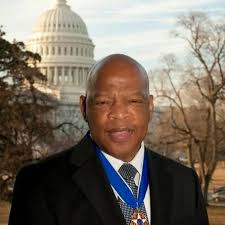
John Lewis
“You do not consider him a legitimate president. Why is that?” asked Todd.
“I think the Russians participated in helping this man get elected and they helped destroy the candidacy of Hillary Clinton.”
And the third reason Priebus was outraged: He believed—or at least claimed to believe—that President Barack Obama should vouch for Trump’s legitimacy.
“I think President Obama should step up,” Priebus said on the January 15 edition of ABC’s “This Week.” “We’ve had a great relationship with the White House….I think the administration can do a lot of good by telling folks that are on the Republican side of the aisle, look, we may have lost the election on the Democratic side, but it’s time to come together.”
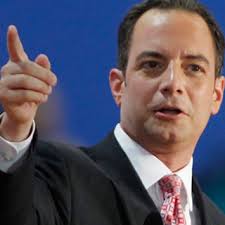
Reince Priebus
“You didn’t have Republicans questioning whether or not Obama legitimately beat John McCain in 2008,” Priebus added.
“This Week” host George Stephanopoulos replied that Trump had questioned Obama’s legitimacy as an American citizen until almost the end of the 2016 Presidential race.
“But look, George, that’s not the point!” Priebus said, visibly agitated. “The point is not where Barack Obama was born! The point is that we’ve got congressmen on the Democratic side of the aisle that are questioning the legitimacy of President-elect Trump.”
In short: Let’s ignore Trump’s five-year slander campaign against the legitimacy of President Obama. What’s important is that people are questioning the legitimacy of a Republican elected with the help of Russian Communists.
In 2011, Trump, then-host of NBC’s “The Apprentice,” was thinking of running for President against Obama.
Seeking to gain popularity among America’s Right-wing, Trump almost singlehandedly created the popular fiction that the President was born in Kenya—and was not an American citizen.
His motive: To convince Americans that Obama was an illegitimate President.
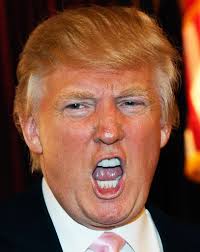
Donald Trump
Among the statements Trump made:
February 10, 2011: “Our current president came out of nowhere. Came out of nowhere. In fact, I’ll go a step further: The people that went to school with him, they never saw him, they don’t know who he is. It’s crazy.”
March 23, 2011: “I want him to show his birth certificate. I want him to show his birth certificate. … There’s something on that birth certificate that he doesn’t like.”
March 28, 2011: “I am really concerned” [that Obama wasn’t born in the United States]. He said that the birth announcement for Obama in a Hawaii newspaper could have been planted “for whatever reason.”
March 30, 2011: “If you are going to be president of the United States you have to be born in this country. And there is a doubt as to whether or not he was. … He doesn’t have a birth certificate. He may have one, but there’s something on that, maybe religion, maybe it says he is a Muslim. I don’t know. Maybe he doesn’t want that. Or he may not have one. But I will tell you this. If he wasn’t born in this country, it’s one of the great scams of all time.”
April 7, 2011: “I have people that have been studying it, and they cannot believe what they’re finding. You are not allowed to be a president if you’re not born in this country. Right now I have real doubts.”
April 25, 2011: “I’ve been told very recently…that the birth certificate is missing. I’ve been told that it’s not there or it doesn’t exist. And if that’s the case, it’s a big problem.”
On April 27, President Obama released his original, long-form Hawiian birth certificate.
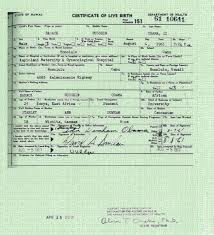
The long-form version of President Obama’s birth certificate
“We do not have time for this kind of silliness,” said Obama at a press conference, speaking as a father might to a roomful of spiteful children. “We have better stuff to do. I have got better stuff to do. We have got big problems to solve.
“We are not going to be able to do it if we are distracted, we are not going to be able to do it if we spend time vilifying each other…if we just make stuff up and pretend that facts are not facts, we are not going to be able to solve our problems if we get distracted by side shows and carnival barkers.”
Trump responded with a series of tweets on Twitter–all of them attacking the legitimacy of the birth certificate that President Obama had released.
ABC NEWS, ADOLF HITLER, ALTERNET, AP, BBC, BUZZFEED, CBS NEWS, CNN, DAILY KOS, DAVID BROOKS, DONALD TRUMP, FACEBOOK, FBI, GEORGE C. SCOTT, GEORGE S. PATTON, GESTAPO, HOGAN’S HEROES, JAMES COMEY, JIMMY CARTER, MEL BROOKS, MIKE FLYNN, MOTHER JONES, MOVEON, NAZI GERMANY, NBC NEWS, NEWSWEEK, NPR, PAUL RYAN, PBS NEWSHOUR, POLITICO, RAW STORY, REPUBLICAN PARTY, REUTERS, RICHARD GRUNBERGER, RICHARD NIXON, ROBERT MEULLER, Ronald Reagan, SALON, SEATTLE TIMES, SLATE, SOVIET UNION, THE 12-YEAR REICH, THE ATLANTIC, THE CHICAGO SUN-TIMES, THE CHICAGO TRIBUNE, THE DAILY BEAST, THE GUARDIAN, THE HILL, THE HUFFINGTON POST, THE LOS ANGELES TIMES, THE NEW YORK TIMES, THE WALL STREET JOURNAL, THE WASHINGTON POST, TIME, TWITTER, U.S. NEWS & WORLD REPORT, UPI, USA TODAY, WAFFEN-SS, WEHRMACHT
In Bureaucracy, History, Law, Law Enforcement, Politics, Social commentary on December 27, 2017 at 2:10 am
While the Nazi Party ruled Germany from 1933 to 1945, its influence over all aspects of Germans’ lives was suffocating.
“The persuasive influence of the Nazi regime reached into every corner of everyday life in Germany,” reads the back cover of Richard Grunberger’s classic 1971 book, The 12-Year Reich.
“Censorship prevailed, education was undermined, family life was idealized, but children were encouraged to turn in disloyal parents.
“‘Volk’ festivals, party rallies, awards, uniforms, pageantry all played a part in the massive effort to shape the mind of a nation.”
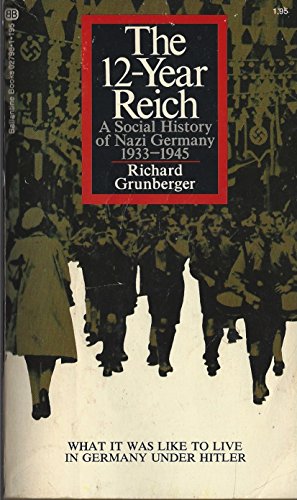
And yet, after the Reich surrendered unconditionally to the Allies on May 8, 1945, a strange thing happened: Virtually no one in Germany admitted to having been a Nazi—or having even known one.
American and British soldiers couldn’t find any German veterans willing to admit they had ever fought against Western, democratic nations. All the once-proud legionaries of the Wehrmacht and Waffen-SS swore they had been fighting “the real enemy”—the Russians—on the Eastern front.
And then there were all the stories of Germans who, at great risk to themselves, had hidden Jews in their attics. Which left unanswered the question: If so many “good Germans” had saved so many Jews, how had six million Jews died horrifically before the Reich fell?
In short: Adolf Hitler had lost the war he started—making him a loser nobody wanted to be identified with.
In the decades since, the “loser” tag has continued to stick with those who once served the Third Reich. Mel Brooks has repeatedly turned German soldiers—once the pride of the battlefield—into idiotic comic foils.
Even the fearsome Gestapo was spoofed for laughs on the long-running TV comedy, “Hogan’s Heroes.”

“Hogan’s Heroes”
“Americans love a winner,” George C. Scott as George S. Patton says at the outset of the classic 1970 movie. “And will not tolerate a loser.”
And that is why Republicans have stuck so closely with President Donald J. Trump.
A typical example of this occurred on June 8 after former FBI director James Comey testified before the United States Senate Select Committee on Intelligence.
Comey revealed that, on February 14, Trump had ordered everyone but Comey to leave a crowded meeting in the Oval Office.
“I want to talk about Mike Flynn,” said Trump.
Flynn had resigned the previous day from his position as National Security Adviser. The FBI was investigating him for his previously undisclosed ties to Russia.
“I hope you can see your way clear to letting this go, to letting Flynn go,” said Trump. “He is a good guy. I hope you can let this go.”
This was clearly an attempt by Trump to obstruct the FBI’s investigation.
Yet Republican House Speaker Paul Ryan rushed to excuse his clearly illegal behavior: “He’s new at government, so therefore I think he’s learning as he goes.”
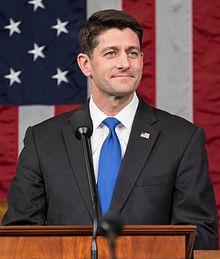
Paul Ryan
David Brooks, the conservative New York Times columnist, offered a more accurate explanation of Trump’s motives. Speaking on The PBS Newshour, Brooks said:
“We are a nation of laws. Donald Trump lives in an entirely different cultural universe. He is more clannist, believing in clan, believing in family, believing in loyalty, not recognizing objective law, not recognizing the procedures that is really how modern government operates….
“It’s not only that he doesn’t know the rules, but at all along and throughout his presidency, he has sort of trampled on the rules almost as a matter of policy, as a matter of character, because he doesn’t believe in that kind of relationships. It’s all personal loyalty, not about laws and norms and standards.”
Republicans don’t fear that Trump will trash the institutions that Americans have cherished for more than 200 years. Institutions like an independent judiciary, a free press, and an incorruptible Justice Department.
He has already attacked all of these—and Republicans have either said nothing or rushed to his defense.
What Republicans truly fear about Donald Trump is that he will finally cross one line too many—like firing Special Counsel Robert Meuller. And that the national outrage following this will force them to launch impeachment proceedings against him.
But it isn’t even Trump they fear will be destroyed.
What they most fear losing is their own hold on nearly absolute power in Congress and the White House.
If Trump is impeached and possibly indicted, he will become a man no one any longer fears. He will be a figure held up to ridicule and condemnation.
Like Adolf Hitler. Like Richard Nixon.
And his Congressional supporters will be branded as losers along with him.
Republicans vividly remember what happened after Nixon was forced to resign on August 9, 1974: Democrats, riding a wave of reform fever, swept Republicans out of the House and Senate—and Jimmy Carter into the White House.
What Ronald Reagan once said about the leadership of the Soviet Union now literally applies to that of the Republican Party:
“They…have openly and publicly declared that the only morality they recognize is what will further their cause, meaning they reserve unto themselves the right to commit any crime, to lie, to cheat, in order to attain that.”
ABC NEWS, ALEX ACOSTA, ALTERNET, ANASTAS MIKOYAN, AP, BBC, BUZZFEED, CBS NEWS, CNN, DAILY KOS, DEPARTMENT OF AGRICULTURE, DEPARTMENT OF HEALTH AND HUMAN SERVICES, DEPARTMENT OF JUSTICE, DEPARTMENT OF LABOR, DEPARTMENT OF TRANSPORTATION, DONALD TRUMP, ELAINE CHAO, FACEBOOK, FBI, GEORGI MALENKOV, JAMES COMEY, JEFF SESSIONS, JOSEPH STALIN, KIM JONG ON, KLIMENT VOROSHILOV, LAVRENTI P. BERIA, MICK MULVANEY, MIKE PENCE, MOTHER JONES, MOVEON, NBC NEWS, NEWSWEEK, NIKKI HALEY, NPR, OFFICE OF MANAGEMENT AND BUDGET, POLITICO, RAW STORY, REINCE PRIEBUS, REUTERS, ROBERT PAYNE, SALON, SEATTLE TIMES, SLATE, SONNY PERDUE, SOVIET UNION, THE ATLANTIC, THE CHICAGO SUN-TIMES, THE CHICAGO TRIBUNE, THE DAILY BEAST, THE GUARDIAN, THE HILL, THE HUFFINGTON POST, THE LOS ANGELES TIMES, THE NEW YORK TIMES, THE RISE AND FALL OF STALIN, THE WALL STREET JOURNAL, THE WASHINGTON POST, TIME, TOM PRICE, TWITTER, U.S. NEWS & WORLD REPORT, UNITED NATIONS, UNITED STATES ATTORNEY GENERAL, UPI, USA TODAY, VYACHESLAV MOLOTOV
In Bureaucracy, History, Politics, Social commentary on December 22, 2017 at 12:02 am
On December 21, 1949, Joseph Vissarionovich Djugashvili turned 70. And millions of Russians feverishly competed to out-do one another in singing his praises.
These celebrations weren’t prompted by love—but fear.
For the man being so honored was internationally known by a far different name: Stalin, which in Russian means: “Man of Steel.”
He had lived up to it: For almost 30 years, through purges and starvation caused by enforced collections of farmers’ crops, he had slaughtered 20 to 60 million people.
Joseph Stalin
The British historian, Robert Payne, described these rapturous events in his classic 1965 biography, The Rise and Fall of Stalin:
“The guns blazed in salute, the processions marched across the Red Square, and huge balloons bearing the features of a younger Stalin climbed into the wintry sky.
“The official buildings were draped in red, the color of happiness. From all over the country came gifts of embroidered cloth, tapestries and carpets bearing his name or his features.
“Ornamental swords, cutlasses, tankards, cups, everything that might conceivably please him, were sent to the Kremlin, and then displayed in the State Museum of the Revolution….Poets extolled him in verses, He was the sun, the splendor, the lord of creation.
“The novelist Leonid Lenov…foretold the day when all the peoples of the earth would celebrate his birthday; the new calendar would begin with the birth of Stalin rather than with the birth of Christ.”
Lavrenti P. Beria, Stalin’s sinister and feared secret police chief, oozed: “Millions of fighters for peace and democracy in all countries of the world are closing their ranks still firmer around Comrade Stalin.”
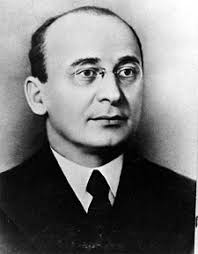
Lavrenti P. Beria
“With a feeling of great gratitude, turning their eyes to Stalin,” gushed Central Committee Secretary Georgi Malenkov, “the peoples of the Soviet Union, and hundreds of millions of peoples in all countries of the world, and all progressive mankind, see in Comrade Stalin their beloved leader and teacher….”
“The mighty voice of the Great Stalin, defending the peace of the world, has penetrated into all corners of the globe,” enthused Defense Commissar Kliment Voroshilov.
“Without Comrade Stalin’s special care,” extolled Trade and Supply Minister Anastas Mikoyan, “we would have never have had a network of meat combines equipped with the latest machinery, canneries and sugar refineries, a fishing industry….”
Foreign Minister Vyacheslav Molotov: “The gigantic Soviet army created during [World War II] was under the direct leadership of Comrade Stalin and built on the basis of the principles of Stalinist military science.”
So those Americans with a sense of history were alarmed and disgusted upon watching President Donald J. Trump—also 70—convene his first full Cabinet meeting since taking office on January 20.
Donald Trump
On June 12, polls showed that only 36% of Americans approved of his conduct. But from his Cabinet members, Trump got praise traditionally lavished on dictators like Stalin and North Korea’s Kim Jong On.
While the Cabinet members sat around a mahogany table in the West Wing of the White House, Trump instructed each one to say a few words about the good work his administration was doing.
“Start with Mike,” ordered Trump, referring to Vice President Mike Pence.
“It is the greatest privilege of my life to serve as the vice president to a president who is keeping his word to the American people,” Pence dutifully said.
Mike Pence
Then Attorney General Jeff Sessions gushed: “It’s an honor to be able to serve you.”
“My hat’s off to you,” oozed Energy Secretary Rick Perry, referring to Trump’s decision to withdraw from the Paris climate agreement.
Secretary of Agriculture Sonny Perdue flattered: “I just got back from Mississippi. They love you there.”
“What an incredible honor it is to lead the Department of Health and Human Services at this pivotal time under your leadership,” fawned Tom Price. “I can’t thank you enough for the privilege that you’ve given me, and the leadership you’ve shown.”
Secretary of Labor Alex Acosta raved: “I’m deeply honored and I want to thank you for keeping your commitment to the American workers.”
“Thank you for coming over to the Department of Transportation,” eulogized Elaine Chao, its secretary. “I want to thank you for getting this country moving again, and also working again.”
“On behalf of the entire senior staff around you, Mr. President,” brown-nosed Reince Prebus, Trump’s chief of staff, “we thank you for the opportunity and the blessing you’ve given us to serve your agenda and the American people, and we’re continuing to work very hard every day to accomplish those goals.”
Mick Mulvaney, director of the Office of Management and Budget, groveled: “At your direction, we were able to also focus on the forgotten men and women who are paying taxes, so I appreciate your support on pulling that budget together.”
On June 8, former FBI Director James Comey had testified before the Senate Select Committee on Intelligence.
Among the charges he aimed at Trump: The President had demanded a pledge of personal loyalty in return for Comey’s keeping his job.
This would have made Comey his secret police chief.
Comey had refused to give this. And Trump had fired him.
Trump publicly denied this.
Then came the June 12 Cabinet meeting—and all the proof anyone needed.
ABC NEWS, ADOLF HITLER, ALBANIA, ALTERNET, ANDREI CHERNY, AP, BERLIN AIRLIFT, BULGARIA, BUZZFEED, CAMILLUS, CBS NEWS, CNN, CONTAINMENT, CROOKS AND LIARS, CZECHOSLOVAKIA, DAILY KOZ, EAST GERMANY, FACEBOOK, FALISCIA, FRANCE, FRANKLIN D. ROOSEVELT, GAIL “HAL” HALVORSEN, GREAT BRITAIN, HARRY S. TRUMAN, HUNGARY, IRON CURTAIN, JOSEPH STALIN, MOTHER JONES, MOVEON, NAZI GERMANY, NBC NEWS, NEWSWEEK, NICCOLO MACHIAVELLI, NPR, POLAND, POLITICO, RAW STORY, REUTERS, ROMANIA, ROME, SALON, SEATTLE TIMES, SLATE, SOVIET UNION, THE ATLANTIC, THE CANDY BOMBERS, THE CHICAGO SUN-TIMES, THE CHICAGO TRIBUNE, THE DAILY BEAST, THE DISCOURSES, THE GUARDIAN, THE HILL, THE HUFFINGTON POST, THE LOS ANGELES TIMES, THE NATION, THE NEW YORK TIMES, THE WASHINGTON POST, TIME, TWITTER, U.S. NEWS & WORLD REPORT, UNITED STATES, UPI, USA TODAY, WEST BERLIN, WILLIE "THE WHIP" TUNNER, WORLD WAR 11, YUGOSLAVIA
In Bureaucracy, History, Military, Politics, Social commentary on December 21, 2017 at 3:12 am
In June, 1948, Soviet dictator Joseph Stalin was determined to drive the Western occupying powers out of Berlin—and of West Germany.
On June 19, the Soviet Union blocked the Western Allies’ railway, road, and canal access to the sectors of Berlin under Western control.
At that time, West Berlin had only 36 days’ worth of food and 45 days’ worth of coal. And the United States had only 8,973 Americans stationed in Berlin. British forces totaled 7,606, and French forces 6,100.
Russian forces in Berlin and East Germany outnumbered them 62 to 1.
The United States seemed to face a choice between all-out war with the Soviet Union—or appeasing its growing aggression in Eastern Europe.
Fortunately, a third choice was found. It became known as the Berlin Airlift.
This was carried out primarily by the United States and Great Britain. Other Western powers taking part in this operation included France, Australia, Canada, New Zealand and South Africa.
Starting on June 24, 1948, the Berlin Airlift aimed to supply the city’s two and a half million residents with food and energy supplies.
There was no guarantee that such an operation could succeed–at least, not in the long run. Since 1903, airplanes had been used to carry out surveillance, engage in dogfights or bomb cities. But airlifts—flying supplies to stranded people—had proven dismal failures.
At first, the Berlin Airlift worked haphazardly. Pilots flew themselves to exhaustion to meet the needs of those they had relentlessly bombed just three years ago.
Then Major General William “Willie the Whip” Tunner took charge—and brought a totally mechanized approach to the drops:
- Pilots must fly strictly by instruments, even when visibility was excellent.
- Planes could no longer circle over Berlin. Each plane would have only one chance to land in Berlin—or must return to its base if it missed its approach.
- Every 90 seconds, a plane was to take off or land.
Just keeping Berliners alive demanded 4,000 tons of supplies each day. Each plane was thus overloaded by 10 tons. Pilots flew literally round the clock. When fog rolled in that winter, visibility was reduced to zero. Twenty-eight Americans died in crashes.
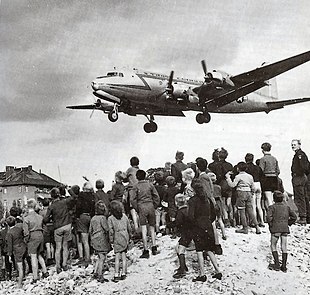
A Douglas C-54 Skymaster lands at Berlin’s Templehof Airport
Germans were impressed with American efficiency, but knew that, in the eyes of most of their American occupiers, they were pariahs. They had waged an aggressive war and exterminated millions of helpless men, women and children in concentration camps.
They were glad the Allies were keeping them alive, but felt they were pawns in a global chess game between the United States and the Soviet Union.
Then fate took a hand.
An Army Air Force pilot named Gail “Hal” Halvorsen impulsively decided to drop a series of small, hand-made parachutes of candies to Berlin’s children.
When General Tunner learned of this, he instantly realized its worth as a morale booster to Berliners. He ordered Halvorsen to continue the drops.

Gail “Hal” Halvorsen
Other pilots followed Halvorsen’s example. Soon Berlin’s children were lining up by the thousands, hoping to grab one of the candy-filled parachutes made from handkerchiefs or strips of clothing.
When the press learned of the drops, the story became a worldwide sensation. Back in the United States, Americans mailed literally tons of candy to Germany for distribution to Berlin’s children.
“The candy bombers” became the most beloved Americans in Berlin. And Halvorsen became the most beloved of them all. On October 3, 1948, when his plane landed in Berlin during a pouring storm, 700 children greeted him on the tarmac for “Lieutenant Gail Halvorsen Day.”
Among the letters he received from Berlin’s children:
Dear Uncle Wiggly Wings,
When yesterday I came from school, I had the happiness to get one of your sweet gifts….You cannot think how big the joy was….My brother and parents stood about me when I opened the strings and fetched out all the chocolate.
Dear Candy Bomber,
…How lucky I was last Sunday. I played at a ruin with some friends of mine opposite our house. Suddenly we saw about ten white parachutes coming out of the sky! One of them set down on the roof of our house. There were three stripes chocolate in the parachute….I want to thank you for your love to the German kids….
From 10-year-old Helma Lurch came this tribute:
Take care of yourself, and remember us children and we will remember you our whole life.
Adults as well as children responded emotionally to the candy drops—and “the candy bombers” responsible for them. When a plane crashed, killing two American lieutenants, residents of the neighborhood memorialized them with a plaque: “Once we were enemies yet you now gave your lives for us. We are doubly in your debt.”
The Airlift ended on May 12, 1949, when Stalin finally accepted defeat and ended the blockade.
“As [Halvorsen] came to represent the Airlift and America to the Berliners,” writes Andrei Cherney in his definitive book, The Candy Bombers, “through him America became a country that cared enough about the defeated Germans to…deliver candy to children, an act without any…ulterior motive, a gift of plain compassion.”
In 1948, that act forged a solid bond—which still exists—between Germany and the United States.
ABC NEWS, ADOLF HITLER, ALBANIA, ALTERNET, AP, BERLIN AIRLIFT, BULGARIA, BUZZFEED, CAMILLUS, CBS NEWS, CNN, CONTAINMENT, CROOKS AND LIARS, CZECHOSLOVAKIA, DAILY KOZ, EAST GERMANY, FACEBOOK, FALISCIA, FRANCE, FRANKLIN D. ROOSEVELT, GREAT BRITAIN, HARRY S. TRUMAN, HUNGARY, IRON CURTAIN, JOSEPH STALIN, MOTHER JONES, MOVEON, NAZI GERMANY, NBC NEWS, NEWSWEEK, NICCOLO MACHIAVELLI, NPR, POLAND, POLITICO, RAW STORY, REUTERS, ROMANIA, ROME, SALON, SEATTLE TIMES, SLATE, SOVIET UNION, THE ATLANTIC, THE CHICAGO SUN-TIMES, THE CHICAGO TRIBUNE, THE DAILY BEAST, THE DISCOURSES, THE GUARDIAN, THE HILL, THE HUFFINGTON POST, THE LOS ANGELES TIMES, THE NATION, THE NEW YORK TIMES, THE WASHINGTON POST, TIME, TWITTER, U.S. NEWS & WORLD REPORT, UNITED STATES, UPI, USA TODAY, WEST BERLIN, WORLD WAR ii, YUGOSLAVIA
In Bureaucracy, History, Military, Politics, Social commentary on December 20, 2017 at 12:40 am
Once again, it falls to Niccolo Machiavelli to reveal truths long forgotten—especially by those who subscribe only to the darkest arts.
In his most important book, The Discourses, he outlines the methods by which citizens of a republic can maintain their freedom.
In Book Three, Chapter 20, he offers this example of the power of humanity to win over even the most stubborn opponents:

Niccolo Machiavelli
“Camillus was besieging the city of the Faliscians, and had surrounded it….A teacher charged with the education of the children of some of the noblest families of that city [to ingratiate himself] with Camillus and the Romans, led these children…into the Roman camp.
“And presenting them to Camillus [the teacher] said to him, ‘By means of these children as hostages, you will be able to compel the city to surrender.’
“Camillus not only declined the offer but had the teacher stripped and his hands tied behind his back….[Then Camillus] had a rod put into the hands of each of the children…[and] directed them to whip [the teacher] all the way back to the city.
“Upon learning this fact, the citizens of Faliscia were so much touched by the humanity and integrity of Camillus, that they surrendered the place to him without any further defense.
“This example shows that an act of humanity and benevolence will at all times have more influence over the minds of men than violence and ferocity. It also proves that provinces and cities which no armies…could conquer, have yielded to an act of humanity, benevolence, chastity or generosity.”
Americans put this lesson to use in 1948 in the skies over Berlin.
When Nazi Germany fell to the Allies in May, 1945, the country was divided into four zones of occupation—one for each of the occupying powers: The United States, Great Britain, France and the Soviet Union.
Within the fledgling administration of President Harry S. Truman, many believed that a new era of peace had dawned between America and Russia.
But then grim reality intruded.
Adolf Hitler had invaded the Soviet Union in 1941. As a result, at least 20 million Soviet men, women and children died violently.
To expel the invasion and destroy Nazi Germany, Russian armies had advanced across a series of Eastern European countries. With the war over, Soviet dictator Joseph Stalin decided to protect the Soviet Union from a future German invasion.
Joseph Stalin
His solution: Occupy Eastern Europe with Red Army units as a buffer between Germany and the Soviet Union. Poland, East Germany, Czechoslovakia, Romania, Bulgaria, Hungary, Albania and Yugoslavia.
Stalin had promised President Franklin Roosevelt that he would withdraw his armies from these countries once Germany was defeated. And he would allow them to choose whatever form of government they desired.
But Stalin had no intention of living up to his promises. And backing him up were 10 to 13 million Red Army soldiers. The entire United States Army had been reduced to 552,000 men by February 1948.
Liberating the captive nations of Eastern Europe—as General George S. Patton wanted to do—would have plunged the United States into full-scale war against its World War II ally.
And by 1945, the Red Army was a formidable enemy: Of the 4.3 million dead and missing casualties suffered by the Wehrmacht, 85% of them occurred on the dreaded “Eastern front.”
So there was nothing the United States could do—short of all-out war—to “roll back” the “Iron Curtain” that had swept over Eastern Europe.
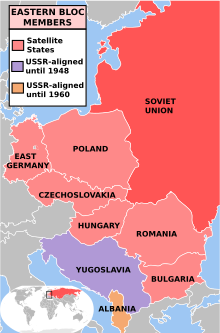
But Americans could—and did—draw a line in the sand. That line became known as the policy of “containment.”
And nowhere was the collision between the U.S.A and the U.S.S.R. more likely to ignite into full-scale war than in Berlin.
Between 1945 and 1948, the Soviets increased their pressure on Western forces occupying Berlin to leave the city. The Soviets already controlled East Germany; gaining control of the Western-held part of Berlin would likely be their first step toward overwhelming the rest of Germany.
And, after Germany, probably France—and as many other European countries as possible.
During the first two years of occupation the occupying powers of France, United Kingdom, United States, and the Soviet Union were not able to successfully negotiate a possible currency reform in Germany. Each of the Allies printed its own occupation currency.
Then, on June 20, 1948, the Bizonal Economic Council introduced the Deutsche mark to West Germany.
On June 24, 1945, the Soviet Union blocked the Western Allies’ railway, road, and canal access to the sectors of Berlin under Western control. This meant a cutoff of food and energy supplies to Berlin’s two and a half million residents.
The United States faced a monumental crisis:
- Should it abandon West Berlin—and thus tempt the Soviet Union into further aggression?
- Should it match the puny Western military forces—outnumbered 62 to 1—against the massive Soviet military presence?
- If it chose to fight in Berlin, would this lead to nuclear war?
Fortunately for the Allies—and West Germany—a third choice was available besides war and appeasement.
It became known as the Berlin Airlift.
ABC NEWS, ALTERNET, AP, AYATOLLAH RUHOLLAH KHOMEINI, BBC, BUZZFEED, CBS NEWS, CHRISTIAN RIGHT, CNN, COLD WAR, CZECHOSLOVAKIA, DAILY KOS, EGYPT, FACEBOOK, GLOBAL WARMING, HUNGARIAN UPRISING, HUNGARY, IRAN, IRAQ, ISLAM, ISRAEL, JESUS CHRIST, MIDDLE EAST, MOTHER JONES, MOVEON, NBC NEWS, NEWSWEEK, NPR, Oil, POLITICO, RAW STORY, REUTERS, SALON, SAND CURTAIN, SEATTLE TIMES, SECOND COMING, SHAH OF IRAN, SHIITE MUSLIMS, SLATE, SOVIET UNION, SUNNI MUSLIMS, TERRORISM, THE ATLANTIC, THE CHICAGO SUN-TIMES, THE CHICAGO TRIBUNE, THE DAILY BEAST, THE GUARDIAN, THE HILL, THE HUFFINGTON POST, THE LOS ANGELES TIMES, THE NEW YORK TIMES, THE WALL STREET JOURNAL, THE WASHINGTON POST, TIME, TWITTER, U.S. NEWS & WORLD REPORT, UNITED STATES, UPI, USA TODAY
In Bureaucracy, History, Military, Politics, Social commentary on December 6, 2017 at 1:01 am
The United States can attain peace in the Middle East—for itself.
But to do that, Americans must radically change their approach to that part of the world.
(1) The United States must embark on a crash program to develop alternatives to oil.
Oil consumption threatens the future of the world through global warming. And it keeps America tethered to dictatorial Islamic regimes that are fundamentally unstable and hostile to the West.
(2) Once freed from its dependency on oil, the United States can safely end its relationship with such regimes.
America will no longer have to spend billions of dollars every year propping up regimes like those in Iraq, Egypt and Saudi Arabia. Nor will it have to supply big-ticket military hardware (like fighter planes and missiles) to Islamic regimes.
When the Shah of Iran was overthrown in 1979, he was probably the best-armed Islamic leader in the Middle East. His army and air force bristled with sophisticated American weaponry he had bought with billions of dollars in oil revenues.
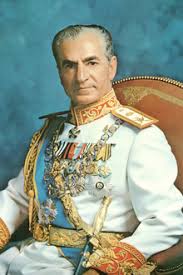
Shah of Iran
But he had thoroughly alienated his people. Liberals thought him a tyrant, and conservatives thought him a traitor to Islam. So when Ayatollah Ruhollah Khomeini flew to Iran from his self-exile in Paris, no one in the Shah’s army and air force raised a hand in his defense. The Shah fled the country in disgrace.
(3) The United States should end its “Permanent Bodyguard” relationship with Israel.
Every nation—including Israel—has the right to defend itself from aggression. But no nation—including Israel—should have the right to expect another nation to act as its permanent bodyguard.
Millions of Americans feel morally obligated to defend Israel owing to Nazi Germany’s slaughter of six million Jews during the Holocaust. But America was never a party to this, and has nothing to atone for.
A second reason why millions of Americans feel committed to Israel lies in the mythology of the Christian Right.
Many fundamentalist Christians believe that, for Jesus Christ to awaken from his 2,000-year slumber, Israel must first re-conquer every inch of territory it supposedly held during the reign of Kings David and Solomon.

Right-wing Christian fantasy: Dead man hovering
After Christ returns, they believe, the Jews will face a choice: Become Christians or go to hell. For evangelical Christians, Jews remain the eternal “Christ killers.”
And if Jews must assume temporary control of the Middle East to bring about the return of a man who died 2,000 years ago, so be it.
Many Right-wing members of the House of Representatives and Senate share this belief. That it is totally irrational and unsupported by any evidence means nothing to them. But this does not prevent these hundreds of men and women from holding high office.
That’s because such unbalanced views are shared by millions of equally irrational evangelical Christians.
(4) The United States and its European allies should erect a “Sand Curtain” around the Middle East.
For 44 years—1947 to 1991—the United States and the Soviet Union were locked in a Cold War. Essentially, the United States drew a ring around the Soviet Union—including those nations its armies had seized following the defeat of Nazi Germany in 1945.
The United States said, in effect: “We can’t liberate the Eastern European countries you’re now occupying”—because trying to do so would have triggered a nuclear World War III. “But we won’t allow you to occupy and enslave any other countries. And if you try to do so, it will mean total war.”
That’s why the United States did nothing to aid Hungarians when they rose up against their Soviet occupiers in 1956. That rebellion was quickly and brutally crushed.
And that’s why America stood by when Soviet tanks rolled into Prague in 1968 when Czechoslovakia dared to relax controls over its citizens.
On the other hand, the Soviet Union never seized any new countries.
(5) A “Sand Curtain” around the Middle East would work as follows:
America would withdraw all of its forces from the Middle East—but keep a good portion stationed in Europe.

It would then publicly announce: “From now on, you are the masters of your own destinies—so long as what you do affects only those of you living in the Middle East.
“We recognize that barbarism and violence have always been a part of life in the Middle East. And we don’t expect this to change.
“So go ahead and destroy as many of your own citizens as you wish—either because they’re Jewish or Christians, or because Sunni Muslims hate Shiite Muslims and Shiite Muslims hate Sunni Muslims.
“But Europe and the United States are strictly off-limits to you.
“And if you aim your aggression at either, we will consider this an act of war and use all the weapons at our disposal—including nuclear ones—to wipe you from the face of the Earth.“
The United States cannot enforce peace between Islamics and Israelis. Nor between Christians and Islamics. Nor between Islamics and Islamics.
But it can impose an embargo to confine such barbarism to only the Middle East.


.jpg)


ABC NEWS, ALTERNET, AP, BUZZFEED, CBS NEWS, CIA, CNN, CROOKS AND LIARS, DAILY KOZ, DONALD TRUMP, FACEBOOK, FOX & FRIENDS, FOX NEWS, GREEN BERETS, HIZBOLLAH, HOSTAGE NEGOTIATION, ISLAMIC TERRORISM, KGB, KIDNAPPING, LOS ANGELES POLICE DEPARTMENT, MOTHER JONES, MOVEON, NBC NEWS, NEW YORK POLICE DEPARTMENT, NEWSWEEK, NPR, POLITICO, RAW STORY, REUTERS, SALON, SEATTLE TIMES, SLATE, SOVIET UNION, SPECIAL WEAPONS AND TACTICS TEAMS (SWAT), THE ATLANTIC, THE CHICAGO SUN-TIMES, THE CHICAGO TRIBUNE, THE DAILY BEAST, THE GUARDIAN, THE HILL, THE HUFFINGTON POST, THE LOS ANGELES TIMES, THE NATION, THE NEW YORK TIMES, THE WALL STREET JOURNAL, THE WASHINGTON POST, TIME, TWITTER, U.S. NAVY SEALS, U.S. NEWS & WORLD REPORT, UPI, USA TODAY, WILLIAM CASEY
WHEN NEGOTIATIONS FAIL, TRY “THE KGB METHOD”
In Bureaucracy, History, Law Enforcement, Military, Politics, Social commentary on March 2, 2018 at 12:14 amOn December 1, 2015, Donald Trump laid out his approach to “hostage negotiation.”
He did so during an appearance on “Fox & Friends.”
One of the hosts of the Fox News program asked him about minimizing civilian casualties. And Trump replied:
“I would do my best—absolute best. I mean, one of the problems that we have and one of the reasons we’re so ineffective is they’re using [civilians] as shields—it’s a horrible thing. They’re using them as shields. But we’re fighting a very politically correct war.
Donald Trump
“And the other thing is with the terrorists, you have to take out their families. When you get these terrorists, you have to take out their families. They care about their lives, don’t kid yourself. But they say they don’t care about their lives. You have to take out their families.”
That was precisely the approach the KGB took in 1981 when “negotiating” with Islamic hostage-takers.
It’s in direct contrast to the methods used by American hostage-negotiators.
During the late 1960s and early 1970s, American law enforcement agencies began creating Special Weapons and Tactics (SWAT) teams. These units were armed with automatic weapons and trained to enter barricaded buildings. They were also given special training in hostage negotiation.
Their men came from the most physically and mentally fit officers of those departments. And the police departments whose SWAT teams were universally recognized as the best were the LAPD and NYPD.
A SWAT team
The first commandment for American SWAT teams—local, state and Federal—is: Don’t try to enter a barricaded area unless (1) hostages’ lives are directly at risk; and (2) there is no other way to effect their rescue.
Even if hostages are murdered before a SWAT team arrives on the scene, officers will usually try to enter into negotiations with their captors. They will send in food and other comfort items in hopes of persuading the criminals to surrender peacefully.
These negotiations can last for hours or days—so long as police feel there’s a chance of success. If, however, police feel that hostages are about to be killed, they will storm the enclosure.
But there is another way agencies can try to rescue hostages. It might be called, “The KGB Method.”
The KGB served as a combination secret police/paramilitary force throughout the 74-year life of the Soviet Union. Its name (“Committee for State Security”) has changed several times since its birth in 1917: Cheka, NKVD, MGB, KGB.
After the collapse of the Soviet Union in 1991 and the establishment of the Russian Federation, its name was officially changed to the FSB (Federal Security Service).
By any name, this is an agency known for its brutality and ruthlessness. The numbers of its victims literally run into the millions.
On September 30 1985, four attaches from the Soviet Embassy in Beirut, Lebanon, were kidnapped by men linked to Hizbollah (“Party of God”), the Iranian-supported terrorist group.
The kidnappers sent photos of the four men to Western news agencies. Each captive was shown with an automatic pistol pressed to his head.
The militants demanded that Moscow pressure pro-Syrian militiamen to stop shelling the pro-Iranian militia in Lebanon’s northern port city of Tripoli.
And they threatened to execute the four Soviet captives, one by one, unless this demand was met.
The Soviet Union began negotiations with the kidnappers, but could not secure a halt to the shelling of Tripoli.
Only two days after the kidnappings, the body of Arkady Katov, a 30-year-old consular secretary, was found in a Beirut trash dump. He had been shot through the head.
That was when the KGB took over negotiations.
Insignia of the KGB
They kidnapped a man known to be a close relative of a prominent Hizbollah leader. Then they castrated him, stuffed his testicles in his mouth, shot him in the head, and sent the body back to Hizbollah.
With the body was a note: We know the names of other close relatives of yours, and the same will happen to them if our diplomats are not released immediately.
Soon afterward, the remaining three Soviet attaches were released only 150 yards from the Soviet Embassy.
Hizbollah telephoned a statement to news agencies claiming that the release was a gesture of “goodwill.”
In Washington, D.C., then-CIA Director William Casey decided that the Soviets knew the language of Hizbollah.
Both the United States and Israel—the two nations most commonly targeted for terrorist kidnappings—have elite Special Forces units.
Military hostage-rescue units operate differently from civilian ones. They don’t care about taking alive hostage-takers for later trials. The result is usually a pile of dead hostage-takers.
These Special Forces could be ordered to similarly kidnap the relatives of whichever Islamic terrorist leaders are responsible for the latest outrages.
Ordering such action would instantly send an unmistakable message to Islamic terrorist groups: Screw with us at your own immediate peril. And at the peril of those you most hold dear.
In the United States, such elite units as the U.S. Navy SEALS, Green Berets and Delta Force stand ready. They require only the orders.
Share this: