Posts Tagged ‘SLAVERY’
ABC NEWS, ADOLF HITLER, BARACK OBAMA, BILL OF RIGHTS, CBS NEWS, CENSORSHIP, CIVIL RIGHTS MOVEMENT, CIVIL WAR, CNN, DECLARATION OF INDEPENDENCE, EMPLOYEES' RIGHTS, FACEBOOK, FIRST AMENDMENT, FRYEBURG ACADEMY, GEORGE ORWELL, ISLAM, JOSEPH MCCARTHY, LACROSSE, MALCOM X, MARTIN LUTHER KING, MUSLIMS, NATION OF ISLAM, NBC NEWS, PILGRIMS, SHARIA LAW, SLAVERY, THE CHICAGO SUN-TIMES, THE CHICAGO TRIBUNE, THE LOS ANGELES TIMES, THE NEW YORK TIMES, THE WASHINGTON POST, TWITTER, UNITED STATES CONSTITUTION, WOMEN'S RIGHTS
In Bureaucracy, Business, History, Law, Politics, Social commentary on April 29, 2016 at 12:08 am
WARNING: Believing that the First Amendment gives you the legal right to express your opinion may be hazardous to your career.
The First Amendment to the United States Constitution states:
“Congress shall make no law respecting an establishment of religion, or prohibiting the free exercise thereof; or abridging the freedom of speech, or of the press; or the right of the people peaceably to assemble, and to petition the Government for a redress of grievances.”
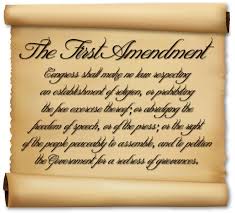
The First Amendment
Of course, that refers only to Congress.
It says nothing about employers–and and especially those self-appointed pseudo-gods who set themselves up as judges of virtue and infallibility.
If you doubt it, just ask Scott Lees, who until March had worked for four years as boys head lacrosse coach at Fryeburg Academy.

Scott Lees
His crime? Posting to his personal Facebook page an open letter to President Barack Obama that one of his friends had emailed him.
Lees posted the letter on March 17. Two days later, he was ordered to resign from his four-year position as the academy’s lacrosse coach.
The letter had been written in response to a speech Obama gave in Cairo in 2009. In this, Obama said, “I know, too, that Islam has always been a part of America’s history.”
Among the issues the letter raised:
“Were those Muslims that were in America when the Pilgrims first landed? Funny, I thought they were Native American Indians.”
“Were those Muslims that celebrated the first Thanksgiving day? Sorry again, those were Pilgrims and Native American Indians.
“Can you show me one Muslim signature on the United States Constitution? Declaration of Independence? Bill of Rights? Didn’t think so.
“Did Muslims fight for this country’s freedom from England? No. Did Muslims fight during the Civil War to free the slaves of America. No, they did not, in fact, Muslims to this day are still the largest traffickers in human slavery.
“Your own half-brother, a devout Muslim, still advocates slavery himself, even though Muslims of Arabic descent refer to black Muslims as ‘pug nosed slaves.’ Says a lot of what the Muslim world really thinks of your family’s “rich Islamic heritage,” doesn’t it Mr. Obama?
“Where were Muslims during the Civil Rights era of this country? No present. There are no pictures or media accounts of Muslims walking side by side with Martin Luther King, Jr., or helping to advance the cause of Civil Rights.”
(The most prominent Muslim group in America at the time of the civil rights movement was the Nation of Islam. Its onetime spokesman, Malcom X, preached a gospel of separation of the races–and condemned whites as “blue-eyed devils.”)
“Where were Muslims during this country’s Woman’s Suffrage era? Again, not present. In fact, devout Muslims demand that women are subservient to men in the Islamic culture.
“So much so, that often they are beaten for not wearing the ‘hajib’ or for talking to a man who is not a direct family member or their husband. Yep, the Muslims are all for women’s rights, aren’t they?
Click here: Women’s Rights Under Sharia
“Where were Muslims during World War II? They were aligned with Adolf Hitler. The Muslim grand mufti himself met with Adolf Hitler, reviewed the troops and accepted support from the Nazis in killing Jews.”
Click here: Amazon.com: Icon of Evil: Hitler’s Mufti and the Rise of Radical Islam (9781400066537): David G. Dalin, John F. Ro
“Finally, Mr. Obama, where were Muslims on Sept. 11th, 2001? If they weren’t flying planes into the World Trade Center, the Pentagon or a field in Pennsylvania killing nearly 3,000 people on our own soil, they were rejoicing in the Middle East….
“And THAT, Mr. Obama, is the ‘rich heritage’ Muslims have here in America….”
Interviewed by Top Right News, Lees, 48, said he had never before been fired and had been coaching since 1992.
Fryeburg Academy is a private school in Fryeburg, Maine.

Fryeburg Academy
Lees said that he was supposed to meet with Head of Schools Erin Mayo and Dean Charlie Tryder on March 19. But Athletic Director Sue Thurston told him a decision to fire him had already been made.
Mayo told Top Right News that “Scott Lees did post a message on Facebook regarding Muslim people last week that was negative and, of course, public in nature.”
Mayo was right on two counts about the Facebook post: It was negative and public.
What she didn’t say was: It was also entirely historically accurate. It did not urge its readers to violate the law. It did not defame anyone (unless telling the truth about a group’s documented activities counts as defamation).
This is similar to the policies–and atmosphere–of the Joseph McCarthy “smear and fear” era of the 1950s. You didn’t have to actually be proven an actual Communist, or even a Communist sympathizer.
All that was needed to condemn you to permanent unemployment was to become “controversial.” That way, the employer didn’t have to actually prove the employee’s unfitness.
An employee’s right to out-of-work speech should be fully protected unless it crosses the legal line–such as committing libel or urging others to violate the law.
And employers who fire him for embracing his First Amendment right should be criminally prosecuted.
Until this happens, the workplace will continue to resemble George Orwell’s vision of 1984–a world where anyone can become a “non-person” for the most trivial of reasons.
2016 PRESIDENTIAL RACE, ABC NEWS, ABRAHAM LINCOLN, ALTERNET, AMERICABLOG, AP, BABY BOOMER RESISTANCE, BARACK OBAMA, BBC, BLOOMBERG NEWS, BUZZFEED, CBS NEWS, CIVIL RIGHTS ACT OF 1964, CIVIL WAR, CNN, CROOKS AND LIARS, DAILY KOS, DANIEL DAY-LEWIS, DONALD TRUMP, EMANCIPATION PROCLAMATION, FACEBOOK, FIVETHIRTYEIGHT, HARPER’S MAGAZINE, HUFFINGTON POST, LYNDON B. JOHNSON, MEDIA MATTERS, MITT ROMNEY, MOTHER JONES, MOVEON, MOVIES, MSNBC, NBC NEWS, NEW REPUBLIC, NEWSDAY, NEWSWEEK, NPR, PBS NEWSHOUR, POLITICO, POLITICUSUSA, RAW STORY, REUTERS, SALON, SEATTLE TIMES, SLATE, SLAVERY, STEVEN SPIELBERG, TALKING POINTS MEMO, THE ATLANTIC, THE CHICAGO SUN-TIMES, THE CHICAGO TRIBUNE, THE DAILY BEAST, THE DAILY BLOG, THE GUARDIAN, THE HILL, THE HUFFINGTON POST, THE INTERCEPT, THE LOS ANGELES TIMES, THE NATION, THE NEW REPUBLIC, THE NEW YORK TIMES, THE NEW YORKER, THE VILLAGE VOICE, THE WASHINGTON POST, THINKPROGRESS, THIRTEENTH AMENDMENT, TIME, TRUTHDIG, TRUTHOUT, TWITTER, U.S. NEWS & WORLD REPORT, UPI, VOTER ID LAWS, VOTING RIGHTS ACT OF 1965
In Bureaucracy, Entertainment, History, Law, Military, Politics, Social commentary on March 17, 2016 at 12:36 pm
Steven Spielberg’s Lincoln is more than a mesmerizing history lesson.
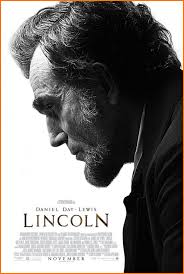
It’s a timely reminder that racism and repression are not confined to any one period or political party.
At the heart of the film: Abraham Lincoln (Daniel Day-Lewis) wants to win ratification of what will be the Thirteenth Amendment to the United States Constitution. An amendment that will forever ban slavery.
True, Lincoln, in 1862, had issued the Emancipation Proclamation. This—in theory—freed slaves held in the Confederate states that had seceded from the Union in 1861.
But Lincoln regards this as a temporary wartime measure. He fears that once the war ends, the Supreme Court may rule the Proclamation unconstitutional. This might allow Southerners to continue practicing slavery, even after losing the war.
To prevent this, Congress must pass an anti-slavery amendment.
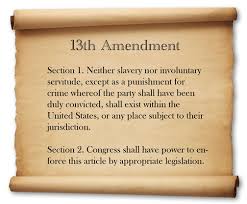
But winning Congressional passage of such an amendment won’t be easy.
The Senate had ratified its passage in 1864. But the amendment must secure approval from the House of Representatives to become law.
And the House is filled with men–there are no women menmbers during the 19th century–who seethe with hostility.
Some are hostile to Lincoln personally. One of them dubs him a dictator–Abraham Africanus.” Another accuses him of shifting his positions for the sake of expediency.
Other members–white men all–are hostile to the idea of “equality between the races.” To them, ending slavery means opening the door to interracial marriage–especially marriage between black men and white women.
Perhaps even worse, it means possibly giving blacks–or women–the the right to vote.
In fact, the possibility that blacks might win voting rights arises early in the movie. Lincoln is speaking to a couple of black Union soldiers, and one of them is unafraid to voice his discontent. He’s upset that black soldiers are paid less than white ones–and that they’re led only by white officers.
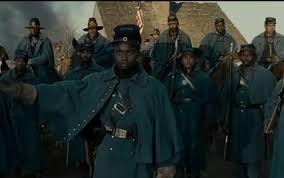
He says that, in time, maybe this will change. Maybe, in 100 years, he guesses, blacks will get the right to vote.
(To the shame of all Americans, that’s how long it will eventually take. Not until the passage of the Voting Rights Act of 1965 will blacks be guaranteed legal protection against discriminatory voting practices.)
To understand the Congressional debate over the Thirteenth Amendment, it’s necessary to remember this: In Lincoln’s time, the Republicans were the party of progressives.
The party was founded on an anti-slavery platform. Its members were thus reviled as “Black Republicans.” And until the 1960s, the South was solidly Democratic.
Democrats were the ones defending the status quo–slavery–and opposing freed blacks in the South of Reconstruction and long afterward.
In short, in the 18th century, Democrats in the South acted as Republicans do now. The South went Republican only after a Democratic President–Lyndon B. Johnson–rammed the Civil Rights Act of 1964 through Congress.
Watching this re-enactment of the 1865 debate in Lincoln is like watching the current Presidential campaign. The same mentalities are at work:
-
Those (in this case, slave-owners) who already have a great deal want to gain even more at the expense of others.
-
Those (slaves and freed blacks) who have little strive to gain more or at least hang onto what they have.
-
Those who defend the privileged wealthy refuse to allow their “social inferiors” to enjoy similar privileges (such as the right to vote).
During the 2012 Presidential race, Republicans tried to bar those likely to vote for President Barack Obama from getting into the voting booth. But their bogus “voter ID” restrictions were struck down in courts across the nation.
Listening to those opposing the amendment, one is reminded of Mitt Romney’s infamous comments about the “47%”:
“Well, there are 47% of the people who will vote for the president no matter what….
“Who are dependent upon government, who believe that–that they are victims, who believe that government has a responsibility to care for them, who believe that they’re entitled to healthcare, to food, to housing, to you name it. But that’s–it’s an entitlement. And the government should give it to them.”
Put another way: “Who says people have a right to obtain medical care, food and housing? If they can’t inherit unearned wealth the way I did, screw them.”
In the end, it’s Abraham Lincoln who has the final word–and leaves his nation the better for it. Through diplomacy and backroom dealings (trading political offices for votes) he wins passage of the anti-slavery amendment.
The ownership of human chattel is finally an ugly memory of the American past.
The movie closes with a historically-correct tribute to Lincoln’s generosity toward those who opposed him–in Congress and on the battlefield. It occurs during Lincoln’s Second Inaugural Address:
“With malice toward none, with charity for all….To bind up the nation’s wounds. To care for him who shall have bourne the battle, and for his widow and his orphan….”
This ending presents a vivid philosophical contrast with the increasingly mean-spirited rhetoric and policies of 2016’s Republican candidates for President–especially those of Donald Trump.
Watching Lincoln, you realize how incredibly lucky America was as a nation to have had such leadership when it was most urgently needed.
.
ABC NEWS, ALAMO, ALTERNET, ANTONIO LOPEZ DE SANTA ANNA, AP, BUZZFEED, CBS NEWS, CNN, CROOKS AND LIARS, DAILY KOZ, DAVID CROCKETT, FACEBOOK, JAMES BOWIE, MEXICO, MOTHER JONES, MOVEON, MSNBC, NBC NEWS, NEWSWEEK, NPR, PBS NEWSHOUR, POLITICO, RAW STORY, REUTERS, SALON, SAM HOUSTON, SAN ANTONIO, SEATTLE TIMES, SLATE, SLAVERY, STEPHEN F. AUSTIN, TEXAS, TEXAS DECLARATION OF INDEPENDENCE, TEXAS REVOLUTION, THE ATLANTIC, THE CHICAGO SUN-TIMES, THE CHICAGO TRIBUNE, THE DAILY BEAST, THE GUARDIAN, THE HILL, THE HUFFINGTON POST, THE LOS ANGELES TIMES, THE NATION, THE NEW YORK TIMES, THE WASHINGTON POST, THERMOPYLAE, THREE HUNDRED SPARTANS, TIME, TWITTER, U.S. NEWS & WORLD REPORT, UPI, USA TODAY, WILLIAM BARRET TRAVIS
In Bureaucracy, History, Military, Politics on March 6, 2016 at 12:01 am
On the night before the final Mexican assault, one man escaped the Alamo to testify to the defenders’ courage. Or so goes the most famous story of the 13-day siege.
He was Louis Rose, a veteran of the Napoleonic wars and the dreadful 1812 retreat from Moscow. Unwilling to die in a hopeless battle, he slipped over a wall and sneaked through Mexican siege lines.
At Grimes County, he found shelter at the homestead of Abraham and Mary Ann Zuber. Their son, William, later claimed that his parents told him of Rose’s visit–and his story of Travis’ “line in the sand” speech.
In 1873, he published the tale in the Texas Almanac.
But many historians believe it is a fabrication. The story comes to us third-hand–from Rose to the Zubers to their son. And it was published 37 years after the Alamo fell.
Even if Travis didn’t draw a line in the sand, every member of the garrison, by remaining to stay, had crossed over his own line.
After a 12-day siege, Santa Anna decided to overwhelm the Alamo.
Some of his officers objected. They wanted to wait for bigger siege cannon to arrive–to knock down the Alamo’s three-feet-thick adobe walls. Without shelter, the defenders would be forced to surrender.
But Santa Anna insisted on an all-out assault: “Without blood and tears, there is no glory.”
The first assault came at about 5 a.m. on Sunday, March 6, 1836.
The fort’s riflemen–aided by 14 cannons–repulsed it. And the second assault as well.
But the third assault proved unstoppable. The Alamo covered three acres, and held at most 250 defenders–against 2,000 Mexican soldiers.
When the Mexicans reached the fort, they mounted scaling ladders and poured over the walls.
Travis was one of the first defenders to fall–shot through the forehead after firing a shotgun into the Mexican soldiery below.

Death of William Barrett Travis (waving sword)
Mexicans broke into the room where the ailing James Bowie lay.
In Three Roads to the Alamo, historian William C. Davis writes that Bowie may have been unconscious or delirious. Mistaking him for a coward, the soldiers bayoneted him and blew out his brains.
But some accounts claim that Bowie died fighting–shooting two Mexicans with pistols, then plunging his famous knife into a third before being bayoneted. Nearly every Alamo movie depicts Bowie’s death this way.

James Bowie’s death
As the Mexicans poured into the fort, at least 60 Texans tried to escape over the walls into the surrounding prairie. But they were quickly dispatched by lance-bearing Mexican cavalry.
The death of David Crockett remains highly controversial.
Baby boomers usually opt for the Walt Disney version: Davy swinging “Old Betsy” as Mexicans surround him. Almost every Alamo movie depicts him fighting to the death.

David Crockett’s Death
But Mexican Lieutenant Colonel Jose Enrique de la Pena claimed Crockett was one of seven Texans who surrendered or were captured and brought before Santa Anna after the battle. Santa Anna ordered their immediate execution, and they were hacked to death with sabers.
Only the 2004 remake of The Alamo has dared to depict this version. Although this version is now accepted by most historians, some still believe the de la Pena diary from which it comes is a forgery.
An hour after the battle erupted, it was over.
That afternoon, Santa Anna ordered the bodies of the slain defenders stacked and burned in three pyres.
Contrary to popular belief, some of the garrison survived:
- Joe, a black slave who had belonged to William B. Travis, the Alamo’s commander;
- Susanah Dickinson, the wife of a lieutenant killed in the Alamo, and her baby, Angelina;
- Several Mexican women and their children.
Also contrary to legend, the bravery of the Alamo defenders did not buy time for Texas to raise an army against Santa Anna. This didn’t happen until after the battle.
But their sacrifice proved crucial in securing Texas’ independence:
- The Alamo’s destruction warned those Texans who had not supported the revolution that they had no choice: They must win, die or flee their homes to the safety of the United States.
- It stirred increasing numbers of Americans to enter Texas and enlist in Sam Houston’s growing army.
- Santa Anna’s army was greatly weakened, losing 600 killed and wounded–a casualty rate of 33%.
- The nearly two-week siege bought time for the Texas convention to meet at Washington-on-the-Brazos and declare independence from Mexico.
On April 21, 1836, Santa Anna made a crucial mistake: During his army’s afternoon siesta, he failed to post sentries around his camp.
That afternoon, Sam Houston’s 900-man army struck the 1,400-man Mexican force at San Jacinto. In 18 minutes, the Texans–shouting “Remember the Alamo!”–killed about 700 Mexican soldiers and wounded 200 others.
The next day, a Texas patrol captured Santa Anna–wearing the uniform of a Mexican private. Resisting angry demands to hang the Mexican dictator, Houston forced Santa Anna to surrender control of Texas in return for his life.
The victory at San Jacinto won the independence of Texas. But the 13-day siege and fall of the Alamo remains the most famous and celebrated part of that conflict.
In 480 B.C., 300 Spartans won immortality at Thermopylae, a narrow mountain pass in ancient Greece, by briefly holding back an invading Persian army of thousands.
Although they died to the last man, their sacrifice inspired the rest of Greece to defeat its invaders.
Like Thermopylae, the battle of the Alamo proved both a defeat–and a victory.
ABC NEWS, ALAMO, ALTERNET, ANTONIO LOPEZ DE SANTA ANNA, AP, BUZZFEED, CBS NEWS, CNN, CROOKS AND LIARS, DAILY KOZ, DAVID CROCKETT, FACEBOOK, JAMES BOWIE, MEXICO, MOTHER JONES, MOVEON, MSNBC, NBC NEWS, NEWSWEEK, NPR, PBS NEWSHOUR, POLITICO, RAW STORY, REUTERS, SALON, SAM HOUSTON, SAN ANTONIO, SEATTLE TIMES, SLATE, SLAVERY, STEPHEN F. AUSTIN, TEXAS, TEXAS DECLARATION OF INDEPENDENCE, TEXAS REVOLUTION, THE ATLANTIC, THE CHICAGO SUN-TIMES, THE CHICAGO TRIBUNE, THE DAILY BEAST, THE GUARDIAN, THE HILL, THE HUFFINGTON POST, THE LOS ANGELES TIMES, THE NATION, THE NEW YORK TIMES, THE WASHINGTON POST, THERMOPYLAE, THREE HUNDRED SPARTANS, TIME, TWITTER, U.S. NEWS & WORLD REPORT, UPI, USA TODAY, WILLIAM B. TRAVIS
In Bureaucracy, History, Military on March 4, 2016 at 12:28 am
Sunday, March 6, 2016, marks the 180th anniversary of the most famous event in Texas history: The fall of the Alamo, a crumbling former Spanish mission in the heart of San Antonio.
After a 12-day siege, 180 to 250 Texans were overwhelmed by 2,000 Mexican soldiers.
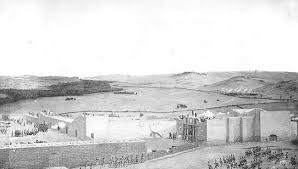
Mexican troops advancing on the Alamo
Americans “remember the Alamo”–but usually for the wrong reasons.
Some historians believe the battle should have never been fought.
The Alamo was not Thermopylae–a narrow mountain pass blocking the Persian march into ancient Greece. Santa Anna could have simply bypassed it.
In fact, several of Santa Anna’s generals urged the Mexican dictator to do just that–leave a small guard to hold down the fort’s defenders and wipe out the undefended, widely-separated Texas settlements.
But pride held Santa Anna fast to the Alamo. His brother-in-law, General Perfecto de Cos, had been forced to surrender the old mission to revolting Texans in December, 1835.
Santa Anna meant to redeem the fort–and his family honor–by force.
In virtually every Alamo movie, its two co-commanders, James Bowie and William Barret Travis, are portrayed as on the verge of all-out war–with each other.
In John Wayne’s heavily fictionalized 1960 film, The Alamo, Bowie and Travis agree to fight a duel as soon as they’ve whipped the Mexicans besieging them.

James Bowie

William B. Travis
In fact, the frictions between the two lasted only a short while. Just before the siege, some of Bowie’s volunteers–a far larger group than Travis’ regulars–got drunk.
Travis ordered them jailed–and Bowie ordered his men to release them. Bowie then went on a roaring drunk. The next day, a sober Bowie apologized to Travis and agreed they should share command.
This proved a wise decision, for just as the siege started, Bowie was felled by worsening illness–typhoid-pneumonia or tuberculosis.
In almost every Alamo movie, Bowie repeatedly leaves the fort to ambush unsuspecting Mexicans.
In reality, he stayed bed-ridden and lay close to death throughout the 13-day siege.
The Texans intended to make a suicidal stand.
Not true.
From the first day of the siege–February 23–almost to the last–March 6, 1836–messengers rode out of the Alamo seeking help. The defenders believed that if they could cram enough men into the three-acre former mission, they could hold Santa Anna at bay.
No reinforcements reached the Alamo.
Not so. On March 1, 32 men from Gonzalez–the only ones to answer Travis’ call–sneaked through the Mexican lines to enter the Alamo.
Meanwhile, the largest Texan force lay at Fort Deviance in Goliad, 85 miles away. This consisted of 500 men commanded by James Walker Fannin, a West Point dropout.
Fannin was better-suited for the role of Hamlet than military commander.
Upon receiving a plea of help from Travis, he set out in a halfhearted attempt to reach the mission. But when a supply wagon broke down, he returned to Fort Defiance and sat out the rest of the siege.
When the Mexican army approached Fort Defiance, Fannin and 400 of his men panicked and fled into the desert. They were surrounded, forced to surrender, and massacred on March 27
The Alamo garrison was fully prepared to confront the Mexican army.
False. When the Mexicans suddenly arrived in San Antonio on the morning of February 23, 1836, they caught the Texans completely by surprise.
The previous night, they had been celebrating the birthday of George Washington. The Texans rushed headlong into the Alamo, hauling all the supplies they could hastily scrounge.
Santa Anna sent a courier under a flag of truce to the Alamo, demanding unconditional surrender. In effect, the Texans were being given the choice of later execution.
Travis replied with a shot from the fort’s biggest cannon, the 18-pounder (so named for the weight of its cannonball).
Santa Anna ordered the hoisting of a blood-red flag and the opening of an artillery salvo. The siege of the Alamo was on.
San Houston, who was elected general of the non-existent army of Texas, desperately tried to relieve the siege.
Not so.
At Washington-on-the-Brazos, 169 miles east of San Antonio, Texan delegates assembled to form a new government. When news reached the delegates that Travis desperately needed reinforcements, many of them wanted to rush to his defense.
But Houston and others declared they must first declare Texas’ independence. On March 2, 1836, they did just that. Houston spent a good deal of the time drunk.

Sam Houston
Did Travis draw a line?
Easily the most famous Alamo story is that of “the line in the sand.”
On the night of March 5–just prior to the final assault–there was a lull in the near-constant Mexican bombardment. Travis assembled his men and gave them a choice:
They could try to surrender and hope that Santa Anna would be merciful. They could try to escape. Or they could stay and fight.
With his sword, Travis drew a line in the dirt and invited those who would stay to cross over to him.
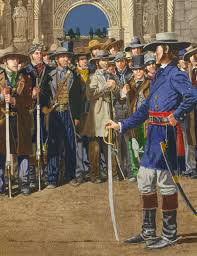
The entire garrison did–except for two men.
One of these was bed-ridden James Bowie. He asked that his sick-bed be carried over to Travis. The other was a veteran of the Napoleonic wars–Louis Rose.
ABC NEWS, ABRAHAM LINCOLN, ACADEMY AWARDS, ARGO, CBS NEWS, CIVIL WAR, CLARK GABLE, CNN, CONFEDERATE FLAG, DANIEL DAY-LEWIS, FACEBOOK, GONE WITH THE WIND, HATTIE MCDANIEL, MARGARET MITCHELL, MOVIES, NAZI GERMANY, NBC NEWS, OSCARS, RACISM, SAVING PRIVATE RYAN, SHAKESPEARE IN LOVE, SLAVERY, STEVEN SPIELBERG, THE LOS ANGELES TIMES, THE NEW YORK TIMES, THE WASHINGTON POST, THIRTEENTH AMENDMENT, TWITTER
In Bureaucracy, History, Law, Politics, Social commentary on October 22, 2015 at 12:04 am
Argo was selected as Best Picture at the 2013 Academy Awards. But it is Steven Spielberg’s Lincoln that will be cherished far longer.
Among the reasons for this:
- Daniel Day-Lewis’ brilliant portrayal as Abraham Lincoln; and
- Its timely depiction of a truth that has long been obscured by past and current Southern lies.
And that truth: From first to last, the cause of the Civil War was slavery.
According to The Destructive War, by Charles Royster, arguments over “states’ rights” or economic conflict between North and South didn’t lead 13 Southern states to withdraw from the Union in 1860-61.
It was their demand for “respect” of their “peculiar institution”–i.e., slavery.
“The respect Southerners demanded did not consist simply of the states’ sovereignty or of the equal rights of Northern and Southern citizens, including slaveholders’ right to take their chattels into Northern territory.
“It entailed, too, respect for their assertion of the moral superiority of slaveholding society over free society,” writes Royster.
It was not enough for Southerners to claim equal standing with Northerners; Northerners must acknowledge it.
But this was something that the North was increasingly unwilling to do. Finally, its citizens dared to elect Abraham Lincoln as President in 1860.
Lincoln and his new Republican party damned slavery-–and slaveholders-–as morally evil, obsolete and ultimately doomed. And they were determined to prevent slavery from spreading any further throughout the country.
Southerners found all of this intolerable.
The British author, Anthony Trollope, explained to his readers:
“It is no light thing to be told daily, by our fellow citizens…that you are guilty of the one damning sin that cannot be forgiven.
“All this [Southerners] could partly moderate, partly rebuke and partly bear as long as political power remained in their hands.” [Italics added]
It is to Spielberg’s credit that he forces his audience to look directly at the real cause of the bloodiest conflict on the North American continent.
At the heart of Spielberg’s film: Abraham Lincoln (Daniel Day-Lewis) wants to win ratification of what will be the Thirteenth Amendment to the United States Constitution. An amendment that will forever ban slavery.
But, almost four years into the war, slavery still has powerful friends–in both the North and South.
Many of those friends belong to the House of Representatives, which must ratify the amendment for it to become law.
Other members–white men all–are hostile to the idea of “equality between the races.”
To them, ending slavery means opening the door to interracial marriage–especially marriage between black men and white women. Perhaps even worse, it means possibly giving blacks–or women–the right to vote.
After the amendment wins ratification, Lincoln agrees to meet with a “peace delegation” from the Confederate States of America.
At the top of their list of concerns: If they persuade the seceded states to return to the Union, will those states be allowed to nullify the amendment?
No, says Lincoln. He’s willing to make peace with the South, and on highly generous terms. But not at the cost of allowing slavery to live on.
Too many men–North and South–have died in a conflict whose root cause is slavery. Those lives must count for more than simply reuniting the Union.
For the Southern “peace commissioners,” this is totally unacceptable.
The South has lost thousands of men (260,000 is the generally accepted figure for its total casualties) and the war is clearly lost. But for its die-hard leaders, parting with slavery is simply unthinkable.
Like Nazi Germany 80 years into the future, the high command of the South won’t surrender until their armies are too beaten down to fight any more.
The major difference between the defeated South of 1865 and the defeated Germany of 1945 is this: The South was allowed to build a beautiful myth of a glorious “Lost Cause,” epitomized by the Margaret Mitchell novel, Gone With the Wind.
In that telling, dutiful slaves are well-treated by kindly masters. Southern aristocrats wear white suits and their slender-waisted ladies wear long dresses, carry parisols and say “fiddle-dee-dee” to young, handsome suitors.
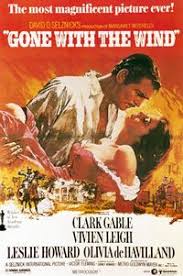
One million people attended the premier of the movie version in Atlanta on December 15, 1939.
The celebration featured stars from the film, receptions, thousands of Confederate flags, false antebellum fronts on stores and homes, and a costume ball.
In keeping with Southern racial tradition, Hattie McDaniel and the other black actors from the film were barred from attending the premiere. Upon learning this, Clark Gable threatened to boycott the event. McDaniel convinced him to attend.
When today’s Southerners fly Confederate flags and speak of “preserving our traditions,” they are actually celebrating their long-banned peculiar” institution.”
By contrast, post-World War II Germany outlawed symbols from the Nazi-era, such as the swastika and the “Heil Hitler” salute, and made Holocaust denial punishable by imprisonment.
America has refused to confront its own shameful past so directly. But Americans can be grateful that Steven Spielberg has had the courage to serve up a long-overdue and much needed lesson in past–and still current–history.
ABC NEWS, ABRAHAM LINCOLN, ACADEMY AWARDS, ARGO, CBS NEWS, CIVIL WAR, CLARK GABLE, CNN, CONFEDERATE FLAG, DANIEL DAY-LEWIS, FACEBOOK, GONE WITH THE WIND, HATTIE MCDANIEL, MARGARET MITCHELL, MOVIES, NAZI GERMANY, NBC NEWS, OSCARS, RACISM, SAVING PRIVATE RYAN, SHAKESPEARE IN LOVE, SLAVERY, STEVEN SPIELBERG, THE LOS ANGELES TIMES, THE NEW YORK TIMES, THE WASHINGTON POST, THIRTEENTH AMENDMENT, TWITTER
In Bureaucracy, History, Law, Politics, Social commentary on October 21, 2015 at 1:12 am
Argo won for Best Picture at the 2013 Academy Awards ceremony. But, in the long run, it will be Lincoln who is deservingly remembered–and loved.
Argo focuses on a humiliating episode that most Americans would like to forget. On November 4, 1979, at the climax of the Iranian revolution, militants stormed the U.S. embassy in Tehran, taking 52 Americans hostage.
But, in the midst of the chaos, six Americans managed to slip away and find refuge in the home of the Canadian ambassador. Knowing it was only a matter of time before the six were found and likely killed, a CIA “exfiltration” specialist offered a risky–and ultimately successful–plan to smuggle them out of the country.
While Argo wrings cheers from American audiences for the winning of this small victory, it cannot erase the blunt truth of the Iranian hostage crisis: For more than 14 months, American diplomats waited helplessly for release–while America proved unable to effect it.
By contrast, Steven Spielberg’s Lincoln celebrates a far greater victory: the final defeat of human slavery in the United States.
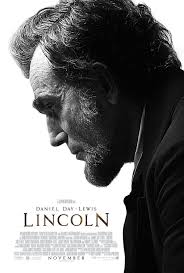
And it teaches lessons about the past that remain equally valide today–such as that racism and repression are not confined to any one period or political party.
At the heart of the film: Abraham Lincoln (Daniel Day-Lewis) wants to win ratification of what will be the Thirteenth Amendment to the United States Constitution. An amendment that will forever ban slavery.
True, Lincoln, in 1862, had issued the Emancipation Proclamation. This-–in theory-–freed slaves held in the Confederate states that were in rebellion against the United States Government.
But Lincoln regards this as a temporary wartime measure.
He fears that, once the war is over, the Supreme Court may rule the Proclamation unconstitutional. This might allow Southerners to continue practicing slavery, even after losing the war.
To prevent this, Congress must pass an anti-slavery amendment.
But winning Congressional passage of such an amendment won’t be easy.
The Senate had ratified its passage in 1864. But the amendment must secure approval from the House of Representatives to become law.
And the House is filled with men-–there are no women members during the 19th century-–who seethe with hostility.
Some are hostile to Lincoln personally. One of them dubs him a dictator-–”Abraham Africanus.” Another accuses him of shifting his positions for the sake of expediency.
Other members–-white men all-–are hostile to the idea of “equality between the races.”
To them, ending slavery means opening the door to interracial marriage–especially marriage between black men and white women. Perhaps even worse, it means possibly giving blacks-–or women–-the right to vote.
Black soldiers in the Union Army
To understand the Congressional debate over the Thirteenth Amendment, it’s necessary to remember this: In Lincoln’s time, the Republicans were the party of progressives.
The party was founded on an anti-slavery platform. Its members were thus reviled as “Black Republicans.”
And until the 1960s, the South was solidly Democratic. Democrats were the ones defending the status quo–slavery–and opposing freed blacks in the South of Reconstruction and long afterward.
In short, in the 18th century, Democrats in the South acted as Republicans do now.
The South went Republican only after a Democratic President–Lyndon B. Johnson–rammed the Civil Rights Act of 1964 through Congress.
Watching this re-enactment of the 1865 debate in Lincoln is like watching a rerun of the 2012 Presidential campaign. The same mentalities are at work:
- Those (in this case, slave-owners) who already have a great deal want to gain even more at the expense of others.
- Those (slaves and freed blacks) who have little strive to gain more or at least hang onto what they still have.
- Those who defend the privileged wealthy refuse to allow their “social inferiors” to enjoy similar privileges (such as the right to vote).
During the 2012 Presidential race, the Republicans tried to bar those likely to vote for President Barack Obama from getting into the voting booth. But their bogus “voter ID” restrictions were struck down in courts across the nation.
In the end, however, it is Abraham Lincoln who has the final word. Through diplomacy and backroom dealings (trading political offices for votes) he wins passage of the anti-slavery amendment.
The movie closes with a historically-correct tribute to Lincoln’s generosity toward those who opposed him–in Congress and on the battlefield.
It occurs during Lincoln’s Second Inaugural Address: “With malice toward none, with charity for all….To bind up the nation’s wounds. To care for him who shall have bourne the battle, and for his widow and his orphan….”
Listening to those words, one is reminded of Mitt Romney’s infamous comments about the “47%: “
Well, there are 47% of the people who…are dependent upon government, who believe that–-that they are victims, who believe that government has a responsibility to care for them, who believe that they’re entitled to healthcare, to food, to housing, to you name it.”
Watching Lincoln, you realize how incredibly lucky we were as a nation to have had such leadership when it was most needed.
2016 PRESIDENTIAL RACE, ABC NEWS, ABRAHAM LINCOLN, ALAMO, CENSORSHIP, CHRISTIAN RIGHT, CIVIL WAR, CNN, COUNTDOWN, DAVY CROCKETT, EDWARD R. MURROW, FACEBOOK, GEORGE ORWELL, GEORGE W. BUSH, GETTYSBURG ADDRESS, HISPANICS, HISTORY, IRAQ WAR, JEB BUSH, JEFFERSON DAVIS, JIM BOWIE, JOSEPH STALIN, LAVRENTI BERIA, MARTIN LUTHER KING, MSNBC, RACHEL MADDOW, RELIGION, SCHOOLS, SLAVERY, SOVIET UNION, TEXAS, TEXTBOOKS, THE CHICAGO SUN-TIMES, THE CHICAGO TRIBUNE, THE HUFFINGTON POST, THE LOS ANGELES TIMES, THE NEW YORK TIMES, THE WASHINGTON POST, THOMAS JEFFERSON, TWITTER, USA TODAY
In Bureaucracy, History, Politics, Social commentary on August 18, 2015 at 12:54 am
At one time, Americans believed that wholesale rewriting of history could happen only in the Soviet Union.
“The problem with writing about history in the Soviet Union,” went the joke, “is that you never know what’s going to happen yesterday.”
A classic example of this occurred within the Great Soviet Encyclopedia.
Lavrenti Beria had been head of the NKVD, the dreaded secret police, from 1938 to 1953. In 1953, following the death of Soviet dictator Joseph Stalin, Beria was arrested and executed on orders of his fellow Communist Party leaders.
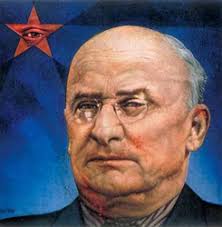
Lavrenti Beria
But the Great Soviet Encyclopedia had just gone to press with a long article singing Beria’s praises.
What to do?
The editors of the Encyclopedia wrote an equally long article about “the Berring Straits,” which was to be pasted over the article about Beria, and sent this off to its subscribers. An unknown number of them decided it was safer to paste accordingly.
In the 1981 film, “Excalibur,” Merlin warns the newly-minted knights of the Round Table: “For it is the doom of men that they forget.”
Forgetting our past is dangerous, but so is “understanding” it incorrectly.
In Texas, state-mandated “history” textbooks omit selected events and persons from the historical record–such as Thomas Jefferson and Martin Luther King.
This can be as lethal to the truth as outright lying.

Joseph Stalin, for example, ordered that school textbooks omit all references to the major role played by Leon Trotsky, his arch-rival for power, during the Russian Revolution.
Similarly, in Texas students are required to study Confederate President Jefferson Davis’ inaugural address alongside President Lincoln’s Gettysburg Address.
Such “teaching” should be seen for what it is: A thinly-veiled attempt to legitimize the most massive case of treason in United States history.
(The Civil War started on April 12, 1861, when Confederate artillery opened fire on Fort Sumter, a United States fort in Charleston Harbor. Fort Sumter surrendered 34 hours later.
(At least 800,000 Southerners took up arms against the legally elected government of the United States.)
The late broadcast journalist, Edward R. Murrow, would have referred to this practice as “giving Jesus and Judas equal time.”
Recently, Jeb Bush has entered the “Rewriting History for Americans” contest.
On August 13, speaking at a national security forum in Davenport, Iowa, he defended the unprovoked 2003 invasion of Iraq by his brother, President George W. Bush:
“I’ll tell you though, that taking out Saddam Hussein turned out to be a pretty good deal.”
And he went on to defend the 2007 troop “surge”, calling it “a great success that made Iraq safer.

“I’ve been critical and I think people have every right to be critical of decisions that were made. In 2009, Iraq was fragile but secure. It was–its mission was accomplished in a way that there was security there.”
(Ironically, the phrase, “its mission was accomplished” proved an embarrassing reminder for the Bush family.
(A banner titled “Mission Accomplished” was displayed on the aircraft carrier USS Abraham Lincoln as George W. Bush announced–wrongly–that the war was over on May 1, 2003.)
Jeb Bush claimed that President Barack Obama had prematurely withdrawn troops from Iraq during his first term, thus allowing ISIS to “fill the void.”
One dissenter to Jeb Bush’s effort to rewrite his brother’s history is David Corn, Washington bureau chief for Mother Jones magazine.
Addressing Bush’s claims on the August 15 edition of The PBS Newshour, he said:
“I mean, I have to laugh a little bit, because I think he was setting a record for chutzpah.
“…It wasn’t until after his brother’s invasion of Iraq that you had something called al-Qaida in Iraq. And that was the group that morphed into ISIS.
“So ISIS is a direct result of the war in Iraq right there. And so he’s wrong on the history.
“But then he said what happened was that Obama and Hillary Clinton orchestrated this quick withdrawal after everything was secure. Nothing was really secure in 2009-2010.
“…But it was George W. Bush in December 2008 who created the agreement with [Iraqi] Prime Minister [Nouri] [al-]Maliki that said that U.S. troops had to be out by 2011.
“And then Obama didn’t renegotiate that. And there is a lot of question as to whether he could even have, given the political situation in Baghdad itself.
“So Bush is totally–Jeb Bush is totally rewriting this.”
Click here: Brooks and Corn on Cuba as campaign issue
This is no small matter. George W. Bush’s needless and unprovoked war on Iraq:
- Cost the lives of 4,486 American soldiers.
- Wounded another 32,226 troops.
- Resulted in the deaths of an estimated 655,000 Iraqis.
- Cost the American treasury at least $2 trillion.
- Turned up no Weapons of Mass Destruction–Bush’s pretext for going to war.
- Led to the rise of Al-Qaeda–and later ISIS–in Iraq.
- Strengthened theocratic Iran by removing its major secularist opponent.
All of which simply proves, once again, that the past is never truly dead. It simply waits to be re-interpreted by each new generation–with some interpretations winding up closer to the truth than others.
Or, in this case, each new Presidential candidate of the Bush family.
ABC NEWS, ALAMO, CBS NEWS, CNN, DAVID CROCKETT, FACEBOOK, JAMES BOWIE, MEXICO, NBC NEWS, SAM HOUSTON, SAN ANTONIO, SLAVERY, STEPHEN F. AUSTIN, TEXAS, TEXAS DECLARATION OF INDEPENDENCE, TEXAS REVOLUTION, THE CHICAGO SUN-TIMES, THE CHICAGO TRIBUNE, THE LOS ANGELES TIMES, THE WASHINGTON POST, TWITTER, WASHINGTON-ON-THE-BRAZOS, WILLIAM B. TRAVIS
In Bureaucracy, History, Military on March 4, 2015 at 1:00 am
On the night before the final Mexican assault, one man escaped the Alamo to testify to the defenders’ courage. Or so goes the most famous story of the 13-day siege.
He was Louis Rose, a veteran of theNapoleonic wars and the dreadful 1812 retreat from Moscow. Unwilling to die in a hopeless battle, he slipped over a wall and sneaked through Mexican siege lines.
At Grimes County, he found shelter at the homestead of Abraham and Mary Ann Zuber. Their son, William, later claimed that his parents told him of Rose’s visit–and his story of Travis’ “line in the sand” speech.
In 1873, he published the tale in the Texas Almanac.
But many historians believe it is a fabrication. The story comes to us third-hand–from Rose to the Zubers to their son. And it was published 37 years after the Alamo fell.
After a 12-day siege, Santa Anna decided to overwhelm the Alamo.
Some of his officers objected. They wanted to wait for bigger siege cannon to arrive–to knock down the Alamo’s three-feet-thick adobe walls. Without shelter, the defenders would be forced to surrender.
But Santa Anna insisted on an all-out assault: “Without blood and tears, there is no glory.”
The first assault came at about 5 a.m. on March 6, 1836.
The fort’s riflemen–aided by 14 cannons–repulsed it. And the second assault as well. But the third assault proved unstoppable.
The Alamo covered three acres, and held at most 250 defenders–against 2,000 Mexican soldiers. When the Mexicans reached the fort, they mounted scaling ladders and poured over the walls.
Travis was one of the first defenders to fall–shot through the forehead after firing a shotgun into the Mexican soldiery below.
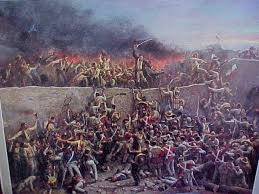
Death of William Barrett Travis (waving sword)
Mexicans broke into the room where the ailing James Bowie lay. In Three Roads to the Alamo, historian William C. Davis writes that Bowie may have been unconscious or delirious. Mistaking him for a coward, the soldiers bayoneted him and blew out his brains.
But some accounts claim that Bowie died fighting–shooting two Mexicans with pistols, then plunging his famous knife into a third before being bayoneted. Nearly every Alamo movie depicts Bowie’s death this way.
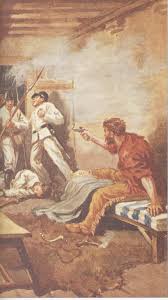
Jim Bowie’s death
As the Mexicans poured into the fort, at least 60 Texans tried to escape over the walls into the surrounding prairie. But they were quickly dispatched by lance-bearing Mexican cavalry.
The death of David Crockett remains highly controversial. Baby boomers usually opt for the Walt Disney version: Davy swinging Old Betsey as Mexicans surround him. Almost every Alamo movie depicts him fighting to the death.
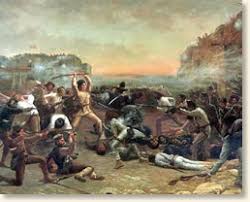
David Crockett’s death
But Mexican Colonel Jose Enrique de la Pena claimed Crockett was one of seven Texans who surrendered or were captured and brought before Santa Anna after the battle. Santa Anna ordered their immediate execution, and they were hacked to death with sabers.
Only the 2004 remake of The Alamo has dared to depict this version. Although this version is now accepted by most historians, some still believe the de la Pena diary from which it comes is a forgery.
An hour after the battle erupted, it was over.
That afternoon, Santa Anna ordered the bodies of the slain defenders stacked and burned in three pyres. Contrary to popular belief, some of the garrison survived:
- Joe, a black slave who had belonged to William B. Travis, the Alamo’s commander;
- Susannah Dickinson, the wife of a lieutenant killed in the Alamo, and her baby, Angelina;
- Several Mexican women and their children.
Also contrary to legend, the bravery of the Alamo defenders did not buy time for Texas to raise an army against Santa Anna. This didn’t happen until after the battle. But their sacrifice proved crucial in securing Texas’ independence:
- The Alamo’s destruction warned those Texans who had not supported the revolution that they had no choice: They must win, die or flee their homes to the safety of the United States.
- It stirred increasing numbers of Americans to enter Texas and enlist in Sam Houston’s growing army.
- Santa Anna’s army was greatly weakened, losing 600 killed and wounded–a casualty rate of 33%.
- The nearly two-week siege bought time for the Texas convention to meet at Washington-on-the-Brazos and declare independence from Mexico.
On April 21, 1836, Santa Anna made a crucial mistake: During his army’s afternoon siesta, he failed to post sentries around his camp.
That afternoon, Sam Houston’s 900-man army struck the 1,400-man Mexican force at San Jacinto. In 18 minutes, the Texans–shouting “Remember the Alamo!”–killed about 700 Mexican soldiers and wounded 200 others.
The next day, a Texas patrol captured Santa Anna. Resisting angry demands to hang the Mexican dictator, Houston forced Santa Anna to surrender control of Texas in return for his life. The victory at San Jacinto won the independence of Texas.
But the 13-day siege and fall of the Alamo remains the most famous and celebrated part of that conflict. Like Thermopylae, the battle of the Alamo proved both a defeat–and a victory.
ABC NEWS, ALAMO, CBS NEWS, CNN, DAVID CROCKETT, FACEBOOK, JAMES BOWIE, MEXICO, NBC NEWS, SAM HOUSTON, SAN ANTONIO, SLAVERY, STEPHEN F. AUSTIN, TEXAS, TEXAS DECLARATION OF INDEPENDENCE, TEXAS REVOLUTION, THE CHICAGO SUN-TIMES, THE CHICAGO TRIBUNE, THE LOS ANGELES TIMES, THE WASHINGTON POST, TWITTER, WASHINGTON-ON-THE-BRAZOS, WILLIAM B. TRAVIS
In Bureaucracy, History, Military on March 3, 2015 at 12:48 am
Americans “remember the Alamo”–but usually for the wrong reasons.
Some historians believe the battle should have never been fought.
The Alamo was not Thermopylae–a narrow mountain pass blocking the Persian march into ancient Greece. Santa Anna could have simply bypassed it.
Mexican troops advancing on the Alamo
In fact, several of Santa Anna’s generals urged the Mexican dictator to do just that–leave a small guard to hold down the fort’s defenders and wipe out the undefended, widely-separated Texas settlements.
But pride held Santa Anna fast to the Alamo. His brother-in-law, General Perfecto de Cos, had been forced to surrender the old mission to revolting Texans in December, 1835. Santa Anna meant to redeem the fort–and his family honor–by force.
In almost every movie made about the Alamo, its two co-commanders, James Bowie and William Barret Travis, are portrayed as on the verge of all-out war–with each other.
James Bowie
William B. Travis
In John Wayn’e heavily fictionalized 1960 film, The Alamo, Bowie and Travis agree to fight a duel as soon as they’ve whipped the Mexicans besieging them.
In fact, the frictions between the two lasted only a short while. Just before the siege, some of Bowie’s volunteers–a far larger group than the regular soldiers commanded by Travis–got drunk. Travis ordered them jailed–and Bowie ordered his men to release them. Bowie then went on a roaring drunk.
The next day, a sober Bowie apologized to Travis and agreed they should share command. This proved a wise decision, for just as the siege started, Bowie was felled by worsening illness–typhoid-pneumonia or tuberculosis.
In Wayne’s film, Bowie repeatedly leaves the Alamo to ambush unsuspecting Mexicans.
In reality, he stayed bed-ridden and lay close to death throughout the 13-day siege.
Most people believe the Texans intended to make a suicidal stand.
Not true. From the first day of the siege–February 23–almost to the last–March 6, 1836–messengers rode out of the Alamo seeking help. The defenders believed that if they could cram enough men into the three-acre former mission, they could hold Santa Anna at bay.
It’s widely believed that no reinforcements reached the Alamo.
Not so. On March 1, 32 men from Gonzalez–the only ones to answer Travis’ call–sneaked through the Mexican lines to enter the Alamo. Meanwhile, the largest Texan force lay at Fort Defiance in Goliad, 85 miles away.
This consisted of 500 men commanded by James Walker Fannin, a West Point dropout. Fannin was better-suited for the role of Hamlet than military commander. Upon receiving a plea of help from Travis, he set out in a half-hearted attempt to reach the mission.
But when a supply wagon broke down, he returned to Fort Defiance and sat out the rest of the siege.
After it became obvious that the Alamo would not be sufficiently reinforced, the Texans still refused to evacuate. “I’ll die before I run” might have been their official motto.
The Alamo garrison was fully prepared to confront the Mexican army.
False.
When the Mexicans suddenly arrived in San Antonio on the morning of February 23, 1836, they caught the Texans completely by surprise.
The previous night, they had been celebrating the birthday of George Washington. The Texans rushed headlong into the Alamo, hauling all the supplies they could hastily scrounge.
Santa Anna sent a courier under a flag of truce to the Alamo, demanding unconditional surrender. In effect, the Texans were being given the choice of later execution. Travis replied with a shot from the fort’s biggest cannon, the 18-pounder.
Santa Anna ordered the hoisting of a blood-red flag and the opening of an artillery salvo. The siege of the Alamo was on.
Many Americans believe that San Houston, who was elected general of the non-existent army of Texas, desperately tried to relieve the siege.
Not so.
At Washington-on-the-Brazos, 169 miles east of San Antonio, Texan delegates assembled to form a new government. When news reached the delegates that Travis desperately needed reinforcements, many of them wanted to rush to his defense.
Sam Houston
But Houston and others declared they must first declare Texas’ independence. On March 2, 1836, they did just that. Houston spent a good deal of the time drunk.
Did Travis draw a line?
Easily the most famous Alamo story is that of “the line in the sand.” On the night of March 5–just prior to the final assault–there was a lull in the near-constant Mexican bombardment. Travis assembled his men and gave them a choice:
They could surrender and hope that Santa Anna would be merciful. They could try to escape. Or they could stay and fight.
With his sword, Travis drew a line in the dirt and invited those who would stay to cross over to him. The entire garrison did–except for two men.
One of these was bed-ridden James Bowie. He asked that his sick-bed be carried over to Travis.
The other was a veteran of the Napoleonic wars–Louis Rose.
ABC NEWS, ALAMO, CBS NEWS, CNN, DAVID CROCKETT, FACEBOOK, JAMES BOWIE, MEXICO, NBC NEWS, SAM HOUSTON, SAN ANTONIO, SLAVERY, STEPHEN F. AUSTIN, TEXAS, TEXAS DECLARATION OF INDEPENDENCE, TEXAS REVOLUTION, THE CHICAGO SUN-TIMES, THE CHICAGO TRIBUNE, THE LOS ANGELES TIMES, THE WASHINGTON POST, TWITTER, WASHINGTON-ON-THE-BRAZOS, WILLIAM B. TRAVIS
In History, Military, Politics on March 2, 2015 at 11:08 am
On March 2, 1836–179 years ago today–Texas formally declared its independence from Mexico, of which it was then a province.
Sixty-one delegates took part in the convention held at Washington-on-the-Brazos. Their signed statement proclaimed that the Mexican government had “ceased to protect the lives, liberty, and property of the people, from whom its legitimate powers are derived.”
Meanwhile, 169 miles away, the siege of the Alamo–a crumbling former Spanish mission in the heart of San Antonio–had entered its ninth day.
The Alamo. The mission that became a fortress. The fortress that has since become a shrine.

The Alamo Chapel
The combatants: 180 to 250 Texans (or “Texians,” as many of them preferred to be called) vs. 2,000 Mexican soldiers.
On the Texan side three names predominate: David Crockett, James Bowie and William Barret Travis. “The Holy Trinity,” as some historians ironically refer to them.
Crockett, at 49, was the most famous man in the Alamo. He had been a bear hunter, Indian fighter and Congressman. Rare among the men of his time, he sympathized with the Indian tribes he had helped subdue in the War of 1812.
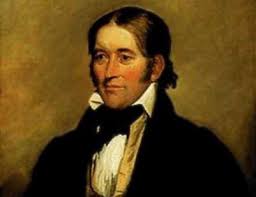
David Crockett
He believed Congress should honor the treaties made with the former hostiles and opposed President Andrew Jackson’s effort to move the tribes further West.
Largely because of this, his constituents turned him out of office in November, 1835. He told them they could go to hell; he would go to Texas.
James Bowie, at 40, had been a slave trader with pirate Jean Lafitte and a land swindler. His greatest claim to fame lay in his skill as a knife-fighter.
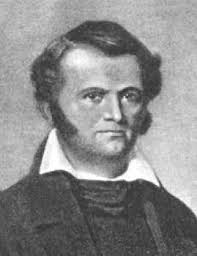
James Bowie
This grew out of his participating in an 1827 duel on a sandbar in Natchez, Mississippi. Bowie was acting as a second to one of the duelists who had arranged the event.
After the two duelists exchanged pistol shots without injury, they called it a draw. But those who had come as their seconds had scores to settle among themselves–and decided to do so. A bloody melee erupted.
Bowie was shot in the hip and then impaled on a sword cane wielded by Major Norris Wright, a longtime enemy. Drawing a large butcher knife he wore at his belt, he gutted Wright, who died instantly.
The brawl became famous as the Sandbar Fight, and cemented Bowie’s reputation across the South as a deadly knife fighter.
William Barret Travis had been an attorney and militia member. Burdened by debts and pursued by creditors, he fled Alabama in 1831 to start over in Texas. Behind him he left a wife, son, and unborn daughter.
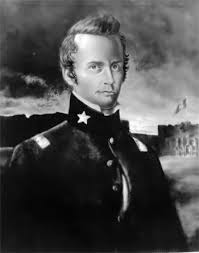
William Barret Travis
From the first, Travis burned to free Texas from Mexico and see it become a part of the United States.
In January, 1836, he was sent by the American provisional governor of Texas to San Antonio, to fortify the Alamo. He arrived there with a small party of regular soldiers and the title of lieutenant colonel in the state militia.
On the Mexican side, only one name matters: Antonio Lopez de Santa Anna, president (i.e., absolute dictator) of Mexico. After backing first one general and would-be “president” after another, Santa Anna maneuvered himself into the office in 1833.
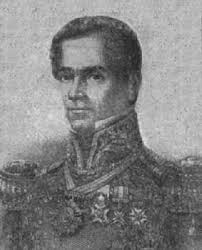
Antonio Lopez de Santa Anna
Texas was then legally a part of Mexico. Stephen F. Austin, “the father of Texas,” had received a grant from Spain–which ruled Mexico until 1821–to bring in 300 American families to settle there.
The Spaniards wanted to establish a buffer between themselves and warring Indian tribes like the Comanches.
These immigrations continued after Mexico threw off Spanish rule and obtained its independence.
But as Americans kept flooding into Texas, the character of its population changed, alarming its Mexican rulers.
The new arrivals did not see themselves as Mexican citizens but as transplanted Americans. They were largely Protestant, as opposed to the Catholic Mexicans. And many of them not only owned slaves but demanded the expansion of slavery–a practice illegal under Mexican law.
In October, 1835, fighting erupted between settlers and Mexican soldiers. In November, Mexican forces took shelter in the Alamo, which had been built in 1718 as a mission to convert Indians to Christianity. Since then it had been used as a fort–by Spanish and then Mexican troops.
Texans lay siege to the Alamo from October 16 to December 10, 1835. With his men exhausted, and facing certain defeat, General Perfecto de Cos, Santa Anna’s brother-in-law, surrendered. He gave his word to leave Texas and never take up arms again against its settlers.
Texans rejoiced. They believed they had won their “war” against Mexico.
But others knew better. One was Bowie. Another was Sam Houston, a former Indian fighter, Congressman and protégé of Andrew Jackson.
Still another was Santa Anna, who styled himself “The Napoleon of the West.” In January, 1836, he set out from Mexico City at the head of an army totaling about 7,000.
He planned the 18th century version of a blitzkrieg, intending to arrive in Texas and take its “rebellious foreigners” by surprise.
His forced march proved costly in lives, but met his objective. He arrived in San Aotonio with several hundred soldiers on February 23, 1836.
The siege of the Alamo–the most famous event in Texas history–was about to begin.

 Bureaucracybuster's Blog
ABC NEWS, ADOLF HITLER, BARACK OBAMA, BILL OF RIGHTS, CBS NEWS, CENSORSHIP, CIVIL RIGHTS MOVEMENT, CIVIL WAR, CNN, DECLARATION OF INDEPENDENCE, EMPLOYEES' RIGHTS, FACEBOOK, FIRST AMENDMENT, FRYEBURG ACADEMY, GEORGE ORWELL, ISLAM, JOSEPH MCCARTHY, LACROSSE, MALCOM X, MARTIN LUTHER KING, MUSLIMS, NATION OF ISLAM, NBC NEWS, PILGRIMS, SHARIA LAW, SLAVERY, THE CHICAGO SUN-TIMES, THE CHICAGO TRIBUNE, THE LOS ANGELES TIMES, THE NEW YORK TIMES, THE WASHINGTON POST, TWITTER, UNITED STATES CONSTITUTION, WOMEN'S RIGHTS
FREEDOM OF SPEECH ISN’T FREE
In Bureaucracy, Business, History, Law, Politics, Social commentary on April 29, 2016 at 12:08 amWARNING: Believing that the First Amendment gives you the legal right to express your opinion may be hazardous to your career.
The First Amendment to the United States Constitution states:
“Congress shall make no law respecting an establishment of religion, or prohibiting the free exercise thereof; or abridging the freedom of speech, or of the press; or the right of the people peaceably to assemble, and to petition the Government for a redress of grievances.”
The First Amendment
Of course, that refers only to Congress.
It says nothing about employers–and and especially those self-appointed pseudo-gods who set themselves up as judges of virtue and infallibility.
If you doubt it, just ask Scott Lees, who until March had worked for four years as boys head lacrosse coach at Fryeburg Academy.
Scott Lees
His crime? Posting to his personal Facebook page an open letter to President Barack Obama that one of his friends had emailed him.
Lees posted the letter on March 17. Two days later, he was ordered to resign from his four-year position as the academy’s lacrosse coach.
The letter had been written in response to a speech Obama gave in Cairo in 2009. In this, Obama said, “I know, too, that Islam has always been a part of America’s history.”
Among the issues the letter raised:
“Were those Muslims that were in America when the Pilgrims first landed? Funny, I thought they were Native American Indians.”
“Were those Muslims that celebrated the first Thanksgiving day? Sorry again, those were Pilgrims and Native American Indians.
“Can you show me one Muslim signature on the United States Constitution? Declaration of Independence? Bill of Rights? Didn’t think so.
“Did Muslims fight for this country’s freedom from England? No. Did Muslims fight during the Civil War to free the slaves of America. No, they did not, in fact, Muslims to this day are still the largest traffickers in human slavery.
“Your own half-brother, a devout Muslim, still advocates slavery himself, even though Muslims of Arabic descent refer to black Muslims as ‘pug nosed slaves.’ Says a lot of what the Muslim world really thinks of your family’s “rich Islamic heritage,” doesn’t it Mr. Obama?
“Where were Muslims during the Civil Rights era of this country? No present. There are no pictures or media accounts of Muslims walking side by side with Martin Luther King, Jr., or helping to advance the cause of Civil Rights.”
(The most prominent Muslim group in America at the time of the civil rights movement was the Nation of Islam. Its onetime spokesman, Malcom X, preached a gospel of separation of the races–and condemned whites as “blue-eyed devils.”)
“Where were Muslims during this country’s Woman’s Suffrage era? Again, not present. In fact, devout Muslims demand that women are subservient to men in the Islamic culture.
“So much so, that often they are beaten for not wearing the ‘hajib’ or for talking to a man who is not a direct family member or their husband. Yep, the Muslims are all for women’s rights, aren’t they?
Click here: Women’s Rights Under Sharia
“Where were Muslims during World War II? They were aligned with Adolf Hitler. The Muslim grand mufti himself met with Adolf Hitler, reviewed the troops and accepted support from the Nazis in killing Jews.”
Click here: Amazon.com: Icon of Evil: Hitler’s Mufti and the Rise of Radical Islam (9781400066537): David G. Dalin, John F. Ro
“Finally, Mr. Obama, where were Muslims on Sept. 11th, 2001? If they weren’t flying planes into the World Trade Center, the Pentagon or a field in Pennsylvania killing nearly 3,000 people on our own soil, they were rejoicing in the Middle East….
“And THAT, Mr. Obama, is the ‘rich heritage’ Muslims have here in America….”
Interviewed by Top Right News, Lees, 48, said he had never before been fired and had been coaching since 1992.
Fryeburg Academy is a private school in Fryeburg, Maine.
Fryeburg Academy
Lees said that he was supposed to meet with Head of Schools Erin Mayo and Dean Charlie Tryder on March 19. But Athletic Director Sue Thurston told him a decision to fire him had already been made.
Mayo told Top Right News that “Scott Lees did post a message on Facebook regarding Muslim people last week that was negative and, of course, public in nature.”
Mayo was right on two counts about the Facebook post: It was negative and public.
What she didn’t say was: It was also entirely historically accurate. It did not urge its readers to violate the law. It did not defame anyone (unless telling the truth about a group’s documented activities counts as defamation).
This is similar to the policies–and atmosphere–of the Joseph McCarthy “smear and fear” era of the 1950s. You didn’t have to actually be proven an actual Communist, or even a Communist sympathizer.
All that was needed to condemn you to permanent unemployment was to become “controversial.” That way, the employer didn’t have to actually prove the employee’s unfitness.
An employee’s right to out-of-work speech should be fully protected unless it crosses the legal line–such as committing libel or urging others to violate the law.
And employers who fire him for embracing his First Amendment right should be criminally prosecuted.
Until this happens, the workplace will continue to resemble George Orwell’s vision of 1984–a world where anyone can become a “non-person” for the most trivial of reasons.
Share this: