Posts Tagged ‘ROMAN EMPIRE’
9/11, ABC NEWS, AL QAEDA, ALTERNET, AMERICABLOG, AMERICAN CAESARS: THE LIVES OF THE PRESIDENTS FROM FRANKLIN D. ROOSEVELT TO GEORGE W. BUSH, AMERICAN EMPIRE, AP, BABY BOOMER RESISTANCE, BASHAR AL-ASSAD, BILL CLINTON, BLOOMBERG, BUREAUCRACY, BUZZFEED, CBS NEWS, CHRIS MATHEWS, CNN, CONDOLEEZA RICE, CROOKS AND LIARS, DAILY KOZ, DONALD TRUMP, DRUDGE REPORT, DWIGHT EISENHOWER, FACEBOOK, FBI, FIVETHIRTYEIGHT, FRANKLIN D. ROOSEVELT, GEORGE H.W. BUSH, GEORGE W. BUSH, GERALD R. FORD, HARPER’S MAGAZINE, HARRY S. TRUMAN, HUFFINGTON POST, JIMMY CARTER, JOHN F. KENNEDY, LYNDON B. JOHNSON, MEDIA MATTERS, MOTHER JONES, MOVEON, MSNBC, NBC NEWS, NEWSWEEK, NIGEL HAMILTON, NPR, OSAMA BIN LADEN, PBS NEWSHOUR, POLITICO, POLITICUSUSA, RAW STORY, REPUBLICAN PARTY, REUTERS, RICHARD CLARKE, RICHARD NIXON, ROMAN EMPIRE, SALON, SEATTLE TIMES, SEPTEMBER 11, SLATE, SUETONIUS, SYRIA, TALKING POINTS MEMO, TERRORISM, THE ATLANTIC, THE CHICAGO SUN-TIMES, THE CHICAGO TRIBUNE, THE DAILY BEAST, THE DAILY BLOG, THE GUARDIAN, THE HILL, THE HUFFINGTON POST, THE LOS ANGELES TIMES, THE NATION, THE NEW REPUBLIC, THE NEW YORK TIMES, THE TWELVE CAESARS, THE VILLAGE VOICE, THE WASHINGTON POST, THINKPROGRESS, TIME, TRUTHDIG, TRUTHOUT, TWITTER, TWO POLITICAL JUNKIES, U.S. NEWS & WORLD REPORT, UPI, USA TODAY
In Bureaucracy, History, Military, Politics, Social commentary on September 13, 2016 at 12:30 am
Colonel Brandt: “I wonder what we’ll do after we lose the war.”
Captain Kiesel: “Prepare for the next one.”
–-“The Cross of Iron,” film by Sam Peckinpah
On September 12, 2001, President George W. Bush attended a meeting of the National Security Council.
“Why shouldn’t we go against Iraq, not just Al-Qaeda?” demanded Donald Rumsfeld, the Secretary of Defense.
Vice President Dick Cheney enthusiastically agreed.
Secretary of State Colin Powell then pointed out there was absolutely no evidence that Iraq had had anything to do with 9/11 or Al-Qaeda. And he added: “The American people want us to do something about Al-Qaeda”–not Iraq.
On November 21, 2001, only 10 weeks after 9/11, Bush told Rumsfeld: It’s time to turn to Iraq.
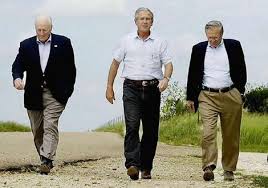
Liars Club: Condoleeza Rice, Dick Cheney, George Bush, Donald Rumsfeld
Bush and his war-hungry Cabinet officials knew that Americans demanded vengeance on AlQaeda’s mastermind, Osama bin Laden, and not Iraqi dictator Saddam Hussein. So they repeatedly fabricated “links” between the two:
- Saddam had worked hand-in-glove with Bin Laden to plan 9/11.
- Saddam was harboring and supporting Al-Qaeda throughout Iraq.
- Saddam, with help from Al-Qaeda, was scheming to build a nuclear bomb.
Yet as early as September 22, 2001, Bush had received a classified President’s Daily Brief intelligence report, which stated that there was no evidence linking Saddam Hussein to 9/11.
The report added that there was scant credible evidence that Iraq had any significant collaborative ties with Al-Qaeda.
Even more important: Saddam had tried to monitor Al Qaeda through his intelligence service–because he saw Al-Qaeda and other theocratic radical Islamist organizations as a potential threat to his secular regime.
Bush administration officials repeatedly claimed that Iraq possessed huge quantities of chemical and biological weapons, in violation of UN resolutions. And they further claimed that US intelligence agencies had determined:
- the precise locations where these weapons were stored;
- the identities of those involved in their production; and
- the military orders issued by Saddam Hussein for their use in the event of war.
Among other lies stated as fact by members of the Bush administration:
- Iraq had sought uranium from Niger, in west Africa.
- Thousands of aluminum tubes imported by Iraq could be used in centrifuges to create enriched uranium.
- Iraq had up to 20 long-range Scud missiles, prohibited under UN sanctions.
- Iraq had massive stockpiles of chemical and biological agents, including nerve gas, anthrax and botulinum toxin.
- Saddam Hussein had issued chemical weapons to front-line troops who would use them when US forces crossed into Iraq.
Consider the following:
August 26, 2002: Cheney told the Veterans of Foreign Wars, “There is no doubt that Saddam Hussein now has weapons of mass destruction. There is no doubt he is amassing them to use against our friends, against our allies and against us.”
September 8, 2002: National Security Advisor Condoleeza Rice said on CNN: ”There is certainly evidence that Al-Qaeda people have been in Iraq. There is certainly evidence that Saddam Hussein cavorts with terrorists.”
September 18, 2002: Rumsfeld told the House Armed Services Committee, “We do know that the Iraqi regime has chemical and biological weapons. His regime has amassed large, clandestine stockpiles of chemical weapons–including VX, sarin, cyclosarin and mustard gas.”
October 7, 2002: Bush declared in a nationally televised speech in Cincinnati that Iraq “possesses and produces chemical and biological weapons. It is seeking nuclear weapons.”
March 16, 2003: Cheney declared on NBC’s “Meet the Press”: “We believe [Saddam Hussein] has, in fact, reconstituted nuclear weapons.”
March 30, 2003: On ABC’s “This Week” program, 10 days into the war, Rumsfeld said: “We know where they [weapons of mass destruction] are.”
Bush never regretted his decision to invade Iraq, which occurred on March 20, 2003.
Even as American occupying forces repeatedly failed to turn up any evidence of “weapons of mass destruction” (WMDs), Bush and his minions claimed the invasion a good thing.
In fact, Bush–who hid out the Vietnam war in the Texas Air National Guard–even joked publicly about the absence of WMDs.
He did so at a White House Correspondents dinner on March 24, 2004–one year after he had started the war.
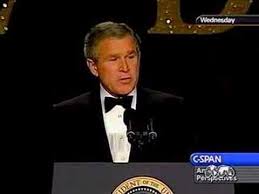
George W. Bush at the 2004 White House Correspondents’ dinner
To Bush, the non-existent WMDs were nothing more than the butt of a joke that night. While an overhead projector displayed photos of a puzzled-looking Bush searching around the Oval Office, Bush recited a comedy routine.
Click here: Bush laughs at no WMD in Iraq – YouTube
“Those weapons of mass destruction have gotta be somewhere,” Bush laughed, while a photo showed him poking around the corners in the Oval Office.
“Nope–no weapons over there! Maybe they’re under here,” he said, as a photo showed him looking under a desk.
Meanwhile, an assembly of wealthy, pampered men and women–the elite of America’s media and political classes–laughed heartily during Bush’s performance. It was a scene worthy of the court of the ancient Caesars, complete with royal flunkies.
Ultimately, the war that Bush had deliberately provoked
- Took the lives of 4,484 Americans.
- Cost the United States Treasury at least $2 trillion.
- Created a Middle East power vacumn.
- Allowed Iran–Iraq’s arch enemy–to eagerly fill it.
- Killed at least 655,000 Iraqis.
- Bush retired from office with a lavish pension and full Secret Service protection.
- He wrote his memoirs and was paid $7 for the first 1.5 million copies.
- Cheney, Rumsfeld, Rice retired to private business, wrote their own memoirs, and lived in comfort as respected elder statesmen.
9/11, ABC NEWS, AL QAEDA, ALTERNET, AMERICABLOG, AMERICAN CAESARS: THE LIVES OF THE PRESIDENTS FROM FRANKLIN D. ROOSEVELT TO GEORGE W. BUSH, AMERICAN EMPIRE, AP, BABY BOOMER RESISTANCE, BASHAR AL-ASSAD, BILL CLINTON, BLOOMBERG, BUREAUCRACY, BUZZFEED, CBS NEWS, CHRIS MATHEWS, CNN, CONDOLEEZA RICE, CROOKS AND LIARS, DAILY KOZ, DONALD TRUMP, DRUDGE REPORT, DWIGHT EISENHOWER, FACEBOOK, FBI, FIVETHIRTYEIGHT, FRANKLIN D. ROOSEVELT, GEORGE H.W. BUSH, GEORGE W. BUSH, GERALD R. FORD, HARPER’S MAGAZINE, HARRY S. TRUMAN, HUFFINGTON POST, JIMMY CARTER, JOHN F. KENNEDY, LYNDON B. JOHNSON, MEDIA MATTERS, MOTHER JONES, MOVEON, MSNBC, NBC NEWS, NEWSWEEK, NIGEL HAMILTON, NPR, OSAMA BIN LADEN, PBS NEWSHOUR, POLITICO, POLITICUSUSA, RAW STORY, REPUBLICAN PARTY, REUTERS, RICHARD CLARKE, RICHARD NIXON, ROMAN EMPIRE, SALON, SEATTLE TIMES, SEPTEMBER 11, SLATE, SUETONIUS, SYRIA, TALKING POINTS MEMO, TERRORISM, THE ATLANTIC, THE CHICAGO SUN-TIMES, THE CHICAGO TRIBUNE, THE DAILY BEAST, THE DAILY BLOG, THE GUARDIAN, THE HILL, THE HUFFINGTON POST, THE LOS ANGELES TIMES, THE NATION, THE NEW REPUBLIC, THE NEW YORK TIMES, THE TWELVE CAESARS, THE VILLAGE VOICE, THE WASHINGTON POST, THINKPROGRESS, TIME, TRUTHDIG, TRUTHOUT, TWITTER, TWO POLITICAL JUNKIES, U.S. NEWS & WORLD REPORT, UPI, USA TODAY
In Bureaucracy, History, Military, Politics, Social commentary on September 12, 2016 at 12:23 am
September 11, 2016, marks the 15th anniversary of the worst terrorist attack on United States soil. Inevitably, this is a time to remember all those whose lives were so cruelly snuffed out.
But it should also be a time to remember those who made this atrocity inevitable–by refusing to acknowledge and address the impending threat from Al-Qaeda.
British historian Nigel Hamilton has chronicled their arrogance and indifference in his 2010 biography: American Caesars: Lives of the Presidents from Franklin D. Roosevelt to George W. Bush.
Hamilton noted that Richard Clarke, the national security advisor on terrorism, was certain that Osama bin Laden had arranged the [USS.] Cole bombing in Aden on October 12, 2000.
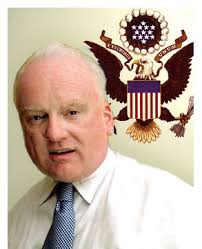
Richard Clarke
For months, Clarke tried to convince others in the Bush Administration that Bin Laden was plotting another attack against the United States–either abroad or at home.
But Clarke could not prevail against the know-it-all arrogance of such higher-ranking Bush officials as Vice President Dick Cheney; Secretary of Defense Donald Rumsfeld; Rumsfeld’s deputy, Paul Wolfowitz; and National Security Advisor Condoleeza Rice.
Rice initially refused to hold a cabinet-level meeting on the subject. Then she “insisted the matter be handled only by a more junior Deputy Principals meeting” in April, 2001, writes Hamilton.
Wolfowitz, the number-two man at the Department of Defense, said: “I don’t understand why we are beginning by talking about this one man, bin Laden.”
Even after Clarke outlined the threat posed by Al-Qaeda, Wolfowitz–whose real target was Saddam Hussein–said: “You give bin Laden too much credit.”
Wolfowitz insisted that bin Laden couldn’t carry out his terrorist acts without the aid of a state sponsor–namely, Iraq.
Wolfowitz, in fact, blamed Iraq for the 1993 bombing of the World Trade Center. Clarke was stunned, since there was absolutely no evidence of Iraqi involvement in this.
“Al-Qaeda plans major acts of terrorism against the United States,” Clarke warned his colleagues. He pointed out that, like Adolf Hitler, bin Laden had actually published his plans for future destruction.
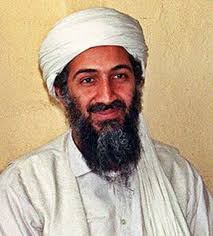
Osama bin Laden
And he added: “Sometimes, as with Hitler in Mein Kampf, you have to believe that these people will actually do what they say they will do.”
Wolfowitz heatedly traded on his Jewish heritage to bring Clarke’s unwelcome arguments to a halt: “I resent any comparison between the Holocaust and this little terrorist in Afghanistan.”
Writing in outraged fury, Hamilton sums up Clarke’s agonizing frustrations:
- Bush’s senior advisors treated their colleagues who had served in the Clinton administration with contempt.
- President Bush, Vice President Dick Cheney, National Security Advisor Condoleeza Rice, Secretary of Defense Donald Rumsfeld and Deputy Defense Secretary Paul Wolfowitz seemed content to ignore the danger signals of an impending al-Qaeda attack.
- This left only Secretary of State Colin Powell, his deputy Richard Armitage, Richard Clarke and a skeptical Treasury Secretary, Paul O’Neill, to wage “a lonely battle to waken a seemingly deranged new administration.”
Clarke alerted Federal Intelligence agencies that “Al-Qaeda is planning a major attack on us.” He asked the FBI and CIA to report to his office all they could learn about suspicious persons or activities at home and abroad.
Finally, at a meeting with Rice on September 4, 2001, Clarke challenged her to “picture yourself at a moment when in the very near future Al-Qaeda has killed hundreds of Americans, and imagine asking yourself what you wish then that you had already done.”
Seven days later, Al-Qaeda struck, and 3,000 Americans died horrifically–and needlessly.
Neither Bush, Cheney, Rice, Rumsfeld nor Wolowitz ever admitted their negligence. Nor would any of them be brought to account.
Disgustingly, these were the same officials who, afterward, posed as the Nation’s saviors–and branded anyone who disagreed with them as a traitor, practices the Right continues to exploit to this day.
Only Richard Clarke–who had vainly argued for stepped-up security precautions and taking the fight to Al-Qaeda–gave that apology.
On March 24, 2004, Clarke testified at the public 9/11 Commission hearings. Addressing relatives of victims in the audience, he said: “Your government failed you, those entrusted with protecting you failed you, and I failed you.”
Yet even worse was to come.
On the evening after the September 11 attacks, Bush took Clarke aside during a meeting in the White House Situation Room:
“I want you, as soon as you can, to go back over everything, everything. See if Saddam [Hussein, the dictator of Iraq] did this. See if he’s linked in any way.”
Clarke was stunned: “But, Mr. President, Al-Qaeda did this.”
“I know, I know,” said Bush. “But see if Saddam was involved. I want to know.”
Hussein had not plotted the attack–and there was no evidence proving that he did. But the attack gave “W” the excuse he wanted to remove the man he blamed for the 1992 defeat of his father, President George H.W. Bush.
Bush believed that his father would have been re-elected if he had “gone all the way” into Baghdad during the 1991 Gulf War.
He would finish the job that his father had started but failed to compete.
On September 12, 2001, Bush attended a meeting of the National Security Council.
“Why shouldn’t we go against Iraq, not just Al-Qaeda?” demanded Donald Rumsfeld, the Secretary of Defense.
Vice President Dick Cheney enthusiastically agreed.
9/11, ABC NEWS, AL QAEDA, ALTERNET, AMERICABLOG, AMERICAN CAESARS: THE LIVES OF THE PRESIDENTS FROM FRANKLIN D. ROOSEVELT TO GEORGE W. BUSH, AMERICAN EMPIRE, AP, BABY BOOMER RESISTANCE, BASHAR AL-ASSAD, BILL CLINTON, BLOOMBERG, BUREAUCRACY, BUZZFEED, CBS NEWS, CHRIS MATHEWS, CNN, CONDOLEEZA RICE, CROOKS AND LIARS, DAILY KOZ, DONALD TRUMP, DRUDGE REPORT, DWIGHT EISENHOWER, FACEBOOK, FBI, FIVETHIRTYEIGHT, FRANKLIN D. ROOSEVELT, GEORGE H.W. BUSH, GEORGE W. BUSH, GERALD R. FORD, HARPER’S MAGAZINE, HARRY S. TRUMAN, HUFFINGTON POST, JIMMY CARTER, JOHN F. KENNEDY, LYNDON B. JOHNSON, MEDIA MATTERS, MOTHER JONES, MOVEON, MSNBC, NBC NEWS, NEWSWEEK, NIGEL HAMILTON, NPR, OSAMA BIN LADEN, PBS NEWSHOUR, POLITICO, POLITICUSUSA, RAW STORY, REPUBLICAN PARTY, REUTERS, RICHARD CLARKE, RICHARD NIXON, ROMAN EMPIRE, SALON, SEATTLE TIMES, SEPTEMBER 11, SLATE, SUETONIUS, SYRIA, TALKING POINTS MEMO, TERRORISM, THE ATLANTIC, THE CHICAGO SUN-TIMES, THE CHICAGO TRIBUNE, THE DAILY BEAST, THE DAILY BLOG, THE GUARDIAN, THE HILL, THE HUFFINGTON POST, THE LOS ANGELES TIMES, THE NATION, THE NEW REPUBLIC, THE NEW YORK TIMES, THE TWELVE CAESARS, THE VILLAGE VOICE, THE WASHINGTON POST, THINKPROGRESS, TIME, TRUTHDIG, TRUTHOUT, TWITTER, TWO POLITICAL JUNKIES, U.S. NEWS & WORLD REPORT, UPI, USA TODAY
In Bureaucracy, History, Military, Politics, Social commentary on September 9, 2016 at 12:01 am
It’s that time of year again–yet another anniversary celebration of September 11, 2001.
The day when Islamic terrorists slammed two jetliners into the World Trade Center and a third into the Pentagon.
They would have crashed a fourth jetliner into the White House or Capitol Building except for the heroic resistance of passengers aboard United Airlines Flight 93.
In the years immediately following 9/11, politicians of both parties used this anniversary to wave flags and make self-serving patriotic speeches.
This was especially true for officials of the administration of President George W. Bush–which, even as the rubble was being cleared at the Pentagon and World Trade Center, was preparing to use the attack as an excuse to topple Iraqi dictator Saddam Hussein.
Hussein had not plotted 9/11, and there was no evidence that he did. But that didn’t matter to Bush and those planning the invasion and conquest of Iraq.
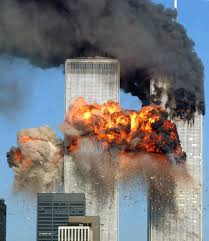
World Trade Center on September 11, 2001
So here it is, 15 years later, and, once again, politicians are using 9/11 as a prop to advance their careers.
Donald Trump, the Republican Presidential nominee, claims that only he can protect America from Al Qaeda, ISIS and any other Islamic terrorist groups. And if that means using nuclear weapons in the Middle East, so be it.
And Hillary Clinton, the Democratic nominee for President, seeks to out-hawk Trump by promising to escalate the fight against ISIS and overthrow Syrian dictator Bashar al-Assad.
As on past commemorations of 9/11, those who died will be remembered by friends and relatives of those who knew and loved them.
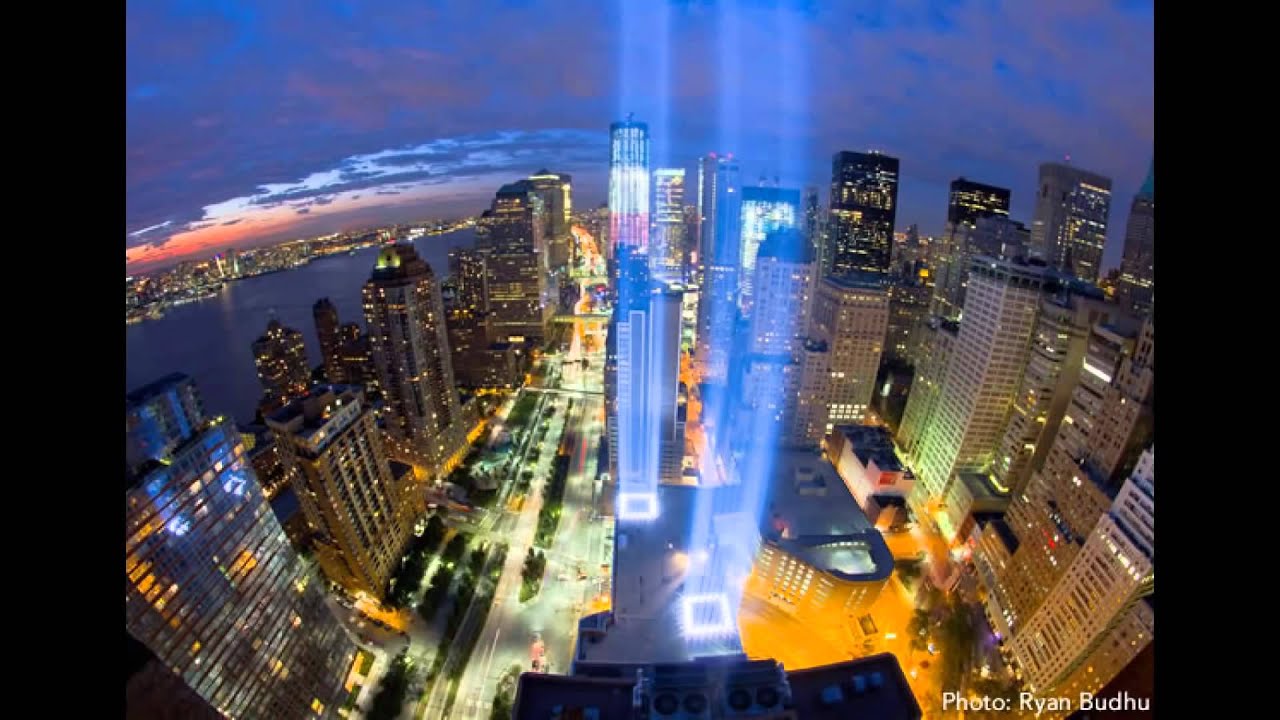
Tribute to 9/11 World Trade Center Victims
It is in fact appropriate to remember the innocents who died on that day–and the heroism of the police and firefighters who died trying to save them.
But it’s equally important to remember those who made 9/11 not simply possible but inevitable.
And that does not mean only the 19 highjackers who turned those planes into fuel-bombs. It means the officials at the highest levels of the administration of President George W. Bush.
Officials who, to this day, have never been held accountable in any way for the resulting death and destruction.
And who have been allowed to blatantly lie that they “kept us safe” from terrorism.
Obviously, such an indictment is not going to be presented by TV commentators today–not even on such liberal networks as CNN and MSNBC. And most definitely not on the right-wing Fox network.
Fortunately, British historian Nigel Hamilton has dared to lay bare the facts of this disgrace. Hamilton is the author of several acclaimed political biographies, including JFK: Reckless Youth and Bill Clinton: Mastering the Presidency.
In 2007, he began research on his latest book: American Caesars: The Lives of the Presidents From Franklin D. Roosevelt to George W. Bush.


Nigel Hamilton
By Nigel Hamilton (Nigel Hamilton picture)
The inspiration for this came from a classic work of ancient biography: The Twelve Caesars, by Gaius Suetonius Tranquillus–known as Suetonius.
Suetonius, a Roman citizen and historian, had chronicled the lives of the first twelve Caesars of imperial Rome: Julius Caesar, Augustus, Tiberius, Caligula, Claudius, Nero, Galba, Otho, Vitellius, Vespasian, Titus and Domitian.
Hamilton wanted to examine post-World War II United States history as Suetonius had examined that of ancient Rome: Through the lives of the 12 “emperors” who had held the power of life and death over their fellow citizens–and those of other nations.
For Hamilton, the “greatest of American emperors, the Caesar Augustus of his time,” was Franklin D. Roosevelt, who led his country through the Great Depression and World War II.
His “”great successors” were Harry S. Truman, Dwight D. Eisenhower and John F. Kennedy–who, in turn, contained the Soviet Union abroad and presided over sustained economic prosperity at home.
By contrast, “arguably the worst of all the American Caesars” was “George W. Bush, and his deputy, Dick Cheney, who willfully and recklessly destroyed so much of the moral basis of American leadership in the modern world.”
Among the most lethal of Bush’s offenses: The appointing of officials who refused to take seriously the threat posed by Al-Qaeda.
And this arrogance and indifference continued–right up to September 11, 2001, when the World Trade Center and Pentagon became targets for destruction.
Among the few administration officials who did take Al-Qaeda seriously was Richard Clarke, the chief counter-terrorism adviser on the National Security Council.
Clarke had been thus appointed in 1998 by President Bill Clinton. He continued in the same role under President Bush–but the position was no longer given cabinet-level access.
This put him at a severe disadvantage when dealing with other, higher-ranking Bush officials–such as Vice President Dick Cheney, Secretary of Defense Donald Rumsfeld, Rumsfeld’s deputy, Paul Wolfowitz and National Security Advisor Condoleeza Rice.
These turned out to be the very officials who refused to believe that Al-Qaeda posed a lethal threat to the United States.
“Indeed,” writes Hamilton, “in the entire first eight months of the Bush Presidency, Clarke was not permitted to brief President Bush a single time, despite mounting evidence of plans for a new al-Qaeda outrage.” [Italics added]
Nor did it help that, during his first eight months in office before September 11, Bush was on vacation, according to the Washington Post, 42% of the time.
ABC NEWS, BILL CLINTON, BOB LIVINGSTON, CBS NEWS, CHILD MOLESTATION, CNN, DEFENSE OF MARRIAGE ACT, DENNIS HASTERT, FACEBOOK, FAMILY VALUES, FBI, HUSTLER, HYPOCRISY, JUSTICE DEPARTMENT, JUVENAL, LARRY FLYNT, NBC NEWS, NERO, NEWT GINGRICH, REPUBLICANS, ROMAN EMPIRE, SAME-SEX MARRIAGE, SEX ABUSE, THE CHICAGO SUN-TIMES, THE CHICAGO TRIBUNE, THE LOS ANGELES TIMES, THE NEW YORK TIMES, THE WALL STREET JOURNAL, THE WASHINGTON POST, TWITTER, USA TODAY, WHEATON COLLEGE
In Bureaucracy, History, Law, Law Enforcement, Politics, Social commentary on April 13, 2016 at 12:01 am
“Yesterday they were ruffians. Today they control our lives. Tomorrow they will wind up as keepers of the public lavoratories.”
So wrote the ancient Roman poet Juvenal about the brutal non-entities who reigned at the court of the Caesars.
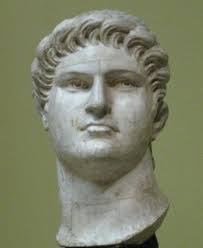
Roman Emperor Nero
Yet he could have been writing about the rise and fall of a onetime American Caesar named Dennis Hastert.
On May 28, 2015, Hastert, the former Republican Speaker of the House of Representatives (1999-2007) was indicted for violating Federal banking laws and lying to the FBI.
He had tried to conceal $3.5 million he had paid since 2010 to a man whom he had molested as a high school student. The student had been on the wrestling team that Hastert had coached.
The relationship had occurred while Hastert was a teacher and wrestling coach at Yorkville High School in Yorkville, Ill.
Later, in 1981, Hastert entered Congress.
On October 28, 2015, Hastert pleaded guilty to structuring money transactions in a way to avoid requirements to report where the money was going.

Dennis Hastert
“I felt a special bond with our wrestlers,” Hastert wrote in his 2004 memoirs, Speaker: Lessons From Forty Years of Coaching and Politics. “And I think they felt one with me.”
Apparently that “special bond” extended to activities outside the ring.
In the pre-sentence report, Justice Department prosecutors charged that Hastert had abused four young boys when he was their wrestling coach. One was only 14 years old.
Hastert had claimed that a coach should never strip away another person’s dignity.
But, said federal prosecutors, “that is exactly what defendant did to his victims. He made them feel alone, ashamed, guilty, and devoid of dignity.”
Hastert’s sentencing, delayed because of health problems, is now scheduled for April 27.
Hastert wasn’t indicted for having had a sexual relationship with underage students. The statute of limitations had long ago run out on those offenses.
He was indicted for trying to evade federal banking laws and lying to the FBI.
Shortly after his indictment, Hastert resigned from the board of Wheaton College, an evangelical university in Chicago known for its anti-gay policies.
The FBI began investigating the cash withdrawals in 2013.
The Bureau wanted to know if Hastert was using the cash for criminal purposes or if he was the victim of a criminal extortion.
When questioned by the FBI, Hastert said he was storing cash because he didn’t feel safe with the banking system: “Yeah … I kept the cash. That’s what I’m doing.”
One part of Hastert’s life was not secret: His opposition to homosexual rights.
From 1997 to 2007, Hastert voted for the Marriage Protection Act, which “forbids requiring any state or any other political subdivision of the United States to credit as a marriage a same-sex relationship treated as marriage in another state or equivalent government.”
Hastert also voted in favor of a Constitutional amendment to “establish that marriage shall consist of one man and one woman.”
He also voted against the Employment Non-Discrimination Act, which banned companies from discriminating against employees “on the basis of sexual orientation.”
Owing to Hastert’s “deeply conservative” voting record, in 1998, he received perfect scores of 100 from
- The National Rifle Association;
- The Christian Coalition;
- The National Right to Life Committee; and
- The Chamber of Commerce
Click here: Dennis Hastert’s secret gay ‘misconduct’ is even worse given his terrible voting record on gay rights
Hastert, who concealed his past as a sexual predator while claiming to be a man of virtue, wrote in his autobiography:
“I was never a very good liar. Maybe I wasn’t smart enough. I could never get away with it, so I made up my mind as a kid to tell the truth and pay the consequences.”
Hastert makes the third Republican “family values” Speaker of the House to become ensnared in an ethics scandal.
Newt Gingrich was the first Speaker (1985-1999) in the history of the House to be reprimanded and punished for ethics violations. His offense: Claiming tax-exempt status for a college course run for political purposes.
He successor, Bob Livingston, was forced to resign when Hustler publisher Larry Flynt revealed his sexual infidelities.
And now there’s Dennis Hastert, whose conduct involved neither money nor women–but a series of male high school students.
Of course, Democrats have had their sex scandals as well–as President Bill Clinton can thoroughly attest. But Democrats usually don’t suffer as badly from them.
The reason: Republicans portray themselves as moral examples for the nation. So for them, being caught literally with their pants down proves a double-whammy.
They are condemned for their specific illegal/immoral acts–and for the sheer hypocrisy of their false claims of sainthood.
Ironically, Right-wingers like Hastert would fare better when caught in homosexual affairs if they simply admitted their sexual tastes and registered as Democrats.
But in heavily Right-wing states like Texas and Oklahoma, they wouldn’t stand a chance of being elected as a Democrat.
And Red-state voters, feeling themselves moral arbiters of the nation, wouldn’t elect anyone they thought was “unnatural.”
So Right-wingers will continue pretending to be moral paragons–and will continue paying the price when they’re exposed as fallible humans.
1984 NOVEL, ABC NEWS, CBS NEWS, CHRISTMAS, CNN, COMMERCIALISM, DONALD TRUMP, FACEBOOK, FOX NEWS, GEORGE ORWELL, JESUS, MEGYN KELLY, NBC NEWS, ROMAN EMPIRE, RUPERT MURDOCH, SANTA CLAUS, SATURNALIA, STARBUCK'S, THE CHICAGO SUN-TIMES, THE CHICAGO TRIBUNE, THE LOS ANGELES TIMES, THE NEW YORK TIMES, THE WASHINGTON POST, TWITTER, WAR ON CHRISTMAS
In Business, History, Politics, Social commentary on December 24, 2015 at 12:10 am
It’s that time of year again–a time of
- Christmas trees;
- Nativity scenes;
- singing carols; and
- exchanging gifts with family and friends.
Christmas is special, so, each year, the executives at Fox News find a new way to stir up emotions by resurrecting the “war on Christmas” slander.
Stirring up false controversies is a daily assignment for the alleged reporters of this company owned by Right-wing patriarch Rupert Murdoch.
In 2013, it fell to Fox hostess Megyn Kelly to carry the ball. And she did so on December 11 on “The Kelly File,” her popular Fox News program.
Referring to an article by Slate writer Aisha Harris on “Santa Claus Should Not Be a White Man Anymore,” she said:
“When I saw this headline, I kinda laughed and I said, ‘Oh, this is ridiculous. Yet another person claiming it’s racist to have a white Santa.’
“And by the way, for all you kids watching at home, Santa just is white. But this person is maybe just arguing that we should also have a black Santa. But, you know, Santa is what he is, and just so you know, we’re just debating this because someone wrote about it, kids.”
Of course, Santa Claus is a completely fictional character. Arguing about his skin color is as pointless as arguing about his weight.
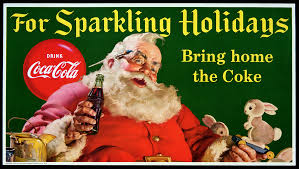
But Kelly wasn’t content to talk only about Santa. So she turned next to Jesus, a historical figure about whom we have not a single reference to his appearance, let alone a picture.
“Just because it makes you feel uncomfortable doesn’t mean it has to change. You know, I mean, Jesus was a white man, too,” Kelly said.
“He was a historical figure; that’s a verifiable fact–as is Santa, I want you kids watching to know that–but my point is: How do you revise it, in the middle of the legacy of the story, and change Santa from white to black?”
Santa Claus a verifiable historical figure? Not even Charlie Brown, in the annually telecast “Peanuts” special, would make that claim.
Two years later, it’s Donald Trump who has claimed center-stage in “defending” Christmas. And the target of his ire? Starbucks.
In years past, its disposable coffee cups have featured snowflakes, winter scenes, reindeer and Christmas ornaments.
But this year, Starbucks decided to go with a minimalist, all-red design, its only feature being the company’s green and white logo.

This has angered some religious conservatives, who generally care more about symbols than substance.
It’s the old “war on Christmas” mantra all over again. And Trump–who hopes to win evangelical votes in Iowa and South Carolina–is happy to become its biggest cheerleader.
“I guarantee if I become president, we’re going to be saying ‘Merry Christmas’ at every store,” he promised during a campaign rally in October.
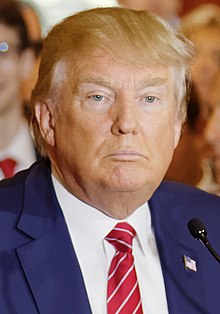
Donald Trump
Fast forward to November 9, and the Starbucks “controversy.” Addressing a crowd of several thousands in Springfield, Illinois, Trump said:
“Did you read about Starbucks? No more Merry Christmas on Starbucks.
“I have one of the most successful Starbucks, in Trump Tower. Maybe we should boycott Starbucks? I don’t know. Seriously, I don’t care. That’s the end of that lease, but who cares?
“If I become president, we’re all going to be saying Merry Christmas again, that I can tell you.”
Trump did not explain how he would coerce non-Christian Americans–such as atheists, Jews and Muslims–to observe a Christian holiday.
Those who insist (whether they believe it or not) that Christmas is an endangered species should consider the following:
- In 2013, the American retail industry generated over three trillion dollars during the Christmas holidays.
- These holiday sales reflected about 19.2% of the retail industry’s total sales that year.
- More than 768,000 temporary employees were hired throughout the United States to help stores cope with the holiday rush.
- American consumers expected to spend about $704 on average on Christmas gifts.
- There is no reference anywhere in the Bible to the month–let alone the day–of Jesus’ birth.
- Jesus never commanded his followers to celebrate his birth–but he did call on them to remember his death.
- Many of the “religious” traditions associated with Christmas stem from the pagan Roman festival, Saturnalia, which celebrated the “birthday” of the sun.
- This was celebrated from December 17-25.
- Saturnalia traditions included feasting, gift-giving, lighting candles (to ward off evil spirits) and displaying wreaths (as a sign of coming spring).
- Early Christians tried mightily to convince their members to stop celebrating the Saturnalia.
- When these efforts failed, the Roman Catholic Church, in the fourth century, “Christianised” the festival by naming Saturnalia’s concluding day, December 25, as Jesus’ birthday.
In George Orwell’s classic novel, 1984, Oceania is always at war with Eurasia or Eastasia. Its citizens are kept in a constant state of frenzy as they’re directed to search for endless “enemies of the state.”
This, in turn, allows the unseen rulers of Oceania to run their dictatorship without interference.
It’s a lesson well-known to hucksters like Donald Trump and the men who run Fox News.
1984 NOVEL, ABC NEWS, CBS NEWS, CHRISTMAS, CNN, COMMERCIALISM, DONALD TRUMP, FACEBOOK, FOX NEWS, GEORGE ORWELL, JESUS, MEGYN KELLY, NBC NEWS, ROMAN EMPIRE, RUPERT MURDOCH, SANTA CLAUS, SATURNALIA, STARBUCK'S, THE CHICAGO SUN-TIMES, THE CHICAGO TRIBUNE, THE LOS ANGELES TIMES, THE NEW YORK TIMES, THE WASHINGTON POST, TWITTER, WAR ON CHRISTMAS
In Business, History, Politics, Social commentary on November 10, 2015 at 10:49 pm
It’s that time of year again–a time of
- Christmas trees;
- Nativity scenes;
- singing carols; and
- exchanging gifts with family and friends.
Christmas is special, so, each year, the executives at Fox News find a new way to stir up emotions by resurrecting the “war on Christmas” slander.
Stirring up false controversies is a daily assignment for the alleged reporters of this company owned by Right-wing patriarch Rupert Murdoch.
In 2013, it fell to Fox hostess Megyn Kelly to carry the ball. And she did so on December 11 on “The Kelly File,” her popular Fox News program.
Referring to an article by Slate writer Aisha Harris on “Santa Claus Should Not Be a White Man Anymore,” she said:
“When I saw this headline, I kinda laughed and I said, ‘Oh, this is ridiculous. Yet another person claiming it’s racist to have a white Santa.’
“And by the way, for all you kids watching at home, Santa just is white. But this person is maybe just arguing that we should also have a black Santa. But, you know, Santa is what he is, and just so you know, we’re just debating this because someone wrote about it, kids.”
Of course, Santa Claus is a completely fictional character. Arguing about his skin color is as pointless as arguing about his weight.
But Kelly wasn’t content to talk only about Santa. So she turned next to Jesus, a historical figure about whom we have not a single reference to his appearance, let alone a picture.
“Just because it makes you feel uncomfortable doesn’t mean it has to change. You know, I mean, Jesus was a white man, too,” Kelly said.
“He was a historical figure; that’s a verifiable fact–as is Santa, I want you kids watching to know that–but my point is: How do you revise it, in the middle of the legacy of the story, and change Santa from white to black?”
Santa Claus a verifiable historical figure? Not even Charlie Brown, in the annually telecast “Peanuts” special, would make that claim.
Two years later, it’s Donald Trump who has claimed center-stage in “defending” Christmas. And the target of his ire? Starbucks.
In years past, its disposable coffee cups have featured snowflakes, winter scenes, reindeer and Christmas ornaments.
But this year, Starbucks decided to go with a minimalist, all-red design, its only feature being the company’s green and white logo.
This has angered some religious conservatives, who generally care more about symbols than substance.
It’s the old “war on Christmas” mantra all over again. And Trump–who hopes to win evangelical votes in Iowa and South Carolina–is happy to become its biggest cheerleader.
“I guarantee if I become president, we’re going to be saying ‘Merry Christmas’ at every store,” he promised during a campaign rally in October.
Donald Trump
Fast forward to November 9, and the Starbucks “controversy.” Addressing a crowd of several thousands in Springfield, Illinois, Trump said:
“Did you read about Starbucks? No more Merry Christmas on Starbucks.
“I have one of the most successful Starbucks, in Trump Tower. Maybe we should boycott Starbucks? I don’t know. Seriously, I don’t care. That’s the end of that lease, but who cares?
“If I become president, we’re all going to be saying Merry Christmas again, that I can tell you.”
Trump did not explain how he would coerce non-Christian Americans–such as atheists, Jews and Muslims–to observe a Christian holiday.
Those who insist (whether they believe it or not) that Christmas is an endangered species should consider the following:
- In 2013, the American retail industry generated over three trillion dollars during the Christmas holidays.
- These holiday sales reflected about 19.2% of the retail industry’s total sales that year.
- More than 768,000 temporary employees were hired throughout the United States to help stores cope with the holiday rush.
- American consumers expected to spend about $704 on average on Christmas gifts.
- There is no reference anywhere in the Bible to the month–let alone the day–of Jesus’ birth.
- Jesus never commanded his followers to celebrate his birth–but he did call on them to remember his death.
- Many of the “religious” traditions associated with Christmas stem from the pagan Roman festival, Saturnalia, which celebrated the “birthday” of the sun.
- This was celebrated from December 17-25.
- Saturnalia traditions included feasting, gift-giving, lighting candles (to ward off evil spirits) and displaying wreaths (as a sign of coming spring).
- Early Christians tried mightily to convince their members to stop celebrating the Saturnalia.
- When these efforts failed, the Roman Catholic Church, in the fourth century, “Christianised” the festival by naming Saturnalia’s concluding day, December 25, as Jesus’ birthday.
In George Orwell’s classic novel, 1984, Oceania is always at war with Eurasia or Eastasia. Its citizens are kept in a constant state of frenzy as they’re directed to search for endless “enemies of the state.”
This, in turn, allows the unseen rulers of Oceania to run their dictatorship without interference.
It’s a lesson well-known to hucksters like Donald Trump and the men who run Fox News.
ABC NEWS, CNN, CRIME, FACEBOOK, FBI, GANG CONTROL, GANGS, HELLS ANGELS, NAPOLEON BONAPARTE, NBC NEWS, NUESTRA FAMILIA, ROMAN EMPIRE, TAX REVENUES, THE NEW YORK TIMES, THE WALL STREET JOURNAL, TWITTER, USA TODAY
In Bureaucracy, History, Law, Law Enforcement, Politics, Social commentary on October 14, 2015 at 2:03 am
For decades, the rhetoric of the Cold War has carried over into the debate over policing.
“Hawks” on the Right have demanded a “hard” approach to law enforcement, emphasizing punishment. “Doves” on the Left have pursued a “soft” line, stressing social programs and rehabilitation.
But it isn’t enough to be “hard” or “soft” in pursuing the goal of a safe, law-abiding society. It’s necessary to be “smart” above all.
If you can’t eradicate evil, then you should try to direct at least some of its elements into a safer path. This especially true for those effrots directed against violent criminal gangs.
According to the FBI:
- Some 33,000 violent street gangs, motorcycle gangs, and prison gangs with about 1.4 million members are criminally active in the U.S. today.
- Gangs are responsible for an average of 48 percent of violent crime in most jurisdictions and up to 90% in several others.
- Many are sophisticated and well organized; all use violence to control neighborhoods and boost their illegal money-making activities, which include robbery, drug- and gun-trafficking, fraud, extortion, and prostitution rings.
- Their revenues climb into untold billions of dollars each year–all of it tax-free.
Click here: FBI — Gangs
These gangs aren’t going to disappear, no matter how many of their members die or wind up in prison.
The time has come to apply the time-tested principle so well known south of the border: “Pan o palo.” Or: “Bread or stick.”
In short: Rewards or punishments.

As in a legalized competition for the title of “State Gang Champion.” This would work as follows:
- Each state should invite its resident gang members to take part in a series of competition for the title of “State Gang Champion.”
- These would be modeled on competitions now existing within the National Football League–a series of playoffs to determine which two gangs will duke it out in the “Super Rumble.”
- These competitions would be completely voluntary, thus eliminating any charges of State coersion.
- They would be modeled on the country’s current mania for “Ultimate Warrior” contests for kickboxers and bare-kunckled fighters.
- Contestants–as many as a score or more from at least two opposing gangs–would meet in a football-sized arena.
- No firearms would be allowed.
- Contestants could otherwise arm themselves with whatever weapons they desired–such as baseball bats, swords, axes, spears or chains.
- Everyone who agreed to participate would automatically be granted immunity for whatever carnage they inflicted.
- The object of these contests would be to officially determine which State gang was the “baddest” for the year.
- Tickets could be purchased by fans looking for an afternoon’s festival of gore.
- Television networks could–and no doubt would–vie for rights to film the events, just as they now do for “pay-for-view” wrestling or boxing matches.

A modern-day Coliseum
There are several reasons why many–if not most–gangs would want to participate in such contests.
- They would be able to eliminate members of rival gangs without risk of prosecution and imprisonment.
- They would be able to gauge–through the heat of combat–the toughness of their own associates.
- They would gain at least temporary stardom–just as successful gladiators did under the Roman Empire.
- The winning gang would gain official status as “The Baddest” gang in the State.
On the last point: Napoleon Bonaparte created the Order of the Legion of Honor, distributed 15,000 crosses to his soldiers and called his troops the “Grand Army.”
When someone criticized him for giving “toys” to his war-hardened veterans, Napoleon replied: “Men are ruled by toys.”
And for the State there would be gains as well:
- These contests would literally eliminate a great many gang members who cannot be removed any other way.
- Police and prosecutors could concentrate their limited resources on gangs that refused to participate or were deemed to pose a major threat.
- Millions of dollars in State revenues would be generated through ticket sales and the buying of pay-per-view rights.
Admittedly, many law-abiding citizens would be repulsed by the carnage that would result from implemting this proposal. But these are generally the people who disdain boxing or wrestling contests anyway.
But given our increasingly jaded and violence-prone society, most of them would eventually tolerate it as an effective way to simultaneously raise badly-needed tax revenues and reduce the size of criminal gangs.
Republican politicians would find this an especially attractive proposal, since it adheres to the two concepts dear to the hearts of all Right-wingers: Killing people and making money.
In short: With sufficient creativity and ruthlessness, it should be possible to reclaim control of our streets from the evils of gang violence.
9/11, ABC NEWS, AL QAEDA, AMERICAN EMPIRE, BILL CLINTON, BUREAUCRACY, CBS NEWS, CHRIS MATHEWS, CNN, DWIGHT EISENHOWER, FACEBOOK, FBI, FRANKLIN D. ROOSEVELT, GEORGE H.W. BUSH, GEORGE W. BUSH, GERALD R. FORD, HARRY S. TRUMAN, JIMMY CARTER, JOHN F. KENNEDY, LYNDON B. JOHNSON, MSNBC, NBC NEWS, NIGEL HAMILTON, OSAMA BIN LADEN, REPUBLICAN PARTY, RIAHCRD M. NIXON, ROMAN EMPIRE, SEPTEMBER 11, SUETONIUS, SYRIAN CIVIL WAR, SYRIAN REFUGEES, TERRORISM, THE HUFFINGTON POST, THE LOS ANGELES TIMES, THE NEW YORK TIMES, THE TWELVE CAESARS, TWITTER
In Bureaucracy, History, Military, Politics, Social commentary on September 14, 2015 at 12:06 am
Colonel Brandt: “I wonder what we’ll do after we lose the war.”
Captain Kiesel: “Prepare for the next one.”
–-“The Cross of Iron,” film by Sam Peckinpah
On September 12, 2001, President George W. Bush attended a meeting of the National Security Council.
“Why shouldn’t we go against Iraq, not just Al-Qaeda?” demanded Donald Rumsfeld, the Secretary of Defense.
Vice President Dick Cheney enthusiastically agreed.
Secretary of State Colin Powell then pointed out there was absolutely no evidence that Iraq had had anything to do with 9/11 or Al-Qaeda. And he added: “The American people want us to do something about Al-Qaeda”–-not Iraq.
On November 21, 2001, only 10 weeks after 9/11, Bush told Rumsfeld: It’s time to turn to Iraq.
Liars Club: Condoleeza Rice, Dick Cheney, George Bush, Donald Rumsfeld
Bush and his war-hungry Cabinet officials knew that Americans demanded vengeance on Al-Qaeda’s mastermind, Osama bin Laden, and not Iraqi dictator Saddam Hussein,. So they repeatedly fabricated “links” between the two:
- Saddam had worked hand-in-glove with Bin Laden to plan 9/11.
- Saddam was harboring and supporting Al-Qaeda throughout Iraq.
- Saddam, with help from Al-Qaeda, was scheming to build a nuclear bomb.
Yet as early as September 22, 2001, Bush had received a classified President’s Daily Brief intelligence report, which stated that there was no evidence linking Saddam Hussein to 9/11.
The report added that there was scant credible evidence that Iraq had any significant collaborative ties with Al-Qaeda.
Even more important: Saddam had tried to monitor Al Qaeda through his intelligence service-–because he saw Al-Qaeda and other theocratic radical Islamist organizations as a potential threat to his secular regime.
Bush administration officials repeatedly claimed that Iraq possessed huge quantities of chemical and biological weapons, in violation of UN resolutions. And they further claimed that US intelligence agencies had determined:
- the precise locations where these weapons were stored;
- the identities of those involved in their production; and
- the military orders issued by Saddam Hussein for their use in the event of war.
Among other lies stated as fact by members of the Bush administration:
- Iraq had sought uranium from Niger, in west Africa;
- Thousands of aluminum tubes imported by Iraq could be used in centrifuges to create enriched uranium;
- Iraq had up to 20 long-range Scud missiles, prohibited under UN sanctions;
- Iraq had massive stockpiles of chemical and biological agents, including nerve gas, anthrax and botulinum toxin;
- Saddam Hussein had issued chemical weapons to front-line troops who would use them when US forces crossed into Iraq.
Consider the following:
August 26, 2002: Cheney told the Veterans of Foreign Wars, “There is no doubt that Saddam Hussein now has weapons of mass destruction. There is no doubt he is amassing them to use against our friends, against our allies and against us.”
September 8, 2002: National Security Advisor Condoleeza Rice said on CNN: ”There is certainly evidence that Al-Qaeda people have been in Iraq. There is certainly evidence that Saddam Hussein cavorts with terrorists.”
September 18, 2002: Rumsfeld told the House Armed Services Committee, “We do know that the Iraqi regime has chemical and biological weapons. His regime has amassed large, clandestine stockpiles of chemical weapons—including VX, sarin, cyclosarin and mustard gas.”
October 7, 2002: Bush declared in a nationally televised speech in Cincinnati that Iraq “possesses and produces chemical and biological weapons. It is seeking nuclear weapons.”
March 16, 2003: Cheney declared on NBC’s “Meet the Press”: “We believe [Saddam Hussein] has, in fact, reconstituted nuclear weapons.”
March 30, 2003: On ABC’s “This Week” program, 10 days into the war, Rumsfeld said: “We know where they [weapons of mass destruction] are.”
Bush never regretted his decision to invade Iraq, which occurred on March 29, 2003.
Even as American occupying forces repeatedly failed to turn up any evidence of “weapons of mass destruction” (WMDs), Bush and his minions claimed the invasion a good thing.
In fact, Bush-–who hid out the Vietnam war in the Texas Air National Guard-–even joked publicly about the absence of WMDs.
He did so at a White House Correspondents dinner on March 24, 2004-–one year after he had started the war.
George W. Bush at the 2004 White House Correspondents’ dinner
To Bush, the non-existent WMDs were nothing more than the butt of a joke that night. While an overhead projector displayed photos of a puzzled-looking Bush searching around the Oval Office, Bush recited a comedy routine.
Click here: Bush laughs at no WMD in Iraq – YouTube
“Those weapons of mass destruction have gotta be somewhere,” Bush laughed, while a photo showed him poking around the corners in the Oval Office.
“Nope-–no weapons over there! Maybe they’re under here,” he said, as a photo showed him looking under a desk.
Meanwhile, an assembly of wealthy, pampered men and women–-the elite of America’s media and political classes–-laughed heartily during Bush’s performance.
Ultimately, the war that Bush had deliberately provoked
- Took the lives of 4,484 Americans;
- Cost the United States Treasury at least $2 trillion;
- Created a Middle East power vacumn;
- Allowed Iran–Iraq’s arch enemy–to eagerly fill it; and
- Kill at least 655,000 Iraqis.
ABC NEWS, ALTERNET, AMELIA EARHART, AP, BILL O'REILLY, BORIS YELTSIN, BRAD MELTZER, BRAD MELTZER DECODED, BREAKING NEWS, BUZZFEED, CBS NEWS, CHARLES KRAUTHAMMER, CNN, CROOKS AND LIARS, DAILY KOZ, DON LEMON, EMAIL, FACEBOOK, FOX NEWS, KGB, MALAYSIAN PLANE, MIKHAIL GORBACHEV, MOTHER JONES, MOVEON, NBC NEWS, NEWSWEEK, NPR, POLITICO, RAW STORY, REUTERS, ROMAN EMPIRE, SALON, SEATTLE TIMES, SLATE, SOVIET UNION, THE ATLANTIC, THE CHICAGO SUN-TIMES, THE CHICAGO TRIBUNE, THE DAILY BEAST, THE GUARDIAN, THE HILL, THE HUFFINGTON POST, THE LOS ANGELES TIMES, THE NATION, THE NEW YORK TIMES, THE WASHINGTON POST, TIME, TWITTER, U.S. NEWS & WORLD REPORT, UPI, USA TODAY
In Bureaucracy, Entertainment, History, Politics, Social commentary on March 20, 2014 at 12:35 am
On March 8, 2014, Malaysian Airlines Flight 370 took off from Kuala Lumpur International Airport for Beijing Capital International Airport.
Less than an hour after taking off, the boeing 777-200ER last made contact with an air traffic control tower–and then vanished.
With it vanished 227 passengers–the majority of them Chinese–and a crew of 12.
By March 18, 26 nations were participating in the search.
Not since the 1937 disappearance of aviatrix Amelia Earhart has the disappearance of a single plane triggered such an international frenzy.
And that frenzy extends to the media coverage given it–especially on CNN.
Since its disappearance on March 8, Flight 370 has been the preeminent story on CNN.
With no telltale wreckage or even an oil slick to indicate the plane’s fate, CNN has been forced to make do with maps and “talking heads” speculation.
And to keep audiences attuned while there is no actual news to report, CNN has been forced to rely on a steady stream of “BREAKING NEWS” headlines.
And then what follows is more “talking heads” offering more speculation.
On March 16, CNN anchor Don Lemon and Brad Meltzer, host of Brad Meltzer Decoded, raised the possibility of “the supernatural” as responsible for the disappearance.
Lemon used a toy plane to demonstrate a series of turns and dives before simulating a landing on his anchor desk.

Don Lemon with his toy plane
“We go to church, the supernatural power of God,” said Lemon. “People are saying to me, ‘Why aren’t you talking about the possibility?’
“And I’m just putting it out there–that something odd happened to this plane, something beyond our understanding.”
And Meltzer responded: “People roll their eyes at conspiracy theories, but what conspiracy theories do is they ask the hardest, most outrageous questions sometimes, but every once in a while they’re right.
“You can say, ‘Oh, it crashed into the ocean. But where are the parts? Where are the pieces? Why did it keep going for seven hours?”
This, in turn, has had both a positive and a negative effect.
On the positive side: CNN–which has found itself struggling in the ratings war against Fox News and MSNBC–has seen its ratings surge.
Over the weekend of March 15-16, CNN’s ratings soared, rising by almost 100% in prime time.
On the negative side: CNN’s “All-Vanished-Plane/All-the-Time” coverage has annoyed and angered many other viewers–including some prominent ones.
One of these is Bill O’Reilly, host of Fox News program The OReilly Factor.
“When I’m watching this, I’m like throwing–I’m upset about it,” he said on March 18. “I know it’s ratings obviously or people wanna watch the mystery, but it’s now corrupting the news business I think.”
Charles Krauthammer, the conservative columnist, replied: What bothered him was that networks were treating the tragedy as “a game, when actually it was a terrible, terrible event.”
“There comes a point where it becomes a burlesque show, it becomes a farce and we’ve reached that point on this coverage,” O’Reilly said.
“When does Godzilla come in? And on another network they actually said aliens might’ve taken it. They actually said that on the air!”
As a result, there are three journalistic truths that CNN can–and should–take to heart:
- Breaking News!” means “news that is happening right now.” It does not mean “news that happened last week but we just found out about it today.” Nor does it mean speculation about events that still remain a mystery.
- It is possible to broadcast more than one news story in a 24-hour period. The disappearance of the Malaysian plane does raise troubling questions about aviation safety. But there are other events going on in the world. And some of them are–surprise!–even more important.
- When you don’t have any actual news to report on a particular story, just say so and move on to another story where you do have news. Putting a half-dozen “talking heads” around a table to endlessly speculate about what might have happened isn’t the same as actually reporting the news.
There’s nothing wrong with a network’s sticking with a story as long as (1) it’s truly important, and (2) it’s actually ongoing.
The classic example of this: When, in August, 1991, the KGB and other Right-wingers overthrew Mikhail Gorbachev, General Secretary of the Soviet Union.
Closely following this story–for reporters and viewers–made sense: The Soviet Union commanded enough nuclear weaponry to destroy the United States.
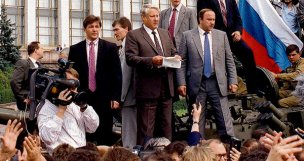
Boris Yeltsin, President of the Russian Federation, denounces the KGB coup
So it truly mattered whether Gorbachev–a moderate reformer–remained in power or was replaced by a KGB-sponsored coup.
Fortunately–for Gorbachev and the West–he was returned to power and Communism collapsed.
Watching on TV as Russians throw off the yoke of 70 years of Red slavery was like watching the fall of the Roman Empire.
This was a truly monumental and historical event. And those who lived through it as spectators could be grateful to CNN and other networks for their ongoing coverage.
But the disappearance of a single Malaysian plane doesn’t fit into these categories. Even if it proves monumentally good for CNN’s ratings.
9/11, ABC NEWS, AL QAEDA, AMERICAN EMPIRE, BILL CLINTON, BUREAUCRACY, CBS NEWS, CHRIS MATHEWS, CNN, DWIGHT EISENHOWER, FACEBOOK, FBI, FRANKLIN D. ROOSEVELT, GEORGE H.W. BUSH, GEORGE W. BUSH, GERALD R. FORD, HARRY S. TRUMAN, JIMMY CARTER, JOHN F. KENNEDY, LYNDON B. JOHNSON, MSNBC, NBC NEWS, NIGEL HAMILTON, OSAMA BIN LADEN, REPUBLICAN PARTY, RIAHCRD M. NIXON, ROMAN EMPIRE, SEPTEMBER 11, SUETONIUS, TERRORISM, THE HUFFINGTON POST, THE LOS ANGELES TIMES, THE NEW YORK TIMES, THE TWELVE CAESARS, TWITTER
In Bureaucracy, History, Military, Politics, Social commentary on September 13, 2013 at 12:00 am
Colonel Brandt: “I wonder what we’ll do after we lose the war.”
Captain Kiesel: “Prepare for the next one.”
–“The Cross of Iron,” film by Sam Peckinpah
On September 12, 2001, President George W. Bush attended a meeting of the National Security Council.
“Why shouldn’t we go against Iraq, not just Al-Qaeda?” demanded Donald Rumsfeld, the Secretary of Defense.
Vice President Dick Cheney enthusiastically agreed.
Secretary of State Colin Powell then pointed out there was absolutely no evidence that Iraq had had anything to do with 9/11 or Al-Qaeda. And he added: “The American people want us to do something about Al-Qaeda”–-not Iraq.
On November 21, 2001, only 10 weeks after 9/11, Bush told Rumsfeld: It’s time to turn to Iraq.
Liars Club: Condoleeza Rice, Dick Cheney, George Bush, Donald Rumsfeld
Bush and his war-hungry Cabinet officials knew that Americans demanded vengeance on Al-Qaeda’s mastermind, Osama bin Laden, and not Iraqi dictator Saddam Hussein,. So they repeatedly fabricated “links” between the two:
- Saddam had worked hand-in-glove with Bin Laden to plan 9/11.
- Saddam was harboring and supporting Al-Qaeda throughout Iraq.
- Saddam, with help from Al-Qaeda, was scheming to build a nuclear bomb.
Yet as early as September 22, 2001, Bush had received a classified President’s Daily Brief intelligence report, which stated that there was no evidence linking Saddam Hussein to 9/11.
The report added that there was scant credible evidence that Iraq had any significant collaborative ties with Al-Qaeda.
Even more important: Saddam had tried to monitor Al Qaeda through his intelligence service-–because he saw Al-Qaeda and other theocratic radical Islamist organizations as a potential threat to his secular regime.
Bush administration officials repeatedly claimed that Iraq possessed huge quantities of chemical and biological weapons, in violation of UN resolutions. And they further claimed that US intelligence agencies had determined:
- the precise locations where these weapons were stored;
- the identities of those involved in their production; and
- the military orders issued by Saddam Hussein for their use in the event of war.
Among other lies stated as fact by members of the Bush administration:
- Iraq had sought uranium from Niger, in west Africa;
- Thousands of aluminum tubes imported by Iraq could be used in centrifuges to create enriched uranium;
- Iraq had up to 20 long-range Scud missiles, prohibited under UN sanctions;
- Iraq had massive stockpiles of chemical and biological agents, including nerve gas, anthrax and botulinum toxin;
- Saddam Hussein had issued chemical weapons to front-line troops who would use them when US forces crossed into Iraq.
Consider the following:
August 26, 2002: Cheney told the Veterans of Foreign Wars, “There is no doubt that Saddam Hussein now has weapons of mass destruction. There is no doubt he is amassing them to use against our friends, against our allies and against us.”
September 8, 2002: National Security Advisor Condoleeza Rice said on CNN: ”There is certainly evidence that Al-Qaeda people have been in Iraq. There is certainly evidence that Saddam Hussein cavorts with terrorists.”
September 18, 2002: Rumsfeld told the House Armed Services Committee, “We do know that the Iraqi regime has chemical and biological weapons. His regime has amassed large, clandestine stockpiles of chemical weapons—including VX, sarin, cyclosarin and mustard gas.”
October 7, 2002: Bush declared in a nationally televised speech in Cincinnati that Iraq “possesses and produces chemical and biological weapons. It is seeking nuclear weapons.”
March 16, 2003: Cheney declared on NBC’s “Meet the Press”: “We believe [Saddam Hussein] has, in fact, reconstituted nuclear weapons.”
March 30, 2003: On ABC’s “This Week” program, 10 days into the war, Rumsfeld said: “We know where they [weapons of mass destruction] are.”
Bush never regretted his decision to invade Iraq, which occurred on March 29, 2003.
Even as American occupying forces repeatedly failed to turn up any evidence of “weapons of mass destruction” (WMDs), Bush and his minions claimed the invasion a good thing.
In fact, Bush-–who hid out the Vietnam war in the Texas Air National Guard-–even joked publicly about the absence of WMDs.
He did so at a White House Correspondents dinner on March 24, 2004-–one year after he had started the war.
To Bush, the non-existent WMDs were nothing more than the butt of a joke that night. While an overhead projector displayed photos of a puzzled-looking Bush searching around the Oval Office, Bush recited a comedy routine.
Click here: Bush laughs at no WMD in Iraq – YouTube
“Those weapons of mass destruction have gotta be somewhere,” Bush laughed, while a photo showed him poking around the corners in the Oval Office.
“Nope-–no weapons over there! Maybe they’re under here,” he said, as a photo showed him looking under a desk.
Meanwhile, an assembly of wealthy, pampered men and women–-the elite of America’s media and political classes–-laughed heartily during Bush’s performance.
Ultimately, the war that Bush had deliberately provoked would
- Take the lives of 4,486 Americans;
- Cost the United States Treasury at least $810 billion; and
- Kill at least 116,000 Iraqi civilians.


9/11, ABC NEWS, AL QAEDA, ALTERNET, AMERICABLOG, AMERICAN CAESARS: THE LIVES OF THE PRESIDENTS FROM FRANKLIN D. ROOSEVELT TO GEORGE W. BUSH, AMERICAN EMPIRE, AP, BABY BOOMER RESISTANCE, BASHAR AL-ASSAD, BILL CLINTON, BLOOMBERG, BUREAUCRACY, BUZZFEED, CBS NEWS, CHRIS MATHEWS, CNN, CONDOLEEZA RICE, CROOKS AND LIARS, DAILY KOZ, DONALD TRUMP, DRUDGE REPORT, DWIGHT EISENHOWER, FACEBOOK, FBI, FIVETHIRTYEIGHT, FRANKLIN D. ROOSEVELT, GEORGE H.W. BUSH, GEORGE W. BUSH, GERALD R. FORD, HARPER’S MAGAZINE, HARRY S. TRUMAN, HUFFINGTON POST, JIMMY CARTER, JOHN F. KENNEDY, LYNDON B. JOHNSON, MEDIA MATTERS, MOTHER JONES, MOVEON, MSNBC, NBC NEWS, NEWSWEEK, NIGEL HAMILTON, NPR, OSAMA BIN LADEN, PBS NEWSHOUR, POLITICO, POLITICUSUSA, RAW STORY, REPUBLICAN PARTY, REUTERS, RICHARD CLARKE, RICHARD NIXON, ROMAN EMPIRE, SALON, SEATTLE TIMES, SEPTEMBER 11, SLATE, SUETONIUS, SYRIA, TALKING POINTS MEMO, TERRORISM, THE ATLANTIC, THE CHICAGO SUN-TIMES, THE CHICAGO TRIBUNE, THE DAILY BEAST, THE DAILY BLOG, THE GUARDIAN, THE HILL, THE HUFFINGTON POST, THE LOS ANGELES TIMES, THE NATION, THE NEW REPUBLIC, THE NEW YORK TIMES, THE TWELVE CAESARS, THE VILLAGE VOICE, THE WASHINGTON POST, THINKPROGRESS, TIME, TRUTHDIG, TRUTHOUT, TWITTER, TWO POLITICAL JUNKIES, U.S. NEWS & WORLD REPORT, UPI, USA TODAY
SALUTING THE AMERICANS WHO GAVE US 9/11: PART THREE (END)
In Bureaucracy, History, Military, Politics, Social commentary on September 13, 2016 at 12:30 amColonel Brandt: “I wonder what we’ll do after we lose the war.”
Captain Kiesel: “Prepare for the next one.”
–-“The Cross of Iron,” film by Sam Peckinpah
On September 12, 2001, President George W. Bush attended a meeting of the National Security Council.
“Why shouldn’t we go against Iraq, not just Al-Qaeda?” demanded Donald Rumsfeld, the Secretary of Defense.
Vice President Dick Cheney enthusiastically agreed.
Secretary of State Colin Powell then pointed out there was absolutely no evidence that Iraq had had anything to do with 9/11 or Al-Qaeda. And he added: “The American people want us to do something about Al-Qaeda”–not Iraq.
On November 21, 2001, only 10 weeks after 9/11, Bush told Rumsfeld: It’s time to turn to Iraq.
Liars Club: Condoleeza Rice, Dick Cheney, George Bush, Donald Rumsfeld
Bush and his war-hungry Cabinet officials knew that Americans demanded vengeance on AlQaeda’s mastermind, Osama bin Laden, and not Iraqi dictator Saddam Hussein. So they repeatedly fabricated “links” between the two:
Yet as early as September 22, 2001, Bush had received a classified President’s Daily Brief intelligence report, which stated that there was no evidence linking Saddam Hussein to 9/11.
The report added that there was scant credible evidence that Iraq had any significant collaborative ties with Al-Qaeda.
Even more important: Saddam had tried to monitor Al Qaeda through his intelligence service–because he saw Al-Qaeda and other theocratic radical Islamist organizations as a potential threat to his secular regime.
Bush administration officials repeatedly claimed that Iraq possessed huge quantities of chemical and biological weapons, in violation of UN resolutions. And they further claimed that US intelligence agencies had determined:
Among other lies stated as fact by members of the Bush administration:
Consider the following:
August 26, 2002: Cheney told the Veterans of Foreign Wars, “There is no doubt that Saddam Hussein now has weapons of mass destruction. There is no doubt he is amassing them to use against our friends, against our allies and against us.”
September 8, 2002: National Security Advisor Condoleeza Rice said on CNN: ”There is certainly evidence that Al-Qaeda people have been in Iraq. There is certainly evidence that Saddam Hussein cavorts with terrorists.”
September 18, 2002: Rumsfeld told the House Armed Services Committee, “We do know that the Iraqi regime has chemical and biological weapons. His regime has amassed large, clandestine stockpiles of chemical weapons–including VX, sarin, cyclosarin and mustard gas.”
October 7, 2002: Bush declared in a nationally televised speech in Cincinnati that Iraq “possesses and produces chemical and biological weapons. It is seeking nuclear weapons.”
March 16, 2003: Cheney declared on NBC’s “Meet the Press”: “We believe [Saddam Hussein] has, in fact, reconstituted nuclear weapons.”
March 30, 2003: On ABC’s “This Week” program, 10 days into the war, Rumsfeld said: “We know where they [weapons of mass destruction] are.”
Bush never regretted his decision to invade Iraq, which occurred on March 20, 2003.
Even as American occupying forces repeatedly failed to turn up any evidence of “weapons of mass destruction” (WMDs), Bush and his minions claimed the invasion a good thing.
In fact, Bush–who hid out the Vietnam war in the Texas Air National Guard–even joked publicly about the absence of WMDs.
He did so at a White House Correspondents dinner on March 24, 2004–one year after he had started the war.
George W. Bush at the 2004 White House Correspondents’ dinner
To Bush, the non-existent WMDs were nothing more than the butt of a joke that night. While an overhead projector displayed photos of a puzzled-looking Bush searching around the Oval Office, Bush recited a comedy routine.
Click here: Bush laughs at no WMD in Iraq – YouTube
“Those weapons of mass destruction have gotta be somewhere,” Bush laughed, while a photo showed him poking around the corners in the Oval Office.
“Nope–no weapons over there! Maybe they’re under here,” he said, as a photo showed him looking under a desk.
Meanwhile, an assembly of wealthy, pampered men and women–the elite of America’s media and political classes–laughed heartily during Bush’s performance. It was a scene worthy of the court of the ancient Caesars, complete with royal flunkies.
Ultimately, the war that Bush had deliberately provoked
Share this: