Posts Tagged ‘REPUBLICAN PARTY’
2016 PRESIDENTIAL RACE, ABC NEWS, ALTERNET, AMERICABLOG, ANN COULTER, AP, BABY BOOMER RESISTANCE, BARACK OBAMA, BBC, BIRTH CERTIFICATE, BIRTHERISM, BLOOMBERG NEWS, BUZZFEED, CBS NEWS, CHUCK TODD, CNN, CROOKS AND LIARS, DAILY KOS, DONALD TRUMP, FACEBOOK, FIVETHIRTYEIGHT, HARPER’S MAGAZINE, HILLARY CLINTON, HUFFINGTON POST, JOHN LEWIS, JOHN MCCAIN, MEDIA MATTERS, MEET THE PRESS, MOTHER JONES, MOVEON, MSNBC, MUSLIMS, NBC NEWS, NEW REPUBLIC, NEWSDAY, NEWSWEEK, NPR, PBS NEWSHOUR, POLITICO, POLITICUSUSA, RAW STORY, REINCE PREIBUS, REPUBLICAN PARTY, REUTERS, SALON, Sarah Palin, SEATTLE TIMES, SLATE, SOVIET UNION, STEVEN BANNON, TALKING POINTS MEMO, TAX RETURNS, TEA PARTY, THE APPRENTICE, THE ATLANTIC, THE CHICAGO SUN-TIMES, THE CHICAGO TRIBUNE, THE DAILY BEAST, THE DAILY BLOG, THE GUARDIAN, THE HILL, THE HUFFINGTON POST, THE INTERCEPT, THE LOS ANGELES TIMES, THE NATION, THE NEW REPUBLIC, THE NEW YORK TIMES, THE NEW YORKER, THE VILLAGE VOICE, THE WASHINGTON POST, THINKPROGRESS, THIS WEEK, TIME, TRUTHDIG, TRUTHOUT, TWITTER, U.S. NEWS & WORLD REPORT, UPI, USA TODAY, VLADIMIR PUTIN
In Bureaucracy, History, Politics, Social commentary on January 20, 2017 at 12:06 am
For five years, Donald Trump, more than anyone else, popularized the slander that President Barack Obama was born in Kenya–and was therefore not an American citizen.
For more than a year during his 2016 Presidential campaign, Trump continued doing so.
Meanwhile, Trump’s popularity steadily fell among blacks–to 1%, compared to the 91% of black voters who backed Hillary Clinton.
Even the managers of Trump’s campaign urged him to put the “birther” issue behind him.
And so, on September 16, 2016–10 days before his scheduled first debate with Democratic Presidential nominee Hillary Clinton–Trump made his version of a reversal.
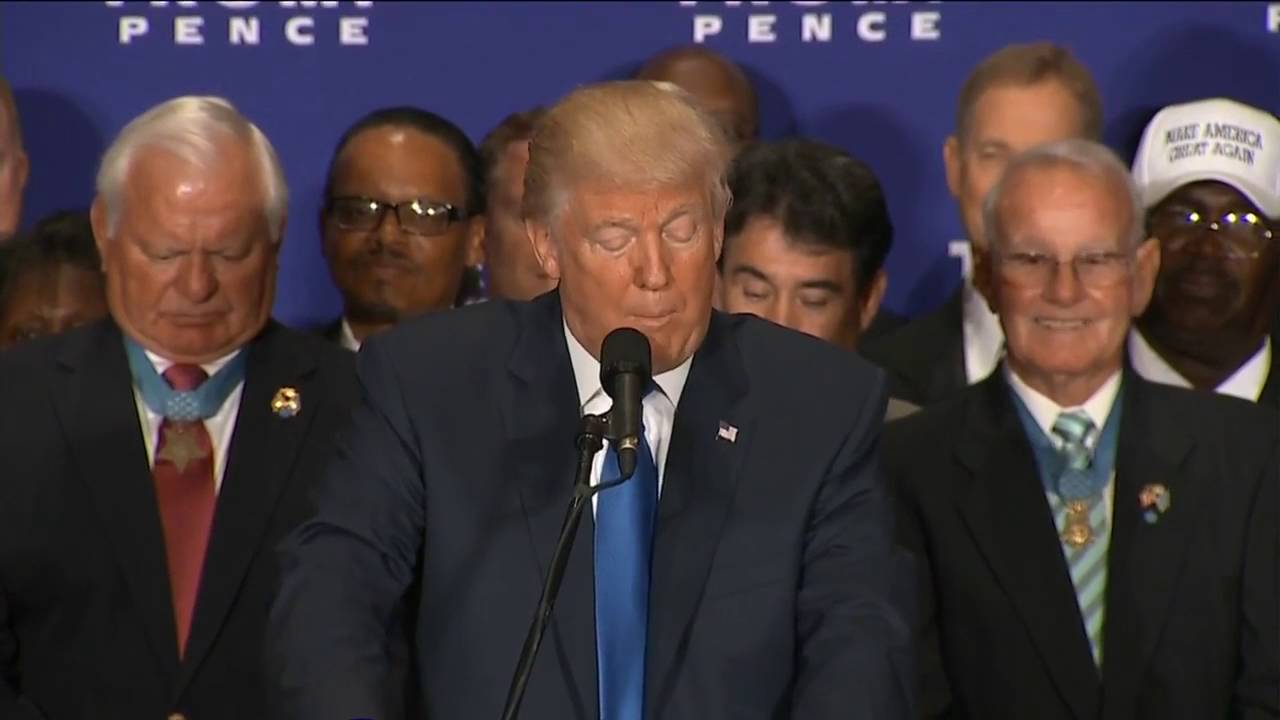
Donald Trump: “President Barack Obama was born in the United States.”
He did so in about seven seconds and 40 words–after spending a half hour paying tribute to the military and promoting his new upscale hotel in Washington, D.C.:
“Now, not to mention her in the same breath, but Hillary Clinton and her campaign of 2008 started the birther controversy.
“I finished it. I finished it. You know what I mean.
“President Barack Obama was born in the United States, period. Now we all want to get back to making America strong and great again.”
His tone made it clear that he felt uneasy making that statement–and wanted to get it over with as fast as possible.
He refused to take questions from reporters covering the event. Nor did he apologize for his five-year campaign of slander.
Nor did any Republican apologize for the eight-year campaign of slander and obstruction their party had waged against the Nation’s first black President.
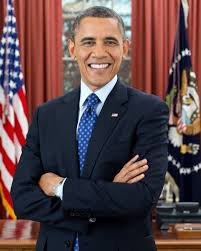
President Barack Obama
Among its highlights:
- In September, 2009, Joe Wilson (R-SC) yelled “You lie!” during Obama’s health care speech to Congress.
- In January, 2010, an effigy of President Barack Obama was found hanging from a building in Plains, Georgia.
- In December, 2011, Brent Bozell, who runs the right-wing Media Research Center, called Obama to “a skinny, ghetto crackhead.”
- In December, 2011, Rep. Jim Sensenbrenner (R-Wisc.), said of Michelle Obama: “She lectures us on eating right while she has a large posterior herself.”
- In January, 2012, Mitt Romney’s son, Matt, said his father might release his tax returns “as soon as President Obama releases his grades and birth certificate and sort of a long list of things.”
- In February, 2012, right-wing columnist Ann Coulter offered: “Voters with forty years of politically correct education are ecstatic to have the first Black president. They just love the idea even if we did get Flavor Flav instead of Thomas Sowell.”
- In May, 2012, a flatbed truck drove through new York holding a trailer with eight mannequin-like bodies hanging on nooses. One of the figures resembled President Obama, with a sign on the truck reading: “Obama Is Onboard, Find Out Why. Visit YouTube.com And Search Keyword PatriotPhipps.”

- In May, 2012, Patrick Lanzo, a bar owner in Paulding County, Georgia, posted a sign reading: “I do not support the nigger in the White House.” In 2009 he posted a sign that read, “Obama’s plan for health-care: nigger rig it.” Lanzo advertises his establishment as a “Klan bar.”
- Throughout the 2012 Presidential campaign, Newt Gingrich repeatedly called Obama “the greatest food stamp President in American history.”
- Obama has been portrayed as a shoeshine man, an Islamic terrorist and a chimp. The image of his altered face has been shown on a product called Obama Waffles in the manner of Aunt Jemima and Uncle Ben. He has been repeatedly depicted with a Hitler forelock and mustache.
- Among the protest signs they have brandished by Tea Party members: “Obama’s Plan: White Slavery,” “The American Taxpayers are the Jews for Obama’s Ovens,” and “Obama was Not Bowing [to the Saudi King] He was Sucking Saudi Jewels.”
- Other Tea Party posters: “Imam Obama Wants to Ban Pork” and “The Zoo Has An African Lion, and the White House Has a Lyin’ African.”
- Tea Partiers have chanted at Obama: “Bye, bye, Blackbird” and “Kenyan go home!”
- During the Republican-imposed government shutdown–October 1-17, 2013–Rep. Pete Sessions (R-Texas) told Obama: “I cannot even stand to look at you,” The incident occurred when Obama met with lawmakers to try to find a resolution to the shutdown.
- On October 1, 2013, Congressional Republicans shut down the government in an attempt to force President Barack Obama to de-fund his signature achievement: The Affordable Care Act (ACA). President Obama refused, and 800,000 federal workers were furloughed.
- On October 14, while Republicans were threatening to drive the nation into bankruptcy by refusing to raise the debt ceiling, former Alaska Governor Sarah Palin posted on Facebook her “secret plan” to impeach President Obama:
- “It’s time for the president to be honest with the American people for a change. Defaulting on our national debt is an impeachable offense, and any attempt by President Obama to unilaterally raise the debt limit without Congress is also an impeachable offense.”
- In short: If the Republicans force the country into default, Obama should be impeached. And if the President finds a way to avoid default, he should be impeached.
* * * * *
When Republicans say, “We need to support our President,” they don’t mean every President.
They mean: Every Republican President. And only every Republican President.
For Republicans, Presidents elected by Democrats are usurpers: They are to be obstructed as often as possible–and impeached whenever possible.
2016 PRESIDENTIAL RACE, ABC NEWS, ALTERNET, AMERICABLOG, ANN COULTER, AP, BABY BOOMER RESISTANCE, BARACK OBAMA, BBC, BIRTH CERTIFICATE, BIRTHERISM, BLOOMBERG NEWS, BUZZFEED, CBS NEWS, CHUCK TODD, CNN, CROOKS AND LIARS, DAILY KOS, DONALD TRUMP, FACEBOOK, FIVETHIRTYEIGHT, HARPER’S MAGAZINE, HILLARY CLINTON, HUFFINGTON POST, JOHN LEWIS, JOHN MCCAIN, MEDIA MATTERS, MEET THE PRESS, MOTHER JONES, MOVEON, MSNBC, MUSLIMS, NBC NEWS, NEW REPUBLIC, NEWSDAY, NEWSWEEK, NPR, PBS NEWSHOUR, POLITICO, POLITICUSUSA, RAW STORY, REINCE PREIBUS, REPUBLICAN PARTY, REUTERS, SALON, Sarah Palin, SEATTLE TIMES, SLATE, SOVIET UNION, TALKING POINTS MEMO, TAX RETURNS, TEA PARTY, THE APPRENTICE, THE ATLANTIC, THE CHICAGO SUN-TIMES, THE CHICAGO TRIBUNE, THE DAILY BEAST, THE DAILY BLOG, THE GUARDIAN, THE HILL, THE HUFFINGTON POST, THE INTERCEPT, THE LOS ANGELES TIMES, THE NATION, THE NEW REPUBLIC, THE NEW YORK TIMES, THE NEW YORKER, THE VILLAGE VOICE, THE WASHINGTON POST, THINKPROGRESS, THIS WEEK, TIME, TRUTHDIG, TRUTHOUT, TWITTER, U.S. NEWS & WORLD REPORT, UPI, USA TODAY, VLADIMIR PUTIN
In Bureaucracy, History, Politics, Social commentary on January 19, 2017 at 3:46 pm
Reince Priebus, the incoming White House Chief of Staff for soon-to-be President Donald J. Trump, is furious.
There are three reasons for his outrage.
First, millions of Americans are questioning whether Trump was legitimately elected. Their suspicions are based on solid evidence, supplied by the American Intelligence community, that Russian President Vladimir Putin intervened in the 2016 Presidential election to help him defeat Hillary Clinton.
Second, among those Americans are members of the United States Congress–such as Georgia Democratic Representative John Lewis.
On the January 15 edition of “Meet the Press,” Lewis was asked by host Chuck Todd: “Do you plan on trying to forge a relationship with Donald Trump?”
“No,” said Lewis. “I believe forgiveness. I believe in trying to work with people. It’s going to be hard. It’s going to be very difficult. I don’t see this president-elect as a legitimate president.”
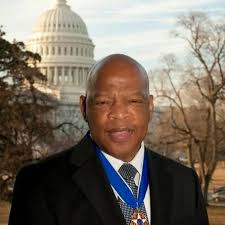
John Lewis
“You do not consider him a legitimate president. Why is that?”
“I think the Russians participated in helping this man get elected and they helped destroy the candidacy of Hillary Clinton.”
And the third reason Priebus is outraged: He believes–or at least claims to believe–that President Barack Obama should vouch for Trump’s legitimacy.
“I think President Obama should step up,” Priebus said January 15 on ABC’s “This Week.” “We’ve had a great relationship with the White House….I think the administration can do a lot of good by telling folks that are on the Republican side of the aisle, look, we may have lost the election on the Democratic side, but it’s time to come together.”
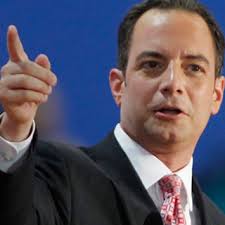
Reince Priebus
“You didn’t have Republicans questioning whether or not Obama legitimately beat John McCain in 2008,” Priebus added.
“This Week” host George Stephanopoulos replied that Trump had questioned Obama’s legitimacy as an American citizen until almost the end of the 2016 Presidential race.
“But look, George, that’s not the point!” Priebus said, visibly agitated. “The point is not where Barack Obama was born! The point is that we’ve got congressmen on the Democratic side of the aisle that are questioning the legitimacy of President-elect Trump.”
In short: Let’s ignore Trump’s five-year slander campaign against the legitimacy of President Obama. What’s important is that people are questioning the legitimacy of a Republican elected with the help of Russian Communists.
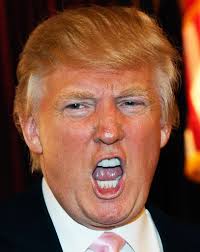
In 2011, Trump, then-host of NBC’s “The Apprentice,” was thinking of running for President against Obama.
Seeking to gain popularity among America’s Right-wing, Trump almost singlehandedly created the popular fiction that the President was born in Kenya–and was not an American citizen.
His motive: To convince Americans that Obama was an illegitimate President.
Donald Trump
Among the statements Trump made:
February 10, 2011: “Our current president came out of nowhere. Came out of nowhere. In fact, I’ll go a step further: The people that went to school with him, they never saw him, they don’t know who he is. It’s crazy.”
March 23, 2011: “I want him to show his birth certificate. I want him to show his birth certificate. … There’s something on that birth certificate that he doesn’t like.”
March 28, 2011: “I am really concerned” [that Obama wasn’t born in the United States]. He said that the birth announcement for Obama in a Hawaii newspaper could have been planted “for whatever reason.”
March 30, 2011: “If you are going to be president of the United States you have to be born in this country. And there is a doubt as to whether or not he was. … He doesn’t have a birth certificate. He may have one, but there’s something on that, maybe religion, maybe it says he is a Muslim. I don’t know. Maybe he doesn’t want that. Or he may not have one. But I will tell you this. If he wasn’t born in this country, it’s one of the great scams of all time.”
April 7, 2011: “I have people that have been studying it, and they cannot believe what they’re finding. You are not allowed to be a president if you’re not born in this country. Right now I have real doubts.”
April 25, 2011: “I’ve been told very recently…that the birth certificate is missing. I’ve been told that it’s not there or it doesn’t exist. And if that’s the case, it’s a big problem.”
On April 27, President Obama released his original, long-form Hawiian birth certificate.
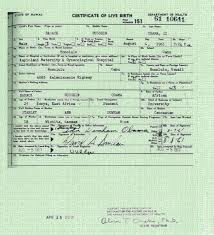
The long-form version of President Obama’s birth certificate
“We do not have time for this kind of silliness,” said Obama at a press conference, speaking as a father might to a roomful of spiteful children. “We have better stuff to do. I have got better stuff to do. We have got big problems to solve.
“We are not going to be able to do it if we are distracted, we are not going to be able to do it if we spend time vilifying each other…if we just make stuff up and pretend that facts are not facts, we are not going to be able to solve our problems if we get distracted by side shows and carnival barkers.”
Trump responded with a series of tweets on Twitter–all of them attacking the legitimacy of the birth certificate that President Obama had released.
ABC NEWS, AMERICAN NAZI PARTY, ANTI-SEMITISIM, BARACK OBAMA, BLACKS, BREITBART NEWS, CBS NEWS, CIA, CNN, DEMOCRATIC NATIONAL COMMITTEE, DONALD TRUMP, EGOMANIA, ERIC SCHNEIDERMAN, EXTORTION, EXXONMOBIL, FACE THE NATION, FACEBOOK, FOX NEWS SUNDAY, GOLDEN SHOWERS REPORT, HILLARY CLINTON, HOWARD BAKER, IVANKA TRUMP, JAMES R. CLAPPER, KU KLUX KLAN, MEIN KAMPF, MEXICANS, MORNING JOE, MOSCOW RITZ-CARLTON, MUSLIMS, NATIONAL SECURITY AGENCY, NATO, NBC NEWS, NEWSWEEK, NPR, P.O.W.’S, PAM BONDI, PAUL MANAFORT, POLITICO, REPUBLICAN NATIONAL CONVENTION, REPUBLICAN PARTY, REX TILLERSON, RICHARD NIXON, ROGER AILES, Ronald Reagan, SALON, SEXUAL HARASSMENT, SOVIET UNION, STEVEN BANNON, TAX RETURNS, THE CHICAGO SUN-TIMES, THE CHICAGO TRIBUNE, THE HUFFINGTON POST, THE LOS ANGELES TIMES, THE NEW YORK TIMES, THE WASHINGTON POST, THREATS, TIME, TREASON, TRUMP UNIVERSITY, TWITTER, U.S. NEWS & WORLD REPORT, USA TODAY, VLADIMIR PUTIN, WATERGATE
In Bureaucracy, History, Law, Law Enforcement, Military, Politics, Social commentary on January 18, 2017 at 3:31 pm
Long before Donald Trump was accused of being sexually compromised by the Russians, Americans knew enough about him to decide: “You are unfit for the Oval Office.”
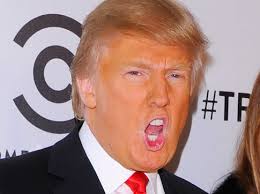
Almost immediately after entering the Presidential race on June 16, 2015, he began attacking one group of Americans after another:
- Mexicans: “They’re bringing drugs. They’re bringing crime. They’re rapists.” He’s also promised to “build a great, great wall on our southern border and I will have Mexico pay for that wall.”
- Blacks: Trump retweeted an image of a masked, dark-skinned man with a handgun and a series of alleged crime statistics, including: “Blacks killed by whites – 2%”; “Whites killed by blacks – 81%.” The image cites the “Crime Statistics Bureau – San Francisco”–an agency that doesn’t exist.
- Muslims: Trump has boasted he would ban them from entering the United States–and revive waterboarding of terrorist suspects. He would require Muslims to register with the Federal Government. And he would close “some mosques” if he felt they were being used by Islamic terrorists.
- POWs: Speaking of Arizona U.S. Senator John McCain: “He’s a war hero because he was captured. I like people who weren’t captured.”
Donald Trump
The number of people, places and things Trump has insulted is so extensive The New York Times compiled a list of 273 of them.
- One of those persons was Tarla Makaeff, who spent more than $60,000 on Trump University classes. In 2010, she filed a fraud lawsuit against (now-defunct) Trump University.
- Trump retaliated by filing a defamation suit against her. The case was dismissed by a judge.
- But Trump continued to attack her during his Presidential candidacy. During a campaign rally he assailed her as a “horrible, horrible witness,” and then posted on Twitter that she was “Disgraceful!”
- Makaeff ultimately persuaded the judge presiding over the Trump University case to let her remove her name as a plaintiff.
As an authoritarian who demands the right to craft his own image. Trump furiously denies others the right to dissent from it:
- Counter-suits, threats and personal insults against outsiders; and
- Stringent confidentiality agreements against employees, business partners, his former spouses and now his campaign staffers.
- In February, 2016, Trump said that he was “gonna open up our libel laws so when they write purposely negative and horrible and false articles, we can sue them and win lots of money.”
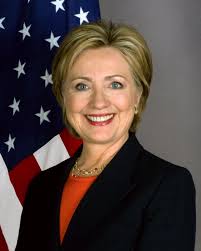
Two of Trump’s most vicious threats were aimed at Democratic Presidential candidate Hillary Clinton.
- The first occurred on October 9, during their second Presidential debate: “If I win, I am going to instruct my attorney general to get a special prosecutor to look into your situation–there has never been so many lies and so much deception.”
- The second occurred on October 10, three days after The Washington Post leaked a video of Donald Trump making sexually predatory comments about women (“I don’t even wait. Grab them by the pussy. You can do anything”).
- Rather than accept responsibility for his actions, Trump blamed the Clintons–who had nothing to do with the release.Speaking before a rally in Pennsylvania on October 10, Trump threatened: “If they wanna release more tapes saying inappropriate things, we’ll continue to talk about Bill and Hillary Clinton doing inappropriate things. There are so many of them, folks.”
Hillary Clinton
Trump’s rampant egomania is literally stamped on his properties. Of the 515 entities he owns, 268 of them–52%–bear his last name. He often refers to his properties as “the swankiest,” “the most beautiful.”
Among the references he’s made to himself:
- “My fingers are long and beautiful, as, it has been well documented, are various other parts of my body.”
- “I think the only difference between me and the other candidates is that I’m more honest and my women are more beautiful.”
- “My Twitter has become so powerful that I can actually make my enemies tell the truth.”
- “My IQ is one of the highest–and you all know it.”

Trump publicly admitted that his egomania would play a major role in his approach to consulting advisers:
- Asked on MSNBC’s “Morning Joe” who he consults about foreign policy, he replied: “I’m speaking with myself, number one, because I have a very good brain and I’ve said a lot of things.”
Trump has never been charged with incest, but he’s repeatedly made disturbing, sexually inappropriate comments about his daughter, Ivanka:
- When asked how he would react if Ivanka, a former teen model, posed for Playboy, Trump replied: “I don’t think Ivanka would do that, although she does have a very nice figure. I’ve said if Ivanka weren’t my daughter, perhaps I’d be dating her.”
On October 7, The Washington Post leaked a video of Donald Trump making sexually predatory comments about women (“You can grab them by the pussy”).
- Within a week, no fewer than 12 had come forward to accuse him of sexually inappropriate behavior.
- Although he threatened to sue the New York Times if it reported the women’s claims, he has so far refused to do so.
* * * * *
Those Americans who voted for Donald Trump knew the character of the man they were supporting.
They enthusiastically followed him because he gave voice to their hatreds and prejudices. And because they believed he would humiliate and destroy those they wanted to see humiliated and destroyed.
The next four years will unveil how many of their wishes are fulfilled.
ABC NEWS, AMERICAN NAZI PARTY, ANTI-SEMITISIM, BARACK OBAMA, BLACKS, BREITBART NEWS, CBS NEWS, CIA, CNN, DEMOCRATIC NATIONAL COMMITTEE, DONALD TRUMP, EGOMANIA, ERIC SCHNEIDERMAN, EXTORTION, EXXONMOBIL, FACE THE NATION, FACEBOOK, FOX NEWS SUNDAY, GOLDEN SHOWERS REPORT, HILLARY CLINTON, HOWARD BAKER, IVANKA TRUMP, JAMES R. CLAPPER, KU KLUX KLAN, MEIN KAMPF, MEXICANS, MORNING JOE, MOSCOW RITZ-CARLTON, MUSLIMS, NATIONAL SECURITY AGENCY, NATO, NBC NEWS, NEWSWEEK, NPR, P.O.W.’S, PAM BONDI, PAUL MANAFORT, POLITICO, REPUBLICAN NATIONAL CONVENTION, REPUBLICAN PARTY, REX TILLERSON, RICHARD NIXON, ROGER AILES, Ronald Reagan, SALON, SEXUAL HARASSMENT, SOVIET UNION, STEVEN BANNON, TAX RETURNS, THE CHICAGO SUN-TIMES, THE CHICAGO TRIBUNE, THE HUFFINGTON POST, THE LOS ANGELES TIMES, THE NEW YORK TIMES, THE WASHINGTON POST, THREATS, TIME, TREASON, TRUMP UNIVERSITY, TWITTER, U.S. NEWS & WORLD REPORT, USA TODAY, VLADIMIR PUTIN, WATERGATE
In Bureaucracy, History, Law, Law Enforcement, Military, Politics, Social commentary on January 17, 2017 at 12:01 am
“What did the President know and when did he know it?”
It was the famous question asked by Tennessee U.S. Senator Howard Baker during the 1973 Watergate hearings.

Howard Baker
The question cut to the core of President Richard Nixon’s litany of crimes. And the fact that it was posed by a Republican gave it added power.
More than a year later, Americans learned its answers:
- Nixon had learned that his own White House “Plumbers” had carried out the Watergate Hotel burglary; and
- Only days afterward, he ordered a cover-up.
With those revelations, his Presidency was finished.
America now stands only days away from swearing in Donald J. Trump as the 45th President of the United States.
And, once again, Howard Baker’s slightly altered question resonates with force: “What did the American people know, and when did they know it?”
And the subject of that question is not Richard Nixon but President-elect Donald Trump.
Since January 10, Americans have been obsessed with the unproven allegation that, during a visit to Russia several years ago, Trump paid prostitutes to urinate on a bed once slept in by the Obamas at the Moscow Ritz-Carlton.
The charge was published by Buzzfeed, and given weight by reports that both Trump and President Barack Obama had been briefed by Intelligence officials about the alleged incident.
Perhaps even worse for Trump, it’s made him the butt of countless “golden shower” jokes. Saturday Night Live featured a skit with Vladimir Putin appearing at a press conference to blackmail Trump (Alec Baldwin) with a video tape labeled: “PEE PEE TAPE.”
Trump has denied the charge as “fake news.”
But long before this disturbing claim, Americans had more than enough knowledge about Donald Trump to judge him unfit for the Oval Office.
- He unknowingly admitted to being a sexual predator of women: “You know I’m automatically attracted to beautiful–I just start kissing them. It’s like a magnet. Just kiss. I don’t even wait. And when you’re a star they let you do it. You can do anything. Grab them by the pussy. You can do anything.”

Donald Trump
- He refused to release his tax returns–unlike every other Presidential candidate since Ronald Reagan in 1980.
- He said he was prepared to withdraw from NATO, the American-European alliance that held the Soviet Union at bay for a half-century.
- He often and publicly praised Russian President Vladimir Putin, the absolute dictator of a foreign power hostile to the United States.
- He publicly invited “Russia”–i.e., Putin–to interfere directly in an American Presidential election: “I will tell you this, Russia: If you’re listening, I hope you’re able to find the 30,000 [Hillary Clinton] emails that are missing. I think you will probably be rewarded mightily by our press.”
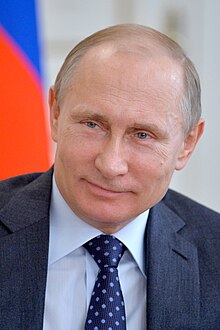
Vladimir Putin
- He surrounded himself with men who have close ties to Putin. One of these is Paul Manafort, his former campaign manager. His longstanding ties to pro-Russian politicians in Ukraine lead directly to Putin.
- Another–his pick for Secretary of State, Rex Tillerson–is the CEO of ExxonMobil, which has worked on major oil projects with Russia. In 2013, Putin awarded Tillerson the Order of Friendship, one of the highest honors the nation bestows on foreign citizens.
- Yet another Trump advisor, Roger Ailes, is a known sexual predator. Hired to prepare Trump for the fall debates with Clinton, he was fired in July as CEO of Fox News on multiple charges of sexual harassment.
- During the 2016 campaign, Trump received the enthusiastic support of the Ku Klux Klan and the American Nazi Party.

Ku Klux Klan enblem
- Florida Attorney General Pam Bondi personally solicited a political contribution from Donald Trump around the same time her office deliberated joining an investigation of alleged fraud at Trump University and its affiliates.
- After Bondi dropped the Trump University case against Trump, he wrote her a check $25,000 for her re-election campaign. The money came from the Donald J. Trump Foundation.
- On November 18, Trump–rather than face trial–settled the case out of court for $25 million. “Today’s $25 million settlement agreement is a stunning reversal by Donald Trump,” said New York Attorney General Eric Schneiderman, “and a major victory for the over 6,000 victims of his fraudulent university.
- Throughout the 2016 Presidential campaign, Trump repeatedly used threats of violence to intimidate his Republican and Democratic opponents. On March 16, he warned Republicans that if he didn’t win the GOP nomination in July, his supporters would literally riot: “I think you’d have riots. I think you would see problems like you’ve never seen before. I think bad things would happen. I really do. I wouldn’t lead it, but I think bad things would happen.
- On August 9, Trump issued a veiled solicitation for the assassination of Democratic Presidential candidate Hillary Clinton: “Hillary wants to abolish, essentially abolish, the Second Amendment. If she gets to pick her [Supreme Court] judges, nothing you can do folks. Although the Second Amendment people, maybe there is, I don’t know.”
- After slandering President Barack Obama for five years as “the President from Kenya,” he blatantly lied: “Hillary Clinton and her campaign of 2008 started the birther controversy. I finished it.”
ABC NEWS, ADOLF HITLER, BAVARIA, BEER HALL PUTSCH, BREITBART NEWS, CBS NEWS, CHRISTOPHER S. MURPHY, CIA, CNN, DEMOCRATIC NATIONAL COMMITTEE, DEMOCRATIC PARTY, DONALD TRUMP, EXTORTION, FACE THE NATION, FACEBOOK, FERGUS CULLEN, FOX NEWS SUNDAY, GREG ABBOTT, HACKING, HILLARY CLINTON, HITLER: ASCENT, IRS, JAMES B. COMEY, JAMES R. CLAPPER, JEWS, JOHN KASICH, JUSTICE DEPARTMENT, KEN PAXTON, LEON PANETTA, MEIN KAMPF, MICHAEL ROGERS, MIKE PENCE, MUNICH, NATIONAL SECURITY AGENCY, NAZI PARTY, NBC NEWS, NEW HAMPSHIRE REPUBLICAN PARTY, NEWSWEEK, NPR, PAM BONDI, PAUL RYAN, PHILIP KLEIN, POLITICO, Racketeer Influenced Corrupt Organizations (RICO) Act, REPUBLICAN NATIONAL COMMITTEE, REPUBLICAN NATIONAL CONVENTION, REPUBLICAN PARTY, ROGER STONE, SALON, SOVIET UNION, THE CHICAGO SUN-TIMES, THE CHICAGO TRIBUNE, THE HUFFINGTON POST, THE LOS ANGELES TIMES, THE NEW YORK TIMES, THE WASHINGTON EXAMINER, THE WASHINGTON POST, THREATS, TIME, TREASON, TRUMP UNIVERSITY, TWITTER, U.S. NEWS & WORLD REPORT, U.S. SECRET SERVICE, USA PATRIOT ACT, USA TODAY, VLADIMIR PUTIN, VOLKER ULLRICH, WEIMAR REPUBLIC
In Bureaucracy, History, Law, Law Enforcement, Politics, Social commentary on January 4, 2017 at 12:15 am
Future historians may one day write that it’s what didn’t happen that played at least as great a role in electing Donald Trump President as what actually did.
There were at least four instances where intervention by Federal law enforcement authorities could have utterly changed the outcome of the 2016 election.
Two of these dealt with purely domestic issues—the Trump University scandal and Trump’s repeated threats of violence against Republican and Democratic opponents.
The third and fourth ones dealt with events directly affecting the security of the United States.
It is unprecedented for an American Presidential candidate to repeatedly bestow fulsome praise on the leader of a foreign power hostile to the United States. And to receive equally fawning compliments in return from that leader.
Yet that is precisely what has happened between Donald Trump and Vladimir Putin.
Thus Putin on Trump: “He is a bright personality, a talented person, no doubt about it. It is not up to us to appraise his positive sides, it is up to the U.S. voters. but, as we can see, he is an absolute leader in the presidential race.”
Vladimir Putin
And Trump on Putin: “It is always a great honor to be so nicely complimented by a man so highly respected within his own country and beyond. He’s running his country, and at least he’s a leader. Unlike what we have in this country”—a clear attack on President Barack Obama.
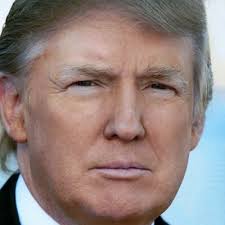
Donald Trump
Case #3: The Justice Department did not invalidate the results of the 2016 election, despite overwhelming evidence that Russia intervened to elect Trump as Vladimir Putin’s chosen candidate.
- Admiral Michael Rogers, director of the National Security Agency (NSA) and US Cyber Command, said in mid-November that Russia made “a conscious effort” to sway the results of the Presidential election by the hacking of 20,000 emails from the Democratic National Committee.
- “There shouldn’t be any doubt in anybody’s mind,” said Rogers. “This was not something that was done casually. This was not something that was done by chance. This was not a target that was selected purely arbitrarily. This was a conscious effort by a nation-state to attempt to achieve a specific effect.”
- The Russians hacked the Democratic committee’s servers–but not those of the Republican National Committee.
- On December 16, FBI Director James B. Comey and Director of National Intelligence James R. Clapper Jr. agreed with a CIA assessment that Russia intervened in the 2016 election in part to help Donald Trump win the White House.

Trump, however, has steadfastly denied any such role by Russia: “I think it’s ridiculous,” he told “Fox News Sunday.” “I think it’s just another excuse. I don’t believe it….No, I don’t believe it at all.”
Case #4: The Justice Department did not prosecute Trump for treason, even though he solicited aid from Russia, a nation hostile to the United States. And no major official of the government—including President Obama—publicly condemned him as a traitor.
At a news conference in Doral, Florida on July 27, Trump publicly invited “Russia”—i.e., Vladimir Putin—to hack Hillary Clinton’s emails: “I will tell you this, Russia: If you’re listening, I hope you’re able to find the 30,000 emails that are missing. I think you will probably be rewarded mightily by our press.”
This was essentially treason—calling on a hostile foreign power to interfere directly in an American Presidential election. And it was seen as such by both Democrats and even Republicans.
- “This has to be the first time that a major presidential candidate has actively encouraged a foreign power to conduct espionage against his political opponent,” Hillary for America policy adviser Jake Sullivan said in a statement. “That’s not hyperbole, those are just the facts. This has gone from being a matter of curiosity, and a matter of politics, to being a national security issue.”
- “I find those kinds of statements to be totally outrageous because you’ve got now a presidential candidate who is, in fact, asking the Russians to engage in American politics,” said former CIA Director Leon Panetta, a Clinton surrogate. “I just think that’s beyond the pale.”
- Brendan Buck, a spokesman for House Speaker Paul Ryan, said: “Russia is a global menace led by a devious thug. Putin should stay out of this election.”
- Even Trump’s Vice Presidential running mate, Mike Pence, said: “If it is Russia and they are interfering in our elections, I can assure you both parties and the United States government will ensure there are serious consequences.”
FBI Director James Comey believed that Hillary Clinton’s emails on a private server were so dangerous to national security that he announced—11 days before the election—that he was re-opening an investigation he had closed.
That announcement erased widespread outrage over Trump’s unintended admissions of predatory behavior toward women—“Grab them by the pussy”—and reversed Clinton’s growing lead in the polls.
Yet the Bureau has not issued any such statements about the continuing reports of close ties between Trump and Putin, and Trump’s possible investments in Russia.
To their shame, the federal agencies charged with safeguarding America failed to take action against these abuses. And, to their shame, the news media, to date, has failed to indict them for their negligence.
ABC NEWS, ADOLF HITLER, BAVARIA, BEER HALL PUTSCH, BREITBART NEWS, CBS NEWS, CHRISTOPHER S. MURPHY, CIA, CNN, DEMOCRATIC NATIONAL COMMITTEE, DEMOCRATIC PARTY, DONALD TRUMP, EXTORTION, FACE THE NATION, FACEBOOK, FERGUS CULLEN, FOX NEWS SUNDAY, GREG ABBOTT, HACKING, HILLARY CLINTON, HITLER: ASCENT, IRS, JAMES B. COMEY, JAMES R. CLAPPER, JEWS, JOHN KASICH, JUSTICE DEPARTMENT, KEN PAXTON, LEON PANETTA, MEIN KAMPF, MICHAEL ROGERS, MIKE PENCE, MUNICH, NATIONAL SECURITY AGENCY, NAZI PARTY, NBC NEWS, NEW HAMPSHIRE REPUBLICAN PARTY, NEWSWEEK, NPR, PAM BONDI, PAUL RYAN, PHILIP KLEIN, POLITICO, Racketeer Influenced Corrupt Organizations (RICO) Act, REPUBLICAN NATIONAL COMMITTEE, REPUBLICAN NATIONAL CONVENTION, REPUBLICAN PARTY, ROGER STONE, SALON, SOVIET UNION, THE CHICAGO SUN-TIMES, THE CHICAGO TRIBUNE, THE HUFFINGTON POST, THE LOS ANGELES TIMES, THE NEW YORK TIMES, THE WASHINGTON EXAMINER, THE WASHINGTON POST, THREATS, TIME, TREASON, TRUMP UNIVERSITY, TWITTER, U.S. NEWS & WORLD REPORT, U.S. SECRET SERVICE, USA PATRIOT ACT, USA TODAY, VLADIMIR PUTIN, VOLKER ULLRICH, WEIMAR REPUBLIC
In Bureaucracy, History, Law, Law Enforcement, Politics, Social commentary on January 3, 2017 at 12:01 am
Threatening his Republican and Democratic opponents with violence played a major role in Donald Trump’s campaign for President.
No other candidate—Republican or Democrat—had ever made such repeated and brutal use of threats of physical assault in pursuing the Presidency.
- Philip Klein, the managing editor of the Washington Examiner, wrote on the eve of the Republican National Convention in July: “Political commentators now routinely talk about the riots that would break out in Cleveland if Trump were denied the nomination, about how his supporters have guns and all hell could break loose, that they would burn everything to the ground. It works to Trump’s advantage to not try too hard to dispel these notions.”
- On August 9, Trump told a rally in Wilmington, North Carolina: “Hillary [Clinton] wants to abolish, essentially abolish, the Second Amendment. If she gets to pick her [Supreme Court] judges, nothing you can do folks. Although the Second Amendment people, maybe there is, I don’t know.”
- “Don’t treat this as a political misstep,” Senator Christopher S. Murphy of Connecticut, who has called for stiffer gun laws, wrote on Twitter. “It’s an assassination threat, seriously upping the possibility of a national tragedy & crisis.”
- “Well, let me say if someone else said that outside of the hall, he’d be in the back of a police wagon now, with the Secret Service questioning him,” said Michael Hayden, former head of the CIA and National Security Agency (NSA).
Making threats against anyone under protection by the U.S. Secret Service is a felony. Yet Donald Trump was never held legally accountable by the Justice Department.
Threats of this type continued to be made by Trump supporters right up to the day of the election.
- On July 29, Roger Stone, a notorious Right-wing political consultant acting as a Trump strategist, told Breitbart News: “The first thing Trump needs to do is begin talking about [voter fraud] constantly. If there’s voter fraud, this election will be illegitimate, the election of the winner will be illegitimate, we will have a constitutional crisis, widespread civil disobedience, and the government will no longer be the government.”
- At a town hall meeting where Trump’s Vice Presidential nominee Mike Pence appeared, a woman named Rhonda said: “For me personally, if Hillary Clinton gets in, I myself am ready for a revolution.”
- In Cincinnati, a Trump supporter threatened to forcibly remove Clinton from the White House if she won the race: “If she’s in office, I hope we can start a coup. She should be in prison or shot. That’s how I feel about it,” Dan Bowman, a 50-year-old contractor, said of Hillary Clinton, the Democratic nominee. “We’re going to have a revolution and take them out of office if that’s what it takes. There’s going to be a lot of bloodshed. But that’s what it’s going to take….I would do whatever I can for my country.”
Even Fergus Cullen, former chairman of the New Hampshire GOP, expressed fear of what might happen if Trump lost the election:
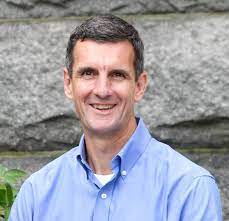

Fergus Cullen
“That’s really scary,” Cullen said, recounting the violence at Trump rallies around the country leading up to the Republican National Convention. “In this country, we’ve always had recriminations after one side loses. But we haven’t had riots. We haven’t had mobs that act out with violence against supporters of the other side.
“There’s no telling what his supporters would be willing to do at the slightest encouragement from their candidate,” he said.
Trump even began encouraging his mostly white supporters to sign up online to be “election observers” to stop “Crooked Hillary from rigging this election.” He urged them to act as poll watchers in “other” [non-white] communities to ensure that things are “on the up and up.”
Many of his supporters promised to do so.
“Trump said to watch your precincts. I’m going to go, for sure,” said Steve Webb, a 61-year-old carpenter from Fairfield, Ohio.
“I’ll look for…well, it’s called racial profiling. Mexicans. Syrians. People who can’t speak American,” he said. “I’m going to go right up behind them. I’ll do everything legally. I want to see if they are accountable. I’m not going to do anything illegal. I’m going to make them a little bit nervous.”
Knowing that large numbers of angry—and possibly armed—Right-wingers planned to descend on polling places could only have had a chilling effect on untold numbers of Democratic voters. And this would have been especially true in heavily conservative states.
Both the USA Patriot Act and the Racketeer Influenced Corrupt Organizations (RICO) Act have statutes dealing with making terrorist threats against government institutions to influence their members.
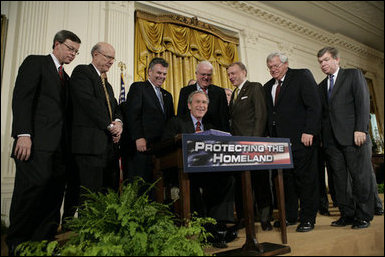
President George W. Bush signing the USA Patriot Reauthorization Act of 2005
If Trump’s remarks did not violate one or both of those laws, certainly remarks made by his surrogates did.
Thus, the Justice Department could have cited the Patriot Act in indicting Trump and/or any number of his followers for “activities that…appear to be intended…to influence the policy of a government by intimidation or coercion [and]…occur primarily within the territorial jurisdiction of the United States.”
The Justice Department could have also demanded that the results of the election be invalidated on the basis that widespread voter and candidate intimidation played a massive role in it.
But of course this did not happen.
ABC NEWS, ADOLF HITLER, BAVARIA, BEER HALL PUTSCH, BREITBART NEWS, CBS NEWS, CHRISTOPHER S. MURPHY, CIA, CNN, DEMOCRATIC NATIONAL COMMITTEE, DEMOCRATIC PARTY, DONALD TRUMP, ERIC SCHNEIDERMAN, EXTORTION, FACE THE NATION, FACEBOOK, FERGUS CULLEN, FOX NEWS SUNDAY, GREG ABBOTT, HACKING, HILLARY CLINTON, HITLER: ASCENT, IRS, JAMES B. COMEY, JAMES R. CLAPPER, JEWS, JOHN KASICH, JUSTICE DEPARTMENT, KEN PAXTON, LEON PANETTA, MEIN KAMPF, MICHAEL ROGERS, MIKE PENCE, MUNICH, NATIONAL SECURITY AGENCY, NAZI PARTY, NBC NEWS, NEW HAMPSHIRE REPUBLICAN PARTY, NEWSWEEK, NPR, PAM BONDI, PAUL RYAN, PHILIP KLEIN, POLITICO, Racketeer Influenced Corrupt Organizations (RICO) Act, REPUBLICAN NATIONAL COMMITTEE, REPUBLICAN NATIONAL CONVENTION, REPUBLICAN PARTY, ROGER STONE, SALON, SOVIET UNION, THE CHICAGO SUN-TIMES, THE CHICAGO TRIBUNE, THE HUFFINGTON POST, THE LOS ANGELES TIMES, THE NEW YORK TIMES, THE WASHINGTON EXAMINER, THE WASHINGTON POST, THREATS, TIME, TREASON, TRUMP UNIVERSITY, TWITTER, U.S. NEWS & WORLD REPORT, U.S. SECRET SERVICE, USA PATRIOT ACT, USA TODAY, VLADIMIR PUTIN, VOLKER ULLRICH, WEIMAR REPUBLIC
In Bureaucracy, History, Law, Law Enforcement, Politics, Social commentary on January 2, 2017 at 12:12 am
On November 9, 1923, Nazi Party Fuhrer Adolf Hitler tried to overthrow the government in Munich, Bavaria.
About 2,000 Nazis marched to the center of Munich, where they confronted heavily-armed police. A shootout erupted, killing 16 Nazis and four policemen.
Hitler was injured during the clash, but managed to escape. Two days later, he was arrested and charged with treason.
Put on trial, he found himself treated as a celebrity by a judge sympathetic to Right-wing groups. He was allowed to brutally cross-examine witnesses and even make inflammatory speeches.
At the end of the trial, he was convicted of treason and sentenced to five years’ imprisonment.
Serving time in Landsberg Prison, in Bavaria. he was given a huge cell, allowed to receive unlimited visitors and gifts, and treated with deference by guards and inmates.
Hitler used his time in prison to write his infamous book, Mein Kampf-–“My Struggle.” Part autobiography, part political treatise, it laid out his future plans—including the extermination of the Jews and the conquest of the Soviet Union.

Adolf Hitler leaving Landsberg Prison, December, 20, 1924
Nine months later, he was released on parole—by authorities loyal to the authoritarian Right instead of the newly-created Weimar Republic.
Hitler immediately began rebuilding the shattered Nazi party—and deciding on a new strategy to gain power. Never again would he resort to armed force. He would win office by election—or intrigue.
Writes historian Volker Ullrich, in his monumental new biography, Hitler: Ascent 1889 – 1939: “Historians have perennially tried to answer the question of whether Hitler’s rise to power could have been halted….
“There were repeated opportunities to end Hitler’s run of triumphs. The most obvious one was after the failed Putsch of November 1923. Had the Munich rabble-rouser been forced to serve his full five-year term of imprisonment in Landsberg, it is extremely unlikely that he would have been able to restart his political career.”


Thus, it isn’t just what happens that can influence the course of history. Often, it’s what doesn’t happen that has at least as great a result.
Future historians—if there are any—may one day write that it’s what didn’t happen that played at least as great a role in electing Donald Trump President as what actually did.
There were at least four instances where intervention by Federal law enforcement authorities could have utterly changed the outcome of the 2016 election.
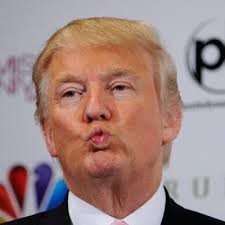
Donald Trump
Case #1: The Justice Department did not indict Trump and/or the Attorney Generals of Texas and/or Florida for their roles in the Trump University scandal.
- Florida Attorney General Pam Bondi personally solicited a political contribution from Donald Trump around the same time her office deliberated joining an investigation of alleged fraud at Trump University and its affiliates.
- After Bondi dropped the Trump University case against Trump, he wrote her a check $25,000 for her re-election campaign. The money came from the Donald J. Trump Foundation.
- Republican Texas Attorney General Ken Paxton moved to muzzle a former state regulator who says he was ordered in 2010 to drop a fraud investigation into Trump University for political reasons.
- Paxton’s office issued a cease and desist letter to former Deputy Chief of Consumer Protection John Owens after he made public copies of a 14-page internal summary of the state’s case against Donald Trump for scamming millions from students of his now-defunct real estate seminar.
- After the Texas case was dropped, Trump cut a $35,000 check to the gubernatorial campaign of then attorney general and now Texas Governor Greg Abbott.
One attorney general who refused to accept money from Trump was New York’s Eric Schneiderman. His decision to press fraud claims against Trump forced the real estate mogul to settle the case out of court for $25 million.
“Today’s $25 million settlement agreement is a stunning reversal by Donald Trump,” said Schneiderman on November 18, “and a major victory for the over 6,000 victims of his fraudulent university.”
There have been no press reports that the Justice Department investigated these cases to determine if Trump violated the Racketeer Influenced Corrupt Organizations (RICO) Act statutes.
If the Justice Department did not investigate these cases, it should have. And if he did violate the RICO statutes, he should have been indicted, even as a Presidential candidate or President-elect.
Even if an indictment had not produced a conviction, the mere bringing of one would have cast an unprecedented cloud over his candidacy–let alone his being sworn in as President.
Case #2: The Justice Department did not indict Trump for his series of threats that he made—directly and indirectly—against Republicans and Democrats throughout the 2016 campaign.
- On March 16, he warned Republicans that if he didn’t win the GOP nomination in July, his supporters would literally riot: “I think you’d have riots. I think you would see problems like you’ve never seen before. I think bad things would happen. I really do. I wouldn’t lead it, but I think bad things would happen.”
- An NBC reporter summed it up as: “The message to Republicans was clear on [March 16]: ‘Nice convention you got there, shame if something happened to it.'”
- That Republicans clearly saw this as a threat is undeniable. Paul Ryan, their Speaker of the House, said on March 17: “Nobody should say such things in my opinion because to even address or hint to violence is unacceptable.”
- And Ohio governor and Republican presidential candidate John Kasich chinned in. “Leaders don’t imply violence,” Kasich told “Face the Nation” on March 20. “When he says that there could be riots, that’s inappropriate. I think you understand that, okay? Secondly, while we have our differences and disagreements, we’re Americans. Americans don’t say, ‘Let’s take to the streets and have violence.'”
2016 PRESIDENTIAL ELECTION, A BRONX TALE, ABC NEWS, ADOLF HITLER, ALTERNET, AMERICABLOG, AP, BABY BOOMER RESISTANCE, BBC, BILL CLINTON, BLOOMBERG NEWS, BUZZFEED, CBS NEWS, CHAZZ PALMINTERI, CNN, CROOKS AND LIARS, DAILY KOS, DONALD TRUMP, FACEBOOK, FBI, FIVETHIRTYEIGHT, HARPER’S MAGAZINE, HILLARY CLINTON, HUFFINGTON POST, IRS, J. EDGAR HOOVER, JOHN F. KENNEDY, LYNDON B. JOHNSON, MEDIA MATTERS, MOTHER JONES, MOVEON, MSNBC, NBC NEWS, NEW REPUBLIC, NEWSDAY, NEWSWEEK, NICCOLO MACHIAVELLI, NPR, PBS NEWSHOUR, POLITICO, POLITICUSUSA, RAW STORY, REPUBLICAN PARTY, REUTERS, RICHARD M. NIXON, ROBERT DE NIRO, ROBERT F. KENNEDY, Ronald Reagan, SALON, SEATTLE TIMES, SLATE, TALKING POINTS MEMO, THE ATLANTIC, THE CHICAGO SUN-TIMES, THE CHICAGO TRIBUNE, THE DAILY BEAST, THE DAILY BLOG, THE GUARDIAN, THE HILL, THE HUFFINGTON POST, THE INTERCEPT, THE LOS ANGELES TIMES, THE NATION, THE NEW REPUBLIC, THE NEW YORK TIMES, THE NEW YORKER, THE PRINCE, THE VILLAGE VOICE, THE WASHINGTON POST, THINKPROGRESS, TIME, TRUTHDIG, TRUTHOUT, TWITTER, U.S. NEWS & WORLD REPORT, UPI
In Bureaucracy, History, Law Enforcement, Military, Politics, Social commentary on December 22, 2016 at 12:18 am
Is it better to be loved or feared?
That was the question Florentine statesman Niccolo Machiavelli raised more than 500 years ago.
Presidents have struggled to answer this question—and have come to different conclusions.
LOVE ME, FEAR MY BROTHER
Most people felt irresistibly drawn to John F. Kennedy—even his political foes. Henry Luce, the conservative publisher of Time, once said, “He makes me feel like a whore.”
But JFK could afford to bask in the love of others—because his younger brother, Robert, was the one who inspired fear.
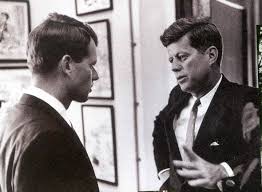
Robert F. Kennedy and John F. Kennedy
He had done so as Chief Counsel for the Senate Rackets Committee (1957-59), grilling Mafia bosses and corrupt union officials—most notably Teamsters President James Hoffa.
Appointed Attorney General by JFK, he unleashed the FBI on the Mafia. When the steel companies colluded in an inflationary rise in the price of steel in 1962, Bobby sicced the FBI on them.
In 1963, JFK’s cavorting with Ellen Rometsh threatened to destroy his Presidency. Rometsch, a Washington, D.C. call girl, was suspected by the FBI of being an East German spy.
With Republican Senators preparing to investigate the rumors, Bobby ordered Rometsch deported immediately (to which, as a German citizen, she was subject).
He also ordered FBI Director J. Edgar Hoover to deliver a warning to the Majority and Minority leaders of the Senate: The Bureau was fully aware of the extramarital trysts of most of its members. And an investigation into the President’s sex life could easily lead into revelations of Senatorial sleaze.
Plans for a Senatorial investigation were shelved.
BEING LOVED AND FEARED
In the 1993 movie, A Bronx Tale, 17-year-old Calogero (Lillo Brancato) asks his idol, the local Mafia capo, Sonny (Chazz Palminteri): “Is it better to be loved or feared?”
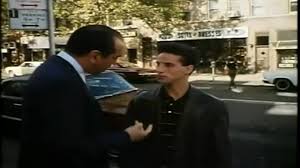
Sonny gives advice to his adopted son, Calogero
Sonny says if he had to choose, he would rather be feared. But he adds a warning straight out of Machiavelli: “The trick is not being hated. That’s why I treat my men good, but not too good.
“I give too much, then they don’t need me. I give them just enough where they need me, but they don’t hate me.”
Machiavelli, writing in The Prince, went further:
“Still a Prince should make himself feared in such a way that if he does not gain love, he at any rate avoids hatred, for fear and the absence of hatred may well go together. And [this] will always be attained by one who abstains from interfering with the property of his citizens and subjects or with their women.”
Many who quote Machiavelli in defense of being feared overlook this vital point: It’s essential to avoid becoming hated.
To establish a fearful reputation, a leader must act decisively and ruthlessly when the interests of the organization are threatened. Punitive action must be taken promptly and confidently.
One or two harsh actions of this kind can make a leader more feared than a reign of terror.
In fact, it’s actually dangerous to constantly employ cruelties or punishments. Whoever does so, warns Machiavelli, “is always obliged to stand with knife in hand, and can never depend on his subjects, because they, owing to continually fresh injuries, are unable to depend upon him.”
The 20th century President who came closest to realizing Machiavelli’s “loved and feared” prince was Ronald Reagan.
Always smiling, quick with a one-liner (especially at press conferences), seemingly unflappable, he projected a constantly optimistic view of his country and its citizens.
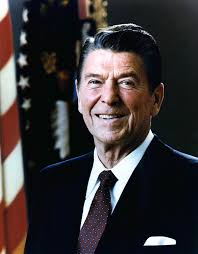
Ronald Reagan
In his acceptance speech at the 1980 Republican National Convention he declared: “[The Democrats] say that the United States has had its days in the sun, that our nation has passed its zenith.… My fellow citizens, I utterly reject that view.”
And Americans enthusiastically responded to that view, twice electing him President (1980 and 1984).
But there was a steely, ruthless side to Reagan that appeared when he felt crossed.
On August 3, 1981, nearly 13,000 air traffic controllers walked out after contract talks with the Federal Aviation Administration collapsed. As a result, some 7,000 flights across the country were canceled on that day at the peak of the summer travel season.
Reagan branded the strike illegal. He threatened to fire any controller who failed to return to work within 48 hours.
On August 5, Reagan fired more than 11,000 air traffic controllers who hadn’t returned to work. The mass firing slowed commercial air travel, but it did not cripple the system as the strikers had forecast.
Reagan’s action stunned the American labor movement. Reagan was the only American President to have belonged to a union, the Screen Actors Guild. He had even been president of this–from 1947 to 1954.
There were no more strikes by Federal workers during Reagan’s tenure in office.
Similarly, Libya’s dictator, Moammar Kadaffi, learned that Reagan was not a man to cross.
On April 5, 1986, Libyan agents bombed a nightclub in West Berlin, killing three people, one a U.S. serviceman. The United States quickly learned that Libyan agents in East Germany were behind the attack.
On April 15, acting on Reagan’s orders, U.S. Air Force, Navy and Marine Corps bombers struck at several sites in Tripoli and Benghazi. Reportedly, Kaddafi himself narrowly missed becoming a casualty.
There were no more acts of Libyan terrorism against Americans for the rest of Reagan’s term.
2016 PRESIDENTIAL ELECTION, A BRONX TALE, ABC NEWS, ADOLF HITLER, ALTERNET, AMERICABLOG, AP, BABY BOOMER RESISTANCE, BBC, BILL CLINTON, BLOOMBERG NEWS, BUZZFEED, CBS NEWS, CHAZZ PALMINTERI, CNN, CROOKS AND LIARS, DAILY KOS, DONALD TRUMP, FACEBOOK, FBI, FIVETHIRTYEIGHT, HARPER’S MAGAZINE, HILLARY CLINTON, HUFFINGTON POST, IRS, J. EDGAR HOOVER, JOHN F. KENNEDY, LYNDON B. JOHNSON, MEDIA MATTERS, MOTHER JONES, MOVEON, MSNBC, NBC NEWS, NEW REPUBLIC, NEWSDAY, NEWSWEEK, NICCOLO MACHIAVELLI, NPR, PBS NEWSHOUR, POLITICO, POLITICUSUSA, RAW STORY, REPUBLICAN PARTY, REUTERS, RICHARD M. NIXON, ROBERT DE NIRO, ROBERT F. KENNEDY, Ronald Reagan, SALON, SEATTLE TIMES, SLATE, TALKING POINTS MEMO, THE ATLANTIC, THE CHICAGO SUN-TIMES, THE CHICAGO TRIBUNE, THE DAILY BEAST, THE DAILY BLOG, THE GUARDIAN, THE HILL, THE HUFFINGTON POST, THE INTERCEPT, THE LOS ANGELES TIMES, THE NATION, THE NEW REPUBLIC, THE NEW YORK TIMES, THE NEW YORKER, THE PRINCE, THE VILLAGE VOICE, THE WASHINGTON POST, THINKPROGRESS, TIME, TRUTHDIG, TRUTHOUT, TWITTER, U.S. NEWS & WORLD REPORT, UPI
In Bureaucracy, History, Law Enforcement, Military, Politics, Social commentary on December 21, 2016 at 12:03 am
It’s probably the most-quoted passage of Niccolo Machiavelli’s infamous book, The Prince:
“From this arises the question whether it is better to be loved than feared, or feared more than loved. The reply is, that one ought to be both feared and loved, but as it is difficult for the two to go together, it is much safer to be feared than loved.
“For it may be said of men in general that they are ungrateful, voluble, dissemblers, anxious to avoid danger and covetous of gain. As long as you benefit them, they are entirely yours: they offer you their blood, their goods, their life and their children, when the necessity is remote, but when it approaches, they revolt.
“And the prince who has relied solely on their words, without making other preparations, is ruined. For the friendship which is gained by purchase and not through grandeur and nobility of spirit is bought but not secured, and at a pinch is not to be expended in your service.
“And men have less scruple in offending one who makes himself loved than one who makes himself feared. For love is held by a chain of obligations which, men being selfish, is broken whenever it serves their purpose. But fear is maintained by a dread of punishment which never fails.”
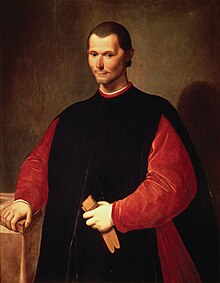
Niccolo Machiavelli
So—which is better: To be feared or loved?
In the 1993 film, A Bronx Tale, 17-year-old Calogero (Lillo Brancato) poses that question to his idol, the local Mafia capo, Sonny (Chazz Palminteri).
“That’s a good question,” Sonny replies. “It’s nice to be both, but it’s very difficult. But if I had my choice, I would rather be feared.
“Fear lasts longer than love. Friendships that are bought with money mean nothing. You see how it is around here. I make a joke, everybody laughs. I know I’m funny, but I’m not that funny. It’s fear that keeps them loyal to me.”
Presidents face the same dilemma as Mafia capos—and resolve it in their own ways.
LOVE ME BECAUSE I NEED TO BE LOVED
Bill Clinton believed that he could win over his self-appointed Republican enemies through his sheer charm.
Part of this lay in self-confidence: He had won the 1992 and 1996 elections by convincing voters that “I feel your pain.”
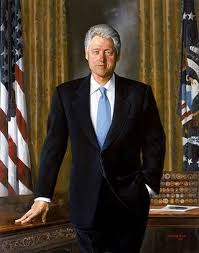
Bill Clinton
And part of it lay in his need to be loved. He once said that if he were in a room with 100 people and 99 of them liked him but one didn’t, he would spend all his time with that one person, trying to win him over.
But while he could charm voters, he could not bring himself to retaliate against his sworn Republican enemies.
On April 19, 1995, Right-wing terrorist Timothy McVeigh drove a truck—packed with 5,000 pounds of ammonium nitrate and nitromethane—to the front of the Alfred P. Murrah Federal Building in Oklahoma City.
The explosion killed 168 people, including 19 children in the day care center on the second floor, and injured 684 others.
Suddenly, Republicans were frightened. Since the end of World War II, they had vilified the very Federal Government they belonged to. They had even courted the Right-wing militia groups responsible for the bombing.
So Republicans feared Clinton would now turn their decades of hate against them.
They need not have worried. On April 23, Clinton presided over a memorial service for the victims of the bombing. He gave a moving eulogy–without condemning the hate-filled Republican rhetoric that had at least indirectly led to the slaughter.
Clinton further sought to endear himself to Republicans by:
- Adopting NAFTA—the Republican-sponsored North American Free Trade Act, which later proved so devastating to American workers;
- Siding with Republicans against poor Americans on welfare; and
- Championing the gutting of the Depression-era Glass-Steagall law, which barred investment banks from commercial banking activities.
In 1998, emboldened by Clinton’s refusal to stand up to them, House Republicans moved to impeach him over a sex scandal with White House intern Monica Lewinsky. But his Presidency survived when the Senate refused to convict.
LOVE ME BECAUSE I’LL HURT YOU IF YOU DON’T
Lyndon Johnson wanted desperately to be loved.
Once, he complained to Dean Acheson, the former Secretary of State under Harry S. Truman, about the ingratitude of American voters. He had passed far more legislation than his predecessor, John F. Kennedy, and yet Kennedy remained beloved, while he, Johnson, was not.
Why was that? Johnson demanded.
“You are not a very likable man,” said Acheson truthfully.
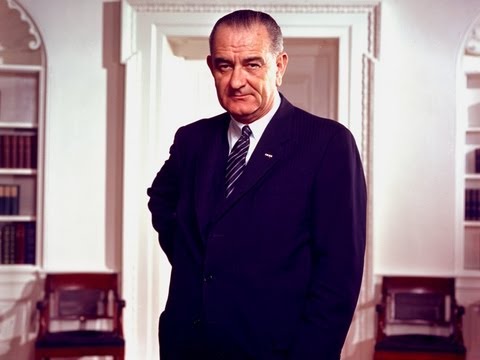
Lyndon B. Johnson
Johnson tried to make his subordinates love him. He would humiliate a man, then give him an expensive gift–such a Cadillac. It was his way of binding the man to him.
He was on a first-name basis with J. Edgar Hoover, the longtime director of the FBI. He didn’t hesitate to request–and get–raw FBI files on his political opponents.
On at least one occasion, he told members of his Cabinet: No one would dare walk out on his administration–because if they did, two men would follow their ass to the end of the earth: Mr. J. Edgar Hoover and the head of the Internal Revenue Service.
ABC NEWS, CBS NEWS, CIA, CNN, DEMOCRATIC NATIONAL COMMITTEE, DONALD TRUMP, FACEBOOK, FBI, HILLARY CLINTON, JOE SCARBOROUGH, KGB, KIM JONG-UN, MORNING JOE, MSNBC, NAZI GERMANY, NAZI PARTY, NBC NEWS, NEWSWEEK, NORTH ATLANTIC TREATY ORGANIZATION (NATO), NPR, POLITICO, REPUBLICAN PARTY, RUSSIA, SOVIET UNION, THE HUFFINGTON POST, THE LOS ANGELES TIMES, THE NEW YORK TIMES, THE WASHINGTON POST, TIME, TWITTER, U.S. NEWS & WORLD REPORT, USA TODAY, VLADIMIR PUTIN
In Bureaucracy, History, Law Enforcement, Military, Politics, Social commentary on December 15, 2016 at 1:20 am
Donald Trump spent five years slandering Barack Obama as “the President from Kenya.”
And now it appears that the United States is on the brink of inaugurating him as “the President from Vladimir Putin.”
On December 14, NBC News reported that “U.S. intelligence officials now believe with ‘a high level of confidence’ that Russian President Vladimir Putin became personally involved in the covert Russian campaign to interfere in the U.S. presidential election.”
According to senior Intelligence officials, Putin had several motives:
- Waging a vendetta against Hillary Clinton, whom he has long disliked;
- Publicly disgrace the United States by revealing corruption at the heart of its politics; and
- “Split off key American allies by creating the image that [other countries] couldn’t depend on the U.S. to be a credible global leader anymore.”
The CIA believes that Putin wanted to elect Donald Trump. The FBI isn’t so certain, feeling that Putin might have simply wanted to do as much harm as possible.
Even so, an air of unreality clings to all of this.
The bromance between Donald Trump and Vladimir Putin has been well-known for more than a year.
On June 2, Democratic Presidential candidate Hillary Clinton said exactly that to an audience in San Diego, California:
“And I have to say, I don’t understand Donald [Trump’s] bizarre fascination with dictators and strongmen who have no love for America.
“He praised China for the Tiananmen Square massacre; he said it showed strength.
“He said, ‘You’ve got to give Kim Jong Un credit’ for taking over North Korea–something he did by murdering everyone he saw as a threat, including his own uncle, which Donald described gleefully, like he was recapping an action movie.
“And he said if he were grading Vladimir Putin as a leader, he’d give him an A. Now, I’ll leave it to the psychiatrists to explain his affection for tyrants,” said Clinton.
To many people, it’s the ultimate odd-couple: The lifelong Communist and former KGB officer (Putin) walking arm-in-arm with the billionaire, publicity-hungry capitalist (Trump).
First Putin:
“He is a bright personality, a talented person, no doubt about it. It is not up to us to appraise his positive sides, it is up to the U.S. voters. but, as we can see, he is an absolute leader in the presidential race.
“He is saying that he wants to move to a different level of relations with Russia, to a closer, deeper one. How can we not welcome that? Of course, we welcome that.”
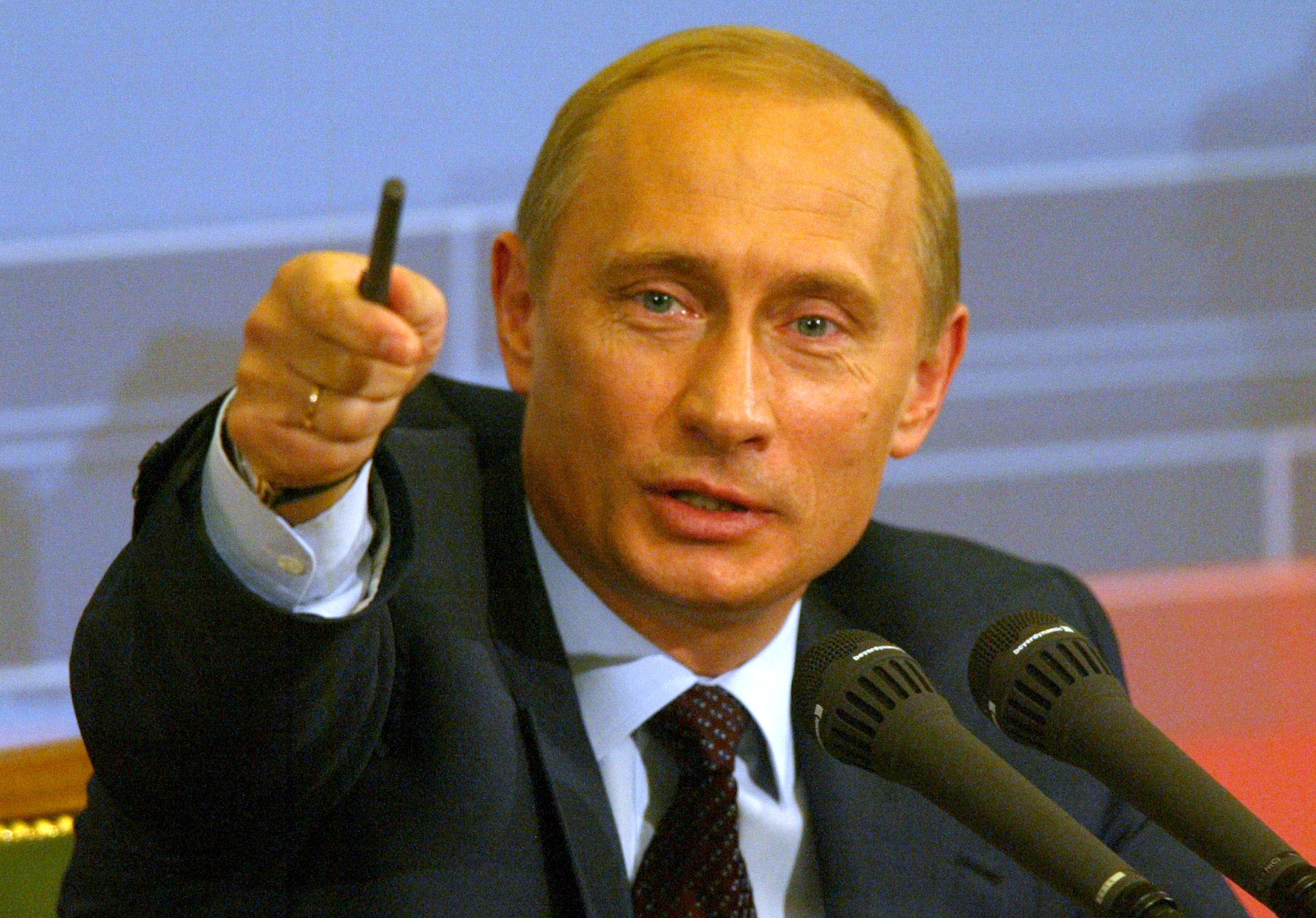
Vladimir Putin
Now Trump:
“It is always a great honor to be so nicely complimented by a man so highly respected within his own country and beyond.”
Donald Trump
Appearing on the December 18, 2015 edition of MSNBC’s “Morning Joe,” Trump said: “Sure, when people call you ‘brilliant,’ it’s always good. Especially when the person heads up Russia.”
The host, Joe Scarborough, was upset by Trump’s praise for Putin: “Well, I mean, [he’s] also a person who kills journalists, political opponents, and invades countries. obviously that would be a concern, would it not?”
TRUMP: He’s running his country, and at least he’s a leader. Unlike what we have in this country.
SCARBOROUGH: But again: He kills journalists that don’t agree with him.
TRUMP: I think our country does plenty of killing, also, Joe, so, you know. There’s a lot of stupidity going on in the world right now, Joe. A lot of killing going on. A lot of stupidity. And that’s the way it is.
SCARBOROUGH: I’m confused. So I mean, you obviously condemn Vladimir Putin killing journalists and political opponents, right?
TRUMP: Oh sure, absolutely.
And Trump has gone well beyond handing out compliments.
On July 22, Wikileaks released 19,252 emails and 8,034 attachments hacked from computers of the highest-ranking officials of the Democratic National Committee (DNC). Early reports traced the leak to Russian hackers.
And how did Trump react?
By declaring, at a press conference in Doral, Florida: “Russia, if you are listening, I hope you are able to find the 33,000 emails that are missing–I think you will probably be rewarded mightily by our press.”
This was nothing less than treason–calling upon a foreign power, hostile to the United States, to interfere in its Presidential election.
Why would Putin want to back Trump?
Trump has repeatedly attacked United States’ membership in the North Atlantic Treaty Organization (NATO). He believes the United States is paying an unfairly large portion of the monies needed to maintain this alliance–and he wants other members to contribute far more.
He has also said that, if Russia attacked NATO members, he would decide whether to come to their aid only after determining whether those nations have “fulfilled their obligations to us.” If he believed that they had not done so, he would inform them: “Congratulations, you will be defending yourself.”
For Putin, this clearly signaled a reason to prefer Trump to Clinton. The withdrawal of the United States from NATO would instantly render that alliance kaput. Its European members don’t have the armed forces to match Russia’s–nor Russia’s huge nuclear arsenal.
As January 20, 2017, rapidly approaches, America faces a stark choice: Empower a man elected with help from a hostile power–or declare him ineligible as a result.


 Bureaucracybuster's Blog
2016 PRESIDENTIAL RACE, ABC NEWS, ALTERNET, AMERICABLOG, ANN COULTER, AP, BABY BOOMER RESISTANCE, BARACK OBAMA, BBC, BIRTH CERTIFICATE, BIRTHERISM, BLOOMBERG NEWS, BUZZFEED, CBS NEWS, CHUCK TODD, CNN, CROOKS AND LIARS, DAILY KOS, DONALD TRUMP, FACEBOOK, FIVETHIRTYEIGHT, HARPER’S MAGAZINE, HILLARY CLINTON, HUFFINGTON POST, JOHN LEWIS, JOHN MCCAIN, MEDIA MATTERS, MEET THE PRESS, MOTHER JONES, MOVEON, MSNBC, MUSLIMS, NBC NEWS, NEW REPUBLIC, NEWSDAY, NEWSWEEK, NPR, PBS NEWSHOUR, POLITICO, POLITICUSUSA, RAW STORY, REINCE PREIBUS, REPUBLICAN PARTY, REUTERS, SALON, Sarah Palin, SEATTLE TIMES, SLATE, SOVIET UNION, STEVEN BANNON, TALKING POINTS MEMO, TAX RETURNS, TEA PARTY, THE APPRENTICE, THE ATLANTIC, THE CHICAGO SUN-TIMES, THE CHICAGO TRIBUNE, THE DAILY BEAST, THE DAILY BLOG, THE GUARDIAN, THE HILL, THE HUFFINGTON POST, THE INTERCEPT, THE LOS ANGELES TIMES, THE NATION, THE NEW REPUBLIC, THE NEW YORK TIMES, THE NEW YORKER, THE VILLAGE VOICE, THE WASHINGTON POST, THINKPROGRESS, THIS WEEK, TIME, TRUTHDIG, TRUTHOUT, TWITTER, U.S. NEWS & WORLD REPORT, UPI, USA TODAY, VLADIMIR PUTIN
REPUBLICANS: LEGITIMACY IS FOR US, BUT NOT FOR YOU: PART TWO (END)
In Bureaucracy, History, Politics, Social commentary on January 20, 2017 at 12:06 amFor five years, Donald Trump, more than anyone else, popularized the slander that President Barack Obama was born in Kenya–and was therefore not an American citizen.
For more than a year during his 2016 Presidential campaign, Trump continued doing so.
Meanwhile, Trump’s popularity steadily fell among blacks–to 1%, compared to the 91% of black voters who backed Hillary Clinton.
Even the managers of Trump’s campaign urged him to put the “birther” issue behind him.
And so, on September 16, 2016–10 days before his scheduled first debate with Democratic Presidential nominee Hillary Clinton–Trump made his version of a reversal.
Donald Trump: “President Barack Obama was born in the United States.”
He did so in about seven seconds and 40 words–after spending a half hour paying tribute to the military and promoting his new upscale hotel in Washington, D.C.:
“Now, not to mention her in the same breath, but Hillary Clinton and her campaign of 2008 started the birther controversy.
“I finished it. I finished it. You know what I mean.
“President Barack Obama was born in the United States, period. Now we all want to get back to making America strong and great again.”
His tone made it clear that he felt uneasy making that statement–and wanted to get it over with as fast as possible.
He refused to take questions from reporters covering the event. Nor did he apologize for his five-year campaign of slander.
Nor did any Republican apologize for the eight-year campaign of slander and obstruction their party had waged against the Nation’s first black President.
President Barack Obama
Among its highlights:
* * * * *
When Republicans say, “We need to support our President,” they don’t mean every President.
They mean: Every Republican President. And only every Republican President.
For Republicans, Presidents elected by Democrats are usurpers: They are to be obstructed as often as possible–and impeached whenever possible.
Share this: