Posts Tagged ‘REPUBLICAN PARTY’
ABC NEWS, ADOLF HITLER, ALTERNET, AMERICABLOG, AP, BABY BOOMER RESISTANCE, BARACK OBAMA, BBC, BILL CLINTON, BLOOMBERG NEWS, BUZZFEED, CBS NEWS, CHRIS MATTHEWS, CNN, CNN'S "STARTING POINT", CROOKS AND LIARS, CZECHOSLAVAKIA, DAILY KOZ, DARRELL ISSA, DEBT CEILING, EXECUTIVE ORDERS, EXTORTION, FACEBOOK, FIVETHIRTYEIGHT, GEORGE W. BUSH, HARPER’S MAGAZINE, HOUSE SPEAKER JOHN BOEHNER, HUFFINGTON POST, immigration reform, INSIDER, JANET YELLEN, JIMMY CARTER, JOSEPH BIDEN, MEDIA MATTERS, MITCH MCCONNELL, MOTHER JONES, MOVEON, MSNBC, MSNBC'S "HARDBALL", NANCY PELOSI, NAZI GERMANY, NBC NEWS, NEGOTIATING, NEVILLE CHAMBERLAIN, NEW REPUBLIC, NEWSDAY, NEWSWEEK, NEWT GINGRICH, NICCOLO MACHIAVELLI, NPR, PAP SMEARS, PBS NEWSHOUR, PLANNED PARENTHOOD, POLAND, POLITICO, POLITICUSUSA, R.I.CO. ACT, RAW STORY, REPUBLICAN PARTY, REPUBLICANS, REUTERS, Ronald Reagan, SALON, SEATTLE TIMES, SLATE, TALKING POINTS MEMO, THE ATLANTIC, THE CHICAGO SUN-TIMES, THE CHICAGO TRIBUNE, THE DAILY BEAST, THE DAILY BLOG, THE GUARDIAN, THE HILL, THE HUFFINGTON POST, THE LOS ANGELES TIMES, THE NATION, THE NEW REPUBLIC, THE NEW YORK TIMES, THE NEW YORKER, THE PRINCE, THE VILLAGE VOICE, THE WASHINGTON POST, THINKPROGRESS, TIME, TITLE X, TRUTHDIG, TRUTHOUT, TWITTER, TWO POLITICAL JUNKIES, U.S. NEWS & WORLD REPORT, UPI, USA TODAY, WARREN BUFFET, WINSTON CHURCHILL, WONKETTE, WORLD WAR 11
In Bureaucracy, Business, History, Law, Law Enforcement, Military, Politics, Social commentary on October 7, 2021 at 12:11 am
For the postwar Republican party, Adolf Hitler’s my-way-or-else “negotiating” methods would become standard operating procedure.
During the summer of 2011, Republicans refused to raise the debt ceiling unless Democrats agreed to massively cut social programs for the elderly, poor and disabled.
And while Republicans demanded that the disadvantaged tighten their belts, they rejected any raising of taxes on their foremost constituency—the wealthiest 1%.
To raise taxes on the wealthy, they insisted, would be a “jobs-killer.” It would “discourage” corporate CEOs from creating tens of thousands of jobs they supposedly wanted to create.
If Congress failed to raise the borrowing limit of the federal government by August 2, 2011, the date when the U.S. reached the limit of its borrowing abilities, America would begin defaulting on its loans.
As Warren Buffett, CEO of Berkshire Hathaway, explained the looming economic catastrophe:
“If you don’t send out Social Security checks, I would hate to think about the credit meeting at S&P and Moody’s the next morning.
“If you’re not paying millions and millions and millions of people that range in age from 65 on up, money you promised them, you’re not a AAA,” said Buffett.
A triple-A credit rating is the highest possible rating that can be received.
Republicans knew their argument was a lie. And so did the editors of Time. The difference is, the editors of Time were willing to reveal the truth.
In its June 20, 2011 cover-story on “What U.S. Economic Recovery? Five Destructive Myths,” Rana Foroohar, the magazine’s assistant managing editor in charge of economics and business, delivered this warning:
Profit-seeking corporations can’t be relied on to ”make it all better.”
American companies “are doing quite well,” but most American workers “are earning a lower hourly wage now than they did during the recession.”
Corporations, in short, are doing extremely well. But they don’t spend their profits on American workers.
“There may be $2 trillion sitting on the balance sheets of American corporations globally, but firms show no signs of wanting to spend it in order to hire workers at home.”
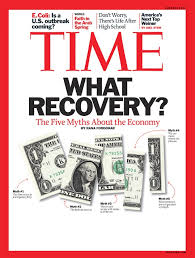
In short: Giving even greater tax breaks to mega-corporations—the standard Republican mantra—has not persuaded them to stop “outsourcing” jobs. Nor has it convinced them to start hiring Americans.
Many American companies prefer opening factories in Brazil, China or India to doing so in the United States—and thus creating jobs for American workers.
While embarrassingly overpaid CEOs squander corporate wealth on themselves, millions of Americans can’t afford medical care or must depend on charity to feed their families.
Yet there is also a disconnect between the truth of this situation and the willingness of Americans to face up to that truth.
The reason, writes Foroohar:
Republicans have convinced most Americans they can revitalize the economy by slashing “taxes on the wealthy and on cash-hoarding corporations while cutting benefits for millions of Americans.”
And she concludes: To restore prosperity America needs both tax increases and cuts in entitlement programs.
According to Mein Kampf-—”My Struggle”—Hitler’s autobiography and political treatise:
- Most people are ruled by sentiment, not reason.
- This sentiment is simple and consistent. It is rooted in notions of love and hatred, right and wrong, truth and falsehood.
- Propaganda isn’t based on objective truth but must present only that part of the truth that makes its own side look good.
- People are not intelligent, and quickly forget.
- Confine propaganda to a few bare essentials and express these in easily-remembered stereotyped images.
- Persistently repeat these slogans until the very last individual has come to grasp the idea that has been put forward.
Following these principles, Republicans have proved hugely successful at persuading millions that truth is whatever their party claims it to be at any given moment.
“Fascism,” said author Ernest Hemingway, “is a lie told by bullies.” Thus, when Republicans couldn’t attain their goals by lying, they sought to do so by force—or at least the threat of it.
Republicans have repeatedly threatened to shut down the government unless their constantly escalating demands are met.
In November, 1995, Newt Gingrich, then Speaker of the House of Representatives, carried out his threat. Gingrich unwisely admitted that he did so because President Bill Clinton had put him in the back of Air Force One during a recent trip to Israel.
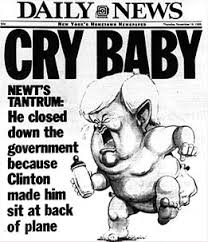
The shutdown proved a disaster for Republicans. Clinton was handily re-elected in 1996 and Gingrich suddenly resigned from Congress in 1998.
Still, the Republicans continued their policy of my-way-or-else.
In April, 2011, the United States government almost shut down over Republican demands about subsidized pap smears.
During a late-night White House meeting with President Barack Obama and key Congressional leaders, Republican House Speaker John Boehner made this threat:
His conference would not approve funding for the government if any money were allowed to flow to Planned Parenthood through Title X legislation.
Facing an April 8 deadline, negotiators worked day and night to strike a compromise—and finally reached one.
Three months later—on July 9—Republican extortionists again threatened the Nation with financial ruin and international disgrace unless their demands were met.
Next up: Republicans: “Stop funding pap smears for women—or we’ll shut down the government.”
ABC NEWS, ADOLF HITLER, ALTERNET, AMERICABLOG, AP, BABY BOOMER RESISTANCE, BARACK OBAMA, BBC, BILL CLINTON, BLOOMBERG NEWS, BUZZFEED, CBS NEWS, CHRIS MATTHEWS, CNN, CNN'S "STARTING POINT", CROOKS AND LIARS, CZECHOSLAVAKIA, DAILY KOZ, DARRELL ISSA, DEBT CEILING, EXECUTIVE ORDERS, EXTORTION, FACEBOOK, FIVETHIRTYEIGHT, GEORGE W. BUSH, HARPER’S MAGAZINE, HOUSE SPEAKER JOHN BOEHNER, HUFFINGTON POST, immigration reform, INSIDER, JANET YELLEN, JIMMY CARTER, JOSEPH BIDEN, MEDIA MATTERS, MITCH MCCONNELL, MOTHER JONES, MOVEON, MSNBC, MSNBC'S "HARDBALL", NANCY PELOSI, NAZI GERMANY, NBC NEWS, NEGOTIATING, NEVILLE CHAMBERLAIN, NEW REPUBLIC, NEWSDAY, NEWSWEEK, NEWT GINGRICH, NICCOLO MACHIAVELLI, NPR, PAP SMEARS, PBS NEWSHOUR, PLANNED PARENTHOOD, POLAND, POLITICO, POLITICUSUSA, R.I.CO. ACT, RAW STORY, REPUBLICAN PARTY, REPUBLICANS, REUTERS, Ronald Reagan, SALON, SEATTLE TIMES, SLATE, TALKING POINTS MEMO, THE ATLANTIC, THE CHICAGO SUN-TIMES, THE CHICAGO TRIBUNE, THE DAILY BEAST, THE DAILY BLOG, THE GUARDIAN, THE HILL, THE HUFFINGTON POST, THE LOS ANGELES TIMES, THE NATION, THE NEW REPUBLIC, THE NEW YORK TIMES, THE NEW YORKER, THE PRINCE, THE VILLAGE VOICE, THE WASHINGTON POST, THINKPROGRESS, TIME, TITLE X, TRUTHDIG, TRUTHOUT, TWITTER, TWO POLITICAL JUNKIES, U.S. NEWS & WORLD REPORT, UPI, USA TODAY, WARREN BUFFET, WINSTON CHURCHILL, WONKETTE, WORLD WAR 11
In Bureaucracy, Business, History, Law, Law Enforcement, Military, Politics, Social commentary on October 6, 2021 at 12:11 am
In September, 1938, seven months after seizing Austria, German Fuhrer Adolf Hitler gave another exhibition of his “negotiating” methods. This time, the target of his rage and aggression was Czechoslovakia.
Once again, he opened “negotiations” with a lie: The Czechoslovak government was trying to exterminate 3.5 million Germans living in the “Sudetenland.”
Then he followed with the threat of war: Germany would protect its citizens and halt such “oppression.”
For British Prime Minister Neville Chamberlain, the thought of another European war erupting less than 20 years after the end of World War I was simply unthinkable.
He quickly sent Hitler a telegram, offering to help resolve the crisis: “I could come to you by air and am ready to leave tomorrow. Please inform me of earliest time you can receive me, and tell me the place of the meeting. I should be grateful for a very early reply.”
The two European leaders met in Berchtesgaden, Germany, on September 15, 1938.
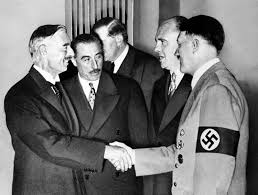
Neville Chamberlain and Adolf Hitler
During their talks, Chamberlain said he had come to discuss German grievances. But, he added, it was necessary in all circumstances to exclude the use of force.
Hitler appeared to be shocked that he could be accused of such intentions: “Force? Who speaks of force?“
Then, without warning, he switched to an aggressive mode. He accused the Czechs of having mobilized their army in May. They had mobilized–in response to the mobilization of the German army.
“I shall not put up with this any longer,” shouted Hitler. “I shall settle this question in one way or another. I shall take matters in my own hands!”
Suddenly, Chamberlain seemed alarmed—and possibly angry: “If I understood you right, you are determined to proceed against Czechoslovakia in any case. If this is so, why did you let me come to Berchtesgaden?
“In the circumstances, it is best for me to return at once. Anything else now seems pointless.”
Hitler was taken aback by the unexpected show of defiance. He realized he was about to lose his chance to bully the British into accepting his latest demands.
So he softened his tone and said they should consider the Sudetenland according to the principle of self-determination.
Chamberlain said he must immediately return to England to consult with his colleagues. Hitler appeared uneasy. But then the German translator finished the sentence: “…and then meet you again.”
Hitler realized he still had a chance to attain victory without going to war.
Chamberlain agreed to the cession of the Sudetenland. Three days later, French Prime Minister Edouard Daladier did the same. No Czechoslovak representative was invited to these discussions.
Chamberlain met Hitler again in Godesberg, Germany, on September 22 to confirm the agreements. But Hitler aimed to use the crisis as a pretext for war.
He now demanded not only the annexation of the Sudetenland but the immediate military occupation of the territories. This would give the Czechoslovak army no time to adapt their defense measures to the new borders.
To achieve a solution, Italian dictator Benito Mussolini suggested a conference of the major powers in Munich.
On September 29, Hitler, Daladier and Chamberlain met and agreed to Mussolini’s proposal. They signed the Munich Agreement, which accepted the immediate occupation of the Sudetenland.
The Czechoslovak government had not been a party to the talks. Nevertheless, it promised to abide by the agreement on September 30.
It actually had no choice. It faced the threat of an immediate German invasion after being deserted by its pledged allies: Britain, France and the Soviet Union.
Chamberlain returned to England a hero. Holding aloft a copy of the worthless agreement he had signed with Hitler, he told cheering crowds in London: “I believe it is peace for our time.”
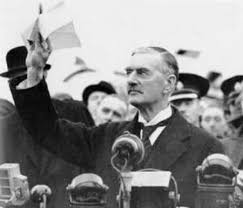
Neville Chamberlain
Winston Churchill knew better, predicting: “Britain and France had to choose between war and dishonor. They chose dishonor. They will have war.”
Hitler—still planning more conquests—also knew better. In March, 1939, the German army occupied the rest of Czechoslovakia.
Chamberlain would soon be seen as a naive weakling—even before bombs started falling on London.
Hitler next turned his attention—and demands—to Poland.
When his generals balked, warning that an invasion would trigger a war with France and Britain, Hitler quickly brushed aside their fears: “Our enemies are little worms. I saw them at Munich.”
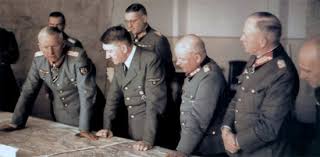
Adolf Hitler and his generals
Hitler ordered the invasion of Poland on September 1, 1939—unintentionally triggering World War II.
In time, historians and statesmen would regard Munich as an object lesson in the futility—and danger—in appeasing evil and aggression.
But for the postwar Republican party, Hitler’s my-way-or-else “negotiating” methods would become standard operating procedure.
During the summer of 2011, Republicans refused to raise the debt ceiling unless Democrats agreed to massively cut social programs for the elderly, poor and disabled.
And while Republicans demanded that the disadvantaged tighten their belts, they rejected any raising of taxes on their foremost constituency—the wealthiest 1%.
To raise taxes on the wealthy, they insisted, would be a “jobs-killer.” It would “discourage” corporate CEOs from creating tens of thousands of jobs they supposedly wanted to create.
Next up: Republicans: “Everything for the rich—or we’ll destroy the country.”
ABC NEWS, ADOLF HITLER, ALTERNET, AMERICABLOG, AP, BABY BOOMER RESISTANCE, BARACK OBAMA, BBC, BILL CLINTON, BLOOMBERG NEWS, BUZZFEED, CBS NEWS, CHRIS MATTHEWS, CNN, CNN'S "STARTING POINT", CROOKS AND LIARS, CZECHOSLAVAKIA, DAILY KOZ, DARRELL ISSA, DEBT CEILING, EXECUTIVE ORDERS, EXTORTION, FACEBOOK, FIVETHIRTYEIGHT, GEORGE W. BUSH, HARPER’S MAGAZINE, HOUSE SPEAKER JOHN BOEHNER, HUFFINGTON POST, immigration reform, INSIDER, JANET YELLEN, JIMMY CARTER, JOSEPH BIDEN, MEDIA MATTERS, MITCH MCCONNELL, MOTHER JONES, MOVEON, MSNBC, MSNBC'S "HARDBALL", NANCY PELOSI, NAZI GERMANY, NBC NEWS, NEGOTIATING, NEVILLE CHAMBERLAIN, NEW REPUBLIC, NEWSDAY, NEWSWEEK, NEWT GINGRICH, NICCOLO MACHIAVELLI, NPR, PAP SMEARS, PBS NEWSHOUR, PLANNED PARENTHOOD, POLAND, POLITICO, POLITICUSUSA, R.I.CO. ACT, RAW STORY, REPUBLICAN PARTY, REPUBLICANS, REUTERS, Ronald Reagan, SALON, SEATTLE TIMES, SLATE, TALKING POINTS MEMO, THE ATLANTIC, THE CHICAGO SUN-TIMES, THE CHICAGO TRIBUNE, THE DAILY BEAST, THE DAILY BLOG, THE GUARDIAN, THE HILL, THE HUFFINGTON POST, THE LOS ANGELES TIMES, THE NATION, THE NEW REPUBLIC, THE NEW YORK TIMES, THE NEW YORKER, THE PRINCE, THE VILLAGE VOICE, THE WASHINGTON POST, THINKPROGRESS, TIME, TITLE X, TRUTHDIG, TRUTHOUT, TWITTER, TWO POLITICAL JUNKIES, U.S. NEWS & WORLD REPORT, UPI, USA TODAY, WARREN BUFFET, WINSTON CHURCHILL, WONKETTE, WORLD WAR 11
In Bureaucracy, Business, History, Law, Law Enforcement, Military, Politics, Social commentary on October 5, 2021 at 12:15 am
By studying the “negotiating” methods used by Adolf Hitler, Americans generally—and Democrats in particular—can learn much about the mindset and “negotiating” style of today’s Republican party.
A classic example of Hitler’s “bargaining style” came in 1938, when he invited Austrian Chancellor Kurt von Schuschnigg to his mountaintop retreat in Obersalzberg, Germany.
Hitler, an Austrian by birth, intended to annex his native land to Germany. Schuschnigg was aware of Hitler’s desire, but nevertheless felt secure in accepting the invitation. He had been assured that the question of Austrian sovereignty would not arise.
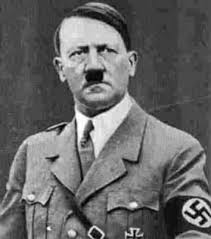
Adolf Hitler
The meeting occurred on February 12, 1938.
Shuschnigg opened the discussion with a friendly compliment. Walking over to a large window, he admired the breathtaking view of the mountains.
HITLER: We haven’t come here to talk about the lovely view or the weather!
Austria has anyway never done anything which was of help to the German Reich….I am resolutely determined to make an end to all this business. The German Reich is a great power. Nobody can and nobody will interfere if it restores order on its frontiers.
SCHUSCHNIGG: We simply have to go on living alongside one another, the little state next to the big one. We have no other choice.
And that is why I ask you to tell me what your concrete complaints are. We will do all in our power to sort things out and establish a friendly relationship, as far as it is possible to do so.
HITLER: That’s what you say, Herr Schuschnigg. And I am telling you that I intend to clear up the whole of the so-called Austrian question—one way or another. Do you think I don’t know that you are fortifying Austria’s border with the Reich?
SCHUSCHNIGG: There can be no suggestion at all of that—
HITLER: Ridiculous explosive chambers are being built under bridges and roads—
This was a lie, and Hitler knew it was a lie. But no matter. It gave him an excuse to threaten to destroy Austria—as he was to destroy so many other nations during the next seven years.
HITLER: I have only to give one command and all this comic stuff on the border will be blown to pieces overnight. You don’t seriously think you could hold me up, even for half an hour, do you?
Who knows—perhaps you will find me one morning in Vienna like a spring storm. Then you will go through something! I’d like to spare the Austrians that.
The S.A. [Hitler’s private army of Stormtroopers] and the [Condor] lLegion [which had bombed much of Spain into rubble during the three-year Spanish Civil War] would come in after the troops and nobody—not even I—could stop them from wreaking vengeance.
Schnuschigg made a cardinal mistake in dealing with Hitler: He showed fear. And this was precisely what the Nazi dictator looked for in an opponent.
Contrary to popular belief, Hitler did not constantly rage at everyone. On the contrary: he could, when he desired, be charming, especially to women. He used rage as a weapon, knowing that most people feel intimidated by it.
Republicans have profited by the same strategy.
In the case of Schuschnigg, Hitler opened with insults and threats at the outset of their discussion. Then there was a period of calm, to convince the Austrian chancellor the worst was over.
Finally, he once again attacked—this time with so much fury that Schuschnigg was terrified into submission.
With one stroke of a pen, Austria became a vassal-state to Nazi Germany.
Seven months later, in September, 1938, Hitler gave another exhibition of his “negotiating” methods. This time, the target of his rage and aggression was Czechoslovakia.
Once again, he opened “negotiations” with a lie: The Czechoslovak government was trying to exterminate 3.5 million Germans living in the “Sudetenland.”
This consisted of the northern, southwest and western regions of Czechoslovakia, inhabited mostly by ethnic Germans.
Then he followed this up with the threat of war: Germany would protect its citizens and halt such “oppression.”
For British Prime Minister Neville Chamberlain, the thought of another European war erupting less than 20 years after the end of World War I was simply unthinkable.

The Cenotaph, in London, honoring the unknown British dead of World War 1
Something had to be done to prevent it. And he believed himself to be just the man to do it.
He quickly sent Hitler a telegram, offering to help resolve the crisis: “I could come to you by air and am ready to leave tomorrow. Please inform me of earliest time you can receive me, and tell me the place of the meeting. I should be grateful for a very early reply.”
Once again, another head-of-state was prepared to meet Hitler on his home ground. Again, Hitler took this concession as a sign of weakness. And Chamberlain’s use of such words as “please” and “grateful” only further convinced Hitler of another impending triumph.
Chamberlain was determined to grant Hitler’s every demand–so long as this meant avoiding a second world war.
As a political party, Democrats have generally copied this same “strategy” when dealing with Republicans.
Next up: Hitler’s “negotiating” legacy lives on—among Republicans.
ABC NEWS, ADOLF HITLER, ALTERNET, AMERICABLOG, AP, BABY BOOMER RESISTANCE, BARACK OBAMA, BBC, BILL CLINTON, BLOOMBERG NEWS, BUZZFEED, CBS NEWS, CHRIS MATTHEWS, CNN, CNN'S "STARTING POINT", CROOKS AND LIARS, CZECHOSLAVAKIA, DAILY KOZ, DARRELL ISSA, DEBT CEILING, EXECUTIVE ORDERS, EXTORTION, FACEBOOK, FIVETHIRTYEIGHT, GEORGE W. BUSH, HARPER’S MAGAZINE, HOUSE SPEAKER JOHN BOEHNER, HUFFINGTON POST, immigration reform, INSIDER, JANET YELLEN, JIMMY CARTER, JOSEPH BIDEN, MEDIA MATTERS, MITCH MCCONNELL, MOTHER JONES, MOVEON, MSNBC, MSNBC'S "HARDBALL", NANCY PELOSI, NAZI GERMANY, NBC NEWS, NEGOTIATING, NEVILLE CHAMBERLAIN, NEW REPUBLIC, NEWSDAY, NEWSWEEK, NEWT GINGRICH, NICCOLO MACHIAVELLI, NPR, PAP SMEARS, PBS NEWSHOUR, PLANNED PARENTHOOD, POLAND, POLITICO, POLITICUSUSA, R.I.CO. ACT, RAW STORY, REPUBLICAN PARTY, REPUBLICANS, REUTERS, Ronald Reagan, SALON, SEATTLE TIMES, SLATE, TALKING POINTS MEMO, THE ATLANTIC, THE CHICAGO SUN-TIMES, THE CHICAGO TRIBUNE, THE DAILY BEAST, THE DAILY BLOG, THE GUARDIAN, THE HILL, THE HUFFINGTON POST, THE LOS ANGELES TIMES, THE NATION, THE NEW REPUBLIC, THE NEW YORK TIMES, THE NEW YORKER, THE PRINCE, THE VILLAGE VOICE, THE WASHINGTON POST, THINKPROGRESS, TIME, TITLE X, TRUTHDIG, TRUTHOUT, TWITTER, TWO POLITICAL JUNKIES, U.S. NEWS & WORLD REPORT, UPI, USA TODAY, WARREN BUFFET, WINSTON CHURCHILL, WONKETTE, WORLD WAR 11
In Bureaucracy, Business, History, Law, Law Enforcement, Military, Politics, Social commentary on October 4, 2021 at 12:41 am
Once again, Republicans are ruthlessly playing “chicken” with the nation’s financial security.
And, once again, Democrats are responding with their trademark cowardice and ineptitude.
On August 2, 2019, President Donald Trump signed into law a two-year budget deal that raised spending by $320 billion over existing spending caps set in a 2011 law—and boosted military and domestic spending.
The bill also lifted the debt ceiling, which is the legal limit on the amount of debt the federal government can have.
The bill threatened to push the budget deficit to more than $1 trillion in 2019 for only the second time since the Great Recession of 2007-2008 and add $1.7 trillion to the federal debt over a decade.
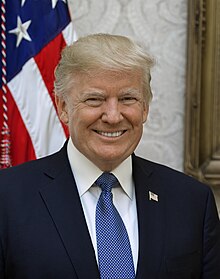
Donald Trump
During the Presidency of Barack Obama, Republicans used the threat of the U.S. defaulting on its loans to force sharp budget cuts to nonmilitary spending.
Seven years later, Senate Majority Leader Mitch McConnell praised the Republicans’ massive contribution to the national debt under Donald Trump.
By January, 2021, the national debt had risen by almost $7.8 trillion during Trump’s time in office. It amounted to about $23,500 in new federal debt for every person in the country.
But now, with Democrat Joseph Biden as President, Republicans have become “fiscal conservatives.”
And they’re prepared to plunge the United States into financial ruin unless Democrats meet their extortion demands.
The debt ceiling is the legal limit for how much debt the United States can take on as a country. Once that limit is hit, the U.S. Treasury can no longer issue bonds to raise funds to pay for everything that the government does.
In a September 8 letter, Treasury Secretary Janet Yellen warned House Speaker Nancy Pelosi (D-CA) of the consequences if the ceiling wasn’t raised:
“A delay that calls into question the federal government’s ability to meet all its obligations would likely cause irreparable damage to the U.S. economy and global financial markets.
“We have learned from past debt limit impasses that waiting until the last minute to suspend or increase the debt limit can cause serious harm to business and consumer confidence, raise short-term borrowing costs for taxpayers, and negatively impact the credit rating of the United States.”

Janet Yellen
Today, Republicans are threatening the nation with defaulting on its loans as Congress prepares to pass the centerpiece of President Biden’s economic agenda.
“I can’t imagine there will be a single Republican voting to raise the debt ceiling after what we’ve been experiencing,” McConnell told Punchbowl News in July.
Republicans, in short, have repeatedly utilized the same “negotiating” strategy as Nazi Germany’s Fuhrer, Adolf Hitler.
And Democrats—out of cowardice or an ignorance of history—are once again refusing to publicly make this comparison.
And while the country hurtles toward economic catastrophe, they squabble among themselves about how many budgetary items they can cram into Biden’s proposed $3.5 trillion budget. As if that budget will mean anything if the country’s economy crashes with failure to raise the debt ceiling.
By studying Adolf Hitler’s mindset and “negotiating” methods, we can learn much about the mindset and “negotiating” style of today’s Republican party.
Robert Payne, author of the bestselling biography, The Life and Death of Adolf Hitler (1973), described Hitler’s “negotiating” style thus:
“Although Hitler prized his own talents as a negotiator, a man always capable of striking a good bargain, he was totally lacking in finesse.
“He was incapable of bargaining. He was like a man who goes up to a fruit peddler and threatens to blow his brains out if he does not sell his applies at the lowest possible price.”
A classic example of Hitler’s “bargaining style” came in 1938, when he invited Austrian Chancellor Kurt von Schuschnigg to his mountaintop retreat in Obersalzberg, Germany.
Hitler, an Austrian by birth, intended to annex his native land to Germany. Schuschnigg was aware of Hitler’s desire, but nevertheless felt secure in accepting the invitation. He had been assured that the question of Austrian sovereignty would not arise.

Kurt von Schuschnigg
The meeting occurred on February 12, 1938.
Shuschnigg opened the discussion with a friendly compliment. Walking over to a large window, he admired the breathtaking view of the mountains.
HITLER: We haven’t come here to talk about the lovely view or the weather!
Austria has anyway never done anything which was of help to the German Reich….I am resolutely determined to make an end to all this business. The German Reich is a great power. Nobody can and nobody will interfere if it restores order on its frontiers.
SCHUSCHNIGG: I am aware of your attitude toward the Austrian question and toward Austrian history….As we Austrians see it, the whole of our history is a very essential and valuable part of German history….And Austria’s contribution is a considerable one.
HITLER: It is absolutely zero—that I can assure you! Every national impulse has been trampled underfoot by Austria….
I could call myself an Austrian with just the same right—indeed with even more right—than you, Herr Schuschnigg. Why don’t you once try a plebiscite in Austria in which you and I run against each other? Then you would see!
Next up: Hitler “negotiates” Austria out of existence, then turns to Czechoslovakia.
2016 PRESIDENTIAL RACE, ABC NEWS, ABORTION, ADOLF HITLER, ALTERNET, AMERICABLOG, AP, BABY BOOMER RESISTANCE, BBC, BIRTH CONTROL, BLOOMBERG NEWS, BUZZFEED, CAPITAL PUNISHMENT, CBS NEWS, CHARLES SCHULTZ, CNN, CONSERVATIVE VICTORY (BOOK), CONTRACEPTION, CROOKS AND LIARS, DAILY KOZ, DONALD TRUMP, FACEBOOK, FIVETHIRTYEIGHT, GREG ABBOTT, HARPER’S MAGAZINE, HUFFINGTON POST, MEDIA MATTERS, MOTHER JONES, MOVEON, MSNBC, NBC NEWS, NEW REPUBLIC, NEWSDAY, NEWSWEEK, NPR, NUCLEAR WAR, PBS NEWSHOUR, PEANUTS CARTOON SERIES, POLITICO, POLITICUSUSA, RAW STORY, REPUBLICAN PARTY, REPUBLICANS, REUTERS, ROE V. WADE, Ronald Reagan, RUSH LIMBAUGH, SALON, SANDRA FLUKE, SCOTT DESJARLIS, SEAN HANNITY, SEATTLE TIMES, SLATE, TALIBAN, TALKING POINTS MEMO, TEXAS, THE ATLANTIC, THE CHICAGO SUN-TIMES, THE CHICAGO TRIBUNE, THE DAILY BEAST, THE DAILY BLOG, THE GUARDIAN, THE HILL, THE HUFFINGTON POST, THE LOS ANGELES TIMES, THE NATION, THE NEW REPUBLIC, THE NEW YORK TIMES, THE NEW YORKER, THE VILLAGE VOICE, THE WASHINGTON POST, THINKPROGRESS, TIME, TRUTHDIG, TRUTHOUT, TWITTER, TWO POLITICAL JUNKIES, U.S. NEWS & WORLD REPORT, UPI, USA TODAY, WAR, WONKETTE
In Bureaucracy, History, Law Enforcement, Medical, Politics, Social commentary on September 30, 2021 at 12:12 am
The Right’s war on freedom of choice continues.
On May 19, Texas Governor Greg Abbott signed into law a measure that bans abortions in Texas as early as six weeks—before some women know they are pregnant.
It also turns Texans, who pride themselves on their love of freedom, into paid informers on those who get abortions—even in cases of rape and/or incest.
“Our Creator endowed us with the right to life and yet millions of children lose their right to life every year because of abortion,” Abbott said in a bill signing ceremony.
Utterly ignored—by him and millions of other anti-abortion Texans—is this: As of September 1, anyone who legally owns a gun is allowed to carry it in public without a license—or training—in Texas.
Shades of “Gunfight at the O.K. Corral”—Texas style!
So what’s responsible for all this fetus fanaticism?
First, there is an energized constituency for politicians willing to wave this red flag. Every major Republican Presidential candidate since Ronald Reagan has tapped into this voting bloc. And each has found plenty of votes to be gotten from it.
Second, many fetus fanatics simply dislike women. They fear and resent the women’s movement, which has given women the right to enter the workforce and compete directly with men.
And what they hate most is the legal right of a woman to avoid becoming pregnant via birth control—or to abort the result of a male’s sperm if they do. They see this as a personal rejection.
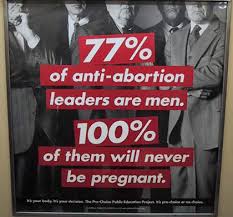
The Right is made up overwhelmingly of white males. And many of these men would feel entirely at home with a Christianized version of the Taliban. They long for a world where women meekly cater to their every demand and believe only what their male masters approve for them to believe.
Third, many fetus fanatics are “pro-life” when it comes to fetuses, but hypocritically refuse to support the needs of children from low-income families.
Fourth, many fetus fanatics are “family values” hypocrites. For example: Representative Scott DesJarlais (R-TN), an anti-abortion, “family values” doctor, had an affair with a patient and later pressured her to get an abortion. He also agreed that his wife should have two abortions.
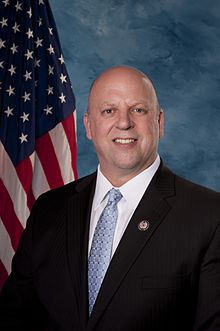
Scott DesJarlais
People like this subscribe to a philosophy of: “Do as I say, not as I do. And if I do it, it’s in the service of a Higher Cause and therefore entirely justified.”
Fifth, many fetus fanatics feel guilty about their own past sexual transgressions—especially if these resulted in pregnancy. And they want to prevent others from living the same life they did.
Some of these people are well-intentioned. Even so, they usurp unto themselves a God-like right to intrude on the most intimate decisions for others—regardless of what those people may need or want.
Sixth, many fetus fanatics embrace contradictory goals. On one hand, most of them claim they want to “get government off the backs of the people.” That usually means allowing corporations to pollute, sell dangerous products and treat their employees as slaves.
On the other hand, they want to insert the government into the vagina of every woman. That means empowering State and Federal authorities to prevent women from getting birth control or an abortion—even in cases of rape, incest, or to save the life of the mother.
Seventh, many leaders of the fetus fanatics movement are independently wealthy. This means that even if abortion could be outlawed for the vast majority, they could always bribe a willing doctor—here or abroad—to perform such an operation on their wife, daughter and/or mistress. For them, there is always an escape clause.
Eighth, many fetus fanatics are not truly “pro-life.” They totally oppose abortion under most—-if not all—circumstances. But they also fully support:
- making military-style assault weapons available to nutcases;
- capital punishment;
- going to war for almost any reason;
- wholesale massacres of wildlife;
- despoiling of the environment; and/or
- even nuclear war.
Lucy, the famous cartoon character in Charles Schultz’ “Peanuts” series, once said: “I love humanity. It’s people I can’t stand.” With fetus fanatics, the line runs: “I love fetuses. Everything else is expendable.”
Ninth, many fetus fanatics believe that since their religion teaches that abortion is wrong, they have a moral duty to enforce that belief on others.
This is especially true for evangelical Christians. These are the same people who condemn Muslims—such as those in Saudi Arabia—for segregating women, forbidding them to drive and forcing them to wear head scarfs or chadors—loose, usually black robes.
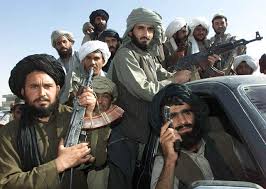
Taliban: Islam’s version of the “Right-to-Life” movement
But while they condemn Islamics for their general intolerance of others’ religious beliefs, they lust to impose their own upon those who belong to other churches. Or who belong to no church at all.
Tenth, many fetus fanatics are just as opposed to birth control as they are to abortion. Thus, when Georgia University law student Sandra Fluke asked Congress to require insurance companies to cover birth control, Rush Limbaugh branded her a “slut” and a “prostitute.”
2020 PRESIDENTIAL ELECTION, ABC NEWS, ADOLF HITLER, ALBERT SPEER, ALTERNET, AMERICABLOG, AP, ATTACK ON THE UNITED STATES CAPITOL BUILDING, BABY BOOMER RESISTANCE, BLOOMBERG, BOB WOODWARD, BUZZFEED, CBS NEWS, CIA, CNN, CROOKS AND LIARS, DAILY KOS, DAILY KOZ, DISOBEYING HITLER: GERMAN RESISTANCE AFTER VALKYRIE (BOOK), DONALD TRUMP, FACEBOOK, FASCISM, FIVETHIRTYEIGHT, GINA HASPEL, HARPER’S MAGAZINE, HERMAN GORING, HUFFINGTON POST, JOE BIDEN, MARK ESPER, MEDIA MATTERS, MIKE POMPEO, MOTHER JONES, MOVEON, MSNBC, NANCY PELOSI, NATIONAL SECURITY AGENCY, NAZI GERMANY, NBC NEWS, NEWSWEEK, NPR, PBS NEWSHOUR, PERIL (BOOK), POLAND, POLITICO, POLITICUSUSA, RANDALL HANSEN, RAW STORY, REPUBLICAN PARTY, REPUBLICANS, REUTERS, ROBERT COSTA, SALON, SLATE, TALKING POINTS MEMO, THE ATLANTIC, THE CHICAGO SUN-TIMES, THE CHICAGO TRIBUNE, THE DAILY BEAST, THE DAILY BLOG, THE GUARDIAN, THE HILL, THE HUFFINGTON POST, THE LOS ANGELES TIMES, THE NATION, THE NEW REPUBLIC, THE NEW YORK TIMES, THE PENTAGON, THE VILLAGE VOICE, THE WALL STREET JOURNAL, THE WASHINGTON POST, THINKPROGRESS, TIME, TRUTHDIG, TRUTHOUT, TWITTER, TWO POLITICAL JUNKIES, U.S. NEWS & WORLD REPORT, UPI, USA TODAY, VLADIMIR PUTIN, VOTER FRAUD, WEHRMACHT, WONKETTE, WORLD WAR 11
In Bureaucracy, History, Military, Politics, Social commentary on September 22, 2021 at 12:12 am
On January 8, 2021, General Mark Milley, Chairman of the Joint Chiefs of Staff, calls a secret meeting in his Pentagon office to review the process for military action, including launching nuclear weapons.
It’s two days since President Donald Trump incited an attack on the United States Capitol Building to stop the certifying of Joe Biden as the next President of the United States. And Milley fears Trump intends to launch a full-fledged coup to remain in power.
He instructs his senior military officials to not take orders from anyone unless he is involved: “No matter what you are told, you do the procedure. You do the process. And I’m part of that procedure.”
He looks each officer in the eye, and asks him to verbally confirm that he understands.
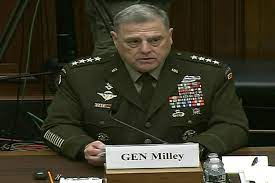
Mark Milley
Fearful of Trump’s actions in his final weeks as President, Milley twice calls China’s top general, Li Zuocheng, of the People’s Liberation Army.
China is on high alert because of the chaos in the United States.
Milley assures Zuocheng there is no cause to fear an American attack, despite Trump’s provocative rhetoric against China. He promises that he will warn Zuocheng in the event of an American attack.
Donald Trump, in a September 14, 2021 interview on Newsmax, says Milley’s calls to the Chinese could amount to treason: “If it is actually true, which is hard to believe, that he would have called China and done these things and was willing to advise them of an attack, or in advance of an attack, that’s treason.
“For him to say that I was going to attack China is the most ridiculous thing I’ve ever heard.”

Donald Trump
At least three Republican Senators and nine members of the House of Representatives have demanded that Milley resign or be fired.
“He should be court-martialled if true,” Senator Rand Paul (R-Ky) writes on Twitter.
“(Milley) worked to actively undermine the sitting commander in chief of the U.S. armed forces,” Senator Marco Rubio (R-Fla.) posts on Twitter.
Senator Dick Durbin (D-Ill.) disagrees. He tells reporters that Democratic lawmakers “were circumspect in our language [to Milley] but many of us made it clear that we were counting on him to avoid the disaster which we knew could happen at any moment.”
Nazi defendants at Nuremberg had reacted with similar outrage upon learning that former Minister of Armaments Albert Speer had considered assassinating Adolf Hitler. Hitler had given orders for the total destruction of Germany when he realized he had lost World War II.
“Traitor!” they shouted at Speer in the courtroom.
Former Reichmarshall Herman Goring—who had himself been condemned to death by Hitler in the closing days of the war—vowed: “If we ever get into power again, we’ll execute you for treason!”
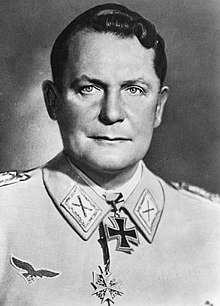
Herman Goring
Adding to the pressures on Milley is a blunt phone call from House Speaker Nancy Pelosi: “What I’m saying to you is that if they couldn’t even stop him from an assault on the Capitol, who even knows what else he may do? And is there anybody in charge at the White House who was doing anything but kissing his fat butt all over this?
“You know he’s crazy. He’s been crazy for a long time.”
Milley replied: “Madam Speaker, I agree with you on everything.”
After that call, Milley:
- Orders his top service chiefs to watch everything “all the time.”
- Tells the director of the National Security Agency: “Needles up. Keep watching, scan.”
- Tells then-CIA Director Gina Haspel: “Aggressively watch everything, 360.”
Write Bob Woodward and Robert Costa in their forthcoming book, Peril: “Milley was overseeing the mobilization of America’s national security state without the knowledge of the American people or the rest of the world.
“Some might contend that Milley had overstepped his authority and taken extraordinary power for himself, but he believed his actions were a good faith precaution to ensure there was no historic rupture in the international order, no accidental war with China or others, and no use of nuclear weapons.”
Milley has been shocked when, immediately after losing the 2020 election, Trump signs a secret military order withdrawing all America troops from Afghanistan by January 15, 2021—five days before he is scheduled to leave the White House.
After Trump incites the January 6 attack on the Capitol, write Woodward and Costa, Milley “felt no absolute certainty that the military could control or trust Trump and believed it was his job as the senior military officer to think the unthinkable and take any and all necessary precautions.”
Nor is Milley the only high-ranking national security official who fears Trump’s vindictiveness: CIA Director Gina Haspel warns Milley, “We are on the way to a right-wing coup. The whole thing is insanity. He is acting out like a six-year-old with a tantrum.”
Haspel also worries that Trump will try to attack Iran.
Milley intends above all to ensure a peaceful transfer of power from Donald Trump to Joe Biden on January 20:
“We’ve got a plane with four engines and three of them are out. We’ve got no landing gear. But we’re going to land this plane and we’re going to land it safely,” he tells Secretary of State Mike Pompeo.
On January 20, 2021, that plane lands safely.
2020 PRESIDENTIAL ELECTION, ABC NEWS, ADOLF HITLER, ALBERT SPEER, ALTERNET, AMERICABLOG, AP, ATTACK ON THE UNITED STATES CAPITOL BUILDING, BABY BOOMER RESISTANCE, BLOOMBERG, BOB WOODWARD, BUZZFEED, CBS NEWS, CIA, CNN, CROOKS AND LIARS, DAILY KOS, DAILY KOZ, DISOBEYING HITLER: GERMAN RESISTANCE AFTER VALKYRIE (BOOK), DONALD TRUMP, FACEBOOK, FASCISM, FIVETHIRTYEIGHT, GINA HASPEL, HARPER’S MAGAZINE, HERMAN GORING, HUFFINGTON POST, JOE BIDEN, MARK ESPER, MEDIA MATTERS, MIKE POMPEO, MOTHER JONES, MOVEON, MSNBC, NANCY PELOSI, NATIONAL SECURITY AGENCY, NAZI GERMANY, NBC NEWS, NEWSWEEK, NPR, PBS NEWSHOUR, PERIL (BOOK), POLAND, POLITICO, POLITICUSUSA, RANDALL HANSEN, RAW STORY, REPUBLICAN PARTY, REPUBLICANS, REUTERS, ROBERT COSTA, SALON, SLATE, TALKING POINTS MEMO, THE ATLANTIC, THE CHICAGO SUN-TIMES, THE CHICAGO TRIBUNE, THE DAILY BEAST, THE DAILY BLOG, THE GUARDIAN, THE HILL, THE HUFFINGTON POST, THE LOS ANGELES TIMES, THE NATION, THE NEW REPUBLIC, THE NEW YORK TIMES, THE PENTAGON, THE VILLAGE VOICE, THE WALL STREET JOURNAL, THE WASHINGTON POST, THINKPROGRESS, TIME, TRUTHDIG, TRUTHOUT, TWITTER, TWO POLITICAL JUNKIES, U.S. NEWS & WORLD REPORT, UPI, USA TODAY, VLADIMIR PUTIN, VOTER FRAUD, WEHRMACHT, WONKETTE, WORLD WAR 11
In Bureaucracy, History, Military, Politics, Social commentary on September 21, 2021 at 12:07 am
On November 3, 2020, 81,255,933 Democratic voters elect former Vice President Joseph Biden the 46th President of the United States.
President Donald J. Trump, running for a second term, gets 74,196,153 votes. Biden also wins decisively in the Electoral College: 306 votes to 232 for Trump.
Facing the end of his Presidency, Trump desperately seeks to remain in power. Having “joked” about being “President-for-Life,” he’s now fighting to make that a reality.
He spreads The Big Lie that he has been robbed by fraud. He summons his Stormtrumper followers to Washington, D.C. for a massive “Stop the Steal” rally set for January 6.
It is on that day that members of the House and Senate will meet in the United States Capitol Building to officially count the Electoral College votes. Since that total is known, it’s a foregone conclusion that Biden will be officially pronounced President-Elect.
Unwilling to accept this verdict, Trump demands that his vice president, Mike Pence, refuse to certify the election of Joe Biden as America’s next President.
When Pence refuses to break the law, Trump incites his followers in Washington, D.C., to storm the Capitol building on January 6 to stop the certification.
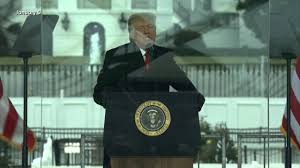
Donald Trump addresses his Stormtrumpers
The Stormtrumpers march to the United States Capitol—and quickly brush aside Capitol Police.
- Members of the mob attack police with chemical agents, metal poles and lead pipes.
- At least 140 police officers suffer injuries, including concussions, broken ribs, smashed spinal discs, a lost eye.
- Many of the lawmakers’ offices are occupied and vandalized—including that of House Speaker Nancy Pelosi, a favorite Right-wing target.
- Lawmakers huddle under desks and behind locked doors, expecting to die any minute.
- More than three hours pass before police—using riot gear, shields and batons—retake control of the Capitol.
And Trump? After giving his inflammatory speech, he returns to the White House—to watch his handiwork on television. He initially rebuffs requests to mobilize the National Guard.
With the United States seemingly on the brink of a Trumpian coup, General Mark Milley—Chairman of the Joint Chiefs of Staff—steps forward to save his country from a President he distrusts.
Appointed to that position by Trump in 2018, his career includes assignments with the 82nd Airborne Division, 5th Special Forces Group, Joint Readiness Training Center, Operations Staff of the Joint Staff, and Military Assistant to the Secretary of Defense.
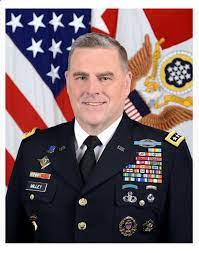
Mark Milley
Two days after the treasonous January 6 attack, Milley single-handedly takes secret action to prevent Trump from potentially ordering a dangerous military strike or launching nuclear weapons.
That’s one of a series of startling revelations in Peril, a new book by legendary journalist Bob Woodward and veteran Washington Post reporter Robert Costa.
Milley, deeply shaken by the Capitol assault, “was certain that Trump had gone into a serious mental decline in the aftermath of the election, with Trump now all but manic, screaming at officials and constructing his own alternate reality about endless election conspiracies.”
“You never know what a president’s trigger point is,” Milley tells his senior staff.
On January 8, Milley calls a secret meeting in his Pentagon office to review the process for military action, including launching nuclear weapons.

The Pentagon
Touch Of Light, CC BY-SA 4.0 <https://creativecommons.org/licenses/by-sa/4.0>, via Wikimedia Commons
He instructs his senior military officials to not take orders from anyone unless he is involved: “No matter what you are told, you do the procedure. You do the process. And I’m part of that procedure.”
He looks each officer in the eye, and asks him to verbally confirm that he understands.
Fearful of Trump’s actions in his final weeks as President, Milley twice calls China’s top general, Li Zuocheng of the People’s Liberation Army to assure him that the two nations will not suddenly go to war.
China is on high alert because of the chaos in the United States.
Milley assures him there is no cause to fear an American attack, despite Trump’s provocative rhetoric against that country. He promises Zuocheng that he will warn him in the event of an upcoming American attack:
“General Li, I want to assure you that the American government is stable and everything is going to be okay,” Milley says in the first call on October 30, 2020. “We are not going to attack or conduct any kinetic operations against you.
“If we’re going to attack, I’m going to call you ahead of time. It’s not going to be a surprise,” Milley reportedly says.
The second call is on January 8, 2021, to assure Zuocheng the United States isn’t on the brink of collapse.
Zuocheng isn’t easily convinced, even after Milley promises him: “We are 100 percent steady. Everything’s fine. But democracy can be sloppy sometimes.”
According to the Woodward-Costa book, Milley calls the admiral overseeing the U.S. Indo-Pacific Command, the military unit responsible for Asia and the Pacific region, and recommends postponing upcoming military exercises.
He also asks senior officers to swear that Milley will be involved if Trump orders the launch of nuclear weapons.
2020 PRESIDENTIAL ELECTION, ABC NEWS, ADOLF HITLER, ALBERT SPEER, ALTERNET, AMERICABLOG, AP, ATTACK ON THE UNITED STATES CAPITOL BUILDING, BABY BOOMER RESISTANCE, BLOOMBERG, BOB WOODWARD, BUZZFEED, CBS NEWS, CIA, CNN, CROOKS AND LIARS, DAILY KOS, DAILY KOZ, DISOBEYING HITLER: GERMAN RESISTANCE AFTER VALKYRIE (BOOK), DONALD TRUMP, FACEBOOK, FASCISM, FIVETHIRTYEIGHT, GINA HASPEL, HARPER’S MAGAZINE, HERMAN GORING, HUFFINGTON POST, JOE BIDEN, MARK ESPER, MEDIA MATTERS, MIKE POMPEO, MOTHER JONES, MOVEON, MSNBC, NANCY PELOSI, NATIONAL SECURITY AGENCY, NAZI GERMANY, NBC NEWS, NEWSWEEK, NPR, PBS NEWSHOUR, PERIL (BOOK), POLAND, POLITICO, POLITICUSUSA, RANDALL HANSEN, RAW STORY, REPUBLICAN PARTY, REPUBLICANS, REUTERS, ROBERT COSTA, SALON, SLATE, TALKING POINTS MEMO, THE ATLANTIC, THE CHICAGO SUN-TIMES, THE CHICAGO TRIBUNE, THE DAILY BEAST, THE DAILY BLOG, THE GUARDIAN, THE HILL, THE HUFFINGTON POST, THE LOS ANGELES TIMES, THE NATION, THE NEW REPUBLIC, THE NEW YORK TIMES, THE PENTAGON, THE VILLAGE VOICE, THE WALL STREET JOURNAL, THE WASHINGTON POST, THINKPROGRESS, TIME, TRUTHDIG, TRUTHOUT, TWITTER, TWO POLITICAL JUNKIES, U.S. NEWS & WORLD REPORT, UPI, USA TODAY, VLADIMIR PUTIN, VOTER FRAUD, WEHRMACHT, WONKETTE, WORLD WAR 11
In Bureaucracy, History, Military, Politics, Social commentary on September 20, 2021 at 12:05 am
Albert Speer, Minister of Armaments for the Third Reich, is appalled.
His Fuhrer, Adolf Hitler—the man he had idolized for 14 years—has just passed a death sentence on Germany, the nation he claimed to love above all others.
On March 19, 1945, facing certain defeat, Hitler had ordered a massive “scorched-earth” campaign throughout Germany.
All German agriculture, industry, ships, communications, roads, food stuffs, mines, bridges, stores and utility plants are to be destroyed.
If implemented, it will deprive the entire German population of even the barest necessities after the war.
Now living in a bunker 50 feet below bomb-shattered Berlin, Hitler gives full vent to his most destructive impulses.
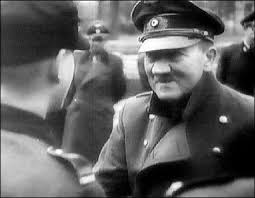
Adolf Hitler addressing boy soldiers as the Third Reich crumbles
“If the war is lost,” Hitler tells Speer, “the nation will also perish. This fate is inevitable. There is no necessity to take into consideration the basis which the people will need to continue even a most primitive existence.
“On the contrary, it will be better to destroy these things ourselves, because this nation will have proved to be the weaker one and the future will belong solely to the stronger eastern nation.
“Besides, those who will remain after the battle are only the inferior ones, for the good ones have all been killed.”
His attitude is: “If I can’t rule Germany, then there won’t be a Germany.”
Speer argues in vain that there must be a future for the German people. But Hitler refuses to back down. He gives Speer 24 hours to reconsider his opposition to the order.
The next day, Speer tells Hitler: “My Fuhrer, I stand unconditionally behind you!”
“Then all is well,” says Hitler, suddenly with tears in his eyes.

Albert Speer
“If I stand unreservedly behind you,” says Speer, “then you must entrust me rather than the Gauleiters [district Party leaders serving as provincial governors] with the implementation of your decree.”
Filled with gratitude, Hitler signs the decree Speer has thoughtfully prepared before their fateful meeting.
By doing so, Hitler unintentionally gives Speer the power to thwart his “scorched earth” decree.
Speer has been the closest thing to a friend in Hitler’s life. Trained as an architect, he joined the Nazi Party in 1931.
He met Hitler in 1933, when he presented the Fuhrer with architectural designs for the Nuremberg Rally scheduled for that year.
From then on, Speer became Hitler’s “genius architect” assigned to create buildings meant to last for a thousand years.
In 1943, Hitler appointed him Minister of Armaments, charged with revitalizing the German war effort.
Nevertheless, Speer now crisscrosses Germany, persuading military leaders and district governors to not destroy the vital facilities that would be needed after the war.
“No other senior National Socialist could have done the job,” writes Randall Hanson, author of Disobeying Hitler: German Resistance After Valkyrie.
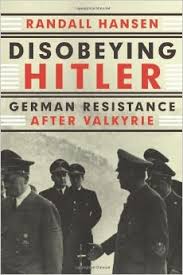
Risking death, Speer refuses to carry out Hitler’s “scorched earth” order. Even more important, he successfully blocks such destruction and persuades influential military and civilian leaders to disobey the order as well.
As a result, those targets slated for destruction are spared.
Despite his later conviction for war crimes at Nuremberg, Speer never regrets his efforts to save Germany from total destruction at the hands of Adolf Hitler.
Fast forward 75 years: On November 3, 2020, 81,255,933 Democratic voters elect former Vice President Joseph Biden the 46th President of the United States.
President Donald J. Trump, running for a second term, gets 74,196,153 votes. Biden also wins decisively in the Electoral College: 306 votes to 232 for Trump.
Facing the end of his Presidency, Trump desperately seeks to remain in power. Having “joked” about being “President-for-Life,” he’s now fighting to make that a reality.
Unlike his 44 predecessors, he refuses to concede. For almost three weeks he denies his successor access to the resources he needs to launch a smooth transition.

Donald Trump
Even worse: Instead of showing concern for the country he claims to love, Trump is now relentlessly destroying those institutions that guarantee American freedom and safety:
- The Pentagon
- The CIA
- The FBI
- The Cybersecurity and Infrastructure Security Agency
Trump spreads The Big Lie that the election had been stolen. He repeatedly presses his vice president, Mike Pence, to refuse to certify the election results at the Capitol on January 6. When Pence refuses to break the law, Trump incites his followers to storm the building to stop the vote counting.
His attitude clearly is: “If I can’t rule America, there won’t be an America.”
Meanwhile, House and Senate Republicans have embraced his most outrageous lies—or refused to openly refute them—as the COVID-19 pandemic slaughters about 1,000 Americans a day.
Even Republicans who privately admit the Trump era is ending realize that 74 million hate-filled Americans voted for him in 2020. And eagerly await the coming of the next would-be Fuhrer.
They will also eagerly vote out of office any Republican who dares break with the man they worship like a cult leader.
For Congressional Republicans, staying in office—and keeping their power and perks—is their top priority.
It is at this moment that one man—General Mark Milley, Chairman of the Joint Chief of Staff—steps forward to save his country from a President he distrusts.
60 MINUTES, ABC NEWS, ALTERNET, AMERICABLOG, AMERICANS WITH DISABILITIES ACT, AP, BABY BOOMER RESISTANCE, BBC, BLOOMBERG NEWS, BUZZFEED, CBS NEWS, CNN, CONGRESS, CROOKS AND LIARS, DAILY KOZ, DEMOCRATIC PARTY, DO NOT CALL REGISTRY, FACEBOOK, FBI, FEDERAL COMMUNICATIONS COMMISSION (FCC), FIVETHIRTYEIGHT, HARPER’S MAGAZINE, HUFFINGTON POST, MEDIA MATTERS, MOTHER JONES, MOVEON, MSNBC, NBC NEWS, NEW REPUBLIC, NEWSDAY, NEWSWEEK, NPR, PBS NEWSHOUR, PETE BUTTIGIEG, POLITICO, POLITICUSUSA, RAW STORY, REPUBLICAN PARTY, REUTERS, SALON, SAN FRANCISCO, SAN FRANCISCO MUNICIPAL RAILWAY (MUNI) SYSTEM, SEATTLE TIMES, SLATE, SPAM CALLS, TALKING POINTS MEMO, TELEMARKETING, THE ATLANTIC, THE CHICAGO SUN-TIMES, THE CHICAGO TRIBUNE, THE DAILY BEAST, THE DAILY BLOG, THE GUARDIAN, THE HILL, THE HUFFINGTON POST, THE LOS ANGELES TIMES, THE NATION, THE NEW REPUBLIC, THE NEW YORK TIMES, THE NEW YORKER, THE VILLAGE VOICE, THE WASHINGTON POST, THINKPROGRESS, TIME, TRUTHDIG, TRUTHOUT, TWITTER, TWO POLITICAL JUNKIES, U.S. NEWS & WORLD REPORT, UNITED STATES DEPARTMENT OF TRANSPORTATION, UPI, USA TODAY, WONKETTE
In Bureaucracy, Business, History, Law, Law Enforcement, Politics, Social commentary on September 14, 2021 at 12:05 am
It’s wonderful to believe that when you have a problem, you can write your local / state / federal representative and s/he will “give it my fullest attention.”
Unfortunately, it’s also usually a mistake.
Two cases on the futility of expectations:
Case #1: On August 12, a man I’ll call Mark, wrote a letter to Secretary of Transportation Pete Buttigieg. The subject: The disgraceful performance of San Francisco’s Municipal Railway (MUNI) bus lines during the Covid-19 pandemic.
Mark had previously complained to MUNI and his member of the San Francisco Board of Supervisors—without result. So now he decided to literally make it a Federal case:
“MUNI bus drivers are the highest-paid in the nation: The average MUNI driver makes $79,617, 51% above the national average bus driver salary of $52,730. This pay is 27% higher than the combined average salaries of drivers in Dallas, Boston and Atlanta.
“Yet for more than a year, many of these drivers have been ‘earning’ their pay by staying at home—or going on what amounts to an extended vacation at the expense of San Francisco voters and MUNI riders.”

Many bus routes, Mark wrote, had been eliminated. This forces riders to cram themselves aboard the first bus available—making it impossible to “maintain social distancing” as recorded messages aboard MUNI buses advise.
Other routes have been substantially altered, with passengers learning this only after they are deposited far from their expected drop-off point.
These changes are especially difficult for elderly and/or disabled riders.
Mark suggested that Buttigieg threaten MUNI with:
- The loss of the Federal monies it now receives through the Department of Transportation; and
- An Americans With Disabilities lawsuit on behalf of San Franciscans now unable to receive the transit services they need.
To date—one month later—Mark has not received even the courtesy of a reply, let alone seen a positive change in MUNI’s operations.
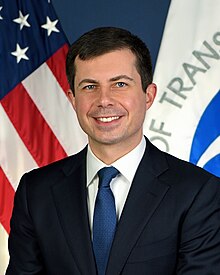
Pete Buttigieg
Case #2: Janet, a chef in Los Angeles, was fed up with getting Spam calls on her cell phone. Each time she got one, she blocked the number. Being on the national Do Not Call Registry, she believed she had an airtight case to take to the Federal Communications Commission (FCC) which regulates the airways.
So she called the FCC and spoke with one of its representatives.
She said that she had saved to her phone the numbers of Spam callers—and she was prepared to turn these over to the FCC.
The FCC’s rep applauded Janet’s willingness to turn over this information.
“Then what happens?” asked Janet.
“We’ll put it into our files.”
In short: the FCC had no intention of acting on the Spam-caller numbers that Janet was prepared to turn over.

Janet didn’t hide her disappointment: “If someone went to the FBI and said, ‘I’m being shaken down by the Mafia,’ and the FBI said, ‘Well, we’ll put this into our files’ but wasn’t willing to do anything more, how many people do you think would be willing to report crimes to the FBI?”
The FCC rep admitted that this would greatly reduce the willingness of the public to report crimes to the FBI. But she made no effort to help Janet stop the harassing Spam calls.
Incidents like the ones above are a potent reason why so many people have lost their trust in government—at all levels.
Untold numbers of average citizens feel their elected officials—and the agencies they administer—don’t care about their problems. Even worse, they believe—accurately—that if they were wealthy contributors to the Democratic or Republican party, their complaints would be addressed promptly.
On April 24, 2016, CBS’ longtime documentary series, “60 Minutes,” aired a segment titled “Dialing for Dollars.”
It opened with the following: “The American public has a low opinion of Congress. Only 14 percent think it’s doing a good job. But Congress has excelled in one way. Raising money. Members of Congress raised more than a billion dollars for their 2014 election. And they never stop.
“Nearly every day, they spend hours on the phone asking supporters and even total strangers for campaign donations—hours spent away from the jobs they were elected to do. The pressure on candidates to raise money has ratcheted up since the Supreme Court’s Citizens United decision in 2010. That allowed unlimited spending by corporations, unions and individuals in elections.”

In short: Members of Congress—the branch that writes the laws governing the lives of 328.2 million Americans—have essentially become telemarketers.
People who write to their members of Congress expect at least the courtesy of a reply addressing their concerns within a reasonable period of time. Many constituents will not receive even that.
Or the “reply” they receive arrives weeks or months later—and opens with: “Thank you for writing me to support my bill….”
Usually they haven’t even heard of the bill cited—and couldn’t care less about it. As they scan the letter—no doubt drafted by a low-level staffer—they search in vain for an offer of help, or at least empathy.
Millions of Americans will have no other contact with government officials than this. And it will convince them that if government isn’t their enemy, it’s certainly not their friend.
ABC NEWS, ALTERNET, AMERICABLOG, AMERICAN CAESARS: THE LIVES OF THE PRESIDENTS FROM FRANKLIN D. ROOSEVELT TO GEORGE W. BUSH (BOOK), AP, AUGUSTUS CAESAR, BABY BOOMER RESISTANCE, BBC, BENGHAZI, BILL CLINTON, BLOOMBERG NEWS, BUREAUCRACY, BUZZFEED, CALIGULA, CBS NEWS, CLAUDIUS, CNN, CONDOLEEZA RICE, CROOKS AND LIARS, DAILY KOZ, DICK CHENEY, DOMITIAN, DONALD RUMSFELD, DONALD TRUMP, DWIGHT D. EISENHOWER, FACEBOOK, FBI, FIVETHIRTYEIGHT, FRANKLIN D. ROOSEVELT, GAIUS SUETONIUS TRANQUILLUS, GALBA, GEORGE H.W. BUSH, GEORGE W. BUSH, HARPER’S MAGAZINE, HARRY S. TRUMAN, HUFFINGTON POST, JEB BUSH, JOHN F. KENNEDY, JULIUS CAESAR, LIBYA, LYNDON B. JOHNSON, MEDIA MATTERS, MOTHER JONES, MOVEON, MSNBC, NBC NEWS, NERO, NEW REPUBLIC, NEWSDAY, NEWSWEEK, NIGEL HAMILTON, NPR, PAUL WOLFOWITZ, PBS NEWSHOUR, POLITICO, POLITICUSUSA, RAW STORY, REPUBLICAN PARTY, REPUBLICANS, REUTERS, SALON, SEATTLE TIMES, SLATE, TALKING POINTS MEMO, TERRORISM, THE ATLANTIC, THE CHICAGO SUN-TIMES, THE CHICAGO TRIBUNE, THE DAILY BEAST, THE DAILY BLOG, THE GUARDIAN, THE HILL, THE HUFFINGTON POST, THE LOS ANGELES TIMES, THE NATION, THE NEW REPUBLIC, THE NEW YORK TIMES, THE NEW YORKER, THE TWELVE CAESARS, THE VILLAGE VOICE, THE WASHINGTON POST, THINKPROGRESS, TIBERIUS, TIME, TITUS, TRUTHDIG, TRUTHOUT, TWITTER, TWO POLITICAL JUNKIES, U.S. NEWS & WORLD REPORT, UPI, USA TODAY, VESPASIAN, WONKETTE, WORLD TRADE CENTER
In Bureaucracy, History, Military, Politics, Social commentary on September 13, 2021 at 12:07 am
On October 16, 2015, then-Republican Presidential candidate Donald Trump told a brutal truth to take down his opponent, Jeb Bush, former governor of Florida.
Interviewed on Bloomberg TV, Trump said what—to Republicans—had been the unsayable about former President George W. Bush: “I mean, say what you want, the World Trade Center came down during his time.”
“Hold on,” said correspondent Stephanie Ruhle, “you can’t blame George Bush for that.”
“He was President, okay? Blame him or don’t blame him, but he was President,” Trump said. “The World Trade Center came down during his reign.”

Donald Trump
Immediately after Trump’s remarks, Jeb Bush rushed to his brother’s defense on Twitter: “How pathetic for @realdonaldtrump to criticize the president for 9/11. We were attacked & my brother kept us safe.”
Of course, “my brother” didn’t keep safe those 3,000 Americans who died on 9/11.
Nor did Jeb mention that, during his first eight months in office before September 11, “my brother” was on vacation 42% of the time.
But holding Bush accountable for the September 11, 2001 terror attacks on the Pentagon and World Trade Center is taboo for Right-wing Republicans.
Conversely, Republicans spent four years blaming President Barack Obama for the deaths of four Americans killed in an American consulate in Benghazi, Libya, in 2012.
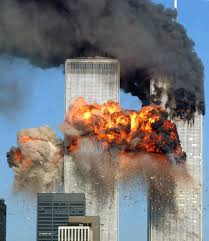
The World Trade Center on September 11, 2001
Fortunately, British historian Nigel Hamilton has brutally laid bare the facts of this needless tragedy.
Hamilton is the author of several acclaimed political biographies, including JFK: Reckless Youth and Bill Clinton: Mastering the Presidency.
His book: American Caesars: The Lives of the Presidents from Franklin D. Roosevelt to George W. Bush, appeared in 2010.
It was inspired by a classic work of ancient biography: The Twelve Caesars, by Gaius Suetonius Tranquillus—known as Suetonius.
Suetonius, a Roman citizen and historian, had chronicled the lives of the first 12 Caesars of Imperial Rome: Julius Caesar, Augustus, Tiberius, Caligula, Claudius, Nero, Galba, Otho, Vitellius, Vespasian, Titus and Domitian.
Hamilton wanted to examine post-World War II United States history as Suetonius had examined that of ancient Rome: Through the lives of the 12 “emperors” who had held the power of life and death over their fellow citizens—and those of other nations.

For Hamilton, the “greatest of American emperors, the Caesar Augustus of his time,” was Franklin D. Roosevelt, who led his country through the Great Depression and World War II.
His “”great successors” were Harry S. Truman, Dwight D. Eisenhower and John F. Kennedy—who, in turn, contained the Soviet Union abroad and presided over sustained economic prosperity at home.
By contrast, “arguably the worst of all the American Caesars” was “George W. Bush, and his deputy, Dick Cheney, who willfully and recklessly destroyed so much of the moral basis of American leadership in the modern world.”
Among the most lethal of Bush’s offenses: The appointing of officials who refused to take seriously the threat posed by Al-Qaeda.
These included:
- Paul Wolfowitz, the deputy Secretary of Defense: “I don’t understand why we are beginning by talking about this one man, bin Laden.”
- National Security Adviser Condoleeza Rice: Initially refused to hold a cabinet-level meeting on the subject. Then she insisted the matter be handled only by a more junior Deputy Principals meeting in April, 2001.
- Vice President Dick Cheney: Focused his attention on fomenting a war against Iraq.
- Secretary of Defense Donald Rumsfeld: Repeatedly ignored American Intelligence warnings that Al-Qaeda was planning a major attack on the American mainland.
The only major administration official who did take Al-Qaeda seriously was Richard Clarke, the chief counter-terrorism adviser on the National Security Council. But Clarke’s position didn’t give him Cabinet-level rank.
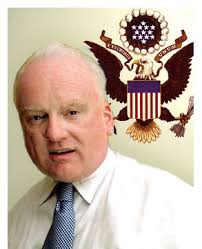
Richard Clarke
This put him at a severe disadvantage when dealing with higher-ranking Bush officials—such as Cheney, Rumsfeld, Wolfowitz and Rice.
Clarke alerted Federal Intelligence agencies that “Al-Qaeda is planning a major attack on us.” He asked the FBI and CIA to report to his office all they could learn about suspicious persons or activities at home and abroad.
Finally, at a meeting with Condoleeza Rice on September 4, 2001, Clarke challenged her to “picture yourself at a moment when in the very near future Al-Qaeda has killed hundreds of Americans, and imagine asking yourself what you wish then that you had already done.”
Apparently, that moment never came for Rice—or any other Bush officials.
Seven days later, Al-Qaeda struck, and 3,000 Americans died horrifically—and needlessly.
Neither Bush, Cheney, Rice, Rumsfeld nor Wolfowitz ever apologized for their negligence. Nor has any of them ever been held accountable.
After 9/11, they wrapped themselves in the flag and posed as America’s saviors.
- Bush retired from office with a lavish pension and full Secret Service protection.
- He wrote his memoirs and was paid $7 million for the first 1.5 million copies.
- Cheney, Rumsfeld and Rice retired to private business, wrote their own memoirs, and lived in comfort as respected elder statesmen.
Only Richard Clarke—who had vainly argued for stepped-up security precautions and taking the fight to Al-Qaeda—gave that apology.
On March 24, 2004, Clarke testified at the public 9/11 Commission hearings. Addressing relatives of victims in the audience, he said: “Your government failed you, those entrusted with protecting you failed you, and I failed you.”


ABC NEWS, ADOLF HITLER, ALTERNET, AMERICABLOG, AP, BABY BOOMER RESISTANCE, BARACK OBAMA, BBC, BILL CLINTON, BLOOMBERG NEWS, BUZZFEED, CBS NEWS, CHRIS MATTHEWS, CNN, CNN'S "STARTING POINT", CROOKS AND LIARS, CZECHOSLAVAKIA, DAILY KOZ, DARRELL ISSA, DEBT CEILING, EXECUTIVE ORDERS, EXTORTION, FACEBOOK, FIVETHIRTYEIGHT, GEORGE W. BUSH, HARPER’S MAGAZINE, HOUSE SPEAKER JOHN BOEHNER, HUFFINGTON POST, immigration reform, INSIDER, JANET YELLEN, JIMMY CARTER, JOSEPH BIDEN, MEDIA MATTERS, MITCH MCCONNELL, MOTHER JONES, MOVEON, MSNBC, MSNBC'S "HARDBALL", NANCY PELOSI, NAZI GERMANY, NBC NEWS, NEGOTIATING, NEVILLE CHAMBERLAIN, NEW REPUBLIC, NEWSDAY, NEWSWEEK, NEWT GINGRICH, NICCOLO MACHIAVELLI, NPR, PAP SMEARS, PBS NEWSHOUR, PLANNED PARENTHOOD, POLAND, POLITICO, POLITICUSUSA, R.I.CO. ACT, RAW STORY, REPUBLICAN PARTY, REPUBLICANS, REUTERS, Ronald Reagan, SALON, SEATTLE TIMES, SLATE, TALKING POINTS MEMO, THE ATLANTIC, THE CHICAGO SUN-TIMES, THE CHICAGO TRIBUNE, THE DAILY BEAST, THE DAILY BLOG, THE GUARDIAN, THE HILL, THE HUFFINGTON POST, THE LOS ANGELES TIMES, THE NATION, THE NEW REPUBLIC, THE NEW YORK TIMES, THE NEW YORKER, THE PRINCE, THE VILLAGE VOICE, THE WASHINGTON POST, THINKPROGRESS, TIME, TITLE X, TRUTHDIG, TRUTHOUT, TWITTER, TWO POLITICAL JUNKIES, U.S. NEWS & WORLD REPORT, UPI, USA TODAY, WARREN BUFFET, WINSTON CHURCHILL, WONKETTE, WORLD WAR 11
“NEGOTIATING” REPUBLICANAZI STYLE: PART FOUR (OF SIX)
In Bureaucracy, Business, History, Law, Law Enforcement, Military, Politics, Social commentary on October 7, 2021 at 12:11 amFor the postwar Republican party, Adolf Hitler’s my-way-or-else “negotiating” methods would become standard operating procedure.
During the summer of 2011, Republicans refused to raise the debt ceiling unless Democrats agreed to massively cut social programs for the elderly, poor and disabled.
And while Republicans demanded that the disadvantaged tighten their belts, they rejected any raising of taxes on their foremost constituency—the wealthiest 1%.
To raise taxes on the wealthy, they insisted, would be a “jobs-killer.” It would “discourage” corporate CEOs from creating tens of thousands of jobs they supposedly wanted to create.
If Congress failed to raise the borrowing limit of the federal government by August 2, 2011, the date when the U.S. reached the limit of its borrowing abilities, America would begin defaulting on its loans.
As Warren Buffett, CEO of Berkshire Hathaway, explained the looming economic catastrophe:
“If you don’t send out Social Security checks, I would hate to think about the credit meeting at S&P and Moody’s the next morning.
“If you’re not paying millions and millions and millions of people that range in age from 65 on up, money you promised them, you’re not a AAA,” said Buffett.
A triple-A credit rating is the highest possible rating that can be received.
Republicans knew their argument was a lie. And so did the editors of Time. The difference is, the editors of Time were willing to reveal the truth.
In its June 20, 2011 cover-story on “What U.S. Economic Recovery? Five Destructive Myths,” Rana Foroohar, the magazine’s assistant managing editor in charge of economics and business, delivered this warning:
Profit-seeking corporations can’t be relied on to ”make it all better.”
American companies “are doing quite well,” but most American workers “are earning a lower hourly wage now than they did during the recession.”
Corporations, in short, are doing extremely well. But they don’t spend their profits on American workers.
“There may be $2 trillion sitting on the balance sheets of American corporations globally, but firms show no signs of wanting to spend it in order to hire workers at home.”
In short: Giving even greater tax breaks to mega-corporations—the standard Republican mantra—has not persuaded them to stop “outsourcing” jobs. Nor has it convinced them to start hiring Americans.
Many American companies prefer opening factories in Brazil, China or India to doing so in the United States—and thus creating jobs for American workers.
While embarrassingly overpaid CEOs squander corporate wealth on themselves, millions of Americans can’t afford medical care or must depend on charity to feed their families.
Yet there is also a disconnect between the truth of this situation and the willingness of Americans to face up to that truth.
The reason, writes Foroohar:
Republicans have convinced most Americans they can revitalize the economy by slashing “taxes on the wealthy and on cash-hoarding corporations while cutting benefits for millions of Americans.”
And she concludes: To restore prosperity America needs both tax increases and cuts in entitlement programs.
According to Mein Kampf-—”My Struggle”—Hitler’s autobiography and political treatise:
Following these principles, Republicans have proved hugely successful at persuading millions that truth is whatever their party claims it to be at any given moment.
“Fascism,” said author Ernest Hemingway, “is a lie told by bullies.” Thus, when Republicans couldn’t attain their goals by lying, they sought to do so by force—or at least the threat of it.
Republicans have repeatedly threatened to shut down the government unless their constantly escalating demands are met.
In November, 1995, Newt Gingrich, then Speaker of the House of Representatives, carried out his threat. Gingrich unwisely admitted that he did so because President Bill Clinton had put him in the back of Air Force One during a recent trip to Israel.
The shutdown proved a disaster for Republicans. Clinton was handily re-elected in 1996 and Gingrich suddenly resigned from Congress in 1998.
Still, the Republicans continued their policy of my-way-or-else.
In April, 2011, the United States government almost shut down over Republican demands about subsidized pap smears.
During a late-night White House meeting with President Barack Obama and key Congressional leaders, Republican House Speaker John Boehner made this threat:
His conference would not approve funding for the government if any money were allowed to flow to Planned Parenthood through Title X legislation.
Facing an April 8 deadline, negotiators worked day and night to strike a compromise—and finally reached one.
Three months later—on July 9—Republican extortionists again threatened the Nation with financial ruin and international disgrace unless their demands were met.
Next up: Republicans: “Stop funding pap smears for women—or we’ll shut down the government.”
Share this: