Posts Tagged ‘PENTAGON’
9/11 ATTACKS, ABC NEWS, ADOLF EICHMANN, ADOLF HITLER, ALTERNET, AMERICABLOG, AMERICAN CIVIL LIBERTIES UNION, AP, BABY BOOMER RESISTANCE, BBC, BLOOMBERG, BUZZFEED, CBS NEWS, CNN, CROOKS AND LIARS, DAILY KOS, DEPARTMENT OF HOMELAND SECURITY, DONALD TRUMP, EGYPT, EXECUTIVE ORDER, FACEBOOK, FIVETHIRTYEIGHT, HARPER’S MAGAZINE, HEINRICH HIMMLER, HERMAN GORING, HITLER 1889-1936: HUBRIS, HITLER 1936-1945: NEMESIS, HITLER: ASCENT: 1889-1939, HUFFINGTON POST, IAN KERSHAW, IRAN, IRQA, JOSEPH GOEBBELS, LYBIA, MEDIA MATTERS, MOTHER JONES, MOVEON, MSNBC, MUSLIM REFUGEES, NAZI GERMANY, NBC NEWS, NEW REPUBLIC, NEWSDAY, NEWSWEEK, NPR, OSAMA BIN LADEN, PBS NEWSHOUR, PENTAGON, POLITICO, POLITICUSUSA, RAW STORY, REUTERS, ROBERT PAYNE, SALON, SAUDI ARABIA, SEATTLE TIMES, SLATE, SOMALIA, STALINGRAD (MOVIE), SUDAN, SYRIA, TALKING POINTS MEMO, THE ATLANTIC, THE CHICAGO SUN-TIMES, THE CHICAGO TRIBUNE, THE DAILY BEAST, THE DAILY BLOG, THE GUARDIAN, THE HILL, THE HUFFINGTON POST, THE INTERCEPT, THE LIFE AND DEATH OF ADOLF HITLER, THE LOS ANGELES TIMES, THE NATION, THE NEW REPUBLIC, THE NEW YORK TIMES, THE NEW YORKER, THE VILLAGE VOICE, THE WASHINGTON POST, THINKPROGRESS, THIRD REICH, TIME, TRUTHDIG, TRUTHOUT, TURKEY, TWO POLITICAL JUNKIES, U.S. NEWS & WORLD REPORT, UNITED ARAB EMIRATES, UPI, USA TODAY, VOLKER ULRICH, WALTER SHAUB, WORLD TRADE CENTER, X, YEMEN
In Bureaucracy, Business, History, Law, Law Enforcement, Politics, Social commentary on April 25, 2025 at 12:19 am
In Stalingrad, a 1993 German-made war movie, a platoon of German Army soldiers leaves behind the beaches and beauties of Italy and find themselves fighting desperately to stay alive in Russia.
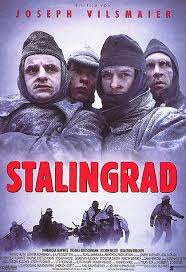
Early in the film, there is an exchange that has its real-life counterpart almost 75 years later.
A young, idealistic German lieutenant, newly transferred to the Russian front, is horrified when he sees a fellow soldier from another unit sadistically beat a Russian prisoner to death.
He seeks out the man’s superior, a captain, and says: “Captain, I must protest about the behavior of your men.”
“You want to protest?” asks the captain, grinning sardonically. “Tell the Fuhrer.”
Fast forward to January 28, 2017, the day after President Donald J. Trump signed into law an executive order which:
- Suspended entry of all refugees to the United States for 120 days;
- Barred Syrian refugees indefinitely;, and
- Blocked entry into the United States for 90 days for citizens from Iran, Iraq, Libya, Somalia, Sudan, Syria and Yemen.
The new rules—and the efforts of security personnel at major international airports to enforce them—triggered a tsunami of chaos and fear among travelers.
“We’ve gotten reports of people being detained all over the country,” said Becca Heller, the director of the International Refugee Assistance Project. “They’re literally pouring in by the minute.”
Refugees on flights when the order was signed on January 27 were detained upon arrival.
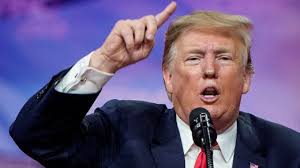
Donald Trump
Many students attending American universities were blocked from returning to the United States from visits abroad.
According to Homeland Security officials, 109 people who were already in transit to the United States when the order was signed were denied access; 173 were stopped before boarding planes heading to America. Eighty-one people who were stopped were eventually given waivers to enter the United States.
Internationally, travelers were seized by panic when they were not allowed to board flights to the United States. In Dubai and Istanbul, airport and immigration officials turned passengers away at boarding gates. At least one family was removed from a flight it had boarded.
Earlier on January 28, Trump, isolated in the White House from all the chaos he had unleashed in airports across the nation and throughout the world, said:
“It’s not a Muslim ban, but we were totally prepared. It’s working out very nicely. You see it at the airports, you see it all over.”
Then the American Civil Liberties Union intervened.

Two Iraqi immigrants, defended by the ACLU, accused Trump of legal and constitutional overreach.
The Iraqis had been detained at John F. Kennedy International Airport in New York City. One had served as an interpreter for American forces in Iraq for a decade. The other was en route to reunite with his wife and son in Texas.
The interpreter, Hameed Khalid Darweesh, was released after nearly 19 hours of detention. So was the other traveler, Haider Sameer Abdulkhaleq Alshawi.
Before the two men were released, one of their lawyers, Mark Doss, a supervising attorney at the International Refugee Assistance Project, asked an official, “Who is the person we need to talk to?”
“Call Mr. Trump,” said the official, who refused to identify himself.
He might just as well have said: “You want to protest? Tell the Fuhrer.”
The ACLU action secured at least a temporary blocking of part of Trump’s order. A Brooklyn judge barred the government from deporting some arrivals who found themselves ensnared by the Presidential order.
Judge Ann M. Donnelly of the Federal District Court in Brooklyn, ruled that sending the travelers home could cause them “irreparable harm.” She said the government was “enjoined and restrained from, in any manner and by any means, removing individuals” who had arrived in the United States with valid visas or refugee status.
But she did not force the administration to let in people otherwise blocked by the executive order who have not yet traveled to the United States. Nor did she issue a broader ruling on the constitutionality of the order.
* * * * *
On November 5, 75 million ignorant, hate-filled, Right-wing Americans re-elected Donald Trump—a man reflecting their own hate and ignorance—to the Presidency.
Summing up Trump’s character in a March 25, 2016 broadcast of The PBS Newshour, conservative political columnist David Brooks warned: “The odd thing about [Trump’s] whole career and his whole language, his whole world view is there is no room for love in it. You get a sense of a man who received no love, can give no love….
“And so you really are seeing someone who just has an odd psychology unleavened by kindness and charity, but where it’s all winners and losers, beating and being beat. And that’s part of the authoritarian personality.”
There were countless warning signs available for Trump’s supporters to see—if they had wanted to see them:
- His facing 91 criminal counts in four cases;
- His threats against his political opponents and Justice Department prosecutors;
- His conviction for raping columnist E. Jean Carroll;
- His continued lying about winning the 2020 Presidential election;
- His conviction on 34 counts of falsifying business records;
- His unjustified attacks the integrity of the FBI—causing previously “law and order” Republicans to demand its defunding.
Those who voted for Trump will now learn the meaning of the Nazi slogan: “The Fuhrer proposes and disposes for all.” Those who voted against him knew this already.
2020 PRESIDENTIL ELECTION, 9/11 ATTACKS, ABC NEWS, ADOLF EICHMANN, ADOLF HITLER, ALTERNET, AMERICABLOG, AMERICAN CIVIL LIBERTIES UNION, AMERICAN CIVIL LIBERTIES UNION (ACLU), AP, AUGUST FLENTJE, BABY BOOMER RESISTANCE, BBC, BLOOMBERG, BUZZFEED, CBS NEWS, CNN, CROOKS AND LIARS, DAILY KOS, DEPARTMENT OF HOMELAND SECURITY, DEPARTMENT OF JUSTICE, DONALD TRUMP, DUBAI, E. JEAN CARROLL, EGYPT, EL SALVADOR, EREZ REUVENI, EXECUTIVE ORDER, FACEBOOK, FALSIFYING BUSINESS RECORDS, FBI, FIVETHIRTYEIGHT, HARPER’S MAGAZINE, HEINRICH HIMMLER, HERMAN GORING, HITLER 1889 – 1936: HUBRIS (BOOK), HITLER 1889-1936: HUBRIS, HITLER 1936 – 1945 NEMESIS (BOOK), HITLER 1936-1945: NEMESIS, HITLER: ASCENT: 1889 – 1939 (BOOK), HITLER: ASCENT: 1889-1939, HUFFINGTON POST, IAN KERSHAW, ILLEGAL ALIENS, IMMIGRATION AND CUSTOMS ENFORCEMENT (ICE), INTERNATIONAL REFUGEE ASSISTANCE PROJECT, IRAN, IRAQ, ISTANBUL, JOSEPH GOEBBELS, KILMAR ABREGO GARCIA, LIBYA, LYBIA, MEDIA MATTERS, MOTHER JONES, MOVEON, MS-13 GANG, MSNBC, MUSLIM REFUGEES, MUSLIMS, NAZI GERMANY, NBC NEWS, NEW REPUBLIC, NEWSDAY, NEWSWEEK, NPR, OSAMA BIN LADEN, PAM BONDI, PAULA XINIS, PBS NEWSHOUR, PENTAGON, POLITICO, POLITICUSUSA, RAW STORY, REUTERS, ROBERT PAYNE, SALON, SAUDI ARABIA, SEATTLE TIMES, SLATE, SOMALIA, STALINGRAD (MOVIE), SUDAN, SYRIA, TALKING POINTS MEMO, THE ATLANTIC, THE CHICAGO SUN-TIMES, THE CHICAGO TRIBUNE, THE DAILY BEAST, THE DAILY BLOG, THE GUARDIAN, THE HILL, THE HUFFINGTON POST, THE INTERCEPT, THE LIFE AND DEATH OF ADOLF HITLER, THE LOS ANGELES TIMES, THE NATION, THE NEW REPUBLIC, THE NEW YORK TIMES, THE NEW YORKER, THE VILLAGE VOICE, THE WASHINGTON POST, THINKPROGRESS, THIRD REICH, TIME, TODD BLANCHE, TRUTHDIG, TRUTHOUT, TURKEY, TWO POLITICAL JUNKIES, U.S. NEWS & WORLD REPORT, UNITED ARAB EMIRATES, UPI, USA TODAY, VOLKER ULRICH, WALTER SHAUB, WERNER WILLIKENS, WORLD TRADE CENTER, X, YEMEN
In Bureaucracy, Business, History, Law, Law Enforcement, Politics, Social commentary on April 24, 2025 at 12:06 am
When historians—-and ordinary citizens—think about the Third Reich, the name of Werner Willikens doesn’t immediately spring to mind.
Adolf Hitler, Herman Goring, Joseph Goebbels, Heinrich Himmler, Adolf Eichmann—yes.
But why Werner Willikens?
British historian and author Ian Kershaw has unearthed the reason.
He has written extensively about the Third Reich. He is best-known for his monumental, two-volume biography, Hitler 1889–1936: Hubris (1998) and Hitler 1936–1945: Nemesis (2000).

Ian Kershaw
Willikens, State Secretary in the Ministry of Food, gave a speech on February 21, 1934 that casts new light on how Hitler came to exercise vast authority over Nazi Germany:
“Everyone who has the opportunity to observe it knows that the Fuhrer can hardly dictate from above everything he intends to realize sooner or later.
“On the contrary, up till now everyone with a post in the new Germany has worked best when he has, so to speak, worked towards the Fuhrer….
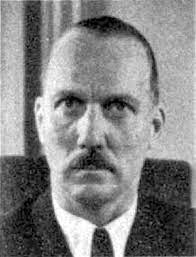
Werner Willikens
“In fact, it is the duty of everybody to try to work towards the Fuhrer along the lines he would wish. Anyone who makes mistakes will notice it soon enough.
“But anyone who really works towards the Fuhrer along his lines and towards his goal will certainly both now and in the future one day have the finest reward in the form of the sudden legal confirmation of his work.”
Volker Ullrich, bestselling author of Hitler: Ascent 1889 – 1939, summed up the results of this interplay between Hitler and his subjects:
“Kershaw tried to show that in many instances Hitler didn’t need to do very much at all since German society–everyone from the underlings surrounding him to ordinary people on the street—-were increasingly inclined to anticipate and fulfill the Fuhrer’s every wish, ‘working towards him.’
“…Kershaw…. illustrate[d] that without the readiness of many people to work for the man in charge, there would have been no way he could have achieved his murderous aims.
“Kershaw’s main thesis was that the dynamics of the Nazi regime arose from the interplay of Hitler’s intentions with activism emanating from subordinate individuals and institutions. The results were ever more radical ‘solutions.'”
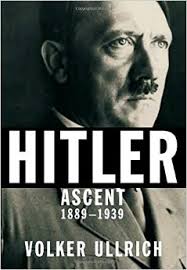
On April 30, 1945, Adolf Hitler simultaneously bit on a cyanide capsule and fired a pistol shot into his right temple.
The concept of “working towards the Fuhrer” seemed to have come to a literally fiery end.
Fast forward almost 80 years later–to January 20, 2025.
Donald J. Trump, upon resuming the office of President, has declared all-out war on illegal aliens within the United States. He has given Immigration and Customs Enforcement (ICE) full powers to seize and deport anyone fitting that description.
Even if that person is a legal resident who has lived in the United States legally with a work permit since 2011 and is protected from deportation by a 2019 court order.
Such was the case with Kilmar Abrego Garcia, a Salvadoran citizen living in Maryland. He illegally entered the United States at age 18 to escape being drafted into the 18th Street Gang.
In 2019 he was arrested in Maryland and detained by federal immigration authorities. An immigration judge granted Garcia protection from deportation because he might risk violence from local gangs in El Salvador.
On March 12, 2025, Garcia was stopped and detained by immigration agents and questioned about his alleged affiliation with the MS-13 gang. MS-13 was originally formed by Salvadoran immigrants fleeing civil war in their homeland and is now involved in myriad illegal enterprises,
ICE deported him to El Salvador, alongside hundreds of other men accused of being gang members.
There was just one problem: Garcia was deported due to a clerical error.
U.S. District Judge Paula Xinis ordered that Garcia be returned to Maryland: “His detention appears wholly lawless.”
In turn, the Justice Department claimed that it could not return him from a sovereign nation.
On April 5, Erez Reuveni, the acting deputy director of the department’s immigration litigation division, struggled to answer questions from the judge about the circumstances of Garcia’s deportation.
Asked why the U.S. couldn’t ask for his return, Reuveni said: “The first thing I did when I got this case on my desk is ask my clients the same question. Our only arguments are jurisdictional. He should not have been sent to El Salvador.
“My answer to a lot of these questions is going to be frustrating, and I am frustrated. The government made a choice here to produce no evidence.”
Attorney General Pam Bondi took issue with how Reuveni handled the case in court. The next day, she ordered him put on administrative leave by Deputy U.S. Attorney Todd Blanche. He is no longer working on the Abrego Garcia case or in the Justice Department in general.
August Flentje, Reuveni’s supervisor, was also placed on administrative leave. Flentje was told he had failed to supervise a subordinate.
In a statement to CNN, Bondi said: “At my direction, every Department of Justice attorney is required to zealously advocate on behalf of the United States. Any attorney who fails to abide by this direction will face consequences.”
Reuveni had been praised as a “top-notched” prosecutor by his superiors in an email announcing his promotion two weeks ago. His crime lay in his failure to “work toward the Fuhrer.“
9/11 ATTACKS, ABC NEWS, ADOLF EICHMANN, ADOLF HITLER, ALTERNET, AMERICABLOG, AMERICAN CIVIL LIBERTIES UNION, AP, BABY BOOMER RESISTANCE, BBC, BLOOMBERG, BUZZFEED, CBS NEWS, CNN, CROOKS AND LIARS, DAILY KOS, DEPARTMENT OF HOMELAND SECURITY, DONALD TRUMP, EGYPT, EXECUTIVE ORDER, FACEBOOK, FIVETHIRTYEIGHT, HARPER’S MAGAZINE, HEINRICH HIMMLER, HERMAN GORING, HITLER 1889-1936: HUBRIS, HITLER 1936-1945: NEMESIS, HITLER: ASCENT: 1889-1939, HUFFINGTON POST, IAN KERSHAW, IRAN, IRQA, JOSEPH GOEBBELS, LYBIA, MEDIA MATTERS, MOTHER JONES, MOVEON, MSNBC, MUSLIM REFUGEES, NAZI GERMANY, NBC NEWS, NEW REPUBLIC, NEWSDAY, NEWSWEEK, NPR, OSAMA BIN LADEN, PBS NEWSHOUR, PENTAGON, POLITICO, POLITICUSUSA, RAW STORY, REUTERS, ROBERT PAYNE, SALON, SAUDI ARABIA, SEATTLE TIMES, SLATE, SOMALIA, STALINGRAD (MOVIE), SUDAN, SYRIA, TALKING POINTS MEMO, THE ATLANTIC, THE CHICAGO SUN-TIMES, THE CHICAGO TRIBUNE, THE DAILY BEAST, THE DAILY BLOG, THE GUARDIAN, THE HILL, THE HUFFINGTON POST, THE INTERCEPT, THE LIFE AND DEATH OF ADOLF HITLER, THE LOS ANGELES TIMES, THE NATION, THE NEW REPUBLIC, THE NEW YORK TIMES, THE NEW YORKER, THE VILLAGE VOICE, THE WASHINGTON POST, THINKPROGRESS, THIRD REICH, TIME, TRUTHDIG, TRUTHOUT, TURKEY, TWO POLITICAL JUNKIES, U.S. NEWS & WORLD REPORT, UNITED ARAB EMIRATES, UPI, USA TODAY, VOLKER ULRICH, WALTER SHAUB, WORLD TRADE CENTER, X, YEMEN
In Bureaucracy, Business, History, Law, Law Enforcement, Politics, Social commentary on December 6, 2024 at 12:10 am
In Stalingrad, a 1993 German-made war movie, a platoon of German Army soldiers leaves behind the beaches and beauties of Italy and find themselves fighting desperately to stay alive in Russia.
Early in the film, there is an exchange that has its real-life counterpart almost 75 years later.
A young, idealistic German lieutenant, newly transferred to the Russian front, is horrified when he sees a fellow soldier from another unit sadistically beat a Russian prisoner to death.
He seeks out the man’s superior, a captain, and says: “Captain, I must protest about the behavior of your men.”
“You want to protest?” asks the captain, grinning sardonically. “Tell the Fuhrer.”
Fast forward to January 28, 2017, the day after President Donald J. Trump signed into law an executive order which:
- Suspended entry of all refugees to the United States for 120 days;
- Barred Syrian refugees indefinitely;, and
- Blocked entry into the United States for 90 days for citizens from Iran, Iraq, Libya, Somalia, Sudan, Syria and Yemen.
The new rules—and the efforts of security personnel at major international airports to enforce them—triggered a tsunami of chaos and fear among travelers.
“We’ve gotten reports of people being detained all over the country,” said Becca Heller, the director of the International Refugee Assistance Project. “They’re literally pouring in by the minute.”
Refugees on flights when the order was signed on January 27 were detained upon arrival.
Donald Trump
Many students attending American universities were blocked from returning to the United States from visits abroad.
According to Homeland Security officials, 109 people who were already in transit to the United States when the order was signed were denied access; 173 were stopped before boarding planes heading to America. Eighty-one people who were stopped were eventually given waivers to enter the United States.
Internationally, travelers were seized by panic when they were not allowed to board flights to the United States. In Dubai and Istanbul, airport and immigration officials turned passengers away at boarding gates. At least one family was removed from a flight it had boarded.
Earlier on January 28, Trump, isolated in the White House from all the chaos he had unleashed in airports across the nation and throughout the world, said:
“It’s not a Muslim ban, but we were totally prepared. It’s working out very nicely. You see it at the airports, you see it all over.”
Then the American Civil Liberties Union intervened.
Two Iraqi immigrants, defended by the ACLU, accused Trump of legal and constitutional overreach.
The Iraqis had been detained at John F. Kennedy International Airport in New York City. One had served as an interpreter for American forces in Iraq for a decade. The other was en route to reunite with his wife and son in Texas.
The interpreter, Hameed Khalid Darweesh, was released after nearly 19 hours of detention. So was the other traveler, Haider Sameer Abdulkhaleq Alshawi.
Before the two men were released, one of their lawyers, Mark Doss, a supervising attorney at the International Refugee Assistance Project, asked an official, “Who is the person we need to talk to?”
“Call Mr. Trump,” said the official, who refused to identify himself.
He might just as well have said: “You want to protest? Tell the Fuhrer.”
The ACLU action secured at least a temporary blocking of part of Trump’s order. A Brooklyn judge barred the government from deporting some arrivals who found themselves ensnared by the Presidential order.
Judge Ann M. Donnelly of the Federal District Court in Brooklyn, ruled that sending the travelers home could cause them “irreparable harm.” She said the government was “enjoined and restrained from, in any manner and by any means, removing individuals” who had arrived in the United States with valid visas or refugee status.
But she did not force the administration to let in people otherwise blocked by the executive order who have not yet traveled to the United States. Nor did she issue a broader ruling on the constitutionality of the order.
* * * * *
On November 5, 75 million ignorant, hate-filled, Right-wing Americans re-elected Donald Trump—a man reflecting their own hate and ignorance—to the Presidency.
Summing up Trump’s character in a March 25, 2016 broadcast of The PBS Newshour, conservative political columnist David Brooks warned: “The odd thing about [Trump’s] whole career and his whole language, his whole world view is there is no room for love in it. You get a sense of a man who received no love, can give no love….
“And so you really are seeing someone who just has an odd psychology unleavened by kindness and charity, but where it’s all winners and losers, beating and being beat. And that’s part of the authoritarian personality.”
There were countless warning signs available for Trump’s supporters to see—if they had wanted to see them:
- His facing 91 criminal counts in four cases;
- His threats against his political opponents and Justice Department prosecutors;
- His conviction for raping columnist E. Jean Carroll;
- His continued lying about winning the 2020 Presidential election;
- His conviction on 34 counts of falsifying business records;
- His unjustified attacks the integrity of the FBI—causing previously “law and order” Republicans to demand its defunding.
Those who voted for Trump will now learn the meaning of the Nazi slogan: “The Fuhrer proposes and disposes for all.” Those who voted against him knew this already.
9/11 ATTACKS, ABC NEWS, ADOLF EICHMANN, ADOLF HITLER, ALTERNET, AMERICABLOG, AMERICAN CIVIL LIBERTIES UNION, AP, BABY BOOMER RESISTANCE, BBC, BLOOMBERG, BUZZFEED, CBS NEWS, CNN, CROOKS AND LIARS, DAILY KOS, DEPARTMENT OF HOMELAND SECURITY, DONALD TRUMP, EGYPT, EXECUTIVE ORDER, FACEBOOK, FIVETHIRTYEIGHT, HARPER’S MAGAZINE, HEINRICH HIMMLER, HERMAN GORING, HITLER 1889-1936: HUBRIS, HITLER 1936-1945: NEMESIS, HITLER: ASCENT: 1889-1939, HUFFINGTON POST, IAN KERSHAW, IRAN, IRQA, JOSEPH GOEBBELS, LYBIA, MEDIA MATTERS, MOTHER JONES, MOVEON, MSNBC, MUSLIM REFUGEES, NAZI GERMANY, NBC NEWS, NEW REPUBLIC, NEWSDAY, NEWSWEEK, NPR, OSAMA BIN LADEN, PBS NEWSHOUR, PENTAGON, POLITICO, POLITICUSUSA, RAW STORY, REUTERS, ROBERT PAYNE, SALON, SAUDI ARABIA, SEATTLE TIMES, SLATE, SOMALIA, STALINGRAD (MOVIE), SUDAN, SYRIA, TALKING POINTS MEMO, THE ATLANTIC, THE CHICAGO SUN-TIMES, THE CHICAGO TRIBUNE, THE DAILY BEAST, THE DAILY BLOG, THE GUARDIAN, THE HILL, THE HUFFINGTON POST, THE INTERCEPT, THE LIFE AND DEATH OF ADOLF HITLER, THE LOS ANGELES TIMES, THE NATION, THE NEW REPUBLIC, THE NEW YORK TIMES, THE NEW YORKER, THE VILLAGE VOICE, THE WASHINGTON POST, THINKPROGRESS, THIRD REICH, TIME, TRUTHDIG, TRUTHOUT, TURKEY, TWO POLITICAL JUNKIES, U.S. NEWS & WORLD REPORT, UNITED ARAB EMIRATES, UPI, USA TODAY, VOLKER ULRICH, WALTER SHAUB, WORLD TRADE CENTER, X, YEMEN
In Bureaucracy, Business, History, Law, Law Enforcement, Politics, Social commentary on December 5, 2024 at 12:32 am
When historians—-and ordinary citizens—think about the Third Reich, the name of Werner Willikens doesn’t immediately spring to mind.
Adolf Hitler, Herman Goring, Joseph Goebbels, Heinrich Himmler, Adolf Eichmann—yes.
But Werner Willikens? Why him?
Ian Kershaw has unearthed the reason.
Ian Kershaw is a British historian and author who has written extensively about the Third Reich. He is best-known for his monumental, two-volume biography, Hitler 1889–1936: Hubris (1998) and Hitler 1936–1945: Nemesis (2000).
Ian Kershaw
Willikens, State Secretary in the Ministry of Food, gave a speech on February 21, 1934 that casts new light on how Hitler came to exercise vast authority over Nazi Germany:
“Everyone who has the opportunity to observe it knows that the Fuhrer can hardly dictate from above everything he intends to realize sooner or later.
“On the contrary, up till now everyone with a post in the new Germany has worked best when he has, so to speak, worked towards the Fuhrer….
“In fact, it is the duty of everybody to try to work towards the Fuhrer along the lines he would wish. Anyone who makes mistakes will notice it soon enough.
“But anyone who really works towards the Fuhrer along his lines and towards his goal will certainly both now and in the future one day have the finest reward in the form of the sudden legal confirmation of his work.”
Volker Ullrich, bestselling author of Hitler: Ascent 1889 – 1939, summed up the results of this interplay between Hitler and his subjects:
“Kershaw tried to show that in many instances Hitler didn’t need to do very much at all since German society–everyone from the underlings surrounding him to ordinary people on the street—-were increasingly inclined to anticipate and fulfill the Fuhrer’s every wish, ‘working towards him.’
“…Kershaw did not minimize the historical role played by Hitler and his insane, ideological fixations, but he did illustrate that without the readiness of many people to work for the man in charge, there would have been no way he could have achieved his murderous aims.
“Kershaw’s main thesis was that the dynamics of the Nazi regime arose from the interplay of Hitler’s intentions with activism emanating from subordinate individuals and institutions. The results were ever more radical ‘solutions.'”
With the Third Reich dying in the flames of Berlin, at about 3:30 p.m. on April 30, 1945, Adolf Hitler simultaneously bit on a cyanide capsule and fired a pistol shot into his right temple.
The concept of “working towards the Fuhrer” seemed to have come to a literally fiery end.
Fast forward almost 72 years later–to 4:42 p.m. on January 27, 2017.
Newly inaugurated President Donald J. Trump signed into law an executive order that:
- Suspended entry of all refugees to the United States for 120 days;
- Barred Syrian refugees indefinitely; and
- Blocked entry into the United States for 90 days for citizens of Iran, Iraq, Libya, Somalia, Sudan, Syria and Yemen.
Trump’s executive order read as follows: “In order to protect Americans, the United States must ensure that those admitted to this country do not bear hostile attitudes toward it and its founding principles.
“The United States cannot, and should not, admit those who do not support the Constitution, or those who would place violent ideologies over American law.”
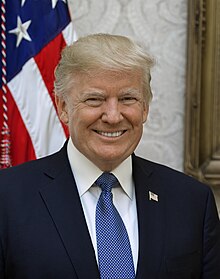
President Donald Trump
But that statement excluded three extremely troubling facts.
First: Over the previous four decades, there had been no fatal attacks within the United States by immigrants from any of those seven banned countries.
Second, approximately 3,000 Americans had been killed by immigrants from Saudi Arabia, the United Arab Emirates, Egypt, and Turkey. Most of those victims died during the attacks on the Pentagon and World Trade Center on September 11, 2001.
In fact, 15 of the 19 highjackers who took part in those attacks came from Saudi Arabia. Osama bin Laden, the mastermind of the attacks, was himself a Saudi from a wealthy family with strong ties to the Saudi Royal Family.
Third, Saudi Arabia, the United Arab Emirates, Egypt, and Turkey were all countries where Trump had close business ties. His properties included two luxury towers in Turkey and golf courses in the United Arab Emirates.
Trump listed companies on his FEC filing possibly related to a development project in Jeddah, Saudi Arabia’s second-biggest city, located outside Mecca: DT Jeddah Technical Services Manager LLC, DT Jeddah Technical Services Manager Member Corp., THC Jeddah Hotel Manager LLC and THC Jeddah Hotel Manager Member Corp.
Trump listed two companies on his FEC filing possibly related to business in Egypt: Trump Marks Egypt and Trump Marks Egypt LLC.
The full dimensions of Trump’s holdings throughout the Middle East aren’t known because he has refused to release his tax returns.
On January 11, 2017, Trump said that:
- He would resign from his positions at the Trump Organization but that he would not divest his ownership.
- The organization would be managed by his sons Eric and Don Jr. and chief financial officer Allen Weisselberg.
- The organization would terminate pending deals and not seek new international business.
Walter Shaub, director of the Office of Government Ethics, said that these measures did not resolve the President’s conflict-of-interest problems and called them “meaningless.”
It was after Trump signed his executive order that the true consequences of “working towards the Fuhrer”—or President—were fully revealed.
ABC NEWS, AL QAEDA, ALTERNET, AMERICABLOG, AP, BABY BOOMER RESISTANCE, BARACK OBAMA, BBC, BLOOMBERG, BRUSSELS, BUZZFEED, CBS NEWS, CIA, CNN, CROOKS AND LIARS, DAILY KOS, DONALD TRUMP, EDUARDO "TED" CRUZ, FBI, FIVETHIRTYEIGHT, GUANTANAMO, HARPER’S MAGAZINE, HUFFINGTON POST, ISLAM, ISLAMIC STATE OF IRAQ AND SYRIA (ISIS), MEDIA MATTERS, MOTHER JONES, MOVEON, MSNBC, NBC NEWS, NEW REPUBLIC, NEWSDAY, NEWSWEEK, NEWT GINGRICH, NICCOLO MACHIAVELLI, NPR, PARIS, PBS NEWSHOUR, PENTAGON, POLITICO, POLITICUSUSA, RAW STORY, REUTERS, RICK SANTORUM, RUDLOPH GIULIANI, RUDOLPH GIULIANI, SALON, SAN BERNADINO, SEATTLE TIMES, SLATE, SUPREME COURT, TALKING POINTS MEMO, TERRORISM, THE ATLANTIC, THE CHICAGO SUN-TIMES, THE CHICAGO TRIBUNE, THE DAILY BEAST, THE DAILY BLOG, THE DISCOURSES, THE GUARDIAN, THE HILL, THE HUFFINGTON POST, THE INTERCEPT, THE LOS ANGELES TIMES, THE NATION, THE NEW REPUBLIC, THE NEW YORK TIMES, THE NEW YORKER, THE VILLAGE VOICE, THE WASHINGTON POST, THINKPROGRESS, TIME, TORTURE, TRUTHDIG, TRUTHOUT, TWO POLITICAL JUNKIES, U.S. NEWS & WORLD REPORT, UPI, USA TODAY, WATERBOARDING, X
In Bureaucracy, History, Law, Law Enforcement, Military, Politics, Social commentary on June 26, 2024 at 12:11 am
Donald Trump made a return to waterboarding terrorism suspects a prime issue in his campaign for the 2016 Republican Presidential nomination.
And a March 30, 2016 Reuters/lpsos poll showed that nearly two-thirds of Americans believed that the use of torture could be justified to force suspected terrorists to talk.
A growing fear by Americans of Islamic terrorism had been ignited by a series of deadly Islamic terrorist attacks in Europe and the United States.

Frightening a prisoner in Iraq
In fact, however, torture, generally, and waterboarding in particular, have proven worthless at obtaining reliable information.
Victims will say anything they think their captors want to hear to stop the agony.
Yoshia Chee, a Special Forces veteran of Vietnam, recalled his use of torture against suspected Vietcong:
“One of the favorite things was popping one of their eyeballs out with a spoon….
“If I had one of my eyeballs hanging out, I’d say I killed Kennedy. I’d agree to anything in the whole world.
“We would do that, and they still wouldn’t talk….You rarely got anything out of them. Just more hatred. More reason to fight back.”
Click here: Strange Ground: An Oral History Of Americans In Vietnam, 1945-1975: Harry Maurer: 9780306808395: Amazon.com: Books
During the George W. Bush Presidency, the CIA relied on harsh physical punishments—beatings, humiliations and waterboarding—to convince suspects to talk. These were euphemistically referred to as “enhanced interrogation techniques.”
Upon assuming the Presidency in 2009, Barack Obama ordered an immediate halt to such methods. Since then, Republicans generally and their Presidential aspirants in particular have harshly criticized Obama’s decision.
Like Trump, they claimed that Obama had endangered American security in the name of Political Correctness. In turn, Obama argued that the use of torture produces unreliable information and inflames Muslim hatred of America.
Meanwhile, the FBI applied its traditional “kill them with kindness” approach to interrogation. And agents found this yielded far greater results.
For one thing, most Al Qaeda members relished appearing before grand juries.
Unlike organized crime members, they were talkative—and even tried to proselytize to the jury members. They were proud of what they had done—and wanted to talk.

“This is what the FBI does,” said Mike Rolince, an FBI expert on counter-terrorism. “Nearly 100% of the terrorists we’ve taken into custody have confessed. The CIA wasn’t trained. They don’t do interrogations.”
According to The Threat Matrix: The FBI at War in the Age of Global Terror (2011) jihadists had been taught to expect severe torture at the hands of American interrogators.
Writes Author Garrett M. Graff:
“Often, in the FBI’s experience, their best cooperation came when detainees realized they weren’t going to get tortured, that the United States wasn’t the Great Satan. Interrogators were figuring out…that not playing into Al Qaeda’s propaganda could produce victories.”
And the FBI isn’t alone in believing that acts of simple humanity can turn even sworn enemies into allies.
No less an authority on “real-politick” than Niccolo Machiavelli reached the same conclusion more than 500 years ago.
In his small and notorious book, The Prince, he writes about the methods a ruler must use to gain power. But in his larger and lesser-known masterwork, The Discourses, he outlines the ways that liberty can be maintained in a republic.
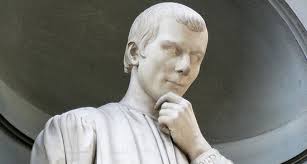
Niccolo Machiavelli
For Machiavelli, only a well-protected state can hope for peace and prosperity. Toward that end, he wrote at length about the best ways to succeed militarily. And in war, humanity can prevail at least as often as inhumanity.
Consider the following example from The Discourses:
Camillus [a Roman general] was besieging the city of the Faliscians, and had surrounded it….A teacher charged with the education of the children of some of the noblest families of that city [to ingratiate himself] with Camillus and the Romans, led these children…into the Roman camp.
And presenting them to Camillus [the teacher] said to him: “By means of these children as hostages, you will be able to compel the city to surrender.”
Camillus not only declined the offer but had the teacher stripped and his hands tied behind his back….[Then Camillus] had a rod put into the hands of each of the children…[and] directed them to whip [the teacher] all the way back to the city.
Upon learning this fact, the citizens of Faliscia were so much touched by the humanity and integrity of Camillus, that they surrendered the place to him without any further defense.
This example shows that an act of humanity and benevolence will at all times have more influence over the minds of men than violence and ferocity.
It also proves that provinces and cities which no armies…could conquer, have yielded to an act of humanity, benevolence, chastity or generosity.
This truth should be remembered whenever Right-wingers brag about their patriotism and willingness to “get tough“ with America’s enemies.
Many—like Newt Gingrich, Rudolph Giuliani, Rick Santorum, Eduardo “Ted” Cruz and Donald Trump—strenuously avoided military service. These “chickenhawks” talk tough and are always ready to send others into battle—but keep themselves well out of harm’s way.
Such men are not merely contemptible; they are dangerous.
ABC NEWS, AL QAEDA, ALTERNET, AMERICABLOG, AP, BABY BOOMER RESISTANCE, BARACK OBAMA, BBC, BLOOMBERG, BRUSSELS, BUZZFEED, CBS NEWS, CIA, CNN, CROOKS AND LIARS, DAILY KOS, DONALD TRUMP, FBI, FIVETHIRTYEIGHT, GUANTANAMO, HARPER’S MAGAZINE, HUFFINGTON POST, ISLAM, ISLAMIC STATE OF IRAQ AND SYRIA (ISIS), MEDIA MATTERS, MOTHER JONES, MOVEON, MSNBC, NBC NEWS, NEW REPUBLIC, NEWSDAY, NEWSWEEK, NEWT GINGRICH, NICCOLO MACHIAVELLI, NPR, PARIS, PBS NEWSHOUR, PENTAGON, POLITICO, POLITICUSUSA, RAW STORY, REUTERS, RICK SANTORUM, RUDLOPH GIULIANI, SALON, SAN BERNADINO, SEATTLE TIMES, SLATE, SUPREME COURT, TALKING POINTS MEMO, TERRORISM, THE ATLANTIC, THE CHICAGO SUN-TIMES, THE CHICAGO TRIBUNE, THE DAILY BEAST, THE DAILY BLOG, THE GUARDIAN, THE HILL, THE HUFFINGTON POST, THE INTERCEPT, THE LOS ANGELES TIMES, THE NATION, THE NEW REPUBLIC, THE NEW YORK TIMES, THE NEW YORKER, THE VILLAGE VOICE, THE WASHINGTON POST, THINKPROGRESS, TIME, TORTURE, TRUTHDIG, TRUTHOUT, TWO POLITICAL JUNKIES, U.S. NEWS & WORLD REPORT, UPI, USA TODAY, WATERBOARDING, X
In Bureaucracy, History, Law, Law Enforcement, Military, Politics, Social commentary on June 25, 2024 at 12:10 am
As Donald Trump campaigned for the Presidency in 2016, nearly two-thirds of Americans endorsed the use of torture to force suspected terrorists to talk, according to a March 30, 2016 Reuters/lpsos poll.
A growing fear by Americans of Islamic terrorism had been ignited by a series of deadly Islamic terrorist attacks in Europe and the United States.
- On November 13, 2015 in Paris, France, terrorists belonging to the Islamic State of Iraq and Syria (ISIS) killed more than 100 people.
- On December 2, 2015, a married Islamic couple shot and killed 14 people at the Department of Public Health in San Bernardino, California.
- And on March 22, 2016, a series of ISIS attacks struck Brussels, Belgium. Two explosions at the city’s main international airport and a third in a subway station killed 31 persons and injured 270 more.
Click here: Most Americans Say Torturing Suspected Terrorists Is Justifiable
And the chief beneficiary of this growing fear among Americans proved to be Donald Trump.
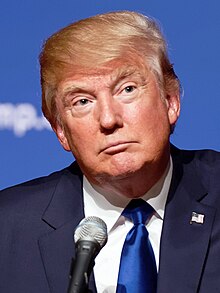
Donald Trump
Since declaring his candidacy for the 2016 Republican nomination for President in June, 2015, Trump made the use of torture a major campaign issue. He promised to end the waterboarding ban that President Barack Obama declared at the start of his term in 2009.
During a campaign event at Arizona’s Sun City retirement community, Trump said he would reinstate waterboarding and techniques that are “so much worse” and “much stronger.”
“Don’t tell me it doesn’t work—torture works,” Trump said. “Okay, folks? Torture—you know, half these guys [say]: ‘torture doesn’t work.’ Believe me, it works. Okay?”
How he knew it worked remained unclear, since he had never served in the military or law enforcement.
And in a February 15. 2016 Op-Ed piece for USA Today, Trump declared: “I will do whatever it takes.
“I have made it clear in my campaign that I would support and endorse the use of enhanced interrogation techniques if the use of these methods would enhance the protection and safety of the nation,” he wrote.
“Though the effectiveness of many of these methods may be in dispute, nothing should be taken off the table when American lives are at stake.
“The enemy is cutting off the heads of Christians and drowning them in cages, and yet we are too politically correct to respond in kind.”

The Reuters/lpsos online poll of 1,976 Americans occurred between March 22 and 28, 2016. Among its findings:
- About 25% said that the use of torture can “often” be justified against suspected terrorists.
- Another 38% said such tactics were “sometimes” appropriate in order to obtain information.
- Only 15% opposed torture under all circumstances.
Past surveys found Americans less comfortable with the controversial tactic.
In 2014, a poll by Amnesty International revealed that about 45% of Americans supported the use of torture against terrorism suspects.
Unfortunately for Americans, the truth about torture generally—and waterboarding in particular—-is that it doesn’t work.
Victims will say anything they think their captors want to hear to stop the agony. And, in fact, subsequent investigations have shown that just that happened with Al Qaeda suspects.
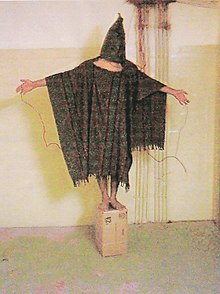

Humiliating a captive at Abu Ghraib Prison
Shortly after the invasion of Afghanistan in October, 2001, hundreds of Al Qaeda members started falling into American hands. And so did a great many others who were simply accused by rival warlords of being Al Qaeda members.
The only way to learn if Al Qaeda was planning any more 9/11-style attacks on the United States was to interrogate those suspected captives. The question was: How?
The CIA and the Pentagon quickly took the “gloves off” approach. Their methods included such “stress techniques” as playing loud music and flashing strobe lights to keep detainees awake.
Some were “softened up” prior to interrogation by “third-degree” beatings. And still others were waterboarded.
In 2003, an FBI agent observing a CIA “interrogation” at Guantanamo, Cuba, was stunned to see a detainee sitting on the floor, wrapped in an Israeli flag. Nearby, music blared and strobe slights flashed.
In Osama bin Laden’s 1998 declaration of war against America, he had accused the country of being controlled by the Jews, saying the United States “served the Jews’ petty state.”
Draping an Islamic captive with an Israeli flag could only confirm such propaganda.
The FBI, on the other hand, followed its traditional “kill them with kindness” approach to interrogation.
Pat D’Amuro, a veteran FBI agent who had led the Bureau’s investigation into the 1998 bombing of the American embassy in Nairobi, Kenya, warned FBI Director Robert Mueller III:
The FBI should not be a party in the use of “enhanced interrogation techniques.” They wouldn’t work and wouldn’t produce the dramatic results the CIA hoped for.
But there was a bigger danger, D’Amuro warned: “We’ll be handing every future defense attorney Giglio material.”
The Supreme Court had ruled in Giglio vs. the United States (1972) that the personal credibility of a government official was admissible in court.
Any FBI agent who made use of extra-legal interrogation techniques could potentially have that issue raised every time he testified in court on any other matter.
It was a defense attorney’s dream-come-true recipe for impeaching an agent’s credibility—and thus ruin his investigative career.
2016 PRESIDENTIAL ELECTION, 2020 PRESIDENTIAL ELECTION, ABC NEWS, ALTERNET, AMERICABLOG, AP, BABY BOOMER RESISTANCE, BARACK OBAMA, BBC, BILL KRISTOL, BLOOMBERG, BUZZFEED, CBS NEWS, CNN, CROOKS AND LIARS, DAILY KOS, FIVETHIRTYEIGHT, GEORGE W. BUSH, HARPER’S MAGAZINE, HITLER LOYALTY OATH, HOLOCAUST, HUFFINGTON POST, IRAN, IRAQ, IRAQ WAR, JANUARY 6 COUP ATTEMPT, JOHN MCCAIN, JOSEPH BIDEN, JOSEPHUS, LINDSEY GRAHAM, MEDIA MATTERS, MOTHER JONES, MOVEON, MSNBC, NBC NEWS, NEW REPUBLIC, NEWSDAY, NEWSWEEK, NOTRE DAME CATHEDRAL, NOTRE DAME CATHEDRAL FIRE, NPR, NUCLEAR WEAPONS, OSAMA BIN LADEN, PBS NEWSHOUR, PENTAGON, PHILLIPPE MARTINEZ, PIERRE DERRIEN, POLITICO, POLITICUSUSA, RAW STORY, REPUBLICANS, REUTERS, SALON, SEATTLE TIMES, SLATE, SUPPLEMENTAL NUTRITION ASSISTANCE PROGRAM (SNAP), SYRIA, TALKING POINTS MEMO, THE ATLANTIC, THE CHICAGO SUN-TIMES, THE CHICAGO TRIBUNE, THE DAILY BEAST, THE DAILY BLOG, THE GUARDIAN, THE HILL, THE HUFFINGTON POST, THE INTERCEPT, THE LOS ANGELES TIMES, THE NATION, THE NEW REPUBLIC, THE NEW YORK TIMES, THE NEW YORKER, THE PENTAGON, THE VILLAGE VOICE, THE WASHINGTON POST, THINKPROGRESS, TIME, TOMAHAWK CRUISE MISSILES, TRUTHDIG, TRUTHOUT, TWO POLITICAL JUNKIES, U.S. NEWS & WORLD REPORT, UPI, USA TODAY, WEEKLY STANDARD, X, YELLOW VEST PROTESTERS
In Bureaucracy, Business, History, Military, Politics, Social commentary on December 29, 2023 at 12:17 am
On April 15, 2019, millions across France gasped in horror at the sight of Notre Dame Cathedral going up in flames.
The Cathedral, perhaps the most iconic building in Paris, is visited by more than 14 million people every year. Built between 1160 and 1345, it has long been one of the most important sites in Christendom.
A law passed in 1905 classified the cathedral as a Historical Monument and thus the property of the state. But its use is dedicated exclusively to the Roman Catholic Church. Catholics are estimated to comprise between 41% and 88% of France’s population.
Yet by April 19, for untold numbers of French citizens, horror and sadness had been replaced by anger.

Notre Dame Cathedral fire
LeLaisserPasserA38, CC BY-SA 4.0 <https://creativecommons.org/licenses/by-sa/4.0>, via Wikimedia Commons
So what had happened to arouse this?
First, French President Emmanuel Macron addressed the nation to speak about the fire. In doing so, he totally ignored the violent protests against inequality that had erupted throughout the country since November 2018.
Low-paid workers and pensioners accused Macron’s government of favoring the rich. The activists were named Yellow Vests—after the fluorescent jackets French motorists are required to keep in their cars.
Second, in just a few hours, billionaires pledged hundreds of millions of dollars (euros) to help restore the damaged cathedral.
“You’re there, looking at all these millions accumulating, after spending five months in the streets fighting social and fiscal injustice. It’s breaking my heart,” Ingrid Levavasseur, a founding leader of the movement, told The Associated Press.
“What happened at Notre Dame is obviously a deplorable tragedy. But nobody died,” Levavasseur said. “I’ve heard someone speaking of national mourning. Are they out of their minds?”
“The yellow vests will show their anger against the billion found in four days for stones, and nothing for the needy,” wrote Pierre Derrien on Facebook.
More than $1 billion was pledged for the cathedral’s restoration, and many French citizens believed the money could be better spent elsewhere. And the billionaires’ donations entitled them to huge tax deductions.
“If they can give dozens of millions to rebuild Notre Dame, they should stop telling us there is no money to respond to the social emergency,” CGT trade union leader Philippe Martinez said.
But this is generally how the rich and powerful react to the needs of the neediest.
In 2016, returning to Congress after their traditional summer recess, House Republicans planned to cut $23 billion in food stamps for the poor. This included ending waivers that allowed some adults to get temporary assistance while they were in school or training for a job.
The cuts were to include drug tests of applicants and tougher work rules. As Republicans see it: There’s no point in “helping” the poor if you can’t humiliate them.
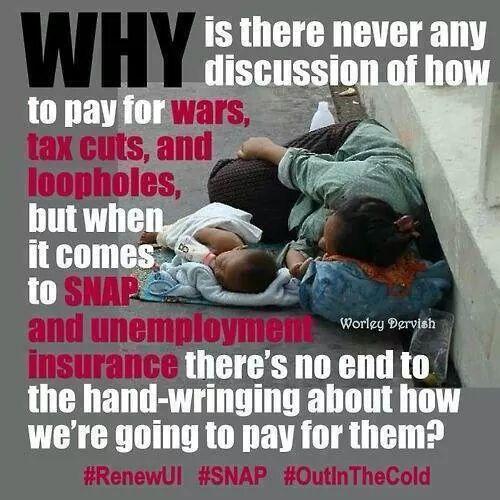
The food stamp program, now called the Supplemental Nutrition Assistance Program, or SNAP, served more than 46 million Americans and cost $74 billion in 2015.
Meanwhile, Republicans were eager to spend billions of dollars for another project: An unnecessary war with Syria.
One of these right-wingers was Bill Kristol, editor of the Weekly Standard—and one of the leading instigators of the 2003 war with Iraq.
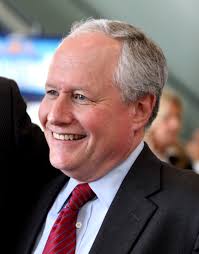
Bill Kristol
He—like senior officials on the George W. Bush administration—falsely claimed that Iraqi dictator Saddam Hussein had weapons of mass destruction and planned to use them against the United States.
Another Kristol lie: Hussein planned 9/11 with Osama bin Laden.
He has never apologized for either lie—or the resulting war that cost $3 trillion and killed 4,487 American soldiers and wounded another 32,226.
In a September, 2013 column, Kristol called for a return to slaughter—not only in Syria but Iran as well:
“…Soon after voting to authorize the use of force against the [Bashar al-] Assad regime, Republicans might consider moving an authorization for the use of force against the Iranian nuclear weapons program.
“They can explain that [President Barack] Obama’s dithering in the case of Syria shows the utility of unequivocally giving him the authority to act early with respect to Iran.”
Among Republican U.S. Senators calling for war were Arizona’s John McCain and South Carolina’s Lindsey Graham, who issued a joint statement:
“Using stand-off weapons, without boots on the ground, and at minimal risk to our men and women in uniform, we can significantly degrade Assad’s air power and ballistic missile capabilities and help to establish and defend safe areas on the ground.”
In addition: A major weapon for “degrading Assad’s air power” would be Tomahawk Cruise missiles. A single one of these costs $1,410,000.
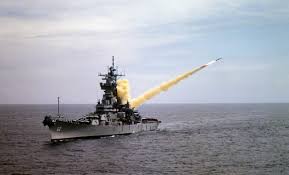
Firing of a Tomahawk Cruise missile
A protracted missile strike would rain literally billions of dollars’ worth of American missiles on Syria.
Meanwhile, the Pentagon was spending about $27 million a week to maintain the increased U.S. Navy presence in the Mediterranean Sea and Middle East region to keep watch over Syria and be prepared to strike.
Navy officials said it cost about $25 million a week for the carrier group and $2 million a week for each destroyer.
Is there a lesson to be learned from all this?
Yes.
Powerful people—whether generals, politicians or the wealthy—will always find abundant money and resources available for pet projects they consider important.
It’s only when it comes to projects that other people actually need that the powerful will claim there is, unfortunately, a cash shortage.
9/11 ATTACKS, ABC NEWS, AFGHANISTAN, ALAN KURDI, ALTERNET, AMERICABLOG, AP, BABY BOOMER RESISTANCE, BARACK OBAMA, BASHAR AL-ASSAD, BUZZFEED, CBS NEWS, CNN, COUNCIL ON AMERICAN-ISLAMIC RELATIONS (CAIR), CROOKS AND LIARS, DAILY KOZ, FBI, FIVETHIRTYEIGHT, IRAQ, ISALM, ISLAMICS, JAMES COMEY, KUWAIT, LIBYA, MOTHER JONES, MOVEON, MSNBC, MUSLIMS, NBC NEWS, NEWSWEEK, NPR, OMRAN DAQNEESH, PBS NEWSHOUR, PENTAGON, PEW RESEARCH CENTER, POLITICO, POLITICUSUSA, QTAR, RAW STORY, REAL ID ACT, RELIGION, REUTERS, SALON, SAUDI ARABIA, SEATTLE TIMES, SLATE, SUICIDE BOMBERS, SYRIA, TALKING POINTS MEMO, TERRORISM, THE ATLANTIC, THE CHICAGO SUN-TIMES, THE CHICAGO TRIBUNE, THE DAILY BEAST, THE DAILY BLOG, THE GUARDIAN, THE HILL, THE HUFFINGTON POST, THE LOS ANGELES TIMES, THE NATION, THE NEW YORK TIMES, THE WASHINGTON POST, THINKPROGRESS, TIME, TRUTHDIG, TWITTER, U.S. NEWS & WORLD REPORT, UNHCR, UNITED ARAB EMIRATES, UNITED NATIONS, UPI, USA TODAY, WORLD TRADE CENTER
In Bureaucracy, History, Law Enforcement, Military, Politics, Social commentary on October 13, 2023 at 12:13 am
Americans are suckers for children. Even if many of them might come wrapped in suicide vests.
On September 2, 2015, the body of a three-year old Syrian boy named Alan Kurdi washed ashore on a beach in Bodrum, Turkey.
He and his family had boarded a small rubber boat to reach Europe amid the carnage of the Syrian civil war. The boat capsized.
The resulting photo flashed around the world and triggered international demands by humanitarian organizations that the West “do something.”

Drowned Alan Kurdi lies on a Turkish beach
Only eight days later, on September 10, 2015, the administration of President Barack Obama announced that it would take in at least 10,000 displaced Syrian refugees over the next year. That was in addition to the 2,000 Islamic refugees the United States had already accepted.
Almost one year later—on August 17, 2016—another photo captured the world’s attention.
It depicted a five-year-old Syrian boy named Omran Daqneesh sitting in an ambulance. Covered head to toe in dust, his face bloodied, he seemed dazed. He had been pulled out of a building hit by an airstrike in Aleppo, Syria.
Once again, demands arose among liberal interventionists, especially in the United States: “We must do something.”
All of which overlooks the increasing threat posed to the United States by Islamic terrorism.
According to U.S. Census data, America legally welcomes about 100,000 Muslim immigrants each year. This represents the fastest growing segment of immigrants coming to the United States.
The Pew Research Center estimates there are 2.5 million Islamics in the United States. The Council on American-Islamic Relations (CAIR) puts the figure at seven million.
Meanwhile, the FBI is being overwhelmed by the demands of countering Islamic terrorism against the United States.
On July 8, 2015, then-FBI director James Comey testified before Congress about the increasing burdens his agency faced in combating terrorism.
“We are stopping these things [Islamic terror plots] so far through tremendous hard work, the use of sources, the use of online undercovers. But it is incredibly difficult. I cannot see [the FBI’s] stopping these [plots] indefinitely.”
The FBI has only 35,000 agents and analysts—against seven million potential suspects. And only a portion of those agents and analysts are charged with investigating terrorism.
And even children, for all their supposed innocence, are not to be ignored as potential weapons of Islamic terrorist organizations.
On August 20, 2016, a suicide bomber aged between 12 and 14 attacked a Kurdish wedding party in Gaziantep, Turkey, killing at least 51 people. Preliminary evidence indicated that the Islamic State of Iraq and Syria (ISIS) was behind the attack.

Palestinian child suicide bomber
America may well become a similar target for child suicide bombers. Especially since children are not required to submit to through screenings at airports as adults are.
How did all of this come to be?
On March 15, 2011, protests broke out in Syria, with demonstrators demanding political reforms and the ouster of dictator Bashar al-Assad.
These protests, met with government repression, continued to grow into a wholesale civil war. By March, 2023, an estimated 503,064 to 613,407 Syrians had so far died in the conflict.
Put in a positive way:
- More than a half-million potential or actual Islamic terrorists will never again pose a threat to the United States or Western Europe.
- Additional thousands are certain to follow their example.
- And the United States cannot be held in any way responsible for it.
But Americans and Europeans have chosen to see these positives as negatives.
The United Nations refugee Agency, UNHCR, estimated that the number of forcibly displaced and stateless people in Europe rose to 21.8 million by the end of 2022,
And while the West has thrown open its doors to fleeing Syrians, the reaction of neighboring Islamic nations has been entirely different.
This was brutally but accurately depicted in a cartoon of wealthy Arab rulers looking on indifferently at the body of Alan Kurdi.
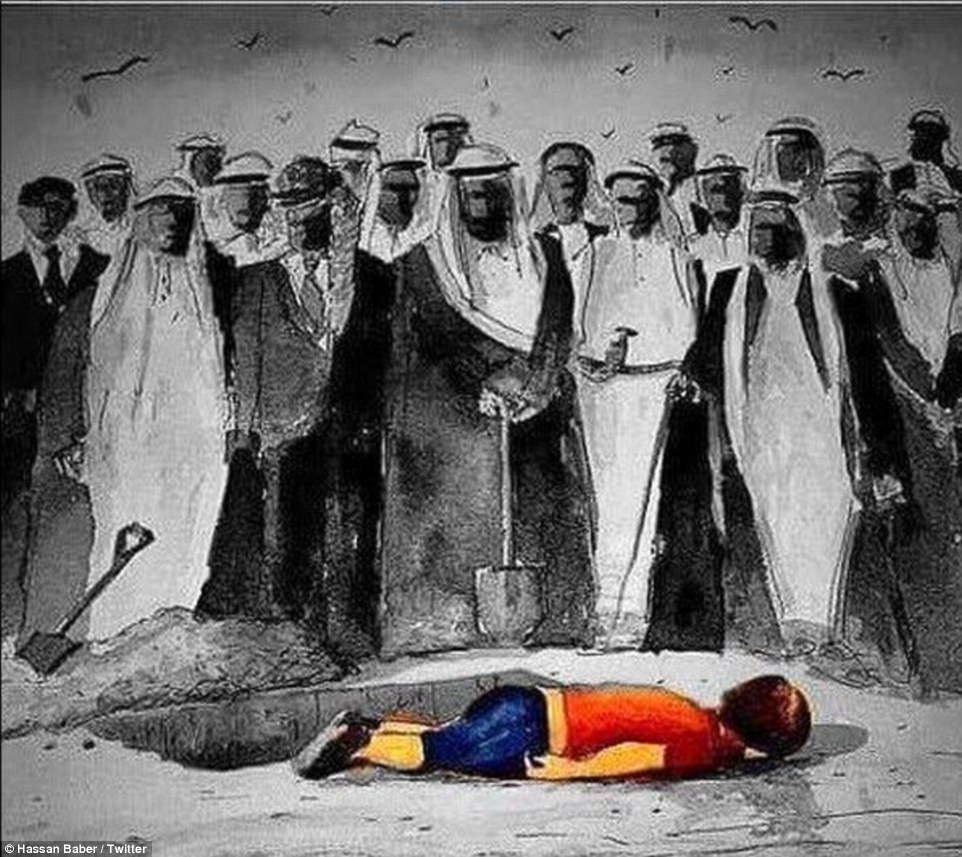
While European nations are being swamped by hundreds of thousands of these uninvited “guests,” the Arab world’s wealthiest nations are doing almost nothing for Syria’s refugees.
According to Amnesty International, the “six Gulf countries—Qatar, United Arab Emirates, Saudi Arabia, Kuwait, Oman and Bahrain—have offered zero resettlement places to Syrian refugees.”
These nations are far closer to Syria than are Europe and the United States. And they contain some of the Arab world’s largest military budgets and its highest standards of living.
Note the contradiction: Democratic, non-Islamic countries are exposing themselves to increasing numbers of potential—if not actual—Islamic terrorists.
Meanwhile, the Arab world—awash in petrodollars and land—is closing its own doors to Syrian refugees.
The Arab world’s wealthiest nations are doing next to nothing for Syria’s refugees – The Washington Post
* * * * *
During the 1980s, the United States saw the terroristic acts of Islamic nations as mere crimes, and not acts of war.
The September 11, 2001 terror attacks on the Pentagon and World Trade Center changed that.
For the last 22 years, the United States military has actively fought Islamics in Afghanistan, Iraq and Libya. And now Syria.
To be admitting huge numbers of a population with which the United States is now waging all-out war is worse than stupid. It is a guarantee of national suicide.
9/11 ATTACKS, ABC NEWS, AFGHANISTAN, ALAN KURDI, ALTERNET, AMERICABLOG, AP, BABY BOOMER RESISTANCE, BARACK OBAMA, BASHAR AL-ASSAD, BUZZFEED, CBS NEWS, CNN, COUNCIL ON AMERICAN-ISLAMIC RELATIONS (CAIR), CROOKS AND LIARS, DAILY KOZ, FACEBOOK, FBI, FIVETHIRTYEIGHT, IRAQ, ISALM, ISLAMICS, JAMES COMEY, KUWAIT, LIBYA, MOTHER JONES, MOVEON, MSNBC, MUSLIMS, NBC NEWS, NEWSWEEK, NPR, OMRAN DAQNEESH, PBS NEWSHOUR, PENTAGON, PEW RESEARCH CENTER, POLITICO, POLITICUSUSA, QTAR, RAW STORY, REAL ID ACT, RELIGION, REUTERS, SALON, SAUDI ARABIA, SEATTLE TIMES, SLATE, SUICIDE BOMBERS, SYRIA, TALKING POINTS MEMO, TERRORISM, THE ATLANTIC, THE CHICAGO SUN-TIMES, THE CHICAGO TRIBUNE, THE DAILY BEAST, THE DAILY BLOG, THE GUARDIAN, THE HILL, THE HUFFINGTON POST, THE LOS ANGELES TIMES, THE NATION, THE NEW YORK TIMES, THE WASHINGTON POST, THINKPROGRESS, TIME, TRUTHDIG, TWITTER, U.S. NEWS & WORLD REPORT, UNHCR, UNITED ARAB EMIRATES, UNITED NATIONS, UPI, USA TODAY, WORLD TRADE CENTER
In Bureaucracy, History, Law Enforcement, Military, Politics, Social commentary on February 17, 2023 at 12:16 am
Americans are suckers for children. Even if many of them might come wrapped in suicide vests.
On September 2, 2015, the body of a three-year old Syrian boy named Alan Kurdi washed ashore on a beach in Bodrum, Turkey.
He and his family had boarded a small rubber boat to reach Europe amid the carnage of the Syrian civil war. The boat capsized.
The resulting photo flashed around the world and triggered international demands by humanitarian organizations that the West “do something.”
Drowned Alan Kurdi lies on a Turkish beach
Only eight days later, on September 10, 2015, the administration of President Barack Obama announced that it would take in at least 10,000 displaced Syrian refugees over the next year. That was in addition to the 2,000 Islamic refugees the United States had already accepted.
Almost one year later—on August 17, 2016—another photo captured the world’s attention.
It depicted a five-year-old Syrian boy named Omran Daqneesh sitting in an ambulance. Covered head to toe in dust, his face bloodied, he seemed dazed. He had been pulled out of a building hit by an airstrike in Aleppo, Syria.
Once again, demands arose among liberal interventionists, especially in the United States: “We must do something.”
All of which overlooks the increasing threat posed to the United States by Islamic terrorism.
According to U.S. Census data, America legally welcomes about 100,000 Muslim immigrants each year. This represents the fastest growing segment of immigrants coming to the United States.
The Pew Research Center estimates there are at least 3.45 million Islamics in the United States. The Council on American-Islamic Relations (CAIR) puts the figure at seven million.
Meanwhile, the FBI is being overwhelmed by the demands of countering Islamic terrorism against the United States.
On July 8, 2015, then-FBI director James Comey testified before Congress about the increasing burdens his agency faced in combating terrorism.
“We are stopping these things [Islamic terror plots] so far through tremendous hard work, the use of sources, the use of online undercovers. But it is incredibly difficult. I cannot see [the FBI’s] stopping these [plots] indefinitely.”
The FBI has only 35,000 agents and analysts—against seven million potential suspects. And only a portion of those agents and analysts are charged with investigating terrorism.
And even children, for all their supposed innocence, are not to be ignored as potential weapons of Islamic terrorist organizations.
On August 20, 2016, a suicide bomber aged between 12 and 14 attacked a Kurdish wedding party in Gaziantep, Turkey, killing at least 51 people. Preliminary evidence indicated that the Islamic State of Iraq and Syria (ISIS) was behind the attack.
Palestinian child suicide bomber
America may well become a similar target for child suicide bombers.
How did all of this come to be?
On March 15, 2011, protests broke out in Syria, with demonstrators demanding political reforms and the ouster of dictator Bashar al-Assad.
These protests, met with government repression, continued to grow into a wholesale civil war. By December, 2022, it was estimated that 580,000 Syrians had so far died in the conflict.
Put in a positive way:
- More than 580,000 potential or actual Islamic terrorists will never again pose a threat to the United States or Western Europe.
- Additional thousands are certain to follow their example.
- And the United States cannot be held in any way responsible for it.
But Americans and Europeans have chosen to see these positives as negatives.
The United Nations refugee Agency, UNHCR, estimates that, in 2021, 123,300 refugees and migrants crossed the Mediterranean to Europe. .
And while the West has thrown open its doors to fleeing Syrians, the reaction of neighboring Islamic nations has been entirely different.
This was brutally but accurately depicted in a cartoon of wealthy Arab rulers looking on indifferently at the body of Alan Kurdi.
While European nations are being swamped by hundreds of thousands of these uninvited “guests,” the Arab world’s wealthiest nations are doing almost nothing for their Islamic brethren.
According to Amnesty International, the “six Gulf countries—Qatar, United Arab Emirates, Saudi Arabia, Kuwait, Oman and Bahrain—have offered zero resettlement places to Syrian refugees.”
These nations are far closer to Syria than are Europe and the United States. And they contain some of the Arab world’s largest military budgets and its highest standards of living.
Meanwhile, democratic, non-Islamic countries are exposing themselves to increasing numbers of potential—if not actual—Islamic terrorists.
* * * * *
On February 6, a 7.8 magnitude earthquake hit Turkey and Syria, killing more than 40,000 people to date in both countries.
Since Russia invaded Ukraine on February 24, 2022, Turkey—long a staunch NATO ally—has tilted increasingly toward Russia. Syria, meanwhile, remains an international pariah owing to the dictatorship of Bashar al-Assad and his support of anti-Western terrorism.
Yet that hasn’t prevented both countries from pleading with the “infidel” West to sacrifice money and resources on their behalf. And, once again, the West is responding with unearned generosity.
As always, the type of aid most sought is money. In response, Doctors Without Borders, for example, is running full-page ads soliciting donations from $5 to $1,000.
As Karl Marx once famously said—but in another context: “The last capitalist we hang shall be the one who sold us the rope.”
9/11 TERRORIST ATTACKS, ABC NEWS, AFGHANISTAN, ALTERNET, AMERICABLOG, AP, BABY BOOMER RESISTANCE, BBC, BLOOMBERG NEWS, BUZZFEED, CBS NEWS, CNN, CROOKS AND LIARS, DAILY KOZ, DONALD TRUMP, FACEBOOK, FIVETHIRTYEIGHT, HARPER’S MAGAZINE, HUFFINGTON POST, JOSEPH BIDEN, MEDIA MATTERS, MOTHER JONES, MOVEON, MSNBC, NBC NEWS, NEW REPUBLIC, NEWSDAY, NEWSWEEK, NPR, OSAMA BIN LADEN, PBS NEWSHOUR, PENTAGON, PEOPLE’S ARMY OF VIETNAM, POLITICO, POLITICUSUSA, RAW STORY, REUTERS, RICHARD NIXON, RUSSIA, SAIGON, SALON, SEATTLE TIMES, SLATE, TALIBAN, TALKING POINTS MEMO, THE ATLANTIC, THE CHICAGO SUN-TIMES, THE CHICAGO TRIBUNE, THE DAILY BEAST, THE DAILY BLOG, THE GUARDIAN, THE HILL, THE HUFFINGTON POST, THE INTERCEPT, THE LOS ANGELES TIMES, THE NATION, THE NEW REPUBLIC, THE NEW YORK TIMES, THE NEW YORKER, THE VILLAGE VOICE, THE WASHINGTON POST, THINKPROGRESS, TIME, TRUTHDIG, TRUTHOUT, TWITTER, TWO POLITICAL JUNKIES, U.S. NEWS & WORLD REPORT, UKRAINE, UPI, USA TODAY, VIET CONG, VIETNAM WAR, VLADIMIR PUTIN, VOLODYMYR ZELENSKY, WONKETTE, WORLD TRADE CENTER
In Bureaucracy, History, Military, Politics, Social commentary on May 18, 2022 at 12:12 am
For those born after 1975, America’s departure from Afghanistan marks the first humiliating retreat from a valuable ally.
But this is wrong.
In April, 1975, the South Vietnamese Army suddenly crumbled under an all-out offensive by North Vietnamese regular army units.
The United States—which had been been supplying military assistance to Vietnam since the Presidency of Dwight D. Eisenhower—suddenly saw its worst nightmare come to life.
It had poured more than $120 billion into the conflict in Vietnam from 1965-73. At least 58,000 United States soldiers had died there. Another 304,000 had been wounded.
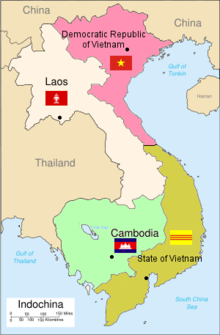
Vietnam during the Vietnam war
User:SnowFire, CC BY-SA 4.0 <https://creativecommons.org/licenses/by-sa/4.0>, via Wikimedia Commons
The last American troops had left Vietnam on March 29, 1973. President Richard Nixon claimed that he had achieved “peace with honor.” The South Vietnamese Army was supposedly now trained by Americans to defend the “country” from attack by North Vietnam.
Then came December 13, 1974—the start of the North’s all-out offensive.
The result: South Vietnamese forces melted away.
This was hardly surprising to American veterans of the war. Among them a favorite joke had been: “There’s a new batch of South Vietnamese rifles for sale. Never fired, and only dropped once.”
By April 30, 1975, Saigon, the capitol of South Vietnam, fell to the People’s Army of Vietnam and the Viet Cong.

Fall of Saigon
At home, watching TV, Americans felt shame as Army helicopters hurriedly lifted off the roof of the United States embassy. Numerous South Vietnamese desperately tried to climb aboard—only to have their hands stomped on by Americans equally desperate to get out before North Vietnamese forces reached them.
Now, 46 years later, Americans were seeing Air Force planes taking off from Kabul Airport, with hordes of Afghans desperate to leave the country, racing after them.
Said President Joseph Biden: “Over our country’s 20 years at war in Afghanistan, America has sent its finest young men and women, invested nearly $1 trillion dollars, trained over 300,000 Afghan soldiers and police, equipped them with state-of-the-art military equipment, and maintained their air force as part of the longest war in U.S. history.”

Joseph Biden
Just as the South Vietnamese Army had chosen flight instead of fight, so, too, did the Afghan Army—in just 10 days.
“One more year, or five more years, of U.S. military presence would not have made a difference if the Afghan military cannot or will not hold its own country,” said Biden. “And an endless American presence in the middle of another country’s civil conflict was not acceptable to me.
“When I came to office, I inherited a deal cut by my predecessor—which he invited the Taliban to discuss at Camp David on the eve of 9/11 of 2019—that left the Taliban in the strongest position militarily since 2001 and imposed a May 1, 2021 deadline on U.S. Forces.
Donald Trump
“Shortly before he left office, he also drew U.S. Forces down to a bare minimum of 2,500. Therefore, when I became President, I faced a choice—follow through on the deal, with a brief extension to get our forces and our allies’ forces out safely, or ramp up our presence and send more American troops to fight once again in another country’s civil conflict.
“I was the fourth President to preside over an American troop presence in Afghanistan—two Republicans, two Democrats. I would not, and will not, pass this war onto a fifth.”
Republicans have since tried hard to blame the resulting chaos on Biden. But in doing so they deliberately ignore the role played by his predecessor, Donald Trump, in facilitating that rout.
As Biden noted, Trump had invited the Taliban to Camp David to discuss the withdrawal of American forces from Afghanistan. Making this offer thoroughly disgraceful were two factors:
First: The date for this conference was on the eve of the 18th anniversary of the September 11, 2001 terrorist attacks on the Pentagon and World Trade Center. Osama bin Laden, the mastermind of those attacks, was then living in Afghanistan under the protection of the Taliban.
It was the refusal of the Taliban to turn him over to American justice that led directly to the American invasion of Afghanistan in October, 2001.
Second: Pointedly uninvited to this conference were any members of the Afghan government, which—officially—the United States regarded as a valuable ally.
There is a brutal lesson here that Americans have long refused to learn: Bad allies make for bad outcomes. Those who refuse to defend themselves cannot be bribed or forced to do so by others.
Contrast the “I have to catch a plane” cowardice of Afghan soldiers with the courage of Ukrainian soldiers—and civilians—fiercely defending their country from Vladimir Putin’s unprovoked Russian invasion.
During the assault by Russian troops on the capital of Kiev, the Biden administration urged President Volodymyr Zelensky to evacuate to a safer location and offered to help him do so. Zelensky refused, saying: “The fight is here [in Kiev]; I need ammunition, not a ride.”
Until Presidents and Congressional leaders learn to distinguish worthwhile allies from worthless ones, Americans will continue to waste lives and treasure on the latter.


&docid=yt8OxrbTDh591M&tbnid=ik44Wblm3ZvX6M%3A&vet=1&w=325&h=475&bih=469&biw=819&ved=0ahUKEwjC-_Ka0enRAhVJKGMKHV61ApUQMwghKAAwAA&iact=c&ictx=1)


.jpg)

 Bureaucracybuster's Blog
9/11 ATTACKS, ABC NEWS, ADOLF EICHMANN, ADOLF HITLER, ALTERNET, AMERICABLOG, AMERICAN CIVIL LIBERTIES UNION, AP, BABY BOOMER RESISTANCE, BBC, BLOOMBERG, BUZZFEED, CBS NEWS, CNN, CROOKS AND LIARS, DAILY KOS, DEPARTMENT OF HOMELAND SECURITY, DONALD TRUMP, EGYPT, EXECUTIVE ORDER, FACEBOOK, FIVETHIRTYEIGHT, HARPER’S MAGAZINE, HEINRICH HIMMLER, HERMAN GORING, HITLER 1889-1936: HUBRIS, HITLER 1936-1945: NEMESIS, HITLER: ASCENT: 1889-1939, HUFFINGTON POST, IAN KERSHAW, IRAN, IRQA, JOSEPH GOEBBELS, LYBIA, MEDIA MATTERS, MOTHER JONES, MOVEON, MSNBC, MUSLIM REFUGEES, NAZI GERMANY, NBC NEWS, NEW REPUBLIC, NEWSDAY, NEWSWEEK, NPR, OSAMA BIN LADEN, PBS NEWSHOUR, PENTAGON, POLITICO, POLITICUSUSA, RAW STORY, REUTERS, ROBERT PAYNE, SALON, SAUDI ARABIA, SEATTLE TIMES, SLATE, SOMALIA, STALINGRAD (MOVIE), SUDAN, SYRIA, TALKING POINTS MEMO, THE ATLANTIC, THE CHICAGO SUN-TIMES, THE CHICAGO TRIBUNE, THE DAILY BEAST, THE DAILY BLOG, THE GUARDIAN, THE HILL, THE HUFFINGTON POST, THE INTERCEPT, THE LIFE AND DEATH OF ADOLF HITLER, THE LOS ANGELES TIMES, THE NATION, THE NEW REPUBLIC, THE NEW YORK TIMES, THE NEW YORKER, THE VILLAGE VOICE, THE WASHINGTON POST, THINKPROGRESS, THIRD REICH, TIME, TRUTHDIG, TRUTHOUT, TURKEY, TWO POLITICAL JUNKIES, U.S. NEWS & WORLD REPORT, UNITED ARAB EMIRATES, UPI, USA TODAY, VOLKER ULRICH, WALTER SHAUB, WORLD TRADE CENTER, X, YEMEN
“WORKING TOWARDS THE PRESIDENT”: PART TWO (END)
In Bureaucracy, Business, History, Law, Law Enforcement, Politics, Social commentary on April 25, 2025 at 12:19 amIn Stalingrad, a 1993 German-made war movie, a platoon of German Army soldiers leaves behind the beaches and beauties of Italy and find themselves fighting desperately to stay alive in Russia.
Early in the film, there is an exchange that has its real-life counterpart almost 75 years later.
A young, idealistic German lieutenant, newly transferred to the Russian front, is horrified when he sees a fellow soldier from another unit sadistically beat a Russian prisoner to death.
He seeks out the man’s superior, a captain, and says: “Captain, I must protest about the behavior of your men.”
“You want to protest?” asks the captain, grinning sardonically. “Tell the Fuhrer.”
Fast forward to January 28, 2017, the day after President Donald J. Trump signed into law an executive order which:
The new rules—and the efforts of security personnel at major international airports to enforce them—triggered a tsunami of chaos and fear among travelers.
“We’ve gotten reports of people being detained all over the country,” said Becca Heller, the director of the International Refugee Assistance Project. “They’re literally pouring in by the minute.”
Refugees on flights when the order was signed on January 27 were detained upon arrival.
Donald Trump
Many students attending American universities were blocked from returning to the United States from visits abroad.
According to Homeland Security officials, 109 people who were already in transit to the United States when the order was signed were denied access; 173 were stopped before boarding planes heading to America. Eighty-one people who were stopped were eventually given waivers to enter the United States.
Internationally, travelers were seized by panic when they were not allowed to board flights to the United States. In Dubai and Istanbul, airport and immigration officials turned passengers away at boarding gates. At least one family was removed from a flight it had boarded.
Earlier on January 28, Trump, isolated in the White House from all the chaos he had unleashed in airports across the nation and throughout the world, said:
“It’s not a Muslim ban, but we were totally prepared. It’s working out very nicely. You see it at the airports, you see it all over.”
Then the American Civil Liberties Union intervened.
Two Iraqi immigrants, defended by the ACLU, accused Trump of legal and constitutional overreach.
The Iraqis had been detained at John F. Kennedy International Airport in New York City. One had served as an interpreter for American forces in Iraq for a decade. The other was en route to reunite with his wife and son in Texas.
The interpreter, Hameed Khalid Darweesh, was released after nearly 19 hours of detention. So was the other traveler, Haider Sameer Abdulkhaleq Alshawi.
Before the two men were released, one of their lawyers, Mark Doss, a supervising attorney at the International Refugee Assistance Project, asked an official, “Who is the person we need to talk to?”
“Call Mr. Trump,” said the official, who refused to identify himself.
He might just as well have said: “You want to protest? Tell the Fuhrer.”
The ACLU action secured at least a temporary blocking of part of Trump’s order. A Brooklyn judge barred the government from deporting some arrivals who found themselves ensnared by the Presidential order.
Judge Ann M. Donnelly of the Federal District Court in Brooklyn, ruled that sending the travelers home could cause them “irreparable harm.” She said the government was “enjoined and restrained from, in any manner and by any means, removing individuals” who had arrived in the United States with valid visas or refugee status.
But she did not force the administration to let in people otherwise blocked by the executive order who have not yet traveled to the United States. Nor did she issue a broader ruling on the constitutionality of the order.
* * * * *
On November 5, 75 million ignorant, hate-filled, Right-wing Americans re-elected Donald Trump—a man reflecting their own hate and ignorance—to the Presidency.
Summing up Trump’s character in a March 25, 2016 broadcast of The PBS Newshour, conservative political columnist David Brooks warned: “The odd thing about [Trump’s] whole career and his whole language, his whole world view is there is no room for love in it. You get a sense of a man who received no love, can give no love….
“And so you really are seeing someone who just has an odd psychology unleavened by kindness and charity, but where it’s all winners and losers, beating and being beat. And that’s part of the authoritarian personality.”
There were countless warning signs available for Trump’s supporters to see—if they had wanted to see them:
Those who voted for Trump will now learn the meaning of the Nazi slogan: “The Fuhrer proposes and disposes for all.” Those who voted against him knew this already.
Share this: