Posts Tagged ‘PAUL REVERE’
1776 (PLAY), AARON BURR, ABC NEWS, AGING, ALEXANDER HAMILTON, ALTERNET, AMERICABLOG, AP, ASA HUTCHINSON, BABY BOOMER RESISTANCE, BENEDICT ARNOLD, BENJAMIN FRANKLIN, BUZZFEED, CBS NEWS, CHRIS CHRISTIE, CNN, CONGRESS, CROOKS AND LIARS, DAILY KOS, DECLARATION OF INDEPENDENCE, DONALD TRUMP, DOUG BURGUM, ETHAN ALLEN, FIVETHIRTYEIGHT, GEORGE WASHINGTON, GERONTOCRACY, JAMES MADISON, JAMES MONROE, JILL STEIN, JOHN ADAMS, JOHN HANCOCK, JOHN MARSHALL, JOHN PAUL JONES, JOSEPH BIDEN, Kamala Harris, KGB, KONSTANTIN CHERNENKO, LEONID BREZHNEV, MARIANNE WILLIAMSON, MIKHAIL GORBACHEV, MOTHER JONES, MOVEON, MSNBC, NATHAN HALE, NBC NEWS, NEW YORK CITY, NEWSWEEK, NPR, PATRICK HENRY, PAUL REVERE, PBS NEWSHOUR, POLITICO, POLITICUSUSA, RAW STORY, REUTERS, ROBERT F. KENNEDY JR., SALON, SAMUEL ADAMS, SEATTLE TIMES, SLATE, SOVIET UNION, TALKING POINTS MEMO, THE ATLANTIC, THE CHICAGO SUN-TIMES, THE CHICAGO TRIBUNE, THE DAILY BEAST, THE DAILY BLOG, THE GUARDIAN, THE HILL, THE HUFFINGTON POST, THE LOS ANGELES TIMES, THE NATION, THE NEW YORK TIMES, THE WASHINGTON POST, THINKPROGRESS, THOMAS JEFFERSON, THOMAS PAINE, TIME, TRUTHDIG, U.S. NEWS & WORLD REPORT, UPI, USA TODAY, X, YURI ANDROPOV, ZOHRAN MANDANI
In Bureaucracy, History, Medical, Politics, Social commentary on November 24, 2025 at 12:06 am
On November 2, New York City mayoral candidate Zohran Mamdani surprised patrons at a gay night club when he stopped by to campaign at 1 am.
Five hours later, he walked across the Brooklyn Bridge at 6 am.
On the social media platform, Bluesky, a post took notice of this:
“To anyone who’s been awestruck by Zohran’s campaigning stamina in being able to end his night at a gay bar at 1 am and then walk across the Brooklyn Bridge at 6 am….
“This is what happens when you don’t have 76 year old candidates running for office.”
Zohran Mamdani is 34.

Zohran Mamdani
Dmitryshein, CC BY-SA 4.0 <https://creativecommons.org/licenses/by-sa/4.0>, via Wikimedia Commons
On July 4, 1776, representatives of the original Thirteen Colonies met in Philadelphia, Pennsylvania, to affix their signatures to Thomas Jefferson’s Declaration of Independence.
In July, 1776, the ages of key American Revolutionary figures were:
- Marquis de Lafayette, 18
- James Monroe, 18
- Aaron Burr, 20
- John Marshall, 20
- Nathan Hale, 21
- Alexander Hamilton, 21
- James Madison, 25
- John Paul Jones, 28
- Thomas Jefferson, 33
- Benedict Arnold, 35
- Ethan Allen, 38
- John Hancock, 39
- Thomas Paine, 39
- Paul Revere, 41
- George Washington, 44
- Samuel Adams, 53
- Benjamin Franklin, 70

Signing of the Declaration of Independence
Youth was a commonplace among the signers of the Declaration. Their average age was 44.
In the hit play (and later movie) 1776, several members of Congress—including Thomas Jefferson—are surprised to learn that John Adams—who’s 41—still “burns” for his wife Abigail, who’s waiting for him in Boston, Massachusetts.
Today, a nation that once prized youth among its leaders is now moving toward government by gerontocracy.
The average age of members of the House of Representatives is 57.9 years. In the Senate, it’s 64.3.
During 2024, the major Presidential contenders were:
- President Joseph Biden, 81
- Donald Trump, 78
- Robert F. Kennedy Jr, 70
- Jill Stein, 74
- Asa Hutchinson, 72
- Chris Christie, 61
- Doug Burgum, 67
- Marianne Williamson, 71
- Cornel West, 71
- Kamala Harris, 60
A visit to the Soviet Union in the twilight of its 74-year existence reveals where the United States is heading.
In May 1982, 75-year-old General Secretary Leonid Brezhnev, suffered a severe stroke. He had ruled the U.S.S.R. since 1964, but by the early 1980s he was essentially a figurehead. On November 10, 1982, he finally died of a heart attack.
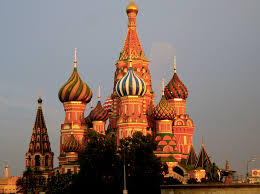
The Kremlin
Succeeding Brezhnev was Yuri Andropov, 69, who until May, 1982, had been chief of the KGB.
Andropov suffered from kidney failure and was often on dialysis. By December, 1983, after barely more than a year in office, he was totally bedridden. On February 9, 1984, he joined Brezhnev at the great Party Congress in the sky.
Andropov had realized that the Soviet Union needed a younger and more energetic ruler. Not long before he died he suggested that Mikhail Gorbachev, his aide, succeed him.
But the Central Committee instead chose Konstantin Chernenko, who, at 72, was older than Andropov. On February 13, 1984, he became the U.S.S.R.’s third leader in a year and a half.
Suffering from emphysema, occasional heart failure and liver disease from alcohol, Chernenko died on March 10, 1985.
Only then did Kremlin rulers decide to choose a General Secretary who was likely to live more than one or two years. One day after Chernenko died, the Politburo chose Gorbachev, a relatively young 54.
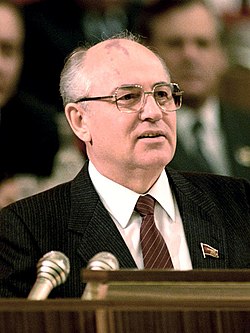
Mikhail Gorbachev
RIA Novosti archive, image #850809 / Vladimir Vyatkin / CC-BY-SA 3.0, CC BY-SA 3.0 <https://creativecommons.org/licenses/by-sa/3.0>, via Wikimedia Commons
Gorbachev survived to retire as President of the Soviet Union on December 25, 1991.
So what does this mean for old men and women seeking the White House?
According to Dr. Michael Roizen, Presidents effectively age twice as fast while in office. Roizen, a chief wellness officer at the Cleveland Clinic and co-founder of RealAge.com, bases his opinion on his research of medical records of previous presidents, back to Theodore Roosevelt.
“The main cause is what we call unrequited stress—they don’t have enough friends to mitigate the stress. The major way most of us handle stress is through a number of techniques, but the most prominent way is to discuss it with friends.
“The problem with presidents is, some of them lose friends, and the closest friend they have is usually the spouse.”
Thus, a person who has been president eight years has the risk of disability or dying of someone who is 16 years older. When you’re already in your late 60s or early 70s, that doesn’t give you much room for risk-taking.
Of course, given America’s Politically Correct social norms, pointing out the disadvantages of combing extreme age with extreme pressure is taboo for many persons.
Julian Castro found this out when, in a debate, he questioned Joseph Biden’s mental acuity.
“In a cultural way, it shocked me,” said Gerson Borrero, a New York City political commentator. “We respect our elders—there may be a point where we smile at their ‘disparates’ (gaffes), but at the same time we stay respectful.”
As the United States approaches the 2028 Presidential election, the perils of gerontocracy loom even larger: Donald Trump has “hinted” he wants to run for a third term in 2028.
Even if he weren’t barred from a third term by the Constitution’s 22nd Amendment, he would be 82 years old when he took office in 2029.
FBI agents have a mandatory retirement age of 57. Airplane pilots must retire at 65. Air traffic controllers must leave at 56.
It’s past time to bring a mandatory retirement age to members of Congress and the Presidency.
1776 (PLAY), AARON BURR, ABC NEWS, AGING, ALEXANDER HAMILTON, ALTERNET, AMERICABLOG, AP, BABY BOOMER RESISTANCE, BENEDICT ARNOLD, BENJAMIN FRANKLIN, BUZZFEED, CBS NEWS, CNN, CONGRESS, CROOKS AND LIARS, DAILY KOS, DECLARATION OF INDEPENDENCE, ETHAN ALLEN, FIVETHIRTYEIGHT, GEORGE WASHINGTON, GERONTOCRACY, JAMES MADISON, JAMES MONROE, JOHN ADAMS, JOHN HANCOCK, JOHN MARSHALL, JOHN PAUL JONES, KGB, KONSTANTIN CHERNENKO, LEONID BREZHNEV, MIKHAIL GORBACHEV, MOTHER JONES, MOVEON, MSNBC, NATHAN HALE, NBC NEWS, NEWSWEEK, NPR, PATRICK HENRY, PAUL REVERE, PBS NEWSHOUR, POLITICO, POLITICUSUSA, RAW STORY, REUTERS, SALON, SAMUEL ADAMS, SEATTLE TIMES, SLATE, SOVIET UNION, TALKING POINTS MEMO, THE ATLANTIC, THE CHICAGO SUN-TIMES, THE CHICAGO TRIBUNE, THE DAILY BEAST, THE DAILY BLOG, THE GUARDIAN, THE HILL, THE HUFFINGTON POST, THE LOS ANGELES TIMES, THE NATION, THE NEW YORK TIMES, THE WASHINGTON POST, THINKPROGRESS, THOMAS JEFFERSON, THOMAS PAINE, TIME, TRUTHDIG, TWITTER, U.S. NEWS & WORLD REPORT, UPI, USA TODAY, YURI ANDROPOV
In Bureaucracy, History, Medical, Politics, Social commentary on January 29, 2024 at 12:14 am
“Congress has become the most privileged nursing home in the country,” said Republican Presidential candidate Nikki Haley at a rally in Conway, S.C., on January 28.
American voters, she added, deserved to know that those charged with protecting the nation were “at the top of their game.”
“Don’t you think we need to have mental competency tests for anyone over the age of 75?” asked Haley, 52.
On July 4, 1776, representatives of the original Thirteen Colonies met in Philadelphia, Pennsylvania, to affix their signatures to Thomas Jefferson’s Declaration of Independence.
Signing of the Declaration of Independence
The ages of key American Revolutionary figures in July. 1776, were:
- Marquis de Lafayette, 18
- James Monroe, 18
- Aaron Burr, 20
- John Marshall, 20
- Nathan Hale, 21
- Alexander Hamilton, 21
- George Rodgers Clark, 23
- James Madison, 25
- Edward Rutledge, 26
- John Paul Jones, 28
- Thomas Jefferson, 33
- James Wilson, 34
- Benedict Arnold, 35
- Samuel Chase, 35
- Ethan Allen, 38
- John Hancock, 39
- Thomas Paine, 39
- Patrick Henry, 40
- John Adams, 41
- Paul Revere, 41
- Richard Henry Lee, 44
- George Washington, 44
- Josiah Bartlett, 46
- Lyman Hall, 52
- Samuel Adams, 53
- Roger Sherman, 55
- Benjamin Franklin, 70
Youth was a commonplace among the signers of the Declaration. Their average age was 44.
In the hit play (and later movie) 1776, several members of Congress—including Thomas Jefferson—are surprised to learn that John Adams—who’s 41—“burns” for his wife Abigail, who’s waiting for him in Boston, Massachusetts.
Today, a nation that once prized youth among its leaders is now moving toward government by gerontocracy.
The average age of members of the House of Representatives is 58.4 years. In the Senate, it’s 64.3.
During 2020, the major Democratic Presidential contenders were:
- Vermont United States Senator Bernie Sanders: 79
- Former Vice President Joe Biden: 78
- Massachusetts United States Senator Elizabeth Warren: 71
- Minnesota United States Senator Amy Klobuchar: 60

Opposing them was President Donald Trump, 73, as he sought re-election. On Election Day, he would be 74.
A visit to the Soviet Union in the twilight of its 74-year existence reveals where the United States is heading.
In May 1982, 75-year-old General Secretary Leonid Brezhnev, suffered a severe stroke. He had ruled the U.S.S.R. since 1964, but by the early 1980s he was essentially a figurehead. On November 10, 1982, he finally died of a heart attack.
The Kremlin
Succeeding Brezhnev was Yuri Andropov, 69, who until May, 1982, had been chief of the KGB.
Andropov suffered from kidney failure and was often on dialysis. By December, 1983, after barely more than a year in office, he was totally bedridden. On February 9, 1984, he joined Brezhnev at the great Party Congress in the sky.
Andropov had realized that the Soviet Union needed a younger and more energetic ruler. Not long before he died he suggested that Mikhail Gorbachev, his aide, succeed him.
But the Central Committee instead chose Konstantin Chernenko, who, at 72, was older than Andropov. On February 13, 1984, he became the U.S.S.R.’s third leader in a year and a half.
Suffering from emphysema, occasional heart failure and liver disease from alcohol, Chernenko died on March 10, 1985.
Only then did Kremlin rulers decide to choose a General Secretary who was likely to live more than one or two years. One day after Chernenko died, the Politburo chose Gorbachev, a relatively young 54.

Mikhail Gorbachev
Gorbachev survived to retire as President of the Soviet Union on December 25, 1991.
So what does this mean for old men and women seeking the White House?
According to Dr. Michael Roizen, Presidents effectively age twice as fast while in office. Roizen, a chief wellness officer at the Cleveland Clinic and co-founder of RealAge.com, bases his opinion on his research of medical records of previous presidents, back to Theodore Roosevelt.
“The main cause is what we call unrequited stress—they don’t have enough friends to mitigate the stress. The major way most of us handle stress is through a number of techniques, but the most prominent way is to discuss it with friends.
“The problem with presidents is, some of them lose friends, and the closest friend they have is usually the spouse.”
Thus, a person who has been president eight years has the risk of disability or dying of someone who is 16 years older. When you’re already in your late 60s or early 70s, that doesn’t give you much room for risk-taking.
Of course, given America’s Politically Correct social norms, pointing out the disadvantages of combing extreme age with extreme pressure is taboo for many persons.
Julian Castro found this out when, in a debate, he questioned Joseph Biden’s mental acuity.
“In a cultural way, it shocked me,” said Gerson Borrero, a New York City political commentator. “We respect our elders—there may be a point where we smile at their ‘disparates’ (gaffes), but at the same time we stay respectful.”
As the United States approaches the 2024 Presidential election, the perils of gerontocracy loom even larger.
Biden turned 81 on November 20, 202. If re-elected in 2024, he would be 82. If he lived out his full term, he would be 86.
Trump, who still lusts to be President, is 77. If re-elected President in 2024, he would be 78 upon taking office in 2025.
FBI agents have a mandatory retirement age of 57. Airplane pilots must retire at 65.
It’s past time to bring a mandatory retirement age to members of Congress and the Presidency.
1776 (PLAY), AARON BURR, ABC NEWS, ABIGAIL ADAMS, AGING, ALEXANDER HAMILTON, ALTERNET, AMERICABLOG, AP, BABY BOOMER RESISTANCE, BENEDICT ARNOLD, BENJAMIN FRANKLIN, BUZZFEED, CBS NEWS, CNN, CONGRESS, CROOKS AND LIARS, DAILY KOZ, DECLARATION OF INDEPENDENCE, ETHAN ALLEN, FACEBOOK, FIVETHIRTYEIGHT, GEORGE WASHINGTON, GERONTOCRACY, JAMES MADISON, JAMES MONROE, JOHN ADAMS, JOHN HANCOCK, JOHN MARSHALL, JOHN PAUL JONES, KGB, KONSTANTIN CHERNENKO, LEONID BREZHNEV, MARTHA WASHINGTON, MIKHAIL GORBACHEV, MOTHER JONES, MOVEON, MSNBC, NATHAN HALE, NBC NEWS, NEWSWEEK, NPR, PATRICK HENRY, PAUL REVERE, PBS NEWSHOUR, POLITICO, POLITICUSUSA, RAW STORY, REUTERS, SALON, SAMUEL ADAMS, SEATTLE TIMES, SLATE, SOVIET UNION, TALKING POINTS MEMO, THE ATLANTIC, THE CHICAGO SUN-TIMES, THE CHICAGO TRIBUNE, THE DAILY BEAST, THE DAILY BLOG, THE GUARDIAN, THE HILL, THE HUFFINGTON POST, THE LOS ANGELES TIMES, THE NATION, THE NEW YORK TIMES, THE WASHINGTON POST, THINKPROGRESS, THOMAS JEFFERSON, THOMAS PAINE, TIME, TRUTHDIG, TWITTER, U.S. NEWS & WORLD REPORT, UPI, USA TODAY, YURI ANDROPOV
In Bureaucracy, History, Politics, Social commentary on April 17, 2023 at 12:52 am
“Many Founding Fathers Were Shockingly Young When the Declaration of Independence Was Signed in 1776.”
So read the headline of a July 5, 2014 story in Business Insider.
On July 4, 1776, representatives of the original Thirteen Colonies met in Philadelphia, Pennsylvania, to affix their signatures to Thomas Jefferson’s Declaration of Independence.
Signing of the Declaration of Independence
Below is a list of the ages of key American Revolutionary figures on July 4, 1776. (Those who signed the Declaration are listed in red.)
- Marquis de Lafayette, 18
- James Monroe, 18
- Henry Lee III, 20
- Aaron Burr, 20
- John Marshall, 20
- Nathan Hale, 21
- Alexander Hamilton, 21
- George Rodgers Clark, 23
- James Madison, 25
- Edward Rutledge, 26
- John Paul Jones, 28
- Abigail Adams, 31
- Thomas Jefferson, 33
- James Wilson, 34
- Benedict Arnold, 35
- Samuel Chase, 35
- Ethan Allen, 38
- John Hancock, 39
- Thomas Paine, 39
- Patrick Henry, 40
- John Adams, 41
- Paul Revere, 41
- Richard Henry Lee, 44
- George Washington, 44
- Martha Washington, 45
- Josiah Bartlett, 46
- Caesar Rodney, 47
- Lyman Hall, 52
- Samuel Adams, 53
- Roger Sherman, 55
- Philip Livingston, 60
- Stephen Hopkins, 69
- Benjamin Franklin, 70
Youth was a commonplace among the signers of the Declaration. Their average age was 44.
In the hit play (and later movie) 1776, several members of Congress—including Thomas Jefferson—are surprised to learn that John Adams—who’s 41—“burns” for his wife Abigail, who’s waiting for him in Boston, Massachusetts.
Today, a nation that once prized youth among its leaders is now moving toward government by gerontocracy.
The average age of members of the House of Representatives is 58.4 years. In the Senate, it’s 64.3.
On Election Day, 2020, the following Democratic contenders were:
- Vermont United States Senator Bernie Sanders: 79
- Former Vice President Joe Biden: 78
- Massachusetts United States Senator Elizabeth Warren: 71
- Minnesota United States Senator Amy Klobuchar: 60
- California United States Senator Kamala Harris: 56
- Former Texas Congressman Beto O’Rourke: 48
Of these candidates, the oldest ones—Sanders, Warren and Biden—were considered the frontrunners for the Democratic nomination.
Opposing them was President Donald Trump, 73, as he sought re-election. On Election Day, he would be 74.
To get an idea of where the United States is heading, let’s revisit the Soviet Union in the twilight of its 74-year existence.
In May 1982, 75-year-old General Secretary Leonid Brezhnev, suffered a severe stroke. He had ruled the U.S.S.R. since 1964, but by the early 1980s he was essentially a figurehead. On November 10, 1982, he finally died of a heart attack.
The Kremlin
Succeeding Brezhnev was Yuri Andropov, 69, who until May, 1982, had been chief of the KGB.
Andropov suffered from kidney failure and was often on dialysis. By December, 1983, after barely more than a year in office, he was totally bedridden. On February 9, 1984, he joined Brezhnev at the great Party Congress in the sky.
Andropov had realized that the Soviet Union needed a younger and more energetic ruler. Not long before he died he suggested that Mikhail Gorbachev, his aide, succeed him.
But the Central Committee instead chose Konstantin Chernenko, who, at 72, was older than Andropov. On February 13, 1984, he became the U.S.S.R.’s third leader in a year and a half.
Suffering from emphysema, occasional heart failure and liver disease from alcohol, Chernenko died on March 10, 1985.
Only then did Kremlin rulers decide to choose a General Secretary who was likely to live more than one or two years. One day after Chernenko died, the Politburo chose Gorbachev, a relatively young 54.
Mikhail Gorbachev
Gorbachev survived to retire as President of the Soviet Union on December 25, 1991.
So what does this mean for old men and women seeking the White House?
According to Dr. Michael Roizen, Presidents effectively age twice as fast while in office. Roizen, a chief wellness officer at the Cleveland Clinic and co-founder of RealAge.com, bases his opinion on his research of medical records of previous presidents, back to Theodore Roosevelt.
“The main cause is what we call unrequited stress—they don’t have enough friends to mitigate the stress. The major way most of us handle stress is through a number of techniques, but the most prominent way is to discuss it with friends.
“The problem with presidents is, some of them lose friends, and the closest friend they have is usually the spouse.”
Thus, a person who has been president eight years has the risk of disability or dying of someone who is 16 years older. When you’re already in your late 60s or early 70s, that doesn’t give you much room for risk-taking.
Of course, given America’s Politically Correct social norms, pointing out the disadvantages of combing extreme age with extreme pressure is taboo for many persons.
Julian Castro found this out when, in a debate, he questioned Joseph Biden’s mental acuity.
“In a cultural way, it shocked me,” said Gerson Borrero, a New York City political commentator. “We respect our elders—there may be a point where we smile at their ‘disparates’ (gaffes), but at the same time we stay respectful.”
That does not, however, make such truths magically disappear.
As the United States approaches the 2024 Presidential election, the perils of gerontocracy loom even larger.
Biden turned 80 on November 20. If re-elected in 2024, he would be 82. If he lived out his full term, he would be 86.
Trump, who still lusts to be President, is 76. If re-elected President in 2024, he would be 77, taking office at 78.
FBI agents have a mandatory retirement age of 57. Airplane pilots must retire at 65.
It’s past time to bring a mandatory retirement age to members of Congress and the Presidency.
2012 PRESIDENTIAL RACE, 2016 PRESIDENTIAL RACE, ABC NEWS, ALTERNET, AMERICABLOG, AP, APOLLO MOON LANDING, BABY BOOMER RESISTANCE, BARACK OBAMA, BBC, BLOOMBERG NEWS, BUZZFEED, CBS NEWS, CNN, CROOKS AND LIARS, CUBAN MISSILE CRISIS, DAILY KOS, DAILY KOZ, DONALD J. TRUMP, DONALD TRUMP, FACEBOOK, FBI, FIVETHIRTYEIGHT, HARPER’S MAGAZINE, HERMAN CAIN, HUFFINGTON POST, JOHN F. KENNEDY, LYNDON B. JOHNSON, MARTIN LUTHER KING, MARTIN SHEEN, MEDIA MATTERS, MOTHER JONES, MOVEON, MSNBC, NBC NEWS, NEW REPUBLIC, NEWSDAY, NEWSWEEK, NIKITA KHRUSHCHEV, NPR, NUCLEAR TEST BAN TREATY, PAUL REVERE, PBS NEWSHOUR, POLITICO, POLITICUSUSA, PT-109, RAW STORY, REUTERS, RICK PERRY, ROBERT F. KENNEDY, ROBERT S. MCNAMARA, SALON, Sarah Palin, SEATTLE TIMES, SLATE, SOVIET UNION, TALKING POINTS MEMO, THE ATLANTIC, THE CHICAGO SUN-TIMES, THE CHICAGO TRIBUNE, THE DAILY BEAST, THE DAILY BLOG, THE GUARDIAN, THE HILL, THE HUFFINGTON POST, THE LOS ANGELES TIMES, THE NATION, THE NEW REPUBLIC, THE NEW YORK TIMES, THE NEW YORKER, THE VILLAGE VOICE, THE WALL STREET JOURNAL, THE WASHINGTON POST, THINKPROGRESS, TIME, TRUTHDIG, TRUTHOUT, TWITTER, TWO POLITICAL JUNKIES, U.S. NEWS & WORLD REPORT, UPI, USA TODAY, VIETNAM WAR, WONKETTE
In Bureaucracy, History, Military, Politics, Social commentary on November 22, 2021 at 12:07 am
Fifty-eight years ago this coming November 22, two bullets slammed into the neck and head of President John Fitzgerald Kennedy.
For most Americans, 1963 was over—and their lives would never be the same.
It has been said that JFK left his country with three great legacies:
- The Nuclear Test Ban Treaty;
- The Apollo moon landing; and
- The Vietnam war.
Of these, the following can be said with certainty:
- The Test Ban Treaty has prevented atmospheric testing—and poisoning—by almost all the world’s nuclear powers.
- After reaching the moon—in 1969—Americans quickly lost interest in space and have today largely abandoned plans for manned exploration. For America, as for JFK, beating the Russians to the moon was the end-goal.
- By the time JFK died, 16,000 Americans were serving in Vietnam, with more than 70 casualties.
- Under Presidents Lyndon Johnson and Richard Nixon, 58,000 Americans died in Vietnam; 153,303 were wounded; and billions of dollars were squandered in a hopeless effort to intervene in what was essentially a Vietnamese civil war. From 1965 to 1972, the war angrily divided Americas as had no event since the Civil War.
But there was a fourth legacy—and perhaps the most important of all: The belief that mankind could overcome its greatest challenges through rationality and perseverance.
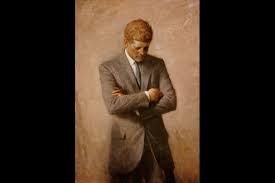
White House painting of JFK
At American University on June 10, 1963, Kennedy asked his fellow Americans to re-examine the events and attitudes that had led to the Cold War. And he declared that the search for peace was by no means hopeless:
“Our problems are man-made; therefore, they can be solved by man. And man can be as big as he wants. No problem of human destiny is beyond human beings.
“Man’s reason and spirit have often solved the seemingly unsolvable, and we believe they can do it again.”
Today, Democrats and Republicans cannot agree on solutions to even the most vital national problems.
On November 21, 2011, the 12 members of the “Super-Committee” of Congress, tasked with finding $1.2 trillion in cuts in government spending, couldn’t reach agreement.
President Kennedy insisted on being well-informed. He speed-read several newspapers every morning and nourished personal relationships with the press—but not for altruistic reasons. These journalistic contacts gave Kennedy additional sources of information and perspectives on national and international issues.
During the 2012 Presidential campaign, Republican candidates celebrated their ignorance of both.
- Former Godfather’s Pizza CEO Herman Cain famously said, “We need a leader, not a reader”—thus excusing his ignorance for why President Barack Obama had intervened in Libya.
- Texas Governor Rick Perry (and Secretary of Energy under Donald Trump) didn’t know there are nine judges on the United States Supreme Court: “Well, obviously, I know there are nine Supreme Court judges. I don’t know how eight came out my mouth. But the, uh, the fact is, I can tell you—I don’t have memorized all of those Supreme Court judges. And, uh, ah—-
- “Here’s what I do know. That when I put an individual on the Supreme Court, just like I done in Texas, ah, we got nine Supreme Court justices in Texas, ah, they will be strict constructionists….”
- In short, it’s the media’s fault if your answer reveals your ignorance, stupidity and/or criminality.
- Sarah Palin rewrote history via “The Midnight Ride of Paul Revere”: “He warned the British that they weren’t going to be taking away our arms by ringing those bells and, um, making sure as he’s riding his horse through town to send those warning shots and bells that, uh, we were going to be secure and we were going to be free.”
- In fact, Revere wasn’t warning the British about anything. Instead, he was warning his fellow Americans about an impending British attack—as his celebrated catchphrase “The British are coming!” made clear.
During the height of the Cuban Missile Crisis, Kennedy spoke with aides about a book he had just finished: Barbara Tuchman’s The Guns of August, about the events leading to World War 1.
He said that the book’s most important revelation was how European leaders had blindly rushed into war, without thought to the possible consequences. Kennedy told his aides he did not intend to make the same mistake—that, having read his history, he was determined to learn from it.
Republicans attacked President Obama for his Harvard education and articulate use of language. Among their taunts: “Hitler also gave good speeches.”
And they resented his having earned most of his income as a writer of two books: Dreams From My Father and The Audacity of Hope. As if being a writer is somehow subversive.
Donald Trump has publicly celebrated ignorance. After winning the Nevada Republican primary in 2016, he declared: “We won with poorly educated. I love the poorly educated.”
Similarly, 58% of Republicans and Right-wingers believe that higher education has a negative effect on the country.
In retrospect, the funeral for President Kennedy marked the death of Americans’ pride in choosing reasoning and educated citizens for their leaders. And in seeking a reasoning and educated future for their children.
When knowledge and literacy are attacked as “highfalutin’” arrogance, and ignorance and incoherence are embraced as sincerity, national decline lies just around the corner.
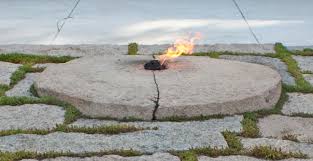
The Eternal Flame at the grave of President John F. Kennedy
AARON BROUGH, ABC NEWS, ALTERNET, AP, BARACK OBAMA, BARBARA TUCHMAN, BRIAN KILMEADE, BUZZFEED, CBS NEWS, CLIMATE CHANGE, CNN, CORONAVIRUS, CROOKS AND LIARS, CUBAN MISSILE CRISIS, DAILY KOZ, DEMOCRATS, DONALD TRUMP, DREAMS FROM MY FATHER (BOOK), FACEBOOK, FOX NEWS, GODFATHER'S PIZZA, IGNORANCE, JOHN F. KENNEDY, LITERACY, MARK STEYN, MOTHER JONES, MOVEON, MSNBC, NBC NEWS, NEWSWEEK, NPR, PAUL REVERE, PBS NEWSHOUR, POLITICO, RAW STORY, REPUBLICANS, REUTERS, ROBERT FRANCIS “BETO” O’ROURKE, RUSH LIMBAUGH, SALON, SEATTLE TIMES, SLATE, THE ATLANTIC, THE AUDACITY OF HOPE (BOOK), THE CHICAGO SUN-TIMES, THE CHICAGO TRIBUNE, THE DAILY BEAST, THE GUARDIAN, THE GUNS OF AUGUST (BOOK), THE HILL, THE HUFFINGTON POST, THE LOS ANGELES TIMES, THE NATION, THE NEW YORK TIMES, THE WASHINGTON POST, TIME, TUCKER CARLSON, TWITTER, U.S. NEWS & WORLD REPORT, UPI, USA TODAY, UTAH STATE UNIVERSITY, VANITY FAIR
In Bureaucracy, History, Politics, Social commentary on April 30, 2020 at 1:10 am
On March 14, 2019, Robert Francis “Beto” O’Rourke announced his candidacy for President of the United States in the 2020 Presidential election.
The former Congressman from Texas (2013 – 2019) had no sooner announced his candidacy that Fox News host Brian Kilmeade attacked him.
Vanity Fair had published a profile on O’Rourke, in which the writer noted that he had a “huge library.”
“As if it’s a big plus that he reads books,” scoffed Kilmeade.

Robert Francis “Beto” O’Rourke
His comment echoed that by former “Godfather’s Pizza” CEO Herman Cain during the 2012 Presidential race: “We need a leader, not a reader.” Thus he excused his ignorance for why President Barack Obama had intervened in Libya.
And on April 4, 2019, Tucker Carlson, another star commentator on Fox, offered this gem: “How did we wind up with a country in which feminists do science? I mean, isn’t that sort of bound to get a study like this, right?”
He was referring to a study by Dr. Aaron Brough of Utah State University on how gender norms reflect buying choices that, in turn, affect the environment. He found that both men and women associated doing something good for the environment with being “more feminine.”
Brough and his team call this deeply-held unconscious bias the “Green-Feminine Stereotype.”
Carlson didn’t ask a scientist or climate-change expert to dissect the study’s conclusions. Instead, he interviewed Mark Steyn, a Right-wing author. Steyn joked that his insecurities about his masculinity “are causing rising sea levels in the Maldives” and that he was “kind of on board” with the study’s thesis.

Tucker Carlson
Gage Skidmore [CC BY-SA 2.0 (https://creativecommons.org/licenses/by-sa/2.0)%5D
For Carlson, “climate science was all about ice core samples” and not Walmart gift cards.
For Steyn, “climate science is a state of mind” and the “big bucks” are in surveys where you “decide what’s heating up the planet is men.”
This disdain for education in general—and science in particular—has led to the following: In March, an NBC News poll found that only 30% of Republicans said that they would actually listen to the advice of doctors to stay away from large, crowded areas to avoid Coronavirus.
An August 20, 2019 story in Forbes noted that a Pew Research survey, conducted in July, had found that “67% of Democrats and Democrat-leaning respondents say higher education is having a positive effect on the country compared to only 33% of Republicans and Republican-leaning participants.”
Furthermore, “the percentage of Republicans attributing a positive effect to higher education has steadily eroded from 58% (2010), 53% (2012), 54% (2015), 43% (2016), and 36% (2017). Among Republicans, 59% now say higher education has a negative effect on the U.S., compared to just 18% of Democrats.”
These are the same people who get their version of reality from Right-wing sources like Fox News Network and Rush Limbaugh.
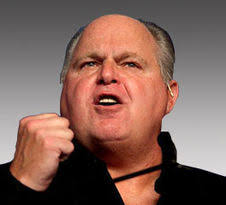
Rush Limbaugh
On his March 27 show, Limbaugh dismissed Coronavirus as “the common cold,” then added: “We didn’t elect a president to defer to a bunch of health experts that we don’t know.
“And how do we know they’re even health experts? Well, they wear white lab coats, and they’ve been in the job for a while, and they’re at the CDC and they’re at the NIH, and they’re up, well—yeah, they’ve been there, and they are there.
“But has there been any job assessment for them? They’re just assumed to be the best because they’re in government. But, these are all kinds of things that I’ve been questioning.”
President Donald Trump has gone even further in celebrating ignorance. At a campaign rally during the 2016 Presidential race, he infamously said: “We won the evangelicals. We won with young. We won with old. We won with highly educated. We won with poorly educated. I love the poorly educated.”
As President, he has attacked the free press as “the enemy of America” for exposing his lies and criminality. And while he repeatedly scorns legitimate mainstream news media, he often seeks guidance from ego-stroking Right-wing shills at Fox News—who often prove as ignorant as he is.
By contrast, President John F. Kennedy insisted on being well-informed. He speed-read several newspapers every morning and nourished personal relationships with the press. These journalistic contacts gave Kennedy additional sources of information and perspectives on national and international issues.
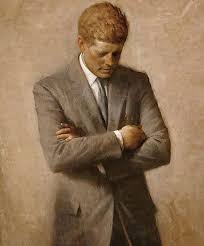
White House painting of JFK
During the height of the Cuban Missile Crisis, Kennedy spoke with aides about a book he had just finished: Barbara Tuchman’s The Guns of August, about the events leading to World War 1.
He said that the book’s most important revelation was how European leaders had blindly rushed into war, without thought to the possible consequences. Kennedy told his aides he did not intend to make the same mistake—that, having read his history, he was determined to learn from it.
Republicans attacked President Barack Obama for his Harvard education and articulate use of language. Among their taunts: “Hitler also gave good speeches.”
And they resented his having earned most of his income as a writer of two books: Dreams From My Father and The Audacity of Hope. As if being a writer is somehow subversive.
When knowledge and literacy are attacked as “highfalutin’” arrogance, and ignorance and incoherence are embraced as sincerity, national decline lies just around the corner.
1776 (PLAY), AARON BURR, ABC NEWS, ABIGAIL ADAMS, AGING, ALEXANDER HAMILTON, ALTERNET, AMERICABLOG, AP, BABY BOOMER RESISTANCE, BENEDICT ARNOLD, BENJAMIN FRANKLIN, BUZZFEED, CBS NEWS, CNN, CONGRESS, CROOKS AND LIARS, DAILY KOZ, DECLARATION OF INDEPENDENCE, ETHAN ALLEN, FACEBOOK, FIVETHIRTYEIGHT, GEORGE WASHINGTON, GERONTOCRACY, JAMES MADISON, JAMES MONROE, JOHN ADAMS, JOHN HANCOCK, JOHN MARSHALL, JOHN PAUL JONES, KGB, KONSTANTIN CHERNENKO, LEONID BREZHNEV, MARTHA WASHINGTON, MIKHAIL GORBACHEV, MOTHER JONES, MOVEON, MSNBC, NATHAN HALE, NBC NEWS, NEWSWEEK, NPR, PATRICK HENRY, PAUL REVERE, PBS NEWSHOUR, POLITICO, POLITICUSUSA, RAW STORY, REUTERS, SALON, SAMUEL ADAMS, SEATTLE TIMES, SLATE, SOVIET UNION, TALKING POINTS MEMO, THE ATLANTIC, THE CHICAGO SUN-TIMES, THE CHICAGO TRIBUNE, THE DAILY BEAST, THE DAILY BLOG, THE GUARDIAN, THE HILL, THE HUFFINGTON POST, THE LOS ANGELES TIMES, THE NATION, THE NEW YORK TIMES, THE WASHINGTON POST, THINKPROGRESS, THOMAS JEFFERSON, THOMAS PAINE, TIME, TRUTHDIG, TWITTER, U.S. NEWS & WORLD REPORT, UPI, USA TODAY, YURI ANDROPOV
In Bureaucracy, History, Politics, Social commentary on September 25, 2019 at 1:03 am
“Many Founding Fathers Were Shockingly Young When the Declaration of Independence Was Signed in 1776.”
So read the headline of a July 5, 2014 story in Business Insider.
On July 4, 1776, representatives of the original Thirteen Colonies met in Philadelphia, Pennsylvania, to affix their signatures to Thomas Jefferson’s Declaration of Independence.
Signing of the Declaration of Independence
Below is a list of the ages of key American Revolutionary figures on July 4, 1776.
- Marquis de Lafayette, 18
- James Monroe, 18
- Henry Lee III, 20
- Aaron Burr, 20
- John Marshall, 20
- Nathan Hale, 21
- Alexander Hamilton, 21
- George Rodgers Clark, 23
- James Madison, 25
- Thomas Lynch, Jr., 26
- Edward Rutledge, 26
- John Paul Jones, 28
- John Jay, 30
- Abigail Adams, 31
- Anthony Wayne, 31
- Thomas Jefferson, 33
- James Wilson, 34
- Benedict Arnold, 35
- Samuel Chase, 35
- William Paca, 35
- Ethan Allen, 38
- John Hancock, 39
- Daniel Morgan, 39
- Thomas Paine, 39
- Patrick Henry, 40
- John Adams, 41
- Paul Revere, 41
- Richard Henry Lee, 44
- George Washington, 44
- Martha Washington, 45
- Josiah Bartlett, 46
- Caesar Rodney, 47
- Lyman Hall, 52
- Samuel Adams, 53
- Roger Sherman, 55
- Philip Livingston, 60
- Stephen Hopkins, 69
- Benjamin Franklin, 70
Youth was a commonplace among the signers of the Declaration.
In the hit play (and later movie) 1776, several members of Congress—including Thomas Jefferson—are surprised to learn that John Adams—who’s 41—“burns” for his wife Abigail, who’s waiting for him in Boston, Massachusetts.
Today, a nation that once prized youth among its leaders is now moving toward government by gerontocracy.
The average age of members of the House of Representatives is 57.8 years. In the Senate, it’s 61.8—among the oldest in U.S. history.
With the 2020 Presidential contest now in full swing, the advanced age of most of the candidates has become a central concern for millions of Americans.
On Election Day, 2020, the following Democratic contenders will be:
- Vermont United States Senator Bernie Sanders: 79
- Former Vice President Joe Biden: 77
- Massachusetts United States Senator Elizabeth Warren: 71
- Minnesota United States Senator Amy Klobuchar: 60
- California United States Senator Kamala Harris: 56
- New York United States Senator Kirsten Gillibrand: 53
- New Jersey United States Senator Cory Booker: 51
- Former Texas Congressman Beto O’Rourke: 48
- Former mayor and HUD Secretary Julian Castro: 46
- Hawaii Congresswoman Tulsi Gabbard: 39
- South Bend Mayor Pete Buttigieg: 38
Of these candidates, the oldest ones—Sanders, Warren and Biden—are most likely to win the Democratic nomination.
Opposing them will be President Donald Trump as he seeks re-election. On Election Day, he will be 74.
To get an idea of where the United States is heading, let’s revisit the Soviet Union in the twilight of its 74-year existence.
In May 1982, 75-year-old General Secretary Leonid Brezhnev, suffered a severe stroke. He had ruled the U.S.S.R. since 1964, but by the early 1980s he was essentially a figurehead. On November 10, 1982, he finally died of a heart attack.
The Kremlin
Succeeding Brezhnev was Yuri Andropov, 69, who until May had been chief of the KGB.
Andropov suffered from kidney failure and was often on dialysis. By December, 1983, after barely more than a year in office, he was totally bedridden. On February 9, 1984, he joined Brezhnev at the great Party Congress in the sky.
Andropov had realized that the Soviet Union needed a younger and more energetic ruler. Not long before he died he suggested that Mikhail Gorbachev, his aide, succeed him.
But the Central Committee instead chose Konstantin Chernenko, who, at 72, was older than Andropov. On February 13, 1984, he became the U.S.S.R.’s third leader in a year and a half.
Suffering from emphysema, occasional heart failure and liver disease from alcohol, Chernenko died on March 10, 1985.
Only then did the Kremlin rulers decide to choose a General Secretary who was likely to live more than one or two years. One day after Chernenko died, the Politburo chose Gorbachev, a relatively young 54.
Gorbachev survived to retire as President of the Soviet Union on December 25, 1991.
So what does this mean for old men and women seeking the White House?
According to Dr. Michael Roizen, presidents effectively age twice as fast while in office. Roizen, a chief wellness officer at the Cleveland Clinic and co-founder of RealAge.com, bases his opinion on his research of medical records of previous presidents, back to Theodore Roosevelt.
“The main cause is what we call unrequited stress– they don’t have enough friends to mitigate the stress. The major way most of us handle stress is through a number of techniques, but the most prominent way is to discuss it with friends.
“The problem with presidents is, some of them lose friends, and the closest friend they have is usually the spouse.”
Thus, a person who has been president eight years has the risk of disability or dying of someone who is 16 years older. When you’re already in your late 60s or early 70s, that doesn’t give you much room for risk-taking.
Of course, given America’s Politically Correct social norms, pointing out the disadvantages of combing extreme age with extreme pressure is taboo for many persons.
Julian Castro found this out when, in a recent debate, he questioned Joe Biden’s mental acuity.
“In a cultural way, it shocked me,” said Gerson Borrero, a New York City political commentator. “We respect our elders—there may be a point where we smile at their ‘disparates’ (gaffes), but at the same time we stay respectful.”
That does not, however, make such truths magically disappear.
AARON BROUGH, ABC NEWS, ALTERNET, AP, BARACK OBAMA, BARBARA TUCHMAN, BRIAN KILMEADE, BUZZFEED, CBS NEWS, CLIMATE CHANGE, CNN, CROOKS AND LIARS, CUBAN MISSILE CRISIS, DAILY KOZ, DONALD TRUMP, DREAMS FROM MY FATHER (BOOK), FACEBOOK, FOX NEWS, GODFATHER'S PIZZA, HERMAN CAIN, IGNORANCE, JOHN F. KENNEDY, LITERACY, MARK STEYN, MOTHER JONES, MOVEON, MSNBC, NBC NEWS, NEWSWEEK, NPR, PAUL REVERE, PBS NEWSHOUR, POLITICO, RAW STORY, REUTERS, RICK PERRY, ROBERT FRANCIS “BETO” O’ROURKE, SALON, Sarah Palin, SEATTLE TIMES, SLATE, THE ATLANTIC, THE AUDACITY OF HOPE (BOOK), THE CHICAGO SUN-TIMES, THE CHICAGO TRIBUNE, THE DAILY BEAST, THE GUARDIAN, THE GUNS OF AUGUST (BOOK), THE HILL, THE HUFFINGTON POST, THE LOS ANGELES TIMES, THE NATION, THE NEW YORK TIMES, THE WASHINGTON POST, TIME, TUCKER CARLSON, TWITTER, U.S. NEWS & WORLD REPORT, UPI, USA TODAY, UTAH STATE UNIVERSITY, VANITY FAIR
In Bureaucracy, History, Military, Politics, Social commentary on May 22, 2019 at 12:24 am
On March 14, Robert Francis “Beto” O’Rourke announced his candidacy for President of the United States in the 2020 Presidential election.
The former Congressman from Texas (2013 – 2019) had no sooner announced his candidacy that Fox News host Brian Kilmeade attacked him.
Vanity Fair had published a profile on O’Rourke, in which the writer noted that he had a “huge library.”
“As if it’s a big plus that he reads books,” scoffed Kilmeade.
Robert Francis “Beto” O’Rourke
His comment echoed that by former “Godfather’s Pizza” CEO Herman Cain during the 2012 Presidential race: “We need a leader, not a reader.” Thus he excused his ignorance for why President Barack Obama had intervened in Libya.
And on April 4, Tucker Carlson, another star commentator on Fox, offered this gem: “How did we wind up with a country in which feminists do science? I mean, isn’t that sort of bound to get a study like this, right?”
He was referring to a study by Dr. Aaron Brough of Utah State University on how gender norms reflect buying choices that, in turn, affect the environment. He found that both men and women associated doing something good for the environment with being “more feminine.”
Brough and his team call this deeply-held unconscious bias the “Green-Feminine Stereotype.”
Carlson didn’t ask a scientist or climate-change expert to dissect the study’s conclusions. Instead, he interviewed Mark Steyn, a Right-wing author. Steyn joked that his insecurities about his masculinity “are causing rising sea levels in the Maldives” and that he was “kind of on board” with the study’s thesis.
Tucker Carlson
Gage Skidmore [CC BY-SA 2.0 (https://creativecommons.org/licenses/by-sa/2.0)%5D
For Carlson, “climate science was all about ice core samples” and not Walmart gift cards.
For Steyn, “climate science is a state of mind” and the “big bucks” are in surveys where you “decide what’s heating up the planet is men.”
All of which reflects an almost monolithic disdain by Republicans for education generally—and science in particular.
During the 2012 Presidential campaign, Republican Presidential candidates celebrated their ignorance of history and current events.
Former Alaska Governor Sarah Palin rewrote history via “The Midnight Ride of Paul Revere”:
“He warned the British that they weren’t going to be taking away our arms by ringing those bells and, um, making sure as he’s riding his horse through town to send those warning shots and bells that, uh, we were going to be secure and we were going to be free.”
Actually, Revere was warning his fellow Americans about an impending British attack—as his celebrated catchphrase “The British are coming!” made clear.
And then Texas Governor (and now Secretary of Energy) Rick Perry showed pride in not knowing there are nine judges on the United States Supreme Court:
“Well, obviously, I know there are nine Supreme Court judges. I don’t know how eight came out my mouth. But the, uh, the fact is, I can tell you—I don’t have memorized all of those Supreme Court judges. And, uh, ah—
“Here’s what I do know. That when I put an individual on the Supreme Court, just like I done in Texas, ah, we got nine Supreme Court justices in Texas, ah, they will be strict constructionists….”
In short, it’s the media’s fault if they ask you a question and your answer reveals your own ignorance, stupidity or criminality.
President Donald Trump has gone even further in celebrating ignorance. At a campaign rally during the 2016 Presidential race, he infamously said: “We won the evangelicals. We won with young. We won with old. We won with highly educated. We won with poorly educated. I love the poorly educated,”
As President, he has attacked the free press as “the enemy of America” for exposing his lies and criminality. And while he repeatedly scorns legitimate mainstream news media, he often seeks guidance from ego-stroking Right-wing shills at Fox News—who often prove as ignorant as he is.
By contrast, President John F. Kennedy insisted on being well-informed. He speed-read several newspapers every morning and nourished personal relationships with the press. These journalistic contacts gave Kennedy additional sources of information and perspectives on national and international issues.
White House painting of JFK
During the height of the Cuban Missile Crisis, Kennedy spoke with aides about a book he had just finished: Barbara Tuchman’s The Guns of August, about the events leading to World War 1.
He said that the book’s most important revelation was how European leaders had blindly rushed into war, without thought to the possible consequences. Kennedy told his aides he did not intend to make the same mistake—that, having read his history, he was determined to learn from it.
Republicans attacked President Barack Obama for his Harvard education and articulate use of language. Among their taunts: “Hitler also gave good speeches.”
And they resented his having earned most of his income as a writer of two books: Dreams From My Father and The Audacity of Hope. As if being a writer is somehow subversive.
When knowledge and literacy are attacked as “highfalutin’” arrogance, and ignorance and incoherence are embraced as sincerity, national decline lies just around the corner.


 Bureaucracybuster's Blog
1776 (PLAY), AARON BURR, ABC NEWS, AGING, ALEXANDER HAMILTON, ALTERNET, AMERICABLOG, AP, ASA HUTCHINSON, BABY BOOMER RESISTANCE, BENEDICT ARNOLD, BENJAMIN FRANKLIN, BUZZFEED, CBS NEWS, CHRIS CHRISTIE, CNN, CONGRESS, CROOKS AND LIARS, DAILY KOS, DECLARATION OF INDEPENDENCE, DONALD TRUMP, DOUG BURGUM, ETHAN ALLEN, FIVETHIRTYEIGHT, GEORGE WASHINGTON, GERONTOCRACY, JAMES MADISON, JAMES MONROE, JILL STEIN, JOHN ADAMS, JOHN HANCOCK, JOHN MARSHALL, JOHN PAUL JONES, JOSEPH BIDEN, Kamala Harris, KGB, KONSTANTIN CHERNENKO, LEONID BREZHNEV, MARIANNE WILLIAMSON, MIKHAIL GORBACHEV, MOTHER JONES, MOVEON, MSNBC, NATHAN HALE, NBC NEWS, NEW YORK CITY, NEWSWEEK, NPR, PATRICK HENRY, PAUL REVERE, PBS NEWSHOUR, POLITICO, POLITICUSUSA, RAW STORY, REUTERS, ROBERT F. KENNEDY JR., SALON, SAMUEL ADAMS, SEATTLE TIMES, SLATE, SOVIET UNION, TALKING POINTS MEMO, THE ATLANTIC, THE CHICAGO SUN-TIMES, THE CHICAGO TRIBUNE, THE DAILY BEAST, THE DAILY BLOG, THE GUARDIAN, THE HILL, THE HUFFINGTON POST, THE LOS ANGELES TIMES, THE NATION, THE NEW YORK TIMES, THE WASHINGTON POST, THINKPROGRESS, THOMAS JEFFERSON, THOMAS PAINE, TIME, TRUTHDIG, U.S. NEWS & WORLD REPORT, UPI, USA TODAY, X, YURI ANDROPOV, ZOHRAN MANDANI
GEEZERS FOR GOVERNMENT
In Bureaucracy, History, Medical, Politics, Social commentary on November 24, 2025 at 12:06 amOn November 2, New York City mayoral candidate Zohran Mamdani surprised patrons at a gay night club when he stopped by to campaign at 1 am.
Five hours later, he walked across the Brooklyn Bridge at 6 am.
On the social media platform, Bluesky, a post took notice of this:
“To anyone who’s been awestruck by Zohran’s campaigning stamina in being able to end his night at a gay bar at 1 am and then walk across the Brooklyn Bridge at 6 am….
“This is what happens when you don’t have 76 year old candidates running for office.”
Zohran Mamdani is 34.
Zohran Mamdani
Dmitryshein, CC BY-SA 4.0 <https://creativecommons.org/licenses/by-sa/4.0>, via Wikimedia Commons
On July 4, 1776, representatives of the original Thirteen Colonies met in Philadelphia, Pennsylvania, to affix their signatures to Thomas Jefferson’s Declaration of Independence.
In July, 1776, the ages of key American Revolutionary figures were:
Signing of the Declaration of Independence
Youth was a commonplace among the signers of the Declaration. Their average age was 44.
In the hit play (and later movie) 1776, several members of Congress—including Thomas Jefferson—are surprised to learn that John Adams—who’s 41—still “burns” for his wife Abigail, who’s waiting for him in Boston, Massachusetts.
Today, a nation that once prized youth among its leaders is now moving toward government by gerontocracy.
The average age of members of the House of Representatives is 57.9 years. In the Senate, it’s 64.3.
During 2024, the major Presidential contenders were:
A visit to the Soviet Union in the twilight of its 74-year existence reveals where the United States is heading.
In May 1982, 75-year-old General Secretary Leonid Brezhnev, suffered a severe stroke. He had ruled the U.S.S.R. since 1964, but by the early 1980s he was essentially a figurehead. On November 10, 1982, he finally died of a heart attack.
The Kremlin
Succeeding Brezhnev was Yuri Andropov, 69, who until May, 1982, had been chief of the KGB.
Andropov suffered from kidney failure and was often on dialysis. By December, 1983, after barely more than a year in office, he was totally bedridden. On February 9, 1984, he joined Brezhnev at the great Party Congress in the sky.
Andropov had realized that the Soviet Union needed a younger and more energetic ruler. Not long before he died he suggested that Mikhail Gorbachev, his aide, succeed him.
But the Central Committee instead chose Konstantin Chernenko, who, at 72, was older than Andropov. On February 13, 1984, he became the U.S.S.R.’s third leader in a year and a half.
Suffering from emphysema, occasional heart failure and liver disease from alcohol, Chernenko died on March 10, 1985.
Only then did Kremlin rulers decide to choose a General Secretary who was likely to live more than one or two years. One day after Chernenko died, the Politburo chose Gorbachev, a relatively young 54.
Mikhail Gorbachev
RIA Novosti archive, image #850809 / Vladimir Vyatkin / CC-BY-SA 3.0, CC BY-SA 3.0 <https://creativecommons.org/licenses/by-sa/3.0>, via Wikimedia Commons
Gorbachev survived to retire as President of the Soviet Union on December 25, 1991.
So what does this mean for old men and women seeking the White House?
According to Dr. Michael Roizen, Presidents effectively age twice as fast while in office. Roizen, a chief wellness officer at the Cleveland Clinic and co-founder of RealAge.com, bases his opinion on his research of medical records of previous presidents, back to Theodore Roosevelt.
“The main cause is what we call unrequited stress—they don’t have enough friends to mitigate the stress. The major way most of us handle stress is through a number of techniques, but the most prominent way is to discuss it with friends.
“The problem with presidents is, some of them lose friends, and the closest friend they have is usually the spouse.”
Thus, a person who has been president eight years has the risk of disability or dying of someone who is 16 years older. When you’re already in your late 60s or early 70s, that doesn’t give you much room for risk-taking.
Of course, given America’s Politically Correct social norms, pointing out the disadvantages of combing extreme age with extreme pressure is taboo for many persons.
Julian Castro found this out when, in a debate, he questioned Joseph Biden’s mental acuity.
“In a cultural way, it shocked me,” said Gerson Borrero, a New York City political commentator. “We respect our elders—there may be a point where we smile at their ‘disparates’ (gaffes), but at the same time we stay respectful.”
As the United States approaches the 2028 Presidential election, the perils of gerontocracy loom even larger: Donald Trump has “hinted” he wants to run for a third term in 2028.
Even if he weren’t barred from a third term by the Constitution’s 22nd Amendment, he would be 82 years old when he took office in 2029.
FBI agents have a mandatory retirement age of 57. Airplane pilots must retire at 65. Air traffic controllers must leave at 56.
It’s past time to bring a mandatory retirement age to members of Congress and the Presidency.
Share this: