Posts Tagged ‘ORGANIZED CRIME’
2016 PRESIDENTIAL CAMPAIGN, A HIGHER LOYALTY (BOOK), ABC NEWS, ALTERNET, AP, “FLIPPING”, BUZZFEED, CARMINE GALANTE, CBS NEWS, CNN, CROOKS AND LIARS, DAILY KOS, DON MCGAHN, DONALD TRUMP, EPSTEIN FILES, FBI, FOX AND FRIENDS, FOX NEWS, IRAN, JEFFREY EPSTEIN, JOHN DEAN, JOHN GOTTI, MAFIA, MICHACL COHEN, MICHAEL FLYNN, MOTHER JONES, MOVEON, MSNBC, NBC NEWS, NEWSWEEK, NICHOLAS MADURO, NPR, ORGANIZED CRIME, ORGANIZED CRIME CONTROL ACT OF 1970, POLITICO, RAW STORY, REUTERS, RICHARD NIXON, ROY COHN, RUSSIA, SALON, SEATTLE TIMES, SLATE, THE ATLANTIC, THE CHICAGO SUN-TIMES, THE CHICAGO TRIBUNE, THE DAILY BEAST, THE GUARDIAN, THE HILL, THE HUFFINGTON POST, THE LOS ANGELES TIMES, THE NATION, THE NEW YORK TIMES, THE WASHINGTON POST, TIME, U.S. NEWS & WORLD REPORT, UNITED STATES JUSTICE DEPARTMENT, UPI, USA TODAY, VENEZUELA, VLADIMIR PUTIN, X
In Bureaucracy, History, Law, Law Enforcement, Politics, Social commentary on March 13, 2026 at 12:10 am
James Comey has had a long and distinguished career in American law enforcement:
- 2002 – 2003: United States Attorney for the Southern District of New York
- 2003 – 2005: United States Deputy Attorney General
- 2013 – 2017: Director of the Federal Bureau of Investigation
As a result, Comey has firsthand experience in attacking organized crime—and in spotting its leaders.
In his bestselling memoir, A Higher Loyalty, he writes:
“As I found myself thrust into the Trump orbit, I once again was having flashbacks to my earlier career as a prosecutor against the mob. The silent circle of assent. The boss in complete control. The loyalty oaths. The us-versus-them worldview. The lying about all things, large and small, in service to some code of loyalty that put the organization above morality and the truth.”
On May 9, 2017, President Donald Trump fired Comey as FBI director. There were five reasons for this:
- Comey had refused to pledge his personal loyalty to Trump. Trump had made the “request” during a private dinner at the White House in January.
- Comey told Trump that he would always be honest with him. But that didn’t satisfy Trump’s demand that the head of the FBI act as his personal secret police chief—as was the case in the former Soviet Union.
- Trump had tried to coerce Comey into dropping the FBI’s investigation into former National Security Adviser Michael Flynn, for his secret ties to Russia and Turkey. Comey had similarly resisted that demand.
- Comey had recently asked the Justice Department to fund an expanded FBI investigation into well-documented contacts between Trump’s 2016 Presidential campaign and Russian Intelligence agents.
- The goal of that collaboration: To elect Trump over Hillary Clinton, a longtime foe of Russian President Vladimir Putin.

James Comey
Trump and his shills have adamantly denied that he demanded that Comey serve as his private police chief.
But then Trump proved that he—and not Comey—was the liar. And more like a mobster than a President.
On August 21, 2018, his former attorney, Michael Cohen, pleaded guilty to eight counts of campaign finance violations, tax fraud and bank fraud. And, more worrisome for Trump, Cohen said he had made illegal campaign contributions “in coordination and at the direction of a candidate for federal office”—Donald Trump.
On August 23, on the Fox News program, “Fox and Friends,” Trump attacked Cohen for “flipping” on him:
“For 30, 40 years I’ve been watching flippers. Everything’s wonderful and then they get 10 years in jail and they—they flip on whoever the next highest one is, or as high as you can go. It—it almost ought to be outlawed. It’s not fair.
“You know, campaign violations are considered not a big deal, frankly. But if somebody defrauded a bank and he’s going to get 10 years in jail or 20 years in jail but if you can say something bad about Donald Trump and you’ll go down to two years or three years, which is the deal he made.”

Making “flipping” illegal would undo decades of organized crime prosecutions—and make future ones almost impossible.
“It takes a small bum to catch a big bum,” as one deputy U.S. marshal once stated.
Boy Scouts simply won’t hang out with career criminals. To penetrate the secrets of criminal organizations, investigators and prosecutors need the testimony of those who are parties to those secrets.
The Organized Crime Control Act of 1970 gave Justice Department prosecutors unprecedented weapons for attacking crime syndicates across the country. One of these was the authority to give witnesses immunity from prosecution on the basis of their own testimony.
Thus, a witness to a criminal conspiracy could be forced to tell all he knew—and thus implicate his accomplices—and bosses. In turn, he wouldn’t be prosecuted on the basis of his testimony. (He could, however, be prosecuted if someone else accused him of criminal acts.)
Organized crime members aggressively damn such “rats.” There is no more obscene word in a mobster’s vocabulary.
But no President—until Trump—has ever attacked those who make possible a war on organized crime.
His former lawyer and mentor, Roy Cohn, represented some of the most notorious Mafiosi in the country—such as John Gotti and Carmine Galante. And both Gotti and Galante went to prison owing to “flippers.”
In 1973, former White House Counsel John Dean testified before the United States Senate on a litany of crimes committed by President Richard M. Nixon. Dean didn’t lie about Nixon—who ultimately resigned in disgrace.
For Trump, Dean’s sin is that he “flipped” on his former boss, violating the Mafia’s code of omerta, or silence.
For Donald Trump, there is no greater nightmare than becoming the victim of those who know—and are willing to share—his criminal secrets.
That’s why he fought the release of the “Epstein files,” which document his social relationship with convicted pedophile Jeffrey Epstein from the late 1980s to at least the early 2000s.
Since their partial release, he’s repeatedly tried to divert attention from their revelations. On January 3, 2026, he ordered the invasion of Venezuela to kidnap its dictator/president, Nicolás Maduro. Then on February 28 he launched an attack on Iran.
Both these assaults have only partially succeeded in obscuring revelations of the Epstein files.
ABC NEWS, ALTERNET, AMERICABLOG, AP, BABY BOOMER RESISTANCE, BBC, BLOOMBERG, BLOOMBERG NEWS, BLUESKY, BUZZFEED, CBS NEWS, CNN, CROOKS AND LIARS, DAILY KOS, DAILY KOZ, DRUG TRAFFICKING, FACEBOOK, FIVETHIRTYEIGHT, HARPER’S MAGAZINE, HUFFINGTON POST, INFORMANTS, MAFIA, MEDIA MATTERS, MOTHER JONES, MOVEON, MSNBC, NARCOTICS TRAFFICKING, NBC NEWS, NEW REPUBLIC, NEW YORK POLICE DEPARTMENT, NEWSDAY, NEWSWEEK, NPR, ORGANIZED CRIME, PBS NEWSHOUR, POLICE CORRUPTION, POLITICO, POLITICUSUSA, PRINCE OF THE CITY, RAW STORY, REUTERS, ROBERT LEUCI, RUDOLPH GUILIANI, SALON, SEATTLE TIMES, SIDNEY LUMET, SLATE, TALKING POINTS MEMO, THE ATLANTIC, THE CHICAGO SUN-TIMES, THE CHICAGO TRIBUNE, THE DAILY BEAST, THE DAILY BLOG, THE GUARDIAN, THE HILL, THE HUFFINGTON POST, THE INTERCEPT, THE LOS ANGELES TIMES, THE NATION, THE NEW REPUBLIC, THE NEW YORK TIMES, THE NEW YORKER, THE VILLAGE VOICE, THE WASHINGTON POST, THINKPROGRESS, TIME, TREAT WILLIAMS, TRUTHDIG, TRUTHOUT, TWO POLITICAL JUNKIES, U.S. DEPARTMENT OF JUSTICE, U.S. NEWS & WORLD REPORT, UPI, USA TODAY, WONKETTE, X
In Bureaucracy, History, Law, Law Enforcement, Social commentary on February 20, 2026 at 12:16 am
It’s a movie that appeared in 1981—making it, for those born in 2000, an oldie.
And it wasn’t a blockbuster, being yanked out of theaters almost as soon as it arrived.
Yet Prince of the City remains that rarity—a movie about big-city police that:
- Tells a dramatic (and true) story; and
- Offers serious truths about how police and prosecutors really operate.
It’s based on the real-life case of NYPD Detective Robert Leuci (“Danny Ciello” in the film).


Robert Leuci (“Danny Ciello” in “Prince of the City”)
A member of the elite Special Investigating Unit (SIU) Ciello (played by Treat Williams) volunteers to work undercover against rampant corruption among narcotics agents, attorneys and bail bondsmen.
His motive appears simple: To redeem himself and the NYPD from the corruption he sees everywhere: “These people we take from own us.”
His only condition: “I will never betray cops who’ve been my partners.”
And Assistant US Attorney Rick Cappalino assures Ciello: “We’ll never make you do something you can’t live with.”
As the almost three-hour movie unfolds, Ciello finds—to his growing dismay—that there are a great many things he will have to live with.


Treat Williams as “Danny Ciello”
Although he doesn’t have a hand in it, he’s appalled to learn that Gino Moscone, a former buddy, is going to be arrested for taking bribes from drug dealers.
Confronted by a high-ranking agent for the Federal Drug Enforcement Agency, Moscone refuses to “rat out” his buddies. Instead, he puts his service revolver to his head and blows out his brains.
Ciello is devastated, but the investigation—and film—must go on.
Along the way, he’s suspected by a corrupt cop and bail bondsman of being a “rat” and threatened with death.
He’s about to be wasted in a back alley when his cousin—a Mafia member—suddenly intervenes. The Mafioso tells Ciello’s would-be killers: “You’d better be sure he’s a rat, because people like him.”
At which point, the grotesquely fat bail bondsman—who has been demanding Ciello’s execution—pats Danny on the arm and says, “No hard feelings.”
It’s director Sidney Lumet’s way of graphically saying: “Sometimes the bad guys can be good guys—and the good guys can be bad guys.”

Lumet makes it clear that police don’t always operate with the Godlike perfection of cops in TV and films. It’s precisely because his Federal backup agents lost him that Ciello almost became a casualty.
In the end, Ciello becomes a victim of the prosecutorial forces he has unleashed. Although he’s vowed to never testify against his former partners, Ciello finds this is a promise he can’t keep.
Too many of the cops he’s responsible for indicting have implicated him of similar—if not worse—behavior. He’s even suspected of being involved in the theft of 450 pounds of heroin (“the French Connection”) from the police property room.
A sympathetic prosecutor—Mario Vincente in the movie, Rudolph Giuliani in real-life—convinces Ciello that he must finally reveal everything he knows.
Ciello’s had originally claimed to have done “three things” as a corrupt narcotics agent. By the time his true confessions are over, he’s admitted to scores of felonies.
Ciello then tries to convince his longtime SIU partners to do the same. One of them commits suicide. Another tells Ciello to screw himself: “I’m not going to shoot myself and I’m not going to become a rat.”
To his surprise, Ciello finds himself admiring his corrupt former partner for being willing to stand up to the Federal case-agents and prosecutors demanding his head.
The movie ends with a double dose of irony.
First: Armed with Ciello’s confessions, an attorney whom Ciello had successfully testified against appeals his conviction. But the judge rules Ciello’s admitted misdeeds to be “collateral,” apart from the main evidence in the case, and affirms the conviction.
Second: Ciello is himself placed on trial—of a sort. A large group of assistant U.S. attorneys gathers to debate whether their prize “canary” should be indicted. If he is, his confessions will ensure his conviction.
Some prosecutors argue forcefully that Ciello is a corrupt law enforcement officer who has admitted to more than 40 cases of perjury—among other crimes. How can the government use him to convict others and not address the criminality in his own past?
Other prosecutors argue that Ciello voluntarily risked his life—physically and professionally—to expose rampant police corruption. He deserves a better deal than to be cast aside by those who have made so many cases through his testimony.
Eventually, the U.S. Attorney for the Southern District of New York makes his decision: “The government declines to prosecute Detective Daniel Ciello.”
It is Lumet’s way of showing that the decision to prosecute is not always an easy or objective one.
The movie ends with Ciello now teaching surveillance classes at the NYPD Academy.
A student asks: “Are you the Detective Ciello?”
“I’m Detective Ciello.”
“I don’t think I have anything to learn from you.” And he walks out.
Is Danny Ciello a hero, a villain, or some combination of the two?
On this ambiguous note that the film ends—an ambiguity that each viewer must resolve for himself.
ABC NEWS, ALTERNET, AMERICABLOG, AP, APALACHIN RAID, APPLEBEE'S, BABY BOOMER RESISTANCE, BBC, BLOOMBERG NEWS, BUGGING, BUZZFEED, CBS NEWS, CLYDE TYOLSON, CNN, CROOKS AND LIARS, DAILY KOS, ELECTRONIC SURVEILLANCE, FBI, FIVETHIRTYEIGHT, HARPER’S MAGAZINE, HARRY ANSLINGER, HUFFINGTON POST, J. EDGAR HOOVER, MAFIA, MEDIA MATTERS, MEYER LANSKY, MOTHER JONES, MOVEON, MSNBC, NBC NEWS, NEW REPUBLIC, NEWSDAY, NEWSWEEK, NPR, ORGANIZED CRIME, PBS NEWSHOUR, POLITICO, POLITICUSUSA, RAW STORY, REUTERS, ROBERT F. KENNEDY, SALON, SEATTLE TIMES, SLATE, TALKING POINTS MEMO, THE ATLANTIC, THE CHICAGO SUN-TIMES, THE CHICAGO TRIBUNE, THE DAILY BEAST, THE DAILY BLOG, THE GUARDIAN, THE HILL, THE HUFFINGTON POST, THE LOS ANGELES TIMES, THE NATION, THE NEW REPUBLIC, THE NEW YORK TIMES, THE NEW YORKER, THE VILLAGE VOICE, THE WASHINGTON POST, THINKPROGRESS, TIME, TOP HOODLUM PROGRAM, TRUTHDIG, TRUTHOUT, TWITTER, TWO POLITICAL JUNKIES, U.S. NEWS & WORLD REPORT, UPI, USA TODAY, WAYNE PANKRATZ, WILLIAM ROEMER, WIRETAPPING, WONKETTE
In Bureaucracy, Business, History, Law, Law Enforcement, Politics, Social commentary on September 6, 2024 at 12:14 am
J. Edgar Hoover, the legendary director of the FBI, has been dead for 52 years. But his rule—“Don’t embarrass the Bureau”—is very much alive and well in corporate America.
In 1959, Hoover—against his will—declared war on the Mafia.
On November 14, 1957, 70 top Mafia leaders from across the country had gathered at the estate of a fellow gangster, Joseph Barbara, in Appalachin, a small village in upstate New York.

Crime chart for Vito Genovese Mafia Family
The presence of so many cars with out-of-state license plates converging on an isolated mansion caught the attention of Sergeant Edgar Crosswell of the New York State Police.
Crosswell assembled an army of state troopers, set up roadblocks, and swooped down on the estate.
The mobsters panicked and fled—many into the surrounding woods. Even so, more than 60 underworld bosses were arrested and indicted following the raid.
Hoover had vigorously and vocally denied the existence of a nationwide Mafia. He had carefully kept the FBI well out of the war on organized crime. Among the theories advanced for this:
- Hoover feared that his agents—-long renowned for their incorruptibility—would fall prey to Mafia bribes.
- Hoover feared that his allegedly homosexual relationship with his longtime associate director, Clyde Tolson, would be exposed by the Mob. Rumors still persist that mobster Meyer Lansky came into possession of a compromising photo of Hoover and Tolson engaged in flagrante delicto.
- Hoover preferred flashy, easily-solved cases to those requiring huge investments of manpower and money.
Suddenly, however, ignoring the Mob was no longer possible.
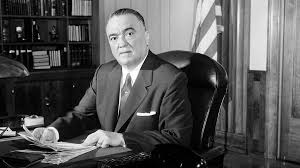
J. Edgar Hoover
He set up a Top Hoodlum Program and encouraged his agents to use wiretapping and electronic surveillance (“bugging”) to make up for lost time and Intelligence.
But planting “bugs” demanded illegal trespass into mob hangouts.
Making this even more hazardous: Hoover imposed restrictions on these assignments that could destroy an agent’s professional and personal life.
William E. Roemer, Jr., assigned to the FBI’s Chicago field office, was one of the first agents to volunteer for such duty.
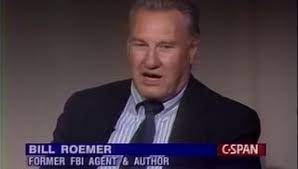
William Roemer
In his memoirs, Man Against the Mob, published in 1989, Roemer laid out the dangers that went with such work:
- If confronted by police or mobsters, agents were to try to escape without being identified.
- If caught by police, agents were not to identify themselves as FBI employees.
- They were to carry no badges, credentials or guns—or anything else connecting themselves with the FBI.
- If they were arrested by police and the truth emerged about their FBI employment, the Bureau would claim they were “rogue agents” acting on their own.
- Such agents were not to refute the FBI’s portrayal of them as “rogues.”
As summed up by Roemer, Hoover’s greatest concern was always: ‘Do the job, by God, but don’t ever let anything happen that might embarrass the Bureau.”
In the business sector, Hoover’s rule still forcefully apples. Anyone who doubts this need only examine the public scandal involving Applebee’s International, Inc.

Applebees Restaurant LLC, CC BY-SA 4.0 <https://creativecommons.org/licenses/by-sa/4.0>, via Wikimedia Commons
On March 9, 2022, Wayne Pankratz, an executive with Apple Central, a Kansas City-based company that operates Applebee’s restaurants, sent an email to managers saying high gas prices could help them cut employees’ wages.
He noted that most Applebee’s employees live “paycheck to paycheck.” But instead of suggesting a pay raise, he advocated the opposite:
“Any increase in gas price cuts into their disposable income. As inflation continues to climb and gas prices continue to go up that means more hours employees will need to work to maintain their current level of living.”
Because workers were no longer supported by government stimulus, desperate workers would be forced back into the workforce regardless of wages, giving the company the upper hand when it came to compensation.
Pankratz said competing restaurants had been raising wages to attract more workers, leaving Applebee’s struggling to keep up.
“We all saw businesses hiring team members at $18-$20 an hour. They will no longer be able to afford to do this,” the memo said.
Pankratz predicted that the labor market was “about to turn in our favor.”
The memo was posted to an r/antiwork forum on Reddit and then picked up on social media. At that point, all hell exploded.
Twitter users expressed outrage at the memo. Some said they would spend their money at other restaurants.
At least three managers quit their jobs at a Kansas Applebee’s over the memo, CBS News reported.
Suddenly, it was Pankratz who was desperate for employment—he was fired.
In line with Hoover’s dictum of disavowing anyone who caused embarrassment for the organization, Kevin Carroll, Dine Brands’ chief operations officer for Applebee’s, rushed to repair the damage:
“This is the opinion of an individual, not Applebee’s. We understand that the franchisee who owns and operates the restaurants in this market has placed the individual on leave.
“Our team members are the lifeblood of our restaurants, and our franchisees are always looking to reward and incentivize team members, new and current, to remain within the Applebee’s family.”
ABC NEWS, ABRAHAM LINCOLN, AFGHANISTAN, ALEXANDER THE GREAT, ALTERNET, AMERICABLOG, ANDREW JACKSON, AP, BABY BOOMER RESISTANCE, BBC, BLOOMBERG, BUZZFEED, CBS NEWS, CHARLIE KIRK, CIVIL WAR, CNN, CROOKS AND LIARS, DAILY KOS, FIVETHIRTYEIGHT, FOX NEWS CHANNEL, GATES OF FIRE (BOOK), HARPER’S MAGAZINE, HUFFINGTON POST, JACK SMITH, JOHN C. CALHOUN, JOSEPH BIDEN, LIZ CHENEY, MEDIA MATTERS, MERCENARIES, MERRICK GARLAND, MOTHER JONES, MOVEON, MSNBC, NBC NEWS, NEW REPUBLIC, NEWSDAY, NEWSWEEK, NPR, ORGANIZED CRIME, PBS NEWSHOUR, POLITICO, POLITICUSUSA, PROJECT 2025, RAW STORY, REPUBLICANS, REUTERS, SALON, SEATTLE TIMES, SLATE, SPARTA, STEVEN PRESSFIELD, STORMY DANIELS, TALKING POINTS MEMO, THE AFGHAN CAMPAIGN (BOOK), THE ATLANTIC, THE CHICAGO SUN-TIMES, THE CHICAGO TRIBUNE, THE DAILY BEAST, THE DAILY BLOG, THE GUARDIAN, THE HILL, THE HUFFINGTON POST, THE INTERCEPT, THE LOS ANGELES TIMES, THE NATION, THE NEW REPUBLIC, THE NEW YORK TIMES, THE NEW YORKER, THE PROFESSION (BOOK), THE VILLAGE VOICE, THE VIRTUES OF WAR (BOOK), THE WASHINGTON POST, THERMOPYLAE, THINKPROGRESS, TIME, TREASON, TRUTHDIG, TRUTHOUT, TWO POLITICAL JUNKIES, U.S. NEWS & WORLD REPORT, UNITED STATES SUPREME COURT, UPI, USA TODAY, X
In Bureaucracy, History, Law, Law Enforcement, Military, Politics, Social commentary on July 10, 2024 at 12:10 am
President Joseph Biden now faces the most monumental decision of his life. And no matter what choice he makes, his name will live in infamy for millions of Americans—whether they lean Right or Left.
Thanks entirely to the Supreme Court’s July 1 ruling giving almost unlimited immunity to former President Donald Trump, Biden can go down in history as the man who saved—at least temporarily—the American republic.

Joseph Biden
Or he can go down in history as the man who presided over the end of the American republic.
To save it, he must
- Purge, through arrests and trials, almost the entire treason-conspiring Republican party, starting with Trump, its Fuhrer-in-waiting.
- Do this officially, because the Court has ruled that he (and future Presidents) can only be prosecuted for unofficial acts.
- Do this while he still commands the full resources of the military and Justice Department.

- Sweep clean the Federal courts of all Right-wing, treason-supporting judges—such as Aileen Cannon, who has repeatedly thwarted efforts to try Trump for stealing and hiding almost 300 highly classified government documents at his Mar-a-Lago estate.
- This includes the six Right-wing Supreme Court Justices who have given future Presidents the legal authority to assassinate rivals, take bribes and/or foment coups.
If Biden does this, he will damned as the first President since Abraham Lincoln to brutally crush political opposition.
But he will also be hailed for having—at least temporarily—prevented a wholesale Right-wing takeover and dictatorship under Project 2025. Its’ goal: Replace existing federal civil service workers with tens of thousands of radical Right-wingers.

To preside over the end of the American republic, all Biden need do is what he’s done for the last three years: Nothing.
Example #1: Only on November 18, 2022, did Attorney General Merrick Garland appoint Jack Smith Special Counsel to investigate Trump’s attempt to overturn the legitimate results of the 2020 Presidential election and become “President-for-Life.”
This was clearly treason—and Garland should have appointed Smith, at the latest, by mid-2021.

Merrick Garland
Example #2: Trump’s accomplices included 147 members of Congress who voted to invalidate the 2020 Electoral College vote count. A total of 139 served in the House of Representatives, and eight served in the Senate.
To date, not one of these accessories has even been indicted, let alone convicted, for treason.
Arguably, Biden’s worst appointment has been Merrick Garland as Attorney General.
In 1961, when Robert F. Kennedy became Attorney General, he moved quickly and forcefully to wage war on America’s organized crime syndicates. Unprecedented numbers of mobsters found themselves facing vigorous FBI investigations, indictments and/or convictions.
By contrast, Garland’s timidity in prosecuting the crimes of Right-wing Republicans serves as not only a national embarrassment but a threat to national security.
On May 30, a Manhattan jury convicted Donald Trump of 34 felonies for falsifying New York business records in 2016. He had done so to conceal his hush money payoff to porn “star” Stormy Daniels for his extramarital tryst with her.
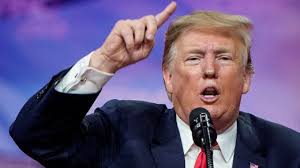
Donald Trump
Even though the Biden administration had nothing to do with the case, Republicans immediately blamed the President—and demanded wholesale prosecutions of the Left.
Right-wing activist Charlie Kirk urged Republican prosecutors to get “creative” in bringing charges: “Indict the left, or lose America,” he said on X.
And Trump quickly issued his own calls for “vengeance”:
“Wouldn’t it be terrible to throw the president’s wife and the former secretary of state, think of it, the former secretary of state, but the president’s wife, into jail? Wouldn’t that be a terrible thing? But they want to do it,” Trump said in an interview on Newsmax.
“It’s a terrible, terrible path that they’re leading us to. And it’s very possible that it’s going to have to happen to them.”
Nor has Trump forgotten former Republican Representative Liz Cheney, who chaired the House 1/6 Committee investigating the Trump-inspired attack on Congress.
“ELIZABETH LYNNE CHENEY IS GUILTY OF TREASON,” Trump posted on his social media website Truth Social. “RETRUTH IF YOU WANT TELEVISED MILITARY TRIBUNALS.”
There can be absolutely no doubt that Trump will pursue “vengeance” against everyone who has ever opposed him if he is re-elected President.
There can also be no doubt that he will remain in office until he dies as “President-for-Life.”
When Andrew Jackson, seventh President of the United States from 1829 to 1837, was close to death, he asked his doctor: “What act of my administration will be most severely condemned by future Americans?”
“Perhaps the removal of the bank deposits,” said the doctor—referring to Jackson’s withdrawal of U.S. Government monies from the first Bank of the United States.
“Oh, no,” said Jackson, his eyes blazing. “I can tell you. Posterity will condemn me more because I was persuaded not to hang John C. Calhoun as a traitor than for any other act in my life!”
John C. Calhoun had once been Vice President under Jackson and later a United States Senator from South Carolina. His fiery, pro-slavery rhetoric and radical theories of “nullification” of Federal laws played a major role in bringing on the Civil War (1861-1865).
Whether Biden moves to prevent a Trump/Republican dictatorship or allows it to become reality, he will be simultaneously praised and damned by future generations of Americans.
ABC NEWS, ABRAHAM LINCOLN, AFGHANISTAN, ALEXANDER THE GREAT, ALTERNET, AMERICABLOG, ANDREW JACKSON, AP, BABY BOOMER RESISTANCE, BBC, BLOOMBERG, BUZZFEED, CBS NEWS, CHARLIE KIRK, CIVIL WAR, CNN, CROOKS AND LIARS, DAILY KOS, FIVETHIRTYEIGHT, FOX NEWS CHANNEL, GATES OF FIRE (BOOK), HARPER’S MAGAZINE, HUFFINGTON POST, JACK SMITH, JOHN C. CALHOUN, JOSEPH BIDEN, LIZ CHENEY, MEDIA MATTERS, MERCENARIES, MERRICK GARLAND, MOTHER JONES, MOVEON, MSNBC, NBC NEWS, NEW REPUBLIC, NEWSDAY, NEWSWEEK, NPR, ORGANIZED CRIME, PBS NEWSHOUR, POLITICO, POLITICUSUSA, PROJECT 2025, RAW STORY, REPUBLICANS, REUTERS, SALON, SEATTLE TIMES, SLATE, SPARTA, STEVEN PRESSFIELD, STORMY DANIELS, TALKING POINTS MEMO, THE AFGHAN CAMPAIGN (BOOK), THE ATLANTIC, THE CHICAGO SUN-TIMES, THE CHICAGO TRIBUNE, THE DAILY BEAST, THE DAILY BLOG, THE GUARDIAN, THE HILL, THE HUFFINGTON POST, THE INTERCEPT, THE LOS ANGELES TIMES, THE NATION, THE NEW REPUBLIC, THE NEW YORK TIMES, THE NEW YORKER, THE PROFESSION (BOOK), THE VILLAGE VOICE, THE VIRTUES OF WAR (BOOK), THE WASHINGTON POST, THERMOPYLAE, THINKPROGRESS, TIME, TREASON, TRUTHDIG, TRUTHOUT, TWO POLITICAL JUNKIES, U.S. NEWS & WORLD REPORT, UNITED STATES SUPREME COURT, UPI, USA TODAY, X
In Bureaucracy, Business, History, Law, Law Enforcement, Military, Politics, Social commentary on July 9, 2024 at 12:10 am
The Supreme Court has spoken. And Donald Trump, who tried to treasonously overturn the 2020 Presidential election and make himself “President-for-Life,” is now armed with the almost total immunity he has long sought.
As Trump and his entrenched Right-wing allies move ever closer to establishing an absolute dictatorship, this is an apt time to discover—or rediscover—the frighteningly real world of The Profession, a 2011 futuristic novel by bestselling author Steven Pressfield.
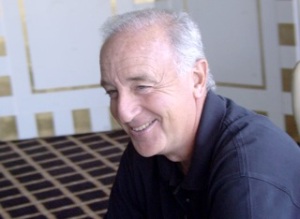
Steven Pressfield
Pressfield had previously made his mark as an author of historical novels—primarily set in ancient Greece.
In Gates of Fire (1998) he explored the rigors and heroism of Spartan society—and the famous last stand of its 300 picked warriors at Thermopylae.
In The Virtues of War (2004) Pressfield adopted the identity of Alexander the Great, explaining what it was like to command invincible armies that swept across the known world.
Finally, in The Afghan Campaign (2006) he chronicled—from the viewpoint of a lowly Greek soldier—Alexander’s brutal, three-year anti-guerrilla campaign in Afghanistan.
But in The Profession, Pressfield created a seemingly plausible world set in the future. The book’s dust jacket offers an excellent summary of its plot-line:
“The year is 2032. Everywhere military force is for hire. Oil companies, multi-national corporations and banks employ powerful, cutting-edge mercenary armies to control global chaos and protect their riches.
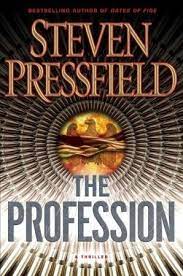
“Even nation states enlist mercenary forces to suppress internal insurrections, hunt terrorists, and do the black bag jobs necessary to maintain the new New World Order.
“Force Insertion is the world’s merc monopoly. Its leader is the disgraced former United States Marine General James Salter, stripped of his command by the president for nuclear saber-rattling with the Chinese and banished to the Far East.
“A grandmaster military and political strategist, Salter plans to take vengeance on those responsible for his exile and then come home…as Commander in Chief.”
Salter appears as a hybrid of World War II General Douglas MacArthur and Iraqi War General Stanley McCrystal. Like MacArthur, Salter has butted heads with his President—and paid dearly for it. Now his ambition—like MacArthur—is to become President himself by popular acclaim.

Douglas MacArthur
And like McCrystal, he is a pure warrior who leads from the front and is revered by his men. Salter seizes Saudi oil fields and strategically rigs them with explosives to be used if threatened.
Then he offers them as a gift to America. By doing so, he makes himself the most popular man in the country—and a guaranteed occupant of the White House.

Stanley McCrystal
And in 2032 the United States is a far different nation from the one its Founding Fathers created in 1776.
“Any time that you have the rise of mercenaries…society has entered a twilight era, a time past the zenith of its arc,” says Salter. “The United States is an empire…but the American people lack the imperial temperament. We’re not legionaries, we’re mechanics. In the end the American Dream boils down to what? ‘I’m getting mine and the hell with you.'”
Americans, asserts Salter, have come to like mercenaries: “They’ve had enough of sacrificing their sons and daughters in the name of some illusory world order. They want someone else’s sons and daughters to bear the burden….
“They want their problems to go away. They want me to make them go away.”
Yet unlike Donald Trump, who infamously shouted, “I love the poorly educated!” Salter is a highly intellectual man. He feels himself a tragic figure, lamenting that the United States has abandoned its longstanding political values even as he prepares to extinguish the most basic one by becoming dictator.
“The moment compels me to seize it. If I don’t someone or something worse will step in. But if I perform the bidding of Necessity, I violate the code of the republic to which all of us have sworn allegiance. I cross a line, beyond which there can be no return.
“But what, I ask, is the alternative? The nation has lost its way and is struggling desperately, merely to hang on. The nation can’t go on as it is, and everyone knows it. If not me, who? If not me, what?
“So, yes, I will go home. And yes, I will accept whatever crown, of paper or gold, that my country wants to press upon me. Not because I believe such a coronation will make any difference in the long run.
“But maybe in the short run, it’s better that my hand be on the wheel rather than some other self-aggrandizing sonofabitch whose motives might not be as well-intentioned or whose consciousness so painfully evolved.”
At a nationally televised press conference, Salter hands a loaded pistol to a longtime friend and disciple who now fears his dictatorial ambitions.
“Go ahead,” says Salter. “You’ll be saving the republic. And me, too.”
But the former disciple cannot bring himself to kill his longtime idol: “Now I’m guilty with you,” he says.
Steven Pressfield, in a work of fiction, has given us a nightmarish vision of a futuristic America.
Donald Trump and his Right-wing disciples may soon make that vision a reality.
ABC NEWS, ALTERNET, AMERICABLOG, AP, APALACHIN RAID, APPLEBEE'S, BABY BOOMER RESISTANCE, BBC, BLOOMBERG NEWS, BUGGING, BUZZFEED, CBS NEWS, CLYDE TYOLSON, CNN, CROOKS AND LIARS, DAILY KOS, ELECTRONIC SURVEILLANCE, FACEBOOK, FBI, FIVETHIRTYEIGHT, HARPER’S MAGAZINE, HARRY ANSLINGER, HUFFINGTON POST, J. EDGAR HOOVER, MAFIA, MEDIA MATTERS, MEYER LANSKY, MOTHER JONES, MOVEON, MSNBC, NBC NEWS, NEW REPUBLIC, NEWSDAY, NEWSWEEK, NPR, ORGANIZED CRIME, PBS NEWSHOUR, POLITICO, POLITICUSUSA, RAW STORY, REUTERS, ROBERT F. KENNEDY, SALON, SEATTLE TIMES, SLATE, TALKING POINTS MEMO, THE ATLANTIC, THE CHICAGO SUN-TIMES, THE CHICAGO TRIBUNE, THE DAILY BEAST, THE DAILY BLOG, THE GUARDIAN, THE HILL, THE HUFFINGTON POST, THE LOS ANGELES TIMES, THE NATION, THE NEW REPUBLIC, THE NEW YORK TIMES, THE NEW YORKER, THE VILLAGE VOICE, THE WASHINGTON POST, THINKPROGRESS, TIME, TOP HOODLUM PROGRAM, TRUTHDIG, TRUTHOUT, TWITTER, TWO POLITICAL JUNKIES, U.S. NEWS & WORLD REPORT, UPI, USA TODAY, WAYNE PANKRATZ, WILLIAM ROEMER, WIRETAPPING, WONKETTE
In Bureaucracy, Business, History, Law, Law Enforcement, Politics, Social commentary on December 19, 2022 at 1:13 am
J. Edgar Hoover, the legendary director of the FBI, has been dead for 50 years. But his rule—“Don’t embarrass the Bureau”—is very much alive and well in corporate America.
In 1959, Hoover—against his will—declared war on the Mafia.
On November 14, 1957, 70 top Mafia leaders from across the country had gathered at the estate of a fellow gangster, Joseph Barbara, in Appalachin, a small village in upstate New York.
The presence of so many cars with out-of-state license plates converging on an isolated mansion caught the attention of Sergeant Edgar Crosswell of the New York State Police.
Crosswell assembled an army of state troopers, set up roadblocks, and swooped down on the estate.
The mobsters panicked and fled—many into the surrounding woods. Even so, more than 60 underworld bosses were arrested and indicted following the raid.
Hoover had vigorously and vocally denied the existence of a nationwide Mafia. He had carefully kept the FBI well out of the war on organized crime. Among the theories advanced for this:
- Hoover feared that his agents—-long renowned for their incorruptibility—would fall prey to Mafia bribes.
- Hoover feared that his allegedly homosexual relationship with his longtime associate director, Clyde Tolson, would be exposed by the Mob. Rumors still persist that mobster Meyer Lansky came into possession of a compromising photo of Hoover and Tolson engaged in flagrante delicto.
- Hoover preferred flashy, easily-solved cases to those requiring huge investments of manpower and money.
Suddenly, however, ignoring the Mob was no longer possible.
J. Edgar Hoover
He set up a Top Hoodlum Program and encouraged his agents to use wiretapping and electronic surveillance (“bugging”) to make up for lost time and Intelligence.
But planting “bugs” demanded illegal trespass into mob hangouts.
Making this even more hazardous: Hoover imposed restrictions on these assignments that could destroy an agent’s professional and personal life.
William E. Roemer, Jr., assigned to the FBI’s Chicago field office, was one of the first agents to volunteer for such duty.
William Roemer
In his memoirs, Man Against the Mob, published in 1989, Roemer laid out the dangers that went with such work:
- If confronted by police or mobsters, agents were to try to escape without being identified.
- If caught by police, agents were not to identify themselves as FBI employees.
- They were to carry no badges, credentials or guns—or anything else connecting themselves with the FBI.
- If they were arrested by police and the truth emerged about their FBI employment, the Bureau would claim they were “rogue agents” acting on their own.
- Such agents were not to refute the FBI’s portrayal of them as “rogues.”
As summed up by Roemer, Hoover’s greatest concern was always: ‘Do the job, by God, but don’t ever let anything happen that might embarrass the Bureau.”
In the business sector, Hoover’s rule still forcefully apples. Anyone who doubts this need only examine the public scandal involving Applebee’s International, Inc.
Applebees Restaurant LLC, CC BY-SA 4.0 <https://creativecommons.org/licenses/by-sa/4.0>, via Wikimedia Commons
On March 9, 2022, Wayne Pankratz, an executive with Apple Central, a Kansas City-based company that operates Applebee’s restaurants, sent an email to managers saying high gas prices could help them cut employees’ wages.
He noted that most Applebee’s employees live “paycheck to paycheck.” But instead of suggesting a pay raise, he advocated the opposite:
“Any increase in gas price cuts into their disposable income. As inflation continues to climb and gas prices continue to go up that means more hours employees will need to work to maintain their current level of living.”
Because workers were no longer supported by government stimulus, desperate workers would be forced back into the workforce regardless of wages, giving the company the upper hand when it came to compensation.
Pankratz said competing restaurants had been raising wages to attract more workers, leaving Applebee’s struggling to keep up.
“We all saw businesses hiring team members at $18-$20 an hour. They will no longer be able to afford to do this,” the memo said.
Pankratz predicted that the labor market was “about to turn in our favor.”
The memo was posted to an r/antiwork forum on Reddit and then picked up on social media. At that point, it took on a life of its own.
Twitter users expressed outrage at the memo. Some said they would spend their money at other restaurants.
At least three managers quit their jobs at a Kansas Applebee’s over the memo, CBS News reported.
Suddenly, it was Pankratz who was desperate for employment—he was fired.
In line with Hoover’s dictum of disavowing anyone who caused embarrassment for the organization, Kevin Carroll, Dine Brands’ chief operations officer for Applebee’s, rushed to repair the damage:
“This is the opinion of an individual, not Applebee’s. We understand that the franchisee who owns and operates the restaurants in this market has placed the individual on leave.
“Our team members are the lifeblood of our restaurants, and our franchisees are always looking to reward and incentivize team members, new and current, to remain within the Applebee’s family.”
ABC NEWS, ALTERNET, AMERICABLOG, AP, BABY BOOMER RESISTANCE, BBC, BLOOMBERG NEWS, BUZZFEED, CBS NEWS, CNN, CROOKS AND LIARS, DAILY KOZ, DRUG TRAFFICKING, FACEBOOK, FIVETHIRTYEIGHT, HARPER’S MAGAZINE, HUFFINGTON POST, INFORMANTS, MAFIA, MEDIA MATTERS, MOTHER JONES, MOVEON, MSNBC, NARCOTICS TRAFFICKING, NBC NEWS, NEW REPUBLIC, NEW YORK POLICE DEPARTMENT, NEWSDAY, NEWSWEEK, NPR, ORGANIZED CRIME, PBS NEWSHOUR, POLICE CORRUPTION, POLITICO, POLITICUSUSA, PRINCE OF THE CITY, RAW STORY, REUTERS, ROBERT LEUCI, RUDOLPH GUILIANI, SALON, SEATTLE TIMES, SIDNEY LUMET, SLATE, TALKING POINTS MEMO, THE ATLANTIC, THE CHICAGO SUN-TIMES, THE CHICAGO TRIBUNE, THE DAILY BEAST, THE DAILY BLOG, THE GUARDIAN, THE HILL, THE HUFFINGTON POST, THE INTERCEPT, THE LOS ANGELES TIMES, THE NATION, THE NEW REPUBLIC, THE NEW YORK TIMES, THE NEW YORKER, THE VILLAGE VOICE, THE WASHINGTON POST, THINKPROGRESS, TIME, TREAT WILLIAMS, TRUTHDIG, TRUTHOUT, TWITTER, TWO POLITICAL JUNKIES, U.S. DEPARTMENT OF JUSTICE, U.S. NEWS & WORLD REPORT, UPI, USA TODAY, WONKETTE
In Bureaucracy, History, Law, Law Enforcement, Social commentary on August 3, 2022 at 12:16 am
It’s a movie that appeared in 1981—making it, for those born in 2000, an oldie.
And it wasn’t a blockbuster, being yanked out of theaters almost as soon as it arrived.
Yet Prince of the City remains that rarity—a movie about big-city police that:
- Tells a dramatic (and true) story; and
- Offers serious truths about how police and prosecutors really operate.
It’s based on the real-life case of NYPD Detective Robert Leuci (“Danny Ciello” in the film).
Robert Leuci (“Danny Ciello” in “Prince of the City”)
A member of the elite Special Investigating Unit (SIU) Ciello (played by Treat Williams) volunteers to work undercover against rampant corruption among narcotics agents, attorneys and bail bondsmen.
His motive appears simple: To redeem himself and the NYPD from the corruption he sees everywhere: “These people we take from own us.”
His only condition: “I will never betray cops who’ve been my partners.”
And Assistant US Attorney Rick Cappalino assures Ciello: “We’ll never make you do something you can’t live with.”
As the almost three-hour movie unfolds, Ciello finds—to his growing dismay—that there are a great many things he will have to live with.
Treat Williams as “Danny Ciello”
Although he doesn’t have a hand in it, he’s appalled to learn that Gino Moscone, a former buddy, is going to be arrested for taking bribes from drug dealers.
Confronted by a high-ranking agent for the Federal Drug Enforcement Agency, Moscone refuses to “rat out” his buddies. Instead, he puts his service revolver to his head and blows out his brains.
Ciello is devastated, but the investigation—and film—must go on.
Along the way, he’s suspected by a corrupt cop and bail bondsman of being a “rat” and threatened with death.
He’s about to be wasted in a back alley when his cousin—a Mafia member—suddenly intervenes. The Mafioso tells Ciello’s would-be killers: “You’d better be sure he’s a rat, because people like him.”
At which point, the grotesquely fat bail bondsman—who has been demanding Ciello’s execution—pats Danny on the arm and says, “No hard feelings.”
It’s director Sidney Lumet’s way of graphically saying: “Sometimes the bad guys can be good guys—and the good guys can be bad guys.”
Lumet makes it clear that police don’t always operate with the Godlike perfection of cops in TV and films. It’s precisely because his Federal backup agents lost him that Ciello almost became a casualty.
In the end, Ciello becomes a victim of the prosecutorial forces he has unleashed. Although he’s vowed to never testify against his former partners, Ciello finds this is a promise he can’t keep.
Too many of the cops he’s responsible for indicting have implicated him of similar—if not worse—behavior. He’s even suspected of being involved in the theft of 450 pounds of heroin (“the French Connection”) from the police property room.
A sympathetic prosecutor—Mario Vincente in the movie, Rudolph Giuliani in real-life—convinces Ciello that he must finally reveal everything he knows.
Ciello’s had originally claimed to have done “three things” as a corrupt narcotics agent. By the time his true confessions are over, he’s admitted to scores of felonies.
Ciello then tries to convince his longtime SIU partners to do the same. One of them commits suicide. Another tells Ciello to screw himself: “I’m not going to shoot myself and I’m not going to become a rat.”
To his surprise, Ciello finds himself admiring his corrupt former partner for being willing to stand up to the Federal case-agents and prosecutors demanding his head.
The movie ends with a double dose of irony.
First: Armed with Ciello’s confessions, an attorney whom Ciello had successfully testified against appeals his conviction. But the judge rules Ciello’s admitted misdeeds to be “collateral,” apart from the main evidence in the case, and affirms the conviction.
Second: Ciello is himself placed on trial—of a sort. A large group of assistant U.S. attorneys gathers to debate whether their prize “canary” should be indicted. If he is, his confessions will ensure his conviction.
Some prosecutors argue forcefully that Ciello is a corrupt law enforcement officer who has admitted to more than 40 cases of perjury—among other crimes. How can the government use him to convict others and not address the criminality in his own past?
Other prosecutors argue that Ciello voluntarily risked his life—physically and professionally—to expose rampant police corruption. He deserves a better deal than to be cast aside by those who have made so many cases through his testimony.
Eventually, the U.S. Attorney for the Southern District of New York makes his decision: “The government declines to prosecute Detective Daniel Ciello.”
It is Lumet’s way of showing that the decision to prosecute is not always an easy or objective one.
The movie ends with Ciello now teaching surveillance classes at the NYPD Academy.
A student asks: “Are you the Detective Ciello?”
“I’m Detective Ciello.”
“I don’t think I have anything to learn from you.” And he walks out.
Is Danny Ciello a hero, a villain, or some combination of the two?
On this ambiguous note that the film ends—an ambiguity that each viewer must resolve for himself.
ABC NEWS, ABORTION, ABRAHAM LINCOLN, ADOLF HITLER, ALBERT SPEER, ALTERNET, AMERICABLOG, AMY CONEY BARRETT, AP, BABY BOOMER RESISTANCE, BBC, BLOOMBERG NEWS, BRETT M. KAVANAUGH, BUZZFEED, CATHOLIC CHURCH, CBS NEWS, CLARENCE THOMAS, CNN, CROOKS AND LIARS, DAILY KOZ, DOBBS VS. JACKSON WOMEN’S HEALTH ORGANIZATION, FACEBOOK, FIVETHIRTYEIGHT, GERALD FORD, HARPER’S MAGAZINE, HUFFINGTON POST, JAMES A. GARFIELD, JOHN F. KENNEDY, JOHN J. ROBERTS, JOSEPH BIDEN, MAFIA, MEDIA MATTERS, MOTHER JONES, MOVEON, MSNBC, NBC NEWS, NEIL J. GORSUCH, NEW REPUBLIC, NEWSDAY, NEWSWEEK, NPR, ORGANIZED CRIME, PBS NEWSHOUR, POLITICO, POLITICUSUSA, RAW STORY, REUTERS, ROE V. WADE, Ronald Reagan, RUTH BADER GINSBURG, RUTH SENT US, SALON, SAMUEL A ALITO, SEATTLE TIMES, SLATE, TALKING POINTS MEMO, THE ATLANTIC, THE CHICAGO SUN-TIMES, THE CHICAGO TRIBUNE, THE DAILY BEAST, THE DAILY BLOG, THE GUARDIAN, THE HILL, THE HUFFINGTON POST, THE INTERCEPT, THE LOS ANGELES TIMES, THE NATION, THE NEW REPUBLIC, THE NEW YORK TIMES, THE NEW YORKER, THE VILLAGE VOICE, THE WASHINGTON POST, THEODORE ROOSEVELT, THINKPROGRESS, THIRD RICH, TIME, TRUTHDIG, TRUTHOUT, TWITTER, TWO POLITICAL JUNKIES, U.S. NEWS & WORLD REPORT, UNITED STATES SECRET SERVICE, UNITED STATES SUPREME COURT, UPI, USA TODAY, WILLIAM MCKINLEY, WITNESS SECURITY PROGRAM, WONKETTE
In Bureaucracy, History, Law, Law Enforcement, Politics, Social commentary on June 22, 2022 at 12:12 am
The United States Marshals Service is now charged with protecting the nine Justices who comprise the Supreme Court of the United States.
Deputy U.S. marshals have had decades of experience in protecting Federal judges, members of Congress and organized crime witnesses
As protectors, they are probably best-known as the operators of the Justice Department’s Witness Security Program. Launched as part of the Organized Crime Control Act of 1970, they have successfully protected and relocated thousands of endangered organized crime witnesses.
But there are significant differences between the security provided for Mafia witnesses and that being provided for Supreme Court Justices.
While a witness is testifying, s/he receives 24-hour protection from five to a score of marshals. Since visits to courthouses are especially dangerous, marshals often use deception as a vital weapon in keeping their charges alive.
A caravan of marshals cars, with sirens blaring, will pull up to the front of a courthouse, with a deputy playing the role of the witness. While all eyes (including those of mob assassins) are focused on this, a postal truck will enter the building through an underground passage. Inside: The witness and one or two guards dressed as mailmen.
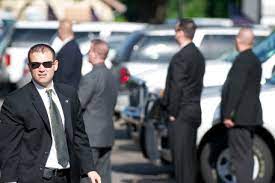
A witness security detail
Helicopters and speedboats have also been used to transport witnesses to and from court.
In at least one case, marshals installed Joseph “The Animal” Barboza, the most-feared Mafia hitman in New England, in a fortified room inside the courthouse. When it came time to testify, he would be brought into the courtroom through the judges’ elevator.
But once testifying is completed, the marshals no longer offer 24-hour protection. Instead, they provide witnesses (and their wives and children, if there are any) with new names, Social Security numbers, driver’s licenses and other records supporting their new identities.
Then they are shipped off to a new state where—hopefully—they can start their lives over on the right side of the law and safe from their enemies.
Thus, round-the-clock protection by the marshals isn’t intended to be permanent.
But in the case of at least six Supreme Court Justices this may well prove different. These are the ones who are preparing to strike down Roe v. Wade and re-criminalize abortion for millions of women.
To prevent attacks on the Justices at the Supreme Court, an eight-foot, “non-scalable” fence now surrounds the building.
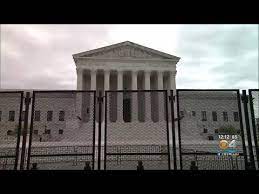
Once a long-held fundamental right is revoked, anger toward those responsible becomes the natural reaction. And for some people, that anger can easily flare into violence.
Thanks to the Supreme Court’s January 22, 1973 Roe decision, abortion has been legal throughout the United States for 49 years. Those who have been born since can’t recall a time when it was a criminal offense.
On June 8, Nicholas John Roske, 26, of Simi Valley, California, was arrested by deputy U.S. marshals near Justice Brett Kavanaugh’s house in Maryland after threatening to kill the Justice. He was armed with a Glock 17 pistol, ammunition, a knife, zip ties, pepper spray and duct tape.
In this case, the marshals had been alerted by Roske’s threat. But the truly dangerous assassin is one who doesn’t announce his intentions and simply acts on them.
Knowing you are so hated that people want to murder you creates huge psychological pressures on those threatened. Some people become prisoners of their own bodyguard, venturing out only when absolutely necessary.
Others adopt a “Live it up, because tomorrow I may die” attitude. They chafe at the security regimen imposed on them, sometimes even trying to elude their protectors.
Security specialists for the Marshals Service have warned countless witnesses: “You’ve got to realize that your life’s in danger. Keep your eyes open. Use your head. Don’t lie to us. Stay close to us.
“Keep us apprised of everything that’s going on. Suppose you’re sitting out on your balcony and you see something flash. What could it be? A pair of binoculars? A rifle-scope? Be aware of your position, and help us protect you.”
Presidents have been protected by the United States Secret Service since 1901, when Vice President Theodore Roosevelt became the first Chief Executive to be assigned agents.

Before this, three Presidents had been assassinated—Abraham Lincoln (1865); James A. Garfield (1881) and William McKinley, Roosevelt’s predecessor (1901).
In 1963, John F. Kennedy would become the fourth.
Two attempts were made on Gerald Ford (1975) and, in 1981, Ronald Reagan was seriously wounded.
As a result, it’s unthinkable that a President would not be guarded round-the-clock.
But no Supreme Court Justice has ever been assassinated.
Justices have been able to come and go as they please, without even being recognized by the vast majority of citizens they affect with their rulings.
That will soon change—at least for those who intend to strike down Roe. They will become familiar faces—for those who hate them. Already, their home addresses have been splashed across the Internet.
At least 13 states will automatically ban abortion in the first and second trimesters if Roe is overturned. This will create legions of new enemies for the Justices. And there will be no end-date to this hatred.
Which means the Justices will likely live in fear—and under heavy armed guard—for the rest of their lives.
ABC NEWS, ABORTION, ABRAHAM LINCOLN, ADOLF HITLER, ALBERT SPEER, ALTERNET, AMERICABLOG, AMY CONEY BARRETT, AP, BABY BOOMER RESISTANCE, BBC, BLOOMBERG NEWS, BRETT M. KAVANAUGH, BUZZFEED, CATHOLIC CHURCH, CBS NEWS, CLARENCE THOMAS, CNN, CROOKS AND LIARS, DAILY KOZ, DOBBS VS. JACKSON WOMEN’S HEALTH ORGANIZATION, FACEBOOK, FIVETHIRTYEIGHT, GERALD FORD, HARPER’S MAGAZINE, HUFFINGTON POST, JAMES A. GARFIELD, JOHN F. KENNEDY, JOHN J. ROBERTS, JOSEPH BIDEN, MAFIA, MEDIA MATTERS, MOTHER JONES, MOVEON, MSNBC, NBC NEWS, NEIL J. GORSUCH, NEW REPUBLIC, NEWSDAY, NEWSWEEK, NPR, ORGANIZED CRIME, PBS NEWSHOUR, POLITICO, POLITICUSUSA, RAW STORY, REUTERS, ROE V. WADE, Ronald Reagan, RUTH BADER GINSBURG, RUTH SENT US, SALON, SAMUEL A ALITO, SEATTLE TIMES, SLATE, TALKING POINTS MEMO, THE ATLANTIC, THE CHICAGO SUN-TIMES, THE CHICAGO TRIBUNE, THE DAILY BEAST, THE DAILY BLOG, THE GUARDIAN, THE HILL, THE HUFFINGTON POST, THE INTERCEPT, THE LOS ANGELES TIMES, THE NATION, THE NEW REPUBLIC, THE NEW YORK TIMES, THE NEW YORKER, THE VILLAGE VOICE, THE WASHINGTON POST, THEODORE ROOSEVELT, THINKPROGRESS, THIRD RICH, TIME, TRUTHDIG, TRUTHOUT, TWITTER, TWO POLITICAL JUNKIES, U.S. NEWS & WORLD REPORT, UNITED STATES SECRET SERVICE, UNITED STATES SUPREME COURT, UPI, USA TODAY, WILLIAM MCKINLEY, WITNESS SECURITY PROGRAM, WONKETTE
In Bureaucracy, History, Law, Law Enforcement, Politics, Social commentary on June 21, 2022 at 12:13 am
Tyrants know they lack legitimate authority–and so they must live behind armed guards and high fences. They constantly fear being overthrown–or killed.
“It was only years later, when I was imprisoned at Spandau, that I really understood what it must be like to live each day under such intense psychological pressure,” Albert Speer, architect and Minister of Armaments to Adolf Hitler, told Playboy during a 1971 interview.
“Looking back on Hitler’s physical environment in his military bunkers in Berlin and Rastenburg, I realized how similar the atmosphere was to a prison—immense concrete walls and ceilings, harsh electric light instead of daylight, iron doors and iron grilles over the few windows.
“Even Hitler’s brief strolls through the barbed wire perimeters, surrounded by armed guards and police dogs, resembled a convict’s exercise in the jail yard. Hitler had turned all of Europe into a prison, but he had become its leading prisoner.”
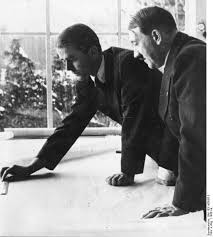
Albert Speer and Adolf Hitler
Bundesarchiv, Bild 183-V00555-3 / CC-BY-SA 3.0, CC BY-SA 3.0 DE <https://creativecommons.org/licenses/by-sa/3.0/de/deed.en>, via Wikimedia Commons
At least six Justices of the United States Supreme Court have joined Adolf Hitler as prisoners of their own bodyguard.
In the past, Justices came and went as ordinary citizens did. Occasionally they made a controversial decision, but then the uproar died down and everything stayed the same.
It took the alleged gutting of Roe v. Wade to change all that.
On May 2, Politico published a leaked draft of the Supreme Court majority decision in Dobbs vs. Jackson Women’s Health Organization that would explicitly overturn Roe v. Wade.
In doing so, it would end the Court’s 49-year-old decision guaranteeing a woman’s right to obtain an abortion.
Reaction was swift—and devastatingly angry.
Threats of violence against the Justices have poured in—especially the six Right-wing ones behind the decision:
- Amy Coney Barrett
- Brett M. Kavanaugh
- Clarence Thomas
- Samuel A. Alito
- Neil M. Gorsuch and
- John J. Roberts.
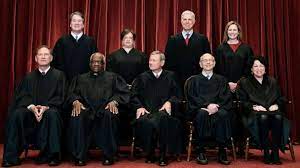
Justices of the Supreme Court
As a result, all nine Justices have been given extra security through the U.S. Marshals Service.
The marshals have had decades of experience in protecting Federal organized crime witnesses, members of Congress and Federal judges. So the odds are that the Justices will remain safe from violent attack.
The question that remains to be answered: How well will they hold up under the intense pressures of facing potential violence—and having to live under constant guard?
Almost immediately after Politico published its article on the Justices’ decision to overturn Roe, an eight-foot steel fence went up around the Supreme Court building. All entry points were blocked to vehicles and police patrols were beefed up.
As if that were not claustrophobic enough, the Justices’ home addresses were quickly shared online.
Justices have received threatening phone calls at their homes.
The group, “Ruth Sent Us”—named in honor of deceased Supreme Court Justice Ruth Bader Ginsburg—planned a protest at what it called “the homes of the six extremist justices.”
“ANNOUNCING: Walk-by Wednesday, May 11, 2022! At the homes of the six extremist justices, three in Virginia and three in Maryland. If you’d like to join or lead a peaceful protest, let us know,” the website stated.
“Our 6-3 extremist Supreme Court routinely issues rulings that hurt women, racial minorities, LGBTQ+ and immigrant rights. We must rise up to force accountability using a diversity of tactics.”
The group even published a Google Maps graphic pinpointing homes “where the six Christian fundamentalist Justices issue their shadow docket rulings from.
“We intend to stop the corruption of our Supreme Court, and stop the spread of fascist laws,” the group said. “Instead of waiting for the extremist Court to strip our rights further, we must rise up now.”
In Virginia, where three of the six justices live, protesting outside a private home is illegal.
Justice Samuel Alito, author of the draft majority opinion, canceled a scheduled appearance in Nashville, and the other justices are also cutting back on public events.
Meanwhile, the Court has been thrown into a frenzy of self-investigation to discover who leaked the upcoming decision.
Far more attention has been paid to this by the Justices than to the enormous implications for millions of American women if abortion once becomes a criminal act. Chief Justice John Roberts publicly said: “To the extent this betrayal of the confidences of the court was intended to undermine the integrity of our operations, it will not succeed.”
Not all protests were aimed at the Justices.
Ruth Sent Us also planned to target Catholic churches on Mother’s Day—telling followers to protest “that six extremist Catholics set out to overturn Roe.” It published a video of churchgoers trying to kick out protesters who interrupted a service, chanting, “Without this basic right, women can’t be free — abortion on demand and without apology.”
The Catholic group, CatholicVote, demanded that President Joe Biden condemn Ruth Sent Us for targeting Catholic churches and disrupting Mass on Mother’s Day.
Joseph Biden
Biden, a lifelong Catholic, strongly favors abortion rights.
The U.S. Marshals Service has operated the Witness Security Program for threatened organized crime witnesses since 1970. Of its approximately 19,100 participants, none have been killed who followed its guidelines.
But there are serious differences between the security afforded Mafia witnesses—and that being accorded Supreme Court Justices.
ABC NEWS, ALTERNET, AMERICABLOG, AP, APALACHIN RAID, APPLEBEE'S, BABY BOOMER RESISTANCE, BBC, BLOOMBERG NEWS, BUGGING, BUZZFEED, CBS NEWS, CLYDE TYOLSON, CNN, CROOKS AND LIARS, DAILY KOZ, ELECTRONIC SURVEILLANCE, FACEBOOK, FBI, FIVETHIRTYEIGHT, HARPER’S MAGAZINE, HARRY ANSLINGER, HUFFINGTON POST, J. EDGAR HOOVER, MAFIA, MEDIA MATTERS, MEYER LANSKY, MOTHER JONES, MOVEON, MSNBC, NBC NEWS, NEW REPUBLIC, NEWSDAY, NEWSWEEK, NPR, ORGANIZED CRIME, PBS NEWSHOUR, POLITICO, POLITICUSUSA, RAW STORY, REUTERS, ROBERT F. KENNEDY, SALON, SEATTLE TIMES, SLATE, TALKING POINTS MEMO, THE ATLANTIC, THE CHICAGO SUN-TIMES, THE CHICAGO TRIBUNE, THE DAILY BEAST, THE DAILY BLOG, THE GUARDIAN, THE HILL, THE HUFFINGTON POST, THE LOS ANGELES TIMES, THE NATION, THE NEW REPUBLIC, THE NEW YORK TIMES, THE NEW YORKER, THE VILLAGE VOICE, THE WASHINGTON POST, THINKPROGRESS, TIME, TOP HOODLUM PROGRAM, TRUTHDIG, TRUTHOUT, TWITTER, TWO POLITICAL JUNKIES, U.S. NEWS & WORLD REPORT, UPI, USA TODAY, WAYNE PANKRATZ, WILLIAM ROEMER, WIRETAPPING, WONKETTE
In Bureaucracy, Business, History, Law, Law Enforcement, Politics, Social commentary on April 25, 2022 at 12:10 am
J. Edgar Hoover, the legendary director of the FBI, has been dead for almost 50 years. But his rule—“Don’t embarrass the Bureau”—is very much alive and well in corporate America.
In 1959, Hoover—against his will—declared war on the Mafia.
On November 14, 1957, 70 top Mafia leaders from across the country had gathered at the estate of a fellow gangster, Joseph Barbara, in Apalachin, a small village in upstate New York.
The presence of so many cars with out-of-state license plates converging on an isolated mansion caught the attention of Sergeant Edgar Crosswell of the New York State Police.
Crosswell assembled an army of state troopers, set up roadblocks, and swooped down on the estate.
The mobsters, panicked and fled—many into the surrounding woods. Even so, more than 60 underworld bosses were arrested and indicted following the raid.
Hoover had vigorously and vocally denied the existence of a nationwide Mafia. He had carefully kept the FBI well out of the war on organized crime. Several theories have been advanced as to why:
- Hoover feared that his agents—-long renowned for their incorruptibility—would fall prey to the bribes of well-heeled mobsters.
- Hoover feared that his allegedly homosexual relationship with his longtime associate director, Clyde Tolson, would be exposed by the Mob. Rumors still persist that mobster Meyer Lansky came into possession of a compromising photo of Hoover and Tolson engaged in flagrante delicto.
- Hoover knew of the ties between moneyed mobsters and their political allies in Congress. And he feared losing the goodwill of his political allies—and ever-larger appropriations for the FBI.
- Hoover preferred flashy, easily-solved cases to those requiring huge investments of manpower and money.
Suddenly, however, ignoring the Mob was no longer possible.
J. Edgar Hoover
He set up a Top Hoodlum Program and encouraged his agents to use wiretapping and electronic surveillance (“bugging”) to make up for lost time and Intelligence.
But planting “bugs” demanded illegal trespass into mob hangouts.
Making this even more hazardous: Hoover imposed restrictions on these assignments that could destroy an agent’s professional and personal life.
William E. Roemer, Jr., assigned to the FBI’s Chicago field office, was one of the first agents to volunteer for such duty.
William Roemer
In his memoirs, Man Against the Mob, published in 1989, Roemer laid out the dangers that went with such work:
- If confronted by police or mobsters, agents were to try to escape without being identified.
- If caught by police, agents were not to identify themselves as FBI employees.
- They were to carry no badges, credentials or guns—or anything else connecting themselves with the FBI.
- If they were arrested by police and the truth emerged about their FBI employment, the Bureau would claim they were “rogue agents” acting on their own.
- Such agents were not to refute the FBI’s portrayal of them as “rogues.”
As summed up by Roemer, Hoover’s greatest concern was always: ‘Do the job, by God, but don’t ever let anything happen that might embarrass the Bureau.”
In the business sector, Hoover’s rule still forcefully apples. Anyone who doubts this need only examine the public scandal involving Applebee’s International, Inc.
Applebees Restaurant LLC, CC BY-SA 4.0 <https://creativecommons.org/licenses/by-sa/4.0>, via Wikimedia Commons
On March 9, Wayne Pankratz, an executive with Apple Central, a Kansas City-based company that operates Applebee’s restaurants, sent an email to managers saying high gas prices could help them cut employees’ wages.
He noted that most Applebee’s employees live “paycheck to paycheck.” But instead of suggesting a pay raise, he advocated the opposite:
“Any increase in gas price cuts into their disposable income. As inflation continues to climb and gas prices continue to go up that means more hours employees will need to work to maintain their current level of living.”
Because workers were no longer supported by government stimulus, desperate workers would be forced back into the workforce regardless of wages, giving the company the upper hand when it came to compensation.
Pankratz said competing restaurants had been raising wages to attract more workers, leaving Applebee’s struggling to keep up.
“We all saw businesses hiring team members at $18-$20 an hour. They will no longer be able to afford to do this,” the memo said.
Pankratz predicted that the labor market was “about to turn in our favor.”
The memo was posted to an r/antiwork forum on Reddit and then picked up on social media. At that point, it took on a life of its own.
Twitter users expressed outrage at the memo. Some said they would spend their money at other restaurants.
At least three managers quit their jobs at a Kansas Applebee’s over the memo, CBS News reported.
Suddenly, it was Pankratz who was desperate for employment—he was fired.
In line with Hoover’s dictum of disavowing anyone who caused embarrassment for the organization, Kevin Carroll, Dine Brands’ chief operations officer for Applebee’s, rushed to repair the damage:
“This is the opinion of an individual, not Applebee’s. We understand that the franchisee who owns and operates the restaurants in this market has placed the individual on leave.
“Our team members are the lifeblood of our restaurants, and our franchisees are always looking to reward and incentivize team members, new and current, to remain within the Applebee’s family.”


 Bureaucracybuster's Blog
2016 PRESIDENTIAL CAMPAIGN, A HIGHER LOYALTY (BOOK), ABC NEWS, ALTERNET, AP, “FLIPPING”, BUZZFEED, CARMINE GALANTE, CBS NEWS, CNN, CROOKS AND LIARS, DAILY KOS, DON MCGAHN, DONALD TRUMP, EPSTEIN FILES, FBI, FOX AND FRIENDS, FOX NEWS, IRAN, JEFFREY EPSTEIN, JOHN DEAN, JOHN GOTTI, MAFIA, MICHACL COHEN, MICHAEL FLYNN, MOTHER JONES, MOVEON, MSNBC, NBC NEWS, NEWSWEEK, NICHOLAS MADURO, NPR, ORGANIZED CRIME, ORGANIZED CRIME CONTROL ACT OF 1970, POLITICO, RAW STORY, REUTERS, RICHARD NIXON, ROY COHN, RUSSIA, SALON, SEATTLE TIMES, SLATE, THE ATLANTIC, THE CHICAGO SUN-TIMES, THE CHICAGO TRIBUNE, THE DAILY BEAST, THE GUARDIAN, THE HILL, THE HUFFINGTON POST, THE LOS ANGELES TIMES, THE NATION, THE NEW YORK TIMES, THE WASHINGTON POST, TIME, U.S. NEWS & WORLD REPORT, UNITED STATES JUSTICE DEPARTMENT, UPI, USA TODAY, VENEZUELA, VLADIMIR PUTIN, X
WHAT TRUMP MOST FEARS–WITNESSES
In Bureaucracy, History, Law, Law Enforcement, Politics, Social commentary on March 13, 2026 at 12:10 amJames Comey has had a long and distinguished career in American law enforcement:
As a result, Comey has firsthand experience in attacking organized crime—and in spotting its leaders.
In his bestselling memoir, A Higher Loyalty, he writes:
“As I found myself thrust into the Trump orbit, I once again was having flashbacks to my earlier career as a prosecutor against the mob. The silent circle of assent. The boss in complete control. The loyalty oaths. The us-versus-them worldview. The lying about all things, large and small, in service to some code of loyalty that put the organization above morality and the truth.”
On May 9, 2017, President Donald Trump fired Comey as FBI director. There were five reasons for this:
James Comey
Trump and his shills have adamantly denied that he demanded that Comey serve as his private police chief.
But then Trump proved that he—and not Comey—was the liar. And more like a mobster than a President.
On August 21, 2018, his former attorney, Michael Cohen, pleaded guilty to eight counts of campaign finance violations, tax fraud and bank fraud. And, more worrisome for Trump, Cohen said he had made illegal campaign contributions “in coordination and at the direction of a candidate for federal office”—Donald Trump.
On August 23, on the Fox News program, “Fox and Friends,” Trump attacked Cohen for “flipping” on him:
“For 30, 40 years I’ve been watching flippers. Everything’s wonderful and then they get 10 years in jail and they—they flip on whoever the next highest one is, or as high as you can go. It—it almost ought to be outlawed. It’s not fair.
“You know, campaign violations are considered not a big deal, frankly. But if somebody defrauded a bank and he’s going to get 10 years in jail or 20 years in jail but if you can say something bad about Donald Trump and you’ll go down to two years or three years, which is the deal he made.”
Making “flipping” illegal would undo decades of organized crime prosecutions—and make future ones almost impossible.
“It takes a small bum to catch a big bum,” as one deputy U.S. marshal once stated.
Boy Scouts simply won’t hang out with career criminals. To penetrate the secrets of criminal organizations, investigators and prosecutors need the testimony of those who are parties to those secrets.
The Organized Crime Control Act of 1970 gave Justice Department prosecutors unprecedented weapons for attacking crime syndicates across the country. One of these was the authority to give witnesses immunity from prosecution on the basis of their own testimony.
Thus, a witness to a criminal conspiracy could be forced to tell all he knew—and thus implicate his accomplices—and bosses. In turn, he wouldn’t be prosecuted on the basis of his testimony. (He could, however, be prosecuted if someone else accused him of criminal acts.)
Organized crime members aggressively damn such “rats.” There is no more obscene word in a mobster’s vocabulary.
But no President—until Trump—has ever attacked those who make possible a war on organized crime.
His former lawyer and mentor, Roy Cohn, represented some of the most notorious Mafiosi in the country—such as John Gotti and Carmine Galante. And both Gotti and Galante went to prison owing to “flippers.”
In 1973, former White House Counsel John Dean testified before the United States Senate on a litany of crimes committed by President Richard M. Nixon. Dean didn’t lie about Nixon—who ultimately resigned in disgrace.
For Trump, Dean’s sin is that he “flipped” on his former boss, violating the Mafia’s code of omerta, or silence.
For Donald Trump, there is no greater nightmare than becoming the victim of those who know—and are willing to share—his criminal secrets.
That’s why he fought the release of the “Epstein files,” which document his social relationship with convicted pedophile Jeffrey Epstein from the late 1980s to at least the early 2000s.
Since their partial release, he’s repeatedly tried to divert attention from their revelations. On January 3, 2026, he ordered the invasion of Venezuela to kidnap its dictator/president, Nicolás Maduro. Then on February 28 he launched an attack on Iran.
Both these assaults have only partially succeeded in obscuring revelations of the Epstein files.
Share this: