Posts Tagged ‘NICCOLO MACHIAVELLI’
ADOLF HITLER, BARACK OBAMA, BILL CLINTON, CHRIS MATTHEWS, CNN'S "STARTING POINT", CZECHOSLAVAKIA, DARRELL ISSA, DEBT CEILING, EXECUTIVE ORDERS, EXTORTION, FACEBOOK, GEORGE W. BUSH, HOUSE SPEAKER JOHN BOEHNER, immigration reform, JIMMY CARTER, MSNBC'S "HARDBALL", NAZI GERMANY, NEGOTIATING, NEVILLE CHAMBERLAIN, NEWT GINGRICH, NICCOLO MACHIAVELLI, PAP SMEARS, PLANNED PARENTHOOD, POLAND, R.I.CO. ACT, REPUBLICAN PARTY, REPUBLICANS, Ronald Reagan, THE CHICAGO SUN-TIMES, THE CHICAGO TRIBUNE, THE LOS ANGELES TIMES, THE NEW YORK TIMES, THE PRINCE, THE WASHINGTON POST, TITLE X, TWITTER, WARREN BUFFET, WINSTON CHURCHILL, WORLD WAR 11
In Bureaucracy, History, Law, Law Enforcement, Military, Politics, Social commentary on October 13, 2016 at 12:57 am
Robert Payne, author of the bestselling biography, The Life and Death of Adolf Hitler (1973), described Hitler’s “negotiating” style thus:
“Although Hitler prized his own talents as a negotiator, a man always capable of striking a good bargain, he was totally lacking in finesse.
“He was incapable of bargaining. He was like a man who goes up to a fruit peddler and threatens to blow his brains out if he does not sell his applies at the lowest possible price.”
By studying Hitler’s mindset and “negotiating” methods, we can learn much about the mindset and “negotiating” style of today’s Republican party.
A classic example of Hitler’s “bargaining style” came in 1938, when he invited Austrian Chancellor Kurt von Schuschnigg to his mountaintop retreat in Obersalzberg, Germany.
Hitler, an Austrian by birth, intended to annex his native land to Germany. Schuschnigg was aware of Hitler’s desire, but nevertheless felt secure in accepting the invitation. He had been assured that the question of Austrian sovereignty would not arise.
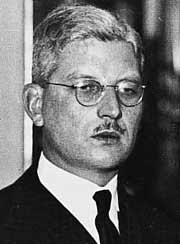
Kurt von Schuschnigg
The meeting occurred on February 12, 1938.
Shuschnigg opened the discussion with a friendly compliment. Walking over to a large window, he admired the breathtaking view of the mountains.
HITLER: We haven’t come here to talk about the lovely view or the weather!
Austria has anyway never done anything which was of help to the German Reich….I am resolutely determined to make an end to all this business. The German Reich is a great power. Nobody can and nobody will interfere if it restores order on its frontiers.
SCHUSCHNIGG: I am aware of your attitude toward the Austrian question and toward Austrian history….As we Austrians see it, the whole of our history is a very essential and valuable part of German history….And Austria’s contribution is a considerable one.
HITLER: It is absolutely zero—that I can assure you! Every national impulse has been trampled underfoot by Austria….
I could call myself an Austrian with just the same right—indeed with even more right—than you, Herr Schuschnigg. Why don’t you once try a plebiscite in Austria in which you and I run against each other? Then you would see!
SCHUSCHNIGG: Well, yes, if that were possible. But your know yourself, Herr Reich Chancellor, that it just isn’t possible. We simply have to go on living alongside one another, the little state next to the big one. We have no other choice.
And that is why I ask you to tell me what your concrete complaints are. We will do all in our power to sort things out and establish a friendly relationship, as far as it is possible to do so.
HITLER: That’s what you say, Herr Schuschnigg. And I am telling you that I intend to clear up the whole of the so-called Austrian question–one way or another. Do you think I don’t know that you are fortifying Austria’s border with the Reich?
SCHUSCHNIGG: There can be no suggestion at all of that—
HITLER: Ridiculous explosive chambers are being built under bridges and roads—
This was a lie, and Hitler knew it was a lie. But no matter. It gave him an excuse to threaten to destroy Austria—as he was to destroy so many other nations during the next seven years.
HITLER: I have only to give one command and all this comic stuff on the border will be blown to pieces overnight. You don’t seriously think you could hold me up, even for half an hour, do you?
Who knows—perhaps you will find me one morning in Vienna like a spring storm. Then you will go through something! I’d like to spare the Austrians that.
The S.A. [Hitler’s private army of Stormtroopers] and the [Condor] lLegion [which had bombed much of Spain into rubble during the three-year Spanish Civil War] would come in after the troops and nobody–not even I–could stop them from wreaking vengeance.
* * * * *
Schnuschigg made a cardinal mistake in dealing with Hitler: He showed fear. And this was precisely what the Nazi dictator looked for in an opponent.
Contrary to popular belief, Hitler did not constantly rage at everyone. On the contrary: he could, when he desired, be charming, especially to women. He used rage as a weapon, knowing that most people feel intimidated by it.
In the case of Schuschnigg, he opened with insults and threats at the outset of their discussion. Then there was a period of calm, to convince the Austrian chancellor the worst was over.
Finally, he once again attacked–this time with so much fury that Schuschnigg was terrified into submission.
With one stroke of a pen, Austria became a vassal-state to Nazi Germany.
Republicans used precisely the same “negotiating” style during the summer of 2011 to threaten the United States with financial ruin unless they got their way in budget negotiations.
And they threatened to do the same again that fall.
9/11 ATTACKS, ABC NEWS, AFGHANISTAN, AMERICAN NAZI PARTY, ANTI-SEMITISM, ARCHER SCHOOL FOR GIRLS, BARACK OBAMA, BARRY GOLDWATER, BIRTH CONTROL, BLACK LIVES MATTER, CBS NEWS, CIVIL RIGHTS ACT OF 1964, CNN, DONALD TRUMP, ED MARTIN, FACEBOOK, FLORIDA, FOX BUSINESS, FOX NEWS, GEORGE W. BUSH, GRETCHEN CARLSON, HILLARY CLINTON, HUMAYUN KHAN, IRAQ WAR, JOHN MCCAIN, KATRINA PIERSON, KU KLUX KLAN, LATINOS, LYNDON B. JOHNSON, MARCO GUTIERREZ, MEDICAID, MEDICARE, MEXICO, MICHELE BACHMANN, MITT ROMNEY, MSNBC, NBC NEWS, NEW YORK, NICCOLO MACHIAVELLI, OBAMACARE, OMAROSA MANIGAULT, PAUL MANAFORT, PRINCESS DIANA, ROGER AILES, SOCIAL SECURITY, STEPHEN BANNON, TEA PARTY, THE APPRENTICE, THE CHICAGO SUN-TIMES, THE CHICAGO TRIBUNE, THE NEW NEW YORK TIMES, THE PRINCE, THE WASHINGTON POST, TWITTER, VLADIMIR PUTIN, VOTER ID LAWS, VOTING, WAYNE ROOT, WELFARE
In Bureaucracy, History, Law, Politics, Social commentary on September 8, 2016 at 1:21 am
In late July, Donald Trump’s new spokeswoman, Katrina Pierson, accepted an impossible mission that even Jim Phelps would have turned down:
Convince Americans that Barack Obama and Hillary Clinton were responsible for the death of Captain Humayun Khan, who was killed by a truck-bomb in Iraq in 2004.
Appearing on CNN’s The Situation Room with Wolf Blitzer on August 2, Pierson said: “It was under Barack Obama and Hillary Clinton that changed the rules of engagements that probably cost his life.”

Katrina Pierson
Totally ignored in that scenario:
- President George W. Bush lied the nation into a needless war that cost the lives of 4,486 Americans and wounded another 33,226.
- The war began in 2003–and Khan was killed in 2004.
- Barack Obama became President in 2009–almost five years after Khan’s death.
- Hillary Clinton became Secretary of State the same year.
- Obama, elected Illinois U.S. Senator in 2004, vigorously opposed the Iraq war throughout his term.
Pierson’s attempt to rewrite history touched off a frenzy on Twitter, leading to the creation of the hashtag #KatrinaPiersonHistory. Its purpose: To mock Pierson’s revisionist take on history.
Among the tweets offered:
- Hillary Clinton slashed funding for security at the Ford Theater, leading to Lincoln’s assassination.
- Obama gave Amelia Earhart directions to Kenya.
- Remember the Alamo? Obama and Hillary let it happen.
- Obama and Clinton kidnapped the Lindbergh baby.
Not content with blaming President Obama for the death of a man he never sent into combat, Pierson claimed that Obama started the Afghanistan war.
Appearing again on CNN, Pierson said the Afghan war began “after 2007,” when Al Qaeda “was in ashes” following the American troop surge in Iraq.
“Remember, we weren’t even in Afghanistan by this time,” Pierson said. “Barack Obama went into Afghanistan, creating another problem.”
In fact, President George W. Bush ordered the invasion of Afghanistan following the terrorist attacks of September 11, 2001.
Millions of Americans who lived through 9/11 remember that.
When your spokeswoman becomes a nationwide laughingstock, your own credibility goes down the toilet as well.
In July an Associated Press/GfK poll found that half of Americans saw Donald Trump as “racist”–and only 7% of blacks viewed him favorably.
There are numerous reasons for this:
- His enthusiastic support by racist white supremacist organizations such as the Ku Klux Klan and the American Nazi Party.
- His “birther” attacks on President Obama as a non-citizen from Kenya–and thus ineligible to hold the Presidency.
- His attacks on the Black Lives Matter movement and calling on his supporters at rallies to rough up minority protesters.
Since 1964, blacks have overwhelmingly voted for Democratic Presidential candidates. President Lyndon B. Johnson’s won their loyalty with his support for and passage of the Civil Rights Act of 1964.
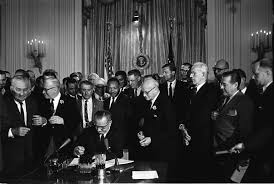
President Johnson signing the 1964 Civil Rights Act
Republican Presidential candidate Barry Goldwater opposed it–as did the majority of his party.
Since 1964, fewer than six percent of blacks have voted for Republican Presidential candidates. Whites have not only remained the majority of Republican voters but have become the single most important voting bloc among them.
John McCain received four percent of black votes in 2008 and Mitt Romney received six percent in 2012. When a Republican collapses into single digits among blacks and other minorities, it reduces the number of white votes a Democrat needs to win the presidency.
To counter this, Donald Trump has turned to his Director of African-American Outreach: Omarosa Manigault.
Trump made the appointment just hours before the first night of the Republican National Convention.
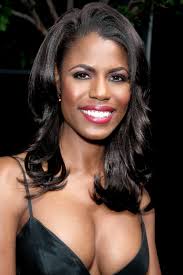
Omarosa Manigault
Manigault is best known as the villain of Trump’s reality-TV show, “The Apprentice”–where she was fired on three different seasons. Her credentials include a Ph.D. in communications, a preacher’s license, and topping TV Guide’s list of greatest reality TV villains in 2008.
During the Clinton administration she held four jobs in two years, and was thoroughly disliked in all of them.
“She was asked to leave [her last job] as quickly as possible, she was so disruptive,” said Cheryl Shavers, the former Under Secretary for Technology at the Commerce Department. “One woman wanted to slug her.”
In her role as Trump’s ambassador to blacks, Omarosa has inspired others to want to slug her. Appearing on Fox Business, she ignored Fox panelist Tamera Holder’s question on why blacks should support Trump,and then mocked her “big boobs.”
Manigault isn’t bothered that blacks regard Trump so poorly in polls: “My reality is that I’m surrounded by people who want to see Donald Trump as the next president of the United States who are African-American.”
Appointing as your public relations director a woman who gratuitously insults and infuriates people is not the move of a smart administrator. Nor the move of a smart Presidential candidate.
If Donald Trump becomes President, he will inherit the authority to appoint thousands of officials to domestic and foreign agencies. Voters have a right to judge him on the quality of the appointments he has already made to his own campaign.
A review of those named within this series gives serious cause for concern.
9/11 ATTACKS, ABC NEWS, AFGHANISTAN, AMERICAN NAZI PARTY, ANTI-SEMITISM, ARCHER SCHOOL FOR GIRLS, BARACK OBAMA, BARRY GOLDWATER, BIRTH CONTROL, BLACK LIVES MATTER, CBS NEWS, CIVIL RIGHTS ACT OF 1964, CNN, DONALD TRUMP, ED MARTIN, FACEBOOK, FLORIDA, FOX BUSINESS, FOX NEWS, GEORGE W. BUSH, GRETCHEN CARLSON, HILLARY CLINTON, HUMAYUN KHAN, IRAQ WAR, JOHN MCCAIN, KATRINA PIERSON, KU KLUX KLAN, LATINOS, LYNDON B. JOHNSON, MARCO GUTIERREZ, MEDICAID, MEDICARE, MEXICO, MICHELE BACHMANN, MITT ROMNEY, MSNBC, NBC NEWS, NEW YORK, NICCOLO MACHIAVELLI, OBAMACARE, OMAROSA MANIGAULT, PAUL MANAFORT, PRINCESS DIANA, ROGER AILES, SOCIAL SECURITY, STEPHEN BANNON, TEA PARTY, THE APPRENTICE, THE CHICAGO SUN-TIMES, THE CHICAGO TRIBUNE, THE NEW NEW YORK TIMES, THE PRINCE, THE WASHINGTON POST, TWITTER, VLADIMIR PUTIN, VOTER ID LAWS, VOTING, WAYNE ROOT, WELFARE
In Bureaucracy, History, Law, Politics, Social commentary on September 7, 2016 at 12:18 am
Even the Secret Service can’t protect Donald Trump from the notoriety of his supporters.
The current manager of Trump’s Presidential campaign is Stephen Bannon, who’s under fire for anti-Semitic remarks and having been registered to vote at a vacant house in Florida.
But before Bannon signed on, his predecessor was Paul Manafort, whom Trump hired to add stability to his often scattershot campaign.
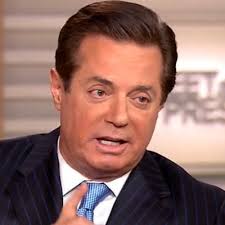
Paul Manafort
For Trump, Manafort came with a dangerous liability: His longstanding ties to pro-Russian politicians in Ukraine–which inevitably led to Vladimir Putin.
For years, Manafort worked for Viktor Yanukovych, a Putin protege who was deposed as Ukraine’s president in 2014 amid widespread demonstrations.
In August, the New York Times unearthed handwritten ledgers that listed $12.7 million in cash payments to Manafort from Yanukovych’s political party between 2007 and 2012.
Trump’s own ties to Putin were already facing increasing scrutiny for a number of reasons:
- Trump’s and Putin’s public expressions of admiration for each other’s toughness.
- The removal from the Republican party platform, written at the convention in Cleveland in July, of references to arming Ukraine in its fight against pro-Russian rebels who have been armed by the Kremlin.
- In July, high-ranking Democratic officials–including presumptive Presidential nominee Hillary Clinton–were embarrassed by a hack of thousands of Democratic National Committee emails. This was quickly traced to Russian hackers allegedly working on behalf of the Kremlin. Their alleged motive: To tip the election in favor of Trump.
- Trump drew more suspicion upon himself by inviting Russia to find 30,000 emails deleted from the private server used by Clinton while she was Secretary of State in the Obama administration: “I think you will probably be mightily rewarded by our press.”
Added to Manafort’s embarrassing ties to Russia was another minus: He and Trump didn’t get along. Trump had begun calling him “low energy”–a term he once aimed at his former GOP rival, Jeb Bush.
Manafort wanted Trump to bring more self-discipline to the campaign and concentrate his fire solely on his Presidential rival, Hillary Clinton. Instead, in late July, Trump ignited a days-long feud with members of a Gold Star family, costing him support within the veterans community.
Manafort also wanted Trump to establish a conventional chain-of-command organization typical of a Presidential campaign. But Trump resisted, preferring to improvise and rely on his instincts and the counsel of his family.
In late August, Trump fired him.
Foreign policy nearly always plays a major role in Presidential elections. Yet Trump has shown a surprising lack of respect for a detailed knowledge of it.
Asked on MSNBC’s “Morning Joe” who he consults about foreign policy, Trump replied; “I’m speaking with myself, number one, because I have a very good brain and I’ve said a lot of things.”
In late August, former Republican Congresswoman (2007-2015) Michele Bachmann claimed that she was now advising Trump on foreign policy.
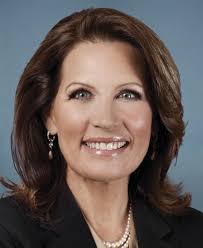
Michele Bachmann
A member of the Right-wing Tea Party, Bachmann has said that diplomacy “is our option” in dealing with Iran–but wouldn’t rule out a nuclear strike.
Among the statements she’s made:
- “I don’t know how much God has to do to get the attention of the politicians. We’ve had an earthquake; we’ve had a hurricane. He said, ‘Are you going to start listening to me here?'”
- “Carbon dioxide is portrayed as harmful. But there isn’t even one study that can be produced that shows that carbon dioxide is a harmful gas.”
- “President Obama waived a ban on arming terrorists in order to allow weapons to go to the Syrian opposition….U.S. taxpayers are now paying to give arms to terrorists, including Al-Qaeda.”
- “I’m a believer in Jesus Christ. As I look at the End Times scripture, this says to me that the leaf is on the fig tree and we are to understand the signs of the times, which is your ministry, we are to understand where we are in God’s end time history.”
A woman who believes that God causes earthquakes and hurricanes, and that mankind has arrived at “End Times,” can hardly be a comfort to rational voters.
Another Trump adviser is former Fox News CEO Roger Ailes. His assignment: Prepare Trump for the upcoming fall debates with Clinton.
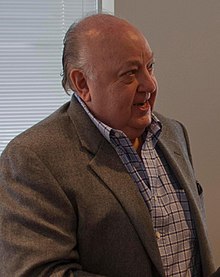
But Ailes comes with huge notoriety: In July he was fired from Fox News on multiple charges of sexual harassment.
At first, only Fox News anchor Gretchen Carlson dared accuse him. But then more than two dozen women came forward to accuse Ailes of sexual harassment.
On September 6, Carlson reached an out-of-court settlement with the parent company of Fox News for a reported $20 million.
At least two other women have settled with Fox, an anonymous source told the New York Times. And others may be planning to file lawsuits.
All of which makes Ailes the poster boy for sexual harassment.
Trump has been married three times and has often boasted of his sexual conquests–including ones he believes he could have had.
(Shortly after the 1997 death of Princess Diana, he told a radio interviewer he could have “nailed” her if he had wanted to.)
In a mid-March CNN/ORC poll, 73% of female voters voiced a negative view of Trump. Associating with a notorious sexual harasser like Roger Ailes can only do even more damage to his candidacy.
9/11 ATTACKS, ABC NEWS, AFGHANISTAN, AMERICAN NAZI PARTY, ANTI-SEMITISM, ARCHER SCHOOL FOR GIRLS, BARACK OBAMA, BARRY GOLDWATER, BIRTH CONTROL, BLACK LIVES MATTER, CBS NEWS, CIVIL RIGHTS ACT OF 1964, CNN, DONALD TRUMP, ED MARTIN, FACEBOOK, FLORIDA, FOX BUSINESS, FOX NEWS, GEORGE W. BUSH, GRETCHEN CARLSON, HILLARY CLINTON, HUMAYUN KHAN, IRAQ WAR, JOHN MCCAIN, KATRINA PIERSON, KU KLUX KLAN, LATINOS, LYNDON B. JOHNSON, MARCO GUTIERREZ, MEDICAID, MEDICARE, MEXICO, MICHELE BACHMANN, MITT ROMNEY, MSNBC, NBC NEWS, NEW YORK, NICCOLO MACHIAVELLI, OBAMACARE, OMAROSA MANIGAULT, PAUL MANAFORT, PRINCESS DIANA, ROGER AILES, SOCIAL SECURITY, STEPHEN BANNON, TEA PARTY, THE APPRENTICE, THE CHICAGO SUN-TIMES, THE CHICAGO TRIBUNE, THE NEW NEW YORK TIMES, THE PRINCE, THE WASHINGTON POST, TWITTER, VLADIMIR PUTIN, VOTER ID LAWS, VOTING, WAYNE ROOT, WELFARE
In Bureaucracy, History, Law, Politics, Social commentary on September 6, 2016 at 12:08 am
“The first impression that one gets of a ruler and his brains is from seeing the men that he has about him.
“When they are competent and loyal one can always consider him wise, as he has been able to recognize their ability and keep them faithful.
“But when they are the reverse, one can always form an unfavorable opinion of him, because the first mistake that he makes is in making this choice.”
So wrote the Italian statesman Niccolo Machiavelli more than 500 years ago in his famous treatise on politics, The Prince.
And his words remain as true in our day as they were in his.

Niccolo Machiavelli
They are especially important to remember when evaluating Donald Trump’s talents as an administrator.
In pursuing the Presidency, he is seeking the most powerful office in the world, one that would give him authority to appoint thousands of officials to domestic and foreign agencies.
Consider some of those he has placed around him in his campaign for President:
Founder of Latinos for Trump Marco Gutierrez told MSNBC’s Joy Reid: “My culture is a very dominant culture. And it’s imposing, and it’s causing problems. If you don’t do something about it, you’re gonna have taco trucks every corner.”
At a Tea Party for Trump rally at a Harley-Davidson dealership in Festus, Missouri, former Missouri Republican Party director Ed Martin reassured the crowd that they’re not racist for hating Mexicans: “Donald Trump is for Americans first.
“He’s for us first. It is not selfish to support, or to be for, your neighbor, as opposed to someone from another nation. And Mexico, Mexicans, that’s not a race. You’re not racist if you don’t like Mexicans. They’re from a nation.”
From the outset of his Presidential campaign, Trump has polled extremely poorly among Hispanic voters. This is perfectly understandable, given his comments about Mexicans as:
“When Mexico sends its people, they’re not sending their best. They’re sending people that have lots of problems, and they’re bringing those problems with us. They’re bringing drugs. They’re bringing crime. They’re rapists.”
Trump has also promised to “build a great, great wall on our southern border and I will have Mexico pay for that wall.”

Donald Trump
These comments made Trump the winner of the Republican primaries, where voters always nominate the most extreme Rightist candidate.
But the general election phrase requires Republican and Democratic candidates to appeal to both their base and beyond it. As a result, Trump is now desperate to attract the votes of Hispanics.
Comments such as those by Marco Gutierrez and Ed Martin guarantee this won’t happen.
Wayne Root, opening speaker and master of ceremonies at many Trump events, told Virginia radio host Rob Schilling that people on public assistance and women who get their birth control through Obamacare should not be allowed to vote:
“If the people who paid the taxes were the only ones allowed to vote, we’d [Republicans] have landslide victories. But you’re allowing people to vote. This explains everything! People with conflict of interest shouldn’t be allowed to vote. If you collect welfare, you have no right to vote.
“The day you get off welfare, you get your voting rights back. The reality is, why are you allowed to have this conflict of interest that you vote for the politician who wants to keep your welfare checks coming and your food stamps and your aid to dependent children and your free health care and your Medicaid, your Medicare and your Social Security and everything else?”
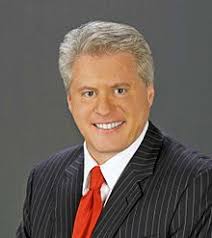
Wayne Root
According to a March Gallup poll, 70% of women–or seven in 10–have an unfavorable opinion of Trump.
Such comments as Root’s aren’t going to increase Trump’s popularity with them. Nor with anyone who receives Medicaid, Medicare or Social Security.
Donald Trump’s new campaign manager, Stephen Bannon, was charged with misdemeanor domestic violence, battery, and dissuading a witness in 1996, after an altercation with his then-wife, Mary Louise Piccard, in Santa Monica, California.
Picard also said in a 2007 court declaration that Bannon didn’t want their twin daughters attending the Archer School for Girls in Los Angeles because many Jewish students were enrolled there.

Stephen Bannon
Not only is this certain to lose Trump votes among women, it will make him unpopular among Jews. A campaign manager charged with anti-Semitism could cost Trump heavily Jewish states like New York and Florida.
In addition: Bannon and another ex-wife, Diane Clohesy, were registered to vote at a vacant house in Florida, a possible violation of election laws in a key swing state.
Republicans have vigorously denied voting rights to tens of thousands on the pretext of “voter fraud.” More than a dozen states still have voting restrictions in place since 2012.
A Washington Post investigation found just 31 credible cases of voter fraud from 2000 to 2014, out of an estimated 1 billion ballots cast in the U.S. during that period.
Meanwhile, voting rights groups have been fighting back–and winning.
“Voter ID” laws in Texas, Wisconsin and North Carolina have been found discriminatory against minorities–who traditionally vote Democratic.
With evidence of Republican fraud like that supplied by Trump’s own campaign manager, victories against “Voter ID” laws may well increase.
ABC NEWS, ALLERGIES, ALTERNET, AMERICABLOG, AP, BABY BOOMER RESISTANCE, BBC, BERNIE SANDERS, BLOOMBERG NEWS, BUZZFEED, CBS NEWS, CHARLES GRASSLEY, CNN, CROOKS AND LIARS, DAILY KOZ, EPINEPHRINE, EPIPEN, EXTORTION, FACEBOOK, FEDERAL TRADE COMMISSION, FIVETHIRTYEIGHT, HARPER’S MAGAZINE, HEATHER BRESCH, HENRY FORD, HUFFINGTON POST, INSTANT CHECKMATE, INTELLIUS, JOHN D. ROCKEFELLER, MEDIA MATTERS, MISSISSIPPI ATTORNEY GENERAL MIKE MOORE, MOTHER JONES, MOVEON, MSNBC, MYLAN PHARMACEUTICALS, NBC NEWS, NERVE GAS, NEW REPUBLIC, NEWSDAY, NEWSWEEK, NICCOLO MACHIAVELLI, NPR, PBS NEWSHOUR, PEOPLE-FINDER WEBSITES, PEOPLE-FINDING SERVICES, PEOPLE-FINDING WEBSITES, POLITICO, POLITICUSUSA, RACKETEER INFUENCED CORRUPT ORGANIZATIONS (RICO) ACT, RAW STORY, REUTERS, SALON, SCHOOL ACCESS TO EMERGENCY EPINEPHRINE ACT AMY KLOBUCHAR, SEATTLE TIMES, SHELDON KAPLAN, SLATE, TALKING POINTS MEMO, THE ATLANTIC, THE CHICAGO SUN-TIMES, THE CHICAGO TRIBUNE, THE DAILY BEAST, THE DAILY BLOG, THE DISCOURSES, THE GUARDIAN, THE HILL, THE HUFFINGTON POST, THE LOS ANGELES TIMES, THE NATION, THE NEW REPUBLIC, THE NEW YORK TIMES, THE NEW YORKER, THE VILLAGE VOICE, THE WASHINGTON POST, THINKPROGRESS, TIME, TOBACCO COMPANY LAWSUITS, TRUTHDIG, TRUTHOUT, TWITTER, TWO POLITICAL JUNKIES, U.S. NEWS & WORLD REPORT, UPI, USA TODAY, VEROMI
In Bureaucracy, Business, History, Law, Law Enforcement, Medical, Politics, Social commentary on August 30, 2016 at 12:25 am
Mylan Pharmaceuticals CEO Heather Bresch is on a roll.
- Since 2004, she has hiked the price of a life-saving EpiPen from $50 to $300–or $600 for a package of two.
- She has seen her own salary steadily rise more than 600% to a current total of $18 million a year.
- The device now accounts for 40% of Mylan’s profits.
But in playing greed-based games with the lives of millions of Americans, Bresch, 47, may have put her company–and even herself–in jeopardy.
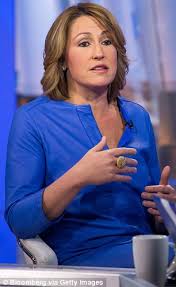
Heather Bresch
EpiPens have been mandatory for public schools in at least 11 states since Congress passed the 2013 School Access to Emergency Epinephrine Act. This occurred after Mylan spent $4 million lobbying Congress.
When the lives of their children are threatened, adults who can stoically accept the inevitability of their own deaths can become dangerously emotional about the fates of their sons or daughters.
As national news media spread the word of Mylan’s unconscionable price increases, American consumers are making their rage increasingly known.
There are three ways this could be expressed: Political, Legal, and Illegal.
Political: Minnesota U.S. Senator Amy Klobuchar has called for an official investigation by the Senate Judiciary Committee and the Federal Trade Commission (FTC) into the price hike:
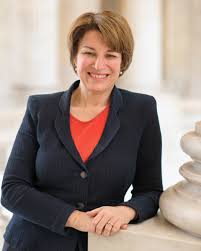
Senator Amy Klobuchar
“I write to request the Federal Trade Commission investigate whether Mylan Pharmaceuticals has violated the antitrust laws regarding the sale of its epinephrine auto-injector, EpiPen. Many Americans, including my own daughter, rely on this life-saving product to treat severe allergic reactions.
“Although the antitrust laws do not prohibit price gouging, regardless of how unseemly it may be, they do prohibit the use of unreasonable restraints of trade to facilitate or protect a price increase.”
Other Senators who have called for hearings include Iowa’s Charles Grassley, Connecticut’s Richard Blumenthal and former Democratic presidential contender Vermont Senator Bernie Sanders.
“I have heard from one father in Iowa who recently purchased a refill of his daughter’s EpiPen prescription. He reported that to fill the prescription, he had to pay over $500 for one EpiPen,” wrote Grassley to Bresch. “The high cost has also caused some first responders to consider making their own kits with epinephrine vials and syringes.”
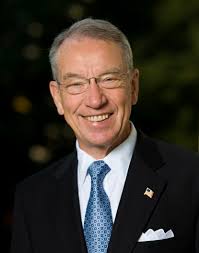
Senator Charles Grassley
“There’s no reason an EpiPen, which costs Mylan just a few dollars to make, should cost families more than $600,” tweeted Sanders on Twitter.
A second expression of political fallout could ultimately be the adoption of a single-payer healthcare system. Under this, a “single-payer” fund, rather than private insurers, pays for healthcare costs. The healthcare delivery system can be private, public or a combination of the two.
Owing to the belief of millions of Right-wing Americans that such a system is “Communistic,” this is unlikely to be adopted within the foreseeable future.
Legal: Individual Americans–and/or the U.S. Department of Justice–could file civil lawsuits against Mylan Pharmaceuticals under the Racketeer Influenced Corrupt Organizations (RICO) Act.
Passed by Congress in 1970 to combat the Mafia, its provisions include punishments for extortion. This is defined as “a criminal offense which occurs when a person unlawfully obtains either money, property or services from a person(s), entity, or institution, through coercion.”

It could be argued that, by holding a near-monopoly over a product that millions of Americans depend on for survival, and raising its price beyond the ability of most Americans to afford it, Mylan has engaged in extortionate practices.
It would not be the first time a David-vs.-Goliath lawsuit prevailed against dismal expectations.
In 1994, amid great pessimism, Mississippi Attorney General Mike Moore filed a lawsuit against the tobacco industry. But other states soon followed, ultimately growing to 46.
Their goal: To seek monetary, equitable and injunctive relief under various consumer-protection and anti-trust laws.
The theory underlying these lawsuits: Cigarettes produced by the tobacco industry created health problems among the population, which badly strained the states’ public healthcare systems.
In 1998, the states settled their Medicaid lawsuits against the tobacco industry for recovery of their tobacco-related, health-care costs–amounting to millions of dollars. In return, they exempted the companies from private lawsuits for tobacco-related injuries.
Illegal: At one time, business titans like John D. Rockefeller and Henry Ford lived apart from “the common herd.” Americans read about them in newspapers or heard about them on the radio, but had no way of contacting them directly.
If you wanted to “dig up dirt” on any of them, you had to be wealthy enough to hire private detectives–who were probably employed by the same people you wanted to investigate.
But the rise of the Internet–and especially the advent of “people-finder” websites like Instant Checkmate, Intellius and Veromi–has drastically changed all that.
Type “Heather Bresch” into the Intellius “Confidential People Finder” subject line, and–for a $20 month’s subscription–you can obtain “some or all of the following”:
- Full Name
- Age and Date of Birth
- Address
- Address History
- Phone Numbers
- Aliases
- Relatives
- Neighbors
- Email Address(es)
- Social Networks
- Property Records
- Marriages & Divorce
- Criminal Records
- Bankruptcies
- Liens
- Judgments
- Lawsuits
It doesn’t take a genius to see how the parent of an allergy-suffering child–desperate to save his son or daughter and enraged at what he believes to be the extortionately high price of EpiPens–might put such information to use.
What is truly astonishing is that, in our publicity-saturated culture, greedy, self-destructive “celebrities” like Heather Bresch don’t realize this.
ABC NEWS, ALLERGIES, ALTERNET, AMERICABLOG, AP, BABY BOOMER RESISTANCE, BBC, BERNIE SANDERS, BLOOMBERG NEWS, BUZZFEED, CBS NEWS, CHARLES GRASSLEY, CNN, CROOKS AND LIARS, DAILY KOZ, EPINEPHRINE, EPIPEN, EXTORTION, FACEBOOK, FEDERAL TRADE COMMISSION, FIVETHIRTYEIGHT, HARPER’S MAGAZINE, HEATHER BRESCH, HENRY FORD, HUFFINGTON POST, INSTANT CHECKMATE, INTELLIUS, JOHN D. ROCKEFELLER, MEDIA MATTERS, MISSISSIPPI ATTORNEY GENERAL MIKE MOORE, MOTHER JONES, MOVEON, MSNBC, MYLAN PHARMACEUTICALS, NBC NEWS, NERVE GAS, NEW REPUBLIC, NEWSDAY, NEWSWEEK, NICCOLO MACHIAVELLI, NPR, PBS NEWSHOUR, PEOPLE-FINDER WEBSITES, PEOPLE-FINDING SERVICES, PEOPLE-FINDING WEBSITES, POLITICO, POLITICUSUSA, RACKETEER INFUENCED CORRUPT ORGANIZATIONS (RICO) ACT, RAW STORY, REUTERS, SALON, SCHOOL ACCESS TO EMERGENCY EPINEPHRINE ACT AMY KLOBUCHAR, SEATTLE TIMES, SHELDON KAPLAN, SLATE, TALKING POINTS MEMO, THE ATLANTIC, THE CHICAGO SUN-TIMES, THE CHICAGO TRIBUNE, THE DAILY BEAST, THE DAILY BLOG, THE DISCOURSES, THE GUARDIAN, THE HILL, THE HUFFINGTON POST, THE LOS ANGELES TIMES, THE NATION, THE NEW REPUBLIC, THE NEW YORK TIMES, THE NEW YORKER, THE VILLAGE VOICE, THE WASHINGTON POST, THINKPROGRESS, TIME, TOBACCO COMPANY LAWSUITS, TRUTHDIG, TRUTHOUT, TWITTER, TWO POLITICAL JUNKIES, U.S. NEWS & WORLD REPORT, UPI, USA TODAY, VEROMI
In Bureaucracy, Business, History, Law, Law Enforcement, Medical, Politics, Social commentary on August 29, 2016 at 1:04 am
More than 500 years ago, Niccolo Machiavelli, the father of modern politics, delivered this sage advice in his political masterwork, The Discourses:
All those who have written upon civil institutions demonstrate…that whoever desires to found a state and give it laws, must start with assuming that all men are bad and ever ready to display their vicious nature, whenever they may find occasion for it.
If their evil disposition remains concealed for a time, it must be attributed to some unknown reason; and we must assume that it lacked occasion to show itself. But time, which has been said to be the father of all truth, does not fail to bring it to light.
Niccolo Machiavelli
Unfortunately, it’s advice that members of the United States Congress have blissfully chosen to ignore. And, in doing so, they have condemned millions of Americans to suffering and death at the hands of greed-based, predatory corporations.
One of these corporations is Mylan Pharmaceuticals.
In 2007, Mylan acquired the patent for the EpiPen, a lifesaving device for anyone allergic to common foods like peanuts, shellfish and eggs. Millions of people with life-threatening allergies depend on the EpiPen for survival.

During an allergy attack, the EpiPen injects an emergency dosage of epinephrine to the user, preventing a possibly fatal reaction, known as anaphylaxis, from occurring.
Between 2007 and 2015, the wholesale price of an EpiPen skyrocketed from $56.64 to $317.82–an increase of 461%.
According to NBC News, compensation for Mylan CEO Heather Bresch similarly skyrocketed during the same period: From $2,453,456 in 2007 to $18,931,068 in 2015–a 671% raise in eight years.
Bresch wasn’t the only one to profit at the expense of the most vulnerable.
Mylan’s president, Rajiv Malik, got an 11% pay increase to $1 million annually by 2015. And Mylan Chief Commercial Officer Anthony Mauro got a 13.6% raise, amounting to $625,000 per year.
Between 2007 and 2015, Mylan’s stock price tripled, going from $13.29 per share in 2007 to a high of $47.59 in 2016. By late August, 2016, Mylan’s stock is hovering around $45.68 per share on the NASDAQ index.
Bloomberg states that the EpiPen now accounts for about 40% of Mylan’s profits.
Ironically, Sheldon Kaplan, the man who invented the now-famous device, never made a dime off it, and died in obscurity.
After working at NASA, Kaplan worked for Survival Technology, Inc., in Bethesda, Maryland. His assignment: Create a device to quickly inject a victim of anaphylaxis–a potentially fatal allergic reaction–with an emergency dose of epinephrine.
In 1973, when Kaplan was finalizing the design concept for what would ultimately become the EpiPen, the Defense Department asked him to take on a new assignment. The military needed a device that could quickly inject an antidote for nerve gas.
Kaplan’s design perfectly fitted this need: When a victim plunged a needle into his thigh, a spring-loaded mechanism shot a needle containing life-saving medicine into his bloodstream.
Kaplan’s invention became known as the ComboPen, and was initially used by the Pentagon before becoming available for use by the general public several years later as the EpiPen.
Kaplan left Survival Technology shortly after creating the ComboPen to become a biochemical engineer. He didn’t follow the success of his invention–and didn’t reap any of the huge financial rewards that it has produced.
That has certainly not been true for Mylan Pharmaceuticals.
After cornering the patent on the EpiPen in 2007, the company has made billions on the life-saving device.
According to Bloomberg, a package of two EpiPens costs $415 in the United States after insurance discounts. The same package in France–which has price controls under socialized medicine–costs $85.
The chief beneficiary of this legalized price-gouging has been Mylan’s CEO, Heather Bresch.
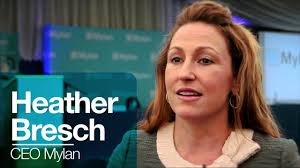
Heather Bresch
The daughter of U..S. Senator Joseph Manchin (D-WV), she joined Mylan in 1992 and held various positions within the company. Among these: Its chief lobbyist before Congress.
It was in that capacity that she persuaded Congress to enact a bill requiring all public schools to carry EpiPens for students with food allergies. It was signed into law by President Barack Obama in November, 2013.
Over the next three years, schools nationwide bought EpiPens by the truckload. And Mylan jacked up its prices for the EpiPen every other quarter.
On January 1, 2012, Heather Bresch became Mylan’s CEO.
But it wasn’t enough to have a monopoly on a device millions of men, women and children desperately needed. In 2014, true to its “profits-at-any-price” philosophy, Mylan reincorporated in the Netherlands to lower its effective tax rate.
It did so through a corporate accounting trick known as a tax inversion, and thus claiming the status of a foreign-owned corporation although its headquarters remained in Canonsburg, Pennsylvania.
Even her own father, U..S. Senator Joseph Manchin, condemned Mylan’s use of the inversion scheme and said it should be illegal.
But Bresch fiercely defended it in an interview with the New York Times: “You can’t maintain competitiveness by staying at a competitive disadvantage. I mean you just can’t.”
No doubt, with her $18 million-a-year CEO salary and moneyed ties to high-powered attorneys and influential members of Congress, Bresch thinks herself invulnerable.
But all that could quickly change–if even a small number of her victims become angry enough.
ABC NEWS, ALTERNET, AP, BEDBUGS, BUILDING INSPECTION, BUSINESS, BUZZFEED, CBS NEWS, CHRIS MATHEWS, CNN, CROOKS AND LIARS, DAILY KOZ, FACEBOOK, FEDERAL ASSET FORFEITURE STATUTES, KIP MACY, LANDLORDS, MOTHER JONES, MOVEON, MSNBC, NBC NEWS, NEWSWEEK, NICCOLO MACHIAVELLI, NICOLE MACY, NPR, POLITICO, RAW STORY, RENT CONTROL, RENTERS, REUTERS, ROBERT F. KENNEDY, SALON, SAN FRANCISCO, SAN FRANCISCO DEPARTMENT OF BUILDING INSPECTION, SAN FRANCISCO DEPARTMENT OF PUBLIC HEALTH, SEATTLE TIMES, SLATE, SLUMLORDS, THE ATLANTIC, THE CHICAGO SUN-TIMES, THE CHICAGO TRIBUNE, THE DAILY BEAST, THE GUARDIAN, THE HILL, THE HUFFINGTON POST, THE LOS ANGELES TIMES, THE NATION, THE NEW YORK TIMES, THE WALL STREET JOURNAL, THE WASHINGTON POST, TIME, TWITTER, U.S. NEWS & WORLD REPORT, UPI, USA TODAY, WILLIAM TECUMSEH SHERMAN
In Bureaucracy, History, Law, Law Enforcement, Politics, Social commentary on August 25, 2016 at 1:53 am
City agencies need to see landlords for what they truly are–as, at best, potential predators, if not actual ones. And to act on that knowledge.
As Niccolo Machiavelli warned:
“All those who have written upon civil institutions demonstrate…that whoever desires to found a state and give it laws, must start with assuming that all men are bad and ever ready to display their vicious nature, whenever they may find occasion for it.
“If their evil disposition remains concealed for a time, it must be attributed to some unknown reason; and we must assume that it lacked occasion to show itself. But time, which has been said to be the father of all truth, does not fail to bring it to light.”
Niccolo Machiavelli
The power of slumlords calls to mind the scene in 1987’s The Untouchables, where Sean Connery’s veteran cop tells Eliot Ness: “Everybody knows where the liquor is. It’s just a question of: Who wants to cross Capone?”
Many tenants have lived with rotting floors, bedbugs, nonworking toilets, mice/rats, chipping lead-based paint and other outrages for not simply months but years.
This holds true across the United States. But it also holds true in San Francisco–the “renters’ paradise” where the District Attorney’s Office hasn’t prosecuted a slumlord in decades.

Part Two of this series presented a series of badly-needed, long-overdue reforms for the San Francisco Department of Building Inspection (DBI). This is the agency charged to ensuring safe housing conditions for San Francisco residents.
This concluding part will cover the remainder of those needed reforms.
- Landlords should be required to bring all the units in a building up to existing building codes, and not just those in need of immediate repair.
- Landlords should be legally required to hire a certified-expert contractor to perform building repairs. To save money–that they can well afford to spend–many landlords insist on making such repairs despite their not being trained or experienced in doing so. They thereby risk the health and/or safety of their tenants.
- DBI should not view itself as a “mediation” agency between landlords and tenants. Most landlords hate DBI and will always do so. They believe they should be allowed to treat their tenants like serfs, if not slaves, raise extortionate rents anytime they desire, and maintain their buildings in whatever state they wish. And no efforts by DBI to persuade them of its good intentions will ever change their minds.
- Above all, DBI must stop viewing itself as a regulatory agency and start seeing itself as a law enforcement one. The FBI doesn’t ask criminals to comply with the law. It applies whatever amount of pressure is needed to force their compliance. William Tecumseh Sherman, speaking of the rebellious Southern states, said it best: “They cannot be made to love us, but they may be made to fear us.”
- The San Francisco District Attorney’s Office should create a special unit to investigate and prosecute slumlords. Prosecutors should offer rewards to citizens who provide tips on major outrages by the city’s slumlords.

- Install Rent Control protections for tenants on fixed incomes. San Francisco is notorious for having the highest rents in the nation. A one-bedroom apartment runs $3,448 a month. Even those in the vaunted high-tech industry spend most of their income on rent.
- For tenants on fixed incomes–seniors, disabled, students–the predatory greed of landlords amounts to a staged-in eviction notice. Social Security recipients did not get a cost-of-living increase in 2016 because there had not been a rise in the price of gasoline. But the fact that many of them do not own cars doesn’t mean that the price of everything else–such as groceries–hasn’t sharply risen.
- Allowing landlords to jack up rents to the fullest extent possible every year will eventually drive out all tenants who are not multimillionaires. In fact, an unknown portion of this City’s homeless population doubtless stems from the ability of landlords to gradually raise rents above tenants’ ability to afford them.
- In 1979, San Franciscans passed a Rent Control law to protect tenants against predatory rent hikes and unfair evictions. As a result, a landlord can only raise a tenant’s rent a certain percentage every year. This is set by the set by the Rent Stabilization and Arbitration Board, more popularly known as the “Rent Board.”
- But there is a gaping hole in the law: Once a tenant moves out, the landlord can jack up the rent as high as he wants. This is why the average rent in San Francisco is priced beyond most middle-class wage-earners.
- In addition, landlords are allowed to charge tenants yearly fees to maintain the existence of the Rent Board. This is both unfair and insulting, since the Board was created to protect tenants from predatory landlords. Most tenants have far less money to pay such fees than do landlords, who are free to raise rents every year. And landlords–unlike tenants–can and do write off Rent Board fees on their taxes every year. Thus, landlords–not tenants–should be paying the fees.
As Robert F. Kennedy wrote: “Every society gets the kind of criminal it deserves. What is equally true is that every community gets the kind of law enforcement it insists on.”
ABC NEWS, ALTERNET, AP, BEDBUGS, BUILDING INSPECTION, BUSINESS, BUZZFEED, CBS NEWS, CHRIS MATHEWS, CNN, CROOKS AND LIARS, DAILY KOZ, FACEBOOK, FEDERAL ASSET FORFEITURE STATUTES, KIP MACY, LANDLORDS, MOTHER JONES, MOVEON, MSNBC, NBC NEWS, NEWSWEEK, NICCOLO MACHIAVELLI, NICOLE MACY, NPR, POLITICO, RAW STORY, RENT BOARD, RENT CONTROL, RENTERS, REUTERS, ROBERT F. KENNEDY, SALON, SAN FRANCISCO, SAN FRANCISCO DEPARTMENT OF BUILDING INSPECTION, SAN FRANCISCO DEPARTMENT OF PUBLIC HEALTH, SEATTLE TIMES, SLATE, SLUMLORDS, THE ATLANTIC, THE CHICAGO SUN-TIMES, THE CHICAGO TRIBUNE, THE DAILY BEAST, THE GUARDIAN, THE HILL, THE HUFFINGTON POST, THE LOS ANGELES TIMES, THE NATION, THE NEW YORK TIMES, THE WALL STREET JOURNAL, THE WASHINGTON POST, TIME, TWITTER, U.S. NEWS & WORLD REPORT, UPI, USA TODAY, WILLIAM TECUMSEH SHERMAN
In Bureaucracy, History, Law, Law Enforcement, Politics, Social commentary on August 24, 2016 at 12:28 am
The San Francisco Department of Building Inspection (DBI) has long been outmaneuvered by predatory, law-breaking landlords.
And San Francisco renters–many of them elderly, poor and/or disabled–have been the victims of landlord greed, neglect and/or harassment.

Among the reforms that DBI should immediately enact:
- Hit slumlord violators with a fine–payable immediately–for at least $2,000 to $5,000 for each health/safety-code violation.The slumlord would be told he could reclaim 75-80% of the money only if he fully corrected the violation within 30 days. The remaining portion of the levied fine would go into the City coffers, to be shared among DBI and other City agencies.
- This would put the onus on the slumlord, not DBI. Appealing to his greed would ensure his willingness to comply with the ordered actions. As matters now stand, it is DBI who must repeatedly check with the slumlord to find out if its orders have been complied with.
- If the landlord failed to comply with the actions ordered within 30 days, the entire fine would go into the City’s coffers–to be divided among DBI and other agencies charged with protecting San Francisco residents.
- In addition. he would be hit again with a fine at least twice the amount of the first one.
- Inspectors for DBI should be allowed to cite landlords for violations that fall under the jurisdiction of the Department of Public Health (DPH). They could then pass the information to DPH for its own investigation.
- If the DBI inspector later discovered that the landlord had not corrected the DPH violation within a designated time-period, DBI should be allowed to levy its own fine for his failure to do so.
- If DPH objects to this, DBI should propose that DPH’s own inspectors be armed with similar cross-jurisdictional authority. Each agency would thus have increased motivation for spotting and correcting health/safety violations that threaten the lives of San Francisco residents.

- This would instantly turn DBI and DPH into allies, not competitors. And it would mean that whether a citizen called DBI or DPH, s/he could be assured of getting the necessary assistance. As matters now stand, many residents are confused by the conflicting jurisdictions of both agencies.
- DBI should insist that its Inspectors Division be greatly expanded. DBI can attain this by arguing that reducing the number of Inspectors cuts (1) protection for San Francisco renters–and (2) monies that could go to the general City welfare.
- The Inspection Division should operate independently of DBI. Currently, too many high-ranking DBI officials tilt toward landlords because they are landlords themselves.
- DBI should create a Special Research Unit to compile records on the worst slumlord offenders. Thus, a slumlord with a repeat history of defying DBI Notices of Violation could be treated more harshly than a landlord who was a first-time offender.
- Turning DBI into a revenue-producing agency would enable the City to raise desperately-needed revenues–in a highly popular way. Fining delinquent slumlords would be as unpopular as raising taxes on tobacco companies. Only slumlords and their hired lackey allies would object.
- DBI should legally require landlords to rehabilitate a unit every time a new tenant moves in, or have it examined by a DBI inspector every two years. A tenant can occupy a unit for ten or more years, then die or move out, and the landlord immediately rents the unit to the first person who comes along, without making any repairs or upgrades whatsoever.
- Slumlords, unlike drug-dealers, can’t move their buildings from one street or city to another. If they want to make money in San Francisco, they will have to submit to the jurisdiction of landlord-regulating agencies.
- DBI should require landlords to post their Notices of Violation in public areas of their buildings–on pain of serious financial penalties for failing to do so. When DBI orders a slumlord to take corrective action, s/he is the only one who is notified. If that slumlord refuses to comply with that directive, s/he is the only one who knows it. Given the pressing demands on DBI, weeks or months will pass before the agency learns about this violation of its orders. Tenants have a right to know if their landlord is complying with the law–so they can promptly notify inform DBI if a violation is occurring.

- Landlords should be legally required to give each tenant a list of the major city agencies (such as DBI, the Rent Board and the Department of Public Health) that exist to help tenants solve problems with their housing.
- DBI should launch–and maintain–a citywide advertising campaign to alert residents about its services. Everyone knows the FBI pursues bank robbers. But too many San Franciscans don’t even know that DBI exists, let alone what laws it enforces. This should be an in-your-face campaign: “Do you have bedbugs in your apartment? Has your stove stopped working? Are you afraid to ride in your building elevator because it’s always malfunctioning? Have you complained to your landlord and gotten the runaround? Then call DBI at—- Or drop us an email at_____.”
ABC NEWS, ALTERNET, AP, BEDBUGS, BUILDING INSPECTION, BUSINESS, BUZZFEED, CBS NEWS, CHRIS MATHEWS, CNN, CROOKS AND LIARS, DAILY KOZ, FACEBOOK, FEDERAL ASSET FORFEITURE STATUTES, KIP MACY, LANDLORDS, MOTHER JONES, MOVEON, MSNBC, NBC NEWS, NEWSWEEK, NICCOLO MACHIAVELLI, NICOLE MACY, NPR, POLITICO, RAW STORY, RENT BOARD, RENT CONTROL, RENTERS, REUTERS, ROBERT F. KENNEDY, SALON, SAN FRANCISCO, SAN FRANCISCO DEPARTMENT OF BUILDING INSPECTION, SAN FRANCISCO DEPARTMENT OF PUBLIC HEALTH, SEATTLE TIMES, SLATE, SLUMLORDS, THE ATLANTIC, THE CHICAGO SUN-TIMES, THE CHICAGO TRIBUNE, THE DAILY BEAST, THE GUARDIAN, THE HILL, THE HUFFINGTON POST, THE LOS ANGELES TIMES, THE NATION, THE NEW YORK TIMES, THE WALL STREET JOURNAL, THE WASHINGTON POST, TIME, TWITTER, U.S. NEWS & WORLD REPORT, UPI, USA TODAY, WILLIAM TECUMSEH SHERMAN
In Bureaucracy, History, Law, Law Enforcement, Politics, Social commentary on August 23, 2016 at 12:04 am
To hear slumlords tell it, San Francisco is a “renters’ paradise,” where obnoxious, lazy, rent-evading tenants constantly take advantage of hard-working, put-upon landlords.
Don’t believe it.
And in case you’re inclined to anyway, consider the story of Kip and Nicole Macy, two San Francisco slumlords who recently pled guilty to felony charges of residential burglary, stalking and attempted grand theft.

Nicole and Kip Macy
Determined to evict rent control-protected tenants from their apartment building in the South of Market district, they unleashed a reign of terror in 2006:
- Cut holes in the floor of one tenant’s living room with a power saw–while he was inside his unit.
- Cut out sections of the floor joists to make the building collapse.
- Threatened to shoot Ricardo Cartagena, their property manager, after he refused to make the cuts himself.
- Changed the locks to Cartagena’s apartment, removed all of his belongings and destroyed them.
- Created fictitious email accounts to appear as a tenant who had filed a civil suit against the Macys–and used these to fire the tenant’s attorney.
- Cut the tenants’ telephone lines and shut off their electricity, gas and water.
- Changed the locks on all the apartments without warning.
- Mailed death threats.
- Kicked one of their tenants in the ribs.
- Hired workers to board up a tenant’s windows from the outside while he still lived there.
- Falsely reported trespassers in a tenant’s apartment, leading police to hold him and a friend at gunpoint.
- Broke into the units of three tenants and removed all their belongings.
- Again broke into the units of the same three victims and soaked their beds, clothes and electronics with amonia.
The Macys were arrested in April, 2008, posted a combined total of $500,000 bail and then fled the country after being indicted in early 2009.
In May, 2012, Italian police arrested and deported them back to America a year later.
Having pled guilty, they were sentenced in September, 2013, to a prison term of four years and four months.
How could such a campaign of terror go on for two years against law-abiding San Francisco tenants?
Simple.
Even in the city misnamed as a “renter’s paradise,” slumlords are treated like gods by the very agencies that are supposed to protect tenants against their abuses.

The power of slumlords calls to mind the scene in 1987’s The Untouchables, where Sean Connery’s veteran cop tells Eliot Ness: “Everybody knows where the liquor is. It’s just a question of: Who wants to cross Capone?”
Everybody in San Francisco knows who the slumlords are. But the District Attorney’s Office hasn’t criminally prosecuted a slumlord in decades.
Many tenants have lived with rotting floors, bedbugs, nonworking toilets, mice/rats, chipping lead-based paint and other outrages for not simply months but years.
Consider the situation at the San Francisco Department of Building Inspection (DBI), which is charged with ensuring that apartment buildings are in habitable condition.
Under San Francisco law:
- A landlord is automatically given 30 days to correct a health/safety violation. If he drags his feet on the matter, the tenant must live with that problem until it’s resolved.
- If the landlord claims for any reason that he can’t fix the problem within one month, DBI doesn’t demand that he prove this. Instead, it automatically gives him another month.
- A slumlord has to work at being hit with a fine—by letting a problem go uncorrected for three to six months.
- And even then, repeat slumlord offenders often avoid the fine by pleading for leniency.
- That’s because many DBI officials are themselves landlords.
But the situation doesn’t have to remain this way.
How could it be changed?
By learning some valuable lessons from the “war on drugs” and applying them to regulating slumlords.
Consider:
- At least 400,000 rape kits containing critical DNA evidence that could convict rapists sit untested in labs around the country.
- But illegal drug kits are automatically rushed to the had of the line.
It isn’t simply because local/state/Federal lawmen universally believe that illicit drugs pose a deadly threat to the Nation’s security.
It’s because:
- Federal asset forfeiture laws allow the Justice Department to seize properties used to “facilitate” violations of Federal anti-drug laws.
- Local and State law enforcement agencies are allowed to keep some of the proceeds once the property has been sold.
- Thus, financially-strapped police agencies have found that pursuing drug-law crimes is a great way to fill their own coffers.
- Prosecutors and lawmen view the seizing of drug-related properties as crucial to eliminating the financial clout of drug-dealing operations.
It’s long past time for San Francisco agencies to apply the same attitude–and methods–toward slumlords. 
DBI should become not merely a law enforcing agency but a revenue-creating one. And those revenues should come from predatory slumlords who routinely violate the City’s laws protecting tenants.
By doing so, DBI could vastly:
- Enhance its own prestige and authority;
- Improve living conditions for thousands of San Francisco renters; and
- Bring millions of desperately-needed dollars into the City’s cash-strapped coffers.
2016 PRESIDENTIAL ELECTION, ABC NEWS, AMERICAN CAESAR, ASIANS, BLACKS, CBS NEWS, CNN, DEMOCRATIC NATIONAL CONVENTION, DONALD TRUMP, DOUGLAS MACARTHUR, FACEBOOK, GEORGE STEPHANOPOULOS, HILLARY CLINTON, HUMAYUN KHAN, INSULTS, JOHN MCCAIN, KHIZR KHAN, LATINOS, MSNBC, MUSLIMS, NBC NEWS, NICCOLO MACHIAVELLI, PRISONERS OF WAR, STATE OF THE UNION, THE CHICAGO SUN-TIMES, THE CHICAGO TRIBUNE, THE LAST WORD, THE LOS ANGELES TIMES, THE NEW YORK TIMES, THE PRINCE, THE WASHINGTON POST, TODAY SHOW, TWITTER, VETERANS OF FOREIGN WARS, WILLIAM MANCHESTER, WOMEN
In Bureaucracy, History, Military, Politics, Social commentary on August 3, 2016 at 12:05 am
Republican Presidential nominee Donald Trump recently attacked the integrity of the parents of an Army captain who died heroically in Iraq in 2004.
For this, he has taken heavy fire from Democrats, veterans organizations and even his fellow Republicans.
But an even more damning assessment comes from Niccolo Machiavelli, the 16th-century Florentine statesman whose two great works on politics–The Prince and The Discourses–remain textbooks for successful politicians more than 500 years later.

Niccolo Machiavelli
Consider Trump’s notoriety for hurling insults at virtually everyone, including:
- Latinos
- Asians
- Muslims
- Blacks
- The Disabled
- Women
- Prisoners-of-War
These insults delight his white, under-educated followers. But they have alienated millions of other Americans who might have voted for him.
Machiavelli, on the other hand, advises leaders to refrain from gratuitous insults:
- “I hold it to be a proof of great prudence for men to abstain from threats and insulting words towards any one.
- “For neither the one nor the other in any way diminishes the strength of the enemy–but the one makes him more cautious, and the other increases his hatred of you, and makes him more persevering in his efforts to injure you.”
And Trump’s reaction to the criticism he’s received?
“I can be Presidential, but if I was Presidential I would only have–about 20% of you would be here because it would be boring as hell, I will say,” Trump told supporters at a rally in Superior, Wisconsin.
For those who expect Trump to shed his propensity for constantly picking fights, Machiavelli has a stern warning:
- “…If it happens that time and circumstances are favorable to one who acts with caution and prudence he will be successful. But if time and circumstances change he will be ruined, because he does not change the mode of his procedure.
- “No man can be found so prudent as to be able to adopt himself to this, either because he cannot deviate from that to which his nature disposes him, or else because, having always prospered by walking in one path, he cannot persuade himself that it is well to leave it…
- “For if one could change one’s nature with time and circumstances, fortune would never change.”
Then there is Trump’s approach to consulting advisers:
Asked on MSNBC’s “Morning Joe” who he consults about foreign policy, Trump replied;
“I’m speaking with myself, number one, because I have a very good brain and I’ve said a lot of things.”
This totally contrasts with the advice given by Machiavelli:
- “A prudent prince must [choose] for his counsel wise men, and [give] them alone full liberty to speak the truth to him, but only of those things that he asks and of nothing else.
- “But he must be a great asker about everything and hear their opinions, and afterwards deliberate by himself in his own way, and in these counsels…comport himself so that every one may see that the more freely he speaks, the more he will be acceptable.”
And Machiavelli offers a related warning on the advising of rulers: Unwise princes cannot be wisely advised.
During the fifth GOP debate in the Presidential sweepstakes, host Hugh Hewitt asked Trump this question:
“Mr. Trump, Dr. [Ben] Carson just referenced the single most important job of the president, the command and the care of our nuclear forces. And he mentioned the triad.
“The B-52s are older than I am. The missiles are old. The submarines are aging out. It’s an executive order. It’s a commander-in-chief decision.
“What’s your priority among our nuclear triad?”
[The triad refers to America’s land-, sea- and air-based systems for delivering nuclear missiles and bombs.]

Nuclear missile in silo
Trump’s reply: “Well, first of all, I think we need somebody absolutely that we can trust, who is totally responsible, who really knows what he or she is doing. That is so powerful and so important.”
He then digressed to his having called the Iraq invasion a mistake in 2003 and 2004. Finally he came back on topic:
“But we have to be extremely vigilant and extremely careful when it comes to nuclear. Nuclear changes the whole ballgame.
“The biggest problem we have today is nuclear–nuclear proliferation and having some maniac, having some madman go out and get a nuclear weapon. I think to me, nuclear, is just the power, the devastation is very important to me.”
Which brings us back to Machiavelli:
- “…Some think that a prince who gains the reputation of being prudent [owes this to] the good counselors he has about him; they are undoubtedly deceived.
- “It is an infallible rule that a prince who is not wise himself cannot be well advised, unless by chance he leaves himself entirely in the hands of one man who rules him in everything, and happens to be a very prudent man. In this case, he may doubtless be well governed, but it would not last long, for the governor would in a short time deprive him of the state.”
All of which would lead Niccolo Machiavelli to warn, if he could witness American politics today: “This bodes ill for your Republic.”


ADOLF HITLER, BARACK OBAMA, BILL CLINTON, CHRIS MATTHEWS, CNN'S "STARTING POINT", CZECHOSLAVAKIA, DARRELL ISSA, DEBT CEILING, EXECUTIVE ORDERS, EXTORTION, FACEBOOK, GEORGE W. BUSH, HOUSE SPEAKER JOHN BOEHNER, immigration reform, JIMMY CARTER, MSNBC'S "HARDBALL", NAZI GERMANY, NEGOTIATING, NEVILLE CHAMBERLAIN, NEWT GINGRICH, NICCOLO MACHIAVELLI, PAP SMEARS, PLANNED PARENTHOOD, POLAND, R.I.CO. ACT, REPUBLICAN PARTY, REPUBLICANS, Ronald Reagan, THE CHICAGO SUN-TIMES, THE CHICAGO TRIBUNE, THE LOS ANGELES TIMES, THE NEW YORK TIMES, THE PRINCE, THE WASHINGTON POST, TITLE X, TWITTER, WARREN BUFFET, WINSTON CHURCHILL, WORLD WAR 11
NEGOTIATING REPUBLICANAZI STYLE: PART ONE (OF FIVE)
In Bureaucracy, History, Law, Law Enforcement, Military, Politics, Social commentary on October 13, 2016 at 12:57 amRobert Payne, author of the bestselling biography, The Life and Death of Adolf Hitler (1973), described Hitler’s “negotiating” style thus:
“Although Hitler prized his own talents as a negotiator, a man always capable of striking a good bargain, he was totally lacking in finesse.
“He was incapable of bargaining. He was like a man who goes up to a fruit peddler and threatens to blow his brains out if he does not sell his applies at the lowest possible price.”
By studying Hitler’s mindset and “negotiating” methods, we can learn much about the mindset and “negotiating” style of today’s Republican party.
A classic example of Hitler’s “bargaining style” came in 1938, when he invited Austrian Chancellor Kurt von Schuschnigg to his mountaintop retreat in Obersalzberg, Germany.
Hitler, an Austrian by birth, intended to annex his native land to Germany. Schuschnigg was aware of Hitler’s desire, but nevertheless felt secure in accepting the invitation. He had been assured that the question of Austrian sovereignty would not arise.
Kurt von Schuschnigg
The meeting occurred on February 12, 1938.
Shuschnigg opened the discussion with a friendly compliment. Walking over to a large window, he admired the breathtaking view of the mountains.
HITLER: We haven’t come here to talk about the lovely view or the weather!
Austria has anyway never done anything which was of help to the German Reich….I am resolutely determined to make an end to all this business. The German Reich is a great power. Nobody can and nobody will interfere if it restores order on its frontiers.
SCHUSCHNIGG: I am aware of your attitude toward the Austrian question and toward Austrian history….As we Austrians see it, the whole of our history is a very essential and valuable part of German history….And Austria’s contribution is a considerable one.
HITLER: It is absolutely zero—that I can assure you! Every national impulse has been trampled underfoot by Austria….
I could call myself an Austrian with just the same right—indeed with even more right—than you, Herr Schuschnigg. Why don’t you once try a plebiscite in Austria in which you and I run against each other? Then you would see!
SCHUSCHNIGG: Well, yes, if that were possible. But your know yourself, Herr Reich Chancellor, that it just isn’t possible. We simply have to go on living alongside one another, the little state next to the big one. We have no other choice.
And that is why I ask you to tell me what your concrete complaints are. We will do all in our power to sort things out and establish a friendly relationship, as far as it is possible to do so.
HITLER: That’s what you say, Herr Schuschnigg. And I am telling you that I intend to clear up the whole of the so-called Austrian question–one way or another. Do you think I don’t know that you are fortifying Austria’s border with the Reich?
SCHUSCHNIGG: There can be no suggestion at all of that—
HITLER: Ridiculous explosive chambers are being built under bridges and roads—
This was a lie, and Hitler knew it was a lie. But no matter. It gave him an excuse to threaten to destroy Austria—as he was to destroy so many other nations during the next seven years.
HITLER: I have only to give one command and all this comic stuff on the border will be blown to pieces overnight. You don’t seriously think you could hold me up, even for half an hour, do you?
Who knows—perhaps you will find me one morning in Vienna like a spring storm. Then you will go through something! I’d like to spare the Austrians that.
The S.A. [Hitler’s private army of Stormtroopers] and the [Condor] lLegion [which had bombed much of Spain into rubble during the three-year Spanish Civil War] would come in after the troops and nobody–not even I–could stop them from wreaking vengeance.
* * * * *
Schnuschigg made a cardinal mistake in dealing with Hitler: He showed fear. And this was precisely what the Nazi dictator looked for in an opponent.
Contrary to popular belief, Hitler did not constantly rage at everyone. On the contrary: he could, when he desired, be charming, especially to women. He used rage as a weapon, knowing that most people feel intimidated by it.
In the case of Schuschnigg, he opened with insults and threats at the outset of their discussion. Then there was a period of calm, to convince the Austrian chancellor the worst was over.
Finally, he once again attacked–this time with so much fury that Schuschnigg was terrified into submission.
With one stroke of a pen, Austria became a vassal-state to Nazi Germany.
Republicans used precisely the same “negotiating” style during the summer of 2011 to threaten the United States with financial ruin unless they got their way in budget negotiations.
And they threatened to do the same again that fall.
Share this: