Posts Tagged ‘NICCOLO MACHIAVELLI’
2016 PRESIDENTIAL CAMPAIGN, 2020 PRESIDENTIAL CAMPAIGN, ABC NEWS, ADOLF HITLER, ALTERNET, ANCIENT GREECE, ANCIENT ROME, AP, BERNIE SANDERS, BUZZFEED, CATASTROPHE, CBS NEWS, CHINA, CNN, CONSUMER PROTECTION, CORPORATE TAXES, CORRUPTION, CROOKS AND LIARS, DAILY KOZ, DEMOCRATIC PARTY, DONALD TRUMP, EXECUTIVE PAYWATCH, FACEBOOK, FORBES, FUNDRAISING, HILLARY CLINTON, INCOME INEQUALITY, IVAN THE TERRIBLE, JOE BIDEN, JOSEPH STALIN, LEON TROTSKY, MOTHER JONES, MOVEON, MSNBC, NAZI GERMANY, NBC NEWS, NEWSWEEK, NICCOLO MACHIAVELLI, NPR, PBS NEWSHOUR, POLITICO, RAW STORY, REUTERS, ROBERT PAYNE, SALON, SEATTLE TIMES, SLATE, SPARTACUS, THE ATLANTIC, THE CHICAGO SUN-TIMES, THE CHICAGO TRIBUNE, THE CORRUPT SOCIETY (BOOK), THE DAILY BEAST, THE DISCOURSES, THE FRENCH REVOLUTION, THE GREAT LEVELER (BOOK), THE GUARDIAN, THE HILL, THE HUFFINGTON POST, THE LOS ANGELES TIMES, THE NATION, THE NEW YORK TIMES, THE RUSSIAN REVOLUTION, THE WASHINGTON POST, TIME, TWITTER, U.S. NEWS & WORLD REPORT, UPI, USA TODAY, VIOLENCE, Vladimir Lenin, WALL STREET, WALTER SCHEIDEL, WATERGATE, WEALTH GAP, WILLIAM SHAKESPEARE, WINSTON CHURCHILL
In Bureaucracy, Business, History, Law, Politics, Social commentary on June 25, 2019 at 12:15 am
The gap between rich and poor in the United States has never been greater.
A May 1, 2018 article in Forbes—which bills itself as “The Capitalist Tool”—vividly documents this truth.
“In the 1950s, a typical CEO made 20 times the salary of his or her average worker. Last year, [2017] CEO pay at an S&P 500 Index firm soared to an average of 361 times more than the average rank-and-file worker, or pay of $13,940,000 a year, according to an AFL-CIO’s Executive Paywatch news release today.”
The average CEO pay climbed six percent in 2017—while the average production worker earned just $38,613, according to Executive Paywatch.
The average wage—adjusted for inflation—has stagnated for more than 50 years. Meanwhile, CEOs’ average pay since the 1950s has risen by 1000%.
This would not have been news to Niccolo Machiavelli, the father of modern political science. In his masterwork, The Discourses, he observed the human condition as that of constant struggle:
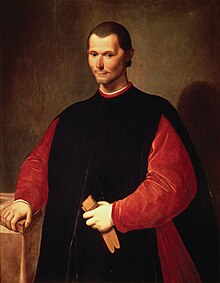
Niccolo Machiavelli
It was a saying of ancient writers, that men afflict themselves in evil, and become weary of the good, and that both these dispositions produce the same effects.
For when men are no longer obliged to fight from necessity, they fight from ambition, which passion is so powerful in the hearts of men that it never leaves them, no matter to what height they may rise.
The reason for this is that nature has created men so that they desire everything, but are unable to attain it. Desire being thus always greater than the faculty of acquiring, discontent with what they have and dissatisfaction with themselves result from it.
This causes the changes in their fortunes—for as some men desire to have more, while others fear to lose what they have, enmities and war are the consequences. And this brings about the ruin of one province and the elevation of another.
Author Walter Scheidel, Dickason Professor in the Humanities, Professor of Classics and History at Stanford University, has also given this subject a great deal of thought. And, like Machiavelli, he has reached some highly disturbing conclusions.

Walter Scheidel
World Economic Forum [CC BY-SA 2.0 (https://creativecommons.org/licenses/by-sa/2.0)%5D
He gave voice to these in his 2017 book, The Great Leveler: Violence and the History of Inequality from the Stone Age to the Twenty-First Century. His thesis: Only violence and catastrophes have consistently reduced inequality throughout history.
According to the book’s jacket blurb: “Are mass violence and catastrophes the only forces that can seriously decrease economic inequality? To judge by thousands of years of history, the answer is yes.
“Tracing the global history of inequality from the Stone Age to today, Walter Scheidel shows that inequality never dies peacefully. Inequality declines when carnage and disaster strike and increases when peace and stability return.
“The Great Leveler is the first book to chart the crucial role of violent shocks in reducing inequality over the full sweep of human history around the world.
“Ever since humans began to farm, herd livestock, and pass on their assets to future generations, economic inequality has been a defining feature of civilization. Over thousands of years, only violent events have significantly lessened inequality.
“The ‘Four Horsemen’ of leveling–mass-mobilization warfare, transformative revolutions, state collapse, and catastrophic plagues—have repeatedly destroyed the fortunes of the rich.
“Scheidel identifies and examines these processes, from the crises of the earliest civilizations to the cataclysmic world wars and communist revolutions of the twentieth century.
“Today, the violence that reduced inequality in the past seems to have diminished, and that is a good thing. But it casts serious doubt on the prospects for a more equal future.”
Revolutionaries have known the truth of Scheidel’s findings from the gladiators’ revolt of Spartacus (73-71 B.C.) to the French Revolution (1789 – 1799) to the overthrow of the Czarist Romanov dynasty (1917).
But American politicians serenely ignore that truth. They depend on the mega-rich for millions of dollars in “campaign contributions”—which pay for self-glorifying ads on TV.
Thus, in 2016, American voters had a “choice” between two “love-the-rich” Presidential candidates: Donald Trump and Hillary Clinton. The result was that millions stayed home or voted in protest for third-party candidates who had no chance of winning.
In his 1975 book, The Corrupt Society: From Ancient Greece to Modern-day America, British historian Robert Payne warned that the predatory rich would not change their behavior: “Nor is there any likelihood that the rich will plow back their money into services to ensure the general good.
“They have rarely demonstrated social responsibility, and they are much more likely to hold on to their wealth at all costs than to renounce any part of it.
“Like the tyrant who lives in a world wholly remote from the world of the people, shielded and protected from all possible influences, the rich are usually the last to observe the social pressures rising from below, and when these social pressures reach flashpoint, it is too late to call in the police or the army.
“The tyrant dies; the police and the army go over to the revolutionaries; and the new government dispossesses the rich by decree. A single authoritative sentence suffices to expunge all private wealth and restore it to the service of the nation.”
2020 PRESIDENTIAL CAMPAIGN, ABC NEWS, ADOLF HITLER, ALTERNET, ANCIENT GREECE, ANCIENT ROME, AP, BERNIE SANDERS, BUZZFEED, CBS NEWS, CHINA, CNN, CONSUMER PROTECTION, CORPORATE TAXES, CORRUPTION, CROOKS AND LIARS, DAILY KOZ, DEMOCRATIC PARTY, FACEBOOK, FUNDRAISING, INCOME INEQUALITY, IVAN THE TERRIBLE, JOE BIDEN, JOSEPH STALIN, LEON TROTSKY, MOTHER JONES, MOVEON, MSNBC, NAZI GERMANY, NBC NEWS, NEWSWEEK, NICCOLO MACHIAVELLI, NPR, PBS NEWSHOUR, POLITICO, RAW STORY, REUTERS, ROBERT PAYNE, SALON, SEATTLE TIMES, SLATE, THE ATLANTIC, THE CHICAGO SUN-TIMES, THE CHICAGO TRIBUNE, THE DAILY BEAST, THE DISCOURSES, THE GREAT LEVELER, THE GUARDIAN, THE HILL, THE HUFFINGTON POST, THE LOS ANGELES TIMES, THE NATION, THE NEW YORK TIMES, THE WASHINGTON POST, TIME, TWITTER, U.S. NEWS & WORLD REPORT, UPI, USA TODAY, Vladimir Lenin, WALL STREET, WALTER SCHEIDEL, WATERGATE, WEALTH GAP, WILLIAM SHAKESPEARE, WINSTON CHURCHILL
In Bureaucracy, Business, History, Law, Politics, Social commentary on June 24, 2019 at 1:21 am
Americans are used to Presidential candidates telling lies (euphemistically known as “campaign promises”) to get elected.
But when a candidate actually (and usually accidentally) tells the truth, the results can be electrifying. A pointed example:
On June 18, Democratic Presidential candidate (and momentary front-runner) Joe Biden addressed a roomful of donors in New York. Money is, after all, the lifeblood of all political campaigns, and Biden wanted to guarantee he got more of it than any of his 23 Democratic rivals.
So the former vice president had a message he felt sure would appeal to his well-heeled audience of billionaires: Don’t worry, if I’m elected, your standard of living won’t change.
Addressing the 100 or so guests at a fundraiser at the Carlyle Hotel in New York City, Biden said that he had taken heat from “some of the people on my team, on the Democratic side” because he had said that rich people were “just as patriotic as poor people.

Joe Biden
“The truth of the matter is, you all, you all know, you all know in your gut what has to be done. We can disagree in the margins but the truth of the matter is it’s all within our wheelhouse and nobody has to be punished. No one’s standard of living will change, nothing would fundamentally change,” he said.
And he added: “I mean, we may not want to demonize anybody who has made money.
“When we have income inequality as large as we have in the United States today, it brews and ferments political discord and basic revolution. Not a joke. Not a joke … It allows demagogues to step in and say the reason where we are is because of the ‘other’….
“You’re not the other. I need you very badly. I hope if I win this nomination, I won’t let you down. I promise you. I have a bad reputation, I always say what I mean. The problem is I sometimes say all that I mean.”
Biden has talked about decreasing income inequality and promoting workers’ rights. But he’s taken a moderate stance when it comes to taxation.
Vermont United States Senator Bernie Sanders, on the other hand, has attacked the ultra-rich as responsible for the ever-widening gap between themselves and the poor.
“I love Bernie, but I’m not Bernie Sanders. I don’t think 500 billionaires are the reason why we’re in trouble,” Biden said in March.
Instead, he proposes expanding tax credits for the poor and middle class, and making the tax code less friendly to rich investors.
Robert Payne, the distinguished British historian, had a different—and darker—view of the rich.
Payne authored more than 110 books. Among his subjects were Adolf Hitler, Ivan the Terrible, Winston Churchill, Joseph Stalin, Vladimir Lenin, William Shakespeare and Leon Trotsky.
In 1975, he published The Corrupt Society: From Ancient Greece to Present-Day America. It proved a summary of many of his previous works.
Among the epochs it covered were the civilizations of ancient Greece, Rome and China; Nazi Germany; the Soviet Union; and Watergate-era America. And the massive corruption each of those epochs had spawned.
In his chapter, “A View of the Uncorrupted Society,” Payne warned: Power and wealth are the main sources of corruption.
“The rich, simply by being rich, are infected with corruption. Their overwhelming desire is to grow richer, but they can do this only at the expense of those who are poorer than themselves.
”Their interests conflict with those of the overall society. They live sheltered from the constant anxieties of the poor, and thus cannot understand them. Nor do they try to.
They see the poor as alien from themselves, and thus come to fear and despise them. And their wealth and influence enables them to buy politicians—who, in turn, write legislation that protects the rich from the poor.
But Payne foresaw an even greater danger from the rich and powerful than their mere isolation from the rest of society: “The mere presence of the rich is corrupting. Their habits, their moral codes, their delight in conspicuous consumption are permanent affronts to the rest of humanity. Vast inequalities of wealth are intolerable in any decent society.”
Writing in 1975, Payne noted that a third of the private wealth was possessed by less than five percent of the population—while about a fifth of the populace lived at the poverty level. By 2000, he predicted, about five percent of the population would possess two-thirds of America’s wealth. And more than half the population would be near or below the starvation level.
The result could only be catastrophe. The only way to halt this this increasing concentration of wealth by fewer people would be through law or violent revolution.
Payne has proven to be an uncanny prophet.
On December 8, 2017, the Seattle Times noted that the wealthiest one percent of Americans owned 40% of the country’s wealth. They owned more wealth than the bottom 90% combined.
From 2013, the share of wealth owned by the one percent increased by nearly three percentage points. Wealth owned by the bottom 90%, meanwhile, fell over the same period.
But this situation need not remain permanent.
ABC NEWS, ALTERNET, AP, BBC, BUZZFEED, CBS NEWS, CNN, DAILY KOS, DONALD TRUMP, immigration, LYING, MEGHAN MARKLE, MOTHER JONES, MOVEON, NBC NEWS, NEWSWEEK, NICCOLO MACHIAVELLI, NPR, POLITICO, QUEEN ELIZABETH 11, RAPE, RAW STORY, REUTERS, SADIQ KHAN, SALON, SEATTLE TIMES, SLATE, THE ATLANTIC, THE CHICAGO SUN-TIMES, THE CHICAGO TRIBUNE, THE DAILY BEAST, THE DISCOURSES, THE GUARDIAN, THE HILL, THE HUFFINGTON POST, THE LOS ANGELES TIMES, THE NEW YORK TIMES, THE OBSERVER, THE PRINCE, THE SUN, THE WALL STREET JOURNAL, THE WASHINGTON POST, TIME, TWITTER, U.S. NEWS & WORLD REPORT, UPI, USA TODAY, WHITE SUPREMACISTS, XENOPHOBIA
In Bureaucracy, History, Politics, Social commentary on June 7, 2019 at 12:07 am
Niccolo Machiavelli (1469 – 1527) was an Italian Renaissance historian, diplomat and writer. Two of his books continue to profoundly influence modern politics: The Prince and The Discourses on the First Ten Books of Titus Livy.
The Prince has often been damned as a dictator’s guide on how to gain and hold power. But The Discourses outlines how citizens in a republic can maintain their liberty.
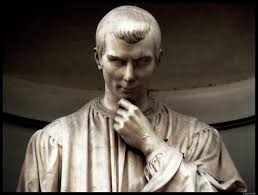

Niccolo Machiavelli
In Chapter 26 of The Discourses, he advises:
I hold it to be a proof of great prudence for men to abstain from threats and insulting words towards any one, for neither the one nor the other in any way diminishes the strength of the enemy—but the one makes him more cautious, and the other increases his hatred of you, and makes him more persevering in his efforts to injure you.
If Trump has read Machiavelli, he’s utterly forgotten the Florentine statesman’s advice. Or he decided long ago that it simply didn’t apply to him.
Consider his treatment of Meghan Markle, the Duchess of Sussex, in advance of his scheduled June 3 visit to the United Kingdom.
Interviewed by London’s The Sun newspaper on May 31, Trump said it would be his great honor to once again meet with 93-year-old Queen Elizabeth II. Then the conversation turned to Markle—and Trump’s uncanny ability to inflame rather than nurture relations between longtime allies.
Markle, an American citizen born in Los Angeles in 1981, had accused Trump of being “divisive” and “misogynistic” during the 2016 Presidential campaign.

Meghan Markle
Northern Ireland Office [CC BY 2.0 (https://creativecommons.org/licenses/by/2.0)%5D
The Sun reporter told Trump that Markle, 37, was on maternity leave with her three-week-old son, Archie. As a result, she would not join other members of the royal family in meeting with the President.
“Are you sorry not to see her? Because she wasn’t so nice about you during the campaign. I don’t know if you saw that,” the Sun reporter added.
Trump: “I didn’t know that, no. I didn’t know that. No, I hope she’s OK. I did not know that, no.”
Reporter: “She said she’d move to Canada if you got elected. It turned out she moved to Britain.”
Trump: “A lot of people moving here, so what can I say? No, I didn’t know that she was nasty.”

Donald Trump
The remark predictably triggered a torrent of outrage among Britons. So, equally predictably, on June 1 the President’s “Official Trump War Room” Twitter account went into denial.
“Fake News CNN is at it again, falsely claiming President Trump called Meghan Markle ‘nasty,’” the account tweeted. Accompanying the tweet was a 44-second audio clip of Trump’s interview with The Sun. “Here is what he actually said. Listen for yourself!”
The only problem with the clip: It completely validated reports that Trump had used the word “nasty.”
Having insulted the Duchess of Sussex before leaving for Great Britain, Trump decided to launch another missile-insult while he was still in flight.
On June 1, The (London) Observer had published an opinion column by London Mayor Sadiq Khan. The headline: “It’s Un-British to Roll Out the Red Carpet for Donald Trump.”
And Khan hadn’t spared any reasons for his verdict:
“Praising the ‘very fine people on both sides’ when torch-wielding white supremacists and antisemites marched through the streets clashing with anti-racist campaigners. Threatening to veto a ban on the use of rape as a weapon of war.
“Setting an immigration policy that forcefully separates young children from their parents at the border. The deliberate use of xenophobia, racism and “otherness” as an electoral tactic. Introducing a travel ban to a number of predominately Muslim countries. Lying deliberately and repeatedly to the public.
“No, these are not the actions of European dictators of the 1930s and 40s. Nor the military juntas of the 1970s and 80s. I’m not talking about Vladimir Putin or Kim Jong-un. These are the actions of the leader of our closest ally, the president of the United States of America….
“History teaches us of the danger of being afraid to speak truth to power and the risk of failing to defend our values from the rise of the far right. At this challenging time in global politics, it’s more important than ever that we remember that lesson.”
As Air Force One was on its final approach to Britain, Trump, like a petulant child, tweeted back.
“@SadiqKhan, who by all accounts has done a terrible job as Mayor of London, has been foolishly ‘nasty’ to the visiting President of the United States, by far the most important ally of the United Kingdom. He is a stone cold loser who should focus on crime in London, not me….
“….Kahn reminds me very much of our very dumb and incompetent Mayor of NYC, de Blasio, who has also done a terrible job – only half his height. In any event, I look forward to being a great friend to the United Kingdom, and am looking very much forward to my visit. Landing now!”
Khan’s spokesman said “childish insults” should be “beneath the president of the United States.”
But they aren’t. They’re simply the stock-in-trade of a childish dictator.
ABC NEWS, ABORTION, AFFORDABLE CARE ACT, ALABAMA, ALTERNET, AP, ASSASSINATION, BRIAN KEMP, BUZZFEED, CARL AUSTIN WEISS, CBS NEWS, CNN, CROOKS AND LIARS, DAILY KOZ, DONALD TRUMP, FACEBOOK, GEORGE C. WALLACE, GEORGIA, HUEY LONG, INCEST, KAY IVEY, MARK JOSEPH STERN, MOTHER JONES, MOVEON, MSNBC, NBC NEWS, NEWSWEEK, NICCOLO MACHIAVELLI, NPR, PBS NEWSHOUR, POLITICO, RACHELLE GRIMMER, RAPE, RAW STORY, REINHARD HEYDRICH, REPUBLICANS, REUTERS, ROE V. WADE, Ronald Reagan, SALON, SEATTLE TIMES, Secret Service, SLATE, THE ATLANTIC, THE CHICAGO SUN-TIMES, THE CHICAGO TRIBUNE, THE DAILY BEAST, THE GUARDIAN, THE HILL, THE HUFFINGTON POST, THE LOS ANGELES TIMES, THE NATION, THE NEW YORK TIMES, THE PRINCE, THE WASHINGTON POST, TIME, TWITTER, U.S. NEWS & WORLD REPORT, UNITED STATES SUPREME COURT, UPI, USA TODAY, WELFARE
In Bureaucracy, History, Law, Law Enforcement, Politics, Social commentary on May 21, 2019 at 10:36 am
In The Prince, Niccolo Machiavelli, the father of modern political science, raised the question of “whether it is better to be loved than feared, or feared more than loved.”
And he answered it: “The reply is, that one ought to be both feared and loved, but as it is difficult for the two to go together, it is much safer to be feared than loved.”
But Machiavelli warned against relying primarily on fear: “Still, a prince should make himself feared in such a way that if he does not gain love, he at any rate avoids hatred, for fear and the absence of hatred may well go together, and will always be attained by one who abstains from interfering with the property of his citizens….or with their women.”
If the Republicans governing Georgia and Alabama ever read this warning, they have ignored it with a vengeance.
Niccolo Machiavelli
On May 7, Georgia Governor Brian Kemp signed an anti-abortion law that—in defiance of the 1973 Supreme Court decision in Roe v. Wade—re-criminalizes abortion.
The law bans abortions as soon as a fetal heartbeat is detectable. This usually occurs about six weeks into a pregnancy—even before many women know they’re pregnant.
The law permits abortions
- Only if the mother’s life is at risk; or
- If the fetus cannot survive.
No exceptions are made for cases of rape or incest.
“HB 481 would also have consequences for women who get abortions from doctors or miscarry,” writes Mark Joseph Stern for Slate.
“A woman who seeks out an illegal abortion from a health care provider would be a party to murder, subject to life in prison. And a woman who miscarries because of her own conduct—say, using drugs while pregnant—would be liable for second-degree murder, punishable by 10 to 30 years’ imprisonment.
“Prosecutors may interrogate women who miscarry to determine whether they can be held responsible; if they find evidence of culpability, they may charge, detain, and try these women for the death of their fetuses.” [Emphasis added.]
In addition, a woman could be sentenced to 10 years’ imprisonment if she leaves Georgia to obtain an abortion in another state.

And on May 14, Alabama Governor Kay Ivey signed into law the “Alabama Human Life Protection Act.” The law only allows exceptions “to avoid a serious health risk to the unborn child’s mother,” for ectopic pregnancy and if the “unborn child has a lethal anomaly.”
As in the case of Georgia, no exceptions are made for rape or incest.
Ivey admitted that the new law may be unenforceable owing to Roe v. Wade, which legalized abortion in all 50 states. But the whole point of the law is to challenge that decision, Ivey said.
Republicans constantly claim to be “the party of small government.” But there can be no more intrusive act than dictating to a woman that she must give birth—even if she’s the victim of rape or incest.
At the same time:
- Republicans have proven uniformly hostile to providing poor mothers with access to food, clothing and medical care.
- Donald Trump has made repealing the Affordable Care Act—which provides medical insurance to more than 20 million Americans—the hallmark of his Presidency.
It’s easy to imagine many of these women fatally cracking under the strain.
On December 6, 2011, Rachelle Grimmer, a 38-year-old resident of San Antonio, pulled a gun in a state welfare office and held off police for seven hours. Then she shot and wounded her two children—ages 10 and 12—before fatally shooting herself.
For months, she had been unable to qualify for food stamps.
Thus, women living in abortion-banning states face Right-wing hypocrisy on one hand and draconian laws punishing the most intimate acts—of sexuality and reproductive freedom—on the other.
It’s easy to imagine some pregnant women—especially the victims of incest and/or rape—desperately seeking redress through violence. And the targets of their wrath could easily be the Republican legislators of their states who have made their lives a living hell.
The President is constantly guarded by the Secret Service. And governors are protected by state police. But state assemblymen and senators aren’t assigned such details—unless there’s a specific threat made against them.
In fact, Right-wing figures have often been the targets of successful—and unsuccessful—assassination attempts.
- On September 8, 1935, Louisiana U.S. Senator Huey Long was shot and fatally wounded by Carl Austin Weiss, an idealistic young doctor. Long had intended to run for President in 1936 and unseat Franklin D. Roosevelt.
- On May 27, 1942, SS Obergruppenführer (General) Reinhard Heydrich—“The Butcher of Prague”—was killed with a hand grenade by two Czech patriots.
- On May 15, 1972, Presidential candidate George C. Wallace was shot and paralyzed by a crazed gunman while mingling with supporters in a Maryland shopping center.
- On March 30, 1981, President Ronald Reagan was shot and almost killed by a psychotic gunman while walking to his bulletproof limousine in Washington, D.C.
All of these men, it should be noted, had bodyguards assigned to them at the time they were attacked.
Given the ferocity of laws aimed specifically at them, some women may decide to abort more than fetuses.
ABC NEWS, ADOLF HITLER, ALBANIA, ALTERNET, ANDREI CHERNY, AP, BERLIN AIRLIFT, BULGARIA, BUZZFEED, CAMILLUS, CBS NEWS, CNN, CONTAINMENT, CROOKS AND LIARS, CZECHOSLOVAKIA, DAILY KOZ, EAST GERMANY, FACEBOOK, FALISCIA, FRANCE, FRANKLIN D. ROOSEVELT, GAIL “HAL” HALVORSEN, GREAT BRITAIN, HARRY S. TRUMAN, HUNGARY, IRON CURTAIN, JOSEPH STALIN, MOTHER JONES, MOVEON, NAZI GERMANY, NBC NEWS, NEWSWEEK, NICCOLO MACHIAVELLI, NPR, POLAND, POLITICO, RAW STORY, REUTERS, ROMANIA, ROME, SALON, SEATTLE TIMES, SLATE, SOVIET UNION, THE ATLANTIC, THE CANDY BOMBERS, THE CHICAGO SUN-TIMES, THE CHICAGO TRIBUNE, THE DAILY BEAST, THE DISCOURSES, THE GUARDIAN, THE HILL, THE HUFFINGTON POST, THE LOS ANGELES TIMES, THE NATION, THE NEW YORK TIMES, THE WASHINGTON POST, TIME, TWITTER, U.S. NEWS & WORLD REPORT, UNITED STATES, UPI, USA TODAY, WEST BERLIN, WILLIE "THE WHIP" TUNNER, WORLD WAR 11, YUGOSLAVIA
In Bureaucracy, History, Military, Politics, Social commentary on May 2, 2019 at 12:04 am
In June, 1948, Soviet dictator Joseph Stalin was determined to drive the Western occupying powers out of Berlin—and of West Germany.
On June 19, the Soviet Union blocked the Western Allies’ railway, road, and canal access to the sectors of Berlin under Western control.
At that time, West Berlin had only 36 days’ worth of food and 45 days’ worth of coal. And the United States had only 8,973 Americans stationed in Berlin. British forces totaled 7,606, and French forces 6,100.
Russian forces in Berlin and East Germany outnumbered them 62 to 1.
The United States seemed to face a choice between all-out war with the Soviet Union—or appeasing its growing aggression in Eastern Europe.
Fortunately, a third choice was found. It became known as the Berlin Airlift.
This was carried out primarily by the United States and Great Britain. Other Western powers taking part in this operation included France, Australia, Canada, New Zealand and South Africa.
Starting on June 24, 1948, the Berlin Airlift aimed to supply the city’s two and a half million residents with food and energy supplies.
There was no guarantee that such an operation could succeed–at least, not in the long run. Since 1903, airplanes had been used to carry out surveillance, engage in dogfights or bomb cities. But airlifts—flying supplies to stranded people—had proven dismal failures.
At first, the Berlin Airlift worked haphazardly. Pilots flew themselves to exhaustion to meet the needs of those they had relentlessly bombed just three years ago.
Then Major General William “Willie the Whip” Tunner took charge—and brought a totally mechanized approach to the drops:
- Pilots must fly strictly by instruments, even when visibility was excellent.
- Planes could no longer circle over Berlin. Each plane would have only one chance to land in Berlin—or must return to its base if it missed its approach.
- Every 90 seconds, a plane was to take off or land.
Just keeping Berliners alive demanded 4,000 tons of supplies each day. Each plane was thus overloaded by 10 tons. Pilots flew literally round the clock. When fog rolled in that winter, visibility was reduced to zero. Twenty-eight Americans died in crashes.
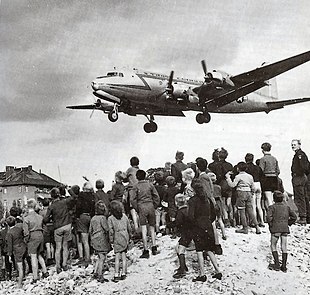
A Douglas C-54 Skymaster lands at Berlin’s Templehof Airport
Germans were impressed with American efficiency, but knew that, in the eyes of most of their American occupiers, they were pariahs. They had waged an aggressive war and exterminated millions of helpless men, women and children in concentration camps.
They were glad the Allies were keeping them alive, but felt they were pawns in a global chess game between the United States and the Soviet Union.
Then fate took a hand.
An Army Air Force pilot named Gail “Hal” Halvorsen impulsively decided to drop a series of small, hand-made parachutes of candies to Berlin’s children.
When General Tunner learned of this, he instantly realized its worth as a morale booster to Berliners. He ordered Halvorsen to continue the drops.

Gail “Hal” Halvorsen
Other pilots followed Halvorsen’s example. Soon Berlin’s children were lining up by the thousands, hoping to grab one of the candy-filled parachutes made from handkerchiefs or strips of clothing.
When the press learned of the drops, the story became a worldwide sensation. Back in the United States, Americans mailed literally tons of candy to Germany for distribution to Berlin’s children.
“The candy bombers” became the most beloved Americans in Berlin. And Halvorsen became the most beloved of them all. On October 3, 1948, when his plane landed in Berlin during a pouring storm, 700 children greeted him on the tarmac for “Lieutenant Gail Halvorsen Day.”
Among the letters he received from Berlin’s children:
Dear Uncle Wiggly Wings,
When yesterday I came from school, I had the happiness to get one of your sweet gifts….You cannot think how big the joy was….My brother and parents stood about me when I opened the strings and fetched out all the chocolate.
Dear Candy Bomber,
…How lucky I was last Sunday. I played at a ruin with some friends of mine opposite our house. Suddenly we saw about ten white parachutes coming out of the sky! One of them set down on the roof of our house. There were three stripes chocolate in the parachute….I want to thank you for your love to the German kids….
From 10-year-old Helma Lurch came this tribute:
Take care of yourself, and remember us children and we will remember you our whole life.
Adults as well as children responded emotionally to the candy drops—and “the candy bombers” responsible for them. When a plane crashed, killing two American lieutenants, residents of the neighborhood memorialized them with a plaque: “Once we were enemies yet you now gave your lives for us. We are doubly in your debt.”
The Airlift ended on May 12, 1949, when Stalin finally accepted defeat and ended the blockade.
“As [Halvorsen] came to represent the Airlift and America to the Berliners,” writes Andrei Cherney in his definitive book, The Candy Bombers, “through him America became a country that cared enough about the defeated Germans to…deliver candy to children, an act without any…ulterior motive, a gift of plain compassion.”
In 1948, that act forged a solid bond—which still exists—between Germany and the United States.
ABC NEWS, ADOLF HITLER, ALBANIA, ALTERNET, AP, BERLIN AIRLIFT, BULGARIA, BUZZFEED, CAMILLUS, CBS NEWS, CNN, CONTAINMENT, CROOKS AND LIARS, CZECHOSLOVAKIA, DAILY KOZ, EAST GERMANY, FACEBOOK, FALISCIA, FRANCE, FRANKLIN D. ROOSEVELT, GREAT BRITAIN, HARRY S. TRUMAN, HUNGARY, IRON CURTAIN, JOSEPH STALIN, MOTHER JONES, MOVEON, NAZI GERMANY, NBC NEWS, NEWSWEEK, NICCOLO MACHIAVELLI, NPR, POLAND, POLITICO, RAW STORY, REUTERS, ROMANIA, ROME, SALON, SEATTLE TIMES, SLATE, SOVIET UNION, THE ATLANTIC, THE CHICAGO SUN-TIMES, THE CHICAGO TRIBUNE, THE DAILY BEAST, THE DISCOURSES, THE GUARDIAN, THE HILL, THE HUFFINGTON POST, THE LOS ANGELES TIMES, THE NATION, THE NEW YORK TIMES, THE WASHINGTON POST, TIME, TWITTER, U.S. NEWS & WORLD REPORT, UNITED STATES, UPI, USA TODAY, WEST BERLIN, WORLD WAR ii, YUGOSLAVIA
In Bureaucracy, History, Military, Politics, Social commentary on May 1, 2019 at 12:03 am
Once again, it falls to Niccolo Machiavelli to reveal truths long forgotten—especially by those who subscribe only to the darkest arts.
In his most important book, The Discourses, he outlines the methods by which citizens of a republic can maintain their freedom.
In Book Three, Chapter 20, he offers this example of the power of humanity to win over even the most stubborn opponents:

Niccolo Machiavelli
Lorenzo Bartolini, CC0, via Wikimedia Commons
“Camillus was besieging the city of the Faliscians, and had surrounded it….A teacher charged with the education of the children of some of the noblest families of that city [to ingratiate himself] with Camillus and the Romans, led these children…into the Roman camp.
“And presenting them to Camillus [the teacher] said to him, ‘By means of these children as hostages, you will be able to compel the city to surrender.’
“Camillus not only declined the offer but had the teacher stripped and his hands tied behind his back….[Then Camillus] had a rod put into the hands of each of the children…[and] directed them to whip [the teacher] all the way back to the city.
“Upon learning this fact, the citizens of Faliscia were so much touched by the humanity and integrity of Camillus, that they surrendered the place to him without any further defense.
“This example shows that an act of humanity and benevolence will at all times have more influence over the minds of men than violence and ferocity. It also proves that provinces and cities which no armies…could conquer, have yielded to an act of humanity, benevolence, chastity or generosity.”
Americans put this lesson to use in 1948 in the skies over Berlin.
When Nazi Germany fell to the Allies in May, 1945, the country was divided into four zones of occupation—one for each of the occupying powers: The United States, Great Britain, France and the Soviet Union.
Within the fledgling administration of President Harry S. Truman, many believed that a new era of peace had dawned between America and Russia.
But then grim reality intruded.
Adolf Hitler had invaded the Soviet Union in 1941. As a result, at least 20 million Soviet men, women and children died violently.
To expel the invasion and destroy Nazi Germany, Russian armies had advanced across a series of Eastern European countries. With the war over, Soviet dictator Joseph Stalin decided to protect the Soviet Union from a future German invasion.
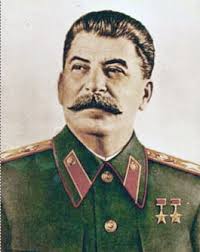
Joseph Stalin
His solution: Occupy Eastern Europe with Red Army units as a buffer between Germany and the Soviet Union. Poland, East Germany, Czechoslovakia, Romania, Bulgaria, Hungary, Albania and Yugoslavia.
Stalin had promised President Franklin Roosevelt that he would withdraw his armies from these countries once Germany was defeated. And he would allow them to choose whatever form of government they desired.
But Stalin had no intention of living up to his promises. And backing him up were 10 to 13 million Red Army soldiers. The entire United States Army had been reduced to 552,000 men by February 1948.
Liberating the captive nations of Eastern Europe—as General George S. Patton wanted to do—would have plunged the United States into full-scale war against its World War II ally.
And by 1945, the Red Army was a formidable enemy: Of the 4.3 million dead and missing casualties suffered by the Wehrmacht, 85% of them occurred on the dreaded “Eastern front.”
So there was nothing the United States could do—short of all-out war—to “roll back” the “Iron Curtain” that had swept over Eastern Europe.
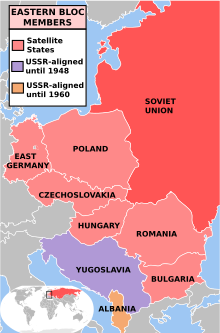
But Americans could—and did—draw a line in the sand. That line became known as the policy of “containment.”
And nowhere was the collision between the U.S.A and the U.S.S.R. more likely to ignite into full-scale war than in Berlin.
Between 1945 and 1948, the Soviets increased their pressure on Western forces occupying Berlin to leave the city. The Soviets already controlled East Germany; gaining control of the Western-held part of Berlin would likely be their first step toward overwhelming the rest of Germany.
And, after Germany, probably France—and as many other European countries as possible.
During the first two years of occupation the occupying powers of France, United Kingdom, United States, and the Soviet Union were not able to successfully negotiate a possible currency reform in Germany. Each of the Allies printed its own occupation currency.
Then, on June 20, 1948, the Bizonal Economic Council introduced the Deutsche mark to West Germany.
On June 24, 1945, the Soviet Union blocked the Western Allies’ railway, road, and canal access to the sectors of Berlin under Western control. This meant a cutoff of food and energy supplies to Berlin’s two and a half million residents.
The United States faced a monumental crisis:
- Should it abandon West Berlin—and thus tempt the Soviet Union into further aggression?
- Should it match the puny Western military forces—outnumbered 62 to 1—against the massive Soviet military presence?
- If it chose to fight in Berlin, would this lead to nuclear war?
Fortunately for the Allies—and West Germany—a third choice was available besides war and appeasement.
It became known as the Berlin Airlift.
ABC NEWS, ADMIRAL IVAN ISAKOV, ADOLF HITLER, ALBERT SPEER, ALTERNET, ANDREW MCCABE, AP, BOB WOODWARD, BUZZFEED, CBS NEWS, CHEKA, CIA, CNN, COUNTER-SURVEILLANCE, CROOKS AND LIARS, DAILY KOZ, DEMOCRATIC PARTY, DONALD TRUMP, FACEBOOK, FBI, FSB, GENRIKH YAGODA, HEINRICH HIMMLER, HERMANN GOERING, HOUSE OF REPRESENTATIVES, JAMES COMEY, JEFF SESSIONS, JOSEPH STALIN, KGB, KRISJEN NIELSEN, LAVRENTY BERIA, MOTHER JONES, MOVEON, MSNBC, NBC NEWS, NEWSWEEK, NICCOLO MACHIAVELLI, NIKOLAI YEZHOV, NKVD, NPR, PBS NEWSHOUR, POLITICO, RACHEL BRAND, RANDOLPF “TEX” ALLES, RAW STORY, REPUBLICAN PARTY, REUTERS, SALLY YATES, SALON, SEAN SPICER, SEATTLE TIMES, SLATE, SOVIET UNION, SS, STORMY DANIELS, SURVEILLANCE, THE APPRENTICE, THE ATLANTIC, THE CHICAGO SUN-TIMES, THE CHICAGO TRIBUNE, THE DAILY BEAST, THE GUARDIAN, THE HILL, THE HUFFINGTON POST, THE LOS ANGELES TIMES, THE NATION, THE NEW YORK TIMES, THE PRINCE, THE WASHINGTON POST, TIME, TWITTER, U.S. NEWS & WORLD REPORT, UPI, USA TODAY
In Bureaucracy, History, Law, Law Enforcement, Military, Politics, Social commentary on April 12, 2019 at 12:11 am
In January, 2018, the White House banned the use of personal cell phones in the West Wing. The official reason: National security.
The real reason: To stop staffers from leaking to reporters.
More ominously, well-suited men roam the halls of the West Wing, carrying devices that pick up signals from phones that aren’t government-issued.
“Did someone forget to put their phone away?” one of the men will ask if such a device is detected. If no one says they have a phone, the detection team start searching the room.

Phone detector
The devices can tell which type of phone is in the room.
This is the sort of behavior Americans have traditionally—and correctly—associated with dictatorships
In his memo outlining the policy, then-Chief of Staff John Kelly warned that anyone who violated the phone ban could be punished, including “being indefinitely prohibited from entering the White House complex.”
Yet even these draconian methods may not end White House leaks.
White House officials still speak with reporters throughout the day and often air their grievances, whether about annoying colleagues or competing policy priorities.
Aides with private offices sometimes call reporters on their desk phones. Others get their cell phones and call or text reporters during lunch breaks.
According to an anonymous White House source: “The cellphone ban is for when people are inside the West Wing, so it really doesn’t do all that much to prevent leaks. If they banned all personal cellphones from the entire [White House] grounds, all that would do is make reporters stay up later because they couldn’t talk to their sources until after 6:30 pm.”

Other sources believe that leaks won’t end unless Trump starts firing staffers. But there is always the risk of firing the wrong people. Thus, to protect themselves, those who leak might well accuse tight-lipped co-workers.
Within the Soviet Union (especially during the reign of Joseph Stalin) fear of secret police surveillance was widespread—and absolutely justified.
Among the methods used to keep conversations secret:
- Turning on the TV or radio to full volume.
- Turning on a water faucet at full blast.
- Turning the dial of a rotary phone to the end—and sticking a pencil in one of the small holes for numbers.
- Standing six to nine feet away from the hung-up receiver.
- Going for “a walk in the woods.”
- Saying nothing sensitive on the phone.
The secret police (known as the Cheka, the NKVD, the MGB, the KGB, and now the FSB) operated on seven working principles:
- Your enemy is hiding.
- Start from the usual suspects.
- Study the young.
- Stop the laughing.
- Rebellion spreads like wildfire.
- Stamp out every spark.
- Order is created by appearance.
Trump has always ruled through bribery and fear. He’s bought off (or tried to) those who might cause him trouble—like porn actress Stormy Daniels. And he’s threatened or filed lawsuits against those he couldn’t or didn’t want to bribe—such as contractors who have worked on various Trump properties.
But Trump can’t buy the loyalty of employees working in an atmosphere of hostility—which breeds resentment and fear. And some of them are taking revenge by sharing with reporters the latest crimes and follies of the Trump administration.
The more Trump wages war on the “cowards and traitors” who work most closely with him, the more some of them will find opportunities to strike back. This will inflame Trump even more—and lead him to seek even more repressive methods against his own staffers.
This is a no-win situation for Trump.
The results will be twofold:
- Constant turnovers of staffers—with their replacements having to undergo lengthy background checks before coming on; and
- Continued leaking of embarrassing secrets by resentful employees who stay.
**********
As host of NBC’s “The Apprentice,” Trump became famous for booting off contestants with the phrase: “You’re fired.” In fact, he so delighted in using this that, in 2004, he tried to gain trademark ownership of it.
But the U.S. Patent and Trademark Office rejected his application. American copyright law explicitly prohibits copyright protections for short phrases or sayings.
Since taking office as President, Trump has bullied and insulted even White House officials and his own handpicked Cabinet officers. This has resulted in an avalanche of firings and resignations.
The first two years of Trump’s White House have seen more firings, resignations, and reassignments of top staffers than any other first-term administration in modern history. His Cabinet turnover exceeds that of any other administration in the last 100 years.
In 1934, Soviet dictator Joseph Stalin, seeing imaginary enemies everywhere, ordered a series of purges that lasted right up to the German invasion in 1941.
No one was safe from execution—not even the men who slaughtered as many as 20 to 60 million.
Fittingly, for all the fear he inspired, Stalin was plagued by paranoia. He lived in constant fear of assassination. Although surrounded by bodyguards, he distrusted even them.
Thus Stalin, who had turned the Soviet Union into a vast prison, became its leading prisoner.
Similarly, Donald Trump daily proves the truth of the age-old warning: “You can build a throne of bayonets, but you can’t sit on it.”
ABC NEWS, ADMIRAL IVAN ISAKOV, ADOLF HITLER, ALBERT SPEER, ALTERNET, ANDREW MCCABE, AP, BOB WOODWARD, BUZZFEED, CBS NEWS, CHEKA, CIA, CNN, COUNTER-SURVEILLANCE, CROOKS AND LIARS, DAILY KOZ, DEMOCRATIC PARTY, DONALD TRUMP, FACEBOOK, FBI, FSB, GENRIKH YAGODA, HEINRICH HIMMLER, HERMANN GOERING, HOUSE OF REPRESENTATIVES, JAMES COMEY, JEFF SESSIONS, JOSEPH STALIN, KGB, KRISJEN NIELSEN, LAVRENTY BERIA, MOTHER JONES, MOVEON, MSNBC, NBC NEWS, NEWSWEEK, NICCOLO MACHIAVELLI, NIKOLAI YEZHOV, NKVD, NPR, PBS NEWSHOUR, POLITICO, RACHEL BRAND, RANDOLPF “TEX” ALLES, RAW STORY, REPUBLICAN PARTY, REUTERS, SALLY YATES, SALON, SEATTLE TIMES, SLATE, SOVIET UNION, SS, STORMY DANIELS, SURVEILLANCE, THE APPRENTICE, THE ATLANTIC, THE CHICAGO SUN-TIMES, THE CHICAGO TRIBUNE, THE DAILY BEAST, THE GUARDIAN, THE HILL, THE HUFFINGTON POST, THE LOS ANGELES TIMES, THE NATION, THE NEW YORK TIMES, THE PRINCE, THE WASHINGTON POST, TIME, TWITTER, U.S. NEWS & WORLD REPORT, UPI, USA TODAY
In Bureaucracy, History, Law, Law Enforcement, Military, Politics, Social commentary on April 11, 2019 at 12:17 am
Donald Trump has often been compared to Adolf Hitler. But his reign bears far more resemblance to that of Joseph Stalin.
Germany’s Fuhrer, for all his brutality, maintained a relatively stable government by keeping the same men in office—from the day he took power on January 30, 1933, to the day he blew out his brains on April 30, 1945.
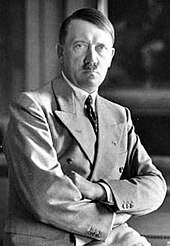
Adolf Hitler
Bundesarchiv, Bild 146-1990-048-29A / CC-BY-SA 3.0 [CC BY-SA 3.0 de (https://creativecommons.org/licenses/by-sa/3.0/de/deed.en)%5D
Heinrich Himmler, a former chicken farmer, remained head of the dreaded, black-uniformed Schutzstaffel, or Protection Squads, known as the SS, from 1929 until his suicide in 1945.
In April, 1934, Himmler was appointed assistant chief of the Gestapo (Secret State Police) in Prussia, and from that position he extended his control over the police forces of the whole Reich.
Hermann Goering, an ace fighter pilot in World War 1, served as Reich commissioner for aviation and head of the newly developed Luftwaffe, the German air force, from 1935 to 1945.
And Albert Speer, Hitler’s favorite architect, held that position from 1933 until 1942, when Hitler appointed him Reich Minister of Armaments and War Production. He held that position until the Third Reich collapsed in April, 1945.
Soviet Premier Joseph Stalin, by contrast, purged his ministers constantly. For example: From 1934 to 1953, Stalin had no fewer than three chiefs of his secret police, then named the NKVD:
- Genrikh Yagoda – (July 10, 1934 – September 26, 1936)
- Nikolai Yezhov (September 26, 1936 – November 25, 1938) and
- Lavrenty Beria (November, 1938 – March, 1953).
Stalin purged Yagoda and Yezhov, with both men executed after their arrest.
Joseph Stalin
He reportedly wanted to purge Beria, too, but the latter may have acted first. There has been speculation that Beria slipped warfarin, a blood-thinner often used to kill rats, into Stalin’s drink, causing him to die of a cerebral hemorrhage.
Stalin’s record for slaughter far eclipses that of Hitler.
For almost 30 years, through purges and starvation caused by enforced collections of farmers’ crops, Stalin slaughtered 20 to 60 million people.
The 1930s were a frightening and dangerous time to be alive in the Soviet Union. In 1934, Stalin, seeing imaginary enemies everywhere, ordered a series of purges that lasted right up to the German invasion in 1941.
An example of Stalin’s paranoia occurred one day while the dictator walked through the Kremlin corridors with Admiral Ivan Isakov. Officers of the NKVD (the predecessor to the KGB) stood guard at every corner.
“Every time I walk down the corridors,” said Stalin, “I think: Which one of them is it? If it’s this one, he will shoot me in the back. But if I turn the corner, the next one can shoot me in the face.”
Another Russian-installed tyrant who has sought to rule by fear: President Donald J. Trump.
In fact, he admitted as much to journalist Bob Woodward during the 2016 Presidential race: “Real power is—I don’t even want to use the word—fear.”
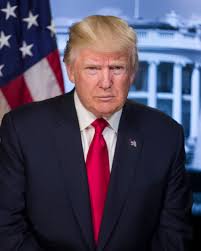
Donald Trump
As a Presidential candidate, Trump repeatedly used Twitter to attack hundreds of real and imagined enemies in politics, journalism, TV and films.
As President, he continues to insult virtually everyone, verbally and on Twitter. His targets include Democrats, Republicans, the media, foreign leaders and even members of his Cabinet.
In Russian, the word for “purge” is “chistka,” for “cleansing.” Among the victims of Trump’s recurring chistkas:
- Sally Yates – Assistant United States Attorney General
- James Comey – FBI Director
- Andrew McCabe – FBI Deputy Director
- Jeff Sessions – United States Attorney General
- Rachel Brand – Associate United States Attorney General
- Randolph “Tex” Alles – Director of the United States Secret Service
- Krisjen Nielsen – Secretary of the Department of Homeland Security
In his infamous political treatise, The Prince, Niccolo Machiavelli, the Florentine statesman, asked: “Is it is better to be loved or feared?”
And he answered it thus:
“The reply is, that one ought to be both feared and loved, but as it is difficult for the two to go together, it is much safer to be feared than loved.
“For it may be said of men in general that they are ungrateful, voluble, dissemblers, anxious to avoid danger and covetous of gain; as long as you benefit them, they are entirely yours….
“And the prince who has relied solely on their words, without making other preparations, is ruined….
“And men have less scruple in offending one who makes himself loved than one who makes himself feared; for love is held by a chain of obligations which, men being selfish, is broken whenever it serves their purpose; but fear is maintained by a dread of punishment which never fails.”
But Machiavelli warned about relying primarily on fear: “Still, a prince should make himself feared in such a way that if he does not gain love, he at any rate avoids hatred, for fear and the absence of hatred may well go together.”
**********
Donald Trump has violated that counsel throughout his life. He not only makes enemies, he revels in doing so—and in the fury he has aroused.
Filled with a poisonous hatred that encompasses almost everyone, Trump, since taking office, has repeatedly played to the hatreds of his Right-wing base.
As first-mate Starbuck says of Captain Ahab in Herman Melville’s classic novel, Moby Dick: “He is a champion of darkness.”
2016 PRESIDENTIAL ELECTION, ABC NEWS, ALTERNET, BARACK OBAMA, BENEDICT ARNOLD, BOEING, CBS NEWS, CHRISTOPHER LASCH, CLEAR CHANNEL COMMUNICATIONS, CNN, CONSOLIDATED EDISON, CORPORATE TAXES, CORRUPTION, DRUDGE REPORT, EDUARDO SAVEREN, EPA, FAA, FACEBOOK, FBI, FDA, FORBES MAGAZINE, GENERAL ELECTRIC, GROVER NORQUIST, MEDICARE, METROPCS COMMUNICATIONS, NBC NEWS, NEWSWEEK, NICCOLO MACHIAVELLI, NPR, PG&E CORPORATION, POLITICO, PUBLIC CAMPAIGN, REPUBLICAN PARTY, RICHARD M. NIXON, RUSH LIMBAUGH, SENATOR CHARLES SCHUMER, SOCIAL SECURITY, STEPHEN DECATUR, TAX AVOIDANCE, THE CHICAGO SUN-TIMES, THE CHICAGO TRIBUNE, THE DISCOURSES, THE HUFFINGTON POST, THE LOS ANGELES TIMES, THE NEW YORK TIMES, THE WALL STREET JOURNAL, THE WASHINGTON POST, TIME, TREASON, TWITTER, U.S. NEWS & WORLD REPORT, USA TODAY, VERIZON COMMUNICATIONS, WALL STREET, WEALTH GAP
In Bureaucracy, History, Law, Law Enforcement, Politics, Social commentary on March 20, 2019 at 12:06 am
Niccolo Machiavelli, the father of modern politics, warns in his masterwork, The Discourses:
All those who have written upon civil institutions demonstrate…that whoever desires to found a state and give it laws, must start with assuming that all men are bad and ever ready to display their vicious nature, whenever they may find occasion for it.
If their evil disposition remains concealed for a time, it must be attributed to some unknown reason; and we must assume that it lacked occasion to show itself. But time, which has been said to be the father of all truth, does not fail to bring it to light.
Where the crimes of corporate employers are concerned, Americans need not wait for their evil disposition to reveal itself. It has been fully revealed for decades.
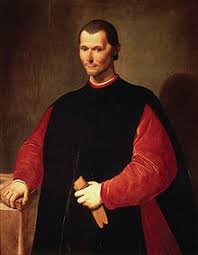
Niccolo Machiavelli
Increased media attention to “income inequality” has led some Democratic lawmakers to press for a long-overdue reform: Raising the stock threshold to 50%, making it harder for firms to abandon their country.
Yet a more comprehensive reform package would include legislation that mandates:
- American companies that move their headquarters abroad would be officially declared “agents of a foreign power engaged in hostile activity against the United States.”
- Those “foreign-owned” companies would be forbidden to sell products within the United States.
- Their assets would be subject to seizure by the Internal Revenue Service.
- The citizenship of those Americans engaged in such activity would be revoked and they would be ordered to leave the United States or face criminal prosecution for treason—and face trial for this if they returned.
Public Campaign is a non-profit, non-partisan organization dedicated to eliminating special interest money in American politics by securing publicly-funded elections at local, state and federal levels.
According to Public Campaign: “Twenty-five profitable Fortune 500 companies, some with a history of tax dodging, spent more on lobbying than they paid in federal taxes between 2008 and 2012….
“Over the past five years, these 25 corporations generated nearly $170 billion in combined profits and received $8.7 billion in tax rebates while paying their lobbyists over half a billion ($543 million), an average of nearly $300,000 a day.
“Based on newly released data by Citizens for Tax Justice, these 25 companies actually received tax refunds over all those five years.
“So most individual American families and small businesses have bigger tax bills than these corporate giants. Unfortunately, most American families and businesses do not have the lobbying operation and access these 25 companies enjoy.”
Several companies on this list are well-known—and spend millions of dollars on self-glorifying ads every year to convince consumers how wonderful they are. Among these:
- General Electric
- PG&E Corp
- Verizon Communications
- Boeing
- Consolidated Edison
- MetroPCS Communications
Republicans—and some Democrats—have tirelessly defended the greed of the richest and most privileged in America. For example, they have dubbed the estate tax—which affects only a tiny, rich minority—“the death tax.”
This makes it appear to affect everyone. So millions of poor and middle-class Americans who will never have to pay a cent in estate taxes vigorously oppose it.
It’s time to recognize that a country can be sold out for other than political reasons. It can be sold out for economic ones, too.
The United States desperately needs a new definition of treason—one that takes into account the following:
- Employers who set up offshore accounts to claim their American companies are foreign-owned—and thus exempt from taxes—are traitors.
- Employers who enrich themselves by firing American workers and moving their plants to other countries—are traitors.
- Employers who systematically violate Federal immigration laws—to hire illegal aliens at cut-rate wages–instead of American workers–are traitors.
For thousands of years, otherwise highly intelligent men and women believed that kings ruled by divine right. That kings held absolute power, levied extortionate taxes and sent countless millions of men off to war—all because God wanted it that way.
That lunacy was dealt a deadly blow in 1776 when American Revolutionaries threw off the despotic rule of King George III of England.
But today, millions of Americans remain imprisoned by an equally outrageous and dangerous theory: The Theory of the Divine Right of Employers.
America can no longer afford such a dangerous fallacy as the Theory of the Divine Right of Employers.
The solution lies in remembering that the powerful never voluntarily surrender their privileges. Americans did not win their freedom from Great Britain—and its enslaving doctrine of the “divine right of kings”—by begging for their rights.
Americans will not win their freedom from their corporate masters—and the equally enslaving doctrine of “the divine right of employers”—by begging for the right to work and support themselves and their families.
And they will most certainly never win such freedom by supporting Right-wing political candidates whose first and only allegiance is to the corporate interests who bankroll their campaigns.
Corporations can—and do—spend millions of dollars on TV ads, selling lies—such as if the wealthy are forced to pay their fair share of taxes, jobs will inevitably disappear.
But Americans can choose to reject those lies—and demand that employers behave like patriots instead of predators.
2016 PRESIDENTIAL ELECTION, ABC NEWS, ALTERNET, BARACK OBAMA, BENEDICT ARNOLD, BOEING, CBS NEWS, CHRISTOPHER LASCH, CLEAR CHANNEL COMMUNICATIONS, CNN, CONSOLIDATED EDISON, CORPORATE TAXES, CORRUPTION, DRUDGE REPORT, EDUARDO SAVEREN, EPA, FAA, FACEBOOK, FBI, FDA, FORBES MAGAZINE, GENERAL ELECTRIC, GROVER NORQUIST, MEDICARE, METROPCS COMMUNICATIONS, NBC NEWS, NEWSWEEK, NICCOLO MACHIAVELLI, NPR, PG&E CORPORATION, POLITICO, PUBLIC CAMPAIGN, REPUBLICAN PARTY, RICHARD M. NIXON, RUSH LIMBAUGH, SENATOR CHARLES SCHUMER, SOCIAL SECURITY, STEPHEN DECATUR, TAX AVOIDANCE, THE CHICAGO SUN-TIMES, THE CHICAGO TRIBUNE, THE DISCOURSES, THE HUFFINGTON POST, THE LOS ANGELES TIMES, THE NEW YORK TIMES, THE WALL STREET JOURNAL, THE WASHINGTON POST, TIME, TREASON, TWITTER, U.S. NEWS & WORLD REPORT, USA TODAY, VERIZON COMMUNICATIONS, WALL STREET, WEALTH GAP
In Bureaucracy, History, Law, Law Enforcement, Politics, Social commentary on March 19, 2019 at 12:10 am
The British offered Revolutionary War General Benedict Arnold £20,000 for betraying West Point to the Crown.
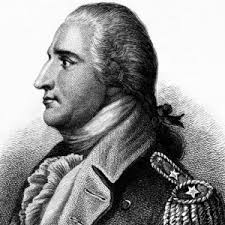
Benedict Arnold
But Arnold was a piker compared to companies that are raking in literally billions of untaxed dollars by betraying the United States in its time of economic trial.
To avoid paying their legitimate share of taxes, they move their headquarters overseas to countries with reduced tax rates. In tax parlance, this is called an “inversion.”
For almost 20 years, tax-avoiding corporations fled to Caribbean countries such as Bermuda and the Cayman Islands. But in 2004, Congress ruled that American companies could relocate overseas if foreign shareholders owned 20% of their stock.
According to statistics compiled by the Congressional Research Service (CRS) in 2014:
“Forty-seven U.S. corporations have reincorporated overseas through corporate inversions in the last 10 years, far more than during the previous 20 years combined.
“In total, 75 U.S. corporations have inverted since 1994 – with one other inversion occurring in 1983. What’s more, there are a dozen prospective inversion deals involving U.S. corporations looking to reincorporate overseas, according to CRS
“The new data underscores the significant increase in the number of U.S. corporations that have or are seeking to lower their U.S. taxes by reincorporating overseas.
“It also adds urgency to a legislative solution. Ways and Means Committee Ranking Member Sander Levin in May introduced legislation that would tighten rules to limit inversions.
“The Joint Committee on Taxation estimates that the legislation would save $19.5 billion over 10 years. Companion legislation was introduced in the Senate by Sen. Carl Levin.
“‘Barely a week seems to pass without news that another corporation plans to move its address overseas simply to avoid paying its fair share of U.S. taxes,’” said Ranking Member Levin.
“These corporate inversions are costing the U.S. billions of dollars and undermining vital domestic interests.
“‘We can and should address this problem immediately through legislation to tighten rules to limit the ability of corporations to simply change their address and ship U.S. tax dollars overseas.’”
Among those companies that have chosen to betray their country in its time of economic need:
| INVERSION YEAR |
COMPANY NAME |
TYPE |
COUNTRY OF INCORPORATION |
REVENUE |
| 1983 |
McDermott International |
Engineering |
Panama |
$2.7 billion |
| 1994 |
Helen of Troy |
Consumer Products |
Bermuda |
$1.3 billion (FY 2014) |
| 1996 |
Triton Energy |
Oil and Gas |
Cayman Islands |
Acq by Hess in ’01 |
| 1996 |
Chicago Bridge & Iron (CBI) |
Engineering |
Netherlands |
$11.1 billion |
| 1997 |
Tyco International |
Diversified Manufacturer |
Bermuda |
$10.6 billion |
| 1997 |
Santa Fe International |
Oil and Gas |
Cayman Islands |
Acq by Transocean in ’07 |
| 1998 |
Fruit of the Loom |
Apparel Manufacturer |
Cayman Islands |
private company |
| 1998 |
Gold Reserve |
Mining |
Bermuda |
N/A |
| 1998 |
Playstar Corp. |
Toys |
Antigua |
Acq by Premier Mobile in ’06 |
| 1999 |
Transocean |
Offshore Drilling |
Cayman Islands |
$9.4 billion |
| 1999 |
White Mountain Insurance |
Insurance |
Bermuda |
$2.3 billion |
| 1999 |
Xoma Corp. |
Biotech |
Bermuda |
$35.5 million |
| 1999 |
PXRE Group |
Insurance |
Bermuda |
Acq by Argonaut Group in ’07 |
| 1999 |
Trenwick Group |
Insurance |
Bermuda |
Acq by LaSalle Re Holdings in ’00 |
| 2000 |
Applied Power |
Engineering |
Bermuda |
Now called Actuant $494 million |
| 2000 |
Everest Reinsurance |
Insurance |
Bermuda |
$5.6 billion |
| 2000 |
Seagate Technology |
Data Storage |
Cayman Islands |
$14.4 billion |
| 2000 |
R&B Falcon |
Drilling |
Cayman Islands |
Acq by Transocean in ’00 |
| 2001 |
Global Santa Fe Corp. |
Offshore Drilling |
Cayman Islands |
Acq by Transocean in ’07 |
| 2001 |
Foster Wheeler |
Engineering |
Bermuda |
$559 million |
| 2001 |
Accenture |
Consulting |
Bermuda |
$28.6 billion (FY 2013) |
| 2001 |
Global Marine |
Engineering |
Cayman Islands |
Acq by Bridgehouse Capital in ’04 |
| 2002 |
Noble Corp. |
Offshore Drilling |
Cayman Islands |
$4.2 billion |
| 2002 |
Cooper Industries |
Electrical Products |
Bermuda |
Acq by Eaton in ’12 |
| 2002 |
Nabor Industries |
Oil and Gas |
Bermuda |
$1.6 billion |
| 2002 |
Weatherford International |
Oil and Gas |
Bermuda |
$15.2 billion |
| 2002 |
Ingersoll-Rand |
Industrial Manufacturer |
Bermuda |
$12.3 billion |
| 2002 |
PricewaterhouseCoopers Consulting |
Consulting |
Bermuda |
N/A |
| 2002 |
Herbalife International |
Nutrition |
Cayman Islands |
$4.8 billion (sales) |
| 2005 |
Luna Gold Corp |
Mining |
Canada |
$85.3 million |
| 2007 |
Lincoln Gold Group |
Mining |
N/A |
|
| 2007 |
Western Goldfields |
Mining |
N/A |
Acq by New Gold in ’09 |
| 2007 |
Star Maritime Acquisition Grp |
Shipping |
N/A |
Now Star Bulk $69 million |
| 2007 |
Argonaut Group |
Insurance |
Bermuda |
$1.4 billion |
| 2007 |
Fluid Media Networks |
Music Distribution |
|
|
| 2008 |
Tyco Electronics |
Industrial Manufacturer |
Switzerland |
Now TE Connectivity $3.4 billion (FY ’13) |
| 2008 |
Foster Wheeler |
Engineering |
Bermuda |
$3.3 billion |
| 2008 |
Covidien |
Healthcare |
Ireland |
$10.2 billion |
| 2008 |
Patch International Inc |
Oil and Gas |
Canada |
|
| 2008 |
Arcade Acquisition Group |
Financial |
|
|
| 2008 |
Energy Infrastructure Acquisition Group |
Energy |
|
|
| 2008 |
Ascend Acquisition Group |
Electronics |
N/A |
Acq by Kitara Media in ’13 |
| 2008 |
ENSCO International |
Oil and Gas |
United Kingdom |
$4.9 billion |
| 2009 |
Tim Hortons Inc |
Restaurant Chain |
Canada |
$3.2 billion |
| 2009 |
Hungarian Telephone & Cable Corp. |
Telecommunications |
Denmark |
$219 million |
| 2009 |
Alpha Security Group |
Security |
N/A |
|
| 2009 |
Alyst Acquisition Group |
Financial |
N/A |
Acq by China Networks Media in ’09 |
| 2009 |
2020 ChinaCap Acquirco |
Financial |
N/A |
Acq by Exceed Co. in ’09 |
| 2009 |
Ideation Acquisition Grp |
Private Equity |
N/A |
Acq by SearchMedia in ’09 |
| 2009 |
InterAmerican Acquisition Grp |
Business Management |
N/A |
Acq by Sing Kung Ltd in ’09 |
| 2009 |
Vantage Energy Services |
Offshore Drilling |
Cayman Islands |
$732 million |
| 2009 |
Plastinum Polymer Tech Corp. |
Industrial Manufacturer |
|
|
| 2010 |
Valient Biovail |
Pharmaceuticals |
Canada |
$5.7 billion |
| 2010 |
Pride International |
Offshore Drilling |
United Kindom |
Acq by Ensco in ’11 |
| 2010 |
Global Indemnity |
Insurance |
Ireland |
$319 billion |
| 2011 |
Alkermes, Inc. |
Biopharmaceutical |
Ireland |
$575 million |
| 2011 |
TE Connectivity |
Industrial Manufacturer |
Switzerland |
$13.3 billion |
| 2011 |
Pentair |
Water Filtration |
Switzerland |
$7.5 billion |
| 2012 |
Rowan Companies |
Oil Well Drilling |
United Kindom |
$1.5 billion |
| 2012 |
AON |
Insurance |
United Kindom |
$11.8 billion |
| 2012 |
Tronox Inc |
Chemical |
Australia |
$1.9 billion |
| 2012 |
Jazz Pharmaceuticals / Azur Pharma |
Pharmaceuticals |
Ireland |
$872 million |
| 2012 |
D.E. Master Blenders |
Coffee |
Netherlands |
$3.5 billion |
| 2012 |
Stratasys |
Printer Manufacturer |
Israel |
$486.7 million |
| 2012 |
Eaton/Cooper |
Power Management |
Ireland |
$22 billion |
| 2012 |
Endo Health Solutions |
Pharmaceuticals |
Ireland |
$2.6 billion |
| 2013 |
Liberty Global PLC |
Cable Company |
United Kindom |
$17.3 billion |
| 2013 |
Actavis / Warner Chilcott |
Pharmaceuticals |
Ireland |
$8.7 billion |
| 2013 |
Perrigo/Elan |
Pharmaceuticals |
Ireland |
$3.5 billion (FY 2013) |
| 2013 |
Cadence Pharmaceuticals |
Pharmaceuticals |
Ireland |
$110 million |
| 2014 |
Mallinckrodt Pharmaceuticals |
Pharmaceuticals |
Ireland |
$2.2 billion |
| 2014 |
Chiquita Brands |
Produce |
Ireland |
$3 billion |
| 2014 |
Medtronic |
Pharmaceuticals |
Ireland |
$16.5 billion |
SOURCE: Source: Ways and Means Committee Democrats. GRAPHIC: Danielle Douglas – The Washington Post. Published Aug. 6, 2014.
The most popular countries for these “inversions” are:
- The Cayman Islands
- Bermuda
- Canada
- United Kingdom
- Ireland
- Switzerland
- Netherlands


2016 PRESIDENTIAL CAMPAIGN, 2020 PRESIDENTIAL CAMPAIGN, ABC NEWS, ADOLF HITLER, ALTERNET, ANCIENT GREECE, ANCIENT ROME, AP, BERNIE SANDERS, BUZZFEED, CATASTROPHE, CBS NEWS, CHINA, CNN, CONSUMER PROTECTION, CORPORATE TAXES, CORRUPTION, CROOKS AND LIARS, DAILY KOZ, DEMOCRATIC PARTY, DONALD TRUMP, EXECUTIVE PAYWATCH, FACEBOOK, FORBES, FUNDRAISING, HILLARY CLINTON, INCOME INEQUALITY, IVAN THE TERRIBLE, JOE BIDEN, JOSEPH STALIN, LEON TROTSKY, MOTHER JONES, MOVEON, MSNBC, NAZI GERMANY, NBC NEWS, NEWSWEEK, NICCOLO MACHIAVELLI, NPR, PBS NEWSHOUR, POLITICO, RAW STORY, REUTERS, ROBERT PAYNE, SALON, SEATTLE TIMES, SLATE, SPARTACUS, THE ATLANTIC, THE CHICAGO SUN-TIMES, THE CHICAGO TRIBUNE, THE CORRUPT SOCIETY (BOOK), THE DAILY BEAST, THE DISCOURSES, THE FRENCH REVOLUTION, THE GREAT LEVELER (BOOK), THE GUARDIAN, THE HILL, THE HUFFINGTON POST, THE LOS ANGELES TIMES, THE NATION, THE NEW YORK TIMES, THE RUSSIAN REVOLUTION, THE WASHINGTON POST, TIME, TWITTER, U.S. NEWS & WORLD REPORT, UPI, USA TODAY, VIOLENCE, Vladimir Lenin, WALL STREET, WALTER SCHEIDEL, WATERGATE, WEALTH GAP, WILLIAM SHAKESPEARE, WINSTON CHURCHILL
LOVE THE RICH, IGNORE THE REST: PART TWO (END)
In Bureaucracy, Business, History, Law, Politics, Social commentary on June 25, 2019 at 12:15 amThe gap between rich and poor in the United States has never been greater.
A May 1, 2018 article in Forbes—which bills itself as “The Capitalist Tool”—vividly documents this truth.
“In the 1950s, a typical CEO made 20 times the salary of his or her average worker. Last year, [2017] CEO pay at an S&P 500 Index firm soared to an average of 361 times more than the average rank-and-file worker, or pay of $13,940,000 a year, according to an AFL-CIO’s Executive Paywatch news release today.”
The average CEO pay climbed six percent in 2017—while the average production worker earned just $38,613, according to Executive Paywatch.
The average wage—adjusted for inflation—has stagnated for more than 50 years. Meanwhile, CEOs’ average pay since the 1950s has risen by 1000%.
This would not have been news to Niccolo Machiavelli, the father of modern political science. In his masterwork, The Discourses, he observed the human condition as that of constant struggle:
Niccolo Machiavelli
It was a saying of ancient writers, that men afflict themselves in evil, and become weary of the good, and that both these dispositions produce the same effects.
For when men are no longer obliged to fight from necessity, they fight from ambition, which passion is so powerful in the hearts of men that it never leaves them, no matter to what height they may rise.
The reason for this is that nature has created men so that they desire everything, but are unable to attain it. Desire being thus always greater than the faculty of acquiring, discontent with what they have and dissatisfaction with themselves result from it.
This causes the changes in their fortunes—for as some men desire to have more, while others fear to lose what they have, enmities and war are the consequences. And this brings about the ruin of one province and the elevation of another.
Author Walter Scheidel, Dickason Professor in the Humanities, Professor of Classics and History at Stanford University, has also given this subject a great deal of thought. And, like Machiavelli, he has reached some highly disturbing conclusions.
Walter Scheidel
World Economic Forum [CC BY-SA 2.0 (https://creativecommons.org/licenses/by-sa/2.0)%5D
He gave voice to these in his 2017 book, The Great Leveler: Violence and the History of Inequality from the Stone Age to the Twenty-First Century. His thesis: Only violence and catastrophes have consistently reduced inequality throughout history.
According to the book’s jacket blurb: “Are mass violence and catastrophes the only forces that can seriously decrease economic inequality? To judge by thousands of years of history, the answer is yes.
“Tracing the global history of inequality from the Stone Age to today, Walter Scheidel shows that inequality never dies peacefully. Inequality declines when carnage and disaster strike and increases when peace and stability return.
“The Great Leveler is the first book to chart the crucial role of violent shocks in reducing inequality over the full sweep of human history around the world.
“Ever since humans began to farm, herd livestock, and pass on their assets to future generations, economic inequality has been a defining feature of civilization. Over thousands of years, only violent events have significantly lessened inequality.
“The ‘Four Horsemen’ of leveling–mass-mobilization warfare, transformative revolutions, state collapse, and catastrophic plagues—have repeatedly destroyed the fortunes of the rich.
“Scheidel identifies and examines these processes, from the crises of the earliest civilizations to the cataclysmic world wars and communist revolutions of the twentieth century.
“Today, the violence that reduced inequality in the past seems to have diminished, and that is a good thing. But it casts serious doubt on the prospects for a more equal future.”
Revolutionaries have known the truth of Scheidel’s findings from the gladiators’ revolt of Spartacus (73-71 B.C.) to the French Revolution (1789 – 1799) to the overthrow of the Czarist Romanov dynasty (1917).
But American politicians serenely ignore that truth. They depend on the mega-rich for millions of dollars in “campaign contributions”—which pay for self-glorifying ads on TV.
Thus, in 2016, American voters had a “choice” between two “love-the-rich” Presidential candidates: Donald Trump and Hillary Clinton. The result was that millions stayed home or voted in protest for third-party candidates who had no chance of winning.
In his 1975 book, The Corrupt Society: From Ancient Greece to Modern-day America, British historian Robert Payne warned that the predatory rich would not change their behavior: “Nor is there any likelihood that the rich will plow back their money into services to ensure the general good.
“They have rarely demonstrated social responsibility, and they are much more likely to hold on to their wealth at all costs than to renounce any part of it.
“Like the tyrant who lives in a world wholly remote from the world of the people, shielded and protected from all possible influences, the rich are usually the last to observe the social pressures rising from below, and when these social pressures reach flashpoint, it is too late to call in the police or the army.
“The tyrant dies; the police and the army go over to the revolutionaries; and the new government dispossesses the rich by decree. A single authoritative sentence suffices to expunge all private wealth and restore it to the service of the nation.”
Share this: