Posts Tagged ‘NEWT GINGRICH’
ABC NEWS, ADULTERY, ALTERNET, AMERICABLOG, AP, BABY BOOMER RESISTANCE, BARACK OBAMA, BBC, BIBLE, BILLY GRAHAM, BLOOMBERG NEWS, BUZZFEED, CBS NEWS, CNN, CROOKS AND LIARS, DAILY KOZ, FACEBOOK, FIVETHIRTYEIGHT, FRANKLIN GRAHAM, HARPER’S MAGAZINE, HOMOSEXUALITY, HUFFINGTON POST, I USA TODAY, MEDIA MATTERS, MITT ROMNEY, MOTHER JONES, MOVEON, MSNBC, NBC NEWS, NEW REPUBLIC, NEWSDAY, NEWSWEEK, NEWT GINGRICH, NPR, PBS NEWSHOUR, POLITICO, POLITICUSUSA, RAW STORY, REUTERS, RICK SANTORUM, SALON, SCIENCE, SEATTLE TIMES, SLATE, SLAVERY, SPANISH INQUISITION, TALKING POINTS MEMO, TEA PARTY, THE ATLANTIC, THE CHICAGO SUN-TIMES, THE CHICAGO TRIBUNE, THE DAILY BEAST, THE DAILY BLOG, THE GUARDIAN, THE HILL, THE HUFFINGTON POST, THE INTERCEPT, THE LOS ANGELES TIMES, THE NATION, THE NEW REPUBLIC, THE NEW YORK TIMES, THE NEW YORKER, THE VILLAGE VOICE, THE WASHINGTON POST, THEOLOGY, THINKPROGRESS, TIME, TRUTHDIG, TRUTHOUT, TWITTER, TWO POLITICAL JUNKIES, U.S. NEWS & WORLD REPORT, UP, UPI, USA TODAY, WAR, WOMEN
In Bureaucracy, History, Law, Law Enforcement, Military, Politics, Social commentary on July 12, 2017 at 12:04 am
On February 18, 2012, GOP Presidential candidate Rick Santorum warned about the “phony theology” of President Barack Obama.
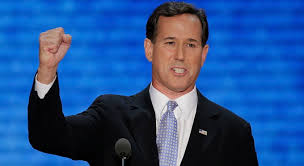
Rick Santorum
“It’s not about you,” Santorum told supporters of the right-wing Tea Party in Columbus, Ohio. “It’s not about your quality of life.
“It’s not about your jobs. It’s about some phony ideal. Some phony theology. Oh, not a theology based on the Bible. A different theology.”
Which raises an interesting question: What would a Bible-based agenda mean for the country?
The death penalty would be vastly expanded to cover such “crimes” as:
- Sabbath-breaking: Because the Lord considers it a holy day, anyone who works on the Sabbath must be put to death. (Exodus 31:12-15)
- Adultery: If a man commits adultery with another man’s wife, both the man and the woman must be put to death. (Leviticus 20:10)
- Fornication: A priest’s daughter who loses her honor by committing fornication and thereby dishonors her father also, shall be burned to death. (Leviticus 21:9)
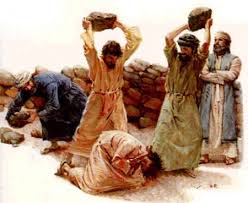
A Biblical-era stoning
- Nonbelievers: They entered into a covenant to seek the Lord, the God of their fathers, with all their heart and soul; and everyone who would not seek the Lord, the God of Israel, was to be put to death, whether small or great, whether man or woman. (2 Chronicles 15:12-13)
- Homosexuality: If a man also lies with mankind, as he lies with a woman, both of them have committed an abomination. They shall surely be put to death. Their blood shall be upon them. (Leviticus 20-13)
- Taking the Lord’s name in vain: Anyone who blasphemes the name of the Lord is to be put to death. The entire assembly must stone them. (Leviticus 24:16)
The Thirteenth Amendment to the Constitution—which forbids slavery—would be repealed. The Bible not only permits slavery but lays out rules for its practice—such as:
Almost all scientific progress would be discarded, since most of its findings conflict with the Bible:
- One generation passes away, and another generation comes: but the earth abides forever. (Ecclesiastes 1:4). This claim is totally contradicted by what astronomers now know about the eventual fate of the Earth: In about 7.6 billion years, the sun will exhaust its nuclear fuels. This will vastly increase its heat and gravitational pull, and at least Mercury, Earth and Venus will be vaporized.
- The Bible speaks of a world where physical laws are often violated by the will of God. Thus, Jesus turns water into wine and raises Lazarus from the dead; Jonah lives inside a fish for three days; Noah dies at 950 years; and demons are exorcised.
- In Biblical times, mental illness was seen as a manifestation of demonic possession. Today we know that mental illness has nothing to do with evil spirits.
Laws guaranteeing equal rights for women would be repealed:
- I do not permit a woman to teach or to have authority over a man; she must be silent. (1 Timothy 12:10)
- Wives, submit to your husbands as to the Lord. (Ephesians 5:22)
- A woman should learn in quietness and full submission. (1 Timothy 2:11)
- But if…evidence of the girl’s virginity is not found, they shall bring the girl to the entrance of her father’s house and there her townsman shall stone her to death. (Deuteronomy 22:20-21)
Military conflicts would be fought without regard to the Geneva Convention–as the Israelites did:
- “You are my battle-ax and sword,” says the Lord. “With you I will shatter nations and destroy many kingdoms….With you I will shatter men and women, old people and children, young men and maidens. With you I will shatter shepherds and flocks, farmers and oxen, captains and rulers.” (Jeremiah 51:20-23)
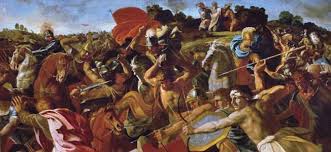
Depiction of the taking of Jericho by the Israelites
- Samuel said to Saul, “This is what the Lord Almighty says: ‘I will punish the Amalekites for what they did to Israel when they waylaid them as they came up from Egypt. Now go, attack the Amalekites and totally destroy everything that belongs to them. Do not spare them; put to death men and women, children and infants, cattle and sheep, camels and donkeys.’” (1 Samuel 15, 1-3)
Yes, a nation governed by “a theology based on the Bible” would be one far different from the United States we know today.
Since a number of Old Testament practices might lend themselves to easy abuse, this is not a matter to be taken lightly.
ABC NEWS, ADULTERY, ALTERNET, AMERICABLOG, AP, BABY BOOMER RESISTANCE, BARACK OBAMA, BBC, BIBLE, BILLY GRAHAM, BLOOMBERG NEWS, BUZZFEED, CBS NEWS, CNN, CROOKS AND LIARS, DAILY KOZ, FACEBOOK, FIVETHIRTYEIGHT, FRANKLIN GRAHAM, HARPER’S MAGAZINE, HOMOSEXUALITY, HUFFINGTON POST, I USA TODAY, MEDIA MATTERS, MITT ROMNEY, MOTHER JONES, MOVEON, MSNBC, NBC NEWS, NEW REPUBLIC, NEWSDAY, NEWSWEEK, NEWT GINGRICH, NPR, PBS NEWSHOUR, POLITICO, POLITICUSUSA, RAW STORY, REUTERS, RICK SANTORUM, SALON, SCIENCE, SEATTLE TIMES, SLATE, SLAVERY, SPANISH INQUISITION, TALKING POINTS MEMO, TEA PARTY, THE ATLANTIC, THE CHICAGO SUN-TIMES, THE CHICAGO TRIBUNE, THE DAILY BEAST, THE DAILY BLOG, THE GUARDIAN, THE HILL, THE HUFFINGTON POST, THE INTERCEPT, THE LOS ANGELES TIMES, THE NATION, THE NEW REPUBLIC, THE NEW YORK TIMES, THE NEW YORKER, THE VILLAGE VOICE, THE WASHINGTON POST, THEOLOGY, THINKPROGRESS, TIME, TRUTHDIG, TRUTHOUT, TWITTER, TWO POLITICAL JUNKIES, U.S. NEWS & WORLD REPORT, UP, UPI, USA TODAY, WAR, WOMEN
In Bureaucracy, History, Law, Law Enforcement, Military, Politics, Social commentary on July 11, 2017 at 12:03 am
Franklin Graham, son of Billy Graham, America’s most famous preacher, spends a lot of time deciding who qualifies as a Christian—and who doesn’t.
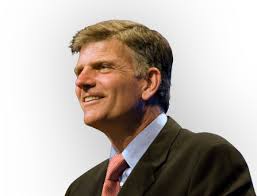
Franklin Graham
He said just that on the February 21, 2012 edition of the MSNBC show, “Morning Joe.”
First, however, he offered his views on the relative Christian dedication of the major contenders for the Presidency in 2012:
President Barack Obama: “Islam sees him as a son of Islam….I can’t say categorically that [Obama is not Muslim] because Islam has gotten a free pass under Obama.”
Former Speaker of the House Newt Gingrich:“Newt’s been married several times… but he could make a good candidate. I think Newt is a Christian. At least he told me he is.”
Former Pennsylvania U.S. Senator Rick Santorum: “His values are so clear on moral issues. No question about it. I think he is, no question, a man of faith.”
Former Massachusetts Governor Mitt Romney: “I’m just saying most Christians would not recognize Mormonism. Of course they believe in Jesus Christ, but they have a lot of other things that they believe in, too, that we don’t accept theologically.”
Thus, Graham had no problem in pronouncing as “saved” a notorious multiple-adulterer like Gingrich, or a rights-denying religious zealot like Santorum.
But he clearly refused to pronounce as “saved” a longtime church-goer like Obama or a Mormon like Romney (whose faith, most evangelicals like Graham believe, is actually a non-Christian cult).
Toward the end of the program, Mike Barnicle, one of the panelists interviewing Graham, said: “You must spend a big part of the day checking out what you conceive to be people’s depth of faith, in terms of measuring.”
“This is my business,” replied Graham. “You guys go through newspapers every day. I look at a person’s political interest, but more importantly I look at their spiritual interests….
“You have to go by what a person says, and how they live their lives…Are they faithful church goers? Or do they just go when the cameras are on them?”
Another man who dedicated his life to judging the religious commitment of others was Bernard Gui, the chief inquisitor at Toulouse from 1308 to 1322.
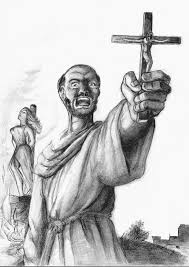
Bernard Gui
His inquisition of those suspected or accused of heresy led to over 900 guilty verdicts. Of those convicted during examination by Gui, 42 were executed—by being burned at the stake.
Gui closely studied the best methods for interrogating “heretics.” He set forth his findings in his most important and famous work, Practica Inquisitionis Heretice Pravitatis. or “Conduct of the Inquisition into Heretical Wickedness.”
In this, he offered a vivid example of how such interrogations might go. The following is taken from that manual:
Interrogator: You call your faith Christian, for you consider ours as false and heretical. But I ask whether you have ever believed as true another faith than that which the Roman Church holds to be true?
Accused Heretic: I believe the true faith which the Roman Church believes, and which you openly preach to us.
Interrogator: Perhaps you have some of your sect at Rome whom you call the Roman Church. I, when I preach, say many things, some of which are common to us both, as that God liveth, and you believe some of what I preach. Nevertheless you may be a heretic in not believing other matters which are to be believed.

“Heretic” being burned at the stake
Accused Heretic: I believe all things that a Christian should believe.
Interrogator: I know your tricks. What the members of your sect believe you hold to be that which a Christian should believe. But we waste time in this fencing. Say simply, Do you believe in one God the Father, and the Son, and the Holy Ghost?
Accused Heretic: I believe.
Interrogator: Do you believe in Christ born of the Virgin, suffered, risen, and ascended to heaven?
Accused Heretic: (Briskly) I believe.
Interrogator: Do you believe the bread and wine in the mass performed by the priests to be changed into the body and blood of Christ by divine virtue?
Accused Heretic: Ought I not to believe this?
Interrogator: I don’t ask if you ought to believe, but if you do believe.
Accused Heretic: I believe whatever you and other good doctors order me to believe.
Inquisitor: Those good doctors are the masters of your sect; if I accord with them you believe with me; if not, not.
Accused Heretic: I willingly believe with you if you teach what is good to me.
Inquisitor: You consider it good to you if I teach what your other masters teach. Say, then, do you believe the body of our Lord, Jesus Christ to be in the altar?
Accused Heretic: (Promptly) I believe that a body is there, and that all bodies are of our Lord.
Interrogator: I ask whether the body there is of the Lord who was born of the Virgin, hung on the cross, arose from the dead, ascended, etc.
Accused Heretic: And you, sir, do you not believe it?
Interrogator: I believe it wholly.
Accused Heretic: I believe likewise.
ABC NEWS, ADOLF HITLER, ALTERNET, AP, ARIZONA SHOOTINGS, ASSASSINATION, BARACK OBAMA, BBC, BILL CLINTON, BUZZFEED, CBS NEWS, CHRISTINA-TAYLOR GREEN, CNN, DAILY KOS, FACEBOOK, FBI, GABRIELLE GIFFORDS, GEORGE H.W. BUSH, HATE CRIMES, HEALTHCARE, MEIN KAMPF, MOTHER JONES, MOVEON, NBC NEWS, NEWSWEEK, NEWT GINGRICH, NPR, POLITICO, RAW STORY, REPUBLICAN PARTY, REPUBLICANS, REUTERS, RODNEY KING RIOTS, SALON, Sarah Palin, SEATTLE TIMES, Secret Service, SLATE, TEA PARTY, TERRORISM, THE ATLANTIC, THE CHICAGO SUN-TIMES, THE CHICAGO TRIBUNE, THE DAILY BEAST, THE GUARDIAN, THE HILL, THE HUFFINGTON POST, THE LOS ANGELES TIMES, THE NEW YORK TIMES, THE WALL STREET JOURNAL, THE WASHINGTON POST, TIME, TWITTER, U.S. DISTRICT JUDGE JOHN ROLL, U.S. NEWS & WORLD REPORT, UPI, USA TODAY
In Bureaucracy, History, Law, Law Enforcement, Politics, Social commentary on June 19, 2017 at 1:08 am
On January 8, 2011, Democratic Rep. Gabrielle Giffords was shot in the head while meeting with constituents outside a Tucson, Arizona, grocery store.
After a miraculous recovery, she continues to struggle with language and has lost 50% of her vision in both eyes. Although she returned to her Congressional duties, her injuries forced her to resign in 2012.
The shooting claimed the lives of six people and left 13 others wounded.
One of those killed was Arizona’s chief U.S. District judge, John Roll, who had just stopped by to see his friend Giffords after celebrating Mass.
The youngest victim was nine-year-old Christiana-Taylor Green, whose desire to one day enter politics had led her to attend the scheduled meeting with her Congresswoman, Giffords. Her having been born on September 11, 2001, added a special poignancy to her tragic death.
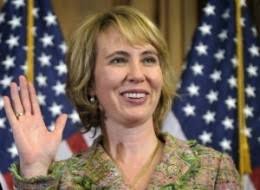
Rep. Gabrielle Giffords
Although the actual shooter, Jared Lee Loughner, was immediately arrested, those who fanned the flames of political violence that consumed 19 people that day have remained unpunished.
Gabrille Giffords, then 40, was a moderate Democrat who narrowly won re-election in November, 2010, against a Republican Tea Party candidate.
Her support of President Barack Obama’s health care reform law made her a target for violent rhetoric–especially from former Alaska Governor Sarah Palin.
In March, 2010, Palin released a map featuring 20 House Democrats that used cross-hairs images to show their districts. In case her supporters didn’t get the message, she later wrote on Twitter: “‘Don’t Retreat, Instead – RELOAD!’”

As the campaign continued, Giffords found her Tucson office vandalized after the House passed the healthcare overhaul on March 21, 2010.
Giffords sensed that she had become a target for assassination. In an interview after the vandalizing of her office, she cited the animosity against her by Right-wingers:
“For example, we’re on Sarah Palin’s targeted list, but the thing is, that the way that she has it depicted has the cross-hairs of a gun sight over our district. When people do that, they have to realize that there are consequences to that action,” Giffords tells MSNBC.
At one of her rallies, her aides called the police after an attendee dropped a gun.
In April, 2010, Giffords supported Rep. Raúl Grijalva after he had to close two offices when he and his staff received threats. He had called for a boycott of Arizona businesses in opposition to the state’s controversial immigration law.
“I am deeply troubled about reports that Congressman Grijalva and members of his staff have been subjected to death threats,” Giffords said.
“This is not how we, as Americans, express our political differences. Intimidation has no place in our representative democracy. Such acts only make it more difficult for us to resolve our differences.”
But intimidation–and worse–does have a place among the tactics used by influential Republicans in the pursuit of absolute power.
Increasingly, Republicans have repeatedly aimed violent–and violence-arousing–rhetoric at their Democratic opponents.
This is not a case of careless language that is simply misinterpreted, with tragic results.
Republicans like Sarah Palin fully understand the constituency they are trying to reach: Those masses of alienated, uneducated Americans who live only for their guns and hardline religious beliefs–and who can be easily manipulated by perceived threats to either.
If a “nutcases” assaults a Democratic politician and misses, then the Republican establishment claims to be shocked–shocked!–that such a thing could have happened.
And if the attempt proves successful–as the Giffords shooting did–then Republicans weep crocodile tears for public consumption.

Consider the following:
- Rep. Randy Neugebauer (R-Tex.) yelled “baby killer” at Bart Stupak (D-Mich.) on the House floor.
- Florida GOP Congressional candidate Allen West, referring to his Democratic opponent, Rep. Ron Klein, told Tea Party activists: You’ve got to make the fellow scared to come out of his house. That’s the only way that you’re going to win. That’s the only way you’re going to get these people’s attention.”
- Rep. Devin Nunes (R-CA) said Tea Partiers had “every right” to use racist and homophobic slurs against Democrats, justifying it via Democrats’ “totalitarian tactics.
- ”Rep. Michelle Bachmann (R-Minn.) said she wanted her constituents “armed and dangerous” against the Obama administration.
- Right-wing pundit Ann Coulter: “My only regret with Timothy McVeigh is he did not go to the New York Times building.”
- Senator Phil Gramm (R-Tex.) “We’re going to keep building the party until we’re hunting Democrats with dogs.”
- Rep. Louisa M. Slauter (D-NY) received a phone message threatening sniper attacks against lawmakers and their families.
For more than 50 years, Republicans have vilified government–except when they controlled it. They convinced millions of Americans that Democrats are potential traitors, if not actual ones.
They have routinely slandered Democrats as:
- Plotting to “take away your guns.”
- Wanting to turn America into a welfare-dependent society.
- Being “Godless” and intending to force atheism on believing Christians.
- Plotting to allow the United Nations to “take over” the United States.
Consciously or not, Republicans have taken their cue from Adolf Hitler, who advised in Mein Kampf: “All effective propaganda must be confined to a few bare essentials.
“Those must be expressed as far as possible in stereotypical formulas. These slogans should be persistently repeated until the very last individual has come to grasp the idea that has been put forward.”
2012 PRESIDENTIAL RACE, ALTERNET, AP, BARACK OBAMA, BAY OF PIGS, BBC, BERLIN WALL, BILL CLINTON, BRUCE GREENWOOD, BUZZFEED, CARLOS MARCELLO, CBS NEWS, CIA, CIVIL RIGHTS, CLIFF ROBERTSON, CNN, CUBAN MISSILE CRISIS, DAILY KOS, DAVID HALBERSTAM, DONALD J. TRUMP, FACEBOOK, FBI, FIDEL CASTRO, FRANK SINATRA, HERMAN CAIN, ICH BEN EIN BERLINNER SPEECH, INTERNET MOVIE DATABASE, J. EDGAR HOOVER, JAMES MARSDEN, JOHN F. KENNEDY, JOSEPH MCCARTHY, JOSEPH P. KENNEDY, LYNDON B. JOHNSON, MAFIA, MALCOM X, MARTIN LUTHER KING, MARTIN SHEEN, MOTHER JONES, MOVEON, MOVIES, NBC NEWS, NEWSWEEK, NEWT GINGRICH, NIKITA KHRUSHCHEV, NPR, NUCLEAR TEST BAN TREATY, POLITICO, PT-109, RAW STORY, REUTERS, RICK PERRY, ROBERT F. KENNEDY, ROBERT S. MCNAMARA, SALON, SAM GIANCANA, SANTOS TRAFFICANTE, Sarah Palin, SATURDAY NIGHT LIVE, SEATTLE TIMES, SLATE, SOVIET UNION, THE ATLANTIC, THE BEST AND THE BRIGHTEST, THE BUTLER, THE CHICAGO SUN-TIMES, THE CHICAGO TRIBUNE, THE DAILY BEAST, THE GUARDIAN, THE HILL, THE HUFFINGTON POST, THE LOS ANGELES TIMES, THE MISSILES OF OCTOBER, THE NEW YORK TIMES, THE RAT PACK, THE WALL STREET JOURNAL, THE WASHINGTON POST, THIRTEEN DAYS, TIME, TWILIGHT ZONE, TWITTER, U.S. NEWS & WORLD REPORT, UPI, USA TODAY, VIETNAM WAR, WILLIAM DEVANE, WILLIAM PETERSON
In Bureaucracy, Business, History, Law, Law Enforcement, Military, Politics, Social commentary on May 17, 2017 at 12:22 am
Fifty-three years ago, on November 22, 1963, two bullets slammed into the neck and head of President John Fitzgerald Kennedy.
It has been said that he left his country with three great legacies:
- The Nuclear Test Ban Treaty;
- The Apollo moon landing; and
- The Vietnam war.
Of these, the following can be said with certainty:
- The Test Ban Treaty has prevented atmosphereic testing—and poisoning—by almost all the world’s nuclear powers.
- After reaching the moon—in 1969—Americans quickly lost interest in space and have today largely abandoned plans for manned exploration. For America, as for JFK, beating the Russians to the moon was the end-goal.
- Under Presidents Lyndon Johnson and Richard Nixon, 58,000 Americans died in Vietnam; 153,303 were wounded; and billions of dollars were squandered in a hopeless effort to intervene in what was essentially a Vietnamese civil war. From 1965 to 1972, the war angrily divided Americas as had no event since the Civil War.
But there was a fourth legacy—and perhaps the most important of all: The belief that mankind could overcome its greatest challenges through rationality and perseverance.
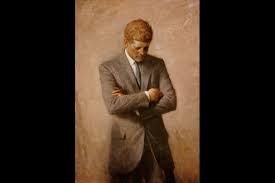
White House painting of JFK
At American University on June 10, 1963, Kennedy called upon his fellow Americans to re-examine the events and attitudes that had led to the Cold War. And he declared that the search for peace was by no means absurd:
“Our problems are man-made; therefore, they can be solved by man. And man can be as big as he wants. No problem of human destiny is beyond human beings.
“Man’s reason and spirit have often solved the seemingly unsolvable, and we believe they can do it again.”
Today, politicians from both parties cannot agree on solutions to even the most vital national problems.
On November 21, 2011, the 12 members of the “Super-Committee” of Congress, tasked with finding $1.2 trillion in cuts in government spending, threw up their hands in defeat.
President Kennedy insisted on being well-informed. He speed-read several newspapers every morning and nourished personal relationships with the press—and not for altruistic reasons. These journalistic contacts gave Kennedy additional sources of information and perspectives on national and international issues.
During the 2012 Presidential campaign, Republican Presidential candidates celebrated their ignorance of both.
Former Godfather’s Pizza CEO Herman Cain famously said, “We need a leader, not a reader.” Thus he excused his ignorance for why President Barack Obama had intervened in Libya.
Texas Governor Rick Perry (and now Secretary of Energy) showed similar pride in not knowing there are nine judges on the United States Supreme Court:
“Well, obviously, I know there are nine Supreme Court judges. I don’t know how eight came out my mouth. But the, uh, the fact is, I can tell you—I don’t have memorized all of those Supreme Court judges. And, uh, ah—
“Here’s what I do know. That when I put an individual on the Supreme Court, just like I done in Texas, ah, we got nine Supreme Court justices in Texas, ah, they will be strict constructionists….”
In short, it’s the media’s fault if they ask you a question and your answer reveals your own ignorance, stupidity or criminality.
Sarah Palin rewrote history via “The Midnight Ride of Paul Revere”: “He warned the British that they weren’t going to be taking away our arms by ringing those bells and, um, making sure as he’s riding his horse through town to send those warning shots and bells that, uh, we were going to be secure and we were going to be free.”
In fact, Revere wasn’t warning the British about anything. Instead, he was warning his fellow Americans about an impending British attack—as his celebrated catchphrase “The British are coming!” made clear.
During the height of the Cuban Missile Crisis, Kennedy spoke with aides about a book he had just finished: Barbara Tuchman’s The Guns of August, about the events leading to World War 1.
He said that the book’s most important revelation was how European leaders had blindly rushed into war, without thought to the possible consequences. Kennedy told his aides he did not intend to make the same mistake—that, having read his history, he was determined to learn from it.
Republicans attacked President Obama for his Harvard education and articulate use of language. Among their taunts: “Hitler also gave good speeches.”
And they resented his having earned most of his income as a writer of two books: Dreams From My Father and The Audacity of Hope. As if being a writer is somehow subversive.
When knowledge and literacy are attacked as “highfalutin’” arrogance, and ignorance and incoherence are embraced as sincerity, national decline lies just around the corner.
Many Americans believe that decline arrived with the 2016 election of Donald Trump. In fact, they believe it was Trump who announced it after winning the Nevada Republican primary: “We won with poorly educated. I love the poorly educated.”
In retrospect, the funeral for President Kennedy marked the death of more than a rational and optimistic human being.
It marked the death of Americans’ pride in choosing reasoning and educated citizens for their leaders.
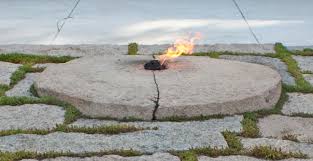
The Eternal Flame at the grave of President John F. Kennedy
2012 PRESIDENTIAL RACE, ABC NEWS, ALTERNET, AP, BARACK OBAMA, BAY OF PIGS, BBC, BERLIN WALL, BILL CLINTON, BRUCE GREENWOOD, BUZZFEED, CARLOS MARCELLO, CBS NEWS, CIA, CIVIL RIGHTS, CLIFF ROBERTSON, CNN, CUBAN MISSILE CRISIS, DAILY KOS, DAVID HALBERSTAM, DONALD J. TRUMP, FACEBOOK, FBI, FIDEL CASTRO, FRANK SINATRA, HERMAN CAIN, ICH BEN EIN BERLINNER SPEECH, INTERNET MOVIE DATABASE, J. EDGAR HOOVER, JAMES MARSDEN, JOHN F. KENNEDY, JOSEPH MCCARTHY, JOSEPH P. KENNEDY, LYNDON B. JOHNSON, MAFIA, MALCOM X, MARTIN LUTHER KING, MARTIN SHEEN, MOTHER JONES, MOVEON, MOVIES, NBC NEWS, NEWSWEEK, NEWT GINGRICH, NIKITA KHRUSHCHEV, NPR, NUCLEAR TEST BAN TREATY, POLITICO, PT-109, RAW STORY, REUTERS, RICK PERRY, ROBERT F. KENNEDY, ROBERT S. MCNAMARA, SALON, SAM GIANCANA, SANTOS TRAFFICANTE, Sarah Palin, SATURDAY NIGHT LIVE, SEATTLE TIMES, SLATE, SOVIET UNION, THE ATLANTIC, THE BEST AND THE BRIGHTEST, THE BUTLER, THE CHICAGO SUN-TIMES, THE CHICAGO TRIBUNE, THE DAILY BEAST, THE GUARDIAN, THE HILL, THE HUFFINGTON POST, THE LOS ANGELES TIMES, THE MISSILES OF OCTOBER, THE NEW YORK TIMES, THE RAT PACK, THE WALL STREET JOURNAL, THE WASHINGTON POST, THIRTEEN DAYS, TIME, TWILIGHT ZONE, TWITTER, U.S. NEWS & WORLD REPORT, UPI, USA TODAY, VIETNAM WAR, WILLIAM DEVANE, WILLIAM PETERSON
In Bureaucracy, Business, History, Law, Law Enforcement, Military, Politics, Social commentary on May 16, 2017 at 12:05 am
Elected to the House of Representatives in 1946, John F. Kennedy served six undistinguished years before being elected U.S. Senator from Massachusetts in 1952.
In 1956, his eloquence and political skill almost won him the Vice Presidential nomination at the Democratic National Convention. But the nominee, Adlai Stevenson, chose Tennessee Senator Estes Kefauver as his running mate–fortunately for Kennedy.
President Dwight D. Eisenhower, running for re-election, easily beat Stevenson.
Had Kennedy been on the ticket, his Catholicism would have been blamed for the loss. And this would have likely prevented his getting the Presidential nomination in 1960.
In 1957, his book, Profiles in Courage, won the Pulitzer Prize for history.
From 1957 to 1960, Kennedy laid plans for a successful Presidential race.
Many voters thought him too young and inexperienced for such high office. But he used his TV debates with then-Vice President Richard Nixon to calm such fears, transforming himself overnight into a serious contender.
Many Americans identified with Kennedy as they had with film stars. Compared with normally drab politicians, he seemed exciting and glamorous.
Since 1960, for millions of Americans, mere competence in a President isn’t enough; he should be charming and movie-star handsome as well.
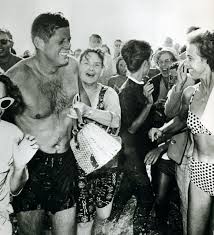
John F. Kennedy after taking a swim at Santa Monica Beach, 1960
But charismatic politicians face the danger of waning enthusiasm.
Many people were growing disillusioned with Kennedy before he died. He had raised hopes that couldn’t be met—especially among blacks.
And many whites bitterly opposed his support of integration, believing that Kennedy was “moving too fast” in changing race relations.
Still, for millions of Americans, Kennedy represented a time of change.
“Let’s get this country moving again” had been his campaign slogan in 1960. He had demanded an end to the non-existent “missile gap” between the United States and Soviet Union.
And he had said that America should create full employment and re-evaluate its policies toward Africa, Latin America and Asia.
His youth, the grace and beauty of his wife and the often-reported antics of his two young children—Caroline and John—added to the atmosphere that change was under way.
But Kennedy was not so committed to reform as many believed:
- As a Senator he had strongly opposed abolishing the Electoral College.
- He never protested the Red-baiting tactics of Senator Joseph R. McCarthy, a frequent dinner guest at the home of his father.
- As President, Kennedy never forgot that he had been elected by a margin of 112,881 votes. He often rationalized his refusal to tackle controversial issues by saying: “We’ll do it after I’m re-elected. So we’d better make damn sure I am re-elected.”
- He thought the United States should recognize “Red” China, but didn’t try to change American foreign policy toward that nation.
Nevertheless, many historians believe that. by vocally supporting civil rights and healthcare for the elderly, Kennedy laid the groundwork for Lyndon Johnson’s legislative victories.
Perhaps no aspect of Kennedy’s Presidency has received closer study than his assassination.
Hundreds of books and thousands of articles have hotly debated whether he was murdered by a lone “nut” or a deadly conspiracy of powerful men.
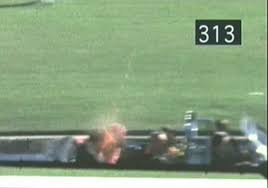
JFK’s assassination: The moment of impact
The murder has been the subject of two government investigations. The first, by the Warren Commission in 1964, concluded that an embittered ex-Marine and Marxist, Lee Harvey Oswald, acted alone in killing Kennedy.
Similarly, the Commission determined that nightclub owner Jack Ruby had killed Oswald on impulse, and not as the result of a conspiracy.
Millions of disbelieving Americans rejected the Warren Report–and named their own villains:
- The KGB;
- The Mob;
- Anti-Castro Cubans;
- Vice President Lyndon B. Johnson;
- Right-wing businessmen and/or military leaders;
- Fidel Castro.
Each of these groups or persons had reason to hate Kennedy:
- The KGB—for Kennedy’s humiliating the Soviet Union during the Cuban Missile Crisis.
- The Mob—in retaliation for the administration’s crackdown on organized crime.
- Anti-Castro Cubans—for JFK’s refusal to commit American military forces to overthrowing Castro at the Bay of Pigs invasion.
- Lyndon Johnson—lusting for power, he stood to gain the most from Kennedy’s elimination.
- Right-wing businessmen and/or military leaders—for believing that Kennedy had “sold out” the country to the Soviet Union.
- Fidel Castro—knowing the CIA was trying to assassinate or overthrow him, he had reason to respond in kind.
The second investigation, conducted in 1977-79 by the House Assassinations Committee, determined that Oswald and a second, unknown sniper had fired at Kennedy. (Oswald was deemed the assassin; the other man’s shot had missed.)
The Chief Counsel for the Committee, G. Robert Blakey, believed New Orleans Mafia boss Carlos Marcello organized the assassination, owing to his hatred of Robert Kennedy for his war on the crime syndicates.
Still, 53 years after JFK’s assassination, no court-admissible evidence has appeared to convict anyone other than Oswald for the murder.
The impact of Kennedy’s death on popular culture remains great. Millions saw him as a brilliant, courageous hero who had worked his way to the top.
But his sudden and violent end shocked those who believed there was always a happy ending.
If so gifted—and protected—a man as John F. Kennedy could be so suddenly and brutally destroyed, no one else could depend on a secure future.
2012 PRESIDENTIAL RACE, ABC NEWS, ALTERNET, AP, BARACK OBAMA, BAY OF PIGS, BBC, BERLIN WALL, BILL CLINTON, BRUCE GREENWOOD, BUZZFEED, CARLOS MARCELLO, CBS NEWS, CIA, CIVIL RIGHTS, CLIFF ROBERTSON, CNN, CUBAN MISSILE CRISIS, DAILY KOS, DAVID HALBERSTAM, DONALD J. TRUMP, FACEBOOK, FBI, FIDEL CASTRO, FRANK SINATRA, HERMAN CAIN, ICH BEN EIN BERLINNER SPEECH, INTERNET MOVIE DATABASE, J. EDGAR HOOVER, JAMES MARSDEN, JOHN F. KENNEDY, JOSEPH MCCARTHY, JOSEPH P. KENNEDY, LYNDON B. JOHNSON, MAFIA, MALCOM X, MARTIN LUTHER KING, MARTIN SHEEN, MOTHER JONES, MOVEON, MOVIES, NBC NEWS, NEWSWEEK, NEWT GINGRICH, NIKITA KHRUSHCHEV, NPR, NUCLEAR TEST BAN TREATY, POLITICO, PT-109, RAW STORY, REUTERS, RICK PERRY, ROBERT F. KENNEDY, ROBERT S. MCNAMARA, SALON, SAM GIANCANA, SANTOS TRAFFICANTE, Sarah Palin, SATURDAY NIGHT LIVE, SEATTLE TIMES, SLATE, SOVIET UNION, THE ATLANTIC, THE BEST AND THE BRIGHTEST, THE BUTLER, THE CHICAGO SUN-TIMES, THE CHICAGO TRIBUNE, THE DAILY BEAST, THE GUARDIAN, THE HILL, THE HUFFINGTON POST, THE LOS ANGELES TIMES, THE MISSILES OF OCTOBER, THE NEW YORK TIMES, THE RAT PACK, THE WALL STREET JOURNAL, THE WASHINGTON POST, THIRTEEN DAYS, TIME, TWILIGHT ZONE, TWITTER, U.S. NEWS & WORLD REPORT, UPI, USA TODAY, VIETNAM WAR, WILLIAM DEVANE, WILLIAM PETERSON
In Bureaucracy, Business, History, Law, Law Enforcement, Military, Politics, Social commentary on May 15, 2017 at 12:26 am
Throughout his life, John F. Kennedy was lucky—both personally and politically.
Part of the secret lay in his physical presence. He was young and handsome, charming and articulate.
He appeared zestful and athletic despite a series of ailments, including Addison’s disease (a malfunction of the adrenal glands) and an injured back that required the use of a brace.
His wit was sophisticated and often self-deprecating. Addressing an assembly of Nobel Prize winners at the White House, he said: “I think this is the most extraordinary collection of talent, of human knowledge, that has ever been gathered at the White House—with the possible exception of when Thomas Jefferson dined alone.”


JFK making a joke at a press conference
And his sense of humor often defused otherwise ticklish problems. During the 1960 Presidential race, he was sharply criticized for relying on his millionaire father for much of his funding. At a campaign rally, he deflected the charge with humor:
“I just received a telegram from my generous Daddy. It says: ‘Dear Jack: Don’t buy one more vote than necessary. I’ll be damned if I’m going to pay for a landslide.’”
Another controversy emerged when he named his brother, Robert, Attorney General. Critics charged that the appointment smacked of nepotism—and that Robert didn’t have enough legal gravitas to be the nation’s chief law enforcement offer.
“I see nothing wrong in giving Robert a little experience before he goes out to practice law,” he said at a press conference.
His highly-polished rhetoric—produced by wordsmiths such as Theodore Sorensen—dazzled audiences. His Inaugural Address was acclaimed by Democrats and even most Republicans.
Its signature line, “Ask not what your country can do for you, ask what you can do for your country” has become as famous as Abraham Lincoln’s “government of the people, by the people, for the people.”
His speeches often urged Americans to seek a higher cause than mere self-interest. Speaking of the role of the arts in a nation’s life, he said:
“It may be different elsewhere, but [in] democratic society…the highest duty of the writer, the composer, the artist is to remain true to himself and to let the chips fall where they may.”
Memorial at the Arlington gravesite for John F. Kennedy
But he could be blunt and profane in private.
“My father always told me all businessmen were sonsofbitches, but I never believed it till now,” he said in private when the steel companies made an inflationary price increase in 1962.
Like Richard Nixon, Kennedy installed a secret taping system in the White House. And, as with Nixon, this picked up many of his profanities. Unlike Nixon, however, Kennedy died before his secret taping system was discovered.
Kennedy impressed many journalists with his capacity for detail.
“He swallows and digests whole books in minutes. His eye seizes instantly on the crucial point of a long memorandum. He confounds experts with superior knowledge of their field,” wrote Games McGregor Burns in 1961.
Having briefly worked as a journalist (covering the opening of the United Nations Assembly in 1945) JFK understood and catered to the sensitivities of the Washington press corps.
Using charm, wit, candor and selective accessibility, he cultivated his own favored group of reporters. Critics charged that he was manipulating the media—and they were right.
Sometimes the manipulation was heavy-handed. He pressured The New York Times to censor its coverage of actions he intended to take—such as during the Bay of Pigs and the Cuban Missile Crisis.
But he failed to coerce the Times to remove David Halberstam, its Vietnam correspondent, whose highly critical articles cast doubt on the effectiveness of the American military commitment to Vietnam.
A major part of Kennedy’s appeal lay in his glamorous background. He was born—on May 29, 1917—into a large, robust family headed by wealthy and powerful financier Joseph P. Kennedy.
He attended Princeton and Harvard, graduating from the latter with top honors.
During World War II he became a Naval hero in 1943 after a Japanese destroyer sliced his PT boat in half—by towing an injured shipmate to safety on a South Pacific island. From there, Kennedy persuaded a native to summon rescue help from the U.S. Navy.
Kennedy had no plans for a postwar political career. That had been assigned to his elder brother, Joseph P. Kennedy, Jr., by their ambitious father, who was determined to seat the first Irish Catholic President.
After learning of his younger brother’s heroism, Joseph volunteered for a dangerous Naval bombing mission. On August 12, 1944, he and a co-pilot flew an explosives-laden plane from England toward France.
While over the English Channel, they were supposed to parachute from the aircraft—after activating a remote control system to send the plane crashing into a German command center.
But the plane mysteriously exploded before the pilots could eject—and before the plane reached its target.
The death of his elder brother ended John F. Kennedy’s plans for a career as a writer. Joseph Kennedy, Sr., insisted that “Jack” assume the political career that the Kennedy patriarch had assigned for his dead brother.
2012 PRESIDENTIAL RACE, ALTERNET, AP, BARACK OBAMA, BAY OF PIGS, BBC, BERLIN WALL, BILL CLINTON, BRUCE GREENWOOD, BUZZFEED, CARLOS MARCELLO, CBS NEWS, CIA, CIVIL RIGHTS, CLIFF ROBERTSON, CNN, CUBAN MISSILE CRISIS, DAILY KOS, DAVID HALBERSTAM, DONALD J. TRUMP, FACEBOOK, FBI, FIDEL CASTRO, FRANK SINATRA, HERMAN CAIN, ICH BEN EIN BERLINNER SPEECH, INTERNET MOVIE DATABASE, J. EDGAR HOOVER, JAMES MARSDEN, JOHN F. KENNEDY, JOSEPH MCCARTHY, JOSEPH P. KENNEDY, LYNDON B. JOHNSON, MAFIA, MALCOM X, MARTIN LUTHER KING, MARTIN SHEEN, MOTHER JONES, MOVEON, MOVIES, NBC NEWS, NEWSWEEK, NEWT GINGRICH, NIKITA KHRUSHCHEV, NPR, NUCLEAR TEST BAN TREATY, POLITICO, PT-109, RAW STORY, REUTERS, RICK PERRY, ROBERT F. KENNEDY, ROBERT S. MCNAMARA, SALON, SAM GIANCANA, SANTOS TRAFFICANTE, Sarah Palin, SATURDAY NIGHT LIVE, SEATTLE TIMES, SLATE, SOVIET UNION, THE ATLANTIC, THE BEST AND THE BRIGHTEST, THE BUTLER, THE CHICAGO SUN-TIMES, THE CHICAGO TRIBUNE, THE DAILY BEAST, THE GUARDIAN, THE HILL, THE HUFFINGTON POST, THE LOS ANGELES TIMES, THE MISSILES OF OCTOBER, THE NEW YORK TIMES, THE RAT PACK, THE WALL STREET JOURNAL, THE WASHINGTON POST, THIRTEEN DAYS, TIME, TWILIGHT ZONE, TWITTER, U.S. NEWS & WORLD REPORT, UPI, USA TODAY, VIETNAM WAR, WILLIAM DEVANE, WILLIAM PETERSON
In Bureaucracy, Business, History, Law, Law Enforcement, Military, Politics, Social commentary on May 12, 2017 at 12:07 am
John F. Kennedy fired the imaginations and captured the hearts of Americans and foreign citizens as no President since the days of Franklin D. Roosevelt.
Millions who voted for him—or against him or didn’t vote at all—still believe that, if only he had lived to be re-elected, America would have entered a truly Golden Age.
Kennedy certainly encouraged such belief. Asked for his definition of happiness, he quoted the ancient Greeks: “The full use of your powers along lines of excellence.”
More than 53 years after his death on November 22, 1963, he remains frozen in time. Assassinated at age 46, he remains forever young, vigorous and charming.
But even if he had not been assassinated, his Presidency could have ended in disaster.
After his 1953 marriage to Jacqueline Bouvier, he continued to pursue both a married and a bachelor life. Rumors of Kennedy’s extramarital affairs swirled throughout his Senatorial career and followed him into the White House.
His conquests included secretaries, wives of friends, strippers, movie stars (such as Marilyn Monroe and Marlene Dietrich) prostitutes and even a mobster’s mistress.
Various theories have been advanced for his taking such dangerous risks with his political career:
- As a victim of Addison’s Disease (insufficiency of the adrenal glands) he had been told by doctors he might not live beyond 35.
- As a result of the cortisone he took to control his Addison’s, his libido was greatly enhanced.
- After escaping death with the sinking of PT-109, he decided to cram as much excitement into his life as possible.
- His father, Joseph P. Kennedy, Sr., a notorious womanizer, had encouraged him and his three other sons to sleep with as many women as possible.
During the 1960 Presidential campaign, Frank Sinatra—who had become smitten with Kennedy and was determined to see him elected—introduced him to a “good time girl” named Judith Campbell.

Judith Campbell
Whether Kennedy knew it or not, Campbell was also sleeping with Sam Giancana—the most-feared Mafia boss in Chicago. And it wasn’t long before Giancana learned about her trysts with Kennedy.
As a favor to Sinatra, Giancana and his fellow mobsters used their powerful influence to ensure that JFK carried Illinois in 1960.
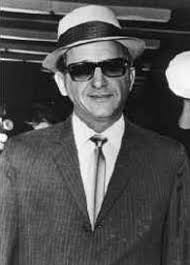
Sam Giancana
In turn, JFK’s father, Joseph P. Kennedy had promised Giancana that the Mob would get a free ride under a Kennedy Presidency.
When JFK appointed his brother, Robert, Attorney General, the latter declared war on organized crime. Giancana and his fellow hoods felt betrayed.
Giancana often raged to Campbell: “If it wasn’t for me, your boyfriend wouldn’t be President.” And having knowledge of her scandalous relationship with JFK, Giancana could have exposed Kennedy to a shocked public.
And if Giancana hadn’t done it, FBI Director J. Edgar Hoover might have.
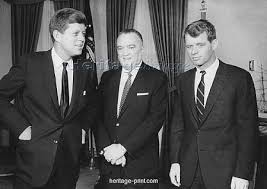
John F. Kennedy, J. Edgar Hoover and Robert F. Kennedy
Hoover, under relentless pressure from Robert Kennedy to crack down on the Mob, had, through illegal electronic surveillance, discovered the Giancana-Campbell-Kennedy connection.
Always fearful that he might be replaced as FBI director, Hoover had quickly alerted the Attorney General to his latest discovery in February, 1962. Neither RFK nor JFK could dare fire Hoover now.
White House telephone logs reveal that, from January, 1961 until February, 1962, Campbell phoned the White House 70 times.
After Hoover informed Robert Kennedy of Campbell’s status with the President, she made only one more call to Kennedy. It was then that the President said the affair was over.
Similarly, the President’s on-and-off affair with Marilyn Monroe put him in an equally dangerous position. Monroe’s behavior, fueled by emotional instability, alcohol and pills, became increasingly erratic. And she grew convinced that Kennedy should divorce Jackie and make her the new First Lady.
Rumors still circulate that the President sent Robert Kennedy—who was by now an old hand at cleaning up JFK’s messes—o tell Monroe their relationship was over.
Whatever secrets Monroe may have been able to reveal about her relationship with Kennedy, she took them to the grave in an overdose of alcohol and sleeping pills on August 5, 1962.
In his 1995 bestseller, The Dark Side of Camelot, investigative reporter Seymour Hersh got several former members of Kennedy’s Secret Service detail to speak about JFK’s extramarital sex life.
They revealed that they had not been allowed to search any of the women Kennedy cavorted with.
Any of these women could have injected the President with a poisonous hypodermic. Or secretly tape recorded their trysts with Kennedy for blackmail purposes.
Kennedy believed he would be re-elected in 1964—especially if his opponent was Barry Goldwater, the Republican Senator from Arizona.
And he almost certainly would have been re-elected; Lyndon Johnson scored a smashing victory over Goldwater that year.
But it’s also possible that Kennedy could have been forced to resign in disgrace over his affairs with Campbell, Monroe or any number of other women.
Such a fate overtook British Secretary of State for War John Profumo in 1962. In 1961, he had begun an affair with Christine Keeler, an attractive model. But Keeler was also bedding Yevgeney Ivanov, the senior naval attaché at the Soviet Embassy in Britain.
When the press learned about the threesome, Profumo was forced to resign, his 22-year political career destroyed.
2012 PRESIDENTIAL RACE, ALTERNET, AP, BARACK OBAMA, BAY OF PIGS, BBC, BERLIN WALL, BILL CLINTON, BRUCE GREENWOOD, BUZZFEED, CARLOS MARCELLO, CBS NEWS, CIA, CIVIL RIGHTS, CLIFF ROBERTSON, CNN, CUBAN MISSILE CRISIS, DAILY KOS, DAVID HALBERSTAM, DONALD J. TRUMP, FACEBOOK, FBI, FIDEL CASTRO, FRANK SINATRA, HERMAN CAIN, ICH BEN EIN BERLINNER SPEECH, INTERNET MOVIE DATABASE, J. EDGAR HOOVER, JAMES MARSDEN, JOHN F. KENNEDY, JOSEPH MCCARTHY, JOSEPH P. KENNEDY, LYNDON B. JOHNSON, MAFIA, MALCOM X, MARTIN LUTHER KING, MARTIN SHEEN, MOTHER JONES, MOVEON, MOVIES, NBC NEWS, NEWSWEEK, NEWT GINGRICH, NIKITA KHRUSHCHEV, NPR, NUCLEAR TEST BAN TREATY, POLITICO, PT-109, RAW STORY, REUTERS, RICK PERRY, ROBERT F. KENNEDY, ROBERT S. MCNAMARA, SALON, SAM GIANCANA, SANTOS TRAFFICANTE, Sarah Palin, SATURDAY NIGHT LIVE, SEATTLE TIMES, SLATE, SOVIET UNION, THE ATLANTIC, THE BEST AND THE BRIGHTEST, THE BUTLER, THE CHICAGO SUN-TIMES, THE CHICAGO TRIBUNE, THE DAILY BEAST, THE GUARDIAN, THE HILL, THE HUFFINGTON POST, THE LOS ANGELES TIMES, THE MISSILES OF OCTOBER, THE NEW YORK TIMES, THE RAT PACK, THE WALL STREET JOURNAL, THE WASHINGTON POST, THIRTEEN DAYS, TIME, TWILIGHT ZONE, TWITTER, U.S. NEWS & WORLD REPORT, UPI, USA TODAY, VIETNAM WAR, WILLIAM DEVANE, WILLIAM PETERSON
In Bureaucracy, Business, History, Law, Law Enforcement, Military, Politics, Social commentary on May 11, 2017 at 12:03 am
President Kennedy’s untimely death has since fueled arguments over how, if he had lived, he would have dealt with Vietnam.
In his memoirs, former Soviet Premier Nikita Khrushchev wrote: “Kennedy would have never let his country get bogged down in Vietnam.”
But David Halberstam, who covered the early years of the war for The New York Times, came to a different conclusion.
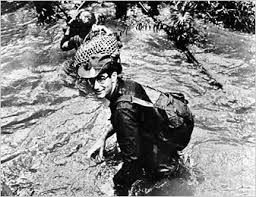
David Halberstam in Vietnam
In his bestselling 1972 book, The Best and the Brightest, he wrote that although Kennedy questioned the wisdom of a combat commitment, he had never shown those doubts in public.
In public, he had expressed doubts only about the Diem regime—whether it held enough support among the Vietnamese to win the war.
His successor had to deal with Kennedy’s public statements, all supportive of the importance of Vietnam.
And it was that successor, newly-elevated President Lyndon B. Johnson, who decided, in 1965, to commit heavy military forces to protecting “freedom-loving” South Vietnam.
In short: Even if Kennedy had intended to withdraw American forces after winning re-election in 1964, he made a fatal mistake: He assumed there would always be time for him to do so.
Historian Thurston Clarke, in his 2013 book JFK’s Last Hundred Days, reached a totally different conclusion: That Kennedy planned to quietly remove American military advisers regardless of the military situation.
Like Halberstam, Clarke believes that Kennedy intended to gradually withdraw troops from Vietnam—but felt he could not afford to inflame the Right during an election year.
Essentially, the question, “What would Kennedy have done?”—on Vietnam, civil rights, relations with the Soviet Union—lies at the heart of his continuing fascination among Americans.
For millions, the later turmoil of the 1960s remains such a traumatic memory that they assume: “America would have had to be better-off if Kennedy had lived.”
But much of Kennedy’s proposed legislation—such as his civil rights act—did not become law until President Johnson overcame conservative opposition to it.
Johnson had first been elected to the House of Representatives in 1937, where he gained influence as a protégé of its speaker, Sam Rayburn. In 1948, he was elected to the U.S. Senate and eventually became one of its most powerful members—especially after becoming its Majority Leader in 1954.
Johnson knew the strengths and weaknesses of his political colleagues, and he ruthlessly exploited this knowledge to ensure the passage of legislation he supported.
Kennedy had served in the House from 1946 to 1952, and from 1952 to 1961 in the Senate. But he had never been a major leader in either body.
It was as a Senator that he wrote his Pulitzer Prize-winning book, Profiles in Courage. But it was also as a Senator that he refused to vote on whether U.S. Senator Joseph R. McCarthy should be censured by his Senatorial colleagues.
In 1954, the Senate voted to condemn McCarthy, whose slanders of Communist subversion had bullied and frightened Americans for four years. McCarthy’s influence as a political figure died overnight.
Joseph P. Kennedy, the family patriarch, was a strong McCarthy supporters. And Robert F. Kennedy had briefly worked for McCarthy’s Red-baiting Senate subcommittee.
JFK’s refusal to say how he would have voted on censuring McCarthy damaged his support among liberals during the 1960 election.
Eleanor Roosevelt famously said that Kennedy should show “more courage and less profile.”
Although Lyndon Johnson’s legislative achievements as Senator and President remain unprecedented, he has become a pariah figure among Democrats.
His 1965 decision to wage all-out war in Vietnam ignited nationwide protests and elected Richard M. Nixon as President in 1968.
Like a doomed character in George Orwell’s novel, 1984, he has largely become an un-person.
Meanwhile, John F. Kennedy continues to endlessly fascinate Americans. In poll after poll they continue to rate him highly—even though he served less than three years in the White House.
Hundreds of books and thousands of articles have been written about JFK. On the big screen he’s been depicted by actors such as Cliff Robertson (PT-109), Bruce Greenwood (Thirteen Days) and James Marsden (The Butler).
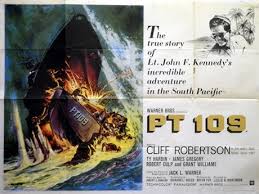
Movie poster for PT-109
On TV, he’s been portrayed by William Devane (The Missiles of October), William Petersen (The Rat Pack), Martin Sheen (Kennedy), James Franciscus (Jacqueline Bouvier Kennedy) and Cliff De Young (Robert Kennedy and His Times).
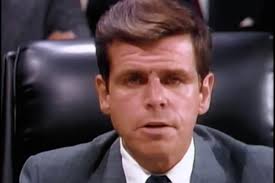
William Devane as John F. Kennedy in The Missiles of October
Kennedy has even appeared on Saturday Night Live (perhaps most famously in a sketch where he chides then-President Clinton for his tawdry choices as a womanizer).
He even figured in a 1986 episode of the revised Twilight Zone episode where a history professor travels back in time to prevent the JFK assassination.
The result: JFK is saved but Soviet Premier Nikita Khrushchev is murdered and World War III erupts.
In 2013, the Internet Movie Database listed a total of 94 movies, mini-series. TV dramas and even comedies featuring the character of John F. Kennedy.
Roads, bridges, tunnels, highways, parks, playgrounds and schools have been named after him.
As Thurston Clarke wrote in JFK’s Last Hundred Days: “There is no test of literary merit except survival, which is in of itself an index of majority opinion. By that standard, Kennedy was a great President.”
2012 PRESIDENTIAL RACE, ALTERNET, AP, BARACK OBAMA, BAY OF PIGS, BBC, BERLIN WALL, BILL CLINTON, BRUCE GREENWOOD, BUZZFEED, CARLOS MARCELLO, CBS NEWS, CIA, CIVIL RIGHTS, CLIFF ROBERTSON, CNN, CUBAN MISSILE CRISIS, DAILY KOS, DAVID HALBERSTAM, DONALD J. TRUMP, FACEBOOK, FBI, FIDEL CASTRO, FRANK SINATRA, HERMAN CAIN, ICH BEN EIN BERLINNER SPEECH, INTERNET MOVIE DATABASE, J. EDGAR HOOVER, JAMES MARSDEN, JOHN F. KENNEDY, JOSEPH MCCARTHY, JOSEPH P. KENNEDY, LYNDON B. JOHNSON, MAFIA, MALCOM X, MARTIN LUTHER KING, MARTIN SHEEN, MOTHER JONES, MOVEON, MOVIES, NBC NEWS, NEWSWEEK, NEWT GINGRICH, NIKITA KHRUSHCHEV, NPR, NUCLEAR TEST BAN TREATY, POLITICO, PT-109, RAW STORY, REUTERS, RICK PERRY, ROBERT F. KENNEDY, ROBERT S. MCNAMARA, SALON, SAM GIANCANA, SANTOS TRAFFICANTE, Sarah Palin, SATURDAY NIGHT LIVE, SEATTLE TIMES, SLATE, SOVIET UNION, THE ATLANTIC, THE BEST AND THE BRIGHTEST, THE BUTLER, THE CHICAGO SUN-TIMES, THE CHICAGO TRIBUNE, THE DAILY BEAST, THE GUARDIAN, THE HILL, THE HUFFINGTON POST, THE LOS ANGELES TIMES, THE MISSILES OF OCTOBER, THE NEW YORK TIMES, THE RAT PACK, THE WALL STREET JOURNAL, THE WASHINGTON POST, THIRTEEN DAYS, TIME, TWILIGHT ZONE, TWITTER, U.S. NEWS & WORLD REPORT, UPI, USA TODAY, VIETNAM WAR, WILLIAM DEVANE, WILLILAM PETERSON
In Bureaucracy, Business, History, Law, Law Enforcement, Military, Politics, Social commentary on May 10, 2017 at 12:01 am
The Kennedy administration’s unprecedented attack on organized crime has led some law enforcement experts to believe the Mob engineered President Kennedy’s assassination.
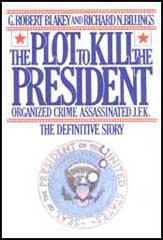
One of these is G. Robert Blakey, father of the Racketeer Influenced Corrupt Organizations (RICO) Act. As the former Chief Counsel and Staff Director to the U.S. House Select Committee on Assassinations (1977–1979) he oversaw the second official inquiry into the Kennedy assassination.
As a result, he believes the Mob had ample means, motive and opportunity to arrange for a “nut” to kill the President.
In his 1980 book, The Plot to Kill the President, Blakey asserted:
- Lee Harvey Oswald shot and killed President Kennedy.
- An unknown confederate of Oswald’s, firing from the “grassy knoll,” also shot at Kennedy but missed.
- The conspiracy was rooted in organized crime and involved Mafia boss Santos Trafficante of Miami and/or Mafia boss Carlos Marcello of New Orleans.
The 1983 TV mini-series, “Blood Feud,” clearly implied that the Mob was responsible. At its heart lay the 10-year conflict between Robert F. Kennedy and James R. Hoffa, then president of the International Brotherhood of Teamsters Union.
This was also the plot of American Tabloid, a 1995 novel by James Ellroy.
But investigative reporter Seymour Hersh wrote that during the five years he researched The Dark Side of Camelot, his expose of the hidden life of President Kennedy, he didn’t uncover any evidence of such a plot.
After Robert Kennedy left the Justice Department in 1964 to run for the post of U.S. Senator from New York, the Justice Department slacked off its push against the crime syndicates.
But the war was resurrected during the Nixon administration and has remained a top priority ever since.
Perhaps the most controversial legacy of the Kennedy administration remains the President’s dealings with the South Vietnamese regime of Ngo Dinh Diem.,
In 1954, the French—who had controlled Vietnam for 80 years—were forced to withdraw their military forces from the country. Their army had suffered a humiliating defeat at Dienbenphu and the French citizenry—still recovering from defeat and Nazi occupation during World War II—demanded an end to the disastrous conflict.
Into this political vacuum stepped the victorious North Vietnamese communist Ho Chi Minh.
Kennedy—then U.S. Senator from Massachusetts—had visited Vietnam while the French were still trying to hold onto one of their last colonial possessions. And he had urged them to withdraw and allow the Vietnamese to govern themselves.
But President Dwight D. Eisenhower was aware of Ho’s overwhelming popularity throughout Vietnam due to his battles against Japanese and French colonialists. In any nationwide election, Ho was certain to win the presidency.
But Eisenhower felt he couldn’t allow an avowed Communist to rule Vietnam. With the North under firm Communist control, America focused its attention on the South.
Searching for an acceptable alternative, Eisenhower found him in Ngo Dinh Diem—a mandarin in a nation swept by revolution, a Catholic in a nation with an 80% Buddhist population.
In 1954, America began backing Diem. Although his first years were marked by social progress, he later became increasingly oppressive toward the Buddhist majority. Corruption openly flourished among government and army officials.
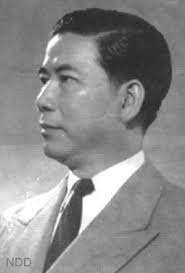
Ngo Dinh Diem
In 1960, North Vietnam launched an aggressive campaign of infiltration and assassination across South Vietnam.
In 1961, President Kennedy sent 400 Green Berets and 100 other military advisers to South Vietnam to offer support.
Diem requested American financing of a 100,000-man increase in his army. Kennedy agreed to an increase of 30,000. Meanwhile, the Joint Chiefs of Staff estimated that 40,000 U.S. troops would be needed to “clean up the Vietcong threat.”
Kennedy underestimated the reaction of North Vietnam, whose forces were fighting what they believed was a crusade. As American troop strength increased, the North escalated its own commitment.
From 1961 to 1963, the number of U.S. troops in Vietnam steadily rose from 685 to 16,732. American minesweepers patrolled the coasts while their aircraft engaged in surveillance.
For the first time, Americans became casualties of the war–especially those in helicopter combat-support missions.
Meanwhile, Diem—urged by his influential brother, Nhu, who ran the secret police—cracked down on the Buddhists.
Government troops fired on a peaceful demonstration in May, 1963. In protest, Buddhist monks burned themselves to death before TV cameras.
Nhu’s beautiful and powerful wife, Madame Nhu, fed growing world outrage by her ridicule of “monk barbecue shows.”
American efforts to stop Diem’s anti-Buddhist campaign failed. On August 21, 1963, Diem’s police shot their way into Buddhist pagodas, killing scores and arresting hundreds.
This finally convinced the Kennedy administration that Diem would never gain the popular support he needed to win the war against the Communist North.
As a result, the administration offered support to South Vietnamese military officers planning a coup against Diem.
On November 1, 1963, South Vietnamese army units stormed the presidential palace. Diem and Nhu fled, but were caught and shot. Madame Nhu, visiting the U.S. at the time, escaped death, accusing Kennedy of supporting the coup.
The administration issued a flat denial.
Diem’s assassination was followed 21 days later by Kennedy’s own.
2012 PRESIDENTIAL RACE, ALTERNET, AP, BARACK OBAMA, BAY OF PIGS, BBC, BERLIN WALL, BILL CLINTON, BRUCE GREENWOOD, BUZZFEED, CARLOS MARCELLO, CBS NEWS, CIA, CIVIL RIGHTS, CLIFF ROBERTSON, CNN, CUBAN MISSILE CRISIS, DAILY KOS, DAVID HALBERSTAM, DONALD J. TRUMP, FACEBOOK, FBI, FIDEL CASTRO, FRANK SINATRA, HERMAN CAIN, ICH BEN EIN BERLINNER SPEECH, INTERNET MOVIE DATABASE, J. EDGAR HOOVER, JAMES MARSDEN, JOHN F. KENNEDY, JOSEPH MCCARTHY, JOSEPH P. KENNEDY, LYNDON B. JOHNSON, MAFIA, MALCOM X, MARTIN LUTHER KING, MARTIN SHEEN, MOTHER JONES, MOVEON, MOVIES, NBC NEWS, NEWSWEEK, NEWT GINGRICH, NIKITA KHRUSHCHEV, NPR, NUCLEAR TEST BAN TREATY, POLITICO, PT-109, RAW STORY, REUTERS, RICK PERRY, ROBERT F. KENNEDY, ROBERT S. MCNAMARA, SALON, SAM GIANCANA, SANTOS TRAFFICANTE, Sarah Palin, SATURDAY NIGHT LIVE, SEATTLE TIMES, SLATE, SOVIET UNION, THE ATLANTIC, THE BEST AND THE BRIGHTEST, THE BUTLER, THE CHICAGO SUN-TIMES, THE CHICAGO TRIBUNE, THE DAILY BEAST, THE GUARDIAN, THE HILL, THE HUFFINGTON POST, THE LOS ANGELES TIMES, THE MISSILES OF OCTOBER, THE NEW YORK TIMES, THE RAT PACK, THE WALL STREET JOURNAL, THE WASHINGTON POST, THIRTEEN DAYS, TIME, TWILIGHT ZONE, TWITTER, U.S. NEWS & WORLD REPORT, UPI, USA TODAY, VIETNAM WAR, WILLIAM DEVANE, WILLIAM PETERSON
In Bureaucracy, Business, History, Law, Law Enforcement, Military, Politics, Social commentary on May 9, 2017 at 12:15 am
John F. Kennedy became President when civil rights suddenly became a burning issue throughout the Nation.
At Kennedy’s request, dozen of law firms sent lawyers South, so civil rights demonstrators would not lack counsel.
Prominent blacks such as Thurgood Marshall, Robert C. Weaver and George L.L. Weaver were appointed, respectively, to the Supreme Court, the Housing and House Finance Agency and the office of Assistant Secretary of Labor.
But Kennedy was highly reluctant to push for a civil rights bill addressing the overall issues of racial discrimination.
The reason: Most of the chairman of House and Senate committees were deeply conservative Southern racists–whether Republican or Democrat. They decided whether Kennedy’s foreign policy initiatives would be approved or opposed–especially his bills for increased foreign aid.
Kennedy believed he could not offend such men without jeopardizing the legacy he wanted to achieve in foreign policy.
This timidity, in turn, led many prominent blacks—such as Martin Luther King and Malcom X—to believe they would see no innovative moves on Kennedy’s part.
But events forced Kennedy’s hand.
On September 30, 1962, the President sent deputy U.S. marshals and National Guardsmen into Mississippi to restore order. Rioting had erupted when, by federal court order, James Meredith, a black, was enrolled at the state university.
Kennedy’s problems in winning support for his civil rights program arose in the folkways of the Nation. When laws run counter to a nation’s folkways, the laws lose.
In backing the admission of Meredith, the President chose an incident which would set off shockwaves for black rights.
Kennedy held mixed emotions about the demand for civil rights by blacks. On one hand, as an Irish Catholic, he grew up with stories about longtime discrimination against his ancestors (such as the “No Irish Need Apply” signs posted by numerous employers).
On the other hand, he had been born into a world of power and wealth, and he had to grope his way toward understanding the problems of the oppressed.
Another major confrontation broke out between Kennedy and the forces of segregation on June 11, 1963. Alabama Governor George C. Wallace personally blocked the entrance of two black pupils to the University of Tuscaloosa.
The President, watching on TV, federalized the Alabama National Guard, which Wallace had used to ring the school. Wallace withdrew and the students were admitted and enrolled.
That same day, Kennedy addressed the nation on the need for genuine equality for all Americans: “The question is whether we are going to treat our fellow Americans as we want to be treated.”
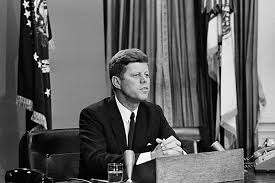
JFK addresses the nation on civil rights
And he called on Congress to pass his civil rights bill, which had been stalled by the legislators.
On August 28, 1963, 200,000 civil rights demonstrators flooded Washington, D.C., for a massive rally.
Fearing that violence would erupt—embarrassing his administration and setting back the cause of civil rights—Kennedy had sought to persuade Dr. Martin Luther King, the march’s chief figure, to cancel the proposed march.
But King and his fellow organizers were determined to go through with it. They had, they said, waited too long for justice to be satisfied with anything less.
The dignity and peacefulness of the rally–and, most especially, King’s soaring “I Have a Dream” speech–won tremendous sympathy throughout the country. Kennedy met with civil rights leaders afterward to offer his support.
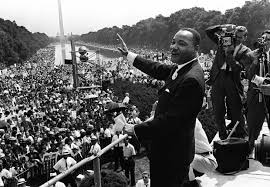
Martin Luther King during the March on Washington
But Kennedy’s civil rights bill remained stalled in Congress until 1964. President Lyndon B. Johnson used the assassinated Kennedy’s new status as a martyr to gain enough support for its passage.
Meanwhile, on yet another front, the Kennedy administration was waging an unprecedented war against organized crime.
This was primarily the work of Attorney General Robert F. Kennedy. As chief counsel for the Senate Permanent Subcommittee on Investigations (1957–59), he had interrogated about 800 mobsters who had been summoned by subpoena.
And he had learned, firsthand, how ineffective the FBI and Justice Department were at bringing such powerful criminals to justice. The FBI had long steered clear of organized crime investigations, largely because its director, J. Edgar Hoover, feared corruption of his agents.
Upon taking office as Attorney General, he greatly expanded the number of attorneys assigned to the Justice Department’s Organized Crime Section. And, more important, he used his status as brother to the President to jawbone FBI Director J. Edgar Hoover into attacking the Mob.
The FBI installed illegal microphones in Mob hangouts throughout the country and started building cases against such mobsters as Sam Giancana, Santos Trafficante and Carlos Marcello.
The administration’s attack on the Mob has led some historians to believe the assassination of President Kennedy was Mob-orchestrated.
The reasons:
- Joseph P. Kennedy, the family patriarch, solicited Mob money and influence for his son’s 1960 Presidential campaign.
- Through singer Frank Sinatra, the elder Kennedy assured Chicago Mafia boss Sam Giancana that the mob would get a free ride if his son were elected President.
- The CIA, seeking any way to topple Fidel Castro, enlisted the Mafia to assassinate him.
- But Robert Kennedy, as Attorney General, ignored the Mob’s “contributions” and pressed his war against the syndicates
- As a result, mobsters felt betrayed and lusted for vengeance.


ABC NEWS, ADULTERY, ALTERNET, AMERICABLOG, AP, BABY BOOMER RESISTANCE, BARACK OBAMA, BBC, BIBLE, BILLY GRAHAM, BLOOMBERG NEWS, BUZZFEED, CBS NEWS, CNN, CROOKS AND LIARS, DAILY KOZ, FACEBOOK, FIVETHIRTYEIGHT, FRANKLIN GRAHAM, HARPER’S MAGAZINE, HOMOSEXUALITY, HUFFINGTON POST, I USA TODAY, MEDIA MATTERS, MITT ROMNEY, MOTHER JONES, MOVEON, MSNBC, NBC NEWS, NEW REPUBLIC, NEWSDAY, NEWSWEEK, NEWT GINGRICH, NPR, PBS NEWSHOUR, POLITICO, POLITICUSUSA, RAW STORY, REUTERS, RICK SANTORUM, SALON, SCIENCE, SEATTLE TIMES, SLATE, SLAVERY, SPANISH INQUISITION, TALKING POINTS MEMO, TEA PARTY, THE ATLANTIC, THE CHICAGO SUN-TIMES, THE CHICAGO TRIBUNE, THE DAILY BEAST, THE DAILY BLOG, THE GUARDIAN, THE HILL, THE HUFFINGTON POST, THE INTERCEPT, THE LOS ANGELES TIMES, THE NATION, THE NEW REPUBLIC, THE NEW YORK TIMES, THE NEW YORKER, THE VILLAGE VOICE, THE WASHINGTON POST, THEOLOGY, THINKPROGRESS, TIME, TRUTHDIG, TRUTHOUT, TWITTER, TWO POLITICAL JUNKIES, U.S. NEWS & WORLD REPORT, UP, UPI, USA TODAY, WAR, WOMEN
AMERICA UNDER BIBLICAL RULE–A DESCENT INTO HELL: PART TWO (END)
In Bureaucracy, History, Law, Law Enforcement, Military, Politics, Social commentary on July 12, 2017 at 12:04 amOn February 18, 2012, GOP Presidential candidate Rick Santorum warned about the “phony theology” of President Barack Obama.
Rick Santorum
“It’s not about you,” Santorum told supporters of the right-wing Tea Party in Columbus, Ohio. “It’s not about your quality of life.
“It’s not about your jobs. It’s about some phony ideal. Some phony theology. Oh, not a theology based on the Bible. A different theology.”
Which raises an interesting question: What would a Bible-based agenda mean for the country?
The death penalty would be vastly expanded to cover such “crimes” as:
A Biblical-era stoning
The Thirteenth Amendment to the Constitution—which forbids slavery—would be repealed. The Bible not only permits slavery but lays out rules for its practice—such as:
Almost all scientific progress would be discarded, since most of its findings conflict with the Bible:
Laws guaranteeing equal rights for women would be repealed:
Military conflicts would be fought without regard to the Geneva Convention–as the Israelites did:
Depiction of the taking of Jericho by the Israelites
Yes, a nation governed by “a theology based on the Bible” would be one far different from the United States we know today.
Since a number of Old Testament practices might lend themselves to easy abuse, this is not a matter to be taken lightly.
Share this: