On May 8, 2018, United States Attorney General Jeff Sessions announced that a “zero-tolerance” policy toward people illegally entering the United States might separate families while parents are prosecuted.
“We don’t want to separate families, but we don’t want families to come to the border illegally and attempt to enter into this country improperly,” Sessions said. “The parents are subject to prosecution while children may not be. So, if we do our duty and prosecute those cases, then children inevitably for a period of time might be in different conditions.”
Children who are separated from their parents would be put under supervision of the U.S. Health and Human Services Department, Sessions said.
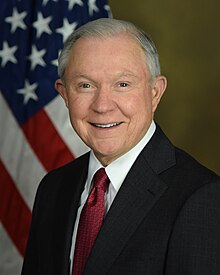
Jeff Sessions
Thomas Homan, U.S. Immigration and Customs Enforcement’s acting director, backed up Sessions’ “get tough” policy change: “Every law enforcement agency in this country separates parents from children when they’re arrested for a crime. There is no new policy. This has always been the policy.”
Since then, that policy has gone into effect. And it has generated widespread outrage by
- Civil liberties organizations; and
- Those who believe the United States should not have—or enforce—its immigration laws.
“Criminalizing and stigmatizing parents who are only trying to keep their children from harm and give them a safe upbringing will cause untold damage to thousands of traumatized families who have already given up everything to flee terrible circumstances in their home countries,” said Erika Guevara-Rosas, Amnesty International’s Americas director.
In fact, alien-smugglers have increasingly used children as a wedge against American immigration laws. Their strategy: “Surely, Americans won’t arrest innocent children—or the adults who bring children with them.“
The Trump administration is proving them wrong.
This is typical behavior for law enforcement agencies: When criminals devise new ways to defeat existing police measures, the police devise new ways to counter those methods.
Meanwhile, those who believe the United States should throw open its doors to everyone who wants to enter are missing—or ignoring—a vital historical lesson.
Ironically, Mexico knows even better than the United States the perils of unchecked illegal immigration.
In 1821, Moses Austin sought a grant from Mexico to settle Texas. After he died in 1821, his son, Stephen, won recognition of the grant by Mexico.
The Mexican government had been unable to persuade large numbers of its own citizens to move to Texas, owing largely to raiding by such fierce Indian tribes as the Comanches.
The government saw the Anglo settlement of Texas as its best hope to tame an otherwise untamable frontier.

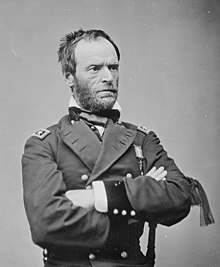
Stephen Austin
Austin convinced numerous American settlers to move to Texas, and by 1825 he had brought the first 300 American families into the territory.
Throughout the 1820s, Austin helped ensure the introduction of slavery into Texas, even though, under Mexican law, this was illegal. Tensions developed between unchecked numbers of Anglo settlers flooding into Texas and the Mexican authorities in charge there.
(“GTT”—“Gone to Texas”—was often carved on cabin doors by debt-ridden settlers who decided to seek their fortune in Texas. And some of the most notorious criminals on the frontier—such as land swindler and knife-fighter James Bowie—joined them.)

James Bowie
Eventually, the irresistible force of unlimited Anglo illegal immigration rebelled against the immovable object of Mexican legal/military authority.
The result:
- The battle of the Alamo: From February 23 to March 6, 1836, about 200 rebellious Texans withstood a 13-day siege in a former San Antonio mission, only to be slaughtered to the last man by an army of 2,000 Mexican soldiers commanded by President (actually, dictator) Antonio Lopez de Santa Anna. Among the victims: James Bowie and former Congressman David Crockett.
- The massacre at Goliad: On March 27, 1836, 425-445 Texans captured after the battle of Coleto were shot en masse by Mexican soldiers.
- The battle of San Jacinto: On April 21, 1836, Texans led by General Sam Houston won a surprise Texas victory over Mexican forces who were caught in a mid-afternoon siesta. Santa Anna—who had fled—was captured the next day.
Mexico was forced to give up all rights to Texas—which, nine years after winning its independence, became a state.
But ongoing conflicts between Mexico and the United States over Texas led to the Mexican war in 1846.
This, in turn, led to a series of devastating American victories over the Mexican army, and the capture of Mexico City itself.
Territory (in brown) that Mexico lost after the Mexican War
Mexico suffered the humiliation of both military defeat and the loss of its land holdings within the American Southwest—which, up to 1848, it had controlled.
This territory later became the states of California, New Mexico, Utah, Nevada, Arizona, Texas, and western Colorado.
And the United States finally spread “from sea to shining sea.”
So Mexico knows what it’s doing when it unloads millions of its own citizens—and those of other Latin and Central American countries—on the United States.
Mexico, in short, is a textbook case of what happens to a country that is unable to enforce its own immigration laws.

 Bureaucracybuster's Blog
2020 PRESIDENTIAL ELECTION, ABC NEWS, ALTERNET, AMERICABLOG, AP, ARIZONA, ATTORNEYS GENERAL, BABY BOOMER RESISTANCE, BEN SASSE, BLOOMBERG, BRAD RAFFENSPERGER, BRIAN KEMP, BUZZFEED, CBS NEWS, CHRIS MURPHY, CNN, CROOKS AND LIARS, DAILY KOZ, DEMOCRATS, DONALD TRUMP, DRUDGE REPORT, ELECTORAL COLLEGE, FACEBOOK, FIVETHIRTYEIGHT, GEORGIA, HARPER’S MAGAZINE, HUFFINGTON POST, JOSEPH BIDEN, jOSH HAWLEY, JOSH SHAPIRO, KEN PAXTON, MEDIA MATTERS, MENNESOTA, MICHIGAN, MIKE PENCE, MOTHER JONES, MOVEON, MSNBC, NANCY PELOSI, NBC NEWS, NEVADA, NEWSWEEK, NPR, PAT A. CIPOLLONE, PBS NEWSHOUR, PENNSYLVANIA, POLITICO, POLITICUSUSA, RAW STORY, REPUBLICANS, REUTERS, SALON, SEATTLE TIMES, SLATE, SUPREME COURT, TALKING POINTS MEMO, TEXAS, THE ATLANTIC, THE CHICAGO SUN-TIMES, THE CHICAGO TRIBUNE, THE DAILY BEAST, THE DAILY BLOG, THE GUARDIAN, THE HILL, THE HUFFINGTON POST, THE LOS ANGELES TIMES, THE NATION, THE NEW REPUBLIC, THE NEW YORK TIMES, THE VILLAGE VOICE, THE WASHINGTON POST, THINKPROGRESS, TIME, TRUTHDIG, TRUTHOUT, TWITTER, TWO POLITICAL JUNKIES, U.S. NEWS & WORLD REPORT, UNITED STATES HOUSE OF REPRESENTATIVES, UNITED STATES SENATE, UPI, USA TODAY, VOTER FRAUD, WISCONSIN, WONKETTE
TRUMP: “I’LL BE WITH YOU–UNTIL I’M AGAINST YOU”: PART ONE (OF TWO)
In Bureaucracy, History, Law, Law Enforcement, Politics, Social commentary on January 12, 2021 at 12:20 amOn November 3, 2020, 81,255,933 Democratic voters elected former Vice President Joseph Biden the 46th President of the United States.
President Donald J. Trump, running for a second term, got 74,196,153 votes.
Yet more than two months after the election, Trump refuses to concede, insisting that he won—and repeatedly claiming falsely that he is the victim of massive vote fraud.
Immediately after the election, Trump ordered his attorneys to file lawsuits to overturn the election results, charging electoral fraud.
Throughout November and December, cases were filed in Wisconsin, Arizona, Nevada, Michigan, Minnesota and Georgia challenging the election results. None were supported by evidence of fraud—as even Trump’s lawyers admitted when questioned by judges.
On November 13, nine cases attacking President-Elect Joe Biden’s win in key states were denied or dropped. A law firm challenging the vote count in Pennsylvania withdrew from the effort.
By November 21, more than 30 cases were withdrawn by Trump’s attorneys or dismissed by Federal judges—some of them appointed by Trump himself.
Ultimately, from November 3 to December 14, Trump and his allies lost 59 times in court, either withdrawing cases or having them dismissed by Federal and state judges.
Donald Trump
On November 19, losing in the courts, Trump invited two Republican legislative leaders from Michigan to the White House. The reason: To persuade them to stop the state from certifying the vote.
The Michigan legislators said they would follow the law.
On December 5, Trump called Georgia Governor Brian Kemp and asked him to call a special legislative session and convince state legislators to select their own electors that would support him, thus overturning Biden’s win.
Kemp refused, saying he lacked the authority to do so.
Brian Kemp
On December 8, the Supreme Court refused to hear Trump’s bid to reverse Pennsylvania’s certification of Biden’s victory. Representative Mike Kelly (R-PA), a Trump ally, argued that the state’s 2.5 million mail-in were unconstitutional.
The Court’s order read, “The application for injunctive relief presented to Justice [Samuel] Alito and by him referred to the Court is denied.”
Although Trump had appointed three of the Court’s Justices, not one of them dissented.
On December 10, the Supreme Court refused to let a Texas lawsuit overturn the results in four battleground states: Georgia, Michigan, Pennsylvania and Wisconsin.
“Texas has not demonstrated a judicially cognizable interest in the manner in which another state conducts its elections,” the court said without further comment. It dismissed all other related claims as moot.
The request for their overturning came in a lawsuit brought by Texas Attorney General Ken Paxton. A Trump ally, Paxton has been indicted on felony securities fraud charges.
Seventeen Republican state Attorney Generals—and 126 Republican members of Congress—supported the lawsuit. They feared Trump’s fanatical base would “primary” them if they didn’t publicly declare their loyalty—to a man they knew was slated to leave office within two months.
The Supreme Court
Had the Court acted on Paxton’s request, the results for democracy would have been catastrophic.
“Texas seeks to invalidate elections in four states for yielding results with which it disagrees,” Pennsylvania Attorney General Josh Shapiro told the justices in legal papers. “Its request for this court to exercise its original jurisdiction and then anoint Texas’s preferred candidate for president is legally indefensible and is an affront to principles of constitutional democracy.”
Then, on December 30, Missouri Republican Senator Josh Hawley announced that, on January 6, 2021, he would object to the certification of some states’ Electoral College results. As many as 140 House Republicans and 25 from the Senate could join him.
This would force Republicans to:
“Josh Hawley and anyone who supports his effort are engaged in the attempted overthrow of democracy,” Democratic Connecticut Senator Chris Murphy said.
“There is no evidence that there was any fraud. Senator Hawley apparently believes that if a Democrat wins the presidential race, it must be illegitimate by definition, even absent any actual evidence of misbehavior.”
Nebraska Republican Senator Ben Sasse bluntly offered the reason for this effort: ‘”We have a bunch of ambitious politicians who think there’s a quick way to tap into the president’s populist base without doing any real, long-term damage. But they’re wrong—and this issue is bigger than anyone’s personal ambitions.”
Having lost in 59 court cases to overturn the election results, Trump opted for some old-fashioned arm-twisting.
On January 2, 2021, he called the office of Georgia Secretary of State Brad Raffensperger. The reason: To pressure him to “find” enough votes to overturn former Vice President Joe Biden’s win in the state’s presidential election.
“All I want to do is this. I just want to find 11,780 votes, which is one more than we have, because we won the state,” Trump lied.
He even threatened Raffensperger with criminal prosecuted if he did not change the vote count in Trump’s favor: “That’s a criminal offense. And you can’t let that happen.”
Raffensperger insisted there hadn’t been any voter fraud—and refused to change the official results.
Share this: