Posts Tagged ‘MARCO RUBIO’
2016 PRESIDENTIAL CAMPAIGN, ABC NEWS, ADOLF HITLER, ALTERNET, AMERICABLOG, AP, BABY BOOMER RESISTANCE, BARACK OBAMA, BBC, BERNIE SANDERS, BLOOMBERG NEWS, BUZZFEED, CBS NEWS, CNN, CROOKS AND LIARS, D-DAY, DAILY KOZ, DAVID BROOKS, DEMOCRATIC PARTY, DONALD TRUMP, ELIZABETH WARREN, FACEBOOK, FIVETHIRTYEIGHT, HARPER’S MAGAZINE, HILLARY CLINTON, HUFFINGTON POST, JOSEPH MCCARTHY, LIBERALS, MARCO RUBIO, MARK SHIELDS, MEDIA MATTERS, MOTHER JONES, MOVEON, MSNBC, NBC NEWS, NEW REPUBLIC, NEWSDAY, NEWSWEEK, NEWT GINGRICH, NOCCOLO MACHIAVELLI, NPR, PBS NEWSHOUR, POLITICO, POLITICUSUSA, RAND PAUL, RAW STORY, REPUBLICAN PARTY, REPUBLICANS, REUTERS, SALON, SEATTLE TIMES, SLANDER, SLATE, STALINGRAD, TALKING POINTS MEMO, TED CRUZ, THE ATLANTIC, THE CHICAGO SUN-TIMES, THE CHICAGO TRIBUNE, THE DAILY BEAST, THE DAILY BLOG, THE GUARDIAN, THE HILL, THE HUFFINGTON POST, THE LOS ANGELES TIMES, THE NATION, THE NEW REPUBLIC, THE NEW YORK TIMES, THE NEW YORKER, THE PRINCE, THE VILLAGE VOICE, THE WASHINGTON POST, THINKPROGRESS, TIME, TRUTHDIG, TRUTHOUT, TWITTER, TWO POLITICAL JUNKIES, U.S. NEWS & WORLD REPORT, UP, UPI, USA TODAY
In Bureaucracy, History, Politics, Social commentary on July 17, 2017 at 12:41 am
Syndicated columnist Mark Shields and New York Times columnist David Brooks appear every Friday on the PBS Newshour to review the week’s major political events.
On May 27, 2016, Shields—a liberal, and Brooks, a conservative—came to some disturbingly similar conclusions about the character of Republican Presidential front-runner Donald Trump.
With the business magnate having won the 2016 Republican Presidential nomination, both columnists appeared increasingly dismayed.

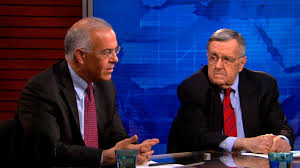
David Brooks and Mark Shields
MARK SHIELDS: “Donald Trump gratuitously slandered Ted Cruz’s wife. He libeled Ted Cruz’s father for being potentially part of Lee Harvey Oswald’s assassination of the president of the United States, suggesting that he was somehow a fellow traveler in that.
“This is a libel. You don’t get over it….
“…I think this man may be addicted to the roar of the grease paint and the sound of the crowd, or however it goes, smell of the crowd.”
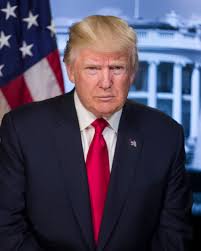
Donald Trump
Ironically, Rand Paul, Republican U.S. Senator from Kentucky, had reached a similar conclusion about Trump:
“I think there is a sophomore quality that is entertaining with Mr. Trump, but I am worried. I’m very concerned of having him in charge of his nuclear weapons because his visceral response to attack people on their appearance—short, tall, fat, ugly—my goodness that happened in junior high.”
DAVID BROOKS: “Trump, for all his moral flaws, is a marketing genius. And you look at what he does. He just picks a word and he attaches it to a person. Little Marco [Rubio], Lyin’ Ted [Cruz], Crooked Hillary [Clinton].
“And that’s a word. And that’s how marketing works. It’s a simple, blunt message, but it gets under.
“It sticks, and it diminishes. And so it has been super effective for him, because he knows how to do that. And she [Hillary Clinton] just comes with, ‘Oh, he’s divisive.’
“These are words that are not exciting people. And her campaign style has gotten, if anything…a little more stagnant and more flat.”
Hillary Clinton wasn’t the only Presidential candidate who proved unable to cope with Trump’s gift for insult. His targets—and insults—included:
- Former Texas Governor Rick Perry: “Wears glasses to seem smart.”
- Former Florida Governor Jeb Bush: “Low Energy Jeb.”
- Vermont U.S. Senator Bernie Sanders: “Crazy Bernie.”
- Ohio Governor John Kasich: “Mathematically dead and totally desperate.”
How did American politics reach this state of affairs?
In 1996, Newt Gingrich, then Republican Speaker of the House of Representatives, wrote a memo that encouraged Republicans to “speak like Newt.”
Entitled “Language: A Key Mechanism of Control,” it urged Republicans to attack Democrats with such words as “corrupt,” “selfish,” “destructive,” “hypocrisy,” “liberal,” “sick,” and “traitors.”
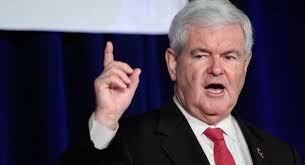
Newt Gingrich
Even worse, Gingrich encouraged the news media to disseminate such accusations. Among his suggestions:
- “Fights make news.”
- Create a “shield issue” to deflect criticism: “A shield issue is, just, you know, your opponent is going to attack you as lacking compassion. You better…show up in the local paper holding a baby in the neonatal center.”
In the memo, Gingrich advised:
“….In the video “We are a Majority,” Language is listed as a key mechanism of control used by a majority party, along with Agenda, Rules, Attitude and Learning.
“As the tapes have been used in training sessions across the country and mailed to candidates we have heard a plaintive plea: ‘I wish I could speak like Newt.’
“That takes years of practice. But, we believe that you could have a significant impact on your campaign and the way you communicate if we help a little. That is why we have created this list of words and phrases….
“This list is prepared so that you might have a directory of words to use in writing literature and mail, in preparing speeches, and in producing electronic media.
“The words and phrases are powerful. Read them. Memorize as many as possible. And remember that like any tool, these words will not help if they are not used.”
Here is the list of words Gingrich urged his followers to use in describing “the opponent, their record, proposals and their party”:
- abuse of power
- anti- (issue): flag, family, child, jobs
- betray
- bizarre
- bosses
- bureaucracy
- cheat
- coercion
- “compassion” is not enough
- collapse(ing)
- consequences
- corrupt
- corruption
- criminal rights
- crisis
- cynicism
- decay
- deeper
- destroy
- destructive
- devour
- disgrace
- endanger
- excuses
- failure (fail)
- greed
- hypocrisy
- ideological
- impose
- incompetent
- insecure
- insensitive
|
- intolerant
- liberal
- lie
- limit(s)
- machine
- mandate(s)
- obsolete
- pathetic
- patronage
- permissive attitude
- pessimistic
- punish (poor …)
- radical
- red tape
- self-serving
- selfish
- sensationalists
- shallow
- shame
- sick
- spend(ing)
- stagnation
- status quo
- steal
- taxes
- they/them
- threaten
- traitors
- unionized
- urgent (cy)
- waste
- welfare
|
Yes, speaking like Newt—or Adolf Hitler or Joseph McCarthy—“takes years of practice.”
And to the dismay of both Republicans and Democrats, Donald Trump has learned his lessons well.
Only one opponent—who was not a Presidential candidate—managed to stand up to Trump: Massachusetts U.S. Senator Elizabeth Warren.
On the May 27, 2016 edition of the PBS Newshour, syndicated columnist Mark Shields noted the ability of Elizabeth Warren to rattle Trump:
“Elizabeth Warren gets under Donald Trump’s skin. And I think she’s been the most effective adversary. I think she’s done more to unite the Democratic party than either Hillary Clinton or Bernie Sanders.”
ABC NEWS, ALTERNET, ANCIENT GREECE, ASIANS, AUBREY DE SELINCOURT, BERNIE SANDERS, BLACKS, BUZZFEED, CBS NEWS, CIA, CNN, CYBERSECURITY, DAILY KOS, DALLAS MORNING NEWS, DEBBIE WASSERMAN-SCHULTZ, DEMOCRATIC CONVENTION, DEMOCRATIC NATIONAL COMMITTEE, DONALD TRUMP, ELIZABETH WARREN, FACEBOOK, GEORGE W. BUSH, HERODOTUS, HILLARY CLINTON, HUBRIS, MARCO RUBIO, MEXICANS, MICHAEL HAYDEN, MOTHER JONES, MOVEON, MUSLIMS, NBC NEWS, NEWSWEEK, NPR, PAUL RYAN, POLITICO, PRISONERS OF WAR, RAW STORY, RUSSIA, SALON, SLATE, TED CRUZ, THE CHICAGO SUN-TIMES, THE CHICAGO TRIBUNE, THE DAILY BEAST, THE HUFFINGTON POST, THE LOS ANGELES TIMES, THE NEW YORK TIMES, THE WASHINGTON POST, TIME, TWITTER, U.S. NEWS & WORLD REPORT, U.S. STATE DEPARTMENT, VLADIMIR PUTIN, WIKILEAKS, WOMEN
In Bureaucracy, History, Military, Politics, Social commentary on February 7, 2017 at 4:00 pm
Donald Trump has changed Presidential campaigning–perhaps forever.
First, he routinely insulted his opponents. He made angry and brutal attacks on a wide range of persons and organizations–including his fellow Republicans, journalists, news organizations, other countries and even celebrities unconnected with politics.
Among those groups:
- Mexicans
- Prisoners-of-War
- Blacks
- Handicapped

Second, he weaponized social media. He made Twitter an essential arm of his campaign, swiftly insulting his opponents and keeping them constantly off-balance. He proved himself a master at the tabloid news culture and thoroughly in tune with his target audience.
Third, he used the media for free publicity. Since announcing his candidacy on June 16, 2015, he got a year’s worth of free media advertising. This wasn’t the result of a networks’ conspiracy to favor Trump.

Instead, it owed to the media’s lust for sensational copy. And scenes of conflict–such as making brutal attacks on others–generate huge viewership.
This was most apparent in debates, during which he belittled his Republican opponents with insulting nicknames, such as:
- “Little Marco” – Florida U.S. Senator Marco Rubio
- “Goofy” – Massachusetts U.S. Senator Elizabeth Warren
- “Lyin’ Ted” – Texas U.S. Senator Rafael Eduardo “Ted” Cruz
And looking beyond the Republican primary cycle, he created one for his future Democratic antagonist: “Crooked Hillary”–Hillary Clinton, former First Lady, U.S. Senator from New York and Secretary of State.
Political pundits marveled at Trump’s ability to jettison long-held niceties of political discourse and not pay an electoral price for it. They kept predicting that eventually this might happen. But it never did.
Fourth, he openly called for the subversion of the American political system.
On July 22, 2016, Wikileaks released 19,252 emails and 8,034 attachments hacked from computers of the highest-ranking officials of the Democratic National Committee (DNC).
Cyber-security experts believed the hackers originated from Russia–and that Russian President Vladimir Putin authorized it.

The emails revealed the DNC’s bias for Clinton for President. And they showed clear animosity toward her lone challenger, Vermont U.S. Senator Bernie Sanders.
Sanders’ supporters had long charged that the DNC and its chair, Debbie Wasserman-Schultz, were plotting to undercut his campaign.
Five days later, on July 27, at a press conference in Doral, Florida. Trump said:
“Russia, if you’re listening, I hope you’re able to find the 30,000 emails that are missing. I think you will probably be rewarded mightily by our press.”
Trump hoped to score points on Hillary Clinton’s using a private email server as Secretary of State. Instead, he ignited criticism–of himself–on both Left and Right.
“This has to be the first time that a major presidential candidate has actively encouraged a foreign power to conduct espionage against his political opponent,” said Jake Sullivan, Clinton’s chief foreign policy adviser. “This has gone from being a matter of curiosity, and a matter of politics, to being a national security issue.”
Republican Speaker of the House Paul Ryan was equally quick to react. “Russia is a global menace led by a devious thug,” said Brendan Buck, Ryan’s spokesman. “Putin should stay out of this election.”
“If he is talking about the State Department emails on her server, he is inviting a foreign intelligence service to steal sensitive American government information,” said Michael Hayden, head of the CIA under President George W. Bush.
“In addition to its implications for national security today,” wrote Benjy Sarlin, political reporter for MSNBC, “the incident raised disturbing questions about how Trump would govern as president. If a leader is willing to turn to ask foreign spy agencies to target a political opponent, what would he ask of his own spy agencies?”
The avalanche of criticism led Trump to claim: “I was only being sarcastic.”
For at least one normally conservative newspaper, Trump’s words were simply too much. In a July 27 editorial, The Dallas Morning News declared:
“Words have meaning. The world is listening. And what the world is hearing is a man demonstrating that he is unfit to sit in the Oval Office.”
Since the end of World War II, Republicans had taken an intensely anti-Communist stance. Now their Presidential nominee had not only complimented an ex-KGB agent but had even invited him to target the American political system.
Despite the criticism, the overwhelming majority of Republicans–including Paul Ryan–continued to support Trump’s candidacy. Nor did the Obama administration investigate or indict him for treason or subversion.
The ancient Greeks believed hubris–overweening pride–to be the greatest of sins. And, they warned, it was usually punished by divine wrath.

In his book, The World of Herodotus, Aubrey de Selincourt writes that the Greek historian filled his book, The Histories, with “stories of the perils of pride–pride of wealth, pride of power, pride of success, and, deadliest of all, the pride which leads a man to forget that he is a nothing in the sight of the gods.”
And, in the pages of The Histories lies this warning: “Look to the end, no matter what it is you are considering. Often enough, God gives a man a glimpse of happiness, and then utterly ruins him.”
Donald Trump has finally made it to the White House. But there is still time for hubris to overtake and destroy him.
ABC NEWS, AMERICAN TABLOID, ANTI-CASTRO CUBANS, ASSASSINATION, CBS NEWS, CIA, CNN, COMMUNISM, CUBA, CUBAN MISSILE CRISIS, DONALD TRUMP, DWIGHT D. EISENHOWER, FACEBOOK, FBI, FIDEL CASTRO, FLORIDA, FULGENCIO BATISTA, GUS RUSSO, JACK RUBY, JAMES ELLROY, JOHN F. KENNEDY, JOHNNY ROSELLI, LEE HARVEY OSWALD, LIVE BY THE SWORD, LYNDON B. JOHNSON, MAFIA, MARCO RUBIO, NBC NEWS, NIKITA KHRUSHCHEV, ROBERT F. KENNEDY, SAM GIANCANA, THE CHICAGO SUN-TIMES, THE CHICAGO TRIBUNE, THE LOS ANGELES TIMES, THE NEW YORK TIMES, THE WASHINGTON POST, TWITTER, WARREN COMMISSION
In Bureaucracy, History, Military, Politics, Social commentary on December 2, 2016 at 12:02 am
“John and Robert Kennedy knew what they were doing. They waged a vicious war against Fidel Castro–a war someone had to lose.”
And the loser turned out to be John F. Kennedy.
So writes investigative reporter Gus Russo in Live By the Sword: The Secret War Against Castro and the Death of JFK, published in 1998.
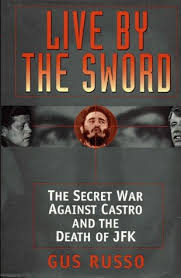
In what is almost certainly the definitive account of the assassination of President John F. Kennedy, Russo reaches some startling–but highly documented–conclusions:
- Lee Harvey Oswald assassinated Kennedy.
- He did it alone.
- Oswald, a former Marine, was a committed Marxist–whose hero was Castro.
- The CIA’s ongoing campaign to overthrow and/or assassinate Castro was an open secret throughout the Gulf.
- Oswald visited New Orleans in the spring of 1963.
- There he learned that Castro was in the crosshairs of the CIA.
- For this, he blamed John F. Kennedy.
- Oswald told his Russian-born wife, Marina: “Fidel Castro needs defenders. I’m going to join his army of volunteers.”
- Jack Ruby, a Dallas nightclub owner, murdered Oswald because he was distraught over Kennedy’s death.
- Ruby was not part of a Mafia conspiracy to silence Oswald.
- Skeptics of the Warren Commission–which concluded that Oswald had acted alone–asked the wrong question: “Who killed Kennedy?”
- They should have asked: “Why was he killed?”
- The answer–according to Russo: “The Kennedys’ relentless pursuit of Castro and Cuba backfired in tragedy on that terrible day in November, 1963.”
Another book well worth reading about America’s Cuban obsession during the early 1960s is American Tabloid, by James Ellroy.
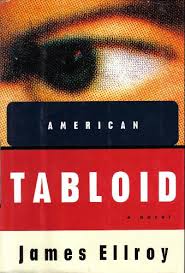
Although a novel, it vividly captures the atmosphere of intrigue, danger and sleaziness that permeated that era in a way that dry, historical documents never can.
“The 50’s are finished,” reads its paperback dust jacket. “Zealous young lawyer Robert Kennedy has a red-hot jones to nail Jimmy Hoffa. JFK has his eyes on the Oval Office.
“J. Edgar Hoover is swooping down on the Red Menace. Howard Hughes is dodging subpoenas and digging up Kennedy dirt. And Castro is mopping up the bloody aftermath of his new Communist nation….
“Mob bosses, politicos, snitches, psychos, fall guys and femmes fatale. They’re mixing up a Molotov cocktail guaranteed to end the country’s innocence with a bang.”
Among the legacies of America’s twisted romance with anti-Castro Cubans:
- Following the JFK assassination, there was a cover-up.
- Its purpose: To protect the reputation of the United States Government–and that of its newly-martyred President.
- The CIA and FBI concealed the CIA-Mafia assassination plots from the Warren Commission assigned to investigate Kennedy’s murder.
- Other government officials participating in the cover-up included Attorney General Robert F. Kennedy and President Lyndon B. Johnson.
- Ironically, this secrecy ignited the widespread–and false–belief that the President had died at the hands of a government conspiracy.
- Robert Kennedy feared that his relentless pursuit of Castro might have led Castro to “take out” JFK first.
- Fearing his own assassination if he continued Kennedy’s efforts to murder Castro, President Johnson ordered the CIA to halt its campaign to overthrow and/or assassinate the Cuban leader.
- The huge Cuban community throughout Florida–and especially Miami–continues to exert a blackmailing influence on American politics.
- Right-wing politicians from Richard Nixon to Donald Trump have reaped electoral rewards by catering to the demands of this hate-obsessed voting block.
- These Cuban ex-patriots hope that the United States will launch a full-scale military invasion of the island to remove Castro.
- Having grown rich and soft in the United States, they fear to risk their own lives by returning to Cuba to overthrow the Castro regime–as he had overthrown Fulgencio Batista.
- Only President Barack Obama had the political courage to re-establish diplomatic relations with Cuba–in 2015.
- This occurred long after the United States had done so with such former enemies as the Soviet Union, China and Vietnam.
- With President-elect Donald Trump due to take office in January, 2017, America’s future relations with Cuba remain in doubt.
The Cuban Missile Crisis remains the single most dangerous moment of the 50-year Cold War, when the world stood only minutes away from nuclear Armageddon.
That crisis stemmed from the American Right’s twisted obsession with Cuba, an obsession that continues today.
So what are the lessons to be learned from that obsession?
- It is long past time to demand major changes in our foreign policy toward Cuba.
- It’s time to end the half-century contamination of American politics by those Cubans who live only for their hatred of Castro–and those political candidates who live to exploit it.
- (For example: Marco Rubio got elected U.S. Senator from Florida in 2010 by claiming that his parents had been forced to leave Cuba in 1959, after Fidel Castro took power. In fact, they had left Cuba in 1956–during the Batista dictatorship.)
- It’s time to end this wag-the-dog relationship. A population of about 1,700,000 Cuban exiles living in Florida should not be allowed to shape the domestic and foreign policy of a nation of 300 million.
- Those who continue to hate–or love–Fidel Castro should be left to their own private feud. But that is a feud they should settle on their own island, and not from the shores of the United States.
ABC NEWS, AMERICAN TABLOID, ANTI-CASTRO CUBANS, ASSASSINATION, CBS NEWS, CIA, CNN, COMMUNISM, CUBA, CUBAN MISSILE CRISIS, DONALD TRUMP, DWIGHT D. EISENHOWER, FACEBOOK, FBI, FIDEL CASTRO, FLORIDA, FULGENCIO BATISTA, GUS RUSSO, JACK RUBY, JAMES ELLROY, JOHN F. KENNEDY, JOHNNY ROSELLI, LEE HARVEY OSWALD, LIVE BY THE SWORD, LYNDON B. JOHNSON, MAFIA, MARCO RUBIO, NBC NEWS, NIKITA KHRUSHCHEV, ROBERT F. KENNEDY, SAM GIANCANA, THE CHICAGO SUN-TIMES, THE CHICAGO TRIBUNE, THE LOS ANGELES TIMES, THE NEW YORK TIMES, THE WASHINGTON POST, TWITTER, WARREN COMMISSION
In Bureaucracy, History, Military, Politics, Social commentary on December 1, 2016 at 10:46 am
On October 22, 1962, President John F. Kennedy went on nationwide TV to announce the discovery of the missiles and his blockade of Cuba.
He warned that any nuclear missile launched from Cuba against any nation would be regarded as an attack on the United States by the Soviet Union–and would trigger “a full retaliatory response” upon the U.S.S.R.
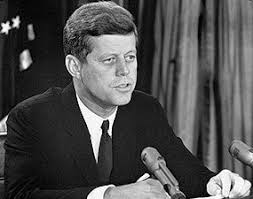
President John F. Kennedy addresses the nation
And he demanded that the Soviets remove all of their offensive weapons from Cuba:
“The path we have chosen for the present is full of hazards, as all paths are, but it is the one most consistent with our character and courage as a nation and our commitments around the world.
“The cost of freedom is always high, but Americans have always paid it. And one path we shall never choose, and that is the path of surrender or submission.”
On October 26, the United States raised the readiness level of SAC forces to DEFCON 2–the step just short of war. For the only time in U.S. history, B-52 bombers were dispersed to various locations and made ready to take off, fully equipped, on 15 minutes’ notice.
Other measures taken included:
- One-eighth of America’s 1,436 bombers were on airborne alert.
- About 145 intercontinental ballistic missiles stood on ready alert.
- Air Defense Command redeployed 161 nuclear-armed interceptors to 16 dispersal fields within nine hours with one-third maintaining 15-minute alert status.
- Twenty-three nuclear-armed B-52 were sent to orbit points within striking distance of the Soviet Union.
An invasion date was set for October 29. But the Kennedy Administration–and the American military–didn’t know that the Russian soldiers guarding the missiles had been armed with tactical nuclear weapons.
Had the Marines gone in, those mini-nukes would have been used. And a fullscale nuclear exchange between the United States and the Soviet Union would have almost certainly followed.
At the height of the crisis, Attorney General Robert F. Kennedy offered a solution.
Khrushchev had sent two teletypes to Kennedy. The first had agreed to remove the missiles, but the second had demanded that the United States remove its own missiles from Turkey, which bordered the Soviet Union.
Robert Kennedy’s solution: The administration should ignore the second message–and announce that it had accepted Khrushchev’s offer to remove the missiles.
After this announcement was made, President Kennedy said to his advisers: “It can go either way now.”
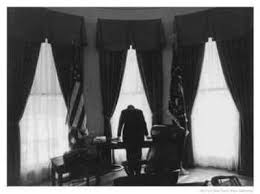
John F. Kennedy in the Oval Office
The crisis ended on October 28. Under enormous pressure, Khrushchev agreed to remove the missiles from Cuba.
Behind his decision lay a secret promise by the Kennedy administration to remove its obsolete nuclear missiles from Turkey, which bordered the Soviet Union. And a public pledge to not invade Cuba.
On the night the crisis ended, there occurred a prophetic exchange between the two Kennedy brothers.
JFK: “Maybe this is the night I should go to the theater”–a reference to Abraham Lincoln’s fatal attendance of Ford’s Theater at the end of the Civil War.
RFK: “If you go, I want to go with you.”
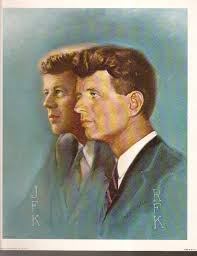
John F. and Robert F. Kennedy
But President Kennedy was not finished with Castro. While continuing the campaign of sabotage throughout Cuba, the Kennedys were preparing something far bigger: A fullscale American invasion of the island.
On October 4, 1963, the Joint Chiefs of Staff submitted its latest version of the invasion plan, known as OPLAN 380-63. Its timetable went:
- January, 1964: Infiltration into Cuba by Cuban exiles.
- July 15, 1964: U.S. conventional forces join the fray.
- August 3, 1964: All-out U.S. air strikes on Cuba.
- October 1, 1964: Full-scale invasion to install “a government friendly to the U.S.”
During the Cuban Missile Crisis, Robert Kennedy–referring to the 1941 Japanese attack on Pearl Harbor–had resisted demands for a “sneak attack” on Cuba by saying: “I don’t want my brother to be the Tojo of the 1960s.”
Now the Kennedys planned such an attack on Cuba just one month before the November, 1964 Presidential election.
Then fate–in the unlikely figure of Lee Harvey Oswald–intervened.
On November 22, 1963, while the President rode through Dallas in an open-air automobile, a rifle-wielding assassin opened fire. He scored two hits on Kennedy–in the back of the neck and head. The second wound proved instantly fatal.
The nation and the world were shocked–and plunged into deep mourning.
But for some of those who had waged a secret, lethal war against Fidel Castro for the previous two years, Kennedy’s death–at least in retrospect–didn’t come as a surprise.
Robert Kennedy, in particular, spent the remaining years of his life agonizing over the possibility that his highly personal war against Castro had backfired.
That Castro, fed up with the CIA’s assassination plots against him, had retaliated with one of his own.
Robert Kennedy’s fears and guilt were compounded by the fact that, while waging war on Castro, he had waged an equally ruthless crusade against organized crime.
He knew that some of the mobsters he had tried to send to prison had played a major role in the CIA’s efforts to “hit” Castro. Had the Mafia–believing itself the victim of a double-cross–put out a “contract” on JFK instead?
It was a question that haunted him until the day he died.
ABC NEWS, AMERICAN TABLOID, ANTI-CASTRO CUBANS, ASSASSINATION, CBS NEWS, CIA, CNN, COMMUNISM, CUBA, CUBAN MISSILE CRISIS, DONALD TRUMP, DWIGHT D. EISENHOWER, FACEBOOK, FBI, FIDEL CASTRO, FLORIDA, FULGENCIO BATISTA, GUS RUSSO, JAMES ELLROY, JOHN F. KENNEDY, JOHNNY ROSELLI, LEE HARVEY OSWALD, LIVE BY THE SWORD, LYNDON B. JOHNSON, MAFIA, MARCO RUBIO, NBC NEWS, NIKITA KHRUSHCHEV, ROBERT F. KENNEDY, SAM GIANCANA, THE CHICAGO SUN-TIMES, THE CHICAGO TRIBUNE, THE LOS ANGELES TIMES, THE NEW YORK TIMES, THE WASHINGTON POST, TWITTER, WARREN COMMISSION
In Bureaucracy, History, Military, Politics, Social commentary on November 30, 2016 at 12:02 am
In April, 1961, the CIA tried to overthrow the Communist regime of Cuba’s “Maximum Leader,” Fidel Castro, at the Bay of Pigs.
When that failed, President John F. Kennedy ordered Castro’s removal through a campaign of sabotage and assassination.
These covert operatives became known within the CIA as the Special Group, and were ultimately supervised by Robert F. Kennedy, the President’s brother and Attorney General.
The war against Castro became known within the CIA as Operation Mongoose.
But not everyone in the CIA was enthusiastic about the “get Castro” effort.
“Everyone at CIA was surprised at Kennedy’s obsession with Fidel,” recalled Sam Halpern, who was assigned to the Cuba Project. “They thought it was a waste of time. We all knew [Fidel] couldn’t hurt us. Most of us at CIA initially liked Kennedy, but why go after this little guy?
“One thing is for sure: Kennedy wasn’t doing it out of national security concerns. It was a personal thing. The Kennedy family felt personally burnt by the Bay of Pigs and sought revenge.”
It was all-out war. Among the tactics used:
- Hiring Cuban gangsters to murder Cuban police officials and Soviet technicians.
- Sabotaging mines.
- Paying up to $100,000 per “hit” for the murder or kidnapping of Cuban officials.
- Using biological and chemical warfare against the Cuban sugar industry.
“Bobby (Kennedy) wanted boom and bang all over the island,” recalled Halpern. “It was stupid. The pressure from the White House was very great.”
Among that “boom and bang” were a series of assassination plots against Castro, in which the Mafia was to be a key player.
Chicago Mobster Johnny Rosselli proposed a simple plan: through its underworld connections in Cuba, the Mafia would recruit a Cuban in Castro’s entourage, such as a waiter or bodyguard, who would poison him.
The CIA’s Technical Services division produced a botulinus toxin which was then injected into Castro’s favorite brand of cigars. The CIA also produced simpler botulinus toxin pills that could be dissolved in his food or drink.
But the deputized Mafia contacts failed to deliver any of the poisons to Castro.
Rosselli told the CIA that the first poisoner had been discharged from Castro’s employ before he could kill him, and the back-up agent got “cold feet.”
Other proposals or attempts included:
- Planting colorful seashells rigged to explode at a site where Castro liked to go skindiving.
- Trying to arrange for his being presented with a wetsuit impregnated with noxious bacteria and mold spores, or with lethal chemical agents.
- Attempting to infect Castro’s scuba regulator with tuberculous bacilli.
- Trying to douse his handkerchiefs, tea and coffee with other lethal bacteria.
Former members of the Kennedy Administration later insisted that neither John nor Robert Kennedy knew or approved of these assassination plots. But the sheer weight of available evidence indicates otherwise.
Bobby, in particular, was constantly pressing the CIA to “do something” about Castro. In the world of covert action, words like “Kill Castro” aren’t committed to paper. Or even spoken.
Castro, rightly seeing his life and regime threatened, appealed to Nikita Khrushchev, leader of the Soviet Union, for assistance.

1960s poster of Fidel Castro and Nikita Khrushchev
Keizers [CC BY-SA 3.0 (https://creativecommons.org/licenses/by-sa/3.0)%5D
Khrushchev was quick to comply: “We must not allow the communist infant to be strangled in its crib,” he told members of his inner circle.
By October, 1962, the Soviet Union had sent more than
- 40,000 soldiers,
- 1,300 field pieces,
- 700 anti-aircraft guns,
- 350 tanks and
- 150 jets
to Cuba to deter another invasion.
Most importantly, Khrushchev began supplying Castro with nuclear-tipped ballistic missiles.
Their discovery, on October 15, 1962, ignited the single most dangerous confrontation of the 50-year Cold War.
Suddenly, the United States and the Soviet Union–bristling with nuclear weapons–found themselves on the brink of nuclear war.
At the time, Kennedy officials claimed they couldn’t understand why Khrushchev had placed nuclear missiles in Cuba. “Maybe Khrushchev’s gone mad” was a typical public musing.
This remained the official American view for years afterward–as depicted in Robert Kennedy’s memoir, Thirteen Days: A Memoir of the Cuban Missile Crisis, published in 1969, the year after his death.
No admission was made that JFK had been waging a no-holds-barred campaign to overthrow the Cuban government and assassinate its leader.
The same proved true for the 1974 doc-u-drama, The Missiles of October, starring William Devane as John F. Kennedy and Martin Sheen as Robert Kennedy.
On October 16, President Kennedy was informed of the missile installations. He immediately convened a group of his 12 most important advisers, which became known as Ex-Comm, for Executive Committee.
Then followed seven days of guarded and intense debate by Kennedy and his advisers. Some of the participants–such as Air Force General Curtis LeMay–urged an all-out air strike against the missile sites.
Others–such as Adlai Stevenson, the United States delegate to the United Nations–urged a reliance on quiet diplomacy.
It was Secretary of Defense Robert S. McNamara who suggested a middle course: A naval blockade–a “quarantine” in Kennedy’s softened term–around Cuba. This would hopefully prevent the arrival of more Soviet offensive weapons on the island.
Finally, the President decided to to impose a naval blockade.
On October 22, Kennedy went on nationwide TV to announce the discovery of the missiles and his blockade of Cuba.
ABC NEWS, AMERICAN TABLOID, ANTI-CASTRO CUBANS, ASSASSINATION, CBS NEWS, CIA, CNN, COMMUNISM, CUBA, CUBAN MISSILE CRISIS, DONALD TRUMP, DWIGHT D. EISENHOWER, FACEBOOK, FBI, FIDEL CASTRO, FLORIDA, FULGENCIO BATISTA, GUS RUSSO, JACK RUBY, JAMES ELLROY, JOHN F. KENNEDY, JOHNNY ROSELLI, LEE HARVEY OSWALD, LIVE BY THE SWORD, LYNDON B. JOHNSON, MAFIA, MARCO RUBIO, NBC NEWS, NIKITA KHRUSHCHEV, ROBERT F. KENNEDY, SAM GIANCANA, THE CHICAGO SUN-TIMES, THE CHICAGO TRIBUNE, THE LOS ANGELES TIMES, THE NEW YORK TIMES, THE WASHINGTON POST, TWITTER, WARREN COMMISSION
In Bureaucracy, History, Military, Politics, Social commentary on November 29, 2016 at 12:08 am
On November 25, Fidel Castro, Cuba’s longtime “Maximum Leader,” died at the age of 90.
Old age and disease finally achieved what years of plotting by CIA and Mafia assassins could not.
To his supporters he was a tireless champion of the poor and a foe of American imperialism. To his enemies he was a ruthless dictator who drove his country to economic ruin in the name of a failed ideology–communism.
His reign began on January 1, 1959, when he swept triumphantly into Havana after a two-year guerrilla campaign against Cuban dictator Fulgencio Batista.
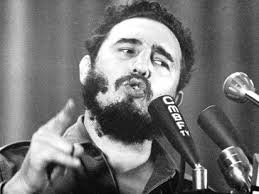
Fidel Castro
Almost immediately, hundreds of thousands of Cubans began fleeing to America. The first émigrés were more than 215,000 Batista followers. The exodus increased, peaking at approximately 78,000 in 1962.
In October, 1962, Castro stopped regularly scheduled travel between the two countries, and asylum seekers began sailing from Cuba to Florida.
Between 1962 and 1979, hundreds of thousands of Cubans entered the United States under the Attorney General’s parole authority.
By 2008, more than 1.24 million Cubans were living in the United States, mostly in South Florida, where the population of Miami was about one-third Cuban. Their sheer numbers transformed the state’s political, economic and cultural life. And not entirely for the better.
Many of these Cubans viewed themselves as political exiles, rather than immigrants, hoping to eventually return to Cuba after its Communist regime fell from power.
The large number of Cubans in South Florida, particularly in Miami’s “Little Havana,” allowed them to preserve their culture and customs to a degree rare for immigrant groups.
With so many discontented immigrants concentrated in Florida, they became a potential force for politicians to court.
And the issue guaranteed to sway their votes was unrelenting hostility to Castro. Unsurprisingly, most of their votes went to Right-wing Republicans.
John F. Kennedy was the first President to face this dilemma.
During the closing months of the administration of President Dwight D. Eisenhower, the CIA had begun training Cuban exiles for an invasion of their former homeland.
The exiles’ goal: To do what Castro had done–seek refuge in the mountains and launch a successful anti-Castro revolution.
But word of the coming invasion quickly leaked: The exiles were terrible secret-keepers. (A joke at the CIA went: “A Cuban thinks a secret is something you tell to only 300 people.”)
Kennedy insisted the invasion must appear to be an entirely Cuban enterprise. He refused to commit U.S. Marines and Air Force bombers.
More than 1,400 invaders landed on April 17, 1961 at the Bay of Pigs–and were quickly overwhelmed, with hundreds of the men taken prisoner.
Kennedy publicly took the blame for its failure: “Victory has a hundred fathers but defeat is an orphan.” But privately he seethed, and ordered the CIA to redouble its efforts to remove Castro at all costs.
To make certain his order was carried out, he appointed his brother, Robert–then Attorney General–to oversee the CIA’s “Castro removal” program.
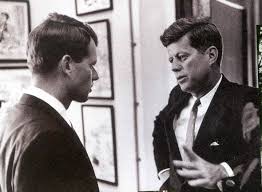
Robert F. Kennedy and John F. Kennedy
It’s here that America’s obsession with Cuba entered its darkest and most disgraceful period.
The CIA and the Mafia entered into an unholy alliance to assassinate Castro–each for its own benefit:
- The CIA wanted to please Kennedy.
- The mobsters wanted to regain their casino and brothel holdings that had made Cuba their private playground in pre-Castro times. They also hoped to use their pose as patriots to win immunity from future prosecution.
The CIA supplied poisons and explosives to various members of the Mafia. It was then up to the mobsters to assassinate Castro.
The CIA asked Johnny Roselli, a mobster linked to the Chicago syndicate, to go to Florida in 1961 and 1962 to organize assassination teams of Cuban exiles. They were to infiltrate their homeland and assassinate Castro.
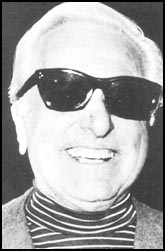
Johnny Roselli
Rosselli called upon two other crime figures: Chicago Mafia boss Sam Giancana and Santos Trafficante, the Costra Nostra chieftain for Tampa, for assistance.
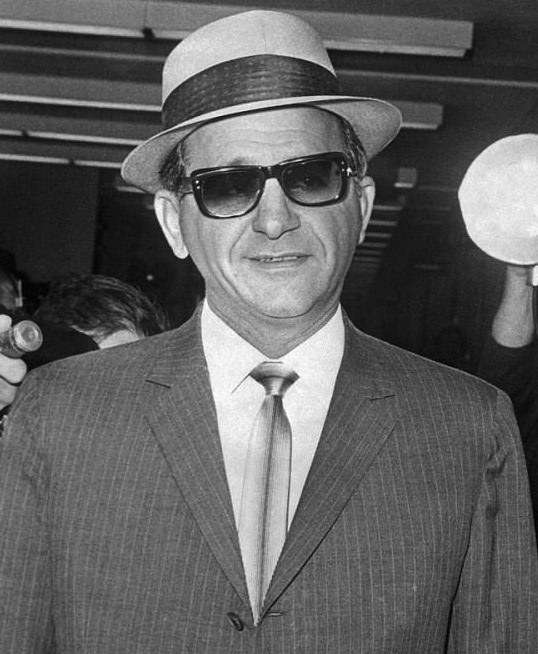
Sam Giancana
Giancana, using the name “Sam Gold” in his dealings with the CIA, was meanwhile being hounded by the FBI on direct orders of Attorney General Robert Kennedy.
The mobsters were authorized to offer $150,000 to anyone who would kill Castro and were promised any support the Agency could yield.
Giancana was to locate someone who was close enough to Castro to be able to drop pills into his food. Trafficante would serve as courier to Cuba, helping to make arrangements for the murder on the island.
Rosselli was to be the main link between all of the participants in the plot.
The available sources disagree on what actually happened. Some believe that the Mob made a genuine effort to “whack” Fidel.
Others are convinced the mobsters simply ran a scam on the government. They pretended to carry out their “patriotic duty” while in fact making no effort at all to penetrate Castro’s security.
The CIA’s war against Castro was known as Operation Mongoose–the mongoose being a traditional enemy of the cobra. And those entrusted with this assignment were known as the Special Group.
“We were hysterical about Castro at about the time of the Bay of Pigs and thereafter,” Secretary of Defense Robert S. McNamara later testified before Congress about these efforts. “And there was pressure from JFK and RFK to do something about Castro.”
2016 PRESIDENTIAL CAMPAIGN, 2016 PRESIDENTIAL DEBATES, ABC NEWS, ALICIA MACHADO, AMERICAN CAESAR, BARACK OBAMA, BIRTHERISM, BLACKS, CBS NEWS, CNN, DEMOCRATS, DONALD TRUMP, DOUGLAS MACARTHUR, FACEBOOK, FBI, FOX NEWS, HILLARY CLINTON, HISPANICS, LEBRON JAMES, LESTER HOLT, MARCO RUBIO, MISS UNIVERSE, NBC NEWS, POLITICO, RAFAEL "TED" CRUZ, SEAN HANNITY, TAXPAYERS, THE ARIZONA REPUBLIC, THE CHICAGO SUN-TIMES, THE CHICAGO TRIBUNE, THE HUFFINGTON POST, THE LOS ANGELES TIMES, THE NEW YORK TIMES, THE O'REILLY FACTOR, THE WALL STREET JOURNAL, THE WASHINGTON POST, TWITTER, USA TODAY, WILLIAM MANCHESTER, WOMEN
In History, Law, Law Enforcement, Politics, Social commentary on October 7, 2016 at 12:47 am
Republican Presidential nominee Donald Trump has only one opponent in his race for the White House: Democratic Presidential nominee Hillary Clinton.
But after his September 26 debate with Clinton, he seemed more at war with another woman: Former Miss Universe Alicia Machado.
Clinton had briefly mentioned her in the first of her three debates with Trump: “And he called this woman Miss Piggy. Then he called her Miss Housekeeping because she was Latina.”
Trump didn’t deny making such comments. Instead, he claimed that Clinton had “spent hundreds of millions of dollars on negative ads on me, many which are absolutely untrue.
“They’re untrue and they’re misrepresentations. And I will tell you this, Lester [Holt, the debate moderator], it’s not nice and I don’t, I don’t deserve that.”
On September 27, Trump attacked Machado via a phone-in interview on Fox News. Then the next day, he attacked her again on Fox’s “The O’Reilly Factor.”
And at 2:14 a.m. on September 30, Trump launched yet a third assault on her character–this time through a series of tweets on Twitter:
“Wow, Crooked Hillary was duped and used by my worst Miss U. Hillary floated her as an ‘angel’ without checking her past, which is terrible!”
“Using Alicia M in the debate as a paragon of virtue just shows that Crooked Hillary suffers from BAD JUDGEMENT! Hillary was set up by a con.”
“Did Crooked Hillary help disgusting (check out sex tape and past) Alicia M become a U.S. citizen so she could use her in the debate?”
Subsequent media investigations found no evidence that Machado had starred in a pornographic film.
Republican leaders were dismayed. They wanted Trump to concentrate his fire at Clinton. And here he was, aiming yet another tirade against a woman wholly unimportant to his race for the White House.
Meanwhile, the mainstream media quickly reacted to Trump’s latest rant–and its verdict was overwhelmingly negative.
According to NBC News: “Still reeling from Monday’s widely panned debate performance, the Republican nominee has found refuge in a fringe media environment where his victory is assured, his setbacks are the result of shadowy plots, and his critics are humiliated by sordid revelations.
“The alleged Machado ‘sex tape’ Trump cited appeared to be a hoax widely promoted in fringe pro-Trump outlets like Infowars. Other sites like Drudge Report have spread grainy stills of a love scene from a reality show Machado starred in.
“Radio host Rush Limbaugh called Machado ‘the porn-star Miss Piggy’ this week. And Trump, desperate for encouragement after his debate, is huffing these sycophantic fumes like never before.”
And POLITICO offered this judgment: “TRUMP JUMPS INTO THE GUTTER.”
The story’s sub-headline read: “The Republican nominee loses all impulse control, and unleashes a violent Twitter rant against his Miss Universe nemesis.”
Trump–never one to admit error–responded, typically enough, on Twitter: “For those few people knocking me for tweeting at three o’clock in the morning, at least you know I will be there, awake, to answer the call!”
Furthermore, POLITICO noted, Trump’s inability to restrain himself has played “right into the Democratic nominee’s argument that Trump lacks the temperament and impulse control to be commander in chief.”
Nor was Clinton silent on the matter: “What kind of man stays up all night to smear a woman with lies and conspiracy theories?” she posted on Twitter.
And she followed up: “Trump obsessively bullies Rosie O’Donnell–an accomplished actor. he insulted Kim Kardashian for her weight–when she was pregnant. Pathetic.”
On the same day as his Twitter rant against Alicia Machado, Trump demanded that President Barack Obama promise not to pardon Clinton. Since Clinton has not been charged with or convicted of a crime, such a promise would be wholly unnecessary.
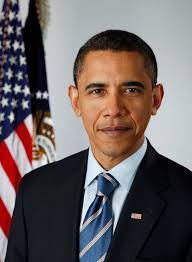
President Barack Obama
On September 30, Trump called The New York Times and said of Clinton: “She’s nasty, but I can be nastier than she ever can be.”
With that, he opened a new line of attack on his Presidential rival: Her marriage.
“Hillary Clinton was married to the single greatest abuser of women in the history of politics.
“Hillary was an enabler, and she attacked the women who Bill Clinton mistreated afterward. I think it’s a serious problem for them, and it’s something that I’m considering talking about more in the near future.”
Trump said that his own marital history did not disqualify him from making such an attack.
He has been married three times and divorced twice.
While still married to his first wife, Ivana, he became involved with Marla Maples.
Ivana divorced him in 1991, and he married Maples in 1993. They were divorced in 1999.
He married his current wife, Melania, in 2005.
Asked about his affair with Maples while he was married to Ivana, Trump said: “I don’t talk about it. I wasn’t president of the United States. I don’t talk about it.”
Thus, in one week, Trump managed to infuriate
- Taxpayers
- Women
- NBC News
- Blacks
- Democrats
- The Wall Street Journal [which endorsed Clinton]
- The Arizona Republic *
- USA Today *
- President Obama
- POLITICO
- Hispanics
- The FBI
- LeBron James (a hero in the key state of Ohio endorsed Clinton).
Political campaigns are about winning voters, not alienating them. Trump appears to believe it’s the other way around.
2016 PRESIDENTIAL CAMPAIGN, 2016 PRESIDENTIAL DEBATES, ABC NEWS, ALICIA MACHADO, AMERICAN CAESAR, BARACK OBAMA, BIRTHERISM, BLACKS, CBS NEWS, CNN, DEMOCRATS, DONALD TRUMP, DOUGLAS MACARTHUR, FACEBOOK, FBI, FOX NEWS, HILLARY CLINTON, HISPANICS, LEBRON JAMES, LESTER HOLT, MARCO RUBIO, MISS UNIVERSE, NBC NEWS, POLITICO, RAFAEL "TED" CRUZ, SEAN HANNITY, TAXPAYERS, THE ARIZONA REPUBLIC, THE CHICAGO SUN-TIMES, THE CHICAGO TRIBUNE, THE HUFFINGTON POST, THE LOS ANGELES TIMES, THE NEW YORK TIMES, THE O'REILLY FACTOR, THE WALL STREET JOURNAL, THE WASHINGTON POST, TWITTER, USA TODAY, WILLIAM MANCHESTER, WOMEN
In History, Law, Law Enforcement, Politics, Social commentary on October 6, 2016 at 12:09 am
“He appeared to need enemies the way other men need friends, and his conduct assured that he would always have plenty of them.”
So wrote William Manchester about General Douglas MacArthur in his monumental 1978 biography, American Caesar. But he could have written just as accurately about Donald Trump, the businessman-turned-Republican-Presidential-nominee.
Donald Trump
What some pundits have called “the worst week in Presidential campaigning history” started–for Trump–on September 26. That was when he finally squared off against Democratic Presidential nominee Hillary Clinton in the first of three debates.
Through a series of bare-knuckled debates, Trump had bullied his way to the Republican nomination. He had mocked his opponents (“Little Marco” Rubio, “Lyin Ted” Cruz) and attacked former Texas Governor Jeb Bush as the brother of the President he blamed for 9/11.
So it was widely expected that he would run over Clinton like a tank going over a rabbit.
Events proved otherwise.
Moderator Lester Holt–who anchors the weekday edition of NBC Nightly News–gave Trump more airtime than Clinton. But Clinton showed a greater command of foreign and domestic issues.
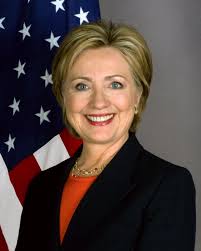
Hillary Clinton
Trump repeatedly sniffled throughout the debate, causing some viewers to wonder if he had a cocaine problem. And he often reached for his water glass, causing other viewers to mock him on Twitter (“Does anyone remember how badly Trump made fun of Marco Rubio for drinking water? Hmm..”).
For Trump–who had attacked Clinton’s health after she fainted on September 11 at a New York 9/11 commemoration ceremony–it was a disaster. Clinton seemed to be in better shape than he was.
When Clinton charged that he paid “nothing in Federal taxes,” Trump in effect admitted it: “That makes me smart.”
Clinton then cornered him on his claim that he had opposed the 2003 Iraq war. Trump replied that he had told Fox News host Sean Hannity that he opposed it. He asked the media to contact Hannity.
Clinton then attacked Trump as “a man who has called women pigs, slobs, and dogs, and someone who has said pregnancy is an inconvenience to employers.”
From there she segued into his attacks on former Miss Universe Alicia Machado: “And he called this woman Miss Piggy. Then he called her Miss Housekeeping because she was Latina.”
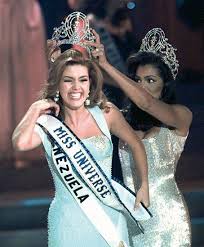
Alicia Machado as Miss Universe
This may have proved the worst part of the debate for Trump, because he later felt he had to respond to it–on TV and Twitter.
By the end of the debate, 62% of CNN viewers voted Clinton as the winner, with only 27% voting it was Trump.
The next day–September 27–Trump felt the need to renew his attack on Machado, courtesy of a telephone interview he gave to Fox News: “She was the worst [Miss Universe contestant] we ever had. The absolute worst. She was impossible….
“She was the winner and she gained a massive amount of weight, and we had a real problem. Not only that, her attitude, and we had a real problem with her.”
On September 28, Trump appeared on Fox News‘ “The O’Reilly Factor.” There he continued his attack on Machado: “It is a beauty contest. They know what they are getting into.”
He claimed that “I saved her job” because the pageant wanted “to fire her” for gaining so much weight.
On September 29, Trump added one more enemy to the list: The FBI.
Addressing a crowd in Bedford, New Hampshire, Trump falsely accused the agency of giving “immunity” to Hillary Clinton:
“They [the FBI] gave so much immunity there was nobody left to talk to. There was nobody left–except Hillary. They probably gave her immunity, too. Do you think Hillary got immunity? Yeah, she had the immunity.”
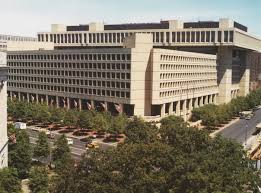
FBI headquarters
Also on September 29, Trump once again attacked a longtime target: President Barack Obama.
Thirteen days earlier, Trump had renounced “birtherism”–the slander that Obama was not an American citizen. It was a slander that Trump himself had created and vigorously promoted since 2011.
The reason for his renouncing it: His dismal standing among blacks in political polls.
At a press conference on September 16 to promote his new upscale hotel in Washington, D.C., Trump said: “Now, not to mention her in the same breath, but Hillary Clinton and her campaign of 2008 started the birther controversy.
“I finished it. I finished it. You know what I mean.
“President Barack Obama was born in the United States, period. Now we all want to get back to making America strong and great again.”
After falsely blaming Clinton for starting the birther lie, Trump seemed content to finally drop the slander campaign.
But on September 29–a mere 13 days later–Trump told a New Hampshire reporter that he was “very proud” of his “birther” campaign:
“I’m the one who got him to put up his birth certificate”–which clearly proved that Obama had been born in Hawaii, not Kenya, as Trump had claimed.
“[Hillary Clinton] tried [to get Obama to release his birth certificate] and she was unable to do it and I tried and I was able to do it so I’m very proud of that.”
Thus, the goodwill of black voters he sought on September 16 he cast aside on the 29th.
ABC NEWS, ANCIENT GREECE, ASIANS, AUBREY DE SELINCOURT, BERNIE SANDERS, BLACKS, CBS NEWS, CIA, CNN, CYBERSECURITY, DALLAS MORNING NEWS, DEBBIE WASSERMAN-SCHULTZ, DEMOCRATIC CONVENTION, DEMOCRATIC NATIONAL COMMITTEE, DONALD TRUMP, ELIZABETH WARREN, FACEBOOK, GEORGE W. BUSH, HERODOTUS, HILLARY CLINTON, HUBRIS, MARCO RUBIO, MEXICANS, MICHAEL HAYDEN, MUSLIMS, NBC NEWS, PAUL RYAN, PRISONERS OF WAR, RUSSIA, TED CRUZ, THE LOS ANGELES TIMES, THE NEW YORK TIMES, THE WASHINGTON POST, TWITTER, U.S. STATE DEPARTMENT, VLADIMIR PUTIN, WIKILEAKS, WOMEN
In History, Military, Politics on August 1, 2016 at 1:13 am
Donald Trump has changed Presidential campaigning–perhaps forever.
First, He has made angry and brutal attacks on a wide range of persons and organizations–including his fellow Republicans, journalists, news organizations, other countries and even celebrities who have nothing to do with politics.
Among those groups–and the insults Trump has leveled at them:
- Mexicans
- Prisoners-of-War
- Blacks
Second, he has weaponized social media. He has made Twitter an essential arm of his campaign, swiftly insulting his opponents and keeping them constantly off-balance. He has proved himself a master at the tabloid news culture and thoroughly in tune with his target audience.
Third, since announcing his candidacy on June 16, 2015, he has gotten a year’s worth of free media publicity. This has nothing to do with a networks’ conspiracy to favor Trump.
Instead, it owes to the media’s lust for sensational copy. And scenes of conflict–such as making brutal attacks on others–generate huge viewership.
This has been most apparent in debates, during which he belittled his Republican opponents with insulting nicknames.
- “Little Marco” – Florida U.S. Senator Marco Rubio
- “Goofy” – Massachusetts U.S. Senator Elizabeth Warren
- “Lyin’ Ted” – Texas U.S. Senator Rafael Eduardo “Ted” Cruz
And looking beyond the Republican primary cycle, he created one for his future Democratic antagonist: “Crooked Hillary”–Hillary Clinton, former First Lady, U.S. Senator from New York and Secretary of State.
Political pundits have marveled at Trump’s ability to cast aside the long-held niceties of political discourse and not have to pay an electoral price for it. But that time may be coming to an end.
On July 22, Wikileaks released 19,252 emails and 8,034 attachments hacked from computers of the highest-ranking officials of the Democratic National Committee (DNC).
Cyber-security experts believe the hackers originated from Russia–and that Russian President Vladimir Putin may well have authorized it.
The emails revealed the DNC’s bias for Clinton for President. And they showed clear animosity toward her lone challenger, Vermont U.S. Senator Bernie Sanders.
Sanders’ supporters had long charged that the DNC and its chair, Debbie Wasserman-Schultz, were plotting to undercut his campaign. Now thousands of them were descending on the Democratic nominating convention in Philadelphia, Pennsylvania, as furious protesters.
Five days later, on July 27, Trump held a press conference in Doral, Florida. Always ready to pounce on any perceived sign of weakness, he aimed yet another attack on Clinton:
“Russia, if you’re listening, I hope you’re able to find the 30,000 emails that are missing. I think you will probably be rewarded mightily by our press.”
Trump hoped to score points on Hillary Clinton’s using a private email server as Secretary of State. Instead, he ignited criticism–of himself–on both Left and Right.
“This has to be the first time that a major presidential candidate has actively encouraged a foreign power to conduct espionage against his political opponent,” said Jake Sullivan, Clinton’s chief foreign policy adviser. “This has gone from being a matter of curiosity, and a matter of politics, to being a national security issue.”
Republican Speaker of the House Paul Ryan was equally quick to react: “Russia is a global menace led by a devious thug,” said Brendan Buck, Ryan’s spokesman. “Putin should stay out of this election.”
“If he is talking about the State Department emails on her server, he is inviting a foreign intelligence service to steal sensitive American government information,” said Michael Hayden, head of the CIA under President George W. Bush.
“In addition to its implications for national security today,” wrote Benjy Sarlin, political reporter for MSNBC, “the incident raised disturbing questions about how Trump would govern as president. If a leader is willing to turn to ask foreign spy agencies to target a political opponent, what would he ask of his own spy agencies?”
The avalanche of criticism has led Trump to claim: “I was only being sarcastic.”
Only his most hardcore followers seem to believe it.
Since the end of World War II, the Republican party has taken an intensely anti-Communist stance. Now its nominee for President has not only exchanged compliments with an ex-KGB agent but has even invited him to target his Democratic opponent.
For at least one normally conservative newspaper, that’s simply too much. In a July 27 editorial, The Dallas Morning News declared:
“Words have meaning. The world is listening. And what the world is hearing is a man demonstrating that he is unfit to sit in the Oval Office.”
The ancient Greeks believed hubris–overweening pride–to be the greatest of sins. And, they warned, it was usually punished by divine wrath.
In his book, The World of Herodotus, Aubrey de Selincourt writes that the Greek historian filled his book, The Histories, with “stories of the perils of pride–pride of wealth, pride of power, pride of success, and, deadliest of all, the pride which leads a man to forget that he is a nothing in the sight of the gods.”
Trump has long boasted of his wealth, power and success. Perhaps his time of reckoning has finally arrived.
"SPRINGTIME FOR HITLER", "SPRINGTIME FOR TRUMPLAND", "THE PRODUCERS", ABC NEWS, ADOLF HITLER, CBS NEWS, CNN, DAVID BROOKS, DEMOCRATIC NATIONAL CONVENTION, DEMOCRATIC PARTY, DONALD TRUMP, ELIZABETH WARREN, FACEBOOK, HILLARY CLINTON, HUMOR, MARCO RUBIO, MARK SHIELDS, MEL BROOKS, NAZIS, NBC NEWS, PBS NEWSHOUR, POLITICAL CORRECTNESS, RAFAEL EDUARDO "TED" CRUZ, SATIRE, THE CHICAGO SUN-TIMES, THE CHICAGO TRIBUNE, THE LOS ANGELES TIMES, THE NEW Y ORK TIMES, THE WASHINGTON POST, TIM KANE, TWITTER
In Bureaucracy, Entertainment, History, Humor, Politics, Social commentary, Uncategorized on July 25, 2016 at 12:05 am
Donald Trump has attached nicknames to his many political opponents.
“Little Marco” – Florida U.S. Senator Marco Rubio
“Goofy” – Massachusetts U.S. Senator Elizabeth Warren
“Lyin’ Ted” – Texas U.S. Senator Rafael Eduardo “Ted” Cruz
“Crooked Hillary” – Hillary Clinton, former First Lady, U.S. Senator from New York and Secretary of State, now the all-but-confirmed Democratic nominee for President.
Donald Trump
And now he’s picked out another catchy nickname–this time for Virginia U.S. Senator Tim Kane, chosen by Hillary Clinton to be her Vice Presidential running mate: “Corrupt Kane.”
Nicknames and ridicule can be powerful weapons.
David Brooks, a conservative columnist for the New York Times, assessed Trump’s ability to effectively use both.
David Brooks and Mark Shields
He did so on the May 27 edition of the PBS Newshour. Said Brooks:
“Trump, for all his moral flaws, is a marketing genius. And you look at what he does. He just picks a word and he attaches it to a person. Little Marco [Rubio], Lyin’ Ted [Cruz], Crooked Hillary [Clinton].
“And that’s a word. And that’s how marketing works. It’s a simple, blunt message, but it gets under. It sticks, and it diminishes.
“And so it has been super effective for him because he knows how to do that. And she [Hillary Clinton[ just comes on with, ‘Oh, he’s divisive.’
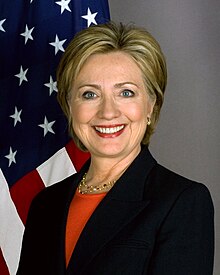
Hillary Clinton
“These are words that are not exciting people. And her campaign style has gotten, if anything…a little more stagnant and more flat.”
But Democrats can fight back with catchy nicknames of their own: Such as: “Deadbeat Donald,” “Nazi Boy,” “Devious Donald” or “Der Fuehrer.”
So far, only one opponent has managed to verbally stand up to Trump: Massachusetts U.S. Senator Elizabeth Warren.
A May 12 story on CNN–“Elizabeth Warren Gives Trump a Dose of His Own Medicine on Twitter”–notes:
“In the past week, the Massachusetts Democrat has refined an aggressive anti-Trump message through a series of so-called tweetstorms.”
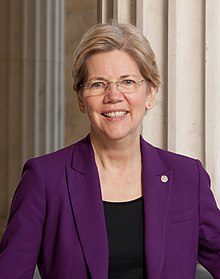
Elizabeth Warren
On the May 27 edition of the PBS Newshour, syndicated columnist Mark Shields noted Warren’s ability to rattle Trump:
“Elizabeth Warren gets under Donald Trump’s skin. And I think she’s been the most effective adversary. I think she’s done more to unite the Democratic party than either Hillary Clinton or Bernie Sanders.”
David Brooks added: “And so the tactics…is either you do what Elizabeth Warren has done, like bull-bore negativity, that kind of [get] under the skin, or try to ridicule him and use humor. Humor is not Hillary Clinton’s strongest point.”
Yet that need not remain the situation.
The Democratic convention could use ridicule to strike a deadly blow against the Presidential ambitions of Donald Trump.
Everyone expects this convention—like all political conventions—to be filled with boring, self-serving speeches. And its purpose—to nominate Hillary Clinton for President—is a foregone conclusion.
But the message of this convention–the necessity for defeating Trump–need not be forgotten. And it won’t be–if convention planners are willing to do something truly daring and memorable.
In 1988, Mel Brooks did exactly this with his now-classic comedy, “The Producers.”
Brooks used this as a vehicle for lampooning the criminality of the Third Reich–and especially that of its Fuehrer, Adolf Hitler. Especially memorable: Its production number, “Springtime for Hitler.”
The press has had a field day with Melania Trump’s plagiarizing of Michelle Obama’s speech before the 2008 Democratic convention.
Facebook and Twitter have been filled with ridicule–such as a “Rocky and Bullwinkle” cartoon image of villainess Natasha Fatale saying: “I write. But Moose and Squirrel say I copy.”
So it’s easy to imagine how a staged musical number like “Springtime for Trumpland”–complete with Nazi uniforms–would rage through the Internet. Not to mention make a great TV commercial.
SPRINGTIME FOR TRUMPLAND
America was having trouble
What a sad, sad story
Needed a new Leader
To restore its former glory.
Where oh where was he?
Who could that man be?
We looked around
And then we found
The man for you and me.
And now it’s….
Springtime for Trumpland and bigotry–
Trumpland is happy and gay.
Our Leader’s put on a Nazi face–
Look out, here comes the Whiter race.
Springtime for Trump goons and bigotry–
Winter for Reason and Light.
Springtime for Trump goons and infamy–
Come on, Trumpsters, let’s go pick a fight.
I love Trump
My name is Dave
I’ll hunt you down
And dig your grave.
Don’t be stupid
Be a smarty.
Come and join
The RepublicaNazi party.
Springtime for Trump goons and infamy—
Killing is thrilling again.
A-bombs are saving us from toil
Soon we’ll have all the world’s black oil.
Springtime for Trumpland and infamy—
Prisons are filling once more.
Springtime for Trumpland and infamy—
Means that soon things will be swell.
You pray they will be swell
You know we’ll be going to HELL.
The question remains: Is a political party noted for its cowardly Political Correctness willing to take the plunge?
Most likely, the answer is: No.


 Bureaucracybuster's Blog
2016 PRESIDENTIAL CAMPAIGN, ABC NEWS, ADOLF HITLER, ALTERNET, AMERICABLOG, AP, BABY BOOMER RESISTANCE, BARACK OBAMA, BBC, BERNIE SANDERS, BLOOMBERG NEWS, BUZZFEED, CBS NEWS, CNN, CROOKS AND LIARS, D-DAY, DAILY KOZ, DAVID BROOKS, DEMOCRATIC PARTY, DONALD TRUMP, ELIZABETH WARREN, FACEBOOK, FIVETHIRTYEIGHT, HARPER’S MAGAZINE, HILLARY CLINTON, HUFFINGTON POST, JOSEPH MCCARTHY, LIBERALS, MARCO RUBIO, MARK SHIELDS, MEDIA MATTERS, MOTHER JONES, MOVEON, MSNBC, NBC NEWS, NEW REPUBLIC, NEWSDAY, NEWSWEEK, NEWT GINGRICH, NOCCOLO MACHIAVELLI, NPR, PBS NEWSHOUR, POLITICO, POLITICUSUSA, RAND PAUL, RAW STORY, REPUBLICAN PARTY, REPUBLICANS, REUTERS, SALON, SEATTLE TIMES, SLANDER, SLATE, STALINGRAD, TALKING POINTS MEMO, TED CRUZ, THE ATLANTIC, THE CHICAGO SUN-TIMES, THE CHICAGO TRIBUNE, THE DAILY BEAST, THE DAILY BLOG, THE GUARDIAN, THE HILL, THE HUFFINGTON POST, THE LOS ANGELES TIMES, THE NATION, THE NEW REPUBLIC, THE NEW YORK TIMES, THE NEW YORKER, THE PRINCE, THE VILLAGE VOICE, THE WASHINGTON POST, THINKPROGRESS, TIME, TRUTHDIG, TRUTHOUT, TWITTER, TWO POLITICAL JUNKIES, U.S. NEWS & WORLD REPORT, UP, UPI, USA TODAY
WORDS FOR TYRANTS–AND LIBERATORS: PART ONE (OF TWO)
In Bureaucracy, History, Politics, Social commentary on July 17, 2017 at 12:41 amSyndicated columnist Mark Shields and New York Times columnist David Brooks appear every Friday on the PBS Newshour to review the week’s major political events.
On May 27, 2016, Shields—a liberal, and Brooks, a conservative—came to some disturbingly similar conclusions about the character of Republican Presidential front-runner Donald Trump.
With the business magnate having won the 2016 Republican Presidential nomination, both columnists appeared increasingly dismayed.
David Brooks and Mark Shields
MARK SHIELDS: “Donald Trump gratuitously slandered Ted Cruz’s wife. He libeled Ted Cruz’s father for being potentially part of Lee Harvey Oswald’s assassination of the president of the United States, suggesting that he was somehow a fellow traveler in that.
“This is a libel. You don’t get over it….
“…I think this man may be addicted to the roar of the grease paint and the sound of the crowd, or however it goes, smell of the crowd.”
Donald Trump
Ironically, Rand Paul, Republican U.S. Senator from Kentucky, had reached a similar conclusion about Trump:
“I think there is a sophomore quality that is entertaining with Mr. Trump, but I am worried. I’m very concerned of having him in charge of his nuclear weapons because his visceral response to attack people on their appearance—short, tall, fat, ugly—my goodness that happened in junior high.”
DAVID BROOKS: “Trump, for all his moral flaws, is a marketing genius. And you look at what he does. He just picks a word and he attaches it to a person. Little Marco [Rubio], Lyin’ Ted [Cruz], Crooked Hillary [Clinton].
“And that’s a word. And that’s how marketing works. It’s a simple, blunt message, but it gets under.
“It sticks, and it diminishes. And so it has been super effective for him, because he knows how to do that. And she [Hillary Clinton] just comes with, ‘Oh, he’s divisive.’
“These are words that are not exciting people. And her campaign style has gotten, if anything…a little more stagnant and more flat.”
Hillary Clinton wasn’t the only Presidential candidate who proved unable to cope with Trump’s gift for insult. His targets—and insults—included:
How did American politics reach this state of affairs?
In 1996, Newt Gingrich, then Republican Speaker of the House of Representatives, wrote a memo that encouraged Republicans to “speak like Newt.”
Entitled “Language: A Key Mechanism of Control,” it urged Republicans to attack Democrats with such words as “corrupt,” “selfish,” “destructive,” “hypocrisy,” “liberal,” “sick,” and “traitors.”
Newt Gingrich
Even worse, Gingrich encouraged the news media to disseminate such accusations. Among his suggestions:
In the memo, Gingrich advised:
“….In the video “We are a Majority,” Language is listed as a key mechanism of control used by a majority party, along with Agenda, Rules, Attitude and Learning.
“As the tapes have been used in training sessions across the country and mailed to candidates we have heard a plaintive plea: ‘I wish I could speak like Newt.’
“That takes years of practice. But, we believe that you could have a significant impact on your campaign and the way you communicate if we help a little. That is why we have created this list of words and phrases….
“This list is prepared so that you might have a directory of words to use in writing literature and mail, in preparing speeches, and in producing electronic media.
“The words and phrases are powerful. Read them. Memorize as many as possible. And remember that like any tool, these words will not help if they are not used.”
Here is the list of words Gingrich urged his followers to use in describing “the opponent, their record, proposals and their party”:
Yes, speaking like Newt—or Adolf Hitler or Joseph McCarthy—“takes years of practice.”
And to the dismay of both Republicans and Democrats, Donald Trump has learned his lessons well.
Only one opponent—who was not a Presidential candidate—managed to stand up to Trump: Massachusetts U.S. Senator Elizabeth Warren.
On the May 27, 2016 edition of the PBS Newshour, syndicated columnist Mark Shields noted the ability of Elizabeth Warren to rattle Trump:
“Elizabeth Warren gets under Donald Trump’s skin. And I think she’s been the most effective adversary. I think she’s done more to unite the Democratic party than either Hillary Clinton or Bernie Sanders.”
Share this: