Posts Tagged ‘MALCOM X’
2012 PRESIDENTIAL RACE, ALTERNET, AP, BARACK OBAMA, BAY OF PIGS, BBC, BERLIN WALL, BILL CLINTON, BRUCE GREENWOOD, BUZZFEED, CARLOS MARCELLO, CBS NEWS, CIA, CIVIL RIGHTS, CLIFF ROBERTSON, CNN, CUBAN MISSILE CRISIS, DAILY KOS, DAVID HALBERSTAM, DONALD J. TRUMP, FBI, FIDEL CASTRO, FRANK SINATRA, HERMAN CAIN, ICH BEN EIN BERLINNER SPEECH, INTERNET MOVIE DATABASE, J. EDGAR HOOVER, JAMES MARSDEN, JOHN F. KENNEDY, JOSEPH MCCARTHY, JOSEPH P. KENNEDY, LYNDON B. JOHNSON, MAFIA, MALCOM X, MARTIN LUTHER KING, MARTIN SHEEN, MOTHER JONES, MOVEON, MOVIES, NBC NEWS, NEWSWEEK, NEWT GINGRICH, NIKITA KHRUSHCHEV, NPR, NUCLEAR TEST BAN TREATY, POLITICO, PT-109, RAW STORY, REUTERS, RICK PERRY, ROBERT F. KENNEDY, ROBERT S. MCNAMARA, SALON, SAM GIANCANA, SANTOS TRAFFICANTE, Sarah Palin, SATURDAY NIGHT LIVE, SEATTLE TIMES, SLATE, SOVIET UNION, THE ATLANTIC, THE BEST AND THE BRIGHTEST, THE BUTLER, THE CHICAGO SUN-TIMES, THE CHICAGO TRIBUNE, THE DAILY BEAST, THE GUARDIAN, THE HILL, THE HUFFINGTON POST, THE LOS ANGELES TIMES, THE MISSILES OF OCTOBER, THE NEW YORK TIMES, THE RAT PACK, THE WALL STREET JOURNAL, THE WASHINGTON POST, THIRTEEN DAYS, TIME, TWILIGHT ZONE, TWITTER, U.S. NEWS & WORLD REPORT, UPI, USA TODAY, VIETNAM WAR, WILLIAM DEVANE, WILLILAM PETERSON
In Bureaucracy, Business, History, Law, Law Enforcement, Military, Politics, Social commentary on November 15, 2023 at 12:48 am
The Kennedy administration’s unprecedented attack on organized crime has led some law enforcement experts to believe the Mob engineered President Kennedy’s assassination.
One of these is G. Robert Blakey, father of the Racketeer Influenced Corrupt Organizations (RICO) Act. As the former Chief Counsel and Staff Director to the U.S. House Select Committee on Assassinations (1977–1979) he oversaw the second official inquiry into the Kennedy assassination.
As a result, he believes the Mob had ample means, motive and opportunity to arrange for a “nut” to kill the President.
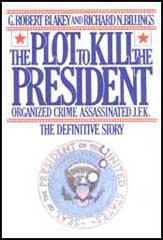
In his 1980 book, The Plot to Kill the President, Blakey asserted:
- Lee Harvey Oswald shot and killed President Kennedy.
- An unknown confederate of Oswald’s, firing from the “grassy knoll,” also shot at Kennedy but missed.
- The conspiracy was rooted in organized crime and involved Mafia boss Santos Trafficante of Miami and/or Mafia boss Carlos Marcello of New Orleans.
The 1983 TV mini-series, “Blood Feud,” clearly implied that the Mob was responsible. At its heart lay the 10-year conflict between Robert F. Kennedy and James R. Hoffa, then president of the International Brotherhood of Teamsters Union.
This was also the plot of American Tabloid, a 1995 novel by James Ellroy.
But investigative reporter Seymour Hersh wrote that during the five years he researched The Dark Side of Camelot, his expose of the hidden life of President Kennedy, he didn’t uncover any evidence of such a plot.
After Robert Kennedy left the Justice Department in 1964 to run for the post of U.S. Senator from New York, the Justice Department slacked off its push against the crime syndicates.
But the war was resurrected during the Nixon administration and has remained a top priority ever since.
Perhaps the most controversial legacy of the Kennedy administration remains the President’s dealings with the South Vietnamese regime of Ngo Dinh Diem.,
In 1954, the French—who had controlled Vietnam for 80 years—were forced to withdraw their military forces from the country. Their army had suffered a humiliating defeat at Dienbenphu and the French citizenry—still recovering from defeat and Nazi occupation during World War II—demanded an end to the disastrous conflict.
Into this political vacuum stepped the victorious North Vietnamese communist Ho Chi Minh.
Kennedy—then U.S. Senator from Massachusetts—had visited Vietnam while the French were still trying to hold onto one of their last colonial possessions. And he had urged them to withdraw and allow the Vietnamese to govern themselves.
But President Dwight D. Eisenhower was aware of Ho’s overwhelming popularity throughout Vietnam due to his battles against Japanese and French colonialists. In any nationwide election, Ho was certain to win the presidency.
But Eisenhower felt he couldn’t allow an avowed Communist to rule Vietnam. With the North under firm Communist control, America focused its attention on the South.
Searching for an acceptable alternative, Eisenhower found him in Ngo Dinh Diem—a mandarin in a nation swept by revolution, a Catholic in a nation with an 80% Buddhist population.
In 1954, America began backing Diem. Although his first years were marked by social progress, he later became increasingly oppressive toward the Buddhist majority. Corruption openly flourished among government and army officials.
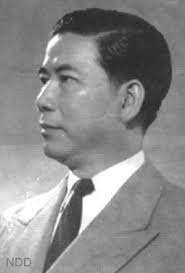
Ngo Dinh Diem
In 1960, North Vietnam launched an aggressive campaign of infiltration and assassination across South Vietnam.
In 1961, President Kennedy sent 400 Green Berets and 100 other military advisers to South Vietnam to offer support.
Diem requested American financing of a 100,000-man increase in his army. Kennedy agreed to an increase of 30,000. Meanwhile, the Joint Chiefs of Staff estimated that 40,000 U.S. troops would be needed to “clean up the Vietcong threat.”
Kennedy underestimated the reaction of North Vietnam, whose forces were fighting what they believed was a crusade. As American troop strength increased, the North escalated its own commitment.
From 1961 to 1963, the number of U.S. troops in Vietnam steadily rose from 685 to 16,732. American minesweepers patrolled the coasts while their aircraft engaged in surveillance.
For the first time, Americans became casualties of the war–especially those in helicopter combat-support missions.
Meanwhile, Diem—urged by his influential brother, Nhu, who ran the secret police—cracked down on the Buddhists.
Government troops fired on a peaceful demonstration in May, 1963. In protest, Buddhist monks burned themselves to death before TV cameras.
Nhu’s beautiful and powerful wife, Madame Nhu, fed growing world outrage by her ridicule of “monk barbecue shows.”
American efforts to stop Diem’s anti-Buddhist campaign failed. On August 21, 1963, Diem’s police shot their way into Buddhist pagodas, killing scores and arresting hundreds.
This finally convinced the Kennedy administration that Diem would never gain the popular support he needed to win the war against the Communist North.
As a result, the administration offered support to South Vietnamese military officers planning a coup against Diem.
On November 1, 1963, South Vietnamese army units stormed the presidential palace. Diem and Nhu fled, but were caught and shot. Madame Nhu, visiting the U.S. at the time, escaped death, accusing Kennedy of supporting the coup.
The administration issued a flat denial.
Diem’s assassination was followed 21 days later by Kennedy’s own.
2012 PRESIDENTIAL RACE, ALTERNET, AP, BARACK OBAMA, BAY OF PIGS, BBC, BERLIN WALL, BILL CLINTON, BRUCE GREENWOOD, BUZZFEED, CARLOS MARCELLO, CBS NEWS, CIA, CIVIL RIGHTS, CLIFF ROBERTSON, CNN, CUBAN MISSILE CRISIS, DAILY KOS, DAVID HALBERSTAM, DONALD J. TRUMP, FBI, FIDEL CASTRO, FRANK SINATRA, HERMAN CAIN, ICH BEN EIN BERLINNER SPEECH, INTERNET MOVIE DATABASE, J. EDGAR HOOVER, JAMES MARSDEN, JOHN F. KENNEDY, JOSEPH MCCARTHY, JOSEPH P. KENNEDY, LYNDON B. JOHNSON, MAFIA, MALCOM X, MARTIN LUTHER KING, MARTIN SHEEN, MOTHER JONES, MOVEON, MOVIES, NBC NEWS, NEWSWEEK, NEWT GINGRICH, NIKITA KHRUSHCHEV, NPR, NUCLEAR TEST BAN TREATY, POLITICO, PT-109, RAW STORY, REUTERS, RICK PERRY, ROBERT F. KENNEDY, ROBERT S. MCNAMARA, SALON, SAM GIANCANA, SANTOS TRAFFICANTE, Sarah Palin, SATURDAY NIGHT LIVE, SEATTLE TIMES, SLATE, SOVIET UNION, THE ATLANTIC, THE BEST AND THE BRIGHTEST, THE BUTLER, THE CHICAGO SUN-TIMES, THE CHICAGO TRIBUNE, THE DAILY BEAST, THE GUARDIAN, THE HILL, THE HUFFINGTON POST, THE LOS ANGELES TIMES, THE MISSILES OF OCTOBER, THE NEW YORK TIMES, THE RAT PACK, THE WALL STREET JOURNAL, THE WASHINGTON POST, THIRTEEN DAYS, TIME, TWILIGHT ZONE, TWITTER, U.S. NEWS & WORLD REPORT, UPI, USA TODAY, VIETNAM WAR, WILLIAM DEVANE, WILLIAM PETERSON
In Bureaucracy, Business, History, Law, Law Enforcement, Military, Politics, Social commentary on November 14, 2023 at 12:12 am
John F. Kennedy became President when civil rights suddenly became a burning issue throughout the Nation.
At Kennedy’s request, dozens of law firms sent lawyers South, so civil rights demonstrators would not lack counsel.
Prominent blacks such as Thurgood Marshall, Robert C. Weaver and George L.L. Weaver were appointed, respectively, to the Supreme Court, the Housing and House Finance Agency and the office of Assistant Secretary of Labor.
But Kennedy was highly reluctant to push for a civil rights bill addressing the overall issues of racial discrimination.
The reason: Most of the chairman of House and Senate committees were deeply conservative Southern racists–whether Republican or Democrat. They decided whether Kennedy’s foreign policy initiatives would be approved or opposed–especially his bills for increased foreign aid.
Kennedy believed he could not offend such men without jeopardizing the legacy he wanted to achieve in foreign policy.
This timidity, in turn, led many prominent blacks—such as Martin Luther King and Malcom X—to believe they would see no innovative moves on Kennedy’s part.

James Meredith
But events forced Kennedy’s hand.edn September 30, 1962, the President sent deputy U.S. marshals and National Guardsmen into Mississippi to restore order. Rioting had erupted when, by federal court order, James Meredith, a black, was enrolled at the state university.
Kennedy’s problems in winning support for his civil rights program arose in the folkways of the Nation. When laws run counter to a nation’s folkways, the laws lose.
In backing the admission of Meredith, the President chose an incident which would set off shockwaves for black rights.
Kennedy held mixed emotions about the demand for civil rights by blacks. On one hand, as an Irish Catholic, he grew up with stories about longtime discrimination against his ancestors (such as the “No Irish Need Apply” signs posted by numerous employers).
On the other hand, he had been born into a world of power and wealth, and he had to grope his way toward understanding the problems of the oppressed.
Another major confrontation broke out between Kennedy and the forces of segregation on June 11, 1963. Alabama Governor George C. Wallace personally blocked the entrance of two black pupils to the University of Tuscaloosa.
The President, watching on TV, federalized the Alabama National Guard, which Wallace had used to ring the school. Wallace withdrew and the students were admitted and enrolled.
That same day, Kennedy addressed the nation on the need for genuine equality for all Americans: “The question is whether we are going to treat our fellow Americans as we want to be treated.”
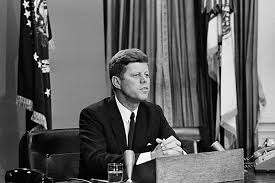
JFK addresses the nation on civil rights
And he called on Congress to pass his civil rights bill, which had been stalled by the legislators.
On August 28, 1963, 200,000 civil rights demonstrators flooded Washington, D.C., for a massive rally.
Fearing that violence would erupt—embarrassing his administration and setting back the cause of civil rights—Kennedy had sought to persuade Dr. Martin Luther King, the march’s chief figure, to cancel the proposed march.
But King and his fellow organizers were determined to go through with it. They had, they said, waited too long for justice to be satisfied with anything less.
The dignity and peacefulness of the rally–and, most especially, King’s soaring “I Have a Dream” speech–won tremendous sympathy throughout the country. Kennedy met with civil rights leaders afterward to offer his support.
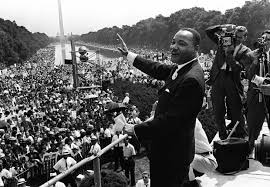
Martin Luther King during the March on Washington
But Kennedy’s civil rights bill remained stalled in Congress until 1964. President Lyndon B. Johnson used the assassinated Kennedy’s new status as a martyr to gain enough support for its passage.
Meanwhile, on yet another front, the Kennedy administration was waging an unprecedented war against organized crime.
This was primarily the work of Attorney General Robert F. Kennedy. As chief counsel for the Senate Permanent Subcommittee on Investigations (1957–59), he had interrogated about 800 mobsters who had been summoned by subpoena.
And he had learned, firsthand, how ineffective the FBI and Justice Department were at bringing such powerful criminals to justice. The FBI had long steered clear of organized crime investigations, largely because its director, J. Edgar Hoover, feared corruption of his agents.
Upon taking office as Attorney General, he greatly expanded the number of attorneys assigned to the Justice Department’s Organized Crime Section. And, more important, he used his status as brother to the President to jawbone FBI Director J. Edgar Hoover into attacking the Mob.
The FBI installed illegal microphones in Mob hangouts throughout the country and started building cases against such mobsters as Sam Giancana, Santos Trafficante and Carlos Marcello.
The administration’s attack on the Mob has led some historians to believe the assassination of President Kennedy was Mob-orchestrated.
The reasons:
- Joseph P. Kennedy, the family patriarch, solicited Mob money and influence for his son’s 1960 Presidential campaign.
- Through singer Frank Sinatra, the elder Kennedy assured Chicago Mafia boss Sam Giancana that the mob would get a free ride if his son were elected President.
- The CIA, seeking any way to topple Fidel Castro, enlisted the Mafia to assassinate him.
- But Robert Kennedy, as Attorney General, ignored the Mob’s “contributions” and pressed his war against the syndicates
- As a result, mobsters felt betrayed and lusted for vengeance.
2012 PRESIDENTIAL RACE, ALTERNET, AP, BARACK OBAMA, BAY OF PIGS, BBC, BERLIN WALL, BILL CLINTON, BRUCE GREENWOOD, BUZZFEED, CARLOS MARCELLO, CBS NEWS, CIA, CIVIL RIGHTS, CLIFF ROBERTSON, CNN, CUBAN MISSILE CRISIS, DAILY KOS, DAVID HALBERSTAM, DONALD J. TRUMP, FBI, FIDEL CASTRO, FRANK SINATRA, HERMAN CAIN, ICH BEN EIN BERLINNER SPEECH, INTERNET MOVIE DATABASE, J. EDGAR HOOVER, JAMES MARSDEN, JOHN F. KENNEDY, JOSEPH MCCARTHY, JOSEPH P. KENNEDY, LYNDON B. JOHNSON, MAFIA, MALCOM X, MARTIN LUTHER KING, MARTIN SHEEN, MOTHER JONES, MOVEON, MOVIES, NBC NEWS, NEWSWEEK, NEWT GINGRICH, NIKITA KHRUSHCHEV, NPR, NUCLEAR TEST BAN TREATY, POLITICO, PT-109, RAW STORY, REUTERS, RICK PERRY, ROBERT F. KENNEDY, ROBERT S. MCNAMARA, SALON, SAM GIANCANA, SANTOS TRAFFICANTE, Sarah Palin, SATURDAY NIGHT LIVE, SEATTLE TIMES, SLATE, SOVIET UNION, THE ATLANTIC, THE BEST AND THE BRIGHTEST, THE BUTLER, THE CHICAGO SUN-TIMES, THE CHICAGO TRIBUNE, THE DAILY BEAST, THE GUARDIAN, THE HILL, THE HUFFINGTON POST, THE LOS ANGELES TIMES, THE MISSILES OF OCTOBER, THE NEW YORK TIMES, THE RAT PACK, THE WALL STREET JOURNAL, THE WASHINGTON POST, THIRTEEN DAYS, TIME, TWILIGHT ZONE, TWITTER, U.S. NEWS & WORLD REPORT, UPI, USA TODAY, VIETNAM WAR, WILLIAM DEVANE, WILLIAM PETERSON
In Bureaucracy, Business, History, Law, Law Enforcement, Military, Politics, Social commentary on November 13, 2023 at 12:10 am
By October, 1962, Nikita Khrushchev, premier of the Soviet Union, had supplied Cuba with more than 40,000 soldiers, 1,300 field pieces, 700 anti-aircraft guns, 350 tanks and 150 jets.
The motive: To deter another Bay of Pigs-type invasion.
Khrushchev also began supplying Castro with nuclear-tipped ballistic missiles.
Their discovery, in October, 1962, ignited the single most dangerous confrontation of the Cold War.
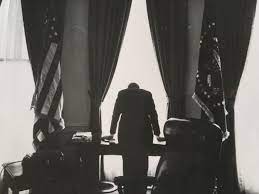


John F. Kennedy during the Cuban Missile Crisis
On October 16, Kennedy was shown photographs of nuclear missile sites under construction on the island. The pictures had been taken on the previous day by a high-altitude U-2 spy plane.
Suddenly, the two most powerful nuclear countries—the United States and the Soviet Union—appeared on the brink of nuclear war.
Kennedy officials claimed they couldn’t understand why Khrushchev had placed nuclear missiles in Cuba. “Maybe Khrushchev’s gone mad” was a typical musing.
The Kennedy administration never admitted that JFK had been waging a no-holds-barred campaign to overthrow the Cuban government and assassinate its leader.
Kennedy convened a group of his 12 most important advisers, which became known as Ex-Comm, for Executive Committee.
For seven days, Kennedy and his advisers intensely and privately debated their options. Some of the participants—such as Air Force General Curtis LeMay—urged an all-out air strike against the missile sites.
Robert Kennedy, the Attorney General (and the President’s brother) opposed initial calls for an air strike.
It would be, he said, “a Pearl Harbor in reverse.” And, he added: “I don’t want my brother to go down in history as the Tojo of the 1960s.”
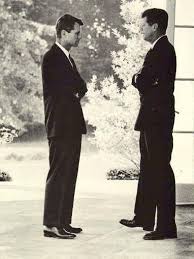
Robert F. and John F. Kennedy
Others—such as Adlai Stevenson, the United States delegate to the United Nations—urged a reliance on quiet diplomacy.
It was Secretary of Defense Robert S. McNamara who suggested a middle course: A naval blockade—a “quarantine” in Kennedy’s softened term—around Cuba. This would hopefully prevent the arrival of more Soviet offensive weapons on the island.
The President insisted that the missiles had to go—by peaceful means, if possible, but by the use of military force if necessary.
Kennedy finally settled on a naval blockade of Cuba. This would prevent additional missiles from coming in and give Khrushchev time to negotiate and save face.
On October 22, President Kennedy appeared on nationwide TV to denounce the presence of Russian nuclear missiles in Cuba.
He demanded their withdrawal, and warned that any missile launched against any nation in the Western hemisphere would be answered with “a full retaliatory response upon the Soviet Union.”
Kennedy ordered American military readiness raised to a level of Defcom-2—the step just short of total war.
The United States had about 27,000 nuclear weapons; the Soviets had about 3,000. In a first nuclear exchange, the United States could have launched about 3,000 nuclear weapons and the Soviets about 250.
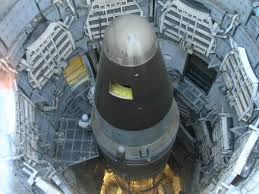
Nuclear missile in silo
On October 28, Khrushchev announced that the missile sites would be destroyed and the missiles crated and shipped back to the Soviet Union.
In return, Kennedy gave his promise—publicly—to lift the blockade and not invade Cuba
Privately, he also promised to remove obsolete Jupiter II nuclear missiles from Turkey, which bordered the Soviet Union. Those missiles were, in effect, the American version of the Russian missiles that had been shipped to Cuba.
The world escaped nuclear disaster by a hair’s-breath.
Khrushchev didn’t know that Kennedy had intended to order a full-scale invasion of Cuba in just another 24 hours if an agreement couldn’t be reached.
And Kennedy and his military advisors didn’t know that Russian soldiers defending Cuba had been armed with tactical nuclear weapons.
If warfare of any type had broken out, the temptation to go nuclear would have been overwhelming.
The Cuban Missile Crisis marked the only time the world came to the brink of nuclear war.
The Right attacked Kennedy for refusing to destroy Castro, thus allowing Cuba to remain a Communist bastion only 90 miles from Florida.
The Left believed it was a needless confrontation that risked the destruction of humanity.
For Kennedy, forcing the Soviets to remove their missiles from Cuba re-won the confidence he had lost among so many Americans following the Bay of Pigs fiasco.
It also made him face the brutal truth that a miscalculation during a nuclear crisis could destroy all life on Earth.
He felt he could now move—cautiously—toward better relations between the United States and the Soviet Union.
Ironically, the crisis had the same effects on Khrushchev—who had witnessed the horrors of Germany’s 1941 invasion of the Soviet Union and the subsequent loss of at least 22 million Soviet citizens.
Slowly and carefully, Kennedy and Khrushchev negotiated the details of what would become the Nuclear Test Ban Treaty, which banned nuclear testing in the atmosphere.
Underground tests would continue, but the amounts of deadly strontium-90 radiation polluting the atmosphere would be vastly reduced.
The treaty was signed between the United States and the Soviet Union on July 25, 1963.
Kennedy considered it his greatest achievement as President, saying in a speech: “According to a Chinese proverb, a journey of a thousand miles begins with a single step. My fellow Americans, let us take that first step.”
2012 PRESIDENTIAL RACE, ALTERNET, AP, BARACK OBAMA, BAY OF PIGS, BBC, BERLIN WALL, BILL CLINTON, BRUCE GREENWOOD, BUZZFEED, CARLOS MARCELLO, CBS NEWS, CIA, CIVIL RIGHTS, CLIFF ROBERTSON, CNN, CUBAN MISSILE CRISIS, DAILY KOS, DAVID HALBERSTAM, DONALD J. TRUMP, FBI, FIDEL CASTRO, FRANK SINATRA, HERMAN CAIN, ICH BEN EIN BERLINNER SPEECH, INTERNET MOVIE DATABASE, J. EDGAR HOOVER, JAMES MARSDEN, JOHN F. KENNEDY, JOSEPH MCCARTHY, JOSEPH P. KENNEDY, LYNDON B. JOHNSON, MAFIA, MALCOM X, MARTIN LUTHER KING, MARTIN SHEEN, MOTHER JONES, MOVEON, MOVIES, NBC NEWS, NEWSWEEK, NEWT GINGRICH, NIKITA KHRUSHCHEV, NPR, NUCLEAR TEST BAN TREATY, POLITICO, PT-109, RAW STORY, REUTERS, RICK PERRY, ROBERT F. KENNEDY, ROBERT S. MCNAMARA, SALON, SAM GIANCANA, SANTOS TRAFFICANTE, Sarah Palin, SATURDAY NIGHT LIVE, SEATTLE TIMES, SLATE, SOVIET UNION, THE ATLANTIC, THE BEST AND THE BRIGHTEST, THE BUTLER, THE CHICAGO SUN-TIMES, THE CHICAGO TRIBUNE, THE DAILY BEAST, THE GUARDIAN, THE HILL, THE HUFFINGTON POST, THE LOS ANGELES TIMES, THE MISSILES OF OCTOBER, THE NEW YORK TIMES, THE RAT PACK, THE WALL STREET JOURNAL, THE WASHINGTON POST, THIRTEEN DAYS, TIME, TWILIGHT ZONE, TWITTER, U.S. NEWS & WORLD REPORT, UPI, USA TODAY, VIETNAM WAR, WILLIAM DEVANE, WILLIAM PETERSON
In Bureaucracy, Business, History, Law, Law Enforcement, Military, Politics, Social commentary on November 10, 2023 at 12:10 am
During the 1960 Presidential campaign, then-Senator John F. Kennedy promised to build a Peace Corps to train people in underdeveloped nations to help themselves.
In March, 1961, the program went into effect, with the President’s brother-in-law, Sargent Shriver, as director.
Starvation, illiteracy and disease were the enemies of the Corps. Any nation wanting aid could request it. The first group of volunteers went to the Philippines, the second to Ecuador and the third to Tanganyika.
The problems of the underdeveloped world were too great for any single organization to solve. But the Corps lifted the spirits of many living in those countries. And it captured the imagination of millions of Americans—especially those of thousands of idealistic youths who entered its ranks.
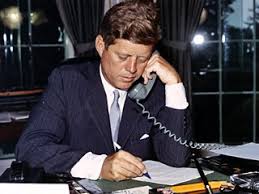
John F. Kennedy
To combat the growing Communist threat to Latin America, Kennedy established the Alliance for Progress. He defined the Alliance’s goal as providing “revolutionary progress through powerful, democratic means.”
Within two years he could report:
“Some 140,000 housing units have been constructed. Slum clearance projects have begun, and 3,000 classrooms have been built. More than 4,000,000 school books have been distributed.
“The Alliance has fired the imagination and kindled the hopes of millions of our good neighbors. Their drive toward modernization is gaining momentum as it unleashes the energies of these millions.
“The United States is becoming increasingly identified in the minds of the people with the goal they move toward: a better life with freedom,” said Kennedy.
Critics of the program, however, charged that the President was trying to “dress up the old policies” of Franklin D. Roosevelt in new rhetoric. Since FDR’s time, the United States has believed in giving economic aid to Latin America.
Much—if not most—of these billions of dollars wound up in the pockets of right-wing dictators, such as Anastasio Somoza and Rafael Trujillo.
Meanwhile, Kennedy was urging action on another front—that of outer space.
“This generation does not intend to founder in the backwash of the coming age of space,” declared the President. He committed the United States to putting a man on the moon by the end of the decade.
As indeed it happened less than six years after his death—on July 20, 1969.
Kennedy’s idealistic rhetoric masked his real reason for going to the moon: To score a propaganda victory over the Soviet Union.
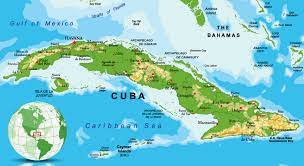
Another of his anti-Communist goals: To remove Fidel Castro from power in Cuba at almost any cost.
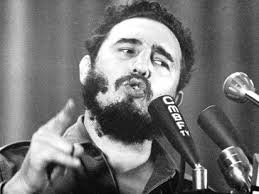
Fidel Castro
Immediately after the failed Bay of Pigs invasion, Kennedy appointed his brother, Robert–who was then the Attorney General—to oversee a CIA program to overthrow Castro.
The CIA and the Mafia entered into an unholy alliance to assassinate Castro—each for its own benefit:
- The CIA wanted to please Kennedy by overthrowing the Communist leader who had nationalized American corporate holdings.
- The Mafia wanted to regain its lucrative casino and brothel holdings that had made Cuba the playground of the rich in pre-Castro times.
The mobsters were authorized to offer $150,000 to anyone who would kill Castro and were promised any support the Agency could yield.
“We were hysterical about Castro at about the time of the Bay of Pigs and thereafter,” then-former Secretary of Defense Robert S. McNamara testified before Congress about these efforts. “And there was pressure from JFK and RFK to do something about Castro.”
Nor was everyone in the CIA enthusiastic about the “get Castro” effort.
“Everyone at CIA was surprised at Kennedy’s obsession with Fidel,” recalled Sam Halpern, who was assigned to the Cuba Project. “They thought it was a waste of time. We all knew [Fidel] couldn’t hurt us. Most of us at CIA initially liked Kennedy, but why go after this little guy?
“One thing is for sure: Kennedy wasn’t doing it out of national security concerns. It was a personal thing. The Kennedy family felt personally burnt by the Bay of Pigs and sought revenge.”
It was all-out war. Among the tactics used:
- Hiring Cuban gangsters to murder Cuban police officials and Soviet technicians.
- Sabotaging mines.
- Paying up to $100,000 per “hit” for the murder or kidnapping of Cuban officials.
- Using biological and chemical warfare against the Cuban sugar industry.
- Planting colorful seashells rigged to explode at a site where Castro liked to go skindiving.
- Trying to arrange for his being presented with a wetsuit impregnated with noxious bacteria and mold spores, or with lethal chemical agents.
- Attempting to infect Castro’s scuba regulator with tuberculous bacilli.
- Trying to douse his handkerchiefs, cigars, tea and coffee with other lethal bacteria.
But all of these efforts failed to assassinate Castro—or overthrow the Cuban Revolution he was heading.
“Bobby (Kennedy) wanted boom and bang all over the island,” recalled Halpern. “It was stupid. The pressure from the White House was very great.”
Americans would rightly label such methods as ”terrorist” if another power used them against the United States today. And the Cuban government saw the situation exactly the same way.
So Castro appealed to Nikita Khrushchev, leader of the Soviet Union, for assistance.
Khrushchev was quick to comply: “We must not allow the Communist infant to be strangled in its crib,” he told members of his inner circle.
2012 PRESIDENTIAL RACE, ALTERNET, AP, BARACK OBAMA, BAY OF PIGS, BBC, BERLIN WALL, BILL CLINTON, BRUCE GREENWOOD, BUZZFEED, CARLOS MARCELLO, CBS NEWS, CIA, CIVIL RIGHTS, CLIFF ROBERTSON, CNN, CUBAN MISSILE CRISIS, DAILY KOS, DAVID HALBERSTAM, DONALD J. TRUMP, FBI, FIDEL CASTRO, FRANK SINATRA, ICH BEN EIN BERLINNER SPEECH, INTERNET MOVIE DATABASE, J. EDGAR HOOVER, JAMES MARSDEN, JOHN F. KENNEDY, JOSEPH MCCARTHY, JOSEPH P. KENNEDY, LYNDON B. JOHNSON, MAFIA, MALCOM X, MARTIN LUTHER KING, MARTIN SHEEN, MOTHER JONES, MOVEON, MOVIES, NBC NEWS, NEWSWEEK, NEWT GINGRICH, NIKITA KHRUSHCHEV, NPR, NUCLEAR TEST BAN TREATY, POLITICO, PT-109, RAW STORY, REUTERS, RICK PERRY, ROBERT F. KENNEDY, ROBERT S. MCNAMARA, SALON, SAM GIANCANA, SANTOS TRAFFICANTE, Sarah Palin, SATURDAY NIGHT LIVE, SEATTLE TIMES, SLATE, SOVIET UNION, THE ATLANTIC, THE BEST AND THE BRIGHTEST, THE BUTLER, THE CHICAGO SUN-TIMES, THE CHICAGO TRIBUNE, THE DAILY BEAST, THE GUARDIAN, THE HILL, THE HUFFINGTON POST, THE LOS ANGELES TIMES, THE MISSILES OF OCTOBER, THE NEW YORK TIMES, THE RAT PACK, THE WALL STREET JOURNAL, THE WASHINGTON POST, THIRTEEN DAYS, TIME, TWILIGHT ZONE, TWITTER, U.S. NEWS & WORLD REPORT, UPI, USA TODAY, VIETNAM WAR, WILLIAM DEVANE, WILLIAM PETERSON
In Bureaucracy, Business, History, Law, Law Enforcement, Military, Politics, Social commentary on November 9, 2023 at 12:10 am
November 22, 2023, will mark the 60th anniversary of the assassination of President John Fitzgerald Kennedy in Dallas, Texas.
Today—62 years after he took office—millions of Americans bitterly contrast his memory with the character of the most hated President in American history: Donald John Trump:
JFK – A decorated war hero
DJT – A five-times draft-dodger
JFK – Youthful (43 upon taking office) and handsome
DJT – Old (77) and overweight
JFK – A fervent anti-Communist
DJT – Elected with support from Russian Communist Intelligence
JFK – Witty, self-mocking
DJT – Humorless, self-bragging
JFK – Optimistic, well-informed, appealing to the best in Americans
DJT – Doom-saying, uninformed, appealing to the “darker side” of his Right-wing base
Some have called the Kennedy administration a golden era in American history. A time when touch football, lively White House parties, stimulus to the arts and the antics of the President’s children became national obsessions.
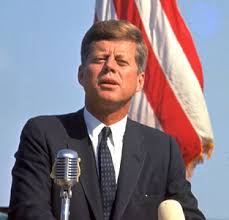
John F. Kennedy
Others have called the Kennedy Presidency a monument to the unchecked power of wealth and ambition. An administration staffed by young novices playing at statesmen, riddled with nepotism, whose legacy includes the Bay of Pigs, the Vietnam war and the world’s first nuclear confrontation.
The opening days of the Kennedy Presidency raised hopes for a dramatic change in relations between the United States and the Soviet Union.
But detente was not possible then. The Russians had not yet experienced their coming agricultural problems and the setback in Cuba during the Missile Crisis. And the United States had not suffered defeat in Vietnam.
Kennedy’s first brush with international Communism came on April 17, 1961, with the invasion of Cuba at the Bay of Pigs. This operation had been planned and directed by the Central Intelligence Agency during the final months of Dwight D. Eisenhower’s term as President.
The U.S. Navy was to land about 1,400 Cuban exiles on the island to overthrow the Communist government of Fidel Castro. They were supposed to head into the mountains—as Castro himself had done against the dictatorship of Fulgencio Batista in 1956—and raise the cry of revolution.
The invasion would occur after an American air strike had knocked out the Cuban air force. But the airstrike failed and Kennedy, under the pressure of world opinion, called off a second try.
Even so, the invasion went ahead. When the invaders surged onto the beaches, they found Castro’s army waiting for them. Many of the invaders were killed on the spot. Others were captured—to be ransomed by the United States in December, 1962, in return for medical supplies.
It was a major public relations setback for the newly-installed Kennedy administration, which had raised hopes for a change in American-Soviet relations.
Kennedy, trying to abort widespread criticism, publicly took the blame for the setback: “There’s an old saying that victory has a hundred fathers and defeat is an orphan….I’m the responsible officer of the Government.”
The Bay of Pigs convinced Kennedy that he had been misled by the CIA and the Joint Chiefs of Staff. Out of this came his decision to rely heavily on the counsel of his brother, Robert, whom he had installed as Attorney General.
The failed Cuban invasion—unfortunately for Kennedy—convinced Soviet Premier Nikita S. Khrushchev that the President was weak.
Khrushchev told an associate that he could understand if Kennedy had not decided to invade Cuba. But once he did, Kennedy should have pressed on and wiped out Castro.
Khrushchev attributed this to Kennedy’s youth, inexperience and timidity—and believed he could bully the President.
On June 4, 1961, Kennedy met with Khrushchev in Vienna to discuss world tensions. Khrushchev threatened to go to nuclear war over the American presence in West Berlin—the dividing line between Western Europe, protected by the United States, and Eastern Europe, controlled by the Soviet Union.
Kennedy, who prized rationality, was shaken by Khrushchev’s unexpected rage. After the conference, he told an associate: “It’s going to be a cold winter.”
Meanwhile, East Berliners felt they were about to be denied access to West Berlin. A flood of 3,000 refugees daily poured into West Germany.
Khrushchev was embarrassed at this clear showing of the unpopularity of the Communist regime. In August, he ordered that a concrete wall—backed up by barbed wire, searchlights and armed guards—be erected to seal off East Berlin.
As tensions mounted and a Soviet invasion of West Berlin seemed likely, Kennedy sent additional troops to the city in a massive demonstration of American will.
Two years later, on June 26, 1963, during a 10-day tour of Europe, Kennedy visited Berlin to deliver his “I am a Berliner” speech to a frenzied crowd of thousands.
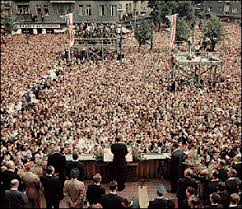
JFK addresses crowds at the Berlin Wall
“There are many people in the world who really don’t understand, or say they don’t, what is the great issue between the free world and the Communist world,” orated Kennedy. “Let them come to Berlin.”
Standing within gunshot of the Berlin wall, he lashed out at the Soviet Union and praised the citizens of West Berlin for being “on the front lines of freedom” for more than 20 years.
“All free men, wherever they may live,” said Kennedy, “are citizens of Berlin. And therefore, as a free man, I take pride in the words, ‘Ich ben ein Berliner.’”
1980 PRESIDENTIAL ELECTION, 1984 (NOVEL), 2016 PRESIDENTIAL ELECTION, ABC NEWS, ADOLF HITLER, ALTERNET, AMERICABLOG, AP, “DON’T SAY GAY” LEGISLATION, “TWO MINUTES HATE”, BABY BOOMER RESISTANCE, BBC, BLACKS, BLOOMBERG NEWS, BUZZFEED, CBS NEWS, CIVIL RIGHTS MOVEMENT, CIVIL WAR, CLARENCE THOMAS, CNN, CROOKS AND LIARS, DAILY KOS, DENNIS HASTERT, DONALD TRUMP, ENVIRONMENTALISTS, EVANGELICAL CHRSTIANS, FINAL SOLUTION, FIVETHIRTYEIGHT, FOX NEWS NETWORK, FRANKLIN GRAHAM, GAYS, GEORGE ORWELL, H. RAPP BROWN, HARPER’S MAGAZINE, HEINRICH HIMMLER, HERMAN GOERING, HISPANICS, HOMOSEXUALITY, HUFFINGTON POST, JIMMY CARTER, JOACHIM VON RIBBENTROP, JOHN F. KENNEDY, JOSH DUGGAR, KANSAS-MISSOURI BORDER, KEN PAXTON, KU KLUX KLAN, LESBIANS, LIBERALS, MALCOM X, MARTIN LUTHER KING, MEDIA MATTERS, MIKE PENCE, MOTHER JONES, MOVEON, MSNBC, NBC NEWS, NEW REPUBLIC, NEWSDAY, NEWSWEEK, NPR, PAUL JOSEPH GOEBBELS, PBS NEWSHOUR, PEDOPHILIA, POLITICO, POLITICUSUSA, PROUD BOYS, RANDALL BALMER, RAW STORY, REINHARD HEYDRICH, RELIGIOUS FREEDOM RESTORATION ACT, REPUBLICANS, REUTERS, ROE V. WADE, ROLLING STONE, RON DESANTIS, Ronald Reagan, SALON, SEATTLE TIMES, SLATE, SLAVERY, SOUTHERN POVERTY LAW CENTERS, STUART ADAMS, TALKING POINTS MEMO, TED CRUZ, THE ATLANTIC, THE CHICAGO SUN-TIMES, THE CHICAGO TRIBUNE, THE DAILY BEAST, THE DAILY BLOG, THE DISABLED, THE GUARDIAN, THE HILL, THE HUFFINGTON POST, THE INTERCEPT, THE LOS ANGELES TIMES, THE NATION, THE NEW REPUBLIC, THE NEW YORK TIMES, THE NEW YORKER, THE VILLAGE VOICE, THE WASHINGTON POST, THINKPROGRESS, TIME, TRANSGENDERS, TRUTHDIG, TRUTHOUT, TUCKER CARLSON, TWITTER, U.S. NEWS & WORLD REPORT, UNITED STATES HOUSE OF REPRESENTATIVES, UNITED STATES SUPREME COURT, UPI, USA TODAY, WHITE SUPREMACISTS, WOMEN
In Bureaucracy, Law, Law Enforcement, Medical, Politics, Social commentary on March 1, 2023 at 12:12 am
Given the all-out Republican assault on their liberties, gays could become convinced that they are becoming the targets of state-sponsored terrorism—as were Jews in Nazi Germany.
In such a case, they may turn to a more drastic means than elections and the courts to protect themselves: Violence.
Political violence has a long and deadly history in the United States.
Before the outbreak of the Civil War in 1861, violence was commonplace along the Kansas-Missouri border as pro- and anti-slavery elements slaughtered one another.
After the Civil War ended in 1865, Ku Klux Klansmen across the South terrorized blacks into submission even though slavery was now illegal.
With the advent of the civil rights movement in 1960, blacks and their supporters once again became targets for violence.
A minority of black leaders like Malcom X and H. Rapp Brown told blacks they should violently defend themselves. But the vast majority of blacks—including bloodied civil rights workers—adhered to Martin Luther King’s call for non-violence.

Martin Luther King (left), Malcom X (right)
Still, there is no guarantee that those who suffer persecution and violence will remain non-violent. Their motive could be revenge—or to send a message to ward off future attacks.
Such was the fate of SS-Obergruppenfuhrer Reinhard Heydrich..
A tall, blond-haired formal naval officer, he was both a champion fencer and talented violinist. Heydrich joined the Schutzstaffel, or Protective Squads, better known as the SS, in 1931, and quickly became head of its counterintelligence service.
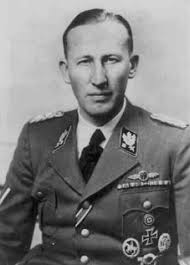
Reinhard Heydrich
In September, 1941, Heydrich was appointed “Reich Protector” of Czechoslovakia, which had fallen prey to Germany in 1938 but whose citizens were growing restless under Nazi rule.
Heydrich immediately ordered a purge, executing 92 people within the first three days of his arrival in Prague. By February, 1942, 4,000-5,000 people had been arrested.
In January, 1942, Heydrich convened a meeting of high-ranking political and military leaders in Wannsee, Germany, to streamline “the Final Solution to the Jewish Question.”
An estimated six million Jews were thus slaughtered.
On May 27, 1942, two British-trained Czech commandos—Jan Kubis and Joseph Gabcik—waited in Prague at a hairpin turn in the road always taken by Heydrich. When Heydrich’s Mercedes slowed down, Gabcik raised his machinegun—which jammed.
Heydrich ordered his driver to halt so he could take aim at his would-be assassins. It proved a fatal mistake.
Rising in his seat, he aimed his revolver at Gabcik—as Kubis lobbed a hand grenade at the car. The explosion drove steel and leather fragments of the car’s upholstery into Heydrich’s diaphragm, spleen and lung.
Hitler dispatched doctors from Berlin to save the Reich Protector. But infection set in, and on June 4, Heydrich died at age 38.

Heydrich’s wrecked Mercedes
The assassination sent shockwaves through the upper echelons of the Third Reich. No one had dared assault—much less assassinate—a high-ranking Nazi official.
The Nazis had slaughtered tens of thousands without hesitation—or fear that the same might happen to them.
Suddenly they realized that the fury they had aroused could be turned against themselves.
Which brings us to the leaders of America’s own Right-wing.
The names of infamous Nazis were widely known:
- Reichsmarshall Hermann Goering;
- Propaganda Minister Paul Joseph Goebbels;
- SS-Reichsfuhrer Heinrich Himmler;
- Foreign Minister Joachim von Ribbentrop;
- SS Obergruppenfuhrer Reinhard Heydrich;
- Adolf Hitler.
And so are the names of infamous leaders of the American Right:
- Texas Senator Ted Cruz;
- Supreme Court Justice Clarence Thomas;
- Commentator Tucker Carlson;
- Evangelist Franklin Graham;
- Florida Governor Ron DeSantis;
- Former President Donald Trump.
The differences between these two infamous groups are these:
In Nazi Germany, ordinary Germans could not learn about the personal lives of their dictators—including their home addresses—and conspire against them.
In the United States, ordinary citizens can learn about the personal lives of their would-be dictators by newspapers, Internet and TV—even on the Right’s own propaganda network, Fox News. “People finder” websites, for a modest price, provide names and addresses of potential targets—and their relatives.
In Nazi Germany, firearms were tightly controlled.
In the United States, the Right-wing National Rifle Association has successfully lobbied to put lethal firepower into the hands of virtually anyone who wants it.
Since their reversal of abortion rights in Roe v. Wade on June 24, 2022, at least six Right-wing Supreme Court Justices have lived under heavy guard by the U.S. Marshals Service. They may well be forced to do so for the rest of their lives.
But radical evangelists like Franklin Graham and Right-wing propagandists like Tucker Carlson cannot expect lifelong government protection. They would have to provide their own security—or take their chances.
So many Republicans are calling for an all-out war on gays that any number of them could become the targets—and victims—of retaliation.
Republicans boast that they want to “get the government off the backs of the people.” Yet they are waging war against people for the most intimate of reasons: Their choice of sex partners.
Reinhard Heydrich believed he was invulnerable to the hatred of the enemies he had raised against himself. That arrogance cost him his life.
The day may soon come when America’s own Right-wingers start learning the same lesson.
1980 PRESIDENTIAL ELECTION, 1984 (NOVEL), 2016 PRESIDENTIAL ELECTION, ABC NEWS, ADOLF HITLER, ALTERNET, AMERICABLOG, AP, “DON’T SAY GAY” LEGISLATION, “TWO MINUTES HATE”, BABY BOOMER RESISTANCE, BBC, BLACKS, BLOOMBERG NEWS, BUZZFEED, CBS NEWS, CIVIL RIGHTS MOVEMENT, CIVIL WAR, CLARENCE THOMAS, CNN, CROOKS AND LIARS, DAILY KOS, DENNIS HASTERT, DONALD TRUMP, ENVIRONMENTALISTS, EVANGELICAL CHRSTIANS, FINAL SOLUTION, FIVETHIRTYEIGHT, FOX NEWS NETWORK, FRANKLIN GRAHAM, GAYS, GEORGE ORWELL, H. RAPP BROWN, HARPER’S MAGAZINE, HEINRICH HIMMLER, HERMAN GOERING, HISPANICS, HOMOSEXUALITY, HUFFINGTON POST, JIMMY CARTER, JOACHIM VON RIBBENTROP, JOHN F. KENNEDY, JOSH DUGGAR, KANSAS-MISSOURI BORDER, KEN PAXTON, KU KLUX KLAN, LESBIANS, LIBERALS, MALCOM X, MARTIN LUTHER KING, MEDIA MATTERS, MIKE PENCE, MOTHER JONES, MOVEON, MSNBC, NBC NEWS, NEW REPUBLIC, NEWSDAY, NEWSWEEK, NPR, PAUL JOSEPH GOEBBELS, PBS NEWSHOUR, PEDOPHILIA, POLITICO, POLITICUSUSA, PROUD BOYS, RANDALL BALMER, RAW STORY, REINHARD HEYDRICH, RELIGIOUS FREEDOM RESTORATION ACT, REPUBLICANS, REUTERS, ROE V. WADE, ROLLING STONE, RON DESANTIS, Ronald Reagan, SALON, SEATTLE TIMES, SLATE, SLAVERY, SOUTHERN POVERTY LAW CENTERS, STUART ADAMS, TALKING POINTS MEMO, TED CRUZ, THE ATLANTIC, THE CHICAGO SUN-TIMES, THE CHICAGO TRIBUNE, THE DAILY BEAST, THE DAILY BLOG, THE DISABLED, THE GUARDIAN, THE HILL, THE HUFFINGTON POST, THE INTERCEPT, THE LOS ANGELES TIMES, THE NATION, THE NEW REPUBLIC, THE NEW YORK TIMES, THE NEW YORKER, THE VILLAGE VOICE, THE WASHINGTON POST, THINKPROGRESS, TIME, TRANSGENDERS, TRUTHDIG, TRUTHOUT, TUCKER CARLSON, TWITTER, U.S. NEWS & WORLD REPORT, UNITED STATES HOUSE OF REPRESENTATIVES, UNITED STATES SUPREME COURT, UPI, USA TODAY, WHITE SUPREMACISTS, WOMEN
In Bureaucracy, History, Law, Law Enforcement, Medical, Politics, Social commentary on February 28, 2023 at 12:13 am
The politics of “smear and fear” have been good to Republicans—and their Right-wing allies.
Meanwhile, the Republican “base” refuses to learn that those who portray themselves as morally superior are usually:
- Hypocrites, who are in effect saying: “Do as I say, not as I do,” or
- Fanatics, who intend to force their version of morality on others.
So long as millions of hate-filled Right-wingers support the endless succession of “two minute hates,” Republicans will continue to target an endless series of victims.
And Right-wingers who are stirred up by Republicans’ anti-gay rhetoric often target gays, lesbians and transgenders in violent attacks.
- According to the Southern Poverty Law Center: “In the first six months of 2022, the Proud Boys counterprotested or harassed people on at least 28 separate occasions at LGBTQ and reproductive justice events around the country – together acting as a coordinated attack on gender equity and bodily autonomy….
- “On June 26, library patrons attending a drag queen story hour at a public library in Sparks, Nevada, encountered what has now become an increasingly regular sight: a group of men clad in the Proud Boys’ black-and-yellow uniform.
- “They held signs that accused participants of ‘grooming’ children and yelled at parents that they were ‘sick.’ One of those Proud Boys allegedly approached the building with a gun, causing patrons – including a number of children – to flee inside to safety. ‘We had some people who were visibly shaken and sobbing,’ a librarian told a local reporter.”
Proud Boys Flag
Anthony Crider, CC BY-SA 4.0 <https://creativecommons.org/licenses/by-sa/4.0>, via Wikimedia Commons
According to a December 10, 2022 story in Business Insider:
- “By the end of November, far-right activists took part in at least 55 public actions targeting members of the LGBT+ community — up from 16 the year before, an increase of some 340% — with a corresponding rise in violent attacks on people perceived to be gay or transgender, according to a report released this week by the Armed Conflict Location & Event Data Project, or ACLED….
- “While racism remains the primary driver of the far right, anti-LGBTQ actions have ‘fueled the largest increase in far-right protest activity,’ [according to an FBI annual risk assessment for 2022] with the rise in such activity ‘strongly’ correlating with a rise in violent attacks, of which there have been no fewer than 20, including the murder….of five people at a gay nightclub in Colorado Springs. Though we don’t have a specific motive the suspect has a history of online and offline bigotry.”
So what’s the reason for the GOP’s constantly dialing up fear and hatred of gays?
“They have an interest in keeping the base riled up about one thing or another, and when one issue fades, as with same-sex relationships and same-sex marriage, they’ve got to find something else. It’s almost frantic,” said Randall Balmer, a Dartmouth professor who authored Bad Faith: Race and the Rise of the Religious Right.
According to Balmer, the rise of the Religious Right was now driving Republican support for anti-trans legislation.
White Right-wing evangelicals backed Ronald Reagan against Jimmy Carter in 1980 and catapulted him to the White House.
Any Republican who wanted to gain the Presidency had to pay homage to the evangelical base, Balmer says.
In 2015, Donald Trump initially campaigned on welcoming gays and lesbians into the Republican platform. But he soon dropped this stance to win support from Right-wing evangelicals.
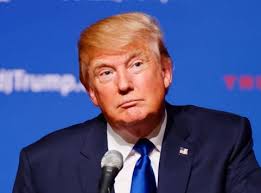
Donald Trump
That support proved crucial to his gaining the White House—just as it had proved crucial to Reagan in 1980 and 1984.
Gays have fought back on political and legal fronts, with mixed success.
According to move.org, among the best states for gays are: California, Oregon, Colorado and New York.
It’s no coincidence that these states have a majority Democratic population and legislature.
Among the worst states for gays are: Arizona, Idaho, Texas, Oklahoma, Wyoming, Arkansas and South Carolina.
Gays increasingly fear that the Supreme Court’s reversal of Roe v. Wade could lead to a reversal of its previous legalizing of same-sex marriage.
And this could very well happen. For decades, abortion rights advocates believed the Court wouldn’t dare strike down a right it had recognized as far back as 1973.
Immediately following the Court’s decision on Roe, Justice Clarence Thomas said that the landmark high court rulings that legalized same-sex marriage and contraception rights should be reconsidered.

Clarence Thomas
Thomas’ remark has been widely interpreted as an invitation to Right-wing states to bring challenges to those rulings.
Texas Attorney General Ken Paxton hopes the state legislature enacts a law that criminalizes sodomy so he can defend it at the Supreme Court.
And Stuart Adams, the Republican president of the State Senate, would support Utah’s joining other states to press the Supreme Court’s ending the right to same-sex marriage.
Given the all-out Republican assault on their liberties, gays could become convinced that they are becoming the targets of state-sponsored terrorism—as were Jews in Nazi Germany.
In such a case, they may turn to a more drastic means than elections and the courts to protect themselves: Violence.
“Those who make peaceful revolution impossible will make violent revolution inevitable,” said President John F. Kennedy in a 1962 address on the first anniversary of the Alliance for Progress.
His warning remains as valid today as it did 61 years ago.
1980 PRESIDENTIAL ELECTION, 1984 (NOVEL), 2016 PRESIDENTIAL ELECTION, ABC NEWS, ADOLF HITLER, ALTERNET, AMERICABLOG, AP, “DON’T SAY GAY” LEGISLATION, “TWO MINUTES HATE”, BABY BOOMER RESISTANCE, BBC, BLACKS, BLOOMBERG NEWS, BUZZFEED, CBS NEWS, CIVIL RIGHTS MOVEMENT, CIVIL WAR, CLARENCE THOMAS, CNN, CROOKS AND LIARS, DAILY KOS, DENNIS HASTERT, DONALD TRUMP, ENVIRONMENTALISTS, EVANGELICAL CHRSTIANS, FINAL SOLUTION, FIVETHIRTYEIGHT, FOX NEWS NETWORK, FRANKLIN GRAHAM, GAYS, GEORGE ORWELL, H. RAPP BROWN, HARPER’S MAGAZINE, HEINRICH HIMMLER, HERMAN GOERING, HISPANICS, HOMOSEXUALITY, HUFFINGTON POST, JIMMY CARTER, JOACHIM VON RIBBENTROP, JOHN F. KENNEDY, JOSH DUGGAR, KANSAS-MISSOURI BORDER, KEN PAXTON, KU KLUX KLAN, LESBIANS, LIBERALS, MALCOM X, MARTIN LUTHER KING, MEDIA MATTERS, MIKE PENCE, MOTHER JONES, MOVEON, MSNBC, NBC NEWS, NEW REPUBLIC, NEWSDAY, NEWSWEEK, NPR, PAUL JOSEPH GOEBBELS, PBS NEWSHOUR, PEDOPHILIA, POLITICO, POLITICUSUSA, PROUD BOYS, RANDALL BALMER, RAW STORY, REINHARD HEYDRICH, RELIGIOUS FREEDOM RESTORATION ACT, REPUBLICANS, REUTERS, ROE V. WADE, ROLLING STONE, RON DESANTIS, Ronald Reagan, SALON, SEATTLE TIMES, SLATE, SLAVERY, SOUTHERN POVERTY LAW CENTERS, STUART ADAMS, TALKING POINTS MEMO, TED CRUZ, THE ATLANTIC, THE CHICAGO SUN-TIMES, THE CHICAGO TRIBUNE, THE DAILY BEAST, THE DAILY BLOG, THE DISABLED, THE GUARDIAN, THE HILL, THE HUFFINGTON POST, THE INTERCEPT, THE LOS ANGELES TIMES, THE NATION, THE NEW REPUBLIC, THE NEW YORK TIMES, THE NEW YORKER, THE VILLAGE VOICE, THE WASHINGTON POST, THINKPROGRESS, TIME, TRANSGENDERS, TRUTHDIG, TRUTHOUT, TUCKER CARLSON, TWITTER, U.S. NEWS & WORLD REPORT, UNITED STATES HOUSE OF REPRESENTATIVES, UNITED STATES SUPREME COURT, UPI, USA TODAY, WHITE SUPREMACISTS, WOMEN
In Bureaucracy, History, Law, Law Enforcement, Medical, Politics, Social commentary on February 27, 2023 at 12:12 am
In a June 19, 2015 editorial, Rolling Stone magazine writer Jeb Lund noted:
“The Republican Party has weaponized its supporters, made violence a virtue and, with almost every pronouncement for 50 years, given them an enemy politicized, racialized and indivisible.
“Movement conservatives have fetishized a tendentious and ahistorical reading of the Second Amendment to the point that the Constitution itself somehow paradoxically ‘legitimizes’ an armed insurrection against the government created by it.
“Those leading said insurrection are swaddled by the blanket exculpation of patriotism. At the same time, they have synonymized the Democratic Party with illegitimacy and abuse of the American order.
“This is no longer an argument about whether one party’s beliefs are beneficial or harmful, but an attitude that labels leftism so antithetical to the American idea that empowering it on any level is an act of usurpation.”
Not content with this, Republicans have aimed slander and hatred at those who dare to vote Democratic. In the past, this has included:
- Blacks
- Women
- The disabled
- Environmentalists
- Liberals
More recently, the groups Republicans most delight in vilifying are:
- Hispanics
- Gays
- Lesbians
- Transgenders
George Orwell’s classic 1949 novel, 1984, serves as a better guide to Republican electioneering strategy than any official statement of the GOP.
1984 is set in a futuristic dictatorship called Oceania, whose constantly alternating mortal enemies are Eurasia and Eastasia.
A daily fixture of life in Oceania is the “Two Minutes Hate.” During this, Party members must watch a film depicting the Party’s enemies and express their hatred for them in exactly two minutes.
Chief among these is Emmanuel Goldstein, who is obviously based on Leon Trotsky, the longtime antagonist of Joseph Stalin, dictator of the Soviet Union for almost 30 years.
The “Two Minutes Hate” serves as a form of brainwashing, whose purpose is to whip ordinary citizens into a frenzy of hatred and loathing for whoever the Party designates as its—and their—-mortal enemies.
It fully describes the motivations—and effects—of Republicans’ attacks on their self-proclaimed enemies.
Without a speck of evidence to back up such defamatory claims, Republicans—both politicians and their followers—attack Democratic candidates as “groomers” and “pedophiles.”
This has led to deadly attacks on gays, lesbians and transgenders.
In December, 2014, Republicans in the Michigan House of Representatives passed “The Religious Freedom Restoration Act.”
The bill allows public agencies and private businesses to refuse service to anyone under the claim that their “religious beliefs” had been affronted.
And the State government is legally prevented from intervening if a person claimed that his/her “deeply-held religious beliefs” was the reason for acting—or not acting—in a certain way.
Thus:
- An emergency room doctor can refuse service to a gay or lesbian needing medical care.
- A pharmacist can refuse to fill a doctor’s prescription for birth control or HIV medication.
- A DMV clerk can refuse to give a driver’s license to someone who’s divorced.
- An employer can deny equal pay to women.
Republicans have introduced similar “right-to-discriminate” legislation in other states as well:
- On March 28, 2022, Florida Governor Ron DeSantis signed into law the “Parental Rights in Education” bill. This bans public school teachers from holding classroom instruction about sexual orientation or gender identity in kindergarten through grade three.
- In October, 33 Congressional Republicans introduced a similar “Don’t Say Gay” bill that would prohibit, on a nationwide basis, the use of federal funds “to develop, implement, facilitate, or fund any sexually-oriented program, event, or literature for children under the age of 10, and for other purposes.”
- On June 24, 2022, the Supreme Court’s reversed Roe v. Wade, guaranteeing a woman’s legal right to abortion. Soon afterward, Texas, Attorney General Ken Paxton said that he would willingly defend at the Supreme Court any law the Legislature enacted that criminalized sodomy.
- In Utah, Stuart Adams, the Republican president of the State Senate, said he would support Utah’s joining with other states to press the Supreme Court to end the right to same-sex marriage.
Republicans have defended such legislation by equating gays with child predators.
In fact, the Child Molestation Research & Prevention Institute states that 90% of child molesters target children in their network of family and friends, and the majority are men married to women.
Yet Republicans and their Rightist allies have refused to condemn such heterosexual—and Right-wing—child molesters as Dennis Hastert and Josh Duggar.
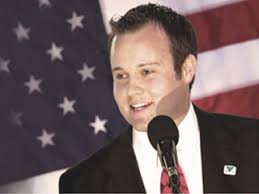
Josh Duggar, the “all-American” child molester
On May 21, 2015, responding to press leaks, Duggar resigned as director of the Family Research Council, a Right-wing organization dedicated to fighting sexually-oriented issues such as same-sex marriage, abortion and pornography.
In 2002-3, as a 14-15 year-old, Duggar had fondled the breasts and vaginas of five underage girls—four of whom were his own sisters.
And on October 28, 2015, Hastert—Speaker of the House of Representatives from 1999 to 2007–pleaded guilty to structuring money transactions in a way to avoid requirements to report where the money was going.
The reason: One of his victims had started blackmailing him.

Dennis Hastert
The reason: To conceal the truth about his past as a child molester. Hastert had abused four young boys when he was their high school wrestling coach. One was only 14 years old.
2012 PRESIDENTIAL RACE, ALTERNET, AP, BARACK OBAMA, BAY OF PIGS, BBC, BERLIN WALL, BILL CLINTON, BRUCE GREENWOOD, BUZZFEED, CARLOS MARCELLO, CBS NEWS, CIA, CIVIL RIGHTS, CLIFF ROBERTSON, CNN, CUBAN MISSILE CRISIS, DAILY KOS, DAVID HALBERSTAM, DONALD J. TRUMP, FACEBOOK, FBI, FIDEL CASTRO, FRANK SINATRA, HERMAN CAIN, ICH BEN EIN BERLINNER SPEECH, INTERNET MOVIE DATABASE, J. EDGAR HOOVER, JAMES MARSDEN, JOHN F. KENNEDY, JOSEPH MCCARTHY, JOSEPH P. KENNEDY, LYNDON B. JOHNSON, MAFIA, MALCOM X, MARTIN LUTHER KING, MARTIN SHEEN, MOTHER JONES, MOVEON, MOVIES, NBC NEWS, NEWSWEEK, NEWT GINGRICH, NIKITA KHRUSHCHEV, NPR, NUCLEAR TEST BAN TREATY, POLITICO, PT-109, RAW STORY, REUTERS, RICK PERRY, ROBERT F. KENNEDY, ROBERT S. MCNAMARA, SALON, SAM GIANCANA, SANTOS TRAFFICANTE, Sarah Palin, SATURDAY NIGHT LIVE, SEATTLE TIMES, SLATE, SOVIET UNION, THE ATLANTIC, THE BEST AND THE BRIGHTEST, THE BUTLER, THE CHICAGO SUN-TIMES, THE CHICAGO TRIBUNE, THE DAILY BEAST, THE GUARDIAN, THE HILL, THE HUFFINGTON POST, THE LOS ANGELES TIMES, THE MISSILES OF OCTOBER, THE NEW YORK TIMES, THE RAT PACK, THE WALL STREET JOURNAL, THE WASHINGTON POST, THIRTEEN DAYS, TIME, TWILIGHT ZONE, TWITTER, U.S. NEWS & WORLD REPORT, UPI, USA TODAY, VIETNAM WAR, WILLIAM DEVANE, WILLIAM PETERSON
In Bureaucracy, Business, History, Law, Law Enforcement, Military, Politics, Social commentary on July 15, 2022 at 12:10 am
Fifty-nine years ago, on November 22, 1963, two bullets slammed into the neck and head of President John Fitzgerald Kennedy.
It has been said that he left his country with three great legacies:
- The Nuclear Test Ban Treaty;
- The Apollo moon landing; and
- The Vietnam war.
Of these, the following can be said with certainty:
- The Test Ban Treaty has prevented atmosphereic testing—and poisoning—by almost all the world’s nuclear powers.
- After reaching the moon—in 1969—Americans quickly lost interest in space and have today largely abandoned plans for manned exploration. For America, as for JFK, beating the Russians to the moon was the end-goal.
- Under Presidents Lyndon Johnson and Richard Nixon, 58,000 Americans died in Vietnam; 153,303 were wounded; and billions of dollars were squandered in a hopeless effort to intervene in what was essentially a Vietnamese civil war. From 1965 to 1972, the war angrily divided Americas as had no event since the Civil War.
But there was a fourth legacy—and perhaps the most important of all: The belief that mankind could overcome its greatest challenges through rationality and perseverance.
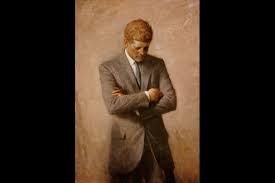
White House painting of JFK
At American University on June 10, 1963, Kennedy called upon his fellow Americans to re-examine the events and attitudes that had led to the Cold War. And he declared that the search for peace was by no means absurd:
“Our problems are man-made; therefore, they can be solved by man. And man can be as big as he wants. No problem of human destiny is beyond human beings.
“Man’s reason and spirit have often solved the seemingly unsolvable, and we believe they can do it again.”
Today, politicians from both parties cannot agree on solutions to even the most vital national problems.
On November 21, 2011, the 12 members of the “Super-Committee” of Congress, tasked with finding $1.2 trillion in cuts in government spending, threw up their hands in defeat.
President Kennedy insisted on being well-informed. He speed-read several newspapers every morning and nourished personal relationships with the press—and not for altruistic reasons. These journalistic contacts gave Kennedy additional sources of information and perspectives on national and international issues.
During the 2012 Presidential campaign, Republican Presidential candidates celebrated their ignorance of both.
Former Godfather’s Pizza CEO Herman Cain famously said, “We need a leader, not a reader.” Thus he excused his ignorance for why President Barack Obama had intervened in Libya.
Texas Governor Rick Perry (and now Secretary of Energy) showed similar pride in not knowing there are nine judges on the United States Supreme Court:
“Well, obviously, I know there are nine Supreme Court judges. I don’t know how eight came out my mouth. But the, uh, the fact is, I can tell you—I don’t have memorized all of those Supreme Court judges. And, uh, ah—
“Here’s what I do know. That when I put an individual on the Supreme Court, just like I done in Texas, ah, we got nine Supreme Court justices in Texas, ah, they will be strict constructionists….”
In short, it’s the media’s fault if they ask you a question and your answer reveals your own ignorance, stupidity or criminality.
Sarah Palin rewrote history via “The Midnight Ride of Paul Revere”: “He warned the British that they weren’t going to be taking away our arms by ringing those bells and, um, making sure as he’s riding his horse through town to send those warning shots and bells that, uh, we were going to be secure and we were going to be free.”
In fact, Revere wasn’t warning the British about anything. Instead, he was warning his fellow Americans about an impending British attack—as his celebrated catchphrase “The British are coming!” made clear.
During the height of the Cuban Missile Crisis, Kennedy spoke with aides about a book he had just finished: Barbara Tuchman’s The Guns of August, about the events leading to World War 1.
He said that the book’s most important revelation was how European leaders had blindly rushed into war, without thought to the possible consequences. Kennedy told his aides he did not intend to make the same mistake—that, having read his history, he was determined to learn from it.
Republicans attacked President Obama for his Harvard education and articulate use of language. Among their taunts: “Hitler also gave good speeches.”
And they resented his having earned most of his income as a writer of two books: Dreams From My Father and The Audacity of Hope. As if being a writer is somehow subversive.
When knowledge and literacy are attacked as “highfalutin’” arrogance, and ignorance and incoherence are embraced as sincerity, national decline lies just around the corner.
Many Americans believe that decline arrived with the 2016 election of Donald Trump. In fact, they believe it was Trump who announced it after winning the Nevada Republican primary: “We won with poorly educated. I love the poorly educated.”
In retrospect, the funeral for President Kennedy marked the death of more than a rational and optimistic human being.
It marked the death of Americans’ pride in choosing reasoning and educated citizens for their leaders.
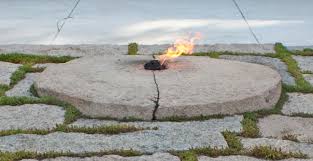
The Eternal Flame at the grave of President John F. Kennedy
2012 PRESIDENTIAL RACE, ABC NEWS, ALTERNET, AP, BARACK OBAMA, BAY OF PIGS, BBC, BERLIN WALL, BILL CLINTON, BRUCE GREENWOOD, BUZZFEED, CARLOS MARCELLO, CBS NEWS, CIA, CIVIL RIGHTS, CLIFF ROBERTSON, CNN, CUBAN MISSILE CRISIS, DAILY KOS, DAVID HALBERSTAM, DONALD J. TRUMP, FACEBOOK, FBI, FIDEL CASTRO, FRANK SINATRA, HERMAN CAIN, ICH BEN EIN BERLINNER SPEECH, INTERNET MOVIE DATABASE, J. EDGAR HOOVER, JAMES MARSDEN, JOHN F. KENNEDY, JOSEPH MCCARTHY, JOSEPH P. KENNEDY, LYNDON B. JOHNSON, MAFIA, MALCOM X, MARTIN LUTHER KING, MARTIN SHEEN, MOTHER JONES, MOVEON, MOVIES, NBC NEWS, NEWSWEEK, NEWT GINGRICH, NIKITA KHRUSHCHEV, NPR, NUCLEAR TEST BAN TREATY, POLITICO, PT-109, RAW STORY, REUTERS, RICK PERRY, ROBERT F. KENNEDY, ROBERT S. MCNAMARA, SALON, SAM GIANCANA, SANTOS TRAFFICANTE, Sarah Palin, SATURDAY NIGHT LIVE, SEATTLE TIMES, SLATE, SOVIET UNION, THE ATLANTIC, THE BEST AND THE BRIGHTEST, THE BUTLER, THE CHICAGO SUN-TIMES, THE CHICAGO TRIBUNE, THE DAILY BEAST, THE GUARDIAN, THE HILL, THE HUFFINGTON POST, THE LOS ANGELES TIMES, THE MISSILES OF OCTOBER, THE NEW YORK TIMES, THE RAT PACK, THE WALL STREET JOURNAL, THE WASHINGTON POST, THIRTEEN DAYS, TIME, TWILIGHT ZONE, TWITTER, U.S. NEWS & WORLD REPORT, UPI, USA TODAY, VIETNAM WAR, WILLIAM DEVANE, WILLIAM PETERSON
In Bureaucracy, Business, History, Law, Law Enforcement, Military, Politics, Social commentary on July 14, 2022 at 12:11 am
Elected to the House of Representatives in 1946, John F. Kennedy served six undistinguished years before being elected U.S. Senator from Massachusetts in 1952.
In 1956, his eloquence and political skill almost won him the Vice Presidential nomination at the Democratic National Convention. But the nominee, Adlai Stevenson, chose Tennessee Senator Estes Kefauver as his running mate–fortunately for Kennedy.
President Dwight D. Eisenhower, running for re-election, easily beat Stevenson.
Had Kennedy been on the ticket, his Catholicism would have been blamed for the loss. And this would have likely prevented his getting the Presidential nomination in 1960.
In 1957, his book, Profiles in Courage, won the Pulitzer Prize for history.
From 1957 to 1960, Kennedy laid plans for a successful Presidential race.
Many voters thought him too young and inexperienced for such high office. But he used his TV debates with then-Vice President Richard Nixon to calm such fears, transforming himself overnight into a serious contender.
Many Americans identified with Kennedy as they had with film stars. Compared with normally drab politicians, he seemed exciting and glamorous.
Since 1960, for millions of Americans, mere competence in a President isn’t enough; he should be charming and movie-star handsome as well.
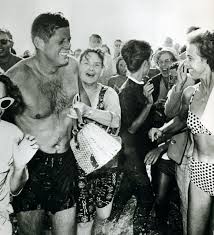
John F. Kennedy after taking a swim at Santa Monica Beach, 1960
But charismatic politicians face the danger of waning enthusiasm.
Many people were growing disillusioned with Kennedy before he died. He had raised hopes that couldn’t be met—especially among blacks.
And many whites bitterly opposed his support of integration, believing that Kennedy was “moving too fast” in changing race relations.
Still, for millions of Americans, Kennedy represented a time of change.
“Let’s get this country moving again” had been his campaign slogan in 1960. He had demanded an end to the non-existent “missile gap” between the United States and Soviet Union.
And he had said that America should create full employment and re-evaluate its policies toward Africa, Latin America and Asia.
His youth, the grace and beauty of his wife and the often-reported antics of his two young children—Caroline and John—added to the atmosphere that change was under way.
But Kennedy was not so committed to reform as many believed:
- As a Senator he had strongly opposed abolishing the Electoral College.
- He never protested the Red-baiting tactics of Senator Joseph R. McCarthy, a frequent dinner guest at the home of his father.
- As President, Kennedy never forgot that he had been elected by a margin of 112,881 votes. He often rationalized his refusal to tackle controversial issues by saying: “We’ll do it after I’m re-elected. So we’d better make damn sure I am re-elected.”
- He thought the United States should recognize “Red” China, but didn’t try to change American foreign policy toward that nation.
Nevertheless, many historians believe that. by vocally supporting civil rights and healthcare for the elderly, Kennedy laid the groundwork for Lyndon Johnson’s legislative victories.
Perhaps no aspect of Kennedy’s Presidency has received closer study than his assassination.
Hundreds of books and thousands of articles have hotly debated whether he was murdered by a lone “nut” or a deadly conspiracy of powerful men.
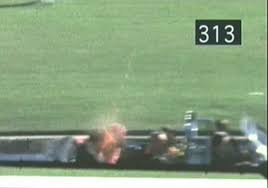
JFK’s assassination: The moment of impact
The murder has been the subject of two government investigations. The first, by the Warren Commission in 1964, concluded that an embittered ex-Marine and Marxist, Lee Harvey Oswald, acted alone in killing Kennedy.
Similarly, the Commission determined that nightclub owner Jack Ruby had killed Oswald on impulse, and not as the result of a conspiracy.
Millions of disbelieving Americans rejected the Warren Report—and named their own villains:
- The KGB;
- The Mob;
- Anti-Castro Cubans;
- Vice President Lyndon B. Johnson;
- Right-wing businessmen and/or military leaders;
- Fidel Castro.
Each of these groups or persons had reason to hate Kennedy:
- The KGB—for Kennedy’s humiliating the Soviet Union during the Cuban Missile Crisis.
- The Mob—in retaliation for the administration’s crackdown on organized crime.
- Anti-Castro Cubans—for JFK’s refusal to commit American military forces to overthrowing Castro at the Bay of Pigs invasion.
- Lyndon Johnson—lusting for power, he stood to gain the most from Kennedy’s elimination.
- Right-wing businessmen and/or military leaders—for believing that Kennedy had “sold out” the country to the Soviet Union.
- Fidel Castro—knowing the CIA was trying to assassinate or overthrow him, he had reason to respond in kind.
The second investigation, conducted in 1977-79 by the House Assassinations Committee, determined that Oswald and a second, unknown sniper had fired at Kennedy. (Oswald was deemed the assassin; the other man’s shot had missed.)
The Chief Counsel for the Committee, G. Robert Blakey, believed New Orleans Mafia boss Carlos Marcello organized the assassination, owing to his hatred of Robert Kennedy for his war on the crime syndicates.
Still, 53 years after JFK’s assassination, no court-admissible evidence has appeared to convict anyone other than Oswald for the murder.
The impact of Kennedy’s death on popular culture remains great. Millions saw him as a brilliant, courageous hero who had worked his way to the top.
But his sudden and violent end shocked those who believed there was always a happy ending.
If so gifted—and protected—a man as John F. Kennedy could be so suddenly and brutally destroyed, no one else could depend on a secure future.


 Bureaucracybuster's Blog
2012 PRESIDENTIAL RACE, ALTERNET, AP, BARACK OBAMA, BAY OF PIGS, BBC, BERLIN WALL, BILL CLINTON, BRUCE GREENWOOD, BUZZFEED, CARLOS MARCELLO, CBS NEWS, CIA, CIVIL RIGHTS, CLIFF ROBERTSON, CNN, CUBAN MISSILE CRISIS, DAILY KOS, DAVID HALBERSTAM, DONALD J. TRUMP, FBI, FIDEL CASTRO, FRANK SINATRA, HERMAN CAIN, ICH BEN EIN BERLINNER SPEECH, INTERNET MOVIE DATABASE, J. EDGAR HOOVER, JAMES MARSDEN, JOHN F. KENNEDY, JOSEPH MCCARTHY, JOSEPH P. KENNEDY, LYNDON B. JOHNSON, MAFIA, MALCOM X, MARTIN LUTHER KING, MARTIN SHEEN, MOTHER JONES, MOVEON, MOVIES, NBC NEWS, NEWSWEEK, NEWT GINGRICH, NIKITA KHRUSHCHEV, NPR, NUCLEAR TEST BAN TREATY, POLITICO, PT-109, RAW STORY, REUTERS, RICK PERRY, ROBERT F. KENNEDY, ROBERT S. MCNAMARA, SALON, SAM GIANCANA, SANTOS TRAFFICANTE, Sarah Palin, SATURDAY NIGHT LIVE, SEATTLE TIMES, SLATE, SOVIET UNION, THE ATLANTIC, THE BEST AND THE BRIGHTEST, THE BUTLER, THE CHICAGO SUN-TIMES, THE CHICAGO TRIBUNE, THE DAILY BEAST, THE GUARDIAN, THE HILL, THE HUFFINGTON POST, THE LOS ANGELES TIMES, THE MISSILES OF OCTOBER, THE NEW YORK TIMES, THE RAT PACK, THE WALL STREET JOURNAL, THE WASHINGTON POST, THIRTEEN DAYS, TIME, TWILIGHT ZONE, TWITTER, U.S. NEWS & WORLD REPORT, UPI, USA TODAY, VIETNAM WAR, WILLIAM DEVANE, WILLILAM PETERSON
JFK: “CAMELOT” ENDED SIXTY YEARS AGO: PART FIVE (OF TEN)
In Bureaucracy, Business, History, Law, Law Enforcement, Military, Politics, Social commentary on November 15, 2023 at 12:48 amThe Kennedy administration’s unprecedented attack on organized crime has led some law enforcement experts to believe the Mob engineered President Kennedy’s assassination.
One of these is G. Robert Blakey, father of the Racketeer Influenced Corrupt Organizations (RICO) Act. As the former Chief Counsel and Staff Director to the U.S. House Select Committee on Assassinations (1977–1979) he oversaw the second official inquiry into the Kennedy assassination.
As a result, he believes the Mob had ample means, motive and opportunity to arrange for a “nut” to kill the President.
In his 1980 book, The Plot to Kill the President, Blakey asserted:
The 1983 TV mini-series, “Blood Feud,” clearly implied that the Mob was responsible. At its heart lay the 10-year conflict between Robert F. Kennedy and James R. Hoffa, then president of the International Brotherhood of Teamsters Union.
This was also the plot of American Tabloid, a 1995 novel by James Ellroy.
But investigative reporter Seymour Hersh wrote that during the five years he researched The Dark Side of Camelot, his expose of the hidden life of President Kennedy, he didn’t uncover any evidence of such a plot.
After Robert Kennedy left the Justice Department in 1964 to run for the post of U.S. Senator from New York, the Justice Department slacked off its push against the crime syndicates.
But the war was resurrected during the Nixon administration and has remained a top priority ever since.
Perhaps the most controversial legacy of the Kennedy administration remains the President’s dealings with the South Vietnamese regime of Ngo Dinh Diem.,
In 1954, the French—who had controlled Vietnam for 80 years—were forced to withdraw their military forces from the country. Their army had suffered a humiliating defeat at Dienbenphu and the French citizenry—still recovering from defeat and Nazi occupation during World War II—demanded an end to the disastrous conflict.
Into this political vacuum stepped the victorious North Vietnamese communist Ho Chi Minh.
Kennedy—then U.S. Senator from Massachusetts—had visited Vietnam while the French were still trying to hold onto one of their last colonial possessions. And he had urged them to withdraw and allow the Vietnamese to govern themselves.
But President Dwight D. Eisenhower was aware of Ho’s overwhelming popularity throughout Vietnam due to his battles against Japanese and French colonialists. In any nationwide election, Ho was certain to win the presidency.
But Eisenhower felt he couldn’t allow an avowed Communist to rule Vietnam. With the North under firm Communist control, America focused its attention on the South.
Searching for an acceptable alternative, Eisenhower found him in Ngo Dinh Diem—a mandarin in a nation swept by revolution, a Catholic in a nation with an 80% Buddhist population.
In 1954, America began backing Diem. Although his first years were marked by social progress, he later became increasingly oppressive toward the Buddhist majority. Corruption openly flourished among government and army officials.
Ngo Dinh Diem
In 1960, North Vietnam launched an aggressive campaign of infiltration and assassination across South Vietnam.
In 1961, President Kennedy sent 400 Green Berets and 100 other military advisers to South Vietnam to offer support.
Diem requested American financing of a 100,000-man increase in his army. Kennedy agreed to an increase of 30,000. Meanwhile, the Joint Chiefs of Staff estimated that 40,000 U.S. troops would be needed to “clean up the Vietcong threat.”
Kennedy underestimated the reaction of North Vietnam, whose forces were fighting what they believed was a crusade. As American troop strength increased, the North escalated its own commitment.
From 1961 to 1963, the number of U.S. troops in Vietnam steadily rose from 685 to 16,732. American minesweepers patrolled the coasts while their aircraft engaged in surveillance.
For the first time, Americans became casualties of the war–especially those in helicopter combat-support missions.
Meanwhile, Diem—urged by his influential brother, Nhu, who ran the secret police—cracked down on the Buddhists.
Government troops fired on a peaceful demonstration in May, 1963. In protest, Buddhist monks burned themselves to death before TV cameras.
Nhu’s beautiful and powerful wife, Madame Nhu, fed growing world outrage by her ridicule of “monk barbecue shows.”
American efforts to stop Diem’s anti-Buddhist campaign failed. On August 21, 1963, Diem’s police shot their way into Buddhist pagodas, killing scores and arresting hundreds.
This finally convinced the Kennedy administration that Diem would never gain the popular support he needed to win the war against the Communist North.
As a result, the administration offered support to South Vietnamese military officers planning a coup against Diem.
On November 1, 1963, South Vietnamese army units stormed the presidential palace. Diem and Nhu fled, but were caught and shot. Madame Nhu, visiting the U.S. at the time, escaped death, accusing Kennedy of supporting the coup.
The administration issued a flat denial.
Diem’s assassination was followed 21 days later by Kennedy’s own.
Share this: