Posts Tagged ‘JOHN F. KENNEDY’
ABC NEWS, AMERICAN EMPIRE, BILL CLINTON, BUREAUCRACY, CBS NEWS, CHRIS MATHEWS, CNN, DONALD TRUMP, DWIGHT EISENHOWER, FACEBOOK, FBI, FRANKLIN D. ROOSEVELT, GEORGE H.W. BUSH, GEORGE W. BUSH, GERALD R. FORD, HARRY S. TRUMAN, JEB BUSH, JIMMY CARTER, JOHN F. KENNEDY, LYNDON B. JOHNSON, MSNBC, NBC NEWS, NIGEL HAMILTON, REPUBLICAN PARTY, SUETONIUS, SYRIAN CIVIL WAR, SYRIAN REFUGEES, TERRORISM, THE HUFFINGTON POST, THE LOS ANGELES TIMES, THE NEW YORK TIMES, THE TWELVE CAESARS, THE WASHINGTON POST, TWITTER
In Bureaucracy, History, Politics, Social commentary on October 19, 2015 at 12:55 am
You don’t ever have to frame anybody, because the truth is always sufficient.
–Willie Stark, in All the King’s Men, by Robert Penn Warren
When one politician wants to truly hurt another, the weapon of choice is not lies. It’s the truth.
And on October 16, Republican Presidential candidate Donald Trump used that weapon to take down his opponent, Jeb Bush.
Trump was being interviewed by Bloomberg TV’s Stephanie Ruhle when she asked: Would you be able to comfort the nation in the event of a mass tragedy like 9/11 or the 2012 shooting in Newtown, Connecticut?
And Trump, who always claims to be smarter, tougher and richer than anyone else, had a ready response: “I think I have a bigger heart than all of them. I think I’m much more competent then all of them.”
So far, so ordinarily Trump. Then: “I mean, say what you want, the World Trade Center came down during his time.”
“Hold on,” said Ruhle, “you can’t blame George Bush for that.”
“He was President, okay? Blame him or don’t blame him, but he was President,” Trump said. “The World Trade Center came down during his reign.”
Three thousand Americans died during the September 11, 2001 terror attacks on the Pentagon and World Trade Center.
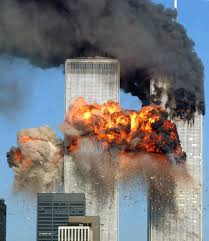
World Trade Center on 9/11/01
Holding Bush accountable for 9/11 has been taboo for Republicans–and has generally been avoided by cowardly Democrats.
Whereas Republicans have spent the last three years blaming President Barack Obama for the deaths of four Americans killed in the Libyan consulate attack.
Immediately after Trump’s remarks, the Right exploded.
Representative Peter King, Republican of New York, said that no one saw the 9/11 attacks coming and that blaming the former president was a cheap shot.
Speaking on Right-wing Fox Radio, King added: “I think Donald Trump is totally wrong there. That sounds like a Michael Moore talking point.”
And Jeb Bush rushed to his brother’s defense on Twitter: “How pathetic for @realdonaldtrump to criticize the president for 9/11. We were attacked & my brother kept us safe.”
Of course, Jeb didn’t account for those 3,000 Americans who died on 9/11.
Nor did he mention that, during his first eight months in office before September 11, George W. Bush was on vacation 42% of the time.
Fortunately, British historian Nigel Hamilton has dared to lay bare the facts of this disgrace. Hamilton is the author of several acclaimed political biographies, including JFK: Reckless Youth and Bill Clinton: Mastering the Presidency.
In 2007, he began research on his latest book: American Caesars: The Lives of the Presidents from Franklin D. Roosevelt to George W. Bush.

The inspiration for this came from a classic work of ancient biography: The Twelve Caesars, by Gaius Suetonius Tranquillus–known as Suetonius.
Suetonius, a Roman citizen and historian, had chronicled the lives of the first twelve Caesars of imperial Rome: Julius Caesar, Augustus, Tiberius, Caligula, Claudius, Nero, Galba, Otho, Vitellius, Vespasian, Titus and Domitian.
Hamilton wanted to examine post-World War II United States history as Suetonius had examined that of ancient Rome: Through the lives of the 12 “emperors” who had held the power of life and death over their fellow citizens–and those of other nations.
For Hamilton, the “greatest of American emperors, the Caesar Augustus of his time,” was Franklin D. Roosevelt, who led his country through the Great Depression and World War II.
His “”great successors” were Harry S. Truman, Dwight D. Eisenhower and John F. Kennedy–who, in turn, contained the Soviet Union abroad and presided over sustained economic prosperity at home.
By contrast, “arguably the worst of all the American Caesars” was “George W. Bush, and his deputy, Dick Cheney, who willfully and recklessly destroyed so much of the moral basis of American leadership in the modern world.”
Among the most lethal of Bush’s offenses: The appointing of officials who refused to take seriously the threat posed by Al-Qaeda.
And this arrogance and indifference continued–right up to September 11, 2001, when the World Trade Center and Pentagon became targets for destruction.
Among the few administration officials who did take Al-Qaeda seriously was Richard Clarke, the chief counter-terrorism adviser on the National Security Council.
Clarke had been thus appointed in 1998 by President Bill Clinton. He continued in the same role under President Bush–but the position was no longer given cabinet-level access.
This put him at a severe disadvantage when dealing with other, higher-ranking Bush officials–such as Vice President Dick Cheney, Secretary of Defense Donald Rumsfeld, Rumsfeld’s deputy, Paul Wolfowitz and National Security Advisor Condoleeza Rice.
These turned out to be the very officials who refused to believe that Al-Qaeda posed a lethal threat to the United States.
“Indeed,” writes Hamilton, “in the entire first eight months of the Bush Presidency, Clarke was not permitted to brief President Bush a single time, despite mounting evidence of plans for a new al-Qaeda outrage.” [Italics added]
9/11, ABC NEWS, AL QAEDA, AMERICAN EMPIRE, BILL CLINTON, BUREAUCRACY, CBS NEWS, CHRIS MATHEWS, CNN, DWIGHT EISENHOWER, FACEBOOK, FBI, FRANKLIN D. ROOSEVELT, GEORGE H.W. BUSH, GEORGE W. BUSH, GERALD R. FORD, HARRY S. TRUMAN, JIMMY CARTER, JOHN F. KENNEDY, LYNDON B. JOHNSON, MSNBC, NBC NEWS, NIGEL HAMILTON, OSAMA BIN LADEN, REPUBLICAN PARTY, RIAHCRD M. NIXON, ROMAN EMPIRE, SEPTEMBER 11, SUETONIUS, SYRIAN CIVIL WAR, SYRIAN REFUGEES, TERRORISM, THE HUFFINGTON POST, THE LOS ANGELES TIMES, THE NEW YORK TIMES, THE TWELVE CAESARS, TWITTER
In Bureaucracy, History, Military, Politics, Social commentary on September 14, 2015 at 12:06 am
Colonel Brandt: “I wonder what we’ll do after we lose the war.”
Captain Kiesel: “Prepare for the next one.”
–-“The Cross of Iron,” film by Sam Peckinpah
On September 12, 2001, President George W. Bush attended a meeting of the National Security Council.
“Why shouldn’t we go against Iraq, not just Al-Qaeda?” demanded Donald Rumsfeld, the Secretary of Defense.
Vice President Dick Cheney enthusiastically agreed.
Secretary of State Colin Powell then pointed out there was absolutely no evidence that Iraq had had anything to do with 9/11 or Al-Qaeda. And he added: “The American people want us to do something about Al-Qaeda”–-not Iraq.
On November 21, 2001, only 10 weeks after 9/11, Bush told Rumsfeld: It’s time to turn to Iraq.

Liars Club: Condoleeza Rice, Dick Cheney, George Bush, Donald Rumsfeld
Bush and his war-hungry Cabinet officials knew that Americans demanded vengeance on Al-Qaeda’s mastermind, Osama bin Laden, and not Iraqi dictator Saddam Hussein,. So they repeatedly fabricated “links” between the two:
- Saddam had worked hand-in-glove with Bin Laden to plan 9/11.
- Saddam was harboring and supporting Al-Qaeda throughout Iraq.
- Saddam, with help from Al-Qaeda, was scheming to build a nuclear bomb.
Yet as early as September 22, 2001, Bush had received a classified President’s Daily Brief intelligence report, which stated that there was no evidence linking Saddam Hussein to 9/11.
The report added that there was scant credible evidence that Iraq had any significant collaborative ties with Al-Qaeda.
Even more important: Saddam had tried to monitor Al Qaeda through his intelligence service-–because he saw Al-Qaeda and other theocratic radical Islamist organizations as a potential threat to his secular regime.
Bush administration officials repeatedly claimed that Iraq possessed huge quantities of chemical and biological weapons, in violation of UN resolutions. And they further claimed that US intelligence agencies had determined:
- the precise locations where these weapons were stored;
- the identities of those involved in their production; and
- the military orders issued by Saddam Hussein for their use in the event of war.
Among other lies stated as fact by members of the Bush administration:
- Iraq had sought uranium from Niger, in west Africa;
- Thousands of aluminum tubes imported by Iraq could be used in centrifuges to create enriched uranium;
- Iraq had up to 20 long-range Scud missiles, prohibited under UN sanctions;
- Iraq had massive stockpiles of chemical and biological agents, including nerve gas, anthrax and botulinum toxin;
- Saddam Hussein had issued chemical weapons to front-line troops who would use them when US forces crossed into Iraq.
Consider the following:
August 26, 2002: Cheney told the Veterans of Foreign Wars, “There is no doubt that Saddam Hussein now has weapons of mass destruction. There is no doubt he is amassing them to use against our friends, against our allies and against us.”
September 8, 2002: National Security Advisor Condoleeza Rice said on CNN: ”There is certainly evidence that Al-Qaeda people have been in Iraq. There is certainly evidence that Saddam Hussein cavorts with terrorists.”
September 18, 2002: Rumsfeld told the House Armed Services Committee, “We do know that the Iraqi regime has chemical and biological weapons. His regime has amassed large, clandestine stockpiles of chemical weapons—including VX, sarin, cyclosarin and mustard gas.”
October 7, 2002: Bush declared in a nationally televised speech in Cincinnati that Iraq “possesses and produces chemical and biological weapons. It is seeking nuclear weapons.”
March 16, 2003: Cheney declared on NBC’s “Meet the Press”: “We believe [Saddam Hussein] has, in fact, reconstituted nuclear weapons.”
March 30, 2003: On ABC’s “This Week” program, 10 days into the war, Rumsfeld said: “We know where they [weapons of mass destruction] are.”
Bush never regretted his decision to invade Iraq, which occurred on March 29, 2003.
Even as American occupying forces repeatedly failed to turn up any evidence of “weapons of mass destruction” (WMDs), Bush and his minions claimed the invasion a good thing.
In fact, Bush-–who hid out the Vietnam war in the Texas Air National Guard-–even joked publicly about the absence of WMDs.
He did so at a White House Correspondents dinner on March 24, 2004-–one year after he had started the war.
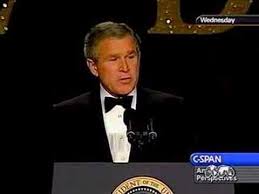
George W. Bush at the 2004 White House Correspondents’ dinner
To Bush, the non-existent WMDs were nothing more than the butt of a joke that night. While an overhead projector displayed photos of a puzzled-looking Bush searching around the Oval Office, Bush recited a comedy routine.
Click here: Bush laughs at no WMD in Iraq – YouTube
“Those weapons of mass destruction have gotta be somewhere,” Bush laughed, while a photo showed him poking around the corners in the Oval Office.
“Nope-–no weapons over there! Maybe they’re under here,” he said, as a photo showed him looking under a desk.
Meanwhile, an assembly of wealthy, pampered men and women–-the elite of America’s media and political classes–-laughed heartily during Bush’s performance.
Ultimately, the war that Bush had deliberately provoked
- Took the lives of 4,484 Americans;
- Cost the United States Treasury at least $2 trillion;
- Created a Middle East power vacumn;
- Allowed Iran–Iraq’s arch enemy–to eagerly fill it; and
- Kill at least 655,000 Iraqis.
9/11, ABC NEWS, AL QAEDA, AMERICAN EMPIRE, BILL CLINTON, BUREAUCRACY, CBS NEWS, CHRIS MATHEWS, CNN, DWIGHT EISENHOWER, FACEBOOK, FBI, FRANKLIN D. ROOSEVELT, GEORGE H.W. BUSH, GEORGE W. BUSH, GERALD R. FORD, HARRY S. TRUMAN, JIMMY CARTER, JOHN F. KENNEDY, LYNDON B. JOHNSON, MSNBC, NBC NEWS, NIGEL HAMILTON, OSAMA BIN LADEN, REPUBLICAN PARTY, SEPTEMBER 11, SUETONIUS, SYRIAN CIVIL WAR, SYRIAN REFUGEES, TERRORISM, THE HUFFINGTON POST, THE LOS ANGELES TIMES, THE NEW YORK TIMES, THE TWELVE CAESARS, TWITTER
In Bureaucracy, History, Military, Politics, Social commentary on September 11, 2015 at 12:01 am
September 11, 2015, marks the 14th anniversary of the worst terrorist attack on United States soil. Inevitably, this is a time to remember all those whose lives were so cruelly snuffed out.
But it should also be a time to remember those who made this atrocity inevitable–by refusing to acknowledge and address the impending threat from Al-Qaeda.
British historian Nigel Hamilton has chronicled their arrogance and indifference in his 2010 biography: American Caesars: Lives of the Presidents from Franklin D. Roosevelt to George W. Bush.
Hamilton noted that Richard Clarke, the national security advisor on terrorism, was certain that Osama bin Laden had arranged the [USS.] Cole bombing in Aden on October 12, 2000.
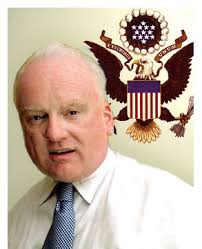
Richard Clarke
For months, Clarke tried to convince others in the Bush Administration that Bin Laden was plotting another attack against the United States–either abroad or at home.
But Clarke could not prevail against the know-it-all arrogance of such higher-ranking Bush officials as Vice President Dick Cheney; Secretary of Defense Donald Rumsfeld; Rumsfeld’s deputy, Paul Wolfowitz; and National Security Advisor Condoleeza Rice.
Rice initially refused to hold a cabinet-level meeting on the subject. Then she “insisted the matter be handled only by a more junior Deputy Principals meeting” in April, 2001, writes Hamilton.
Wolfowitz, the number-two man at the Department of Defense, said: “I don’t understand why we are beginning by talking about this one man, bin Laden.”
Even after Clarke outlined the threat posed by Al-Qaeda, Wolfowitz–whose real target was Saddam Hussein–said: “You give bin Laden too much credit.”
Wolfowitz insisted that bin Laden couldn’t carry out his terrorist acts without the aid of a state sponsor–namely, Iraq.
Wolfowitz, in fact, blamed Iraq for the 1993 bombing of the World Trade Center. Clarke was stunned, since there was absolutely no evidence of Iraqi involvement in this.
“Al-Qaeda plans major acts of terrorism against the United States,” Clarke warned his colleagues. He pointed out that, like Adolf Hitler, bin Laden had actually published his plans for future destruction.
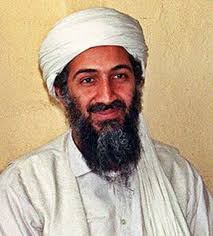
Osama bin Laden
And he added: “Sometimes, as with Hitler in Mein Kampf, you have to believe that these people will actually do what they say they will do.”
Wolfowitz heatedly traded on his Jewish heritage to bring Clarke’s unwelcome arguments to a halt: “I resent any comparison between the Holocaust and this little terrorist in Afghanistan.”
Writing in outraged fury, Hamilton sums up Clarke’s agonizing frustrations:
- Bush’s senior advisors treated their colleagues who had served in the Clinton administration with contempt.
- President Bush, Vice President Dick Cheney, National Security Advisor Condoleeza Rice, Secretary of Defense Donald Rumsfeld and Deputy Defense Secretary Paul Wolfowitz seemed content to ignore the danger signals of an impending al-Qaeda attack.
- This left only Secretary of State Colin Powell, his deputy Richard Armitage, Richard Clarke and a skeptical Treasury Secretary, Paul O’Neill, to wage “a lonely battle to waken a seemingly deranged new administration.”
Clarke alerted Federal Intelligence agencies that “Al-Qaeda is planning a major attack on us.” He asked the FBI and CIA to report to his office all they could learn about suspicious persons or activities at home and abroad.
Finally, at a meeting with Rice on September 4, 2001, Clarke challenged her to “picture yourself at a moment when in the very near future Al-Qaeda has killed hundreds of Americans, and imagine asking yourself what you wish then that you had already done.”
Seven days later, Al-Qaeda struck, and 3,000 Americans died horrifically–and needlessly.
Neither Bush, Cheney, Rice, Rumsfeld nor Wolowitz ever admitted their negligence. Nor would any of them be brought to account.
Disgustingly, these were the same officials who, afterward, posed as the Nation’s saviors–and branded anyone who disagreed with them as a traitor, practices the Right continues to exploit to this day.
Only Richard Clarke–who had vainly argued for stepped-up security precautions and taking the fight to Al-Qaeda–gave that apology.
On March 24, 2004, Clarke testified at the public 9/11 Commission hearings. Addressing relatives of victims in the audience, he said: “Your government failed you, those entrusted with protecting you failed you, and I failed you.”
Yet even worse was to come.
On the evening after the September 11 attacks, Bush took Clarke aside during a meeting in the White House Situation Room:
“I want you, as soon as you can, to go back over everything, everything. See if Saddam [Hussein, the dictator of Iraq] did this. See if he’s linked in any way.”
Clarke was stunned: “But, Mr. President, Al-Qaeda did this.”
“I know, I know,” said Bush. “But see if Saddam was involved. I want to know.”
Hussein had not plotted the attack–and there was no evidence proving that he did. But the attack gave “W” the excuse he wanted to remove the man he blamed for the 1992 defeat of his father, President George H.W. Bush.
Bush believed that his father would have been re-elected if he had “gone all the way” into Baghdad. He would finish the job that his father had started but failed to compete.
On September 12, 2001, Bush attended a meeting of the National Security Council.
“Why shouldn’t we go against Iraq, not just Al-Qaeda?” demanded Donald Rumsfeld, the Secretary of Defense.
Vice President Dick Cheney enthusiastically agreed.
ABC NEWS, AMERICAN EMPIRE, BILL CLINTON, BUREAUCRACY, CBS NEWS, CHRIS MATHEWS, CNN, DWIGHT EISENHOWER, FACEBOOK, FBI, FRANKLIN D. ROOSEVELT, GEORGE H.W. BUSH, GEORGE W. BUSH, GERALD R. FORD, HARRY S. TRUMAN, JIMMY CARTER, JOHN F. KENNEDY, LYNDON B. JOHNSON, MSNBC, NBC NEWS, NIGEL HAMILTON, REPUBLICAN PARTY, SUETONIUS, SYRIAN CIVIL WAR, SYRIAN REFUGEES, TERRORISM, THE HUFFINGTON POST, THE LOS ANGELES TIMES, THE NEW YORK TIMES, THE TWELVE CAESARS, THE WASHINGTON POST, TWITTER
In Bureaucracy, History, Military, Politics, Social commentary on September 10, 2015 at 12:04 am
September 11, 2015, will mark the 14th anniversary of the greatest act of terrorism on American soil.
As that tragedy recedes ever further into the past, its impact on Americans continues to wane.
Today, tens of thousands of unscreened Islamics, fleeing the carnage of their fellow Islamics in the Syrian civil war, are pouring into Europe.
America has already taken in 1,500. And 14 Democratic Senators are demanding that President Barack Obama admit at least 70,000 more.
Forgotten–or ignored–in all this hand-wringing is a brutal truth:
It took only 19 Saudi highjackers to snuff out the lives of 3,000 Americans–at the World Trade Center, the Pentagon and aboard the four airliners that had been turned into fuel-bombs.
World Trade Center on 9/11/01
“Our FBI doesn’t even have the resources to get a handle on all of the ISIS/jihadist threat in the Muslim community,” warned author and investigative reporter Paul Sperry.
“Now we’re going to lay on top of that all of these new immigrants who are even potentially more radical on top of that threat matrix.”
It is appropriate to remember the innocents who died on that day–and the heroism of the police and firefighters who died trying to save them.
But it’s equally important to remember those who made 9/11 not simply possible but inevitable.
And that does not mean only the 19 highjackers who turned those planes into fuel-bombs. It means the officials at the highest levels of the administration of President George W. Bush.
Officials who, to this day, have never been held accountable in any way for the resulting death and destruction.
Obviously, such an indictment is not going to be handed down by the U.S. Department of Justice.
Nor will it be presented by TV commentators–on such liberal networks as CNN and MSNBC or the Right-wing Fox network.
Fortunately, British historian Nigel Hamilton has dared to lay bare the facts of this disgrace. Hamilton is the author of several acclaimed political biographies, includingJFK: Reckless Youth and Bill Clinton: Mastering the Presidency.
In 2007, he began research on his latest book: American Caesars: The Lives of the Presidents from Franklin D. Roosevelt to George W. Bush.
The inspiration for this came from a classic work of ancient biography: The Twelve Caesars, by Gaius Suetonius Tranquillus–known as Suetonius.
Suetonius, a Roman citizen and historian, had chronicled the lives of the first twelve Caesars of imperial Rome: Julius Caesar, Augustus, Tiberius, Caligula, Claudius, Nero, Galba, Otho, Vitellius, Vespasian, Titus and Domitian.
Hamilton wanted to examine post-World War II United States history as Suetonius had examined that of ancient Rome: Through the lives of the 12 “emperors” who had held the power of life and death over their fellow citizens–and those of other nations.
For Hamilton, the “greatest of American emperors, the Caesar Augustus of his time,” was Franklin D. Roosevelt, who led his country through the Great Depression and World War II.
His “”great successors” were Harry S. Truman, Dwight D. Eisenhower and John F. Kennedy–who, in turn, contained the Soviet Union abroad and presided over sustained economic prosperity at home.
By contrast, “arguably the worst of all the American Caesars” was “George W. Bush, and his deputy, Dick Cheney, who willfully and recklessly destroyed so much of the moral basis of American leadership in the modern world.”
Among the most lethal of Bush’s offenses: The appointing of officials who refused to take seriously the threat posed by Al-Qaeda.
And this arrogance and indifference continued–right up to September 11, 2001, when the World Trade Center and Pentagon became targets for destruction.
Among the few administration officials who did take Al-Qaeda seriously was Richard Clarke, the chief counter-terrorism adviser on the National Security Council.
Clarke had been thus appointed in 1998 by President Bill Clinton. He continued in the same role under President Bush–but the position was no longer given cabinet-level access.
This put him at a severe disadvantage when dealing with other, higher-ranking Bush officials–such as Vice President Dick Cheney, Secretary of Defense Donald Rumsfeld, Rumsfeld’s deputy, Paul Wolfowitz and National Security Advisor Condoleeza Rice.
These turned out to be the very officials who refused to believe that Al-Qaeda posed a lethal threat to the United States.
“Indeed,” writes Hamilton, “in the entire first eight months of the Bush Presidency, Clarke was not permitted to brief President Bush a single time, despite mounting evidence of plans for a new al-Qaeda outrage.” [Italics added]
Nor did it help that, during his first eight months in office before September 11, Bush was on vacation, according to the Washington Post, 42% of the time.
ABC NEWS, BARACK OBAMA, BENJAMIN C. BRADLEE, BILL CLINTON, CBSNEWS, CNN, FACEBOOK, JASON ROBARDS, JOHN F. KENNEDY, JOURNALISM, NBC NEWS, PENTAGON PAPERS, REPUBLICAN PARTY, REPUBLICANS, RICHARD NIXON, THE CHICAGO SUN-TIMES, THE CHICAGO TRIBUNE, THE LOS ANGELES TIMES, THE NEW YORK TIMES, THE PENTAGON PAPERS, THE WALL STREET JOURNAL, THE WASHINGTONPOST, TWITTER, USA TODAY, WATERGATE
In Bureaucracy, History, Politics, Social commentary on August 24, 2015 at 12:32 am
Benjamin C. Bradlee and Richard M. Nixon.
Both men were driven to succeed. And both achieved fame and power in doing so.
Bradlee made his name in journalism.
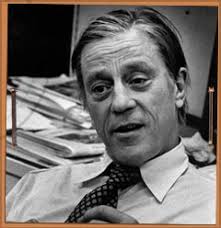
Benjamin C. Bradlee
Nixon made his in politics.
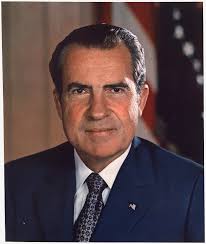
Richard M. Nixon
Both served in the United States Navy in the Pacific during World War II.
Both had strong connections to John F. Kennedy.
- Bradlee knew him as a friend and reporter during JFK’s years as a Senator and President.
- Nixon–as a Senator and later Vice President–knew Kennedy as a Senatorial colleague and as a political adversary, unsuccessfully contesting him for the Presidency in 1960.
For both, 1948 was a pivotal year.
- Bradlee joined The Washington Post as a reporter.
- Nixon, as a U.S. Representative, accused Algier Hiss, a former State Department official, of having been a Communist spy. Hiss was eventually convicted of perjury and sent to prison.
Both attained their positions of maximum power in 1968.
- Bradlee became executive editor of The Washington Post.
- Nixon became the 37th President of the United States.
Bradlee made it his business to dig up the truth. Nixon made it his business to distort the truth–or to conceal it when distortion wasn’t enough.
Nixon and Bradlee had their first major clash in 1971 with the Pentagon Papers, a secret government study of how the United States became enmeshed in the Vietnam war.
- Although the Papers concerned events that had occurred during the Presidencies of John F. Kennedy and Lyndon B. Johnson, Nixon was outraged at their release by a former Defense Department analyst named Daniel Ellsburg.
- Nixon ordered his Attorney General, John Mitchell, to enjoin The New York Times–which had begun publishing the study–from continuing to publish its revelations.
- Bradlee, as executive editor of The Washington Post, urged his publisher, Katherine Graham, to take over where the Times had left off.
- The controversey ended when the Supreme Court ruled, 6–3, that the government failed to meet the burden of proof required for prior restraint of the press.
In 1972, Bradlee and Nixon squared off for their most important battle–a “third-rate burglary” of the Democratic National Committee headquarters at the Watergate Hotel.
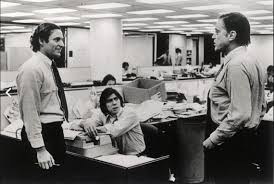
Bob Woodward, Carl Bernstein and Benjamin C. Bradlee
- Bradlee backed two young, aggressive reporters named Bob Woodward and Carl Bernstein, as they probed the burglary.
- This led to their discovering a series of illegal dirty tricks the Nixon re-election campaign had aimed at various Democratic opponents.
- The Post’s revelations led to the formation of the Senate Watergate Committee, the discovery of Nixon’s tape-recordings of his private–and criminal–conversations, and, finally, to Nixon’s own resignation in disgrace on August 9, 1974.
- Bradlee was one of only four men who knew the identity of “Deep Throat,” Woodward and Bernstein’s famous undercover source, then-FBI Associate Director W. Mark Felt. Felt outed himself in 2005.
- Nixon, who died in 1994, never learned the identity of the most famous whistleblower in history.
Bradlee became an advocate for education and the study of history.
Nixon entered history as the only American President forced to resign from office.
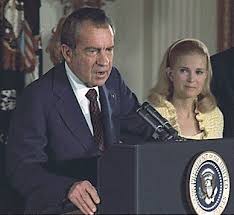
Richard Nixon saying farewell at the White House
Bradlee became a media celebrity. Nixon became a media target.
- Bradlee was portrayed by Jason Robards in the hit 1976 film, All the President’s Men (for which he won an Academy Award for Best Supporting Actor).
- Nixon was portrayed–in Oliver Stone’s 1995 drama, Nixon–by Anthony Hopkins.
Bradlee and Nixon each published a series of books.
- Bradlee’s: That Special Grace and Conversations With Kennedy focused on his longtime friendship with John F. Kennedy. A Good Life: Newspapering and Other Adventures was Bradlee’s memoirs.
- Nixon’s: Among his 11 titles: Six Crises; RN: The Memoirs of Richard Nixon; The Real War; Leaders; Real Peace; No More Vietnams; Beyond Peace.
After leaving the White House, Nixon worked hard behind-the-scenes to refashion himself into an elder statesman of the Republican Party.
- Throughout the 1980s, he traveled the lecture circuit, wrote books, and met with many foreign leaders, especially those of Third World countries.
- He supported Ronald Reagan for president in 1980, making television appearances portraying himself as the senior statesman above the fray.
- For the rest of his life, he fought ferociously through the courts to prevent the release of most of the infamous “Watergate tapes” that chronicled his crimes as President.
- Only since his death have many of these been made public.
Nixon died on April 22, 1994.
- Eulogists at his funeral included President Bill Clinton and former Presidents Gerald Ford, Ronald Reagan and George H.W. Bush, California Governor Pete Wilson and the Reverend Billy Graham.
- Despite his efforts to portray himself as an elder statesman, Nixon could never erase his infamy as the only President to resign in disgrace.
- To this day, he remains a nonperson within the Republican Party. While numerous Republican Presidential candidates quote and identify themselves with Ronald Reagan, none has done the same with Nixon.
Bradlee remained executive editor of The Washington Post until retiring in 1991. But he continued to serve as vice president-at-large until his death on October 21, 2014.
- In 2007, he received the French Legion of Honor, the highest award given by the French government, at a ceremony in Paris.
- In 2013, he was named as a recipient of the Presidential Medal of Freedom by President Barack Obama. He was presented the medal at a White House ceremony on November 20, 2013.
ABC NEWS, ABORTION, ADOLF HITLER, ALTERNET, AMERICABLOG, ANDREW JACKSON, AP, BABY BOOMER RESISTANCE, BARACK OBAMA, BBC, BLOOMBERG NEWS, BUZZFEED, CBS NEWS, CHRIS MATTHEWS, CNN, CNN'S "STARTING POINT", CROOKS AND LIARS, CUBAN MISSILE CRISIS, DAILY KOS, DEBT CEILING, EXTORTION, FACEBOOK, FIVETHIRTYEIGHT, GEORGE W. BUSH, HARPER’S MAGAZINE, HOUSE SPEAKER JOHN BOEHNER, HUFFINGTON POST, JOHN F. KENNEDY, MAFIA, MEDIA MATTERS, MOTHER JONES, MOVEON, MSNBC, MSNBC'S "HARDBALL", MUNICH CONFERENCE, NBC NEWS, NEGOTIATING, NEVILLE CHAMBERLAIN, NEW REPUBLIC, NEWSDAY, NEWSWEEK, NICCOLO MACHIAVELLI, NPR, OBAMACARE, PAP SMEARS, PATRIOT ACT, PBS NEWSHOUR, PLANNED PARENTHOOD, POLITICO, POLITICUSUSA, R.I.CO. ACT, RAW STORY, REPUBLICAN PARTY, REPUBLICANS, REUTERS, SALON, SEATTLE TIMES, SLATE, TALKING POINTS MEMO, TED CRUZ, THE AFFORDABLE CARE ACT, THE ATLANTIC, THE CHICAGO SUN-TIMES, THE CHICAGO TRIBUNE, THE DAILY BEAST, THE DAILY BLOG, THE GUARDIAN, THE HILL, THE HUFFINGTON POST, THE INTERCEPT, THE LOS ANGELES TIMES, THE NATION, THE NEW REPUBLIC, THE NEW YORK TIMES, THE NEW YORK TIMES THE WASHINGTON POST, THE NEW YORKER, THE PRINCE, THE VILLAGE VOICE, THE WASHINGTON POST, THINKPROGRESS, TIME, TRUTHDIG, TRUTHOUT, TWITTER, TWO POLITICAL JUNKIES, U.S. NEWS & WORLD REPORT, UPI, USA TODAY, WINSTON CHURCHILL, WORLD WAR 11, X
In Bureaucracy, History, Law, Politics, Social commentary on August 10, 2015 at 12:41 am
On August 1, 2011, Chris Matthews, host of MSNBC’s “Hardball,” wrapped up his program with a search for “options” to avoid another round of Republican extortion tactics:
“I want to know what steps the president [Barack Obama] ‘could’ have taken to avoid this hostage-taking [over raising the debt-ceiling].
“…Is there another way than either buckling to the Republicans or letting the government and the country crash?
“How does he use the power of the presidency, the logic, emotion and basic patriotism of the people to thwart those willing to threaten, disrupt, even possibly destroy to get their way?”
And the answer to his questions–then and now–is: Replace the law of fear with the rule of law.
As Niccolo Machiavelli, the father of modern politics, instructed future leaders in The Prince:
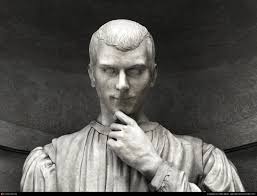
Niccolo Machiavelli
“And men have less scruple in offending one who makes himself loved than one who makes himself feared; for love is held by a chain of obligations which, men being selfish, is broken whenever it serves their purpose; but fear is maintained by a dread of punishment which never fails….
“I conclude, therefore, with regard to being loved and feared, that men love at their own free will, but fear at the will of the prince, and that a wise prince must rely on what is in his power and not on what is in the power of others….”
Instead, in 2011, President Barack Obama surrendered to Republican extortion demands. As a result, the United States suffered a massive loss to its international credit rating.
But there were two other ways Obama could have stood up to Republican extortionists:
- Invoke the Racketeer Influenced Corrupt Organizations Act (RICO) and/or the USA Patriot Act;
- Rally the American people against this criminal threat to the security of the Nation.
And these remain available to him now–if only he has the courage to act.
Second Option: Calling upon the American people for their support
President John F. Kennedy did just that–successfully–during the most deadly crisis of his administration.
Addressing the Nation on October 22, 1962, Kennedy shocked his fellow citizens by revealing that the Soviet Union had placed offensive nuclear missiles in Cuba.
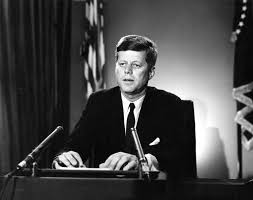
President John F. Kennedy
After outlining a series of steps he had taken to end the crisis, Kennedy sought to reassure and inspire his audience. His words are worth remembering today:
“The cost of freedom is always high, but Americans have always paid it. And one path we shall never choose, and that is the path of surrender or submission.”
Just as President Kennedy called on his fellow Americans for support against a foreign enemy, President Obama could rally his countrymen against an equally ruthless domestic enemy.
During such a national address, President Obama could reveal such blunt truths as:
- Republicans have adopted the same my-way-or-else “negotiating” stance as Adolf Hitler.
- Like the Nazis, they are determined to gain absolute power–or destroy the Nation they claim to love.
- And, once again, they are threatening to shut down the government–and deny essential services to millions of Americans–unless they get their way.
Finally, President Obama could end his speech by directly calling for the active support of his fellow Americans. Something like this:
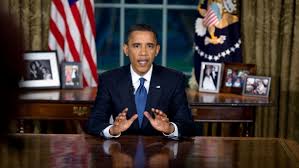
President Barack Obama
“My fellow Americans, I have taken an oath to ‘preserve, protect and defend the Constitution of the United States.’
“But I cannot do this on my own. As citizens of a Republic, each of us carries that burden. We must each do our part to protect the land and the liberties we love.
“Tonight, I’m asking for your help.
“We stand on the edge of economic and social disaster. Therefore, I am asking each of you to stand up for America tonight–by demanding the recall of the entire membership of the Republican Party.”
* * * * *
The 1938 Munich Conference taught an invaluable lesson in foreign affairs: Caving in to the demands of insatiable thugs leads to only more demands.
That was what British Prime Minister Neville Chamberlain learned when he sought to appease Adolf Hitler, Germany’s war-intent Fuehrer.
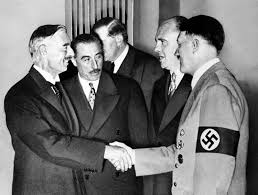
Neville Chamberlain greets Adolf Hitler
Chamberlain believed that by giving in to Hitler’s demands for the “German part” of Czechoslovakia known as the Sudetenland he could avoid war.
On September 29, Chamberlain and French Prime Minister Edouard Daladier met with Hitler and signed the Munich Agreement, resulting in the immediate German occupation of part of Czechoslovakia.
The Czechoslovakian government had not been a party to the talks. Their “allies” had sold them out.
In a matter of weeks, Hitler turned his attention–and demands–to Poland.
When his generals balked, warning that invading Poland would trigger a war with France and Britain, Hitler brushed aside their fears: “Our enemies are little worms. I saw them at Munich.”
Chamberlain returned to England a hero. Holding aloft a copy of the worthless agreement he had signed with Hitler, he told cheering crowds in London: “I believe it is peace for our time.”
Winston Churchill knew better, predicting: “Britain and France had to choose between war and dishonor. They chose dishonor. They will have war.”
And so they did.
It is not too late for President Barack Obama to apply this lesson from history.
ABC NEWS, ABORTION, ADOLF HITLER, ALTERNET, AMERICABLOG, ANDREW JACKSON, AP, BABY BOOMER RESISTANCE, BARACK OBAMA, BBC, BLOOMBERG NEWS, BUZZFEED, CBS NEWS, CHRIS MATTHEWS, CNN, CNN'S "STARTING POINT", CROOKS AND LIARS, CUBAN MISSILE CRISIS, DAILY KOS, DEBT CEILING, EXTORTION, FIVETHIRTYEIGHT, GEORGE W. BUSH, HARPER’S MAGAZINE, HOUSE SPEAKER JOHN BOEHNER, HUFFINGTON POST, JOHN F. KENNEDY, MAFIA, MEDIA MATTERS, MOTHER JONES, MOVEON, MSNBC, MSNBC'S "HARDBALL", MUNICH CONFERENCE, NBC NEWS, NEGOTIATING, NEVILLE CHAMBERLAIN, NEW REPUBLIC, NEWSDAY, NEWSWEEK, NICCOLO MACHIAVELLI, NPR, OBAMACARE, PAP SMEARS, PATRIOT ACT, PBS NEWSHOUR, PLANNED PARENTHOOD, POLITICO, POLITICUSUSA, R.I.CO. ACT, RAW STORY, REPUBLICAN PARTY, REPUBLICANS, REUTERS, SALON, SEATTLE TIMES, SLATE, TALKING POINTS MEMO, TED CRUZ, THE AFFORDABLE CARE ACT, THE ATLANTIC, THE CHICAGO SUN-TIMES, THE CHICAGO TRIBUNE, THE DAILY BEAST, THE DAILY BLOG, THE GUARDIAN, THE HILL, THE HUFFINGTON POST, THE INTERCEPT, THE LOS ANGELES TIMES, THE NATION, THE NEW REPUBLIC, THE NEW YORK TIMES, THE NEW YORK TIMES THE WASHINGTON POST, THE NEW YORKER, THE PRINCE, THE VILLAGE VOICE, THE WASHINGTON POST, THINKPROGRESS, TIME, TRUTHDIG, TRUTHOUT, TWITTER, TWO POLITICAL JUNKIES, U.S. NEWS & WORLD REPORT, UPI, USA TODAY, WINSTON CHURCHILL, WORLD WAR 11, X
In Bureaucracy, History, Law, Politics, Social commentary on August 7, 2015 at 8:58 am
On July 9, 2011-–Republican extortionists again threatened the Nation with financial ruin and international disgrace unless their demands were met.
President Obama had offered to make historic cuts in the Federal Government and the social safety net–on which millions of Americans depend for their most basic needs.
And the Republican response?
Said Rep. Darrell Issa, chairman of the Oversight and Government Reform Committee:“Quite frankly, [Republican] members of Congress are getting tired of what the president won’t do and what the president wants.”
Noted political analyst Chris Matthews summed up the sheer criminality of what happened within the House of Representatives.
Speaking on MSNBC’s “Hardball,” on July 28–five days before Congress reached its August 2 deadline to raise the debt-ceiling–Matthews noted:
“The first people to bow to the demands of those threatening to blow up the economy were the Republicans in the House, the leaders. The leaders did what the followers told them to do: meet the demands, hold up the country to get their way.
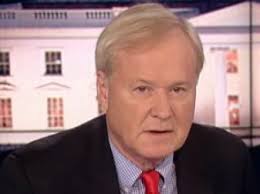
Chris Matthews
“Those followers didn’t win the Senate, or the Presidency, just the House.
“But by using the House they were able to hold up the entire United States government. They threatened to blow things up economically and it worked.
“They said they were willing to do that–just to get their way–not by persuasion, not by politics, not by democratic government, but by threatening the destruction of the country’s finances.
“Right. So what’s next? The power grid? Will they next time threaten to close down the country’s electricity and communications systems?”
With the United States teetering on the brink of national bankruptcy, President Obama faced three choices:
- Counter Republican extortion attempts via RICO–the Racketeer Influenced Corrupt Organizations Act.
- Make a “Cuban Missile Crisis”-style address to the American people, seeking to rally them against a criminal threat to the financial security of the Nation.
- Cave in to Republican demands.
Unfortunately for Obama and the Nation, he chose Number Three.
The results were easily predictable: Emboldened by success, the extortionists continue to make even greater demands.
Such as those now being made: De-fund Planned Parenthood or we’ll destroy the country.
But this is a nightmare that doesn’t have to be.
There are, in fact, two ways to avoid it.
Assuming that President Obama doesn’t once again surrender to Republican extortion demands, he has two formidable weapons he can deploy:
First Option: RICO to the rescue
The Racketeer Influenced Corrupt Organizations (RICO) Act is a provision of the Organized Crime Control Act of 1970. It authorizes prosecution for acts performed as part of an ongoing criminal organization.
It has been applied to not only the Mafia but to individuals, businesses, political protest groups, and terrorist organizations. In short, a RICO claim can arise in almost any context.
Such as the one President Barack Obama faced in 2011 when Republicans threatened to destroy the credit rating of the United States unless their budgetary demands were met.
And such as the present case when Republicans are again threatening the security of the Nation with extortionate demands.
RICO opens with a series of definitions of “racketeering activity” which can be prosecuted by Justice Department attorneys. Among those crimes: Extortion.
Extortion is defined as “a criminal offense which occurs when a person unlawfully obtains either money, property or services from a person(s), entity, or institution, through coercion.”
The RICO Act defines “a pattern of racketeering activity” as “at least two acts of racketeering activity, one of which occurred after the effective date of this chapter and the last of which occurred within ten years…after the commission of a prior act of racketeering activity.”
And if President Obama believes that RICO is not sufficient to deal with extortionate behavior, he can rely on the USA Patriot Act of 2001, passed in the wake of 9/11.
In Section 802, the Act defines domestic terrorism. Among the behavior that is defined as criminal:
“Activities that…appear to be intended…to influence the policy of a government by intimidation or coercion [and]…occur primarily within the territorial jurisdiction of the United States.”
Republicans are now demanding that Democrats de-fund Planned Parenthood or be forced to shut down essential services needed by millions of Americans.
That clearly falls within the legal definition of “activities…intended…to influence the policy of a government by intimidation or coercion.”
The remedies for punishing such criminal behavior are now legally in place. President Obama need only direct the Justice Department to apply them.
President Obama can direct Attorney General Loretta E. Lynch to investigate whether Republican Congressman—and their Tea Party cohorts—have violated Federal anti-racketeering and/or anti-terrorism laws.
- Lynch can order the FBI to conduct such an investigation.
- If the FBI finds sufficient evidence that these laws had been violated, Holder can empanel criminal grand juries to indict those violators.
Criminally investigating and indicting members of Congress would not violate the separation-of-powers principle. Congressmen have in the past been investigated, indicted and convicted for various criminal offenses.
Such indictments and prosecutions–and especially convictions–would serve a truly cleansing function.
They would serve notice on current and future members of Congress that the safety and fortunes of American citizens may not be held hostage as part of a negotiated settlement.
ABC NEWS, ABORTION, ADOLF HITLER, ALTERNET, AMERICABLOG, ANDREW JACKSON, AP, BABY BOOMER RESISTANCE, BARACK OBAMA, BBC, BLOOMBERG NEWS, BUZZFEED, CBS NEWS, CHRIS MATTHEWS, CNN, CNN'S "STARTING POINT", CROOKS AND LIARS, CUBAN MISSILE CRISIS, DAILY KOS, DEBT CEILING, EXTORTION, FACEBOOK, FIVETHIRTYEIGHT, GEORGE W. BUSH, HARPER’S MAGAZINE, HOUSE SPEAKER JOHN BOEHNER, HUFFINGTON POST, JOHN F. KENNEDY, MAFIA, MEDIA MATTERS, MOTHER JONES, MOVEON, MSNBC, MSNBC'S "HARDBALL", MUNICH CONFERENCE, NBC NEWS, NEGOTIATING, NEVILLE CHAMBERLAIN, NEW REPUBLIC, NEWSDAY, NEWSWEEK, NICCOLO MACHIAVELLI, NPR, OBAMACARE, PAP SMEARS, PATRIOT ACT, PBS NEWSHOUR, PLANNED PARENTHOOD, POLITICO, POLITICUSUSA, R.I.CO. ACT, RAW STORY, REPUBLICAN PARTY, REPUBLICANS, REUTERS, SALON, SEATTLE TIMES, SLATE, TALKING POINTS MEMO, TED CRUZ, THE AFFORDABLE CARE ACT, THE ATLANTIC, THE CHICAGO SUN-TIMES, THE CHICAGO TRIBUNE, THE DAILY BEAST, THE DAILY BLOG, THE GUARDIAN, THE HILL, THE HUFFINGTON POST, THE INTERCEPT, THE LOS ANGELES TIMES, THE NATION, THE NEW REPUBLIC, THE NEW YORK TIMES, THE NEW YORK TIMES THE WASHINGTON POST, THE NEW YORKER, THE PRINCE, THE VILLAGE VOICE, THE WASHINGTON POST, THINKPROGRESS, TIME, TRUTHDIG, TRUTHOUT, TWITTER, TWO POLITICAL JUNKIES, U.S. NEWS & WORLD REPORT, UPI, USA TODAY, WINSTON CHURCHILL, WORLD WAR 11
In History, Law, Law Enforcement, Politics, Social commentary on August 6, 2015 at 2:04 pm
Republicans love fetuses.
In fact, they love them so much they’re willing to shut down the Federal Government and deny vital public services to millions of their fellow Americans.
That shutdown could be coming as early as September, when Congress returns from its summer break.
The reasons are two-fold:
First, the fast-approaching 2016 Presidential election; and
Second, Republicans’ long-standing desire to de-fund Planned Parenthood (PP).

This upcoming effort will be fueled by a highly emotional charge: That PP sells fetal tissue and organs.
Anti-abortion organizations Operation Rescue and the Center for Medical Progress recently released videos purporting to show PP officials discussing such sales.
In response, PP said that they may donate fetal tissue at the request of a patient, but that fetal organs and tissues are never sold.
Three Congressional committees are now making inquiries into PP practices.
On August 3, 2015, a Republican bill to defund PP failed to pass in the Senate. Currently, the organization receives $528 million in Federal funding each year.
Since the 1980s, Congressional Republicans have tried to de-fund PP. Their efforts almost led to a government shutdown in 2011.
PP has consistently claimed that it does not use its Federal funding to pay for abortion services. But anti-abortionists argue that Federal monies free up other resources that are used to provide abortions.
Abortions represent three percent of total services provided by PP, and are provided to about 10% of its clients.

The other 97% of services are for contraception, treatment and tests for sexually transmitted diseases, cancer screenings, and other women’s health services.
Click here: Planned Parenthood
PP estimates that its contraceptive services prevent approximately 612,000 unintended pregnancies–and 291,000 abortions–annually.
According to Politico, Republican Senators plan to attach a provision to the current omnibus spending bill–which funds all Federal agencies for 2015-2016.
The provision will ban funding for all Federal agencies–unless PP’s funding is cut.
Leading the call for a government shutdown is Texas Senator Ted Cruz, who tried to de-fund PP in 2013. That attempt led to a two-week government shutdown.
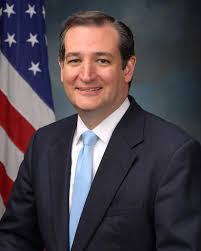
Senator Ted Cruz
Joining Cruz are Republicans in the House and Senate—not enough to defund PP, but enough to deny vitally-needed services to millions of Americans.
The reason for the 2013 government shutdown? Republicans were enraged that millions of uninsured Americans might receive medical care on a par with that given members of the House and Senate.
It was, in short, yet another Right-wing effort to eliminate the Affordable Care Act, better-known as “Obamacare.”
So on September 20, 2013, the House of Representatives voted on a short-term government funding bill that included a provision to de-fund Obamacare.
That provision was a no-go for Senate Democrats and President Barack Obama. When the House and Senate couldn’t reach a compromise, many functions of the Federal government shut down on Oct. 1.
The shutdown lasted for 16 days and cost the United States economy $2 to $6 billion in economic output, according to the Office of Management and Budget.
It ended when President Obama and Senate Democrats refused to submit to Republican blackmail. Medical care still remained available to millions of poor and middle-class Americans.
Republicans have repeatedly threatened to shut down the government unless their constantly escalating demands were met.
In November, 1995, Newt Gingrich, then Speaker of the House of Representatives, carried out this threat.
The official reason: Republicans objected to Democratic President Bill Clinton’s budgetary requests for funding Medicare, education, the environment and public health in the 1996 Federal budget.
The real reason: Gingrich unwisely admitted that he was angry because Clinton had put him in the back of Air Force One during a recent trip to Israel.
The shutdown proved a disaster for Republicans. Clinton was handily re-elected in 1996 and Gingrich suddenly resigned from Congress in 1998.
In April, 2011, the United States government almost shut down again over Republican demands about subsidized pap smears.
During a late-night White House meeting with President Obama and key Congressional leaders, Republican House Speaker John Boehner made this threat:
His conference would not approve funding for the government if any money were allowed to flow to Planned Parenthood through Title X legislation.
Facing an April 8 deadline, negotiators worked day and night to strike a compromise–and finally reached one.
Three months later–-on July 9, 2011-–Republican extortionists again threatened the Nation with financial ruin and international disgrace unless their demands were met.
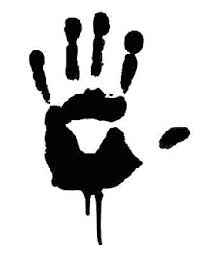
Sign of The Black Hand extortion group
President Obama had offered to make historic cuts in the Federal Government and the social safety net–on which millions of Americans depend for their most basic needs.
But House Speaker John Boehner rejected that offer. He could not agree to the tax increases that Democrats wanted to impose on the wealthiest 1% as part of the bargain.
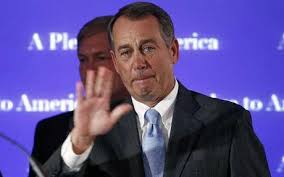
John Boehner
As the calendar moved ever closer to the fateful date of August 2, Republican leaders continued to insist: Any deal that includes taxes “can’t pass the House.”
President Obama had previously insisted on extending the debt ceiling through 2012. But in mid-July, he simply asked congressional leaders to review three options with their members:
- The “Grand Bargain” choice—favored by Obama–would cut deficits by about $4 trillion, including spending cuts and new tax revenues.
- A medium-range plan would aim to reduce the deficit by about $2 trillion.
- The smallest option would cut between $1 trillion and $1.5 trillion, without increased tax revenue or any Medicare and Medicaid cuts.
And the Republican response?
2012 PRESIDENTIAL RACE, ABC NEWS, BARACK OBAMA, BARBARA TUCHMAN, CBS NEWS, CNN, FACEBOOK, HERMAN CAIN, JEB BUSH, JOHN F. KENNEDY, NBC NEWS, NUCLEAR TEST BAN TREATY, REPUBLICANS, RICK PERRY, Sarah Palin, SOVIET UNION, THE CHICAGO SUN-TIMES, THE CHICAGO TRIBUNE, THE GUNS OF AUGUST, THE NEW YORK TIMES, THE WASHINGTON POST, TWITTER, USA TODAY, VIETNAM WAR
In Bureaucracy, History, Politics, Social commentary on July 13, 2015 at 2:32 am
Former Florida Governor Jeb Bush graduated Phi Beta Kappa and magna cum laude from the University of Texas, where he earned a B.A. degree in Latin American affairs.
He completed his coursework in two years and is fluent in Spanish.

Jeb Bush giving commencement address at Liberty University
So it’s interesting to contrast Bush’s educational background with a statement he made to the New Hampshire Union Leader on July 8.
Speaking about the foreign policy of President Barack Obama, Bush said:
“You don’t have to be the world’s policeman, but we have to be the world’s leader—and there’s a huge difference.
“This guy, this president and Secretary Clinton and Secretary Kerry, when someone disagrees with their nuanced approach—where it’s all kind of so sophisticated it makes no sense, you know what I’m saying?
“Big-syllable words and lots of fancy conferences and meetings—but we’re not leading, that creates chaos, it creates a more dangerous world.”
If Bush lacked a university degree, it would be reasonable to assume that his remarks were fueled by jealousy of those who did have one.
But since Bush does have a university degree, there’s another possible reason for his statement: He’s playing dumb to win votes from his largely uneducated audience among the Far Right.
In fact, appealing to the ignorant and uneducated has become a commonplace for politicians on the Right.
President John F. Kennedy speed-read several newspapers every morning. He nourished personal relationships with the press-–and not for entirely altruistic reasons.
These journalistic relationships gave Kennedy additional sources of information and perspectives on national and international issues.
But in 2012, Republican Presidential candidates celebrated their ignorance of both.
Former Godfather’s Pizza CEO Herman Cain famously said, “We need a leader, not a reader.” Thus he excused his ignorance of the reasons for President Barack Obama’s intervention in Libya.
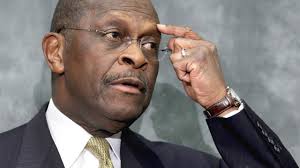
Herman Cain
Texas Governor Rick Perry showed similar pride in not knowing there are nine judges on the United States Supreme Court:
“Well, obviously, I know there are nine Supreme Court judges. I don’t know how eight came out my mouth. But the, uh, the fact is, I can tell you–I don’t have memorized all of those Supreme Court judges. And, uh, ah–
“Here’s what I do know. That when I put an individual on the Supreme Court, just like I done in Texas, ah, we got nine Supreme Court justices in Texas, ah, they will be strict constructionists….”
In short, it’s the media’s fault if they ask you a question and your answer reveals your own ignorance, stupidity or criminality.
Then there was Sarah Palin’s rewriting of history via “The Midnight Ride of Paul Revere”:
“He warned the British that they weren’t going to be taking away our arms by ringing those bells and, um, making sure as he’s riding his horse through town to send those warning shots and bells that, uh, we were going to be secure and we were going to be free.”
In fact, Revere wasn’t warning the British about anything. He was warning his fellow Americans about an impending British attack–as his celebrated catchphrase “The British are coming!” made clear.
Republicans have attacked President Obama for his Harvard education and articulate use of language. Among their taunts: “Hitler also gave good speeches.”
And they resent his having earned most of his income as a writer of two books: Dreams From My Father and The Audacity of Hope. As if being a writer is somehow subversive.
When President Kennedy was assassinated on November 22, 1963, it was said that he left three great legacies to his country:
- The Nuclear Test Ban Treaty;
- The Apollo moon landing; and
- The Vietnam war.
But there was a fourth legacy–and perhaps the most important of all: The belief that mankind could overcome its greatest challenges through rationality and perseverance.
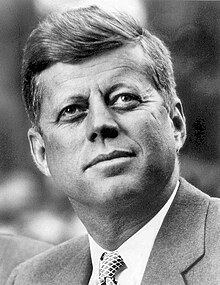
John F. Kennedy
At American University on June 10, 1963, Kennedy called upon his fellow Americans to re-examine the events and attitudes that had led to the Cold War. And he declared that the search for peace was by no means absurd:
“Our problems are man-made; therefore, they can be solved by man. And man can be as big as he wants. No problem of human destiny is beyond human beings.
“Man’s reason and spirit have often solved the seemingly unsolvable, and we believe they can do it again.”
Today, politicians from both parties cannot agree on solutions to even the most vital national problems.
On November 21, 2011, the 12 members of the “Super-Committee” of Congress, tasked with finding $1.2 trillion in cuts in government spending, threw up their hands in defeat.
During the height of the Cuban Missile Crisis, Kennedy spoke with aides about a book he had just finished: Barbara Tuchman’s The Guns of August, on the events leading to World War 1.
He said that the book’s most important revelation was how European leaders had blindly rushed into war, without thought to the possible consequences. Kennedy told his aides he did not intend to make the same mistake-–that, having read his history, he was determined to learn from it.
When knowledge and literacy are attacked as “highfalutin’” arrogance, and ignorance and incoherence are embraced as sincerity, national decline and collapse lie just around the corner.
2016 PRESIDENTIAL RACE, ABC NEWS, ALTERNET, AP, ARTHUR WELLESLEY, BENJAMIN C. BRADLEE, BLACKMAIL, BUZZFEED, CBS NEWS, CNN, CROOKS AND LIARS, DAILY KOZ, DENNIS HASTERT, DUKE OF WELLINGTON, EXTORTION, FACEBOOK, FBI, FEDERAL BANKING LAWS, HARRIETTE WILSON, J. EDGAR HOOVER, JOHN F. KENNEDY, JOSEPH STOCKDALE, JUDITH CAMPBELL, MAFIA, MOTHER JONES, MOVEON, MSNBC, NBC NEWS, NEWSWEEK, NPR, PBS NEWSHOUR, POLITICO, RAW STORY, REPUBLICAN PARTY, REUTERS, ROBERT F. KENNEDY, SALON, SAM GIANCANA, SEATTLE TIMES, SLATE, THE ATLANTIC, THE CHICAGO SUN-TIMES, THE CHICAGO TRIBUNE, THE DAILY BEAST, THE GUARDIAN, THE HILL, THE HUFFINGTON POST, THE LOS ANGELES TIMES, THE NATION, THE NEW YORK TIMES, THE WASHINGTON POST, TIME, TWITTER, U.S. NEWS & WORLD REPORT, UPI, USA TODAY, WILLIAM C. SULLIVAN
In Bureaucracy, History, Law Enforcement, Politics, Social commentary on June 10, 2015 at 12:03 am
On May 28, Dennis Hastert, the former Republican Speaker of the House of Representatives (1999-2007) was indicted for violating federal banking laws and lying to the FBI.
He had tried to conceal $3.5 million in hush-money payments over several years to a man who was blackmailing him.

Dennis Hastert
The source of the blackmail: A homosexual–and possibly coerced–relationship with an underage student while Hastert was a teacher and wrestling coach at Yorkville High School, in Yorkville, Illinois–long before Hastert entered Congress in 1981.
Hastert wasn’t indicted for having had a sexual relationship with an underage student. The statute of limitations had long ago run out on that offense.
He was indicted for trying to evade federal banking laws and lying to the FBI.
According to the indictment, the FBI began investigating the cash withdrawals in 2013.
The Bureau wanted to know if Hastert was using the cash for criminal purposes or if he was the victim of a criminal extortion.
When questioned by the FBI, Hastert said he was storing cash because he didn’t feel safe with the banking system: “Yeah, I kept the cash. That’s what I’m doing.”
Thus, irony: By giving in to blackmail, Hastert:
- Lost $3.5 million;
- Unintentionally engineered his arrest and indictment; and
- Ensured that his darkest secret would be revealed.
There is a lesson to be learned here–one that longtime FBI Director J. Edgar Hoover well understood: Giving in to blackmail only empowers the blackmailer even more.
As William C. Sullivan, the onetime director of the FBI’s Domestic Intelligence Divison, revealed after Hoover’s death in 1972:
“The moment [Hoover] would get something on a senator, he’d send one of the errand boys up and advise the senator that ‘we’re in the course of an investigation, and we by chance happened to come up with this data on your daughter.
“‘But we wanted you to know this. We realize you’d want to know it.’ Well, Jesus, what does that tell the senator? From that time on, the senator’s right in his pocket.”
“Boy, the dirt he [Hoover] has on those Senators!” John F. Kennedy–a former Senator now President–gushed to his journalist-friend, Benjamin C. Bradlee.
Kennedy soon came to know that even Presidents could be targeted for blackmail.
In May, 1962, Hoover privately informed Kennedy that the FBI had learned that Judith Campbell, the mistress of Chicago Mafia boss Sam Giancana, had another bedmate: JFK himself.

John F. Kennedy, J. Edgar Hoover and Robert F. Kennedy
Hoover had feared being retired by the President’s brother, Attorney General Robert F. Kennedy. It had been RFK who had ordered Hoover to attack the Mafia as he had long attacked the Communist Party USA.
Now, as a result of that anti-Mob effort, the FBI had picked up evidence linking the President with the mistress of a top Mafia boss.
Hoover’s tenure as FBI director was thus assured–until his death on May 2, 1972, of a heart attack.
Narcotics agents have their own methods of blackmail in dealing with informants.
When a drug-abuser and/or dealer is coerced into becoming a “snitch,” the narcotics agent orders him to call another user/dealer he knows.
The agent then tapes the call–and makes sure his new informant knows it. From that moment, the “snitch” knows there’s no way out except cooperating with his new master.
The only effective way of handling blackmail was demonstrated by Arthur Wellesley, known to history as the Duke of Wellington.
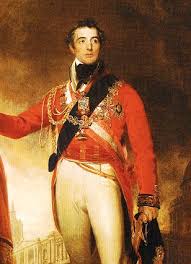
The Duke of Wellington
In 1815, he had defeated Napoleon at the battle of Waterloo, ending France’s longstanding threat to England. With that victory came the honors of a grateful nation.
Then, in December, 1824, Wellington found himself the target of blackmail by Joseph Stockdale, a pornographer and scandal-monger.
“My Lord Duke,” Stockdale write in a letter, “In Harriette Wilson’s memoirs, which I am about to publish, are various anecdotes of Your Grace which it would be most desirable to withhold….
“I have stopped the Press for the moment, but as the publication will take place next week, little delay can necessarily take place.”
Wilson was a famous London courtesan past her prime, then living in exile in Paris. She was asking Wellington to pay money to be left out of her memoirs.
From Wellington came the now-famous reply: “Publish and be damned!”
Wilson’s memoirs appeared in installments, naming half the British aristocracy and scandalizing London society.
And, true to her threat, she named Wellington as one of her lovers–and a not very satisfying one at that.
Wellington was a national hero, husband and father. Even so, his reputation did not suffer, and he went on to become prime minister.
Click here: Rear Window: When Wellington said publish and be damned: The Field Marshal and the Scarlet Woman – Voices
Dennis Hastert, former Speaker of the House, might now wish he had followed the example of the Duke of Wellington.
His reputation might have been trashed, but he wouldn’t now be facing prosecution.
As matter now stand, his reputation has been trashed, and he is facing prosecution.


.jpeg&imgrefurl=http%3A%2F%2Fwww.whataboutclients.com%2Farchives%2F2014%2F09%2Famerican_authen.html&docid=boFt4L_sotcfWM&tbnid=ouxiHfzJFvsrwM%3A&w=240&h=248&ei=NhtPVKT3GJX6oQSa7YKgDg&ved=0CAIQxiAwAA&iact=c)


ABC NEWS, AMERICAN EMPIRE, BILL CLINTON, BUREAUCRACY, CBS NEWS, CHRIS MATHEWS, CNN, DONALD TRUMP, DWIGHT EISENHOWER, FACEBOOK, FBI, FRANKLIN D. ROOSEVELT, GEORGE H.W. BUSH, GEORGE W. BUSH, GERALD R. FORD, HARRY S. TRUMAN, JEB BUSH, JIMMY CARTER, JOHN F. KENNEDY, LYNDON B. JOHNSON, MSNBC, NBC NEWS, NIGEL HAMILTON, REPUBLICAN PARTY, SUETONIUS, SYRIAN CIVIL WAR, SYRIAN REFUGEES, TERRORISM, THE HUFFINGTON POST, THE LOS ANGELES TIMES, THE NEW YORK TIMES, THE TWELVE CAESARS, THE WASHINGTON POST, TWITTER
THE TRUTH IS ALWAYS SUFFICIENT: PART ONE (OF TWO)
In Bureaucracy, History, Politics, Social commentary on October 19, 2015 at 12:55 amYou don’t ever have to frame anybody, because the truth is always sufficient.
–Willie Stark, in All the King’s Men, by Robert Penn Warren
When one politician wants to truly hurt another, the weapon of choice is not lies. It’s the truth.
And on October 16, Republican Presidential candidate Donald Trump used that weapon to take down his opponent, Jeb Bush.
Trump was being interviewed by Bloomberg TV’s Stephanie Ruhle when she asked: Would you be able to comfort the nation in the event of a mass tragedy like 9/11 or the 2012 shooting in Newtown, Connecticut?
And Trump, who always claims to be smarter, tougher and richer than anyone else, had a ready response: “I think I have a bigger heart than all of them. I think I’m much more competent then all of them.”
So far, so ordinarily Trump. Then: “I mean, say what you want, the World Trade Center came down during his time.”
“Hold on,” said Ruhle, “you can’t blame George Bush for that.”
“He was President, okay? Blame him or don’t blame him, but he was President,” Trump said. “The World Trade Center came down during his reign.”
Three thousand Americans died during the September 11, 2001 terror attacks on the Pentagon and World Trade Center.
World Trade Center on 9/11/01
Holding Bush accountable for 9/11 has been taboo for Republicans–and has generally been avoided by cowardly Democrats.
Whereas Republicans have spent the last three years blaming President Barack Obama for the deaths of four Americans killed in the Libyan consulate attack.
Immediately after Trump’s remarks, the Right exploded.
Representative Peter King, Republican of New York, said that no one saw the 9/11 attacks coming and that blaming the former president was a cheap shot.
Speaking on Right-wing Fox Radio, King added: “I think Donald Trump is totally wrong there. That sounds like a Michael Moore talking point.”
And Jeb Bush rushed to his brother’s defense on Twitter: “How pathetic for @realdonaldtrump to criticize the president for 9/11. We were attacked & my brother kept us safe.”
Of course, Jeb didn’t account for those 3,000 Americans who died on 9/11.
Nor did he mention that, during his first eight months in office before September 11, George W. Bush was on vacation 42% of the time.
Fortunately, British historian Nigel Hamilton has dared to lay bare the facts of this disgrace. Hamilton is the author of several acclaimed political biographies, including JFK: Reckless Youth and Bill Clinton: Mastering the Presidency.
In 2007, he began research on his latest book: American Caesars: The Lives of the Presidents from Franklin D. Roosevelt to George W. Bush.
The inspiration for this came from a classic work of ancient biography: The Twelve Caesars, by Gaius Suetonius Tranquillus–known as Suetonius.
Suetonius, a Roman citizen and historian, had chronicled the lives of the first twelve Caesars of imperial Rome: Julius Caesar, Augustus, Tiberius, Caligula, Claudius, Nero, Galba, Otho, Vitellius, Vespasian, Titus and Domitian.
Hamilton wanted to examine post-World War II United States history as Suetonius had examined that of ancient Rome: Through the lives of the 12 “emperors” who had held the power of life and death over their fellow citizens–and those of other nations.
For Hamilton, the “greatest of American emperors, the Caesar Augustus of his time,” was Franklin D. Roosevelt, who led his country through the Great Depression and World War II.
His “”great successors” were Harry S. Truman, Dwight D. Eisenhower and John F. Kennedy–who, in turn, contained the Soviet Union abroad and presided over sustained economic prosperity at home.
By contrast, “arguably the worst of all the American Caesars” was “George W. Bush, and his deputy, Dick Cheney, who willfully and recklessly destroyed so much of the moral basis of American leadership in the modern world.”
Among the most lethal of Bush’s offenses: The appointing of officials who refused to take seriously the threat posed by Al-Qaeda.
And this arrogance and indifference continued–right up to September 11, 2001, when the World Trade Center and Pentagon became targets for destruction.
Among the few administration officials who did take Al-Qaeda seriously was Richard Clarke, the chief counter-terrorism adviser on the National Security Council.
Clarke had been thus appointed in 1998 by President Bill Clinton. He continued in the same role under President Bush–but the position was no longer given cabinet-level access.
This put him at a severe disadvantage when dealing with other, higher-ranking Bush officials–such as Vice President Dick Cheney, Secretary of Defense Donald Rumsfeld, Rumsfeld’s deputy, Paul Wolfowitz and National Security Advisor Condoleeza Rice.
These turned out to be the very officials who refused to believe that Al-Qaeda posed a lethal threat to the United States.
“Indeed,” writes Hamilton, “in the entire first eight months of the Bush Presidency, Clarke was not permitted to brief President Bush a single time, despite mounting evidence of plans for a new al-Qaeda outrage.” [Italics added]
Share this: