Posts Tagged ‘JOHN F. KENNEDY’
ABC NEWS, ALLEN DULLES, BRIDGE OF SPIES, CBS NEWS, CNN, COLD WAR, DWIGHT D. EISENHOWER, EAST GERMANY, FACEBOOK, FRANCIS GARY POWERS, JAMES DONOVAN, JOHN F. KENNEDY, JOSEPH MCCARTHY, KGB, NBC NEWS, RED SCARE, RUDOLPH ABEL, SOVIET UNION, STASI, STEVEN SPIELBERG, THE CHICAGO SUN-TIMES, THE CHICAGO TRIBUNE, THE LOS ANGELES TIMES, THE NEW YORK TIMES, THE WALL STREET JOURNAL, THE WASHINGTON POST, TOM HANKS, TWITTER, U-2
In Bureaucracy, Entertainment, History, Law, Law Enforcement, Military, Politics, Social commentary on March 21, 2016 at 12:01 am
“Bridge of Spies” vividly recaptures a now-forgotten time in American history.
It was the time of “the Cold War.” A time when:
- America was almost universally seen as “The Good Guy,” in contrast to “The Bad Guy” of the Soviet Union;
- The United States and the Soviet Union held each other at bay with arsenals of nuclear weapons;
- Wisconsin Senator Joseph R. McCarthy terrorized the nation, accusing anyone who disagreed with him of being a Communist–and leaving ruined lives in his wake;
- American TVs blared commercials warning that Soviet Premier Nikita Khrushchev had boasted: “We will bury you”; and
- Children and teenagers were taught in school that they could survive a nuclear attack through “duck and cover” drills. They were instructed to keep their bathtubs filled with water for safe drinking, in the event of a Soviet nuclear strike.
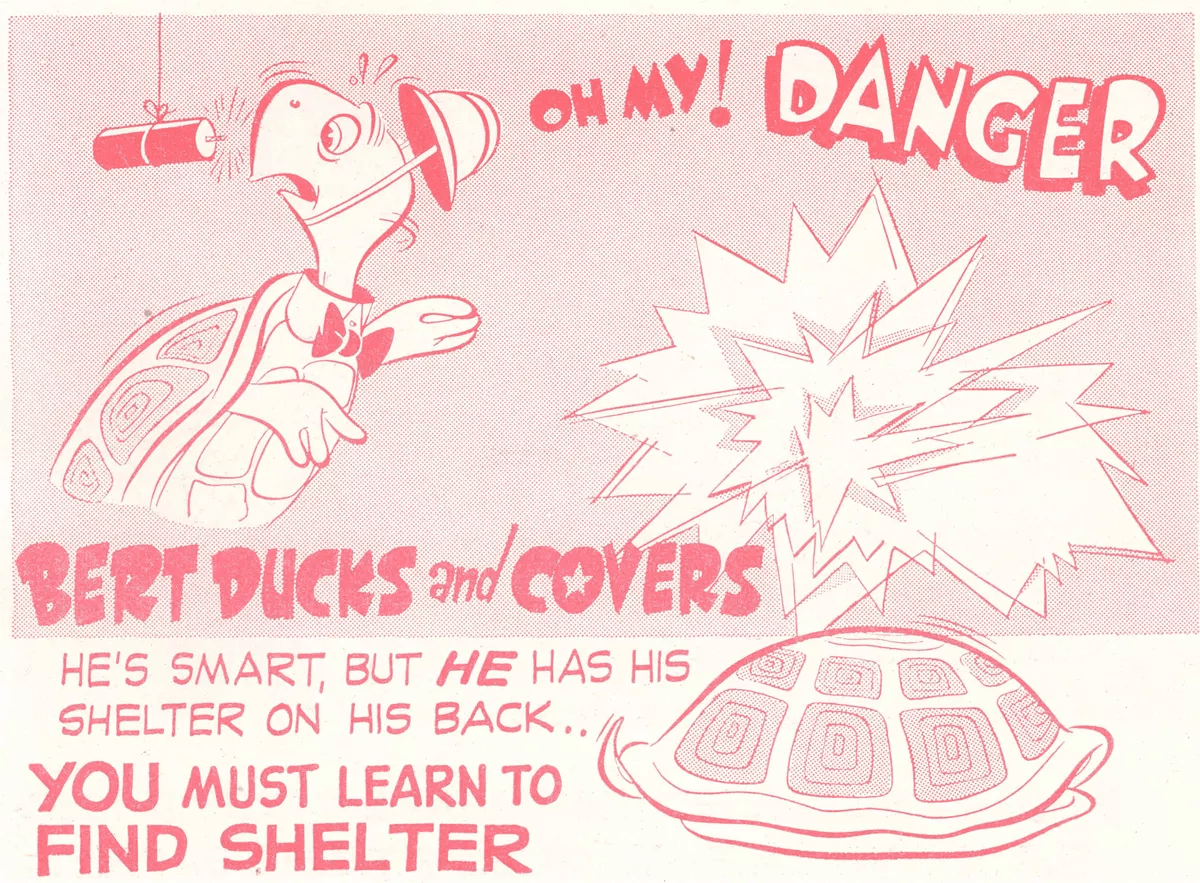
Bert the Turtle teaches schoolchildren to “Duck and Cover”
Yet even in this poisonous atmosphere of fear and denunciation, some men stood out as heroes–simply by holding fast to their consciences.
One of these was a New York insurance attorney named James B. Donovan (played by Tom Hanks). Asked by the Justice Department to defend arrested Soviet spy Rudolph Abel (Mark Rylance) Donovan did what no one expected.
He gave Abel a truly vigorous defense, arguing that the evidence used to convict him was the legally-tainted product of an invalid search warrant.
Upon Abel’s conviction and sentencing to 45 years’ imprisonment, Donovan again shocked the political and legal communities by appealing the case to the Supreme Court.
Donovan argued that Constitutional protections should apply to everyone–including non-Americans–tried in American courts. To do less made a mockery of the very freedoms we claimed to champion.
He lost by a vote of 5-4. But the arguments he made would resurface 50 years later when al-Qaeda suspects were hauled into American courts.

James B. Donovan
In 1961, Donovan was again called upon to render service by a Federal agency–this time the CIA. It wanted his help in negotiating the release of its spy, Francis Gary Powers, shot down over the Soviet Union in 1960 while flying a high-altitude U-2 spy plane.
Throughout “Bridge of Spies,” audiences learn some unsettling truths about how the American government–and governments generally– actually operate.
The first three of these were outlined in Part one of this series:
Truth #1: Appearance counts for more than reality.
Truth #2: Individual conscience can wreck the best-laid plans of government.
Truth #3: High-ranking government officials will ask citizens to take risks they themselves refuse to take.
Now for the remaining truths revealed in this movie.
Truth #4: Appeals to fear often prevail when appeals to humanity are ignored.
After crossing into East Germany, Donovan enters into negotiations with Wolfgang Vogel, a lawyer representing the East German government.
Vogel offers to exchange Frederic Pryor, an American economics graduate student seized by the East German secret police, for Abel. Donovan replies this is a deal-breaker; the United States (which is never mentioned during the negotiations) wants Powers, not Pryor.
Nevertheless, Donovan is equally concerned for Pryor, and adds him to the list of hostages to be released in return for Abel.
Then a new complication arises: The East German government that holds Pryor threatens to pull out. claiming to be insulted because Donovan did not inform them that the USSR was a party to the negotiation.
His reasoned, legal arguments having failed, Donovan resorts to a threat. He conveys a warning to the president of East Germany:
Abel has not yet revealed any Soviet secrets. But if this deal fails, he may well do so to earn favors from the United States government. And, in that case, the Soviets will blame you–Erich Honecker, the president of East Germany–for the resulting damage.
Where arguments based on humanity have failed, this one–based on fear–works. A prisoner-exchange is arranged.
Truth #5: Personal loyalty can supersede bureaucratic inventions.
On February 10, 1962, Donovan, Abel and several CIA agents arrive at the Glienicke Bridge, which connects East and West Germany. The Soviets have Powers, but not Pryor–who is to be released at Checkpoint Charlie, a crossing point between East and West Berlin.
Glienicke Bridge, the “Bridge of Spies”
The CIA agent in charge of the American delegation tells Abel he can cross into East Germany, even though Pryor has not been released.
But Abel has learned that Donovan has negotiated the release of not only Powers but Pryor. Out of loyalty to the man who has vigorously defended him, he waits on his side of the bridge until word arrives that Pryor has been released.
Then Abel crosses into East Germany while Powers crosses into the Western sector.
Donovan returns home. Before flying off to West Germany, he had told his wife he was going on a fishing trip in Scotland.
His wife and children learn the truth about the risks he ran and the success he attained only when a television newscast breaks the news:
Francis Gary Powers has been returned to the United States. And the man responsible is James Donovan, once the most reviled man in America for having defended a notorious Soviet spy.
ABC NEWS, ALLEN DULLES, BRIDGE OF SPIES, CBS NEWS, CIA, CNN, COLD WAR, DWIGHT D. EISENHOWER, EAST GERMANY, FACEBOOK, FRANCIS GARY POWERS, JOHN F. KENNEDY, JOSEPH MCCARTHY, KGB, NBC NEWS, RED SCARE, RUDOLPH ABEL, SOVIET UNION, STASI, STEVEN SPIELBERG, THE CHICAGO SUN-TIMES, THE CHICAGO TRIBUNE, THE LOS ANGELES TIMES, THE NEW YORK TIMES, THE WALL STREET JOURNAL, THE WASHINGTON POST, TOM HANKS, TWITTER, U-2
In Bureaucracy, Entertainment, History, Law, Law Enforcement, Military, Politics, Social commentary on March 18, 2016 at 12:01 am
Steven Spielberg’s new movie, “Bridge of Spies,” is that rarity among films: An intelligent mixture of history and drama, stripped of gratuitous sex and violence.
It’s also a film that accurately reveals unsettling truths about how government intelligence agencies really operate.

Truth #1: Appearance counts for more than reality.
The movie opens with the FBI’s arrest of KGB spy Rudolph Abel (Mark Rylance). The evidence against him is overwhelming. This–plus the “Red Scare” climate of 1957–will guarantee his conviction.
But the Eisenhower administration doesn’t want the upcoming trial to be seen as a hangman’s court. It must have the appearance of a fair proceeding.
So the Justice Department (through the Brooklyn Bar Association) asks a New York insurance attorney named James B. Donovan (Tom Hanks) to take on Abel’s defense. He’s expected to make a reasonably competent effort but not go all out on behalf of his client.
Truth #2: Individual conscience can wreck the best-laid plans of government.
Donovan has never handled a spy case before. And he has no delusions that Abel isn’t the spy he’s charged with being. But he’s determined to give Abel the same committed defense he would give to any other client.

Rudolph Abel (Mark Rylance) and James Donovan (Tom Hanks) in court
This comes as a shock to the prosecutors, the judge, his law firm and even his family.
A CIA agent approaches Donovan in a nearly deserted restaurant and asks him to reveal any secrets that might help win Abel’s conviction.
Donovan replies: “This conversation isn’t happening.”
“No, of course not,” replies the CIA agent, assuming Donovan is agreeing to keep the overture secret.
“No, I mean this conversation isn’t happening,” angrily says Donovan, who leaves the agent fuming.
Donovan becomes a pariah; his mailbox is stuffed with hate mail and one night a would-be drive-by killer riddles his house with bullets.
Abel is convicted and sentenced to 45 years’ imprisonment. But Donovan–again shocking everyone he knows–pursues an appeal up to the Supreme Court.
He argues that the evidence against Abel is tainted by an invalid search warrant. No American citizen could be convicted under such circumstances. And the Constitutional protections that hold true for Americans should hold equally true for non-Americans charged with crimes in American courts.
Donovan’s arguments will be heard a half-century later, when al-Qaeda suspects are hauled before American courts.
He puts on an impressive case on Abel’s behalf, but loses 5-4 at the Supreme Court.
That seems to be the end of Donovan’s relationship with Abel. But events soon dictate otherwise.
Before the judge could pronounce a death sentence on Abel, Donovan had argued that this might be a mistake. The day might come, he told the judge, when an American spy might fall into Soviet hands.
And then the United States would need to swap Abel to secure the release of its own agent.
The judge, moved by that argument, had given Abel a lengthy prison term instead.
That day comes sooner than anyone in the Pentagon expects.
On May 1, 1960, Francis Gary Powers, a former Air Force pilot, is flying a high-altitude U-2 plane above the Soviet Union for the CIA. The plane is equipped with state-of-the-art cameras, and Powers intends to photograph military sites and other important complexes.
Suddenly, a surface-to-air missile slams into the plane. Powers ejects before it crashes, but fails to commit suicide with a poison pin concealed in a phony silver dollar. He’s captured by the KGB and brutally interrogated, but maintains his silence.
At about the same time, Frederic Pryor, an American economics graduate student living in West Germany, visits his German girlfriend living in Soviet-dominated East Germany.
The Soviets are starting to build their infamous Berlin Wall, which will stop the flow of refugees from East to West. Pryor tries to bring his girlfriend and her father into West Berlin, but he’s stopped and arrested by agents of Stasi, the East German police, who accuse him of being a spy.
Meanwhile, the Soviet Union wants its spy, Abel, returned, before he can spell its secrets. In turn, the new Kennedy administration wants Powers returned, before he can be made to spill American secrets.
Truth #3: High-ranking government officials will ask citizens to take risks they themselves refuse to take.
In 1961, Donovan is once again sought out by the American government–this time by no less than CIA Director Allen Dulles.
And he’s asked to go where no official American representative can go–East Germany. His new assignment: Negotiate the exchange of Powers for Abel.
The CIA wants its spy back. And it’s willing to send Donovan into East Germany to negotiate his release. But it’s not willing to back him up if he’s arrested by Stasi, the notorious East German secret police.
The fiction must be maintained that Donovan is acting strictly on his own behalf, not that of the United States.
In such a case, Donovan could spend the rest of his life in a Communist prison cell.
2016 PRESIDENTIAL RACE, ABC NEWS, APOLLO MOON LANDING, BARACK OBAMA, BARBARA TUCHMAN, CBS NEWS, CNN, COLD WAR, DONALD TRUMP, DREAMS FROM MY FATHER, EDUCATION, HERMAN CAIN, IGNORANCE, JOHN F. KENNEDY, LITERACY, NBC NEWS, NEVADA PRIMARY, NUCLEAR TEST BAN TREATY, REPUBLICANS, RICK PERRY, Sarah Palin, SOVIET UNION, THE AUDACITY OF HOPE, THE CHICAGO SUN-TIMES, THE CHICAGO TRIBUNE, THE GUNS OF AUGUST, THE LOS ANGELES TIMES, THE NEW YORK TIMES, THE WASHINGTON POST, VIETNAM WAR
In Bureaucracy, History, Politics, Social commentary on February 25, 2016 at 9:55 am
After winning the Republican Nevada primary with over 44% of the votes on February 23, Republican Presidential candidate Donald Trump gave the expected victory speech.
But it came with an unexpected moment:
“So we won the evangelicals. We won with young. We won with old. We won with highly educated. We won with poorly educated. I love the poorly educated. We’re the smartest people, we’re the most loyal people.”
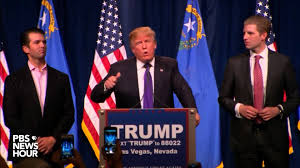
Donald Trump
“I love the poorly educated.”
As well he might: Polls have consistently shown that Trump relies on less-educated adults for his support.
Among Republicans, 71 percent of non-college graduates view Trump favorably, while 46 percent of college graduates support him.
In fact, appealing to the ignorant and uneducated has become a commonplace for politicians on the Right.
President John F. Kennedy speed-read several newspapers every morning. He nourished personal relationships with the press-–and not for altruistic reasons.
These journalistic relationships gave Kennedy additional sources of information and perspective on national and international issues.
But in 2012, Republican Presidential candidates celebrated their ignorance of both.
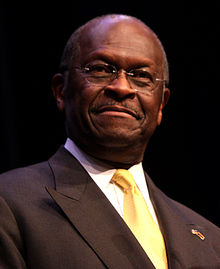
Herman Cain
Former Godfather’s Pizza CEO Herman Cain famously said, “We need a leader, not a reader.” In doing so, he stole this line from the fictionalized “President Schwarzenegger” in The Simpsons Movie.
Thus he excused his ignorance of the reasons for President Barack Obama’s intervention in Libya.
Then-Texas Governor Rick Perry showed similar pride in not knowing there are nine judges on the United States Supreme Court:
“Well, obviously, I know there are nine Supreme Court judges. I don’t know how eight came out my mouth. But the, uh, the fact is, I can tell you–I don’t have memorized all of those Supreme Court judges. And, uh, ah–
“Here’s what I do know. That when I put an individual on the Supreme Court, just like I done in Texas, ah, we got nine Supreme Court justices in Texas, ah, they will be strict constructionists….”
In short, it’s the media’s fault if they ask you a question and your answer reveals your own ignorance, stupidity or criminality.
Then there was Sarah Palin’s rewriting of history via “The Midnight Ride of Paul Revere”:
“He warned the British that they weren’t going to be taking away our arms by ringing those bells and, um, making sure as he’s riding his horse through town to send those warning shots and bells that, uh, we were going to be secure and we were going to be free.”
In fact, Revere wasn’t warning the British about anything. He was warning his fellow Americans about an impending British attack–as his celebrated catchphrase “The British are coming!” made clear.
Republicans have attacked President Obama for his Harvard education and articulate use of language. Among their taunts: “Hitler also gave good speeches.”
And they resent his having earned most of his income as a writer of two books: Dreams From My Father and The Audacity of Hope. As if being a writer is somehow subversive.
When President Kennedy was assassinated on November 22, 1963, it was said that he left three great legacies to his country:
- The Nuclear Test Ban Treaty;
- The Apollo moon landing; and
- The Vietnam War.
But there was a fourth legacy–and perhaps the most important of all: The belief that mankind could overcome its greatest challenges through rationality and perseverance.

White House painting of JFK
At American University on June 10, 1963, Kennedy called upon his fellow Americans to re-examine the events and attitudes that had led to the Cold War. And he declared that the search for peace was by no means absurd:
“Our problems are man-made; therefore, they can be solved by man. And man can be as big as he wants. No problem of human destiny is beyond human beings.
“Man’s reason and spirit have often solved the seemingly unsolvable, and we believe they can do it again.”
Today, politicians from both parties cannot agree on solutions to even the most vital national problems.
On November 21, 2011, the 12 members of the “Super-Committee” of Congress, tasked with finding $1.2 trillion in cuts in government spending, threw up their hands in defeat.
During the height of the Cuban Missile Crisis, Kennedy spoke with aides about a book he had just finished: Barbara Tuchman’s The Guns of August, on the events leading to World War 1.
He said that the book’s most important revelation was how European leaders had blindly rushed into war, without thought to the possible consequences.
Kennedy told his aides he did not intend to make the same mistake-–that, having read his history, he was determined to learn from it.
When knowledge and literacy are attacked as “highfalutin’” arrogance, and ignorance and incoherence are embraced as sincerity, national decline and collapse lie just around the corner.
9/11 ATTACKS, ABC NEWS, AFGHANISTAN, AL QAEDA, ALTERNET, AMERICABLOG, AP, BABY BOOMER RESISTANCE, BARACK OBAMA, BLOOMBERG, BOLIVIA, BUZZFEED, CBS NEWS, CIA, CNN, COMMUNISM, CROOKS AND LIARS, CUBA, CUBAN MISSILE CRISIS, DAILY KOZ, DRUDGE REPORT, ERNESTO "CHE" GUEVARA, FACEBOOK, FIDEL CASTRO, FIVETHIRTYEIGHT, GEORGE W. BUSH, GREEN BERETS, HARPER’S MAGAZINE, HUFFINGTON POST, IRAQ, ISLAM, JOHN F. KENNEDY, MEDIA MATTERS, MOTHER JONES, MOVEON, MSNBC, NAVY SEALS, NBC NEWS, NEWSWEEK, NIKITA KHRUSHCHEV, NPR, OSAMA BIN LADEN, PAKISTAN, PBS NEWSHOUR, POLITICO, POLITICUSUSA, RAW STORY, REUTERS, SALON, SEATTLE TIMES, SLATE, SOVIET UNION, TALIBAN, TALKING POINTS MEMO, THE ATLANTIC, THE CHICAGO SUN-TIMES, THE CHICAGO TRIBUNE, THE DAILY BEAST, THE DAILY BLOG, THE GUARDIAN, THE HILL, THE HUFFINGTON POST, THE LOS ANGELES TIMES, THE NATION, THE NEW REPUBLIC, THE NEW YORK TIMES, THE VILLAGE VOICE, THE WASHINGTON POST, THINKPROGRESS, TIME, TRUTHDIG, TRUTHOUT, TWITTER, TWO POLITICAL JUNKIES, U.S. NEWS & WORLD REPORT, UPI, USA TODAY, WONKETTE
In Bureaucracy, History, Military, Politics on February 16, 2016 at 12:10 am
When Osama bin Laden died, two weapons were within easy reach–an AK-47 assault rifle and a Russian-made nine-millimeter Makarov pistol.
But according to his wife, Amal, he was shot by Navy SEALS before he could reach either one.
A SEAL flashed coded news of bin Laden’s death to the Pentagon and the White House Situation Room, where President Barack Obama and the topmost officials of his administration anxiously followed events via a closed-circuit television.
“Geronimo E-KIA” read the message: “Geronimo [bin Laden] E-KIA [Enemy Killed in Action].”
The entire raid–including Intelligence sweeps of the compound–was over in less than 40 minutes. The SEALS moved quickly because they rightly feared that the Pakistani army would intervene to protect bin Laden.
Bin Laden had been living undisturbed at a large compound in Abbottabad for at least five years, just a short distance from Pakistan’s version of West Point.
Furthermore, the ISI–Pakistan’s Intelligence agency–had long been riddled with Al-Qaeda sympathizers, if not agents.
Within 24 hours of his death, Bin Laden’s body was transported to the aircraft carrier USS Carl Vinson for final rites and burial at sea.
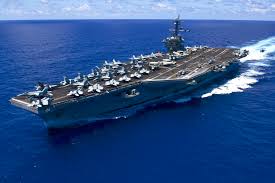
U.S.S. Carl Vinson
President Obama and other U.S. officials feared that his grave site would become a memorial for members of Al-Qaeda and other Islamic terrorist organizations.
In the late evening of May 1, 2011, the White House surprised major television networks by informing them that the President had a major announcement to make.
At 11:35 P.M. Eastern Standard Time, the President appeared at a podium in the East Room of the White House.
“Good evening. Tonight I can report to the American people and to the world that the United States had conducted an operation that killed Osama bin Laden, the leader of Al-Qaeda, and a terrorist who’s responsible for the murder of thousands of innocent men, women and children….
“For over two decades, bin Laden has been Al-Qaeda’s leader and symbol, and has continued to plot attacks against our country and our friends and allies. The death of bin Laden marks the most significant achievement to date in our nation’s efforts to defeat Al-Qaeda.”
He added that “no Americans were harmed” in the raid and that the SEALS had taken care to avoid civilian casualties.

President Barack Obama announcing Osama bin Laden’s death
Like Ernesto “Che” Guevara, bin Laden had become a pale, largely irrelevant figure by the time of his death.
Knowing he was the world’s most wanted man, he imprisoned himself within a fortified compound–which he never left.
Afraid to use a phone or the Internet, he relayed orders–which were often ignored–via the cumbersome use of couriers. All trash generated by the inhabitants of the compound was burned within its walls.
Ironically, the lack of Internet and phone lines to the compound–and the burning of its trash–had led CIA officials to suspect that Osama bin Laden might be hiding there.
Pakistan was outraged. Officially an American ally, its territory had been secretly invaded by American military forces. Even more embarrassing: For years, Pakistani Intelligence had denied knowing bin Laden’s whereabouts.
Meanwhile, leaders of Islamic expansionist groups rallied to praise the dead bin Laden. Among these was his son, Omar, who denounced his father’s killing as a “criminal” act, and his burial at sea as demeaning to the Islamic faith.
In a letter published on the website of Islamic ideologue Abu Walid al-Masri, the younger bin Laden said the former Al-Qaeda leader’s children reserved the right to take legal action in the United States and internationally to “determine the true fate of our vanished father.”
Bin Laden’s death drew protests from hundreds of people in the city of Quetta, in southwestern Pakistan, who burned American flags and paid homage to the late terrorist leader.
On May 13, a pair of Taliban suicide bombers attacked paramilitary police recruits eagerly heading home for a break after months of training, killing 80 people. It was the first act of retaliation for the killing of bin Laden.
Americans reacted differently.
Almost as Obama was addressing the nation, cheering crowds gathered outside the White House and in New York City’s Times Square. Many of them shouted “USA! USA! USA!” and waved American flags in celebration.
Celebration also broke out at the site of the former World Trade Center, the primary victim of the September 11 attacks.
For the next two weeks, Americans continued to rejoice. Much of their feelings were best expressed in grisly humor on websites and late night comedy shows such as “Tonight” and “Late Night With David Letterman.”
Killing Osama bin Laden removed Al-Qaeda’s most important member. But its treasury of secret materials–such as computer hard-drives, DVDs, notebooks, diaries–proved even more important to American military and Intelligence officials.
During the late 1960s and early 1970s, many Vietnam protesters marched carrying blown-up photos of Ernesto “Che” Guevara or tacked them to the walls of their dormitory rooms.
Most of these college students were members of the middle-class which Guevara had so despised.
Going on five years since the death of bin Laden, his poster has been noticeably absent from American college campuses–and everywhere else in the United States.
It remains to be seen whether, decades from now, Osama bin Laden will attain the iconic status of Ernesto “Che” Guevara.
9/11 ATTACKS, ABC NEWS, AFGHANISTAN, AL QAEDA, ALTERNET, AMERICABLOG, AP, BABY BOOMER RESISTANCE, BARACK OBAMA, BLOOMBERG, BOLIVIA, BUZZFEED, CBS NEWS, CIA, CNN, COMMUNISM, CROOKS AND LIARS, CUBA, CUBAN MISSILE CRISIS, DAILY KOZ, DRUDGE REPORT, ERNESTO "CHE" GUEVARA, FACEBOOK, FIDEL CASTRO, FIVETHIRTYEIGHT, GEORGE W. BUSH, GREEN BERETS, HARPER’S MAGAZINE, HUFFINGTON POST, IRAQ, ISLAM, JOHN F. KENNEDY, MEDIA MATTERS, MOTHER JONES, MOVEON, MSNBC, NAVY SEALS, NBC NEWS, NEWSWEEK, NIKITA KHRUSHCHEV, NPR, OSAMA BIN LADEN, PAKISTAN, PBS NEWSHOUR, POLITICO, POLITICUSUSA, RAW STORY, REUTERS, SALON, SEATTLE TIMES, SLATE, SOVIET UNION, TALIBAN, TALKING POINTS MEMO, THE ATLANTIC, THE CHICAGO SUN-TIMES, THE CHICAGO TRIBUNE, THE DAILY BEAST, THE DAILY BLOG, THE GUARDIAN, THE HILL, THE HUFFINGTON POST, THE LOS ANGELES TIMES, THE NATION, THE NEW REPUBLIC, THE NEW YORK TIMES, THE VILLAGE VOICE, THE WASHINGTON POST, THINKPROGRESS, TIME, TRUTHDIG, TRUTHOUT, TWITTER, TWO POLITICAL JUNKIES, U.S. NEWS & WORLD REPORT, UPI, USA TODAY, WONKETTE
In Bureaucracy, History, Military, Politics on February 15, 2016 at 12:00 am
Ernesto “Che” Guevara was dead. But that wasn’t enough for the Bolivian government that had authorized his execution. His corpse was disappear from the face of the earth.
On October 10, 1967, Guavara’s body was flown to nearby Vallegrande, where photographs were taken of him lying on a concrete slab in the laundry room of the Nuestra Senora de Malta.

Che Guevara in death
Several witnesses were called in to confirm that it was indeed Guevara. As hundreds of local residents filed past the corpse, men of them felt Guevara resembled images of a bearded, long-haired Jesus Christ. Some of them even surreptitiously clipped locks of his hair as divine relics.
After a military doctor amputated his hands, Bolivian army officers transferred Guevara’s body to an undisclosed location. The government refused to say whether his remains had been buried or cremated.
Che’s hands were preserved in formaldehyde and sent to Buenos Aires, Argentina, for fingerprint identification. (His prints were on file with the Argentine police)
On October 15, Fidel Castro acknowledged that Guevara was dead and proclaimed three days of public mourning throughout Cuba.
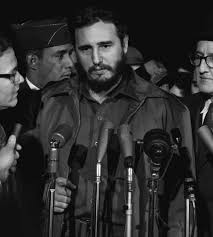
Fidel Castro
Che, in one sense, was lucky to die as he did–and when he did. He was only 39, but he was already running to fat and increasingly troubled by his lifelong asthma.
His Don Quixote-like venture into Bolivia proved a failure from first to last. Peasants didn’t flock to his banner; in fact, some of them betrayed his movements to the Bolivian army.
And 24 years after Guevara’s execution, Communism, his secular religion, died a violent death in its birthplace–the Soviet Union. It wasn’t killed off by invading capitalist forces, but thrown off by the Russian people themselves.
Nor would Che be pleased with the course of “revolutionary” events in Cuba. Until the death of the Soviet Union, the island remained dependent on what amounted to Soviet welfare.
Since then, Cubans have supported themselves by turning their island into a privileged playground for the rich–especially rich Americans.
On October 17, 1997–30 years after their deaths–Guevara and six of his fellow combatants were buried with full military honors in a specially built mausoleum in Santa Clara, Cuba. It was there in 1958 that he had commanded the decisive military victory of the Cuban Revolution.
Having described, in Part One, how Ernesto “Che” Guevara met his end, it’s time to examine how Osama bin Laden earned his 72 willing virgins.
After the September 11, 2001 attacks on the Pentagon and the World Trade Center, the United States quickly established that bin laden had plotted them.
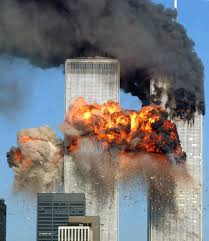
World Trade Center on 9/11/01
But bin Laden was then living in Afghanistan and protected by its Islamic rulers, the Taliban. President George W. Bush gave the Taliban an ultimatum: Surrender bin Laden–or else.
The Taliban refused.
On October 7, 2001, the United States’ new allies, the Northern Alliance, supported by American airstrikes, began a ground campaign against the Taliban.
Taliban resistance quickly vanished. Bin Laden retreated to Tora Bora, a series of bunkers in a mountainous region near the Pakistani border. With the mountains literally shaking under a rain of “bunker-busting” bombs, bin Laden decided to move on.
Suddenly, in December, 2001, he seemed to vanish from the earth.
Reports circulated that he was living in a cave in the no-man’s-land lying between Afghanistan and Pakistan.
Strangely, the Bush administration lost interest in locating him. Increasing numbers of American troops were quietly transferred from Afghanistan to staging areas near Iraq–for Bush’s long-planned overthrow of its dictator, Saddam Hussein.
Only when Barack Obama took office as President in 2009 was the CIA ordered to make finding bin Laden its top priority. Over the next two years, CIA agents sifted through a conflicting series of reports about bin Laden’s possible whereabouts.
Finally, the agency tracked a courier linked to bin Laden to a large, high-walled compound in Abbottabad, Pakistan.
On April 28, 2011, President Obama authorized a U.S. military raid on the compound, dubbed “Operation Neptune Spear.” On May 1, 2011, two teams of 12 U.S. Navy SEALS, working with the CIA, traveled in two helicopters to the compound.
The helicopters were specially outfitted to emit little noise. But an accident resulted when the tail rotor of one helicopter grazed the compound’s stone wall.
The damaged aircraft was “hard-landed” and then destroyed on-site to protect its technological secrets. Back-up forces were immediately available, and another helicopter was brought in to retrieve the commandos and relevant contents.
All combined, a total of 79 commandos and a dog (believed to have explosive-detection training) were involved in the raid.
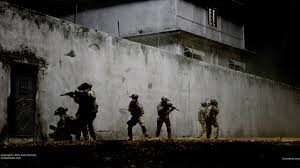
SEALS attacking bin Laden’s compound in the 2012 movie, “Zero Dark Thirty”
Abu Ahmed al-Kuwaiti, bin Laden’s courier, opened fire on the SEALS from the guesthouse with an AK-47 assault rifle. He and his wife were killed by return fire.
A male relative of the courier was shot and killed by the SEALS before he could reach a weapon lying nearby.
Bin Laden’s 22-year-old son rushed toward the SEALS on the staircase of the main house. SEAL gunfire instantly killed him.
Osama bin Laden, standing at the top of a staircase, retreated into his room–where SEALS followed and shot him in the head and chest.
9/11 ATTACKS, ABC NEWS, AFGHANISTAN, AL QAEDA, ALTERNET, AMERICABLOG, AP, BABY BOOMER RESISTANCE, BARACK OBAMA, BLOOMBERG, BOLIVIA, BUZZFEED, CBS NEWS, CIA, CNN, COMMUNISM, CROOKS AND LIARS, CUBA, CUBAN MISSILE CRISIS, DAILY KOZ, DRUDGE REPORT, ERNESTO "CHE" GUEVARA, FACEBOOK, FIDEL CASTRO, FIVETHIRTYEIGHT, GEORGE W. BUSH, GREEN BERETS, HARPER’S MAGAZINE, HUFFINGTON POST, IRAQ, ISLAM, JOHN F. KENNEDY, MEDIA MATTERS, MOTHER JONES, MOVEON, MSNBC, NAVY SEALS, NBC NEWS, NEWSWEEK, NIKITA KHRUSHCHEV, NPR, OSAMA BIN LADEN, PAKISTAN, PBS NEWSHOUR, POLITICO, POLITICUSUSA, RAW STORY, REUTERS, SALON, SEATTLE TIMES, SLATE, SOVIET UNION, TALIBAN, TALKING POINTS MEMO, THE ATLANTIC, THE CHICAGO SUN-TIMES, THE CHICAGO TRIBUNE, THE DAILY BEAST, THE DAILY BLOG, THE GUARDIAN, THE HILL, THE HUFFINGTON POST, THE LOS ANGELES TIMES, THE NATION, THE NEW REPUBLIC, THE NEW YORK TIMES, THE VILLAGE VOICE, THE WASHINGTON POST, THINKPROGRESS, TIME, TRUTHDIG, TRUTHOUT, TWITTER, TWO POLITICAL JUNKIES, U.S. NEWS & WORLD REPORT, UPI, USA TODAY, WONKETTE
In Bureaucracy, History, Military, Politics, Social commentary on February 12, 2016 at 12:12 am
They both had beards. They both saw military action. They both passionately hated the United States.
And they both died in a hail of bullets.
And immediately after their deaths, both seemed to disappear from the face of the earth.
Ernesto “Che” Guevara and Osama bin Laden.
Two men who inspired widespread admiration among their supporters–and fear among their enemies.
Guevara, an Argentinian doctor-turned-Cuban revolutionary, sought to destroy the United States’ power to fight Communism. Bin Laden sought to destroy its power to intervene in the Middle East.
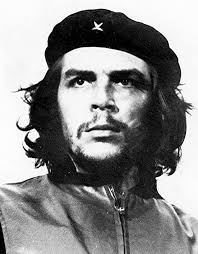
Ernesto “Che” Guevara
Guevara’s most optimistic hope was that Americans would eventually see the error of their capitalistic ways and convert to Communism. His last words were: “Tell Fidel [Castro] that he will soon see a triumphant revolution in America.”
But he was prepared to fight to the death–as indeed he did–to force revolutionary change upon the United States.
For Bin Laden, the cause was Islam, not Communism. His most optimistic hope was that Christian and Jewish Americans would eventually convert to Islam.
But if that didn’t happen, he, too, was prepared to attack Americans anywhere and in any way he could–as his private diary and documents have revealed.
Guevara died on October 9, 1967, at the hands of a CIA-directed operation run by the Bolivian army.
Bin Laden, creator of the Al-Qaeda (“The Base” terrorist network, met his end on May 1, 2011, during a raid by U.S. Navy SEALS on his compound in Pakistan.
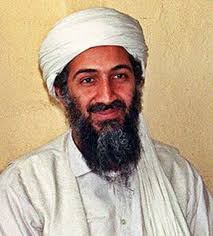
Osama bin Laden
One man–Guevara–has since attained secular sainthood in the eyes of millions of Communists and their sympathizers.
The other–bin Laden–has attained instant “martyr” status in the eyes of untold numbers of Islamic terrorists and their sympathizers.
Both men plotted constantly against the United States and eagerly sought its destruction.
In November, 1962, during an interview with the Communist newspaper, the London Daily Worker, Guevara raged against the Soviet Union’s recent withdrawal of nuclear missiles from Cuba.
Those “thirteen days” of the Cuban Missile Crisis that October had brought the world to the brink of nuclear destruction.
“If the missiles had remained, we would have used them against the very heart of the United States, including New York,” said Guevara.
“We must never establish peaceful coexistence. We must walk the path of victory even if it costs millions of atomic victims.”
Similarly, until the end of his life, bin Laden demanded more attacks like the one on September 11, 2001, that snuffed out the lives of 3,000 Americans.
This brought him into conflict with other Al-Qaeda members who wanted to launch assaults on more vulnerable targets outside the United States.
Guevara died as he had lived–violently.
In late October, 1966, he slipped out of Cuba. On November 3, he secretly arrived in La Paz, Bolivia, intent on re-staging the Cuban revolution among the Bolivian peasantry.

But the peasants showed no interest in his aims and in fact reported his movements to the Bolivian army.
The army, in turn, was being advised by United States Green Berets under the direction of the CIA.
On October 7, 1967, an informant tipped off the Bolivian Special Forces to the location of Guevara’s guerrilla camp in the Yuro ravine.
On October 8, they encircled the area with 1,800 soldiers. In the shootout that followed, Guevara was wounded and taken prisoner while leading a detachment.
His rifle broken by a lucky shot, a twice-wounded Guevara shouted: “Do not shoot! I am Che Guevara and worth more to you alive than dead.”
Quickly informed of Guevara’s capture, the Bolivian government debated his fate: Should he be immediately executed or placed on trial?
On the morning of October 9, Bolivian President Rene Barrientos ordered that Guevara be executed. Barrientos feared that placing him on trial would create an international media circus and/or render Bolivia vulnerable to efforts to free him.
The Bolivian government planned to declare that Guevara had been killed in action during a clash with the nation’s armed forces. Special instructions were thus issued.
These came from Felix Rodrieguez, a CIA agent acting as advisor to the Bolivians.
The executioner would be Mario Teran, a Bolivian army sergeant who had lost three of his friends in an earlier firefight with Guevara’s band of guerrillas.
Rodriguez ordered Teran to aim carefully to make it appear that Guevara had been killed in action.
To his surprise, Rodriguez found himself highly impressed with Guevara’s courage. When informed of his imminent execution, Guevara blanched, then quickly got control of himself.

Felix Rodriguez, left, Che, center
“It is better like this,” he said. “I should never have been captured alive.”
Rodriguez asked if he had any messages for his family. Guevara replied: “Tell Fidel [Castro, the president/dictator of Cuba] that he will soon see a triumphant revolution in America.
“And tell my wife to remarry and try to be happy.”
When Sergeant Teran entered the hut, Guevara told his executioner: “I know you’ve come to kill me. Shoot, coward! You are only going to kill a man!”
Teran hesitated, then opened fire with his semiautomatic rifle, hitting Guevara in his arms and legs.
Guevara writhed on the ground, apparently biting one of his wrists to avoid crying out. Teran then fired several more times, finally killing him with a shot in the chest.
ABC NEWS, CBS NEWS, CNN, DEAN MARTIN, DRUG WAR, FACEBOOK, FBI, JOAQUIN "EL CHAPO" GUZMAN, JOHN F. KENNEDY, JOHN GOTTI, JOSEPH P. KENNEDY, MAFIA, MICKEY COHEN, MSNBC, NBC NEWS, ROBERT F. KENNEDY, ROLLING STONE, SAM GIANCANA, SAMMY "THE BULL" GRAVANO, SEAN PENN, THE CHICAGO SUN-TIMES, THE CHICAGO TRIBUNE, THE NEW YORK TIMES, THE WASHINGTON POST, TWITTER, WITNESS SECURITY PROGRAM
In Bureaucracy, Entertainment, History, Law Enforcement, Social commentary, Uncategorized on January 21, 2016 at 12:01 am
Sean Penn is not the first celebrity to “get close to” a gangster.
Singer Frank Sinatra set the standard as far back as the 1940s when he was often seen in the company of notorious Mafiosi such as Charles “Lucky” Luciano and Willie Moretti.
(It was Moretti who is rumored to have freed Sinatra from his financially-limiting contract with bandleader Tommy Dorsey in the early 1940s.
His alleged method of persuasion: Jamming a pistol down Dorsey’s throat and threatening to kill him. Dorsey eventually sold the contract to Sinatra for one dollar.
But the mobster whom Sinatra was most-often linked with–by gossip and FBI reports–was Sam “Mooney” Giancana.
Giancana started out as a “wheelman” and enforcer for the teenage “42 Gang,” then joined the Chicago mob in the late 1930s. By 1957 he had been appointed its boss.
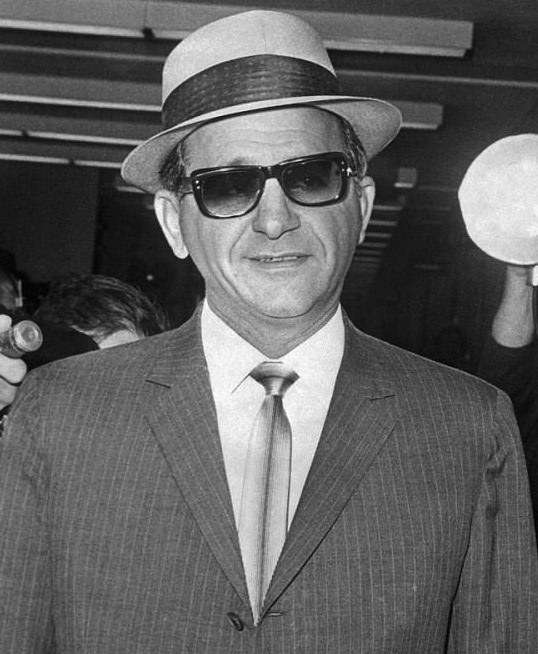
Sam Giancana
Sinatra often partied with Giancana, both in nightclubs and at his own residence in Palm Springs, California.
In December, 1959, financier Joseph P. Kennedy summoned Sinatra to the family compound in Hyannis Port, Massachusetts. His son, Senator John F. Kennedy, was planning to run for President in 1960. And the elder Kennedy wanted Sinatra’s help.
Sinatra and the Senator were by now well-acquainted. They shared a taste for gossip, nightclubs and beautiful women.
According to Sinatra’s daughter, Tina, the Kennedy patriarch said: “I think that you can help [the campaign] in [the] West Virginia [primary] and Illinois [in the general election] with our friends.
“You understand, Frank, I can’t go. They’re my friends, too, but I can’t approach them. But you can.”

Frank Sinatra
By “our friends,” Kennedy meant the Mafia. Joseph P. Kennedy had done business with the mob as a bootlegger during Prohibition.
Now he wanted the Mafia to pressure local union members into voting for JFK–and making contributions to the Kennedy Presidential campaign.
Sinatra went to his friend, Sam Giancana, and asked for the mob’s support. And Giancana promised to deliver it.
In return, Giancana–and other mobsters–expected to win an ally in the White House. He was later overheard on an FBI wiretap saying he had been promised by Sinatra that “if I even got a traffic ticket, none of those fuckers [the FBI] would know me.”
Since 1959, Giancana and other “Top Hoodlum” mobsters had been under increasingly heavy FBI surveillance. Giancana wanted it stopped.
And Sinatra had assured him that, under a Kennedy Presidency, it would stop.
On Election Night, 1960, John F. Kennedy carried Illinois–and won the White House by a mere 120,000 votes nationwide.
Then, to the horror of the Mafia, JFK installed his brother, Robert Francis Kennedy, as Attorney General. From 1957 to 1959, RFK had pursued gangsters as chief counsel for the Senate Rackets Committee.
Now he declared all-out war on organized crime. Convictions against organized crime figures rose 800% during his four years in office.
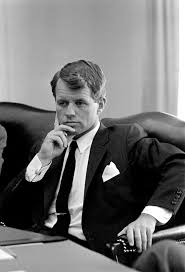
Robert F. Kennedy
Sinatra tried to deliver for Giancana. He sent Peter Lawford–his Rat Pack pal and brother-in-law to the President–to talk with Robert Kennedy about laying off on the Mafia don.
Kennedy told Lawford to mind his own business.
Giancana came under even greater pressure. FBI agents put a 24-hour “lockstep” surveillance on him, following him even into church and restrooms.
“I was on the road with this broad,” Giancana raged to his murderous associate, Johnny Formosa. “There must have been 20 guys [FBI agents]. They were next door, upstairs, downstairs, surrounded all the way around!
“Get in a car, somebody picks you up I lose that tail–boom!–I get picked up someplace else! Four or five cars, back and forth, back and forth.”
In another exchange with Formosa, Giancana’s anger at Sinatra boiled over:
“The last time I talked to [Sinatra] was at the hotel in Florida. And he said, ‘Don’t worry about it. If I can’t talk to the old man [Joseph P. Kennedy] I’m going to talk to the man [President Kennedy].’
“One minute he says he’s talked to Robert, and the next minute he says he hasn’t talked to him. So he never did talk to him.”
Formosa suggested a remedy: “Let’s show ’em. Let’s show those fuckin’ Hollywood fruitcakes that they can’t get away with it as if nothin’s happened.
“Let’s hit Sinatra. Or I could whack out a couple of those other guys, Lawford and that [Dean] Martin. And I could take the nigger [Sammy Davis, Jr.] and put his other eye out.”
Giancana refused to issue the contract. But he seriously considered doing so, as he confessed to a Chicago associate named Tommy DiBella:
“One night I’m fucking Phyllis [McGuire, a member of the famous McGuire sisters trio], playing Sinatra songs in the background, and the whole time I’m thinking to myself, ‘Christ, how can I silence that voice?’
“It’s the most beautiful voice in the world. Frank’s lucky he’s got it. It saved his life.”
Sinatra’s Rat Pack “pally,” Dean Martin, summed it up: “Only Frank could get away with the shit he’s got away with. Only Frank. Anybody else would’ve been dead.”
Sinatra survived the murderous anger of a mob boss. It remains to be seen if Sean Penn can do the same.
ABC NEWS, ALTERNET, AMERICABLOG, AP, BABY BOOMER RESISTANCE, BBC, BLOOMBERG NEWS, BUZZFEED, CBS NEWS, CNN, CROOKS AND LIARS, DAILY KOZ, DRUDGE REPORT, DRUG WAR, FACEBOOK, FBI, FIVETHIRTYEIGHT, FRANK SINATRA, HARPER’S MAGAZINE, HUFFINGTON POST, JOAQUIN "EL CHAPO" GUZMAN, JOHN F. KENNEDY, JOHN GOTTI, JOSEPH P. KENNEDY, MAFIA, MEDIA MATTERS, MICKEY COHEN, MOTHER JONES, MOVEON, MSNBC, NBC NEWS, NEW REPUBLIC, NEWSDAY, NEWSWEEK, NPR, PBS NEWSHOUR, POLITICO, POLITICUSUSA, RAW STORY, REUTERS, ROBERT F. KENNEDY, ROLLING STONE, SALON, SAM GIANCANA, SAMMY "THE BULL" GRAVANO, SEAN PENN, SEATTLE TIMES, SLATE, TALKING POINTS MEMO, THE ATLANTIC, THE CHICAGO SUN-TIMES, THE CHICAGO TRIBUNE, THE DAILY BEAST, THE DAILY BLOG, THE GUARDIAN, THE HILL, THE HUFFINGTON POST, THE LOS ANGELES TIMES, THE NATION, THE NEW REPUBLIC, THE NEW YORK TIMES, THE NEW YORKER, THE VILLAGE VOICE, THE WASHINGTON POST, THINKPROGRESS, TIME, TRUTHDIG, TRUTHOUT, TWITTER, TWO POLITICAL JUNKIES, U.S. NEWS & WORLD REPORT, UPI, USA TODAY, WITNESS SECURITY PROGRAM, WONKETTE
In Bureaucracy, Entertainment, History, Law Enforcement on January 20, 2016 at 12:02 am
Actor Sean Penn believes the Mexican Government wants to put him at risk by convincing Joaquin “El Chapo” (“Shorty”) Guzman that Penn played a role—deliberately or negligently—in his capture.
“We know the Mexican government, they clearly were humiliated by the notion that someone found him before they did,” Penn told interviewer Charlie Rose.
“Nobody found him before they did. We are not smarter than the DEA, or Mexican Intelligence. We had a contact upon which we were able to facilitate an invitation.”
By “we” Penn meant himself and Mexican actress Kate del Castillo, who had actually arranged the meeting.

Actress Kate del Castillo
“They wanted to encourage the cartel to put you in their crosshairs?” Rose asked.
“Yes,” Penn answered.
This is entirely possible. Guzman’s escape from a “maximum security” prison in July, 2015, had proved internationally embarrassing for the Mexican Government
Even more embarrassing: He escaped through a mile-long tunnel that literally led to his cell. Almost certainly this happened with the collusion of some prison guards.
Penn–and del Castillo–could face dangers from at least three groups.
Danger #1: El Chapo
Already there is evidence that “El Chapo” regrets having given an interview to Penn and del Castillo in the Mexican jungle on October 2, 2015.
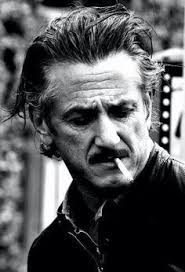
Sean Penn
Published in Rolling Stone on January 9, the article contained such Guzman boasts as:
“I supply more heroin, methamphetamine, cocaine and marijuana than anyone else in the world. I have a fleet of submarines, airplanes, trucks and boats.”
Juan Pablo Badillo, one of Guzman’s attorneys, has since claimed that the article contains falsehoods:
“It’s a lie, absurd speculation from Mr. Penn. Mr. Penn should be called to testify to respond about the stupidities he has said.
“He [Guzman] could not have made these claims. Mr. Guzman is a very serious man, very intelligent.”
This could spell danger for Penn and del Castillo. Guzman is responsible for the deaths of thousands of rivals, journalists and police.

Among the witnesses to the drug cartels’ savagery is Michael Levine, a 25-year veteran of the Drug Enforcement Administration and the author of Deep Cover: Mexican Government Drug Corruption From the Inside.
“Depending on what the cartels and/or the many corrupt Mexican cops and Mexican government officials believe El Chapo divulged during the interview, Penn, and whomever else was present, may be in more physical danger than he could ever imagine,” said Levine.
An anonymous law enforcement official said that not only could Penn be in danger, but so could his entire family.
“It won’t happen now. They [the cartels] wait. Him or people close to him are in danger. They don’t single out the one person. They go for the person’s family.
“He poked his head into a nest of vipers with an amazing global reach. He was a fool. As public as Penn is, he will be a sitting duck.”
Danger #2: Guzman’s Competitors in the Drug Trade
“The problem with dealing with someone like Guzman on this personal basis, where one is perceived as a ‘friend’ or an aide or a business partner of sorts to Chapo, is that you have to be prepared to inherit all his enemies, and there are many,” warned Michael Levine.
“These are some very kill-crazy people. The notoriety gained by killing someone like Penn or even del Castillo will actually turn these bastards on.
“It’s a step into the dark world of the kill crazies. Believe me it is there, and unwittingly these two may have stepped into a world where there is an actual competition to kill them,” said Levine, who has dealt face-to-face with Latin American drug lords.
Danger #3: Wannabe Cartel Members
Countless men–in Mexico and the United States–would love to “do El Chapo a favor” by gunning down Penn and/or del Castillo.
This could happen even if Guzman harbors no ill will toward either. It would be enough for someone to simply believe that he did.
An additional motive: The fame–or infamy–that the assassin of a “big celebrity” like Penn would receive. John Lennon died at the hands of such a fame-obsessed, psychotic gunman.
This means that literally anyone could be a potential assassin–making it that much harder to defend against.
When clients enter the Justice Department’s Witness Security Program, they are quickly asked: “Who do you think poses the biggest threat to you?”
Deputy U.S. marshals, who operate the program, assume that a witness is the best judge of who poses the greatest danger to him.

Witness Security Program protection detail
This works well when a witness is unknown and testifying against someone who is equally unknown to the public.
But when a witness is notorious–such as Sammy “The Bull” Gravano–and the defendant is equally infamous–such as John Gotti–all bets are off.
Of course, Federally-protected witnesses have two advantages going for them that Penn and del Castillo do not:
First, they are protected by the U.S. Marshals Service, which has an excellent track record in protecting its charges; and
Second, they are expected to assume a low profile, which serves as their best protection.
Sean Penn and Kate del Castillo aren’t Federally-protected witnesses. And they’re unlikely to assume a low profile by going into hiding.
ABC NEWS, ALTERNET, AMERICABLOG, AP, BABY BOOMER RESISTANCE, BBC, BLOOMBERG NEWS, BUZZFEED, CBS NEWS, CNN, CROOKS AND LIARS, DAILY KOZ, DRUDGE REPORT, DRUG WAR, FACEBOOK, FBI, FIVETHIRTYEIGHT, FRANK SINATRA, HARPER’S MAGAZINE, HUFFINGTON POST, JOAQUIN "EL CHAPO" GUZMAN, JOHN F. KENNEDY, JOHN GOTTI, JOSEPH P. KENNEDY, MAFIA, MEDIA MATTERS, MICKEY COHEN, MOTHER JONES, MOVEON, MSNBC, NBC NEWS, NEW REPUBLIC, NEWSDAY, NEWSWEEK, NPR, PBS NEWSHOUR, POLITICO, POLITICUSUSA, RAW STORY, REUTERS, ROBERT F. KENNEDY, ROLLING STONE, SALON, SAM GIANCANA, SAMMY "THE BULL" GRAVANO, SEAN PENN, SEATTLE TIMES, SLATE, TALKING POINTS MEMO, THE ATLANTIC, THE CHICAGO SUN-TIMES, THE CHICAGO TRIBUNE, THE DAILY BEAST, THE DAILY BLOG, THE GUARDIAN, THE HILL, THE HUFFINGTON POST, THE LOS ANGELES TIMES, THE NATION, THE NEW REPUBLIC, THE NEW YORK TIMES, THE NEW YORKER, THE VILLAGE VOICE, THE WASHINGTON POST, THINKPROGRESS, TIME, TRUTHDIG, TRUTHOUT, TWITTER, TWO POLITICAL JUNKIES, U.S. NEWS & WORLD REPORT, UPI, USA TODAY, WITNESS SECURITY PROGRAM, WONKETTE
In Bureaucracy, Entertainment, History, Law Enforcement on January 19, 2016 at 1:25 am
Actor Sean Penn is used to being a tough guy–onscreen.
In 2006, he played real-life mobster Mickey Cohen (1913 – 1976) in Gangster Squad. And in 2013, he played Willie Stark, a corrupt, Huey Long-type Southern governor in a remake of All the King’s Men.
As Cohen, Penn put out contracts on his enemies and even went mano-o-mano in a long-running (and fictional) fistfight with an LAPD detective.
And as Stark, he clawed his way to power and bullied both his enemies and his supporters.
Perhaps Penn should have paid more attention to the way those movies ended.

Sean Penn
Mickey Cohen goes to prison, where he is brutally waylaid by other inmates.
And Willie Stark, at the height of his power, is shot by a longtime enemy.
Had he thought about it, he might have decided it could be a mistake to meet with Joaquin “El Chapo” (“Shorty”) Guzman, the notorious Mexican drug lord.
On October 2, 2015, Penn met with Guzman in an undisclosed location in the Mexican jungle. He was there to interview him on behalf of Rolling Stone magazine.
Guzman wanted a movie made about him. So he had reached out to Mexican actress Kate del Castillo, asking her to meet with him to discuss such a project. She, in turn, referred him to Penn, whom Guzman said could come along for the meeting.
Penn had his own agenda: To write an article for Rolling Stone whose “purpose [would] contribute to this conversation on the war on drugs.”
Three months later, on January 8, 2016, Mexican Marines and Federal Police launched an early-morning raid on a house in Los Mochis, in northern Sinaloa, where Guzman’s drug cartel operated.
The Marines expected to find Guzman there, and they did–ending his almost six-month flight after escaping from prison in July.
One day after Guzman’s capture, Rolling Stone published Penn’s 10,000-word article.
Penn had not been allowed to bring a tape recorder or even take notes with pen and paper. So he had been forced to memorize as much of Guzman’s tale as he could.
Penn seemed to be enraptured by Guzman:
“There is no doubt this is the real deal. He’s wearing a casual patterned silk shirt, pressed black pants, and he appears remarkably well-groomed and healthy for a man on the run.
“He opens [actress Kate del Castillo’s] [car} doorand greets her like a daughter returning from college.
“It seems important to him to express the warm affection in person that, until now, he’d only had occasion to communicate from afar.”
Even so, Penn quoted Guzman as bragging: “I supply more heroin, methamphetamine, cocaine and marijuana than anybody else in the world. I have a fleet of submarines, airplanes, trucks and boats.”
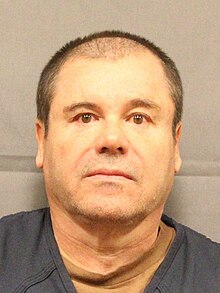
Joaquin “El Chapo” Guzman
After the interview’s publication, Penn came under fire for having allowed Guzman to approve the article. He claimed that, despite this, Guzman had not asked for any changes.
He also drew sharp criticism for having used his status as a movie star to play the part of a reporter.
But worse was to come.
Shortly after the capture of “El Chapo,” Mexico’s Attorney General Arely Gomez “credited” Penn with having played a vital role in the capture of the drug kingpin.
The meeting between Penn, Castillo and Guzman “was an essential element, because we were following [Guzman’s] lawyer, and the lawyer took us to these people and to this meeting.”
Suddenly, American experts on Mexican organized crime cartels began seeing Sean Penn in a new light–that of a movie star with a big target on his chest and back.
Suppose Guzman began suspecting that Penn had deliberately led Mexican authorities to him? Or that he had done so even accidentally, through negligence in how he had traveled?
“These cartels are very violent, they do not forgive any transgression and they will respond in a most violent manner,” said Mike Vigil, a former chief of international operations with the U.S. Drug Enforcement Administration.
“These are people who have been dismembered, who have decapitated individuals. So killing Sean Penn and del Castillo means absolutely nothing to them.”
Vigil believed it was careless for the Mexican Government to publicize any ties between the Penn meeting and Guzman’s arrest:
“If Chapo Guzman perceives that they cooperated with authorities in his capture, [the cartel] will go after them.”
He argued that the risk is likely likely for del Castillo because she was the one in contact with Guzman.
She was the one whom Guzman’s associates supplied with a Blackberry–the phone they believed most secure. And it was her and Guzman’s flirtatious exchanges that led to the meeting in the jungle with Sean Pean.
“Apart from that, [del Castillo] is originally from Mexico, she has all of her family in Mexico. One of the traditional violent methods [the cartels] use is if they can’t get to the target, they’ll go after their family members.
“If I were Kate del Castillo, I would run like the wind.”
9/11, 9/11 ATTACKS, ABC NEWS, ABRAHAM LINCOLN, ASSASSINATION, BARACK OBAMA, BUREAUCRACY, CBS NEWS, CNN, FACEBOOK, GEORGE W. BUSH, HOUSE OVERSIGHT AND GOVERNMENT REFORM COMMITTEE, IRAQ WAR, ISIS, JOHN F. KENNEDY, MSNBC, NBC NEWS, PENTAGON, PRESIDENTIAL PROTECTION, REP. JASON CHAFFETZ, REP. PETER KING, RICHARD NIXON, ROBERT F. KENNEDY, RONALD KESSLER, Secret Service, SECURITY, TERRORISM, THE CHICAGO SUN-TIMES, THE CHICAGO TRIBUNE, THE LOS ANGELES TIMES, THE NEW YORK TIMES, THE WASHINGTON POST, TWITTER, WORLD TRADE CENTER
In Bureaucracy, History, Law Enforcement, Politics on December 29, 2015 at 12:19 am
On the night of September 19, 2014, an Iraq war veteran, Omar Gonzales, jumped the White House fence, ran more than 70 yards across the north lawn, and sprinted just past the north portico White House doors.
Only then was he apprehended by Secret Service agents.
Gonzalez’ short-lived trespass onto White House grounds was one of 143 security breaches–or attempted breaches–at facilities protected by the United States Secret Service (USSS) during during the last 10 years.
Then, less than 24 hours after Gonzalez’s arrest, a second man was apprehended after he drove up to a White House gate and refused to leave. This triggered a search of his vehicle by bomb technicians in full gear. Other agents shut down nearby streets. No bombs were found.
Asked for Obama’s reaction, White House spokesman Frank Benenati gave this boilerplate reply: “The president has full confidence in the Secret Service and is grateful to the men and women who day in and day out protect himself, his family and the White House.”
Yet not all is well in Presidential security.
A newly-released report by the House Oversight and Government Reform Committee found the Secret Service to be “in crisis.”
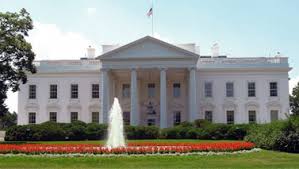
The White House
“Morale is down, attrition is up, misconduct continues and security breaches persist,” Rep. Jason Chaffetz, (R-Utah) publicly stated.
“Strong leadership from the top is required to fix the systematic mismanagement within the agency, and to restore it to its former prestige.”
But the blunt truth is that many of the problems now plaguing the USSS were on full display as early as 2009.
That was when well-known investigative reporter Ronald Kessler published his then-latest book, In the President’s Secret Service.
Kessler had previously pubilshed books outlining the inner workings of the White House, the CIA and the FBI.

Kessler praised the courage and integrity of Secret Service agents as a whole. But he warned that the agency was risking the safety of many of its protectees, including President Obama.
He was particularly critical of SS management for such practices as:
- Shutting off weapon-scanning magnetometers at rallies for Presidential candidates–and even for Presidents George W. Bush and Obama.
- During a speech Bush gave at Tbilisi, Georgia in 2005, an assailant threw a live hand grenade–which failed to explode–at him.
- Despite 9/11, Secret Service agents are still being trained to expect an attempt by a lone gunman—rather than a professional squad of terrorist assassins.
- The Service’s Counter Assault Teams (CATs) have generally been cut back from five or six agents to two, rendering them useless if a real attack occurred.
- Salaries paid to USSS agents have not kept pace with reality. Veteran USSS men and women are now being offered up to four times their salary for moving to the private sector, and many are leaving the agency for that reason.
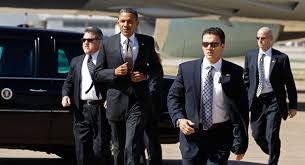
Secret Service agents protecting President Barack Obama
- While Congress has greatly expanded the duties of this agency, Secret Service management has not asked for equivalent increases in funding and agents.
- Many agents are leaving out of frustration that it takes “juice” or connections with top management to advance one’s career.
- USSS agents are being trained with weapons that are outdated (such as the MP5, developed in the 1960s) compared to those used by other law enforcement agencies and the potential assassins they face (such as the M4–with greater range and armor-piercing capabilities).
- The Service refuses to ask for help from other agencies to meet its manpower needs. Thus, a visiting head of state at the U.N. General Assembly will usually be assigned only three agents as protection.
- The agency tells agents to grade themselves on their physical training test forms.
- Agents are supposed to be evaluated on their marksmanship skills every three months. But some agents have gone more than a year without being tested.
- Some agents are so overweight they can’t meet the rigorous demands of the job. As a result, they pose a danger to the people they’re supposed to be guarding.
- The Secret Service inflates its own arrest statistics by claiming credit for arrests made by local police.
- Congressional members who visit the agency’s Rowley Training Center in Laurel, Maryland, are treated to rehearsed scenarios of how the agency would deal with attacks. If agents were allowed to perform these exercises without rehearsals, Congressional members would see they make mistakes like anyone else.
Kessler closes his book with the warning: “Without….changes, an assassination of Barack Obama or a future president is likely.
“If that happens, a new Warren Commission will be appointed to study the tragedy. It will find that the Secret Service was shockingly derelict in its duty to the American people and to its own elite corps of brave and dedicated agents.”
And the effects will be not only momentary but long-term. As Kessler writes:
“By definition, an assassination threatens democracy.
“If Abraham Lincoln had not been assassinated, Andrew Johnson, his successor, would not have been able to undermine Lincoln’s efforts to reunite the nation and give more rights to blacks during the Reconstruction period.
“If John F. Kennedy had not been assassinated, Lyndon Johnson likely never would have become President. If Robert F. Kennedy had not been killed and had won the presidency, Richard Nixon might never have been elected.”


_underway_in_the_Pacific_Ocean_on_31_May_2015.JPG&imgrefurl=https%3A%2F%2Fen.wikipedia.org%2Fwiki%2FUSS_Carl_Vinson&docid=_CVahKI_7obrGM&tbnid=5YNeIda1dVcZQM%3A&w=3451&h=2301&ved=0ahUKEwid67qv7PvKAhVL7WMKHUoVBEUQxiAIAg&iact=c&ictx=1)


.jpg)


 Bureaucracybuster's Blog
ABC NEWS, ALLEN DULLES, BRIDGE OF SPIES, CBS NEWS, CNN, COLD WAR, DWIGHT D. EISENHOWER, EAST GERMANY, FACEBOOK, FRANCIS GARY POWERS, JAMES DONOVAN, JOHN F. KENNEDY, JOSEPH MCCARTHY, KGB, NBC NEWS, RED SCARE, RUDOLPH ABEL, SOVIET UNION, STASI, STEVEN SPIELBERG, THE CHICAGO SUN-TIMES, THE CHICAGO TRIBUNE, THE LOS ANGELES TIMES, THE NEW YORK TIMES, THE WALL STREET JOURNAL, THE WASHINGTON POST, TOM HANKS, TWITTER, U-2
“BRIDGE OF SPIES” TELLS UGLY TRUTHS ABOUT GOVERNMENT: PART TWO (END)
In Bureaucracy, Entertainment, History, Law, Law Enforcement, Military, Politics, Social commentary on March 21, 2016 at 12:01 am“Bridge of Spies” vividly recaptures a now-forgotten time in American history.
It was the time of “the Cold War.” A time when:
Bert the Turtle teaches schoolchildren to “Duck and Cover”
Yet even in this poisonous atmosphere of fear and denunciation, some men stood out as heroes–simply by holding fast to their consciences.
One of these was a New York insurance attorney named James B. Donovan (played by Tom Hanks). Asked by the Justice Department to defend arrested Soviet spy Rudolph Abel (Mark Rylance) Donovan did what no one expected.
He gave Abel a truly vigorous defense, arguing that the evidence used to convict him was the legally-tainted product of an invalid search warrant.
Upon Abel’s conviction and sentencing to 45 years’ imprisonment, Donovan again shocked the political and legal communities by appealing the case to the Supreme Court.
Donovan argued that Constitutional protections should apply to everyone–including non-Americans–tried in American courts. To do less made a mockery of the very freedoms we claimed to champion.
He lost by a vote of 5-4. But the arguments he made would resurface 50 years later when al-Qaeda suspects were hauled into American courts.
James B. Donovan
In 1961, Donovan was again called upon to render service by a Federal agency–this time the CIA. It wanted his help in negotiating the release of its spy, Francis Gary Powers, shot down over the Soviet Union in 1960 while flying a high-altitude U-2 spy plane.
Throughout “Bridge of Spies,” audiences learn some unsettling truths about how the American government–and governments generally– actually operate.
The first three of these were outlined in Part one of this series:
Truth #1: Appearance counts for more than reality.
Truth #2: Individual conscience can wreck the best-laid plans of government.
Truth #3: High-ranking government officials will ask citizens to take risks they themselves refuse to take.
Now for the remaining truths revealed in this movie.
Truth #4: Appeals to fear often prevail when appeals to humanity are ignored.
After crossing into East Germany, Donovan enters into negotiations with Wolfgang Vogel, a lawyer representing the East German government.
Vogel offers to exchange Frederic Pryor, an American economics graduate student seized by the East German secret police, for Abel. Donovan replies this is a deal-breaker; the United States (which is never mentioned during the negotiations) wants Powers, not Pryor.
Nevertheless, Donovan is equally concerned for Pryor, and adds him to the list of hostages to be released in return for Abel.
Then a new complication arises: The East German government that holds Pryor threatens to pull out. claiming to be insulted because Donovan did not inform them that the USSR was a party to the negotiation.
His reasoned, legal arguments having failed, Donovan resorts to a threat. He conveys a warning to the president of East Germany:
Abel has not yet revealed any Soviet secrets. But if this deal fails, he may well do so to earn favors from the United States government. And, in that case, the Soviets will blame you–Erich Honecker, the president of East Germany–for the resulting damage.
Where arguments based on humanity have failed, this one–based on fear–works. A prisoner-exchange is arranged.
Truth #5: Personal loyalty can supersede bureaucratic inventions.
On February 10, 1962, Donovan, Abel and several CIA agents arrive at the Glienicke Bridge, which connects East and West Germany. The Soviets have Powers, but not Pryor–who is to be released at Checkpoint Charlie, a crossing point between East and West Berlin.
Glienicke Bridge, the “Bridge of Spies”
The CIA agent in charge of the American delegation tells Abel he can cross into East Germany, even though Pryor has not been released.
But Abel has learned that Donovan has negotiated the release of not only Powers but Pryor. Out of loyalty to the man who has vigorously defended him, he waits on his side of the bridge until word arrives that Pryor has been released.
Then Abel crosses into East Germany while Powers crosses into the Western sector.
Donovan returns home. Before flying off to West Germany, he had told his wife he was going on a fishing trip in Scotland.
His wife and children learn the truth about the risks he ran and the success he attained only when a television newscast breaks the news:
Francis Gary Powers has been returned to the United States. And the man responsible is James Donovan, once the most reviled man in America for having defended a notorious Soviet spy.
Share this: