Posts Tagged ‘JOHN F. KENNEDY’
ABC NEWS, ALTERNET, AMERICABLOG, AMERICAN CAESARS: THE LIVES OF THE PRESIDENTS FROM FRANKLIN D. ROOSEVELT TO GEORGE W. BUSH (BOOK), AP, AUGUSTUS CAESAR, BABY BOOMER RESISTANCE, BBC, BENGHAZI, BILL CLINTON, BLOOMBERG NEWS, BUREAUCRACY, BUZZFEED, CALIGULA, CBS NEWS, CLAUDIUS, CNN, CONDOLEEZA RICE, CROOKS AND LIARS, DAILY KOZ, DICK CHENEY, DOMITIAN, DONALD RUMSFELD, DONALD TRUMP, DWIGHT D. EISENHOWER, FACEBOOK, FBI, FIVETHIRTYEIGHT, FRANKLIN D. ROOSEVELT, GAIUS SUETONIUS TRANQUILLUS, GALBA, GEORGE H.W. BUSH, GEORGE W. BUSH, HARPER’S MAGAZINE, HARRY S. TRUMAN, HUFFINGTON POST, JEB BUSH, JOHN F. KENNEDY, JULIUS CAESAR, LIBYA, LYNDON B. JOHNSON, MEDIA MATTERS, MOTHER JONES, MOVEON, MSNBC, NBC NEWS, NERO, NEW REPUBLIC, NEWSDAY, NEWSWEEK, NIGEL HAMILTON, NPR, PAUL WOLFOWITZ, PBS NEWSHOUR, POLITICO, POLITICUSUSA, RAW STORY, REPUBLICAN PARTY, REPUBLICANS, REUTERS, SALON, SEATTLE TIMES, SLATE, TALKING POINTS MEMO, TERRORISM, THE ATLANTIC, THE CHICAGO SUN-TIMES, THE CHICAGO TRIBUNE, THE DAILY BEAST, THE DAILY BLOG, THE GUARDIAN, THE HILL, THE HUFFINGTON POST, THE LOS ANGELES TIMES, THE NATION, THE NEW REPUBLIC, THE NEW YORK TIMES, THE NEW YORKER, THE TWELVE CAESARS, THE VILLAGE VOICE, THE WASHINGTON POST, THINKPROGRESS, TIBERIUS, TIME, TITUS, TRUTHDIG, TRUTHOUT, TWITTER, TWO POLITICAL JUNKIES, U.S. NEWS & WORLD REPORT, UPI, USA TODAY, VESPASIAN, WONKETTE, WORLD TRADE CENTER
In Bureaucracy, History, Military, Politics, Social commentary on September 13, 2021 at 12:07 am
On October 16, 2015, then-Republican Presidential candidate Donald Trump told a brutal truth to take down his opponent, Jeb Bush, former governor of Florida.
Interviewed on Bloomberg TV, Trump said what—to Republicans—had been the unsayable about former President George W. Bush: “I mean, say what you want, the World Trade Center came down during his time.”
“Hold on,” said correspondent Stephanie Ruhle, “you can’t blame George Bush for that.”
“He was President, okay? Blame him or don’t blame him, but he was President,” Trump said. “The World Trade Center came down during his reign.”
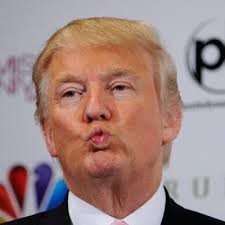
Donald Trump
Immediately after Trump’s remarks, Jeb Bush rushed to his brother’s defense on Twitter: “How pathetic for @realdonaldtrump to criticize the president for 9/11. We were attacked & my brother kept us safe.”
Of course, “my brother” didn’t keep safe those 3,000 Americans who died on 9/11.
Nor did Jeb mention that, during his first eight months in office before September 11, “my brother” was on vacation 42% of the time.
But holding Bush accountable for the September 11, 2001 terror attacks on the Pentagon and World Trade Center is taboo for Right-wing Republicans.
Conversely, Republicans spent four years blaming President Barack Obama for the deaths of four Americans killed in an American consulate in Benghazi, Libya, in 2012.
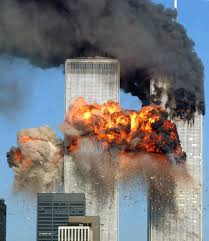
The World Trade Center on September 11, 2001
Fortunately, British historian Nigel Hamilton has brutally laid bare the facts of this needless tragedy.
Hamilton is the author of several acclaimed political biographies, including JFK: Reckless Youth and Bill Clinton: Mastering the Presidency.
His book: American Caesars: The Lives of the Presidents from Franklin D. Roosevelt to George W. Bush, appeared in 2010.
It was inspired by a classic work of ancient biography: The Twelve Caesars, by Gaius Suetonius Tranquillus—known as Suetonius.
Suetonius, a Roman citizen and historian, had chronicled the lives of the first 12 Caesars of Imperial Rome: Julius Caesar, Augustus, Tiberius, Caligula, Claudius, Nero, Galba, Otho, Vitellius, Vespasian, Titus and Domitian.
Hamilton wanted to examine post-World War II United States history as Suetonius had examined that of ancient Rome: Through the lives of the 12 “emperors” who had held the power of life and death over their fellow citizens—and those of other nations.

For Hamilton, the “greatest of American emperors, the Caesar Augustus of his time,” was Franklin D. Roosevelt, who led his country through the Great Depression and World War II.
His “”great successors” were Harry S. Truman, Dwight D. Eisenhower and John F. Kennedy—who, in turn, contained the Soviet Union abroad and presided over sustained economic prosperity at home.
By contrast, “arguably the worst of all the American Caesars” was “George W. Bush, and his deputy, Dick Cheney, who willfully and recklessly destroyed so much of the moral basis of American leadership in the modern world.”
Among the most lethal of Bush’s offenses: The appointing of officials who refused to take seriously the threat posed by Al-Qaeda.
These included:
- Paul Wolfowitz, the deputy Secretary of Defense: “I don’t understand why we are beginning by talking about this one man, bin Laden.”
- National Security Adviser Condoleeza Rice: Initially refused to hold a cabinet-level meeting on the subject. Then she insisted the matter be handled only by a more junior Deputy Principals meeting in April, 2001.
- Vice President Dick Cheney: Focused his attention on fomenting a war against Iraq.
- Secretary of Defense Donald Rumsfeld: Repeatedly ignored American Intelligence warnings that Al-Qaeda was planning a major attack on the American mainland.
The only major administration official who did take Al-Qaeda seriously was Richard Clarke, the chief counter-terrorism adviser on the National Security Council. But Clarke’s position didn’t give him Cabinet-level rank.
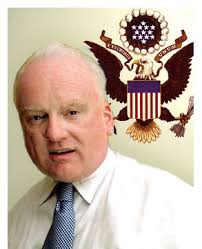
Richard Clarke
This put him at a severe disadvantage when dealing with higher-ranking Bush officials—such as Cheney, Rumsfeld, Wolfowitz and Rice.
Clarke alerted Federal Intelligence agencies that “Al-Qaeda is planning a major attack on us.” He asked the FBI and CIA to report to his office all they could learn about suspicious persons or activities at home and abroad.
Finally, at a meeting with Condoleeza Rice on September 4, 2001, Clarke challenged her to “picture yourself at a moment when in the very near future Al-Qaeda has killed hundreds of Americans, and imagine asking yourself what you wish then that you had already done.”
Apparently, that moment never came for Rice—or any other Bush officials.
Seven days later, Al-Qaeda struck, and 3,000 Americans died horrifically—and needlessly.
Neither Bush, Cheney, Rice, Rumsfeld nor Wolfowitz ever apologized for their negligence. Nor has any of them ever been held accountable.
After 9/11, they wrapped themselves in the flag and posed as America’s saviors.
- Bush retired from office with a lavish pension and full Secret Service protection.
- He wrote his memoirs and was paid $7 million for the first 1.5 million copies.
- Cheney, Rumsfeld and Rice retired to private business, wrote their own memoirs, and lived in comfort as respected elder statesmen.
Only Richard Clarke—who had vainly argued for stepped-up security precautions and taking the fight to Al-Qaeda—gave that apology.
On March 24, 2004, Clarke testified at the public 9/11 Commission hearings. Addressing relatives of victims in the audience, he said: “Your government failed you, those entrusted with protecting you failed you, and I failed you.”
9/11, ABC NEWS, AL QAEDA, ALTERNET, AMERICABLOG, AMERICAN CAESARS: THE LIVES OF THE PRESIDENTS FROM FRANKLIN D. ROOSEVELT TO GEORGE W. BUSH, AMERICAN EMPIRE, AP, BABY BOOMER RESISTANCE, BARACK OBAMA, BASHAR AL-ASSAD, BBC, BEN RHODES, BILL CLINTON, BLOOMBERG NEWS, BUREAUCRACY, BUZZFEED, CBS NEWS, CHRIS MATHEWS, CNN, CONDOLEEZA RICE, CROOKS AND LIARS, DAILY KOZ, DONALD TRUMP, DWIGHT EISENHOWER, FACEBOOK, FBI, FIVETHIRTYEIGHT, FRANKLIN D. ROOSEVELT, GEORGE H.W. BUSH, GEORGE W. BUSH, GERALD R. FORD, HARPER’S MAGAZINE, HARRY S. TRUMAN, HUFFINGTON POST, JIMMY CARTER, JOHN F. KENNEDY, LYNDON B. JOHNSON, MEDIA MATTERS, MOTHER JONES, MOVEON, MSNBC, NBC NEWS, NEW REPUBLIC, NEWSDAY, NEWSWEEK, NIGEL HAMILTON, NPR, OSAMA BIN LADEN, PBS NEWSHOUR, POLITICO, POLITICUSUSA, RAW STORY, REPUBLICAN PARTY, REUTERS, RICHARD CLARKE, RICHARD NIXON, ROMAN EMPIRE, SALON, SEATTLE TIMES, SEPTEMBER 11, SLATE, SUETONIUS, SYRIA, TALKING POINTS MEMO, TERRORISM, THE ATLANTIC, THE CHICAGO SUN-TIMES, THE CHICAGO TRIBUNE, THE DAILY BEAST, THE DAILY BLOG, THE GUARDIAN, THE HILL, THE HUFFINGTON POST, THE LOS ANGELES TIMES, THE NATION, THE NEW REPUBLIC, THE NEW YORK TIMES, THE NEW YORKER, THE TWELVE CAESARS, THE VILLAGE VOICE, THE WASHINGTON POST, THINKPROGRESS, TIME, TRUTHDIG, TRUTHOUT, TWITTER, TWO POLITICAL JUNKIES, U.S. NEWS & WORLD REPORT, UPI, USA TODAY, WONKETTE
In Bureaucracy, History, Military, Politics, Social commentary on August 27, 2021 at 12:05 am
On September 12, 2001, President George W. Bush attended a meeting of the National Security Council.
“Why shouldn’t we go against Iraq, not just Al-Qaeda?” demanded Donald Rumsfeld, the Secretary of Defense.
Vice President Dick Cheney enthusiastically agreed.
Secretary of State Colin Powell then pointed out there was absolutely no evidence that Iraq had had anything to do with 9/11 or Al-Qaeda. And he added: “The American people want us to do something about Al-Qaeda”—not Iraq.
On November 21, 2001, only 10 weeks after 9/11, Bush told Rumsfeld: It’s time to turn to Iraq.
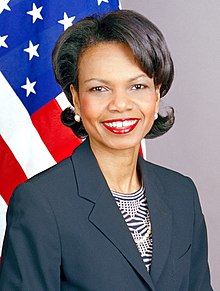

Condoleeza Rice
Bush and his war-hungry Cabinet officials knew that Americans demanded vengeance on AlQaeda’s mastermind, Osama bin Laden, and not Iraqi dictator Saddam Hussein. So they repeatedly fabricated “links” between the two:
- Saddam had worked hand-in-glove with Bin Laden to plan 9/11.
- Saddam was harboring and supporting Al-Qaeda throughout Iraq.
- Saddam, with help from Al-Qaeda, was scheming to build a nuclear bomb.
Yet as early as September 22, 2001, Bush had received a classified President’s Daily Brief intelligence report, which stated that there was no evidence linking Saddam Hussein to 9/11.
The report added that there was scant credible evidence that Iraq had any significant collaborative ties with Al-Qaeda.
Even more important: Saddam had tried to monitor Al Qaeda through his intelligence service—because he saw Al-Qaeda and other theocratic radical Islamist organizations as a potential threat to his secular regime.

Dick Cheney
Bush administration officials repeatedly claimed that Iraq possessed huge quantities of chemical and biological weapons, in violation of UN resolutions. And they further claimed that US intelligence agencies had determined:
- the precise locations where these weapons were stored;
- the identities of those involved in their production; and
- the military orders issued by Saddam Hussein for their use in the event of war.
Among other lies stated as fact by members of the Bush administration:
- Iraq had sought uranium from Niger, in west Africa.
- Thousands of aluminum tubes imported by Iraq could be used in centrifuges to create enriched uranium.
- Iraq had up to 20 long-range Scud missiles, prohibited under UN sanctions.
- Iraq had massive stockpiles of chemical and biological agents, including nerve gas, anthrax and botulinum toxin.
- Saddam Hussein had issued chemical weapons to front-line troops who would use them when US forces crossed into Iraq.

Donald Rumsfeld
Consider the following:
August 26, 2002: Cheney told the Veterans of Foreign Wars, “There is no doubt that Saddam Hussein now has weapons of mass destruction. There is no doubt he is amassing them to use against our friends, against our allies and against us.”
September 8, 2002: National Security Advisor Condoleeza Rice said on CNN: ”There is certainly evidence that Al-Qaeda people have been in Iraq. There is certainly evidence that Saddam Hussein cavorts with terrorists.”
September 18, 2002: Rumsfeld told the House Armed Services Committee, “We do know that the Iraqi regime has chemical and biological weapons. His regime has amassed large, clandestine stockpiles of chemical weapons—including VX, sarin, cyclosarin and mustard gas.”
October 7, 2002: Bush declared in a nationally televised speech in Cincinnati that Iraq “possesses and produces chemical and biological weapons. It is seeking nuclear weapons.”
March 16, 2003: Cheney declared on NBC’s “Meet the Press”: “We believe [Saddam Hussein] has, in fact, reconstituted nuclear weapons.”
Bush never regretted his decision to invade Iraq—on March 20, 2003.
Even as American occupying forces repeatedly failed to turn up any evidence of “weapons of mass destruction” (WMDs), Bush and his minions claimed the invasion a good thing.
In fact, Bush—who hid out the Vietnam war in the Texas Air National Guard—even joked publicly about the absence of WMDs.
He did so at a White House Correspondents dinner on March 24, 2004—one year after he had started the war.
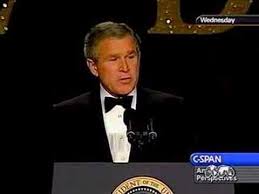
George W. Bush at the 2004 White House Correspondents’ dinner
To Bush, the non-existent WMDs were nothing more than the butt of a joke that night. While an overhead projector displayed photos of a puzzled-looking Bush searching around the Oval Office, Bush recited a comedy routine.
“Those weapons of mass destruction have gotta be somewhere,” Bush laughed, while a photo showed him poking around the corners in the Oval Office.
“Nope—no weapons over there! Maybe they’re under here,” he said, as a photo showed him looking under a desk.
Meanwhile, an assembly of wealthy, pampered men and women—-the elite of America’s media and political classes—laughed heartily during Bush’s performance.
It was a scene worthy of the court of the ancient Caesars, complete with royal flunkies: “Hey! The country we just destroyed wasn’t a threat to us after all! Isn’t that a gas?”
The war that Bush had deliberately provoked:
- Took the lives of 4,484 Americans.
- Cost the United States Treasury at least $2 trillion.
- Created a Middle East power vacumn.
- Allowed Iran—Iraq’s arch enemy—to eagerly fill it.
- Frightened and repelled even America’s closest allies.
- Killed at least 655,000 Iraqis.
- Bush retired from office with a lavish pension and full Secret Service protection.
- He wrote his memoirs and was paid $7 million for the first 1.5 million copies.
- Cheney, Rumsfeld, Rice retired to private business, wrote their own memoirs, and lived in comfort as respected elder statesmen.
9/11, ABC NEWS, AL QAEDA, ALTERNET, AMERICABLOG, AMERICAN CAESARS: THE LIVES OF THE PRESIDENTS FROM FRANKLIN D. ROOSEVELT TO GEORGE W. BUSH, AMERICAN EMPIRE, AP, BABY BOOMER RESISTANCE, BARACK OBAMA, BASHAR AL-ASSAD, BBC, BEN RHODES, BILL CLINTON, BLOOMBERG NEWS, BUREAUCRACY, BUZZFEED, CBS NEWS, CHRIS MATHEWS, CNN, CONDOLEEZA RICE, CROOKS AND LIARS, DAILY KOZ, DONALD TRUMP, DWIGHT EISENHOWER, FACEBOOK, FBI, FIVETHIRTYEIGHT, FRANKLIN D. ROOSEVELT, GEORGE H.W. BUSH, GEORGE W. BUSH, GERALD R. FORD, HARPER’S MAGAZINE, HARRY S. TRUMAN, HUFFINGTON POST, JIMMY CARTER, JOHN F. KENNEDY, LYNDON B. JOHNSON, MEDIA MATTERS, MOTHER JONES, MOVEON, MSNBC, NBC NEWS, NEW REPUBLIC, NEWSDAY, NEWSWEEK, NIGEL HAMILTON, NPR, OSAMA BIN LADEN, PBS NEWSHOUR, POLITICO, POLITICUSUSA, RAW STORY, REPUBLICAN PARTY, REUTERS, RICHARD CLARKE, RICHARD NIXON, ROMAN EMPIRE, SALON, SEATTLE TIMES, SEPTEMBER 11, SLATE, SUETONIUS, SYRIA, TALKING POINTS MEMO, TERRORISM, THE ATLANTIC, THE CHICAGO SUN-TIMES, THE CHICAGO TRIBUNE, THE DAILY BEAST, THE DAILY BLOG, THE GUARDIAN, THE HILL, THE HUFFINGTON POST, THE LOS ANGELES TIMES, THE NATION, THE NEW REPUBLIC, THE NEW YORK TIMES, THE NEW YORKER, THE TWELVE CAESARS, THE VILLAGE VOICE, THE WASHINGTON POST, THINKPROGRESS, TIME, TRUTHDIG, TRUTHOUT, TWITTER, TWO POLITICAL JUNKIES, U.S. NEWS & WORLD REPORT, UPI, USA TODAY, WONKETTE
In Bureaucracy, History, Military, Politics, Social commentary on August 26, 2021 at 12:14 am
September 11, 2018, will mark the 20th anniversary of the worst terrorist attack on United States soil. Inevitably, this is a time to remember all those whose lives were so cruelly snuffed out.
But it is also a time to remember those Americans who made this atrocity—and the Iraq war that followed—inevitable.
British historian Nigel Hamilton has chronicled their arrogance and indifference in his 2010 biography: American Caesars: Lives of the Presidents from Franklin D. Roosevelt to George W. Bush.
Hamilton noted that Richard Clarke, the national security advisor on terrorism, was certain that Osama bin Laden had arranged the USS Cole bombing in Aden on October 12, 2000.
For months, Clarke tried to convince others in the Bush Administration that Bin Laden was plotting another attack against the United States—either abroad or at home.
But Clarke could not prevail against the know-it-all arrogance of such higher-ranking Bush officials as Vice President Dick Cheney; Secretary of Defense Donald Rumsfeld; Rumsfeld’s deputy, Paul Wolfowitz; and National Security Advisor Condoleeza Rice.
Rice initially refused to hold a cabinet-level meeting on the subject. Then she “insisted the matter be handled only by a more junior Deputy Principals meeting” in April, 2001, writes Hamilton.
Wolfowitz, the number-two man at the Department of Defense, said: “I don’t understand why we are beginning by talking about this one man, bin Laden.”
Even after Clarke outlined the threat posed by Al-Qaeda, Wolfowitz—whose real target was Saddam Hussein—said: “You give bin Laden too much credit.”
Wolfowitz insisted that bin Laden couldn’t carry out his terrorist acts without the aid of a state sponsor—namely, Iraq.
Wolfowitz, in fact, blamed Iraq for the 1993 bombing of the World Trade Center. Clarke was stunned, since there was absolutely no evidence of Iraqi involvement in this.
“Al-Qaeda plans major acts of terrorism against the United States,” Clarke warned his colleagues. He pointed out that, like Adolf Hitler, bin Laden had actually published his plans for future destruction.
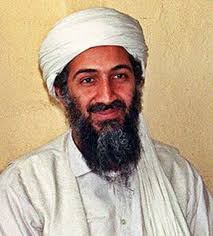
Osama bin Laden
And he added: “Sometimes, as with Hitler in Mein Kampf, you have to believe that these people will actually do what they say they will do.”
Wolfowitz heatedly traded on his Jewish heritage to bring Clarke’s unwelcome arguments to a halt: “I resent any comparison between the Holocaust and this little terrorist in Afghanistan.”
Writing in outraged fury, Hamilton sums up Clarke’s agonizing frustrations:
- Bush’s senior advisors treated their colleagues who had served in the Clinton administration with contempt.
- President Bush, Vice President Dick Cheney, National Security Advisor Condoleeza Rice, Secretary of Defense Donald Rumsfeld and Deputy Defense Secretary Paul Wolfowitz seemed content to ignore the danger signals of an impending al-Qaeda attack.
- This left only Secretary of State Colin Powell, his deputy Richard Armitage, Richard Clarke and a skeptical Treasury Secretary, Paul O’Neill, to wage “a lonely battle to waken a seemingly deranged new administration.”
Richard Clarke
Clarke alerted Federal Intelligence agencies that “Al-Qaeda is planning a major attack on us.” He asked the FBI and CIA to report to his office all they could learn about suspicious persons or activities at home and abroad.
Finally, at a meeting with Rice on September 4, 2001, Clarke challenged her to “picture yourself at a moment when in the very near future Al-Qaeda has killed hundreds of Americans, and imagine asking yourself what you wish then that you had already done.”
Seven days later, Al-Qaeda struck, and 3,000 Americans died horrifically—and needlessly.
Neither Bush, Cheney, Rice, Rumsfeld nor Wolfowitz ever admitted their negligence. Nor would any of them be brought to account.
Disgustingly, these were the same officials who, afterward, posed as the Nation’s saviors—and branded anyone who disagreed with them as a traitor, practices the Right continues to exploit to this day.
Only Richard Clarke—who had vainly argued for stepped-up security precautions and taking the fight to Al-Qaeda—gave that apology.
On March 24, 2004, Clarke testified at the public 9/11 Commission hearings. Addressing relatives of victims in the audience, he said: “Your government failed you, those entrusted with protecting you failed you, and I failed you.”
Yet even worse was to come.
On the evening after the September 11 attacks, Bush took Clarke aside during a meeting in the White House Situation Room:
“I want you, as soon as you can, to go back over everything, everything. See if Saddam [Hussein, the dictator of Iraq] did this. See if he’s linked in any way.”
Clarke was stunned: “But, Mr. President, Al-Qaeda did this.”
“I know, I know,” said Bush. “But see if Saddam was involved. I want to know.”
Hussein had not plotted the attack–and there was no evidence proving that he did. But the attack gave “W” the excuse he wanted to remove the man he blamed for the 1992 defeat of his father, President George H.W. Bush.
Bush believed that his father would have been re-elected if he had “gone all the way” into Baghdad during the 1991 Gulf War.
He would finish the job that his father had started but failed to compete.
On September 12, 2001, Bush attended a meeting of the National Security Council.
“Why shouldn’t we go against Iraq, not just Al-Qaeda?” demanded Donald Rumsfeld, the Secretary of Defense.
Vice President Dick Cheney enthusiastically agreed.
9/11, ABC NEWS, AL QAEDA, ALTERNET, AMERICABLOG, AMERICAN CAESARS: THE LIVES OF THE PRESIDENTS FROM FRANKLIN D. ROOSEVELT TO GEORGE W. BUSH, AMERICAN EMPIRE, AP, BABY BOOMER RESISTANCE, BARACK OBAMA, BASHAR AL-ASSAD, BBC, BEN RHODES, BILL CLINTON, BLOOMBERG NEWS, BUREAUCRACY, BUZZFEED, CBS NEWS, CHRIS MATHEWS, CNN, CONDOLEEZA RICE, CROOKS AND LIARS, DAILY KOZ, DONALD TRUMP, DWIGHT EISENHOWER, FACEBOOK, FBI, FIVETHIRTYEIGHT, FRANKLIN D. ROOSEVELT, GEORGE H.W. BUSH, GEORGE W. BUSH, GERALD R. FORD, HARPER’S MAGAZINE, HARRY S. TRUMAN, HUFFINGTON POST, JIMMY CARTER, JOHN F. KENNEDY, LYNDON B. JOHNSON, MEDIA MATTERS, MOTHER JONES, MOVEON, MSNBC, NBC NEWS, NEW REPUBLIC, NEWSDAY, NEWSWEEK, NIGEL HAMILTON, NPR, OSAMA BIN LADEN, PBS NEWSHOUR, POLITICO, POLITICUSUSA, RAW STORY, REPUBLICAN PARTY, REUTERS, RICHARD CLARKE, RICHARD NIXON, ROMAN EMPIRE, SALON, SEATTLE TIMES, SEPTEMBER 11, SLATE, SUETONIUS, SYRIA, TALKING POINTS MEMO, TERRORISM, THE ATLANTIC, THE CHICAGO SUN-TIMES, THE CHICAGO TRIBUNE, THE DAILY BEAST, THE DAILY BLOG, THE GUARDIAN, THE HILL, THE HUFFINGTON POST, THE LOS ANGELES TIMES, THE NATION, THE NEW REPUBLIC, THE NEW YORK TIMES, THE NEW YORKER, THE TWELVE CAESARS, THE VILLAGE VOICE, THE WASHINGTON POST, THINKPROGRESS, TIME, TRUTHDIG, TRUTHOUT, TWITTER, TWO POLITICAL JUNKIES, U.S. NEWS & WORLD REPORT, UPI, USA TODAY, WONKETTE
In History, Military, Politics, Social commentary on August 25, 2021 at 12:05 am
“Many of the people who work in American foreign policy today were shaped by the experience of the 1990s, when the United States was ascendant. The Berlin Wall came down. Democracy was spreading across Europe, Latin America and East Asia.
“Russia was on its back foot, and China had not yet risen. We really could shape events in much of the world. NATO could expand into the former Soviet Union without fear that Russia would invade one of those countries. We could bring together the whole world to kick Saddam Hussein out of Kuwait.”
So wrote Ben Rhodes, author of The World As It Is: A Memoir of the Obama White House (2018).
For eight years, Rhodes saw Barack Obama up close as few others did. He served as, first, a speechwriter, then deputy national security adviser, and finally as all-around aide and diplomat-without-portfolio.
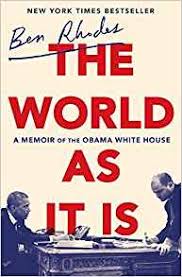
Rhodes noted that Obama sometimes warned that America’s post-Cold War moment in the sun wouldn’t last: “Shock and awe. Regime change. A trillion dollars later, we couldn’t keep the electricity running in Baghdad.
“The Iraq war disturbed other countries—including U.S. allies—in its illogic and destruction, and accelerated a realignment of power and influence that was further advanced by the global financial crisis.
“By the time Obama took office, a global correction had already taken place. Russia was resisting American influence. China was throwing its weight around. Europeans were untangling a crisis in the Euro-zone.”
To begin at the beginning:
Even as the rubble was being cleared at the Pentagon and World Trade Center following the September 11, 2001 attacks, President George W. Bush was preparing to use the attacks as an excuse to topple Iraqi dictator Saddam Hussein.
World Trade Center on September 11, 2001
Hussein had not plotted 9/11, and there was no evidence that he did. But that didn’t matter to Bush and those planning the invasion and conquest of Iraq.
British historian Nigel Hamilton has dared to lay bare the facts of this disgrace. Hamilton is the author of several acclaimed political biographies, including JFK: Reckless Youth and Bill Clinton: Mastering the Presidency.
In 2007, he began research on his latest book: American Caesars: The Lives of the Presidents From Franklin D. Roosevelt to George W. Bush.

Nigel Hamilton
By Nigel Hamilton (Nigel Hamilton picture)
The inspiration for this came from a classic work of ancient biography: The Twelve Caesars, by Gaius Suetonius Tranquillus—known as Suetonius.
Suetonius, a Roman citizen and historian, had chronicled the lives of the first twelve Caesars of imperial Rome: Julius Caesar, Augustus, Tiberius, Caligula, Claudius, Nero, Galba, Otho, Vitellius, Vespasian, Titus and Domitian.
Hamilton wanted to examine post-World War II United States history as Suetonius had examined that of ancient Rome: Through the lives of the 12 “emperors” who had held the power of life and death over their fellow citizens—and those of other nations.
For Hamilton, the “greatest of American emperors, the Caesar Augustus of his time,” was Franklin D. Roosevelt, who led his country through the Great Depression and World War II.
His “”great successors” were Harry S. Truman, Dwight D. Eisenhower and John F. Kennedy—who, in turn, contained the Soviet Union abroad and presided over sustained economic prosperity at home.
By contrast, “arguably the worst of all the American Caesars” was “George W. Bush, and his deputy, Dick Cheney, who willfully and recklessly destroyed so much of the moral basis of American leadership in the modern world.”
Among the most lethal of Bush’s offenses: The appointing of officials who refused to take seriously the threat posed by Al-Qaeda.
And this arrogance and indifference continued—right up to September 11, 2001, when the World Trade Center and Pentagon became targets for destruction.
Among the few administration officials who did take Al-Qaeda seriously was Richard Clarke, the chief counter-terrorism adviser on the National Security Council.
Clarke had been thus appointed in 1998 by President Bill Clinton. He continued in the same role under President Bush—but the position was no longer given cabinet-level access.
This put him at a severe disadvantage when dealing with other, higher-ranking Bush officials—such as Vice President Dick Cheney, Secretary of Defense Donald Rumsfeld, Rumsfeld’s deputy, Paul Wolfowitz and National Security Advisor Condoleeza Rice.
These turned out to be the very officials who refused to believe that Al-Qaeda posed a lethal threat to the United States.
“Indeed,” writes Hamilton, “in the entire first eight months of the Bush Presidency, Clarke was not permitted to brief President Bush a single time, despite mounting evidence of plans for a new al-Qaeda outrage.” [Italics added]
Nor did it help that, during his first eight months in office before September 11, Bush was on vacation, according to the Washington Post, 42% of the time.
For months, Clarke tried to convince others in the Bush Administration that Bin Laden was plotting another attack against the United States–either abroad or at home.
But Clarke could not prevail against the know-it-all arrogance of such higher-ranking Bush officials as Vice President Dick Cheney; Secretary of Defense Donald Rumsfeld; Rumsfeld’s deputy, Paul Wolfowitz; and National Security Advisor Condoleeza Rice.
ABC NEWS, ALTERNET, AMERICABLOG, AMERICAN TABLOID (BOOK), ANTI-CASTRO CUBANS, AP, ASSASSINATION, BABY BOOMER RESISTANCE, BBC, BLOOMBERG NEWS, BUZZFEED, CBS NEWS, CIA, CNN, COMMUNISM, CROOKS AND LIARS, CUBA, CUBAN MISSILE CRISIS, DAILY KOZ, DONALD TRUMP, DWIGHT D. EISENHOWER, FACEBOOK, FBI, FIDEL CASTRO, FIVETHIRTYEIGHT, FLORIDA, FULGENCIO BATISTA, GUS RUSSO, HARPER’S MAGAZINE, HUFFINGTON POST, JACK RUBY, JAMES ELLROY, JOHN F. KENNEDY, JOHNNY ROSELLI, LEE HARVEY OSWALD, LIVE BY THE SWORD (BOOK), LYNDON B. JOHNSON, MAFIA, MARCO RUBIO, MARINA OSWALD, MARTIN SHEEN, MEDIA MATTERS, MIAMI, MOTHER JONES, MOVEON, MSNBC, NBC NEWS, NEW REPUBLIC, NEWSDAY, NEWSWEEK, NIKITA KHRUSHCHEV, NPR, PBS NEWSHOUR, POLITICO, POLITICUSUSA, RAW STORY, REUTERS, RICHARD NIXON, ROBERT F. KENNEDY, ROBERT MCNAMARA, SALON, SAM GIANCANA, SEATTLE TIMES, SLATE, TALKING POINTS MEMO, THE ATLANTIC, THE CHICAGO SUN-TIMES, THE CHICAGO TRIBUNE, THE DAILY BEAST, THE DAILY BLOG, THE GUARDIAN, THE HILL, THE HUFFINGTON POST, THE LOS ANGELES TIMES, THE MISSILES OF OCTOBER (MOVIE), THE NATION, THE NEW REPUBLIC, THE NEW YORK TIMES, THE NEW YORKER, THE VILLAGE VOICE, THE WASHINGTON POST, THINKPROGRESS, THIRTEEN DAYS (BOOK), TIME, TRUTHDIG, TRUTHOUT, TWITTER, TWO POLITICAL JUNKIES, U.S. NEWS & WORLD REPORT, UPI, USA TODAY, WARREN COMMISSION, WILLIAM DEVANE, WONKETTE
In Bureaucracy, History, Military, Politics, Social commentary on August 20, 2021 at 12:12 am
“John and Robert Kennedy knew what they were doing. They waged a vicious war against Fidel Castro—a war someone had to lose.”
And the loser turned out to be John F. Kennedy.
So writes investigative reporter Gus Russo in Live By the Sword: The Secret War Against Castro and the Death of JFK, published in 1998.
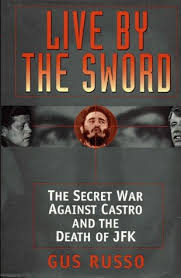
In what is almost certainly the definitive account of the assassination of President John F. Kennedy, Russo reaches some startling—but highly documented—conclusions:
- Lee Harvey Oswald assassinated Kennedy.
- He did it alone.
- Oswald, a former Marine, was a committed Marxist—whose hero was Castro.
- The CIA’s ongoing campaign to overthrow and/or assassinate Castro was an open secret throughout the Gulf.
- Oswald visited New Orleans in the spring of 1963.
- There he learned that Castro was in the crosshairs of the CIA.
- For this, he blamed John F. Kennedy.
- Oswald told his Russian-born wife, Marina: “Fidel Castro needs defenders. I’m going to join his army of volunteers.”
- Jack Ruby, a Dallas nightclub owner, murdered Oswald because he was distraught over Kennedy’s death.
- Ruby was not part of a Mafia conspiracy to silence Oswald.
- Skeptics of the Warren Commission—which concluded that Oswald had acted alone—asked the wrong question: “Who killed Kennedy?”
- They should have asked: “Why was he killed?”
- The answer—according to Russo: “The Kennedys’ relentless pursuit of Castro and Cuba backfired in tragedy on that terrible day in November, 1963.”
Another book well worth reading about America’s Cuban obsession during the early 1960s is American Tabloid, by James Ellroy.
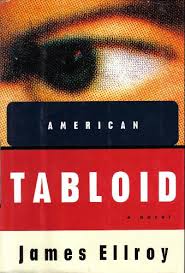
Although a novel, it vividly captures the atmosphere of intrigue, danger and sleaziness that permeated that era in a way that dry, historical documents never can.
“The 50’s are finished,” reads its paperback dust jacket. “Zealous young lawyer Robert Kennedy has a red-hot jones to nail Jimmy Hoffa. JFK has his eyes on the Oval Office.
“J. Edgar Hoover is swooping down on the Red Menace. Howard Hughes is dodging subpoenas and digging up Kennedy dirt. And Castro is mopping up the bloody aftermath of his new Communist nation….
“Mob bosses, politicos, snitches, psychos, fall guys and femmes fatale. They’re mixing up a Molotov cocktail guaranteed to end the country’s innocence with a bang.”
Among the legacies of America’s twisted romance with anti-Castro Cubans:
- The Cuban Missile Crisis remains the single most dangerous moment of the 50-year Cold War, when the world stood only minutes away from nuclear Armageddon.
- That crisis stemmed from the American Right’s twisted obsession with Cuba, an obsession that continues today.
- Following the JFK assassination, there was a cover-up.
- Its purpose: To protect the reputation of the United States Government—and that of its newly-martyred President.
- The CIA and FBI concealed the CIA-Mafia assassination plots from the Warren Commission assigned to investigate Kennedy’s murder.
- Other government officials participating in the cover-up included Attorney General Robert F. Kennedy and President Lyndon B. Johnson.
- Ironically, this secrecy ignited the widespread—and false—belief that the President had died at the hands of a government conspiracy.
- Robert Kennedy feared that his relentless pursuit of Castro might have led Castro to “take out” JFK first.
- Fearing his own assassination if he continued Kennedy’s efforts to murder Castro, President Johnson ordered the CIA to halt its campaign to overthrow and/or assassinate the Cuban leader.
- The huge Cuban community throughout Florida—and especially Miami—continues to exert a blackmailing influence on American politics.
- Right-wing politicians from Richard Nixon to Donald Trump have reaped electoral rewards by catering to the demands of this hate-obsessed voting block.
- These Cuban ex-patriots hope that the United States will launch a full-scale military invasion of the island to remove Castro.
- Having grown rich and soft in the United States, they fear to risk their own lives by returning to Cuba to overthrow the Castro regime—Castro he had overthrown Fulgencio Batista.
- Only President Barack Obama had the political courage to re-establish diplomatic relations with Cuba—in 2015.
- This occurred long after the United States had done so with such former enemies as the Soviet Union, China and Vietnam.
- President Donald Trump. hoping to please anti-Castro voters in Florida, abandoned engagement and increased sanctions against Cuba.
So what are the lessons to be learned from America’s twisted obsession with Cuba?
- Americans should initiate major changes in its foreign policy toward Cuba.
- America should end the half-century contamination of American politics by those Cubans who live only for their hatred of Castro—and those political candidates who live to exploit it.
- (For example: Marco Rubio got elected U.S. Senator from Florida in 2010 by claiming that his parents had been forced to leave Cuba in 1959, after Fidel Castro took power. In fact, they had left Cuba in 1956—during the Batista dictatorship.)
- America needs to end this wag-the-dog relationship. A population of about 1.53 million Cuban exiles living in Florida should not be allowed to shape the domestic and foreign policy of a nation of 333 million.
- Those who continue to hate—or love—Fidel Castro should be left to their own private feud. But that is a feud they should settle on their own island, and not from the shores of the United States.
ABC NEWS, ALTERNET, AMERICABLOG, AMERICAN TABLOID (BOOK), ANTI-CASTRO CUBANS, AP, ASSASSINATION, BABY BOOMER RESISTANCE, BBC, BLOOMBERG NEWS, BUZZFEED, CBS NEWS, CIA, CNN, COMMUNISM, CROOKS AND LIARS, CUBA, CUBAN MISSILE CRISIS, DAILY KOZ, DONALD TRUMP, DWIGHT D. EISENHOWER, FACEBOOK, FBI, FIDEL CASTRO, FIVETHIRTYEIGHT, FLORIDA, FULGENCIO BATISTA, GUS RUSSO, HARPER’S MAGAZINE, HUFFINGTON POST, JACK RUBY, JAMES ELLROY, JOHN F. KENNEDY, JOHNNY ROSELLI, LEE HARVEY OSWALD, LIVE BY THE SWORD (BOOK), LYNDON B. JOHNSON, MAFIA, MARCO RUBIO, MARINA OSWALD, MARTIN SHEEN, MEDIA MATTERS, MIAMI, MOTHER JONES, MOVEON, MSNBC, NBC NEWS, NEW REPUBLIC, NEWSDAY, NEWSWEEK, NIKITA KHRUSHCHEV, NPR, PBS NEWSHOUR, POLITICO, POLITICUSUSA, RAW STORY, REUTERS, RICHARD NIXON, ROBERT F. KENNEDY, ROBERT MCNAMARA, SALON, SAM GIANCANA, SEATTLE TIMES, SLATE, TALKING POINTS MEMO, THE ATLANTIC, THE CHICAGO SUN-TIMES, THE CHICAGO TRIBUNE, THE DAILY BEAST, THE DAILY BLOG, THE GUARDIAN, THE HILL, THE HUFFINGTON POST, THE LOS ANGELES TIMES, THE MISSILES OF OCTOBER (MOVIE), THE NATION, THE NEW REPUBLIC, THE NEW YORK TIMES, THE NEW YORKER, THE VILLAGE VOICE, THE WASHINGTON POST, THINKPROGRESS, THIRTEEN DAYS (BOOK), TIME, TRUTHDIG, TRUTHOUT, TWITTER, TWO POLITICAL JUNKIES, U.S. NEWS & WORLD REPORT, UPI, USA TODAY, WARREN COMMISSION, WILLIAM DEVANE, WONKETTE
In Bureaucracy, History, Military, Politics, Social commentary on August 19, 2021 at 12:15 am
On October 22, 1962, President John F. Kennedy went on nationwide TV to announce the discovery of the missiles and his blockade of Cuba.
He warned that any nuclear missile launched from Cuba against any nation would be regarded as an attack on the United States by the Soviet Union—and would trigger “a full retaliatory response” upon the U.S.S.R.
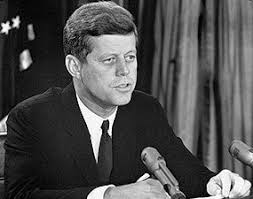
President John F. Kennedy addresses the nation
And he demanded that the Soviets remove all of their offensive weapons from Cuba:
“The path we have chosen for the present is full of hazards, as all paths are, but it is the one most consistent with our character and courage as a nation and our commitments around the world.
“The cost of freedom is always high, but Americans have always paid it. And one path we shall never choose, and that is the path of surrender or submission.”
On October 26, the United States raised the readiness level of SAC forces to DEFCON 2—the step just short of war. For the only time in U.S. history, B-52 bombers were dispersed to various locations and made ready to take off, fully equipped, on 15 minutes’ notice.
Other measures taken included:
- One-eighth of America’s 1,436 bombers were on airborne alert.
- About 145 intercontinental ballistic missiles stood on ready alert.
- Air Defense Command redeployed 161 nuclear-armed interceptors to 16 dispersal fields within nine hours with one-third maintaining 15-minute alert status.
- Twenty-three nuclear-armed B-52 were sent to orbit points within striking distance of the Soviet Union.
An invasion date was set for October 29. But the Kennedy Administration–and the American military—didn’t know that the Russian soldiers guarding the missiles had been armed with tactical nuclear weapons.
Had the Marines gone in, those mini-nukes would have been used. And a full-scale nuclear exchange between the United States and the Soviet Union would have almost certainly followed.
At the height of the crisis, Attorney General Robert F. Kennedy offered a solution.
Khrushchev had sent two teletypes to Kennedy. The first had agreed to remove the missiles, but the second had demanded that the United States remove its own missiles from Turkey, which bordered the Soviet Union.
Robert Kennedy’s solution: The administration should ignore the second message—and announce that it had accepted Khrushchev’s offer to remove the missiles.
After this announcement was made, President Kennedy said to his advisers: “It can go either way now.”
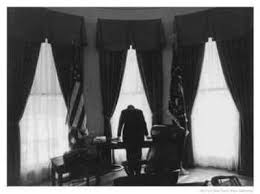
John F. Kennedy in the Oval Office
The crisis ended on October 28. Under enormous pressure, Khrushchev agreed to remove the missiles from Cuba.
Behind his decision lay a secret promise by the Kennedy administration to remove its obsolete nuclear missiles from Turkey, which bordered the Soviet Union. And a public pledge to not invade Cuba.
On the night the crisis ended, there occurred a prophetic exchange between the two Kennedy brothers.
JFK: “Maybe this is the night I should go to the theater”—a reference to Abraham Lincoln’s fatal attendance of Ford’s Theater at the end of the Civil War.
RFK: “If you go, I want to go with you.”
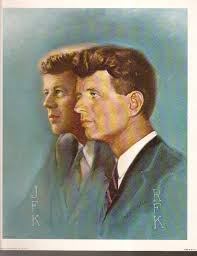
John F. and Robert F. Kennedy
But President Kennedy was not finished with Castro. While continuing the campaign of sabotage throughout Cuba, the Kennedys were preparing something far bigger: A full-scale American invasion of the island.
On October 4, 1963, the Joint Chiefs of Staff submitted its latest version of the invasion plan, known as OPLAN 380-63. Its timetable went:
- January, 1964: Infiltration into Cuba by Cuban exiles.
- July 15, 1964: U.S. conventional forces join the fray.
- August 3, 1964: All-out U.S. air strikes on Cuba.
- October 1, 1964: Full-scale invasion to install “a government friendly to the U.S.”
During the Cuban Missile Crisis, Robert Kennedy–r-eferring to the 1941 Japanese attack on Pearl Harbor—had resisted demands for a “sneak attack” on Cuba by saying: “I don’t want my brother to be the Tojo of the 1960s.”
Now the Kennedys planned such an attack on Cuba just one month before the November, 1964 Presidential election.
Then fate—in the unlikely figure of Lee Harvey Oswald—intervened.
On November 22, 1963, while the President rode through Dallas in an open-air automobile, a rifle-wielding assassin opened fire. He scored two hits on Kennedy—in the back of the neck and head. The second wound proved instantly fatal.
The nation and the world were shocked—and plunged into deep mourning.
But for some of those who had waged a secret, lethal war against Fidel Castro for the previous two years, Kennedy’s death—at least in retrospect—didn’t come as a surprise.
Robert Kennedy, in particular, spent the remaining years of his life agonizing over the possibility that his highly personal war against Castro had backfired.
That Castro, fed up with the CIA’s assassination plots against him, had retaliated with one of his own.
Robert Kennedy’s fears and guilt were compounded by the fact that, while waging war on Castro, he had waged an equally ruthless crusade against organized crime.
He knew that some of the mobsters he had tried to send to prison had played a major role in the CIA’s efforts to “hit” Castro. Had the Mafia—believing itself the victim of a double-cross—put out a “contract” on JFK instead?
It was a question that haunted him until the day he died.
ABC NEWS, ALTERNET, AMERICABLOG, AMERICAN TABLOID (BOOK), ANTI-CASTRO CUBANS, AP, ASSASSINATION, BABY BOOMER RESISTANCE, BBC, BLOOMBERG NEWS, BUZZFEED, CBS NEWS, CIA, CNN, COMMUNISM, CROOKS AND LIARS, CUBA, CUBAN MISSILE CRISIS, DAILY KOZ, DONALD TRUMP, DWIGHT D. EISENHOWER, FACEBOOK, FBI, FIDEL CASTRO, FIVETHIRTYEIGHT, FLORIDA, FULGENCIO BATISTA, GUS RUSSO, HARPER’S MAGAZINE, HUFFINGTON POST, JACK RUBY, JAMES ELLROY, JOHN F. KENNEDY, JOHNNY ROSELLI, LEE HARVEY OSWALD, LIVE BY THE SWORD (BOOK), LYNDON B. JOHNSON, MAFIA, MARCO RUBIO, MARINA OSWALD, MARTIN SHEEN, MEDIA MATTERS, MIAMI, MOTHER JONES, MOVEON, MSNBC, NBC NEWS, NEW REPUBLIC, NEWSDAY, NEWSWEEK, NIKITA KHRUSHCHEV, NPR, PBS NEWSHOUR, POLITICO, POLITICUSUSA, RAW STORY, REUTERS, RICHARD NIXON, ROBERT F. KENNEDY, ROBERT MCNAMARA, SALON, SAM GIANCANA, SEATTLE TIMES, SLATE, TALKING POINTS MEMO, THE ATLANTIC, THE CHICAGO SUN-TIMES, THE CHICAGO TRIBUNE, THE DAILY BEAST, THE DAILY BLOG, THE GUARDIAN, THE HILL, THE HUFFINGTON POST, THE LOS ANGELES TIMES, THE MISSILES OF OCTOBER (MOVIE), THE NATION, THE NEW REPUBLIC, THE NEW YORK TIMES, THE NEW YORKER, THE VILLAGE VOICE, THE WASHINGTON POST, THINKPROGRESS, THIRTEEN DAYS (BOOK), TIME, TRUTHDIG, TRUTHOUT, TWITTER, TWO POLITICAL JUNKIES, U.S. NEWS & WORLD REPORT, UPI, USA TODAY, WARREN COMMISSION, WILLIAM DEVANE, WONKETTE
In Bureaucracy, History, Military, Politics, Social commentary on August 18, 2021 at 12:11 am
In April, 1961, the CIA tried to overthrow the Communist regime of Cuba’s “Maximum Leader,” Fidel Castro, at the Bay of Pigs.
When that failed, President John F. Kennedy ordered Castro’s removal through a campaign of sabotage and assassination.
These covert operatives became known within the CIA as the Special Group, and were ultimately supervised by Robert F. Kennedy, the President’s brother and Attorney General.
The war against Castro became known within the CIA as Operation Mongoose.
But not everyone in the CIA was enthusiastic about the “get Castro” effort.
“Everyone at CIA was surprised at Kennedy’s obsession with Fidel,” recalled Sam Halpern, who was assigned to the Cuba Project. “They thought it was a waste of time. We all knew [Fidel] couldn’t hurt us. Most of us at CIA initially liked Kennedy, but why go after this little guy?
“One thing is for sure: Kennedy wasn’t doing it out of national security concerns. It was a personal thing. The Kennedy family felt personally burnt by the Bay of Pigs and sought revenge.”
It was all-out war. Among the tactics used:
- Hiring Cuban gangsters to murder Cuban police officials and Soviet technicians.
- Sabotaging mines.
- Paying up to $100,000 per “hit” for the murder or kidnapping of Cuban officials.
- Using biological and chemical warfare against the Cuban sugar industry.
“Bobby (Kennedy) wanted boom and bang all over the island,” recalled Halpern. “It was stupid. The pressure from the White House was very great.”
Among that “boom and bang” were a series of assassination plots against Castro, in which the Mafia was to be a key player.
Chicago Mobster Johnny Roselli proposed a simple plan: through its underworld connections in Cuba, the Mafia would recruit a Cuban in Castro’s entourage, such as a waiter or bodyguard, who would poison him.
The CIA’s Technical Services division produced a botulinus toxin which was then injected into Castro’s favorite brand of cigars. The CIA also produced simpler botulinus toxin pills that could be dissolved in his food or drink.
But the deputized Mafia contacts failed to deliver any of the poisons to Castro.
Roselli told the CIA that the first poisoner had been discharged from Castro’s employ before he could kill him, and the back-up agent got “cold feet.”
Other proposals or attempts included:
- Planting colorful seashells rigged to explode at a site where Castro liked to go skindiving.
- Trying to arrange for his being presented with a wetsuit impregnated with noxious bacteria and mold spores, or with lethal chemical agents.
- Attempting to infect Castro’s scuba regulator with tuberculous bacilli.
- Trying to douse his handkerchiefs, tea and coffee with other lethal bacteria.
Former members of the Kennedy Administration later insisted that neither John nor Robert Kennedy knew or approved of these assassination plots. But the sheer weight of available evidence indicates otherwise.
Bobby, in particular, was constantly pressing the CIA to “do something” about Castro. In the world of covert action, words like “Kill Castro” aren’t committed to paper. Or even spoken.
Castro, rightly seeing his life and regime threatened, appealed to Nikita Khrushchev, leader of the Soviet Union, for assistance.

1960s poster of Fidel Castro and Nikita Khrushchev
Keizers [CC BY-SA 3.0 (https://creativecommons.org/licenses/by-sa/3.0)%5D
Khrushchev quickly complied: “We must not allow the communist infant to be strangled in its crib,” he told members of his inner circle.
By October, 1962, the Soviet Union had sent more than
- 40,000 soldiers,
- 1,300 field pieces,
- 700 anti-aircraft guns,
- 350 tanks and
- 150 jets
to Cuba to deter another invasion.
Most importantly, Khrushchev began supplying Castro with nuclear-tipped ballistic missiles.
Their discovery, on October 15, 1962, ignited the single most dangerous confrontation of the 50-year Cold War.
Suddenly, the United States and the Soviet Union—bristling with nuclear weapons—found themselves on the brink of nuclear war.
At the time, Kennedy officials claimed they couldn’t understand why Khrushchev had placed nuclear missiles in Cuba. “Maybe Khrushchev’s gone mad” was a typical public musing.
This remained the official American view for years afterward—as depicted in Robert Kennedy’s memoir, Thirteen Days: A Memoir of the Cuban Missile Crisis, published in 1969, the year after his death.
No admission was made that JFK had been waging a no-holds-barred campaign to overthrow the Cuban government and assassinate its leader.
The same proved true for the 1974 doc-u-drama, The Missiles of October, starring William Devane as John F. Kennedy and Martin Sheen as Robert Kennedy.
On October 16, President Kennedy was informed of the missile installations. He immediately convened a group of his 12 most important advisers, which became known as Ex-Comm, for Executive Committee.
Then followed seven days of guarded and intense debate by Kennedy and his advisers. Some of the participants—such as Air Force General Curtis LeMay—urged an all-out air strike against the missile sites.
Others—such as Adlai Stevenson, the United States delegate to the United Nations—urged a reliance on quiet diplomacy.
It was Secretary of Defense Robert S. McNamara who suggested a middle course: A naval blockade—a “quarantine” in Kennedy’s softened term—around Cuba. This would hopefully prevent the arrival of more Soviet offensive weapons on the island.
Finally, the President decided to to impose a naval blockade.
On October 22, Kennedy went on nationwide TV to announce the discovery of the missiles and his blockade of Cuba.
ABC NEWS, ALTERNET, AMERICABLOG, AMERICAN TABLOID (BOOK), ANTI-CASTRO CUBANS, AP, ASSASSINATION, BABY BOOMER RESISTANCE, BBC, BLOOMBERG NEWS, BUZZFEED, CBS NEWS, CIA, CNN, COMMUNISM, CROOKS AND LIARS, CUBA, CUBAN MISSILE CRISIS, DAILY KOZ, DONALD TRUMP, DWIGHT D. EISENHOWER, FACEBOOK, FBI, FIDEL CASTRO, FIVETHIRTYEIGHT, FLORIDA, FULGENCIO BATISTA, GUS RUSSO, HARPER’S MAGAZINE, HUFFINGTON POST, JACK RUBY, JAMES ELLROY, JOHN F. KENNEDY, JOHNNY ROSELLI, LEE HARVEY OSWALD, LIVE BY THE SWORD (BOOK), LYNDON B. JOHNSON, MAFIA, MARCO RUBIO, MARINA OSWALD, MARTIN SHEEN, MEDIA MATTERS, MIAMI, MOTHER JONES, MOVEON, MSNBC, NBC NEWS, NEW REPUBLIC, NEWSDAY, NEWSWEEK, NIKITA KHRUSHCHEV, NPR, PBS NEWSHOUR, POLITICO, POLITICUSUSA, RAW STORY, REUTERS, RICHARD NIXON, ROBERT F. KENNEDY, ROBERT MCNAMARA, SALON, SAM GIANCANA, SEATTLE TIMES, SLATE, TALKING POINTS MEMO, THE ATLANTIC, THE CHICAGO SUN-TIMES, THE CHICAGO TRIBUNE, THE DAILY BEAST, THE DAILY BLOG, THE GUARDIAN, THE HILL, THE HUFFINGTON POST, THE LOS ANGELES TIMES, THE MISSILES OF OCTOBER (MOVIE), THE NATION, THE NEW REPUBLIC, THE NEW YORK TIMES, THE NEW YORKER, THE VILLAGE VOICE, THE WASHINGTON POST, THINKPROGRESS, THIRTEEN DAYS (BOOK), TIME, TRUTHDIG, TRUTHOUT, TWITTER, TWO POLITICAL JUNKIES, U.S. NEWS & WORLD REPORT, UPI, USA TODAY, WARREN COMMISSION, WILLIAM DEVANE, WONKETTE
In Bureaucracy, History, Military, Politics, Social commentary on August 17, 2021 at 12:12 am
On November 25, 2016, Fidel Castro, Cuba’s longtime “Maximum Leader,” died at the age of 90.
Old age and disease had finally achieved what years of CIA plotting and Mafia assassins could not.
To his supporters he was a tireless champion of the poor and a foe of American imperialism. To his enemies he was a ruthless dictator who drove his country to economic ruin in the name of a failed ideology—communism.
His reign began on January 1, 1959, when he swept triumphantly into Havana after a two-year guerrilla campaign against Cuban dictator Fulgencio Batista.
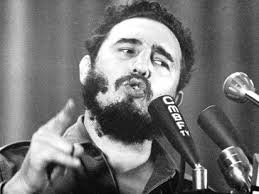
Fidel Castro
Almost immediately, hundreds of thousands of Cubans began fleeing to America. The first émigrés were more than 215,000 Batista followers. The exodus increased, peaking at approximately 78,000 in 1962.
In October, 1962, Castro stopped regularly scheduled travel between the two countries, and asylum seekers began sailing from Cuba to Florida.
Between 1962 and 1979, hundreds of thousands of Cubans entered the United States under the Attorney General’s parole authority.
By 2017, more than 1.53 million Cubans were living in Florida, where the population of Miami was about one-third Cuban. Their sheer numbers transformed the state’s political, economic and cultural life. And not entirely for the better.
Many of these Cubans viewed themselves as political exiles, rather than immigrants, hoping to eventually return to Cuba after its Communist regime fell from power.
With so many discontented immigrants concentrated in Florida, they became a potential force for politicians to court.
And the issue guaranteed to sway their votes was unrelenting hostility to Castro. Unsurprisingly, most of their votes went to Right-wing Republicans.
John F. Kennedy was the first President to face this dilemma.
During the closing months of the administration of President Dwight D. Eisenhower, the CIA had begun training Cuban exiles for an invasion of their former homeland.
The exiles’ goal: To do what Castro had done–seek refuge in the mountains and launch a successful anti-Castro revolution.
But word of the coming invasion quickly leaked: The exiles were terrible secret-keepers. (A joke at the CIA went: “A Cuban thinks a secret is something you tell to only 300 people.”)
Kennedy insisted the invasion must appear to be an entirely Cuban enterprise. He refused to commit U.S. Marines and Air Force bombers.
More than 1,400 invaders landed on April 17, 1961 at the Bay of Pigs—and were quickly overwhelmed, with hundreds of the men taken prisoner.
Kennedy publicly took the blame for its failure: “Victory has a hundred fathers but defeat is an orphan.” But privately he seethed, and ordered the CIA to redouble its efforts to remove Castro at all costs.
To make certain his order was carried out, he appointed his brother, Robert—then Attorney General—to oversee the CIA’s “Castro removal” program.
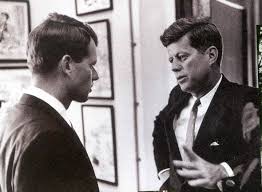
Robert F. Kennedy and John F. Kennedy
It’s here that America’s obsession with Cuba entered its darkest and most disgraceful period.
The CIA and the Mafia entered into an unholy alliance to assassinate Castro—each for its own benefit:
- The CIA wanted to please Kennedy;
- The mobsters wanted to regain their casino and brothel holdings that had made Cuba their private playground in pre-Castro times; and
- They also hoped to use their pose as patriots to win immunity from future prosecution.
The CIA supplied poisons and explosives to various members of the Mafia. It was then up to the mobsters to assassinate Castro.
The CIA asked Johnny Roselli, a mobster linked to the Chicago syndicate, to go to Florida in 1961 and 1962 to organize assassination teams of Cuban exiles. They were to infiltrate their homeland and assassinate Castro.
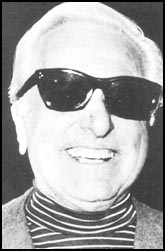
Johnny Roselli
Roselli called upon two other crime figures: Chicago Mafia boss Sam Giancana and Santos Trafficante, the Cosa Nostra chieftain for Tampa, for assistance.
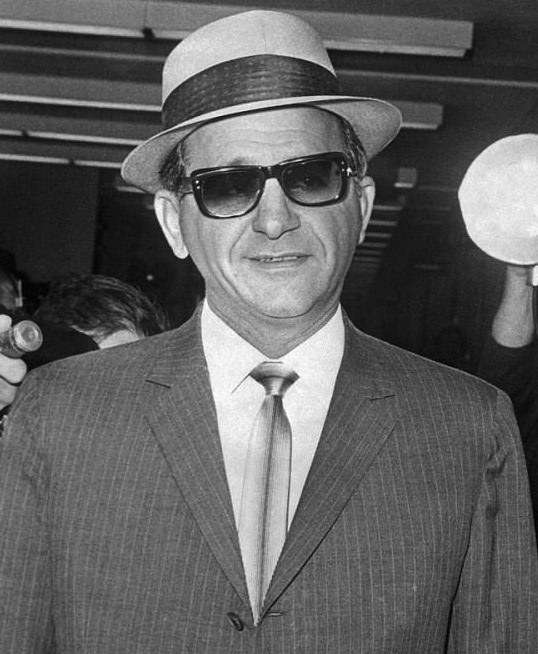
Sam Giancana
Giancana, using the name “Sam Gold” in his dealings with the CIA, was meanwhile being hounded by the FBI on direct orders of Attorney General Robert Kennedy.
The mobsters were authorized to offer $150,000 to anyone who would kill Castro and were promised any support the Agency could yield.
Giancana was to locate someone who was close enough to Castro to be able to drop pills into his food. Trafficante would serve as courier to Cuba, helping to make arrangements for the murder on the island.
Roselli was to be the main link between all of the participants in the plot.
The available sources disagree on what actually happened. Some believe that the Mob made a genuine effort to “whack” Fidel.
Others are convinced the mobsters simply ran a scam on the government. They pretended to carry out their “patriotic duty” while in fact making no effort at all to penetrate Castro’s security.
The CIA’s war against Castro was known as Operation Mongoose—the mongoose being a traditional enemy of the cobra. And those entrusted with this assignment were known as the Special Group.
“We were hysterical about Castro at about the time of the Bay of Pigs and thereafter,” Secretary of Defense Robert S. McNamara later testified before Congress about these efforts. “And there was pressure from JFK and RFK to do something about Castro.”
ABC NEWS, ALTERNET, AMERICABLOG, AP, BABY BOOMER RESISTANCE, BARACK OBAMA, BAY OF PIGS, BUZZFEED, CBS NEWS, CNN, CORONAVIRUS, CROOKS AND LIARS, CUBA, DAILY KOZ, DAVID BROOKS, DONALD TRUMP, DRUDGE RETORT, DWIGHT D. EISENHOWER, EBOLA, FACEBOOK, FIDEL CASTRO, FIVETHIRTYEIGHT, FULGENCIO BATISTA, GALLUP POLL, GEORGE W. BUSH, HARPER’S MAGAZINE, JOHN F. KENNEDY, MEDIA MATTERS, MOTHER JONES, MOVEON, MSNBC, NBC NEWS, NEWSWEEK, NPR, PBS NEWSHOUR, POLITICO, POLITICUSUSA, RAW STORY, REUTERS, SALON, SEATTLE TIMES, SLATE, TALKING POINTS MEMO, THE ATLANTIC, THE CHICAGO SUN-TIMES, THE CHICAGO TRIBUNE, THE DAILY BEAST, THE DAILY BLOG, THE GUARDIAN, THE HILL, THE HUFFINGTON POST, THE LOS ANGELES TIMES, THE NATION, THE NEW REPUBLIC, THE NEW YORK TIMES, THE VILLAGE VOICE, THE WASHINGTON POST, THINKPROGRESS, TIM ZIEMER, TIME, TOLUSE OLORUNNIPA, TRUTHDIG, TRUTHOUT, TWITTER, TWO POLITICAL JUNKIES, U.S. NEWS & WORLD REPORT, UPI, USA TODAY, WASHINGTON WEEK IN REVIEW, WHITE HOUSE PANDEMIC OFFICE, WONKETTE, YAMICHE ALCINDOR
In Bureaucracy, History, Medical, Politics, Social commentary on August 6, 2021 at 12:10 am
On March 13, 2020, President Donald Trump addressed a subject he clearly resented being asked about: His gutting of an early-warning medical system set up to confront pandemics.
In 2014, following the Ebola outbreak in West Africa, President Barack Obama created the White House Pandemic Office, run by the White House’s National Security Council (NSC).
Heading it was Rear Admiral Tim Ziemer. Under President George W. Bush, he had successfully fought malaria overseas. His topflight team of infectious disease and public health experts was creating a national bio-defense strategy. Their goal: Coordinate agencies to make the United States more resilient to the threat of epidemics and biological warfare.
In May, 2018, Trump ordered the NSC’s global health security unit shut down. The reason: Trump’s pathological jealousy of and hatred for Obama.
On March 13, at a White House press conference, Yamiche Alcindor, the PBS Newshour’s White House Correspondent, dared to ask Trump: “My first question is: You said that you don’t take responsibility, but you did disband the White House Pandemic Office and the officials that were working in that office left this administration abruptly. So, what responsibility do you take to that?
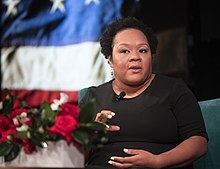
Yamiche Alcindor
“And the officials that worked in that office said that you—that the White House lost valuable time because that office was disbanded. What do you make of that?”
Then followed this exchange:
TRUMP: Well, I just think it’s a nasty question, because what we’ve done is—and Tony had said numerous times that we saved thousands of lives because of the quick closing. And when you say me, I didn’t do it. We have a group of people.
ALCINDOR: It’s your administration.
TRUMP: I could ask, perhaps—my administration, but I could perhaps ask Tony about that, because I don’t know anything about it. I mean, you say we did that. I don’t know anything about it.
ALCINDOR: You don’t know about the—
TRUMP: We’re spending—
ALCINDOR: — About the reorganization that happened in the National Security Council?
TRUMP: No, I don’t know. It’s the—it’s the administration, perhaps they do that. You know, people let people go. You know, you used to be with a different newspaper than you are now. You know, things like that happen.
Trump’s refusal to accept responsibility for the greatest crisis of his tenure as President flagrantly contrasts with how President John F. Kennedy responded to a similar crisis.
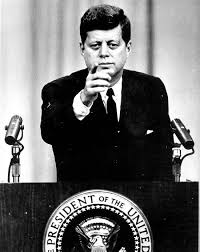
John F. Kennedy press conference
On April 17, 1961, the U.S. Navy landed 1,400 CIA-trained Cuban exiles on Cuba to overthrow the Communist government of Fidel Castro. Landing at the Bay of Pigs, they were supposed to head into the mountains—as Castro himself had done against the dictatorship of Fulgencio Batista in 1956—and raise the cry of revolution.
When the invaders surged onto the beaches, they found Castro’s army waiting for them. Many of the invaders were killed on the spot. Others were captured.
It was a major public relations setback for the newly-installed Kennedy administration, which had raised hopes for a change in American-Soviet relations.
Kennedy, trying to abort widespread criticism, publicly took the blame for the setback: “There’s an old saying that victory has a hundred fathers and defeat is an orphan….I’m the responsible officer of the Government.”
Ironically, the crisis—and his taking responsibility for it—hugely increased Kennedy’s popularity. The national Gallup Poll reported that 83 percent of Americans approved of the job he was doing as President.
To a White House aide, Kennedy half-joked: “It’s just like Eisenhower—the worse I do, the more popular I get.”
By contrast, Trump’s “handling” of the Coronavirus plague brought him the worst reviews of his Presidency.
Conservative New York Times columnist David Brooks attacked Trump in terms usually reserved for serial killers. On the March 13, 2020 edition of The PBS Newshour, he said:
“This is what happens when you elect a sociopath as president, who doesn’t care, who has treated this whole thing for the past month as if it’s about him. ‘How do people like me?’ Minimizing the risks. ‘Does the stock market reflect well on me?’ And he hasn’t done the things a normal human being would do, which was to, let’s take precautions….
“And he’s incapable of that. And he’s even created an information distortion field around him.”
And Toluse Olorunnipa, White House reporter for The Washington Post, said: “He likes having powerful people around him to praise what he’s done. He tried to get them all up to the podium to talk about how great of a response he has provided, and I think that’s—trying to get that co-signed from CEOs and powerful people is a key part of his presidency.”
Kimberly Atkins, senior Washington news correspondent for WBUR, Boston’s NPR News Station: “We have seen the president not only be all over the place but his instinct was to try to downplay it [Coronavirus] because he saw it as a political threat—to say that people would get better….
“Even today he’s saying, ‘We have everything under control. We have this website that people can go to and find out where they can get tested.’ The website isn’t even done yet.”
1984 NOVEL, 9/11, ABC NEWS, ADOLF HITLER, ALTERNET, AMERICABLOG, AP, BABY BOOMER RESISTANCE, BARACK OBAMA, BBC, BILL CLINTON, BIRTH CONTROL, BLACKS, BLOOMBERG NEWS, BUZZFEED, CBS NEWS, CNN, COMMUNISM, CROOKS AND LIARS, DAILY KOZ, DENNIS HASTERT, DISABLED, DISCRIMINATION, DWIGHT D. EISENHOWER, EDWARD R. MURROW, ENVIRONMENTALISTS, FACEBOOK, FAMILY RESEARCH COUNCIL, FIVETHIRTYEIGHT, FRANKLIN D. ROOSEVELT, GAYS, GEORGE C. MARSHALL, GEORGE H.W. BUSH, GEORGE ORWELL, GOP, GREAT SOCIETY, HARPER’S MAGAZINE, HARRY S. TRUMAN, HISPANICS, HIV MEDICATION, HOUSE OF REPRESENTATIVES, HUFFINGTON POST, J. ROBERT OPPENHEIMER, JOHN BIRCH SOCIETY, JOHN F. KENNEDY, JOHN STEINBECK, JOSEPH R. MCCARTHY, JOSEPH STALIN, JOSH DUGGAR, KGB, LEE ATWATER, LEON TROTSKY, LESBIANS, LIBERALS, LUCILLE BALL, LYNDON B. JOHNSON, MEDIA MATTERS, MEDICAL CARE, MEIN KAMPF, MICHAEL DUKAKIS, MICHELLE BACHMANN, MITT ROMNEY, MOTHER JONES, MOVEON, MSNBC, MUSLIMS, NBC NEWS, NEW REPUBLIC, NEWSDAY, NEWSWEEK, NPR, PBS NEWSHOUR, PETE SEEGER, POLITICO, POLITICUSUSA, PROPAGANDA, RAW STORY, RELIGION, REPUBLICANS, REUTERS, RICHARD NIXON, RICK SANTORUM, ROBERT WELCH, RODNEY KING RIOTS, SALON, SCAPEGOATING, SEATTLE TIMES, SHARIA LAW, SLATE, SOCIALISTS, SOVIET UNION, TALKING POINTS MEMO, THE ATLANTIC, THE CHICAGO SUN-TIMES, THE CHICAGO TRIBUNE, THE DAILY BEAST, THE DAILY BLOG, THE GUARDIAN, THE HILL, THE HUFFINGTON POST, THE LOS ANGELES TIMES, THE NATION, THE NEW REPUBLIC, THE NEW YORK TIMES, THE NEW YORKER, THE RELIGIOUS FREEDOM RESTORATION ACT, THE VILLAGE VOICE, THE WASHINGTON POST, THINKPROGRESS, TIME, TRANSGENDERS, TRUTHDIG, TRUTHOUT, TWITTER, TWO POLITICAL JUNKIES, U.S. NEWS & WORLD REPORT, UPI, USA TODAY, WILLIAM L. SHIRER, WOMEN, WONKETTE, WORLD WAR ii
In Bureaucracy, History, Politics, Social commentary on July 23, 2021 at 12:17 am
Republicans and their Rightist allies have repeatedly compared President Barack Obama to Adolf Hitler. But their propaganda campaign draws heavily on the Nazi leader’s own advice.
In Mein Kampf, Hitler laid out his formula for successful propaganda: “All effective propaganda must be confined to a few bare essentials.
“Those must be expressed as far as possible in stereotypical formulas. These slogans should be persistently repeated until the very last individual has come to grasp the idea that has been put forward.”
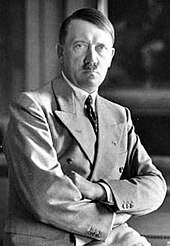
Adolf Hitler
Bundesarchiv, Bild 146-1990-048-29A / CC-BY-SA 3.0, CC BY-SA 3.0 DE <https://creativecommons.org/licenses/by-sa/3.0/de/deed.en>, via Wikimedia Commons
Consider the vocabulary Right-wingers use to describe their political adversaries:
“Liberals,” “radicals, “bankrupting,” “treason,” subversion,” “slander,” “terrorism,” “betrayal,” “catastrophe,” “shattering the American dream,” “leftists,” “Communists,” “government takeover,” “socialism,” “power grab,” “secularism,” “environmentalism.”
In recent years, the GOP has targeted gays and lesbians as America’s subversive enemies:
These attacks have come as thinly disguised as efforts to “restore religious freedom.”
On March 26, 2015, Michigan Governor Mike Pence signed into law the “Religious Freedom Restoration Act. This allows public agencies and private businesses to refuse service to anyone under the claim that their “religious beliefs” have been affronted.
Religious beliefs can be cited as a defense when sued by a private party. And the State government is legally prevented from intervening if a person claims that his/her “deeply-held religious beliefs” was the reason for acting—or not acting—in a certain way.
Republicans have introduced similar “right-to-discriminate” legislation in other states as well:
- In Kansas, lawmakers voted to exempt individuals from providing any service that was “contrary to their sincerely held religious beliefs.”
- That bill passed the state’s House chamber on February 11, 2014, triggering national backlash. It stalled in the Senate and didn’t advance beyond that body.
- In January, 2014, South Dakota Republicans introduced a bill to let businesses refuse to serve same-sex couples on the grounds that “businesses are private and that their views on sexual orientation are protected to the same extent as the views of private citizens.”
- The South Dakota bill–which was killed in February, 2014–would have made it illegal for a gay person to file a lawsuit charging discrimination.
“Uppity” women—those seeking control over their own bodies—have also become targets for Republicans. Since 2011 alone, Republican state legislatures have passed more than 400 restrictive laws against abortion.
At the outset of the Coronavirus crisis in the United States, 11 Republican governors excluded abortion care from the essential services that were allowed to operate amid shutdowns.
Another favorite target of Republicans: Muslims.
Since 9/11, Republicans have warned that Muslims are trying to impose Sharia (Islamic law) on America.
Ironically, adherents of Sharia and Right-wing legislators share many of the same goals:
- Women should have fewer rights than men.
- Abortion should be illegal.
- There should be no separation between church and state.
- Religion should be taught in school.
- Religious doctrine trumps science.
- Government should be based on religious doctrine.
- Homosexuality should be outlawed.
Republicans often claim their opposition to homosexuality stems from a desire to protect children.
But the Child Molestation Research & Prevention Institute states that 90% of child molesters target children in their network of family and friends, and the majority are men married to women.
At the same time, Republicans have refused to condemn such heterosexual—and Right-wing—child molesters as Dennis Hastert and Josh Duggar.
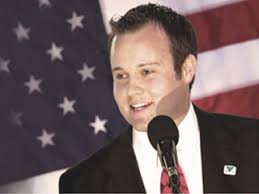
Josh Duggar, the “all-American” child molester
On May 21, 2015, responding to press leaks, Duggar resigned as director of the Family Research Council, a Right-wing organization dedicated to fighting sexually-oriented issues such as same-sex marriage, abortion and pornography.
In 2002-3, as a 14-15 year-old, Duggar had fondled the breasts and vaginas of five underage girls–four of whom were his own sisters.
And on October 28, 2015, Hastert—Speaker of the House of Representatives from 1999 to 2007—pleaded guilty to structuring money transactions in a way to avoid requirements to report where the money was going.

Dennis Hastert
The reason: To conceal the truth about his past as a child molester. Hastert had abused four young boys when he was their high school wrestling coach. One was only 14 years old.
Despite such setbacks, the politics of “smear and fear” have been good to Republicans—and their Right-wing allies.
It was the “politics of hate,” more than anything else—at a time when the United States was at peace and generally prosperous—that brought Donald Trump to the White House in 2016.
And it was only the spread of Coronavirus—which Trump ignored—that turned him out of the White House in 2020.
The Republican “base” refuses to learn that those who portray themselves as morally superior are:
- Hypocrites, who are in effect saying: “Do as I say, not as I do,” or
- Fanatics, who intend to force their version of morality on others.
So long as millions of hate-filled Right-wingers support the endless succession of “two minute hates,” Republicans will continue to target an endless series of victims.
The good news: As blacks, Hispanics, women, gays and others become a significant political force, Republicans will stop attacking them and court them for votes.
The bad news: Republicans will move on to find other still-helpless scapegoats for America’s troubles.


 Bureaucracybuster's Blog
ABC NEWS, ALTERNET, AMERICABLOG, AMERICAN CAESARS: THE LIVES OF THE PRESIDENTS FROM FRANKLIN D. ROOSEVELT TO GEORGE W. BUSH (BOOK), AP, AUGUSTUS CAESAR, BABY BOOMER RESISTANCE, BBC, BENGHAZI, BILL CLINTON, BLOOMBERG NEWS, BUREAUCRACY, BUZZFEED, CALIGULA, CBS NEWS, CLAUDIUS, CNN, CONDOLEEZA RICE, CROOKS AND LIARS, DAILY KOZ, DICK CHENEY, DOMITIAN, DONALD RUMSFELD, DONALD TRUMP, DWIGHT D. EISENHOWER, FACEBOOK, FBI, FIVETHIRTYEIGHT, FRANKLIN D. ROOSEVELT, GAIUS SUETONIUS TRANQUILLUS, GALBA, GEORGE H.W. BUSH, GEORGE W. BUSH, HARPER’S MAGAZINE, HARRY S. TRUMAN, HUFFINGTON POST, JEB BUSH, JOHN F. KENNEDY, JULIUS CAESAR, LIBYA, LYNDON B. JOHNSON, MEDIA MATTERS, MOTHER JONES, MOVEON, MSNBC, NBC NEWS, NERO, NEW REPUBLIC, NEWSDAY, NEWSWEEK, NIGEL HAMILTON, NPR, PAUL WOLFOWITZ, PBS NEWSHOUR, POLITICO, POLITICUSUSA, RAW STORY, REPUBLICAN PARTY, REPUBLICANS, REUTERS, SALON, SEATTLE TIMES, SLATE, TALKING POINTS MEMO, TERRORISM, THE ATLANTIC, THE CHICAGO SUN-TIMES, THE CHICAGO TRIBUNE, THE DAILY BEAST, THE DAILY BLOG, THE GUARDIAN, THE HILL, THE HUFFINGTON POST, THE LOS ANGELES TIMES, THE NATION, THE NEW REPUBLIC, THE NEW YORK TIMES, THE NEW YORKER, THE TWELVE CAESARS, THE VILLAGE VOICE, THE WASHINGTON POST, THINKPROGRESS, TIBERIUS, TIME, TITUS, TRUTHDIG, TRUTHOUT, TWITTER, TWO POLITICAL JUNKIES, U.S. NEWS & WORLD REPORT, UPI, USA TODAY, VESPASIAN, WONKETTE, WORLD TRADE CENTER
SALUTING THE AMERICANS WHO GAVE US 9/11
In Bureaucracy, History, Military, Politics, Social commentary on September 13, 2021 at 12:07 amOn October 16, 2015, then-Republican Presidential candidate Donald Trump told a brutal truth to take down his opponent, Jeb Bush, former governor of Florida.
Interviewed on Bloomberg TV, Trump said what—to Republicans—had been the unsayable about former President George W. Bush: “I mean, say what you want, the World Trade Center came down during his time.”
“Hold on,” said correspondent Stephanie Ruhle, “you can’t blame George Bush for that.”
“He was President, okay? Blame him or don’t blame him, but he was President,” Trump said. “The World Trade Center came down during his reign.”
Donald Trump
Immediately after Trump’s remarks, Jeb Bush rushed to his brother’s defense on Twitter: “How pathetic for @realdonaldtrump to criticize the president for 9/11. We were attacked & my brother kept us safe.”
Of course, “my brother” didn’t keep safe those 3,000 Americans who died on 9/11.
Nor did Jeb mention that, during his first eight months in office before September 11, “my brother” was on vacation 42% of the time.
But holding Bush accountable for the September 11, 2001 terror attacks on the Pentagon and World Trade Center is taboo for Right-wing Republicans.
Conversely, Republicans spent four years blaming President Barack Obama for the deaths of four Americans killed in an American consulate in Benghazi, Libya, in 2012.
The World Trade Center on September 11, 2001
Fortunately, British historian Nigel Hamilton has brutally laid bare the facts of this needless tragedy.
Hamilton is the author of several acclaimed political biographies, including JFK: Reckless Youth and Bill Clinton: Mastering the Presidency.
His book: American Caesars: The Lives of the Presidents from Franklin D. Roosevelt to George W. Bush, appeared in 2010.
It was inspired by a classic work of ancient biography: The Twelve Caesars, by Gaius Suetonius Tranquillus—known as Suetonius.
Suetonius, a Roman citizen and historian, had chronicled the lives of the first 12 Caesars of Imperial Rome: Julius Caesar, Augustus, Tiberius, Caligula, Claudius, Nero, Galba, Otho, Vitellius, Vespasian, Titus and Domitian.
Hamilton wanted to examine post-World War II United States history as Suetonius had examined that of ancient Rome: Through the lives of the 12 “emperors” who had held the power of life and death over their fellow citizens—and those of other nations.
For Hamilton, the “greatest of American emperors, the Caesar Augustus of his time,” was Franklin D. Roosevelt, who led his country through the Great Depression and World War II.
His “”great successors” were Harry S. Truman, Dwight D. Eisenhower and John F. Kennedy—who, in turn, contained the Soviet Union abroad and presided over sustained economic prosperity at home.
By contrast, “arguably the worst of all the American Caesars” was “George W. Bush, and his deputy, Dick Cheney, who willfully and recklessly destroyed so much of the moral basis of American leadership in the modern world.”
Among the most lethal of Bush’s offenses: The appointing of officials who refused to take seriously the threat posed by Al-Qaeda.
These included:
The only major administration official who did take Al-Qaeda seriously was Richard Clarke, the chief counter-terrorism adviser on the National Security Council. But Clarke’s position didn’t give him Cabinet-level rank.
Richard Clarke
This put him at a severe disadvantage when dealing with higher-ranking Bush officials—such as Cheney, Rumsfeld, Wolfowitz and Rice.
Clarke alerted Federal Intelligence agencies that “Al-Qaeda is planning a major attack on us.” He asked the FBI and CIA to report to his office all they could learn about suspicious persons or activities at home and abroad.
Finally, at a meeting with Condoleeza Rice on September 4, 2001, Clarke challenged her to “picture yourself at a moment when in the very near future Al-Qaeda has killed hundreds of Americans, and imagine asking yourself what you wish then that you had already done.”
Apparently, that moment never came for Rice—or any other Bush officials.
Seven days later, Al-Qaeda struck, and 3,000 Americans died horrifically—and needlessly.
Neither Bush, Cheney, Rice, Rumsfeld nor Wolfowitz ever apologized for their negligence. Nor has any of them ever been held accountable.
After 9/11, they wrapped themselves in the flag and posed as America’s saviors.
Only Richard Clarke—who had vainly argued for stepped-up security precautions and taking the fight to Al-Qaeda—gave that apology.
On March 24, 2004, Clarke testified at the public 9/11 Commission hearings. Addressing relatives of victims in the audience, he said: “Your government failed you, those entrusted with protecting you failed you, and I failed you.”
Share this: