Posts Tagged ‘JOE BIDEN’
2020 PRESIDENTIAL ELECTION, ABC NEWS, ALTERNET, AMERICABLOG, AP, BABY BOOMER RESISTANCE, BLOOMBERG, BUZZFEED, CBS NEWS, CNN, CROOKS AND LIARS, DAILY KOS, DAVID DEPAPE, DEMOCRATS, DONALD TRUMP, FIVETHIRTYEIGHT, FOX NEWS NETWORK, GERRYMANDERING, GLENN YOUNGKIN, HARPER’S MAGAZINE, JOE BIDEN, KARI LAKE, MARIA YOVANOVICH, MEDIA MATTERS, MEDICAID, MOTHER JONES, MOVEON, MSNBC, NANCY PELOSI, NATIONAL SECURITY COUNCIL, NBC NEWS, NEWSWEEK, NPR, PAUL PELOSI, POLITICO, POLITICUSUSA, QANON, RAW STORY, REPUBLICANS, REUTERS, SALON, SEATTLE TIMES, SLATE, TALKING POINTS MEMO, THE ATLANTIC, THE CHICAGO SUN-TIMES, THE CHICAGO TRIBUNE, THE DAILY BEAST, THE DAILY BLOG, THE GUARDIAN, THE HILL, THE HUFFINGTON POST, THE LOS ANGELES TIMES, THE NATION, THE NEW REPUBLIC, THE NEW YORK TIMES, THE VILLAGE VOICE, THE WASHINGTON POST, THINKPROGRESS, TIME, TRUTHDIG, TRUTHOUT, TWITTER, TWO POLITICAL JUNKIES, U.S. NEWS & WORLD REPORT, UPI, USA TODAY, VOTER HARASSMENT, VOTER ID LAWS, WATERGATE, WONKETTE
In Bureaucracy, History, Law, Law Enforcement, Politics, Social commentary on November 7, 2022 at 12:21 am
On November 14, 2019, the CNN website showcased an opinion piece by Jane Carr and Laura Juncadella entitled: “Fractured States of America.”
And it opened:
“Some worry that it’s already too late, that we’ve crossed a threshold of polarization from which there is no return. Others look toward a future where more moderate voices are heeded and heard, and Americans can find better ways to relate to each other. Still others look back to history for a guide—perhaps for what not to do, or at the very least for proof that while it’s been bad before, progress is still possible.”
A series of sub-headlines summed up many of the comments reported.
- “I was starting to hate people that I have loved for years.”
- “Voting for Trump cost me my friends.”
- “I feel like I’m living in hostile territory.”
- “Our children are watching this bloodsport.”
- “A student’s Nazi-style salute reflects the mate.”
- “Our leaders reflect the worst of us.”
- “I truly believe I will be assaulted over a bumper sticker.”
- “It already feels like a cold war.”
It’s natural to regret that the United States has become so self-destructively polarized. And to wish that its citizens could somehow reach across the chasm that divides them and find common cause with one another.
But that is to ignore the brutal truth that America now faces a choice:
- To submit to the tyrannical aggression of a ruthless political party convinced that they are entitled to power to manipulate and undermine the country’s democratic processes; or
- To fiercely resist that aggression and the destruction of those democratic processes.
In a November 14, 2019 column, “Republicans Can’t Abandon Trump Now Because They’re All Guilty,” freelance journalist Joel Mathis warned: “Trump’s abuses of power mirror those of the GOP as a whole. Republicans can’t turn on him, because doing so would be to indict their party’s entire approach to politics.”
For example:
- At the state level, GOP legislatures have passed numerous voter ID laws over the last decade. Officially, the reason has been to prevent non-citizens from voting. In reality, the motive is to depress turnout among Democratic constituencies.
- When Democrats have won elections, Republicans have tried to block them from carrying out their policies. In Utah, voters approved Medicaid expansion at the ballot box—but Republicans nullified this.
- In North Carolina, Republican legislators prevented voters from choosing their representatives. Instead, Republican representatives chose voters through partisan sorting. In September, 2020, the state’s Supreme Court ruled the legislative gerrymandered district map unconstitutional.
The upshot of all this: “The president and his party are united in the belief that their entitlement to power allows them to manipulate and undermine the country’s democratic processes….”


And even though Donald Trump is no longer President, he remains de facto head of the Republican party.
His “Big Lie”—that he, not Joe Biden, won the 2020 Presidential election, remains, for most Republicans—Gospel for the great majority of his party.
It was partly this falsehood that motivated David DePape, a QAnon addict and Stormtrumper, to assault Paul Pelosi, husband of House Speaker Nancy Pelosi, with a hammer in his San Francisco house.
Two Republicans who found the attack worthy of mockery were Arizona Republican gubernatorial nominee Kari Lake and Virginia Republican Governor Glenn Youngkin.
In Arizona, people who believe the “Stop the Steal” lies are filming and harassing voters, looking for supposed “mules” stuffing ballot boxes. Many of them wear military garb and are heavily-armed.
Even more dangerous: Election-denying candidates are running for secretary of state, county clerk and other positions of election administrative leadership in multiple states. If they win, they can use false fraud allegations to overturn future election results.
Which is exactly what they intend to do.
* * * * *
The United States has indeed become a polarized country. But it’s not the polarization between Republicans and Democrats, or between conservatives and liberals.
It’s the polarization between
- Those intent on enslaving everyone who doesn’t subscribe to their Fascistic beliefs and agenda—and those who resist being enslaved.
- Those who believe in reason and science—and those who believe in an infallible “strong man” who rejects both.
- Those who cherish education—and those who celebrate ignorance.
- Those who believe in the rule of law—and those who believe in their right to act as a law unto themselves.
- Those who believe in treating others (especially the less fortunate) with decency—and those who believe in the triumph of intimidation and force.
Those who hoped that Republicans would choose patriotism over partisanship got their answer on February 5, 2020.
That was when the Republican-dominated Senate—ignoring the overwhelming evidence against him—acquitted President Donald Trump on both impeachment articles: Obstruction of Congress and Abuse of Power.
It’s natural to regret that the United States has become a sharply divided nation. But those who lament this should realize there is only one choice:
Either non-Fascist Americans will destroy the Republican party and its voters that threaten to enslave them—or they will be enslaved by Republicans and their voters who believe they are entitled to manipulate and undermine the country’s democratic processes.
There is no middle ground.
9/11 TERRORIST ATTACKS, ABC NEWS, AFGHANISTAN, AIRPORT SECURITY, ALTERNET, AP, BIRTH CERTIFICATES, BUZZFEED, CBS NEWS, CNN, CROOKS AND LIARS, DAILY KOS, DEPARTMENT OF HOMELAND SECURITY, DEPARTMENT OF MOTOR VEHICLES, DRIVER'S LICENSES, FACEBOOK, FBI, IDENTIFICATION, JOE BIDEN, MOHAMMED ATTA, MOTHER JONES, MOVEON, MSNBC, NATIONAL CRIME INFORMATION CENTER (NCIC), NATIONAL GUARD, NBC NEWS, NEWSWEEK, NPR, PASSPORTS, PBS NEWSHOUR, POLITICO, RAW STORY, REAL ID ACT, REUTERS, SALON, SAN FRANCISCO FEDERAL BUILDING, SEATTLE TIMES, SECURITY THEATER, SLATE, SOCIAL SECURITY CARD, TALIBAN, TERRORISM, THE ATLANTIC, THE CHICAGO SUN-TIMES, THE CHICAGO TRIBUNE, THE DAILY BEAST, THE GUARDIAN, THE HILL, THE HUFFINGTON POST, THE LOS ANGELES TIMES, THE NATION, THE NEW YORK TIMES, THE WASHINGTON POST, THEODORE BUNDY, TIME, TRANSPORTATION SECURITY ADMINISTRATION, TWITTER, U.S. NEWS & WORLD REPORT, UPI, USA TODAY, WORLD TRADE CENTER
In Bureaucracy, Business, History, Law, Law Enforcement, Military, Politics, Social commentary on November 3, 2022 at 12:10 am
In 2005—four years after 9/11—Congress passed the Real ID Act as a counter-terrorism measure. Its goal was to set security standards for government-issued IDs.
The Act started to be introduced in late 2013. But then its enforcers decided that some states hadn’t complied with all of its requirements.
As a result, driver’s licenses from those states will no longer suffice to pass through airport security. And that includes domestic flights as well as international ones.
The reason: Licenses issued by those states don’t contain enough identifying information to pass muster with the Transportation Security Administration (TSA).
The new IDs will contain one of five small stickers in the upper right corner to comply.
But the final date for compliance with Real ID has been repeatedly postponed—especially during the COVID-19 pandemic. It current deadline is May 3, 2023.
After that, only those who have a REAL ID will be allowed to board domestic flights at TSA security checkpoints and enter certain federal buildings and properties.
So how are residents of these states supposed to cope? The Federal Government is advising them to get a passport.
But, as one New York traveler outlined: “To get a passport I’ll first need to get a certified copy of my birth certificate.
“And to get a copy of my birth certificate I need only to submit a copy of my driver’s license. A copy, no face-to-face, is-that-really you?
“So a New York driver’s license isn’t good enough for flying but it is good enough to get a birth certificate, which gets me a passport, which allows me to fly.”
In California, the following documents are among those accepted as proof of identity:
- Valid U.S. passport
- Social Security card
- Original or certified copy of U.S. birth certificate
- Valid Permanent Resident card
- Utility bills (at least two from different companies)
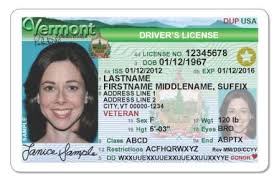
Sample state ID card that’s acceptable under the Real ID Act
So much of what passes for security is actually security theater. It doesn’t actually make us safer, but it makes us feel safer.
And it makes us feel the government is keeping us safe, even when it isn’t.
Consider this: A friend of mine—whom I’ll call Jack—recently applied for a Real ID card as issued by the California Department of Motor Vehicles. He brought a certified copy of his birth certificate, bills from AT&T and Pacific Gas and Electric.
The birth certificate easily passed muster. But for a moment there was a problem with the bills from the utility companies: Jack had been getting his mail through a P.O. box, rather than at the apartment building where he lived.
And the “examiner” wanted to see a document with his home address on it.
Fortunately, Jack was able to fish out another bill with that on it. The “examiner” was satisfied, and Jack left the DMV assured that he would soon receive his TSA-approved Real ID card.
So: How does showing a utility bill document prove your integrity?
No doubt Mohammed Atta—the ringleader of the September 11, 2001 attacks—faithfully paid his utility bills, right up to the day when he highjacked American Airlines Flight 11 and crashed the plane into the North Tower of the World Trade Center.
And, yes, a birth certificate proves you were born in the United States—but so was Timothy McVeigh, who, in 1995, blew up Oklahoma City bombing, killing 168 people.
Nor does a “school document”—which can get you a Real ID card—reveal anything about the character of the person.
Theodore Bundy attended the University of Puget Sound and the University of Washington—before embarking on his career as a burglar, kidnapper, rapist and serial killer.
Another form of security theater includes checking photo IDs to enter State and Federal office buildings.
Knowing a person’s identity is useful—if you have a reliable database system to match it against, such as the FBI’s National Crime Information Center (NCIC).
But if you lack this, forcing people to “show me your ID” is pointless. And that’s assuming the ID isn’t fraudulent.
But people watching the guard performing this security theater ritual assume: “The guard must know what he’s looking for. So we have to be safer for his checking those IDs.”
In fact, most security guards have little training and even less experience. Many of them don’t carry firearms and lack self-defense skills.
According to Salary.com: The median annual salary for an unarmed security guard is $34,696, with a range usually between $31,004 and $39,096.
Not exactly a salary geared to attract “the best and the brightest,” is it?
Making all of this even more infuriating: In August, 2021, at least 76,000 unvetted Afghans were admitted into the United States.
The reason: They were too cowardly to fight the Taliban.
Americans had spent 20 years training them to do just that. And as soon as the Taliban launched a major offensive, they fled to Kabul Airport—leaving their wives, girlfriends, mothers and sisters behind to face slavery and brutality.
So while cowardly Afghans—many of whom no doubt had terrorist backgrounds—didn’t have to prove themselves trustworthy, lifelong and law-abiding Americans must.
ABC NEWS, ALTERNET, AMERICAN TABLOID, AP, ASSASSINATION, BUZZFEED, CBS NEWS, CIA, CNN, COMMUNISM, CROOKS AND LIARS, CUBA, CUBAN MISSILE CRISIS, DAILY KOZ, DWIGHT D. EISENHOWER, FACEBOOK, FBI, FIDEL CASTRO, FLORIDA, FULGENCIO BATISTA, GUAM, GUS RUSSO, JAMES ELLROY, JOE BIDEN, JOHN F. KENNEDY, JOHNNY ROSELLI, LEE HARVEY OSWALD, LIVE BY THE SWORD, LYNDON B. JOHNSON, MAFIA, MOTHER JONES, MOVEON, NBC NEWS, NEWSWEEK, NEWT GINGRICH, NIKITA KHRUSHCHEV, NORTH KOREA, NPR, NUCLEAR WAR, POLITICO, RAW STORY, REUTERS, ROBERT F. KENNEDY, SALON, SAM GIANCANA, SEATTLE TIMES, SLATE, THE ATLANTIC, THE CHICAGO SUN-TIMES, THE CHICAGO TRIBUNE, THE DAILY BEAST, THE GUARDIAN, THE HILL, THE HUFFINGTON POST, THE LOS ANGELES TIMES, THE NATION, THE NEW YORK TIMES, THE WASHINGTON POST, TIME, TWITTER, U.S. NEWS & WORLD REPORT, UKRAINE, UP, UPI, USA TODAY, VLADIMIR PUTIN, WARREN COMMISSION
In Bureaucracy, History, Law, Law Enforcement, Military, Politics, Social commentary on October 21, 2022 at 12:10 am
“John and Robert Kennedy knew what they were doing. They waged a vicious war against Fidel Castro—a war someone had to lose.”
And the loser turned out to be John F. Kennedy.
So writes investigative reporter Gus Russo in Live By the Sword: The Secret War Against Castro and the Death of JFK, published in 1998.
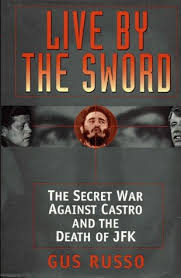
In what is almost certainly the definitive account of the assassination of President John F. Kennedy, Russo reaches some startling—but highly documented—conclusions:
- Lee Harvey Oswald assassinated Kennedy.
- He did it alone.
- Oswald, a former Marine, was a committed Marxist–whose hero was Castro.
- The CIA’s ongoing campaign to overthrow and/or assassinate Castro was an open secret throughout the Gulf.
- Oswald visited New Orleans in the spring of 1963.
- There he learned that Castro was in the crosshairs of the CIA.
- Oswald told his Russian-born wife, Marina: “Fidel Castro needs defenders. I’m going to join his army of volunteers.”
- Jack Ruby, a Dallas nightclub owner, murdered Oswald because he was distraught over Kennedy’s death.
- Ruby was not part of a Mafia conspiracy to silence Oswald.
- Skeptics of the Warren Commission—which concluded that Oswald had acted alone—asked the wrong question: “Who killed Kennedy?”
- They should have asked: “Why was he killed?”
- The answer–according to Russo: “The Kennedys’ relentless pursuit of Castro and Cuba backfired in tragedy on that terrible day in November, 1963.”
Another book well worth reading about America’s Cuban obsession during the early 1960s is American Tabloid, by James Ellroy.
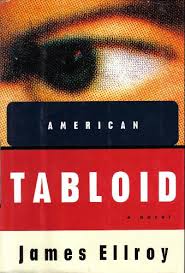
Although a novel, it vividly captures the atmosphere of intrigue, danger and sleaziness that permeated that era in a way that dry, historical documents never can.
“The 50’s are finished,” reads its paperback dust jacket. “Zealous young lawyer Robert Kennedy has a red-hot jones to nail Jimmy Hoffa. JFK has his eyes on the Oval Office.
“J. Edgar Hoover is swooping down on the Red Menace. Howard Hughes is dodging subpoenas and digging up Kennedy dirt. And Castro is mopping up the bloody aftermath of his new Communist nation….
“Mob bosses, politicos, snitches, psychos, fall guys and femmes fatale. They’re mixing up a Molotov cocktail guaranteed to end the country’s innocence with a bang.”
Among the legacies of America’s twisted romance with anti-Castro Cubans:
- Following the JFK assassination, there was a coverup.
- Its purposes: To protect the reputation of the United States government–and that of its newly-martyred President.
- Thus, the CIA and FBI concealed the CIA-Mafia assassination plots from the Warren Commission assigned to investigate Kennedy’s murder.
- Other government officials participating in the coverup included Attorney General Robert F. Kennedy and President Lyndon B. Johnson.
- Ironically, this secrecy ignited the widespread—and false—belief that the President had died at the hands of a government conspiracy.
- Robert Kennedy feared that his relentless pursuit of Castro might have led Castro to “take out” JFK first.
- Fearing his own assassination if he continued Kennedy’s efforts to murder Castro, President Johnson ordered the CIA to halt its campaign to overthrow and/or assassinate the Cuban leader.
- The huge Cuban community throughout Florida—and especially Miami—continues to exert a blackmailing influence on American politics.
- Right-wing politicians from Richard Nixon to Donald Trump have reaped electoral rewards by catering to the demands of this hate-obsessed voting block.
- These Cuban ex-patriots hope that the United States will launch a full-scale military invasion of the island to remove Castro.
The Cuban Missile Crisis was the deadliest moment of the Cold War, when the world stood only minutes away from nuclear Armageddon.
That crisis stemmed from America’s twisted obsession with Cuba, an obsession that continues today.
Sixty years after that crisis, the world wonders: Is nuclear war about to erupt?
And, once again, that decision lies in the hands of two men—Vladimir Putin and Joe Biden—out of a world population of more than seven billion.
Since launching a war on Ukraine on February 24, Putin has seen his initial victories turn sour.
By July, after five months of fierce Ukrainian resistance, the Russians were stymied as they tried to conquer the remainder of Donbas. In late August, Ukraine launched a counteroffensive in the southern region of Kherson.
By September, Ukrainian forces recaptured much of the northeastern Kharkiv region, including the city of Izium, which the Russians had been using as a logistics hub.
On September 21, Putin announced the partial mobilization of 300,000 military reservists. All male citizens below 60 are now eligible to be drafted. This led at least 194,000 Russian men to seek refuge in such neighboring countries as Turkey, Georgia, Kazakhstan and Mongolia.
That same day, Putin warned that Russia commands a nuclear arsenal. He did not say whether he would turn it against Ukraine or NATO countries, including the United States.
Even if nukes were used only against Ukraine, the final result could be a full-scale nuclear war.
Interviewed on CNN, President Joe Biden described Putin thus: “I think he is a rational actor who has miscalculated significantly.”
Nikita Khrushchev, facing a choice of humiliation or Armageddon during the Cuban Missile Crisis, chose humiliation—so his country could live another day.
It remains to be seen if Vladimir Putin is willing to make the same decision.
ABC NEWS, ALTERNET, AMERICAN TABLOID, AP, ASSASSINATION, BUZZFEED, CBS NEWS, CIA, CNN, COMMUNISM, CROOKS AND LIARS, CUBA, CUBAN MISSILE CRISIS, DAILY KOZ, DONALD TRUMP, DWIGHT D. EISENHOWER, FACEBOOK, FBI, FIDEL CASTRO, FLORIDA, FULGENCIO BATISTA, GUAM, GUS RUSSO, JAMES ELLROY, JOE BIDEN, JOHN F. KENNEDY, JOHNNY ROSELLI, LEE HARVEY OSWALD, LIVE BY THE SWORD, LYNDON B. JOHNSON, MAFIA, MOTHER JONES, MOVEON, NBC NEWS, NEWSWEEK, NIKITA KHRUSHCHEV, NORTH KOREA, NPR, NUCLEAR WAR, POLITICO, RAW STORY, REUTERS, ROBERT F. KENNEDY, SALON, SAM GIANCANA, SEATTLE TIMES, SLATE, THE ATLANTIC, THE CHICAGO SUN-TIMES, THE CHICAGO TRIBUNE, THE DAILY BEAST, THE GUARDIAN, THE HILL, THE HUFFINGTON POST, THE LOS ANGELES TIMES, THE NATION, THE NEW YORK TIMES, THE WASHINGTON POST, TIME, TWITTER, U.S. NEWS & WORLD REPORT, UKRAINE, UP, UPI, USA TODAY, VLADIMIR PUTIN, WARREN COMMISSION
In Bureaucracy, History, Law, Law Enforcement, Military, Politics, Social commentary on October 20, 2022 at 12:10 am
On October 22, 1962, President John F. Kennedy went on nationwide TV to announce the discovery of the missiles and his blockade of Cuba.
He warned that any nuclear missile launched from Cuba against any nation would be regarded as an attack on the United States by the Soviet Union—and would trigger “a full retaliatory response” upon the U.S.S.R.
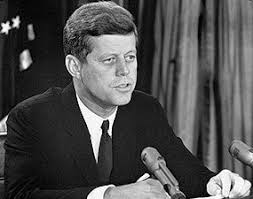
John F. Kennedy address the nation
And he demanded that the Soviets remove all of their offensive weapons from Cuba: “The cost of freedom is always high, but Americans have always paid it. And one path we shall never choose, and that is the path of surrender or submission.”
On October 26, the United States raised the readiness level of SAC forces to DEFCON 2—the step just short of war. For the only time in U.S. history, B-52 bombers were dispersed to various locations and made ready to take off, fully equipped, on 15 minutes’ notice.
Other measures taken included:
- One-eighth of America’s 1,436 bombers were on airborne alert.
- About 145 intercontinental ballistic missiles stood on ready alert.
- Air Defense Command redeployed 161 nuclear-armed interceptors to 16 dispersal fields within nine hours with one-third maintaining 15-minute alert status.
- Twenty-three nuclear-armed B-52 were sent to orbit points within striking distance of the Soviet Union.
An invasion date was set for October 29. But the Kennedy Administration—and the American military—didn’t know that the Russian soldiers guarding the missiles had been armed with tactical nuclear weapons.
Had the Marines gone in, those mini-nukes would have been used. And a fullscale nuclear exchange between the United States and the Soviet Union would have almost certainly followed.
At the height of the crisis, Attorney General Robert F. Kennedy offered a solution.
Khrushchev had sent two teletypes to Kennedy. The first had agreed to remove the missiles, but the second had demanded that the United States remove its own missiles from Turkey, which bordered the Soviet Union.
Robert Kennedy’s solution: The administration should ignore the second message—and announce that it had accepted Khrushchev’s offer to remove the missiles.
After this announcement was made, President Kennedy said to his advisors: “It can go either way now.”
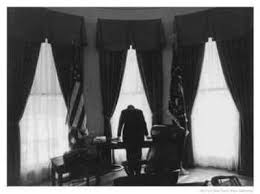
John F. Kennedy
The crisis ended on October 28. Under enormous pressure, Khrushchev agreed to remove the missiles from Cuba.
Behind his decision lay a secret promise by the Kennedy administration to remove its obsolete nuclear missiles from Turkey. And a public pledge to not invade Cuba.
On the night the crisis ended, there occurred a prophetic exchange between the two Kennedy brothers.
JFK: “Maybe this is the night I should go to the theater”—a reference to Abraham Lincoln’s fatal attendance of Ford’s Theater at the end of the Civil War.
RFK: “If you go, I want to go with you.”
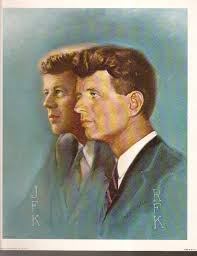
John F. and Robert F. Kennedy
But President Kennedy was not finished with Castro. While continuing the campaign of sabotage throughout Cuba, the Kennedys were preparing something far bigger: A fullscale American invasion of the island.
On October 4, 1963, the Joint Chiefs of Staff submitted its latest version of the invasion plan, known as OPLAN 380-63. Its timetable went:
- January, 1964: Infiltration into Cuba by Cuban exiles.
- July 15, 1964: U.S. conventional forces join the fray.
- August 3, 1964: All-out U.S. air strikes on Cuba.
- October 1, 1964: Full-scale invasion to install “a government friendly to the U.S.”
During the Cuban Missile Crisis, Robert Kennedy—referring to the 1941 Japanese attack on Pearl Harbor—had resisted demands for a “sneak attack” on Cuba by saying: “I don’t want my brother to be the Tojo of the 1960s.”
Now the Kennedys planned such an attack on Cuba just one month before the November, 1964 Presidential election.
Then fate—in the unlikely figure of Lee Harvey Oswald—intervened.
On November 22, 1963, while the President rode through Dallas in an open-air automobile, a rifle-wielding assassin opened fire. He scored two hits on Kennedy—in the back of the neck and head. The second wound proved instantly fatal.
The nation and the world were shocked—and plunged into deep mourning.
But for some of those who had waged a secret, lethal war against Fidel Castro for the previous two years, Kennedy’s death—at least in retrospect—didn’t come as a surprise.
Robert Kennedy, in particular, spent the remaining years of his life agonizing over the possibility that his highly personal war against Castro had backfired.
That Castro, fed up with the CIA’s assassination plots against him, had retaliated with one of his own.
Robert Kennedy’s fears and guilt were compounded by the fact that, while waging war on Castro, he had waged an equally ruthless crusade against organized crime.
And some of the mobsters he had done his best to put into prison had played a major role in the CIA’s efforts to “hit” Castro. Had the Mafia—believing itself the victim of a double-cross—put out a “contract” on JFK instead?
“John and Robert Kennedy knew what they were doing. They waged a vicious war against Fidel Castro—a war someone had to lose.”
And the loser turned out to be John F. Kennedy.
So writes investigative reporter Gus Russo in Live By the Sword: The Secret War Against Castro and the Death of JFK, published in 1998.
ABC NEWS, ALTERNET, AMERICAN TABLOID, AP, ASSASSINATION, BUZZFEED, CBS NEWS, CIA, CNN, COMMUNISM, CROOKS AND LIARS, CUBA, CUBAN MISSILE CRISIS, DAILY KOZ, DONALD TRUMP, DWIGHT D. EISENHOWER, FACEBOOK, FBI, FIDEL CASTRO, FLORIDA, FULGENCIO BATISTA, GUAM, GUS RUSSO, JAMES ELLROY, JOE BIDEN, JOHN F. KENNEDY, JOHNNY ROSELLI, LEE HARVEY OSWALD, LIVE BY THE SWORD, LYNDON B. JOHNSON, MAFIA, MOTHER JONES, MOVEON, NBC NEWS, NEWSWEEK, NIKITA KHRUSHCHEV, NORTH KOREA, NPR, NUCLEAR WAR, POLITICO, RAW STORY, REUTERS, ROBERT F. KENNEDY, SALON, SAM GIANCANA, SEATTLE TIMES, SLATE, THE ATLANTIC, THE CHICAGO SUN-TIMES, THE CHICAGO TRIBUNE, THE DAILY BEAST, THE GUARDIAN, THE HILL, THE HUFFINGTON POST, THE LOS ANGELES TIMES, THE NATION, THE NEW YORK TIMES, THE WASHINGTON POST, TIME, TWITTER, U.S. NEWS & WORLD REPORT, UKRAINE, UP, UPI, USA TODAY, VLADIMIR PUTIN, WARREN COMMISSION
In Bureaucracy, History, Law, Law Enforcement, Military, Politics, Social commentary on October 19, 2022 at 12:10 am
In April, 1961, the CIA tried to overthrow the Communist regime of Cuba’s “Maximum Leader,” Fidel Castro, at the Bay of Pigs.
When that failed, President John F. Kennedy ordered Castro’s removal through a campaign of sabotage and assassination.
These covert operatives became known within the CIA as the Special Group, and were ultimately supervised by Robert F. Kennedy, the President’s brother and Attorney General.
The war against Castro became known within the CIA as Operation Mongoose.
But not everyone in the CIA was enthusiastic about the “get Castro” effort.
“Everyone at CIA was surprised at Kennedy’s obsession with Fidel,” recalled Sam Halpern, who was assigned to the Cuba Project. “They thought it was a waste of time. We all knew [Fidel] couldn’t hurt us. Most of us at CIA initially liked Kennedy, but why go after this little guy?
“One thing is for sure: Kennedy wasn’t doing it out of national security concerns. It was a personal thing. The Kennedy family felt personally burnt by the Bay of Pigs and sought revenge.”
It was all-out war. Among the tactics used:
- Hiring Cuban gangsters to murder Cuban police officials and Soviet technicians.
- Sabotaging mines.
- Paying up to $100,000 per “hit” for the murder or kidnapping of Cuban officials.
- Using biological and chemical warfare against the Cuban sugar industry.
“Bobby (Kennedy) wanted boom and bang all over the island,” recalled Halpern. “It was stupid. The pressure from the White House was very great.”
Among that “boom and bang” were a series of assassination plots against Castro, in which the Mafia was to be a key player.
Chicago Mobster Johnny Rosselli proposed a simple plan: Through its underworld connections in Cuba, the Mafia would recruit a Cuban in Castro’s entourage, such as a waiter or bodyguard, who would poison him.
The CIA’s Technical Services division produced a botulinus toxin which was then injected into Castro’s favorite brand of cigars. The CIA also produced simpler botulinus toxin pills that could be dissolved in his food or drink.
But the deputized Mafia contacts failed to deliver any of the poisons to Castro.
Rosselli told the CIA that the first poisoner had been discharged from Castro’s employ before he could kill him, and the back-up agent got “cold feet.”
Other proposals or attempts included:
- Planting colorful seashells rigged to explode at a site where Castro liked to go skindiving.
- Trying to arrange for his being presented with a wetsuit impregnated with noxious bacteria and mold spores, or with lethal chemical agents.
- Attempting to infect Castro’s scuba regulator with tuberculous bacilli.
- Trying to douse his handkerchiefs, tea and coffee with other lethal bacteria.
Americans would rightly label such methods as ”terrorist” if another power used them against the United States today. And that was how the Cuban government saw the situation.
So Castro appealed to Nikita Khrushchev, leader of the Soviet Union, for assistance.

Fidel Castro

Nikita Khrushchev
Khrushchev was quick to comply: “We must not allow the communist infant to be strangled in its crib,” he told members of his inner circle.
By October, 1962, the Soviet Union had sent more than
- 40,000 soldiers,
- 1,300 field pieces,
- 700 anti-aircraft guns,
- 350 tanks and
- 150 jets
to Cuba to deter another invasion.
Most importantly, Khrushchev began supplying Castro with nuclear-tipped ballistic missiles.
Their discovery, on October 15, 1962, ignited the single most dangerous confrontation of the 50-year Cold War.
Suddenly, the United States and the Soviet Union—bristling with nuclear weapons—found themselves on the brink of nuclear war.
At the time, Kennedy officials claimed they couldn’t understand why Khrushchev had placed nuclear missiles in Cuba. “Maybe Khrushchev’s gone mad” was a typical public musing.
None of these officials admitted that JFK had been waging a no-holds-barred campaign to overthrow the Cuban government and assassinate its leader.
On October 16, the next day, President Kennedy was informed of the missile installations. He immediately convened a group of his 12 most important advisors, which became known as Ex-Comm, for Executive Committee.
Then followed seven days of guarded and intense debate by Kennedy and his advisors. Some of the participants—such as Air Force General Curtis LeMay—urged an all-out air strike against the missile sites.
Others—such as Adlai Stevenson, the United States delegate to the United Nations—urged a reliance on quiet diplomacy.
It was Secretary of Defense Robert S. McNamara who suggested a middle course: A naval blockade—a “quarantine” in Kennedy’s softened term—around Cuba. This would hopefully prevent the arrival of more Soviet offensive weapons on the island.
Finally, the President decided to to impose a naval blockade.
On October 22, Kennedy went on nationwide TV to announce the discovery of the missiles and his blockade of Cuba.
He warned that any nuclear missile launched from Cuba against any nation would be regarded as an attack on the United States by the Soviet Union—and would trigger “a full retaliatory response” upon the U.S.S.R.
John F. Kennedy address the nation
And he demanded that the Soviets remove all of their offensive weapons from Cuba:
“The path we have chosen for the present is full of hazards, as all paths are, but it is the one most consistent with our character and courage as a nation and our commitments around the world.”
ABC NEWS, ALTERNET, AMERICAN TABLOID, AP, ASSASSINATION, BUZZFEED, CBS NEWS, CIA, CNN, COMMUNISM, CROOKS AND LIARS, CUBA, CUBAN MISSILE CRISIS, DAILY KOZ, DONALD TRUMP, DWIGHT D. EISENHOWER, FACEBOOK, FBI, FIDEL CASTRO, FLORIDA, FULGENCIO BATISTA, GUAM, GUS RUSSO, JAMES ELLROY, JOE BIDEN, JOHN F. KENNEDY, JOHNNY ROSELLI, LEE HARVEY OSWALD, LIVE BY THE SWORD, LYNDON B. JOHNSON, MAFIA, MOTHER JONES, MOVEON, NBC NEWS, NEWSWEEK, NIKITA KHRUSHCHEV, NORTH KOREA, NPR, NUCLEAR WAR, POLITICO, RAW STORY, REUTERS, ROBERT F. KENNEDY, SALON, SAM GIANCANA, SEATTLE TIMES, SLATE, THE ATLANTIC, THE CHICAGO SUN-TIMES, THE CHICAGO TRIBUNE, THE DAILY BEAST, THE GUARDIAN, THE HILL, THE HUFFINGTON POST, THE LOS ANGELES TIMES, THE NATION, THE NEW YORK TIMES, THE WASHINGTON POST, TIME, TWITTER, U.S. NEWS & WORLD REPORT, UKRAINE, UP, UPI, USA TODAY, VLADIMIR PUTIN, WARREN COMMISSION
In Bureaucracy, History, Law, Law Enforcement, Military, Politics, Social commentary on October 18, 2022 at 12:10 am
On September 21, his troops facing disaster on Ukrainian battlefields, Russian President Vladimir Putin threatened to use nuclear weapons to resolve the conflict.
Whether he would use them strictly against Ukraine—or NATO countries, including the United States—he didn’t say.
Privately, President Joe Biden responded: “We have not faced the prospect of Armageddon since Kennedy and the Cuban missile crisis.”
Interviewed by CNN, Biden said: “I think he is a rational actor who has miscalculated significantly.”
The Cuban Missile Crisis occurred 60 years ago, during the Presidency of John F. Kennedy.
On January 1, 1959, Fidel Castro swept triumphantly into Havana after a two-year guerrilla campaign against Cuban dictator Fulgencio Batista.
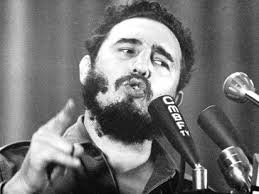
Fidel Castro
Almost immediately, hundreds of thousands of Cubans began fleeing to America. The first émigrés were more than 215,000 Batista followers. The exodus escalated, peaking at approximately 78,000 in 1962.
Between 1962 and 1979, hundreds of thousands of Cubans entered the United States under the Attorney General’s parole authority.
By 2008, more than 1.24 million Cubans were living in the United States, mostly in South Florida, where the population of Miami was about one-third Cuban. Their sheer numbers transformed the state’s political, economic and cultural life. And not entirely for the better.
Many of these Cubans viewed themselves as political exiles, rather than immigrants, hoping to eventually return to Cuba after its Communist regime fell from power.
The large number of Cubans in South Florida, particularly in Miami’s “Little Havana,” allowed them to preserve their culture and customs to a degree rare for immigrant groups.
With so many discontented immigrants concentrated in Florida, they became a potential force for politicians to court.
And the issue guaranteed to sway their votes was unrelenting hostility to Castro. Unsurprisingly, most of their votes went to right-wing Republicans.
John F. Kennedy was the first President to face this dilemma.
During the closing months of the administration of President Dwight D. Eisenhower, the CIA had begun training Cuban exiles for an invasion of their former homeland.
The exiles’ goal: To do what Castro had done—seek refuge in the mountains and launch a successful anti-Castro revolution.
But word of the coming invasion quickly leaked: The exiles were terrible secret-keepers. (A joke at the CIA went: “A Cuban thinks a secret is something you tell to only 300 people.”)
Kennedy insisted the invasion must appear to be an entirely Cuban enterprise. He refused to commit U.S. Marines and Air Force bombers.
The invaders landed on April 17, 1961 at the Bay of Pigs—and were quickly overwhelmed, with hundreds of the men taken prisoner.
Kennedy publicly took the blame for its failure: “Victory has a hundred fathers but defeat is an orphan.” But privately he seethed, and ordered the CIA to redouble its efforts to remove Castro at all costs.
To make certain his order was carried out, he appointed his brother, Robert—then Attorney General—to oversee the CIA’s “Castro removal” program.
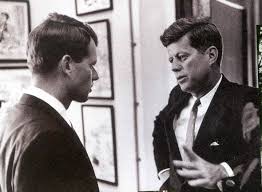
Robert F. Kennedy and John F. Kennedy
It’s here that America’s obsession with Cuba entered its darkest and most disgraceful period.
The CIA and the Mafia entered into an unholy alliance to assassinate Castro—each for its own benefit:
The CIA wanted to please Kennedy.
The mobsters wanted to regain its casino and brothel holdings that had made Cuba their private playground in pre-Castro times. They also hoped to use their pose as patriots to win immunity from future prosecution.
The CIA supplied poisons and explosives to various members of the Mafia. It was then up to the mobsters to assassinate Castro.
The CIA asked Johnny Roselli, a mobster linked to the Chicago syndicate, to go to Florida in 1961 and 1962 to organize assassination teams of Cuban exiles. They were to infiltrate their homeland and assassinate Castro.
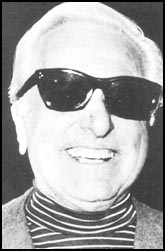
Johnny Roselli
Rosselli called upon two other crime figures: Chicago Mafia boss Sam Giancana and Santos Trafficante, the Costra Nostra chieftain for Tampa, for assistance.

Sam Giancana
Giancana, using the name “Sam Gold” in his dealings with the CIA, was meanwhile being hounded by the FBI on direct orders of Attorney General Robert Kennedy.
The mobsters were authorized to offer $150,000 to anyone who would kill Castro and were promised any support the Agency could yield.
Giancana was to locate someone who was close enough to Castro to be able to drop pills into his food. Trafficante would serve as courier to Cuba, helping to make arrangements for the murder on the island.
Rosselli was to be the main link between all of the participants in the plot.
The available sources disagree on what actually happened. Some believe that the Mob made a genuine effort to “whack” Fidel.
Others are convinced the mobsters simply ran a scam on the government. They would pretend to carry out their “patriotic duty” while in fact making no effort at all to penetrate Castro’s security.
The CIA’s war against Castro was known as Operation Mongoose–the mongoose being a traditional enemy of the cobra. And those entrusted with this assignment were known as the Special Group.
“We were hysterical about Castro at about the time of the Bay of Pigs and thereafter,” Secretary of Defense Robert S. McNamara later testified before Congress about these efforts. “And there was pressure from JFK and RFK to do something about Castro.”
2020 PRESIDENTIAL ELECTION, ABC NEWS, ABRAHAM LINCOLN, ADAM SCHIFF, ALEXANDER VINDMAN, ALTERNET, AMERICABLOG, AP, BABY BOOMER RESISTANCE, BLOOMBERG, BUZZFEED, CBS NEWS, CNN, CROOKS AND LIARS, DAILY KOZ, DAVID BROOKS, DEMOCRATS, DONALD TRUMP, DRUDGE RETORT, FACEBOOK, FIVETHIRTYEIGHT, FOX NEWS NETWORK, GERRYMANDERING, HARPER’S MAGAZINE, HOUSE INTELLIGENCE COMMITTEE, HOWARD BAKER, HUNTER BIDEN, IMPEACHMENT, JOE BIDEN, JOEL MATHIS, LYNDON JOHNSON, MARIA YOVANOVICH, MARK SHIELDS, MEDIA MATTERS, MEDICAID, MICK MULVANEY, MOTHER JONES, MOVEON, MSNBC, NATIONAL SECURITY COUNCIL, NBC NEWS, NEWSWEEK, NPR, PBS NEWSHOUR, POLITICO, POLITICUSUSA, RAW STORY, REPUBLICANS, REUTERS, RICHARD NIXON, RUDI GIULIANI, RUSSIA, SALON, SEATTLE TIMES, SLATE, TALKING POINTS MEMO, THE ATLANTIC, THE CHICAGO SUN-TIMES, THE CHICAGO TRIBUNE, THE DAILY BEAST, THE DAILY BLOG, THE GUARDIAN, THE HILL, THE HUFFINGTON POST, THE LOS ANGELES TIMES, THE NATION, THE NEW REPUBLIC, THE NEW YORK TIMES, THE VILLAGE VOICE, THE WASHINGTON POST, THINKPROGRESS, TIME, TRUTHDIG, TRUTHOUT, TWITTER, TWO POLITICAL JUNKIES, U.S. NEWS & WORLD REPORT, UKRAINE, UPI, USA TODAY, VOLODYMYR ZELENSKY, VOTER ID LAWS, WATERGATE, WONKETTE
In Bureaucracy, History, Law, Law Enforcement, Military, Politics, Social commentary on September 29, 2022 at 12:15 am
On November 22, 2019, Mark Shields—a liberal syndicated columnist—and David Brooks—a conservative one for The New York Times—reached disturbingly similar conclusions about President Donald Trump’s efforts to extort a “favor” from Ukrainian President Volodymyr Zelensky.
DAVID BROOKS: “What strikes me [is] that everyone was in the loop, that this was not something they tried to hide.
“This was just something they thought was the way politics gets done or foreign policy gets done, that there’s no division between personal gain and public service.”
MARK SHIELDS: “What I have underestimated….is the fear that Donald Trump exercises over Republicans. I mean, people talked about Lyndon Johnson being a fearsome political leader. They don’t even approach. I mean, he strikes fear into the hearts of Republicans up and down the line. And I think that….has been eye-opening in its dimensions.”
Nor did the GOP try to reign Trump in.
In a November 14, 2019 column, “Republicans Can’t Abandon Trump Now Because They’re All Guilty,” freelance journalist Joel Mathis warned: “Trump’s abuses of power mirror those of the GOP as a whole. Republicans can’t turn on him, because doing so would be to indict their party’s entire approach to politics.”
For example:
- At the state level, GOP legislatures have passed numerous voter ID laws over the last decade. Officially, the reason has been to prevent non-citizens from voting. In reality, the motive is to depress turnout among Democratic constituencies.
- When Democrats have won elections, Republicans have tried to block them from carrying out their policies. In Utah, voters approved Medicaid expansion at the ballot box—but Republicans nullified this.
- In North Carolina, Republican legislators prevented voters from choosing their representatives. Instead, Republican representatives chose voters through partisan sorting. In September, the state’s Supreme Court ruled the legislative gerrymandered district map unconstitutional.
The upshot of all this: “The president and his party are united in the belief that their entitlement to power allows them to manipulate and undermine the country’s democratic processes….”
On November 21, 2019, Representative Adam Schiff (D-CA), chairman of the House Intelligence Committee, attacked Republicans’ total rejection of the overwhelming evidence linking Trump with extortion:

Adam Schiff
“But apparently, it’s all hearsay. Even when you actually hear the President….that’s hearsay. We can’t rely on people saying what the President said. Apparently, we can only rely on what the President says, and there, we shouldn’t even rely on that either….
“We should imagine he said something about actually fighting corruption, instead of what he actually said, which was, ‘I want you to do us a favor, though. I want you to look into this 2016 CrowdStrike conspiracy theory, and I want you to look into the Bidens.’
“I guess we’re not even supposed to rely on that because that’s hearsay….That would be like saying you can’t rely on the testimony of the burglars during Watergate because it’s only hearsay, or you can’t consider the fact that they tried to break in because they got caught. They actually didn’t get what they came for, so, you know, kind of no harm, no foul. That’s absurd.
“The difference between [Watergate and Trump’s attempted extortion of Ukraine] is not the difference between [Richard] Nixon and [Donald] Trump. It’s the difference between that Congress and this one. And so, we are asking, where is Howard Baker? Where are the people who are willing to go beyond their party to look to their duty?
“But the other defense besides ‘It failed, the scheme failed, they got caught,’ the other defense is ‘The President denies it.’ Well, I guess that’s case closed, right?
“….This President believes he is above the law, beyond accountability. And in my view, there is nothing more dangerous than an unethical President who believes they are above the law.”
* * * * *
The United States has indeed become a polarized country. But it’s not the polarization between Republicans and Democrats, or between conservatives and liberals.
It’s the polarization between
- Those intent on enslaving everyone who doesn’t subscribe to their Fascistic beliefs and agenda—and those who resist being enslaved.
- Those who believe in reason and science—and those who believe in an infallible “strong man” who rejects both.
- Those who cherish education—and those who celebrate ignorance.
- Those who believe in the rule of law—and those who believe in their right to act as a law unto themselves.
- Those who believe in treating others (especially the less fortunate) with decency—and those who believe in the triumph of intimidation and force.
Those who hoped that Republicans would choose patriotism over partisanship got their answer on February 5, 2020. That was when the Republican-dominated Senate—ignoring the overwhelming evidence against him—acquitted Donald Trump on both impeachment articles: Obstruction of Congress and Abuse of Power.
It’s natural to regret that the United States has become a sharply divided nation. But those who lament this should realize there is only one choice:
Either non-Fascist Americans will destroy the Republican party and its voters that threaten to enslave them—or they will be enslaved by Republicans and their voters who believe they are entitled to manipulate and undermine the country’s democratic processes.
There is no middle ground.
2020 PRESIDENTIAL ELECTION, ABC NEWS, ABRAHAM LINCOLN, ADAM SCHIFF, ALEXANDER VINDMAN, ALTERNET, AMERICABLOG, AP, BABY BOOMER RESISTANCE, BLOOMBERG, BUZZFEED, CBS NEWS, CNN, CROOKS AND LIARS, DAILY KOZ, DAVID BROOKS, DEMOCRATS, DONALD TRUMP, DRUDGE RETORT, FACEBOOK, FIVETHIRTYEIGHT, FOX NEWS NETWORK, GERRYMANDERING, HARPER’S MAGAZINE, HOUSE INTELLIGENCE COMMITTEE, HOWARD BAKER, HUNTER BIDEN, JOE BIDEN, JOEL MATHIS, LYNDON JOHNSON, MARIA YOVANOVICH, MARK SHIELDS, MEDIA MATTERS, MEDICAID, MICK MULVANEY, MOTHER JONES, MOVEON, MSNBC, NATIONAL SECURITY COUNCIL, NBC NEWS, NEWSWEEK, NPR, PBS NEWSHOUR, POLITICO, POLITICUSUSA, RAW STORY, REPUBLICANS, REUTERS, RICHARD NIXON, RUDI GIULIANI, RUSSIA, SALON, SEATTLE TIMES, SLATE, TALKING POINTS MEMO, THE ATLANTIC, THE CHICAGO SUN-TIMES, THE CHICAGO TRIBUNE, THE DAILY BEAST, THE DAILY BLOG, THE GUARDIAN, THE HILL, THE HUFFINGTON POST, THE LOS ANGELES TIMES, THE NATION, THE NEW REPUBLIC, THE NEW YORK TIMES, THE VILLAGE VOICE, THE WASHINGTON POST, THINKPROGRESS, TIME, TRUTHDIG, TRUTHOUT, TWITTER, TWO POLITICAL JUNKIES, U.S. NEWS & WORLD REPORT, UKRAINE, UPI, USA TODAY, VOLODYMYR ZELENSKY, VOTER ID LAWS, WATERGATE, WONKETTE
In Bureaucracy, History, Law, Law Enforcement, Military, Politics, Social commentary on September 28, 2022 at 12:07 am
On November 14, 2019, the CNN website showcased an opinion piece by Jane Carr and Laura Juncadella entitled: “Fractured States of America.”
And it opened:
“Some worry that it’s already too late, that we’ve crossed a threshold of polarization from which there is no return. Others look toward a future where more moderate voices are heeded and heard, and Americans can find better ways to relate to each other. Still others look back to history for a guide—perhaps for what not to do, or at the very least for proof that while it’s been bad before, progress is still possible.”
A series of sub-headlines summed up many of the comments reported.
- “I was starting to hate people that I have loved for years.”
- “Voting for Trump cost me my friends.”
- “I feel like I’m living in hostile territory.”
- “Our children are watching this bloodsport.”
- “A student’s Nazi-style salute reflects the mate.”
- “Our leaders reflect the worst of us.”
- “I truly believe I will be assaulted over a bumper sticker.”
- “It already feels like a cold war.”
It’s natural to regret that the United States has become so self-destructively polarized. And to wish that its citizens could somehow reach across the chasm that divides them and find common cause with one another.
But that is to ignore the brutal truth that America now faces a choice:
- To submit to the tyrannical aggression of a ruthless political party convinced that they are entitled to power to manipulate and undermine the country’s democratic processes; or
- To fiercely resist that aggression and the destruction of those democratic processes.
Consider the face-off between President Donald J. Trump and Army Lt. Colonel Alexander Vindman.
Vindman is a retired United States Army officer who served as the Director for European Affairs for the United States National Security Council. He was also a witness to Trump’s efforts to extort “a favor” from the president of Ukraine.
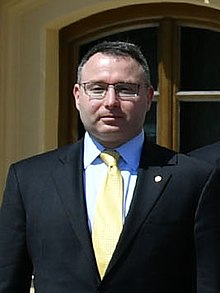
Lt. Colonel Alexander Vindman
Адміністрація Президента України [CC BY 4.0 (https://creativecommons.org/licenses/by/4.0)%5D
In July, 2019, Trump told his acting chief of staff, Mick Mulvaney, to withhold almost $400 million in promised military aid for Ukraine, which faced increasing aggression from Russia.
On July 25, Trump telephoned Ukrainian President Volodymyr Zelensky to “request” a “favor”: Investigate 2020 Democratic Presidential Candidate Joe Biden and his son, Hunter, who had had business dealings in Ukraine.
The reason for such an investigation: To find embarrassing “dirt” on Biden.
It was clear that unless Zelensky found “dirt” on Biden, the promised aid would not be forthcoming.
“I was concerned by the call,” Vindman, who had heard Trump’s phone call, testified before the House Intelligence Committee. “I did not think it was proper to demand that a foreign government investigate a U.S. citizen, and I was worried about the implications for the U.S. Government’s support of Ukraine.
“I realized that if Ukraine pursued an investigation into the Bidens and Burisma, it would likely be interpreted as a partisan play which would undoubtedly result in Ukraine losing the bipartisan support it has thus far maintained. This would all undermine U.S. national security.”
Trump denounced Vindman as a “Never Trumper”—as if opposing his extortion attempt constituted a blasphemy. Republicans and their shills on the Fox News Network attacked him as well. As a result, he sought physical protection by the Army for himself and his family.
(On February 7, 2020, he was reassigned from the National Security Council at Trump’s order.)
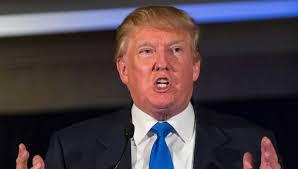
Donald Trump
On November 15, 2019, conservative New York Times columnist David Brooks and liberal syndicated columnist Mark Shields appeared on The PBS Newshour to offer their reactions by Republicans and Democrats to Trump’s extortion attempt.
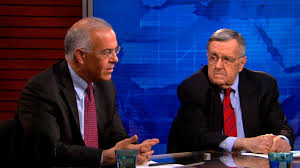
David Brooks and Mark Shields on “The PBS Newshour”
DAVID BROOKS: “The case is very solid and airtight that there was the quid pro quo. All the testimony points to that. And, mostly, you see a contrast. The first two gentlemen that testified on the first day, they were just upstanding, solid public servants.
“I felt like I was looking back in time, because I was looking at two people who are not self-centered. They cared about the country. They were serving. They had no partisan ax to grind. They were just honest men of integrity.
“And I thought we saw that again today with [former Ambassador to Ukraine] Marie Yovanovitch. And in her case, the day was more emotional, because you got to see a case of bullying against a strong, upstanding woman.
“And so I thought she expressed—like, the heavy moments of today where when she expressed her reaction to how badly she was treated. And so that introduces an element of emotion and pathos into what shouldn’t be just a legal proceeding. It should be something where people see the contrast between good people and bad people.”
MARK SHIELDS: “This is a story of corruption—corruption not in Ukraine, corruption in the United States.
“I mean, why? Why did they go to such lengths to denigrate, to attack, to try and destroy and sabotage the career of a dedicated public servant [United States Ambassador to Ukraine Marie Yovanovich], a person who had put her life on the line? Why did they do it? What was it, money? Was it power?”
2016 PRESIDENTIAL CAMPAIGN, 2020 PRESIDENTIAL CAMPAIGN, ABC NEWS, ALTERNET, AMERICABLOG, ANCIENT ROME, ANTONIN SCALIA, AP, BABY BOOMER RESISTANCE, BERNIE SANDERS, BUZZFEED, CAMPAIGN CONTRIBUTIONS, CBS NEWS, CITIZENS UNITED, CLEOPATRA, CNN, CROOKS AND LIARS, DAILY KOZ, DONALD TRUMP, ELIZABETH WARREN, FACEBOOK, FIVETHIRTYEIGHT, FORECLOSURES, GLADIATORS, JOE BIDEN, JULIUS CAESAR, KIRK DOUGLAS, LAURENCE OLIVER, MARCUS CRASSUS, MICHAEL BLOOMBERG, MITT ROMNEY, MOTHER JONES, MOVEON, MSNBC, NBC NEWS, NEWSWEEK, NEWT GINGRICH, NPR, PBS NEWSHOUR, PETE BUTTIGIEG, POLITICO, POLITICUSUSA, RAW STORY, REUTERS, SALON, SEATTLE TIMES, SHELDON ADELSON, SLATE, SPARTACUS, SUPREME COURT, TALKING POINTS MEMO, THE ATLANTIC, THE CHICAGO SUN-TIMES, THE CHICAGO TRIBUNE, THE DAILY BEAST, THE DAILY BLOG, THE GUARDIAN, THE HILL, THE HUFFINGTON POST, THE LOS ANGELES TIMES, THE NATION, THE NEW YORK TIMES, THE WASHINGTON POST, THINKPROGRESS, TIME, TOM STEYER, TRUTHDIG, TWITTER, U.S. NEWS & WORLD REPORT, UPI, USA TODAY
In Bureaucracy, Business, History, Military, Politics, Social commentary on September 5, 2022 at 12:10 am
The 1960 Kirk Douglas epic, Spartacus, has proven to be more than great entertainment. It has turned out to be a prophecy of the end of the American Republic.
In the movie, Spartacus (Douglas), a Roman slave, entertains Marcus Crassus (Laurence Oliver) the richest man in Rome. He does so by fighting to the death as a gladiator.

Poster for Spartacus
While Spartacus and his fellow gladiator/friend, Draba (Woody Strode), slash and stab at each other in the arena, Crassus idly chats with his crony, Marcus Glabrus (Jon Dall).
Crassus has just secured Glabrus’ appointment as commander of the garrison of Rome. Glabrus is grateful, but curious as to how he did it.
After all, Gaius Gracchus (Charles Laughton), the leader of the Roman Senate, hates Crassus, and vigorously opposes his every move.
“I fought fire with oil,” says Crassus. “I purchased the Senate behind his back.”
Just as Crassus bought the Roman Senate in Spartacus, billionaires similarly bought the 2016 Presidential election.
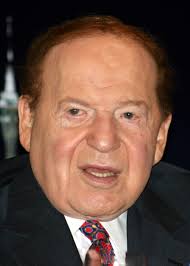
In 2016, Newt Gingrich, former Speaker of the House of Representatives, ran as the pet candidate of casino billionaire Sheldon G. Adelson.
Since 2007, Adelson had spent millions in support of Gingrich and his causes.
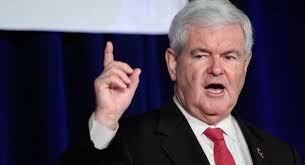
Newt Gingrich
Adelson put up seed money and, ultimately, $7.7 million between 2006 and 2010 for a nonprofit group that served as a precursor to Gingrich’s presidential campaign.
Sheldon Adelson
Such a contribution is beyond the means of the average American. But Adelson is listed by Forbes as the eighth-wealthiest American, with a net worth of $21.5 billion.
Adelson denied any selfish motives for giving millions to a candidate for the most powerful office in the world:
“My motivation for helping Newt is simple and should not be mistaken for anything other than the fact that my wife Miriam and I hold our friendship with him very dear and are doing what we can as private citizens to support his candidacy.”
Former Massachusetts Governor Mitt Romney also relied heavily on a small group of millionaires and billionaires for support.
By February, 2012, a quarter of the money amassed by Romney’s campaign came from just 41 people. Each contributor gave more than $100,000, according to a Washington Post analysis of disclosure data. Nearly a dozen of the donors had contributed $1 million or more.
Some of Romney’s biggest supporters included executives at Bain Capital, his former firm; bankers at Goldman Sachs; and a hedge fund mogul who made billions betting on the housing crash.
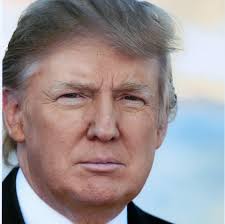
Four years later, in May, 2016, Adelson met privately with Republican Presidential nominee-in-waiting Donald Trump.
Adelson promised to contribute more to secure Trump’s election than he had contributed to any previous campaign—up to and exceeding $100 million.
Meanwhile, Trump bragged that he was “not beholden” to any “special interests” because “I’m really rich.” This falsehood proved a main reason for his popularity as a candidate.
Donald Trump
Fast forward another three years—and a December 4, 2019 story in Fortune: “2020 Presidential Campaign Fundraising (and Spending) Are on Track to Smash Records.”
By then, Trump had raised $165.3 million.
But Democrats altogether had outstripped him with $475.6 million raised.
Among the largest Democratic money-raisers (in millions):
- Bernie Sanders: $74.5
- Elizabeth Warren: $60.3
- Pete Buttigieg: $51.5
- Tom Steyer: $49.6
- Joe Biden: $37.8
Former New York Mayor Michael Bloomberg entered the race on November 24, 2019. Within a week he paid $57 million for TV ads.
His fellow billionaire Tom Steyer spent over $60 million since July, 2019.
The 2020 Presidential election proved the most expensive in American history—so far.
Joe Biden raised $1.06 billion. Donald Trump raised $0.80 billion.
All of this can be directly traced to the 2010 “Citizens United” decision by the U.S. Supreme Court that ended limits in corporate contributions to political campaigns. The decision is so named for the group that successfully sued over federal campaign finance laws.
The 5-4 decision led to the rise of Super PACs—outside groups affiliated with candidates that can take in unlimited contributions as long as they don’t directly coordinate with the candidate. The overwhelming majority of this money goes for negative ads—that slander opponents without saying anything about what a candidate proposes to do.
Former U.S. Supreme Court Justice Antonin Scalia brushed aside criticism of the corrupting role money played in politics: Change the channel or turn off the TV.
“I don’t care who is doing the speech—the more the merrier,” Scalia said. “People are not stupid. If they don’t like it, they’ll shut it off.”
On the contrary: A fundamental principle of propaganda holds that most people are stupid—or can be made to behave stupidly. If they are ceaselessly bombarded with mind-numbing lies, they will eventually substitute these for reality.
During the early 1960s a series of movies about the Roman Empire—like Spartacus and Cleopatra—hit the big screen. In these, rich criminals like Marcus Crassus openly bought the favors of ambitious politicians like Julius Caesar.
No doubt millions of moviegoers thought, “Boy, I’m glad that couldn’t happen here.”
But it has happened here—and it’s happening right now.
ABC NEWS, ALTERNET, AMERICABLOG, AP, BABY BOOMER RESISTANCE, BBC, BLOOMBERG NEWS, BUZZFEED, CBS NEWS, CENSORSHIP, CNN, COVID-19, CROOKS AND LIARS, DAILY KOZ, DAVID MCCULLOUGH, DEMOCRATS, DISNEY, FACEBOOK, FIRST AMENDMENT, FIVETHIRTYEIGHT, HARPER’S MAGAZINE, HISTORICAL ILLITERACY, HISTORY, HUFFINGTON POST, JAY LENO, JOE BIDEN, MARK ZUCKERBERG, MEDIA MATTERS, MOTHER JONES, MOVEON, MSNBC, NAZI GERMANY, NBC NEWS, NEW REPUBLIC, NEWSDAY, NEWSWEEK, NPR, PBS NEWSHOUR, POLITICO, POLITICUSUSA, RAW STORY, REPUBLICANS, REUTERS, SALON, SEATTLE TIMES, SHERYL SANDBERG, SLATE, TALKING POINTS MEMO, THE ATLANTIC, THE CHICAGO SUN-TIMES, THE CHICAGO TRIBUNE, THE DAILY BEAST, THE DAILY BLOG, THE GUARDIAN, THE HILL, THE HUFFINGTON POST, THE INTERCEPT, THE LOS ANGELES TIMES, THE NATION, THE NEW REPUBLIC, THE NEW YORK TIMES, THE NEW YORKER, THE VILLAGE VOICE, THE WASHINGTON POST, THINKPROGRESS, TIME, TONIGHT SHOW, TRUTHDIG, TRUTHOUT, TWITTER, TWO POLITICAL JUNKIES, U.S. NEWS & WORLD REPORT, UPI, USA TODAY, WONKETTE
In Bureaucracy, Business, Entertainment, History, Politics, Social commentary on August 17, 2022 at 12:10 am
As it now operates, Facebook poses a direct threat to the First Amendment, the privacy of its users and democratic elections.
Facebook is the world’s largest social media company, with 2.936 billion users by April, 2022. Its social and political influence on the United States is enormous. According to its profile on Wikipedia:
“The subject of numerous controversies, Facebook has often been criticized over issues such as user privacy (as with the Cambridge Analytica data scandal), political manipulation (as with the 2016 U.S. elections) and mass surveillance.
“Posts originating from the Facebook page of Breitbart News, a media organization previously affiliated with Cambridge Analytica, are currently among the most widely shared political content on Facebook.
“Facebook has also been subject to criticism over psychological effects such as addiction and low self-esteem, and various controversies over content such as fake news, conspiracy theories, copyright infringement, and hate speech. Commentators have accused Facebook of willingly facilitating the spread of such content as well as exaggerating its number of users to appeal to advertisers.”
To which can be added the following:
- I was sentenced to “Facebook Jail” for two posts. The first of these stated: “Americans are historical illiterates.” This was labeled “hate speech and inferiority.” The fact that the distinguished historian David McCullough had said exactly the same meant nothing to Facebook.
- Comedians have long gained laughs at Americans’ historical illiteracy: When Jay Leno hosted The Tonight Show, he often did “Jaywalking Tours” where he asked people about seemingly well-known historical events. It was common to see people say the Civil War happened in the 1940s (instead of 1861-1865) or to believe that the Texans won at the battle of the Alamo.
- A second post deleted showed a group of heavily-armed Proud Boys standing around a cross. Above this I had posted the caption: “Proud Boys posing with their latest victim.” This was labeled as “hate speech.”
- Since this post was bluntly critical of the Proud Boys, the question emerges: Does criticizing the Proud Boys—Fascists who played a major role during the January 6 attempted coup against the Capitol Building—constitute “hate speech”?

Proud Boys
Anthony Crider, CC BY 2.0 <https://creativecommons.org/licenses/by/2.0>, via Wikimedia Commons
- I am currently banned from Facebook for posting the following: A Facebook member had posted this solution for achieving universal peace: All enlisted members of all the world’s militaries should refuse to serve. In 2002-3, I had watched President George W. Bush lie the country into a needless, bloody, budget-busting war in Iraq. Thus, I felt the poster’s “solution” required a serious dose of realism.
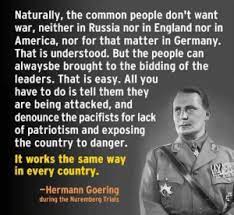
- So I posted a meme below it that contained an image of Herman Goring—chief of the German Luftwaffe (air force) during World War II. As a convicted war criminal, he should, I felt, have insight into how easy it is to lead a nation into war. And he did: “Naturally, the common people don’t want war, neither in Russia nor in England nor in America, nor for that matter in Germany. That is understood. But the people can always be brought to the bidding of the leaders. That is easy. All you have to do is tell them they are being attacked, and denounce the pacifists for lack of patriotism and exposing the country to danger. It works the same way in every country.”
- No sooner had I posted this than I found myself once again accused of violating Facebook’s “Community Standards.” As in past cases, Facebook did not deign to state, specifically, what standards I had violated, or how the post endangered other Facebook members. I simply found myself blocked from Facebook.
- Frances Haugen, a former Facebook employee, disclosed tens of thousands of Facebook’s internal documents to the Securities and Exchange Commission and the Wall Street Journal in 2021. She testified before Congress that Facebook promotes conflict to increase its readership and keep them reading—and buying. So the comment I made fell exactly into that category of exciting controversy.
People who libel and/or harass others should be banned from social media. It’s precisely because Twitter refuses to do so that its reputation is fatally tainted.
But posting a comment that is based on accurate history should not qualify as hate speech. And none of the examples I have cited fit that definition.
Through its worldwide membership, Facebook exerts an influence that rivals—if not exceeds—that of most government institutions. Its greatest infamy: Allowing Russian trolls to play a lethal role in electing Donald Trump President in 2016. And no doubt they are preparing to do so again in 2024.
In a highly polarized political environment, Mark Zuckerberg holds the unique distinction of having infuriated both Democrats and Republicans during his appearances before Congress. His secret: The overweening arrogance he routinely displays to those he considers lesser mortals. His motto is: ““Move fast and break things. Unless you are breaking stuff, you are not moving fast enough.”
It’s long past time for those at the legislative level to show him that some things—such as the First Amendment, the right to privacy and elections free of foreign influence—should not be broken. And that there is a high price to pay for those who do.


2020 PRESIDENTIAL ELECTION, ABC NEWS, ALTERNET, AMERICABLOG, AP, BABY BOOMER RESISTANCE, BLOOMBERG, BUZZFEED, CBS NEWS, CNN, CROOKS AND LIARS, DAILY KOS, DAVID DEPAPE, DEMOCRATS, DONALD TRUMP, FIVETHIRTYEIGHT, FOX NEWS NETWORK, GERRYMANDERING, GLENN YOUNGKIN, HARPER’S MAGAZINE, JOE BIDEN, KARI LAKE, MARIA YOVANOVICH, MEDIA MATTERS, MEDICAID, MOTHER JONES, MOVEON, MSNBC, NANCY PELOSI, NATIONAL SECURITY COUNCIL, NBC NEWS, NEWSWEEK, NPR, PAUL PELOSI, POLITICO, POLITICUSUSA, QANON, RAW STORY, REPUBLICANS, REUTERS, SALON, SEATTLE TIMES, SLATE, TALKING POINTS MEMO, THE ATLANTIC, THE CHICAGO SUN-TIMES, THE CHICAGO TRIBUNE, THE DAILY BEAST, THE DAILY BLOG, THE GUARDIAN, THE HILL, THE HUFFINGTON POST, THE LOS ANGELES TIMES, THE NATION, THE NEW REPUBLIC, THE NEW YORK TIMES, THE VILLAGE VOICE, THE WASHINGTON POST, THINKPROGRESS, TIME, TRUTHDIG, TRUTHOUT, TWITTER, TWO POLITICAL JUNKIES, U.S. NEWS & WORLD REPORT, UPI, USA TODAY, VOTER HARASSMENT, VOTER ID LAWS, WATERGATE, WONKETTE
VOTERS’ CHOICE: FREEDOM–OR FASCISM
In Bureaucracy, History, Law, Law Enforcement, Politics, Social commentary on November 7, 2022 at 12:21 amOn November 14, 2019, the CNN website showcased an opinion piece by Jane Carr and Laura Juncadella entitled: “Fractured States of America.”
And it opened:
“Some worry that it’s already too late, that we’ve crossed a threshold of polarization from which there is no return. Others look toward a future where more moderate voices are heeded and heard, and Americans can find better ways to relate to each other. Still others look back to history for a guide—perhaps for what not to do, or at the very least for proof that while it’s been bad before, progress is still possible.”
A series of sub-headlines summed up many of the comments reported.
It’s natural to regret that the United States has become so self-destructively polarized. And to wish that its citizens could somehow reach across the chasm that divides them and find common cause with one another.
But that is to ignore the brutal truth that America now faces a choice:
In a November 14, 2019 column, “Republicans Can’t Abandon Trump Now Because They’re All Guilty,” freelance journalist Joel Mathis warned: “Trump’s abuses of power mirror those of the GOP as a whole. Republicans can’t turn on him, because doing so would be to indict their party’s entire approach to politics.”
For example:
The upshot of all this: “The president and his party are united in the belief that their entitlement to power allows them to manipulate and undermine the country’s democratic processes….”
And even though Donald Trump is no longer President, he remains de facto head of the Republican party.
His “Big Lie”—that he, not Joe Biden, won the 2020 Presidential election, remains, for most Republicans—Gospel for the great majority of his party.
It was partly this falsehood that motivated David DePape, a QAnon addict and Stormtrumper, to assault Paul Pelosi, husband of House Speaker Nancy Pelosi, with a hammer in his San Francisco house.
Two Republicans who found the attack worthy of mockery were Arizona Republican gubernatorial nominee Kari Lake and Virginia Republican Governor Glenn Youngkin.
In Arizona, people who believe the “Stop the Steal” lies are filming and harassing voters, looking for supposed “mules” stuffing ballot boxes. Many of them wear military garb and are heavily-armed.
Even more dangerous: Election-denying candidates are running for secretary of state, county clerk and other positions of election administrative leadership in multiple states. If they win, they can use false fraud allegations to overturn future election results.
Which is exactly what they intend to do.
* * * * *
The United States has indeed become a polarized country. But it’s not the polarization between Republicans and Democrats, or between conservatives and liberals.
It’s the polarization between
Those who hoped that Republicans would choose patriotism over partisanship got their answer on February 5, 2020.
That was when the Republican-dominated Senate—ignoring the overwhelming evidence against him—acquitted President Donald Trump on both impeachment articles: Obstruction of Congress and Abuse of Power.
It’s natural to regret that the United States has become a sharply divided nation. But those who lament this should realize there is only one choice:
Either non-Fascist Americans will destroy the Republican party and its voters that threaten to enslave them—or they will be enslaved by Republicans and their voters who believe they are entitled to manipulate and undermine the country’s democratic processes.
There is no middle ground.
Share this: