Posts Tagged ‘J. EDGAR HOOVER’
2016 PRESIDENTIAL ELECTION, A BRONX TALE, ABC NEWS, ADOLF HITLER, ALTERNET, AMERICABLOG, AP, BABY BOOMER RESISTANCE, BBC, BILL CLINTON, BLOOMBERG NEWS, BUZZFEED, CBS NEWS, CHAZZ PALMINTERI, CNN, CROOKS AND LIARS, DAILY KOS, DONALD TRUMP, FACEBOOK, FBI, FIVETHIRTYEIGHT, HARPER’S MAGAZINE, HILLARY CLINTON, HUFFINGTON POST, IRS, J. EDGAR HOOVER, JOHN F. KENNEDY, LYNDON B. JOHNSON, MEDIA MATTERS, MOTHER JONES, MOVEON, MSNBC, NBC NEWS, NEW REPUBLIC, NEWSDAY, NEWSWEEK, NICCOLO MACHIAVELLI, NPR, PBS NEWSHOUR, POLITICO, POLITICUSUSA, RAW STORY, REPUBLICAN PARTY, REUTERS, RICHARD M. NIXON, ROBERT DE NIRO, ROBERT F. KENNEDY, Ronald Reagan, SALON, SEATTLE TIMES, SLATE, TALKING POINTS MEMO, THE ATLANTIC, THE CHICAGO SUN-TIMES, THE CHICAGO TRIBUNE, THE DAILY BEAST, THE DAILY BLOG, THE GUARDIAN, THE HILL, THE HUFFINGTON POST, THE INTERCEPT, THE LOS ANGELES TIMES, THE NATION, THE NEW REPUBLIC, THE NEW YORK TIMES, THE NEW YORKER, THE PRINCE, THE VILLAGE VOICE, THE WASHINGTON POST, THINKPROGRESS, TIME, TRUTHDIG, TRUTHOUT, TWITTER, U.S. NEWS & WORLD REPORT, UPI
In Bureaucracy, History, Law Enforcement, Military, Politics, Social commentary on December 22, 2016 at 12:18 am
Is it better to be loved or feared?
That was the question Florentine statesman Niccolo Machiavelli raised more than 500 years ago.
Presidents have struggled to answer this question—and have come to different conclusions.
LOVE ME, FEAR MY BROTHER
Most people felt irresistibly drawn to John F. Kennedy—even his political foes. Henry Luce, the conservative publisher of Time, once said, “He makes me feel like a whore.”
But JFK could afford to bask in the love of others—because his younger brother, Robert, was the one who inspired fear.
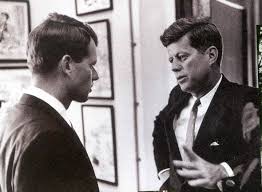
Robert F. Kennedy and John F. Kennedy
He had done so as Chief Counsel for the Senate Rackets Committee (1957-59), grilling Mafia bosses and corrupt union officials—most notably Teamsters President James Hoffa.
Appointed Attorney General by JFK, he unleashed the FBI on the Mafia. When the steel companies colluded in an inflationary rise in the price of steel in 1962, Bobby sicced the FBI on them.
In 1963, JFK’s cavorting with Ellen Rometsh threatened to destroy his Presidency. Rometsch, a Washington, D.C. call girl, was suspected by the FBI of being an East German spy.
With Republican Senators preparing to investigate the rumors, Bobby ordered Rometsch deported immediately (to which, as a German citizen, she was subject).
He also ordered FBI Director J. Edgar Hoover to deliver a warning to the Majority and Minority leaders of the Senate: The Bureau was fully aware of the extramarital trysts of most of its members. And an investigation into the President’s sex life could easily lead into revelations of Senatorial sleaze.
Plans for a Senatorial investigation were shelved.
BEING LOVED AND FEARED
In the 1993 movie, A Bronx Tale, 17-year-old Calogero (Lillo Brancato) asks his idol, the local Mafia capo, Sonny (Chazz Palminteri): “Is it better to be loved or feared?”
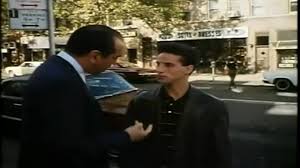
Sonny gives advice to his adopted son, Calogero
Sonny says if he had to choose, he would rather be feared. But he adds a warning straight out of Machiavelli: “The trick is not being hated. That’s why I treat my men good, but not too good.
“I give too much, then they don’t need me. I give them just enough where they need me, but they don’t hate me.”
Machiavelli, writing in The Prince, went further:
“Still a Prince should make himself feared in such a way that if he does not gain love, he at any rate avoids hatred, for fear and the absence of hatred may well go together. And [this] will always be attained by one who abstains from interfering with the property of his citizens and subjects or with their women.”
Many who quote Machiavelli in defense of being feared overlook this vital point: It’s essential to avoid becoming hated.
To establish a fearful reputation, a leader must act decisively and ruthlessly when the interests of the organization are threatened. Punitive action must be taken promptly and confidently.
One or two harsh actions of this kind can make a leader more feared than a reign of terror.
In fact, it’s actually dangerous to constantly employ cruelties or punishments. Whoever does so, warns Machiavelli, “is always obliged to stand with knife in hand, and can never depend on his subjects, because they, owing to continually fresh injuries, are unable to depend upon him.”
The 20th century President who came closest to realizing Machiavelli’s “loved and feared” prince was Ronald Reagan.
Always smiling, quick with a one-liner (especially at press conferences), seemingly unflappable, he projected a constantly optimistic view of his country and its citizens.
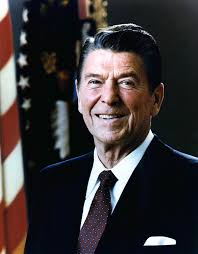
Ronald Reagan
In his acceptance speech at the 1980 Republican National Convention he declared: “[The Democrats] say that the United States has had its days in the sun, that our nation has passed its zenith.… My fellow citizens, I utterly reject that view.”
And Americans enthusiastically responded to that view, twice electing him President (1980 and 1984).
But there was a steely, ruthless side to Reagan that appeared when he felt crossed.
On August 3, 1981, nearly 13,000 air traffic controllers walked out after contract talks with the Federal Aviation Administration collapsed. As a result, some 7,000 flights across the country were canceled on that day at the peak of the summer travel season.
Reagan branded the strike illegal. He threatened to fire any controller who failed to return to work within 48 hours.
On August 5, Reagan fired more than 11,000 air traffic controllers who hadn’t returned to work. The mass firing slowed commercial air travel, but it did not cripple the system as the strikers had forecast.
Reagan’s action stunned the American labor movement. Reagan was the only American President to have belonged to a union, the Screen Actors Guild. He had even been president of this–from 1947 to 1954.
There were no more strikes by Federal workers during Reagan’s tenure in office.
Similarly, Libya’s dictator, Moammar Kadaffi, learned that Reagan was not a man to cross.
On April 5, 1986, Libyan agents bombed a nightclub in West Berlin, killing three people, one a U.S. serviceman. The United States quickly learned that Libyan agents in East Germany were behind the attack.
On April 15, acting on Reagan’s orders, U.S. Air Force, Navy and Marine Corps bombers struck at several sites in Tripoli and Benghazi. Reportedly, Kaddafi himself narrowly missed becoming a casualty.
There were no more acts of Libyan terrorism against Americans for the rest of Reagan’s term.
2016 PRESIDENTIAL ELECTION, A BRONX TALE, ABC NEWS, ADOLF HITLER, ALTERNET, AMERICABLOG, AP, BABY BOOMER RESISTANCE, BBC, BILL CLINTON, BLOOMBERG NEWS, BUZZFEED, CBS NEWS, CHAZZ PALMINTERI, CNN, CROOKS AND LIARS, DAILY KOS, DONALD TRUMP, FACEBOOK, FBI, FIVETHIRTYEIGHT, HARPER’S MAGAZINE, HILLARY CLINTON, HUFFINGTON POST, IRS, J. EDGAR HOOVER, JOHN F. KENNEDY, LYNDON B. JOHNSON, MEDIA MATTERS, MOTHER JONES, MOVEON, MSNBC, NBC NEWS, NEW REPUBLIC, NEWSDAY, NEWSWEEK, NICCOLO MACHIAVELLI, NPR, PBS NEWSHOUR, POLITICO, POLITICUSUSA, RAW STORY, REPUBLICAN PARTY, REUTERS, RICHARD M. NIXON, ROBERT DE NIRO, ROBERT F. KENNEDY, Ronald Reagan, SALON, SEATTLE TIMES, SLATE, TALKING POINTS MEMO, THE ATLANTIC, THE CHICAGO SUN-TIMES, THE CHICAGO TRIBUNE, THE DAILY BEAST, THE DAILY BLOG, THE GUARDIAN, THE HILL, THE HUFFINGTON POST, THE INTERCEPT, THE LOS ANGELES TIMES, THE NATION, THE NEW REPUBLIC, THE NEW YORK TIMES, THE NEW YORKER, THE PRINCE, THE VILLAGE VOICE, THE WASHINGTON POST, THINKPROGRESS, TIME, TRUTHDIG, TRUTHOUT, TWITTER, U.S. NEWS & WORLD REPORT, UPI
In Bureaucracy, History, Law Enforcement, Military, Politics, Social commentary on December 21, 2016 at 12:03 am
It’s probably the most-quoted passage of Niccolo Machiavelli’s infamous book, The Prince:
“From this arises the question whether it is better to be loved than feared, or feared more than loved. The reply is, that one ought to be both feared and loved, but as it is difficult for the two to go together, it is much safer to be feared than loved.
“For it may be said of men in general that they are ungrateful, voluble, dissemblers, anxious to avoid danger and covetous of gain. As long as you benefit them, they are entirely yours: they offer you their blood, their goods, their life and their children, when the necessity is remote, but when it approaches, they revolt.
“And the prince who has relied solely on their words, without making other preparations, is ruined. For the friendship which is gained by purchase and not through grandeur and nobility of spirit is bought but not secured, and at a pinch is not to be expended in your service.
“And men have less scruple in offending one who makes himself loved than one who makes himself feared. For love is held by a chain of obligations which, men being selfish, is broken whenever it serves their purpose. But fear is maintained by a dread of punishment which never fails.”
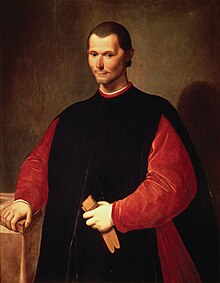
Niccolo Machiavelli
So—which is better: To be feared or loved?
In the 1993 film, A Bronx Tale, 17-year-old Calogero (Lillo Brancato) poses that question to his idol, the local Mafia capo, Sonny (Chazz Palminteri).
“That’s a good question,” Sonny replies. “It’s nice to be both, but it’s very difficult. But if I had my choice, I would rather be feared.
“Fear lasts longer than love. Friendships that are bought with money mean nothing. You see how it is around here. I make a joke, everybody laughs. I know I’m funny, but I’m not that funny. It’s fear that keeps them loyal to me.”
Presidents face the same dilemma as Mafia capos—and resolve it in their own ways.
LOVE ME BECAUSE I NEED TO BE LOVED
Bill Clinton believed that he could win over his self-appointed Republican enemies through his sheer charm.
Part of this lay in self-confidence: He had won the 1992 and 1996 elections by convincing voters that “I feel your pain.”
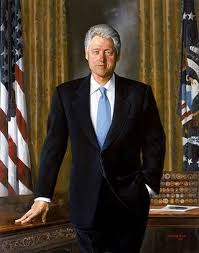
Bill Clinton
And part of it lay in his need to be loved. He once said that if he were in a room with 100 people and 99 of them liked him but one didn’t, he would spend all his time with that one person, trying to win him over.
But while he could charm voters, he could not bring himself to retaliate against his sworn Republican enemies.
On April 19, 1995, Right-wing terrorist Timothy McVeigh drove a truck—packed with 5,000 pounds of ammonium nitrate and nitromethane—to the front of the Alfred P. Murrah Federal Building in Oklahoma City.
The explosion killed 168 people, including 19 children in the day care center on the second floor, and injured 684 others.
Suddenly, Republicans were frightened. Since the end of World War II, they had vilified the very Federal Government they belonged to. They had even courted the Right-wing militia groups responsible for the bombing.
So Republicans feared Clinton would now turn their decades of hate against them.
They need not have worried. On April 23, Clinton presided over a memorial service for the victims of the bombing. He gave a moving eulogy–without condemning the hate-filled Republican rhetoric that had at least indirectly led to the slaughter.
Clinton further sought to endear himself to Republicans by:
- Adopting NAFTA—the Republican-sponsored North American Free Trade Act, which later proved so devastating to American workers;
- Siding with Republicans against poor Americans on welfare; and
- Championing the gutting of the Depression-era Glass-Steagall law, which barred investment banks from commercial banking activities.
In 1998, emboldened by Clinton’s refusal to stand up to them, House Republicans moved to impeach him over a sex scandal with White House intern Monica Lewinsky. But his Presidency survived when the Senate refused to convict.
LOVE ME BECAUSE I’LL HURT YOU IF YOU DON’T
Lyndon Johnson wanted desperately to be loved.
Once, he complained to Dean Acheson, the former Secretary of State under Harry S. Truman, about the ingratitude of American voters. He had passed far more legislation than his predecessor, John F. Kennedy, and yet Kennedy remained beloved, while he, Johnson, was not.
Why was that? Johnson demanded.
“You are not a very likable man,” said Acheson truthfully.
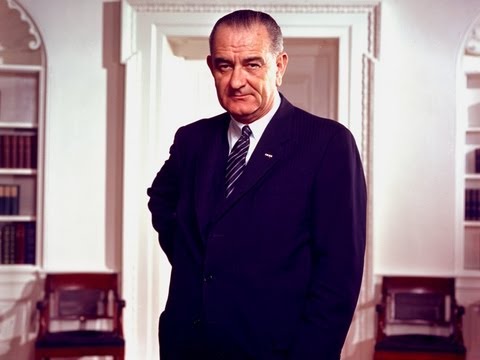
Lyndon B. Johnson
Johnson tried to make his subordinates love him. He would humiliate a man, then give him an expensive gift–such a Cadillac. It was his way of binding the man to him.
He was on a first-name basis with J. Edgar Hoover, the longtime director of the FBI. He didn’t hesitate to request–and get–raw FBI files on his political opponents.
On at least one occasion, he told members of his Cabinet: No one would dare walk out on his administration–because if they did, two men would follow their ass to the end of the earth: Mr. J. Edgar Hoover and the head of the Internal Revenue Service.
ABC NEWS, ANONYMOUS, ASSOCIATED PRESS, CBS NEWS, CNN, COINTELPRO, FACEBOOK, FBI, FERGUSON MISSOURI PROTESTS, J. EDGAR HOOVER, KU KLUX KLAN, MISSISSIPPI BURNING CASE, NBC NEWS, NYPD, PRESIDENT LYNDON B. JOHNSON, TERRORISM, THE CHICAGO SUN-TIMES, THE CHICAGO TRIBUNE, THE LOS ANGELES TIMES, THE NEW YORK TIMES, THE WALL STREET JOURNAL, THE WASHINGTON POST, TWITTER, WILLIAM C. SULLIVAN
In History, Law Enforcement, Politics, Social commentary on October 21, 2016 at 12:17 am
On October 30, 2015, the hacker group Anonymous released the names of at least a dozen alleged Ku Klux Klan (KKK) members and their families online.
“Ku Klux Klan, We never stopped watching you,” the group said in a prepared statement. “We know who you are. We know the dangerous extent to which you will go to cover your asses.
“Originally, we did not attack you for your beliefs as we fight for freedom of speech. We attacked you due to your threats to use lethal force in the Ferguson [Missouri] protests [in November, 2015].
“We took this grudge between us rather seriously. You continue to threaten anons and others. We never said we would only strike once….
“We will release, to the global public, the identities of up to 1000 klan members, Ghoul Squad affiliates and other close associates of various factions of the Ku Klux Klan.”
The information released included ages, phone numbers, addresses and even credit card numbers.

Anonymous Mask
By November 5, Anonymous had released the names of about 1,000 alleged KKK members or sympathizers via a Twitter data dump.
Among those names released by Anonymous:
- U.S. Senator Thom Tillis (R-N.C.);
- U.S. Senator John Cornyn (R-TX.);
- U.S. Senator Dan Coats (R-IN.)
- U.S. Senator Johnny Isakson (R-GA.);
- Mayor Madeline Rogero, Knoxville, TN.;
- Mayor Jim Gray, Lexington, KY.;
- Mayor Paul D. Fraim, Norfolk, VA.;
- Mayor Kent Guinn, Ocala, FL.; and
- Mayor Tom Henry, Fort Wayne, IN.
All of these officials denied any affiliation with the Klan.
“I worked for nine days to gather and verify all the information that was gathered before its release,” Amped Attacks, who released the information, stated online.
“I got the information from several KKK websites when I [hacked] them and was able to dump their database.
“I went through many emails that was signed up with these sites and a few of the emails that sparked my interest was the ones of the politicians in question there would be no reason for them to be signed up on any KKK website unless they supported it or was involved in it.”
This mass leak is easily the worst assault on the KKK since the FBI declared war on it more than 50 years ago.
More importantly, it is an assault made by a private group that has no affiliation with the U.S. Department of Justice.
The last time the Justice Department waged an all-out attack on the Klan was during the Presidency of Lyndon B. Johnson.
The reason: The murders of three civil rights workers in Philadelphia, Mississippi–Michael “Mickey” Schwerner, Andrew Goodman and James Chaney–on June 21, 1964.
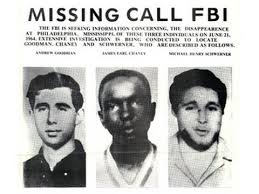
Poster for missing civil rights workers
Johnson ordered the FBI to find the missing activists. After their bodies were found buried near a dam, Johnson gave FBI Director J. Edgar Hoover a direct order: “I want you to have the same kind of intelligence [on the KKK] that you have on the communists.”
So the FBI launched a counterintelligence program–in Bureau-speak, a COINTELPRO–against the Ku Klux Klan.
Up to that point, Klansmen had shot, lynched and bombed their way across the Deep South, especially in Alabama and Mississippi. Many Southern sheriffs and police chiefs were Klan sympathizers, if not outright members and accomplices.

Ku Klux Klansmen in a meeting
The FBI’s covert action program aimed to “expose, disrupt and otherwise neutralize” KKK groups through a wide range of legal and extra-legal methods.
“My father fought the Klan in Massachusetts,” recalled William C. Sullivan, who headed the FBI’s Domestic Intelligence Division in the 1960s. “I always used to be frightened when I was a kid and I saw the fiery crosses burning in the hillside near our farm.
.jpg)
Among those methods:
- Planting electronic surveillance devices in Klan meeting places;
- Carrying out “black bag jobs”–burglaries–to steal Klan membership lists;
- Contacting the news media to publicize arrests and identify Klan leaders;
- Informing the employers of known Klansmen of their employees’ criminal activity, resulting in the firing of untold numbers of them;
- Developing informants within Klans and sewing a climate of distrust and fear among Klansmen;
- Breaking up the marriages of Klansmen by circulating rumors of their infidelity among their wives; and
- Beating and harassing Klansmen who threatened and harassed FBI agents.
The FBI’s counterintelligence war against the Klan ended in 1971.
Today, there are active Klan chapters in 41 states, with between 5,000 and 8,000 active members.
Of course, it’s possible that some of the information posted by Anonymous is wrong. But if it isn’t, then Anonymous has done the nation a public service.
And, by doing so, it has raised a disturbing question:
Why has the Justice Department left a private organization to do battle with a terrorist one like the Ku Klux Klan?
"MISSION: IMPOSSIBLE", "THE FBI" SERIES, ABC NEWS, ALBERT ANASTASIA, ALBERT RUDDY, CARLO GAMBINO, CBS NEWS, CNN, COSA NOSTRA, ELLIOT NESS, FACEBOOK, FBI, FORD MOTOR COMPANY, ISLAMIC STATE OF IRAQ AND SYRIA (ISIS), ISLAMIC TERRORISM, ITALIAN-AMERICAN CIVIL RIGHTS LEAGUE, J. EDGAR HOOVER, JOHN N. MITCHELL, JOSEPH "CRAZY JOE" GALLO, JOSEPH BONANNO, JOSEPH COLUMBO, JUSTICE DEPARTMENT, MAFIA, NBC NEWS, NELSON ROCKEFELLER, NYPD, OMAR MATEEN, POLITICAL CORRECTNESS, ROBERT F. KENNEDY, THE CHICAGO SUN-TIMES, THE CHICAGO TRIBUNE, THE GODFATHER, THE GODTATHER PART II, THE LOS ANGELES TIMES, THE NEW YORK TIMES, THE UNTOUCHABLES, THE WASHINGTON POST, TWITTER, VITO GENOVESE
In Bureaucracy, History, Law Enforcement, Politics, Social commentary, Uncategorized on July 5, 2016 at 12:07 am
In 1970, New York Mafia boss Joseph Columbo declared war on the FBI.
The Bureau had arrested his son, Joseph Columbo, Jr., for melting silver coins down into silver ingots. So Columbo, Sr., created the Italian-American Civil Rights League to “combat prejudice against Italian-Americans.”
Columbo appeared at fundraisers and speaking engagements for the League, and gave interviews on talk-shows–such as the one hosted by Dick Cavett.
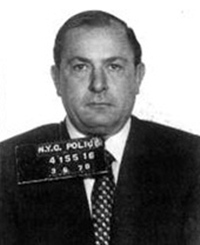
Joseph Columbo
His message: There was no Mafia–only an FBI slander against decent, hard-working Italian-Americans.
And he sent hundreds of members of the League to picket the East Side offices of the FBI.
His actions generated a massive response from many law-abiding Italian-Americans who felt themselves the victims of prejudice.
During the 1950s and early 1960s Congress had held hearings on the Mafia, making Italian and Sicilian criminals like Vito Genovese and Albert Anastasia household words.
Even more enraging had been the depiction of Italians as the villains on the popular ABC TV series, “The Untouchables.” Each week, Eliot Ness and his squad of Treasury agents wiped out a new batch of Prohibition gangsters–who had Italian names like Al Capone and Frank Nitti.
On June 29, 1970, 150,000 people attended an Italian-American Unity Day rally in Columbus Circle in New York City. Several prominent entertainers and five members of the House of Representatives attended.
Under Colombo’s guidance, the League grew quickly and achieved national attention, establishing chapters in 17 states with over 50,000 members.
Shortly after the Columbus Circle rally, then-U.S. Attorney General John N. Mitchell banned the words “Mafia” and “Cosa Nostra” (“Our Thing”) from FBI and Justice Department press releases.
“There is nothing to be gained by using these terms,” said Mitchell, “except to give gratuitous offense to many good Americans of Italian-American descent.”
Seal of the Justice Department
In Albany, New York, then-Governor Nelson Rockefeller instructed the state police to likewise ban such terms.
And the Ford Motor Company, which sponsored the popular ABC-TV series, “The FBI,” also fell into line. While the Bureau’s real-life agents fought the Mafia, its fictionalized agents couldn’t say “Mafia” on TV.
In the spring of 1971, Paramount Pictures began started filming The Godfather, which was to become the most influential movie ever made about the Mafia.
Facing the threat of strikes and violence from the League, the film’s producer, Albert Ruddy, met with Columbo. Ruddy promised that “Mafia” and “Cosa Nostra” would not appear in a film in which almost every major character was a member of the Mafia.

TV’s “Mission: Impossible”–having moved from deposing overseas despots to stateside criminals–similarly referred to organized criminals as “The Syndicate.”
But Columbo was now facing increasing pressure from two sets of enemies.
The first was the FBI–whose agents seethed as they strode through League picket lines near their headquarters at Third Avenue and 69th Street. They were waging war on gangsters, and they resented being called liars and racists.
The second was the Mafia itself. Its older leaders knew there was an all-out Federal drive to destroy the organization. And they feared that Columbo’s in-your-face tactics were goading the FBI and other law enforcement agencies into greater efforts against them.
Of those older leaders, Carlo Gambino, boss of the largest and most powerful Mafia family in New York and the country, was the most important.
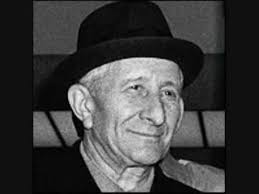
Carlo Gambino
Gambino had set Columbo up in his own family in 1964. This after Columbo had raced to Gambino with the news that his own boss, Joseph Bonanno, planned to “whack” Don Carlo and the other four New York Mafia bosses and become the “boss of all bosses” himself.
Bonnano was thus deposed and sent into exile in Arizona, and Columbo found himself a new boss.
Gambino had always lived in the shadows. As Columbo built up the League, Gambino feared that the publicity and attacks on the FBI would rebound against himself and his brethren.
As the date–June 28, 1971–for the second Italian-American Unity Day rally approached, Gambino quietly put out the word: Stay away.
On that morning Columbo posed for photographers at the rally. Suddenly one of them–a black man–exchanged his camera for an automatic pistol and shot Columbo three times in the head and neck.

Joseph Columbo, after being shot
Seconds later, the shooter was covered by an avalanche of men–one of whom pumped three bullets into him.
The shooter was Jerome Johnson, an ex-con who was linked to mobster Joseph “Crazy Joe” Gallo. The NYPD and FBI believed that Gambino had given Gallo permission to whack Columbo. And that Gallo had used a black man as the ultimate insult to a man he had long hated.
Columbo remained in a vegetative state until May 22, 1978, when he died of cardiac arrest.
There was no third Italian-American Unity Day rally. And the Italian-American Civil Rights League died with Columbo.
Eventually, the Justice Department and FBI went back to using “Mafia” and “La Cosa Nostra.”
And when Francis Ford Coppola made The Godfather, Part II, in 1974, he inserted both words into a scene where Mafia boss Michael Corleone is interrogated by a Senate committee.
For the Mafia, at least, the era of Political Correctness was over.
"MISSION: IMPOSSIBLE", "THE FBI" SERIES, ABC NEWS, AL RUDDY, ALBERT ANASTASIA, ALBERT RUDDY, CARLO GAMBINO, CBS NEWS, CNN, COSA NOSTRA, ELLIOT NESS, FACEBOOK, FBI, FORD MOTOR COMPANY, ISLAMIC STATE OF IRAQ AND SYRIA (ISIS), ISLAMIC TERRORISM, ITALIAN-AMERICAN CIVIL RIGHTS LEAGUE, J. EDGAR HOOVER, JOHN N. MITCHELL, JOSEPH "CRAZY JOE" GALLO, JOSEPH BONANNO, JOSEPH COLUMBO, JUSTICE DEPARTMENT, MAFIA, NBC NEWS, NELSON ROCKEFELLER, NYPD, OMAR MATEEN, POLITICAL CORRECTNESS, ROBERT F. KENNEDY, THE CHICAGO SUN-TIMES, THE CHICAGO TRIBUNE, THE GODFATHER, THE GODTATHER PART II, THE LOS ANGELES TIMES, THE NEW YORK TIMES, THE UNTOUCHABLES, THE WASHINGTON POST, TWITTER, VITO GENOVESE
In Bureaucracy, History, Law Enforcement, Politics, Social commentary on July 4, 2016 at 12:52 am
On June 12, Omar Mateen, a 29-year-old former security guard, slaughtered 49 men and women and injured 53 more inside Pulse, a gay nightclub in Orlando, Florida.
Mateen was then shot to death by Orlando police after a three-hour standoff.
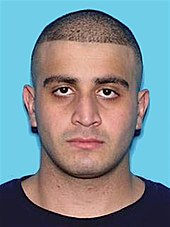
Omar Mateen
It was the deadliest mass shooting by a single gunman in American history–and the deadliest terrorist attack in the United States since the Al Qaeda attacks of September 11, 2001.
The massacre was widely decried as an act of Islamic terrorism. But many others insisted it was simply a hate crime.
Among those opting for the latter: Officials at the Department of Justice (DOJ) and the Federal Bureau of Investigation (FBI).
During his three-hour slaughterfest, Mateen made a call to 9-1-1, pledging his allegiance to the Islamic State of Iraq and Syria (ISIS) and its leader, Abu Bakr al-Baghdadi.
On June 20, the FBI released an edited version of the transcript of that call. All references to ISIS were removed.
The Justice Department claimed that it was withholding some details to avoid putting the victims through any more pain–and to not further the propaganda efforts of ISIS.
A firestorm of protest erupted from Republican Congressional leaders, most notably Speaker of the House Paul Ryan. Since Mateen’s pledge to ISIS had become widely known, they demanded, what was the point of censoring it in the transcript of his phone call?
An additional reason for the fury aimed at the Justice Department: On June 12, ISIS had, through its news agency, Amag, claimed responsibility for the massacre:
“The armed attack that targeted a gay night club in the city of Orlando in the American state of Florida which left over 100 people dead or injured was carried out by an Islamic State fighter.”
Finally, buckling to pressure, on the afternoon of June 20, the FBI released the full, uncensored transcript of Mateen’s call to 9-1-1.
This was definitely not the finest hour of an organization whose motto is: “Fidelity, Bravery, Integrity.”
Seal of the FBI
It was not, however, the first time the Bureau caved in to the demands of Political Correctness.
This occurred almost 50 years earlier–in 1970.
And the man who was responsible for this was not a member of ISIS. Instead, he belonged to another, equally deadly organization: The Mafia.
Joseph Anthony (“Joe”) Columbo was the boss of the Columbo crime family, one of the “Five Families” of the Cosa Nostra in New York.
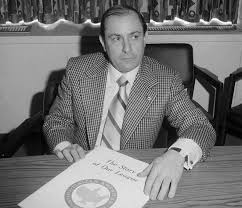
Joseph Columbo
At 45, Columbo was one of the youngest Mafia bosses in the United States. He was also the first American-born boss of a New York crime family.
But, unlike his fellow bosses, he didn’t hesitate to court publicity–or confront law enforcement.
Summoned for questioning about the murder of one of his “soldiers,” Columbo appeared–without a lawyer–at the office of NYPD detective Albert Seedman.
“I am an American citizen, first class,” he blasted Seedman. “I don’t have a badge that makes me an official good guy like you. But I work just as honest for a living.”
Naturally, Columbo denied having anything to do with the death of his subordinate.
In the spring of 1970, Columbo decided to raise his sights. He moved from attacking the NYPD to taking on the FBI.
Throughout most of the tenure of its director, J. Edgar Hoover, the FBI had avoided tackling the Mafia. From the 1920s until the 1950s, mobsters had operated virtually untouched by the most powerful Federal law enforcement agency.
To this day, Hoover’s reasons for avoiding mob enforcement remain unknown. Theories for this include:
- He feared his agents would be corrupted by Mafia bribes.
- He preferred flashy, easily-solved cases like bank-robbery and stolen car rings.
- The Mob blackmailed him with compromising photos of a homosexual relationship with Clyde Tolson, his second-in-command at the FBI.
Then, in 1961, Robert F. Kennedy became Attorney General. As former chief counsel for the Senate Labor Rackets Committee (1957-59) Kennedy had investigated the Mafia’s infiltration of the nation’s labor unions. He had focused especially on its ownership of the International Brotherhood of Teamsters.
Unlike Hoover–who denied the Mafia existed–Kennedy was convinced that it did.
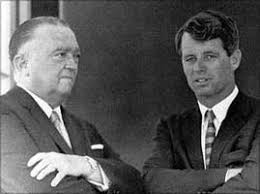
J. Edgar Hoover and Robert F. Kennedy
And as the brother to President John F. Kennedy, RFK had the power to needed to force Hoover to attack the crime syndicates.
Throughout the country, the Mafia felt a new heat as FBI agents planted illegal electronic microphones (“bugs”) in their innermost sanctums. Agents openly tailed mobsters–and sent them to prison in large numbers.
Most old-time Mafia bosses decided to take a low profile to avoid the new Federal pressure. They remembered how Al Capone had flaunted his wealth and power–and had fallen victim to the IRS for it.
In April, 1970, Columbo’s son, Joseph Jr., was arrested by the FBI for melting down coins for resale as silver ingots. The Mafia boss decided to retaliate.
He publicly declared there was no such thing as the Mafia. This was a fiction created by FBI agents taking out their prejudice on law-abiding Italian-Americans.
Then he sent members of his newly-formed organization–the Italian-American Civil Rights League–to picket the East Side offices of the FBI.
2016 PRESIDENTIAL RACE, ABC NEWS, ALTERNET, AMERICABLOG, AP, BABY BOOMER RESISTANCE, BBC, BERNIE SANDERS, BLOOD FEUD, BLOOMBERG NEWS, BROTHERS: THE HIDDEN HISTORY OF THE KENNEDY YEARS, BUZZFEED, CARLOS MARCELLO, CBS NEWS, CIA, CNN, COTTER SMITH, CROOKS AND LIARS, CUBA, DAILY KOS, DAVID TALBOT, DONALD TRUMP, ERNEST BORGNINE, FBI, FIDEL CASTRO, FIVETHIRTYEIGHT, GUS RUSSO, HARPER’S MAGAZINE, HILLARY CLINTON, HUFFINGTON POST, INTERNATIONAL BROTHERHOOD OF TEAMSTERS, J. EDGAR HOOVER, JAMES R. HOFFA, JUSTICE DEPARTMENT, LIVE BY THE SWORD: THE SECRET WAR AGAINST CASTRO AND THE DEATH OF JFK, MAFIA, MEDIA MATTERS, MOTHER JONES, MOVEON, MSNBC, NBC NEWS, NEW REPUBLIC, NEWSDAY, NEWSWEEK, NPR, PBS NEWSHOUR, POLITICO, POLITICUSUSA, RAFAEL EDWARD CRUZ, RAW STORY, REUTERS, ROBERT BLAKE, ROBERT F. KENNEDY, SALON, SAM GROOM, SEATTLE TIMES, Secret Service, SENATE LABOR RACKETS COMMITTEE, SLATE, TALKING POINTS MEMO, THE ATLANTIC, THE CHICAGO SUN-TIMES, THE CHICAGO TRIBUNE, THE DAILY BEAST, THE DAILY BLOG, THE GUARDIAN, THE HILL, THE HUFFINGTON POST, THE INTERCEPT, THE LOS ANGELES TIMES, THE NATION, THE NEW REPUBLIC, THE NEW YORK TIMES, THE NEW YORKER, THE VILLAGE VOICE, THE WALL STREET JOURNAL, THE WASHINGTON POST, THINKPROGRESS, TIME, TRUTHDIG, TRUTHOUT, TWITTER, U.S. NEWS & WORLD REPORT, UPI
In Bureaucracy, History, Law, Law Enforcement, Politics, Social commentary on April 25, 2016 at 12:10 am
The 1983 TV mini-series, Blood Feud, chronicles the decade-long struggle between Robert F. Kennedy (Cotter Smith) and James R. Hoffa (Robert Blake), president of the International Brotherhood of Teamsters Union.
With Kennedy as Attorney General and facing relentless pressure from the Justice Department, the Mafia despairs of a solution. At a swanky restaurant, several high-ranking Mafiosi agree that “something” must be done.
On November 22, 1963, President John F. Kennedy is assassinated in Dallas, Texas.
Blood Feud clearly implies that the Mafia was responsible.
[The House Assassinations Committee investigated this possibility in 1978, and determined that Carlos Marcello, the Mafia boss of New Orleans, had the means, motive and opportunity to kill JFK. But it could not find any conclusive evidence of his involvement.]
Even with the President dead, RFK’s Justice Department continues to pursue Hoffa. In 1964, he is finally convicted of jury tampering and sentenced to 13 years’ imprisonment.
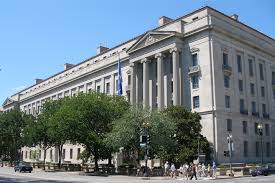
U.S. Department of Justice
Hoping to avoid prison, Hoffa phones Robert Kennedy, offering future Teamsters support if RFK runs for President. To prove he can deliver, he tells Kennedy that the Teamsters have even penetrated the FBI.
[In March, 1964, Kennedy met with Hoffa on an airfield at Dulles International Airport in Washington, D.C. He was accompanied by two Secret Service agents from the detail assigned to ex-First Lady Jacqueline Kennedy.
[FBI Director J. Edgar Hoover, no longer afraid to cross RFK, had withdrawn the agents previously assigned to guard Kennedy.
[Accompanying Hoffa were two muscular bodyguards–at least one of whom was packing two pistols in shoulder holsters.
[While the Secret Service agents watched from a respectful distance, Kennedy spoke quietly with Hoffa. The Attorney General showed a document to Hoffa, and the Teamsters leader at times nodded or shook his head.
[The agents drove Kennedy back to Washington. During the ride, he said nothing about the reason for the meeting.
[David Talbot, in his book, Brothers: The Hidden History of the Kennedy Years, speculates that it could have been to discuss Hoffa’s conviction for jury tampering.
[But Gus Russo–author of Live By the Sword: The Secret War Against Castro and the Death of JFK–writes that the reason might have been Dallas.
[Perhaps, he speculates, RFK had wanted to look into Hoffa’s eyes while asking him: Did you have anything to do with the assassination? RFK had, in fact, done this with CIA Director John McCone almost immediately after his brother’s death.]
In Blood Feud, Kennedy confronts J. Edgar Hoover (Ernest Borgnine) and accuses him of illegally planting wiretaps in Mob hangouts all over the country.
J. Edgar Hoover and Robert F. Kennedy
Hoover retorts that this had been the only way to obtain the prosecution-worthy intelligence Kennedy had demanded: “You loved that flow of information. You didn’t want it to stop.”
Kennedy: Why did you keep the FBI out of the fight against the Mob for decades?
Hoover: “Every agency that came to grips with them got corrupted by their money.”
[So far as is known, Hoover never made any such confession. Historians continue to guess his reason for leaving the Mob alone for decades.]
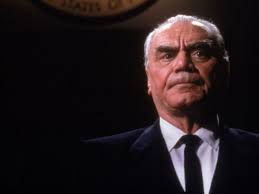

Ernest Borgnine as J. Edgar Hoover
RFK then mentions the CIA’s plots to employ the Mob to assassinate Cuban dictator Fidel Castro
[The agency had wanted to please President Kennedy, and the Mafia had wanted to regain its casinos lost to the Cuban Revolution. The role the Kennedy brothers played in the CIA’s assassination plots remains murky, and has been the subject of endless speculation.]
“The CIA, doing business with the Mob,” says Kennedy. “The FBI, leaking information to its enemies [the Teamsters].” Then, sadly: “I guess it’s true–everyone does business with everyone.”
[So far as is known, the FBI did not pass on secrets to the Teamsters. But during the 1970s, the Mafia penetrated the Cleveland FBI office through bribes to a secretary. Several FBI Mob informants were “clipped” as a result.]
In 1967, Hoffa goes to prison. He stays there until, in 1971, President Richard Nixon commutes his sentence in hopes of gaining Teamsters’ support for his 1972 re-election.
Kennedy leaves the Justice Department in 1964 and is elected U.S. Senator from New York. In 1968 he runs for President. On June 5, after winning the California primary, he’s assassinated.
In Blood Feud, just before his assassination, RFK asks: “How will I ever really know if the Mob killed Jack because of my anti-Mob crusade?”
Hoffa schemes to return to the presidency of the Teamsters–a post now held by his successor, Frank Fitzsimmons. He runs the union in a more relaxed style than Hoffa, thus giving the Mob greater control over its pension fund.
And the Mafia likes it that way.
On July 30, 1975, Hoffa disappears from the parking lot of the Machus Red Fox Restaurant near Detroit. He had gone there to meet with two Mafia leaders.
Almost 41 years after the death of James R. Hoffa, and almost 48 years after that of Robert F. Kennedy:
- Labor unions are a shadow of their former power.
- The threat they once represented to national prosperity has been replaced by that of predatory corporations like Enron and AIG.
- The war RFK began on the Mafia has continued, sending countless mobsters to prison.
- Millions of Americans who once expected the Federal Government to protect them from crime now believe the Government is their biggest threat.
- The idealism that fueled RFK’s life has virtually disappeared from politics.
2016 PRESIDENTIAL RACE, ABC NEWS, ABCNEWS, ALTERNET, AMERICABLOG, AP, BABY BOOMER RESISTANCE, BBC, BERNIE SANDERS, BLOOD FEUD, BLOOMBERG NEWS, BROTHERS: THE HIDDEN HISTORY OF THE KENNEDY YEARS, BUZZFEED, CARLOS MARCELLO, CBS NEWS, CIA, CNN, COTTER SMITH, CROOKS AND LIARS, CUBA, DAILY KOS, DAVID TALBOT, DONALD TRUMP, ERNEST BORGNINE, FBI, FIDEL CASTRO, FIVETHIRTYEIGHT, GUS RUSSO, HARPER’S MAGAZINE, HILLARY CLINTON, HUFFINGTON POST, INTERNATIONAL BROTHERHOOD OF TEAMSTERS, J. EDGAR HOOVER, JAMES R. HOFFA, JOHN F. KENNEDY, JUSTICE DEPARTMENT, LIVE BY THE SWORD: THE SECRET WAR AGAINST CASTRO AND THE DEATH OF JFK, MAFIA, MEDIA MATTERS, MOTHER JONES, MOVEON, MSNBC, NBC NEWS, NEW REPUBLIC, NEWSDAY, NEWSWEEK, NPR, PBS NEWSHOUR, POLITICO, POLITICUSUSA, RAFAEL EDWARD CRUZ, RAW STORY, REUTERS, ROBERT BLAKE, ROBERT F. KENNEDY, SALON, SAM GROOM, SEATTLE TIMES, Secret Service, SENATE LABOR RACKETS COMMITTEE, SLATE, TALKING POINTS MEMO, THE ATLANTIC, THE CHICAGO SUN-TIMES, THE CHICAGO TRIBUNE, THE DAILY BEAST, THE DAILY BLOG, THE GUARDIAN, THE HILL, THE HUFFINGTON POST, THE INTERCEPT, THE LOS ANGELES TIMES, THE NATION, THE NEW REPUBLIC, THE NEW YORK TIMES, THE NEW YORKER, THE VILLAGE VOICE, THE WALL STREET JOURNAL, THE WASHINGTON POST, THINKPROGRESS, TIME, TRUTHDIG, TRUTHOUT, TWITTER, U.S. NEWS & WORLD REPORT, UPI
In Bureaucracy, History, Law, Law Enforcement, Politics, Social commentary on April 22, 2016 at 12:10 am
The 1983 TV mini-series, Blood Feud, chronicles the decade-long struggle between Robert F. Kennedy and James R. Hoffa.
Having “helped” Kennedy (Cotter Smith) to oust corrupt Teamsters President Dave Beck, Hoffa (Robert Blake) believes that Kennedy should now be satisfied: “He’s got his scalp. Now he can move on to other things while I run the union.”
But Hoffa has guessed wrong–with fatal results. Realizing that he’s been “played” by Hoffa, a furious Kennedy strikes back.
He orders increased surveillance of Hoffa and his topmost associates. He subpoenas union records and members of both the Teamsters and the Mafia to appear before his committee in public hearings.
And he tries to enlist the aid of legendary FBI Director J. Edgar Hoover (Ernest Borgnine). But Hoover wants no part of a war against organized crime, whose existence he refuses to admit.

Meanwhile, Kennedy’s confrontations with Hoffa grow increasingly fierce. In open hearings, Kennedy accuses Hoffa of receiving kickbacks in the name of his wife. Hoffa damns him for “dirtying my wife’s name.”
Kennedy secures an indictment against Hoffa for hiring a spy to infiltrate the Senate Labor Rackets Committee. He’s so certain of a conviction that he tells the press he’ll “jump off the Capitol building” if Hoffa beats the rap.
But Hoffa’s lawyer, Edward Bennett Williams (Jose Ferrer) puts Kennedy himself on the witness stand. There he portrays Kennedy as a spoiled rich man who’s waging a vendetta against Hoffa.
Hoffa beats the rap, and offers to send Kennedy a parachute. But he jokingly warns reporters: “Hey, Bobby, you better have it checked. I don’t trust myself!”
By 1959, Robert Kennedy’s work as chief counsel for the Senate Labor Rackets Committee is over. But not his determination to send Teamsters President James Hoffa to prison.
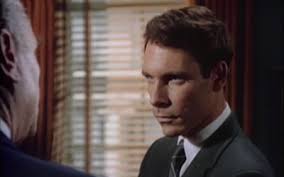
Cotter Smith as Robert Kennedy
Throughout 1960, he manages the Presidential campaign for his brother, John F. Kennedy (Sam Groom). By a margin of only 100,000 votes, JFK wins the election.
Hoffa thinks that his troubles are over, that “Bobby” will move on to other pursuits and forget about the Teamsters.
Hoffa is partly right: Kennedy moves on to another job. But it’s the office of United States Attorney General.
JFK, needing someone in the Cabinet he can trust completely, browbeats Robert into becoming the the nation’s top cop.
For Hoffa, it’s a nightmare come true.
As Attorney General, Kennedy no longer has to beg J. Edgar Hoover to attack organized crime. He can–and does–order him to do so.
Throughout the country, the Mafia feels a new heat as FBI agents plant illegal electronic microphones (“bugs”) in their innermost sanctums. Agents openly tail mobsters–and send them to prison in large numbers.
And Kennedy sets up a special unit, composed of topflight prosecutors and investigators, to go after just one man: James Riddle Hoffa. The press comes to call it the “Get Hoffa” squad.
Hoffa continues to beat federal prosecutors in court. But he believes he’s under constant surveillance by the FBI, and his nerves are starting to crack.
Convinced that the FBI has bugged his office, he literally tears apart the room, hoping to find the bug. But he fails to do so.
What he doesn’t know is he’s facing a more personal danger–from one of his closest associates.
He tells a trusted colleague, Edward Grady Partin (Brian Dennehy) how easy it would be to assassinate Kennedy with a rifle or bomb.
Later, Partin gets into a legal jam–and is abandoned by the Teamsters. Hoping to cut a deal, he relays word to the Justice Department of Hoffa’s threats against the Attorney General.
Now working for the Justice Department, Partin sends in reports on Hoffa’s juror-bribing efforts in yet another trial. Hoffa again beats the rap–but now Kennedy has the insider’s proof he needs to put him away for years.
Meanwhile, the Mafia despairs of the increasing pressure of the Justice Department. At a swanky restaurant, several high-ranking members agree that “something” must be done.
[Although this scene is fictional, it’s clearly based on an infamous outburst of Carlos Marcello, the longtime Mafia boss of New Orleans.
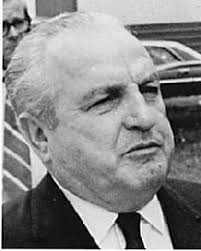
Carlos Marcello
[In 1961, Marcello was deported to his native Guatemala on orders by RFK. After illegally re-entering the country, he swore vengeance against the Attorney General.
[In September, 1962, during a meeting with several mob colleagues, he flew into a rage when someone mentioned Kennedy.
“Take the stone out of my shoe!” he shouted, echoing a Sicilian curse. “Don’t you worry about that little Bobby sonofabitch. He’s going to be taken care of!”
[When one of his colleagues warned that murdering RFK would trigger the wrath of his brother, President John F.Kennedy, Marcello replied: “In Sicily they say if you want to kill a dog you don’t cut off the tail. You go for the head.”
[Marcello believed that the death of President Kennedy would render the Attorney General powerless. And he added that he planned to use a “nut” to do the job.]
On November 22, 1963, President John F. Kennedy is assassinated in Dallas, Texas.
Blood Feud clearly implies that the Mafia was responsible.
2016 PRESIDENTIAL RACE, ABC NEWS, ALTERNET, AMERICABLOG, AP, BABY BOOMER RESISTANCE, BBC, BERNIE SANDERS, BLOOD FEUD, BLOOMBERG NEWS, BROTHERS: THE HIDDEN HISTORY OF THE KENNEDY YEARS, BUZZFEED, CARLOS MARCELLO, CBS NEWS, CIA, CNN, COTTER SMITH, CROOKS AND LIARS, CUBA, DAILY KOS, DAVID TALBOT, DONALD TRUMP, ERNEST BORGNINE, FBI, FIDEL CASTRO, FIVETHIRTYEIGHT, GUS RUSSO, HARPER’S MAGAZINE, HILLARY CLINTON, HUFFINGTON POST, INTERNATIONAL BROTHERHOOD OF TEAMSTERS, J. EDGAR HOOVER, JAMES R. HOFFA, JOHN F. KENNEDY, JUSTICE DEPARTMENT, LIVE BY THE SWORD: THE SECRET WAR AGAINST CASTRO AND THE DEATH OF JFK, MAFIA, MEDIA MATTERS, MOTHER JONES, MOVEON, MSNBC, NBC NEWS, NEW REPUBLIC, NEWSDAY, NEWSWEEK, NPR, PBS NEWSHOUR, POLITICO, POLITICUSUSA, RAFAEL EDWARD CRUZ, RAW STORY, REUTERS, ROBERT BLAKE, ROBERT F. KENNEDY, SALON, SAM GROOM, SEATTLE TIMES, Secret Service, SENATE LABOR RACKETS COMMITTEE, SLATE, TALKING POINTS MEMO, THE ATLANTIC, THE CHICAGO SUN-TIMES, THE CHICAGO TRIBUNE, THE DAILY BEAST, THE DAILY BLOG, THE GUARDIAN, THE HILL, THE HUFFINGTON POST, THE INTERCEPT, THE LOS ANGELES TIMES, THE NATION, THE NEW REPUBLIC, THE NEW YORK TIMES, THE NEW YORKER, THE VILLAGE VOICE, THE WALL STREET JOURNAL, THE WASHINGTON POST, THINKPROGRESS, TIME, TRUTHDIG, TRUTHOUT, TWITTER, U.S. NEWS & WORLD REPORT, UPI
In Bureaucracy, History, Law, Law Enforcement, Politics, Social commentary on April 21, 2016 at 12:37 pm
Today, America has four major candidates running for President: Donald Trump, Rafael Edward Cruz, Hillary Clinton and Bernie Sanders.
Trump is a billionaire businessman; Cruz is a U.S. Senator from Texas; Clinton is a former First Lady, U.S. Senator and Secretary of State; and Sanders is a U.S. Senator from Vermont.
Despite the great differences in their backgrounds, they all share one thing in common: Extremely high negatives among voters.
But 48 years ago, Senator Robert Francis Kennedy aroused passions of an altogether different sort.
Kennedy had been a United States Attorney General (1961-1964) and Senator (1964-1968). But it was his connection to his beloved and assassinated brother, President John F. Kennedy, for which he was best known.

Robert F. Kennedy campaigning for President
Millions saw RFK as the only candidate who could make life better for America’s impoverished–while standing firmly against those who threatened the Nation’s safety.
As television correspondent Charles Quinn observed: “I talked to a girl in Hawaii who was for [George] Wallace [the segregationist governor of Alabama]. And I said ‘Really?’ [She said] ‘Yeah, but my real candidate is dead.’
“You know what I think it was? All these whites, all these blue collar people who supported Kennedy…all of these people felt that Kennedy would really do what he thought best for the black people, but, at the same time, would not tolerate lawlessness and violence.
“They were willing to gamble…because they knew in their hearts that the country was not right. They were willing to gamble on this man who would try to keep things within reasonable order; and at the same time do some of the things they knew really should be done.”
Campaigning for the Presidency in 1968, RFK had just won the crucial California primary on June 4–when he was shot in the back of the head. His killer: Sirhan Sirhan, a young Palestinian furious at Kennedy’s support for Israel.
On June 8, 1,200 men and women boarded a specially-reserved passenger train at New York’s Pennsylvania Station. They were accompanying Kennedy’s body to its final resting place at Arlington National Cemetery.
As the train slowly moved along 225 miles of track, throngs of men, women and children lined the rails to pay their final respects to a man they considered a genuine hero.
Little Leaguers clutched their baseball caps across their chests. Uniformed firemen and policemen saluted. Burly men in shirtsleeves held hardhats over their hearts. Black men in overalls waved small American flags. Women from all levels of society stood and cried.

A nation says goodbye to Robert Kennedy
Commenting on RFK’s legacy, historian William L. O’Neil wrote in Coming Apart: An Informal History of America in the 1960′s:
“…He aimed so high that he must be judged for what he meant to do, and, through error and tragic accident, failed at….He will also be remembered as an extraordinary human being who, though hated by some, was perhaps more deeply loved by his countrymen than any man of his time.
“That too must be entered into the final account, and it is no small thing. With his death something precious disappeared from public life.”
Eleven years earlier, as a young, idealistic attorney, Kennedy had declared war on James Riddle Hoffa, the president of the Mafia-dominated International Brotherhood of Teamsters Union.
As chief counsel for the Senate Labor Rackets Committee, Kennedy was appalled at the corruption he discovered among high-ranking Teamster officials. As he saw it, under Hoffa’s leadership, the union was nothing less than “a conspiracy of evil.”
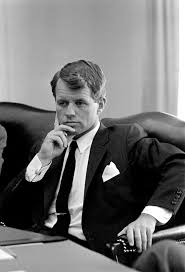
Robert Francis Kennedy as Chief Counsel, Senate Labor Rackets Committee
Hoffa, in turn, held an equally unflattering view of Kennedy. “A rich punk,” said Hoffa, who didn’t know or care about “the average workingman.”
In 1983, Blood Feud, a two-part TV mini-series, depicted the 11-year animosity between Kennedy and Hoffa. Although it took some dramatic liberties, its portrayal of the major events of that period remains essentially accurate.
Today, labor unions are a rapidly-vanishing species, commanding far less political influence than they did 50 years ago. As a result, young viewers of this series may find it hard to believe that labor ever held such sway, or that the Teamsters posed such a threat.
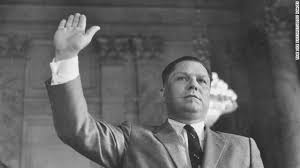
James Riddle Hoffa testifying before the Senate Labor Rackets Committee
And in an age when millions see “Big Government” as the enemy, they may feel strong reservations about the all-out war that Robert F. Kennedy waged against Hoffa.
Blood Feud opens in 1957, when Hoffa (Robert Blake) is a rising figure within the Teamsters. Kennedy (Cotter Smith) is chief counsel for the Senate Labor Rackets Committee.
At first, Hoffa tries to ingratiate himself with Kennedy, telling him: “I know everybody who can help me and anybody who can hurt me.”
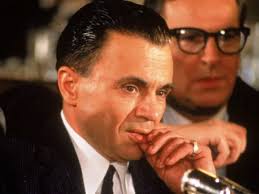
Robert Blake as James R. Hoffa
A wily Hoffa decides to parley Kennedy’s anti-corruption zeal into a path to power for himself. Via his attorney, Eddie Cheyfitz, he feeds Kennedy incriminating evidence against Dave Beck, president of the Teamsters.
Confronted with a Senate subpoena, Beck flees the country–paving the way for Hoffa to assume the top position in the union. Hoffa believes he has solved two problems at once.
ABC NEWS, BENJAMIN C. BRADLEE, BLACKMAIL, CBS NEWS, CNN, DENNIS HASTERT, DUKE OF WELLINGTON, FACEBOOK, FBI, J. EDGAR HOOVER, JOHN F. KENNEDY, JUDITH CAMPBELL, MAFIA, NAPOLEON BONAPARTE, NBC NEWS, REPUBLICANS, ROBERT F. KENNEDY, SAM GIANCANA, THE CHICAGO SUN-TIMES, THE CHICAGO TRIBUNE, THE LOS ANGELES TIMES, THE NEW YORK TIMES, THE WALL STREET JOURNAL, THE WASHINGTON POST, TWITTER, WATERLOO, WILLIAM C. SULLIVAN
In Bureaucracy, History, Law, Law Enforcement, Military, Politics, Social commentary on April 18, 2016 at 12:06 am
On May 28, 2015, Hastert, the former Republican Speaker of the House of Representatives (1999-2007) was indicted for violating Federal banking laws and lying to the FBI.
He had tried to conceal $3.5 million he had paid since 2010 to a man whom he had molested as a high school student. The student had been on the wrestling team that Hastert had coached.
The relationship had occurred while Hastert was a teacher and wrestling coach at Yorkville High School in Yorkville, Ill.
Later, in 1981, Hastert entered Congress.
On October 28, 2015, Hastert pleaded guilty to structuring money transactions in a way to avoid requirements to report where the money was going.

Dennis Hastert
“I felt a special bond with our wrestlers,” Hastert wrote in his 2004 memoirs, Speaker: Lessons From Forty Years of Coaching and Politics. “And I think they felt one with me.”
Apparently that “special bond” extended to activities outside the ring.
In the pre-sentence report, Justice Department prosecutors charged that Hastert had abused four young boys when he was their wrestling coach. One was only 14 years old.
Hastert had claimed that a coach should never strip away another person’s dignity.
But, said federal prosecutors, “that is exactly what defendant did to his victims. He made them feel alone, ashamed, guilty, and devoid of dignity.”
Hastert’s sentencing, delayed because of health problems, is now scheduled for April 27.
Thus, irony: By giving in to blackmail, Hastert:
- Lost $3.5 million;
- Unintentionally engineered his arrest and indictment; and
- Ensured that his darkest secret would be revealed.
There is a lesson to be learned here–one that longtime FBI Director J. Edgar Hoover well understood: Giving in to blackmail only empowers the blackmailer even more.
As William C. Sullivan, the onetime director of the FBI’s Domestic Intelligence Divison, revealed after Hoover’s death in 1972:
“The moment [Hoover] would get something on a senator, he’d send one of the errand boys up and advise the senator that ‘we’re in the course of an investigation, and we by chance happened to come up with this data on your daughter.
“‘But we wanted you to know this. We realize you’d want to know it.’ Well, Jesus, what does that tell the senator? From that time on, the senator’s right in his pocket.”
“Boy, the dirt he [Hoover] has on those Senators!” John F. Kennedy–a former Senator now President–gushed to his journalist-friend, Benjamin C. Bradlee.
Kennedy soon came to know that even Presidents could be targeted for blackmail.
In May, 1962, Hoover privately informed Kennedy that the FBI had learned that Judith Campbell, the mistress of Chicago Mafia boss Sam Giancana, had another bedmate: JFK himself.

John F. Kennedy, J. Edgar Hoover and Robert F. Kennedy
Hoover had feared being retired by the President’s brother, Attorney General Robert F. Kennedy. It had been RFK who had ordered Hoover to attack the Mafia as he had long attacked the Communist Party USA.
Now, as a result of that anti-Mob effort, the FBI had picked up evidence linking the President with the mistress of a top Mafia boss.
Hoover’s tenure as FBI director was thus assured–until his death on May 2, 1972, of a heart attack.
Narcotics agents have their own methods of blackmail in dealing with informants.
When a drug-abuser and/or dealer is coerced into becoming a “snitch,” the narcotics agent orders him to call another user/dealer he knows.
The agent then tapes the call–and makes sure his new informant knows it. From that moment, the “snitch” knows there’s no way out except cooperating with his new master.
The only effective way of handling blackmail was demonstrated by Arthur Wellesley, known to history as the Duke of Wellington.
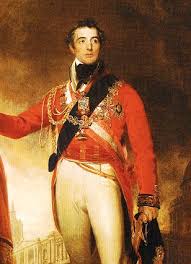
The Duke of Wellington
In 1815, he had defeated Napoleon at the battle of Waterloo, ending France’s longstanding threat to England. With that victory came the honors of a grateful nation.
Then, in December, 1824, Wellington found himself the target of blackmail by Joseph Stockdale, a pornographer and scandal-monger.
“My Lord Duke,” Stockdale write in a letter, “In Harriette Wilson’s memoirs, which I am about to publish, are various anecdotes of Your Grace which it would be most desirable to withhold….
“I have stopped the Press for the moment, but as the publication will take place next week, little delay can necessarily take place.”
Wilson was a famous London courtesan past her prime, then living in exile in Paris. She was asking Wellington to pay money to be left out of her memoirs.
From Wellington came the now-famous reply: “Publish and be damned!”
Wilson’s memoirs appeared in installments, naming half the British aristocracy and scandalizing London society.
And, true to her threat, she named Wellington as one of her lovers–and a not very satisfying one at that.
Wellington was a national hero, husband and father. Even so, his reputation did not suffer, and he went on to become prime minister.
Click here: Rear Window: When Wellington said publish and be damned: The Field Marshal and the Scarlet Woman – Voices
Dennis Hastert, former Speaker of the House, might now wish he had followed the example of the Duke of Wellington.
His reputation might have been trashed, but he wouldn’t now be facing prosecution.
ABC NEWS, APALACHIN RAID, BUSINESS, CBS NEWS, CEO, CLYDE TOLSON, CNN, ELECTRONIC SURVEILLANCE, FACEBOOK, FBI, FEDERAL BUREAU OF NARCOTICS, HARRY ANSLINGER, ILLEGAL ALILENS, IMMIGRATION AND CUSTOMS ENFORCEMENT (ICE), IRAN-CONTRA, J. EDGAR HOOVER, MAFIA, MEYER LANSKY, NBC NEWS, OLIVER NORTH, ROBERT F. KENNEDY, Ronald Reagan, THE CHICAGO SUN-TIMES, THE CHICAGO TRIBUNE, THE LOS ANGELES TIMES, THE NEW YORK TIMES, THE WASHINGTON POST, TOP HOODLUM PROGRAM, TWITTER, WAL-MART, WILLIAM E. ROEMER, WIRETAPPING, WIRETAPS
In Bureaucracy, Business, History, Law, Law Enforcement, Politics, Social commentary on April 11, 2016 at 12:04 am
In 1959, J. Edgar Hoover, the legendary director of the FBI, declared war on the Mafia.
He set up a Top Hoodlum Program and encouraged his agents to use wiretapping and electronic surveillance (“bugging”) to make up for lost time and Intelligence.
But Hoover also imposed a series of restrictions that could destroy an agent’s professional and personal life.
William E. Roemer, Jr., assigned to the FBI’s Chicago field office, was one of the first agents to volunteer for such duty.
In his memoirs, Man Against the Mob, published in 1989, Roemer laid out the dangers that went with such work:
- If confronted by police or mobsters, agents were to try to escape without being identified.
- If caught by police, agents were not to identify themselves as FBI employees.
- They were to carry no badges, credentials or guns–or anything else connecting themselves with the FBI.
- If they were arrested by police and the truth emerged about their FBI employment, the Bureau would claim they were “rogue agents” acting on their own.
- Such agents were not to refute the FBI’s portrayal of them as “rogues.”

If he had been arrested by the Chicago Police Department and identified as an FBI agent, Roemer would have:
- Definitely been fired from his position as an FBI agent.
- Almost certainly been convicted for at least breaking and entering.
- Disbarred from the legal profession (Roemer was an attorney).
- Perhaps served a prison sentence.
- Been disgraced as a convicted felon.
- Been unable to serve in his chosen profession of law enforcement.
Given the huge risks involved, many agents, unsurprisingly, wanted nothing to do with “black bag jobs.”

The agents who took them on were so committed to penetrating the Mob that they willingly accepted Hoover’s dictates.
In 1989, Roemer speculated that former Marine Lieutenant Colonel Oliver North had fallen victim to such a “Mission: Impossible” scenario: “The secretary will disavow any knowledge of your actions….”
In 1986, Ronald Reagan’s “arms-for-hostages” deal known as Iran-Contra had been exposed.
To retrieve seven Americans taken hostage in Beirut, Lebanon, Reagan had secretly agreed to sell some of America’s most sophisticated missiles to Iran.
During this operation, several Reagan officials–including North–diverted proceeds from the sale of those missiles to fund Reagan’s illegal war against the Sandinistas in Nicaragua.
In Roemer’s view: North had followed orders from his superiors without question. But when the time came for those superiors to step forward and protect him, they didn’t.
They let him take the fall.
Roemer speculated that North had been led to believe he would be rescued from criminal prosecution. Instead, in 1989, he was convicted for
- accepting an illegal gratuity;
- aiding and abetting in the obstruction of a congressional inquiry; and
- ordering the destruction of documents via his secretary, Fawn Hall.
That is how many employers expect their employees to act: To carry out whatever assignments they are given and take the blame if anything goes wrong.
Take the case of Wal-Mart Stores, Inc., the world’s biggest retailer.
In March, 2005, Wal-Mart escaped criminal charges when it agreed to pay $11 million to end a federal probe into its use of illegal aliens as janitors.
Agents from Immigration and Customs Enforcement (ICE) raided 60 Wal-Mart stores across 21 states in October, 2003. The raids led to the arrest of 245 illegal aliens.

Federal authorities had uncovered the cases of an estimated 345 illegal aliens contracted as janitors at Wal-Mart stores.
Many of the workers worked seven days or nights a week without overtime pay or injury compensation. Those who worked nights were often locked in the store until the morning.
According to Federal officials, court-authorized wiretaps revealed that Wal-Mart executives knew their subcontractors hired illegal aliens.
Once the raids began, Federal agents invaded the company’s headquarters in Bentonville, Ark., seizing boxes of records from the office of a mid-level executive.
Click here: Wal-Mart Settles Illegal Immigrant Case for $11M | Fox News
Of course, Wal-Mart admitted no wrongdoing in the case. Instead, it blamed its subcontractors for hiring illegal aliens and claiming that Wal-Mart hadn’t been aware of this.
Which, of course, is nonsense.
Just as the FBI would have had no compunctions about letting its agents take the fall for following orders right from the pen of J. Edgar Hoover, Wal-Mart meant to sacrifice its subcontractors for doing precisely what the company’s executives wanted them to do.
The only reason Wal-Mart couldn’t make this work: The Feds had, for once, treated corporate executives like Mafia leaders and had tapped their phones.
Click here: Wal-Mart to review workers – Business – EVTNow
Which holds a lesson for how Federal law enforcement agencies should treat future corporate executives when their companies are found violating the law.
Instead of seeing CEOs as “captains of industry,” a far more realistic approach would be giving this term a new meaning: Corrupt Egotistical Oligarchs.
A smart investigator/prosecutor should always remember:
Widespread illegal and corrupt behavior cannot happen among the employees of a major government agency or private corporation unless:
- Those at the top have ordered it and are profiting from it; or
- Those at the top don’t want to know about it and have taken no steps to prevent or punish it.
That’s something to remember the next time a scandal hits a major corporation or government agency.


-33510-W&docid=hCd9k6PuglvZAM&tbnid=CAo7BRzGtBWa3M%3A&w=500&h=375&bih=469&biw=819&ved=0ahUKEwiissafvJ_MAhUGKWMKHTZZA_MQxiAIAg&iact=c&ictx=1)


&docid=SiluTuHYHtjaZM&tbnid=uLB-PLYDVdkkVM%3A&w=455&h=341&ei=zeN_VI_hKYHjoATGs4Bo&ved=0CAIQxiAwAA&iact=c)


 Bureaucracybuster's Blog
2016 PRESIDENTIAL ELECTION, A BRONX TALE, ABC NEWS, ADOLF HITLER, ALTERNET, AMERICABLOG, AP, BABY BOOMER RESISTANCE, BBC, BILL CLINTON, BLOOMBERG NEWS, BUZZFEED, CBS NEWS, CHAZZ PALMINTERI, CNN, CROOKS AND LIARS, DAILY KOS, DONALD TRUMP, FACEBOOK, FBI, FIVETHIRTYEIGHT, HARPER’S MAGAZINE, HILLARY CLINTON, HUFFINGTON POST, IRS, J. EDGAR HOOVER, JOHN F. KENNEDY, LYNDON B. JOHNSON, MEDIA MATTERS, MOTHER JONES, MOVEON, MSNBC, NBC NEWS, NEW REPUBLIC, NEWSDAY, NEWSWEEK, NICCOLO MACHIAVELLI, NPR, PBS NEWSHOUR, POLITICO, POLITICUSUSA, RAW STORY, REPUBLICAN PARTY, REUTERS, RICHARD M. NIXON, ROBERT DE NIRO, ROBERT F. KENNEDY, Ronald Reagan, SALON, SEATTLE TIMES, SLATE, TALKING POINTS MEMO, THE ATLANTIC, THE CHICAGO SUN-TIMES, THE CHICAGO TRIBUNE, THE DAILY BEAST, THE DAILY BLOG, THE GUARDIAN, THE HILL, THE HUFFINGTON POST, THE INTERCEPT, THE LOS ANGELES TIMES, THE NATION, THE NEW REPUBLIC, THE NEW YORK TIMES, THE NEW YORKER, THE PRINCE, THE VILLAGE VOICE, THE WASHINGTON POST, THINKPROGRESS, TIME, TRUTHDIG, TRUTHOUT, TWITTER, U.S. NEWS & WORLD REPORT, UPI
LOVE VS. FEAR: PART TWO (END)
In Bureaucracy, History, Law Enforcement, Military, Politics, Social commentary on December 22, 2016 at 12:18 amIs it better to be loved or feared?
That was the question Florentine statesman Niccolo Machiavelli raised more than 500 years ago.
Presidents have struggled to answer this question—and have come to different conclusions.
LOVE ME, FEAR MY BROTHER
Most people felt irresistibly drawn to John F. Kennedy—even his political foes. Henry Luce, the conservative publisher of Time, once said, “He makes me feel like a whore.”
But JFK could afford to bask in the love of others—because his younger brother, Robert, was the one who inspired fear.
Robert F. Kennedy and John F. Kennedy
He had done so as Chief Counsel for the Senate Rackets Committee (1957-59), grilling Mafia bosses and corrupt union officials—most notably Teamsters President James Hoffa.
Appointed Attorney General by JFK, he unleashed the FBI on the Mafia. When the steel companies colluded in an inflationary rise in the price of steel in 1962, Bobby sicced the FBI on them.
In 1963, JFK’s cavorting with Ellen Rometsh threatened to destroy his Presidency. Rometsch, a Washington, D.C. call girl, was suspected by the FBI of being an East German spy.
With Republican Senators preparing to investigate the rumors, Bobby ordered Rometsch deported immediately (to which, as a German citizen, she was subject).
He also ordered FBI Director J. Edgar Hoover to deliver a warning to the Majority and Minority leaders of the Senate: The Bureau was fully aware of the extramarital trysts of most of its members. And an investigation into the President’s sex life could easily lead into revelations of Senatorial sleaze.
Plans for a Senatorial investigation were shelved.
BEING LOVED AND FEARED
In the 1993 movie, A Bronx Tale, 17-year-old Calogero (Lillo Brancato) asks his idol, the local Mafia capo, Sonny (Chazz Palminteri): “Is it better to be loved or feared?”
Sonny gives advice to his adopted son, Calogero
Sonny says if he had to choose, he would rather be feared. But he adds a warning straight out of Machiavelli: “The trick is not being hated. That’s why I treat my men good, but not too good.
“I give too much, then they don’t need me. I give them just enough where they need me, but they don’t hate me.”
Machiavelli, writing in The Prince, went further:
“Still a Prince should make himself feared in such a way that if he does not gain love, he at any rate avoids hatred, for fear and the absence of hatred may well go together. And [this] will always be attained by one who abstains from interfering with the property of his citizens and subjects or with their women.”
Many who quote Machiavelli in defense of being feared overlook this vital point: It’s essential to avoid becoming hated.
To establish a fearful reputation, a leader must act decisively and ruthlessly when the interests of the organization are threatened. Punitive action must be taken promptly and confidently.
One or two harsh actions of this kind can make a leader more feared than a reign of terror.
In fact, it’s actually dangerous to constantly employ cruelties or punishments. Whoever does so, warns Machiavelli, “is always obliged to stand with knife in hand, and can never depend on his subjects, because they, owing to continually fresh injuries, are unable to depend upon him.”
The 20th century President who came closest to realizing Machiavelli’s “loved and feared” prince was Ronald Reagan.
Always smiling, quick with a one-liner (especially at press conferences), seemingly unflappable, he projected a constantly optimistic view of his country and its citizens.
Ronald Reagan
In his acceptance speech at the 1980 Republican National Convention he declared: “[The Democrats] say that the United States has had its days in the sun, that our nation has passed its zenith.… My fellow citizens, I utterly reject that view.”
And Americans enthusiastically responded to that view, twice electing him President (1980 and 1984).
But there was a steely, ruthless side to Reagan that appeared when he felt crossed.
On August 3, 1981, nearly 13,000 air traffic controllers walked out after contract talks with the Federal Aviation Administration collapsed. As a result, some 7,000 flights across the country were canceled on that day at the peak of the summer travel season.
Reagan branded the strike illegal. He threatened to fire any controller who failed to return to work within 48 hours.
On August 5, Reagan fired more than 11,000 air traffic controllers who hadn’t returned to work. The mass firing slowed commercial air travel, but it did not cripple the system as the strikers had forecast.
Reagan’s action stunned the American labor movement. Reagan was the only American President to have belonged to a union, the Screen Actors Guild. He had even been president of this–from 1947 to 1954.
There were no more strikes by Federal workers during Reagan’s tenure in office.
Similarly, Libya’s dictator, Moammar Kadaffi, learned that Reagan was not a man to cross.
On April 5, 1986, Libyan agents bombed a nightclub in West Berlin, killing three people, one a U.S. serviceman. The United States quickly learned that Libyan agents in East Germany were behind the attack.
On April 15, acting on Reagan’s orders, U.S. Air Force, Navy and Marine Corps bombers struck at several sites in Tripoli and Benghazi. Reportedly, Kaddafi himself narrowly missed becoming a casualty.
There were no more acts of Libyan terrorism against Americans for the rest of Reagan’s term.
Share this: