bureaucracybusters

Posts Tagged ‘IRS’

LOVE VS. FEAR: PART TWO (END)

In Bureaucracy, History, Law Enforcement, Military, Politics, Social commentary on December 22, 2016 at 12:18 am

Is it better to be loved or feared?

That was the question Florentine statesman Niccolo Machiavelli raised more than 500 years ago.

Presidents have struggled to answer this question—and have come to different conclusions.

LOVE ME, FEAR MY BROTHER

Most people felt irresistibly drawn to John F. Kennedy—even his political foes. Henry Luce, the conservative publisher of Time, once said, “He makes me feel like a whore.”

But JFK could afford to bask in the love of others—because his younger brother, Robert, was the one who inspired fear.

Robert F. Kennedy and John F. Kennedy

He had done so as Chief Counsel for the Senate Rackets Committee (1957-59), grilling Mafia bosses and corrupt union officials—most notably Teamsters President James Hoffa.

Appointed Attorney General by JFK, he unleashed the FBI on the Mafia. When the steel companies colluded in an inflationary rise in the price of steel in 1962, Bobby sicced the FBI on them.

In 1963, JFK’s cavorting with Ellen Rometsh threatened to destroy his Presidency. Rometsch, a Washington, D.C. call girl, was suspected by the FBI of being an East German spy.

With Republican Senators preparing to investigate the rumors, Bobby ordered Rometsch deported immediately (to which, as a German citizen, she was subject).

He also ordered FBI Director J. Edgar Hoover to deliver a warning to the Majority and Minority leaders of the Senate: The Bureau was fully aware of the extramarital trysts of most of its members. And an investigation into the President’s sex life could easily lead into revelations of Senatorial sleaze.

Plans for a Senatorial investigation were shelved.

BEING LOVED AND FEARED

In the 1993 movie, A Bronx Tale, 17-year-old Calogero (Lillo Brancato) asks his idol, the local Mafia capo, Sonny (Chazz Palminteri): “Is it better to be loved or feared?”

Related image

Sonny gives advice to his adopted son, Calogero

Sonny says if he had to choose, he would rather be feared. But he adds a warning straight out of Machiavelli: “The trick is not being hated. That’s why I treat my men good, but not too good.

“I give too much, then they don’t need me. I give them just enough where they need me, but they don’t hate me.”

Machiavelli, writing in The Prince, went further:

“Still a Prince should make himself feared in such a way that if he does not gain love, he at any rate avoids hatred, for fear and the absence of hatred may well go together. And [this] will always be attained by one who abstains from interfering with the property of his citizens and subjects or with their women.”

Many who quote Machiavelli in defense of being feared overlook this vital point: It’s essential to avoid becoming hated.

To establish a fearful reputation, a leader must act decisively and ruthlessly when the interests of the organization are threatened. Punitive action must be taken promptly and confidently.

One or two harsh actions of this kind can make a leader more feared than a reign of terror.

In fact, it’s actually dangerous to constantly employ cruelties or punishments. Whoever does so, warns Machiavelli, “is always obliged to stand with knife in hand, and can never depend on his subjects, because they, owing to continually fresh injuries, are unable to depend upon him.”

The 20th century President who came closest to realizing Machiavelli’s “loved and feared” prince was Ronald Reagan.

Always smiling, quick with a one-liner (especially at press conferences), seemingly unflappable, he projected a constantly optimistic view of his country and its citizens.

Ronald Reagan

In his acceptance speech at the 1980 Republican National Convention he declared: “[The Democrats] say that the United States has had its days in the sun, that our nation has passed its zenith.… My fellow citizens, I utterly reject that view.”

And Americans enthusiastically responded to that view, twice electing him President (1980 and 1984).

But there was a steely, ruthless side to Reagan that appeared when he felt crossed.

On August 3, 1981, nearly 13,000 air traffic controllers walked out after contract talks with the Federal Aviation Administration collapsed. As a result, some 7,000 flights across the country were canceled on that day at the peak of the summer travel season.

Reagan branded the strike illegal. He threatened to fire any controller who failed to return to work within 48 hours.

On August 5, Reagan fired more than 11,000 air traffic controllers who hadn’t returned to work. The mass firing slowed commercial air travel, but it did not cripple the system as the strikers had forecast.

Reagan’s action stunned the American labor movement. Reagan was the only American President to have belonged to a union, the Screen Actors Guild. He had even been president of this–from 1947 to 1954.

There were no more strikes by Federal workers during Reagan’s tenure in office.

Similarly, Libya’s dictator, Moammar Kadaffi, learned that Reagan was not a man to cross.

On April 5, 1986, Libyan agents bombed a nightclub in West Berlin, killing three people, one a U.S. serviceman. The United States quickly learned that Libyan agents in East Germany were behind the attack.

On April 15, acting on Reagan’s orders, U.S. Air Force, Navy and Marine Corps bombers struck at several sites in Tripoli and Benghazi. Reportedly, Kaddafi himself narrowly missed becoming a casualty.

There were no more acts of Libyan terrorism against Americans for the rest of Reagan’s term.

LOVE VS. FEAR: PART ONE (OF TWO)

In Bureaucracy, History, Law Enforcement, Military, Politics, Social commentary on December 21, 2016 at 12:03 am

It’s probably the most-quoted passage of Niccolo Machiavelli’s infamous book, The Prince:

“From this arises the question whether it is better to be loved than feared, or feared more than loved. The reply is, that one ought to be both feared and loved, but as it is difficult for the two to go together, it is much safer to be feared than loved. 

“For it may be said of men in general that they are ungrateful, voluble, dissemblers, anxious to avoid danger and covetous of gain. As long as you benefit them, they are entirely yours: they offer you their blood, their goods, their life and their children, when the necessity is remote, but when it approaches, they revolt.

“And the prince who has relied solely on their words, without making other preparations, is ruined. For the friendship which is gained by purchase and not through grandeur and nobility of spirit is bought but not secured, and at a pinch is not to be expended in your service. 

“And men have less scruple in offending one who makes himself loved than one who makes himself feared. For love is held by a chain of obligations which, men being selfish, is broken whenever it serves their purpose. But fear is maintained by a dread of punishment which never fails.”
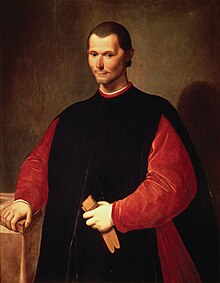
Portrait of Niccolò Machiavelli by Santi di Tito.jpg

Niccolo Machiavelli

So—which is better: To be feared or loved?

In the 1993 film, A Bronx Tale, 17-year-old Calogero (Lillo Brancato) poses that question to his idol, the local Mafia capo, Sonny (Chazz Palminteri).

“That’s a good question,” Sonny replies. “It’s nice to be both, but it’s very difficult. But if I had my choice, I would rather be feared.

“Fear lasts longer than love. Friendships that are bought with money mean nothing. You see how it is around here. I make a joke, everybody laughs. I know I’m funny, but I’m not that funny. It’s fear that keeps them loyal to me.”

Presidents face the same dilemma as Mafia capos—and resolve it in their own ways.

LOVE ME BECAUSE I NEED TO BE LOVED

Bill Clinton believed that he could win over his self-appointed Republican enemies through his sheer charm.

Part of this lay in self-confidence: He had won the 1992 and 1996 elections by convincing voters that “I feel your pain.”

Related image

Bill Clinton

And part of it lay in his need to be loved. He once said that if he were in a room with 100 people and 99 of them liked him but one didn’t, he would spend all his time with that one person, trying to win him over.

But while he could charm voters, he could not bring himself to retaliate against his sworn Republican enemies.

On April 19, 1995, Right-wing terrorist Timothy McVeigh drove a truck—packed with 5,000 pounds of ammonium nitrate and nitromethane—to the front of the Alfred P. Murrah Federal Building in Oklahoma City.

The explosion killed 168 people, including 19 children in the day care center on the second floor, and injured 684 others.

Suddenly, Republicans were frightened. Since the end of World War II, they had vilified the very Federal Government they belonged to. They had even courted the Right-wing militia groups responsible for the bombing.

So Republicans feared Clinton would now turn their decades of hate against them.

They need not have worried. On April 23, Clinton presided over a memorial service for the victims of the bombing. He gave a moving eulogy–without condemning the hate-filled Republican rhetoric that had at least indirectly led to the slaughter.

Clinton further sought to endear himself to Republicans by:

  • Adopting NAFTA—the Republican-sponsored North American Free Trade Act, which later proved so devastating to American workers;
  • Siding with Republicans against poor Americans on welfare; and
  • Championing the gutting of the Depression-era Glass-Steagall law, which barred investment banks from commercial banking activities.

In 1998, emboldened by Clinton’s refusal to stand up to them, House Republicans moved to impeach him over a sex scandal with White House intern Monica Lewinsky. But his Presidency survived when the Senate refused to convict.

LOVE ME BECAUSE I’LL HURT YOU IF YOU DON’T

Lyndon Johnson wanted desperately to be loved.

Once, he complained to Dean Acheson, the former Secretary of State under Harry S. Truman, about the ingratitude of American voters. He had passed far more legislation than his predecessor, John F. Kennedy, and yet Kennedy remained beloved, while he, Johnson, was not.

Why was that? Johnson demanded.

“You are not a very likable man,” said Acheson truthfully.
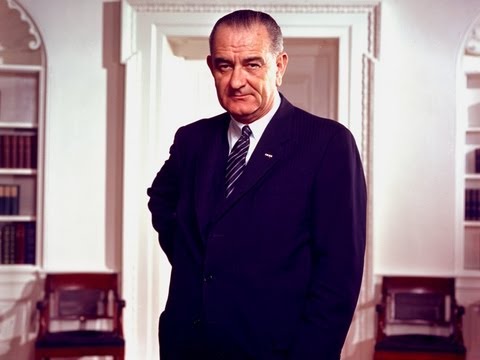
Image result for Images of Lyndon B. Johnson

Lyndon B. Johnson

Johnson tried to make his subordinates love him. He would humiliate a man, then give him an expensive gift–such a Cadillac. It was his way of binding the man to him.

He was on a first-name basis with J. Edgar Hoover, the longtime director of the FBI. He didn’t hesitate to request–and get–raw FBI files on his political opponents.

On at least one occasion, he told members of his Cabinet: No one would dare walk out on his administration–because if they did, two men would follow their ass to the end of the earth: Mr. J. Edgar Hoover and the head of the Internal Revenue Service.

T(OBACCO) PARTY UNVEILED: PART TWO (END)

In Bureaucracy, History, Politics, Social commentary on September 18, 2014 at 12:33 am

The Tea Party hates President Barack Obama and believes he should be impeached.

That you can easily learn by visiting its website.

Click here: Teaparty.org — Should Barack Obama be Impeached?

But there is a great deal about the Tea Party itself that its foundeers won’t tell you.

Such as the truth that it was created by the tobacco industry and the billionaire Koch brothers.

That’s the conclusion of a study by the National Cancer Institute of the National Institute of Health.

National Cancer Institute

The roots of the Tea Party lie in the early 1980s, when tobacco companies started pouring money into third-party groups.

Their mission was two-fold:

  • To fight excise taxes on cigarettes; and
  • To combat health studies showing a link between cancer and secondhand smoke.

Stanton Glantz, professor of medicine at the University of California, San Francisco, has been a longtime foe of the tobacco industry.

Dr. Stanton Glantz

In 2012, he authored a study for the peer-reviewed academic journal, Tobacco Control.  Writing about the ties between the Tea Party and the tobacco industry, Glantz noted:

“The Tea Party, which gained prominence in the USA in 2009, advocates limited government and low taxes. Tea Party organisations, particularly Americans for Prosperity and FreedomWorks, oppose smoke-free laws and tobacco taxes.

“Rather than being a purely grassroots movement that spontaneously developed in 2009, the Tea Party has developed over time, in part through decades of work by the tobacco industry and other corporate interests.”

Click here: ‘To quarterback behind the scenes, third-party efforts’: the tobacco industry and the Tea Party — Fallin et al. –

Charles and David Koch, the real founders of the Tea Party

Most people believe the Tea Party originated as a 2009 grassroots uprising to protest taxes.   But its origins can be traced to 2002.

That was when the Charles and David Koch and tobacco-backed Citizens for a Sound Economy set up the first Tea Party website:  www.usteaparty.com.

From the National Cancer Institute’s study of the Tea Party:

  • “The Tea Party, a loosely organised network of grassroots coalitions at local and state levels, is a complex social and political movement to the right of the traditional Republican Party that promotes less government regulation and lower taxes.”
  • “David Koch was a co-founder of Citizens for a Sound Economy (CSE) and Americans for Prosperity (AFP) Foundation,” both major allies of the tobacco industry.
  • “National organisations funded by corporations, particularly Americans for Prosperity (AFP) and FreedomWorks, played an important role in structuring and supporting the Tea Party in the initial stages.  They provided training, communication and materials for the earliest Tea Party activities, including the first ‘Tea Party’ on 27 February 2009.”
  • “FreedomWorks organised the nationwide Tea Party tax protests in April 2009, the town hall protests about the proposed healthcare reform in August 2009 and the Taxpayers’ March on Washington the following September 2009.”
  • “As of 2012, AFP and FreedomWorks were supporting the tobacco companies’ political agenda by mobilising local Tea Party opposition to tobacco taxes and smoke-free laws.”
  • “In many ways, the Tea Party of the late 2000s has become the ‘movement’ envisioned by Tim Hyde, RJR director of national field operations in the 1990s, which was grounded in patriotic values of ‘freedom’ and ‘choice’ to change how people see the role of ‘government’ and ‘big business’ in their lives, particularly with regard to taxes and regulation.”
  • “Many factors beyond the tobacco industry have contributed to the development of the Tea Party.  Anti-tax sentiment has been linked to notions of patriotism since the inception of the USA when the colonies were protesting against taxation by the British.”
  • “In addition, the Tea Party has origins in the ultra-right John Birch Society of the 1950s, of which Fred Koch (Charles and David Koch’s father) was a founding member.”
  • “Although the Tea Party is a social movement, it has been affiliated closely with, and somewhat incorporated into, the Republican Party.  This may be due in part to the increased conservatism of politically active Republicans since 1970s and the increased polarisation of American politics.”
  • “….AFP and FreedomWorks…capitalised on the changing political realities following President Barack Obama’s election in 2008.”
  • “In particular, they harnessed anti-government sentiment arising from the confluence of the mortgage and banking bailout, President Barack Obama’s stimulus package and the Democratic push for healthcare reform, which provided them with the opportunity for more successful grassroots-level Tea Party organising.”

Figure 1.

CHART SHOWING  Connections between the tobacco industry, third-party allies and the Tea Party, from the 1980’s (top) through 2012 (bottom).

Since 2008, the Tea Party has played a major role in American politics.

Throughout 2009, its thuggish supporters sought to terrorize members of Congress into opposing passage of the Affordable Care Act (ACA), otherwise known as Obamacare.

And in 2010 they played a pivotal role in delivering the House of Representatives to the Republican Party.

Yet the vast majority of the Tea Party’s low-level membership probably doesn’t know the origins–or the real purposes–of their organization.

But for those for whom truth is important, “the truth”–as The X-Files tagline once went–“is out there.”

T(OBACCO) PARTY UNVEILED: PART ONE (OF TWO)

In Bureaucracy, History, Politics, Social commentary on September 17, 2014 at 12:07 am

“Should Barack Obama Be Impeached?” shouts the headline on the Right-wing website of TeaParty.org.

“A fake birth certificate, the Benghazi attack, the IRS scandal, National Security invasions on privacy….Many are questioning Obama’s competence.  Should Congress initiate impeachment proceedings?

“What do you think?”

Click here: Teaparty.org — Should Barack Obama be Impeached?

Then the site offers this in tribute to its sponsor:

“TeaParty.org, one of America’s leading websites and top online news sources is conducting a poll about an important issue.

“The results of these polls will be published online and are shared with major news networks and policymakers.

“Don’t miss this opportunity to let your voice be heard!

“Vote today!”

The viewer is then given two questions to answer.

The first is:  “Should Barack Obama be impeached?”

The website offers three possible answers for the visitor to choose:

  1. “Yes, the events are now overwhelming.”
  2. “No, these do not meet the threshold of high crimes and misdemeanors.”
  3. “Not sure, still waiting to review the evidence.”

The second question is: “Whom do you believe has better solutions for the nation’s problems?”

It, too, provides three possible answers:

  1. “Conservatives”
  2. “Liberals”
  3. “Neither.”

The website omits a number of truths–about both President Barack Obama and the Tea Party itself.

Let’s start with its first charge against Obama: “A false birth certificate.”

The election of Barack Obama pushed the Right to new heights of infamy. With no political scandal (such as Bill Clinton’s affair with Monica Lewinsky) to fasten on, the Republican Party deliberately promoted the slander that Obama was not an American citizen.

From this there could be only one conclusion: That he was an illegitimate President, and should be removed from office.

President Barack Obama

During the 2008 Presidential campaign, Republicans charged that Obama was really a Muslim non-citizen who intended to sell out America’s security to his Muslim “masters.”

And this smear campaign continued throughout his Presidency.

To the dismay of his enemies, Obama–in the course of a single week–dramatically proved the falsity of both charges.

On April 27, 2011, he released the long-form of his Hawaii birth certificate.

The long-form version of President Obama’s birth certificate

“We do not have time for this kind of silliness,” said Obama at a press conference, speaking as a father might to a roomful of spiteful children. “We have better stuff to do. I have got better stuff to do. We have got big problems to solve.

“We are not going to be able to do it if we are distracted, we are not going to be able to do it if we spend time vilifying each other…if we just make stuff up and pretend that facts are not facts, we are not going to be able to solve our problems if we get distracted by side shows and carnival barkers.”

And on May 1, he announced the solving of one of those “big problems”: Osama bin Laden, mastermind of the September 11, 2001 terrorist attacks, had been tracked down and shot dead by elite U.S. Navy SEALS in Pakistan.

Then there’s the second Tea Party charge: “The Benghazi attack.”

A total of four Americans died in a terrorist attack on the American diplomatic consulate in Benghazi, Libya, on September 11, 2012.

Whereas a total of 3,000 Americans died in the Al Qaeda attacks of September 11, 2001.  But those occurred on the watch of a white Republican President, so naturally no treason charges were invoked by the Right.

The third accusation: “The IRS scandal.”

In 2013, the Internal Revenue Service (IRS) disclosed that it had selected political groups applying for tax-exempt status for intensive scrutiny based on their names or political themes.

Although Right-wingers have claimed that their political organizations were exclusively targeted by the IRS, the agency opened investigations based on such trigger-words as:

  • Tea Party
  • Patriots
  • 9/12 Project
  • progressive
  • occupy
  • Israel
  • medical marijuana

“While some of the IRS questions may have been overbroad, you can look at some of these groups and understand why these questions were being asked,” said Ohio State University law professor Donald Tobin.

In January, 2014, the FBI announced that it had found no evidence warranting the filing of federal criminal charges in connection with the scandal.

No evidence has come to light suggesting that President Obama was responsible for the IRS’s actions.

Finally, there is the Tea Party charge that Obama is guilty of “National Security Agency (NSA) invasions on privacy.”

This totally ignores that it was former President George W. Bush who, after 9/11, ordered the NSA to vastly increase its electronic-interception capabilities.

No longer would the agency be confined to spying on calls outside the United States.   From now on, it would target Americans who might be linked to international terror cells.

As for the website’s claim: “Many are questioning Obama’s competence”:

While this is true–among those on the Right and Left–it misses the essential legal point:  Even if true, “incompetence” is not a legitimate impeachable offense.

And no evidence has come forth to indict the President for “high crimes and misdemeanors.”

GREED-TESTING FOR CEOS: PART TWO (END)

In Bureaucracy, Business, History, Politics on May 22, 2013 at 12:34 am

Robert Benmosche, the CEO of American International Group (AIG) recently offered some blunt advice to college graduates searching for work.

“You have to accept the hand that’s been dealt you in life,” Benmosche said in an interview on Bloomberg Television. “Don’t cry about it. Deal with it.”

As is typical of one-percenters, Benmosche blames willing-to-work college graduates for the refusal of rich employers to offer jobs instead of excuses.

AIG’s way of “accepting the hand that’s been dealt you in life” was to go crying to the Federal Government for a bailout loan–which eventually ballooned to $182 billion.

If college graduates should “deal with” the hardships of finding a responsible, hiring-inclined employer with a stiff upper lip, as Benmosche advises, the same advice should work wonders on greed-fueled CEOs.

Greed-test CEOs for future government loans.

After all, drug-testing welfare recipients has become the new mantra for Republicans.

Some bills have even targeted people who seek unemployment insurance and food stamps, despite scanty evidence that the poor and jobless are disproportionately on drugs.

The concept of background screening is actually sound. But Republicans are aiming it at the wrong end of the economic spectrum.

Since 2008, the government has handed out billions of dollars in bailouts to CEOs of the wealthiest corporations in the country.

The reason: To rescue the economy from the calamity produced by the criminal greed and recklessness of those same corporations.

In 2008, Alan Greenspan, the former chairman of the Federal Reserve, testified before Congress about the origins of the Wall Street “meltdown.”

He admitted that he was “shocked” at the breakdown in U.S. credit markets and said he was “partially” wrong to resist regulation of some securities.

“Those of us who have looked to the self-interest of lending institutions to protect shareholder’s equity–myself especially–are in a state of shocked disbelief,” said Greenspan, who had ruled the Fed from 1987 to 2006.

As a disciple of the right-wing philosopher, Ayan Rand, Greenspan had fiercely held to her belief that “The Market” was a divine institution. As such, “it” alone knew what was best for the nation’s economic prosperity.

“Enlightened self-interest,” he believed, would guarantee that those who dedicated their lives to making money would not allow mere greed to steer them–and the country–into disaster.

As he saw it, any attempt to regulate greed-based appetites could only harm that divine institution.

Greenspan proved wrong. And the nation will be literally paying for such misguided confidence in profit-addicted men for decades to come.

So if Republicans want to protect the “poor, oppressed taxpayer,” they should demand background investigations for those whose addiction truly threatens the economic future of this country.

That is–the men (and occasionally women) who run the nation’s most important financial institutions, such as banks, insurance and mortgage companies.

Thus, in the future, all CEOs–and their topmost executives–of financial institutions seeking Federal bailouts should be required to:

  • Undergo “full field investigations” by the FBI and IRS.
  • Submit full financial disclosure forms concerning not only themselves but all members of their immediate families.
  • Be subject to Federal prosecution for perjury if they provide false information or conceal evidence of criminal violations.
  • Periodically submit themselves for additional background investigation.
  • Be subject to arrest, indictment and prosecution if the background investigation turns up evidence of criminal activity.

In addition:

  • If a bailout-seeking financial institution refuses to comply with these criteria, it should be refused the loan.
  • If a CEO and/or other top officials are judged ineligible for a loan, the company should be asked to replace those executives with others who might qualify.
  • Those alternative executives should be subject to the same background investigation requirements as just outlined.
  • If the institution refuses to replace those executives found ineligible, the Government should refuse the loan.
  • If the Government is forced to take over a troubled financial institution, its CEO and top executives should be replaced with applicants who have passed the required security screening.

The United States has a long and embarrassing history in worshipping wealth for its own sake. Part of this can be traced to the old Calvinistic doctrine that wealth is a proof of salvation, since it shows evidence of God’s favor.

Another reason for this worship of mammon is the belief that someone who is wealthy is automatically endowed with wisdom and integrity.

Following these beliefs to their ultimate conclusion will transform the United States into a plutocracy–a government of the wealthy, by the wealthy, for the wealthy.

Every day we see fresh evidence of the destruction wrought by the unchecked greed of wealthy, powerful men.

When they–and their paid shills in Congress–demand, “De-regulate business,” it’s essential to remember what this really means.

It means: “Let criminals be criminals.”