Posts Tagged ‘HERMANN GOERING’
ABC NEWS, ADMIRAL IVAN ISAKOV, ADOLF HITLER, ALBERT SPEER, ALTERNET, ANDREW MCCABE, ANTHONY SCARAMUCCI, AP, BETTE DAVIS, BOB WOODWARD, BUZZFEED, CBS NEWS, CHEKA, CIA, CNN, COUNTER-SURVEILLANCE, CROOKS AND LIARS, DAILY KOZ, DAVID SHULKIN, DEMOCRATIC PARTY, DON MCGAHN, DONALD TRUMP, DR. BRENDA FITZGERALD, FACEBOOK, FBI, FSB, GARY COHN, GENRIKH YAGODA, GINA HASPEL, H.R. MCMASTER, HEINRICH HIMMLER, HERMANN GOERING, HOPE HICKS, HOUSE OF REPRESENTATIVES, JAMES COMEY, JEFF SESSIONS, JOE BIDEN, JOHN BOLTON, JOHN KELLY, JOHN MCCAIN, JOSEPH STALIN, KATIE WALSH, KELLY SADLER, KGB, LAVRENTY BERIA, LINDSEY GRAHAM, MICHAEL DUBKE, MICHAEL FLYNN, MIKE PENCE, MIKHAIL TUKHACHEVSKY, MOTHER JONES, MOVEON, MSNBC, NBC NEWS, NEWSWEEK, NICCOLO MACHIAVELLI, NICK AYERS, NIKKI HALEY, NIKOLAI YEZHOV, NKVD, NPR, OMAROSA MANIGAULT-NEWMAN, PAUL MANAFORT, PBS NEWSHOUR, POLITICO, PREET BHARARA, RAW STORY, REINCE PRIBUS, REPUBLICAN PARTY, REUTERS, REX TILLERSON, ROB PORTER, ROBERT S. MUELLER, SALLY YATES, SALON, SARAH SANDERS, SCOTT PRUITT, SEAN SPICER, SEATTLE TIMES, SEBASTIAN GORKA, SERGEY KISLYAK, SERGEY LAVROV, SLATE, SOVIET UNION, SS, STEVE BANNON, STORMY DANIELS, SURVEILLANCE, THE APPRENTICE, THE ATLANTIC, THE CHICAGO SUN-TIMES, THE CHICAGO TRIBUNE, THE DAILY BEAST, THE GUARDIAN, THE HILL, THE HUFFINGTON POST, THE LOS ANGELES TIMES, THE NATION, THE NEW YORK TIMES, THE PRINCE, THE WASHINGTON POST, TIME, TOM BOSSERT, TOM PRICE, TWITTER, U.S. NEWS & WORLD REPORT, UPI, USA TODAY, WALTER SHAUB, WILBUR ROSS
In Bureaucracy, History, Law, Law Enforcement, Politics, Social commentary on December 13, 2018 at 12:36 am
In his infamous treatise, The Prince, Niccolo Machiavelli warns that it is safer to be feared than loved. And he lays out his reason thusly:
“From this arises the question whether it is better to be loved than feared, or feared more than loved. The reply is, that one ought to be both feared and loved, but as it is difficult for the two to go together, it is much safer to be feared than loved….
“And men have less scruple in offending one who makes himself loved than one who makes himself feared; for love is held by a chain of obligations which, men being selfish, is broken whenever it serves their purpose; but fear is maintained by a dread of punishment which never fails.”
But Machiavelli immediately follows this up with a warning about the abuses of fear:
“Still, a prince should make himself feared in such a way that if he does not gain love, he at any rate avoids hatred: for fear and the absence of hatred may well go together….”
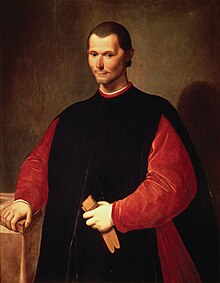

Niccolo Machiavelli
It’s a warning that someone should have given President Donald Trump long ago.
Not that he would have heeded it.
On May 10, 2018, The Hill reported that White House Special Assistant Kelly Sadler had joked derisively about Arizona United States Senator John McCain.
McCain, a Navy pilot during the Vietnam war, was shot down over Hanoi on October 26, 1967, and captured. He spent five and a half years as a POW in North Vietnam—and was often brutally tortured. He wasn’t released until March 14, 1973.
Recently, he had opposed the nomination of Gina Haspel as director of the CIA.
The reason: In 2002, Haspel had operated a “black” CIA site in Thailand where Islamic terrorists were often waterboarded to make them talk.
For John McCain, waterboarding was torture, even if it didn’t leave its victims permanently scarred and disabled.
Aware that the 81-year-old McCain was dying of brain cancer, Sadler joked to intimates about the Senator’s opposition to Haspel: “It doesn’t matter. He’s dying anyway.”
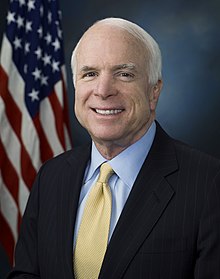
John McCain
Leaked to CNN by an anonymous White House official, Sadler’s remark sparked fierce criticism—and demands for her firing.
South Carolina Republican Senator Lindsey Graham, a close friend of McCain, said: “Ms. Sadler, may I remind you that John McCain has a lot of friends in the United States Senate on both sides of the aisle. Nobody is laughing in the Senate.”
“People have wondered when decency would hit rock bottom with this administration. It happened yesterday,” said former Vice President Joe Biden.
“John McCain makes America great. Father, grandfather, Navy pilot, POW hero bound by honor, an incomparable and irrepressible statesman. Those who mock such greatness only humiliate themselves and their silent accomplices,” tweeted former Massachusetts governor and 2012 Republican presidential candidate Mitt Romney.
Officially, White House Press Secretary Sarah Huckabee Sanders refused to confirm or deny Sadler’s joke: “I’m not going to get into a back and forth because people want to create issues of leaked staff meetings.”
Unofficially, Sanders was furious—not at the joke about a dying man, but that someone had leaked it. After assailing the White House communications team, she pouted: “I am sure this conversation is going to leak, too. And that’s just disgusting.”

Sarah Huckabee Sanders
No apology has been offered by any official at the White House—including President Trump.
In fact, Senior White House communications adviser Mercedes Schlapp reportedly expressed her support for Sadler: “I stand with Kelly Sadler.”
On May 11—the day after Sadler’s comment was reported—reporters asked Sanders if the tone set by Trump had caused Sadler to feel comfortable in telling such a joke.
“Certainly not!” predictably replied Sanders, adding: “We have a respect for all Americans, and that is what we try to put forward in everything we do, but in word and in action, focusing on doing things that help every American in this country every single day.”
On May 14 Trump revealed his “respect” for “all Americans”—especially those working in the White House.
“The so-called leaks coming out of the White House are a massive over exaggeration put out by the Fake News Media in order to make us look as bad as possible,” Trump tweeted.
“With that being said, leakers are traitors and cowards, and we will find out who they are!”
In a move that Joseph Stalin would have admired, Trump ordered an all-out investigation to find the joke-leaker.
In January, 2018, the White House had banned the use of personal cell phones in the West Wing. The official reason: National security.
The real reason: To stop staffers from leaking to reporters.
Officials now have two choices:
- Leave their cell phones in their cars, or,
- When they arrive for work, deposit them in lockers installed at West Wing entrances. They can reclaim their phones when they leave.
Several staffers huddle around the lockers throughout the day, checking messages they have missed. The lockers buzz and chirp constantly from 6 a.m. to 8 p.m. Monday through Friday.
ABC NEWS, ADMIRAL IVAN ISAKOV, ADOLF HITLER, ALBERT SPEER, ALTERNET, ANDREW MCCABE, ANTHONY SCARAMUCCI, AP, BETTE DAVIS, BOB WOODWARD, BUZZFEED, CBS NEWS, CHEKA, CIA, CNN, COUNTER-SURVEILLANCE, CROOKS AND LIARS, DAILY KOZ, DAVID SHULKIN, DEMOCRATIC PARTY, DON MCGAHN, DONALD TRUMP, DR. BRENDA FITZGERALD, FACEBOOK, FBI, FSB, GARY COHN, GENRIKH YAGODA, GINA HASPEL, H.R. MCMASTER, HEINRICH HIMMLER, HERMANN GOERING, HOPE HICKS, HOUSE OF REPRESENTATIVES, JAMES COMEY, JEFF SESSIONS, JOE BIDEN, JOHN BOLTON, JOHN KELLY, JOHN MCCAIN, JOSEPH STALIN, KATIE WALSH, KELLY SADLER, KGB, LAVRENTY BERIA, LINDSEY GRAHAM, MICHAEL DUBKE, MICHAEL FLYNN, MIKE PENCE, MIKHAIL TUKHACHEVSKY, MOTHER JONES, MOVEON, MSNBC, NBC NEWS, NEWSWEEK, NICCOLO MACHIAVELLI, NICK AYERS, NIKKI HALEY, NIKOLAI YEZHOV, NKVD, NPR, OMAROSA MANIGAULT-NEWMAN, PAUL MANAFORT, PBS NEWSHOUR, POLITICO, PREET BHARARA, RAW STORY, REINCE PRIBUS, REPUBLICAN PARTY, REUTERS, REX TILLERSON, ROB PORTER, ROBERT S. MUELLER, SALLY YATES, SALON, SARAH SANDERS, SCOTT PRUITT, SEAN SPICER, SEATTLE TIMES, SEBASTIAN GORKA, SERGEY KISLYAK, SERGEY LAVROV, SLATE, SOVIET UNION, SS, STEVE BANNON, STORMY DANIELS, SURVEILLANCE, THE APPRENTICE, THE ATLANTIC, THE CHICAGO SUN-TIMES, THE CHICAGO TRIBUNE, THE DAILY BEAST, THE GUARDIAN, THE HILL, THE HUFFINGTON POST, THE LOS ANGELES TIMES, THE NATION, THE NEW YORK TIMES, THE PRINCE, THE WASHINGTON POST, TIME, TOM BOSSERT, TOM PRICE, TWITTER, U.S. NEWS & WORLD REPORT, UPI, USA TODAY, WALTER SHAUB, WILBUR ROSS
In Bureaucracy, History, Law, Law Enforcement, Military, Politics, Social commentary on December 12, 2018 at 12:06 am
Donald Trump has often been compared to Adolf Hitler. But his reign bears far more resemblance to that of Joseph Stalin.
Germany’s Fuhrer, for all his brutality, maintained a relatively stable government by keeping the same men in office—from the day he took power on January 30, 1933, to the day he blew out his brains on April 30, 1945.
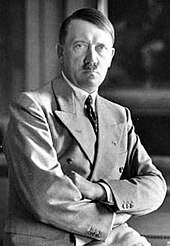
Adolf Hitler
Bundesarchiv, Bild 146-1990-048-29A / CC-BY-SA 3.0 [CC BY-SA 3.0 de (https://creativecommons.org/licenses/by-sa/3.0/de/deed.en)%5D
Heinrich Himmler, a former chicken farmer, remained head of the dreaded, black-uniformed Schutzstaffel, or Protection Squads, known as the SS, from 1929 until his suicide in 1945.
In April, 1934, Himmler was appointed assistant chief of the Gestapo (Secret State Police) in Prussia, and from that position he extended his control over the police forces of the whole Reich.
Hermann Goering, an ace fighter pilot in World War 1, served as Reich commissioner for aviation and head of the newly developed Luftwaffe, the German air force, from 1935 to 1945.
And Albert Speer, Hitler’s favorite architect, held that position from 1933 until 1942, when Hitler appointed him Reich Minister of Armaments and War Production. He held that position until the Third Reich collapsed in April, 1945.
Soviet Premier Joseph Stalin, by contrast, purged his ministers constantly. For example: From 1934 to 1953, Stalin had no fewer than three chiefs of his secret police, then named the NKVD:
- Genrikh Yagoda – (July 10, 1934 – September 26, 1936)
- Nikolai Yezhov (September 26, 1936 – November 25, 1938) and
- Lavrenty Beria (November, 1938 – March, 1953).
Stalin purged Yagoda and Yezhov, with both men executed after being arrested.
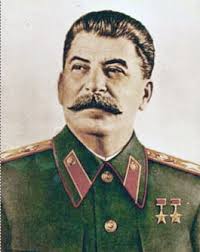
Joseph Stalin
He reportedly wanted to purge Beria, too, but the latter may have acted first. There has been speculation that Beria slipped warfarin, a blood-thinner often used to kill rats, into Stalin’s drink, causing him to die of a cerebral hemorrhage.
Nor were these the only casualties of Stalin’s reign.
For almost 30 years, through purges and starvation caused by enforced collections of farmers’ crops, Stalin slaughtered 20 to 60 million people.
The 1930s were a frightening and dangerous time to be alive in the Soviet Union. In 1934, Stalin, seeing imaginary enemies everywhere, ordered a series of purges that lasted right up to the German invasion.
An example of Stalin’s paranoia occurred one day while the dictator walked through the Kremlin corridors with Admiral Ivan Isakov. Officers of the NKVD (the predecessor to the KGB) stood guard at every corner.
“Every time I walk down the corridors,” said Stalin, “I think: Which one of them is it? If it’s this one, he will shoot me in the back. But if I turn the corner, the next one can shoot me in the face.”
In 1937-38, the Red Army fell prey to Stalin’s paranoia.
Its victims included:
- Three of five marshals (five-star generals);
- Thirteen of 15 army commanders (three- and four-star generals);
- Fifty of 57 army corps commanders; and
- One hundred fifty-four out of 186 division commanders.
And heading the list of those marked for death was Marshal Mikhail Tukhachevsky.
Arrested on May 22, 1937, he was interrogated and tortured. As a result, he “confessed” to being a German agent plotting to overthrow Stalin and seize power.
On his confession, which survives in the archives, his bloodstains can clearly be seen.
On June 11, the Soviet Supreme Court convened a special military tribunal to try Tukhachevsky and eight generals for treason.
It was a sham: The accused were denied defense attorneys, and could not appeal the verdict—-which was foregone: Death.
In a Russian version of poetic justice, five of the eight generals who served as Tukhachevsky’s judges were themselves later condemned and executed as traitors.
Since taking office as the nation’s 45th President, Donald Trump has sought to rule by fear.
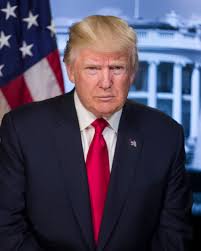
Donald Trump
In fact, he candidly shared his belief in this as a motivator to journalist Bob Woodward during the 2016 Presidential race: “Real power is—I don’t even want to use the word—fear.”
It is unknown if Trump ever read The Prince, Niccolo Machiavelli’s infamous treatise on attaining political power. If so, he doubtless is familiar with its most famous passage:
“From this arises the question whether it is better to be loved than feared, or feared more than loved. The reply is, that one ought to be both feared and loved, but as it is difficult for the two to go together, it is much safer to be feared than loved….
“For it may be said of men in general that they are ungrateful, voluble, dissemblers, anxious to avoid danger and covetous of gain; as long as you benefit them, they are entirely yours: they offer you their blood, their goods, their life and their children, when the necessity is remote, but when it approaches, they revolt.
“And the prince who has relied solely on their words, without making other preparations, is ruined; for the friendship which is gained by purchase and not through grandeur and nobility of spirit is bought but not secured, and at a pinch is not to be expended in your service.
“And men have less scruple in offending one who makes himself loved than one who makes himself feared; for love is held by a chain of obligations which, men being selfish, is broken whenever it serves their purpose; but fear is maintained by a dread of punishment which never fails.”
ABC NEWS, ADOLF HITLER, ALTERNET, ANTHONY SCARAMUCCI, AP, BUZZFEED, CBS NEWS, CNN, CROOKS AND LIARS, DAILY KOZ, DONALD TRUMP, FACEBOOK, FBI, GENRIKH GRIGORYEVICH YAGODA, GRIGORI ZIMOVIEV, HEINRICH HIMMLER, HERMANN GOERING, HOPE HICKS, JAMES COMEY, JOACHIM VON RIBBONTROP, JOSEPH STALIN, JUSTICE DEPARTMENT, KGB, LAVENTI BERIA, LEON TROTSKY, LEV KAMENEV, LUFTWAFFE, MIKE FLYNN, MOTHER JONES, MOVEON, NAZI GERMANY, NBC NEWS, NEWSWEEK, NIKOLAI, NIKOLAI YEZHOV, NKVD, NPR, POLITICO, RAW STORY, REINCE PRIEBUS, REUTERS, ROBERT MEULLER, RUDOLF HESS, SALLY YATES, SALON, SEAN SPICER, SEATTLE TIMES, SEBASTIAN GORKA, SLATE, STEVE BANNON, THE ATLANTIC, THE CHICAGO SUN-TIMES, THE CHICAGO TRIBUNE, THE DAILY BEAST, THE GUARDIAN, THE HILL, THE HUFFINGTON POST, THE LOS ANGELES TIMES, THE NATION, THE NEW YORK TIMES, THE WASHINGTON POST, TIME, TWITTER, U.S. NEWS & WORLD REPORT, UP, UPI, USA TODAY
In Bureaucracy, History, Law Enforcement, Politics, Social commentary on September 26, 2017 at 12:29 am
One summer night in 1923, during a booze-fueled dinner, Joseph Stalin opened his hear to his two fellow diners.
One of these was Felix Dzerzhinsky, then the chief of the Cheka, the dreaded Soviet secret police (and precursor to the KGB). The other was Lev Kamenev, a member of the powerful Central Committee of the Communist party.
Kamenev asked his companions: “What is your greatest pleasure?”
And Stalin is reported to have said: “To choose one’s victim, to prepare one’s plans minutely, to slake an implacable vengeance and then to go to bed. There is nothing sweeter in the world.”
Thirteen years later, in August, 1936, Kamenev would be forced to confess to forming a terrorist organization. Its alleged purpose: To assassinate Stalin and other leaders of the Soviet government.
On August 25, 1936, Kamenev was executed in the notorious Lubyanka prison.
Donald Trump may not have read Stalin’s notorious quote about finding pleasure in vengeance. But he has given his own variation of it.
While addressing the National Achievers Conference in Sidney, Australia, in 2011, he offered this advice on how to achieve success: “Get even with people. If they screw you, screw them back 10 times as hard. I really believe it.”
Throughout his business career, Trump strictly practiced what he preached—becoming a plaintiff or a defendant in no fewer than 3,500 lawsuits.
Since January 20, he has carried this “get even” philosophy into the Presidency.
The result has been unprecedented White House infighting, turmoil—and departures. Among the casualties:
- Steve Bannon – Chief strategist and senior counselor: On August 17, 2016, Bannon was appointed chief executive of Trump’s presidential campaign. On August 18, 211 days into his tenure, he was fired. A major reason: Trump was angered by the news media’s—and even many comedians’—depiction of Bannon as the real power in the White House.
- Anthony Scaramucci – White House communications director: To celebrate his new job, he gave an insult-ridden interview to The New Yorker. Among his targets: Then-Chief of Staff Reince Priebus (“a fucking paranoid schizophrenic”) and Steve Bannon (““I’m not Steve Bannon, I’m not trying to suck my own cock”). Scaramucci’s career ended in just six days—on July 31.
- Reince Priebus – White House Chief of Staff: After repeatedly being humiliated by Trump—who at one point ordering him to kill a fly that was buzzing about—Priebus resigned on July 28, 190 days into his tenure.
- Jeff Sessions – Attorney General: Trump made him the target of a Twitter-laced feud. Sessions’ “crime”? Recusing himself from any decisions involving investigations into well-established ties between Russian Intelligence agents and members of Trump’s Presidential campaign. Trump publicly said that if he had known Sessions would recuse himself—because of his own past contacts with Russian officials—he would have picked someone else for Attorney General.
- Sean Spicer – Press Secretary: Resigned on July 21, 183 days into his tenure. The reason: Trump kept him in the dark about events Spicer needed to know—such as an interview that Trump arranged with the New York Times—and which ended disastrously for Trump.
- James Comey – FBI Director: Comey did not work for the Trump Presidential campaign. But many political analysts believe he played perhaps the decisive role in electing the reality TV mogul. Comey’s announcement—11 days before Election Day—that he was re-opening the Hillary Clinton email server case convinced millions of voters that she had committed a crime. If, as some believed, Comey did so to curry favor with Trump, he proved mistaken. Trump summoned Comey to the White House and, in a private meeting, demanded a pledge of personal loyalty. Comey refused to give this—or to drop the FBI’s investigation into collaboration between Russian Intelligence agents and Trump campaign officials. On May 9, Trump sent his longtime private bodyguard and chief henchman, Keith Schiller, to the FBI with a letter announcing Comey’s firing. (FBI directors do not have Civil Service protection and can be fired at any time by the President.)
- Mike Flynn – National Security Advisor: After resigning from the Defense Intelligence Agency, he vigorously supported Trump at rallies and events—including at the Republican National Convention. As a reward, he was appointed National Security Advisor. But he was forced to resign just 25 days into his tenure. The reason: The media revealed that he hadmisled Vice President Mike Pence about his multiple meetings with Sergey Kislyak, Russian Ambassador to the United States, before Trump’s inauguration.
As if such turmoil wasn’t enough, even worse may be to come. According to Politico: Many White House staffers are starting to look for the exits, even though the one-year mark of Trump’s first term is still months away.
“There is no joy in Trumpworld right now,” one source told Politico. “Working in the White House is supposed to be the peak of your career, but everyone is unhappy, and everyone is fighting everyone else.”
A mass exodus would cause even greater difficulties for the Trump administration, which has not filled hundreds of available positions because many people don’t want to join.
The Trump administration is hiring at a slower pace than the administrations of George H.W. Bush, Bill Clinton, George W. Bush and Barack Obama—including nominations and confirmations.
Fewer positions filled means less effective enforcement of the Trump agenda. For those who oppose it, this is something to celebrate.
ABC NEWS, ADOLF HITLER, ALTERNET, ANTHONY SCARAMUCCI, AP, BUZZFEED, CBS NEWS, CNN, CROOKS AND LIARS, DAILY KOZ, DONALD TRUMP, FACEBOOK, FBI, GENRIKH GRIGORYEVICH YAGODA, GRIGORI ZIMOVIEV, HEINRICH HIMMLER, HERMANN GOERING, HOPE HICKS, JAMES COMEY, JOACHIM VON RIBBONTROP, JOSEPH STALIN, JUSTICE DEPARTMENT, KGB, LAVENTI BERIA, LEON TROTSKY, LEV KAMENEV, LUFTWAFFE, MIKE FLYNN, MOTHER JONES, MOVEON, NAZI GERMANY, NBC NEWS, NEWSWEEK, NIKOLAI, NIKOLAI YEZHOV, NKVD, NPR, POLITICO, RAW STORY, REINCE PRIEBUS, REUTERS, ROBERT MEULLER, RUDOLF HESS, SALLY YATES, SALON, SEAN SPICER, SEATTLE TIMES, SEBASTIAN GORKA, SLATE, STEVE BANNON, THE ATLANTIC, THE CHICAGO SUN-TIMES, THE CHICAGO TRIBUNE, THE DAILY BEAST, THE GUARDIAN, THE HILL, THE HUFFINGTON POST, THE LOS ANGELES TIMES, THE NATION, THE NEW YORK TIMES, THE WASHINGTON POST, TIME, TWITTER, U.S. NEWS & WORLD REPORT, UP, UPI, USA TODAY
In Bureaucracy, History, Law Enforcement, Politics, Social commentary on September 25, 2017 at 2:06 am
Donald Trump—as both Presidential candidate and President—has often been compared to Adolf Hitler.
Yet, in at least one sense, this comparison is inaccurate. As Germany’s Fuhrer (1933-1945) Hitler kept on the members of his Cabinet for no less than 12 years.
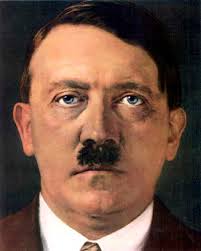
Adolf Hitler
Among these:
- Hermann Goering had repeatedly shown himself as the incompetent Reichsmarshall of the German air force, the Luftwaffe. Yet Hitler kept him on because Goering had been one of the “Old Fighters” who had supported Hitler long before the Nazis came to power. Only in April, 1945, when Hitler falsely believed that Goering was trying to supplant him as Fuhrer, did he expel him from the party and order his arrest.
- Rudolf Hess joined the Nazi party in 1920, and served as Deputy Fuhrer to Hitler from 1933 to 1941. That was when he flew to Scotland on a self-assigned mission to make peace with England. The British, believing him mad, locked him in the Tower of London until 1945. Afterward, he was convicted at Nuremberg for war crimes and sentenced to life imprisonment.
- Joachim von Ribbentrop had been a champagne salesman before Hitler appointed him Foreign Minister in 1938, and held that post until the Reich’s defeat in 1945. Although his arrogance and incompetence made him universally disliked by other high-ranking Nazi officials, Hitler never considered firing him.
- Heinrich Himmler, appointed Reichsfuhrer-SS in 1929, held that position throughout the 12 years (1933-1945) the Third Reich lasted. It was to Himmler that Hitler entrusted the most important project of his life: The destruction of European Jewry. Only after learning—in the final days of the Reich—that Himmler had sought to make peace with the Allies did Hitler expel him from the party and order his arrest.
Joseph Stalin, dictator of the Soviet Union (1928-1953) serves as a far better comparison figure for Trump.
Joseph Stalin
In 1936, Stalin ordered the first of a series of purges—from high-ranking members of the Communist party to impoverished peasants. Among the most prominent of his victims:
- Grigory Zimoviev, former member of the Central Committee of the Communist party. He was arrested in 1934 on trumped-up charges of “moral complicity” in the assassination of Leniningrad party boss Sergei Kirov. He was executed in 1936.
- Leon Trotsky, onetime second-in-command only to Vladimir Lenin, clashed with Stalin before the November 7, 1917 Russian Revolution. They remained locked in combat until Lenin’s death of a cerebral hemorrhage in 1924. Stalin drove Trotsky out of the Communist party and even out of the Soviet Union. In 1940, on Stalin’s orders, he was assassinated while living under guard in Mexico.
- Genrikh Grigoryevich Yagoda served as director of the NKVD secret police (the precursor of the KGB) from 1934 to 1936. He supervised the arrest, show trial and execution of former Central Committee members Lev Kamenev and Grigory Zimoviev. Arrested in 1937, he was falsely charged with treason and conspiracy against the Soviet government. Yagoda was shot soon after the trial. His wife Ida Averbakh was also executed in 1938.
- Nikolai Yezhov became head of the NKVD secret police in 1936. He oversaw what historians have since named the Great Terror until 1939. Arrested in April, he was replaced by Lavrenty Beria. In 1940, Yezhov himself was executed by the executioners he had once commanded.
Like Joseph Stalin, Donald Trump has presided over a series of purges since reaching the White House.
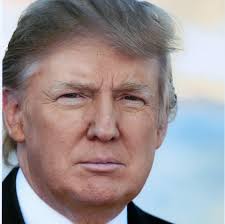
Donald Trump
Like Stalin, Trump demands unconditional loyalty from those who serve in his administration. And, also like Stalin, he does not believe that loyalty is a two-way street.
Moreover, it doesn’t take much to offend Trump’s fragile ego. When “Saturday Night Live” started doing skits showcasing his chief strategist, Steve Bannon, as a Rasputin-like figure who manipulated Trump, Bannon’s days were clearly numbered.
The same proved true for Anthony Scaramucci, who was to become White House communications director. All that it took to secure his dismissal was an expletive-ridden phone interview with The New Yorker‘s Ryan Lizza. It didn’t help Scaramucci that he bragged about purging the entire White House communications staff and even siccing the FBI on leakers.
Others have left the White House owing to its increasingly paranoid atmosphere. Reports have surfaced of staffers being ordered to turn over their cell phones for inspection. The reason: To ensure they weren’t communicating with reporters by text message or through encrypted apps.
Then there is the very real—and justified—fear of being caught up in Special Counsel Robert Mueller III’s ever-widening investigation into collusion between Russian Intelligence agents and members of Trump’s 2016 Presidential campaign.
One of those who has reportedly hired top-notch legal talent is Hope Hicks, interim White House communications director. According to Politico, the 28-year-old has retained the services of veteran criminal defense lawyer Robert Trout, who once worked for the Justice Department.
Even if a White House staffer is not ultimately indicted and convicted, the costs of hiring top-flight legal talent can prove ruinous.
During the 2016 campaign, Trump claimed a $9 billion fortune: “I’m really rich!” But he has shown no willingness to spend any of it defending those officials he has hired.
And for an administration already plagued with a shortage of desperately-needed talent, even worse may soon be to come.
2003 IRAQ WAR, ABC NEWS, ADOLF HITLER, AL QAEDA, ALBERT SPEER, CBS NEWS, CNN, FACEBOOK, GEORGE W. BUSH, GERMAN ARMY, HERMANN GOERING, INSIDE THE THIRD REICH, INVASION OF POLAND, NAZI GERMANY, NBC NEWS, OSAMA BIN LADEN, PROPAGANDA, SADDAM HUSSEIN, THE CHICAGO TRIBUNE, THE LOS ANGELES TIMES, THE NEW YORK TIMES, THE WASHINGTON POST, TWITTER, WHITE HOUSE CORRESPONDENTS DINNER, WMDS, WORLD WAR 11
In History, Politics on March 26, 2013 at 12:01 am
Naturally the common people don’t want war, neither in Russia nor in England nor in America, nor for that matter in Germany. That is understood.
But, after all, it’s the leaders of the country who determine the policy, and it’s always a simple matter to drag the people along whether it’s a democracy, a fascist dictatorshp, or a prliament, or a communist dictatorship….
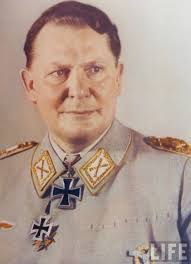
All you have to do is tell them that they are being attacked, and denounce the pacifists for lack of patriotism and exposing the country to greater danger. It works the same way in any country.
—Rcichsmarshall Hermann Goering
March 19, 2013 marked the tenth anniversary of the start of America’s war against Iraq. And the national news networks have been dutifully noting it.
Yet none of these networks has dared to point out there is a dark historical parallel to the events leading up to the Iraq war. A parallel that has its roots in Nazi Germany.
ADOLF HITLER
Adolf Hitler knew that Poland’s government could never accept his demands for the Polish city of Danzig.
GEORGE W. BUSH
So, too, did George W. Bush make a demand he knew could never be accepted. On the eve of launching war on Iraq, Bush issued a humiliating ultimatum to Saddam Hussein:
“Saddam Hussein and his sons must leave Iraq within 48 hours. Their refusal to do so will result in military conflict, commenced at a time of our choosing.”
ADOLF HITLER
Hitler never regretted his decision to invade Poland–-even asserting in his “final political testament” that: “It is untrue that I or anyone else in Germany wanted war in 1939.”
GEORGE W. BUSH
Similarly, Bush never regretted his decision to invade Iraq, which occurred on March 19, 2003.
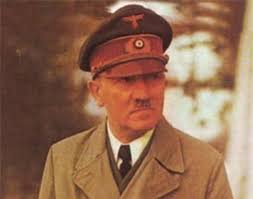
Adolf Hitler
ADOLF HITLER
When he announced his attack on Poland before Germany’s rubber-stamp parliament, the Reichstag, Hitler–a decorated World War I veteran–said: “I am from now on just first soldier of the German Reich. I have once more put on that coat that was the most sacred and dear to me.”
GEORGE W. BUSH
On May 1, 2003, Bush–who hid out the Vietnam war in the Texas Air National Guard-–donned a flight suit and landed a Navy jet aboard the USS Abraham Lincoln. A banner titled “Mission Accomplished” was displayed on the aircraft carrier as Bush announced–wrongly–that the war was over.
The effect–and intent–was to portray Bush as the triumphant warrior-chieftan he never was.
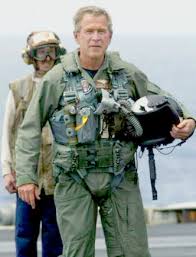
George W. Bush
ADOLF HITLER
In 1970, Albert Speer, Hitler’s former architect and Minister of Aramaments, published his bestselling postwar memoirs, Inside the Third Reich. In a striking passage, he revealed how the Fuehrer really felt about German soldiers who were suffering and dying in a war he had provoked.
One evening during the middle of the war, Speer was traveling with Hitler on the Fuehrer’s private train. Late at night, they enjoyed a lavish dinner in the elegant rosewood-paneled dining car.
As they ate, Hitler’s train slowed down and passed a freight train halted on a side track.
From their open cattle car, recalled Speer, wounded German soldiers from the Russian Front–starved, their uniforms in rags–stared across the few yards to their Fuehrer’s dining-car window.
Hitler recoiled at seeing these injured men intently watching him–and he sharply ordered an adjutant to lower the window shades.
GEORGE W. BUSH
Similarly, Bush showed his contempt for the soldiers suffering and dying in his own unprovoked war.
On March 24, 2004, at a White House Correspondents dinner, he joked publicly about the absence of Weapons of Mass Destruction (WMDs).
To Bush, the non-existent WMDs were nothing more than the butt of a joke that night. While an overhead projector displayed photos of a puzzled-looking Bush searching around the Oval Office, Bush recited a comedy routine.
“Those weapons of mass destruction have gotta be somewhere,” Bush laughed, while a photo showed him poking around the corners in the Oval Office.
“Nope-–no weapons over there! Maybe they’re under here,” he said, as a photo showed him looking under a desk.
In a scene that could have occurred under the Roman emperor Nero, an assembly of wealthy, pampered men and women–-the elite of America’s media and political classes–-laughed heartily during Bush’s performance.
Click here: Bush laughs at no WMD in Iraq – YouTube
In writing about the significance of human character, the ancient historian, Plutarch, said it best:
And the most glorious exploits do not always furnish us with the clearest discoveries of virtue or vice in men.
Sometimes a matter of less moment, an expression or a jest, informs us better of their characters and inclinations, than the most famous sieges, the greatest armaments, or the bloodiest battles whatsoever.
So add it all up:
- Two all-powerful leaders.
- Two nations lied into unprovoked wars.
- Hitler’s war costs the lives of 4.5 million German soldiers.
- Bush’s war costs the lives of 4,486 Americans.
- Germany’s war results in the deaths of millions of Europeans and Russians.
- America’s war results in the deaths of an estimated 655,000 Iraqis, according to a 2006 study in the Lancet medical journal.
- Hitler is literally driven underground by his enemies and commits suicide to avoid capture, trial and certain execution for war crimes.
- Bush retires from office with a lavish pension and full Secret Service protection. He writes his memoirs and is paid $7 million for the first 1.5 million copies.
- Hitler is branded as a symbol of demonic evil.
- Bush becomes a target of ridicule for comics.
Who says history is irrelevant? Or that it doesn’t repeat itself?
2003 IRAQ WAR, ABC NEWS, ADOLF HITLER, AL QAEDA, ALBERT SPEER, CBS NEWS, CNN, FACEBOOK, GEORGE W. BUSH, GERMAN ARMY, HERMANN GOERING, INSIDE THE THIRD REICH, INVASION OF POLAND, NAZI GERMANY, NBC NEWS, OSAMA BIN LADEN, PROPAGANDA, SADDAM HUSSEIN, THE CHICAGO TRIBUNE, THE LOS ANGELES TIMES, THE NEW YORK TIMES, THE WASHINGTON POST, TWITTER, WHITE HOUSE CORRESPONDENTS DINNER, WMDS, WORLD WAR 11
In History, Politics on March 25, 2013 at 12:01 am
March 19, 2013 marked the tenth anniversary of the start of America’s war against Iraq. And the national news networks have been dutifully noting it.
Yet none of these networks has dared to point out there is a dark historical parallel to the events leading up to the Iraq war. A parallel that has its roots in Nazi Germany.
ADOLF HITLER
When Germany’s Fuehrer, Adolf Hitler, wanted to invade Poland in 1939, he mounted a sustained propaganda campaign to “justify” his ambitions.
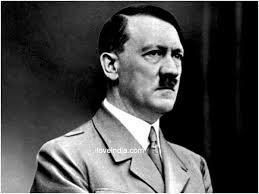
Adolf Hitler
German “newspapers”-–produced by Joseph Goebbels, the club-footed Minister of Propaganda–-carried fictitious stories of how brutal Poles were beating and even murdering their helpless German citizens.
In theaters, German audiences saw phony newsreels showing Poles attacking and raping German women living in Poland.
For a time, Hitler not only deceived the Germans but the world.
Just before German tanks and troops invaded Poland on September 1, 1939, members of Hitler’s dreaded SS rounded up a number of prisoners from German concentration camps.
They inmates were dressed in Polish Army uniforms and driven to a German radio station at Gleiwitz, on the German/Polish border. There they were shot by SS men. Then Polish-speaking SS men “seized” the station and broadcast to Germany that a Polish invasion of Germany was now under way.
Hitler, addressing Germany’s rubber-stamp parliament, the Reichstag, dramatically asserted: “This night for the first time Polish regular soldiers fired on our territory. Since 5.45 a.m. we have been returning the fire, and from now on bombs will be met by bombs.”
Leaders of Britain and France were taken in by this ruse. They had pledged to go to war if Hitler attacked Poland. But they didn’t want to take on Germany if Poland had been the aggressor.
By the time the truth became known, Poland was securely in German hands.
On August 22, Hitler had outlined his strategy to a group of high-ranking military officers:
I shall give a propagandist cause for starting the war. Never mind whether it is plausible or not. The victor will not be asked, later on, whether he told the truth or not. In starting and waging a war, it is not Right that matters, but Victory.
GEORGE W. BUSH
American President George W. Bush followed a similar strategy while he prepared to invade Iraq: He ordered the topmost members of his administration to convince the American people of the war’s necessity.
Among those members: National Security Advisor Condoleeza Rice; Vice President Dick Cheney; Secretary of Defense Donald Rumsfeld; and Secretary of State Colin Powell.

Condaleeza Rice, Dick Cheney, George W. Bush and Donald Rumsfeld
Among their arguments-–all eventually revealed as lies-–were:
- Iraq’s dictator, Saddam Hussein, had worked hand-in-glove with Osama Bin Laden to plan 9/11.
- Saddam was harboring and supporting Al Qaeda throughout Iraq.
- Saddam, with help from Al Qaeda, was scheming to build a nuclear bomb.
- Iraq possessed huge quantities of chemical/biological weapons, in violation of UN resolutions.
- Saddam was preparing to use those weapons against the United States.
- American Intelligence agencies had determined the precise locations where those weapons were stored.
- The war would be self-financing via the oil revenues that would come from Iraq.
- Invading American forces would be welcomed as liberators.
ADOLF HITLER
Hitler intended Poland to be only his first conquest on what became known as “the Eastern Front.” Conquering Poland would place his powerful Wehrmacht on the border of the country that was his ultimate target: The Soviet Union.
GEORGE W. BUSH
Similarly, Vice President Dick Cheney–the “power-behind-the-throne” of the Bush Presidency–had his own ambitions for conquering Iraq.
According to former Bush speechwriter David Frum: Cheney longed for war in Iraq to gain reliable control of that nation’s vital oil resources.
ADOLF HITLER
Despite efforts by the British and French governments to resolve the crisis that Hitler had deliberately created, he refused all offers of compromise.
“I am only afraid,” Hitler told his generals at a military conference on August 22, 1939, “that some Schweinehund [pig dog] will make a proposal for mediation.”
GEORGE W. BUSH
Similarly, Bush made it clear to his closest aides that he sought a pretext for invading Iraq.
On the evening after the September 11 attacks, Bush held a private meeting with Richard Clarke, the counter-terrorism advisor to the National Security Council.
“I want you, as soon as you can, to go back over everything,” said Bush. “See if Saddam did this. See if he’s linked in any way.”
Clarke was stunned: “But, Mr. President, Al Qaeda did this.”
“I know, I know,” said Bush. “But see if Saddam was involved. I want to know.”
On September 12, 2001, Bush attended a meeting of the National Security Council.
“Why shouldn’t we go against Iraq, not just Al Qaeda?” demanded Donald Rumsfeld, the Secretary of Defense.
Vice President Dick Cheney enthusiastically agreed.
Secretary of State Colin Powell then pointed out there was absolutely no evidence that Iraq had had anything to do with 9/11 or Al Qaeda. And he added: “The American people want us to do something about Al-Qaeda”-–not Iraq.
On September 22, 2001, Bush had received a classified President’s Daily Brief intelligence report, which stated that there was no evidence linking Saddam Hussein to 9/11.
The report added that there was scant credible evidence that Iraq had any significant collaborative ties with Al Qaeda.
Yet on November 21, 2001, only 10 weeks after 9/11, Bush told Rumsfeld: It’s time to turn to Iraq.
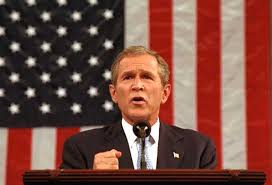
George W. Bush
 Bureaucracybuster's Blog
ABC NEWS, ADMIRAL IVAN ISAKOV, ADOLF HITLER, ALBERT SPEER, ALTERNET, ANDREW MCCABE, ANTHONY SCARAMUCCI, AP, BETTE DAVIS, BOB WOODWARD, BUZZFEED, CBS NEWS, CHEKA, CIA, CNN, COUNTER-SURVEILLANCE, CROOKS AND LIARS, DAILY KOZ, DAVID SHULKIN, DEMOCRATIC PARTY, DON MCGAHN, DONALD TRUMP, DR. BRENDA FITZGERALD, FACEBOOK, FBI, FSB, GARY COHN, GENRIKH YAGODA, GINA HASPEL, H.R. MCMASTER, HEINRICH HIMMLER, HERMANN GOERING, HOPE HICKS, HOUSE OF REPRESENTATIVES, JAMES COMEY, JEFF SESSIONS, JOE BIDEN, JOHN BOLTON, JOHN KELLY, JOHN MCCAIN, JOSEPH STALIN, KATIE WALSH, KELLY SADLER, KGB, LAVRENTY BERIA, LINDSEY GRAHAM, MICHAEL DUBKE, MICHAEL FLYNN, MIKE PENCE, MIKHAIL TUKHACHEVSKY, MOTHER JONES, MOVEON, MSNBC, NBC NEWS, NEWSWEEK, NICCOLO MACHIAVELLI, NICK AYERS, NIKKI HALEY, NIKOLAI YEZHOV, NKVD, NPR, OMAROSA MANIGAULT-NEWMAN, PAUL MANAFORT, PBS NEWSHOUR, POLITICO, PREET BHARARA, RAW STORY, REINCE PRIBUS, REPUBLICAN PARTY, REUTERS, REX TILLERSON, ROB PORTER, ROBERT S. MUELLER, SALLY YATES, SALON, SARAH SANDERS, SCOTT PRUITT, SEAN SPICER, SEATTLE TIMES, SEBASTIAN GORKA, SERGEY KISLYAK, SERGEY LAVROV, SLATE, SOVIET UNION, SS, STEVE BANNON, STORMY DANIELS, SURVEILLANCE, THE APPRENTICE, THE ATLANTIC, THE CHICAGO SUN-TIMES, THE CHICAGO TRIBUNE, THE DAILY BEAST, THE GUARDIAN, THE HILL, THE HUFFINGTON POST, THE LOS ANGELES TIMES, THE NATION, THE NEW YORK TIMES, THE PRINCE, THE WASHINGTON POST, TIME, TOM BOSSERT, TOM PRICE, TWITTER, U.S. NEWS & WORLD REPORT, UPI, USA TODAY, WALTER SHAUB, WILBUR ROSS
OUT OF EVIL, CHAOS: PART TWO (OF FIVE)
In Bureaucracy, History, Law, Law Enforcement, Politics, Social commentary on December 13, 2018 at 12:36 amIn his infamous treatise, The Prince, Niccolo Machiavelli warns that it is safer to be feared than loved. And he lays out his reason thusly:
“From this arises the question whether it is better to be loved than feared, or feared more than loved. The reply is, that one ought to be both feared and loved, but as it is difficult for the two to go together, it is much safer to be feared than loved….
“And men have less scruple in offending one who makes himself loved than one who makes himself feared; for love is held by a chain of obligations which, men being selfish, is broken whenever it serves their purpose; but fear is maintained by a dread of punishment which never fails.”
But Machiavelli immediately follows this up with a warning about the abuses of fear:
“Still, a prince should make himself feared in such a way that if he does not gain love, he at any rate avoids hatred: for fear and the absence of hatred may well go together….”
Niccolo Machiavelli
It’s a warning that someone should have given President Donald Trump long ago.
Not that he would have heeded it.
On May 10, 2018, The Hill reported that White House Special Assistant Kelly Sadler had joked derisively about Arizona United States Senator John McCain.
McCain, a Navy pilot during the Vietnam war, was shot down over Hanoi on October 26, 1967, and captured. He spent five and a half years as a POW in North Vietnam—and was often brutally tortured. He wasn’t released until March 14, 1973.
Recently, he had opposed the nomination of Gina Haspel as director of the CIA.
The reason: In 2002, Haspel had operated a “black” CIA site in Thailand where Islamic terrorists were often waterboarded to make them talk.
For John McCain, waterboarding was torture, even if it didn’t leave its victims permanently scarred and disabled.
Aware that the 81-year-old McCain was dying of brain cancer, Sadler joked to intimates about the Senator’s opposition to Haspel: “It doesn’t matter. He’s dying anyway.”
John McCain
Leaked to CNN by an anonymous White House official, Sadler’s remark sparked fierce criticism—and demands for her firing.
South Carolina Republican Senator Lindsey Graham, a close friend of McCain, said: “Ms. Sadler, may I remind you that John McCain has a lot of friends in the United States Senate on both sides of the aisle. Nobody is laughing in the Senate.”
“People have wondered when decency would hit rock bottom with this administration. It happened yesterday,” said former Vice President Joe Biden.
“John McCain makes America great. Father, grandfather, Navy pilot, POW hero bound by honor, an incomparable and irrepressible statesman. Those who mock such greatness only humiliate themselves and their silent accomplices,” tweeted former Massachusetts governor and 2012 Republican presidential candidate Mitt Romney.
Officially, White House Press Secretary Sarah Huckabee Sanders refused to confirm or deny Sadler’s joke: “I’m not going to get into a back and forth because people want to create issues of leaked staff meetings.”
Unofficially, Sanders was furious—not at the joke about a dying man, but that someone had leaked it. After assailing the White House communications team, she pouted: “I am sure this conversation is going to leak, too. And that’s just disgusting.”
Sarah Huckabee Sanders
No apology has been offered by any official at the White House—including President Trump.
In fact, Senior White House communications adviser Mercedes Schlapp reportedly expressed her support for Sadler: “I stand with Kelly Sadler.”
On May 11—the day after Sadler’s comment was reported—reporters asked Sanders if the tone set by Trump had caused Sadler to feel comfortable in telling such a joke.
“Certainly not!” predictably replied Sanders, adding: “We have a respect for all Americans, and that is what we try to put forward in everything we do, but in word and in action, focusing on doing things that help every American in this country every single day.”
On May 14 Trump revealed his “respect” for “all Americans”—especially those working in the White House.
“The so-called leaks coming out of the White House are a massive over exaggeration put out by the Fake News Media in order to make us look as bad as possible,” Trump tweeted.
“With that being said, leakers are traitors and cowards, and we will find out who they are!”
In a move that Joseph Stalin would have admired, Trump ordered an all-out investigation to find the joke-leaker.
In January, 2018, the White House had banned the use of personal cell phones in the West Wing. The official reason: National security.
The real reason: To stop staffers from leaking to reporters.
Officials now have two choices:
Several staffers huddle around the lockers throughout the day, checking messages they have missed. The lockers buzz and chirp constantly from 6 a.m. to 8 p.m. Monday through Friday.
Share this: