Posts Tagged ‘GEORGE C. WALLACE’
2018 GOVERNMENT SHUTDOWN, ABC NEWS, ABRAHAM LINCOLN, ALFRED P. MURRAH FEDERAL BUILDING, ALTERNET, AMERICABLOG, AP, BABY BOOMER RESISTANCE, BARACK OBAMA, BBC, BLOOMBERG NEWS, BRIAN WILLIAMS, BROWN VS. BOARD OF EDUCATION, BUZZFEED, CAPITOL ATTACK, CBS NEWS, CIVIL RIGHTS, CIVIL WAR, CNN, COUPS, CROOKS AND LIARS, DAILY KOZ, DEMOCRATS, DONALD TRUMP, DONALD TRUMP JR., ELECTORAL COLLEGE, FACEBOOK, FBI, FIVETHIRTYEIGHT, FORT SUMTER, FOX NEWS, GAIUS CALIGULA, GEORGE C. WALLACE, GEORGE FLOYD, GOVERNMENT ACCOUNTABILITY OFFICE, HARPER’S MAGAZINE, HOME TOP 12 BUSTING RULES ABOUT STEFFEN WHITE 2018 GOVERNMENT SHUTDOWN, HUFFINGTON POST, IRAN, JOSEPH BIDEN, jOSH HAWLEY, KU KLUX KLAN, MARJORIE TAYLOR GREENE, MEDIA MATTERS, MIKE PENCE, MILITIA GROUPS, MO BROOKS, MOTHER JONES, MOVEON, MSNBC, NANCY PELOSI, NATIONAL GUARD, NBC NEWS, NEW REPUBLIC, NEWSDAY, NEWSWEEK, NPR, OBSTRUCTING CONGRESSIONAL PROCEEDINGS, PBS NEWSHOUR, POLITICO, POLITICUSUSA, RAW STORY, REPUBLICANS, REUTERS, RIGHT-WING TERRORISM, RONALD REAGAIN, RUDY GIULIANI, SALON, SANDY HOOK ELEMENTARY SCHOOL MASSACRE, SEATTLE TIMES, SLATE, SLAVERY, SOVIET UNION, SWAT TEAMS, TALKING POINTS MEMO, TERRORISM, TERRORIST FINANCE TRACKING PROJECT, THE ATLANTIC, THE CHICAGO SUN-TIMES, THE CHICAGO TRIBUNE, THE DAILY BEAST, THE DAILY BLOG, THE GUARDIAN, THE HILL, THE HUFFINGTON POST, THE LOS ANGELES TIMES, THE NATION, THE NEW REPUBLIC, THE NEW YORK TIMES, THE NEW YORKER, THE VILLAGE VOICE, THE WASHINGTON POST, THINKPROGRESS, TIME, TREASON, TRUTHDIG, TRUTHOUT, TWITTER, TWO POLITICAL JUNKIES, U.S. NEWS & WORLD REPORT, UNITED STATES DEPARTMENT OF JUSTICE, UNITED STATES DEPARTMENT OF THE TREASURY, UNITED STATES HOUSE OF REPRESENTATIVES, UNITED STATES PARK POLICE, UNITED STATES SECRET SERVICE, UNITED STATES SENATE, UNITED STATES SUPREME COURT, UPI, USA PATRIOT ACT, USA TODAY, WONKETTE
In Bureaucracy, History, Law, Law Enforcement, Medical, Military, Politics, Social commentary on January 3, 2022 at 12:11 am
If a second American Civil War erupts, it will be vastly different from the first one.
The first one lasted from 1861 to 1865. It pitted 13 Southern states against 19 fighting for the Union.
The Southern states consisted of: South Carolina, Mississippi, Florida, Alabama, Georgia, Louisiana, Texas, Virginia, Arkansas, Tennessee, North Carolina, Kentucky and Missouri.
The states fighting for the Union consisted of: Maine, New York, New Hampshire, Vermont, Massachusetts, Connecticut, Rhode Island, Pennsylvania, New Jersey, Ohio, Indiana, Illinois, Kansas, Michigan, Wisconsin, Minnesota, Iowa, California, Nevada, and Oregon.
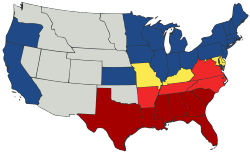
Civil War America
Júlio Reis, CC BY-SA 3.0 <https://creativecommons.org/licenses/by-sa/3.0>, via Wikimedia Commons
It’s estimated that 750,000 Americans lost their lives during the Civil War—110,000 Union soldiers died in battle as opposed to 258,000 Confederates.
The overwhelming reason for the war: Slavery. Southern states wanted to preserve it. Northern ones wanted to abolish it. And, in 1860, Northern states had elected Abraham Lincoln—an anti-slavery candidate—the 16th President of the United States.
But the blunt truth remained: Lincoln had no authority to abolish slavery—which had been legally upheld by the United States Supreme Court. And, in his Inaugural Address, he said exactly that:
“I have no purpose, directly or indirectly, to interfere with the institution of slavery in the States where it exists. I believe I have no lawful right to do so, and I have no inclination to do so.”
But he warned that he would not allow the Union to be peacefully dissolved. “We cannot separate. …The Union….will constitutionally defend, and maintain itself.
“In your hands, my dissatisfied fellow countrymen, and not in mine, is the momentous issue of civil war. The government will not assail you. You can have no conflict, without being yourselves the aggressors.”
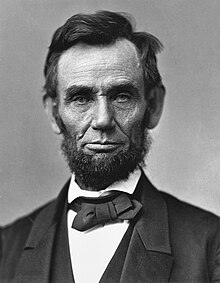
Abraham Lincoln
Ultimately, the South wanted to secede from the Union to preserve its “peculiar institution.” It did not seek to conquer the North and made no military moves against it—until April 12, 1861.
That was when Confederate batteries in South Carolina’s Charleston Harbor opened fire on Union Fort Sumter. The next day, the fort surrendered.
The attack led directly to the outbreak of the American Civil War, which lasted until April 9, 1865. Confederate general Robert E. Lee surrendered the Army of Northern Virginia to Union general Ulysses S. Grant at Appomattox Court House.
A second Civil War would erupt with an entirely different goal in mind. Republican states do not want to be “left alone” by Washington and/or Democratic-controlled states. They want to rule Democratically-controlled states from Washington.
And their populations believe that, through Donald Trump, they can achieve just such control.
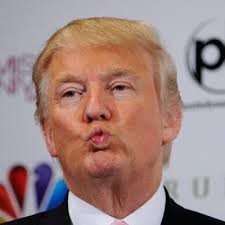
Donald Trump
To achieve victory in the 2024 Presidential election, legislators in Republican-controlled states are now working to nullify the votes of millions of Democratic voters.
Thousands—or millions—of votes will be thrown away, to ensure that the Democratic winner will be declared the loser. The Republican loser will be certified president-elect.
According to a December 9, 2021 article in The Atlantic—“Trump’s Next Coup Has Already Begun”-–while those who believe in democracy are blissfully ignoring the approaching threat:
“Democrats, big and small D, are not behaving as if they believe the threat is real. Some of them, including President Joe Biden, have taken passing rhetorical notice, but their attention wanders. They are making a grievous mistake.”
“The democratic emergency is already here,” says Richard L. Hasen, a professor of law and political science at UC Irvine. “We face a serious risk that American democracy as we know it will come to an end in 2024, but urgent action is not happening.”
And retiring journalist Brian Williams echoes this fear:
“My biggest worry is for my country. I’m not a liberal or a conservative. I’m an institutionalist. I believe in this place. And in my love of my country I yield to no one, but the darkness on the edge of town has spread to the main roads and highways and neighborhoods. It’s now at the local bar and the bowling alley, the school broad and the grocery store. It must be acknowledged and answered for.
“Grown men and women who swore an oath to our constitution, elected by our constituents, possessing the kinds of college degrees I can only dream of, have decided to join the mob and become something they are not, while hoping we somehow forget who they were. They’ve decided to burn it all down with us inside. That should scare you to no end as much as it scares an aging volunteer fireman.”
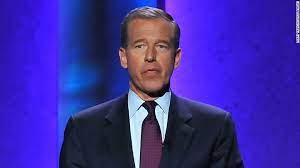
Brian Williams
From The Atlantic:
“For more than a year now, with tacit and explicit support from their party’s national leaders, state Republican operatives have been building an apparatus of election theft. Elected officials in Arizona, Texas, Georgia, Pennsylvania, Wisconsin, Michigan, and other states have studied Donald Trump’s crusade to overturn the 2020 election.
“They have noted the points of failure and have taken concrete steps to avoid failure next time. Some of them have rewritten statutes to seize partisan control of decisions about which ballots to count and which to discard, which results to certify and which to reject.”
NEXT UP: How the coming Donald Trump dictatorship can be prevented.
2016 PRESIDENTIAL RACE, ABC NEWS, ALTERNET, AMERICABLOG, AP, BABY BOOMER RESISTANCE, BLOOMBERG, BOEING, BUZZFEED, CBS NEWS, CNN, COMING APART: AN INFORMAL HISTORY OF AMERICA IN THE 1960S (BOOK), CROOKS AND LIARS, DAILY KOZ, DAVID BROOKS, DONALD TRUMP, DRUDGE RETORT, FACEBOOK, FIVETHIRTYEIGHT, GEORGE C. WALLACE, HARPER’S MAGAZINE, HILLARY CLINTON, ISRAEL, JOHN F. KENNEDY, JOHN MCCAIN, JUSTICE DEPARTMENT, MAFIA, MARTIN LUTHER KING JUNIOR, MEDIA MATTERS, MOTHER JONES, MOVEON, MSNBC, NBC NEWS, NEWSWEEK, NPR, PBS NEWSHOUR, POLITICO, POLITICUSUSA, PRISONERS OF WAR, RAW STORY, REUTERS, ROBERT F. KENNEDY, SALON, SAUDI ARABIA, SEATTLE TIMES, SIRHAN SIRHAN, SLATE, STATE DEPARTMENT, TALKING POINTS MEMO, THE ATLANTIC, THE CHICAGO SUN-TIMES, THE CHICAGO TRIBUNE, THE DAILY BEAST, THE DAILY BLOG, THE GUARDIAN, THE HILL, THE HUFFINGTON POST, THE KENNEDYS, THE LOS ANGELES TIMES, THE NATION, THE NEW REPUBLIC, THE NEW YORK TIMES, THE VILLAGE VOICE, THE WALL STREET JOURNAL, THE WASHINGTON POST, THINKPROGRESS, TIME, TRUTHDIG, TRUTHOUT, TWITTER, TWO POLITICAL JUNKIES, U.S. NEWS & WORLD REPORT, UPI, USA TODAY, WILLIAM L. O'NEIL, WOMEN, WONKETTE
In Bureaucracy, History, Politics, Social commentary on June 5, 2020 at 12:08 am
Fifty-two years ago, the Reverend Martin Luther King was shot to death as he stood on a balcony in Memphis, Tennessee. He had come there to lead a march of striking garbage workers.
New York United States Senator—and now Presidential candidate—Robert Francis Kennedy had been scheduled to give a speech in Indianapolis, Indiana, before a black audience.
Just before he drove into the city to deliver his address, he learned of King’s assassination. There was a real danger that rioting would erupt. Police who had been assigned to protect him said they wouldn’t accompany him into the inner city.
Kennedy drove off anyway, leaving behind his police escort.
Standing on a podium mounted on a flatbed truck, Kennedy spoke for just four minutes and 57 seconds.
His waiting audience hadn’t yet learned of King’s death. Kennedy broke the news to gasps, and then gave an impromptu speech eulogizing the slain civil rights leader.
For the first time since the assassination of his brother, President John F. Kennedy, in 1963, he spoke publicly of that killing. He noted that JFK—like King—had also been killed by a white man.
And he called upon the crowd to “dedicate ourselves to what the Greeks wrote so many years ago: to tame the savageness of man and to make gentle the life of this world.”
Riots erupted in 60 cities following King’s death—but not in Indianapolis.
During the mid- and late 1960s, Robert Kennedy aroused passions of an altogether different sort from those aroused by Donald Trump.
Kennedy had been a United States Attorney General (1961-1964) and Senator from New York (1964-1968). But it was his connection to his beloved and assassinated brother, President John F. Kennedy, for which he was best known.
In October, 1962, during the Cuban Missile Crisis, his wise counsel helped steer America from the brink of nuclear war with the Soviet Union. As a U.S Senator he championed civil rights and greater Federal efforts to fight poverty.

Robert F. Kennedy campaigning for President
Millions saw RFK as the only candidate who could make life better for America’s impoverished—while standing firmly against those who threatened the Nation’s safety.
As television correspondent Charles Quinn observed: “I talked to a girl in Hawaii who was for [George] Wallace [the segregationist governor of Alabama]. And I said ‘Really?’ [She said] ‘Yeah, but my real candidate is dead.’
“You know what I think it was? All these whites, all these blue collar people who supported Kennedy…all of these people felt that Kennedy would really do what he thought best for the black people, but, at the same time, would not tolerate lawlessness and violence.
“They were willing to gamble…because they knew in their hearts that the country was not right. They were willing to gamble on this man who would try to keep things within reasonable order; and at the same time do some of the things they knew really should be done.”
Campaigning for the Presidency in 1968, RFK had just won the crucial California primary on June 4—when he was shot in the back of the head.
His killer: Sirhan Sirhan, a young Palestinian furious at Kennedy’s support for Israel.
Kennedy died at 1:44 a.m. on June 6. He was 42.
On June 8, 1,200 men and women boarded a specially-reserved passenger train at New York’s Pennsylvania Station. They were accompanying Kennedy’s body to its final resting place at Arlington National Cemetery.
As the train slowly moved along 225 miles of track, throngs of men, women and children lined the rails to pay their final respects to a man they considered a genuine hero.
Little Leaguers clutched baseball caps across their chests. Uniformed firemen and policemen saluted. Burly men in shirtsleeves held hardhats over their hearts. Black men in overalls waved small American flags. Women from all levels of society stood and cried.

A nation says goodbye to Robert Kennedy
Commenting on RFK’s legacy, historian William L. O’Neil wrote in Coming Apart: An Informal History of America in the 1960′s:
“…He aimed so high that he must be judged for what he meant to do, and, through error and tragic accident, failed at….He will also be remembered as an extraordinary human being who, though hated by some, was perhaps more deeply loved by his countrymen than any man of his time.
“That too must be entered into the final account, and it is no small thing. With his death something precious disappeared from public life.”
America has never again seen a Presidential candidate who combined toughness on crime and compassion for the poor.
Republican candidates have waged war on crime—and the poor. And Democratic candidates have moved to the Right in eliminating anti-poverty programs.
RFK had the courage to fight the Mafia—and the compassion to fight poverty. At a time when Americans long for candidates to give them positive reasons for voting, his kind of politics are sorely missed.
ABC NEWS, ABORTION, AFFORDABLE CARE ACT, ALABAMA, ALTERNET, AP, ASSASSINATION, BRIAN KEMP, BUZZFEED, CARL AUSTIN WEISS, CBS NEWS, CNN, CROOKS AND LIARS, DAILY KOZ, DONALD TRUMP, FACEBOOK, GEORGE C. WALLACE, GEORGIA, HUEY LONG, INCEST, KAY IVEY, MARK JOSEPH STERN, MOTHER JONES, MOVEON, MSNBC, NBC NEWS, NEWSWEEK, NICCOLO MACHIAVELLI, NPR, PBS NEWSHOUR, POLITICO, RACHELLE GRIMMER, RAPE, RAW STORY, REINHARD HEYDRICH, REPUBLICANS, REUTERS, ROE V. WADE, Ronald Reagan, SALON, SEATTLE TIMES, Secret Service, SLATE, THE ATLANTIC, THE CHICAGO SUN-TIMES, THE CHICAGO TRIBUNE, THE DAILY BEAST, THE GUARDIAN, THE HILL, THE HUFFINGTON POST, THE LOS ANGELES TIMES, THE NATION, THE NEW YORK TIMES, THE PRINCE, THE WASHINGTON POST, TIME, TWITTER, U.S. NEWS & WORLD REPORT, UNITED STATES SUPREME COURT, UPI, USA TODAY, WELFARE
In Bureaucracy, History, Law, Law Enforcement, Politics, Social commentary on May 21, 2019 at 10:36 am
In The Prince, Niccolo Machiavelli, the father of modern political science, raised the question of “whether it is better to be loved than feared, or feared more than loved.”
And he answered it: “The reply is, that one ought to be both feared and loved, but as it is difficult for the two to go together, it is much safer to be feared than loved.”
But Machiavelli warned against relying primarily on fear: “Still, a prince should make himself feared in such a way that if he does not gain love, he at any rate avoids hatred, for fear and the absence of hatred may well go together, and will always be attained by one who abstains from interfering with the property of his citizens….or with their women.”
If the Republicans governing Georgia and Alabama ever read this warning, they have ignored it with a vengeance.
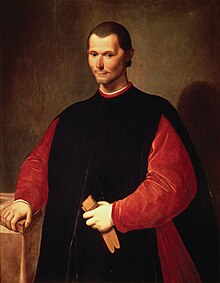
Niccolo Machiavelli
On May 7, Georgia Governor Brian Kemp signed an anti-abortion law that—in defiance of the 1973 Supreme Court decision in Roe v. Wade—re-criminalizes abortion.
The law bans abortions as soon as a fetal heartbeat is detectable. This usually occurs about six weeks into a pregnancy—even before many women know they’re pregnant.
The law permits abortions
- Only if the mother’s life is at risk; or
- If the fetus cannot survive.
No exceptions are made for cases of rape or incest.
“HB 481 would also have consequences for women who get abortions from doctors or miscarry,” writes Mark Joseph Stern for Slate.
“A woman who seeks out an illegal abortion from a health care provider would be a party to murder, subject to life in prison. And a woman who miscarries because of her own conduct—say, using drugs while pregnant—would be liable for second-degree murder, punishable by 10 to 30 years’ imprisonment.
“Prosecutors may interrogate women who miscarry to determine whether they can be held responsible; if they find evidence of culpability, they may charge, detain, and try these women for the death of their fetuses.” [Emphasis added.]
In addition, a woman could be sentenced to 10 years’ imprisonment if she leaves Georgia to obtain an abortion in another state.

And on May 14, Alabama Governor Kay Ivey signed into law the “Alabama Human Life Protection Act.” The law only allows exceptions “to avoid a serious health risk to the unborn child’s mother,” for ectopic pregnancy and if the “unborn child has a lethal anomaly.”
As in the case of Georgia, no exceptions are made for rape or incest.
Ivey admitted that the new law may be unenforceable owing to Roe v. Wade, which legalized abortion in all 50 states. But the whole point of the law is to challenge that decision, Ivey said.
Republicans constantly claim to be “the party of small government.” But there can be no more intrusive act than dictating to a woman that she must give birth—even if she’s the victim of rape or incest.
At the same time:
- Republicans have proven uniformly hostile to providing poor mothers with access to food, clothing and medical care.
- Donald Trump has made repealing the Affordable Care Act—which provides medical insurance to more than 20 million Americans—the hallmark of his Presidency.
It’s easy to imagine many of these women fatally cracking under the strain.
On December 6, 2011, Rachelle Grimmer, a 38-year-old resident of San Antonio, pulled a gun in a state welfare office and held off police for seven hours. Then she shot and wounded her two children—ages 10 and 12—before fatally shooting herself.
For months, she had been unable to qualify for food stamps.
Thus, women living in abortion-banning states face Right-wing hypocrisy on one hand and draconian laws punishing the most intimate acts—of sexuality and reproductive freedom—on the other.
It’s easy to imagine some pregnant women—especially the victims of incest and/or rape—desperately seeking redress through violence. And the targets of their wrath could easily be the Republican legislators of their states who have made their lives a living hell.
The President is constantly guarded by the Secret Service. And governors are protected by state police. But state assemblymen and senators aren’t assigned such details—unless there’s a specific threat made against them.
In fact, Right-wing figures have often been the targets of successful—and unsuccessful—assassination attempts.
- On September 8, 1935, Louisiana U.S. Senator Huey Long was shot and fatally wounded by Carl Austin Weiss, an idealistic young doctor. Long had intended to run for President in 1936 and unseat Franklin D. Roosevelt.
- On May 27, 1942, SS Obergruppenführer (General) Reinhard Heydrich—“The Butcher of Prague”—was killed with a hand grenade by two Czech patriots.
- On May 15, 1972, Presidential candidate George C. Wallace was shot and paralyzed by a crazed gunman while mingling with supporters in a Maryland shopping center.
- On March 30, 1981, President Ronald Reagan was shot and almost killed by a psychotic gunman while walking to his bulletproof limousine in Washington, D.C.
All of these men, it should be noted, had bodyguards assigned to them at the time they were attacked.
Given the ferocity of laws aimed specifically at them, some women may decide to abort more than fetuses.
ABC NEWS, ALTERNET, AMERICABLOG, ANWAR SADAT, AP, ARTHUR BREMER, ASSASSINATION, BABY BOOMER RESISTANCE, BBC, BLOOMBERG NEWS, BUZZFEED, CBS NEWS, CHARLES L. COTTON, CIA, CLEMENTA C. PINCKNEY, CNN, CROOKS AND LIARS, DAILY KOS, DAILY KOZ, DYLANN ROOF, EGYPT, EMANUEL AFRICAN METHODIST CHURCH, FACEBOOK, FIVETHIRTYEIGHT, GEORGE C. WALLACE, GUN CONTROL, HARPER’S MAGAZINE, HATE CRIMES, HUFFINGTON POST, ISRAEL, MEDIA MATTERS, MOTHER JONES, MOVEON, MSNBC, NATIONAL RIFLE ASSOCIATION, NBC NEWS, NEW REPUBLIC, NEWSDAY, NEWSWEEK, NPR, PBS NEWSHOUR, POLITICO, POLITICUSUSA, RAFAEL CRUZ, RAW STORY, REPUBLICAN PARTY, REPUBLICANS, REUTERS, ROBERT F. KENNEDY, SALON, SEATTLE TIMES, Secret Service, SLATE, TALKING POINTS MEMO, TERRORISM, THE ATLANTIC, THE CHICAGO SUN-TIMES, THE CHICAGO TRIBUNE, THE DAILY BEAST, THE DAILY BLOG, THE GUARDIAN, THE HILL, THE HUFFINGTON POST, THE INTERCEPT, THE LOS ANGELES TIMES, THE NATION, THE NEW REPUBLIC, THE NEW YORK TIMES, THE NEW YORKER, THE SECOND AMENDMENT, THE VILLAGE VOICE, THE WASHINGTON POST, THINKPROGRESS, TIME, TRUTHDIG, TRUTHOUT, TWITTER, U.S. NEWS & WORLD REPORT, UPI, USA TODAY
In Bureaucracy, History, Law, Law Enforcement, Politics, Social commentary on May 9, 2019 at 12:11 am
“You know the great thing about the state of Iowa is, I’m pretty sure you all define gun control the same way we do in Texas—hitting what you aim at.
“My wife, Heidi, who is a petite, 5’2 California blonde, she was standing at the tripod unloading the full machine gun with a pink baseball cap that said ‘Frmed and Fabulous.’”
Yes, it was United States Senator Rafael “Ted” Cruz (R-Texas) on the prowl for laughs–-and votes—at a town hall meeting in Iowa.
Normally, Cruz would do his vote-hunting in Texas. But now Cruz had a bigger prize on his mind than simply being re-elected a United States Senator. Cruz wanted to be President in 2016.
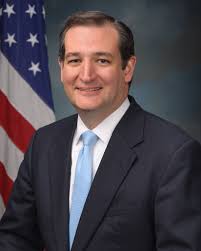
U.S. Senator Rafael Cruz
And Iowa held its precinct causes on February 1-2, 2016.
Cruz’ jokes about gun control came on June 19, 2015, only two days after Dylann Roof, a white high school dropout, gunned down three unarmed black men and six black women at Emanuel African Methodist Episcopal Church in Charleston, South Carolina.
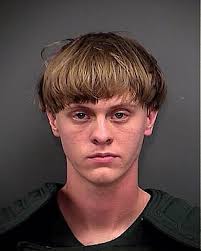
Dylann Roof
Following his remarks, Cruz headed to a shooting range, where he fired off rounds on a semiautomatic .223-caliber Smith and Wesson M&P 15.
Cruz’ remarks no doubt appeared insensitive to those who now mourned for the latest victims of gun violence. But Charles L. Cotton took insulting the dead to a whole new level.
Cotton is a National Rifle Association (NRA) board member who also runs TexasCHLForum.com, an online discussion forum about guns and gun owners’ rights in Texas and beyond.
In a discussion thread on June 18, 2015—one day after the church slaughter—a board member noted that Clementa C. Pinckney, one of the nine people slain, was a pastor and a state legislator in South Carolina.
Cotton responded: “And he voted against concealed-carry. Eight of his church members who might be alive if he had expressly allowed members to carry handguns in church are dead. Innocent people died because of his position on a political issue.”

That discussion thread has since been deleted.
During a subsequent phone interview, Cotton emphasized that he had been speaking as a private citizen—and not as an NRA board member:
“It was a discussion we were having about so called gun-free zones. It’s my opinion that there should not be any gun-free zones in schools or churches or anywhere else. If we look at mass shootings that occur, most happen in gun-free zones.”
If private citizens were allowed to carry guns everywhere, Cotton says, there will be fewer mass shootings because “if armed citizens are in there, they have a chance to defend themselves and other citizens.”
Cotton’s position—“there should not be any gun-free zones”—is exactly that of the NRA itself.
Under such circumstances, America will become a nation where anyplace, anytime, can be turned into the O.K. Corral.
Another point that Cotton didn’t mention: Dylann Roof did believe in concealed-carry–and it cost the lives of nine innocent men and women.
Finally, there is this: Even highly-trained shooters—such as those assigned to the United States Secret Service–don’t always respond as expected.
On May 15, 1972, Alabama Governor George Wallace was campaigning for President in Laurel, Maryland. He gave a speech behind a bulletproof podium at the Laurel Shopping Center. Then he moved from it to mingle with the crowd.
Since the 1968 assassination of Senator Robert F. Kennedy, all those campaigning for President have been assigned Secret Service bodyguards. And Wallace was surrounded by them as he shook hands with his eager supporters.
Suddenly, Arthur Bremer, a fame-seeking failure in life and romance, pushed his way forward, aimed a .38 revolver at Wallace’s abdomen and opened fire. Before he could be subdued, he hit Wallace four times, leaving him paralyzed for the rest of his life.

Arthur Bremer shoots George Wallace
Nor was he Bremer’s only victim. Three other people present were wounded unintentionally:
- Alabama State Trooper Captain E. C. Dothard, Wallace’s personal bodyguard, who was shot in the stomach;
- Dora Thompson, a campaign volunteer, who was shot in the leg; and
- Nick Zarvos, a Secret Service agent, who was shot in the neck, severely impairing his speech.
None of Wallace’s bodyguards got off a shot at Bremer—before or after he pulled the trigger.
On October 6, 1981, Egyptian President Anwar Sadat was reviewing a military parade in Cairo when a truck apparently broke down directly across from where he was seated.
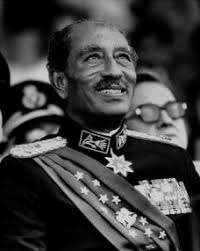
Anwar Sadat, moments before his assassination
Suddenly, soldiers bolted from the rear of the vehicle, throwing hand grenades and firing assault rifles. They rushed straight at Sadat—who died instantly under a hail of bullets.
Meanwhile, Sadat’s bodyguards—who had been trained by the CIA—panicked and fled.
Sadat had been assassinated by army officers who believed he had betrayed Islam by making peace with Israel in 1977.
The ultimate test of the NRA’s mantra that “there should not be any gun-free zones…anywhere” will come only when one or more heavily-armed gunmen target an NRA convention.
It will then be interesting to see if the surviving NRA members are as quick to blame themselves for being victims as they are to blame the victims of other mass gun-slaughters.
ABC NEWS, ALTERNET, ANWAR SADAT, AP, AR-15 ASSAULT RIFLE, AR-15 ASSAULT RIFLES, ARTHUR BREMER, ASSASSINATION, BBC, BLACK LIVES MATTER, BUZZFEED, CBS NEWS, CIA, CNN, DAILY KOS, DALLAS POLICE OFFICER SHOOTINGS, DONALD TRUMP, FACEBOOK, GEORGE C. WALLACE, GUN CONTROL, MOTHER JONES, MOVEON, NATIONAL RIFLE ASSOCIATION, NBC NEWS, NEWSWEEK, NIKOLAS CRUZ, NPR, OPEN CARRY LAWS, POLITICO, RAW STORY, REPUBLICAN PARTY, REPUBLICANS, REUTERS, ROBERT BOWERS, ROBERT F. KENNEDY, SALON, SEATTLE TIMES, Secret Service, SLATE, THE ATLANTIC, THE CHICAGO SUN-TIMES, THE CHICAGO TRIBUNE, THE DAILY BEAST, THE GUARDIAN, THE HILL, THE HUFFINGTON POST, THE LOS ANGELES TIMES, THE NEW YORK TIMES, THE SECOND AMENDMENT, THE WALL STREET JOURNAL, THE WASHINGTON POST, TIME, TREE OF LIFE SYNAGOGUE, TWITTER, U.S. NEWS & WORLD REPORT, UPI, USA TODAY
In Bureaucracy, History, Law, Law Enforcement, Politics, Social commentary on October 29, 2018 at 12:13 am
On Saturday, October 27, 11 people were killed and six injured in a shooting at the Tree of Life synagogue in Pittsburgh, Pennsylvania.
Robert Bowers, 46, of suburban Baldwin, faces 29 charges in connection to the rampage. He is charged with 11 counts of using a firearm to commit murder. And he faces multiple counts of two hate crimes:
- Obstruction of exercise of religious beliefs resulting in death, and
- Obstruction of exercise of religious beliefs resulting in bodily injury to a public safety officer.
He could face the death penalty if convicted.
And how did President Donald Trump respond to the massacre?
Exactly as the National Rifle Association (NRA) would have him respond: “If there was an armed guard inside the temple, they would have been able to stop him,” he told reporters before boarding a flight to an Indiana campaign rally later in the afternoon.
That, of course, is the standard mantra of the NRA, which lavishly bankrolls the GOP.
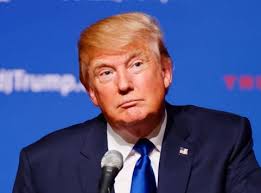
Donald Trump
And this, of course, ignores two major truths:
- The killer used an AR-15 assault rifle—the go-to firearm for heavy-duty massacres. It can fire 150 rounds in 15 seconds and about 600 rounds per minute; and
- Four of the wounded were police officers—who did have firearms.
In 2016, the NRA spent more than $36 million on elections. Donald Trump proved the largest beneficiary—netting more than $21 million.
The organization is certainly getting its money’s worth.
But: Is it true that “the only way to stop a bad guy with a gun is for a good guy to have a gun”?
On July 7, 2016, five Dallas police officers were shot and killed by a disgruntled ex-Army Reserve Afghan War veteran named Michah Xavier Johnson. Another seven officers and two civilians were wounded before the carnage ended.
The shootings erupted during a Black Lives Matter protest march in downtown Dallas.
Texas has long been an “open carry” state for those who want to brandish rifles without fear of arrest. And about 20 people wearing “ammo gear and protective equipment [had] rifles slung over their shoulder,” said Dallas Mayor Mike Rawlings.
“When the shooting started, at different angles, [the armed protesters] started running,” Rawlings said, adding that “open carry only brings confusion to a shooting scene. What I would do [if I were a police officer] is look for the people with guns,” he said.
“There were a number of armed demonstrators taking part,” said Max Geron, a Dallas police major. “There was confusion about the description of the suspects and whether or not one or more was in custody.”
A 2012 Mother Jones article on “More Guns, More Mass Shootings—Coincidence?” offered a striking finding: After analyzing 62 mass shootings over a 30-year period, the magazine determined: “In not a single case was the killing stopped by a civilian using a gun.”
So much for the ability of gun-toting, untrained amateurs to “stop a bad guy with a gun.”
But even highly-trained shooters—such as those assigned to the United States Secret Service—don’t always respond as expected.
On May 15, 1972, Alabama Governor George C. Wallace was campaigning for President in Laurel, Maryland. He gave a speech behind a bulletproof podium at the Laurel Shopping Center. Then he moved from it to mingle with the crowd.
Since the 1968 assassination of Senator Robert F. Kennedy, all those campaigning for President have been assigned Secret Service bodyguards. And Wallace was surrounded by them as he shook hands with his eager supporters.
Suddenly, Arthur Bremer, a fame-seeking failure in life and romance, pushed his way forward, aimed a .38 revolver at Wallace’s abdomen and opened fire. Before the Secret Service could subdue him, he hit Wallace four times, leaving him paralyzed for the rest of his life.
Arthur Bremer shoots George Wallace
Nor was Wallace Bremer’s only victim. Three other people present were wounded unintentionally:
- Alabama State Trooper Captain E. C. Dothard, Wallace’s personal bodyguard, who was shot in the stomach;
- Dora Thompson, a campaign volunteer, who was shot in the leg; and
- Nick Zarvos, a Secret Service agent, who was shot in the neck, severely impairing his speech.
None of Wallace’s bodyguards got off a shot at Bremer—before or after he pulled the trigger.
On October 6, 1981, Egyptian President Anwar Sadat was reviewing a military parade in Cairo when a truck apparently broke down directly across from where he was seated.
Anwar Sadat, moments before his assassination
Suddenly, soldiers bolted from the rear of the vehicle, throwing hand grenades and firing assault rifles. They rushed straight at Sadat—who died instantly under a hail of bullets.
Meanwhile, Sadat’s bodyguards—who had been trained by the CIA—panicked and fled.
Sadat had been assassinated by army officers who believed he had betrayed Islam by making peace with Israel in 1977.
The ultimate test of the NRA’s mantra that “there should not be any gun-free zones…anywhere” will come only when one or more heavily-armed gunmen target an NRA convention.
It will then be interesting to see if the surviving NRA members are as quick to blame themselves for being victims as they are to blame the victims of other mass slaughters.
2016 PRESIDENTIAL RACE, ABC NEWS, ALTERNET, AP, BOEING, BUZZFEED, CBS NEWS, CNN, CROOKS AND LIARS, DAILY KOZ, DAVID BROOKS, DONALD TRUMP, FACEBOOK, GEORGE C. WALLACE, HILLARY CLINTON, JOHN F. KENNEDY, JOHN MCCAIN, JUSTICE DEPARTMENT, MAFIA, MARTIN LUTHER KING JUNIOR, MOTHER JONES, MOVEON, NBC NEWS, NEWSWEEK, NPR, POLITICO, PRISONERS OF WAR, RAW STORY, REUTERS, ROBERT F. KENNEDY, SALON, SAUDI ARABIA, SEATTLE TIMES, SLATE, STATE DEPARTMENT, THE ATLANTIC, THE CHICAGO SUN-TIMES, THE CHICAGO TRIBUNE, THE DAILY BEAST, THE GUARDIAN, THE HILL, THE HUFFINGTON POST, THE KENNEDYS, THE LOS ANGELES TIMES, THE NATION, THE NEW YORK TIMES, THE WALL STREET JOURNAL, THE WASHINGTON POST, TIME, TWITTER, U.S. NEWS & WORLD REPORT, UPI, USA TODAY, WOMEN
In Bureaucracy, History, Law Enforcement, Military, Politics, Social commentary on April 5, 2018 at 12:09 am
Fifty years ago, the Reverend Martin Luther King was shot to death as he stood on a balcony in Memphis, Tennessee. He had come there to lead a march of striking garbage workers.
New York United States Senator—and now Presidential candidate—Robert Francis Kennedy had been scheduled to give a speech in Indianapolis, Indiana, before a black audience.
Just before he drove into the city to deliver his address, he learned of King’s assassination. There was a real danger that rioting would erupt. Police who had been assigned to protect him said they wouldn’t accompany him into the inner city.
Kennedy drove off anyway, leaving behind his police escort.
Standing on a podium mounted on a flatbed truck, Kennedy spoke for just four minutes and 57 seconds.
His waiting audience hadn’t yet learned of King’s death. Kennedy broke the news to gasps, and then gave an impromptu speech eulogizing the slain civil rights leader.
For the first time since the assassination of his brother, President John F. Kennedy, in 1963, he spoke publicly of that killing. He noted that JFK—like King—had also been killed by a white man.
And he called upon the crowd to “dedicate ourselves to what the Greeks wrote so many years ago: to tame the savageness of man and to make gentle the life of this world.”
Riots erupted in 60 cities following King’s death—but not in Indianapolis.
Fifty years ago, Robert Kennedy aroused passions of an altogether different sort from those aroused by Donald Trump.
Kennedy had been a United States Attorney General (1961-1964) and Senator from New York (1964-1968). But it was his connection to his beloved and assassinated brother, President John F. Kennedy, for which he was best known.
In October, 1962, during the Cuban Missile Crisis, his wise counsel helped steer America from the brink of nuclear war with the Soviet Union. As a U.S Senator he championed civil rights and greater Federal efforts to fight poverty.
Robert F. Kennedy campaigning for President
Millions saw RFK as the only candidate who could make life better for America’s impoverished—while standing firmly against those who threatened the Nation’s safety.
As television correspondent Charles Quinn observed: “I talked to a girl in Hawaii who was for [George] Wallace [the segregationist governor of Alabama]. And I said ‘Really?’ [She said] ‘Yeah, but my real candidate is dead.’
“You know what I think it was? All these whites, all these blue collar people who supported Kennedy…all of these people felt that Kennedy would really do what he thought best for the black people, but, at the same time, would not tolerate lawlessness and violence.
“They were willing to gamble…because they knew in their hearts that the country was not right. They were willing to gamble on this man who would try to keep things within reasonable order; and at the same time do some of the things they knew really should be done.”
Campaigning for the Presidency in 1968, RFK had just won the crucial California primary on June 4—when he was shot in the back of the head.
His killer: Sirhan Sirhan, a young Palestinian furious at Kennedy’s support for Israel.
Kennedy died at 1:44 a.m. on June 6. He was 42.
On June 8, 1,200 men and women boarded a specially-reserved passenger train at New York’s Pennsylvania Station. They were accompanying Kennedy’s body to its final resting place at Arlington National Cemetery.
As the train slowly moved along 225 miles of track, throngs of men, women and children lined the rails to pay their final respects to a man they considered a genuine hero.
Little Leaguers clutched baseball caps across their chests. Uniformed firemen and policemen saluted. Burly men in shirtsleeves held hardhats over their hearts. Black men in overalls waved small American flags. Women from all levels of society stood and cried.
A nation says goodbye to Robert Kennedy
Commenting on RFK’s legacy, historian William L. O’Neil wrote in Coming Apart: An Informal History of America in the 1960′s:
“…He aimed so high that he must be judged for what he meant to do, and, through error and tragic accident, failed at….He will also be remembered as an extraordinary human being who, though hated by some, was perhaps more deeply loved by his countrymen than any man of his time.
“That too must be entered into the final account, and it is no small thing. With his death something precious disappeared from public life.”
America has never again seen a Presidential candidate who combined toughness on crime and compassion for the poor.
Republican candidates have waged war on crime—and the poor. And Democratic candidates have moved to the Right in eliminating anti-poverty programs.
RFK had the courage to fight the Mafia—and the compassion to fight poverty. At a time when Americans long for candidates to give them positive reasons for voting, his kind of politics are sorely missed.
ABC NEWS, ALTERNET, AMERICABLOG, ANWAR SADAT, AP, AR-15 ASSAULT RIFLES, ARTHUR BREMER, ASSASSINATION, BABY BOOMER RESISTANCE, BBC, BLACK LIVES MATTER, BLOOMBERG NEWS, BUZZFEED, CBS NEWS, CHARLES L. COTTON, CIA, CNN, CROOKS AND LIARS, DAILY KOS, DAILY KOZ, DALLAS POLICE OFFICER SHOOTINGS, FACEBOOK, FIVETHIRTYEIGHT, GEORGE C. WALLACE, GUN CONTROL, HARPER’S MAGAZINE, HUFFINGTON POST, MARJORY STONEMAN DOUGLAS HIGH SCHOOL, MARK RAWLINGS, MEDIA MATTERS, MOTHER JONES, MOVEON, MSNBC, NATIONAL RIFLE ASSOCIATION, NBC NEWS, NEW REPUBLIC, NEWSDAY, NEWSWEEK, NIKOLAS CRUZ, NPR, OPEN CARRY LAWS, PBS NEWSHOUR, POLITICO, POLITICUSUSA, RAW STORY, REPUBLICAN PARTY, REPUBLICANS, REUTERS, ROBERT F. KENNEDY, SALON, SEATTLE TIMES, Secret Service, SLATE, TALKING POINTS MEMO, THE ATLANTIC, THE CHICAGO SUN-TIMES, THE CHICAGO TRIBUNE, THE DAILY BEAST, THE DAILY BLOG, THE GUARDIAN, THE HILL, THE HUFFINGTON POST, THE INTERCEPT, THE LOS ANGELES TIMES, THE NATION, THE NEW REPUBLIC, THE NEW YORK TIMES, THE NEW YORKER, THE SECOND AMENDMENT, THE VILLAGE VOICE, THE WALL STREET JOURNAL, THE WASHINGTON POST, THINKPROGRESS, TIME, TRUTHDIG, TRUTHOUT, TWITTER, TWO POLITICAL JUNKIES, U.S. NEWS & WORLD REPORT, UPI, USA TODAY
In Bureaucracy, History, Law Enforcement, Politics, Social commentary on February 16, 2018 at 12:03 am
On February 14, Nikolas Cruz found an unforgettable way to celebrate Valentine’s Day.
The 19-year-old former student returned to Marjory Stoneman Douglas High School in Parkland, Florida, and allegedly slaughtered at least 17 people.
As in: “What are all these allegedly dead people doing here?”
The massacre has now become one of the 10 deadliest mass shootings in modern United States history.
He carried out his massacre with at least one AR-15 assault rifle and multiple magazines.
Although he had posted “I wanna die Fighting killing shit ton of people” he didn’t have the nerve to shoot it out with police SWAT teams. Instead, he concealed himself among the hundreds of students fleeing the school.
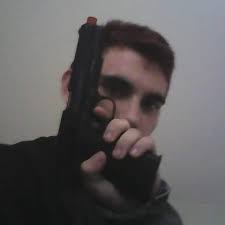
Nikolas Cruz posted this picture of himself on the Internet
Investigators used school security videos to identify Cruz and found him in a nearby neighborhood in Coral Springs, Florida.
Cruz had posted “I am going to kill law enforcement one day they go after the good people.” But he was arrested without incident.
Like so many other mass killers, he didn’t have the courage to shoot it out with armed police. He could only prey on defenseless men, women and children.
According to a CNN law enforcement source, he is now talking with investigators.
As always, most Republican lawmakers believe the answer to halting such future attacks lies in giving everybody a firearm.
That, of course, is the standard mantra of the National Rifle Association (NRA), which lavishly bankrolls the GOP.
(In 2016, the NRA spent more than $36 million on elections. Donald Trump proved the largest beneficiary—netting more than $21 million.)
But it it true?
On July 7, 2016, five Dallas police officers were shot and killed by a disgruntled ex-Army Reserve Afghan War veteran named Michah Xavier Johnson. Another seven officers and two civilians were wounded before the carnage ended.
The shootings erupted during a Black Lives Matter protest march in downtown Dallas.
Texas has long been an “open carry” state for those who want to brandish rifles without fear of arrest. And about 20 people wearing “ammo gear and protective equipment [had] rifles slung over their shoulder,” said Dallas Mayor Mike Rawlings.
“When the shooting started, at different angles, [the armed protesters] started running,” Rawlings said, adding that open carry only brings confusion to a shooting scene. What I would do [if I were a police officer] is look for the people with guns,” he said.
“There were a number of armed demonstrators taking part,” said Max Geron, a Dallas police major. “There was confusion about the description of the suspects and whether or not one or more was in custody.”
A 2012 Mother Jones article on “More Guns, More Mass Shootings–Coincidence?” offered a striking finding: After analyzing 62 mass shootings over a 30-year period, the magazine determined: “In not a single case was the killing stopped by a civilian using a gun.”
So much for the ability of gun-toting, untrained amateurs to “stop a bad guy with a gun.”
But even highly-trained shooters—such as those assigned to the United States Secret Service—don’t always respond as expected.
On May 15, 1972, Alabama Governor George C. Wallace was campaigning for President in Laurel, Maryland. He gave a speech behind a bulletproof podium at the Laurel Shopping Center. Then he moved from it to mingle with the crowd.
Since the 1968 assassination of Senator Robert F. Kennedy, all those campaigning for President have been assigned Secret Service bodyguards. And Wallace was surrounded by them as he shook hands with his eager supporters.
Suddenly, Arthur Bremer, a fame-seeking failure in life and romance, pushed his way forward, aimed a .38 revolver at Wallace’s abdomen and opened fire. Before the Secret Service could subdue him, he hit Wallace four times, leaving him paralyzed for the rest of his life.
Arthur Bremer shoots George Wallace
Nor was he Bremer’s only victim. Three other people present were wounded unintentionally:
- Alabama State Trooper Captain E C Dothard, Wallace’s personal bodyguard, who was shot in the stomach;
- Dora Thompson, a campaign volunteer, who was shot in the leg; and
- Nick Zarvos, a Secret Service agent, who was shot in the neck, severely impairing his speech.
None of Wallace’s bodyguards got off a shot at Bremer—before or after he pulled the trigger.
On October 6, 1981, Egyptian President Anwar Sadat was reviewing a military parade in Cairo when a truck apparently broke down directly across from where he was seated.
Anwar Sadat, moments before his assassination
Suddenly, soldiers bolted from the rear of the vehicle, throwing hand grenades and firing assault rifles. They rushed straight at Sadat—who died instantly under a hail of bullets.
Meanwhile, Sadat’s bodyguards—who had been trained by the CIA—panicked and fled.
Sadat had been assassinated by army officers who believed he had betrayed Islam by making peace with Israel in 1977.
The ultimate test of the NRA’s mantra that “there should not be any gun-free zones…anywhere” will come only when one or more heavily-armed gunmen target an NRA convention.
It will then be interesting to see if the surviving NRA members are as quick to blame themselves for being victims as they are to blame the victims of other mass slaughters.
ABC NEWS, ALTERNET, ANWAR SADAT, AP, ARTHUR BREMER, ASSASSINATION, BBC, BLACK LIVES MATTER, BUZZFEED, CBS NEWS, CHARLES L. COTTON, CIA, CNN, DAILY KOS, DALLAS POLICE OFFICER SHOOTINGS, FACEBOOK, GEORGE C. WALLACE, GUN CONTROL, MARK RAWLINGS, MOTHER JONES, MOVEON, NATIONAL RIFLE ASSOCIATION, NBC NEWS, NEWSWEEK, NPR, OPEN CARRY LAWS, POLITICO, RAW STORY, REPUBLICAN PARTY, REPUBLICANS, REUTERS, ROBERT F. KENNEDY, SALON, SEATTLE TIMES, Secret Service, SLATE, THE ATLANTIC, THE CHICAGO SUN-TIMES, THE CHICAGO TRIBUNE, THE DAILY BEAST, THE GUARDIAN, THE HILL, THE HUFFINGTON POST, THE LOS ANGELES TIMES, THE NEW YORK TIMES, THE SECOND AMENDMENT, THE WALL STREET JOURNAL, THE WASHINGTON POST, TIME, TWITTER, U.S. NEWS & WORLD REPORT, UPI, USA TODAY
In Bureaucracy, History, Law, Law Enforcement, Politics, Social commentary on June 16, 2017 at 12:04 am
On June 14, Rep. Steve Scalise (R-LA) was among five people shot during a Republican baseball practice in Alexandria, Virginia.
Scalise, the U.S. House majority whip, was shot in the hip. Other victims included a member of Scalise’s security detail, U.S. Capitol Police officer Crystal Griner; Zack Barth, an aide to Rep. Roger Williams, R-TX; and lobbyist Matt Mika.

Steve Scalise
The suspected gunman, James Hodgkinson, was shot dead by Capitol police.
And now, some GOP lawmakers think they have the answer to foiling any future such attacks: They want to carry guns themselves.
“The ability to protect ourselves individually, rather than having to rely on someone else is something that I cherish,” Rep. Jack Bergman (R-Michigan) told CNN. “I would like the opportunity to be able to protect myself as a congressman.”
Rep. Chris Collins (R-New York) told CNN: “I’ve had a carry permit for 30 years, and I would say off and on in different instances where I have, you know, felt it was appropriate, I would carry the weapon on myself.
“Certainly in the short run I’m going to go a step beyond just having it in the glove box in my car and I will be carrying.”
On the evening of June 14, Kentucky Rep. Thomas Massie wrote on Facebook: “What’s always evident in these situations is: The only thing that stops a bad guy with a gun is a good guy with a gun.”
That, of course, is the standard mantra of the National Rifle Association (NRA).
But it it true?
On July 7, 2016, five Dallas police officers were shot and killed by a disgruntled ex-Army Reserve Afghan War veteran named Michah Xavier Johnson. Another seven officers and two civilians were wounded before the carnage ended.
The shootings erupted during a Black Lives Matter protest march in downtown Dallas.
Texas has long been an “open carry” state for those who want to brandish rifles without fear of arrest. And about 20 people wearing “ammo gear and protective equipment [had] rifles slung over their shoulder,” said Dallas Mayor Mike Rawlings.
“When the shooting started, at different angles, [the armed protesters] started running,” Rawlings said, adding that open carry only brings confusion to a shooting scene. What I would do [if I were a police officer] is look for the people with guns,” he said.
“There were a number of armed demonstrators taking part,” said Max Geron, a Dallas police major. “There was confusion about the description of the suspects and whether or not one or more was in custody.”
A 2012 Mother Jones article on “More Guns, More Mass Shootings–Coincidence?” offered a striking finding. After analyzing 62 mass shootings over a 30-year period, the magazine determined: “In not a single case was the killing stopped by a civilian using a gun.”
So much for the ability of gun-toting, untrained amateurs to “stop a bad guy with a gun.”
But even highly-trained shooters–such as those assigned to the United States Secret Service–don’t always respond as expected.
On May 15, 1972, Alabama Governor George C. Wallace was campaigning for President in Laurel, Maryland. He gave a speech behind a bulletproof podium at the Laurel Shopping Center. Then he moved from it to mingle with the crowd.
Since the 1968 assassination of Senator Robert F. Kennedy, all those campaigning for President have been assigned Secret Service bodyguards. And Wallace was surrounded by them as he shook hands with his eager supporters.
Suddenly, Arthur Bremer, a fame-seeking failure in life and romance, pushed his way forward, aimed a .38 revolver at Wallace’s abdomen and opened fire. Before the Secret Service could subdue him, he hit Wallace four times, leaving him paralyzed for the rest of his life.
Arthur Bremer shoots George Wallace
Nor was he Bremer’s only victim. Three other people present were wounded unintentionally:
- Alabama State Trooper Captain E C Dothard, Wallace’s personal bodyguard, who was shot in the stomach;
- Dora Thompson, a campaign volunteer, who was shot in the leg; and
- Nick Zarvos, a Secret Service agent, who was shot in the neck, severely impairing his speech.
None of Wallace’s bodyguards got off a shot at Bremer–before or after he pulled the trigger.
On October 6, 1981, Egyptian President Anwar Sadat was reviewing a military parade in Cairo when a truck apparently broke down directly across from where he was seated.
Anwar Sadat, moments before his assassination
Suddenly, soldiers bolted from the rear of the vehicle, throwing hand grenades and firing assault rifles. They rushed straight at Sadat–who died instantly under a hail of bullets.
Meanwhile, Sadat’s bodyguards–who had been trained by the CIA–panicked and fled.
Sadat had been assassinated by army officers who believed he had betrayed Islam by making peace with Israel in 1977.
The ultimate test of the NRA’s mantra that “there should not be any gun-free zones…anywhere” will come only when one or more heavily-armed gunmen target an NRA convention.
It will then be interesting to see if the surviving NRA members are as quick to blame themselves for being victims as they are to blame the victims of other mass slaughters.
2016 PRESIDENTIAL RACE, ABC NEWS, BOEING, CBS NEWS, CNN, DAVID BROOKS, DONALD TRUMP, FACEBOOK, GEORGE C. WALLACE, HILLARY CLINTON, JOHN F. KENNEDY, JOHN MCCAIN, JUSTICE DEPARTMENT, MAFIA, NBC NEWS, PRISONERS OF WAR, ROBERT F. KENNEDY, SAUDI ARABIA, STATE DEPARTMENT, THE CHICAGO SUN-TIMES, THE CHICAGO TRIBUNE, THE KENNEDYS, THE LOS ANGELES TIMES, THE NEW YORK TIMES, THE WALL STREET JOURNAL, THE WASHINGTON POST, TWITTER, WOMEN
In Bureaucracy, History, Politics, Social commentary on October 31, 2016 at 9:15 am
Today, America has two major candidates running for President: Donald Trump and Hillary Clinton.
Trump is a billionaire businessman and television personality. Clinton is a former First Lady (1993-2001), U.S. Senator from New York (2001-2009) and Secretary of State (2009-2013).
Despite the great differences in their backgrounds, they both share one thing in common: They are fiercely hated by millions of their fellow Americans.
Trump’s character has been poignantly summed up by David Brooks, a conservative political columnist for The New York Times:
“The odd thing about [Trump’s] whole career and his whole language, his whole world view is there is no room for love in it. You get a sense of a man who received no love, can give no love, so his relationship with women, it has no love in it. It’s trophy.
“And so you really are seeing someone who just has an odd psychology unleavened by kindness and charity, but where it’s all winners and losers, beating and being beat. And that’s part of the authoritarian personality, but it comes out in his attitude towards women.”
For Republicans, Hillary Clinton arouses hatred that is often as much directed at her sex as her political views: She’s a bitch, a lesbian, physically unattractive. She’s not feminine enough. She “shrieks” and “shouts” when making speeches. She hates men–and, worse, castrates them.
She will abolish religion and force everyone to become atheists. She will authorize U.N. soldiers to confiscate the more than 300 million guns Americans privately hold. She will throw open American borders to millions of illegal aliens from Central and South America. She will sell out America to whoever pays the highest bribe to the Clinton Foundation.
But 48 years ago, Senator Robert Francis Kennedy aroused passions of an altogether different sort.
Kennedy had been a United States Attorney General (1961-1964) and Senator from New York (1964-1968). But it was his connection to his beloved and assassinated brother, President John F. Kennedy, for which he was best known.
In October, 1962, during the Cuban Missile Crisis, his wise counsel helped steer America from the brink of nuclear war with the Soviet Union. As a U.S Senator he championed civil rights and greater Federal efforts to fight poverty.
Robert F. Kennedy campaigning for President
Millions saw RFK as the only candidate who could make life better for America’s impoverished–while standing firmly against those who threatened the Nation’s safety.
As television correspondent Charles Quinn observed: “I talked to a girl in Hawaii who was for [George] Wallace [the segregationist governor of Alabama]. And I said ‘Really?’ [She said] ‘Yeah, but my real candidate is dead.’
“You know what I think it was? All these whites, all these blue collar people who supported Kennedy…all of these people felt that Kennedy would really do what he thought best for the black people, but, at the same time, would not tolerate lawlessness and violence.
“They were willing to gamble…because they knew in their hearts that the country was not right. They were willing to gamble on this man who would try to keep things within reasonable order; and at the same time do some of the things they knew really should be done.”
Campaigning for the Presidency in 1968, RFK had just won the crucial California primary on June 4–when he was shot in the back of the head.
His killer: Sirhan Sirhan, a young Palestinian furious at Kennedy’s support for Israel.
Kennedy died at 1:44 a.m. on June 6.
On June 8, 1,200 men and women boarded a specially-reserved passenger train at New York’s Pennsylvania Station. They were accompanying Kennedy’s body to its final resting place at Arlington National Cemetery.
As the train slowly moved along 225 miles of track, throngs of men, women and children lined the rails to pay their final respects to a man they considered a genuine hero.
Little Leaguers clutched baseball caps across their chests. Uniformed firemen and policemen saluted. Burly men in shirtsleeves held hardhats over their hearts. Black men in overalls waved small American flags. Women from all levels of society stood and cried.
A nation says goodbye to Robert Kennedy
Commenting on RFK’s legacy, historian William L. O’Neil wrote in Coming Apart: An Informal History of America in the 1960′s:
“…He aimed so high that he must be judged for what he meant to do, and, through error and tragic accident, failed at….He will also be remembered as an extraordinary human being who, though hated by some, was perhaps more deeply loved by his countrymen than any man of his time.
“That too must be entered into the final account, and it is no small thing. With his death something precious disappeared from public life.”
America has never again seen a Presidential candidate who combined toughness on crime and compassion for the poor.
Republican candidates have waged war on crime–and the poor. And Democratic candidates have moved to the Right in eliminating anti-poverty programs.
RFK had the courage to fight the Mafia–and the compassion to fight poverty. At a time when Americans long for candidates to give them positive reasons for voting, his kind of politics are sorely missed.
ABC NEWS, ANWAR SADAT, ARTHUR BREMER, ASSASSINATION, BLACK LIVES MATTER, CBS NEWS, CHARLES L. COTTON, CIA, CNN, DALLAS POLICE OFFICER SHOOTINGS, DYLANN ROOF, EMANUEL AFRICAN METHODIST CHURCH, FACEBOOK, GEORGE C. WALLACE, GUN CONTROL, HATE CRIMES, MARK RAWLINGS, MICHAH XAVIER JOHNSON, NATIONAL RIFLE ASSOCIATION, NBC NEWS, OPEN CARRY LAWS, RAFAEL CRUZ, REPUBLICAN PARTY, REPUBLICANS, ROBERT F. KENNEDY, Secret Service, THE CHICAGO SUN-TIMES, THE CHICAGO TRIBUNE, THE LOS ANGELES TIMES, THE NEW YORK TIMES, THE SECOND AMENDMENT, THE WASHINGTON POST, TWITTER
In Bureaucracy, History, Law, Law Enforcement, Politics, Social commentary on July 11, 2016 at 12:14 am
On June 17, 2015, Dylann Roof, a white high school dropout, gunned down three black men and six black women at Emanuel African Methodist Episcopal Church in Charleston, South Carolina.
Dylann Roof
On June 18–one day after the church slaughter–Charles L. Cotton took insulting the dead to a whole new level.
Cotton is a National Rifle Association (NRA) board member who also runs TexasCHLForum.com, an online discussion forum about guns and gun owners’ rights in Texas and beyond.
In a discussion thread on the Forum, a board member noted that Clementa C. Pinckney, one of the nine people slain, was a pastor and a state legislator in South Carolina.
Cotton responded: “And he voted against concealed-carry. Eight of his church members who might be alive if he had expressly allowed members to carry handguns in church are dead. Innocent people died because of his position on a political issue.”

That discussion thread was quickly deleted.
During a subsequent phone interview, Cotton emphasized that he had been speaking as a private citizen–and not as an NRA board member:
“It was a discussion we were having about so called gun-free zones. It’s my opinion that there should not be any gun-free zones in schools or churches or anywhere else. If we look at mass shootings that occur, most happen in gun-free zones.”
If private citizens were allowed to carry guns everywhere, Cotton said, there will be fewer mass shootings because “if armed citizens are in there, they have a chance to defend themselves and other citizens.”
Cotton’s position–“there should not be any gun-free zones”–is exactly that of the NRA itself.
Under such circumstances, America will become a nation where anyplace, anytime, can be turned into the O.K. Corral.
Another point that Cotton didn’t mention: Dylann Roof did believe in concealed-carry–and it cost not his life but the lives of nine innocent men and women.
Finally, there is this: Even highly-trained shooters–such as those assigned to the United States Secret Service–don’t always respond as expected.
On May 15, 1972, Alabama Governor George Wallace was campaigning for President in Laurel, Maryland. He gave a speech behind a bulletproof podium at the Laurel Shopping Center. Then he moved from it to mingle with the crowd.
Since the 1968 assassination of Senator Robert F. Kennedy, all those campaigning for President have been assigned Secret Service bodyguards. And Wallace was surrounded by them as he shook hands with his eager supporters.
Suddenly, Arthur Bremer, a fame-seeking failure in life and romance, pushed his way forward, aimed a .38 revolver at Wallace’s abdomen and opened fire. Before the Secret Service could subdue him, he hit Wallace four times, leaving him paralyzed for the rest of his life.
Arthur Bremer shoots George Wallace
Nor was he Bremer’s only victim. Three other people present were wounded unintentionally:
- Alabama State Trooper Captain E C Dothard, Wallace’s personal bodyguard, who was shot in the stomach;
- Dora Thompson, a campaign volunteer, who was shot in the leg; and
- Nick Zarvos, a Secret Service agent, who was shot in the neck, severely impairing his speech.
None of Wallace’s bodyguards got off a shot at Bremer–before or after he pulled the trigger.
On October 6, 1981, Egyptian President Anwar Sadat was reviewing a military parade in Cairo when a truck apparently broke down directly across from where he was seated.
Anwar Sadat, moments before his assassination
Suddenly, soldiers bolted from the rear of the vehicle, throwing hand grenades and firing assault rifles. They rushed straight at Sadat–who died instantly under a hail of bullets.
Meanwhile, Sadat’s bodyguards–who had been trained by the CIA–panicked and fled.
Sadat had been assassinated by army officers who believed he had betrayed Islam by making peace with Israel in 1977.
Most recently, the NRA mantra, “If every citizen went armed…” was put to the test in Dallas, Texas. It flunked.
On July 7, five Dallas police officers were shot and killed by a disgruntled ex-Army Reserve Afghan War veteran named Michah Xavier Johnson. Another seven officers and two civilians were wounded before the carnage ended.
The shootings erupted during a Black Lives Matter protest march in downtown Dallas.
Texas has long been an “open carry” state for those who want to brandish rifles without fear of arrest. And about 20 people wearing “ammo gear and protective equipment [had] rifles slung over their shoulder,” said Dallas Mayor Mike Rawlings.
“When the shooting started, at different angles, [the armed protesters] started running,” Rawlings said, adding that open carry only brings confusion to a shooting scene. “What I would do [if I were a police officer] is look for the people with guns,” he said.
“There were a number of armed demonstrators taking part,” said Max Geron, a Dallas police major. “There was confusion on the radio about the description of the suspects and whether or not one or more was in custody.”
The ultimate test of the NRA’s mantra that “there should not be any gun-free zones…anywhere” will come only when one or more heavily-armed gunmen target an NRA convention.
It will then be interesting to see if the surviving NRA members are as quick to blame themselves for being victims as they are to blame the victims of other mass slaughters.


 Bureaucracybuster's Blog
2018 GOVERNMENT SHUTDOWN, ABC NEWS, ABRAHAM LINCOLN, ALFRED P. MURRAH FEDERAL BUILDING, ALTERNET, AMERICABLOG, AP, BABY BOOMER RESISTANCE, BARACK OBAMA, BBC, BLOOMBERG NEWS, BRIAN WILLIAMS, BROWN VS. BOARD OF EDUCATION, BUZZFEED, CAPITOL ATTACK, CBS NEWS, CIVIL RIGHTS, CIVIL WAR, CNN, COUPS, CROOKS AND LIARS, DAILY KOZ, DEMOCRATS, DONALD TRUMP, DONALD TRUMP JR., ELECTORAL COLLEGE, FACEBOOK, FBI, FIVETHIRTYEIGHT, FORT SUMTER, FOX NEWS, GAIUS CALIGULA, GEORGE C. WALLACE, GEORGE FLOYD, GOVERNMENT ACCOUNTABILITY OFFICE, HARPER’S MAGAZINE, HOME TOP 12 BUSTING RULES ABOUT STEFFEN WHITE 2018 GOVERNMENT SHUTDOWN, HUFFINGTON POST, IRAN, JOSEPH BIDEN, jOSH HAWLEY, KU KLUX KLAN, MARJORIE TAYLOR GREENE, MEDIA MATTERS, MIKE PENCE, MILITIA GROUPS, MO BROOKS, MOTHER JONES, MOVEON, MSNBC, NANCY PELOSI, NATIONAL GUARD, NBC NEWS, NEW REPUBLIC, NEWSDAY, NEWSWEEK, NPR, OBSTRUCTING CONGRESSIONAL PROCEEDINGS, PBS NEWSHOUR, POLITICO, POLITICUSUSA, RAW STORY, REPUBLICANS, REUTERS, RIGHT-WING TERRORISM, RONALD REAGAIN, RUDY GIULIANI, SALON, SANDY HOOK ELEMENTARY SCHOOL MASSACRE, SEATTLE TIMES, SLATE, SLAVERY, SOVIET UNION, SWAT TEAMS, TALKING POINTS MEMO, TERRORISM, TERRORIST FINANCE TRACKING PROJECT, THE ATLANTIC, THE CHICAGO SUN-TIMES, THE CHICAGO TRIBUNE, THE DAILY BEAST, THE DAILY BLOG, THE GUARDIAN, THE HILL, THE HUFFINGTON POST, THE LOS ANGELES TIMES, THE NATION, THE NEW REPUBLIC, THE NEW YORK TIMES, THE NEW YORKER, THE VILLAGE VOICE, THE WASHINGTON POST, THINKPROGRESS, TIME, TREASON, TRUTHDIG, TRUTHOUT, TWITTER, TWO POLITICAL JUNKIES, U.S. NEWS & WORLD REPORT, UNITED STATES DEPARTMENT OF JUSTICE, UNITED STATES DEPARTMENT OF THE TREASURY, UNITED STATES HOUSE OF REPRESENTATIVES, UNITED STATES PARK POLICE, UNITED STATES SECRET SERVICE, UNITED STATES SENATE, UNITED STATES SUPREME COURT, UPI, USA PATRIOT ACT, USA TODAY, WONKETTE
PREVENTING THE COMING DICTATORSHIP: PART ONE (OF FOUR)
In Bureaucracy, History, Law, Law Enforcement, Medical, Military, Politics, Social commentary on January 3, 2022 at 12:11 amIf a second American Civil War erupts, it will be vastly different from the first one.
The first one lasted from 1861 to 1865. It pitted 13 Southern states against 19 fighting for the Union.
The Southern states consisted of: South Carolina, Mississippi, Florida, Alabama, Georgia, Louisiana, Texas, Virginia, Arkansas, Tennessee, North Carolina, Kentucky and Missouri.
The states fighting for the Union consisted of: Maine, New York, New Hampshire, Vermont, Massachusetts, Connecticut, Rhode Island, Pennsylvania, New Jersey, Ohio, Indiana, Illinois, Kansas, Michigan, Wisconsin, Minnesota, Iowa, California, Nevada, and Oregon.
Civil War America
Júlio Reis, CC BY-SA 3.0 <https://creativecommons.org/licenses/by-sa/3.0>, via Wikimedia Commons
It’s estimated that 750,000 Americans lost their lives during the Civil War—110,000 Union soldiers died in battle as opposed to 258,000 Confederates.
The overwhelming reason for the war: Slavery. Southern states wanted to preserve it. Northern ones wanted to abolish it. And, in 1860, Northern states had elected Abraham Lincoln—an anti-slavery candidate—the 16th President of the United States.
But the blunt truth remained: Lincoln had no authority to abolish slavery—which had been legally upheld by the United States Supreme Court. And, in his Inaugural Address, he said exactly that:
“I have no purpose, directly or indirectly, to interfere with the institution of slavery in the States where it exists. I believe I have no lawful right to do so, and I have no inclination to do so.”
But he warned that he would not allow the Union to be peacefully dissolved. “We cannot separate. …The Union….will constitutionally defend, and maintain itself.
“In your hands, my dissatisfied fellow countrymen, and not in mine, is the momentous issue of civil war. The government will not assail you. You can have no conflict, without being yourselves the aggressors.”
Abraham Lincoln
Ultimately, the South wanted to secede from the Union to preserve its “peculiar institution.” It did not seek to conquer the North and made no military moves against it—until April 12, 1861.
That was when Confederate batteries in South Carolina’s Charleston Harbor opened fire on Union Fort Sumter. The next day, the fort surrendered.
The attack led directly to the outbreak of the American Civil War, which lasted until April 9, 1865. Confederate general Robert E. Lee surrendered the Army of Northern Virginia to Union general Ulysses S. Grant at Appomattox Court House.
A second Civil War would erupt with an entirely different goal in mind. Republican states do not want to be “left alone” by Washington and/or Democratic-controlled states. They want to rule Democratically-controlled states from Washington.
And their populations believe that, through Donald Trump, they can achieve just such control.
Donald Trump
To achieve victory in the 2024 Presidential election, legislators in Republican-controlled states are now working to nullify the votes of millions of Democratic voters.
Thousands—or millions—of votes will be thrown away, to ensure that the Democratic winner will be declared the loser. The Republican loser will be certified president-elect.
According to a December 9, 2021 article in The Atlantic—“Trump’s Next Coup Has Already Begun”-–while those who believe in democracy are blissfully ignoring the approaching threat:
“Democrats, big and small D, are not behaving as if they believe the threat is real. Some of them, including President Joe Biden, have taken passing rhetorical notice, but their attention wanders. They are making a grievous mistake.”
“The democratic emergency is already here,” says Richard L. Hasen, a professor of law and political science at UC Irvine. “We face a serious risk that American democracy as we know it will come to an end in 2024, but urgent action is not happening.”
And retiring journalist Brian Williams echoes this fear:
“My biggest worry is for my country. I’m not a liberal or a conservative. I’m an institutionalist. I believe in this place. And in my love of my country I yield to no one, but the darkness on the edge of town has spread to the main roads and highways and neighborhoods. It’s now at the local bar and the bowling alley, the school broad and the grocery store. It must be acknowledged and answered for.
“Grown men and women who swore an oath to our constitution, elected by our constituents, possessing the kinds of college degrees I can only dream of, have decided to join the mob and become something they are not, while hoping we somehow forget who they were. They’ve decided to burn it all down with us inside. That should scare you to no end as much as it scares an aging volunteer fireman.”
Brian Williams
From The Atlantic:
“For more than a year now, with tacit and explicit support from their party’s national leaders, state Republican operatives have been building an apparatus of election theft. Elected officials in Arizona, Texas, Georgia, Pennsylvania, Wisconsin, Michigan, and other states have studied Donald Trump’s crusade to overturn the 2020 election.
“They have noted the points of failure and have taken concrete steps to avoid failure next time. Some of them have rewritten statutes to seize partisan control of decisions about which ballots to count and which to discard, which results to certify and which to reject.”
NEXT UP: How the coming Donald Trump dictatorship can be prevented.
Share this: