Posts Tagged ‘FBI’
BAY OF PIGS, BERLIN WALL, BILL CLINTON, BRUCE GREENWOOD, CARLOS MARCELLO, CIA, CIVIL RIGHTS, CLIFF ROBERTSON, CUBAN MISSILE CRISIS, DAVID HALBERSTAM, FACEBOOK, FBI, FIDEL CASTRO, FRANK SINATRA, ICH BEN EIN BERLINNER SPEECH, INTERNET MOVIE DATABASE, J. EDGAR HOOVER, JAMES MARSDEN, JOHN F. KENNEDY, JOSEPH MCCARTHY, JOSEPH P. KENNEDY, LYNDON B. JOHNSON, MAFIA, MALCOM X, MARTIN LUTHER KING, MARTIN SHEEN, MOVIES, NIKITA KHRUSHCHEV, NUCLEAR TEST BAN TREATY, PT-109, ROBERT F. KENNEDY, ROBERT S. MCNAMARA, SAM GIANCANA, SANTOS TRAFFICANTE, SATURDAY NIGHT LIVE, SOVIET UNION, THE BEST AND THE BRIGHTEST, THE BUTLER, THE MISSILES OF OCTOBER, THE RAT PACK, THIRTEEN DAYS, TWILIGHT ZONE, TWITTER, VIETNAM WAR, WILLIAM DEVANE, WILLIAM PETERSEN
In Bureaucracy, History, Law, Law Enforcement, Military, Politics, Social commentary on November 15, 2013 at 12:00 am
The Kennedy administration’s unprecedented attack on organized crime has led some law enforcement experts to believe the Mob engineered President Kennedy’s assassination.
One of these is G. Robert Blakey, father of the Racketeer Influenced Corrupt Organizations Act (RICO). As the former Chief Counsel and Staff Director to the U.S. House Select Committee on Assassinations (1977 – 1979) he oversaw the second official inquiry into the Kennedy assassination.
As a result, he believes the Mob had ample means, motive and opportunity to arrange for a “nut” to kill the President.
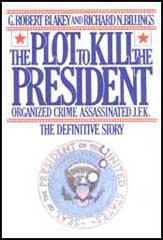
In his 1980 book, The Plot to Kill the President, Blakey asserted:
- Lee Harvey Oswald shot and killed President Kennedy.
- An unknown confederate of Oswald’s, firing from the “grassy knoll,” also shot at Kennedy but missed.
- The conspiracy was rooted in organized crime and involved Mafia boss Santos Trafficante of Miami and/or Mafia boss Carlos Marcello of New Orleans.
The 1983 drama, “Blood Feud,” clearly implied that the Mob was responsible. At the heart of the mini-series lay the 10-year conflict between Robert F. Kennedy and James R. Hoffa, then president of the International Brotherhood of Teamsters Union.
This was also the plot of American Tabloid, a 1995 novel by James Ellroy.
But investigative reporter Seymour Hersh wrote that during the five years he researched The Dark Side of Camelot, his expose of the hidden life of President Kennedy, he didn’t uncover any evidence of such a plot.
After Robert Kennedy left the Justice Department in 1964 to run for the post of U.S. Senator from New York, the Justice Department slacked off its push against the crime syndicates.
But the war was resurrected during the Nixon administration and has remained a top priority ever since.
Perhaps the most controversial legacy of the Kennedy administration remains the President’s dealings with the South Vietnamese regime of Ngo Dinh Diem.,
In 1954, the French–who had controlled Vietnam for 80 years–were forced to withdraw their military forces from the country. Their army had suffered a humiliating defeat at Dienbenphu and the French citizenry–still recovering from defeat and Nazi occupation during World War II–demanded an end to the disastrous conflict.
Into this political vacumn stepped the victorious North Vietnamese communist Ho Chi Minh.
Kennedy–then U.S. Senator from Massachussets–had visited Vietnam while the French were still trying to hold onto one of their last colonial possessions. And he had urged them to withdraw and allow the Vietnamese to govern themselves.
But President Dwight D. Eisenhower was aware of Ho’s overhwleming popularity throughout Vietnam due to his battles against Japanese and French colonialists. In any nationwide election, Ho was certain to win the presidency.
But Eisenhower felt he couldn’t allow an avowed Communist to rule Vietnam. With the North under firm Communist control, America focused its attention on the South.
earching for an acceptable alternative, Eisenhower found hm in Ngo Dinh Diem–a mandarin in a nation swept by revolution, a Catholic in a nation with an 80% Buddhist population.

Ngo Dinh Diem
In 1954, America began backing Diem. Although his first years were marked by social progress, he later became increasingly oppressive toward the Buddhist majority. Corruption flourished among government and army officials.
In 1960, North Vietnam launched an aggressive campaign of infiltration and assassination across South Vietnam.
In 1961, President Kennedy sent 400 Green Berets and 100 other military advisors to South Vietnam to offer support.
Diem requested American financing of a 100,000-man increase in his army. Kennedy agreed to an increase of 30,000. Meanwhile, the Joint Chiefs of Staff estimated that 40,000 U.S. troops would be needed to “clean up the Vietcong threat.”
Kennedy underestimated the reaction of North Vietnam, whose forces were fighting what they believed was a crusade. As American troop strength increased, the North escalated its own commitment.
From 1961 to 1963, the number of U.S. troops in Vietnam steadily rose from 685 to 16,732. American minesweepers patrolled the coasts while their aircraft engaged in surveillance.
For the first time, Americans became casualties of the war–especially those in helicopter combat-support missions.
Meanwhile, Diem–urged by his influential brother, Nhu, who ran the secret police–cracked down on the Buddhists.
Government troops fired on a peaceful demonstration in May, 1963. In protest, Buddhist monks burned themselves to death before TV cameras.
Nhu’s beautiful and powerful wife led growing world outrage by her ridicule of “monk barbeque shows.”
American efforts to stop Diem’s anti-Budhist campaign failed. On August 21, 1963, Diem’s police shot their way into Buddhist pagodas, killing scores and arresting hundreds.
This finally convinced the Kennedy administration that Diem would never gain the popular support he needed to win the war against the Communist North.
As a result, the administration offered support to South Vietnamese military officers planning a coup against Diem.
On November 1, 1963, South Vietnamese army units stormed the presidential palace. Diem and Nhu fled, but were caught and shot. Madame Nhu, visiting the U.S. at the time, escaped death, accusing Kennedy of supporting the coup.
The administration issued a flat denial.
Diem’s assassination was followed 21 days later by Kennedy’s own.
BAY OF PIGS, BERLIN WALL, BILL CLINTON, BRUCE GREENWOOD, CARLOS MARCELLO, CIA, CIVIL RIGHTS, CLIFF ROBERTSON, CUBAN MISSILE CRISIS, DAVID HALBERSTAM, FACEBOOK, FBI, FIDEL CASTRO, FRANK SINATRA, ICH BEN EIN BERLINNER SPEECH, INTERNET MOVIE DATABASE, J. EDGAR HOOVER, JAMES MARSDEN, JOHN F. KENNEDY, JOSEPH MCCARTHY, JOSEPH P. KENNEDY, LYNDON B. JOHNSON, MAFIA, MALCOM X, MARTIN LUTHER KING, MARTIN SHEEN, MOVIES, NIKITA KHRUSHCHEV, NUCLEAR TEST BAN TREATY, PT-109, ROBERT F. KENNEDY, ROBERT S. MCNAMARA, SAM GIANCANA, SANTOS TRAFFICANTE, SATURDAY NIGHT LIVE, SOVIET UNION, THE BEST AND THE BRIGHTEST, THE BUTLER, THE MISSILES OF OCTOBER, THE RAT PACK, THIRTEEN DAYS, TWILIGHT ZONE, TWITTER, VIETNAM WAR, WILLIAM DEVANE, WILLIAM PETERSEN
In Bureaucracy, History, Military, Politics, Social commentary on November 14, 2013 at 12:05 am
John F. Kennedy became President when civil rights suddenly became a burning issue throughout the Nation.
At Kennedy’s request, dozen of law firms sent lawyers South, so civil rights demonstrators would not lack counsel.
Prominent blacks such as Thurgood Marshall, Robert C. Weaver and George L.L. Weaver were appointed, respectively, to the Supreme Court, the Housing and House Finance Agency and the office of Assistant Secretary of Labor.
But Kennedy was highly reluctant to push for a civil rights bill addressing the overall issues of racial discrimination.
The reason: Most of the chairman of House and Senate committees were deeply conservative racists–whether Republican or Democrat. They decided whether Kennedy’s foreign policy initiatives would be approved or opposed–especialy his bills for increased foreign aid.
Kennedy believed he could not offend such men without jeopardizing the legacy he wanted to achieve in foreign policy.
This timidity, in turn, led many prominent blacks–such as Martin Luther King and Malcom X–to believe they would see no innovative moves on Kennedy’s part.
But events forced Kennedy’s hand.
On September 30, 1962, the President sent deputy U.S. marshals and National Guardsmen into Mississippi to restore order. Rioting had erupted when, by federal court order, James Meredith, a black, was enrolled at the state university.
Kennedy’s problems in winning support for his civil rights program arose in the folkways of the Nation. When laws run counter to a nation’s folkways, the laws lose.
In backing the admission of Meredith, the President chose an incident which would set off shockwaves for black rights.
Kennedy held mixed emotions about the demand for civil rights by blacks. On one hand, as an Irish Catholic, he grew up with stories about longtime discrimination against his ancestors (such as the “No Irish Need Apply” signs posted by numerous employers).
On the other hand, he had been born into a world of power and wealth, and he had to grope his way toward understanding the problems of the oppressed.
Another major confrontation broke out between Kennedy and the forces of segregation on June 11, 1963. Alabama Governor George C. Wallace personally blocked the entrance of two black pupils to the University of Tuscaloosa.
The President, watching on TV, federalized the Alabama National Guard, which Wallace had used to ring the school. Wallace withdrew and the students were admitted and enrolled.
That same day, Kennedy addressed the nation on the need for genuine equality for all Americans: “The question is whether we are going to treat our fellow Americans as we want to be treated.”
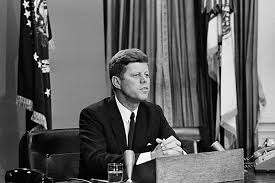
JFK addresses the nation on civil rights
And he called on Congress to pass his civil rights bill, which had been stalled by the legislators.
On August 28, 1963, 200,000 civil rights demonstrators flooded Washington, D.C., for a massive rally.
Fearing that violence would erupt–embarrassing his administration and setting back the cause of civil rights–Kennedy had sought to persuade Dr. Martin Luther King, the march’s chief figure, to cancel the proposed march..
But King and his fellow organizers were determined to go through with it. They had, they said, waited too long for justice to be satisfied with anything less.
The dignity and peacefulness of the rally–and, most especially, King’s soaring “I Have a Dream” speech–won tremendous sympathy throughout the cuntry. Kennedy met with civil rights leaders afterward to offer his support.
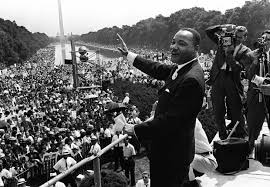
Martin Luther King during the March on Washington
But Kennedy’s civil rights bill remained stalled in Congress until 1964. President Lyndon B. Johnson used the assassinated Kennedy’s new status as a martyr to gain enough support for its passage.
Meanwhile, on yet another front, the Kennedy administration was waging an unprecedented war against organized crime.
This was primarily the work of Attorney General Robert F. Kennedy. As chief counsel for the Senate Permanent Subcommittee on Investigations during the late 1950s, he had interrogated hundreds of mobsters who had been summoned by subpoena.
And he had learned, firsthand, how ineffective the FBI and Justice Department were at bringing such powerful criminals to justice.
Upon taking office as Attorney General, he greatly expanded the number of attorneys assigned to the Justice Department’s Organized Crime Section. And, more important, he used his status as brother to the President to jawbone FBI Director J. Edgar Hoover into attacking the Mob.
The FBI installed illegal microphones in Mob hangouts throughout the country and started building cases against such mobsters as Sam Giancana, Santos Trafficante and Carlos Marcello.
The administration’s attack on the Mob has led some historians to believe the assassination of President Kennedy was Mob-orchestrated.
The reasons:
- Joseph P. Kennedy, the family patriarch, solicited Mob money and influence for his son’s 1960 Presidential campaign.
- Through singer Frank Sinatra, the elder Kennedy assurred Chicago Mafia boss Sam Giancana that the mob would get a free ride if his son were elected President.
- The CIA, seeking any way to topple Fidel Castro, enlisted the Mafia to assassinate him.
- But Robert Kennedy, as Attorney General, ignored the Mob’s “contributions” and pressed his war against the syndicates
- As a result, mobsters felt betrayed and lusted for vengeance.
BAY OF PIGS, BERLIN WALL, BILL CLINTON, BRUCE GREENWOOD, CARLOS MARCELLO, CIA, CIVIL RIGHTS, CLIFF ROBERTSON, CUBAN MISSILE CRISIS, DAVID HALBERSTAM, FACEBOOK, FBI, FIDEL CASTRO, FRANK SINATRA, ICH BEN EIN BERLINNER SPEECH, INTERNET MOVIE DATABASE, J. EDGAR HOOVER, JAMES MARSDEN, JOHN F. KENNEDY, JOSEPH MCCARTHY, JOSEPH P. KENNEDY, LYNDON B. JOHNSON, MAFIA, MALCOM X, MARTIN LUTHER KING, MARTIN SHEEN, MOVIES, NIKITA KHRUSHCHEV, NUCLEAR TEST BAN TREATY, PT-109, ROBERT F. KENNEDY, ROBERT S. MCNAMARA, SAM GIANCANA, SANTOS TRAFFICANTE, SATURDAY NIGHT LIVE, SOVIET UNION, THE BEST AND THE BRIGHTEST, THE BUTLER, THE MISSILES OF OCTOBER, THE RAT PACK, THIRTEEN DAYS, TWILIGHT ZONE, TWITTER, VIETNAM WAR, WILLIAM DEVANE, WILLIAM PETERSEN
In Bureaucracy, History, Law, Law Enforcement, Military, Politics, Social commentary on November 13, 2013 at 12:26 am
By October, 1962, the Soviet Union had sent more than 40,000 soldiers, 1,300 field pieces, 700 anti-aircraft guns, 350 tanks and 150 jets to Cuba to deter another invasion.
Nikita Khrushchev, the premier of the Soviet Union, also began supplying Castro with nuclear-tipped ballistic missiles–whose discovery, in October, 1962, ignited the single most dangerous confrontation of the Cold War.

John F. Kennedy during the Cuban Missile Crisis
On October 16, Kennedy was shown photographs of nuclear missile sites under construction on the island. The pictures had been taken on the previous day by a high-altitude U-2 spy plane.
Suddenly, the two most powerful nuclear countries–the United States and the Soviet Union–found themselves on the brink of nuclear war.
At the time, Kennedy officials claimed they couldn’t understand why Khrushchev had placed nuclear missiles in Cuba. “Maybe Khrushchev’s gone mad” was a typical musing.
None of these officials admitted that JFK had been waging a no-holds-barred campaign to overthrow the Cuban government and assassinate its leader.
After being informed of the missile installations, Kennedy convened a group of his 12 most important advisors, which became known as Ex-Comm, for Executive Committee.
Then followed seven days of guarded and intense debate by Kennedy and his advisors. Some of the participants-–such as Air Force General Curtis LeMay-–urged an all-out air strike against the missile sites.
Robert Kennedy, the Attorney General (and the President’s brother) opposed initial calls for an air strike.
It would be, he said, “a Pearl Harbor in reverse.” And, he added: “I don’t want my brother to go down in history as the Tojo of the 1960s.”
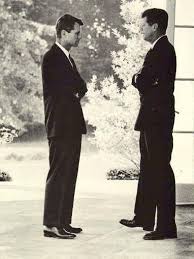
Robert F. and John F. Kennedy
Others-–such as Adlai Stevenson, the United States delegate to the United Nations–urged a reliance on quiet diplomacy.
It was Secretary of Defense Robert S. McNamara who suggested a middle course: A naval blockade–-a “quarantine” in Kennedy’s softened term–around Cuba. This would hopefully prevent the arrival of more Soviet offensive weapons on the island.
The President insisted that the missiles had to go–by peaceful means, if possible, but through the use of military force if necessary.
Kennedy finally settled on a maval blockade of Cuba. This would prevent additional missiles from coming in and give Khrushchev time to negotiate and save face.
On October 22, President Kennedy appeared on nationwide TV to denounce the presence of Russian nuclealr missiles in Cuba.
He demanded their withdrawal, and warned that any missile launched against any nation in the Western hemisphere would be answered with “a full retaliatory response upon the Soviet Union.”
Kennedy ordered American military readiness raised to a level of Defcom-2–the step just short of total war.
The United States had about 27,000 nuclear weapons; the Soviets had about 3,000. In a first salvo of a nuclear exchange, the United States could have launched about 3,000 nuclear weapons and the Soviets about 250.
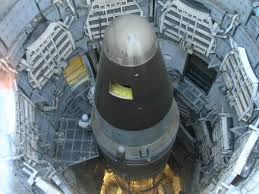
Nuclear missile in silo
On October 28, Khrushchev announced that the missile sites would be destroyed and the missiles crated and shipped back to the Soiet Union.
In return, Kennedy gave his promise–publicly–to lift the blockade and not invade Cuba
Privately, he also promised to remove obsolte Jupiter II nuclear missiles from Turkey, which bordered the Soviet Union. Those missiles were, in effect, the American version of the Russian missiles that had been shipped to Cuba.
The world escaped nuclear disaster by a hair’s-breath.
Khrushchev didn’t know that Kennedy had intended to order a full-scale invasion of Cuba in just another 24 hours if an agreement couldn’t be reached.
And Kennedy and his military advisors didn’t know that Russian soldiers defending Cuba had been armed with tactical nuclear weapons.
If warfare of any type had broken out, the temptation to go nuclear would have been overwhelming.
The Cuban Missile Crisis marked the only time the world came to the brink of nuclear war.
To the Right, it was a sell-out: Kennedy had refused to “take out” Castro when he had the chance, thus allowing Cuba to remain a Communist bastion only 90 miles from Florida.
To the Left, it was a needless confrontation that risked the destruction of humanity.
For Kennedy, forcing the Soviets to remove their misssiles from Cuba re-won the confidence he had lost among so many Americans following the Bay of Pigs fiasco.
It also brought him face-to-face with the brutal truth that a miscalculation during a nuclear crisis could destroy all life on the planet.
He felt he could now move–cautiously–toward better relations between the United States and the Soviet Union.
Ironically, the crisis had the same effects on Khrushchev–who had witnessed the horrors of Germany’s 1941 invasion of the Soviet Union and the subsequent loss of at least 22 million Soviet citizens.
Slowly and carefully, Kennedy and Khrushchev negotiated the details of what would become the Nuclear Test Ban Treaty, which banned nuclear testing in the atmosphere.
Underground tests would continue, but the amounts of deadly strontonium-90 radiation polluting the atmosphere would be vastly reduced.
The treaty was signed between the United States and the Soviet Union on July 25, 1963.
Kennedy considered it his greatest achievement as President, saying in a speech: “According to a Chinese proverb, a jouney of a thousand miles begins with a single step. My fellow Americans, let us take that first step.”
BAY OF PIGS, BERLIN WALL, BILL CLINTON, BRUCE GREENWOOD, CARLOS MARCELLO, CIA, CIVIL RIGHTS, CLIFF ROBERTSON, CUBAN MISSILE CRISIS, DAVID HALBERSTAM, FACEBOOK, FBI, FIDEL CASTRO, FRANK SINATRA, ICH BEN EIN BERLINNER SPEECH, INTERNET MOVIE DATABASE, J. EDGAR HOOVER, JAMES MARSDEN, JOHN F. KENNEDY, JOSEPH MCCARTHY, JOSEPH P. KENNEDY, LYNDON B. JOHNSON, MAFIA, MALCOM X, MARTIN LUTHER KING, MARTIN SHEEN, MOVIES, NIKITA KHRUSHCHEV, NUCLEAR TEST BAN TREATY, PT-109, ROBERT F. KENNEDY, ROBERT S. MCNAMARA, SAM GIANCANA, SANTOS TRAFFICANTE, SATURDAY NIGHT LIVE, SOVIET UNION, THE BEST AND THE BRIGHTEST, THE BUTLER, THE MISSILES OF OCTOBER, THE RAT PACK, THIRTEEN DAYS, TWILIGHT ZONE, TWITTER, VIETNAM WAR, WILLIAM DEVANE, WILLIAM PETERSEN
In Bureaucracy, History, Law, Law Enforcement, Military, Politics, Social commentary on November 12, 2013 at 12:05 am
During the 1960 Presidential campaign, then-Senator John F. Kennedy promised to build a Peace Corps to train people in underdeveloped nations to help themselves.
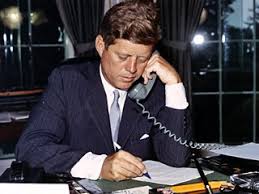
John F. Kennedy
In March, 1961, the program went into effect, with the President’s brother-in-law, Sergent Shriver, as director.
Starvation, illiteracy and disease were the enemies of the Corps. Any nation wanting aid could request it. The first group of volunteers went to the Philippines, the second to Equador and the third to Tanganika.
The problems of the underdeveloped world were too great for any single organization to solve. But the Corps lifted the spirits of many living in those countries. And it captured the imagination of millions of Americans–especially those of thousands of idealistic youths who entered its ranks.
To combat the growing Communist threat to Latin America, Kennedy established the Alliance for Progress. He defined the Alliance’s goal as providing “revolutionary progress through powerful, democratic means.”
Within two years he could report:
“Some 140,000 housing units have been constructed. Slum clearance projects have begun, and 3,000 classrooms have been built. More than 4,000,000 school books have been distributed.
“The Alliance has fired the imagination and kindled the hopes of millions of our good neighbors. Their drive toward modernization is gaining momentum as it unleashes the energies of these millions.
“The United States is becoming increasingly identified in the minds of the people with the goal they move toward: a better life with freedom,” said Kennedy.
Critics of the program, however, charged that the President was trying to “dress up the old policies” of Franklin D. Roosevelt in new rhetoric. Since FDR’s time, the United States has believed in giving economic aid to Latin America.
Much–if not most–of these billions of dollars has wound up in the pockets of various right-wing dictators, such as Anastasio Somoza and Rafael Trujillo.
Meanwhile, Kennedy was urging action on another front–that of outer space.
“This generation does not intend to founder in the backwash of the coming age of space,” declared the President. He committed the United States to putting a man on the moon by the end of the decade.
As indeed it happened less than six years after his death–on July 20, 1969.
Kennedy’s idealistic rhetoric masked his real reason for going to the moon: To score a propaganda victory over the Soviet Union.
Another of his anti-Communist goals: To remove Fidel Castro from power in Cuba at almost any cost.
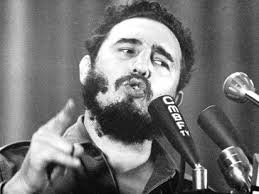
Fidel Castro
Immediately after the failed Bay of Pigs invasion, Kennedy appointed his brother, Robert–who was then the Attorney General–to oversee a CIA program to overthrow Castro.
The CIA and the Mafia entered into an unholy alliance to assassinate Castro–each for its own benefit:
- The CIA wanted to please Kennedy by overthrowing the Communist leader who had nationalized American corporate holdings.
- The Mafia wanted to regain its lucrative casino and brothel holdings that had made Cuba the playground of the rich in pre-Castro times.
The mobsters were authorized to offer $150,000 to anyone who would kill Castro and were promised any support the Agency could yield.
“We were hysterical about Castro at about the time of the Bay of Pigs and thereafter,” then-former Secretary of Defense Robert S. McNamara testified before Congress about these efforts. “And there was pressure from JFK and RFK to do something about Castro.”
Nor was everyone in the CIA enthusiastic about the “get Castro” effort.
“Everyone at CIA was surprised at Kennedy’s obsession with Fidel,” recalled Sam Halpern, who was assigned to the Cuba Project. “They thought it was a waste of time. We all knew [Fidel] couldn’t hurt us. Most of us at CIA initially liked Kennedy, but why go after this little guy?
“One thing is for sure: Kennedy wasn’t doing it out of national security concerns. It was a personal thing. The Kennedy family felt personally burnt by the Bay of Pigs and sought revenge.”
It was all-out war. Among the tactics used:
- Hiring Cuban gangsters to murder Cuban police officials and Soviet technicians.
- Sabotaging mines.
- Paying up to $100,000 per “hit” for the murder or kidnapping of Cuban officials.
- Using biological and chemical warfare against the Cuban sugar industry.
- Planting colorful seashells rigged to explode at a site where Castro liked to go skindiving.
- Trying to arrange for his being presented with a wetsuit impregnated with noxious bacteria and mold spores, or with lethal chemical agents.
- Attempting to infect Castro’s scuba regulator with tuberculous bacilli.
- Trying to douse his handkerchiefs, cigars, tea and coffee with other lethal bacteria.
But all of these efforts failed to assassinate Castro–or overthrow the Cuban Revolution he was heading.
“Bobby (Kennedy) wanted boom and bang all over the island,” recalled Halpern. “It was stupid. The pressure from the White House was very great.”
Americans would rightly label such methods as ”terrorist” if another power used them against the United States today. And the Cuban government saw the situation exactly the same way.
So Castro appealed to Nikita Khrushchev, leader of the Soviet Union, for assistance.
Khrushchev was quick to comply: “We must not allow the communist infant to be strangled in its crib,” he told members of his inncer circle.
BAY OF PIGS, BERLIN WALL, BILL CLINTON, BRUCE GREENWOOD, CARLOS MARCELLO, CIA, CIVIL RIGHTS, CLIFF ROBERTSON, CUBAN MISSILE CRISIS, DAVID HALBERSTAM, FACEBOOK, FBI, FIDEL CASTRO, FRANK SINATRA, ICH BEN EIN BERLINNER SPEECH, INTERNET MOVIE DATABASE, J. EDGAR HOOVER, JAMES MARSDEN, JOHN F. KENNEDY, JOSEPH MCCARTHY, JOSEPH P. KENNEDY, LYNDON B. JOHNSON, MAFIA, MALCOM X, MARTIN LUTHER KING, MARTIN SHEEN, MOVIES, NIKITA KHRUSHCHEV, NUCLEAR TEST BAN TREATY, PT-109, ROBERT F. KENNEDY, ROBERT S. MCNAMARA, SAM GIANCANA, SANTOS TRAFFICANTE, SATURDAY NIGHT LIVE, SOVIET UNION, THE BEST AND THE BRIGHTEST, THE BUTLER, THE MISSILES OF OCTOBER, THE RAT PACK, THIRTEEN DAYS, TWILIGHT ZONE, TWITTER, VIETNAM WAR, WILLIAM DEVANE, WILLIAM PETERSEN
In Bureaucracy, History, Law, Law Enforcement, Military, Politics, Social commentary on November 11, 2013 at 12:05 am
November 22, 2013, will mark the 50th anniversary of the assassination of President John Fitzgerald Kennedy.
It’s one of those infamous dates that its eyewitnesses will never forget, in a class with
- December 7, 1941 (Pearl Harbor),
- April 12, 1945 (the death of President Franklin D. Roosevelt and
- September 11, 2001 (Al Qaeda’s attacks on the Pentagon and World Trade Center).
Some have called the Kennedy adminsitration a golden era in American history.
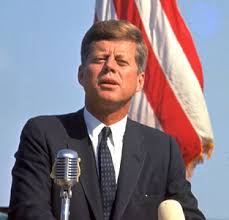
A time when touch football, lively White House parties, stimulus to the arts and the antics of the President’s children became national obsessions.
Others have called the Kennedy Presidency a monument to the unchecked power of wealth and ambition. An administration staffed by young novices playing at statesmen, riddled with nepotism, and whose legacy includes the Bay of Pigs, the Vietnam war and the world’s first nuclear confrontation.
While Americans continue to disagree about the legacy of JFK, there is no disagreement that his Presidency came to a sudden and shocking end just two years, ten months and two days after it had all begun.
The opening days of the Kennedy Presidency raised hopes for a dramatic change in relations between the United States and the Soviet Union.
But detente was not possible then. The Russians had not yet experienced their coming agricultural problems and the setback in Cuba during the Missile Crisis. And the United States had not suffered defeat in Vietnam.
Kennedy’s first brush with international Communism came on April 17, 1961, with the invasion of Cuba at the Bay of Pigs. This operation had been planned and directed by the Central Intelligence Agency during the final months of Dwight D. Eisenhower’s term as President.
The U.S. Navy was to land about 1,400 Cuban exiles on the island to overthrow the Communist government of Fidel Castro. They were supposed to head into the mountains–as Castro himself had done against the dictatorship of Fulgencio Batista in 1956–and raise the cry of revolution.
The invasion would occur after an American air strike had knocked out the Cuban air force. But the airstrike failed and Kennedy, under the pressure of world opinion, called off a second try.
Even so, the invasion went ahead. When the invaders surged onto the beaches, they found Castro’s army waiting for them. Many of the invaders were killed on the spot. Others were captured–to be ransomed by the United States in December, 1962, in return for medical supplies.
It was a major public relations setback for the newly-installed Kennedy administration, which has raised hopes for a change in American-Soviet relations.
Kennedy, trying to abort widespread criticism, publicly took the blame for the setback: “There’s an old saying that victory has a hundred fathers and defeat is an orphan….I’m the responsible officer of the Government.”
The Bay of Pigs convinced Kennedy that he had been misled by the CIA and the Joint Chieifs of Staff. Out of this came his decision to rely heavily on the counsel of his brother, Robert, whom he had installed as Attorney General.
The failed Cuban invasion–unfortunately for Kennedy–convinced Soviet Premier Nikita S. Khrushchev that the President was weak.
Khrushchev told an associate that he could understand if Kennedy had not decided to invade Cuba. But once he did, Kennedy should have gone all the way and wiped out Castro.
Khrushchev attributed this to Kennedy’s youth, inexperience and timidity–and believed he could bully the President.
On June 4, 1961, Kennedy met with Khrushchev in Vienna to discuss world tensions. Khrushchev threatened to go to nuclear war over the American presence in West Berlin–the dividing line between Western Europe, protected by the United States, and Eastern Europe, controlled by the Soviet Union.
Kennedy, who prized rationality above all else, was shaken by Knhrushchev’s unexpected rage. Emerging from the conference, he told an associate: “It’s going to be a cold winter.”
Meanwhile, East Berliners felt the door was about to slam on their access to West Berlin, and a flood of 3,000 refugees daily poured into West Germany.
Khrushchev was clearly embarrassed at this clear showing of the unpopularity of the Communist regime. In August, he orderd that a concrete wall–backed up by barbed wire, searchlights and armed guards–be erected to seal off East Berlin.
That same year, when tensions mounted and a Soviet invasion of West Berlin seemed likely, Kennedy sent additional troops to the city in a massive demonstration of American will.
Two years later, on June 26, 1963, during a 10-day tour of Europe, Kennedy visited Berlin to deliver his “I am a Berlinner” speech to a frenzied crowd of thousands.
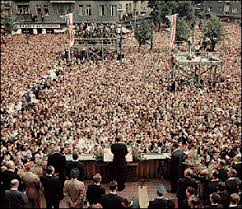
JFK adddresses crowds at the Berlin Wall
“There are many people in the world who really don’t understand, or say they don’t, what is the great issue between the free world and the Communist world,” orated Kennedy. “Let them come to Berlin.”
Standing within gunshot of the Berlin wall, he lashed out at the Soviet Union and praised the citizens of West Berlin for being “on the front lines of freedom” for more than 20 years.
“All free men, wherever they may live,” said Kennedy, “are citizens of Berlin. And therefore, as a free man, I take pride in the words, ‘Ich ben ein Berlinner.'”
ABC NEWS, ADMINISTRATION, ATTORNEYS, BUREAUCRACIES, BUSINESS, CBS NEWS, CEOS, CNN, CORPORATIONS, CUSTOMER SERVICE, FACEBOOK, FBI, GOVERNMENT AGENCIES, LG, MSNBC, NBC NEWS, POLICE DEPARTMENTS, PROSECUTORS, ROBERT TOWENSEND, SELF-HELP, THE HUFFINGTON POST, THE NEW YORK TIMES, THE SHARPER IMAGE, THE WALL STREET JOURNAL, THE WASHINGTON POST, TWITTER
In Bureaucracy, Business, Self-Help on November 6, 2013 at 12:56 am
So you’ve spent the last half-hour or more on the phone, listening to one recorded message after another (and probably a symphony of bad music).
And you’re no closer to solving the problem that caused you to phone the company/agency in the first place.
What to do?
- Go on the Internet and look up the company’s/agency’s website. Look for links to their Board of Directors. Often enough you’ll get not only their names but their bios, phone numbers and even email addresses.
- Start looking at the bottom of the website page. Many companies/agencies put this information there–and usually in small print.
- Look for the names of officials who can help you. That means the ones at the top–or at least high enough so you can be sure that whoever responds to your call/letter/email has the necessary clout to address your problem.
- If you call, don’t ask to speak directly with Mr. Big–that’s not going to happen. Ask to speak with Mr. Big’s secretary, who is far more accessible.
- Keep your tone civil, and try to make your call as brief as possible. Don’t go into a lot of background about all the problems you’ve been having getting through to someone.
- Give the gist and ask for a referral to someone who can help resolve your problem.
- If the secretary needs more time to study the problem before referring you to someone else, be patient. Answer any questions asked–such as your name, address, phone number and/or email.
- State–specifically–what you want the company to do to resolve your problem. If you want a refund or repairs for your product, say so.
- Too many consumers don’t specify what they want the company to do–they’re so caught up in their rage and frustration that this completely escapes them.
- Be reasonable. If you want a refund, then don’t ask for more money than you paid for the product. If you want to return a product for an exchange, don’t expect the company to give you a new one with even more bells and whistles–unless you’re willing to pay the difference in price.
- If you want an agency to investigate your complaint, don’t expect them to drop everything else and do so instantly. Give them time to assess your information and that supplied by others.
- It’s usually possible to get one agency to sit on another–if you can make a convincing case that it’s in that secondary agency’s best interests to do so. If you’ve been roughed up by local police for no good reason, you can file a complaint with that department–-and the FBI and U.S. Attorney’s Office (federal prosecutor) to investigate.
- That doesn’t guarantee they will resolve your problem. But if you can show that the cops have violated several Federal civil rights laws, the odds are that someone will take a serious look at your complaint.
- If a company/agency official has acted so outrageously that the company/agency might now be held liable for his actions, don’t be afraid to say so. But don’t threaten to sue. Just point out that the employee has acted in such a way as to jeopardize the company’s/agency’s reputation for integrity/efficiency and that the organization is not well-served by such behavior.
- Whoever reads your letter/email will instantly realize the legal implications of what you’re saying–and, in most cases, will take quick action to head off a lawsuit by trying to satisfy your request. The foremost priority of every bureaucracy is to ensure its own survival.
- Give the CEO’s secretary at least one to two days to get back to you. Remember: Resolving your problem isn’t the only task she needs to complete.
- If you’re writing the CEO, make sure you use his full name and title–and that you spell both correctly. People don’t get to be CEOs without a huge sense of ego. Nothing will turn him off faster than your failing to get his name and title exactly right.
- As in the case with his secretary, be brief–no more than a page and a half. Outline the problem you’re having and at least some (though not necessarily all) of the steps you’re taken to get it resolved.
- Then state what you want the company to do. Again, be fair and reasonable.
ABC NEWS, ADMINISTRATION, ATTORNEYS, BUREAUCRACIES, BUSINESS, CBS NEWS, CEOS, CNN, CORPORATIONS, CUSTOMER SERVICE, FACEBOOK, FBI, GOVERNMENT AGENCIES, L.G., LG, MSNBC, NBC NEWS, POLICE DEPARTMENTS, PROSECUTORS, ROBERT TOWENSEND, SELF-HELP, THE HUFFINGTON POST, THE NEW YORK TIMES, THE SHARPER IMAGE, THE WALL STREET JOURNAL, THE WASHINGTON POST, TWITTER
In Bureaucracy, Business, Self-Help on November 5, 2013 at 1:15 am
How many times have you called a government agency or company and instantly found yourself put on hold?
To add insult to injury, you usually wind up serenaded by recorded music that would be totally forgettable if it weren’t so unforgivably irritating.
And every 30 seconds or so a recorded voice comes on to assure you: “Your call is very important to us.”
Have you ever wondered: “If my call is so important to you, why aren’t you answering it?”

The truth is that most companies and government agencies don’t want their employees speaking with the customers who make their existence a reality.
Having your questions answered by another human being requires the company/agency to assign–and pay–people to do just that.
Most hiring managers don’t want to hire any more people than they absolutely have to. They want to siphon off as much of the company’s profits for themselves as possible.
And assigning people to answer customers’ calls means that many of those calls will take time to answer, because some problems can’t be solved in a matter of seconds. To a bean-counting executive, time is money.
Even government agencies like police departments don’t want to spend any more time than necessary taking the calls of those who need to reach them.
Even calls to 911 can leave you talking to no one, with only a recorded message telling you to wait until someone deigns to speak with you.
That’s why many bureaucracies arrange that when you call for help, you’re fobbed off with a recorded message telling you to visit the company’s or agency’s website.
This assumes, of course, that
- You have a computer; and
- If you do, you also have Internet access.
If you
- Don’t have a computer; or
- You have a computer but don’t have Internet access; or
- You do have Internet access but the service is down,
you’re flat out of luck.
And the agency/company couldn’t care less.
But it need not be this way.
Companies and agencies can treat their customers with respect for their time and need for help.
That’s why companies that genuinely seek to address the questions and concerns of their customers reap strong customer loyalty–and the profits that go with it.
One of these is LG, which produces mobile phones, TVs, audio/video appliances and computer products.
LG actually offers an 800 Customer Care number that’s good 24-hours a day.
Its call center is staffed with friendly, knowledgeable people who are willing to take the time to answer customer questions and guide them through the steps of setting up the appliances they’ve bought.
Another company that dares to have human beings stand behind its products–and explain how to use them–is The Sharper Image.
Recently, Dave, a friend of mine, bought an electronic alarm clock that allows you to wake up to a variety of exotic souds–such as a thunderstorm, the seashore, chirping birds or foghorns.
A brochure on how to set the alarm and sounds came with the clock, but Dave couldn’t make sense of it. Luckily, there was an 800 number given in the brochure for those who needed to be walked through the necessary steps.
Dave called The Sharper Image and quickly found himself connected with a friendly and knowledgeable customer care rep. She clearly and patiently explained what he needed to do to choose which sounds he wanted to awaken to.
And then she just as patiently repeated that list of steps while he quickly typed them up for future use if he forgot what to do.
Such an approach to customer service is not new–just extremely rare these days.
In his 1970 bestselling primer on business management, Up the Organization, Robert Townsend offered the following advice to company CEOs: “Call yourself up.”
“When you’re off on a business trip or a vacation,” writes Townsend, “pretend you’re a customer. Telephone some part of your organization and ask for help. You’ll run into real horror shows.
“Don’t blow up and ask for name, rank and serial number–you’re trying to correct, not punish. Just suggest to the manager (through channels, dummy) that he make a few test calls himself.”
So how do you cope with agencies/companies that don’t care enough to help their customers?
I’ll address that in my next column.
9/11, ABC NEWS, ABRAHAM LINCOLN, AL QAEDA, ANDREW JACKSON, BARACK OBAMA, BILL CLINTON, CBS NEWS, CNN, CUBAN MISSILE CRISIS, EMANCIPATION PROCLOMATION, EXTORTION, FACEBOOK, FBI, FEDERAL GOVERNMENT SHUTDOWN, FORD'S THEATER, FRANKLIN ROOSEVELT, FURLOUGHS, GEORGE H.W. BUSH, JOHN F. KENNEDY, JOSEPH MCCARTHY, MAFIA, MITT ROMNEY, MSNBC'S "HARDBALL", NBC NEWS, NEGOTIATING, OBAMACARE, PATRIOT ACT, R.I.CO. ACT, REPUBLICAN PARTY, REPUBLICANS, RICHARD NIXON, Secret Service, TED NUGENT, TERRORISM, THE AFFORDABLE CARE ACT, THE LOS ANGELES TIMES, THE NEW YORK TIMES THE WASHINGTON POST, TWITTER, UNITED STATES HOLOCAUST MEMORIAL, VIETNAM WAR MEMORIAL, WHITE HOUSE, WORLD WAR 11
In Bureaucracy, History, Politics on October 4, 2013 at 12:01 am
For a half-century, Republicans have been damning the very government they lust to control.
Consider this choice comment from Mitt Romney supporter Ted Nugent:
“I spoke at the NRA and will stand by my speech. It’s 100 percent positive. It’s about we the people taking back our American dream from the corrupt monsters in the federal government under this administration, the communist czars he [President Barack Obama] has appointed.”
Romney, of course, refused to disavow the slander Nugent cast over every man and woman working on behalf of the American people.
Romney and his fellow Republicans salivate at every vile charge they can hurl at the very government they lust to control.
As in the case of Senator Joseph McCarthy, no slander is too great if it advances their path to power.
But there are others–living or at least working in Washington, D.C.–who simply go about their jobs with quiet dedication. And they leave slanderous, self-glorifying rhetoric to Right-wing politicians.
One of these unsung heroes was Stephen Tyrone Johns, a security guard at the United States Holocaust Memorial Museum.

On June 10, 2009, Johns, 39, was shot and killed by James Wenneker von Brunn, a white supremist and Holocaust denier. Brunn was himself shot and wounded by two other security guards who returned fire.
While in jail awaiting his trial, von Brunn–who was 88–died on January 6, 2010.
To work in Washington, D.C., is to realize that this city ranks–with New York City–at the top of Al Qaeda’s list of targets.
No one knows this better than the agents of the United States Secret Service, who protect the President, Vice President, their families and the White House itself 24 hours a day.

Prior to 9/11, visiting the White House was assumed to be an American right. No longer.
Today, if you want to tour the Executive Mansion, you quickly learn there are only two ways to get in:
- Through a special pass provided by your Congressman; or
- By someone connected with the incumbent administration.
Congressmen, however, have a limited number of passes to give out. And most of these go to people who have put serious money into the Congressman’s re-election campaigns.
And the odds that you’ll know someone who works in the White House–and who’s willing to offer you an invitation–are even smaller than those of knowing a Congressman.
But even that isn’t enough to get you through the White House door.
You’ll have to undergo a Secret Service background check. And that requires you to submit the following information in advance of your visit:
- Name
- Date of birth
- Birthplace
- Social Security Number
And be prepared to leave a great many items at your hotel room. Among these:
- Cameras or video recorders
- Handbags, book bags, backpacks or purses
- Food or beverages, tobacco products, personal grooming items (i.e. makeup, lotion, etc.)
- Strollers
- Cell phones
- Any pointed objects
- Aerosol containers
- Guns, ammunition, fireworks, electric stun guns, mace, martial arts weapons/devices, or knives of any size
Visitors enter the White House–after showing a government-issued ID card such as a driver’s license–from the south side of East Executive Avenue.
After passing through the security screening room, they walk upstairs to the first door and through the East, Green, Blue, Red and State Dining rooms.
Secret Service agents quietly stand post in every room–unless they’re tasked with explaining the illustrious history of each section of the White House.
Like everyone else who lives/works there, the Secret Service fully appreciates the incredible sense of history that radiates throughout the building.
This is where
- Abraham Lincoln signed the Emancipation Proclomation;
- Franklin Roosevelt directed the United States to victory in World War II;
- John F. Kennedy stared down the Soviets during the Cuban Missile Crisis.
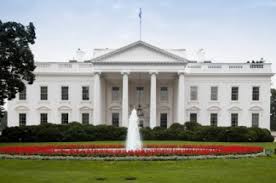
But even the generally unsmiling Secret Service agents have their human side.
While touring the East Wing of the White House, I asked an agent: “Is the East Room where President Nixon gave his farewell speech?” on August 9, 1974.
“I haven’t been programmed for that information,” the agent joked, inviting me to ask a question he could answer.
Another guest asked the same agent if he enjoyed being a Secret Serviceman.
To my surprise, he said that this was simply what he did for a living. His real passion, he said, was counseling youths.
“If you love something,” he advised, “get a job where you can do it. And if you can’t get a job you’re passionate about, get a job so you can pursue your passion.”
Of the more than 2.65 million civilian employees of the executive branch, more than 800,000 have been sent home without pay.
These men and women aren’t faceless “bureaucrats,” as Right-wingers would have people believe. They are hustands and wives, fathers and mothers. They have bills to pay, just like everyone else.
Many of them, such as agents of the FBI and Secret Service, have taken an oath to defend the United States Constitution–with their lives if necessary.
And they now face the dread of going for weeks or even months without a paycheck–as pawns in another Right-wing case of: “My way or no way.”
They deserve a better break–and so do all those who cherish liberty.
9/11, ABC NEWS, ABRAHAM LINCOLN, AL QAEDA, ANDREW JACKSON, BARACK OBAMA, BILL CLINTON, CBS NEWS, CNN, CUBAN MISSILE CRISIS, EMANCIPATION PROCLOMATION, EXTORTION, FACEBOOK, FBI, FEDERAL GOVERNMENT SHUTDOWN, FORD'S THEATER, FRANKLIN ROOSEVELT, FURLOUGHS, GEORGE H.W. BUSH, JOHN F. KENNEDY, JOSEPH MCCARTHY, MAFIA, MITT ROMNEY, MSNBC'S "HARDBALL", NBC NEWS, NEGOTIATING, OBAMACARE, PATRIOT ACT, R.I.CO. ACT, REPUBLICAN PARTY, REPUBLICANS, RICHARD NIXON, Secret Service, TED NUGENT, TERRORISM, THE AFFORDABLE CARE ACT, THE LOS ANGELES TIMES, THE NEW YORK TIMES THE WASHINGTON POST, TWITTER, UNITED STATES HOLOCAUST MEMORIAL, VIETNAM WAR MEMORIAL, WHITE HOUSE, WORLD WAR 11
In Bureaucracy, History, Law, Politics on October 3, 2013 at 12:06 am
Listen to almost any Republican and you’re almost certain to hear how much he hates and despises “Washington.”
To hear Right-wingers tell it, you might believe that “Washington” is:
- The capitol of an enemy nation;
- A cesspool of corrupt, power-hungry men and women slavering to gain dictatorial control over the life of every American;
- A center of lethal contagion which, like ancient Carthage, should be burned to the ground and its inhabitants destroyed or scattered.
All that prevents “Washington” from gaining absolute power–so claim Republicans–is the Republican Party.
But others who live or work in Washington, D.C. take a far different view of their city and the duties they perform.
These men and women will never call a press conference or rake in millions in “political contributions” (i.e., legalized bribes) for promising special privileges to special interests.
Many of them work for the National Park Service. Every national monument–and Washington is speckled with monuments–has several of these employees assigned to it.
Their duties are to protect the monuments and offer historical commentary to the public.
One such employee regularly addresses visitors to Ford’s Theater–known worldwide as the scene of President Abraham Lincoln’s assassination.
George (a pseudonym) opens his lecture by raising the question every member of the audience wants answered: How much of Ford’s Theater remains intact from the night of Lincoln’s murder–April 14, 1865?
And the answer is: Only the exterior of the building.
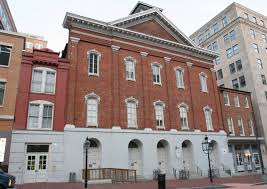
After Lincoln’s assassination, enraged Union soldiers converted the interior of the building into a military command center. That meant ripping out all the seats for spectators and the stage for actors.
The stage and seats–even the “Presidential Box” where Lincoln sat–have all been reproduced for a modern audience.
As George talks, you can tell that, for him, this is no typical day job. He realizes that, renovated or not, Ford’s Theater remains saturated with history. And he clearly feels privileged to share that history with others.
George explains that Presidential assassin John Wilkes Booth did not sneak into the theater. He didn’t have to–as a celebrity actor, he received the sort of favored treatment now accorded Lindsay Lohan.
Another monument where you will find Park Ranger guides is the Vietnam Veterans Memorial.
Completed in 1982, it receives about 3 million visitors a year. Adorning the Wall, in columns that seem to reach endlessly to the sky, are the names of the 58,195 soldiers who gave their lives during the Vietnam War.
That struggle–from 1961 to 1975–proved the most divisive American conflict since the Civil War.
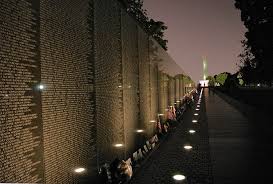
On the day I visited the memorial, groups of elementary schoolchildren passed by. They were jabbering loudly, seemingly oblivious to the terrible sacrifice the Wall was meant to commemorate.
But their adult chaperones realized its significance, and ordered the children to quiet down.
I asked a nearby Park Ranger: “Do you feel people now respond differently to the Wall, as we get further away from the Vietnam war?”
“No,” he answered. He felt that today’s visitors showed the same reverence for the monument and for the losses it had been created to honor as those who had first come in the early 1980s.
And it may well be true: I saw many tiny American flags and wreaths of flowers left at various points along the Wall, which stretches across 250 feet of land on the Mall.
When thinking about “Washington,” it’s essential to remember that this city–along with New York City–remains at the top of Al Qaeda’s target list.
Those who choose to live and/or work here do so in the potential shadow of violent death.
Anytime you enter a Federal building, be prepared to undergo a security check.
In most agencies–such as the Department of Agriculture–you simply place your bags or purses into an X-ray machine similar to those found at airports, and walk through a magnetometer. If no alarms sound, you collect your valuables and pass on through.
Such machines are, of course, nammed by armed security guards. And they stand sentinel at every conceivable Federal building–such as the Supreme Court, the Department of Justice, the Smithsonian Museum, the Pentagon and the U.S. Holocaust Memorial Museum.
These men and women must daily inspect the bodies and handbags of the 15 million people who visit Washington, D.C. annually, generating $5.24 billion dollar in revenues.
This means repeating the same screening gestures countless times–looking through X-ray machines at bags or coats, and running an electronic “wand” up and down those people whose clothing gives off signs of metallic objects.
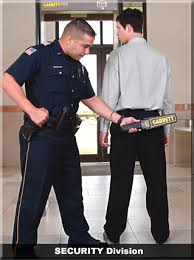
It also means projecting a smiling, friendly demeanor towards those same people–many of whom are in a rush and/or resent being electronically sniffed over.
And every security guard knows this: It’s only a matter of time before the next terrorist shows up.
On June 10, 2009, just that happened at the United States Holocaust Memorial.
9/11, ABC NEWS, ABRAHAM LINCOLN, AL QAEDA, ANDREW JACKSON, BARACK OBAMA, BILL CLINTON, CBS NEWS, CNN, CUBAN MISSILE CRISIS, EMANCIPATION PROCLOMATION, EXTORTION, FACEBOOK, FBI, FEDERAL GOVERNMENT SHUTDOWN, FORD'S THEATER, FRANKLIN ROOSEVELT, FURLOUGHS, GEORGE H.W. BUSH, JOHN F. KENNEDY, JOSEPH MCCARTHY, MAFIA, MITT ROMNEY, MSNBC'S "HARDBALL", NBC NEWS, NEGOTIATING, OBAMACARE, PATRIOT ACT, R.I.CO. ACT, REPUBLICAN PARTY, REPUBLICANS, RICHARD NIXON, Secret Service, TED NUGENT, TERRORISM, THE AFFORDABLE CARE ACT, THE LOS ANGELES TIMES, THE NEW YORK TIMES THE WASHINGTON POST, TWITTER, UNITED STATES HOLOCAUST MEMORIAL, VIETNAM WAR MEMORIAL, WHITE HOUSE, WORLD WAR 11
In Bureaucracy, History, Law, Politics on October 2, 2013 at 2:45 am
To hear many political pundits tell it, the shutdown of the Federal Government is the result of “political dysfunction,” as if everybody in Congress were tripping on LSD.
This is not only untrue but misleading.
The truth is that the shutdown is the result of yet another ruthless attempt by Right-wing Republicans to obtain absolute power.
When they can obtain it at the ballot box, they rule as though by divine right. When they can’t obtain it at election time, they try to obtain it through intimidation.
Thus, in 1992 and 1996, their Presidential candidates–President George H.W. Bush and Senator Bob Dole, respectively–couldn’t defeat Bill Clinton.
So Republicans mounted an inquisition into a failed land deal that occurred before Clinton was first elected President. This investigation spanned the length of the Clinton Presidency and produced no evidence or indictments of criminal activity.
It did, however, turn up the salacious news that Clinton had actually enjoyed several instances of oral sex courtesy of a libidinous White House intern named Monica Lewinsky.
Unable to defeat Clinton at election time, and unable to find any actual criminal wrongdoing on his part, Right-wing Republicans tried to drive him out of office by impeachment.
The effort failed, and Clinton stayed in the White House until his term expired in 2001.
Then, as now, it was members of the House of Representatives who were the driving force.
Now, fast forward to the present: Republicans have made it their mission to deprive millions of Americans of health care. They have voted 42 times to repeal or undermine the Affordable Care Act, better known as Obamacare.
And they have made its elimination the focus of their threats to shut down the government unless they get their way.
Yet, consider this: Whether they like it or not, the Affordable Care Act is now a law that was legally passed by both houses of Congress. It has been certified as Constitutional by no less than a Republican Chief Justice of the United States Supreme Court.
Under our system of government, that’s as legal as it gets.
But Republicans don’t care about legality when they’re pursuing absolute power over the lives of their fellow Americans.
Thus, they have carried out their threat to shut down the Federal Government since they couldn’t coerce Senate Democrats into de-funding “Obamacare.”
As a result:
- More than 800,000 federal workers have been sent home without pay;
- National parks and monuments have been closed;
- Some programs have been temporarily crippled–such as WIC, which provides nutritional food to poor mothers with infants; and
- Some members of “essential services” are still required to be on duty–such as the military and Federal law enforcement agencies–but without receiving paychecks.
Of course, this disgrace didn’t have to happen.
President Obama didn’t have to cave in to the latest Republican extortion demands to prevent such a shutdown.
He could have ordered his Attorney General, Eric Holder, to launch an FBI invesdtigation into terroristic threats made by Right-wingers to shut down the government.
Both the 1970 Racketeer Influenced Corrupt Organizations (RICO) Act and the USA Patriot Act provide remedies for punishing the sort of behavior engaged in by House Republicans.
RICO opens with a series of definitions of “racketeering activity” which can be prosecuted by Justice Department attorneys. Among those crimes: Extortion.

Extortion is defined as “a criminal offense which occurs when a person unlawfully obtains either money, property or services from a person(s), entity, or institution, through coercion.”
And if President Obama believed that RICO was not sufficient to deal with extortionate behavior, he could have relied on the Patriot Act of 2001, passed in the wake of 9/11.
In Section 802, the Act defines domestic terrorism. Among the behavior that is defined as criminal:
“Activities that…appear to be intended…to influence the policy of a government by intimidation or coercion [and]…occur primarily within the territorial jurisdiction of the United States.”
Demanding that the President de-fund Obamacare or face a potentially disastrous government shutdown clearly falls within the legal definition of “activities…intended…to influence the policy of a government by intimidation or coercion.”
If the FBI had determined that Federal laws against extortion and terrorism had been broken, the Justice Department could have convened criminal grand juries to indict those Republicans found as violators.
President Obama should have authorized this investigation as soon as Republicans started making terroristic threats. Thus, he would have served notice on his sworn enemies that he was no one to take lightly.
Knowing that they might well face indictment and prosecution for engaging in domestic terrorism would have frightened many Republicans into backing away from such behavior.
Those who persisted would have found themselves fighting desperately to stay out of prison. They would have had to pay huge fees to top-flight criminal attorneys.
They would have lived with, first, the threat of indictments hanging over their heads, and, once those indictments were returned, with the threat of conviction and imprisonment.
As a result, they would not have had time to make destroying the Presidency of Barack Obama their Number One priority.
But Obama forfeited all those advantages when he accused Republicans of “blackmail” and then refused to legally punish them for it.


BAY OF PIGS, BERLIN WALL, BILL CLINTON, BRUCE GREENWOOD, CARLOS MARCELLO, CIA, CIVIL RIGHTS, CLIFF ROBERTSON, CUBAN MISSILE CRISIS, DAVID HALBERSTAM, FACEBOOK, FBI, FIDEL CASTRO, FRANK SINATRA, ICH BEN EIN BERLINNER SPEECH, INTERNET MOVIE DATABASE, J. EDGAR HOOVER, JAMES MARSDEN, JOHN F. KENNEDY, JOSEPH MCCARTHY, JOSEPH P. KENNEDY, LYNDON B. JOHNSON, MAFIA, MALCOM X, MARTIN LUTHER KING, MARTIN SHEEN, MOVIES, NIKITA KHRUSHCHEV, NUCLEAR TEST BAN TREATY, PT-109, ROBERT F. KENNEDY, ROBERT S. MCNAMARA, SAM GIANCANA, SANTOS TRAFFICANTE, SATURDAY NIGHT LIVE, SOVIET UNION, THE BEST AND THE BRIGHTEST, THE BUTLER, THE MISSILES OF OCTOBER, THE RAT PACK, THIRTEEN DAYS, TWILIGHT ZONE, TWITTER, VIETNAM WAR, WILLIAM DEVANE, WILLIAM PETERSEN
JFK’S LEGACY 50 YEARS LATER: PART FIVE (OF TEN)
In Bureaucracy, History, Law, Law Enforcement, Military, Politics, Social commentary on November 15, 2013 at 12:00 amThe Kennedy administration’s unprecedented attack on organized crime has led some law enforcement experts to believe the Mob engineered President Kennedy’s assassination.
One of these is G. Robert Blakey, father of the Racketeer Influenced Corrupt Organizations Act (RICO). As the former Chief Counsel and Staff Director to the U.S. House Select Committee on Assassinations (1977 – 1979) he oversaw the second official inquiry into the Kennedy assassination.
As a result, he believes the Mob had ample means, motive and opportunity to arrange for a “nut” to kill the President.
In his 1980 book, The Plot to Kill the President, Blakey asserted:
The 1983 drama, “Blood Feud,” clearly implied that the Mob was responsible. At the heart of the mini-series lay the 10-year conflict between Robert F. Kennedy and James R. Hoffa, then president of the International Brotherhood of Teamsters Union.
This was also the plot of American Tabloid, a 1995 novel by James Ellroy.
But investigative reporter Seymour Hersh wrote that during the five years he researched The Dark Side of Camelot, his expose of the hidden life of President Kennedy, he didn’t uncover any evidence of such a plot.
After Robert Kennedy left the Justice Department in 1964 to run for the post of U.S. Senator from New York, the Justice Department slacked off its push against the crime syndicates.
But the war was resurrected during the Nixon administration and has remained a top priority ever since.
Perhaps the most controversial legacy of the Kennedy administration remains the President’s dealings with the South Vietnamese regime of Ngo Dinh Diem.,
In 1954, the French–who had controlled Vietnam for 80 years–were forced to withdraw their military forces from the country. Their army had suffered a humiliating defeat at Dienbenphu and the French citizenry–still recovering from defeat and Nazi occupation during World War II–demanded an end to the disastrous conflict.
Into this political vacumn stepped the victorious North Vietnamese communist Ho Chi Minh.
Kennedy–then U.S. Senator from Massachussets–had visited Vietnam while the French were still trying to hold onto one of their last colonial possessions. And he had urged them to withdraw and allow the Vietnamese to govern themselves.
But President Dwight D. Eisenhower was aware of Ho’s overhwleming popularity throughout Vietnam due to his battles against Japanese and French colonialists. In any nationwide election, Ho was certain to win the presidency.
But Eisenhower felt he couldn’t allow an avowed Communist to rule Vietnam. With the North under firm Communist control, America focused its attention on the South.
earching for an acceptable alternative, Eisenhower found hm in Ngo Dinh Diem–a mandarin in a nation swept by revolution, a Catholic in a nation with an 80% Buddhist population.
Ngo Dinh Diem
In 1954, America began backing Diem. Although his first years were marked by social progress, he later became increasingly oppressive toward the Buddhist majority. Corruption flourished among government and army officials.
In 1960, North Vietnam launched an aggressive campaign of infiltration and assassination across South Vietnam.
In 1961, President Kennedy sent 400 Green Berets and 100 other military advisors to South Vietnam to offer support.
Diem requested American financing of a 100,000-man increase in his army. Kennedy agreed to an increase of 30,000. Meanwhile, the Joint Chiefs of Staff estimated that 40,000 U.S. troops would be needed to “clean up the Vietcong threat.”
Kennedy underestimated the reaction of North Vietnam, whose forces were fighting what they believed was a crusade. As American troop strength increased, the North escalated its own commitment.
From 1961 to 1963, the number of U.S. troops in Vietnam steadily rose from 685 to 16,732. American minesweepers patrolled the coasts while their aircraft engaged in surveillance.
For the first time, Americans became casualties of the war–especially those in helicopter combat-support missions.
Meanwhile, Diem–urged by his influential brother, Nhu, who ran the secret police–cracked down on the Buddhists.
Government troops fired on a peaceful demonstration in May, 1963. In protest, Buddhist monks burned themselves to death before TV cameras.
Nhu’s beautiful and powerful wife led growing world outrage by her ridicule of “monk barbeque shows.”
American efforts to stop Diem’s anti-Budhist campaign failed. On August 21, 1963, Diem’s police shot their way into Buddhist pagodas, killing scores and arresting hundreds.
This finally convinced the Kennedy administration that Diem would never gain the popular support he needed to win the war against the Communist North.
As a result, the administration offered support to South Vietnamese military officers planning a coup against Diem.
On November 1, 1963, South Vietnamese army units stormed the presidential palace. Diem and Nhu fled, but were caught and shot. Madame Nhu, visiting the U.S. at the time, escaped death, accusing Kennedy of supporting the coup.
The administration issued a flat denial.
Diem’s assassination was followed 21 days later by Kennedy’s own.
Share this: