Posts Tagged ‘DRUG ENFORCEMENT ADMINISTRATION (DEA)’
ABC NEWS, ADDICTION, ALTERNET, AMERICABLOG, AP, BABY BOOMER RESISTANCE, BBC, BLOOMBERG NEWS, BUZZFEED, CANADA, CBS NEWS, CHINA, CNN, CROOKS AND LIARS, DAILY KOS, DON WINSLOW, DONALD TRUMP, DRUG ENFORCEMENT ADMINISTRATION (DEA), FIVETHIRTYEIGHT, HARPER’S MAGAZINE, HUFFINGTON POST, JOAQUIN "EL CHAPO" GUZMAN, MARCO RUBIO, MEDIA MATTERS, MEXICO, MOTHER JONES, MOVEON, MSNBC, NBC NEWS, NEW REPUBLIC, NEW YORK TIMES V. SULLIVAN, NEWSDAY, NEWSWEEK, NPR, PBS NEWSHOUR, PETE HEGSETH, POLITICO, POLITICUSUSA, RAW STORY, REUTERS, SALON, SEATTLE TIMES, SIDNEY POWELL, SINALOA DRUG CARTEL, SLATE, TALKING POINTS MEMO, TARIFFS, THE ATLANTIC, THE BORDER (BOOK), THE CARTEL (BOOK), THE CHICAGO SUN-TIMES, THE CHICAGO TRIBUNE, THE DAILY BEAST, THE DAILY BLOG, THE GUARDIAN, THE HILL, THE HUFFINGTON POST, THE INTERCEPT, THE LOS ANGELES TIMES, THE NATION, THE NEW REPUBLIC, THE NEW YORK TIMES, THE NEW YORKER, THE POWER OF THE DOG (BOOK), THE VILLAGE VOICE, THE WASHINGTON POST, THINKPROGRESS, TIME, TOM HOMAN, TRUTHDIG, TRUTHOUT, U.S. NEWS & WORLD REPORT, UPI, USA TODAY, WAR ON DRUGS, X
In Bureaucracy, History, Law, Law Enforcement, Medical, Politics, Social commentary on February 5, 2025 at 12:05 am
It’s definitely time to seriously reexamine America’s decades-long war on drugs.
On February 1, a White House “fact sheet” stated: “PRESIDENT DONALD J. TRUMP IMPOSES TARIFFS ON IMPORTS FROM CANADA, MEXICO AND CHINA”:
“The extraordinary threat posed by illegal aliens and drugs, including deadly fentanyl, constitutes a national emergency under the International Emergency Economic Powers Act (IEEPA).
“Until the crisis is alleviated, President Donald J. Trump is implementing a 25% additional tariff on imports from Canada and Mexico and a 10% additional tariff on imports from China. Energy resources from Canada will have a lower 10% tariff.”
According to a November 27 story in The New Republic, “Trump Team is Having a Terrifying Debate on How to Invade Mexico.” Specifically:
“Trump has reportedly been gathering “battle plans” to attack drug cartels in Mexico since early 2023, with or without Mexico’s permission….
“One source close to Trump told Rolling Stone about a plan for a ‘soft’ invasion of the country, in which U.S. special forces would assassinate cartel leaders covertly, an idea Trump was in favor of earlier this year.”
Among the weapons Trump could hurl at Mexico:
- Drone strikes and bombings against drug labs;
- Sending military advisers to train the Mexican police and military;
- Sending “kill teams” after drug lords;
- Waging cyberwarfare against drug cartels.

Donald Trump
Yet, no matter what the Trump administration does, America’s drug epidemic will remain an entirely American creation.
Today, the dangers of drug-abuse are available to anyone who wants to discover them. Yet people continue to play Russian Roulette by taking “recreational” drugs that can leave them sickened or dead.
One “recreational” drug is Fentanyl, a potent synthetic opioid approved by the Food and Drug Administration to relieve pain. It’s approximately 100% more potent than morphine and 50% more potent than heroin.
“One pill. One time. It can kill you,” said Brian Clark, Special Agent in Charge of the Drug Enforcement Administration’s San Francisco office. “Fentanyl is without a doubt the deadliest threat that we’ve ever faced in this country.”
Another such drug is Krokodil (pronounced “crocodile”), an injectable opioid derivative. It’s made from over-the-counter codeine medicine mixed with ethanol, gasoline, red phosphorus, iodine, hydrochloric acid and paint thinner.
It can produce gangrenous inflammations at the injection site, which resemble the scales of a crocodile. The skin can deteriorate so severely that flesh can fall from bone, producing a “zombie-like” appearance.
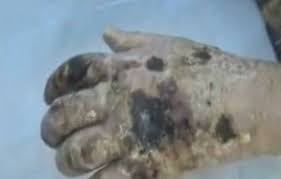
Effects of Krokodil
Yet drug dealers face no shortage of customers lining up to buy it.
In short: No amount of publicity about the dangers of illicit drug-abuse will stop those looking for a quick “high” from thumbing their nose at the law—and their own safety.
And no matter how many low-level drug dealers are arrested, others quickly take their places. The profits are simply too great—especially for those who lack education or incentive to attain professional employment.
And no sooner does a cartel kingpin get imprisoned or killed than his place is taken by one or more successors.
A classic example of this: Joaquín Archivaldo Guzmán Loera, better known as “El Chapo.” As the head of the Sinaloa drug cartel, he reigned as one of the most powerful criminal kingpins in Mexico. His enterprise spanned continents and triggered waves of bloodshed throughout Mexico.
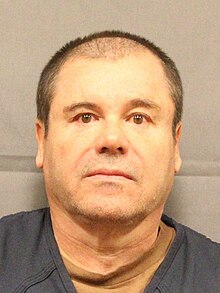
Joaquín Archivaldo “El Chapo” Guzmán
In 2016, Mexican authorities arrested him. With a history of two escapes from Mexican prisons, Guzmán was extradited to the United States the following year.
On February 12, 2019, a jury found him guilty on 12 counts, including engaging in a continuing criminal enterprise, conspiracy to launder narcotics proceeds, international distribution of cocaine, heroin, marijuana and other drugs, and use of firearms.
He was subsequently sentenced to life imprisonment plus 30 years.
As of 2025, the Sinaloa Cartel remains Mexico’s most dominant drug cartel. It’s now headed by Ismael Zambada García and Guzmán’s sons, Jesús Alfredo Guzmán and Ivan Archivaldo Guzmán Salazar.
So: What to do?
Aim to protect drug-avoiding people from druggies.
- Recognize that America’s drug epidemic is caused by Americans’ insatiable demand for drugs.
- Recognize that so long as demand persists, suppliers will be eager to fill it.
- Allow druggies to endanger themselves but not others—the way smokers are allowed to get cancer and emphysema but not give it to nonsmokers.
- Limit the types of places where druggies are allowed to drug up—such as their own homes.
- Druggies involved in auto accidents should be presumed guilty unless they can prove otherwise.
- Druggies should be banned from employment in transportation industries—as cab drivers, pilots, bus drivers.
- If convicted of causing accidents, they should face lengthy mandatory prison terms.
- Ban open-air drug markets.
- Don’t allow druggies who are charged with crimes like burglary or robbery to cite their addiction as a defense.
Quit trying to protect self-destructive people from themselves.
- Stop providing Naloxone to opioid addicts when they overdose.
- Stop providing free needles to heroin users.
- Stop providing welfare and free housing to known drug addicts.
- Parents should tell their teenagers: “If you get arrested for drugs, don’t expect me to bail you out or pay for treatment. We can’t afford it.”
- If their teens are arrested as druggies, parents should say: “You’re on your own.”
ABC NEWS, ADDICTION, ALTERNET, AMERICABLOG, AP, BABY BOOMER RESISTANCE, BBC, BLOOMBERG NEWS, BUZZFEED, CANADA, CBS NEWS, CHINA, CNN, CROOKS AND LIARS, DAILY KOS, DON WINSLOW, DONALD TRUMP, DRUG ENFORCEMENT ADMINISTRATION (DEA), FIVETHIRTYEIGHT, HARPER’S MAGAZINE, HUFFINGTON POST, JOAQUIN "EL CHAPO" GUZMAN, MARCO RUBIO, MEDIA MATTERS, MEXICO, MOTHER JONES, MOVEON, MSNBC, NBC NEWS, NEW REPUBLIC, NEW YORK TIMES V. SULLIVAN, NEWSDAY, NEWSWEEK, NPR, PBS NEWSHOUR, PETE HEGSETH, POLITICO, POLITICUSUSA, RAW STORY, REUTERS, SALON, SEATTLE TIMES, SIDNEY POWELL, SINALOA DRUG CARTEL, SLATE, TALKING POINTS MEMO, TARIFFS, THE ATLANTIC, THE BORDER (BOOK), THE CARTEL (BOOK), THE CHICAGO SUN-TIMES, THE CHICAGO TRIBUNE, THE DAILY BEAST, THE DAILY BLOG, THE GUARDIAN, THE HILL, THE HUFFINGTON POST, THE INTERCEPT, THE LOS ANGELES TIMES, THE NATION, THE NEW REPUBLIC, THE NEW YORK TIMES, THE NEW YORKER, THE POWER OF THE DOG (BOOK), THE VILLAGE VOICE, THE WASHINGTON POST, THINKPROGRESS, TIME, TOM HOMAN, TRUTHDIG, TRUTHOUT, U.S. NEWS & WORLD REPORT, UPI, USA TODAY, WAR ON DRUGS, X
In Bureaucracy, History, Law, Law Enforcement, Medical, Politics, Social commentary on February 4, 2025 at 12:11 am
It’s time to seriously reexamine America’s decades-long “War on Drugs” from a fresh perspective.
And an excellent starting point is three gripping novels about that war—and the horrific violence it has spawned in Mexico.
The author is Don Winslow, a former private investigator. And he has grounded his works in solid research among addicts, narcotics traffickers and the law enforcement agents who pursue them.
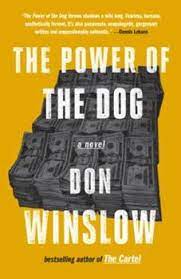
His first novel, The Power of the Dog, introduces readers to Art Keller, a dedicated agent of the Federal Drug Enforcement Administration (DEA). Although a Vietnam vet, this is his first outing into Mexico—and he’s an innocent in the ways of Mexican drug traffickers.
When Miguel Angel Barrera, a high-ranking Mexican police official, seemingly befriends him, Keller enthusiastically signs on for the ride. Only to discover—later—that he’s been used.
When the “Mr. Big” dealer he’s pursuing is shot to pieces by corrupt Mexican police, the man waiting to take his place is none other than Barrera.
For the next 40 years, Keller wages all-out war on Barrera—and his nephew, Adán, who succeeds him as the godfather of the powerful Sinaloa Cartel.
Two more novels follow: The Cartel and The Border. All three vividly portray the violent costs of an unwinnable conflict.
In Dog, Winslow explains how America’s “War on Drugs” has actually made the crime cartels that produce them ever richer. He does so from the viewpoint of Adán Barrera:

Don Winslow
Malarrama, CC BY-SA 4.0 <https://creativecommons.org/licenses/by-sa/4.0>, via Wikimedia Commons
“…While Keller’s revenge obsession might cost me money in the short run, in the long run it makes me money. And that is what the Americans cannot seem to understand—that all they do is drive up the price and make us rich.
“Without their help, any bobo with an old truck or a leaky boat with an outboard motor could run drugs into El Norte. But as it is, it takes millions of dollars to move the drugs, and the prices are accordingly sky-high.
“The Americans take a product that literally grows on trees and turn it into a valuable commodity. Without them, cocaine and marijuana would be like oranges, and instead of making billions smuggling it, I’d be making pennies doing stoop labor in some California field, picking it.
“And the truly funny thing is that Keller is himself another product because I make millions selling protection against him, charging the independent contractors who want to move their product through La Plaza thousands of dollars for the use of our cops, soldiers, Customs agents, Coast Guard, surveillance equipment, communications….
“This is what Mexican cops appreciate that American cops don’t. We are partners…in the same enterprise.”
Looking at the “War on Drugs” from DEA agent Keller’s obsessive viewpoint, Winslow writes:
“I’ve fought it my whole goddamn life, and for what? Billions of dollars, trying unsuccessfully to keep drugs out of the world’s most porous border? One-tenth of the anti-drug budget going into education and treatment; nine-tenths of those billions into interdiction?
“And not enough money from anywhere going into the root causes of the drug problem itself. And the billions spent keeping drug offenders locked up in prison, the cells now so crowded we have to give early release to murderers. Not to mention the fact that two-thirds of ‘non-drug’ offenses in America are committed by people high on dope or alcohol.
“And our solutions are the same futile non-solutions: Build more prisons, hire more police, spend more and more billions of dollars not curing the symptoms while we ignore the disease. Most people in my area who want to kick drugs can’t afford to get into a treatment program unless they have blue-chip health insurance, which most of them don’t.
“And there’s a six-month-to-two-year waiting list to get a bed in a subsidized treatment program. We’re spending almost $2 billion poisoning cocaine crops over here [Mexico] while there’s no money at home to help someone who wants to get off drugs. It’s insanity.”
In short: For all their differences, police and traffickers share one thing in common: The conclusion that the “War on Drugs” is a futile waste of time and resources.
In a February 18, 2019 interview with Rolling Stone, Winslow underscored his comments:
“Addiction will always be with us, albeit not at this rate, right? Criminality will always be with us. But the first thing we can do to fix it is [to] legalize drugs. Period. Across the board. Take the enormous profit out of the drug.
“That would be the first absolute major step. We’ve done that with marijuana. The problem is, of course, the balloon effect. It’s a theory in criminology: if you squeeze the balloon in one place the air goes to another. And so we squeezed the balloon in the marijuana place and the air went to heroin.”
Winslow sees the drug problem not as one being inflicted on Americans by outsiders—such as the Mexican drug cartels—but as one that Americans are inflicting on themselves.
No matter how many drug dealers are imprisoned, Americans’ insatiable demand for illicit drugs will keep the supplies flowing.
ABC NEWS, ADDICTION, ALTERNET, AMERICABLOG, AP, BABY BOOMER RESISTANCE, BBC, BLOOMBERG NEWS, BUZZFEED, CBS NEWS, CNN, CROOKS AND LIARS, DAILY KOS, DON WINSLOW, DRUG ENFORCEMENT ADMINISTRATION (DEA), FIVETHIRTYEIGHT, HARPER’S MAGAZINE, HUFFINGTON POST, JOAQUIN "EL CHAPO" GUZMAN, MEDIA MATTERS, MEXICO, MOTHER JONES, MOVEON, MSNBC, NBC NEWS, NEW REPUBLIC, NEW YORK TIMES V. SULLIVAN, NEWSDAY, NEWSWEEK, NPR, PBS NEWSHOUR, POLITICO, POLITICUSUSA, RAW STORY, REUTERS, SALON, SEATTLE TIMES, SIDNEY POWELL, SINALOA DRUG CARTEL, SLATE, TALKING POINTS MEMO, THE ATLANTIC, THE BORDER (BOOK), THE CARTEL (BOOK), THE CHICAGO SUN-TIMES, THE CHICAGO TRIBUNE, THE DAILY BEAST, THE DAILY BLOG, THE GUARDIAN, THE HILL, THE HUFFINGTON POST, THE INTERCEPT, THE LOS ANGELES TIMES, THE NATION, THE NEW REPUBLIC, THE NEW YORK TIMES, THE NEW YORKER, THE POWER OF THE DOG (BOOK), THE VILLAGE VOICE, THE WASHINGTON POST, THINKPROGRESS, TIME, TRUTHDIG, TRUTHOUT, TWITTER, U.S. NEWS & WORLD REPORT, UPI, USA TODAY, WAR ON DRUGS
In Bureaucracy, History, Law, Law Enforcement, Medical, Politics, Social commentary on February 13, 2024 at 12:10 am
As the author of three bestselling novels about America’s “War on Drugs,” Don Winslow is appalled at the terrifying carnage it has wreaked on Mexico.
Winslow sees the drug problem not as one being inflicted on Americans by outsiders—such as the Mexican drug cartels—but as one that Americans are inflicting on themselves:
“Look, from my slice of this world, which is the narco world, the answers aren’t in Mexico. They’re here. And until we get our act straightened out, it will have the damaging effects on Mexico.
“That’s why it just pisses me off so much when these guys go down to the border and make these pronouncements about, you know, ‘Build a wall and stop crime from coming into the United States.’ I mean shit, if I were Mexican, I’d build the wall to keep American money from buying guns and weapons and making billionaires out of psychopaths.
“The hypocrisy of this is mind-boggling. Not in the history of the world have I ever heard of a Mexican coming into America, sticking a gun in somebody’s head and making them buy a drug.”
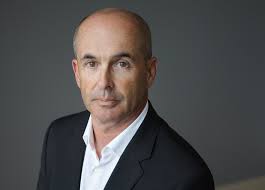
Don Winslow
It’s definitely time to seriously reexamine America’s decades-long war on drugs.
Today, the dangers of drug-abuse are available to anyone who wants to discover them. Yet people continue to play Russian Roulette by taking “recreational” drugs that can leave them sickened or dead.
One “recreational” drug is Fentanyl, a potent synthetic opioid approved by the Food and Drug Administration to relieve pain. It’s approximately 100% more potent than morphine and 50% more potent than heroin.
“One pill. One time. It can kill you,” said Brian Clark, Special Agent in Charge of the Drug Enforcement Administration’s San Francisco office. “Fentanyl is without a doubt the deadliest threat that we’ve ever faced in this country.”
And with a powerful animal tranquilizer—Xylazine—being mixed into it, it’s even deadlier.
Another such drug is Krokodil (pronounced “crocodile”), an injectable opioid derivative. It’s made from over-the-counter codeine medicine mixed with ethanol, gasoline, red phosphorus, iodine, hydrochloric acid and paint thinner.
It can produce gangrenous inflammations at the injection site, which resemble the scales of a crocodile. The skin can deteriorate so severely that flesh can fall from bone, producing a “zombie-like” appearance.
Effects of Krokodil
Yet customers still line up to buy it.
In short: No amount of publicity about the dangers of illicit drug-abuse will stop those looking for a quick “high” from thumbing their nose at the law—and their own safety.
No matter how many low-level drug dealers are arrested, others quickly take their places. The profits are simply too great—especially for those who lack education or incentive to attain professional employment.
And no sooner does a cartel kingpin get imprisoned or killed than his place is taken by one or more successors.
A classic example of this: Joaquín Archivaldo Guzmán Loera, better known as “El Chapo.” As the head of the Sinaloa drug cartel, he reigned as one of the most powerful criminal kingpins in Mexico. His enterprise spanned continents and triggered waves of bloodshed throughout Mexico.
Joaquín Archivaldo “El Chapo” Guzmán
In 2016, Mexican authorities arrested him. With a history of two escapes from Mexican prisons, Guzmán was extradited to the United States the following year.
On February 12, 2019, a jury found him guilty on 12 counts, including engaging in a continuing criminal enterprise, conspiracy to launder narcotics proceeds, international distribution of cocaine, heroin, marijuana and other drugs, and use of firearms.
He was subsequently sentenced to life imprisonment plus 30 years.
As of 2023, the Sinaloa Cartel remains Mexico’s most dominant drug cartel. It’s now headed by Ismael Zambada García and Guzmán’s sons, Jesús Alfredo Guzmán and Ivan Archivaldo Guzmán Salazar.
So: What to do?
Aim to protect drug-avoiding people from druggies.
- Recognize that America’s drug epidemic is caused by Americans’ insatiable demand for drugs.
- Recognize that so long as demand persists, suppliers will be eager to fill it.
- Allow druggies to endanger themselves but not others—the way smokers are allowed to get cancer and emphysema but not give it to nonsmokers.
- Limit the types of places where druggies are allowed to drug up—such as their own homes.
- Druggies involved in auto accidents should be presumed guilty unless they can prove otherwise.
- If convicted, they should face lengthy mandatory prison terms.
- Ban open-air drug markets.
- Don’t allow druggies who are charged with crimes like burglary or robbery to cite their addiction as a defense.
- States should ship their druggies to Texas—the way Texas ships its illegal aliens to Blue states.
Quit trying to protect self-destructive people from themselves.
- Stop providing Naloxone to opioid addicts.
- Stop providing free needles to heroin users.
- Stop providing welfare and free housing to known drug addicts.
- Parents should tell their teenagers: “If you get arrested for drugs, don’t expect me to bail you out or pay for treatment. We can’t afford it.”
- If their teens are arrested as druggies, parents should say: “You’re on your own.”
ABC NEWS, ADDICTION, ALTERNET, AMERICABLOG, AP, BABY BOOMER RESISTANCE, BBC, BLOOMBERG NEWS, BUZZFEED, CBS NEWS, CNN, CROOKS AND LIARS, DAILY KOS, DON WINSLOW, DRUG ENFORCEMENT ADMINISTRATION (DEA), FIVETHIRTYEIGHT, HARPER’S MAGAZINE, HUFFINGTON POST, JOAQUIN "EL CHAPO" GUZMAN, MEDIA MATTERS, MEXICO, MOTHER JONES, MOVEON, MSNBC, NBC NEWS, NEW REPUBLIC, NEW YORK TIMES V. SULLIVAN, NEWSDAY, NEWSWEEK, NPR, PBS NEWSHOUR, POLITICO, POLITICUSUSA, RAW STORY, REUTERS, SALON, SEATTLE TIMES, SIDNEY POWELL, SINALOA DRUG CARTEL, SLATE, TALKING POINTS MEMO, THE ATLANTIC, THE BORDER (BOOK), THE CARTEL (BOOK), THE CHICAGO SUN-TIMES, THE CHICAGO TRIBUNE, THE DAILY BEAST, THE DAILY BLOG, THE GUARDIAN, THE HILL, THE HUFFINGTON POST, THE INTERCEPT, THE LOS ANGELES TIMES, THE NATION, THE NEW REPUBLIC, THE NEW YORK TIMES, THE NEW YORKER, THE POWER OF THE DOG (BOOK), THE VILLAGE VOICE, THE WASHINGTON POST, THINKPROGRESS, TIME, TRUTHDIG, TRUTHOUT, TWITTER, U.S. NEWS & WORLD REPORT, UPI, USA TODAY, WAR ON DRUGS
In Bureaucracy, History, Law, Law Enforcement, Medical, Politics, Social commentary on February 12, 2024 at 12:07 am
It’s time to seriously reexamine America’s decades-long “War on Drugs” from a fresh perspective.
And an excellent starting point is three gripping novels about that war—and the horrific violence it has spawned in Mexico.
The author is Don Winslow, a former private investigator. And he has grounded his works in solid research among addicts, narcotics traffickers and the law enforcement agents who pursue them.
His first novel, The Power of the Dog, introduces readers to Art Keller, a dedicated agent of the Federal Drug Enforcement Administration (DEA). Although a Vietnam vet, this is his first outing into Mexico—and he’s an innocent in the ways of Mexican drug traffickers.
When Miguel Angel Barrera, a high-ranking Mexican police official, seemingly befriends him, Keller enthusiastically signs on for the ride. Only to discover—later—that he’s been used.
When the “Mr. Big” dealer he’s pursuing is shot to pieces by corrupt Mexican police, the man waiting to take his place is none other than Barrera.
For the next 40 years, Keller wages all-out war on Barrera—and his nephew, Adán, who succeeds him as the godfather of the powerful Sinaloa Cartel.
Two more novels follow: The Cartel and The Border. All three vividly portray the violent costs of an unwinnable conflict.
In Dog, Winslow explains how America’s “War on Drugs” has actually made the crime cartels that produce them ever richer. He does so from the viewpoint of Adán Barrera:
Don Winslow
Malarrama, CC BY-SA 4.0 <https://creativecommons.org/licenses/by-sa/4.0>, via Wikimedia Commons
“…While Keller’s revenge obsession might cost me money in the short run, in the long run it makes me money. And that is what the Americans cannot seem to understand—that all they do is drive up the price and make us rich.
“Without their help, any bobo with an old truck or a leaky boat with an outboard motor could run drugs into El Norte. But as it is, it takes millions of dollars to move the drugs, and the prices are accordingly sky-high.
“The Americans take a product that literally grows on trees and turn it into a valuable commodity. Without them, cocaine and marijuana would be like oranges, and instead of making billions smuggling it, I’d be making pennies doing stoop labor in some California field, picking it.
“And the truly funny thing is that Keller is himself another product because I make millions selling protection against him, charging the independent contractors who want to move their product through La Plaza thousands of dollars for the use of our cops, soldiers, Customs agents, Coast Guard, surveillance equipment, communications….
“This is what Mexican cops appreciate that American cops don’t. We are partners…in the same enterprise.”
Looking at the “War on Drugs” from DEA agent Keller’s obsessive viewpoint, Winslow writes:
“I’ve fought it my whole goddamn life, and for what? Billions of dollars, trying unsuccessfully to keep drugs out of the world’s most porous border? One-tenth of the anti-drug budget going into education and treatment; nine-tenths of those billions into interdiction?
“And not enough money from anywhere going into the root causes of the drug problem itself. And the billions spent keeping drug offenders locked up in prison, the cells now so crowded we have to give early release to murderers. Not to mention the fact that two-thirds of ‘non-drug’ offenses in America are committed by people high on dope or alcohol.
“And our solutions are the same futile non-solutions: Build more prisons, hire more police, spend more and more billions of dollars not curing the symptoms while we ignore the disease. Most people in my area who want to kick drugs can’t afford to get into a treatment program unless they have blue-chip health insurance, which most of them don’t.
“And there’s a six-month-to-two-year waiting list to get a bed in a subsidized treatment program. We’re spending almost $2 billion poisoning cocaine crops over here [Mexico] while there’s no money at home to help someone who wants to get off drugs. It’s insanity.”
In short: For all their differences, police and traffickers share one thing in common: The conclusion that the “War on Drugs” is a futile waste of time and resources.
In a February 18, 2019 interview with Rolling Stone, Winslow underscored his comments:
“Addiction will always be with us, albeit not at this rate, right? Criminality will always be with us. But the first thing we can do to fix it is [to] legalize drugs. Period. Across the board. Take the enormous profit out of the drug.
“That would be the first absolute major step. We’ve done that with marijuana. The problem is, of course, the balloon effect. It’s a theory in criminology: if you squeeze the balloon in one place the air goes to another. And so we squeezed the balloon in the marijuana place and the air went to heroin.”
Winslow sees the drug problem not as one being inflicted on Americans by outsiders—such as the Mexican drug cartels—but as one that Americans are inflicting on themselves.
No matter how many drug dealers are imprisoned, Americans’ insatiable demand for illicit drugs will keep the supplies flowing.
ABC NEWS, ADDICTION, ALTERNET, AMERICABLOG, AP, BABY BOOMER RESISTANCE, BBC, BLOOMBERG NEWS, BUZZFEED, CBS NEWS, CNN, CROOKS AND LIARS, DAILY KOS, DON WINSLOW, DRUG ENFORCEMENT ADMINISTRATION (DEA), FIVETHIRTYEIGHT, HARPER’S MAGAZINE, HUFFINGTON POST, JOAQUIN "EL CHAPO" GUZMAN, MEDIA MATTERS, MEXICO, MOTHER JONES, MOVEON, MSNBC, NBC NEWS, NEW REPUBLIC, NEW YORK TIMES V. SULLIVAN, NEWSDAY, NEWSWEEK, NPR, PBS NEWSHOUR, POLITICO, POLITICUSUSA, RAW STORY, REUTERS, SALON, SEATTLE TIMES, SIDNEY POWELL, SINALOA DRUG CARTEL, SLATE, TALKING POINTS MEMO, THE ATLANTIC, THE BORDER (BOOK), THE CARTEL (BOOK), THE CHICAGO SUN-TIMES, THE CHICAGO TRIBUNE, THE DAILY BEAST, THE DAILY BLOG, THE GUARDIAN, THE HILL, THE HUFFINGTON POST, THE INTERCEPT, THE LOS ANGELES TIMES, THE NATION, THE NEW REPUBLIC, THE NEW YORK TIMES, THE NEW YORKER, THE POWER OF THE DOG (BOOK), THE VILLAGE VOICE, THE WASHINGTON POST, THINKPROGRESS, TIME, TRUTHDIG, TRUTHOUT, TWITTER, U.S. NEWS & WORLD REPORT, UPI, USA TODAY, WAR ON DRUGS
In Bureaucracy, History, Law, Law Enforcement, Medical, Politics, Social commentary on March 29, 2023 at 12:10 am
As the author of three bestselling novels about America’s “War on Drugs,” Don Winslow is appalled at the terrifying carnage it has wreaked on Mexico.
Winslow sees the drug problem not as one being inflicted on Americans by outsiders—such as the Mexican drug cartels—but as one that Americans are inflicting on themselves:
“Look, from my slice of this world, which is the narco world, the answers aren’t in Mexico. They’re here. And until we get our act straightened out, it will have the damaging effects on Mexico.
“That’s why it just pisses me off so much when these guys go down to the border and make these pronouncements about, you know, ‘Build a wall and stop crime from coming into the United States.’ I mean shit, if I were Mexican, I’d build the wall to keep American money from buying guns and weapons and making billionaires out of psychopaths.
“The hypocrisy of this is mind-boggling. Not in the history of the world have I ever heard of a Mexican coming into America, sticking a gun in somebody’s head and making them buy a drug.”
Don Winslow
It’s definitely time to seriously reexamine America’s decades-long war on drugs.
Today, the dangers of drug-abuse are available to anyone who wants to discover them. Yet people continue to play Russian Roulette by taking “recreational” drugs that can leave them sickened or dead.
One “recreational” drug is Fentanyl, a potent synthetic opioid approved by the Food and Drug Administration to relieve pain. It’s approximately 100% more potent than morphine and 50% more potent than heroin.
“One pill. One time. It can kill you,” said Brian Clark, Special Agent in Charge of the Drug Enforcement Administration’s San Francisco office. “Fentanyl is without a doubt the deadliest threat that we’ve ever faced in this country.
And with a powerful animal tranquilizer—Xylazine—being mixed into it, it’s even deadlier.
Another such drug is Krokodil (pronounced “crocodile”), an injectable opioid derivative. It’s made from over-the-counter codeine medicine mixed with ethanol, gasoline, red phosphorus, iodine, hydrochloric acid and paint thinner.
It can produce gangrenous inflammations at the injection site, which resemble the scales of a crocodile. The skin can deteriorate so severely that flesh can fall from bone, producing a “zombie-like” appearance.
Effects of Krokodil
Yet customers still line up to buy it.
In short: No amount of publicity about the dangers of illicit drug-abuse will stop those looking for a quick “high” from thumbing their nose at the law—and their own safety.
No matter how many low-level drug dealers are arrested, others quickly take their places. The profits are simply too great—especially for those who lack education or incentive to attain professional employment.
And no sooner does a cartel kingpin get imprisoned or killed than his place is taken by one or more successors.
A classic example of this: Joaquín Archivaldo Guzmán Loera, better known as “El Chapo.” As the head of the Sinaloa drug cartel, he reigned as one of the most powerful criminal kingpins in Mexico. His enterprise spanned continents and triggered waves of bloodshed throughout Mexico.
Joaquín Archivaldo “El Chapo” Guzmán
In 2016, Mexican authorities arrested him. With a history of two escapes from Mexican prisons, Guzmán was extradited to the United States the following year.
On February 12, 2019, a jury found him guilty on 12 counts, including engaging in a continuing criminal enterprise, conspiracy to launder narcotics proceeds, international distribution of cocaine, heroin, marijuana and other drugs, and use of firearms.
He was subsequently sentenced to life imprisonment plus 30 years.
As of 2023, the Sinaloa Cartel remains Mexico’s most dominant drug cartel. It’s now headed by Ismael Zambada García and Guzmán’s sons, Jesús Alfredo Guzmán and Ivan Archivaldo Guzmán Salazar.
So: What to do?
Aim to protect drug-avoiding people from druggies.
- Recognize that America’s drug epidemic is caused by Americans’ insatiable demand for drugs.
- Recognize that so long as demand persists, suppliers will be eager to fill it.
- Allow druggies to endanger themselves but not others—the way smokers are allowed to get cancer and emphysema but not give it to nonsmokers.
- Limit the types of places where druggies are allowed to drug up—such as their own homes.
- Druggies involved in auto accidents should be presumed guilty unless they can prove otherwise.
- If convicted, they should face mandatory 10-year prison terms.
- Ban open-air drug markets.
- Don’t allow druggies who are charged with crimes like burglary or robbery to cite their addiction as a defense.
- States should ship their druggies to Texas—the way Texas ships its illegal aliens to Blue states.
Quit trying to protect self-destructive people from themselves.
- Stop providing Naloxone to opioid addicts.
- Stop providing free needles to heroin users.
- Stop providing welfare and free housing to known drug addicts.
- Parents should tell their teenagers: “If you get arrested for drugs, don’t expect me to bail you out or pay for treatment. We can’t afford it.”
- If their teens are arrested as druggies, parents should say: “You’re on your own.”
ABC NEWS, ADDICTION, ALTERNET, AMERICABLOG, AP, BABY BOOMER RESISTANCE, BBC, BLOOMBERG NEWS, BUZZFEED, CBS NEWS, CNN, CROOKS AND LIARS, DAILY KOS, DON WINSLOW, DRUG ENFORCEMENT ADMINISTRATION (DEA), FIVETHIRTYEIGHT, HARPER’S MAGAZINE, HUFFINGTON POST, JOAQUIN "EL CHAPO" GUZMAN, MEDIA MATTERS, MEXICO, MOTHER JONES, MOVEON, MSNBC, NBC NEWS, NEW REPUBLIC, NEW YORK TIMES V. SULLIVAN, NEWSDAY, NEWSWEEK, NPR, PBS NEWSHOUR, POLITICO, POLITICUSUSA, RAW STORY, REUTERS, SALON, SEATTLE TIMES, SIDNEY POWELL, SINALOA DRUG CARTEL, SLATE, TALKING POINTS MEMO, THE ATLANTIC, THE BORDER (BOOK), THE CARTEL (BOOK), THE CHICAGO SUN-TIMES, THE CHICAGO TRIBUNE, THE DAILY BEAST, THE DAILY BLOG, THE GUARDIAN, THE HILL, THE HUFFINGTON POST, THE INTERCEPT, THE LOS ANGELES TIMES, THE NATION, THE NEW REPUBLIC, THE NEW YORK TIMES, THE NEW YORKER, THE POWER OF THE DOG (BOOK), THE VILLAGE VOICE, THE WASHINGTON POST, THINKPROGRESS, TIME, TRUTHDIG, TRUTHOUT, TWITTER, U.S. NEWS & WORLD REPORT, UPI, USA TODAY, WAR ON DRUGS
In Bureaucracy, History, Law, Law Enforcement, Medical, Politics, Social commentary on March 28, 2023 at 12:10 am
It’s time to seriously reexamine America’s decades-long “War on Drugs” from a fresh perspective.
And an excellent starting point is three gripping novels about that war—and the horrific violence it has spawned in Mexico.
The author is Don Winslow, a former private investigator. And he has grounded his works in solid research among addicts, narcotics traffickers and the law enforcement agents who pursue them.
His first novel, The Power of the Dog, introduces readers to Art Keller, a dedicated agent of the Federal Drug Enforcement Administration (DEA). Although a Vietnam vet, this is his first outing into Mexico—and he’s an innocent in the ways of Mexican drug traffickers.
When Miguel Angel Barrera, a high-ranking Mexican police official, seemingly befriends him, Keller enthusiastically signs on for the ride. Only to discover—later—that he’s been used.
When the “Mr. Big” dealer he’s pursuing is shot to pieces by corrupt Mexican police, the man waiting to take his place is none other than Barrera.
For the next 40 years, Keller wages all-out war on Barrera—and his nephew, Adán, who succeeds him as the godfather of the powerful Sinaloa Cartel.
Two more novels follow: The Cartel and The Border. All three vividly portray the violent costs of an unwinnable conflict.
In Dog, Winslow explains how America’s “War on Drugs” has actually made the crime cartels that produce them ever richer. He does so from the viewpoint of Adán Barrera:
Don Winslow
Malarrama, CC BY-SA 4.0 <https://creativecommons.org/licenses/by-sa/4.0>, via Wikimedia Commons
“…While Keller’s revenge obsession might cost me money in the short run, in the long run it makes me money. And that is what the Americans cannot seem to understand—that all they do is drive up the price and make us rich.
“Without their help, any bobo with an old truck or a leaky boat with an outboard motor could run drugs into El Norte. But as it is, it takes millions of dollars to move the drugs, and the prices are accordingly sky-high.
“The Americans take a product that literally grows on trees and turn it into a valuable commodity. Without them, cocaine and marijuana would be like oranges, and instead of making billions smuggling it, I’d be making pennies doing stoop labor in some California field, picking it.
“And the truly funny thing is that Keller is himself another product because I make millions selling protection against him, charging the independent contractors who want to move their product through La Plaza thousands of dollars for the use of our cops, soldiers, Customs agents, Coast Guard, surveillance equipment, communications….
“This is what Mexican cops appreciate that American cops don’t. We are partners…in the same enterprise.”
Looking at the “War on Drugs” from DEA agent Keller’s obsessive viewpoint, Winslow writes:
“I’ve fought it my whole goddamn life, and for what? Billions of dollars, trying unsuccessfully to keep drugs out of the world’s most porous border? One-tenth of the anti-drug budget going into education and treatment; nine-tenths of those billions into interdiction?
“And not enough money from anywhere going into the root causes of the drug problem itself. And the billions spent keeping drug offenders locked up in prison, the cells now so crowded we have to give early release to murderers. Not to mention the fact that two-thirds of ‘non-drug’ offenses in America are committed by people high on dope or alcohol.
“And our solutions are the same futile non-solutions: Build more prisons, hire more police, spend more and more billions of dollars not curing the symptoms while we ignore the disease. Most people in my area who want to kick drugs can’t afford to get into a treatment program unless they have blue-chip health insurance, which most of them don’t.
“And there’s a six-month-to-two-year waiting list to get a bed in a subsidized treatment program. We’re spending almost $2 billion poisoning cocaine crops over here [Mexico] while there’s no money at home to help someone who wants to get off drugs. It’s insanity.”
In short: For all their differences, police and traffickers share one thing in common: The conclusion that the “War on Drugs” is a futile waste of time and resources.
In a February 18, 2019 interview with Rolling Stone, Winslow underscored his comments:
“Addiction will always be with us, albeit not at this rate, right? Criminality will always be with us. But the first thing we can do to fix it is [to] legalize drugs. Period. Across the board. Take the enormous profit out of the drug.
“That would be the first absolute major step. We’ve done that with marijuana. The problem is, of course, the balloon effect. It’s a theory in criminology: if you squeeze the balloon in one place the air goes to another. And so we squeezed the balloon in the marijuana place and the air went to heroin.”
Winslow sees the drug problem not as one being inflicted on Americans by outsiders—such as the Mexican drug cartels—but as one that Americans are inflicting on themselves.
No matter how many drug dealers are imprisoned, Americans’ insatiable demand for illicit drugs will keep the supplies flowing.
 Bureaucracybuster's Blog
ABC NEWS, ADDICTION, ALTERNET, AMERICABLOG, AP, BABY BOOMER RESISTANCE, BBC, BLOOMBERG NEWS, BUZZFEED, CANADA, CBS NEWS, CHINA, CNN, CROOKS AND LIARS, DAILY KOS, DON WINSLOW, DONALD TRUMP, DRUG ENFORCEMENT ADMINISTRATION (DEA), FIVETHIRTYEIGHT, HARPER’S MAGAZINE, HUFFINGTON POST, JOAQUIN "EL CHAPO" GUZMAN, MARCO RUBIO, MEDIA MATTERS, MEXICO, MOTHER JONES, MOVEON, MSNBC, NBC NEWS, NEW REPUBLIC, NEW YORK TIMES V. SULLIVAN, NEWSDAY, NEWSWEEK, NPR, PBS NEWSHOUR, PETE HEGSETH, POLITICO, POLITICUSUSA, RAW STORY, REUTERS, SALON, SEATTLE TIMES, SIDNEY POWELL, SINALOA DRUG CARTEL, SLATE, TALKING POINTS MEMO, TARIFFS, THE ATLANTIC, THE BORDER (BOOK), THE CARTEL (BOOK), THE CHICAGO SUN-TIMES, THE CHICAGO TRIBUNE, THE DAILY BEAST, THE DAILY BLOG, THE GUARDIAN, THE HILL, THE HUFFINGTON POST, THE INTERCEPT, THE LOS ANGELES TIMES, THE NATION, THE NEW REPUBLIC, THE NEW YORK TIMES, THE NEW YORKER, THE POWER OF THE DOG (BOOK), THE VILLAGE VOICE, THE WASHINGTON POST, THINKPROGRESS, TIME, TOM HOMAN, TRUTHDIG, TRUTHOUT, U.S. NEWS & WORLD REPORT, UPI, USA TODAY, WAR ON DRUGS, X
AMERICA’S WAR ON DRUGS–THE ENEMY IS US: PART TWO (END)
In Bureaucracy, History, Law, Law Enforcement, Medical, Politics, Social commentary on February 5, 2025 at 12:05 amIt’s definitely time to seriously reexamine America’s decades-long war on drugs.
On February 1, a White House “fact sheet” stated: “PRESIDENT DONALD J. TRUMP IMPOSES TARIFFS ON IMPORTS FROM CANADA, MEXICO AND CHINA”:
“The extraordinary threat posed by illegal aliens and drugs, including deadly fentanyl, constitutes a national emergency under the International Emergency Economic Powers Act (IEEPA).
“Until the crisis is alleviated, President Donald J. Trump is implementing a 25% additional tariff on imports from Canada and Mexico and a 10% additional tariff on imports from China. Energy resources from Canada will have a lower 10% tariff.”
According to a November 27 story in The New Republic, “Trump Team is Having a Terrifying Debate on How to Invade Mexico.” Specifically:
“Trump has reportedly been gathering “battle plans” to attack drug cartels in Mexico since early 2023, with or without Mexico’s permission….
“One source close to Trump told Rolling Stone about a plan for a ‘soft’ invasion of the country, in which U.S. special forces would assassinate cartel leaders covertly, an idea Trump was in favor of earlier this year.”
Among the weapons Trump could hurl at Mexico:
Donald Trump
Yet, no matter what the Trump administration does, America’s drug epidemic will remain an entirely American creation.
Today, the dangers of drug-abuse are available to anyone who wants to discover them. Yet people continue to play Russian Roulette by taking “recreational” drugs that can leave them sickened or dead.
One “recreational” drug is Fentanyl, a potent synthetic opioid approved by the Food and Drug Administration to relieve pain. It’s approximately 100% more potent than morphine and 50% more potent than heroin.
“One pill. One time. It can kill you,” said Brian Clark, Special Agent in Charge of the Drug Enforcement Administration’s San Francisco office. “Fentanyl is without a doubt the deadliest threat that we’ve ever faced in this country.”
Another such drug is Krokodil (pronounced “crocodile”), an injectable opioid derivative. It’s made from over-the-counter codeine medicine mixed with ethanol, gasoline, red phosphorus, iodine, hydrochloric acid and paint thinner.
It can produce gangrenous inflammations at the injection site, which resemble the scales of a crocodile. The skin can deteriorate so severely that flesh can fall from bone, producing a “zombie-like” appearance.
Effects of Krokodil
Yet drug dealers face no shortage of customers lining up to buy it.
In short: No amount of publicity about the dangers of illicit drug-abuse will stop those looking for a quick “high” from thumbing their nose at the law—and their own safety.
And no matter how many low-level drug dealers are arrested, others quickly take their places. The profits are simply too great—especially for those who lack education or incentive to attain professional employment.
And no sooner does a cartel kingpin get imprisoned or killed than his place is taken by one or more successors.
A classic example of this: Joaquín Archivaldo Guzmán Loera, better known as “El Chapo.” As the head of the Sinaloa drug cartel, he reigned as one of the most powerful criminal kingpins in Mexico. His enterprise spanned continents and triggered waves of bloodshed throughout Mexico.
Joaquín Archivaldo “El Chapo” Guzmán
In 2016, Mexican authorities arrested him. With a history of two escapes from Mexican prisons, Guzmán was extradited to the United States the following year.
On February 12, 2019, a jury found him guilty on 12 counts, including engaging in a continuing criminal enterprise, conspiracy to launder narcotics proceeds, international distribution of cocaine, heroin, marijuana and other drugs, and use of firearms.
He was subsequently sentenced to life imprisonment plus 30 years.
As of 2025, the Sinaloa Cartel remains Mexico’s most dominant drug cartel. It’s now headed by Ismael Zambada García and Guzmán’s sons, Jesús Alfredo Guzmán and Ivan Archivaldo Guzmán Salazar.
So: What to do?
Aim to protect drug-avoiding people from druggies.
Quit trying to protect self-destructive people from themselves.
Share this: