Posts Tagged ‘DONALD TRUMP’
2016 PRESIDENTIAL ELECTION, 9/11, ABC NEWS, ADOLF HITLER, AFGHANISTAN, ALTERNET, AP, ASIANS, BARACK OBAMA, BLACKS, BULLYING, BUZZFEED, CBS NEWS, CNN, COMMUNISM, CROOKS AND LIARS, DAILY KOZ, DONALD TRUMP, FACEBOOK, FASCISM, GEORGE W. BUSH, GREAT DEPRESSION, HILLARY CLINTON, HISPANICS, IRAQ, JEWS, MOTHER JONES, MOVEON, MUSLIMS, NAZI GERMANY, NAZI PARTY, NBC NEWS, NEWSWEEK, NPR, PAUL VON HINDENBURG, POLITICO, RACISM, RAW STORY, REPUBLICANS, REUTERS, ROBERT PAYNE, Ronald Reagan, SALON, SEATTLE TIMES, SLATE, THE ATLANTIC, THE CHICAGO SUN-TIMES, THE CHICAGO TRIBUNE, THE DAILY BEAST, THE GUARDIAN, THE HILL, THE HUFFINGTON POST, THE LIFE AND DEATH OF ADOLF HITLER, THE LOS ANGELES TIMES, THE LOS ANGELS TIMES, THE NATION, THE NEW YORK TIMES, THE WASHINGTON POST, TIME, TRUMP EFFECT, TWITTER, U.S. NEWS & WORLD REPORT, UP, UPI, USA TODAY, WORLD WAR 11
In Bureaucracy, History, Politics, Social commentary on November 10, 2017 at 12:22 am
In his bestselling 1973 biography, The Life and Death of Adolf Hitler, British historian Robert Payne harshly condemned the German people for the rise of the Nazi dictator.
“Ultimately the responsibility for the rise of Hitler lies with the German people, who allowed themselves to be seduced by him and came to enjoy the experience….[They] followed him with joy and enthusiasm because he gave them license to pillage and murder to their hearts’ content.
“They were his servile accomplices, his willing victims: Germany will rule the world; our enemies will be our slaves….
“If he answered their suppressed desires, it was not because he shared them, but because he could make use of them. He despised the German people, for they were merely the instruments of his will.”
So much for the truth of Nazi Germany–from 1933 to 1945.
On November 8, 2016, Americans proved they could embrace Fascism, too.
That was when millions of ignorant, greedy, hate-filled, Right-wing Americans turned their backs on democracy and fervently embraced Fascism.
They elected Donald Trump—a man reflecting their own hate, greed and ignorance—to the Presidency.
But Americans had far fewer excuses for turning to a Fascistic style of government than the Germans did.
The conditions existing in pre-Hitler Germany and pre-Trump America could not have been more different.
Adolf Hitler joined the National Socialist German Workers (Nazi) Party in 1919—the year after World War 1 ended.
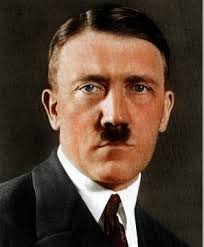
Adolf Hitler
In 1923, he staged a coup attempt in Bavaria—which was quickly and brutally put down by police. He was arrested and sentenced to less than a year in prison.
After that, Hitler decided that winning power through violence was no longer an option. He must win it through election—or appointment.
He repeatedly ran for the highest office in Germany—President—but never got a clear majority in a free election.
When the 1929 Depression struck Germany, the fortunes of Hitler’s Nazi party rose as the life savings of ordinary Germans fell. Streets echoed with bloody clashes between members of Hitler’s Nazi Stormtroopers and those of the German Communist Party.
Germany seemed on the verge of collapsing.Germans desperately looked for a leader—a Fuhrer—who could somehow deliver them from the threat of financial ruin and Communist takeover.
In early 1933, members of his own cabinet persuaded aging German president, Paul von Hindenburg, that only Hitler’s appointment as Chancellor (the equivalent of Attorney General) could do this.
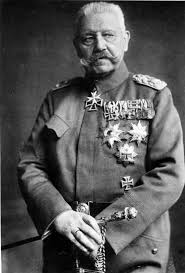
Paul von Hindenburg
Hindenburg was reluctant to do so. He considered Hitler a dangerous radical. But he allowed himself to be convinced that, by putting Hitler in the Cabinet, he could be “boxed in” and thus controlled.
So, on January 30, 1933, he appointed Adolf Hitler Chancellor of Germany.
On August 2, 1934, Hindenberg died, and Hitler immediately assumed the titles–and duties—of the offices of Chancellor and President. His rise to total power was now complete.
It had taken him 14 years to do so.
In 2015, when Donald Trump declared his candidacy for President.
- The United States was technically at war in the Middle East—but its fate was not truly threatened, as it had been during the Civil War.
- There was no draft; if you didn’t know someone in the military, you didn’t care about the mounting casualty list.
- Nor were these conflicts—in Iraq and Afghanistan–imposing domestic shortages on Americans, as World War II had.
- Thanks to government loans from President Barack Obama, American capitalism had been saved from its own excesses during the George W. Bush administration.
- Employment was up. CEOs’ profits were at record levels.
- In contrast to the corruption that had plagued the administration of Ronald Reagan, whom Republicans idolize, no such scandals had rocked the Obama Presidency.
- There had not been any large-scale terrorist attacks on American soil—such as on 9/11 under President George W. Bush.
Yet—not 17 months after announcing his candidacy for President—enough Americans fervently embraced Donald Trump to give him the most powerful position in the country and the world.

Donald Trump
The message of Barack Obama’s 2008 campaign had been one of hope: “Yes, We Can!”
For everyone who was not an avid Trump supporter, the message of Trump’s campaign was: “No, You Can’t!”
Whites comprised the overwhelming majority of the audiences at Trump rallies. Not all were racists, but many who were advertised it on T-shirts: “MAKE AMERICA WHITE AGAIN.”
They knew that demographics were steadily working against them. Birthrates among non-whites were rising. By 2045, whites would make up less than 50 percent of the American population.
The 2008 re-election of the first black President had shocked many whites. His 2012 re-election had deprived them of the hope that 2008 had been an accident.
Then came 2016—and the possibility that a black President might actually be followed by a woman: Hillary Clinton. And the idea of a woman dictating to men was strictly too much to bear.
Since Trump’s election, educators have reported a surge in bullying among students of all ages, from elementary- to high-school. Those doing the bullying are mostly whites, and the victims are mostly blacks, Muslims, Jews, Hispanics, Asians.
It even has a name: “The Trump Effect.”
All of this should be remembered the next time an American blames Germans for their embrace of Adolf Hitler
9/11, A FEW GOOD MEN, ABC NEWS, ALTERNET, AP, BUZZFEED, CBS NEWS, CENSORSHIP, CNN, CROOKS AND LIARS, DAILY KOZ, DONALD TRUMP, EARL BUTZ, FACEBOOK, FEDERAL COMMUNICATIONS COMMISSION, JACK NICHOLSON, MOTHER JONES, MOVEON, NBC NEWS, NEWSWEEK, NPR, PAT BOONE, PLUTARCH, POLITICO, RAW STORY, REUTERS, ROLLING STONE, SALON, SEATTLE TIMES, SEX, SLATE, THE ATLANTIC, THE CHICAGO SUN-TIMES, THE CHICAGO TRIBUNE, THE DAILY BEAST, THE GUARDIAN, THE HILL, THE HUFFINGTON POST, THE LOS ANGELES TIMES, THE NATION, THE NEW YORK TIMES, THE WASHINGTON POST, TIME, TOM CRUISE, TWITTER, U.S. NEWS & WORLD REPORT, UP, UPI, USA TODAY
In Bureaucracy, Business, History, Politics, Social commentary on November 9, 2017 at 1:18 am
In the 1992 courtroom drama, “A Few God Men,” Jack Nicholson, as Marine Colonel Nathan Jessup, utters a line that has since become famous.
When his prosecutor, Lieutenant Daniel Kaffee (Tom Cruise) demands the truth about the murder of a fellow Marine, Jessup shouts: “You can’t handle the truth!”
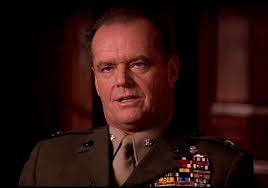
Jack Nicholson in “A Few Good Men”
Apparently, many of those who work in the television news business feel the same way about their audience.
[WARNING: This column contains some words that some readers may find offensive. Read on at your own risk.]
On February 9, 2016, businessman Donald Trump scored a new blow at his Rafael “Ted” Cruz, his closest rival for the Republican Presidential nomination.
Speaking at a rally in Manchester, New Hampshire, Trump attacked Cruz, the United States Senator from Texas, for being unwilling to support the widespread use of torture against America’s Islamic enemies.
“He’s a pussy!” yelled a woman in the crowd.
Apparently a certain portion of the attendees didn’t hear–or misheard–the insult. So Trump–pretending to be shocked–repeated it for them:
“She said–I never expect to hear that from you again! She said: ‘He’s a pussy.’ That’s terrible.”
“What kind of people do I have here?” joked Trump, clearly playing to the boisterous crowd.
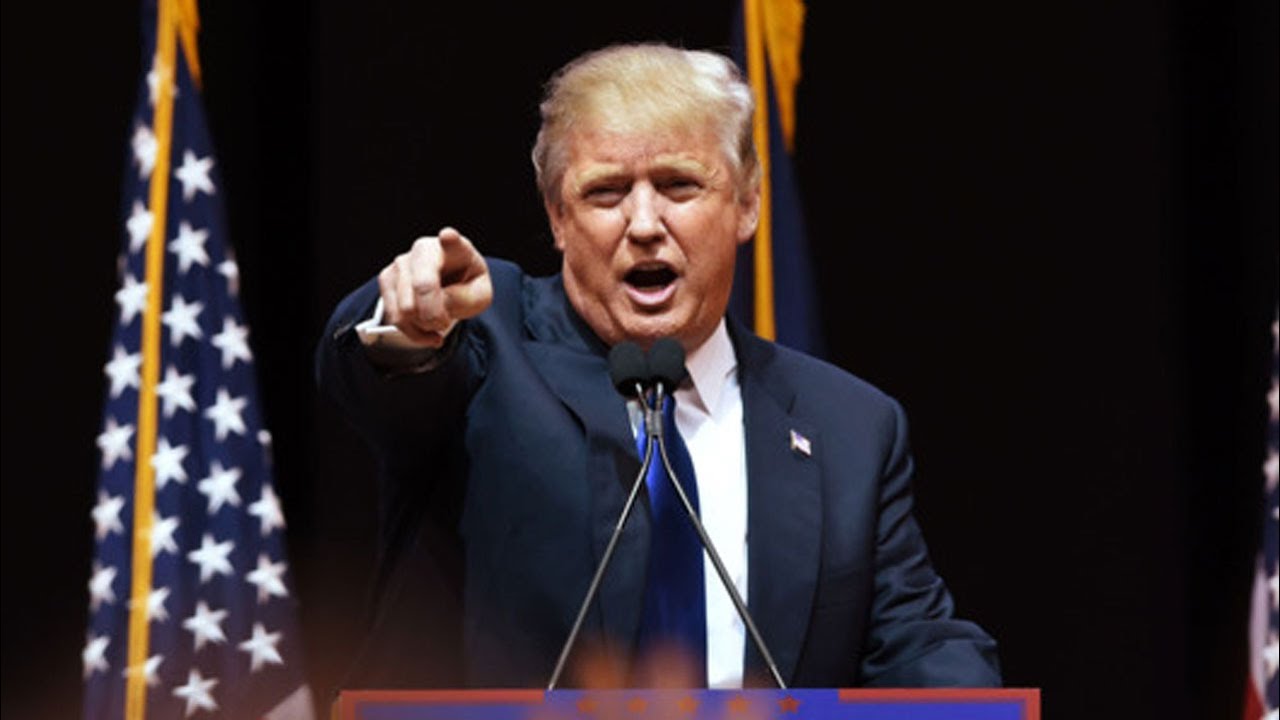
Donald Trump
The incident went viral on social media. But all the major TV news outlets–for ABC, CBS, CNN and NBC–bleeped the word and/or coyly referred to it as “the P-word.”
It was as if they assumed their viewers would of course know what had been said despite the networks’ censorship of it. And if viewers didn’t already know what the woman–and Trump–had said, the networks weren’t going to enlighten them.
Of course, “the P-word” could just as easily have been “prick” or “pervert.” So it’s understandable that many viewers might have thought a very different word had been used.
No doubt the networks hoped to avoid offending large numbers of viewers.
But when the use of certain words becomes central to a news story, editors and reporters should have the courage to reveal just what was said. It should then be up to the audience to decide if the language was offensive–and, if so, if its user deserves condemnation.
The evening news is–supposedly–aimed at voting-age adults. And adults need–and deserve–the hard truth about the world they live in. Only then do they have a chance to reform it–if, in fact, they decide it needs reforming.
Those who wanted to learn–rather than guess–what Trump had repeated had to turn to the Internet or to a handful of news source such as Vox: Policy and Politics.
In their defense, the networks could argue that the Federal Communications Commission, which regulates radio and television, does not usually permit the word “pussy” to be aired between 6 am and 10 pm.
On the other hand, immediately after the 9/11 terror attacks, all the major TV networks endlessly replayed the destruction of the World Trade Center, with the resulting deaths of hundreds of men and women.
Censorship, then, tends to center on two types of subject material:
- Sex, or “obscenity,” which is sex-related; and
- Race, meaning racial slurs that would offend some minority group.
An example of race-related censorship occurred during the short-lived administration of President Gerald R. Ford.
During a lull in the 1976 Republican convention, entertainer Pat Boone asked Earl Butz, then Secretary of Agriculture: Why was the party of Lincoln having so much trouble winning black votes for its candidates?
“I’ll tell you what the coloreds want,” said Butz. “It’s three things: first, a tight pussy; second, loose shoes; and third, a warm place to shit.”

Earl Butz
Unknown to Butz, a Rolling Stone reporter was standing nearby. When his comments became public, Butz was quickly forced to resign.
Meanwhile, most TV and print media struggled to protect their audiences from the truth of Butz’ racism. Many newspapers simply reported that Butz had said something too obscene to print. Some invited their readers to contact the editors if they wanted more information.
TV newsmen generally described Butz’ firing as stemming from “a racially-offensive remark,” which they refused to explain.
In short: A high-ranking government official had been fired, but audiences were not allowed to judge whether his language justified that termination.
Forty years later, TV news viewers were again prevented from reaching their own conclusions about Trump’s repetition of the slur aimed at his rival.
Nor is there any guarantee that such censorship will not occur again.
Censoring the truth has always been a hallmark of dictatorships. It has no place in a democracy–despite the motives of those doing the censoring.
The ancient historian, Plutarch, sounded a warning that remains timely:
“And the most glorious exploits do not always furnish us with the clearest discoveries of virtue or vice in men; sometimes a matter of less moment, an expression or a jest, informs us better of their characters and inclinations, than the most famous sieges, the greatest armaments, or the bloodiest battles whatsoever.”
In a democracy, citizens must be alert for those tell-tale expressions or jests. And this demands that the media, in turn, have the courage to bring those truths to their attention.
ABC NEWS, ABRAHAM LINCOLN, ALTERNET, AP, BUZZFEED, CBS NEWS, CNN, CONOSPIRACY AGAINST THE UNITED STATES, CROOKS AND LIARS, DAILY KOZ, DONALD TRUMP, DONALD TRUMP JR., ERIC TRUMP, FACEBOOK, FBI, FOREIGN REGISTRATION ACT, GEORGE PAPADOPOULOS, IVANKA TRUMP, JAMES COMEY, KGB, MONEY-LAUNDERING, MOTHER JONES, MOVEON, NBC NEWS, NEWSWEEK, NPR, PAUL MANAFORT, POLITICO, RAW STORY, REPUBLICANS, REUTERS, RICK GATES, ROBERT MUELLER, RUSSIA, SALON, SEATTLE TIMES, SLATE, THE ATLANTIC, THE CHICAGO SUN-TIMES, THE CHICAGO TRIBUNE, THE DAILY BEAST, THE GUARDIAN, THE HILL, THE HUFFINGTON POST, THE LOS ANGELES TIMES, THE NATION, THE NEW YORK TIMES, THE WASHINGTON POST, TIME, TREASON, TWITTER, U.S. NEWS & WORLD REPORT, UP, UPI, USA TODAY, VLADIMIR PUTIN
In History, Law, Law Enforcement, Politics, Social commentary on November 8, 2017 at 12:08 am
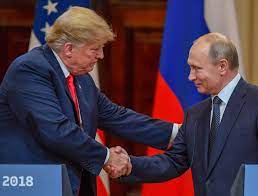
On October 30, Special Prosecutor Robert Mueller unveiled a pre-Halloween trick for President Donald Trump.
He unsealed indictments against Paul Manafort, Donald Trump’s former campaign manager, and his business partner Rick Gates.
And George Papadopoulos, a former Trump campaign foreign policy adviser, has pleaded guilty to lying to the FBI about his dealings with foreign officials close to the Russian government.
The charges:
- Conspiracy against the United States
- Conspiracy to launder money
- Unregistered agent of a foreign principal
- False and misleading Foreign Agent Registration Act statements
- False statements, and
- Seven counts of failure to file reports of foreign bank and financial accounts.
These are the first indictments in Mueller’s probe of collusion between Russian Intelligence agents and members of Donald Trump’s Presidential campaign.
They directly link a Trump campaign associate to such collusion. They make hash of Trump’s claims that he is the victim of a “witch hunt.” And they make it politically hazardous for Trump to fire the special prosecutor.
For those who are not ardent Trump supporters, it’s definitely Mueller time.
* * * * *
THE RUSSIAN CONNECTION
(To be sung to the tune of “The Rainbow Connection”)
Why are there so many
Tales about Russians
And Right-wingers taking bribes?
Russians are Commies
And have lots of rubles
For traitors with something to hide.
So I’ve been told
And some choose to believe it.
It’s clear as the old KGB.
Someday we’ll find it
The Russian Connection–
The bribers, the traitors–you’ll see.
Abraham Lincoln is watching and asking:
“How much more slime must there be?”
What’s so amazing is we just sit gazing
While traitors destroy liberty.
Someday we’ll find it
The Russian Connection–
The bribers, the traitors–you’ll see.
All of them under its spell
We know that it’s probably treason.
Why are we waiting
To throw out the traitors?
Let’s send them all straight to Hell.
Is this the money
That calls forth the traitors?
Their defenders are called G-O-P.
I’ve heard it too many times
To ignore it.
We are supposed to be free.
Someday we’ll find it
The Russian Connection–
The bribers, the traitors–you’ll see.
* * * * *
DONALD TRUMP: CRIMINAL
(To be sung to the tune of “Physical”)
I’m telling all the lies that my base will like
Making good Tweet sensation.
I gotta handle treason right–
You know what I mean.
I called the Russian KGB late at night
Said, “Come on in soon and see me.
I’ve got some secret stuff to share
That only Vlad can see.
“Let’s get criminal, criminal.
I wanna get criminal.
Let’s get into criminal.
Let me have that Russian gold, that Russian gold.
Let me have that Russian gold.
“Let’s get criminal, criminal.
I wanna get criminal.
Let’s get into criminal.
Let me have that Russian gold, that Russian gold!
Let me have that Russian gold!”
I’ve been evil, I’ve been bad
I’ve tried to keep Jim Comey at bay.
And now the FBI is after me
They’ll get me any day.
I’m sure they understand that I’m a crook
My whole life’s been one big crime-spree.
Committing treason is my latest thrill–
For rubles–yessirree!
Let’s get criminal, criminal
I wanna get criminal
Let’s get into criminal
Let me have that Russian gold, that Russian gold!
Let me have that Russian gold!
Let’s get criminal, criminal.
I wanna get criminal.
Let’s get into criminal.
Let me have that Russian gold!
Let me have that Russian gold!
* * * * *

TRUMPY TRAITOR
(To be sung to the tune, “Rockin’ Robin”)
He Tweets in the White House all the day long
Screamin’ and a-schemin’ and a-doin’ what’s wrong.
All the Special Agents in the FBI
Hope he goes to prison in the bye-and-bye.
Trumpy Traitor (tweet tweet)
Trumpy Traitor (tweet tweet)
Go Trumpy Traitor
‘Cause they’re gonna bust your ass tonight
Every act of treason, every act of crime—
America has never seen a bigger slime.
Bob Mueller’s ready, the cops are closin’ in
To put a grand finale to your reign of sin.
Trumpy Traitor (tweet tweet)
Trumpy Traitor (tweet tweet)
Go Trumpy Traitor
‘Cause they’re gonna bust your ass tonight.
Eric’s getting ready for his next big steal
While Daddy hugs Ivanka—who lets out a squeal.
Don Junior’s got the Russians coming once again—
It’s party-time for traitors and their lives of sin.
He Tweets in the White House all the day long
Screamin’ and a-schemin’ and a-doin’ what’s wrong.
Handing out secrets to the KGB
The biggest Right-wing traitor that you’ll ever see.
Trumpy Traitor (tweet tweet)
Trumpy Traitor (tweet tweet)
Go Trumpy Traitor
‘Cause they’re gonna bust your ass tonight.
Well, Eric’s getting ready for his next big steal
While Daddy hugs Ivanka—who lets out a squeal.
Don Junior’s got the Russians coming once again—
It’s party-time for traitors and their lives of sin.
He Tweets in the White House all the day long
Screamin’ and a-schemin’ and a-doin’ what’s wrong.
Handing out secrets to the KGB
The biggest Right-wing traitor that you’ll ever see.
Trumpy Traitor (tweet tweet)
Trumpy Traitor (tweet tweet)
Go Trumpy Traitor
‘Cause they’re gonna bust your ass tonight.
ABC NEWS, ALTERNET, AP, BARACK OBAMA, BOB CORKER, BUZZFEED, CBS NEWS, CNN, CROOKS AND LIARS, DAILY KOZ, DONALD TRUMP, FACEBOOK, ISIS, MALI, MERCENARIES, MOTHER JONES, MOVEON, NATIONAL FOOTBALL LEAGUE, NBC NEWS, NEWSWEEK, NICCOLO MACHIAVELLI, NIGER, NORTH KOREA, NPR, POLITICO, PUERTO RICO, RAW STORY, REUTERS, SALON, SEATTLE TIMES, SLATE, STALINGRAD, THE ATLANTIC, THE CHICAGO SUN-TIMES, THE CHICAGO TRIBUNE, THE DAILY BEAST, THE GUARDIAN, THE HILL, THE HUFFINGTON POST, THE LOS ANGELES TIMES, THE NATION, THE NEW YORK TIMES, THE WASHINGTON POST, TIME, TWITTER, U.S. NEWS & WORLD REPORT, UP, UPI, USA TODAY
In Bureaucracy, History, Military, Politics, Social commentary on November 7, 2017 at 12:03 am
On October 4, four American Special Forces soldiers were ambushed and gunned down at the border of Niger and Mali.
For 12 days after the tragedy, President Donald Trump said nothing.
Then, during an October 16 press conference in the White House Rose Garden, a reporter asked him about his silence.

Donald Trump
So Trump claimed—falsely—that earlier Presidents—including Barack Obama—had never or rarely called or written family members of soldiers who died on duty.
But it was his call to Myeshia Johnson, the widow of Sergeant La David Johnson, that ignited a firestorm.
According to Florida Democratic Representative Frederica Wilson, Trump’s condolence call was brutally insensitive. Wilson was riding in a limousine with Johnson and heard the conversation on speakerphone.
“He knew what was signing up for, but I guess it hurts anyway,” Wilson quoted Trump as telling the grieving widow.
But maybe Sergeant Johnson didn’t know what he was signing up for.
On October 19, Pentagon officials said that a private contractor airlifted some of the troops from the scene.
Trump had sent a private aviation contractor—instead of the U.S. military—to retrieve the bodies of the four soldiers killed in Niger.
Robyn Mack, an official for U.S. Africa Command, said Texas-based Berry Aviation was “on alert during the incident and conducted casualty evacuation and transport for US and partner forces.”
Sergeant Johnson’s body was left behind when the bodies of his three fellow soldiers were evacuated. His remains were recovered two days after the extraction by Nigerien troops.
Even worse, his corpse had been so corrupted by heat that the Pentagon demanded a closed coffin for his burial service.
Contractor aircraft are typically not armed, though their crews may carry side-arms for personal protection.
It’s possible that lightly-armed private contractors were so eager to leave the danger area they did a slapdash search for bodies—and accidentally left Johnson’s behind.
Berry Aviation has also done Defense Department work in Afghanistan, Central African Republic and Burkina Faso.
Since the end of the Cold War, the American military and Intelligence communities have grown increasingly dependent on private contractors. In the past, such groups were called mercenaries.
In his 2007 bestseller, Legacy of Ashes: The History of the CIA, Tim Weiner writes:
“Patriotism for profit became a $50-billion-a-year business….The [CIA] began contracting out thousands of jobs to fill the perceived void by the budget cuts that began in 1992.
“A CIA officer could file his retirement papers, turn in his blue identification badge, go to work for a much better salary at a military contractor such as Lockheed Martin or Booz Allen Hamilton, then return to the CIA the next day, wearing a green badge….”
Much of the CIA became totally dependent on mercenaries. They appeared to work for the agency, but their loyalty was actually to their private companies. The CIA thus had two workforces-–but the private one was paid far better.
Wrote Weiner: “Legions of CIA veterans quit their posts to sell their services to the agency by writing analyses, creating cover for overseas officers, setting up communications networks, and running clandestine operations.”
One such company was Total Intelligence Solutions, founded in 2007 by Cofer Black, who had been the chief of the CIA’s counter-terrorism center on 9/11.
His partners were Robert Richer, formerly the associate deputy director of operations at the CIA, and Enrique Prado, who had been Black’s chief of counter-terror operations at the agency.
Future CIA hires followed suit: Sign up for five years, win that prized CIA “credential” and sign up for far more money with a private security company.
This situation met with full support from Right-wing “pro-business” members of Congress and Presidents like George W. Bush.
They had long championed the private sector as inherently superior to the public one. And they saw no danger that a man dedicated to enriching himself might put greed ahead of safeguarding his country.
One of Trump’s key military advisers is Erik Prince, the former head of Blackwater. Under President George W. Bush, the now-infamous mercenary company got $1 billion to provide security for American officials and soldiers in Iraq and Afghanistan.
Blackwater was also accused of abusing Iraqis and engaging in torture.
There were, however, others who could have offered a timely warning against this use of mercenaries-–had there been leaders willing to heed it.
One of these, reaching back more than 500 years ago, was the Florentine statesman, Niccolo Machiavelli, who famously warned of the dangers of relying on mercenaries.
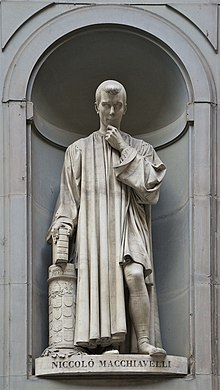
Niccolo Machiavelli
In The Prince, Machiavelli writes:
“Mercenaries…are useless and dangerous. And if a prince holds on to his state by means of mercenary armies, he will never be stable or secure. For they are disunited, ambitious, without discipline, disloyal. They are brave among friends; among enemies they are cowards.
“They have neither the fear of God nor fidelity to man, and destruction is deferred only as the attack is. For in peace one is robbed by them, and in war by the enemy.”
Centuries after Machiavelli’s warning, Americans are realizing the bitter truth of it firsthand.
9/11 ATTACKS, ABC NEWS, ALTERNET, AP, ARTHUR M. CUMMINGS, BOSTON GLOBE, BOSTON MARATHON, BOSTON MARATHON BOMBING, BOSTON PATCH, BRUSSELS BOMBINGS, BUZZFEED, CBS NEWS, CNN, CROOKS AND LIARS, DAILY KOZ, DONALD TRUMP, FACEBOOK, FBI, FIRST AMENDMENT, FRANKLIN D. ROOSEVELT, ISIS, ISLAM, ISLAMIC TERRORISM, JIHADIST, MOTHER JONES, MOVEON, NAZI GERMANY, NBC NEWS, NEWSWEEK, NPR, PARIS TERRORIST ATTACKS, POLITICAL CORRECTNESS, POLITICO, RADICAL ISLAM, RAW STORY, REUTERS, SALON, SAMUEL P. HUNTINGTON, SAN BERNARDINO MASSACRE, SEATTLE TIMES, SECURITY, SLATE, STEVEN EMERSON, THE ATLANTIC, THE CHICAGO SUN-TIMES, THE CHICAGO TRIBUNE, THE CLASH OF CIVILIZATIONS AND THE REMAKING OF WORLD ORDER, THE DAILY BEAST, THE GUARDIAN, THE HILL, THE HUFFINGTON POST, THE LOS ANGELES TIMES, THE NATION, THE NEW YORK TIMES, THE WASHINGTON POST, TIME, TWITTER, U.S. NEWS & WORLD REPORT, UP, UPI, US NEWS, USA TODAY, WORLD WAR 11
In Bureaucracy, Entertainment, History, Law, Law Enforcement, Military, Politics, Social commentary on November 3, 2017 at 12:13 am
Islamics are quick to assert that they, too, are Americans. But getting Islamics to point out the terrorists within their ranks is an entirely different matter.
According to author Ronald Kessler, this has caused serious problems for the FBI. In his 2011 book, The Secrets of the FBI, Kessler notes the refusal of the Islamic community to identify known or potential terrorists within its ranks.
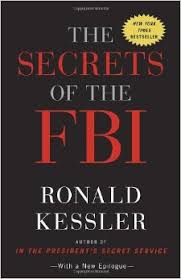
Says Arthur M. Cummings, the Bureau’s executive assistant director for national security: “I had this discussion with the director of a very prominent Muslim organization here in [Washington] D.C. And he said, ‘Why are you guys always looking at the Muslim community?’”
“I can name the homegrown cells, all of whom are Muslim, all of whom were seeking to kill Americans,” replied Cummings. “It’s not the Irish, it’s not the French, it’s not the Catholics, it’s not the Protestants. It’s the Muslims.”
Occasionally, Muslims will condemn Al Qaeda. But “rarely do we have them coming to us and saying, ‘There are three guys in the community that we’re very concerned about.’” said Cummings.
“They don’t want anyone to know they have extremists in their community. Well, beautiful. Except do you read the newspapers? Everybody already knows it. The horse has left the barn.
“So there’s a lot of talk about engagement. But, realistically, we’ve got a long, long way to go.”
At one community meeting, an Islamic leader suggested to Cummings that then-FBI director Robert Meuller III should pose for a picture with his group’s members. The reason: To show that Islamics are partners in the “war on terror.”
“When you bring to my attention real extremists who are here to plan and do something, who are here supporting terrorism,” said Cummings, “then I promise you, I will have the director stand up on the stage with you.”
“That could never happen,” replied the Islamic leader. “We would lose our constituency. We could never admit to bringing someone to the FBI.”
Cummings has no use for such Politically Correct terms as “man-caused disasters” to refer to terrorism. Nor does he shy away from terms such as “jihadists” or “Islamists.”
“Of course Islamists dominate the terrorism of today,” he says bluntly.
In May, 2014, Steven Emerson, a nationally recognized expert on terrorism, posted an ad in The New York Times, warning about the dangers of PC-imposed censorship:
“Our nation’s security and its cherished value of free speech has been endangered by the bullying campaigns of radical Islamic groups, masquerading as ‘civil rights’ organizations, to remove any reference to the Islamist motivation behind Islamic terrorist attacks.
“These groups have pressured or otherwise colluded with Hollywood, the news media, museums, book publishers, law enforcement and the Obama Administration in censoring the words ‘Islamist’, ‘Islamic terrorism’, ‘radical Islam’ and ‘jihad’ in discussing or referencing the threat and danger of Islamic terrorism.
“This is the new form of the jihadist threat we face. It’s an attack on one of our most sacred freedoms—free speech—and it endangers our very national security. How can we win the war against radical Islam if we can’t even name the enemy?”
He has a point—and a highly legitimate one.
Imagine the United States fighting World War II—and President Franklin Roosevelt banning the use of “fascist” in referring to Nazi Germany or “imperialist” in describing Imperial Japan.
Imagine CNN-like coverage of the Nazi extermination camps, with their piles of rotting corpses and smoking gas ovens, while a commentator reminds us that “Nazism is an ideology of peace.”
Then try to imagine how the United States could have won that life-and-death struggle under such unrealistic and self-defeating restrictions.
It couldn’t have done so then. And it can’t do so now.
Then consider these Islamic terrorist outrages of our own time:
- The 9/11 attacks on the World Trade Center in New York City and the Pentagon in Washington, D.C., which snuffed out the lives of 3,000 Americans.
- The 2004 bombing of Madrid’s commuter train system.
- The attack on the London subway in 2005. The killing of 13 U.S. Army personnel at Fort Hood, Texas, by a Muslim army major in 2009.
- The bombing of the Boston Marathon in 2013.
- The kidnapping of 300 Nigerian school girls by Boko Haram in 2014.
- The slaughter of 12 people at a Paris satirical magazine that had published cartoons about the Prophet Mohammed in 2015.
- The slaughter of more than 100 people in ISIS attacks across Paris in 2015.
- A series of deadly terrorist attacks in Brussels, killing 31 and injuring 270 in 2016.
- The mashing of eight bicyclists and pedestrians by a truck-driving ISIS supporter in 2017.
In every one of these attacks, the perpetrators openly announced that their actions had been motivated by their Islamic beliefs.
In his groundbreaking book, The Clash of Civilizations (1996) Samuel Huntington, the late political scientist at Harvard University, noted:
“The fundamental problem for the West is not Islamic fundamentalism. It is Islam, a different civilisation whose people are convinced of the superiority of their culture and are obsessed with the inferiority of their power.”
The West may not be at war with Islam—as countless Western politicians repeatedly assert. But Islamics have no qualms about declaring that they are at war with the West.
9/11 ATTACKS, ABC NEWS, ALTERNET, AP, ARTHUR M. CUMMINGS, BOSTON GLOBE, BOSTON MARATHON, BOSTON MARATHON BOMBING, BOSTON PATCH, BRUSSELS BOMBINGS, BUZZFEED, CBS NEWS, CNN, CROOKS AND LIARS, DAILY KOZ, DONALD TRUMP, FACEBOOK, FBI, FIRST AMENDMENT, FRANKLIN D. ROOSEVELT, ISIS, ISLAM, ISLAMIC TERRORISM, JIHADIST, MOTHER JONES, MOVEON, NAZI GERMANY, NBC NEWS, NEWSWEEK, NPR, PARIS TERRORIST ATTACKS, POLITICAL CORRECTNESS, POLITICO, RADICAL ISLAM, RAW STORY, REUTERS, SALON, SAMUEL P. HUNTINGTON, SAN BERNARDINO MASSACRE, SEATTLE TIMES, SECURITY, SLATE, STEVEN EMERSON, THE ATLANTIC, THE CHICAGO SUN-TIMES, THE CHICAGO TRIBUNE, THE CLASH OF CIVILIZATIONS AND THE REMAKING OF WORLD ORDER, THE DAILY BEAST, THE GUARDIAN, THE HILL, THE HUFFINGTON POST, THE LOS ANGELES TIMES, THE NATION, THE NEW YORK TIMES, THE WASHINGTON POST, TIME, TWITTER, U.S. NEWS & WORLD REPORT, UP, UPI, US NEWS, USA TODAY, WORLD WAR 11
In Bureaucracy, Entertainment, History, Law, Law Enforcement, Military, Politics, Social commentary on November 2, 2017 at 12:12 am
The 2016 Boston Marathon was scheduled for April 18, 2016.
And local, State and Federal law enforcement authorities had been planning security for the event since October, 2015.
So it was only natural that these agencies wanted the public to know the Marathon would be as safe as more than 5,000 law enforcement officers could make it.

The Boston Marathon
“‘Leave the worrying to us’: Security Ramped Up for Boston Marathon,” read the headline of the April 16 issue of USA Today.
And it gave the reason for this: Three years earlier, on April 15, 2013, two bombers had wreaked havoc at the finish line of the race.
It also named the bombers—brothers Dzhokhar and Tamerlan Tsarnaev—whose terrorist act killed three people and injured about 264 others.

Tamerlan and Dzhokhar Tsarnaev
It further noted that Tamerlan had died in a shootout with police three days after the marathon–and police had captured Dzhohkar several hours later. (He was convicted by a jury and sentenced to death.)
But the story said nothing about their citing Islam as the reason for their murderous rampage.
Click here: ‘Leave the worrying to us’: Security ramped up for Boston Marathon
The April 16 edition of The Boston Patch carried this headline: “Boston Marathon 2016: Security Changes You Can’t See All Around You.”
The article stated that most of these precautions couldn’t be revealed. Then it added that even though law enforcement officials hadn’t identified a credible threat to this year’s Boston Marathon, “recent events make the world feel less safe today than in 2013.”
But the article said nothing about those “recent events,” such as:
- In 2013, two Muslims butchered and beheaded a British soldier on a busy London street.
- In 2014, an ax-wielding Muslim slashed two New York police officers before being shot by other cops.
- In 2015, Muslims slaughtered 12 people at a Paris satirical magazine for publishing cartoons about the Prophet Mohammed.
- In 2015, more than 100 people were murdered in ISIS attacks across Paris.
- In 2016, a series of Islamic terrorist bombings in Brussels killed 31 and injured more than 300.
Nor did the story say that all of these “recent events” were carried out by followers of the Islamic religion. Or that the perpetrators openly announced that their actions had been motivated by their Islamic beliefs.
Click here: Brussels attacks add urgency to Boston Marathon security | US News
On April 6, 2016, The Boston Globe announced: “Tight Security Planned for Upcoming Boston Marathon.”
The story noted that, in drawing up their security arrangements, “authorities analyzed terrorist attacks in Paris, San Bernardino, Calif., and Brussels in recent months.”
The San Bernardino attack had occurred on December 2, 2015.
The story said that Syed Rizwan Farook and Tashfeen Malik, had slaughtered 14 people and wounded 22 at a Department of Public Health training event and birthday party.
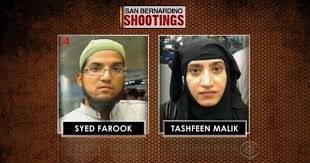
Tashfeen Malik and Syed Rizwan Farook
But the article did not inform readers that Farook and Malik were Muslims acting in the name of Islam.
The story quoted Harold Shaw, special agent in charge of the FBI’s Boston Field Office, as saying: “San Bernardino taught us something very significant. They [the killers] were not on the radar.”
But the article omitted “something very significant”: Farook and Malik had melded perfectly into American society before their outrage.
Thus, the only factor that could have put them “on the radar” as potential terrorists was their being Muslims.
And in an America driven by Political Correctness, noting that would have been verboten.
Click here: Tight security planned for upcoming Boston Marathon – The Boston Globe
NBC News carried a story on “How the Boston Marathon is Using Security Technology.”
The story then described how police used a high-tech partner, Esri, to track, in real-time, the progress of the morning’s race.
“When you look [at] security, there’s three legs to the stool: People, process and technology,” said Arnette Heintze, CEO and co-founder of Hillard Heintze, an investigation and security risk management company.
Click here: How the Boston Marathon is Using Security Technology – NBC News
Yet for all the gushing kudos leveled at the new uses of sophisticated technology for keeping people safe, one thing was conspicuously ignored.
The opening paragraph, “Three years after a deadly bombing at the Boston Marathon….” left unnamed those had made the use of this technology necessary–Tamerlan and Dzhokhar Tsarnaev.
Nor did it mention that Dzhokhar had laid out, in a note, his reason for attacking innocent men and women: “We Muslims are one body, you hurt one you hurt us all.
“Well at least that’s how Muhammed wanted it to be forever. The ummah [Islamic community] is beginning to rise.
“Know you are righting men who look into the barrel of your gun and see heaven, how how can you compete with that. We are promised victory and will surely get it.”
Click here: Text from Dzhokhar Tsarnaev’s note left in Watertown boat – The Boston Globe
Of all the Democratic and Republican Presidential candidates in 2016, only Donald Trump dared to say the politically un-sayable: Islam is at war with us.
And this candor—coupled with repeated Islamic atrocities—gained him both the Republican nomination and the White House.
ABC NEWS, ALTERNET, AMERICA: INSIDE OUT, AMERICABLOG, AP, BABY BOOMER RESISTANCE, BBC, BLOOMBERG NEWS, BUZZFEED, CBS NEWS, CNN, CROOKS AND LIARS, DAILY KOZ, DAVID SHOENBRUN, DONALD TRUMP, DRUG-TESTING, EMPLOYERS RESPONSIBILITY ACT, FACEBOOK, FISHER INVESTMENTS, FIVETHIRTYEIGHT, FORBES MAGAZINE, HARPER’S MAGAZINE, HUFFINGTON POST, KENNETH FISHER, MEDIA MATTERS, MEDICAL INSURANCE, MOTHER JONES, MOVEON, MSNBC, NBC NEWS, NEW REPUBLIC, NEWSDAY, NEWSWEEK, NPR, PBS NEWSHOUR, POLITICO, POLITICUSUSA, RAW STORY, REPUBLICANS, REUTERS, Ronald Reagan, SALON, SEATTLE TIMES, SLATE, TALKING POINTS MEMO, THE ATLANTIC, THE CHICAGO SUN-TIMES, THE CHICAGO TRIBUNE, THE DAILY BEAST, THE DAILY BLOG, THE GUARDIAN, THE HILL, THE HUFFINGTON POST, THE LOS ANGELES TIMES, THE NATION, THE NEW REPUBLIC, THE NEW YORK TIMES, THE NEW YORKER, THE VILLAGE VOICE, THE WASHINGTON POST, THINKPROGRESS, TIME, TRUTHDIG, TRUTHOUT, TWITTER, TWO POLITICAL JUNKIES, U.S. NEWS & WORLD REPORT, UNEMPLOYMENT, UP, UPI, USA TODAY, WAL-MART, WEALTH GAP
In Bureaucracy, History, Law, Law Enforcement, Politics, Social commentary on November 1, 2017 at 12:15 am
America can quickly find employment for willing-to-work job-seekers—by installing a nationwide Employers Responsibility Act. Its last seven provisions would read as follows:
(9) Employers refusing to hire would be required to pay an additional “crime tax.”
Sociologists and criminologists agree that “the best cure for crime is a job.” Thus, employers who refuse to hire contribute to a growing crime rate in this Nation. Such non-hiring employers would be required to pay an additional tax, which would be earmarked for agencies of the criminal justice system at State and Federal levels.
(10) The seeking of “economic incentives” by companies in return for moving to or remaining in cities/states would be strictly forbidden.
Such “economic incentives” usually:
- allow employers to ignore existing laws protecting employees from unsafe working conditions;
- allow employers to ignore existing laws protecting the environment;
- allow employers to pay their employees the lowest acceptable wages, in return for the “privilege” of working at these companies; and/or
- allow employers to pay little or no business taxes, at the expense of communities who are required to make up for lost tax revenues.
(11) Employers who continue to make such overtures would be criminally prosecuted for attempted bribery or extortion:
- Bribery, if they offered to move to a city/state in return for “economic incentives,” or
- Extortion, if they threatened to move their companies from a city/state if they did not receive such “economic incentives.”
This would protect employees against artificially-depressed wages and unsafe working conditions; protect the environment in which these employees live; and protect cities/states from being pitted against one another at the expense of their economic prosperity.
(12) The U.S. Departments of Justice and Labor would regularly monitor the extent of employer compliance with the provisions of this act.
Among these measures: Sending undercover agents, posing as highly-qualified job-seekers, to apply at companies—and then vigorously prosecuting those employers who blatantly refused to hire despite their proven economic ability to do so.
This would be comparable to the long-time and legally-validated practice of using undercover agents to determine compliance with fair-housing laws.
(13) The Justice Department and/or the Labor Department would be required to maintain a publicly-accessible database on those companies that have been cited, sued and/or convicted for such offenses as:
- discrimination,
- harassment,
- health and/or safety violations or
- violating immigration laws.
Employers would be legally required to regularly provide such information to these agencies, so that it would remain accurate and up-to-date.
Such information would arm job applicants with vital information about the employers they were approaching. They could thus decide in advance if an employer is deserving of their skills and dedication.
As matters now stand, employers can legally demand to learn even the most private details of an applicant’s life without having to disclose even the most basic information about themselves and their history of treating employees.
(14) CEOs whose companies employ illegal aliens would be held directly accountable for the actions of their subordinates. Upon conviction, the CEO would be sentenced to a mandatory prison term of at least 10 years.
This would prove a more effective remedy for controlling illegal immigration than stationing tens of thousands of soldiers on the U.S./Mexican border. With CEOs forced to account for their subordinates’ actions, they would take drastic steps to ensure their companies complied with Federal immigration laws.
Without employers eager to hire illegal aliens at a fraction of the money paid to American workers, the invasions of illegal job-seekers would quickly come to an end.
(15) A portion of employers’ existing Federal taxes would be set aside to create a national clearinghouse for placing unemployed but qualified job-seekers.
* * * * *
For thousands of years, otherwise highly intelligent men and women believed that kings ruled by divine right. That kings held absolute power, levied extortionate taxes and sent countless millions of men off to war—all because God wanted it that way.
That lunacy was dealt a deadly blow in 1776 when American Revolutionaries threw off the despotic rule of King George III of England.
But today, millions of Americans remain imprisoned by an equally outrageous and dangerous theory: The Theory of the Divine Right of Employers.

Summing up this employer-as-God attitude, Calvin Coolidge still speaks for the overwhelming majority of employers and their paid shills in government: “The man who builds a factory builds a temple, and the man who works there worships there.”
America can no longer afford such a dangerous fallacy as the Theory of the Divine Right of Employers.
Americans did not win their freedom from Great Britain—and its enslaving doctrine of “the divine right of kings”—-by begging for their rights.
And Americans will not win their freedom from their corporate masters–-and the equally enslaving doctrine of “the divine right of employers”—-by begging for the right to work and support themselves and their families.
Corporations can—and do—spend millions of dollars on TV ads, selling lies—lies such as the “skills gap,” and how if the wealthy are forced to pay their fair share of taxes, jobs will inevitably disappear.
But Americans can choose to reject those lies—and demand that employers behave like patriots instead of predators.
ABC NEWS, ALTERNET, AMERICA: INSIDE OUT, AMERICABLOG, AP, BABY BOOMER RESISTANCE, BBC, BLOOMBERG NEWS, BUZZFEED, CBS NEWS, CNN, CROOKS AND LIARS, DAILY KOZ, DAVID SHOENBRUN, DONALD TRUMP, DRUG-TESTING, EMPLOYERS RESPONSIBILITY ACT, FACEBOOK, FISHER INVESTMENTS, FIVETHIRTYEIGHT, FORBES MAGAZINE, HARPER’S MAGAZINE, HUFFINGTON POST, KENNETH FISHER, MEDIA MATTERS, MEDICAL INSURANCE, MOTHER JONES, MOVEON, MSNBC, NBC NEWS, NEW REPUBLIC, NEWSDAY, NEWSWEEK, NPR, PBS NEWSHOUR, POLITICO, POLITICUSUSA, RAW STORY, REPUBLICANS, REUTERS, Ronald Reagan, SALON, SEATTLE TIMES, SLATE, TALKING POINTS MEMO, THE ATLANTIC, THE CHICAGO SUN-TIMES, THE CHICAGO TRIBUNE, THE DAILY BEAST, THE DAILY BLOG, THE GUARDIAN, THE HILL, THE HUFFINGTON POST, THE LOS ANGELES TIMES, THE NATION, THE NEW REPUBLIC, THE NEW YORK TIMES, THE NEW YORKER, THE VILLAGE VOICE, THE WASHINGTON POST, THINKPROGRESS, TIME, TRUTHDIG, TRUTHOUT, TWITTER, TWO POLITICAL JUNKIES, U.S. NEWS & WORLD REPORT, UNEMPLOYMENT, UP, UPI, USA TODAY, WAL-MART, WEALTH GAP
In Bureaucracy, History, Law, Law Enforcement, Politics, Social commentary on October 31, 2017 at 12:10 am
An Employers Responsibility Act (ERA) would simultaneously address the following evils for which employers are directly responsible:
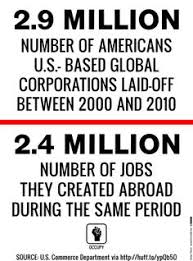
- The loss of jobs within the United States owing to companies’ moving their operations abroad—solely to pay substandard wages to their new employees.
- The mass firings of employees which usually accompany corporate mergers or acquisitions.
- The widespread victimization of part-time employees, who are not legally protected against such threats as racial discrimination, sexual harassment and unsafe working conditions.
- The refusal of many employers to create better than menial, low-wage jobs.
- The widespread employer practice of extorting “economic incentives” from cities or states in return for moving to or remaining in those areas. Such “incentives” usually absolve employers from complying with laws protecting the environment and/or workers’ rights.
- The refusal of many employers to provide medical and pension benefits—nearly always in the case of part-time employees, and, increasingly, for full-time, permanent ones as well.
- Rising crime rates, due to rising unemployment.
Among its provisions:
(1) American companies that close plants in the United States and open others abroad would be forbidden to sell products made in those foreign plants within the United States.
This would protect both American and foreign workers from employers seeking to profit at their expense. American workers would be ensured of continued employment. And foreign laborers would be protected against substandard wages and working conditions.
Companies found violating this provision would be subject to Federal criminal prosecution. Guilty verdicts would result in heavy fines and lengthy imprisonment for their owners and top managers.
(2) Large companies (those employing more than 100 persons) would be required to create entry-level training programs for new, future employees.
These would be modeled on programs now existing for public employees, such as firefighters, police officers and members of the armed services.
Such programs would remove the employer excuse, “I’m sorry, but we can’t hire you because you’ve never had any experience in this line of work.” After all, the Air Force has never rejected an applicant because, “I’m sorry, but you’ve never flown a plane before.”
This Nation has greatly benefited from the humane and professional efforts of the men and women who have graduated from public-sector training programs. There is no reason for the private sector to shun programs that have succeeded so brilliantly for the public sector.
(3) Employers would receive tax credits for creating professional, well-paying, full-time jobs.
This would encourage the creation of better than the menial, dead-end, low-paying and often part-time jobs which exist in the service industry. Employers found using such tax credits for any other purpose would be prosecuted for tax fraud.
(4) A company that acquired another—through a merger or buyout—would be forbidden to fire en masse the career employees of that acquired company.
This would be comparable to the protection existing for career civil service employees. Such a ban would prevent a return to the predatory “corporate raiding” practices of the 1980s, which left so much human and economic wreckage in their wake.
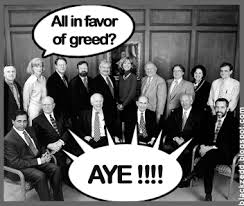
The wholesale firing of employees would trigger the prosecution of the company’s new owners. Employees could still be fired, but only for provable just cause, and only on a case-by-case basis.
(5) Employers would be required to provide full medical and pension benefits for all employees, regardless of their full-time or part-time status.
Increasingly, employers are replacing full-time workers with part-time ones—solely to avoid paying medical and pension benefits.
Requiring employers to act humanely and responsibly toward all their employees would encourage them to provide full-time positions—and hasten the death of this greed-based practice.
(6) Employers of part-time workers would be required to comply with all federal labor laws.
Under current law, part-time employees are not protected against such abuses as discrimination, sexual harassment and unsafe working conditions. Closing this loophole would immediately create two positive results:
- Untold numbers of currently-exploited workers would be protected from the abuses of predatory employers; and
- Even predatorily-inclined employers would be encouraged to offer permanent, fulltime jobs rather than only part-time ones—since a major incentive for offering part-time jobs would now be eliminated.
(7) Employers would be encouraged to hire to their widest possible limits,through a combination of financial incentives and legal sanctions. Among those incentives:
Employers demonstrating a willingness to hire would receive substantial Federal tax credits, based on the number of new, permanent employees hired per year.
Employers claiming eligibility for such credits would be required to make their financial records available to Federal investigators. Employers found making false claims would be prosecuted for perjury and tax fraud, and face heavy fines and imprisonment if convicted.
(8) Among those sanctions: Employers refusing to hire could be required to prove, in court:
- Their economic inability to hire further employees, and/or
- The unfitness of the specific, rejected applicant.
Companies found guilty of unjustifiably refusing to hire would face the same penalties as now applying in cases of discrimination on the basis of age, race, sex and disability.
Two benefits would result from this:
- Employers would thus fund it easier to hire than to refuse to do so; and
- Job-seekers would no longer be prevented from even being considered for employment because of arbitrary and interminable “hiring freeze.”
ABC NEWS, ALTERNET, AMERICA: INSIDE OUT, AMERICABLOG, AP, BABY BOOMER RESISTANCE, BBC, BLOOMBERG NEWS, BUZZFEED, CBS NEWS, CNN, CROOKS AND LIARS, DAILY KOZ, DAVID SHOENBRUN, DONALD TRUMP, DRUG-TESTING, EMPLOYERS RESPONSIBILITY ACT, FACEBOOK, FISHER INVESTMENTS, FIVETHIRTYEIGHT, FORBES MAGAZINE, HARPER’S MAGAZINE, HUFFINGTON POST, KENNETH FISHER, MEDIA MATTERS, MEDICAL INSURANCE, MOTHER JONES, MOVEON, MSNBC, NBC NEWS, NEW REPUBLIC, NEWSDAY, NEWSWEEK, NPR, PBS NEWSHOUR, POLITICO, POLITICUSUSA, RAW STORY, REPUBLICANS, REUTERS, Ronald Reagan, SALON, SEATTLE TIMES, SLATE, TALKING POINTS MEMO, THE ATLANTIC, THE CHICAGO SUN-TIMES, THE CHICAGO TRIBUNE, THE DAILY BEAST, THE DAILY BLOG, THE GUARDIAN, THE HILL, THE HUFFINGTON POST, THE LOS ANGELES TIMES, THE NATION, THE NEW REPUBLIC, THE NEW YORK TIMES, THE NEW YORKER, THE VILLAGE VOICE, THE WASHINGTON POST, THINKPROGRESS, TIME, TRUTHDIG, TRUTHOUT, TWITTER, TWO POLITICAL JUNKIES, U.S. NEWS & WORLD REPORT, UNEMPLOYMENT, UP, UPI, USA TODAY, WAL-MART, WEALTH GAP
In Bureaucracy, History, Law, Law Enforcement, Politics, Social commentary on October 30, 2017 at 12:41 am
President Donald Trump wants huge tax cuts for corporations. He wants to cut the corporate income tax rate from its current 35% to 20%.
He claims that, with this extra income, CEOs will invest in their businesses and create tens of thousands of new jobs.
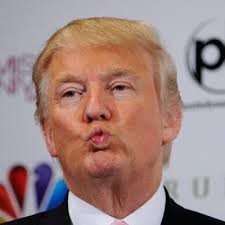
Donald Trump
But that’s not what some of the biggest S&P 500 companies are saying they’ll do. The people they are seeking to please are investors, not workers. And, least of all, those seeking work but unable to find employers willing to hire.
Darius Adamczyk, CEO of Honeywell International Inc., said “tax reform” would “offer greater flexibility for Honeywell.” He added that the corporation would invest more cash in the United States to pay for mergers and acquisitions, share buybacks and paying down debt.
He didn’t say anything about hiring more workers.
According to Moody’s Investors Service, American corporations have stockpiled nearly $1.8 trillion in cash overseas.
Apple has more than $240 billion of that total.
Apple’s CEO Tim Cook says the company wants to bring back offshore cash if tax rates for doing so were lower: “What we would do with it, let’s wait and see exactly what it is, but as I’ve said before we are always looking at acquisitions.”
Apple expects a tax windfall if Trump’s tax-cutting plan passes Congress. And analysts openly expect Apple to use those monies to boost its capital return program via buybacks, dividends and perhaps making a big acquisition.
What analysts don’t expect Apple to do with its tax cut monies is create new American jobs.
Most of the offshore cash brought home by U.S. companies in past tax holidays was used to buy back shares or make acquisitions, not to fund investments in production capacity or jobs.
Corporations were not legally required to use those tax cut savings to hire more workers. And Trump’s tax cut proposal has no such requirement, either.
According to John Divine, staff writer for U.S. News & World Report‘s Money section: “As long as there are no strings attached on how or where companies spend these savings, taxpayers get a raw deal.”
Tax cuts for the wealthy have been a favorite—perhaps the favorite—Republican mantra since 1980, when former California Governor Ronald Reagan ran for and became President.
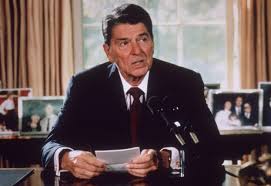
Ronald Reagan
Reagan, like every major Republican Presidential candidate since, promised that giving tax cuts to the wealthy would prove highly beneficial to ordinary workers.
The official name for this policy was “supply side economics.” In reality, it was known—and functioned—as “trickle down economics.”
“A rising tide lifts all boats,” claimed Reagan. A more realistic slogan for the results of his economics policies would have been: “A rising tide lifts some yachts.”
Among those charting Reagan’s economics legacy as President was former CBS Correspondent David Schoenbrun. In his bestselling autobiography, America Inside Out: At Home and Abroad from Roosevelt to Reagan, he noted:
- On January 28, 1981, keeping a pledge to his financial backers in the oil industry, Reagan abolished Federal controls on the price of oil.
- Within a week, Exxon, Texaco and Shell raised gasoline prices and prices of home heating oil.
- Reagan saw it as his duty to put a floor under prices, not a ceiling above them.
- Reagan believed that when government helped business it wasn’t interfering. Loaning money to bail out a financially incompetent Chrysler was “supporting the free enterprise system.”
- But putting a high-profits tax on price-gouging corporations or filing anti-trust suits against them was “Communistic” and therefore intolerable.
- Tax-breaks for wealthy businesses meant helping America become stronger.
- But welfare for the poor or the victims of a predatory marketplace economy weakened America by sapping its morale.
“In short,” wrote Schoenbrun, “welfare for the rich is good for America. But welfare for the poor is bad for America, even for the poor themselves, for it encourages them to be shiftless and lazy.
“Somehow, loans to the inefficient management of American corporations would not similarly encourage them in their inefficient methods.”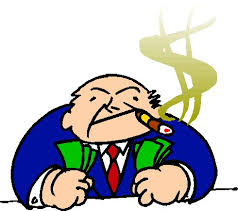
To be unemployed in America is considered by most Americans—including the unemployed—the same as being a bum.
And Republicans are quick to point accusing fingers at those willing-to-work Americans who can’t find willing-to-hire employers.
According to Republicans such as Mitt Romney and Herman Cain: If you can’t find a job, it’s entirely your fault.
And when Republicans are forced—by public pressure or Democratic majorities—to provide benefits to the unemployed, these nearly always come at a price.
Those receiving subsistence monies are, in many states, required to undergo drug-testing, even though there is no evidence of widespread drug-abuse among the unemployed.
But America can put an end to this “I’ve-got-mine-and-the-hell-with-you” job-killing arrogance of people like Kenneth Fisher.
The answer lies in three words: Employers Responsibility Act (ERA).
If passed by Congress and vigorously enforced by the U.S. Departments of Justice and Labor, an ERA would ensure full-time, permanent and productive employment for millions of capable, job-seeking Americans.
And it would achieve this without raising taxes or creating controversial government “make work” programs.
Such legislation would legally require employers to demonstrate as much initiative for hiring as job-seekers are now expected to show in searching for work.
How it would work will be outlined in the next two columns.
ABC NEWS, ALTERNET, AMAZON.COM, BED BATH AND BEYOND, BLOOMINGDALE’S, BURLINGTON COAT FACTORY, BUZZFEED, CAMPAIGN LEGAL CENTER, CBS NEWS, CENTURY 21, CNN, DAILY KOS, DONALD TRUMP, ELIJAH E. CUMMINGS, EMOLUMENTS CLAUSE, FACEBOOK, FOUNDING FATHERS, GRAB YOUR WALLET, IVANKA TRUMP, JASON CHAFFETZ, JOE MCGINNIS, JOHN F. KENNEDY, KELLEYANNE CONWAY, LARRY NOBLE, LIBEL, MACY’S, MARSHALLS, MELANIA TRUMP, MOTHER JONES, MOVEON, NBC NEWS, NEIMAN MARCUS, NEWS ALTERNET, NORDSTROM, NPR, POLITICO, PROSTITUTION, RAW STORY, ROSS, SAKS OFF FIFTH, SALON, SEAN SPICER, SEARS, SELLING OF THE PRESIDENT, SLATE, THE CHICAGO SUN-TIMES, THE CHICAGO TRIBUNE, THE DAILY BEAST, THE DAILY MAIL, THE HUFFINGTON POST, THE LOS ANGELES TIMES, THE NEW YORK TIMES, THE WALL STREET JOURNAL, THE WASHINGTON POST, TIME, TJ MAXX, TWITTER, U.S. NEWS & WORLD REPORT, UNITED STATES CONSTITUTION, USA TODAY, WALMART, WEEK
In Bureaucracy, Business, History, Law, Law Enforcement, Politics, Social commentary on October 25, 2017 at 12:42 am
President Donald Trump was furious.
Nordstrom department store had just dared to drop the clothing and accessories lines of his daughter, Ivanka.
So, true to form, on February 8 he took to Twitter to vent his displeasure: “My daughter Ivanka has been treated so unfairly by @Nordstrom. She is a great person—always pushing me to do the right thing! Terrible!”
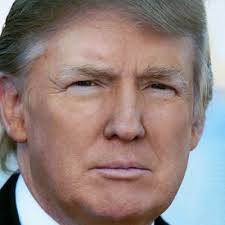
Donald Trump
He used his personal Twitter account—@realDonaldTrump—to send this message. In fact, he sent it 21 minutes into his daily Intelligence briefing.
Still not satisfied, he retweeted his attack on Nordstrom on his official POTUS (President of the United States) Twitter account.
In short, he used a taxpayer-funded account to benefit his daughter.
Not content to attack Nordstrom by himself, Trump enlisted other members of his administration as assailants.
One of these was his press secretary, Sean Spicer:
“There’s a targeting of her brand and it’s her name. She’s not directly running the company. It’s still her name on it. There are clearly efforts to undermine that name based on her father’s positions on particular policies that he’s taken. This is a direct attack on his policies and her name. Her because she is being maligned because they have a problem with his policies.”

Sean Spicer
Nordstrom retorted that its decision to drop the Ivanka Trump line was “based on performance.”
“Over the past year, and particularly in the last half of 2016, sales of the brand have steadily declined to the point where it didn’t make good business sense for us to continue with the line for now.
“We’ve had a great relationship with the Ivanka Trump team. We’ve had open conversations with them over the past year to share what we’ve seen and Ivanka was personally informed of our decision in early January.”
But for the Trumpinistas, that wasn’t the end of it.
On Februrary 9, Kelleyanne Conway, a senior adviser to Trump, became a TV shill for Ivanka.
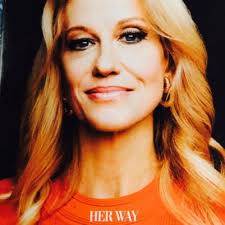
Kelleyanne Conway
Appearing on the Right-wing Fox News Channel program, “Fox and Friends,” Kelleyanne spoke from no less prestigious a forum than the White House itself:
“Go buy Ivanka’s stuff. I hate shopping and I’m going to go get some myself today. It’s a wonderful line. I own some of it. I’m going to give a free commercial here. Go buy it today, everybody. You can find it online.”
For Democrats—and even some Republicans—Conway’s behavior was simply unacceptable.
Maryland Democratic Congressman Elijah E. Cummings, a member of the the House Committee on Oversight and Government Reform, sent a letter to Utah Republican Congressman Jason Chaffetz, who chairs the committee.
In it, he requested a referral to the Office of Government Ethics for possible disciplinary action against Conway.
The office does not have investigative or enforcement authority, but officials there can contact and provide guidance to other enforcement agencies.
Chaffetz told the Associated Press that Conway’s behavior was “wrong, wrong, wrong, clearly over the line, unacceptable.”
Larry Noble, the general counsel of the Campaign Legal Center, a nonpartisan organization of election law experts, said Trump’s tweet was “totally out of line.”
“He should not be promoting his daughter’s line, he should not be attacking a company that has business dealings with his daughter, and it just shows the massive amount of problems we have with his business holdings and his family’s business holdings,” Noble said.
Kathleen Clark, a government ethics expert, said the Nordstrom tweet could make other retailers hesitate to drop the Ivanka Trump brand. They may fear being similarly attacked by the President.
“The implicit threat was that he will use whatever authority he has to retaliate against Nordstrom, or anyone who crosses his interest,” said Clark, a law professor at Washington University in St. Louis.
* * * * *
In 1969, 25-year-old Joe McGinnis became famous overnight with the publication of his first book, The Selling of the President.
At the time, Americans were shocked to learn how Presidential candidate Richard Nixon had been sold to voters like any other product. In fact, the original book jacket featured Nixon’s face on a pack of cigarettes.
Today, Madison Avenue doesn’t simply sell Americans their Presidents. Now—with Donald J. Trump—Americans have a President determined to turn the White House into Trump, Inc.
A single example will serve to illustrate:
On January 27, Trump signed an executive order that:
- Suspended entry of all refugees to the United States for 120 days;
- Barred Syrian refugees indefinitely; and
- Blocked entry into the United States for 90 days for citizens of Iran, Iraq, Libya, Somalia, Sudan, Syria and Yemen.
Three countries not covered by Trump’s travel ban are Saudi Arabia, the United Arab Emirates, Egypt, and Turkey.
Approximately 3,000 Americans have been killed by immigrants from these countries—most of them during the attacks on the Pentagon and World Trade Center on September 11, 2001.
Not-so-coincidentally, Saudi Arabia, the United Arab Emirates, Egypt, and Turkey are all countries where President Trump has close business ties. His properties include two luxury towers in Turkey and golf courses in the United Arab Emirates.
The full dimensions of Trump’s holdings throughout the Middle East aren’t known because he has refused to release his tax returns.


2016 PRESIDENTIAL ELECTION, 9/11, ABC NEWS, ADOLF HITLER, AFGHANISTAN, ALTERNET, AP, ASIANS, BARACK OBAMA, BLACKS, BULLYING, BUZZFEED, CBS NEWS, CNN, COMMUNISM, CROOKS AND LIARS, DAILY KOZ, DONALD TRUMP, FACEBOOK, FASCISM, GEORGE W. BUSH, GREAT DEPRESSION, HILLARY CLINTON, HISPANICS, IRAQ, JEWS, MOTHER JONES, MOVEON, MUSLIMS, NAZI GERMANY, NAZI PARTY, NBC NEWS, NEWSWEEK, NPR, PAUL VON HINDENBURG, POLITICO, RACISM, RAW STORY, REPUBLICANS, REUTERS, ROBERT PAYNE, Ronald Reagan, SALON, SEATTLE TIMES, SLATE, THE ATLANTIC, THE CHICAGO SUN-TIMES, THE CHICAGO TRIBUNE, THE DAILY BEAST, THE GUARDIAN, THE HILL, THE HUFFINGTON POST, THE LIFE AND DEATH OF ADOLF HITLER, THE LOS ANGELES TIMES, THE LOS ANGELS TIMES, THE NATION, THE NEW YORK TIMES, THE WASHINGTON POST, TIME, TRUMP EFFECT, TWITTER, U.S. NEWS & WORLD REPORT, UP, UPI, USA TODAY, WORLD WAR 11
FASCISM: IT’S NOT JUST FOR GERMANS ANYMORE
In Bureaucracy, History, Politics, Social commentary on November 10, 2017 at 12:22 amIn his bestselling 1973 biography, The Life and Death of Adolf Hitler, British historian Robert Payne harshly condemned the German people for the rise of the Nazi dictator.
“Ultimately the responsibility for the rise of Hitler lies with the German people, who allowed themselves to be seduced by him and came to enjoy the experience….[They] followed him with joy and enthusiasm because he gave them license to pillage and murder to their hearts’ content.
“They were his servile accomplices, his willing victims: Germany will rule the world; our enemies will be our slaves….
“If he answered their suppressed desires, it was not because he shared them, but because he could make use of them. He despised the German people, for they were merely the instruments of his will.”
So much for the truth of Nazi Germany–from 1933 to 1945.
On November 8, 2016, Americans proved they could embrace Fascism, too.
That was when millions of ignorant, greedy, hate-filled, Right-wing Americans turned their backs on democracy and fervently embraced Fascism.
They elected Donald Trump—a man reflecting their own hate, greed and ignorance—to the Presidency.
But Americans had far fewer excuses for turning to a Fascistic style of government than the Germans did.
The conditions existing in pre-Hitler Germany and pre-Trump America could not have been more different.
Adolf Hitler joined the National Socialist German Workers (Nazi) Party in 1919—the year after World War 1 ended.
Adolf Hitler
In 1923, he staged a coup attempt in Bavaria—which was quickly and brutally put down by police. He was arrested and sentenced to less than a year in prison.
After that, Hitler decided that winning power through violence was no longer an option. He must win it through election—or appointment.
He repeatedly ran for the highest office in Germany—President—but never got a clear majority in a free election.
When the 1929 Depression struck Germany, the fortunes of Hitler’s Nazi party rose as the life savings of ordinary Germans fell. Streets echoed with bloody clashes between members of Hitler’s Nazi Stormtroopers and those of the German Communist Party.
Germany seemed on the verge of collapsing.Germans desperately looked for a leader—a Fuhrer—who could somehow deliver them from the threat of financial ruin and Communist takeover.
In early 1933, members of his own cabinet persuaded aging German president, Paul von Hindenburg, that only Hitler’s appointment as Chancellor (the equivalent of Attorney General) could do this.
Paul von Hindenburg
Hindenburg was reluctant to do so. He considered Hitler a dangerous radical. But he allowed himself to be convinced that, by putting Hitler in the Cabinet, he could be “boxed in” and thus controlled.
So, on January 30, 1933, he appointed Adolf Hitler Chancellor of Germany.
On August 2, 1934, Hindenberg died, and Hitler immediately assumed the titles–and duties—of the offices of Chancellor and President. His rise to total power was now complete.
It had taken him 14 years to do so.
In 2015, when Donald Trump declared his candidacy for President.
Yet—not 17 months after announcing his candidacy for President—enough Americans fervently embraced Donald Trump to give him the most powerful position in the country and the world.
Donald Trump
The message of Barack Obama’s 2008 campaign had been one of hope: “Yes, We Can!”
For everyone who was not an avid Trump supporter, the message of Trump’s campaign was: “No, You Can’t!”
Whites comprised the overwhelming majority of the audiences at Trump rallies. Not all were racists, but many who were advertised it on T-shirts: “MAKE AMERICA WHITE AGAIN.”
They knew that demographics were steadily working against them. Birthrates among non-whites were rising. By 2045, whites would make up less than 50 percent of the American population.
The 2008 re-election of the first black President had shocked many whites. His 2012 re-election had deprived them of the hope that 2008 had been an accident.
Then came 2016—and the possibility that a black President might actually be followed by a woman: Hillary Clinton. And the idea of a woman dictating to men was strictly too much to bear.
Since Trump’s election, educators have reported a surge in bullying among students of all ages, from elementary- to high-school. Those doing the bullying are mostly whites, and the victims are mostly blacks, Muslims, Jews, Hispanics, Asians.
It even has a name: “The Trump Effect.”
All of this should be remembered the next time an American blames Germans for their embrace of Adolf Hitler
Share this: