Posts Tagged ‘DONALD TRUMP’
2016 PRESIDENTIAL CAMPAIGN, ABC NEWS, AL FRANKEN, ALTERNET, AP, BARACK OBAMA, BERNIE SANDERS, BOB CORKER, BUZZFEED, CBS NEWS, CNN, CROOKS AND LIARS, DAILY KOZ, DAVID BROOKS, DEMOCRATIC PARTY, DONALD TRUMP, ELIZABETH WARREN, FACEBOOK, HILLARY CLINTON, JEB BUSH, JEFF FLAKE, JOE SCARBOROUGH, JOSEPH MCCARTHY, KIM JONG-UN, LATE NIGHT WITH STEPHEN COLBERT, LIBERALS, MARCO RUBIO, MARK SHIELDS, MIKA BRZEZINSKI, MOTHER JONES, MOVEON, NBC NEWS, NEWSWEEK, NOCCOLO MACHIAVELLI, NPR, PBS NEWSHOUR, POLITICO, RAW STORY, REPUBLICAN PARTY, REPUBLICANS, REUTERS, SALON, SEATTLE TIMES, SLANDER, SLATE, TED CRUZ, THE ATLANTIC, THE CHICAGO SUN-TIMES, THE CHICAGO TRIBUNE, THE DAILY BEAST, THE GUARDIAN, THE HILL, THE HUFFINGTON POST, THE LOS ANGELES TIMES, THE NATION, THE NEW YORK TIMES, THE PRINCE, THE WASHINGTON POST, TIME, TWITTER, U.S. NEWS & WORLD REPORT, UP, UPI, USA TODAY
In Bureaucracy, History, Politics, Social commentary on November 30, 2017 at 12:03 am
As a whole, Democrats have shown themselves indifferent to or ignorant of the power of effective language.
Many of them—such as former President Barack Obama—believe: “I’m not going to get into the gutter like my opponents.”
Thus, they take the “high ground” while their sworn Republican enemies undermine them via “smear and fear” tactics.
In the early 1950s, slander-hurling Wisconsin U.S. Senator Joseph R. McCarthy demonstrated the effectiveness of such tactics. Wrote Pulitzer-Prize winning author David Halberstam, in his monumental study of the origins of the Vietnam War, The Best and the Brightest:
“But if they did not actually stick, and they did not, [McCarthy’s] charges had an equally damaging effect: They poisoned. Where there was smoke, there must be fire. He wouldn’t be saying these things [voters reasoned] unless there was something to it.”
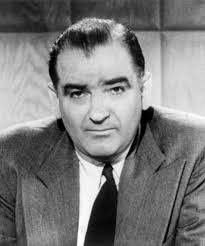
Joseph McCarthy
Tyrants are conspicuously vulnerable to ridicule. Yet, just as Democrats proved unwilling to use this powerful weapon against McCarthy, they have failed to do so against Donald Trump.
For example: Trump has often expressed admiration for Russian dictator Vladimir Putin.
But not a single Democrat has dared nickname him “TrumPutin,” “Red Donald,” “Putin’s Poodle” or “Wannabe Czar.” Similarly, his vice president, Mike Pence, could be labeled “Vice Putin.”
Trump has repeatedly assaulted the press, judiciary and Intelligence agencies. Yet no Democrat has damned him as having a Fascistic agenda.
Nor, as a whole, has the press dared to respond in kind to his increasingly vicious attacks on the First Amendment.
Trump has labeled established news media as “fake news.” He has called reporters “the enemy of America.” He has tweeted images of a “Trump train” running over a CNN reporter and of himself beating up someone covered by a CNN logo.

His target of choice is CNN, which has been particularly effective in uncovering the truth behind his almost daily lies. On at least one occasion, he told a CNN reporter: “You’re fake news.”
Yet no reporter—for CNN or any other news outlet—has called him a “fake President.”
CNN has started running an ad featuring a shiny red apple, while a voice-over intones:
“This is an apple. Some people might try to tell you that it’s a banana. They might scream banana, banana, banana over and over and over again. They might put BANANA in all caps. You might even start to believe that this is a banana. But it’s not. This is an apple.”
Unfortunately, many viewers might mistake the “apple” for Apple. Many Americans fail to grasp the subtleties of symbolic imagery. Thus, a more effective ad could feature a picture of Trump in an SS uniform, complete with swastika, and the following message:
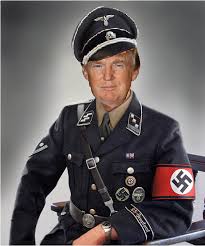
“This is a Fascist. Some people might try to tell you that he’s a democrat. They might scream democrat, democrat, democrat over and over and over again. They might put DEMOCRAT in all caps. You might even start to believe that he is a democrat. But he’s not. This is a Fascist.”
Nor, in this YouTube-obsessed age, have Democrats assailed Trump with a ridiculing music video. In the hands of a creative writer, for example, the classic rock-and-roll song, “Rockin’ Robin,” could become a Democratic party anthem:
TRUMPY TRAITOR
(To be sung to the tune, “Rockin’ Robin”)
He Tweets in the White House all the day long
Screamin’ and a-schemin’ and a-doin’ what’s wrong.
All the Special Agents in the FBI
Hope he goes to prison to the day he’ll die.
Trumpy Traitor (tweet tweet)
Trumpy Traitor (tweet tweet)
Go Trumpy Traitor
‘Cause they’re gonna bust your ass tonight.
Every act of treason, every act of crime—
America has never seen a bigger slime.
Bob Mueller’s ready, the cops are closin’ in
To put a grand finale to your reign of sin.
Trumpy Traitor (tweet tweet)
Trumpy Traitor (tweet tweet)
Go Trumpy Traitor
‘Cause they’re gonna bust your ass tonight.
Eric’s getting ready for his next big steal
While Daddy hugs Ivanka—who lets out a squeal.
Don Junior’s got the Russians coming once again—
It’s party-time for traitors and their lives of sin.
He Tweets in the White House all the day long
Screamin’ and a-schemin’ and a-doin’ what’s wrong.
Handing out secrets to the KGB
The biggest Right-wing traitor that you’ll ever see.
Trumpy Traitor (tweet tweet)
Trumpy Traitor (tweet tweet)
Go Trumpy Traitor
‘Cause they’re gonna bust your ass tonight.
Well, Eric’s getting ready for his next big steal
While Daddy hugs Ivanka—who lets out a squeal.
Don Junior’s got the Russians coming once again—
It’s party-time for traitors and their lives of sin.
He Tweets in the White House all the day long
Screamin’ and a-schemin’ and a-doin’ what’s wrong.
Handing out secrets to the KGB
The biggest Right-wing traitor that you’ll ever see.
Trumpy Traitor (tweet tweet)
Trumpy Traitor (tweet tweet)
Go Trumpy Traitor
‘Cause they’re gonna bust your ass tonight.
Democrats and the media are fighting an openly Fascistic administration with tactics of a Shirley Temple. So long as they do so, they will continue to decline in influence.
Their only hope lies in combating the Heinz Guderians of the Republican Party with the all-out tactics of a George S. Patton.
2016 PRESIDENTIAL CAMPAIGN, ABC NEWS, AL FRANKEN, ALTERNET, AP, BARACK OBAMA, BERNIE SANDERS, BOB CORKER, BUZZFEED, CBS NEWS, CNN, CROOKS AND LIARS, DAILY KOZ, DAVID BROOKS, DEMOCRATIC PARTY, DONALD TRUMP, ELIZABETH WARREN, FACEBOOK, HILLARY CLINTON, JEB BUSH, JEFF FLAKE, JOE SCARBOROUGH, JOSEPH MCCARTHY, KIM JONG-UN, LATE NIGHT WITH STEPHEN COLBERT, LIBERALS, MARCO RUBIO, MARK SHIELDS, MIKA BRZEZINSKI, MOTHER JONES, MOVEON, NBC NEWS, NEWSWEEK, NOCCOLO MACHIAVELLI, NPR, PBS NEWSHOUR, POLITICO, RAW STORY, REPUBLICAN PARTY, REPUBLICANS, REUTERS, SALON, SEATTLE TIMES, SLANDER, SLATE, TED CRUZ, THE ATLANTIC, THE CHICAGO SUN-TIMES, THE CHICAGO TRIBUNE, THE DAILY BEAST, THE GUARDIAN, THE HILL, THE HUFFINGTON POST, THE LOS ANGELES TIMES, THE NATION, THE NEW YORK TIMES, THE PRINCE, THE WASHINGTON POST, TIME, TWITTER, U.S. NEWS & WORLD REPORT, UP, UPI, USA TODAY
In History, Politics, Social commentary on November 29, 2017 at 12:36 pm
A major reason for Donald Trump’s appeal during the 2016 Presidential campaign was: “He’s not like other politicians.”
And he wasn’t.
The vast majority of politicians adhere to an unwritten rule: Even when you criticize another politician, you do so in a reasonably dignified manner.
Trump threw that rule—along with many others—out the window. In its place, he gave his opponents—Republican and Democrat—a series of disparaging nicknames.
And, as President, he has continued to do so.
His main sources of public defamation have been Twitter and the speeches he makes. Among the insulting nicknames have included:
- “Jeff Flakey” – Jeff Flake, Arizona United States Senator.
- “Crazy Megyn” – Megyn Kelly, Fox News’ then-anchor, perhaps the only member of this Right-wing propaganda outlet that Trump disliked.
- “Liddle Bob Corker” – Bob Corker, United States Senator from Tennessee
- “Psycho Joe” and “Dumb as a Rock Mika” – Joe Scarborough and Mika Brzezinski, hosts of MSNBC’s “Morning Joe.”
- “Lyin’ Ted” – Texas United States Senator Eduardo “Ted” Cruz.
- “Crazy Bernie” – Vermont United States Senator Bernie Sanders.
- “Low Energy Jeb” – Jeb Bush, the former governor of Florida.
- “Crooked Hillary” – Hillary Clinton, former First Lady, New York United States Senator and Secretary of State.
- “Little Marco” – Florida United States Senator Marco Rubio.
- “Rocket Man” – North Korean dictator Kim Jong Un (because of his series of missile launches)
- “Al Frankenstein” – Al Franken, United States Senator from Minnesota.
- “Pocahontas” – Elizabeth Warren, United States Senator from Massachusetts.
Syndicated columnist Mark Shields and New York Times columnist David Brooks appear every Friday on the PBS Newshour to review the week’s major political events.
On May 27, 2016, Shields—a liberal, and Brooks, a conservative—reached some disturbingly similar conclusions about the character of Republican Presidential front-runner Donald Trump.
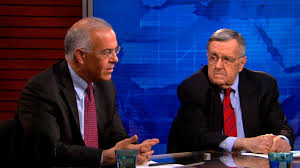
David Brooks and Mark Shields
MARK SHIELDS: “Donald Trump gratuitously slandered Ted Cruz’s wife. He libeled Ted Cruz’s father for being potentially part of Lee Harvey Oswald’s assassination of the president of the United States, suggesting that he was somehow a fellow traveler in that.
“This is a libel. You don’t get over it….
“…I think this man may be addicted to the roar of the grease paint and the sound of the crowd, or however it goes, smell of the crowd.”
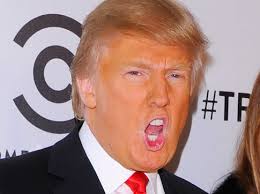
Donald Trump
DAVID BROOKS: “Trump, for all his moral flaws, is a marketing genius. And you look at what he does. He just picks a word and he attaches it to a person. Little Marco [Rubio], Lyin’ Ted [Cruz], Crooked Hillary [Clinton].
“And that’s a word. And that’s how marketing works. It’s a simple, blunt message, but it gets under.
“It sticks, and it diminishes. And so it has been super effective for him, because he knows how to do that. And she [Hillary Clinton] just comes with, ‘Oh, he’s divisive.’
“These are words that are not exciting people. And her campaign style has gotten, if anything…a little more stagnant and more flat.”
Only one opponent—who was not a Presidential candidate—managed to stand up to Trump: Massachusetts U.S. Senator Elizabeth Warren. Whenever Trump attacks her, Warren strikes back—sometimes even more harshly.
As Mark Shields noted:
“Elizabeth Warren gets under Donald Trump’s skin. And I think she’s been the most effective adversary. I think she’s done more to unite the Democratic party than either Hillary Clinton or Bernie Sanders.”
From June 15, 2015, when he launched his Presidential campaign, until October 24, 2016, Trump used Twitter to fire almost 4,000 angry, insulting tweets at 281 people and institutions that had somehow offended him.
Warren has dared to do what no other Democrat—or Republican—has: Attack Trump head-on, with the kind of blunt, insulting language he has lavished on his opponents.
Among the jabs she has thrown at him on Twitter:
- “But here’s the thing. You can beat a bully—not by tucking tail and running, but by holding your ground.”
- “You care so much about struggling American workers, @realDonaldTrump, that you want to abolish the federal minimum wage?”
- “@realDonaldTrump: Your policies are dangerous. Your words are reckless. Your record is embarrassing. And your free ride is over.”
Nor is Twitter her only weapon.
On March 31, Warren appeared on The Late Show, with Stephen Colbert. Her take on the egotistical billionaire:
“Donald Trump is looking out for exactly one guy, and that guy’s name is Donald Trump. He smells that there’s change in the air and what he wants to do is make sure that that change works really, really well for Donald Trump.
“The truth is, he inherited a fortune from his father, he kept it going by cheating and defrauding people, and then he takes his creditors through Chapter 11.”
When Colbert said that Trump had never broken the law, Warren replied that he had never broken the law “and been caught.”
For David Brooks, Warren’s tactics prove a depressing, lose/lose situation:
“And so the tactics…is either you do what Elizabeth Warren has done, like full-bore negativity, that kind of [get] under the skin, or try to ridicule him and use humor. Humor is not Hillary Clinton’s strongest point.”
As a whole, Democrats have shown themselves indifferent to or ignorant of the power of effective language.
2016 PRESIDENTIAL CAMPAIGN, 2016 PRESIDENTIAL DEBATES, ABC NEWS, ACCESS HOLLYWOOD TAPE, ALTERNET, AP, BARACK OBAMA, BILLY BUSH, BIRTHERISM, BLACKS, BUZZFEED, CBS NEWS, CNN, CROOKS AND LIARS, DAILY KOZ, DEMOCRATS, DONALD TRUMP, FACEBOOK, FOX NEWS, HILLARY CLINTON, HISPANICS, KIM JONG-UN, MOTHER JONES, MOVEON, NBC NEWS, NEWSWEEK, NPR, POLITICO, RAFAEL "TED" CRUZ, RAW STORY, REINCE PRIEBUS, REUTERS, REX TILLERSON, SALON, SEATTLE TIMES, SLATE, THE ATLANTIC, THE CHICAGO SUN-TIMES, THE CHICAGO TRIBUNE, THE DAILY BEAST, THE GUARDIAN, THE HILL, THE HUFFINGTON POST, THE LOS ANGELES TIMES, THE NATION, THE NEW YORK TIMES, THE WALL STREET JOURNAL, THE WASHINGTON POST, TIME, TWITTER, U.S. NEWS & WORLD REPORT, UPI, USA TODAY, WOMEN
In Bureaucracy, History, Politics, Social commentary on November 28, 2017 at 12:15 am
As a Presidential candidate, Donald Trump repeatedly used Twitter to attack hundreds of real and imagined enemies in politics, journalism, TV and films.
From June 15, 2015, when he launched his Presidential campaign, until October 24, 2016, Trump fired almost 4,000 angry, insulting tweets at 281 people and institutions that had somehow offended him.
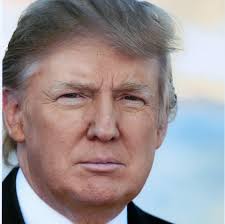
Donald Trump
The New York Times needed two full pages of its print edition to showcase them.
Among his targets:
- Hillary Clinton
- President Barack Obama
- News organizations
- Beauty pageant contestants
- Women
- Blacks
- Hispanics
- Asians
- Muslims
- The disabled
- Prisoners-of-war
As President, he has continued to insult virtually everyone, verbally and on Twitter. (One notable exception: Russian President Vladimir Putin, whom many believe has compromising information on Trump.)
His targets have included Democrats, Republicans, the media, foreign leaders (most notably North Korea’s “Little Rocket Man” Kim Jong Un) and even members of his Cabinet. Among these:
- After NBC News reported that Secretary of State Rex Tillerson called Trump a “moron,” Trump told Forbes magazine: “I think it’s fake news, but if he did that, I guess we’ll have to compare IQ tests. And I can tell you who is going to win.”
- Trump repeatedly humiliated his then-chief of staff, Reince Priebus—at one point ordering him to kill a fly that was buzzing about. On July 28, Priebus resigned.
So it was probably inevitable that, having waged war on virtually everyone, Trump has finally gotten around to waging war on himself.
On October 7, 2016, The Washington Post had leaked a video of then Republican Presidential nominee Trump making sexually predatory comments about women.
The remarks came during a 2005 exchange with Billy Bush, then the host of “Access Hollywood.” The two were traveling on a bus to the set of the soap opera Days of Our Lives, where Trump was to make a cameo appearance.
A “hot” microphone picked up their conversation—which proved damning for Trump:
Donald Trump: You know and I moved on her actually. You know she was down on Palm Beach. I moved on her and I failed. I’ll admit it. I did try and fuck her. She was married.
Trump: No, no, Nancy. No this was—and I moved on her very heavily. In fact, I took her out furniture shopping. She wanted to get some furniture. I said I’ll show you where they have some nice furniture….
I moved on her like a bitch, but I couldn’t get there, and she was married. Then all of a sudden I see her, she’s now got the big phony tits and everything. She’s totally changed her look.
[At that point, they spotted Adrianne Zucker, the starring actress in Days of Our Lives.]

Donald Trump, Adrianne Zucker and Billy Bush
Bush: Sheesh, your girl’s hot as shit. In the purple. Yes! The Donald has scored. Whoa, my man!
Trump: Look at you. You are a pussy. Maybe it’s a different one.
Bush: It better not be the publicist. No, it’s her. It’s—
Trump: Yeah, that’s her. With the gold. I better use some Tic Tacs just in case I start kissing her. You know I’m automatically attracted to beautiful—I just start kissing them. It’s like a magnet. Just kiss. I don’t even wait. And when you’re a star they let you do it. You can do anything.
Bush: Whatever you want.
Trump: Grab them by the pussy. You can do anything.
When the Washington Post broke the story on October 7, the reaction was immediate—and explosive.
Trump quickly released a statement: “This was locker room banter, a private conversation that took place many years ago. Bill Clinton has said far worse to me on the golf course—not even close. I apologize if anyone was offended.”
So it no doubt comes as a surprise that Trump has told at least one adviser and a sitting United States senator that the tape was false or had been doctored.
According to the New York Times, Trump has suggested this at least twice since January. As with his claims that President Barack Obama was not born in the United States, he has not offered any evidence to support his charge.
But if the tape was false or doctored, why did Trump issue an apology a year ago?
One point that Trump has not denied: That, on October 18, 2016, NBC News fired “Today” show host Billy Bush for his role in the “Access Hollywood” tape.
The “doctored tape” claim comes after Trump made clear his support for embattled Alabama Senate candidate Roy Moore.
At least nine women have accused Moore of making unwanted sexual advances toward them—groping, molesting or pursuing relationships with them when they were teenagers and he was in his 30s.
Trump is reportedly infuriated by the calls for Moore to exit the Alabama race. Supposedly he sees these as similar to the calls for his own exit from the 2016 Presidential campaign after the “Access Hollywood” tape appeared.
At least 16 women publicly accused Trump of making unwanted sexual advances toward them. He claimed the women were lying and threatened to sue them for slander (as well as the newspapers for printing their accusations).
But he never sued anyone.
ABC NEWS, ADOLF HITLER, AFGHANISTAN, ALTERNET, AP, BARACK OBAMA, BUZZFEED, CBS NEWS, CNN, CROOKS AND LIARS, DAILY KOZ, DONALD TRUMP, EL ELAMEIN, ERWIN ROMMEL, FACEBOOK, FRIEDRICH VON PAULUS, GEORGE W. BUSH, GREAT BRITAIN, IRAQ, JAPAN, JOSEPH GOEBBELS, MOSCOW, MOTHER JONES, MOVEON, NAZI GERMANY, NBC NEWS, NEWSWEEK, NPR, PEARL HARBOR, POLITICO, RAW STORY, REUTERS, SALON, SEATTLE TIMES, SLATE, SOVIET UNION, STALINGRAD, THANKSGIVING MESSAGE TO U.S. TROOPS, THE ATLANTIC, THE CHICAGO SUN-TIMES, THE CHICAGO TRIBUNE, THE DAILY BEAST, THE GUARDIAN, THE HILL, THE HUFFINGTON POST, THE LOS ANGELES TIMES, THE NATION, THE NEW YORK TIMES, THE WASHINGTON POST, TIME, TOTAL WAR SPEECH, TWITTER, U.S. NEWS & WORLD REPORT, UNITED STATES, UPI, USA TODAY, WEHRMACHT, WINSTON CHURCHILL, WORLD WAR ii
In Bureaucracy, History, Military, Politics, Social commentary on November 27, 2017 at 1:50 am
By February, 1943, the tide of war had turned irrevocably for Nazi Germany.
The string of quick and easy victories that had started on September 1, 1939 was over:
- Poland
- Norway
- Denmark
- Holland
- Belgium
- Luxembourg
- Greece
- France.
All had fallen under the heel of the Nazi jackboot. The swastika flag still flew triumphantly over the capitols of these once-free nations.
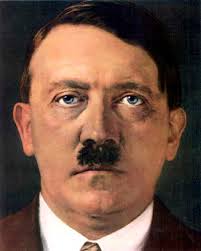
Adolf Hitler
And the word—and whim—of Germany’s Fuhrer, Adolf Hitler remained law for their populations.
But by March, 1943, all except the most fanatical Nazis could see that Germany was on a collision course with disaster.
- Under the unshakable leadership of Prime Minister Winston Churchill, Great Britain still remained a sworn enemy of the Third Reich.
- After six months of spectacular victories against the Soviet Union, the Wehrmacht had become hopelessly bogged down in the snow before Moscow.
- On December 11, 1941, following the attack on Pearl Harbor by his ally, Japan, Hitler declared war on the United States—thus pitting the Reich against the world’s two most powerful nations: America and Russia.
- In November, 1942, at El Alamein, the British Army halted the advance of General Erwin Rommel and his famed Afrika Korps across North Africa.
- On February 2, 1943, General Friedrich von Paulus surrendered the remains of the once-powerful Sixth Army at Stalingrad. The Reich suffered 730,000 total casualties, including nearly 91,000 German prisoners taken prisoner.
- On June 6, 1944, American, British and Canadian armies overwhelmed German’s “impregnable wall of death” on the Normandy beaches.
- In February, 1945, following the Vistula-Oder Offensive, the Red Army temporarily halted 37 miles east of Berlin.
So, by March, 1943, Germany desperately needed to hear some good news. And Propaganda Minister Joseph Goebbels was eager to supply it.
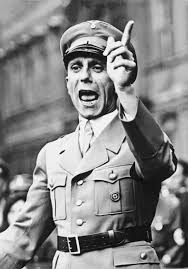
Joseph Goebbels
He did so in one of his last public addresses, delivered to a large but carefully selected audience in Gorlitz.
For Goebbels, the greatest challenge to the Reich lay in “the Bolshevist danger in the East.” And, for him, the solution was clear: “Total war is the demand of the hour.”
“Our soldiers, as soon as the great push on the Eastern Front gets under way, will ask no mercy and give no mercy.
“Already, our forces have begun softening up operations, and in the next weeks and months the big offensive will begin. They will go into battle with devotion like congregations going to a religious service.
“And when our men shoulder their weapons and climb into their tanks, there will be before their eyes the sight of their violated women and murdered children. A cry of vengeance will rise from their throats that will make the enemy tremble with fear!
“So, as the Fuhrer has overcome crises in the past, so will he triumph now.
“The other day he told me ‘I firmly believe that we shall overcome this crisis. I firmly believe that our army of millions will beat back our enemy and annihilate him. And some day our banners will be victorious. This is my life’s unshakable belief.'”
Thunderous applause repeatedly interrupted Goebbels’ address. Yet this could not replace the enormous losses Germany had suffered since 1939. Nor could it reverse the march of the Allied armies as they closed in on the Reich from East and West.
Now, fast-forward 74 years to November 23, 2017—Thanksgiving Day.
Donald Trump, President of the United States, speaks by video teleconference to American forces stationed in Iraq and Afghanistan.
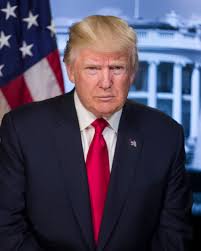
Donald Trump
President George W. Bush had flown into Baghdad in 2003 to spend Thanksgiving with American forces. He flew into Iraq once again to visit troops in June, 2006.
And President Barack Obama visited American soldiers in Iraq in 2009, in Afghanistan in 2010, 2012 and 2014.
Trump’s “visit” was unique—in that he addressed American troops from his Mar-a-Lago Club and Resort in Palm Beach, Florida.
The address started off predictably enough: “It’s an honor to speak with you all and to give God thanks for the blessings of freedom and for the heroes who really have this tremendous courage that you do to defend us and to defend freedom.”
But, being Trump, he could not resist paying homage to himself: “We’re being talked about again as an armed forces. We’re really winning. We know how to win, but we have to let you win. They weren’t letting you win before; they we’re letting you play even. We’re letting you win….
“They say we’ve made more progress against ISIS than they did in years of the previous administration, and that’s because I’m letting you do your job….”
In short: All those sacrifices you made under Presidents Bush and Obama went for nothing.
“A lot of things have happened with our country over the last very short period of time, and they’re really good — they’re really good. I especially like saying that companies are starting to come back.
“Now we’re working on tax cuts—big, fat, beautiful tax cuts. And hopefully we’ll get that and then you’re going to really see things happen.”
Or, put another way: Be grateful they elected me—because you’re about to see the 1% richest get even richer. Too bad you won’t be so lucky.
ABC NEWS, ALTERNET, ANITA STAVER, AP, BATHROOMS, BOYCOTTS, BUZZFEED, CBS NEWS, CHRISTIAN FUNDAMENTALISTS, CHRISTIAN RIGHT, CNN, CROOKS AND LIARS, DAILY KOZ, DONALD TRUMP, FACEBOOK, LIBERTY COUNCIL, MOTHER JONES, MOVEON, NBC NEWS, NEWSWEEK, NPR, PACE UNIVERSITY'S LUBIN SCHOOL OF BUSINESS, POLITICO, PROTESTS, RAW STORY, RESTROOMS, REUTERS, RIGHT-WINGERS, SALON, SEATTLE TIMES, SLATE, TARGET DEPARTMENT STORES, THE ATLANTIC, THE CHICAGO SUN-TIMES, THE CHICAGO TRIBUNE, THE DAILY BEAST, THE GUARDIAN, THE HILL, THE HUFFINGTON POST, THE LOS ANGELES TIMES, THE NATION, THE NEW YORK TIMES, THE WASHINGTON POST, TIME, TRANSGENDERS, TWITTER, U.S. NEWS & WORLD REPORT, UPI, USA TODAY, VIOLENCE
In Business, History, Law, Politics, Social commentary on November 23, 2017 at 11:09 am
On April 19, 2016, in a blog post, Target announced that its customers could use any bathroom or fitting room that matched the gender they thought they belonged to.
“We welcome transgender team members and guests to use the restroom or fitting room facility that corresponds with their gender identity,” read the official Target statement.
“Everyone deserves to feel like they belong. And you’ll always be accepted, respected and welcomed at Target.”

Target corporate headquarters
Target posted its new policy in response to North Carolina’s HB2 law requiring men to use bathrooms marked “MEN” and women to use bathrooms marked “WOMEN”.
This was clearly a Politically Correct sop to the “transgender” community.
To drive home this point, Target converted half of its famous red bull’s-eye logo into a gay-pride rainbow.
The announcement won Target much praise on social media. On Target’s Facebook page, the following posts appeared:
“I want to tell you that I will forever be a Target shopper.”
“You have, again, shown that your stores are inclusive and meant to be a safe haven, and I intend to repay your loyalty with my own.”
But others were enraged, and made no effort to hide it.
“Shame on Target,” read one post. “Restrooms have placards depicting gender on them for a reason. I will not step foot in another Target.”
Since its 2016 announcement, more than 1.2 million people have signed a pledge to boycott the store owing to its transgender policy.
The protesters’ goal: Force Target to reverse its policy—or, failing that, to hit the retailer in its pocketbook by persuading customers to shop elsewhere.
So far, Target CEO Brian Cornell has refused to budge: “We took a stance and we are going to continue to embrace our belief of diversity and inclusion,” he said on CNBC.
Critics have held protests at Target stores across the country—and show no signs of ending.
Many are demanding access to bathrooms of the opposite sex to prove that “perverts” can now prey on women and children as a result of the policy.
One male protester entered a Target store and asked an employee if he could use the women’s bathroom because that’s where he felt comfortable. The employee gave him permission and said that if any women complained, “they can come and we will speak to that.”
Eighty million Americans shopped at Target’s stores every month before the bathroom policy change.
“The boycott is not going to last very long,” predicted Larry Chiagouris, a professor of marketing at Pace University’s Lubin School of Business in New York: “There is a big difference between signing a petition compared to not taking advantage of a big sale at Target. People will always take advantage of the sale.”
The boycott has cost Target millions in lost sales and added expenses. Shopper traffic and same-store sales started sliding for the first time in years after the revised bathroom policy announcement.
Target has been forced to spend $20 million installing single-occupancy bathrooms in all its stores to appease critics of the policy-change.
In 2016, sales fell nearly 6% in the three quarters after the announcement—compared with the same period in 2015. Same-store sales have dropped every quarter since the post.
Yet Target continues to stick to its revised bathroom-use policy.
Right-wingers have loudly claimed that Target’s bathroom policy puts women in danger. But they have refused to condemn their own leader—Donald Trump—for entering “women’s only” locker rooms.

Donald Trump
During an appearance on The Howard Stern Show in 2005, Trump described going backstage at the beauty pageants while the contestants were undressed.
“Before a show, I’ll go backstage and everyone’s getting dressed, and everything else, and you know, no men are anywhere, and I’m allowed to go in because I’m the owner of the pageant and therefore I’m inspecting it. You know, I’m inspecting because I want to make sure that everything is good.
“You know, they’re standing there with no clothes. ‘Is everybody okay?’ And you see these incredible looking women, and so, I sort of get away with things like that.”
According to a BuzzFeed story, Trump did just that in 1997 with former Miss Teen USA contestants. Four contestants—including one who was 15—said that Trump walked into the dressing area while they were changing.
One of them called it “shocking” and “creepy” and said she rushed to cover herself. Another recalled that the contestants were “just scrambling to grab stuff… whatever garments they had.”
And when insults, threats and boycotts fail to gain the results they desire, Right-wingers can always be counted on to resort to violence.
Anita Staver, president of the Orlando-based Liberty Council, a theocratic law group, says she will be taking her gun inside the restrooms at Target stores from now on.
On April 22, 2016, she posted on Twitter: “I’m taking a Glock .45 to the ladies room. It identifies as my bodyguard.” #BoycottTarget @Target

Those opposed to Target’s bathroom policy aren’t going to change their minds—no matter how Neanderthal this appears to Target’s management.
Eventually, the retailer will be forced to choose between placating the “needs” of a minority most Americans regard as perverted freaks—and its own bottom line.
2016 PRESIDENTIAL CAMPAIGN, ABC NEWS, ALTERNET, AMERICAN UNIVERSITY, AP, APOLLO MOON LANDING, BARACK OBAMA, BARBARA TUCHMAN, BUZZFEED, CBS NEWS, CNN, COLD WAR, CROOKS AND LIARS, CUBAN MISSILE CRISIS, DAILY KOZ, DONALD TRUMP, DREAMS FROM MY FATHER, FACEBOOK, HERMAN CAIN, JOHN F. KENNEDY, KELLEYANNE CONWAY, LIBYA, LILTERACY, LYNDON B. JOHNSON, MOTHER JONES, MOVEON, NBC NEWS, NEWSWEEK, NPR, NUCLEAR TEST BAN TREATY, POLITICO, RATIONALITY, RAW STORY, REUTERS, RICHARD M. NIXON, RICK PERRY, SALON, SEAN SPICER, SEATTLE TIMES, SLATE, SUPER COMMITTEE OF CONGRESS, SUPREME COURT, THE ATLANTIC, THE AUDACITY OF HOPE, THE CHICAGO SUN-TIMES, THE CHICAGO TRIBUNE, THE DAILY BEAST, THE GUARDIAN, THE GUNS OF AUGUST, THE HILL, THE HUFFINGTON POST, THE LOS ANGELES TIMES, THE NATION, THE NEW YORK TIMES, THE WASHINGTON POST, TIME, TWITTER, U.S. NEWS & WORLD REPORT, UPI, USA TODAY, VIETNAM WAR, WORLD WAR 1
In Bureaucracy, History, Military, Politics, Social commentary on November 22, 2017 at 12:03 am
Fifty-four years ago, on November 22, 1963, two bullets slammed into the neck and head of President John Fitzgerald Kennedy.
It has been said that JFK left his country with three great legacies:
- The Nuclear Test Ban Treaty;
- The Apollo moon landing; and
- The Vietnam war.
Of these, the following can be said with certainty:
- The Test Ban Treaty has prevented atmosphereic testing—and poisoning—by almost all the world’s nuclear powers.
- After reaching the moon—in 1969—Americans quickly lost interest in space and have today largely abandoned plans for manned exploration. For America, as for JFK, beating the Russians to the moon was the end-goal.
- Under Presidents Lyndon Johnson and Richard Nixon, 58,000 Americans died in Vietnam; 153,303 were wounded; and billions of dollars were squandered in a hopeless effort to intervene in what was essentially a Vietnamese civil war. From 1965 to 1972, the war angrily divided Americas as had no event since the Civil War.
But there was a fourth legacy—and perhaps the most important of all: The belief that mankind could overcome its greatest challenges through rationality and perseverance.
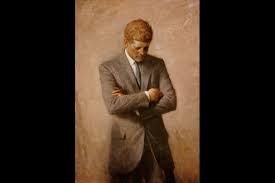
White House painting of JFK
At American University on June 10, 1963, Kennedy called upon his fellow Americans to re-examine the events and attitudes that had led to the Cold War. And he declared that the search for peace was by no means absurd:
“Our problems are man-made; therefore, they can be solved by man. And man can be as big as he wants. No problem of human destiny is beyond human beings.
“Man’s reason and spirit have often solved the seemingly unsolvable, and we believe they can do it again.”
Today, politicians from both parties cannot agree on solutions to even the most vital national problems.
On November 21, 2011, the 12 members of the “Super-Committee” of Congress, tasked with finding $1.2 trillion in cuts in government spending, threw up their hands in defeat.
President Kennedy insisted on being well-informed. He speed-read several newspapers every morning and nourished personal relationships with the press-–and not for altruistic reasons. These journalistic contacts gave Kennedy additional sources of information and perspectives on national and international issues.
During the 2012 Presidential campaign, Republican Presidential candidates celebrated their ignorance of both.
Former Godfather’s Pizza CEO Herman Cain famously said, “We need a leader, not a reader.” Thus he excused his ignorance for why President Barack Obama had intervened in Libya.
Texas Governor Rick Perry (and now Secretary of Energy) showed similar pride in not knowing there are nine judges on the United States Supreme Court:
“Well, obviously, I know there are nine Supreme Court judges. I don’t know how eight came out my mouth. But the, uh, the fact is, I can tell you—I don’t have memorized all of those Supreme Court judges. And, uh, ah—
“Here’s what I do know. That when I put an individual on the Supreme Court, just like I done in Texas, ah, we got nine Supreme Court justices in Texas, ah, they will be strict constructionists….”
In short, it’s the media’s fault if they ask you a question and your answer reveals your own ignorance, stupidity or criminality.
And President Donald Trump has gone even further—attacking the free press as “the enemy of America” for exposing his lies and criminality.
His senior adviser, Kelleyanne Conway, set the tone of his administration’s approach to the truth right at the outset. Asked why then-White House press secretary Sean Spicer had lied about the size of the crowd at Trump’s inauguration, Conway replied:
“You’re saying it’s a falsehood. And they’re giving—Sean Spicer, our press secretary—gave alternative facts.”
“Alternative facts aren’t facts, they are falsehoods,” Chuck Todd, the moderator on NBC’s “Meet the Press,” properly responded.
During the height of the Cuban Missile Crisis, Kennedy spoke with aides about a book he had just finished: Barbara Tuchman’s The Guns of August, about the events leading to World War 1.
He said that the book’s most important revelation was how European leaders had blindly rushed into war, without thought to the possible consequences. Kennedy told his aides he did not intend to make the same mistake–that, having read his history, he was determined to learn from it.
Republicans attacked President Obama for his Harvard education and articulate use of language. Among their taunts: “Hitler also gave good speeches.”
And they resented his having earned most of his income as a writer of two books: Dreams From My Father and The Audacity of Hope. As if being a writer is somehow subversive.
When knowledge and literacy are attacked as “highfalutin’” arrogance, and ignorance and incoherence are embraced as sincerity, national decline lies just around the corner.
During the 2016 Presidential campaign, Donald Trump infamously chortled after winning the Nevada Republican primary: “We won with poorly educated. I love the poorly educated.”
And, that November, “the poorly educated” elected him President.
In retrospect, the funeral for President Kennedy marked the death of more than a rational and optimistic human being.
It marked the death of Americans’ pride in choosing reasoning and educated citizens for their leaders.
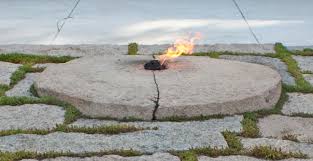
The Eternal Flame at the grave of President John F. Kennedy
ABC NEWS, ADRIANNE ZUCKER, ALABAMA SUPREME COURT, ALTERNET, AP, ATHEISTS, BARACK OBAMA, BILL CLILNTON, BILLY BUSH, BLACKS, BUZZFEED, CARL PALADINIO, CBS NEWS, CHARLES MANSON, CHICAGO TRIBUNE, CNN, COREY LEWENDOWSKI, CROOKS AND LIARS, DAILY KOZ, DAYS OF OUR LIVES, DONALD TRUMP, FACEBOOK, FOX NEWS, HISPANICS, HOMOSEXUALS, JERRY FALWELL JR., JESSICA LEEDS, JEWS, LEIGH CORFMAN, LESBIANS, LIBERALS, MICHAEL GERSON, MICHELLE BACHMANN, MINDY MCGILLLIVRAY, MOTHER JONES, MOVEON, NATASHA STOYNOFF, NBC NEWS, NEWSWEEK, NON-CHRISTIANS, NPR, PEOPLE, POLITICO, RALPH REED, RAW STORY, RELIGIOUS RIGHT, REPUBLICANS, REUTERS, ROY MOORE, SALON, SEAN HANNITY, SEATTLE TIMES, SLATE, STEVE BANNON, TED SLOWIK, THE ATLANTIC, THE CHICAGO SUN-TIMES, THE CHICAGO TRIBUNE, THE DAILY BEAST, THE GUARDIAN, THE HILL, THE HUFFINGTON POST, THE LOS ANGELES TIMES, THE NATION, THE NEW YORK TIMES, THE PALM BEACH POST, THE WASHINGTON POST, TIME, TWITTER, U.S. NEWS & WORLD REPORT, UPI, USA TODAY, WOMEN
In Bureaucracy, History, Politics, Social commentary, Uncategorized on November 21, 2017 at 12:01 am
By October 14, 2016, at least 12 women had publicly accused Republican Presidential nominee Donald Trump of sexually inappropriate behavior.
On October 11, questioned by a New York Times reporter about the women’s claims, Trump shouted: “None of this ever took place.”
He accused the newspaper of inventing accusations to hurt his Presidential candidacy. And he threatened to sue for libel if the Times reported the women’s stories.
On October 14, at a rally in North Carolina, Trump attacked the character of the women accusing him.
Of Natasha Stoynoff, whom he had mouth-raped, he said: “Take a look. You take a look. Look at her. Look at her words. You tell me what you think. I don’t think so. I don’t think so.”
Of Jessica Leeds—the airline passenger whose breasts he had grabbed—he said: “That horrible woman. Believe me, she would not be my first choice, that I can tell you.”
Trump—who’s been married three times and often boasted of his sexual prowess—asked why President Barack Obama hadn’t had similar claims leveled against him.
The answer: Because there has never been the slightest hint of scandal about Obama as a faithful husband.
Donald Trump
Some Republicans excused Trump’s misogynist comments as mere “frat boy” talk. Said Corey Lewandowski, a former Trump campaign manager and now CNN commentator: “We are electing a leader to the free world. We’re not electing a Sunday school teacher.”
But Washington Post Columnist Micheal Gerson took a darker—and more accurate—view of Trump’s comments.
Appearing on the PBS Newshour on October 7, Gerson said: “Well, I think the problem here is not just bad language, but predatory language, abusive language…demeaning language.
“That indicates something about someone’s character that is disturbing, frankly, disturbing in a case like this.”
But this didn’t prevent the Religious Right from passionately supporting Trump.
During the 2016 Presidential campaign, many pundits—–and ordinary citizens—repeatedly asked: “Why are so many evangelical leaders supporting Donald Trump?”
Evangelical leaders like:
- Jerry Falwell, Jr., president of Liberty University: “When they ask [if Trump’s personal life is relevant] I always talk about the story of the woman at the well who had had five husbands and she was living with somebody she wasn’t married to, and they wanted to stone her. And Jesus said he’s–he who is without sin cast the first stone. I just see how Donald Trump treats other people, and I’m impressed by that.”
- Ralph Reed, founder and chairman of the Faith & Freedom Coalition: “People of faith are voting on issues like who will protect unborn life, defend religious freedom, grow the economy, appoint conservative judges and oppose the Iran nuclear deal.”
Evangelicals have long portrayed themselves as champions of “family values.” So why did they back Trump?
Power.
Power to control the lives of those they have long hated and despised.
Among these:
- Atheists
- Jews
- Women
- Homosexuals
- Lesbians
- Non-Christians
- Liberals
They expected Trump to sponsor legislation that will—by force of law—make their brand of Christianity supreme above all other religions.
In 2017, Roy Moore, the twice-ousted former chief justice of the Alabama Supreme Court, entered the race for the state’s U.S. Senator.
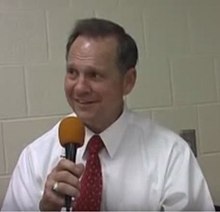
Roy Moore
Then, on November 9, four women, in a Washington Post story, accused Moore of seeking romantic relationships with teenage girls while he was in his 30s, and even trolling malls for such dates.
The worst of these charges came from Leigh Corfman, who said that, when she was 14, Moore took off her “shirt and pants and removed his clothes,” touched her “over her bra and underpants” and “guided her hand to touch him over his underwear.”
Among Moore’s defenders:
- STEVE BANNON: Steve Bannon, executive chairman of Breitbart News, an online Right-wing news, opinion and commentary website.
“This is nothing less than the politics of personal destruction,” he told Bloomberg News. “And they need to destroy him by any means necessary.”
- SEAN HANNITY: Talk show host on Fascistic Fox News. Interviewed on Hannity’s program, Moore said he did “not generally” remember dating teenagers when he was in his 30s.
Meanwhile, many Alabamans have dismissed the reports of Moore’s improper relationships with teenage girls. One who could speak for all of them is Kay Ivey, the state’s Governor:
“I believe in the Republican party, what we stand for, and, most important, we need to have a Republican in the United States Senate to vote on things like the Supreme Court justices, other appointments the Senate has to confirm and make major decisions. So that’s what I plan to do, vote for Republican nominee Roy Moore.”
Ted Slowik, a columnist with Chicago Tribune, explains why:
“I think the lesson is that the party must support its candidates, no matter what. Years of GOP messaging has convinced voters that Democrats are evil and must be defeated at all costs….
“The base doesn’t care that the Constitution affords due-process rights to all residents, even ones here illegally….
“The base wants outlaws with firebrand personalities willing to do whatever it takes to advance the cause. The Republican Party can’t win without the base, and the base has no patience for moderates and establishment types who gum up the works and get in the way.”
ABC NEWS, ADRIANNE ZUCKER, ALABAMA SUPREME COURT, ALTERNET, AP, ATHEISTS, BARACK OBAMA, BILL CLILNTON, BILLY BUSH, BLACKS, BUZZFEED, CARL PALADINIO, CBS NEWS, CHARLES MANSON, CHICAGO TRIBUNE, CNN, COREY LEWENDOWSKI, CROOKS AND LIARS, DAILY KOZ, DAYS OF OUR LIVES, DONALD TRUMP, FACEBOOK, FOX NEWS, HISPANICS, HOMOSEXUALS, JERRY FALWELL JR., JESSICA LEEDS, JEWS, LEIGH CORFMAN, LESBIANS, LIBERALS, MICHAEL GERSON, MICHELLE BACHMANN, MINDY MCGILLLIVRAY, MOTHER JONES, MOVEON, NATASHA STOYNOFF, NBC NEWS, NEWSWEEK, NON-CHRISTIANS, NPR, PEOPLE, POLITICO, RALPH REED, RAW STORY, RELIGIOUS RIGHT, REPUBLICANS, REUTERS, ROY MOORE, SALON, SEAN HANNITY, SEATTLE TIMES, SLATE, STEVE BANNON, TED SLOWIK, THE ATLANTIC, THE CHICAGO SUN-TIMES, THE CHICAGO TRIBUNE, THE DAILY BEAST, THE GUARDIAN, THE HILL, THE HUFFINGTON POST, THE LOS ANGELES TIMES, THE NATION, THE NEW YORK TIMES, THE PALM BEACH POST, THE WASHINGTON POST, TIME, TWITTER, U.S. NEWS & WORLD REPORT, UPI, USA TODAY, WOMEN
In Bureaucracy, History, Politics, Social commentary on November 20, 2017 at 12:19 am
Republican voters’ love affair with predators may have begun on September 26, 2011.
That was the day that then-Representative Michelle Bachmann (R-Minn.) thanked an Iowa radio show listener for saying he would rather vote for Charles Manson than President Barack Obama.
Bachmann appeared on Des Moines-based WHO Radio with Simon Conway, a conservative radio host, for an interview and to take questions from listeners.
One caller, “Donna,” said that she had attended several Bachmann rallies and thanked Bachmann for signing a T-shirt. She then said that Obama was a “walking nightmare” who was “blowing up our country.”
“I would vote for Charles Manson before this guy [Obama]. But I’m pulling for you big time, all the way. Go Michele!”
“Thank you for saying that,” Bachmann replied.
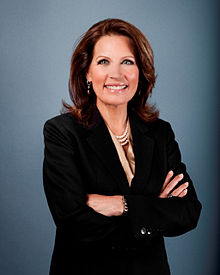
Michelle Bachmann
Five years later, on October 7, 2016, The Washington Post leaked a video of Republican Presidential nominee Donald Trump making sexually predatory comments about women.
The remarks came during a 2005 exchange with Billy Bush, then the host of Access Hollywood.
The two were traveling in an Access Hollywood bus to the set of the soap opera Days of Our Lives, where Trump was to make a cameo appearance. A “hot” microphone picked up their conversation—which proved damning for Trump:
Donald Trump: You know and I moved on her actually. You know she was down on Palm Beach. I moved on her and I failed. I’ll admit it. I did try and fuck her. She was married.
Trump: No, no, Nancy. No this was–and I moved on her very heavily. In fact, I took her out furniture shopping. She wanted to get some furniture. I said I’ll show you where they have some nice furniture.
I took her out furniture [shopping]. I moved on her like a bitch, but I couldn’t get there, and she was married. Then all of a sudden I see her, she’s now got the big phony tits and everything. She’s totally changed her look.
[At that point, they spotted Adrianne Zucker, the starring actress in Days in Our Lives.]
Bush: Sheesh, your girl’s hot as shit. In the purple. Yes! The Donald has scored. Whoa, my man!
Trump: Look at you. You are a pussy. Maybe it’s a different one.
Bush: It better not be the publicist. No, it’s her. It’s—
Trump: Yeah, that’s her. With the gold. I better use some Tic Tacs just in case I start kissing her. You know I’m automatically attracted to beautiful—I just start kissing them. It’s like a magnet. Just kiss. I don’t even wait. And when you’re a star they let you do it. You can do anything.
Bush: Whatever you want.
Trump: Grab them by the pussy. You can do anything.
When the Washington Post broke the story on October 7, the reaction was immediate—and explosive.
The Trump campaign quickly released a statement: “This was locker room banter, a private conversation that took place many years ago. Bill Clinton has said far worse to me on the golf course–not even close. I apologize if anyone was offended.”
During the second Presidential debate on October 9, moderator Anderson Cooper asked Trump: “Have you ever done those things?”
Trump: “And I will tell you—no I have not.”
On October 12, The Palm Beach Post, The New York Times and People all published stories of women claiming to have been sexually assaulted by Trump.
Among his victims:
- MINDY MCGILLLIVRAY: Told the Post that Trump groped her buttocks when she visited Mar-a-Lago in Palm Beach, Florida, in 2013.
Within a week of accusing Trump, she told the Palm Beach Post that she and her family were leaving the United States. The reason: She feared for her family’s safety.
“We feel the backlash of the Trump supporters. It scares us. It intimidates us. We are in fear of our lives.’’
- NATASHA STOYNOFF: A People magazine writer, in December, 2005, she went to Mar-a-Lago to interview Donald and Melania Trump for a first-wedding-anniversary feature story.
During a break in the interview, Trump said he wanted to show Stoynoff around his mansion. There was one “tremendous” room he especially wanted to show her.
According to her account: “We walked into that room alone, and Trump shut the door behind us. I turned around, and within seconds he was pushing me against the wall and forcing his tongue down my throat.”
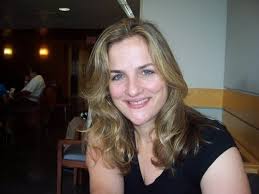
Natasha Stoynoff
Fortunately, Trump’s butler soon entered the room, and Trump acted as though nothing had happened. But as soon as he and Stoynoff were alone again, Trump said: “You know we’re going to have an affair, don’t you?”
Stoynoff asked her editors—and received permission—to be removed from writing any further Trump features.
- JESSICA LEEDS: More than 30 years earlier, Trump had made equally unwelcome advances toward businesswoman Leeds, then 38.
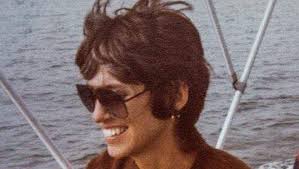
Jessica Leeds
She said she was sitting next to Trump in the first-class cabin of a New York-bound flight when Trump lifted the armrest, grabbed her breasts and tried to put his hand up her skirt.
She fled to the back of the plane.
2016 PRESIDENTIAL CAMPAIGN, ABC NEWS, ADOLF HITLER, ALTERNET, ANCIENT ROME, ANTONIN SCALIA, AP, BUZZFEED, CAMPAIGN CONTRIBUTIONS, CBS NEWS, CITIZENS UNITED, CLEOPATRA, CNN, CROOKS AND LIARS, DAILY KOZ, DONALD TRUMP, FACEBOOK, FORECLOSURES, GLADIATORS, JULIUS CAESAR, KIRK DOUGLAS, LAURENCE OLIVER, MARCUS CRASSUS, MEIN KAMPF, MITT ROMNEY, MOTHER JONES, MOVEON, NBC NEWS, NEWSWEEK, NEWT GINGRICH, NPR, POLITICO, RAW STORY, REUTERS, SALON, SEATTLE TIMES, SHELDON ADELSON, SLATE, SPARTACUS, SUPREME COURT, THE ATLANTIC, THE CHICAGO SUN-TIMES, THE CHICAGO TRIBUNE, THE DAILY BEAST, THE GUARDIAN, THE HILL, THE HUFFINGTON POST, THE LOS ANGELES TIMES, THE NATION, THE NEW YORK TIMES, THE WASHINGTON POST, TIME, TWITTER, U.S. NEWS & WORLD REPORT, UPI, USA TODAY
In Bureaucracy, History, Law, Military, Politics, Social commentary on November 17, 2017 at 12:07 am
The 1960 Kirk Douglas epic, Spartacus, may soon prove to be more than great entertainment. It may also turn out to be a prophecy of the end of the American Republic.
In the movie, Spartacus (Douglas), a Roman slave, entertains Marcus Crassus (Laurence Oliver) the richest man in Rome. He does so by fighting to the death as a gladiator.

Poster for Spartacus
While Spartacus and his fellow gladiator/friend, Draba, slash and stab at each other in the arena, Crassus idly chats with his crony, Marcus Glabrus.
Crassus has just secured Glabrus’ appointment as commander of the garrison of Rome. Glabrus is grateful, but curious as to how he did it.
After all, Gaius Gracchus, the leader of the Roman Senate, hates Crassus, and stands ever ready to oppose his every move.
“I fought fire with oil,” says Crassus. “I purchased the Senate behind his back.”
Draba defeats Spartacus in their gladiatorial bout, but refuses to kill him. Instead, he throws his spear at Crassus—and is immediately slaughtered by Roman guards.
Soon afterward, Spartacus leads 70 other gladiators against their Roman masters, forms an army of freed slaves, and marches against Rome.
Just as Crassus bought the Roman Senate in Spartacus, billionaires similarly bought the 2016 Presidential election.
In 2016, Newt Gingrich, former Speaker of the House of Representatives, ran as the pet candidate of casino billionaire Sheldon G. Adelson. Since 2007, Adelson had spent millions in support of Gingrich and his causes.
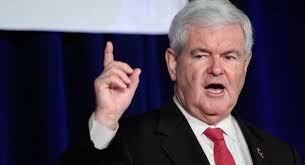
Newt Gingrich
Adelson put up seed money and, ultimately, $7.7 million between 2006 and 2010 for a nonprofit group that served as a precursor to Gingrich’s presidential campaign.
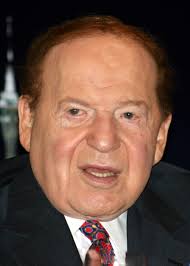
Sheldon Adelson
Such a contribution is no small amount to the average American. But Adelson is listed by Forbes as the eighth-wealthiest American, with a net worth of $21.5 billion.
Naturally, Adelson denied he had any selfish motives for shelling out so much money to a candidate for the most powerful office in the world:
“My motivation for helping Newt is simple and should not be mistaken for anything other than the fact that my wife Miriam and I hold our friendship with him very dear and are doing what we can as private citizens to support his candidacy.”
Unfortunately, Gingrich was not the only candidate of the rich, by the rich and for the rich seeking the Presidency.
Former Massachusetts Governor Mitt Romney relied heavily on a small group of millionaires and billionaires for support.
By February, 2012, a quarter of the money amassed by Romney’s campaign came from just 41 people. Each contributor gave more than $100,000, according to a Washington Post analysis of disclosure data. Nearly a dozen of the donors had contributed $1 million or more.
Some of Romney’s biggest supporters included executives at Bain Capital, his former firm; bankers at Goldman Sachs; and a hedge fund mogul who made billions betting on the housing crash.
Like Adelson, Bain has directly profited from the losses of others.
Fast forward to 2016:
In early May, Adelson met privately with Republican Presidential nominee-in-waiting Donald Trump. Nevertheless, at least this much has leaked:
Adelson promised to contribute more to secure Trump’s election than he had contributed to any previous campaign—up to and exceeding $100 million.
Meanwhile, Trump bragged that he was “not beholden” to any “special interests” because “I’m really rich.” This myth proved a main reason for his popularity as a candidate.
Donald Trump
All of this can be directly traced to the 2010 “Citizens United” decision by the U.S. Supreme Court that ended limits in corporate contributions to political campaigns. The decision is so named for the group that successfully sued over federal campaign finance laws.
The 5-4 decision led to the rise of Super PACs—outside groups affiliated with candidates that can take in unlimited contributions as long as they don’t directly coordinate with the candidate. The overwhelming majority of this money goes for negative ads—that slander opponents without saying anything about what a candidate proposes to do.
Former U.S. Supreme Court Justice Antonin Scalia brushed aside criticism of the corrupting role money played in politics: Change the channel or turn off the TV.
“I don’t care who is doing the speech—the more the merrier,” Scalia said. “People are not stupid. If they don’t like it, they’ll shut it off.”
On the contrary: A fundamental principle of propaganda holds that most people are stupid—or can be made to behave stupidly. If they are ceaselessly bombarded with mind-numbing lies, they will eventually substitute these for reality.
In Mein Kampf, Adolf Hitler laid out his formula for successful propaganda: “All effective propaganda must be confined to a few bare essentials.
“These must be expressed as far as possible in stereotypical formulas. These slogans should be persistently repeated until the very last individual has come to grasp the idea that has been put forward.”
During the early 1960s a series of movies about the Roman Empire—like Spartacus and Cleopatra—hit the big screen. In these, rich criminals like Marcus Crassus openly bought the favors of ambitious politicians like Julius Caesar.
No doubt millions of moviegoers thought, “Boy, I’m glad that couldn’t happen here.”
But it has happened here—and it’s happening right now.
ABC NEWS, AL PACINO, ALABAMA, ALTERNET, AP, BREITBART NEWS, BUZZFEED, CBS NEWS, CNN, CROOKS AND LIARS, DAILY KOZ, DONALD TRUMP, DOUG JONES, EMILIO BARZINI, FACEBOOK, FOX NEWS, FREDO CORLEONE, JAMES CCAN, JOHN CAZALE, MAFIA, MARLON BRANDO, MICHAEL CORELEONE, MITCH MCCONNELL, MOTHER JONES, MOVEON, NBC NEWS, NEWSWEEK, NPR, PAUL RYAN, POLITICO, RAW STORY, REPUBLICANS, REUTERS, ROY MOORE, SALON, SEATTLE TIMES, SEXUAL PREDATORS, SLATE, SONNY CORLEONE, STEVE BANNON, THE ATLANTIC, THE CHICAGO SUN-TIMES, THE CHICAGO TRIBUNE, THE DAILY BEAST, THE GODFATHER, THE GUARDIAN, THE HILL, THE HUFFINGTON POST, THE LOS ANGELES TIMES, THE NATION, THE NEW YORK TIMES, THE WASHINGTON POST, TIME, TWITTER, U.S. NEWS & WORLD REPORT, UPI, USA TODAY, VITO CORELEONE
In Bureaucracy, Business, History, Law Enforcement, Politics, Social commentary on November 16, 2017 at 12:17 am
In 1972, warfare erupted the between the two most powerful Mafia families of New York.
On one side: The Corleone Family, headed by “Don Vito” Corleone. On the other: The Barzini Family, whose boss was Emilio Barzini.
Moviegoers flooded theaters across the nation to make The Godfather the highest-grossing film of 1972—and, for a time, the highest-grossing film ever made.
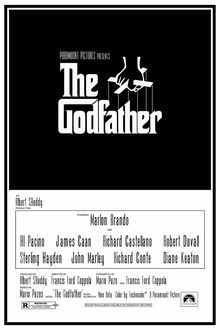
Audiences rooted for the Corleones and thrilled whenever a Barzini “soldier” bit the concrete. And they moaned when Vito Corleone (Marlon Brando) was shot and wounded at an outdoor market and Sonny Corleone (James Caan) got riddled by machine guns on a New Jersey causeway.
Why did so many moviegoers feel compelled to side with the Corleones?
One reason was that, early in the film, Don Corleone rejects an offer by the Barzini Family to enter the narcotics-trafficking business.
Many viewers saw this as proof that “Don Vito” was more honest than other Mafia chiefs who did enter the drug trade. In fact, Corleone made it clear that he wanted to stay out for completely practical reasons.
When speaking with Virgil Sollotzzo, the Turkish drug kingpin backed by the Barzinis, Corleone says: “It makes no difference to me what a man does for a living. But your business is a little dangerous.
“It’s true I have a lot of friends who are judges and politicians. And they don’t mind if people want to gamble, or drink, or even pay for a woman. But they wouldn’t be so friendly if they knew my business was drugs.”
In short, it wasn’t morality that led him to steer clear of narcotics trafficking. He simply didn’t want to go to prison.
The other reason so many viewers identified with the Corleones lay in the brilliant casting of their members.
- Marlon Brando—considered by many the greatest actor of his time—headed the cast.
- Al Pacino, then an unknown, aroused sympathy as Michael, the Family outsider forced by the shooting of his father to become the Boss of All Bosses.
- James Caan (as Sonny) is handsome and the defender of his brutalized sister, Connie, against her abusive husband, Carlo Rizzi.
- John Cazale (as Fredo) is riddled with insecurities and not very bright, won the audiences’ sympathy by his sheer helplessness when compared to his ruthless siblings.
But the fact remained that the Corleones—for all their homilies about “honor” and “loyalty”—were every bit as greedy and lethal as their Mafia competitors. They just played the game more ruthlessly—and successfully.
All of which brings us to the current Mafia-like struggle within the Republican party in Alabama.
On one side: Roy Moore, the twice-ousted former chief justice of the Alabama supreme court, who is running for U.S. Senator.
Roy Moore
On the other: “Establishment” Republicans like Senate Majority Leader Mitch McConnell and House of Representatives Speaker Paul Ryan.
The uproar started when four women, in a Washington Post story, accused Moore of seeking romantic relationships with four teenage girls while he was in his 30s, and even trolling malls for such dates.
The worst of these charges came from Leigh Corfman, who said that, when she was 14, Moore took off her “shirt and pants and removed his clothes,” touched her “over her bra and underpants” and “guided her hand to touch him over his underwear.”
One of Moore’s defenders is Steve Bannon, executive chairman of Breitbart News, an online Right-wing news, opinion and commentary website.
“This is nothing less than the politics of personal destruction,” he told Bloomberg News. “And they need to destroy him by any means necessary.”
Another is Sean Hannity, a talk show host on Fascistic Fox News. Interviewed on Hannity’s program, Moore said he did “not generally” remember dating teenagers when he was in his 30s.
Many Republicans want President Donald Trump to publicly urge Moore to step aside. But Trump is extremely reluctant to do so—and for good reason.
On October 12, 2016, The Palm Beach Post, The New York Times and People all published stories of women claiming to have been sexually assaulted by Trump. By October 14, at least 12 women had publicly accused Trump of sexually inappropriate behavior.
Trump, having become the poster boy of sexual harassment—if not predators—does not want the public once again reminded of his own repellent behavior.
There are several possible outcomes here—all of them disastrous for the Republican party.
- Moore could win—thus becoming a national embarrassment to Republicans.
- Moore could lose to his Democratic challenger, Doug Jones—thus giving Democrats one more Senator to oppose the Trump agenda.
- Moore could win—and be expelled from the Senate by his fellow Republicans. This would require a two-thirds majority vote. It would ignite a civil war among “establishment” Republicans like McConnell and “anti-establishment” Right-wingers like Bannon, Hannity and even Trump.
- No matter what Trump does, it will prove a lose/lose issue for Republicans. If he condemns Moore, he will be accused of hypocrisy. If he doesn’t, he will be accused of silently condoning sexually predatory behavior.
When predatory Mafiosi wipe each other out, honest citizens win. When Fascistic Republicans wage war on each other, democracy wins.


2016 PRESIDENTIAL CAMPAIGN, ABC NEWS, AL FRANKEN, ALTERNET, AP, BARACK OBAMA, BERNIE SANDERS, BOB CORKER, BUZZFEED, CBS NEWS, CNN, CROOKS AND LIARS, DAILY KOZ, DAVID BROOKS, DEMOCRATIC PARTY, DONALD TRUMP, ELIZABETH WARREN, FACEBOOK, HILLARY CLINTON, JEB BUSH, JEFF FLAKE, JOE SCARBOROUGH, JOSEPH MCCARTHY, KIM JONG-UN, LATE NIGHT WITH STEPHEN COLBERT, LIBERALS, MARCO RUBIO, MARK SHIELDS, MIKA BRZEZINSKI, MOTHER JONES, MOVEON, NBC NEWS, NEWSWEEK, NOCCOLO MACHIAVELLI, NPR, PBS NEWSHOUR, POLITICO, RAW STORY, REPUBLICAN PARTY, REPUBLICANS, REUTERS, SALON, SEATTLE TIMES, SLANDER, SLATE, TED CRUZ, THE ATLANTIC, THE CHICAGO SUN-TIMES, THE CHICAGO TRIBUNE, THE DAILY BEAST, THE GUARDIAN, THE HILL, THE HUFFINGTON POST, THE LOS ANGELES TIMES, THE NATION, THE NEW YORK TIMES, THE PRINCE, THE WASHINGTON POST, TIME, TWITTER, U.S. NEWS & WORLD REPORT, UP, UPI, USA TODAY
BULLIES AND COWARDS: PART TWO (END)
In Bureaucracy, History, Politics, Social commentary on November 30, 2017 at 12:03 amAs a whole, Democrats have shown themselves indifferent to or ignorant of the power of effective language.
Many of them—such as former President Barack Obama—believe: “I’m not going to get into the gutter like my opponents.”
Thus, they take the “high ground” while their sworn Republican enemies undermine them via “smear and fear” tactics.
In the early 1950s, slander-hurling Wisconsin U.S. Senator Joseph R. McCarthy demonstrated the effectiveness of such tactics. Wrote Pulitzer-Prize winning author David Halberstam, in his monumental study of the origins of the Vietnam War, The Best and the Brightest:
“But if they did not actually stick, and they did not, [McCarthy’s] charges had an equally damaging effect: They poisoned. Where there was smoke, there must be fire. He wouldn’t be saying these things [voters reasoned] unless there was something to it.”
Joseph McCarthy
Tyrants are conspicuously vulnerable to ridicule. Yet, just as Democrats proved unwilling to use this powerful weapon against McCarthy, they have failed to do so against Donald Trump.
For example: Trump has often expressed admiration for Russian dictator Vladimir Putin.
But not a single Democrat has dared nickname him “TrumPutin,” “Red Donald,” “Putin’s Poodle” or “Wannabe Czar.” Similarly, his vice president, Mike Pence, could be labeled “Vice Putin.”
Trump has repeatedly assaulted the press, judiciary and Intelligence agencies. Yet no Democrat has damned him as having a Fascistic agenda.
Nor, as a whole, has the press dared to respond in kind to his increasingly vicious attacks on the First Amendment.
Trump has labeled established news media as “fake news.” He has called reporters “the enemy of America.” He has tweeted images of a “Trump train” running over a CNN reporter and of himself beating up someone covered by a CNN logo.
His target of choice is CNN, which has been particularly effective in uncovering the truth behind his almost daily lies. On at least one occasion, he told a CNN reporter: “You’re fake news.”
Yet no reporter—for CNN or any other news outlet—has called him a “fake President.”
CNN has started running an ad featuring a shiny red apple, while a voice-over intones:
“This is an apple. Some people might try to tell you that it’s a banana. They might scream banana, banana, banana over and over and over again. They might put BANANA in all caps. You might even start to believe that this is a banana. But it’s not. This is an apple.”
Unfortunately, many viewers might mistake the “apple” for Apple. Many Americans fail to grasp the subtleties of symbolic imagery. Thus, a more effective ad could feature a picture of Trump in an SS uniform, complete with swastika, and the following message:
“This is a Fascist. Some people might try to tell you that he’s a democrat. They might scream democrat, democrat, democrat over and over and over again. They might put DEMOCRAT in all caps. You might even start to believe that he is a democrat. But he’s not. This is a Fascist.”
Nor, in this YouTube-obsessed age, have Democrats assailed Trump with a ridiculing music video. In the hands of a creative writer, for example, the classic rock-and-roll song, “Rockin’ Robin,” could become a Democratic party anthem:
TRUMPY TRAITOR
(To be sung to the tune, “Rockin’ Robin”)
He Tweets in the White House all the day long
Screamin’ and a-schemin’ and a-doin’ what’s wrong.
All the Special Agents in the FBI
Hope he goes to prison to the day he’ll die.
Trumpy Traitor (tweet tweet)
Trumpy Traitor (tweet tweet)
Go Trumpy Traitor
‘Cause they’re gonna bust your ass tonight.
Every act of treason, every act of crime—
America has never seen a bigger slime.
Bob Mueller’s ready, the cops are closin’ in
To put a grand finale to your reign of sin.
Trumpy Traitor (tweet tweet)
Trumpy Traitor (tweet tweet)
Go Trumpy Traitor
‘Cause they’re gonna bust your ass tonight.
Eric’s getting ready for his next big steal
While Daddy hugs Ivanka—who lets out a squeal.
Don Junior’s got the Russians coming once again—
It’s party-time for traitors and their lives of sin.
He Tweets in the White House all the day long
Screamin’ and a-schemin’ and a-doin’ what’s wrong.
Handing out secrets to the KGB
The biggest Right-wing traitor that you’ll ever see.
Trumpy Traitor (tweet tweet)
Trumpy Traitor (tweet tweet)
Go Trumpy Traitor
‘Cause they’re gonna bust your ass tonight.
Well, Eric’s getting ready for his next big steal
While Daddy hugs Ivanka—who lets out a squeal.
Don Junior’s got the Russians coming once again—
It’s party-time for traitors and their lives of sin.
He Tweets in the White House all the day long
Screamin’ and a-schemin’ and a-doin’ what’s wrong.
Handing out secrets to the KGB
The biggest Right-wing traitor that you’ll ever see.
Trumpy Traitor (tweet tweet)
Trumpy Traitor (tweet tweet)
Go Trumpy Traitor
‘Cause they’re gonna bust your ass tonight.
Democrats and the media are fighting an openly Fascistic administration with tactics of a Shirley Temple. So long as they do so, they will continue to decline in influence.
Their only hope lies in combating the Heinz Guderians of the Republican Party with the all-out tactics of a George S. Patton.
Share this: