Posts Tagged ‘DAILY KOS’
ABC NEWS, ADOLF HITLER, ALTERNET, ASSASSINATION, BARACK OBAMA, BUZZFEED, CBS NEWS, CIA, CNN, CONSPIRACIES, DAILY KOS, DAY OF THE JACKAL, DONALD TRUMP, FACEBOOK, FBI, FREDERICK FORSYTHE, GAIUS CASSIUS, JAMES COMEY, JULIUS CAESAR, MAR-A-LAGO, MARCUS BRUTUS, MARK ANTHONY, MOTHER JONES, MOVEON, NBC NEWS, NEWSWEEK, NICCOLO MACHIAVELLI, NPR, PLOTS, POLITICO, RAW STORY, RICHARD NIXON, SALON, Secret Service, SLATE, THE CHICAGO SUN-TIMES, THE CHICAGO TRIBUNE, THE DAILY BEAST, THE DISCOURSES, THE HUFFINGTON POST, THE LOS ANGELES TIMES, THE NEW YORK TIMES, THE WALL STREET JOURNAL, THE WASHINGTON POST, TIME, TWITTER, U.S. NEWS & WORLD REPORT, USA TODAY
In Bureaucracy, History, Law Enforcement, Military, Politics, Social commentary on January 22, 2018 at 12:02 am
Niccolo Machiavelli, the father of modern political science, wrote that there are three periods of danger in a conspiracy:
- Dangers in organizing the plot
- Dangers in executing the conspiracy
- Dangers following the execution of the plot.
The first two dangers were covered in Part One of this series. Now, as to the third danger.
Dangers following the Execution of the Conspiracy: There is really but one—someone is left who will avenge the murdered prince. These can be brothers, sons or other relatives, who have been spared by negligence or for other reasons.
But of all the perils that follow the execution of a conspiracy, the most certain and fearful is the attachment of the people to the murdered prince. There is no remedy against this, for the conspirators can never secure themselves against a whole people.
An example of this occurred in the case of Julius Caesar, who, being beloved by the people, was avenged by them.
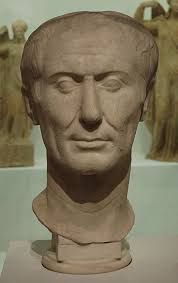
Julius Caesar
Machiavelli closes his chapter “Of Conspiracies” with advice to rulers on how they should act when they find a conspiracy has been formed against them.
If they discover that a conspiracy exists against them, they must, before punishing its authors, strive to learn its nature and extent. And they must measure the danger posed by the conspirators against their own strength.
And if they find it powerful and alarming, they must not expose it until they have amassed sufficient force to crush it. Otherwise, they will only speed their own destruction. They should try to pretend ignorance of it. If the conspirators find themselves discovered, they will be forced by necessity to act without consideration.
The foregoing was taken from Book Three, Chapter Six, of Machiavelli’s masterwork, The Discourses on Livy, which was published posthumously in 1531. But elsewhere in this volume, he notes how important it is for rulers to make themselves loved—or at least respected—by their fellow citizens:

Niccolo Machiavelli
Note how much more praise those Emperors merited who, after Rome became an empire, conformed to her laws like good princes, than those who took the opposite course.
Titus, Nerva, Trajan, Hadrian, Antoninus and Marcus Auelius did not require the Praetorians nor the multitudinous legions to defend them, because they were protected by their own good conduct, the good will of the people, and by the love of the Senate.
On the other hand, neither the Eastern nor the Western armies saved Caligula, Nero, Vitellius and so many other wicked Emperors from the enemies which their bad conduct and evil lives had raised up against them.
In his better-known work, The Prince, he warns rulers who—like Donald Trump—are inclined to rule by fear:
A prince should make himself feared in such a way that if he does not gain love, he at any rate avoids hatred: for fear and the absence of hatred may well go together.

Donald Trump
If Trump is aware of Machiavelli’s warnings, he has shown no signs of it.
Presidents have universally tried to seem friendly and caring toward their fellow Americans.
This held true even for Richard M. Nixon, when he made an impromptu visit to the Lincoln Memorial and engaged in a rambling dialogue with Vietnam war protesters.
The encounter happened around 4 a.m. on May 9, 1970, shortly after the invasion of Cambodia. Nationwide outrage had exploded on college campuses, climaxing in the killing of four students at Kent State University on May 4.
So young Vietnam antiwar protesters who had descended on Washington, D.C. were startled when Nixon suddenly appeared in their midst.
Nixon, in his awkward way of trying to establish rapport, asked some of the students where they were from. When they said they attended Syracuse University, Nixon replied that it had a great football team.
But Nixon and the protesters were separated by too many differences—in their views on sexuality, civil rights, dissent and war—to find common cause.
Still, Nixon at least made an effort to understand and reach an accommodation with his critics.
Since taking office on January 20, 2017, Donald Trump has made none.
Instead, he has:
- Defended white supremacists who sparked violence in Charlottesville, Virginia.
- Fired James Comey, the director of the FBI, for investigating ties between his 2016 Presidential campaign and Russian Intelligence agents.
- Attacked the integrity of Federal judges who struck down his travel ban on Muslims.
- Called the nation’s most prestigious news media “the enemy of the American people.”
- Rammed through Congress a massive tax cut for the wealthy, at the expense of ordinary Americans.
- Attacked the integrity of American Intelligence agencies, such as the FBI and CIA.
- Falsely accused his predecessor, President Barack Obama, of wiretapping him.
These and other infamous actions have led to only 36% of Americans approving of his performance—while 58% disapprove.
Trump’s approval rating is now lower than that of any other President at this point in modern polling at this point.
By Machiavelli’s standards, Trump has made himself the perfect target for a conspiracy: “When a prince becomes universally hated, it is likely that he’s harmed some individuals—who thus seek revenge. This desire is increased by seeing that the prince is widely loathed.”
ABC NEWS, ADOLF HITLER, ALTERNET, ASSASSINATION, BUZZFEED, CBS NEWS, CNN, CONSPIRACIES, DAILY KOS, DAY OF THE JACKAL, DONALD TRUMP, FACEBOOK, FREDERICK FORSYTHE, GAIUS CASSIUS, JULIUS CAESAR, MAR-A-LAGO, MARCUS BRUTUS, MARK ANTHONY, MOTHER JONES, MOVEON, NBC NEWS, NEWSWEEK, NICCOLO MACHIAVELLI, NPR, PLOTS, POLITICO, RAW STORY, SALON, Secret Service, SLATE, THE CHICAGO SUN-TIMES, THE CHICAGO TRIBUNE, THE DAILY BEAST, THE DISCOURSES, THE HUFFINGTON POST, THE LOS ANGELES TIMES, THE NEW YORK TIMES, THE WALL STREET JOURNAL, THE WASHINGTON POST, TIME, TWITTER, U.S. NEWS & WORLD REPORT, USA TODAY
In Bureaucracy, History, Law Enforcement, Military, Politics, Social commentary on January 19, 2018 at 1:50 am
More than 500 years ago, Niccolo Machiavelli, the Florentine statesman, authored The Discourses on Livy, a work of political history and philosophy. In it, he outlined how citizens of a republic can maintain their freedoms.
One of the longest chapters—Book Three, Chapter Six—covers “Of Conspiracies.” In it, those who wish to conspire against a ruler will find highly useful advice.
And so will those who wish to foil such a conspiracy.
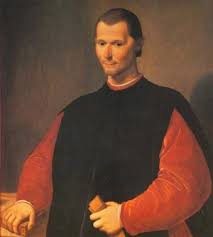

Niccolo Machiavelli
Writes Machiavelli:
For conspirators, there are three ways their efforts can be foiled:
- Discovery through denunciation;
- Discovery through incautiousness;
- Discovery through writings.
Discovery through Denunciation: This occurs through treachery or lack of prudence among one or more conspirators.
Treachery is so common that you can safely tell your plans to only your most trusted friends who are willing to risk their lives for your sake. You may find that you have only one or two of these.
But as you are bring more people into the conspiracy, the chances of discovery greatly increase. It’s impossible to find many who can be completely trusted: For their devotion to you must be greater than their sense of danger and fear of punishment.
Discovery through Carelessness: This happens when one of the conspirators speaks incautiously, so that a third person overhears it Or it may occur from thoughtlessness, when a conspirator tells the secret to his wife or child, or to some other indiscreet person.
When a conspiracy has more than three or four members, its discovery is almost certain, either through treason, imprudence or carelessness.
If more than one conspirator is arrested, the whole plot is discovered, for it will be impossible for any two to agree perfectly as to all their statements.
If only one is arrested, he may–through courage and stubbornness–be able to conceal the names of his accomplices. But then the others, to remain safe, must not panic and flee, since this is certain to be discovered.
If one of them becomes fearful—whether it’s the one who was arrested or is still at liberty—discovery of the conspiracy is certain.
The best way to avoid such detection is to confide your project to your intended fellow conspirators at the moment of execution—and not sooner.
A classic example of this occurred in ancient Persia: A group of nobles assembled to discuss overthrowing a usurper to the throne. The last one to arrive was Darius.
When one of the conspirators asked, “When should we strike?” Darius replied: “We must either go now at this very moment and carry it into execution, or I shall go and denounce you all. For I will not give any of you time to denounce me.”
At that, they went directly to the palace, assassinated the usurper and proclaimed Darius their new king.
Discovery through Writings: You may talk freely with anyone man about everything, for unless you have committed yourself in writing, the “Yes” of one man is worth as much as the “No” of another.
Thus, you should guard most carefully against writing, as against a dangerous rock, for nothing will convict you quicker than your own handwriting.
You may escape, then, from the accusation of a single individual, unless you are convicted by some writing or other pledge, which you should be careful never to give.
If you are denounced, there are means of escaping punishment:
- By denying the accusation and claiming that the person making it hates you; or
- Claiming that your accuser was tortured or coerced into giving false testimony against you.
But the most prudent course is to not tell your intentions to anyone, and to carry out the attempt yourself.
Even if you’re not discovered before you carry out your attack, there are still two dangers facing a conspirator:
Dangers in Execution: These result from:
- An unexpected change in the routine of the intended target;
- The lack of courage among the conspirators; or
- An error on their part, such as leaving some of those alive whom the conspirators intended to kill.
Adolf Hitler, who claimed to have a sixth-sense for danger, was famous for changing his routine at the last minute.
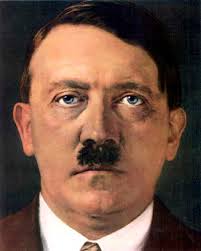
Adolf Hitler
On November 9, 1939, this instinct saved his life. He had been scheduled to give a long speech at a Munich beer hall before the “Old Fighters” of his storm troopers.
But that evening he cut short his speech and left the beer hall. Forty-five minutes later, a bomb exploded inside a pillar—before which Hitler had been speaking.
Conspirators can also be doomed by their good intentions.
In 44 B.C., Gaius Cassius, Marcus Brutus and other Roman senators decided to assassinate Julius Caesar, whose dictatorial ambitions they feared.
Cassius also intended to murder Mark Anthony, Caesar’s strongest ally. But Brutus objected, fearing the plotters would look like butchers, not saviors. Even worse, he allowed Anthony to deliver a eulogy at Caesar’s funeral.
This proved so inflammatory that the mourners rioted, driving the conspirators out of Rome. Soon afterward, they were defeated in a battle with the legions of Anthony and Octavian Caesar—and forced to commit suicide to avoid capture and execution.
ABC NEWS, ALTERNET, ANCHOR BABIES, BILL DE BLASIO, BUZZFEED, CBS NEWS, CNN, DAILY KOS, DEMOCRATIC PARTY, DONALD TRUMP, FACEBOOK, HISPANICS, ILLEGAL ALIENS, illegal immigration, IMMIGRATION AND NATIONALITY ACT, IMMIGRATION REFORM AND CONTROL ACT, MEXICAN WALL, MEXICO, MOTHER JONES, MOVEON, MSNBC, NBC NEWS, NEWSWEEK, NPR, POLITICO, RAW STORY, REPUBLICAN PARTY, SALON, SLATE, THE CHICAGO SUN-TIMES, THE CHICAGO TRIBUNE, THE DAILY BEAST, THE HUFFINGTON POST, THE LOS ANGELES TIMES, THE NEW YORK TIMES, THE WALL STREET JOURNAL, THE WASHINGTON POST, TIME, TWITTER, U.S. NEWS & WORLD REPORT, USA TODAY
In Bureaucracy, History, Law, Law Enforcement, Politics, Social commentary on January 18, 2018 at 1:38 pm
Democrats and Republicans are heading for a showdown. And the Federal Government is heading for a shutdown.
Democrats are demanding a “fix” for DACA, the Deferred Action for Childhood Arrivals program that expires in March. Nearly 800,000 men and women—the sons and daughters of illegal aliens who entered the United States decades ago—stand to be deported if a “fix” isn’t found.
DACA, which began in 2012, protects these people from deportation and allows them to work legally.
In September, 2017, President Donald Trump stripped protections from these “Dreamers” and gave Congress six months to write a law to resolve their plight.
Republicans, in turn, want a stopgap bill to fund the Federal Government through February 16 to avert a shutdown. But they don’t want to provide protections for “Dreamers.”

Illegal aliens crossing into the United States
President Trump is pushing his own solution to illegal immigration: A massive, impenetrable wall along the U.S.-Mexican border. The cost: Billions of dollars.
But there is a more effective—and cheaper—way to attack illegal immigration: Attack the “sanctuary cities” across the nation that illegally shield violators of Federal immigration laws from arrest.
Among the 31 “sanctuary cities” of this country: Washington, D.C.; New York City; Los Angeles; Chicago; San Francisco; Santa Ana; San Diego; Salt Lake City; Phoenix; Dallas; Houston; Austin; Detroit; Jersey City; Minneapolis; Miami; Denver; Baltimore; Seattle; Portland, Oregon; New Haven, Connecticut; and Portland, Maine.
These cities have adopted “sanctuary” ordinances that forbid municipal funds or resources to be used to enforce federal immigration laws. This usually translates into not allowing police or municipal employees to inquire about one’s immigration status.
Trump simply needs to cut off Federal funding to those cities which systematically defy the immigration laws of the United States.
And on March 27, 2017, his attorney general, Jeff Sessions, threatened to do just that.
“The Department of Justice will require that jurisdictions seeking or applying for DOJ grants to certify compliance with [U.S. Code 1373] as a condition of receiving those awards,” said Sessions in a surprise appearance at the White House Briefing Room.
His reference was to Federal laws which state that cities cannot prevent federal authorities from enforcing immigration laws.
Immigration is regulated at the federal level, chiefly under the 1952 Immigration and Nationality Act (INA). And in 1986, Congress passed the Immigration Reform and Control Act (IRCA), to curb illegal immigration, deny welfare benefits to illegal aliens and strengthen penalize employers who hire them.
“Block funding for sanctuary cities. We block the funding. No more funding,” Trump said in August, 2016, when he laid out his immigration plans at a rally in Phoenix. “Cities that refuse to cooperate with federal authorities will not receive taxpayer dollars.”
New York City, for example, could lose up to $10.4 billion in Federal funding. Its agencies that receive the biggest share of these monies: The Housing Authority, the Administration for Children’s Services and the Department of Social Services.
Mayors from “sanctuary cities” such as New York, Chicago, Baltimore and San Francisco have threatened to resist Trump’s threat.
Trump has never before held public office. But, as a businessman, he well knows how to appeal to people’s greed and selfishness.

By blocking monies to “sanctuary cities,” Trump will quickly drive a wedge between ardent liberals such as Bill de Blazio and their constituents who depend on those infusions of Federal monies.
In New York, for example, once Federal monies are cut off:
- Legal American citizens won’t be able to obtain assistance for low- and moderate-income families to rent housing in the private market.
- American children needing care for their emotional or medical needs will be denied it.
- Americans wanting to adopt a foster care child will be unable to do so–because there won’t be monies to pay the officials who now staff these agencies.
In short: The beautiful “every-man-is-my-brother” theories of liberal politicians are about to slam head-on into the ugliness of real-world needs and wants.
And when legal citizens can’t obtain the government services they have been used to getting, they will quickly become enraged.
At first, many—perhaps most—of the people living in “sanctuary cities” will rush to support their elected officials in refusing to knuckle under.
But as time passes, public needs will go unmet while Federal monies continue to be blocked.
First they will aim their rage at the local—and elected—officials of these cities responsible for “sanctuary” policies. And then they will focus their anger on the illegal aliens being protected by civic officials.
This will be followed by increasing demands by legal—and law-abiding—American citizens for their elected officials to cooperate with Federal immigration agents.
As tensions rise, so will demands for the election of new mayors and supervisors. And the chief demand of those voters will be: “Turn over the illegal aliens and restore our public services!”
Some citizens will almost certainly take out their anger on anyone who even looks Hispanic, let alone speaks only Spanish.
And those citizens who feel conscience-torn by demanding an end to “sanctuary cities” will console themselves with this literal truth: Illegal immigration is against the law—and local officials have a sworn duty to obey the law at all levels—including those laws they don’t agree with.
ABC NEWS, ALTERNET, AP, BBC, BREITBART, BUZZFEED, CBS NEWS, CNN, CROOKS AND LIARS, DAILY KOS, DAILY KOZ, DEPARTMENT OF AGRICULTURE, DEPARTMENT OF HEALTH AND HUMAN SERVICES, DEPARTMENT OF JUSTICE, DEPARTMENT OF TRANSPORTATION, DONALD TRUMP, ELAINE CHAO, FACEBOOK, GEORGI MALENKOV, JEFF FLAKE, JEFF SESSIONS, JOSEPH STALIN, KIM JONG ON, KLIMENT VOROSHILOV, LAVRENTI P. BERIA, MEDIA, MIKE PENCE, MOTHER JONES, MOVEON, NBC NEWS, NEWSWEEK, NIKITA KHRUSHCHEV, NPR, POLITICO, RAW STORY, REUTERS, ROBERT PAYNE, SALON, SEATTLE TIMES, SLATE, SONNY PERDUE, SOVIET UNION, THE ATLANTIC, THE CHICAGO SUN-TIMES, THE CHICAGO TRIBUNE, THE DAILY BEAST, THE GUARDIAN, THE HILL, THE HUFFINGTON POST, THE LOS ANGELES TIMES, THE NATION, THE NEW YORK TIMES, THE RISE AND FALL OF STALIN, THE WALL STREET JOURNAL, THE WASHINGTON POST, TIME, TOM PRICE, TWITTER, U.S. NEWS & WORLD REPORT, UNITED STATES ATTORNEY GENERAL, UPI, USA TODAY, VLADIMIR PUTIN, VYACHESLAV MOLOTOV
In Bureaucracy, History, Politics, Social commentary on January 16, 2018 at 12:10 am
According to CNN, Arizona United States Senator Jeff Flake will deliver a speech on the floor of the Senate comparing President Donald Trump to former Soviet dictator Joseph Stalin.
The subject of that speech—to be delivered on January 17—will be Trump’s attacks on the news media.
Among those attacks:
- On February 17, 2017, Trump called the press “the enemy of the American people.”“The FAKE NEWS media,” he tweeted, “(failing @nytimes, @NBCNews, @ABC, @CBS, @CNN) is not my enemy, it is the enemy of the American People!”
- On July 2, Trump tweeted a video showing him punching a man with the CNN logo superimposed on his head during a WWE wrestling match.
- And on August 15, the President retweeted a cartoon photo of a “Trump Train” running over a CNN reporter.
“Mr. President,” says an excerpt of Flake’s upcoming speech made available to CNN, “it is a testament to the condition of our democracy that our own President uses words infamously spoken by Joseph Stalin to describe his enemies.
“It bears noting that so fraught with malice was the phrase ‘enemy of the people,’ that even Nikita Khrushchev forbade its use, telling the Soviet Communist Party that the phrase had been introduced by Stalin for the purpose of ‘annihilating such individuals’ who disagreed with the supreme leader.”
Joseph Stalin ordered his critics executed in prison or exiled to Siberia. It’s clear that Donald Trump would like to have that same power.
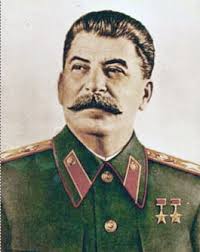
Joseph Stalin
But that’s not the only similarity that unites the current President and the late Soviet premier.
A second one: Raging egomania.
On December 21, 1949, Stalin turned 70. And millions of Russians feverishly competed to out-do one another in singing his praises.
These celebrations weren’t prompted by love—but fear.
He had lived up to his pseudonym: “Man of Steel.” For almost 30 years, through purges and starvation caused by enforced collections of farmers’ crops, he had slaughtered 20 to 60 million of his fellow citizens.
The British historian, Robert Payne, described these rapturous events in his classic 1965 biography, The Rise and Fall of Stalin:
“From all over the country came gifts of embroidered cloth, tapestries and carpets bearing his name or his features….Poets extolled him in verses, He was the sun, the splendor, the lord of creation.
“The novelist Leonid Lenov…foretold the day when all the peoples of the earth would celebrate his birthday; the new calendar would begin with the birth of Stalin rather than with the birth of Christ.”
Lavrenti P. Beria, Stalin’s sinister and feared secret police chief: “Millions of fighters for peace and democracy in all countries of the world are closing their ranks still firmer around Comrade Stalin.”
Foreign Minister Vyacheslav Molotov: “The gigantic Soviet army created during [World War II] was under the direct leadership of Comrade Stalin and built on the basis of the principles of Stalinist military science.”
Defense Commissar Kliment Voroshilov: “The mighty voice of the Great Stalin, defending the peace of the world, has penetrated into all corners of the globe.”
Central Committee Secretary Georgi Malenkov: “With a feeling of great gratitude, turning their eyes to Stalin, the peoples of the Soviet Union, and hundreds of millions of peoples in all countries of the world, and all progressive mankind, see in Comrade Stalin their beloved leader and teacher….”
Now, fast forward to June 12, 2017.
That was when President Donald J. Trump—also 70—convened his first full Cabinet meeting since taking office on January 20.
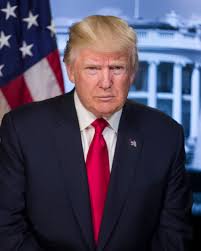
Donald Trump
On June 12, polls showed that only 36% of Americans approved of his conduct. But from his Cabinet members, Trump got praise traditionally lavished on dictators like Stalin and North Korea’s Kim Jong On.
While the Cabinet members sat around a mahogany table in the West Wing of the White House, Trump instructed each one to say a few words about the good work his administration was doing.
Vice President Mike Pence: “It is the greatest privilege of my life to serve as the vice president to a president who is keeping his word to the American people.”
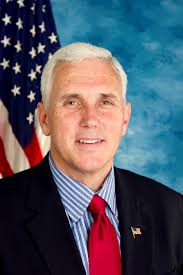
Mike Pence
Attorney General Jeff Sessions: “It’s an honor to be able to serve you.”
Secretary of Agriculture Sonny Perdue: “I just got back from Mississippi. They love you there.”
Secretary of Health and Human Services Tom Price: “What an incredible honor it is to lead the Department of Health and Human Services at this pivotal time under your leadership. I can’t thank you enough for the privilege that you’ve given me, and the leadership you’ve shown.”
Secretary of Transportation Elaine Chao: “Thank you for coming over to the Department of Transportation. I want to thank you for getting this country moving again, and also working again.”
Politicians—both domestic and foreign—have quickly learned that the quickest way to get on Trump’s “good side” is to shamelessly and constantly praise him.
As Trump infamously said during a 2016 interview: “If [Vladimir] Putin says nice things about me, I’ll say nice things about him.”
Some historians believe that Stalin was poisoned by one of his fawning yes-men—most likely Lavrenti Beria.
The time may come when Trump learns that outrageous flattery can hide murderous hatred.
ABC NEWS, ALTERNET, BUZZFEED, CBS NEWS, CNN, DAILY KOS, DONALD TRUMP, FACEBOOK, HERMAN WOUK, HUMPHREY BOGART, JOSE FERRER, MOTHER JONES, MOVEON, NBC NEWS, NEWSWEEK, NPR, POLITICO, RAW STORY, SALON, SLATE, THE CAINE MUTINY, THE CHICAGO SUN-TIMES, THE CHICAGO TRIBUNE, THE DAILY BEAST, THE HUFFINGTON POST, THE LOS ANGELES TIMES, THE NEW YORK TIMES, THE WALL STREET JOURNAL, THE WASHINGTON POST, TIME, TWITTER, U.S. NEWS & WORLD REPORT, USA TODAY, VAN JOHNSON
In Bureaucracy, History, Politics, Social commentary on January 12, 2018 at 12:03 am
It was February 16, 2017—and Donald Trump’s first press conference as President.
Like the climatic showdown in The Caine Mutiny, it offered an unhinged rant, full of anger, personal attacks, self-pity and self-glorification.
But the man doing the ranting was not Captain Philip Francis Queeg. It was President Donald J. Trump, speaking from the East Room of the White House.
He opened casually: “Thank you very much. I just wanted to begin by mentioning that the nominee for Secretary of the Department of Labor will be Mr. Alex Acosta….”
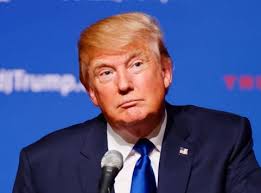
Donald Trump
For the next hour and 15 minutes, Trump let raw emotion do his talking.
Among the highlights:
His hated the press: “….The press has become so dishonest that if we don’t talk about it, we are doing a tremendous disservice to the American people. Tremendous disservice. We have to talk about it to find out what is going on, because the press, honestly, is out of control. The level of dishonesty is out of control.”
He won “bigly” in the Electoral College: “I put it out before the American people, got 306 electoral college votes. They said there’s no way to get 222. 230 is impossible. 270 which you need, that was laughable. We got 306, because people came out and voted like they’ve never seen before. So that’s the way it goes. I guess it was the biggest electoral college win since Ronald Reagan.”
[Actually, it wasn’t. He got a smaller share of the Electoral College votes—56.88% than former presidents George H. W. Bush—79.18% in 1988; Bill Clinton—68.77% in 1992 and 70.45% in 1996; and Barack Obama—67.84% in 2008 and 61.71% in 2012.
[No other President had ever felt it necessary to brag about his Electoral College victory. And Trump didn’t mention that he lost the popular vote—with Hillary Clinton getting almost 2.9 million more votes than he did.]
He ignored the turmoil in his month-old administration: “I turn on the TV, open the newspapers and I see stories of chaos. Chaos. Yet it is the exact opposite. This administration is running like a fine-tuned machine, despite the fact that I can’t get my Cabinet approved, and they’re outstanding people.”
[His National Security Adviser, Michael T. Flynn, a retired Army lieutenant general, was forced to resign after 24 days. On December 1, he would plead guilty to lying to the FBI and agree to cooperate with Special Counsel Robert Mueller’s investigation of Russian subversion of the 2016 Presidential election.

Mike Flynn
[In addition, Trump:
- Had his executive order banning travel by Muslims to the United States halted by Federal courts;
- Fired his acting attorney general for refusing to defend the ban;
- Angered the president of Mexico into cancelling a summit meeting;
- Bragged about the size of his electoral win to Australia’s prime minister, then hung up on him;
- Authorized a commando raid that resulted in the death of a Navy SEAL;
- Lied that he had been prevented from winning the popular vote by millions of illegal aliens; and
- Attacked Nordstrom’s department store for dropping the clothing and accessories lines of his daughter, Ivanka.
[In fact, Trump’s Cabinet—with the exception of his pick for Secretary of Labor—had been steamrollered through the Senate by Republicans.]
The press persecuted him: “I watch CNN. It’s so much anger and hatred and just the hatred. I don’t watch it anymore, because it’s very good….
“You look at your show [CNN Tonight] that goes on at 10 in the evening. You just take a look at that show. That is a constant hit. The panel is almost always exclusive anti-Trump. The good news is he doesn’t have good ratings, but the panel is almost exclusive anti-Trump. And the hatred and venom coming from his mouth. The hatred coming from other people on your network.”
He was truly a good, misunderstood person: “….I can handle a bad story better than anybody, as long as it is true. Over a course of time, I will make mistakes and you will write badly, and I am OK with that. But I am not OK when it is fake….
“I know when you’re telling the truth or when you’re not. I just see many, many untruthful things. And I’ll tell you what else I see, I see tone….The tone is such hatred. I’m really not a bad person, by the way. No, but the tone is such—I do get good ratings. You have to admit that.”
His campaign never colluded with Russian Intelligence: “Well, the failing New York Times wrote a big, long front-page story yesterday. And it was very much discredited, as you know. It [was]— it’s a joke. … Russia is fake news. This is fake news put out by the media.”
[Several of Trump’s high-level advisers were in constant communication during the campaign with Russian Intelligence agents. These contacts are now being investigated by House and Senate subcommittees and the office of the Special Counsel.]
* * * * *
By the end of The Caine Mutiny, Stephen Maryk was acquitted of mutiny. Captain Queeg was presumably relieved of future commands.
By the end of President Trump’s bizarre and frightening press conference, there was no telling what lay ahead for the United States—or the world.
ABC NEWS, ALTERNET, BUZZFEED, CBS NEWS, CNN, DAILY KOS, DONALD TRUMP, FACEBOOK, HERMAN WOUK, HUMPHREY BOGART, JOSE FERRER, MOTHER JONES, MOVEON, NBC NEWS, NEWSWEEK, NPR, POLITICO, RAW STORY, SALON, SLATE, THE CAINE MUTINY, THE CHICAGO SUN-TIMES, THE CHICAGO TRIBUNE, THE DAILY BEAST, THE HUFFINGTON POST, THE LOS ANGELES TIMES, THE NEW YORK TIMES, THE WALL STREET JOURNAL, THE WASHINGTON POST, TIME, TWITTER, U.S. NEWS & WORLD REPORT, USA TODAY, VAN JOHNSON
In Bureaucracy, History, Politics, Social commentary on January 11, 2018 at 12:01 am
Americans eager—or anxious—to discover what the Presidency of Donald Trump would be like only needed to watch his first press conference on February 16, 2017.
For many, it resembled the climatic scene in the 1954 movie, The Caine Mutiny.
Based on Herman Wouk’s bestselling novel, it centers on the minesweeper USS Caine. Stationed in the Pacific during World War II, its captain is by-the-book Lt. Commander Philip Francis Queeg (Humphrey Bogart).
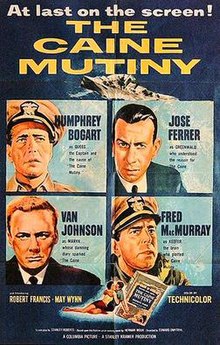
Queeg is determined to bring a sense of discipline to the ship’s lax seamen. But he can’t admit mistakes, and his bullying approach to command alienates both officers and crew.
Soon after, a typhoon overtakes the Caine. Queeg becomes paralyzed with fear. His executive officer, Steve Maryk (Van Johnson), relieves the captain of command to prevent the loss of the ship. Maryk turns the Caine into the wind and rides out the storm.
Maryk is tried by court-martial for mutiny. His case looks hopeless: Queeg has been found sane by three Navy psychiatrists.
Naval Prosecutor Lt. Commander John Challee depicts Maryk as a reckless mutineer. And Queeg portrays himself as the persecuted victim of a malignant conspiracy by his own officers.
Knowing that Queeg reacts badly to stress, Maryk’s attorney, Lt. Barney Greenwald (Jose Ferrer) relentlessly cross-examines him:
GREENWALD: Did you steam over your tow line?
QUEEG: When we were towing the target, I saw some anti-aircraft bursts. I turned to avoid them. My unreliable helmsman failed to warn me about that. But I saw it and reversed course. We didn’t steam over the tow line.
GREENWALD: Did nothing else distract you?
QUEEG: Not that I recall.
GREENWALD: Weren’t you reprimanding a seaman for having his shirt-tail out while the ship turned?
QUEEG: That only took two seconds.
GREENWALD: Did you turn your ship upside down searching for a phantom key?
QUEEG: I don’t know what lies have been sworn to here, but a key definitely did exist.
PROSECUTOR LT. COMMANDER JOHN CHALLEE: The witness is understandably agitated. I request a recess.
QUEEG: I don’t want a recess. I’ll answer all questions right here and now.
GREENWALD: Did you conduct such a search?
QUEEG: Yes, I did. My disloyal officers failed me, and the key couldn’t be found.
GREENWALD: Wasn’t this whole fuss over a quart of strawberries?
QUEEG: The pilfering of food in large amounts or small is a very serious occurrence on board a ship.
GREENWALD: You were told that the mess boys ate the berries. There was no key.
QUEEG: The key was not imaginary. I don’t know anything about mess boys eating strawberries.
GREENWALD: Have you no recollection of a conversation with Ensign Harding? Didn’t he tell you that the mess boys ate the strawberries?
QUEEG: I remember he was grateful for his transfer. His wife was ill in the States.
GREENWALD: Do you know where Ensign Harding is now? He’s in San Diego. He can be flown up here in three hours if necessary. Would it serve any useful purpose to have him testify?
QUEEG: Now, there’s no need for that.
[He reaches into the pocket of his Navy coat and removes two little steel balls, which he rolls together whenever he feels under stress. He starts rolling them together now and continues to do so throughout the rest of the proceeding.]
Now that I recall, he might have said something about mess boys. I questioned many men, and Harding was not the most reliable officer.
GREENWALD: The defense has no other recourse than to produce Ensign Harding.
QUEEG: Now, there’s no need for that. I know exactly what he’ll tell you—lies. He was no different from any other officer in the wardroom. They were all disloyal. I tried to run the ship properly, by the book, but they fought me at every turn. If the crew wanted to walk around with their shirt-tails out, let them. Take the tow line—defective equipment.
But they began spreading wild rumors about steaming in circles. And then “Old Yellowstain.” I was to blame for Maryk’s incompetence and poor seamanship. Lt. Maryk was the perfect officer, but not Queeg.
But the strawberries, ah, that’s where I had them. They laughed at me and made jokes. But I proved beyond a shadow of a doubt and with geometric logic that a duplicate key to the wardroom icebox did exist. I could have produced that key if they hadn’t pulled the Caine out of action. I know now they were only trying to protect some fellow officer.
Naturally, I can only cover these things from memory. If I’ve left anything out, just ask me specific questions and I’ll be glad to answer them one by one.
[The courtroom falls silent—except for the tinkling of the steel balls that Queeg keeps rolling in his right hand. The judges stare at him as he does so. They say nothing, but it’s clear they know they’re looking at a man at the end of his sanity—and naval career.]
GREENWALD: No further questions, sir.
Maryk is acquitted.
* * * * *
So much for fiction. Now for the terrifying reality.
ABC NEWS, ALTERNET, ARNOLD SCHWARXENEGGER, BARACK OBAMA, BREITBART NEWS, BUZZFEED, CBS NEWS, CIA, CNN, DAILY KOS, DONALD TRUMP, FACEBOOK, FBI, FLETCHER KNEBEL, HILLARY LINTON, JEFF SESSIONS, JOHN OLIVER, JOSH EARNEST, MARK LEVIN, MENTAL ILLNESS, MERYL STREETP, MOTHER JONES, MOVEON, NATIONAL SECURITY AGENCY, NBC NEWS, NEIL YOUNG, NEW JERSEY, NEWSWEEK, NIGHT AT CAMP DAVID, NPR, OBAMACARE, POLITICO, RAW STORY, RUSSIA, SALON, SEVEN DAYS IN MAY, SLATE, THE CHICAGO SUN-TIMES, THE CHICAGO TRIBUNE, THE DAILY BEAST, THE HUFFINGTON POST, THE LOS ANGELES TIMES, THE NEW YORK TIMES, THE WALL STREET JOURNAL, THE WASHINGTON POST, THIS WEEK, TIME, TWITTER, U.S. NEWS & WORLD REPORT, USA TODAY, WATERGATE, WIRETAPPING
In Bureaucracy, History, Medical, Politics, Social commentary on January 5, 2018 at 11:02 am
On March 4, 2017, in a series of unhinged tweets, President Donald J. Trump accused former President Barack Obama of tapping his Trump Tower phones prior to the election:
“Terrible! Just found out that Obama had my ‘wires tapped’ in Trump Tower just before the victory. Nothing found. This is McCarthyism!”
“Is it legal for a sitting President to be ‘wire tapping’ a race for president prior to an election? Turned down by court earlier. A NEW LOW!”
“I’d bet a good lawyer could make a great case out of the fact that President Obama was tapping my phones in October, just prior to Election!”
“How low has President Obama gone to tapp my phones during the very sacred election process. This is Nixon/Watergate. Bad (or sick) guy!”
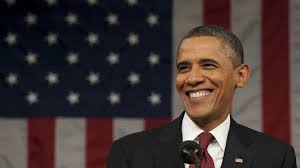
President Barack Obama
Trump offered no proof to substantiate his libelous claims.
There are three plausible theories about what prompted Trump’s accusations.
Theory #1: They were prompted by Right-wing media outlets that had been pushing wiretapping claims in recent days.
On March 2, Right-wing radio host Mark Levin claimed that Obama had used “powers of the federal government to surveil members of the Trump campaign.”
Referring to Attorney General Jeff Sessions and his newly disclosed meetings with Russia’s ambassador in 2016, Levin asked: “Today’s reporting on Sessions having a chance meeting with the ambassador–where did that information come from? Look at the timing of it. Was Obama surveilling top Trump campaign officials during the election?”
On March 3, the Fascist media site Breitbart News echoed that charge. Its story was based on Levin’s show and offered no evidence to back up its accusations.
Trump could have first contacted the directors of the FBI, CIA and National Security Agency–the agencies which are authorized to conduct such an operation. He couldhave asked them, “Did you wiretap me?”
They could have quickly and confidentially given him an answer. And if it was “Yes,” they would have been able to provide him with the records to document it.
That would have been the action of a rational President. But Trump chose to act like a child–or, worse, an unbalanced adult.
After reading the Breitbart story, Trump impulsively chose to go on Twitter and make libelous accusations.
Theory #2: Trump, under scrutiny for ties between his campaign and Russia, sought to deflect attention by making an outrageous accusation.
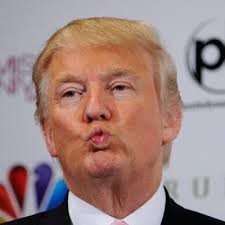
Donald Trump
Former White House Press Secretary Josh Earnest gave his own take on Trump’s motivation. Appearing on the March 5, 2017 edition of ABC’s “This Week”, he said: “We know exactly why President Trump tweeted what he tweeted.
“Because there is one page in the Trump White House crisis management playbook. And that is simply to tweet or say something outrageous to distract from the scandal, and the bigger the scandal, the more outrageous the tweet.”
Earnest served as White House Press Secretary under President Obama from 2014 to 2017.
He added: Obama could not have legally ordered a wiretap: “The President of the United States does not have the authority to unilaterally order the wiretapping of an American citizen.”
Theory #3: Trump is too mentally unbalanced to hold the Presidency–and command of America’s nuclear arsenal.
Trump’s shoot-first-and-never-mind-the-consequences approach to life has been thoroughly documented.
From June 15, 2015, when he launched his Presidential campaign, until October 24, 2016, he fired nearly 4,000 angry, insulting tweets at 281 people and institutions. The New York Times needed two full pages of its print edition to showcase them.
Among these targets were:
- His Democratic rival, Hillary Clinton
- His fellow Republican Presidential candidates
- Actress Meryl Streep
- News organizations
- President Barack Obama
- Comedian John Oliver
- Obamacare
- Singer Neil Young
- The state of New Jersey
- Actor Arnold Schwarzenegger.
And during his first two weeks as President, Trump attacked 22 people, places and things on his @realDonaldTrump account.
Trump’s vindictiveness, his narcissism, his compulsive aggression, his complaints that his “enemies” in government and the press are trying to destroy him, have caused many to ask: Could the President of the United States be suffering from mental illness?
One who has dared to answer this question is John D. Gartner, a practicing psychotherapist.
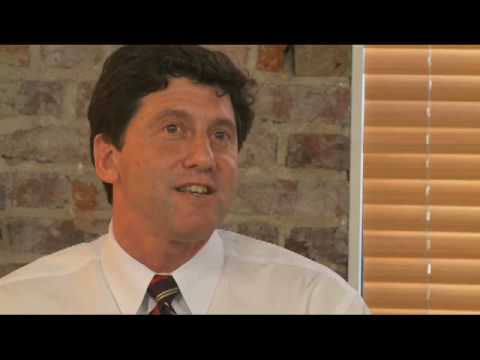
John D. Gartner
Gartner graduated magna cum laude from Princeton University, received his Ph.D in clinical psychology from the University of Massachusetts, and served as a part time assistant professor of psychiatry at Johns Hopkins University Medical School for 28 years.
During an interview by U.S. News & World Report (published on January 27), Gartner said: “Donald Trump is dangerously mentally ill and temperamentally incapable of being president.”
Gartner said that Trump suffers from “malignant narcissism,” whose symptoms include anti-social behavior, sadism, aggressiveness, paranoia and grandiosity.
“We’ve seen enough public behavior by Donald Trump now that we can make this diagnosis indisputably,” says Gartner, who admits he has not personally examined Trump.
In 1965, Fletcher Knebel, the best-selling author of Seven Days in May, raised the then-unthinkable question: “What would happen if the President of the U.S.A. went stark-raving mad?”
He did so in his novel, Night of Camp David.
In 1965, the idea that an American President might become insane was thought so outlandish it could only appear in a novel.
Fifty-three years later, it’s no longer unthinkable. For millions, it’s a terrifying reality.
ABC NEWS, ALTERNET, AMERICABLOG, AP, BABY BOOMER RESISTANCE, BBC, BLOOMBERG, BUZZFEED, CALVIN COOLIDGE, CBS NEWS, CHERYL BEHYMER, CNN, CROOKS AND LIARS, DAILY KOS, DAILY KOZ, EMPLOYERS, FACEBOOK, FISHER & PHILLIPS LAW FIRM, FIVETHIRTYEIGHT, GLASSDOOR, HARPER’S MAGAZINE, HUFFINGTON POST, JERRY BROWN, JOB-SEEKERS, MEDIA MATTERS, MOTHER JONES, MOVEON, MSNBC, NBC NEWS, NEW REPUBLIC, NEWSDAY, NEWSWEEK, NPR, PBS NEWSHOUR, POLITICO, POLITICUSUSA, RAW STORY, REUTERS, SALARY HISTORY, SALON, SEATTLE TIMES, SLATE, SUSAN EGGMAN, TALKING POINTS MEMO, THE ATLANTIC, THE CHICAGO SUN-TIMES, THE CHICAGO TRIBUNE, THE DAILY BEAST, THE DAILY BLOG, THE GUARDIAN, THE HILL, THE HUFFINGTON POST, THE INTERCEPT, THE LOS ANGELES TIMES, THE NATION, THE NEW REPUBLIC, THE NEW YORK TIMES, THE NEW YORKER, THE VILLAGE VOICE, THE WASHINGTON POST, THINKPROGRESS, TIME, TRUTHDIG, TRUTHOUT, TWITTER, TWO POLITICAL JUNKIES, U.S. NEWS & WORLD REPORT, UNEMPLOYMENT, UPI, USA TODAY, USA TODAY NICCOLO MACHIAVELLI, WAGE GAP, X
In Bureaucracy, Business, History, Politics, Social commentary on January 3, 2018 at 2:38 am
“All those who have written upon civil institutions demonstrate…that whoever desires to found a state and give it laws, must start with assuming that all men are bad and ever ready to display their vicious nature, whenever they may find occasion for it.
“If their evil disposition remains concealed for a time, it must be attributed to some unknown reason; and we must assume that it lacked occasion to show itself. But time, which has been said to be the father of all truth, does not fail to bring it to light.”
Niccolo Machiavelli knew what he was writing about.
And now, California legislators have wisely—if belatedly—acted on that warning by reigning in the vicious nature of corporate employers.
As of January 1, it is now illegal for California employers to ask job applicants about their former salaries and benefits.
Governor Jerry Brown signed a new state privacy bill into law during the last week of December, 2017.
This is good news for applicants who believe they shouldn’t be judged on how much—or little—money they earned in the past.
The truth is that, for decades, employers have used “salary histories” to discriminate against applicants who earned large—or small—salaries in their previous jobs.
For example: If an applicant had been paid a miserly wage even though he had performed major tasks for an employer, the new potential one would use that low salary as a weapon against him: “Well, it says here you earned $—– in your most recent job. Why should we pay you more than that?”
And if an applicant had earned a high salary, an employer would often use that against him: “We can’t afford to match that, let alone give you more than that.” In many cases, employers simply refused to give a reason for refusing to hire the applicant.
In either case, it was clearly an “I win/You lose” situation.
And, naturally, when employers whined about how expensive it was to pay a living wage to those who made their profits a reality, they never mentioned the exorbitant salary paid to their own CEO.
According to Glassdoor: “Across all companies, the average CEO pay was $13.8 million per year, the average median worker pay was about $77,800, and the average ratio of CEO pay to median worker pay was 204. In other words, on average, CEOs earn around 204 times what his or her median worker earns.” 
One job-seeking applicant tried to finesse the salary history demand by filling out the job application form except for the salary history part. He then attached a cover-letter, which read:
“I am interested in speaking with you or one of your representatives about the above-named position. I have filled out the required application—-with the exception of the box inquiring into my Current/last Income.
“I have in the past responded to ‘Salary History’ inquires and have found these have only one purpose: To elicit the lowest salary received, so that the salary to be offered can be adjusted to that level.
“I have been paid on a per-hour basis, a per-assignment basis, and on a bi-weekly basis. Each of these salaries was for a different job, and each job required a specific set of skills and efforts on my part.
“I am prepared to discuss in detail how my skills and experiences can prove of use to your company. But I do not discuss past salaries earned with anyone but the Internal Revenue Service.
“If you are prepared to hire on the basis of what I can do for your company, and not on the basis of what other employers have paid me in the past for assignments that had nothing to do with your company, please contact me at your earliest convenience.”
As of January 1, 2018, California job-seekers will no longer have to worry about that part of the application.
Supporters of the law believe it will help reduce the notorious wage-gap between male and female employees.
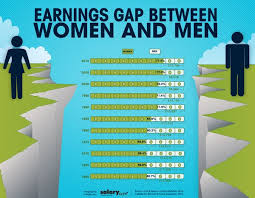
“Women negotiating a salary shouldn’t have to wrestle an entire history of wage disparity,” said the bill’s principal author, California Assemblywoman Susan Talamantes Eggman.
California’s new law also requires potential employers to disclose a salary range for the job in question, should an applicant ask about it.
This arms job seekers with valuable information because they will now know how much a company is willing to offer for that position.
In the past, employers held that information close to the vest as one more way of gaining control over their potential employee.
Although California has long been a trailblazer in employee/employer relations, it was not the first state to pass such a law. Oregon, Delaware and Massachusetts had already passed laws forbidding employers from asking about salary history.
Many employers and their paid shills believe that President Calvin Coolidge was right when he said: “The man who builds a factory builds a temple; the man who works there worships there.”
Cheryl Behymer, an attorney for the law firm Fisher & Phillips, which represents employers, said: “Here’s another point where the government is dictating to an employer how to conduct its business and employers resent that.”
As do all tyrants forced to relinquish any part of their tyranny.
ABC NEWS, ALTERNET, AP, BBC, BOB CORKER, BUZZFEED, CBS NEWS, CNN, COMMODUS, DAILY KOS, DONALD TRUMP, FACEBOOK, MIKA BRZEZINSKI, MORNING JOE, MOTHER JONES, MOVEON, NBC NEWS, NEWSWEEK, NICCOLO MACHIAVELLI, NPR, POLITICO, QATER, RAW STORY, REPORTERS COMMITTEE FOR FREEDOM OF THE PRESS, REUTERS, REX TILLERSON, SALON, SARAH HUCKABEE SANDERS, SAUDI ARABIA, SEATTLE TIMES, SLATE, THE ATLANTIC, THE CHICAGO SUN-TIMES, THE CHICAGO TRIBUNE, THE DAILY BEAST, THE GUARDIAN, THE HILL, THE HUFFINGTON POST, THE LOS ANGELES TIMES, THE NEW YORK TIMES, THE PRINCE, THE WALL STREET JOURNAL, THE WASHINGTON POST, TIME, TODD WOMACK, TWITTER, U.S. NEWS & WORLD REPORT, UPI, USA TODAY
In Bureaucracy, History, Politics, Self-Help, Social commentary on December 29, 2017 at 12:29 am
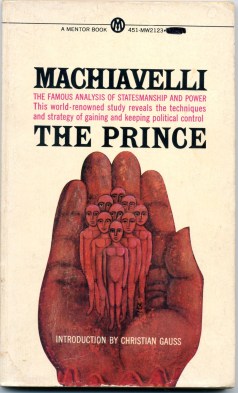
If Donald Trump ever read The Prince, by Niccolo Machiavelli, the Florentine statesman, he’s decided he doesn’t need it. And his ever-falling popularity among Americans clearly proves his mistake.
First published in 1532, The Prince lays bare the qualities needed by a successful political leader. At the top of this list must be creating and preserving a sense of his own dignity. Thus, he must appear to be a combination of mercy, faith, integrity, humanity and religion.
As Machiavelli puts it:
A prince must take great care that nothing goes out of his mouth which is not full of the above-named five qualities, and he should seem to be all mercy, faith, integrity, humanity and religion.
Since taking office on January 20, Trump has violated Machiavelli’s injunction on integrity with a vengeance. He has been caught in repeated falsehoods–so many, in fact, that the New York Times gave over its June 23 front page to a story headlined: “Trump’s Lies.”
According to the Times, Trump “told public falsehoods or lies every day for his first 40 days.”
“There is simply no precedent,” went the Times‘ opinion piece, “for an American president to spend so much time telling untruths. Every president has shaded the truth or told occasional whoppers.
“No other president—of either party—has behaved as Trump is behaving. He is trying to create an atmosphere in which reality is irrelevant.”
Donald Trump
Machiavelli also advises:
[He] must contrive that his actions show grandeur, spirit, gravity and fortitude….
It’s hard to convey those qualities in a series of 140-character rants on Twitter. Yet, from the start of his Presidency, Trump has put his ambitions, excuses and rants on social media.
As CNN Political Analyst Julian Zelizer outlined in a July 3 article:
“Putting aside the specific content of the recent blasts from the Oval smart phone, the President’s ongoing Twitter storms make all leaders uneasy. The heads of government in most nations prefer a certain amount of predictability and decorum from other heads of state.
“To have one of the most powerful people in the room being someone who is willing to send out explosive and controversial statements through social media, including nasty personal attacks or an edited video of him physically assaulting the media, does not make others….feel very confident about how he will handle deliberations with them.”
Trump’s apologists have fiercely defended his tweetstorms, claiming they allow him to bypass the media and “communicate directly with the American people.”
On October 8, Trump attacked retiring Tennessee United States Senator Bob Corker on Twitter:
“Senator Bob Corker ‘begged’ me to endorse him for re-election in Tennessee. I said ‘NO’ and he dropped out (said he could not win without…”
“..my endorsement). He also wanted to be Secretary of State, I said “NO THANKS.” He is also largely responsible for the horrendous Iran Deal!”
“…Hence, I would fully expect Corker to be a negative voice and stand in the way of our great agenda. Didn’t have the guts to run!”
Corker decided to give Trump a taste of his own Twitter medicine: “It’s a shame the White House has become an adult day care center. Someone obviously missed their shift this morning.”
Later that day, Corker told The New York Times: “He concerns me. He would have to concern anyone who cares about our nation.
“I know for a fact that every single day at the White House, it’s a situation of trying to contain him,”
And Todd Womack, Corker’s chief of staff, flatly called Trump a liar: “The president called Senator Corker on Monday afternoon and asked him to reconsider his decision not to seek reelection and reaffirmed that he would have endorsed him, as he has said many times.”
Machiavelli urged rulers to safeguard their reputations:
Niccolo Machiavelli
…A prince must show himself a lover of merit, give preferment to the able, and honor those who excel in every art.
Besides this, he ought, at convenient seasons of the year, to keep the people occupied with festivals and shows….mingle with them from time to time, and give them an example of his humanity and munificence, always upholding, however, the majesty of his dignity, which must never be allowed to fail in anything whatever.
Rulers who disregard this advice do so at their peril:
A prince need trouble little about conspiracies when the people are well disposed. But when they are hostile and hold him in hatred, then he must fear everything and everybody….
…[The Roman Emperor Commodus], being of a cruel and bestial disposition, in order to…exercise his rapacity on the people, he sought to favor the soldiers and render them licentious.
On the other hand, by not maintaining his dignity, by often descending into the theater to fight with gladiators and committing other contemptible actions…he became despicable in the eyes of the soldiers. And being hated on the one hand and despised on the other, he was conspired against and killed.
Donald Trump has repeatedly violated these lessons. It remains to be seen if he will pay a price for doing so.
ABC NEWS, ADOLF HITLER, ALTERNET, AP, BBC, BUZZFEED, CBS NEWS, CNN, DAILY KOS, DAVID BROOKS, DONALD TRUMP, FACEBOOK, FBI, GEORGE C. SCOTT, GEORGE S. PATTON, GESTAPO, HOGAN’S HEROES, JAMES COMEY, JIMMY CARTER, MEL BROOKS, MIKE FLYNN, MOTHER JONES, MOVEON, NAZI GERMANY, NBC NEWS, NEWSWEEK, NPR, PAUL RYAN, PBS NEWSHOUR, POLITICO, RAW STORY, REPUBLICAN PARTY, REUTERS, RICHARD GRUNBERGER, RICHARD NIXON, ROBERT MEULLER, Ronald Reagan, SALON, SEATTLE TIMES, SLATE, SOVIET UNION, THE 12-YEAR REICH, THE ATLANTIC, THE CHICAGO SUN-TIMES, THE CHICAGO TRIBUNE, THE DAILY BEAST, THE GUARDIAN, THE HILL, THE HUFFINGTON POST, THE LOS ANGELES TIMES, THE NEW YORK TIMES, THE WALL STREET JOURNAL, THE WASHINGTON POST, TIME, TWITTER, U.S. NEWS & WORLD REPORT, UPI, USA TODAY, WAFFEN-SS, WEHRMACHT
In Bureaucracy, History, Law, Law Enforcement, Politics, Social commentary on December 27, 2017 at 2:10 am
While the Nazi Party ruled Germany from 1933 to 1945, its influence over all aspects of Germans’ lives was suffocating.
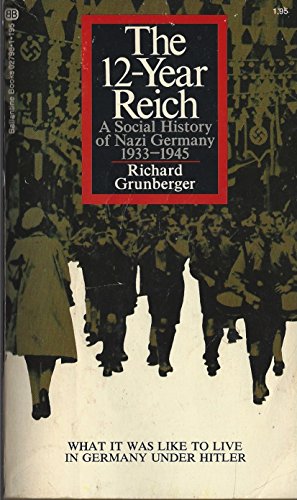
“The persuasive influence of the Nazi regime reached into every corner of everyday life in Germany,” reads the back cover of Richard Grunberger’s classic 1971 book, The 12-Year Reich.
“Censorship prevailed, education was undermined, family life was idealized, but children were encouraged to turn in disloyal parents.
“‘Volk’ festivals, party rallies, awards, uniforms, pageantry all played a part in the massive effort to shape the mind of a nation.”
And yet, after the Reich surrendered unconditionally to the Allies on May 8, 1945, a strange thing happened: Virtually no one in Germany admitted to having been a Nazi—or having even known one.
American and British soldiers couldn’t find any German veterans willing to admit they had ever fought against Western, democratic nations. All the once-proud legionaries of the Wehrmacht and Waffen-SS swore they had been fighting “the real enemy”—the Russians—on the Eastern front.
And then there were all the stories of Germans who, at great risk to themselves, had hidden Jews in their attics. Which left unanswered the question: If so many “good Germans” had saved so many Jews, how had six million Jews died horrifically before the Reich fell?
In short: Adolf Hitler had lost the war he started—making him a loser nobody wanted to be identified with.
In the decades since, the “loser” tag has continued to stick with those who once served the Third Reich. Mel Brooks has repeatedly turned German soldiers—once the pride of the battlefield—into idiotic comic foils.
Even the fearsome Gestapo was spoofed for laughs on the long-running TV comedy, “Hogan’s Heroes.”

“Hogan’s Heroes”
“Americans love a winner,” George C. Scott as George S. Patton says at the outset of the classic 1970 movie. “And will not tolerate a loser.”
And that is why Republicans have stuck so closely with President Donald J. Trump.
A typical example of this occurred on June 8 after former FBI director James Comey testified before the United States Senate Select Committee on Intelligence.
Comey revealed that, on February 14, Trump had ordered everyone but Comey to leave a crowded meeting in the Oval Office.
“I want to talk about Mike Flynn,” said Trump.
Flynn had resigned the previous day from his position as National Security Adviser. The FBI was investigating him for his previously undisclosed ties to Russia.
“I hope you can see your way clear to letting this go, to letting Flynn go,” said Trump. “He is a good guy. I hope you can let this go.”
This was clearly an attempt by Trump to obstruct the FBI’s investigation.
Yet Republican House Speaker Paul Ryan rushed to excuse his clearly illegal behavior: “He’s new at government, so therefore I think he’s learning as he goes.”
Paul Ryan
David Brooks, the conservative New York Times columnist, offered a more accurate explanation of Trump’s motives. Speaking on The PBS Newshour, Brooks said:
“We are a nation of laws. Donald Trump lives in an entirely different cultural universe. He is more clannist, believing in clan, believing in family, believing in loyalty, not recognizing objective law, not recognizing the procedures that is really how modern government operates….
“It’s not only that he doesn’t know the rules, but at all along and throughout his presidency, he has sort of trampled on the rules almost as a matter of policy, as a matter of character, because he doesn’t believe in that kind of relationships. It’s all personal loyalty, not about laws and norms and standards.”
Republicans don’t fear that Trump will trash the institutions that Americans have cherished for more than 200 years. Institutions like an independent judiciary, a free press, and an incorruptible Justice Department.
He has already attacked all of these—and Republicans have either said nothing or rushed to his defense.
What Republicans truly fear about Donald Trump is that he will finally cross one line too many—like firing Special Counsel Robert Meuller. And that the national outrage following this will force them to launch impeachment proceedings against him.
But it isn’t even Trump they fear will be destroyed.
What they most fear losing is their own hold on nearly absolute power in Congress and the White House.
If Trump is impeached and possibly indicted, he will become a man no one any longer fears. He will be a figure held up to ridicule and condemnation.
Like Adolf Hitler. Like Richard Nixon.
And his Congressional supporters will be branded as losers along with him.
Republicans vividly remember what happened after Nixon was forced to resign on August 9, 1974: Democrats, riding a wave of reform fever, swept Republicans out of the House and Senate—and Jimmy Carter into the White House.
What Ronald Reagan once said about the leadership of the Soviet Union now literally applies to that of the Republican Party:
“They…have openly and publicly declared that the only morality they recognize is what will further their cause, meaning they reserve unto themselves the right to commit any crime, to lie, to cheat, in order to attain that.”




.jpg)
 Bureaucracybuster's Blog
ABC NEWS, ADOLF HITLER, ALTERNET, ASSASSINATION, BARACK OBAMA, BUZZFEED, CBS NEWS, CIA, CNN, CONSPIRACIES, DAILY KOS, DAY OF THE JACKAL, DONALD TRUMP, FACEBOOK, FBI, FREDERICK FORSYTHE, GAIUS CASSIUS, JAMES COMEY, JULIUS CAESAR, MAR-A-LAGO, MARCUS BRUTUS, MARK ANTHONY, MOTHER JONES, MOVEON, NBC NEWS, NEWSWEEK, NICCOLO MACHIAVELLI, NPR, PLOTS, POLITICO, RAW STORY, RICHARD NIXON, SALON, Secret Service, SLATE, THE CHICAGO SUN-TIMES, THE CHICAGO TRIBUNE, THE DAILY BEAST, THE DISCOURSES, THE HUFFINGTON POST, THE LOS ANGELES TIMES, THE NEW YORK TIMES, THE WALL STREET JOURNAL, THE WASHINGTON POST, TIME, TWITTER, U.S. NEWS & WORLD REPORT, USA TODAY
A RECIPE FOR CONSPIRACY: PART TWO (END)
In Bureaucracy, History, Law Enforcement, Military, Politics, Social commentary on January 22, 2018 at 12:02 amNiccolo Machiavelli, the father of modern political science, wrote that there are three periods of danger in a conspiracy:
The first two dangers were covered in Part One of this series. Now, as to the third danger.
Dangers following the Execution of the Conspiracy: There is really but one—someone is left who will avenge the murdered prince. These can be brothers, sons or other relatives, who have been spared by negligence or for other reasons.
But of all the perils that follow the execution of a conspiracy, the most certain and fearful is the attachment of the people to the murdered prince. There is no remedy against this, for the conspirators can never secure themselves against a whole people.
An example of this occurred in the case of Julius Caesar, who, being beloved by the people, was avenged by them.
Julius Caesar
Machiavelli closes his chapter “Of Conspiracies” with advice to rulers on how they should act when they find a conspiracy has been formed against them.
If they discover that a conspiracy exists against them, they must, before punishing its authors, strive to learn its nature and extent. And they must measure the danger posed by the conspirators against their own strength.
And if they find it powerful and alarming, they must not expose it until they have amassed sufficient force to crush it. Otherwise, they will only speed their own destruction. They should try to pretend ignorance of it. If the conspirators find themselves discovered, they will be forced by necessity to act without consideration.
The foregoing was taken from Book Three, Chapter Six, of Machiavelli’s masterwork, The Discourses on Livy, which was published posthumously in 1531. But elsewhere in this volume, he notes how important it is for rulers to make themselves loved—or at least respected—by their fellow citizens:
Niccolo Machiavelli
Note how much more praise those Emperors merited who, after Rome became an empire, conformed to her laws like good princes, than those who took the opposite course.
Titus, Nerva, Trajan, Hadrian, Antoninus and Marcus Auelius did not require the Praetorians nor the multitudinous legions to defend them, because they were protected by their own good conduct, the good will of the people, and by the love of the Senate.
On the other hand, neither the Eastern nor the Western armies saved Caligula, Nero, Vitellius and so many other wicked Emperors from the enemies which their bad conduct and evil lives had raised up against them.
In his better-known work, The Prince, he warns rulers who—like Donald Trump—are inclined to rule by fear:
A prince should make himself feared in such a way that if he does not gain love, he at any rate avoids hatred: for fear and the absence of hatred may well go together.
Donald Trump
If Trump is aware of Machiavelli’s warnings, he has shown no signs of it.
Presidents have universally tried to seem friendly and caring toward their fellow Americans.
This held true even for Richard M. Nixon, when he made an impromptu visit to the Lincoln Memorial and engaged in a rambling dialogue with Vietnam war protesters.
The encounter happened around 4 a.m. on May 9, 1970, shortly after the invasion of Cambodia. Nationwide outrage had exploded on college campuses, climaxing in the killing of four students at Kent State University on May 4.
So young Vietnam antiwar protesters who had descended on Washington, D.C. were startled when Nixon suddenly appeared in their midst.
Nixon, in his awkward way of trying to establish rapport, asked some of the students where they were from. When they said they attended Syracuse University, Nixon replied that it had a great football team.
But Nixon and the protesters were separated by too many differences—in their views on sexuality, civil rights, dissent and war—to find common cause.
Still, Nixon at least made an effort to understand and reach an accommodation with his critics.
Since taking office on January 20, 2017, Donald Trump has made none.
Instead, he has:
These and other infamous actions have led to only 36% of Americans approving of his performance—while 58% disapprove.
Trump’s approval rating is now lower than that of any other President at this point in modern polling at this point.
By Machiavelli’s standards, Trump has made himself the perfect target for a conspiracy: “When a prince becomes universally hated, it is likely that he’s harmed some individuals—who thus seek revenge. This desire is increased by seeing that the prince is widely loathed.”
Share this: