Posts Tagged ‘BASHIR AL-ASSAD’
ABC NEWS, AL QAEDA, ALTERNET, AMERICABLOG, AP, BABY BOOMER RESISTANCE, BASHIR AL-ASSAD, BBC, BLOOMBERG, BLUESKY, BUZZFEED, CBS NEWS, CHARLES GEORGE GORDON, CHARLTON HESTON, CNN, CROOKS AND LIARS, DAILY KOS, DRUDGE RETORT, FIVETHIRTYEIGHT, GEORGE W. BUSH, GREAT BRITAIN, HARPER’S MAGAZINE, HIZBOLLAH, HUFFINGTON POST, IRAQ, ISLAM, KHARTOUM, KHARTOUM (MOVIE), LAURENCE OLIVER, MEDIA MATTERS, MOTHER JONES, MOVEON, MSNBC, NBC NEWS, NEOCONS, NEW REPUBLIC, NEWSDAY, NEWSWEEK, NPR, PBS NEWSHOUR, POLITICO, POLITICUSUSA, PRESIDENT BARACK OBAMA, RAW STORY, REPUBLICAN PARTY, REUTERS, SALON, SEATTLE TIMES, SHIITE MUSLIMS, SLATE, SUDAN, SUNNI MUSLIMS, SYRIA, TALKING POINTS MEMO, THE ATLANTIC, THE CHICAGO SUN-TIMES, THE CHICAGO TRIBUNE, THE DAILY BEAST, THE DAILY BLOG, THE GUARDIAN, THE HILL, THE HUFFINGTON POST, THE INTERCEPT, THE LOS ANGELES TIMES, THE MADHI, THE NATION, THE NEW REPUBLIC, THE NEW YORK TIMES, THE NEW YORKER, THE VILLAGE VOICE, THE WALL STREET JOURNAL, THE WASHINGTON POST, THINKPROGRESS, TIME, TRUTHDIG, TRUTHOUT, TWO POLITICAL JUNKIES, U.S. NEWS & WORLD REPORT, UPI, USA TODAY, WILLIAM GLADSTONE, WONKETTE, X
In Bureaucracy, History, Military, Politics, Social commentary on January 28, 2025 at 12:06 am
January 26, 2025, marked the 140th anniversary of the fall of Khartoum, the Sudanese city that sits on the banks of the White and Blue Nile Rivers.
The siege and fall of Khartoum is one of the truly epic stories of military history.
From March 18, 1884, to January 26, 1885, the charisma and military genius of one man—British General Charles George Gordon—held at bay an army of thousands of fanatical Islamics intent on slaughtering everyone in the city. 

Khartoum in 1888—four years after the siege
At stake were the lives of Khartoum’s 30,000 residents.
By comparison: The defenders of the Alamo—a far better-known battle—numbered no more than 250. And the siege of the San Antonio mission lasted only 13 days (February 23 to March 6, 1836) against an army of about 2,000 Mexicans.
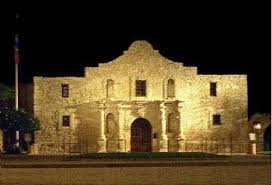
The Alamo
Gordon’s story may seem antiquated. But it resembles the efforts Republicans made to pressure the Obama administration to commit ground forces to “freeing” Syria of its longtime dictator, “President” Bashir al-Assad.
The neocons of the George W. Bush Administration plunged the United States into an unprovoked war against Iraq in 2003. After Baghdad quickly fell, Americans cheered, thinking the war was over and the troops would soon return home.
Suddenly, American soldiers found themselves waging a two-front war in the same country: Fighting an Iraqi insurgency to throw them out, while trying to suppress growing sectarian warfare between Sunni and Shia Muslims.
And then, with Syria, Americans were being urged to plunge headfirst into a conflict they knew nothing about—and in which they had absolutely no stake.
On one side was the Ba’ath regime of Bashir al-Assad, supported by Russia, Iran, Hizbollah and elements in the Iraqi government. Hizbollah is comprised of Shiite Muslims, who form a minority of Islamics.
A sworn enemy of Israel, it has kidnapped scores of Americans suicidal enough to visit Lebanon and truck-bombed the Marine barracks in Beirut in 1983, killing 299 Americans.
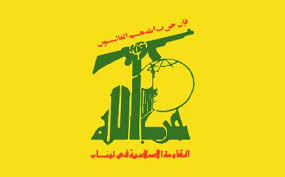
Flag of Hizbollah
Al-Qaeda, on the other hand, is made up of Sunni Muslims, who form the majority of that religion.
It is intolerant of non-Sunni Muslims and has instigated violence against them. It denounces them as “takfirs”–heretics—and thus worthy of extermination.
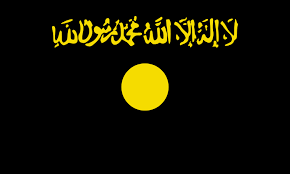
Flag of Al-Qaeda
In short, it’s a Muslim-vs.-Muslim “holy war.
It’s all very reminiscent of events in the 1966 epic film, Khartoum, starring Charlton Heston as British General Charles George Gordon.
In 1884, the British government sends Gordon, a real-life hero of the Victorian era, to evacuate the Sudanese city of Khartoum.
Mohammed Achmed, a previously anonymous Sudanese, has proclaimed himself “The Madhi” (“The Expected One”) and raised the cry of jihad.
The Madhi (played by Lawrence Olivier) intends to drive all foreigners (of which the English are the largest group) out of Sudan and exterminate all those Muslims who do not practice his “pure” version of Islam.


Charlton Heston as Gordon (left); Laurence Oliver as the Madhi (right)
Gordon arrives in Khartoum to find he’s not fighting a rag-tag army of peasants. Instead, the Madhi is a highly intelligent military strategist.
And Gordon, an evangelical Christian, also finds he has underestimated the Madhi’s religious fanaticism: “I seem to have suffered from the delusion that I had a monopoly on God.”
A surprised Gordon finds himself and 30,000 Sudanese trapped in Khartoum when the Madhi’s forces suddenly appear. He sends off messengers and telegrams to the British Government, begging for a military relief force.
But the British Government wants nothing to do with the Sudan. It has sent Gordon there as a sop to British public opinion that “something” had to be done to quell the Madhist uprising.
The siege continues and tightens.
In Britain, the public hails Gordon as a Christian hero and demands that the Government send a relief expedition to save him.
Prime Minister William Gladstone finally sends a token force—which arrives in Khartoum two days after the city has fallen to the Madhi’s forces.
Gordon, standing at the top of a staircase and coolly facing down his dervish enemies, is speared to death.
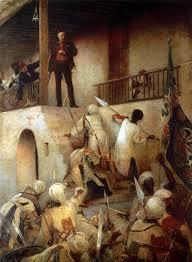
George W. Joy’s famous—and romanticized—painting of “The Death of Gordon”
(Actually, the best historical evidence indicates that Gordon fought to the last with pistol and sword before being overwhelmed by his Islamic enemies.)
When the news reaches England, Britons mourn—and then demand vengeance for the death of their hero.
The Government, which had sought to wash its hands of the poor, military unimportant Sudan, suddenly has to send an army to avenge Gordon.
As the narrator of Khartoum intones at the close of the film: “For 15 years the British paid the price with shame and war.”
There is a blunt lesson for Americans to learn from this episode—and from the 1966 movie Khartoum itself.
Americans have been fighting in the Middle East since 2001—first in Afghanistan to destroy Al-Qaeda, and then in Iraq, to pursue George W. Bush’s vendetta against Saddam Hussein. They continue to fight in Syria against ISIS.
The United States faces a crumbling infrastructure, millions living in poverty and trillions of dollars in debt.
It’s time for Americans to clean up their own house before worrying about the messes in other nations—especially those wholly alien to American values.
ABC NEWS, AL QAEDA, ALTERNET, AMERICABLOG, AMERICAN EXCEPTIONALISM, AMERICAN RECKONING: THE VIETNAM WAR AND OUR NATIONAL IDENTITY (BOOK), AP, BABY BOOMER RESISTANCE, BARACK OBAMA, BASHIR AL-ASSAD, BBC, BLOOMBERG NEWS, BUZZFEED, CANADA, CBS NEWS, CHINA, CHRISTIAN G. APPY, CNN, CROOKS AND LIARS, DAILY KOZ, DEMOCRATS, FIVETHIRTYEIGHT, HARPER’S MAGAZINE, HOUSE UN-AMERICAN ACTIVITIES COMMITTEE, HUFFINGTON POST, HUMAN RIGHTS, MEDIA MATTERS, MOTHER JONES, MOVEON, MSNBC, NBC NEWS, NEW REPUBLIC, NEWSDAY, NEWSWEEK, NPR, PBS NEWSHOUR, POLITICO, POLITICUSUSA, RAW STORY, REPUBLICANS, REUTERS, RUSSIA, SALLY YATES, SALON, SEATTLE TIMES, SLATE, SYRIA, TALKING POINTS MEMO, THE ATLANTIC, THE CHICAGO SUN-TIMES, THE CHICAGO TRIBUNE, THE DAILY BEAST, THE DAILY BLOG, THE GUARDIAN, THE HILL, THE HUFFINGTON POST, THE LOS ANGELES TIMES, THE NATION, THE NEW REPUBLIC, THE NEW YORK TIMES, THE NEW YORKER, THE VILLAGE VOICE, THE WASHINGTON POST, THINKPROGRESS, TIME, TRUTHDIG, TRUTHOUT, TWO POLITICAL JUNKIES, TYRANNY, U.S. NEWS & WORLD REPORT, UNITED STATES CONSTITUTION, UPI, USA TODAY, VIETNAM WAR, VLADIMIR PUTIN, WONKETTE, X
In Bureaucracy, History, Military, Politics, Social commentary on July 12, 2024 at 12:15 am
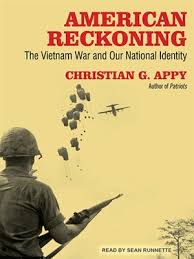
“Who are we?” asks Christian G. Appy in the opening of his 2015 book, American Reckoning: The Vietnam War and Our National Identity.
For Appy, it’s impossible to understand the enormous impact of the Vietnam war on the United States without first understanding the image that Americans had of themselves before that conflict. And he describes that image as:
“The broad faith that the United States [was] a unique force for good in the world, superior not only in its military and economic power but in the quality of its government and institutions, the character and morality of its people, and its way of life…..
“It was still unimaginable to most Americans that their own nation would wage aggressive war and justify it with unfounded claims, that it would support undemocratic governments reviled by their own people, and that American troops would be sent to fight in countries where they were widely regarded not as liberators but as imperialist invaders.”
Appy contends that, for millions of Americans, the Vietnam war dealt a mortal blow to that tremendously appealing self-image.
Yet for millions more, the United States remains an exemplary nation with a divine mission to lead other nations—willingly or unwillingly—to follow its example. And those Americans become furious when anyone—especially a foreigner—dares question that belief.
On September 11, 2013, the New York Times published an Op-Ed (guest editorial) from Russian President Vladimir Putin, entitled: “A Plea for Caution from Russia: What Putin Has to Say to Americans About Syria.”
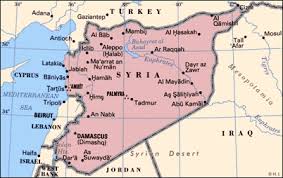
To no one’s surprise, Putin strongly opposed an American air strike on Syria. Its “President” (i.e., dictator) Bashir al-Assad, is a close ally of Russia. Just as his late father and dictator, Hafez al-Assad, was a close ally of the Soviet Union.
And Putin is a former member of the KGB, the infamous secret police which ruled the Soviet Union from its birth in 1917 to its collapse in 1991.In his September 11 guest editorial in the New York Times, Putin offered the expected Russian take on Syria:
- Poison gas was used in Syria.
- It wasn’t used by the Syrian Army.
- “Opposition forces [used it] to provoke intervention by their powerful foreign patrons.”
- “There are few champions of democracy in Syria. But there are more than enough [al] Qaeda fighters and extremists of all stripes battling the government.”
But it’s the concluding paragraph that enraged American politicians the most—especially Right-wing ones. In it, Putin took exception with American “exceptionalism.”
Referring to then-President Barack Obama, Putin wrote:
“And I would rather disagree with a case he made on American exceptionalism, stating that the United States’ policy is ‘what makes America different. It’s what makes us exceptional.’
“It is extremely dangerous to encourage people to see themselves as exceptional, whatever the motivation. There are big countries and small countries, rich and poor, those with long democratic traditions and those still finding their way to democracy. Their policies differ, too.
“We are all different, but when we ask for the Lord’s blessings, we must not forget that God created us equal.”
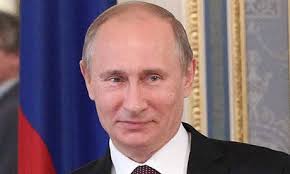
Vladimir Putin
Putin has never publicly shown any interest in religion. But by invoking “the Lord,” he was able to turn the Christian beliefs of his Western audience into a useful weapon.
Americans’ outrage quickly erupted.
“I was insulted,” then-House Speaker John Boehner (R-Ohio) told reporters when asked for his blunt reaction to the editorial.
“I have to be honest with you, I was at dinner, and I almost wanted to vomit,” said U.S. Senator Bob Menendez (D-New Jersey).
Putin had dared to question the self-righteousness of American foreign policy—and those who make it.
Making his case for war with Syria, Obama had said: “America is not the world’s policeman….But when, with modest effort and risk, we can stop children from being gassed to death, and thereby make our own children safer over the long run, I believe we should act.
“That’s what makes America different. That’s what makes us exceptional. With humility, but with resolve, let us never lose sight of that essential truth.”

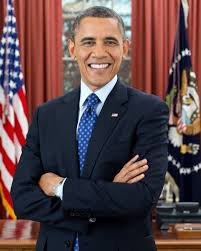
Barack Obama
In short: Because we consider ourselves “exceptional,” we have the divine right to do whatever we want.
It’s not necessary to see Putin as a champion of democracy (he isn’t) to see the truth in this part of his editorial:
“It is extremely dangerous to encourage people to see themselves as exceptional, whatever the motivation.”
From 1938 to 1969, the House Un-American Activities Committee sought to define what was “American” and what was “Un-American.”
As if “American” stood for all things virtuous.
Whoever heard of an “Un-French Activities Committee”? Or an “Un-German” or “Un-British” one?
The late S.I. Hayakawa was a professor of semantics (the study of the relationship between words and what they stand for).In his bestselling book, Language in Thought and Action, he observed that a person has four ways of responding to a message:
- Accept the speaker and his message.
- Accept the speaker but reject the message.
- Accept the message but reject the speaker.
- Reject the message and the speaker.
In this case, Americans might want to consider #3 where “American exceptionalism” is concerned.
ABC NEWS, AL QAEDA, ALTERNET, AMERICABLOG, AP, BABY BOOMER RESISTANCE, BASHIR AL-ASSAD, BUZZFEED, CBS NEWS, CHARLES GEORGE GORDON, CHARLTON HESTON, CNN, CROOKS AND LIARS, DAILY KOZ, DRUDGE RETORT, FIVETHIRTYEIGHT, GEORGE W. BUSH, GREAT BRITAIN, HARPER’S MAGAZINE, HIZBOLLAH, IRAQ, ISLAM, KHARTOUM, KHARTOUM (MOVIE), LAURENCE OLIVER, MEDIA MATTERS, MOTHER JONES, MOVEON, MSNBC, NBC NEWS, NEOCONS, NEWSWEEK, NPR, PBS NEWSHOUR, POLITICO, POLITICUSUSA, PRESIDENT BARACK OBAMA, RAW STORY, REPUBLICAN PARTY, REUTERS, SALON, SEATTLE TIMES, SHIITE MUSLIMS, SLATE, SUDAN, SUNNI MUSLIMS, SYRIA, TALKING POINTS MEMO, THE ATLANTIC, THE CHICAGO SUN-TIMES, THE CHICAGO TRIBUNE, THE DAILY BEAST, THE DAILY BLOG, THE GUARDIAN, THE HILL, THE HUFFINGTON POST, THE LOS ANGELES TIMES, THE MADHI, THE NATION, THE NEW REPUBLIC, THE NEW YORK TIMES, THE VILLAGE VOICE, THE WALL STREET JOURNAL, THE WASHINGTON POST, THINKPROGRESS, TIME, TRUTHDIG, TRUTHOUT, TWITTER, TWO POLITICAL JUNKIES, U.S. NEWS & WORLD REPORT, UPI, USA TODAY, WILLIAM GLADSTONE, WONKETTE
In Bureaucracy, History, Military, Politics, Social commentary on June 23, 2023 at 12:11 am
January 26, 2020, marked the 138th anniversary of the fall of Khartoum, the Sudanese city that sits on the banks of the White and Blue Nile Rivers.
The siege and fall of Khartoum is one of the truly epic stories of military history.
From March 18, 1884, to January 26, 1885, the charisma and military genius of one man—British General Charles George Gordon—held at bay an army of thousands of fanatical Islamics intent on slaughtering everyone in the city.
Khartoum in 1888—four years after the siege
At stake were the lives of Khartoum’s 30,000 residents.
By comparison: The defenders of the Alamo—a far better-known battle, in 1836—numbered no more than 250. And the siege of the San Antonio mission lasted only 13 days against an army of about 2,000 Mexicans.
The Alamo
Gordon’s story may seem antiquated. But it resembles the efforts Republicans made to pressure the Obama administration to commit ground forces to “freeing” Syria of its longtime dictator, “President” Bashir al-Assad.
The neocons of the George W. Bush Administration plunged the United States into an unprovoked war against Iraq in 2003. After Baghdad quickly fell, Americans cheered, thinking the war was over and the troops would soon return home.
Suddenly, American soldiers found themselves waging a two-front war in the same country: Fighting an Iraqi insurgency to throw them out, while trying to suppress growing sectarian warfare between Sunni and Shia Muslims.
And then, with Syria, Americans were being urged to plunge headfirst into a conflict they knew nothing about—and in which they had absolutely no stake.
On one side was the Ba’ath regime of Bashir al-Assad, supported by Russia, Iran, Hizbollah and elements in the Iraqi government. Hizbollah is comprised of Shiite Muslims, who form a minority of Islamics.
A sworn enemy of Israel, it has kidnapped scores of Americans suicidal enough to visit Lebanon and truck-bombed the Marine barracks in Beirut in 1983, killing 299 Americans.
Flag of Hizbollah
Al-Qaeda, on the other hand, is made up of Sunni Muslims, who form the majority of that religion.
It is intolerant of non-Sunni Muslims and has instigated violence against them. It denounces them as “takfirs”–heretics—and thus worthy of extermination.
Flag of Al-Qaeda
In short, it’s a Muslim-vs.-Muslim “holy war.
It’s all very reminiscent of events in the 1966 epic film, Khartoum, starring Charlton Heston as British General Charles George Gordon.
In 1884, the British government sends Gordon, a real-life hero of the Victorian era, to evacuate the Sudanese city of Khartoum.
Mohammed Achmed, a previously anonymous Sudanese, has proclaimed himself “The Madhi” (“The Expected One”) and raised the cry of jihad.
The Madhi (played by Lawrence Olivier) intends to drive all foreigners (of which the English are the largest group) out of Sudan and exterminate all those Muslims who do not practice his “pure” version of Islam.
Charlton Heston as Gordon (left); Laurence Oliver as the Madhi (right)
Gordon arrives in Khartoum to find he’s not fighting a rag-tag army of peasants. Instead, the Madhi is a highly intelligent military strategist.
And Gordon, an evangelical Christian, also finds he has underestimated the Madhi’s religious fanaticism: “I seem to have suffered from the delusion that I had a monopoly on God.”
A surprised Gordon finds himself and 30,000 Sudanese trapped in Khartoum when the Madhi’s forces suddenly appear. He sends off messengers and telegrams to the British Government, begging for a military relief force.
But the British Government wants nothing to do with the Sudan. It has sent Gordon there as a sop to British public opinion that “something” had to be done to quell the Madhist uprising.
The siege continues and tightens.
In Britain, the public hails Gordon as a Christian hero and demands that the Government send a relief expedition to save him.
Prime Minister William Gladstone finally sends a token force—which arrives in Khartoum two days after the city has fallen to the Madhi’s forces.
Gordon, standing at the top of a staircase and coolly facing down his dervish enemies, is speared to death.
George W. Joy’s famous—and romanticized—painting of “The Death of Gordon”
(Actually, the best historical evidence indicates that Gordon fought to the last with pistol and sword before being overwhelmed by his Islamic enemies.)
When the news reaches England, Britons mourn—and then demand vengeance for the death of their hero.
The Government, which had sought to wash its hands of the poor, military unimportant Sudan, suddenly has to send an army to avenge Gordon.
As the narrator of Khartoum intones at the close of the film: “For 15 years the British paid the price with shame and war.”
There is a blunt lesson for Americans to learn from this episode—and from the 1966 movie Khartoum itself.
Americans have been fighting in the Middle East since 2001—first in Afghanistan to destroy Al-Qaeda, and then in Iraq, to pursue George W. Bush’s vendetta against Saddam Hussein. They continue to fight in Syria against ISIS.
The United States faces a crumbling infrastructure, millions living in poverty and trillions of dollars in debt.
It’s time for Americans to clean up their own house before worrying about the messes in other nations—especially those wholly alien to American values.
ABC NEWS, AL QAEDA, ALTERNET, AMERICABLOG, AMERICAN EXCEPTIONALISM, AP, BABY BOOMER RESISTANCE, BARACK OBAMA, BASHIR AL-ASSAD, BBC, BLOOMBERG NEWS, BUZZFEED, CBS NEWS, CHILE, CNN, CROOKS AND LIARS, DAILY KOZ, FACEBOOK, FIVETHIRTYEIGHT, HARPER’S MAGAZINE, HOUSE UN-AMERICAN ACTIVITIES COMMITTEE, HUFFINGTON POST, HUMAN RIGHTS, IRAN, JOHN BOEHNER, JOHN MCCAIN, MEDIA MATTERS, MOTHER JONES, MOVEON, MSNBC, NBC NEWS, NEW REPUBLIC, NEWSDAY, NEWSWEEK, NICARAGUA, NPR, PBS NEWSHOUR, POLITICO, POLITICUSUSA, RAW STORY, REUTERS, RUSSIA, S.I. HAYAKAWA, SALON, SEATTLE TIMES, SLATE, SYRIA, TALKING POINTS MEMO, THE ATLANTIC, THE CHICAGO SUN-TIMES, THE CHICAGO TRIBUNE, THE DAILY BEAST, THE DAILY BLOG, THE GUARDIAN, THE HILL, THE HUFFINGTON POST, THE LOS ANGELES TIMES, THE NATION, THE NEW REPUBLIC, THE NEW YORK TIMES, THE NEW YORKER, THE VILLAGE VOICE, THE WALL STREET JOURNAL, THE WASHINGTON POST, THINKPROGRESS, TIME, TRUTHDIG, TRUTHOUT, TWITTER, TWO POLITICAL JUNKIES, U.S. NEWS & WORLD REPORT, UPI, USA TODAY, VLADIMIR PUTIN, WONKETTE
In Bureaucracy, History, Military, Politics, Social commentary on October 1, 2021 at 12:10 am
On September 11, 2013, the New York Times published an Op-Ed (guest editorial) from Russian President Vladimir Putin, entitled: “A Plea for Caution from Russia: What Putin Has to Say to Americans About Syria.”
No one should be surprised that Putin came out strongly against an American air strike on Syria.
Its “President” (i.e., dictator) Bashir al-Assad, is, after all, a close ally of Russia. Just as his late father and dictator, Hafez al-Assad, was a close ally of the Soviet Union until its collapse in 1991.
Putin, of course, is a former member of the KGB, the infamous secret police which ruled the Soviet Union from its birth in 1917 to its collapse in 1991.
He grew up under a Communist dictatorship and clearly wishes to return to that era, saying publicly: “First and foremost it is worth acknowledging that the demise of the Soviet Union was the greatest geopolitical catastrophe of the century.”
So it would have been unrealistic to expect him to view the “Syria crisis” the same way that President Barack Obama did.
(A “crisis” for politicians is any event that can be exploited to increase their own status—and thus power. Few politicians really care about the “human rights” of other nations—unless promoting this issue can empower themselves and/or their own nation.
(President Ronald Reagan, for example, often wailed about the Soviets’ oppression of the Polish union, Solidarity—while firing hundreds of unionized air traffic controllers who went on strike.)
(A “crisis” for the media is any event that can be exploited for higher ratings.)
In his September 11, 2013 guest editorial in the New York Times, Putin offered the expected Russian take on Syria:
- Poison gas was used in Syria.
- It wasn’t used by the Syrian Army.
- It was used by “opposition forces, to provoke intervention by their powerful foreign patrons.”
But it was the concluding paragraph that enraged American politicians the most—especially Right-wing ones. In it, Putin took exception with American “exceptionalism.”
Vladimir Putin
This is the belief that the United States is unlike other nations in its innocence and steadfast dedication to human rights above all else.
Citizens of nations whose governments have been overthrown by the United States—such as Chile, Iran and Nicaragua—and replaced with brutal dictatorships would strongly disagree.
Referring to then-President Obama, Putin wrote:
“And I would rather disagree with a case he made on American exceptionalism, stating that the United States’ policy is ‘what makes America different. It’s what makes us exceptional.’
“It is extremely dangerous to encourage people to see themselves as exceptional, whatever the motivation.
“There are big countries and small countries, rich and poor, those with long democratic traditions and those still finding their way to democracy. Their policies differ, too.
“We are all different, but when we ask for the Lord’s blessings, we must not forget that God created us equal.”
Putin had never publicly shown any interest in religion. But by invoking “the Lord,” he was able to turn the Christian beliefs of his Western audience into a useful weapon.
“I was insulted,” then-House Speaker John Boehner (R-Ohio) told reporters when asked for his blunt reaction to the editorial.
“I have to be honest with you, I was at dinner, and I almost wanted to vomit,” said U.S. Senator Bob Menendez (D-New Jersey).
Putin had dared to question the self-righteousness of American foreign policy—and those who make it.
Making his case for war with Syria, Obama had said: “America is not the world’s policeman….
“But when, with modest effort and risk, we can stop children from being gassed to death, and thereby make our own children safer over the long run, I believe we should act.
“That’s what makes America different. That’s what makes us exceptional. With humility, but with resolve, let us never lose sight of that essential truth.”
President Barack Obama
* * * * *
In short: Because we consider ourselves “exceptional,” we have the divine right to do whatever we want.
It’s not necessary to see Putin as a champion of democracy (he isn’t) to see the truth in this part of his editorial: “It is extremely dangerous to encourage people to see themselves as exceptional, whatever the motivation.”
From 1938 to 1969, the House Un-American Activities Committee sought to define what was “American” and what was “Un-American.” As if “American” stood for all things virtuous.
Whoever heard of an “Un-French Activities Committee”? Or an “Un-German” or “Un-British” one?
The late S.I. Hayakawa once made an observation that clearly applies to this situation.
Hayakawa was a professor of semantics (the study of meaning, focusing on the relation between words and what they stand for).
In his bestselling book, Language in Thought and Action, he observed that when a person hears a message, he has four ways of responding to it:
- Accept the speaker and his message.
- Accept the speaker but reject the message.
- Accept the message but reject the speaker.
- Reject the message and the speaker.
Americans might want to consider #3 in the recent case of Russian President Vladimir Putin.
ABC NEWS, AL QAEDA, ALTERNET, AMERICABLOG, AMERICAN EXCEPTIONALISM, AMERICAN RECKONING: THE VIETNAM WAR AND OUR NATIONAL IDENTITY (BOOK), AP, BABY BOOMER RESISTANCE, BARACK OBAMA, BASHIR AL-ASSAD, BBC, BLOOMBERG NEWS, BUZZFEED, CANADA, CBS NEWS, CHINA, CHRISTIAN G. APPY, CNN, CROOKS AND LIARS, DAILY KOZ, DEMOCRATS, FACEBOOK, FIVETHIRTYEIGHT, HARPER’S MAGAZINE, HOUSE UN-AMERICAN ACTIVITIES COMMITTEE, HUFFINGTON POST, HUMAN RIGHTS, MEDIA MATTERS, MOTHER JONES, MOVEON, MSNBC, NBC NEWS, NEW REPUBLIC, NEWSDAY, NEWSWEEK, NPR, PBS NEWSHOUR, POLITICO, POLITICUSUSA, RAW STORY, REPUBLICANS, REUTERS, RUSSIA, SALLY YATES, SALON, SEATTLE TIMES, SLATE, SYRIA, TALKING POINTS MEMO, THE ATLANTIC, THE CHICAGO SUN-TIMES, THE CHICAGO TRIBUNE, THE DAILY BEAST, THE DAILY BLOG, THE GUARDIAN, THE HILL, THE HUFFINGTON POST, THE LOS ANGELES TIMES, THE NATION, THE NEW REPUBLIC, THE NEW YORK TIMES, THE NEW YORKER, THE VILLAGE VOICE, THE WASHINGTON POST, THINKPROGRESS, TIME, TRUTHDIG, TRUTHOUT, TWITTER, TWO POLITICAL JUNKIES, TYRANNY, U.S. NEWS & WORLD REPORT, UNITED STATES CONSTITUTION, UPI, USA TODAY, VIETNAM WAR, VLADIMIR PUTIN, WONKETTE
In Bureaucracy, History, Military, Politics, Social commentary on June 25, 2021 at 12:22 am
“Who are we?” asks Christian G. Appy in the opening of his 2015 book, American Reckoning: The Vietnam War and Our National Identity.
For Appy, it’s impossible to understand the enormous impact of the Vietnam war on the United States without first understanding the image that Americans had of themselves before that conflict. And he describes that image as:
“The broad faith that the United States [was] a unique force for good in the world, superior not only in its military and economic power but in the quality of its government and institutions, the character and morality of its people, and its way of life…..
“It was still unimaginable to most Americans that their own nation would wage aggressive war and justify it with unfounded claims, that it would support undemocratic governments reviled by their own people, and that American troops would be sent to fight in countries where they were widely regarded not as liberators but as imperialist invaders.”
Appy contends that, for millions of Americans, the Vietnam war dealt a mortal blow to that tremendously appealing self-image.
Yet for millions more, the United States remains an exemplary nation with a divine mission to lead other nations—willingly or unwillingly—to follow its example. And those Americans become furious when anyone—especially a foreigner—dares question that belief.
On September 11, 2013, the New York Times published an Op-Ed (guest editorial) from Russian President Vladimir Putin, entitled: “A Plea for Caution from Russia: What Putin Has to Say to Americans About Syria.
“To no one’s surprise, Putin strongly opposed an American air strike on Syria. Its “President” (i.e., dictator) Bashir al-Assad, is a close ally of Russia. Just as his late father and dictator, Hafez al-Assad, was a close ally of the Soviet Union.
And Putin is a former member of the KGB, the infamous secret police which ruled the Soviet Union from its birth in 1917 to its collapse in 1991.In his September 11 guest editorial in the New York Times, Putin offered the expected Russian take on Syria:
- Poison gas was used in Syria.
- It wasn’t used by the Syrian Army.
- “Opposition forces [used it] to provoke intervention by their powerful foreign patrons.”
- “There are few champions of democracy in Syria. But there are more than enough [al] Qaeda fighters and extremists of all stripes battling the government.”
But it’s the concluding paragraph that enraged American politicians the most—especially Right-wing ones. In it, Putin took exception with American “exceptionalism.”
Referring to then-President Barack Obama, Putin wrote:
“And I would rather disagree with a case he made on American exceptionalism, stating that the United States’ policy is ‘what makes America different. It’s what makes us exceptional.’
“It is extremely dangerous to encourage people to see themselves as exceptional, whatever the motivation. There are big countries and small countries, rich and poor, those with long democratic traditions and those still finding their way to democracy. Their policies differ, too.
“We are all different, but when we ask for the Lord’s blessings, we must not forget that God created us equal.”
Vladimir Putin
Putin has never publicly shown any interest in religion. But by invoking “the Lord,” he was able to turn the Christian beliefs of his Western audience into a useful weapon.
Americans’ outrage quickly erupted.
“I was insulted,” then-House Speaker John Boehner (R-Ohio) told reporters when asked for his blunt reaction to the editorial.
“I have to be honest with you, I was at dinner, and I almost wanted to vomit,” said U.S. Senator Bob Menendez (D-New Jersey).Putin had dared to question the self-righteousness of American foreign policy—and those who make it.
Making his case for war with Syria, Obama had said: “America is not the world’s policeman….But when, with modest effort and risk, we can stop children from being gassed to death, and thereby make our own children safer over the long run, I believe we should act.
“That’s what makes America different. That’s what makes us exceptional. With humility, but with resolve, let us never lose sight of that essential truth.”
In short: Because we consider ourselves “exceptional,” we have the divine right to do whatever we want.
It’s not necessary to see Putin as a champion of democracy (he isn’t) to see the truth in this part of his editorial:
“It is extremely dangerous to encourage people to see themselves as exceptional, whatever the motivation.”
From 1938 to 1969, the House Un-American Activities Committee sought to define what was “American” and what was “Un-American.”
As if “American” stood for all things virtuous.
Whoever heard of an “Un-French Activities Committee”? Or an “Un-German” or “Un-British” one?
The late S.I. Hayakawa was a professor of semantics (the study of the relationship between words and what they stand for).In his bestselling book, Language in Thought and Action, he observed that a person has four ways of responding to a message:
- Accept the speaker and his message.
- Accept the speaker but reject the message.
- Accept the message but reject the speaker.
- Reject the message and the speaker.
In this case, Americans might want to consider #3 where “American exceptionalism” is concerned.
ABC NEWS, AL QAEDA, ALTERNET, AMERICABLOG, AP, BABY BOOMER RESISTANCE, BASHIR AL-ASSAD, BUZZFEED, CBS NEWS, CHARLES GEORGE GORDON, CHARLTON HESTON, CNN, CROOKS AND LIARS, DAILY KOZ, DRUDGE RETORT, FACEBOOK, FIVETHIRTYEIGHT, GEORGE W. BUSH, GREAT BRITAIN, HARPER’S MAGAZINE, HIZBOLLAH, IRAQ, ISLAM, KHARTOUM, KHARTOUM (MOVIE), LAURENCE OLIVER, MEDIA MATTERS, MOTHER JONES, MOVEON, MSNBC, NBC NEWS, NEOCONS, NEWSWEEK, NPR, PBS NEWSHOUR, POLITICO, POLITICUSUSA, PRESIDENT BARACK OBAMA, RAW STORY, REPUBLICAN PARTY, REUTERS, SALON, SEATTLE TIMES, SHIITE MUSLIMS, SLATE, SUDAN, SUNNI MUSLIMS, SYRIA, TALKING POINTS MEMO, THE ATLANTIC, THE CHICAGO SUN-TIMES, THE CHICAGO TRIBUNE, THE DAILY BEAST, THE DAILY BLOG, THE GUARDIAN, THE HILL, THE HUFFINGTON POST, THE LOS ANGELES TIMES, THE MADHI, THE NATION, THE NEW REPUBLIC, THE NEW YORK TIMES, THE VILLAGE VOICE, THE WALL STREET JOURNAL, THE WASHINGTON POST, THINKPROGRESS, TIME, TRUTHDIG, TRUTHOUT, TWITTER, TWO POLITICAL JUNKIES, U.S. NEWS & WORLD REPORT, UPI, USA TODAY, WILLIAM GLADSTONE, WONKETTE
In Bureaucracy, History, Military, Politics, Social commentary on January 27, 2020 at 12:04 am
January 26, 2020, marked the 135th anniversary of the fall of Khartoum, the Sudanese city that sits on the banks of the White and Blue Nile Rivers.
The siege and fall of Khartoum is one of the truly epic stories of military history.
From March 18, 1884, to January 26, 1885, the charisma and military genius of one man—British General Charles George Gordon—held at bay an army of thousands of fanatical Islamics intent on slaughtering everyone in the city.
Khartoum in 1888—four years after the siege
At stake were the lives of Khartoum’s 30,000 residents.
By comparison: The defenders of the Alamo—a far better-known battle, in 1836—numbered no more than 250. And the siege of the San Antonio mission lasted only 13 days against an army of about 2,000 Mexicans.
The Alamo
Gordon’s story may seem antiquated. But it resembles the efforts Republicans made to pressure the Obama administration to commit ground forces to “freeing” Syria of its longtime dictator, “President” Bashir al-Assad.
The neocons of the George W. Bush Administration plunged the United States into an unprovoked war against Iraq in 2003. After Baghdad quickly fell, Americans cheered, thinking the war was over and the troops would soon return home.
Suddenly, American soldiers found themselves waging a two-front war in the same country: Fighting an Iraqi insurgency to throw them out, while trying to suppress growing sectarian warfare between Sunni and Shia Muslims.
And then, with Syria, Americans were being urged to plunge headfirst into a conflict they knew nothing about—and in which they had absolutely no stake.
On one side was the Ba’ath regime of Bashir al-Assad, supported by Russia, Iran, Hizbollah and elements in the Iraqi government. Hizbollah is comprised of Shiite Muslims, who form a minority of Islamics.
A sworn enemy of Israel, it has kidnapped scores of Americans suicidal enough to visit Lebanon and truck-bombed the Marine barracks in Beirut in 1983, killing 299 Americans.
Flag of Hizbollah
Al-Qaeda, on the other hand, is made up of Sunni Muslims, who form the majority of that religion.
It is intolerant of non-Sunni Muslims and has instigated violence against them. It denounces them as “takfirs”–heretics—and thus worthy of extermination.
Flag of Al-Qaeda
In short, it’s a Muslim-vs.Muslim “holy war.
It’s all very reminiscent of events in the 1966 epic film, Khartoum, starring Charlton Heston as British General Charles George Gordon.
In 1884, the British government sends Gordon, a real-life hero of the Victorian era, to evacuate the Sudanese city of Khartoum.
Mohammed Achmed, a previously anonymous Sudanese, has proclaimed himself “The Madhi” (“The Expected One”) and raised the cry of jihad.
The Madhi (played by Lawrence Olivier) intends to drive all foreigners (of which the English are the largest group) out of Sudan and exterminate all those Muslims who do not practice his “pure” version of Islam.

Charlton Heston as Gordon (left); Laurence Oliver as the Madhi (right)
Gordon arrives in Khartoum to find he’s not fighting a rag-tag army of peasants. Instead, the Madhi is a highly intelligent military strategist.
And Gordon, an evangelical Christian, also finds he has underestimated the Madhi’s religious fanaticism: “I seem to have suffered from the delusion that I had a monopoly on God.”
A surprised Gordon finds himself and 30,000 Sudanese trapped in Khartoum when the Madhi’s forces suddenly appear. He sends off messengers and telegrams to the British Government, begging for a military relief force.
But the British Government wants nothing to do with the Sudan. It has sent Gordon there as a sop to British public opinion that “something” had to be done to quell the Madhist uprising.
The siege continues and tightens.
In Britain, the public hails Gordon as a Christian hero and demands that the Government send a relief expedition to save him.
Prime Minister William Gladstone finally sends a token force—which arrives in Khartoum two days after the city has fallen to the Madhi’s forces.
Gordon, standing at the top of a staircase and coolly facing down his dervish enemies, is speared to death.
George W. Joy’s famous—and romanticized—painting of “The Death of Gordon”
(Actually, the best historical evidence indicates that Gordon fought to the last with pistol and sword before being overwhelmed by his dervish enemies.)
When the news reaches England, Britons mourn—and then demand vengeance for the death of their hero.
The Government, which had sought to wash its hands of the poor, military unimportant Sudan, suddenly has to send an army to avenge Gordon.
As the narrator of Khartoum intones at the close of the film: “For 15 years the British paid the price with shame and war.”
There is a blunt lesson for Americans to learn from this episode—and from the 1966 movie Khartoum itself.
Americans have been fighting in the Middle East since 2001—first in Afghanistan to destroy Al-Qaeda, and then in Iraq, to pursue George W. Bush’s vendetta against Saddam Hussein.
The United States faces a crumbling infrastructure, millions living in poverty and trillions of dollars in debt.
It’s time for Americans to clean up their own house before worrying about the messes in other nations—especially those wholly alien to American values.
2016 PRESIDENTIAL ELECTION, ABC NEWS, ADOLF HITLER, AL QAEDA, ALTERNET, AMERICAN EXCEPTIONALISM, AMERICAN NAZIS, AMERICAN RECKONING: THE VIETNAM WAR AND OUR NATIONAL IDENTITY (BOOK), AP, BARACK OBAMA, BASHIR AL-ASSAD, BUZZFEED, CANADA, CBS NEWS, CHINA, CHRISTIAN G. APPY, CNN, CROOKS AND LIARS, DAILY KOZ, DEMOCRATS, EMOLUMENTS CLAUSE, FACEBOOK, FASCISM, FBI, FEDERAL JUDICIARY, FLATTERY, GOVERNMENT SHUTDOWN, GREAT BRITAIN, HOUSE UN-AMERICAN ACTIVITIES COMMITTEE, HUMAN RIGHTS, INTELLIGENCE COMMUNITY, JAMES COMEY, JEFF SESSIONS, JOHN BOEHNER, JOHN MCCAIN, KIM JONG-UN, KU KLUX KLAN, MICHAEL FLYNN, MOTHER JONES, MOVEON, MSNBC, NBC NEWS, NEWSWEEK, NPR, PBS NEWSHOUR, POLITICO, RAW STORY, REPUBLICANS, REUTERS, ROBERT MUELLER, RUSSIA, RUSSIAN SUBVERSION, SALLY YATES, SALON, SEATTLE TIMES, SLATE, SYRIA, THE ATLANTIC, THE CHICAGO SUN-TIMES, THE CHICAGO TRIBUNE, THE DAILY BEAST, THE GUARDIAN, THE HILL, THE HUFFINGTON POST, THE LOS ANGELES TIMES, THE NATION, THE NEW YORK TIMES, THE PRESS, THE WASHINGTON POST, TIME, TREASON, TWITTER, TYRANNY, U.S. NEWS & WORLD REPORT, UNITED STATES CONSTITUTION, UPI, USA TODAY, VIETNAM WAR, VLADIMIR PUTIN, WILLIAM BARR
In Bureaucracy, History, Military, Politics, Social commentary on June 5, 2019 at 12:05 am
In his 2015 book, American Reckoning: The Vietnam War and Our National Identity, Christian G. Appy describes the way Americans saw their country before the war:
“The United States [was] a unique force for good in the world, superior not only in its military and economic power but in the quality of its government and institutions, the character and morality of its people, and its way of life…..
“It was still unimaginable to most Americans that their own nation would wage aggressive war and justify it with unfounded claims, that it would support undemocratic governments reviled by their own people, and that American troops would be sent to fight in countries where they were widely regarded not as liberators but as imperialist invaders.”
For millions of Americans, writes Appy, the Vietnam war forever shattered that tremendously appealing self-image.
Yet for millions more, the United States remains an exemplary nation with a divine mission to lead other nations—willingly or unwillingly—to follow its example. For these Americans, the corruption and dictatorships that plague many countries “can’t happen here.”
This refusal to accept the lessons of history blinds many Americans to the dangers posed by the Donald Trump Presidency.
Since assuming office on January 20, 2017, Trump:
- Repeatedly attacked the integrity of the American Intelligence community for confirming Russian subversion of the 2016 Presidential election—while siding with Russian President Vladimir Putin that this didn’t happen.
- Fired FBI Director James Comey for investigating that subversion.
- Fired Acting Attorney General Sally Yates after she warned him that National Security Adviser Michael Flynn had misled the FBI about his Russian contacts.
- Forced House Republicans to release a memo falsely accusing the FBI of pursuing a vendetta against him.

- Repeatedly attacked his Attorney General, Jeff Sessions, for recusing himself from investigations into ties between Russian Intelligence agents and members of Trump’s 2016 Presidential campaign. On November 7, 2018, Trump fired him.
- Repeatedly attacked the integrity of the FBI, raising the possibility of his firing more of its senior leadership for investigating that subversion.
- Accused those who participated in that investigation of committing “treason”—as if he were the monarchical embodiment of the state.
- (The Constitution does not define “treason” as disloyalty to the President—or a private citizen, which Trump was when he ran for President. It defines “treason” as “levying war” against the United States, or giving “aid and comfort” to countries or entities that have declared war on the United States.)
- Attacked and alienated America’s oldest allies, such as Canada and Great Britain.
- Repeatedly praised brutal Communist dictators Vladimir Putin and Kim Jong-Un.
- Falsely accused former President Barack Obama of illegally “spying” on his 2016 campaign.
- Repeatedly asked aides to fire Special Counsel Robert Mueller—but was finally persuaded that this could lead to his impeachment.
- Slandered Federal judges whose rulings displeased him.
- Spoken admiringly of American Nazis and Ku Klux Klansmen.
- Shut down the United States Government for over a month, imperiling the lives of 800,000 Federal employees, to extort money from Congress for a worthless wall on the U.S.-Mexico border.
- “Joked” that the United States—like China—should have a “President-for-Life.”
- Repeatedly attacked the free press as “the enemy of the people.”
- Encourages his followers to violently attack those he hates in the press. On July 2, 2017, he tweeted a video of himself punching a man with the CNN logo superimposed on his head during a WWE wrestling match.

- Used the Presidency to further enrich himself, in violation of the Emoluments Clause of the Constitution.
- By March 17, 2019, had said or tweeted 9,179 lies or misleading statements—an average of 11.6 lies a day.
- Requires his Cabinet members and lesser appointees to fawn over him with over-the-top flattery previously reserved for notorious dictators.
- Appointed William Bar as Attorney General to replace William Sessions—after Barr sent a fawning 20-page memo to the Justice Department criticizing the foundation of the Special Counsel investigation.
- Authorized Barr to investigate the Federal law enforcement and Intelligence agencies that legally investigated links between Russian Intelligence agents and members of Trump’s Presidential campaign.
- Plans to turn the traditional nonpartisan July 4 celebration on the National Mall into a Trump campaign rally that celebrates himself.
* * * * *
Donald Trump isn’t crazy, as many of his critics charge. Nor is he a political innocent who “simply doesn’t know better,” as his Republican allies have repeatedly claimed.
He knows exactly what he’s doing—and why.
He intends to strip every potential challenger to his authority—or his version of reality—of legitimacy with the public.
If he succeeds, there will be:
- No independent press to reveal his failures and crimes.
- No independent law enforcement agencies to investigate his abuses of office.
- No independent judiciary to hold him accountable.
- No independent military to dissent as he recklessly hurtles toward a nuclear disaster.
- No candidate—Democrat or Republican—to challenge him for re-election in 2020.
- No candidate—Democrat or Republican—to challenge his remaining in office as “President-for-Life.”
The absurd faith that “America is different from other great powers” brought us the Vietnam war—and the 58,000 needless dead that will forever be its legacy. Now that same faith threatens to bring us an absolute Right-wing dictatorship.
2016 PRESIDENTIAL ELECTION, ABC NEWS, ADOLF HITLER, AL QAEDA, ALTERNET, AMERICAN EXCEPTIONALISM, AMERICAN NAZIS, AMERICAN RECKONING: THE VIETNAM WAR AND OUR NATIONAL IDENTITY (BOOK), AP, BARACK OBAMA, BASHIR AL-ASSAD, BUZZFEED, CANADA, CBS NEWS, CHINA, CHRISTIAN G. APPY, CNN, CROOKS AND LIARS, DAILY KOZ, DEMOCRATS, EMOLUMENTS CLAUSE, FACEBOOK, FASCISM, FBI, FEDERAL JUDICIARY, FLATTERY, GOVERNMENT SHUTDOWN, GREAT BRITAIN, HOUSE UN-AMERICAN ACTIVITIES COMMITTEE, HUMAN RIGHTS, INTELLIGENCE COMMUNITY, JAMES COMEY, JEFF SESSIONS, JOHN BOEHNER, JOHN MCCAIN, KIM JONG-UN, KU KLUX KLAN, MICHAEL FLYNN, MOTHER JONES, MOVEON, MSNBC, NBC NEWS, NEWSWEEK, NPR, PBS NEWSHOUR, POLITICO, RAW STORY, REPUBLICANS, REUTERS, ROBERT MUELLER, RUSSIA, RUSSIAN SUBVERSION, SALLY YATES, SALON, SEATTLE TIMES, SLATE, SYRIA, THE ATLANTIC, THE CHICAGO SUN-TIMES, THE CHICAGO TRIBUNE, THE DAILY BEAST, THE GUARDIAN, THE HILL, THE HUFFINGTON POST, THE LOS ANGELES TIMES, THE NATION, THE NEW YORK TIMES, THE PRESS, THE WASHINGTON POST, TIME, TREASON, TWITTER, TYRANNY, U.S. NEWS & WORLD REPORT, UNITED STATES CONSTITUTION, UPI, USA TODAY, VIETNAM WAR, VLADIMIR PUTIN, WILLIAM BARR
In Bureaucracy, History, Military, Politics, Social commentary on June 4, 2019 at 12:05 am
“Who are we?” asks Christian G. Appy in the opening of his 2015 book, American Reckoning: The Vietnam War and Our National Identity.
For Appy, it’s impossible to understand the enormous impact of the Vietnam war on the United States without first understanding the image that Americans had of themselves before that conflict. And he describes that image as:
“The broad faith that the United States [was] a unique force for good in the world, superior not only in its military and economic power but in the quality of its government and institutions, the character and morality of its people, and its way of life…..
“It was still unimaginable to most Americans that their own nation would wage aggressive war and justify it with unfounded claims, that it would support undemocratic governments reviled by their own people, and that American troops would be sent to fight in countries where they were widely regarded not as liberators but as imperialist invaders.”
Appy contends that, for millions of Americans, the Vietnam war dealt a mortal blow to that tremendously appealing self-image.
Yet for millions more, the United States remains an exemplary nation with a divine mission to lead other nations—willingly or unwillingly—to follow its example. And those Americans become furious when anyone—especially a foreigner—dares question that belief.
On September 11, 2013, the New York Times published an Op-Ed (guest editorial) from Russian President Vladimir Putin, entitled: “A Plea for Caution from Russia: What Putin Has to Say to Americans About Syria.”
To no one’s surprise, Putin strongly opposed an American air strike on Syria. Its “President” (i.e., dictator) Bashir al-Assad, is a close ally of Russia. Just as his late father and dictator, Hafez al-Assad, was a close ally of the Soviet Union.
And Putin is a former member of the KGB, the infamous secret police which ruled the Soviet Union from its birth in 1917 to its collapse in 1991.
In his September 11 guest editorial in the New York Times, Putin offered the expected Russian take on Syria:
- Poison gas was used in Syria.
- It wasn’t used by the Syrian Army.
- “Opposition forces [used it] to provoke intervention by their powerful foreign patrons.”
- “There are few champions of democracy in Syria. But there are more than enough [al] Qaeda fighters and extremists of all stripes battling the government.”
But it’s the concluding paragraph that enraged American politicians the most—especially Right-wing ones. In it, Putin took exception with American “exceptionalism.”
Referring to then-President Barack Obama, Putin wrote:
“And I would rather disagree with a case he made on American exceptionalism, stating that the United States’ policy is ‘what makes America different. It’s what makes us exceptional.’
“It is extremely dangerous to encourage people to see themselves as exceptional, whatever the motivation. There are big countries and small countries, rich and poor, those with long democratic traditions and those still finding their way to democracy. Their policies differ, too.
“We are all different, but when we ask for the Lord’s blessings, we must not forget that God created us equal.”
Vladimir Putin
Putin has never publicly shown any interest in religion. But by invoking “the Lord,” he was able to turn the Christian beliefs of his Western audience into a useful weapon.
Americans’ outrage quickly erupted.
“I was insulted,” then-House Speaker John Boehner (R-Ohio) told reporters when asked for his blunt reaction to the editorial.
“I have to be honest with you, I was at dinner, and I almost wanted to vomit,” said U.S. Senator Bob Menendez (D-New Jersey).
Putin had dared to question the self-righteousness of American foreign policy—and those who make it.
Making his case for war with Syria, Obama had said: “America is not the world’s policeman….But when, with modest effort and risk, we can stop children from being gassed to death, and thereby make our own children safer over the long run, I believe we should act.
“That’s what makes America different. That’s what makes us exceptional. With humility, but with resolve, let us never lose sight of that essential truth.”
In short: Because we consider ourselves “exceptional,” we have the divine right to do whatever we want.
It’s not necessary to see Putin as a champion of democracy (he isn’t) to see the truth in this part of his editorial:
“It is extremely dangerous to encourage people to see themselves as exceptional, whatever the motivation.”
From 1938 to 1969, the House Un-American Activities Committee sought to define what was “American” and what was “Un-American.” As if “American” stood for all things virtuous.
Whoever heard of an “Un-French Activities Committee”? Or an “Un-German” or “Un-British” one?
The late S.I. Hayakawa was a professor of semantics (the study of the relationship between words and what they stand for).
In his bestselling book, Language in Thought and Action, he observed that a person has four ways of responding to a message:
- Accept the speaker and his message.
- Accept the speaker but reject the message.
- Accept the message but reject the speaker.
- Reject the message and the speaker.
Americans might want to consider #3 where “American exceptionalism” is concerned.
ABC NEWS, AL QAEDA, ALTERNET, AMERICAN EXCEPTIONALISM, AP, BARACK OBAMA, BASHIR AL-ASSAD, BUZZFEED, CBS NEWS, CHILE, CNN, CROOKS AND LIARS, DAILY KOZ, FACEBOOK, HOUSE UN-AMERICAN ACTIVITIES COMMITTEE, HUMAN RIGHTS, IRAN, JOHN BOEHNER, JOHN MCCAIN, MOTHER JONES, MOVEON, MSNBC, NBC NEWS, NEWSWEEK, NICARAGUA, NPR, PBS NEWSHOUR, POLITICO, RAW STORY, REUTERS, RUSSIA, S.I. HAYAKAWA, SALON, SEATTLE TIMES, SLATE, SYRIA, THE ATLANTIC, THE CHICAGO SUN-TIMES, THE CHICAGO TRIBUNE, THE DAILY BEAST, THE GUARDIAN, THE HILL, THE HUFFINGTON POST, THE LOS ANGELES TIMES, THE NATION, THE NEW YORK TIMES, THE WALL STREET JOURNAL, THE WASHINGTON POST, TIME, TWITTER, U.S. NEWS & WORLD REPORT, UPI, USA TODAY, VLADIMIR PUTIN
In Bureaucracy, History, Military, Politics, Social commentary on October 17, 2018 at 12:21 am
On September 11, 2013, the New York Times published an Op-Ed (guest editorial) from Russian President Vladimir Putin, entitled: “A Plea for Caution from Russia: What Putin Has to Say to Americans About Syria.”
No one should be surprised that Putin came out strongly against an American air strike on Syria.
Its “President” (i.e., dictator) Bashir al-Assad, is, after all, a close ally of Russia. Just as his late father and dictator, Hafez al-Assad, was a close ally of the Soviet Union until its collapse in 1991.
Putin, of course, is a former member of the KGB, the infamous secret police which ruled the Soviet Union from its birth in 1917 to its collapse in 1991.
He grew up under a Communist dictatorship and clearly wishes to return to that era, saying publicly: “First and foremost it is worth acknowledging that the demise of the Soviet Union was the greatest geopolitical catastrophe of the century.”
So it would be unrealistic to expect him to view the current “Syria crisis” the same way that President Barack Obama did.
(A “crisis” for politicians is any event that can be exploited to increase their own status—and thus power. Few politicians really care about the “human rights” of other nations—unless promoting this issue can empower themselves and/or their own nation.
(President Ronald Reagan, for example, often wailed about the Soviets’ oppression of the Polish union, Solidarity—while firing hundreds of unionized air traffic controllers who went on strike.)
(A “crisis” for the media is any event that can be exploited for higher ratings.)
In his September 11, 2013 guest editorial in the New York Times, Putin offered the expected Russian take on Syria:
- Poison gas was used in Syria.
- It wasn’t used by the Syrian Army.
- It was used by “opposition forces, to provoke intervention by their powerful foreign patrons.”
But it was the concluding paragraph that enraged American politicians the most—especially Right-wing ones. In it, Putin took exception with American “exceptionalism.”
Vladimir Putin
This is the belief that the United States is unlike other nations. That it is unlike other nations in its innocence and steadfast dedication to human rights above all else.
Citizens of nations whose governments have been overthrown by the United States—such as Chile, Iran and Nicaragua—and replaced with brutal dictatorships would strongly disagree.
Referring to then-President Obama, Putin wrote:
“And I would rather disagree with a case he made on American exceptionalism, stating that the United States’ policy is ‘what makes America different. It’s what makes us exceptional.’
“It is extremely dangerous to encourage people to see themselves as exceptional, whatever the motivation.
“There are big countries and small countries, rich and poor, those with long democratic traditions and those still finding their way to democracy. Their policies differ, too.
“We are all different, but when we ask for the Lord’s blessings, we must not forget that God created us equal.”
Putin has never publicly shown any interest in religion. But by invoking “the Lord,” he was able to turn the Christian beliefs of his Western audience into a useful weapon.
“I was insulted,” then-House Speaker John Boehner (R-Ohio) told reporters when asked for his blunt reaction to the editorial.
“I have to be honest with you, I was at dinner, and I almost wanted to vomit,” said U.S. Senator Bob Menendez (D-New Jersey).
Putin had dared to question the self-righteousness of American foreign policy—and those who make it.
Making his case for war with Syria, Obama had said: “America is not the world’s policeman….
“But when, with modest effort and risk, we can stop children from being gassed to death, and thereby make our own children safer over the long run, I believe we should act.
“That’s what makes America different. That’s what makes us exceptional. With humility, but with resolve, let us never lose sight of that essential truth.”
President Barack Obama
In short: Because we consider ourselves “exceptional,” we have the divine right to do whatever we want.
It’s not necessary to see Putin as a champion of democracy (he isn’t) to see the truth in this part of his editorial: “It is extremely dangerous to encourage people to see themselves as exceptional, whatever the motivation.”
From 1938 to 1969, the House Un-American Activities Committee sought to define what was “American” and what was “Un-American.” As if “American” stood for all things virtuous.
Whoever heard of an “Un-French Activities Committee”? Or an “Un-German” or “Un-British” one?
The late S.I. Hayakawa once made an observation that clearly applies to this situation.
Hayakawa was a professor of semantics (the study of meaning, focusing on the relation between words and what they stand for).
In his bestselling book, Language in Thought and Action, he observed that when a person hears a message, he has four ways of responding to it:
- Accept the speaker and his message.
- Accept the speaker but reject the message.
- Accept the message but reject the speaker.
- Reject the message and the speaker.
Americans might want to consider #3 in the recent case of Russian President Vladimir Putin.
ABC NEWS, AL QAEDA, AMERICAN EXCEPTIONALISM, BARACK OBAMA, BASHIR AL-ASSAD, CBS NEWS, CNN, FACEBOOK, HOUSE UN-AMERICAN ACTIVITIES COMMITTEE, HUMAN RIGHTS, JOHN BOEHNER, JOHN MCCAIN, NBC NEWS, RUSSIA, SYRIA, THE CHICAGO SUN-TIMES, THE CHICAGO TRIBUNE, THE HUFFINGTON POST, THE LOS ANGELES TIMES, THE NEW YORK TIMES, THE WALL STREET JOURNAL, THE WASHINGTON POST, TWITTER, USA TODAY, VLADIMIR PUTIN
In Bureaucracy, History, Military, Politics, Social commentary on September 16, 2016 at 12:19 am
On September 11, 2013, the New York Times published an Op-Ed (guest editorial) from Russian President Vladimir Putin, entitled: “A Plea for Caution from Russia: What Putin Has to Say to Americans About Syria.”
No one should be surprised that Putin came out strongly against an American air strike on Syria.
Its “President” (i.e., dictator) Bashir al-Assad, is, after all, a close ally of Russia. Just as his late father and dictator, Hafez al-Assad, was a close ally of the Soviet Union until its collapse in 1991.
Putin, of course, is a former member of the KGB, the infamous secret police which (under various other names) ruled the Soviet Union from its birth in 1917 to its collapse in 1991.
He grew up under a Communist dictatorship and clearly wishes to return to that era, saying publicly: “First and foremost it is worth acknowledging that the demise of the Soviet Union was the greatest geopolitical catastrophe of the century.”
So it would be unrealistic to expect him to view the current “Syria crisis” the same way that President Barack Obama does.
(A “crisis” for politicians and news media is any event they believe can be exploited for their own purposes.
(In the case of media like CNN–which has devoted enormous coverage to the use of poison gas in Syria–the motive is higher ratings. “If it bleeds, it leads,” goes the saying in the news business.
(In the case of politicians–like Obama and Putin–the motive is to further their own status. And thus power.
(Few politicians really care about the “human rights” of other nations–unless promoting this issue can empower themselves and/or their own nations.
(President Ronald Reagan, for example, often wailed about the Soviets’ oppression of the Polish union, Solidarity–while firing hundreds of unionized air traffic controllers who went on strike.)
In his September 11 guest editorial in the New York Times, Putin offered the expected Russian take on Syria:
- Yes, poison gas was used in Syria.
- No, it wasn’t used by the Syrian Army.
- It was used by “opposition forces, to provoke intervention by their powerful foreign patrons.”
- “There are few champions of democracy in Syria. But there are more than enough [al] Qaeda fighters and extremists of all stripes battling the government.”
But it’s the concluding paragraph that has enraged American politicians the most–especially right-wing ones. In it, Putin takes exception with American “exceptionalism.”
Vladimir Putin
Referring to President Obama, Putin wrote:
“And I would rather disagree with a case he made on American exceptionalism, stating that the United States’ policy is ‘what makes America different. It’s what makes us exceptional.’
“It is extremely dangerous to encourage people to see themselves as exceptional, whatever the motivation.
“There are big countries and small countries, rich and poor, those with long democratic traditions and those still finding their way to democracy. Their policies differ, too.
“We are all different, but when we ask for the Lord’s blessings, we must not forget that God created us equal.”
Putin has never publicly shown any interest in religion. But by invoking “the Lord,” he was able to turn the Christian beliefs of his Western audience into a useful weapon.
“I was insulted,” then-House Speaker John Boehner (R-Ohio) told reporters when asked for his blunt reaction to the editorial.
“I have to be honest with you, I was at dinner, and I almost wanted to vomit,” said U.S. Senator Bob Menendez (D-New Jersey).
Putin had dared to question the self-righteousness of American foreign policy–and those who make it.
Making his case for war with Syria, Obama had said: “America is not the world’s policeman….
“But when, with modest effort and risk, we can stop children from being gassed to death, and thereby make our own children safer over the long run, I believe we should act.
“That’s what makes America different. That’s what makes us exceptional. With humility, but with resolve, let us never lose sight of that essential truth.”
President Barack Obama
In short: Because we consider ourselves “exceptional,” we have the divine right to do whatever we want.
It’s not necessary to see Putin as a champion of democracy (he isn’t) to see the truth in this part of his editorial: “It is extremely dangerous to encourage people to see themselves as exceptional, whatever the motivation.”
From 1938 to 1969, the House Un-American Activities Committee sought to define what was “American” and what was “Un-American.” As if “American” stood for all things virtuous.
Whoever heard of an “Un-French Activities Committee”? Or an “Un-German” or “Un-British” one?
The late S.I. Hayakawa once made an obersation that clearly applies to this situation.
Hayakawa was a professor of semantics (the study of meaning, focusing on the relation between words and what they stand for).
In his bestselling book, Language in Thought and Action, he observed that when a person hears a message, he has four ways of responding to it:
- Accept the speaker and his message.
- Accept the speaker but reject the message.
- Accept the message but reject the speaker.
- Reject the message and the speaker.
Americans might want to consider #3 in the recent case of Russian President Vladimir Putin.


_b_617.jpg)


 Bureaucracybuster's Blog
ABC NEWS, AL QAEDA, ALTERNET, AMERICABLOG, AP, BABY BOOMER RESISTANCE, BASHIR AL-ASSAD, BBC, BLOOMBERG, BLUESKY, BUZZFEED, CBS NEWS, CHARLES GEORGE GORDON, CHARLTON HESTON, CNN, CROOKS AND LIARS, DAILY KOS, DRUDGE RETORT, FIVETHIRTYEIGHT, GEORGE W. BUSH, GREAT BRITAIN, HARPER’S MAGAZINE, HIZBOLLAH, HUFFINGTON POST, IRAQ, ISLAM, KHARTOUM, KHARTOUM (MOVIE), LAURENCE OLIVER, MEDIA MATTERS, MOTHER JONES, MOVEON, MSNBC, NBC NEWS, NEOCONS, NEW REPUBLIC, NEWSDAY, NEWSWEEK, NPR, PBS NEWSHOUR, POLITICO, POLITICUSUSA, PRESIDENT BARACK OBAMA, RAW STORY, REPUBLICAN PARTY, REUTERS, SALON, SEATTLE TIMES, SHIITE MUSLIMS, SLATE, SUDAN, SUNNI MUSLIMS, SYRIA, TALKING POINTS MEMO, THE ATLANTIC, THE CHICAGO SUN-TIMES, THE CHICAGO TRIBUNE, THE DAILY BEAST, THE DAILY BLOG, THE GUARDIAN, THE HILL, THE HUFFINGTON POST, THE INTERCEPT, THE LOS ANGELES TIMES, THE MADHI, THE NATION, THE NEW REPUBLIC, THE NEW YORK TIMES, THE NEW YORKER, THE VILLAGE VOICE, THE WALL STREET JOURNAL, THE WASHINGTON POST, THINKPROGRESS, TIME, TRUTHDIG, TRUTHOUT, TWO POLITICAL JUNKIES, U.S. NEWS & WORLD REPORT, UPI, USA TODAY, WILLIAM GLADSTONE, WONKETTE, X
A HEROIC SIEGE–AND A WARNING FOR AMERICA
In Bureaucracy, History, Military, Politics, Social commentary on January 28, 2025 at 12:06 amJanuary 26, 2025, marked the 140th anniversary of the fall of Khartoum, the Sudanese city that sits on the banks of the White and Blue Nile Rivers.
The siege and fall of Khartoum is one of the truly epic stories of military history.
From March 18, 1884, to January 26, 1885, the charisma and military genius of one man—British General Charles George Gordon—held at bay an army of thousands of fanatical Islamics intent on slaughtering everyone in the city.
At stake were the lives of Khartoum’s 30,000 residents.
By comparison: The defenders of the Alamo—a far better-known battle—numbered no more than 250. And the siege of the San Antonio mission lasted only 13 days (February 23 to March 6, 1836) against an army of about 2,000 Mexicans.
The Alamo
Gordon’s story may seem antiquated. But it resembles the efforts Republicans made to pressure the Obama administration to commit ground forces to “freeing” Syria of its longtime dictator, “President” Bashir al-Assad.
The neocons of the George W. Bush Administration plunged the United States into an unprovoked war against Iraq in 2003. After Baghdad quickly fell, Americans cheered, thinking the war was over and the troops would soon return home.
Suddenly, American soldiers found themselves waging a two-front war in the same country: Fighting an Iraqi insurgency to throw them out, while trying to suppress growing sectarian warfare between Sunni and Shia Muslims.
And then, with Syria, Americans were being urged to plunge headfirst into a conflict they knew nothing about—and in which they had absolutely no stake.
On one side was the Ba’ath regime of Bashir al-Assad, supported by Russia, Iran, Hizbollah and elements in the Iraqi government. Hizbollah is comprised of Shiite Muslims, who form a minority of Islamics.
A sworn enemy of Israel, it has kidnapped scores of Americans suicidal enough to visit Lebanon and truck-bombed the Marine barracks in Beirut in 1983, killing 299 Americans.
Flag of Hizbollah
Al-Qaeda, on the other hand, is made up of Sunni Muslims, who form the majority of that religion.
It is intolerant of non-Sunni Muslims and has instigated violence against them. It denounces them as “takfirs”–heretics—and thus worthy of extermination.
Flag of Al-Qaeda
In short, it’s a Muslim-vs.-Muslim “holy war.
It’s all very reminiscent of events in the 1966 epic film, Khartoum, starring Charlton Heston as British General Charles George Gordon.
In 1884, the British government sends Gordon, a real-life hero of the Victorian era, to evacuate the Sudanese city of Khartoum.
Mohammed Achmed, a previously anonymous Sudanese, has proclaimed himself “The Madhi” (“The Expected One”) and raised the cry of jihad.
The Madhi (played by Lawrence Olivier) intends to drive all foreigners (of which the English are the largest group) out of Sudan and exterminate all those Muslims who do not practice his “pure” version of Islam.
Charlton Heston as Gordon (left); Laurence Oliver as the Madhi (right)
Gordon arrives in Khartoum to find he’s not fighting a rag-tag army of peasants. Instead, the Madhi is a highly intelligent military strategist.
And Gordon, an evangelical Christian, also finds he has underestimated the Madhi’s religious fanaticism: “I seem to have suffered from the delusion that I had a monopoly on God.”
A surprised Gordon finds himself and 30,000 Sudanese trapped in Khartoum when the Madhi’s forces suddenly appear. He sends off messengers and telegrams to the British Government, begging for a military relief force.
But the British Government wants nothing to do with the Sudan. It has sent Gordon there as a sop to British public opinion that “something” had to be done to quell the Madhist uprising.
The siege continues and tightens.
In Britain, the public hails Gordon as a Christian hero and demands that the Government send a relief expedition to save him.
Prime Minister William Gladstone finally sends a token force—which arrives in Khartoum two days after the city has fallen to the Madhi’s forces.
Gordon, standing at the top of a staircase and coolly facing down his dervish enemies, is speared to death.
George W. Joy’s famous—and romanticized—painting of “The Death of Gordon”
(Actually, the best historical evidence indicates that Gordon fought to the last with pistol and sword before being overwhelmed by his Islamic enemies.)
When the news reaches England, Britons mourn—and then demand vengeance for the death of their hero.
The Government, which had sought to wash its hands of the poor, military unimportant Sudan, suddenly has to send an army to avenge Gordon.
As the narrator of Khartoum intones at the close of the film: “For 15 years the British paid the price with shame and war.”
There is a blunt lesson for Americans to learn from this episode—and from the 1966 movie Khartoum itself.
Americans have been fighting in the Middle East since 2001—first in Afghanistan to destroy Al-Qaeda, and then in Iraq, to pursue George W. Bush’s vendetta against Saddam Hussein. They continue to fight in Syria against ISIS.
The United States faces a crumbling infrastructure, millions living in poverty and trillions of dollars in debt.
It’s time for Americans to clean up their own house before worrying about the messes in other nations—especially those wholly alien to American values.
Share this: