Posts Tagged ‘2016 PRESIDENTIAL RACE’
2016 PRESIDENTIAL RACE, ABC NEWS, ALTERNET, AP, BARACK OBAMA, BASKET OF DEPLORABLES SPEECH, BERNIE SANDERS, BILL CLINTON, BLACKS, BUZZFEED, CBS NEWS, CELINDA LAKE, CLINTON FUNDATION, CNN, COMMUNISM, CONDOLEEZA RICE, CROOKS AND LIARS, DAILY KOZ, DEBBIE WASSERMAN-SCHULTZ, DEMOCRATIC NATIONAL COMMITTEE, DONALD TRUMP, FACEBOOK, GEORGE W. BUSH, HILLARY CLINTON, HISPANICS, HOUSE OF REPRESENTATIVES, JAMES WEBB, MICHELLE OBAMA, MOTHER JONES, MOVEON, NBC NEWS, NEWSWEEK, NPR, POLITICO, POPULISM, RACISM, RAW STORY, REPUBLICAN NATIONAL COMMITTEE, REUTERS, SALON, SEATTLE TIMES, SLATE, SOCIALISM, SUSAN BORDO, THE ATLANTIC, THE CHICAGO SUN-TIMES, THE CHICAGO TRIBUNE, THE DAILY BEAST, THE DESTRUCTION OF HILLARY CLINTON, THE GUARDIAN, THE HILL, THE HUFFINGTON POST, THE LOS ANGELES TIMES, THE NATION, THE NEW YORK TIMES, THE WASHINGTON POST, TIME, TOM BROKAW, TWITTER, U.S. HOUSE OF REPRESENTATIVES, U.S. NEWS & WORLD REPORT, U.S. SENATE, UP, UPI, USA TODAY, WHITES, WHITEWATER, WIKILEAKS, WOMEN, YOUTH
In History, Politics, Social commentary on September 8, 2017 at 12:03 am
Since losing the Presidency to Donald Trump last November, Hillary Clinton has been increasingly on the warpath.
She’s clearly intent on convincing everyone—perhaps most importantly herself—that it she waged a flawless campaign–and it was everyone else’s fault that she didn’t win.
Aiding her in this effort is Susan Bordo, author of The Destruction of Hillary Clinton. In its dust jacket blurb, the book asks:
“How did an extraordinarily well-qualified, experienced, and admired candidate—whose victory would have been as historic as Barack Obama’s—come to be seen as a tool of the establishment, a chronic liar, and a talentless politician?”
And it answers:
“In this masterful narrative of the 2016 campaign year and the events that led up to it, Susan Bordo unpacks the Rights’ assault on Clinton and her reputation, the way the left provoked suspicion and indifference among the youth vote, the inescapable presence of [FBI Director] James Comey, questions about Russian influence, and the media’s malpractice in covering the candidate.”

Others who come in for blame: WikiLeaks; Vermont U.S. Senator Bernie Sanders; younger women; and even Monica Lewinsky.
Yes, it was
- Bernie Sanders’ fault for daring to challenge Clinton for the Democratic nomination—and refusing to accept that it was “Hillary’s turn” to become President.
- WikiLeaks’ fault for publishing emails sent by members of the Democratic National Committee—which proved the supposedly impartial DNC was working to secure the nomination for Clinton.
- Younger women’s fault for not identifying with a woman old enough to be their grandmother—and who has lived an extraordinarily privileged life since she became First Lady in 1993.
- Monica Lewinsky’s fault for being a reminder to voters that Hillary’s husband had disgraced the Presidency in an oral sex scandal.
All of these factors certainly played a part in why Clinton lost the White House for the second time in eight years. But they are not all the factors behind her loss.
There were plenty of others—that are not mentioned in Bordo’s book.
Among these:
#1 Hillary Clinton was an uninspiring candidate. When Barack Obama ran for President in 2008, NBC Anchor Tom Brokaw compared his rallies to Hannah Montana concerts. Audiences were excited by his charisma, eloquence, relative youth (47) and optimism (“Yes We Can!”).
Clinton radiated none of these qualities. She was 67 when she declared her candidacy for President—and looked it. Her speaking voice grated like the proverbial fingernail on a blackboard.
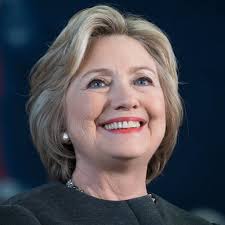
Hillary Clinton
She seemed to have been around forever—as First Lady (1993-2001), as Senator from New York (2001-2009) and as Secretary of State (2009-2013). Those born after 2000 thought of the Clinton Presidency as ancient history. She was offering a resume—and voters wanted an inspiration.
#2 Clinton brought a lot of baggage with her. In contrast to Obama, whose Presidency had been scandal-free, Clinton—rightly or wrongly—has always been dogged by charges of corruption.
During the Clinton Presidency, a failed land deal—Whitewater—while Bill Clinton was Governor of Arkansas triggered a seven-year investigation by a Republican special prosecutor. No criminality was uncovered, and no charge was brought against either Clinton.
After leaving the White House, she and her husband set up the Clinton Foundation, a public charity to bring government, businesses and social groups together to solve problems “faster, better, at lower cost.”
As Secretary of State, more than half of Clinton’s meetings with people outside government were with donors to the Clinton Foundation. If a “pay-to play” system wasn’t at work, one certainly seemed to be.
She cast further suspicion on herself by her unauthorized use of a private email server. This wasn’t revealed until March, 2015—after she was no longer Secretary of State.
She claimed she had used it to avoid carrying two cell-phones. But, as Secretary of State, she traveled with a huge entourage who carried everything she needed. Her critics believed she used a private email system to hide a “pay-for-pay” relationship with Clinton Foundation donors.
#3 As a candidate for President, she “secretly” worked with Debbie Wasserman-Schultz, the chair of the Democratic National Committee, to ensure that she would get the nomination.
As DNC chair, Wasserman-Schultz was expected to be impartial toward all Democratic candidates seeking the prize. This included Vermont U.S. Senator Bernie Sanders, Clinton’s chief competitor.
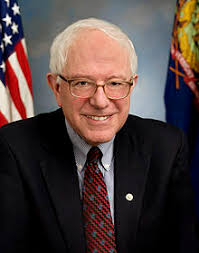
Bernie Sanders
So Sanders and his supporters were outraged when, on July 22, WikiLeaks released 19,252 emails and 8,034 attachments hacked from computers of the highest-ranking officials of the DNC.
The emails revealed a clear bias for Clinton and against Sanders. In one email, Brad Marshall, the chief financial officer of the DNC, suggested that Sanders, who is Jewish, could be portrayed as an atheist.
#4 The Obamas’ support proved a plus/minus for Clinton. Understandably, President Obama wanted to see his legacies continued—and she was the only candidate who could do it.
So he—and his wife, Michelle—stormed the country, giving eloquent, passionate speeches and firing up crowds on Clinton’s behalf.
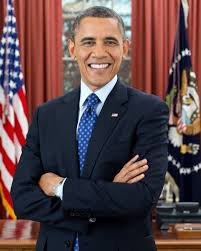
President Barack Obama
So long as either Obama stood before a crowd, the magic lasted. But once the event was over, the excitement vanished. Hillary simply didn’t arouse enough passion to keep it going.
Obama’s supporters found Clinton wanting–in attractiveness, grace, eloquence, trustworthiness and the ability to inspire.
2016 PRESIDENTIAL RACE, ABC NEWS, ADOLF HITLER, ALTERNET, AP, ASSASSINATION, BBC, BUZZFEED, CBS NEWS, CILLIAN MURPHY, CNN, CZECHOSLOVAKIA, DAILY KOS, DONALD TRUMP, ERIC TRUMP, FACEBOOK, FINAL SOLUTION, FOX NEWS NETWORK, HANNITY, HILLARY CLINTON, JAMIE DORNAN, JEB BUSH, JOHNNY DEPP, LARA TRUMP, MICHAEL HAYDEN, MOTHER JONES, MOVEON, MOVIES, NATIONAL SECURITY AGENCY, NAZI GERMANY, NBC NEWS, NEWSWEEK, NPR, OPERATION ANTHROPOID, POLITICO, RAW STORY, REINHARD HEYDRICH, REUTERS, SALON, SARAH HUCKABEE SANDERS, SEAN HANNITY, SEATTLE TIMES, SLATE, SS, THE ATLANTIC, THE CHICAGO SUN-TIMES, THE CHICAGO TRIBUNE, THE DAILY BEAST, THE GUARDIAN, THE HILL, THE HUFFINGTON POST, THE LOS ANGELES TIMES, THE NEW YORK TIMES, THE WALL STREET JOURNAL, THE WASHINGTON POST, TIME, TWITTER, U.S. NEWS & WORLD REPORT, UPI, USA TODAY, WANNSEE CONFERENCE
In Bureaucracy, History, Law, Law Enforcement, Politics, Social commentary on June 27, 2017 at 9:25 am
Johnny Depp is an acclaimed actor. But his skills as a comic have sparked a backlash.
“When was the last time an actor assassinated the President?” he asked while speaking at the Glatonbury Festival on June 22.
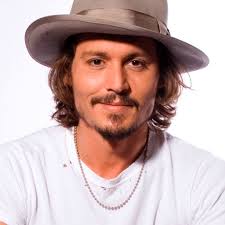
Johnny Depp
The Glastonbury Festival is an annual, five-day celebration of contemporary performing arts that takes place near Pilton, Somerset (England).
Perhaps Depp sensed that he was making himself a target for the Secret Service, for he quickly added that he was not referring to himself: “I want to clarify, I am not an actor. I lie for a living. However, it has been a while and maybe it is time.”
Predictably, Donald Trump’s family did not find the joke funny.
The next day, Lara Trump, wife of the President’s son, Eric, called Depp’s comments “really, really sad—as a family member and as an American.”

Eric and Lara Trump
Max Goldberg from USA, CC BY 2.0 <https://creativecommons.org/licenses/by/2.0>, via Wikimedia Commons
Appearing on Right-wing Fox Network’s “Hannity,” she told its host, Sean Hannity: “It’s happening to Donald Trump because he is Donald Trump. Their candidate failed, because they have nothing else to say. They have no platform; they have no real leader; they have no message.
“So the only thing they can do is pile on the President. Unfortunately it is to the detriment of the country.
“It’s really sick, Sean. The Republican Party is becoming the only party of tolerance here in the United States.”
On Twitter, Donald Trump Jr. called for Disney to dump the star of the “Pirates of the Caribbean” franchise.
“President Trump has condemned violence in all forms, and it’s sad that others like Johnny Depp have not followed his lead,” said deputy White House press secretary Sarah Huckabee Sanders.
Apparently these Trump enthusiasts forgot Trump’s series of threats against his Republican and Democratic opponents throughout the 2016 campaign:
- On March 16, he warned Republicans that if he didn’t win the GOP nomination in July, his supporters would literally riot: “I think you’d have riots. I think you would see problems like you’ve never seen before. I think bad things would happen. I really do. I wouldn’t lead it, but I think bad things would happen.”
- That Republicans clearly saw this as a threat is undeniable. Paul Ryan, their Speaker of the House, said on March 17: “Nobody should say such things in my opinion because to even address or hint to violence is unacceptable.
- On August 9, Trump told a rally in Wilmington, North Carolina: “Hillary [Clinton] wants to abolish, essentially abolish, the Second Amendment. If she gets to pick her [Supreme Court] judges, nothing you can do folks. Although the Second Amendment people–maybe there is, I don’t know.”
Clinton’s camp instantly responded with fury.
“Don’t treat this as a political misstep,” Senator Christopher S. Murphy of Connecticut, who has called for stiffer gun laws, wrote on Twitter. “It’s an assassination threat, seriously upping the possibility of a national tragedy & crisis.”
“Well, let me say if someone else said that outside of the hall, he’d be in the back of a police wagon now, with the Secret Service questioning him,” said Michael Hayden, former head of the CIA and National Security Agency (NSA).
The Trump campaign issued a statement denying that he had meant any such thing.
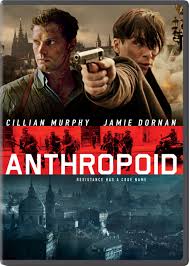
Three days after Trump’s Hillary remarks, Operation Antrhopoid, a UK-French-Czech historical film, appeared in theaters. Its subject: The 1942 assassination of SS Obergruppenführer (General) Reinhard Heydrich.
A tall, blond-haired formal naval officer, he was both a champion fencer and talented violinist. Heydrich joined the Schutzstaffel, or Protective Squads, better known as the SS, in 1931, and quickly became head of its counterintelligence service.
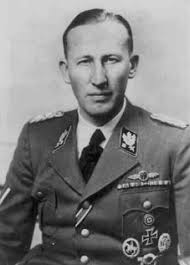
Reinhard Heydrich
In September, 1941, Heydrich was appointed “Reich Protector” of Czechoslovakia, which had fallen prey to Germany in 1938 but whose citizens were growing restless under Nazi rule.
Heydrich immediately ordered a purge, executing 92 people within the first three days of his arrival in Prague. By February, 1942, 4,000-5,000 people had been arrested.
In January, 1942, Heydrich convened a meeting of high-ranking political and military leaders to streamline “the Final Solution to the Jewish Question.”
An estimated six million Jews were thus slaughtered.
Returning to Prague, Heydrich continued a policy of carrot-and-stick with the Czechs—improving the social security system and requisitioning luxury hotels for middle-class workers—alternating with arrests and executions.
The Czech government-in-exile, headquartered in London, feared that Heydrich’s incentives might lead the Czechs to passively accept domination. They decided to assassinate him.
Two British-trained Czech commandos—Jan Kubis and Joseph Gabcik—parachuted into Prague.
On May 27, 1942, the assassins waited at a hairpin turn in the road always taken by Heydrich. When Heydrich’s Mercedes slowed down, Kubis lobbed a hand grenade at the car. The explosion ruptured Heydrich’s diaphragm, spleen and lung.
On June 4, Heydrich died of his injuries.
For Donald Trump, movies and jokes about assassination carry supreme—if unnoticed—irony.
It is Trump who repeatedly raised the issue of using violence and assassination to attain political ends. The last thing he needs are reminders—like Depp and Anthropoid—that Right-wingers can also be targets for death.
2016 PRESIDENTIAL RACE, ABC NEWS, ALEXANDER BUTTERFIELD, ALTERNET, AP, ARNOLD SCHWARTZENEGGER, BARACK OBAMA, BBC, BUZZFEED, CBS NEWS, CNN, DAILY KOS, DONALD TRUMP, FACEBOOK, FBI, HILLARY CLINTON, JAMES COMEY, JOHN OLIVER, JOHN W. DEAN, MERYL STREEP, MOTHER JONES, MOVEON, NBC NEWS, NEWSWEEK, NPR, OBAMACARE, POLITICO, RAW STORY, REUTERS, RICHARD NIXON, SALON, SEATTLE TIMES, SENATE WATERGATE COMMITTEE, SLATE, THE ATLANTIC, THE CHICAGO SUN-TIMES, THE CHICAGO TRIBUNE, THE DAILY BEAST, THE GUARDIAN, THE HILL, THE HUFFINGTON POST, THE LOS ANGELES TIMES, THE NEW YORK TIMES, THE WALL STREET JOURNAL, THE WASHINGTON POST, TIME, TWITTER, UPI, USA TODAY, WATERGATE, WIRETAPPING
In Bureaucracy, History, Law, Law Enforcement, Politics, Social commentary on May 19, 2017 at 12:05 am
When the Senate Watergate Committee learned that President Richard M. Nixon had installed a secret taping system in the White House, they immediately subpoenaed all of his tapes.
So did Watergate Special Prosecutor Archibald Cox.
Nixon fired Cox in the infamous “Saturday Night Massacre” on October 20, 1973. But Cox was succeeded by another Special Prosecutor, Leon Jaworski–who also pursued the tapes.
The case went to the U.S. Supreme Court–which ruled, 8-0, that Nixon must give up the tapes.
One of the tapes revealed that Nixon had ordered the FBI to abandon its investigation of the Watergate break-in. When news leaked of this, Nixon resigned to avoid the disgrace of impeachment in the House and certain conviction in the Senate.
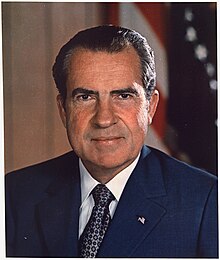
Richard M. Nixon
Now it appears that history is about to repeat itself–in the case of President Donald J. Trump.
And it has been touched off by his repeated use of Twitter as both a Presidential candidate and President.
When it was launched on July 16, 2006, Twitter was intended to be, according to Wikipedia, “an online news and social networking service where users post and interact with messages, ‘tweets,’ restricted to 140 characters.”
It was never intended as a weapon of slander and intimidation. Yet, as both a Presidential candidate and President, Trump has repeatedly used Twitter to attack hundreds of real and imagined enemies in politics, journalism, TV and films.
Even before taking office as President, Trump was haunted by charges that members of his 2016 Presidential campaign colluded with Russian Intelligence agents to secure his election.
Trump has furiously and repeatedly denied this.
Yet, on May 11, no fewer than six top American intelligence officials testified before Congress that Russia acted to influence last year’s election.
These officials were:
- Dan Coats, director of National Intelligence;
- Michael Pompeo, CIA director;
- Michael S. Rogers, director of the National Security Agency;
- Lieutenant-General Vincent Stewart (USMC), director of the Defense Intelligence Agency;
- Robert Cardillo, director of the National Geospatial-Intelligence Agency; and
- Andrew McCabe, acting FBI director, installed after Trump fired the agency’s appointed director, James Comey.
Comey had been spearheading the FBI’s investigation into Trump’s “Russian connection.” In early May, 2017, he had asked the Justice Department to provide increased resources for the FBI’s investigation.

FBI Headquarters
During a private White House dinner in January, Trump asked Comey to pledge his personal loyalty to him. Comey refused to do so.
On May 9, Trump fired him.
Instead of doing so quietly and with dignity, Trump dispatched his longtime personal bodyguard, Keith Schiller, to FBI headquarters with the message: “You’re fired.” Comey was in the FBI’s Los Angeles field office speaking with agents when he learned of his dismissal in a TV news broadcast.
Not content with humiliating and dismissing Comey, Trump then threatened him in a May 12 tweet: “James Comey better hope that there are no “tapes” of our conversations before he starts leaking to the press!”
Having implied that he had secretly taped his conversation with Comey, Trump found himself besieged with the question: “Did you install a White House taping system similar to the one installed by President Richard Nixon?”
Trump has refused to answer–and so have his spokesmen and women.
Ironically, his latest use of a weaponized Twitter account may have doomed his Presidency. His threat to Comey has boxed him in with a series of dead-end scenarios.
Dead-end #1: If Trump taped the conversation without Comey’s consent, he broke the law. (This has been explored in Part One of this series.)
Dead-end #2: If Trump admits he taped Comey, he provides Democrats–and even some Republicans–with reason to subpoena all existing White House tapes.
The House and Senate have competing investigative committees probing “the Russian connection.” And no doubt they will soon issue subpoenas for any secret tapes Trump may have made.
And so will newly-appointed Special Counsel Robert Meuller, III, who served for 12 years as FBI director under Presidents George W. Bush and Barack Obama.
Deputy Attorney General Rod Rosenstein made the appointment on May 17, citing “the unique circumstances [of] the public interest.”
(Attorney General Jeff Sessions has supposedly recused himself from involvement in the Russian investigation–because he lied to Congress about his past contacts with Russian Ambassador Sergei Kislyak during 2016.)
If he refuses to release them, Trump will touch off another Watergate-style conflict between the White House and Congress.
Dead-end #3: If he claims that he didn’t tape Comey, many people will believe he’s lying.
Dead-end #4: If he claims that he didn’t tape Comey, many people will believe he is a punk–for trying to intimidate the former FBI director with a baseless threat.
Dead-end #5: It’s impossible to prove a negative. So if Trump doesn’t have secret tapes to turn over, it will be impossible for him to prove he isn’t stonewalling in defiance of the law.
Dead-end #6: Trump’s brutal and unwarranted firing of James Comey on May 9 has infuriated the FBI’s 35,664 employees, of which 13,778 are Special Agents.
By earning the hatred of the most powerful investigative agency in the Federal Government, Trump has all-but-guaranteed his removal from office.
What began for the Bureau as a professional investigation into Russian sabotage has become a personal vendetta.
2016 PRESIDENTIAL RACE, ABC NEWS, ALEXANDER BUTTERFIELD, ALTERNET, AP, ARNOLD SCHWARTZENEGGER, BARACK OBAMA, BBC, BUZZFEED, CBS NEWS, CNN, DAILY KOS, DONALD TRUMP, FACEBOOK, FBI, HILLARY CLINTON, JAMES COMEY, JOHN OLIVER, JOHN W. DEAN, MERYL STREEP, MOTHER JONES, MOVEON, NBC NEWS, NEWSWEEK, NPR, OBAMACARE, POLITICO, RAW STORY, REUTERS, RICHARD NIXON, SALON, SEATTLE TIMES, SENATE WATERGATE COMMITTEE, SLATE, THE ATLANTIC, THE CHICAGO SUN-TIMES, THE CHICAGO TRIBUNE, THE DAILY BEAST, THE GUARDIAN, THE HILL, THE HUFFINGTON POST, THE LOS ANGELES TIMES, THE NEW YORK TIMES, THE WALL STREET JOURNAL, THE WASHINGTON POST, TIME, TWITTER, UPI, USA TODAY, WATERGATE, WIRETAPPING
In Bureaucracy, History, Law, Law Enforcement, Politics, Social commentary on May 18, 2017 at 12:15 am
Donald Trump’s tweet-first-and-never-mind-the-consequences approach to life has been thoroughly documented.
From June 15, 2015, when he launched his Presidential campaign, until October 24, 2016, he fired nearly 4,000 angry, insulting tweets at 281 people and institutions. The New York Times needed two full pages of its print edition to showcase them.
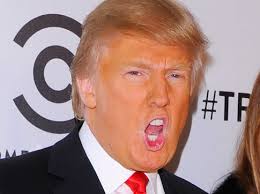
Donald Trump
Among these targets were:
- His Democratic rival, Hillary Clinton
- His fellow Republican Presidential candidates
- Actress Meryl Streep
- News organizations
- President Barack Obama
- Comedian John Oliver
- Obamacare
- Singer Neil Young
- The state of New Jersey
- Actor Arnold Schwarzenegger.
And during his first two weeks as President, Trump attacked 22 people, places and things on his @realDonaldTrump account.
Then, on March 4, 2017, in a series of unhinged tweets, Trump accused former President Barack Obama of tapping his Trump Tower phones prior to the election:
“Terrible! Just found out that Obama had my ‘wires tapped’ in Trump Tower just before the victory. Nothing found. This is McCarthyism!”
“Is it legal for a sitting President to be ‘wire tapping’ a race for president prior to an election? Turned down by court earlier. A NEW LOW!”
“I’d bet a good lawyer could make a great case out of the fact that President Obama was tapping my phones in October, just prior to Election!”
“How low has President Obama gone to tapp my phones during the very sacred election process. This is Nixon/Watergate. Bad (or sick) guy!”
Thus, without offering a shred of evidence to back it up, Trump accused his predecessor of committing an impeachable offense.
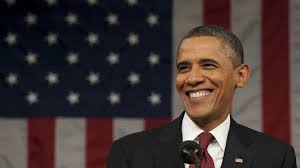
President Barack Obama
On May 9, Trump abruptly fired FBI Director James Comey.
Reports soon surfaced that his reason for doing so was that Comey had refused to pledge his personal loyalty to Trump.
Trump had made this “request” during a private dinner at the White House in January.
After refusing to make that pledge, Comey told Trump that he would always be honest with him.
But that didn’t satisfy Trump’s demand that the head of the FBI act as his personal secret police chief.

James B. Comey
Just 72 hours after firing Comey, Trump issued a threat to him via Twitter:
“James Comey better hope that there are no ‘tapes’ of our conversations before he starts leaking to the press!”
This last tweet may have proved fatal to the man who has weaponized Twitter.
Trump’s implication that he taped his conversation with Comey immediately led White House reporters to ask if he, in fact, taped conversations in the Executive Mansion.
Trump’s response: No comment.
At a White House press conference, Sean Spicer, Trump’s press secretary, was asked three times: Was tape recording occurring in the White House?
Spicer replied: “I’ve talked to the President. The President had nothing further to add on that.”
Asked on Right-wing Fox News–the only major network Trump willingly appears on–if he taped the Comey conversation, the President said: “That I can’t talk about. I won’t talk about that. All I want is for Comey to be honest. And I hope he will be. And I’m sure he will be – I hope.”
By implying on Twitter that he had illegally taped his conversation with Comey–and then refusing to say if this was true–Trump has boxed himself into a no-win situation.
Dead-end #1: If he taped the conversation without Comey’s consent, Trump broke the law.
According to a 2003 Congressional report, “Privacy: An Overview of Federal Statutes Governing Wiretapping and Electronic Eavesdropping”:
“It is a federal crime to wiretap or to use a machine to capture the communications of others without court approval, unless one of the parties has given their prior consent.
“It is likewise a federal crime to use or disclose any information acquired by illegal wiretapping or electronic eavesdropping. Violations can result in imprisonment for not more than 5 years; fines up to $250,000 (up to $500,000 for organizations); in civil liability for damages, attorneys fees and possibly punitive damages; in disciplinary action against any attorneys involved; and in suppression of any derivative evidence.”
Dead-end #2: If Trump admits he taped Comey, he provides Democrats–and even some Republicans–with reason to subpoena all existing White House tapes.
In the summer of 1973, the Senate was investigating the bugging of Democratic headquarters at the Watergate Hotel during the 1972 Presidential campaign.
In June, 1973, John W. Dean III testified before the Senate Watergate Committee. He had served as White House Counsel for Nixon from 1970 to 1973. And now he outlined a litany of crimes ordered by President Richard Nixon.
The White House adamantly denied these charges by attacking Dean as a malcontent. (He had been fired by Nixon in April.)
So–who was telling the truth: Dean or Nixon? It was a classic case of He said/he said.
Then–unexpectedly–a way appeared to answer the question: “Who is telling the truth?”
Alexander Butterfield, who had served as the Deputy Assistant to Nixon from 1969 to 1973, was called as a witness before the Committee.
In a private meeting with Senate investigators, he unintentionally blurted out that Nixon had installed a secret taping system to record all conversations between him and Oval Office visitors.
Suddenly, the Watergate investigation took an entirely new direction–one that would prove fatal to Nixon’s Presidency.
2016 PRESIDENTIAL RACE, ABC NEWS, ALTERNET, AP, BARACK OBAMA, BASKET OF DEPLORABLES SPEECH, BBC, BERNIE SANDERS, BILL CLINTON, BLACKS, BUZZFEED, CBS NEWS, CELINDA LAKE, CLINTON FUNDATION, CNN, COMMUNISM, DAILY KOS, DEBBIE WASSERMAN-SCHULTZ, DEMOCRATIC NATIONAL COMMITTEE, DONALD TRUMP, FACEBOOK, HILLARY CLINTON, HISPANICS, HOUSE OF REPRESENTATIVES, MICHELLE OBAMA, MOTHER JONES, MOVEON, NBC NEWS, NEWSWEEK, NPR, POLITICO, POPULISM, RACISM, RAW STORY, REPUBLICAN NATIONAL COMMITTEE, REUTERS, SALON, SEATTLE TIMES, SLATE, SOCIALISM, SUSAN BORDO, THE ATLANTIC, THE CHICAGO SUN-TIMES, THE CHICAGO TRIBUNE, THE DAILY BEAST, THE DESTRUCTION OF HILLARY CLINTON, THE GUARDIAN, THE HILL, THE HUFFINGTON POST, THE LOS ANGELES TIMES, THE NEW YORK TIMES, THE WALL STREET JOURNAL, THE WASHINGTON POST, TIME, TOM BROKAW, TWITTER, U.S. HOUSE OF REPRESENTATIVES, U.S. NEWS & WORLD REPORT, U.S. SENATE, UPI, USA TODAY, WHITES, WHITEWATER, WIKILEAKS, WOMEN, YOUTH
In History, Politics, Social commentary on April 25, 2017 at 12:05 am
In The Destruction of Hillary Clinton, author Susan Bordo indicts a wide range of groups for Clinton’s failure to win the 2016 election.
Yet she refuses to put any blame on Clinton herself for a series of self-inflicted wounds.
Among these:
#5 Democrats and liberals fell prey to hubris. They dismissed Donald Trump as a bad joke: Surely voters would reject a bombastic, thrice-married “reality show” host who had filed for corporate bankruptcy four times.

Many liberals believed Clinton would bury him at the polls: Blacks, women, youth and Hispanics will turn out huge for her. Democrats will retake the Senate, and maybe even retake the House.
They didn’t.
#6 The coalition that twice elected Barack Obama deserted Hillary Clinton.
Clinton did worse-than-expected among all the groups she was counting on to support her: Blacks, women, youth and Hispanics.
- In 2012, Obama got 93% of the black vote; in 2016, Clinton got 88%.
- In 2012, Obama got 55% of the women’s vote; in 2016, Clinton won 54%.
- In 2012, Obama got 60% of the vote of those under 30; in 2016, Clinton got 54%.
- In 2012, Obama got 71% of the Hispanic vote; in 2016, Clinton got 65%.
Clinton proved less popular even among whites than Obama: In 2012, Obama won 39% of their votes; in 2016, Clinton won 37%.
#7 Trump, adopting the role of a populist, appealed to blue-collar voters. Clinton offered a “love-your-CEO” economic plan–and suffered for it.
Trump visited “Rustbelt” states like Michigan and Pennsylvania and vowed to “bring back” jobs that had been lost to China, such as those in coal mining and manufacturing. Clinton didn’t deign to show up, assuming she had those states “locked up.”
Most economists agree that, in a globalized economy, such jobs are not coming back, no matter who becomes President.
Even so, voters backed the man who came to promise them a better future, and shunned the woman who didn’t come to promise them any future at all.
In May, Democratic pollster CeLinda Lake had warned Clinton to revamp her economic platform. Clinton ignored the advice.
“Democrats simply have to come up with a more robust economic frame and message,” Lake said after the election. “We’re never going to win those white, blue-collar voters if we’re not better on the economy. And 27 policy papers and a list of positions is not a frame. We can laugh about it all we want, but Trump had one.”
#8 Hillary Clinton gave only one memorable speech during the campaign.
This was the “basket of deplorables” speech, delivered at a New York fundraiser on September 9. It was the only Clinton speech to be widely quoted by Democrats and Republicans.
She divided Donald Trump’s supporters into two groups. The first group were the “deplorables,” for whom she showed open contempt:
“You know, to just be grossly generalistic, you could put half of Trump’s supporters into what I call the basket of deplorables. Right? The racist, sexist, homophobic, xenophobic, Islamaphobic–you name it. And unfortunately there are people like that. And he has lifted them up.
“He has given voice to their websites that used to only have 11,000 people–now 11 million. He tweets and retweets their offensive hateful mean-spirited rhetoric. Now, some of those folks–they are irredeemable, but thankfully they are not America.”
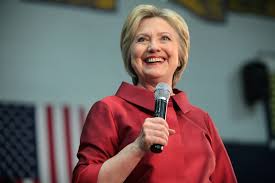
Hillary Clinton (Gage Skidmore photo)
But the second group, she said, consisted of poor, alienated Americans who rightly felt abandoned by their employers and their government:
“But….that other basket of people are people who feel that the government has let them down, the economy has let them down, nobody cares about them, nobody worries about what happens to their lives and their futures, and they’re just desperate for change. It doesn’t really even matter where it comes from.
“They don’t buy everything [Trump] says, but he seems to hold out some hope that their lives will be different. They won’t wake up and see their jobs disappear, lose a kid to heroin, feel like they’re in a dead-end. Those are people we have to understand and empathize with as well.”
#9 After giving this speech, Clinton threw away the good it might well have done her.
First, the day after making the speech, she apologized for it: “Last night I was ‘grossly generalistic,’ and that’s never a good idea. I regret saying ‘half–that was wrong.”
Many of Trump’s followers were racists, sexists and xenophobes–who deserved condemnation, not apologies. By apologizing, she looked weak, indecisive, even cowardly.
Second, having eloquently reached out to many of the men and women who were a prime constituency for Trump, she failed to offer an economic package to quickly and effectively address their vital needs for jobs and medical care.
The reason: She had failed to put one together long ago.
And all she had to offer now was boilerplate rhetoric, such as: “Education is the answer.”
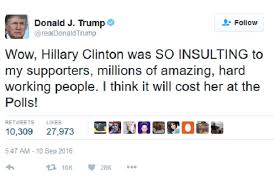
Worst of all, Trump turned her speech against her, tweeting: “Wow, Hillary Clinton was SO INSULTING to my supporters, millions of amazing, hard working people. I think it will cost her at the Polls!”
It did.
As long as liberals like Susan Bordo continue to blame everyone else–and refuse to correct their own weaknesses–they will continue to remain a minority political party.
2016 PRESIDENTIAL RACE, ABC NEWS, BARACK OBAMA, BASKET OF DEPLORABLES SPEECH, BERNIE SANDERS, BILL CLINTON, BLACKS, CBS NEWS, CELINDA LAKE, CLINTON FUNDATION, CNN, COMMUNISM, CONDOLEEZA RICE, DEBBIE WASSERMAN-SCHULTZ, DEMOCRATIC NATIONAL COMMITTEE, DONALD TRUMP, FACEBOOK, GEORGE W. BUSH, HILLARY CLINTON, HISPANICS, HOUSE OF REPRESENTATIVES, JAMES WEBB, MICHELLE OBAMA, NBC NEWS, POPULISM, RACISM, REPUBLICAN NATIONAL COMMITTEE, SOCIALISM, SUSAN BORDO, THE CHICAGO SUN-TIMES, THE CHICAGO TRIBUNE, THE DESTRUCTION OF HILLARY CLINTON, THE LOS ANGELES TIMES, THE NEW YORK TIMES, THE WASHINGTON POST, TOM BROKAW, TWITTER, U.S. HOUSE OF REPRESENTATIVES, U.S. SENATE, WHITES, WHITEWATER, WIKILEAKS, WOMEN, YOUTH
In History, Politics, Social commentary on April 24, 2017 at 1:29 am
If author Susan Bordo has her way, Americans will be sopping up tears with handkerchiefs for the next four years–if not longer.
Bordo is the author of a new book, The Destruction of Hillary Clinton. You need not read its full text to discover its thesis. Its dust jacket offers this in a Q and A format.
Question: “How did an extraordinarily well-qualified, experienced, and admired candidate—whose victory would have been as historic as Barack Obama’s—come to be seen as a tool of the establishment, a chronic liar, and a talentless politician?”
Answer: “In this masterful narrative of the 2016 campaign year and the events that led up to it, Susan Bordo unpacks the Rights’ assault on Clinton and her reputation, the way the left provoked suspicion and indifference among the youth vote, the inescapable presence of [FBI Director] James Comey, questions about Russian influence, and the media’s malpractice in covering the candidate.”

Others who come in for blame: WikiLeaks; Vermont U.S. Senator Bernie Sanders; younger women; and even Monica Lewinsky.
Yes, it was
- Bernie Sanders’ fault for daring to challenge Clinton for the Democratic nomination–and refusing to accept that it was “Hillary’s turn” to become President.
- WikiLeaks’ fault for publishing emails sent by members of the Democratic National Commitee–which proved the supposedly impartial DNC was working to secure the nomination for Clinton.
- Younger women’s fault for not identifying with a woman old enough to be their grandmother–and who has lived an extraordinarily privileged life since she became First Lady in 1993.
- Monica Lewinsky’s fault for being a reminder to voters that Hillary’s husband had disgraced the Presidency in an oral sex scandal.
All of these factors certainly played a part in why Clinton lost the White House for the second time in eight years. But they are not all the factors behind her loss.
There were plenty of others–that are not mentioned in Bordo’s book.
Among these:
#1 Hillary Clinton was an uninspiring candidate. When Barack Obama ran for President in 2008, NBC Anchor Tom Brokaw compared his rallies to Hannah Montana concerts. Audiences were excited by his charisma, eloquence, relative youth (47) and optimism (“Yes We Can!”).
Clinton radiated none of these qualities. She was 67 when she declared her candidacy for President–and looked it. Her speaking voice grated like the proverbial fingernail on a blackboard.
Hillary Clinton
She seemed to have been around forever–as First Lady (1993-2001), as Senator from New York (2001-2009) and as Secretary of State (2009-2013). Those born after 2000 thought of the Clinton Presidency as ancient history. She was offering a resume–and voters wanted an inspiration.
#2 Clinton brought a lot of baggage with her. In contrast to Obama, whose Presidency had been scandal-free, Clinton–rightly or wrongly–has always been dogged by charges of corruption.
During the Clinton Presidency, a failed land deal–Whitewater–while Bill Clinton was Governor of Arkansas triggered a seven-year investigation by a Republican special prosecutor. No criminality was uncovered, and no charge was brought against either Clinton.
After leaving the White House, she and her husband set up the Clinton Foundation, a public charity to bring government, businesses and social groups together to solve problems “faster, better, at lower cost.”
As Secretary of State, more than half of Clinton’s meetings with people outside government were with donors to the Clinton Foundation. If a “pay-to play” system wasn’t at work, one certainly seemed to be.
She cast further suspicion on herself by her unauthorized use of a private email server. This wasn’t revealed until March, 2015–after she was no longer Secretary of State.
She claimed she had used it to avoid carrying two cell-phones. But, as Secretary of State, she traveled with a huge entourage who carried everything she needed. Her critics believed she used a private email system to hide a “pay-for-pay” relationship with Clinton Foundation donors.
#3 As a candidate for President, she “secretly” worked with Debbie Wasserman-Schultz, the chair of the Democratic National Committee, to ensure that she would get the nomination.
As DNC chair, Wasserman-Schultz was expected to be impartial toward all Democratic candidates seeking the prize. This included Vermont U.S. Senator Bernie Sanders, Clinton’s chief competitor.
Bernie Sanders
So Sanders and his supporters were outraged when, on July 22, WikiLeaks released 19,252 emails and 8,034 attachments hacked from computers of the highest-ranking officials of the DNC.
The emails revealed a clear bias for Clinton and against Sanders. In one email, Brad Marshall, the chief financial officer of the DNC, suggested that Sanders, who is Jewish, could be portrayed as an atheist.
#4 The Obamas’ support proved a plus/minus for Clinton. Understandably, President Obama wanted to see his legacies continued–and she was the only candidate who could do it.
So he–and his wife, Michelle–stormed the country, giving eloquent, passionate speeches and firing up crowds on Clinton’s behalf.
President Barack Obama
So long as either Obama stood before a crowd, the magic lasted. But once the event was over, the excitement vanished. Hillary simply didn’t arouse enough passion to keep it going.
Obama’s supporters found Clinton wanting–in attractiveness, grace, eloquence, trustworthiness and the ability to inspire.
2016 PRESIDENTIAL RACE, ABC NEWS, ADOLF HITLER, ALEC BALDWIN, ALTERNET, BARACK OBAMA, BERNIE SANDERS, BUZZFEED, CBS NEWS, CNN, DAILY KOS, DEMOCRATIC CONVENTION, DEMOCRATIC NATIONAL COMMITTEE, DONALD TRUMP, FACEBOOK, FSB, HILLARY CLINTON, JOE SCARBOROUGH, JOSEPH STALIN, KGB, MORNING JOE, MOTHER JONES, MOVEON, NATO, NAZI GERMANY, NAZI-SOVIET "NON-AGGRESSION PACT", NBC NEWS, NEWSWEEK, NPR, POLAND, POLITICO, RAW STORY, REPUBLICAN CONVENTION, REUTERS, RUSSIA, SALON, SATURDAY NIGHT LIVE, SLATE, SOVIET UNION, THE CHICAGO SUN-TIMES, THE CHICAGO TRIBUNE, THE DAILY BEAST, THE HUFFINGTON POST, THE LOS ANGELES TIMES, THE NEW YORK TIMES, THE WALL STREET JOURNAL, THE WASHINGTON POST, TIME, TWITTER, U.S. NEWS & WORLD REPORT, USA TODAY, VLADIMIR PUTIN, WEHRMACHT, WIKILEAKS
In Bureaucracy, History, Military, Politics, Social commentary on February 24, 2017 at 10:29 am
The love-fest between Vladimir Putin and Donald Trump certainly got off to a great start.
No doubt well-informed on Trump’s notorious egomania, Putin called a press conference to announce: “He is a bright personality, a talented person, no doubt about it. It is not up to us to appraise his positive sides, it is up to the U.S. voters. but, as we can see, he is an absolute leader in the presidential race.”
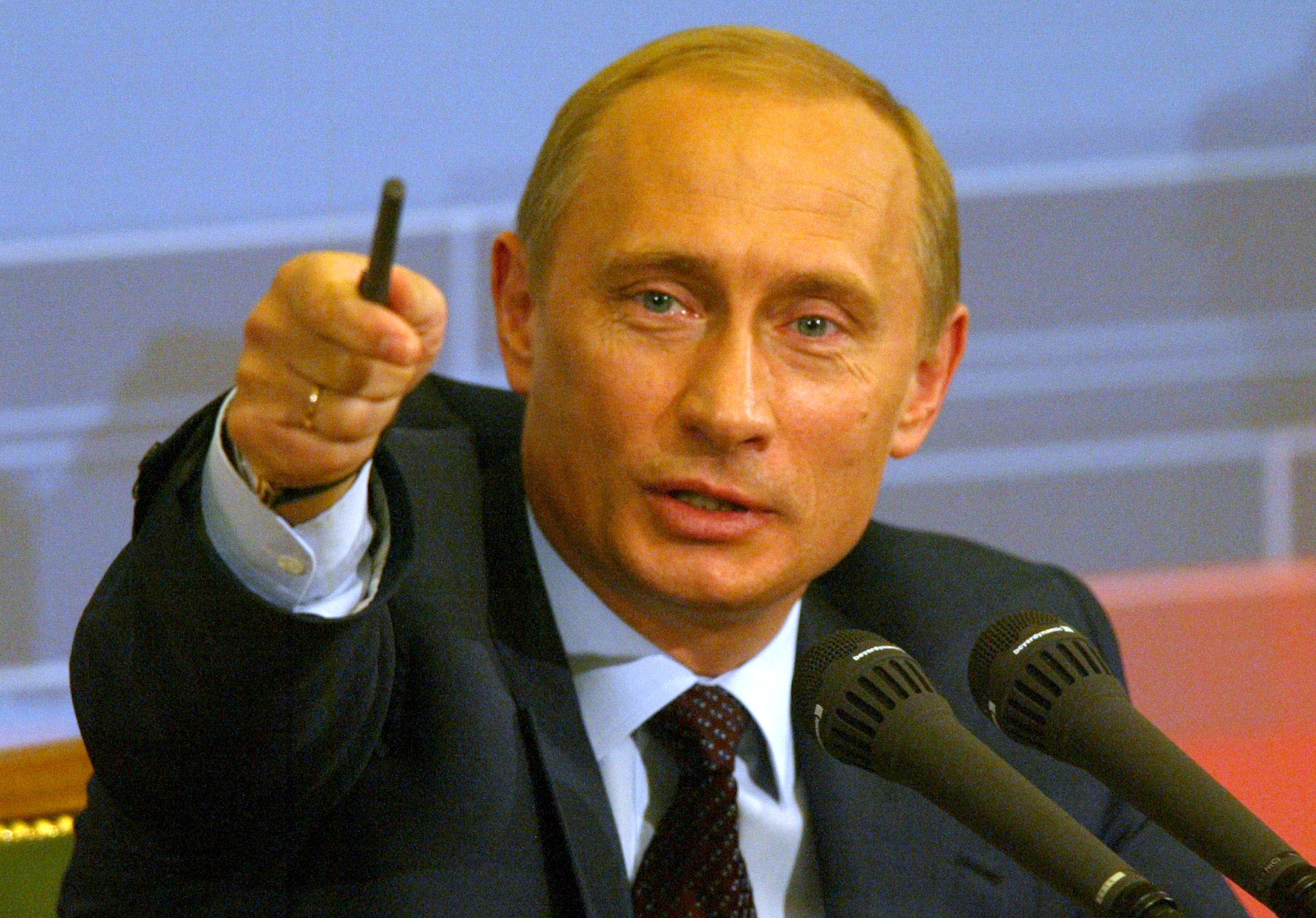
Vladimir Putin
That was on December 17, 2015.
Trump didn’t lose any time responding. On the December 18, 2015 edition of MSNBC’s “Morning Joe,” he said: “Sure, when people call you ‘brilliant,’ it’s always good. Especially when the person heads up Russia.
“He’s running his country, and at least he’s a leader. Unlike what we have in this country”–yet another insult at President Barack Obama.
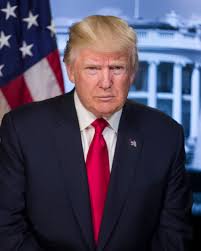
Donald Trump
Both Putin and Trump are well-known for their authoritarian characteristics. But more than one dictator’s admiration for another might explain their continuing “bromance.”
Trump has repeatedly attacked United States’ membership in the North Atlantic Treaty Organization (NATO). He believes the United States is paying an unfairly large portion of the monies needed to maintain this alliance–and he wants other members to contribute far more.
He has also said that, if Russia attacked NATO members, he would decide whether to come to their aid only after determining whether those nations have “fulfilled their obligations to us.”
If he believed that they had not done so, he would tell them: “Congratulations, you will be defending yourself.”
For Putin, this clearly signaled a reason to prefer Trump over his 2016 rival, Hillary Clinton. Trump’s statement marked the first time that a major Presidential candidate placed conditions on the United States’ coming to the defense of its major allies.
The withdrawal of the United States from NATO would instantly render that alliance kaput. Its European members that have long hurled insults at the United States would suddenly face extinction.
Even if their armed forces proved a match for Russia’s–which they wouldn’t–their governments would cower before the threat of Russia’s huge nuclear arsenal.
Trump’s motives for his “bromance” with Putin are more difficult to decipher.
Some believe that Trump–a notorious egomaniac–is simply responding to an overdoses of Putin flattery.
Others think that, while visiting Moscow, Trump made himself vulnerable to Russian blackmail.
There are unconfirmed Intelligence reports that he paid–and watched–several Russian prostitutes urinate on a bed once slept on by President Obama and his wife at Moscow’s Ritz-Carlton Hotel. The alleged incident was reportedly captured by hidden microphones and cameras operated by the FSB, the successor to the KGB.
A recent “Saturday Night Live” sketch featured a Putin lookalike intimidating Alec Baldwin’s Trump at a press conference–by holding up a video tape marked “Pee-Pee Tape.”
Still others believe that Trump–who has refused to release his tax returns–is deeply in dept to Russian oligarchs.
On July 22, 2016, Wikileaks released 19,252 emails and 8,034 attachments hacked from computers of the highest-ranking officials of the DNC. And they clearly revealed a bias for Hillary Clinton and against her competitor, Bernie Sanders.
The leak badly embarrassed Clinton. About to receive the Democratic Presidential nomination, she found herself charged with undermining the electoral process.
Cyber-security experts believed the hacking originated from Russia–and that Putin had authorized it.
Even so, Putin is not the first Communist dictator to find common cause with an avowed Right-winger.
On August 23, 1939, Soviet dictator Joseph Stalin signed a “non-aggression pact” with Nazi Germany’s Fuhrer, Adolf Hitler.
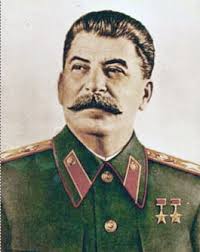
Joseph Stalin
The reason: Hitler intended to invade Poland–but feared going to war with the neighboring Soviet Union if he did so. By signing a non-aggression pact with Stalin, he avoided this danger–and gained “rights” to the western half of Poland.

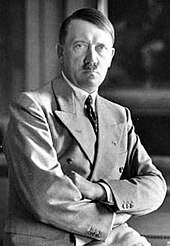
Adolf Hitler
Bundesarchiv, Bild 146-1990-048-29A / CC-BY-SA 3.0 [CC BY-SA 3.0 de (https://creativecommons.org/licenses/by-sa/3.0/de/deed.en)%5D
In addition, Nazi Germany began receiving huge shipments of raw materials from the Soviet Union–as part of Stalin’s effort to placate Hitler and avoid a Nazi-Soviet clash.
And Stalin got something, too: The eastern half of Poland, which would be occupied by the Red Army.
But the Hitler-Stalin alliance lasted less than two years. It ended without warning–on June 22, 1941.
With 134 divisions at full fighting strength and 73 more for deployment behind the front–a total of three million men–the German Wehrmacht invaded the Soviet Union.
Hitler had long intended to obtain “living space” for Germany–in Russia. By 1941, having conquered most of Europe, he felt strong enough to embark on his great crusade.
There are three ways Putin may come to regret his “bromance” with Trump.
First: Trump may be not be able to lift the sanctions imposed on Russia by President Obama for interfering in the 2016 election.
Second: Increasing political pressure on Trump by Democrats and even Republicans for that interference may result in even tougher action against Russia.
And third: Trump is known for his egomania, not his loyalty. He may take offense at some future perceived Putin slight. In such case, he may well decide he doesn’t owe anything to the man he once called “a leader.”
2016 PRESIDENTIAL RACE, ABC NEWS, ADOLF HITLER, ALTERNET, ASSASSINATION, BILL CLINTON, BUZZFEED, CBS NEWS, CHARLES KRAUTHAMMER, CNN, CONFIDENTIALITY AGREEMENTS, COUNTERSUITS, DAILY KOS, DAN RATHER, DONALD TRUMP, FACEBOOK, HILLARY CLINTON, LIBEL LAWS, MOTHER JONES, MOVEON, NBC NEWS, NEWSWEEK, NICCOLO MACHIAVELLI, NPR, PERSONAL INSULTS, POLITICO, RAW STORY, REPUBLICANS, ROBERT PAYNE, SALON, SECOND AMENDMENT, SEXUAL HARASSMENT, SLATE, TAX RETURNS, THE CHICAGO SUN-TIMES, THE CHICAGO TRIBUNE, THE DAILY BEAST, THE HUFFINGTON POST, THE LIFE AND DEATH OF ADOLF HITLER, THE LOS ANGELES TIMES, THE NEW YORK TIMES, THE WALL STREET JOURNAL, THE WASHINGTON POST, THREATS, TIME, TRUMP UNIVERSITY, TWITTER, U.S. NEWS & WORLD REPORT, USA TODAY
In Bureaucracy, Business, History, Politics, Social commentary on February 22, 2017 at 12:31 am
Robert Payne, author of the bestselling biography, The Life and Death of Adolf Hitler (1973), described Hitler’s “negotiating” style thusly:

“He was incapable of bargaining. He was like a man who goes up to a fruit peddler and threatens to blow his brains out if he does not sell his applies at the lowest possible price.”
What was true for Adolf Hitler was equally true for Donald Trump, the 2016 Republican nominee for President of the United States.
Trump’s vindictive streak was evident on October 9, 2016p, during his second Presidential debate with Hillary Clinton: “If I win I am going to instruct my attorney general to get a special prosecutor to look into your situation–there has never been so many lies and so much deception.”
This played well with Trump’s essentially Fascistic followers, but even conservatives like political columnist Charles Krauthammer disagreed with it:
“I’m one of those who thinks there was a miscarriage of justice in not indicting her. But the problem here is the pattern from Trump.
“He has spoken about using the powers of the government to go after other opponents like the publisher of The Washington Post.
“Do we want to invest in him all the powers of the government if he acts where he seems to want to carry out vendettas?”
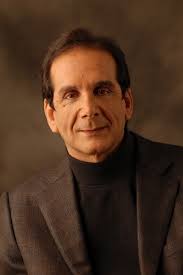
Charles Krauthammer
But making threats against anyone who has dared to cross him or has merely roused his ire is a longtime Trump characteristic.
In 2010, Tarla Makaeff, a former customer of Trump’s real-estate seminar business, filed a fraud lawsuit against now-defunct Trump University.
Trump retaliated by filing a defamation suit against her. The case was dismissed by a judge. But Trump continued to attack her during his Presidential candidacy.
During a campaign rally he assailed her as a “horrible, horrible witness,” and then posted on Twitter that she was “Disgraceful!”
Makaeff ultimately persuaded the judge presiding over the Trump University case to let her remove her name as a plaintiff.
Trump has long employed a series of hardball tactics against anyone who threatens his ego:
- Countersuits, threats and personal insults against outsiders; and
- Stringent confidentiality agreements against employees, business partners, his former spouses and now his campaign staffers.
As an authoritarian who demands the right to craft his own image. Trump furiously denies others the right to dissent from it.
In February, 2016, Trump said that he was “gonna open up our libel laws so when they write purposely negative and horrible and false articles, we can sue them and win lots of money.”
After the New York Times published pages from his 1995 tax return, Trump tweeted that his lawyers “want to sue the failing @nytimes so badly for irresponsible intent. I said no (for now), but they are watching. Really disgusting.”
Trump is a master of “dog whistle” threats. On August 9, 2016, he falsely told a rally in Wilmington, North Carolina: “Hillary [Clinton] wants to abolish, essentially abolish, the Second Amendment.
“If she gets to pick her [Supreme Court] judges, nothing you can do folks. Although the Second Amendment people, maybe there is, I don’t know.”
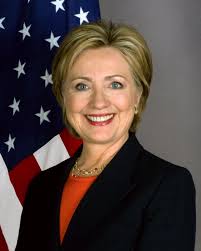
Hillary Clinton
“Don’t treat this as a political misstep,” Senator Christopher S. Murphy of Connecticut, who has called for stiffer gun laws, wrote on Twitter. “It’s an assassination threat, seriously upping the possibility of a national tragedy & crisis.”
Trump–and his apologists–claimed he was simply “joking.”
But Trump was not done with making threats against Hillary Clinton–and her husband, Bill.

Donald Trump
On October 7, 2016, The Washington Post leaked a video of Donald Trump making sexually predatory comments about women (“I don’t even wait. Grab them by the pussy. You can do anything”).
The remarks came during a 2005 exchange with Billy Bush, then the host of Access Hollywood.
The admissions ignited a firestorm against Trump, even among many Republicans.
Rather than accept responsibility for his actions, Trump blamed the Clintons–who had nothing to do with the release.
Speaking before a rally in Pennsylvania on October 10, Trump threatened: “If they wanna release more tapes saying inappropriate things, we’ll continue to talk about Bill and Hillary Clinton doing inappropriate things. There are so many of them, folks.”
Since being elected President, Trump has continued to lash out at a wide range of people, organizations and even countries.
Niccolo Machiavelli, the father of modern politics, offered a still-timely warning to those inclined to gratuitously hand out insults and threats:
“I hold it to be a proof of great prudence for men to abstain from threats and insulting words towards any one.
“For neither the one nor the other in any way diminishes the strength of the enemy–but the one makes him more cautions, and the other increases his hatred of you, and makes him more persevering in his efforts to injure you.”
And for those who expect Trump to stop constantly picking fights, Machiavelli has an equally stern warning:
“No man can be found so prudent as to be able to [adopt his mode of operating to changing circumstances] either because he cannot deviate from that to which his nature disposes him, or else because, having always prospered by walking in one path, he cannot persuade himself that it is well to leave it….”
2016 PRESIDENTIAL RACE, ABC NEWS, ADOLF HITLER, ALTERNET, BUZZFEED, CBS NEWS, CNN, DAILY KOS, DAVID BROOKS, DONALD TRUMP, EDUARDO "TED" CRUZ, FACEBOOK, FOX NEWS, HEINZ GUDERIAN, MARK SHIELDS, MEGYN KELLY, MOTHER JONES, MOVEON, NBC NEWS, NEWSWEEK, NPR, PBS NEWSHOUR, POLITICO, RAW STORY, REPUBLICANS, ROBERT PAYNE, SALON, SLATE, THE CHICAGO SUN-TIMES, THE CHICAGO TRIBUNE, THE DAILY BEAST, THE HUFFINGTON POST, THE LIFE AND DEATH OF ADOLF HITLER, THE LOS ANGELES TIMES, THE NEW YORK TIMES, THE WASHINGTON POST, TIME, TWITTER, U.S. NEWS & WORLD REPORT, WOMEN
In Bureaucracy, History, Military, Politics, Social commentary on January 30, 2017 at 12:19 am
Syndicated columnist Mark Shields and New York Times columnist David Brooks appear every Friday on the PBS Newshour to review the week’s major political events.
On March 25, 2016, Shields–a liberal, and Brooks, a conservative–came to some disturbingly similar conclusions about Donald Trump.
Eerily, their conclusions echoed those reached by former Panzer General Heinz Guderian about German dictator Adolf Hitler.
Guderian created the concept of motorized blitzkrieg warfare, whereby masses of tanks and planes moved in coordination to strike at the vital nerve centers of an enemy.
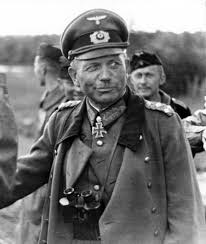
Heinz Guderian
Guderian thus enabled Hitler to conquer France in only six weeks in 1940, and to come to the brink of crushing the Soviet Union in 1941. He recounted his career as the foremost tank commander of the Third Reich in his 1950 autobiography, Panzer Leader.
On the PBS Newshour, moderator Judy Woodruff noted that “polls show Trump’s standing with women voters had worsened in recent months.”
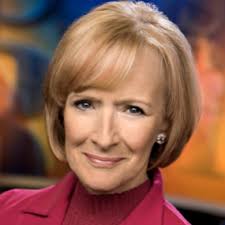
Judy Woodruff
David Brooks said that Trump had displayed “a consistent misogynistic view of women as arm candy, as pieces of meat. It’s a consistent attitude toward women which is the stuff of a diseased adolescent.”
MARK SHIELDS: “She just asked him tough questions and was totally fair, by everybody else’s standards.”
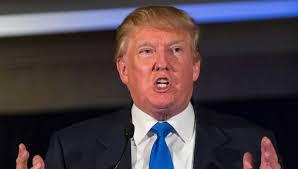
Donald Trump
HEINZ GUDERIAN: Once in power, Hitler quickly–and violently–eliminated his opposition. He make no attempt to disguise this aspect of his character, because the opposition was weak and divided and soon collapsed after the first violent attack. This allowed Hitler to pass laws which destroyed the safeguards enacted by the Weimar Republic against the the dangers of dictatorship.
MARK SHIELDS: “And I don’t know at what point it becomes…politically, he’s still leading. And I would have to say he’s the overwhelming favorite for the Republican nomination.”
HEINZ GUDERIAN: Hitler promised to “make Germany great again” both domestically and internationally. And this won him many followers. In time he controlled the largest party in the land and this allowed him, by democratic procedure, to assume power.
DAVID BROOKS: “The odd thing about [Trump’s] whole career and his whole language, his whole world view is there is no room for love in it. You get a sense of a man who received no love, can give no love, so his relationship with women, it has no love in it. It’s trophy.”
HEINZ GUDERIAN: [Hitler] was isolated as a human being. He had no real friend. There was nobody who was really close to him.
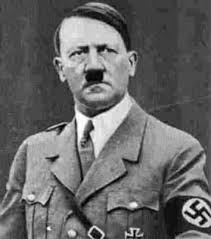
Adolf Hitler
There was nobody he could talk to freely and openly. And just as he never found a true friend, he was denied the ability to deeply love a woman.
DAVID BROOKS: “And [Trump’s] relationship toward the world is one of competition and beating, and as if he’s going to win by competition what other people get by love.”
HEINZ GUDERIAN: Everything on this earth that casts a glow of warmth over our life as mortals–friendship with fine men, the pure love for a wife, affection for one’s own children–all this was and forever remained unknown to him.
DAVID BROOKS: “And so you really are seeing someone who just has an odd psychology unleavened by kindness and charity, but where it’s all winners and losers, beating and being beat. And that’s part of the authoritarian personality, but it comes out in his attitude towards women.”
HEINZ GUDERIAN: He lived alone, cherishing his loneliness, with only his gigantic plans for company. His relationship with Eva Braun may seem to contradict what I have written. But it is obvious that she could not have had any influence over him. And this is unfortunate, for it could only have been a softening one.
* * * * *
In his bestselling 1973 biography, The Life and Death of Adolf Hitler, British historian Robert Payne harshly condemned the German people for the rise of the Nazi dictator:
“[They] allowed themselves to be seduced by him and came to enjoy the experience….[They] followed him with joy and enthusiasm because he gave them license to pillage and murder to their hearts’ content. They were his servile accomplices, his willing victims.”
On November 8, millions of ignorant, hate-filled, Right-wing Americans catapulted Donald Trump–a man with an “odd psychology unleavened by kindness and charity”–into the Presidency.
And so this man–“who received no love, can give no love”–came to assume all the awesome powers that go with that office.
Future historians–if there are any–will similarly and harshly condemn those Americans who, like “good Germans,” joyfully embraced a regime dedicated to celebrating Trump’s egomania, depriving America’s poor of their only source of healthcare, and further enriching the ultra-wealthy.
A regime based on lies (“alternative facts”), censorship and threats of force against those who desired to live as citizens in a republic, instead of a dictatorship.
2016 PRESIDENTIAL RACE, ABC NEWS, ADOLF HITLER, ALTERNET, BUZZFEED, CBS NEWS, CNN, DAILY KOS, DAVID BROOKS, DONALD TRUMP, EDUARDO "TED" CRUZ, FACEBOOK, FOX NEWS, HEINZ GUDERIAN, MARK SHIELDS, MEGYN KELLY, MOTHER JONES, MOVEON, NBC NEWS, NEWSWEEK, NPR, PBS NEWSHOUR, POLITICO, RAW STORY, REPUBLICANS, ROBERT PAYNE, SALON, SLATE, THE CHICAGO SUN-TIMES, THE CHICAGO TRIBUNE, THE DAILY BEAST, THE HUFFINGTON POST, THE LIFE AND DEATH OF ADOLF HITLER, THE LOS ANGELES TIMES, THE NEW YORK TIMES, THE WASHINGTON POST, TIME, TWITTER, U.S. NEWS & WORLD REPORT, WOMEN
In Bureaucracy, History, Military, Politics, Social commentary on January 27, 2017 at 12:31 am
Less than one week since Donald Trump became President of the United States, many of those who voted for him have come to regret their decision.
So many, in fact, that a new Twitter account has emerged to voice their rage and disappointment: Trump_Regrets. At present, it has accrued almost 60,000 followers.
Yet many of the behaviors attacked–Trump’s egomania, his plans to gut the Affordable Care Act and give tax breaks to the wealthy–were known long before the election.
Among those who discussed them: Syndicated columnist Mark Shields and New York Times columnist David Brooks, who appear every Friday on the PBS Newshour to review the week’s major political events.
On March 25, 2016, Shields–a liberal, and Brooks, a conservative–came to some disturbingly similar conclusions about the character of Trump, then the Republican Presidential front-runner.
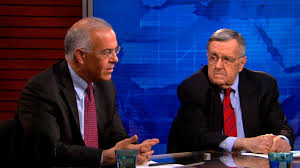
David Brooks and Mark Shields
Eerily, their conclusions echoed those reached by former Panzer General Heinz Guderian about the character of German dictator Adolf Hitler.
Guderian created the concept of motorized blitzkrieg warfare, whereby masses of tanks and planes moved in coordination to strike at the vital nerve centers of an enemy.
As a result, Guderian enabled Hitler to conquer France in only six weeks in 1940, and to come to the brink of crushing the Soviet Union in 1941. He recounted his career as the foremost tank commander of the Third Reich in his 1950 autobiography, Panzer Leader.

Heinz Guderian
Bundesarchiv, Bild 101I-139-1112-17 / Knobloch, Ludwig / CC-BY-SA [CC BY-SA 3.0 de (https://creativecommons.org/licenses/by-sa/3.0/de/deed.en)%5D, via Wikimedia Commons
Moderator Judy Woodruff opened the discussion by alluding to the blood feud then raging between Trump and his fellow Republican, Texas U.S. Senator Rafael Eduardo “Ted” Cruz.
Both were seeking their party’s Presidential nomination–and both were ruthlessly determined to attain it.
Cruz accused Trump of being behind a recent National Enquirer story charging him with having a series of extramarital affairs.
An anti-Trump Super PAC posted on Facebook a photo of a scantily-clad Melania Trump–his wife. The photo had been taken 16 years ago when, as a model, she posed for British GQ. Its publication came just ahead of the primary caucuses in sexually conservative Utah, which Cruz won.
Trump quickly responded on Twitter, accusing the Cruz campaign of leaking the photo, warning Cruz: “Be careful or I will spill the beans on your wife.”
Cruz struck back, defending his wife, Heidi, and calling Trump a coward. The next day, Trump retweeted an unflattering image of Mrs. Cruz.

This “war of the wives” had cost Trump dearly in his standing with American women. In March, a Washington Post/ABC News poll showed that 64% of women felt highly unfavorably disposed toward him.
DAVID BROOKS: “The Trump comparison of the looks of the wives, he does have, over the course of his life, a consistent misogynistic view of women as arm candy, as pieces of meat.
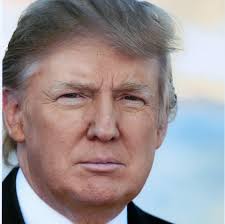
Donald Trump
“It’s a consistent attitude toward women which is the stuff of a diseased adolescent. And so we have seen a bit of that show up again.
“But if you go back over his past, calling into radio shows bragging about his affairs, talking about his sex life in public, he is childish in his immaturity. And his–even his misogyny is a childish misogyny….
“He’s of a different order than your normal candidate. And this whole week is just another reminder of that.”
HEINZ GUDERIAN: As Hitler’s self-confidence grew, and as his power became more firmly established both inside and outside Germany, he became overbearing and arrogant. Everyone appeared to him unimportant compared to himself.
Previously, Hitler had been open to practical considerations, and willing to discuss matters with others. But now he became increasingly autocratic.
Judy Woodruff asked Mark Shields if the uproar over Donald Trump’s disdain for women could really hurt his candidacy.
MARK SHIELDS: The ad featuring a scantily-clad Melania Trump “elicited from Donald Trump the worst of his personality, the bullying, the misogyny, as David has said, brought it out.
“But I think it’s more than childish and juvenile and adolescent. There is something creepy about this, his attitude toward women.
“Take Megyn Kelly of FOX News, who he just has an absolute obsession about, and he’s constantly writing about, you know, how awful she is and no talent and this and that.
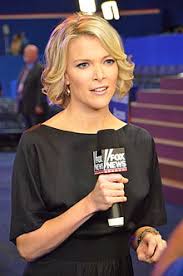
Megyn Kelly
“And I don’t know if he’s just never had women–strong, independent women in his life who have spoken to him. It doesn’t seem that way….
“She just asked him tough questions and was totally fair, by everybody else’s standards.”
HEINZ GUDERIAN: Hitler’s most outstanding quality was his will power. It was by this that he compelled men to follow him. When Hitler spoke to a small group he closely observed each person to determine how his words were affecting each man present.
If he noticed that some member of the group was not being swayed by his speech, he spoke directly to that person until he believed he had won him over. But if the target of his persuasive effort still remained obstinate, Hitler would exclaim: “I haven’t convinced that man!”
His immediate reaction was to get rid of such people. As he grew increasingly successful, he grew increasingly intolerant.


.jpg&imgrefurl=https%3A%2F%2Fen.wikipedia.org%2Fwiki%2FDonald_Trump&docid=oUQ97aEz8anNMM&tbnid=8qQHtTndl0JajM%3A&w=1500&h=2000&bih=469&biw=819&ved=0ahUKEwjg7aG71dTPAhXHg1QKHZNAD64QxiAIAg&iact=c&ictx=1)


 Bureaucracybuster's Blog
2016 PRESIDENTIAL RACE, ABC NEWS, ALTERNET, AP, BARACK OBAMA, BASKET OF DEPLORABLES SPEECH, BERNIE SANDERS, BILL CLINTON, BLACKS, BUZZFEED, CBS NEWS, CELINDA LAKE, CLINTON FUNDATION, CNN, COMMUNISM, CONDOLEEZA RICE, CROOKS AND LIARS, DAILY KOZ, DEBBIE WASSERMAN-SCHULTZ, DEMOCRATIC NATIONAL COMMITTEE, DONALD TRUMP, FACEBOOK, GEORGE W. BUSH, HILLARY CLINTON, HISPANICS, HOUSE OF REPRESENTATIVES, JAMES WEBB, MICHELLE OBAMA, MOTHER JONES, MOVEON, NBC NEWS, NEWSWEEK, NPR, POLITICO, POPULISM, RACISM, RAW STORY, REPUBLICAN NATIONAL COMMITTEE, REUTERS, SALON, SEATTLE TIMES, SLATE, SOCIALISM, SUSAN BORDO, THE ATLANTIC, THE CHICAGO SUN-TIMES, THE CHICAGO TRIBUNE, THE DAILY BEAST, THE DESTRUCTION OF HILLARY CLINTON, THE GUARDIAN, THE HILL, THE HUFFINGTON POST, THE LOS ANGELES TIMES, THE NATION, THE NEW YORK TIMES, THE WASHINGTON POST, TIME, TOM BROKAW, TWITTER, U.S. HOUSE OF REPRESENTATIVES, U.S. NEWS & WORLD REPORT, U.S. SENATE, UP, UPI, USA TODAY, WHITES, WHITEWATER, WIKILEAKS, WOMEN, YOUTH
THE ONCE AND FUTURE QUEEN: PART ONE (OF TWO)
In History, Politics, Social commentary on September 8, 2017 at 12:03 amSince losing the Presidency to Donald Trump last November, Hillary Clinton has been increasingly on the warpath.
She’s clearly intent on convincing everyone—perhaps most importantly herself—that it she waged a flawless campaign–and it was everyone else’s fault that she didn’t win.
Aiding her in this effort is Susan Bordo, author of The Destruction of Hillary Clinton. In its dust jacket blurb, the book asks:
“How did an extraordinarily well-qualified, experienced, and admired candidate—whose victory would have been as historic as Barack Obama’s—come to be seen as a tool of the establishment, a chronic liar, and a talentless politician?”
And it answers:
“In this masterful narrative of the 2016 campaign year and the events that led up to it, Susan Bordo unpacks the Rights’ assault on Clinton and her reputation, the way the left provoked suspicion and indifference among the youth vote, the inescapable presence of [FBI Director] James Comey, questions about Russian influence, and the media’s malpractice in covering the candidate.”
Others who come in for blame: WikiLeaks; Vermont U.S. Senator Bernie Sanders; younger women; and even Monica Lewinsky.
Yes, it was
All of these factors certainly played a part in why Clinton lost the White House for the second time in eight years. But they are not all the factors behind her loss.
There were plenty of others—that are not mentioned in Bordo’s book.
Among these:
#1 Hillary Clinton was an uninspiring candidate. When Barack Obama ran for President in 2008, NBC Anchor Tom Brokaw compared his rallies to Hannah Montana concerts. Audiences were excited by his charisma, eloquence, relative youth (47) and optimism (“Yes We Can!”).
Clinton radiated none of these qualities. She was 67 when she declared her candidacy for President—and looked it. Her speaking voice grated like the proverbial fingernail on a blackboard.
Hillary Clinton
She seemed to have been around forever—as First Lady (1993-2001), as Senator from New York (2001-2009) and as Secretary of State (2009-2013). Those born after 2000 thought of the Clinton Presidency as ancient history. She was offering a resume—and voters wanted an inspiration.
#2 Clinton brought a lot of baggage with her. In contrast to Obama, whose Presidency had been scandal-free, Clinton—rightly or wrongly—has always been dogged by charges of corruption.
During the Clinton Presidency, a failed land deal—Whitewater—while Bill Clinton was Governor of Arkansas triggered a seven-year investigation by a Republican special prosecutor. No criminality was uncovered, and no charge was brought against either Clinton.
After leaving the White House, she and her husband set up the Clinton Foundation, a public charity to bring government, businesses and social groups together to solve problems “faster, better, at lower cost.”
As Secretary of State, more than half of Clinton’s meetings with people outside government were with donors to the Clinton Foundation. If a “pay-to play” system wasn’t at work, one certainly seemed to be.
She cast further suspicion on herself by her unauthorized use of a private email server. This wasn’t revealed until March, 2015—after she was no longer Secretary of State.
She claimed she had used it to avoid carrying two cell-phones. But, as Secretary of State, she traveled with a huge entourage who carried everything she needed. Her critics believed she used a private email system to hide a “pay-for-pay” relationship with Clinton Foundation donors.
#3 As a candidate for President, she “secretly” worked with Debbie Wasserman-Schultz, the chair of the Democratic National Committee, to ensure that she would get the nomination.
As DNC chair, Wasserman-Schultz was expected to be impartial toward all Democratic candidates seeking the prize. This included Vermont U.S. Senator Bernie Sanders, Clinton’s chief competitor.
Bernie Sanders
So Sanders and his supporters were outraged when, on July 22, WikiLeaks released 19,252 emails and 8,034 attachments hacked from computers of the highest-ranking officials of the DNC.
The emails revealed a clear bias for Clinton and against Sanders. In one email, Brad Marshall, the chief financial officer of the DNC, suggested that Sanders, who is Jewish, could be portrayed as an atheist.
#4 The Obamas’ support proved a plus/minus for Clinton. Understandably, President Obama wanted to see his legacies continued—and she was the only candidate who could do it.
So he—and his wife, Michelle—stormed the country, giving eloquent, passionate speeches and firing up crowds on Clinton’s behalf.
President Barack Obama
So long as either Obama stood before a crowd, the magic lasted. But once the event was over, the excitement vanished. Hillary simply didn’t arouse enough passion to keep it going.
Obama’s supporters found Clinton wanting–in attractiveness, grace, eloquence, trustworthiness and the ability to inspire.
Share this: