Posts Tagged ‘2016 PRESIDENTIAL CAMPAIGN’
2016 PRESIDENTIAL CAMPAIGN, 9/11 ATTACKS, ABC NEWS, ACADEMY AWARDS, ASSOCIATED PRESS, BARACK OBAMA, BEST ACTRESS, BEST SUPPORTING ACTRESS, BIRTHERS, BULLYING, CBS NEWS, CENSORSHIP, CHRIS CUOMO, CNN, CREDIBILITY GAP, DAVID BROOKS, DAVID HALBERSTAM, DISABILITY, DONALD TRUMP, FACEBOOK, FOX AND FRIENDS, FRANK STANTON, FULL METAL JACKET, GEORGE MCGOVERN, GOLDEN GLOBES, HILLARY CLINTON, JOHN F. KENNEDY, KELLEYANNE CONWAY, KRAMER VS. KRAMER, LYNDON B. JOHNSON, MARK SHIELDS, MERYL STREEP, MORLEY SAFER, MOTHER JONES, MOVEON, NAVY SEALS, NBC NEWS, NEEWSWEEK, NEW DAY, NPR, OSAMA BIN LADEN, PBS NEWSHOUR, PETER ARNETT, POLITICO, RICHARD NIXON, RONALD ZIEGLER, SALON, SERGE KOVALESKI, SLATE, SOPHIE'S CHOICE, STANLEY KUBRICK, THE CHICAGO SUN-TIMES, THE CHICAGO TRIBUNE, THE HUFFINGTON POST, THE IRON LADY, THE LOS ANGELES TIMES, THE NEW YORK TIMES, THE WALL STREET JOURNAL, THE WASHINGTON POST, TIME, TWITTER, U.S. NEWS & WORLD REPORT, USA TODAY, VIETNAM WAR, WATERGATE
In Bureaucracy, History, Law, Law Enforcement, Military, Politics, Social commentary on January 11, 2017 at 12:02 am
“Credibility gap” is a term that came into use during the mid-1960s to describe public and journalistic distrust of President Lyndon B. Johnson. In particular, the term was applied to his administration’s conduct of the Vietnam war.
It was, in short, a euphemism for accusing government officials of outright lying.
An example of the credibility gap in full swing appeared in Stanley Kubrick’s classic 1987 Vietnam war movie, Full Metal Jacket.
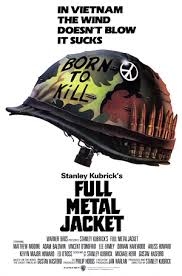
Vietnam was a war where military and political officials spewed a gung-ho version of constant American progress against a tough enemy.
And where civilian reporters like David Halberstam and Walter Cronkite saw–and labeled–the war as a brutal, wasteful and ultimately doomed effort.
Midway through the film, there’s an editorial meeting of The Sea Tiger, the official Marine newspaper.
Lieutenant Lockhart is presiding–and he is determined to give his superiors an endless stream of “all-systems-go” propaganda reports. He reads a series of stories that have been published:
Story #1: DIPLOMATS IN DUNGAREES–MARINE ENGINEERS LEND A HELPING HAND REBUILDING DONG PHUC VILLAGES.
LOCKHART: “Chili, “if we move Vietnamese, they are evacuees. If they come to us to be evacuated, they are refugees.”
Story #2: N.V.A. SOLDIER DESERTS AFTER READING PAMPHLETS.
LOCKHART: “A young North Vietnamese Army regular, who realized his side could not win the war, deserted from his unit after reading Open Arms program pamphlets.”
Story #3: NOT WHILE WE’RE EATING: N.V.A. LEARN MARINES ON A SEARCH AND DESTROY MISSION DON’T LIKE TO BE INTERRUPTED WHILE EATING CHOW.
LOCKHART: “‘Search and destroy.’ Uh, we have a new directive on this. In the future, in place of ‘search and destroy,’ substitute the phrase ‘sweep and clear.’ Got it?”
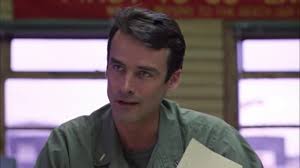
Lt. Lockhart, editor of The Sea Tiger
LOCKHART: “And, Joker–where’s the weenie?”
JOKER: “Sir?”
LOCKHART “The Kill, Joker. I mean, all that fire, the grunts must’ve hit something.”
JOKER: “Didn’t see ’em.”
LOCKHART: “Joker, I’ve told you, we run two basic stories here: Grunts who give half their pay to buy gooks toothbrushes and deodorants–winning of hearts and Minds–okay? And combat action that results in a kill–Winning the War. Now you must have seen blood trails … drag marks?”
JOKER: “It was raining, sir.”
LOCKHART: “Well, that’s why God passed the law of probability. Now rewrite it and give it a happy ending–say, uh, one kill. Make it a sapper or an officer. Grunts like reading about dead officers.”
JOKER: “Okay, an officer. How about a general?”
LOCKHART: “Joker, maybe you’d like our guys to read the paper and feel bad. I mean, in case you didn’t know it, this is not a particularly popular war. Now, it is our job to report the news that these why-are-we-here civilian newsmen ignore.”
So great became the divide between truth and lies during military “press briefings” that reporters started calling them “The Five O’clock Follies.” And even some soldiers took to wearing buttons that said: “Ambushed at Credibility Gap.”
Reporters who dared to write truthfully about the military’s crimes and failures–like David Halberstam of the New York Times and Peter Arnett of the Associated Press–were regarded as traitors by military and political officials.
In 1963, President John F. Kennedy became enraged by Halberstam’s reporting on the corruption of the South Vietnamese government. He pressured New York Times publisher Arthur Ochs Sulzberger to transfer Halberstam to another locale. Sulzberger politely refused–and then extended Halberstam’s stay in Vietnam another six months.
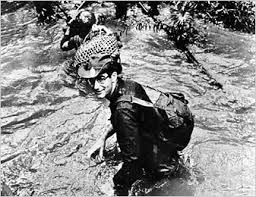
David Halberstam
In 1965, when CBS Correspondent Morley Safer filmed Marines setting fire to the village of Cam Ne with Zippo lighters, President Lyndon B. Johnson was similarly outraged.
He placed an early-morning call to CBS News President Frank Stanton and shouted: “Your boys shat on the American flag!”
The trail of deceit and attempted censorship continued right up to the end of the war–in April, 1975. That was when North Vietnamese forces invaded the South and quickly overwhelmed the incompetent defenses arrayed against them.
And while America was still bogged down in Vietnam, the Watergate scandal erupted on June 17, 1972.
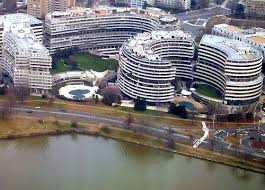
Watergate Hotel
Members of the Nixon administration’s secret “Plumbers Unit” burglarized the offices of the Democratic National Committee at the Watergate Hotel.
Obsessed with re-electing Richard Nixon, they sought incriminating information to discredit U.S. Senator George McGovern, the Democrats’ nominee for President.
When the burglars were caught, President Richard M. Nixon and his topmost officials lied and stonewalled both reporters and investigators seeking the truth.
Nixon’s press secretary, Ronald Ziegler, repeatedly slandered the integrity of The Washington Post for its coverage of the mushrooming Watergate scandal. He called the Watergate break-in “a third-rate burglary” and attacked the Post for “shabby journalism.”
Finally, on April 17, 1973, Ziegler, announced at a press conference: “This is the operative statement. The others are inoperative.”
In short: We’ve been lying to you for the last 10 months. But now we’re telling the truth.
Like Vietnam, the Watergate scandal destroyed the reputations of many of its chief architects. Forty government officials were indicted or jailed.
Vietnam and Watergate were seminal events for Americans coming of age in the late 1960s and early 1970s. They taught an entire generation: Don’t trust the government. Its officials routinely lie, and their lies can be deadly.
2016 PRESIDENTIAL CAMPAIGN, ABC NEWS, ACADEMY AWARDS, BEST ACTRESS, BEST SUPPORTING ACTRESS, BULLYING, CBS NEWS, CNN, DISABILITY, DONALD TRUMP, FOX AND FRIENDS, GOLDEN GLOBES, KELLEYANNE CONWAY, KRAMER VS. KRAMER, MERYL STREEP, MOTHER JONES, MOVEON, NBC NEWS, NEEWSWEEK, NPR, POLITICO, SALON, SERGE KOVALESKI, SLATE, SOPHIE'S CHOICE, THE CHICAGO SUN-TIMES, THE CHICAGO TRIBUNE, THE IRON LADY, THE LOS ANGELES TIMES, THE NEW YORK TIMES, THE WASHINGTON POST, TIME, TWITTER, U.S. NEWS & WORLD REPORT, USA TODAY
In Bureaucracy, Entertainment, History, Politics, Social commentary on January 10, 2017 at 12:06 am
Every year, the 93 members of the Hollywood Foreign Press Association (HFPA) bestow Golden Globe awards to recognize excellence in television and film, both inside and outside the United States.
And on Sunday, January 8, the presenters honored actress Meryl Streep with the Cecil B Demille lifetime achievement Award.
Since 1979, she’s been nominated for more Academy Awards than any other actor–15 nominations for Best Actress and four for Best Supporting Actress.
She won Best Supporting Actress in 1980 for Kramer vs. Kramer, Best Actress in 1983 for Sophie’s Choice and again in 2012 for The Iron Lady.
But when Streep appeared to accept her latest award, she had a nomination of her own to present: One for a performance that “broke my heart.”
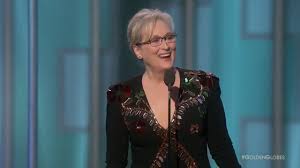
Meryl Streep at the Golden Globes
It had come in real life, not a movie. And the performer she nominated was Donald Trump, for his mockery of a disabled New York Times reporter in 2015.
The reporter, Serge Kovaleski, suffers from arthrogryposis, a congenital condition that restricts the movement of the muscles in his arms.
Since declaring his Presidential candidacy on June 16, Trump had attacked the patriotism of America’s Islamic population. He claimed that he had seen Muslims in New Jersey celebrating the collapse of the Twin Towers on September 11, 2001.
To prove this, Trump cited a September 18, 2001 article written by Kovaleski when he was a reporter for The Washington Post.
In this, Kovaleski wrote that police “detained and questioned a number of people who were allegedly seen celebrating the attacks and holding tailgate-style parties.”
After Trump mentioned the story, Kovaleski said that the key word in it was “allegedly,” adding that there were no credible reports of such celebrations.
At a South Carolina rally on November 24, 2015, Trump claimed that Kovaleski was backing away from his article.
To mock Kovaleski, he flopped his right arm around with his hand held at an odd angle while imitating the reporter: “Now, the poor guy, you’ve got to see this guy: ‘Uhh, I don’t know what I said. Uhh, I don’t remember,’ he’s going like ‘I don’t remember. Maybe that’s what I said.'”
Click here: Donald Trump mocks disabled New York Times reporter – Donald Trump mocks reporter with disability – YouTube
Attacked for mocking Kovaleski’s disability, Trump claimed: “Serge Kovaleski must think a lot of himself if he thinks I remember him from decades ago–if I ever met him at all, which I doubt I did.”
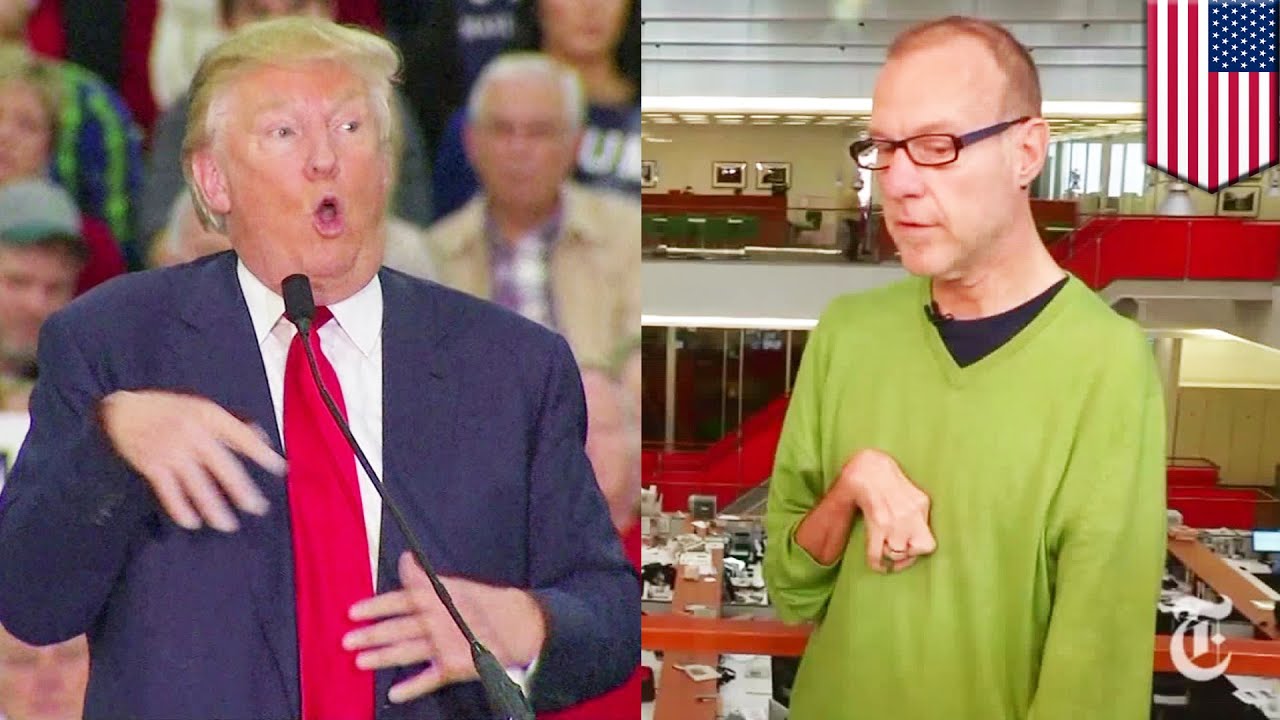
Trump mocking Kovaleski, left; Kovaleski, right
But Kovaleski quickly contradicted Trump: He had covered Trump as a reporter for the New York Daily News and had met him face-to-face on at least a dozen occasions.
So Meryl Streep knew what she was talking about when she said:
“There was one performance this year that stunned me. It sank its hooks in my heart. Not because it was good. There was nothing good about it. But it was effective, and it did its job. It made its intended audience laugh and show their teeth.
“It was that moment when the person asking to sit in the most respected seat in our country imitated a disabled reporter. Someone he outranked in privilege, power and the capacity to fight back. It kind of broke my heart when I saw it. I still can’t get it out of my head because it wasn’t in a movie. It was real life.
“And this instinct to humiliate, when it’s modeled by someone in the public platform, by someone powerful, it filters down into everybody’s life, because it kind of gives permission for other people to do the same thing.
“Disrespect invites disrespect. Violence incites violence. When the powerful use their position to bully others, we all lose.”
Kelleyanne Conway served as Trump’s mouthpiece during the 2016 Presidential campaign. She continues in that rule as he prepares to take office as President on January 20.
And she was thoroughly upset with Streep’s remarks.
Appearing on Right-wing Fox and Friends the next morning, she said: “We have to now form a government, and I’m concerned that somebody with a platform like Meryl Streep is also, I think, inciting people’s worst instincts.
“When she won’t get up there and say, ‘I don’t like it, but let’s try to support him and see where we can find some common ground with him, which [Trump] has actually done from moment one.”
What common ground she didn’t say. Agreeing on mocking the disabled?
Not to be outdone in “inciting people’s worst instincts,” President-elect Trump quickly took to Twitter–his preferred mode of communication.
Since Twitter allows only 140 characters, Trump couldn’t say all he wanted in one tweet. So it took three:
Meryl Streep, one of the most over-rated actresses in Hollywood, doesn’t know me but attacked last night at the Golden Globes. She is a…..
Hillary flunky who lost big. For the 100th time, I never “mocked” a disabled reporter (would never do that) but simply showed him…….
“groveling” when he totally changed a 16 year old story that he had written in order to make me look bad. Just more very dishonest media!
In 2015–before she insulted him–Trump told The Hollywood Reporter: “Julia Roberts is terrific, and many others. Meryl Streep is excellent; she’s a fine person, too.”
2016 PRESIDENTIAL CAMPAIGN, ABC NEWS, ALEXANDER THE GREAT, CBS NEWS, CNN, DONALD TRUMP, FACEBOOK, GATES OF FIRE, MERCENARIES, NBC NEWS, NEWSWEEK, NICCOLO MACHIAVELLI, NPR, SPARTA, STEVEN PRESSFIELD, THE CHICAGO SUN-TIMES, THE CHICAGO TRIBUNE, THE HUFFINGTON POST, THE LOS ANGELES TIMES, THE NEW YORK TIMES, THE PROFESSION, THE VIRTUES OF WAR, THE WASHINGTON POST, THERMOPYLAE, TIME, TWITTER, U.S. NEWS & WORLD REPORT, USA TODAY
In Bureaucracy, Business, History, Military, Politics, Social commentary on December 19, 2016 at 12:05 am
On August 17, 2015, Republican Presidential candidate Donald Trump outlined his strategy for defeating the Islamic State of Iraq and Syria (ISIS).
He would order American forces to take over the oil fields that ISIS has seized in Iraq.
Trump outlined his plans for future military operations against ISIS on NBC’s “Meet the Press” with Chuck Todd.
“Now we’re there, and you have ISIS….And ISIS is taking over a lot of the oil in certain areas of Iraq.
“And I said, you take away their wealth. You go and knock the hell out of the oil. Take back the oil. We take over the oil, which we should have done in the first place” during the 2003 invasion of Iraq.
After taking over the Iraqi oil fields, said Trump, “we’re going to have so much money.
“And what I would do with the money that we make, which would be tremendous, I would take care of the soldiers that were killed, the families of the soldiers that were killed, the soldiers, the wounded warriors that are–see, I love them.”
Actually, Trump’s idea forms the plot of The Profession, a 2011 novel by bestselling author Steven Pressfield.

Pressfield made his literary reputation with a series of classic novels about ancient Greece.
In Gates of Fire (1998) he explored the rigors and heroism of Spartan society–and the famous last stand of its 300 picked warriors at Thermopylae.
In The Virtues of War (2004) he entered the mind of Alexander the Great, whose armies swept across the known world, destroying all who dared oppose them.
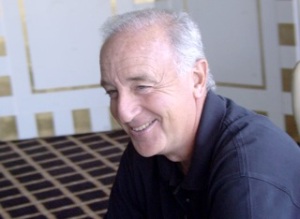
Steven Pressfield
But in The Profession, Pressfield created a plausible world set into the future of 2032. The book’s own dust jacket offers the best summary of its plot-line:
“The third Iran-Iraq war is over. The 11/11 dirty bomb attack on the port of Long Beach, California is receding into memory. Saudi Arabia has recently quelled a coup. Russians and Turks are clashing in the Caspian Basin….
“Everywhere military force is for hire. Oil companies, multi-national corporations and banks employ powerful, cutting-edge mercenary armies to control global chaos and protect their riches.
“Even nation states enlist mercenary forces to suppress internal insurrections, hunt terrorists, and do the black bag jobs necessary to maintain the new New World Order.
“Force Insertion is the world’s merc monopoly. Its leader is the disgraced former United States Marine General James Salter, stripped of his command by the president for nuclear saber-rattling with the Chinese and banished to the Far East.’
Salter appears as a hybrid of World War II General Douglas MacArthur and Iraqi War General Stanley McCrystal.
Douglas MacArthur (left), Stanley McCrystal (right)
Like MacArthur, Salter has butted heads with his President–and paid dearly for it. Now his ambition is no less than to become President himself–by popular acclaim. And like McCrystal, he is a pure warrior who leads from the front and is revered by his men.
Salter seizes Saudi Arabian oil fields, then offers them as a gift to America. By doing so, he makes himself the most popular man in the country–and a guaranteed occupant of the White House.
And in 2032 the United States is a far different nation from the one its Founding Fathers created in 1776.
“The United States is an empire…but the American people lack the imperial temperament. We’re not legionaries, we’re mechanics. In the end the American Dream boils down to what? ‘I’m getting mine and the hell with you.’”
Americans, asserts Salter, have come to like mercenaries: “They’ve had enough of sacrificing their sons and daughters in the name of some illusory world order. They want someone else’s sons and daughters to bear the burden….
“They want their problems to go away. They want me to to make them go away.”
And so Salter will “accept whatever crown, of paper or gold, that my country wants to press upon me.”
Returning to the United States, he is acclaimed as a hero–and the next President.
He is under no delusion that his country is on a downward spiral toward oblivion: “Any time that you have the rise of mercenaries…society has entered a twilight era, a time past the zenith of its arc.”
Nor does he believe that his Presidency will arrest that decline: “But maybe in the short run, it’s better that my hand be on the wheel…rather than some other self-aggrandizing sonofabitch whose motives might not be as well intentioned….”
More than 500 years ago, Niccolo Machiavelli warned of the dangers of relying on mercenaries:
“Mercenaries…are useless and dangerous. And if a prince holds on to his state by means of mercenary armies, he will never be stable or secure; for they are disunited, ambitious, without discipline, disloyal; they are brave among friends; among enemies they are cowards.
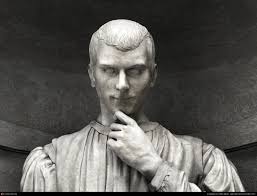
Niccolo Machiavelli
“They have neither the fear of God nor fidelity to men, and destruction is deferred only so long as the attack is. For in peace one is robbed by them, and in war by the enemy.”
Centuries ago, Niccolo Machiavelli issued a warning against relying on men whose first love is their own enrichment.
Steven Pressfield, in a work of fiction, has given us a nightmarish vision of a not-so-distant America where “Name your price” has become the byward for an age.
Both warnings are well worth heeding.
"HAMILTON", 2016 PRESIDENTIAL CAMPAIGN, ABC NEWS, BECKET (MOVIE), BLACKS, BRANDON VICTOR DIXON, CBS NEWS, CNN, DONALD TRUMP, FACEBOOK, HAMILTON (MUSICAL), HENRY II, JOHN GIELGUD, KU KLUX KLAN, MIKE PENCE, NBC NEWS, NEWSWEEK, PETER O'TOOLE, POLITICO, RICHARD BURTON, SALON, SLATE, THE CHICAGO SUN-TIMES, THE CHICAGO TRIBUNE, THE HUFFINGTON POST, THE LOS ANGELES TIMES, THE NEW YORK TIMES, THE WASHINGTON POST, THOMAS BECKET, TIME, TWITTER, U.S. NEWS & WORLD REPORT, VICTOR DIXON, WHITE SUPREMACISTS
In History, Law, Politics, Social commentary on November 28, 2016 at 12:01 am
There are many ways a Donald J. Trump Presidency could go fatally wrong. To learn just one, it’s necessary only to watch the 1964 classic, Becket.
This story of a 12th-century struggle between an English king and archbishop may seem irrelevant to the upcoming Trump Presidency.
In fact, it has a dangerous lesson to teach.
Becket (Richard Burton), a brilliant Saxon noble, is the favorite friend of England’s King Henry II (Peter O’Toole). They hunt, fight and bed women together. Henry even appoints him as Chancellor, the highest law enforcement officer in the country.
Where Becket is cold and calculating, Henry is impulsive, often explosive. Henry admires and resents Becket’s keen intelligence, knowing that Becket is better-suited for kingship than himself.
Meanwhile, the power of the Catholic Church is rising. Henry needs a highly-placed ally against its power. When the Archbishop of Canterbury dies, Henry appoints Becket in his place.
Suddenly the entirely secular Becket undergoes a religious conversion–and an unexpected change in allegiance. He insists that priests accused of criminal offenses be tried only in the church’s own courts–thus making them immune from Henry’s secular ones.
For Henry, this isn’t simply a conflict between church and state. It’s an unforgivable betrayal of friendship. And it means all-out war.

He falsely charges Becket with embezzlement during his time as Chancellor.
Becket flees to France, where he’s given asylum by King Louis VII (John Gielgud).
From there, Becket proceeds to Rome, where he meets with the Pope.
He begs the Pope to let him renounce his position as Archbishop and retire to a monastery as an ordinary priest.
But the Pope refuses: Becket must return to England and defend the Church against civil interference in its affairs.
Becket asks Louis to arrange a meeting with Henry on the shores of Normandy to hopefully negotiate a reconciliation.
Henry grudgingly lifts all charges against Becket and allows him to return to England.
But the feud isn’t over–for Henry.
While Becket focuses on his duties as Archbishop of Canterbury, Henry drinks and broods over his lost friendship with Becket.
His barons fuel this hatred by pointing out that the returned Archbishop has become a hero to the vanquished Saxons. They resent their Norman conquerors, and see Becket as the only man brave enough to stand up against them.
Finally, in a drunken rage, Henry blurts out: “Will no one rid me of this meddlesome priest?”
At that, four of his barons ride to Canterbury Cathedral and hack Becket to death with their swords.
When he learns the news, Henry is shocked. He has lost more than a former friend.
His reign–his soul–are now in mortal peril.
His words have caused the murder of the highest religious official in England.
His kingdom could be torn apart in civil war between Becket-loving Saxons and the Normans who conquered them in 1066.
Even worse, Henry could be excommunicated by the Pope and damned to eternal hellfire for this most unthinkable of crimes.
So Henry seeks redemption in the only way he can: He does penance by allowing himself to be publicly whipped by Saxon monks. And he proclaims Thomas Becket a saint.
Like Henry II, Donald Trump is infamous for his quick temper.
According to the The New York Times, during the 2016 Presidential campaign, Trump aimed nearly 4,000 tweets at 281 different targets.
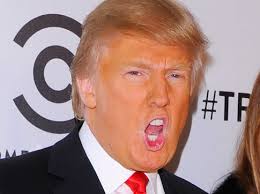
Donald Trump
His Twitter assaults have often dominated entire news cycles for days on end.
As President-elect, he has continued these assaults–the most recent one occurring on November 18.
On that evening, Vice President-elect Mike Pence attended a Broadway performance of the hit musical “Hamilton.”
After the curtain call, the actor Brandon Victor Dixon–who plays Aaron Burr–respectfully addressed Pence:
“We are the diverse America who are alarmed and anxious that your new administration will not protect us, our friends, our children, our parents, or defend us and uphold our inalienable rights. But we truly hope that this show has inspired you to uphold our American values and to work on behalf of all of us.”
Dixon–who is black–is rightly alarmed.
Trump has received the open and enthusiastic support of the Ku Klux Klan and other white supremacist groups. Since his election, white thugs have assaulted blacks and other non-whites across the country.
Trump’s reaction to Dixon’s plea came in two Twitter rants:
“Our wonderful future V.P. Mike Pence was harassed last night at the theater by the cast of Hamilton, cameras blazing. This should not happen!”
And: “The Theater must always be a safe and special place. The cast of Hamilton was very rude last night to a very good man, Mike Pence. Apologize!”
What happens if some of Trump’s 5.9 million Twitter followers decide–like Henry’s barons–to “rid” him of “this meddlesome actor”? Or the whole “meddlesome cast” of “Hamilton”?
And if not Dixon, then whoever next arouses the ire of this most easily-offended egomaniac?
Because he won’t stop.
When the victims of his weaponized tweets appear in hospitals or morgues, will Congress dare to hold him accountable through impeachment?
And, if so, will a Trump Presidency suddenly become a Pence one?
It’s only a matter of time before the explosion occurs.
2012 PRESIDENTIAL RACE, 2016 PRESIDENTIAL CAMPAIGN, ABC NEWS, AMERICAN UNIVERSITY SPEECH, BARACK OBAMA, BARBARA TUCHMAN, CBS NEWS, CNN, COLD WAR, CUBAN MISSILE CRISIS, DONALD TRUMP, DREAMS OF MY FATHER, FACEBOOK, HERMAN CAIN, JEB BUSH, JOHN F. KENNEDY, NBC NEWS, NUCLEAR TEST BAN TREATY, REPUBLICANS, RICK PERRY, Sarah Palin, SOVIET UNION, THE AUDACITY OF HOPE, THE CHICAGO SUN-TIMES, THE CHICAGO TRIBUNE, THE GUNS OF AUGUST, THE NEW YORK TIMES, THE WASHINGTON POST, TWITTER, USA TODAY, VIETNAM WAR
In Bureaucracy, History, Politics, Social commentary on November 24, 2016 at 12:19 am
November 22 marked 53 years since President John F. Kennedy was assassinated in Dallas, Texas by an embittered Marxist named Lee Harvey Oswald.
Historians generally agree that he left three great legacies to his country:
- The Nuclear Test Ban Treaty;
- The Apollo moon landing; and
- The Vietnam war.
But there was a fourth legacy—and perhaps the most important of all: The belief that mankind could overcome its greatest challenges through rationality and perseverance.
Kennedy demanded timely, reliable information about national and international issues. He speed-read several newspapers every morning. He nourished personal relationships with reporters—and not for entirely altruistic reasons.
These journalistic relationships gave Kennedy additional sources of information and perspectives he felt he could not get through government agencies.
When giving speeches, Kennedy—a 1940 cum laude graduate of Harvard University with a Bachelor of Arts in Government—never tried to hide his education. Nor did he talk down to his audiences.
Republicans, on the other hand, have made appealing to the ignorant and uneducated a centerpiece of their political campaigns.
During the 2016 Presidential campaign, real estate mogul Trump famously said; “I love the poorly educated.”
Trump may love “the poorly educated,” but he didn’t want to join them. He graduated from the University of Pennsylvania in 1968 with a Bachelor of Science degree in Economics.
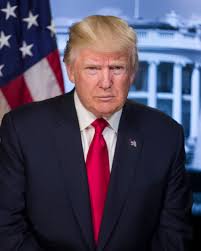
Donald Trump
And for all his notorious bragging about himself, Trump didn’t share this achievement with his audiences.
During the 2012 Presidential race, Republican candidates seemed to value ignorance as a prime requirement for entering the White House.
Former Godfather’s Pizza CEO Herman Cain thus excused his ignorance of the reasons for President Barack Obama’s intervention in Libya: “We need a leader, not a reader.”
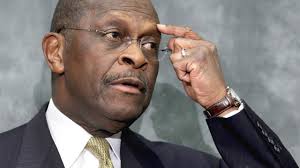
Herman Cain
Texas Governor Rick Perry showed similar pride in not knowing there are nine judges on the United States Supreme Court:
“Well, obviously, I know there are nine Supreme Court judges. I don’t know how eight came out my mouth. But the, uh, the fact is, I can tell you—I don’t have memorized all of those Supreme Court judges. And, uh, ah–
“Here’s what I do know. That when I put an individual on the Supreme Court, just like I done in Texas, ah, we got nine Supreme Court justices in Texas, ah, they will be strict constructionists….”
And former Alaska Governor Sarah Palin rewrote history via “The Midnight Ride of Paul Revere”:
“He warned the British that they weren’t going to be taking away our arms by ringing those bells and, um, making sure as he’s riding his horse through town to send those warning shots and bells that, uh, we were going to be secure and we were going to be free.”
Actually, Revere was warning his fellow Americans about an impending British attack—as his celebrated catchphrase “The British are coming!” made clear.
Republicans have attacked President Obama for his Harvard education and articulate use of language. Among their taunts: “Hitler also gave good speeches.”
And they resent his having earned most of his income as a writer of two books: Dreams From My Father and The Audacity of Hope.
As if being a writer is somehow subversive.
In that sense, Obama is a “throwback” to John F. Kennedy, who was similarly gifted with language as a writer and orator.
Kennedy was perhaps the last President to convince most Americans that they could overcome their problems through reason and open-mindedness.
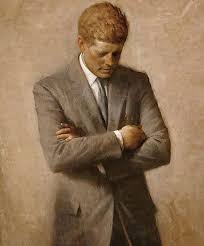
White House painting of JFK
At American University on June 10, 1963, Kennedy called upon his fellow Americans to re-examine the events and attitudes that had led to the Cold War. And he declared that the search for peace was not futile:
“Some say that it is useless to speak of peace or world law or world disarmament….But that is a dangerous, defeatist belief.
“It leads to the conclusion that war is inevitable—that mankind is doomed—that we are gripped by forces we cannot control.
“We need not accept that view. Our problems are man-made; therefore, they can be solved by man. And man can be as big as he wants. No problem of human destiny is beyond human beings.
“Man’s reason and spirit have often solved the seemingly unsolvable, and we believe they can do it again.”
Today, politicians from both parties cannot agree on solutions to even the most vital national problems.
On November 21, 2011, the 12 members of the “Super-Committee” of Congress, tasked with finding $1.2 trillion in cuts in government spending, threw up their hands in defeat.
At the height of the Cuban Missile Crisis, Kennedy spoke with aides about a book he had just finished: Barbara Tuchman’s The Guns of August, on the events leading to World War 1.
For him, the book’s most important revelation was how European leaders had blindly rushed into war, without thought to the possible consequences.
Kennedy said that he did not intend to make the same mistake. Having read his history, he was determined to learn from it.
And he did, for the world escaped all-out nuclear war.
When knowledge and literacy are attacked as “highfalutin’” arrogance, and ignorance and incoherence are embraced as sincerity, national decline and collapse lie just around the corner.
2016 PRESIDENTIAL CAMPAIGN, ABC NEWS, ASHLEY MADISON, BENGHAZI, BERNIE SANDERS, BOBBY MOOK, CBS NEWS, CNN, CYBERSECURITY, DEBBIE WASSERMAN-SCHULTZ, DEMOCRATIC NATIONAL COMMITTEE, DEMOCRATIC PARTY, DONALD TRUMP, EMAILS, FACEBOOK, FORTUNE, HACKING, HILLARY CLINTON, HUFFINGTON POST, LATINOS, MUSLIMS, NBC NEWS, PRIVATE EMAIL SERVER, REPUBLICAN PARTY, SEXUAL HARASSMENT, THE CHICAGO SUN-TIMES, THE CHICAGO TRIBUNE, THE LOS ANGELES TIMES, THE NEW YORK TIMES, THE WASHINGTON POST, TOM BROKAW, TWITTER, U.S. STATE DEPARTMENT, U.S. UNCUT, VLADIMIR PUTIN, WHITEWATER, WIKILEAKS, WOMEN
In Bureaucracy, History, Politics, Social commentary on November 3, 2016 at 12:02 am
The signs were there long before Wikileaks confirmed them.
Even the most casual observer of politics could see the aren’t-we-cute? relationship between Hillary Clinton and Debbie Wasserman-Schultz.
Clinton, of course, was the former First Lady, U.S. Senator from New York and Secretary of State under President Barack Obama. She was also, by popular consensus, the candidate to beat for the 2016 Democratic Presidential nomination.
And Wasserman-Schultz was the chair of the Democratic National Committee (DNC).
Nobody expected Clinton to act impartially. But that was the expectation demanded of Wasserman-Schultz.
There were, after all, other Democrats besides Clinton seeking their party’s nomination–the most prominent of these being Bernie Sanders, the U.S. Senator from Vermont.
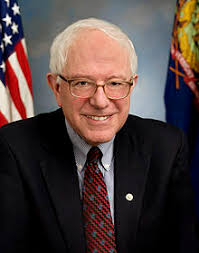
Bernie Sanders
Yet Wasserman-Schultz made no effort to hide her clear bias on behalf of Clinton.
On December 18, 2015, writing in The Huffington Post, political blogger Miles Mogulescu sounded a warning:
“It’s increasingly clear that Debbie Wasserman Schultz, Chair of the Democratic National Committee, isn’t acting as a neutral party Chair, trying to insure a fair and democratic primary and building the Democratic Party in the states.
“Rather, she’s acting as a shill for Hillary Clinton, doing everything in her power to ensure that no one will effectively challenge Hillary’s coronation as the nominee.”
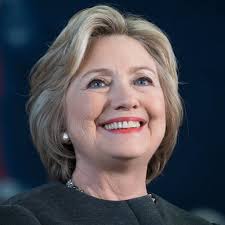
Hillary Clinton
Two days later, on December 20, 2015, the website, U.S. Uncut published an article:
5 TIMES DEBBIE WASSERMAN SCHULTZ VIOLATED DNC RULES AND STACKED THE DECK IN FAVOR OF CLINTON.
The article bluntly stated that Wasserman-Schultz “has made a name for herself among many Democratic voters as a shill for the Clinton machine.” And then it offered five specific examples to back up this assertion:
- Scheduling primary debates to garner as few viewers as possible–and thus “circle the wagons” around the front-running Clinton.
- Locating grassroots Clinton field offices at DNC offices.
- Shutting off Bernie Sanders’ access to the DNC’s voter database, thus crippling his ground strategy.
- Raising money for the Clinton campaign via a top DNC official.
- Lining up Superdelegates for Clinton before the first primary debate.
So no one should have been surprised when the full dimensions of the truth were finally revealed on July 22, 2016.
That was when Wikileaks released 19,252 emails and 8,034 attachments hacked from computers of the highest-ranking officials of the DNC.
The emails had been exchanged from January 2015 through May 2016. And they clearly revealed a bias for Hillary Clinton and against Sanders.
One email revealed that Brad Marshall, the chief financial officer of the DNC, suggested that Sanders, who is Jewish, could be portrayed as an atheist.
Sanders’ supporters had long charged that the DNC and Wasserman-Schultz had undercut his campaign. Now they had the evidence in black-and-white.
The leak badly embarrassed Clinton. About to receive the Democratic nomination for President, she found herself charged with undermining the electoral process.
Wasserman-Schultz proved the first casualty of the leak, resigning as chair of the DNC and saying she would not open the Democratic convention as previously scheduled.
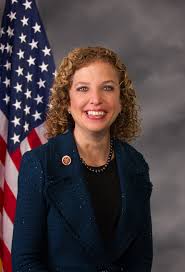
Debbie Wasserman-Schultz
Clinton’s campaign manager, Bobby Mook, put his best spin on the scandal: He blamed the Russians for the leak. Their alleged motive–to help Republican Presidential nominee Donald Trump.
Cyber-security experts believed the hackers originated from Russia–and that Russian President Vladimir Putin may have authorized it.
Perhaps the worst mistake of the DNC was not putting so many embarrassing emails into computers.
Its worst was favoring Hillary Clinton above all other Presidential candidates.
On August 31, an ABC News/Washington Post poll found that Donald Trump and Hillary Clinton are the two most unpopular presidential candidates in more than 30 years.
A July 6 Fortune story sheds light on “Why Trump and Clinton Are America’s Most Disliked Presidential Candidates.”
Trump: “After making comments insulting Muslims, Latinos and women, Trump has been unable to fend off charges of racisms and sexism.”
Clinton: “Clinton is dogged by voter mistrust stoked by her handling of classified State Department information on a private email server, the Benghazi hearings, and the long-ago Whitewater scandal.”
And applying to both candidates: “People who exhibit a few instances of socially unacceptable behavior are quickly labeled as deviant and have to commit disproportionately many more acceptable behaviors to restore their reputation.”
Since October, Trump has been dogged by his admission of sexually predatory behavior toward women: “You know I’m automatically attracted to beautiful–I just start kissing them. It’s like a magnet. Just kiss. I don’t even wait. And when you’re a star they let you do it. You can do anything. Grab them by the pussy. You can do anything.”
At least a dozen women have since charged him with making unwanted sexual advances.
Such revelations would normally prove the kiss of death for any Presidential candidate.
Had the Democrats chosen a genuinely popular candidate–or at least one who was not so widely hated as Clinton–the electoral map would now look very different.
But as matters now stand, Trump and Clinton seem locked dead-even in the polls.
In 2008, NBC anchor Tom Brokaw compared the Presidential campaign rallies of then-U.S. Senator Barack Obama to popular Hannah Montana concerts.
In 2016, not even the most partisan Democrats would make such a remark about Clinton.
2016 PRESIDENTIAL CAMPAIGN, 2016 PRESIDENTIAL DEBATES, ABC NEWS, ACCESS HOLLYWOOD, ADOLF HITLER, ADRIANNE ZUCKER, ANDERSON COOPER, ANTI-SEMITISM, BARACK OBAMA, BILL CLINTON, BILLY BUSH, CBS NEWS, CNN, DAVID IRVING, DAYS OF OUR LIVES, DEBORAH LIPSTADT, DENIAL, DONALD TRUMP, FACEBOOK, HEINRICH HIMMLER, HILLARY CLINTON, HITLER’S WAR, HOLOCAUST, HOLOCAUST DENIAL, JESSICA LEEDS, LIBEL, MAR-A-LAGO, MELANIA TRUMP, MINDY MCGILLIVRAY, NATASHA STOYNOFF, NBC NEWS, PENGUIN BOOKS, PEOPLE MAGAZINE, RACHEL CROOKS, REINHARD HEYDRICH, RICHARD J. EVANS, SEXUAL HARASSMENT, THE CHICAGO SUN-TIMES, THE CHICAGO TRIBUNE, THE HUFFINGTON POST, THE LOS ANGELES, THE NEW YORK TIMES, THE PALM BEACH POST, THE WALL STREET JOURNAL, THE WASHINGTON POST, THIRD REICH, TWITTER, USA TODAY, WORLD WAR 11
In History, Law, Military, Politics, Social commentary on October 25, 2016 at 12:10 am
On October 7, The Washington Post leaked a video of Donald Trump making sexually predatory comments about women. The remarks came during a 2005 exchange with Billy Bush, then the host of Access Hollywood.
The two were traveling in an Access Hollywood bus to the set of the soap opera Days of Our Lives, where Trump was to make a cameo appearance. A “hot” microphone picked up their conversation–which has proved damning for Trump:
Donald Trump: You know and I moved on her actually. You know she was down on Palm Beach. I moved on her and I failed. I’ll admit it. I did try and fuck her.
She was married. No this was–and I moved on her very heavily, in fact, I took her out furniture shopping. She wanted to get some furniture. I said I’ll show you where they have some nice furniture. I moved on her like a bitch, but I couldn’t get there, and she was married.
Then all of a sudden I see her, she’s now got the big phony tits and everything. She’s totally changed her look.
[At that point, they spot Adrianne Zucker, the starring actress in Days in Our Lives.]
Trump: Yeah, that’s her. With the gold. I better use some Tic Tacs just in case I start kissing her. You know I’m automatically attracted to beautiful–I just start kissing them. It’s like a magnet. Just kiss. I don’t even wait.
And when you’re a star they let you do it. You can do anything. Grab them by the pussy. You can do anything.
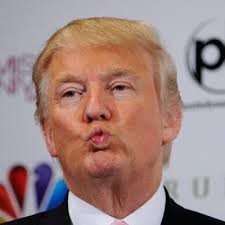
Donald Trump
When the Washington Post broke the story on October 7, the reaction was immediate–and explosive.
The Trump campaign quickly released a statement: “This was locker room banter, a private conversation that took place many years ago. Bill Clinton has said far worse to me on the golf course–not even close. I apologize if anyone was offended.”
During the second Presidential debate on October 9, moderator Anderson Cooper asked Trump: “Have you ever done those things?”
Trump: “And I will tell you–no I have not.”
On October 12, The Palm Beach Post, The New York Times and People all published stories of women claiming to have been sexually assaulted by Trump.
Mindy McGillivray told the Post that Trump groped her buttocks when she visited Mar-a-Lago in Palm Beach, Florida, in 2013.
In December, 2005, People magazine writer Natasha Stoynoff went to Mar-a-Lago to interview Donald and Melania Trump for a first-wedding-anniversary feature story.
During a break in the interview, Trump said he wanted to show Stoynoff around his mansion. There was one “tremendous” room he especially wanted to show her.
According to her account: “We walked into that room alone, and Trump shut the door behind us. I turned around, and within seconds he was pushing me against the wall and forcing his tongue down my throat.”
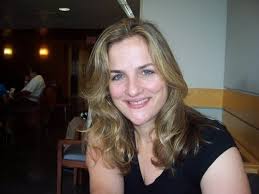
Natasha Stoynoff
Fortunately, Trump’s butler soon entered the room, and Trump acted as though nothing had happened. But as soon as he and Stoynoff were alone again, Trump said: “You know we’re going to have an affair, don’t you?”
Stoynoff asked her editors–and received permission–to be removed from writing any further Trump features.
The Times reported that, more than 30 years ago, Trump had made equally unwelcome advances toward businesswoman Jessica Leeds, then 38.
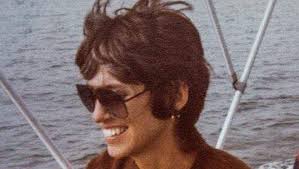
Jessica Leeds
She said she was sitting next to Trump in the first-class cabin of a New York-bound flight when Trump lifted the armrest, grabbed her breasts and tried to put his hand up her skirt.
She fled to the back of the plane.
Another woman who spoke to the Times was Rachel Crooks. She was a 22-year-old receptionist at Bayrock Group, a real estate investment and development company in Trump Tower in Manhattan in 2005.
One morning she came face-to-face with Trump outside an elevator in the building. Knowing that her company did business with him, she introduced herself. They shook hands. But instead of letting go, Trump kissed her cheeks, and then “kissed me directly on the mouth.”
On October 11, questioned by a Times reporter about the women’s claims, Trump shouted: “None of this ever took place.”
He accused the newspaper of inventing accusations to hurt his Presidential candidacy. And he threatened to sue for libel if the Times reported the women’s stories.
On October 13, Trump used Twitter to deny the allegations in the Times and People.
On October 14, at a rally in North Carolina, Trump attacked the character of the women accusing him.
Of Stoynoff, he said: “Take a look. You take a look. Look at her. Look at her words. You tell me what you think. I don’t think so. I don’t think so.”
Calling Jessica Leeds “that horrible woman,” he said: “Believe me, she would not be my first choice, that I can tell you. Whoever she is, wherever she comes from, the stories are total fiction. They’re 100% made up. They never happened.”
At one point during his lengthy outburst, Trump–who’s been married three times and often boasted of his sexual prowess–asked why President Barack Obama hasn’t had similar claims leveled against him.
By October 14, at least 12 women had publicly accused Trump of sexually inappropriate behavior.
2016 PRESIDENTIAL CAMPAIGN, 2016 PRESIDENTIAL DEBATES, ABC NEWS, ACCESS HOLLYWOOD, ADOLF HITLER, ADRIANNE ZUCKER, ANDERSON COOPER, ANTI-SEMITISM, BARACK OBAMA, BILL CLINTON, BILLY BUSH, CBS NEWS, CNN, DAVID IRVING, DAYS OF OUR LIVES, DEBORAH LIPSTADT, DENIAL, DONALD TRUMP, FACEBOOK, HEINRICH HIMMLER, HILLARY CLINTON, HITLER’S WAR, HOLOCAUST, HOLOCAUST DENIAL, JESSICA LEEDS, LIBEL, MAR-A-LAGO, MELANIA TRUMP, MINDY MCGILLIVRAY, NATASHA STOYNOFF, NBC NEWS, PENGUIN BOOKS, PEOPLE MAGAZINE, RACHEL CROOKS, REINHARD HEYDRICH, RICHARD J. EVANS, SEXUAL HARASSMENT, THE CHICAGO SUN-TIMES, THE CHICAGO TRIBUNE, THE HUFFINGTON POST, THE LOS ANGELES, THE NEW YORK TIMES, THE PALM BEACH POST, THE WALL STREET JOURNAL, THE WASHINGTON POST, THIRD REICH, TWITTER, USA TODAY, WORLD WAR 11
In History, Law, Military, Politics, Social commentary on October 24, 2016 at 12:22 am
“Certain things are true,” says the American historian Deborah Lipstadt in the newly-released movie, Denial. “Elvis is dead. The ice caps are melting. And the Holocaust did happen.
“Millions of Jews went to their deaths in camps and open pits in a brutal genocide which was sanctioned and operated by the leaders of the Third Reich. There are some subjects about which two points of view are not equally valid.”
On September 5, 1996, the British author and Holocaust denier David Irving (Timothy Spall in the movie) filed a libel suit against Lipstadt (Rachel Weisz) and her British publisher Penguin Books.

In 1993, in her book, Denying the Holocaust, Lipstadt had called Irving a Holocaust denier and accused him of distorting evidence and manipulating historical documents.
Irving had authored a series of books about the Third Reich and World War II. Among these: The War Path; Hitler’s War; The Trail of the Fox (a biography of Erwin Rommel); and The War Between the Generals (on the infighting among the Allied high command).
Of these, Hitler’s War (1977) was–and remains–the most controversial. Although Irving admitted that the Holocaust had occurred, he claimed that Hitler hadn’t ordered it–or even known about it. He blamed Reichsfuhrer-SS Henirich Himmler and his number-two deputy, Reinhard Heydrich, as its architects.
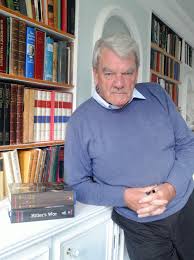
David Irving
For decades, Irving boasted that no one had ever found a written order from Hitler ordering the Holocaust–and offered to pay £1000 to anyone who could find such an order.
In later years, Irving completely denied that the Holocaust had occurred. He claimed that gas chambers had never been used to exterminate Jews and there was no officially-sanctioned Third Reich plan to slaughter European Jewry.
But Irving claimed that Lipstadt’s labeling him a Holocaust denier had tarred him as a disreputable historian–and had thus damaged his professional reputation.
Irving sued in a British court because the burden would be on the defendant to prove that s/he had not committed libel. (In American courts, the plaintiff must not only prove s/he has been libeled, but with actual malice.)
Lipstadt faced a second hurdle: Her lawyers ordered her to not take the witness stand. They wanted to put and keep the focus entirely on Irving–and to make his virulent anti-Semitism the issue in the case.
In her 2005 autobiography, Denial, Lipstadt described the agonies she endured in preparing for–and sitting through–this trial:
“For four years I immersed myself in the works of a man who exuded contempt for me and much of what I believed. I lost many nights of sleep, worried that because of some legal fluke Irving might prevail.”

Deborah Lipstadt
For Lipstadt, more was at stake than the possibility of losing a big chunk of money.
Above all, she feared that an Irving victory would give anti-Semites a legal precedent for “proving” that the extermination of six million Jewish men, women and children hadn’t occurred.
The case was tried in a London court from January to March, 2000.
Entering court on the first morning of trial, Irving assured the assembled reporters that he would be victorious.
Asked where his legal team was, he said he had chosen to represent himself: They might know the law, but he knew the topic–Hitler and the Third Reich.
The outcome was a disaster–for Irving.
Among the expert witnesses testifying on behalf of Lipstadt was Richard J. Evans, professor of modern history at Cambridge University and author of a three-volume history on the Third Reich. In his examination of Irving’s work, Evans found:
“Not one of [Irving’s] books, speeches or articles, not one paragraph, not one sentence in any of them, can be taken on trust as an accurate representation of its historical subject.
“All of them are completely worthless as history, because Irving cannot be trusted anywhere, in any of them, to give a reliable account of what he is talking or writing about. … if we mean by historian someone who is concerned to discover the truth about the past, and to give as accurate a representation of it as possible, then Irving is not a historian.”
Judge Charles Gray found that:
“Irving had for his own ideological reasons persistently and deliberately misrepresented and manipulated historical evidence” and that “for the same reasons, he had portrayed Hitler in an unwarrantedly favorable light, principally in relation to his attitude towards and responsibility for the treatment of the Jews.”
The judge also found that Irving was “an active Holocaust denier; that he was anti-Semitic and racist and that he associated with right-wing extremists who promoted neo-Nazism.”
Irving was discredited as a historian and ordered to pay all of Penguin’s costs of the trial, estimated to be as much as £2 million ($3.2 million in American currency). When Irving didn’t pay, he was forced into bankruptcy and lost his home.
Asked by a reporter, “Will you stop denying the Holocaust on the basis of this judgment?” Irving replied, “Good Lord, no.”
Denying the truth about the past didn’t work for David Irving. Soon America will discover if it works for Donald Trump.
2016 PRESIDENTIAL CAMPAIGN, 2016 PRESIDENTIAL DEBATES, ABC NEWS, ALICIA MACHADO, AMERICAN CAESAR, BARACK OBAMA, BIRTHERISM, BLACKS, CBS NEWS, CNN, DEMOCRATS, DONALD TRUMP, DOUGLAS MACARTHUR, FACEBOOK, FBI, FOX NEWS, HILLARY CLINTON, HISPANICS, LEBRON JAMES, LESTER HOLT, MARCO RUBIO, MISS UNIVERSE, NBC NEWS, POLITICO, RAFAEL "TED" CRUZ, SEAN HANNITY, TAXPAYERS, THE ARIZONA REPUBLIC, THE CHICAGO SUN-TIMES, THE CHICAGO TRIBUNE, THE HUFFINGTON POST, THE LOS ANGELES TIMES, THE NEW YORK TIMES, THE O'REILLY FACTOR, THE WALL STREET JOURNAL, THE WASHINGTON POST, TWITTER, USA TODAY, WILLIAM MANCHESTER, WOMEN
In History, Law, Law Enforcement, Politics, Social commentary on October 7, 2016 at 12:47 am
Republican Presidential nominee Donald Trump has only one opponent in his race for the White House: Democratic Presidential nominee Hillary Clinton.
But after his September 26 debate with Clinton, he seemed more at war with another woman: Former Miss Universe Alicia Machado.
Clinton had briefly mentioned her in the first of her three debates with Trump: “And he called this woman Miss Piggy. Then he called her Miss Housekeeping because she was Latina.”
Trump didn’t deny making such comments. Instead, he claimed that Clinton had “spent hundreds of millions of dollars on negative ads on me, many which are absolutely untrue.
“They’re untrue and they’re misrepresentations. And I will tell you this, Lester [Holt, the debate moderator], it’s not nice and I don’t, I don’t deserve that.”
On September 27, Trump attacked Machado via a phone-in interview on Fox News. Then the next day, he attacked her again on Fox’s “The O’Reilly Factor.”
And at 2:14 a.m. on September 30, Trump launched yet a third assault on her character–this time through a series of tweets on Twitter:
“Wow, Crooked Hillary was duped and used by my worst Miss U. Hillary floated her as an ‘angel’ without checking her past, which is terrible!”
“Using Alicia M in the debate as a paragon of virtue just shows that Crooked Hillary suffers from BAD JUDGEMENT! Hillary was set up by a con.”
“Did Crooked Hillary help disgusting (check out sex tape and past) Alicia M become a U.S. citizen so she could use her in the debate?”
Subsequent media investigations found no evidence that Machado had starred in a pornographic film.
Republican leaders were dismayed. They wanted Trump to concentrate his fire at Clinton. And here he was, aiming yet another tirade against a woman wholly unimportant to his race for the White House.
Meanwhile, the mainstream media quickly reacted to Trump’s latest rant–and its verdict was overwhelmingly negative.
According to NBC News: “Still reeling from Monday’s widely panned debate performance, the Republican nominee has found refuge in a fringe media environment where his victory is assured, his setbacks are the result of shadowy plots, and his critics are humiliated by sordid revelations.
“The alleged Machado ‘sex tape’ Trump cited appeared to be a hoax widely promoted in fringe pro-Trump outlets like Infowars. Other sites like Drudge Report have spread grainy stills of a love scene from a reality show Machado starred in.
“Radio host Rush Limbaugh called Machado ‘the porn-star Miss Piggy’ this week. And Trump, desperate for encouragement after his debate, is huffing these sycophantic fumes like never before.”
And POLITICO offered this judgment: “TRUMP JUMPS INTO THE GUTTER.”
The story’s sub-headline read: “The Republican nominee loses all impulse control, and unleashes a violent Twitter rant against his Miss Universe nemesis.”
Trump–never one to admit error–responded, typically enough, on Twitter: “For those few people knocking me for tweeting at three o’clock in the morning, at least you know I will be there, awake, to answer the call!”
Furthermore, POLITICO noted, Trump’s inability to restrain himself has played “right into the Democratic nominee’s argument that Trump lacks the temperament and impulse control to be commander in chief.”
Nor was Clinton silent on the matter: “What kind of man stays up all night to smear a woman with lies and conspiracy theories?” she posted on Twitter.
And she followed up: “Trump obsessively bullies Rosie O’Donnell–an accomplished actor. he insulted Kim Kardashian for her weight–when she was pregnant. Pathetic.”
On the same day as his Twitter rant against Alicia Machado, Trump demanded that President Barack Obama promise not to pardon Clinton. Since Clinton has not been charged with or convicted of a crime, such a promise would be wholly unnecessary.
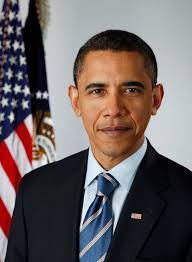
President Barack Obama
On September 30, Trump called The New York Times and said of Clinton: “She’s nasty, but I can be nastier than she ever can be.”
With that, he opened a new line of attack on his Presidential rival: Her marriage.
“Hillary Clinton was married to the single greatest abuser of women in the history of politics.
“Hillary was an enabler, and she attacked the women who Bill Clinton mistreated afterward. I think it’s a serious problem for them, and it’s something that I’m considering talking about more in the near future.”
Trump said that his own marital history did not disqualify him from making such an attack.
He has been married three times and divorced twice.
While still married to his first wife, Ivana, he became involved with Marla Maples.
Ivana divorced him in 1991, and he married Maples in 1993. They were divorced in 1999.
He married his current wife, Melania, in 2005.
Asked about his affair with Maples while he was married to Ivana, Trump said: “I don’t talk about it. I wasn’t president of the United States. I don’t talk about it.”
Thus, in one week, Trump managed to infuriate
- Taxpayers
- Women
- NBC News
- Blacks
- Democrats
- The Wall Street Journal [which endorsed Clinton]
- The Arizona Republic *
- USA Today *
- President Obama
- POLITICO
- Hispanics
- The FBI
- LeBron James (a hero in the key state of Ohio endorsed Clinton).
Political campaigns are about winning voters, not alienating them. Trump appears to believe it’s the other way around.
2016 PRESIDENTIAL CAMPAIGN, 2016 PRESIDENTIAL DEBATES, ABC NEWS, ALICIA MACHADO, AMERICAN CAESAR, BARACK OBAMA, BIRTHERISM, BLACKS, CBS NEWS, CNN, DEMOCRATS, DONALD TRUMP, DOUGLAS MACARTHUR, FACEBOOK, FBI, FOX NEWS, HILLARY CLINTON, HISPANICS, LEBRON JAMES, LESTER HOLT, MARCO RUBIO, MISS UNIVERSE, NBC NEWS, POLITICO, RAFAEL "TED" CRUZ, SEAN HANNITY, TAXPAYERS, THE ARIZONA REPUBLIC, THE CHICAGO SUN-TIMES, THE CHICAGO TRIBUNE, THE HUFFINGTON POST, THE LOS ANGELES TIMES, THE NEW YORK TIMES, THE O'REILLY FACTOR, THE WALL STREET JOURNAL, THE WASHINGTON POST, TWITTER, USA TODAY, WILLIAM MANCHESTER, WOMEN
In History, Law, Law Enforcement, Politics, Social commentary on October 6, 2016 at 12:09 am
“He appeared to need enemies the way other men need friends, and his conduct assured that he would always have plenty of them.”
So wrote William Manchester about General Douglas MacArthur in his monumental 1978 biography, American Caesar. But he could have written just as accurately about Donald Trump, the businessman-turned-Republican-Presidential-nominee.
Donald Trump
What some pundits have called “the worst week in Presidential campaigning history” started–for Trump–on September 26. That was when he finally squared off against Democratic Presidential nominee Hillary Clinton in the first of three debates.
Through a series of bare-knuckled debates, Trump had bullied his way to the Republican nomination. He had mocked his opponents (“Little Marco” Rubio, “Lyin Ted” Cruz) and attacked former Texas Governor Jeb Bush as the brother of the President he blamed for 9/11.
So it was widely expected that he would run over Clinton like a tank going over a rabbit.
Events proved otherwise.
Moderator Lester Holt–who anchors the weekday edition of NBC Nightly News–gave Trump more airtime than Clinton. But Clinton showed a greater command of foreign and domestic issues.
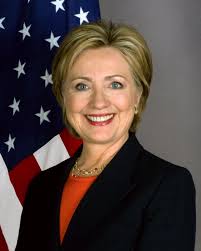
Hillary Clinton
Trump repeatedly sniffled throughout the debate, causing some viewers to wonder if he had a cocaine problem. And he often reached for his water glass, causing other viewers to mock him on Twitter (“Does anyone remember how badly Trump made fun of Marco Rubio for drinking water? Hmm..”).
For Trump–who had attacked Clinton’s health after she fainted on September 11 at a New York 9/11 commemoration ceremony–it was a disaster. Clinton seemed to be in better shape than he was.
When Clinton charged that he paid “nothing in Federal taxes,” Trump in effect admitted it: “That makes me smart.”
Clinton then cornered him on his claim that he had opposed the 2003 Iraq war. Trump replied that he had told Fox News host Sean Hannity that he opposed it. He asked the media to contact Hannity.
Clinton then attacked Trump as “a man who has called women pigs, slobs, and dogs, and someone who has said pregnancy is an inconvenience to employers.”
From there she segued into his attacks on former Miss Universe Alicia Machado: “And he called this woman Miss Piggy. Then he called her Miss Housekeeping because she was Latina.”
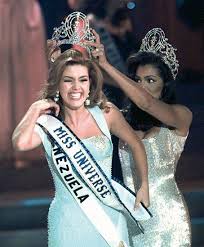
Alicia Machado as Miss Universe
This may have proved the worst part of the debate for Trump, because he later felt he had to respond to it–on TV and Twitter.
By the end of the debate, 62% of CNN viewers voted Clinton as the winner, with only 27% voting it was Trump.
The next day–September 27–Trump felt the need to renew his attack on Machado, courtesy of a telephone interview he gave to Fox News: “She was the worst [Miss Universe contestant] we ever had. The absolute worst. She was impossible….
“She was the winner and she gained a massive amount of weight, and we had a real problem. Not only that, her attitude, and we had a real problem with her.”
On September 28, Trump appeared on Fox News‘ “The O’Reilly Factor.” There he continued his attack on Machado: “It is a beauty contest. They know what they are getting into.”
He claimed that “I saved her job” because the pageant wanted “to fire her” for gaining so much weight.
On September 29, Trump added one more enemy to the list: The FBI.
Addressing a crowd in Bedford, New Hampshire, Trump falsely accused the agency of giving “immunity” to Hillary Clinton:
“They [the FBI] gave so much immunity there was nobody left to talk to. There was nobody left–except Hillary. They probably gave her immunity, too. Do you think Hillary got immunity? Yeah, she had the immunity.”
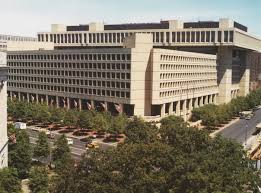
FBI headquarters
Also on September 29, Trump once again attacked a longtime target: President Barack Obama.
Thirteen days earlier, Trump had renounced “birtherism”–the slander that Obama was not an American citizen. It was a slander that Trump himself had created and vigorously promoted since 2011.
The reason for his renouncing it: His dismal standing among blacks in political polls.
At a press conference on September 16 to promote his new upscale hotel in Washington, D.C., Trump said: “Now, not to mention her in the same breath, but Hillary Clinton and her campaign of 2008 started the birther controversy.
“I finished it. I finished it. You know what I mean.
“President Barack Obama was born in the United States, period. Now we all want to get back to making America strong and great again.”
After falsely blaming Clinton for starting the birther lie, Trump seemed content to finally drop the slander campaign.
But on September 29–a mere 13 days later–Trump told a New Hampshire reporter that he was “very proud” of his “birther” campaign:
“I’m the one who got him to put up his birth certificate”–which clearly proved that Obama had been born in Hawaii, not Kenya, as Trump had claimed.
“[Hillary Clinton] tried [to get Obama to release his birth certificate] and she was unable to do it and I tried and I was able to do it so I’m very proud of that.”
Thus, the goodwill of black voters he sought on September 16 he cast aside on the 29th.


2016 PRESIDENTIAL CAMPAIGN, 9/11 ATTACKS, ABC NEWS, ACADEMY AWARDS, ASSOCIATED PRESS, BARACK OBAMA, BEST ACTRESS, BEST SUPPORTING ACTRESS, BIRTHERS, BULLYING, CBS NEWS, CENSORSHIP, CHRIS CUOMO, CNN, CREDIBILITY GAP, DAVID BROOKS, DAVID HALBERSTAM, DISABILITY, DONALD TRUMP, FACEBOOK, FOX AND FRIENDS, FRANK STANTON, FULL METAL JACKET, GEORGE MCGOVERN, GOLDEN GLOBES, HILLARY CLINTON, JOHN F. KENNEDY, KELLEYANNE CONWAY, KRAMER VS. KRAMER, LYNDON B. JOHNSON, MARK SHIELDS, MERYL STREEP, MORLEY SAFER, MOTHER JONES, MOVEON, NAVY SEALS, NBC NEWS, NEEWSWEEK, NEW DAY, NPR, OSAMA BIN LADEN, PBS NEWSHOUR, PETER ARNETT, POLITICO, RICHARD NIXON, RONALD ZIEGLER, SALON, SERGE KOVALESKI, SLATE, SOPHIE'S CHOICE, STANLEY KUBRICK, THE CHICAGO SUN-TIMES, THE CHICAGO TRIBUNE, THE HUFFINGTON POST, THE IRON LADY, THE LOS ANGELES TIMES, THE NEW YORK TIMES, THE WALL STREET JOURNAL, THE WASHINGTON POST, TIME, TWITTER, U.S. NEWS & WORLD REPORT, USA TODAY, VIETNAM WAR, WATERGATE
“AMBUSHED AT CREDIBILITY GAP”: PART ONE (OF FOUR)
In Bureaucracy, History, Law, Law Enforcement, Military, Politics, Social commentary on January 11, 2017 at 12:02 am“Credibility gap” is a term that came into use during the mid-1960s to describe public and journalistic distrust of President Lyndon B. Johnson. In particular, the term was applied to his administration’s conduct of the Vietnam war.
It was, in short, a euphemism for accusing government officials of outright lying.
An example of the credibility gap in full swing appeared in Stanley Kubrick’s classic 1987 Vietnam war movie, Full Metal Jacket.
Vietnam was a war where military and political officials spewed a gung-ho version of constant American progress against a tough enemy.
And where civilian reporters like David Halberstam and Walter Cronkite saw–and labeled–the war as a brutal, wasteful and ultimately doomed effort.
Midway through the film, there’s an editorial meeting of The Sea Tiger, the official Marine newspaper.
Lieutenant Lockhart is presiding–and he is determined to give his superiors an endless stream of “all-systems-go” propaganda reports. He reads a series of stories that have been published:
Story #1: DIPLOMATS IN DUNGAREES–MARINE ENGINEERS LEND A HELPING HAND REBUILDING DONG PHUC VILLAGES.
LOCKHART: “Chili, “if we move Vietnamese, they are evacuees. If they come to us to be evacuated, they are refugees.”
Story #2: N.V.A. SOLDIER DESERTS AFTER READING PAMPHLETS.
LOCKHART: “A young North Vietnamese Army regular, who realized his side could not win the war, deserted from his unit after reading Open Arms program pamphlets.”
Story #3: NOT WHILE WE’RE EATING: N.V.A. LEARN MARINES ON A SEARCH AND DESTROY MISSION DON’T LIKE TO BE INTERRUPTED WHILE EATING CHOW.
LOCKHART: “‘Search and destroy.’ Uh, we have a new directive on this. In the future, in place of ‘search and destroy,’ substitute the phrase ‘sweep and clear.’ Got it?”
Lt. Lockhart, editor of The Sea Tiger
LOCKHART: “And, Joker–where’s the weenie?”
JOKER: “Sir?”
LOCKHART “The Kill, Joker. I mean, all that fire, the grunts must’ve hit something.”
JOKER: “Didn’t see ’em.”
LOCKHART: “Joker, I’ve told you, we run two basic stories here: Grunts who give half their pay to buy gooks toothbrushes and deodorants–winning of hearts and Minds–okay? And combat action that results in a kill–Winning the War. Now you must have seen blood trails … drag marks?”
JOKER: “It was raining, sir.”
LOCKHART: “Well, that’s why God passed the law of probability. Now rewrite it and give it a happy ending–say, uh, one kill. Make it a sapper or an officer. Grunts like reading about dead officers.”
JOKER: “Okay, an officer. How about a general?”
LOCKHART: “Joker, maybe you’d like our guys to read the paper and feel bad. I mean, in case you didn’t know it, this is not a particularly popular war. Now, it is our job to report the news that these why-are-we-here civilian newsmen ignore.”
So great became the divide between truth and lies during military “press briefings” that reporters started calling them “The Five O’clock Follies.” And even some soldiers took to wearing buttons that said: “Ambushed at Credibility Gap.”
Reporters who dared to write truthfully about the military’s crimes and failures–like David Halberstam of the New York Times and Peter Arnett of the Associated Press–were regarded as traitors by military and political officials.
In 1963, President John F. Kennedy became enraged by Halberstam’s reporting on the corruption of the South Vietnamese government. He pressured New York Times publisher Arthur Ochs Sulzberger to transfer Halberstam to another locale. Sulzberger politely refused–and then extended Halberstam’s stay in Vietnam another six months.
David Halberstam
In 1965, when CBS Correspondent Morley Safer filmed Marines setting fire to the village of Cam Ne with Zippo lighters, President Lyndon B. Johnson was similarly outraged.
He placed an early-morning call to CBS News President Frank Stanton and shouted: “Your boys shat on the American flag!”
The trail of deceit and attempted censorship continued right up to the end of the war–in April, 1975. That was when North Vietnamese forces invaded the South and quickly overwhelmed the incompetent defenses arrayed against them.
And while America was still bogged down in Vietnam, the Watergate scandal erupted on June 17, 1972.
Watergate Hotel
Members of the Nixon administration’s secret “Plumbers Unit” burglarized the offices of the Democratic National Committee at the Watergate Hotel.
Obsessed with re-electing Richard Nixon, they sought incriminating information to discredit U.S. Senator George McGovern, the Democrats’ nominee for President.
When the burglars were caught, President Richard M. Nixon and his topmost officials lied and stonewalled both reporters and investigators seeking the truth.
Nixon’s press secretary, Ronald Ziegler, repeatedly slandered the integrity of The Washington Post for its coverage of the mushrooming Watergate scandal. He called the Watergate break-in “a third-rate burglary” and attacked the Post for “shabby journalism.”
Finally, on April 17, 1973, Ziegler, announced at a press conference: “This is the operative statement. The others are inoperative.”
In short: We’ve been lying to you for the last 10 months. But now we’re telling the truth.
Like Vietnam, the Watergate scandal destroyed the reputations of many of its chief architects. Forty government officials were indicted or jailed.
Vietnam and Watergate were seminal events for Americans coming of age in the late 1960s and early 1970s. They taught an entire generation: Don’t trust the government. Its officials routinely lie, and their lies can be deadly.
Share this: