Archive for the ‘Politics’ Category
ABC NEWS, AL QAEDA, BARACK OBAMA, BRUSSELS, CBS NEWS, CIA, CNN, DONALD TRUMP, FACEBOOK, FBI, GUANTANAMO, ISLAM, ISLAMIC STATE OF IRAQ AND SYRIA (ISIS), NBC NEWS, NEWT GINGRICH, NICCOLO MACHIAVELLI, PARIS, PENTAGON, RICK SANTORUM, RUDLOPH GIULIANI, SAN BERNADINO, SUPREME COURT, TERRORISM, THE CHICAGO SUN-TIMES, THE CHICAGO TRIBUNE, THE LOS ANGELES TIMES, THE NEW YORK TIMES, THE WASHINGTON POST, TORTURE, TWITTER, WATERBOARDING
In Bureaucracy, History, Law, Law Enforcement, Military, Politics, Social commentary on April 4, 2016 at 12:09 am
Nearly two-thirds of Americans believe that the use of torture can be justified to force suspected terrorists to talk, according to a March 30 Reuters/lpsos poll.
A growing fear by Americans of Islamic terrorism has been ignited by a series of deadly Islamic terrorist attacks in Europe and the United States.
- On November 13, 2015 in Paris, France, terrorists belonging to the Islamic State of Iraq and Syria (ISIS) killed more than 100 people.
- On December 2, a married Islamic couple shot and killed 14 people at the Department of Public Health in San Bernardino, California.
- And on March 22, a series of ISIS attacks struck Brussels, Belgium. Two explosions at the city’s main international airport and a third in a subway station killed 31 persons and injured 270 more.
Click here: Most Americans Say Torturing Suspected Terrorists Is Justifiable
And the chief beneficiary of this growing fear among Americans is likely to be Donald Trump.
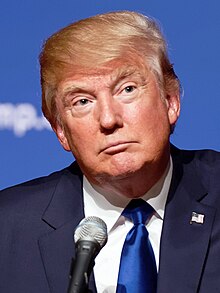
Donald Trump
Since declaring his candidacy for the 2016 Republican nomination for President in June, 2015, Trump has made the use of torture a major campaign issue. He has promised to end the waterboarding ban that President Barack Obama declared at the start of his term in 2009.
During a campaign event at Arizona’s Sun City retirement community, Trump said he would reinstate waterboarding and techniques that are “so much worse” and “much stronger.”
“Don’t tell me it doesn’t work–torture works,” Trump said. “Okay, folks? Torture–you know, half these guys [say]: ‘torture doesn’t work.’ Believe me, it works. Okay?”
And in a February 15 Op-Ed piece for USA Today, Trump declared: “I will do whatever it takes.
“I have made it clear in my campaign that I would support and endorse the use of enhanced interrogation techniques if the use of these methods would enhance the protection and safety of the nation,” he wrote.
“Though the effectiveness of many of these methods may be in dispute, nothing should be taken off the table when American lives are at stake.
“The enemy is cutting off the heads of Christians and drowning them in cages, and yet we are too politically correct to respond in kind.”
The Reuters/lpsos online poll of 1,976 Americans occurred between March 22 and 28. Among its findings:
- About 25% said that the use of torture can “often” be justified against suspected terrorists.
- Another 38% said such tactics were “sometimes” appropriate in order to obtain information.
- Only 15% opposed torture under all circumstances.
Past surveys found Americans less comfortable with the controversial tactic.
In 2014, a poll by Amnesty International revealed that about 45% of Americans supported the use of torture against terrorism suspects.
Unfortunately for Americans, the truth about torture generally–and waterboarding in particular–is that it doesn’t work.
Victims will say anything they think their captors want to hear to stop the agony. And, in fact, subsequent investigations have shown that just that happened with Al Qaeda suspects.

Waterboarding a captive
Shortly after the invasion of Afghanistan in October, 2001, hundreds of Al Qaeda members started falling into American hands. And so did a great many others who were simply accused by rival warlords of being Al Qaeda members.
The only way to learn if Al Qaeda was planning any more 9/11-style attacks on the United States was to interrogate those suspected captives. The question was: How?
The CIA and the Pentagon quickly took the “gloves off” approach. Their methods included such “stress techniques” as playing loud music and flashing strobe lights to keep detainees awake.
Some were “softened up” prior to interrogation by “third-degree” beatings. And still others were waterboarded.
In 2003, an FBI agent observing a CIA “interrogation” at Guantanamo was stunned to see a detainee sitting on the floor, wrapped in an Israeli flag. Nearby, music blared and strobe slights flashed.
In Osama bin Laden’s 1998 declaration of war against America, he had accused the country of being controlled by the Jews, saying the United States “served the Jews’ petty state.”
Draping an Islamic captive with an Israeli flag could only confirm such propaganda.
The FBI, on the other hand, followed its traditional “kill them with kindness” approach to interrogation.
Pat D’Amuro, a veteran FBI agent who had led the Bureau’s investigation into the 1998 bombing of the American embasy in Nairobi, Kenya, warned FBI Director Robert Mueller III:
The FBI should not be a party in the use of “enhanced intrrogation techniques.” They wouldn’t work and wouldn’t produce the dramatic results the CIA hoped for.
But there was a bigger danger, D’Amuro warned: “We’ll be handing every future defense attorney Giglio material.”
The Supreme Court had ruled in Giglio vs. the United States (1972) that the personal credibility of a government official was admissible in court.
Any FBI agent who made use of extra-legal interrogation techniques could potentially have that issue raised every time he testified in court on any other matter.
It was a defense attorney’s dream-come-true recipe for impeaching an agent’s credibility–and thus ruin his investigative career.
2010 OLYMPICS, ABC NEWS, AL QAEDA, BELGIAN MALINOIS, CBS NEWS, CNN, FACEBOOK, ISLAM, ISLAMIC SHARIA COUNCIL, ISRAEL, JOHN FORD, JOHN WAYNE, MUHAMMED, MUSLIMS, NBC NEWS, OSAMA BIN LADEN, TERROR, TERRORISM, TEXAS RANGERS, THE CHICAGO SUN-TIMES, THE CHICAGO TRIBUNE, THE LOS ANGELES TIMES, THE NEW YORK TIMES, THE SEARCHERS, THE WASHINGTON POST, TWITTER, U.S. NAVY SEALS
In Bureaucracy, Entertainment, History, Law Enforcement, Military, Politics, Social commentary on April 1, 2016 at 12:46 am
There’s a scene in the classic 1956 Western, The Searchers, that counterterrorism experts should study closely.
John Wayne–in the role of Indian-hating Ethan Edwards–and a party of Texas Rangers discover the corpse of a Comanche killed during a raid on a nearby farmhouse.
One of the Rangers–a teenager enraged by the Indians’ killing of his family–picks up a rock and bashes in the head of the dead Indian.
Wayne, sitting astride his horse, asks: “Why don’t you finish the job?”
He draws his revolver and fires two shots, taking out the eyes of the dead Comanche–although the mutilation is not depicted onscreen.
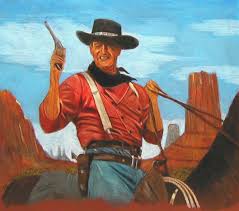
John Wayne as Ethan Edwards in The Searchers
The leader of the Rangers, a part-time minister, asks: ”What good did that do?”
“By what you preach, none,” says Wayne/Edwards. “But by what that Comanche believes–ain’t got no eyes, he can’t enter the Spirit land. Has to wander forever between the winds. You get it, Reverend.”
Now, fast forward to May 1, 2011: U.S. Navy SEALS descend on a compound in Abbottabad, Pakistan, and kill Osama bin Laden, the Al Qaeda chieftain.
Among the details of the raid that most titillates the media and public: The commandos were accompanied by a bomb-sniffing dog, a Belgian Malinois.
The canine was strapped to a member of the SEAL team as he lowered himself and the dog to the ground from a hovering helicopter near the compound.
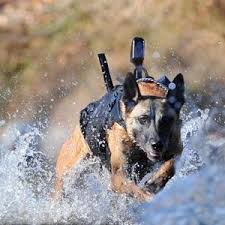
Heavily armored dogs–equipped with infrared night-sight cameras–have been used in the past by the top-secret unit.
The cameras on their heads beam live TV pictures back to the troops, providing them with critical information and warning of ambushes.
The war dogs wear ballistic body armor that is said to withstand damage from single and double-edged knives, as well as protective gear which shields them from shrapnel and gunfire.
Some dogs are trained to silently locate booby traps and concealed enemies such as snipers. The dogs’ keen senses of smell and hearing makes them far more effective at detecting these dangers than humans.
The animals will attack anyone carrying a weapon and have become a pivotal part of special operations as they crawl unnoticed into tunnels or rooms to hunt for enemy combatants.
Which brings us to the ultimate of ironies: Osama bin Laden may have been killed through the aid of an animal Muslims fear and despise.
Muslims generally cast dogs in a negative light because of their ritual impurity. Muhammad did not like dogs according to Sunni tradition, and most practicing Muslims do not have dogs as pets.
It is said that angels do not enter a house which contains a dog. Though dogs are not allowed for pets, they are allowed to be kept if used for work, such as guarding the house or farm, or when used for hunting.
Because Islam considers dogs in general to be unclean, many Muslim taxi drivers and store owners have refused to accommodate customers who have guide dogs.
In 2003, the Islamic Sharia Council, based in the United Kingdom, ruled that the ban on dogs does not apply to those used for guide work.
But many Muslims continue to refuse access, and see the pressure to allow the dogs as an attack upon their religious beliefs.
Counterterror specialists have learned that Muslims’ dread of dogs can be turned into a potent weapon against Islamic suicide bombers.
In Israel, use of bomb-sniffing dogs has proven highly effective—but not simply because of the dogs’ ability to detect explosives through their highly-developed sense of smell.
Muslim suicide-bombers fear that if they blow themselves up near a dog, they might kill the animal—and its unclean blood might be mingled with their own. This would make them unworthy to ascend to Heaven and claim those 72 willing virgins.
Similarly, news in 2009 that bomb-sniffing dogs might soon be patrolling Metro Vancouver’s buses and SkyTrains as a prelude to the 2010 Olympics touched off Muslims’ alarms.
“If I am going to the mosque and pray, and I have this saliva on my body, I have to go and change or clean,” said Shawket Hassan, vice president of the British Columbia Muslim Association.
Hassan said that he wanted the transit police to develop guidelines that would keep the dogs about one foot away from passengers.
What are the lessons to be learned from all this? They are two-fold:
- Only timely tactical intelligence will reveal Islamic terrorists’ latest plans for destruction.
- But no matter how adept such killers prove at concealing their momentary aims, they cannot conceal the attributes and long-term objectives of the religion, history and culture which have scarred and molded them.
American police, Intelligence and military operatives must constantly ask themselves: “How can we turn Islamic religion, Islamic history and islamic culture into weapons against the terrorists we face?”
These institutions must become intimately knowledgeable about the mindset of our Islamic enemies, just as the best frontier Army scouts and officers became knowledgeable about the mindset of the Indians they fought.
And then they must ruthlessly apply that knowledge against the weaknesses of those sworn enemies.
9/11, ABC NEWS, ADOLF HITLER, AL QAEDA, BOSTON MARATHON BOMBING, CBS NEWS, CHRISTIANITY, CNN, COLUMBIA UNIVERSITY, CZECHOSLOVAKIA, FACEBOOK, FRANKLIN ROOSEVELT, HARVARD UNIVERSITY, IRAN, IRANIAN REVOLUTION, ISLAM, JOSEPH STALIN, MUNICH OLYMPICS MASSACRE, NBC NEWS, OSAMA BIN LADEN, POLITICAL CORRECTNESS, RACIAL PROFILING, RELIGION, SAMUEL P. HUNTINGTON, SYRIAN EXODUS, THE CHICAGO SUN-TIMES, THE CHICAGO TRIBUNE, THE CLASH OF CIVILIZATIONS, THE LOS ANGELES TIMES, THE NEW YORK TIMES, THE WASHINGTON POST, THE WORLD TRADE CENTER, TWITTER, USA TODAY, WINSTON CHURCHILL, WORLD WAR ii
In Bureaucracy, History, Military, Politics, Social commentary on March 31, 2016 at 12:11 am
During the 1930s, Winston Churchill, a seemingly failed politician, repeatedly warned his British countrymen against the growing menace of Nazi Germany.
The leaders of Britain and France–the two great victors of World War 1–hoped that if they simply ignored the increasingly aggressive behavior of German Fuehrer Adolf Hitler, they could somehow escape catastrophe.
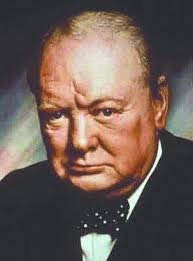
Winston Churchill
This aggressive behavior included:
- In the early 1930s, Hitler began re-building a powerful German army in open defiance of the Versallies Treaty that had ended World War 1.
- Hitler ordered his army to occupy his native Austria in 1938.
- In 1938, Hitler demanded that Czechoslavakia cede the Sudetenland, its northern, southwest and western regions, which were inhabited mostly by ethnic Germans.
- British Prime Minister Nveille Chamberlain surrendered to Hitler’s demands at the infamous “Munich conference.” Believing they had avoided war, his fellow Britons were ecstatic.
- In March, 1939, the German army occupied the rest of Czechoslovakia.
- Hitler next turned his attention to Poland–which he invaded on September 1.
- In doing so, he unintentionally triggered World War II.
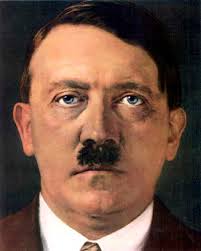
Adolf Hitler
In time, historians and statesmen would agree: Trying to appease dictators is futile–and a guarantee for their further aggression.
It is a lesson that current world leaders have forgotten as Islamic fundamentalists increasingly flex their military and economic muscles–and demand that Western nations bow to their demands.
- In Iran, scientists continue to fashion a nuclear weapons program–while insisting they intend to use the atom only for “peaceful purposes.”
- In Pakistan–which has 90-110 nuclear warheads–Osama bin Laden lived less than a mile from the Pakistan Military Academy, the country’s West Point. So much for America’s “ally” in the “war on terror.”
- On January 7, 2015, the worst terrorist act in France since World War II occurred when three Islamics slaughtered 12 people at a satirical magazine that had published cartoons about the Prophet Muhammed.
- The rising tide of Muslim population growth spells deadly challenges for non-Islamic nations.
Winston Churchill’s warnings were ignored by other world leaders–most notably Franklin Roosevelt and Joseph Stalin–until their countries became victims of unprovoked aggression.
So were the warnings of Harvard political science professor Samuel P. Huntington.
In 1993, he published an essay in Foreign Affairs called “The Clash of Civilizations.” Its thesis: In the post-Cold War world, nationalism would decline and differing cultures and religions would emerge as the primary sources of conflict.
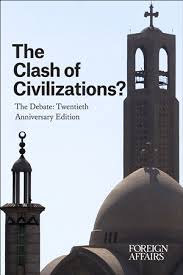
Huntington’s critique of Islamic civilizations ignited a firestorm of controversy–especially his statement: “Islam has bloody borders.”
In 1996, Huntington expanded his thesis into a book–called The Clash of Civilizations and the Remaking of World Order.
Among his assertions:
- People are divided along religious and cultural lines.
- Islamic civilization do not share the general ideals of the Western world–such as individualism and democracy.
- Their primary attachment is to their religion, not to their nation-state.
- When the Muslim world conflicts with other civilizations, tensions and wars result.
- Arab dictatorships are fragile and can be overturned by the masses of unemployed young men. But even if they fall, the new regimes will not modernize along Western lines.
- A fundamental clash of civilizations between Islam and the West is inevitable.
- Relations between Muslims and non-Muslims–such as Catholics, Protestants, Hindus, Buddhists and Jews–have been marked by Islamic antagonism and violence.
- Western nations should distance themselves from Islamic ones. The more both civilizations interact, the greater tensions between them will be.
Huntington cited several reasons for an inevitable war between the West and Islam:
- Western secular vs. Islamic religious values.
- Past historical rivalry between Christianity and Islam.
- Jealousy of Western power by Islamic nations.
- Islamic resentments of Western domination during the post-colonial restructuring of the Middle East.
- Islamic bitterness and humiliation at the achievements of Western civilization over the last 200 years.
A point of Islamic irony:
Islamic terror groups such as Al Qaeda and ISIS damn Western nations as havens of corrupt infidels. But it’s to Europe and the United States that tens of thousands of Syrians and Iraqis are now fleeing.
And they are fleeing to escape the barbaric slaughters of their fellow Islamics.
Following the 1979 Iranian Revolution, a quasi-war developed between some Islamic nations and some Western ones.
On the Islamic side:
- Iran
- Sudan
- Iraq
- Libya
- Syria.
On the Western side:
- The United States
- Great Britain.
“In this quasi war,” wrote Huntington, “each side has capitalized on its own strengths and the other side’s weaknesses.” For example:
- Muslim terrorists exploited the openness of Western societies to plant car bombs at selected targets.
- Western powers used their superior air power to bomb selected targets in Islamic countries.
- Islamics plotted the assassination of Western leaders.
- The United States plotted the overthrow of hostile Islamic regimes.
Writing at a time before the United States directed its full military power at conquering Afghanistan and Iraq, Huntington ominously noted:
“During the 15 years between 1980 and 1995…the United States engaged in 17 military operations in the Middle East, all of them directed against Muslims. No comparable pattern of U.S. military operations occurred against the people of any other civilization.”
And that was before 9/11 plunged the United States into fullscale conflict with Afghanistan and iraq.
The war that Huntington warned was coming and was, in fact, already in progress, has since erupted into full-scale conflict, with no end in sight.
9/11, ABC NEWS, ADOLF HITLER, AL QAEDA, BOSTON MARATHON BOMBING, CBS NEWS, CHRISTIANITY, CNN, COLUMBIA UNIVERSITY, CZECHOSLOVAKIA, FACEBOOK, FRANKLIN ROOSEVELT, HARVARD UNIVERSITY, IRAN, IRANIAN REVOLUTION, ISLAM, JOSEPH STALIN, LEBANON, MUNICH OLYMPICS MASSACRE, NBC NEWS, OSAMA BIN LADEN, POLITICAL CORRECTNESS, RACIAL PROFILING, RELIGION, SAMUEL P. HUNTINGTON, THE CHICAGO SUN-TIMES, THE CHICAGO TRIBUNE, THE CLASH OF CIVILIZATIONS, THE LOS ANGELES TIMES, THE NEW YORK TIMES, THE WALL STREET JOURNAL, THE WASHINGTON POST, THE WORLD TRADE CENTER, TWITTER, USA TODAY, WINSTON CHURCHILL, WORLD WAR ii
In Bureaucracy, History, Military, Politics, Social commentary on March 30, 2016 at 12:01 am
There is a famous joke about racial profiling that’s long made the rounds of the Internet. It appears in the guise of a “history test,” and offers such multiple-choice questions as:
In 1972 at the Munich Olympics, athletes were kidnapped and massacred by:
- Olga Korbut
- Sitting Bull
- Arnold Schwarzenegger
- Muslim male extremists mostly between the ages of 17 and 40

In 1979, the US embassy in Iran was taken over by:
- Lost Norwegians
- Elvis
- A tour bus full of 80-year-old women
- Muslim male extremists mostly between the ages of 17 and 40
During the 1980s a number of Americans were kidnapped in Lebanon by:
- John Dillinger
- The King of Sweden
- The Boy Scouts
- Muslim male extremists mostly between the ages of 17 and 40
In 1983, the US Marine barracks in Beirut was blown up by:
- A pizza delivery boy
- Pee Wee Herman
- Geraldo Rivera
- Muslim male extremists mostly between the ages of 17 and 40
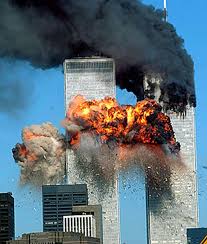
On September 11, 2001, four airliners were hijacked. Two were used as missiles to take out the World Trade Center; one crashed into the Pentagon; and the other was diverted and crashed by the passengers. Thousands of people were killed by:
- Bugs Bunny, Wiley E. Coyote, Daffy Duck and Elmer Fudd
- The Supreme Court of Florida
- Mr. Bean
- Muslim male extremists mostly between the ages of 17 and 40
* * * * *
It’s well to remember the bitter truth behind this joke, especially in light of such Islamic atrocities as:
- On April 15, 2013, two pressure-cooker bombs exploded at the finish line of the Boston Marathon, killing 3 people and injuring 264. The culprits: Two Muslim brothers, Dzhokhar Tsarnaev and Tamerlan Tsarnaev, who had emigrated to the United States from the former Soviet Union.
- On May 22, 2013, two Islamic terrorists, wielding machetes and shouting “Allahu Akbar!” (“God is Great!”) hacked a British soldier to death on a London street.
- On January 7, 2015, 2015, the worst terrorist act in France since World War II occurred when three Islamics slaughtered 12 people at a satirical magazine that had published cartoons about the Prophet Muhammed.
Writing in the British newspaper, The Spectator, Douglas Murray issued a warning to his fellow Britons: “Over recent years, those who have warned that such attacks would come here have been attacked as ‘racists’, ‘fascists’ and, most commonly, ‘Islamophobes.’
“A refusal to recognise the actual threat (a growingly radicalised Islam) has dominated most of our media and nearly all our political class.”
One man who did foresee the present conflicts with stunning clarity–and had the courage to say what has since become Politically Incorrect–was Samuel P. Huntington.

Samuel P. Huntington
A political scientist, Huntington taught government at Harvard University (1950-1959, then at Columbia University (1959-1962). He returned to Harvard in 1963, and remained there until his death in 2008.
The author of nine books, in 1996 he published his most influential one: The Clash of Civilizations and the Remaking of World Order. Its thesis was that, in the post-Cold War world, people’s cultural and religious identities would be the primary sources of conflict.
Among the points he makes:
- Modernization does not mean Westernization.
- Economic progress has come with a revival of religion.
- Post-Cold War politics emphasize ethnic nationalism over ideology.
- Civilizations are fundamentally differentiated from each other by centuries-old history, language, culture, tradition, and, most important, religion.
- As the world becomes smaller, different civilizations increasingly interact. These intensify civilization consciousness and the awareness of differences between civilizations.
- Economic modernization and social change separate people from age-old identities (such as hometowns and familiar neighbors). Religion has replaced this gap, providing a basis for identity, socialization and commitment that transcends national boundaries and unites civilizations.
- The West, at the peak of its power, is confronting non-Western countries that increasingly have the desire, will and resources to shape the world in non-Western ways.
- Cultural characteristics and differences are less mutable and hence less easily compromised and resolved than political and economic ones.
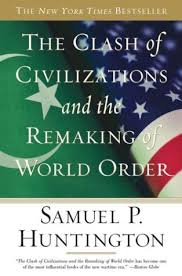
The most controversial part of The Clash of Civilizations focuses on Islam. Huntington points out, for example, that Muslim countries are involved in far more intergroup violence than others.
And he warns that the West’s future conflcts with Islamic nations will be rooted in the Islamic religion:
“Islam’s borders are bloody and so are its innards. The fundamental problem for the West is not Islamic fundamentalism. It is Islam, a different civilisation whose people are convinced of the superiority of their culture and are obsessed with the inferiority of their power.”
Huntington argues that civilisztional conflicts are “particularly prevalent between Muslims and non-Muslims.” Among the reasons for these conflicts: Both Islam and Christianity have similarities which heighten conflicts between their followers:
- Both seek to convert others.
- Both are “all-or-nothing” religions; each side believes that only its faith is the correct one.
- The followers of both Islam and Christianity believe that people who violate the base principles of their religion are idolators and thus damned.
Other reasons for the Western-Islamic clash are:
- The Islamic revival, which began in the 1970s and is manifested in greater religious piety and in a growing adoption of Islamic culture, values, dress, separation of the sexes, speech and media censorship.
- Western universalism–the belief that all civilizations should adopt Western values–infuriates Islamic fundamentalists.
These are not differences that will disappear–overnight or even over the span of several centuries. Nor will they be sweet-talked away by Politically Correct politicians, however well-meaning.
ABC NEWS, ADOLF HITLER, AL QAEDA, ARTHUR M. CUMMINGS, BARACK OBAMA, BOKO HARAM, BOSTON MARATHON BOMBING, CANADA, CBS NEWS, CNN, DAVID CAMERON, DONALD TRUMP, FACEBOOK, FBI, HATE CRIMES, ISLAM, ISLAMIC STATE OF IRAQ AND SYRIA, MOHAMMED, NAZI GERMANY, NBC NEWS, POLITICAL CORRECTNESS, RELIGION, ROBERT MEULLER III, RONALD KESSLER, SAMUEL HUNTINGTON, STEVEN EMERSON, TALIBAN, TERRORISM, THE CLASH OF CIVILIZATIONS, THE INVESTIGATIVE PROJECT ON TERRORISM, THE LOS ANGELES TIMES, THE NEW YORK TIMES, THE SECRETS OF THE FBI, THE WALL STREET JOURNAL, THE WASHINGTON POST, THE WHITE CLIFFS OF DOVER, TWITTER, VERA LYNN, WORLD TRADE CENTER, WORLD WAR ii
In Bureaucracy, History, Military, Politics, Social commentary on March 29, 2016 at 12:08 am
During World War II, British singer Vera Lynn comforted her war-weary fellow citizens with a poignant rendition of “The White Cliffs of Dover.”
The appeal of the song lay in its promise that, once Nazi Germany was defeated, peace and normality would return.
Click here: Vera Lynn: The White Cliffs of Dover – YouTube
And despite being threatened with invasion in 1940 and devastated by massive bombing raids in 1940-41, citizens of Great Britain could take heart in the following:
- Nazi Germany had a capitol–Berlin–and a single, all-powerful leader–Adolf Hitler. Once Berlin was occupied and Hitler dead or captured, the war would be over.
- And, for all their ferocity, German soldiers were easy to recognize: They wore gray uniforms, spoke German and waved flags emblazoned with swastikas or imperial eagles.
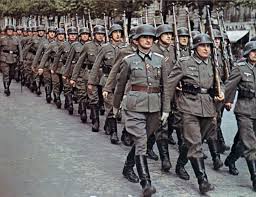
Wehrmacht soldiers marching through conquered France
Today, Western nations under attack by Islamic “holy warriors” face none of those advantages. Islam has no single capitol city–or leader.
Nor do Islam’s jihadist legions wear uniforms. Many of them don’t speak Arabic or wear clothing associated with Arabs, such as flowing robes and headdresses.
More ominously, millions of Islam’s potential “warriors” live within the very Western nations they despise. They can get all the instruction and inspiration they need to wreck havoc simply by going to the Internet.
Or, if they have the money, by traveling overseas to such terrorist-recruiting centers as in Syria or Afghanistan.
And yet, faced with an unprecedented threat to their security, many Western leaders refuse to publicly acknowledge this fundamental truth:
Even if the West isn’t at war with Islam, Islam is at war with the West.
Leaders like President Barack Obama, who insisted, at a White House Summit on Countering Violent Extremism in February, 2015: “We are not at war with Islam. We are at war with people who have perverted Islam.”

David Cameron
And leaders like British Prime Minister David Cameron, who said on August 29, 2014: “Islam is a religion observed peacefully by over a billion people. Islamist extremism is a poisonous ideology observed by a minority.”
It was at this same press conference that Cameron announced that United Kingdom authorities would soon begin revoking the passports of British citizens traveling to Syria.
Arthur M. Cummings, the FBI’s executive assistant director for national security, has no use for such Politically Correct terms as “man-caused disasters” to refer to terrorism. Nor does he shy away from terms such as “jihadists” or “Islamists.”
“Of course Islamists dominate the terrorism of today,” he says bluntly.
In May, 2014, Steven Emerson, a nationally recognized expert on terrorism, posted an ad in The New York Times, warning about the dangers of PC-imposed censorship:
“Our nation’s security and its cherished value of free speech has been endangered by the bullying campaigns of radical Islamic groups, masquerading as ‘civil rights’ organizations, to remove any reference to the Islamist motivation behind Islamic terrorist attacks.
“These groups have pressured or otherwise colluded with Hollywood, the news media, museums, book publishers, law enforcement and the Obama Administration in censoring the words ‘Islamist’, ‘Islamic terrorism’, ‘radical Islam’ and ‘jihad’ in discussing or referencing the threat and danger of Islamic terrorism.
“This is the new form of the jihadist threat we face. It’s an attack on one of our most sacred freedoms—free speech—and it endangers our very national security. How can we win the war against radical Islam if we can’t even name the enemy?”
He has a point–and a highly legitimate one.
Imagine the United States fighting World War II–and President Franklin Roosevelt banning the use of “fascist” in referring to Nazi Germany or “imperialist” in describing Imperial Japan.
Imagine CNN-like coverage of the Nazi extermination camps, with their piles of rotting corpses and smoking gas ovens, while a commentator reminds us that “Nazism is an ideology of peace.”
Then consider these Islamic terrorist outrages of our own time:
- The 9/11 attacks on the World Trade Center in New York City and the Pentagon in Washington, D.C., which snuffed out the lives of 3,000 Americans.
- The 2004 bombing of Madrid’s commuter train system.
- The attack on the London subway in 2005.
- The killing of 13 U.S. Army personnel at Fort Hood, Texas, by a Muslim army major in 2009.
- The bombing of the Boston Marathon in 2013.
- The kidnapping of 300 Nigerian schoolgirls by Boko Haram in 2014.
- The slaughter of 12 people at a Paris satirical magazine that had published cartoons about the Prophet Mohammed in 2015.
- The murders of more than 100 people in ISIS attacks across Paris in 2015.
- A series of deadly terrorist attacks in Brussels, killing 31 and injuring 270 in 2016.
In every one of these attacks, the perpetrators openly announced that their actions had been motivated by their Islamic beliefs.
In his groundbreaking book, The Clash of Civilizations (1996) Samuel Huntington, the late political scientist at Harvard University, noted:
“The fundamental problem for the West is not Islamic fundamentalism. It is Islam, a different civilisation whose people are convinced of the superiority of their culture and are obsessed with the inferiority of their power.”
The West may not be at war with Islam–as countless Western politicians repeatedly assert. But Islamics have no qualms about declaring that they are at war with the West.
ABC NEWS, ADOLF HITLER, AL QAEDA, ARTHUR M. CUMMINGS, BARACK OBAMA, BOKO HARAM, BOSTON MARATHON BOMBING, CANADA, CBS NEWS, CNN, DAVID CAMERON, DENMARK, DONALD TRUMP, FACEBOOK, FBI, HATE CRIMES, INVESTIGATIVE PROJECT ON TERRORISM, ISLAM, ISLAMIC STATE OF IRAQ AND SYRIA, MOHAMMED, NAZI GERMANY, NBC NEWS, NIGER, POLITICAL CORRECTNESS, RELIGION, ROBERT MEULLER III, RONALD KESSLER, SAMUEL HUNTINGTON, STEVEN EMERSON, TALIBAN, TERRORISM, THE CHICAGO SUN-TIMES, THE CHICAGO TRIBUNE, THE CLASH OF CIVILIZATIONS, THE LOS ANGELES TIMES, THE SECRETS OF THE FBI, THE WALL STREET JOURNAL, THE WASHINGTON POST, THE WHITE CLIFFS OF DOVER, TWITTER, VERA LYNN, WORLD TRADE CENTER, WORLD WAR ii
In Bureaucracy, History, Military, Politics, Social commentary on March 27, 2016 at 11:58 pm
The headline on the CNN website said it all–or seemed to: “Religion’s Week From Hell.”
Then came the first paragraph: “Whether you believe that religious violence is fueled by faith or is a symptom of larger factors–political instability, poverty, cultural chaos–one thing seems clear: Last week was hellish for religion.”
The story–published on the CNN website on February 18, 2015–then outlined a series of atrocities committed in the name of religion:
“Across several continents, including North America, Europe, Central Asia and Africa, scores of religious believers suffered and died in brutal attacks over the past seven days.”
Click here: Religion’s week from hell – CNN.com
And here was the day-by-day chronicle of slaughter:
Monday–February 9:
- Boko Haram, the Islamic group based in Nigeria, attacked several towns in Cameroon, kidnapping 20 people. They also exploded a car bomb in Niger. At the time, the death toll was unclear.
Tuesday–February 10:
- Craig Hicks, an athiest who ranted against religion on the Internet, was charged with killing three young Muslim students in Chapel Hill, North Carolina.
Wednesday–February 11:
- The Islamic State of Iraq and Syria (ISIS) attacked Kurdish forces in northern Iraq and Iraqi civilians in Baghdad. At least 31 people were killed in Baghdad by ISIS bombs.
Thursday–February 12:
- Al Qaeda seized a key military base in Baihan, Yemen, killing four Yemeni soldiers. They then took control of the town’s weaponry.
- With the United States’ having already closed its embassy in Yemen, Italy, Germany and Saudi Arabia did the same.
Friday–February 13:
- Boko Haram killed 21 people in attacks on Mbuta and Akida villages in Nigeria.
- The Islamic terror group also killed four civilians and a soldier in neighboring Chad.
- In Peshawar, Pakistan, the Taliban attacked a Shia mosque, killing 19 and wounding dozens.
Saturday–February 14:
- In Copenhagen, Denmark, an Islamic gunman fired at attendees of a free-speech forum, where a Swedish cartoonist was scheduled to speak. His alleged crime: Depicting the Prophet Mohammed. Casualties: Three officers wounded and one 55-year-old man killed.
- Hours later, the same terrorist visited a Copenhagen synagogue. Opening fire, he wounded two officers and killed a private security guard.
Sunday–February 15:
- ISIS released a video showing its members beheading more than a dozen members of Egypt’s Coptic Christian minority on a Libyan beach.
So much for “religion’s week from hell.”
Except that the title of this story was completely misleading. It would have been more accurately entitled: “Islamic Religion’s Week of Hell.”

ISIS member beheading a helpless captive
Of the 13 atrocities detailed above, all but one showcased Islamics as the murderers.
The single exception was that of Craig Hicks, an athiest who was charged with shooting three Muslim college students in Chapel Hill, North Carolina.
It was this case–and not any of the others–that brought Muslims to demand “justice.” Muslims immediately urged the Obama administration to investigate the murders as a hate crime.
Suzanne Barakat, the sister of one of the victims, said the students had been murdered because they were Muslims. She said that the killings should be considered an act of terrorism: “It’s time people call it what it is.”
But getting Islamics to label other Islamics as terrorists is an entirely different matter.
According to author Ronald Kessler, this has caused serious problems for the FBI. In his 2011 book, The Secrets of the FBI, Kessler notes the refusal of the Islamic community to identify known or potential terrorists within its ranks.
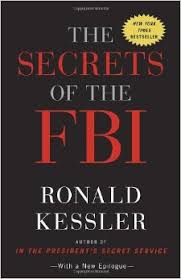
Says Arthur M. Cummings, the Bureau’s executive assistant director for national security: “I had this discussion with the director of a very prominent Muslim organization here in [Washington] D.C. And he said, ‘Why are you guys always looking at the Muslim community?’”
“I can name the homegrown cells, all of whom are Muslim, all of whom were seeking to kill Americans,” replied Cummings. “It’s not the Irish, it’s not the French, it’s not the Catholics, it’s not the Protestants. It’s the Muslims.”
Occasionally, Muslims will condemn Al Qaeda. But “rarely do we have them coming to us and saying, ‘There are three guys in the community that we’re very concerned about.’” said Cummings.
“They don’t want anyone to know they have extremists in their community. Well, beautiful. Except do you read the newspapers? Everybody already knows it. The horse has left the barn.
“So there’s a lot of talk about engagement. But, realistically, we’ve got a long, long way to go.”
At one community meeting, an Islamic leader suggested to Cummings that then-FBI director Robert Meuller III should pose for a picture with his group’s members. The reason: To show that Islamics are partners in the “war on terror.”
“When you bring to my attention real extremists who are here to plan and do something, who are here supporting terrorism,” said Cummings, “then I promise you, I will have the director stand up on the stage with you.”
“That could never happen,” replied the Islamic leader. “We would lose our constituency. We could never admit to bringing someone to the FBI.”
Donald Trump–alone of the Republican and Democratic candidates for President–has dared to say the un-sayable: Islam is at war with us.
And this candor–coupled with repeated Islamic atrocities–has propelled him to the front of Republican candidates.
2016 REPUBLICAN CONVENTION, ABC NEWS, AFFORDABLE CARE ACT, BARACK OBAMA, BILL CLINTON, CBS NEWS, CHRIS MATTHEWS, CNN, CUBAN MISSILE CRISIS, DEBT CEILING, DONALD TRUMP, EXTORTION, FACEBOOK, HARDBALL, JOHN F. KENNEDY, JUDGE MERRICK GARLAND, MSNBC, NBC NEWS, NEWT GINGRICH, NICCOLO MACHIAVELLI, OBAMACARE, Racketeer Influenced Corrupt Organizations (RICO) Act, REPUBLICANS, RICHARD WOLFFE, ROBERT PAYNE, THE CHICAGO SUN-TIMES, THE CHICAGO TRIBUNE, THE LIFE AND DEATH OF ADOLF HITLER, THE LOS ANGELES TIMES, THE NEW YORK TIMES, THE PRINCE, THE WALL STREET JOURNAL, THE WASHINGTON POST, TWITTER, U.S. HOUSE OF REPRESENTATIVES, U.S. JUSTICE DEPARTMENT, U.S. SENATE, U.S. SENATOR MITCH MCCONNELL, U.S. SUPREME COURT, USA PATRIOT ACT, WARREN BUFFETT
In Bureaucracy, History, Law, Law Enforcement, Politics, Social commentary on March 25, 2016 at 12:04 am
In September, 2013, President Barack Obama and Senate Democrats refused to knuckle under to yet another Republican extortion threat: Defund the Affordable Care Act (ACA) or we’ll shut down the government.
Republicans claimed it was Obama and Senate Democrats who refused to see reason and negotiate.
But then a Republican accidentally gave away the real reason for the shutdown.
“We’re not going to be disrespected,” Rep. Marlin Stutzman (R-Ind.) told the Washington Examiner. “We have to get something out of this. And I don’t know what that even is.”
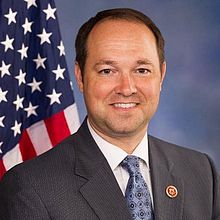
Marlin Stutzman
In short, Republicans–as admitted by Martlin Stutzman–were out to get “respect.” A member of the Crips or Bloods couldn’t have said it better.
The shutdown began on October 1, 2013–and ended 16 days later with even Republicans admitting it had been a failure.
President Obama, a former attorney, denounced House Republicans as guilty of “extortion” and “blackmail.” Had the President acted to prosecute such criminal conduct, the results would have been:
- Facing lengthy prison terms, those indicted Republicans would been forced to lawyer-up. That in itself would have been no small thing, since good criminal lawyers cost big bucks.
- Obsessed with their own personal survival, they would have found little time for engaging in the same thuggish behavior that got them indicted. In fact, doing so would have only made their conviction more likely.
- Those Republicans who hadn’t been indicted would have realized: “I could be next.” This would have produced a chilling effect on their willingness to engage in further acts of subversion and/or extortion.
- The effect on Right-wing Republicans would have been the same as that of President Ronald Reagan’s firing of striking air traffic controllers: “You cross me and threaten the security of this Nation at your own peril.”

True, some prosecuted Republicans might have beaten the rap. But first they would have been forced to spend huge amounts of time and money on their defense.
And with 75% of Americans voicing disgust with Congress, most of those prosecuted might well have been convicted.
It would have been a long time before Republicans again dared to engage in such behavior.
The ancient Greeks believed: “A man’s character is his fate.” It is Obama’s character–and America’s fate–that he is more inclined to conciliation than confrontation.
Richard Wolffe chronicled Obama’s winning of the White House in his book Renegade: The Making of a President. He noted that Obama was always more comfortable when responding to Republican attacks on his character than he was in making attacks of his own.
Obama came into office determined to find common ground with Republicans. But they quickly made it clear to him that they only wanted his political destruction.
At that point, he should have put aside his hopes for a “Kumbaya moment” and applied what Niccolo Machiavelli famously said in The Prince on the matter of love versus fear:
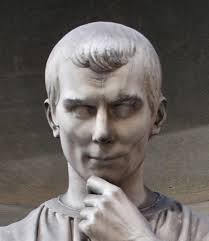
Niccolo Machiavelli
From this arises the question whether it is better to be loved than feared, or feared more than loved. The reply is, that one ought to be both feared and loved, but as it is difficult for the two to go together, it is much safer to be feared than loved.
For it may be said of men in general that they are ungrateful, voluble, dissemblers, anxious to avoid danger and covetous of gain.
As long as you benefit them, they are entirely yours: they offer you their blood, their goods, their life and their children, when the necessity is remote. But when it approaches, they revolt….
And men have less scruple in offending one who makes himself loved than one who makes himself feared; for love is held by a chain of obligations which, men being selfish, is broken whenever it serves their purpose; but fear is maintained by a dread of punishment which never fails.
By refusing to vigorously prosecute acts of Republican extortion, President Obama has unleashed twin disasters upon himself and the United States:
First, Republicans have been encouraged to intensify their acts of aggression against him.
Their most recent act: Refusing to meet with federal appeals court judge Merrick Garland. Obama’s designated nominee to the Supreme Court after the February 13 death of Justice Antonin Scalia.
Kentucky United States Senator Mitch McConnell has flatly stated: There will be no Supreme Court hearings–not during regular business or a post-election lame-duck session.
Had Obama proceeded with indictments against Republican extortion in 2011 or 2013, McConnell–who supported the extortion attempts of those years–would now be desperately meeting with his lawyers.
Second, Republicans have unleashed their tactics of extortion against one another.
Donald Trump, their front-running Presidential candidate, has openly threatened to aim violence at Republican delegates who do not accept him as their nominee.
As Philip Klein, the managing editor of the Washington Examiner, recently wrote:
“Political commentators now routinely talk about the riots that would break out in Cleveland if Trump were denied the nomination, about how his supporters have guns and all hell could break loose, that they would burn everything to the ground. It works to Trump’s advantage to not try too hard to dispel these notions.”
Thus, those who submit to the aggression of criminals only encourage contempt–and increased aggression–from those same criminals.
2016 REPUBLICAN CONVENTION, ABC NEWS, AFFORDABLE CARE ACT, BARACK OBAMA, BILL CLINTON, CBS NEWS, CHRIS MATTHEWS, CNN, CUBAN MISSILE CRISIS, DEBT CEILING, DONALD TRUMP, EXTORTION, FACEBOOK, HARDBALL, JOHN F. KENNEDY, JUDGE MERRICK GARLAND, MSNBC, NBC NEWS, NEWT GINGRICH, NICCOLO MACHIAVELLI, OBAMACARE, Racketeer Influenced Corrupt Organizations (RICO) Act, REPUBLICANS, RICHARD WOLFFE, ROBERT PAYNE, THE CHICAGO SUN-TIMES, THE CHICAGO TRIBUNE, THE LIFE AND DEATH OF ADOLF HITLER, THE LOS ANGELES TIMES, THE NEW YORK TIMES, THE PRINCE, THE WALL STREET JOURNJAL, TWITTER, U.S. HOUSE OF REPRESENTATIVES, U.S. JUSTICE DEPARTMENT, U.S. SENATE, U.S. SENATOR MITCH MCCONNELL, U.S. SUPREME COURT, USA PATRIOT ACT, WARREN BUFFETT
In Bureaucracy, History, Law, Law Enforcement, Politics, Social commentary on March 24, 2016 at 12:30 am
On July 9, 2011, Republican extortionists threatened the Nation with financial ruin and international disgrace unless their demands were met.
President Barack Obama could have countered that danger with the Racketeer Influenced Corrupt Organizations (RICO) Act. Among the crimes it authorizes for prosecution: Extortion.
Extortion is defined as “a criminal offense which occurs when a person unlawfully obtains either money, property or services from a person(s), entity, or institution, through coercion.”
And if President Obama had believed that RICO was not sufficient to deal with extortionate behavior, he could have relied on the USA Patriot Act of 2001, passed in the wake of 9/11.
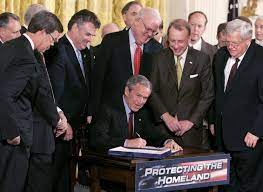
President George W. Bush signs the USA Patriot Act into law – October 26, 2001
In Section 802, the Act defines domestic terrorism. Among the behavior that is defined as criminal:
“Activities that…appear to be intended…to influence the policy of a government by intimidation or coercion [and]…occur primarily within the territorial jurisdiction of the United States.”
The remedies for punishing such criminal behavior were legally in place. President Obama needed only to direct the Justice Department to apply them.
Prosecuting members of Congress would not have violated the separation-of-powers principle. Congressmen have in the past been investigated, indicted and convicted for various criminal offenses.
Such prosecutions–and especially convictions–would have served notice on current and future members of Congress that the lives and fortunes of American citizens may not be held hostage as part of a negotiated settlement.
On August 1, Chris Matthews, host of MSNBC’s “Hardball,” wrapped up his program with a search for “options” to avoid another round of Republican extortion tactics.
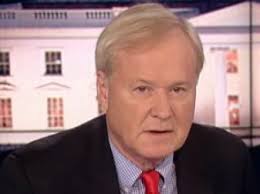
Chris Matthews
“I want to know what steps the president ‘could’ have taken to avoid this hostage-taking.
“…Is there another way than either buckling to the Republicans or letting the government and the country crash?
“How does he use the power of the presidency, the logic, emotion and basic patriotism of the people, to thwart those willing to threaten, disrupt, even possibly destroy to get their way?”
The answer to his questions–then and now–is: Replace the law of fear with the rule of law.
But there was another way Obama could have stood up to Republican extortionists: By urging his fellow Americans to rally to him in a moment of supreme national danger.
President John F. Kennedy did just that–successfully–during the most dangerous crisis of his administration.
Addressing the Nation on October 22, 1962, Kennedy shocked his fellow citizens by revealing that the Soviet Union had installed offensive nuclear missiles in Cuba.
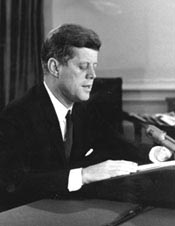
John F. Kennedy
After outlining a series of steps he had taken to end the crisis, Kennedy sought to reassure and inspire his audience. His words are worth remembering today:
“The path we have chosen for the present is full of hazards, as all paths are, but it is the one most consistent with our character and courage as a nation and our commitments around the world.
“The cost of freedom is always high, but Americans have always paid it. And one path we shall never choose, and that is the path of surrender or submission.”
President Obama could have sent that same message to the extortionists of the Republican Party.
Yet this was another option he failed to exploit. And he and the Nation have continued to pay the price for it.
In the fall of 2013, Republicans once again threatened to shut down the Federal Government unless the President agreed to defund the Affordable Care Act (ACA), better known as “Obamacare.
They were enraged that millions of uninsured Americans might receive medical care on a par with that given members of the House and Senate.
So on September 20, the House voted on a short-term government funding bill that included a provision to defund Obamacare.
That provision was a no-go for Senate Democrats and President Obama. If the House and Senate couldn’t reach a compromise, many functions of the federal government would be shut down indefinitely on October 1.
The official reason given by Republicans: They wanted to save the country from bankruptcy–although the Congressional Budget Office stated that the ACA would lower future deficits and Medicare spending.
After passing the House and Senate, the ACA had been signed into law by President Obama on March 23, 2010.
On June 28, 2012, the United States Supreme Court–whose Chief Justice, John Roberts, is a Republican–had upheld the constitutionality of the ACA.
Yet House Republicans continued searching for a way to stop the law from taking effect. By September, 2013, they had voted 42 times to repeal “Obamacare.”
But their efforts had failed; the Democratic-led Senate made it clear it would never go along with such legislation.
Finally, unable to legally overturn the Act or to legislatively repeal it, House Republicans fell back on something much simpler: Threats and fear.
Threats–of voting to shut down salaries paid to most Federal employees. Most, because they themselves would continue to draw hefty salaries while denying them to FBI agents, air traffic controllers and members of the military, among others.
And fear–that would be generated throughout the Federal government, the United States and America’s international allies.
On October 1, 2013, House Republicans made good on their threat. They “shut down the government.”
2016 REPUBLICAN CONVENTION, ABC NEWS, AFFORDABLE CARE ACT (ACA), BARACK OBAMA, BILL CLINTON, CBS NEWS, CHRIS MATTHEWS, CNN, CUBAN MISSILE CRISIS, DEBT CEILING, DONALD TRUMP, EXTORTION, FACEBOOK, HARDBALL, JOHN F. KENNEDY, JUDGE MERRICK GARLAND, MAFIA, MSNBC, NBC NEWS, NEWT GINGRICH, NICCOLO MACHIAVELLI, OBAMACARE, Racketeer Influenced Corrupt Organizations (RICO) Act, REPUBLICANS, RICHARD WOLFFE, ROBERT PAYNE, THE CHICAGO SUN-TIMES, THE CHICAGO TRIBUNE, THE LIFE AND DEATH OF ADOLF HITLER, THE LOS ANGELES TIMES, THE NEW YORK TIMES, THE PRINCE, THE WALL STREET JOURNAL, THE WASHINGTON POST, U.S. HOUSE OF REPRESENTATIVES, U.S. JUSTICE DEPARTMENT, U.S. SENATE, U.S. SENATOR MITCH MCCONNELL, U.S. SUPREME COURT, USA PATRIOT ACT, WARREN BUFFETT
In Bureaucracy, History, Law, Law Enforcement, Politics, Social commentary on March 23, 2016 at 12:01 am
On July 9, 2011, Republican extortionists threatened the Nation with financial ruin and international disgrace unless their demands were met. They refused to raise the debt ceiling unless Democrats agreed to massively cut social programs for the elderly, poor and disabled.
If Congress failed to raise the borrowing limit of the federal government by August 2, the date when the U.S. reached the limit of its borrowing abilities, it would begin defaulting on its loans.
As Warren Buffett, CEO of Berkshire Hathaway, explained the looming economic catastrophe: “If you don’t send out Social Security checks, I would hate to think about the credit meeting at S&P and Moody’s the next morning.
“If you’re not paying millions and millions and millions of people that range in age from 65 on up, money you promised them, you’re not a AAA,” said Buffett.

Warren Buffett
A triple-A credit rating is the highest possible rating that can be received.
And while Republicans demanded that the disadvantaged tighten their belts, they rejected any raising of taxes on their foremost constituency–the wealthiest 1%.
To raise taxes on the wealthy, they insisted, would be a “jobs-killer.” It would “discourage” corporate CEOs from creating tens of thousands of jobs they “want” to create.
Republicans knew this argument was a lie. And so did the editors of Time. The difference between them: The editors of Time were willing to reveal the truth.
In its June 20, 2011 cover-story on “What U.S. Economic Recovery? Five Destructive Myths,” Rana Foroohar, the magazine’s assistant managing editor in charge of economics and business, delivered this warning: Profit-seeking corporations can’t be relied on to ”make it all better.”
Wrote Foroohar:
“There is a fundamental disconnect between the fortunes of American companies, which are doing quite well, and American workers, most of whom are earning a lower hourly wage now than they did during the recession.
“The thing is, companies make plenty of money; they just don’t spend it on workers here.
“There may be $2 trillion sitting on the balance sheets of American corporations globally, but firms show no signs of wanting to spend it in order to hire workers at home.”
As the calendar moved ever closer to the fateful date of August 2, Republican leaders continued to insist: Any deal that includes taxes “can’t pass the House.”
One senior Republican said talks would go right up to–and maybe beyond–the brink of default.
“I think we’ll be here in August,” said Republican Rep. Pete Sessions, of Texas. “We are not going to leave town until a proper deal gets done.”
President Obama had previously insisted on extending the debt ceiling through 2012. But in mid-July, he simply asked congressional leaders to review three options with their members:
- The “Grand Bargain” choice—favored by Obama–would cut deficits by about $4 trillion, including spending cuts and new tax revenues.
- A medium-range plan would aim to reduce the deficit by about $2 trillion.
- The smallest option would cut between $1 trillion and $1.5 trillion, without increased tax revenue or any Medicare and Medicaid cuts.
And the Republican response?
Said Rep. Darrell Issa, chairman of the Oversight and Government Reform Committee: “Quite frankly, [Republican] members of Congress are getting tired of what the president won’t do and what the president wants.”
Noted political analyst Chris Matthews summed up the sheer criminality of what happened within the House of Representatives.
Speaking on MSNBC’s “Hardball,” on July 28–five days before Congress reached its August 2 deadline to raise the debt-ceiling–Matthews noted:
“The first people to bow to the demands of those threatening to blow up the economy were the Republicans in the House, the leaders. The leaders did what the followers told them to do: meet the demands, hold up the country to get their way.

Chris Matthews
“Those followers didn’t win the Senate, or the Presidency, just the House. But by using the House they were able to hold up the entire United States government. They threatened to blow things up economically and it worked.
“They said they were willing to do that–just to get their way–not by persuasion, not by politics, not by democratic government, but by threatening the destruction of the country’s finances.
“Right. So what’s next? The power grid? Will they next time threaten to close down the country’s electricity and communications systems?”

With the United States teetering on the brink of national bankruptcy, President Obama faced three choices:
- Counter Republican extortion attempts via RICO–the Racketeer Influenced Corrupt Organizations Act.
- Make a “Cuban Missile Crisis”-style address to the American people, seeking to rally them against a criminal threat to the financial security of the Nation.
- Cave in to Republican demands.
Unfortunately for Obama and the Nation, he chose Number Three.
But he could have countered that danger via the Racketeer Influenced Corrupt Organizations (RICO) Act.
In 1970, Congress passed RICO, Title 18, United States Code, Sections 1961-1968. Its goal: Destroy the Mafia.
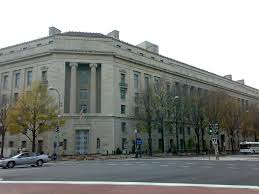
U.S. Department of Justice
RICO opens with a series of definitions of “racketeering activity” which can be prosecuted by Justice Department attorneys. Among those crimes: Extortion.
Extortion is defined as “a criminal offense which occurs when a person unlawfully obtains either money, property or services from a person(s), entity, or institution, through coercion.”
2016 REPUBLICAN CONVENTION, ABC NEWS, AFFORDABLE CARE ACT (ACA), BARACK OBAMA, BILL CLINTON, CBS NEWS, CHRIS MATTHEWS, CNN, CUBAN MISSILE CRISIS, DEBT CEILING, DONALD TRUMP, EXTORTION, FACEBOOK, HARDBALL, JOHN F. KENNEDY, JUDGE MERRICK GARLAND, MAFIA, MSNBC, NBC NEWS, NEWT GINGRICH, NICCOLO MACHIAVELLI, OBAMACARE, Racketeer Influenced Corrupt Organizations (RICO) Act, REPUBLICANS, RICHARD WOLFFE, ROBERT PAYNE, THE CHICAGO SUN-TIMES, THE CHICAGO TRIBUNE, THE LIFE AND DEATH OF ADOLF HITLER, THE LOS ANGELES TIMES, THE NEW YORK TIMES, THE PRINCE, THE WALL STREET JOURNAL, THE WASHINGTON POST, TWITTER, U.S. HOUSE OF REPRESENTATIVES, U.S. JUSTICE DEPARTMENT, U.S. SENATE, U.S. SENATOR MITCH MCCONNELL, U.S. SUPREME COURT, USA PATRIOT ACT, WARREN BUFFETT
In Bureaucracy, History, Law, Law Enforcement, Politics, Social commentary on March 22, 2016 at 12:01 am
On March 16, Donald Trump, the front-runner for the Republican Presidential nomination, issued a warning to his fellow Right-wingers: If he didn’t win the GOP nomination at the convention in July, his supporters would literally riot.
“I think we’ll win before getting to the convention. But I can tell you if we didn’t, if we’re 20 votes short or if we’re 100 short and we’re at 1,100 and somebody else is at 500 or 400…I don’t think you can say that we don’t get it automatically. I think you’d have riots.
“I think you would see problems like you’ve never seen before. I think bad things would happen. I really do. I wouldn’t lead it, but I think bad things would happen.”
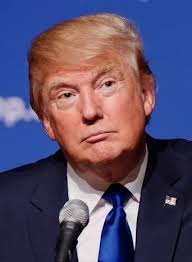
Donald Trump
An NBC reporter summed it up as follows: “As Trump indicated, there is a very real possibility he might lose the nomination if he wins only a plurality of delegates thanks to party rules that allow delegates to support different candidates after the initial ballot.
“In that context, the message to Republicans was clear on [March 16]: Nice convention you got there, shame if something happened to it.”
Anyone who’s ever watched a Mafia movie has heard similar threats: “You really ought to think about paying that protection money. Nice family you got–it would be a shame if anything happened to ’em.”
Paul Ryan, Republican Speaker of the House of Representatives, was quick to respond.
On March 17, he said that it was “unacceptable” for Trump to suggest there would be rioting if he was not chosen as the Republican nominee.
“Nobody should say such things in my opinion because to even address or hint to violence is unacceptable.”
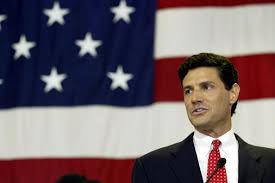
Paul Ryan
And Ohio governor and Republican presidential candidate John Kasich chinned in. “Leaders don’t imply violence,” Kasich told “Face the Nation” on March 20.
“When he says that there could be riots, that’s inappropriate. I think you understand that, okay? Secondly, while we have our differences and disagreements, we’re Americans. Americans don’t say, ‘Let’s take to the streets and have violence.’

John Kasich
“I don’t even want to use the word ‘riots’ or ‘violence.’ That’s inappropriate. Our kids are watching. Now…that doesn’t mean I’m not running a positive campaign, but those kind of comments are way out of bounds. Frankly, they’re outrageous,” said Kasich.”
Yet, for all their public outrage, Republicans are no strangers to the uses of extortion and threats. Their tactics are straight out of the playbook of Adolf Hitler.
Robert Payne, author of the bestselling biography, The Life and Death of Adolf Hitler (1973), described the “negotiating” style of the Nazi dictator thus:
“Although Hitler prized his own talents as a negotiator, a man always capable of striking a good bargain, he was totally lacking in finesse. He was incapable of bargaining. He was like a man who goes up to a fruit peddler and threatens to blow his brains out if he does not sell his applies at the lowest possible price.”
In 1994, Newt Gingrich, then Speaker of the House of Representatives, shut down the Federal Government. Officially, the reason was a budget impasse with President Bill Clinton.
Unofficially–and in reality–the reason was altogether different: Clinton had forced him to sit in the back of Air Force One on a trip to Israel for the funeral of former prime minister Yitzhak Rabin.
“This is petty,” Gingrich confessed to startled reporters. “I’m going to say up front it’s petty, But I think it’s human.
“When you land at Andrews [Air Force Base, in Washington, D.C.] and you’ve been on the plane for 25 hours and nobody has talked to you and they ask you to get off by the back ramp….You just wonder, where is their sense of manners, where is their sense of courtesy?”
Gingrich’s childish verbal tirade was a public relations disaster for the Republicans. “Cry Baby,” screamed the New York Daily News, next to a picture of Gingrich in a diaper.

When House Democrats brought a poster-sized image of the cartoon onto the floor, the Republican majority forced them to remove it.
But the damage was done, and Republicans paid a fearful price at the polls for the shutdown and Gingrich’s candor about the reason for it, losing heavily in the House and Senate.
Still, the Republicans continued their policy of my-way-or-else.
In April, 2011, the United States government almost shut down over Republican demands about subsidized pap smears.
During a late-night White House meeting with President Barack Obama and key Congressional leaders, Republican House Speaker John Boehner made this threat:
His conference would not approve funding for the government if any money were allowed to flow to Planned Parenthood through Title X legislation.
Facing an April 8 deadline, negotiators worked day and night to strike a compromise–and finally reached one.
Three months later–on July 9–Republican extortionists again threatened the Nation with financial ruin and international disgrace unless their demands were met.

Sign of The Black Hand
President Obama had offered to make historic cuts in the federal government and the social safety net–on which millions of Americans depend for their most basic needs.
But House Speaker John Boehner rejected that offer. He would not agree to the tax increases that Democrats wanted to impose on the wealthiest 1% as part of the bargain.

John Boehner


.jpg)


.jpg&imgrefurl=https%3A%2F%2Fen.wikipedia.org%2Fwiki%2FDonald_Trump&docid=oUQ97aEz8anNMM&tbnid=QsnpHu5vtl_y5M%3A&w=342&h=465&ved=0ahUKEwjN_t6ZzNDLAhUE0mMKHRRiAzcQxiAIAg&iact=c&ictx=1)

 Bureaucracybuster's Blog
ABC NEWS, AL QAEDA, BARACK OBAMA, BRUSSELS, CBS NEWS, CIA, CNN, DONALD TRUMP, FACEBOOK, FBI, GUANTANAMO, ISLAM, ISLAMIC STATE OF IRAQ AND SYRIA (ISIS), NBC NEWS, NEWT GINGRICH, NICCOLO MACHIAVELLI, PARIS, PENTAGON, RICK SANTORUM, RUDLOPH GIULIANI, SAN BERNADINO, SUPREME COURT, TERRORISM, THE CHICAGO SUN-TIMES, THE CHICAGO TRIBUNE, THE LOS ANGELES TIMES, THE NEW YORK TIMES, THE WASHINGTON POST, TORTURE, TWITTER, WATERBOARDING
DOES TORTURE WORK?: PART ONE (OF TWO)
In Bureaucracy, History, Law, Law Enforcement, Military, Politics, Social commentary on April 4, 2016 at 12:09 amNearly two-thirds of Americans believe that the use of torture can be justified to force suspected terrorists to talk, according to a March 30 Reuters/lpsos poll.
A growing fear by Americans of Islamic terrorism has been ignited by a series of deadly Islamic terrorist attacks in Europe and the United States.
Click here: Most Americans Say Torturing Suspected Terrorists Is Justifiable
And the chief beneficiary of this growing fear among Americans is likely to be Donald Trump.
Donald Trump
Since declaring his candidacy for the 2016 Republican nomination for President in June, 2015, Trump has made the use of torture a major campaign issue. He has promised to end the waterboarding ban that President Barack Obama declared at the start of his term in 2009.
During a campaign event at Arizona’s Sun City retirement community, Trump said he would reinstate waterboarding and techniques that are “so much worse” and “much stronger.”
“Don’t tell me it doesn’t work–torture works,” Trump said. “Okay, folks? Torture–you know, half these guys [say]: ‘torture doesn’t work.’ Believe me, it works. Okay?”
And in a February 15 Op-Ed piece for USA Today, Trump declared: “I will do whatever it takes.
“I have made it clear in my campaign that I would support and endorse the use of enhanced interrogation techniques if the use of these methods would enhance the protection and safety of the nation,” he wrote.
“Though the effectiveness of many of these methods may be in dispute, nothing should be taken off the table when American lives are at stake.
“The enemy is cutting off the heads of Christians and drowning them in cages, and yet we are too politically correct to respond in kind.”
The Reuters/lpsos online poll of 1,976 Americans occurred between March 22 and 28. Among its findings:
Past surveys found Americans less comfortable with the controversial tactic.
In 2014, a poll by Amnesty International revealed that about 45% of Americans supported the use of torture against terrorism suspects.
Unfortunately for Americans, the truth about torture generally–and waterboarding in particular–is that it doesn’t work.
Victims will say anything they think their captors want to hear to stop the agony. And, in fact, subsequent investigations have shown that just that happened with Al Qaeda suspects.
Waterboarding a captive
Shortly after the invasion of Afghanistan in October, 2001, hundreds of Al Qaeda members started falling into American hands. And so did a great many others who were simply accused by rival warlords of being Al Qaeda members.
The only way to learn if Al Qaeda was planning any more 9/11-style attacks on the United States was to interrogate those suspected captives. The question was: How?
The CIA and the Pentagon quickly took the “gloves off” approach. Their methods included such “stress techniques” as playing loud music and flashing strobe lights to keep detainees awake.
Some were “softened up” prior to interrogation by “third-degree” beatings. And still others were waterboarded.
In 2003, an FBI agent observing a CIA “interrogation” at Guantanamo was stunned to see a detainee sitting on the floor, wrapped in an Israeli flag. Nearby, music blared and strobe slights flashed.
In Osama bin Laden’s 1998 declaration of war against America, he had accused the country of being controlled by the Jews, saying the United States “served the Jews’ petty state.”
Draping an Islamic captive with an Israeli flag could only confirm such propaganda.
The FBI, on the other hand, followed its traditional “kill them with kindness” approach to interrogation.
Pat D’Amuro, a veteran FBI agent who had led the Bureau’s investigation into the 1998 bombing of the American embasy in Nairobi, Kenya, warned FBI Director Robert Mueller III:
The FBI should not be a party in the use of “enhanced intrrogation techniques.” They wouldn’t work and wouldn’t produce the dramatic results the CIA hoped for.
But there was a bigger danger, D’Amuro warned: “We’ll be handing every future defense attorney Giglio material.”
The Supreme Court had ruled in Giglio vs. the United States (1972) that the personal credibility of a government official was admissible in court.
Any FBI agent who made use of extra-legal interrogation techniques could potentially have that issue raised every time he testified in court on any other matter.
It was a defense attorney’s dream-come-true recipe for impeaching an agent’s credibility–and thus ruin his investigative career.
Share this: