Archive for the ‘Medical’ Category
ABC NEWS, ALCOHOLISM, ALTERNET, AP, BEGGING, BUMS, BUZZFEED, CBS NEWS, CNN, DAILY KOS, DISEASE, DRUG ADDICTION, FACEBOOK, HEPATITIS B, HEPATITIS C, HILLARY RONEN, HIV, HOMELESS, HOMELESSNESS, MENTAL ILLNESS, MOTHER JONES, MOVEON, NBC NEWS, NEWSWEEK, NPR, PANHANDLING, POLITICO, PUBLIC HEALTH, RAW STORY, REUTERS, ROTAVIRUS, SALON, SAN FRANCISCO, SAN FRANCISCO CHRONICLE, SAN FRANCISCO DEPARTMENT OF PUBLIC WORKS, SEATTLE TIMES, SLATE, THE ATLANTIC, THE CHICAGO SUN-TIMES, THE CHICAGO TRIBUNE, THE DAILY BEAST, THE GUARDIAN, THE HILL, THE HUFFINGTON POST, THE LOS ANGELES TIMES, THE NEW YORK TIMES, THE WALL STREET JOURNAL, THE WASHINGTON POST, TIME, TWITTER, U.S. NEWS & WORLD REPORT, UPI, USA TODAY, WILLIE BROWN
In Bureaucracy, History, Law, Law Enforcement, Medical, Politics, Social commentary on June 22, 2018 at 12:05 am
To capture the true intensity of the “homeless” problem in San Francisco, you must confront its realities at the street level. Imagine:
- You’re elderly, and walking with a cane—and must often try to negotiate your way around big tents that take up most of a sidewalk.
- You’re riding in a wheelchair along a sidewalk until you come to a large mattress lying directly in your path, with a potentially psychotic “homeless” man lying upon it.
- You find a street teeming with rats—eating the food scraps left by “homeless” people.
- You board a local bus and are forced to sit near a man stinking of feces and/or urine. Naturally, the driver doesn’t put him off—giving you the choice of surviving the stench or getting off to catch another bus.
- You walk into an underground Municipal Railway bus station—and find it littered with derelicts passed out or shooting up heroin in plain sight. Naturally, they don’t worry about picking up their used hypodermic needles. They leave those out for others to step on or pick up at their own risk.
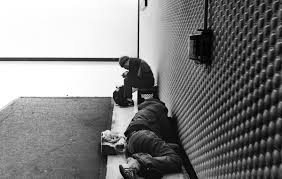
- You’re standing at a bus stop or eating in a restaurant—when a large, filthy, possibly disease-carrying man or woman demands a “handout” from you.
- You can’t use the elevator at the Bay Area Rapid Transit (BART) station because “homeless” derelicts have ruined its mechanism with urine and feces.
In 2010, San Francisco voters passed the “No Sit/No Lie” ordinance, which “makes it unlawful, with certain exceptions, to sit or lie on a public sidewalk, or on an object placed on a public sidewalk, between 7AM and 11PM.”
But walk down almost any street in the downtown part of the city and you’ll find sidewalks crowded with stinking, disease-ridden, lice/bedbug-infested, drug-addicted, alcohol-soaked, often psychotic men and women whom city officials politely refer to as “the homeless.”
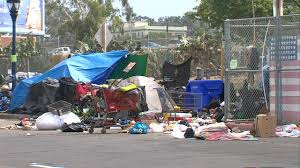
Among the trappings that go with this population:
- Tents
- Mattresses
- Piles of belongings
- Stolen shopping cards
- Trash
- Half-eaten food
- Empty cans/bottles of alcohol
- Feces
- Hypodermic needles
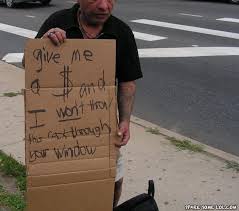
What you’ll almost never see: Police actually enforcing the “No Sit/No Lie” ordinance.
So much for the will of the voters.
San Francisco officials have effectively washed their hands of the problem. If local residents must put up with repeated violations of the most basic sanitation laws, that’s their tough luck.
What matters to the Mayor and Board of Supervisors is this: The “rights” of those whose filth and behavior pose an immediate threat to public health and safety take precedence over those of tax-paying, law-abiding San Franciscans.
San Francisco residents can be fined $25 to $1,000 for feeding pigeons—but not for feeding street bums.
During the Mayorship of Willie Brown (1996 – 2004), Hizzonor proposed what he thought was a brilliant way for residents to “contribute” to “street people.”
Those who were somehow certified as “homeless” would be issued special electronic “cash cards.” When someone wanted to make a “donation,” s/he would swipe a credit card against the one owned by the street bum, for whatever amount s/he wanted to donate.
But before the program started, someone at City Hall realized a blunt truth: Residents—especially women—weren’t likely to whip out their credit cards in front of a ranting, foul-smelling, probably disease-ridden street bum.
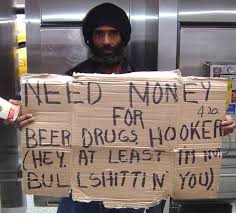
It’s long past time for San Francisco—and other cities—to stop catering to the druggies, alcoholics, mental cases and bums who prey on the guilt or fear of law-abiding, tax-paying citizens.
The same laws that protect citizens against patients with highly communicable diseases like typhoid and cholera should be vigorously applied to those whose filthy habits threaten similar public contagion.
Among such reforms:
- The city should launch a “Please Do Not Feed the Bums” publicity campaign—as it has against feeding pigeons. And it should be backed up with stiff fines for those caught doing so.
- Those living on the street should be given a choice: Go to a local shelter or face arrest and the immediate confiscation of their possessions.
- Bus drivers should have the right to refuse passengers who stink of urine/feces, as they present a potential health-hazard to others.
- The owners of restaurants should likewise be allowed to refuse service on the same basis.
- Those applying for welfare benefits should be required to provide proof of residence. Too many people come to San Francisco because, upon arrival, they can immediately apply for such benefits.
- The city should set up a special unit to deal entirely with removing “street people” and their possessions from city sidewalks. This could be a division of the Sanitation Department, since its personnel are used to removing filth and debris of all types.
San Francisco officials need to:
- Forcefully tell alcoholics and drug addicts: “Your anti-social behavior is not welcome here. Take your self-destructive lifestyles elsewhere. We won’t subsidize them.”
- Take the mentally unstable off the street and place them in institutions where their needs can be met.
- Tell those who are just plain bums: Don’t expect us to support you.
Only then will San Francisco rightly reclaim its former glory as “the city by the Bay.”
ABC NEWS, ALCOHOLISM, ALTERNET, AP, BEGGING, BUMS, BUZZFEED, CBS NEWS, CNN, DAILY KOS, DISEASE, DRUG ADDICTION, FACEBOOK, HEPATITIS B, HEPATITIS C, HILLARY RONEN, HIV, HOMELESS, HOMELESSNESS, MENTAL ILLNESS, MOTHER JONES, MOVEON, NBC NEWS, NEWSWEEK, NPR, PANHANDLING, POLITICO, PUBLIC HEALTH, RAW STORY, REUTERS, ROTAVIRUS, SALON, SAN FRANCISCO, SAN FRANCISCO CHRONICLE, SAN FRANCISCO DEPARTMENT OF PUBLIC WORKS, SEATTLE TIMES, SLATE, THE ATLANTIC, THE CHICAGO SUN-TIMES, THE CHICAGO TRIBUNE, THE DAILY BEAST, THE GUARDIAN, THE HILL, THE HUFFINGTON POST, THE LOS ANGELES TIMES, THE NEW YORK TIMES, THE WALL STREET JOURNAL, THE WASHINGTON POST, TIME, TWITTER, U.S. NEWS & WORLD REPORT, UPI, USA TODAY, WILLIE BROWN
In Bureaucracy, History, Law, Law Enforcement, Medical, Politics, Social commentary on June 21, 2018 at 1:45 am
Imagine that, late one night, you wake up and decide to go to the kitchen for a drink of water. You turn on the light—and suddenly find a virtual army of cockroaches hurriedly scurrying across the floor.
In the morning, you call an exterminator, and a “pest control specialist” soon knocks at your door.
“What you need to do,” he says, “is to put out big packets of sugar for the roaches.”
“Wait a minute—don’t roaches love sugar? How is this going to make them go away?”
“It won’t.”
“Then what’s the point?”
“The point is that roaches are God’s creatures, and they need to eat, too.”
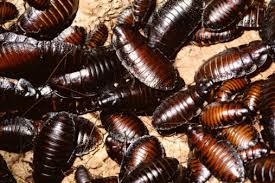
A typical cockroach scene
“But they’ve taken over my kitchen. They’re filthy, they leave droppings everywhere and they contaminate the food I’m supposed to eat.”
“You must learn to have compassion for all of God’s creatures, and learn to get along with them.”
“So if I hire you, you’re not going to get rid of them for me?”
“No.”
“So what are you going to do?”
“Help you to accept that they have a right to be a part of your community.”
If a pest control company actually operated like that, how long would they be in business?
Not long.
Yet, in San Francisco, successive mayors and members of the Board of Supervisors operate in exactly that manner toward succeeding waves of human pestilence. And they remain in office for years.
Huge areas of the city are covered in feces, urine, trash and needles. Hospitals overflow with patients that have fallen ill due to the contamination.
NBC News surveyed 153 blocks of the city—an area more than 20 miles. That area includes popular tourist spots like Union Square and the cable car turnaround. It’s bordered by Van Ness Avenue, Market Street, Post Street and Grant Avenue. And it’s also home to City Hall, schools, playgrounds, and a police station.
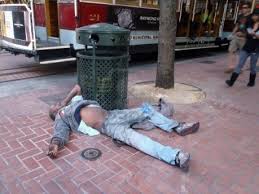
A typical San Francisco scene
Most of the trash found consisted of heaps of garbage, food, and discarded junk—including 100 drug needles and more than 300 piles of feces throughout downtown. If you step on one of these needles, you can get HIV, Hepatitis C, Hepatitis B or a variety of other viral diseases.
But you don’t have to actually get stuck by a needle to become a victim. Once fecal matter dries, it can become airborne and release deadly viruses, such as the rotavirus.
“If you happen to inhale that, it can also go into your intestine,” says Dr. Lee Riley, an infectious disease specialist at the University of California, Berkeley. The results can prove fatal, especially in children.
As the news unit filmed a typical day’s activity in San Francisco, a group of preschool students, enjoying a field trip, walked to City Hall.
Responding to a reporter’s question, Adelita Orellana said: “We see poop, we see pee, we see needles, and we see trash.
“Sometimes they ask what is it, and that’s a conversation that’s a little difficult to have with a two-year old, but we just let them know that those things are full of germs, that they are dangerous, and they should never be touched.”
San Francisco’s political elite see this blight as well as everyone else. They can’t avoid seeing it, since the city covers 47 square miles.
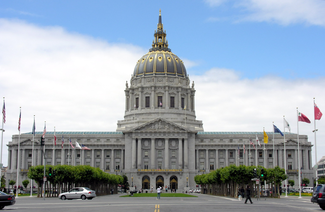
San Francisco City Hall
Cabe6403 at English Wikipedia [CC BY-SA 3.0 (https://creativecommons.org/licenses/by-sa/3.0) or GFDL (http://www.gnu.org/copyleft/fdl.html)%5D, from Wikimedia Commons
One of those who sees the disgrace up-front is Supervisor Hillary Ronen: “Unacceptable. Absolutely unacceptable We’re losing tourists. We’re losing conventions in San Francisco.”
Yet what does she propose as the solution? “We need more temporary beds for street homelessness.”
This is on a par with a “pest control expert” recommending: “We need more sugar to clear up our roach problem.”
Thanks to its mild climate and social programs that dole out cash payments to virtually anyone with no residency requirement, San Francisco is often considered the “homeless capital” of the United States.
According to a 2016 article in the San Francisco Chronicle, there are about 13,000 “homeless” people in San Francisco. Of these, an estimated 3,000 to 5,000 refuse shelter.
In 2016, San Francisco spent $275 million on homelessness—up from $241 million in 2015. Public Works cleanup crews picked up more than 679 tons of trash from homeless tent camps—and collected more than 100,000 used syringes from the camps.
In 2016, San Francisco residents made 22,608 complaints about encampments—a five-fold increase from 2015.
City officials euphemistically call this population “the homeless.” That’s because they don’t want to use words that accurately describe those who comprise the overwhelming majority of this population:
- Druggies
- Drunks
- Mentals
- Bums.
Or, as even many police, social workers and paramedics who wrestle with this population privately refer to them: DDMBs.
Yet the mere citing of statistics—how many “homeless,” how much money is spent on how many people, how much filth they produce—doesn’t capture the true intensity of the problem.
To do that, you must confront its realities at the street level. Which is what we’ll do in Part Two of this series.
ABC NEWS, ALCOHOL, ALTERNET, AP, BLAKE EDWARDS, BOBBY BROWN, BUZZFEED, CAMELOT, CBS NEWS, CELEBRITIES, CIAGREETES, CNN, COCAINE, CONRAD MURRAY, CRACK, CROOKS AND LIARS, DAILY KOZ, DIANE SAWYER, DRUGS, ELVIS PRESLEY, FACEBOOK, JULIE ANDREWS, MARILYN MONROE, MARY POPPINS, MICHAEL JACKSON, MOTHER JONES, MOUNT SIANI MEDICAL CENTER, MOVEON, MSNBC, MY FAIR LADY, NATIONAL ENQUIRER, NBC NEWS, NEWSWEEK, NODULES, NPR, OPHRAH WINFREY, OPRAH WINFREY, PILLS, POLITICO, RAW STORY, REUTERS, SALON, SEATTLE TIMES, SLATE, STAR SPANGLED BANNER, THE ATLANTIC, THE CHICAGO SUN-TIMES, THE CHICAGO TRIBUNE, THE DAILY BEAST, THE GUARDIAN, THE HILL, THE HUFFINGTON POST, THE LOS ANGELES TIMES, THE NATION, THE NEW YORK TIMES, THE SOUND OF MUSIC, THE WASHINGTON POST, TIME, TWITTER, U.S. NEWS & WORLD REPORT, UPI, USA TODAY, WHITNEY HOUSTON
In Entertainment, History, Medical, Social commentary on May 10, 2018 at 12:18 am
Whtney Houston drowned in her bathtub at the Beverly Hilton Hotel on February 11, 2012.
The cause of death: Coronary artery disease—and cocaine use. She was 48.
Ever since, reporters and commentators have repeatedly used the word “tragedy” to describe her fate.
But there are tragedies that are brought on by events beyond human control—and tragedies that are self-inflicted.
Consider:
Julie Andrews: Whose four-octave soprano voice has delighted audiences for decades on Broadway (Camelot, My Fair Lady) and movies (Mary Poppins, The Sound of Music).
In 1964, she won the Academy Award for Best Actress and Golden Globe Award for Best Actress (for Mary Poppins).
Her performance in The Sound of Music made it the highest-grossing film of 1965—and won her a second Golden Globe Award for Best Actress.
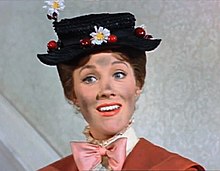
Julie Andrews, in her best-loved role as “Mary Poppins”
In 1997, she underwent surgery at Mount Sinai Medical Center to remove non-cancerous nodules in her throat. The nodules were removed—but so was her ability to sing.
Her husband, Blake Edwards, was widely quoted as saying that Andrews’ voice hds been all but ruined: ”If you heard it, you’d weep.”
Whitney Houston: Blessed with beauty, charm and a golden, intense singing voice that can turn even the almost-unsingable “Star Spangled Banner” into a rousing anthem.
As a beloved, internationally-recognized vocalist, she enjoyed even greater fame and wealth as a movie star (The Bodyguard, Waiting to Exhale).

Whitney Houston
Meanwhile, she took on increasingly deadly habits. She chain-smoked cigarettes. And marijuana—“a lot.” She dove into alcohol, pills, cocaine.
During a 2002 interview with Diane Sawyer, she denied using crack. Not because it’s lethal, or because it would destroy The Voice that she believed was God’s gift to her.
No, it was because “I make too much money to ever smoke crack. Let’s get that straight. OK? We don’t do crack. We don’t do that. Crack is whack.”
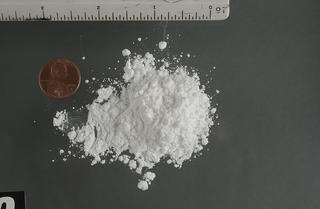
Crack cocaine
In 2006, the National Enquirer ran an interview with her sister-in-law, Tina, who charged that Houston spent her days locked in her bedroom “smoking crack, using sex toys to satisfy herself and ignoring personal hygiene.”
Then, in 2009, appearing on Oprah Winfrey’s season premiere, Houston finally admitted that she used drugs with her ex-husband, Bobby Brown, who “laced marijuana with rock cocaine.”
In other words, crack.
So, apparently, crack wasn’t whack.
Over time, the once-magnificent instrument that was your voice started to change noticeably. She could no longer hit high notes, or hold one the way she did in her immortal hit, “I Will Always Love You.”
Her voice now sounded hoarse, raspy.
In 2010, she embarked on a “Nothing But Love World Tour.” It was a disaster. In Brisbane, she paused during singing to take a drink of water.
A critic said her performance in London was marked by a strained voice filled with coughs and wheezes.
Fans felt cheated—especially after paying $165 for a ticket—and reacted with jeers and boos. Some walked out in mid-concert.
On the night before her death, Houston become belligerent and almost duked it out with singer Stacy Francis at the Tru Hollywood nightclub. Her boyfriend, Ray J, had to step in to prevent a fistfight.
Houston was seen leaving the club drunk, with scratches and blood-stains on her legs.
* * * * *
Whose tragedy was genuine—and which was self-inflicted?
The ugly truth is that Whitney Houston’s singing career ended long before her life did.
When people remember her monumental hits like “I Will Always Love You,” they’re recalling a time more than 20 years ago.
Another ugly truth is that each of us is responsible for our own actions.
Attorney and talk-show host Nancy Grace blamed Houston’s doctors for her death. She argued that they had kept writing prescriptions for “America’s songbird” when they knew she was an addict.
But Houston was the one who requested that they write those prescriptions. And she was the one who administered them.
The same chain of events occurred in the Michael Jackson case.
Jackson wanted his drug-of-choice: propofol, a hypnotic sedative used for general anesthesia. And he got it.
He paid his private doctor, Conrad Murray, $150,000—a-month. For a salary that large, Jackson clearly expected to get more than the standard: “Take two aspirins and call me in the morning.”
So he got what he wanted—and it killed him.
Houston, for all her charm, was also used to getting her own way. Once. on an airplane, she tried to light up in the bathroom. When the pilot warned that she could be fined $2,000, she offered to write out a check that moment if she could have her smoke. The pilot refused.
No matter how famous, talented, beautiful and/or wealthy you might be, in the end, you remain a mere mortal. Even if you are allowed to flout the laws of man, you will be held accountable by your own body for bouts of deadly excess.
That, in the end, is the real legacy of Whitney Houston. And Michael Jackson. And Elvis Presley. And Marilyn Monroe. And a great many other now-dead celebrities.
Sadly, it is a truth that both celebrities and their worshipers must re-learn—over and over.
ABC NEWS, ALTERNET, ARNOLD SCHWARXENEGGER, BARACK OBAMA, BREITBART NEWS, BUZZFEED, CBS NEWS, CIA, CNN, DAILY KOS, DONALD TRUMP, FACEBOOK, FBI, FLETCHER KNEBEL, HILLARY LINTON, JEFF SESSIONS, JOHN OLIVER, JOSH EARNEST, MARK LEVIN, MENTAL ILLNESS, MERYL STREETP, MOTHER JONES, MOVEON, NATIONAL SECURITY AGENCY, NBC NEWS, NEIL YOUNG, NEW JERSEY, NEWSWEEK, NIGHT AT CAMP DAVID, NPR, OBAMACARE, POLITICO, RAW STORY, RUSSIA, SALON, SEVEN DAYS IN MAY, SLATE, THE CHICAGO SUN-TIMES, THE CHICAGO TRIBUNE, THE DAILY BEAST, THE HUFFINGTON POST, THE LOS ANGELES TIMES, THE NEW YORK TIMES, THE WALL STREET JOURNAL, THE WASHINGTON POST, THIS WEEK, TIME, TWITTER, U.S. NEWS & WORLD REPORT, USA TODAY, WATERGATE, WIRETAPPING
In Bureaucracy, History, Medical, Politics, Social commentary on January 5, 2018 at 11:02 am
On March 4, 2017, in a series of unhinged tweets, President Donald J. Trump accused former President Barack Obama of tapping his Trump Tower phones prior to the election:
“Terrible! Just found out that Obama had my ‘wires tapped’ in Trump Tower just before the victory. Nothing found. This is McCarthyism!”
“Is it legal for a sitting President to be ‘wire tapping’ a race for president prior to an election? Turned down by court earlier. A NEW LOW!”
“I’d bet a good lawyer could make a great case out of the fact that President Obama was tapping my phones in October, just prior to Election!”
“How low has President Obama gone to tapp my phones during the very sacred election process. This is Nixon/Watergate. Bad (or sick) guy!”
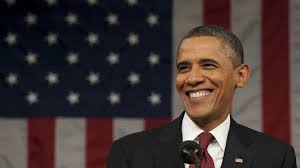
President Barack Obama
Trump offered no proof to substantiate his libelous claims.
There are three plausible theories about what prompted Trump’s accusations.
Theory #1: They were prompted by Right-wing media outlets that had been pushing wiretapping claims in recent days.
On March 2, Right-wing radio host Mark Levin claimed that Obama had used “powers of the federal government to surveil members of the Trump campaign.”
Referring to Attorney General Jeff Sessions and his newly disclosed meetings with Russia’s ambassador in 2016, Levin asked: “Today’s reporting on Sessions having a chance meeting with the ambassador–where did that information come from? Look at the timing of it. Was Obama surveilling top Trump campaign officials during the election?”
On March 3, the Fascist media site Breitbart News echoed that charge. Its story was based on Levin’s show and offered no evidence to back up its accusations.
Trump could have first contacted the directors of the FBI, CIA and National Security Agency–the agencies which are authorized to conduct such an operation. He couldhave asked them, “Did you wiretap me?”
They could have quickly and confidentially given him an answer. And if it was “Yes,” they would have been able to provide him with the records to document it.
That would have been the action of a rational President. But Trump chose to act like a child–or, worse, an unbalanced adult.
After reading the Breitbart story, Trump impulsively chose to go on Twitter and make libelous accusations.
Theory #2: Trump, under scrutiny for ties between his campaign and Russia, sought to deflect attention by making an outrageous accusation.
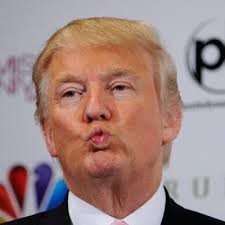
Donald Trump
Former White House Press Secretary Josh Earnest gave his own take on Trump’s motivation. Appearing on the March 5, 2017 edition of ABC’s “This Week”, he said: “We know exactly why President Trump tweeted what he tweeted.
“Because there is one page in the Trump White House crisis management playbook. And that is simply to tweet or say something outrageous to distract from the scandal, and the bigger the scandal, the more outrageous the tweet.”
Earnest served as White House Press Secretary under President Obama from 2014 to 2017.
He added: Obama could not have legally ordered a wiretap: “The President of the United States does not have the authority to unilaterally order the wiretapping of an American citizen.”
Theory #3: Trump is too mentally unbalanced to hold the Presidency–and command of America’s nuclear arsenal.
Trump’s shoot-first-and-never-mind-the-consequences approach to life has been thoroughly documented.
From June 15, 2015, when he launched his Presidential campaign, until October 24, 2016, he fired nearly 4,000 angry, insulting tweets at 281 people and institutions. The New York Times needed two full pages of its print edition to showcase them.
Among these targets were:
- His Democratic rival, Hillary Clinton
- His fellow Republican Presidential candidates
- Actress Meryl Streep
- News organizations
- President Barack Obama
- Comedian John Oliver
- Obamacare
- Singer Neil Young
- The state of New Jersey
- Actor Arnold Schwarzenegger.
And during his first two weeks as President, Trump attacked 22 people, places and things on his @realDonaldTrump account.
Trump’s vindictiveness, his narcissism, his compulsive aggression, his complaints that his “enemies” in government and the press are trying to destroy him, have caused many to ask: Could the President of the United States be suffering from mental illness?
One who has dared to answer this question is John D. Gartner, a practicing psychotherapist.
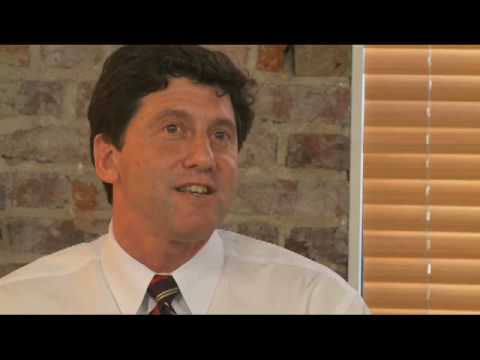
John D. Gartner
Gartner graduated magna cum laude from Princeton University, received his Ph.D in clinical psychology from the University of Massachusetts, and served as a part time assistant professor of psychiatry at Johns Hopkins University Medical School for 28 years.
During an interview by U.S. News & World Report (published on January 27), Gartner said: “Donald Trump is dangerously mentally ill and temperamentally incapable of being president.”
Gartner said that Trump suffers from “malignant narcissism,” whose symptoms include anti-social behavior, sadism, aggressiveness, paranoia and grandiosity.
“We’ve seen enough public behavior by Donald Trump now that we can make this diagnosis indisputably,” says Gartner, who admits he has not personally examined Trump.
In 1965, Fletcher Knebel, the best-selling author of Seven Days in May, raised the then-unthinkable question: “What would happen if the President of the U.S.A. went stark-raving mad?”
He did so in his novel, Night of Camp David.
In 1965, the idea that an American President might become insane was thought so outlandish it could only appear in a novel.
Fifty-three years later, it’s no longer unthinkable. For millions, it’s a terrifying reality.
ABC NEWS, ALTERNET, ARNOLD SCHWARXENEGGER, BARACK OBAMA, BREITBART NEWS, BUZZFEED, CBS NEWS, CIA, CNN, DAILY KOS, DONALD TRUMP, FACEBOOK, FBI, FLETCHER KNEBEL, HILLARY LINTON, JEFF SESSIONS, JOHN OLIVER, JOSH EARNEST, MARK LEVIN, MENTAL ILLNESS, MERYL STREETP, MOTHER JONES, MOVEON, NATIONAL SECURITY AGENCY, NBC NEWS, NEIL YOUNG, NEW JERSEY, NEWSWEEK, NIGHT AT CAMP DAVID, NPR, OBAMACARE, POLITICO, RAW STORY, RUSSIA, SALON, SEVEN DAYS IN MAY, SLATE, THE CHICAGO SUN-TIMES, THE CHICAGO TRIBUNE, THE DAILY BEAST, THE HUFFINGTON POST, THE LOS ANGELES TIMES, THE NEW YORK TIMES, THE WALL STREET JOURNAL, THE WASHINGTON POST, THIS WEEK, TIME, TWITTER, U.S. NEWS & WORLD REPORT, USA TODAY, WATERGATE, WIRETAPPING
In Bureaucracy, History, Medical, Politics, Social commentary on March 20, 2017 at 12:53 am
On March 4, in a series of unhinged tweets, President Donald J. Trump accused former President Barack Obama of tapping his Trump Tower phones prior to the election:
“Terrible! Just found out that Obama had my ‘wires tapped’ in Trump Tower just before the victory. Nothing found. This is McCarthyism!”
“Is it legal for a sitting President to be ‘wire tapping’ a race for president prior to an election? Turned down by court earlier. A NEW LOW!”
“I’d bet a good lawyer could make a great case out of the fact that President Obama was tapping my phones in October, just prior to Election!”
“How low has President Obama gone to tapp my phones during the very sacred election process. This is Nixon/Watergate. Bad (or sick) guy!”
President Barack Obama
Trump offered no proof to substantiate his libelous claims.
There are three plausible theories about what prompted Trump’s accusations.
Theory #1: They were prompted by Right-wing media outlets that had been pushing wiretapping claims in recent days.
On March 2, Right-wing radio host Mark Levin claimed that Obama had used “powers of the federal government to surveil members of the Trump campaign.”
Referring to Attorney General Jeff Sessions and his newly disclosed meetings with Russia’s ambassador in 2016, Levin asked: “Today’s reporting on Sessions having a chance meeting with the ambassador–where did that information come from? Look at the timing of it. Was Obama surveilling top Trump campaign officials during the election?”
On March 3, the Fascist media site Breitbart News echoed that charge. Its story was based on Levin’s show and offered no evidence to back up its accusations.
Trump could have first contacted the directors of the FBI, CIA and National Security Agency–the agencies which are authorized to conduct such an operation. He could have asked them, “Did you wiretap me?”
They could have quickly and confidentially given him an answer. And if it was “Yes,” they would have been able to provide him with the records to document it.
That would have been the action of a rational President. But Trump chose to act like a child–or, worse, an unbalanced adult.
After reading the Breitbart story, Trump impulsively chose to go on Twitter and make libelous accusations.
Theory #2: Trump, under scrutiny for ties between his campaign and Russia, sought to deflect attention by making an outrageous accusation.
Donald Trump
Former White House Press Secretary Josh Earnest has his own take on Trump’s motivation. Appearing on the March 5 edition of ABC’s “This Week”, he said: “We know exactly why President Trump tweeted what he tweeted.
“Because there is one page in the Trump White House crisis management playbook. And that is simply to tweet or say something outrageous to distract from the scandal, and the bigger the scandal, the more outrageous the tweet.”
Earnest served as White House Press Secretary under President Obama from 2014 to 2017.
He added: Obama could not have legally ordered a wiretap: “The President of the United States does not have the authority to unilaterally order the wiretapping of an American citizen.”
Theory #3: Trump is too mentally unbalanced to hold the Presidency–and command of America’s nuclear arsenal.
Trump’s shoot-first-and-never-mind-the-consequences approach to life has been thoroughly documented.
From June 15, 2015, when he launched his Presidential campaign, until October 24, 2016, he fired nearly 4,000 angry, insulting tweets at 281 people and institutions. The New York Times needed two full pages of its print edition to showcase them.
Among these targets were:
- His Democratic rival, Hillary Clinton
- His fellow Republican Presidential candidates
- Actress Meryl Streep
- News organizations
- President Barack Obama
- Comedian John Oliver
- Obamacare
- Singer Neil Young
- The state of New Jersey
- Actor Arnold Schwarzenegger.
And during his first two weeks as President, Trump attacked 22 people, places and things on his @realDonaldTrump account.
Trump’s vindictiveness, his narcissism, his compulsive aggression, his complaints that his “enemies” in government and the press are trying to destroy him, have caused many to ask: Could the President of the United States be suffering from mental illness?
One who has dared to answer this question is John D. Gartner, a practicing psychotherapist.
John D. Gartner
Gartner graduated magna cum laude from Princeton University, received his Ph.D in clinical psychology from the University of Massachusetts, and served as a part time assistant professor of psychiatry at Johns Hopkins University Medical School for 28 years.
During an interview by U.S. News & World Report (published on January 27), Gartner said: “Donald Trump is dangerously mentally ill and temperamentally incapable of being president.”
Gartner said that Trump suffers from “malignant narcissism,” whose symptoms include anti-social behavior, sadism, aggressiveness, paranoia and grandiosity.
“We’ve seen enough public behavior by Donald Trump now that we can make this diagnosis indisputably,” says Gartner, who admits he has not personally examined Trump.
In 1965, Fletcher Knebel, the best-selling author of Seven Days in May, raised the then-unthinkable question: “What would happen if the President of the U.S.A. went stark-raving mad?”
He did so in his novel, Night of Camp David.
In 1965, the idea that an American President might become insane was thought so outlandish it could only appear in a novel.
Fifty-two years later, it’s no longer unthinkable. For millions, it’s a terrifying reality.
ABC NEWS, AFFORDABLE CARE ACT, AIR TRAFFIC CONTROLLERS STRIKE, ALTERNET, BARCK OBAMA, BUZZFEED, CBS NEWS, CNN, COLUMBIA UNIVERSITY, DAILY KOS, EXTORTION, FACEBOOK, GEORGE W. BUSH, HARVARD LAW SCHOOL, HILLARY CLINTON, JOHN SCHNATTER, JON STEWART, JONATHAN ALTER, JUSTICE DEPARTMENT, MEDICAL CARE, MOTHER JONES, MOVEON, NBC NESS, NBC NEWS, NEWSWEEK, NICCOLO MACHIAVELLI, NPR, OBAMACARE, PAPA JOHN'S PIZZA, PATRIOT ACT, POLITICO, RACKETEER INFLUENCED CORRUPT ORGANIZATIONS ACT, RAW STORY, REFORM, REPUBLICAN PARTY, RICHARD WOLFFE, SALON, SLATE, TERRORISM, THE CHICAGO SUN-TIMES, THE CHICAGO TRIBUNE, THE DAILY BEAST, THE DAILY SHOW, THE HUFFINGTON POST, THE LOS ANGELES TIMES, THE NEW YORK TIMES, THE PRINCE, THE WALL STREET JOURNAL, THE WASHINGTON POST, TIME, TWITTER, U.S. NEWS & WORLD REPORT, USA TODAY
In Bureaucracy, History, Law, Medical, Politics, Social commentary on March 2, 2017 at 12:11 am
President Barack Obama was often accused of playing ruthless “Chicago politics” by his Republican enemies. But Obama’s biggest mistake lay not in cynicism but misplaced idealism.
Obama Mistake No. 5: Believing that public and private employers would voluntarily comply with the law.
The Affordable Care Act (ACA) requires employers to provide insurance for part-time employees who work more than 30 hours per week. Yet many employers claimed–without having to offer proof–that they couldn’t afford it.
So they limited part-time workers’ hours to 29 per week instead.
Obama was clearly surprised at this. But he shouldn’t have been.
Greed-fueled businessmen always try to avoid complying with the law–or achieve minimum compliance with it.
The Act doesn’t penalize companies for not providing health insurance coverage for part-time employees who work fewer than 30 hours.
Predictably, employers:
- Moved fulltime workers into part-time positions;
- Refused to provide their employees with medical insurance; and
- Avoided fines for non-compliance with the law.
Some employers openly showed their contempt for President Obama–and the idea that employers have any obligation to those who make their profits a reality.
One was John Schnatter, CEO of Papa John’s Pizza, who said:
- The prices of his pizzas would go up–by 11 to 14 cents per pizza, or 15 to 20 cents per order; and
- He would pass along these costs to his customers.
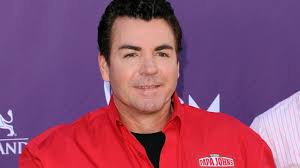
John Schnatter
“If Obamacare is in fact not repealed,” he told Politico, “we will find tactics to shallow out any Obamacare costs and core strategies to pass that cost onto consumers in order to protect our shareholders’ best interests.”
Thus, President Obama should have required all employers to provide insurance coverage for all of their employees, regardless of their fulltime or part-time status.
This would have produced two substantial benefits:
- All employees would have been able to obtain medical coverage; and
- Employers would have been encouraged to provide fulltime positions rather than part-time ones.
Employers would thus feel: “I’m paying for fulltime insurance coverage, so I should be getting fulltime work in return.”
If Obama considered this option, he decided against pressing for it.
Obama Mistake No. 6: Failing to closely study his proposed legislation.
Throughout his campaign to win support for the ACA, Obama had repeatedly promised: “If you like your health insurance plan, you can keep your plan. If you like your doctor, you can keep your doctor. Period.”
But the 906 pages of the law held a fatal catch for the President’s own credibility.
The law stated that those who already had medical insurance could keep their plans–so long as those plans met the requirements of the new healthcare law.
If their plans didn’t meet those requirements, they would have to obtain coverage that did.
But many Americans wanted to keep their current plan–even if it did not provide the fullest possible coverage.
Suddenly, the President found himself facing a PR nightmare–charged and ridiculed as a liar.
Even Jon Stewart, who on “The Daily Show,” had supported the implementation of “Obamacare,” ran footage of Obama’s “you can keep your doctor” promise.
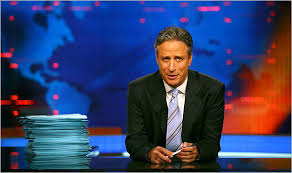
Jon Stewart
The implication: You said we could keep our plan/doctor. Since we can’t, you must be a liar.
All of which points to a final warning offered by Niccolo Machiavelli: Whence it may be seen that hatred is gained as much by good works as by evil….
Former Democratic Presidential nominee Hillary Clinton said that, if she were elected, she would seek incremental changes in the ACA. That possibility became moot when she lost the 2016 election to Donald Trump.
Vermont U.S. Senator Bernie Sanders, on the other hand, wants a single-payer plan.
A single-payer plan would prove simpler and more comprehensive than the ACA. But the chances of its passing a Republican-dominated Congress are absolutely zero.
The election of Donald Trump seems to have finally doomed the ACA–except for one thing: Since it became law, in 2010, 22 million Americans who had never before obtained healthcare insurance now have it.
This includes even Republicans who voted for Trump–without realizing they would be losing their only tie to medical care. And now many of them are finally realizing this truth.
Thus, Republicans in the House and Senate now find themselves besieged by angry constituents at town hall meetings.
These Republicans care nothing for Americans who would be left without medical care. But they do care about their own futures–as members of Congress.
This has led to three schisms among Republicans:
- Those who still demand the complete repeal of “Obamacare.”
- Those who want the Act repealed and then replaced with an entirely different healthcare plan–which Republicans have yet to agree on. Developing this could literally take years–during which time former ACA members would have no insurance.
- Those who want Republicans to first create an alternative healthcare plan, win its Congressional approval, and then repeal the Act.
Republicans expect Democrats to sign on with their “Obamacare replacement plan.” But Democrats have made it clear: “You repeal it, you’re on your own in replacing it.”
Republicans spent eight years demanding the repeal of “Obamacare.” But now they fear that its repeal will lead to the repeal of their own political ambitions.
ABC NEWS, AFFORDABLE CARE ACT, AIR TRAFFIC CONTROLLERS STRIKE, ALTERNET, BARCK OBAMA, BUZZFEED, CBS NEWS, CNN, COLUMBIA UNIVERSITY, DAILY KOS, EXTORTION, FACEBOOK, GEORGE W. BUSH, HARVARD LAW SCHOOL, HILLARY CLINTON, JOHN SCHNATTER, JON STEWART, JONATHAN ALTER, JUSTICE DEPARTMENT, MEDICAL CARE, MOTHER JONES, MOVEON, NBC NESS, NBC NEWS, NEWSWEEK, NICCOLO MACHIAVELLI, NPR, OBAMACARE, PAPA JOHN'S PIZZA, PATRIOT ACT, POLITICO, RACKETEER INFLUENCED CORRUPT ORGANIZATIONS ACT, RAW STORY, REFORM, REPUBLICAN PARTY, RICHARD WOLFFE, SALON, SLATE, TERRORISM, THE CHICAGO SUN-TIMES, THE CHICAGO TRIBUNE, THE DAILY BEAST, THE DAILY SHOW, THE HUFFINGTON POST, THE LOS ANGELES TIMES, THE NEW YORK TIMES, THE PRINCE, THE WALL STREET JOURNAL, THE WASHINGTON POST, TIME, TWITTER, U.S. NEWS & WORLD REPORT, USA TODAY
In Bureaucracy, History, Law, Medical, Politics, Social commentary on March 1, 2017 at 12:26 am
President Barack Obama came into office determined to find common ground with Republicans.
But they quickly made it clear to him that they only wanted his political destruction. At that point, he should have put aside his hopes for a “Kumbaya moment” and re-read what Niccolo Machiavelli said in The Prince on the matter of love versus fear:
From this arises the question whether it is better to be loved or feared, or feared more than love. The reply is, that one ought to be both feared and loved, but as it is difficult for the two to go together, it is much safer to be feared than loved….
And men have less scruple in offending one who makes himself loved than one who makes himself feared; for love is held by a chain of obligations which, men being selfish, is broken whenever it serves their purpose; but fear is maintained by a dread of punishment which never fails.

Finally, warns Machiavelli, a leader should not allow a threat to go unchecked. The motive for this is usually the hope of avoiding conflict And the result is usually catastrophe.
A man who wishes to make a profession of goodness in everything must inevitably come to grief among so many who are not good. And therefore it is necessary, for a prince who wishes to maintain himself, to learn how not to be good, and to use this knowledge and not use it, according to the necessity of the case.
For Obama, such a moment came in 2011, when House Republicans threatened to to destroy the credit rating of the United States unless the President agreed to scrap Obamacare.
Obama, a former attorney, heatedly denounced House Republicans for “extortion” and “blackmail.”
Unless he was exaggerating, both of these are felony offenses that are punishable under the 2001 USA Patriot Act and the Racketeer Influenced Corrupt Organizations (RICO) Act of 1970.
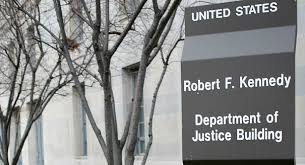
Among the crimes that can be prosecuted by Justice Department attorneys under RICO: Extortion.
Extortion is defined as “a criminal offense which occurs when a person unlawfully obtains either money, property or services from a person(s), entity, or institution, through coercion.”
And if President Obama didn’t believe that RICO was sufficient to deal with extortionate behavior, he could have ordered the Justice Department to cite the USA Patriot Act, passed in the wake of 9/11.
In Section 802, among the behaviors that are defined as domestic terrorism: “Activities that…appear to be intended…to influence the policy of a government by intimidation or coercion [and]…occur primarily within the territorial jurisdiction of the United States.”
Activities such as threatening to destroy the financial stability of the United States.
The remedies for punishing such criminal behavior were legally in place. President Obama could have directed the Justice Department to apply them.
If violations had been discovered, indictments could have quickly followed–and then prosecutions. The results of such action could be easily predicted:
- Facing lengthy prison terms, those indicted Republicans would have first had to lawyer-up.
- This would have imposed huge monetary costs on them, since good criminal attorneys don’t come cheap.
- Obsessed with their personal survival, they would have had little time to engage in more of the same thuggish behavior that got them indicted. In fact, doing so would have only made their convictions more likely.
- Those Republicans who hadn’t (yet) been indicted would have feared; “I could be next.” This would have produced a chilling effect on their willingness to engage in further acts of subversion and extortion.
- The effect on Right-wing Republicans would have been the same as that of President Ronald Reagan’s firing of striking air traffic controllers: “You cross me and threaten the security of this nation at your own peril.”
It would no doubt have been a long time before Republicans dared to engage in such behavior–at least, while Obama held office.
So: Why didn’t President Obama act to punish such criminal conduct?
Obama Mistake No. 4: He allowed himself to be cowed by his enemies.
In The Prince, Machiavelli laid out the qualities that a successful ruler should avoid–
He is rendered despicable by being thought changeable, frivolous, effeminate, timid and irresolute–which a prince must guard against as a rock of danger….
–and possess:
As to the government of his subjects, let his sentence be irrevocable, and let him adhere to his decisions so that no one may think of deceiving or cozening him.
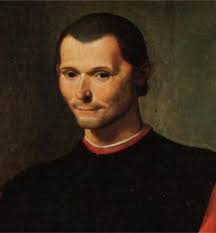
Niccolo Machiavelli
On July 2, 2013, the Treasury Department announced a major change in the application of the Affordable Care Act:
“We have heard concerns about the complexity of the requirements and the need for more time to implement them effectively…We have listened to your feedback. And we are taking action.
“The Administration is announcing that it will provide an additional year before the ACA mandatory employer and insurer reporting requirements begin.”
And the Republican response?
On July 30, 2013, House Republicans voted to sue the President for failing to enforce the Affordable Care Act–which they had voted 54 times to repeal, delay or change.
As Machiavelli warned: Timidity invites contempt–and aggression.
ABC NEWS, AFFORDABLE CARE ACT, AIR TRAFFIC CONTROLLERS STRIKE, ALTERNET, BARCK OBAMA, BUZZFEED, CBS NEWS, CNN, COLUMBIA UNIVERSITY, DAILY KOS, EXTORTION, FACEBOOK, GEORGE W. BUSH, HARVARD LAW SCHOOL, HILLARY CLINTON, JOHN SCHNATTER, JON STEWART, JONATHAN ALTER, JUSTICE DEPARTMENT, MEDICAL CARE, MOTHER JONES, MOVEON, NBC NESS, NBC NEWS, NEWSWEEK, NICCOLO MACHIAVELLI, NPR, OBAMACARE, PAPA JOHN'S PIZZA, PATRIOT ACT, POLITICO, RACKETEER INFLUENCED CORRUPT ORGANIZATIONS ACT, RAW STORY, REFORM, REPUBLICAN PARTY, RICHARD WOLFFE, SALON, SLATE, TERRORISM, THE CHICAGO SUN-TIMES, THE CHICAGO TRIBUNE, THE DAILY BEAST, THE DAILY SHOW, THE HUFFINGTON POST, THE LOS ANGELES TIMES, THE NEW YORK TIMES, THE PRINCE, THE WALL STREET JOURNAL, THE WASHINGTON POST, TIME, TWITTER, U.S. NEWS & WORLD REPORT, USA TODAY
In Bureaucracy, History, Law, Medical, Politics, Social commentary on February 28, 2017 at 12:13 am
Barack Obama was easily one of the most highly educated Presidents in United States history. He is a graduate of Columbia University (B.A. in political science in 1983).
In 1988, he entered Harvard Law School, graduating magna cum laude–“with great honor”–in 1991.
He was selected as an editor of the Harvard Law Review at the end of his first year, and president of the journal in his second year.
President Barack Obama
He then taught Constitutional law at the University of Chicago Law School for 12 years–as a Lecturer from 1992 to 1996, and as a Senior Lecturer from 1996 to 2004.
Yet, his signature plan to give every American access to healthcare, the Affordable Care Act–universally known as “Obamacare”–remains stricken with dangerous flaws.
So where did he go wrong?
Several ways–in all, at least six.
Obama Mistake No. 1: Putting off what people wanted while concentrating on what they didn’t.
Obama started off well when he took office. Americans had high expectations of him. This was partly due to his being the first black to be elected President.
And it was partly due to the disastrous legacies of needless war and financial catastrophe left by his predecessor, George W. Bush.
Obama entered office intending to reform the American healthcare system, to make medical care available to all citizens, and not just the richest. But that was not what the vast majority of Americans wanted him to concentrate his energies on.
With the lost of 2.6 million jobs in 2008, Americans wanted Obama to find new ways to create jobs. This was especially true for the 11.1 million unemployed, or those employed only part-time.
Jonathan Alter, who writes sympathetically about the President in The Center Holds: Obama and His Enemies, candidly states this.
But Obama chose to spend most of his first year as President pushing the Affordable Care Act (ACA)–which would soon become known as Obamacare–through Congress.
The results were:
- Those desperately seeking employment felt the President didn’t care about them.
- The reform effort became a lightning rod for Right-wing groups like the Koch-brothers-financed Tea Party.
- In 2010, a massive Rightist turnout cost the Democrats the House of Representatives, and threatened Democratic control of the Senate.
Obama Mistake No. 2: He underestimated the amount of opposition he would face to the ACA.
For all of Obama’s academic brilliance and supposed ruthlessness as a “Chicago politician,” he displayed an incredible naivety in dealing with his political opposition.
Niccolo Machiavelli (1469-1527), the Florentine statesman and father of modern politics, could have warned him of the consequences of this–through the pages of The Prince, his infamous treatise on the realities of politics.

Niccolo Machiavelli
And either Obama skipped those chapters or ignored their timeless advice for political leaders.
He should have started with Chapter Six: “Of New Dominions Which Have Been Acquired By One’s Own Arms and Ability”:
…There is nothing more difficult to carry out, nor more doubtful of success, nor more dangerous to handle than to initiate a new order of things.
For the reformer has enemies in all those who profit by the old order, and only lukewarm defenders in all those who would profit by the new order, this lukewarmness arising partly from fear of their adversaries, who have the laws in their favor, and partly from the incredulity of mankind, who do not truly believe in anything new until they have had actual experience of it.
This proved exactly the case with the proposed Affordable Care Act.
Its supporters–even when they comprised a majority of the Congress–have always shown far less fervor than its opponents.
This was true before the Act became effective on March 23, 2010. And it has remained true since, with House Republicans voting more than 60 times to repeal, delay or revise the law.
So before President Obama launched his signature effort to reform the American medical system, he should have taken this truism into account.
Obama Mistake No. 3: Failing to consider–and punish–the venom of his political enemies.
The ancient Greeks used to say: “A man’s character is his fate.” It was Obama’s character–and America’s fate–that he was by nature a man of conciliation, not conflict.
Richard Wolffe chronicled Obama’s winning of the White House in his 2009 book, Renegade: The Making of a President. He noted that Obama was always more comfortable when responding to Republican attacks on his character than he was in making attacks on his enemies.
President Obama came into office determined to find common ground with Republicans.
But they quickly made it clear to him that they only wanted his political destruction. At that point, he should have put aside his hopes for a “Kumbaya moment” and re-read what Niccolo Machiavelli said in The Prince on the matter of love versus fear:
From this arises the question whether it is better to be loved or feared, or feared more than love. The reply is, that one ought to be both feared and loved, but as it is difficult for the two to go together, it is much safer to be feared than loved.
ABC NEWS, ALLERGIES, ALTERNET, AMERICABLOG, AP, BABY BOOMER RESISTANCE, BBC, BERNIE SANDERS, BLOOMBERG NEWS, BUZZFEED, CBS NEWS, CHARLES GRASSLEY, CNN, CROOKS AND LIARS, DAILY KOZ, EPINEPHRINE, EPIPEN, EXTORTION, FACEBOOK, FEDERAL TRADE COMMISSION, FIVETHIRTYEIGHT, HARPER’S MAGAZINE, HEATHER BRESCH, HENRY FORD, HUFFINGTON POST, INSTANT CHECKMATE, INTELLIUS, JOHN D. ROCKEFELLER, MEDIA MATTERS, MISSISSIPPI ATTORNEY GENERAL MIKE MOORE, MOTHER JONES, MOVEON, MSNBC, MYLAN PHARMACEUTICALS, NBC NEWS, NERVE GAS, NEW REPUBLIC, NEWSDAY, NEWSWEEK, NICCOLO MACHIAVELLI, NPR, PBS NEWSHOUR, PEOPLE-FINDER WEBSITES, PEOPLE-FINDING SERVICES, PEOPLE-FINDING WEBSITES, POLITICO, POLITICUSUSA, RACKETEER INFUENCED CORRUPT ORGANIZATIONS (RICO) ACT, RAW STORY, REUTERS, SALON, SCHOOL ACCESS TO EMERGENCY EPINEPHRINE ACT AMY KLOBUCHAR, SEATTLE TIMES, SHELDON KAPLAN, SLATE, TALKING POINTS MEMO, THE ATLANTIC, THE CHICAGO SUN-TIMES, THE CHICAGO TRIBUNE, THE DAILY BEAST, THE DAILY BLOG, THE DISCOURSES, THE GUARDIAN, THE HILL, THE HUFFINGTON POST, THE LOS ANGELES TIMES, THE NATION, THE NEW REPUBLIC, THE NEW YORK TIMES, THE NEW YORKER, THE VILLAGE VOICE, THE WASHINGTON POST, THINKPROGRESS, TIME, TOBACCO COMPANY LAWSUITS, TRUTHDIG, TRUTHOUT, TWITTER, TWO POLITICAL JUNKIES, U.S. NEWS & WORLD REPORT, UPI, USA TODAY, VEROMI
In Bureaucracy, Business, History, Law, Law Enforcement, Medical, Politics, Social commentary on August 30, 2016 at 12:25 am
Mylan Pharmaceuticals CEO Heather Bresch is on a roll.
- Since 2004, she has hiked the price of a life-saving EpiPen from $50 to $300–or $600 for a package of two.
- She has seen her own salary steadily rise more than 600% to a current total of $18 million a year.
- The device now accounts for 40% of Mylan’s profits.
But in playing greed-based games with the lives of millions of Americans, Bresch, 47, may have put her company–and even herself–in jeopardy.
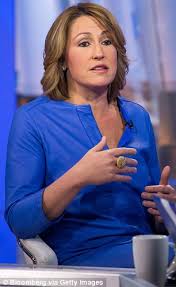
Heather Bresch
EpiPens have been mandatory for public schools in at least 11 states since Congress passed the 2013 School Access to Emergency Epinephrine Act. This occurred after Mylan spent $4 million lobbying Congress.
When the lives of their children are threatened, adults who can stoically accept the inevitability of their own deaths can become dangerously emotional about the fates of their sons or daughters.
As national news media spread the word of Mylan’s unconscionable price increases, American consumers are making their rage increasingly known.
There are three ways this could be expressed: Political, Legal, and Illegal.
Political: Minnesota U.S. Senator Amy Klobuchar has called for an official investigation by the Senate Judiciary Committee and the Federal Trade Commission (FTC) into the price hike:
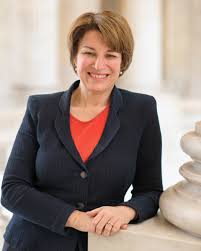
Senator Amy Klobuchar
“I write to request the Federal Trade Commission investigate whether Mylan Pharmaceuticals has violated the antitrust laws regarding the sale of its epinephrine auto-injector, EpiPen. Many Americans, including my own daughter, rely on this life-saving product to treat severe allergic reactions.
“Although the antitrust laws do not prohibit price gouging, regardless of how unseemly it may be, they do prohibit the use of unreasonable restraints of trade to facilitate or protect a price increase.”
Other Senators who have called for hearings include Iowa’s Charles Grassley, Connecticut’s Richard Blumenthal and former Democratic presidential contender Vermont Senator Bernie Sanders.
“I have heard from one father in Iowa who recently purchased a refill of his daughter’s EpiPen prescription. He reported that to fill the prescription, he had to pay over $500 for one EpiPen,” wrote Grassley to Bresch. “The high cost has also caused some first responders to consider making their own kits with epinephrine vials and syringes.”
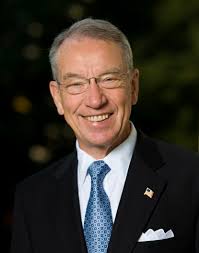
Senator Charles Grassley
“There’s no reason an EpiPen, which costs Mylan just a few dollars to make, should cost families more than $600,” tweeted Sanders on Twitter.
A second expression of political fallout could ultimately be the adoption of a single-payer healthcare system. Under this, a “single-payer” fund, rather than private insurers, pays for healthcare costs. The healthcare delivery system can be private, public or a combination of the two.
Owing to the belief of millions of Right-wing Americans that such a system is “Communistic,” this is unlikely to be adopted within the foreseeable future.
Legal: Individual Americans–and/or the U.S. Department of Justice–could file civil lawsuits against Mylan Pharmaceuticals under the Racketeer Influenced Corrupt Organizations (RICO) Act.
Passed by Congress in 1970 to combat the Mafia, its provisions include punishments for extortion. This is defined as “a criminal offense which occurs when a person unlawfully obtains either money, property or services from a person(s), entity, or institution, through coercion.”

It could be argued that, by holding a near-monopoly over a product that millions of Americans depend on for survival, and raising its price beyond the ability of most Americans to afford it, Mylan has engaged in extortionate practices.
It would not be the first time a David-vs.-Goliath lawsuit prevailed against dismal expectations.
In 1994, amid great pessimism, Mississippi Attorney General Mike Moore filed a lawsuit against the tobacco industry. But other states soon followed, ultimately growing to 46.
Their goal: To seek monetary, equitable and injunctive relief under various consumer-protection and anti-trust laws.
The theory underlying these lawsuits: Cigarettes produced by the tobacco industry created health problems among the population, which badly strained the states’ public healthcare systems.
In 1998, the states settled their Medicaid lawsuits against the tobacco industry for recovery of their tobacco-related, health-care costs–amounting to millions of dollars. In return, they exempted the companies from private lawsuits for tobacco-related injuries.
Illegal: At one time, business titans like John D. Rockefeller and Henry Ford lived apart from “the common herd.” Americans read about them in newspapers or heard about them on the radio, but had no way of contacting them directly.
If you wanted to “dig up dirt” on any of them, you had to be wealthy enough to hire private detectives–who were probably employed by the same people you wanted to investigate.
But the rise of the Internet–and especially the advent of “people-finder” websites like Instant Checkmate, Intellius and Veromi–has drastically changed all that.
Type “Heather Bresch” into the Intellius “Confidential People Finder” subject line, and–for a $20 month’s subscription–you can obtain “some or all of the following”:
- Full Name
- Age and Date of Birth
- Address
- Address History
- Phone Numbers
- Aliases
- Relatives
- Neighbors
- Email Address(es)
- Social Networks
- Property Records
- Marriages & Divorce
- Criminal Records
- Bankruptcies
- Liens
- Judgments
- Lawsuits
It doesn’t take a genius to see how the parent of an allergy-suffering child–desperate to save his son or daughter and enraged at what he believes to be the extortionately high price of EpiPens–might put such information to use.
What is truly astonishing is that, in our publicity-saturated culture, greedy, self-destructive “celebrities” like Heather Bresch don’t realize this.
ABC NEWS, ALLERGIES, ALTERNET, AMERICABLOG, AP, BABY BOOMER RESISTANCE, BBC, BERNIE SANDERS, BLOOMBERG NEWS, BUZZFEED, CBS NEWS, CHARLES GRASSLEY, CNN, CROOKS AND LIARS, DAILY KOZ, EPINEPHRINE, EPIPEN, EXTORTION, FACEBOOK, FEDERAL TRADE COMMISSION, FIVETHIRTYEIGHT, HARPER’S MAGAZINE, HEATHER BRESCH, HENRY FORD, HUFFINGTON POST, INSTANT CHECKMATE, INTELLIUS, JOHN D. ROCKEFELLER, MEDIA MATTERS, MISSISSIPPI ATTORNEY GENERAL MIKE MOORE, MOTHER JONES, MOVEON, MSNBC, MYLAN PHARMACEUTICALS, NBC NEWS, NERVE GAS, NEW REPUBLIC, NEWSDAY, NEWSWEEK, NICCOLO MACHIAVELLI, NPR, PBS NEWSHOUR, PEOPLE-FINDER WEBSITES, PEOPLE-FINDING SERVICES, PEOPLE-FINDING WEBSITES, POLITICO, POLITICUSUSA, RACKETEER INFUENCED CORRUPT ORGANIZATIONS (RICO) ACT, RAW STORY, REUTERS, SALON, SCHOOL ACCESS TO EMERGENCY EPINEPHRINE ACT AMY KLOBUCHAR, SEATTLE TIMES, SHELDON KAPLAN, SLATE, TALKING POINTS MEMO, THE ATLANTIC, THE CHICAGO SUN-TIMES, THE CHICAGO TRIBUNE, THE DAILY BEAST, THE DAILY BLOG, THE DISCOURSES, THE GUARDIAN, THE HILL, THE HUFFINGTON POST, THE LOS ANGELES TIMES, THE NATION, THE NEW REPUBLIC, THE NEW YORK TIMES, THE NEW YORKER, THE VILLAGE VOICE, THE WASHINGTON POST, THINKPROGRESS, TIME, TOBACCO COMPANY LAWSUITS, TRUTHDIG, TRUTHOUT, TWITTER, TWO POLITICAL JUNKIES, U.S. NEWS & WORLD REPORT, UPI, USA TODAY, VEROMI
In Bureaucracy, Business, History, Law, Law Enforcement, Medical, Politics, Social commentary on August 29, 2016 at 1:04 am
More than 500 years ago, Niccolo Machiavelli, the father of modern politics, delivered this sage advice in his political masterwork, The Discourses:
All those who have written upon civil institutions demonstrate…that whoever desires to found a state and give it laws, must start with assuming that all men are bad and ever ready to display their vicious nature, whenever they may find occasion for it.
If their evil disposition remains concealed for a time, it must be attributed to some unknown reason; and we must assume that it lacked occasion to show itself. But time, which has been said to be the father of all truth, does not fail to bring it to light.

Niccolo Machiavelli
Unfortunately, it’s advice that members of the United States Congress have blissfully chosen to ignore. And, in doing so, they have condemned millions of Americans to suffering and death at the hands of greed-based, predatory corporations.
One of these corporations is Mylan Pharmaceuticals.
In 2007, Mylan acquired the patent for the EpiPen, a lifesaving device for anyone allergic to common foods like peanuts, shellfish and eggs. Millions of people with life-threatening allergies depend on the EpiPen for survival.
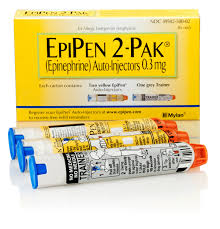
During an allergy attack, the EpiPen injects an emergency dosage of epinephrine to the user, preventing a possibly fatal reaction, known as anaphylaxis, from occurring.
Between 2007 and 2015, the wholesale price of an EpiPen skyrocketed from $56.64 to $317.82–an increase of 461%.
According to NBC News, compensation for Mylan CEO Heather Bresch similarly skyrocketed during the same period: From $2,453,456 in 2007 to $18,931,068 in 2015–a 671% raise in eight years.
Bresch wasn’t the only one to profit at the expense of the most vulnerable.
Mylan’s president, Rajiv Malik, got an 11% pay increase to $1 million annually by 2015. And Mylan Chief Commercial Officer Anthony Mauro got a 13.6% raise, amounting to $625,000 per year.
Between 2007 and 2015, Mylan’s stock price tripled, going from $13.29 per share in 2007 to a high of $47.59 in 2016. By late August, 2016, Mylan’s stock is hovering around $45.68 per share on the NASDAQ index.
Bloomberg states that the EpiPen now accounts for about 40% of Mylan’s profits.
Ironically, Sheldon Kaplan, the man who invented the now-famous device, never made a dime off it, and died in obscurity.
After working at NASA, Kaplan worked for Survival Technology, Inc., in Bethesda, Maryland. His assignment: Create a device to quickly inject a victim of anaphylaxis–a potentially fatal allergic reaction–with an emergency dose of epinephrine.
In 1973, when Kaplan was finalizing the design concept for what would ultimately become the EpiPen, the Defense Department asked him to take on a new assignment. The military needed a device that could quickly inject an antidote for nerve gas.
Kaplan’s design perfectly fitted this need: When a victim plunged a needle into his thigh, a spring-loaded mechanism shot a needle containing life-saving medicine into his bloodstream.
Kaplan’s invention became known as the ComboPen, and was initially used by the Pentagon before becoming available for use by the general public several years later as the EpiPen.
Kaplan left Survival Technology shortly after creating the ComboPen to become a biochemical engineer. He didn’t follow the success of his invention–and didn’t reap any of the huge financial rewards that it has produced.
That has certainly not been true for Mylan Pharmaceuticals.
After cornering the patent on the EpiPen in 2007, the company has made billions on the life-saving device.
According to Bloomberg, a package of two EpiPens costs $415 in the United States after insurance discounts. The same package in France–which has price controls under socialized medicine–costs $85.
The chief beneficiary of this legalized price-gouging has been Mylan’s CEO, Heather Bresch.
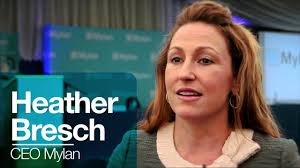
Heather Bresch
The daughter of U..S. Senator Joseph Manchin (D-WV), she joined Mylan in 1992 and held various positions within the company. Among these: Its chief lobbyist before Congress.
It was in that capacity that she persuaded Congress to enact a bill requiring all public schools to carry EpiPens for students with food allergies. It was signed into law by President Barack Obama in November, 2013.
Over the next three years, schools nationwide bought EpiPens by the truckload. And Mylan jacked up its prices for the EpiPen every other quarter.
On January 1, 2012, Heather Bresch became Mylan’s CEO.
But it wasn’t enough to have a monopoly on a device millions of men, women and children desperately needed. In 2014, true to its “profits-at-any-price” philosophy, Mylan reincorporated in the Netherlands to lower its effective tax rate.
It did so through a corporate accounting trick known as a tax inversion, and thus claiming the status of a foreign-owned corporation although its headquarters remained in Canonsburg, Pennsylvania.
Even her own father, U..S. Senator Joseph Manchin, condemned Mylan’s use of the inversion scheme and said it should be illegal.
But Bresch fiercely defended it in an interview with the New York Times: “You can’t maintain competitiveness by staying at a competitive disadvantage. I mean you just can’t.”
No doubt, with her $18 million-a-year CEO salary and moneyed ties to high-powered attorneys and influential members of Congress, Bresch thinks herself invulnerable.
But all that could quickly change–if even a small number of her victims become angry enough.


ABC NEWS, ALCOHOLISM, ALTERNET, AP, BEGGING, BUMS, BUZZFEED, CBS NEWS, CNN, DAILY KOS, DISEASE, DRUG ADDICTION, FACEBOOK, HEPATITIS B, HEPATITIS C, HILLARY RONEN, HIV, HOMELESS, HOMELESSNESS, MENTAL ILLNESS, MOTHER JONES, MOVEON, NBC NEWS, NEWSWEEK, NPR, PANHANDLING, POLITICO, PUBLIC HEALTH, RAW STORY, REUTERS, ROTAVIRUS, SALON, SAN FRANCISCO, SAN FRANCISCO CHRONICLE, SAN FRANCISCO DEPARTMENT OF PUBLIC WORKS, SEATTLE TIMES, SLATE, THE ATLANTIC, THE CHICAGO SUN-TIMES, THE CHICAGO TRIBUNE, THE DAILY BEAST, THE GUARDIAN, THE HILL, THE HUFFINGTON POST, THE LOS ANGELES TIMES, THE NEW YORK TIMES, THE WALL STREET JOURNAL, THE WASHINGTON POST, TIME, TWITTER, U.S. NEWS & WORLD REPORT, UPI, USA TODAY, WILLIE BROWN
BRING ON THE ROACHES–INSECT AND HUMAN: PART TWO (END)
In Bureaucracy, History, Law, Law Enforcement, Medical, Politics, Social commentary on June 22, 2018 at 12:05 amTo capture the true intensity of the “homeless” problem in San Francisco, you must confront its realities at the street level. Imagine:
In 2010, San Francisco voters passed the “No Sit/No Lie” ordinance, which “makes it unlawful, with certain exceptions, to sit or lie on a public sidewalk, or on an object placed on a public sidewalk, between 7AM and 11PM.”
But walk down almost any street in the downtown part of the city and you’ll find sidewalks crowded with stinking, disease-ridden, lice/bedbug-infested, drug-addicted, alcohol-soaked, often psychotic men and women whom city officials politely refer to as “the homeless.”
Among the trappings that go with this population:
What you’ll almost never see: Police actually enforcing the “No Sit/No Lie” ordinance.
So much for the will of the voters.
San Francisco officials have effectively washed their hands of the problem. If local residents must put up with repeated violations of the most basic sanitation laws, that’s their tough luck.
What matters to the Mayor and Board of Supervisors is this: The “rights” of those whose filth and behavior pose an immediate threat to public health and safety take precedence over those of tax-paying, law-abiding San Franciscans.
San Francisco residents can be fined $25 to $1,000 for feeding pigeons—but not for feeding street bums.
During the Mayorship of Willie Brown (1996 – 2004), Hizzonor proposed what he thought was a brilliant way for residents to “contribute” to “street people.”
Those who were somehow certified as “homeless” would be issued special electronic “cash cards.” When someone wanted to make a “donation,” s/he would swipe a credit card against the one owned by the street bum, for whatever amount s/he wanted to donate.
But before the program started, someone at City Hall realized a blunt truth: Residents—especially women—weren’t likely to whip out their credit cards in front of a ranting, foul-smelling, probably disease-ridden street bum.
It’s long past time for San Francisco—and other cities—to stop catering to the druggies, alcoholics, mental cases and bums who prey on the guilt or fear of law-abiding, tax-paying citizens.
The same laws that protect citizens against patients with highly communicable diseases like typhoid and cholera should be vigorously applied to those whose filthy habits threaten similar public contagion.
Among such reforms:
San Francisco officials need to:
Only then will San Francisco rightly reclaim its former glory as “the city by the Bay.”
Share this: