Archive for the ‘Medical’ Category
ABC NEWS, ALLERGIES, ALTERNET, AMERICABLOG, AP, BABY BOOMER RESISTANCE, BBC, BERNIE SANDERS, BLOOMBERG NEWS, BUZZFEED, CBS NEWS, CHARLES GRASSLEY, CNN, CROOKS AND LIARS, DAILY KOZ, EPINEPHRINE, EPIPEN, EXTORTION, FACEBOOK, FEDERAL TRADE COMMISSION, FIVETHIRTYEIGHT, HARPER’S MAGAZINE, HEATHER BRESCH, HENRY FORD, HUFFINGTON POST, INSTANT CHECKMATE, INTELLIUS, JOHN D. ROCKEFELLER, MEDIA MATTERS, MISSISSIPPI ATTORNEY GENERAL MIKE MOORE, MOTHER JONES, MOVEON, MSNBC, MYLAN PHARMACEUTICALS, NBC NEWS, NERVE GAS, NEW REPUBLIC, NEWSDAY, NEWSWEEK, NICCOLO MACHIAVELLI, NPR, PBS NEWSHOUR, PEOPLE-FINDER WEBSITES, PEOPLE-FINDING SERVICES, PEOPLE-FINDING WEBSITES, POLITICO, POLITICUSUSA, RACKETEER INFUENCED CORRUPT ORGANIZATIONS (RICO) ACT, RAW STORY, REUTERS, SALON, SCHOOL ACCESS TO EMERGENCY EPINEPHRINE ACT AMY KLOBUCHAR, SEATTLE TIMES, SHELDON KAPLAN, SLATE, TALKING POINTS MEMO, THE ATLANTIC, THE CHICAGO SUN-TIMES, THE CHICAGO TRIBUNE, THE DAILY BEAST, THE DAILY BLOG, THE DISCOURSES, THE GUARDIAN, THE HILL, THE HUFFINGTON POST, THE LOS ANGELES TIMES, THE NATION, THE NEW REPUBLIC, THE NEW YORK TIMES, THE NEW YORKER, THE VILLAGE VOICE, THE WASHINGTON POST, THINKPROGRESS, TIME, TOBACCO COMPANY LAWSUITS, TRUTHDIG, TRUTHOUT, TWITTER, TWO POLITICAL JUNKIES, U.S. NEWS & WORLD REPORT, UPI, USA TODAY, VEROMI
In Bureaucracy, Business, History, Law, Law Enforcement, Medical, Politics, Social commentary on August 30, 2016 at 12:25 am
Mylan Pharmaceuticals CEO Heather Bresch is on a roll.
- Since 2004, she has hiked the price of a life-saving EpiPen from $50 to $300–or $600 for a package of two.
- She has seen her own salary steadily rise more than 600% to a current total of $18 million a year.
- The device now accounts for 40% of Mylan’s profits.
But in playing greed-based games with the lives of millions of Americans, Bresch, 47, may have put her company–and even herself–in jeopardy.
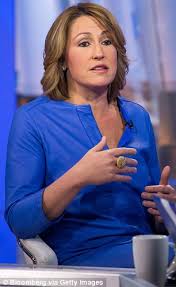
Heather Bresch
EpiPens have been mandatory for public schools in at least 11 states since Congress passed the 2013 School Access to Emergency Epinephrine Act. This occurred after Mylan spent $4 million lobbying Congress.
When the lives of their children are threatened, adults who can stoically accept the inevitability of their own deaths can become dangerously emotional about the fates of their sons or daughters.
As national news media spread the word of Mylan’s unconscionable price increases, American consumers are making their rage increasingly known.
There are three ways this could be expressed: Political, Legal, and Illegal.
Political: Minnesota U.S. Senator Amy Klobuchar has called for an official investigation by the Senate Judiciary Committee and the Federal Trade Commission (FTC) into the price hike:
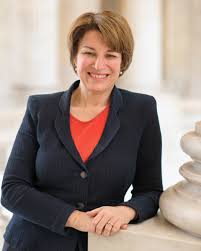
Senator Amy Klobuchar
“I write to request the Federal Trade Commission investigate whether Mylan Pharmaceuticals has violated the antitrust laws regarding the sale of its epinephrine auto-injector, EpiPen. Many Americans, including my own daughter, rely on this life-saving product to treat severe allergic reactions.
“Although the antitrust laws do not prohibit price gouging, regardless of how unseemly it may be, they do prohibit the use of unreasonable restraints of trade to facilitate or protect a price increase.”
Other Senators who have called for hearings include Iowa’s Charles Grassley, Connecticut’s Richard Blumenthal and former Democratic presidential contender Vermont Senator Bernie Sanders.
“I have heard from one father in Iowa who recently purchased a refill of his daughter’s EpiPen prescription. He reported that to fill the prescription, he had to pay over $500 for one EpiPen,” wrote Grassley to Bresch. “The high cost has also caused some first responders to consider making their own kits with epinephrine vials and syringes.”
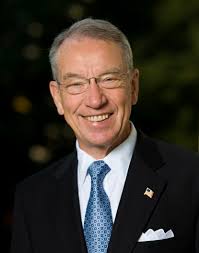
Senator Charles Grassley
“There’s no reason an EpiPen, which costs Mylan just a few dollars to make, should cost families more than $600,” tweeted Sanders on Twitter.
A second expression of political fallout could ultimately be the adoption of a single-payer healthcare system. Under this, a “single-payer” fund, rather than private insurers, pays for healthcare costs. The healthcare delivery system can be private, public or a combination of the two.
Owing to the belief of millions of Right-wing Americans that such a system is “Communistic,” this is unlikely to be adopted within the foreseeable future.
Legal: Individual Americans–and/or the U.S. Department of Justice–could file civil lawsuits against Mylan Pharmaceuticals under the Racketeer Influenced Corrupt Organizations (RICO) Act.
Passed by Congress in 1970 to combat the Mafia, its provisions include punishments for extortion. This is defined as “a criminal offense which occurs when a person unlawfully obtains either money, property or services from a person(s), entity, or institution, through coercion.”

It could be argued that, by holding a near-monopoly over a product that millions of Americans depend on for survival, and raising its price beyond the ability of most Americans to afford it, Mylan has engaged in extortionate practices.
It would not be the first time a David-vs.-Goliath lawsuit prevailed against dismal expectations.
In 1994, amid great pessimism, Mississippi Attorney General Mike Moore filed a lawsuit against the tobacco industry. But other states soon followed, ultimately growing to 46.
Their goal: To seek monetary, equitable and injunctive relief under various consumer-protection and anti-trust laws.
The theory underlying these lawsuits: Cigarettes produced by the tobacco industry created health problems among the population, which badly strained the states’ public healthcare systems.
In 1998, the states settled their Medicaid lawsuits against the tobacco industry for recovery of their tobacco-related, health-care costs–amounting to millions of dollars. In return, they exempted the companies from private lawsuits for tobacco-related injuries.
Illegal: At one time, business titans like John D. Rockefeller and Henry Ford lived apart from “the common herd.” Americans read about them in newspapers or heard about them on the radio, but had no way of contacting them directly.
If you wanted to “dig up dirt” on any of them, you had to be wealthy enough to hire private detectives–who were probably employed by the same people you wanted to investigate.
But the rise of the Internet–and especially the advent of “people-finder” websites like Instant Checkmate, Intellius and Veromi–has drastically changed all that.
Type “Heather Bresch” into the Intellius “Confidential People Finder” subject line, and–for a $20 month’s subscription–you can obtain “some or all of the following”:
- Full Name
- Age and Date of Birth
- Address
- Address History
- Phone Numbers
- Aliases
- Relatives
- Neighbors
- Email Address(es)
- Social Networks
- Property Records
- Marriages & Divorce
- Criminal Records
- Bankruptcies
- Liens
- Judgments
- Lawsuits
It doesn’t take a genius to see how the parent of an allergy-suffering child–desperate to save his son or daughter and enraged at what he believes to be the extortionately high price of EpiPens–might put such information to use.
What is truly astonishing is that, in our publicity-saturated culture, greedy, self-destructive “celebrities” like Heather Bresch don’t realize this.
ABC NEWS, ALLERGIES, ALTERNET, AMERICABLOG, AP, BABY BOOMER RESISTANCE, BBC, BERNIE SANDERS, BLOOMBERG NEWS, BUZZFEED, CBS NEWS, CHARLES GRASSLEY, CNN, CROOKS AND LIARS, DAILY KOZ, EPINEPHRINE, EPIPEN, EXTORTION, FACEBOOK, FEDERAL TRADE COMMISSION, FIVETHIRTYEIGHT, HARPER’S MAGAZINE, HEATHER BRESCH, HENRY FORD, HUFFINGTON POST, INSTANT CHECKMATE, INTELLIUS, JOHN D. ROCKEFELLER, MEDIA MATTERS, MISSISSIPPI ATTORNEY GENERAL MIKE MOORE, MOTHER JONES, MOVEON, MSNBC, MYLAN PHARMACEUTICALS, NBC NEWS, NERVE GAS, NEW REPUBLIC, NEWSDAY, NEWSWEEK, NICCOLO MACHIAVELLI, NPR, PBS NEWSHOUR, PEOPLE-FINDER WEBSITES, PEOPLE-FINDING SERVICES, PEOPLE-FINDING WEBSITES, POLITICO, POLITICUSUSA, RACKETEER INFUENCED CORRUPT ORGANIZATIONS (RICO) ACT, RAW STORY, REUTERS, SALON, SCHOOL ACCESS TO EMERGENCY EPINEPHRINE ACT AMY KLOBUCHAR, SEATTLE TIMES, SHELDON KAPLAN, SLATE, TALKING POINTS MEMO, THE ATLANTIC, THE CHICAGO SUN-TIMES, THE CHICAGO TRIBUNE, THE DAILY BEAST, THE DAILY BLOG, THE DISCOURSES, THE GUARDIAN, THE HILL, THE HUFFINGTON POST, THE LOS ANGELES TIMES, THE NATION, THE NEW REPUBLIC, THE NEW YORK TIMES, THE NEW YORKER, THE VILLAGE VOICE, THE WASHINGTON POST, THINKPROGRESS, TIME, TOBACCO COMPANY LAWSUITS, TRUTHDIG, TRUTHOUT, TWITTER, TWO POLITICAL JUNKIES, U.S. NEWS & WORLD REPORT, UPI, USA TODAY, VEROMI
In Bureaucracy, Business, History, Law, Law Enforcement, Medical, Politics, Social commentary on August 29, 2016 at 1:04 am
More than 500 years ago, Niccolo Machiavelli, the father of modern politics, delivered this sage advice in his political masterwork, The Discourses:
All those who have written upon civil institutions demonstrate…that whoever desires to found a state and give it laws, must start with assuming that all men are bad and ever ready to display their vicious nature, whenever they may find occasion for it.
If their evil disposition remains concealed for a time, it must be attributed to some unknown reason; and we must assume that it lacked occasion to show itself. But time, which has been said to be the father of all truth, does not fail to bring it to light.

Niccolo Machiavelli
Unfortunately, it’s advice that members of the United States Congress have blissfully chosen to ignore. And, in doing so, they have condemned millions of Americans to suffering and death at the hands of greed-based, predatory corporations.
One of these corporations is Mylan Pharmaceuticals.
In 2007, Mylan acquired the patent for the EpiPen, a lifesaving device for anyone allergic to common foods like peanuts, shellfish and eggs. Millions of people with life-threatening allergies depend on the EpiPen for survival.
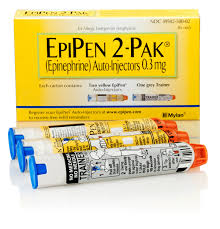
During an allergy attack, the EpiPen injects an emergency dosage of epinephrine to the user, preventing a possibly fatal reaction, known as anaphylaxis, from occurring.
Between 2007 and 2015, the wholesale price of an EpiPen skyrocketed from $56.64 to $317.82–an increase of 461%.
According to NBC News, compensation for Mylan CEO Heather Bresch similarly skyrocketed during the same period: From $2,453,456 in 2007 to $18,931,068 in 2015–a 671% raise in eight years.
Bresch wasn’t the only one to profit at the expense of the most vulnerable.
Mylan’s president, Rajiv Malik, got an 11% pay increase to $1 million annually by 2015. And Mylan Chief Commercial Officer Anthony Mauro got a 13.6% raise, amounting to $625,000 per year.
Between 2007 and 2015, Mylan’s stock price tripled, going from $13.29 per share in 2007 to a high of $47.59 in 2016. By late August, 2016, Mylan’s stock is hovering around $45.68 per share on the NASDAQ index.
Bloomberg states that the EpiPen now accounts for about 40% of Mylan’s profits.
Ironically, Sheldon Kaplan, the man who invented the now-famous device, never made a dime off it, and died in obscurity.
After working at NASA, Kaplan worked for Survival Technology, Inc., in Bethesda, Maryland. His assignment: Create a device to quickly inject a victim of anaphylaxis–a potentially fatal allergic reaction–with an emergency dose of epinephrine.
In 1973, when Kaplan was finalizing the design concept for what would ultimately become the EpiPen, the Defense Department asked him to take on a new assignment. The military needed a device that could quickly inject an antidote for nerve gas.
Kaplan’s design perfectly fitted this need: When a victim plunged a needle into his thigh, a spring-loaded mechanism shot a needle containing life-saving medicine into his bloodstream.
Kaplan’s invention became known as the ComboPen, and was initially used by the Pentagon before becoming available for use by the general public several years later as the EpiPen.
Kaplan left Survival Technology shortly after creating the ComboPen to become a biochemical engineer. He didn’t follow the success of his invention–and didn’t reap any of the huge financial rewards that it has produced.
That has certainly not been true for Mylan Pharmaceuticals.
After cornering the patent on the EpiPen in 2007, the company has made billions on the life-saving device.
According to Bloomberg, a package of two EpiPens costs $415 in the United States after insurance discounts. The same package in France–which has price controls under socialized medicine–costs $85.
The chief beneficiary of this legalized price-gouging has been Mylan’s CEO, Heather Bresch.
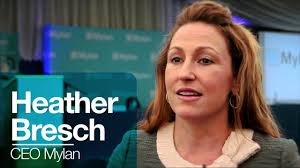
Heather Bresch
The daughter of U..S. Senator Joseph Manchin (D-WV), she joined Mylan in 1992 and held various positions within the company. Among these: Its chief lobbyist before Congress.
It was in that capacity that she persuaded Congress to enact a bill requiring all public schools to carry EpiPens for students with food allergies. It was signed into law by President Barack Obama in November, 2013.
Over the next three years, schools nationwide bought EpiPens by the truckload. And Mylan jacked up its prices for the EpiPen every other quarter.
On January 1, 2012, Heather Bresch became Mylan’s CEO.
But it wasn’t enough to have a monopoly on a device millions of men, women and children desperately needed. In 2014, true to its “profits-at-any-price” philosophy, Mylan reincorporated in the Netherlands to lower its effective tax rate.
It did so through a corporate accounting trick known as a tax inversion, and thus claiming the status of a foreign-owned corporation although its headquarters remained in Canonsburg, Pennsylvania.
Even her own father, U..S. Senator Joseph Manchin, condemned Mylan’s use of the inversion scheme and said it should be illegal.
But Bresch fiercely defended it in an interview with the New York Times: “You can’t maintain competitiveness by staying at a competitive disadvantage. I mean you just can’t.”
No doubt, with her $18 million-a-year CEO salary and moneyed ties to high-powered attorneys and influential members of Congress, Bresch thinks herself invulnerable.
But all that could quickly change–if even a small number of her victims become angry enough.
ABC NEWS, BUREAUCRACY, CATHOLIC CHURCH, CBS NEWS, CHILD ABUSE, CNN, COLLEGE FOOTBALL, FACEBOOK, FBI, J. EDGAR HOOVER, JERRY SANDUSKY, JOE PATERNO, LOUIS J. FREEH, NBC NEWS, NUCLEAR POWER PLANTS, PENN STATE UNIVERSITY, PRIESTS, THE CHICAGO SUN-TIMES, THE CHICAGO TRIBUNE, THE LOS ANGELES TIMES, THE NEW YORK TIMES, THE WASHINGTON POST, THOMAS JEFFERSON, TWITTER
In Bureaucracy, Business, History, Law, Law Enforcement, Medical, Military, Politics, Social commentary on April 7, 2016 at 12:04 am
After spending years of his life sexually abusing boys entrusted into his care, Jerry Sandusky will likely spend the rest of his life as a prison inmate.
On October 9, 2012, a Pennsylvania judge sentenced the 68-year-old former Penn State assistant football coach to at least 30 years in prison. And he may spend as many as 60 years behind bars.
Following his conviction on June 22, 2012, he had faced a maximum of 400 years’ imprisonment for his sexual abuse of 10 boys over a 15-year period.
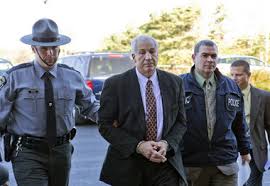
Jerry Sandusky (middle) in police custody
After the sentencing decision was announced, Penn State University President Rodney Erickson released a statement:
“Our thoughts today, as they have been for the last year, go out to the victims of Jerry Sandusky’s abuse.
“While today’s sentence cannot erase what has happened, hopefully it will provide comfort to those affected by these horrible events and help them continue down the road to recovery.”
No doubt Erickson–and the rest of Penn State–waned to move on from this shameful page in the university’s history. And the university desperately tried to sweep the sordid scandal out of sight of the ticket-paying public–-and of history.
Among the steps it took:
- Firing Joe Paterno, the legendary head football coach who had led Penn State to a staggering 112 victories;
- Ousting Graham Spanier, the university’s longtime president; and
- Removing the iconic statue of Paterno–long held in worshipful esteem by almost everyone at the football-obsessed institution.
So what remains to be learned from this sordid affair?
A great deal, it turns out.
To begin at the beginning:
In 2002, assistant coach Mike McQueary, then a Penn State graduate assistant, walked in on Sandusky anally raping a 10-year-old boy. The next day, McQueary reported the incident to head coach Paterno.
“You did what you had to do,” said Paterno. “It is my job now to figure out what we want to do.”
Paterno’s idea of “what we want to do” consisted of reporting the incident to three other top Penn State officials:
Their idea of “what we want to do” was to close ranks around Sandusky and engage in a diabolical “code of silence.”
As former FBI Director Louis J. Freeh summed up in an internal investigative report compiled at the request of Penn State and released on July 12, 2012:
“Four of the most powerful people at the Pennsylvania State University–-President Graham B. Spanier, Senior Vice President-Finance and Business Gary C. Schultz, Athletic Director Timothy M. Curley and Head Football Coach Joseph V. Paterno–-failed to protect against a child sexual predator harming children for over a decade.
“These men concealed Sandusky’s activities from the board of trustees, the university community and authorities.

Louis J. Freeh
“They exhibited a striking lack of empathy for Sandusky’s victims by failing to inquire as to their safety and well-being, especially by not attempting to determine the identity of the child who Sandusky assaulted in the Lasch Building in 2001.
“… In order to avoid the consequences of bad publicity, the most powerful leaders at the University….repeatedly concealed critical facts relating to Sandusky’s child abuse from the authorities, the University’s Board of Trustees, the Penn State community, and the public at large.
“The avoidance of the consequences of bad publicity is the most significant, but not the only, cause for this failure to protect child victims and report to authorities.”
If there is a fundamental truth to be learned from this sordid affair, it is this:
The first rule of any and every bureaucracy is: Above all else, the reputation of the institution must be protected.
And this holds true at:
- The level of local / state / Federal government;
- For-profit organizations;
- Non-profit organizations; or
- Religious institutions
During the 48-year reign of FBI Director J. Edgar Hoover, agents had their own version of this: Do not embarrass the Bureau.
Those who did were fired or shipped to Hoover’s version of Siberia: A posting in remote Butte, Montana.
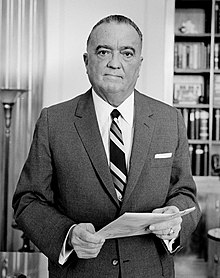
J. Edgar Hoover
Within the Catholic Church, countless Catholic priests who abused young boys entrusted to their protection were repeatedly protected by their high-ranking superiors.
In private industry, whistleblowers who report rampant safety violations in nuclear power plants are often ignored by the very regulatory agencies the public counts on to prevent catastrophic accidents.
Imperfect institutions staffed by perfect men obsessed with power, money and fame–-and fearful of losing one or all of these–-can never be expected to act otherwise.
And those who do expect ordinary mortals to behave like extraordinary saints will be forever disappointed.
So how can we at least minimize such outrages in the future?
“Eternal vigilance is the price of freedom,” warned Thomas Jefferson. And it remains as true today as it did more than 200 years ago.
Add to this the more recent adage: “Sunlight is the best disinfectant.”
The more we know about how our institutions actually work–as opposed to how they want us to believe they work–the more chances we have to control their behavior.
And to check their abuses when they occur.
Which they will.
ABC NEWS, ABORTION, CBS NEWS, CLIMATE CHANGE, CNN, DEPARTMENT OF HOMELAND SECURITY, ERNEST HEMINGWAY, FACEBOOK, FASCISM, GUN CONTROL, HARRISON E. SALISBURY, JOSEPH MCCARTHY, NATIONAL OCEANIC AND ATMOSPHERIC ADMINISTRATION, NATIONAL RIFLE ASSOCIATION, NBC NEWS, PLANNED PARENTHOOD, REPUBLICANS, RIGHT-WING TERRORISM, ROE V. WADE, SPANISH CIVIL WAR, THE CHICAGO SUN-TIMES, THE CHICAGO TRIBUNE, THE LOS ANGELES TIMES, THE NEW YORK TIMES, THE WASHINGTON POST, TWITTER, UNIVERSITY OF MISSOURI, WORLD WAR ii
In Bureaucracy, History, Law, Law Enforcement, Medical, Politics, Social commentary on March 14, 2016 at 3:41 pm
Ernest Hemingway knew his Fascists. He fought against them in 1930s Spain, where Right-wing general Francisco Franco–aided by Adolf Hitler–ultimately overthrew the Spanish Republic in 1939.
And he fought against them in France after American forces landed in Normandy. He was one of the first Americans to reach Paris and help “liberate” the bar of the Ritz Hotel.
In the 1950s, he opposed the growing plague of anti-Red hysteria as represented by Wisconsin U.S. Senator Joseph R. McCarthy.
Addressing a 1937 Writers Congress in a rare public speech, Hemingway said: “There is only one form of government that cannot produce good writers, and that system is fascism. For fascism is a lie told by bullies. A writer who will not lie cannot live and work under fascism.”
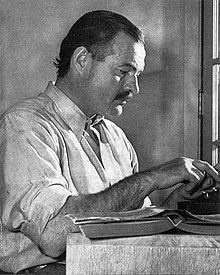
Ernest Hemingway
It’s thus clear what the Nobel-Prize winning author would think of a Missouri state senator’s efforts at censorship.
Lindsay Ruhr, a graduate student in the School of Social Work at the University of Missouri, chose to write her doctoral dissertation on the effects of the state’s recently imposed 72-hour waiting period for abortions.

Lindsay Ruhr
And this has drawn the ire of Missouri State Senator Kurt Schaefer, a Republican from Columbia, Missouri, who chairs the Missouri state senate’s interim Committee on the Sanctity of Life.
In late October, Schaefer sent a letter to the University of Missouri calling Ruhr’s dissertation “a marketing aid for Planned Parenthood — one that is funded, in part or in whole, by taxpayer dollars.”
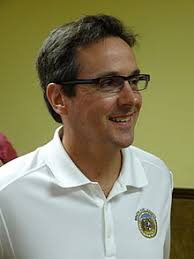
Kurt Schaefer
Schaefer demanded that the university hand over documents regarding the project’s approval and said that, because the University of Missouri is a public university, it should not fund research that he said would promote elective abortions.
Missouri law prohibits the use of public funds to promote non-life-saving abortions.
In September, 2014, Missouri enacted a 72-hour wait for abortions. Reproductive rights advocates believed this is an effort to deny women access to legal abortion as established by the Supreme Court’s Roe v. Wade decision in 1973.
Other Missouri legal restrictions require women seeking an abortion to undergo an ultrasound scan and receive informational material that aims to persuade them from obtaining an abortion.
Lindsay Ruhr wants to find out “how this policy [the 72-hour waiting limit] affects women. Whether this policy is having a harmful or beneficial effect, we don’t know.”
Schaefer claims that Ruhr is biased in favor of abortions because her adviser is affiliated with Planned Parenthood of Kansas.
“This is a concerning revelation considering the University’s recent troubling connections to Planned Parenthood,” wrote Schaefer in a letter to University of Missouri officials.
Schaefer argued that Ruhr is illegally using public funds to conduct her dissertation research.
“It is difficult to understand how a research study approved by the University, conducted by a University student, and overseen by the Director of the School of Social Work at the University can be perceived as anything but an expenditure of public funds to aid Planned Parenthood.”
Under Missouri law, it is illegal for public employees and facilities to use state money towards “encouraging or counseling” a woman to have an abortion not necessary to save her life.
Even though Ruhr is seeking a PhD at the university, she is employed by Planned Parenthood and the university is not paying for her research.
Abortions in Missouri aren’t the only scientific subject that Republicans have made it forbidden to study. Among these:
- A federal ban on studying gun-related deaths and the results of gun control. This followed aggressive efforts by the National Rifle Association to stop finding data that contradicted its “more guns are better” narrative. It’s prevented crucial research into how best to combat mass shootings and prevent gun accidents in the home.
- Harassment of climate scientists. Republicans have increasingly sought to cut funding to scientists studying the Earth’s climate because they keep finding more data to suggest the planet is actually warming. If the public demands an end to the use of fossil fuels–which are responsible for the warming–this will threaten Republicans’ ties to–and funding from–the oil and gas industries.
- The House Science Committee has demanded climate scientists working for the National Oceanic and Atmospheric Administration turn over all emails and documents–personal and professional–they wrote on this subject during the last seven years.
- Preventing scientists from studying Right-wing terrorism in the United States. The foremost expert on this subject–Daryl Johnson, a counter-terrorism analyst working at the Department of Homeland Security–was forced out of his job.
- Johnson had spent six years with the agency amassing a wealth of data on far-Right extremist groups–like the Ku Klux Klan and militia movement–that threaten the safety of American citizens. Republicans’ objection: The facts his research was finding on their constituents made conservatives look bad.
As Harrison E. Salisbury, former New York Times bureau chief in Moscow, observed: “…The message was always the same: Shut up! Don’t rock the boat. Keep those unpleasant truths to yourself. The truth, I was ultimately to learn, is the most dangerous thing. There are no ends to which men of power will not go to put out its eyes.”
ABC NEWS, AFFORDABLE CARE ACT, AIR TRAFFIC CONTROLLERS STRIKE, BARACK OBAMA, BERNIE SANDERS, CBS NEWS, CNN, COLUMBIA UNIVERSITY, DIXIE CHICKS, EXTORTION, FACEBOOK, FBI, GEORGE W. BUSH, HARVARD LAW SCHOOL, HENRY J. KAISER FOUNDATION, HILLARY CLINTON, IRAQ WAR, JOHN BOEHNER, JOHN SCHNATTER, JON STEWART, JONATHAN ALTER, JUSTICE DEPARTMENT, KOCH BROTHERS, Medical, MEDICAL CARE, NBC NEWS, NICCOLO MACHIAVELLI, OBAMACARE, PAPA JOHN'S PIZZA, PATRIOT ACT, public relations, RACKETEER INFLUENCED CORRUPT ORGANIZATIONS ACT, REFORM, REPUBLICAN PARTY, RICHARD WOLFFE, Ronald Reagan, TEA PARTY, TERRORISM, THE CHICAGO SUN-TIMES, THE CHICAGO TRIBUNE, THE DAILY SHOW, THE LOS ANGELES TIMES, THE NEW YORK TIMES, THE PRINCE, THE WASHINGTON POST, TWITTER, UNEMPLOYMENT
In Bureaucracy, Business, History, Law, Medical, Politics, Social commentary on February 9, 2016 at 12:04 am
Barack Obama is one of one of the most highly educated Presidents to occupy the White House.
When he took office, he intended to make healthcare available to all Americans–and not just the wealthiest 1%.
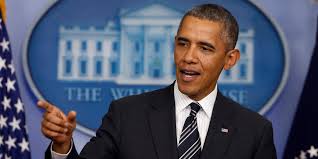
President Barack Obama
But he made a series of deadly mistakes:
- In crafting the Affordable Care Act (better known as Obamacare);
- In building public support for it; In underestimating the venom and opposition of his Right-wing enemies;
- In underestimating the opposition of the business community in complying with the law; and
- In allowing himself to be cowed by his political enemies.
Obama is by nature a supreme rationalist and conciliator–not a rough-and-tumble street fighter.
And his career before becoming President in 2008–or even the United States Senator from Illinois in 2004–greatly strengthened this predisposition.
From 1985 to 1988, Obama worked as a community organizer, setting up a job-training program, a college preparatory tutoring program and a tenants’ rights organization.
Such activities demand skills in building consensus, not confrontation.
He then taught at the University of Chicago Law School for 12 years–as a Lecturer from 1992 to 1996, and as a Senior Lecturer from 1996 to 2004, teaching Constitutional law.

University of Chicago Law School
Law professors spend their time in clean, civil classrooms–far removed from the rough-and tumble of criminal defense/prosecution.
If Obama had accused President George W. Bush of conspiring with Al Qaeda–as Republicans have repeatedly accused Obama–retribution would have been swift and brutal.
(On March 10, 2003, nine days before Bush ordered the unprovoked invasion of Iraq, Natalie Maines, the lead singer of the country music band, the Dixie Chicks, told a London concert audience: “We don’t want this war, this violence, and we’re ashamed that the President of the United States is from Texas.”
(A Republican-approved boycott of Dixie Chicks music followed, as well as death threats DJs refused to play their music, and President Bush refused to criticize the KGB-like tactics of his Right-wing supporters.)

Natalie Maines, left, of the Dixie Chicks
But Obama could not–or would not–bring himself to attack his sworn enemies by attacking their own patriotism or invoking Federal criminal statutes against their extortionate and terrorist threats.
In short: Obama–who believes in reason and conciliation–paid the price for allowing his sworn enemies to insult and obstruct him.
Obama Mistake No. 6: Failing to closely study his proposed legislation.
Throughout his campaign to win support for the Affordable Care Act (ACA) Obama had repeatedly promised: “If you like your health insurance plan, you can keep your plan. If you like your doctor, you can keep your doctor. Period.”
But, hidden in the 906 pages of the law, was a fatal catch for the President’s own credibility.
The law stated that those who already had medical insurance could keep their plans–so long as those plans met the requirements of the new healthcare law.
If their plans didn’t meet those requirements, they would have to obtain coverage that did.
It soon soon turned out that many Americans wanted to keep their current plan–even if it did not provide the fullest possible coverage.
Suddenly, the President found himself facing a PR nightmare–charged and ridiculed as a liar. Even Jon Stewart, who on “The Daily Show,” had supported the implementation of “Obamacare,” ran footage of Obama’s “you can keep your doctor” promise.
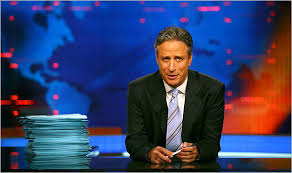
Jon Stewart
The implication: You said we could keep our plan/doctor; since we can’t, you must be a liar.
As a result, the President found his reputation for integrity–long his greatest asset–shattered.
All of which points to a final warning offered by Niccolo Machiavelli:
Whence it may be seen that hatred is gained as much by good works as by evil….
Former Secretary of State Hillary Clinton says that, if she’s elected President, she will push for incremental changes in the ACA.
Vermont United States Senator Bernie Sanders, on the other hand, has called for the implementation of a single-payer plan. This, in effect, would accomplish what Republicans have spent the last seven years trying to do: Repeal “Obamacare.”
A single-payer plan would prove simpler and more comprehensive than the ACA. But the chances of its passing a Republican-dominated Congress are absolutely zero.
The passage of the ACA was–as the Duke of Wellington said of Waterloo–“a damned, close-run thing.”
Right-wingers like former Alaska Governor Sarah Palin flat-out lied that the ACA would create “death panels.” And millions of reactionaries, furious that a black man now occupied the Oval Office, eagerly believed it.
When Democratic politicians organized town meetings for public discussion of the Act, Rightist hooligans often used violence to break them up.
Republicans remained silent while President George W. Bush lied the nation into a bloody, budget-busting war in Iraq. But they have repeatedly damned the ACA as a lethal drain on the American taxpayer.
Thus, any changes to come in the ACA will have to come as Hillary Clinton proposes, on an incremental basis.
The only thing that can be said with certainty about the ACA is this:
If any Republican wins the Presidency in 2016, the Republican-dominated House and Senate will send him legislation decreeing the death of affordable healthcare for all Americans. And he will of course sign it.
ABC NEWS, AFFORDABLE CARE ACT, AIR TRAFFIC CONTROLLERS STRIKE, BARACK OBAMA, BERNIE SANDERS, CBS NEWS, CNN, COLUMBIA UNIVERSITY, DIXIE CHICKS, EXTORTION, FACEBOOK, FBI, GEORGE W. BUSH, HARVARD LAW SCHOOL, HENRY J. KAISER FOUNDATION, HILLARY CLINTON, IRAQ WAR, JOHN BOEHNER, JOHN SCHNATTER, JOHN STEWART, JONATHAN ALTER, JUSTICE DEPARTMENT, KOCH BROTHERS, MEDICAL CARE, NBC NEWS, NICCOLO MACHIAVELLI, OBAMACARE, PAPA JOHN'S PIZZA, PATRIOT ACT, public relations, RACKETEER INFLUENCED CORRUPT ORGANIZATIONS ACT, REFORM, REPUBLICAN PARTY, RICHARD WOLLFE, Ronald Reagan, TEA PARTY, TERRORISM, THE CHICAGO SUN-TIMES, THE CHICAGO TRIBUNE, THE DAILY SHOW, THE LOS ANGELES TIMES, THE NEW YORK TIMES, THE PRINCE, THE WASHINGTON POST, TWITTER, UNEMPLOYMENT
In Bureaucracy, Business, History, Law, Law Enforcement, Medical, Politics on February 8, 2016 at 12:15 am
On July 2, 2013, the Treasury Department announced a major change in the application of the Affordable Care Act (ACA), more popularly known as “Obamacare”:
“We have heard concerns about the complexity of the requirements and the need for more time to implement them effectively…We have listened to your feedback. And we are taking action.
“The Administration is announcing that it will provide an additional year before the ACA mandatory employer and insurer reporting requirements begin.”
[Boldface in the original document.]
In short: The administration allowed employers an additional year to refuse providing healthcare to their employees–or to face fines for not doing so.
And how did Obama’s self-declared enemies react to this effort at compromise?
On July 30, 2013, House Republicans voted to proceed with a lawsuit against the President–for failing to enforce the Affordable Care Act.
“In 2013, the president changed the health care law without a vote of Congress, effectively creating his own law by literally waiving the employer mandate and the penalties for failing to comply with it,” House Speaker John A. Boehner said in a statement.
“That’s not the way our system of government was designed to work. No president should have the power to make laws on his or her own.”
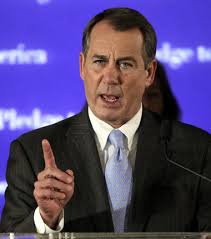
John Boehner
Thus, Boehner intended to sue the President to enforce the law that the House had voted 54 times to repeal, delay or change.
Obama Mistake No. 5: Believing that public and private employers would voluntarily comply with the law.
The ACA requires employers to provide insurance for part-time employees who work more than 30 hours per week. Yet many government employers claim they can’t afford it–and have thus limited part-time workers’ hours to 29 per week instead.
Among those states affected:
- “Our choice was to cut the hours or give [employees] health care, and we could not afford the latter,” Dennis Hanwell, the Republican mayor of Medina, Ohio, said in an interview with The New York Times.
- Lawrence County, in western Pennsylvania, reduced the limit for part-time employees to 28 hours a week, from 32.
- In Virginia, part-time state employees are generally not allowed to work more than 29 hours a week on average over a 12-month period.
President Obama and those who crafted the Act may have been surprised at what happened. But they shouldn’t have been.
Greed-addicted officials will always seek ways to avoid complying with the law–or achieve minimum compliance with it. And what goes for public employers goes for private ones, too.
The Act doesn’t penalize a company for failing to provide health insurance coverage for part-time employees who work fewer than 30 hours.
The result was predictable. And its consequences are daily becoming more clear:
- Increasing numbers of employers are moving fulltime workers into part-time positions;
- Refusing to provide their employees with medical insurance; and
- Avoiding fines for non-compliance with the law.
Some employers have openly shown their contempt for President Obama–and the idea that employers have an obligation to those who make their profits a reality.
One of these is John Schnatter, CEO of Papa John’s Pizza, who has been quoted as saying:
- The prices of his pizzas will go up–by 11 to 14 cents per pizza, or 15 to 20 cents per order; and
- He will pass along these costs to his customers.
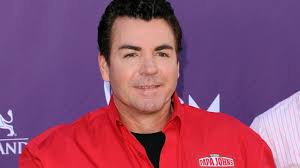
John Schnatter
“If Obamacare is in fact not repealed,” he told Politico, “we will find tactics to shallow out any Obamacare costs and core strategies to pass that cost onto consumers in order to protect our shareholders’ best interests.”
If President Obama were truly a student of Realpolitick, he would have predicted that most businesses would try to avoid compliance with the ACA.
And the remedy would have been simple: Require all employers to provide insurance coverage for all of their employees, regardless of their fulltime or part-time status.
This, in turn, would have produced two substantial benefits:
- All employees would have been able to obtain medical coverage; and
- Employers would have been encouraged to provide fulltime positions rather than part-time ones.
The reason: Employers would feel: “Since I’m paying for fulltime insurance coverage, I should be getting fulltime work in return.”
If the President ever considered the merits of this, he decided against pressing for such a requirement.
Obama is one of the most rational and educated men to occupy the White House. So why did he fail to expect the worst in people–especially his self-declared enemies–and arrange to counter it?
Niccolo Machiavelli provides a shrewd insight into the repeated failures of the Obama Presidency.

Niccolo Machiavelli
Writing in The Prince, his classic work on the realities of politics, Machiavelli states:
…He is happy whose mode of procedure accords with the needs of the times, and similarly, he is unfortunate whose mode of procedure is opposed to the times….
If it happens that time and circumstances are favorable to one who acts with caution and prudence he will be successful But if time and circumstances change he will be ruined, because he does not change the mode of this procedure.
Put another way: A conciliator will prosper so long as he works with others willing to compromise. But facing uncompromising fanatics, he will be defeated–unless he can exchange conciliation for confrontation.
ABC NEWS, AFFORDABLE CARE ACT, AIR TRAFFIC CONTROLLERS STRIKE, BARCK OBAMA, CBS NEWS, CNN, COLUMBIA UNIVERSITY, DIXIE CHICKS, EXTORTION, FACEBOOK, FBI, GEORGE W. BUSH, HARVARD LAW SCHOOL, HENRY J. KAISER FAMILY FOUNDATION, HILLARY CLINTON, IRAQ WAR, JOHN BOEHNER, JOHN SCHNATTER, JON STEWART, JONATHAN ALTER, JUSTICE DEPARTMENT, KOCH BROTHERS, MEDICAL CARE, NBC NESS, NICCOLO MACHIAVELLI, OBAMACARE, PAPA JOHN'S PIZZA, PATRIOT ACT, public relations, RACKETEER INFLUENCED CORRUPT ORGANIZATIONS ACT, REFORM, REPUBLICAN PARTY, RICHARD WOLFFE, Ronald Reagan, TEA PARTY, TERRORISM, THE DAILY SHOW, THE LOS ANGELES TIMES, THE NEW YORK TIMES, THE PRINCE, THE WALL STREET JOURNAL, THE WASHINGTON POST, TWITTER, UNEMPLOYMENT
In Bureaucracy, Business, History, Law, Medical, Politics, Social commentary on February 5, 2016 at 12:08 am
President Barack Obama came into office determined to find common ground with Republicans.
But they quickly made it clear to him that they only wanted his political destruction. At that point, he should have put aside his hopes for a “Kumbaya moment” and re-read what Niccolo Machiavelli said in The Prince on the matter of love versus fear:
From this arises the question whether it is better to be loved or feared, or feared more than love. The reply is, that one ought to be both feared and loved, but as it is difficult for the two to go together, it is much safer to be feared than loved.
For it may be said of men in general that they are ungrateful, voluble, dissemblers, anxious to avoid danger and covetous of gain.
As long as you benefit them, they are entirely yours: they offer you their blood, their goods, their life and their children, when the necessity is remote. But when it approaches, they revolt….
And men have less scruple in offending one who makes himself loved than one who makes himself feared; for love is held by a chain of obligations which, men being selfish, is broken whenever it serves their purpose; but fear is maintained by a dread of punishment which never fails.

Moreover, Machiavelli warns that even a well-intentioned leader can unintentionally bring on catastrophe.
This usually happens when, hoping to avoid conflict, he allows a threat to go unchecked. Thus:
A man who wishes to make a profession of goodness in everything must inevitably come to grief among so many who are not good. And therefore it is necessary, for a prince who wishes to maintain himself, to learn how not to be good, and to use this knowledge and not use it, according to the necessity of the case.
For Obama, such a moment came in 2011, when House Republicans threatened to to destroy the credit rating of the United States unless the President agreed to scrap Obamacare.
Obama, a former attorney, heatedly denounced House Republicans for “extortion” and “blackmail.”
Unless he was exaggerating, both of these are felony offenses that are punishable under the 2001 USA Patriot Act and the Racketeer Influenced Corrupt Organizations (RICO) Act of 1970.
RICO opens with a series of definitions of “racketeering activity” which can be prosecuted by Justice Department attorneys. Among those crimes: Extortion.
Extortion is defined as “a criminal offense which occurs when a person unlawfully obtains either money, property or services from a person(s), entity, or institution, through coercion.”
The RICO Act defines “a pattern of racketeering activity” as “at least two acts of racketeering activity, one of which occurred after the effective date of this chapter and the last of which occurred within ten years…after the commission of a prior act of racketeering activity.”
And if President Obama believed that RICO was not sufficient to deal with extortionate behavior, he could have relied on the USA Patriot Act, passed in the wake of 9/11.
In Section 802, the Act defines domestic terrorism. Among the behavior that is defined as criminal:
“Activities that…appear to be intended…to influence the policy of a government by intimidation or coercion [and]…occur primarily within the territorial jurisdiction of the United States.”
The remedies for punishing such criminal behavior were legally in place. President Obama could have directed the Justice Department to apply them.
If violations had been discovered, indictments could have quickly followed–and then prosecutions. The results of such action could be easily predicted:
- Facing lengthy prison terms, those indicted Republicans would have first had to lawyer-up.
- This would have imposed huge monetary costs on them, since good criminal attorneys don’t come cheap.
- Obsessed with their personal survival, they would have had little time to engage in more of the same thuggish behavior that got them indicted. In fact, doing so would have only made their convictions more likely.
- Those Republicans who hadn’t (yet) been indicted would have feared; “I could be next.” This would have produced a chilling effect on their willingness to engage in further acts of subversion and extortion.
- The effect on Right-wing Republicans would have been the same as that of President Ronald Reagan’s firing of striking air traffic controllers: “You cross me and threaten the security of this nation at your own peril.”
It would no doubt have been a long time before Republicans dared to engage in such behavior–at least, while Obama held office.
So: Why didn’t President Obama act to punish such criminal conduct?
Obama Mistake No. 4: He allowed himself to be cowed by his enemies.
In The Prince, Machiavelli laid out the qualities that a successful ruler must possess. There were some to be cultivated, and others to be avoided at all costs. For example:
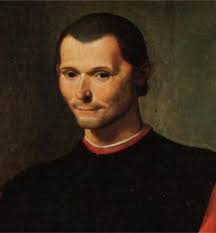
Niccolo Machiavelli
He is rendered despicable by being thought changeable, frivolous, effeminate, timid and irresolute–which a prince must guard against as a rock of danger….
[He] must contrive that his actions show grandeur, spirit, gravity and fortitude. As to the government of his subjects, let his sentence be irrevocable, and let him adhere to his decisions so that no one may think of deceiving or cozening him.
So how has Obama fared by this standard?
ABC NEWS, AFFORDABLE CARE ACT, AIR TRAFFIC CONTROLLERS STRIKE, BARACK OBAMA, BERNIE SANDERS, CBS NEWS, CNN, COLUMBIA UNIVERSITY, DIXIE CHICKS, EXTORTION, FACEBOOK, FBI, GEORGE W. BUSH, HARVARD LAW SCHOOL, HENRY J. KAISER FOUNDATION, HILLARY CLINTON, IRAQ WAR, JOHN BOEHNER, JOHN SCHNATTER, JON STEWART, JONATHAN ALTER, JUSTICE DEPARTMENT, KOCH BROTHERS, MEDICAL CARE, NBC NEWS, NICCOLO MACHIAVELLI, OBAMACARE, PAPA JOHN'S PIZZA, PATRIOT ACT, public relations, RACKETEER INFLUENCED CORRUPT ORGANIZATIONS ACT, REFORM, REPUBLICAN PARTY, RICHARD WOLFFE, Ronald Reagan, TEA PARTY, TERRORISM, THE DAILY SHOW, THE LOS ANGELES TIMES, THE NEW YORK TIMES, THE PRINCE, THE WASHINGTON POST, TWITTER, UNEMPLOYMENT
In Bureaucracy, Business, History, Law, Law Enforcement, Medical, Politics, Social commentary on February 4, 2016 at 12:10 am
One of the major differences between Bernie Sanders and Hillary Clinton lies in their views about what should be the future of “Obamacare.”
Sanders, the longtime independent Senator from Vermont, wants to scrap The Affordable Care Act (ACA) and replace it with a single-payer plan.
Clinton, the former Secretary of State, wants to make “incremental” changes in the Act.
The Sanders plan promises greater simplicity and comprehensiveness in providing benefits to those millions of Americans who previously could not obtain medical insurance.
The Clinton approach promises to keep the best features of “Obamacare” and improve those that need changing.
But neither Sanders nor Clinton has directly addressed certain unpalatable truths about the ACA.
These stem not from any intended evil on the part of its chief sponsor, President Barack Obama. Instead, they spring from his idealistic belief that reasonable men could always reach a compromise.
As a result, much of the Act remains seriously flawed. Here are the six reasons why.
Barack Obama is easily one of the most highly educated Presidents in United States history. He is a graduate of Columbia University (B.A. in political science in 1983).
In 1988, he entered Harvard Law School, graduating magna cum laude–“with great honor”–in 1991.
He was selected as an editor of the Harvard Law Review at the end of his first year, and president of the journal in his second year.
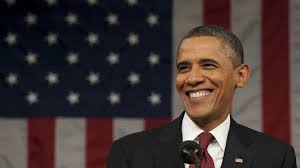
President Barack Obama
He then taught Constitutional law at the University of Chicago Law School for 12 years–as a Lecturer from 1992 to 1996, and as a Senior Lecturer from 1996 to 2004.
So where did he go wrong? Several ways:
Obama Mistake No. 1: Putting off what people wanted while concentrating on what they didn’t.
Obama started off well when he took office. Americans had high expectations of him. This was partly due to his being the first black to be elected President.
And it was partly due to the disastrous legacies of needless war and financial catastrophe left by his predecessor, George W. Bush.
Obama entered office intending to reform the American healthcare system, to make medical care available to all citizens, and not just the richest. But that was not what the vast majority of Americans wanted him to concentrate his energies on.
With the lost of 2.6 million jobs in 2008, Americans wanted Obama to find new ways to create jobs. This was especially true for the 11.1 million unemployed, or those employed only part-time.
Jonathan Alter, who writes sympathetically about the President in The Center Holds: Obama and His Enemies, candidly states this.
But Obama chose to spend most of his first year as President pushing the Affordable Care Act (ACA)–which would soon become known as Obamacare–through Congress.
The results were:
- Those desperately seeking employment felt the President didn’t care about them.
- The reform effort became a lightning rod for Right-wing groups like the Koch-brothers-financed Tea Party.
- In 2010, a massive Rightist turnout cost the Democrats the House of Representatives, and threatened Democratic control of the Senate.
Obama Mistake No. 2: He underestimated the amount of opposition he would face to the ACA.
For all of Obama’s academic brilliance and supposed ruthlessness as a “Chicago politician,” he displayed an incredible naivety in dealing with his political opposition.
Niccolo Machiavelli (1469-1527), the Florentine statesman and father of modern politics, could have warned him of the consequences of this–through the pages of The Prince, his infamous treatise on the realities of politics.

Niccolo Machiavelli
And either Obama skipped those chapters or ignored their timeless advice for political leaders.
He should have started with Chapter Six: “Of New Dominions Which Have Been Acquired By One’s Own Arms and Ability”:
…There is nothing more difficult to carry out, nor more doubtful of success, nor more dangerous to handle than to initiate a new order of things.
For the reformer has enemies in all those who profit by the old order, and only lukewarm defenders in all those who would profit by the new order, this lukewarmness arising partly from fear of their adversaries, who have the laws in their favor, and partly from the incredulity of mankind, who do not truly believe in anything new until they have had actual experience of it.
This proved exactly the case with the proposed Affordable Care Act.
Its supporters–even when they comprised a majority of the Congress–have always shown far less fervor than its opponents.
This was true before the Act became effective on March 23, 2010. And it has remained true since, with House Republicans voting more than 60 times to repeal, delay or revise the law.
So before President Obama launched his signature effort to reform the American medical system, he should have taken this truism into account.
Obama Mistake No. 3: Failing to consider–and punish–the venom of his political enemies.
The ancient Greeks used to say: “A man’s character is his fate.” It is Obama’s character–and America’s fate–that he is by nature a man of conciliation, not conflict.
Richard Wolffe chronicled Obama’s winning of the White House in his 2009 book, Renegade: The Making of a President. He noted that Obama was always more comfortable when responding to Republican attacks on his character than he was in making attacks on his enemies.
ABC NEWS, ANTHEM BLUE CROSS, CALIFORNIA PACIFIC MEDICAL CENTER, CBS NEWS, CNN, EMERGENCY ROOMS, FACEBOOK, INSURANCE, MEDI-CAL INSURANCE PROGRAM, NBC NEWS, THE CHICAGO TRIBUNE, THE LOS ANGELES TIMES, THE NEW YORK TIMES, THE SHICAGO SUN-TIMES, THE WALL STREET JOURNAL, THE WASHINGTON POST, TWITTER, USA TODAY
In Bureaucracy, Business, Medical, Social commentary on August 12, 2014 at 9:02 pm
A friend of mine–I’ll call him Sam–recently broke his big toe. But Sam has a bigger problem than his big toe. He’s on Medi-Cal, the California medical plan for the poor.
And if you think the nation’s veterans have it bad, try getting medical care when doctors refuse to honor your insurance.
After breaking his toe while tripping over a bag, Sam went to his regular doctor, a general internist at California Pacific Medical Center (CPMC) in San Francisco.
The doctor examined Sam’s toe and said he was worried. It was a big fracture, and if the bones didn’t knit together properly, Sam could be in for big trouble.
So he advised Sam to see an orthopedic surgeon. Luckily for Sam, said his doctor, there was one close by in the same office. The doctor would ask him to check out Sam’s injury then and there.
Unluckily for Sam, he was on Medi-Cal--and the orthopedic surgeon refused to honor his insurance and see him.
Sam’s doctor sent him home, saying, “I’ll try to find someone as soon as I can.”

At home, Sam called Anthem Blue Cross, the private insurance company now providing coverage to the poor under the state Medi-Cal program.
The Anthem representative soon emailed Sam a list of Anthem Blue Cross orthopedic surgeons who would supposedly accept his insurance. He then printed out the list on his computer.
Sam then made another phone call–to the office of Dr. Vernon L. Giang, Chief Medical Executive for CPMC. There he spoke with an assistant to Dr. Giang.
He explained his difficulties in getting medical care at CPMC. He added that he had obtained a 14-page list of Anthem-Blue Cross-approved orthopedic surgeons who should be willing to accept his insurance.
The assistant said she would gladly check out the list for any doctors affiliated with CPMC. But there was a problem. Sam needed to fax her the information–and Sam didn’t have a fax machine. Nevertheless,
Sam hobbled several blocks to a nearby Kinko’s/FedEx office, which had fax machines.
The next morning, Sam called Dr. Giang’s office. He reached the same assistant, who told him that the faxed material had come in. The bad news: There wasn’t a single doctor on that list whom she had called who would accept Sam’s insurance.
In addition, some of the doctors were “out of our plan.” Which meant that even if they had been willing to accept Sam’s insurance, he couldn’t have seen them.
The assistant was polite and sympathetic, but candid: CPMC’s doctors aren’t required to treat any patient whose insurance they dislike. In fact, CPMC cannot demand that they do so, since the doctors who are practice under its name are considered “independent practitioners.”
So Sam aimed higher. He phoned the office of Dr. Warren S. Browner, the CEO of California Pacific Medical Center.
But he didn’t reach Browner–or even a secretary.
As a rule, when you call a giant corporation and ask to speak with its CEO, this doesn’t happen. But what usually does happen is that you’re put through to the executive offices. You won’t speak with the CEO, but you’ll usually reach a secretary for him.
And if your message is one that poses legal or public relations disaster for the company, the odds are excellent that you’ll soon get a call back. Not from the CEO (except in rare cases) but from someone deputized to speak in his name–and to probably address your problem.
But, in this case, there was no secretary to answer the phone for Dr. Browner. Just a message machine.
So Sam left an urgent message, outlining his difficulties in getting medical care from CPMC.
No one from Dr. Browner’s office called him back that day.
Meanwhile, the pain in Sam’s foot was getting worse. So, later that day, he hobbled into an emergency room of CMPC.
A doctor examined Sam’s foot and ordered several X-rays taken of the broken toe. After examining these, he told Sam what he already knew: The toe was broken. He also warned that if it wasn’t treated properly, Sam could have great pain–such as from arthritis–in the future.
Sam explained how he had been unable to get an orthopedic surgeon to look at his toe. The doctor said he would try to find one who would.
Sam waited in the ER for almost four hours. When he finally saw the doctor again, the latter seemed embarrassed to give him the bad news. He hadn’t been any more successful than Sam at finding a CPMC orthopedic surgeon willing to treat Sam’s injury.
When Sam asked what he should do, the ER doctor said that “time” would take care of the injury.
The website for CPMC boasts: “At California Pacific Medical Center, our mission is to always give each patient the personal, hands-on attention they deserve.” Unless, of course, all of its doctors in a particular specialty refuse to honor the patient’s medical insurance.


 Bureaucracybuster's Blog
ABC NEWS, ALLERGIES, ALTERNET, AMERICABLOG, AP, BABY BOOMER RESISTANCE, BBC, BERNIE SANDERS, BLOOMBERG NEWS, BUZZFEED, CBS NEWS, CHARLES GRASSLEY, CNN, CROOKS AND LIARS, DAILY KOZ, EPINEPHRINE, EPIPEN, EXTORTION, FACEBOOK, FEDERAL TRADE COMMISSION, FIVETHIRTYEIGHT, HARPER’S MAGAZINE, HEATHER BRESCH, HENRY FORD, HUFFINGTON POST, INSTANT CHECKMATE, INTELLIUS, JOHN D. ROCKEFELLER, MEDIA MATTERS, MISSISSIPPI ATTORNEY GENERAL MIKE MOORE, MOTHER JONES, MOVEON, MSNBC, MYLAN PHARMACEUTICALS, NBC NEWS, NERVE GAS, NEW REPUBLIC, NEWSDAY, NEWSWEEK, NICCOLO MACHIAVELLI, NPR, PBS NEWSHOUR, PEOPLE-FINDER WEBSITES, PEOPLE-FINDING SERVICES, PEOPLE-FINDING WEBSITES, POLITICO, POLITICUSUSA, RACKETEER INFUENCED CORRUPT ORGANIZATIONS (RICO) ACT, RAW STORY, REUTERS, SALON, SCHOOL ACCESS TO EMERGENCY EPINEPHRINE ACT AMY KLOBUCHAR, SEATTLE TIMES, SHELDON KAPLAN, SLATE, TALKING POINTS MEMO, THE ATLANTIC, THE CHICAGO SUN-TIMES, THE CHICAGO TRIBUNE, THE DAILY BEAST, THE DAILY BLOG, THE DISCOURSES, THE GUARDIAN, THE HILL, THE HUFFINGTON POST, THE LOS ANGELES TIMES, THE NATION, THE NEW REPUBLIC, THE NEW YORK TIMES, THE NEW YORKER, THE VILLAGE VOICE, THE WASHINGTON POST, THINKPROGRESS, TIME, TOBACCO COMPANY LAWSUITS, TRUTHDIG, TRUTHOUT, TWITTER, TWO POLITICAL JUNKIES, U.S. NEWS & WORLD REPORT, UPI, USA TODAY, VEROMI
BRINGING JUSTICE TO CEOs: (CORRUPT, EGOTISTICAL OLIGARCHS): PART TWO (END)
In Bureaucracy, Business, History, Law, Law Enforcement, Medical, Politics, Social commentary on August 30, 2016 at 12:25 amMylan Pharmaceuticals CEO Heather Bresch is on a roll.
But in playing greed-based games with the lives of millions of Americans, Bresch, 47, may have put her company–and even herself–in jeopardy.
Heather Bresch
EpiPens have been mandatory for public schools in at least 11 states since Congress passed the 2013 School Access to Emergency Epinephrine Act. This occurred after Mylan spent $4 million lobbying Congress.
When the lives of their children are threatened, adults who can stoically accept the inevitability of their own deaths can become dangerously emotional about the fates of their sons or daughters.
As national news media spread the word of Mylan’s unconscionable price increases, American consumers are making their rage increasingly known.
There are three ways this could be expressed: Political, Legal, and Illegal.
Political: Minnesota U.S. Senator Amy Klobuchar has called for an official investigation by the Senate Judiciary Committee and the Federal Trade Commission (FTC) into the price hike:
Senator Amy Klobuchar
“I write to request the Federal Trade Commission investigate whether Mylan Pharmaceuticals has violated the antitrust laws regarding the sale of its epinephrine auto-injector, EpiPen. Many Americans, including my own daughter, rely on this life-saving product to treat severe allergic reactions.
“Although the antitrust laws do not prohibit price gouging, regardless of how unseemly it may be, they do prohibit the use of unreasonable restraints of trade to facilitate or protect a price increase.”
Other Senators who have called for hearings include Iowa’s Charles Grassley, Connecticut’s Richard Blumenthal and former Democratic presidential contender Vermont Senator Bernie Sanders.
“I have heard from one father in Iowa who recently purchased a refill of his daughter’s EpiPen prescription. He reported that to fill the prescription, he had to pay over $500 for one EpiPen,” wrote Grassley to Bresch. “The high cost has also caused some first responders to consider making their own kits with epinephrine vials and syringes.”
Senator Charles Grassley
“There’s no reason an EpiPen, which costs Mylan just a few dollars to make, should cost families more than $600,” tweeted Sanders on Twitter.
A second expression of political fallout could ultimately be the adoption of a single-payer healthcare system. Under this, a “single-payer” fund, rather than private insurers, pays for healthcare costs. The healthcare delivery system can be private, public or a combination of the two.
Owing to the belief of millions of Right-wing Americans that such a system is “Communistic,” this is unlikely to be adopted within the foreseeable future.
Legal: Individual Americans–and/or the U.S. Department of Justice–could file civil lawsuits against Mylan Pharmaceuticals under the Racketeer Influenced Corrupt Organizations (RICO) Act.
Passed by Congress in 1970 to combat the Mafia, its provisions include punishments for extortion. This is defined as “a criminal offense which occurs when a person unlawfully obtains either money, property or services from a person(s), entity, or institution, through coercion.”
It could be argued that, by holding a near-monopoly over a product that millions of Americans depend on for survival, and raising its price beyond the ability of most Americans to afford it, Mylan has engaged in extortionate practices.
It would not be the first time a David-vs.-Goliath lawsuit prevailed against dismal expectations.
In 1994, amid great pessimism, Mississippi Attorney General Mike Moore filed a lawsuit against the tobacco industry. But other states soon followed, ultimately growing to 46.
Their goal: To seek monetary, equitable and injunctive relief under various consumer-protection and anti-trust laws.
The theory underlying these lawsuits: Cigarettes produced by the tobacco industry created health problems among the population, which badly strained the states’ public healthcare systems.
In 1998, the states settled their Medicaid lawsuits against the tobacco industry for recovery of their tobacco-related, health-care costs–amounting to millions of dollars. In return, they exempted the companies from private lawsuits for tobacco-related injuries.
Illegal: At one time, business titans like John D. Rockefeller and Henry Ford lived apart from “the common herd.” Americans read about them in newspapers or heard about them on the radio, but had no way of contacting them directly.
If you wanted to “dig up dirt” on any of them, you had to be wealthy enough to hire private detectives–who were probably employed by the same people you wanted to investigate.
But the rise of the Internet–and especially the advent of “people-finder” websites like Instant Checkmate, Intellius and Veromi–has drastically changed all that.
Type “Heather Bresch” into the Intellius “Confidential People Finder” subject line, and–for a $20 month’s subscription–you can obtain “some or all of the following”:
It doesn’t take a genius to see how the parent of an allergy-suffering child–desperate to save his son or daughter and enraged at what he believes to be the extortionately high price of EpiPens–might put such information to use.
What is truly astonishing is that, in our publicity-saturated culture, greedy, self-destructive “celebrities” like Heather Bresch don’t realize this.
Share this: