Archive for the ‘Law’ Category
ABC NEWS, ALTERNET, AMERICAN NAZI PARTY, ANONYMOUS, AP, ASSOCIATED PRESS, BUZZFEED, CBS NEWS, CHARLOTTESVILLE, CNN, COINTELPRO, CROOKS AND LIARS, DAILY KOZ, DAVID DUKE, DONALD TRUMP, FACEBOOK, FBI, FERGUSON MISSOURI PROTESTS, J. EDGAR HOOVER, KU KLUX KLAN, MISSISSIPPI BURNING CASE, MOTHER JONES, MOVEON, NBC NEWS, NEWSWEEK, NPR, NYPD, POLITICO, PRESIDENT LYNDON B. JOHNSON, RAW STORY, REUTERS, SALON, SEATTLE TIMES, SLATE, TERRORISM, THE ATLANTIC, THE CHICAGO SUN-TIMES, THE CHICAGO TRIBUNE, THE DAILY BEAST, THE GUARDIAN, THE HILL, THE HUFFINGTON POST, THE LOS ANGELES TIMES, THE NATION, THE NEW YORK TIMES, THE WALL STREET JOURNAL, THE WASHINGTON POST, TIME, TWITTER, U.S. NEWS & WORLD REPORT, UP, UPI, USA TODAY, WILLIAM C. SULLIVAN
In Bureaucracy, History, Law, Law Enforcement, Politics, Social commentary on June 25, 2018 at 1:24 am
On August 11-12, 2017, white supremacists from across the country gathered in Charlottesville, Virginia, for a “Unite the Right” rally. Among the organizations represented:
- The Ku Klux Klan (KKK);
- The Alt-Knights;
- The “Militia Movement”;
- The American Nazi Party;
- The Confederate League of the South;
Like Nazis in 1930s Germany, they marched through the streets carrying flaming torches, screaming racial epithets and frightening the local citizenry.
On August 13, a Nazi sympathizer rammed his car into a group of counter-protesters, killing a woman and injuring 19 other demonstrators.
President Donald Trump stated: “We condemn in the strongest possible terms this egregious display of hatred, bigotry and violence on many sides, on many sides.”
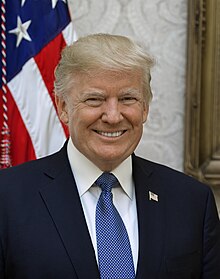
Donald Trump
But he refused to specifically denounce the Fascistic demonstrators.
White supremacists were elated.
“He didn’t attack us. He just said the nation should come together. Nothing specific against us,” wrote Andrew Anglin, founder of the neo-Nazi website, The Daily Stormer.
“No condemnation at all. When asked to condemn, he just walked out of the room. Really, really good. God bless him.”
Another Trump admirer: Former Ku Klux Klan Imperial Wizard David Duke.
“Thank you President Trump for your honesty & courage to tell the truth about #Charlottesville & condemn the leftist terrorists in BLM/Antifa,” Duke tweeted after the news conference.
Fascistic groups make up a pivotal constituency for Trump. Without their support, he might not have become President. He can’t afford to alienate them.
But others who aren’t beholden to the Fascistic Right have taken a stand against its hate-mongering.
On October 30, 2015, the hacker group Anonymous released a prepared statement:
“Ku Klux Klan, We never stopped watching you. We know who you are. We know the dangerous extent to which you will go to cover your asses….
“We will release, to the global public, the identities of up to 1000 klan members, Ghoul Squad affiliates and other close associates of various factions of the Ku Klux Klan.” This included ages, phone numbers, addresses and even credit card numbers.

Anonymous mask
By November 5, 2015, Anonymous had released the names of about 1,000 alleged KKK members or sympathizers via a Twitter data dump.
Among those names released by Anonymous:
- U.S. Senator Thom Tillis (R-N.C.);
- U.S. Senator John Cornyn (R-TX.);
- U.S. Senator Dan Coats (R-IN.)
- U.S. Senator Johnny Isakson (R-GA.);
- Mayor Madeline Rogero, Knoxville, TN.;
- Mayor Jim Gray, Lexington, KY.;
- Mayor Paul D. Fraim, Norfolk, VA.;
- Mayor Kent Guinn, Ocala, FL.; and
- Mayor Tom Henry, Fort Wayne, IN.
All of these officials denied any affiliation with the Klan.
“I got the information from several KKK websites when I [hacked] them and was able to dump their database,” Amped Attacks, who released the information, stated online.
This mass leak was easily the worst assault on the KKK since the Justice Department waged an all-out attack on the Klan during the Presidency of Lyndon B. Johnson.
The reason: The murders of three civil rights workers in Philadelphia, Mississippi—Michael “Mickey” Schwerner, Andrew Goodman and James Chaney—-on June 21, 1964.
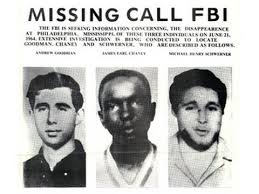
Poster for missing civil rights workers
Johnson ordered the FBI to find the missing activists. After their bodies were found buried near a dam, Johnson gave FBI Director J. Edgar Hoover a direct order: “I want you to have the same kind of intelligence [on the KKK] that you have on the communists.”
So the FBI launched a counterintelligence program—in Bureau-speak, a COINTELPRO—against the Ku Klux Klan.
Klansmen had shot, lynched and bombed their way across the Deep South, especially in Alabama and Mississippi. Many Southern sheriffs and police chiefs were Klan sympathizers, if not outright members and accomplices.

Ku Klux Klansmen in a meeting
The FBI’s covert action program aimed to “expose, disrupt and otherwise neutralize” KKK groups through a wide range of legal and extra-legal methods.
“My father fought the Klan in Massachusetts,” recalled William C. Sullivan, who headed the FBI’s Domestic Intelligence Division in the 1960s. “I always used to be frightened when I was a kid and I saw the fiery crosses burning in the hillside near our farm.

William C. Sullivan
“When the Klan reached 14,000 in the mid-sixties, I asked to take over the investigation of the Klan. When I left the Bureau in 1971, the Klan was down to a completely disorganized 4,300. It was broken.
“They were dirty, rough fellows. And we went after them with rough, tough methods.”
Among those methods:
- Planting electronic surveillance devices in Klan meeting places;
- Carrying out “black bag jobs”—burglaries—to steal Klan membership lists;
- Contacting the news media to publicize arrests and identify Klan leaders;
- Informing the employers of known Klansmen of their employees’ criminal activity, resulting in the firing of untold numbers of them;
- Developing informants within Klans and sewing a climate of distrust and fear among Klansmen;
- Breaking up the marriages of Klansmen by circulating rumors of their infidelity among their wives; and
- Beating and harassing Klansmen who threatened and harassed FBI agents.
The FBI’s counterintelligence war against the Klan ended in 1971.
Today, there are active Klan chapters in 41 states, with between 5,000 and 8,000 active members.
Only when America has a President who’s not beholden to the Fascistic Right can there be another COINTELPRO aimed at white hate groups.
2008 PRESIDENTIAL RACE, ABC NEWS, ABORTION, ADOLF HITLER, ALTERNET, AP, BARACK OBAMA, BILL CLINTON, BLACKLASH, BLACKS, BUZZFEED, CBS NEWS, CNN, COMMUNISM, CROOKS AND LIARS, DAILY KOZ, DEPARTMENT OF HOMELAND SECURITY, DWIGHT D. EISENHOWER, FACEBOOK, FIRST CHURCH OF CANNABIS, GAYS, GEORGE H.W. BUSH, GEORGE W. BUSH, HEALTH CODE VIOLATIONS, HOMOSEXUALITY, illegal immigration, INDIANA, INDIANA LEGISLATURE, IRVING WALLACE, ISLAM, JOSEPH MCCARTHY, JOSEPH STALIN, KIRSTJEN NIELSEN, LEE ATWATER, MAR-A-LAGO, MIKE PENCE, MOTHER JONES, MOVEON, MSNBC, MUSLIMS, NBC NEWS, NEWSWEEK, NPR, POLITICO, RACISM, RAW STORY, RELIGION, RELIGIOUS DISCRIMINATION, RELIGIOUS FREEDOM RESTORATION ACT, REPUBLICAN PARTY, REPUBLICANS, REUTERS, RICHARD NIXON, Ronald Reagan, SALON, SARAH HUCKABEE SANDERS, SEATTLE TIMES, SHARIA, SHINZO ABE, SLATE, SOUTHERN STRATEGY, SOVIET UNION, STEPHANIE WILKINSON, THE ATLANTIC, THE CHICAGO SUN-TIMES, THE CHICAGO TRIBUNE, THE DAILY BEAST, THE GUARDIAN, THE HILL, THE HUFFINGTON POST, THE LOS ANGELES TIMES, THE MAN, THE NATION, THE NEW YORK TIMES, THE RED HEN RESTAURANT, THE WASHINGTON POST, TIME, TRANSGENDERS, TREASON, TWITTER, U.S. NEWS & WORLD REPORT, UPI, USA TODAY, USA TODAY DONALD TRUMP, WILL BUNCH
In Bureaucracy, History, Law, Law Enforcement, Military, Politics, Social commentary on June 24, 2018 at 9:23 pm
On June 19, Kirstjen Nielsen, secretary of the Department of Homeland Security, was heckled by protesters while dining at a Mexican restaurant in Washington, D.C.
The reason: To protest the Trump administration’s separation of illegal alien parents from their children in detention centers.
Then, three nights later, on June 22, the owner of a Lexington, Virginia, restaurant asked White House Press Secretary Sarah Huckabee Sanders to leave.
The reason: To protest the Trump’s discrimination against transgenders’ entering the military.
Those verbally assailing Nielsen shouted:
- “Do you hear the babies crying?”
- “If kids don’t eat in peace, you don’t eat in peace.”
- “Shame! Shame! Shame!”
- “In a Mexican restaurant of all places. The fucking gall.”
- “No borders, no wall, sanctuaries for all.”
On June 23, Sanders tweeted her version of her requested exit: “Last night I was told by the owner of Red Hen in Lexington, VA to leave because I work for @POTUS and I politely left. Her actions say far more about her than about me. I always do my best to treat people, including those I disagree with, respectfully and will continue to do so.”

Sarah Huckabee Sanders
According to The Washington Post, the Red Hen’s co-owner, Stephanie Wilkinson, got a call from her staff, reporting that Sanders was at the restaurant. Several employees are gay and knew Sanders had defended Trump’s efforts to bar transgenders from the military.
She added that her restaurant has “certain standards that I feel it has to uphold, such as honesty, and compassion and cooperation.”
From her statement, Wilkinson clearly believed Sanders was dishonest, inhumane and uncooperative.
On June 25, President Trump tweeted: “The Red Hen Restaurant should focus more on cleaning its filthy canopies, doors and windows (badly needs a paint job) rather than refusing to serve a fine person like Sarah Huckabee Sanders. I always had a rule, if a restaurant is dirty on the outside, it is dirty on the inside!”
Donald Trump
[Trump’s charge that the Red Hen is “dirty on the inside” was—as usual for him—false.
[According to its most recent state health inspection in February, the Red Hen restaurant had zero violations.
[On the other hand: Florida health inspectors cited Trump’s Mar-a-Lago resort in Palm Beach with 15 violations in late January, 2017, days before Trump hosted Japanese Prime Minister Shinzo Abe there for a diplomatic visit.
Nor was this an exception. From 2014-2017, records show the club was cited 78 times for such violations as:
- Chefs handling food without washing their hands
- Dirty cutting boards
- A slicer “soiled with old food debris” and
- The “accumulation of black/green mold-like substance” in the ice machine.]

Mar-a-Lago
Ironically, Trump and his followers are responsible for Nielsen’s and Sanders’ evictions. They have pushed legislation allowing businesses to discriminate against anyone they dislike on the basis of “religious freedom.”
On March 26, 2015, Mike Pence, then Governor of Indiana before accepting Trump’s invitation to become his Vice Presidential nominee, signed into law the “Religious Freedom Restoration Act.”
This allows any individual or corporation to cite its religious beliefs as a defense when sued by a private party.
Officially, its intent is to prevent the government from forcing business owners to act in ways contrary to strongly held religious beliefs. Unofficially, its intent is to appease the hatred of gays and lesbians by the religious Right, a key constituency of the Republican party.
In short, a bakery that doesn’t want to make a cake to be used at a gay wedding or a restaurant that doesn’t want to serve lesbian patrons can legally refuse to do so. Or a hospital can legally refuse to treat gay patients.
Although he praised the bill, Pence signed it in a ceremony closed to the public and the press.
On the eve of invading the Soviet Union, Adolf Hitler told an aide: “At the beginning of each campaign, one pushes a door into a dark, unseen room. One can never know what is hiding inside.”
Maybe Pence—like Hitler—sensed that he, too, was about to push open “a door into a dark, unseen room.”
On the day after Pence signed the Act, Bill Levin filed paperwork with the Indiana Secretary of State to register the First Church of Cannabis as a legitimate religious institution. The registration was approved.
By elevating religion above the law, Indiana’s legislators may have enabled Indiana’s Muslims to:
- Claim their right—guaranteed in Islamic religious law—to have as many as four wives.
- Demand a taxpayer-funded “halal” non-pork food shelf at free food pantries for the poor. (As happened among Somali refugees in Minnesota in 2015.)
- Demand that police departments cancel counter-terrorism courses by claiming that their materials are anti-Muslim. (As happened to several police departments in Illinois.)
And it was the Trump administration that supported the Supreme Court’s June 4 ruling 7-2 on behalf of a Colorado baker who refused to make a wedding cake for a gay couple. He had claimed that doing so would violate his religious beliefs against homosexuality.
By championing the rights of businesses to legally discriminate against anyone they dislike—under the guise of “religious freedom”—Trump and his followers have opened a door that they themselves may now be forced to walk through.
ABC NEWS, ALCOHOLISM, ALTERNET, AP, BEGGING, BUMS, BUZZFEED, CBS NEWS, CNN, DAILY KOS, DISEASE, DRUG ADDICTION, FACEBOOK, HEPATITIS B, HEPATITIS C, HILLARY RONEN, HIV, HOMELESS, HOMELESSNESS, MENTAL ILLNESS, MOTHER JONES, MOVEON, NBC NEWS, NEWSWEEK, NPR, PANHANDLING, POLITICO, PUBLIC HEALTH, RAW STORY, REUTERS, ROTAVIRUS, SALON, SAN FRANCISCO, SAN FRANCISCO CHRONICLE, SAN FRANCISCO DEPARTMENT OF PUBLIC WORKS, SEATTLE TIMES, SLATE, THE ATLANTIC, THE CHICAGO SUN-TIMES, THE CHICAGO TRIBUNE, THE DAILY BEAST, THE GUARDIAN, THE HILL, THE HUFFINGTON POST, THE LOS ANGELES TIMES, THE NEW YORK TIMES, THE WALL STREET JOURNAL, THE WASHINGTON POST, TIME, TWITTER, U.S. NEWS & WORLD REPORT, UPI, USA TODAY, WILLIE BROWN
In Bureaucracy, History, Law, Law Enforcement, Medical, Politics, Social commentary on June 22, 2018 at 12:05 am
To capture the true intensity of the “homeless” problem in San Francisco, you must confront its realities at the street level. Imagine:
- You’re elderly, and walking with a cane—and must often try to negotiate your way around big tents that take up most of a sidewalk.
- You’re riding in a wheelchair along a sidewalk until you come to a large mattress lying directly in your path, with a potentially psychotic “homeless” man lying upon it.
- You find a street teeming with rats—eating the food scraps left by “homeless” people.
- You board a local bus and are forced to sit near a man stinking of feces and/or urine. Naturally, the driver doesn’t put him off—giving you the choice of surviving the stench or getting off to catch another bus.
- You walk into an underground Municipal Railway bus station—and find it littered with derelicts passed out or shooting up heroin in plain sight. Naturally, they don’t worry about picking up their used hypodermic needles. They leave those out for others to step on or pick up at their own risk.
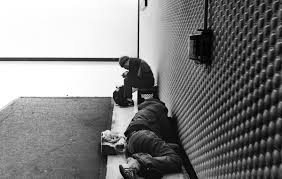
- You’re standing at a bus stop or eating in a restaurant—when a large, filthy, possibly disease-carrying man or woman demands a “handout” from you.
- You can’t use the elevator at the Bay Area Rapid Transit (BART) station because “homeless” derelicts have ruined its mechanism with urine and feces.
In 2010, San Francisco voters passed the “No Sit/No Lie” ordinance, which “makes it unlawful, with certain exceptions, to sit or lie on a public sidewalk, or on an object placed on a public sidewalk, between 7AM and 11PM.”
But walk down almost any street in the downtown part of the city and you’ll find sidewalks crowded with stinking, disease-ridden, lice/bedbug-infested, drug-addicted, alcohol-soaked, often psychotic men and women whom city officials politely refer to as “the homeless.”
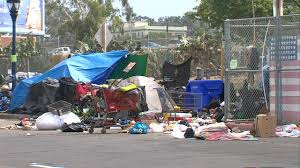
Among the trappings that go with this population:
- Tents
- Mattresses
- Piles of belongings
- Stolen shopping cards
- Trash
- Half-eaten food
- Empty cans/bottles of alcohol
- Feces
- Hypodermic needles
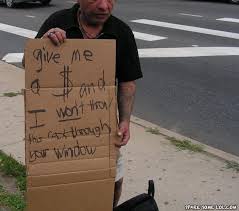
What you’ll almost never see: Police actually enforcing the “No Sit/No Lie” ordinance.
So much for the will of the voters.
San Francisco officials have effectively washed their hands of the problem. If local residents must put up with repeated violations of the most basic sanitation laws, that’s their tough luck.
What matters to the Mayor and Board of Supervisors is this: The “rights” of those whose filth and behavior pose an immediate threat to public health and safety take precedence over those of tax-paying, law-abiding San Franciscans.
San Francisco residents can be fined $25 to $1,000 for feeding pigeons—but not for feeding street bums.
During the Mayorship of Willie Brown (1996 – 2004), Hizzonor proposed what he thought was a brilliant way for residents to “contribute” to “street people.”
Those who were somehow certified as “homeless” would be issued special electronic “cash cards.” When someone wanted to make a “donation,” s/he would swipe a credit card against the one owned by the street bum, for whatever amount s/he wanted to donate.
But before the program started, someone at City Hall realized a blunt truth: Residents—especially women—weren’t likely to whip out their credit cards in front of a ranting, foul-smelling, probably disease-ridden street bum.
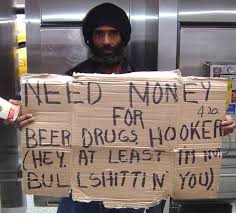
It’s long past time for San Francisco—and other cities—to stop catering to the druggies, alcoholics, mental cases and bums who prey on the guilt or fear of law-abiding, tax-paying citizens.
The same laws that protect citizens against patients with highly communicable diseases like typhoid and cholera should be vigorously applied to those whose filthy habits threaten similar public contagion.
Among such reforms:
- The city should launch a “Please Do Not Feed the Bums” publicity campaign—as it has against feeding pigeons. And it should be backed up with stiff fines for those caught doing so.
- Those living on the street should be given a choice: Go to a local shelter or face arrest and the immediate confiscation of their possessions.
- Bus drivers should have the right to refuse passengers who stink of urine/feces, as they present a potential health-hazard to others.
- The owners of restaurants should likewise be allowed to refuse service on the same basis.
- Those applying for welfare benefits should be required to provide proof of residence. Too many people come to San Francisco because, upon arrival, they can immediately apply for such benefits.
- The city should set up a special unit to deal entirely with removing “street people” and their possessions from city sidewalks. This could be a division of the Sanitation Department, since its personnel are used to removing filth and debris of all types.
San Francisco officials need to:
- Forcefully tell alcoholics and drug addicts: “Your anti-social behavior is not welcome here. Take your self-destructive lifestyles elsewhere. We won’t subsidize them.”
- Take the mentally unstable off the street and place them in institutions where their needs can be met.
- Tell those who are just plain bums: Don’t expect us to support you.
Only then will San Francisco rightly reclaim its former glory as “the city by the Bay.”
ABC NEWS, ALCOHOLISM, ALTERNET, AP, BEGGING, BUMS, BUZZFEED, CBS NEWS, CNN, DAILY KOS, DISEASE, DRUG ADDICTION, FACEBOOK, HEPATITIS B, HEPATITIS C, HILLARY RONEN, HIV, HOMELESS, HOMELESSNESS, MENTAL ILLNESS, MOTHER JONES, MOVEON, NBC NEWS, NEWSWEEK, NPR, PANHANDLING, POLITICO, PUBLIC HEALTH, RAW STORY, REUTERS, ROTAVIRUS, SALON, SAN FRANCISCO, SAN FRANCISCO CHRONICLE, SAN FRANCISCO DEPARTMENT OF PUBLIC WORKS, SEATTLE TIMES, SLATE, THE ATLANTIC, THE CHICAGO SUN-TIMES, THE CHICAGO TRIBUNE, THE DAILY BEAST, THE GUARDIAN, THE HILL, THE HUFFINGTON POST, THE LOS ANGELES TIMES, THE NEW YORK TIMES, THE WALL STREET JOURNAL, THE WASHINGTON POST, TIME, TWITTER, U.S. NEWS & WORLD REPORT, UPI, USA TODAY, WILLIE BROWN
In Bureaucracy, History, Law, Law Enforcement, Medical, Politics, Social commentary on June 21, 2018 at 1:45 am
Imagine that, late one night, you wake up and decide to go to the kitchen for a drink of water. You turn on the light—and suddenly find a virtual army of cockroaches hurriedly scurrying across the floor.
In the morning, you call an exterminator, and a “pest control specialist” soon knocks at your door.
“What you need to do,” he says, “is to put out big packets of sugar for the roaches.”
“Wait a minute—don’t roaches love sugar? How is this going to make them go away?”
“It won’t.”
“Then what’s the point?”
“The point is that roaches are God’s creatures, and they need to eat, too.”
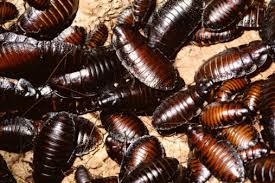
A typical cockroach scene
“But they’ve taken over my kitchen. They’re filthy, they leave droppings everywhere and they contaminate the food I’m supposed to eat.”
“You must learn to have compassion for all of God’s creatures, and learn to get along with them.”
“So if I hire you, you’re not going to get rid of them for me?”
“No.”
“So what are you going to do?”
“Help you to accept that they have a right to be a part of your community.”
If a pest control company actually operated like that, how long would they be in business?
Not long.
Yet, in San Francisco, successive mayors and members of the Board of Supervisors operate in exactly that manner toward succeeding waves of human pestilence. And they remain in office for years.
Huge areas of the city are covered in feces, urine, trash and needles. Hospitals overflow with patients that have fallen ill due to the contamination.
NBC News surveyed 153 blocks of the city—an area more than 20 miles. That area includes popular tourist spots like Union Square and the cable car turnaround. It’s bordered by Van Ness Avenue, Market Street, Post Street and Grant Avenue. And it’s also home to City Hall, schools, playgrounds, and a police station.
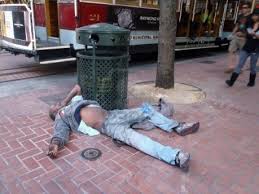
A typical San Francisco scene
Most of the trash found consisted of heaps of garbage, food, and discarded junk—including 100 drug needles and more than 300 piles of feces throughout downtown. If you step on one of these needles, you can get HIV, Hepatitis C, Hepatitis B or a variety of other viral diseases.
But you don’t have to actually get stuck by a needle to become a victim. Once fecal matter dries, it can become airborne and release deadly viruses, such as the rotavirus.
“If you happen to inhale that, it can also go into your intestine,” says Dr. Lee Riley, an infectious disease specialist at the University of California, Berkeley. The results can prove fatal, especially in children.
As the news unit filmed a typical day’s activity in San Francisco, a group of preschool students, enjoying a field trip, walked to City Hall.
Responding to a reporter’s question, Adelita Orellana said: “We see poop, we see pee, we see needles, and we see trash.
“Sometimes they ask what is it, and that’s a conversation that’s a little difficult to have with a two-year old, but we just let them know that those things are full of germs, that they are dangerous, and they should never be touched.”
San Francisco’s political elite see this blight as well as everyone else. They can’t avoid seeing it, since the city covers 47 square miles.
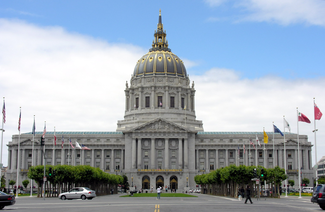
San Francisco City Hall
Cabe6403 at English Wikipedia [CC BY-SA 3.0 (https://creativecommons.org/licenses/by-sa/3.0) or GFDL (http://www.gnu.org/copyleft/fdl.html)%5D, from Wikimedia Commons
One of those who sees the disgrace up-front is Supervisor Hillary Ronen: “Unacceptable. Absolutely unacceptable We’re losing tourists. We’re losing conventions in San Francisco.”
Yet what does she propose as the solution? “We need more temporary beds for street homelessness.”
This is on a par with a “pest control expert” recommending: “We need more sugar to clear up our roach problem.”
Thanks to its mild climate and social programs that dole out cash payments to virtually anyone with no residency requirement, San Francisco is often considered the “homeless capital” of the United States.
According to a 2016 article in the San Francisco Chronicle, there are about 13,000 “homeless” people in San Francisco. Of these, an estimated 3,000 to 5,000 refuse shelter.
In 2016, San Francisco spent $275 million on homelessness—up from $241 million in 2015. Public Works cleanup crews picked up more than 679 tons of trash from homeless tent camps—and collected more than 100,000 used syringes from the camps.
In 2016, San Francisco residents made 22,608 complaints about encampments—a five-fold increase from 2015.
City officials euphemistically call this population “the homeless.” That’s because they don’t want to use words that accurately describe those who comprise the overwhelming majority of this population:
- Druggies
- Drunks
- Mentals
- Bums.
Or, as even many police, social workers and paramedics who wrestle with this population privately refer to them: DDMBs.
Yet the mere citing of statistics—how many “homeless,” how much money is spent on how many people, how much filth they produce—doesn’t capture the true intensity of the problem.
To do that, you must confront its realities at the street level. Which is what we’ll do in Part Two of this series.
ABC NEWS, ALTERNET, ANCHOR BABIES, AP, BARACK OBAMA, BERLIN AIRLIFT, BUZZFEED, CBS NEWS, CNN, CROOKS AND LIARS, DAILY KOZ, DEMOCRATIC PARTY, DEPARTMENT OF HOMELAND SECURITY, EGYPT, FACEBOOK, FAMILY SEPARATION POLICY, FRANCISCO SANCHEZ, ILLEGAL ALIENS, illegal immigration, IMMIGRATION AND CUSTOMS ENFORCEMENT, ISRAEL, KIRSTJEN NIELSEN, MEXICO, MITCH MCCONNELL, MOTHER JONES, MOVEON, MSNBC, NBC NEWS, NEWSWEEK, NPR, OPERATION NICKEL GRASS, OUTER LIMITS "ZANTI MISFITS" EPISODE, POLITICO, RACIAL PROFILING, RAW STORY, REPUBLICAN PARTY, REUTERS, RICHARD NIXON, RICK SANTORUM, SALON, SEATTLE TIMES, SLATE, SOVIET UNION, SYRIA, THE ATLANTIC, THE CHICAGO SUN-TIMES, THE CHICAGO TRIBUNE, THE DAILY BEAST, THE GUARDIAN, THE HILL, THE HUFFINGTON POST, THE LOS ANGELES TIMES, THE NATION, THE NEW YORK TIMES, THE OUTER LIMITS, THE WASHINGTON POST, TIME, TWITTER, U.S. NEWS & WORLD REPORT, UPI, USA TODAY, YOM KIPPUR WAR
In Bureaucracy, History, Law, Law Enforcement, Military, Politics, Social commentary on June 20, 2018 at 12:05 am
On May 7, 2018, United States Attorney General Jeff Sessions announced a “zero-tolerance” policy for illegal entry into the United States: “If you smuggle illegal aliens across our border, then we will prosecute you. If you are smuggling a child, then we will prosecute you and that child will be separated from you as required by law.”
In the past, those arrested while illegally entering the country were held in immigration detention and sent before an immigration judge. The judge decided if they would be deported as unauthorized immigrants. Most first-time offenders didn’t serve time in prison. As long as they pleaded guilty, they were sentenced, within minutes, to time served—and deported.
But illegal aliens referred for criminal prosecution were sent to a Federal jail. Several weeks later, a Federal judge determined if they would be imprisoned. And those in Federal jail cannot be kept with their children.
With the change in policy, all arrested illegal aliens would face criminal prosecution.
On June 15, Homeland Security officials confirmed to reporters that, from April 19 to May 31, 1,995 children were separated from 1,940 adults at the U.S.-Mexico border. These adults were referred for prosecution after illegally crossing the border.
Video images soon emerged of illegal alien children held behind chain-link cages. Photos showed children crying. An audio recording made secretly captured children calling for their mothers and fathers.

Illegal alien families held in cages
Over the weekend of June 16-17, Democrats almost unanimously attacked the “zero-tolerance” policy, while Republicans were divided over it.
What both Republican supporters and opponents of the policy had in common was the fear of being voted out of office—and losing their cushy and powerful positions.
Those who supported President Donald Trump feared he would order his Fascistic base to vote them out of office in the mid-term elections in November. Those who opposed Trump feared being voted out of office by overwhelming numbers of voters enraged by the policy.
Meanwhile, the Trump administration doubled-down. Homeland Security Secretary Kirstjen Nielsen said officials wouldn’t apologize for enforcing immigration laws that result in the separation of children and parents.
And on June 19, Trump tweeted: “Democrats are the problem. They don’t care about crime and want illegal immigrants, no matter how bad they may be, to pour into and infest our Country, like MS-13. They can’t win on their terrible policies, so they view them as potential voters!”
At this time, the fate of the family-separation policy remains uncertain.
If it is overturned, there is an even more drastic step that Trump might well take in his all-out war on illegal immigration.
Rather than deport them to countries in Central America—from which they would easily sneak back into the United States—the Federal Government could ship them off to more distant lands.
Like Afghanistan. Or Iraq. Or Syria.
Such a policy change would:
- Close the Mexican revolving door, which keeps illegal immigration flowing; and
- Send an unmistakably blunt message to other would-be illegals: “The same fate awaits you.”
Although this might seem a far-fetched proposal, it could be easily carried out by the United States Air Force. According to its website: “The C-5 Galaxy is one of the largest aircraft in the world and the largest airlifter in the Air Force inventory.
“The C-5 has a greater capacity than any other airlifter. It [can] carry 36 standard pallets and 81 troops simultaneously.

C-5 transport plane
“[It can also carry] any of the Army’s air-transportable combat equipment, including such bulky items as the 74-ton mobile scissors bridge.
“It can also carry outsize and oversize cargo over intercontinental ranges and can take off or land in relatively short distances.”
The C-5 Galaxy’s maximum cargo weight: 281,001 pounds
Click here: C-5 A/B/C Galaxy and C-5M Super Galaxy > U.S. Air Force > Fact Sheet Display
Instead of being stuffed with cargo, these planes could be stuffed wall-to-wall with illegal aliens.
The United States Air Force has a proud history of successfully providing America’s soldiers—and allies—with the supplies they need.
From June 24, 1948 to May 12, 1949, only the Berlin Airlift stood between German citizens and starvation.
The Soviet Union had blocked the railway, road, and canal access to the Berlin sectors under allied control. Their goal: Force the western powers to allow the Soviet zone to supply Berlin with food, fuel, and aid.
This would have given the Soviets control over the entire city.
Air forces from the United States, England, Canada, Australia, New Zealand and South Africa flew over 200,000 flights in one year, dropping more than 4,700 tons of necessities daily to the besiged Berliners.
The success of the Berlin Airlift raised American prestige and embarrassed the Soviets, who lifted the blockade.

The Berlin Airlift
A similar triumph came during the Yom Kippur War after Egypt and Syria attacked Israel without warning on October 6, 1973.
A Watergate-embattled President Richard Nixon ordered “Operation Nickel Grass” to deliver urgently-needed weapons and supplies to Israel.
For 32 days, the Air Force shipped 22,325 tons of ammunition, artillery, tanks and other supplies. These proved invaluable in saving Israel from destruction.
So the mass deportation of millions of illegal aliens lies within America’s technological capability. The only uncertainty: Is Trump willing to give that order?
2013 GOVERNMENT SHUTDOWN, ABC NEWS, ADOLF HITLER, AFFORDABLE CARE ACT, ALTERNET, AP, BARACK OBAMA, BENJAMIN NETANYAHU, BRENDA BARTON, BUZZFEED, CBS NEWS, CHINA, CNN, CROOKS AND LIARS, DAILY KOZ, DEATH PANELS, ERIC HOLDER, EXECUTIVE ORDERS, FACEBOOK, FBI, HANK WILLIAMS JUNIOR, JAMES COMEY, JOE SCARBOROUGH, JOHN BOEHNER, JOHN KASICH, JUSTICE DEPARTMENT, MERRICK GARLAND, MOTHER JONES, MOVEON, MSNBC, NATIONAL MONUMENTS, NATIONAL PARK SERVICE, NBC NEWS, NEIL GORSUCH, NEWSWEEK, NPR, OFFICE OF LEGAL COUNSEL, PARDON, POLITICO, RAW STORY, RECEP ERDOGAN, REPUBLICAN PARTY, REPUBLICAN WOMAN OF ANNE ARUNDEL COUNTY, REUTERS, RICHARD M. NIXON, ROBERT MUELLER, RUDOLPH GIULIANI, RUSH LIMBAUGH, RUSSIA, SALON, SEATTLE TIMES, SLATE, SOCIALISM, SUPREME COURT, TEA PARTY, THE ATLANTIC, THE CHICAGO SUN-TIMES, THE CHICAGO TRIBUNE, THE DAILY BEAST, THE GUARDIAN, THE HILL, THE HUFFINGTON POST, THE LOS ANGELES TIMES, THE NATION, THE NEW YORK TIMES, THE WASHINGTON POST, TIME, TWITTER, U.S. NEWS & WORLD REPORT, UPI, USA TODAY, USA TODAY DONALD TRUMP, VLADIMIR PUTIN
In Bureaucracy, History, Law, Law Enforcement, Politics, Social commentary on June 14, 2018 at 1:05 am
“I could stand in the middle of 5th Avenue and shoot somebody and I wouldn’t lose voters,” Donald Trump—then a candidate for President—said at a rally in Sioux Center, Iowa.
That low moment—one of many others in his campaign—came on January 23, 2016.
Recently, the idea that Trump might shoot someone—and get away with it—has also occurred to his attorney, Rudloph Giuliani.
Donald Trump
“In no case can he be subpoenaed or indicted,” Giuliani told the Huffington Post. “I don’t know how you can indict while he’s in office. No matter what it is.”
On June 3, 2018, the former Federal prosecutor asserted that, no matter what crime Trump might commit, he couldn’t be held accountable for it unless he was first impeached.
“If he shot [former FBI Director] James Comey, he’d be impeached the next day. Impeach him, and then you can do whatever you want to do to him.”
Trump’s legal team had recently said as much in a letter to Special Counsel Robert Mueller, who is investigating documented ties between Trump’s Presidential campaign and Russian Intelligence agents. Trump’s counsel said that that the President “could, if he wished, terminate the inquiry, or even exercise his power to pardon if he so desired.”
Asked on ABC’s “This Week” if Trump could legally pardon himself, Giuliani said: “He probably does. He has no intention of pardoning himself, but he probably—not to say he can’t.”
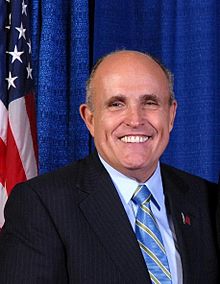
Rudolph Giuliani
Trump quickly backed up his attorney’s claim with a tweet on Twitter: “As has been stated by numerous legal scholars, I have the absolute right to PARDON myself, but why would I do that when I have done nothing wrong?”
Conservative commentator Joe Scarborough had a different take on the issue.
“This is really literally out of a tyrant’s playbook,” Scarborough said on his MSNBC show, “Morning Joe.”
“You pick the president’s sworn political enemy and then you put it out there about the shooting of him. And you let the president’s followers know that—Vladimir Putin could shoot his political rival and not be thrown in jail. [Turkey’s President Recep Tayyip] Erdogan could do the same thing. Except this is in America.

Joe Scarborough
By NBC News (NBC News) [CC BY-SA 4.0 (https://creativecommons.org/licenses/by-sa/4.0)%5D, via Wikimedia Commons
“What if Barack Obama had said in 2009, 2010, or let’s say Eric Holder here. What if [Obama’s Attorney General] Eric Holder had said, ‘You know what? Barack Obama could shoot Rush Limbaugh and he can’t be indicted. Barack Obama could shoot Paul Ryan and he couldn’t be indicted. You know what, Barack Obama could shoot George W. Bush and he couldn’t be indicted.’
“The reaction from Republicans and the media would be just mind-boggling.”
During the Nixon administration, the Justice Department wrestled with the question: Is a sitting President immune from indictment and criminal prosecution?
Its Office of Legal Counsel determined that indicting and criminally prosecuting a President would interfere with his ability to carry out his constitutionally given duties.
And that has been its position since 1974. Although reaffirmed in the Clinton administration, it has never been tested in court.
What lies beyond doubt is this: For Republicans, actions that are perfectly justifiable for a Republican President are absolutely taboo for a Democratic one.
- Republicans accused Democrats of blocking Trump’s nominee, Neil Gorsuch, for the Supreme Court. Yet Obama’s nominee for the seat, Merrick Garland, is the only candidate in the history of the United States to be denied a hearing by the opposition—Republicans.
- More than nine out of 10 Tea Partiers said they feared Obama’s policies were “moving the country toward socialism.” Yet Republicans overwhelmingly voted for a man—Trump—who has repeatedly praised Russian dictator Vladimir Putin and clearly has close ties with him.
- Republicans falsely accused Obama of creating “death panels” in the Affordable Care Act—yet have enthusiastically supported Trump’s efforts to destroy access to healthcare for more than 20 million Americans.
- During the Republican-orchestrated government shutdown in October, 2013, Arizona state Representative Brenda Barton attacked Obama for closing Federal monuments: “Someone is paying the National Park Service thugs overtime for their efforts to carry out the order of De Fuhrer…where are our Constitutional Sheriffs who can revoke the Park Service Rangers authority to arrest???”
- In a June 10, 2012 tweet, Donald Trump wrote: “Why is @BarackObama constantly issuing executive orders that are major power grabs of authority?”
- “The problem with executive [orders], it’s really bad news for this reason,” Ohio Governor John Kasich said of Obama in February, 2016. “Since he’s given up on working with Congress, he thinks he can impose anything he wants. He’s not a king. He’s a president.”
But Republicans who accused Obama of acting like a dictator haven’t objected to Trump’s “joking” that it would be “great” if the United States had a “President-for-Life”—like China.
Nor have they objected to Trump’s flood of executive orders—65 in a year and a half. The inescapable message in all this: “Legitimacy is only for us—not for you.”
Or, as Joe Scarborough put it: “This is really literally out of a tyrant’s playbook,”
ABC NEWS, ADOLF HITLER, ALTERNET, AP, BACKING HITLER: CONSENT AND COERCION IN NAZI GERMANY, BUZZFEED, CANADA, CBS NEWS, CNN, COMMUNISTS, CROOKS AND LIARS, DAILY KOZ, DONALD J. TRUMP, EAST GERMANY, ECONOMY, EMPLOYMENT, EUROPEAN UNION, FACEBOOK, FBI, GESTAPO, JAMES COMEY, MEDIA, MEXICO, MOTHER JONES, MOVEON, MSNBC, NAZI ATROCITIES, NBC NEWS, NEWSWEEK, NPR, PARDON, POLITICO, RAW STORY, REPUBLICANS, REUTERS, ROBERT GELLATELY, RUDOLPH GIULIANI, SALON, SARAH HUCKABEE SANDERS, SEATTLE TIMES, SLATE, SOVIET UNION, TARIFFS, THE ATLANTIC, THE CHICAGO SUN-TIMES, THE CHICAGO TRIBUNE, THE DAILY BEAST, THE GUARDIAN, THE HILL, THE HUFFINGTON POST, THE LOS ANGELES TIMES, THE NATION, THE NEW YORK TIMES, THE WASHINGTON POST, TIME, TRADE WAR, TWITTER, U.S. NEWS & WORLD REPORT, UNEMPLOYMENT, UPI, USA TODAY, WEHRMACHT, WEST GERMANY
In Bureaucracy, Business, History, Law, Law Enforcement, Military, Politics, Social commentary on June 12, 2018 at 12:39 am
Everyone knows how World War II ended for Nazi Germany: With its Fuhrer, Adolf Hitler, dead, and its capital city of Berlin in ruins.
Casualty figures range from 4.3 to 5.3 million dead Germans.
And for 44 years—from May 7, 1945, until November 9, 1989—Berlin was a divided city and Germany a divided nation. The Soviet Union ruled the eastern half. Germans—backed up by American military forces—ruled the western half.
Yet before all this unhappiness descended on the Fatherland, the vast majority of Germans enjoyed what they called “The Happy Time.”
This period began on January 30, 1933, when Adolf Hitler became Chancellor—and lasted until June 22, 1941.
For most Germans, those years—and especially the year between June, 1940, and June, 1941–were a time of prosperity and joy.
According to Robert Gellately’s 2002 landmark study, Backing Hitler: Consent and Coercion in Nazi Germany, the Nazis operated a highly popular dictatorship. They didn’t try to cow people into submission. Instead, they set out to win converts by building on popular images, cherished ideals and long-held phobias.
And their efforts succeeded. The Gestapo owed its fearsome success to ordinary German citizens who voluntarily reported on “enemies” within their midst. These citizens saw themselves as patriots.
Nor, as has long been believed, were Nazi atrocities carried out in secret. From the media, Germans learned about the Nazis’ brutal campaign against the Jews, the concentration camps, and the Nazis’ radical approaches to “law and order.”
But as far as everyday Germans were concerned:
- The streets were clean and peaceful.
- Employment was high.
- The Communists and Jews were being locked up.
- The trouble-making unions were gone.
- Germany was once again “taking its rightful place” among ruling nations, after its catastrophic defeat in World War 1.
The height of “The Happy Time” came in June, 1940. In just six weeks, the Wehrmacht accomplished what the German army hadn’t in four years during World War 1: The total defeat of its longtime enemy, France.
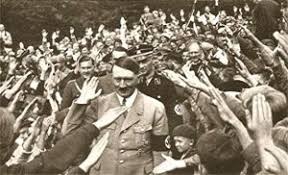
Frenzied Germans greet Adolf Hitler
Suddenly, French clothes, perfumes, delicacies, paintings and other “fortunes of war” came pouring into the Fatherland. (Reichsmarshall Herman Goring, head of the Luftwaffe—air force—amassed his own private air collection from French museums.)
Most Germans believed der Krieg—“the war”—was over, and only good times lay ahead.
But Adolf Hitler had other plans.
On June 22, 1941, three million Wehrmacht soldiers slashed their way into the Soviet Union. The Third Reich was now locked in a death-struggle with a nation even more powerful than itself.

German soldiers in the Soviet Union
And then, on December 11, 1941—four days after Germany’s ally, Japan, attacked Pearl Harbor—Hitler declared war on the United States.
“The Happy Time” for Germans was over. Only prolonged disaster lay ahead.
Now, fast forward 77 years to the America of President Donald J. Trump. According to an official White House statement entitled “American Greatness,” issued on June 4:
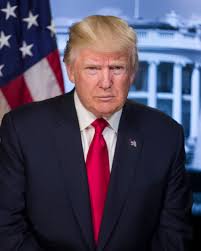
Donald Trump
“Nearly 3 million jobs have been created since President Trump took office. The unemployment rate has dropped to 3.8, the lowest rate since April 2000, and job openings have reached 6.6 million, the highest level recorded. President Trump has restored confidence in the American economy, with confidence among both consumers and businesses reaching historic highs.”
Much of this jobs growth, however, was already underway during the closing years of the Obama administration. But that hasn’t stopped Trump from taking credit for it.
White House Press Secretary Sarah Huckabee Sanders doubtless spoke for millions of Trump supporters when she said, on June 4: “Since taking office, the President has strengthened American leadership, security, prosperity, and accountability. And as we saw from Friday’s jobs report, our economy is stronger, Americans are optimistic, and business is booming.
“The American people do not believe this strong economy is fantasy or unrealistic.”
Many Congressional Republicans have echoed this: The American people care only about the economy—and how well-off they are.
Only five days earlier—on May 31—the Trump administration had announced it would put steel and aluminum tariffs on longtime American allies Canada, Mexico and the European Union (EU).
Mexico, Canada and the EU immediately vowed to retaliate. For Americans, this will mean higher prices on such items as beer, baseball bats and cars. The EU has threatened to impose tariffs on motorcycles, bourbon whiskey, Levi’s jeans, peanut butter and cranberries.
A disastrous global trade war could be the ultimate result.
On June 4, Trump claimed, in a tweet: “As has been stated by numerous legal scholars, I have the absolute right to PARDON myself….”
And, making clear how far above the law he thinks Trump is, his attorney, Rudolph Giuliani, told the Huffington Post on June 3: “In no case can he be subpoenaed or indicted. I don’t know how you can indict while he’s in office. No matter what it is.
“If he shot [former FBI director] James Comey, he’d be impeached the next day. Impeach him, and then you can do whatever you want to do to him.”
The Germans made a similar devil’s-bargain with Hitler—and paid dearly for it. Americans, by supporting Trump—or at least not opposing him—have made a similar devil’s-bargain.
And such bargains always end with the devil winning.
ABC NEWS, ALTERNET, AP, BARACK OBAMA, BUSINESS, BUZZFEED, CBS NEWS, CHANNING DUNGEY, CNN, CROOKS AND LIARS, DAILY KOZ, EMARKETER, Entertainment, FACEBOOK, FORTUNE, HISTORY, INC.COM, INSTAGRAM, KU KLUX KLAN, Law, MARK ZUCKERBERG, MOTHER JONES, MOVEON, MSNBC, NBC NEWS, NEWSWEEK, NPR, PEW RESEARCH CENTER, POLITICO, POLITICS, RAW STORY, REUTERS, ROBERT TOWNSEND, ROSEANNE BARR, SALON, SEATTLE TIMES, SLATE, SNAPCHAT, TEENAGERS, THE ATLANTIC, THE CHICAGO SUN-TIMES, THE CHICAGO TRIBUNE, THE DAILY BEAST, THE GUARDIAN, THE HILL, THE HUFFINGTON POST, THE LOS ANGELES TIMES, THE NATION, THE NEW YORK TIMES, THE WASHINGTON POST, TIME, TWITTER, U.S. NEWS & WORLD REPORT, UP THE ORGANIZATION, UPI, USA TODAY, YOUTUBE
In Bureaucracy, Business, Entertainment, History, Law, Politics, Social commentary on June 8, 2018 at 12:10 am
And, on Facebook, the complaints just keep coming. [NOTE: The spellings are those of the complainants.]
- FACEBOOK BETRAYED EVERY SINGLE ONE OF US ON HERE. SO MUCH SO THAT NOW WE HAVE AN IDIOT IN THE WHITE HOUSE AND IT’S YOUR FAULT YOU PUT HIM THERE. HOW DARE YOU TAKE 87 MILLION PEOPLE’S DATA, GIVE IT TO CAMBRIDGE ANALYTICS, WHO GAVE IT TO RUSSIA, WHO GAVE IT TO MANAFORT, WHICH MADE HILLARY LOSE AND TRUMP WIN. I HOPE THEY KICK YOUR ASS IN CONGRESS.
- FACEBOOK STINKS. Despite being repeatedly told that your website is hacked all the time, you do nothing. Today, my girlfriend received a completely naked photo from a stranger, reported it, and you deemed it fine. This is not fine. It’s disgusting. You are a lousy, immoral company with no security or protection for your users. You STINK!You should have a minus ten, not one star.
- total waste of time. I hate the way no can help you get access to your account but they will block the old account without contacting you.
- FB News Feed now shows only posts from the same few people, about 25, and repeat the same, because Facebook has a new algorithm. Their system chooses the people to read one’s posts. However, I would like to choose for myself.
- My husband’s account was hackef and he’s tried everything to get back into it and Absolutely NO HELP from Facebook to resolve this!! It has ALL of his family and friends blocked from his page including me!!
- FB Gestapo must be pushing fake news and stories.Every time I drop a link showing the claims are fake as a TV Preacher,FB notifies me my post has been marked as spam and they remove it.
- I have tried to contact FB about missing fundraiser donations and cannot get a reply.
- Tried to contact Facebook about something on one of the group sites and they never answered my complaint, now they have blocked the like button because I have pushed it too many times and now have put one of my comments to the spam. If they do not respond to my 2nd complaint, I will Be closing my Facebook account.
- SICK OF ADVERTISMENTS FROM FACEBOOK IN MY NEWS FEED IM NOT FUKIN INTERESTED
- I got blocked from posting videos and facebook live because I posted a video of me singing with the music video plating in the background… I would like to know why this happened…
- TAKE ME OFF THE BEING BANNED LIST OF POSTING I AM NOT A FREAKING TERROIST
- Reported a dozen times, and left phone msgs regarding a convicted Pedophile, child molester, registered on Megan’s Law website. Facebook will not do anything about it
- YOU CANT GET ANYONE TO ANSWER I AM SO FRUSTRATED I GIVE UP ITS TERRIBLE
- Brian Haner has been reported for being offensive. He was informed this is his second strike. He has 70000 followers and people have the right to UNLIKE if they are offended. No one has the right to get someone BANNED for expressing an “offensive” opinion. If Brian is banned because some uppity person can conplain and have their ONE opinion outweight the other 69999 opinions then I for one will leave to google+ and I will take as many people as I can with me.
- Complained about the marketing for Kary Oberbrummer self publishing book scheme that refuses to give you the costs up front. Facebook deleted all my comments and refuses to let me make anymore comments on the post. Just trying to warn people about the downside risk. Facebook censorship ! UNBELIEVABLE !
- My Facebook page or rather account got all screwed up. It started logging me in on my original very first Facebook account, how in the world do I delete it? I have pushed deactivate until my face is blood red and I am extremely sick because after I push deactivate then it says your session with Facebook has ran out please login again and then of course it logs me back into the old account! I would appreciate it so very much if someone would please give me an answer that works.
- They will not answer as to why I can not post anything for sale
- Can’t seem to find a way to contact Facebook. Probably the way they want it. I’m getting very obnoxious friends requests that I would like to stop but don;t see a way to do it. Not likely to hang around much longer but then I don’t think they care.
The 1970 epic, “Patton,” closed with the words: “All glory is fleeting.” Mark Zuckerberg and his self-satisfied honchos at Facebook should realize that social networking websites can also be fleeting.
Anyone who doubts this need only sum up a few once well-known names:
- Myspace
- Google+
- Friendster
- Posterous
- Yahoo Meme
- SixDegrees
- Classmates
- Yahoo Buzz
- Eons
- iTunes Ping
Mark Zuckerberg needs to quickly install some serious reforms in Facebook. Otherwise, in time, his name will be added to those CEOs of other failed social networking sites.
ABC NEWS, ALTERNET, AP, BARACK OBAMA, BUSINESS, BUZZFEED, CBS NEWS, CHANNING DUNGEY, CNN, CROOKS AND LIARS, DAILY KOZ, EMARKETER, Entertainment, FACEBOOK, FORTUNE, HISTORY, INC.COM, INSTAGRAM, KU KLUX KLAN, Law, MARK ZUCKERBERG, MOTHER JONES, MOVEON, MSNBC, NBC NEWS, NEWSWEEK, NPR, PEW RESEARCH CENTER, POLITICO, POLITICS, RAW STORY, REUTERS, ROBERT TOWNSEND, ROSEANNE BARR, SALON, SEATTLE TIMES, SLATE, SNAPCHAT, TEENAGERS, THE ATLANTIC, THE CHICAGO SUN-TIMES, THE CHICAGO TRIBUNE, THE DAILY BEAST, THE GUARDIAN, THE HILL, THE HUFFINGTON POST, THE LOS ANGELES TIMES, THE NATION, THE NEW YORK TIMES, THE WASHINGTON POST, TIME, TWITTER, U.S. NEWS & WORLD REPORT, UP THE ORGANIZATION, UPI, USA TODAY, YOUTUBE
In Bureaucracy, Business, Entertainment, History, Law, Politics, Social commentary, Uncategorized on June 7, 2018 at 12:18 am
Facebook is still the most-used social media platform in the world—with more than 2 billion users and a net worth of $500 billion.
But all is not well in Mark Zuckerberg’s Internet kingdom. And while he has chosen to ignore those evils plaguing Facebook, many of its users are infuriated by them.
So infuriated that many of them are threatening to move to other social media sites—such as Snapchat and Instagram.
Here is a sampling of complaints made directly to Facebook by its thoroughly enraged users. [NOTE: The spellings are those of the complainants.]
- Stop soliciting me for boosts and adds. It is annoying spam, the kind you encourage people to block. But, of course, we can’t block it since it’s you. Trust me, if I was ever inclined in the least to give you additiobnal money for anything, you effectively killed that urge thousands of unwelcome posts and reminders ago. You make Instagram look better every day.
- Same exact thing I went threw. 25 times they pulled my ad and 25 times I appealed it, not one time did I get a response. My ad was for dog training they said it didn’t meet Facebook policy because of animal sales, but in all 25 appeals, I explained, I’m not selling animals I’m selling a service. And I was even paying my own money to run the same ad on boost promo. They approved my ad for that and took my money, but can’t get my ad to run on a free market place.
- I keep getting my post that I am selling fabric rejected and it won’t let me appeal it because there are no posts listed.. Says I violated a commerce policy. What does fabric violate? I got a message from FB today and all it shows it was closed. NO EXPLANATION
- Hello, How do i reply to a message from you I have just had about a picture that I originally got off Facebook that is apparently now not allowed. I can’t delete it and if I try to answer it just buffers and is never sent.
- I voiced my opinion on gaffneynites and just because the republicans can say what they want I was taken off that group, they said nothing to the people who were harassing me, and they could say what they wanted, I don’t think facebook is fair when it lets one side say whatever they want to and you can’t, this is discrimination in my opinion, I thought this was suppose to be America free speech
- Facebook must get their act together, People do have an opinion, and if you get in so called “facebook jail” for having that opinion, what is the point of having a social media site???? Come on Facebook, get with the 21st century..
- I’m just trying to ask a question to a human and actually get a response. Not a list of 6 possible answers and asking if any of them were close enough to shut you up.
- No way to contact Facebook – times outs, no connection, all sort of excuses when you are posting a claim, or a request for contact!!Facebook is charging me for something I didn’t authorized to run, an add. Many months ago I stopped running all adds I had posted – mainly because of the difficulty (impossibility?) of reaching you managers, or whomever is responsible for billings!!! YOU JUST HIDE YOUR SELVES, AND AFTER STARTING AN ADD, one has no way of stopping it, changing it, no feed back at all!! I will never post a add on Facebook again!!
- Tried to contact fb to try and stop all these “friends requests” from all foreign people. Could not do, after all this bad publicity you would think they would be very wary.
- I just tried to contact Facebook concerning my account with a number provided on the Website. The service representative was very helpful until I turned down the $49.00 fee to fix my problem. When I said that was not acceptable, he hung up on me ….
- Contacting them is impossible. They want you gone, and you are gone. No explanation, and I have never giving them these five stars;; they made that up.
- it is very hard to find this contact method. it is totally impersonal. it allows for no dialogue. it seems to confirm that FB is too big for its own britches.
- is there a way to contact facebook as getting a little peeved with the service and will not pay for any more ads while i am unable to contact them.
- Never have a direct Help Desk to call…it appears as if You all are invisible.
- you cannot contact facebook to report a fault! what good is that?
- I CALLED 2 TIMES AND THEY WANT $100 SAY IT IS MY COMPUTER AND IT ISNT……..I Cant share and in jail almost 24/7. i was to be out at 12;20 yesterday…last time they did this and they restriction is over but still 3 more days!!!! idiots work here!!!!! never reply back either.
- this is terrible, i have to use someone else account to even contact support.
ABC NEWS, ALTERNET, AP, BARACK OBAMA, BUSINESS, BUZZFEED, CBS NEWS, CHANNING DUNGEY, CNN, CROOKS AND LIARS, DAILY KOZ, EMARKETER, Entertainment, FACEBOOK, FORTUNE, HISTORY, INC.COM, INSTAGRAM, KU KLUX KLAN, Law, MARK ZUCKERBERG, MOTHER JONES, MOVEON, MSNBC, NBC NEWS, NEWSWEEK, NPR, PEW RESEARCH CENTER, POLITICO, POLITICS, RAW STORY, REUTERS, ROBERT TOWNSEND, ROSEANNE BARR, SALON, SEATTLE TIMES, SLATE, SNAPCHAT, TEENAGERS, THE ATLANTIC, THE CHICAGO SUN-TIMES, THE CHICAGO TRIBUNE, THE DAILY BEAST, THE GUARDIAN, THE HILL, THE HUFFINGTON POST, THE LOS ANGELES TIMES, THE NATION, THE NEW YORK TIMES, THE WASHINGTON POST, TIME, TWITTER, U.S. NEWS & WORLD REPORT, UP THE ORGANIZATION, UPI, USA TODAY, YOUTUBE
In Bureaucracy, Business, Entertainment, History, Law, Politics, Social commentary on June 6, 2018 at 12:29 am
Facebook is in big trouble. And much of it stems from its own greed and arrogance toward its customers.
An email recently sent to Winnie Liu, director of Facebook & Instagram Research, offers several telling truths.
The recipient—a friend of mine named Dan—had just been put in “Facebook Jail” for somehow offending its “Community Standards” (i.e., censorship) department.
The actual offense, of course, was not outlined. It never is.
When he tried to post something on Facebook, Dan got an automatic message: “You may have used Facebook in a way that our systems consider unusual, even if you didn’t mean to. You can post again in 24 hours.”
Notice the phrase: “You may have used Facebook in a way that our systems consider unusual.”
Well, did he or didn’t he commit an offense? If he didn’t, he shouldn’t have been banned from posting on Facebook. If he did, then he should have the right to know, specifically, what it was he posted that “may have” been considered “unusual”.
And what it is that “our systems consider unusual”? Did he defame someone? Post an obscene photo? Tell a joke that someone found offensive?
America’s criminal and civil justice systems are founded on specificity. If the police accuse you of robbing a bank, they need to have specific proof that you robbed it. Their merely saying “I think he’s a bank robber” isn’t evidence—and shouldn’t be counted as such.
Finally, if he “didn’t mean to” post something that Facebook’s “systems consider unusual,” then that should be a mitigating factor in itself.
Even in criminal law, room is made to distinguish intentional acts from unintentional ones, even when harm is caused.
So when Dan got an email from Facebook, inviting him to take part in an upcoming research survey, he decided to share his disgust with its blatant disregard for fairness:
- “Although Facebook users like me have made its founder, Mark Zuckerberg, worth $52 billion, he’s unwilling to make it possible for those users to directly contact Facebook’s censorship department when they find themselves booted off Facebook. Or when they can’t log onto it. Or when they’re being billed for ads they never posted.
- “Ideally, this should be done by phone. Certainly, with all the billions of advertising dollars Facebook rakes in, a comparatively small portion could be set aside to hire banks of phone operators to deal with situations like this.
By aflcio2008 (NM: Jewell Hall, AFT and Martin Heinrich) [CC BY 2.0 (https://creativecommons.org/licenses/by/2.0)%5D, via Wikimedia Commons
- “But if you’re not willing to do that, you could at least make it possible for frustrated users to contact Facebook via Instant Messaging.
- “As it is, Facebook’s censorship department operates as prosecutor, jury and judge. Its decisions come out of the blue, and whoever is accused of violating your ‘Community Standards’ is automatically found guilty, with no right to appeal or even explain the situation as s/he saw it.
- “These are the methods of a Star Chamber in a dictatorship. They are reprehensible to citizens of any free society. And Facebook should consider them equally reprehensible as affronts to free speech.
- “There have been numerous reports that Facebook’s censorship department has been manipulated by Right-wing Trump supporters to remove posts they don’t like, even of those posts don’t actually violate Facebook’s “community standards.” I feel reasonably certain this is what happened in my case.
- “Since Zuckerberg recently spent two days in Washington testifying before outraged Democrats, it isn’t in his—or Facebook’s—best interest that he be forced to account for such disgraceful manipulation.
- “I have seen numerous complaints by Facebook members about being put in ‘Facebook Jail’ for even the most trivial ‘offenses.’ One of these is ‘liking’ too many posts.
- “Others like myself have simply re-posted images or stories already posted on Facebook—and found themselves kicked off as a result.
“Last December I wrote Mark Zuckerman about these problems—and the dangers they represent for Facebook. Naturally, I didn’t receive even the courtesy of a reply. And it’s clear to me that he has no intention of making such reforms.
“So there’s really no point in your offering test respondents $75 apiece in Amazon gift cards. Since Facebook clearly refuses to address the issue that’s most outraging so many of its users—at least the ones I know—it can expect to see its audience continue to shrink.
“When I first got a computer in 1999, AOL was the ‘big dog on the block.’ No more. When a comedian now references AOL, it’s as a joke, to mock its now antiquated status.
“It’s unfortunate that some people—like those in charge of Facebook—stubbornly refuse to learn from history.”
Dan’s experience, however, is by no means rare. Nor is his high level of disgust with Facebook.
For some unknown reason, Facebook has chosen to publish many of its users’ opinions on their “Facebook experience.”
All that’s needed to access these opinions—which are almost entirely complaints—is to type “Contact Facebook” in the white subject bar in the upper left-hand corner of the page.
Parts Three and Four of this series will focus on those expressed views—and outrage.


ABC NEWS, ALTERNET, AMERICAN NAZI PARTY, ANONYMOUS, AP, ASSOCIATED PRESS, BUZZFEED, CBS NEWS, CHARLOTTESVILLE, CNN, COINTELPRO, CROOKS AND LIARS, DAILY KOZ, DAVID DUKE, DONALD TRUMP, FACEBOOK, FBI, FERGUSON MISSOURI PROTESTS, J. EDGAR HOOVER, KU KLUX KLAN, MISSISSIPPI BURNING CASE, MOTHER JONES, MOVEON, NBC NEWS, NEWSWEEK, NPR, NYPD, POLITICO, PRESIDENT LYNDON B. JOHNSON, RAW STORY, REUTERS, SALON, SEATTLE TIMES, SLATE, TERRORISM, THE ATLANTIC, THE CHICAGO SUN-TIMES, THE CHICAGO TRIBUNE, THE DAILY BEAST, THE GUARDIAN, THE HILL, THE HUFFINGTON POST, THE LOS ANGELES TIMES, THE NATION, THE NEW YORK TIMES, THE WALL STREET JOURNAL, THE WASHINGTON POST, TIME, TWITTER, U.S. NEWS & WORLD REPORT, UP, UPI, USA TODAY, WILLIAM C. SULLIVAN
AMERICA’S KLANSMAN-IN-CHIEF
In Bureaucracy, History, Law, Law Enforcement, Politics, Social commentary on June 25, 2018 at 1:24 amOn August 11-12, 2017, white supremacists from across the country gathered in Charlottesville, Virginia, for a “Unite the Right” rally. Among the organizations represented:
Like Nazis in 1930s Germany, they marched through the streets carrying flaming torches, screaming racial epithets and frightening the local citizenry.
On August 13, a Nazi sympathizer rammed his car into a group of counter-protesters, killing a woman and injuring 19 other demonstrators.
President Donald Trump stated: “We condemn in the strongest possible terms this egregious display of hatred, bigotry and violence on many sides, on many sides.”
Donald Trump
But he refused to specifically denounce the Fascistic demonstrators.
White supremacists were elated.
“He didn’t attack us. He just said the nation should come together. Nothing specific against us,” wrote Andrew Anglin, founder of the neo-Nazi website, The Daily Stormer.
“No condemnation at all. When asked to condemn, he just walked out of the room. Really, really good. God bless him.”
Another Trump admirer: Former Ku Klux Klan Imperial Wizard David Duke.
“Thank you President Trump for your honesty & courage to tell the truth about #Charlottesville & condemn the leftist terrorists in BLM/Antifa,” Duke tweeted after the news conference.
Fascistic groups make up a pivotal constituency for Trump. Without their support, he might not have become President. He can’t afford to alienate them.
But others who aren’t beholden to the Fascistic Right have taken a stand against its hate-mongering.
On October 30, 2015, the hacker group Anonymous released a prepared statement:
“Ku Klux Klan, We never stopped watching you. We know who you are. We know the dangerous extent to which you will go to cover your asses….
“We will release, to the global public, the identities of up to 1000 klan members, Ghoul Squad affiliates and other close associates of various factions of the Ku Klux Klan.” This included ages, phone numbers, addresses and even credit card numbers.
Anonymous mask
By November 5, 2015, Anonymous had released the names of about 1,000 alleged KKK members or sympathizers via a Twitter data dump.
Among those names released by Anonymous:
All of these officials denied any affiliation with the Klan.
“I got the information from several KKK websites when I [hacked] them and was able to dump their database,” Amped Attacks, who released the information, stated online.
This mass leak was easily the worst assault on the KKK since the Justice Department waged an all-out attack on the Klan during the Presidency of Lyndon B. Johnson.
The reason: The murders of three civil rights workers in Philadelphia, Mississippi—Michael “Mickey” Schwerner, Andrew Goodman and James Chaney—-on June 21, 1964.
Poster for missing civil rights workers
Johnson ordered the FBI to find the missing activists. After their bodies were found buried near a dam, Johnson gave FBI Director J. Edgar Hoover a direct order: “I want you to have the same kind of intelligence [on the KKK] that you have on the communists.”
So the FBI launched a counterintelligence program—in Bureau-speak, a COINTELPRO—against the Ku Klux Klan.
Klansmen had shot, lynched and bombed their way across the Deep South, especially in Alabama and Mississippi. Many Southern sheriffs and police chiefs were Klan sympathizers, if not outright members and accomplices.
Ku Klux Klansmen in a meeting
The FBI’s covert action program aimed to “expose, disrupt and otherwise neutralize” KKK groups through a wide range of legal and extra-legal methods.
“My father fought the Klan in Massachusetts,” recalled William C. Sullivan, who headed the FBI’s Domestic Intelligence Division in the 1960s. “I always used to be frightened when I was a kid and I saw the fiery crosses burning in the hillside near our farm.
William C. Sullivan
“When the Klan reached 14,000 in the mid-sixties, I asked to take over the investigation of the Klan. When I left the Bureau in 1971, the Klan was down to a completely disorganized 4,300. It was broken.
“They were dirty, rough fellows. And we went after them with rough, tough methods.”
Among those methods:
The FBI’s counterintelligence war against the Klan ended in 1971.
Today, there are active Klan chapters in 41 states, with between 5,000 and 8,000 active members.
Only when America has a President who’s not beholden to the Fascistic Right can there be another COINTELPRO aimed at white hate groups.
Share this: